EP2472748B1 - Verfahren und kommunikationsknoten zum einstellen der bandbreite - Google Patents
Verfahren und kommunikationsknoten zum einstellen der bandbreite Download PDFInfo
- Publication number
- EP2472748B1 EP2472748B1 EP11761918.9A EP11761918A EP2472748B1 EP 2472748 B1 EP2472748 B1 EP 2472748B1 EP 11761918 A EP11761918 A EP 11761918A EP 2472748 B1 EP2472748 B1 EP 2472748B1
- Authority
- EP
- European Patent Office
- Prior art keywords
- unit
- downstream
- node
- signaling
- unidirectional
- Prior art date
- Legal status (The legal status is an assumption and is not a legal conclusion. Google has not performed a legal analysis and makes no representation as to the accuracy of the status listed.)
- Active
Links
Images



Classifications
-
- H—ELECTRICITY
- H04—ELECTRIC COMMUNICATION TECHNIQUE
- H04J—MULTIPLEX COMMUNICATION
- H04J3/00—Time-division multiplex systems
- H04J3/16—Time-division multiplex systems in which the time allocation to individual channels within a transmission cycle is variable, e.g. to accommodate varying complexity of signals, to vary number of channels transmitted
- H04J3/1682—Allocation of channels according to the instantaneous demands of the users, e.g. concentrated multiplexers, statistical multiplexers
-
- H—ELECTRICITY
- H04—ELECTRIC COMMUNICATION TECHNIQUE
- H04J—MULTIPLEX COMMUNICATION
- H04J3/00—Time-division multiplex systems
- H04J3/16—Time-division multiplex systems in which the time allocation to individual channels within a transmission cycle is variable, e.g. to accommodate varying complexity of signals, to vary number of channels transmitted
- H04J3/1605—Fixed allocated frame structures
- H04J3/1652—Optical Transport Network [OTN]
-
- H—ELECTRICITY
- H04—ELECTRIC COMMUNICATION TECHNIQUE
- H04J—MULTIPLEX COMMUNICATION
- H04J2203/00—Aspects of optical multiplex systems other than those covered by H04J14/05 and H04J14/07
- H04J2203/0001—Provisions for broadband connections in integrated services digital network using frames of the Optical Transport Network [OTN] or using synchronous transfer mode [STM], e.g. SONET, SDH
- H04J2203/0064—Admission Control
- H04J2203/0067—Resource management and allocation
-
- H—ELECTRICITY
- H04—ELECTRIC COMMUNICATION TECHNIQUE
- H04Q—SELECTING
- H04Q2213/00—Indexing scheme relating to selecting arrangements in general and for multiplex systems
- H04Q2213/1301—Optical transmission, optical switches
Definitions
- the present invention relates to the field of communications technologies, and in particular to a bandwidth adjusting method and a communication node.
- an optical transport network As a core technology of a next generation transport network, an optical transport network (Optical transport network, OTN) has abundant Operation, Administration and Maintenance (OAM), strong tandem connection monitoring (TCM) and out-of-band forward error correction (FEC) capabilities, can implement flexible scheduling and management of a high-capacity service, and gradually becomes a mainstream technology of a backbone transport network.
- OAM Operation, Administration and Maintenance
- TCM strong tandem connection monitoring
- FEC forward error correction
- An OTN frame is a 4080*4 modular structure and can carry a client signal.
- An optical channel data unit-flex (Optical Channel Data Unit-flex, ODUflex) is an OTN frame corresponding to a new rate level, and can carry services with different rates.
- ODUflex Optical Channel Data Unit-flex
- the service is first mapped to a payload region of the ODUflex, and then the ODUflex is mapped to a high order optical channel data tributary unit-k.M (HO ODTUk.M), where M represents that the ODUflex occupies M time slots of the high order optical channel data unit-k (HO ODUk).
- An OTN service carrier includes an OTN symmetric bandwidth carrier and an asymmetric bandwidth carrier.
- an OTN symmetric bandwidth carrier system in upload and download directions, the number of time slots (Time Slot, TS) occupied by the ODUflex of encapsulating service and TS allocation condition are consistent; while as for the OTN asymmetric bandwidth carrier system, upload and download bandwidths of the carrier service are inconsistent.
- TS Time Slot
- a service passes through two intermediate nodes A and B from a source node to a sink node, and the channel is formed by three link (Link) segments and two cross matrix connection (Matrix) segments.
- Link link
- Motrix cross matrix connection
- the source node maps the packet service to the ODUflex, and maps the ODUflex into HO ODTU2.2 (the ODUflex occupies TS1 and TS4 of HO ODU2)
- the node A maps the ODUflex to HO ODTU3.2 (the ODUflex occupies TS5 and TS12 of HO ODU3) after the ODUflex is crossed by the node A
- the node B maps the ODUflex to HO ODTU2.2 (the ODUflex occupies TS4 and TS5 of HO ODU2) after the ODUflex is crossed by the node B
- the sink node de-maps the packet service from the ODUflex.
- the packet service is transmitted according to the same bandwidth distribution.
- the ODUflex needs to provide different bandwidths in different periods to meet the change demand of the traffic flow.
- the asymmetric bandwidth services such as a Gigabit-capable passive optical network (Gigabit-Capable Passive Optical Network, GPON) and video on demand (Video On Demand, VOD) also increase.
- GPON Gigabit-Capable Passive Optical Network
- VOD Video On Demand
- Embodiments of the present invention provide a bandwidth adjusting method and a communication node, which can meet a change demand of an asymmetric bandwidth service traffic flow.
- An embodiment of the present invention provides a bandwidth adjusting method, the method includes:
- An embodiment of the present invention provides a communication node, where the node includes an upstream ingress unit and at least two downstream branch egress units.
- the upstream ingress unit is configured to send a group of multi-channel parallel basic switch cells to the at least two downstream branch egress units, where first adjustment signaling is carried in the group of multi-channel parallel basic switch cells and is used for indicating unidirectional addition or removal of the basic switch cell; perform polling detection on unidirectional adjustment response statuses returned by the at least two downstream branch egress units according to a downstream branch egress unit list of the communication node; and send first normal signaling to the at least two downstream branch egress units when determining the received unidirectional adjustment response statuses returned by the at least two downstream branch egress units are reception acknowledgement.
- the unidirectional adjustment response statuses carry respective downstream branch egress unit identifiers and are used for indicating the reception of the first adjustment signaling, and wherein the downstream branch egress unit list stores a corresponding relation between an upstream ingress unit identifier and downstream branch egress unit identifiers
- Each downstream branch egress unit is configured to return an unidirectional adjustment response status after receiving the group of multi-channel parallel basic switch cells carrying the unidirectional adjustment signaling; after receiving the first normal signaling, add or remove the basic switch cell into or from a next group of multi-channel parallel basic switch cells according to the first adjustment signaling; and adjust a time slot of a high order optical channel data unit sent by the downstream branch egress units to a downstream node, and instruct the downstream node to adjust the time slot of the received high order optical channel data unit.
- the bandwidth adjusting method according to the embodiments of the present invention implements lossless bandwidth adjustment in a point-to-multipoint OTN asymmetric bandwidth carrier system, so as to meet the change demand of the asymmetric bandwidth service traffic flow.
- a bandwidth adjusting method is provided.
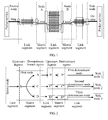
- the method of this embodiment is applicable to a point-to-multipoint OTN asymmetric bandwidth carrier system shown in FIG. 2 .
- One source node may send a service to at least two sink nodes (three sink nodes are taken as an example in FIG. 2 , that is, sink nodes 1, 2 and 3), and the service passes through intermediate nodes from the source node to the sink node, where the intermediate nodes include a first node and a downstream node.
- FIG. 2 a case that two intermediate nodes is passed through and three Link segments and two Matrix segments are included is taken for example.
- FIG. 3 A flow chart of the method of this embodiment is shown in FIG. 3 , including:
- the source node first maps the service into an ODUflex through GFP-F, and then maps the ODUflex into an HO ODTUk.M channel through a generic mapping procedure (Generic Mapping Procedure, GMP), where the ODUflex occupies M time slots of the high order optical channel data unit, that is, HO ODUk; and finally sends the HO ODTUk.M to the first node in a downstream of the source node through a high order optical channel data transmission unit.
- GMP Generic Mapping Procedure
- the upstream ingress unit A of the first node first de-maps the ODUflex from the HO ODTUk.M, carries the ODUflex in the group of multi-channel (at least two channels) parallel basic switch cells, and sends the group of multi-channel parallel basic switch cells to the downstream branch egress units B, C, and D.
- the downstream branch egress units B, C, and D separately de-map the ODUflex from the group of multi-channel parallel basic switch cells, map the ODUflex into a channel of a high order optical channel data tributary unit, and separately send the ODUflex to the corresponding downstream nodes.
- the unidirectional adjustment signaling is carried in an HO ODU sent to the first node.
- the first node may sense, according to the HO ODU sent by the source node, that it needs to adjust the bandwidth, and then trigger this process.
- a network management system Network Management System, NMS
- NMS Network Management System
- Step 102 After receiving the group of multi-channel parallel basic switch cells carrying the unidirectional adjustment signaling, the downstream branch egress units B, C, and D return unidirectional adjustment response statuses that carry respective downstream branch egress unit identifiers and are used for indicating the reception of the unidirectional adjustment signaling; otherwise, return unidirectional adjustment response statuses indicating that the unidirectional adjustment signaling is not received.
- Step 103 The upstream ingress unit A of the first node performs, according to a downstream branch egress unit list of the local node, polling detection on the unidirectional adjustment response statuses returned by the downstream branch egress units, and when it is determined that the received unidirectional adjustment response statuses returned by all the downstream branch egress units B, C, and D are reception acknowledgement, step 104 is performed.
- the first node needs to store the downstream branch egress unit list in the local node, and the list stores a corresponding relation between an upstream ingress unit identifier and all the downstream branch egress unit identifiers.
- the downstream branch egress unit identifier in the received unidirectional adjustment response status is compared with identifiers stored in the local node for determination.
- Step 104 The upstream ingress unit A of the first node sends normal signaling to all the downstream branch egress units B, C, and D, for instructing all the downstream branch egress units to perform unidirectional adjustment on the corresponding basic switch cell when all the downstream branch egress units receive a next group of multi-channel parallel basic switch cells.
- Step 105 The downstream branch egress units B, C, and D receive the normal signaling, and all the downstream branch egress units perform unidirectional adjustment of corresponding basic switch cell when receiving the next group of multi-channel parallel basic switch cells and perform unidirectional bandwidth adjustment from the downstream branch egress units to the corresponding downstream nodes.
- the downstream branch egress units add the basic switch cell to be added into the next group of multi-channel parallel basic switch cells, and the added basic switch cell carries services. If the basic switch cell is to be removed, the basic switch cell to be removed is removed from the next group of multi-channel parallel basic switch cells, and the removed basic switch cell does not carry any service, which ensures that the service is not impaired during the bandwidth adjusting process.
- the bandwidth adjustment from the upstream ingress unit in the first node to all the downstream branch egress units is unidirectional bandwidth adjustment of the Matrix segments, while the unidirectional bandwidth adjustment from each downstream branch egress unit to the corresponding downstream node is bandwidth adjustment of the Link segments, which may be implemented through the following steps.
- A1 The downstream branch egress unit sends the high order optical channel data tributary unit to the corresponding downstream node, where unidirectional adjustment signaling is carried in the high order optical channel data tributary unit for indicating unidirectional addition or removal of a time slot.
- the downstream branch egress units de-map service data of the ODUflex from the received group of multi-channel parallel basic switch cells, and map the service data into the corresponding high order optical channel data tributary unit-k.M (ODTUk.M); and a high order optical channel transmission unit sends the high order optical channel data tributary units to the downstream nodes.
- the high order optical channel data tributary unit-k.M is multiplexed into a high order optical channel data unit, the high order optical channel data unit is then encapsulated into a high order optical channel transmission unit, and the high order optical channel transmission unit is sent to the downstream node.
- the downstream node After receiving the high order optical channel data tributary unit carrying the unidirectional adjustment signaling, the downstream node may return a unidirectional adjustment response status through a resizing control overhead corresponding to a time slot in the high order optical channel data tributary unit, so as to indicate whether the downstream node receives the unidirectional adjustment signaling.
- the downstream branch egress unit When the unidirectional adjustment response status that is returned by the downstream node and received by the downstream branch egress unit is reception acknowledgement, the downstream branch egress unit sends normal signaling to the downstream node, where the normal signaling is used for instructing the downstream node to perform unidirectional adjustment of a corresponding time slot in a next multi-frame, that is, when receiving a next high order optical channel data tributary unit, for example, to allocate the time slot and carry a service or not to carry any service.
- the normal signaling is carried in the current multi-frame (that is, the current high order optical channel data tributary unit), the current multi-frame is sent to the downstream node, and the time slot of the next multi-frame (that is, the next high order optical channel data tributary unit) are adjusted.
- the downstream node When receiving the normal signaling, the downstream node performs unidirectional adjustment of the corresponding time slot in the next multi-frame.
- the bandwidth adjusting method in the embodiment of the present invention includes: the upstream ingress unit of the local node sends the group of multi-channel parallel basic switch cells to all the downstream branch egress units of the local node, where the unidirectional adjustment signaling is carried in the group of multi-channel parallel basic switch cells for indicating unidirectional addition or removal of the basic switch cell; the downstream branch egress unit return a unidirectional adjustment response status carrying the downstream branch egress unit identifier; the upstream ingress unit performs, according to a branch egress unit list of the local node, polling detection on the unidirectional adjustment response status returned by the downstream branch egress unit, and sends normal signaling when determining that the unidirectional adjustment response statuses returned by all the downstream branch egress units is reception acknowledgement; and the downstream branch egress units receive the normal signaling, perform unidirectional adjustment of corresponding basic switch cell when receiving the next group of multi-channel parallel basic switch cells, and perform unidirectional bandwidth adjustment from the downstream branch egress
- the upstream ingress unit A of the first node when the upstream ingress unit A of the first node transfers the unidirectional adjustment signaling (that is, the transfer of the unidirectional adjustment signaling in the Matrix segment), the upstream ingress unit A may indicate unidirectional addition or removal of a corresponding basic switch cell according to transfer control signaling and a tributary port ID field in a resizing control overhead (Resizing Control Overhead, RCOH) corresponding to the basic switch cell to be adjusted.
- RCOH resizing Control Overhead
- step 105 when performing unidirectional bandwidth adjustment, the downstream branch egress unit and the downstream node transfer unidirectional adjustment signaling (that is, the transfer of the unidirectional adjustment signaling in the Link segment), and transfer through the resizing control overhead corresponding to the time slot to be adjusted.
- unidirectional adjustment signaling that is, the transfer of the unidirectional adjustment signaling in the Link segment
- a structure of the high order optical channel data unit is a 3824*4 modular structure, which includes a multi-frame alignment signal (Multi-Frame Alignment Signal, MFAS) providing a frame synchronous positioning function, a high order optical channel data unit overhead field (HO ODUk OH) providing a maintenance and operation function, a high order optical channel payload unit overhead field (HO OPUk OH) providing a client signal adaptation function, a high order optical channel payload unit (HO OPUk) providing a signal carrying function, and reserved bytes (RES), where k represents a supported bit rate.
- Multi-Frame Alignment Signal MFAS
- MFAS multi-frame alignment signal
- HO ODUk OH high order optical channel data unit overhead field
- HO OPUk OH high order optical channel payload unit overhead field
- RES reserved bytes
- one resizing control overhead is allocated for each time slot, and through the indication of the MFAS, the unidirectional adjustment signaling is carried through the resizing control overhead corresponding to the time slot to be adjusted, so as to implement the transfer of the adjustment signaling.
- one resizing control overhead includes transfer control signaling (CTRL), a tributary port ID (Tributary Port ID, TPID), tributary slot connectivity check (Tributary Slot Connectivity Check, TSCC), and a reserved bits and cyclic redundancy check of 8-bits (CRC8).
- CRC8 transfer control signaling
- TPID Tributary Port ID
- TPID tributary slot connectivity check
- TSCC8 reserved bits and cyclic redundancy check of 8-bits
- the CTRL occupies 2 bits (bits) and uses 00 to indicate idle (idle) signaling, 01 to indicate add (add) signaling, 10 to indicate remove (remove) signaling, and 11 to indicate normal (normal) signaling;
- the TPID occupies 7 bits for indicating which group the current basic switch cell or time slot belongs to;
- the TSCC occupies 1 bit, is generated by the source node, and is set to 1 during tributary slot connectivity check.
- step 101 if the bandwidth needs to be increased, a specific value ⁇ add, #a ⁇ of ⁇ CTRL, TPID ⁇ in the resizing control overhead corresponding to the basic switch cell to be added is used to indicate that it is required to unidirectionally add the basic switch cell to carry a service. If the bandwidth needs to decreased, ⁇ remove, #a ⁇ in the resizing control overhead corresponding to the basic switch cell to be removed is used to indicate to unidirectionally remove the basic switch cell to carry a service, where #a represents an adjustment channel ingress port of the currently transmitted service.
- the downstream branch egress units B, C and D each return unidirectional adjustment response statuses to the upstream ingress unit A, and perform indication through a tributary port ID and a tributary slot group status field in a resizing control overhead corresponding to a basic switch cell in the group of multi-channel parallel basic switch cells, which is a returning manner of the unidirectional adjustment response status in the Matrix segment.
- the unidirectional adjustment response status returned by the downstream node to the downstream branch egress units in step 105 may be transferred by carrying a resizing control overhead corresponding to a time slot of the ODUflex, which is a returning manner of the unidirectional adjustment response status in the Link segment.
- the downstream branch egress unit list of the local node includes: a one-to-one corresponding relation between a downstream branch egress unit identifier of the local node and an associated basic switch cell.
- the unidirectional adjustment response status returned by the downstream branch egress unit is transferred through the tributary port ID and the tributary slot group status field in the resizing control overhead corresponding to a basic switch cell associated with the downstream branch egress unit identifier.
- a structure of a resizing control overhead returned by the downstream node or the downstream branch egress units including a TPID, a tributary slot group status (Tributary Slot Group Status, TSGS), a network connection status (Network Connection Status, NCS) and an RES.
- TPID Tributary Slot Group Status
- TSGS Tributary Slot Group Status
- NCS Network Connection Status
- the TSGS occupies 1 bit, uses 1 to indicate a reception acknowledgement (ACK) status and 0 to indicate a reception negative acknowledgement (NACK) status, is generated at the sink end, and determines the current status at an end for sending information.
- the NCS occupies 1 bit, and is generated by the sink node. When the received TSCC sent by the upstream node is shown as 1, a status for showing that the NCS is 1 is returned, indicating that the unidirectional channel adjustment is over.
- the downstream branch egress units return the group of multi-channel parallel basic switch cells to the upstream ingress unit, and use a specific value ⁇ #b ⁇ c ⁇ d, ACK ⁇ of ⁇ TPID, TSGS ⁇ in a resizing control overhead corresponding to one of the basic switch cells (for example, a first basic switch cell) to indicate that the information sent by the upstream ingress unit is received, where #b ⁇ c ⁇ d represents port numbers of the downstream branch egress units B, C, D.
- the resizing control overhead corresponding to each basic switch cell may not be required to carry a response status during the returning of the unidirectional adjustment response status, while one resizing control overhead is allocated for one TPID and the unidirectional adjustment response statuses corresponding to all the basic switch cells are bound in the allocated resizing control overhead.
- one basic switch cell may be a first basic switch cell occupied by a channel in an opposite direction to the unidirectional channel, and corresponds to a tributary port ID of the downstream branch egress unit. In this way, resources occupied in the retransmission of the adjustment response status may be saved.
- the downstream branch egress unit may indicate unidirectional addition or removal of the corresponding time slot in the high order optical channel data tributary unit sent to the downstream node, through the transfer control signaling and the tributary port ID field in the resizing control field corresponding to the time slot to be added.
- the downstream node may indicate the unidirectional adjustment response status of the corresponding time slot through the tributary port ID and the tributary slot group status field in the resizing control overhead corresponding to the time slot to be added in the returned high order optical channel data tributary unit.
- the downstream branch egress unit may instruct the downstream node to adjust in the next multi-frame through the transfer control signaling and the tributary port ID field when sending the normal signaling. In this way, signaling transmission can be reduced in the bandwidth adjusting process through including some necessary fields in the resizing control overhead.
- tributary slot connectivity check may be performed from the source node to the sink node, and the specific check process is implemented through the following steps, a flow chart of which is as shown in FIG. 6 .
- A2 The unidirectional bandwidth adjustment is completed in the Link segment adjacent to the source node, that is, the unidirectional bandwidth adjustment is completed in the Link segment from the source node to the first node, and the source node triggers to generate a unidirectional tributary slot connectivity check indication and then transfers the indication to the downstream node.
- the unidirectional tributary slot connectivity check indication may be indicated through a specific value ⁇ 1 ⁇ of ⁇ TSCC ⁇ in the resizing control overhead corresponding to the time slot to be adjusted in the high order optical channel data tributary unit, and a structure of the resizing control overhead is shown in FIG. 4 .
- the first node receives the unidirectional tributary slot connectivity check indication sent by the source node, determines that the unidirectional bandwidth adjustment is completed in the Matrix segments crossed to all the branches of the local node and the Link segments adjacent to all the branches of the local node, and sends the unidirectional tributary slot connectivity check indication to all the downstream nodes.
- the unidirectional bandwidth adjustment is completed in a Matrix segment from the upstream ingress unit of the first node to at least two branch egress units and in a Link segment from at least two branch egress units to the corresponding downstream nodes.
- the upstream ingress unit sends the normal signaling to all the downstream branch egress units, and all the downstream branch egress units perform unidirectional adjustment of the basic switch cell in the next group of multi-channel parallel basic switch cells.
- the first node determines that the unidirectional bandwidth adjustment is completed in the Matrix segments crossed to all the branches of the local node and the Link segments adjacent to all the downstream branch egress units of the local node.
- the first node performs, according to the downstream branch egress unit list of the local node, polling detection on unidirectional network connection response statuses returned by all the downstream nodes.
- polling detection on unidirectional network connection response statuses returned by all the downstream nodes.
- the unidirectional network connection response status may be indicated by a specific value ⁇ TPID, ACK ⁇ NACK ⁇ of ⁇ TPID, NCS ⁇ in the resizing control overhead corresponding to a time slot that is occupied by the unidirectional network connection response status in the high order optical channel data tributary unit. If the value is ACK, it indicates a status of reception acknowledgement; and if the value is NACK, it indicates a status of reception negative acknowledgement.
- a structure of the resizing control overhead is shown in FIG. 5 .
- the upstream ingress unit transfers the group of multi-channel parallel basic switch cells carrying the unidirectional adjustment signaling to the downstream multi-branch egress units according to a TPID list locally stored, and performs, according to the TPID list, polling detection on the unidirectional adjustment response status returned by each branch egress unit, so as to implement point-to-multipoint unidirectional bandwidth adjustment.
- the TPID list includes a corresponding relation between an adjustment channel ingress port of the transmitted service and port numbers of the at least two downstream branch egress units.
- the bandwidth adjusting method triggered by the source node includes the following steps. 1. When the source node senses that the bandwidth needs to be increased, the source node sends the unidirectional adjustment signaling to the first node to increase the unidirectional bandwidth from the source node to the Link segment of the first node. 2. When the first node receives the unidirectional adjustment signaling sent by the source node and senses that the bandwidth needs to be increased, the first node increases the unidirectional bandwidth from the upstream ingress unit A of the first node to the Matrix segments of all the downstream branch egress units.
- the upstream ingress unit A indicates the unidirectional adjustment signaling through ⁇ add, #a ⁇ in an ROCH corresponding to BSC4 and BSC5, and sends the unidirectional adjustment signaling to the downstream branch egress units B, C, and D, where #a represents an adjustment channel ingress tributary port number of the transmitted service.
- the downstream branch egress units B, C, and D receive the ⁇ add, #a ⁇ signaling, and return adjustment response statuses through a specific ROCH allocated for the upstream ingress unit A.
- the adjustment response statuses are ⁇ #b, ACK ⁇ , ⁇ #c, ACK ⁇ and ⁇ #d, ACK ⁇ , where #b, #c, #d represent egress tributary port numbers of the downstream branch egress units B, C, and D respectively.
- the upstream ingress unit A performs polling detection on the unidirectional adjustment response status returned by each downstream branch egress unit according to the TPID list shown in Table 1, waits until the received unidirectional adjustment response statuses returned by all the downstream branch egress units are ACK statuses, then indicates the normal signaling through ⁇ norm, #a ⁇ in the ROCH corresponding to BSC4 and BSC5, and instructs the downstream branch egress units B, C, D to perform BSC allocation in the next group of multi-channel parallel basic switch cells.
- the TPID list shows a corresponding relation between an ingress tributary port number of a service to be added and all downstream egress tributary port numbers of the service to be added, and the relation is a one-to-many corresponding relation.
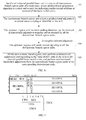
- Table 1 Ingress tributary port number of service to be added All downstream egress tributary port numbers of service to be added Position where the adjustment response status is carried #a #b BSClst #c BSClst #d BSClst (4)
- the downstream branch egress units B, C, and D complete the BSC allocation in the next group of multi-channel parallel basic switch cells, that is, BSC4 and BSC5 to be added carry the service to be transmitted, thereby ensuring that the service are not impaired during the bandwidth adjusting process.
- the idle signaling may be indicated through ⁇ idle, 0 ⁇ in the ROCH corresponding to BSC4 and BSC5, and the upstream ingress unit A sends the idle signaling to the downstream branch egress units B, C, and D, which indicates that the unidirectional bandwidth adjustment in the multi-branch Matrix segment is completed.
- the downstream branch egress units receive the unidirectional adjustment signaling sent by the upstream ingress unit of the first node, sense that the bandwidth needs to be increased, and then increase the unidirectional bandwidth from the downstream branch egress units to the Link segments of the corresponding downstream nodes.
- two time slots to be added from B to B' are TS4 and TS5
- two time slots to be added from C to C' are TS5 and TS6
- two time slots to be added from D to D' are TS7 and TS8.
- the two time slots to be added from B to B' are taken as an example, and the implementation of the adding of the time slots from C to C' and from D to D' is similar, which is implemented specifically through the following steps, a flow chart of which are as shown in FIG. 8 .
- the adjustment of the point-to-multipoint OTN asymmetric bandwidth carrier system may be triggered through the NMS.
- the NMS checks whether a unused time slot of the HO ODUk, where the unused time slot of the HO ODUk may be allocated for the ODUflex, exists in each Link segment from the source node to the sink node, and whether a unused basic switch cell which may be allocated for the ODUflex exist in each Matrix segment. If the requirements are met, the NMS allocates N time slots to be added for each Link segment in the ODUflex unidirectional channel link, and allocates N basic switch cells to be added for each Matrix segment.
- an adjustment instruction is transferred to each node in the ODUflex channel, and after receiving the unidirectional adjustment instruction, each node separately performs the unidirectional bandwidth adjustment in each Link segment and each Matrix segment, where the adjusting method is as described in the above method embodiment, and is not described in detail herein again.
- the NMS further needs to maintain the TPID list in each multi-branch node in the channel to be adjusted.
- a manner for transmitting the ODUflex data from the source node to the sink node is as follows: if switch cells in the Matrix segment of an intermediate node may be virtual container 4-16 concatenation (Virtual Container 4-16 concatenation, VC4-16c), the unidirectional adjustment signaling may be carried in a reserved overhead byte or a filling byte of VC4-16c during bandwidth adjustment and then transferred to the other side, or the unidirectional adjustment signaling is transferred to the other side in manners such as a special overhead bus.
- a format of the unidirectional adjustment signaling carried in the high order optical channel data tributary unit or the group of multi-channel parallel basic switch cells is not limited to the format of the above resizing control overhead.
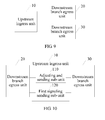
- a communication node a schematic structural diagram of which is as shown in FIG. 9 , includes: an upstream ingress unit 10 and at least two (two units are taken as an example in FIG. 9 ) downstream branch egress units 20 and 30.
- the upstream ingress unit 10 is configured to send a group of multi-channel parallel basic switch cells to the at least two downstream branch egress units 20 and 30, where unidirectional adjustment signaling is carried in the group of multi-channel parallel basic switch cells and is used for indicating unidirectional addition or removal of the basic switch cell; perform polling detection on unidirectional adjustment response statuses returned by the at least two downstream branch egress units 20 and 30 according to a downstream branch egress unit list of a local node; and send normal signaling to the at least two downstream branch egress units 20 and 30 when determining the unidirectional adjustment response statuses returned by the at least two downstream branch egress units 20 and 30 is reception acknowledgement, for instructing the at least two downstream branch egress units 20 and 30 to adjust the corresponding basic switch cell at a next group of multi-channel parallel basic switch cells.
- the upstream ingress unit 10 de-maps the ODUflex including service data from a high order optical channel data tributary unit, have the ODUflex borne in the group of multi-channel parallel basic switch cells, and then send the group of multi-channel parallel basic switch cells to all the downstream branch egress units.
- the downstream branch egress units 20 and 30 are configured to return unidirectional adjustment response statuses carrying downstream branch egress unit identifiers after receiving the group of multi-channel parallel basic switch cells that carries the unidirectional adjustment signaling and is sent by the upstream ingress unit 10, to indicate acknowledgement of the reception of the unidirectional adjustment signaling; perform unidirectional adjustment of the corresponding basic switch cell in the next group of multi-channel parallel basic switch cells when receiving the normal signaling sent by the upstream ingress unit 10; and perform unidirectional bandwidth adjustment from the downstream branch egress units to the corresponding downstream nodes.
- the downstream branch egress units 20 and 30 add the basic switch cell to be added into the group of multi-channel parallel basic switch cells, and the added basic switch cell carries services. If a basic switch cell is to be removed, the basic switch cell to be removed is removed from the next multi-channel parallel basic switch cells, and the removed basic switch cell does not carry any service, thereby ensuring that the services are not impaired during the bandwidth adjusting process.
- the downstream branch egress units 20 and 30 perform the unidirectional bandwidth adjustment from the downstream branch egress units to the corresponding downstream nodes through the following steps.
- A1 The service data of the ODUflex is first de-mapped from the received group of multi-channel parallel basic switch cells, and is mapped into the corresponding high order optical channel data tributary unit. Then, the high order optical channel data tributary unit is sent to the downstream node, and the high order optical channel data tributary unit carries the unidirectional adjustment signaling, for indicating unidirectional addition or removal of the time slot.
- the downstream node After receiving the high order optical channel data tributary unit carrying the unidirectional adjustment signaling, the downstream node may return a unidirectional adjustment response status through a resizing control overhead corresponding to a time slot in the high order optical channel data tributary unit.
- the downstream branch egress unit When the unidirectional adjustment response status that is returned by the downstream node and received by the downstream branch egress units is reception acknowledgement, the downstream branch egress unit send normal signaling to the downstream node for instructing the downstream node to perform unidirectional adjustment of a corresponding time slot in the next multi-frame, for example, to re-allocate the time slot and carry a service or not to carry any service.
- the downstream node When receiving the normal signaling, the downstream node performs unidirectional adjustment of the corresponding time slot at the next multi-frame.
- the upstream ingress unit 10 sends the group of multi-channel parallel basic switch cells to all the downstream branch egress units 20 and 30 of the local node, where the group of multi-channel parallel basic switch cells carry the unidirectional adjustment signaling for indicating unidirectional addition or removal of the basic switch cell; and when determining through polling detection that the received unidirectional adjustment response statuses returned by all the downstream branch egress units 20 and 30 is reception acknowledgement, sends the normal signaling to the downstream branch egress units 20 and 30.
- the downstream branch egress units 20 and 30 perform unidirectional adjustment of corresponding basic switch cell when receiving the next group of multi-channel parallel basic switch cells, and perform the unidirectional bandwidth adjustment from the downstream branch egress units to the corresponding downstream nodes.
- the communication node in the embodiment of the present invention implements lossless bandwidth adjustment in a point-to-multipoint OTN asymmetric bandwidth carrier system, and meets a change demand of an asymmetric bandwidth service traffic flow.
- the upstream ingress unit 10 in the communication node specifically includes: an adjusting and sending sub-unit 110 and a first signaling sending sub-unit 120.
- An adjusting and sending sub-unit 110 is configured to, through transfer control signaling and a tributary port ID field in a resizing control overhead corresponding to a basic switch cell to be adjusted, indicate unidirectional addition or removal of the corresponding basic switch cell, and send the group of multi-channel parallel basic switch cells carrying unidirectional adjustment signaling to the at least two downstream branch egress units 20 and 30.
- FIG. 4 a schematic structural diagram of the resizing control overhead sent by the adjusting and sending sub-unit 110 is as shown in FIG. 4 .
- a first signaling sending sub-unit 120 is configured to perform polling detection on the unidirectional adjustment response status returned by the at least two downstream branch egress units 20 and 30 according to the downstream branch egress unit list of the local node; and when determining that the received unidirectional adjustment response statuses returned by the at least two downstream branch egress units 20 and 30 is reception acknowledgement, send the normal signaling to the at least two downstream branch egress units 20 and 30, so as to instruct the at least two downstream branch egress units 20 and 30 to perform unidirectional adjustment of a corresponding basic switch cell in the next group of multi-channel parallel basic switch cells.
- downstream branch egress unit 20 of the communication node specifically includes the following sub-units, and the downstream branch egress unit 30 may also include the following sub-units.
- a status returning sub-unit 210 is configured to, after receiving the group of multi-channel parallel basic switch cells that carries the unidirectional adjustment signaling and sent by the upstream ingress unit 10, indicate acknowledgement of the reception of the unidirectional adjustment signaling through a tributary port ID and a tributary slot group status field in a resizing control overhead corresponding to the basic switch cell occupied by the unidirectional adjustment response status, and return the unidirectional adjustment response status to the upstream ingress unit 10.
- a schematic structural diagram of the resizing control overhead returned by the status returning sub-unit 210 is as shown in FIG. 5 . If it is required to adjust at least two basic switch cells, that is, carry the unidirectional adjustment signaling in the resizing control overhead corresponding to the at least two basic switch cells, when returning the unidirectional adjustment response status, the resizing control overhead corresponding to each basic switch cell is not required to carry the response status, while one resizing control overhead is allocated for one TPID, and the unidirectional adjustment response status corresponding to all the basic switch cells is bound in the allocated resizing control overhead.
- one basic switch cell may be a first basic switch cell occupied by a channel in an opposite direction to the unidirectional channel, and corresponds to a tributary port ID of the downstream branch egress unit. In this way, resources occupied in the retransmission of the adjustment response status may be saved.
- a switch cell adjusting sub-unit 220 is configured to, when receiving the normal signaling sent by the upstream ingress unit 10, perform unidirectional adjustment of the corresponding basic switch cell in the next group of multi-channel parallel basic switch cells.
- a time slot adjusting sub-unit 230 is configured to perform unidirectional bandwidth adjustment from the downstream branch egress unit to the corresponding downstream node.
- the time slot adjusting sub-unit 230 may include:
- the time slot adjusting sub-unit 230 can reduce signaling transmission during the bandwidth adjusting process, through the time slot adjusting and sending unit including some necessary fields in the resizing control overhead and sending the fields to the downstream node.
- the communication node further includes: a connectivity checking and sending unit 40 and a response status sending unit 50.
- a connectivity checking and sending unit 40 is configured to determine whether unidirectional bandwidth adjustment is completed in the Matrix segments crossed to all the branches of the local node and the Link segments adjacent to all the branches of the local node, and send a unidirectional tributary slot connectivity check indication to all the downstream nodes.
- the upstream ingress unit sends the normal signaling to all the downstream branch egress units, and all the downstream branch egress units perform unidirectional adjustment of the basic switch cell in the next group of multi-channel parallel basic switch cells.
- the connectivity checking and sending unit 40 determines that the unidirectional bandwidth adjustment is completed in the Matrix segments crossed to all the branches of the local node and the Link segments adjacent to all the branches of the local node.
- a response status sending unit 50 is configured to perform polling detection on unidirectional network connection response statuses returned by all the downstream nodes according to the branch egress unit list of the local node, and send the unidirectional network connection response status to the upstream node when determining that the received unidirectional network connection response statuses returned by all the downstream nodes is reception acknowledgement.
- the unidirectional tributary slot connectivity check indication may be indicated through a specific value ⁇ 1 ⁇ of ⁇ TSCC ⁇ in the resizing control overhead corresponding to the time slot to be adjusted in the high order optical channel data tributary unit, and a structure of the resizing control overhead is shown in FIG. 4 .
- the unidirectional network connection response status received by the response status sending unit 50 may be indicated through a specific value ⁇ TPID, ACK ⁇ NACK ⁇ of ⁇ TPID, NCS ⁇ in the resizing control overhead corresponding to the time slot to be adjusted in the high order optical channel data tributary unit. If the value is ACK, it indicates a status of reception acknowledgement; and if the value is NACK, it indicates a status of reception negative acknowledgement.
- a structure of the resizing control overhead is shown in FIG. 5 .
- the bandwidth adjusting method in the embodiment of the present invention includes: the upstream ingress unit of the local node sends the group of multi-channel parallel basic switch cells to all the downstream branch egress units of the local node, where the unidirectional adjustment signaling is carried in the group of multi-channel parallel basic switch cells for indicating unidirectional addition or removal of the basic switch cell; the upstream ingress unit performs, according to a downstream branch egress unit list of the local node, polling detection on the unidirectional adjustment response statuses returned by the downstream branch egress units, and sends normal signaling when determining that the unidirectional adjustment response statuses returned by all the downstream branch egress units are reception acknowledgement; and all the downstream branch egress units receive the normal signaling, perform unidirectional adjustment of the corresponding basic switch cell in the next group of multi-channel parallel basic switch cells, and perform unidirectional bandwidth adjustment from the downstream branch egress units to the corresponding downstream nodes.
- the method in the embodiment of the present invention implements lossless bandwidth adjustment
- ROM read-only memory
- RAM random access memory
- magnetic disk a magnetic disk or an optical disk.
Landscapes
- Engineering & Computer Science (AREA)
- Computer Networks & Wireless Communication (AREA)
- Signal Processing (AREA)
- Data Exchanges In Wide-Area Networks (AREA)
- Time-Division Multiplex Systems (AREA)
Claims (10)
- Bandbreiten-Einstellverfahren, umfassend:Senden (101), durch eine vorgeschaltete Zugangseinheit eines lokalen Knotens, einer Gruppe von Mehrkanal-Parallel-Basisschaltzellen an alle nachgeschalteten Zweigausgangseinheiten des lokalen Knotens, wobei eine erste Einstellungssignalisierung in der Gruppe von Mehrkanal-Parallel-Basisschaltzellen getragen wird und zur Anzeige von unidirektionaler Hinzufügung oder Entfernung einer Basisschaltzelle verwendet wird;Zurücksenden (102), durch nachgeschaltete Zweigausgangseinheiten, die die Gruppe von Mehrkanal-Parallel-Basisschaltzellen empfangen, die die erste Einstellungssignalisierung tragen, von unidirektionalen Einstellungsantwortstatus, die jeweilige nachgeschaltete Zweigzugangseinheit-Kennungen tragen und zum Anzeigen des Empfangs der ersten Einstellungssignalisierung verwendet werden;Senden (104), durch die vorgeschaltete Zugangseinheit, einer ersten normalen Signalisierung an alle nachgeschalteten Zweigausgangseinheiten, wenn bestimmt (103) wird, dass die ersten von allen nachgeschalteten Zweigausgangseinheiten zurückgesandten Einstellungsantwortstatus Empfangsbestätigungen sind, durch Durchführen einer Abfragedetektion an den von den nachgeschalteten Zweigausgangseinheiten zurückgesandten unidirektionalen Einstellungsantwortstatus gemäß einer nachgeschalteten Zweigzugangseinheit-Liste des lokalen Knotens, wobei die nachgeschaltete Zweigzugangseinheit-Liste eine korrespondierende Beziehung zwischen einer vorgeschalteten Zugangseinheit-Kennung und allen nachgeschalteten Zweigzugangseinheit-Kennungen speichert; undnach Empfangen der ersten normalen Signalisierung, Hinzufügen oder Entfernen (105), durch jede nachgeschaltete Zweigzugangseinheit, der Basisschaltzelle in eine oder aus einer nächsten Gruppe von Mehrkanal-Parallel-Basisschaltzellen gemäß der ersten Einstellungssignalisierung, Einstellen eines Zeitschlitzes einer optischen Kanaldateneinheit hoher Ordnung, gesandt durch die nachgeschaltete Zweigzugangseinheit an einen nachgeschalteten Knoten, und Anweisen des nachgeschalteten Knotens zum Einstellen des Zeitschlitzes der empfangenen optischen Kanaldateneinheit hoher Ordnung.
- Verfahren nach Anspruch 1, wobei die erste Einstellungssignalisierung durch Übertragungssteuerungssignalisierung und ein Zubringerport-ID-Feld in einem Größenänderungssteuerungsoverhead der hinzuzufügenden oder zu entfernenden Basisschaltzelle angezeigt wird; und der erste Einstellungsantwortstatus durch eine Zubringerport-ID und ein Zubringerschlitz-Gruppenstatusfeld in dem Größenänderungssteuerungsoverhead korrespondierend mit der Basisschaltzelle von der nachgeschalteten Zweigzugangseinheit zu der vorgeschalteten Zugangseinheit angezeigt wird.
- Verfahren nach Anspruch 1, wobei das Einstellen, durch die nachgeschaltete Zweigzugangseinheit, des Zeitschlitzes der optischen Kanaldateneinheit hoher Ordnung, gesandt durch die nachgeschaltete Zweigzugangseinheit an den nachgeschalteten Knoten, und das Anweisen des nachgeschalteten Knotens zum Einstellen des Zeitschlitzes der empfangenen optischen Kanaldateneinheit hoher Ordnung spezifisch umfasst:Tragen einer zweiten Einstellungssignalisierung in der Übertragungssteuerungssignalisierung und des Zubringerport-ID-Felds in einem Größenänderungssteuerungsoverhead der optischen Kanaldateneinheit hoher Ordnung, gesandt an den nachgeschalteten Knoten, zum Anweisen des nachgeschalteten Knotens, den Zeitschlitz unidirektional hinzuzufügen oder zu entfernen; undwenn ein zweiter Einstellungsantwortstatus, der von dem nachgeschalteten Knoten zurückgesandt und von den nachgeschalteten Zweigausgangseinheiten empfangen wird, eine Empfangsbestätigung ist, Senden zweiter normaler Signalisierung an den nachgeschalteten Knoten zum Anweisen des nachgeschalteten Knotens, den Zeitschlitz der empfangenen optischen Kanaldateneinheit hoher Ordnung einzustellen.
- Verfahren nach einem der Ansprüche 1 bis 3, ferner umfassend:wenn bestimmt wird, dass die Basisschaltzelle zu "Matrix"-Segmenten, die mit allen Zweigen des lokalen Knotens gekreuzt sind, hinzugefügt oder davon entfernt wird, und der Zeitschlitz in "Link"-Segmenten angrenzend an sämtlichen der Zweige des lokalen Knotens eingestellt wird, Senden einer unidirektionalen Zubringerschlitz-Konnektivitätsprüfungsanzeige an sämtliche der nachgeschalteten Knoten; undwenn bestimmt wird, dass die durch sämtliche der nachgeschalteten Knoten zurückgesandten empfangenen unidirektionalen Netzwerkverbindung-Antwortstatus Empfangsbestätigungen sind, Senden des unidirektionalen Netzwerkverbindung-Antwortstatus an einen vorgeschalteten Knoten.
- Verfahren nach Anspruch 4, wobei die unidirektionale Zubringerschlitz-Konnektivitätsprüfungsanzeige durch ein Zubringerschlitz-Konnektivitätsprüfungs-bzw. TSCC-Feld in dem Größenänderungssteuerungsoverhead in der optischen Kanaldateneinheit hoher Ordnung angezeigt wird; und
der unidirektionale Netzwerkverbindung-Antwortstatus durch eine Zubringerport-ID und ein Netzwerkverbindung-Statusfeld in dem Größenänderungssteuerungsoverhead in der durch den nachgeschalteten Knoten zurückgesandten optischen Kanaldateneinheit hoher Ordnung angezeigt wird. - Kommunikationsknoten, umfassend: eine vorgeschaltete Zugangseinheit (10) und mindestens zwei nachgeschaltete Zweigausgangseinheiten (20, 30), wobei
die vorgeschaltete Zugangseinheit (10) konfiguriert ist, eine Gruppe von Mehrkanal-Parallel-Basisschaltzellen an die mindestens zwei nachgeschalteten Zweigausgangseinheiten zu senden, wobei eine erste Einstellungssignalisierung in der Gruppe von Mehrkanal-Parallel-Basisschaltzellen getragen wird und zur Anzeige von unidirektionaler Hinzufügung oder Entfernung der Basisschaltzelle verwendet wird; Abfragedetektion an unidirektionalen Einstellungsantwortstatus, zurückgesandt von den mindestens zwei nachgeschalteten Zweigausgangseinheiten, gemäß einer Liste nachgeschalteter Zweigausgangseinheiten des Kommunikationsknotens durchzuführen; und erste normale Signalisierung an die mindestens zwei nachgeschalteten Zweigausgangseinheiten zu senden, wenn bestimmt wird, dass die empfangenen unidirektionalen Einstellungsantwortstatus, zurückgesandt durch die mindestens zwei nachgeschalteten Zweigausgangseinheiten, Empfangsbestätigungen sind; wobei die unidirektionalen Einstellungsantwortstatus jeweilige Kennungen nachgeschalteter Zweigausgangseinheiten tragen und zur Anzeige des Empfangs der ersten Einstellungssignalisierung verwendet werden und wobei die Liste nachgeschalteter Zweigausgangseinheiten eine korrespondierende Beziehung zwischen einer Kennung einer vorgeschalteten Zugangseinheit und Kennungen nachgeschalteter Zweigausgangseinheiten speichert; und
jede nachgeschaltete Zweigzugangseinheit (20, 30) konfiguriert ist, einen unidirektionalen Einstellungsantwortstatus nach Empfang der Gruppe von Mehrkanal-Parallel-Basisschaltzellen, die die erste Einstellungssignalisierung tragen, zurückzusenden; nach Empfang der ersten normalen Signalisierung die Basisschaltzelle zu oder von einer nächsten Gruppe von Mehrkanal-Parallel-Basisschaltzellen gemäß der ersten Einstellungssignalisierung hinzuzufügen oder zu entfernen; und einen Zeitschlitz einer optischen Kanaldateneinheit hoher Ordnung, gesandt durch die nachgeschaltete Zweigzugangseinheit an einen nachgeschalteten Knoten, einzustellen und den nachgeschalteten Knoten zum Einstellen des Zeitschlitzes der empfangenen optischen Kanaldateneinheit hoher Ordnung anzuweisen. - Kommunikationsknoten nach Anspruch 6, wobei die vorgeschaltete Zugangseinheit (10) umfasst:eine Einstellungs- und Sende-Untereinheit (110), konfiguriert zum Tragen erster Einstellungssignalisierung durch Übertragungssteuerungssignalisierung und eines Zubringerport-ID-Felds in einem Größenänderungssteuerungsoverhead in der Basisschaltzelle, die hinzuzufügen oder zu entfernen ist, zum Anzeigen unidirektionaler Hinzufügung oder Entfernung der Basisschaltzelle und Senden der Gruppe von Mehrkanal-Parallel-Basisschaltzellen an die mindestens zwei nachgeschalteten Zweigausgangseinheiten; undeine erste Signalisierung-Sende-Untereinheit (120), konfiguriert zum Senden erster normaler Signalisierung an die mindestens zwei nachgeschalteten Zweigausgangseinheiten, wenn bestimmt wird, dass die von den mindestens zwei nachgeschalteten Zweigausgangseinheiten zurückgesandten ersten Einstellungsantwortstatus Empfangsbestätigungen sind.
- Kommunikationsknoten nach Anspruch 6, wobei die nachgeschaltete Zweigzugangseinheit (20, 30) umfasst:eine Statusrücksendung-Untereinheit (210), konfiguriert zum, nach Empfang der von der vorgeschalteten Zugangseinheit gesandten Gruppe von Mehrkanal-Parallel-Basisschaltzellen, Tragen eines ersten Einstellungsantwortstatus in einer Zubringerport-ID und eines Zubringerschlitz-Gruppenstatusfelds in einem Größenänderungssteuerungsoverhead in der Basisschaltzelle von der nachgeschalteten Zweigzugangseinheit zu der vorgeschalteten Zugangseinheit, um Bestätigung des Empfangs der ersten Einstellungssignalisierung anzuzeigen und den ersten Einstellungsantwortstatus an die vorgeschaltete Zugangseinheit zurückzusenden;eine Schaltzelleneinstellung-Untereinheit (220), konfiguriert zum Hinzufügen oder Entfernen der Basisschaltzelle zu der oder aus der nächsten Gruppe von Mehrkanal-Parallel-Basisschaltzellen gemäß der ersten Einstellungssignalisierung, wenn die durch die vorgeschaltete Zugangseinheit gesandte erste normale Signalisierung empfangen wird; undeine Zeitschlitzeinstellung-Untereinheit (230), konfiguriert zum Einstellen eines Zeitschlitzes einer optischen Kanaldateneinheit hoher Ordnung, gesandt durch die nachgeschaltete Zweigzugangseinheit an den korrespondierenden nachgeschalteten Knoten, und Anweisen des nachgeschalteten Knotens zum Einstellen des Zeitschlitzes der empfangenen optischen Kanaldateneinheit hoher Ordnung.
- Kommunikationsknoten nach Anspruch 8, wobei die Zeitschlitzeinstellung-Untereinheit (230) umfasst:eine Zeitschlitz-Einstellungs- und Sendeeinheit, konfiguriert zum Einstellen des Zeitschlitzes der optischen Kanaldateneinheit hoher Ordnung, Tragen zweiter Einstellungssignalisierung in Übertragungssteuerungssignalisierung und eines Zubringerport-ID-Felds in dem Größenänderungssteuerungsoverhead in der an den nachgeschalteten Knoten gesandten optischen Kanaldateneinheit hoher Ordnung, zum Anweisen des nachgeschalteten Knotens, den Zeitschlitz unidirektional hinzuzufügen oder zu entfernen; undeine zweite Signalisierung-Sendeeinheit, konfiguriert zum, wenn ein von dem nachgeschalteten Knoten zurückgesandter empfangener zweiter Einstellungsantwortstatus Empfangsbestätigung ist, Senden zweiter normaler Signalisierung an den nachgeschalteten Knoten, um den nachgeschalteten Knoten anzuweisen, den Zeitschlitz der empfangenen optischen Kanaldateneinheit hoher Ordnung einzustellen.
- Kommunikationsknoten nach einem der Ansprüche 6 bis 9, ferner umfassend:eine Konnektivitätsprüfung-Sendeeinheit (40), konfiguriert zum, wenn bestimmt wird, dass die Basisschaltzelle zu "Matrix"-Segmenten, die mit allen Zweigen des lokalen Knotens gekreuzt sind, hinzugefügt oder davon entfernt wird, und der Zeitschlitz in "Link"-Segmenten angrenzend an sämtlichen der Zweige des lokalen Knotens eingestellt wird, Senden einer unidirektionalen Zubringerschlitz-Konnektivitätsprüfungsanzeige an sämtliche der nachgeschalteten Knoten; undeine Antwortstatus-Sendeeinheit (50), konfiguriert zum Senden eines unidirektionalen Netzwerkverbindung-Antwortstatus an einen vorgeschalteten Knoten, wenn bestimmt wird, dass die durch sämtliche der nachgeschalteten Knoten zurückgesandten empfangenen unidirektionalen Netzwerkverbindung-Antwortstatus Empfangsbestätigungen sind,
Applications Claiming Priority (2)
| Application Number | Priority Date | Filing Date | Title |
|---|---|---|---|
| CN201010139840.8A CN102215153B (zh) | 2010-04-02 | 2010-04-02 | 带宽调整方法及通信节点 |
| PCT/CN2011/070211 WO2011120343A1 (zh) | 2010-04-02 | 2011-01-12 | 带宽调整方法及通信节点 |
Publications (3)
| Publication Number | Publication Date |
|---|---|
| EP2472748A1 EP2472748A1 (de) | 2012-07-04 |
| EP2472748A4 EP2472748A4 (de) | 2013-02-20 |
| EP2472748B1 true EP2472748B1 (de) | 2015-04-01 |
Family
ID=44711348
Family Applications (1)
| Application Number | Title | Priority Date | Filing Date |
|---|---|---|---|
| EP11761918.9A Active EP2472748B1 (de) | 2010-04-02 | 2011-01-12 | Verfahren und kommunikationsknoten zum einstellen der bandbreite |
Country Status (4)
| Country | Link |
|---|---|
| US (1) | US9071376B2 (de) |
| EP (1) | EP2472748B1 (de) |
| CN (1) | CN102215153B (de) |
| WO (1) | WO2011120343A1 (de) |
Families Citing this family (19)
| Publication number | Priority date | Publication date | Assignee | Title |
|---|---|---|---|---|
| AU2009352636C1 (en) | 2009-09-17 | 2014-10-09 | Huawei Technologies Co., Ltd. | Dynamic hitless resizing in optical transport networks |
| US9191115B2 (en) * | 2011-02-03 | 2015-11-17 | Tejas Networks Ltd | Method for configuring end-to-end lower order ODU network trails across optical transport network |
| US10455301B2 (en) * | 2013-01-17 | 2019-10-22 | Infinera Corporation | Method to re-provision bandwidth in P-OTN network based on current traffic demand |
| CN104066017B (zh) * | 2013-03-21 | 2018-10-23 | 中兴通讯股份有限公司 | 设备单元、节点设备、隧道带宽调整的方法和系统 |
| CN103547338B (zh) * | 2013-04-22 | 2016-09-28 | 华为技术有限公司 | 无损业务的多载波频谱迁移方法及装置 |
| CN104737501B (zh) * | 2013-06-24 | 2017-11-17 | 华为技术有限公司 | 可变光通道带宽增加方法和减少方法及装置 |
| US9538264B2 (en) | 2014-08-07 | 2017-01-03 | Ciena Corporation | ODUflex resizing systems and methods |
| US10187318B2 (en) | 2015-04-21 | 2019-01-22 | Ciena Corporation | Dynamic bandwidth control systems and methods in software defined networking |
| US9496958B1 (en) * | 2015-08-04 | 2016-11-15 | Adva Optical Networking Se | Method and apparatus for traffic engineering on an optical transport network |
| CN106506110B (zh) * | 2015-09-06 | 2020-05-29 | 中兴通讯股份有限公司 | 统计复用光传送网方法及装置 |
| US9985724B2 (en) * | 2016-09-09 | 2018-05-29 | Ciena Corporation | Horizontal synchronization extensions for service resizing in optical networks |
| CN113300810B (zh) * | 2016-12-23 | 2023-03-10 | 华为技术有限公司 | 一种传输速率的调整方法及网络设备 |
| CN108632061B (zh) * | 2017-03-20 | 2020-12-15 | 华为技术有限公司 | 一种带宽调整方法及装置 |
| CN111356037B (zh) * | 2018-12-21 | 2021-08-20 | 深圳市海思半导体有限公司 | 光传送网线路带宽切换方法及装置 |
| CN112653534B (zh) * | 2019-10-12 | 2023-09-19 | 中国移动通信有限公司研究院 | 一种时隙对齐方法、装置、设备及计算机可读存储介质 |
| US10979144B1 (en) * | 2019-10-15 | 2021-04-13 | Level 3 Communications, Llc | Optical domain controller of a telecommunications network |
| CN111865406B (zh) * | 2020-06-11 | 2021-12-14 | 烽火通信科技股份有限公司 | 一种链路检测方法及系统 |
| CN112804078B (zh) * | 2020-07-23 | 2022-03-18 | 中兴通讯股份有限公司 | 带宽调整方法、业务传输方法、网络设备和可读存储介质 |
| CN114422319B (zh) | 2020-10-12 | 2025-08-22 | 中兴通讯股份有限公司 | 带宽调整方法、装置和系统、电子设备、可读存储介质 |
Family Cites Families (4)
| Publication number | Priority date | Publication date | Assignee | Title |
|---|---|---|---|---|
| CN100488083C (zh) * | 2004-04-21 | 2009-05-13 | 华为技术有限公司 | 光通信网络中的业务调度装置及其方法 |
| CN100584103C (zh) * | 2005-03-10 | 2010-01-20 | 华为技术有限公司 | 光传送网中的信号调度方法和系统 |
| CN1992712B (zh) * | 2005-12-26 | 2011-04-20 | 中兴通讯股份有限公司 | 链路带宽调整方案中动态无损切换的虚级联映射方法 |
| CN101257347B (zh) * | 2007-02-28 | 2011-07-13 | 株式会社日立制作所 | 带宽分配设备及方法 |
-
2010
- 2010-04-02 CN CN201010139840.8A patent/CN102215153B/zh not_active Expired - Fee Related
-
2011
- 2011-01-12 WO PCT/CN2011/070211 patent/WO2011120343A1/zh not_active Ceased
- 2011-01-12 EP EP11761918.9A patent/EP2472748B1/de active Active
-
2012
- 2012-05-04 US US13/464,885 patent/US9071376B2/en active Active
Also Published As
| Publication number | Publication date |
|---|---|
| CN102215153A (zh) | 2011-10-12 |
| US9071376B2 (en) | 2015-06-30 |
| CN102215153B (zh) | 2014-11-05 |
| WO2011120343A1 (zh) | 2011-10-06 |
| EP2472748A1 (de) | 2012-07-04 |
| US20120224857A1 (en) | 2012-09-06 |
| EP2472748A4 (de) | 2013-02-20 |
Similar Documents
| Publication | Publication Date | Title |
|---|---|---|
| EP2472748B1 (de) | Verfahren und kommunikationsknoten zum einstellen der bandbreite | |
| US11700083B2 (en) | Method and apparatus for processing service data in optical transport network | |
| US10608766B2 (en) | Multi-service transport and receiving method and apparatus | |
| EP3462647B1 (de) | Verfahren zum transportieren von client-signalen in einem optischen transportnetzwerk und transportvorrichtung | |
| US9497064B2 (en) | Method and apparatus for transporting ultra-high-speed Ethernet service | |
| CN101051879B (zh) | 低速业务复用及解复用的方法和装置 | |
| EP3709540B1 (de) | Schnittstellenübertragungsverfahren, gerät und vorrichtung | |
| WO2008125060A1 (fr) | Procédé de transport d'un signal client dans le réseau de transport optique et équipement apparenté | |
| CN101615967A (zh) | 一种业务数据的发送、接收方法、装置和系统 | |
| US11962349B2 (en) | Signal sending and receiving method, apparatus, and system | |
| WO2017124787A1 (zh) | 一种传输公共无线接口信号的方法和设备 | |
| WO2020192533A1 (zh) | 一种业务数据的处理方法及装置 | |
| US20110318001A1 (en) | Method and device for sending and receiving service data | |
| CN102098595B (zh) | 一种光传送网中客户信号传送方法及相关设备 |
Legal Events
| Date | Code | Title | Description |
|---|---|---|---|
| PUAI | Public reference made under article 153(3) epc to a published international application that has entered the european phase |
Free format text: ORIGINAL CODE: 0009012 |
|
| 17P | Request for examination filed |
Effective date: 20120330 |
|
| AK | Designated contracting states |
Kind code of ref document: A1 Designated state(s): AL AT BE BG CH CY CZ DE DK EE ES FI FR GB GR HR HU IE IS IT LI LT LU LV MC MK MT NL NO PL PT RO RS SE SI SK SM TR |
|
| REG | Reference to a national code |
Ref country code: DE Ref legal event code: R079 Ref document number: 602011015286 Country of ref document: DE Free format text: PREVIOUS MAIN CLASS: H04B0010120000 Ipc: H04J0003160000 |
|
| A4 | Supplementary search report drawn up and despatched |
Effective date: 20130123 |
|
| RIC1 | Information provided on ipc code assigned before grant |
Ipc: H04J 3/16 20060101AFI20130117BHEP |
|
| DAX | Request for extension of the european patent (deleted) | ||
| GRAP | Despatch of communication of intention to grant a patent |
Free format text: ORIGINAL CODE: EPIDOSNIGR1 |
|
| INTG | Intention to grant announced |
Effective date: 20141013 |
|
| GRAS | Grant fee paid |
Free format text: ORIGINAL CODE: EPIDOSNIGR3 |
|
| GRAA | (expected) grant |
Free format text: ORIGINAL CODE: 0009210 |
|
| AK | Designated contracting states |
Kind code of ref document: B1 Designated state(s): AL AT BE BG CH CY CZ DE DK EE ES FI FR GB GR HR HU IE IS IT LI LT LU LV MC MK MT NL NO PL PT RO RS SE SI SK SM TR |
|
| REG | Reference to a national code |
Ref country code: GB Ref legal event code: FG4D |
|
| REG | Reference to a national code |
Ref country code: CH Ref legal event code: EP |
|
| REG | Reference to a national code |
Ref country code: IE Ref legal event code: FG4D |
|
| REG | Reference to a national code |
Ref country code: DE Ref legal event code: R096 Ref document number: 602011015286 Country of ref document: DE Effective date: 20150507 |
|
| REG | Reference to a national code |
Ref country code: AT Ref legal event code: REF Ref document number: 719630 Country of ref document: AT Kind code of ref document: T Effective date: 20150515 |
|
| REG | Reference to a national code |
Ref country code: NL Ref legal event code: VDEP Effective date: 20150401 |
|
| REG | Reference to a national code |
Ref country code: AT Ref legal event code: MK05 Ref document number: 719630 Country of ref document: AT Kind code of ref document: T Effective date: 20150401 |
|
| REG | Reference to a national code |
Ref country code: LT Ref legal event code: MG4D |
|
| PG25 | Lapsed in a contracting state [announced via postgrant information from national office to epo] |
Ref country code: NL Free format text: LAPSE BECAUSE OF FAILURE TO SUBMIT A TRANSLATION OF THE DESCRIPTION OR TO PAY THE FEE WITHIN THE PRESCRIBED TIME-LIMIT Effective date: 20150401 |
|
| PG25 | Lapsed in a contracting state [announced via postgrant information from national office to epo] |
Ref country code: FI Free format text: LAPSE BECAUSE OF FAILURE TO SUBMIT A TRANSLATION OF THE DESCRIPTION OR TO PAY THE FEE WITHIN THE PRESCRIBED TIME-LIMIT Effective date: 20150401 Ref country code: HR Free format text: LAPSE BECAUSE OF FAILURE TO SUBMIT A TRANSLATION OF THE DESCRIPTION OR TO PAY THE FEE WITHIN THE PRESCRIBED TIME-LIMIT Effective date: 20150401 Ref country code: LT Free format text: LAPSE BECAUSE OF FAILURE TO SUBMIT A TRANSLATION OF THE DESCRIPTION OR TO PAY THE FEE WITHIN THE PRESCRIBED TIME-LIMIT Effective date: 20150401 Ref country code: ES Free format text: LAPSE BECAUSE OF FAILURE TO SUBMIT A TRANSLATION OF THE DESCRIPTION OR TO PAY THE FEE WITHIN THE PRESCRIBED TIME-LIMIT Effective date: 20150401 Ref country code: NO Free format text: LAPSE BECAUSE OF FAILURE TO SUBMIT A TRANSLATION OF THE DESCRIPTION OR TO PAY THE FEE WITHIN THE PRESCRIBED TIME-LIMIT Effective date: 20150701 Ref country code: PT Free format text: LAPSE BECAUSE OF FAILURE TO SUBMIT A TRANSLATION OF THE DESCRIPTION OR TO PAY THE FEE WITHIN THE PRESCRIBED TIME-LIMIT Effective date: 20150803 Ref country code: CZ Free format text: LAPSE BECAUSE OF FAILURE TO SUBMIT A TRANSLATION OF THE DESCRIPTION OR TO PAY THE FEE WITHIN THE PRESCRIBED TIME-LIMIT Effective date: 20150401 |
|
| PG25 | Lapsed in a contracting state [announced via postgrant information from national office to epo] |
Ref country code: LV Free format text: LAPSE BECAUSE OF FAILURE TO SUBMIT A TRANSLATION OF THE DESCRIPTION OR TO PAY THE FEE WITHIN THE PRESCRIBED TIME-LIMIT Effective date: 20150401 Ref country code: GR Free format text: LAPSE BECAUSE OF FAILURE TO SUBMIT A TRANSLATION OF THE DESCRIPTION OR TO PAY THE FEE WITHIN THE PRESCRIBED TIME-LIMIT Effective date: 20150702 Ref country code: AT Free format text: LAPSE BECAUSE OF FAILURE TO SUBMIT A TRANSLATION OF THE DESCRIPTION OR TO PAY THE FEE WITHIN THE PRESCRIBED TIME-LIMIT Effective date: 20150401 Ref country code: RS Free format text: LAPSE BECAUSE OF FAILURE TO SUBMIT A TRANSLATION OF THE DESCRIPTION OR TO PAY THE FEE WITHIN THE PRESCRIBED TIME-LIMIT Effective date: 20150401 Ref country code: IS Free format text: LAPSE BECAUSE OF FAILURE TO SUBMIT A TRANSLATION OF THE DESCRIPTION OR TO PAY THE FEE WITHIN THE PRESCRIBED TIME-LIMIT Effective date: 20150801 |
|
| REG | Reference to a national code |
Ref country code: DE Ref legal event code: R097 Ref document number: 602011015286 Country of ref document: DE |
|
| PG25 | Lapsed in a contracting state [announced via postgrant information from national office to epo] |
Ref country code: DK Free format text: LAPSE BECAUSE OF FAILURE TO SUBMIT A TRANSLATION OF THE DESCRIPTION OR TO PAY THE FEE WITHIN THE PRESCRIBED TIME-LIMIT Effective date: 20150401 Ref country code: EE Free format text: LAPSE BECAUSE OF FAILURE TO SUBMIT A TRANSLATION OF THE DESCRIPTION OR TO PAY THE FEE WITHIN THE PRESCRIBED TIME-LIMIT Effective date: 20150401 |
|
| PLBE | No opposition filed within time limit |
Free format text: ORIGINAL CODE: 0009261 |
|
| STAA | Information on the status of an ep patent application or granted ep patent |
Free format text: STATUS: NO OPPOSITION FILED WITHIN TIME LIMIT |
|
| PG25 | Lapsed in a contracting state [announced via postgrant information from national office to epo] |
Ref country code: SK Free format text: LAPSE BECAUSE OF FAILURE TO SUBMIT A TRANSLATION OF THE DESCRIPTION OR TO PAY THE FEE WITHIN THE PRESCRIBED TIME-LIMIT Effective date: 20150401 Ref country code: RO Free format text: LAPSE BECAUSE OF NON-PAYMENT OF DUE FEES Effective date: 20150401 Ref country code: PL Free format text: LAPSE BECAUSE OF FAILURE TO SUBMIT A TRANSLATION OF THE DESCRIPTION OR TO PAY THE FEE WITHIN THE PRESCRIBED TIME-LIMIT Effective date: 20150401 |
|
| 26N | No opposition filed |
Effective date: 20160105 |
|
| PG25 | Lapsed in a contracting state [announced via postgrant information from national office to epo] |
Ref country code: IT Free format text: LAPSE BECAUSE OF FAILURE TO SUBMIT A TRANSLATION OF THE DESCRIPTION OR TO PAY THE FEE WITHIN THE PRESCRIBED TIME-LIMIT Effective date: 20150401 |
|
| PG25 | Lapsed in a contracting state [announced via postgrant information from national office to epo] |
Ref country code: BE Free format text: LAPSE BECAUSE OF NON-PAYMENT OF DUE FEES Effective date: 20160131 Ref country code: SI Free format text: LAPSE BECAUSE OF FAILURE TO SUBMIT A TRANSLATION OF THE DESCRIPTION OR TO PAY THE FEE WITHIN THE PRESCRIBED TIME-LIMIT Effective date: 20150401 |
|
| PG25 | Lapsed in a contracting state [announced via postgrant information from national office to epo] |
Ref country code: LU Free format text: LAPSE BECAUSE OF FAILURE TO SUBMIT A TRANSLATION OF THE DESCRIPTION OR TO PAY THE FEE WITHIN THE PRESCRIBED TIME-LIMIT Effective date: 20160112 Ref country code: BE Free format text: LAPSE BECAUSE OF FAILURE TO SUBMIT A TRANSLATION OF THE DESCRIPTION OR TO PAY THE FEE WITHIN THE PRESCRIBED TIME-LIMIT Effective date: 20150401 |
|
| REG | Reference to a national code |
Ref country code: CH Ref legal event code: PL |
|
| PG25 | Lapsed in a contracting state [announced via postgrant information from national office to epo] |
Ref country code: MC Free format text: LAPSE BECAUSE OF FAILURE TO SUBMIT A TRANSLATION OF THE DESCRIPTION OR TO PAY THE FEE WITHIN THE PRESCRIBED TIME-LIMIT Effective date: 20150401 |
|
| REG | Reference to a national code |
Ref country code: FR Ref legal event code: ST Effective date: 20160930 |
|
| PG25 | Lapsed in a contracting state [announced via postgrant information from national office to epo] |
Ref country code: LI Free format text: LAPSE BECAUSE OF NON-PAYMENT OF DUE FEES Effective date: 20160131 Ref country code: CH Free format text: LAPSE BECAUSE OF NON-PAYMENT OF DUE FEES Effective date: 20160131 |
|
| REG | Reference to a national code |
Ref country code: IE Ref legal event code: MM4A |
|
| PG25 | Lapsed in a contracting state [announced via postgrant information from national office to epo] |
Ref country code: FR Free format text: LAPSE BECAUSE OF NON-PAYMENT OF DUE FEES Effective date: 20160201 |
|
| PG25 | Lapsed in a contracting state [announced via postgrant information from national office to epo] |
Ref country code: IE Free format text: LAPSE BECAUSE OF NON-PAYMENT OF DUE FEES Effective date: 20160112 |
|
| PG25 | Lapsed in a contracting state [announced via postgrant information from national office to epo] |
Ref country code: SE Free format text: LAPSE BECAUSE OF FAILURE TO SUBMIT A TRANSLATION OF THE DESCRIPTION OR TO PAY THE FEE WITHIN THE PRESCRIBED TIME-LIMIT Effective date: 20150401 |
|
| PG25 | Lapsed in a contracting state [announced via postgrant information from national office to epo] |
Ref country code: MT Free format text: LAPSE BECAUSE OF FAILURE TO SUBMIT A TRANSLATION OF THE DESCRIPTION OR TO PAY THE FEE WITHIN THE PRESCRIBED TIME-LIMIT Effective date: 20150401 |
|
| PG25 | Lapsed in a contracting state [announced via postgrant information from national office to epo] |
Ref country code: HU Free format text: LAPSE BECAUSE OF FAILURE TO SUBMIT A TRANSLATION OF THE DESCRIPTION OR TO PAY THE FEE WITHIN THE PRESCRIBED TIME-LIMIT; INVALID AB INITIO Effective date: 20110112 Ref country code: CY Free format text: LAPSE BECAUSE OF FAILURE TO SUBMIT A TRANSLATION OF THE DESCRIPTION OR TO PAY THE FEE WITHIN THE PRESCRIBED TIME-LIMIT Effective date: 20150401 Ref country code: SM Free format text: LAPSE BECAUSE OF FAILURE TO SUBMIT A TRANSLATION OF THE DESCRIPTION OR TO PAY THE FEE WITHIN THE PRESCRIBED TIME-LIMIT Effective date: 20150401 |
|
| PG25 | Lapsed in a contracting state [announced via postgrant information from national office to epo] |
Ref country code: MT Free format text: LAPSE BECAUSE OF FAILURE TO SUBMIT A TRANSLATION OF THE DESCRIPTION OR TO PAY THE FEE WITHIN THE PRESCRIBED TIME-LIMIT Effective date: 20160131 Ref country code: MK Free format text: LAPSE BECAUSE OF FAILURE TO SUBMIT A TRANSLATION OF THE DESCRIPTION OR TO PAY THE FEE WITHIN THE PRESCRIBED TIME-LIMIT Effective date: 20150401 Ref country code: TR Free format text: LAPSE BECAUSE OF FAILURE TO SUBMIT A TRANSLATION OF THE DESCRIPTION OR TO PAY THE FEE WITHIN THE PRESCRIBED TIME-LIMIT Effective date: 20150401 |
|
| PG25 | Lapsed in a contracting state [announced via postgrant information from national office to epo] |
Ref country code: BG Free format text: LAPSE BECAUSE OF FAILURE TO SUBMIT A TRANSLATION OF THE DESCRIPTION OR TO PAY THE FEE WITHIN THE PRESCRIBED TIME-LIMIT Effective date: 20150401 |
|
| PG25 | Lapsed in a contracting state [announced via postgrant information from national office to epo] |
Ref country code: AL Free format text: LAPSE BECAUSE OF FAILURE TO SUBMIT A TRANSLATION OF THE DESCRIPTION OR TO PAY THE FEE WITHIN THE PRESCRIBED TIME-LIMIT Effective date: 20150401 |
|
| PGFP | Annual fee paid to national office [announced via postgrant information from national office to epo] |
Ref country code: GB Payment date: 20251204 Year of fee payment: 16 |
|
| PGFP | Annual fee paid to national office [announced via postgrant information from national office to epo] |
Ref country code: DE Payment date: 20251203 Year of fee payment: 16 |