EP2472900A1 - Détermination de la conformité d'une diffusion média à une spécification - Google Patents
Détermination de la conformité d'une diffusion média à une spécification Download PDFInfo
- Publication number
- EP2472900A1 EP2472900A1 EP11010172A EP11010172A EP2472900A1 EP 2472900 A1 EP2472900 A1 EP 2472900A1 EP 11010172 A EP11010172 A EP 11010172A EP 11010172 A EP11010172 A EP 11010172A EP 2472900 A1 EP2472900 A1 EP 2472900A1
- Authority
- EP
- European Patent Office
- Prior art keywords
- advertisement
- identification
- airing
- data
- markers
- Prior art date
- Legal status (The legal status is an assumption and is not a legal conclusion. Google has not performed a legal analysis and makes no representation as to the accuracy of the status listed.)
- Granted
Links
Images


Classifications
-
- H—ELECTRICITY
- H04—ELECTRIC COMMUNICATION TECHNIQUE
- H04N—PICTORIAL COMMUNICATION, e.g. TELEVISION
- H04N21/00—Selective content distribution, e.g. interactive television or video on demand [VOD]
- H04N21/80—Generation or processing of content or additional data by content creator independently of the distribution process; Content per se
- H04N21/83—Generation or processing of protective or descriptive data associated with content; Content structuring
- H04N21/845—Structuring of content, e.g. decomposing content into time segments
- H04N21/8456—Structuring of content, e.g. decomposing content into time segments by decomposing the content in the time domain, e.g. in time segments
-
- G—PHYSICS
- G06—COMPUTING OR CALCULATING; COUNTING
- G06Q—INFORMATION AND COMMUNICATION TECHNOLOGY [ICT] SPECIALLY ADAPTED FOR ADMINISTRATIVE, COMMERCIAL, FINANCIAL, MANAGERIAL OR SUPERVISORY PURPOSES; SYSTEMS OR METHODS SPECIALLY ADAPTED FOR ADMINISTRATIVE, COMMERCIAL, FINANCIAL, MANAGERIAL OR SUPERVISORY PURPOSES, NOT OTHERWISE PROVIDED FOR
- G06Q30/00—Commerce
- G06Q30/02—Marketing; Price estimation or determination; Fundraising
- G06Q30/0241—Advertisements
- G06Q30/0272—Period of advertisement exposure
-
- H—ELECTRICITY
- H04—ELECTRIC COMMUNICATION TECHNIQUE
- H04H—BROADCAST COMMUNICATION
- H04H20/00—Arrangements for broadcast or for distribution combined with broadcast
- H04H20/12—Arrangements for observation, testing or troubleshooting
- H04H20/14—Arrangements for observation, testing or troubleshooting for monitoring programmes
-
- H—ELECTRICITY
- H04—ELECTRIC COMMUNICATION TECHNIQUE
- H04H—BROADCAST COMMUNICATION
- H04H60/00—Arrangements for broadcast applications with a direct linking to broadcast information or broadcast space-time; Broadcast-related systems
- H04H60/35—Arrangements for identifying or recognising characteristics with a direct linkage to broadcast information or to broadcast space-time, e.g. for identifying broadcast stations or for identifying users
- H04H60/37—Arrangements for identifying or recognising characteristics with a direct linkage to broadcast information or to broadcast space-time, e.g. for identifying broadcast stations or for identifying users for identifying segments of broadcast information, e.g. scenes or extracting programme ID
- H04H60/375—Commercial
-
- H—ELECTRICITY
- H04—ELECTRIC COMMUNICATION TECHNIQUE
- H04N—PICTORIAL COMMUNICATION, e.g. TELEVISION
- H04N21/00—Selective content distribution, e.g. interactive television or video on demand [VOD]
- H04N21/40—Client devices specifically adapted for the reception of or interaction with content, e.g. set-top-box [STB]; Operations thereof
- H04N21/43—Processing of content or additional data, e.g. demultiplexing additional data from a digital video stream; Elementary client operations, e.g. monitoring of home network or synchronising decoder's clock; Client middleware
- H04N21/44—Processing of video elementary streams, e.g. splicing a video clip retrieved from local storage with an incoming video stream or rendering scenes according to encoded video stream scene graphs
- H04N21/44008—Processing of video elementary streams, e.g. splicing a video clip retrieved from local storage with an incoming video stream or rendering scenes according to encoded video stream scene graphs involving operations for analysing video streams, e.g. detecting features or characteristics in the video stream
-
- H—ELECTRICITY
- H04—ELECTRIC COMMUNICATION TECHNIQUE
- H04N—PICTORIAL COMMUNICATION, e.g. TELEVISION
- H04N21/00—Selective content distribution, e.g. interactive television or video on demand [VOD]
- H04N21/80—Generation or processing of content or additional data by content creator independently of the distribution process; Content per se
- H04N21/81—Monomedia components thereof
- H04N21/812—Monomedia components thereof involving advertisement data
-
- H—ELECTRICITY
- H04—ELECTRIC COMMUNICATION TECHNIQUE
- H04N—PICTORIAL COMMUNICATION, e.g. TELEVISION
- H04N21/00—Selective content distribution, e.g. interactive television or video on demand [VOD]
- H04N21/80—Generation or processing of content or additional data by content creator independently of the distribution process; Content per se
- H04N21/83—Generation or processing of protective or descriptive data associated with content; Content structuring
- H04N21/835—Generation of protective data, e.g. certificates
- H04N21/8358—Generation of protective data, e.g. certificates involving watermark
-
- H—ELECTRICITY
- H04—ELECTRIC COMMUNICATION TECHNIQUE
- H04H—BROADCAST COMMUNICATION
- H04H60/00—Arrangements for broadcast applications with a direct linking to broadcast information or broadcast space-time; Broadcast-related systems
- H04H60/35—Arrangements for identifying or recognising characteristics with a direct linkage to broadcast information or to broadcast space-time, e.g. for identifying broadcast stations or for identifying users
- H04H60/38—Arrangements for identifying or recognising characteristics with a direct linkage to broadcast information or to broadcast space-time, e.g. for identifying broadcast stations or for identifying users for identifying broadcast time or space
- H04H60/39—Arrangements for identifying or recognising characteristics with a direct linkage to broadcast information or to broadcast space-time, e.g. for identifying broadcast stations or for identifying users for identifying broadcast time or space for identifying broadcast space-time
-
- H—ELECTRICITY
- H04—ELECTRIC COMMUNICATION TECHNIQUE
- H04H—BROADCAST COMMUNICATION
- H04H60/00—Arrangements for broadcast applications with a direct linking to broadcast information or broadcast space-time; Broadcast-related systems
- H04H60/56—Arrangements characterised by components specially adapted for monitoring, identification or recognition covered by groups H04H60/29-H04H60/54
- H04H60/59—Arrangements characterised by components specially adapted for monitoring, identification or recognition covered by groups H04H60/29-H04H60/54 of video
Definitions
- the instant disclosure relates generally to determining whether a media segment conforms to a predefined specification.
- predefined specifications or more specifically, predefined airing specifications, define the expectations of the advertiser and broadcaster regarding parameters such as: when the advertisement will air, how long the advertisement will air for, what channel/station the advertisement will air on, how frequently the advertisement will air, etc. Because broadcasters typically have the final say regarding when and how particular advertisements are aired, advertisers have employed a variety of conventional techniques to ensure that their advertisements air in accordance with the predefined airing specifications.
- One conventional advertisement auditing technique involves hiring personnel to watch a television broadcast or listen to a radio broadcast (or watch/listen to recordings thereof) and measure the parameters that their employer negotiated with the broadcaster. That is, in one conventional technique, advertisers hire people to watch/listen to a broadcast and take measurements regarding, for example, what time the advertisement(s) actually aired, the actual duration of the advertisement(s), what channel/station the advertisement(s) actually aired on, etc. The measured parameters are then compared with the negotiated parameters set forth in the predefined airing specifications to determine whether the broadcaster aired the advertisement(s) in accordance with the expectations of the advertiser.
- This technique produces a number of undesirable consequences, however. For example, this technique requires the advertiser to pay the wages of the monitoring personnel, introduces human error into the auditing procedure, and can be excessively time-consuming (e.g., when monitoring personnel need to re-watch an advertisement in order to retake a measurement).
- Another existing technique seeks to allow advertisers to verify whether their advertisements aired in-line with predefined airing specifications by encoding markers in ancillary channels relative to the programming content itself. For example, this technique involves encoding markers in the vertical blanking interval (VBI) or the overscan region of a television signal carrying the advertisement.
- VBI vertical blanking interval
- the encoded signal is then broadcast to individual viewers' home entertainment systems, where the home entertainment systems detect whether the encoded signal contains a marker in the VBI or overscan region. If so, the home entertainment system may generate viewing behavior information. This viewing behavior information may be sent to a clearinghouse for additional processing to determine, for example, whether an advertisement aired in accordance with an advertiser's expectations.
- this technique reduces the potential for human error, it nonetheless suffers from a number of drawbacks. For example, this technique unnecessarily monopolizes the ancillary channels with advertisement marker data. As such, these channels are no longer available for the transmission of other pertinent data that is typically transmitted in the VBI or overscan region. For example, closed captioning data, test signals, time codes, teletext, CGMS-A copy-protection indicators, and data encoded by the XDS protocol (e.g., the content ratings for V-chip use) are regularly transmitted in the VBI. Using this technique, however, some or all of these pertinent types of data must be excluded from the VBI or overscan region to allow for the inclusion of the advertisement marker.
- closed captioning data, test signals, time codes, teletext, CGMS-A copy-protection indicators, and data encoded by the XDS protocol e.g., the content ratings for V-chip use
- Another drawback associated with this technique is that it places too much reliance on the broadcaster to accurately encode the markers into the ancillary channel stream. That is, the broadcaster controls what data, if any, is inserted into the VBI or overscan region. Because the markers are designed to audit the broadcaster, it is undesirable to give the broadcaster any significant control over the content or placement of the markers.
- a related technique involves generating a visual signature of an advertisement based on pixel values in a particular area of one or more advertisement image frames.
- this technique involves generating a visual signature for an advertisement based on RGB/YC b C r /Y'C b C r /etc. pixel values for a given number of pixels in one or more image frames of the advertisement.
- a broadcast stream may then be monitored to detect instances of the signature, thereby identifying occurrences of the advertisement.
- signature-type techniques are extremely demanding upon computer resources due to the fact that they require analysis of the entire broadcast stream.
- Yet another technique involves placing one or more triggers indicating the presence of an advertisement within the programming content itself (i.e., not in an ancillary channel such as the VBI). For example, a system employing this technique places a trigger at the beginning and/or end of an advertisement. A detection unit then detects the presence of the trigger(s) to verify that the advertisement was in fact aired. This technique suffers from a number of shortcoming as well. For example, when only a single trigger is placed in the stream (e.g., at the beginning of the stream), the detection unit is unable to ascertain whether the entire advertisement was displayed or whether the advertisement was truncated following the trigger.
- this technique allows for cursory analysis of an advertisement (e.g., whether an advertisement aired or not), it provides little, if any, detail regarding how the advertisement was aired. That is, this technique allows for broad generalizations regarding the advertisement (e.g., whether it aired at all), but it fails to provide specific information concerning the advertisement such as when particular segments of a single advertisement aired, whether all of the expected frames of the advertisement were successfully broadcast, etc.
- a plurality of advertisement identification markers are inserted into an advertisement by a first computing device. Specifically, the plurality of advertisement identification markers are inserted between the start and end of the advertisement to provide a marked advertisement.
- a second computing device receives a broadcast stream containing the marked advertisement (i.e., the advertisement having the plurality of advertisement identification markers inserted therein). The second computing device determines airing parameters of the advertisement based on the advertisement identification markers. The airing parameters of the advertisement are compared with predefined airing specifications corresponding to the advertisement. This comparison may be accomplished by the second computing device or any other suitable computing device.
- An advertisement may be implemented as a segment or portion of media content (i.e. analog or digital media content).
- each advertisement identification marker may take the form of a frame as well.
- each advertisement identification marker may be a replacement frame (containing advertisement identification data) that may be inserted in place of a then existing frame of the advertisement.
- each advertisement identification marker may be inserted in addition to any currently existing frames of the advertisement.
- This advertisement identification data may include data such as: the date of creation for the advertisement, a product or brand name for the product/service being advertised, the name of the company providing the product/service, the duration of the advertisement when shown in full, a version code identifying the particular version of a given advertisement where multiple versions of the advertisement exist, the region that the advertisement was intended to be broadcast in, the channel name and/or channel number that the advertisement is intended to be broadcast on, etc.
- the advertisement identification data may include header and/or trailer information used to signify the start and/or end of a particular advertisement identification marker.
- the beginning of the marker e.g., the first 10 to 16 bits of data, preferably the first 10 to 14 bits of data, more preferably the first 10 to 12 bits of data, even more preferably the first 10 bits of data, where the marker is digitally transmitted
- the beginning of the marker may include a unique marking pattern (e.g., a particular series of ones and zeros in a digital embodiment) that may be used to inform an advertisement marker detection component (e.g., the determinator described herein) where an advertisement identification marker begins.
- each advertisement identification marker may include advertisement identification data (i.e., a trailer) that signifies the end of the advertisement identification marker.
- the header/trailer may be included in an analog transmission of the advertisement identification marker in a similar fashion.
- the first and last ten horizontal lines of data may be provided with a unique pattern (e.g., alternating black and white lines) that identify the start and end of the advertisement identification marker.
- the advertisement identification markers may be steganographically inserted into a plurality of the frames making up the advertisement. That is, in this example, advertisement identification data may be inserted into then existing frames of the advertisement by replacing, for example, the least significant bits of data within the frames of a given advertisement with advertisement identification data, such as the advertisement identification data described above. Header and/or trailer information may be used to signify the start and/or end of the steganographic advertisement identification marker in this example as well.
- the airing parameters that are determined include data indicating the duration of the advertisement, the time of day that the advertisement actually aired, and/or a broadcast stream identification (e.g., data indicating the identity of the broadcaster of the stream and/or the specific channel that the stream was broadcast on).
- the advertisement identification markers are inserted into the broadcast stream at fixed intervals, but not so frequently as to be detected by human sensory organs (e.g., eyes and/or ears).
- the predefined airing specifications corresponding to the advertisement include data indicating the expected duration of the advertisement (i.e., the duration of the advertisement that was agreed upon by the advertiser and the broadcaster), the expected time of day that the advertisement was scheduled to be aired (as agreed upon by the advertiser and broadcaster), and/or an expected broadcast stream identification (e.g., data indicating the expected identity of the broadcaster of the stream and/or the expected channel that the stream was agreed to broadcast on).
- auditing data is generated describing whether or not the advertisement at issue aired in accordance with the predefined airing specifications.
- the auditing data may be generated based on the comparison of the airing parameters with the predefined airing specifications.
- the auditing data may include, for example, data indicating a broadcast channel that the at least one advertisement aired on, data indicating a time at which that the at least one advertisement aired, data indicating the determined airing parameters of the at least one advertisement, data indicating a difference between the determined airing parameters of the at least one advertisement and expected airing parameters of the at least one advertisement.
- Another technique described by the instant disclosure involves receiving an advertisement containing a plurality of advertisement identification markers.
- the plurality of advertisement identification markers have been inserted between the start and end of the advertisement prior to reception.
- the advertisement containing the plurality of advertisement identification markers is inserted into a broadcast stream (e.g., a broadcast stream including programming content).
- a broadcast stream e.g., a broadcast stream including programming content.
- the broadcast stream with the advertisement is transmitted away for further processing.
- the broadcast stream containing the advertisement may be transmitted to a computing device for a determination of whether the advertisement aired in accordance with predefined viewing specifications.
- advertisement identification markers into a broadcast stream such as the advertisement may be possible, including replacing existing frames, instering new frames, and/or steganographically inserting data into existing frames, which can be implemented alternatively and/or in combination.
- this scheme may be less sensitive to detection errors (i.e., it is a highly detectable scheme). This may be because a component such as the determinator will have an easier time detecting the marker when it is an entire frame. However, some of the advertisement content in this scheme may be lost. If the advertisement identification markers are added as new frames, this may ensure that all of the actual advertising content will be retained.
- Steganographically inserting the markers may be advantageous in the sense that less content may be lost than under the replacement scheme, but it may be more difficult to detect the presence of a marker that has been steganographically inserted.
- FIG. 1 is a block diagram illustrating one example of a system for determining whether an advertisement aired in accordance with predefined airing specifications
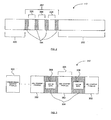
- FIG. 2 is a diagram illustrating one example of a broadcast stream including programming content, an advertisement, and advertisement identification markers;
- FIG. 3 is a diagram illustrating one example of a broadcast stream comprising frames including programming content, an advertisement, and advertisement identification markers;
- FIG. 4 is a block diagram illustrating one example of steganographic advertising identification markers that have been inserted into advertising content frames
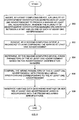
- FIG. 5 is a flowchart illustrating one example of a method for determining whether an advertisement aired in accordance with predefined airing specifications.
- system 100 includes a first computing device 102, a second computing device 116, and an advertisement generator 106.
- the first computing device 102 includes an advertisement identification marker generator ("marker generator”) 103, an advertisement identification marker inserter (“marker inserter”) 110, and an optional advertisement identification marker database (“marker database”) 114.
- the second computing device 116 includes an airing parameter determinator 118 ("determinator"), a comparator 122, a predefined airing specification database 126, and a reference time generator 119.
- the marker generator 103, marker inserter 110, airing parameter determinator 118, and comparator 122 may each be implemented as, for example, an electronic circuit, one or more processors and memory that execute one or more software or firmware programs (e.g., shared, dedicated, or grouped processors such as, but not limited to, microprocessors, digital signal processors, or central processing units), combinational logic circuits, application specific integrated circuit(s), and/or other suitable components that provide the described functionality.
- each discrete component of the system 100 may be distributed across multiple computing platforms (e.g., via networked computing devices such as server computers or the like), wherein each computing platform implements one or more of the illustrated components 103, 110, 118, and 122.
- first computing device 102 and/or second computing device 116 may be implemented as a stand-alone computer programmed to implement the functionality of the components 103, 110, 118, 122 described herein.
- the advertisement generator 106 generates one or more advertisements 108.
- the advertisements may comprise audio content (either analog or digital) and/or video content (either analog or digital).
- the advertisement generator 106 represents the sum total of all efforts necessary to generate an advertisement 108, such as a television or radio advertisement. This may include, for example, all personnel (e.g., actors, directors, producers, sound/video technicians, writers, etc.) and/or equipment (e.g., audio recorders, image/video cameras, editing equipment, etc.) necessary to generate an audio and/or video advertisement 108.
- the advertisement generator 106 may be either local or remote to the first computing device 102.
- the advertisement generator 106 may transmit the generated advertisement(s) 108 to the first computing device 102 over any suitable communication channel (wireless or physical) known in the art.
- the advertisement(s) 108 may be stored on a machine-readable medium, such as random access memory (RAM), read-only memory (ROM), electrically erasable programmable read only memory (EEPROM), etc., and provided to the first computing device 102 (e.g., by placing the machine-readable medium in a disk drive of the first computing device 102) for processing.
- RAM random access memory
- ROM read-only memory
- EEPROM electrically erasable programmable read only memory
- the generated advertisement(s) 108 are made up of discrete frames of data.
- the advertisement when it is destined for broadcast on television, it may comprise image frames and/or audio frames. It necessarily follows that, in this example, the broadcast stream that will eventually carry the advertisement may comprise image frame and/or audio frames as well.
- each frame of the advertisement includes media content, i.e. content that can be rendered by a media player such as audio content or video content.
- the broadcast stream may be implemented as an analog or digital media stream.
- the marker generator 103 generates a plurality of advertisement identification markers 104 for insertion into the advertisement(s) 108.
- the marker generator 103 is operative to generate the advertisement identification markers 104 in a variety of ways. For example, in one embodiment, the marker generator 103 generates each advertisement identification marker 104 as a replacement frame (including advertisement identification data 308) configured for insertion in place of another, then existing, frame of an advertisement 108.
- This advertisement identification data 308 can include information such as the date of creation for the advertisement, a product or brand name for the product/service being advertised, the name of the company providing the product/service, the duration of the advertisement when shown in full, a version code identifying the particular version of a given advertisement where multiple versions of the advertisement exist, the region that the advertisement was intended to be broadcast in, the channel name and/or channel number that the advertisement is intended to be broadcast on, etc.
- the advertisement identification data 308 may include header and trailer information used to signify the start and end of a particular advertisement identification marker 104.
- the beginning of the marker 104 e.g. the first 10 to 16 bits of data, preferably 10 to 14 bits of data, more preferably 10 to 12 bits of data, even more preferably 10 bits of data, where the marker is digitally transmitted
- may include a unique marking pattern e.g. a pattern or particular series of ones and zeros in a digital embodiment, for example, to indicate a start or end of an advertisement
- an advertisement marker detection component e.g., the determinator 118 described herein
- each advertisement identification marker 104 may include advertisement identification data (i.e., a trailer) that signifies the end of the advertisement identification marker.
- the header/trailer may be included in an analog transmission of the advertisement identification marker 104 in a similar fashion.
- the first ten and last ten horizontal lines of data may be provided with a unique pattern (e.g., alternating black and white lines) that identify the start and end of the advertisement identification marker 104.
- the marker generator 103 generates each advertisement identification marker as a steganographic advertisement identification marker 408. That is, the marker generator 103 generates advertisement identification data 308, such as the advertisement identification data described above, for steganographic insertion into existing frames of one or more advertisements 108.
- advertisement identification data 308 such as the advertisement identification data described above
- steganography refers to a technique for concealing information within content (typically digital content) in such a way that no one, apart from the sender and intended recipient, can perceive the information.
- the marker generator 103 may generate the advertisement identification markers 104 by producing steganographic advertisement identification data configured for insertion into the then existing frames of the advertisement(s) 108.
- this steganographic advertisement identification data may be inserted into the then existing frames of the advertisement(s) 108 by, for example, replacing the least significant bits of data in a given advertisement frame or frames with the advertisement identification data.
- steganographic insertion techniques known in the art may be employed equally well.
- header/trailer information may be steganographically inserted into the frames of the advertisement as well to signify the start and end of the advertisement identification data 308.
- a marker database 114 is operatively connected to the marker generator 103 and marker inserter 110 over suitable communication channels as known in the art, such as a communication bus or network.
- the marker database 114 is operative to store the generated advertisement identification markers 104 for later insertion into the advertisement(s) 108 via the marker inserter 110.
- the marker database 114 may be implemented as, for example, any combination of volatile/non-volatile memory components such as read-only memory (ROM), random access memory (RAM), electrically erasable programmable read-only memory (EE-PROM), as a database server computer, etc.
- the marker inserter 110 is operatively connected to the advertisement generator 106 and marker generator 103 over suitable communication channels as known in the art.
- the marker inserter 110 is operative to receive advertisement identification markers 104 from the marker generator 103 and/or, in one embodiment, from the marker database 114.
- the marker inserter 110 is further operative to receive the advertisements(s) 108 from the advertisement generator 106 in line with any of the transmission techniques discussed above.
- the marker inserter 110 Upon reception of the advertisement identification markers 104 and the advertisement(s) 108, the marker inserter 110 is operative to insert the advertisement identification markers 104 between the start and end of each advertisement 108.
- the term “between” may be interpreted as “not including”, such that the advertisement identification markers 104 are inserted in each advertisement but not at the start or the end of each advertisement. This does not exclude the possibility that further advertisement identification markers 104 are inserted at the start and the end of each advertisement.
- the term “between” may be interpreted as "in addition to”, such that the advertisement identification markers 104 are inserted into parts of each advertisement in addition to (i.e. beyond or as well as) the start and the end of each advertisement.
- inserting the plurality of advertisement identification markers 104 between the start and the end of each advertisement may be understood to mean that the advertisement identification markers 104 are inserted into an advertisement after the first frame of the advertisement and before the final frame of the advertisement.
- the advertisement identification markers 104 may be inserted into a plurality of frames in the broadcast stream after the first frame of the of the advertisement and before the final frame of the advertisement.
- Advertisement identification markers may also be inserted at the start and the end of the advertisement (e.g. replacing the first frame and the final frame with advertisement identification marker frames, or inserting an advertisement identification marker frame before the first frame and inserting another advertisement identification marker frame after the final frame, or inserting one or more advertisement identification markers into the first frame and the final frame).
- the marker inserter 110 may also insert the advertisement identification markers 104 before and/or after the advertisement(s) 108.
- the marker inserter 110 under the control of the advertiser (or an agent of the advertiser), inserts the advertisement identification markers 104 into the advertisement(s) 108 before providing the marked advertisement(s) 112 to the broadcaster 115 for broadcast to a television or radio audience, for example. That is, in this embodiment, the advertiser controls the first computing device 102 so as to facilitate insertion of the advertisement identification markers 104 into their advertisement 108 before providing the marked advertisement 112 to the broadcaster 115 for final broadcast to the consuming public. In this manner, the advertiser can avoid any reliance on the broadcaster 115 to insert the markers (since the markers effectively exist as a way to measure the broadcaster's compliance with an advertising agreement).
- the broadcaster 115 may provide a broadcast stream containing both programming content (e.g., a television or radio program) and the advertisement(s) 108 to be marked to the first computing device 102.
- the broadcast stream containing the programming content and advertisement(s) 108 may be provided to the first computing device 102 over any suitable communication channels known in the art.
- the broadcaster 115 may transmit a broadcast stream containing both programming content and the advertisement(s) 108 to be marked to the marker inserter 110.
- the marker inserter 110 is operative to insert the advertisement identification markers 104 into the advertisement(s) 108 in the broadcast stream using any of the above-described marker insertion techniques.
- the marker generator 103 may generate the advertisement identification markers 104 as, for example, a steganographic advertisement identification markers 408 or replacement frames.
- the present disclosure contemplates an embodiment wherein the advertiser inserts advertisement identification markers 104 into their own advertisement(s) 108 and then provides the marked advertisement 112 to a broadcaster 115 for insertion into the broadcaster's programming content stream.
- the present disclosure contemplates another embodiment wherein the advertiser receives the broadcaster's media stream including both programming content and the advertisement(s) to be marked 108, and inserts advertisement identification markers 104 into their advertisement(s) 108 within the stream.
- the marker inserter 110 is operative to insert the advertisement identification markers 104 at fixed intervals, provided that the intervals are long enough to prevent detection of the advertisement identification markers 104 by human senses.
- the advertisement identification markers 104 may be inserted into the advertisement(s) of broadcast stream 108 every 100 milliseconds.
- suitable intervals e.g., every 50 ms, every 150 ms, every 200 ms, etc. may be selected as desired.
- the marker inserter 110 is operative to perform the insertion in a variety of ways.
- the marker inserter 110 may insert each advertisement identification marker frame in place of a then existing advertising content frame. That is, in this embodiment, the advertisement identification markers 104 replace existing frames of the advertisement.
- the marker inserter 110 may insert each advertisement identification marker frame in addition to the then existing advertising content frames.
- the determinator 118 as described below, is operative to account for the replacement/additional advertisement identification marker frames in determining the duration of an aired advertisement.
- the marker inserter 110 may provide steganographic advertisement identification markers 408 by steganographically inserting (i.e. using a steganographic technique to hide or conceal) advertisement identification data 308 into then existing advertisement content frames.
- the marker inserter 110 may, for example, replace the least significant bits of data in various advertisement content frames with advertisement identification data 308.
- the steganographically inserted advertisement identification data 308 will not be perceptible to, for example, a person watching/listening to a broadcast containing the marked advertisement; however, this data is detectable by the airing parameter determinator 118 in accordance with the functionality of the determinator 118, as discussed below.
- steganographically inserting advertisement identification data 308 into then existing advertisement content frames may cause a change in the advertisement content frames, where the change is so subtle that the change is imperceptible or very difficult to detect.
- the marker inserter 110 outputs the marked advertisement(s) 112 (i.e., the advertisement(s) containing the advertisement identification markers 104) for use by to the broadcaster 115.
- the broadcaster may be, for example, a local, intermediate, or national broadcaster.
- the broadcaster could be a local network such as Comcast SportsNet ChicagoTM, a national network such as ESPNTM, or an intermediate network.
- the marked advertisements may be stored on a machine-readable medium such as random access memory (RAM), read-only memory (ROM), electrically erasable programmable read only memory (EEPROM), etc., and delivered to the broadcaster 115 for insertion into their broadcast stream.
- RAM random access memory
- ROM read-only memory
- EEPROM electrically erasable programmable read only memory
- the marked advertisements 112 may be transmitted to the broadcaster 115 (or, more specifically, to a computer at the broadcaster's broadcasting facility) over any suitable communication channel known in the art. Regardless of the mode of transmission/delivery, the broadcaster 115 is operative to receive the advertisement(s) containing the plurality of advertisement identification markers 112. Following reception, the broadcaster 115 may insert the advertisement(s) 112 into their broadcast stream using advertisement insertion techniques known in the art. Thereafter, the broadcaster 115 may transmit the broadcast stream containing the marked advertisement(s) 117 to the second computing device 116.
- the second computing device 116 includes an airing parameter determinator 118, a comparator 122, a predefined airing specification database 126, and a reference time generator 119.
- the second computing device 116 communicates with the broadcaster 115 over any suitable communication channel known in the art.
- the airing parameter determinator 118 is operative to receive the broadcast stream containing the marked advertisement(s) 117 from broadcaster.
- the airing parameter determinator 118 is operative to determine airing parameters of the advertisement(s) in the stream 117 based on the inserted advertisement identification markers 104. Accordingly, in some cases, the determinator 118 is operative to determine the airing parameters of the advertisement(s) in the stream 117 by scanning the broadcast stream for the inserted markers. For example, in the case where the broadcast stream comprises frames and the advertisement identification markers are inserted as replacement frames, the determinator 118 analyzes the data for each frame to see if a given frame comprises either image/audio data or the advertisement identification markers.
- the identification data in a replacement frame may include a header field at the beginning of what would otherwise be image/audio data indicating that the frame comprises an advertisement identification marker.
- knowledge of the specific techniques used to insert the markers allows the determinator 118 to analyze the broadcast stream appropriately to detect the markers, e.g., the determinator 118 can inspect the least significant bits of the incoming image/audio data to search for an appropriate identifying header or the like.
- airing parameters may include one or more of the following: data indicating a duration of the advertisement(s), data indicating a time of day at which the advertisement(s) aired, and broadcast stream identification data.
- the determinator 118 is operative to determine the duration of given advertisement by, for example, measuring the time elapsed between detection of a first advertisement identification marker and detection of a last advertisement identification marker (assuming that the first and last advertisement identification markers "book end" the advertisement).
- the determinator 118 is operative to determine the duration of given advertisement based on the intervals. For example, if an advertisement were to have one marker at the start of the advertisement, one marker at the end of the advertisement, and three markers between the start and end of the advertisement, and the markers were inserted every 7.5 seconds, the determinator is operative to perform a simple mathematical calculation to determine that the duration of the entire advertisement is 30 seconds.
- the determinator 118 accounts for whether the advertisement identification marker frames replaced previously existing advertisement content frames (in which case the determined duration of the advertisement need not be adjusted) or were provided in addition to all previously existing advertisement content frames (in which case the duration of the sum of the advertisement identification markers 104 is not considered in arriving at the determined duration of the advertisement).
- the determinator 118 is operative to determine the time of day that the advertisement(s) aired. For example, this determination may be achieved via the reference time generator 119.
- the reference time generator 119 is operatively connected to the determinator 118 and may comprise, for example, a suitable clocking mechanism, as known in the art, capable of outputting reference time data 121 for use by the determinator 118.
- the determinator 118 may sample the reference time 121 provided by the reference time generator 119. In this manner, the determinator 118 may ascertain when the advertisement containing the advertisement identification marker 104 actually aired (recognizing that there will be a slight delay between the time that the stream 117 is broadcast and the time it is actually received by the determinator 118).
- Another airing parameter capable of determination by the determinator 118 is a broadcast stream identification.
- this data represents the identity of the broadcaster 115 broadcasting the stream 117 and/or the channel that the stream 117 is being broadcast on.
- the broadcast stream identification data may indicate that the broadcaster is ESPNTM.
- the broadcast stream identification data may indicate that ESPN corresponds to, for example, channel 5 on a given cable provider's channel lineup.
- the broadcast stream identification data may be encoded in the stream 117 itself using techniques known in the art such that the determinator 118 merely extracts this data as an airing parameter 120.
- the determined airing parameters 120 may be provided to the comparator 122 for further processing.
- the comparator 122 is operatively connected to both the determinator 118 and the predefined airing specification database 126 over suitable communication channels known in the art.
- the predefined airing specification database 126 is operative to store data comprising predefined airing specifications 124 for use by the comparator 122.
- the predefined airing specification database 126 may be implemented as, for example, any combination of volatile/non-volatile memory components such as read-only memory (ROM), random access memory (RAM), electrically erasable programmable read-only memory (EE-PROM), a database server computer, etc.
- the comparator 122 is operative to receive the determined airing parameters 120 and predefined airing specifications 124.
- the predefined airing specifications 124 correspond to each advertisement (i.e., describe the airing specifications for each of a plurality of advertisements) and comprise, for example, data indicating the expected duration of each advertisement, data indicating the the expected time of day that each advertisement was scheduled to be aired by the broadcaster (based on the agreed upon terms between the advertiser and broadcaster), and/or an expected broadcast stream identification.
- the comparator 122 is operative to compare the two using comparison techniques known in the art.
- the comparator 122 determines that the advertisement(s) aired in accordance with the predefined airing specifications 124. However, if the determined airing parameters 120 do not match the predefined airing specifications 124, then the comparator 122 determines that the advertisement(s) did not air in accordance with the predefined airing specifications 124.
- the predefined airing specification database 126 may index the predefined airing specifications 124 based on the advertisement identification data included in the advertisement identification markers 104. In this manner, the comparator 122 may retrieve predefined airing specifications 124 corresponding to the appropriate advertisement (i.e., the advertisement under analysis) based on the advertisement identification data included in the advertisement identification markers 104 of the advertisement under analysis.
- the comparator 122 is operative to generate auditing data 128 describing whether or not the advertisement(s) aired in accordance with the predefined airing specifications 124.
- This auditing data 128 may be a simple binary indication of whether the predefined airing specifications 124 were satisfied (e.g., "Yes” or "No"), or may include more detailed information regarding the comparison.
- the auditing data 128 may include data indicating a broadcasting channel that the advertisement(s) aired on, data indicating a time of day at which the advertisement(s) aired, data indicating the determined airing parameters 120 of the advertisement(s), and/or data indicating a difference between the determined airing parameters 120 of the advertisement(s) and the expected airing parameters of the advertisement(s).
- the auditing data 128 may be provided to the advertiser in any suitable manner, including but not limited to via an electronic message (e.g., fax, e-mail, text message, voicemail, a posting on a website accessible via the Internet, etc.) or via a tangible medium, such as paper (e.g., a paper-based report indicating the auditing data 128).
- an electronic message e.g., fax, e-mail, text message, voicemail, a posting on a website accessible via the Internet, etc.
- a tangible medium such as paper
- the broadcast stream with marked advertisements 117 may be analog or digital in nature, and may represent image and/or audio content.
- the broadcast stream with marked advertisements 117 includes programming content 200, such as a television or radio show, and an advertisement 202.
- the broadcast stream with marked advertisements 117 includes advertisement identification markers 104 inserted throughout the advertisement 202.
- each advertisement identification marker 104 is shown as being inserted at a fixed interval 206 from the previous and/or subsequent advertisement identification marker 104.
- Additional programming content 200 is depicted as following the end of the advertisement 202. It is appreciated that in this illustration, each advertisement identification marker 104 could take the form of an entire frame, or could be steganographically inserted into an existing frame or frames of the advertising content in line with the above description of these embodiments.
- FIG. 3 illustrates an embodiment wherein the broadcast stream with marked advertisements 317 comprises frames such as programming content frames 300, advertisement content frames 302, and advertisement identification marker frames 304. That is, in this embodiment, each advertisement identification marker 304 comprises a new frame that has been inserted into the advertisement. As noted above, these advertisement identification marker frames 304 may be inserted into the stream by replacing previously existing advertisement content frames 302 or in addition to any previously existing advertisement content frames 302. Each advertisement identification marker frame 304 includes advertisement identification data 308, such as the advertisement identification data discussed above. The advertisement identification marker frames 304 are illustrated as having been inserted at a fixed interval 306 from one another.
- FIG. 4 is a block diagram illustrating one example of advertising content frames 402 (which there may be any number of from 1 to N) containing steganographic advertisement identification markers 408.
- the markers 408 include advertisement identification data, such as the advertisement identification data discussed above, and have been inserted into the advertising content frames in line with the steganographic insertion techniques disclosed with respect to the marker inserter 110. That is, the steganographic advertisement identification markers 408 shown may comprise advertisement identification data that replaces the least significant bits of data of the original advertising content frames 402. In this manner, the steganographic advertisement identification markers 408 are not perceptible by human eyes or ears, but are detectable by an appropriate detection component, such as the airing parameter determinator 118.
- FIG. 5 is a flowchart illustrating one example of a method for determining whether an advertisement aired in accordance with predefined airing specifications. This method may be carried out, for example, by the computing devices 102, 116 of system 100 in line with their above described functionality.
- a plurality of advertisement identification markers are inserted into at least one advertisement, by a first computing device, to provide a marked at least one advertisement.
- the plurality of advertisement identification markers are inserted between a start and an end of the at least one advertisement.
- a second computing device receives a broadcast stream comprising the marked at least one advertisement.
- airing parameters of the at least one advertisement are determined by the second computing device based on the advertisement identification markers.
- the airing parameters of the at least one advertisement are compared with predefined airing specifications corresponding to the at least one advertisement.
- auditing data is generated that describes whether or not the at least one advertisement aired in accordance with the predefined airing specifications.
- the present disclosure provides techniques for determining whether an advertisement aired in accordance with predefined airing specifications. Previously, it was difficult, time-consuming, and costly to accurately determine whether an advertisement aired in accordance with the agreed upon terms between the advertiser and broadcaster. In contrast, the present disclosure provides a simple, quick, and cost-efficient technique for making such a determination.
Landscapes
- Engineering & Computer Science (AREA)
- Signal Processing (AREA)
- Business, Economics & Management (AREA)
- Multimedia (AREA)
- Finance (AREA)
- Marketing (AREA)
- Accounting & Taxation (AREA)
- Strategic Management (AREA)
- Development Economics (AREA)
- General Business, Economics & Management (AREA)
- Physics & Mathematics (AREA)
- Entrepreneurship & Innovation (AREA)
- General Physics & Mathematics (AREA)
- Theoretical Computer Science (AREA)
- Computer Security & Cryptography (AREA)
- Economics (AREA)
- Game Theory and Decision Science (AREA)
- Two-Way Televisions, Distribution Of Moving Picture Or The Like (AREA)
- Television Systems (AREA)
- Testing, Inspecting, Measuring Of Stereoscopic Televisions And Televisions (AREA)
Applications Claiming Priority (1)
| Application Number | Priority Date | Filing Date | Title |
|---|---|---|---|
| IN4043CH2010 | 2010-12-31 |
Publications (2)
| Publication Number | Publication Date |
|---|---|
| EP2472900A1 true EP2472900A1 (fr) | 2012-07-04 |
| EP2472900B1 EP2472900B1 (fr) | 2015-03-25 |
Family
ID=45524219
Family Applications (1)
| Application Number | Title | Priority Date | Filing Date |
|---|---|---|---|
| EP11010172.2A Active EP2472900B1 (fr) | 2010-12-31 | 2011-12-23 | Détermination de la conformité d'une diffusion média à une spécification |
Country Status (4)
| Country | Link |
|---|---|
| US (1) | US9027051B2 (fr) |
| EP (1) | EP2472900B1 (fr) |
| AU (1) | AU2011247865B2 (fr) |
| CA (1) | CA2755173C (fr) |
Cited By (3)
| Publication number | Priority date | Publication date | Assignee | Title |
|---|---|---|---|---|
| EP2528313A3 (fr) * | 2011-05-24 | 2013-10-09 | Comcast Cable Communications, LLC | Surveillance et rapport d'activité de contenu multimédia amélioré |
| EP3046332A1 (fr) * | 2015-01-15 | 2016-07-20 | Industrial Technology Research Institute | Procédé et système pour la commande d'affichage, appareil d'évaluation de rupture et appareil de traitement vidéo/audio |
| WO2017052771A1 (fr) | 2015-09-23 | 2017-03-30 | Viacom International Inc. | Dispositif, système et procédé pour une validation de tonalité d'aide planifiée |
Families Citing this family (8)
| Publication number | Priority date | Publication date | Assignee | Title |
|---|---|---|---|---|
| US10237609B2 (en) * | 2012-04-02 | 2019-03-19 | Vidillion, Inc. | Methods and systems for delivery of compliant video advertisements to devices from one or more platforms |
| US20150066639A1 (en) * | 2013-02-11 | 2015-03-05 | Vindico Llc | Bidding for advertising impression in an online exchange using one or more multiple quality measurements |
| US8813120B1 (en) | 2013-03-15 | 2014-08-19 | Google Inc. | Interstitial audio control |
| FR3006845B1 (fr) * | 2013-06-10 | 2015-07-03 | Viaccess Sa | Procede d'identification de terminal dans un systeme de fourniture de contenus multimedia |
| US11166054B2 (en) | 2018-04-06 | 2021-11-02 | The Nielsen Company (Us), Llc | Methods and apparatus for identification of local commercial insertion opportunities |
| US10681401B2 (en) | 2018-09-04 | 2020-06-09 | At&T Intellectual Property I, L.P. | System and method for verifying presentation of an advertisement inserted in a video stream |
| US11082730B2 (en) * | 2019-09-30 | 2021-08-03 | The Nielsen Company (Us), Llc | Methods and apparatus for affiliate interrupt detection |
| CN114979691B (zh) * | 2022-05-23 | 2023-07-28 | 上海影谱科技有限公司 | 一种体育赛事转播权益广告统计分析方法及系统 |
Citations (6)
| Publication number | Priority date | Publication date | Assignee | Title |
|---|---|---|---|---|
| US6708335B1 (en) * | 1999-08-18 | 2004-03-16 | Webtv Networks, Inc. | Tracking viewing behavior of advertisements on a home entertainment system |
| US20040261100A1 (en) * | 2002-10-18 | 2004-12-23 | Thomas Huber | iChoose video advertising |
| GB2451518A (en) * | 2007-08-03 | 2009-02-04 | Sony Service Ct | Substituting with locally stored advertisements based on marker data |
| US20090077579A1 (en) * | 2007-09-14 | 2009-03-19 | Att Knowledge Ventures L.P. | System and method for estimating an effectivity index for targeted advertising data in a communitcation system |
| US20090133054A1 (en) * | 2007-11-16 | 2009-05-21 | Matthew Thomas Boggie | Presentation of auxiliary content via a content presentation device |
| US20100313217A1 (en) * | 2009-06-04 | 2010-12-09 | Verizon Patent And Licensing Inc. | Methods and systems for recovering from errors associated with advertisement streams |
Family Cites Families (14)
| Publication number | Priority date | Publication date | Assignee | Title |
|---|---|---|---|---|
| US5436653A (en) | 1992-04-30 | 1995-07-25 | The Arbitron Company | Method and system for recognition of broadcast segments |
| US7269330B1 (en) | 1996-11-01 | 2007-09-11 | Televentions, Llc | Method and apparatus for controlling a video recorder/player to selectively alter a video signal |
| US7421723B2 (en) * | 1999-01-07 | 2008-09-02 | Nielsen Media Research, Inc. | Detection of media links in broadcast signals |
| US7421729B2 (en) | 2000-08-25 | 2008-09-02 | Intellocity Usa Inc. | Generation and insertion of indicators using an address signal applied to a database |
| US20020162118A1 (en) * | 2001-01-30 | 2002-10-31 | Levy Kenneth L. | Efficient interactive TV |
| US20060031892A1 (en) | 2004-08-05 | 2006-02-09 | Bitband Technologies Ltd. | Prevention of advertisement skipping |
| US20070016918A1 (en) | 2005-05-20 | 2007-01-18 | Alcorn Allan E | Detecting and tracking advertisements |
| US7627878B2 (en) | 2005-12-23 | 2009-12-01 | Eloda Inc. | Method and System for automated auditing of advertising |
| US20070265918A1 (en) | 2006-03-02 | 2007-11-15 | Mcmahon Michael B | System and method for tracking, auditing, and valuing online advertising |
| US8255963B2 (en) * | 2006-04-25 | 2012-08-28 | XOrbit Inc. | System and method for monitoring video data |
| US20110145068A1 (en) * | 2007-09-17 | 2011-06-16 | King Martin T | Associating rendered advertisements with digital content |
| US8868464B2 (en) * | 2008-02-07 | 2014-10-21 | Google Inc. | Preventing unauthorized modification or skipping of viewing of advertisements within content |
| US20090320060A1 (en) | 2008-06-23 | 2009-12-24 | Microsoft Corporation | Advertisement signature tracking |
| US8635640B2 (en) | 2008-12-24 | 2014-01-21 | At&T Intellectual Property I, Lp | System, method and computer program product for verifying triggers in a video data stream |
-
2011
- 2011-04-20 US US13/090,760 patent/US9027051B2/en active Active
- 2011-10-12 CA CA2755173A patent/CA2755173C/fr active Active
- 2011-11-08 AU AU2011247865A patent/AU2011247865B2/en not_active Ceased
- 2011-12-23 EP EP11010172.2A patent/EP2472900B1/fr active Active
Patent Citations (6)
| Publication number | Priority date | Publication date | Assignee | Title |
|---|---|---|---|---|
| US6708335B1 (en) * | 1999-08-18 | 2004-03-16 | Webtv Networks, Inc. | Tracking viewing behavior of advertisements on a home entertainment system |
| US20040261100A1 (en) * | 2002-10-18 | 2004-12-23 | Thomas Huber | iChoose video advertising |
| GB2451518A (en) * | 2007-08-03 | 2009-02-04 | Sony Service Ct | Substituting with locally stored advertisements based on marker data |
| US20090077579A1 (en) * | 2007-09-14 | 2009-03-19 | Att Knowledge Ventures L.P. | System and method for estimating an effectivity index for targeted advertising data in a communitcation system |
| US20090133054A1 (en) * | 2007-11-16 | 2009-05-21 | Matthew Thomas Boggie | Presentation of auxiliary content via a content presentation device |
| US20100313217A1 (en) * | 2009-06-04 | 2010-12-09 | Verizon Patent And Licensing Inc. | Methods and systems for recovering from errors associated with advertisement streams |
Cited By (6)
| Publication number | Priority date | Publication date | Assignee | Title |
|---|---|---|---|---|
| EP2528313A3 (fr) * | 2011-05-24 | 2013-10-09 | Comcast Cable Communications, LLC | Surveillance et rapport d'activité de contenu multimédia amélioré |
| US10771827B2 (en) | 2011-05-24 | 2020-09-08 | Comcast Cable Communications, Llc | Monitoring and activity reporting of enhanced media content |
| EP3046332A1 (fr) * | 2015-01-15 | 2016-07-20 | Industrial Technology Research Institute | Procédé et système pour la commande d'affichage, appareil d'évaluation de rupture et appareil de traitement vidéo/audio |
| US9900664B2 (en) | 2015-01-15 | 2018-02-20 | Industrial Technology Research Institute | Method and system for display control, breakaway judging apparatus and video/audio processing apparatus |
| WO2017052771A1 (fr) | 2015-09-23 | 2017-03-30 | Viacom International Inc. | Dispositif, système et procédé pour une validation de tonalité d'aide planifiée |
| EP3353628A4 (fr) * | 2015-09-23 | 2019-05-01 | Viacom International Inc. | Dispositif, système et procédé pour une validation de tonalité d'aide planifiée |
Also Published As
| Publication number | Publication date |
|---|---|
| US20120173342A1 (en) | 2012-07-05 |
| AU2011247865B2 (en) | 2014-09-11 |
| AU2011247865A1 (en) | 2012-07-19 |
| CA2755173C (fr) | 2019-02-05 |
| EP2472900B1 (fr) | 2015-03-25 |
| US9027051B2 (en) | 2015-05-05 |
| CA2755173A1 (fr) | 2012-06-30 |
Similar Documents
| Publication | Publication Date | Title |
|---|---|---|
| EP2472900B1 (fr) | Détermination de la conformité d'une diffusion média à une spécification | |
| US20250175671A1 (en) | Methods and apparatus to detect commercial advertisements associated with media presentations | |
| US8311390B2 (en) | Systems and methods for identifying pre-inserted and/or potential advertisement breaks in a video sequence | |
| US10194217B2 (en) | Systems, methods, and apparatus to identify linear and non-linear media presentations | |
| US9906835B2 (en) | Systems and methods to verify and/or correct media lineup information | |
| US10462536B2 (en) | System for low-latency detection of known audio video content using audio fingerprinting and audio watermarking | |
| US6901606B2 (en) | Method and apparatus for detecting time-compressed broadcast content | |
| US9031261B2 (en) | Broadcast advertisement volume control system and method therefor | |
| US7627878B2 (en) | Method and System for automated auditing of advertising | |
| US11991403B2 (en) | Dynamic watermarking of media based on transport-stream metadata, to facilitate action by downstream entity | |
| US12015833B2 (en) | Use of watermarking to trigger fingerprint-related action | |
| US11425452B2 (en) | Methods and apparatus to detect audio engineering problems using identification of isolated watermarks | |
| US20230129733A1 (en) | Accelerated television advertisement identification | |
| JP2009077164A (ja) | 放送配信監視システムおよび放送配信監視方法、並びに放送配信情報取得装置および取得方法 | |
| CA3239337A1 (fr) | Fourniture de signaux de remplacement precis de trame dans des flux de contenu | |
| JP2005198326A (ja) | 映像確認装置および方法、放送確認装置および方法、コンピュータプログラムを記録した記録媒体 |
Legal Events
| Date | Code | Title | Description |
|---|---|---|---|
| AK | Designated contracting states |
Kind code of ref document: A1 Designated state(s): AL AT BE BG CH CY CZ DE DK EE ES FI FR GB GR HR HU IE IS IT LI LT LU LV MC MK MT NL NO PL PT RO RS SE SI SK SM TR |
|
| AX | Request for extension of the european patent |
Extension state: BA ME |
|
| PUAI | Public reference made under article 153(3) epc to a published international application that has entered the european phase |
Free format text: ORIGINAL CODE: 0009012 |
|
| 17P | Request for examination filed |
Effective date: 20121220 |
|
| 17Q | First examination report despatched |
Effective date: 20140127 |
|
| REG | Reference to a national code |
Ref country code: DE Ref legal event code: R079 Ref document number: 602011014943 Country of ref document: DE Free format text: PREVIOUS MAIN CLASS: H04N0021810000 Ipc: G06Q0030020000 |
|
| GRAP | Despatch of communication of intention to grant a patent |
Free format text: ORIGINAL CODE: EPIDOSNIGR1 |
|
| RIC1 | Information provided on ipc code assigned before grant |
Ipc: H04H 60/37 20080101ALI20140930BHEP Ipc: H04H 60/59 20080101ALI20140930BHEP Ipc: H04H 60/39 20080101ALI20140930BHEP Ipc: H04N 21/81 20110101ALI20140930BHEP Ipc: H04H 20/14 20080101ALI20140930BHEP Ipc: H04N 21/44 20110101ALI20140930BHEP Ipc: G06Q 30/02 20120101AFI20140930BHEP Ipc: H04N 21/845 20110101ALI20140930BHEP Ipc: H04N 21/8358 20110101ALI20140930BHEP |
|
| INTG | Intention to grant announced |
Effective date: 20141029 |
|
| GRAS | Grant fee paid |
Free format text: ORIGINAL CODE: EPIDOSNIGR3 |
|
| GRAA | (expected) grant |
Free format text: ORIGINAL CODE: 0009210 |
|
| AK | Designated contracting states |
Kind code of ref document: B1 Designated state(s): AL AT BE BG CH CY CZ DE DK EE ES FI FR GB GR HR HU IE IS IT LI LT LU LV MC MK MT NL NO PL PT RO RS SE SI SK SM TR |
|
| REG | Reference to a national code |
Ref country code: GB Ref legal event code: FG4D |
|
| REG | Reference to a national code |
Ref country code: CH Ref legal event code: EP |
|
| REG | Reference to a national code |
Ref country code: IE Ref legal event code: FG4D |
|
| REG | Reference to a national code |
Ref country code: DE Ref legal event code: R096 Ref document number: 602011014943 Country of ref document: DE Effective date: 20150507 |
|
| REG | Reference to a national code |
Ref country code: AT Ref legal event code: REF Ref document number: 718253 Country of ref document: AT Kind code of ref document: T Effective date: 20150515 |
|
| PG25 | Lapsed in a contracting state [announced via postgrant information from national office to epo] |
Ref country code: SE Free format text: LAPSE BECAUSE OF FAILURE TO SUBMIT A TRANSLATION OF THE DESCRIPTION OR TO PAY THE FEE WITHIN THE PRESCRIBED TIME-LIMIT Effective date: 20150325 Ref country code: FI Free format text: LAPSE BECAUSE OF FAILURE TO SUBMIT A TRANSLATION OF THE DESCRIPTION OR TO PAY THE FEE WITHIN THE PRESCRIBED TIME-LIMIT Effective date: 20150325 Ref country code: LT Free format text: LAPSE BECAUSE OF FAILURE TO SUBMIT A TRANSLATION OF THE DESCRIPTION OR TO PAY THE FEE WITHIN THE PRESCRIBED TIME-LIMIT Effective date: 20150325 Ref country code: HR Free format text: LAPSE BECAUSE OF FAILURE TO SUBMIT A TRANSLATION OF THE DESCRIPTION OR TO PAY THE FEE WITHIN THE PRESCRIBED TIME-LIMIT Effective date: 20150325 |
|
| REG | Reference to a national code |
Ref country code: AT Ref legal event code: MK05 Ref document number: 718253 Country of ref document: AT Kind code of ref document: T Effective date: 20150325 |
|
| REG | Reference to a national code |
Ref country code: LT Ref legal event code: MG4D |
|
| PG25 | Lapsed in a contracting state [announced via postgrant information from national office to epo] |
Ref country code: LV Free format text: LAPSE BECAUSE OF FAILURE TO SUBMIT A TRANSLATION OF THE DESCRIPTION OR TO PAY THE FEE WITHIN THE PRESCRIBED TIME-LIMIT Effective date: 20150325 Ref country code: RS Free format text: LAPSE BECAUSE OF FAILURE TO SUBMIT A TRANSLATION OF THE DESCRIPTION OR TO PAY THE FEE WITHIN THE PRESCRIBED TIME-LIMIT Effective date: 20150325 Ref country code: GR Free format text: LAPSE BECAUSE OF FAILURE TO SUBMIT A TRANSLATION OF THE DESCRIPTION OR TO PAY THE FEE WITHIN THE PRESCRIBED TIME-LIMIT Effective date: 20150626 |
|
| PG25 | Lapsed in a contracting state [announced via postgrant information from national office to epo] |
Ref country code: NL Free format text: LAPSE BECAUSE OF FAILURE TO SUBMIT A TRANSLATION OF THE DESCRIPTION OR TO PAY THE FEE WITHIN THE PRESCRIBED TIME-LIMIT Effective date: 20150325 |
|
| PG25 | Lapsed in a contracting state [announced via postgrant information from national office to epo] |
Ref country code: RO Free format text: LAPSE BECAUSE OF FAILURE TO SUBMIT A TRANSLATION OF THE DESCRIPTION OR TO PAY THE FEE WITHIN THE PRESCRIBED TIME-LIMIT Effective date: 20150325 Ref country code: CZ Free format text: LAPSE BECAUSE OF FAILURE TO SUBMIT A TRANSLATION OF THE DESCRIPTION OR TO PAY THE FEE WITHIN THE PRESCRIBED TIME-LIMIT Effective date: 20150325 Ref country code: PT Free format text: LAPSE BECAUSE OF FAILURE TO SUBMIT A TRANSLATION OF THE DESCRIPTION OR TO PAY THE FEE WITHIN THE PRESCRIBED TIME-LIMIT Effective date: 20150727 Ref country code: SK Free format text: LAPSE BECAUSE OF FAILURE TO SUBMIT A TRANSLATION OF THE DESCRIPTION OR TO PAY THE FEE WITHIN THE PRESCRIBED TIME-LIMIT Effective date: 20150325 Ref country code: EE Free format text: LAPSE BECAUSE OF FAILURE TO SUBMIT A TRANSLATION OF THE DESCRIPTION OR TO PAY THE FEE WITHIN THE PRESCRIBED TIME-LIMIT Effective date: 20150325 Ref country code: ES Free format text: LAPSE BECAUSE OF FAILURE TO SUBMIT A TRANSLATION OF THE DESCRIPTION OR TO PAY THE FEE WITHIN THE PRESCRIBED TIME-LIMIT Effective date: 20150325 |
|
| PG25 | Lapsed in a contracting state [announced via postgrant information from national office to epo] |
Ref country code: PL Free format text: LAPSE BECAUSE OF FAILURE TO SUBMIT A TRANSLATION OF THE DESCRIPTION OR TO PAY THE FEE WITHIN THE PRESCRIBED TIME-LIMIT Effective date: 20150325 Ref country code: IS Free format text: LAPSE BECAUSE OF FAILURE TO SUBMIT A TRANSLATION OF THE DESCRIPTION OR TO PAY THE FEE WITHIN THE PRESCRIBED TIME-LIMIT Effective date: 20150725 Ref country code: AT Free format text: LAPSE BECAUSE OF FAILURE TO SUBMIT A TRANSLATION OF THE DESCRIPTION OR TO PAY THE FEE WITHIN THE PRESCRIBED TIME-LIMIT Effective date: 20150325 |
|
| REG | Reference to a national code |
Ref country code: DE Ref legal event code: R097 Ref document number: 602011014943 Country of ref document: DE |
|
| PG25 | Lapsed in a contracting state [announced via postgrant information from national office to epo] |
Ref country code: DK Free format text: LAPSE BECAUSE OF FAILURE TO SUBMIT A TRANSLATION OF THE DESCRIPTION OR TO PAY THE FEE WITHIN THE PRESCRIBED TIME-LIMIT Effective date: 20150325 |
|
| PLBE | No opposition filed within time limit |
Free format text: ORIGINAL CODE: 0009261 |
|
| STAA | Information on the status of an ep patent application or granted ep patent |
Free format text: STATUS: NO OPPOSITION FILED WITHIN TIME LIMIT |
|
| 26N | No opposition filed |
Effective date: 20160105 |
|
| PG25 | Lapsed in a contracting state [announced via postgrant information from national office to epo] |
Ref country code: IT Free format text: LAPSE BECAUSE OF FAILURE TO SUBMIT A TRANSLATION OF THE DESCRIPTION OR TO PAY THE FEE WITHIN THE PRESCRIBED TIME-LIMIT Effective date: 20150325 |
|
| PG25 | Lapsed in a contracting state [announced via postgrant information from national office to epo] |
Ref country code: SI Free format text: LAPSE BECAUSE OF FAILURE TO SUBMIT A TRANSLATION OF THE DESCRIPTION OR TO PAY THE FEE WITHIN THE PRESCRIBED TIME-LIMIT Effective date: 20150325 Ref country code: BE Free format text: LAPSE BECAUSE OF NON-PAYMENT OF DUE FEES Effective date: 20151231 |
|
| REG | Reference to a national code |
Ref country code: DE Ref legal event code: R119 Ref document number: 602011014943 Country of ref document: DE |
|
| PG25 | Lapsed in a contracting state [announced via postgrant information from national office to epo] |
Ref country code: LU Free format text: LAPSE BECAUSE OF FAILURE TO SUBMIT A TRANSLATION OF THE DESCRIPTION OR TO PAY THE FEE WITHIN THE PRESCRIBED TIME-LIMIT Effective date: 20151223 Ref country code: MC Free format text: LAPSE BECAUSE OF FAILURE TO SUBMIT A TRANSLATION OF THE DESCRIPTION OR TO PAY THE FEE WITHIN THE PRESCRIBED TIME-LIMIT Effective date: 20150325 |
|
| REG | Reference to a national code |
Ref country code: CH Ref legal event code: PL |
|
| GBPC | Gb: european patent ceased through non-payment of renewal fee |
Effective date: 20151223 |
|
| PG25 | Lapsed in a contracting state [announced via postgrant information from national office to epo] |
Ref country code: BE Free format text: LAPSE BECAUSE OF FAILURE TO SUBMIT A TRANSLATION OF THE DESCRIPTION OR TO PAY THE FEE WITHIN THE PRESCRIBED TIME-LIMIT Effective date: 20150325 |
|
| REG | Reference to a national code |
Ref country code: IE Ref legal event code: MM4A |
|
| REG | Reference to a national code |
Ref country code: FR Ref legal event code: ST Effective date: 20160831 |
|
| PG25 | Lapsed in a contracting state [announced via postgrant information from national office to epo] |
Ref country code: DE Free format text: LAPSE BECAUSE OF NON-PAYMENT OF DUE FEES Effective date: 20160701 Ref country code: GB Free format text: LAPSE BECAUSE OF NON-PAYMENT OF DUE FEES Effective date: 20151223 Ref country code: CH Free format text: LAPSE BECAUSE OF NON-PAYMENT OF DUE FEES Effective date: 20151231 Ref country code: LI Free format text: LAPSE BECAUSE OF NON-PAYMENT OF DUE FEES Effective date: 20151231 Ref country code: IE Free format text: LAPSE BECAUSE OF NON-PAYMENT OF DUE FEES Effective date: 20151223 |
|
| REG | Reference to a national code |
Ref country code: GB Ref legal event code: S28 Free format text: APPLICATION FILED |
|
| REG | Reference to a national code |
Ref country code: DE Ref legal event code: R073 Ref document number: 602011014943 Country of ref document: DE |
|
| PG25 | Lapsed in a contracting state [announced via postgrant information from national office to epo] |
Ref country code: FR Free format text: LAPSE BECAUSE OF NON-PAYMENT OF DUE FEES Effective date: 20151231 |
|
| REG | Reference to a national code |
Ref country code: FR Ref legal event code: RN Effective date: 20161104 |
|
| REG | Reference to a national code |
Ref country code: DE Ref legal event code: R074 Ref document number: 602011014943 Country of ref document: DE |
|
| PG25 | Lapsed in a contracting state [announced via postgrant information from national office to epo] |
Ref country code: DE Free format text: LAPSE BECAUSE OF NON-PAYMENT OF DUE FEES Effective date: 20160701 |
|
| PGRI | Patent reinstated in contracting state [announced from national office to epo] |
Ref country code: DE Effective date: 20161215 |
|
| REG | Reference to a national code |
Ref country code: GB Ref legal event code: S28 Free format text: RESTORATION ALLOWED Effective date: 20170126 |
|
| REG | Reference to a national code |
Ref country code: FR Ref legal event code: PLFP Year of fee payment: 6 |
|
| REG | Reference to a national code |
Ref country code: FR Ref legal event code: FC Effective date: 20170329 |
|
| PG25 | Lapsed in a contracting state [announced via postgrant information from national office to epo] |
Ref country code: NO Free format text: LAPSE BECAUSE OF FAILURE TO SUBMIT A TRANSLATION OF THE DESCRIPTION OR TO PAY THE FEE WITHIN THE PRESCRIBED TIME-LIMIT Effective date: 20150625 Ref country code: BG Free format text: LAPSE BECAUSE OF FAILURE TO SUBMIT A TRANSLATION OF THE DESCRIPTION OR TO PAY THE FEE WITHIN THE PRESCRIBED TIME-LIMIT Effective date: 20150325 Ref country code: HU Free format text: LAPSE BECAUSE OF FAILURE TO SUBMIT A TRANSLATION OF THE DESCRIPTION OR TO PAY THE FEE WITHIN THE PRESCRIBED TIME-LIMIT; INVALID AB INITIO Effective date: 20111223 Ref country code: SM Free format text: LAPSE BECAUSE OF FAILURE TO SUBMIT A TRANSLATION OF THE DESCRIPTION OR TO PAY THE FEE WITHIN THE PRESCRIBED TIME-LIMIT Effective date: 20150325 |
|
| PG25 | Lapsed in a contracting state [announced via postgrant information from national office to epo] |
Ref country code: CY Free format text: LAPSE BECAUSE OF FAILURE TO SUBMIT A TRANSLATION OF THE DESCRIPTION OR TO PAY THE FEE WITHIN THE PRESCRIBED TIME-LIMIT Effective date: 20150325 |
|
| PG25 | Lapsed in a contracting state [announced via postgrant information from national office to epo] |
Ref country code: FR Free format text: LAPSE BECAUSE OF NON-PAYMENT OF DUE FEES Effective date: 20151231 Ref country code: IE Free format text: LAPSE BECAUSE OF NON-PAYMENT OF DUE FEES Effective date: 20151223 |
|
| PGRI | Patent reinstated in contracting state [announced from national office to epo] |
Ref country code: FR Effective date: 20170329 Ref country code: IE Effective date: 20170502 |
|
| PG25 | Lapsed in a contracting state [announced via postgrant information from national office to epo] |
Ref country code: MT Free format text: LAPSE BECAUSE OF FAILURE TO SUBMIT A TRANSLATION OF THE DESCRIPTION OR TO PAY THE FEE WITHIN THE PRESCRIBED TIME-LIMIT Effective date: 20150325 Ref country code: TR Free format text: LAPSE BECAUSE OF FAILURE TO SUBMIT A TRANSLATION OF THE DESCRIPTION OR TO PAY THE FEE WITHIN THE PRESCRIBED TIME-LIMIT Effective date: 20150325 |
|
| REG | Reference to a national code |
Ref country code: FR Ref legal event code: PLFP Year of fee payment: 7 |
|
| PG25 | Lapsed in a contracting state [announced via postgrant information from national office to epo] |
Ref country code: MK Free format text: LAPSE BECAUSE OF FAILURE TO SUBMIT A TRANSLATION OF THE DESCRIPTION OR TO PAY THE FEE WITHIN THE PRESCRIBED TIME-LIMIT Effective date: 20150325 |
|
| PG25 | Lapsed in a contracting state [announced via postgrant information from national office to epo] |
Ref country code: AL Free format text: LAPSE BECAUSE OF FAILURE TO SUBMIT A TRANSLATION OF THE DESCRIPTION OR TO PAY THE FEE WITHIN THE PRESCRIBED TIME-LIMIT Effective date: 20150325 |
|
| P01 | Opt-out of the competence of the unified patent court (upc) registered |
Effective date: 20230523 |
|
| PGFP | Annual fee paid to national office [announced via postgrant information from national office to epo] |
Ref country code: GB Payment date: 20231102 Year of fee payment: 13 |
|
| PGFP | Annual fee paid to national office [announced via postgrant information from national office to epo] |
Ref country code: FR Payment date: 20231108 Year of fee payment: 13 Ref country code: DE Payment date: 20231031 Year of fee payment: 13 |
|
| REG | Reference to a national code |
Ref country code: DE Ref legal event code: R119 Ref document number: 602011014943 Country of ref document: DE |
|
| GBPC | Gb: european patent ceased through non-payment of renewal fee |
Effective date: 20241223 |
|
| PG25 | Lapsed in a contracting state [announced via postgrant information from national office to epo] |
Ref country code: DE Free format text: LAPSE BECAUSE OF NON-PAYMENT OF DUE FEES Effective date: 20250701 |
|
| PG25 | Lapsed in a contracting state [announced via postgrant information from national office to epo] |
Ref country code: GB Free format text: LAPSE BECAUSE OF NON-PAYMENT OF DUE FEES Effective date: 20241223 |
|
| PG25 | Lapsed in a contracting state [announced via postgrant information from national office to epo] |
Ref country code: FR Free format text: LAPSE BECAUSE OF NON-PAYMENT OF DUE FEES Effective date: 20241231 |
|
| PGFP | Annual fee paid to national office [announced via postgrant information from national office to epo] |
Ref country code: IE Payment date: 20251001 Year of fee payment: 15 |