EP2472961B1 - Procédé et système d'économie d'énergie dans une station de base - Google Patents
Procédé et système d'économie d'énergie dans une station de base Download PDFInfo
- Publication number
- EP2472961B1 EP2472961B1 EP10841929.2A EP10841929A EP2472961B1 EP 2472961 B1 EP2472961 B1 EP 2472961B1 EP 10841929 A EP10841929 A EP 10841929A EP 2472961 B1 EP2472961 B1 EP 2472961B1
- Authority
- EP
- European Patent Office
- Prior art keywords
- nodeb
- mimo cell
- cell
- mimo
- cfn
- Prior art date
- Legal status (The legal status is an assumption and is not a legal conclusion. Google has not performed a legal analysis and makes no representation as to the accuracy of the status listed.)
- Not-in-force
Links
- 238000000034 method Methods 0.000 title claims description 29
- 230000005540 biological transmission Effects 0.000 description 14
- 230000006870 function Effects 0.000 description 13
- 238000012545 processing Methods 0.000 description 9
- 238000005516 engineering process Methods 0.000 description 7
- 230000003321 amplification Effects 0.000 description 5
- 238000004891 communication Methods 0.000 description 5
- 238000003199 nucleic acid amplification method Methods 0.000 description 5
- 238000006243 chemical reaction Methods 0.000 description 3
- 238000010586 diagram Methods 0.000 description 3
- MWRWFPQBGSZWNV-UHFFFAOYSA-N Dinitrosopentamethylenetetramine Chemical compound C1N2CN(N=O)CN1CN(N=O)C2 MWRWFPQBGSZWNV-UHFFFAOYSA-N 0.000 description 2
- 238000012790 confirmation Methods 0.000 description 2
- 230000009977 dual effect Effects 0.000 description 2
- 238000001914 filtration Methods 0.000 description 2
- 230000000977 initiatory effect Effects 0.000 description 2
- 230000003287 optical effect Effects 0.000 description 2
- 230000004044 response Effects 0.000 description 2
- 230000003595 spectral effect Effects 0.000 description 2
- 101710150834 Metallocarboxypeptidase A Proteins 0.000 description 1
- 101710099847 Probable metallocarboxypeptidase A Proteins 0.000 description 1
- 238000007792 addition Methods 0.000 description 1
- 230000008901 benefit Effects 0.000 description 1
- 239000000969 carrier Substances 0.000 description 1
- 230000001413 cellular effect Effects 0.000 description 1
- 238000005265 energy consumption Methods 0.000 description 1
- 238000012423 maintenance Methods 0.000 description 1
- 238000012544 monitoring process Methods 0.000 description 1
- 230000008569 process Effects 0.000 description 1
- 230000011664 signaling Effects 0.000 description 1
- 238000001228 spectrum Methods 0.000 description 1
Images

Classifications
-
- H—ELECTRICITY
- H04—ELECTRIC COMMUNICATION TECHNIQUE
- H04W—WIRELESS COMMUNICATION NETWORKS
- H04W52/00—Power management, e.g. Transmission Power Control [TPC] or power classes
- H04W52/02—Power saving arrangements
- H04W52/0203—Power saving arrangements in the radio access network or backbone network of wireless communication networks
- H04W52/0206—Power saving arrangements in the radio access network or backbone network of wireless communication networks in access points, e.g. base stations
-
- H—ELECTRICITY
- H04—ELECTRIC COMMUNICATION TECHNIQUE
- H04B—TRANSMISSION
- H04B7/00—Radio transmission systems, i.e. using radiation field
- H04B7/02—Diversity systems; Multi-antenna system, i.e. transmission or reception using multiple antennas
- H04B7/04—Diversity systems; Multi-antenna system, i.e. transmission or reception using multiple antennas using two or more spaced independent antennas
- H04B7/06—Diversity systems; Multi-antenna system, i.e. transmission or reception using multiple antennas using two or more spaced independent antennas at the transmitting station
- H04B7/0686—Hybrid systems, i.e. switching and simultaneous transmission
- H04B7/0691—Hybrid systems, i.e. switching and simultaneous transmission using subgroups of transmit antennas
- H04B7/0693—Hybrid systems, i.e. switching and simultaneous transmission using subgroups of transmit antennas switching off a diversity branch, e.g. to save power
-
- H—ELECTRICITY
- H04—ELECTRIC COMMUNICATION TECHNIQUE
- H04B—TRANSMISSION
- H04B7/00—Radio transmission systems, i.e. using radiation field
- H04B7/02—Diversity systems; Multi-antenna system, i.e. transmission or reception using multiple antennas
- H04B7/04—Diversity systems; Multi-antenna system, i.e. transmission or reception using multiple antennas using two or more spaced independent antennas
- H04B7/0413—MIMO systems
-
- H—ELECTRICITY
- H04—ELECTRIC COMMUNICATION TECHNIQUE
- H04B—TRANSMISSION
- H04B7/00—Radio transmission systems, i.e. using radiation field
- H04B7/02—Diversity systems; Multi-antenna system, i.e. transmission or reception using multiple antennas
- H04B7/04—Diversity systems; Multi-antenna system, i.e. transmission or reception using multiple antennas using two or more spaced independent antennas
- H04B7/06—Diversity systems; Multi-antenna system, i.e. transmission or reception using multiple antennas using two or more spaced independent antennas at the transmitting station
- H04B7/0686—Hybrid systems, i.e. switching and simultaneous transmission
- H04B7/0689—Hybrid systems, i.e. switching and simultaneous transmission using different transmission schemes, at least one of them being a diversity transmission scheme
-
- Y—GENERAL TAGGING OF NEW TECHNOLOGICAL DEVELOPMENTS; GENERAL TAGGING OF CROSS-SECTIONAL TECHNOLOGIES SPANNING OVER SEVERAL SECTIONS OF THE IPC; TECHNICAL SUBJECTS COVERED BY FORMER USPC CROSS-REFERENCE ART COLLECTIONS [XRACs] AND DIGESTS
- Y02—TECHNOLOGIES OR APPLICATIONS FOR MITIGATION OR ADAPTATION AGAINST CLIMATE CHANGE
- Y02D—CLIMATE CHANGE MITIGATION TECHNOLOGIES IN INFORMATION AND COMMUNICATION TECHNOLOGIES [ICT], I.E. INFORMATION AND COMMUNICATION TECHNOLOGIES AIMING AT THE REDUCTION OF THEIR OWN ENERGY USE
- Y02D30/00—Reducing energy consumption in communication networks
- Y02D30/70—Reducing energy consumption in communication networks in wireless communication networks
Definitions
- the present invention relates to a wireless communication system, and in particular, to a method and system for power saving of NodeB.
- the profit of the telecommunication industry is reducing progressively, and the telecommunication operators are realizing the income increase by expanding the market share and the service type, and at the same time they also pay more and more attention to saving the operation cost (OPEX), and the energy consumptions of the equipment is an important part of the OPEX.
- OPEX operation cost
- the universal mobile telecommunications system can be divided into several main components: one or more core networks (CN) which is responsible for establishing and controlling the user session and the UMTS terrestrial radio access network (UTRAN) which controls the air interface access.
- the UTRAN includes two network elements: a radio network controller (RNC) and a NodeB, wherein the NodeB further includes the baseband processing unit (BBU) and a radio frequency processing unit (RU).
- RNC radio network controller
- BBU baseband processing unit
- RU radio frequency processing unit
- the main functions of the BBU include the baseband processing function finishing the Uu interface (channel coding, multiplexing, modulating and spread spectrum and so on, which are suitable for air transmission), the Iub interface function with the radio network controller (RNC), signaling processing, local and remote operation maintenance function, and the function for monitoring the working state of the NodeB system and reporting alarm information.
- the main function of the RU includes several following modules:
- one RNC generally includes a plurality of NodeBs
- one NodeB generally includes one baseband processing unit (BBU) and a plurality of radio frequency processing units (RU). Therefore, if the power consumption of the radio frequency processing unit is saved, the power consumption of the whole UTRAN will be saved greatly.
- BBU baseband processing unit
- RU radio frequency processing units
- the high speed downlink packet access (HSDPA) is a kind of technology put forward in Release-5 of the 3rd generation partnership project (3GPP), which is used for improving the network data throughput in the downlink direction (from the network to the terminal), and the peak value of downlink speed of the cell and individual user that are designed by HSDPA can reach to 14.4 Mbps.
- 3GPP 3rd generation partnership project
- the new HSPA+ technologies are introduced. These technologies includes the DL 64QAM high-order modulation and multi-input multi-output (MIMO) antenna technology put forward in Release-7, and the multi-carrier (DC) HSDPA technology put forward in Release-8, and the DC HSDPA +MIMO technology put forward in Release-9.
- the MIMO utilizes a plurality of antennas to inhibit the channel from declining, which can improve the wireless channel capacity and the spectral utilization rate in the case that the bandwidth is not added.
- the peak value of the speed of the cell and individual user is 28.8Mbps in the case of MIMO+16QAM, and it can reach to 43.2Mbps in the case of MIMO+64QAM.
- the transmitting end needs to modulate data to two irrelevant antennas and send the data at the same time, and the receiving party also needs to receive the data from two irrelevant antennas at the same time and performs demodulation.
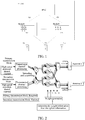
- the technological principle diagram of the MIMO provided by the 3GPP TS 25.214 is shown in FIG. 2 .
- the MIMO requires two sets of radio frequency processing units (RU), and each set processes the data on an antenna respectively.
- the MIMO cell in the master pilot - master pilot mode is configured, and the transmission power of the common channel configured by each corresponding RU is half of that of the non-MIMO cell, therefore, the total transmission power of the common channel of the two RUs is same with that of the non-MIMO cell;
- the transmission power configured by the master pilot is same with that of the non-MIMO, and the transmission power of the slave pilot can be configured according to the actual condition, and the transmission power of other common channels in each RU are half of that of the non-MIMO cell, therefore the total transmission power of the common channel of two RUs has an additional power configured by the slave pilot than that of the non-MIMO cell.
- the power consumption of RU is related to the transmission power and its power amplification efficiency.
- the power amplification efficiency of the RU is related to its output power, and for the same RU, the higher the output power is, the higher the power amplification efficiency is.
- the total transmission power is same with that of the non-MIMO cell, however, the RU transmission power of each MIMO cell is only half of that of the RU of the non-MIMO cell, thus its power amplification efficiency is not higher than that of the RU of the non-MIMO cell, which leads that its total power consumption is higher than that of the non-MIMO cell.
- the non-MIMO cell in the master pilot - slave pilot mode its total transmission power is higher than that of the non-MIMO, therefore its total power consumption is obviously higher than that of the non-MIMO cell.
- the cell is either configured fixedly in the MIMO mode or configured fixedly in the non-MIMO mode.
- the advantage of the cell configured in the MIMO mode is to improve the throughput rate of the user data, however, whether the terminal user in the MIMO cell can adopt the MIMO dual stream mode for scheduling is related to the terminal ability, the data amount of the terminal user and the CQI of the terminal user. If the cell still adopts the MIMO mode to transmit in the case that the terminal user does not meet the MIMO dual stream mode, the RU power consumption is wasted.
- the RU power consumption of the cell configured in the non-MIMO mode is a bit smaller than that of the MIMO cell; however, the MIMO terminal user is unable to experience the high speed data throughput rate of the MIMO.
- the document WO2008/133576A1 discloses methods, a network controller unit and a network unit in a wireless communications system.
- the transmission/reception mode to be used by a user equipment UE can be decided in the network controller unit based on reports transmitted from the network unit.
- the reports include a recommendation on the mode to be used by the UE.
- the document US7301924B1 discloses that the MAC layer of a wireless communication standard is modified to facilitate MIMO (multiple input multiple output) processing and thereby increase capacity and/or spectral efficiency.
- the IEEE 802.11a standard is modified in this way.
- a contention free period (CFP) is divided between MIMO communications and non-MIMO communications.
- An access point may maintain a list of nodes operating in MIMO mode and nodes operating in non-MIMO mode.
- the document US6584330B1 discloses that Equipment and/or functions at a node (e.g., base station) of a cellular telecommunications network are turned off or put into sleep mode during periods of low traffic in order to reduce power consumption by the node. The equipment and/or functions are then turned back on again during periods of high traffic load in order to provide the required service to users.
- a node e.g., base station
- the equipment and/or functions are then turned back on again during periods of high traffic load in order to provide the required service to users.
- Exemplary actions which can be taken in order to save power during the power saving mode include, for example and without limitation: 1) switching off or putting to sleep one or more MCPAs, 2) turning off one or more carriers, 3) turning off one or more sectors with regard to a frequency, 4) turning off or putting to sleep at least a portion or part of one or more circuit boards, and/or 5) reducing fan speed based upon traffic load of the node. Any one or more of these or similar actions may be taken in order to enable the node to save power when its traffic load is at a low level. Power consumption can thus be reduced.
- the technical problem to be solved by the present invention is to provide a method and system for power saving of NodeB, which both satisfies the experience of MIMO user and reduces the power consumption of NodeB appropriately.
- the present invention provides a method for power saving of NodeB according to claim 1, and a system for power saving of NodeB according to claim 8.
- the first condition comprises: a time point, which is preset by a system, of reconfiguring the MIMO cell to the non-MIMO cell.
- the second condition comprises: a time point, which is preset by the system, of recovering the non-MIMO cell to the MIMO cell.
- the step of at least one MIMO cell of the NodeB being reconfigured as a non-MIMO cell comprises:
- the step of at least one non-MIMO cell of the NodeB being reconfigured as a MIMO cell comprises:
- the method further comprises: before the non-MIMO cell is reconfigured to the MIMO cell, the NodeB controller notifying the UE that the non-MIMO cell will be reconfigured as the MIMO cell in the CFN through a SIB message with the CFN or a reconfiguration message with the CFN or a customized message with the CFN.
- the step of at least one MIMO cell of the NodeB being reconfigured as the non-MIMO cell comprises: the NodeB actively sending a message to the NodeB controller to instruct the NodeB controller to reconfigure the MIMO cell as the non-MIMO cell, or the NodeB controller actively reconfiguring the MIMO cell as the non-MIMO cell;
- the step of at least one non-MIMO cell of the NodeB being reconfigured as the MIMO cell comprises: the NodeB actively sending a message to the NodeB controller to instruct the NodeB controller to reconfigure the non-MIMO cell as the MIMO cell, or the NodeB controller actively reconfiguring the non-MIMO cell as the MIMO cell.
- Also provided is a system for power saving of NodeB comprises:
- the first condition comprises: a time point, which is preset by a system, of reconfiguring the MIMO cell to the non-MIMO cell.
- the second condition comprises: a time point, which is preset by the system, of recovering the non-MIMO cell to the MIMO cell.
- the method and system for power saving of the NodeB provided by the present invention can dynamically configure the cell mode, which both ensures the experience of MIMO terminal and saves the power consumption of the NodeB in the case that the user data amount is not large.
- the method for power saving of NodeB provided by the present invention is used in the wireless system supporting the multi-input multi-output (MIMO).
- MIMO multi-input multi-output
- At least one MIMO cell of the NodeB is reconfigured as a non-MIMO cell.
- At least one non-MIMO cell of the NodeB is reconfigured as a MIMO cell.
- the first condition includes the user data amount of the MIMO cell being less than a preset user data amount threshold of reconfiguring the MIMO cell to the non-MIMO cell in a continuous period of time; and/or a time point, which is preset by a UTRAN system, of reconfiguring the MIMO cell to the non-MIMO cell.
- the first condition also can be defined according to requirement, and it will not be limited in the present invention.
- the second condition includes the user data amount of the non-MIMO cell being greater than a preset user data amount threshold of recovering the non-MIMO cell to the MIMO cell in a continuous period of time, and/or a time point, which is preset by the UTRAN system, of recovering the non-MIMO cell to the MIMO cell.
- the second condition also can be defined according to requirement, and it will not be limited in the present invention.
- NodeB It can be monitored by a NodeB and/or a NodeB controller or other network equipment whether the first condition or the second condition is met.
- the NodeB entering the power saving mode is finished by the NodeB actively initiating a request to the NodeB controller; or, the NodeB entering the power saving mode is finished by the active confirmation of the NodeB controller. That is, when the first condition is met, the NodeB sends a message to the NodeB controller to instruct the NodeB controller to reconfigure the MIMO cell as the non-MIMO cell, or the NodeB controller actively reconfigures the MIMO cell as the non-MIMO cell.
- the NodeB entering the normal mode is finished by the NodeB actively initiating a request to the NodeB controller; or, the NodeB entering the normal mode is finished by the active confirmation of the NodeB controller. That is, when the second condition is met, the NodeB actively sends a message to the NodeB controller to instruct the NodeB controller to reconfigure the non-MIMO cell as the MIMO cell, or the NodeB controller actively reconfigures the non-MIMO cell as the MIMO cell.
- the NodeB controller can notify the UE that the MIMO cell will be reconfigured as the non-MIMO cell in a connection frame number (CFN) through a system information block (SIB) message with the CFN; at the same time, it also can notify the UE that the MIMO cell will be reconfigured as the non-MIMO cell in the CFN through a reconfiguration message with the CFN.
- CFN connection frame number
- SIB system information block
- the NodeB controller can notify the UE that the non-MIMO cell will be reconfigured as the MIMO cell in the CFN through a SIB message with the CFN; at the same time, it also can notify the UE that the non-MIMO cell will be reconfigured as the MIMO cell in the CFN through a reconfiguration message with the CFN.
- the reconfiguration message requests the NodeB to reconfigure the MIMO cell to the non-MIMO cell, and in the designated CFN, it will reconfigure the designated cell as the non-MIMO cell and close one emitting antenna. And at the same time, a cell reconfiguration success message is returned to the RNC, and it enters the power saving mode.
- RNC radio network controller
- the reconfiguration message requests the NodeB to reconfigure the non-MIMO cell to the MIMO cell, and in the designated CFN, it will reconfigure the designated cell as the MIMO cell and open one closed emitting antenna. And at the same time, the cell reconfiguration success message is returned to the RNC, and it enters the normal mode.
- the implementation flow of the present invention includes the following steps:
- the NodeB after receiving the cell reconfiguration message, closes one emitting antenna in the designated CFN and replies a cell reconfiguration success response to the RNC at the same time, and after this, the original MIMO cell becomes the non-MIMO cell and it enters the power saving mode.
- the UTRAN system After the cell is configured as the non-MIMO mode, the UTRAN system will recover to the MIMO mode automatically according to the preset second condition, and the specific flow is as follows.
- the UTRAN system presets a time point of recovering the non-MIMO cell to the MIMO cell and a user data amount threshold of recovering the non-MIMO cell to the MIMO cell. If the recovering time point is reached or the user data amount of the non-MIMO cell is greater than the preset threshold in a continuous period of time (here, the period of time can be set according to the practical condition of the operator), in order to satisfy the experience of MIMO user, the NodeB will actively send a message to the RNC to instruct the RNC to prepare to reconfigure the cell to the MIMO mode, or the RNC actively prepares to reconfigure the cell to the MIMO mode.
- the RNC can firstly notify the UE that the non-MIMO cell will be reconfigured as the MIMO cell in the designated CFN through the SIB message with the CFN; the RNC can also notify the UE that the non-MIMO cell will be reconfigured as the MIMO cell in the designated CFN through a reconfiguration message.
- the RNC sends a cell reconfiguration message to the NodeB, to notify the NodeB to reconfigure the non-MIMO cell as the MIMO cell in the designated CFN.
- the NodeB after receiving the cell reconfiguration message, recovers one closed emitting antenna in the designated CFN and replies a cell reconfiguration success response to the RNC at the same time, and after this, the original MIMO cell mode is recovered and the normal mode is entered.
- the system for power saving of a NodeB of the present invention includes: a NodeB, configured to when a first condition is met, enter a power saving mode and reconfigure at least one multi-input multi-output (MIMO) cell of the NodeB as a non-MIMO cell; and when a second condition is met, enter a normal mode and reconfigure at least one non-MIMO cell of the NodeB as a MIMO cell.
- MIMO multi-input multi-output
- the first condition comprises: user data amount of the MIMO cell being less than a preset user data amount threshold of reconfiguring the MIMO cell to the non-MIMO cell in a continuous period of time, and/or a time point, which is preset by a system, of reconfiguring the MIMO cell to the non-MIMO cell.
- the second condition comprises: the user data amount of the non-MIMO cell being greater than a preset user data amount threshold of recovering the non-MIMO cell to the MIMO cell in a continuous period of time, and/or a time point, which is preset by the system, of recovering the non-MIMO cell to the MIMO cell.
- the system further includes a NodeB controller, configured to send a reconfiguration message with a connection frame number (CFN) to the NodeB, and request the NodeB to reconfigure the MIMO cell to the non-MIMO cell; the NodeB is further configured to, after receiving the reconfiguration message, reconfigure the designated cell as the non-MIMO cell and close one emitting antenna in the designated CFN.
- a NodeB controller configured to send a reconfiguration message with a connection frame number (CFN) to the NodeB, and request the NodeB to reconfigure the MIMO cell to the non-MIMO cell; the NodeB is further configured to, after receiving the reconfiguration message, reconfigure the designated cell as the non-MIMO cell and close one emitting antenna in the designated CFN.
- CFN connection frame number
- the NodeB controller is further configured to: before the MIMO cell is reconfigured to the non-MIMO cell, notify the UE that the MIMO cell will be reconfigured as the non-MIMO cell in the CFN through a system information block (SIB) message with the CFN or a reconfiguration message with the CFN.
- SIB system information block
- the system further includes a NodeB controller, configured to send the reconfiguration message with the CFN to the NodeB and instruct the NodeB to reconfigure the non-MIMO cell to the MIMO cell; the NodeB is further configured to, after receiving the reconfiguration message, reconfigure the designated cell as the MIMO cell and open one closed emitting antenna in the designated CFN.
- a NodeB controller configured to send the reconfiguration message with the CFN to the NodeB and instruct the NodeB to reconfigure the non-MIMO cell to the MIMO cell
- the NodeB is further configured to, after receiving the reconfiguration message, reconfigure the designated cell as the MIMO cell and open one closed emitting antenna in the designated CFN.
- the NodeB controller is further configured to: before the non-MIMO cell is reconfigured to the MIMO cell, notify the UE that the non-MIMO cell will be reconfigured as the MIMO cell in the CFN through a SIB message with the CFN or a reconfiguration message with the CFN.
- a system for power saving of NodeB includes a NodeB controller, which is configured to:
- the NodeB controller is the RNC.
- the present invention is applicable to the UMTS system or other MIMO systems, which will not be limited in the present invention.
- the method and system for power saving of the NodeB provided by the article can dynamically configure the cell mode, which ensures the experience of MIMO terminal and saves the power consumption of the NodeB in the case that the user data amount is not large.
Landscapes
- Engineering & Computer Science (AREA)
- Computer Networks & Wireless Communication (AREA)
- Signal Processing (AREA)
- Mobile Radio Communication Systems (AREA)
Claims (10)
- Un procédé pour économiser l'énergie d'un noeud B, comprenant :lorsqu'une première condition est satisfaite, le passage du noeud B dans un mode d'économie d'énergie, et la reconfiguration d'au moins une cellule à entrées multiples et sorties multiples, MIMO, du noeud B comme cellule non MIMO ;lorsqu'une deuxième condition est satisfaite, le passage du noeud B dans un mode normal, et la reconfiguration d'au moins une cellule non MIMO du noeud B comme cellule MIMO,le procédé comprenant en outre : avant que la cellule MIMO ne soit reconfigurée en cellule non MIMO, la notification par un contrôleur de noeud B à un équipement utilisateur, UE, que la cellule MIMO sera reconfigurée comme cellule non MIMO dans un certain numéro de trame de connexion, CFN, par le biais d'un message de bloc d'informations système, SIB, avec le CFN, d'un message de reconfiguration avec le CFN ou d'un message personnalisé avec le CFN.
- Le procédé selon la revendication 1, dans lequel la première condition comprend : un point temporel, prédéfini par un système, de reconfiguration de la cellule MIMO en cellule non MIMO.
- Le procédé selon la revendication 1, dans lequel la deuxième condition comprend : un point temporel, prédéfini par un système, de rétablissement de la cellule non MIMO en cellule MIMO.
- Le procédé selon la revendication 1, dans lequel l'étape de reconfiguration d'au moins une cellule MIMO du noeud B comme cellule non MIMO comprend :l'envoi par le contrôleur de noeud B du message de reconfiguration avec le CFN au noeud B, et la demande faite au noeud B de reconfigurer la cellule MIMO en cellule non MIMO ;après que le noeud B a reçu le message de reconfiguration, la reconfiguration d'une cellule désignée comme cellule non MIMO et la fermeture d'une antenne émettrice dans un CFN désigné.
- Le procédé selon la revendication 1, dans lequel l'étape de reconfiguration d'au moins une cellule non MIMO du noeud B comme cellule MIMO comprend :l'envoi par un contrôleur de noeud B d'un message de reconfiguration avec un CFN au noeud B, et la demande faite au noeud B de reconfigurer la cellule non MIMO en cellule MIMO ;après que le noeud B a reçu le message de reconfiguration, la reconfiguration d'une cellule désignée comme cellule MIMO et l'ouverture d'une antenne émettrice fermée dans un CFN désigné.
- Le procédé selon la revendication 1 ou la revendication 5, comprenant en outre : avant que la cellule non MIMO ne soit reconfigurée en cellule MIMO, la notification par le contrôleur de noeud B à un UE que la cellule non MIMO sera reconfigurée comme cellule MIMO dans le CFN par le biais d'un message SIB avec le CFN ou du message de reconfiguration avec le CFN ou d'un message personnalisé avec le CFN.
- Le procédé selon la revendication 1, dans lequel,
l'étape de reconfiguration d'au moins une cellule MIMO du noeud B comme cellule non MIMO comprend : l'envoi actif par le noeud B d'un message à un contrôleur de noeud B pour donner au contrôleur de noeud B l'instruction de reconfigurer la cellule MIMO comme cellule non MIMO, ou la reconfiguration active par le contrôleur de noeud B de la cellule MIMO comme cellule non MIMO ;
l'étape de reconfiguration d'au moins une cellule non MIMO du noeud B comme cellule MIMO comprend : l'envoi actif par le noeud B d'un message au contrôleur de noeud B pour donner au contrôleur de noeud B l'instruction de reconfigurer la cellule non MIMO comme cellule MIMO, ou la reconfiguration active par le contrôleur de noeud B de la cellule non MIMO comme cellule MIMO. - Un système pour économiser l'énergie d'un noeud B, comprenant :un noeud B, configuré pour passer dans un mode d'économie d'énergie lorsqu'une première condition est satisfaite et reconfigurer au moins une cellule à entrées multiples et sorties multiples, MIMO, du noeud B comme cellule non MIMO ; et pour passer dans un mode normal lorsqu'une deuxième condition est satisfaite et reconfigurer au moins une cellule non MIMO du noeud B comme cellule MIMO,le système comprenant en outre un contrôleur de noeud B, configuré pour envoyer un message de reconfiguration avec un numéro de trame de connexion, CFN, au noeud B, et demander au noeud B de reconfigurer la cellule MIMO en cellule non MIMO ;le noeud B étant configuré pour reconfigurer au moins une cellule MIMO du noeud B comme cellule non MIMO dans un mode suivant : après réception du message de reconfiguration, reconfiguration d'une cellule désignée comme cellule non MIMO et fermeture d'une antenne émettrice dans un CFN désigné ;dans lequel le contrôleur de noeud B est configuré en outre pour : avant que la cellule MIMO ne soit reconfigurée en cellule non MIMO, notifier à un équipement utilisateur, UE, que la cellule MIMO sera reconfigurée comme cellule non MIMO dans le CFN par le biais d'un message de bloc d'informations système, SIB, avec le CFN ou du message de reconfiguration avec le CFN.
- Le système selon la revendication 8, dans lequel la première condition comprend : un instant, prédéfini par un système, de reconfiguration de la cellule MIMO en cellule non MIMO.
- Le système selon la revendication 8, dans lequel la deuxième condition comprend : un instant, prédéfini par un système, de rétablissement de la cellule non MIMO en cellule MIMO.
Applications Claiming Priority (2)
| Application Number | Priority Date | Filing Date | Title |
|---|---|---|---|
| CN201010001805.XA CN101778458B (zh) | 2010-01-05 | 2010-01-05 | 一种基站节能方法及系统 |
| PCT/CN2010/076338 WO2011082586A1 (fr) | 2010-01-05 | 2010-08-25 | Procédé et système d'économie d'énergie dans une station de base |
Publications (3)
| Publication Number | Publication Date |
|---|---|
| EP2472961A1 EP2472961A1 (fr) | 2012-07-04 |
| EP2472961A4 EP2472961A4 (fr) | 2015-07-15 |
| EP2472961B1 true EP2472961B1 (fr) | 2018-10-10 |
Family
ID=42514729
Family Applications (1)
| Application Number | Title | Priority Date | Filing Date |
|---|---|---|---|
| EP10841929.2A Not-in-force EP2472961B1 (fr) | 2010-01-05 | 2010-08-25 | Procédé et système d'économie d'énergie dans une station de base |
Country Status (6)
| Country | Link |
|---|---|
| US (1) | US8838177B2 (fr) |
| EP (1) | EP2472961B1 (fr) |
| JP (1) | JP2013506356A (fr) |
| CN (1) | CN101778458B (fr) |
| BR (1) | BR112012007121A2 (fr) |
| WO (1) | WO2011082586A1 (fr) |
Families Citing this family (20)
| Publication number | Priority date | Publication date | Assignee | Title |
|---|---|---|---|---|
| CN102045819B (zh) | 2009-10-19 | 2014-12-24 | 华为技术有限公司 | 一种基站节能管理方法、基站节能方法及装置和系统 |
| CN101778458B (zh) | 2010-01-05 | 2015-09-16 | 中兴通讯股份有限公司 | 一种基站节能方法及系统 |
| CN102271387A (zh) * | 2010-06-07 | 2011-12-07 | 中兴通讯股份有限公司 | 一种基站节能控制方法及装置 |
| CN102340852B (zh) * | 2010-07-20 | 2015-02-18 | 电信科学技术研究院 | 移动通信系统基站节能方法及装置 |
| CN102378321B (zh) * | 2010-08-04 | 2016-06-15 | 中兴通讯股份有限公司 | 一种关闭小区辅天线节能时的无线资源重配置方法及系统 |
| CN102378323B (zh) * | 2010-08-13 | 2014-12-10 | 电信科学技术研究院 | 一种节能补偿方法及基站 |
| CN102448152A (zh) * | 2010-10-13 | 2012-05-09 | 中兴通讯股份有限公司 | 一种基站节能控制方法及系统 |
| CN102612050A (zh) * | 2011-01-21 | 2012-07-25 | 中兴通讯股份有限公司 | 一种实现节能恢复失败保护的方法和系统 |
| EP2717491B1 (fr) * | 2011-05-30 | 2019-01-23 | Huawei Technologies Co., Ltd. | Procédé et dispositif de transmission de données dans un système à antennes multiples |
| CN102843175B (zh) * | 2011-06-21 | 2018-06-19 | 深圳市华麟通信科技有限公司 | Mimo终端和非mimo终端的兼容处理方法及装置 |
| CN103107833A (zh) * | 2011-11-10 | 2013-05-15 | 中兴通讯股份有限公司 | 一种多入多出模式配置方法及无线网络控制器 |
| GB2522046B (en) * | 2014-01-10 | 2021-08-18 | Vodafone Ip Licensing Ltd | Method for determining a transmission mode for a cell of a node of a telecommunication network |
| CN104618995B (zh) * | 2015-01-08 | 2018-04-27 | 大唐移动通信设备有限公司 | 一种符号关断的处理方法和设备 |
| EP3824678B1 (fr) | 2018-07-20 | 2026-03-25 | Telefonaktiebolaget LM Ericsson (publ) | Économie d'énergie dans des têtes radio distantes |
| FI130096B (en) | 2020-02-05 | 2023-01-31 | Elisa Oyj | Energy saving management in communication networks |
| CN113453270A (zh) * | 2021-05-25 | 2021-09-28 | 新华三技术有限公司成都分公司 | 一种无线访问接入点ap |
| US20220386235A1 (en) * | 2021-05-26 | 2022-12-01 | Corning Research & Development Corporation | Dynamic power saving in a wireless device in a wireless communications system (wcs) |
| CN113613319B (zh) * | 2021-08-19 | 2023-11-21 | 联想(北京)有限公司 | 一种通信处理方法、系统及通信节点 |
| US20230164688A1 (en) * | 2021-11-24 | 2023-05-25 | Sterlite Technologies Limited | Method and system for managing power of radio unit (ru) |
| WO2024035916A1 (fr) * | 2022-08-11 | 2024-02-15 | Apple Inc. | Procédé et appareil de ressource prach et de suivi d'adaptation de signal de référence dans communication sans fil |
Family Cites Families (21)
| Publication number | Priority date | Publication date | Assignee | Title |
|---|---|---|---|---|
| US6584330B1 (en) * | 2000-07-18 | 2003-06-24 | Telefonaktiebolaget Lm Ericsson (Publ) | Adaptive power management for a node of a cellular telecommunications network |
| US6760882B1 (en) * | 2000-09-19 | 2004-07-06 | Intel Corporation | Mode selection for data transmission in wireless communication channels based on statistical parameters |
| US6662024B2 (en) * | 2001-05-16 | 2003-12-09 | Qualcomm Incorporated | Method and apparatus for allocating downlink resources in a multiple-input multiple-output (MIMO) communication system |
| US7047016B2 (en) * | 2001-05-16 | 2006-05-16 | Qualcomm, Incorporated | Method and apparatus for allocating uplink resources in a multiple-input multiple-output (MIMO) communication system |
| US7301924B1 (en) * | 2002-07-15 | 2007-11-27 | Cisco Technology, Inc. | Media access control for MIMO wireless network |
| US8081698B2 (en) * | 2006-06-29 | 2011-12-20 | Qualcomm Incorporated | Method and apparatus for selection mechanism between OFDM-MIMO and LFDM-SIMO |
| US8553795B2 (en) * | 2006-10-31 | 2013-10-08 | Qualcomm Incorporated | Unified design and centralized scheduling for dynamic SIMO, SU-MIMO and MU-MIMO operation for RL transmissions |
| CN101291478A (zh) * | 2007-04-17 | 2008-10-22 | 宏碁股份有限公司 | 在多任务输入输出系统中节省电源消耗的装置与方法 |
| WO2008133576A1 (fr) * | 2007-04-30 | 2008-11-06 | Telefonaktiebolaget Lm Ericsson (Publ) | Procédé, unité de réseau et unité de contrôleur de réseau dans un système de communication sans fil |
| TW200908623A (en) * | 2007-06-08 | 2009-02-16 | Qualcomm Inc | Hierarchical modulation for communication channels in single-carrier frequency division multiple access |
| JP4787218B2 (ja) * | 2007-08-08 | 2011-10-05 | シャープ株式会社 | 通信装置 |
| CN101111013B (zh) * | 2007-08-17 | 2011-06-22 | 中兴通讯股份有限公司 | 一种基站功耗动态控制方法及控制系统 |
| WO2009147940A1 (fr) * | 2008-06-04 | 2009-12-10 | 日本電気株式会社 | Procédé de transfert, station de base radio et terminal mobile |
| CN101299841A (zh) * | 2008-06-06 | 2008-11-05 | 华为技术有限公司 | 一种移动通信控制方法、基站控制器、基站及系统 |
| US8203986B2 (en) * | 2009-02-04 | 2012-06-19 | Trapeze Networks, Inc. | Throttling access points |
| KR101528782B1 (ko) * | 2009-02-26 | 2015-06-15 | 삼성전자주식회사 | 다중 안테나 시스템에서 채널 환경에 따라 통신 방식을 변경하기 위한 장치 및 방법 |
| US8768397B2 (en) * | 2009-10-02 | 2014-07-01 | Sharp Kabushiki Kaisha | Transmission power control on a wireless communication device for a plurality of regulated bands or component carriers |
| CN101778458B (zh) * | 2010-01-05 | 2015-09-16 | 中兴通讯股份有限公司 | 一种基站节能方法及系统 |
| US8965455B2 (en) * | 2010-01-11 | 2015-02-24 | Qualcomm Incorporated | Apparatus and method for reducing energy consumption by cellular base stations |
| KR101555718B1 (ko) * | 2010-02-11 | 2015-09-25 | 삼성전자주식회사 | 무선 통신 기지국의 전력 절감 방법 및 장치 |
| JP5270648B2 (ja) * | 2010-12-08 | 2013-08-21 | 株式会社日立製作所 | 分散アンテナシステム、基地局装置、アンテナ選択制御方法 |
-
2010
- 2010-01-05 CN CN201010001805.XA patent/CN101778458B/zh not_active Expired - Fee Related
- 2010-08-25 US US13/498,971 patent/US8838177B2/en not_active Expired - Fee Related
- 2010-08-25 JP JP2012531220A patent/JP2013506356A/ja active Pending
- 2010-08-25 WO PCT/CN2010/076338 patent/WO2011082586A1/fr not_active Ceased
- 2010-08-25 EP EP10841929.2A patent/EP2472961B1/fr not_active Not-in-force
- 2010-08-25 BR BR112012007121-1A patent/BR112012007121A2/pt not_active Application Discontinuation
Non-Patent Citations (1)
| Title |
|---|
| None * |
Also Published As
| Publication number | Publication date |
|---|---|
| WO2011082586A1 (fr) | 2011-07-14 |
| CN101778458B (zh) | 2015-09-16 |
| JP2013506356A (ja) | 2013-02-21 |
| CN101778458A (zh) | 2010-07-14 |
| BR112012007121A2 (pt) | 2020-03-31 |
| EP2472961A1 (fr) | 2012-07-04 |
| EP2472961A4 (fr) | 2015-07-15 |
| US8838177B2 (en) | 2014-09-16 |
| US20120178492A1 (en) | 2012-07-12 |
Similar Documents
| Publication | Publication Date | Title |
|---|---|---|
| US8838177B2 (en) | Base station power saving method and system | |
| US12267728B2 (en) | Method and system for smart operating bandwidth adaptation during power outages | |
| US8543659B2 (en) | Apparatus and method for user equipment battery information reporting | |
| US20130235726A1 (en) | Network Control by Transferring Traffic Between Operation Layers Based on Monitored Traffic Status | |
| EP3007481B1 (fr) | Dispositif et système de configuration de ressource réseau | |
| US20230088205A1 (en) | Methods to reduce fronthaul complexity for single frequency network (sfn) in an open radio access network (o-ran) | |
| US20230344609A1 (en) | Method and system for slicing assigning for load shedding to minimize power consumption where gnb is controlled for slice assignments for enterprise users | |
| US11871437B2 (en) | Method and system for traffic shaping at the DU/CU to artificially reduce the total traffic load on the radio receiver so that not all the TTLs are carrying data | |
| WO2023201747A1 (fr) | Procédé, dispositif et système d'économie de puissance dans des réseaux sans fil | |
| US20250106759A1 (en) | METHOD AND SYSTEM FOR IMPLEMENTING MINI-SLOT SCHEDULING FOR ALL UEs THAT ONLY ARE ENABLED TO LOWER POWER USAGE | |
| EP4138472B1 (fr) | Procédés de réduction de complexité fronthaul pour réseau monofréquence (sfn) dans un réseau d'accès radio ouvert (o-ran) | |
| JP7668824B2 (ja) | gNBがスライス割り当てのために制御される場合に電力消費を最小限にするための負荷制限のためのスライス割り当てのための方法及びシステム | |
| WO2022026102A1 (fr) | Mise en forme de trafic au niveau du/cu pour réduire artificiellement la charge de trafic sur le récepteur radio | |
| US8768328B2 (en) | Switching method and system of multiple input multiple output mode | |
| WO2011153876A1 (fr) | Procédé et dispositif de commande d'économie d'énergie pour station de base | |
| Amirijoo et al. | Self-optimizing antenna muting-energy consumption and user thoughput analysis | |
| CN104125630A (zh) | 功耗调节的方法、设备及系统 | |
| WO2012000160A1 (fr) | Procédé et système adaptés pour commander le passage en mode d'économie d'énergie d'une station de base, et contrôleur de réseau radio |
Legal Events
| Date | Code | Title | Description |
|---|---|---|---|
| PUAI | Public reference made under article 153(3) epc to a published international application that has entered the european phase |
Free format text: ORIGINAL CODE: 0009012 |
|
| 17P | Request for examination filed |
Effective date: 20120328 |
|
| AK | Designated contracting states |
Kind code of ref document: A1 Designated state(s): AL AT BE BG CH CY CZ DE DK EE ES FI FR GB GR HR HU IE IS IT LI LT LU LV MC MK MT NL NO PL PT RO SE SI SK SM TR |
|
| DAX | Request for extension of the european patent (deleted) | ||
| RA4 | Supplementary search report drawn up and despatched (corrected) |
Effective date: 20150612 |
|
| RIC1 | Information provided on ipc code assigned before grant |
Ipc: H04W 52/00 20090101AFI20150608BHEP Ipc: H04B 7/06 20060101ALI20150608BHEP |
|
| STAA | Information on the status of an ep patent application or granted ep patent |
Free format text: STATUS: EXAMINATION IS IN PROGRESS |
|
| 17Q | First examination report despatched |
Effective date: 20170105 |
|
| GRAP | Despatch of communication of intention to grant a patent |
Free format text: ORIGINAL CODE: EPIDOSNIGR1 |
|
| STAA | Information on the status of an ep patent application or granted ep patent |
Free format text: STATUS: GRANT OF PATENT IS INTENDED |
|
| INTG | Intention to grant announced |
Effective date: 20180430 |
|
| GRAS | Grant fee paid |
Free format text: ORIGINAL CODE: EPIDOSNIGR3 |
|
| GRAA | (expected) grant |
Free format text: ORIGINAL CODE: 0009210 |
|
| STAA | Information on the status of an ep patent application or granted ep patent |
Free format text: STATUS: THE PATENT HAS BEEN GRANTED |
|
| RAP1 | Party data changed (applicant data changed or rights of an application transferred) |
Owner name: ZTE CORPORATION |
|
| RIN1 | Information on inventor provided before grant (corrected) |
Inventor name: LIN, SHUGONG Inventor name: LIU, JUNQIANG Inventor name: CHEN, DONGLEI Inventor name: GENG, YUNLIANG |
|
| AK | Designated contracting states |
Kind code of ref document: B1 Designated state(s): AL AT BE BG CH CY CZ DE DK EE ES FI FR GB GR HR HU IE IS IT LI LT LU LV MC MK MT NL NO PL PT RO SE SI SK SM TR |
|
| REG | Reference to a national code |
Ref country code: GB Ref legal event code: FG4D |
|
| REG | Reference to a national code |
Ref country code: CH Ref legal event code: EP Ref country code: AT Ref legal event code: REF Ref document number: 1052753 Country of ref document: AT Kind code of ref document: T Effective date: 20181015 |
|
| REG | Reference to a national code |
Ref country code: IE Ref legal event code: FG4D Ref country code: DE Ref legal event code: R096 Ref document number: 602010054306 Country of ref document: DE |
|
| REG | Reference to a national code |
Ref country code: NL Ref legal event code: MP Effective date: 20181010 |
|
| REG | Reference to a national code |
Ref country code: LT Ref legal event code: MG4D |
|
| REG | Reference to a national code |
Ref country code: AT Ref legal event code: MK05 Ref document number: 1052753 Country of ref document: AT Kind code of ref document: T Effective date: 20181010 |
|
| PG25 | Lapsed in a contracting state [announced via postgrant information from national office to epo] |
Ref country code: NL Free format text: LAPSE BECAUSE OF FAILURE TO SUBMIT A TRANSLATION OF THE DESCRIPTION OR TO PAY THE FEE WITHIN THE PRESCRIBED TIME-LIMIT Effective date: 20181010 |
|
| PG25 | Lapsed in a contracting state [announced via postgrant information from national office to epo] |
Ref country code: FI Free format text: LAPSE BECAUSE OF FAILURE TO SUBMIT A TRANSLATION OF THE DESCRIPTION OR TO PAY THE FEE WITHIN THE PRESCRIBED TIME-LIMIT Effective date: 20181010 Ref country code: IS Free format text: LAPSE BECAUSE OF FAILURE TO SUBMIT A TRANSLATION OF THE DESCRIPTION OR TO PAY THE FEE WITHIN THE PRESCRIBED TIME-LIMIT Effective date: 20190210 Ref country code: NO Free format text: LAPSE BECAUSE OF FAILURE TO SUBMIT A TRANSLATION OF THE DESCRIPTION OR TO PAY THE FEE WITHIN THE PRESCRIBED TIME-LIMIT Effective date: 20190110 Ref country code: AT Free format text: LAPSE BECAUSE OF FAILURE TO SUBMIT A TRANSLATION OF THE DESCRIPTION OR TO PAY THE FEE WITHIN THE PRESCRIBED TIME-LIMIT Effective date: 20181010 Ref country code: LV Free format text: LAPSE BECAUSE OF FAILURE TO SUBMIT A TRANSLATION OF THE DESCRIPTION OR TO PAY THE FEE WITHIN THE PRESCRIBED TIME-LIMIT Effective date: 20181010 Ref country code: ES Free format text: LAPSE BECAUSE OF FAILURE TO SUBMIT A TRANSLATION OF THE DESCRIPTION OR TO PAY THE FEE WITHIN THE PRESCRIBED TIME-LIMIT Effective date: 20181010 Ref country code: LT Free format text: LAPSE BECAUSE OF FAILURE TO SUBMIT A TRANSLATION OF THE DESCRIPTION OR TO PAY THE FEE WITHIN THE PRESCRIBED TIME-LIMIT Effective date: 20181010 Ref country code: BG Free format text: LAPSE BECAUSE OF FAILURE TO SUBMIT A TRANSLATION OF THE DESCRIPTION OR TO PAY THE FEE WITHIN THE PRESCRIBED TIME-LIMIT Effective date: 20190110 Ref country code: HR Free format text: LAPSE BECAUSE OF FAILURE TO SUBMIT A TRANSLATION OF THE DESCRIPTION OR TO PAY THE FEE WITHIN THE PRESCRIBED TIME-LIMIT Effective date: 20181010 Ref country code: PL Free format text: LAPSE BECAUSE OF FAILURE TO SUBMIT A TRANSLATION OF THE DESCRIPTION OR TO PAY THE FEE WITHIN THE PRESCRIBED TIME-LIMIT Effective date: 20181010 |
|
| PG25 | Lapsed in a contracting state [announced via postgrant information from national office to epo] |
Ref country code: PT Free format text: LAPSE BECAUSE OF FAILURE TO SUBMIT A TRANSLATION OF THE DESCRIPTION OR TO PAY THE FEE WITHIN THE PRESCRIBED TIME-LIMIT Effective date: 20190210 Ref country code: AL Free format text: LAPSE BECAUSE OF FAILURE TO SUBMIT A TRANSLATION OF THE DESCRIPTION OR TO PAY THE FEE WITHIN THE PRESCRIBED TIME-LIMIT Effective date: 20181010 Ref country code: GR Free format text: LAPSE BECAUSE OF FAILURE TO SUBMIT A TRANSLATION OF THE DESCRIPTION OR TO PAY THE FEE WITHIN THE PRESCRIBED TIME-LIMIT Effective date: 20190111 Ref country code: SE Free format text: LAPSE BECAUSE OF FAILURE TO SUBMIT A TRANSLATION OF THE DESCRIPTION OR TO PAY THE FEE WITHIN THE PRESCRIBED TIME-LIMIT Effective date: 20181010 |
|
| REG | Reference to a national code |
Ref country code: DE Ref legal event code: R097 Ref document number: 602010054306 Country of ref document: DE |
|
| PG25 | Lapsed in a contracting state [announced via postgrant information from national office to epo] |
Ref country code: IT Free format text: LAPSE BECAUSE OF FAILURE TO SUBMIT A TRANSLATION OF THE DESCRIPTION OR TO PAY THE FEE WITHIN THE PRESCRIBED TIME-LIMIT Effective date: 20181010 Ref country code: CZ Free format text: LAPSE BECAUSE OF FAILURE TO SUBMIT A TRANSLATION OF THE DESCRIPTION OR TO PAY THE FEE WITHIN THE PRESCRIBED TIME-LIMIT Effective date: 20181010 Ref country code: DK Free format text: LAPSE BECAUSE OF FAILURE TO SUBMIT A TRANSLATION OF THE DESCRIPTION OR TO PAY THE FEE WITHIN THE PRESCRIBED TIME-LIMIT Effective date: 20181010 |
|
| PLBE | No opposition filed within time limit |
Free format text: ORIGINAL CODE: 0009261 |
|
| STAA | Information on the status of an ep patent application or granted ep patent |
Free format text: STATUS: NO OPPOSITION FILED WITHIN TIME LIMIT |
|
| PG25 | Lapsed in a contracting state [announced via postgrant information from national office to epo] |
Ref country code: SM Free format text: LAPSE BECAUSE OF FAILURE TO SUBMIT A TRANSLATION OF THE DESCRIPTION OR TO PAY THE FEE WITHIN THE PRESCRIBED TIME-LIMIT Effective date: 20181010 Ref country code: EE Free format text: LAPSE BECAUSE OF FAILURE TO SUBMIT A TRANSLATION OF THE DESCRIPTION OR TO PAY THE FEE WITHIN THE PRESCRIBED TIME-LIMIT Effective date: 20181010 Ref country code: RO Free format text: LAPSE BECAUSE OF FAILURE TO SUBMIT A TRANSLATION OF THE DESCRIPTION OR TO PAY THE FEE WITHIN THE PRESCRIBED TIME-LIMIT Effective date: 20181010 Ref country code: SK Free format text: LAPSE BECAUSE OF FAILURE TO SUBMIT A TRANSLATION OF THE DESCRIPTION OR TO PAY THE FEE WITHIN THE PRESCRIBED TIME-LIMIT Effective date: 20181010 |
|
| 26N | No opposition filed |
Effective date: 20190711 |
|
| PG25 | Lapsed in a contracting state [announced via postgrant information from national office to epo] |
Ref country code: SI Free format text: LAPSE BECAUSE OF FAILURE TO SUBMIT A TRANSLATION OF THE DESCRIPTION OR TO PAY THE FEE WITHIN THE PRESCRIBED TIME-LIMIT Effective date: 20181010 |
|
| PGFP | Annual fee paid to national office [announced via postgrant information from national office to epo] |
Ref country code: DE Payment date: 20191022 Year of fee payment: 10 |
|
| PG25 | Lapsed in a contracting state [announced via postgrant information from national office to epo] |
Ref country code: TR Free format text: LAPSE BECAUSE OF FAILURE TO SUBMIT A TRANSLATION OF THE DESCRIPTION OR TO PAY THE FEE WITHIN THE PRESCRIBED TIME-LIMIT Effective date: 20181010 |
|
| PGFP | Annual fee paid to national office [announced via postgrant information from national office to epo] |
Ref country code: GB Payment date: 20191018 Year of fee payment: 10 |
|
| PG25 | Lapsed in a contracting state [announced via postgrant information from national office to epo] |
Ref country code: CH Free format text: LAPSE BECAUSE OF NON-PAYMENT OF DUE FEES Effective date: 20190831 Ref country code: LI Free format text: LAPSE BECAUSE OF NON-PAYMENT OF DUE FEES Effective date: 20190831 Ref country code: MC Free format text: LAPSE BECAUSE OF FAILURE TO SUBMIT A TRANSLATION OF THE DESCRIPTION OR TO PAY THE FEE WITHIN THE PRESCRIBED TIME-LIMIT Effective date: 20181010 Ref country code: LU Free format text: LAPSE BECAUSE OF NON-PAYMENT OF DUE FEES Effective date: 20190825 |
|
| REG | Reference to a national code |
Ref country code: BE Ref legal event code: MM Effective date: 20190831 |
|
| PG25 | Lapsed in a contracting state [announced via postgrant information from national office to epo] |
Ref country code: FR Free format text: LAPSE BECAUSE OF NON-PAYMENT OF DUE FEES Effective date: 20190831 Ref country code: IE Free format text: LAPSE BECAUSE OF NON-PAYMENT OF DUE FEES Effective date: 20190825 |
|
| PG25 | Lapsed in a contracting state [announced via postgrant information from national office to epo] |
Ref country code: BE Free format text: LAPSE BECAUSE OF NON-PAYMENT OF DUE FEES Effective date: 20190831 |
|
| REG | Reference to a national code |
Ref country code: DE Ref legal event code: R119 Ref document number: 602010054306 Country of ref document: DE |
|
| GBPC | Gb: european patent ceased through non-payment of renewal fee |
Effective date: 20200825 |
|
| PG25 | Lapsed in a contracting state [announced via postgrant information from national office to epo] |
Ref country code: CY Free format text: LAPSE BECAUSE OF FAILURE TO SUBMIT A TRANSLATION OF THE DESCRIPTION OR TO PAY THE FEE WITHIN THE PRESCRIBED TIME-LIMIT Effective date: 20181010 |
|
| PG25 | Lapsed in a contracting state [announced via postgrant information from national office to epo] |
Ref country code: MT Free format text: LAPSE BECAUSE OF FAILURE TO SUBMIT A TRANSLATION OF THE DESCRIPTION OR TO PAY THE FEE WITHIN THE PRESCRIBED TIME-LIMIT Effective date: 20181010 Ref country code: HU Free format text: LAPSE BECAUSE OF FAILURE TO SUBMIT A TRANSLATION OF THE DESCRIPTION OR TO PAY THE FEE WITHIN THE PRESCRIBED TIME-LIMIT; INVALID AB INITIO Effective date: 20100825 Ref country code: DE Free format text: LAPSE BECAUSE OF NON-PAYMENT OF DUE FEES Effective date: 20210302 |
|
| PG25 | Lapsed in a contracting state [announced via postgrant information from national office to epo] |
Ref country code: GB Free format text: LAPSE BECAUSE OF NON-PAYMENT OF DUE FEES Effective date: 20200825 |
|
| PG25 | Lapsed in a contracting state [announced via postgrant information from national office to epo] |
Ref country code: MK Free format text: LAPSE BECAUSE OF FAILURE TO SUBMIT A TRANSLATION OF THE DESCRIPTION OR TO PAY THE FEE WITHIN THE PRESCRIBED TIME-LIMIT Effective date: 20181010 |