EP2473348B1 - Matériau en feuille - Google Patents
Matériau en feuille Download PDFInfo
- Publication number
- EP2473348B1 EP2473348B1 EP10747027.0A EP10747027A EP2473348B1 EP 2473348 B1 EP2473348 B1 EP 2473348B1 EP 10747027 A EP10747027 A EP 10747027A EP 2473348 B1 EP2473348 B1 EP 2473348B1
- Authority
- EP
- European Patent Office
- Prior art keywords
- layer
- visible
- biodegradable
- fabric
- film
- Prior art date
- Legal status (The legal status is an assumption and is not a legal conclusion. Google has not performed a legal analysis and makes no representation as to the accuracy of the status listed.)
- Active
Links
Images


Classifications
-
- D—TEXTILES; PAPER
- D01—NATURAL OR MAN-MADE THREADS OR FIBRES; SPINNING
- D01F—CHEMICAL FEATURES IN THE MANUFACTURE OF ARTIFICIAL FILAMENTS, THREADS, FIBRES, BRISTLES OR RIBBONS; APPARATUS SPECIALLY ADAPTED FOR THE MANUFACTURE OF CARBON FILAMENTS
- D01F6/00—Monocomponent artificial filaments or the like of synthetic polymers; Manufacture thereof
- D01F6/58—Monocomponent artificial filaments or the like of synthetic polymers; Manufacture thereof from homopolycondensation products
- D01F6/62—Monocomponent artificial filaments or the like of synthetic polymers; Manufacture thereof from homopolycondensation products from polyesters
- D01F6/625—Monocomponent artificial filaments or the like of synthetic polymers; Manufacture thereof from homopolycondensation products from polyesters derived from hydroxy-carboxylic acids, e.g. lactones
-
- B—PERFORMING OPERATIONS; TRANSPORTING
- B32—LAYERED PRODUCTS
- B32B—LAYERED PRODUCTS, i.e. PRODUCTS BUILT-UP OF STRATA OF FLAT OR NON-FLAT, e.g. CELLULAR OR HONEYCOMB, FORM
- B32B27/00—Layered products comprising a layer of synthetic resin
- B32B27/12—Layered products comprising a layer of synthetic resin next to a fibrous or filamentary layer
-
- B—PERFORMING OPERATIONS; TRANSPORTING
- B32—LAYERED PRODUCTS
- B32B—LAYERED PRODUCTS, i.e. PRODUCTS BUILT-UP OF STRATA OF FLAT OR NON-FLAT, e.g. CELLULAR OR HONEYCOMB, FORM
- B32B27/00—Layered products comprising a layer of synthetic resin
- B32B27/36—Layered products comprising a layer of synthetic resin comprising polyesters
-
- B—PERFORMING OPERATIONS; TRANSPORTING
- B32—LAYERED PRODUCTS
- B32B—LAYERED PRODUCTS, i.e. PRODUCTS BUILT-UP OF STRATA OF FLAT OR NON-FLAT, e.g. CELLULAR OR HONEYCOMB, FORM
- B32B5/00—Layered products characterised by the non- homogeneity or physical structure, i.e. comprising a fibrous, filamentary, particulate or foam layer; Layered products characterised by having a layer differing constitutionally or physically in different parts
- B32B5/02—Layered products characterised by the non- homogeneity or physical structure, i.e. comprising a fibrous, filamentary, particulate or foam layer; Layered products characterised by having a layer differing constitutionally or physically in different parts characterised by structural features of a fibrous or filamentary layer
-
- B—PERFORMING OPERATIONS; TRANSPORTING
- B32—LAYERED PRODUCTS
- B32B—LAYERED PRODUCTS, i.e. PRODUCTS BUILT-UP OF STRATA OF FLAT OR NON-FLAT, e.g. CELLULAR OR HONEYCOMB, FORM
- B32B7/00—Layered products characterised by the relation between layers; Layered products characterised by the relative orientation of features between layers, or by the relative values of a measurable parameter between layers, i.e. products comprising layers having different physical, chemical or physicochemical properties; Layered products characterised by the interconnection of layers
- B32B7/02—Physical, chemical or physicochemical properties
- B32B7/027—Thermal properties
-
- B—PERFORMING OPERATIONS; TRANSPORTING
- B32—LAYERED PRODUCTS
- B32B—LAYERED PRODUCTS, i.e. PRODUCTS BUILT-UP OF STRATA OF FLAT OR NON-FLAT, e.g. CELLULAR OR HONEYCOMB, FORM
- B32B7/00—Layered products characterised by the relation between layers; Layered products characterised by the relative orientation of features between layers, or by the relative values of a measurable parameter between layers, i.e. products comprising layers having different physical, chemical or physicochemical properties; Layered products characterised by the interconnection of layers
- B32B7/04—Interconnection of layers
- B32B7/12—Interconnection of layers using interposed adhesives or interposed materials with bonding properties
-
- C—CHEMISTRY; METALLURGY
- C08—ORGANIC MACROMOLECULAR COMPOUNDS; THEIR PREPARATION OR CHEMICAL WORKING-UP; COMPOSITIONS BASED THEREON
- C08L—COMPOSITIONS OF MACROMOLECULAR COMPOUNDS
- C08L101/00—Compositions of unspecified macromolecular compounds
- C08L101/16—Compositions of unspecified macromolecular compounds the macromolecular compounds being biodegradable
-
- B—PERFORMING OPERATIONS; TRANSPORTING
- B32—LAYERED PRODUCTS
- B32B—LAYERED PRODUCTS, i.e. PRODUCTS BUILT-UP OF STRATA OF FLAT OR NON-FLAT, e.g. CELLULAR OR HONEYCOMB, FORM
- B32B2262/00—Composition or structural features of fibres which form a fibrous or filamentary layer or are present as additives
- B32B2262/02—Synthetic macromolecular fibres
- B32B2262/0276—Polyester fibres
-
- B—PERFORMING OPERATIONS; TRANSPORTING
- B32—LAYERED PRODUCTS
- B32B—LAYERED PRODUCTS, i.e. PRODUCTS BUILT-UP OF STRATA OF FLAT OR NON-FLAT, e.g. CELLULAR OR HONEYCOMB, FORM
- B32B2307/00—Properties of the layers or laminate
- B32B2307/50—Properties of the layers or laminate having particular mechanical properties
-
- B—PERFORMING OPERATIONS; TRANSPORTING
- B32—LAYERED PRODUCTS
- B32B—LAYERED PRODUCTS, i.e. PRODUCTS BUILT-UP OF STRATA OF FLAT OR NON-FLAT, e.g. CELLULAR OR HONEYCOMB, FORM
- B32B2307/00—Properties of the layers or laminate
- B32B2307/50—Properties of the layers or laminate having particular mechanical properties
- B32B2307/546—Flexural strength; Flexion stiffness
-
- B—PERFORMING OPERATIONS; TRANSPORTING
- B32—LAYERED PRODUCTS
- B32B—LAYERED PRODUCTS, i.e. PRODUCTS BUILT-UP OF STRATA OF FLAT OR NON-FLAT, e.g. CELLULAR OR HONEYCOMB, FORM
- B32B2307/00—Properties of the layers or laminate
- B32B2307/70—Other properties
- B32B2307/716—Degradable
- B32B2307/7163—Biodegradable
-
- B—PERFORMING OPERATIONS; TRANSPORTING
- B32—LAYERED PRODUCTS
- B32B—LAYERED PRODUCTS, i.e. PRODUCTS BUILT-UP OF STRATA OF FLAT OR NON-FLAT, e.g. CELLULAR OR HONEYCOMB, FORM
- B32B2307/00—Properties of the layers or laminate
- B32B2307/70—Other properties
- B32B2307/75—Printability
-
- B—PERFORMING OPERATIONS; TRANSPORTING
- B32—LAYERED PRODUCTS
- B32B—LAYERED PRODUCTS, i.e. PRODUCTS BUILT-UP OF STRATA OF FLAT OR NON-FLAT, e.g. CELLULAR OR HONEYCOMB, FORM
- B32B2451/00—Decorative or ornamental articles
-
- B—PERFORMING OPERATIONS; TRANSPORTING
- B32—LAYERED PRODUCTS
- B32B—LAYERED PRODUCTS, i.e. PRODUCTS BUILT-UP OF STRATA OF FLAT OR NON-FLAT, e.g. CELLULAR OR HONEYCOMB, FORM
- B32B2590/00—Signboards, advertising panels, road signs
-
- Y—GENERAL TAGGING OF NEW TECHNOLOGICAL DEVELOPMENTS; GENERAL TAGGING OF CROSS-SECTIONAL TECHNOLOGIES SPANNING OVER SEVERAL SECTIONS OF THE IPC; TECHNICAL SUBJECTS COVERED BY FORMER USPC CROSS-REFERENCE ART COLLECTIONS [XRACs] AND DIGESTS
- Y10—TECHNICAL SUBJECTS COVERED BY FORMER USPC
- Y10T—TECHNICAL SUBJECTS COVERED BY FORMER US CLASSIFICATION
- Y10T428/00—Stock material or miscellaneous articles
- Y10T428/24—Structurally defined web or sheet [e.g., overall dimension, etc.]
- Y10T428/24802—Discontinuous or differential coating, impregnation or bond [e.g., artwork, printing, retouched photograph, etc.]
-
- Y—GENERAL TAGGING OF NEW TECHNOLOGICAL DEVELOPMENTS; GENERAL TAGGING OF CROSS-SECTIONAL TECHNOLOGIES SPANNING OVER SEVERAL SECTIONS OF THE IPC; TECHNICAL SUBJECTS COVERED BY FORMER USPC CROSS-REFERENCE ART COLLECTIONS [XRACs] AND DIGESTS
- Y10—TECHNICAL SUBJECTS COVERED BY FORMER USPC
- Y10T—TECHNICAL SUBJECTS COVERED BY FORMER US CLASSIFICATION
- Y10T428/00—Stock material or miscellaneous articles
- Y10T428/24—Structurally defined web or sheet [e.g., overall dimension, etc.]
- Y10T428/24942—Structurally defined web or sheet [e.g., overall dimension, etc.] including components having same physical characteristic in differing degree
-
- Y—GENERAL TAGGING OF NEW TECHNOLOGICAL DEVELOPMENTS; GENERAL TAGGING OF CROSS-SECTIONAL TECHNOLOGIES SPANNING OVER SEVERAL SECTIONS OF THE IPC; TECHNICAL SUBJECTS COVERED BY FORMER USPC CROSS-REFERENCE ART COLLECTIONS [XRACs] AND DIGESTS
- Y10—TECHNICAL SUBJECTS COVERED BY FORMER USPC
- Y10T—TECHNICAL SUBJECTS COVERED BY FORMER US CLASSIFICATION
- Y10T442/00—Fabric [woven, knitted, or nonwoven textile or cloth, etc.]
- Y10T442/30—Woven fabric [i.e., woven strand or strip material]
- Y10T442/3854—Woven fabric with a preformed polymeric film or sheet
-
- Y—GENERAL TAGGING OF NEW TECHNOLOGICAL DEVELOPMENTS; GENERAL TAGGING OF CROSS-SECTIONAL TECHNOLOGIES SPANNING OVER SEVERAL SECTIONS OF THE IPC; TECHNICAL SUBJECTS COVERED BY FORMER USPC CROSS-REFERENCE ART COLLECTIONS [XRACs] AND DIGESTS
- Y10—TECHNICAL SUBJECTS COVERED BY FORMER USPC
- Y10T—TECHNICAL SUBJECTS COVERED BY FORMER US CLASSIFICATION
- Y10T442/00—Fabric [woven, knitted, or nonwoven textile or cloth, etc.]
- Y10T442/40—Knit fabric [i.e., knit strand or strip material]
-
- Y—GENERAL TAGGING OF NEW TECHNOLOGICAL DEVELOPMENTS; GENERAL TAGGING OF CROSS-SECTIONAL TECHNOLOGIES SPANNING OVER SEVERAL SECTIONS OF THE IPC; TECHNICAL SUBJECTS COVERED BY FORMER USPC CROSS-REFERENCE ART COLLECTIONS [XRACs] AND DIGESTS
- Y10—TECHNICAL SUBJECTS COVERED BY FORMER USPC
- Y10T—TECHNICAL SUBJECTS COVERED BY FORMER US CLASSIFICATION
- Y10T442/00—Fabric [woven, knitted, or nonwoven textile or cloth, etc.]
- Y10T442/60—Nonwoven fabric [i.e., nonwoven strand or fiber material]
- Y10T442/674—Nonwoven fabric with a preformed polymeric film or sheet
Definitions
- the invention relates to a sheet.
- biodegradable material Fabrics made of biodegradable material are well known.
- EP 1 418 201 For example, a biodegradable plastic composition is proposed, which may be configured in the form of a nonwoven fabric, a film or a sheet.
- a disadvantage of the known fabrics is that the fabrics over their entire extent are integrally and apparently equipped with the same properties.
- a biodegradable sheet of the prior art has uniform stability.
- a monofilament yarn used to make textile fabrics is known.
- the monofilament yarn was produced from a biodegradable polymer.
- a disadvantage of the monofilament yarn according to this document is that the monofilament yarn is particularly stiff and heavy due to its large diameter and the carrier material produced from the monofilament is insufficiently suitable for use as a carrier material for flexible and light objects.
- the publication JP 2004-358658 describes a biodegradable laminated resin plate composed of a reinforced base fabric of a resin and of the resin laminates 3a and 3b laminated on both sides of the base fabric 2.
- the textile consists of a fabric of 500 deniers (96f) - polylactic acid fibers.
- the resin laminates 3a and 3b are made of a melt-kneaded mixture of 70% by weight of polybutylene succinate and 30% by weight of a natural biodegradable polymer.
- the resin plate has excellent breakage, chipping and shear strength.
- the carrier layer By constructing the carrier layer by means of multifilament yarns having a strength of at least 40 cN / tex (measured according to DIN EN ISO 2062 or ASTM D 885), a high stability of the carrier layer with simultaneous use of few threads per centimeter in the carrier layer can advantageously be achieved. Due to the small number of threads per centimeter, the weight per unit area of the carrier layer can be advantageously reduced and, at the same time, the manufacturing process can be simplified and accelerated.
- the use of multifilament yarns allows the production of a flexible - so customizable object as a carrier layer. For example, the multifilament yarns allow the backing layer to be more easily bent to apply or present the facing layer without breaking or damaging the backing layer. When using monofilaments - which usually have a thick cross-section - for the construction of the carrier layer, the flexibility of the carrier layer without damaging the carrier layer is greatly reduced.
- the fabric can also be better adapted to the particular intended use of the fabric.
- the textile of the carrier layer can be woven, knitted or laid with different strengths so that differently stable fabrics are formed for the same layer of film for the same layer.
- the visual layer can be designed differently aesthetically, whereby when using the same Carrier layers, but aesthetically different visual layers, different fabrics can arise.
- Such a type of "modular principle" is particularly advantageous for the reduction of storage costs with a high possibility of variation with respect to the design of the biodegradable sheet.
- the carrier layer is preferably formed so stable that it can wear the visible layer without, for example, buckling.
- the carrier layer is so stable that, in the case of a connection between the film and the carrier layer, the fabric thus formed does not curl up by itself.
- the carrier layer is preferably designed as a technical carrier layer.
- a technical carrier layer consists predominantly and preferably completely of technical yarns.
- Technical yarns have a higher strength than textile yarns.
- the strength of technical yarns is over 40 cN / tex measured according to DIN EN ISO 2062 (ASTM D 885).
- the multifilament yarns of the carrier layer preferably have a strength of more than 45 cN / tex and very particularly preferably more than 50 cN / tex. Further preferably, the multifilament yarn of the carrier layer is a 1100 dtex yarn with 210 filaments.
- the breaking force is preferably 54.1 N and the breaking strength (also referred to as strength only) is preferably 47.5 cN / tex.
- the elongation at break is preferably 35% and the shrinkage is preferably 3.5%, measured over 2 minutes at 130 ° C with a bias of 1 mN / tex. Breaking strength, elongation at break and breaking strength are measured according to DIN EN ISO 2062.
- the multifilament yarn for producing the carrier layer is particularly preferably the yarn Diolen® 150 BT, 1100 dtex f210.
- the said yarn consists of polylactic acid and is from the company polyamide & polyester High performance sold.
- the carrier layer may also preferably consist of at least one yarn whose fibers are preferably made from the polymer 4032 D and / or 6400 D from NatureWorks LLC.
- the visible layer is preferably the layer of the sheet that is to be seen by a viewer.
- the printed surface of a poster represents a visible layer.
- the visual layer preferably consists only of the already mentioned film, which is why the terms visible layer and film are used interchangeably below.
- the carrier layer consists in a preferred embodiment exclusively of the textile.
- the textile of the carrier layer may be, for example, a woven fabric, a knitted fabric, a scrim or a knit (unidirectional or multidirectional) or a nonwoven.
- the carrier layer and / or the visible layer consists entirely of biodegradable polymers, whereby the visible layer and / or the carrier layer is biodegradable.
- a biodegradable viewing layer and / or carrier layer is to be understood when the visible layer and / or the carrier layer is produced essentially completely from biodegradable material.
- the visible layer and the carrier layer are produced substantially completely from biodegradable material, if the visible layer and / or the carrier layer is made of at least 70%, preferably at least 80%, more preferably 90%, most preferably 100% of biodegradable material ,
- a biodegradable material is to be understood as meaning any material that can be degraded by microorganisms, enzymes or hydrolysis in accordance with the guidelines of the DIN standard 13432: 2000-12 within approximately six to ten weeks in a large composting plant.
- Biodegradable materials are For example, bioplastics from renewable raw materials, polyolefin polyolefin films such as polyethylene, and petroleum-based materials such as Ecoflex BASF.
- the carrier layer is prepared by melting PLA polymer 6400D pellets and spinning this melt into a yarn.
- the layer of vision is made by melting PLA Polymer 4032D pellets and processing this melt into a film.
- the carrier layer preferably comprises a textile made from biodegradable polylactic acid yarns. Particularly preferably, the carrier layer consists entirely of the textile, wherein the textile consists entirely of yarns of polylactic acid.
- the use of polylactic acid is particularly advantageous, since the production and processing of polylactic acid is already well researched and polylactic acid is a biodegradable material in the context of the invention.
- a textile for forming the carrier layer for example, a knitted fabric, a nonwoven fabric or a fabric or a scrim may be used.
- Fabrics and scrims are embodiments of a grid structure and are collectively referred to as a grid.
- a woven fabric is used as the fabric.
- the canvas fabric may preferably have 7 Fd / cm (threads per cm) in the warp direction and 7 Fd / cm in the weft direction (7/7 KS) with a basis weight of about 170 g / m 2 .
- multifilament yarns having a linear density of 1100 dtex and a strength of 475 mN / tex.
- the knitted fabric may preferably have 7.1 threads / cm in the warp and weft directions (or 18 inches / 18 inches in K / S) with a basis weight of about 170 g / m 2 .
- To produce the knitted fabric use is preferably made of multifilament yarns having a linear density of 1100 dtex and a strength of 475 mN / tex.
- a twine with a denier of 80 dtex is used which has the same shrinkage properties as the yarn used for warp and weft
- the scrim may preferably have 4.9 threads / cm with a basis weight of about 110 g / m 2 .
- To produce the fabric it is also preferable to use multifilament yarns having a denier of 1100 dtex and a tenacity of 475 mN / tex.
- the film of the visible layer on polylactic acid can be made, for example, from polylactic acid granules or powder in a thermal deformation to form the film, wherein the finished film consists entirely of polylactic acid.
- the film has, for example, a thickness of 30 ⁇ m to 1 mm.
- Suitable films are produced by blown film extrusion or blown film. Such methods are known per se to the person skilled in the art. To blow films, the extruder is followed by an annular nozzle at the end. The plasticized plastic mass is pressed into a tube, which is inflated with air to a multiple of the original diameter and withdrawn with increased speed upwards. Not only the tension in the longitudinal and transverse direction, but also the time of cooling decide on the film thickness. Folded flat, the tube is then wound either as a tubular film or cut laterally as a flat film. Starch-based films are produced in large quantities on blown film extruders.
- the separate film of the visible layer is applied to the carrier layer of the biodegradable sheet by laminating, laminating or calendering.
- the connection of the visible layer with the carrier layer is by thermal lamination.
- the visible layer and the support layer are fused together under pressure and heat by at least one of the two layers melts and acts as an adhesive between the layers. Consequently, no additional adhesive is required for the thermal lamination.
- the visible layer and the carrier layer are joined together by a lamination process. In the lamination process, an additional adhesive is used, wherein the adhesive is heated in the lamination process and thereby becomes sticky (hot lamination) or already tacky (cold lamination).
- the visible layer and / or the carrier layer preferably has an additional adhesive layer with adhesive, which is in contact with the visible layer and / or the carrier layer (before the lamination process).
- the film of the visible layer preferably has a printable surface.
- the surface of the film can be specially processed to better absorb the inks.
- the film may have a special coating / coating, so that the film is suitable for the use of inkjet printers.
- the film may be roughened on one of the surfaces to facilitate further processing of the film by screen printing or plotter printing. It is conceivable that the film is already printed when it is placed on the carrier layer to form the biodegradable sheet or the biodegradable fabric is printed only after its production.
- a protective layer can be provided over the pressure (and also under pressure), for example, which protects the print against damage-for example during the production of the connection between the visible layer and the carrier layer.
- Such a protective layer can be removed from the film, for example, after the connection between the visible layer and the carrier layer or after the attachment of the biodegradable fabric at its destination, or dissolve in the production of the compound itself - for example by melting or evaporation.
- the carrier layer and the visible layer may be constructed of the same material and / or have the same melting point.
- both the visible layer and the carrier layer would be melted in this case, whereby a connection between the layers mentioned arises from the melt of the visible layer and the carrier layer.
- the visible layer preferably has a different melting point than the carrier layer.
- the carrier layer may consist of a biodegradable polymer having a higher melting point than the biodegradable polymer of the visible layer.
- the visible layer melts at temperatures at which the carrier layer does not melt.
- the visible layer would be placed on the carrier layer and both layers would be pressed together at a temperature above the melting point of the visible layer under pressure for a short period of time.
- the selected temperature would cause the visible layer to be superficially melted (by choosing only a short period of heating) while the support layer does not melt.
- the generated melt of the visible layer serves as an adhesive between the visible layer and the carrier layer.
- the carrier layer consists of a biodegradable polymer having a lower melting point than the visible layer.
- the carrier layer in the thermal lamination, can be at least superficially melted (while the visible layer does not melt), whereby the melt of the carrier layer serves as an adhesive for the production of the connection between the visible layer and the carrier layer.
- the carrier layer can be placed on a heatable first press and the visible layer on a non-heatable or even coolable second press. The first and second presses are pressed together to make the connection of the layers.
- connection between the visible layer and the carrier layer is fixed in all said methods for producing the compound, so that the visible layer and the carrier layer can no longer be separated from each other without force (and destruction of at least one of the layers).
- Another object of the invention is a method for producing the previously described biodegradable sheet, wherein the method has the features of claim 6.
- a textile is preferably produced as carrier material from yarns made of a biodegradable polymer.
- the yarn can be made from polylactic acid in a one-step or two-step process.
- a visible layer in the form of a film made of a biodegradable material is preferably produced.
- the visible layer and the carrier layer are placed on each other and joined together.
- biodegradable polymer films can be used as the visible layer: PLA film (melting point 170 ° C.), for example PLA polymer 4032 D.
- the bonding of the visible layer and the carrier layer takes place by laminating, laminating or calendering the layers (carrier layer and visible layer).
- lamination or calendering of the layers, the carrier layer and / or the visible layer is preferably heated.
- thermal lamination it is particularly preferred if one of the layers is at least partially fused, whereas the other layer does not melt.
- the sight layer is heated to make the connection.
- only the visible layer can be heated or the visible layer and the carrier layer are heated, whereby only the visible layer melts or an adhesive layer (the visible layer) melts.
- the carrier layer does not melt, that is, the carrier layer is not melted.
- only the carrier layer is heated or the carrier layer and the visible layer are heated, wherein only the carrier layer (or an adhesive layer of the carrier layer) melts or melts.
- both the facing layer and the backing layer for lamination, lamination or calendering are heated so that both the facing layer and the backing layer partially melt.
- the melt of the visible layer and the melt of the carrier layer act as an adhesive in the case of a thermal lamination.
- both the visible layer and the carrier layer may have an additional adhesive layer, which melts when the two layers are heated, without the layers themselves melting.
- the surface of the visible layer visible to a viewer of the biodegradable sheet is treated after bonding to the backing.
- a treatment may, for example, be the printing of the visible surface of the visible layer, or the preparation for printing and subsequently the printing of the visible layer and / or the sealing of the visible surface of the visible layer.
- the biodegradable fabric described in this application is used as a substrate for printing processes, for example, inkjet printers.
- the manufactured biodegradable fabrics are introduced into a printing device and printed by this.
- the biodegradable sheet is the carrier of the print, a substrate for the printing method is also reported.
- Biodegradable colors are, for example, colors derived from minerals, plants and / or animals, such as indigo, purple or carmine.
- the (biodegradable) biodegradable fabric may preferably be used as an advertising, information, or decorative surface or object.
- a printed biodegradable fabric may be used as a tape advertisement in a stadium.
- the biodegradable fabric is used as a poster for billboards, advertising pillars or temporary barriers.
- printed napkins, tablecloths, screens or cover covers may be biodegradable fabrics within the meaning of the invention.
- the biodegradable sheet can advantageously be used anywhere where only a short-term use of the fabric with as little waste disposal is desired.
- the advertising message or information should only be communicated over a short period of time (for example, until a season of play has expired or a concert is over). After this time has elapsed, there is no longer any use for the fabric, which is why an uncomplicated and environmentally friendly disposal is desirable.
- the fabric according to the invention the fabric can be easily and easily composted, wherein the rotting of the biodegradable fabric takes only a few weeks. Elaborate and costly disposal steps can be advantageously avoided.
- FIG. 1 the strength of different yarns depending on the elongation is shown.
- 3 indicates the curve of a cotton yarn, 4 the curve of a viscose yarn, 5 the curve of a yarn of polylactic acid, and 6 the curve of a woolen yarn.
- the yarns shown are so-called textile yarns. Textile yarns differ from the technical yarns in that they have a lower strength and a higher elongation at break than the technical yarns.
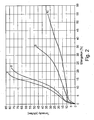
- FIG. 2 the elongation at break of technical yarns compared to a non-technical (ie a textile) polylactic acid yarn is shown.
- the curve numbered 7 belongs to a standard Diolen® yarn (polyethylene terephthalate, not polylactic acid yarn) designated 174ST and 1100 dtex at 210 filaments.
- the curve labeled 8 also belongs to a standard Diolen® yarn (polyethylene terephthalate, not a polylactic acid yarn) denoted 170ST and 1100 dtex at 210 filaments.
- the reference numeral 9 denotes the curve of a yarn which is made of polylactic acid and can be referred to as a technical yarn.
- the yarn is Diolen® 150BT at 1100 dtex at 210 filaments.
- the textile yarn is a textile polylactic acid yarn.
- FIG. 3 shows the shrinkage of the technical polylactic acid yarn Diolen ® 150BT with 1100 dtex, 210 filaments.
- the curve 11 describes the shrinkage of the yarn at a prestress of 1 mN / tex and the curve 12 describes the shrinkage at a prestress of 5 mN / tex.
Landscapes
- Chemical & Material Sciences (AREA)
- Physics & Mathematics (AREA)
- Thermal Sciences (AREA)
- Chemical Kinetics & Catalysis (AREA)
- General Chemical & Material Sciences (AREA)
- Engineering & Computer Science (AREA)
- Textile Engineering (AREA)
- Medicinal Chemistry (AREA)
- Health & Medical Sciences (AREA)
- Polymers & Plastics (AREA)
- Organic Chemistry (AREA)
- Laminated Bodies (AREA)
- Biological Depolymerization Polymers (AREA)
- Nonwoven Fabrics (AREA)
- Woven Fabrics (AREA)
- Knitting Of Fabric (AREA)
Claims (12)
- Matériau en feuille destiné à une utilisation en tant que matériau support pour des procédés d'impression, comprenant une couche de support et une couche visible, la couche de support présentant un textile fait de fils à partir d'un polymère biodégradable conformément à la norme DIN 13432:2000-12, la couche visible présentant une feuille biodégradable conformément à la norme DIN 13432:2000-12 et étant appliquée en tant que couche séparée sur la couche de support, caractérisé en ce que les fils du textile sont des fils multifilaments et possèdent une résistance de plus de 40 cN/tex, mesurée selon DIN EN ISO 2062, et en ce que la feuille de la couche visible est constituée d'acide polylactique.
- Matériau en feuille selon la revendication 1, caractérisé en ce que le textile de la couche de support est constitué de fils multifilaments en acide polylactique biodégradable conformément à la norme DIN 13432:2000-12, qui présentent une résistance de plus de 40 cN/tex, mesurée selon DIN EN ISO 2062.
- Matériau en feuille selon au moins une des revendications précédentes, caractérisé en ce que le textile de la couche de support est une structure tissée, une structure de bonneterie, une structure nappée, une structure tricotée ou une structure non tissée.
- Matériau en feuille selon au moins une des revendications précédentes, caractérisé en ce que la feuille de la couche visible est appliquée sur la couche de support par laminage, contrecollage ou calandrage.
- Matériau en feuille selon au moins une des revendications précédentes, caractérisé en ce que la feuille de la couche visible présente une surface imprimable ou est imprimée.
- Procédé de fabrication d'un matériau en feuille destiné à une utilisation en tant que matériau support pour des procédés d'impression, selon lequel on fabrique un textile en tant que matériau support, à partir de fils en polymère biodégradable conformément à la norme DIN 13432:2000-12, et une couche visible à partir d'une feuille biodégradable conformément à la norme DIN 13432:2000-12, à la suite de quoi la couche visible formée est reliée à la couche de support formée, caractérisé en ce que le matériau support est fabriqué à partir de fils multifilaments ayant une résistance de 40 cN/tex mesurée selon DIN EN ISO 2062, et en ce que l'on utilise comme couche visible une feuille en acide polylactique.
- Procédé selon la revendication 6, caractérisé en ce que la liaison entre la couche de support et la couche visible est réalisée par contrecollage, laminage ou calandrage.
- Procédé selon la revendication 7, caractérisé en ce que pour le contrecollage, le calandrage ou le laminage, la couche de support est chauffée.
- Procédé selon la revendication 7, caractérisé en ce que pour le contrecollage, le laminage ou le calandrage, la couche visible est chauffée.
- Procédé selon la revendication 7, caractérisé en ce que pour le contre-collage, le laminage ou le calandrage, aussi bien la couche visible que la couche de support est chauffée.
- Procédé selon au moins une des revendications 6 à 10, caractérisé en ce qu'une surface de la couche visible est traitée après le contrecollage, le calandrage ou le laminage ou est traitée avant le contrecollage, le calandrage ou le laminage.
- Utilisation d'un matériau en feuille, biodégradable conformément à la norme DIN 13432:2000-12, selon au moins une des revendications 1 à 5, en tant que surface de publicité, d'information ou de décoration ou en tant qu'objet.
Priority Applications (1)
| Application Number | Priority Date | Filing Date | Title |
|---|---|---|---|
| EP10747027.0A EP2473348B1 (fr) | 2009-08-31 | 2010-08-25 | Matériau en feuille |
Applications Claiming Priority (3)
| Application Number | Priority Date | Filing Date | Title |
|---|---|---|---|
| EP09169002 | 2009-08-31 | ||
| EP10747027.0A EP2473348B1 (fr) | 2009-08-31 | 2010-08-25 | Matériau en feuille |
| PCT/EP2010/062360 WO2011023707A1 (fr) | 2009-08-31 | 2010-08-25 | Structure surfacique textile |
Publications (2)
| Publication Number | Publication Date |
|---|---|
| EP2473348A1 EP2473348A1 (fr) | 2012-07-11 |
| EP2473348B1 true EP2473348B1 (fr) | 2015-10-14 |
Family
ID=41259421
Family Applications (1)
| Application Number | Title | Priority Date | Filing Date |
|---|---|---|---|
| EP10747027.0A Active EP2473348B1 (fr) | 2009-08-31 | 2010-08-25 | Matériau en feuille |
Country Status (6)
| Country | Link |
|---|---|
| US (1) | US20120164401A1 (fr) |
| EP (1) | EP2473348B1 (fr) |
| JP (1) | JP2013503063A (fr) |
| KR (1) | KR20120050500A (fr) |
| CN (1) | CN102574373A (fr) |
| WO (1) | WO2011023707A1 (fr) |
Cited By (2)
| Publication number | Priority date | Publication date | Assignee | Title |
|---|---|---|---|---|
| US10590577B2 (en) | 2016-08-02 | 2020-03-17 | Fitesa Germany Gmbh | System and process for preparing polylactic acid nonwoven fabrics |
| US11441251B2 (en) | 2016-08-16 | 2022-09-13 | Fitesa Germany Gmbh | Nonwoven fabrics comprising polylactic acid having improved strength and toughness |
Families Citing this family (5)
| Publication number | Priority date | Publication date | Assignee | Title |
|---|---|---|---|---|
| US20180355523A1 (en) * | 2015-01-09 | 2018-12-13 | Mill Direct, Inc. | Renewably Sourced Yarn and Method of Manufacturing Same |
| US20160201231A1 (en) * | 2015-01-09 | 2016-07-14 | Dennis Lenz | Renewably sourced yarn and method of manufacturing same |
| IT201700104680A1 (it) * | 2017-09-19 | 2019-03-19 | Metalplus S P A | Un innovativo vassoio di tipo compostabile per il trasporto di minuteria ed oggetti delicati |
| EP3727836A1 (fr) * | 2017-12-21 | 2020-10-28 | Beaulieu International Group NV | Tissu biodégradable et utilisation d'un tel tissu |
| CN110641102A (zh) * | 2019-09-06 | 2020-01-03 | 江阴市东立新材料科技有限公司 | 聚乳酸膜复合聚乳酸无纺布及其生产工艺和生产线 |
Citations (2)
| Publication number | Priority date | Publication date | Assignee | Title |
|---|---|---|---|---|
| WO2003045692A1 (fr) * | 2001-11-27 | 2003-06-05 | Dynic Corporation | Plaque de resine lamellee biodegradable et article obtenu a partir de ladite plaque |
| DE102005028175A1 (de) * | 2005-06-17 | 2007-01-11 | Trw Automotive Gmbh | Gassackmodul |
Family Cites Families (11)
| Publication number | Priority date | Publication date | Assignee | Title |
|---|---|---|---|---|
| US5294469A (en) | 1992-06-17 | 1994-03-15 | Mitsui Toatsu Chemicals, Incorporated | Industrial woven fabric and composite sheet comprising same |
| US5629077A (en) * | 1994-06-27 | 1997-05-13 | Advanced Cardiovascular Systems, Inc. | Biodegradable mesh and film stent |
| US5851937A (en) * | 1997-03-27 | 1998-12-22 | Clopay Plastic Products Company, Inc. | Cloth-like totally biodegradable and/or compostable composites and method of manufacture |
| US6441267B1 (en) * | 1999-04-05 | 2002-08-27 | Fiber Innovation Technology | Heat bondable biodegradable fiber |
| JP2003112378A (ja) * | 2001-10-02 | 2003-04-15 | Hiraoka & Co Ltd | 自然環境における分解性に優れたシート状複合体及びその印刷物 |
| JP2003193348A (ja) * | 2001-12-18 | 2003-07-09 | Kikuchi Kogyo Kk | シートベルト用ウェビング及びシートベルト用ウェビングの製造方法 |
| JP4245333B2 (ja) | 2002-11-08 | 2009-03-25 | 日清紡績株式会社 | 生分解性プラスチック組成物、その成形品及びこれを利用した生分解速度制御方法 |
| US6953622B2 (en) * | 2002-12-27 | 2005-10-11 | Kimberly-Clark Worldwide, Inc. | Biodegradable bicomponent fibers with improved thermal-dimensional stability |
| JP4219207B2 (ja) * | 2003-04-17 | 2009-02-04 | ユニチカ株式会社 | 生分解性複合体 |
| JP2005154976A (ja) * | 2003-11-28 | 2005-06-16 | Toray Ind Inc | 産業資材用繊維構造体 |
| US7390841B2 (en) * | 2005-01-24 | 2008-06-24 | Biotech Products, Llc | Compostable vinyl halide polymer compositions and composite sheets |
-
2010
- 2010-08-25 EP EP10747027.0A patent/EP2473348B1/fr active Active
- 2010-08-25 CN CN201080048023XA patent/CN102574373A/zh active Pending
- 2010-08-25 WO PCT/EP2010/062360 patent/WO2011023707A1/fr not_active Ceased
- 2010-08-25 JP JP2012527281A patent/JP2013503063A/ja active Pending
- 2010-08-25 KR KR20127008001A patent/KR20120050500A/ko not_active Ceased
- 2010-08-25 US US13/393,416 patent/US20120164401A1/en not_active Abandoned
Patent Citations (2)
| Publication number | Priority date | Publication date | Assignee | Title |
|---|---|---|---|---|
| WO2003045692A1 (fr) * | 2001-11-27 | 2003-06-05 | Dynic Corporation | Plaque de resine lamellee biodegradable et article obtenu a partir de ladite plaque |
| DE102005028175A1 (de) * | 2005-06-17 | 2007-01-11 | Trw Automotive Gmbh | Gassackmodul |
Non-Patent Citations (1)
| Title |
|---|
| DATABASE WPI Week 200350, Derwent World Patents Index; Class A35, AN 2003-532749 * |
Cited By (2)
| Publication number | Priority date | Publication date | Assignee | Title |
|---|---|---|---|---|
| US10590577B2 (en) | 2016-08-02 | 2020-03-17 | Fitesa Germany Gmbh | System and process for preparing polylactic acid nonwoven fabrics |
| US11441251B2 (en) | 2016-08-16 | 2022-09-13 | Fitesa Germany Gmbh | Nonwoven fabrics comprising polylactic acid having improved strength and toughness |
Also Published As
| Publication number | Publication date |
|---|---|
| KR20120050500A (ko) | 2012-05-18 |
| US20120164401A1 (en) | 2012-06-28 |
| WO2011023707A1 (fr) | 2011-03-03 |
| CN102574373A (zh) | 2012-07-11 |
| EP2473348A1 (fr) | 2012-07-11 |
| JP2013503063A (ja) | 2013-01-31 |
Similar Documents
| Publication | Publication Date | Title |
|---|---|---|
| EP2473348B1 (fr) | Matériau en feuille | |
| DE69613768T2 (de) | Biologisch abbaubares Vlies/Filmverbundmaterial | |
| DE60219317T2 (de) | Mikrofasern aus aliphatischem polyester, mikrofibrillierte gegenstände und ihre verwendung | |
| EP2536546B1 (fr) | Procédé de fabrication d'un produit semi-fini en forme de plaque constitué d'un matériau composite fibreux, et le produit fini ainsi obtenu | |
| US10240268B2 (en) | Meltblown nonwoven web comprising reclaimed polypropylene component and reclaimed sustainable polymer component and method of making same | |
| DE19642251C2 (de) | Verfahren zum Herstellen einer Folie aus einem thermoplastischen Polyurethan | |
| EP2605908B1 (fr) | Matériau composite comportant un matériau de revêtement | |
| DE3688791T2 (de) | Wasserabsorbierendes material sowie dessen herstellung. | |
| EP2115201B1 (fr) | Étoffe nappée légère, très résistante, composée de non-tissé, procédé de fabrication et utilisation | |
| DE102014105609A1 (de) | Handeinreißbares Gewebeklebeband mit hoher Abriebfestigkeit und Geräuschdämpfung und Verfahren zu seiner Herstellung | |
| DE19832721A1 (de) | Schichtenweise zusammengesetzter Verbundwerkstoff zur Stabilisierung einer Kernkomponente von Formteilen | |
| EP2185757A1 (fr) | Procédé de fabrication d'un produit plat composé de fils, fibres ou filaments au moins partiellement divisés et dispositif de fabrication de ces produits plats | |
| EP2937393B1 (fr) | Bande adhésive en tissu pouvant être déchirée à la main ayant une résistance au frottement et une atténuation du bruit élevées et son procédé de fabrication | |
| DE102010047105A1 (de) | Mehrschichtiges Verbundmaterial mit elastischen Eigenschaften | |
| DE2615444A1 (de) | Verfahren zur herstellung von gekraeuselten textilelementen durch zerfaserung von folien und dadurch hergestelltes erzeugnis | |
| WO2018121806A1 (fr) | Procédé de fabrication d'un matériau textile tissé ainsi que matériau textile tissé fabriqué selon ce procédé | |
| DE202014011328U1 (de) | Handeinreißbares Gewebeklebeband mit hoher Abriebfestigkeit und Geräuschdämpfung | |
| DE10258112B4 (de) | Verfahren zur Herstellung eines Flächengebildes aus zumindest teilweise gesplitteten Garnen, Fasern oder Filamenten | |
| DE102019203986A1 (de) | Vliesstoffartikel | |
| DE19953095A1 (de) | Selbstklebendes Abdeckband | |
| WO2001064478A2 (fr) | Enveloppe de protection d'airbag | |
| KR20230029254A (ko) | 생분해성 폴리락트산(pla) 광고지 및 그 제조방법 | |
| EP0469559A1 (fr) | Matière textile emboutie et pièces moulées ainsi obtenues | |
| DE102006011854A1 (de) | Kunststoffformteil mit einer dekorativen Textilschicht | |
| DE102007013163B4 (de) | Verfahren zur Herstellung von mehrschichtigen Kunststofffolien |
Legal Events
| Date | Code | Title | Description |
|---|---|---|---|
| PUAI | Public reference made under article 153(3) epc to a published international application that has entered the european phase |
Free format text: ORIGINAL CODE: 0009012 |
|
| 17P | Request for examination filed |
Effective date: 20120331 |
|
| AK | Designated contracting states |
Kind code of ref document: A1 Designated state(s): AL AT BE BG CH CY CZ DE DK EE ES FI FR GB GR HR HU IE IS IT LI LT LU LV MC MK MT NL NO PL PT RO SE SI SK SM TR |
|
| DAX | Request for extension of the european patent (deleted) | ||
| RAP1 | Party data changed (applicant data changed or rights of an application transferred) |
Owner name: PHP FIBERS GMBH |
|
| 17Q | First examination report despatched |
Effective date: 20130628 |
|
| GRAP | Despatch of communication of intention to grant a patent |
Free format text: ORIGINAL CODE: EPIDOSNIGR1 |
|
| RIC1 | Information provided on ipc code assigned before grant |
Ipc: B32B 27/12 20060101ALI20150617BHEP Ipc: B32B 27/36 20060101ALI20150617BHEP Ipc: C08L 101/16 20060101ALI20150617BHEP Ipc: B32B 27/02 20060101AFI20150617BHEP |
|
| INTG | Intention to grant announced |
Effective date: 20150630 |
|
| GRAS | Grant fee paid |
Free format text: ORIGINAL CODE: EPIDOSNIGR3 |
|
| GRAA | (expected) grant |
Free format text: ORIGINAL CODE: 0009210 |
|
| AK | Designated contracting states |
Kind code of ref document: B1 Designated state(s): AL AT BE BG CH CY CZ DE DK EE ES FI FR GB GR HR HU IE IS IT LI LT LU LV MC MK MT NL NO PL PT RO SE SI SK SM TR |
|
| REG | Reference to a national code |
Ref country code: GB Ref legal event code: FG4D Free format text: NOT ENGLISH |
|
| REG | Reference to a national code |
Ref country code: AT Ref legal event code: REF Ref document number: 754804 Country of ref document: AT Kind code of ref document: T Effective date: 20151015 Ref country code: CH Ref legal event code: EP |
|
| REG | Reference to a national code |
Ref country code: IE Ref legal event code: FG4D Free format text: LANGUAGE OF EP DOCUMENT: GERMAN |
|
| REG | Reference to a national code |
Ref country code: DE Ref legal event code: R096 Ref document number: 502010010471 Country of ref document: DE |
|
| REG | Reference to a national code |
Ref country code: NL Ref legal event code: FP |
|
| REG | Reference to a national code |
Ref country code: LT Ref legal event code: MG4D |
|
| PG25 | Lapsed in a contracting state [announced via postgrant information from national office to epo] |
Ref country code: IT Free format text: LAPSE BECAUSE OF FAILURE TO SUBMIT A TRANSLATION OF THE DESCRIPTION OR TO PAY THE FEE WITHIN THE PRESCRIBED TIME-LIMIT Effective date: 20151014 Ref country code: ES Free format text: LAPSE BECAUSE OF FAILURE TO SUBMIT A TRANSLATION OF THE DESCRIPTION OR TO PAY THE FEE WITHIN THE PRESCRIBED TIME-LIMIT Effective date: 20151014 Ref country code: HR Free format text: LAPSE BECAUSE OF FAILURE TO SUBMIT A TRANSLATION OF THE DESCRIPTION OR TO PAY THE FEE WITHIN THE PRESCRIBED TIME-LIMIT Effective date: 20151014 Ref country code: IS Free format text: LAPSE BECAUSE OF FAILURE TO SUBMIT A TRANSLATION OF THE DESCRIPTION OR TO PAY THE FEE WITHIN THE PRESCRIBED TIME-LIMIT Effective date: 20160214 Ref country code: LT Free format text: LAPSE BECAUSE OF FAILURE TO SUBMIT A TRANSLATION OF THE DESCRIPTION OR TO PAY THE FEE WITHIN THE PRESCRIBED TIME-LIMIT Effective date: 20151014 Ref country code: NO Free format text: LAPSE BECAUSE OF FAILURE TO SUBMIT A TRANSLATION OF THE DESCRIPTION OR TO PAY THE FEE WITHIN THE PRESCRIBED TIME-LIMIT Effective date: 20160114 |
|
| PG25 | Lapsed in a contracting state [announced via postgrant information from national office to epo] |
Ref country code: PL Free format text: LAPSE BECAUSE OF FAILURE TO SUBMIT A TRANSLATION OF THE DESCRIPTION OR TO PAY THE FEE WITHIN THE PRESCRIBED TIME-LIMIT Effective date: 20151014 Ref country code: LV Free format text: LAPSE BECAUSE OF FAILURE TO SUBMIT A TRANSLATION OF THE DESCRIPTION OR TO PAY THE FEE WITHIN THE PRESCRIBED TIME-LIMIT Effective date: 20151014 Ref country code: FI Free format text: LAPSE BECAUSE OF FAILURE TO SUBMIT A TRANSLATION OF THE DESCRIPTION OR TO PAY THE FEE WITHIN THE PRESCRIBED TIME-LIMIT Effective date: 20151014 Ref country code: PT Free format text: LAPSE BECAUSE OF FAILURE TO SUBMIT A TRANSLATION OF THE DESCRIPTION OR TO PAY THE FEE WITHIN THE PRESCRIBED TIME-LIMIT Effective date: 20160215 Ref country code: GR Free format text: LAPSE BECAUSE OF FAILURE TO SUBMIT A TRANSLATION OF THE DESCRIPTION OR TO PAY THE FEE WITHIN THE PRESCRIBED TIME-LIMIT Effective date: 20160115 Ref country code: SE Free format text: LAPSE BECAUSE OF FAILURE TO SUBMIT A TRANSLATION OF THE DESCRIPTION OR TO PAY THE FEE WITHIN THE PRESCRIBED TIME-LIMIT Effective date: 20151014 |
|
| REG | Reference to a national code |
Ref country code: DE Ref legal event code: R097 Ref document number: 502010010471 Country of ref document: DE |
|
| PG25 | Lapsed in a contracting state [announced via postgrant information from national office to epo] |
Ref country code: CZ Free format text: LAPSE BECAUSE OF FAILURE TO SUBMIT A TRANSLATION OF THE DESCRIPTION OR TO PAY THE FEE WITHIN THE PRESCRIBED TIME-LIMIT Effective date: 20151014 |
|
| PLBE | No opposition filed within time limit |
Free format text: ORIGINAL CODE: 0009261 |
|
| STAA | Information on the status of an ep patent application or granted ep patent |
Free format text: STATUS: NO OPPOSITION FILED WITHIN TIME LIMIT |
|
| PG25 | Lapsed in a contracting state [announced via postgrant information from national office to epo] |
Ref country code: DK Free format text: LAPSE BECAUSE OF FAILURE TO SUBMIT A TRANSLATION OF THE DESCRIPTION OR TO PAY THE FEE WITHIN THE PRESCRIBED TIME-LIMIT Effective date: 20151014 Ref country code: RO Free format text: LAPSE BECAUSE OF FAILURE TO SUBMIT A TRANSLATION OF THE DESCRIPTION OR TO PAY THE FEE WITHIN THE PRESCRIBED TIME-LIMIT Effective date: 20151014 Ref country code: EE Free format text: LAPSE BECAUSE OF FAILURE TO SUBMIT A TRANSLATION OF THE DESCRIPTION OR TO PAY THE FEE WITHIN THE PRESCRIBED TIME-LIMIT Effective date: 20151014 Ref country code: SK Free format text: LAPSE BECAUSE OF FAILURE TO SUBMIT A TRANSLATION OF THE DESCRIPTION OR TO PAY THE FEE WITHIN THE PRESCRIBED TIME-LIMIT Effective date: 20151014 Ref country code: SM Free format text: LAPSE BECAUSE OF FAILURE TO SUBMIT A TRANSLATION OF THE DESCRIPTION OR TO PAY THE FEE WITHIN THE PRESCRIBED TIME-LIMIT Effective date: 20151014 |
|
| 26N | No opposition filed |
Effective date: 20160715 |
|
| PG25 | Lapsed in a contracting state [announced via postgrant information from national office to epo] |
Ref country code: SI Free format text: LAPSE BECAUSE OF FAILURE TO SUBMIT A TRANSLATION OF THE DESCRIPTION OR TO PAY THE FEE WITHIN THE PRESCRIBED TIME-LIMIT Effective date: 20151014 |
|
| PG25 | Lapsed in a contracting state [announced via postgrant information from national office to epo] |
Ref country code: BE Free format text: LAPSE BECAUSE OF NON-PAYMENT OF DUE FEES Effective date: 20160831 |
|
| PG25 | Lapsed in a contracting state [announced via postgrant information from national office to epo] |
Ref country code: MC Free format text: LAPSE BECAUSE OF FAILURE TO SUBMIT A TRANSLATION OF THE DESCRIPTION OR TO PAY THE FEE WITHIN THE PRESCRIBED TIME-LIMIT Effective date: 20151014 |
|
| REG | Reference to a national code |
Ref country code: CH Ref legal event code: PL |
|
| REG | Reference to a national code |
Ref country code: NL Ref legal event code: MM Effective date: 20160901 |
|
| GBPC | Gb: european patent ceased through non-payment of renewal fee |
Effective date: 20160825 |
|
| PG25 | Lapsed in a contracting state [announced via postgrant information from national office to epo] |
Ref country code: CH Free format text: LAPSE BECAUSE OF NON-PAYMENT OF DUE FEES Effective date: 20160831 Ref country code: LI Free format text: LAPSE BECAUSE OF NON-PAYMENT OF DUE FEES Effective date: 20160831 |
|
| REG | Reference to a national code |
Ref country code: FR Ref legal event code: ST Effective date: 20170428 |
|
| REG | Reference to a national code |
Ref country code: IE Ref legal event code: MM4A |
|
| PG25 | Lapsed in a contracting state [announced via postgrant information from national office to epo] |
Ref country code: NL Free format text: LAPSE BECAUSE OF NON-PAYMENT OF DUE FEES Effective date: 20160901 |
|
| PG25 | Lapsed in a contracting state [announced via postgrant information from national office to epo] |
Ref country code: IE Free format text: LAPSE BECAUSE OF NON-PAYMENT OF DUE FEES Effective date: 20160825 Ref country code: FR Free format text: LAPSE BECAUSE OF NON-PAYMENT OF DUE FEES Effective date: 20160831 Ref country code: GB Free format text: LAPSE BECAUSE OF NON-PAYMENT OF DUE FEES Effective date: 20160825 |
|
| PG25 | Lapsed in a contracting state [announced via postgrant information from national office to epo] |
Ref country code: LU Free format text: LAPSE BECAUSE OF NON-PAYMENT OF DUE FEES Effective date: 20160825 |
|
| REG | Reference to a national code |
Ref country code: AT Ref legal event code: MM01 Ref document number: 754804 Country of ref document: AT Kind code of ref document: T Effective date: 20160825 |
|
| PG25 | Lapsed in a contracting state [announced via postgrant information from national office to epo] |
Ref country code: AT Free format text: LAPSE BECAUSE OF NON-PAYMENT OF DUE FEES Effective date: 20160825 |
|
| PG25 | Lapsed in a contracting state [announced via postgrant information from national office to epo] |
Ref country code: HU Free format text: LAPSE BECAUSE OF FAILURE TO SUBMIT A TRANSLATION OF THE DESCRIPTION OR TO PAY THE FEE WITHIN THE PRESCRIBED TIME-LIMIT; INVALID AB INITIO Effective date: 20100825 Ref country code: CY Free format text: LAPSE BECAUSE OF FAILURE TO SUBMIT A TRANSLATION OF THE DESCRIPTION OR TO PAY THE FEE WITHIN THE PRESCRIBED TIME-LIMIT Effective date: 20151014 |
|
| PG25 | Lapsed in a contracting state [announced via postgrant information from national office to epo] |
Ref country code: MK Free format text: LAPSE BECAUSE OF FAILURE TO SUBMIT A TRANSLATION OF THE DESCRIPTION OR TO PAY THE FEE WITHIN THE PRESCRIBED TIME-LIMIT Effective date: 20151014 Ref country code: TR Free format text: LAPSE BECAUSE OF FAILURE TO SUBMIT A TRANSLATION OF THE DESCRIPTION OR TO PAY THE FEE WITHIN THE PRESCRIBED TIME-LIMIT Effective date: 20151014 Ref country code: MT Free format text: LAPSE BECAUSE OF FAILURE TO SUBMIT A TRANSLATION OF THE DESCRIPTION OR TO PAY THE FEE WITHIN THE PRESCRIBED TIME-LIMIT Effective date: 20151014 |
|
| PG25 | Lapsed in a contracting state [announced via postgrant information from national office to epo] |
Ref country code: BG Free format text: LAPSE BECAUSE OF FAILURE TO SUBMIT A TRANSLATION OF THE DESCRIPTION OR TO PAY THE FEE WITHIN THE PRESCRIBED TIME-LIMIT Effective date: 20151014 |
|
| PG25 | Lapsed in a contracting state [announced via postgrant information from national office to epo] |
Ref country code: AL Free format text: LAPSE BECAUSE OF FAILURE TO SUBMIT A TRANSLATION OF THE DESCRIPTION OR TO PAY THE FEE WITHIN THE PRESCRIBED TIME-LIMIT Effective date: 20151014 |
|
| P01 | Opt-out of the competence of the unified patent court (upc) registered |
Effective date: 20230706 |
|
| PGFP | Annual fee paid to national office [announced via postgrant information from national office to epo] |
Ref country code: DE Payment date: 20250828 Year of fee payment: 16 |