EP2474768A2 - Kühlmittelleitungsverbinder für Klimaanlage - Google Patents
Kühlmittelleitungsverbinder für Klimaanlage Download PDFInfo
- Publication number
- EP2474768A2 EP2474768A2 EP11177694A EP11177694A EP2474768A2 EP 2474768 A2 EP2474768 A2 EP 2474768A2 EP 11177694 A EP11177694 A EP 11177694A EP 11177694 A EP11177694 A EP 11177694A EP 2474768 A2 EP2474768 A2 EP 2474768A2
- Authority
- EP
- European Patent Office
- Prior art keywords
- refrigerant pipe
- external refrigerant
- coupling member
- air conditioner
- connection structure
- Prior art date
- Legal status (The legal status is an assumption and is not a legal conclusion. Google has not performed a legal analysis and makes no representation as to the accuracy of the status listed.)
- Granted
Links
- 239000003507 refrigerant Substances 0.000 title claims abstract description 192
- 238000010168 coupling process Methods 0.000 claims abstract description 87
- 238000005859 coupling reaction Methods 0.000 claims abstract description 87
- 230000008878 coupling Effects 0.000 claims abstract description 84
- 239000000463 material Substances 0.000 claims abstract description 48
- 230000007797 corrosion Effects 0.000 claims abstract description 45
- 238000005260 corrosion Methods 0.000 claims abstract description 45
- 229910052782 aluminium Inorganic materials 0.000 claims description 38
- XAGFODPZIPBFFR-UHFFFAOYSA-N aluminium Chemical compound [Al] XAGFODPZIPBFFR-UHFFFAOYSA-N 0.000 claims description 38
- RYGMFSIKBFXOCR-UHFFFAOYSA-N Copper Chemical compound [Cu] RYGMFSIKBFXOCR-UHFFFAOYSA-N 0.000 claims description 20
- 229910052802 copper Inorganic materials 0.000 claims description 20
- 239000010949 copper Substances 0.000 claims description 20
- 238000009413 insulation Methods 0.000 claims description 4
- 239000003112 inhibitor Substances 0.000 claims description 3
- 229910001369 Brass Inorganic materials 0.000 description 28
- 239000010951 brass Substances 0.000 description 28
- 229910052751 metal Inorganic materials 0.000 description 22
- 239000002184 metal Substances 0.000 description 22
- 150000002739 metals Chemical class 0.000 description 17
- 239000000523 sample Substances 0.000 description 16
- 238000002474 experimental method Methods 0.000 description 13
- 238000000576 coating method Methods 0.000 description 8
- 239000011248 coating agent Substances 0.000 description 7
- 230000008014 freezing Effects 0.000 description 6
- 238000007710 freezing Methods 0.000 description 6
- 230000008901 benefit Effects 0.000 description 5
- XLYOFNOQVPJJNP-UHFFFAOYSA-N water Substances O XLYOFNOQVPJJNP-UHFFFAOYSA-N 0.000 description 5
- QVGXLLKOCUKJST-UHFFFAOYSA-N atomic oxygen Chemical compound [O] QVGXLLKOCUKJST-UHFFFAOYSA-N 0.000 description 4
- 238000010586 diagram Methods 0.000 description 4
- 238000009434 installation Methods 0.000 description 4
- 238000000034 method Methods 0.000 description 4
- 239000001301 oxygen Substances 0.000 description 4
- 229910052760 oxygen Inorganic materials 0.000 description 4
- 230000002093 peripheral effect Effects 0.000 description 4
- 238000005452 bending Methods 0.000 description 3
- 230000005489 elastic deformation Effects 0.000 description 3
- 230000008569 process Effects 0.000 description 3
- FAPWRFPIFSIZLT-UHFFFAOYSA-M Sodium chloride Chemical compound [Na+].[Cl-] FAPWRFPIFSIZLT-UHFFFAOYSA-M 0.000 description 2
- AZDRQVAHHNSJOQ-UHFFFAOYSA-N alumane Chemical compound [AlH3] AZDRQVAHHNSJOQ-UHFFFAOYSA-N 0.000 description 2
- 230000015572 biosynthetic process Effects 0.000 description 2
- 230000000694 effects Effects 0.000 description 2
- 239000007789 gas Substances 0.000 description 2
- 238000004519 manufacturing process Methods 0.000 description 2
- 230000004048 modification Effects 0.000 description 2
- 238000012986 modification Methods 0.000 description 2
- 230000003647 oxidation Effects 0.000 description 2
- 238000007254 oxidation reaction Methods 0.000 description 2
- 230000009467 reduction Effects 0.000 description 2
- 238000000926 separation method Methods 0.000 description 2
- 238000003466 welding Methods 0.000 description 2
- 230000005540 biological transmission Effects 0.000 description 1
- 238000009833 condensation Methods 0.000 description 1
- 230000005494 condensation Effects 0.000 description 1
- 238000010292 electrical insulation Methods 0.000 description 1
- -1 for example Inorganic materials 0.000 description 1
- 230000009257 reactivity Effects 0.000 description 1
- 150000003839 salts Chemical class 0.000 description 1
- 239000011780 sodium chloride Substances 0.000 description 1
- 239000013589 supplement Substances 0.000 description 1
Images


Classifications
-
- F—MECHANICAL ENGINEERING; LIGHTING; HEATING; WEAPONS; BLASTING
- F24—HEATING; RANGES; VENTILATING
- F24F—AIR-CONDITIONING; AIR-HUMIDIFICATION; VENTILATION; USE OF AIR CURRENTS FOR SCREENING
- F24F1/00—Room units for air-conditioning, e.g. separate or self-contained units or units receiving primary air from a central station
- F24F1/06—Separate outdoor units, e.g. outdoor unit to be linked to a separate room comprising a compressor and a heat exchanger
- F24F1/26—Refrigerant piping
-
- F—MECHANICAL ENGINEERING; LIGHTING; HEATING; WEAPONS; BLASTING
- F16—ENGINEERING ELEMENTS AND UNITS; GENERAL MEASURES FOR PRODUCING AND MAINTAINING EFFECTIVE FUNCTIONING OF MACHINES OR INSTALLATIONS; THERMAL INSULATION IN GENERAL
- F16L—PIPES; JOINTS OR FITTINGS FOR PIPES; SUPPORTS FOR PIPES, CABLES OR PROTECTIVE TUBING; MEANS FOR THERMAL INSULATION IN GENERAL
- F16L25/00—Construction or details of pipe joints not provided for in, or of interest apart from, groups F16L13/00 - F16L23/00
- F16L25/0072—Joints for pipes of dissimilar materials
-
- F—MECHANICAL ENGINEERING; LIGHTING; HEATING; WEAPONS; BLASTING
- F16—ENGINEERING ELEMENTS AND UNITS; GENERAL MEASURES FOR PRODUCING AND MAINTAINING EFFECTIVE FUNCTIONING OF MACHINES OR INSTALLATIONS; THERMAL INSULATION IN GENERAL
- F16L—PIPES; JOINTS OR FITTINGS FOR PIPES; SUPPORTS FOR PIPES, CABLES OR PROTECTIVE TUBING; MEANS FOR THERMAL INSULATION IN GENERAL
- F16L19/00—Joints in which sealing surfaces are pressed together by means of a member, e.g. a swivel nut, screwed on, or into, one of the joint parts
- F16L19/02—Pipe ends provided with collars or flanges, integral with the pipe or not, pressed together by a screwed member
- F16L19/025—Pipe ends provided with collars or flanges, integral with the pipe or not, pressed together by a screwed member the pipe ends having integral collars or flanges
- F16L19/028—Pipe ends provided with collars or flanges, integral with the pipe or not, pressed together by a screwed member the pipe ends having integral collars or flanges the collars or flanges being obtained by deformation of the pipe wall
- F16L19/0286—Pipe ends provided with collars or flanges, integral with the pipe or not, pressed together by a screwed member the pipe ends having integral collars or flanges the collars or flanges being obtained by deformation of the pipe wall and being formed as a flange
-
- F—MECHANICAL ENGINEERING; LIGHTING; HEATING; WEAPONS; BLASTING
- F16—ENGINEERING ELEMENTS AND UNITS; GENERAL MEASURES FOR PRODUCING AND MAINTAINING EFFECTIVE FUNCTIONING OF MACHINES OR INSTALLATIONS; THERMAL INSULATION IN GENERAL
- F16L—PIPES; JOINTS OR FITTINGS FOR PIPES; SUPPORTS FOR PIPES, CABLES OR PROTECTIVE TUBING; MEANS FOR THERMAL INSULATION IN GENERAL
- F16L19/00—Joints in which sealing surfaces are pressed together by means of a member, e.g. a swivel nut, screwed on, or into, one of the joint parts
- F16L19/04—Joints in which sealing surfaces are pressed together by means of a member, e.g. a swivel nut, screwed on, or into, one of the joint parts using additional rigid rings, sealing directly on at least one pipe end, which is flared either before or during the making of the connection
-
- F—MECHANICAL ENGINEERING; LIGHTING; HEATING; WEAPONS; BLASTING
- F16—ENGINEERING ELEMENTS AND UNITS; GENERAL MEASURES FOR PRODUCING AND MAINTAINING EFFECTIVE FUNCTIONING OF MACHINES OR INSTALLATIONS; THERMAL INSULATION IN GENERAL
- F16L—PIPES; JOINTS OR FITTINGS FOR PIPES; SUPPORTS FOR PIPES, CABLES OR PROTECTIVE TUBING; MEANS FOR THERMAL INSULATION IN GENERAL
- F16L58/00—Protection of pipes or pipe fittings against corrosion or incrustation
-
- F—MECHANICAL ENGINEERING; LIGHTING; HEATING; WEAPONS; BLASTING
- F24—HEATING; RANGES; VENTILATING
- F24F—AIR-CONDITIONING; AIR-HUMIDIFICATION; VENTILATION; USE OF AIR CURRENTS FOR SCREENING
- F24F1/00—Room units for air-conditioning, e.g. separate or self-contained units or units receiving primary air from a central station
- F24F1/06—Separate outdoor units, e.g. outdoor unit to be linked to a separate room comprising a compressor and a heat exchanger
- F24F1/26—Refrigerant piping
- F24F1/30—Refrigerant piping for use inside the separate outdoor units
-
- F—MECHANICAL ENGINEERING; LIGHTING; HEATING; WEAPONS; BLASTING
- F24—HEATING; RANGES; VENTILATING
- F24F—AIR-CONDITIONING; AIR-HUMIDIFICATION; VENTILATION; USE OF AIR CURRENTS FOR SCREENING
- F24F1/00—Room units for air-conditioning, e.g. separate or self-contained units or units receiving primary air from a central station
- F24F1/06—Separate outdoor units, e.g. outdoor unit to be linked to a separate room comprising a compressor and a heat exchanger
- F24F1/26—Refrigerant piping
- F24F1/32—Refrigerant piping for connecting the separate outdoor units to indoor units
-
- F—MECHANICAL ENGINEERING; LIGHTING; HEATING; WEAPONS; BLASTING
- F28—HEAT EXCHANGE IN GENERAL
- F28F—DETAILS OF HEAT-EXCHANGE AND HEAT-TRANSFER APPARATUS, OF GENERAL APPLICATION
- F28F19/00—Preventing the formation of deposits or corrosion, e.g. by using filters or scrapers
-
- F—MECHANICAL ENGINEERING; LIGHTING; HEATING; WEAPONS; BLASTING
- F28—HEAT EXCHANGE IN GENERAL
- F28F—DETAILS OF HEAT-EXCHANGE AND HEAT-TRANSFER APPARATUS, OF GENERAL APPLICATION
- F28F21/00—Constructions of heat-exchange apparatus characterised by the selection of particular materials
- F28F21/08—Constructions of heat-exchange apparatus characterised by the selection of particular materials of metal
-
- F—MECHANICAL ENGINEERING; LIGHTING; HEATING; WEAPONS; BLASTING
- F28—HEAT EXCHANGE IN GENERAL
- F28F—DETAILS OF HEAT-EXCHANGE AND HEAT-TRANSFER APPARATUS, OF GENERAL APPLICATION
- F28F9/00—Casings; Header boxes; Auxiliary supports for elements; Auxiliary members within casings
- F28F9/02—Header boxes; End plates
- F28F9/0246—Arrangements for connecting header boxes with flow lines
Definitions
- the present invention relates to an air conditioner, more particularly, to a connection structure of a refrigerant pipe connecting an indoor unit and an outdoor unit of a conditioner with each other.
- an air conditioner is an electric appliance which has a function of controlling a predetermined space to have a desired temperature and a desired humidity.
- Such an air conditioner typically uses a freezing cycle.
- the freezing cycle includes a compressor, an evaporator, an expansion valve and a condenser, and it forms a closed circuit.
- Refrigerant is circulating in the closed circuit of the freezing cycle.
- heat is absorbed from peripheral air or heat is emitted to the peripheral air. Because of that, the predetermined space is controlled to have a desired temperature or a desired humidity.
- a conventional air conditioner will be described as follows. Generally, parts provided in the air conditioner are dividedly installed in an indoor unit 1 and an outdoor unit 3. An evaporator 5 is installed in the indoor unit 1. A condenser 7 and a compressor (not shown) are installed in the outdoor unit 3. The evaporator 5 and the condenser 7 are connected with each other by a pipe 9 where refrigerant flowing, with forming a closed circuit entirely. The evaporator 5 and the condenser 7 are kinds of evaporators. Refrigerant flowing in the evaporator 5 and the condenser 7 may exchange heat with peripheral air. When the refrigerant is evaporated, heat of the room is absorbed by the evaporator 5. When the refrigerant is condensed, heat generated from the condensation is emitted to peripheral air, that is, outside.
- the air conditioner When it is used after installed in a predetermined room, the air conditioner includes a pipe located outside the indoor and outdoor units 1 and 3 (hereinafter, 'external refrigerant pipe') connecting the indoor unit 1 and the outdoor unit 3 with each other.
- 'external refrigerant pipe' each of the parts composing the freezing cycle, namely, the evaporator 5, the condenser 7 and the compressor (not shown) may form the freezing circuit.
- the refrigerant is circulating in the closed circuit.
- the outdoor unit 3, the indoor unit 1 and the external refrigerant pipe 9 connecting the outdoor unit 3 with the indoor unit 1 are separated independently.
- both ends of the external refrigerant pipe 9 are coupled to the condenser 7 of the outdoor unit and to the evaporator 5 of the indoor unit via connection units 100 and 130, respectively.
- Internal refrigerant pipes 72 and 52 having a predetermined length are coupled to both ends of the condenser 7 and to both ends of the evaporator 5 inside the outdoor unit 3 and the indoor unit 1, respectively.
- the internal refrigerant pipes 72 and 52 are connected to the connection units 100 and 130, respectively.
- the lengths of the internal refrigerant pipes 72 and 52 are relatively small inside the indoor unit 1 and the outdoor unit 3, for example, approximately 30cm. as follows, it will be expressed that the condenser 7 and the evaporator 5 are connected with the connection units 100 and 130, respectively, for explanation convenience.
- connection units 100 and 130 are located outer to the indoor unit 1 and the outdoor unit 3, respectively.
- the connection unit 130 for the indoor unit (hereinafter, indoor unit connection unit 130) and the connection unit 100 for the outdoor unit (outdoor unit connection unit 100) typically have a separation and connection structure, for example, they are connected with and disconnected from the indoor and outdoor unit by using screws, respectively.
- the outdoor unit connection unit 100 has a function of selectively opening or closing a refrigerant path and a function of allowing refrigerant refilling, rather than the separation/connection structure.
- the indoor unit connection unit 130 has a similar basic structure with the outdoor unit connection unit 100, without the functions of opening or closing the refrigerant path selectively and of refrigerant introduction.
- connection units 100 and 130 are configured of the outdoor unit connection unit 100 and the indoor unit connection unit 130. As mentioned above, the connection structures of both connection units are similar to each other. Compared with the indoor unit connection unit 130, the outdoor unit connection unit 100 has additional functions and the additional functions will be described as follows.
- the outdoor unit connection unit 100 includes the condenser 7, a connection member 100 for connecting the condenser 7 with the external refrigerant pipe 9, and a coupling member 20 for detachably coupling the connection member 10 to the external refrigerant pipe 9.
- the connection member 10 may include a path controlling part 16 to be employed as an on/off valve which opens or closes the refrigerant path selectively before installing and relocating the air conditioner.
- the connection member 1 may further include a refrigerant supplying part 18 used to supply refrigerant to the air conditioner when it is required to supplement refrigerant because of refrigerant leakage.
- the out door unit connection member 10 has the function of the on/off valve and it is typically called as a service valve.
- the coupling member 20 is called as a service nut, because it can detachably couple the external refrigerant pipe 9 to the service valve 10 and because it has an arm screw part 22.
- copper based materials may be formed to form a heat exchanger configured of the condenser 7 and the evaporator 5, the connection member 10, the coupling member 20 and the external refrigerant pipe 9.
- the heat exchanger is formed of copper and both of the connection member 10 and the coupling member 20 are formed of brass.
- the external refrigerant pipe 9 is formed of copper. Because of properties possessed by the heat exchanger, a heat exchanging ability has priority in forming the heat exchanger and it is preferable copper with an excellent ability of heat transmission is used to form the heat exchanger. Airtightness has priority when forming the external refrigerant pipe 9. Because of that, the external refrigerant pipe 9 may have an ability of insulation. Nevertheless, the external refrigerant pipe 9 is formed of copper in the conventional air conditioner.
- copper has disadvantages of relatively high priced and not eco-friendly.
- the present invention is directed to an air conditioner.
- An object of the present invention is to provide a connection structure of a refrigerant pipe for an air conditioner, with a relatively low price and being eco-friendly.
- a refrigerant pipe connection structure for an air conditioner includes a connection member connected with a heat exchanger; an external refrigerant pipe connected with the connection member, the external refrigerant pipe formed of a different material from a material used to form the connection member; and a coupling member which connects the connection member and the external refrigerant pipe with each other, wherein an contact area between the external refrigerant pipe and the coupling member is configured to prevent galvanic corrosion.
- the contact area between the coupling member and the external refrigerant pipe may be formed of a material having a galvanic potential difference of a predetermined value or less.
- the connection member may be formed of a copper based material and an adhered area between the external refrigerant pipe and the coupling member is formed of an aluminum based material.
- An entire area of the coupling member may be formed of an aluminum based material.
- a strength of a material used to form the coupling member may be larger than a strength of the material used to form the external refrigerant pipe.
- the material used to form the external refrigerant pipe may be A11060-O and the material used to form the coupling member is A17075-O.
- connection member and the external refrigerant pipe may be located within the coupling member.
- the coupling member detachably may connect the connection member and the external refrigerant pipe with each other.
- the connection member and the coupling member may be coupled to each other by a screw, to connect the connection member and the external refrigerant pipe with each other.
- an insulation member may be provided to electrically insulate the contact area between the external refrigerant pipe and the coupling member.
- a corrosion inhibitor may be provided to prevent corrosion at the contact area between the external refrigerant pipe and the coupling member.
- a corrosion preventing part may be provided at a predetermined area of the external refrigerant pipe distant from the contact area between the external refrigerant pipe and the coupling member, to prevent corrosion at the external refrigerant pipe.
- the refrigerant pipe connection structure for the air conditioner has following effects. Firstly, a metal which is relatively cheap, for example, aluminum is used to embody the refrigerant connection structure for the air conditioner. As a result, the manufacturing costs may be saved advantageously. Secondly, the material which can be decomposed easily in natural environments, for example, aluminum is used to embody the refrigerant connection structure for the air conditioner. As a result, eco-friendly air conditioners may be manufactured advantageously.
- FIG. 1 is a diagram schematically illustrating a structure of an conventional air conditioner
- FIG. 2 is a perspective view illustrating a connection unit shown in FIG. 1 ;
- FIG. 3 is a sectional view illustrating a refrigerant connection structure for an air conditioner according to an embodiment of the present invention, which is I-I sectional view of FIG. 2 ;
- FIG. 4 is a diagram illustrating a principle configured to maintain adhesion between metals airtight
- FIG. 5 is a diagram illustrating results of experiments performed for reliability on a refrigerant connection structure of the conventional air conditioner and on embodiments of the refrigerant connection structure for the air conditioner according to the present invention
- FIG. 6 is a diagram illustrating conditions of the reliability experiments shown in FIG. 5 ;
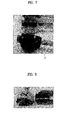
- FIG. 7 is a photograph of experimental results on the sixth one of various samples shown in FIG. 5 ;
- FIG. 8 is a photograph of experimental results on the fifth one of the samples shown in FIG. 5 .
- connection member 10 service valve
- connection member 10 and the external refrigerant pipe 9 detachably coupled to each other by a coupling member 20 (service nut).
- a flare 9a is provided at an end of the external refrigerant pipe 9 and a slope 15a is provided at an end of the connection member 10, corresponding to the flare 9a of the external refrigerant pipe 9.
- an inner surface of the flare 9a provided in the external refrigerant pipe 9 is in very close contact with an outer surface of the slope 15a provided in the connection member 10 airtight, such that this portion (Sa) may prevent refrigerant leakage.
- connection member 10 and the external refrigerant pipe 9 are not coupled to each other directly and it is typical that they are coupled to each other by a coupling member 20.
- a make screw part 15 is provided in an outer end surface of the connection member 10 and a female screw part 22 is provided in a predetermined portion of an inner surface of the coupling member 20, corresponding to the male screw part 15. That is, the female screw part 22 of the connection member 10 is screw-coupled to the male screw part 15 of the coupling member 20.
- an adhesion part 20a having a profile corresponding to the flare 9a of the external refrigerant pipe 9 is provided in the other portion of the inner surface of the coupling member 20, in opposite to the female screw part).
- connection member 10 when the connection member 10 is screw-coupled to the coupling member 20, an inner surface of the adhesion part 20a provided in the coupling member 20 may press an outer surface of the flare 9a provided in the external refrigerant pipe 9. Because of that, the flare 9a of the external refrigerant pipe 9 is adhered to the slope 15a of the connection member 10 to maintain the airtightness.
- connection member 10 is formed of brass, which is the same material used to form the connection member of the conventional air conditioner, and the external refrigerant pipe 9 is formed of aluminum.
- connection members 10 are used in the air conditioner, with a small size, and they affect a raw price little.
- a predetermined side of the connection member 10 is connected with a refrigerant pipe connected with the condenser 7 by welding and the like. Considering the welding, the brass which is the same material used in the conventional air conditioner is used as it is.
- the external refrigerant pipe 9 is formed of a different material from the copper used to in the conventional air conditioner.
- the external refrigerant pipe 9 is formed of a predetermined material which is relatively lower priced and more eco-friendly than the copper, with satisfying the ability required by the external refrigerant pipe 9 and with other advantageous.
- the external refrigerant pipe 9 may typically accompany a bending process. It is preferable that the external refrigerant pipe 9 has a good bending workability. In addition, when it is connected with the connection member 10, the external refrigerant pipe 9 typically includes the flare 9a formed at the end thereof. Because of that, it is preferable that the external refrigerant pipe 9 has a good flare formation workability. Airtightness is affected by ductility, elasticity and hardness. In other words, airtightness is achieved when ductility of a metal is good and elasticity of the metal has to be larger than a pressure of refrigerant which has to be made airtight. In addition, surface hardness of the metal has to be not so large. When the surface hardness is large, cracks might occur and refrigerant leakage might occur at the cracks.
- connection member 10 is connected with the external refrigerant pipe 9, that is, the airtightness between the flare 9a of the external refrigerant pipe 9 and the adhered area (S1) of the slope 14a provided in the connection member 10.
- a yield strength of aluminum for example, A11060-O is 27.6 Mpa and the pressure of the high pressure refrigerant pipe is 4Mpa. Because of that, when A11060-O is used, a safety factor may be 5 or more. In case of copper (C1220T-O), a yield strength is 75Mpa. The yield strength of A11060-O is smaller than that of C1220T-O. Even in case of using A11060-O, a safety factor may be 5 or more and this may maintain airtightness for the safety factor to be 5 or more, without any problems.
- elongations of C1220T-O and A11060-O may be 40% and 43%.
- Modulus of C1220T-O and A11060-O may be 115Gpa and 68.9Gpa.
- the aluminum has good installation convenience such as good adhesion, bending workability and flare formation workability.
- the external refrigerant pipe 9 is formed of a different material from the material used to form the connection member 10 according to this embodiment, that is, if brass is used to form the connection member 10 and aluminum is used to form the external refrigerant pipe 9, contact corrosion generated in bimetals (galvanic corrosion) has to be put into consideration.
- bimetals galvanic corrosion
- standard reduction potentials of copper, brass and aluminum are 0.34V, -0.25V, -1.68V.
- a potential difference between brass and copper is 0.59V and a potential difference between brass and aluminum is 1.43V.
- a potential difference between copper and aluminum is 2.02V.
- connection member 10 and the external refrigerant pipe 9 are formed of brass and aluminum, respectively, a galvanic potential difference between brass and aluminum is increased to be 1.43V and it is concerned that the galvanic corrosion will occur.
- adhered area (S1) between the flare 9a of the external refrigerant pipe 9 and the slope 15a of the connection member 10 has to be maintained.
- aluminum and brass are adhered to each other at the adhered area (S1) and it has to be put into consideration how to prevent the galvanic corrosion.
- the coupling member 20 is formed of brass like the coupling member of the conventional air conditioner, different two metals are contacting even at an adhered area (S2, see FIG. 2 ) between the inner surface of the coupling member 20 and the outer surface of the connection member 10, not the area the refrigerant is directly leaked. Because of that, it is preferable that it has to be put into consideration how to prevent the galvanic corrosion at this area.
- connection member 10 which is the same material used to form the conventional connection member is used to form the connection member 10 and aluminum is sued to form the external refrigerant pipe 9.
- various samples of the coupling member 20 are made of the brass used to form the coupling member of the conventional air conditioner and aluminum, to perform reliability experiments. Since the coupling member 20 is fabricated in a plastic treatment process, an aluminum based material having a good strength, for example, A17075-T6 is used. In reference to FIGS. 3 and 5 , the result of the reliability experiments on the various samples will be described. Sample 1 through 5 are the connection member 10, the coupling member 20 and the external refrigerant pipe 9 made of brass, aluminum and aluminum.
- connection member 10 In Sample 6, the connection member 10, the coupling member 20 and the external refrigerant pipe 9 are made of brass, brass and aluminum. In Sample 7, the connection member 10, the coupling member 20 and the external refrigerant pipe 9 are made of brass, brass and copper like the conventional material used to form the conventional ones.
- Reliability experiments are performed to each of the samples under conditions shown in FIG. 6 .
- the sample is submerged into salt water (NaCl 5%) for 72 hours, the sample is left at 10 below zero (minus 10 degrees) for an hour and at 70 degrees for two hours, with a relative humidity of 95% and at 40 degrees for an hour, with a relative humidity of 30%, repeatedly.
- Six samples categorized based on a sample type are used. Error generation is identified for each of the six samples at an interval of 100 hours in 500 hours after the experiment starts.
- the coupling member and the external refrigerant pipe 9 may be brass, aluminum and aluminum, there may be three areas where two different metals are adhered to each other.
- the areas where the two different metals are adhered to each other may include a screw-coupling area between the coupling member 20 and the connection member 10, the adhered area (S1) between the connection member 10 and the external refrigerant pipe 9 and an area (S2 and S3) adhered to the coupling member 20 and the external refrigerant pipe 9.
- the galvanic corrosion does not matter at the area which generates the worst concern about refrigerant leakage while the refrigerant is substantially flowing, that is, the adhered area (S1) where the external refrigerant pipe and the connection member 10 are directly contacting with each other.
- the adhered area (S1) where the external refrigerant pipe and the connection member 10 are directly contacting with each other.
- water or oxygen supply may not be performed smoothly and it is though that corrosion generation does not matter.
- the corrosion generated by contact between two different metals, that is, the galvanic corrosion is generated at the screw-coupling area between the coupling member 20 and the connection member 10.
- the corrosion generation area is mainly the external surface (S5) of the coupling member 20 and it affects the refrigerant leakage little.
- Even corrosion is generated at a predetermined area (S4) of the external refrigerant pipe 9 by the contact between the two different metals at the contact area (S2, S3) with the coupling member 20 and the external refrigerant pipe 9.
- connection of the two different metals at the adhered area (S1) between the connection member 10 and the external refrigerant pipe 9 may not generated the galvanic corrosion largely.
- the materials used to form the connection member 10 and the external refrigerant 9 may be different from each other.
- the contact between the two different metals of the connection member 10 and the coupling member 20 generates the galvanic corrosion.
- the corrosion area may be the external surface (S5) of the coupling member 20, not the connection member 20 nor the external refrigerant pipe 9, such that the refrigerant leakage may not be a problem.
- the galvanic corrosion generated by the potential difference between the external refrigerant pipe 9 and the coupling member 20 does matter and it is preferable that the galvanic corrosion is prevented.
- the materials used to form the external refrigerant pipe 9 and the coupling member 20 have galvanic potentials of predetermined values or less like this embodiment or single metals, for example, aluminum based materials.
- An allowed galvanic potential difference may be determined by experiments, for example, 0.59V which is the potential difference between brass and copper.
- This embodiment represents that the entire area of the coupling member 20 is made of aluminum and the present invention is not limited thereto.
- Only the adhered area 20a of the coupling member 20 where the external refrigerant pipe 9 is adhered may be made of a material which has a galvanic potential difference of a predetermined value or less with the external refrigerant pipe 9.
- What described above may be embodied by various methods.
- a front end part of the coupling member 30, that is, where the connection member is coupled may be not be made of aluminum.
- a rear end part of the coupling member 20, that is, the adhered area 20a of the coupling member 20 in contact with the external refrigerant pipe 9 may be made of the material of which the galvanic potential difference with the material used to form the external refrigerant pipe 9 is a predetermined value or less. Since the galvanic corrosion is affected by the weight of the oxidation material in the galvanic corrosion, that is, aluminum, it is preferable that the weight of the coupling member 20 is relatively larger than the weight of the external refrigerant pipe 9 to induce corrosion to the coupling member 20 from both of the external refrigerant pipe 9 and the coupling member 20, which are formed of aluminum. In other words, they are designed to be a broad oxidation electrode and a reduction electrode. As a result, under the same condition, the size of the coupling member 20 formed of aluminum may be relatively larger than the size of the conventional coupling member 20 formed of brass.
- the galvanic corrosion is generated the potential difference generated by the contact between two different metals of the external refrigerant pipe 9 and the coupling member 20. Because of that, when different materials are used to form the coupling member 20 and the external refrigerant pipe 9, for example, when two different metals of brass and aluminum are used to form the coupling member 20 and the external refrigerant pipe 9, respectively, it is required to prevent the galvanic corrosion generated by the contact between the external refrigerant pipe 9 and the coupling member 20.
- the contact area (S2 and S3) between the external refrigerant pipe 9 and the coupling member 20 may be electrically short circuited, for example.
- An insulation sleeve may be provided at the contact area (S2 and S3) between the external refrigerant pipe 9 and the coupling member 20 for electrical insulation.
- a corrosion inhibitor may be added between the external refrigerant pipe 9 and the coupling member 20.
- the area where corrosion is generated especially is an area (S4) exposed to water or oxygen easily, that is, the external refrigerant pipe 9. Because of that, an appropriate corrosion preventing part may be provided in the area exposed to oxygen or water easily, that is, the external refrigerant pipe 9, to prevent corrosion.
- the embodiment described above represents and illustrates the connection structure of the refrigerant pipe with the outdoor unit 3.
- the present invention is not limited thereto.
- the connection unit having the detachable structure and the present invention is not limited thereto.
- the above embodiment represents that the external refrigerant pipe 9 and the coupling member 20 are formed of aluminum.
- the external refrigerant pipe 9 and the coupling member 20 may be formed of materials which can satisfy other mechanical properties of airtightness, installation convenience, with being relatively cheaper than copper.
- the above embodiment illustrates and represents the air conditioner as the device using the freezing cycle and the present invention is not limited to the air conditioner.
- connection structure of the refrigerant pipe for the air conditioner according to the present invention has following advantages and effects.
- the external refrigerant pipe which is a refrigerant pipe connecting the outdoor unit and the indoor unit with each other may be formed of the predetermined material, not copper which is relatively expensive and not eco-friendly.
- an eco-friendly air conditioner may be manufactured according to the present invention and manufacturing costs may be reduced.
- the length of the external refrigerant pipe 9 is approximately 5 ⁇ 8m, although it is different based on a type of the air conditioner.
- the price of 12,000 won may be reduced for every air conditioner.
- approximately 2 billion won of cost saving may be achieved effectively, if it is assumed that a quarter of a million air conditioners are manufactured a year.
Landscapes
- Engineering & Computer Science (AREA)
- General Engineering & Computer Science (AREA)
- Mechanical Engineering (AREA)
- Chemical & Material Sciences (AREA)
- Combustion & Propulsion (AREA)
- Other Air-Conditioning Systems (AREA)
- Air Filters, Heat-Exchange Apparatuses, And Housings Of Air-Conditioning Units (AREA)
Applications Claiming Priority (1)
| Application Number | Priority Date | Filing Date | Title |
|---|---|---|---|
| KR1020110001387A KR101740444B1 (ko) | 2011-01-06 | 2011-01-06 | 공기조화기용 냉매관의 연결구조 |
Publications (3)
| Publication Number | Publication Date |
|---|---|
| EP2474768A2 true EP2474768A2 (de) | 2012-07-11 |
| EP2474768A3 EP2474768A3 (de) | 2014-04-02 |
| EP2474768B1 EP2474768B1 (de) | 2019-10-02 |
Family
ID=44763813
Family Applications (1)
| Application Number | Title | Priority Date | Filing Date |
|---|---|---|---|
| EP11177694.4A Active EP2474768B1 (de) | 2011-01-06 | 2011-08-16 | Kühlmittelleitungsverbinder für Klimaanlage |
Country Status (4)
| Country | Link |
|---|---|
| US (1) | US20120175873A1 (de) |
| EP (1) | EP2474768B1 (de) |
| KR (1) | KR101740444B1 (de) |
| CN (1) | CN102589056B (de) |
Cited By (3)
| Publication number | Priority date | Publication date | Assignee | Title |
|---|---|---|---|---|
| CN103016862A (zh) * | 2012-12-30 | 2013-04-03 | 浙江普利司汽车零部件有限公司 | 汽车空调无焊接管路接头及加工方法 |
| EP2679873A1 (de) * | 2012-06-29 | 2014-01-01 | TI Automotive (Heidelberg) GmbH | Verbindungsaggregat aus einer Kraftfahrzeugrohrleitung und einem Verbindungsfitting |
| WO2016065652A1 (zh) * | 2014-11-02 | 2016-05-06 | 孙海潮 | 一种专用于分体空调室内外机制冷剂连接管路的连接管 |
Families Citing this family (6)
| Publication number | Priority date | Publication date | Assignee | Title |
|---|---|---|---|---|
| CN103148544B (zh) * | 2013-03-26 | 2015-10-28 | 东莞市金瑞五金制品有限公司 | 一种空调连接管 |
| JP5665937B1 (ja) * | 2013-09-13 | 2015-02-04 | 三菱電機株式会社 | 冷凍サイクル装置 |
| US10479339B2 (en) * | 2016-01-19 | 2019-11-19 | Ford Global Technologies, Llc | Flare-type brake line assembly and method of making the same |
| KR102308632B1 (ko) | 2016-10-13 | 2021-10-05 | 삼성에스디아이 주식회사 | 배터리 모듈 |
| KR102308630B1 (ko) | 2016-10-17 | 2021-10-05 | 삼성에스디아이 주식회사 | 배터리 모듈 |
| KR20230157093A (ko) | 2022-05-09 | 2023-11-16 | 오형동 | 공기조화기용 냉매 관 연결구조 |
Citations (1)
| Publication number | Priority date | Publication date | Assignee | Title |
|---|---|---|---|---|
| KR20110001387A (ko) | 2009-06-30 | 2011-01-06 | 진두남 | 배수관용 협잡물 스크린 장치 |
Family Cites Families (31)
| Publication number | Priority date | Publication date | Assignee | Title |
|---|---|---|---|---|
| US582137A (en) * | 1897-05-04 | Joseph b | ||
| US541736A (en) * | 1895-06-25 | Samuel m | ||
| US1484295A (en) * | 1924-02-19 | Upset-tube fitting | ||
| US2310944A (en) * | 1940-09-09 | 1943-02-16 | James L Douglass | Tube coupling |
| US2323099A (en) * | 1941-12-05 | 1943-06-29 | Patten Walter Evans | Tube fitting |
| US2434975A (en) * | 1945-07-10 | 1948-01-27 | George V Woodling | Tube coupling sleeve |
| US2542877A (en) * | 1950-02-02 | 1951-02-20 | Remco Inc | Vented refrigerant tube coupling |
| US2903763A (en) * | 1953-12-14 | 1959-09-15 | Gen Motors Corp | Fused aluminum to copper pipe coupling |
| US2823933A (en) * | 1954-09-21 | 1958-02-18 | Charles E Hickman | Refrigerating system and method of making the same |
| FR1303105A (fr) * | 1961-07-26 | 1962-09-07 | Liaison de deux canalisations, éventuellement en deux métaux différents | |
| CH555022A (de) * | 1972-08-10 | 1974-10-15 | Oetiker Hans | Rohrverbindung. |
| US4610466A (en) * | 1983-06-23 | 1986-09-09 | Aeroquip Corporation | Convertible flare/braze fitting |
| GB2195410B (en) * | 1986-07-24 | 1990-01-10 | Philmac Pty Ltd | Tube connector |
| EP0302690B1 (de) * | 1987-08-03 | 1992-10-07 | KiTECHNOLOGY B.V. | Rohrverbindung |
| US4893657A (en) * | 1987-11-25 | 1990-01-16 | Usui Kokusai Sangyo Kabushiki Kaisha | Structure of the connecting end portion of composite tube having small diameter |
| US5520421A (en) * | 1995-01-31 | 1996-05-28 | Lenwar, Inc. | Fluid tight flare nut securing assembly |
| KR970015219U (ko) * | 1995-09-23 | 1997-04-28 | 동관의 접속장치 | |
| JPH1130369A (ja) * | 1997-07-14 | 1999-02-02 | Usui Internatl Ind Co Ltd | 外面樹脂被覆細径金属管の接続構造 |
| US6039361A (en) * | 1998-01-21 | 2000-03-21 | Mwm Distributors | Plumbing compression fitting for connecting ends of pipe |
| US6453539B1 (en) * | 2000-04-12 | 2002-09-24 | Dana Corporation | Metal tube coupling arrangement and method of manufacture |
| US6598908B1 (en) * | 2000-06-16 | 2003-07-29 | Marshall W. Wosik | Hydraulic fitting |
| JP2003232473A (ja) * | 2002-02-06 | 2003-08-22 | Nippon Denshi Gijutsu Kk | 配管用継手及びパイプ接続構造 |
| CN2549297Y (zh) * | 2002-07-01 | 2003-05-07 | 广东科龙电器股份有限公司 | 一种用于铝连接管的连接装置 |
| CN2573823Y (zh) * | 2002-10-18 | 2003-09-17 | 吴岳明 | 制冷配件用铜铝管连接装置 |
| US20040212191A1 (en) * | 2003-03-25 | 2004-10-28 | Segal Evan J. | Fluid line connector assembly |
| TWM302872U (en) * | 2006-06-22 | 2006-12-11 | Cooler Master Co Ltd | Assembly conduit and joint thereof |
| KR100803774B1 (ko) * | 2007-04-03 | 2008-02-15 | 엘지전자 주식회사 | 공기조화기의 설치배관 |
| KR20090054490A (ko) * | 2007-11-27 | 2009-06-01 | 삼성전자주식회사 | 공기조화기용 연결배관의 체결구조 및 체결방법 |
| JP2010048373A (ja) * | 2008-08-22 | 2010-03-04 | Toyo Densen Kk | フレアナット、これを備えた冷媒配管、空気調和装置および冷凍装置 |
| DE202010003282U1 (de) * | 2010-03-05 | 2010-05-27 | Franz Schuck Gmbh | Vorrichtung zum Verbinden eines Metallrohres mit einem Kunststoffrohr |
| US20110239678A1 (en) | 2010-03-30 | 2011-10-06 | Toyo Densen Co., Ltd. | Flare nut and refrigerant pipe set, air conditioner, and freezer including the same |
-
2011
- 2011-01-06 KR KR1020110001387A patent/KR101740444B1/ko not_active Expired - Fee Related
- 2011-07-20 CN CN201110210936.3A patent/CN102589056B/zh not_active Expired - Fee Related
- 2011-08-16 EP EP11177694.4A patent/EP2474768B1/de active Active
- 2011-09-06 US US13/226,247 patent/US20120175873A1/en not_active Abandoned
Patent Citations (1)
| Publication number | Priority date | Publication date | Assignee | Title |
|---|---|---|---|---|
| KR20110001387A (ko) | 2009-06-30 | 2011-01-06 | 진두남 | 배수관용 협잡물 스크린 장치 |
Cited By (4)
| Publication number | Priority date | Publication date | Assignee | Title |
|---|---|---|---|---|
| EP2679873A1 (de) * | 2012-06-29 | 2014-01-01 | TI Automotive (Heidelberg) GmbH | Verbindungsaggregat aus einer Kraftfahrzeugrohrleitung und einem Verbindungsfitting |
| US10107429B2 (en) | 2012-06-29 | 2018-10-23 | Ti Automotive (Heidelberg) Gmbh | Connection assembly comprising a motor vehicle fluid line and a connection fitting |
| CN103016862A (zh) * | 2012-12-30 | 2013-04-03 | 浙江普利司汽车零部件有限公司 | 汽车空调无焊接管路接头及加工方法 |
| WO2016065652A1 (zh) * | 2014-11-02 | 2016-05-06 | 孙海潮 | 一种专用于分体空调室内外机制冷剂连接管路的连接管 |
Also Published As
| Publication number | Publication date |
|---|---|
| EP2474768B1 (de) | 2019-10-02 |
| KR20120079992A (ko) | 2012-07-16 |
| CN102589056B (zh) | 2015-01-21 |
| EP2474768A3 (de) | 2014-04-02 |
| KR101740444B1 (ko) | 2017-05-26 |
| US20120175873A1 (en) | 2012-07-12 |
| CN102589056A (zh) | 2012-07-18 |
Similar Documents
| Publication | Publication Date | Title |
|---|---|---|
| EP2474768B1 (de) | Kühlmittelleitungsverbinder für Klimaanlage | |
| EP2620736B1 (de) | Wärmetauscher und Klimaanlagenvorrichtung damit | |
| CN101737868A (zh) | 空气调节机 | |
| AU2007232820B2 (en) | Flareless pipe coupling structure, flareless pipe coupling method, and on-site pipe coupling method | |
| CN104254740B (zh) | 空调装置 | |
| US2745797A (en) | Electroplating pipe joint | |
| CN201242313Y (zh) | 一种空调器 | |
| EP3306161B1 (de) | Flexibles rohr | |
| CN112368527B (zh) | 截止阀 | |
| WO2012042688A1 (ja) | 蓄熱装置及び該蓄熱装置を備えた空気調和機 | |
| JP2010048373A5 (ja) | フレアナットを備えた冷媒配管、空気調和装置および冷凍装置 | |
| CN103842652A (zh) | 用于封闭式压缩机的接头 | |
| WO2019244748A1 (ja) | 閉鎖弁及びその製造方法 | |
| CN104302980A (zh) | 空调装置的室外单元 | |
| JP2012082976A (ja) | 温水暖房装置 | |
| CN104254739B (zh) | 空调装置的室外单元 | |
| JP2009162305A (ja) | フレキシブルホース | |
| CN203980601U (zh) | 平行流换热器的安装组件和空调器 | |
| JP2008267770A (ja) | 毛細管抱合熱交換器 | |
| CN207146967U (zh) | 空调器 | |
| US20240230112A1 (en) | Air conditioner indoor unit and air conditioner | |
| AU2024201643A1 (en) | Water heater system | |
| KR101166135B1 (ko) | 단열, 단냉, 방수 및 스케일제거 기능을 갖는 히트펌프 | |
| KR20230157093A (ko) | 공기조화기용 냉매 관 연결구조 | |
| JP2023051213A (ja) | 配管接続構造および空気調和機 |
Legal Events
| Date | Code | Title | Description |
|---|---|---|---|
| PUAI | Public reference made under article 153(3) epc to a published international application that has entered the european phase |
Free format text: ORIGINAL CODE: 0009012 |
|
| 17P | Request for examination filed |
Effective date: 20110816 |
|
| AK | Designated contracting states |
Kind code of ref document: A2 Designated state(s): AL AT BE BG CH CY CZ DE DK EE ES FI FR GB GR HR HU IE IS IT LI LT LU LV MC MK MT NL NO PL PT RO RS SE SI SK SM TR |
|
| AX | Request for extension of the european patent |
Extension state: BA ME |
|
| PUAL | Search report despatched |
Free format text: ORIGINAL CODE: 0009013 |
|
| AK | Designated contracting states |
Kind code of ref document: A3 Designated state(s): AL AT BE BG CH CY CZ DE DK EE ES FI FR GB GR HR HU IE IS IT LI LT LU LV MC MK MT NL NO PL PT RO RS SE SI SK SM TR |
|
| AX | Request for extension of the european patent |
Extension state: BA ME |
|
| RIC1 | Information provided on ipc code assigned before grant |
Ipc: F16L 25/00 20060101AFI20140226BHEP Ipc: F16L 19/028 20060101ALI20140226BHEP |
|
| STAA | Information on the status of an ep patent application or granted ep patent |
Free format text: STATUS: EXAMINATION IS IN PROGRESS |
|
| 17Q | First examination report despatched |
Effective date: 20171002 |
|
| GRAP | Despatch of communication of intention to grant a patent |
Free format text: ORIGINAL CODE: EPIDOSNIGR1 |
|
| STAA | Information on the status of an ep patent application or granted ep patent |
Free format text: STATUS: GRANT OF PATENT IS INTENDED |
|
| INTG | Intention to grant announced |
Effective date: 20190327 |
|
| GRAS | Grant fee paid |
Free format text: ORIGINAL CODE: EPIDOSNIGR3 |
|
| GRAA | (expected) grant |
Free format text: ORIGINAL CODE: 0009210 |
|
| STAA | Information on the status of an ep patent application or granted ep patent |
Free format text: STATUS: THE PATENT HAS BEEN GRANTED |
|
| AK | Designated contracting states |
Kind code of ref document: B1 Designated state(s): AL AT BE BG CH CY CZ DE DK EE ES FI FR GB GR HR HU IE IS IT LI LT LU LV MC MK MT NL NO PL PT RO RS SE SI SK SM TR |
|
| REG | Reference to a national code |
Ref country code: GB Ref legal event code: FG4D |
|
| REG | Reference to a national code |
Ref country code: CH Ref legal event code: EP Ref country code: AT Ref legal event code: REF Ref document number: 1186564 Country of ref document: AT Kind code of ref document: T Effective date: 20191015 |
|
| REG | Reference to a national code |
Ref country code: DE Ref legal event code: R096 Ref document number: 602011062415 Country of ref document: DE |
|
| REG | Reference to a national code |
Ref country code: IE Ref legal event code: FG4D |
|
| REG | Reference to a national code |
Ref country code: NL Ref legal event code: MP Effective date: 20191002 |
|
| REG | Reference to a national code |
Ref country code: LT Ref legal event code: MG4D |
|
| REG | Reference to a national code |
Ref country code: AT Ref legal event code: MK05 Ref document number: 1186564 Country of ref document: AT Kind code of ref document: T Effective date: 20191002 |
|
| PG25 | Lapsed in a contracting state [announced via postgrant information from national office to epo] |
Ref country code: GR Free format text: LAPSE BECAUSE OF FAILURE TO SUBMIT A TRANSLATION OF THE DESCRIPTION OR TO PAY THE FEE WITHIN THE PRESCRIBED TIME-LIMIT Effective date: 20200103 Ref country code: LT Free format text: LAPSE BECAUSE OF FAILURE TO SUBMIT A TRANSLATION OF THE DESCRIPTION OR TO PAY THE FEE WITHIN THE PRESCRIBED TIME-LIMIT Effective date: 20191002 Ref country code: PT Free format text: LAPSE BECAUSE OF FAILURE TO SUBMIT A TRANSLATION OF THE DESCRIPTION OR TO PAY THE FEE WITHIN THE PRESCRIBED TIME-LIMIT Effective date: 20200203 Ref country code: FI Free format text: LAPSE BECAUSE OF FAILURE TO SUBMIT A TRANSLATION OF THE DESCRIPTION OR TO PAY THE FEE WITHIN THE PRESCRIBED TIME-LIMIT Effective date: 20191002 Ref country code: BG Free format text: LAPSE BECAUSE OF FAILURE TO SUBMIT A TRANSLATION OF THE DESCRIPTION OR TO PAY THE FEE WITHIN THE PRESCRIBED TIME-LIMIT Effective date: 20200102 Ref country code: NL Free format text: LAPSE BECAUSE OF FAILURE TO SUBMIT A TRANSLATION OF THE DESCRIPTION OR TO PAY THE FEE WITHIN THE PRESCRIBED TIME-LIMIT Effective date: 20191002 Ref country code: AT Free format text: LAPSE BECAUSE OF FAILURE TO SUBMIT A TRANSLATION OF THE DESCRIPTION OR TO PAY THE FEE WITHIN THE PRESCRIBED TIME-LIMIT Effective date: 20191002 Ref country code: ES Free format text: LAPSE BECAUSE OF FAILURE TO SUBMIT A TRANSLATION OF THE DESCRIPTION OR TO PAY THE FEE WITHIN THE PRESCRIBED TIME-LIMIT Effective date: 20191002 Ref country code: LV Free format text: LAPSE BECAUSE OF FAILURE TO SUBMIT A TRANSLATION OF THE DESCRIPTION OR TO PAY THE FEE WITHIN THE PRESCRIBED TIME-LIMIT Effective date: 20191002 Ref country code: SE Free format text: LAPSE BECAUSE OF FAILURE TO SUBMIT A TRANSLATION OF THE DESCRIPTION OR TO PAY THE FEE WITHIN THE PRESCRIBED TIME-LIMIT Effective date: 20191002 Ref country code: PL Free format text: LAPSE BECAUSE OF FAILURE TO SUBMIT A TRANSLATION OF THE DESCRIPTION OR TO PAY THE FEE WITHIN THE PRESCRIBED TIME-LIMIT Effective date: 20191002 Ref country code: NO Free format text: LAPSE BECAUSE OF FAILURE TO SUBMIT A TRANSLATION OF THE DESCRIPTION OR TO PAY THE FEE WITHIN THE PRESCRIBED TIME-LIMIT Effective date: 20200102 |
|
| PG25 | Lapsed in a contracting state [announced via postgrant information from national office to epo] |
Ref country code: HR Free format text: LAPSE BECAUSE OF FAILURE TO SUBMIT A TRANSLATION OF THE DESCRIPTION OR TO PAY THE FEE WITHIN THE PRESCRIBED TIME-LIMIT Effective date: 20191002 Ref country code: RS Free format text: LAPSE BECAUSE OF FAILURE TO SUBMIT A TRANSLATION OF THE DESCRIPTION OR TO PAY THE FEE WITHIN THE PRESCRIBED TIME-LIMIT Effective date: 20191002 Ref country code: CZ Free format text: LAPSE BECAUSE OF FAILURE TO SUBMIT A TRANSLATION OF THE DESCRIPTION OR TO PAY THE FEE WITHIN THE PRESCRIBED TIME-LIMIT Effective date: 20191002 Ref country code: IS Free format text: LAPSE BECAUSE OF FAILURE TO SUBMIT A TRANSLATION OF THE DESCRIPTION OR TO PAY THE FEE WITHIN THE PRESCRIBED TIME-LIMIT Effective date: 20200224 |
|
| PG25 | Lapsed in a contracting state [announced via postgrant information from national office to epo] |
Ref country code: AL Free format text: LAPSE BECAUSE OF FAILURE TO SUBMIT A TRANSLATION OF THE DESCRIPTION OR TO PAY THE FEE WITHIN THE PRESCRIBED TIME-LIMIT Effective date: 20191002 |
|
| REG | Reference to a national code |
Ref country code: DE Ref legal event code: R097 Ref document number: 602011062415 Country of ref document: DE |
|
| PG2D | Information on lapse in contracting state deleted |
Ref country code: IS |
|
| PG25 | Lapsed in a contracting state [announced via postgrant information from national office to epo] |
Ref country code: RO Free format text: LAPSE BECAUSE OF FAILURE TO SUBMIT A TRANSLATION OF THE DESCRIPTION OR TO PAY THE FEE WITHIN THE PRESCRIBED TIME-LIMIT Effective date: 20191002 Ref country code: EE Free format text: LAPSE BECAUSE OF FAILURE TO SUBMIT A TRANSLATION OF THE DESCRIPTION OR TO PAY THE FEE WITHIN THE PRESCRIBED TIME-LIMIT Effective date: 20191002 Ref country code: DK Free format text: LAPSE BECAUSE OF FAILURE TO SUBMIT A TRANSLATION OF THE DESCRIPTION OR TO PAY THE FEE WITHIN THE PRESCRIBED TIME-LIMIT Effective date: 20191002 Ref country code: IS Free format text: LAPSE BECAUSE OF FAILURE TO SUBMIT A TRANSLATION OF THE DESCRIPTION OR TO PAY THE FEE WITHIN THE PRESCRIBED TIME-LIMIT Effective date: 20200202 |
|
| PLBE | No opposition filed within time limit |
Free format text: ORIGINAL CODE: 0009261 |
|
| STAA | Information on the status of an ep patent application or granted ep patent |
Free format text: STATUS: NO OPPOSITION FILED WITHIN TIME LIMIT |
|
| PG25 | Lapsed in a contracting state [announced via postgrant information from national office to epo] |
Ref country code: SM Free format text: LAPSE BECAUSE OF FAILURE TO SUBMIT A TRANSLATION OF THE DESCRIPTION OR TO PAY THE FEE WITHIN THE PRESCRIBED TIME-LIMIT Effective date: 20191002 Ref country code: SK Free format text: LAPSE BECAUSE OF FAILURE TO SUBMIT A TRANSLATION OF THE DESCRIPTION OR TO PAY THE FEE WITHIN THE PRESCRIBED TIME-LIMIT Effective date: 20191002 Ref country code: IT Free format text: LAPSE BECAUSE OF FAILURE TO SUBMIT A TRANSLATION OF THE DESCRIPTION OR TO PAY THE FEE WITHIN THE PRESCRIBED TIME-LIMIT Effective date: 20191002 |
|
| 26N | No opposition filed |
Effective date: 20200703 |
|
| PG25 | Lapsed in a contracting state [announced via postgrant information from national office to epo] |
Ref country code: SI Free format text: LAPSE BECAUSE OF FAILURE TO SUBMIT A TRANSLATION OF THE DESCRIPTION OR TO PAY THE FEE WITHIN THE PRESCRIBED TIME-LIMIT Effective date: 20191002 |
|
| PG25 | Lapsed in a contracting state [announced via postgrant information from national office to epo] |
Ref country code: MC Free format text: LAPSE BECAUSE OF FAILURE TO SUBMIT A TRANSLATION OF THE DESCRIPTION OR TO PAY THE FEE WITHIN THE PRESCRIBED TIME-LIMIT Effective date: 20191002 |
|
| REG | Reference to a national code |
Ref country code: CH Ref legal event code: PL |
|
| GBPC | Gb: european patent ceased through non-payment of renewal fee |
Effective date: 20200816 |
|
| PG25 | Lapsed in a contracting state [announced via postgrant information from national office to epo] |
Ref country code: LU Free format text: LAPSE BECAUSE OF NON-PAYMENT OF DUE FEES Effective date: 20200816 Ref country code: LI Free format text: LAPSE BECAUSE OF NON-PAYMENT OF DUE FEES Effective date: 20200831 Ref country code: CH Free format text: LAPSE BECAUSE OF NON-PAYMENT OF DUE FEES Effective date: 20200831 |
|
| REG | Reference to a national code |
Ref country code: BE Ref legal event code: MM Effective date: 20200831 |
|
| PG25 | Lapsed in a contracting state [announced via postgrant information from national office to epo] |
Ref country code: FR Free format text: LAPSE BECAUSE OF NON-PAYMENT OF DUE FEES Effective date: 20200831 |
|
| PG25 | Lapsed in a contracting state [announced via postgrant information from national office to epo] |
Ref country code: GB Free format text: LAPSE BECAUSE OF NON-PAYMENT OF DUE FEES Effective date: 20200816 Ref country code: IE Free format text: LAPSE BECAUSE OF NON-PAYMENT OF DUE FEES Effective date: 20200816 Ref country code: BE Free format text: LAPSE BECAUSE OF NON-PAYMENT OF DUE FEES Effective date: 20200831 |
|
| PG25 | Lapsed in a contracting state [announced via postgrant information from national office to epo] |
Ref country code: TR Free format text: LAPSE BECAUSE OF FAILURE TO SUBMIT A TRANSLATION OF THE DESCRIPTION OR TO PAY THE FEE WITHIN THE PRESCRIBED TIME-LIMIT Effective date: 20191002 Ref country code: MT Free format text: LAPSE BECAUSE OF FAILURE TO SUBMIT A TRANSLATION OF THE DESCRIPTION OR TO PAY THE FEE WITHIN THE PRESCRIBED TIME-LIMIT Effective date: 20191002 Ref country code: CY Free format text: LAPSE BECAUSE OF FAILURE TO SUBMIT A TRANSLATION OF THE DESCRIPTION OR TO PAY THE FEE WITHIN THE PRESCRIBED TIME-LIMIT Effective date: 20191002 |
|
| PG25 | Lapsed in a contracting state [announced via postgrant information from national office to epo] |
Ref country code: MK Free format text: LAPSE BECAUSE OF FAILURE TO SUBMIT A TRANSLATION OF THE DESCRIPTION OR TO PAY THE FEE WITHIN THE PRESCRIBED TIME-LIMIT Effective date: 20191002 |
|
| PGFP | Annual fee paid to national office [announced via postgrant information from national office to epo] |
Ref country code: DE Payment date: 20220615 Year of fee payment: 12 |
|
| REG | Reference to a national code |
Ref country code: DE Ref legal event code: R119 Ref document number: 602011062415 Country of ref document: DE |
|
| PG25 | Lapsed in a contracting state [announced via postgrant information from national office to epo] |
Ref country code: DE Free format text: LAPSE BECAUSE OF NON-PAYMENT OF DUE FEES Effective date: 20240301 |