EP2476415A2 - Traitement des troubles osseux avec des modulateurs sélectifs de récepteurs d'androgène - Google Patents
Traitement des troubles osseux avec des modulateurs sélectifs de récepteurs d'androgène Download PDFInfo
- Publication number
- EP2476415A2 EP2476415A2 EP12161224A EP12161224A EP2476415A2 EP 2476415 A2 EP2476415 A2 EP 2476415A2 EP 12161224 A EP12161224 A EP 12161224A EP 12161224 A EP12161224 A EP 12161224A EP 2476415 A2 EP2476415 A2 EP 2476415A2
- Authority
- EP
- European Patent Office
- Prior art keywords
- compound
- another embodiment
- bone
- sarm
- ovx
- Prior art date
- Legal status (The legal status is an assumption and is not a legal conclusion. Google has not performed a legal analysis and makes no representation as to the accuracy of the status listed.)
- Withdrawn
Links
- 239000000849 selective androgen receptor modulator Substances 0.000 title abstract description 278
- 210000000988 bone and bone Anatomy 0.000 title abstract description 140
- 208000037265 diseases, disorders, signs and symptoms Diseases 0.000 claims abstract description 45
- 150000003839 salts Chemical class 0.000 claims abstract description 41
- 208000035475 disorder Diseases 0.000 claims abstract description 37
- 150000001204 N-oxides Chemical class 0.000 claims abstract description 30
- 150000001875 compounds Chemical class 0.000 claims description 529
- 125000002023 trifluoromethyl group Chemical group FC(F)(F)* 0.000 claims description 36
- 229910052794 bromium Inorganic materials 0.000 claims description 31
- 229910052801 chlorine Inorganic materials 0.000 claims description 31
- 229910052731 fluorine Inorganic materials 0.000 claims description 31
- 125000000217 alkyl group Chemical group 0.000 claims description 28
- 229910052740 iodine Inorganic materials 0.000 claims description 28
- 230000001009 osteoporotic effect Effects 0.000 claims description 27
- 125000001997 phenyl group Chemical group [H]C1=C([H])C([H])=C(*)C([H])=C1[H] 0.000 claims description 18
- 239000008194 pharmaceutical composition Substances 0.000 claims description 16
- 125000003342 alkenyl group Chemical group 0.000 claims description 14
- 125000003118 aryl group Chemical group 0.000 claims description 14
- 125000006340 pentafluoro ethyl group Chemical group FC(F)(F)C(F)(F)* 0.000 claims description 14
- JNCMHMUGTWEVOZ-UHFFFAOYSA-N F[CH]F Chemical group F[CH]F JNCMHMUGTWEVOZ-UHFFFAOYSA-N 0.000 claims description 11
- VUWZPRWSIVNGKG-UHFFFAOYSA-N fluoromethane Chemical group F[CH2] VUWZPRWSIVNGKG-UHFFFAOYSA-N 0.000 claims description 11
- 125000001188 haloalkyl group Chemical group 0.000 claims description 11
- 125000004982 dihaloalkyl group Chemical group 0.000 claims description 9
- 125000004385 trihaloalkyl group Chemical group 0.000 claims description 9
- 201000010099 disease Diseases 0.000 claims description 8
- 230000003054 hormonal effect Effects 0.000 claims description 8
- 230000009245 menopause Effects 0.000 claims description 6
- 239000003937 drug carrier Substances 0.000 claims description 5
- 125000001495 ethyl group Chemical group [H]C([H])([H])C([H])([H])* 0.000 claims description 5
- 125000002496 methyl group Chemical group [H]C([H])([H])* 0.000 claims description 4
- 125000000896 monocarboxylic acid group Chemical group 0.000 claims 2
- 229940083324 Selective androgen receptor modulator Drugs 0.000 abstract description 264
- 238000000034 method Methods 0.000 abstract description 99
- 208000001132 Osteoporosis Diseases 0.000 abstract description 88
- 230000003247 decreasing effect Effects 0.000 abstract description 35
- 239000002207 metabolite Substances 0.000 abstract description 32
- 208000006386 Bone Resorption Diseases 0.000 abstract description 30
- 230000024279 bone resorption Effects 0.000 abstract description 30
- 208000010392 Bone Fractures Diseases 0.000 abstract description 27
- 239000000825 pharmaceutical preparation Substances 0.000 abstract description 27
- 229940127557 pharmaceutical product Drugs 0.000 abstract description 27
- 208000029725 Metabolic bone disease Diseases 0.000 abstract description 15
- 206010049088 Osteopenia Diseases 0.000 abstract description 15
- -1 hydrate Chemical class 0.000 abstract description 15
- 208000036119 Frailty Diseases 0.000 abstract description 11
- 206010003549 asthenia Diseases 0.000 abstract description 11
- 229910052500 inorganic mineral Inorganic materials 0.000 abstract description 10
- 239000011707 mineral Substances 0.000 abstract description 10
- 230000002401 inhibitory effect Effects 0.000 abstract description 5
- 125000001424 substituent group Chemical group 0.000 description 56
- 238000011282 treatment Methods 0.000 description 52
- 241000700159 Rattus Species 0.000 description 49
- NVKAWKQGWWIWPM-ABEVXSGRSA-N 17-β-hydroxy-5-α-Androstan-3-one Chemical compound C1C(=O)CC[C@]2(C)[C@H]3CC[C@](C)([C@H](CC4)O)[C@@H]4[C@@H]3CC[C@H]21 NVKAWKQGWWIWPM-ABEVXSGRSA-N 0.000 description 46
- 229960003473 androstanolone Drugs 0.000 description 44
- 241001465754 Metazoa Species 0.000 description 41
- 210000000689 upper leg Anatomy 0.000 description 35
- 230000001054 cortical effect Effects 0.000 description 30
- 230000007423 decrease Effects 0.000 description 26
- 239000000203 mixture Substances 0.000 description 23
- 210000003205 muscle Anatomy 0.000 description 21
- 206010017076 Fracture Diseases 0.000 description 18
- 230000037118 bone strength Effects 0.000 description 18
- 230000037396 body weight Effects 0.000 description 17
- 230000003111 delayed effect Effects 0.000 description 17
- 230000000694 effects Effects 0.000 description 15
- 230000032683 aging Effects 0.000 description 14
- 239000003795 chemical substances by application Substances 0.000 description 14
- 239000000243 solution Substances 0.000 description 13
- 101000685982 Homo sapiens NAD(+) hydrolase SARM1 Proteins 0.000 description 12
- 102100023356 NAD(+) hydrolase SARM1 Human genes 0.000 description 12
- 125000003178 carboxy group Chemical group [H]OC(*)=O 0.000 description 12
- 229940088597 hormone Drugs 0.000 description 12
- 239000005556 hormone Substances 0.000 description 12
- LKJPYSCBVHEWIU-KRWDZBQOSA-N (R)-bicalutamide Chemical compound C([C@@](O)(C)C(=O)NC=1C=C(C(C#N)=CC=1)C(F)(F)F)S(=O)(=O)C1=CC=C(F)C=C1 LKJPYSCBVHEWIU-KRWDZBQOSA-N 0.000 description 10
- 206010065687 Bone loss Diseases 0.000 description 10
- 229960000997 bicalutamide Drugs 0.000 description 10
- 239000003814 drug Substances 0.000 description 10
- 238000009547 dual-energy X-ray absorptiometry Methods 0.000 description 10
- 230000002441 reversible effect Effects 0.000 description 10
- 239000003098 androgen Substances 0.000 description 9
- KRKNYBCHXYNGOX-UHFFFAOYSA-N citric acid Chemical compound OC(=O)CC(O)(C(O)=O)CC(O)=O KRKNYBCHXYNGOX-UHFFFAOYSA-N 0.000 description 9
- 239000003921 oil Substances 0.000 description 9
- 235000019198 oils Nutrition 0.000 description 9
- 210000001519 tissue Anatomy 0.000 description 9
- MUMGGOZAMZWBJJ-DYKIIFRCSA-N Testostosterone Chemical compound O=C1CC[C@]2(C)[C@H]3CC[C@](C)([C@H](CC4)O)[C@@H]4[C@@H]3CCC2=C1 MUMGGOZAMZWBJJ-DYKIIFRCSA-N 0.000 description 8
- 125000004122 cyclic group Chemical group 0.000 description 8
- 239000003085 diluting agent Substances 0.000 description 8
- 229940079593 drug Drugs 0.000 description 8
- 230000008092 positive effect Effects 0.000 description 8
- FAPWRFPIFSIZLT-UHFFFAOYSA-M Sodium chloride Chemical compound [Na+].[Cl-] FAPWRFPIFSIZLT-UHFFFAOYSA-M 0.000 description 7
- 238000013270 controlled release Methods 0.000 description 7
- XSXHWVKGUXMUQE-UHFFFAOYSA-N osmium dioxide Inorganic materials O=[Os]=O XSXHWVKGUXMUQE-UHFFFAOYSA-N 0.000 description 7
- 239000000126 substance Substances 0.000 description 7
- 238000012360 testing method Methods 0.000 description 7
- QTBSBXVTEAMEQO-UHFFFAOYSA-N Acetic acid Chemical compound CC(O)=O QTBSBXVTEAMEQO-UHFFFAOYSA-N 0.000 description 6
- IAZDPXIOMUYVGZ-UHFFFAOYSA-N Dimethylsulphoxide Chemical compound CS(C)=O IAZDPXIOMUYVGZ-UHFFFAOYSA-N 0.000 description 6
- LFQSCWFLJHTTHZ-UHFFFAOYSA-N Ethanol Chemical compound CCO LFQSCWFLJHTTHZ-UHFFFAOYSA-N 0.000 description 6
- 102000004067 Osteocalcin Human genes 0.000 description 6
- 108090000573 Osteocalcin Proteins 0.000 description 6
- 239000002253 acid Chemical class 0.000 description 6
- 238000004458 analytical method Methods 0.000 description 6
- 230000002280 anti-androgenic effect Effects 0.000 description 6
- 239000000839 emulsion Substances 0.000 description 6
- 238000001990 intravenous administration Methods 0.000 description 6
- 239000003446 ligand Substances 0.000 description 6
- 239000007788 liquid Substances 0.000 description 6
- 102000005962 receptors Human genes 0.000 description 6
- 108020003175 receptors Proteins 0.000 description 6
- 210000002966 serum Anatomy 0.000 description 6
- 239000000725 suspension Substances 0.000 description 6
- LMBFAGIMSUYTBN-MPZNNTNKSA-N teixobactin Chemical compound C([C@H](C(=O)N[C@@H]([C@@H](C)CC)C(=O)N[C@@H](CO)C(=O)N[C@H](CCC(N)=O)C(=O)N[C@H]([C@@H](C)CC)C(=O)N[C@@H]([C@@H](C)CC)C(=O)N[C@@H](CO)C(=O)N[C@H]1C(N[C@@H](C)C(=O)N[C@@H](C[C@@H]2NC(=N)NC2)C(=O)N[C@H](C(=O)O[C@H]1C)[C@@H](C)CC)=O)NC)C1=CC=CC=C1 LMBFAGIMSUYTBN-MPZNNTNKSA-N 0.000 description 6
- WQZGKKKJIJFFOK-GASJEMHNSA-N Glucose Natural products OC[C@H]1OC(O)[C@H](O)[C@@H](O)[C@@H]1O WQZGKKKJIJFFOK-GASJEMHNSA-N 0.000 description 5
- 241000699670 Mus sp. Species 0.000 description 5
- 102100031475 Osteocalcin Human genes 0.000 description 5
- 239000002202 Polyethylene glycol Substances 0.000 description 5
- RJKFOVLPORLFTN-LEKSSAKUSA-N Progesterone Chemical compound C1CC2=CC(=O)CC[C@]2(C)[C@@H]2[C@@H]1[C@@H]1CC[C@H](C(=O)C)[C@@]1(C)CC2 RJKFOVLPORLFTN-LEKSSAKUSA-N 0.000 description 5
- 239000000556 agonist Substances 0.000 description 5
- 239000000051 antiandrogen Substances 0.000 description 5
- 238000011260 co-administration Methods 0.000 description 5
- 239000008121 dextrose Substances 0.000 description 5
- 150000002148 esters Chemical class 0.000 description 5
- 239000000262 estrogen Substances 0.000 description 5
- 229940011871 estrogen Drugs 0.000 description 5
- 125000002887 hydroxy group Chemical group [H]O* 0.000 description 5
- 238000001727 in vivo Methods 0.000 description 5
- 238000005259 measurement Methods 0.000 description 5
- 230000036470 plasma concentration Effects 0.000 description 5
- 229920001223 polyethylene glycol Polymers 0.000 description 5
- 238000002360 preparation method Methods 0.000 description 5
- 239000011780 sodium chloride Substances 0.000 description 5
- 239000007787 solid Substances 0.000 description 5
- 239000003981 vehicle Substances 0.000 description 5
- VEXZGXHMUGYJMC-UHFFFAOYSA-N Hydrochloric acid Chemical compound Cl VEXZGXHMUGYJMC-UHFFFAOYSA-N 0.000 description 4
- 102000007399 Nuclear hormone receptor Human genes 0.000 description 4
- 108020005497 Nuclear hormone receptor Proteins 0.000 description 4
- DNIAPMSPPWPWGF-UHFFFAOYSA-N Propylene glycol Chemical compound CC(O)CO DNIAPMSPPWPWGF-UHFFFAOYSA-N 0.000 description 4
- VYPSYNLAJGMNEJ-UHFFFAOYSA-N Silicium dioxide Chemical compound O=[Si]=O VYPSYNLAJGMNEJ-UHFFFAOYSA-N 0.000 description 4
- 230000001195 anabolic effect Effects 0.000 description 4
- 239000005557 antagonist Substances 0.000 description 4
- 125000003710 aryl alkyl group Chemical group 0.000 description 4
- 230000006866 deterioration Effects 0.000 description 4
- 231100000673 dose–response relationship Toxicity 0.000 description 4
- 238000002474 experimental method Methods 0.000 description 4
- 238000009472 formulation Methods 0.000 description 4
- 239000002502 liposome Substances 0.000 description 4
- 239000000463 material Substances 0.000 description 4
- 230000011164 ossification Effects 0.000 description 4
- 238000013001 point bending Methods 0.000 description 4
- 230000008569 process Effects 0.000 description 4
- 230000001681 protective effect Effects 0.000 description 4
- 229940095743 selective estrogen receptor modulator Drugs 0.000 description 4
- 239000000333 selective estrogen receptor modulator Substances 0.000 description 4
- 230000009885 systemic effect Effects 0.000 description 4
- 229960003604 testosterone Drugs 0.000 description 4
- XLYOFNOQVPJJNP-UHFFFAOYSA-N water Substances O XLYOFNOQVPJJNP-UHFFFAOYSA-N 0.000 description 4
- NIXOWILDQLNWCW-UHFFFAOYSA-N Acrylic acid Chemical compound OC(=O)C=C NIXOWILDQLNWCW-UHFFFAOYSA-N 0.000 description 3
- OYPRJOBELJOOCE-UHFFFAOYSA-N Calcium Chemical compound [Ca] OYPRJOBELJOOCE-UHFFFAOYSA-N 0.000 description 3
- 229920002261 Corn starch Polymers 0.000 description 3
- 239000001856 Ethyl cellulose Substances 0.000 description 3
- ZZSNKZQZMQGXPY-UHFFFAOYSA-N Ethyl cellulose Chemical compound CCOCC1OC(OC)C(OCC)C(OCC)C1OC1C(O)C(O)C(OC)C(CO)O1 ZZSNKZQZMQGXPY-UHFFFAOYSA-N 0.000 description 3
- PEDCQBHIVMGVHV-UHFFFAOYSA-N Glycerine Chemical compound OCC(O)CO PEDCQBHIVMGVHV-UHFFFAOYSA-N 0.000 description 3
- 229920002907 Guar gum Polymers 0.000 description 3
- 206010020100 Hip fracture Diseases 0.000 description 3
- 229920002153 Hydroxypropyl cellulose Polymers 0.000 description 3
- 206010020772 Hypertension Diseases 0.000 description 3
- 108090000723 Insulin-Like Growth Factor I Proteins 0.000 description 3
- 208000008589 Obesity Diseases 0.000 description 3
- MUBZPKHOEPUJKR-UHFFFAOYSA-N Oxalic acid Chemical compound OC(=O)C(O)=O MUBZPKHOEPUJKR-UHFFFAOYSA-N 0.000 description 3
- HEMHJVSKTPXQMS-UHFFFAOYSA-M Sodium hydroxide Chemical compound [OH-].[Na+] HEMHJVSKTPXQMS-UHFFFAOYSA-M 0.000 description 3
- DBMJMQXJHONAFJ-UHFFFAOYSA-M Sodium laurylsulphate Chemical compound [Na+].CCCCCCCCCCCCOS([O-])(=O)=O DBMJMQXJHONAFJ-UHFFFAOYSA-M 0.000 description 3
- 229920002125 Sokalan® Polymers 0.000 description 3
- 102000013275 Somatomedins Human genes 0.000 description 3
- 239000004480 active ingredient Substances 0.000 description 3
- 230000001270 agonistic effect Effects 0.000 description 3
- 125000004453 alkoxycarbonyl group Chemical group 0.000 description 3
- 125000003282 alkyl amino group Chemical group 0.000 description 3
- 125000003368 amide group Chemical group 0.000 description 3
- 229940030486 androgens Drugs 0.000 description 3
- 239000007864 aqueous solution Substances 0.000 description 3
- 230000009286 beneficial effect Effects 0.000 description 3
- WQZGKKKJIJFFOK-VFUOTHLCSA-N beta-D-glucose Chemical compound OC[C@H]1O[C@@H](O)[C@H](O)[C@@H](O)[C@@H]1O WQZGKKKJIJFFOK-VFUOTHLCSA-N 0.000 description 3
- 239000011575 calcium Substances 0.000 description 3
- 229910052791 calcium Inorganic materials 0.000 description 3
- 239000002775 capsule Substances 0.000 description 3
- 229960001631 carbomer Drugs 0.000 description 3
- 230000008859 change Effects 0.000 description 3
- 235000015165 citric acid Nutrition 0.000 description 3
- 239000008120 corn starch Substances 0.000 description 3
- 229940099112 cornstarch Drugs 0.000 description 3
- 208000029078 coronary artery disease Diseases 0.000 description 3
- 206010012601 diabetes mellitus Diseases 0.000 description 3
- 125000004663 dialkyl amino group Chemical group 0.000 description 3
- 125000001028 difluoromethyl group Chemical group [H]C(F)(F)* 0.000 description 3
- 235000019325 ethyl cellulose Nutrition 0.000 description 3
- 229920001249 ethyl cellulose Polymers 0.000 description 3
- 125000004216 fluoromethyl group Chemical group [H]C([H])(F)* 0.000 description 3
- 230000004153 glucose metabolism Effects 0.000 description 3
- 230000012010 growth Effects 0.000 description 3
- 239000000665 guar gum Substances 0.000 description 3
- 235000010417 guar gum Nutrition 0.000 description 3
- 229960002154 guar gum Drugs 0.000 description 3
- 235000011167 hydrochloric acid Nutrition 0.000 description 3
- 239000001863 hydroxypropyl cellulose Substances 0.000 description 3
- 235000010977 hydroxypropyl cellulose Nutrition 0.000 description 3
- 230000001771 impaired effect Effects 0.000 description 3
- 238000001361 intraarterial administration Methods 0.000 description 3
- 239000012669 liquid formulation Substances 0.000 description 3
- 230000001404 mediated effect Effects 0.000 description 3
- 235000020824 obesity Nutrition 0.000 description 3
- 238000009806 oophorectomy Methods 0.000 description 3
- 230000004824 osteo-anabolic effect Effects 0.000 description 3
- 229910052760 oxygen Inorganic materials 0.000 description 3
- 239000008188 pellet Substances 0.000 description 3
- 229920000642 polymer Polymers 0.000 description 3
- 235000019333 sodium laurylsulphate Nutrition 0.000 description 3
- 238000010254 subcutaneous injection Methods 0.000 description 3
- 239000007929 subcutaneous injection Substances 0.000 description 3
- 125000000446 sulfanediyl group Chemical group *S* 0.000 description 3
- 229910052717 sulfur Inorganic materials 0.000 description 3
- 230000001225 therapeutic effect Effects 0.000 description 3
- 125000004001 thioalkyl group Chemical group 0.000 description 3
- 210000002303 tibia Anatomy 0.000 description 3
- 230000003313 weakening effect Effects 0.000 description 3
- 210000000707 wrist Anatomy 0.000 description 3
- 0 *c1cc(*)c(*)cc1 Chemical compound *c1cc(*)c(*)cc1 0.000 description 2
- 239000002677 5-alpha reductase inhibitor Substances 0.000 description 2
- CIWBSHSKHKDKBQ-JLAZNSOCSA-N Ascorbic acid Chemical compound OC[C@H](O)[C@H]1OC(=O)C(O)=C1O CIWBSHSKHKDKBQ-JLAZNSOCSA-N 0.000 description 2
- 229940122361 Bisphosphonate Drugs 0.000 description 2
- VTYYLEPIZMXCLO-UHFFFAOYSA-L Calcium carbonate Chemical compound [Ca+2].[O-]C([O-])=O VTYYLEPIZMXCLO-UHFFFAOYSA-L 0.000 description 2
- 102000012673 Follicle Stimulating Hormone Human genes 0.000 description 2
- 108010079345 Follicle Stimulating Hormone Proteins 0.000 description 2
- VZCYOOQTPOCHFL-OWOJBTEDSA-N Fumaric acid Chemical compound OC(=O)\C=C\C(O)=O VZCYOOQTPOCHFL-OWOJBTEDSA-N 0.000 description 2
- 108010010803 Gelatin Proteins 0.000 description 2
- 241000282412 Homo Species 0.000 description 2
- 241000282414 Homo sapiens Species 0.000 description 2
- DGAQECJNVWCQMB-PUAWFVPOSA-M Ilexoside XXIX Chemical compound C[C@@H]1CC[C@@]2(CC[C@@]3(C(=CC[C@H]4[C@]3(CC[C@@H]5[C@@]4(CC[C@@H](C5(C)C)OS(=O)(=O)[O-])C)C)[C@@H]2[C@]1(C)O)C)C(=O)O[C@H]6[C@@H]([C@H]([C@@H]([C@H](O6)CO)O)O)O.[Na+] DGAQECJNVWCQMB-PUAWFVPOSA-M 0.000 description 2
- 102000009151 Luteinizing Hormone Human genes 0.000 description 2
- 108010073521 Luteinizing Hormone Proteins 0.000 description 2
- WHNWPMSKXPGLAX-UHFFFAOYSA-N N-Vinyl-2-pyrrolidone Chemical compound C=CN1CCCC1=O WHNWPMSKXPGLAX-UHFFFAOYSA-N 0.000 description 2
- 206010028980 Neoplasm Diseases 0.000 description 2
- 235000019483 Peanut oil Nutrition 0.000 description 2
- 229940123333 Phosphodiesterase 5 inhibitor Drugs 0.000 description 2
- NBIIXXVUZAFLBC-UHFFFAOYSA-N Phosphoric acid Chemical compound OP(O)(O)=O NBIIXXVUZAFLBC-UHFFFAOYSA-N 0.000 description 2
- 229920002472 Starch Polymers 0.000 description 2
- 235000019486 Sunflower oil Nutrition 0.000 description 2
- 230000002159 abnormal effect Effects 0.000 description 2
- 239000000654 additive Substances 0.000 description 2
- 210000000577 adipose tissue Anatomy 0.000 description 2
- 239000002671 adjuvant Substances 0.000 description 2
- 230000001476 alcoholic effect Effects 0.000 description 2
- 125000003277 amino group Chemical class 0.000 description 2
- 230000003042 antagnostic effect Effects 0.000 description 2
- 229940046836 anti-estrogen Drugs 0.000 description 2
- 230000001833 anti-estrogenic effect Effects 0.000 description 2
- 230000000123 anti-resoprtive effect Effects 0.000 description 2
- 239000002246 antineoplastic agent Substances 0.000 description 2
- 229940041181 antineoplastic drug Drugs 0.000 description 2
- 229960004046 apomorphine Drugs 0.000 description 2
- VMWNQDUVQKEIOC-CYBMUJFWSA-N apomorphine Chemical compound C([C@H]1N(C)CC2)C3=CC=C(O)C(O)=C3C3=C1C2=CC=C3 VMWNQDUVQKEIOC-CYBMUJFWSA-N 0.000 description 2
- 239000003886 aromatase inhibitor Substances 0.000 description 2
- 230000004071 biological effect Effects 0.000 description 2
- 230000015572 biosynthetic process Effects 0.000 description 2
- 150000004663 bisphosphonates Chemical class 0.000 description 2
- 210000004369 blood Anatomy 0.000 description 2
- 239000008280 blood Substances 0.000 description 2
- 230000037182 bone density Effects 0.000 description 2
- 201000011510 cancer Diseases 0.000 description 2
- 239000000969 carrier Substances 0.000 description 2
- 238000002512 chemotherapy Methods 0.000 description 2
- 238000000576 coating method Methods 0.000 description 2
- 229940075614 colloidal silicon dioxide Drugs 0.000 description 2
- 238000007906 compression Methods 0.000 description 2
- 230000006835 compression Effects 0.000 description 2
- DDRJAANPRJIHGJ-UHFFFAOYSA-N creatinine Chemical compound CN1CC(=O)NC1=N DDRJAANPRJIHGJ-UHFFFAOYSA-N 0.000 description 2
- 230000006378 damage Effects 0.000 description 2
- 238000000326 densiometry Methods 0.000 description 2
- FLKPEMZONWLCSK-UHFFFAOYSA-N diethyl phthalate Chemical compound CCOC(=O)C1=CC=CC=C1C(=O)OCC FLKPEMZONWLCSK-UHFFFAOYSA-N 0.000 description 2
- 239000006185 dispersion Substances 0.000 description 2
- 229940082150 encore Drugs 0.000 description 2
- 239000000328 estrogen antagonist Substances 0.000 description 2
- 229960004667 ethyl cellulose Drugs 0.000 description 2
- 229940028334 follicle stimulating hormone Drugs 0.000 description 2
- 229920000159 gelatin Polymers 0.000 description 2
- 239000008273 gelatin Substances 0.000 description 2
- 229940014259 gelatin Drugs 0.000 description 2
- 235000019322 gelatine Nutrition 0.000 description 2
- 235000011852 gelatine desserts Nutrition 0.000 description 2
- 230000002710 gonadal effect Effects 0.000 description 2
- XLXSAKCOAKORKW-UHFFFAOYSA-N gonadorelin Chemical class C1CCC(C(=O)NCC(N)=O)N1C(=O)C(CCCN=C(N)N)NC(=O)C(CC(C)C)NC(=O)CNC(=O)C(NC(=O)C(CO)NC(=O)C(CC=1C2=CC=CC=C2NC=1)NC(=O)C(CC=1NC=NC=1)NC(=O)C1NC(=O)CC1)CC1=CC=C(O)C=C1 XLXSAKCOAKORKW-UHFFFAOYSA-N 0.000 description 2
- 125000005843 halogen group Chemical group 0.000 description 2
- 229910052739 hydrogen Inorganic materials 0.000 description 2
- 239000001257 hydrogen Substances 0.000 description 2
- 125000004435 hydrogen atom Chemical class [H]* 0.000 description 2
- 229940071676 hydroxypropylcellulose Drugs 0.000 description 2
- 201000000916 idiopathic juvenile osteoporosis Diseases 0.000 description 2
- 230000000977 initiatory effect Effects 0.000 description 2
- 150000007529 inorganic bases Chemical class 0.000 description 2
- 238000010255 intramuscular injection Methods 0.000 description 2
- 239000007927 intramuscular injection Substances 0.000 description 2
- 229940040129 luteinizing hormone Drugs 0.000 description 2
- HQKMJHAJHXVSDF-UHFFFAOYSA-L magnesium stearate Chemical compound [Mg+2].CCCCCCCCCCCCCCCCCC([O-])=O.CCCCCCCCCCCCCCCCCC([O-])=O HQKMJHAJHXVSDF-UHFFFAOYSA-L 0.000 description 2
- 230000007246 mechanism Effects 0.000 description 2
- 230000004060 metabolic process Effects 0.000 description 2
- 239000002480 mineral oil Substances 0.000 description 2
- 235000010446 mineral oil Nutrition 0.000 description 2
- 150000007522 mineralic acids Chemical class 0.000 description 2
- 238000002156 mixing Methods 0.000 description 2
- 238000012544 monitoring process Methods 0.000 description 2
- 239000004006 olive oil Substances 0.000 description 2
- 235000008390 olive oil Nutrition 0.000 description 2
- 230000003287 optical effect Effects 0.000 description 2
- 150000007524 organic acids Chemical class 0.000 description 2
- 239000004031 partial agonist Substances 0.000 description 2
- 239000000312 peanut oil Substances 0.000 description 2
- 239000003208 petroleum Substances 0.000 description 2
- 150000002989 phenols Chemical class 0.000 description 2
- 239000002590 phosphodiesterase V inhibitor Substances 0.000 description 2
- 235000011007 phosphoric acid Nutrition 0.000 description 2
- 229920001983 poloxamer Polymers 0.000 description 2
- 229920001987 poloxamine Polymers 0.000 description 2
- 229940068886 polyethylene glycol 300 Drugs 0.000 description 2
- 229920000036 polyvinylpyrrolidone Polymers 0.000 description 2
- 235000013855 polyvinylpyrrolidone Nutrition 0.000 description 2
- 229960003387 progesterone Drugs 0.000 description 2
- 239000000186 progesterone Substances 0.000 description 2
- 239000000583 progesterone congener Substances 0.000 description 2
- 235000013772 propylene glycol Nutrition 0.000 description 2
- 210000002307 prostate Anatomy 0.000 description 2
- 108090000623 proteins and genes Proteins 0.000 description 2
- 230000009467 reduction Effects 0.000 description 2
- 239000011734 sodium Substances 0.000 description 2
- 229940083542 sodium Drugs 0.000 description 2
- 229910052708 sodium Inorganic materials 0.000 description 2
- 210000004872 soft tissue Anatomy 0.000 description 2
- 239000002904 solvent Substances 0.000 description 2
- 239000003549 soybean oil Substances 0.000 description 2
- 235000012424 soybean oil Nutrition 0.000 description 2
- 239000003381 stabilizer Substances 0.000 description 2
- 235000019698 starch Nutrition 0.000 description 2
- 239000008107 starch Substances 0.000 description 2
- 229940032147 starch Drugs 0.000 description 2
- 238000007619 statistical method Methods 0.000 description 2
- 230000003637 steroidlike Effects 0.000 description 2
- 150000003431 steroids Chemical class 0.000 description 2
- 230000035882 stress Effects 0.000 description 2
- 238000007920 subcutaneous administration Methods 0.000 description 2
- 239000002600 sunflower oil Substances 0.000 description 2
- 239000004094 surface-active agent Substances 0.000 description 2
- 238000003786 synthesis reaction Methods 0.000 description 2
- 238000002560 therapeutic procedure Methods 0.000 description 2
- 238000011200 topical administration Methods 0.000 description 2
- VZCYOOQTPOCHFL-UHFFFAOYSA-N trans-butenedioic acid Natural products OC(=O)C=CC(O)=O VZCYOOQTPOCHFL-UHFFFAOYSA-N 0.000 description 2
- GETQZCLCWQTVFV-UHFFFAOYSA-N trimethylamine Chemical compound CN(C)C GETQZCLCWQTVFV-UHFFFAOYSA-N 0.000 description 2
- 210000002700 urine Anatomy 0.000 description 2
- 235000013311 vegetables Nutrition 0.000 description 2
- WRRSFOZOETZUPG-FFHNEAJVSA-N (4r,4ar,7s,7ar,12bs)-9-methoxy-3-methyl-2,4,4a,7,7a,13-hexahydro-1h-4,12-methanobenzofuro[3,2-e]isoquinoline-7-ol;hydrate Chemical compound O.C([C@H]1[C@H](N(CC[C@@]112)C)C3)=C[C@H](O)[C@@H]1OC1=C2C3=CC=C1OC WRRSFOZOETZUPG-FFHNEAJVSA-N 0.000 description 1
- MIJDSYMOBYNHOT-UHFFFAOYSA-N 2-(ethylamino)ethanol Chemical compound CCNCCO MIJDSYMOBYNHOT-UHFFFAOYSA-N 0.000 description 1
- 229940113178 5 Alpha reductase inhibitor Drugs 0.000 description 1
- 244000215068 Acacia senegal Species 0.000 description 1
- QTBSBXVTEAMEQO-UHFFFAOYSA-M Acetate Chemical compound CC([O-])=O QTBSBXVTEAMEQO-UHFFFAOYSA-M 0.000 description 1
- NIXOWILDQLNWCW-UHFFFAOYSA-M Acrylate Chemical compound [O-]C(=O)C=C NIXOWILDQLNWCW-UHFFFAOYSA-M 0.000 description 1
- 208000026872 Addison Disease Diseases 0.000 description 1
- 102000009027 Albumins Human genes 0.000 description 1
- 108010088751 Albumins Proteins 0.000 description 1
- GUBGYTABKSRVRQ-XLOQQCSPSA-N Alpha-Lactose Chemical compound O[C@@H]1[C@@H](O)[C@@H](O)[C@@H](CO)O[C@H]1O[C@@H]1[C@@H](CO)O[C@H](O)[C@H](O)[C@H]1O GUBGYTABKSRVRQ-XLOQQCSPSA-N 0.000 description 1
- QGZKDVFQNNGYKY-UHFFFAOYSA-O Ammonium Chemical compound [NH4+] QGZKDVFQNNGYKY-UHFFFAOYSA-O 0.000 description 1
- 229940122815 Aromatase inhibitor Drugs 0.000 description 1
- 108010011485 Aspartame Proteins 0.000 description 1
- 208000020084 Bone disease Diseases 0.000 description 1
- 239000004255 Butylated hydroxyanisole Substances 0.000 description 1
- 229920002134 Carboxymethyl cellulose Polymers 0.000 description 1
- 101000709520 Chlamydia trachomatis serovar L2 (strain 434/Bu / ATCC VR-902B) Atypical response regulator protein ChxR Proteins 0.000 description 1
- 102000008186 Collagen Human genes 0.000 description 1
- 108010035532 Collagen Proteins 0.000 description 1
- 208000035473 Communicable disease Diseases 0.000 description 1
- FKLJPTJMIBLJAV-UHFFFAOYSA-N Compound IV Chemical compound O1N=C(C)C=C1CCCCCCCOC1=CC=C(C=2OCCN=2)C=C1 FKLJPTJMIBLJAV-UHFFFAOYSA-N 0.000 description 1
- 206010010214 Compression fracture Diseases 0.000 description 1
- FBPFZTCFMRRESA-KVTDHHQDSA-N D-Mannitol Chemical compound OC[C@@H](O)[C@@H](O)[C@H](O)[C@H](O)CO FBPFZTCFMRRESA-KVTDHHQDSA-N 0.000 description 1
- ZAHDXEIQWWLQQL-IHRRRGAJSA-N Deoxypyridinoline Chemical compound OC(=O)[C@@H](N)CCCC[N+]1=CC(O)=C(C[C@H](N)C([O-])=O)C(CC[C@H](N)C(O)=O)=C1 ZAHDXEIQWWLQQL-IHRRRGAJSA-N 0.000 description 1
- 229920002307 Dextran Polymers 0.000 description 1
- FEWJPZIEWOKRBE-JCYAYHJZSA-N Dextrotartaric acid Chemical compound OC(=O)[C@H](O)[C@@H](O)C(O)=O FEWJPZIEWOKRBE-JCYAYHJZSA-N 0.000 description 1
- LVGKNOAMLMIIKO-UHFFFAOYSA-N Elaidinsaeure-aethylester Natural products CCCCCCCCC=CCCCCCCCC(=O)OCC LVGKNOAMLMIIKO-UHFFFAOYSA-N 0.000 description 1
- 230000005526 G1 to G0 transition Effects 0.000 description 1
- 108090001005 Interleukin-6 Proteins 0.000 description 1
- 102000004889 Interleukin-6 Human genes 0.000 description 1
- YQEZLKZALYSWHR-UHFFFAOYSA-N Ketamine Chemical compound C=1C=CC=C(Cl)C=1C1(NC)CCCCC1=O YQEZLKZALYSWHR-UHFFFAOYSA-N 0.000 description 1
- HNDVDQJCIGZPNO-YFKPBYRVSA-N L-histidine Chemical compound OC(=O)[C@@H](N)CC1=CN=CN1 HNDVDQJCIGZPNO-YFKPBYRVSA-N 0.000 description 1
- GUBGYTABKSRVRQ-QKKXKWKRSA-N Lactose Natural products OC[C@H]1O[C@@H](O[C@H]2[C@H](O)[C@@H](O)C(O)O[C@@H]2CO)[C@H](O)[C@@H](O)[C@H]1O GUBGYTABKSRVRQ-QKKXKWKRSA-N 0.000 description 1
- 229930195725 Mannitol Natural products 0.000 description 1
- AFVFQIVMOAPDHO-UHFFFAOYSA-N Methanesulfonic acid Chemical compound CS(O)(=O)=O AFVFQIVMOAPDHO-UHFFFAOYSA-N 0.000 description 1
- 229920000168 Microcrystalline cellulose Polymers 0.000 description 1
- 206010028289 Muscle atrophy Diseases 0.000 description 1
- HSHXDCVZWHOWCS-UHFFFAOYSA-N N'-hexadecylthiophene-2-carbohydrazide Chemical compound CCCCCCCCCCCCCCCCNNC(=O)c1cccs1 HSHXDCVZWHOWCS-UHFFFAOYSA-N 0.000 description 1
- 229910019142 PO4 Inorganic materials 0.000 description 1
- 229920002319 Poly(methyl acrylate) Polymers 0.000 description 1
- 229920002556 Polyethylene Glycol 300 Polymers 0.000 description 1
- 229920000037 Polyproline Polymers 0.000 description 1
- 229920001213 Polysorbate 20 Polymers 0.000 description 1
- 239000004372 Polyvinyl alcohol Substances 0.000 description 1
- ZLMJMSJWJFRBEC-UHFFFAOYSA-N Potassium Chemical compound [K] ZLMJMSJWJFRBEC-UHFFFAOYSA-N 0.000 description 1
- OFOBLEOULBTSOW-UHFFFAOYSA-N Propanedioic acid Natural products OC(=O)CC(O)=O OFOBLEOULBTSOW-UHFFFAOYSA-N 0.000 description 1
- 206010060862 Prostate cancer Diseases 0.000 description 1
- 208000000236 Prostatic Neoplasms Diseases 0.000 description 1
- 241000283984 Rodentia Species 0.000 description 1
- 206010039984 Senile osteoporosis Diseases 0.000 description 1
- 240000006394 Sorghum bicolor Species 0.000 description 1
- 235000021355 Stearic acid Nutrition 0.000 description 1
- 208000006011 Stroke Diseases 0.000 description 1
- KDYFGRWQOYBRFD-UHFFFAOYSA-N Succinic acid Natural products OC(=O)CCC(O)=O KDYFGRWQOYBRFD-UHFFFAOYSA-N 0.000 description 1
- 229930006000 Sucrose Natural products 0.000 description 1
- CZMRCDWAGMRECN-UGDNZRGBSA-N Sucrose Chemical compound O[C@H]1[C@H](O)[C@@H](CO)O[C@@]1(CO)O[C@@H]1[C@H](O)[C@@H](O)[C@H](O)[C@@H](CO)O1 CZMRCDWAGMRECN-UGDNZRGBSA-N 0.000 description 1
- QAOWNCQODCNURD-UHFFFAOYSA-N Sulfuric acid Chemical compound OS(O)(=O)=O QAOWNCQODCNURD-UHFFFAOYSA-N 0.000 description 1
- FEWJPZIEWOKRBE-UHFFFAOYSA-N Tartaric acid Natural products [H+].[H+].[O-]C(=O)C(O)C(O)C([O-])=O FEWJPZIEWOKRBE-UHFFFAOYSA-N 0.000 description 1
- DOOTYTYQINUNNV-UHFFFAOYSA-N Triethyl citrate Chemical compound CCOC(=O)CC(O)(C(=O)OCC)CC(=O)OCC DOOTYTYQINUNNV-UHFFFAOYSA-N 0.000 description 1
- 208000027418 Wounds and injury Diseases 0.000 description 1
- 206010048049 Wrist fracture Diseases 0.000 description 1
- 230000005856 abnormality Effects 0.000 description 1
- 238000010521 absorption reaction Methods 0.000 description 1
- 125000000738 acetamido group Chemical group [H]C([H])([H])C(=O)N([H])[*] 0.000 description 1
- 150000001252 acrylic acid derivatives Chemical class 0.000 description 1
- 239000011149 active material Substances 0.000 description 1
- 210000004100 adrenal gland Anatomy 0.000 description 1
- 239000007801 affinity label Substances 0.000 description 1
- 230000002776 aggregation Effects 0.000 description 1
- 238000004220 aggregation Methods 0.000 description 1
- 235000010443 alginic acid Nutrition 0.000 description 1
- 239000000783 alginic acid Substances 0.000 description 1
- 229920000615 alginic acid Polymers 0.000 description 1
- 229960001126 alginic acid Drugs 0.000 description 1
- 150000004781 alginic acids Chemical class 0.000 description 1
- 125000001931 aliphatic group Chemical group 0.000 description 1
- 150000001338 aliphatic hydrocarbons Chemical class 0.000 description 1
- 230000029936 alkylation Effects 0.000 description 1
- 238000005804 alkylation reaction Methods 0.000 description 1
- 229910000147 aluminium phosphate Inorganic materials 0.000 description 1
- 150000001408 amides Chemical class 0.000 description 1
- 238000000540 analysis of variance Methods 0.000 description 1
- 230000001548 androgenic effect Effects 0.000 description 1
- 230000001974 anti-anabolic effect Effects 0.000 description 1
- 229940030495 antiandrogen sex hormone and modulator of the genital system Drugs 0.000 description 1
- 239000000427 antigen Substances 0.000 description 1
- 102000036639 antigens Human genes 0.000 description 1
- 108091007433 antigens Proteins 0.000 description 1
- 239000003963 antioxidant agent Substances 0.000 description 1
- 235000006708 antioxidants Nutrition 0.000 description 1
- 238000013459 approach Methods 0.000 description 1
- 239000008365 aqueous carrier Substances 0.000 description 1
- 239000003125 aqueous solvent Substances 0.000 description 1
- 229940046844 aromatase inhibitors Drugs 0.000 description 1
- 125000006615 aromatic heterocyclic group Chemical group 0.000 description 1
- 235000010323 ascorbic acid Nutrition 0.000 description 1
- 229960005070 ascorbic acid Drugs 0.000 description 1
- 239000011668 ascorbic acid Substances 0.000 description 1
- IAOZJIPTCAWIRG-QWRGUYRKSA-N aspartame Chemical compound OC(=O)C[C@H](N)C(=O)N[C@H](C(=O)OC)CC1=CC=CC=C1 IAOZJIPTCAWIRG-QWRGUYRKSA-N 0.000 description 1
- 239000000605 aspartame Substances 0.000 description 1
- 235000010357 aspartame Nutrition 0.000 description 1
- 229960003438 aspartame Drugs 0.000 description 1
- 238000003556 assay Methods 0.000 description 1
- 230000008901 benefit Effects 0.000 description 1
- 150000001558 benzoic acid derivatives Chemical class 0.000 description 1
- WPYMKLBDIGXBTP-UHFFFAOYSA-N benzoic acid group Chemical group C(C1=CC=CC=C1)(=O)O WPYMKLBDIGXBTP-UHFFFAOYSA-N 0.000 description 1
- 125000001797 benzyl group Chemical group [H]C1=C([H])C([H])=C(C([H])=C1[H])C([H])([H])* 0.000 description 1
- 239000003613 bile acid Substances 0.000 description 1
- 239000011230 binding agent Substances 0.000 description 1
- 230000036772 blood pressure Effects 0.000 description 1
- 210000000476 body water Anatomy 0.000 description 1
- 238000006664 bond formation reaction Methods 0.000 description 1
- 210000001185 bone marrow Anatomy 0.000 description 1
- 210000002805 bone matrix Anatomy 0.000 description 1
- 230000004097 bone metabolism Effects 0.000 description 1
- 210000004556 brain Anatomy 0.000 description 1
- 239000000872 buffer Substances 0.000 description 1
- KDYFGRWQOYBRFD-NUQCWPJISA-N butanedioic acid Chemical compound O[14C](=O)CC[14C](O)=O KDYFGRWQOYBRFD-NUQCWPJISA-N 0.000 description 1
- 125000004369 butenyl group Chemical group C(=CCC)* 0.000 description 1
- 235000019282 butylated hydroxyanisole Nutrition 0.000 description 1
- CZBZUDVBLSSABA-UHFFFAOYSA-N butylated hydroxyanisole Chemical compound COC1=CC=C(O)C(C(C)(C)C)=C1.COC1=CC=C(O)C=C1C(C)(C)C CZBZUDVBLSSABA-UHFFFAOYSA-N 0.000 description 1
- 229940043253 butylated hydroxyanisole Drugs 0.000 description 1
- 210000000459 calcaneus Anatomy 0.000 description 1
- 230000002308 calcification Effects 0.000 description 1
- 229910000019 calcium carbonate Inorganic materials 0.000 description 1
- BPKIGYQJPYCAOW-FFJTTWKXSA-I calcium;potassium;disodium;(2s)-2-hydroxypropanoate;dichloride;dihydroxide;hydrate Chemical compound O.[OH-].[OH-].[Na+].[Na+].[Cl-].[Cl-].[K+].[Ca+2].C[C@H](O)C([O-])=O BPKIGYQJPYCAOW-FFJTTWKXSA-I 0.000 description 1
- 238000004364 calculation method Methods 0.000 description 1
- 239000011203 carbon fibre reinforced carbon Substances 0.000 description 1
- BVKZGUZCCUSVTD-UHFFFAOYSA-N carbonic acid Chemical compound OC(O)=O BVKZGUZCCUSVTD-UHFFFAOYSA-N 0.000 description 1
- 239000001768 carboxy methyl cellulose Substances 0.000 description 1
- 235000010948 carboxy methyl cellulose Nutrition 0.000 description 1
- 239000008112 carboxymethyl-cellulose Substances 0.000 description 1
- 210000004027 cell Anatomy 0.000 description 1
- 235000010980 cellulose Nutrition 0.000 description 1
- 229920002678 cellulose Polymers 0.000 description 1
- 239000001913 cellulose Substances 0.000 description 1
- 238000013375 chromatographic separation Methods 0.000 description 1
- 208000025302 chronic primary adrenal insufficiency Diseases 0.000 description 1
- 239000011248 coating agent Substances 0.000 description 1
- 230000002860 competitive effect Effects 0.000 description 1
- 238000002591 computed tomography Methods 0.000 description 1
- 229920001577 copolymer Polymers 0.000 description 1
- 239000003246 corticosteroid Substances 0.000 description 1
- 238000005336 cracking Methods 0.000 description 1
- 239000006071 cream Substances 0.000 description 1
- 229940109239 creatinine Drugs 0.000 description 1
- 229960000913 crospovidone Drugs 0.000 description 1
- WZHCOOQXZCIUNC-UHFFFAOYSA-N cyclandelate Chemical compound C1C(C)(C)CC(C)CC1OC(=O)C(O)C1=CC=CC=C1 WZHCOOQXZCIUNC-UHFFFAOYSA-N 0.000 description 1
- 125000006165 cyclic alkyl group Chemical group 0.000 description 1
- 125000000596 cyclohexenyl group Chemical group C1(=CCCCC1)* 0.000 description 1
- 230000007812 deficiency Effects 0.000 description 1
- 230000006735 deficit Effects 0.000 description 1
- 238000013461 design Methods 0.000 description 1
- 239000003599 detergent Substances 0.000 description 1
- 238000003745 diagnosis Methods 0.000 description 1
- 235000005911 diet Nutrition 0.000 description 1
- 230000037213 diet Effects 0.000 description 1
- 235000014113 dietary fatty acids Nutrition 0.000 description 1
- 150000004683 dihydrates Chemical class 0.000 description 1
- 238000007865 diluting Methods 0.000 description 1
- 239000012895 dilution Substances 0.000 description 1
- 238000010790 dilution Methods 0.000 description 1
- 229940042399 direct acting antivirals protease inhibitors Drugs 0.000 description 1
- 238000006073 displacement reaction Methods 0.000 description 1
- 238000009826 distribution Methods 0.000 description 1
- 239000006196 drop Substances 0.000 description 1
- 238000001647 drug administration Methods 0.000 description 1
- 239000003792 electrolyte Substances 0.000 description 1
- 230000008030 elimination Effects 0.000 description 1
- 238000003379 elimination reaction Methods 0.000 description 1
- 239000003995 emulsifying agent Substances 0.000 description 1
- 239000006274 endogenous ligand Substances 0.000 description 1
- 238000005516 engineering process Methods 0.000 description 1
- 239000003623 enhancer Substances 0.000 description 1
- 210000003617 erythrocyte membrane Anatomy 0.000 description 1
- HQPMKSGTIOYHJT-UHFFFAOYSA-N ethane-1,2-diol;propane-1,2-diol Chemical compound OCCO.CC(O)CO HQPMKSGTIOYHJT-UHFFFAOYSA-N 0.000 description 1
- 150000002170 ethers Chemical class 0.000 description 1
- LVGKNOAMLMIIKO-QXMHVHEDSA-N ethyl oleate Chemical compound CCCCCCCC\C=C/CCCCCCCC(=O)OCC LVGKNOAMLMIIKO-QXMHVHEDSA-N 0.000 description 1
- 229940093471 ethyl oleate Drugs 0.000 description 1
- 238000013401 experimental design Methods 0.000 description 1
- 210000003414 extremity Anatomy 0.000 description 1
- 238000000556 factor analysis Methods 0.000 description 1
- 239000000194 fatty acid Substances 0.000 description 1
- 229930195729 fatty acid Natural products 0.000 description 1
- 150000004665 fatty acids Chemical class 0.000 description 1
- 239000012530 fluid Substances 0.000 description 1
- 239000001530 fumaric acid Substances 0.000 description 1
- 125000000524 functional group Chemical group 0.000 description 1
- 125000002541 furyl group Chemical group 0.000 description 1
- 239000000499 gel Substances 0.000 description 1
- 239000007903 gelatin capsule Substances 0.000 description 1
- 239000003862 glucocorticoid Substances 0.000 description 1
- 150000002334 glycols Chemical class 0.000 description 1
- 239000003163 gonadal steroid hormone Substances 0.000 description 1
- 239000002434 gonadorelin derivative Substances 0.000 description 1
- 239000008187 granular material Substances 0.000 description 1
- 229940093915 gynecological organic acid Drugs 0.000 description 1
- 230000036541 health Effects 0.000 description 1
- HNDVDQJCIGZPNO-UHFFFAOYSA-N histidine Natural products OC(=O)C(N)CC1=CN=CN1 HNDVDQJCIGZPNO-UHFFFAOYSA-N 0.000 description 1
- 150000004677 hydrates Chemical class 0.000 description 1
- 239000000017 hydrogel Substances 0.000 description 1
- 150000004679 hydroxides Chemical class 0.000 description 1
- 239000001866 hydroxypropyl methyl cellulose Substances 0.000 description 1
- 235000010979 hydroxypropyl methyl cellulose Nutrition 0.000 description 1
- 229920003088 hydroxypropyl methyl cellulose Polymers 0.000 description 1
- 125000002883 imidazolyl group Chemical group 0.000 description 1
- 239000012729 immediate-release (IR) formulation Substances 0.000 description 1
- 230000005847 immunogenicity Effects 0.000 description 1
- 238000002513 implantation Methods 0.000 description 1
- 238000000338 in vitro Methods 0.000 description 1
- 238000010348 incorporation Methods 0.000 description 1
- 230000006698 induction Effects 0.000 description 1
- 239000003701 inert diluent Substances 0.000 description 1
- 208000015181 infectious disease Diseases 0.000 description 1
- 238000001802 infusion Methods 0.000 description 1
- 239000004615 ingredient Substances 0.000 description 1
- 239000003112 inhibitor Substances 0.000 description 1
- 208000014674 injury Diseases 0.000 description 1
- 210000001596 intra-abdominal fat Anatomy 0.000 description 1
- 238000007918 intramuscular administration Methods 0.000 description 1
- 238000010253 intravenous injection Methods 0.000 description 1
- JJWLVOIRVHMVIS-UHFFFAOYSA-N isopropylamine Chemical compound CC(C)N JJWLVOIRVHMVIS-UHFFFAOYSA-N 0.000 description 1
- 125000000842 isoxazolyl group Chemical group 0.000 description 1
- 210000004731 jugular vein Anatomy 0.000 description 1
- 229960003299 ketamine Drugs 0.000 description 1
- 239000008101 lactose Substances 0.000 description 1
- 238000011068 loading method Methods 0.000 description 1
- 239000006210 lotion Substances 0.000 description 1
- 239000000314 lubricant Substances 0.000 description 1
- 239000000395 magnesium oxide Substances 0.000 description 1
- CPLXHLVBOLITMK-UHFFFAOYSA-N magnesium oxide Inorganic materials [Mg]=O CPLXHLVBOLITMK-UHFFFAOYSA-N 0.000 description 1
- 235000019359 magnesium stearate Nutrition 0.000 description 1
- AXZKOIWUVFPNLO-UHFFFAOYSA-N magnesium;oxygen(2-) Chemical compound [O-2].[Mg+2] AXZKOIWUVFPNLO-UHFFFAOYSA-N 0.000 description 1
- 238000012423 maintenance Methods 0.000 description 1
- VZCYOOQTPOCHFL-UPHRSURJSA-N maleic acid Chemical compound OC(=O)\C=C/C(O)=O VZCYOOQTPOCHFL-UPHRSURJSA-N 0.000 description 1
- 239000011976 maleic acid Substances 0.000 description 1
- 239000000594 mannitol Substances 0.000 description 1
- 235000010355 mannitol Nutrition 0.000 description 1
- 238000013507 mapping Methods 0.000 description 1
- 230000002503 metabolic effect Effects 0.000 description 1
- 239000000693 micelle Substances 0.000 description 1
- 239000004530 micro-emulsion Substances 0.000 description 1
- 229940016286 microcrystalline cellulose Drugs 0.000 description 1
- 235000019813 microcrystalline cellulose Nutrition 0.000 description 1
- 239000008108 microcrystalline cellulose Substances 0.000 description 1
- 238000012986 modification Methods 0.000 description 1
- 230000004048 modification Effects 0.000 description 1
- 150000004682 monohydrates Chemical class 0.000 description 1
- 201000000585 muscular atrophy Diseases 0.000 description 1
- 125000001624 naphthyl group Chemical group 0.000 description 1
- 239000013642 negative control Substances 0.000 description 1
- 229910052757 nitrogen Inorganic materials 0.000 description 1
- 239000012457 nonaqueous media Substances 0.000 description 1
- 239000000346 nonvolatile oil Substances 0.000 description 1
- 238000009206 nuclear medicine Methods 0.000 description 1
- 235000015097 nutrients Nutrition 0.000 description 1
- QIQXTHQIDYTFRH-UHFFFAOYSA-N octadecanoic acid Chemical compound CCCCCCCCCCCCCCCCCC(O)=O QIQXTHQIDYTFRH-UHFFFAOYSA-N 0.000 description 1
- OQCDKBAXFALNLD-UHFFFAOYSA-N octadecanoic acid Natural products CCCCCCCC(C)CCCCCCCCC(O)=O OQCDKBAXFALNLD-UHFFFAOYSA-N 0.000 description 1
- 239000002674 ointment Substances 0.000 description 1
- 238000003305 oral gavage Methods 0.000 description 1
- 235000005985 organic acids Nutrition 0.000 description 1
- 150000007530 organic bases Chemical class 0.000 description 1
- 150000002895 organic esters Chemical class 0.000 description 1
- 230000003204 osmotic effect Effects 0.000 description 1
- 210000002997 osteoclast Anatomy 0.000 description 1
- 230000001599 osteoclastic effect Effects 0.000 description 1
- 210000001672 ovary Anatomy 0.000 description 1
- 235000006408 oxalic acid Nutrition 0.000 description 1
- 238000007911 parenteral administration Methods 0.000 description 1
- 230000036961 partial effect Effects 0.000 description 1
- 239000000137 peptide hydrolase inhibitor Substances 0.000 description 1
- 230000002093 peripheral effect Effects 0.000 description 1
- 239000000546 pharmaceutical excipient Substances 0.000 description 1
- 230000000144 pharmacologic effect Effects 0.000 description 1
- WVDDGKGOMKODPV-ZQBYOMGUSA-N phenyl(114C)methanol Chemical compound O[14CH2]C1=CC=CC=C1 WVDDGKGOMKODPV-ZQBYOMGUSA-N 0.000 description 1
- NBIIXXVUZAFLBC-UHFFFAOYSA-K phosphate Chemical compound [O-]P([O-])([O-])=O NBIIXXVUZAFLBC-UHFFFAOYSA-K 0.000 description 1
- 239000010452 phosphate Substances 0.000 description 1
- 150000003016 phosphoric acids Chemical class 0.000 description 1
- 239000006187 pill Substances 0.000 description 1
- 239000004014 plasticizer Substances 0.000 description 1
- 229920001993 poloxamer 188 Polymers 0.000 description 1
- 229920000747 poly(lactic acid) Polymers 0.000 description 1
- 239000004626 polylactic acid Substances 0.000 description 1
- 229920000193 polymethacrylate Polymers 0.000 description 1
- 239000000256 polyoxyethylene sorbitan monolaurate Substances 0.000 description 1
- 235000010486 polyoxyethylene sorbitan monolaurate Nutrition 0.000 description 1
- 235000010482 polyoxyethylene sorbitan monooleate Nutrition 0.000 description 1
- 229920001184 polypeptide Polymers 0.000 description 1
- 108010026466 polyproline Proteins 0.000 description 1
- 229920001451 polypropylene glycol Polymers 0.000 description 1
- 229920000053 polysorbate 80 Polymers 0.000 description 1
- 229920002451 polyvinyl alcohol Polymers 0.000 description 1
- 235000013809 polyvinylpolypyrrolidone Nutrition 0.000 description 1
- 229920000523 polyvinylpolypyrrolidone Polymers 0.000 description 1
- 239000001267 polyvinylpyrrolidone Substances 0.000 description 1
- 239000013641 positive control Substances 0.000 description 1
- 208000001685 postmenopausal osteoporosis Diseases 0.000 description 1
- 239000011591 potassium Substances 0.000 description 1
- 229910052700 potassium Inorganic materials 0.000 description 1
- 229920001592 potato starch Polymers 0.000 description 1
- 229940116317 potato starch Drugs 0.000 description 1
- 230000003389 potentiating effect Effects 0.000 description 1
- 229940069328 povidone Drugs 0.000 description 1
- 239000003755 preservative agent Substances 0.000 description 1
- MFDFERRIHVXMIY-UHFFFAOYSA-N procaine Chemical compound CCN(CC)CCOC(=O)C1=CC=C(N)C=C1 MFDFERRIHVXMIY-UHFFFAOYSA-N 0.000 description 1
- 229960004919 procaine Drugs 0.000 description 1
- 108090000765 processed proteins & peptides Proteins 0.000 description 1
- 102000004196 processed proteins & peptides Human genes 0.000 description 1
- 238000012545 processing Methods 0.000 description 1
- 125000004368 propenyl group Chemical group C(=CC)* 0.000 description 1
- 102000004169 proteins and genes Human genes 0.000 description 1
- 125000004309 pyranyl group Chemical group O1C(C=CC=C1)* 0.000 description 1
- 125000003373 pyrazinyl group Chemical group 0.000 description 1
- 125000003226 pyrazolyl group Chemical group 0.000 description 1
- 125000004076 pyridyl group Chemical group 0.000 description 1
- 125000000714 pyrimidinyl group Chemical group 0.000 description 1
- 125000000168 pyrrolyl group Chemical group 0.000 description 1
- 238000011552 rat model Methods 0.000 description 1
- 230000009257 reactivity Effects 0.000 description 1
- 229940044601 receptor agonist Drugs 0.000 description 1
- 239000000018 receptor agonist Substances 0.000 description 1
- 229940044551 receptor antagonist Drugs 0.000 description 1
- 239000002464 receptor antagonist Substances 0.000 description 1
- 238000001953 recrystallisation Methods 0.000 description 1
- 229940100618 rectal suppository Drugs 0.000 description 1
- 239000006215 rectal suppository Substances 0.000 description 1
- 238000007634 remodeling Methods 0.000 description 1
- 238000009418 renovation Methods 0.000 description 1
- 230000004044 response Effects 0.000 description 1
- 238000012552 review Methods 0.000 description 1
- 229920006395 saturated elastomer Polymers 0.000 description 1
- 210000001625 seminal vesicle Anatomy 0.000 description 1
- 230000036301 sexual development Effects 0.000 description 1
- 230000036299 sexual function Effects 0.000 description 1
- 239000000377 silicon dioxide Substances 0.000 description 1
- 235000012239 silicon dioxide Nutrition 0.000 description 1
- 229960001866 silicon dioxide Drugs 0.000 description 1
- 230000009645 skeletal growth Effects 0.000 description 1
- 235000015424 sodium Nutrition 0.000 description 1
- HRZFUMHJMZEROT-UHFFFAOYSA-L sodium disulfite Chemical compound [Na+].[Na+].[O-]S(=O)S([O-])(=O)=O HRZFUMHJMZEROT-UHFFFAOYSA-L 0.000 description 1
- 229940001584 sodium metabisulfite Drugs 0.000 description 1
- 235000010262 sodium metabisulphite Nutrition 0.000 description 1
- 239000008109 sodium starch glycolate Substances 0.000 description 1
- 229940079832 sodium starch glycolate Drugs 0.000 description 1
- 229920003109 sodium starch glycolate Polymers 0.000 description 1
- 238000013223 sprague-dawley female rat Methods 0.000 description 1
- 239000007858 starting material Substances 0.000 description 1
- 239000008117 stearic acid Substances 0.000 description 1
- 239000003270 steroid hormone Substances 0.000 description 1
- 210000002784 stomach Anatomy 0.000 description 1
- 210000004003 subcutaneous fat Anatomy 0.000 description 1
- 239000005720 sucrose Substances 0.000 description 1
- 239000001117 sulphuric acid Substances 0.000 description 1
- 235000011149 sulphuric acid Nutrition 0.000 description 1
- 239000000829 suppository Substances 0.000 description 1
- 238000001356 surgical procedure Methods 0.000 description 1
- 238000013268 sustained release Methods 0.000 description 1
- 239000012730 sustained-release form Substances 0.000 description 1
- 208000024891 symptom Diseases 0.000 description 1
- 239000003826 tablet Substances 0.000 description 1
- 239000000454 talc Substances 0.000 description 1
- 229910052623 talc Inorganic materials 0.000 description 1
- 239000008399 tap water Substances 0.000 description 1
- 235000020679 tap water Nutrition 0.000 description 1
- 230000008685 targeting Effects 0.000 description 1
- 239000011975 tartaric acid Substances 0.000 description 1
- 235000002906 tartaric acid Nutrition 0.000 description 1
- 210000001550 testis Anatomy 0.000 description 1
- 229940124597 therapeutic agent Drugs 0.000 description 1
- 125000000335 thiazolyl group Chemical group 0.000 description 1
- 125000001544 thienyl group Chemical group 0.000 description 1
- RTKIYNMVFMVABJ-UHFFFAOYSA-L thimerosal Chemical compound [Na+].CC[Hg]SC1=CC=CC=C1C([O-])=O RTKIYNMVFMVABJ-UHFFFAOYSA-L 0.000 description 1
- 229940033663 thimerosal Drugs 0.000 description 1
- 238000003325 tomography Methods 0.000 description 1
- 239000012049 topical pharmaceutical composition Substances 0.000 description 1
- 231100000041 toxicology testing Toxicity 0.000 description 1
- 238000013518 transcription Methods 0.000 description 1
- 230000035897 transcription Effects 0.000 description 1
- 239000001069 triethyl citrate Substances 0.000 description 1
- VMYFZRTXGLUXMZ-UHFFFAOYSA-N triethyl citrate Natural products CCOC(=O)C(O)(C(=O)OCC)C(=O)OCC VMYFZRTXGLUXMZ-UHFFFAOYSA-N 0.000 description 1
- 235000013769 triethyl citrate Nutrition 0.000 description 1
- 150000004684 trihydrates Chemical class 0.000 description 1
- 229930195735 unsaturated hydrocarbon Natural products 0.000 description 1
- 229940096973 urethral suppository Drugs 0.000 description 1
- 239000006217 urethral suppository Substances 0.000 description 1
- 230000002485 urinary effect Effects 0.000 description 1
- 230000036325 urinary excretion Effects 0.000 description 1
- 201000010653 vesiculitis Diseases 0.000 description 1
- 125000000391 vinyl group Chemical group [H]C([*])=C([H])[H] 0.000 description 1
- 229920003169 water-soluble polymer Polymers 0.000 description 1
- 239000001993 wax Substances 0.000 description 1
- 230000004584 weight gain Effects 0.000 description 1
- 235000019786 weight gain Nutrition 0.000 description 1
- BPICBUSOMSTKRF-UHFFFAOYSA-N xylazine Chemical compound CC1=CC=CC(C)=C1NC1=NCCCS1 BPICBUSOMSTKRF-UHFFFAOYSA-N 0.000 description 1
- 229960001600 xylazine Drugs 0.000 description 1
Images














Classifications
-
- A—HUMAN NECESSITIES
- A61—MEDICAL OR VETERINARY SCIENCE; HYGIENE
- A61K—PREPARATIONS FOR MEDICAL, DENTAL OR TOILETRY PURPOSES
- A61K31/00—Medicinal preparations containing organic active ingredients
- A61K31/16—Amides, e.g. hydroxamic acids
- A61K31/165—Amides, e.g. hydroxamic acids having aromatic rings, e.g. colchicine, atenolol, progabide
- A61K31/167—Amides, e.g. hydroxamic acids having aromatic rings, e.g. colchicine, atenolol, progabide having the nitrogen of a carboxamide group directly attached to the aromatic ring, e.g. lidocaine, paracetamol
-
- A—HUMAN NECESSITIES
- A61—MEDICAL OR VETERINARY SCIENCE; HYGIENE
- A61K—PREPARATIONS FOR MEDICAL, DENTAL OR TOILETRY PURPOSES
- A61K31/00—Medicinal preparations containing organic active ingredients
-
- A—HUMAN NECESSITIES
- A61—MEDICAL OR VETERINARY SCIENCE; HYGIENE
- A61K—PREPARATIONS FOR MEDICAL, DENTAL OR TOILETRY PURPOSES
- A61K31/00—Medicinal preparations containing organic active ingredients
- A61K31/16—Amides, e.g. hydroxamic acids
- A61K31/165—Amides, e.g. hydroxamic acids having aromatic rings, e.g. colchicine, atenolol, progabide
-
- A—HUMAN NECESSITIES
- A61—MEDICAL OR VETERINARY SCIENCE; HYGIENE
- A61K—PREPARATIONS FOR MEDICAL, DENTAL OR TOILETRY PURPOSES
- A61K31/00—Medicinal preparations containing organic active ingredients
- A61K31/21—Esters, e.g. nitroglycerine, selenocyanates
-
- A—HUMAN NECESSITIES
- A61—MEDICAL OR VETERINARY SCIENCE; HYGIENE
- A61K—PREPARATIONS FOR MEDICAL, DENTAL OR TOILETRY PURPOSES
- A61K31/00—Medicinal preparations containing organic active ingredients
- A61K31/28—Compounds containing heavy metals
- A61K31/32—Tin compounds
-
- A—HUMAN NECESSITIES
- A61—MEDICAL OR VETERINARY SCIENCE; HYGIENE
- A61K—PREPARATIONS FOR MEDICAL, DENTAL OR TOILETRY PURPOSES
- A61K31/00—Medicinal preparations containing organic active ingredients
- A61K31/33—Heterocyclic compounds
- A61K31/395—Heterocyclic compounds having nitrogen as a ring hetero atom, e.g. guanethidine or rifamycins
- A61K31/40—Heterocyclic compounds having nitrogen as a ring hetero atom, e.g. guanethidine or rifamycins having five-membered rings with one nitrogen as the only ring hetero atom, e.g. sulpiride, succinimide, tolmetin, buflomedil
- A61K31/403—Heterocyclic compounds having nitrogen as a ring hetero atom, e.g. guanethidine or rifamycins having five-membered rings with one nitrogen as the only ring hetero atom, e.g. sulpiride, succinimide, tolmetin, buflomedil condensed with carbocyclic rings, e.g. carbazole
- A61K31/404—Indoles, e.g. pindolol
- A61K31/405—Indole-alkanecarboxylic acids; Derivatives thereof, e.g. tryptophan, indomethacin
-
- A—HUMAN NECESSITIES
- A61—MEDICAL OR VETERINARY SCIENCE; HYGIENE
- A61K—PREPARATIONS FOR MEDICAL, DENTAL OR TOILETRY PURPOSES
- A61K31/00—Medicinal preparations containing organic active ingredients
- A61K31/33—Heterocyclic compounds
- A61K31/395—Heterocyclic compounds having nitrogen as a ring hetero atom, e.g. guanethidine or rifamycins
- A61K31/435—Heterocyclic compounds having nitrogen as a ring hetero atom, e.g. guanethidine or rifamycins having six-membered rings with one nitrogen as the only ring hetero atom
- A61K31/47—Quinolines; Isoquinolines
- A61K31/4704—2-Quinolinones, e.g. carbostyril
-
- A—HUMAN NECESSITIES
- A61—MEDICAL OR VETERINARY SCIENCE; HYGIENE
- A61K—PREPARATIONS FOR MEDICAL, DENTAL OR TOILETRY PURPOSES
- A61K31/00—Medicinal preparations containing organic active ingredients
- A61K31/66—Phosphorus compounds
-
- A—HUMAN NECESSITIES
- A61—MEDICAL OR VETERINARY SCIENCE; HYGIENE
- A61P—SPECIFIC THERAPEUTIC ACTIVITY OF CHEMICAL COMPOUNDS OR MEDICINAL PREPARATIONS
- A61P19/00—Drugs for skeletal disorders
-
- A—HUMAN NECESSITIES
- A61—MEDICAL OR VETERINARY SCIENCE; HYGIENE
- A61P—SPECIFIC THERAPEUTIC ACTIVITY OF CHEMICAL COMPOUNDS OR MEDICINAL PREPARATIONS
- A61P19/00—Drugs for skeletal disorders
- A61P19/08—Drugs for skeletal disorders for bone diseases, e.g. rachitism, Paget's disease
-
- A—HUMAN NECESSITIES
- A61—MEDICAL OR VETERINARY SCIENCE; HYGIENE
- A61P—SPECIFIC THERAPEUTIC ACTIVITY OF CHEMICAL COMPOUNDS OR MEDICINAL PREPARATIONS
- A61P19/00—Drugs for skeletal disorders
- A61P19/08—Drugs for skeletal disorders for bone diseases, e.g. rachitism, Paget's disease
- A61P19/10—Drugs for skeletal disorders for bone diseases, e.g. rachitism, Paget's disease for osteoporosis
-
- A—HUMAN NECESSITIES
- A61—MEDICAL OR VETERINARY SCIENCE; HYGIENE
- A61P—SPECIFIC THERAPEUTIC ACTIVITY OF CHEMICAL COMPOUNDS OR MEDICINAL PREPARATIONS
- A61P21/00—Drugs for disorders of the muscular or neuromuscular system
-
- A—HUMAN NECESSITIES
- A61—MEDICAL OR VETERINARY SCIENCE; HYGIENE
- A61P—SPECIFIC THERAPEUTIC ACTIVITY OF CHEMICAL COMPOUNDS OR MEDICINAL PREPARATIONS
- A61P3/00—Drugs for disorders of the metabolism
-
- A—HUMAN NECESSITIES
- A61—MEDICAL OR VETERINARY SCIENCE; HYGIENE
- A61P—SPECIFIC THERAPEUTIC ACTIVITY OF CHEMICAL COMPOUNDS OR MEDICINAL PREPARATIONS
- A61P3/00—Drugs for disorders of the metabolism
- A61P3/12—Drugs for disorders of the metabolism for electrolyte homeostasis
- A61P3/14—Drugs for disorders of the metabolism for electrolyte homeostasis for calcium homeostasis
-
- A—HUMAN NECESSITIES
- A61—MEDICAL OR VETERINARY SCIENCE; HYGIENE
- A61P—SPECIFIC THERAPEUTIC ACTIVITY OF CHEMICAL COMPOUNDS OR MEDICINAL PREPARATIONS
- A61P5/00—Drugs for disorders of the endocrine system
-
- A—HUMAN NECESSITIES
- A61—MEDICAL OR VETERINARY SCIENCE; HYGIENE
- A61P—SPECIFIC THERAPEUTIC ACTIVITY OF CHEMICAL COMPOUNDS OR MEDICINAL PREPARATIONS
- A61P5/00—Drugs for disorders of the endocrine system
- A61P5/24—Drugs for disorders of the endocrine system of the sex hormones
Definitions
- This invention provides method of treating, preventing, suppressing, inhibiting, or reducing the risk of developing a bone-related disorder, for example osteoporosis, osteopenia, increased bone resorption, bone fracture, bone frailty and/or loss of bone mineral density (BMD), by administering a therapeutically effective amount of a selective androgen receptor modulator (SARM) and/or its analogue, derivative, isomer, metabolite, pharmaceutically acceptable salt, pharmaceutical product, hydrate, N-oxide, or any combination thereof.
- SARM selective androgen receptor modulator
- the invention also provides methods of decreasing fat mass (FM) and increasing lean mass, comprising administering same.
- BMD decreases with age in both males and females. Decreased amounts of bone mineral content (BMC) and BMD correlate with decreased bone strength and predispose patients to fracture.
- BMC bone mineral content
- Osteoporosis is a systemic skeletal disease, characterized by low bone mass and deterioration of bone tissue, with a consequent increase in bone fragility and susceptibility to fracture.
- the condition affects more than 25 million people and causes more than 1.3 million fractures each year, including 500,000 spine, 250,000 hip and 240,000 wrist fractures annually.
- Hip fractures are the most serious consequence of osteoporosis, with 5-20% of patients dying within one year, and over 50% of survivors being incapacitated.
- the elderly are at greatest risk of osteoporosis, and the problem is therefore predicted to increase significantly with the aging of the population.
- Worldwide fracture incidence is forecasted to increase three-fold over the next 60 years, and one study estimated that there will be 4.5 million hip fractures worldwide in 2050.
- bone-related disorders are of a major clinical health concern to both males and females.
- New innovative approaches are urgently needed at both the basic science and clinical levels to decrease the incidence of bone-related disorders.
- the present invention provides a method of treating a subject having a bone-related disorder, comprising the step of administering to the subject a SARM compound.
- the method comprises administering an analogue, derivative, isomer, metabolite, pharmaceutically acceptable salt, pharmaceutical product, hydrate or N-oxide of the SARM compound, or any combination thereof.
- the present invention provides a method of reducing the incidence of a bone-related disorder in a subject, comprising administering to the subject a SARM compound.
- the method comprises administering an analogue, derivative, isomer, metabolite, pharmaceutically acceptable salt, pharmaceutical product, hydrate or N-oxide of the SARM compound, or any combination thereof.
- the present invention provides a method of increasing bone strength of a subject, comprising administering to the subject a SARM compound.
- the method comprises administering an analogue, derivative, isomer, metabolite, pharmaceutically acceptable salt, pharmaceutical product, hydrate or N-oxide of the SARM compound, or any combination thereof.
- the present invention provides a method of increasing bone mass of a subject, comprising administering to the subject a SARM compound.
- the method comprises administering an analogue, derivative, isomer, metabolite, pharmaceutically acceptable salt, pharmaceutical product, hydrate or N-oxide of the SARM compound, or any combination thereof.
- the present invention provides method of reducing the incidence of a bone resorption in a subject, comprising administering to the subject a SARM compound.
- the method comprises administering an analogue, derivative, isomer, metabolite, pharmaceutically acceptable salt, pharmaceutical product, hydrate or N-oxide of the SARM compound, or any combination thereof.
- the present invention provides method of reducing an FM of a subject, comprising administering to the subject a SARM compound.
- the method comprises administering an analogue, derivative, isomer, metabolite, pharmaceutically acceptable salt, pharmaceutical product, hydrate or N-oxide of the SARM compound, or any combination thereof.
- the present invention provides method of reducing an incidence of an increase in a fat mass (FM) of a subject, comprising administering to the subject a SARM compound.
- the method comprises administering an analogue, derivative, isomer, metabolite, pharmaceutically acceptable salt, pharmaceutical product, hydrate or N-oxide of the SARM compound, or any combination thereof.
- the present invention provides method of increasing a muscle mass in a subject, comprising administering to the subject a SARM compound.
- the method comprises administering an analogue, derivative, isomer, metabolite, pharmaceutically acceptable salt, pharmaceutical product, hydrate or N-oxide of the SARM compound, or any combination thereof.
- the present invention provides method of reducing an incidence of a decrease in a muscle mass in a subject, comprising administering to the subject a SARM compound.
- the method comprises administering an analogue, derivative, isomer, metabolite, pharmaceutically acceptable salt, pharmaceutical product, hydrate or N-oxide of the SARM compound, or any combination thereof.
- the present invention provides method of increasing a lean mass in a subject, comprising administering to the subject a SARM compound.
- the method comprises administering an analogue, derivative, isomer, metabolite, pharmaceutically acceptable salt, pharmaceutical product, hydrate or N-oxide of the SARM compound, or any combination thereof.
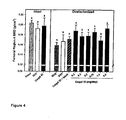
- FIG. 2 Lumbar vertebrae (L5-L6) BMD at day 120 (mean ⁇ S.E.M).
- a P ⁇ 0.05 vs. OVX controls;
- b P ⁇ 0.05 vs. intact controls.
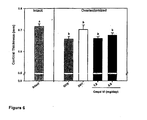
- FIG. 3 Lumbar vertebrae (L2-L4) BMD at day 120 (mean ⁇ S.E.M).
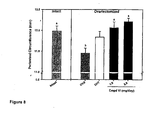
- FIG. 5 Proximal femur BMD at day 120 (mean ⁇ S.E.M).
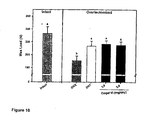
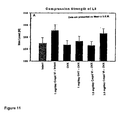
- Figure 11 Compression strength of the L5 vertebra at day 120 (mean ⁇ S.E.M).
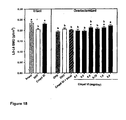
- FIG. 18 Lumbar vertebrae at day 210 (L5-L6) BMC (mean ⁇ S.E.M).
- a P ⁇ 0.05 vs. OVX controls;
- b P ⁇ 0.05 vs. intact controls. Intact controls were sacrificed at day 210.
- FIG. 27 Whole body BMD at day 120.
- a P ⁇ 0.05 vs. OVX controls;
- b P ⁇ 0.05 vs. intact controls.
- FIG. 28 BMD of L5-L6 vertebrae at day 120.
- a P ⁇ 0.05 vs. OVX controls;
- b P ⁇ 0.05 vs. intact controls.
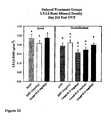
- FIG. 29 Whole body BMD at day 210.
- a P ⁇ 0.05 vs. OVX controls
- b P ⁇ 0.05 vs. intact controls.
- FIG. 30 BMD of L5-L6 vertebrae at day 210.
- a P ⁇ 0.05 vs. OVX controls;
- b P ⁇ 0.05 vs. intact controls.
- FIG. 31 Body weight at day 120.
- a P ⁇ 0.05 vs. OVX controls;
- b P ⁇ 0.05 vs. intact controls.
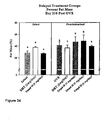
- FIG. 32 Body weight at day 210.
- a P ⁇ 0.05 vs. OVX controls;
- b P ⁇ 0.05 vs. intact controls.
- the present invention provides methods of treating, preventing, suppressing, inhibiting or reducing the incidence of a bone-related disorder in a subject, by administering to the subject a selective androgen receptor modulator (SARM) compound and/or its analogue, derivative, isomer, metabolite, pharmaceutically acceptable salt, pharmaceutical product, hydrate, N-oxide, or any combination thereof.
- SARM selective androgen receptor modulator
- the present invention further provides methods of increasing a bone strength or bone mass of a subject, increasing a muscle mass of a subject, and decreasing an FM of a subject, by administering same.
- the present invention provides a method of reducing the incidence of a bone-related disorder in a subject, comprising administering to the subject a SARM compound.
- the method comprises administering an analogue, derivative, isomer, metabolite, pharmaceutically acceptable salt, pharmaceutical product, hydrate or N-oxide of the SARM compound, or any combination thereof.
- the present invention provides a method of preventing a bone-related disorder in a subject, comprising administering one of the above compounds. In another embodiment, the present invention provides a method of suppressing a bone-related disorder in a subject, comprising administering same. In another embodiment, the present invention provides a method of inhibiting a bone-related disorder in a subject, comprising administering same.
- the bone-related disorder is osteoporosis. In another embodiment, the bone-related disorder is osteopenia. In another embodiment, the bone-related disorder is increased bone resorption. In another embodiment, the bone-related disorder is bone fracture. In another embodiment, the bone-related disorder is bone frailty. In another embodiment, the bone-related disorder is a loss of BMD. In another embodiment, the bone-related disorder is any combination of osteoporosis, osteopenia, increased bone resorption, bone fracture, bone frailty and loss of BMD. Each disorder represents a separate embodiment of the present invention.
- Osteoporosis refers, in one embodiment, to a thinning of the bones with reduction in bone mass due to depletion of calcium and bone protein.
- osteoporosis is a systemic skeletal disease, characterized by low bone mass and deterioration of bone tissue, with a consequent increase in bone fragility and susceptibility to fracture.
- bone strength is abnormal, in one embodiment, with a resulting increase in the risk of fracture.
- osteoporosis depletes both the calcium and the protein collagen normally found in the bone, in one embodiment, resulting in either abnormal bone quality or decreased bone density.
- bones that are affected by osteoporosis can fracture with only a minor fall or injury that normally would not cause a bone fracture.
- the fracture can be, in one embodiment, either in the form of cracking (as in a hip fracture) or collapsing (as in a compression fracture of the spine).
- the spine, hips, and wrists are common areas of osteoporosis-induced bone fractures, although fractures can also occur in other skeletal areas.
- Unchecked osteoporosis can lead, in another embodiment, to changes in posture, physical abnormality, and decreased mobility.
- the osteoporosis results from androgen deprivation. In another embodiment, the osteoporosis follows androgen deprivation. In another embodiment, the osteoporosis is primary osteoporosis. In another embodiment, the osteoporosis is secondary osteoporosis. In another embodiment, the osteoporosis is postmenopausal osteoporosis. In another embodiment, the osteoporosis is juvenile osteoporosis. In another embodiment, the osteoporosis is idiopathic osteoporosis. In another embodiment, the osteoporosis is senile osteoporosis.
- the primary osteoporosis is Type I primary osteoporosis. In another embodiment, the primary osteoporosis is Type II primary osteoporosis. Each type of osteoporosis represents a separate embodiment of the present invention.
- Osteoporosis and osteopenia are, in another embodiment, systemic skeletal diseases characterized by low bone mass and microarchitectural deterioration of bone tissue.
- “Microarchitectural deterioration” refers, in one embodiment, to thinning of the trabeculae (defined below) and the loss of inter-trabecular connections in bone.
- "osteoporosis” is defined as having a BMD 2.5 standard deviations (SD) or more below the young adult mean.
- “osteoporosis” is defined as having a BMC 2.5 SD or more below the young adult mean.
- “osteoporosis” is defined as having a BMD 2.0 SD or more below the young adult mean.
- osteoporosis is defined as having a BMC 2.0 SD or more below the young adult mean. In another embodiment, “osteoporosis” is defined as having a BMD 3.0 SD or more below the young adult mean. In another embodiment, “osteoporosis” is defined as having a BMC 3.0 SD or more below the young adult mean. Each definition of osteoporosis or osteopenia represents a separate embodiment of the present invention.
- osteoporosis is defined as having a BMD 2.5 SD below the young adult mean. In another embodiment, “osteoporosis” is defined as having a BMC 2.5 SD below the young adult mean. In another embodiment, “osteoporosis” is defined as having a BMD 2.0 SD below the young adult mean. In another embodiment, “osteoporosis” is defined as having a BMC 2.0 SD below the young adult mean. In another embodiment, “osteoporosis” is defined as having a BMD 3.0 SD below the young adult mean. In another embodiment, “osteoporosis” is defined as having a BMC 3.0 SD below the young adult mean. Each definition of osteoporosis represents a separate embodiment of the present invention.
- a patient's BMD measured by densitometry and expressed in g/cm 2
- a "normal value” which is the mean BMD of sex-matched young adults at their peak bone mass, yielding a "T score.”
- Z-score the amount of bone loss in a patient is compared with the expected loss for individuals of the same age and sex.
- "osteoporosis” is defined as having a T score 2.5 SD or more below the young adult mean.
- "osteoporosis” is defined as having a Z score 2.5 SD or more below the young adult mean.
- osteoporosis is defined as having a T score 2.0 SD or more below the young adult mean. In another embodiment, “osteoporosis” is defined as having a Z score 2.0 SD or more below the young adult mean. In another embodiment, “osteoporosis” is defined as having a T score 3.0 SD or more below the young adult mean. In another embodiment, “osteoporosis” is defined as having a Z score 3.0 SD or more below the young adult mean.
- osteoporosis is defined as having a T score 2.5 SD below the young adult mean. In another embodiment, “osteoporosis” is defined as having a Z score 2.5 SD below the young adult mean. In another embodiment, “osteoporosis” is defined as having a T score 2.0 SD below the young adult mean. In another embodiment, “osteoporosis” is defined as having a Z score 2.0 SD below the young adult mean. In another embodiment, “osteoporosis” is defined as having a T score 3.0 SD below the young adult mean. In another embodiment, “osteoporosis” is defined as having a Z score 3.0 SD below the young adult mean. Each definition of osteoporosis represents a separate embodiment of the present invention.
- BMD is, in one embodiment, a measured calculation of the true mass of bone.
- the absolute amount of bone as measured by BMD generally correlates with bone strength and its ability to bear weight.
- BMD in one embodiment, can be measured by known BMD mapping techniques.
- bone density of the hip, spine, wrist, or calcaneus may be measured by a variety of techniques.
- the preferred method of BMD measurement is dual-energy x-ray densitometry (DEXA).
- DEXA dual-energy x-ray densitometry
- BMD of the hip, antero-posterior (AP) spine, lateral spine, and wrist can be measured using this technology. Measurement at any site predicts overall risk of fracture, but information from a specific site is the best predictor of fracture at that site.
- Quantitative computerized tomography (QCT) is also used to measure BMD of the spine.
- Ostopenia refers, in one embodiment, to having a BMD or BMC between 1 and 2.5 SD below the young adult mean. In another embodiment, “osteopenia” refers to decreased calcification or density of bone. This term encompasses, in one embodiment, all skeletal systems in which such a condition is noted. Each definition or means of diagnosis of the disorders disclosed in the present invention represents a separate embodiment of the present invention.
- bone fracture refers to a breaking of bones, and encompasses both vertebral and non-vertebral bone fractures.
- bone frailty refers, in one embodiment, to a weakened state of the bones that predisposes them to fractures.
- the osteoporosis, osteopenia, increased bone resorption, bone fracture, bone frailty, loss of BMD, and other diseases or disorders of the present invention are caused by a hormonal disorder, disruption or imbalance. In another embodiment, these conditions occur independently of a hormonal disorder, disruption or imbalance. Each possibility represents a separate embodiment of the present invention.
- the hormonal disorder, disruption or imbalance comprises an excess of a hormone.
- the hormonal disorder, disruption or imbalance comprises a deficiency of a hormone.
- the hormone is a steroid hormone.
- the hormone is an estrogen.
- the hormone is an androgen.
- the hormone is a glucocorticoid.
- the hormone is a cortico-steroid.
- the hormone is Luteinizing Hormone (LH).
- the hormone is Follicle Stimulating Hormone (FSH).
- the hormone is any other hormone known in the art.
- the hormonal disorder, disruption or imbalance is associated with menopause. Each possibility represents a separate embodiment of the present invention.
- the findings depicted in Figures 1-5 demonstrate that SARMS prevent loss of BMD, both overall in the body, and in a number of specific locations.
- Loss of BMD is a key indicator of osteoporosis, and is associated with decreased bone strength and increased fracture rate. By preventing loss in BMD, these and other symptoms of osteoporosis will be prevented as well.
- the findings depicted in Figures 12-13 show that SARMS increase BMC, another indicator of bone strength, in osteoporotic mice, verifying the findings of Figures 1-5 .
- the present invention provides a method of increasing bone strength of a subject, comprising administering to the subject a SARM compound.
- the method comprises administering an analogue, derivative, isomer, metabolite, pharmaceutically acceptable salt, pharmaceutical product, hydrate or N-oxide of the SARM compound, or any combination thereof.
- the present invention provides a method of increasing bone quality of a subject, comprising administering to the subject a SARM compound.
- the method comprises administering an analogue, derivative, isomer, metabolite, pharmaceutically acceptable salt, pharmaceutical product, hydrate or N-oxide of the SARM compound, or any combination thereof.
- bone strength can be assessed, in one embodiment, using biomechanical testing ( Figures 10 , 11 , and 24 ).
- Bone mass can be assessed, in one embodiment, using DEXA ( Figures 1 , 2 , 4 , 14 , 15 , 17-19 , 25 , and 26 ); or pQCT ( Figures 6-9 and 20-23 ).
- Bone quality can be assessed by measuring BMC ( Figures 12-13 ).
- Other methods for assessing bone mass and bone strength are described, for example in Faulkner KG et al (Am J Roentgenology 157: 1229-1237, 1991 ). Each method represents a separate embodiment of the present invention.
- the present invention provides a method of increasing bone mass of a subject, comprising administering to the subject a SARM compound.
- the method comprises administering an analogue, derivative, isomer, metabolite, pharmaceutically acceptable salt, pharmaceutical product, hydrate or N-oxide of the SARM compound, or any combination thereof.
- the present invention provides method of reducing the incidence of a bone resorption in a subject, comprising administering to the subject a SARM compound.
- the method comprises administering an analogue, derivative, isomer, metabolite, pharmaceutically acceptable salt, pharmaceutical product, hydrate or N-oxide of the SARM compound, or any combination thereof.
- the present invention provides a method of preventing bone resorption in a subject, comprising administering one of the above compounds. In another embodiment, the present invention provides a method of suppressing bone resorption in a subject, comprising administering same. In another embodiment, the present invention provides a method of inhibiting bone resorption in a subject, comprising administering same.
- Bone resorption is, in one embodiment, a major mechanism by which bone mass and/or bone strength is decreased as a result of disorders such as osteoporosis, menopause, and androgen deprivation.
- Methods of measuring bone resorption are well known in the art.
- bone resorption can, in one embodiment, be measured by assessing serum osteocalcin levels (Example 8), which correlate with the level of bone resorption.
- bone resorption can be assessed by measuring BMD ( Figures 12-13 ).
- bone resorption can be measured by assessing deoxypyridonoline levels in the urine.
- bone resorption can be measured by assessing insulin-like growth factor (IGF-1) levels in the blood.
- IGF-1 insulin-like growth factor
- bone resorption refers to bone loss due to osteoclastic activity.
- Human bones are subject to a constant dynamic renovation process comprising bone resorption and bone formation.
- Bone resorption is based, in this embodiment, on the destruction of bone matrix by osteoclasts.
- the majority of bone disorders are based on a disturbed equilibrium between bone formation and bone resorption. Osteoporosis results from a deficit in new bone formation versus bone resorption during the ongoing remodeling process.
- the subject treated in the present invention has osteoporosis. In another embodiment, the subject has osteopenia. In another embodiment, the subject has increased bone resorption. In another embodiment, the subject has bone fracture. In another embodiment, the subject has bone frailty. In another embodiment, the subject has a loss of BMD. In another embodiment, the subject has any combination of osteoporosis, osteopenia, increased bone resorption, bone fracture, bone frailty and loss ofBMD. Each disorder represents a separate embodiment of the present invention.
- the findings presented in Figures 1-13 show that bone resorption, decreased BMD, and decreased bone strength as a result of ovariectomy was either partially or completely prevented by SARM treatment, depending on the area and type of bone assessed.
- SARMS are useful in reducing the incidence of bone resorption, decreased BMD, and decreased bone strength in a subject, as a result of, for example, osteoporosis, menopause, or any of the diseases or disorders described in the present invention.
- the subject treated in the present invention is a male subject.
- the subject is an aging male subject.
- the subject is a castrated male subject.
- the subject is a man undergoing androgen-deprivation treatment.
- the subject has prostate cancer.
- the subject (male or female) has another type of cancer.
- the subject is undergoing chemotherapy.
- the subject has recently undergone chemotherapy.
- the subject is a female subject. In another embodiment, the subject is an aging female subject. In another embodiment, the subject is an HIV-positive premenopausal women. In another embodiment, the subject is a female having Addison's disease. In another embodiment, the subject is a female having a hypopituitary state. In another embodiment, the subject is an OVX female subject.
- the subject to whom the SARM compounds of the present invention are administered is an aging subject.
- the term "aging" means, in one embodiment, a process of becoming older.
- the aging subject is a subject over 40 years old.
- the aging subject is a subject over 45 years old.
- the aging subject is a subject over 45 years old.
- the aging the aging subject is a subject over 50 years old.
- the aging subject is a subject over 55 years old.
- the aging subject is a subject over 60 years old.
- the aging subject is a subject over 65 years old.
- the aging subject is a subject over 70 years old.
- Each type of subject represents a separate embodiment of the present invention.
- the subject treated in the present invention does not have osteoporosis, osteopenia, increased bone resorption, bone fracture, bone frailty or loss of BMD.
- the findings presented in Figures 16-24 show that SARMS can reverse pre-existing loss of BMD and loss of bone strength resulting from osteoporosis.
- SARMS have anabolic activity independent of their ability to prevent bone resorption. Accordingly, the positive affects of SARMS on BMD, bone strength, and bone quality are by no means restricted to subjects that have experienced or are experiencing bone-related disorders; rather, the benefits of SARMS are applicable to any situation in which an increase in BMD, bone strength, or bone quality is desirable.
- the present invention provides a method of reversing loss of BMD in a subject, comprising administering a SARM or a metabolite or derivative thereof.
- the present invention provides a method of reversing osteoporosis in a subject, comprising administering a SARM or a metabolite or derivative thereof.
- the present invention provides a method of reversing osteopenia in a subject, comprising administering a SARM or a metabolite or derivative thereof.
- the present invention provides a method of reversing bone frailty in a subject, comprising administering a SARM or a metabolite or derivative thereof.
- the loss of BMD, osteoporosis, osteopenia, or bone frailty may be due to menopause or another hormonal disorder or imbalance. Each method represents a separate embodiment of the present invention.
- Cortical bone serves as a protective covering and surrounds trabecular bone.
- Cortical bone has three layers, namely: the periosteal envelope (the outer surface of the bone); the intracortical envelope (the intermediate layer); and the endosteal envelope (the layer adjacent to the bone marrow cavity).
- Cortical bone is predominant in the limbs and is, in one embodiment, responsible for the skeleton's strength.
- Cortical bone can also be called, in one embodiment, Haversian or compact bone.
- Trabecular bone which plays a role in bone metabolism, is also, in one embodiment, known as spongy or cancellous bone. The ratio of cortical and trabecular bone combination varies throughout the bones of the body.
- the bone whose strength or mass is increased is cortical bone.
- the beneficial effects of SARMS on cortical bone are demonstrated in Figures 6-8 and 20-22 .
- the bone is trabecular bone.
- the beneficial effects of SARMS on trabecular bone are demonstrated in Figures 9 and 3 .
- the bone is cancellous bone.
- the bone is Haversian bone.
- the bone is intact bone comprising multiple types of bone tissue.
- a particular layer of cortical bone may be affected by the methods of the present invention.
- the layer is the periosteal envelope.
- the layer is the intracortical envelope.
- the layer is the endosteal envelope.
- Each type of bone represents a separate embodiment of the present invention.
- the present invention provides method of reducing an FM of a subject, comprising administering to the subject a SARM compound.
- the method comprises administering an analogue, derivative, isomer, metabolite, pharmaceutically acceptable salt, pharmaceutical product, hydrate or N-oxide of the SARM compound, or any combination thereof.
- the present invention provides method of reducing an incidence of an increase in an FM of a subject, comprising administering to the subject a SARM compound.
- the method comprises administering an analogue, derivative, isomer, metabolite, pharmaceutically acceptable salt, pharmaceutical product, hydrate or N-oxide of the SARM compound, or any combination thereof.
- the present invention provides method of increasing a muscle mass in a subject, comprising administering to the subject a SARM compound.
- the method comprises administering an analogue, derivative, isomer, metabolite, pharmaceutically acceptable salt, pharmaceutical product, hydrate or N-oxide of the SARM compound, or any combination thereof.
- the present invention provides method of reducing an incidence of a decrease in a muscle mass in a subject, comprising administering to the subject a SARM compound.
- the method comprises administering an analogue, derivative, isomer, metabolite, pharmaceutically acceptable salt, pharmaceutical product, hydrate or N-oxide of the SARM compound, or any combination thereof.
- the present invention provides method of increasing a lean mass in a subject, comprising administering to the subject a SARM compound.
- the method comprises administering an analogue, derivative, isomer, metabolite, pharmaceutically acceptable salt, pharmaceutical product, hydrate or N-oxide of the SARM compound, or any combination thereof.
- the findings of Example 7 show that SARMS decrease the percentage of FM and increase the percentage of lean mass in OVX animals.
- Lean mass affects fracture risk for several reasons.
- increases in muscle mass are indirectly responsible for increases in BMD.
- increasing muscle mass may improve balance and muscle strength, thereby reducing the risk of falling, which is a primary cause of fracture in the elderly.
- the present invention provides a method of decreasing fracture risk, via increasing muscle mass.
- the present invention provides a method of decreasing fracture risk, via decreasing FM.
- the findings depicted in Figure 26 show that SARMS are able to reverse an existing increase in FM.
- FM refers, in one embodiment, to the amount of total fat in the subject's body. In another embodiment, “FM” refers to the percentage body fat of the subject. In another embodiment, FM refers to the amount of total fat or percentage body fat in a particular area of the body. In another embodiment, FM refers to the amount or percentage of a particular type of fat. Each type of FM represents a separate embodiment of the present invention.
- the fat affected by the present invention is subcutaneous fat.
- the fat is trunk fat.
- the fat is intra-abdominal fat.
- the fat is any other type of fat known in the art. Each type of fat represents a separate embodiment of the present invention.
- Decreasing FM and increasing lean mass and/or muscle mass has, in one embodiment, a positive effect on impaired glucose metabolism.
- decreasing FM and increasing lean mass and/or muscle mass has a positive effect on diabetes.
- decreasing FM and increasing lean mass and/or muscle mass has a positive effect on hypertension.
- decreasing FM and increasing lean mass and/or muscle mass has a positive effect on coronary disease.
- decreasing FM and increasing lean mass and/or muscle mass has a positive effect on obesity.
- decreasing FM and increasing lean mass and/or muscle mass has a positive effect on a disease or disorder associated with impaired glucose metabolism, diabetes, hypertension, coronary disease, or obesity.
- the present invention provides a means of treating or ameliorating a impaired glucose metabolism, diabetes, hypertension, coronary disease, obesity, or an associated disease or disorder, comprising administration of a SARM or a derivative or metabolite thereof.
- the SARM compounds of the present invention are, in one embodiment, a novel class of AR targeting agents that demonstrate androgenic or anti-androgenic and anabolic activity. In another embodiment, the SARM compounds of the present invention are a novel class of non-steroidal ligands for the AR.
- the SARM compounds of the present invention may be categorized into subgroups depending on their biological activity. For example, several SARM compounds have an agonistic effect on muscle or bone, whereas others have an antagonistic effect.
- the AR is a ligand-activated transcriptional regulatory protein that mediates induction of male sexual development and function through its activity with endogenous androgens (male sex hormones).
- the androgens e.g. DHT and testosterone
- SARMS are AR ligands that differ from previously known AR ligands in that SARMS are non-steroidal.
- a receptor agonist is, in one embodiment, a substance that binds a receptor and activates it.
- a receptor partial agonist is, in one embodiment, a substance that binds a receptor and partially activates it.
- a receptor antagonist is, in one embodiment, a substance that binds a receptor and inactivates it.
- the SARM compounds of the present invention have a tissue-selective effect, wherein one agent may be an agonist, partial agonist and/or antagonist, depending on the tissue. For example, the SARM compound may stimulate muscle tissue and at the same time inhibit prostate tissue.
- the SARMs of the present invention are AR agonists. In another embodiment, the SARMs are AR antagonists.
- AR agonistic activity can be determined by monitoring the ability of the SARM compounds to maintain and/or stimulate the growth of AR containing tissue such as prostate and seminal vesicles, as measured by weight.
- AR antagonistic activity can be determined by monitoring the ability of the SARM compounds inhibit the growth of AR containing tissue.
- the SARM compounds of the present invention can be classified as partial AR agonist/antagonists.
- the SARMs are AR agonists in some tissues, causing increased transcription of AR-responsive genes (e.g. muscle anabolic effect). In other tissues, these compounds serve as competitive inhibitors of testosterone and/or dihydrotestosterone (DHT) on the AR to prevent agonistic effects of the native androgens.
- DHT dihydrotestosterone
- the SARM compounds of the present invention bind reversibly to the AR. In another embodiment, the SARM compounds bind irreversibly to the AR.
- the compounds of the present invention may, in one embodiment, contain a functional group (affinity label) that allows alkylation of the AR (i.e. covalent bond formation).
- a functional group affinity label
- the compounds bind irreversibly to the receptor and, accordingly, cannot be displaced by a steroid, such as the endogenous ligands DHT and testosterone.
- the SARM compound is administered to the subject.
- an analogue of the SARM is administered.
- a derivative of the SARM is administered.
- an isomer of the SARM is administered.
- a metabolite of the SARM is administered.
- a pharmaceutically acceptable salt of the SARM is administered.
- a pharmaceutical product of the SARM is administered.
- a hydrate of the SARM is administered.
- an N-oxide of the SARM is administered.
- the methods of the present invention comprise administering any of a combination of an analogue, derivative, isomer, metabolite, pharmaceutically acceptable salt, pharmaceutical product, hydrate or N-oxide of the SARM.
- an analogue, derivative, isomer, metabolite, pharmaceutically acceptable salt, pharmaceutical product, hydrate or N-oxide of the SARM Each possibility represents a separate embodiment of the present invention.
- isomer refers, in one embodiment, an optical isomer. In another embodiment, “isomer” refers to an analog. In another embodiment, “isomer” refers to a structural isomer. In another embodiment, “isomer” refers to a structural analog. In another embodiment, “isomer” refers to a conformational isomer. In another embodiment, “isomer” refers to a conformational analog. In another embodiment, “isomer” refers to any other type of isomer known in the art. Each type of isomer represents a separate embodiment of the present invention.
- this invention encompasses the use of various optical isomers of the SARM compound.
- the SARMs of the present invention contain at least one chiral center. Accordingly, the SARMs used in the methods of the present invention may exist in, and be isolated in, optically active or racemic forms. Some compounds may also exhibit polymorphism. It is to be understood that the present invention encompasses any racemic, optically active, polymorphic, or stereroisomeric form, or mixtures thereof, which form possesses properties useful in the treatment of androgen-related conditions described herein.
- the SARMs are the pure (R)-isomers. In another embodiment, the SARMs are the pure (S)-isomers.
- the SARMs are a mixture of the (R) and (S) isomers. In another embodiment, the SARMs are a racemic mixture comprising an equal amount of the (R) and (S) isomers. It is well known in the art how to prepare optically-active forms (for example, by resolution of the racemic form by recrystallization techniques, by synthesis from optically-active starting materials, by chiral synthesis, or by chromatographic separation using a chiral stationary phase).
- the invention includes, in another embodiment, pharmaceutically acceptable salts of amino-substituted compounds with organic and inorganic acids, for example, citric acid and hydrochloric acid.
- the invention also includes N-oxides of the amino substituents of the compounds described herein.
- Pharmaceutically acceptable salts can also be prepared from the phenolic compounds by treatment with inorganic bases, for example, sodium hydroxide.
- esters of the phenolic compounds can be made with aliphatic and aromatic carboxylic acids, for example, acetic acid and benzoic acid esters.
- This invention further includes, in another embodiment, derivatives of the SARM compounds.
- derivatives includes but is not limited to ether derivatives, acid derivatives, amide derivatives, ester derivatives and the like.
- this invention further includes hydrates of the SARM compounds.
- hydrate includes but is not limited to hemi-hydrate, monohydrate, dihydrate, trihydrate and the like.
- This invention further includes, in another embodiment, metabolites of the SARM compounds.
- metabolites refers, in one embodiment, to any substance produced from another substance by metabolism or a metabolic process.
- This invention further includes, in one embodiment, pharmaceutical products of the SARM compounds.
- pharmaceutical product refers, in one embodiment, to a composition suitable for pharmaceutical use (pharmaceutical composition), as defined herein.
- the SARM compound of the present invention is a compound represented by the structure of formula I:
- the SARM compound of the present invention is a compound represented by the structure of formula II: wherein X is a bond, O, CH 2 , NH, Se, PR, NO or NR; Z is NO 2 , CN, COOH, COR, NHCOR or CONHR; Y is CF 3 , F, I, Br, Cl, CN, CR 3 or SnR 3 ; Q is alkyl, F, I, Br, Cl, CF 3 , CN CR 3 , SnR 3 , NR 2 , NHCOCH 3 , NHCOCF 3 , NHCOR, NHCONHR, NHCOOR, OCONHR, CONHR, NHCSCH 3 , NHCSCF 3 , NHCSR NHSO 2 CH 3 , NHSO 2 R, OR, COR, OCOR, OSO 2 R, SO 2 R, SR, SCN, NCS, OCN, NCO; or Q together with the benzene ring to which it is attached is a fuse
- the SARM compound is a compound of formula II wherein X is O. In another embodiment, the SARM compound is a compound of formula II wherein Z is NO 2 . In another embodiment, the SARM compound is a compound of formula II wherein Z is CN. In another embodiment, the SARM compound is a compound of formula II wherein Y is CF 3 . In another embodiment, the SARM compound is a compound of formula II wherein Q is NHCOCH 3 . In another embodiment, the SARM compound is a compound of formula II wherein Q is F.
- the substituent R in compound (I) or (II) is an alkyl group.
- the substituent R is a haloalkyl group.
- the substituent R is a dihaloalkyl group.
- the substituent R is a trihaloalkyl group.
- the substituent R is a CH 2 F moiety.
- the substituent R is a CHF 2 moiety.
- the substituent R is a CF 3 moiety.
- the substituent R is a CF 2 CF 3 moiety.
- the substituent R is an aryl group.
- the substituent R is a phenyl group.
- the substituent R is F. In another embodiment, the substituent R is I. In another embodiment, the substituent R is a Br. In another embodiment, the substituent R is Cl. In another embodiment, the substituent R is an alkenyl group. In another embodiment, the substituent R is an OH moiety.
- Each substituent represents a separate embodiment of the present invention.
- the SARM compound of the present invention is a compound represented by the structure of formula III: wherein X is a bond, O, CH 2 , NH, Se, PR, NO or NR; G is O or S; R 1 is CH 3 , CH 2 F, CHF 2 , CF 3 , CH 2 CH 3 , or CF 2 CF 3 ; T is OH, OR, -NHCOCH 3 , or NHCOR; R is alkyl, haloalkyl, dihaloalkyl, trihaloalkyl, CH 2 F, CHF 2 , CF 3 , CF 2 CF 3 , aryl, phenyl, F, I, Br, Cl, alkenyl or OH; A is a ring selected from: B is a ring selected from: wherein A and B cannot simultaneously be a benzene ring; Z is NO 2 , CN, COOH, COR, NHCOR or CONHR; Y is CF 3 , F, I
- the SARM compound is a compound of formula III wherein X is O. In another embodiment, the SARM compound is a compound of formula III wherein G is O. In another embodiment, the SARM compound is a compound of formula I wherein T is OH. In another embodiment, the SARM compound is a compound of formula III wherein R 1 is CH 3 . In another embodiment, the SARM compound is a compound of formula III wherein Z is NO 2 . In another embodiment, the SARM compound is a compound of formula III wherein Z is CN. In another embodiment, the SARM compound is a compound of formula III wherein Y is CF 3 . In another embodiment, the SARM compound is a compound of formula III wherein Q 1 is NHCOCH 3 . In another embodiment, the SARM compound is a compound of formula III wherein Q 1 is F.
- the substituents Z and Y can be, in one embodiment, in any position of the ring carrying these substituents (hereinafter "A ring").
- a ring the substituent Z is in the para position of the A ring.
- the substituent Y is in the meta position of the A ring.
- the substituent Z is in the para position of the A ring and substituent Y is in the meta position of the A ring.
- the substituents Q 1 and Q 2 can be, in one embodiment, in any position of the ring carrying these substituents (hereinafter "B ring").
- the substitutent Q 1 is in the para position of the B ring.
- the subsituent is Q 2 is H.
- the substitutent Q 1 is in the para position of the B ring and the subsituent is Q 2 is H.
- the substitutent Q 1 is NHCOCH 3 and is in the para position of the B ring, and the substituent is Q 2 is H.
- each substituent of each of the above variables represents a separate embodiment of the present invention. Further, each position enumerated above of each of the above substituents represents a separate embodiment of the present invention.
- the SARM compound of the present invention is a compound represented by the structure of formula IV: wherein X is a bond, O, CH 2 , NH, Se, PR, NO or NR; G is O or S; T is OH, OR, -NHCOCH 3 , or NHCOR; R is alkyl, haloalkyl, dihaloalkyl, trihaloalkyl, CH 2 F, CHF 2 , CF 3 , CF 2 CF 3 , aryl, phenyl, F, I, Br, Cl, alkenyl or OH; R 1 is CH 3 , CH 2 F, CHF 2 , CF 3 , CH 2 CH 3 , or CF 2 CF 3 ; R 2 is F, Cl, Br, I, CH 3 , CF 3 , OH, CN, NO 2 , NHCOCH 3 , NHCOCF 3 , NHCOR, alkyl, arylalkyl, OR, NH 2 , NHR
- the SARM compound is a compound of formula IV wherein X is O. In another embodiment, the SARM compound is a compound of formula IV wherein G is O. In another embodiment, the SARM compound is a compound of formula IV wherein Z is NO 2 . In another embodiment, the SARM compound is a compound of formula IV wherein Z is CN. In another embodiment, the SARM compound is a compound of formula IV wherein Y is CF 3 . In another embodiment, the SARM compound is a compound of formula IV wherein Q is NHCOCH 3 . In another embodiment, the SARM compound is a compound of formula IV wherein Q is F. In another embodiment, the SARM compound is a compound of formula IV wherein T is OH.
- the SARM compound is a compound of formula IV wherein R 1 is CH 3 . In another embodiment, the SARM compound is a compound of formula IV wherein Q is F and R 2 is CH 3 . In another embodiment, the SARM compound is a compound of formula IV wherein Q is F and R 2 is Cl.
- the substituents Z, Y, and R 3 can be, in one embodiment, in any position of the ring carrying these substituents (hereinafter "A ring").
- a ring the substituent Z is in the para position of the A ring.
- the substituent Y is in the meta position of the A ring.
- the substituent Z is in the para position of the A ring and substituent Y is in the meta position of the A ring.
- the substituents Q and R 2 can be, in one embodiment, in any position of the ring carrying these substituents (hereinafter "B ring").
- the substitutent Q is in the para position of the B ring.
- the substitutent Q is in the para position of the B ring.
- the substitutent Q is NHCOCH 3 and is in the para position of the B ring.
- the substituents R 2 and R 3 are not limited to one particular substituent, and can be any combination of the substituents listed above.
- each substituent of each of the above variables represents a separate embodiment of the present invention. Further, each position enumerated above of each of the above substituents represents a separate embodiment of the present invention. Further, each number enumerated above of each of the above integers represents a separate embodiment of the present invention.
- the SARM compound of the present invention is a compound represented by the structure of formula V: wherein R 2 is F, Cl, Br, I, CH 3 , CF 3 , OH, CN, NO 2 , NHCOCH 3 , NHCOCF 3 , NHCOR, alkyl, arylalkyl, OR, NH 2 , NHR, NR 2 , SR; R 3 is F, Cl, Br, I, CN, NO 2 , COR, COOH, CONHR, CF 3 , SnR 3 , or R 3 together with the benzene ring to which it is attached forms a fused ring system represented by the structure: R is alkyl, haloalkyl, dihaloalkyl, trihaloalkyl, CH 2 F, CHF 2 , CF 3 , CF 2 CF 3 , aryl, phenyl, F, I, Br, Cl, alkenyl or OH; Z is NO 2 , CN, C
- the SARM is a compound of formula V wherein Z is NO 2 . In another embodiment, the SARM is a compound of formula V wherein Z is CN. In another embodiment, the SARM is a compound of formula V wherein Y is CF 3 . In another embodiment, the SARM is a compound of formula V wherein Q is NHCOCH 3 . In another embodiment, the SARM is a compound of formula V wherein Q is F. In another embodiment, the SARM is a compound of formula V wherein Q is F and R 2 is CH 3 . In another embodiment, the SARM is a compound of formula V wherein Q is F and R 2 is Cl.
- the substituents Z, Y and R 3 can be in, in one embodiment, any position of the A ring, and the substituents Q and R 2 can be, in one embodiment, in any position ofB ring, as discussed above for compound IV. Furthermore, as discussed above, when the integers m and n are greater than one, the substituents R 2 and R 3 are not limited to one particular substituent, and can be any combination of the substituents listed above.
- each substituent of each of the above variables represents a separate embodiment of the present invention. Further, each position enumerated above of each of the above substituents represents a separate embodiment of the present invention. Further, each number enumerated above of each of the above integers represents a separate embodiment of the present invention.
- the SARM compound of the present invention is a compound represented by the structure of formula VI.
- the findings of the present invention show that Compound VI has beneficial effects on bone, fat, and muscle tissue, as delineated above.
- the pharmaco-kinetic properties of Compound VI favor its use as a pharmaceutical treatment of conditions disclosed in the present invention.
- the present invention has shown that Compound VI exhibits decreased metabolic clearance and enhanced oral bioavailability compared to testosterone. These properties, as well as rapidly reaching peak plasma concentration, were observed with Compound VI at doses capable of eliciting maximal pharmacologic effect (Example 15).
- the SARM compound of the present invention is a compound represented by the structure of formula VII.
- the SARM compound of the present invention is a compound represented by the structure of formula VIII.
- the SARM compound of the present invention is a compound represented by the structure of formula IX.
- the SARM compound of the present invention is a compound represented by the structure of formula X.
- the SARM compound of the present invention is a compound represented by the structure of formula XI.
- the SARM compound is a compound represented by a structure of formula XII:
- p is 2. In another embodiment, p is 3. In another embodiment, p is 4. In another embodiment, p is 5. The rest of the substituents are as defined above for formula IV.
- the SARM compound is a compound represented by a structure of formula XIII:
- the SARM compound is a compound represented by a structure of formula XIV:
- the SARM compound is a compound represented by a structure of formula XV:
- p is 1. In one embodiment, p is 2. In another embodiment, p is 3. In another embodiment, p is 4. The rest of the substituents are as defined above for formula V.
- the SARM compound is a compound represented by a structure of formula XVI:
- the SARM compound is a compound represented by a structure of formula XVII:
- the SARM is a compound of formula XVII wherein Q is acetamido (NHCOCH 3 ). In another embodiment, the SARM is a compound of formula XVII wherein Q is trifluoroacetamido (NHCOCF 3 ).
- the SARM is a compound of formula XVII wherein Z is NO 2 . In another embodiment, the SARM is a compound of formula XVII wherein Z is CN. In another embodiment, the SARM is a compound of formula XVII wherein Z is COR. In another embodiment, the SARM is a compound of formula XVII wherein Z is CONHR.
- the SARM is a compound of formula XVII wherein Y is CF 3 . In another embodiment, the SARM is a compound of formula XVII wherein Y is I. In another embodiment, the SARM is a compound of formula XVII wherein Y is Br. In another embodiment, the SARM is a compound of formula XVII wherein Y is Cl. In another embodiment, the SARM is a compound of formula XVII wherein Y is SnR 3 .
- the SARM is a compound of formula XVII wherein R is an alkyl group. In another embodiment, the SARM is a compound of formula XVII wherein R is OH.
- each substituent of each of the above variables represents a separate embodiment of the present invention. Further, each position enumerated above of each of the above substituents represents a separate embodiment of the present invention.
- the SARM compound is a compound represented by a structure of formula XVIII: wherein X is O, CH 2 , NH, Se, PR, NO or NR; T is OH, OR, -NHCOCH 3 , or NHCOR; Z is NO 2 , CN, COOH, COR, NHCOR or CONHR; Y is CF 3 , F, I, Br, Cl, CN, CR 3 or SnR 3 ; Q is alkyl, F, I, Br, Cl, CF 3 , CN, CR 3 , SnR 3 , NR 2 , NHCOCH 3 , NHCOCF 3 , NHCOR, NHCONHR, NHCOOR, OCONHR, CONHR, NHCSCH 3 , NHCSCF 3 , NHCSR, NHSO 2 CH 3 , NHSO 2 R, OR, COR, OCOR, OSO 2 R, SO 2 R, SR; or Q together with the benzene ring to which it
- each substituent of each of the above variables represents a separate embodiment of the present invention. Further, each position enumerated above of each of the above substituents represents a separate embodiment of the present invention.
- the SARM compound is a compound of one of the above formulas wherein X is O. In another embodiment, the SARM compound is a compound of one of the above formulas wherein X is a bond. In another embodiment, the SARM compound is a compound of one of the above formulas wherein X is CH 2 . In another embodiment, the SARM compound is a compound of one of the above formulas wherein X is NH. In another embodiment, the SARM compound is a compound of one of the above formulas wherein X is Se. In another embodiment, the SARM compound is a compound of one of the above formulas wherein X is PR. In another embodiment, the SARM compound is a compound of one of the above formulas wherein X is NO. In another embodiment, the SARM compound is a compound of one of the above formulas wherein X is NR.
- the SARM compound is a compound of one of the above formulas wherein G is O. In another embodiment, the SARM compound is a compound of one of the above formulas wherein G is S.
- the SARM compound is a compound of one of the above formulas wherein T is OH. In another embodiment, the SARM compound is a compound of one of the above formulas wherein T is OR. In another embodiment, the SARM compound is a compound of one of the above formulas wherein -NHCOCH 3 . In another embodiment, the SARM compound is a compound of one of the above formulas wherein T is NHCOR.
- the SARM compound is a compound of one of the above formulas wherein Z is NO 2 . In another embodiment, the SARM compound is a compound of one of the above formulas wherein Z is CN. In another embodiment, the SARM compound is a compound of one of the above formulas wherein Z is COOH. In another embodiment, the SARM compound is a compound of one of the above formulas wherein Z is COR. In another embodiment, the SARM compound is a compound of one of the above formulas wherein Z is NHCOR. In another embodiment, the SARM compound is a compound of one of the above formulas wherein Z is CONHR.
- the SARM compound is a compound of one of the above formulas wherein Y is CF 3 . In another embodiment, the SARM compound is a compound of one of the above formulas wherein Y is F. In another embodiment, the SARM compound is a compound of one of the above formulas wherein Y is I. In another embodiment, the SARM compound is a compound of one of the above formulas wherein Y is Br. In another embodiment, the SARM compound is a compound of one of the above formulas wherein Y is Cl. In another embodiment, the SARM compound is a compound of one of the above formulas wherein Y is CN. In another embodiment, the SARM compound is a compound of one of the above formulas wherein Y is CR 3 . In another embodiment, the SARM compound is a compound of one of the above formulas wherein Y is SnR 3 .
- the SARM compound is a compound of one of the above formulas wherein Q is NHCOCH 3 . In another embodiment, the SARM compound is a compound of one of the above formulas wherein Q is F. In another embodiment, the SARM compound is a compound of one of the above formulas wherein Q is alkyl. In another embodiment, the SARM compound is a compound of one of the above formulas wherein Q is I. In another embodiment, the SARM compound is a compound of one of the above formulas wherein Q is Br. In another embodiment, the SARM compound is a compound of one of the above formulas wherein Q is Cl. In another embodiment, the SARM compound is a compound of one of the above formulas wherein Q is CF 3 .
- the SARM compound is a compound of one of the above formulas wherein Q is CN. In another embodiment, the SARM compound is a compound of one of the above formulas wherein Q is CR 3 . In another embodiment, the SARM compound is a compound of one of the above formulas wherein Q is SnR 3 . In another embodiment, the SARM compound is a compound of one of the above formulas wherein Q is NR 2 . In another embodiment, the SARM compound is a compound of one of the above formulas wherein Q is NHCOCF 3 . In another embodiment, the SARM compound is a compound of one of the above formulas wherein Q is NHCOR.
- the SARM compound is a compound of one of the above formulas wherein Q is NHCONHR. In another embodiment, the SARM compound is a compound of one of the above formulas wherein Q is NHCOOR. In another embodiment, the SARM compound is a compound of one of the above formulas wherein Q is OCONHR. In another embodiment, the SARM compound is a compound of one of the above formulas wherein Q is CONHR. In another embodiment, the SARM compound is a compound of one of the above formulas wherein Q is NHCSCH 3 . In another embodiment, the SARM compound is a compound of one of the above formulas wherein Q is NHCSCF 3 .
- the SARM compound is a compound of one of the above formulas wherein Q is NHCSR. In another embodiment, the SARM compound is a compound of one of the above formulas wherein Q is NHSO 2 CH 3 . In another embodiment, the SARM compound is a compound of one of the above formulas wherein Q is NHSO 2 R. In another embodiment, the SARM compound is a compound of one of the above formulas wherein Q is OR. In another embodiment, the SARM compound is a compound of one of the above formulas wherein Q is COR. In another embodiment, the SARM compound is a compound of one of the above formulas wherein Q is OCOR. In another embodiment, the SARM compound is a compound of one of the above formulas wherein Q is OSO 2 R.
- the SARM compound is a compound of one of the above formulas wherein Q is SO 2 R. In another embodiment, the SARM compound is a compound of one of the above formulas wherein Q is SR. In another embodiment, the SARM compound is a compound of one of the above formulas wherein Q is SCN. In another embodiment, the SARM compound is a compound of one of the above formulas wherein Q is NCS. In another embodiment, the SARM compound is a compound of one of the above formulas wherein Q is OCN. In another embodiment, the SARM compound is a compound of one of the above formulas wherein Q is NCO.
- the SARM compound is a compound of one of the above formulas wherein Q together with the benzene ring to which it is attached is a fused ring system represented by structure A, B or C:
- the SARM compound is a compound of one of the above formulas wherein R is alkyl. In another embodiment, the SARM compound is a compound of one of the above formulas wherein R is haloalkyl. In another embodiment, the SARM compound is a compound of one of the above formulas wherein R is dihaloalkyl. In another embodiment, the SARM compound is a compound of one of the above formulas wherein R is trihaloalkyl. In another embodiment, the SARM compound is a compound of one of the above formulas wherein R is CH 2 F. In another embodiment, the SARM compound is a compound of one of the above formulas wherein R is CHF 2 .
- the SARM compound is a compound of one of the above formulas wherein R is CF 3 . In another embodiment, the SARM compound is a compound of one of the above formulas wherein R is CF 2 CF 3 . In another embodiment, the SARM compound is a compound of one of the above formulas wherein R is aryl. In another embodiment, the SARM compound is a compound of one of the above formulas wherein R is phenyl. In another embodiment, the SARM compound is a compound of one of the above formulas wherein R is F. In another embodiment, the SARM compound is a compound of one of the above formulas wherein R is I. In another embodiment, the SARM compound is a compound of one of the above formulas wherein R is Br.
- the SARM compound is a compound of one of the above formulas wherein R is Cl. In another embodiment, the SARM compound is a compound of one of the above formulas wherein R is alkenyl. In another embodiment, the SARM compound is a compound of one of the above formulas wherein R is OH.
- the SARM compound is a compound of one of the above formulas wherein R 1 is CH 3 . In another embodiment, the SARM compound is a compound of one of the above formulas wherein R 1 is CH 2 F. In another embodiment, the SARM compound is a compound of one of the above formulas wherein R 1 is CHF 2 . In another embodiment, the SARM compound is a compound of one of the above formulas wherein R 1 is CF 3 . In another embodiment, the SARM compound is a compound of one of the above formulas wherein R 1 is CH 2 CH 3 . In another embodiment, the SARM compound is a compound of one of the above formulas wherein R 1 is CF 2 CF 3 .
- Each substituent of each of X, Y, Z, G, T, Q, R and R 1 , for each of the above formulas, represents a separate embodiment of the present invention. Further, each position enumerated above of each of the above substituents represents a separate embodiment of the present invention. Further, each number enumerated above of each of the above integers represents a separate embodiment of the present invention.
- the SARM compound is a compound represented by a structure of formula XIX:
- the SARM compound is a compound represented by a structure of formula XX:
- the SARM compound is a compound represented by a structure of formula XXI:
- the SARM compound is a compound represented by a structure of formula XXII:
- the SARM compound is a compound represented by a structure of formula XXIII:
- the SARM compound is a compound represented by a structure of formula XXIV:
- alkyl group refers, in one embodiment, to a saturated aliphatic hydrocarbon, including straight chain, branched-chain and cyclic alkyl groups. In one embodiment, the alkyl group has 1-12 carbons. In another embodiment, the alkyl group has 1-7 carbons. In another embodiment, the alkyl group has 1-6 carbons. In another embodiment, the alkyl group has 1-4 carbons.
- the alkyl group may be unsubstituted or substituted by one or more groups selected from F, I, Br, Cl, hydroxy, alkoxy carbonyl, amido, alkylamido, dialkylamido, nitro, amino, alkylamino, dialkylamino, carboxyl, thio and thioalkyl.
- alkenyl refers, in one embodiment, to an unsaturated hydrocarbon, including straight chain, branched chain and cyclic groups having one or more double bond.
- the alkenyl group may have one double bond, two double bonds, three double bonds etc. Examples of alkenyl groups are ethenyl, propenyl, butenyl, cyclohexenyl etc.
- the alkenyl group may be unsubstituted or substituted by one or more groups selected from F, I, Br, Cl, hydroxy, alkoxy carbonyl, amido, alkylamido, dialkylamido, nitro, amino, alkylamino, dialkylamino, carboxyl, thio and thioalkyl.
- haloalkyl group refers, in one embodiment, to an alkyl group as defined above, which is substituted by one or more halogen atoms, e.g. by F, Cl, Br or I.
- aryl group refers, in one embodiment, to an aromatic group having at least one carbocyclic aromatic group or heterocyclic aromatic group, which may be unsubstituted or substituted by one or more groups selected from F, I, Br, Cl, haloalkyl, hydroxy, alkoxy carbonyl, amido, alkylamido, dialkylamido, nitro, amino, alkylamino, dialkylamino, carboxy or thio or thioalkyl.
- Non-limiting examples of aryl rings are phenyl, naphthyl, pyranyl, pyrrolyl, pyrazinyl, pyrimidinyl, pyrazolyl, pyridinyl, furanyl, thiophenyl, thiazolyl, imidazolyl, isoxazolyl, and the like.
- a “hydroxyl” group refers, in one embodiment, to an OH group.
- An “alkenyl” group refers to a group having at least one carbon-carbon double bond.
- a halo group refers, in one embodiment, to F, Cl, Br or I.
- arylalkyl refers, in one embodiment, to an alkyl bound to an aryl, wherein alkyl and aryl are as defined above.
- An example of an arylalkyl group is a benzyl group.
- “Pharmaceutical composition” means, in one embodiment, a therapeutically effective amount of the active ingredient, i.e. the SARM compound, together with a pharmaceutically acceptable carrier or diluent.
- a “therapeutically effective amount” refers, in one embodiment, to that amount which provides a therapeutic effect for a given condition and administration regimen.
- compositions containing the SARM agent can be administered to a subject by any method known to a person skilled in the art, such as parenterally, paracancerally, transmucosally, transdermally, intra-muscularly, intravenously, intra-dermally, subcutaneously, intra-peritonealy, intra-ventricularly, intracranially, intra-vaginally or intra-tumorally.
- the pharmaceutical compositions are administered orally, and are thus formulated in a form suitable for oral administration, i.e. as a solid or a liquid preparation.
- Suitable solid oral formulations include tablets, capsules, pills, granules, pellets and the like.
- Suitable liquid oral formulations include solutions, suspensions, dispersions, emulsions, oils and the like.
- the SARM compounds are formulated in a capsule.
- the compositions of the present invention comprise in addition to the SARM active compound and the inert carrier or diluent, a hard gelating capsule.
- the pharmaceutical compositions are administered by intravenous, intra-arterial, or intra-muscular injection of a liquid preparation.
- suitable liquid formulations include solutions, suspensions, dispersions, emulsions, oils and the like.
- the pharmaceutical compositions are administered intravenously, and are thus formulated in a form suitable for intravenous administration.
- the pharmaceutical compositions are administered intra-arterially, and are thus formulated in a form suitable for intra-arterial administration.
- the pharmaceutical compositions are administered intra-muscularly, and are thus formulated in a form suitable for intra-muscular administration.
- the pharmaceutical compositions are administered topically to body surfaces, and are thus formulated in a form suitable for topical administration.
- Suitable topical formulations include gels, ointments, creams, lotions, drops and the like.
- the SARM agents or their physiologically tolerated derivatives such as salts, esters, N-oxides, and the like are prepared and applied as solutions, suspensions, or emulsions in a physiologically acceptable diluent with or without a pharmaceutical carrier.
- the pharmaceutical compositions are administered as a suppository, for example a rectal suppository or a urethral suppository. Further, in another embodiment, the pharmaceutical compositions are administered by subcutaneous implantation of a pellet. In a further embodiment, the pellet provides for controlled release of SARM agent over a period of time.
- the active compound can be delivered in a vesicle, in particular a liposome (see Langer, Science 249:1527-1533 (1990 ); Treat et al., in Liposomes in the Therapy of Infectious Disease and Cancer, Lopez- Berestein and Fidler (eds.), Liss, New York, pp. 353-365 (1989 ); Lopez-Berestein, ibid., pp. 317-327 ; see generally ibid).
- a liposome see Langer, Science 249:1527-1533 (1990 ); Treat et al., in Liposomes in the Therapy of Infectious Disease and Cancer, Lopez- Berestein and Fidler (eds.), Liss, New York, pp. 353-365 (1989 ); Lopez-Berestein, ibid., pp. 317-327 ; see generally ibid).
- carrier or diluents are well known to those skilled in the art.
- the carrier or diluent may be a solid carrier or diluent for solid formulations, a liquid carrier or diluent for liquid formulations, or mixtures thereof.
- Solid carriers/diluents include, but are not limited to, a gum, a starch (e.g. corn starch, pregeletanized starch), a sugar (e.g., lactose, mannitol, sucrose, dextrose), a cellulosic material (e.g. microcrystalline cellulose), an acrylate (e.g. polymethylacrylate), calcium carbonate, magnesium oxide, talc, or mixtures thereof.
- a gum e.g. corn starch, pregeletanized starch
- a sugar e.g., lactose, mannitol, sucrose, dextrose
- a cellulosic material e.g. microcrystalline cellulose
- an acrylate e.g. polymethylacrylate
- pharmaceutically acceptable carriers may be aqueous or non-aqueous solutions, suspensions, emulsions or oils.
- non-aqueous solvents are propylene glycol, polyethylene glycol, and injectable organic esters such as ethyl oleate.
- Aqueous carriers include water, alcoholic/aqueous solutions, emulsions or suspensions, including saline and buffered media.
- oils are those of petroleum, animal, vegetable, or synthetic origin, for example, peanut oil, soybean oil, mineral oil, olive oil, sunflower oil, and fish-liver oil.
- Parenteral vehicles for subcutaneous, intravenous, intra-arterial, or intra-muscular injection
- Intravenous vehicles include fluid and nutrient replenishers, electrolyte replenishers such as those based on Ringer's dextrose, and the like.
- sterile liquids such as water and oils, with or without the addition of a surfactant and other pharmaceutically acceptable adjuvants.
- water, saline, aqueous dextrose and related sugar solutions, and glycols such as propylene glycols or polyethylene glycol are preferred liquid carriers, particularly for injectable solutions.
- oils are those of petroleum, animal, vegetable, or synthetic origin, for example, peanut oil, soybean oil, mineral oil, olive oil, sunflower oil, and fish-liver oil.
- compositions may further comprise binders (e.g. acacia, cornstarch, gelatin, carbomer, ethyl cellulose, guar gum, hydroxypropyl cellulose, hydroxypropyl methyl cellulose, povidone), disintegrating agents (e.g.
- binders e.g. acacia, cornstarch, gelatin, carbomer, ethyl cellulose, guar gum, hydroxypropyl cellulose, hydroxypropyl methyl cellulose, povidone
- disintegrating agents e.g.
- cornstarch potato starch, alginic acid, silicon dioxide, croscarmelose sodium, crospovidone, guar gum, sodium starch glycolate), buffers (e.g., Tris-HCI., acetate, phosphate) of various pH and ionic strength, additives such as albumin or gelatin to prevent absorption to surfaces, detergents (e.g., Tween 20, Tween 80, Pluronic F68, bile acid salts), protease inhibitors, surfactants (e.g.
- sodium lauryl sulfate permeation enhancers
- solubilizing agents e.g., glycerol, polyethylene glycerol
- anti-oxidants e.g., ascorbic acid, sodium metabisulfite, butylated hydroxyanisole
- stabilizers e.g. hydroxypropyl cellulose, hyroxypropylmethyl cellulose
- viscosity increasing agents e.g. carbomer, colloidal silicon dioxide, ethyl cellulose, guar gum
- sweetners e.g. aspartame, citric acid
- preservatives e.g., Thimerosal, benzyl alcohol, parabens
- lubricants e.g.
- stearic acid magnesium stearate, polyethylene glycol, sodium lauryl sulfate), flow-aids (e.g. colloidal silicon dioxide), plasticizers (e.g. diethyl phthalate, triethyl citrate), emulsifiers (e.g. carbomer, hydroxypropyl cellulose, sodium lauryl sulfate), polymer coatings (e.g., poloxamers or poloxamines), coating and film forming agents (e.g. ethyl cellulose, acrylates, polymethacrylates) and/or adjuvants.
- plasticizers e.g. diethyl phthalate, triethyl citrate
- emulsifiers e.g. carbomer, hydroxypropyl cellulose, sodium lauryl sulfate
- polymer coatings e.g., poloxamers or poloxamines
- coating and film forming agents e.g. ethyl cellulose
- the pharmaceutical compositions provided herein are controlled release compositions, i.e. compositions in which the SARM compound is released over a period of time after administration.
- Controlled or sustained release compositions include formulation in lipophilic depots (e.g. fatty acids, waxes, oils).
- the composition is an immediate release composition, i.e. a composition in which all of the SARM compound is released immediately after administration.
- the pharmaceutical composition can be delivered in a controlled release system.
- the agent may be administered using intravenous infusion, an implantable osmotic pump, a transdermal patch, liposomes, or other modes of administration.
- a pump may be used (see Langer, supra; Sefton, CRC Crit. Ref. Biomed. Eng. 14:201 (1987 ); Buchwald et al., Surgery 88:507 (1980 ); Saudek et al., N. Engl. J. Med. 321:574 (1989 ).
- polymeric materials can be used.
- a controlled release system can be placed in proximity to the therapeutic target, i.e., the brain, thus requiring only a fraction of the systemic dose (see, e.g., Goodson, in Medical Applications of Controlled Release, supra, vol. 2, pp. 115-138 (1984 ).
- Other controlled release systems are discussed in the review by Langer (Science 249:1527-1533 (1990 ).
- compositions may also include incorporation of the active material into or onto particulate preparations of polymeric compounds such as polylactic acid, polglycolic acid, hydrogels, etc, or onto liposomes, micro-emulsions, micelles, unilamellar or multilamellar vesicles, erythrocyte ghosts, or spheroplasts.)
- polymeric compounds such as polylactic acid, polglycolic acid, hydrogels, etc, or onto liposomes, micro-emulsions, micelles, unilamellar or multilamellar vesicles, erythrocyte ghosts, or spheroplasts.
- particulate compositions coated with polymers e.g. poloxamers or poloxamines
- polymers e.g. poloxamers or poloxamines
- Also comprehended by the invention are compounds modified by the covalent attachment of water-soluble polymers such as polyethylene glycol, copolymers of polyethylene glycol and polypropylene glycol, carboxymethyl cellulose, dextran, polyvinyl alcohol, polyvinylpyrrolidone or polyproline.
- the modified compounds are known to exhibit substantially longer half-lives in blood following intravenous injection than do the corresponding unmodified compounds (Abuchowski et al., 1981; Newmark et al., 1982; and Katre et al., 1987).
- Such modifications may also increase the compound's solubility in aqueous solution, eliminate aggregation, enhance the physical and chemical stability of the compound, and greatly reduce the immunogenicity and reactivity of the compound.
- the desired in vivo biological activity may be achieved by the administration of such polymer-compound abducts less frequently or in lower doses than with the unmodified compound.
- compositions that contain an active component are well understood in the art, for example by mixing, granulating, or tablet-forming processes.
- the active therapeutic ingredient is often mixed with excipients that are pharmaceutically acceptable and compatible with the active ingredient.
- the SARM agents or their physiologically tolerated derivatives such as salts, esters, N-oxides, and the like are mixed with additives customary for this purpose, such as vehicles, stabilizers, or inert diluents, and converted by customary methods into suitable forms for administration, such as tablets, coated tablets, hard or soft gelatin capsules, aqueous, alcoholic or oily solutions.
- the SARM agents or their physiologically tolerated derivatives such as salts, esters, N-oxides, and the like are converted into a solution, suspension, or emulsion, if desired with the substances customary and suitable for this purpose, for example, solubilizers or other.
- compositions can be formulated into the composition as neutralized pharmaceutically acceptable salt forms.
- Pharmaceutically acceptable salts include the acid addition salts (formed with the free amino groups of the polypeptide or antibody molecule), which are formed with inorganic acids such as, for example, hydrochloric or phosphoric acids, or such organic acids as acetic, oxalic, tartaric, mandelic, and the like. Salts formed from the free carboxyl groups can also be derived from inorganic bases such as, for example, sodium, potassium, ammonium, calcium, or ferric hydroxides, and such organic bases as isopropylamine, trimethylamine, 2-ethylamino ethanol, histidine, procaine, and the like.
- the salts of the SARM will be pharmaceutically acceptable salts.
- Other salts may, however, be useful in the preparation of the compounds according to the invention or of their pharmaceutically acceptable salts.
- Suitable pharmaceutically acceptable salts of the compounds of this invention include acid addition salts which may, for example, be formed by mixing a solution of the compound according to the invention with a solution of a pharmaceutically acceptable acid such as hydrochloric acid, sulphuric acid, methanesulphonic acid, fumaric acid, maleic acid, succinic acid, acetic acid, benzoic: acid, oxalic acid, citric acid, tartaric acid, carbonic acid or phosphoric acid.
- a pharmaceutically acceptable acid such as hydrochloric acid, sulphuric acid, methanesulphonic acid, fumaric acid, maleic acid, succinic acid, acetic acid, benzoic: acid, oxalic acid, citric acid, tartaric acid, carbonic acid or phosphoric acid.
- administering refers to bringing a subject in contact with a SARM compound of the present invention.
- administration can be accomplished in vitro, i.e. in a test tube, or in vivo, i.e. in cells or tissues of living organisms, for example humans.
- the present invention encompasses administering the compounds of the present invention to a subject.
- the term "contacting" means that the SARM compound of the present invention is introduced into a subject receiving treatment, and the SARM compound is allowed to come in contact with the AR in vivo.
- the methods of the present invention comprise administering a SARM compound as the sole active ingredient.
- methods for treating and/or preventing bone-related disorders which comprise administering the SARM compounds in combination with one or more therapeutic agents.
- agents include, but are not limited to: LHRH analogs, reversible anti-androgens, anti-estrogens, anticancer drugs, 5-alpha reductase inhibitors, aromatase inhibitors, progestins, agents acting through other nuclear hormone receptors, selective estrogen receptor modulators (SERM), progesterone, estrogen, PDE5 inhibitors, apomorphine, bisphosphonate, and one or more additional SARMS.
- SERM selective estrogen receptor modulators
- the methods of the present invention comprise administering the SARM compound in combination with an LHRH analog.
- the methods of the present invention comprise administering a SARM compound in combination with a reversible anti-androgen.
- the methods of the present invention comprise administering a SARM compound in combination with an anti-estrogen.
- the methods of the present invention comprise administering a SARM compound in combination with an anticancer drug.
- the methods of the present invention comprise administering a SARM compound in combination with a 5-alpha reductase inhibitor.
- the methods of the present invention comprise administering a SARM compound in combination with an aromatase inhibitor.
- the methods of the present invention comprise administering a SARM compound in combination with a progestin. In another embodiment, the methods of the present invention comprise administering a SARM compound in combination with an agent acting through other nuclear hormone receptors. In another embodiment, the methods of the present invention comprise administering a SARM compound in combination with a selective estrogen receptor modulator (SERM). In another embodiment, the methods of the present invention comprise administering a SARM compound in combination with a progesterone. In another embodiment, the methods of the present invention comprise administering a SARM compound in combination with an estrogen. In another embodiment, the methods of the present invention comprise administering a SARM compound in combination with a PDE5 inhibitor.
- SERM selective estrogen receptor modulator
- the methods of the present invention comprise administering a SARM compound in combination with apomorphine. In another embodiment, the methods of the present invention comprise administering a SARM compound in combination with a bisphosphonate. In another embodiment, the methods of the present invention comprise administering a SARM compound, in combination with one or more additional SARMS.
- BMD Whole body dual energy x-ray absorptiometry (DEXA) images were collected for up to 210 days after OVX, as described in the table below.
- BMA bone mineral area
- LBM lean body mass
- FM total body mass
- TBM total body mass
- sub-regional BMD in the lumbar vertebrae and left femur were determined at each time point.
- Table 1 Experimental groups for Examples 1-14 Group # Gonadal status Treatment Days on which DEXA was performed 1 Intact -- 0, 30, 60, 90, 120, 150, 180,210 2 Intact 1.0 mg/day DHT IMMEDIATE 0,30,60,90 3 Intact 1.0 mg/day VI IMMEDIATE 4 OVX -- 0,30,60,90 5 OVX 1.0 mg/day DHT IMMEDIATE 0,30,60,90 6 OVX 1.0 mg/day VI + 0.5 mg/day bicalutamide IMMEDIATE 0,30,60,90 7 OVX 0.1 mg/day VI IMMEDIATE 0, 30, 60, 90 8 OVX 0.3 mg/day VI IMMEDIATE 0, 30, 60, 90 9 OVX 0.5 mg/day VI IMMEDIATE 0, 30, 60, 90 10 OVX 0.75 mg/day VI IMMEDIATE 0,30,60,90 11 OVX 1.0 mg/day VI IMMEDIATE 0,30,60,90 12 OVX 3.0 mg/day VI IMMEDIATE 0, 30, 60
- the animals were ovariectomized (OVX) or sham-operated and then assigned to one of 12 treatment groups (Table 2) of 10 animals/group, receiving various amounts of Compound VI, other treatments, or no treatment, as described in the Results section. Sham-operated animals are referred to herein as "intact,” to indicate that the ovaries have not been removed. During the course of the study, five animals died from non-drug related causes. Therefore, groups 1, 6, and 10 were composed of nine animals each, and group 4 was composed of eight animals. Dosing solutions were prepared daily by dissolving drug in DMSO and diluting in polyethylene glycol 300 (PEG 300).
- PEG 300 polyethylene glycol 300
- Group 1 Immediately following the whole body DEXA scan on day 120, groups 2 through 12 were sacrificed, and the lumbar vertebra, femurs, and tibia were excised and cleared of soft tissue.
- the intact control group for this study (Group 1) also served as a control group for the concurrent delayed treatment study described in Examples 9-13. Therefore, Group 1 was sacrificed at day 210.
- Total body BMD, percent FM, body weight (BW), BMC, bone mineral area (BMA), and lean mass (LM) were determined by DEXA (GE, Lunar ProdigyTM) using the small animal software (Lunar enCORE, version 6.60.041) on days 0 and 120. Animal body weight was also determined by standard gravimetric methods using a 700 series Ohaus triple beam animal balance (Florham Park, NJ). For DEXA scanning, the animals were anesthetized with ketamine:xylazine (87:13 mg/kg) and positioned in a prone position. Total body data was obtained by selecting an area encompassing the entire animal as the region of interest during data processing. The parameters determined to be the most sensitive to estrogen withdrawal (i.e., largest differences between intact and OVX control groups) were used and reported herein in order to focus our analyses on the most hormone-sensitive measures with a larger dynamic range.
- Excised bones were scanned through a 3-inch deep room temperature water bath to simulate soft tissue.
- the proximal femur, distal femur, proximal tibia, L2-L4 vertebra, and L5-L6 vertebrae were selected as regions of interest from the DEXA scan and analyzed for BMD.
- Femoral images were also subdivided into ten equal regions of interest from proximal (region 1) to distal (region 10), and the BMD of each region was determined by the Lunar enCORE small animal software.
- Lengths of femurs were determined using scout scan views, and the mid-shaft region (50% of the length of the femur) and the distal region (20% of the length of the femur starting at the distal end) were selected as regions of interest.
- One 0.5 mm slice perpendicular to the long axis of the femur was used for analysis.
- Total BMC, total bone area, total BMD, cortical bone mineral content, cortical bone area, cortical BMD, cortical thickness, periosteal perimeter (circumference) and endosteal perimeter were determined at the mid-shaft of the femur.
- total BMC, total bone area, total BMD, trabecular bone mineral content, trabecular bone area and trabecular BMD were determined.
- de-fleshed whole femurs were used in the three-point bending test.
- the anterior to posterior diameter (APD) (unit: millimeter [mm]) at the midpoint of the femoral shaft was measured with an electronic caliper.
- the femur was placed on the lower supports of a three-point bending fixture with the anterior side of the femur facing downward in an Instron Mechanical Testing Machine (Instron 4465 retrofitted to 5500)(Canton, MA).
- the length (L) between the lower supports was set to 14 mm.
- the upper loading device was aligned to the center of the femoral shaft. The load was applied at a constant displacement rate of 6 mm/min until the femur broke.
- the mechanical testing machine directly measured the maximum load (Fu) (unit:N), stiffness (S) (units:N/mm), and energy absorbed (W) (unit:mJ).
- the axial area moment of inertia (I) (unit:mm4) was calculated by the software during the pQCT analysis of the femoral mid-shaft.
- Rats were assigned to one of 12 treatment groups. Groups 4-12 were ovariectomized on day 0 of the study, while groups 1-3 were intact rats. Groups 7-12 received Compound VI by daily subcutaneous injection at doses of 0.1, 0.3, 0.5, 0.75, 1.0, and 3 mg/day, respectively. Groups 1 and 4 were intact (i.e, non-OVX) and OVX negative control groups, respectively, receiving DMSO alone. Groups 2 and 5 (intact and OVX) received the androgen dihydrotestosterone (DHT) (1 mg/day) as a positive control. Group 3 were intact rats receiving 1.0 mg/day Compound VI.
- DHT androgen dihydrotestosterone
- Group 6 received 0.5 mg/day of Compound VI and 1.0 mg/day of the anti-androgen bicalutamide, in order to delineate the AR-mediated versus AR-independent effects of Compound VI.
- BMC was determined on days 1, 30, 60, 90, and 120.
- Figure 1 depicts the whole body BMD for all groups at day 120.
- the BMD in OVX rats (0.196 g/cm 2 ) was significantly less than that observed in intact controls (0.214 g/cm 2 ) at day 120.
- Compound VI treatment either partially (i.e., BMD significantly greater than OVX controls) or fully (i.e., BMD not significantly different than intact controls) prevented the loss of skeletal BMD in OVX rats at doses greater than 0.1 mg/day.
- DHT fully maintained BMD in the OVX rats.
- DHT caused a significant decrease in BMD
- Compound VI treatment in intact rats maintained BMD at the level of intact controls.
- Co-administration of the anti-androgen bicalutamide partially prevented the effects of Compound VI, showing that the AR partially mediated the bone response to Compound VI.
- Compound VI prevented loss of BMD in OVX rats.
- Figure 2 depicts results of DEXA analysis of excised L5-L6 vertebrae. While control OVX rats lost a significant amount of vertebral BMD over the course of the study, Compound VI treatment had a dose-dependent bone-sparing effect, with 3 mg/day Compound VI completely preventing, and 0.5 and 1 mg/day Compound VI partially preventing, OVX-induced bone loss. OVX rats administered 0.1,0.3, and 0.75 mg/day of Compound VI exhibited higher BMD than control OVX rats, but the difference was not statistically significant. Co-administration of bicalutamide partially prevented the bone-sparing effect of Compound VI.
- Compound VI In contrast to Compound VI, DHT treatment in OVX rats did not prevent bone loss in the L5-L6 vertebrae. Compound VI had no effect on BMD in intact rats, while DHT treatment significantly decreased BMD to a level similar to OVX controls. Compound VI prevented OVX-induced BMD decreases in L2-L4 vertebrae ( Figure 3 ), region 4 of the femur ( Figure 4 ), and the proximal femur ( Figure 5 ) as well. Thus, Compound VI prevented OVX-induced BMD decreases in the L2-L4 and L5-L6 vertebrae.
- CT Cortical thickness
- CC Cortical content at the mid-shaft of the femur was also assessed ( Figure 7 ). A significant loss in CC from 10.3 to 8.8 mg/mm was observed in OVX control rats. Compound VI completely blocked the loss in CC, while the loss was only partially prevented by DHT. In addition, the group receiving 3 mg/day of Compound VI exhibited an increase in CC over intact control levels.
- PC Periosteal circumference
- CD Cortical bone mineral density
- CT, CC, PC, and CD are indicators of cortical bone content, density, and strength.
- Compound VI stabilizes these indicators in OVX rats shows that the bone-stabilizing quality of SARMS is manifest in cortical bone.
- the findings of this Example show that SARMS increase cortical bone in both osteoporotic (OVX) and non-osteoporotic subjects.
- Trabecular BMD was measured at the distal femur of the rats from Example 2 ( Figure 9 ). Significant trabecular bone loss, from 735 to 609 mg/cm 3 , was observed following OVX, which was partially prevented by Compound VI and DHT. Additionally, Compound VI treatment in intact rats resulted in an increase of trabecular BMD to a level significantly higher than intact controls.
- the findings of this Example indicate that the bone-stabilizing quality of SARMS is manifest in trabecular bone. Additionally, the findings show that SARMS increase trabecular bone in both osteoporotic (OVX) and non-osteoporotic subjects.
- OVX osteoporotic
- Biomechanical strength of the femurs was determined as well ( Figure 10 ). OVX control rats exhibited a significant drop in femoral biomechanical strength, which was completely prevented by Compound VI treatment and DHT treatment. Compound VI showed no effect on intact rats.
- Percent fat mass (FM) at day 120 was measured by DEXA ( Figure 15 ).
- the OVX control group exhibited a significantly higher FM than intact controls, illustrating the effect of estrogen deprivation on body composition.
- Compound VI treatment decreased FM in a dose-dependent manner, with FM levels equal to the intact control levels in the 3 mg/day group; the Compound VI-mediated decrease was prevented by co-administration of bicalutamide.
- DHT treatment in both intact and OVX rats increased FM to values higher than intact controls but lower than those observed in OVX controls.
- Intact rats receiving Compound VI exhibited a decrease in FM compared to intact controls. Corresponding changes in percentage lean mass were observed in all groups.
- Compound VI prevented OVX-induced increases in percent FM.
- Osteocalcin was measured in serum samples drawn immediately prior to sacrifice. OVX increased osteocalcin levels, and treatment with both Compound VI and DHT returned the levels to that observed in non-OVX controls ( Figure 16 ).
- Examples 2-8 show that Compound VI inhibited loss of both cortical and trabecular bone, loss of bone strength, and increase in FM in osteoporotic subjects. Moreover, Compound VI exhibited many of these properties in non-osteoporotic subjects as well. Further, in most cases the positive effect of Compound VI was comparable to or greater than DHT. Thus, the present invention demonstrates that (a) SARMS have osteo-anabolic effects in both the presence and absence of osteoporosis and that (b) SARMS have anti-resorptive effects that combat the results of osteoporosis.
- mice in Examples 9-13 were ovariectomized and subjected to the same treatments described in Example 2, in this case, however, the treatments were not initiated until day 90 after OVX. Mice were sacrificed at day 210 and analyzed as described in Example 2.
- the OVX control group had a lower whole body BMD (0.197 g/cm 2 ) than the intact control group (0.212 g/cm 2 ), as depicted in Figure 17 .
- Compound VI significantly reversed the decline in BMD in the 0.3, 0.5, 0.75, 1.0, and 3.0 mg/day dose groups to 0.204, 0.209, 0.206, 0.205, 0.205, and 0.206 g/cm 2 , respectively.
- DHT did not restore BMD.
- Neither DHT nor Compound VI increased BMD in intact animals.
- Compound VI increased BMD in intact controls by a non-statistically significant amount to 0.214 g/cm 2 ; by contrast, DHT decreased BMD to 0.205 g/cm 2 .
- Animals receiving co-administration of Compound VI and bicalutamide with did not differ from animals receiving Compound VI alone.
- Compound VI reversed the decline in BMD in osteoporotic rats.
- OVX negatively affected the BMD in the L5-L6 vertebra, causing a decrease from 0.234 g/cm 2 in intact animals to 0.192 g/cm 2 in OVX controls ( Figure 18 ).
- L5-L6 BMD was completely restored or significantly increased relative to control OVX animals in groups receiving 3.0 mg/day and 0.3 mg/day, respectively; other dosages of Compound VI caused increases that did not reach statistical significance.
- DHT treatment partially restored the L5-L6 BMD in OVX animals.
- Compound VI did not affect L5-L6 BMD in intact animals; while DHT resulted in a significant decrease to a level similar to OVX controls.
- Compound VI restores BMD lost as a result of OVX.
- the results of this Example demonstrate that SARMS can reverse BMD loss resulting from osteoporosis. Delaying treatment until after osteoporosis had occurred allowed assessment of anabolic activity of Compound VI, in a setting wherein anti-resorptive activity should be less of a contributor.
- osteo-anabolic activity is at least one of the mechanisms by which SARMS increase bone mass in osteoporotic and non-osteoporotic subjects.
- CC at the femoral mid-shaft was determined for the rats of Example 8.
- CC decreased from 10.3 to 8.9 mg/mm in OVX rats ( Figure 20 ).
- the 1.0 mg/day and 3.0 mg/day doses of Compound VI partially (9.6 mg/mm) and fully (10.1 mg/mm) reversed the decline in CC, respectively.
- DHT fully restored CC to 9.9 mg/mm.
- CT decreased from 0.72 to 0.66 mm as a result of OVX; this decrease was significantly reversed in several of the Compound VI-treated groups ( Figure 21 ).
- trabecular BMD was measured at the distal femur ( Figure 23 ). Trabecular bone loss was evident in the distal femur following OVX. Both DHT and Compound VI partially restored trabecular BMD, showing that SARMS can partially reverse trabecular bone loss resulting from osteoporosis.
- Biomechanical strength of the femurs of the rats of Example 8 was determined by three-point bending ( Figure 24 ).
- OVX caused a reduction in the maximum load from 233 to 191 N.
- Treatment with 1.0 and 3.0 mg/day Compound VI increased the maximum load to 217 and 215 N, respectively, values not significantly different from the intact controls, showing that SARMS can reverse bone weakening resulting from osteoporosis.
- DHT treatment increased the maximum load to 214 N.
- Body weights of the rats of Example 8 increased by OVX from 308 to 336 g, and were further increased in a dose-dependent manner by Compound VI. ( Figure 25 ). For example, groups treated with 0.1 and 3.0 mg/day of Compound VI averaged 350 and 381 g, respectively. Body weight of intact animals treated with Compound VI was the same as intact controls; while DHT treatment in intact animals resulted in an increase in body weight to 357 g.
- Percent FM of the rats was assessed as well. FM in the OVX control group increased from 29% to 41 %. Compound VI treatment resulted in lower FM than the OVX control group in all dose groups, although the difference was not significant for some dose groups ( Figure 26 ); a decrease was also seen with DHT treatment. Co-administration of bicalutamide with Compound VI partially abrogated the positive effects on FM seen with Compound VI treatment alone. Compound VI and DHT treatments of intact animals resulted in a 2% decrease and 8% increase in FM, respectively.
- Examples 9-13 show that SARMS can reverse loss of BMD, loss of both cortical and trabecular bone, bone weakening, and increased FM in osteoporotic subjects. Since the drug was not added until after initiation of osteoporosis, the findings of these Examples assessed the anabolic activity, as opposed to the anti-resportive activity, of Compound VI. These findings corroborate the results of Examples 2-8, confirming the (a) osteo-anabolic activity and (b) protective activity against osteoporosis of SARMS.
- Figures 27-28 show the results for the immediate treatment groups at day 120. As expected, the BMD in OVX animals was significantly less than intact controls at day 120. Compounds VI, IX and XI all partially prevented BMD loss in the body as a whole ( Figure 27 ).
- BMD of the L5-L6 vertebra was also assessed.
- OVX vehicle control animals lost a significant amount of BMD ( Figure 28 ).
- Compound XI demonstrated the greatest effect on BMD in both whole body and L5-L6 vertebrae, although the effect was not statistically different from the other SARMs evaluated.
- DHT treatment in intact animals resulted in a significant decrease in BMD to a level similar to OVX controls, while BMD in intact animals receiving Compound VI was similar to intact controls.
- Compounds IX and XI are potent SARMs that exhibit a bone protective effect and have application to treatment of muscle-wasting and osteoporosis.
- FIGs 29-30 depict the BMD studies of the delayed treatment groups at day 210.
- OVX significantly decreased whole body BMD, which was partially prevented by Compound VI and DHT, but not Compound IX or XI ( Figure 29 ).
- DHT treatment also did not prevent loss of BMD ( Figure 30 ).
- DHT did not prevent loss of BMD in intact animals.
- the average body weight for all immediate treatment groups was 262 ⁇ 3 g (Mean ⁇ S.D). All animals gained a significant amount of weight over the course of the study ( Figure 31 ), which was further increased by OVX. Treatment with Compounds IX and IX further increased weight gain over intact or OVX controls. In intact animals, DHT, but not Compound VI, treatment resulted in further increases in body weight when compared with intact controls. Similar results were observed in the delayed treatment groups ( Figure 32 ).
- FM was increased by OVX, and further increased by treatment with Compound IX and XI ( Figure 33 ). However, the increase was significantly less than that observed with Compound VI. DHT treatment in both intact and OVX animals increased FM to levels higher than intact controls but lower than OVX controls, respectively. Administration of Compound VI to intact rats decreased FM. In the delayed treatment groups, none of the treated OVX groups were significantly different from the OVX control group ( Figure 34 ).
- Intravenous (i.v.) doses (0.5, 1, 10, and 30 mg kg -1 ) were administered via the jugular vein catheter.
- Dosing solutions were prepared at an appropriate concentration to deliver the dose in a final volume of 0.2 to 0.3 ml.
- a 1 ml syringe graduated to 0.1 ml was used to volumetrically deliver the dose.
- the catheters were flushed with an aliquot (three times the volume of the administered dose) of sterile heparinized saline.
- Oral (p.o.) doses (1, 10, and 30 mg kg -1 ) were introduced directly into the stomach via oral gavage in a volume of 0.2 to 0.3 ml. These doses were chosen to represent the range of Compound VI doses used during pre-clinical pharmacology, safety, and toxicology studies.
- Compound VI achieved average maximal plasma concentrations of 1.6, 2.3, 28, and 168 ⁇ g ml -1 following i.v. doses of 0.5, 1, 10, and 30 mg kg -1 , respectively.
- the average steady state volume of distribution for Compound VI (0.45 L kg -1 ) was slightly less than total body water (0.67 L kg -1 ).
- CL remained relatively constant for the 0.5, 1 mg kg -1 , and 10 mg kg -1 doses at 1.92, 2.12, and 1.52 ml min -1 kg -1 , respectively.
- the CL of Compound VI was lower (1.00 ml min-1 kg -1 , p ⁇ 0.05) at the 30 mg kg -1 dose.
- the area under the plasma concentration time curve increased proportionally with dose up to the 10 mg kg -1 dose.
- the AUC increased disproportionately to 29 mg min ml -1 .
- Urinary excretion data showed that less than 0.15% of the drug was excreted unchanged, indicating that renal elimination of Compound VI as unchanged drug was negligible.
- the T 1/2 of Compound VI was 154, 182, 223, and 316 min after doses of 0.5, 1, 10, and 30 mg kg -1 , respectively.
- MRT increased from 222 and 240 min at the 0.5 and 1 mg kg -1 doses to 305 and 423 min following the 10 and 30 mg kg -1 doses, respectively, due to the decrease in clearance.
- Compound VI achieved average maximal plasma concentrations of 1.4, 11, and 20 ⁇ g ml -1 following p.o. doses of 1, 10, and 30 mg kg -1 , respectively.
- the time to reach the maximal plasma concentration (T max ) was 48, 84, and 336 min for the 1, 10, and 30 mg kg -1 doses, respectively.
- Compound VI was completely bioavailable for the 1 and 10 mg kg -1 doses. However, following the 30 mg kg -1 dose, the bioavailability of Compound VI decreased to 57%.
- the T 1/2 of Compound VI was 203, 173, and 266 min after doses of 1, 10, and 30 mg kg -1 , respectively.
Landscapes
- Health & Medical Sciences (AREA)
- Pharmacology & Pharmacy (AREA)
- Veterinary Medicine (AREA)
- Public Health (AREA)
- General Health & Medical Sciences (AREA)
- Chemical & Material Sciences (AREA)
- Animal Behavior & Ethology (AREA)
- Medicinal Chemistry (AREA)
- Life Sciences & Earth Sciences (AREA)
- Epidemiology (AREA)
- General Chemical & Material Sciences (AREA)
- Nuclear Medicine, Radiotherapy & Molecular Imaging (AREA)
- Chemical Kinetics & Catalysis (AREA)
- Engineering & Computer Science (AREA)
- Organic Chemistry (AREA)
- Bioinformatics & Cheminformatics (AREA)
- Physical Education & Sports Medicine (AREA)
- Diabetes (AREA)
- Rheumatology (AREA)
- Orthopedic Medicine & Surgery (AREA)
- Endocrinology (AREA)
- Obesity (AREA)
- Hematology (AREA)
- Pain & Pain Management (AREA)
- Emergency Medicine (AREA)
- Neurology (AREA)
- Acyclic And Carbocyclic Compounds In Medicinal Compositions (AREA)
- Pharmaceuticals Containing Other Organic And Inorganic Compounds (AREA)
- Medicines That Contain Protein Lipid Enzymes And Other Medicines (AREA)
Applications Claiming Priority (3)
| Application Number | Priority Date | Filing Date | Title |
|---|---|---|---|
| US51013803P | 2003-10-14 | 2003-10-14 | |
| US61320604P | 2004-09-28 | 2004-09-28 | |
| EP04809913A EP1673376A4 (fr) | 2003-10-14 | 2004-10-12 | Traitement des troubles osseux avec des modulateurs de recepteurs d'androgenes selectifs |
Related Parent Applications (1)
| Application Number | Title | Priority Date | Filing Date |
|---|---|---|---|
| EP04809913.9 Division | 2004-10-12 |
Publications (2)
| Publication Number | Publication Date |
|---|---|
| EP2476415A2 true EP2476415A2 (fr) | 2012-07-18 |
| EP2476415A3 EP2476415A3 (fr) | 2012-08-29 |
Family
ID=34467965
Family Applications (2)
| Application Number | Title | Priority Date | Filing Date |
|---|---|---|---|
| EP04809913A Withdrawn EP1673376A4 (fr) | 2003-10-14 | 2004-10-12 | Traitement des troubles osseux avec des modulateurs de recepteurs d'androgenes selectifs |
| EP12161224A Withdrawn EP2476415A3 (fr) | 2003-10-14 | 2004-10-12 | Traitement des troubles osseux avec des modulateurs sélectifs de récepteurs d'androgène |
Family Applications Before (1)
| Application Number | Title | Priority Date | Filing Date |
|---|---|---|---|
| EP04809913A Withdrawn EP1673376A4 (fr) | 2003-10-14 | 2004-10-12 | Traitement des troubles osseux avec des modulateurs de recepteurs d'androgenes selectifs |
Country Status (10)
| Country | Link |
|---|---|
| US (1) | US20060019931A1 (fr) |
| EP (2) | EP1673376A4 (fr) |
| JP (2) | JP2007508386A (fr) |
| CN (1) | CN101721402B (fr) |
| AU (1) | AU2004281708B2 (fr) |
| CA (1) | CA2535953C (fr) |
| EA (1) | EA013738B1 (fr) |
| IL (1) | IL172043A0 (fr) |
| MX (1) | MXPA06002462A (fr) |
| WO (1) | WO2005037201A2 (fr) |
Families Citing this family (25)
| Publication number | Priority date | Publication date | Assignee | Title |
|---|---|---|---|---|
| US20070161608A1 (en) * | 2001-12-06 | 2007-07-12 | Dalton James T | Selective androgen receptor modulators for treating muscle wasting |
| US8853266B2 (en) | 2001-12-06 | 2014-10-07 | University Of Tennessee Research Foundation | Selective androgen receptor modulators for treating diabetes |
| WO2004035739A2 (fr) * | 2002-10-16 | 2004-04-29 | Gtx, Inc. | Traitement d'etats associes au deficit androgenique lie a l'age chez l'homme (adam) au moyen de composes sarm |
| US20060276539A1 (en) * | 2002-10-16 | 2006-12-07 | Dalton James T | Treating Androgen Decline in Aging Male (ADAM)- associated conditions with SARMS |
| US8309603B2 (en) | 2004-06-07 | 2012-11-13 | University Of Tennessee Research Foundation | SARMs and method of use thereof |
| US9884038B2 (en) | 2004-06-07 | 2018-02-06 | University Of Tennessee Research Foundation | Selective androgen receptor modulator and methods of use thereof |
| US9889110B2 (en) | 2004-06-07 | 2018-02-13 | University Of Tennessee Research Foundation | Selective androgen receptor modulator for treating hormone-related conditions |
| US20110237664A1 (en) * | 2004-06-07 | 2011-09-29 | Dalton James T | Selective androgen receptor modulators for treating diabetes |
| PL1753417T3 (pl) * | 2004-06-07 | 2012-09-28 | Univ Tennessee Res Found | Selektywny modulator receptora androgenowego i jego zastosowania medyczne |
| MX2009000385A (es) * | 2006-07-12 | 2009-04-06 | Univ Tennessee Res Foundation | Acil-anilidas sustituidas y metodos de uso de las mismas. |
| ES2581765T3 (es) * | 2006-08-24 | 2016-09-07 | University Of Tennessee Research Foundation | Acilanilidas sustituidas y métodos de uso de las mismas |
| US9844528B2 (en) | 2006-08-24 | 2017-12-19 | University Of Tennessee Research Foundation | SARMs and method of use thereof |
| US9730908B2 (en) | 2006-08-24 | 2017-08-15 | University Of Tennessee Research Foundation | SARMs and method of use thereof |
| US10010521B2 (en) | 2006-08-24 | 2018-07-03 | University Of Tennessee Research Foundation | SARMs and method of use thereof |
| US7968603B2 (en) | 2007-09-11 | 2011-06-28 | University Of Tennessee Research Foundation | Solid forms of selective androgen receptor modulators |
| CN103553966B (zh) * | 2007-09-11 | 2016-09-07 | Gtx公司 | 选择性雄激素受体调节剂的固体形态 |
| US8395552B2 (en) | 2010-11-23 | 2013-03-12 | Metamagnetics, Inc. | Antenna module having reduced size, high gain, and increased power efficiency |
| EP2834216A1 (fr) * | 2012-04-04 | 2015-02-11 | Catylix Inc. | Modulateurs sélectifs de récepteur d'androgène |
| LT2872482T (lt) | 2012-07-13 | 2020-12-28 | Oncternal Therapeutics, Inc. | Krūties vėžių gydymo būdas selektyviu androgeno receptoriaus moduliatoriumi |
| US9744149B2 (en) | 2012-07-13 | 2017-08-29 | Gtx, Inc. | Method of treating androgen receptor (AR)-positive breast cancers with selective androgen receptor modulator (SARMs) |
| US10987334B2 (en) | 2012-07-13 | 2021-04-27 | University Of Tennessee Research Foundation | Method of treating ER mutant expressing breast cancers with selective androgen receptor modulators (SARMs) |
| US9622992B2 (en) | 2012-07-13 | 2017-04-18 | Gtx, Inc. | Method of treating androgen receptor (AR)-positive breast cancers with selective androgen receptor modulator (SARMs) |
| US10258596B2 (en) | 2012-07-13 | 2019-04-16 | Gtx, Inc. | Method of treating HER2-positive breast cancers with selective androgen receptor modulators (SARMS) |
| US9969683B2 (en) | 2012-07-13 | 2018-05-15 | Gtx, Inc. | Method of treating estrogen receptor (ER)-positive breast cancers with selective androgen receptor modulator (SARMS) |
| US10314807B2 (en) | 2012-07-13 | 2019-06-11 | Gtx, Inc. | Method of treating HER2-positive breast cancers with selective androgen receptor modulators (SARMS) |
Family Cites Families (20)
| Publication number | Priority date | Publication date | Assignee | Title |
|---|---|---|---|---|
| ATE28864T1 (de) * | 1982-07-23 | 1987-08-15 | Ici Plc | Amide-derivate. |
| US6995284B2 (en) * | 2000-08-24 | 2006-02-07 | The University Of Tennessee Research Foundation | Synthesis of selective androgen receptor modulators |
| US6160011A (en) * | 1997-05-30 | 2000-12-12 | The University Of Tennessee Research Corporation | Non-steroidal agonist compounds and their use in male hormone therapy |
| US20020022026A1 (en) * | 1998-05-11 | 2002-02-21 | Paz Einat | Genes associated with mechanical stress, expression products therefrom, and uses thereof |
| MXPA02012605A (es) * | 2000-06-28 | 2003-05-14 | Squibb Bristol Myers Co | Moduladores selectivos del receptor androgeno y metodo para su identificacion, dise°o y uso. |
| US7026500B2 (en) * | 2000-08-24 | 2006-04-11 | University Of Tennessee Research Foundation | Halogenated selective androgen receptor modulators and methods of use thereof |
| US6838484B2 (en) * | 2000-08-24 | 2005-01-04 | University Of Tennessee Research Foundation | Formulations comprising selective androgen receptor modulators |
| US20030232792A1 (en) * | 2000-08-24 | 2003-12-18 | Dalton James T. | Selective androgen receptor modulators and methods of use thereof |
| DE60137728D1 (de) * | 2000-08-24 | 2009-04-02 | Univ Tennessee Res Foundation | Selektive Modulatoren des Androgenrezeptors und Methoden zu deren Verwendung |
| IL154425A0 (en) * | 2000-08-24 | 2003-09-17 | Univ Tennessee Res H Corp | Selective androgen receptor modulators and methods of use thereof |
| JPWO2002022585A1 (ja) * | 2000-09-14 | 2004-01-22 | 科研製薬株式会社 | テトラヒドロキノリン化合物 |
| US20030022868A1 (en) * | 2001-06-25 | 2003-01-30 | Dalton James T. | Selective androgen receptor modulators and methods of use thereof |
| EP1429779A2 (fr) * | 2001-09-21 | 2004-06-23 | Merck & Co., Inc. | Androstanes tenant lieu de modulateurs de recepteur d'androgene |
| DK1463497T3 (da) * | 2001-12-06 | 2012-01-30 | Gtx Inc | Behandling af muskelsvind med selektive androgenreceptormodulatorer |
| CA2475108A1 (fr) * | 2002-02-07 | 2003-08-14 | Mitchell S. Steiner | Traitement de l'hyperplasie prostatique benigne a l'aide de modulateurs selectifs des recepteurs androgenes (sarm) |
| PL372920A1 (en) * | 2002-03-13 | 2005-08-08 | Merck & Co,Inc. | Fluorinated 4-azasteroid derivatives as androgen receptor modulators |
| WO2004034978A2 (fr) * | 2002-10-15 | 2004-04-29 | Gtx, Inc. | Traitement de l'obesite a l'aide de modulateurs selectifs du recepteur d'androgene |
| WO2004035739A2 (fr) * | 2002-10-16 | 2004-04-29 | Gtx, Inc. | Traitement d'etats associes au deficit androgenique lie a l'age chez l'homme (adam) au moyen de composes sarm |
| JP4603528B2 (ja) * | 2003-01-13 | 2010-12-22 | ジーティーエックス・インコーポレイテッド | 選択的アンドロゲン受容体の大規模合成 |
| AU2004206909A1 (en) * | 2003-01-22 | 2004-08-05 | Gtx Inc. | Treating androgen deficiency in female (ADIF)-associated conditions with sarms |
-
2004
- 2004-10-12 WO PCT/US2004/033395 patent/WO2005037201A2/fr not_active Ceased
- 2004-10-12 MX MXPA06002462A patent/MXPA06002462A/es active IP Right Grant
- 2004-10-12 CN CN2009102541735A patent/CN101721402B/zh not_active Expired - Fee Related
- 2004-10-12 EA EA200600228A patent/EA013738B1/ru not_active IP Right Cessation
- 2004-10-12 EP EP04809913A patent/EP1673376A4/fr not_active Withdrawn
- 2004-10-12 EP EP12161224A patent/EP2476415A3/fr not_active Withdrawn
- 2004-10-12 JP JP2006535571A patent/JP2007508386A/ja active Pending
- 2004-10-12 CA CA2535953A patent/CA2535953C/fr not_active Expired - Fee Related
- 2004-10-12 AU AU2004281708A patent/AU2004281708B2/en not_active Ceased
- 2004-10-12 US US10/961,380 patent/US20060019931A1/en not_active Abandoned
-
2005
- 2005-11-17 IL IL172043A patent/IL172043A0/en unknown
-
2010
- 2010-09-23 JP JP2010212921A patent/JP2010280733A/ja active Pending
Non-Patent Citations (12)
| Title |
|---|
| "Assessment of Bone Mineral Part I", J NUCL MEDICINE, 1984, pages 1134 - 1141 |
| "Bone Mineral Density of The Radius", J NUCL MEDICINE, vol. 26, 1985, pages 13 - 39 |
| "LIPOSOMES IN THE THERAPY OF INFECTIOUS DISEASE AND CANCER", pages: 317 - 327 |
| BUCHWALD ET AL., SURGERY, vol. 88, 1980, pages 507 |
| FAULKNER KG ET AL., AM J ROENTGENOLOGY, vol. 157, 1991, pages 1229 - 1237 |
| GOODSON, MEDICAL APPLICATIONS OF CONTROLLED RELEASE, vol. 2, 1984, pages 115 - 138 |
| KALU DN, BONE MINER, vol. 15, 1991, pages 175 - 91 |
| LANGER, SCIENCE, vol. 249, 1990, pages 1527 - 1533 |
| SAUDEK ET AL., N. ENGL. J. MED., vol. 321, 1989, pages 574 |
| SEFTON, CRC CRIT. REF. BIOMED. ENG., vol. 14, 1987, pages 201 |
| TREAT ET AL.: "Liposomes in the Therapy of Infectious Disease and Cancer", 1989, LISS, pages: 353 - 365 |
| WAHNER H W ET AL.: "Nuclear Medicine: ''Quantitative Procedures", 1983, TORONTO LITTLE, BROWN & CO., pages: 107 - 132 |
Also Published As
| Publication number | Publication date |
|---|---|
| CA2535953C (fr) | 2012-07-03 |
| CN101721402A (zh) | 2010-06-09 |
| EP1673376A2 (fr) | 2006-06-28 |
| AU2004281708A1 (en) | 2005-04-28 |
| EP2476415A3 (fr) | 2012-08-29 |
| EA200600228A1 (ru) | 2006-08-25 |
| MXPA06002462A (es) | 2006-06-20 |
| JP2007508386A (ja) | 2007-04-05 |
| CN101721402B (zh) | 2013-03-13 |
| AU2004281708B2 (en) | 2011-02-17 |
| WO2005037201A2 (fr) | 2005-04-28 |
| CA2535953A1 (fr) | 2005-04-28 |
| EP1673376A4 (fr) | 2010-06-23 |
| IL172043A0 (en) | 2009-02-11 |
| WO2005037201A3 (fr) | 2005-10-06 |
| EA013738B1 (ru) | 2010-06-30 |
| US20060019931A1 (en) | 2006-01-26 |
| JP2010280733A (ja) | 2010-12-16 |
Similar Documents
| Publication | Publication Date | Title |
|---|---|---|
| AU2004281708B2 (en) | Treating bone-related disorders with selective androgen receptor modulators | |
| AU2003216174B8 (en) | Treating benign prostate hyperplasia with SARMs | |
| US6899888B2 (en) | Prevention and treatment of androgen-deprivation induced osteoporosis | |
| JP4971252B2 (ja) | 選択的アンドロゲン受容体調節剤及びその使用方法 | |
| US20050032750A1 (en) | Treating androgen deficiency in female (ADIF)-associated conditions with SARMS | |
| US20040224979A1 (en) | Treating obesity with selective androgen receptor modulators | |
| US10758500B2 (en) | Treating androgen deprivation therapy induced hot flashes and bone loss in men using cis-clomiphene | |
| JP2006505564A (ja) | Sarmによる高齢男性のアンドロゲン減少に関連する病気の治療 | |
| SK16562002A3 (sk) | Farmaceutická kombinácia bicalutamidu a tamoxifenu na dosiahnutie antiandrogénneho účinku a antiestrogénneho účinku | |
| US20060269611A1 (en) | Prevention and treatment of androgen-deprivation induced osteoporosis | |
| HK1168783A (en) | Treating bone-related disorders with selective androgen receptor modulators | |
| CN100586954C (zh) | 用选择性雄激素受体调节剂治疗骨相关病症 | |
| US20230096602A1 (en) | Tetrahydrocyclopenta[b]indole compounds for treatment of renal disease | |
| US20080249183A1 (en) | Treatment of androgen-deprivation induced osteoporosis | |
| WO2011085303A1 (fr) | Méthode de lutte contre l'ostéoporose induite par une hormonothérapie suppressive | |
| HK1082198A (en) | Prevention and treatment of androgen-deprivation induced diseases |
Legal Events
| Date | Code | Title | Description |
|---|---|---|---|
| PUAI | Public reference made under article 153(3) epc to a published international application that has entered the european phase |
Free format text: ORIGINAL CODE: 0009012 |
|
| 17P | Request for examination filed |
Effective date: 20120326 |
|
| AC | Divisional application: reference to earlier application |
Ref document number: 1673376 Country of ref document: EP Kind code of ref document: P |
|
| AK | Designated contracting states |
Kind code of ref document: A2 Designated state(s): AT BE BG CH CY CZ DE DK EE ES FI FR GB GR HU IE IT LI LU MC NL PL PT RO SE SI SK TR |
|
| AX | Request for extension of the european patent |
Extension state: AL HR LT LV MK |
|
| PUAL | Search report despatched |
Free format text: ORIGINAL CODE: 0009013 |
|
| RIN1 | Information on inventor provided before grant (corrected) |
Inventor name: DALTON, JAMES Inventor name: KEARBY, JEFFREY Inventor name: VEVERKA, KAREN A. Inventor name: STEINER, MITCHELL S. Inventor name: MILLER, DUANE D. |
|
| AK | Designated contracting states |
Kind code of ref document: A3 Designated state(s): AT BE BG CH CY CZ DE DK EE ES FI FR GB GR HU IE IT LI LU MC NL PL PT RO SE SI SK TR |
|
| AX | Request for extension of the european patent |
Extension state: AL HR LT LV MK |
|
| RIC1 | Information provided on ipc code assigned before grant |
Ipc: A61K 31/165 20060101ALI20120720BHEP Ipc: A61K 31/00 20060101ALI20120720BHEP Ipc: A61K 31/167 20060101AFI20120720BHEP Ipc: A61K 31/4704 20060101ALI20120720BHEP Ipc: A61K 31/66 20060101ALI20120720BHEP Ipc: A61P 19/08 20060101ALI20120720BHEP Ipc: A61K 31/405 20060101ALI20120720BHEP Ipc: A61P 3/00 20060101ALI20120720BHEP Ipc: A61P 19/10 20060101ALI20120720BHEP Ipc: A61K 31/32 20060101ALI20120720BHEP Ipc: A61K 31/21 20060101ALI20120720BHEP Ipc: A61P 5/00 20060101ALI20120720BHEP |
|
| REG | Reference to a national code |
Ref country code: HK Ref legal event code: DE Ref document number: 1168783 Country of ref document: HK |
|
| STAA | Information on the status of an ep patent application or granted ep patent |
Free format text: STATUS: THE APPLICATION IS DEEMED TO BE WITHDRAWN |
|
| 18D | Application deemed to be withdrawn |
Effective date: 20130301 |