EP2477110A1 - Procédé pour la protection d'un programme d'application contre la rétro-ingénierie et produit de programme informatique correspondant - Google Patents
Procédé pour la protection d'un programme d'application contre la rétro-ingénierie et produit de programme informatique correspondant Download PDFInfo
- Publication number
- EP2477110A1 EP2477110A1 EP11150910A EP11150910A EP2477110A1 EP 2477110 A1 EP2477110 A1 EP 2477110A1 EP 11150910 A EP11150910 A EP 11150910A EP 11150910 A EP11150910 A EP 11150910A EP 2477110 A1 EP2477110 A1 EP 2477110A1
- Authority
- EP
- European Patent Office
- Prior art keywords
- library
- application
- loader
- application program
- dynamic link
- Prior art date
- Legal status (The legal status is an assumption and is not a legal conclusion. Google has not performed a legal analysis and makes no representation as to the accuracy of the status listed.)
- Withdrawn
Links
Images


Classifications
-
- G—PHYSICS
- G06—COMPUTING OR CALCULATING; COUNTING
- G06F—ELECTRIC DIGITAL DATA PROCESSING
- G06F21/00—Security arrangements for protecting computers, components thereof, programs or data against unauthorised activity
- G06F21/10—Protecting distributed programs or content, e.g. vending or licensing of copyrighted material ; Digital rights management [DRM]
- G06F21/12—Protecting executable software
- G06F21/14—Protecting executable software against software analysis or reverse engineering, e.g. by obfuscation
-
- G—PHYSICS
- G06—COMPUTING OR CALCULATING; COUNTING
- G06F—ELECTRIC DIGITAL DATA PROCESSING
- G06F8/00—Arrangements for software engineering
- G06F8/40—Transformation of program code
- G06F8/54—Link editing before load time
-
- G—PHYSICS
- G06—COMPUTING OR CALCULATING; COUNTING
- G06F—ELECTRIC DIGITAL DATA PROCESSING
- G06F9/00—Arrangements for program control, e.g. control units
- G06F9/06—Arrangements for program control, e.g. control units using stored programs, i.e. using an internal store of processing equipment to receive or retain programs
- G06F9/44—Arrangements for executing specific programs
- G06F9/445—Program loading or initiating
- G06F9/44521—Dynamic linking or loading; Link editing at or after load time, e.g. Java class loading
Definitions
- the invention relates to a method for protecting an application program executable on a computer against reverse engineering.
- the invention also relates to a computer program product comprising an application program which should be protected against reverse engineering.
- libraries are on one hand system specific application programming interfaces (APIs) such as drawing on a screen, sound output or writing files to disk.
- APIs application programming interfaces
- libraries are provided either commercially or free of charge to perform special frequently used functionality. For example, this could be an interface to a database system, a cryptographic library performing some encryption task, or a library used for accessing special hardware.
- Libraries can be provided to the programmers (and user) in different form. These different forms have different properties with different advantages and drawbacks. On different platform the different types of libraries have slightly different properties but the basic concepts remain the same across all platforms. In the following the naming for a windows platform is used as these names are the most commonly used names.
- the simplest form to distribute code is in form of source code.
- the library developer distributes the whole source code of the library to application developers. This has some advantages:
- a static link library (SLL) is provided as the output of the compiler and can be used in generating a complete executable. In contrast to a source code library it is not possible to see every detail of the implementation or to easily make changes or corrections to the existing library code.
- Dynamic link libraries are a way of getting independent of the current development environment, as most development systems provide an interface to the system and third party provided dynamic link libraries.
- the object of the invention is to provide a method for protecting an application program, which is created to run with one ore more dynamic link libraries provided by the operating system, against reverse engineering, thereby avoiding the disadvantages connected with the use of static libraries. This object is achieved by the method with the method steps of the characterizing part of claim 1.
- the invention is intended to be a crossover between the concepts of static link libraries and dynamic link libraries. It tries to build on the advantages of both architectures. The resulting development is on one hand independent of the used development environment. On the other hand the invention avoids the reverse engineering problem of openly accessible interfaces in dynamic link libraries.
- the method according to the invention is therefore suitable to provide for all development environments a library implementation with a security that is near to the security of statically linked applications while at the same time offering the developer and the end user the convenience of not having to install additional libraries.
- the method comprises or uses the following parts that interact:
- a DLL is used by specifying the used application programming interfaces (APIs) inside the application.
- APIs application programming interfaces
- a DLL itself can also contain references to other DLLs.
- the invention now removes the references to the dynamic library and introduces additional code into the application.
- the additional code comprise a special Loader, which either contains or has access to the DLL to be linked and, as a startup code, sets the references to the used APIs in the correct places of the application. If additional modules or shared libraries in the same process space try to access the shared DLL that is now linked in "pseudo-statically", the loader may also redirect these references into the pseudo-statical linked library (PLL).
- PLL pseudo-statical linked library
- the simplest way to redirect the call to the PLL is to replicate the standard mechanism used by the OS to reference DLLs. On most modules this list can be continuous as it is usually under Windows or it can be split up into several parts or even be distributed as single values across the executable. For a DLL the OS fills into this list the addresses of the API functions. In the pseudo-static case the part of the list referring to the pseudostatic list is filled not by the operating system but by the special loader himself. The procedure take only minimal influence on the way the executable is loaded and is on most platforms easy to implement.
- Another method for integration the DLL as PLL would be not to simply replace the list as maintained by the operating system but to modify the call that references the table entry. To do this at least part of the executable has to be disassembled and analyzed. The knowledge where the API-list is helps greatly in finding the relevant parts of the executable. This method is not as easily employed as but will usually work well and will provide a higer level of protection against reverse engineering.
- PLL pseudo-statical link library
- the loader could be placed as appendix to the executable application program. If the developer of the executable follows certain instructions, he can leave some unused space inside the executable that is large enough to take the loader and/or the DLL.
- the instructions for creating such a gap in the executable are not general but have to be tailored to the used development language, compiler, and specific compiler version. For some development environments it migth even be impossible to create gaps large enough to hold the loader. Identification of the gaps can be made in different ways. The developer might obtain the correct address directly from his development environment, or external links like exported symbols might be used, or the gap can be identified using a magic number or special internal data structure. But independent of the method used to identify the gap the usage is the same. The method used to find the gap may also be removed from the executable after the gap has been utilized. So an analyst will have it harder to identify the gap and the DLL stored inside.
- the loader not internal to the executable itself but as an external dynamic link library.
- the executable is modified that it does no longer reference the PLL as dynamic library but instead reference the loader as dynamic link library. So the OS will load and initialize the loader which in turn will fix the references to the DLL inside the executable and, if required, inside the other DLLs.
- the library to be linked pseudo-statically is at the beginning a dynamic link library that has been used to develop the application.
- the DLL is either converted into a pseudo-static link library (PLL) or is completely rebuilt as a pseudo-static library.
- PLL pseudo-static link library
- a complete rebuild of the library to convert to a pseudo-static library is no real problem here as this library is only built once and should be deployed into several applications.
- the preparation of the application is the mechanism by which the compiled executable application is changed so that it either incorporates the special loader itself or is prepared to co-operate with the loader. Preparing the application will usually result in the loader being a part of the application but it is also conceivable that the loader is attached as a dynamic link library to the application.
- the original application would be loaded by the operating system.
- the dynamic link libraries would be loaded by the OS and the references from the application to the DLLs would be set.
- the application After conversion, the application is loaded and most dynamic references are resolved. Only the dynamic link library that has been converted into a pseudo-static link library is not loaded. Instead the loader either dynamically creates the references or the references have already been made in the preparation phase. Additionally the loader may take care of other modules in the process room (e.g. other shared libraries) that also make use of the now pseudostatic library. Here the loader has to act as part of the operating system providing the shared libraries with the corrected references to the PLL.
- the vendor wants to protect the intellectual property contained in the development of his application. He decides to protect the application using cryptographic measures and a hardware dongle.
- the dongle provider can offer some protection using encryption tools but the vendor wants to archive more protection and decides to call some encryption routines provided by the dongle provider from inside his own code.
- the vendor uses a pseudo-static linking implementation provided by the dongle provider.
- the vendor develops and tests his application using a dynamic link library which provides the needed encryption functions.
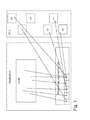
- the usual mechanism when starting the application is shown in Fig. 1 .
- the original application would be loaded by the operating system (OS).
- the used dynamic link library (DLL) would be loaded and the references to the necessary Application Programming Interfaces (API) would be set by the OS.
- API Application Programming Interfaces
- the vendor protects the application using a tool provided by the dongle provider.
- This tool modifies the executable, and besides encrypting it, removes the references to the needed DLL containing the encryption functions. Instead the tool imbeds a modified version of the DLL into the application itself.
- a specific library loader and the used DLL are embedded into the executable application, thereby using unused space within the application.
- the LOADER initializes the DLL.
- the part of the list of references referring to the used DLL is now filled by the loader himself instead of the OS. This results in a statically attachment of the used DLL which became now a pseudo-static link library (PLL).
- PLL pseudo-static link library
- the application now presents itself as a monolithic application without the vulnerable interface to a DLL.
- the application uses a simple DLL interface.
- the customer uses a secure integration without the dongle provider having the necessity to provide static link libraries for all possible development environments.
Landscapes
- Engineering & Computer Science (AREA)
- Software Systems (AREA)
- Theoretical Computer Science (AREA)
- General Engineering & Computer Science (AREA)
- Physics & Mathematics (AREA)
- General Physics & Mathematics (AREA)
- Multimedia (AREA)
- Technology Law (AREA)
- Computer Hardware Design (AREA)
- Computer Security & Cryptography (AREA)
- Stored Programmes (AREA)
Priority Applications (5)
| Application Number | Priority Date | Filing Date | Title |
|---|---|---|---|
| EP11150910A EP2477110A1 (fr) | 2011-01-14 | 2011-01-14 | Procédé pour la protection d'un programme d'application contre la rétro-ingénierie et produit de programme informatique correspondant |
| PCT/EP2012/050489 WO2012095515A1 (fr) | 2011-01-14 | 2012-01-13 | Procédé de protection d'un programme d'application et produit de programme informatique associé |
| EP12700138.6A EP2663923B1 (fr) | 2011-01-14 | 2012-01-13 | Procédé de protection d'un programme d'application et produit de programme informatique associé |
| US13/976,465 US9355229B2 (en) | 2011-01-14 | 2012-01-13 | Method for protecting an application program and related computer program product |
| CN201280005243.3A CN103460217B (zh) | 2011-01-14 | 2012-01-13 | 用于保护应用程序的方法及其装置 |
Applications Claiming Priority (1)
| Application Number | Priority Date | Filing Date | Title |
|---|---|---|---|
| EP11150910A EP2477110A1 (fr) | 2011-01-14 | 2011-01-14 | Procédé pour la protection d'un programme d'application contre la rétro-ingénierie et produit de programme informatique correspondant |
Publications (1)
| Publication Number | Publication Date |
|---|---|
| EP2477110A1 true EP2477110A1 (fr) | 2012-07-18 |
Family
ID=43828159
Family Applications (2)
| Application Number | Title | Priority Date | Filing Date |
|---|---|---|---|
| EP11150910A Withdrawn EP2477110A1 (fr) | 2011-01-14 | 2011-01-14 | Procédé pour la protection d'un programme d'application contre la rétro-ingénierie et produit de programme informatique correspondant |
| EP12700138.6A Active EP2663923B1 (fr) | 2011-01-14 | 2012-01-13 | Procédé de protection d'un programme d'application et produit de programme informatique associé |
Family Applications After (1)
| Application Number | Title | Priority Date | Filing Date |
|---|---|---|---|
| EP12700138.6A Active EP2663923B1 (fr) | 2011-01-14 | 2012-01-13 | Procédé de protection d'un programme d'application et produit de programme informatique associé |
Country Status (4)
| Country | Link |
|---|---|
| US (1) | US9355229B2 (fr) |
| EP (2) | EP2477110A1 (fr) |
| CN (1) | CN103460217B (fr) |
| WO (1) | WO2012095515A1 (fr) |
Cited By (5)
| Publication number | Priority date | Publication date | Assignee | Title |
|---|---|---|---|---|
| CN103019748A (zh) * | 2013-01-15 | 2013-04-03 | 珠海金山办公软件有限公司 | Linux下本地应用程序嵌入桌面窗体的方法及系统 |
| WO2014153680A1 (fr) * | 2013-03-27 | 2014-10-02 | Irdeto B.V. | Protection d'application logicielle |
| CN113204377A (zh) * | 2020-01-31 | 2021-08-03 | 华为技术有限公司 | 一种动态链接库的加载方法及装置 |
| CN114546515A (zh) * | 2022-01-20 | 2022-05-27 | 上海合宙通信科技有限公司 | 动态加载静态库的模块、固件及设备和C库转Lua库的方法 |
| CN115140130A (zh) * | 2022-06-29 | 2022-10-04 | 卡斯柯信号有限公司 | 城市轨道交通信号系统维护终端集成方法 |
Families Citing this family (18)
| Publication number | Priority date | Publication date | Assignee | Title |
|---|---|---|---|---|
| EP2477110A1 (fr) * | 2011-01-14 | 2012-07-18 | Wibu-Systems AG | Procédé pour la protection d'un programme d'application contre la rétro-ingénierie et produit de programme informatique correspondant |
| CN103246848B (zh) * | 2013-03-26 | 2016-05-18 | 北京深思数盾科技股份有限公司 | 保护软件安全的方法和设备 |
| KR101503785B1 (ko) * | 2013-10-10 | 2015-03-18 | (주)잉카엔트웍스 | 동적 라이브러리를 보호하는 방법 및 장치 |
| CN105488386B (zh) * | 2014-10-13 | 2020-05-05 | 腾讯科技(深圳)有限公司 | 一种iOS终端的防护方法及终端 |
| CN104731592B (zh) * | 2015-03-24 | 2017-12-15 | 无锡天脉聚源传媒科技有限公司 | 一种在应用程序中集成Bonjour服务的方法和装置 |
| CN105653961B (zh) * | 2015-12-31 | 2019-07-23 | 北京元心科技有限公司 | 一种提高移动终端应用加载安全性的方法和装置 |
| JP6696918B2 (ja) * | 2017-02-02 | 2020-05-20 | 日本電信電話株式会社 | プログラム保護装置、プログラム保護方法及びプログラム保護プログラム |
| US10592215B1 (en) | 2017-08-17 | 2020-03-17 | NanoVMs, Inc. | Unikernel cross-compilation |
| US11989569B2 (en) * | 2018-04-11 | 2024-05-21 | NanoVMs, Inc. | Unikernel provisioning |
| US10628177B1 (en) * | 2018-04-11 | 2020-04-21 | NanoVMs, Inc. | Unikernel provisioning |
| US11714895B2 (en) * | 2019-07-18 | 2023-08-01 | Anjuna Security, Inc. | Secure runtime systems and methods |
| CN111046377B (zh) * | 2019-12-25 | 2023-11-14 | 五八同城信息技术有限公司 | 加载动态链接库的方法、装置、电子设备及存储介质 |
| US11347523B2 (en) | 2020-11-05 | 2022-05-31 | International Business Machines Corporation | Updated shared library reloading without stopping the execution of an application |
| CN112613037B (zh) * | 2020-12-29 | 2024-08-20 | 北京永新视博数字电视技术有限公司 | 一种代码校验方法及装置 |
| US12340262B2 (en) * | 2021-06-24 | 2025-06-24 | Infosec Global Inc. | Cryptographic agility application program interface engine |
| CN114528037B (zh) * | 2021-12-31 | 2024-03-12 | 北京达佳互联信息技术有限公司 | 一种应用启动方法、装置、电子设备及存储介质 |
| CN115269058B (zh) * | 2022-09-29 | 2023-01-24 | 广州市保伦电子有限公司 | 一种wpf资源加载方法及装置 |
| CN119442220B (zh) * | 2023-08-02 | 2026-03-27 | 华为技术有限公司 | 应用程序启动方法、可读存储介质及电子设备 |
Citations (1)
| Publication number | Priority date | Publication date | Assignee | Title |
|---|---|---|---|---|
| US20060070053A1 (en) * | 2004-09-24 | 2006-03-30 | Andersen Gregory T | Dynamic linking of modules in a pre-operating system environment |
Family Cites Families (3)
| Publication number | Priority date | Publication date | Assignee | Title |
|---|---|---|---|---|
| US7430670B1 (en) * | 1999-07-29 | 2008-09-30 | Intertrust Technologies Corp. | Software self-defense systems and methods |
| US8752032B2 (en) * | 2007-02-23 | 2014-06-10 | Irdeto Canada Corporation | System and method of interlocking to protect software-mediated program and device behaviours |
| EP2477110A1 (fr) * | 2011-01-14 | 2012-07-18 | Wibu-Systems AG | Procédé pour la protection d'un programme d'application contre la rétro-ingénierie et produit de programme informatique correspondant |
-
2011
- 2011-01-14 EP EP11150910A patent/EP2477110A1/fr not_active Withdrawn
-
2012
- 2012-01-13 US US13/976,465 patent/US9355229B2/en active Active
- 2012-01-13 EP EP12700138.6A patent/EP2663923B1/fr active Active
- 2012-01-13 WO PCT/EP2012/050489 patent/WO2012095515A1/fr not_active Ceased
- 2012-01-13 CN CN201280005243.3A patent/CN103460217B/zh active Active
Patent Citations (1)
| Publication number | Priority date | Publication date | Assignee | Title |
|---|---|---|---|---|
| US20060070053A1 (en) * | 2004-09-24 | 2006-03-30 | Andersen Gregory T | Dynamic linking of modules in a pre-operating system environment |
Non-Patent Citations (1)
| Title |
|---|
| COLLBERG C ET AL: "A Taxonomy of Obfuscating Transformations", TECHNICAL REPORT DEPARTMENT OF COMPUTER SCIENCE UNIVERSITY OFAUCKLAND, XX, XX, no. 148, 1 July 1997 (1997-07-01), pages 1 - 36, XP002140038 * |
Cited By (10)
| Publication number | Priority date | Publication date | Assignee | Title |
|---|---|---|---|---|
| CN103019748A (zh) * | 2013-01-15 | 2013-04-03 | 珠海金山办公软件有限公司 | Linux下本地应用程序嵌入桌面窗体的方法及系统 |
| CN103019748B (zh) * | 2013-01-15 | 2015-11-18 | 珠海金山办公软件有限公司 | Linux下本地应用程序嵌入桌面窗体的方法及系统 |
| WO2014153680A1 (fr) * | 2013-03-27 | 2014-10-02 | Irdeto B.V. | Protection d'application logicielle |
| US10013553B2 (en) | 2013-03-27 | 2018-07-03 | Irdeto B.V. | Protecting software application |
| CN113204377A (zh) * | 2020-01-31 | 2021-08-03 | 华为技术有限公司 | 一种动态链接库的加载方法及装置 |
| CN113204377B (zh) * | 2020-01-31 | 2022-12-06 | 华为技术有限公司 | 一种动态链接库的加载方法及装置 |
| US11886222B1 (en) | 2020-01-31 | 2024-01-30 | Huawei Technologies Co., Ltd. | Dynamic link library loading method and apparatus |
| CN114546515A (zh) * | 2022-01-20 | 2022-05-27 | 上海合宙通信科技有限公司 | 动态加载静态库的模块、固件及设备和C库转Lua库的方法 |
| CN114546515B (zh) * | 2022-01-20 | 2023-09-12 | 上海合宙通信科技有限公司 | 动态加载静态库的模块、固件及设备和C库转Lua库的方法 |
| CN115140130A (zh) * | 2022-06-29 | 2022-10-04 | 卡斯柯信号有限公司 | 城市轨道交通信号系统维护终端集成方法 |
Also Published As
| Publication number | Publication date |
|---|---|
| EP2663923A1 (fr) | 2013-11-20 |
| CN103460217B (zh) | 2016-05-04 |
| EP2663923B1 (fr) | 2019-09-18 |
| US9355229B2 (en) | 2016-05-31 |
| US20150033354A1 (en) | 2015-01-29 |
| CN103460217A (zh) | 2013-12-18 |
| WO2012095515A1 (fr) | 2012-07-19 |
Similar Documents
| Publication | Publication Date | Title |
|---|---|---|
| EP2663923B1 (fr) | Procédé de protection d'un programme d'application et produit de programme informatique associé | |
| US10185837B2 (en) | System and method for encapsulating and enabling protection through diverse variations in software libraries | |
| CN104462959B (zh) | 一种安卓应用的加固保护方法、服务器和系统 | |
| US8881290B2 (en) | Method and apparatus for computer code obfuscation and deobfuscation using boot installation | |
| US10255414B2 (en) | Software self-defense systems and methods | |
| CN104680039B (zh) | 一种应用程序安装包的数据保护方法及装置 | |
| US10592696B2 (en) | CPU obfuscation for cloud applications | |
| US20020138748A1 (en) | Code checksums for relocatable code | |
| US8387032B1 (en) | Captive runtime deployment | |
| US20190114401A1 (en) | On device structure layout randomization for binary code to enhance security through increased entropy | |
| JP2001134337A (ja) | 暗号解読コンパイラ | |
| CN113568680B (zh) | 应用程序的动态链接库保护方法、装置、设备及介质 | |
| Göttel et al. | Developing secure services for IoT with OP-TEE: a first look at performance and usability | |
| CN109840396B (zh) | 提供安全性的设备和方法以及执行安全性以保护共享对象的代码的设备和方法 | |
| CN105740703A (zh) | 一种应用程序的加固方法及装置 | |
| US11269988B2 (en) | Automated software application verification system | |
| US11550883B2 (en) | Code protection | |
| US11036852B2 (en) | System and method for software diversification | |
| JP2018005915A (ja) | アプリケーションパッケージを提供する方法およびシステム、アプリケーションを実行する方法およびシステム | |
| Solis et al. | C# And. Net Core | |
| Abrath et al. | $\Delta $ Δ Breakpad: Diversified Binary Crash Reporting | |
| EP4012584A1 (fr) | Procédé de création de fichiers elf étendus pour fournir des déploiements unifiés et sécurisés | |
| Morris et al. | Privacy protected ELF for private computing on public platforms |
Legal Events
| Date | Code | Title | Description |
|---|---|---|---|
| PUAI | Public reference made under article 153(3) epc to a published international application that has entered the european phase |
Free format text: ORIGINAL CODE: 0009012 |
|
| AK | Designated contracting states |
Kind code of ref document: A1 Designated state(s): AL AT BE BG CH CY CZ DE DK EE ES FI FR GB GR HR HU IE IS IT LI LT LU LV MC MK MT NL NO PL PT RO RS SE SI SK SM TR |
|
| AX | Request for extension of the european patent |
Extension state: BA ME |
|
| STAA | Information on the status of an ep patent application or granted ep patent |
Free format text: STATUS: THE APPLICATION IS DEEMED TO BE WITHDRAWN |
|
| 18D | Application deemed to be withdrawn |
Effective date: 20130119 |