EP2478040B1 - Verfahren zur verlängerung des verarbeitungsfensters von wärmehärtenden harzen - Google Patents
Verfahren zur verlängerung des verarbeitungsfensters von wärmehärtenden harzen Download PDFInfo
- Publication number
- EP2478040B1 EP2478040B1 EP09786250.2A EP09786250A EP2478040B1 EP 2478040 B1 EP2478040 B1 EP 2478040B1 EP 09786250 A EP09786250 A EP 09786250A EP 2478040 B1 EP2478040 B1 EP 2478040B1
- Authority
- EP
- European Patent Office
- Prior art keywords
- resin
- temperature
- viscosity
- resin mixture
- lcm
- Prior art date
- Legal status (The legal status is an assumption and is not a legal conclusion. Google has not performed a legal analysis and makes no representation as to the accuracy of the status listed.)
- Active
Links
Images
Classifications
-
- B—PERFORMING OPERATIONS; TRANSPORTING
- B29—WORKING OF PLASTICS; WORKING OF SUBSTANCES IN A PLASTIC STATE IN GENERAL
- B29B—PREPARATION OR PRETREATMENT OF THE MATERIAL TO BE SHAPED; MAKING GRANULES OR PREFORMS; RECOVERY OF PLASTICS OR OTHER CONSTITUENTS OF WASTE MATERIAL CONTAINING PLASTICS
- B29B13/00—Conditioning or physical treatment of the material to be shaped
- B29B13/02—Conditioning or physical treatment of the material to be shaped by heating
-
- B—PERFORMING OPERATIONS; TRANSPORTING
- B29—WORKING OF PLASTICS; WORKING OF SUBSTANCES IN A PLASTIC STATE IN GENERAL
- B29C—SHAPING OR JOINING OF PLASTICS; SHAPING OF MATERIAL IN A PLASTIC STATE, NOT OTHERWISE PROVIDED FOR; AFTER-TREATMENT OF THE SHAPED PRODUCTS, e.g. REPAIRING
- B29C70/00—Shaping composites, i.e. plastics material comprising reinforcements, fillers or preformed parts, e.g. inserts
- B29C70/04—Shaping composites, i.e. plastics material comprising reinforcements, fillers or preformed parts, e.g. inserts comprising reinforcements only, e.g. self-reinforcing plastics
- B29C70/28—Shaping operations therefor
- B29C70/40—Shaping or impregnating by compression not applied
- B29C70/42—Shaping or impregnating by compression not applied for producing articles of definite length, i.e. discrete articles
- B29C70/46—Shaping or impregnating by compression not applied for producing articles of definite length, i.e. discrete articles using matched moulds, e.g. for deforming sheet moulding compounds [SMC] or prepregs
- B29C70/48—Shaping or impregnating by compression not applied for producing articles of definite length, i.e. discrete articles using matched moulds, e.g. for deforming sheet moulding compounds [SMC] or prepregs and impregnating the reinforcements in the closed mould, e.g. resin transfer moulding [RTM], e.g. by vacuum
-
- B—PERFORMING OPERATIONS; TRANSPORTING
- B29—WORKING OF PLASTICS; WORKING OF SUBSTANCES IN A PLASTIC STATE IN GENERAL
- B29K—INDEXING SCHEME ASSOCIATED WITH SUBCLASSES B29B, B29C OR B29D, RELATING TO MOULDING MATERIALS OR TO MATERIALS FOR MOULDS, REINFORCEMENTS, FILLERS OR PREFORMED PARTS, e.g. INSERTS
- B29K2063/00—Use of EP, i.e. epoxy resins or derivatives thereof, as moulding material
Definitions
- the present invention relates generally to liquid composite moulding (LCM) processes in which a thermosetting resin is injected into a mold that contains a fibrous body. The resin infuses throughout the fibrous body and is cured within the mold to form a final composite structure. More particularly, the present invention is directed to prolonging the processing window of LCM resins so that the resins can be infused into larger and more complex structures.
- LCM liquid composite moulding
- Composite materials are used in a wide variety of endeavors where a structure must have a high strength to weight ratio.
- the two basic components of composite materials are a resin matrix and a fibrous support structure that reinforces the resin.
- an adequate process for making composite structures is simply to manually impregnate the resin into the fibrous support using a brush or roller.
- the resin is impregnated into the fibrous support using specialized equipment to form a pre-impregnated fibrous support (prepreg).
- prepreg pre-impregnated fibrous support
- One or more layers of prepreg are then placed on or in a mold to form the desired shape, which is then cured to form the final composite structure.
- LCM processes are popular processes that have been used widely for making composite structures.
- Two examples of LCM processes are resin transfer moulding (RTM) and liquid resin infusion (LRI).
- RTM and LRI are used widely in industries, such as aerospace, where it is necessary to make complex parts or structures that must reliably and reproducibly meet strict limits with respect to strength and weight.
- RTM processes generally involve injection of the resin into a mould that contains a pre-formed fibrous support. The amount of resin that is injected into the mould and the process conditions within the mould are carefully controlled to insure that the resin is infused completely and uniformly throughout the fibrous support.
- LRI processes use a mould that has a flexible membrane as the upper tooling surface. The liquid resin is drawn into the mould by applying a vacuum to the mould. The resin passes rapidly over the surface of the fibre preform by means of a layer of highly porous "flow media". The resin is infused through the thickness of the preform and then cured before demoulding of the finished fibre-resin assembly.
- LCM resins The resins that are used in LCM processes are commonly referred to as LCM resins.
- Bismaleimide resins and epoxy resins are both popular LCM resins.
- a particular type of epoxy LCM resin that contains a particulate amine hardener is useful in situations where high toughness is desired.
- This type of LCM resin is available commercially from Hexcel Corporation (Dublin, California) and Cytec Corporation (Anaheim, California) under the trade names ST15 and PR520, respectively.
- These epoxy LCM resins contain an epoxy resin component and an amine hardener.
- the amine hardener is present as particles, which are dispersed throughout the epoxy resin component. In practice, it has been found that the hardener particles are larger than the openings in many fibrous supports. As a result, the particles are inherently filtered out of the LCM resin by the fibrous support when the resin is injected into the mould.
- LCM processors continually face the problem of heating the resin enough to insure particle dissolution, while at the same time avoiding premature gelling or curing of the LCM resin.
- the conventional procedure for processing epoxy LCM resins that contain amine particle hardeners is to use a combination of pre-injection heating and mould heating to insure that the hardener particles are dissolved before they can be trapped by the fibrous support.
- the mould temperature is kept above the dissolution temperature and the resin is preheated to the dissolution temperature prior to injection for only the time necessary to insure that the combination of pre-heating and mould temperature results in dissolution of the particles in a timely fashion.
- the temperature of the mould is raised to the final curing temperature only after the fibrous structure is completely saturated. This procedure has worked well and insures that the amine hardener is uniformly distributed along with the resin.
- the viscosity of the LCM resin when it is injected into the mould, must be sufficiently low to allow the resin to permeate the fibrous support.
- the viscosity of the resin does increase gradually over time due to chemical reaction until it reaches a point where the resin can no longer flow and further infusion of the fibrous support is halted.
- the "processing window" is the time it takes for the resin to go from relatively low viscosity material that flows through the fibrous support to a relatively high viscosity material, which does not flow and makes further resin infusion difficult, if not impossible.
- the processing window for LCM resins which include a particulate amine hardener, in the conventional process described above is on the order of 30 to 45 minutes.
- This length of processing window works well for many situations where the fibrous structure is sufficiently small and the fibrous support is sufficiently porous to allow complete resin infusion before the resin becomes too viscous.
- US-A-6 083 855 discloses methods of manufacturing voidless resin impregnated webs.
- US-A-2005/009943 discloses a coating having macroscopic texture and process for making the same.
- the processing window for liquid composite moulding (LCM) resins that contain particulate hardeners can be prolonged if the resin is subjected to a heat-treatment step prior to being introduced into the mould and the mould is kept at a temperature that is below the dissolution temperature of the particles until the desired degree of resin infusion into the fibrous support is achieved.
- LCM liquid composite moulding
- the invention is based on the discovery that the LCM processing window for a given LCM resin can be prolonged if the uncured resin is first heated to the dissolution temperature of the particulate hardener for a time that is sufficient to dissolve the particles and form a heat-treated resin mixture. The heat-treated resin mixture is then cooled to form a low-viscosity resin mixture that is suitable for injection into the mould and infusion into the fibrous structure.
- the low-viscosity resin mixture in the mould is maintained at a dwell-temperature which is below the dissolution temperature of the particulate hardener.
- the resin mixture is kept at the dwell-temperature for a sufficient dwell-time to completely infuse resin into the fibrous structure.
- the resin mixture is cured at the curing temperature for the resin.
- the maximum dwell-time for the low-viscosity resin mixture corresponds to the processing window for the resin.
- the present invention is particularly well-suited for use in LCM processes where relatively long resin processing windows are needed in order to insure complete infusion of resin into large and/or complex fibrous supports. It was discovered that the processing window for LCM resins containing particulate hardeners can be more than doubled when the resin is heat-treated and then subjected to a dwell-temperature in the mold in accordance with the present invention.
- the invention is also well-suited for use in LCM processes where a prolonged processing window is necessary in order to insure complete and uniform infusion of resin throughout the fibrous support structure.
- a prolonged processing window is advantageous in situations where the porosity of the fibrous support or other design features make it difficult to infuse resin into the part.
- the extra infusion time provided by the invention insures that fibrous support is completely and uniformly infused with resin.
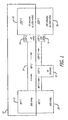
- FIG. 1 is a diagrammatic representation showing a conventional LCM process in the top half of the figure that is compared to an exemplary LCM process in accordance with the present invention, which is shown in the bottom half of the figure.
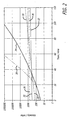
- FIG. 2 is a graph showing how the viscosity of two exemplary LCM resins increase rapidly using prior art LCM processing as compared to the viscosity of LCM resin processed in accordance with the present invention.
- the present invention involves modifying existing LCM processes, which utilize resins that include a particulate hardener, in order to prolong the processing window of the LCM resin while it is in the mould.
- the prolongation of the processing window in the mould advantageously increases the time over which the resin is able to flow within the mould and fibrous support structure located therein.
- the invention is applicable to any LCM process, including RTM and LRI, wherein the LCM resin is a mixture of a thermosetting resin and a particulate hardener that is dispersed within the thermosetting resin.
- the present invention is applicable to all types of LCM resins, including bismaleimide LCM resins and epoxy LCM resins that contain particulate hardeners.
- the invention is preferably used to extend the processing window of epoxy LCM resins that contain a particulate amine hardener.
- epoxy LCM resins that contain a particulate amine hardener.
- ST 15 and PR520 are available commercially under the trade names ST 15 and PR520, which are available from Hexcel Corporation (Dublin, California) and Cytec Corporation (Anaheim, California), respectively.
- a diagrammatic representation of a preferred exemplary LCM process in accordance with the present invention is shown in the bottom half of FIG. 1 .
- a conventional LCM process is shown within Box 10 in the upper half of FIG. 1 .
- An epoxy LCM resin that contains particulate amine hardeners is typically a relatively high viscosity paste at room temperature.
- the LCM resin paste is heated to a temperature of around 80°C to initially reduce the viscosity to between 200 and 1000 mPas. This initial temperature is referred to commonly as the “pot temperature" of the LCM resin and the viscosity of the LCM resin in the "pot” is referred to as the "pot viscosity".
- the LCM resin at the pot temperature is transferred as shown at 14 to an injection pre-heater 16 where the LCM resin is heated to a dissolution temperature of around 150°C to partially dissolve the particulate amine hardener and reduce the viscosity of the LCM resin to around 45 mPas.
- the LCM resin is then injected into the mould 18 where it is kept at a temperature that is at least above the dissolution temperature to insure that the particles continue to dissolve.
- a pre-heater is not always required.
- the pre-heating of the resin can be incorporated into the mould design, so that a separate pre-heater is not required. "Pre-heating" of the resin within the mould is possible, provided that there is enough time for the particles to dissolve within the mould before reaching the fibrous preform.
- the temperature of the mould 18 is increased to the cure temperature of between about 180° and 190°C after the fibrous support located in the mold has been completely infused or "wetted-out" with the LCM resin.
- the mould is kept at the cure temperature for an hour or more to insure complete curing of the LCM resin.
- the processing window for an LCM resin is considered to be the time that it takes the LCM resin, once in the mould, to reach a viscosity of about 1000 mPas. At this viscosity, the LCM resin is too viscous to continue flowing through most fibrous structures to any great degree.
- the processing window can be as long as 45 minutes, if the mould is kept close to the dissolution temperature. The processing window is significantly shorter if the mold is heated initially to the cure temperature.
- the LCM process in accordance with the present invention follows the same basic procedure as the conventional LCM process shown in Box 10, except for a number of significant differences that unexpectedly prolong the processing window of the LCM resin.
- the present invention initially heats the LCM resin paste to a pot temperature as shown at 20 in order to reduce the viscosity of the resin.
- the pot temperature may range from about 65°C to about 95°C with about 80°C being the preferred pot temperature. Higher pot temperatures are useful for easier pumping of the resin, since the viscosity of the resin is lower. However, this must be balanced against the reduced thermal stability and/or viscosity advancement that occurs at the higher temperatures. In general, it is preferred that the pot temperature be as high as possible to reduce viscosity of the resin, while not unduly reducing the thermal stability of the resin or unduly advancing viscosity or cure.
- the viscosity of the LCM resin in the pot may range from between about 200 mPas and 1000 mPas with viscosities in the lower end of the range being preferred.
- ST15 and PR520-type resins tend to be quite viscous. Accordingly, it is preferred that the pot temperature for ST15 and PR520-type resins be about 80°C, so as to provide a resin having a viscosity of about 900 mPas.
- the present invention requires that the LCM resin be subjected to a heat-treatment step where the LCM resin is heated from the pot temperature to the dissolution temperature of the particulate hardener as shown at 22.
- the dissolution temperature is usually from about 150°C to about 160°C.
- the dissolution temperature may be different for other types of particulate hardeners and may range from about 140°C to about 170°C.
- the LCM resin is kept at the dissolution temperature only as along as is necessary to dissolve substantially all of the particulate hardener and form a heat-treated resin mixture.
- the particulate hardener is considered to be substantially dissolved in the LCM resin when at least 95% of the particles are completely dissolved. Preferably, no more than 2% of the hardener particles will remain in the heat-treated resin mixture. Most preferred are heat-treated resin mixtures in which less than 1% of the hardener particles are not completely dissolved.
- the time that it takes to form the heat-treated resin mixture will vary depending upon a number of factors including the amount of LCM resin that is being heat-treated, the dissolution temperature, the size of the hardener particles and the type of particles. In general, the LCM resin will be kept at the dissolution temperature for a period ranging from a few seconds up to a few minutes.
- the time that the LCM resin is kept at the dissolution temperature is preferably only long enough to insure that the hardener particles are substantially dissolved. Dissolution time periods on the order of around 30 seconds are preferred for LCM resins, such as ST15 and PR520.
- the LCM resin may be heated in batch-type processing or the resin may be heated in continuous-flow type processing.
- the heat-treated resin mixture is cooled to a temperature that is from 10°C to 50°C below the dissolution temperature to form a low-viscosity resin mixture that has a viscosity that ranges from about 100 mPas to below 1000 mPas. It is preferred that the viscosity of the low viscosity resin mixture be less than about 900 mPas and more preferably in the range of about 100 mPas to about 600 mPas.
- the heat-treated resin mixture be cooled to about 30°C below the dissolution temperature (120°C) to form a low-viscosity resin mixture having a viscosity of about 150 mPas.
- the low-viscosity resin mixture is introduced into the resin mould as shown at 24.
- the low-viscosity resin mixture is not heated prior to injection into the resin transfer mould because the particles of hardener have already been dissolved.
- the heat-treated resin mixture be cooled to about 40°C below the dissolution temperature (120°C) to form a low-viscosity resin mixture having a viscosity of about 600 mPas.
- the low-viscosity resin mixture is maintained in the mould 26 at a temperature that is below the dissolution temperature of the particulate hardener. This temperature is referred to herein as the "dwell-temperature".
- the dwell-temperature should be about 10°C to 50°C below the dissolution temperature.
- the dwell-temperature should be as low as possible in order to prolong the processing window.
- this must be balanced against the fact that the viscosity of the resin tends to increase as the temperature is lowered. Complicating matters further is that as the LCM resin cures, the viscosity of the resin increases and this rise in viscosity due to curing of the resin also increases as the temperature is increased.
- dwell-time is the period of time that the LCM resin is kept at the dwell-temperature in the mould.
- the dwell-time is the same as the processing window when the mould is kept at the dwell-temperature until the LCM resin reaches a viscosity of 1000 mPas.
- the LCM resin in the mould may be kept at the dwell-temperature until the resin reaches the 1000 mPas viscosity level. This results in maximum prolongation of the processing window for a given RTM resin.
- the processing window and available dwell-time for an ST15 or PR520-type RTM resin is prolonged to over 100 minutes when the mould is maintained over the entire period at a dwell-temperature of 120°C.
- the available dwell-time can be prolonged to over 120 minutes when the mould is maintained over the entire period at a dwell-temperature of 100°C. Available dwell-times of at least 80 minutes are preferred with available dwell-times of at least 100 minutes being particularly preferred.
- the processing window it is desirable to prolong the processing window, if necessary, only for a sufficient time to insure that the LCM resin has been completely infused throughout the fibrous structure and that the mould is completely filled with resin.
- the dwell-time can be shorter than the available dwell-time (processing window) due to the early increase in temperature from the dwell-temperature to the curing temperature.
- the temperature of the LCM resin in the mould be increased above the dwell-temperature once the fibrous structure has been completely infused with LCM resin and the mould completely filled.
- Complete infusion of the fibrous structure may be determined using sensors placed within the mould. However, complete infusion of the fibrous structure is typically determined by waiting for LCM resin to exit through outlets that are appropriately placed on the mould to insure that the LCM resin has passed through the fibrous structure before it reaches the exits.
- the temperature of the LCM resin is increased from the dwell-temperature to the curing temperature.
- the curing temperature for the process of the present invention is between about 170°C and 210°C.
- curing temperatures are preferred.
- the resin-infused fibrous support is kept in mould 26 at the cure temperature for the same amount of time as in conventional LCM processes.
- the particular type of fibrous support material that is infused with LCM resin using the process of the present invention can be any of the usual fibrous support materials that are suitable for LCM processing.
- Exemplary fibres used to form the fibrous supports include carbon fibres, glass fibres, ceramic fibres, and aramid fibres, such as Kevlar.
- the fibers may be randomly oriented, woven or unidirectional.
- the invention is particularly useful for LCM processing of fibrous support materials that require extra time for resin infusion.
- These types of fibrous support materials include large fibrous structures and structures with complex shapes that may impede uniform resin infusion. In general, those fibrous structures that require over 45 minutes for the resin to completely infuse the structure are preferred. In addition to size and shape, the infusion time is also dependent on the type of fibrous structure.
- woven and braided fibrous structures typically have higher permeability and infuse relatively easily.
- Unidirectional and non-crimp fabric (NCF) fibrous structures have much lower permeability and infuse more slowly.
- the prolongation of the processing window provided by the present invention is particularly useful for such low-permeability fibrous structures.
- a 10 g sample of ST15 LCM resin was heated at a dissolution temperature of 150°C for 30 seconds in order to dissolve all of the particulate amine hardener and form a heat-treated resin mixture.
- the heat-treated resin mixture was cooled to 120°C to provide a low-viscosity resin mixture having a viscosity of about 150 mPas.
- the low-viscosity resin mixture was then subjected to a moulding or dwell-temperature of 120°C. As shown by curve 30 in FIG. 2 , the RTM resin did not reach the processing window viscosity limit of 1000 mPas for more than 100 minutes.
- a 10 g sample of ST15 LCM resin was heated at a dissolution temperature of 150°C for 30 seconds in order to dissolve all of the particulate amine hardener and form a heat-treated resin mixture.
- the heat-treated resin mixture was cooled to 100°C to provide a low-viscosity resin mixture having a viscosity of about 350 mPas.
- the low-viscosity resin mixture was then subjected to a moulding or dwell-temperature of 100°C. As shown by curve 32 in FIG. 2 , the LCM resin did not reach the processing window viscosity limit of 1000 mPas for more than 120 minutes.
- a 10 g sample of ST15 LCM resin was heated to a temperature of 150°C and then subjected to a moulding temperature of 150°C. As shown by curve 34, the ST15 LCM resin reached the processing window viscosity limit of 1000 mPas within 45 minutes.
- a 10 g sample of PR520 LCM resin was heated at a dissolution temperature of 160°C for 30 seconds in order to dissolve all of the particulate amine hardener and form a heat-treated resin mixture.
- the heat-treated resin mixture was cooled to 120°C to provide a low-viscosity resin mixture having a viscosity of about 600 mPas.
- the low-viscosity resin mixture was then subjected to dwell-temperature of 120°C. As shown by curve 36, the low-viscosity resin mixture did not reach the processing window viscosity limit of 1000 mPas for more that 120 minutes.
- a 10 g sample of PR520 LCM resin was heated to a temperature of 150°C and then subjected to a molding temperature of 150°C. As shown by curve 38, the PR520 LCM resin reached the processing window viscosity limit of 1000 mPas within 35 minutes.
- ST15 epoxy LCM resin which contains amine hardener particles, is heated to a pot temperature of 80°C to form an uncured resin mixture having a pot viscosity of 900 mPas.
- the uncured resin mixture is heated to 150°C for 30 seconds to dissolve the amine hardener particles and form a heat-treated resin mixture.
- the heat treated resin mixture is cooled to a temperature of 120°C to form a low-viscosity resin mixture having a viscosity of 150 mPas.
- the low-viscosity resin mixture is injected into a standard resin transfer mould that contains a preform made from 2 layers of 4x268gsm HTS carbon fibre (+45°, 0°, -45°,90°) non-crimp fabric (NCF) and 2 layers of 4x268gsm HTS carbon fibre (-45°, 0°, +45°,90°) (NCF), available from Saertex (Saebeck Germany).
- the preform dimensions are 800 mm x 800 mm x 4 mm.
- the low-viscosity resin is maintained in the mould at a dwell-temperature of 120°C for a dwell-time of at least 100 minutes during which time the mould is completely filled and preform is completely wetted-out.
- the pressure in the mold is kept at 3 bar. After 100 minutes, the temperature is raised to 190°C for 2 hours to completely cure the part.
- ST15 epoxy LCM resin which contains amine hardener particles, is heated to a pot temperature of 80°C to form an uncured resin mixture having a pot viscosity of 900 mPas.
- the uncured resin mixture is heated to 150°C for 30 seconds to dissolve the amine hardener particles and form a heat-treated resin mixture.
- the heat treated resin mixture is cooled to a temperature of 100°C to form a low-viscosity resin mixture having a viscosity of 350 mPas.
- the low-viscosity resin mixture is infused into a preform made from 2 layers 4x268gsm HTS carbon fibre (+45°, 0°, -45°,90°) non-crimp fabric (NCF) and 2 layers 4x268gsm HTS carbon fibre (-45°, 0°, +45°,90°) (NCF), available from Saertex (Saebeck Germany).
- the preform dimensions are 1000 mm x 1000 mm x 4 mm.
- the low-viscosity resin is maintained in the infusion mould at a dwell-temperature of 100°C for a dwell-time of at least 120 minutes until the infusion mould is completely filled and the preform is completely wetted-out. After 120 minutes, the temperature is raised to 190°C for 2 hours to completely cure the part.
- the present invention provides a significant prolonging of the processing window for LCM resins that contain particulate hardeners.
- This increase in the processing window is achieved by the combination of heat-treating the LCM resin at a temperature above the particle dissolution temperature prior to introducing the resin into the mould and then maintaining the mould temperature below the dissolution temperature.
- the heat-treatment step provides the advantage of dissolving the hardener particles ahead of time to insure that the particles are not filtered out by the fibrous support when the LCM resin is injected into the mould. It was discovered that this heat-treatment step could be accomplished without the viscosity of the LCM resin increasing to unacceptable levels either before or after injection into the resin transfer mould. Since the hardener particles are dissolved before the resin enters the mould, it is not necessary for the mould to be at the dissolution temperature, which is the conventional practice to insure complete dissolution of the particles in the mould. In accordance with the present invention, the heat-treatment step allows one to maintain the mould at temperatures below the dissolution temperature which results in the observed unexpected significant increases in the processing window of the LCM resins that contain particulate hardeners. As a result, composite parts that were previously too large or complex to be formed by LCM using epoxy resins that contain particulate hardeners, may now be made using this popular molding method.
Landscapes
- Engineering & Computer Science (AREA)
- Mechanical Engineering (AREA)
- Physics & Mathematics (AREA)
- Thermal Sciences (AREA)
- Chemical & Material Sciences (AREA)
- Composite Materials (AREA)
- Moulding By Coating Moulds (AREA)
- Casting Or Compression Moulding Of Plastics Or The Like (AREA)
- Reinforced Plastic Materials (AREA)
- Injection Moulding Of Plastics Or The Like (AREA)
- Moulds For Moulding Plastics Or The Like (AREA)
- Epoxy Resins (AREA)
Claims (16)
- Liquid-Composite-Moulding-Verfahren, das die folgenden Schritte umfasst:Bereitstellen einer ungehärteten Harzmischung, umfassend ein wärmehärtendes Harz und einen in dem wärmehärtenden Harz dispergierten teilchenförmigen Härter, wobei der teilchenförmige Härter eine Auflösungstemperatur aufweist, oberhalb der sich der teilchenförmige Härter in dem wärmehärtenden Harz auflöst, und das ungehärtete Harz bei einer Topftemperatur vorliegt und eine Topfviskosität aufweist;Erhitzen der ungehärteten Harzmischung auf eine Auflösungstemperatur über einen zum Auflösen des teilchenförmigen Härters und zur Bildung einer wärmebehandelten Harzmischung ausreichenden Zeitraum;Abkühlen der wärmebehandelten Harzmischung auf eine Temperatur unterhalb der Auflösungstemperatur zur Bildung einer niederviskosen Harzmischung;Eintragen der niederviskosen Harzmischung in eine Form, die eine Faserstruktur enthält;Halten der niederviskosen Harzmischung in der Form bei einer unter der Auflösungstemperatur liegenden Verweiltemperatur über einen zum Durchtränken der Faserstruktur mit der niederviskosen Harzmischung ausreichenden Zeitraum; undHärten der niederviskosen Harzmischung bei einer Härtungstemperatur.
- Liquid-Composite-Moulding-Verfahren nach Anspruch 1, wobei es sich bei dem wärmehärtenden Harz um ein Epoxidharz handelt und es sich bei dem teilchenförmigen Härter um einen Amin-Härter handelt.
- Liquid-Composite-Moulding-Verfahren nach Anspruch 1, wobei die Viskosität der niederviskosen Harzmischung zwischen etwa 100 mPas und 600 mPas liegt.
- Liquid-Composite-Moulding-Verfahren nach Anspruch 3, wobei die Viskosität der niederviskosen Harzmischung etwa 150 mPas beträgt.
- Liquid-Composite-Moulding-Verfahren nach Anspruch 1, wobei die Topftemperatur zwischen etwa 65 °C und 95 °C liegt.
- Liquid-Composite-Moulding-Verfahren nach Anspruch 1, wobei die Auflösungstemperatur zwischen etwa 140 °C und 170 °C liegt.
- Liquid-Composite-Moulding-Verfahren nach Anspruch 2, wobei die Verweiltemperatur mindestens 10 °C unter der Auflösungstemperatur liegt.
- Liquid-Composite-Moulding-Verfahren nach Anspruch 1, wobei die Verweiltemperatur zwischen etwa 100 °C und 130 °C liegt.
- Liquid-Composite-Moulding-Verfahren nach Anspruch 8, wobei die Verweilzeit mindestens 80 Minuten und vorzugsweise mindestens 100 Minuten beträgt.
- Liquid-Composite-Moulding-Verfahren nach Anspruch 1, wobei die Härtungstemperatur zwischen etwa 170 °C und 210 °C liegt.
- Verfahren zur Verlängerung der Zeit, die eine Harzmischung zum Erreichen einer Viskosität von 1000 mPas in einer Form benötigt, wobei die Harzmischung ein wärmehärtendes Harz enthält, in dem ein teilchenförmiger Härter dispergiert ist, wobei das Verfahren die folgenden Schritte umfasst:Erhitzen der Harzmischung auf eine Auflösungstemperatur über einen zum Auflösen des teilchenförmigen Härters ausreichenden Zeitraum zur Bildung einer wärmebehandelten Harzmischung;Abkühlen der wärmebehandelten Harzmischung zur Bildung einer niederviskosen Harzmischung vor dem Eintragen der niederviskosen Harzmischung in die Form; undEintragen der niederviskosen Harzmischung in die Form, wobei die Temperatur in der Form unter der Auflösungstemperatur liegt.
- Verfahren nach Anspruch 11, bei dem die Viskosität der niederviskosen Harzmischung vor dem Eintragen in die Resin-Transfer-Form zwischen etwa 100 mPas und 600 mPas liegt.
- Verfahren nach Anspruch 11, bei dem die Auflösungstemperatur zwischen etwa 140 °C und 170 °C liegt.
- Verfahren nach Anspruch 11, bei dem die Temperatur in der Form mindestens 10 °C unter der Auflösungstemperatur liegt.
- Verfahren nach Anspruch 14, bei dem die Zeit, die die niederviskose Harzmischung zum Erreichen einer Viskosität von 1000 mPas benötigt, mindestens 80 Minuten beträgt.
- Verfahren nach Anspruch 14, bei dem man nach dem Eintragen der niederviskosen Harzmischung in die Resin-Transfer-Form die Temperatur in der Form auf die Härtungstemperatur der Harzmischung erhöht.
Applications Claiming Priority (1)
| Application Number | Priority Date | Filing Date | Title |
|---|---|---|---|
| PCT/IB2009/006839 WO2011030175A1 (en) | 2009-09-14 | 2009-09-14 | Process for prolonging the processing window of thermosetting resins |
Publications (2)
| Publication Number | Publication Date |
|---|---|
| EP2478040A1 EP2478040A1 (de) | 2012-07-25 |
| EP2478040B1 true EP2478040B1 (de) | 2013-11-27 |
Family
ID=42199474
Family Applications (1)
| Application Number | Title | Priority Date | Filing Date |
|---|---|---|---|
| EP09786250.2A Active EP2478040B1 (de) | 2009-09-14 | 2009-09-14 | Verfahren zur verlängerung des verarbeitungsfensters von wärmehärtenden harzen |
Country Status (11)
| Country | Link |
|---|---|
| US (1) | US8747720B2 (de) |
| EP (1) | EP2478040B1 (de) |
| JP (1) | JP5457561B2 (de) |
| CN (1) | CN102482431B (de) |
| AU (1) | AU2009352517B2 (de) |
| BR (1) | BR112012003942B1 (de) |
| CA (1) | CA2770467C (de) |
| DK (1) | DK2478040T3 (de) |
| ES (1) | ES2447467T3 (de) |
| RU (1) | RU2515329C2 (de) |
| WO (1) | WO2011030175A1 (de) |
Families Citing this family (3)
| Publication number | Priority date | Publication date | Assignee | Title |
|---|---|---|---|---|
| CN107108857B (zh) | 2014-12-18 | 2020-07-17 | 塞特工业公司 | 适用于液体树脂灌注的改性树脂体系 |
| FR3126335B1 (fr) * | 2021-08-27 | 2024-03-22 | Safran Aircraft Engines | Procede de fabrication d’une piece composite, en particulier aeronautique et installation associee |
| FR3153279A1 (fr) * | 2023-09-26 | 2025-03-28 | Safran Aircraft Engines | Procede de fabrication d’une piece en materiau composite, en particulier pour une turbomachine d’aeronef, et une installation associee |
Family Cites Families (14)
| Publication number | Priority date | Publication date | Assignee | Title |
|---|---|---|---|---|
| US2959511A (en) * | 1955-01-21 | 1960-11-08 | Johns Manville Fiber Glass Inc | Decorative surface thermosetting plastics |
| US3975479A (en) * | 1973-03-09 | 1976-08-17 | Mcclean Anderson, Inc. | Method of fabricating a reinforced plastic article |
| US5098496A (en) * | 1988-06-30 | 1992-03-24 | Shell Oil Company | Method of making postformable fiber reinforced composite articles |
| RU2028214C1 (ru) * | 1991-08-29 | 1995-02-09 | Таджикский государственный университет им.В.И.Ленина | Способ получения армированных пластиков |
| US6083855A (en) | 1999-01-04 | 2000-07-04 | Isola Laminate Systems Corp. | Methods of manufacturing voidless resin impregnated webs |
| US6090486A (en) * | 1999-04-22 | 2000-07-18 | Virginia Polytechnic Institute & State University | Fiber materials for manufacturing fiber reinforced phenolic composites and adhesives with nucleophilic initiators positioned on the fiber surfaces |
| US6399670B1 (en) | 2000-01-21 | 2002-06-04 | Congoleum Corporation | Coating having macroscopic texture and process for making same |
| US6638466B1 (en) | 2000-12-28 | 2003-10-28 | Raytheon Aircraft Company | Methods of manufacturing separable structures |
| JP2003071856A (ja) * | 2001-08-31 | 2003-03-12 | Toray Ind Inc | Rtm方法 |
| US7008555B2 (en) * | 2003-05-22 | 2006-03-07 | Applied Poleramic Inc. | Epoxy resin curing agents and epoxy resin compositions |
| GB0423349D0 (en) * | 2004-10-21 | 2004-11-24 | Hexcel Composites Ltd | Fibre reinforced assembly |
| JP2009521562A (ja) * | 2005-12-22 | 2009-06-04 | ダウ グローバル テクノロジーズ インコーポレイティド | 混合触媒系を含む硬化性エポキシ樹脂組成物およびそれから作られた積層体 |
| JP5090701B2 (ja) * | 2006-09-30 | 2012-12-05 | 東邦テナックス株式会社 | 部分含浸プリプレグとそれを用いた繊維強化複合材料の製造方法 |
| JP5382994B2 (ja) * | 2007-01-11 | 2014-01-08 | 三菱レイヨン株式会社 | エポキシ樹脂組成物およびこれを用いた繊維強化複合材料とその製造方法 |
-
2009
- 2009-09-14 RU RU2012114842/05A patent/RU2515329C2/ru active
- 2009-09-14 DK DK09786250.2T patent/DK2478040T3/en active
- 2009-09-14 JP JP2012528457A patent/JP5457561B2/ja active Active
- 2009-09-14 US US13/390,155 patent/US8747720B2/en active Active
- 2009-09-14 ES ES09786250.2T patent/ES2447467T3/es active Active
- 2009-09-14 BR BR112012003942A patent/BR112012003942B1/pt not_active IP Right Cessation
- 2009-09-14 WO PCT/IB2009/006839 patent/WO2011030175A1/en not_active Ceased
- 2009-09-14 AU AU2009352517A patent/AU2009352517B2/en not_active Ceased
- 2009-09-14 EP EP09786250.2A patent/EP2478040B1/de active Active
- 2009-09-14 CA CA2770467A patent/CA2770467C/en not_active Expired - Fee Related
- 2009-09-14 CN CN2009801614239A patent/CN102482431B/zh active Active
Also Published As
| Publication number | Publication date |
|---|---|
| US20120146256A1 (en) | 2012-06-14 |
| WO2011030175A1 (en) | 2011-03-17 |
| JP2013504455A (ja) | 2013-02-07 |
| US8747720B2 (en) | 2014-06-10 |
| RU2012114842A (ru) | 2013-10-27 |
| CA2770467A1 (en) | 2011-03-17 |
| BR112012003942B1 (pt) | 2019-01-02 |
| CN102482431B (zh) | 2013-08-14 |
| DK2478040T3 (en) | 2014-02-24 |
| ES2447467T3 (es) | 2014-03-12 |
| CN102482431A (zh) | 2012-05-30 |
| RU2515329C2 (ru) | 2014-05-10 |
| EP2478040A1 (de) | 2012-07-25 |
| CA2770467C (en) | 2016-06-21 |
| AU2009352517B2 (en) | 2012-12-13 |
| JP5457561B2 (ja) | 2014-04-02 |
| BR112012003942A2 (pt) | 2018-03-20 |
| AU2009352517A1 (en) | 2012-02-23 |
Similar Documents
| Publication | Publication Date | Title |
|---|---|---|
| US9643363B2 (en) | Manufacture of a structural composites component | |
| CN104812556B (zh) | 用于形成成形的预成型物的方法 | |
| EP1819503B1 (de) | Kontinuierliches pultrusionsverfahren zur herstellung von hochleistungs-strukturprofilen | |
| RU2587171C2 (ru) | Способ получения композиционного материала | |
| JP4180520B2 (ja) | 複合材料、その製造方法およびその使用 | |
| US6033510A (en) | Method for fabricating composite structures using pultrusion processing | |
| CN105619841A (zh) | 一种热塑性复合材料成型方法 | |
| CN114311742A (zh) | 一种热塑性复合材料的环向缠绕成型方法 | |
| US8747720B2 (en) | Process for prolonging the processing window of thermosetting resins | |
| WO2000056524A1 (en) | Composite materials and method of manufacturing the same | |
| EP1072634A1 (de) | Reaktionsharzblattmaterialien | |
| CN109551787A (zh) | 一种复合材料型材的先进拉挤成型方法及其成型装置 | |
| CN106905661A (zh) | 一种可快速固化且储存期长的碳纤维预浸料及制作工艺 | |
| JP5240754B2 (ja) | 繊維強化複合体の製造方法 | |
| US20250091303A1 (en) | Method for manufacturing a composite part, in particular an aeronautical composite part and associated system | |
| DE102021134325B4 (de) | Verfahren zur Herstellung eines Faserverbund-Hohlkörpers | |
| Schlimbach et al. | Quickstep: beyond out of autoclave curing | |
| Yarn | Reduction of Process Cycle Time and Improvement of Mechanical Properties of Composite Parts Manufactured in Resin Transfer Molding by Application of | |
| JPH06190930A (ja) | 繊維強化フェノール樹脂成形品の引抜成形方法 | |
| RU2720782C1 (ru) | Эпоксидная композиция для адгезионного слоя и армирующий наполнитель на его основе | |
| Costantino et al. | Composite processing: state of the art and future trends | |
| KR20250096656A (ko) | 섬유강화 복합재료의 제조 장치 및 이를 이용한 섬유강화 복합재료의 제조방법 | |
| Ghosh et al. | Processability in Closed Mould Processing of Polymeric Composites | |
| Farley | Method for Fabricating Composite Structures Including Continuous Press Forming and Pultrusion Processing | |
| KR20180088130A (ko) | Frp 인발 제조장치 및 frp 인발 제조방법 |
Legal Events
| Date | Code | Title | Description |
|---|---|---|---|
| PUAI | Public reference made under article 153(3) epc to a published international application that has entered the european phase |
Free format text: ORIGINAL CODE: 0009012 |
|
| 17P | Request for examination filed |
Effective date: 20120316 |
|
| AK | Designated contracting states |
Kind code of ref document: A1 Designated state(s): AT BE BG CH CY CZ DE DK EE ES FI FR GB GR HR HU IE IS IT LI LT LU LV MC MK MT NL NO PL PT RO SE SI SK SM TR |
|
| DAX | Request for extension of the european patent (deleted) | ||
| GRAP | Despatch of communication of intention to grant a patent |
Free format text: ORIGINAL CODE: EPIDOSNIGR1 |
|
| INTG | Intention to grant announced |
Effective date: 20130620 |
|
| GRAS | Grant fee paid |
Free format text: ORIGINAL CODE: EPIDOSNIGR3 |
|
| GRAA | (expected) grant |
Free format text: ORIGINAL CODE: 0009210 |
|
| AK | Designated contracting states |
Kind code of ref document: B1 Designated state(s): AT BE BG CH CY CZ DE DK EE ES FI FR GB GR HR HU IE IS IT LI LT LU LV MC MK MT NL NO PL PT RO SE SI SK SM TR |
|
| REG | Reference to a national code |
Ref country code: GB Ref legal event code: FG4D |
|
| REG | Reference to a national code |
Ref country code: CH Ref legal event code: EP |
|
| REG | Reference to a national code |
Ref country code: AT Ref legal event code: REF Ref document number: 642696 Country of ref document: AT Kind code of ref document: T Effective date: 20131215 |
|
| REG | Reference to a national code |
Ref country code: IE Ref legal event code: FG4D |
|
| REG | Reference to a national code |
Ref country code: DE Ref legal event code: R096 Ref document number: 602009020425 Country of ref document: DE Effective date: 20140123 |
|
| REG | Reference to a national code |
Ref country code: DK Ref legal event code: T3 Effective date: 20140220 |
|
| REG | Reference to a national code |
Ref country code: NL Ref legal event code: T3 |
|
| REG | Reference to a national code |
Ref country code: SE Ref legal event code: TRGR |
|
| REG | Reference to a national code |
Ref country code: ES Ref legal event code: FG2A Ref document number: 2447467 Country of ref document: ES Kind code of ref document: T3 Effective date: 20140312 |
|
| REG | Reference to a national code |
Ref country code: LT Ref legal event code: MG4D |
|
| PG25 | Lapsed in a contracting state [announced via postgrant information from national office to epo] |
Ref country code: HR Free format text: LAPSE BECAUSE OF FAILURE TO SUBMIT A TRANSLATION OF THE DESCRIPTION OR TO PAY THE FEE WITHIN THE PRESCRIBED TIME-LIMIT Effective date: 20131127 Ref country code: IS Free format text: LAPSE BECAUSE OF FAILURE TO SUBMIT A TRANSLATION OF THE DESCRIPTION OR TO PAY THE FEE WITHIN THE PRESCRIBED TIME-LIMIT Effective date: 20140327 Ref country code: FI Free format text: LAPSE BECAUSE OF FAILURE TO SUBMIT A TRANSLATION OF THE DESCRIPTION OR TO PAY THE FEE WITHIN THE PRESCRIBED TIME-LIMIT Effective date: 20131127 Ref country code: NO Free format text: LAPSE BECAUSE OF FAILURE TO SUBMIT A TRANSLATION OF THE DESCRIPTION OR TO PAY THE FEE WITHIN THE PRESCRIBED TIME-LIMIT Effective date: 20140227 Ref country code: LT Free format text: LAPSE BECAUSE OF FAILURE TO SUBMIT A TRANSLATION OF THE DESCRIPTION OR TO PAY THE FEE WITHIN THE PRESCRIBED TIME-LIMIT Effective date: 20131127 |
|
| PG25 | Lapsed in a contracting state [announced via postgrant information from national office to epo] |
Ref country code: CY Free format text: LAPSE BECAUSE OF FAILURE TO SUBMIT A TRANSLATION OF THE DESCRIPTION OR TO PAY THE FEE WITHIN THE PRESCRIBED TIME-LIMIT Effective date: 20131127 Ref country code: LV Free format text: LAPSE BECAUSE OF FAILURE TO SUBMIT A TRANSLATION OF THE DESCRIPTION OR TO PAY THE FEE WITHIN THE PRESCRIBED TIME-LIMIT Effective date: 20131127 |
|
| PG25 | Lapsed in a contracting state [announced via postgrant information from national office to epo] |
Ref country code: PT Free format text: LAPSE BECAUSE OF FAILURE TO SUBMIT A TRANSLATION OF THE DESCRIPTION OR TO PAY THE FEE WITHIN THE PRESCRIBED TIME-LIMIT Effective date: 20140327 |
|
| PG25 | Lapsed in a contracting state [announced via postgrant information from national office to epo] |
Ref country code: EE Free format text: LAPSE BECAUSE OF FAILURE TO SUBMIT A TRANSLATION OF THE DESCRIPTION OR TO PAY THE FEE WITHIN THE PRESCRIBED TIME-LIMIT Effective date: 20131127 |
|
| REG | Reference to a national code |
Ref country code: DE Ref legal event code: R097 Ref document number: 602009020425 Country of ref document: DE |
|
| PG25 | Lapsed in a contracting state [announced via postgrant information from national office to epo] |
Ref country code: SK Free format text: LAPSE BECAUSE OF FAILURE TO SUBMIT A TRANSLATION OF THE DESCRIPTION OR TO PAY THE FEE WITHIN THE PRESCRIBED TIME-LIMIT Effective date: 20131127 Ref country code: CZ Free format text: LAPSE BECAUSE OF FAILURE TO SUBMIT A TRANSLATION OF THE DESCRIPTION OR TO PAY THE FEE WITHIN THE PRESCRIBED TIME-LIMIT Effective date: 20131127 Ref country code: PL Free format text: LAPSE BECAUSE OF FAILURE TO SUBMIT A TRANSLATION OF THE DESCRIPTION OR TO PAY THE FEE WITHIN THE PRESCRIBED TIME-LIMIT Effective date: 20131127 Ref country code: RO Free format text: LAPSE BECAUSE OF FAILURE TO SUBMIT A TRANSLATION OF THE DESCRIPTION OR TO PAY THE FEE WITHIN THE PRESCRIBED TIME-LIMIT Effective date: 20131127 |
|
| PLBE | No opposition filed within time limit |
Free format text: ORIGINAL CODE: 0009261 |
|
| STAA | Information on the status of an ep patent application or granted ep patent |
Free format text: STATUS: NO OPPOSITION FILED WITHIN TIME LIMIT |
|
| 26N | No opposition filed |
Effective date: 20140828 |
|
| REG | Reference to a national code |
Ref country code: DE Ref legal event code: R097 Ref document number: 602009020425 Country of ref document: DE Effective date: 20140828 |
|
| PG25 | Lapsed in a contracting state [announced via postgrant information from national office to epo] |
Ref country code: SI Free format text: LAPSE BECAUSE OF FAILURE TO SUBMIT A TRANSLATION OF THE DESCRIPTION OR TO PAY THE FEE WITHIN THE PRESCRIBED TIME-LIMIT Effective date: 20131127 |
|
| PG25 | Lapsed in a contracting state [announced via postgrant information from national office to epo] |
Ref country code: LU Free format text: LAPSE BECAUSE OF FAILURE TO SUBMIT A TRANSLATION OF THE DESCRIPTION OR TO PAY THE FEE WITHIN THE PRESCRIBED TIME-LIMIT Effective date: 20140914 Ref country code: MC Free format text: LAPSE BECAUSE OF FAILURE TO SUBMIT A TRANSLATION OF THE DESCRIPTION OR TO PAY THE FEE WITHIN THE PRESCRIBED TIME-LIMIT Effective date: 20131127 |
|
| REG | Reference to a national code |
Ref country code: CH Ref legal event code: PL |
|
| REG | Reference to a national code |
Ref country code: IE Ref legal event code: MM4A |
|
| REG | Reference to a national code |
Ref country code: FR Ref legal event code: PLFP Year of fee payment: 7 |
|
| PG25 | Lapsed in a contracting state [announced via postgrant information from national office to epo] |
Ref country code: LI Free format text: LAPSE BECAUSE OF NON-PAYMENT OF DUE FEES Effective date: 20140930 Ref country code: CH Free format text: LAPSE BECAUSE OF NON-PAYMENT OF DUE FEES Effective date: 20140930 |
|
| PG25 | Lapsed in a contracting state [announced via postgrant information from national office to epo] |
Ref country code: IE Free format text: LAPSE BECAUSE OF NON-PAYMENT OF DUE FEES Effective date: 20140914 |
|
| PG25 | Lapsed in a contracting state [announced via postgrant information from national office to epo] |
Ref country code: SM Free format text: LAPSE BECAUSE OF FAILURE TO SUBMIT A TRANSLATION OF THE DESCRIPTION OR TO PAY THE FEE WITHIN THE PRESCRIBED TIME-LIMIT Effective date: 20131127 |
|
| PG25 | Lapsed in a contracting state [announced via postgrant information from national office to epo] |
Ref country code: BG Free format text: LAPSE BECAUSE OF FAILURE TO SUBMIT A TRANSLATION OF THE DESCRIPTION OR TO PAY THE FEE WITHIN THE PRESCRIBED TIME-LIMIT Effective date: 20131127 Ref country code: GR Free format text: LAPSE BECAUSE OF FAILURE TO SUBMIT A TRANSLATION OF THE DESCRIPTION OR TO PAY THE FEE WITHIN THE PRESCRIBED TIME-LIMIT Effective date: 20140228 Ref country code: MT Free format text: LAPSE BECAUSE OF FAILURE TO SUBMIT A TRANSLATION OF THE DESCRIPTION OR TO PAY THE FEE WITHIN THE PRESCRIBED TIME-LIMIT Effective date: 20131127 |
|
| PG25 | Lapsed in a contracting state [announced via postgrant information from national office to epo] |
Ref country code: HU Free format text: LAPSE BECAUSE OF FAILURE TO SUBMIT A TRANSLATION OF THE DESCRIPTION OR TO PAY THE FEE WITHIN THE PRESCRIBED TIME-LIMIT; INVALID AB INITIO Effective date: 20090914 Ref country code: TR Free format text: LAPSE BECAUSE OF FAILURE TO SUBMIT A TRANSLATION OF THE DESCRIPTION OR TO PAY THE FEE WITHIN THE PRESCRIBED TIME-LIMIT Effective date: 20131127 |
|
| REG | Reference to a national code |
Ref country code: FR Ref legal event code: PLFP Year of fee payment: 8 |
|
| REG | Reference to a national code |
Ref country code: FR Ref legal event code: PLFP Year of fee payment: 9 |
|
| PG25 | Lapsed in a contracting state [announced via postgrant information from national office to epo] |
Ref country code: MK Free format text: LAPSE BECAUSE OF FAILURE TO SUBMIT A TRANSLATION OF THE DESCRIPTION OR TO PAY THE FEE WITHIN THE PRESCRIBED TIME-LIMIT Effective date: 20131127 |
|
| REG | Reference to a national code |
Ref country code: FR Ref legal event code: PLFP Year of fee payment: 10 |
|
| PGFP | Annual fee paid to national office [announced via postgrant information from national office to epo] |
Ref country code: SE Payment date: 20190910 Year of fee payment: 11 Ref country code: NL Payment date: 20190912 Year of fee payment: 11 Ref country code: DK Payment date: 20190910 Year of fee payment: 11 |
|
| PGFP | Annual fee paid to national office [announced via postgrant information from national office to epo] |
Ref country code: BE Payment date: 20190716 Year of fee payment: 11 |
|
| PGFP | Annual fee paid to national office [announced via postgrant information from national office to epo] |
Ref country code: AT Payment date: 20190827 Year of fee payment: 11 |
|
| PGFP | Annual fee paid to national office [announced via postgrant information from national office to epo] |
Ref country code: ES Payment date: 20191001 Year of fee payment: 11 |
|
| PGFP | Annual fee paid to national office [announced via postgrant information from national office to epo] |
Ref country code: IT Payment date: 20200812 Year of fee payment: 12 |
|
| REG | Reference to a national code |
Ref country code: DK Ref legal event code: EBP Effective date: 20200930 |
|
| REG | Reference to a national code |
Ref country code: NL Ref legal event code: MM Effective date: 20201001 |
|
| REG | Reference to a national code |
Ref country code: AT Ref legal event code: MM01 Ref document number: 642696 Country of ref document: AT Kind code of ref document: T Effective date: 20200914 |
|
| REG | Reference to a national code |
Ref country code: BE Ref legal event code: MM Effective date: 20200930 |
|
| PG25 | Lapsed in a contracting state [announced via postgrant information from national office to epo] |
Ref country code: NL Free format text: LAPSE BECAUSE OF NON-PAYMENT OF DUE FEES Effective date: 20201001 |
|
| PG25 | Lapsed in a contracting state [announced via postgrant information from national office to epo] |
Ref country code: AT Free format text: LAPSE BECAUSE OF NON-PAYMENT OF DUE FEES Effective date: 20200914 Ref country code: BE Free format text: LAPSE BECAUSE OF NON-PAYMENT OF DUE FEES Effective date: 20200930 Ref country code: SE Free format text: LAPSE BECAUSE OF NON-PAYMENT OF DUE FEES Effective date: 20200915 |
|
| REG | Reference to a national code |
Ref country code: SE Ref legal event code: EUG |
|
| PG25 | Lapsed in a contracting state [announced via postgrant information from national office to epo] |
Ref country code: DK Free format text: LAPSE BECAUSE OF NON-PAYMENT OF DUE FEES Effective date: 20200930 |
|
| REG | Reference to a national code |
Ref country code: ES Ref legal event code: FD2A Effective date: 20220118 |
|
| PG25 | Lapsed in a contracting state [announced via postgrant information from national office to epo] |
Ref country code: ES Free format text: LAPSE BECAUSE OF NON-PAYMENT OF DUE FEES Effective date: 20200915 |
|
| PG25 | Lapsed in a contracting state [announced via postgrant information from national office to epo] |
Ref country code: IT Free format text: LAPSE BECAUSE OF NON-PAYMENT OF DUE FEES Effective date: 20210914 |
|
| P01 | Opt-out of the competence of the unified patent court (upc) registered |
Effective date: 20230530 |
|
| PGFP | Annual fee paid to national office [announced via postgrant information from national office to epo] |
Ref country code: DE Payment date: 20250702 Year of fee payment: 17 |
|
| PGFP | Annual fee paid to national office [announced via postgrant information from national office to epo] |
Ref country code: GB Payment date: 20250703 Year of fee payment: 17 |
|
| PGFP | Annual fee paid to national office [announced via postgrant information from national office to epo] |
Ref country code: FR Payment date: 20250708 Year of fee payment: 17 |