EP2478149B1 - Auffrischende zusammensetzungen umfassend schlechte gerüche bindende polymere und geruchshemmende mittel - Google Patents
Auffrischende zusammensetzungen umfassend schlechte gerüche bindende polymere und geruchshemmende mittel Download PDFInfo
- Publication number
- EP2478149B1 EP2478149B1 EP10760185.8A EP10760185A EP2478149B1 EP 2478149 B1 EP2478149 B1 EP 2478149B1 EP 10760185 A EP10760185 A EP 10760185A EP 2478149 B1 EP2478149 B1 EP 2478149B1
- Authority
- EP
- European Patent Office
- Prior art keywords
- composition
- malodor
- aldehyde
- freshening
- alternatively
- Prior art date
- Legal status (The legal status is an assumption and is not a legal conclusion. Google has not performed a legal analysis and makes no representation as to the accuracy of the status listed.)
- Active
Links
Images

Classifications
-
- D—TEXTILES; PAPER
- D06—TREATMENT OF TEXTILES OR THE LIKE; LAUNDERING; FLEXIBLE MATERIALS NOT OTHERWISE PROVIDED FOR
- D06M—TREATMENT, NOT PROVIDED FOR ELSEWHERE IN CLASS D06, OF FIBRES, THREADS, YARNS, FABRICS, FEATHERS OR FIBROUS GOODS MADE FROM SUCH MATERIALS
- D06M15/00—Treating fibres, threads, yarns, fabrics, or fibrous goods made from such materials, with macromolecular compounds; Such treatment combined with mechanical treatment
- D06M15/19—Treating fibres, threads, yarns, fabrics, or fibrous goods made from such materials, with macromolecular compounds; Such treatment combined with mechanical treatment with synthetic macromolecular compounds
- D06M15/37—Macromolecular compounds obtained otherwise than by reactions only involving carbon-to-carbon unsaturated bonds
- D06M15/61—Polyamines polyimines
-
- A—HUMAN NECESSITIES
- A61—MEDICAL OR VETERINARY SCIENCE; HYGIENE
- A61L—METHODS OR APPARATUS FOR STERILISING MATERIALS OR OBJECTS IN GENERAL; DISINFECTION, STERILISATION OR DEODORISATION OF AIR; CHEMICAL ASPECTS OF BANDAGES, DRESSINGS, ABSORBENT PADS OR SURGICAL ARTICLES; MATERIALS FOR BANDAGES, DRESSINGS, ABSORBENT PADS OR SURGICAL ARTICLES
- A61L2/00—Disinfection or sterilisation of materials or objects, in general; Accessories therefor
- A61L2/16—Disinfection or sterilisation of materials or objects, in general; Accessories therefor using chemical substances
- A61L2/22—Phase substances, e.g. smokes or aerosols
-
- A—HUMAN NECESSITIES
- A61—MEDICAL OR VETERINARY SCIENCE; HYGIENE
- A61L—METHODS OR APPARATUS FOR STERILISING MATERIALS OR OBJECTS IN GENERAL; DISINFECTION, STERILISATION OR DEODORISATION OF AIR; CHEMICAL ASPECTS OF BANDAGES, DRESSINGS, ABSORBENT PADS OR SURGICAL ARTICLES; MATERIALS FOR BANDAGES, DRESSINGS, ABSORBENT PADS OR SURGICAL ARTICLES
- A61L9/00—Disinfection, sterilisation or deodorisation of air
- A61L9/01—Deodorant compositions
-
- A—HUMAN NECESSITIES
- A61—MEDICAL OR VETERINARY SCIENCE; HYGIENE
- A61L—METHODS OR APPARATUS FOR STERILISING MATERIALS OR OBJECTS IN GENERAL; DISINFECTION, STERILISATION OR DEODORISATION OF AIR; CHEMICAL ASPECTS OF BANDAGES, DRESSINGS, ABSORBENT PADS OR SURGICAL ARTICLES; MATERIALS FOR BANDAGES, DRESSINGS, ABSORBENT PADS OR SURGICAL ARTICLES
- A61L9/00—Disinfection, sterilisation or deodorisation of air
- A61L9/14—Disinfection, sterilisation or deodorisation of air using sprayed or atomised substances including air-liquid contact processes
-
- D—TEXTILES; PAPER
- D06—TREATMENT OF TEXTILES OR THE LIKE; LAUNDERING; FLEXIBLE MATERIALS NOT OTHERWISE PROVIDED FOR
- D06M—TREATMENT, NOT PROVIDED FOR ELSEWHERE IN CLASS D06, OF FIBRES, THREADS, YARNS, FABRICS, FEATHERS OR FIBROUS GOODS MADE FROM SUCH MATERIALS
- D06M13/00—Treating fibres, threads, yarns, fabrics or fibrous goods made from such materials, with non-macromolecular organic compounds; Such treatment combined with mechanical treatment
- D06M13/005—Compositions containing perfumes; Compositions containing deodorants
-
- D—TEXTILES; PAPER
- D06—TREATMENT OF TEXTILES OR THE LIKE; LAUNDERING; FLEXIBLE MATERIALS NOT OTHERWISE PROVIDED FOR
- D06M—TREATMENT, NOT PROVIDED FOR ELSEWHERE IN CLASS D06, OF FIBRES, THREADS, YARNS, FABRICS, FEATHERS OR FIBROUS GOODS MADE FROM SUCH MATERIALS
- D06M13/00—Treating fibres, threads, yarns, fabrics or fibrous goods made from such materials, with non-macromolecular organic compounds; Such treatment combined with mechanical treatment
- D06M13/10—Treating fibres, threads, yarns, fabrics or fibrous goods made from such materials, with non-macromolecular organic compounds; Such treatment combined with mechanical treatment with compounds containing oxygen
- D06M13/12—Aldehydes; Ketones
- D06M13/127—Mono-aldehydes, e.g. formaldehyde; Monoketones
-
- D—TEXTILES; PAPER
- D06—TREATMENT OF TEXTILES OR THE LIKE; LAUNDERING; FLEXIBLE MATERIALS NOT OTHERWISE PROVIDED FOR
- D06M—TREATMENT, NOT PROVIDED FOR ELSEWHERE IN CLASS D06, OF FIBRES, THREADS, YARNS, FABRICS, FEATHERS OR FIBROUS GOODS MADE FROM SUCH MATERIALS
- D06M13/00—Treating fibres, threads, yarns, fabrics or fibrous goods made from such materials, with non-macromolecular organic compounds; Such treatment combined with mechanical treatment
- D06M13/10—Treating fibres, threads, yarns, fabrics or fibrous goods made from such materials, with non-macromolecular organic compounds; Such treatment combined with mechanical treatment with compounds containing oxygen
- D06M13/144—Alcohols; Metal alcoholates
- D06M13/148—Polyalcohols, e.g. glycerol or glucose
-
- D—TEXTILES; PAPER
- D06—TREATMENT OF TEXTILES OR THE LIKE; LAUNDERING; FLEXIBLE MATERIALS NOT OTHERWISE PROVIDED FOR
- D06M—TREATMENT, NOT PROVIDED FOR ELSEWHERE IN CLASS D06, OF FIBRES, THREADS, YARNS, FABRICS, FEATHERS OR FIBROUS GOODS MADE FROM SUCH MATERIALS
- D06M13/00—Treating fibres, threads, yarns, fabrics or fibrous goods made from such materials, with non-macromolecular organic compounds; Such treatment combined with mechanical treatment
- D06M13/10—Treating fibres, threads, yarns, fabrics or fibrous goods made from such materials, with non-macromolecular organic compounds; Such treatment combined with mechanical treatment with compounds containing oxygen
- D06M13/184—Carboxylic acids; Anhydrides, halides or salts thereof
- D06M13/192—Polycarboxylic acids; Anhydrides, halides or salts thereof
-
- D—TEXTILES; PAPER
- D06—TREATMENT OF TEXTILES OR THE LIKE; LAUNDERING; FLEXIBLE MATERIALS NOT OTHERWISE PROVIDED FOR
- D06M—TREATMENT, NOT PROVIDED FOR ELSEWHERE IN CLASS D06, OF FIBRES, THREADS, YARNS, FABRICS, FEATHERS OR FIBROUS GOODS MADE FROM SUCH MATERIALS
- D06M13/00—Treating fibres, threads, yarns, fabrics or fibrous goods made from such materials, with non-macromolecular organic compounds; Such treatment combined with mechanical treatment
- D06M13/10—Treating fibres, threads, yarns, fabrics or fibrous goods made from such materials, with non-macromolecular organic compounds; Such treatment combined with mechanical treatment with compounds containing oxygen
- D06M13/184—Carboxylic acids; Anhydrides, halides or salts thereof
- D06M13/203—Unsaturated carboxylic acids; Anhydrides, halides or salts thereof
-
- D—TEXTILES; PAPER
- D06—TREATMENT OF TEXTILES OR THE LIKE; LAUNDERING; FLEXIBLE MATERIALS NOT OTHERWISE PROVIDED FOR
- D06M—TREATMENT, NOT PROVIDED FOR ELSEWHERE IN CLASS D06, OF FIBRES, THREADS, YARNS, FABRICS, FEATHERS OR FIBROUS GOODS MADE FROM SUCH MATERIALS
- D06M13/00—Treating fibres, threads, yarns, fabrics or fibrous goods made from such materials, with non-macromolecular organic compounds; Such treatment combined with mechanical treatment
- D06M13/244—Treating fibres, threads, yarns, fabrics or fibrous goods made from such materials, with non-macromolecular organic compounds; Such treatment combined with mechanical treatment with compounds containing sulfur or phosphorus
- D06M13/248—Treating fibres, threads, yarns, fabrics or fibrous goods made from such materials, with non-macromolecular organic compounds; Such treatment combined with mechanical treatment with compounds containing sulfur or phosphorus with compounds containing sulfur
- D06M13/256—Sulfonated compounds esters thereof, e.g. sultones
-
- D—TEXTILES; PAPER
- D06—TREATMENT OF TEXTILES OR THE LIKE; LAUNDERING; FLEXIBLE MATERIALS NOT OTHERWISE PROVIDED FOR
- D06M—TREATMENT, NOT PROVIDED FOR ELSEWHERE IN CLASS D06, OF FIBRES, THREADS, YARNS, FABRICS, FEATHERS OR FIBROUS GOODS MADE FROM SUCH MATERIALS
- D06M13/00—Treating fibres, threads, yarns, fabrics or fibrous goods made from such materials, with non-macromolecular organic compounds; Such treatment combined with mechanical treatment
- D06M13/322—Treating fibres, threads, yarns, fabrics or fibrous goods made from such materials, with non-macromolecular organic compounds; Such treatment combined with mechanical treatment with compounds containing nitrogen
- D06M13/402—Amides imides, sulfamic acids
-
- D—TEXTILES; PAPER
- D06—TREATMENT OF TEXTILES OR THE LIKE; LAUNDERING; FLEXIBLE MATERIALS NOT OTHERWISE PROVIDED FOR
- D06M—TREATMENT, NOT PROVIDED FOR ELSEWHERE IN CLASS D06, OF FIBRES, THREADS, YARNS, FABRICS, FEATHERS OR FIBROUS GOODS MADE FROM SUCH MATERIALS
- D06M23/00—Treatment of fibres, threads, yarns, fabrics or fibrous goods made from such materials, characterised by the process
- D06M23/02—Processes in which the treating agent is releasably affixed or incorporated into a dispensing means
-
- D—TEXTILES; PAPER
- D06—TREATMENT OF TEXTILES OR THE LIKE; LAUNDERING; FLEXIBLE MATERIALS NOT OTHERWISE PROVIDED FOR
- D06M—TREATMENT, NOT PROVIDED FOR ELSEWHERE IN CLASS D06, OF FIBRES, THREADS, YARNS, FABRICS, FEATHERS OR FIBROUS GOODS MADE FROM SUCH MATERIALS
- D06M23/00—Treatment of fibres, threads, yarns, fabrics or fibrous goods made from such materials, characterised by the process
- D06M23/06—Processes in which the treating agent is dispersed in a gas, e.g. aerosols
-
- A—HUMAN NECESSITIES
- A61—MEDICAL OR VETERINARY SCIENCE; HYGIENE
- A61L—METHODS OR APPARATUS FOR STERILISING MATERIALS OR OBJECTS IN GENERAL; DISINFECTION, STERILISATION OR DEODORISATION OF AIR; CHEMICAL ASPECTS OF BANDAGES, DRESSINGS, ABSORBENT PADS OR SURGICAL ARTICLES; MATERIALS FOR BANDAGES, DRESSINGS, ABSORBENT PADS OR SURGICAL ARTICLES
- A61L2103/00—Materials or objects being the target of disinfection or sterilisation
- A61L2103/50—Textiles, e.g. bedwear or towels
-
- A—HUMAN NECESSITIES
- A61—MEDICAL OR VETERINARY SCIENCE; HYGIENE
- A61L—METHODS OR APPARATUS FOR STERILISING MATERIALS OR OBJECTS IN GENERAL; DISINFECTION, STERILISATION OR DEODORISATION OF AIR; CHEMICAL ASPECTS OF BANDAGES, DRESSINGS, ABSORBENT PADS OR SURGICAL ARTICLES; MATERIALS FOR BANDAGES, DRESSINGS, ABSORBENT PADS OR SURGICAL ARTICLES
- A61L2209/00—Aspects relating to disinfection, sterilisation or deodorisation of air
- A61L2209/10—Apparatus features
- A61L2209/13—Dispensing or storing means for active compounds
-
- A—HUMAN NECESSITIES
- A61—MEDICAL OR VETERINARY SCIENCE; HYGIENE
- A61L—METHODS OR APPARATUS FOR STERILISING MATERIALS OR OBJECTS IN GENERAL; DISINFECTION, STERILISATION OR DEODORISATION OF AIR; CHEMICAL ASPECTS OF BANDAGES, DRESSINGS, ABSORBENT PADS OR SURGICAL ARTICLES; MATERIALS FOR BANDAGES, DRESSINGS, ABSORBENT PADS OR SURGICAL ARTICLES
- A61L2209/00—Aspects relating to disinfection, sterilisation or deodorisation of air
- A61L2209/20—Method-related aspects
- A61L2209/21—Use of chemical compounds for treating air or the like
Definitions
- the present invention relates to freshening compositions comprising a malodor binding polymer, malodor counteractants comprising at least one aliphatic aldehyde, and an aqueous carrier; and methods thereof.
- Freshening products for reducing or masking malodors on fabrics and in air are currently available and are described in the patent literature.
- the Procter & Gamble Company sells fabric and air freshening products under the FEBREZE® brand name. These products typically contain perfume, solubilizer, cyclodextrin, and an aqueous carrier.
- S. C. Johnson sells products such as Glade® Fabric and Air Odor Eliminator and Oust® Surface Disinfectant and Air Sanitizer.
- Reckitt-Benckiser sells products such as Lysol® Disinfectant Spray.
- Certain freshening compositions do not effectively neutralize a broad range of malodors on fabrics and in the air. Further, certain freshening compositions may cause fabrics to turn yellow or brown under natural light and/or make fabric susceptible to soiling, particularly products that contain certain types or amounts of aldehydes and/or surfactants.
- JP2007332130A relates to antibacterial/deodorant compositions having both a deodorizing effect for deodorizing unpleasant smell and antibacterial effect for inhibiting the cause of generating the unpleasant smell, inhibiting the generation of the unpleasant smell and also deodorizing the unpleasant smell, and an antibacterial/deodorant method.
- EP0841391A1 relates to a fabric treatment composition comprising a hydrophilic perfume and an amino-functional polymer, whereby effective perfume substantivity on the treated fabrics is obtained.
- US2003/0191034A1 relates to a method of deodorizing and/or reducing malodor in carpet comprising the step of contacting the carpet with a deodorizing composition comprising an effective amount of odor control agent.
- the present invention relates to a freshening composition for reducing malodor comprising: an effective amount of a malodor binding polymer; wherein said malodor binding polymer is a homopolymeric polyethyleneimine having a molecular weight of 1,000 to 2,000,000 Daltons; a malodor counteractant comprising at least one aliphatic aldehyde; an aqueous carrier; wherein said composition is essentially free of any material that would soil or stain fabric, characterized in that the total amount of surfactant is from 0% to 3% by weight of the composition and in that said homopolymeric polyethyleneimine is present in an amount of 0.01% to 0.07% by weight of said composition.
- the present invention also relates to methods of reducing malodor comprising the steps of: providing a freshening composition comprising an effective amount of a malodor binding polymer, a malodor counteractant comprising at least one aliphatic aldehyde, an aqueous carrier, wherein said composition is essentially free of any material that would soil or stain fabric; and dispersing an effective amount of said freshening composition on an inanimate surface or in the air.
- the freshening composition of the present invention is designed to deliver genuine malodor reduction and not function merely by using perfume to cover up or mask odors.
- the freshening composition reduces malodor in the air or on inanimate surfaces, for example, fabrics that are contaminated with environmental odors such as food and tobacco odors, or wetted with perspiration.
- the freshening composition may also reduce microbes on inanimate surfaces or in air.
- the freshening composition may also act as a barrier to prevent malodors from adhering to or penetrating an inanimate surface.
- a genuine malodor reduction provides a sensory and analytically measurable (e.g. gas chromatograph) malodor reduction.
- the freshening composition will neutralize malodors in the air and/or on fabrics.
- "Neutralize” or “neutralization” as used herein means chemically reacting with malodor components (e.g. the reaction of primary amines with aldehydes to form imines, reductive alkylation of amines, protonation and deprotonation of amines, polymerization or depolymerization); or suppressing the volatility of malodorous components such that other parts of the composition may react (e.g. acid - base neutralization); or physically entrapping odorous molecules such that they are not re-released into the air (e.g. cyclodextrin inclusion complexes as described herein).
- the freshening composition as claimed in claim 1, for reducing malodor comprises a malodor binding polymer, a malodor counteractant comprising at least one aliphatic aldehyde, and an aqueous carrier, wherein said composition is essentially free of materials that soil or stain fabric.
- the total amount of surfactants e.g.
- solubilizer, wetting agent) in the freshening composition is from 0% to 3 % or no more than 3 %, alternatively from 0% to 1 % or no more than 1%, alternatively from 0% to 0.9% or no more than 0.9%, alternatively from 0% to 0.7 or no more than 0.7%, alternatively from 0% to 0.5% or no more than 0.5%, alternatively from 0% to 0.3% or no more than 0.3%, by weight of the composition.
- Compositions with higher concentrations can make fabrics susceptible to soiling and/or leave unacceptable visible stains on fabrics as the solution evaporates.
- the freshening composition of the present invention includes a malodor binding polymer.
- a malodor binding polymer is polymer having an available functional group (e.g. amine) that has the affinity to neutralize malodor components. Monomers having an available function group with an affinity to neutralize malodor components are also contemplated.
- the amine will have an affinity for aldehyde malodors. The amine may react with aldehyde malodors and form a new compound, such as an aminol, imine, or enamine which is not odorous.
- a malodor binding polymer is a homopolymeric polyethyleneimine having a molecular weight of 1,000 to 2,000,000 Daltons, and may include amine based compounds, such as monoamines, amino acids, polyethyleneimine polymers (PEIs), modified PEIs, substituted PEIs; acrylic acid polymers, such as polyacrylate co-polymer (e.g. AcumerTM 9000 from Rohm & Haas), polyacrylic acid polymers (e.g. AcusolTM from Rohm & Haas), and modified acrylate copolymers (e.g. AculynTM from Rohm & Haas); and modified methacrylate copolymers (e.g. HydroSalTM from Salvona Technologies); or mixtures thereof.
- PEIs polyethyleneimine polymers
- modified PEIs substituted PEIs
- acrylic acid polymers such as polyacrylate co-polymer (e.g. AcumerTM 9000 from Rohm & Haas), polyacrylic acid polymers (e.
- the malodor binding polymer is an amine based compound with a molecular weight greater than 100 Daltons and at least 10% of its amine groups are primary amines.
- the amine-based compound will be a polyamine with a molecular weight greater than 150 Daltons and 15% to 80% of its amine groups are primary amines.
- the malodor binding polymer is an amine-based compound with a molecular weight greater than 1000 Daltons and from 0% to about 10% or less than 10% of its amine groups are primary amines.
- a general structure for a primary amine compound useful in this invention is as follows: B-(NH 2 ) n ; wherein B is a carrier material, and n is an index of value of at least 1.
- Suitable B carriers include both inorganic and organic carrier moieties.
- inorganic carrier it is meant a carrier which is comprised of non- or substantially non-carbon based backbones.
- Compounds containing a secondary amine group have a structure similar to the above with the exception that the compound comprises one or more -NH- groups as well as -NH 2 groups.
- the amine compounds of this general type may be relatively viscous materials.
- Exemplary amine based compounds are those selected from monoamines, aminoaryl derivatives, polyamines and derivatives thereof, polyamino acids and copolymers thereof, glucamines, dendrimers, PEIs, substituted amines and amides monoamines, or mixtures thereof.
- Monoamines may be utilized in the present invention.
- suitable monoamines for use in the present invention include, but are not limited to, primary amines that also contain hydroxy and/or alkoxy functional groups, such as the 2-hydroxyamines and/or 3-hydroxyamines; primary or secondary amines that also contain a functional group that enhances deposition of the monoamine compared to monoamines that lack that functional group, especially when the monoamine is interacting with the benefit agent.
- Primary monoamines may also be used herein in combination with secondary monoamines. However, sufficient levels of the primary monoamine must be used to provide at least 10% of the total amine groups within such combinations as primary amine groups.
- aminoaryl derivatives are the amino-benzene derivatives including the alkyl esters of 4-amino benzoate compounds, ethyl-4-amino benzoate, phenylethyl-4-aminobenzoate, phenyl-4-aminobenzoate, 4-amino-N'-(3-aminopropyl)-benzamide, or mixtures thereof.
- Suitable amino functional polymers containing at least one primary amine group for the purposes of the present invention are:
- Suitable amine based compounds include polyamino acids.
- Polyamino acids are made up of amino acids or chemically modified amino acids. The amino acids may be selected from cysteine, histidine, isoleucine, tyrosine, tryptophane, leucine, lysine, glutamic acid, glutamine, glycine, alanine, aspartic acid, arginine, asparagine, phenylalanine, proline, serine, histidine, threonine, methionine, valine, and mixtures thereof.
- Amino acid derivatives may be tyrosine ethylate, glycine methylate, tryptophane ethylate, or mixtures thereof; homopolymers of amino acids; hydroxyamines; polyamino acids; or mixtures thereof.
- One polyamino acid is polylysine, alternatively polylysines or polyamino acids where more than 50% of the amino acids are lysine, since the primary amine function in the side chain of the lysine is the most reactive amine of all amino acids.
- One polyamino acid has a molecular weight of 500 to 10,000,000, alternatively between 2000 and 25,000.
- the polyamino acid can be cross linked.
- the cross linking can be obtained for example by condensation of the amine group in the side chain of the amino acid like lysine with the carboxyl function on the amino acid or with protein cross linkers like PEG derivatives.
- the cross linked polyamino acids still need to have free primary and/or secondary amino groups left for neutralization.
- Cross linked polyamino acid has a molecular weight of 20,000 to 10,000,000; alternatively between 200,000 and 2,000,000.
- the polyamino acid or the amino acid can be co-polymerized with other reagents like for instance with acids, amides, acyl chlorides, aminocaproic acid, adipic acid, ethylhexanoic acid, caprolactam, or mixtures thereof.
- the molar ratio used in these copolymers ranges from 1:1 (reagent/ amino acid (lysine)) to 1:20, alternatively from 1:1 to 1:10.
- the polyamino acid like polylysine can be unethoxylated or partially ethoxylated so long as the requisite amount of primary amine remains in the polymer.
- PAMAM Starburst® polyamidoamines
- PA DiAminoButane PolyAmine DAB
- the malodor binding polymer is a PEI. It has been surprisingly discovered that amine based polymers at a pH of about 4 to about 8, alternatively above 5 to about 8, alternatively 7 can neutralize amine based odors.
- Homopolymeric PEIs are branched, spherical polyamines with a well defined ratio of primary, secondary and tertiary amine functions. They are best described in the following partial structural formula: The chemical structure of homopolymeric PEIs follows a simple principle: one amine function - two carbons.
- the freshening composition may comprise a homopolymeric polyethylenimine having a molecular weight of about 800 to about 2,000,000, alternatively about 1,000 to about 2,000,000, alternatively about 1,200 to about 25,000, alternatively about 1,300 to about 25,000, alternatively about 2,000 to about 25,000, alternatively about 10,000 to about 2,000,000, alternatively about 25,000 to about 2,000,000, alternatively about 25,000.
- exemplary homopolymeric PEIs include those that are commercially available under the tradename Lupasol® from BASF. Lupasol products are usually obtained through polymerization of the ethylenimine monomer. The ethylenimine monomer has totally reacted in the polymer matrix.
- Suitable Lupasol products include Lupasol FG (MW 800), G20wfv (MW 1300), PR8515 (MW 2000), WF (MW 25,000), FC (MW 800), G20 (MW 1300), G35 (MW 1200), G100 (MW 2000), HF (MW 25,000), P (MW 750,000), PS (MW 750,000), SK (MW 2,000,000), SNA (MW 1,000,000).
- the freshening composition comprises Lupasol HF or WF (MW 25,000), P (MW 750,000), PS (MW 750,000), SK (MW 2,000,000), 620wfv (MW 1300) or PR 1815 (MW 2000), or Epomin SP-103, Epomin SP-110, Epomin SP-003, Epomin SP-006, Epomin SP-012, Epomin SP-018, Epomin SP-200, or partially alkoxylated polyethyleneimine, like polyethyleneimine 80% ethoxylated from Aldrich.
- the freshening composition contains Lupasol WF (MW 25,000).
- amine based compounds for use in the freshening composition are modified PEIs, partially alkylated polyethylene polymers, PEIs with hydroxyl groups, 1,5-pentanediamine, 1,6-hexanediamine, 1,3 pentanediamine, 3-dimethylpropanediamine, 1,2-cyclohexanediamine, 1,3-bis(aminomethyl)cyclohexane, tripropylenetetraamine, bis (3-aminopropyl)piperazine, dipropylenetriamine, tris(2-aminoethylamine), tetraethylenepentamine, bishexamethylenetriamine, bis(3-aminopropyl) 1,6 - hexamethylenediamine, 3,3'-diamino-N-methyldipropylamine, 2-methyl-1,5-pentanediamine, N,N,N' ,N' -tetra(2-aminoethyl)ethylenediamine, N,N,N',N
- the malodor binding polymer may be used in an effective amount to provide a reduction of microbes on fabric and/or in the air.
- an effective amount reduces microbes by at least 1 log difference as compared to a composition lacking the malodor binding polymer. This difference is then attributed to the use of the malodor binding polymer and not the inherent variability in the microbial species.
- the malodor binding polymer is used in an amount of 0.01 to 0.07% by weight of said composition, alternatively from about 0.01% to about 2%, alternatively from about 0.01% to about 1%, alternatively about 0.01% to about 0.8%, alternatively about 0.01% to about 0.6%, alternatively about 0.01% to about 0.1%, alternatively about 0.01% to about 0.07%, alternatively about 0.07%, by weight of the freshening composition.
- Compositions with higher amount of malodor binding polymer may make fabrics susceptible to soiling and/or leave unacceptable visible stains on fabrics as the solution evaporates off of the fabric.
- the freshening composition comprises at least one aliphatic aldehyde as a malodor counteractant and may utilize one or more malodor counteractants.
- Malodor counteractants may include components which lower the vapor pressure of odorous compounds, solubilize malodor compounds, physically entrap odors (e.g. flocculate or encapsulate), physically bind odors, or physically repel odors from binding to inanimate surfaces.
- aliphatic aldehydes react with amine odors, such as fish and cigarette odors.
- the freshening composition may neutralize a broader range of malodor causing materials which, in turn, further reduces malodors in the air or on inanimate surfaces.
- the freshening composition comprises a perfume mixture having one or more fabric-safe, non-yellowing aliphatic aldehydes.
- Certain types of aldehydes that predominately comprise a straight chain aliphatic backbone will not discolor fabrics, unlike products that utilize types of aldehydes that contain multiple double bonds and benzene rings.
- the following table illustrates the selection of aldehydes to avoid fabric yellowing.
- Aldehyde Solution Tested Fadometer Test on treated Fabric (0.75 grams of product are pipetted onto a 4 inch X 4 inch (10 cm X 10 cm) swatch which is then subjected to 5 hours of exposure to simulated sunlight using a SUNTEST CPS+ model Fadometer supplied by Atlas, Chicago, Illinois, USA.
- suitable aliphatic aldehydes are R-COH where R is saturated C 7 to C 22 linear and/or branched with no more than two double bonds.
- suitable aliphatic aldehydes are bourgeonal, citral, citronellyl oxyacetaldehyde, cymal, decyl aldehyde, helional, hexyl cinnamic aldehyde, lauric aldehyde, ligustral, lyral, melonal, methyl dihydro jasmonate, methyl nonyl acetaldehyde, methyl phenyl carbinyl acetate, nonyl aldehyde, octyl aldehyde, oxane, P. T. bucinal, polysantol, rhubafuran, tripal, or mixtures thereof.
- the freshening composition includes at least one aliphatic aldehyde selected from the group consisting of: bourgeonal, citral, citronellyl oxyacetaldehyde, cymal, decyl aldehyde, helional, hexyl cinnamic aldehyde, lauric aldehyde, ligustral, lyral, melonal, methyl dihydro jasmonate, methyl nonyl acetaldehyde, methyl phenyl carbinyl acetate, nonyl aldehyde, 2, 6 - nonadien-1-al, octyl aldehyde, oxane, P.T. bucinal, polysantol, rhubafuran, tripal, and mixtures thereof.
- aliphatic aldehyde selected from the group consisting of: bourgeonal, citral, citronellyl oxyacetaldehyde, cymal,
- the freshening composition includes at least one aliphatic aldehyde selected from the group consisting of: burgeonal, cymal, hexyl cinnamic aldehyde, mmethyl dihydro jasmonate, methyl nonyl acetaldehyde, P.T. bucinal, and mixtures therof.
- the aliphatic aldehydes may be present in an amount from about 0.001% to about 10%, alternatively from about 0.001% to about 5%, alternatively from about 0.01% to about 1%, alternatively from about 0.02% to about 1%, alternatively from about 0.02% to about 0.5%, alternatively from about 0.02% to about 0.06%, alternatively about 0.06%, by weight of the freshening composition.
- the freshening composition may also include perfume materials for their scent experience including enones, ketones, ionones including ionone alpha, ionone beta, ionone gamma methyl, or mixtures thereof. Suitable perfume materials are discussed in US 5,714,137 .
- the freshening composition may contain an effective amount of perfume to provide the freshening fragrance when first sprayed, some lingering fragrance, and some extra fragrance to be released upon fabric rewetting. It may be desirable for the aliphatic aldehydes to have virtually no negative impact on the desired perfume character.
- Certain malodor counteractants may be odoriferous and negatively impact the overall character of the fragrance.
- a perfume/malodor counteractant premix is formed such that the perfume raw materials used are selected to neutralize any odor of the malodor counteractants.
- This odor neutralized premix can then be added to a parent perfume mixture without affecting the character of the parent fragrance. This permits the malodor counteractants to be used broadly with a large variety of fragrance types.
- perfume formulations that include fabric-safe malodor counteractants.
- Pine Material Name Amount Rosemary 10.00 Spike Lavender 10.00 Lavandin Grosso 5.00 Spruce (conf.-manh) 5.00 Camphor Gum 5.00 Melonal 0.30 Eucalyptol 15.00 Iso Menthone 15.00 Iso Bornyl Acetate 21.70 Ionone Beta 8.00 Iso E Super 5.00 100.00
- Ozonic Material Name Amount Xi Aldehyde 8.00 2' 6 Nonadienol 10% In Dpg 5.00 Helional 13.00 Hydroxycitronellal 11.50 Calone 1951 0.50 2' 6 - Nonadien-1-al/10% In Dpg 5.00 Lyral 20.00 Melonal 1.00 Iso Menthone 10.00 Floralozone 10.00 Bourgeonal 10.00 Delta Muscenone 962191 1.00 Habanolide 100% 5.00 100.00 (3) Fruity Material Name Amount Fruitate 5.00 Orange Terpenes 13.00 Ethyl Acetoacetate
- Low molecular weight polyols with relatively high boiling points, as compared to water, such as ethylene glycol, diethylene glycol, triethylene glycol, propylene glycol, dipropylene glycol, and/or glycerine may be utilized as a malodor counteractant for improving odor neutralization of the freshening composition of the present invention.
- Some polyols, e.g., dipropylene glycol, are also useful to facilitate the solubilization of some perfume ingredients in the composition of the present invention.
- the glycol used in the freshening composition of the present invention may be glycerine, ethylene glycol, propylene glycol, dipropylene glycol, polyethylene glycol, propylene glycol methyl ether, propylene glycol phenyl ether, propylene glycol methyl ether acetate, propylene glycol n-butyl ether, dipropylene glycol n-butyl ether, dipropylene glycol n-propyl ether, ethylene glycole phenyl ether, diethylene glycol n-butyl ether, dipropylene glycol n-butyl ether, diethylene glycol mono butyl ether, dipropylene glycol methyl ether, tripropylene glycol methyl ether, tripropylene glycol n-butyl ether, other glycol ethers, or mixtures thereof.
- the glycol used is ethylene glycol, propylene glycol, or mixtures thereof.
- the glycol used is
- the low molecular weight polyol is added to the composition of the present invention at a level of from about 0.01% to about 5%, by weight of the composition, alternatively from about 0.05% to about 1%, alternatively from about 0.1% to about 0.5%, by weight of the composition.
- Compositions with higher concentrations may make fabrics susceptible to soiling and/or leave unacceptable visible stains on fabrics as the solution evaporates off of the fabric.
- the weight ratio of low molecular weight polyol to the malodor binding polymer is from about 500:1 to about 4:1, alternatively from about 1:100 to about 25:1, alternatively from about 1:50 to about 4:1, alternatively about 4:1.
- the freshening composition may include solubilized, water-soluble, uncomplexed cyclodextrin.
- cyclodextrin includes any of the known cyclodextrins such as unsubstituted cyclodextrins containing from six to twelve glucose units, especially, alpha-cyclodextrin, beta-cyclodextrin, gamma-cyclodextrin and/or their derivatives and/or mixtures thereof.
- the alpha-cyclodextrin consists of six glucose units, the beta-cyclodextrin consists of seven glucose units, and the gamma-cyclodextrin consists of eight glucose units arranged in a donut-shaped ring.
- the specific coupling and conformation of the glucose units give the cyclodextrins a rigid, conical molecular structure with a hollow interior of a specific volume.
- the "lining" of the internal cavity is formed by hydrogen atoms and glycosidic bridging oxygen atoms, therefore this surface is fairly hydrophobic.
- the unique shape and physical-chemical property of the cavity enable the cyclodextrin molecules to absorb (form inclusion complexes with) organic molecules or parts of organic molecules which can fit into the cavity. Many perfume molecules can fit into the cavity.
- Cyclodextrin molecules are described in US 5,714,137 , and US 5,942,217 . Suitable levels of cyclodextrin are from about 0.1% to about 5%, alternatively from about 0.2% to about 4%, alternatively from about 0.3% to about 3%, alternatively from about 0.4% to about 2%, by weight of the freshening composition.
- Freshening compositions with higher concentrations can make fabrics susceptible to soiling and/or leave unacceptable visible stains on fabrics as the solution evaporates off of the fabric. The latter is especially a problem on thin, colored, synthetic fabrics.
- the fabric may be treated at a level of less than about 5 mg of cyclodextrin per mg of fabric, alternatively less than about 2 mg of cyclodextrin per mg of fabric.
- the freshening composition of the present invention includes a buffering agent which may be a dibasic acid, carboxylic acid, or a dicarboxylic acid like maleic acid.
- the acid may be sterically stable, and used in this composition solely for maintaining the desired pH.
- the freshening composition may have a pH from about 3 to about 8, alternatively from about 4 to about 7, alternatively from about 5 to about 8, alternatively from about 6 to about 8, alternatively about 6 to about 7, alternatively about 7, alternatively about 6.5.
- Carboxylic acids such as citric acid may act as metal ion chelants and can form metallic salts with low water solubility.
- the freshening composition is essentially free of citric acids.
- the buffer can be alkaline, acidic or neutral.
- suitable buffering agents for freshening compositions of this invention include biological buffering agents.
- Some examples are nitrogen-containing materials, sulfonic acid buffers like 3-(N-morpholino)propanesulfonic acid (MOPS) or N-(2-Acetamido)-2-aminoethanesulfonic acid (ACES), which have a near neutral 6.2 to 7.5 pKa and provide adequate buffering capacity at a neutral pH.
- Other examples are amino acids such as lysine or lower alcohol amines like mono-, di-, and tri-ethanolamine.
- nitrogen-containing buffering agents are tri(hydroxymethyl)amino methane (HOCH2)3CNH3 (TRIS), 2-amino-2-ethyl-1,3-propanediol, 2-amino-2-methyl-propanol, 2-amino-2-methyl-1,3-propanol, disodium glutamate, N-methyl diethanolamide, 2-dimethylamino-2-methylpropanol (DMAMP), 1,3-bis(methylamine)-cyclohexane, 1,3-diamino-propanol N,N'-tetra-methyl-1,3-diamino-2-propanol, N,N-bis(2-hydroxyethyl)glycine (bicine) and N-tris (hydroxymethyl)methyl glycine (tricine). Mixtures of any of the above are also acceptable.
- the freshening compositions may contain at least about 0%, alternatively at least about 0.001%, alternatively at least about 0.01%, by weight of the composition, of a buffering agent.
- the composition may also contain no more than about 1%, alternatively no more than about 0.75%, alternatively no more than about 0.5%, by weight of the composition, of a buffering agent.
- the freshening composition of the present invention may contain a solubilizing aid to solubilize any excess hydrophobic organic materials, particularly any perfume materials, and also optional ingredients (e.g., insect repelling agent, antioxidant, etc.) which can be added to the composition, that are not readily soluble in the composition, to form a clear solution.
- a suitable solubilizing aid is a surfactant, such as a no-foaming or low-foaming surfactant.
- Suitable surfactants are nonionic surfactants, cationic surfactants, amphoteric surfactants, zwitterionic surfactants, and mixtures thereof.
- the freshening composition contains nonionic surfactants, cationic surfactants, and mixtures thereof.
- the freshening composition contains hydrogenated castor oil.
- One suitable hydrogenated castor oil that may be used in the present composition is BasophorTM, available from BASF.
- compositions containing anionic surfactants and/or detergent surfactants may make fabrics susceptible to soiling and/or leave unacceptable visible stains on fabrics as the solution evaporates off of the fabric.
- the freshening composition is free of anionic surfactants and/or detergent surfactants.
- solubilizing agent When the solubilizing agent is present, it is typically present at a level of from about 0.01% to about 3 %, alternatively from about 0.05% to about 1 %, alternatively from about 0.01% to about 0.05%, by weight of the freshening composition.
- Freshening compositions with higher concentrations may make fabrics susceptible to soiling and/or leave unacceptable visible stains on fabrics as the solution evaporates off of the fabric.
- the freshening composition of the present invention may include an effective amount of a compound for reducing microbes in the air or on inanimate surfaces.
- Antimicrobial compounds are effective on gram negative and gram positive bacteria and fungi typically found on indoor surfaces that have contacted human skin or pets such as couches, pillows, pet bedding, and carpets.
- Such microbial species include Klebsiella pneumoniae , Staphylococcus aureus , Aspergillus niger, Klebsiella pneumoniae, Steptococcus pyogenes, Salmonella choleraesuis, Escherichia coil , Trichophyton mentagrophytes , and Pseudomonoas aeruginosa .
- the antimicrobial compounds are also effective on viruses such H1-N1, Rhinovirus, Respiratory Syncytial, Poliovirus Type 1, Rotavirus, Influenza A, Herpes simplex types 1 & 2, Hepatitis A, and Human Coronavirus.
- Antimicrobial compounds suitable in the freshening composition of the present invention can be any organic material which will not cause damage to fabric appearance (e.g., discoloration, coloration such as yellowing, bleaching).
- Water-soluble antimicrobial compounds include organic sulfur compounds, halogenated compounds, cyclic organic nitrogen compounds, low molecular weight aldehydes, quaternary compounds, dehydroacetic acid, phenyl and phenoxy compounds, or mixtures thereof.
- a quaternary compound is used.
- Examples of commercially available quaternary compounds suitable for use in the freshening composition is Barquat available from Lonza Corporation; and didecyl dimethyl ammonium chloride quat under the trade name Bardac® 2250 from Lonza Corporation.
- the antimicrobial compound may be present in an amount from about 500 ppm to about 7000 ppm, alternatively about 1000 ppm to about 5000 ppm, alternatively about 1000 ppm to about 3000 ppm, alternatively about 1400 ppm to about 2500 ppm, by weight of the freshening composition.
- the freshening composition of the present invention may include a preservative.
- the preservative is included in the present invention in an amount sufficient to prevent spoilage or prevent growth of inadvertently added microorganisms for a specific period of time, but not sufficient enough to contribute to the odor neutralizing performance of the freshening composition.
- the preservative is not being used as the antimicrobial compound to kill microorganisms on the surface onto which the composition is deposited in order to eliminate odors produced by microorganisms. Instead, it is being used to prevent spoilage of the freshening composition in order to increase the shelf-life of the composition.
- the preservative can be any organic preservative material which will not cause damage to fabric appearance, e.g., discoloration, coloration, bleaching.
- Suitable water-soluble preservatives include organic sulfur compounds, halogenated compounds, cyclic organic nitrogen compounds, low molecular weight aldehydes, parabens, propane diaol materials, isothiazolinones, quaternary compounds, benzoates, low molecular weight alcohols, dehydroacetic acid, phenyl and phenoxy compounds, or mixtures thereof.
- Non-limiting examples of commercially available water-soluble preservatives for use in the present invention include a mixture of about 77% 5-chloro-2-methyl-4-isothiazolin-3-one and about 23% 2-methyl-4-isothiazolin-3-one, a broad spectrum preservative available as a 1.5% aqueous solution under the trade name Kathon® CG by Rohm and Haas Co.; 5-bromo-5-nitro-1,3-dioxane, available under the tradename Bronidox L® from Henkel; 2-bromo-2-nitropropane-1,3-diol, available under the trade name Bronopol® from Inolex; 1,1'-hexamethylene bis(5-(p-chlorophenyl)biguanide), commonly known as chlorhexidine, and its salts, e.g., with acetic and digluconic acids; a 95:5 mixture of 1,3-bis(hydroxymethyl)-5,5-dimethyl-2,4-imid
- Suitable levels of preservative are from about 0.0001% to about 0.5%, alternatively from about 0.0002% to about 0.2%, alternatively from about 0.0003% to about 0.1%, by weight of the freshening composition.
- the freshening composition may include a wetting agent that provides a low surface tension that permits the composition to spread readily and more uniformly on hydrophobic surfaces like polyester and nylon. It has been found that the aqueous solution, without such a wetting agent will not spread satisfactorily. The spreading of the composition also allows it to dry faster, so that the treated material is ready to use sooner. Furthermore, a composition containing a wetting agent may penetrate hydrophobic, oily soil better for improved malodor neutralization. A composition containing a wetting agent may also provide improved "in-wear" electrostatic control. For concentrated compositions, the wetting agent facilitates the dispersion of many actives such as antimicrobial actives and perfumes in the concentrated aqueous compositions.
- Nonlimiting examples of wetting agents include block copolymers of ethylene oxide and propylene oxide.
- Suitable block polyoxyethylene-polyoxypropylene polymeric surfactants include those based on ethylene glycol, propylene glycol, glycerol, trimethylolpropane and ethylenediamine as the initial reactive hydrogen compound.
- Polymeric compounds made from a sequential ethoxylation and propoxylation of initial compounds with a single reactive hydrogen atom, such as C 12-18 aliphatic alcohols, are not generally compatible with the cyclodextrin.
- Certain of the block polymer surfactant compounds designated Pluronic® and Tetronic® by the BASF-Wyandotte Corp., Wyandotte, Michigan, are readily available.
- Nonlimiting examples of cyclodextrin-compatible wetting agents of this type are described in US 5,714,137 and include the Silwet® surfactants available from Momentive Performance Chemical, Albany, New York. Exemplary Silwet surfactants are as follows: Name Average MW L-7608 600 L-7607 1,000 L-77 600 L-7605 6,000 L-7604 4,000 L-7600 4,000 L-7657 5,000 L-7602 3,000; and mixtures thereof.
- Aqueous carrier H. Aqueous carrier
- the freshening composition of the present invention includes an aqueous carrier.
- the aqueous carrier which is used may be distilled, deionized, or tap water. Water may be present in any amount for the composition to be an aqueous solution. In some embodiments, water may be present in an amount of about 85% to 99.5%, alternatively about 90% to about 99.5%, alternatively about 92% to about 99.5%, alternatively about 95%, by weight of said freshening composition. Water containing a small amount of low molecular weight monohydric alcohols, e.g., ethanol, methanol, and isopropanol, or polyols, such as ethylene glycol and propylene glycol, can also be useful.
- the volatile low molecular weight monohydric alcohols such as ethanol and/or isopropanol should be limited since these volatile organic compounds will contribute both to flammability problems and environmental pollution problems. If small amounts of low molecular weight monohydric alcohols are present in the composition of the present invention due to the addition of these alcohols to such things as perfumes and as stabilizers for some preservatives, the level of monohydric alcohol may be less than about 6%, alternatively less than about 3%, alternatively less than about 1%, by weight of the freshening composition.
- Adjuvants can be optionally added to the freshening composition herein for their known purposes.
- adjuvants include, but are not limited to, water soluble metallic salts, antistatic agents, insect and moth repelling agents, colorants, antioxidants, and mixtures thereof.
- the freshening composition can be made in any suitable manner known in the art. All of the ingredients can simply be mixed together. In certain embodiments, it may be desirable to make a concentrated mixture of ingredients and dilute by adding the same to an aqueous carrier before dispersing the composition into the air or on an inanimate surface.
- the malodor binding polymer may be dispersed in one vessel containing deionized water and ethanol, and low molecular polyols. To this vessel, then, the buffer is added until fully dispersed and visually dissolved. In a separate vessel, the solubilizer and perfume are mixed until homogenous. The solution of solubilizer and perfume are then added to the first mixing vessel, and mixed until homogenous.
- the freshening composition of the present invention can be used by dispersing, e.g., by placing the aqueous solution into a dispensing means, such as a spray dispenser and spraying an effective amount into the air or onto the desired surface or article.
- a dispensing means such as a spray dispenser and spraying an effective amount into the air or onto the desired surface or article.
- An effective amount as defined herein means an amount sufficient to neutralize malodor to the point that it is not discernible by the human sense of smell yet not so much as to saturate or create a pool of liquid on an article or surface and so that, when dry, there is no visual deposit readily discernible.
- Dispersing can be achieved by using a spray device, a roller, a pad, etc.
- the present invention encompasses the method of dispersing an effective amount of the composition for reducing malodor onto household surfaces.
- the household surfaces are selected from the group consisting of countertops, cabinets, walls, floors, bathroom surfaces, and kitchen surfaces.
- the present invention encompasses the method of dispersing a mist of an effective amount of the composition for reducing malodor onto fabric and/or fabric articles.
- the fabric and/or fabric articles include, but are not limited to, clothes, curtains, drapes, upholstered furniture, carpeting, bed linens, bath linens, tablecloths, sleeping bags, tents, car interior, e.g., car carpet, fabric car seats, etc.
- the present invention encompasses the method of dispersing a mist of an effective amount of the composition for reducing malodor impression onto and into shoes wherein the shoes are not sprayed to saturation.
- the present invention encompasses the method of dispersing a mist of an effective amount of the composition for reducing malodor impression onto shower curtains.
- the present invention relates to the method of dispersing a mist of an effective amount of the composition for reducing malodor impression onto and/or into garbage cans and/or recycling bins.
- the present invention relates to the method of dispersing a mist of an effective amount of the composition for reducing malodor impression into the air to neutralize malodor.
- the present invention relates to the method of dispersing a mist of an effective amount of the composition for reducing malodor impression into and/or onto major household appliances including, but not limited to, refrigerators, freezers, washing machines, automatic dryers, ovens, microwave ovens, dishwashers, etc., to neutralize malodor.
- the present invention relates to the method of dispersing a mist of an effective amount of the composition for reducing malodor impression onto cat litter, pet bedding and pet houses to neutralize malodor.
- the present invention relates to the method of dispersing a mist of an effective amount of the composition for reducing malodor impression onto household pets to neutralize malodor.
- Table 1 show non-limiting examples of freshening compositions according to the present invention.
- Table 1 I II III IV V (Control) VI VII VIII Lupasol WF CAS 9002-98-6 0.070 0.070 0.015 0.035 0 0.035 0.0525 0.07 Diethylene Glycol 0.175 0.175 0.070 0.175 0.175 0.170 0.175
- Perfume mixture comprising aliphatic aldehydes 0.2102 0.4880 0.020 (0% aldehydes) 0.236 0.655 (0.012 aldehydes) 0.655 (0.012 aldehydes) 0.655 (0.012 aldehydes) 0.655 (0.012 aldehydes) Hydroxypropyl Beta CD 0.630 0.630 0.630 0 0.630 0.630 0.630 0.630 Basophor ELH 60 0 0.050 0.050 0.050 0.050 0.050 0.050 0.050 Uniquat 2250 0 0.060 0 0.060 0.060 0.060
- Formulations VI, VII, and VIII in Table 1 are prepared and compared to Control Formulation V, a composition containing no malodor binding polymer, for their effect on malodor.
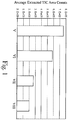
- Fig. 1 shows that when including a malodor binding polymer in a freshening composition in accordance with the present invention, aldehydic malodor evaporating off the treated fabric decreases.
- Fabric samples are infused with the malodor of interest.
- For grease infusion place 8 ounces of grease in a PrestoTM electric skillet and cover with the skillet lid. Place the skillet in a 30 gallon metal garbage can. Run the electric cord from the skillet through a 1.5 inch hole in the garbage can. Heat the skillet to 121°C and allow it to equilibrate for 15 minutes. Remove the lid. Suspend 8 inch by 8 inch fabric swatches from the metal clips on a carousel in the garbage can lid. Measured from the bottom of the swatches, the distance to the top of the skillet is 8 inches. Place lid on garbage can and manually turn the carousel 15 rotations per minute for a period of 40 minutes.
- Table 2 show non-limiting examples of freshening compositions according to the present invention.
- Table 2 IX (Control) X Lupasol WF 0 0.07 CAS 9002-98-6 Diethylene Glycol 0.25 0.25 Perfume mixture comprising aliphatic aldehydes 0.02 (0.002 aldehydes) 0.02 (0.002 aldehydes) Hydroxypropyl Beta CD 0.63 0.63 Basophor ELH 60 0.15 0.15 Uniquat 2250 0 0 Bardac 2250J 0.5 0.5 Silwet L-7600 0.1 0.1 Citric Acid 0 0 Maleic Acid 0 0 CAS 110-16-7 ACES 0.1 0.1 Sodium Hydroxide 0.006 0.006 Koralone B-119 0 0 Ethanol 3.000 3.000 Deionized Water 95.244 95.174 Total 100 100
- Formulation IX the control formulation containing no malodor binding polymer, and Formulation X are compared for their effect on microbe reduction.
- Fig. 2 shows the results of formulations with and without PEIs when tested for non-residual fabric sanitizer efficacy against Staphylococcus aureus (ATCC 6538), Aspergillus niger (ATCC 6275), Proteus mirabilis (ATCC 7002) and Pseudomonas aeruginosa (ATCC 15442).
- Formulation efficacy was assessed by employing a North American Bactericidal Fabric Spray Test Method that is a quantitative modification of the AOAC Germicidal Spray Products Test method (961.02). This method is a recognized test standard in accordance to U.S. EPA Pesticide Assessment Guidelines Subdivision G, Series 91-52(b)(1).
- the referenced AOAC method was applied to fabric surfaces. Fabric swatches (1.5 inch, 100% blue oxford cotton) as can be obtained from Testfabrics Inc. were treated with 2 fully depressed sprays of trigger sprayer bottle containing the respective formulation.
- a contact time between 10 to 30 minutes at ambient temperature was chosen as a conservative time estimate for sprayed fabric surfaces, as provided in Subdivision G, Series 91-1 (b) (4) (i). Any excess liquid is drained off and then transferred to a jar containing 20 ml neutralizer and/or growth promoting broth. The jar is mixed by vortexing, followed by sonication in a Branson Bransonic Ultrasonic Sonicator for 5 minutes. Within 30 minutes of neutralization, the jar is mixed for 2-3 seconds on a vortex type mixer and serially diluted. All the samples were incubated (48 ⁇ 4 hours) under the appropriate conditions and monitored for growth or no growth. Samples are plated and counted to determine mean log10 reduction.
Landscapes
- Textile Engineering (AREA)
- Engineering & Computer Science (AREA)
- Health & Medical Sciences (AREA)
- General Health & Medical Sciences (AREA)
- Public Health (AREA)
- Veterinary Medicine (AREA)
- Life Sciences & Earth Sciences (AREA)
- Epidemiology (AREA)
- Animal Behavior & Ethology (AREA)
- Chemical & Material Sciences (AREA)
- Chemical Kinetics & Catalysis (AREA)
- Emergency Medicine (AREA)
- General Chemical & Material Sciences (AREA)
- Dispersion Chemistry (AREA)
- Treatments For Attaching Organic Compounds To Fibrous Goods (AREA)
- Detergent Compositions (AREA)
- Compositions Of Macromolecular Compounds (AREA)
- Disinfection, Sterilisation Or Deodorisation Of Air (AREA)
- Agricultural Chemicals And Associated Chemicals (AREA)
Claims (13)
- Auffrischungszusammensetzung zum Reduzieren von üblem Geruch, umfassend:eine wirksame Menge eines üblen Geruch bindenden Polymers;wobei das üblen Geruch bindende Polymer ein homopolymeres Polyethylenimin mit einem Molekulargewicht von 1.000 bis 2.000.000 Dalton ist;ein Geruchsbekämpfungsmittel, umfassend mindestens einen aliphatischen Aldehyd;einen wässrigen Träger;wobei die Zusammensetzung im Wesentlichen frei von jeglichem Material ist, das Stoff verschmutzen oder beflecken würde, dadurch gekennzeichnet, dass die Gesamtmenge von Tensid von 0 Gew.-% bis 3 Gew.-% der Zusammensetzung beträgt, und dadurch, dass das homopolymere Polyethylenimin in einer Menge von 0,01 Gew.-% bis 0,07 Gew.-% der Zusammensetzung vorliegt.
- Zusammensetzung nach Anspruch 1, wobei 15 % bis 80 % der Amingruppen des üblen Geruch bindenden Polymers primäre Aminogruppen sind.
- Zusammensetzung nach Anspruch 1, wobei das üblen Geruch bindende Polymer ein homopolymeres Polyethylenimin mit einem Molekulargewicht von 25.000 Dalton ist.
- Zusammensetzung nach Anspruch 1, wobei der mindestens eine aliphatische Aldehyd in der Menge von 0,001 % bis 5 %, bezogen auf das Gesamtgewicht der Zusammensetzung, vorzugsweise 0,001 % bis 1 %, bezogen auf das Gesamtgewicht der Zusammensetzung, vorliegt.
- Zusammensetzung nach Anspruch 4, wobei der mindestens eine aliphatische Aldehyd ausgewählt ist aus der Gruppe, bestehend aus Bourgeonal, Citral, Citronellyloxyacetaldehyd, Cymal, Decylaldehyd, Helional, Hexylzimtaldehyd, Laurinaldehyd, Ligustral, Lyral, Melonal, Methyldihydrojasmonat, Methylnonylacetaldehyd, Methylphenylcarbinylacetat, Nonylaldehyd, 2,6-Nonadien-1-al, Octylaldehyd, Oxan, P.T. Bucinal, Polysantol, Rhubafuran, Tripal und Mischungen davon.
- Zusammensetzung nach Anspruch 1, wobei die Zusammensetzung ferner ein Puffermittel umfasst, das ausgewählt ist aus der Gruppe, bestehend aus Carbonsäure, Dicarbonsäure, N-(2-Acetamido)-2-aminoethansulfonsäure und Mischungen davon.
- Zusammensetzung nach Anspruch 1, wobei die Zusammensetzung ferner Maleinsäure umfasst.
- Zusammensetzung nach Anspruch 1, wobei die Zusammensetzung einen pH-Wert von 3 bis 8, vorzugsweise einen pH-Wert von 5 bis 8 aufweist.
- Zusammensetzung nach Anspruch 1, wobei die Zusammensetzung frei von anionischen Tensiden ist.
- Zusammensetzung nach Anspruch 1, wobei die Zusammensetzung zu nicht mehr als 1 Gew.-% der Zusammensetzung Tensid umfasst.
- Zusammensetzung nach Anspruch 1, wobei der wässrige Träger in einer Menge von 90 % bis 99,5 % vorliegt.
- Zusammensetzung nach Anspruch 1, ferner umfassend:ein Glycol;eine Dicarbonsäure, um einen pH-Wert von 3 bis 8 bereitzustellen; undzu 90 % bis 99,5 % den wässrigen Träger.
- Verfahren zum Reduzieren von üblem Geruch, das die folgenden Schritte umfasst:a. Bereitstellen der Auffrischungszusammensetzung nach Anspruch 1;b. Dispergieren einer wirksamen Menge der Auffrischungszusammensetzung auf einer unbelebten Oberfläche oder in der Luft.
Applications Claiming Priority (2)
| Application Number | Priority Date | Filing Date | Title |
|---|---|---|---|
| US12/562,534 US9260817B2 (en) | 2009-09-18 | 2009-09-18 | Freshening compositions comprising malodor binding polymers and malodor counteractants |
| PCT/US2010/049067 WO2011034997A2 (en) | 2009-09-18 | 2010-09-16 | Freshening compositions comprising malodor binding polymers and malodor counteractants |
Publications (2)
| Publication Number | Publication Date |
|---|---|
| EP2478149A2 EP2478149A2 (de) | 2012-07-25 |
| EP2478149B1 true EP2478149B1 (de) | 2019-10-23 |
Family
ID=43602771
Family Applications (1)
| Application Number | Title | Priority Date | Filing Date |
|---|---|---|---|
| EP10760185.8A Active EP2478149B1 (de) | 2009-09-18 | 2010-09-16 | Auffrischende zusammensetzungen umfassend schlechte gerüche bindende polymere und geruchshemmende mittel |
Country Status (11)
| Country | Link |
|---|---|
| US (2) | US9260817B2 (de) |
| EP (1) | EP2478149B1 (de) |
| JP (1) | JP5671039B2 (de) |
| KR (1) | KR101487220B1 (de) |
| AU (1) | AU2010295597B2 (de) |
| BR (1) | BR112012006159A2 (de) |
| CA (1) | CA2774661C (de) |
| CL (1) | CL2012000683A1 (de) |
| MX (1) | MX2012003293A (de) |
| MY (1) | MY158556A (de) |
| WO (1) | WO2011034997A2 (de) |
Cited By (1)
| Publication number | Priority date | Publication date | Assignee | Title |
|---|---|---|---|---|
| US11647746B2 (en) * | 2012-02-20 | 2023-05-16 | Basf Se | Enhancing the antimicrobial activity of biocides with polymers |
Families Citing this family (20)
| Publication number | Priority date | Publication date | Assignee | Title |
|---|---|---|---|---|
| US8992889B2 (en) | 2010-04-30 | 2015-03-31 | The Procter & Gamble Company | Freshening compositions having a malodor control component and methods thereof |
| CN103429234B (zh) | 2010-12-10 | 2016-10-05 | 布罗迪健康科学有限公司 | 茉莉酮酸酯治疗膀胱功能障碍的用途 |
| US9126890B2 (en) * | 2011-10-20 | 2015-09-08 | International Flavors & Fragrances Inc. | Low volatile reactive malodor counteractives and methods of use thereof |
| US20120294821A1 (en) * | 2011-05-20 | 2012-11-22 | International Flavors & Fragrances Inc. | Low Volatile Reactive Malodor Counteractives and Methods of Use Thereof |
| US20130336914A1 (en) * | 2012-06-15 | 2013-12-19 | Steven Anthony Horenziak | Malodor control compositions having activated alkenes and methods thereof |
| US20150093351A1 (en) * | 2012-06-15 | 2015-04-02 | The Procter & Gamble Company | Malodor control compositions having activated alkenes and methods thereof |
| US9821081B2 (en) * | 2012-11-27 | 2017-11-21 | The Procter & Gamble Company | Perfume-free malodor reducing compositions |
| US9023304B2 (en) | 2013-09-18 | 2015-05-05 | John A. Nikles | Composition, system, and method for abatement of airborne contaminants |
| US20150099689A1 (en) * | 2013-10-04 | 2015-04-09 | The Procter & Gamble Company | Compositions comprising hydrophobically modified polyamine polymer compatible perfume materials |
| ES2518765B2 (es) | 2014-07-16 | 2015-03-05 | Nabari Textil S L | Tejidos textiles funcionales |
| US10226544B2 (en) | 2015-06-05 | 2019-03-12 | International Flavors & Fragrances Inc. | Malodor counteracting compositions |
| JP7321809B2 (ja) * | 2018-07-13 | 2023-08-07 | 花王株式会社 | 臭いの生成抑制方法 |
| US11732218B2 (en) | 2018-10-18 | 2023-08-22 | Milliken & Company | Polyethyleneimine compounds containing N-halamine and derivatives thereof |
| US11518963B2 (en) | 2018-10-18 | 2022-12-06 | Milliken & Company | Polyethyleneimine compounds containing N-halamine and derivatives thereof |
| US11299591B2 (en) | 2018-10-18 | 2022-04-12 | Milliken & Company | Polyethyleneimine compounds containing N-halamine and derivatives thereof |
| US11466122B2 (en) | 2018-10-18 | 2022-10-11 | Milliken & Company | Polyethyleneimine compounds containing N-halamine and derivatives thereof |
| US11946018B2 (en) | 2019-05-10 | 2024-04-02 | The Procter & Gamble Company | Freshening compositions with ethoxylated/propoxylated aromatics |
| US12016963B2 (en) | 2019-05-10 | 2024-06-25 | The Procter & Gamble Company | Freshening compositions with alkoxylated phenols |
| CN111096340A (zh) * | 2019-12-02 | 2020-05-05 | 安徽启威生物科技有限公司 | 一种用于宠物医院的消毒剂浓缩液及其制备方法 |
| EP4552734A1 (de) | 2023-11-07 | 2025-05-14 | Calyxia | Mikrokapseln mit flüchtigen inhaltsstoffen |
Family Cites Families (26)
| Publication number | Priority date | Publication date | Assignee | Title |
|---|---|---|---|---|
| DE3047774C2 (de) | 1980-12-18 | 1986-10-30 | Meyer, Holger, 2000 Hamburg | Verwendung von Polyethyleniminlösungen zur Geruchsbekämpfung |
| US5942217A (en) | 1997-06-09 | 1999-08-24 | The Procter & Gamble Company | Uncomplexed cyclodextrin compositions for odor control |
| JPH03146064A (ja) | 1989-11-01 | 1991-06-21 | Asahi Chem Ind Co Ltd | 消臭材 |
| US5714137A (en) | 1994-08-12 | 1998-02-03 | The Procter & Gamble Company | Uncomplexed cyclodextrin solutions for odor control on inanimate surfaces |
| US5578563A (en) | 1994-08-12 | 1996-11-26 | The Procter & Gamble Company | Composition for reducing malodor impression on inanimate surfaces |
| US6103678A (en) | 1996-11-07 | 2000-08-15 | The Procter & Gamble Company | Compositions comprising a perfume and an amino-functional polymer |
| EP0841391A1 (de) * | 1996-11-07 | 1998-05-13 | The Procter & Gamble Company | Riechstoffzusammensetzungen |
| FR2759582A1 (fr) | 1997-02-14 | 1998-08-21 | Oreal | Composition deodorante |
| AU7092600A (en) | 1999-09-02 | 2001-03-26 | Procter & Gamble Company, The | Method of deodorizing and/or cleaning carpet using a composition comprising odorcontrol agent |
| US6680289B1 (en) | 1999-09-02 | 2004-01-20 | The Proctor & Gamble Company | Methods, compositions, and articles for odor control |
| DE60028215T2 (de) * | 1999-09-02 | 2007-03-08 | The Procter & Gamble Company, Cincinnati | Verbesserte verfahren, zusammensetzungen und gegenstände für geruchskontrolle |
| US6653274B1 (en) | 1999-09-27 | 2003-11-25 | The Proctor & Gamble Company | Detergent composition comprising a soil entrainment system |
| US6454876B1 (en) | 1999-12-22 | 2002-09-24 | The Clorox Company | Method for eliminating malodors |
| US20030228992A1 (en) * | 1999-12-22 | 2003-12-11 | Johan Smets | Laundry and cleaning and/or fabric care compositions |
| ES2273811T3 (es) * | 2000-02-14 | 2007-05-16 | THE PROCTER & GAMBLE COMPANY | Composiciones acuosas, estables para tratar superficies,especialmente tejidos. |
| US20030073607A1 (en) | 2001-05-11 | 2003-04-17 | The Procter & Gamble Company | Pro-perfume compositions |
| US20030134772A1 (en) | 2001-10-19 | 2003-07-17 | Dykstra Robert Richard | Benefit agent delivery systems |
| US20040223871A1 (en) * | 2003-05-05 | 2004-11-11 | The Procter & Gamble Company | Method of freshening air |
| US7998403B2 (en) | 2003-05-05 | 2011-08-16 | The Proctor & Gamble Company | Method of freshening air |
| KR20060134988A (ko) | 2004-04-07 | 2006-12-28 | 카오카부시키가이샤 | 모발 처리제 및 모발 처리 방법 |
| GB0410140D0 (en) | 2004-05-07 | 2004-06-09 | Givaudan Sa | Compositions |
| JP2006149892A (ja) | 2004-11-30 | 2006-06-15 | Lion Corp | 尿臭抑制用組成物 |
| JP5176061B2 (ja) | 2006-02-17 | 2013-04-03 | アルケア株式会社 | ストーマ装具用消臭剤組成物及びストーマ装具 |
| JP5101135B2 (ja) | 2006-05-17 | 2012-12-19 | ライオン株式会社 | 抗菌・消臭組成物およびこれを用いた抗菌・消臭方法 |
| KR20100080905A (ko) | 2007-09-11 | 2010-07-13 | 바스프 에스이 | 폴리글리세롤 항미생물제 및 조성물 |
| US9248209B2 (en) * | 2011-01-14 | 2016-02-02 | The Procter & Gamble Company | Compositions comprising hydrophobically modified malodor control polymers |
-
2009
- 2009-09-18 US US12/562,534 patent/US9260817B2/en active Active
-
2010
- 2010-09-16 MY MYPI2012000759A patent/MY158556A/en unknown
- 2010-09-16 JP JP2012529894A patent/JP5671039B2/ja active Active
- 2010-09-16 WO PCT/US2010/049067 patent/WO2011034997A2/en not_active Ceased
- 2010-09-16 AU AU2010295597A patent/AU2010295597B2/en not_active Ceased
- 2010-09-16 CA CA2774661A patent/CA2774661C/en active Active
- 2010-09-16 BR BR112012006159A patent/BR112012006159A2/pt not_active IP Right Cessation
- 2010-09-16 MX MX2012003293A patent/MX2012003293A/es unknown
- 2010-09-16 KR KR1020127007131A patent/KR101487220B1/ko active Active
- 2010-09-16 EP EP10760185.8A patent/EP2478149B1/de active Active
-
2012
- 2012-03-16 CL CL2012000683A patent/CL2012000683A1/es unknown
-
2016
- 2016-01-15 US US14/996,573 patent/US20160130745A1/en not_active Abandoned
Non-Patent Citations (1)
| Title |
|---|
| None * |
Cited By (2)
| Publication number | Priority date | Publication date | Assignee | Title |
|---|---|---|---|---|
| US11647746B2 (en) * | 2012-02-20 | 2023-05-16 | Basf Se | Enhancing the antimicrobial activity of biocides with polymers |
| US11666050B2 (en) * | 2012-02-20 | 2023-06-06 | Basf Se | Enhancing the antimicrobial activity of biocides with polymers |
Also Published As
| Publication number | Publication date |
|---|---|
| CA2774661C (en) | 2014-11-04 |
| US9260817B2 (en) | 2016-02-16 |
| EP2478149A2 (de) | 2012-07-25 |
| CA2774661A1 (en) | 2011-03-24 |
| AU2010295597A1 (en) | 2012-04-05 |
| WO2011034997A2 (en) | 2011-03-24 |
| MY158556A (en) | 2016-10-14 |
| WO2011034997A3 (en) | 2011-07-07 |
| BR112012006159A2 (pt) | 2016-06-28 |
| JP5671039B2 (ja) | 2015-02-18 |
| KR20120050488A (ko) | 2012-05-18 |
| CL2012000683A1 (es) | 2012-07-13 |
| US20160130745A1 (en) | 2016-05-12 |
| US20110070181A1 (en) | 2011-03-24 |
| WO2011034997A4 (en) | 2011-08-25 |
| JP2013504698A (ja) | 2013-02-07 |
| MX2012003293A (es) | 2012-04-30 |
| KR101487220B1 (ko) | 2015-01-28 |
| AU2010295597B2 (en) | 2013-10-24 |
Similar Documents
| Publication | Publication Date | Title |
|---|---|---|
| EP2478149B1 (de) | Auffrischende zusammensetzungen umfassend schlechte gerüche bindende polymere und geruchshemmende mittel | |
| US9273427B2 (en) | Freshening compositions comprising malodor binding polymers | |
| CA2824878C (en) | Compositions comprising hydrophobically modified malodor control polymers | |
| US20110150817A1 (en) | Freshening compositions comprising malodor binding polymers and malodor control components | |
| AU2012205613B2 (en) | Compositions comprising metallated malodor control polymers | |
| JP6144772B2 (ja) | 無香料悪臭低減組成物 | |
| CN105980537A (zh) | 持久的清新组合物 | |
| KR20120082952A (ko) | 악취 결합 중합체 및 악취 제어 성분을 포함하는 청향 조성물 | |
| US20110305659A1 (en) | Freshening compositions comprising malodor binding polymers and malodor control components | |
| US20140147409A1 (en) | Perfume-free malodor reducing compositions | |
| WO2014085215A1 (en) | Perfume-free malodor reducing compositions |
Legal Events
| Date | Code | Title | Description |
|---|---|---|---|
| PUAI | Public reference made under article 153(3) epc to a published international application that has entered the european phase |
Free format text: ORIGINAL CODE: 0009012 |
|
| 17P | Request for examination filed |
Effective date: 20120223 |
|
| AK | Designated contracting states |
Kind code of ref document: A2 Designated state(s): AL AT BE BG CH CY CZ DE DK EE ES FI FR GB GR HR HU IE IS IT LI LT LU LV MC MK MT NL NO PL PT RO SE SI SK SM TR |
|
| DAX | Request for extension of the european patent (deleted) | ||
| 17Q | First examination report despatched |
Effective date: 20131104 |
|
| REG | Reference to a national code |
Ref country code: DE Ref legal event code: R079 Ref document number: 602010061640 Country of ref document: DE Free format text: PREVIOUS MAIN CLASS: D06M0013000000 Ipc: D06M0015610000 |
|
| RIC1 | Information provided on ipc code assigned before grant |
Ipc: D06M 13/402 20060101ALI20160527BHEP Ipc: A61L 2/22 20060101ALI20160527BHEP Ipc: D06M 15/61 20060101AFI20160527BHEP Ipc: D06M 13/203 20060101ALI20160527BHEP Ipc: A61L 9/01 20060101ALI20160527BHEP Ipc: D06M 13/127 20060101ALI20160527BHEP Ipc: D06M 13/256 20060101ALI20160527BHEP Ipc: D06M 13/148 20060101ALI20160527BHEP Ipc: D06M 13/00 20060101ALI20160527BHEP Ipc: A61L 9/14 20060101ALI20160527BHEP Ipc: D06M 13/192 20060101ALI20160527BHEP |
|
| STAA | Information on the status of an ep patent application or granted ep patent |
Free format text: STATUS: EXAMINATION IS IN PROGRESS |
|
| GRAP | Despatch of communication of intention to grant a patent |
Free format text: ORIGINAL CODE: EPIDOSNIGR1 |
|
| STAA | Information on the status of an ep patent application or granted ep patent |
Free format text: STATUS: GRANT OF PATENT IS INTENDED |
|
| INTG | Intention to grant announced |
Effective date: 20190423 |
|
| GRAS | Grant fee paid |
Free format text: ORIGINAL CODE: EPIDOSNIGR3 |
|
| GRAA | (expected) grant |
Free format text: ORIGINAL CODE: 0009210 |
|
| STAA | Information on the status of an ep patent application or granted ep patent |
Free format text: STATUS: THE PATENT HAS BEEN GRANTED |
|
| AK | Designated contracting states |
Kind code of ref document: B1 Designated state(s): AL AT BE BG CH CY CZ DE DK EE ES FI FR GB GR HR HU IE IS IT LI LT LU LV MC MK MT NL NO PL PT RO SE SI SK SM TR |
|
| REG | Reference to a national code |
Ref country code: GB Ref legal event code: FG4D |
|
| REG | Reference to a national code |
Ref country code: CH Ref legal event code: EP |
|
| REG | Reference to a national code |
Ref country code: IE Ref legal event code: FG4D |
|
| REG | Reference to a national code |
Ref country code: DE Ref legal event code: R096 Ref document number: 602010061640 Country of ref document: DE |
|
| REG | Reference to a national code |
Ref country code: AT Ref legal event code: REF Ref document number: 1193737 Country of ref document: AT Kind code of ref document: T Effective date: 20191115 |
|
| REG | Reference to a national code |
Ref country code: NL Ref legal event code: FP |
|
| REG | Reference to a national code |
Ref country code: LT Ref legal event code: MG4D |
|
| PG25 | Lapsed in a contracting state [announced via postgrant information from national office to epo] |
Ref country code: ES Free format text: LAPSE BECAUSE OF FAILURE TO SUBMIT A TRANSLATION OF THE DESCRIPTION OR TO PAY THE FEE WITHIN THE PRESCRIBED TIME-LIMIT Effective date: 20191023 Ref country code: PT Free format text: LAPSE BECAUSE OF FAILURE TO SUBMIT A TRANSLATION OF THE DESCRIPTION OR TO PAY THE FEE WITHIN THE PRESCRIBED TIME-LIMIT Effective date: 20200224 Ref country code: SE Free format text: LAPSE BECAUSE OF FAILURE TO SUBMIT A TRANSLATION OF THE DESCRIPTION OR TO PAY THE FEE WITHIN THE PRESCRIBED TIME-LIMIT Effective date: 20191023 Ref country code: NO Free format text: LAPSE BECAUSE OF FAILURE TO SUBMIT A TRANSLATION OF THE DESCRIPTION OR TO PAY THE FEE WITHIN THE PRESCRIBED TIME-LIMIT Effective date: 20200123 Ref country code: LV Free format text: LAPSE BECAUSE OF FAILURE TO SUBMIT A TRANSLATION OF THE DESCRIPTION OR TO PAY THE FEE WITHIN THE PRESCRIBED TIME-LIMIT Effective date: 20191023 Ref country code: LT Free format text: LAPSE BECAUSE OF FAILURE TO SUBMIT A TRANSLATION OF THE DESCRIPTION OR TO PAY THE FEE WITHIN THE PRESCRIBED TIME-LIMIT Effective date: 20191023 Ref country code: GR Free format text: LAPSE BECAUSE OF FAILURE TO SUBMIT A TRANSLATION OF THE DESCRIPTION OR TO PAY THE FEE WITHIN THE PRESCRIBED TIME-LIMIT Effective date: 20200124 Ref country code: PL Free format text: LAPSE BECAUSE OF FAILURE TO SUBMIT A TRANSLATION OF THE DESCRIPTION OR TO PAY THE FEE WITHIN THE PRESCRIBED TIME-LIMIT Effective date: 20191023 Ref country code: BG Free format text: LAPSE BECAUSE OF FAILURE TO SUBMIT A TRANSLATION OF THE DESCRIPTION OR TO PAY THE FEE WITHIN THE PRESCRIBED TIME-LIMIT Effective date: 20200123 Ref country code: FI Free format text: LAPSE BECAUSE OF FAILURE TO SUBMIT A TRANSLATION OF THE DESCRIPTION OR TO PAY THE FEE WITHIN THE PRESCRIBED TIME-LIMIT Effective date: 20191023 |
|
| PG25 | Lapsed in a contracting state [announced via postgrant information from national office to epo] |
Ref country code: HR Free format text: LAPSE BECAUSE OF FAILURE TO SUBMIT A TRANSLATION OF THE DESCRIPTION OR TO PAY THE FEE WITHIN THE PRESCRIBED TIME-LIMIT Effective date: 20191023 Ref country code: IS Free format text: LAPSE BECAUSE OF FAILURE TO SUBMIT A TRANSLATION OF THE DESCRIPTION OR TO PAY THE FEE WITHIN THE PRESCRIBED TIME-LIMIT Effective date: 20200224 |
|
| PG25 | Lapsed in a contracting state [announced via postgrant information from national office to epo] |
Ref country code: AL Free format text: LAPSE BECAUSE OF FAILURE TO SUBMIT A TRANSLATION OF THE DESCRIPTION OR TO PAY THE FEE WITHIN THE PRESCRIBED TIME-LIMIT Effective date: 20191023 |
|
| REG | Reference to a national code |
Ref country code: DE Ref legal event code: R097 Ref document number: 602010061640 Country of ref document: DE |
|
| PG2D | Information on lapse in contracting state deleted |
Ref country code: IS |
|
| PG25 | Lapsed in a contracting state [announced via postgrant information from national office to epo] |
Ref country code: RO Free format text: LAPSE BECAUSE OF FAILURE TO SUBMIT A TRANSLATION OF THE DESCRIPTION OR TO PAY THE FEE WITHIN THE PRESCRIBED TIME-LIMIT Effective date: 20191023 Ref country code: DK Free format text: LAPSE BECAUSE OF FAILURE TO SUBMIT A TRANSLATION OF THE DESCRIPTION OR TO PAY THE FEE WITHIN THE PRESCRIBED TIME-LIMIT Effective date: 20191023 Ref country code: EE Free format text: LAPSE BECAUSE OF FAILURE TO SUBMIT A TRANSLATION OF THE DESCRIPTION OR TO PAY THE FEE WITHIN THE PRESCRIBED TIME-LIMIT Effective date: 20191023 Ref country code: CZ Free format text: LAPSE BECAUSE OF FAILURE TO SUBMIT A TRANSLATION OF THE DESCRIPTION OR TO PAY THE FEE WITHIN THE PRESCRIBED TIME-LIMIT Effective date: 20191023 Ref country code: IS Free format text: LAPSE BECAUSE OF FAILURE TO SUBMIT A TRANSLATION OF THE DESCRIPTION OR TO PAY THE FEE WITHIN THE PRESCRIBED TIME-LIMIT Effective date: 20200223 |
|
| REG | Reference to a national code |
Ref country code: AT Ref legal event code: MK05 Ref document number: 1193737 Country of ref document: AT Kind code of ref document: T Effective date: 20191023 |
|
| PLBE | No opposition filed within time limit |
Free format text: ORIGINAL CODE: 0009261 |
|
| STAA | Information on the status of an ep patent application or granted ep patent |
Free format text: STATUS: NO OPPOSITION FILED WITHIN TIME LIMIT |
|
| PG25 | Lapsed in a contracting state [announced via postgrant information from national office to epo] |
Ref country code: SM Free format text: LAPSE BECAUSE OF FAILURE TO SUBMIT A TRANSLATION OF THE DESCRIPTION OR TO PAY THE FEE WITHIN THE PRESCRIBED TIME-LIMIT Effective date: 20191023 Ref country code: IT Free format text: LAPSE BECAUSE OF FAILURE TO SUBMIT A TRANSLATION OF THE DESCRIPTION OR TO PAY THE FEE WITHIN THE PRESCRIBED TIME-LIMIT Effective date: 20191023 Ref country code: SK Free format text: LAPSE BECAUSE OF FAILURE TO SUBMIT A TRANSLATION OF THE DESCRIPTION OR TO PAY THE FEE WITHIN THE PRESCRIBED TIME-LIMIT Effective date: 20191023 |
|
| 26N | No opposition filed |
Effective date: 20200724 |
|
| PG25 | Lapsed in a contracting state [announced via postgrant information from national office to epo] |
Ref country code: AT Free format text: LAPSE BECAUSE OF FAILURE TO SUBMIT A TRANSLATION OF THE DESCRIPTION OR TO PAY THE FEE WITHIN THE PRESCRIBED TIME-LIMIT Effective date: 20191023 Ref country code: SI Free format text: LAPSE BECAUSE OF FAILURE TO SUBMIT A TRANSLATION OF THE DESCRIPTION OR TO PAY THE FEE WITHIN THE PRESCRIBED TIME-LIMIT Effective date: 20191023 |
|
| PG25 | Lapsed in a contracting state [announced via postgrant information from national office to epo] |
Ref country code: MC Free format text: LAPSE BECAUSE OF FAILURE TO SUBMIT A TRANSLATION OF THE DESCRIPTION OR TO PAY THE FEE WITHIN THE PRESCRIBED TIME-LIMIT Effective date: 20191023 |
|
| REG | Reference to a national code |
Ref country code: CH Ref legal event code: PL |
|
| REG | Reference to a national code |
Ref country code: BE Ref legal event code: MM Effective date: 20200930 |
|
| PG25 | Lapsed in a contracting state [announced via postgrant information from national office to epo] |
Ref country code: LU Free format text: LAPSE BECAUSE OF NON-PAYMENT OF DUE FEES Effective date: 20200916 |
|
| PG25 | Lapsed in a contracting state [announced via postgrant information from national office to epo] |
Ref country code: CH Free format text: LAPSE BECAUSE OF NON-PAYMENT OF DUE FEES Effective date: 20200930 Ref country code: BE Free format text: LAPSE BECAUSE OF NON-PAYMENT OF DUE FEES Effective date: 20200930 Ref country code: IE Free format text: LAPSE BECAUSE OF NON-PAYMENT OF DUE FEES Effective date: 20200916 Ref country code: LI Free format text: LAPSE BECAUSE OF NON-PAYMENT OF DUE FEES Effective date: 20200930 |
|
| PG25 | Lapsed in a contracting state [announced via postgrant information from national office to epo] |
Ref country code: TR Free format text: LAPSE BECAUSE OF FAILURE TO SUBMIT A TRANSLATION OF THE DESCRIPTION OR TO PAY THE FEE WITHIN THE PRESCRIBED TIME-LIMIT Effective date: 20191023 Ref country code: MT Free format text: LAPSE BECAUSE OF FAILURE TO SUBMIT A TRANSLATION OF THE DESCRIPTION OR TO PAY THE FEE WITHIN THE PRESCRIBED TIME-LIMIT Effective date: 20191023 Ref country code: CY Free format text: LAPSE BECAUSE OF FAILURE TO SUBMIT A TRANSLATION OF THE DESCRIPTION OR TO PAY THE FEE WITHIN THE PRESCRIBED TIME-LIMIT Effective date: 20191023 |
|
| PG25 | Lapsed in a contracting state [announced via postgrant information from national office to epo] |
Ref country code: MK Free format text: LAPSE BECAUSE OF FAILURE TO SUBMIT A TRANSLATION OF THE DESCRIPTION OR TO PAY THE FEE WITHIN THE PRESCRIBED TIME-LIMIT Effective date: 20191023 |
|
| P01 | Opt-out of the competence of the unified patent court (upc) registered |
Effective date: 20230429 |
|
| PGFP | Annual fee paid to national office [announced via postgrant information from national office to epo] |
Ref country code: FR Payment date: 20240808 Year of fee payment: 15 |
|
| PGFP | Annual fee paid to national office [announced via postgrant information from national office to epo] |
Ref country code: NL Payment date: 20250814 Year of fee payment: 16 |
|
| PGFP | Annual fee paid to national office [announced via postgrant information from national office to epo] |
Ref country code: DE Payment date: 20250730 Year of fee payment: 16 |
|
| PGFP | Annual fee paid to national office [announced via postgrant information from national office to epo] |
Ref country code: GB Payment date: 20250731 Year of fee payment: 16 |