EP2479254A1 - Systèmes de vecteurs dépendants d'élément d'améliorant de translation - Google Patents
Systèmes de vecteurs dépendants d'élément d'améliorant de translation Download PDFInfo
- Publication number
- EP2479254A1 EP2479254A1 EP11181999A EP11181999A EP2479254A1 EP 2479254 A1 EP2479254 A1 EP 2479254A1 EP 11181999 A EP11181999 A EP 11181999A EP 11181999 A EP11181999 A EP 11181999A EP 2479254 A1 EP2479254 A1 EP 2479254A1
- Authority
- EP
- European Patent Office
- Prior art keywords
- vector
- tee
- construct
- cell
- protein
- Prior art date
- Legal status (The legal status is an assumption and is not a legal conclusion. Google has not performed a legal analysis and makes no representation as to the accuracy of the status listed.)
- Withdrawn
Links
- 239000013598 vector Substances 0.000 title claims abstract description 99
- 238000013519 translation Methods 0.000 title claims abstract description 42
- 108700028146 Genetic Enhancer Elements Proteins 0.000 title claims abstract description 24
- 230000001419 dependent effect Effects 0.000 title description 6
- 108090000623 proteins and genes Proteins 0.000 claims abstract description 177
- 102000004169 proteins and genes Human genes 0.000 claims abstract description 97
- 238000000034 method Methods 0.000 claims abstract description 79
- 230000002103 transcriptional effect Effects 0.000 claims abstract description 40
- 108091023040 Transcription factor Proteins 0.000 claims description 50
- 102000040945 Transcription factor Human genes 0.000 claims description 46
- 230000014616 translation Effects 0.000 claims description 42
- 239000002773 nucleotide Substances 0.000 claims description 31
- 125000003729 nucleotide group Chemical group 0.000 claims description 31
- 230000000694 effects Effects 0.000 claims description 21
- 230000006658 host protein synthesis Effects 0.000 claims description 17
- 238000013518 transcription Methods 0.000 claims description 15
- 230000035897 transcription Effects 0.000 claims description 15
- 150000007523 nucleic acids Chemical class 0.000 claims description 13
- 230000000903 blocking effect Effects 0.000 claims description 9
- 102000039446 nucleic acids Human genes 0.000 claims description 9
- 108020004707 nucleic acids Proteins 0.000 claims description 9
- 230000014509 gene expression Effects 0.000 abstract description 15
- 108091028043 Nucleic acid sequence Proteins 0.000 abstract description 11
- 239000003623 enhancer Substances 0.000 abstract description 8
- 230000002018 overexpression Effects 0.000 abstract description 3
- 238000012216 screening Methods 0.000 abstract description 2
- 238000013459 approach Methods 0.000 abstract 1
- 238000012261 overproduction Methods 0.000 abstract 1
- 238000011160 research Methods 0.000 abstract 1
- 210000004027 cell Anatomy 0.000 description 60
- 108091034117 Oligonucleotide Proteins 0.000 description 50
- 108020004999 messenger RNA Proteins 0.000 description 45
- 230000001105 regulatory effect Effects 0.000 description 24
- JLCPHMBAVCMARE-UHFFFAOYSA-N [3-[[3-[[3-[[3-[[3-[[3-[[3-[[3-[[3-[[3-[[3-[[5-(2-amino-6-oxo-1H-purin-9-yl)-3-[[3-[[3-[[3-[[3-[[3-[[5-(2-amino-6-oxo-1H-purin-9-yl)-3-[[5-(2-amino-6-oxo-1H-purin-9-yl)-3-hydroxyoxolan-2-yl]methoxy-hydroxyphosphoryl]oxyoxolan-2-yl]methoxy-hydroxyphosphoryl]oxy-5-(5-methyl-2,4-dioxopyrimidin-1-yl)oxolan-2-yl]methoxy-hydroxyphosphoryl]oxy-5-(6-aminopurin-9-yl)oxolan-2-yl]methoxy-hydroxyphosphoryl]oxy-5-(6-aminopurin-9-yl)oxolan-2-yl]methoxy-hydroxyphosphoryl]oxy-5-(6-aminopurin-9-yl)oxolan-2-yl]methoxy-hydroxyphosphoryl]oxy-5-(6-aminopurin-9-yl)oxolan-2-yl]methoxy-hydroxyphosphoryl]oxyoxolan-2-yl]methoxy-hydroxyphosphoryl]oxy-5-(5-methyl-2,4-dioxopyrimidin-1-yl)oxolan-2-yl]methoxy-hydroxyphosphoryl]oxy-5-(4-amino-2-oxopyrimidin-1-yl)oxolan-2-yl]methoxy-hydroxyphosphoryl]oxy-5-(5-methyl-2,4-dioxopyrimidin-1-yl)oxolan-2-yl]methoxy-hydroxyphosphoryl]oxy-5-(5-methyl-2,4-dioxopyrimidin-1-yl)oxolan-2-yl]methoxy-hydroxyphosphoryl]oxy-5-(6-aminopurin-9-yl)oxolan-2-yl]methoxy-hydroxyphosphoryl]oxy-5-(6-aminopurin-9-yl)oxolan-2-yl]methoxy-hydroxyphosphoryl]oxy-5-(4-amino-2-oxopyrimidin-1-yl)oxolan-2-yl]methoxy-hydroxyphosphoryl]oxy-5-(4-amino-2-oxopyrimidin-1-yl)oxolan-2-yl]methoxy-hydroxyphosphoryl]oxy-5-(4-amino-2-oxopyrimidin-1-yl)oxolan-2-yl]methoxy-hydroxyphosphoryl]oxy-5-(6-aminopurin-9-yl)oxolan-2-yl]methoxy-hydroxyphosphoryl]oxy-5-(4-amino-2-oxopyrimidin-1-yl)oxolan-2-yl]methyl [5-(6-aminopurin-9-yl)-2-(hydroxymethyl)oxolan-3-yl] hydrogen phosphate Polymers Cc1cn(C2CC(OP(O)(=O)OCC3OC(CC3OP(O)(=O)OCC3OC(CC3O)n3cnc4c3nc(N)[nH]c4=O)n3cnc4c3nc(N)[nH]c4=O)C(COP(O)(=O)OC3CC(OC3COP(O)(=O)OC3CC(OC3COP(O)(=O)OC3CC(OC3COP(O)(=O)OC3CC(OC3COP(O)(=O)OC3CC(OC3COP(O)(=O)OC3CC(OC3COP(O)(=O)OC3CC(OC3COP(O)(=O)OC3CC(OC3COP(O)(=O)OC3CC(OC3COP(O)(=O)OC3CC(OC3COP(O)(=O)OC3CC(OC3COP(O)(=O)OC3CC(OC3COP(O)(=O)OC3CC(OC3COP(O)(=O)OC3CC(OC3COP(O)(=O)OC3CC(OC3COP(O)(=O)OC3CC(OC3COP(O)(=O)OC3CC(OC3CO)n3cnc4c(N)ncnc34)n3ccc(N)nc3=O)n3cnc4c(N)ncnc34)n3ccc(N)nc3=O)n3ccc(N)nc3=O)n3ccc(N)nc3=O)n3cnc4c(N)ncnc34)n3cnc4c(N)ncnc34)n3cc(C)c(=O)[nH]c3=O)n3cc(C)c(=O)[nH]c3=O)n3ccc(N)nc3=O)n3cc(C)c(=O)[nH]c3=O)n3cnc4c3nc(N)[nH]c4=O)n3cnc4c(N)ncnc34)n3cnc4c(N)ncnc34)n3cnc4c(N)ncnc34)n3cnc4c(N)ncnc34)O2)c(=O)[nH]c1=O JLCPHMBAVCMARE-UHFFFAOYSA-N 0.000 description 17
- 102100039556 Galectin-4 Human genes 0.000 description 16
- 238000011144 upstream manufacturing Methods 0.000 description 14
- 101000608765 Homo sapiens Galectin-4 Proteins 0.000 description 13
- 108020004414 DNA Proteins 0.000 description 11
- 108020004684 Internal Ribosome Entry Sites Proteins 0.000 description 11
- 241001515965 unidentified phage Species 0.000 description 11
- 101710144111 Non-structural protein 3 Proteins 0.000 description 10
- 102100021798 SH2 domain-containing protein 3C Human genes 0.000 description 10
- 238000001890 transfection Methods 0.000 description 10
- 108090000626 DNA-directed RNA polymerases Proteins 0.000 description 9
- 102000004163 DNA-directed RNA polymerases Human genes 0.000 description 9
- -1 L-proteinase Proteins 0.000 description 9
- 239000003795 chemical substances by application Substances 0.000 description 9
- 239000013604 expression vector Substances 0.000 description 9
- 239000000203 mixture Substances 0.000 description 9
- 230000003213 activating effect Effects 0.000 description 8
- 210000000349 chromosome Anatomy 0.000 description 8
- 230000001939 inductive effect Effects 0.000 description 8
- 239000013612 plasmid Substances 0.000 description 8
- 108091032973 (ribonucleotides)n+m Proteins 0.000 description 7
- 101001048722 Equus caballus Neutrophil elastase 2A Proteins 0.000 description 7
- 230000010354 integration Effects 0.000 description 7
- 230000007246 mechanism Effects 0.000 description 7
- 240000004808 Saccharomyces cerevisiae Species 0.000 description 6
- 239000003153 chemical reaction reagent Substances 0.000 description 6
- 230000000295 complement effect Effects 0.000 description 6
- 108010048367 enhanced green fluorescent protein Proteins 0.000 description 6
- 238000001943 fluorescence-activated cell sorting Methods 0.000 description 6
- 239000000463 material Substances 0.000 description 6
- 230000008901 benefit Effects 0.000 description 5
- 108010045262 enhanced cyan fluorescent protein Proteins 0.000 description 5
- 239000005090 green fluorescent protein Substances 0.000 description 5
- 230000000977 initiatory effect Effects 0.000 description 5
- 210000004962 mammalian cell Anatomy 0.000 description 5
- 102000040430 polynucleotide Human genes 0.000 description 5
- 108091033319 polynucleotide Proteins 0.000 description 5
- 239000002157 polynucleotide Substances 0.000 description 5
- 108010068250 Herpes Simplex Virus Protein Vmw65 Proteins 0.000 description 4
- 239000012190 activator Substances 0.000 description 4
- 230000001413 cellular effect Effects 0.000 description 4
- 210000004978 chinese hamster ovary cell Anatomy 0.000 description 4
- 239000002299 complementary DNA Substances 0.000 description 4
- 230000006870 function Effects 0.000 description 4
- 230000001965 increasing effect Effects 0.000 description 4
- 102000004190 Enzymes Human genes 0.000 description 3
- 108090000790 Enzymes Proteins 0.000 description 3
- 238000012413 Fluorescence activated cell sorting analysis Methods 0.000 description 3
- 108010001515 Galectin 4 Proteins 0.000 description 3
- 102100038895 Myc proto-oncogene protein Human genes 0.000 description 3
- 101710135898 Myc proto-oncogene protein Proteins 0.000 description 3
- 102000007568 Proto-Oncogene Proteins c-fos Human genes 0.000 description 3
- 108010071563 Proto-Oncogene Proteins c-fos Proteins 0.000 description 3
- 108700026226 TATA Box Proteins 0.000 description 3
- 101710150448 Transcriptional regulator Myc Proteins 0.000 description 3
- 239000000427 antigen Substances 0.000 description 3
- 108091007433 antigens Proteins 0.000 description 3
- 102000036639 antigens Human genes 0.000 description 3
- 108010005774 beta-Galactosidase Proteins 0.000 description 3
- 102000005936 beta-Galactosidase Human genes 0.000 description 3
- 230000032823 cell division Effects 0.000 description 3
- 230000007423 decrease Effects 0.000 description 3
- 239000003102 growth factor Substances 0.000 description 3
- 239000005022 packaging material Substances 0.000 description 3
- 229920001184 polypeptide Polymers 0.000 description 3
- 108090000765 processed proteins & peptides Proteins 0.000 description 3
- 102000004196 processed proteins & peptides Human genes 0.000 description 3
- 230000001225 therapeutic effect Effects 0.000 description 3
- 239000013603 viral vector Substances 0.000 description 3
- 102000002260 Alkaline Phosphatase Human genes 0.000 description 2
- 108020004774 Alkaline Phosphatase Proteins 0.000 description 2
- 108010035563 Chloramphenicol O-acetyltransferase Proteins 0.000 description 2
- 108091028732 Concatemer Proteins 0.000 description 2
- 102000005636 Cyclic AMP Response Element-Binding Protein Human genes 0.000 description 2
- 108010045171 Cyclic AMP Response Element-Binding Protein Proteins 0.000 description 2
- 108010060309 Glucuronidase Proteins 0.000 description 2
- 102000053187 Glucuronidase Human genes 0.000 description 2
- 241000238631 Hexapoda Species 0.000 description 2
- 108060001084 Luciferase Proteins 0.000 description 2
- 239000005089 Luciferase Substances 0.000 description 2
- 108010057466 NF-kappa B Proteins 0.000 description 2
- 102000003945 NF-kappa B Human genes 0.000 description 2
- 238000012408 PCR amplification Methods 0.000 description 2
- 108010087776 Proto-Oncogene Proteins c-myb Proteins 0.000 description 2
- 102000009096 Proto-Oncogene Proteins c-myb Human genes 0.000 description 2
- 108010065868 RNA polymerase SP6 Proteins 0.000 description 2
- 108700008625 Reporter Genes Proteins 0.000 description 2
- 101710172711 Structural protein Proteins 0.000 description 2
- 101710137500 T7 RNA polymerase Proteins 0.000 description 2
- 101001023030 Toxoplasma gondii Myosin-D Proteins 0.000 description 2
- 108700009124 Transcription Initiation Site Proteins 0.000 description 2
- 108010067390 Viral Proteins Proteins 0.000 description 2
- 238000003556 assay Methods 0.000 description 2
- 230000001580 bacterial effect Effects 0.000 description 2
- 108010028263 bacteriophage T3 RNA polymerase Proteins 0.000 description 2
- 230000027455 binding Effects 0.000 description 2
- 230000015572 biosynthetic process Effects 0.000 description 2
- 238000012761 co-transfection Methods 0.000 description 2
- 238000010276 construction Methods 0.000 description 2
- 230000003247 decreasing effect Effects 0.000 description 2
- 239000011888 foil Substances 0.000 description 2
- 229940088597 hormone Drugs 0.000 description 2
- 239000005556 hormone Substances 0.000 description 2
- 238000003780 insertion Methods 0.000 description 2
- 230000037431 insertion Effects 0.000 description 2
- 230000001404 mediated effect Effects 0.000 description 2
- MYWUZJCMWCOHBA-VIFPVBQESA-N methamphetamine Chemical compound CN[C@@H](C)CC1=CC=CC=C1 MYWUZJCMWCOHBA-VIFPVBQESA-N 0.000 description 2
- 239000004033 plastic Substances 0.000 description 2
- 229920003023 plastic Polymers 0.000 description 2
- 230000009024 positive feedback mechanism Effects 0.000 description 2
- 230000004044 response Effects 0.000 description 2
- 108091008146 restriction endonucleases Proteins 0.000 description 2
- 238000003786 synthesis reaction Methods 0.000 description 2
- 102000040650 (ribonucleotides)n+m Human genes 0.000 description 1
- 108020004463 18S ribosomal RNA Proteins 0.000 description 1
- BFSVOASYOCHEOV-UHFFFAOYSA-N 2-diethylaminoethanol Chemical compound CCN(CC)CCO BFSVOASYOCHEOV-UHFFFAOYSA-N 0.000 description 1
- FWMNVWWHGCHHJJ-SKKKGAJSSA-N 4-amino-1-[(2r)-6-amino-2-[[(2r)-2-[[(2r)-2-[[(2r)-2-amino-3-phenylpropanoyl]amino]-3-phenylpropanoyl]amino]-4-methylpentanoyl]amino]hexanoyl]piperidine-4-carboxylic acid Chemical compound C([C@H](C(=O)N[C@H](CC(C)C)C(=O)N[C@H](CCCCN)C(=O)N1CCC(N)(CC1)C(O)=O)NC(=O)[C@H](N)CC=1C=CC=CC=1)C1=CC=CC=C1 FWMNVWWHGCHHJJ-SKKKGAJSSA-N 0.000 description 1
- 108020003589 5' Untranslated Regions Proteins 0.000 description 1
- 101100107610 Arabidopsis thaliana ABCF4 gene Proteins 0.000 description 1
- 108091028690 C-myc mRNA Proteins 0.000 description 1
- 101100450705 Caenorhabditis elegans hif-1 gene Proteins 0.000 description 1
- 108090000994 Catalytic RNA Proteins 0.000 description 1
- 102000053642 Catalytic RNA Human genes 0.000 description 1
- 102000019034 Chemokines Human genes 0.000 description 1
- 108010012236 Chemokines Proteins 0.000 description 1
- 241000710127 Cricket paralysis virus Species 0.000 description 1
- IVOMOUWHDPKRLL-KQYNXXCUSA-N Cyclic adenosine monophosphate Chemical compound C([C@H]1O2)OP(O)(=O)O[C@H]1[C@@H](O)[C@@H]2N1C(N=CN=C2N)=C2N=C1 IVOMOUWHDPKRLL-KQYNXXCUSA-N 0.000 description 1
- 102000004127 Cytokines Human genes 0.000 description 1
- 108090000695 Cytokines Proteins 0.000 description 1
- 102000012410 DNA Ligases Human genes 0.000 description 1
- 108010061982 DNA Ligases Proteins 0.000 description 1
- 230000004568 DNA-binding Effects 0.000 description 1
- 229920002307 Dextran Polymers 0.000 description 1
- 101100295776 Drosophila melanogaster onecut gene Proteins 0.000 description 1
- 102000012858 Eukaryotic Initiation Factor-4G Human genes 0.000 description 1
- 108010057192 Eukaryotic Initiation Factor-4G Proteins 0.000 description 1
- 102100032742 Histone-lysine N-methyltransferase SETD2 Human genes 0.000 description 1
- 102000009331 Homeodomain Proteins Human genes 0.000 description 1
- 108010048671 Homeodomain Proteins Proteins 0.000 description 1
- 101000654725 Homo sapiens Histone-lysine N-methyltransferase SETD2 Proteins 0.000 description 1
- 101001050288 Homo sapiens Transcription factor Jun Proteins 0.000 description 1
- 101000795130 Homo sapiens Trehalase Proteins 0.000 description 1
- 108020005350 Initiator Codon Proteins 0.000 description 1
- 108091026898 Leader sequence (mRNA) Proteins 0.000 description 1
- 102000008072 Lymphokines Human genes 0.000 description 1
- 108010074338 Lymphokines Proteins 0.000 description 1
- 241000124008 Mammalia Species 0.000 description 1
- 102000005877 Peptide Initiation Factors Human genes 0.000 description 1
- 108010044843 Peptide Initiation Factors Proteins 0.000 description 1
- 241000709664 Picornaviridae Species 0.000 description 1
- 239000004698 Polyethylene Substances 0.000 description 1
- 239000004743 Polypropylene Substances 0.000 description 1
- 108010026552 Proteome Proteins 0.000 description 1
- 101150113624 Rbm3 gene Proteins 0.000 description 1
- 108020004511 Recombinant DNA Proteins 0.000 description 1
- 102000018120 Recombinases Human genes 0.000 description 1
- 108010091086 Recombinases Proteins 0.000 description 1
- 108091027981 Response element Proteins 0.000 description 1
- 108091028664 Ribonucleotide Proteins 0.000 description 1
- 108010072659 Rotavirus NSP3 protein Proteins 0.000 description 1
- 101100068078 Saccharomyces cerevisiae (strain ATCC 204508 / S288c) GCN4 gene Proteins 0.000 description 1
- 108091081024 Start codon Proteins 0.000 description 1
- 108091036066 Three prime untranslated region Proteins 0.000 description 1
- 102000006601 Thymidine Kinase Human genes 0.000 description 1
- 108020004440 Thymidine kinase Proteins 0.000 description 1
- 102100023132 Transcription factor Jun Human genes 0.000 description 1
- IVOMOUWHDPKRLL-UHFFFAOYSA-N UNPD107823 Natural products O1C2COP(O)(=O)OC2C(O)C1N1C(N=CN=C2N)=C2N=C1 IVOMOUWHDPKRLL-UHFFFAOYSA-N 0.000 description 1
- 108091023045 Untranslated Region Proteins 0.000 description 1
- 241000700605 Viruses Species 0.000 description 1
- HMNZFMSWFCAGGW-XPWSMXQVSA-N [3-[hydroxy(2-hydroxyethoxy)phosphoryl]oxy-2-[(e)-octadec-9-enoyl]oxypropyl] (e)-octadec-9-enoate Chemical compound CCCCCCCC\C=C\CCCCCCCC(=O)OCC(COP(O)(=O)OCCO)OC(=O)CCCCCCC\C=C\CCCCCCCC HMNZFMSWFCAGGW-XPWSMXQVSA-N 0.000 description 1
- 230000002378 acidificating effect Effects 0.000 description 1
- 125000000539 amino acid group Chemical group 0.000 description 1
- 230000003321 amplification Effects 0.000 description 1
- 230000000692 anti-sense effect Effects 0.000 description 1
- 238000010923 batch production Methods 0.000 description 1
- 230000003115 biocidal effect Effects 0.000 description 1
- 229910000389 calcium phosphate Inorganic materials 0.000 description 1
- 239000001506 calcium phosphate Substances 0.000 description 1
- 235000011010 calcium phosphates Nutrition 0.000 description 1
- 238000004113 cell culture Methods 0.000 description 1
- 238000006243 chemical reaction Methods 0.000 description 1
- 238000010367 cloning Methods 0.000 description 1
- 239000013599 cloning vector Substances 0.000 description 1
- 229940095074 cyclic amp Drugs 0.000 description 1
- 239000005547 deoxyribonucleotide Substances 0.000 description 1
- 125000002637 deoxyribonucleotide group Chemical group 0.000 description 1
- 230000004069 differentiation Effects 0.000 description 1
- 230000029087 digestion Effects 0.000 description 1
- 239000006185 dispersion Substances 0.000 description 1
- 239000012636 effector Substances 0.000 description 1
- 238000004520 electroporation Methods 0.000 description 1
- 238000002474 experimental method Methods 0.000 description 1
- 239000000945 filler Substances 0.000 description 1
- 238000000684 flow cytometry Methods 0.000 description 1
- 238000000799 fluorescence microscopy Methods 0.000 description 1
- 108091006047 fluorescent proteins Proteins 0.000 description 1
- 102000034287 fluorescent proteins Human genes 0.000 description 1
- 239000012634 fragment Substances 0.000 description 1
- 108020001507 fusion proteins Proteins 0.000 description 1
- 102000037865 fusion proteins Human genes 0.000 description 1
- 239000011521 glass Substances 0.000 description 1
- PCHJSUWPFVWCPO-UHFFFAOYSA-N gold Chemical compound [Au] PCHJSUWPFVWCPO-UHFFFAOYSA-N 0.000 description 1
- 239000010931 gold Substances 0.000 description 1
- 229910052737 gold Inorganic materials 0.000 description 1
- 229910001385 heavy metal Inorganic materials 0.000 description 1
- 230000006801 homologous recombination Effects 0.000 description 1
- 238000002744 homologous recombination Methods 0.000 description 1
- 238000009396 hybridization Methods 0.000 description 1
- 230000006698 induction Effects 0.000 description 1
- 208000015181 infectious disease Diseases 0.000 description 1
- 238000003331 infrared imaging Methods 0.000 description 1
- 230000002401 inhibitory effect Effects 0.000 description 1
- 150000002500 ions Chemical class 0.000 description 1
- 238000002955 isolation Methods 0.000 description 1
- 239000007788 liquid Substances 0.000 description 1
- 239000011159 matrix material Substances 0.000 description 1
- 238000012986 modification Methods 0.000 description 1
- 230000004048 modification Effects 0.000 description 1
- 238000010369 molecular cloning Methods 0.000 description 1
- 238000012544 monitoring process Methods 0.000 description 1
- 238000003199 nucleic acid amplification method Methods 0.000 description 1
- 235000015097 nutrients Nutrition 0.000 description 1
- 238000002515 oligonucleotide synthesis Methods 0.000 description 1
- 238000012634 optical imaging Methods 0.000 description 1
- 230000008520 organization Effects 0.000 description 1
- 150000004713 phosphodiesters Chemical class 0.000 description 1
- 102000028499 poly(A) binding Human genes 0.000 description 1
- 108091023021 poly(A) binding Proteins 0.000 description 1
- 229920000515 polycarbonate Polymers 0.000 description 1
- 239000004417 polycarbonate Substances 0.000 description 1
- 229920000573 polyethylene Polymers 0.000 description 1
- 229920000642 polymer Polymers 0.000 description 1
- 229920000379 polypropylene carbonate Polymers 0.000 description 1
- 239000000843 powder Substances 0.000 description 1
- 230000008569 process Effects 0.000 description 1
- 229940002612 prodrug Drugs 0.000 description 1
- 239000000651 prodrug Substances 0.000 description 1
- 230000006798 recombination Effects 0.000 description 1
- 238000005215 recombination Methods 0.000 description 1
- 230000022532 regulation of transcription, DNA-dependent Effects 0.000 description 1
- 230000009711 regulatory function Effects 0.000 description 1
- 230000010076 replication Effects 0.000 description 1
- 239000002336 ribonucleotide Substances 0.000 description 1
- 125000002652 ribonucleotide group Chemical group 0.000 description 1
- 108020004418 ribosomal RNA Proteins 0.000 description 1
- 108091092562 ribozyme Proteins 0.000 description 1
- 230000035939 shock Effects 0.000 description 1
- 239000007787 solid Substances 0.000 description 1
- 125000006850 spacer group Chemical group 0.000 description 1
- 230000000638 stimulation Effects 0.000 description 1
- 239000000126 substance Substances 0.000 description 1
- 238000010189 synthetic method Methods 0.000 description 1
- 238000012360 testing method Methods 0.000 description 1
- 231100000167 toxic agent Toxicity 0.000 description 1
- 239000003440 toxic substance Substances 0.000 description 1
- 239000003053 toxin Substances 0.000 description 1
- 231100000765 toxin Toxicity 0.000 description 1
- 108700012359 toxins Proteins 0.000 description 1
- 108091006106 transcriptional activators Proteins 0.000 description 1
- QORWJWZARLRLPR-UHFFFAOYSA-H tricalcium bis(phosphate) Chemical compound [Ca+2].[Ca+2].[Ca+2].[O-]P([O-])([O-])=O.[O-]P([O-])([O-])=O QORWJWZARLRLPR-UHFFFAOYSA-H 0.000 description 1
- 241001529453 unidentified herpesvirus Species 0.000 description 1
- 230000003612 virological effect Effects 0.000 description 1
- 210000005253 yeast cell Anatomy 0.000 description 1
- 108091005957 yellow fluorescent proteins Proteins 0.000 description 1
Images




Classifications
-
- C—CHEMISTRY; METALLURGY
- C12—BIOCHEMISTRY; BEER; SPIRITS; WINE; VINEGAR; MICROBIOLOGY; ENZYMOLOGY; MUTATION OR GENETIC ENGINEERING
- C12N—MICROORGANISMS OR ENZYMES; COMPOSITIONS THEREOF; PROPAGATING, PRESERVING, OR MAINTAINING MICROORGANISMS; MUTATION OR GENETIC ENGINEERING; CULTURE MEDIA
- C12N15/00—Mutation or genetic engineering; DNA or RNA concerning genetic engineering, vectors, e.g. plasmids, or their isolation, preparation or purification; Use of hosts therefor
- C12N15/09—Recombinant DNA-technology
- C12N15/10—Processes for the isolation, preparation or purification of DNA or RNA
- C12N15/1034—Isolating an individual clone by screening libraries
- C12N15/1051—Gene trapping, e.g. exon-, intron-, IRES-, signal sequence-trap cloning, trap vectors
-
- C—CHEMISTRY; METALLURGY
- C12—BIOCHEMISTRY; BEER; SPIRITS; WINE; VINEGAR; MICROBIOLOGY; ENZYMOLOGY; MUTATION OR GENETIC ENGINEERING
- C12N—MICROORGANISMS OR ENZYMES; COMPOSITIONS THEREOF; PROPAGATING, PRESERVING, OR MAINTAINING MICROORGANISMS; MUTATION OR GENETIC ENGINEERING; CULTURE MEDIA
- C12N15/00—Mutation or genetic engineering; DNA or RNA concerning genetic engineering, vectors, e.g. plasmids, or their isolation, preparation or purification; Use of hosts therefor
- C12N15/09—Recombinant DNA-technology
- C12N15/10—Processes for the isolation, preparation or purification of DNA or RNA
- C12N15/1034—Isolating an individual clone by screening libraries
- C12N15/1086—Preparation or screening of expression libraries, e.g. reporter assays
-
- C—CHEMISTRY; METALLURGY
- C12—BIOCHEMISTRY; BEER; SPIRITS; WINE; VINEGAR; MICROBIOLOGY; ENZYMOLOGY; MUTATION OR GENETIC ENGINEERING
- C12N—MICROORGANISMS OR ENZYMES; COMPOSITIONS THEREOF; PROPAGATING, PRESERVING, OR MAINTAINING MICROORGANISMS; MUTATION OR GENETIC ENGINEERING; CULTURE MEDIA
- C12N15/00—Mutation or genetic engineering; DNA or RNA concerning genetic engineering, vectors, e.g. plasmids, or their isolation, preparation or purification; Use of hosts therefor
- C12N15/09—Recombinant DNA-technology
- C12N15/63—Introduction of foreign genetic material using vectors; Vectors; Use of hosts therefor; Regulation of expression
- C12N15/67—General methods for enhancing the expression
-
- C—CHEMISTRY; METALLURGY
- C12—BIOCHEMISTRY; BEER; SPIRITS; WINE; VINEGAR; MICROBIOLOGY; ENZYMOLOGY; MUTATION OR GENETIC ENGINEERING
- C12N—MICROORGANISMS OR ENZYMES; COMPOSITIONS THEREOF; PROPAGATING, PRESERVING, OR MAINTAINING MICROORGANISMS; MUTATION OR GENETIC ENGINEERING; CULTURE MEDIA
- C12N15/00—Mutation or genetic engineering; DNA or RNA concerning genetic engineering, vectors, e.g. plasmids, or their isolation, preparation or purification; Use of hosts therefor
- C12N15/09—Recombinant DNA-technology
- C12N15/63—Introduction of foreign genetic material using vectors; Vectors; Use of hosts therefor; Regulation of expression
- C12N15/79—Vectors or expression systems specially adapted for eukaryotic hosts
- C12N15/85—Vectors or expression systems specially adapted for eukaryotic hosts for animal cells
-
- C—CHEMISTRY; METALLURGY
- C12—BIOCHEMISTRY; BEER; SPIRITS; WINE; VINEGAR; MICROBIOLOGY; ENZYMOLOGY; MUTATION OR GENETIC ENGINEERING
- C12N—MICROORGANISMS OR ENZYMES; COMPOSITIONS THEREOF; PROPAGATING, PRESERVING, OR MAINTAINING MICROORGANISMS; MUTATION OR GENETIC ENGINEERING; CULTURE MEDIA
- C12N2800/00—Nucleic acids vectors
- C12N2800/10—Plasmid DNA
- C12N2800/106—Plasmid DNA for vertebrates
- C12N2800/107—Plasmid DNA for vertebrates for mammalian
-
- C—CHEMISTRY; METALLURGY
- C12—BIOCHEMISTRY; BEER; SPIRITS; WINE; VINEGAR; MICROBIOLOGY; ENZYMOLOGY; MUTATION OR GENETIC ENGINEERING
- C12N—MICROORGANISMS OR ENZYMES; COMPOSITIONS THEREOF; PROPAGATING, PRESERVING, OR MAINTAINING MICROORGANISMS; MUTATION OR GENETIC ENGINEERING; CULTURE MEDIA
- C12N2830/00—Vector systems having a special element relevant for transcription
- C12N2830/001—Vector systems having a special element relevant for transcription controllable enhancer/promoter combination
- C12N2830/002—Vector systems having a special element relevant for transcription controllable enhancer/promoter combination inducible enhancer/promoter combination, e.g. hypoxia, iron, transcription factor
-
- C—CHEMISTRY; METALLURGY
- C12—BIOCHEMISTRY; BEER; SPIRITS; WINE; VINEGAR; MICROBIOLOGY; ENZYMOLOGY; MUTATION OR GENETIC ENGINEERING
- C12N—MICROORGANISMS OR ENZYMES; COMPOSITIONS THEREOF; PROPAGATING, PRESERVING, OR MAINTAINING MICROORGANISMS; MUTATION OR GENETIC ENGINEERING; CULTURE MEDIA
- C12N2840/00—Vectors comprising a special translation-regulating system
- C12N2840/10—Vectors comprising a special translation-regulating system regulates levels of translation
- C12N2840/105—Vectors comprising a special translation-regulating system regulates levels of translation enhancing translation
-
- C—CHEMISTRY; METALLURGY
- C12—BIOCHEMISTRY; BEER; SPIRITS; WINE; VINEGAR; MICROBIOLOGY; ENZYMOLOGY; MUTATION OR GENETIC ENGINEERING
- C12N—MICROORGANISMS OR ENZYMES; COMPOSITIONS THEREOF; PROPAGATING, PRESERVING, OR MAINTAINING MICROORGANISMS; MUTATION OR GENETIC ENGINEERING; CULTURE MEDIA
- C12N2840/00—Vectors comprising a special translation-regulating system
- C12N2840/20—Vectors comprising a special translation-regulating system translation of more than one cistron
-
- C—CHEMISTRY; METALLURGY
- C12—BIOCHEMISTRY; BEER; SPIRITS; WINE; VINEGAR; MICROBIOLOGY; ENZYMOLOGY; MUTATION OR GENETIC ENGINEERING
- C12N—MICROORGANISMS OR ENZYMES; COMPOSITIONS THEREOF; PROPAGATING, PRESERVING, OR MAINTAINING MICROORGANISMS; MUTATION OR GENETIC ENGINEERING; CULTURE MEDIA
- C12N2840/00—Vectors comprising a special translation-regulating system
- C12N2840/20—Vectors comprising a special translation-regulating system translation of more than one cistron
- C12N2840/203—Vectors comprising a special translation-regulating system translation of more than one cistron having an IRES
Definitions
- the present invention relates generally to vector constructs, and more specifically to positive feedback vector constructs bearing translational enhancer elements (TEEs) in combination with transcriptional elements and genes encoding transcription factors, where such constructs may be used to identify other TEEs and to modulate levels of protein expression.
- TEEs translational enhancer elements
- IRESes internal ribosome entry sites
- IRESes vary in length, sequence composition, and in their requirements for initiation factors or other trans-acting factors, suggesting that internal initiation of translation occurs by a number of different mechanisms.
- Some IRESes are modular in composition. For example, an IRES module from the 5' leader of the Gtx homeodomain RNA showed that maximal activity was obtained with sequences of 7 nucleotides.
- Various lines of evidence suggested that the mechanism underlying the activity of this sequence element involves base pairing to a complementary sequence of 18S rRNA.
- a 22-nt IRES was identified in the 5' leader of the Rbm3 RNA.
- the 5' leader of the thymidine kinase mRNA contains an IRES-element and that the 5' leader of the c-myc mRNA contains two short IRES elements.
- IRES/TEE modules suggest that they may be prevalent within mRNA populations.
- IRES elements can also function as translation enhancer elements (TEEs), i.e., they can enhance translation in the context of a monocistronic mRNA. However not all TEEs are IRESes and not all IRESes are TEEs.
- TEEs translation enhancer elements
- the present invention describes a series of vectors designed to select for translational enhancer elements and overexpression of proteins of interest, and includes methods for the use of such vectors.
- a nucleic acid vector including a first construct that includes two or more first transcriptional elements, a first cistron encoding a transcription factor, and one or more first translational enhancer elements (TEEs), where the transcription factor amplifies the transcription of at least one cistron of the first construct is envisaged.
- the vector may include, but is not limited to, at least one cistron on one or more second constructs including at least one transcriptional unit.
- the first construct and the at least one transcriptional unit of one or more second constructs include transcriptional elements that are targets for the transcription factor encoded by the first cistron.
- such vectors may encode a gene product that is a reporter protein, a therapeutic protein, an enzyme, an antigen, a structural protein, or an antibody.
- At least one gene product blocks host protein synthesis.
- the gene product may include, but is not limited to, NSP3, L-proteinase, or proteinase 2A.
- the vector includes at least one TEE that is resistant to the activity of the product which blocks host protein synthesis, where the vector may contain transcriptional elements including, but not limited to, minimal promoters, regulatable promoters, upstream activating sequences, and bacteriophage RNA polymerase specific promoters.
- a nucleic acid vector including a first construct which includes a first transcriptional element, a first cistron encoding a first gene product, and a first translational enhancer element (TEE), wherein the TEE is resistant to an activity of a second gene product which blocks host protein synthesis is envisaged.
- TEE translational enhancer element
- TEEs include, HCV-IRES, IRESes, and IRES-elements, including, but not limited to, Gtx sequences (e.g., Gtx9-nt, Gtx8-nt, Gtx7-nt).
- TEEs may include N-18 random nucleotides which when operably linked to a cistron, increase the amount of protein induced per unit mRNA.
- a method of identifying a translational enhancer element including inserting nucleotides from a library of nucleotides into a vector including a first construct which includes two or more first transcriptional elements, and a first cistron encoding a transcription factor, transfecting a cell with the vector, and determining the level of gene product translation from one or more second constructs in the transfected cell, where determining an enhanced level of translation of the gene product in the presence of the inserted nucleotides is indicative of the presence of at least one TEE.
- TEE translational enhancer element
- the method may further include co-transfecting the cell with one or more second vectors, wherein the second vectors include the one or more second constructs.
- a method of overexpressing a gene including, transfecting a cell with a vector including a first construct including two or more first transcriptional elements, a first cistron encoding a transcription factor, and one or more first translation enhancer elements (TEEs), and expressing a gene product from one or more second constructs including a second TEE, where the resulting level of gene product expressed from the second construct is enhanced in the presence of the first and second TEEs.
- TEEs translation enhancer elements
- the method may further include co-transfecting the cell with one or more second vectors including the one or more second constructs.
- the method may further include expressing a gene from a third construct including a third TEE, where the gene from the third construct encodes one or more gene products which block host protein synthesis.
- the method may further include co-transfecting the cell with a third vector including the third construct.
- a method of overexpressing a gene including transfecting a cell with a vector including a first construct including at least one first transcriptional element, a first cistron encoding a first gene product, and at least one translational enhancer element (TEE) and expressing a gene from one or more second constructs encoding a protein which blocks host protein synthesis, where the resulting level of gene product expressed from the first construct is enhanced in the presence of the blocking protein.
- TEE translational enhancer element
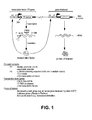
- Figure 1 illustrates a translation enhancer-driven positive feedback vector.
- a schematic representation of the positive feedback vector is shown along with the various promoter (P1) and transcriptional enhancer (P2) sequences, transcription factor (TF) genes, and a protein of interest.
- the transcription factor gene and the gene of interest may be on the same plasmid or on different plasmids.
- N random nucleotide sequence
- N n nucleotides in length
- TEE translational enhancer element
- the encoded transcription factor will then bind to sites in the promoters of the two genes and increase their transcription.
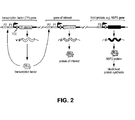
- Figure 2 illustrates a translation enhancer-driven positive feedback vector with a third protein to block host protein synthesis.
- the first two genes transcription factor gene and gene of interest
- the third protein e.g., the Rotavirus NSP3 protein
- the third gene will increase the translation of the first two encoded mRNA by blocking the translation of host mRNAs and reducing the competition from them.
- the third gene is under the transcriptional control of promoter P3, which is either a constitutive promoter or an inducible promoter.
- P3 may also include promoter elements P1 and P2.
- the mRNAs for the gene of interest and third protein will contain a known TEE, while the transcription factor gene will contain a random nucleotide sequence.
- the TEE is resistant to the activity of the third protein.
- all three genes may contain a known TEE that is resistant to the activity of the third protein.
- the three genes may be on one, two, or three different plasmids.
- FIG 3 illustrates a protein overexpression vector.
- the first gene encodes the gene of interest.
- each gene contains a TEE in its 5' leader.
- the TEE is resistant to the activity of the other encoded protein (e.g., NSP3).
- the two genes may be on one or two different plasmids.
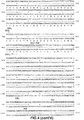
- Figure 4 shows a restriction map for a positive feedback reporting vector (SEQ ID NO: 1). Sequences in bold represent: 1) promoter sequences, including TATA boxes and upstream activating sequences (UAS); 2) GAL4R1-GAL4R4, primer sequences for PCR amplification; 3) ATG and TAA, start and stop translation sequences, respectively; and 4) HRGB1-HRGB4, primer sequences for PCR amplification.
- Figure 5 shows sequences and one-cut enzymes for pUAS-GV16-UAS-BGFP (SEQ ID NO: 2).
- TEE translational enhancer element
- TEEs include, HCV-IRES, IRESes, and IRES-elements, including, but not limited to, Gtx sequences (e.g., Gtx9-nt, Gtx8-nt, Gtx7-nt).
- Gtx sequences e.g., Gtx9-nt, Gtx8-nt, Gtx7-nt.
- TEEs may include N-18 random nucleotides which when operably linked to a cistron, increase the amount of protein induced per unit mRNA.
- sequences for such elements include, but are not limited to, GenBank accession numbers AX205123 and AX205116 (Gtx IRES element), D17763 (HCV-IRES, 5'-untranslated region).
- transtron means a unit of DNA that codes for a single polypeptide or protein.
- transcriptional unit means the segment of DNA within which the synthesis of RNA occurs.
- nucleotide sequence refers to a deoxyribonucleotide or ribonucleotide polymer in either single- or double-stranded form, and unless otherwise limited, encompasses known analogs of natural nucleotides that hybridize to nucleic acids in a manner similar to naturally-occurring nucleotides.
- Nucleic acid sequences can be, e.g., prokaryotic sequences, eukaryotic mRNA sequences, cDNA sequences from eukaryotic mRNA, genomic DNA sequences from eukaryotic DNA (e.g., mammalian DNA), and synthetic DNA or RNA sequences, but are not limited thereto.
- synthetic methods for preparing a nucleotide sequence include, for example, the phosphotriester and phosphodiester methods (see Narang et al., Meth. Enzymol. 68:90, (1979 ); U.S. Pat. No. 4,356,270 , U.S. Pat. No. 4,458,066 , U.S. Pat. No. 4,416,988 , U.S. Pat. No. 4,293,652 ; and Brown et al., Meth Enzymol 68:109, (1979 ), each of which is incorporated herein by reference).
- promoter including grammatical variations thereof, means a nucleic acid sequence capable of directing transcription.
- a variety of promoter sequences are known in the art.
- such elements can include, but are not limited to, TATA-boxes, CCAAT-boxes, bacteriophage RNA polymerase specific promoters (T7: TAATACGACTCACTATAGG; SP6: ATTTAGGTGACACTATAGA; and T3: AATTAACCCTCACTAAAGG), an SP1 site (GGGCGG), and a cyclic AMP response element (TGACGTCA).
- transcriptional element means a cis-acting site on DNA that allows for initiation or stimulation of initiation of transcription, usually through recognition by a transcription factor.
- transcriptional elements exist in motifs including, but not limited to, CACGTG (c-Myc), TGAc/gTc/aA (c-Fos), and t/aGATA (GATA).
- the vector may contain one or more transcriptional elements comprising one or more upstream activating sequences (UAS), including but not limited to, the consensus GAGTACTGTCCTCCGAGCG.
- transcription factor means any protein required to initiate or regulate transcription.
- factors include, but are not limited to, c-Myc, c-Fos, c-Jun, CREB, cEts, GATA, GAL4, GAL4/Vp16, c-Myb, MyoD, NF- ⁇ B, bacteriophage-specific RNA polymerases, Hif-1, and TRE.
- sequences for such factors include, but are not limited to, GenBank accession numbers K02276 (c-Myc), K00650 (c-fos), BC002981 (c - jun), M27691 (CREB), X14798 (cEts), M77810 (GATA), K01486 (GAL4), AY136632 (GAL4/Vp16), M95584 (c-Myb), M84918 (MyoD), 2006293A (NF- ⁇ B), NP 853568 (SP6 RNA polymerase), AAB28111 (T7 RNA polymerase), NP 523301 (T3 RNA polymerase), AF364604 (HIF-1), and X63547 (TRE).
- transcriptional activator regions means protein sequences that, when tethered to DNA near a promoter, activate transcription by contacting targets in the transcriptional machinery (see, e.g., Xiangyang et al., Proc Natl Acad Sci USA (2000) 97:1988-1992 ).
- Activator regions characterized by having an excess of acidic amino acid residues, are found in a wide array of eukaryotic activators, including the yeast activators Gal4, GCN4, and the herpesvirus activator VP16.
- construct means nucleic acid sequence elements arranged in a definite pattern of organization such that the expression of genes/gene products that are operably linked to these elements can be predictably controlled.
- heterologous sequences may be included in the construct, including, but not limited to, for example, sequences which encode growth factors, cytokines, chemokines, lymphokines, toxins, prodrugs, antibodies, antigens, ribozymes, as well as antisense sequences.
- heterologous sequences encode proteins which can serve as therapeutic modalities.
- vector means the DNA of any transmissible agent (e.g., plasmid or virus) into which a segment of foreign DNA can be spliced in order to introduce the foreign DNA into host cells to promote its replication and/or transcription.
- transmissible agent e.g., plasmid or virus
- a vector comprising a construct is useful for identifying translational enhancer elements.
- the construct is contained in a vector, which generally is an expression vector that contains certain components, but otherwise can vary widely in sequence and in functional element content.
- the vector also can contain sequences that facilitate recombinant DNA manipulations, including, for example, elements that allow propagation of the vector in a particular host cell (e.g., a bacterial cell, insect cell, yeast cell, or mammalian cell), selection of cells containing the vector (e.g., antibiotic resistance genes for selection in bacterial or mammalian cells), and cloning sites for introduction of reporter genes or the elements to be examined (e.g., restriction endonuclease sites or recombinase recognition sites).
- elements that allow propagation of the vector in a particular host cell e.g., a bacterial cell, insect cell, yeast cell, or mammalian cell
- selection of cells containing the vector e.g., antibiotic resistance genes for selection in bacterial or ma
- constructs as envisaged provide the advantage that the activity of an oligonucleotide can be examined in the context or milieu of the whole eukaryotic chromosome.
- a chromosome offers unique and complex regulatory features with respect to the control of gene expression, including translation.
- a method of the invention can be practiced such that integration of the expression vector into the eukaryotic host cell chromosome occurs, forming a stable construct prior to selection for an expressed reporter molecule.
- a vector comprising a construct as envisaged can be integrated into a chromosome by a variety of methods and under a variety of conditions.
- the present invention should not be construed as limited to the exemplified methods. Shotgun transfection, for example, can result in stable integration if selection pressure is maintained upon the transfected cell through several generations of cell division, during which time the transfected nucleic acid construct becomes stably integrated into the cell genome.
- Directional vectors which can integrate into a host cell chromosome and form a stable integrant, also can be used.
- vectors can be based on targeted homologous recombination, which restricts the site of integration to regions of the chromosome having the homology, and can be based on viral vectors, which can randomly associate with the chromosome and form a stable integrant, or can utilize site specific recombination methods and reagents such as a lox-Cre system and the like.
- Shotgun transfections can be accomplished by a variety of well known methods, including, for example, electroporation, calcium phosphate mediated transfection, DEAE dextran mediated transfection, a biolistic method, a lipofectin method, and the like.
- the culture conditions are maintained for several generations of cell division to ensure that a stable integration has resulted and, generally, a selective pressure also is applied.
- a viral vector based integration method also can be used and provides the advantage that the method is more rapid and establishes a stable integration by the first generation of cell division.
- a viral vector based integration also provides the advantage that the transfection (infection) can be performed at a low vector:cell ratio, which increases the probability of single copy transfection of the cell.
- a single copy expression vector in the cell during selection increases the reliability that an observed regulatory activity is due to a particular oligonucleotide, and facilitates isolation of such an oligonucleotides.
- the present invention describes a positive feedback based system where one cistron encoding a TEE containing transcription factor triggers a positive feedback loop in which the transcription factor binds to a select sequence in the upstream promoter of the cistron encoding the factor and one or more cistrons encoding an mRNA of interest, thereby increasing the transcription of both mRNAs. More mRNA results in more transcription factor, leading to ever-increasing amounts of both the transcription factor and protein of interest mRNA and the encoded proteins.
- the vector system is a translation enhancer-driven positive feedback vector (e.g., see Figure 1 ).
- a construct expresses two mRNAs: one encoding a protein of interest which may be a reporter protein and the other encoding a transcription factor.
- the transcription of both mRNAs is driven by minimal promoters but can be enhanced by the expression of the transcription factor via binding sites for the transcription factor that are located in the promoters of both genes.
- a small amount of transcription factor mRNA is expressed from the minimal promoter but the translation of this mRNA is blocked by an obstacle in the 5' leader of the mRNA encoding the transcription factor. This obstacle may be a stable stem-loop structure and/or upstream AUG initiation codons.
- the synthesis of this transcription factor is dependent on the presence of a translation enhancer in the mRNA encoding this factor.
- the translational enhancer can be located in the 5' leader of the mRNA, downstream of the inhibitory elements but upstream of the initiation codon, or it may be located in the 3' untranslated region (UTR).
- the TEE is situated in the 5' leader sequence which is contained within a cistron.
- a transcription factor e.g., Gal4/Vp16
- a transcription factor that contains the DNA binding domain of the yeast GAL4 transcription factor
- Other suitable transcription factors include, but are not limited to, those that are expressed endogenously at very low levels, or are absent in the cells of interest.
- bacteriophage specific- RNA polymerases e.g., T7, T3, and SP6 RNA polymerases
- the genes as envisaged can be encoded by one or more vectors.
- the vector system can be used to identify a TEE.
- An oligonucleotide to be examined for translational activity can be operatively linked to an expressible polynucleotide, which, for example, can encode a reporter molecule.
- the term "operatively linked" means that a regulatory element, which can be a synthetic regulatory oligonucleotide or an oligonucleotide to be examined for such activity, is positioned with respect to a translatable nucleotide sequence such that the regulatory element can affect its regulatory activity.
- An oligonucleotide having translational enhancer activity generally is positioned within about 1 to 500 nucleotides, particularly within about 1 to 100 nucleotides of a translation start site.
- a library of randomized oligonucleotides to be examined for translational regulatory activity can be provided, and one or more individual members of the library can be cloned into multiple copies of the construct of the vector.
- the oligonucleotide to be examined for translational regulatory activity is introduced such that it is operatively linked to the minimal promoter element in the construct and, therefore, has the potential to function as a TEE.
- a library of different constructs, which can be contained in a vector is formed, each construct differing in the introduced potential regulatory oligonucleotide sequence.
- Oligonucleotides to be examined for translational regulatory activity can be, for example, cDNA sequences encoding 5' UTRs of cellular mRNAs, including a library of such cDNA molecules.
- TEEs identified according to a method of the invention including synthetic TEE elements, have been found to be complementary to oligonucleotide sequences of ribosomal RNA, particularly to un-base paired oligonucleotide sequences of rRNA, which are interspersed among double stranded regions that form due to hybridization of self complementary sequences within rRNA.
- oligonucleotides to be examined for translational regulatory activity can be designed based on their being complementary to an oligonucleotide sequence of rRNA, particularly to an un-base paired oligonucleotide sequence of rRNA such as a yeast, mouse or human rRNA (e.g., see GenBank Accession Nos. V01335, X00686, X03205, each of which is incorporated herein by reference).
- oligonucleotides to be examined for translational regulatory activity can be a library of variegated oligonucleotide sequences (see, for example, U.S. Pat. No.
- 5,837,500 incorporated herein by reference
- a translational enhancer element as disclosed herein or identified using a method of the invention, or on an oligonucleotides sequence complementary to an un-base paired region of a rRNA.
- oligonucleotides identified herein as having translational regulatory activity provide modules that can be used alone or combined with each other to produce desired activities.
- concatemers of an identified TEE can vastly increase polypeptide expression from an associated cistron, including concatemers of 2, 5, 10, 20, 35, 50 or 75 copies of a TEE, which independently can be multiple copies of the same or different TEEs, and which can be operatively linked adjacent to each other or separated by spacer nucleotide sequences that can vary from 1 to about 100 nucleotides in length.
- a synthetic translational regulatory element can be identified by screening, for example, a library of oligonucleotides containing a large number of different nucleotide sequences.
- the oligonucleotides can be variegated oligonucleotide sequences, which are based on but different from a known translational regulatory element, for example, an oligonucleotide complementary to an un base paired sequence of a rRNA, or can be a random oligonucleotide library.
- the use of randomized oligonucleotides e.g., N18 provides the advantage that no prior knowledge is required of the nucleotide sequence, and provides the additional advantage that completely new regulatory elements can be identified.
- a synthetic TEE oligonucleotide which can be obtained using a method of the invention, can increase or decrease the level of translation of an RNA containing the oligonucleotide.
- a TEE oligonucleotide can selectively regulate translation in a context specific manner, depending, for example, on the cell type for expression, the nature of the TEE sequence, or the presence of other effector sequences in the construct.
- a regulatory element can be of various lengths from a few nucleotides to several hundred nucleotides.
- the length of an oligonucleotide in a library of oligonucleoltides to be screened can be any length, including oligonucleotides as short as about 6 nucleotides or as long as about 100 nucleotides or more.
- the oligonucleotides to be examined are about 6, 12, 18, 30 nucleotides or the like in length.
- the complexity of the library i.e., the number of unique members, also can vary, although preferably the library has a high complexity so as to increase the likelihood that regulatory sequences are present.
- Libraries can be made using any method known in the art, including, for example, using an oligonucleotide synthesizer and standard oligonucleotide synthetic chemistry.
- the library complexity depends in part on the size of the expression vector population being used to clone the random library and transfect cells.
- a theoretical limitation for the complexity of the library also relates to utilization of the library content by the recipient expression vector and by the transfected cells, as well as by the complexity that can be obtained using a particular method of oligonucleotide synthesis.
- TEEs To identify TEEs, libraries of constructs that contain either random nucleotide sequences or cDNA segments of 5' leaders of mRNAs are introduced into cells. Cells containing a construct with a TEE upstream of the transcription factor will trigger the positive feedback mechanism and produce large amounts of both proteins. If one of the proteins is a reporter protein, its activity can be readily assayed. For example, if the reporter is enhanced green fluorescent protein (EGFP), fluorescence activated cell sorting (FACS) can be used to identify cells expressing the fluorescent protein.
- the means of detecting the presence of GFP in transfected cells is by fluorescence microscopy and by FACS.
- the means of detecting GFP or of tracking or monitoring cells which have been transfected with a construct of the present invention may be any means whereby the presence GFP protein is detectable.
- optical imaging, infrared imaging of gene expression, and flow cytometry may also be used.
- reporter proteins can include, but are not limited to, enhanced yellow fluorescent protein (EYFP), enhanced cyan fluorescent protein (ECFP), luciferase, ⁇ -galactosidase, ⁇ -glucuronidase, alkaline phosphatase, and chloramphenicol acetyltransferase.
- EYFP enhanced yellow fluorescent protein
- ECFP enhanced cyan fluorescent protein
- luciferase ⁇ -galactosidase
- ⁇ -glucuronidase ⁇ -glucuronidase
- alkaline phosphatase alkaline phosphatase
- chloramphenicol acetyltransferase chloramphenicol acetyltransferase
- such a vector can be used to identify sequences that enhance translation by various mechanisms, including but not limited to, cap-independent and cap-dependent mechanisms.
- the vector system as envisaged can be used to overexpress another protein of interest.
- the mRNA encoding the transcription factor will contain a known TEE.
- Such a system may be suitable for the batch production of proteins, where the transcription factor is under the control of a regulatable promoter, so that cells can be grown to a large volume before the positive feed back mechanisms and large scale protein production are induced by, for example, an inducing agent.
- inducing agent is used to refer to a chemical, biological or physical agent that effects translation from an inducible translational regulatory element.
- translation from the element In response to exposure to an inducing agent, translation from the element generally is initiated de novo or is increased above a basal or constitutive level of expression.
- induction can be identified using the methods disclosed herein, including detecting an increased level of a reporter polypeptide encoded by the expressible polynucleotide that is operatively linked to the TEE.
- An inducing agent can be, for example, a stress condition to which a cell is exposed, for example, a heat or cold shock, a toxic agent such as a heavy metal ion, or a lack of a nutrient, hormone, growth factor, or the like; or can be exposure to a molecule that affects the growth or differentiation state of a cell such as a hormone or a growth factor.
- a stress condition to which a cell is exposed
- a heat or cold shock a toxic agent such as a heavy metal ion, or a lack of a nutrient, hormone, growth factor, or the like
- a molecule that affects the growth or differentiation state of a cell such as a hormone or a growth factor.
- the translational regulatory activity of an oligonucleotide can be examined in cells that are exposed to particular conditions or agents, or in cells of a particular cell type, and oligonucleotides that have translational regulatory activity in response to and only under the specified conditions or in a specific cell type
- a vector system which expresses a third mRNA that encodes a protein that can increase the translation of the other two encoded mRNAs by decreasing the translation of cellular mRNAs ( Figure 2 ).
- the expression of the third protein decreases competition from the cellular mRNAs and leads to an increased signal-to-noise ratio in the selection application.
- the third protein may be a viral protein that blocks translation of host mRNAs and thereby decreases the competition arising from these mRNAs.
- Viral proteins include, but are not limited to, NSP3, L-proteinase, or proteinase 2A.
- the NSP3 protein blocks cap-dependent translation by binding to the eukaryotic initiation factor 4G (elF4G) with high affinity, displacing the poly(A) binding protein, disrupting mRNA circulation, and dramatically decreasing efficiency.
- the three vector encoded mRNAs contain features that prevent their translation from being blocked.
- the third protein can be under the control of the encoded transcription factor or under the control of an inducible promoter.
- the vector system expresses a gene product or protein of interest and a third protein, where the third protein blocks host protein synthesis ( Figure 3 ).
- the gene product or protein of interest will contain features that prevent their translation from being blocked.
- the genes are transcribed by either a constitutive promoter or an inducible promoter.
- kits of the invention are also envisaged.
- a kit can contain a packaging material, for example, a container having a TEE containing oligonucleotide according to the invention and a label that indicates uses of the oligonucleotide for regulating translation of a polynucleotide in an expression vector or other expression construct.
- the system preferably in kit form, provides an integrating expression vector for use in selecting a TEE oligonucleotide using a method as disclosed herein.
- a kit can contain a packaging material, which comprises a container having an integrating expression vector and a label that indicates uses of the vector for selecting oligonucleotide sequences capable of regulatory function.
- kits of the invention Such instructions for use generally include a tangible expression describing the components, for example, a TEE containing oligonucleotide, including its concentration and sequence characteristics, and can include a method parameter such as the manner by which the reagent can by utilized for its intended purpose.
- the reagents, including the oligonucleotide, which can be contained in a vector or operably linked to an expressible polynucleotide, can be provided in solution, as a liquid dispersion, or as a substantially dry powder, for example, in a lyophilized form.
- the packaging materials can be any materials customarily utilized in kits or systems, for example, materials that facilitate manipulation of the regulatory oligonucleotides and, if present, of the vector, which can be an expression vector.
- the package can be any type of package, including a solid matrix or material such as glass, plastic (e.g., polyethylene, polypropylene, and polycarbonate), paper, foil, or the like, which can hold within fixed limits a reagent such as a TEE containing oligonucleotide or vector.
- a package can be a bottle, vial, plastic and plastic-foil laminated envelope, or the like container used to contain a contemplated reagent.
- the package also can comprise one or more containers for holding different components of the kit.
- the constructs used in the present invention express one or more cistronic mRNAs that encode a transcription factor, protein of interest and/or a protein blocking host protein synthesis.
- Promoters used to drive transcription of the cistronic mRNAs consist of a minimal promoter (TATA box) or regulatable promoter, alone or in combination with one or more other transcriptional elements, including upstream activating sequences (UAS) and bacteriophage specific promoters.
- a first cistron would comprise a gene encoding a transcription factor, which is inserted downstream from a known or unknown TEE.
- One such construct, containing a known TEE would comprise a TATA box promoter element, one or more UAS sequences, and one or more Gtx modules upstream from a cistron encoding Gal4/Vp16.
- the promoters used to drive transcription in this example comprise a minimal promoter (TATA box) in combination with four copies of the GAL4 upstream activating sequence (UAS).
- the first transcription unit encodes the GAL4/VP16 fusion protein and the second transcription unit encodes EGFP.
- the TEE insertion site (denoted by "N" in Figure 4 ) contains nucleotides from a library of 18 random nucleotides.
- the vector backbone is based on plasmid pHRG-B (Promega, Madison, WI).
- the original Bam HI site in pHRG-B was mutated so that both Eco RI and Bam HI sites in the TEE insertion site were unique.
- the random N 18 fragments are cloned into this reporter vector by using the Eco RI and Bam HI restriction sites.
- Reporter constructs are transfected into Chinese hamster ovary cells (CHO) (2 x 10 4 ) by using FuGENE 6TM (Roche, Alameda, CA). Transfection efficiencies are normalized by co-transfection with a LaeZ reporter gene construct (pCMV ⁇ , Clontech, Mountainview, CA). Cells are harvested 3 days after transfection and sorted by FACS on a FACSVantage SETM (Becton Dickinson, Franklin Lakes, NJ) (Also, see Owens et al., Proc Natl Acad Sci USA (2004) 101:9590-9594 ). ⁇ -galactosidase assays may be performed by methods known in the art. For example, see Chappell et al., Proc Natl Acad Sci USA (2000) 97:1536-1541 .
- Double-stranded oligonucleotides containing N18 sequences are cloned into the TEE assay site of the positive feedback vector by using Eco RI and Bam HI restriction sites. Overnight ligations are performed using T4 DNA ligase at 16°C. The resulting ligation mix is transfected into CHO cells, and FACS analysis is performed as above. For each FACS analysis, the first 100,000 cells are analyzed and a sorting window is drawn to select the cells with the highest EGFP expression. DNA is extracted from cells recovered by FACS and PCR reactions are carried-out by using primers to sequences that flank the EcoRI and Bam HI restriction sites. After digestion with both Eco RI and Bam HI restriction enzymes, the resulting fragments are re-cloned into the same amplification vector and retested.
- CMV-EGFP CMV-enhanced cyan fluorescent protein
- Clontech Clontech, Mountainview, CA
- the cloning vector pBluescript-KS IITM (Stratagene, La Jolla, CA) is used as filler for co-transfection.
- CHO cells are transfected with the different mixtures and FACS analysis is performed 2 days later to assess the expression of both EGFP and ECFP.
- compositions and methods disclosed and claimed herein can be made and executed without undue experimentation in light of the present disclosure. While the compositions and methods of this invention have been described in terms of illustrative embodiments, it will be apparent to those of skill in the art that variations may be applied to the composition, methods and in the steps or in the sequence of steps of the methods described herein without departing from the concept, spirit, and scope of the invention. More specifically, it will be apparent that certain agents which are both chemically and physiologically related may be substituted for the agents described herein while the same or similar results would be achieved. Although the invention has been described with reference to the above examples, it will be understood that modifications and variations are encompassed within the spirit and scope of the invention. Aspects and features of the present disclosure are set out in the following numbered clauses which contain the subject matter of the claims of the parent application as filed.
Landscapes
- Genetics & Genomics (AREA)
- Health & Medical Sciences (AREA)
- Life Sciences & Earth Sciences (AREA)
- Engineering & Computer Science (AREA)
- Chemical & Material Sciences (AREA)
- Wood Science & Technology (AREA)
- Organic Chemistry (AREA)
- Biomedical Technology (AREA)
- Biotechnology (AREA)
- General Engineering & Computer Science (AREA)
- Zoology (AREA)
- Bioinformatics & Cheminformatics (AREA)
- Biophysics (AREA)
- Microbiology (AREA)
- Plant Pathology (AREA)
- Molecular Biology (AREA)
- Biochemistry (AREA)
- General Health & Medical Sciences (AREA)
- Physics & Mathematics (AREA)
- Bioinformatics & Computational Biology (AREA)
- Crystallography & Structural Chemistry (AREA)
- Micro-Organisms Or Cultivation Processes Thereof (AREA)
- Measuring Or Testing Involving Enzymes Or Micro-Organisms (AREA)
- Investigating Or Analysing Materials By The Use Of Chemical Reactions (AREA)
Applications Claiming Priority (2)
| Application Number | Priority Date | Filing Date | Title |
|---|---|---|---|
| US71114905P | 2005-08-24 | 2005-08-24 | |
| EP06802211.0A EP1934329B1 (fr) | 2005-08-24 | 2006-08-23 | Systemes de vecteurs dependant d'elements d'activation traductionnelle |
Related Parent Applications (2)
| Application Number | Title | Priority Date | Filing Date |
|---|---|---|---|
| EP06802211.0 Division | 2006-08-23 | ||
| EP06802211.0A Division-Into EP1934329B1 (fr) | 2005-08-24 | 2006-08-23 | Systemes de vecteurs dependant d'elements d'activation traductionnelle |
Publications (1)
| Publication Number | Publication Date |
|---|---|
| EP2479254A1 true EP2479254A1 (fr) | 2012-07-25 |
Family
ID=37772364
Family Applications (2)
| Application Number | Title | Priority Date | Filing Date |
|---|---|---|---|
| EP11181999A Withdrawn EP2479254A1 (fr) | 2005-08-24 | 2006-08-23 | Systèmes de vecteurs dépendants d'élément d'améliorant de translation |
| EP06802211.0A Not-in-force EP1934329B1 (fr) | 2005-08-24 | 2006-08-23 | Systemes de vecteurs dependant d'elements d'activation traductionnelle |
Family Applications After (1)
| Application Number | Title | Priority Date | Filing Date |
|---|---|---|---|
| EP06802211.0A Not-in-force EP1934329B1 (fr) | 2005-08-24 | 2006-08-23 | Systemes de vecteurs dependant d'elements d'activation traductionnelle |
Country Status (6)
| Country | Link |
|---|---|
| US (3) | US9068197B2 (fr) |
| EP (2) | EP2479254A1 (fr) |
| JP (1) | JP5225087B2 (fr) |
| AU (1) | AU2006283077B2 (fr) |
| CA (1) | CA2620420A1 (fr) |
| WO (1) | WO2007025008A2 (fr) |
Families Citing this family (70)
| Publication number | Priority date | Publication date | Assignee | Title |
|---|---|---|---|---|
| SG10201408162PA (en) * | 2007-12-11 | 2015-01-29 | Scripps Research Inst | Compositions and methods related to mrna translational enhancer elements |
| AU2009290563A1 (en) * | 2008-09-15 | 2010-03-18 | Genentech, Inc. | Compositions and methods for regulating cell osmolarity |
| US20130230884A1 (en) * | 2010-07-16 | 2013-09-05 | John Chaput | Methods to Identify Synthetic and Natural RNA Elements that Enhance Protein Translation |
| WO2014093924A1 (fr) | 2012-12-13 | 2014-06-19 | Moderna Therapeutics, Inc. | Molécules d'acide nucléique modifiées et leurs utilisations |
| PL2922554T3 (pl) | 2012-11-26 | 2022-06-20 | Modernatx, Inc. | Na zmodyfikowany na końcach |
| AU2013374345A1 (en) | 2013-01-17 | 2015-08-06 | Moderna Therapeutics, Inc. | Signal-sensor polynucleotides for the alteration of cellular phenotypes |
| WO2016077125A1 (fr) | 2014-11-10 | 2016-05-19 | Moderna Therapeutics, Inc. | Molécules d'acide nucléique de remplacement contenant une quantité réduite d'uracile et utilisations associées |
| EP3242939A4 (fr) * | 2015-01-05 | 2018-10-17 | Seagull BioSolutions Pvt. Ltd. | Molécules d'adn produisant des virus à arn à brin négatif de réplication et de non-réplication de conception personnalisée et leurs utilisations |
| PT3294762T (pt) | 2015-05-11 | 2022-03-21 | Impossible Foods Inc | Constructos de expressão e métodos de modificar geneticamente levedura metilotrófica |
| EP3350333B2 (fr) | 2015-09-17 | 2025-08-06 | ModernaTX, Inc. | Polynucléotides contenant une région de queue de stabilisation |
| JP6948313B6 (ja) | 2015-09-17 | 2022-01-14 | モデルナティエックス インコーポレイテッド | 治療剤の細胞内送達のための化合物および組成物 |
| EP3359670B2 (fr) | 2015-10-05 | 2024-02-14 | ModernaTX, Inc. | Procédés d'administration thérapeutique de médicaments à base d'acide ribonucléique messager |
| SI3362461T1 (sl) | 2015-10-16 | 2022-05-31 | Modernatx, Inc. | Analogi kape MRNA z modificirano fosfatno povezavo |
| WO2017066791A1 (fr) | 2015-10-16 | 2017-04-20 | Modernatx, Inc. | Analogues de coiffe d'arnm à substitution sucre |
| WO2017066782A1 (fr) | 2015-10-16 | 2017-04-20 | Modernatx, Inc. | Analogues de coiffes d'arnm hydrophobes |
| WO2017066789A1 (fr) | 2015-10-16 | 2017-04-20 | Modernatx, Inc. | Analogues de coiffe d'arnm avec sucre modifié |
| WO2017066793A1 (fr) | 2015-10-16 | 2017-04-20 | Modernatx, Inc. | Analogues de coiffes arnm et procédés de coiffage d'arnm |
| LT3394030T (lt) | 2015-12-22 | 2022-04-11 | Modernatx, Inc. | Junginiai ir kompozicijos terapinei medžiagai teikti intraceliuliniu būdu |
| EP3405579A1 (fr) | 2016-01-22 | 2018-11-28 | Modernatx, Inc. | Acides ribonucléiques messagers pour la production de polypeptides de liaison intracellulaires et leurs procédés d'utilisation |
| WO2017180917A2 (fr) | 2016-04-13 | 2017-10-19 | Modernatx, Inc. | Compositions lipidiques et leurs utilisations pour l'administration intratumorale de polynucléotides |
| WO2017201342A1 (fr) | 2016-05-18 | 2017-11-23 | Modernatx, Inc. | Polynucléotides codant pour jagged1 pour le traitement du syndrome d'alagille |
| SI3458083T1 (sl) | 2016-05-18 | 2023-03-31 | Modernatx, Inc. | Polinukleotidi, ki kodirajo interlevkin-12 (IL12) in njihova uporaba |
| WO2017218704A1 (fr) | 2016-06-14 | 2017-12-21 | Modernatx, Inc. | Formulations stabilisées de nanoparticules lipidiques |
| EP3293263A1 (fr) * | 2016-09-07 | 2018-03-14 | Steinbeis Innovation gGmbH | Expression de gènes inductibles par des fragments d'adn riches linéaires dans des cellules de mammifères et procédés associés |
| US11583504B2 (en) | 2016-11-08 | 2023-02-21 | Modernatx, Inc. | Stabilized formulations of lipid nanoparticles |
| CA3055653A1 (fr) | 2017-03-15 | 2018-09-20 | Modernatx, Inc. | Formulation de nanoparticules lipidiques |
| EP4186888B1 (fr) | 2017-03-15 | 2025-11-26 | ModernaTX, Inc. | Composé et compositions pour l'administration intracellulaire d'agents thérapeutiques |
| WO2018232120A1 (fr) | 2017-06-14 | 2018-12-20 | Modernatx, Inc. | Composés et compositions pour l'administration intracellulaire d'agents |
| US20200131498A1 (en) | 2017-06-14 | 2020-04-30 | Modernatx, Inc. | Polynucleotides encoding methylmalonyl-coa mutase |
| US20200362382A1 (en) | 2017-08-18 | 2020-11-19 | Modernatx, Inc. | Methods of preparing modified rna |
| EP3675817A1 (fr) | 2017-08-31 | 2020-07-08 | Modernatx, Inc. | Procédés de fabrication de nanoparticules lipidiques |
| WO2019140116A2 (fr) | 2018-01-10 | 2019-07-18 | Rubius Therapeutics, Inc. | Arn amplifiables pour systèmes cellulaires thérapeutiques |
| WO2020061367A1 (fr) | 2018-09-19 | 2020-03-26 | Modernatx, Inc. | Composés et compositions pour l'administration intracellulaire d'agents thérapeutiques |
| WO2020061457A1 (fr) | 2018-09-20 | 2020-03-26 | Modernatx, Inc. | Préparation de nanoparticules lipidiques et leurs méthodes d'administration |
| CN118697900A (zh) | 2019-01-31 | 2024-09-27 | 摩登纳特斯有限公司 | 制备脂质纳米颗粒的方法 |
| KR20210133218A (ko) | 2019-01-31 | 2021-11-05 | 모더나티엑스, 인크. | 볼텍스 믹서 및 연계된 방법, 시스템 및 이의 장치 |
| AU2020257270B2 (en) | 2019-04-17 | 2026-01-15 | Impossible Foods Inc. | Materials and methods for protein production |
| EP3959311A1 (fr) | 2019-04-25 | 2022-03-02 | Impossible Foods Inc. | Compositions et procédés pour la production de protéines contenant de l'hème |
| JP7792335B2 (ja) * | 2019-12-12 | 2025-12-25 | センティ バイオサイエンシズ インコーポレイテッド | 細胞の調節されたアーマリングのための方法及び組成物 |
| WO2021204175A1 (fr) | 2020-04-09 | 2021-10-14 | Suzhou Abogen Biosciences Co., Ltd. | Compositions de nanoparticules lipidiques |
| EP4132576A1 (fr) | 2020-04-09 | 2023-02-15 | Suzhou Abogen Biosciences Co., Ltd. | Vaccins à base d'acide nucléique pour coronavirus |
| KR20230030588A (ko) | 2020-06-30 | 2023-03-06 | 쑤저우 아보젠 바이오사이언시스 컴퍼니 리미티드 | 지질 화합물 및 지질 나노입자 조성물 |
| EP4185274A1 (fr) | 2020-07-24 | 2023-05-31 | Strand Therapeutics Inc. | Nanoparticule de nanoparticule lipidique comprenant des nucléotides modifiés |
| CN114391008B (zh) | 2020-08-20 | 2024-05-03 | 苏州艾博生物科技有限公司 | 脂质化合物和脂质纳米颗粒组合物 |
| AR124599A1 (es) | 2021-01-08 | 2023-04-12 | Strand Therapeutics Inc | Constructos de expresión y usos de estos |
| WO2022152141A2 (fr) | 2021-01-14 | 2022-07-21 | Suzhou Abogen Biosciences Co., Ltd. | Composés lipidiques conjugués polymères et compositions de nanoparticules lipidiques |
| WO2022152109A2 (fr) | 2021-01-14 | 2022-07-21 | Suzhou Abogen Biosciences Co., Ltd. | Composés lipidiques et compositions de nanoparticules lipidiques |
| KR20240013087A (ko) | 2021-05-24 | 2024-01-30 | 쑤저우 아보젠 바이오사이언시스 컴퍼니 리미티드 | 지질 화합물 및 지질 나노입자 조성물 |
| AR127312A1 (es) | 2021-10-08 | 2024-01-10 | Suzhou Abogen Biosciences Co Ltd | Compuestos lipídicos ycomposiciones de nanopartículas lipídicas |
| CN116064598B (zh) | 2021-10-08 | 2024-03-12 | 苏州艾博生物科技有限公司 | 冠状病毒的核酸疫苗 |
| JP2024536406A (ja) | 2021-10-08 | 2024-10-04 | スージョウ・アボジェン・バイオサイエンシズ・カンパニー・リミテッド | 脂質化合物及び脂質ナノ粒子組成物 |
| JP2025502599A (ja) | 2021-12-23 | 2025-01-28 | スージョウ・アボジェン・バイオサイエンシズ・カンパニー・リミテッド | 脂質化合物及び脂質ナノ粒子組成物 |
| CN119317430A (zh) | 2022-04-26 | 2025-01-14 | 斯特兰德生物科技公司 | 包含委内瑞拉马脑炎(vee)复制子的脂质纳米颗粒及其用途 |
| WO2023215498A2 (fr) | 2022-05-05 | 2023-11-09 | Modernatx, Inc. | Compositions et procédés pour un antagonisme de cd28 |
| WO2024026490A1 (fr) | 2022-07-28 | 2024-02-01 | Sqz Biotechnologies Company | Polynucléotides codant pour des antigènes liés et leurs utilisations |
| WO2024037578A1 (fr) | 2022-08-18 | 2024-02-22 | Suzhou Abogen Biosciences Co., Ltd. | Composition de nanoparticules lipidiques |
| WO2024097639A1 (fr) | 2022-10-31 | 2024-05-10 | Modernatx, Inc. | Anticorps se liant à hsa et protéines de liaison et leurs utilisations |
| WO2024118866A1 (fr) | 2022-12-01 | 2024-06-06 | Modernatx, Inc. | Anticorps spécifiques au gpc3, domaines de liaison, protéines associées et leurs utilisations |
| EP4648793A1 (fr) | 2023-01-11 | 2025-11-19 | ModernaTX, Inc. | Vaccins anticancéreux personnalisés |
| WO2024206126A1 (fr) | 2023-03-27 | 2024-10-03 | Modernatx, Inc. | Anticorps se liant à cd16 et leurs utilisations |
| KR20260003656A (ko) | 2023-04-12 | 2026-01-07 | 스트랜드 세러퓨틱스 인코포레이티드 | 합성 회로 및 이의 용도 |
| CN121909034A (zh) | 2023-07-24 | 2026-04-21 | 斯特兰德生物科技公司 | 用于产生用于体外细胞疗法的工程化免疫细胞的基于rna的合成回路 |
| AU2024299882A1 (en) | 2023-07-25 | 2026-01-08 | Strand Therapeutics Inc. | Polynucleotides comprising a micro rna detargeting sensor and uses thereof |
| US20250145959A1 (en) * | 2023-11-06 | 2025-05-08 | The Regents Of The University Of California | Compositions and methods for producing smooth muscle cells |
| WO2025111280A1 (fr) | 2023-11-20 | 2025-05-30 | Strand Therapeutics Inc. | Synthèse d'arn circulaire |
| WO2025108407A2 (fr) | 2023-11-23 | 2025-05-30 | Neuexcell Therapeutics (Suzhou) Co., Ltd. | Compositions de thérapie génique et méthodes de traitement du gliome |
| WO2025113676A1 (fr) | 2023-11-29 | 2025-06-05 | Neuexcell Therapeutics (Suzhou) Co., Ltd. | Compositions et procédés de traitement d'un accident vasculaire cérébral chez des primates |
| WO2025122609A1 (fr) | 2023-12-04 | 2025-06-12 | Strand Therapeutics Inc. | Synthèse d'arn circulaire |
| WO2025171182A1 (fr) | 2024-02-08 | 2025-08-14 | Iovance Biotherapeutics, Inc. | Traitement de patients atteints d'un cancer au moyen de thérapies par lymphocytes infiltrant les tumeurs en combinaison avec un vaccin contre le cancer |
| WO2025217591A1 (fr) | 2024-04-12 | 2025-10-16 | Strand Therapeutics Inc. | Régulateurs synthétiques d'origine humaine et leurs utilisations |
Citations (8)
| Publication number | Priority date | Publication date | Assignee | Title |
|---|---|---|---|---|
| US4293652A (en) | 1979-05-25 | 1981-10-06 | Cetus Corporation | Method for synthesizing DNA sequentially |
| US4356270A (en) | 1977-11-08 | 1982-10-26 | Genentech, Inc. | Recombinant DNA cloning vehicle |
| US4416988A (en) | 1980-12-23 | 1983-11-22 | Harvey Rubin | Detection and isolation of enkephalin mRNA using a synthetic oligodeoxynucleotide |
| US4458066A (en) | 1980-02-29 | 1984-07-03 | University Patents, Inc. | Process for preparing polynucleotides |
| US5206347A (en) | 1985-08-06 | 1993-04-27 | La Jolla Cancer Research Foundation | Isolation and use of receptors binding to a peptide column |
| US5622699A (en) | 1995-09-11 | 1997-04-22 | La Jolla Cancer Research Foundation | Method of identifying molecules that home to a selected organ in vivo |
| US5837500A (en) | 1988-09-02 | 1998-11-17 | Dyax, Corp. | Directed evolution of novel binding proteins |
| WO1999025876A1 (fr) * | 1997-11-17 | 1999-05-27 | Cytos Biotechnology Gmbh | Processus de clonage par expression pour la decouverte, la caracterisation et l'isolement de genes codant pour des polypeptides dotes d'une propriete determinee |
Family Cites Families (20)
| Publication number | Priority date | Publication date | Assignee | Title |
|---|---|---|---|---|
| IL102404A0 (en) * | 1992-07-03 | 1993-01-14 | Daniel Zurr | Method and means for the production of gene products |
| US5844979A (en) * | 1995-02-16 | 1998-12-01 | Global Technologies, Inc. | Intelligent switching system for voice and data |
| US6343313B1 (en) * | 1996-03-26 | 2002-01-29 | Pixion, Inc. | Computer conferencing system with real-time multipoint, multi-speed, multi-stream scalability |
| US6116184A (en) | 1996-05-21 | 2000-09-12 | Symetrix Corporation | Method and apparatus for misted liquid source deposition of thin film with reduced mist particle size |
| US6584076B1 (en) * | 1998-11-02 | 2003-06-24 | Lucent Technologies Inc. | Telecommunications conferencing method and apparatus |
| US6993497B2 (en) * | 1998-12-09 | 2006-01-31 | Net2Phone, Inc. | Integrated, interactive telephone and computer network communications system |
| US6564261B1 (en) * | 1999-05-10 | 2003-05-13 | Telefonaktiebolaget Lm Ericsson (Publ) | Distributed system to intelligently establish sessions between anonymous users over various networks |
| CA2398790A1 (fr) * | 2000-01-28 | 2001-08-02 | The Scripps Research Institute | Procedes pour identifier des elements regulateurs transcriptionnels et translationnels synthetiques, et compositions correspondantes |
| US7103644B1 (en) * | 2001-06-29 | 2006-09-05 | Bellsouth Intellectual Property Corp. | Systems for an integrated data network voice-oriented service and non-voice-oriented service converged creation and execution environment |
| US6981263B1 (en) * | 2001-06-29 | 2005-12-27 | Bellsouth Intellectual Property Corp. | Methods and systems for converged service creation and execution environment applications |
| US7184415B2 (en) * | 2001-12-07 | 2007-02-27 | Telefonaktiebolaget Lm Ericsson (Publ) | Service access system and method in a telecommunications network |
| US6978001B1 (en) * | 2001-12-31 | 2005-12-20 | Cisco Technology, Inc. | Method and system for controlling audio content during multiparty communication sessions |
| US7450149B2 (en) * | 2002-03-25 | 2008-11-11 | Polycom, Inc. | Conferencing system with integrated audio driver and network interface device |
| US7571210B2 (en) * | 2002-12-06 | 2009-08-04 | Insors Integrated Communications | Methods and systems for linking virtual meeting attendees over a network |
| US7184531B2 (en) * | 2003-06-05 | 2007-02-27 | Siemens Communications, Inc. | System and method for authorizing a party to join a conference |
| US7505574B2 (en) * | 2004-03-26 | 2009-03-17 | Microsoft Corporation | Method and system for providing an improved communications channel for telephone conference initiation and management |
| TWI286574B (en) * | 2004-07-27 | 2007-09-11 | Univ Chung Yuan Christian | Use of bicistronic DNA constructs for identifying compounds that inhibit IRES-dependent translation |
| US7532713B2 (en) * | 2004-09-23 | 2009-05-12 | Vapps Llc | System and method for voice over internet protocol audio conferencing |
| US20060088152A1 (en) * | 2004-10-21 | 2006-04-27 | Lightbridge, Inc. | Conference-call initiation |
| US20070266077A1 (en) * | 2006-03-31 | 2007-11-15 | Alcatel | Presence and preference-enabled push to talk telephony system |
-
2006
- 2006-08-23 EP EP11181999A patent/EP2479254A1/fr not_active Withdrawn
- 2006-08-23 JP JP2008528137A patent/JP5225087B2/ja not_active Expired - Fee Related
- 2006-08-23 CA CA002620420A patent/CA2620420A1/fr not_active Abandoned
- 2006-08-23 EP EP06802211.0A patent/EP1934329B1/fr not_active Not-in-force
- 2006-08-23 AU AU2006283077A patent/AU2006283077B2/en not_active Ceased
- 2006-08-23 US US11/509,293 patent/US9068197B2/en not_active Expired - Fee Related
- 2006-08-23 WO PCT/US2006/033017 patent/WO2007025008A2/fr not_active Ceased
-
2010
- 2010-08-16 US US12/857,286 patent/US9074220B2/en not_active Expired - Fee Related
-
2015
- 2015-05-18 US US14/715,239 patent/US9493768B2/en not_active Expired - Fee Related
Patent Citations (8)
| Publication number | Priority date | Publication date | Assignee | Title |
|---|---|---|---|---|
| US4356270A (en) | 1977-11-08 | 1982-10-26 | Genentech, Inc. | Recombinant DNA cloning vehicle |
| US4293652A (en) | 1979-05-25 | 1981-10-06 | Cetus Corporation | Method for synthesizing DNA sequentially |
| US4458066A (en) | 1980-02-29 | 1984-07-03 | University Patents, Inc. | Process for preparing polynucleotides |
| US4416988A (en) | 1980-12-23 | 1983-11-22 | Harvey Rubin | Detection and isolation of enkephalin mRNA using a synthetic oligodeoxynucleotide |
| US5206347A (en) | 1985-08-06 | 1993-04-27 | La Jolla Cancer Research Foundation | Isolation and use of receptors binding to a peptide column |
| US5837500A (en) | 1988-09-02 | 1998-11-17 | Dyax, Corp. | Directed evolution of novel binding proteins |
| US5622699A (en) | 1995-09-11 | 1997-04-22 | La Jolla Cancer Research Foundation | Method of identifying molecules that home to a selected organ in vivo |
| WO1999025876A1 (fr) * | 1997-11-17 | 1999-05-27 | Cytos Biotechnology Gmbh | Processus de clonage par expression pour la decouverte, la caracterisation et l'isolement de genes codant pour des polypeptides dotes d'une propriete determinee |
Non-Patent Citations (17)
| Title |
|---|
| AUSUBEL ET AL.: "Current Protocols In Molecular Biology", 1995 |
| BROWN ET AL., METH ENZYMOL, vol. 68, 1979, pages 109 |
| CHAPPELL ET AL., PROC NATL ACAD SCI USA, vol. 97, 2000, pages 1536 - 1541 |
| GOLD ET AL., ANN REV BIOCHEM, vol. 64, 1995, pages 763 - 797 |
| M. FUSSENEGGER ET AL: "Autoregulated Multicistronic Expression Vectors Provide One-Step Cloning of Regulated Product Gene Expression in Mammalian Cells", BIOTECHNOLOGY PROGRESS, vol. 13, no. 6, 2 December 1997 (1997-12-02), pages 733 - 740, XP055131070, ISSN: 8756-7938, DOI: 10.1021/bp970108r * |
| MARKLAND ET AL., GENE, vol. 109, 1991, pages 13 - 19 |
| MARTIN FUSSENEGGER ET AL: "Regulated multicistronic expression technology for mammalian metabolic engineering", CYTOTECHNOLOGY, KLUWER ACADEMIC PUBLISHERS, DO, vol. 28, no. 1-3, 1 September 1998 (1998-09-01), pages 111 - 125, XP019236577, ISSN: 1573-0778 * |
| NARANG ET AL., METH. ENZYMOL., vol. 68, 1979, pages 90 |
| O'CONNELL ET AL., PROC NATL ACAD SCI, USA, vol. 93, 1996, pages 5883 - 5887 |
| OWENS ET AL., PROC NATL ACAD SCI USA, vol. 101, 2004, pages 9590 - 9594 |
| P. VENDE ET AL: "Efficient Translation of Rotavirus mRNA Requires Simultaneous Interaction of NSP3 with the Eukaryotic Translation Initiation Factor eIF4G and the mRNA 3' End", JOURNAL OF VIROLOGY, vol. 74, no. 15, 1 August 2000 (2000-08-01), pages 7064 - 7071, XP055053044, ISSN: 0022-538X, DOI: 10.1128/JVI.74.15.7064-7071.2000 * |
| PADILLA-NORIEGA L ET AL: "Rotavirus Protein NSP3 Shuts Off Host Cell Protein Synthesis", VIROLOGY, ELSEVIER, AMSTERDAM, NL, vol. 298, no. 1, 20 June 2002 (2002-06-20), pages 1 - 7, XP004469463, ISSN: 0042-6822, DOI: 10.1006/VIRO.2002.1477 * |
| SAMBROOK ET AL.: "Molecular Cloning: A Laboratory Manual", 1989, COLD SPRING HARBOR LABORATORY PRESS |
| SCOTT, SMITH, SCIENCE, vol. 249, 1992, pages 386 - 390 |
| TUERK, GOLD, SCIENCE, vol. 249, 1990, pages 505 - 510 |
| XIANGYANG ET AL., PROC NATL ACAD SCI USA, vol. 97, 2000, pages 1988 - 1992 |
| ZHOU WEI ET AL: "A positive feedback vector for identification of nucleotide sequences that enhance translation", PROCEEDINGS OF THE NATIONAL ACADEMY OF SCIENCES OF USA, NATIONAL ACADEMY OF SCIENCE, WASHINGTON, DC; US, vol. 102, no. 18, 3 May 2005 (2005-05-03), pages 6273 - 6278, XP002518291, ISSN: 0027-8424, DOI: 10.1073/PNAS.0409892102 * |
Also Published As
| Publication number | Publication date |
|---|---|
| JP5225087B2 (ja) | 2013-07-03 |
| EP1934329B1 (fr) | 2016-11-02 |
| US9068197B2 (en) | 2015-06-30 |
| JP2009505657A (ja) | 2009-02-12 |
| EP1934329A4 (fr) | 2009-06-24 |
| CA2620420A1 (fr) | 2007-03-01 |
| EP1934329A2 (fr) | 2008-06-25 |
| US20150267190A1 (en) | 2015-09-24 |
| US9074220B2 (en) | 2015-07-07 |
| WO2007025008A3 (fr) | 2007-09-27 |
| AU2006283077B2 (en) | 2012-06-28 |
| US20110124100A1 (en) | 2011-05-26 |
| WO2007025008A2 (fr) | 2007-03-01 |
| US20070048776A1 (en) | 2007-03-01 |
| US9493768B2 (en) | 2016-11-15 |
| AU2006283077A1 (en) | 2007-03-01 |
Similar Documents
| Publication | Publication Date | Title |
|---|---|---|
| US9493768B2 (en) | Translational enhancer-element dependent vector systems | |
| US7183395B2 (en) | Methods of identifying synthetic transcriptional and translational regulatory elements, and compositions relating to same | |
| AU738156B2 (en) | Viral vectors and their uses | |
| US8680256B2 (en) | Methods for producing inducible and/or repressible expression active linear RNA interference cassettes and inducible and/or repressible expression active linear gene cassettes and their uses | |
| WO1998012339A9 (fr) | Vecteurs viraux et leurs utilisations | |
| CN110343724A (zh) | 用于筛选和鉴定功能性lncRNA的方法 | |
| US7524653B2 (en) | Small interfering RNA libraries and methods of synthesis and use | |
| US7863222B2 (en) | shRNA library | |
| WO2004085623A2 (fr) | Vecteur d'expression de synthese compact comprenant des molecules d'adn double brin et methodes d'utilisation de ce vecteur | |
| HK1170767A (en) | Translation enhancer-element dependent vector systems | |
| EP2155875B1 (fr) | Acides nucléiques et bibliothèques pour l'utilisation dans l'analyse fonctionelle d'arns régulateurs tels que les micro-arns (miarns) | |
| CA2311168A1 (fr) | Crible genomique fonctionnel pour les elements regulateurs 3' et 5' post-transcriptionnels | |
| US20060040391A1 (en) | RNA interference vectors | |
| EP2307567B1 (fr) | Procédés pour produire des cassettes d interférence arn linéaires actives à expression inductible et/ou répressible et cassettes de gène linéaires actives à expression inductible et/ou répressible et leurs utilisations | |
| AU2001231206B2 (en) | Methods of identifying synthetic transcriptional and translational regulatory elements, and compositions relating to same | |
| CN116240243A (zh) | 基于dCas9-VP64的转录激活系统构建的A549稳定表达细胞系及其应用 | |
| AU2001231206A1 (en) | Methods of identifying synthetic transcriptional and translational regulatory elements, and compositions relating to same | |
| HK40045732A (en) | Method for screening and identifying functional lncrnas |
Legal Events
| Date | Code | Title | Description |
|---|---|---|---|
| PUAB | Information related to the publication of an a document modified or deleted |
Free format text: ORIGINAL CODE: 0009199EPPU |
|
| PUAI | Public reference made under article 153(3) epc to a published international application that has entered the european phase |
Free format text: ORIGINAL CODE: 0009012 |
|
| PUAI | Public reference made under article 153(3) epc to a published international application that has entered the european phase |
Free format text: ORIGINAL CODE: 0009012 |
|
| AC | Divisional application: reference to earlier application |
Ref document number: 1934329 Country of ref document: EP Kind code of ref document: P |
|
| AK | Designated contracting states |
Kind code of ref document: A1 Designated state(s): AT BE BG CH CY CZ DE DK EE ES FI FR GB GR HU IE IS IT LI LT LU LV MC NL PL PT RO SE SI SK TR |
|
| 17P | Request for examination filed |
Effective date: 20130125 |
|
| REG | Reference to a national code |
Ref country code: HK Ref legal event code: DE Ref document number: 1170767 Country of ref document: HK |
|
| 17Q | First examination report despatched |
Effective date: 20130225 |
|
| STAA | Information on the status of an ep patent application or granted ep patent |
Free format text: STATUS: EXAMINATION IS IN PROGRESS |
|
| STAA | Information on the status of an ep patent application or granted ep patent |
Free format text: STATUS: THE APPLICATION IS DEEMED TO BE WITHDRAWN |
|
| 18D | Application deemed to be withdrawn |
Effective date: 20170426 |