EP2480032A1 - Système de communication sans fil, appareil de gestion de communications, appareil de terminal de communication et appareil de commande d'un programme de communication - Google Patents
Système de communication sans fil, appareil de gestion de communications, appareil de terminal de communication et appareil de commande d'un programme de communication Download PDFInfo
- Publication number
- EP2480032A1 EP2480032A1 EP10817017A EP10817017A EP2480032A1 EP 2480032 A1 EP2480032 A1 EP 2480032A1 EP 10817017 A EP10817017 A EP 10817017A EP 10817017 A EP10817017 A EP 10817017A EP 2480032 A1 EP2480032 A1 EP 2480032A1
- Authority
- EP
- European Patent Office
- Prior art keywords
- access method
- transmission power
- communication
- terminal apparatus
- communication terminal
- Prior art date
- Legal status (The legal status is an assumption and is not a legal conclusion. Google has not performed a legal analysis and makes no representation as to the accuracy of the status listed.)
- Withdrawn
Links
- 230000006854 communication Effects 0.000 title claims abstract description 182
- 238000004891 communication Methods 0.000 title claims abstract description 182
- 230000005540 biological transmission Effects 0.000 claims abstract description 181
- 238000000034 method Methods 0.000 claims abstract description 145
- 238000001228 spectrum Methods 0.000 claims description 27
- 238000004364 calculation method Methods 0.000 claims description 10
- 230000000694 effects Effects 0.000 abstract description 66
- 230000006866 deterioration Effects 0.000 description 11
- 238000010586 diagram Methods 0.000 description 11
- RTKKNEBUQCURDQ-UHFFFAOYSA-N 4-(2-hydroxyphenyl)-2-oxobutanoic acid Chemical compound OC(=O)C(=O)CCC1=CC=CC=C1O RTKKNEBUQCURDQ-UHFFFAOYSA-N 0.000 description 8
- 230000003247 decreasing effect Effects 0.000 description 7
- 238000000926 separation method Methods 0.000 description 3
- 238000006243 chemical reaction Methods 0.000 description 2
- 230000007423 decrease Effects 0.000 description 2
- 230000007812 deficiency Effects 0.000 description 2
- 230000010363 phase shift Effects 0.000 description 2
- 230000001413 cellular effect Effects 0.000 description 1
- 125000004122 cyclic group Chemical group 0.000 description 1
- 238000001514 detection method Methods 0.000 description 1
- 230000002708 enhancing effect Effects 0.000 description 1
- 230000007774 longterm Effects 0.000 description 1
- 230000002194 synthesizing effect Effects 0.000 description 1
Images





Classifications
-
- H—ELECTRICITY
- H04—ELECTRIC COMMUNICATION TECHNIQUE
- H04W—WIRELESS COMMUNICATION NETWORKS
- H04W52/00—Power management, e.g. Transmission Power Control [TPC] or power classes
- H04W52/04—Transmission power control [TPC]
- H04W52/06—TPC algorithms
- H04W52/14—Separate analysis of uplink or downlink
- H04W52/146—Uplink power control
-
- H—ELECTRICITY
- H04—ELECTRIC COMMUNICATION TECHNIQUE
- H04W—WIRELESS COMMUNICATION NETWORKS
- H04W52/00—Power management, e.g. Transmission Power Control [TPC] or power classes
- H04W52/04—Transmission power control [TPC]
- H04W52/18—TPC being performed according to specific parameters
- H04W52/24—TPC being performed according to specific parameters using SIR [Signal to Interference Ratio] or other wireless path parameters
- H04W52/247—TPC being performed according to specific parameters using SIR [Signal to Interference Ratio] or other wireless path parameters where the output power of a terminal is based on a path parameter sent by another terminal
-
- H—ELECTRICITY
- H04—ELECTRIC COMMUNICATION TECHNIQUE
- H04W—WIRELESS COMMUNICATION NETWORKS
- H04W52/00—Power management, e.g. Transmission Power Control [TPC] or power classes
- H04W52/04—Transmission power control [TPC]
- H04W52/18—TPC being performed according to specific parameters
- H04W52/26—TPC being performed according to specific parameters using transmission rate or quality of service QoS [Quality of Service]
-
- H—ELECTRICITY
- H04—ELECTRIC COMMUNICATION TECHNIQUE
- H04B—TRANSMISSION
- H04B17/00—Monitoring; Testing
- H04B17/30—Monitoring; Testing of propagation channels
- H04B17/382—Monitoring; Testing of propagation channels for resource allocation, admission control or handover
-
- H—ELECTRICITY
- H04—ELECTRIC COMMUNICATION TECHNIQUE
- H04W—WIRELESS COMMUNICATION NETWORKS
- H04W72/00—Local resource management
- H04W72/04—Wireless resource allocation
- H04W72/044—Wireless resource allocation based on the type of the allocated resource
- H04W72/0453—Resources in frequency domain, e.g. a carrier in FDMA
Definitions
- the present invention relates to a wireless communication system, a communication control apparatus, a communication terminal apparatus, and a control program of the communication control apparatus that perform transmission power control in wireless communication.
- the TPC of the LTE system there exist an open loop TPC determined in the mobile station apparatus and a closed loop TPC controlled from the base station apparatus.
- the open loop TPC there is a path loss which the mobile station apparatus calculates from the transmission power of a known signal transmitted from the base station apparatus and an actually received power.
- the closed loop TPC excess or deficiency of the power received in the base station apparatus is notified of to the mobile station apparatus.
- a timing at which the TPC information is notified of to the mobile station apparatus is notified of periodically as control information, and at the same time, is added to the control information allocating a band to be used for the uplink to the mobile station apparatus, and is notified of thereto.
- DFT-S-OFDM a dynamic spectrum control (DSC: Dynamic Spectrum Control), also called DFT-S-OFDM with SDC (Spectrum Division Control)
- DSC Dynamic Spectrum Control
- SDC Setrum Division Control
- SC-FDMA Discrete Fourier Transform Spread Orthogonal Frequency Division Multiplexing
- the clustered DFT-S-OFDM is capable of acquiring frequency-selective diversity effect because a frequency at which a channel gain is high is selected from a usable band, and the spectrum is allocated discretely.
- the spectrum is allocated discretely, the allocation by integral multiple of a resource block (Resource Block) with twelve subcarriers grouped becomes possible, and a cluster with the spectrum divided is allocated. The fewer the number of resource blocks constituting the cluster is, the higher the frequency-selective diversity effect becomes.
- Non-patent document 1 3GPP TS 36.213 (V8.7.0) "Evolved Universal Terrestrial Radio Access (E-UTRA) Physical layer procedures"
- the clustered DFT-S-OFDM is capable of securing desired communication quality even if transmission is carried out with small power because the frequency-selective diversity effect is acquired more than the DFT-S-OFDM. Therefore, in the case of switching between the clustered DFT-S-OFDM which is currently investigated in the LTE-A system and the DFT-S-OFDM, if the TPC in which the frequency-selective diversity effect of the LTE system is not taken into consideration is applied as it is, the problems for that a reception power needed in the base station apparatus at the time of switching of the access method is not acquired and that the mobile station apparatus uses unnecessarily high power are caused.
- the present invention is accomplished in view of such a situation, and has an object to provide a wireless communication system, a communication control apparatus, a communication terminal apparatus, and a control program of the communication control apparatus, which perform control so as to achieve a transmission power that satisfies a desired communication quality by an access method which a mobile station apparatus uses, in consideration of the frequency-selective diversity effect, when switching an access method to the one having a differrent frequency-selective diversity effect.
- the wireless communication system of the present invention is a wireless communication system in which a communication control apparatus and a communication terminal apparatus that are able to use a plurality of types of access methods perform wireless communication using any of the access methods, wherein the communication control apparatus, when the necessity of changing the access method arises, determines the access method after change and notifies the communication terminal apparatus of switching the access method before change to the determined access method, and performs transmission power control in accordance with communication characteristics of the determined access method.
- the communication control apparatus performs the transmission power control according to communication characteristics of the determined access method, it can be avoided that the transmission power is lacking, or the data transmission is carried out with a transmission power more than necessary, at the time of switching of the access method or the like.
- the plurality of types of access methods includes a first access method that allocates frequency domain signals to contiguous frequency bands, and a second access method that allocates frequency domain signals to discrete frequency bands, and wherein the communication control apparatus, in the second access method, changes a control amount of the transmission power by a control signal notified of to the communication terminal apparatus in accordance with a frequency bandwidth allocated discretely.
- the communication control apparatus in the second access method changes the control amount of the transmission power by the control signal notified of to the communication terminal apparatus in accordance with the frequency bandwidth allocated discretely, the frequency-selective diversity effect can be reflected to the closed loop TPC when switching the access method.
- the appropriate transmission power control is made possible. transmission power control is made possible.
- the plurality of types of access methods includes a first access method that allocates frequency domain signals to contiguous frequency bands, and a second access method that allocates frequency domain signals to discrete frequency bands, and wherein the communication terminal apparatus has a function to determine a transmission power using a calculation method of a transmission power determined in advance for every communication terminal apparatus, and in the second access method, changes a calculation method of a transmission power in accordance with a frequency bandwidth allocated discretely.
- the communication control apparatus in the second access method can change the calculation method of, for example, an open loop TPC in accordance with the frequency bandwidth allocated discretely, in the case of switching the access method, the frequency-selective diversity effect can be reflected to the open loop TPC.
- the appropriate transmission power control is made possible.
- the transmission power control is performed in accordance with the narrowest bandwidth.
- the frequency domain signals In the case of allocating the frequency domain signals to the discrete frequency band, since there is correlation with a channel of an adjacent frequency band, there exists a case where the signal divided in the frequency domain may be allocated to the adjacent frequency band, and the frequency bandwidth allocated discretely may not be constant. In this way, even when the frequency bandwidth allocated discretely differs, since the frequency-selective diversity effect is determined by the bandwidth of the signal divided in the frequency domain, the frequency diversity effect can be reflected with channel quality maintained by performing the transmission power control in accordance with the narrowest bandwidth.
- the transmission power control is performed in accordance with the number of divisions of the spectrum in the case of allocating the frequency domain signals to the discrete frequency bands.
- the transmission power control is performed in accordance with the number of divisions of the spectrum in the case of allocating the frequency domain signals to the discrete frequency bands, the transmission power control in consideration of increase of a peak power caused by increase in the number of divisions of the cluster becomes possible, and the frequency diversity effect can be reflected with channel quality maintained.
- transmission power control is performed in accordance with a moving speed of the communication terminal apparatus.
- the transmission power control is performed in accordance with the moving speed of the communication terminal apparatus, even when the mobile station apparatus is moving in a high speed, the frequency-selective diversity effect in consideration of influence due to time variation of the channel can be reflected.
- the communication control apparatus performs the transmission power control in accordance with a required time until the communication terminal apparatus starts transmission of data after transmitting a known signal used for channel estimation.
- the communication control apparatus since the communication control apparatus performs the transmission power control in accordance with the required time until the communication terminal apparatus starts transmission of data after transmitting the known signal used for channel estimation, the frequency-selective diversity effect in consideration of the influence due to the time variation of the channel depending on the time length until the communication terminal apparatus carries out data transmission after transmitting an SRS (Sounding Reference Signal) that is a reference signal for the channel estimation, can be reflected.
- SRS Sounding Reference Signal
- the communication control apparatus performs the transmission power control in accordance with the frequency bandwidth which the communication terminal apparatus uses and the frequency bandwidth which the communication control apparatus can allocate.
- the communication control apparatus since the communication control apparatus performs the transmission power control in accordance with the frequency bandwidth which the communication terminal apparatus uses and the frequency bandwidth which the communication control apparatus can allocate, also in consideration of the case where the number of resource blocks which the communication terminal apparatus uses increases against the number of resource blocks which the communication control apparatus can allocate, and the case where the allocation to the resource block with the channel deteriorated is necessary, the communication control apparatus can reflect to the transmission power control the gain to which reflected is also a portion corresponding to deterioration of the frequency-selective diversity effect.
- the communication control apparatus when the communication terminal apparatus carries out transmission diversity, performs the transmission power control in accordance with the number of transmission antennas which the communication terminal apparatus uses.
- the communication control apparatus when the communication terminal apparatus carries out the transmission diversity, performs the transmission power control in accordance with the number of transmission antennas which the communication terminal apparatus uses, the transmission power control in consideration of deterioration of the frequency-selective diversity effect due to the application of the transmission diversity can be carried out.
- the communication control apparatus when the communication terminal apparatus carries out MIMO (Multiple-Input Multiple-Output), performs the transmission power control in accordance with the number of transmission antennas which the communication terminal apparatus uses.
- MIMO Multiple-Input Multiple-Output
- the communication control apparatus when the communication terminal apparatus carries out the MIMO (Multiple-Input Multiple-Output), performs the transmission power control in accordance with the number of transmission antennas which the communication terminal apparatus uses, the transmission power control in consideration of deterioration of the frequency-selective diversity effect due to the application of the MIMO can be carried out.
- MIMO Multiple-Input Multiple-Output
- the communication control apparatus when the communication terminal apparatus carries out the MIMO, performs the transmission power control in accordance with the number of receiving antennas to be used.
- the communication control apparatus when the communication terminal apparatus carries out the MIMO, performs the transmission power control in accordance with the number of receiving antennas to be used, the transmission power control in consideration of deterioration of the frequency-selective diversity effect due to the application of the MIMO can be carried out.
- the communication control apparatus of the present invention is a communication control apparatus applied to a wireless communication system in which a communication control apparatus and a communication terminal apparatus that are able to use a plurality of types of access methods perform wireless communication using any of the access methods, wherein the communication control apparatus, when the necessity of changing the access method arises, determines the access method after change and notifies the communication terminal apparatus of switching the access method before change to the determined access method, and performs transmission power control in accordance with communication characteristics of the determined access method.
- the communication control apparatus performs the transmission power control according to communication characteristics of the determined access method, it can be avoided that the communication terminal apparatus performs data transmission with deficiency in the transmission power or with the transmission power more than necessary at the time of switching of the access method or the like.
- the plurality of types of access methods includes a first access method that allocates frequency domain signals to contiguous frequency bands, and a second access method that allocates frequency domain signals to discrete frequency bands, and in the second access method, in accordance with a frequency bandwidth allocated discretely, a control amount of the transmission power is changed by a control signal and is notified of.
- the communication control apparatus in the second access method, changes the control amount of the transmission power by the control signal in accordance with accordance with the frequency bandwidth allocated discretely and carries out notification thereof, the frequency-selective diversity effect can be reflected to the closed loop TPC when switching the access method.
- the appropriate transmission power control is made possible.
- the communication terminal apparatus of the present invention is a communication terminal apparatus applied to a wireless communication system in which a communication control apparatus and a communication terminal apparatus that are able to use a plurality of types of access methods perform wireless communication using any of the access methods, wherein, the plurality of types of access methods includes a first access method that allocates frequency domain signals to contiguous frequency bands and a second access method that allocates frequency domain signals to discrete frequency bands, and the communication terminal apparatus has a function to determine a transmission power using a calculation method of a transmission power determined in advance for every communication terminal apparatus, and in the second access method, changes a calculation method of a transmission power in accordance with a frequency bandwidth allocated discretely.
- the communication terminal apparatus in the second access method, changes the calculation method of the transmission power in accordance with the frequency bandwidth allocated discretely, in the case of switching the access method, the frequency-selective diversity effect can be reflected to the open loop TPC.
- the appropriate transmission power control is made possible.
- the control program of a communication control apparatus of the present invention is a control program of a communication control apparatus applied to a wireless communication system in which a communication control apparatus and a communication terminal apparatus that are able to use a plurality of types of access methods perform wireless communication using any of the access methods, the control program converting a series of processing into computer-readable and computer-executable commands, the series of processing comprising: judging whether the necessity of changing an access method arises; determining, when the necessity of changing an access method arises as a result of the judgment, an access method after change; notifying the communication terminal apparatus of switching an access method before change to the determined access method; and performing transmission power control in accordance with communication characteristics of the determined access method.
- the communication control apparatus performs the transmission power control in accordance with communication characteristics of the determined access method, it can be avoided that the transmission power is lacking, or the data transmission is carried out with a transmission power more than necessary, at the time of switching of the access method or the like.
- the application of the present invention makes it possible to suppress that the mobile station apparatus uses a transmission power more than necessary, or an error rate increases due to the lack of the transmission power, even when switching an access method, and further makes it possible to realize TPC in consideration of the frequency-selective diversity without increasing the number of times of notification of the TPC command of the TPC command from that in a conventional LTE system.
- an access method in which a frequency-selective diversity effect is acquired is made to be the Clustered DFT-S-OFDM.
- the OFDM that is multi-carrier transmission capable of using a band discretely is regarded as the same as the present invention if the transmission power control method is essentially the same.
- a communication terminal apparatus will be described as a mobile station apparatus, and a communication control apparatus will be described as a base station apparatus.
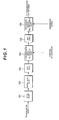
- FIG. 1 is a block diagram illustrating an example of a mobile station apparatus (communication terminal apparatus) that is a transmission apparatus according to an embodiment of the present invention.
- transmission data are input into a code part 101, and an error correcting code is applied.
- a code bit is modulated into modulation symbols, such as QPSK (Quaternary Phase Shift Keying; four phases phase shift modulation) and 16QAM (16 Quadrature Amplitude Modulation; 16 quadrature amplitude modulation) in a modulation part 102, and is converted into frequency domain signals in a DFT part 103.
- modulation symbols such as QPSK (Quaternary Phase Shift Keying; four phases phase shift modulation) and 16QAM (16 Quadrature Amplitude Modulation; 16 quadrature amplitude modulation
- a frequency signal is allocated based on band allocation information indicated in the control information notified of from the base station apparatus (communication control apparatus).
- the band allocated by the control information is a contiguous band
- the DFT-S-OFDM will be used, and in the case of a discrete band, the access method of the Clustered DFT-S-OFDM will be used.
- the signal output from the the transmission-data arrangement part 104 is converted into a time domain signal by an IDFT part 105, and a reference signal is multiplexed in a reference signal multiplexing part 106, and is transmitted from a transmission antenna.
- FIG. 2 illustrates a simple block diagram of a base station apparatus according to an embodiment of the present invention.
- a signal transmitted from a mobile station apparatus is received by a receiving antenna and is input into a reception processing part 201.
- the signal acquired by the reception processing is input into a reception power estimation part 202 and a channel estimation part 204.
- a reception power estimation part 202 a reception power is estimated, and the TPC which is notified of to the mobile station apparatus is determined.
- TPC control information generation part 203 control information of the TPC determined by the reception power estimation part 202 is generated.
- a channel is estimated with a known reference signal acquired by the reception processing, and channel state information is input into a band allocation decision part 205.
- the determined band allocation information based on the channel state information in the band allocation decision part 205 is input into a control information generation part 206.
- control information generation part 206 control information notified of to the mobile station apparatus is generated from the band allocation information and the TPC control information, and is transmitted from an antenna.
- the control information of the TPC control information generation part 203 is transmitted from the antenna.
- FIG. 3 illustrates a timing at which the TPC is notified of in a conventional LTE system.
- a horizontal axis is made to be time and a first TPC to a fifth TPC indicate timing at which the TPC is notified of to the mobile station apparatus.
- the TPC notified of to the mobile station apparatus there exist what is notified of periodically like a first, second, fourth, and fifth TPC, and what is notified of at the same time as the allocation of a resource block like a third TPC.
- the TPC notified of at such timing is reflected in a transmission power as a closed loop TPC.
- a transmission power of the mobile station apparatus in the LTE system is indicated in a formula (1).
- the transmission power of the mobile station apparatus Min P MAX , TX OP + TX CL
- a TX OP is an open loop TPC which is determined by the mobile station apparatus
- a TX CL is a closed loop TPC notified of in the timing shown in FIG. 3 .
- Min indicates that a small value inside ⁇ ⁇ shall be chosen.
- the TX CL is determined so as to be a value reflecting the difference of the TPC notified of from the transmission power of the mobile station apparatus.
- TX POWER that is the transmission power of the mobile station apparatus is determined by the formula (1)
- TX CL which fulfills a formula (3) is applied when notification of T 1 (dB) is received by the TPC.
- TX POWER + T 1 MIN P MAX , TX OP + TX CL
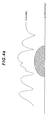
- FIG. 4a is a figure illustrating allocation of a resource block in the case of using the access method of DFT-S-OFDM in the embodiment of the present invention. Since the resource block is allocated contiguously, an inter-symbol interference interference arises and characteristics deteriorate because the resource block with the channel deteriorated is also used.
- FIG. 4b is a figure illustrating allocation of resource blocks in the case of using the access method of Clustered DFT-S-OFDM in the embodiment of the present invention.
- an influence of the ISI is decreased, and good characteristics are acquired. Since the more the number of divisions of the cluster increases, the more a peak power increases in this access method, the DFT-S-OFDM is suitable when a high transmission power is needed in a cell edge etc.
- the DFT-S-OFDM and the Clustered DFT-S-OFDM are switched to be used depending on a channel or moving speed or position in the cell of the mobile station apparatus.
- a cluster size or the number of divisions of the spectrum, etc. is controlled dynamically.
- the cluster size and the frequency-selective diversity effect of the Clustered DFT-S-OFDM are shown in a Table 3.
- N USEDRB when a N USEDRB is made to be the number of resource blocks which the mobile station apparatus uses for data transmission, and the number of resource blocks constituting a cluster is N USEDRB , it means carrying out the data transmission by means of the DFT-S-OFDM since the spectrum is not divided. Since the fewer are the numbers of resource blocks constituting the cluster, the more the frequency-selective diversity effect is acquired, and with the smaller transmission power, the better communication quality is acquired, a relation of X 1 >X 2 >X 3 >X 4 is realized. Although a description for the present example is given by the number of resource blocks constituting the cluster in the Table 3, the frequency-selective diversity effect may be shown by the number of divisions of the spectrum.
- the frequency-selective diversity effect changes based on the notification of the resource block allocation is performed, for example, when the resource block in the third TPC of the FIG. 3 is changed into discrete allocation from contiguous allocation or changed into the contiguous allocation from the discrete allocation, or the cluster size is changed, the frequency-selective diversity effect is reflected to the closed loop TPC.
- the control is carried out as shown in a Table 4.
- i is made to be the number of resource blocks constituting the cluster after switching of the access method
- j is made to be the number of resource blocks constituting the cluster before switching of the access method.
- X i and X j are made to be positive values indicating the frequency-selective diversity effect, and X ij is defined by a following formula.
- Formula 4 X ij X i - X j
- the present example is made to be a mode in which a portion corresponding to the frequency-selective diversity effect is reflected to the TPC of the LTE system
- the present embodiment can be applied also when the TPC of the DFT-S-OFDM is not the same as the LTE.
- the frequency-selective diversity effect is acquired to the maximum extent.
- the TPC may be performed as shown in a Table 5 also in consideration of the moving speed of the mobile station apparatus.
- M SPEED is a portion corresponding to deterioration of the frequency-selective diversity effect due to the moving speed of the mobile station apparatus, and is made to be a positive value.
- the channel estimation error due to the time variation of the channel is influenced also by the time length until the mobile station apparatus carries out data transmission after transmitting a SRS (Sounding Reference Signal) that is a reference signal for the channel estimation, besides the moving speed of the mobile station apparatus. Therefore, the TPC of a Table 6 in consideration of an overhead from the channel estimation up to the estimation up to the data transmission may be performed.
- SRS Sounding Reference Signal
- T OH is a portion corresponding to deterioration, of the frequency-selective diversity, due to the moving speed of the mobile station apparatus and the overhead from the channel estimation up to the data transmission, and is made to be a positive value.
- the control information received in the mobile station apparatus is converted to be applied to a value reflecting the frequency-selective diversity effect of the access method used for the data transmission only when switching of the access method occurs. Therefore, without increasing the number of times of the TPC notification, even if the switching of the access method, or the number of resource blocks and number of divisions of the spectrum which constitute the cluster are changed, the appropriate transmission power control is made possible. Therefore, it can be avoided that the transmission power is lacking, or the data transmission is carried out with an excessive transmission power, at the time of switching of the access method or the like.
- the frequency-selective diversity effect may be reflected to the TPC similarly.
- the number of resource blocks constituting the cluster is made to be constant in the present embodiment, the embodiment can be applied also to the case where the size differs for every cluster.
- the frequency-selective diversity effect may be determined from the cluster consisting of the smallest number of resource blocks in the cluster, and the frequency-selective diversity effect may be determined using the value with the number of resource blocks of all the clusters averaged.
- the transmission power of the mobile station apparatus Min P MAX , TX OP - X i + TX CL
- i is the number of resource blocks constituting the cluster
- X i is made to be a positive value indicating the frequency-selective diversity effect.
- X i is made to be zero.
- M SPEED is the portion corresponding to deterioration of the frequency-selective diversity effect due to the moving speed of the mobile station apparatus, and is made to be a positive valued. It may be made to be the formula (7) in consideration of the overhead of the channel estimation and the data transmission.
- the transmission power of the mobile station apparatus Min P MAX , TX OP - X i + T OH + TX CL
- T OH is a portion corresponding to deterioration, of the frequency-selective diversity, due to the moving speed of the mobile station apparatus and the overhead from the channel estimation up to the data transmission, and is made to be a positive value.
- the frequency-selective diversity effect is indicated by the cluster size, the frequency-selective diversity effect may be defined by the number of divisions of the spectrum.
- the present embodiment by reflecting the frequency-selective diversity effect to the open loop TPC, without increasing the number of times of the notification of the TPC more than that of the LTE system, even if the switching of the access method, or the number of resource blocks and number of divisions of the spectrum which constitute the cluster are changed, the appropriate transmission power control is made possible. Therefore, it can be avoided that the transmission power is lacking, or the data transmission is carried out with an excessive transmission power, at the time of switching of the access method or the like.
- the frequency-selective diversity effect is not determined only by the number of resource blocks constituting the cluster, and is determined in consideration of also the whole number of resource resource blocks which the mobile station apparatus uses, and the number of resource blocks which the base station apparatus can allocate.
- the frequency domain signal with the spectrum divided becomes possible to be allocated to the better channel
- the frequency-selective diversity effect is decreased since the allocation to the resource block with the channel deteriorated is also needed. Therefore, by taking into consideration the number of resource blocks which the base station apparatus can allocate and also the number of resource blocks which the mobile station apparatus uses, a more exact frequency-selective diversity effect can be reflected to the transmission power control.
- FIG. 5a illustrates, in a third embodiment of the present invention, the case where resource blocks which the base station apparatus can allocate are a first RB to a twelfth RB, and the number of the resource blocks are set as 12, and the number of resource blocks which the mobile station apparatus uses is 5.
- FIG. 5b illustrates, in the third embodiment of the present invention, the case where resource blocks which the base station apparatus can allocate are a first RB to a twelfth RB, and the number of the resource blocks is set as 12, and the number of resource blocks which the mobile station apparatus uses is 9.
- the FIG. 5a is an example where the resource blocks which the mobile station apparatus uses are few, and therein, a first RB, third RB, eighth RB, tenth RB and twelfth RB of resource blocks in which the channel gain is comparatively high are allocated.
- the number of resource blocks which the mobile station apparatus uses is large, since the allocation to a fourth RB, sixth RB and ninth RB etc. with the channel deteriorated is performed, the frequency-selective diversity effect is decreased, and characteristics deteriorate due to the inter-symbol interference.
- a formula (8) may be used in which the number of resource blocks which the base station apparatus can allocate and the number of resource blocks which the mobile station apparatus uses are taken into consideration.
- X i is made to be the frequency-selective diversity effect when the number of resource blocks constituting the cluster is made to be i.
- s is made to be the number of resource blocks which the mobile station apparatus uses
- t is the number of resource blocks which the base station apparatus can allocate
- N (s, t) is made to be a portion corresponding to deterioration of the frequency-selective diversity effect calculated from the bandwidth which the mobile station apparatus uses against a allocatable bandwidth.
- the open loop TPC and closed loop TPC in consideration of the switching of the access method, the number of resource blocks constituting the cluster, the number of divisions of the spectrum and the number of resource blocks which the mobile station apparatus uses, becomes possible. becomes possible. Therefore, it can be avoided that the transmission power is lacking, or the data transmission is carried out with an excessive transmission power, at the time of switching of the access method or the like.
- MIMO Multiple-Input Multiple-Output
- transmission diversity using a plurality of transmission antennas
- the frequency-selective diversity effect is reflected to the transmission power control in the case of switching the access method.
- the transmission diversity in which a transmission signal converted from the same code bit is transmitted using the same frequency by a plurality of antennas and the MIMO in which the transmission signal converted from the different code bit is transmitted using the same frequency by plurality of antennas become applicable.
- a configuration of the mobile station apparatus provided with a plurality of antennas will be described.
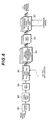
- FIG. 6 is a block diagram illustrating an example of the mobile station apparatus that is the transmission apparatus according to the forth embodiment of the present invention (applying transmission diversity).
- the code bit acquired from a code part 101 is modulation-processed by a modulation part 102, and is converted by a DFT into frequency domain signals.
- a SFBC Space Frequency Block Code
- STBC Space Time Block Code
- an encoding is applied to the frequency domain signals, which is performed in multi-antenna transmission processing part 303 in the present figure.
- CDD Cyclic Delay Diversity
- a circulation delay is given to the time domain signal after an IDFT is carried out, which are transmitted from each transmission antenna.
- FIG. 7 illustrates a simple block diagram of a base station apparatus according to the forth embodiment of the present invention.
- signals received by a plurality of receiving antennas like FIG. 2 are input into a reception processing part 401. Synthesizing of the reception signals is performed in the reception processing part 401, and as for the other processing, the same processing as those in the case of one transmission antenna are carried out.
- X i is made to be the frequency-selective diversity effect when the number of resource blocks constituting the cluster is made to be i.
- TxDANT is a number of the antenna of the transmission diversity, and N TxDANT indicates a portion corresponding to deterioration of the frequency-selective diversity effect due to the number of the transmission antenna.
- X i_TxD >0 shall be fulfilled.
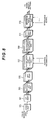
- FIG. 8 is a block diagram illustrating an example of the mobile station apparatus that is a transmission apparatus according to the forth embodiment of the present invention (applying MIMO).
- MIMO the code bit is input into an S/P part, and serial parallel conversion is performed in the S/P part.
- a different signal in which the serial parallel conversion has been carried out is input to each modulation part 503 of each antenna, and transmission processing is performed thereto.
- transmission weighting is applied for every antenna for enhancing detection accuracy of a spatial-multiplexed signal in the receiving side.
- the reference signal is separated by the reception processing part 401 from the signal received by each receiving antenna, and the channel of each antenna is estimated.
- MIMO separation from the signal from which the reference signal has been separated is performed by a signal separation part 403, and the reception power is estimated by the reception power estimation part 202.
- the frequency-selective diversity effect is decreased in comparison with the case where the number of the transmission antenna is one.
- the frequency-selective diversity effect at the time of the MIMO application may be made to be as a formula 10.
- X i_MIMO X i - N MIMOANT
- X i is made to be the frequency-selective diversity effect when the number of resource blocks constituting the cluster is made to be i.
- MIMOANT is a number of the antenna used in the MIMO, and N MIMOANT indicates a portion corresponding to deterioration of the frequency-selective diversity effect due to the number of the transmission antenna.
- X i_MIMO >0 shall be fulfilled.
- the transmission power control in consideration of the number of the antennas which the mobile station apparatus uses becomes possible.
- the description by four transmission antennas has been performed, even transmission antennas of other than four are applicable.
- the number of the transmission antenna is reflected to the frequency-selective diversity effect, and the number of the receiving antenna, however, is also applicable similarly.
- the open loop TPC and closed loop TPC in consideration of the switching of the access method, the number of resource blocks constituting the cluster, the number of divisions of the spectrum and the number of resource blocks which the mobile station apparatus uses, becomes possible. Therefore, it can be avoided that the transmission power is lacking, or the data transmission is carried out with an excessive transmission power, at the time of switching of the access method or the like.
Landscapes
- Engineering & Computer Science (AREA)
- Computer Networks & Wireless Communication (AREA)
- Signal Processing (AREA)
- Quality & Reliability (AREA)
- Mobile Radio Communication Systems (AREA)
- Radio Transmission System (AREA)
Applications Claiming Priority (2)
| Application Number | Priority Date | Filing Date | Title |
|---|---|---|---|
| JP2009217002A JP5425576B2 (ja) | 2009-09-18 | 2009-09-18 | 移動局装置、送信電力調整方法および通信システム |
| PCT/JP2010/064083 WO2011033904A1 (fr) | 2009-09-18 | 2010-08-20 | Système de communication sans fil, appareil de gestion de communications, appareil de terminal de communication et appareil de commande d'un programme de communication |
Publications (2)
| Publication Number | Publication Date |
|---|---|
| EP2480032A1 true EP2480032A1 (fr) | 2012-07-25 |
| EP2480032A4 EP2480032A4 (fr) | 2015-03-11 |
Family
ID=43758517
Family Applications (1)
| Application Number | Title | Priority Date | Filing Date |
|---|---|---|---|
| EP10817017.6A Withdrawn EP2480032A4 (fr) | 2009-09-18 | 2010-08-20 | Système de communication sans fil, appareil de gestion de communications, appareil de terminal de communication et appareil de commande d'un programme de communication |
Country Status (5)
| Country | Link |
|---|---|
| US (1) | US9301260B2 (fr) |
| EP (1) | EP2480032A4 (fr) |
| JP (1) | JP5425576B2 (fr) |
| CN (2) | CN104113902B (fr) |
| WO (1) | WO2011033904A1 (fr) |
Families Citing this family (3)
| Publication number | Priority date | Publication date | Assignee | Title |
|---|---|---|---|---|
| CN104813703B (zh) * | 2012-11-22 | 2019-08-23 | 夏普株式会社 | 终端装置及其方法 |
| CN106922034B (zh) | 2015-12-25 | 2020-03-20 | 华为技术有限公司 | 一种接入方法及装置 |
| JP2018046442A (ja) | 2016-09-15 | 2018-03-22 | 富士通株式会社 | 基地局装置、無線通信システム及び無線送信方法 |
Family Cites Families (16)
| Publication number | Priority date | Publication date | Assignee | Title |
|---|---|---|---|---|
| JP2002204178A (ja) * | 2000-12-28 | 2002-07-19 | Toshiba Corp | 無線通信装置及び情報処理装置 |
| EP1530387A1 (fr) * | 2003-11-06 | 2005-05-11 | Matsushita Electric Industrial Co., Ltd. | Réglage de la puissance d'émission pendant l'affectation de canaux pour la répartition d'interférences dans un système cellulaire de communication mobile |
| CN1744602B (zh) * | 2004-05-28 | 2012-02-15 | 株式会社东芝 | 无线通信系统及无线终端 |
| US7454175B2 (en) * | 2004-12-07 | 2008-11-18 | Atc Technologies, Llc | Broadband wireless communications systems and methods using multiple non-contiguous frequency bands/segments |
| JP4642582B2 (ja) * | 2005-07-27 | 2011-03-02 | 富士通株式会社 | 移動通信システムおよび無線基地局、移動局 |
| WO2007112547A1 (fr) * | 2006-03-20 | 2007-10-11 | Nortel Networks Limited | Procédé et système de réutilisation des fréquences des canaux à demi-débit |
| EP2077634B1 (fr) * | 2006-10-26 | 2016-02-24 | Fujitsu Limited | Appareil de station radio fixe, procédé de transmission de pilotes et appareil terminal |
| JP2008118580A (ja) * | 2006-11-08 | 2008-05-22 | Nec Corp | 無線通信機器、無線通信制御方法及びプログラム |
| WO2008081876A1 (fr) * | 2006-12-28 | 2008-07-10 | Sharp Kabushiki Kaisha | Dispositif de transmission radio, dispositif de commande, système de communication radio et procédé de communication |
| KR20090118074A (ko) * | 2007-03-01 | 2009-11-17 | 가부시키가이샤 엔티티 도코모 | 기지국장치 및 통신제어방법 |
| ATE528942T1 (de) * | 2007-05-02 | 2011-10-15 | Alcatel Lucent | Verfahren zur etablierung eines parametrisierten kanals zur drahtlosen kommunikation |
| US8446849B2 (en) * | 2007-06-20 | 2013-05-21 | Qualcomm Incorporated | Methods and apparatuses for power control |
| EP2169866A4 (fr) * | 2007-07-09 | 2014-07-09 | Sharp Kk | Procédé de planification et dispositif de station de commande |
| US8180335B2 (en) * | 2008-01-11 | 2012-05-15 | Qualcomm Incorporated | System information modification notification and detection in wireless communications |
| JP5256825B2 (ja) * | 2008-04-04 | 2013-08-07 | 株式会社日立製作所 | 基地局装置 |
| JP4841601B2 (ja) * | 2008-09-26 | 2011-12-21 | 京セラ株式会社 | 無線送信装置、送信電力制御方法および送信電力制御プログラム |
-
2009
- 2009-09-18 JP JP2009217002A patent/JP5425576B2/ja active Active
-
2010
- 2010-08-20 CN CN201410290308.4A patent/CN104113902B/zh active Active
- 2010-08-20 CN CN2010800413339A patent/CN102577545A/zh active Pending
- 2010-08-20 US US13/496,809 patent/US9301260B2/en active Active
- 2010-08-20 WO PCT/JP2010/064083 patent/WO2011033904A1/fr not_active Ceased
- 2010-08-20 EP EP10817017.6A patent/EP2480032A4/fr not_active Withdrawn
Also Published As
| Publication number | Publication date |
|---|---|
| EP2480032A4 (fr) | 2015-03-11 |
| US20120218961A1 (en) | 2012-08-30 |
| JP2011066771A (ja) | 2011-03-31 |
| WO2011033904A1 (fr) | 2011-03-24 |
| CN104113902A (zh) | 2014-10-22 |
| JP5425576B2 (ja) | 2014-02-26 |
| US9301260B2 (en) | 2016-03-29 |
| CN102577545A (zh) | 2012-07-11 |
| CN104113902B (zh) | 2018-05-11 |
Similar Documents
| Publication | Publication Date | Title |
|---|---|---|
| US8787261B2 (en) | Base station apparatus, mobile station apparatus and transmission power control method | |
| US9408220B2 (en) | Channel quality reporting for adaptive sectorization | |
| US12185294B2 (en) | Integrated circuit, apparatus and method for communication using resource block groups | |
| EP2833662A1 (fr) | Station de base sans fil, système de communication sans fil, et procédé de communication sans fil | |
| US8731077B2 (en) | Wireless communication system, control station apparatus and terminal apparatus | |
| EP3817465A1 (fr) | Procédé et dispositif de configuration pour informations d'avance temporelle | |
| US10524273B2 (en) | Resource configuration of wireless devices | |
| KR20110047935A (ko) | 다중안테나 시스템에서 다중 셀 다중 입출력 전송을 위한 캘리브레이션 장치 및 방법 | |
| WO2014077742A1 (fr) | Procédés et appareil pour la configuration de mappage d'antenne de signal de référence | |
| CN110024342B (zh) | 基于参数集选择的发射方法、装置和计算机可读存储介质 | |
| WO2015064868A1 (fr) | Pré-compensation de l'erreur de déplacement de phase | |
| US9167581B2 (en) | Base station | |
| EP4271093B1 (fr) | Configuration de ressource de dispositifs sans fil | |
| EP3959917A1 (fr) | Procédé, dispositif et support lisible par ordinateur permettant une transmission d'informations d'état de canal | |
| US9301260B2 (en) | Wireless communication system, communication control apparatus, communication terminal apparatus, and control program of communication control apparatus | |
| US8675761B2 (en) | Allocating antennas for cyclic delay diversity transmission | |
| JP2011066771A5 (fr) | ||
| EP1944892A1 (fr) | Emetteur radio et procede d emission radio | |
| US9277557B2 (en) | Radio base station and communication control method | |
| WO2016029971A1 (fr) | Modulation de porteuse en communications |
Legal Events
| Date | Code | Title | Description |
|---|---|---|---|
| PUAI | Public reference made under article 153(3) epc to a published international application that has entered the european phase |
Free format text: ORIGINAL CODE: 0009012 |
|
| 17P | Request for examination filed |
Effective date: 20120320 |
|
| AK | Designated contracting states |
Kind code of ref document: A1 Designated state(s): AL AT BE BG CH CY CZ DE DK EE ES FI FR GB GR HR HU IE IS IT LI LT LU LV MC MK MT NL NO PL PT RO SE SI SK SM TR |
|
| DAX | Request for extension of the european patent (deleted) | ||
| A4 | Supplementary search report drawn up and despatched |
Effective date: 20150211 |
|
| RIC1 | Information provided on ipc code assigned before grant |
Ipc: H04W 52/14 20090101ALI20150205BHEP Ipc: H04W 88/06 20090101ALI20150205BHEP Ipc: H04J 99/00 20090101ALI20150205BHEP Ipc: H04W 72/04 20090101ALI20150205BHEP Ipc: H04W 52/24 20090101ALI20150205BHEP Ipc: H04W 52/42 20090101AFI20150205BHEP Ipc: H04J 11/00 20060101ALI20150205BHEP Ipc: H04W 52/26 20090101ALI20150205BHEP |
|
| STAA | Information on the status of an ep patent application or granted ep patent |
Free format text: STATUS: THE APPLICATION IS DEEMED TO BE WITHDRAWN |
|
| 18D | Application deemed to be withdrawn |
Effective date: 20150910 |