EP2483401B1 - Cellules hôtes à production améliorée de levure - Google Patents
Cellules hôtes à production améliorée de levure Download PDFInfo
- Publication number
- EP2483401B1 EP2483401B1 EP10762829.9A EP10762829A EP2483401B1 EP 2483401 B1 EP2483401 B1 EP 2483401B1 EP 10762829 A EP10762829 A EP 10762829A EP 2483401 B1 EP2483401 B1 EP 2483401B1
- Authority
- EP
- European Patent Office
- Prior art keywords
- yeast
- dna
- seq
- pyruvate
- host cell
- Prior art date
- Legal status (The legal status is an assumption and is not a legal conclusion. Google has not performed a legal analysis and makes no representation as to the accuracy of the status listed.)
- Active
Links
Images




Classifications
-
- C—CHEMISTRY; METALLURGY
- C12—BIOCHEMISTRY; BEER; SPIRITS; WINE; VINEGAR; MICROBIOLOGY; ENZYMOLOGY; MUTATION OR GENETIC ENGINEERING
- C12N—MICROORGANISMS OR ENZYMES; COMPOSITIONS THEREOF; PROPAGATING, PRESERVING, OR MAINTAINING MICROORGANISMS; MUTATION OR GENETIC ENGINEERING; CULTURE MEDIA
- C12N9/00—Enzymes; Proenzymes; Compositions thereof; Processes for preparing, activating, inhibiting, separating or purifying enzymes
- C12N9/88—Lyases (4.)
-
- C—CHEMISTRY; METALLURGY
- C12—BIOCHEMISTRY; BEER; SPIRITS; WINE; VINEGAR; MICROBIOLOGY; ENZYMOLOGY; MUTATION OR GENETIC ENGINEERING
- C12N—MICROORGANISMS OR ENZYMES; COMPOSITIONS THEREOF; PROPAGATING, PRESERVING, OR MAINTAINING MICROORGANISMS; MUTATION OR GENETIC ENGINEERING; CULTURE MEDIA
- C12N15/00—Mutation or genetic engineering; DNA or RNA concerning genetic engineering, vectors, e.g. plasmids, or their isolation, preparation or purification; Use of hosts therefor
- C12N15/09—Recombinant DNA-technology
- C12N15/63—Introduction of foreign genetic material using vectors; Vectors; Use of hosts therefor; Regulation of expression
- C12N15/79—Vectors or expression systems specially adapted for eukaryotic hosts
- C12N15/80—Vectors or expression systems specially adapted for eukaryotic hosts for fungi
- C12N15/81—Vectors or expression systems specially adapted for eukaryotic hosts for fungi for yeasts
-
- C—CHEMISTRY; METALLURGY
- C12—BIOCHEMISTRY; BEER; SPIRITS; WINE; VINEGAR; MICROBIOLOGY; ENZYMOLOGY; MUTATION OR GENETIC ENGINEERING
- C12N—MICROORGANISMS OR ENZYMES; COMPOSITIONS THEREOF; PROPAGATING, PRESERVING, OR MAINTAINING MICROORGANISMS; MUTATION OR GENETIC ENGINEERING; CULTURE MEDIA
- C12N15/00—Mutation or genetic engineering; DNA or RNA concerning genetic engineering, vectors, e.g. plasmids, or their isolation, preparation or purification; Use of hosts therefor
- C12N15/09—Recombinant DNA-technology
- C12N15/63—Introduction of foreign genetic material using vectors; Vectors; Use of hosts therefor; Regulation of expression
- C12N15/79—Vectors or expression systems specially adapted for eukaryotic hosts
- C12N15/80—Vectors or expression systems specially adapted for eukaryotic hosts for fungi
- C12N15/81—Vectors or expression systems specially adapted for eukaryotic hosts for fungi for yeasts
- C12N15/815—Vectors or expression systems specially adapted for eukaryotic hosts for fungi for yeasts for yeasts other than Saccharomyces
-
- C—CHEMISTRY; METALLURGY
- C12—BIOCHEMISTRY; BEER; SPIRITS; WINE; VINEGAR; MICROBIOLOGY; ENZYMOLOGY; MUTATION OR GENETIC ENGINEERING
- C12N—MICROORGANISMS OR ENZYMES; COMPOSITIONS THEREOF; PROPAGATING, PRESERVING, OR MAINTAINING MICROORGANISMS; MUTATION OR GENETIC ENGINEERING; CULTURE MEDIA
- C12N9/00—Enzymes; Proenzymes; Compositions thereof; Processes for preparing, activating, inhibiting, separating or purifying enzymes
- C12N9/0004—Oxidoreductases (1.)
- C12N9/0006—Oxidoreductases (1.) acting on CH-OH groups as donors (1.1)
-
- C—CHEMISTRY; METALLURGY
- C12—BIOCHEMISTRY; BEER; SPIRITS; WINE; VINEGAR; MICROBIOLOGY; ENZYMOLOGY; MUTATION OR GENETIC ENGINEERING
- C12N—MICROORGANISMS OR ENZYMES; COMPOSITIONS THEREOF; PROPAGATING, PRESERVING, OR MAINTAINING MICROORGANISMS; MUTATION OR GENETIC ENGINEERING; CULTURE MEDIA
- C12N9/00—Enzymes; Proenzymes; Compositions thereof; Processes for preparing, activating, inhibiting, separating or purifying enzymes
- C12N9/0004—Oxidoreductases (1.)
- C12N9/0008—Oxidoreductases (1.) acting on the aldehyde or oxo group of donors (1.2)
-
- C—CHEMISTRY; METALLURGY
- C12—BIOCHEMISTRY; BEER; SPIRITS; WINE; VINEGAR; MICROBIOLOGY; ENZYMOLOGY; MUTATION OR GENETIC ENGINEERING
- C12N—MICROORGANISMS OR ENZYMES; COMPOSITIONS THEREOF; PROPAGATING, PRESERVING, OR MAINTAINING MICROORGANISMS; MUTATION OR GENETIC ENGINEERING; CULTURE MEDIA
- C12N9/00—Enzymes; Proenzymes; Compositions thereof; Processes for preparing, activating, inhibiting, separating or purifying enzymes
- C12N9/10—Transferases (2.)
- C12N9/1022—Transferases (2.) transferring aldehyde or ketonic groups (2.2)
-
- C—CHEMISTRY; METALLURGY
- C12—BIOCHEMISTRY; BEER; SPIRITS; WINE; VINEGAR; MICROBIOLOGY; ENZYMOLOGY; MUTATION OR GENETIC ENGINEERING
- C12N—MICROORGANISMS OR ENZYMES; COMPOSITIONS THEREOF; PROPAGATING, PRESERVING, OR MAINTAINING MICROORGANISMS; MUTATION OR GENETIC ENGINEERING; CULTURE MEDIA
- C12N9/00—Enzymes; Proenzymes; Compositions thereof; Processes for preparing, activating, inhibiting, separating or purifying enzymes
- C12N9/10—Transferases (2.)
- C12N9/12—Transferases (2.) transferring phosphorus containing groups, e.g. kinases (2.7)
- C12N9/1205—Phosphotransferases with an alcohol group as acceptor (2.7.1), e.g. protein kinases
-
- C—CHEMISTRY; METALLURGY
- C12—BIOCHEMISTRY; BEER; SPIRITS; WINE; VINEGAR; MICROBIOLOGY; ENZYMOLOGY; MUTATION OR GENETIC ENGINEERING
- C12P—FERMENTATION OR ENZYME-USING PROCESSES TO SYNTHESISE A DESIRED CHEMICAL COMPOUND OR COMPOSITION OR TO SEPARATE OPTICAL ISOMERS FROM A RACEMIC MIXTURE
- C12P7/00—Preparation of oxygen-containing organic compounds
- C12P7/02—Preparation of oxygen-containing organic compounds containing a hydroxy group
- C12P7/04—Preparation of oxygen-containing organic compounds containing a hydroxy group acyclic
- C12P7/16—Butanols
-
- Y—GENERAL TAGGING OF NEW TECHNOLOGICAL DEVELOPMENTS; GENERAL TAGGING OF CROSS-SECTIONAL TECHNOLOGIES SPANNING OVER SEVERAL SECTIONS OF THE IPC; TECHNICAL SUBJECTS COVERED BY FORMER USPC CROSS-REFERENCE ART COLLECTIONS [XRACs] AND DIGESTS
- Y02—TECHNOLOGIES OR APPLICATIONS FOR MITIGATION OR ADAPTATION AGAINST CLIMATE CHANGE
- Y02E—REDUCTION OF GREENHOUSE GAS [GHG] EMISSIONS, RELATED TO ENERGY GENERATION, TRANSMISSION OR DISTRIBUTION
- Y02E50/00—Technologies for the production of fuel of non-fossil origin
- Y02E50/10—Biofuels, e.g. bio-diesel
Definitions
- the invention relates to the field of industrial microbiology and the metabolism of yeast. More specifically, engineering yeast for increased availability of pyruvate and reduced glucose repression allows increased production of compounds in pathways that use pyruvate as an upstream substrate.
- yeasts have been used for production of products that use naturally produced pyruvate as a starting substrate in their biosynthetic pathways. To enhance production of such products, yeasts have been engineered by expressing enzymes to alter endogenous biosynthetic pathways or introduce new pathways, and/or by disrupting expression of endogenous enzymes to alter metabolite flow. Introduced pathways that use cellular pyruvate include pathways for production of isomers of butanol, which are important industrial chemicals, useful as fuel additives, as feedstock chemicals in the plastics industry, and as foodgrade extractants in the food and flavor industry.
- pyruvate decarboxylase Disruption of pyruvate decarboxylase has been used to increase availability of pyruvate for pathways to produce desired products.
- US20070031950 discloses a yeast strain with a disruption of one or more pyruvate decarboxylase or pyruvate dehydrogenase genes and expression of a D-lactate dehydrogenase gene, which is used for production of D-lactic acid.
- US2005/0059136 discloses glucose tolerant C 2 carbon source-independent (GCSI) yeast strains with no pyruvate decarboxylase activity, which may have an exogenous lactate dehydrogenase gene.
- GCSI glucose tolerant C 2 carbon source-independent
- Nevoigt and Stahl describe the impact of reduced pyruvate decarboxylase and increased NAD-dependent glycerol-3-phosphate dehydrogenase in Saccharomyces cerevisiae on glycerol yield.
- US Patent Application Publication No. 20090305363 discloses increased conversion of pyruvate to acetolactate by engineering yeast for expression of a cytosol-localized acetolactate synthase and substantial elimination of pyruvate decarboxylase activity.
- WO199826079 discloses overexpression of the Hap1 transcription factor to reduce glucose repression, resulting in increased respiratory capacity and increased biomass production.
- EP1728854 discloses a process for biomass production using yeast overexpressing the Hap1 transcription factor grown in aerobic conditions. Functional deletion of the HXK2 (hexokinase2) gene has been used to reduce glucose repression.
- Disclosed in WO2000061722 is production of yeast biomass by aerobically growing yeast having one or more functionally deleted hexokinase2 genes or analogs. Rossell et al.
- Saccharomyces cerevisiae with a deletion of the HXK2 gene showed 75% reduction in fermentative capacity, defined as the specific rate of carbon dioxide production under sugar-excess and anaerobic conditions. After starvation, the fermentation capacity was similar to that of a strain without the HXK2 gene deletion.
- Diderich et al. Applied and Environmental Microbiology 67:1587-1593 (2001 ) found that S . cerevisiae with a deletion of the HXK2 gene had lower pyruvate decarboxylase activity.
- the present invention relates to a recombinant yeast production host cell comprising at least one inactivated endogenous gene encoding a pyruvate decarboxylase (pdc) enzyme, wherein the yeast production host cell is pdc-, and a genetic modification which has the effect of reducing glucose repression, wherein the unmodified yeast host cell is crabtree-positive and wherein the genetic modification which has the effect of reducing glucose repression is a disruption of a gene encoding a nuclear and cytoplasmic localized hexokinase enzyme.
- pdc pyruvate decarboxylase
- the invention provides yeast cells that are engineered to have improved growth and production of products from pathways initiating with pyruvate.
- the yeast cells have reduced glucose repression through disruption of a gene encoding a nuclear and cytoplasmic localized hexokinase enzyme, and inactivation of one or more pyruvate decarboxylase genes to suppress endogenous competing pyruvate-utilizing metabolic pathways.
- the yeast cells also have an engineered biosynthetic pathway for production of a product starting with pyruvate such as isobutanol, 2,3-butanediol, 2-butanone, 2-butanol, 1-butanol, valine, isoleucine, isoamyl alcohol, lactic acid, malate, or isoprenoids.
- the engineered yeast may be used for production of these or other products that are made starting with pyruvate, depending on the engineered product pathway in the cell.
- Recombinant yeast production host cell comprising a genetic modification which has the effect of reducing glucose repression wherein the yeast production host is pdc - and wherein the unmodified yeast host cell is crabtree-positive.
- Recombinant yeast production host cells of the invention are those having a disruption in a gene encoding a hexokinase involved in glucose repression, and that has nuclear and cytoplasmic localization.
- recombinant yeast production host cells of the present invention have a pyruvate-utilizing biosynthetic pathway for production of 2,3-butanedidol, isobutanol, 2-butanone, 2-butanol, 1-butanol, valine, leucine, isoamyl alcohol, lactic acid, malate, or isoprenoids.
- methods for the production of 2,3-butanediol, isobutanol, 2-butanone, 2-butanol, 1-butanol, valine, leucine, isoamyl alcohol, lactic acid, malate, or isoprenoids comprising growing the recombinant yeast cells of the invention under conditions wherein 2,3-butanediol, isobutanol, 2-butanone, 2-butanol, 1-butanol, valine, leucine, isoamyl alcohol, lactic acid, malate, or isoprenoid is produced and optionally recovering the product.
- SEQ ID Numbers of Coding Regions and Proteins used to Reduce Glucose Repression Description SEQ ID NO: Nucleic acid
- SEQ ID Numbers of Expression Coding Regions and Proteins Description SEQ ID NO: Nucleic acid SEQ ID NO: Amino Acid Klebsiella pneumoniae budB (acetolactate synthase) 81 82 Bacillus subtilis alsS (acetolactate synthase) 83 84 Lactococcus lactis als (acetolactate synthase) 85 86 Als Staphylococcus aureus 87 88 Als Listeria monocytogenes 89 90 Als Streptococcus mutans 91 92 Als Streptococcus thermophilus 93 94 Als Vibrio angustum 95 96 Als Bacillus cereus 97 98 budA , acetolactate decarboxylase from Klebsiella pneumoniae ATCC 25955 99 100 alsD , acetolactate decarboxylase from Bacillus subtilis 101 102 budA , acetolactate decarboxylase from Klebsiella terrigena 103
- cerevisiae ILV3 Dihydroxyacid dehydratase; DHAD) 127 128 Streptococcus mutans ilvD (DHAD) 129 130 Lactococcus lactis kivD (branched-chain ⁇ -keto acid decarboxylase) 131 132 L. lactis kivD codon optimized for S. cerevisiae expression 133 132* Equus caballus alcohol dehydrogenase codon optimized for S . cerevisiae expression 136 137 * The same amino acid sequence is encoded by SEQ ID NOs:131 and 133.
- the present invention relates to recombinant yeast host cells engineered for improved production of compounds having pyruvate as an upstream substrate or intermediate. These compounds include, but are not limited to, isobutanol, 2,3-butanediol, 2-butanone, 2-butanol, 1-butanol, leucine, valine, isoamyl alcohol, lactic acid, malate, and isoprenoids.
- the present invention relates to methods of producing these compounds using the engineered yeast host cells described herein.
- Isobutanol, 2,3-butanediol, 2-butanone, 1-butanol, and 2-butanol are important compounds for use in replacing fossil fuels either directly or as intermediates for further chemical synthesis, in addition to applications as solvents and/or extractants.
- the additional compounds have uses well known in the art.
- compositions comprising, “comprising,” “includes,” “including,” “has,” “having,” “contains” or “containing,” or any other variation thereof, are intended to cover a non-exclusive inclusion.
- a composition, a mixture, process, method, article, or apparatus that comprises a list of elements is not necessarily limited to only those elements but may include other elements not expressly listed or inherent to such composition, mixture, process, method, article, or apparatus.
- “or” refers to an inclusive or and not to an exclusive or. For example, a condition A or B is satisfied by any one of the following: A is true (or present) and B is false (or not present), A is false (or not present) and B is true (or present), and both A and B are true (or present).
- invention or "present invention” as used herein is a nonlimiting term and is not intended to refer to any single embodiment of the particular invention but encompasses all possible embodiments as described in the specification and the claims.
- the term "about" modifying the quantity of an ingredient or reactant of the invention employed refers to variation in the numerical quantity that can occur, for example, through typical measuring and liquid handling procedures used for making concentrates or use solutions in the real world; through inadvertent error in these procedures; through differences in the manufacture, source, or purity of the ingredients employed to make the compositions or carry out the methods; and the like.
- the term “about” also encompasses amounts that differ due to different equilibrium conditions for a composition resulting from a particular initial mixture. Whether or not modified by the term “about”, the claims include equivalents to the quantities.
- the term “about” means within 10% of the reported numerical value, preferably within 5% of the reported numerical value.
- butanol refers to 2-butanol, 1-butanol, isobutanol, or mixtures thereof.
- isobutanol biosynthetic pathway refers to an enzyme pathway to produce isobutanol from pyruvate.
- 2-butanol biosynthetic pathway refers to an enzyme pathway to produce 2-butanol from pyruvate.
- 2-butanone biosynthetic pathway refers to an enzyme pathway to produce 2-butanone from pyruvate.
- pdc- refers to a cell that has a genetic modification to inactivate or reduce expression of at least one gene encoding pyruvate decarboxylase (PDC) so that the cell substantially or completely lacks pyruvate decarboxylase enzyme activity. If the yeast cell has more than one expressed (active) PDC gene, then each of the active PDC genes may be inactivated or have minimal expression thereby producing a pdc- cell.
- PDC pyruvate decarboxylase
- a facultative anaerobe refers to a microorganism that can grow in both aerobic and anaerobic environments.
- carbon substrate or “fermentable carbon substrate” refers to a carbon source capable of being metabolized by host organisms of the present invention and particularly carbon sources selected from the group consisting of monosaccharides, oligosaccharides, and polysaccharides.
- gene refers to a nucleic acid fragment that is capable of being expressed as a specific protein, optionally including regulatory sequences preceding (5' non-coding sequences) and following (3' non-coding sequences) the coding sequence.
- “Native gene” refers to a gene as found in nature with its own regulatory sequences.
- “Chimeric gene” refers to any gene that is not a native gene, comprising regulatory and coding sequences that are not found together in nature. Accordingly, a chimeric gene may comprise regulatory sequences and coding sequences that are derived from different sources, or regulatory sequences and coding sequences derived from the same source, but arranged in a manner different than that found in nature.
- Endogenous gene refers to a native gene in its natural location in the genome of an organism.
- a “foreign gene” or “heterologous gene” refers to a gene not normally found in the host organism, but that is introduced into the host organism by gene transfer or is modified in some way from its native state such as to alter its expression.
- Foreign genes can comprise native genes inserted into a non-native organism, or chimeric genes.
- a “transgene” is a gene that has been introduced into the genome by a transformation procedure.
- coding region refers to a DNA sequence that codes for a specific amino acid sequence.
- Suitable regulatory sequences refer to nucleotide sequences located upstream (5' non-coding sequences), within, or downstream (3'non-coding sequences) of a coding sequence, and which influence the transcription, RNA processing or stability, or translation of the associated coding sequence. Regulatory sequences may include promoters, translation leader sequences, introns, polyadenylation recognition sequences, RNA processing sites, effector bindings site and stem-loop structures.
- promoter refers to a DNA sequence capable of controlling the expression of a coding sequence or functional RNA.
- a coding sequence is located 3' to a promoter sequence. Promoters may be derived in their entirety from a native gene, or be composed of different elements derived from different promoters found in nature, or even comprise synthetic DNA segments. It is understood by those skilled in the art that different promoters may direct the expression of a gene in different tissues or cell types, or at different stages of development, or in response to different environmental or physiological conditions. Promoters which cause a gene to be expressed in most cell types at most times are commonly referred to as "constitutive promoters". It is further recognized that since in most cases the exact boundaries of regulatory sequences have not been completely defined, DNA fragments of different lengths may have identical promoter activity.
- operably linked refers to the association of nucleic acid sequences on a single nucleic acid fragment so that the function of one is affected by the other.
- a promoter is operably linked with a coding sequence when it is capable of effecting the expression of that coding sequence (i.e., that the coding sequence is under the transcriptional control of the promoter).
- Coding sequences can be operably linked to regulatory sequences in sense or antisense orientation.
- expression refers to the transcription and stable accumulation of sense RNA (mRNA). Expression may also refer to translation of mRNA into a polypeptide.
- transformation refers to the transfer of a nucleic acid molecule into a host cell, which may be maintained as a plasmid or integrated into the genome.
- Host cells containing the transformed nucleic acid molecules are referred to as “transgenic” or “recombinant” or “transformed” cells.
- Plasmid and "vector” as used herein, refer to an extra chromosomal element often carrying genes which are not part of the central metabolism of the cell, and usually in the form of circular double-stranded DNA molecules.
- Such elements may be autonomously replicating sequences, genome integrating sequences, phage or other nucleotide sequences that may be linear or circular, of a single- or double-stranded DNA or RNA, derived from any source, in which a number of nucleotide sequences have been joined or recombined into a unique construction which is capable of introducing a promoter fragment and DNA sequence for a selected gene product along with appropriate 3' untranslated sequence into a cell.
- cognate degeneracy refers to the nature in the genetic code permitting variation of the nucleotide sequence without affecting the amino acid sequence of an encoded polypeptide.
- the skilled artisan is well aware of the "codon-bias" exhibited by a specific host cell in usage of nucleotide codons to specify a given amino acid. Therefore, when synthesizing a coding region for improved expression in a host cell, it is desirable to design the coding region such that its frequency of codon usage approaches the frequency of preferred codon usage of the host cell.
- codon-optimized refers to coding regions of nucleic acid molecules for transformation of various hosts, refers to the alteration of codons in the coding regions of the nucleic acid molecules to reflect the typical codon usage of the host organism without altering the polypeptide encoded by the DNA.
- an "isolated nucleic acid fragment” or “isolated nucleic acid molecule” will be used interchangeably and will mean a polymer of RNA or DNA that is single- or double-stranded, optionally containing synthetic, non-natural or altered nucleotide bases.
- An isolated nucleic acid fragment in the form of a polymer of DNA may be comprised of one or more segments of cDNA, genomic DNA or synthetic DNA.
- a nucleic acid fragment is "hybridizable" to another nucleic acid fragment, such as a cDNA, genomic DNA, or RNA molecule, when a single-stranded form of the nucleic acid fragment can anneal to the other nucleic acid fragment under the appropriate conditions of temperature and solution ionic strength.
- Hybridization and washing conditions are well known and exemplified in Sambrook, J., Fritsch, E. F. and Maniatis, T. Molecular Cloning: A Laboratory Manual, 2nd ed., Cold Spring Harbor Laboratory: Cold Spring Harbor, NY (1989 ), particularly Chapter 11 and Table 11.1 therein. The conditions of temperature and ionic strength determine the "stringency" of the hybridization.
- Stringency conditions can be adjusted to screen for moderately similar fragments (such as homologous sequences from distantly related organisms), to highly similar fragments (such as genes that duplicate functional enzymes from closely related organisms).
- Post-hybridization washes determine stringency conditions.
- One set of preferred conditions uses a series of washes starting with 6X SSC, 0.5% SDS at room temperature for 15 min, then repeated with 2X SSC, 0.5% SDS at 45 °C for 30 min, and then repeated twice with 0.2X SSC, 0.5% SDS at 50 °C for 30 min.
- a more preferred set of stringent conditions uses higher temperatures in which the washes are identical to those above except for the temperature of the final two 30 min washes in 0.2X SSC, 0.5% SDS was increased to 60 °C.
- Another preferred set of highly stringent conditions uses two final washes in 0.1X SSC, 0.1% SDS at 65 °C.
- An additional set of stringent conditions include hybridization at 0.1X SSC, 0.1 % SDS, 65 °C and washes with 2X SSC, 0.1 % SDS followed by 0.1X SSC, 0.1 % SDS, for example.
- Hybridization requires that the two nucleic acids contain complementary sequences, although depending on the stringency of the hybridization, mismatches between bases are possible.
- the appropriate stringency for hybridizing nucleic acids depends on the length of the nucleic acids and the degree of complementarity, variables well known in the art. The greater the degree of similarity or homology between two nucleotide sequences, the greater the value of Tm for hybrids of nucleic acids having those sequences.
- the relative stability (corresponding to higher Tm) of nucleic acid hybridizations decreases in the following order: RNA:RNA, DNA:RNA, DNA:DNA.
- the length for a hybridizable nucleic acid is at least about 10 nucleotides.
- a minimum length for a hybridizable nucleic acid is at least about 15 nucleotides; more preferably at least about 20 nucleotides; and most preferably the length is at least about 30 nucleotides.
- the temperature and wash solution salt concentration may be adjusted as necessary according to factors such as length of the probe.
- a "substantial portion" of an amino acid or nucleotide sequence is that portion comprising enough of the amino acid sequence of a polypeptide or the nucleotide sequence of a gene to putatively identify that polypeptide or gene, either by manual evaluation of the sequence by one skilled in the art, or by computer-automated sequence comparison and identification using algorithms such as BLAST ( Altschul, S. F., et al., J. Mol. Biol., 215:403-410 (1993 )). In general, a sequence of ten or more contiguous amino acids or thirty or more nucleotides is necessary in order to putatively identify a polypeptide or nucleic acid sequence as homologous to a known protein or gene.
- gene specific oligonucleotide probes comprising 20-30 contiguous nucleotides may be used in sequence-dependent methods of gene identification (e.g., Southern hybridization) and isolation (e.g., in situ hybridization of bacterial colonies or bacteriophage plaques).
- short oligonucleotides of about 17 bases may be used as amplification primers in PCR in order to obtain a particular nucleic acid fragment comprising the primers.
- a "substantial portion" of a nucleotide sequence comprises enough of the sequence to specifically identify and/or isolate a nucleic acid fragment comprising the sequence.
- adenosine is complementary to thymine and cytosine is complementary to guanine.
- identity is a relationship between two or more polypeptide sequences or two or more polynucleotide sequences, as determined by comparing the sequences.
- identity also means the degree of sequence relatedness between polypeptide or polynucleotide sequences, as the case may be, as determined by the match between strings of such sequences.
- Identity and similarity can be readily calculated by known methods, including but not limited to those described in: 1.) Computational Molecular Biology (Lesk, A. M., Ed.) Oxford University: NY (1988 ); 2.) Biocomputing: Informatics and Genome Projects (Smith, D.
- Preferred methods to determine identity are designed to give the best match between the sequences tested. Methods to determine identity and similarity are codified in publicly available computer programs. Sequence alignments and percent identity calculations may be performed using the MegAlign TM program of the LASERGENE bioinformatics computing suite (DNASTAR Inc., Madison, WI). Multiple alignment of the sequences is performed using the "Clustal method of alignment” which encompasses several varieties of the algorithm including the "Clustal V method of alignment" corresponding to the alignment method labeled Clustal V (described by Higgins and Sharp, CABIOS. 5:151-153 (1989 ); Higgins, D.G. et al., Comput. Appl.
- Clustal W method of alignment is available and corresponds to the alignment method labeled Clustal W (described by Higgins and Sharp, CABIOS. 5:151-153 (1989 ); Higgins, D.G. et al., Comput. Appl. Biosci. 8:189-191 (1992 )) and found in the MegAlign TM v6.1 program of the LASERGENE bioinformatics computing suite (DNASTAR Inc.).
- polypeptides such as from other species, wherein such polypeptides have the same or similar function or activity.
- percent identities include, but are not limited to: 24%, 30%, 35%, 40%, 45%, 50%, 55%, 60%, 65%, 70%, 75%, 80%, 85%, 90%, or 95%, or any integer percentage from 24% to 100% may be useful in describing the present invention, such as 25%, 26%, 27%, 28%, 29%, 30%, 31%, 32%, 33%, 34%, 35%, 36%, 37%, 38%, 39%, 40%, 41%, 42%, 43%, 44%, 45%, 46%, 47%, 48%, 49%, 50%, 51%, 52%, 53%, 54%, 55%, 56%, 57%, 58%, 59%, 60%, 61%, 62%, 63%, 64%, 65%, 66%, 67%, 68%, 69%, 70%,
- Suitable nucleic acid fragments not only have the above homologies but typically encode a polypeptide having at least 50 amino acids, preferably at least 100 amino acids, more preferably at least 150 amino acids, still more preferably at least 200 amino acids, and most preferably at least 250 amino acids.
- sequence analysis software refers to any computer algorithm or software program that is useful for the analysis of nucleotide or amino acid sequences.
- Sequence analysis software may be commercially available or independently developed. Typical sequence analysis software will include, but is not limited to: 1.) the GCG suite of programs (Wisconsin Package Version 9.0, Genetics Computer Group (GCG), Madison, WI); 2.) BLASTP, BLASTN, BLASTX ( Altschul et al., J. Mol. Biol., 215:403-410 (1990 )); 3.) DNASTAR (DNASTAR, Inc. Madison, WI ); 4.) Sequencher (Gene Codes Corporation, Ann Arbor, MI); and 5.) the FASTA program incorporating the Smith-Waterman algorithm ( W.
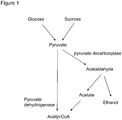
- Yeast cells produce pyruvate from sugars, which is then utilized in a number of pathways of cellular metabolism including those shown in Figure 1 .
- One endogenous pathway is conversion of pyruvate to acetaldehyde by pyruvate decarboxylase, which is then converted to ethanol or to acetyl-CoA via acetate.
- Yeast cells can be engineered to produce a number of desirable products using endogenous pyruvate as a starting substrate. For product production it is desired to have increased availabililty of pyruvate. Reduction in pyruvate decarboxylase activity reduces flux to ethanol production thereby making pyruvate available for other pathways.
- Applicants have discovered that reducing glucose repression through a disruption of a gene encoding a nuclear and cytoplasmic localized hexokinase enzyme in a crabtree-positive yeast cell that has been engineered to have inactivation of at least one pyruvate decarboxylase gene, and that has a biosynthetic pathway for production of 2,3-butanediol or isobutanol, increases growth and production of that yeast cell.
- Crabtree-positive yeast cells demonstrate the crabtree effect, which is a phenomenon whereby cellular respiration is inhibited when a high concentration of glucose is added to aerobic culture medium.
- Glucose repression is a phenomenon whereby in the presence of high glucose, repression of expression of genes involved in respiratory metabolism and utilization of non-glucose carbon sources occurs ( Gancedo (1998) Microbiol. Mol. Bio. Rev. 62:334-361 ).
- High glucose conditions are typically glucose in a concentration that is equal to or greater than about 2 g/L (0.2%). Wild type glucose-repressed crabtree-positive yeast cells display high rates of fermentation to produce ethanol.
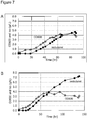
- Saccharomyces cerevisiae cells that have genetic modifications such as deletions in the three endogenous pyruvate decarboxylase genes (such that the cells are pdc-) and have reduced glucose repression, due to genetic modification (such as a deletion) of the endogenous hexokinase2 gene, and are further engineered with an isobutanol biosynthetic pathway, grow well in medium containing 2% (20 g/L) glucose, while the same pdc-cells without reduced glucose repression have very little growth in 2% glucose. At 24 hours the cells with reduced glucose repression grew to an OD 600 of about 2.0 while the cells without reduced glucose repression grew to an OD 600 of about 0.4.
- Example 5 At 48 hours the OD 600 readings were about 3.7 and 0.6, respectively.
- reducing glucose repression in the pdc-cells improved growth by about 5 to 6 fold.
- reducing glucose repression in a pdc- crabtree-positive yeast cell containing a pyruvate-utilizing biosynthetic pathway improves growth, as measured by OD 600 , by at least about 2-, 3-, 4-, 5-, or 6-fold or greater.
- Applicants have found that crabtree-positive yeast cells that are pdc- and have reduced glucose repression, due to deletion of the hexokinase2 gene (HXK2) (such that HXK2 expression is substantially reduced or eliminated such that hexokinase2 enzyme activity is minimal compared to wild type or eliminated), produce more products using engineered biosynthetic pathways using pyruvate as a substrate than the same pdc- cells without reduced glucose repression.
- HXK2 hexokinase2 gene
- pdc- crabtree-positive yeast cells with reduced glucose repression due to modified or deleted HXK2, and having an engineered 2,3-butanediol (BDO) pathway produced more BDO than cells without the HXK2 modification when grown in 2% glucose. About 17% more BDO was produced in 48 hours.
- BDO 2,3-butanediol
- product production may be increased by at least about 15%, 20%, 25%, 30%, 35%, 40% or greater in yeast cells, derived from a crabtree-positive strain, that are pdc- and have reduced glucose repression as compared to the same cells without reduced glucose repression.
- Glucose repression may be reduced in any crabtree-positive yeast that is amenable to genetic engineering manipulations to create the present cells.
- crabtree-positive yeast examples include Saccharomyces, Zygosaccharomyces, Schizosaccharomyces, Dekkera, Torulopsis, Brettanomyces, and some species of Candida .
- Species include, but are not limited to, Saccharomyces cerevisiae , Saccharomyces kluyveri , Schizosaccharomyces pombe, Saccharomyces bayanus, Saccharomyces mikitae , and Saccharomyces paradoxus, Zygosaccharomyces rouxii, and Candida glabrata. Any of these or other yeasts that undergo glucose repression (crabtree-positive) may be engineered to be a production host cell of the present invention.
- glucose repression may be reduced by any method that reduces the effect of high glucose concentration on a crabtree-positive cell.
- Methods disclosed herein may include altering expression of transcription factors involved in glucose repression effects.
- increased expression of the Hap1 transcription activator or reduced expression of the Mig1 or Mig2 transcription repressor disclosed herein may be used to reduce glucose repression.
- Hap1 Heme activated protein 1
- Mig1 and Mig2 repress a largely overlapping set of genes in the presence of concentrations including genes involved in phosphate metabolism and the hexose transporter HXT4 ( Westholm et al. (2008) BMC Genomics 9:601 ).
- glucose repression may also be reduced by reducing expression of GRR1 (Glucose Repression Resistant) which is a component of the SCF ubiquitin-ligase complex that is involved in carbon catabolite repression, glucose-dependent divalent cation transport, high-affinity glucose transport, morphogenesis, and sulfite detoxification.
- GRR1 Glucose Repression Resistant
- GRR1 appears to be a primary factor in the glucose repression pathway ( Flick and Johnston (1991) Mol Cell. Biol. 11:510-512 ).
- glucose repression may also be reduced by attenuating glucose transport capacity of a crabtree-positive yeast cell ( Henricsson et al., (2005) Appl. Environ. Microbiol. 71:6185-92 ; Ye et al. (1999) J. Bacteriol. 181:4673-5 )).
- reducing the rate of glucose transport may be achieved by inactivation of hexose transporter genes including HXT1, HXT2, HX3, HXT4, HXT5, HXT6, and/or HXT7.
- all endogenous HXT genes are inactivated and a low level of glucose transport activity is engineered, for example, by expressing a HXT coding region from a weak promoter, or expressing a glucose transport protein with reduced activity ( Elbing et al. (2004) Appl. Environ. Microbiol. 70:5323-30 ).
- any HAP1 coding sequence for a Hap1 transcription activator having at least about 80-85%, 85%- 90%, 90%-95%, or at least about 96%, 97% or 98% sequence identity to any of those with SEQ ID NOs:2, 4, 6, or 8 that functions in glucose repression may be overexpressed to reduce glucose repression.
- any endogenous MIG1 gene that encodes a Mig1 transcription repressor having at least about 80-85%, 85%- 90%, 90%- 95%, or at least about 96%, 97%, 98%, or 99% sequence identity to any of those with SEQ ID NOs:10, 12, 14, or 16 that functions in glucose repression may be reduced in expression to reduce glucose repression.
- any endogenous MIG2 gene that encodes a Mig2 transcription repressor having at least about 80-85%, 85%- 90%, 90%- 95%, or at least about 96%, 97%, 98%, or 99% sequence identity to any of those with SEQ ID NOs:18, 20, 22, 24, or 26 that functions in glucose repression may be reduced in expression to reduce glucose repression.
- any endogenous GRR1 gene that encodes a Grr1 protein component of the SCF ubiquitin-ligase complex having at least about 80-85%, 85%- 90%, 90%- 95%, or at least about 96%, 97%, or 98% sequence identity to SEQ ID NO:28 that functions in glucose repression may be reduced in expression to reduce glucose repression.
- glucose repression is reduced by disrupting expression of the endogenous hexokinase2 gene (HXK2) of Saccharomyces cerevisiae, or of functionally equivalent genes in other crabtree-positive yeasts.
- Hexokinases that modulate glucose repression are members of the EC 2.7.1.1 group that are present both in the cytosol and the nucleus, and function in the nucleus in signaling glucose-induced repression of genes including HXK1 and GLK1.
- Hexokinase genes that function in glucose repression may be identified by different names including hexokinase, hexokinase2, hexokinaseA, and hexokinaseB.
- Any hexokinase gene that encodes a hexokinase protein having at least about 80-85%, 85%- 90%, 90%- 95%, or at least about 96%, 97%, 98%, or 99% sequence identity to any of those with SEQ ID NOs: 44, 46, 48, 50, 52, 54, 56, 58, or 60 that functions in glucose repression may be inactivated to reduce glucose repression.
- Additional Hxk may be 2, A, or B sequences that may be used in the present strains may be identified in the literature and in bioinformatics databases as is well known to the skilled person. Identification of coding and/or protein sequences using bioinformatics is typically through BLAST (described above) searching of publicly available databases with known Hxk (including 2, A, or B) encoding sequences or encoded amino acid sequences, such as those provided herein. Identities are based on the Clustal W method of alignment as specified above.
- sequences described herein or those recited in the art may be used to identify other homologs in nature.
- each of the Hap1 encoding nucleic acid fragments described herein may be used to isolate genes encoding homologous proteins. Isolation of homologous genes using sequence-dependent protocols is well known in the art. Examples of sequence-dependent protocols include, but are not limited to: 1) methods of nucleic acid hybridization; 2) methods of DNA and RNA amplification, as exemplified by various uses of nucleic acid amplification technologies [e.g., polymerase chain reaction (PCR), Mullis et al., U.S. Patent 4,683,202 ; ligase chain reaction (LCR), Tabor, S.
- PCR polymerase chain reaction
- LCR ligase chain reaction
- Methods for increasing or for reducing gene expression of the target genes above are well known to one skilled in the art.
- Methods for gene expression in yeasts are known in the art as described, for example, in Methods in Enzymology, Volume 194, Guide to Yeast Genetics and Molecular and Cell Biology (Part A, 2004, Christine Guthrie and Gerald R. Fink (Eds.), Elsevier Academic Press, San Diego, CA ).
- methods for increasing expression such as for Hap1 or other positive factors for reducing glucose repression include increasing the number of genes that are integrated in the genome or on plasmids that express the target protein, and using a promoter that is more highly expressed than the natural promoter.
- Promoters that may be operably linked in a constructed chimeric gene for expression of a Hap1 transcription activator include, for example, constitutive promoters FBA1, TDH3, ADH1, and GPM1, and the inducible promoters GAL1, GAL10, and CUP1.
- Suitable transcriptional terminators that may be used in a chimeric gene construct for expression include, but are not limited to FBA1t, TDH3t, GPM1t, ERG10t, GAL1t, CYC1t, and ADH1t.
- Suitable promoters, transcriptional terminators, and coding regions may be cloned into E . coli -yeast shuttle vectors, and transformed into yeast cells as described in the Examples. These vectors allow for propagation in both E . coli and yeast strains. Typically the vector contains a selectable marker and sequences allowing autonomous replication or chromosomal integration in the desired host.
- plasmids in yeast are shuttle vectors pRS423, pRS424, pRS425, and pRS426 (American Type Culture Collection, Rockville, MD), which contain an E . coli replication origin (e.g., pMB1), a yeast 2 ⁇ origin of replication, and a marker for nutritional selection.
- HIS3 vector pRS423
- TRP1 vector pRS424
- LEU2 vector pRS425
- URA3 vector pRS426
- the gap repair cloning approach takes advantage of the highly efficient homologous recombination in yeast.
- a yeast vector DNA is digested (e.g., in its multiple cloning site) to create a "gap" in its sequence.
- a number of insert DNAs of interest are generated that contain a ⁇ 21 bp sequence at both the 5' and the 3' ends that sequentially overlap with each other, and with the 5' and 3' terminus of the vector DNA.
- a yeast promoter and a yeast terminator are selected for the expression cassette.
- the promoter and terminator are amplified from the yeast genomic DNA, and Gene X is either PCR amplified from its source organism or obtained from a cloning vector comprising Gene X sequence. There is at least a 21 bp overlapping sequence between the 5' end of the linearized vector and the promoter sequence, between the promoter and Gene X, between Gene X and the terminator sequence, and between the terminator and the 3' end of the linearized vector.
- the "gapped" vector and the insert DNAs are then co-transformed into a yeast strain and plated on the medium containing the appropriate compound mixtures that allow complementation of the nutritional selection markers on the plasmids. The presence of correct insert combinations can be confirmed by PCR mapping using plasmid DNA prepared from the selected cells.
- the plasmid DNA isolated from yeast can then be transformed into an E. coli strain, e.g. TOP10 , followed by mini preps and restriction mapping to further verify the plasmid construct. Finally the construct can be verified by DNA sequence analysis.
- a cassette containing a coding region plus control elements (promoter and terminator) and auxotrophic marker is PCR-amplified with a high-fidelity DNA polymerase using primers that hybridize to the cassette and contain 40-70 base pairs of sequence homology to the regions 5' and 3' of the genomic area where insertion is desired.
- the PCR product is then transformed into yeast and plated on medium containing the appropriate compound mixtures that allow selection for the integrated auxotrophic marker.
- the promoter-coding regionX-terminator construct is PCR amplified from a plasmid DNA construct and joined to an autotrophic marker (such as URA3) by either SOE PCR ( Horton et al. (1989) Gene 77:61-68 ) or by common restriction digests and cloning.
- the full cassette, containing the promoter-coding regionX-terminator-URA3 region, is PCR amplified with primer sequences that contain 40-70 bp of homology to the regions 5' and 3' of location "Y" on the yeast chromosome.
- the PCR product is transformed into yeast and selected on growth media lacking uracil. Transformants can be verified either by colony PCR or by direct sequencing of chromosomal DNA.
- promoter replacement methods may be used to exchange the endogenous transcriptional control elements allowing another means to modulate expression such as described in Mnaimneh et al. ((2004) Cell 118(1):31-44 ). Expression may be modulated for increased or decreased expression using promoter replacement.
- Methods for reducing expression which may be used to reduce expression of Hxk2 include using genetic disruption of the encoding genes. Many methods for genetic disruption of target genes to reduce or eliminate expression are known to one skilled in the art and may be used to create the present yeast production host cells. Disruptions that may be used include, but are not limited to, deletion of the entire gene or a portion of the gene encoding the protein, inserting a DNA fragment into the encoding gene (in either the promoter or coding region) so that the protein is not expressed or expressed at lower levels, introducing a mutation into the coding region which adds a stop codon or frame shift such that a functional protein is not expressed, and introducing one or more mutations into the coding region to alter amino acids so that a non-functional or a less active protein is expressed.
- expression of a target gene may be blocked by expression of an antisense RNA or an interfering RNA, and constructs may be introduced that result in cosuppression.
- the synthesis or stability of the transcript may be lessened by mutation.
- the efficiency by which a protein is translated from mRNA may be modulated by mutation. All of these methods may be readily practiced by one skilled in the art making use of the known or identified sequences encoding target proteins.
- yeasts DNA sequences surrounding a target coding sequence are also useful in some disruption procedures and are available for yeasts such as for Saccharomycse cerevisiae in the complete genome sequence coordinated by Genome Project ID9518 of Genome Projects coordinated by NCBI (National Center for Biotechnology Information) with identifying GOPID #13838.
- yeast genomic sequences include that of Candida albicans, which is included in GPID #10771, #10701 and #16373.
- Other yeast genomic sequences can be readily found by one of skill in the art in publicly available databases.
- DNA sequences surrounding, for example, a target hexokinase coding sequence are useful for disruption methods using homologous recombination.
- hexokinase gene flanking sequences are placed bounding a selectable marker gene to mediate homologous recombination whereby the marker gene replaces the hexokinase gene.
- partial hexokinase gene sequences and hexokinase gene flanking sequences bounding a selectable marker gene may be used to mediate homologous recombination whereby the marker gene replaces a portion of the target hexokinase gene.
- the selectable marker may be bounded by site-specific recombination sites, so that following expression of the corresponding site-specific recombinase, the resistance gene is excised from the hexokinase gene without reactivating the latter.
- the site-specific recombination leaves behind a recombination site which disrupts expression of the hexokinase protein.
- the homologous recombination vector may be constructed to also leave a deletion in the hexokinase gene following excision of the selectable marker, as is well known to one skilled in the art.
- Deletions may be made using mitotic recombination as described in Wach et al. ((1994) Yeast 10:1793-1808 ).
- This method involves preparing a DNA fragment that contains a selectable marker between genomic regions that may be as short as 20 bp, and which bound a target DNA sequence.
- This DNA fragment can be prepared by PCR amplification of the selectable marker gene using as primers oligonucleotides that hybridize to the ends of the marker gene and that include the genomic regions that can recombine with the yeast genome.
- the linear DNA fragment can be efficiently transformed into yeast and recombined into the genome resulting in gene replacement including with deletion of the target DNA sequence (as described in Methods in Enzymology, v194, pp 281-301 (1991 )).
- target gene encoded activity may be disrupted using random mutagenesis, which is followed by screening to identify strains with reduced glucose repression.
- random mutagenesis the DNA sequence of the target gene encoding region, or any other region of the genome affecting glucose repression, need not be known.
- a screen for reduced glucose repression is particularly useful to identify cells with reduced hexokinase activity that reduce glucose repression which may be useful in the present yeast production host cells.
- Methods for creating genetic mutations are common and well known in the art and may be applied to the exercise of creating rmutants.
- Commonly used random genetic modification methods include spontaneous mutagenesis, mutagenesis caused by mutator genes, chemical mutagenesis, irradiation with UV or X-rays, or transposon mutagenesis.
- Chemical mutagenesis of yeast commonly involves treatment of yeast cells with one of the following DNA mutagens: ethyl methanesulfonate (EMS), nitrous acid, diethyl sulfate, or N-methyl-N'-nitro-N-nitroso-guanidine (MNNG).
- EMS ethyl methanesulfonate
- MNNG N-methyl-N'-nitro-N-nitroso-guanidine
- Irradiation with ultraviolet (UV) light or X-rays can also be used to produce random mutagenesis in yeast cells.
- the primary effect of mutagenesis by UV irradiation is the formation of pyrimidine dimers which disrupt the fidelity of DNA replication.
- Protocols for UV-mutagenesis of yeast can be found in Spencer et al (Mutagenesis in Yeast, 1996, Yeast Protocols: Methods in Cell and Molecular Biology. Humana Press, Totowa, NJ ).
- Introduction of a mutator phenotype can also be used to generate random chromosomal mutations in yeast.
- Common mutator phenotypes can be obtained through disruption of one or more of the following genes: PMS1 , MAG1 , RAD18 or RAD51 . Restoration of the non-mutator phenotype can be easily obtained by insertion of the wildtype allele. Collections of modified cells produced from any of these or other known random mutagenesis processes may be screened for reduced hexokinase activity.
- Glucose repression is reduced in a pdc- yeast cell by additionally reducing expression of HXK2.
- Genetic modifications for disrupting expression of PDC genes and for reducing glucose repression, such as disrupting S . cerevisiae HXK2 or other hexokinase genes as described above, may be engineered in any order.
- Yeasts may have one or more genes encoding pyruvate decarboxylase.
- there is one gene encoding pyruvate decarboxylase in Candida glabrata and Schizosaccharomyces pombe while there are three isozymes of pyruvate decarboxylase encoded by the PDC1 , PCD5 , and PDC6 genes in Saccharomyces.
- PDC1 , PCD5 , and PDC6 genes in Saccharomyces.
- the present yeast cells at least one PDC gene is inactivated. If the yeast cell used has more than one expressed (active) PDC gene, then each of the active PDC genes may be modified or inactivated thereby producing a pdc- cell.
- the PDC1 , PDC5 , and PDC6 genes may be modified or inactivated. Though if a PDC gene is not active under the fermentation conditions to be used then such a gene would not need to be modified or inactivated.
- Saccharomyces strains having no pyruvate decarboxylase activity are available from the ATCC with Accession #200027 and #200028.
- yeast pyruvate decarboxylase genes that may be targeted for inactivation in the present yeast production host cells are those encoding proteins of SEQ ID NOs:62, 64, 66, 68, and 78.
- Other target genes such as those encoding pyruvate decarboxylase proteins having at least about 80-85%, 85%- 90%, 90%-95%, or at least about 96%, 97%, 98%, or 99% sequence identity to the pyruvate decarboxylases of SEQ ID NOs:62, 64, 66, 68, 70, 72, 74, 76, 78, or 80 may be identified in the literature and in bioinformatics databases well known to the skilled person.
- sequences described herein or those recited in the art may be used to identify homologs in other yeast strains experimentally, as described above for identification of hexokinase encoding genes.
- Genes encoding pyruvate decarboxylase may be disrupted in the present yeast cells using genetic modification methods as described above for target hexokinase gene disruption.
- the present yeast production host cells that have reduced glucose repression and that are pdc- are engineered to have a biosynthetic pathway for production of a product from pyruvate.
- the features of the cell may be engineered in any order. Any product made using a biosynthetic pathway that has pyruvate as the initial substrate may be produced with greater effectiveness in a yeast strain disclosed herein that has inactivation of at least one pyruvate decarboxylase gene and reduced glucose repression.
- the biosynthetic pathway of the present host cell may be any pathway that utilizes pyruvate and produces a desired product.
- the pathway genes may include endogenous genes and/or heterologous genes. Typically at least one gene, or at least two, three, four, or all genes are heterologous in the biosynthetic pathway.
- the engineered biosynthetic pathway provides at least partial redox balance to the cell. At least partial redox balance may be achieved, for example, by including an enzyme in the engineered biosynthetic pathway that requires NADH for its activity. Utilizing NADH balances production of NADH during conversion of glucose to pyruvate.
- NADH is utilized in conversion of glucose to glycerol, and in production of ethanol from pyruvate.
- the present pdc- production yeast cells have unbalanced NADH due to disruption of ethanol production.
- Any method of increasing NADH-dependent enzyme activity in the present production host cell may be used in balancing redox.
- methods include expressing an enzyme that requires NADH but that is not part of the engineered pyruvate-utilizing biosynthetic pathway.
- a redox-balancing NADH-dependent enzyme may be expressed from a heterologous gene.
- expression of an endogenous gene encoding an NADH-dependent enzyme may be increased to provide increased NADH-dependent enzyme activity.
- a biosynthetic pathway for producing 2,3-butanediol may be engineered in the present yeast production host cell as disclosed in US Patent Application Publication No. 2009030536 .
- the 2,3-butanediol pathway is a portion of the 2-butanol biosynthetic pathway that is disclosed in US Patent Pub No. US20070292927A1 ( Figure 2 steps a, b, and i).
- Pathway steps include conversion of pyruvate to acetolactate by acetolactate synthase, conversion of acetolactate to acetoin by acetolactate decarboxylase, and conversion of acetoin to 2,3-butanediol by butanediol dehdyrogenase.
- Butanediol dehydrogenase requires NADH and thereby contributes to redox balance.
- acetolactate synthase is expressed in the cytosol.
- Acetolactate synthase enzymes which also may be called acetohydroxy acid synthase, belong to EC 2.2.1.6 (switched from 4.1.3.18 in 2002), are well-known, and they participate in the biosynthetic pathway for the proteinogenic amino acids leucine and valine, as well as in the pathway for fermentative production of 2,3-butanediol from acetoin in a number of organisms.
- Acetolactate synthase (Als) enzyme activities that have substrate preference for pyruvate over ketobutyrate are of particular utility, such as those encoded by alsS of Bacillus and budB of Klebsiella ( Gollop et al., J. Bacteriol. 172(6):3444-3449 (1990 ); Holtzclaw et al., J. Bacteria. 121 (3):917-922 (1975 )).
- Additional Als coding regions and encoded proteins that may be used include those from Staphylococcus aureus (DNA: SEQ ID NO:87; protein:SEQ ID NO:88), Listeria monocytogenes (DNA: SEQ ID NO:89; protein:SEQ ID NO:90), Streptococcus mutans (DNA: SEQ ID NO:91; protein:SEQ ID NO:92), Streptococcus thermophilus (DNA: SEQ ID NO:93; protein:SEQ ID NO:94), Vibrio angustum (DNA: SEQ ID NO:95; protein:SEQ ID NO:96), and Bacillus cereus (DNA: SEQ ID NO:97; protein:SEQ ID NO:98).
- US Patent Application Publication No. 2009030536 provides a phylogenetic tree depicting acetolactate synthases that are the 100 closest neighbors of the B . subtilis AlsS sequence, any of which may be used. Additional Als sequences that may be used in the present strains may be identified in the literature and in bioinformatics databases as is well known to the skilled person. Identification of coding and/or protein sequences using bioinformatics is typically through BLAST (described above) searching of publicly available databases with known Als encoding sequences or encoded amino acid sequences, such as those provided herein. Identities are based on the Clustal W method of alignment as specified above. Additionally, the sequences described herein or those recited in the art may be used to identify other homologs in nature as described above.
- Cytosolic expression of acetolactate synthase is achieved by transforming with a gene comprising a sequence encoding an acetolactate synthase protein, with no mitochondrial targeting signal sequence.
- Methods for gene expression in yeasts are known in the art (see for example Methods in Enzymology, Volume 194, Guide to Yeast Genetics and Molecular and Cell Biology (Part A, 2004, Christine Guthrie and Gerald R. Fink (Eds.), Elsevier Academic Press, San Diego, CA ). Expression using chimeric genes (including promoters and terminators), vectors, cloning methods, and integration methods are as described above.
- acetolactate decarboxylase enzyme known as EC 4.1.1.5 which is available, for example, from Bacillus subtilis (DNA: SEQ ID NO:101; Protein: SEQ ID NO:102), Klebsiella terrigena (DNA: SEQ ID NO:103, Protein: SEQ ID NO:104) and Klebsiella pneumoniae (DNA: SEQ ID NO:99, protein: SEQ ID NO:100).
- Any gene that encodes an acetolactate decarboxylase having at least about 80-85%, 85%- 90%, 90%- 95%, or at least about 96%, 97%, or 98% sequence identity to any of those with SEQ ID NOs:100, 102, or 104 that converts acetolactate to acetoin may be used.
- butanediol dehdyrogenase enzyme also known as acetoin reductase.
- Butanediol dehydrogenase enzymes may have specificity for production of ( R ) - or ( S )-stereochemistry in the alcohol product.
- (S)-specific butanediol dehydrogenases are known as EC 1.1.1.76 and are available, for example, from Klebsiella pneumoniae (DNA: SEQ ID NO:105; protein: SEQ ID NO:106).
- R -specific butanediol dehydrogenases are known as EC 1.1.1.4 and are available, for example, from Bacillus cereus (DNA: SEQ ID NO:107, protein: SEQ ID NO:108), Lactococcus lactis (DNA: SEQ ID NO:109, protein: SEQ ID NO:110), and Saccharomyces cerevisiae (BDH1; DNA: SEQ ID NO:134, protein: SEQ ID NO:135).
- Any gene that encodes a butanediol dehydrogenase having at least about 80-85%, 85%-90%, 90%- 95%, or at least about 98% sequence identity to any of those with SEQ ID NOs:106, 108, 110 or 135 that converts acetoin to 2,3-butanediol may be used.
- Additional acetolactate decarboxylase or butanediol dehdyrogenase sequences that may be used in the present strains may be identified in the literature and in bioinformatics databases as is well known to the skilled person. Identification of coding and/or protein sequences using bioinformatics is typically through BLAST (described above) searching of publicly available databases with known acetolactate decarboxylase or butanediol dehdyrogenase encoding sequences or encoded amino acid sequences, such as those provided herein. Identities are based on the Clustal W method of alignment as specified above. Additionally, the sequences described herein or those recited in the art may be used to identify other homologs in nature as described above.
- Biosynthetic pathways for production of 2-butanone or 2-butanol that may be engineered in the present cells are disclosed in US Patent Application Publication Nos: US20070292927A1 and US20070259410A1 .
- a diagram of the disclosed 2-butanone and 2-butanol biosynthetic pathways is provided in Figure 2 .
- 2-Butanone is the product made when the last depicted step of converting 2-butanone to 2-butanol is omitted.
- the pathway in US Patent Publication No. US20070292927 is as described above for BDO production with the addition of the following steps:
- Diol dehydratases also known as butanediol dehydratases, which utilize the cofactor adenosyl cobalamin (vitamin B12) are known as EC 4.2.1.28.
- Glycerol dehydratases that also utilize the cofactor adenosyl cobalamin are known as EC 4.2.1.30.
- Diol and glycerol dehydratases have three subunits that are required for activity. Provided in US Patent Publication No.
- US20070292927A1 are sequences of the three subunits of many diol and glycerol dehydratases that may be used in a 2-butanone or 2-butanol pathway in the present cells, as well as the preparation and use of a Hidden Markov Model to identify additional diol and dehydratase enzymes that may be used.
- Butanol dehydrogenases are a subset of a broad family of alcohol dehydrogenases and may be NAD- or NADP-dependent.
- the NAD-dependent enzymes are known as EC 1.1.1.1 and the NADP-dependent enzymes are known as EC 1.1.1.2.
- Provided in US Patent Publication No, US20070292927A1 are sequences of butanol dehydrogenases that may be used in the disclosed 2-butanol biosynthetic pathway in the present cells.
- Another B 12 -independent diol dehydratase that may be used is one from Klebsiella pneumoniae, having three subuntis: pduC, pduD, and pduE, that is disclosed in WO2009046370 .
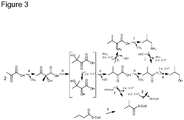
- Biosynthetic pathways for production of isobutanol that may be engineered in the present cells are disclosed in US Patent Publication No. US20070092957 A1 .
- a diagram of the disclosed isobutanol biosynthetic pathways is provided in Figure 3 .
- steps in an example isobutanol biosynthetic pathway include conversion of:
- Acetolactate synthase was described above for the 2,3-butanediol pathway.
- Acetohydroxy acid isomeroreductase also called ketol-acid reductoisomerase (KARI) naturally uses NADPH (reduced nicotinamide adenine dinucleotide phosphate) as an electron donor and is known by the EC number 1.1.1.86. Sequences of KARI enzymes and their coding regions are provided in US Patent Publication No. US20070092957 A1 , including ILV5 from Saccharomyces cerevisiae (DNA: SEQ ID NO:117; protein SEQ ID NO:118).
- KARI ketol-acid reductoisomerase
- Acetohydroxy acid dehydratases also called dihydroxy acid dehydratases (DHAD) are known by the EC number 4.2.1.9. Sequences of DHAD enzymes and their coding regions are provided in US Patent Publication No. US20070092957 A1 , including ILV3 of Saccharoomyces cerevisiae (DNA: SEQ ID NO:127; protein SEQ ID NO:128). Additional [2Fe-2S] DHAD sequences and a method for identifying [2Fe-2S] DHAD enzymes that may be used to obtain additional DHAD sequences that may be used are disclosed in US Patent Application Publication No. 20100081154 . Particularly useful is the Streptococcus mutans DHAD (DNA: SEQ ID NO:129; protein SEQ ID NO:130)
- Branched-chain ⁇ -keto acid decarboxylases are known by the EC number 4.1.1.72. Sequences of the Lactococcus lactis branched-chain ⁇ -keto acid decarboxylase enzyme and coding region are provided in US20070092957 A1 (DNA: SEQ ID NO:131; protein SEQ ID NO:132), and others may be identified by one skilled in the art using bioinformatics as described above.
- Branched-chain alcohol dehydrogenases are known by the EC number 1.1.1.265, but may also be classified under other alcohol dehydrogenases (specifically, EC 1.1.1.1 or 1.1.1.2). These enzymes utilize NADH (reduced nicotinamide adenine dinucleotide) and/or NADPH as electron donor and sequences of branched-chain alcohol dehydrogenase enzymes and their coding regions are provided in US Patent Publication No. US20070092957 A1 .
- NADH reduced nicotinamide adenine dinucleotide
- NADPH NADPH
- a biosynthetic pathway for production of 1-butanol that may be engineered in the present cells is disclosed in US Patent Publication No. US20080182308A1 .
- a diagram of the disclosed 1-butanol biosynthetic pathway is provided in Figure 4 .
- steps in the disclosed 1-butanol biosynthetic pathway include conversion of:
- a biosynthetic pathway for production of valine that may be engineered in the present yeast production host cell includes steps of acetolactate conversion to 2,3-dihydroxy-isovalerate by acetohydroxyacid reductoisomerase (ILV35), conversion of 2,3-dihydroxy-isovalerate to 2-keto-isovalerate by dihydroxy-acid dehydratase (ILV3), and conversion of 2-keto-isovalerate to valine by branched-chain amino acid transaminase (BAT2) and branched-chain animo acid aminotransferase (BAT1).
- ILV35 acetohydroxyacid reductoisomerase
- ILV3 dihydroxy-acid dehydratase
- 2-keto-isovalerate to valine by branched-chain amino acid transaminase (BAT2) and branched-chain animo acid aminotransferase (BAT1).
- Biosynthesis of leucine includes the same steps to 2-keto-isovalerate, followed by conversion of 2-keto-isovalerate to alpha-isopropylmalate by alpha-isopropylmalate synthase (LEU9, LEU4), conversion of alpha-isopropylmalate to beta-isopropylmalate by isopropylmalate isomerase (LEU1), conversion of beta-isopropylmalate to alpha-ketoisocaproate by beta-IPM dehydrogenase (LEU2), and finally conversion of alpha-ketoisocaproate to leucine by branched -chain amino acid transaminase (BAT2) and branched-chain amino acid aminotransferase (BAT1). It is desired for production of valine or leucine to overexpress at least one of the enzymes in these described pathways.
- a biosynthetic pathway for production of isoamyl alcohol that may be engineered in the present yeast production host cell includes steps of leucine conversion to alpha-ketoisocaproate by branched-chain amino acid transaminase (BAT2) and branched-chain amino acid aminotransferase (BAT1), conversion of alpha-ketoisocaproate to 3-methylbutanal by ketoisocaproate decarboxylase (THI3) or decarboxylase ARO10, and finally conversion of 3-methylbutanal to isoamyl alcohol by an alcohol dehydrogenase such as ADH1 or SFA1.
- BAT2 branched-chain amino acid transaminase
- BAT1 branched-chain amino acid aminotransferase
- TKI3 ketoisocaproate decarboxylase
- ARO10 decarboxylase
- Production of isoamyl alcohol benefits from increased production of leucine or the alpha-ketoisocaproate intermediate by overexpression of one or more enzymes in biosynthetic pathways for these chemicals.
- one or both enzymes for the final two steps may be overexpressed.
- a biosynthetic pathway for production of lactic acid that may be engineered in the present yeast production host cell includes pyruvate conversion to lactic acid by lactate dehydrogenase.
- Engineering yeast for lactic acid production using lactate dehydrogenase known as EC 1.1.1.27, is well known in the art such as in Ishida et al. (Appl .Environ. Microbiol. 71:1964-70 (2005 )).
- a biosynthetic pathway for production of malate that may be engineered in the present yeast production host cell includes pyruvate conversion to oxaloacetate by pyruvate carboxylase, and conversion of oxaloacetate to malate by malate dehydrogenase as described in Zelle et al. (Applied and Environmental Microbiology 74:2766-77 (2008 )). In addition, a malate transporter was expressed.
- Biosynthetic pathways for production of isoprenoids may be engineered in the present yeast production host cell.
- a mevalonate pathway of yeast Martin et al (2003) Nature Biotech. 21:796-802
- a non-mevalonate pathway is described in Kim and Keisling (Blotechnol. Bioeng. 72:408-15 (2001 )).
- Isoprenoids may be used in many applications from pharmaceuticals to fuels.
- Additional modifications that may be useful in cells provided herein include modifications to reduce glycerol-3-phosphate dehydrogenase activity as described in US Patent Application Publication No. 20090305363 , modifications to a host cell that provide for increased carbon flux through an Entner-Doudoroff Pathway or reducing equivalents balance as described in US Patent Application Publication No. 20100120105 .
- Yeast strains with increased activity of heterologous proteins that require binding of an Fe-S cluster for their activity are described in US Application Publication No. 20100081179 .
- Other modifications include modifications in an endogenous polynucleotide encoding a polypeptide having dual-role hexokinase activity, described in US Provisional Application No.
- host cells comprising at least one deletion, mutation, and/or substitution in an endogenous gene encoding a polypeptide affecting Fe-S cluster biosynthesis are described in US Provisional Patent Application No. 61/305333 , and host cells comprising a heterologous polynucleotide encoding a polypeptide with phosphoketolase activity and host cells comprising a heterologous polynucleotide encoding a polypeptide with phosphotransacetylase activity are described in US Provisional Patent Application No. 61/356379 .
- Yeasts disclosed herein may be grown in fermentation media for production of a product utilizing pyruvate.
- the yeast strains used as production hosts preferably have enhanced tolerance to the produced chemical, and have a high rate of carbohydrate utilization. These characteristics may be conferred by mutagenesis and selection, genetic engineering, or may be natural.
- Fermentation media for the present cells contain at least about 2 g/L glucose.
- Additional carbon substrates may include but are not limited to monosaccharides such as fructose, oligosaccharides such as lactose maltose, galactose, or sucrose, polysaccharides such as starch or cellulose or mixtures thereof and unpurified mixtures from renewable feedstocks such as cheese whey permeate, cornsteep liquor, sugar beet molasses, and barley malt.
- Other carbon substrates may include ethanol, lactate, succinate, or glycerol.
- preferred carbon substrates are glucose, fructose, and sucrose, or mixtures of these with C5 sugars such as xylose and/or arabinose for yeasts cells modified to use C5 sugars.
- fermentation media In addition to an appropriate carbon source, fermentation media must contain suitable minerals, salts, cofactors, buffers and other components, known to those skilled in the art, suitable for the growth of the cultures and promotion of the enzymatic pathway necessary for production of the desired product.
- Suitable growth media in the present invention are common commercially prepared media such as broth that includes yeast nitrogen base, ammonium sulfate, and dextrose as the carbon/energy source) or YPD Medium, a blend of peptone, yeast extract, and dextrose in optimal proportions for growing most Saccharomyces cerevisiae strains.
- Other defined or synthetic growth media may also be used and the appropriate medium for growth of the particular microorganism will be known by one skilled in the art of microbiology or fermentation science.
- Suitable pH ranges for the fermentation are between pH 3.0 to pH 7.5, where pH 4.5 to pH 6.5 is preferred as the initial condition.
- Fermentations may be performed under aerobic or anaerobic conditions, where anaerobic or microaerobic conditions are preferred.
- the amount of product in the fermentation medium can be determined using a number of methods known in the art, for example, high performance liquid chromatography (HPLC) or gas chromatography (GC).
- HPLC high performance liquid chromatography
- GC gas chromatography
- the present process may employ a batch method of fermentation.
- a classical batch fermentation is a closed system where the composition of the medium is set at the beginning of the fermentation and not subject to artificial alterations during the fermentation. Thus, at the beginning of the fermentation the medium is inoculated with the desired organism or organisms, and fermentation is permitted to occur without adding anything to the system.
- a "batch" fermentation is batch with respect to the addition of carbon source and attempts are often made at controlling factors such as pH and oxygen concentration.
- the metabolite and biomass compositions of the system change constantly up to the time the fermentation is stopped.
- cells progress through a static lag phase to a high growth log phase and finally to a stationary phase where growth rate is diminished or halted. If untreated, cells in the stationary phase will eventually die.
- Cells in log phase generally are responsible for the bulk of production of end product or intermediate.
- a Fed-Batch system may also be used in the present invention.
- a Fed-Batch system is similar to a typical batch system with the exception that the carbon source substraste is added in increments as the fermentation progresses.
- Fed-Batch systems are useful when catabolite repression (e.g. glucose repression) is apt to inhibit the metabolism of the cells and where it is desirable to have limited amounts of substrate in the media. Measurement of the actual substrate concentration in Fed-Batch systems is difficult and is therefore estimated on the basis of the changes of measurable factors such as pH, dissolved oxygen and the partial pressure of waste gases such as CO 2 .
- Batch and Fed-Batch fermentations are common and well known in the art and examples may be found in Thomas D.
- Continuous fermentation is an open system where a defined fermentation medium is added continuously to a bioreactor and an equal amount of conditioned media is removed simultaneously for processing. Continuous fermentation generally maintains the cultures at a constant high density where cells are primarily in log phase growth.
- Continuous fermentation allows for the modulation of one factor or any number of factors that affect cell growth or end product concentration.
- one method will maintain a limiting nutrient such as the carbon source or nitrogen level at a fixed rate and allow all other parameters to vary.
- a number of factors affecting growth can be altered continuously while the cell concentration, measured by media turbidity, is kept constant.
- Continuous systems strive to maintain steady state growth conditions and thus the cell loss due to the medium being drawn off must be balanced against the cell growth rate in the fermentation.
- Methods of modulating nutrients and growth factors for continuous fermentation processes as well as techniques for maximizing the rate of product formation are well known in the art of industrial microbiology and a variety of methods are detailed by Brock, supra.
- the present invention may be practiced using either batch, fed-batch or continuous processes and that any known mode of fermentation would be suitable. Additionally, it is contemplated that cells may be immobilized on a substrate as whole cell catalysts and subjected to fermentation conditions for production.
- Products may be isolated from the fermenataion medium by methods known to one skilled in the art.
- butanol may be isolated from the fermentation medium as follows. Solids may be removed from the fermentation medium by centrifugation, filtration, decantation, or the like. Then, the butanol may be isolated from the fermentation medium, which has been treated to remove solids as described above, using methods such as distillation, liquid-liquid extraction, or membrane-based separation. Because butanol forms a low boiling point, azeotropic mixture with water, distillation can only be used to separate the mixture up to its azeotropic composition. Distillation may be used in combination with another separation method to obtain separation around the azeotrope.
- butanol may be isolated using azeotropic distillation using an entrainer (see for example Doherty and Malone, Conceptual Design of Distillation Systems, McGraw Hill, New York, 2001 ).
- the butanol-water mixture forms a heterogeneous azeotrope so that distillation may be used in combination with decantation to isolate and purify the butanol.
- the butanol-containing fermentation broth is distilled to near the azeotropic composition.
- the azeotropic mixture is condensed, and the butanol is separated from the fermentation medium by decantation.
- the decanted aqueous phase may be returned to the first distillation column as reflux.
- the butanol-rich decanted organic phase may be further purified by distillation in a second distillation column.
- the butanol may also be isolated from the fermentation medium using liquid-liquid extraction in combination with distillation.
- the butanol is extracted from the fermentation broth using liquid-liquid extraction with a suitable solvent.
- the butanol-containing organic phase is then distilled to separate the butanol from the solvent.
- Distillation in combination with adsorption may also be used to isolate butanol from the fermentation medium.
- the fermentation broth containing the butanol is distilled to near the azeotropic composition and then the remaining water is removed by use of an adsorbent, such as molecular sieves ( Aden et al. Lignocellulosic Biomass to Ethanol Process Design and Economics Utilizing Co-Current Dilute Acid Prehydrolysis and Enzymatic Hydrolysis for Corn Stover, Report NREL/TP-510-32438, National Renewable Energy Laboratory, June 2002 ).
- molecular sieves Aden et al. Lignocellulosic Biomass to Ethanol Process Design and Economics Utilizing Co-Current Dilute Acid Prehydrolysis and Enzymatic Hydrolysis for Corn Stover, Report NREL/TP-510-32438, National Renewable Energy Laboratory, June 2002 ).
- distillation in combination with pervaporation may be used to isolate and purify the butanol from the fermentation medium.
- the fermentation broth containing the butanol is distilled to near the azeotropic composition, and then the remaining water is removed by pervaporation through a hydrophilic membrane ( Guo et al., J. Membr. Sci. 245, 199-210 (2004 )).
- oligonucleotide primers used in the following Examples are given in Table 3. All the oligonucleotide primers were synthesized by Sigma-Genosys (Woodlands, TX) or Integrated DNA Technologies (Coralsville, IA).
- the GC method utilized an ZB-WAXplus column (30 m x 0.25 mm ID, 0.25 ⁇ m film) from Phenomenex (Torrance, CA).
- the carrier gas was helium at a constant flow rate of 2.3 mL/min; injector split was 1:20 at 250°C; oven temperature was 70°C for 1 min, 70°C to 160°C at 10°C/min, and 160°C to 240°C at 30°C/min.
- FID detection was used at 260°C with 40 ml/min helium makeup gas. Culture broth samples were filtered through 0.2 ⁇ m spin filters before injection. Depending on analytical sensitivity desired, either 0.1 ⁇ l or 0.5 ⁇ l injection volumes were used.
- Calibrated standard curves were generated for the following compounds: ethanol, isobutanol, acetoin, meso -2,3-butanediol, and (2S,3S)-2,3-butanediol.
- (2S,3S)-2,3-butanediol retention time is 6.8 minutes.
- meso- 2,3-butanediol retention time is 7.2 minutes.
- Analytical standards were also utilized to identify retention times for isobutryaldehyde, isobutyric acid, and isoamyl alcohol.
- HPLC high performance liquid chromatography
- Shodex SH-1011 column with a Shodex SH-G guard column both available from Waters Corporation, Milford, MA
- RI refractive index
- Chromatographic separation is achieved using 0.01 M H 2 SO 4 as the mobile phase with a flow rate of 0.5 mL/min and a column temperature of 50 °C.
- Isobutanol retention time is 47.6 minutes.
- molar selectivity is the number of moles of product produced per mole of sugar substrate consumed and is reported as a percent. "SLPM” stands for Standard Liters per Minute (of air), “dO” is dissolved oxygen, Qp is "specific productivity” measured in grams isobutanol per gram of cells over time.
- pLH475-Z4B8 plasmid (SEQ ID NO:138) was constructed for expression of ALS and KARI in yeast.
- pLH475-Z4B8 is a pHR81 vector (ATCC #87541) containing the following chimeric genes:
- the Pf5.IlvC-Z4B8 coding region is a sequence encoding KARI derived from Pseudomonas fluorescens but containing mutations, that was described in US Patent Application Publication US 2009-0163376 A1 .
- the Pf5.IlvC-Z4B8 encoded KARI (SEQ ID NO:126) has the following amino acid changes as compared to the natural Pseudomonas fluorescens KARI:
- the Pf5.IlvC-Z4B8 coding region was was synthesized by DNA 2.0 (Palo Alto, CA; SEQ ID NO:125) based on codons that were optimized for expression in Saccharomyces cerevisiae.
- the pLH468 plasmid (SEQ ID NO:144) was constructed for expression of DHAD, KivD and HADH in yeast.
- Coding regions for Lactococcus lactis ketoisovalerate decarboxylase (KivD) and horse liver alcohol dehydrogenase (HADH) were synthesized by DNA2.0 based on codons that were optimized for expression in Saccharomyces cerevisiae (SEQ ID NO:133 and 136, respectively) and provided in plasmids pKivDy-DNA2.0 and pHadhy-DNA2.0.
- the encoded proteins are SEQ ID NOs:132 and 137, respectively.
- Individual expression vectors for KivD and HADH were constructed.
- vector pNY8 SEQ ID NO:145; also named pRS426.GPD-ald-GPDt, described in US Patent Pub. No. US2008/0182308 , Example 17 was digested with AscI and SfiI enzymes, thus excising the GPD promoter and the aid coding region.
- a TDH3 promoter fragment (SEQ ID NO:146) from pNY8 was PCR amplified to add an AscI site at the 5' end, and an SpeI site at the 3' end, using 5' primer OT1068 and 3' primer OT1067 (SEQ ID NOs:147 and 148).
- the AscI / SfiI digested pNY8 vector fragment was ligated with the TDH3 promoter PCR product digested with AscI and SpeI , and the Spel-Sfil fragment containing the codon optimized kivD coding region isolated from the vector pKivD-DNA2.0.
- the triple ligation generated vector pLH467 (pRS426::P TDH3 -kivD y- TDH3 t). pLH467 was verified by restriction mapping and sequencing.
- pLH435 (pRS425::P GPM1 -H adh y- ADH 1t) was derived from vector pRS425::GPM-sadB (SEQ ID NO:149) which is described in US Patent App. No. 61/058970 , Example 3.
- pRS425::GPM-sadB is the pRS425 vector (ATCC #77106) with a chimeric gene containing the GPM1 promoter (SEQ ID NO:150), coding region from a butanol dehydrogenase of Achromobacter xylosoxidans (sadB; DNA SEQ ID NO: 115; protein SEQ ID NO:116), and ADH1 terminator (SEQ ID NO:151).
- pRS425::GPMp-sadB contains BbvI and PacI sites at the 5' and 3' ends of the sadB coding region, respectively.
- a NheI site was added at the 5' end of the sadB coding region by site-directed mutagenesis using primers OT1074 and OT1075 (SEQ ID NO:152 and 153) to generate vector pRS425-GPMp-sadB-Nhel, which was verified by sequencing.
- pRS425::P GPM1 - sadB - Nhe I was digested with NheI and PacI to drop out the sadB coding region, and ligated with the NheI-PacI fragment containing the codon optimized HADH coding region from vector pHadhy-DNA2.0 to create pLH435.
- yeast vector pRS411 (ATCC # 87474) was digested with SacI and NotI , and ligated with the SacI-SalI fragment from pLH467 that contains the P TDH3 -kivD y -TDH3 t cassette together with the SalI-NotI fragment from pLH435 that contains the P GPM1 - H adh y -ADH1 t cassette in a triple ligation reaction.
- pRS423 FBA ilvD(Strep) (SEQ ID NO:154), which is described in Patent Appln No. 61/100792 , as the source of the IlvD gene.
- This shuttle vector contains an F1 origin of replication (nt 1423 to 1879) for maintenance in E. coli and a 2 micron origin (nt 8082 to 9426) for replication in yeast.
- the vector has an FBA1 promoter (nt 2111 to 3108; SEQ ID NO:143) and FBA terminator (nt 4861 to 5860; SEQ ID NO:155).
- the ilvD coding region (nt 3116 to 4828; SEQ ID NO:129; protein SEQ ID NO:130) from Streptococcus mutans UA159 (ATCC #700610) is between the FBA promoter and FBA terminator forming a chimeric gene for expression.
- a lumio tag fused to the ilvD coding region (nt 4829-4849).
- the first step was to linearize pRS423 FBA ilvD(Strep) (also called pRS423-FBA(SpeI)-IlvD( Streptococcus mutans )-Lumio) with SacI and SacII (with SacII site blunt ended using T4 DNA polymerase), to give a vector with total length of 9,482 bp.
- the second step was to isolate the kivD y-h ADH y cassette from pLH441 with SacI and KpnI (with KpnI site blunt ended using T4 DNA polymerase), which gives a 6,063 bp fragment.
- This fragment was ligated with the 9,482 bp vector fragment from pRS423-FBA(SpeI)-llvD( Streptococcus mutans )-Lumio.
- This generated vector pLH468 (pRS423::P FAB1 -ilvD ( Strep )Lumio- FBA1 t-P TDH3 -kivD y- TDH3 t-P GPM1 -h adh y- ADH1 t), which was confirmed by restriction mapping and sequencing.
- PDC1, PDC5, and PDC6 genes encode the three major isozymes of pyruvate decarboxylase.
- the resulting PDC inactivation strain was used as a host for expression vectors pLH475-Z4B8 and pLH468 that were described in Example 1.
- a pdc6::P GPM1 -sadB-ADH1t-URA3 r integration cassette was made by joining the GPM-sadB-ADH t segment (SEQ ID NO:156) from pRS425:: GPM-sadB (described above) to the URA3r gene from pUC19-URA3r.
- pUC19-URA3r contains the URA3 marker from pRS426 (ATCC # 77107) flanked by 75 bp homologous repeat sequences to allow homologous recombination in vivo and removal of the URA3 marker.
- the two DNA segments were joined by SOE PCR (as described by Horton et al.
- the outer primers for the SOE PCR (114117-13A and 114117-13B) contained 5' and 3' ⁇ 50 bp regions homologous to regions upstream and downstream of the PDC6 promoter and terminator, respectively.
- the completed cassette PCR fragment was transformed into BY4700 (ATCC # 200866) and transformants were maintained on synthetic complete media lacking uracil and supplemented with 2% glucose at 30°C using standard genetic techniques ( Methods in Yeast Genetics, 2005, Cold Spring Harbor Laboratory Press, Cold Spring Harbor, NY, pp. 201-202 ).
- Transformants were screened by PCR using primers 112590-34G and 112590-34H (SEQ ID NOs:164 and 165), and 112590-34F and 112590-49E (SEQ ID NOs: 166 and 167) to verify integration at the PD C6 locus with deletion of the PDC6 coding region.
- the URA3r marker was recycled by plating on synthetic complete media supplemented with 2% glucose and 5-FOA at 30°C following standard protocols. Marker removal was confirmed by patching colonies from the 5-FOA plates onto SD -URA media to verify the absence of growth.
- the resulting identified strain has the genotype: BY4700 pdc6:: P GPM1 -sadB-ADH1 t.
- a pdc1:: P PDC1 -ilvD-FBA1t-URA3 r integration cassette was made by joining the ilvD-FBA1t segment (SEQ ID NO:168) from pLH468 (described above) to the URA3r gene from pUC19-URA3r by SOE PCR (as described by Horton et al. (1989) Gene 77:61-68 ) using as template pLH468 and pUC19-URA3r plasmid DNAs, with Phusion DNA polymerase (New England Biolabs Inc., Beverly, MA; catalog no. F-540S) and primers 114117-27A through 114117-27D (SEQ ID NOs:169, 170, 171 and 172).
- the outer primers for the SOE PCR (114117-27A and 114117-27D) contained 5' and 3' ⁇ 50 bp regions homologous to regions downstream of the PDC1 promoter and downstream of the PDC1 coding sequence.
- the completed cassette PCR fragment was transformed into BY4700 pdc6:: P GPM1 -sadB-ADH1 t and transformants were maintained on synthetic complete media lacking uracil and supplemented with 2% glucose at 30°C using standard genetic techniques ( Methods in Yeast Genetics, 2005, Cold Spring Harbor Laboratory Press, Cold Spring Harbor, NY, pp. 201-202 ).
- Transformants were screened by PCR using primers 114117-36D and 135 (SEQ ID NOs 173 and 174), and primers 112590-49E and 112590-30F (SEQ ID NOs 167 and 175) to verify integration at the PDC 1 locus with deletion of the PDC1 coding sequence.
- the URA3r marker was recycled by plating on synthetic complete media supplemented with 2% glucose and 5-FOA at 30°C following standard protocols. Marker removal was confirmed by patching colonies from the 5-FOA plates onto SD -URA media to verify the absence of growth.
- the resulting identified strain "NYLA67” has the genotype: BY4700 pdc6:: P GPM1 -sadB-ADH1 t pdc1:: P PDC1 -ilvD-FBA1t .
- URA3r2 contains the URA3 marker from pRS426 (ATCC # 77107) flanked by 500 bp homologous repeat sequences to allow homologous recombination in vivo and removal of the URA3 marker.
- PCR was done using Phusion DNA polymerase and primers 114117-45A and 114117-45B (SEQ ID NOs:177 and 178) which generated a ⁇ 2.3 kb PCR product.
- the HIS3 portion of each primer was derived from the 5' region upstream of the HIS3 promoter and 3' region downstream of the coding region such that integration of the URA3r2 marker results in replacement of the HIS3 coding region.
- the PCR product was transformed into NYLA67 using standard genetic techniques ( Methods in Yeast Genetics, 2005, Cold Spring Harbor Laboratory Press, Cold Spring Harbor, NY, pp. 201-202 ) and transformants were selected on synthetic complete media lacking uracil and supplemented with 2% glucose at 30°C. Transformants were screened to verify correct integration by replica plating of transformants onto synthetic complete media lacking histidine and supplemented with 2% glucose at 30°C.
- the URA3r marker was recycled by plating on synthetic complete media supplemented with 2% glucose and 5-FOA at 30°C following standard protocols. Marker removal was confirmed by patching colonies from the 5-FOA plates onto SD -URA media to verify the absence of growth.
- the resulting identified strain, called NYLA73 has the genotype: BY4700 pdc6:: P GPM1 -sadB-ADH1 t pdc1:: P PDC1 -ilvD-FBA1t ⁇ his3 .
- a pdc5::kanMX4 cassette was PCR-amplified from strain YLR134W chromosomal DNA (ATCC No. 4034091) using Phusion DNA polymerase and primers PDC5::KanMXF and PDC5::KanMXR (SEQ ID NOs:179 and 180) which generated a ⁇ 2.2 kb PCR product.
- the PDC5 portion of each primer was derived from the 5' region upstream of the PDC5 promoter and 3' region downstream of the coding region such that integration of the kanMX4 marker results in replacement of the PDC5 coding region.
- the PCR product was transformed into NYLA73 using standard genetic techniques ( Methods in Yeast Genetics, 2005, Cold Spring Harbor Laboratory Press, Cold Spring Harbor, NY, pp. 201-202 ) and transformants were selected on YP media supplemented with 1% ethanol and geneticin (200 ⁇ g/ml) at 30°C. Transformants were screened by PCR to verify correct integration at the PDC locus with replacement of the PDC5 coding region using primers PDC5kofor and N175 (SEQ ID NOs: 181 and 182).
- the identified correct transformants have the genotype: BY4700 pdc6:: P GPM1 -sadB-ADH1 t pdc1:: P PDC1 -ilvD-FBA1t ⁇ his3 pdc5::kanMX4.
- the strain was named NYLA74.
- HXK2 hexokinase II
- a hxk2:: URA3r cassette was PCR-amplified from URA3r2 template (described above) using Phusion DNA polymerase and primers 384 and 385 (SEQ ID NOs:183 and 184) which generated a ⁇ 2.3 kb PCR product.
- the HXK2 portion of each primer was derived from the 5' region upstream of the HXK2 promoter and 3' region downstream of the coding region such that integration of the URA3 r2 marker results in replacement of the HXK2 coding region.
- the PCR product was transformed into NYLA73 using standard genetic techniques ( Methods in Yeast Genetics, 2005, Cold Spring Harbor Laboratory Press, Cold Spring Harbor, NY, pp.
- transformants were selected on synthetic complete media lacking uracil and supplemented with 2% glucose at 30°C. Transformants were screened by PCR to verify correct integration at the HXK2 locus with replacement of the HXK2 coding region using primers N869 and N871 (SEQ ID NOs:185 and 186).
- the URA3r 2 marker was recycled by plating on synthetic complete media supplemented with 2% glucose and 5-FOA at 30°C following standard protocols. Marker removal was confirmed by patching colonies from the 5-FOA plates onto SD -URA media to verify the absence of growth, and by PCR to verify correct marker removal using primers N946 and N947 (SEQ ID NOs:187 and 188).
- the resulting identified strain named NYLA83 has the genotype: BY4700 pdc6:: P GPM1 - sadB-ADH1 t pdc1:: P PDC1 -ilvD-FBA1t ⁇ his3 ⁇ hxk2 .
- a pdc5::kanMX4 cassette was PCR-amplified as described above.
- the PCR fragment was transformed into NYLA83, and transformants were selected and screened as described above.
- the identified correct transformants named NYLA84 have the genotype: BY4700 pdc6:: P GPM1 - sadB-ADH1 t pdc1:: P PDC1 -ilvD-FBA1t ⁇ his3 ⁇ hxk2 pdc5::kanMX4 .
- Plasmid vectors pLH468 and pLH475-Z4B8 were simultaneously transformed into strain NYLA84 (BY4700 pdc6:: P GPM1 -sadB-ADH1 t pdc1:: P PDC1 -ilvD-FBA1t ⁇ his3 ⁇ hxk2 pdc5::kanMX4 ) using standard genetic techniques ( Methods in Yeast Genetics, 2005, Cold Spring Harbor Laboratory Press, Cold Spring Harbor, NY ) and the resulting strain was maintained on synthetic complete media lacking histidine and uracil, and supplemented with 1% ethanol at 30°C.
- the purpose of this example is to describe the construction of vectors for the expression of acetolactate decarboxylase, butanediol dehydrogenase, and, optionally, acetolactate synthase and/or secondary alcohol dehydrogenase activity in the cytosol of yeast.
- the budA gene encoding acetolactate decarboxylase, was amplified from genomic DNA prepared from Klebsiella pneumonia (ATCC #25955) using PhusionTM Hot Start High-Fidelity DNA Polymerase (New England Biolabs, Inc.).
- the primers used (N579 and N580, provided as SEQ ID NOs:189 and 190) added sequence upstream of the start codon that was homologous to the yeast FBA1 promoter and sequence downstream of the stop codon that was homologous to the yeast ADH1 terminator.
- the 11.1 kb vector band was gel purified. Approximately 1 ⁇ g of cut vector DNA was combined with 1 ⁇ g of the budA PCR product and transformed into S. cerevisiae strain BY4741. The insert and vector were combined by homologous recombination in vivo to form a circular vector (also known as "gap repair cloning"; described in Ma et al. (1987) Genetics 58:201-216 ) that allows retention of the selectable marker (in this case, HIS3). Transformants were selected on synthetic complete medium lacking histidine.
- Colonies were patched to a new plate and cells from these patches were used to prepare plasmid DNA (ZymoprepTM Yeast Plasmid Miniprep Kit, Zymo Research). PCR was used to screen plasmids for the presence of alsS (primers N98SeqF1 and N99SeqR2, SEQ ID NOs: 191 and 192) and for proper insertion of budA (N160SeqF1 and N84SeqR2, SEQ ID NOs:193 and 194).
- the budC coding region for butanediol dehydrogenase was amplified from genomic DNA prepared from Klebsiella pneumonia (ATCC #25955) using PhusionTM Hot Start High-Fidelity DNA Polymerase (New England Biolabs, Inc.).
- the primers used (N581 and N582, provided as SEQ ID NOs:195 and 196) added sequence upstream of the start codon that was homologous to the yeast FBA1 promoter and sequence downstream of the stop codon that was homologous to the yeast CYC1 terminator.
- the plasmid pRS426::FBA::alsS (described in Example 2, also called pRS426-FBAp- alsS ) was digested with BbvC I and Pac I to release an alsS fragment. The remaining linear vector was gel purified. Approximately 1 ⁇ g of vector was combined with 1 ⁇ g of budC PCR product and transformed into BY4741 to obtained gap repair clones (see above). Transformants were selected on synthetic complete medium lacking uracil. Plasmids were prepared from patches of 5 transformant colonies. The presence of FBA-budC was screened using PCR with primers N160SeqF1 and N582 (SEQ ID NOs:193 and 196).
- the pRS423::CUP1-alsS+FBA-budA vector described above was digested with Sac II and Mlu I to remove CUP1-alsS. Sac II/ Mlu I digestion was also used to isolate FBA1-budC from pRS426::FBA-budC (see above).
- the appropriate fragments (7.6 kb vector fragment and 1.6 kb FBA-budC fragment) were gel purified, ligated and transformed into E. coli TOP10 competent cells (Invitrogen). Transformant colonies were screened by PCR to confirm incorporation of the budC fragment using primers N581 and N582 (SEQ ID NOs:195 and 1196).
- the PCR product was TOPO-Blunt cloned into pCR4 BLUNT (Invitrogen) to produce pCR4Blunt:sadB, which was transformed into E. coli Mach-1 cells. Plasmid was subsequently isolated from four clones, and the sequence verified.
- the sadB coding region was PCR amplified from pCR4Blunt:sadB.
- PCR primers contained additional 5' sequences that would overlap with the yeast GPM1 promoter and the ADH1 terminator (N583 and N584, provided as SEQ ID NOs:199 and 200).
- the PCR product was then cloned using "gap repair" methodology in Saccharomyces cerevisiae (Ma et al. ibid) as follows. The yeast- E .
- coli shuttle vector pRS425::GPM::kivD::ADH which contains the GPM1 promoter (SEQ ID NO:150), kivD coding region from Lactococcus lactis (SEQ D NO:131), and ADH1 terminator (SEQ ID NO:151) (described in US Patent Publication No. US20070092957 A1 , Example 17) was digested with BbvC I and Pac I restriction enzymes to release the kivD coding region. Approximately 1 ⁇ g of the remaining vector fragment was transformed into S . cerevisiae strain BY4741 along with 1 ⁇ g of sadB PCR product. Transformants were selected on synthetic complete medium lacking leucine. The proper recombination event, generating pRS425::GPM-sadB, was confirmed by PCR using primers N142 and N459 (SEQ ID NOs:201 and202).
- the GPM-sadB-ADH promoter-gene-terminator cassette was transferred to pRS426 (ATCC No. 77107), a yeast- E . coli shuttle vector carrying the URA3 selection marker, by gap repair cloning.
- the cassette was isolated from pRS425::GPM-sadB by digestion with Sal I and Sac II, and the pRS426 vector was linearized with BamH I prior to ligation.
- the resulting vector, pRS426::GPM-sadB was confirmed by PCR using primers N142 and N459 (SEQ ID NOs:191 and 192).
- budC gene encoding acetoin reductase from Klebsiella pneumonia was excised from pRS423::FBA-budC+FBA-budA using Sph I and Sap I.
- pRS423::FBA-budC+FBA-budA For construction of pRS423::FBA-budC+FBA-budA, the pRS423::CUP1-alsS+FBA-budA vector described above was digested with Sac II and Mlu I to remove CUP1-alsS. Sac II/ Mlu I digestion was also used to isolate FBA-budC from pRS426::FBA-budC (described above). The appropriate fragments (7.6 kb vector fragment and 1.6 kb FBA-budC fragment) were gel purified, ligated and transformed into E. coli TOP10 competent cells (Invitrogen). Transformant colonies were screened by PCR to confirm incorporation of the budC fragment using primers N581 and N582 (SEQ ID NOs:185 and 186).
- the Sph I - Sap I budC fragment from pRS423::FBA-budC+FBA-budA carries portions of the vector upstream of the FBA1 promoter as well as part of the ADH1 terminator to allow for cloning by gap repair cloning into the pRS426::GPM-sadB vector that was linearized with Sac II. Transformants resulting from this cloning were plated on medium lacking uracil to select for recombination of the two linear sequences.
- the resulting vector, pRS426::FBA-budC+GPM-sadB was confirmed by PCR using primers N581 and N582 (SEQ ID NOs:1185 and 186).
- the purpose of this example is to describe the production of butanediol (BDO) in the yeast strain NYLA84.
- the yeast strain comprises deletions of PDC1, PDC5, and PDC6, genes encoding three isozymes of pyruvate decarboxylase, and constructs for heterologous expression of AlsS (acetolactate synthase), BudA (acetolactate decarboxylase), BudC (butanediol dehydrogenase), and SadB (secondary alcohol dehydrogenase).
- SadB is not a part of the BDO pathway, is not necessary, and is included due to its presence in pRS426::FBA-budC+GPM-sadB used for expression of BudC.
- the butanediol pathway-containing NYLA74 and NYLA84 strains were inoculated into 20 ml culture medium in 125-ml sealed flasks with agitation (225 rpm) at 30°C.
- Culture medium was synthetic complete medium without uracil or histidine, supplemented with 2% glucose and 0.5% (v/v) ethanol. Flasks were incubated at 30°C with agitation. After 48 hours, filtered culture medium was analyzed by HPLC and GC as described in General Methods. Results of growth, glucose consumption and BDO production are given in Table 4. Table 4 Growth, glucose consumption and BDO production in butanediol pathway-containing pdc- strains with and without Hxk2 deletion.
- the purpose of this example is to describe the enhanced growth of the yeast strain NYLA84 when supplemented with the isobutanol production pathway.
- the NYLA74 strain and NYLA84 yeast strains both contained deletions of PDC1, PDC5, and PDC6, genes encoding three isozymes of pyruvate decarboxylase.
- NYLA84 also contained the deletion in hexokinase II.
- All strains contain plasmid and chromosomal constructs for heterologous expression of AlsS (acetolactate synthase), ILV5/IlvC (keto acid reductoisomerase), IlvD (dihydroxyacid dehydratase), KivD (keto-isovalerate decarboxylase), and hADH1 (horse liver alcohol dehydrogenase).
- AlsS acetolactate synthase
- ILV5/IlvC keto acid reductoisomerase
- IlvD dihydroxyacid dehydratase
- KivD keto-isovalerate decarboxylase
- hADH1 horse liver alcohol dehydrogenase
- the isobutanol pathway-containing NYLA74 and NYLA84 strains were inoculated into 20 ml culture medium in 125-ml sealed flasks with agitation (225 rpm) at 30°C.
- Culture medium was synthetic complete medium without uracil or histidine, supplemented with 2% glucose and 0.5% (v/v) ethanol. Flasks were incubated at 30°C with agitation. Cell growth was monitored by removal of samples at periodic intervals and measured by spectrophotometric assay (OD600). Five separate cultures were assayed for the NYLA84 strain and 2 for the NYLA74 strain. Results are shown in Figure 5 . In excess glucose conditions (20 g/L), the hexokinase2 deletion NYLA84-based strain showed dramatic growth advantages compared to the NYLA74-based strain.
- the purpose of this example is to describe the production of isobutanol in the yeast strain NYLA84.
- the yeast strain comprises deletions of PDC1, PDC5, and PDC6, genes encoding three isozymes of pyruvate decarboxylase, and constructs for heterologous expression of AlsS (acetolactate synthase), KARI (keto acid reductoisomerase), DHAD (dihydroxy acid dehydratase), KivD (ketoisovalerate decarboxylase), and SadB (secondary alcohol dehydrogenase).
- AlsS acetolactate synthase
- KARI keto acid reductoisomerase
- DHAD dihydroxy acid dehydratase
- KivD ketoisovalerate decarboxylase
- SadB secondary alcohol dehydrogenase
- Plasmids pLH468 and pLH475-Z4B8 were introduced into NYLA74 or NYLA84, described in Example 2, by standard PEG/lithium acetate-mediated transformation methods. Transformants were selected on synthetic complete medium lacking glucose, histidine and uracil. Ethanol (1% v/v) was used as the carbon source. After three days, transformants were patched to synthetic complete medium lacking histidine and uracil supplemented with both 2% glucose and 1% ethanol as carbon sources. Fermentation seed vials were made by inoculation of cultures into synthetic complete medium lacking histidine and uracil supplemented with both 0.2% glucose and 0.5% ethanol. Glycerol was added to final concentration of 15% (v/v) and vials were stored at -80°C.
- Fermentation inoculum was grown in synthetic complete medium lacking histidine and uracil supplemented with 1% ethanol as a carbon source at 30°C and shaking at 250 rpm. Inoculation volume for the fermenters was 80 ml. The 80 ml of inoculum in the 800 ml fermentation medium described below resulted in the presence of 0.1% ethanol.
- the NYLA84/pLH468 + pLH475-Z4B8 strain fermenter was prepared and sterilized with 0.4 L water. After cooling, filter sterilized media was added to give the following final concentrations in 800 mL post-inoculation:
- the NYLA74/pLH468 + pLH475-Z4B8 strain fermenter was prepared as for the NYLA84/pLH468 + pLH475-Z4B8 strain fermenter except that 1 mL/L ergosterol/tween/ethanol solution and 0.2 mL/L Sigma DF204 antifoam were omitted, and glucose was 2 g/L. Initial ethanol concentration in the fermenter was 0.1 %.
- the fermenter was set to control at pH 5.5 with KOH, inital dO 30% by stirring, temperature 30°C, and airflow of 0.2 SLPM (or, 0.25 vvm). At inoculation, the airflow was set to 0.01 SLPM initially, then increased to 0.2 SLPM. Glucose was maintained at 0.1-2 g/L throughout.
- Figure 6 shows the results comparing strains with and without hexokinase deletion for growth (6A) and isobutanol production (6B).
- Figure 7 shows a comparison of growth and isobutanol production for the HXK2 + strain (7A) and the HXK2 - strain (7B).
- Figure 8 plots the results as "specific productivity"(Qp) measured in grams isobutanol per gram of cells over time. For the HXK2 + strain, the cell specific productivity dropped from 60-90 hours when there was no longer growth, while for HXK2 - strain, the specific productivity was relatively well maintained from 60-140 hours showing that the strain is capable of better non-growth associated production.
- the L. lactis ilvC coding region (SEQ ID NO:204; protein SEQ ID NO:205) was amplified with primer set IlvC(Lactis)-F and IlvC(Lactis)-R(SEQ ID NOs:206, 207) using as template a vector (pDM5-PldhL1-ilvC(L. lactis); SEQ ID NO:208) containing the L. lactis ilvC coding region that had been amplified from the genomic DNA of Lactococcus lactis subsp lactis as described in US Provisional Patent Application No. 61/246717 .
- the PCR product was digested with AvrII and Sfil and cloned into corresponding sites of a pLH475-based vector creating the construct pLH475-IlvC (L. lactis) (SEQ ID NO:209), which is the same as pLH475-Z4B8 described in Example 1 except that the Pf5.IlvC-Z4B8 coding region was replaced with the L. lactis ilvC coding region.
- the expression construct pLH475-IlvC (L. lactis) constructed above was transformed into strains NYLA84 and NYLA74 (described in Example 2) along with vector pLH468 (described in Example 1).
- the transformation procedure was the same as described in Example 6.
- Transformants were then patched onto yeast culture plates that contained yeast drop-out medium (without histidine and uracil). The medium was supplemented with 2% glucose and 0.1% ethanol. After adaptation on glucose plates, the yeast strains were initially inoculated in tubes containing 5 ml medium and then transferred to flasks for isobutanol production. For the flask experiment, the same drop-out medium supplemented with 2% glucose and 0.1% ethanol was used.
- Flasks with 20 ml medium were inoculated with a fresh starting culture from tubes to an OD600 of 0.2 to 0.3.
- the flask lids were closed and flasks were incubated in a 30°C shaker with a constant speed of 215 rpm.
- Samples were taken for HPLC analysis at different times and results for the NYLA84/pLH468+pLH475-ilvC (L. lactis) strain are shown in Table 5.
- the strain grew on 2% glucose medium and produced a significant amount of isobutanol.
- the NYLA74/pLH468+pLH475-ilvC (L. lactis) strain showed poor growth on 2% glucose liquid medium after being transferred from glucose plates. After 72 hours the OD600 average for 3 samples was 0.272. Due to this poor growth, isobutanol was not assayed for these cultures.
- HXK2 negative strain was a better host than the HXK2 positive strain for isobutanol production when two KARI genes, ILV5 from S . cerevisiae and IlvC from L. lactis, were co-expressed.
- Table 5 Isobutanol production by NYLA84 strain containing vectors pLH475-IlvC (L. lactis) and pLH468 Time (hours) OD at 600 nm Titer (g/L) Yield (g/g of glucose) 24 1.2 1.3 0.23 48 2.7 3.4 0.26 72 2.8 4.8 0.26
- pYZ067 SEQ ID NO: 220
- pYZ090 SEQ ID NO: 221
- pYZ090 (SEQ ID NO: 221) was constructed to contain a chimeric gene having the coding region of the alsS gene from Bacillus subtilis (nt position 457-2172) expressed from the yeast CUP1 promoter (nt 2-449) and followed by the CYC1 terminator (nt 2181-2430) for expression of ALS, and a chimeric gene having the coding region of the ilvC gene from Lactococcus lactis (nt 3634-4656) expressed from the yeast ILV5 promoter (2433-3626) and followed by the ILV5 terminator (nt 4682-5304) for expression of KARI.
- pYZ067 (SEQ ID NO: 220) was constructed to contain the following chimeric genes: 1) the coding region of the ilvD gene from S . mutans UA159 with a C-terminal Lumio tag (nt position 2260-3996) expressed from the yeast FBA1 promoter (nt 1161-2250) followed by the FBA1 terminator (nt 4005-4317) for expression of dihydroxy acid dehydratase (DHAD), 2) the coding region for horse liver ADH (nt 4680-5807) expressed from the yeast GPM1 promoter (nt 5819-6575) followed by the ADH1 terminator (nt 4356-4671) for expression of alcohol dehydrogenase, and 3) the coding region of the KivD gene from Lactococcus lactis (nt 7175-8821) expressed from the yeast TDH3 promoter (nt 8830-9493) followed by the TDH3 terminator (nt 6582-7161) for expression of ketoisovalerate de
- Plasmid vectors pYZ067 and pYZ090 were simultaneously transformed into strain NYLA93 (BY4700 pdc6:: P GPM1 -sadB-ADH1 t pdc1:: P PDC1 -ilvD-FBA1t ⁇ his3 ⁇ hxk2 ⁇ gpd2::loxP ⁇ pdc5: loxP- kanMX -loxP) using standard genetic techniques ( Methods in Yeast Genetics, 2005, Cold Spring Harbor Laboratory Press, Cold Spring Harbor, NY ) and the resulting strain was maintained on synthetic complete media lacking histidine and uracil, and supplemented with 1% ethanol at 30 °C.
Landscapes
- Life Sciences & Earth Sciences (AREA)
- Health & Medical Sciences (AREA)
- Chemical & Material Sciences (AREA)
- Genetics & Genomics (AREA)
- Engineering & Computer Science (AREA)
- Organic Chemistry (AREA)
- Zoology (AREA)
- Wood Science & Technology (AREA)
- Bioinformatics & Cheminformatics (AREA)
- General Engineering & Computer Science (AREA)
- Biotechnology (AREA)
- Biomedical Technology (AREA)
- Microbiology (AREA)
- Molecular Biology (AREA)
- Biochemistry (AREA)
- General Health & Medical Sciences (AREA)
- Medicinal Chemistry (AREA)
- Mycology (AREA)
- Biophysics (AREA)
- Physics & Mathematics (AREA)
- Plant Pathology (AREA)
- General Chemical & Material Sciences (AREA)
- Chemical Kinetics & Catalysis (AREA)
- Micro-Organisms Or Cultivation Processes Thereof (AREA)
- Preparation Of Compounds By Using Micro-Organisms (AREA)
Claims (12)
- Cellule hôte de production de levure recombinante comprenant au moins un gène endogène inactivé codant une enzyme pyruvate décarboxylase (pdc), dans laquelle la cellule hôte de production de levure est une pdc, et une modification génétique qui a pour effet de réduire la répression par le glucose, dans laquelle la cellule hôte de levure non modifiée est positive au pommier sauvage et dans laquelle la modification génétique qui a pour effet de réduire la répression par le glucose est une disruption d'un gène codant une enzyme hexokinase localisée nucléaire et cytoplasmique.
- Cellule hôte de production de levure selon la revendication 1, dans laquelle le gène endogène codant une enzyme hexokinase code une protéine comportant une séquence d'acides aminés qui présente une identité d'au moins environ 80% par rapport à une séquence sélectionnée parmi le groupe constitué par les numéros d'identification de séquence ou SEQ ID NO : 44, 46, 48, 50, 52, 54, 56, 58 et 60.
- Cellule hôte de production de levure selon la revendication 1 ou la revendication 2, dans laquelle la levure est sélectionnée parmi le groupe constitué par Saccharomyces, Zygosaccharomyces, Schizosaccharomyces, Dekkera, Torulopsis, Brettanomyces et Candida.
- Cellule hôte de production de levure selon l'une quelconque des revendications 1 à 3, dans laquelle la cellule exprime une voie métabolique de biosynthèse utilisant du pyruvate dans laquelle ladite cellule dispose de la capacité de produire un produit de la voie métabolique.
- Cellule hôte de production de levure selon la revendication 4, dans laquelle la voie métabolique de biosynthèse utilisant du pyruvate comprend au moins un gène hétérologue.
- Cellule hôte de production de levure selon la revendication 4, comprenant une activité enzymatique dépendant de NADH augmentée.
- Cellule hôte de production de levure selon la revendication 6, dans laquelle l'activité enzymatique dépendant de NADH augmentée est une activité de la voie métabolique biosynthétique utilisant du pyruvate exprimée.
- Cellule hôte de production de levure selon la revendication 6, dans laquelle l'activité enzymatique dépendant de NADH augmentée est modifiée par surexpression d'un gène endogène ou hétérologue codant une enzyme dépendant de NADH.
- Cellule hôte de production de levure selon l'une quelconque des revendications 4 à 8, dans laquelle le produit de la voie métabolique biosynthétique utilisant du pyruvate est sélectionné parmi le groupe constitué par 2,3-butanediol, isobutanol, 2-butanol, 1-butanol, 2-butanone, valine, leucine, acide lactique, malate, alcool isoamylique et les isoprénoïdes.
- Cellule hôte de production de levure selon l'une quelconque des revendications 4 à 9, dans laquelle ladite voie métabolique biosynthétique utilisant du pyruvate est une voie métabolique biosynthétique d'isobutanol comprenant au moins une molécule d'ADN codant un polypeptide qui catalyse une conversion du substrat en produit sélectionnée parmi le groupe constitué par :i) pyruvate en acétolactate ;ii) acétolactate en 2,3-dihydroxyisovalérate ;iii) 2,3-dihydroxyisovalérate en α-cétoisovalérate ;iv) α-cétoisovalérate en isobutyraldéhyde ; etv) isobutyraldéhyde en isobutanol,dans laquelle ladite cellule hôte de levure produit de l'isobutanol ; ou
dans laquelle ladite voie métabolique biosynthétique utilisant du pyruvate est une voie métabolique biosynthétique de 2-butanone comprenant au moins une molécule d'ADN codant un polypeptide qui catalyse une conversion du substrat en produit sélectionnée parmi le groupe constitué par :i) pyruvate en acétolactate ;ii) acétolactate en acétoïne ;iii) acétoïne en 2,3-butanediol ; etiv) 2,3-butanediol en 2-butanone,dans laquelle ladite cellule hôte de levure produit du 2-butanone ; ou
dans laquelle ladite voie métabolique biosynthétique utilisant du pyruvate est une voie métabolique biosynthétique de 2-butanol comprenant au moins une molécule d'ADN codant un polypeptide qui catalyse une conversion du substrat en produit sélectionnée parmi le groupe constitué par :i) pyruvate en acétolactate ;ii) acétolactate en acétoïne ;iii) acétoïne en 2,3-butanediol ;iv) 2,3-butanediol en 2-butanone ; etv) 2-butanone en 2-butanol,dans laquelle ladite cellule hôte de levure produit du 2-butanol ; ou
dans laquelle ladite voie métabolique biosynthétique utilisant du pyruvate est une voie métabolique biosynthétique de 1-butanol comprenant au moins une molécule d'ADN codant un polypeptide qui catalyse une conversion du substrat en produit sélectionnée parmi le groupe constitué par :i) acétyl-CoA en acétoacétyl-CoA ;ii) acétoacétyl-CoA en 3-hydroxybutyryl-CoA ;iii) 3-hydroxybutyryl-CoA en crotonyl-CoA ;iv) crotonyl-CoA en butyryl-CoA ;v) butyryl-CoA en butyraldéhyde ; etvi) butyraldéhyde en 1-butanol,dans laquelle ladite cellule hôte de levure produit du 1-butanol. - Procédé pour la production d'un produit sélectionné parmi le groupe constitué par 2,3-butanediol, isobutanol, 2-butanol, 1-butanol, 2-butanone, valine, leucine, acide lactique, acide malique, alcool isoamylique et les isoprénoïdes, comprenant la croissance de la cellule de levure selon l'une quelconque des revendications 1-8 sous des conditions dans lesquelles le produit est produit et en option, la récupération du produit.
- Procédé selon la revendication 11, dans lequel ladite cellule hôte de levure comprend une voie métabolique biosynthétique comme défini selon la revendication 10.
Applications Claiming Priority (2)
| Application Number | Priority Date | Filing Date | Title |
|---|---|---|---|
| US24670909P | 2009-09-29 | 2009-09-29 | |
| PCT/US2010/050737 WO2011041426A1 (fr) | 2009-09-29 | 2010-09-29 | Cellules hôtes à production améliorée de levure |
Publications (2)
| Publication Number | Publication Date |
|---|---|
| EP2483401A1 EP2483401A1 (fr) | 2012-08-08 |
| EP2483401B1 true EP2483401B1 (fr) | 2017-06-21 |
Family
ID=43020418
Family Applications (1)
| Application Number | Title | Priority Date | Filing Date |
|---|---|---|---|
| EP10762829.9A Active EP2483401B1 (fr) | 2009-09-29 | 2010-09-29 | Cellules hôtes à production améliorée de levure |
Country Status (6)
| Country | Link |
|---|---|
| US (1) | US9260708B2 (fr) |
| EP (1) | EP2483401B1 (fr) |
| AU (1) | AU2010300653B2 (fr) |
| BR (1) | BR112012006939A2 (fr) |
| CA (1) | CA2775893A1 (fr) |
| WO (1) | WO2011041426A1 (fr) |
Families Citing this family (77)
| Publication number | Priority date | Publication date | Assignee | Title |
|---|---|---|---|---|
| US9303225B2 (en) | 2005-10-26 | 2016-04-05 | Butamax Advanced Biofuels Llc | Method for the production of isobutanol by recombinant yeast |
| US8956850B2 (en) | 2008-06-05 | 2015-02-17 | Butamax Advanced Biofuels Llc | Enhanced pyruvate to acetolactate conversion in yeast |
| US8945899B2 (en) | 2007-12-20 | 2015-02-03 | Butamax Advanced Biofuels Llc | Ketol-acid reductoisomerase using NADH |
| WO2008130995A2 (fr) | 2007-04-18 | 2008-10-30 | E. I. Du Pont De Nemours And Company | Production fermentative d'isobutanol utilisant des enzymes cétol-acide réductoisomérase hautement actives |
| US8188250B2 (en) | 2008-04-28 | 2012-05-29 | Butamax(Tm) Advanced Biofuels Llc | Butanol dehydrogenase enzyme from the bacterium Achromobacter xylosoxidans |
| AU2009296224B2 (en) | 2008-09-29 | 2015-02-12 | Butamax(Tm) Advanced Biofuels Llc | Increased heterologous Fe-S enzyme actiivty in yeast |
| US20100081154A1 (en) * | 2008-09-29 | 2010-04-01 | Butamax(Tm) Advanced Biofuels Llc | IDENTIFICATION AND USE OF BACTERIAL [2Fe-2S] DIHYDROXY-ACID DEHYDRATASES |
| EP3865569B1 (fr) * | 2009-04-30 | 2023-10-04 | Genomatica, Inc. | Organismes pour la production de 1,3-butanediol |
| BR112012006939A2 (pt) | 2009-09-29 | 2015-09-08 | Butamax Tm Advanced Biofuels | célula hospedeira de produção de levedura recombinante e método para a produção de um produto selecionado do grupo que consiste em 2,3-butanodiol, isobutanol, 2-butanol, 1-butanol, 2-butanona, valina, leucina, ácido lático, ácido málico, álcool, isoampilico e isoprenoides |
| JP2013511284A (ja) * | 2009-11-23 | 2013-04-04 | ビュータマックス・アドバンスド・バイオフューエルズ・エルエルシー | オスモライトの添加を伴う抽出発酵を用いたブタノールの生成方法 |
| GB2487889B (en) | 2009-11-24 | 2012-12-19 | Gevo Inc | Methods of increasing dihydroxy acid dehydratase activity to improve production of fuels, chemicals, and amino acids |
| CN102753698A (zh) * | 2009-12-10 | 2012-10-24 | 基因组股份公司 | 合成气或其他气态碳源和甲醇转化为1,3-丁二醇的方法和有机体 |
| EP2519628A2 (fr) | 2009-12-29 | 2012-11-07 | Butamax (TM) Advanced Biofuels LLC | Déhydrogenases d'alcool (adh) utilisables pour la production d'alcool d'alkyle par fermentation |
| AU2010339511A1 (en) | 2009-12-29 | 2012-07-05 | Butamax(Tm) Advanced Biofuels Llc | Expression of hexose kinase in recombinant host cells |
| US8574406B2 (en) | 2010-02-09 | 2013-11-05 | Butamax Advanced Biofuels Llc | Process to remove product alcohol from a fermentation by vaporization under vacuum |
| KR20130027063A (ko) | 2010-02-17 | 2013-03-14 | 부타맥스 어드밴스드 바이오퓨얼스 엘엘씨 | Fe-s 클러스터 요구성 단백질의 활성 향상 |
| WO2011151326A2 (fr) * | 2010-05-31 | 2011-12-08 | Vib Vzw | Utilisation de transporteurs pour moduler la production d'arômes par la levure |
| MX2012014550A (es) | 2010-06-17 | 2013-01-29 | Butamax Tm Advanced Biofuels | Cultivo de produccion de levadura para la produccion de butanol. |
| US8871488B2 (en) | 2010-06-18 | 2014-10-28 | Butamax Advanced Biofuels Llc | Recombinant host cells comprising phosphoketolases |
| MX2012014551A (es) | 2010-06-18 | 2013-02-07 | Butamax Tm Advanced Biofuels | Suplementacion de acidos grasos para mejorar la productividad de alcohol. |
| US9040263B2 (en) | 2010-07-28 | 2015-05-26 | Butamax Advanced Biofuels Llc | Production of alcohol esters and in situ product removal during alcohol fermentation |
| JP2013528399A (ja) | 2010-06-18 | 2013-07-11 | ブタマックス(ティーエム) アドバンスド バイオフューエルズ エルエルシー | 抽出発酵におけるアルコール除去のための、油に由来する抽出溶媒 |
| US8628643B2 (en) | 2010-09-02 | 2014-01-14 | Butamax Advanced Biofuels Llc | Process to remove product alcohol from a fermentation by vaporization under vacuum |
| CA2810244C (fr) | 2010-09-07 | 2020-10-06 | Butamax(Tm) Advanced Biofuels Llc | Integration d'un polynucleotide codant un polypeptide qui catalyse par conversion de pyruvate en acetolactate |
| WO2012103261A2 (fr) | 2011-01-25 | 2012-08-02 | Finley Kenneth R | Compositions et méthodes pour la production de succinate |
| US8759044B2 (en) | 2011-03-23 | 2014-06-24 | Butamax Advanced Biofuels Llc | In situ expression of lipase for enzymatic production of alcohol esters during fermentation |
| US8765425B2 (en) | 2011-03-23 | 2014-07-01 | Butamax Advanced Biofuels Llc | In situ expression of lipase for enzymatic production of alcohol esters during fermentation |
| US9790521B2 (en) | 2011-03-24 | 2017-10-17 | Butamax Advanced Biofuels Llc | Host cells and methods for production of isobutanol |
| BR112013026193A2 (pt) | 2011-04-11 | 2020-11-10 | Cargill, Incorporated | composições e métodos para a produção aumentada de etanol a partir de biomassa |
| CN103814135A (zh) | 2011-06-17 | 2014-05-21 | 布特马斯先进生物燃料有限责任公司 | 木质纤维素水解产物作为原料用于异丁醇发酵 |
| BR112013032319A2 (pt) | 2011-06-17 | 2016-12-20 | Butamax Advanced Biofuels Llc | métodos da geração de coprodutos de destilação, coprodutos de destilação, método para atenuar o impacto de contaminantes de fermentação, método para a redução da contaminação por micotoxinas, método para a redução da variabilidade do teor de lipídeos, método para aumento do teor de triglicerídeos, método de produção de um coproduto de destilação para o combustível e método de produção de um coproduto destilação para o biodiesel |
| WO2013003545A1 (fr) * | 2011-06-28 | 2013-01-03 | Gevo, Inc. | Ajustement fin de sous-produits d'alcool de fusel pendant la production d'isobutanol par des micro-organismes recombinants |
| CN105473726B (zh) | 2011-07-28 | 2021-03-12 | 布特马斯先进生物燃料有限责任公司 | 酮异戊酸脱羧酶及其使用方法 |
| BR112014008278A2 (pt) | 2011-10-07 | 2017-04-18 | Danisco Us Inc | utilização de fosfocetolase na produção de mevalonato, precursores isoprenoides e isopreno |
| CN103102403B (zh) * | 2011-11-10 | 2014-04-23 | 沈阳药科大学 | 镇痛活性肽grr两个突变体及其制备与应用 |
| WO2013076144A2 (fr) | 2011-11-21 | 2013-05-30 | Metabolic Explorer | Souches de micro-organismes pour la production de 2,3-butanediol |
| JP2015501643A (ja) | 2011-12-09 | 2015-01-19 | ビュータマックス・アドバンスド・バイオフューエルズ・エルエルシー | 発酵ブロスから生成物アルコールを取り出す方法 |
| JP2015503350A (ja) | 2011-12-30 | 2015-02-02 | ビュータマックス・アドバンスド・バイオフューエルズ・エルエルシー | アルコールの発酵生産 |
| WO2013102147A2 (fr) | 2011-12-30 | 2013-07-04 | Butamax (Tm) Advanced Biofuels Llc | Interrupteurs génétiques utilisables en vue de la production de butanol |
| AU2013235391A1 (en) | 2012-03-23 | 2014-09-04 | Butamax Advanced Biofuels Llc | Acetate supplemention of medium for butanologens |
| CA2873109A1 (fr) | 2012-05-11 | 2013-11-28 | Butamax Advanced Biofuels Llc | Enzymes cetol acide reductoisomerases et leurs procedes d'utilisation |
| JP6381525B2 (ja) * | 2012-06-08 | 2018-08-29 | ランザテク・ニュージーランド・リミテッド | 組換え微生物およびその使用 |
| US20140024064A1 (en) | 2012-07-23 | 2014-01-23 | Butamax(Tm) Advanced Biofuels Llc | Processes and systems for the production of fermentative alcohols |
| US10066246B2 (en) | 2012-07-25 | 2018-09-04 | Cargill, Incorporated | Yeast cells having NADP(H)-dependent reductive TCA pathway from pyruvate to succinate |
| EP3901248A1 (fr) | 2012-07-25 | 2021-10-27 | Cargill, Incorporated | Cellules de levure ayant une voie tca réductrice à partir du pyruvate vers succinate et surexprimant une enzyme nad(p)+ transhydrogénase exogène |
| CA2881407A1 (fr) | 2012-08-22 | 2014-02-27 | Butamax Advanced Biofuels Llc | Production de produits de fermentation |
| WO2014043288A1 (fr) | 2012-09-12 | 2014-03-20 | Butamax Advanced Biofuels Llc | Procédés et systèmes pour la production de produits de fermentation |
| US9840724B2 (en) | 2012-09-21 | 2017-12-12 | Butamax Advanced Biofuels Llc | Production of renewable hydrocarbon compositions |
| BR112015006691A2 (pt) | 2012-09-26 | 2017-12-12 | Butamax Advanced Biofuels Llc | métodos, célula hospedeira recombinante, composição, polipeptídeo, polinucleotídeos e vetor recombinante |
| AU2013323396B2 (en) | 2012-09-28 | 2017-04-20 | Butamax Advanced Biofuels Llc | Production of fermentation products |
| US9273330B2 (en) | 2012-10-03 | 2016-03-01 | Butamax Advanced Biofuels Llc | Butanol tolerance in microorganisms |
| AU2013329024A1 (en) | 2012-10-11 | 2015-03-12 | Butamax Advanced Biofuels Llc | Processes and systems for the production of fermentation products |
| MY195138A (en) * | 2012-10-15 | 2023-01-11 | Genomatica Inc | Microorganisms and Methods for Production of Specific Length Fatty Alcohols and Related Compounds |
| EP2929011A4 (fr) * | 2012-12-10 | 2016-05-25 | Merck Sharp & Dohme | Souches hôtes eucaryotes inférieures modifiées déficientes en activité grr1 pour l'expression de protéines recombinées |
| WO2014106107A2 (fr) | 2012-12-28 | 2014-07-03 | Butamax (Tm) Advanced Biofuels Llc | Variants de dhad pour la production de butanol |
| WO2014105840A1 (fr) | 2012-12-31 | 2014-07-03 | Butamax Advanced Biofuels Llc | Production d'alcools par fermentation |
| US20160002131A1 (en) | 2013-02-21 | 2016-01-07 | Butamax Advanced Biofuels Llc | Vapor recompression |
| WO2014159309A1 (fr) | 2013-03-12 | 2014-10-02 | Butamax Advanced Biofuels Llc | Procédés et systèmes pour la production d'alcools |
| CN105378057A (zh) | 2013-03-14 | 2016-03-02 | 纳幕尔杜邦公司 | 用于丁醇生产的甘油3-磷酸脱氢酶 |
| WO2014144643A1 (fr) | 2013-03-15 | 2014-09-18 | Butamax Advanced Biofuels Llc | Procédé de production de butanol par fermentation extractive |
| WO2014144728A1 (fr) | 2013-03-15 | 2014-09-18 | Butamax Advanced Biofuels Llc | Procédé de production de butanol par fermentation extractive |
| WO2014151190A1 (fr) | 2013-03-15 | 2014-09-25 | Butamax Advanced Biofuels Llc | Variants de dhad et procédés de criblage |
| US9771602B2 (en) | 2013-03-15 | 2017-09-26 | Butamax Advanced Biofuels Llc | Competitive growth and/or production advantage for butanologen microorganism |
| WO2014151645A1 (fr) | 2013-03-15 | 2014-09-25 | Butamax Advanced Biofuels Llc | Procédé de maximisation de croissance de biomasse et de rendement en butanol par rétrocontrôle |
| WO2014195381A2 (fr) * | 2013-06-05 | 2014-12-11 | Dsm Ip Assets B.V. | Polypeptides à activité perméase |
| BR112015030371B1 (pt) * | 2013-06-05 | 2023-04-25 | Dsm Ip Assets B.V. | Polipeptídeo possuindo uma ou mais substituições, construto de ácido nucleico, célula hospedeira, célula hospedeira transformada, uso do referido polipeptídeo e processo para degradação de material lignocelulósico ou hemicelulose |
| US9663759B2 (en) | 2013-07-03 | 2017-05-30 | Butamax Advanced Biofuels Llc | Partial adaptation for butanol production |
| WO2015009601A1 (fr) * | 2013-07-16 | 2015-01-22 | Butamax Advanced Biofuels Llc | Levure ayant une meilleure tolérance au butanol comprenant des protéines pariétales |
| WO2014195520A2 (fr) * | 2013-12-18 | 2014-12-11 | Dsm Ip Assets B.V. | Polypeptides ayant une activité perméase |
| CA2956184C (fr) * | 2014-07-25 | 2021-10-19 | Alderys | Procede de production de d'acetoine |
| US10619174B2 (en) * | 2014-07-25 | 2020-04-14 | Alderys | Microorganism strains for the production of 2.3-butanediol |
| US10280438B2 (en) | 2014-08-11 | 2019-05-07 | Butamax Advanced Biofuels Llc | Method for the production of yeast |
| CN109072172A (zh) * | 2015-11-12 | 2018-12-21 | 利戈斯股份有限公司 | 用于厌氧产生L-天冬氨酸和β-丙氨酸的重组宿主细胞和方法 |
| US10982236B2 (en) | 2017-05-15 | 2021-04-20 | Seoul National University R&Db Foundation | Recombinant yeast for producing 2,3-butanediol including pyruvate decarboxylase derived from candida tropicolis and method for producing 2,3-butanediol using the same |
| WO2024053984A1 (fr) * | 2022-09-06 | 2024-03-14 | 고려대학교 산학협력단 | Saccharomyces boulardii recombiné pouvant métaboliser le l-fucose |
| KR102619544B1 (ko) * | 2022-11-07 | 2024-02-02 | 주식회사 르빵 | 고당 반죽에서 발효력을 유지하는 사카로마이세스 세레비지에 fruitfly 균주 |
| CN118207232A (zh) * | 2022-12-16 | 2024-06-18 | 山东大学 | 构建l-缬氨酸生产菌株的方法、l-缬氨酸生产菌株及其应用 |
Family Cites Families (33)
| Publication number | Priority date | Publication date | Assignee | Title |
|---|---|---|---|---|
| US4683202A (en) * | 1985-03-28 | 1987-07-28 | Cetus Corporation | Process for amplifying nucleic acid sequences |
| DE4230645C2 (de) | 1992-09-12 | 1996-03-07 | Bernd Hansen | Ampulle |
| CA2274150A1 (fr) | 1996-12-12 | 1998-06-18 | Universiteit Van Amsterdam | Procedes de modulation des mecanismes d'action metabolique de micro-organismes et micro-organismes obtenus a l'aide de tels procedes |
| US20070031950A1 (en) | 1998-09-11 | 2007-02-08 | Winkler Aaron A | Production of D-lactic acid with yeast |
| AU4395200A (en) | 1999-04-13 | 2000-11-14 | Universiteit Van Amsterdam | Process for the production of yeast biomass comprising functionally deleted (hxk2) genes |
| US7405068B2 (en) * | 2003-05-02 | 2008-07-29 | Tate & Lyle Ingredients Americas, Inc. | Pyruvate producing yeast strain |
| GB0322552D0 (en) * | 2003-09-26 | 2003-10-29 | Astrazeneca Uk Ltd | Therapeutic treatment |
| JP4991700B2 (ja) * | 2005-04-12 | 2012-08-01 | イー・アイ・デュポン・ドウ・ヌムール・アンド・カンパニー | バイオマス処理のためのシステムおよび方法 |
| EP1728854A1 (fr) | 2005-06-03 | 2006-12-06 | DSM IP Assets B.V. | Procédé de production de biomasse de levure |
| US9297028B2 (en) * | 2005-09-29 | 2016-03-29 | Butamax Advanced Biofuels Llc | Fermentive production of four carbon alcohols |
| EP3301182B1 (fr) * | 2005-10-26 | 2020-03-18 | Butamax (TM) Advanced Biofuels LLC | Production fermentative d'alcools à quatre carbones |
| US8945899B2 (en) | 2007-12-20 | 2015-02-03 | Butamax Advanced Biofuels Llc | Ketol-acid reductoisomerase using NADH |
| US8956850B2 (en) | 2008-06-05 | 2015-02-17 | Butamax Advanced Biofuels Llc | Enhanced pyruvate to acetolactate conversion in yeast |
| US8962298B2 (en) * | 2006-05-02 | 2015-02-24 | Butamax Advanced Biofuels Llc | Recombinant host cell comprising a diol dehydratase |
| US8828704B2 (en) * | 2006-05-02 | 2014-09-09 | Butamax Advanced Biofuels Llc | Fermentive production of four carbon alcohols |
| EP2121949B1 (fr) | 2006-12-21 | 2013-05-08 | GEVO, Inc. | Production de butanol par une levure métaboliquement modifiée |
| WO2008130995A2 (fr) * | 2007-04-18 | 2008-10-30 | E. I. Du Pont De Nemours And Company | Production fermentative d'isobutanol utilisant des enzymes cétol-acide réductoisomérase hautement actives |
| US8285554B2 (en) | 2007-07-27 | 2012-10-09 | Dsp Group Limited | Method and system for dynamic aliasing suppression |
| CL2008002961A1 (es) | 2007-10-04 | 2009-05-08 | Bio Arch Lab Inc | Metodo para convertir un monosacarido u oligosacarido apropiado en un quimico generico que comprende contactar dichos moleculas con un sistema microbiano que comprende uno o mas genes que codifican y expresan una via de biosintesis. |
| CA2709372A1 (fr) * | 2007-12-20 | 2009-07-09 | Butamaxtm Advanced Biofuels Llc | Cetol-acide reductoisomerase utilisant nadh |
| CA2710359C (fr) | 2007-12-23 | 2018-02-20 | Gevo, Inc. | Organisme de levure produisant de l'isobutanol a un rendement eleve |
| US8188250B2 (en) | 2008-04-28 | 2012-05-29 | Butamax(Tm) Advanced Biofuels Llc | Butanol dehydrogenase enzyme from the bacterium Achromobacter xylosoxidans |
| AU2009296224B2 (en) | 2008-09-29 | 2015-02-12 | Butamax(Tm) Advanced Biofuels Llc | Increased heterologous Fe-S enzyme actiivty in yeast |
| US20100081154A1 (en) * | 2008-09-29 | 2010-04-01 | Butamax(Tm) Advanced Biofuels Llc | IDENTIFICATION AND USE OF BACTERIAL [2Fe-2S] DIHYDROXY-ACID DEHYDRATASES |
| AU2009320163B2 (en) | 2008-10-27 | 2014-10-02 | Butamax(Tm) Advanced Biofuels Llc | Carbon pathway optimized production hosts for the production of isobutanol |
| AU2010300722A1 (en) * | 2009-09-29 | 2012-04-12 | Butamax(Tm) Advanced Biofuels Llc | Improved flux to acetolactate-derived products in lactic acid bacteria |
| BR112012006939A2 (pt) | 2009-09-29 | 2015-09-08 | Butamax Tm Advanced Biofuels | célula hospedeira de produção de levedura recombinante e método para a produção de um produto selecionado do grupo que consiste em 2,3-butanodiol, isobutanol, 2-butanol, 1-butanol, 2-butanona, valina, leucina, ácido lático, ácido málico, álcool, isoampilico e isoprenoides |
| JP5805094B2 (ja) * | 2009-09-29 | 2015-11-04 | ビュータマックス・アドバンスド・バイオフューエルズ・エルエルシー | 高有効性のケトール酸レダクトイソメラーゼ酵素を用いたイソブタノールの発酵生産 |
| EP2519628A2 (fr) * | 2009-12-29 | 2012-11-07 | Butamax (TM) Advanced Biofuels LLC | Déhydrogenases d'alcool (adh) utilisables pour la production d'alcool d'alkyle par fermentation |
| KR20130027063A (ko) * | 2010-02-17 | 2013-03-14 | 부타맥스 어드밴스드 바이오퓨얼스 엘엘씨 | Fe-s 클러스터 요구성 단백질의 활성 향상 |
| US8871488B2 (en) * | 2010-06-18 | 2014-10-28 | Butamax Advanced Biofuels Llc | Recombinant host cells comprising phosphoketolases |
| CA2810244C (fr) * | 2010-09-07 | 2020-10-06 | Butamax(Tm) Advanced Biofuels Llc | Integration d'un polynucleotide codant un polypeptide qui catalyse par conversion de pyruvate en acetolactate |
| US10079208B2 (en) | 2016-07-28 | 2018-09-18 | Globalfoundries Inc. | IC structure with interface liner and methods of forming same |
-
2010
- 2010-09-29 BR BR112012006939A patent/BR112012006939A2/pt not_active Application Discontinuation
- 2010-09-29 CA CA2775893A patent/CA2775893A1/fr not_active Abandoned
- 2010-09-29 AU AU2010300653A patent/AU2010300653B2/en active Active
- 2010-09-29 EP EP10762829.9A patent/EP2483401B1/fr active Active
- 2010-09-29 US US12/893,089 patent/US9260708B2/en active Active
- 2010-09-29 WO PCT/US2010/050737 patent/WO2011041426A1/fr not_active Ceased
Non-Patent Citations (2)
| Title |
|---|
| JEFFREY S FLICK ET AL: "GRRI of Saccharomyces cerevisiae Is Required for Glucose Repression and Encodes a Protein with Leucine-Rich Repeats", MOLECULAR AND CELLULAR BIOLOGY, 1 October 1991 (1991-10-01), pages 5101 - 5112, XP055164846, Retrieved from the Internet <URL:http://mcb.asm.org/content/11/10/5101.full.pdf> [retrieved on 20150126] * |
| WESTHOLM JAKUB ORZECHOWSKI ET AL: "Combinatorial control of gene expression by the three yeast repressors Mig1, Mig2 and Mig3", BMC GENOMICS, BIOMED CENTRAL LTD, LONDON, UK, vol. 9, no. 1, 16 December 2008 (2008-12-16), pages 601, XP021048073, ISSN: 1471-2164, DOI: 10.1186/1471-2164-9-601 * |
Also Published As
| Publication number | Publication date |
|---|---|
| AU2010300653A2 (en) | 2012-05-03 |
| US9260708B2 (en) | 2016-02-16 |
| BR112012006939A2 (pt) | 2015-09-08 |
| US20110124060A1 (en) | 2011-05-26 |
| EP2483401A1 (fr) | 2012-08-08 |
| WO2011041426A1 (fr) | 2011-04-07 |
| AU2010300653B2 (en) | 2016-01-28 |
| CA2775893A1 (fr) | 2011-04-07 |
| AU2010300653A1 (en) | 2012-04-05 |
Similar Documents
| Publication | Publication Date | Title |
|---|---|---|
| US9260708B2 (en) | Yeast production host cells | |
| AU2009345976B8 (en) | Enhanced pyruvate to acetolactate conversion in yeast | |
| US8637289B2 (en) | Expression of hexose kinase in recombinant host cells | |
| US8557562B2 (en) | Yeast with increased butanol tolerance involving filamentous growth response | |
| EP2614138B1 (fr) | Intégration d'un polynucléotide codant un polypeptide qui catalyse par conversion de pyruvate en acétolactate | |
| US9012190B2 (en) | Use of thiamine and nicotine adenine dinucleotide for butanol production | |
| US20140186911A1 (en) | Recombinant host cells and methods for producing butanol | |
| AU2010217794A1 (en) | Yeast with increased butanol tolerance involving a multidrug efflux pump gene | |
| AU2013266727A1 (en) | Ketol-acid reductoisomerase enzymes and methods of use | |
| US20140093931A1 (en) | Production of fermentation products | |
| AU2012271253A1 (en) | Lignocellulosic hydrolysates as feedstocks for isobutanol fermentation |
Legal Events
| Date | Code | Title | Description |
|---|---|---|---|
| PUAI | Public reference made under article 153(3) epc to a published international application that has entered the european phase |
Free format text: ORIGINAL CODE: 0009012 |
|
| 17P | Request for examination filed |
Effective date: 20120326 |
|
| AK | Designated contracting states |
Kind code of ref document: A1 Designated state(s): AL AT BE BG CH CY CZ DE DK EE ES FI FR GB GR HR HU IE IS IT LI LT LU LV MC MK MT NL NO PL PT RO SE SI SK SM TR |
|
| DAX | Request for extension of the european patent (deleted) | ||
| 17Q | First examination report despatched |
Effective date: 20150202 |
|
| GRAP | Despatch of communication of intention to grant a patent |
Free format text: ORIGINAL CODE: EPIDOSNIGR1 |
|
| INTG | Intention to grant announced |
Effective date: 20161202 |
|
| GRAS | Grant fee paid |
Free format text: ORIGINAL CODE: EPIDOSNIGR3 |
|
| GRAA | (expected) grant |
Free format text: ORIGINAL CODE: 0009210 |
|
| RAP1 | Party data changed (applicant data changed or rights of an application transferred) |
Owner name: BUTAMAX (TM) ADVANCED BIOFUELS LLC |
|
| AK | Designated contracting states |
Kind code of ref document: B1 Designated state(s): AL AT BE BG CH CY CZ DE DK EE ES FI FR GB GR HR HU IE IS IT LI LT LU LV MC MK MT NL NO PL PT RO SE SI SK SM TR |
|
| REG | Reference to a national code |
Ref country code: GB Ref legal event code: FG4D |
|
| REG | Reference to a national code |
Ref country code: CH Ref legal event code: EP |
|
| REG | Reference to a national code |
Ref country code: IE Ref legal event code: FG4D |
|
| REG | Reference to a national code |
Ref country code: AT Ref legal event code: REF Ref document number: 902969 Country of ref document: AT Kind code of ref document: T Effective date: 20170715 |
|
| REG | Reference to a national code |
Ref country code: DE Ref legal event code: R096 Ref document number: 602010043135 Country of ref document: DE |
|
| REG | Reference to a national code |
Ref country code: FR Ref legal event code: PLFP Year of fee payment: 8 |
|
| REG | Reference to a national code |
Ref country code: NL Ref legal event code: FP |
|
| PG25 | Lapsed in a contracting state [announced via postgrant information from national office to epo] |
Ref country code: FI Free format text: LAPSE BECAUSE OF FAILURE TO SUBMIT A TRANSLATION OF THE DESCRIPTION OR TO PAY THE FEE WITHIN THE PRESCRIBED TIME-LIMIT Effective date: 20170621 Ref country code: GR Free format text: LAPSE BECAUSE OF FAILURE TO SUBMIT A TRANSLATION OF THE DESCRIPTION OR TO PAY THE FEE WITHIN THE PRESCRIBED TIME-LIMIT Effective date: 20170922 Ref country code: LT Free format text: LAPSE BECAUSE OF FAILURE TO SUBMIT A TRANSLATION OF THE DESCRIPTION OR TO PAY THE FEE WITHIN THE PRESCRIBED TIME-LIMIT Effective date: 20170621 Ref country code: HR Free format text: LAPSE BECAUSE OF FAILURE TO SUBMIT A TRANSLATION OF THE DESCRIPTION OR TO PAY THE FEE WITHIN THE PRESCRIBED TIME-LIMIT Effective date: 20170621 Ref country code: NO Free format text: LAPSE BECAUSE OF FAILURE TO SUBMIT A TRANSLATION OF THE DESCRIPTION OR TO PAY THE FEE WITHIN THE PRESCRIBED TIME-LIMIT Effective date: 20170921 |
|
| REG | Reference to a national code |
Ref country code: LT Ref legal event code: MG4D |
|
| REG | Reference to a national code |
Ref country code: AT Ref legal event code: MK05 Ref document number: 902969 Country of ref document: AT Kind code of ref document: T Effective date: 20170621 |
|
| PG25 | Lapsed in a contracting state [announced via postgrant information from national office to epo] |
Ref country code: SE Free format text: LAPSE BECAUSE OF FAILURE TO SUBMIT A TRANSLATION OF THE DESCRIPTION OR TO PAY THE FEE WITHIN THE PRESCRIBED TIME-LIMIT Effective date: 20170621 Ref country code: BG Free format text: LAPSE BECAUSE OF FAILURE TO SUBMIT A TRANSLATION OF THE DESCRIPTION OR TO PAY THE FEE WITHIN THE PRESCRIBED TIME-LIMIT Effective date: 20170921 Ref country code: LV Free format text: LAPSE BECAUSE OF FAILURE TO SUBMIT A TRANSLATION OF THE DESCRIPTION OR TO PAY THE FEE WITHIN THE PRESCRIBED TIME-LIMIT Effective date: 20170621 |
|
| PG25 | Lapsed in a contracting state [announced via postgrant information from national office to epo] |
Ref country code: AT Free format text: LAPSE BECAUSE OF FAILURE TO SUBMIT A TRANSLATION OF THE DESCRIPTION OR TO PAY THE FEE WITHIN THE PRESCRIBED TIME-LIMIT Effective date: 20170621 Ref country code: EE Free format text: LAPSE BECAUSE OF FAILURE TO SUBMIT A TRANSLATION OF THE DESCRIPTION OR TO PAY THE FEE WITHIN THE PRESCRIBED TIME-LIMIT Effective date: 20170621 Ref country code: CZ Free format text: LAPSE BECAUSE OF FAILURE TO SUBMIT A TRANSLATION OF THE DESCRIPTION OR TO PAY THE FEE WITHIN THE PRESCRIBED TIME-LIMIT Effective date: 20170621 Ref country code: RO Free format text: LAPSE BECAUSE OF FAILURE TO SUBMIT A TRANSLATION OF THE DESCRIPTION OR TO PAY THE FEE WITHIN THE PRESCRIBED TIME-LIMIT Effective date: 20170621 Ref country code: SK Free format text: LAPSE BECAUSE OF FAILURE TO SUBMIT A TRANSLATION OF THE DESCRIPTION OR TO PAY THE FEE WITHIN THE PRESCRIBED TIME-LIMIT Effective date: 20170621 |
|
| PG25 | Lapsed in a contracting state [announced via postgrant information from national office to epo] |
Ref country code: ES Free format text: LAPSE BECAUSE OF FAILURE TO SUBMIT A TRANSLATION OF THE DESCRIPTION OR TO PAY THE FEE WITHIN THE PRESCRIBED TIME-LIMIT Effective date: 20170621 Ref country code: PL Free format text: LAPSE BECAUSE OF FAILURE TO SUBMIT A TRANSLATION OF THE DESCRIPTION OR TO PAY THE FEE WITHIN THE PRESCRIBED TIME-LIMIT Effective date: 20170621 Ref country code: IT Free format text: LAPSE BECAUSE OF FAILURE TO SUBMIT A TRANSLATION OF THE DESCRIPTION OR TO PAY THE FEE WITHIN THE PRESCRIBED TIME-LIMIT Effective date: 20170621 Ref country code: SM Free format text: LAPSE BECAUSE OF FAILURE TO SUBMIT A TRANSLATION OF THE DESCRIPTION OR TO PAY THE FEE WITHIN THE PRESCRIBED TIME-LIMIT Effective date: 20170621 Ref country code: IS Free format text: LAPSE BECAUSE OF FAILURE TO SUBMIT A TRANSLATION OF THE DESCRIPTION OR TO PAY THE FEE WITHIN THE PRESCRIBED TIME-LIMIT Effective date: 20171021 |
|
| REG | Reference to a national code |
Ref country code: DE Ref legal event code: R097 Ref document number: 602010043135 Country of ref document: DE |
|
| PLBE | No opposition filed within time limit |
Free format text: ORIGINAL CODE: 0009261 |
|
| STAA | Information on the status of an ep patent application or granted ep patent |
Free format text: STATUS: NO OPPOSITION FILED WITHIN TIME LIMIT |
|
| PG25 | Lapsed in a contracting state [announced via postgrant information from national office to epo] |
Ref country code: DK Free format text: LAPSE BECAUSE OF FAILURE TO SUBMIT A TRANSLATION OF THE DESCRIPTION OR TO PAY THE FEE WITHIN THE PRESCRIBED TIME-LIMIT Effective date: 20170621 |
|
| REG | Reference to a national code |
Ref country code: CH Ref legal event code: PL |
|
| GBPC | Gb: european patent ceased through non-payment of renewal fee |
Effective date: 20170929 |
|
| 26N | No opposition filed |
Effective date: 20180322 |
|
| PG25 | Lapsed in a contracting state [announced via postgrant information from national office to epo] |
Ref country code: MC Free format text: LAPSE BECAUSE OF FAILURE TO SUBMIT A TRANSLATION OF THE DESCRIPTION OR TO PAY THE FEE WITHIN THE PRESCRIBED TIME-LIMIT Effective date: 20170621 |
|
| REG | Reference to a national code |
Ref country code: IE Ref legal event code: MM4A |
|
| REG | Reference to a national code |
Ref country code: BE Ref legal event code: MM Effective date: 20170930 |
|
| PG25 | Lapsed in a contracting state [announced via postgrant information from national office to epo] |
Ref country code: LU Free format text: LAPSE BECAUSE OF NON-PAYMENT OF DUE FEES Effective date: 20170929 |
|
| PG25 | Lapsed in a contracting state [announced via postgrant information from national office to epo] |
Ref country code: GB Free format text: LAPSE BECAUSE OF NON-PAYMENT OF DUE FEES Effective date: 20170929 Ref country code: IE Free format text: LAPSE BECAUSE OF NON-PAYMENT OF DUE FEES Effective date: 20170929 Ref country code: CH Free format text: LAPSE BECAUSE OF NON-PAYMENT OF DUE FEES Effective date: 20170930 Ref country code: LI Free format text: LAPSE BECAUSE OF NON-PAYMENT OF DUE FEES Effective date: 20170930 |
|
| REG | Reference to a national code |
Ref country code: FR Ref legal event code: PLFP Year of fee payment: 9 |
|
| PG25 | Lapsed in a contracting state [announced via postgrant information from national office to epo] |
Ref country code: BE Free format text: LAPSE BECAUSE OF NON-PAYMENT OF DUE FEES Effective date: 20170930 Ref country code: SI Free format text: LAPSE BECAUSE OF FAILURE TO SUBMIT A TRANSLATION OF THE DESCRIPTION OR TO PAY THE FEE WITHIN THE PRESCRIBED TIME-LIMIT Effective date: 20170621 |
|
| PG25 | Lapsed in a contracting state [announced via postgrant information from national office to epo] |
Ref country code: MT Free format text: LAPSE BECAUSE OF NON-PAYMENT OF DUE FEES Effective date: 20170929 |
|
| PG25 | Lapsed in a contracting state [announced via postgrant information from national office to epo] |
Ref country code: HU Free format text: LAPSE BECAUSE OF FAILURE TO SUBMIT A TRANSLATION OF THE DESCRIPTION OR TO PAY THE FEE WITHIN THE PRESCRIBED TIME-LIMIT; INVALID AB INITIO Effective date: 20100929 |
|
| PG25 | Lapsed in a contracting state [announced via postgrant information from national office to epo] |
Ref country code: CY Free format text: LAPSE BECAUSE OF NON-PAYMENT OF DUE FEES Effective date: 20170621 |
|
| PG25 | Lapsed in a contracting state [announced via postgrant information from national office to epo] |
Ref country code: MK Free format text: LAPSE BECAUSE OF FAILURE TO SUBMIT A TRANSLATION OF THE DESCRIPTION OR TO PAY THE FEE WITHIN THE PRESCRIBED TIME-LIMIT Effective date: 20170621 |
|
| PG25 | Lapsed in a contracting state [announced via postgrant information from national office to epo] |
Ref country code: TR Free format text: LAPSE BECAUSE OF FAILURE TO SUBMIT A TRANSLATION OF THE DESCRIPTION OR TO PAY THE FEE WITHIN THE PRESCRIBED TIME-LIMIT Effective date: 20170621 |
|
| PG25 | Lapsed in a contracting state [announced via postgrant information from national office to epo] |
Ref country code: PT Free format text: LAPSE BECAUSE OF FAILURE TO SUBMIT A TRANSLATION OF THE DESCRIPTION OR TO PAY THE FEE WITHIN THE PRESCRIBED TIME-LIMIT Effective date: 20170621 |
|
| PG25 | Lapsed in a contracting state [announced via postgrant information from national office to epo] |
Ref country code: AL Free format text: LAPSE BECAUSE OF FAILURE TO SUBMIT A TRANSLATION OF THE DESCRIPTION OR TO PAY THE FEE WITHIN THE PRESCRIBED TIME-LIMIT Effective date: 20170621 |
|
| PGFP | Annual fee paid to national office [announced via postgrant information from national office to epo] |
Ref country code: FR Payment date: 20200812 Year of fee payment: 11 Ref country code: NL Payment date: 20200915 Year of fee payment: 11 |
|
| REG | Reference to a national code |
Ref country code: NL Ref legal event code: MM Effective date: 20211001 |
|
| PG25 | Lapsed in a contracting state [announced via postgrant information from national office to epo] |
Ref country code: NL Free format text: LAPSE BECAUSE OF NON-PAYMENT OF DUE FEES Effective date: 20211001 |
|
| PG25 | Lapsed in a contracting state [announced via postgrant information from national office to epo] |
Ref country code: FR Free format text: LAPSE BECAUSE OF NON-PAYMENT OF DUE FEES Effective date: 20210930 |
|
| P01 | Opt-out of the competence of the unified patent court (upc) registered |
Effective date: 20230523 |
|
| PGFP | Annual fee paid to national office [announced via postgrant information from national office to epo] |
Ref country code: DE Payment date: 20250820 Year of fee payment: 16 |