EP2485465A2 - System und Verfahren zum Initiieren einer Ad-Hoc-Kommunikation zwischen mobilen Headsets - Google Patents
System und Verfahren zum Initiieren einer Ad-Hoc-Kommunikation zwischen mobilen Headsets Download PDFInfo
- Publication number
- EP2485465A2 EP2485465A2 EP12153127A EP12153127A EP2485465A2 EP 2485465 A2 EP2485465 A2 EP 2485465A2 EP 12153127 A EP12153127 A EP 12153127A EP 12153127 A EP12153127 A EP 12153127A EP 2485465 A2 EP2485465 A2 EP 2485465A2
- Authority
- EP
- European Patent Office
- Prior art keywords
- communication
- communication device
- hoc
- session
- control circuit
- Prior art date
- Legal status (The legal status is an assumption and is not a legal conclusion. Google has not performed a legal analysis and makes no representation as to the accuracy of the status listed.)
- Withdrawn
Links
Images

Classifications
-
- H—ELECTRICITY
- H04—ELECTRIC COMMUNICATION TECHNIQUE
- H04M—TELEPHONIC COMMUNICATION
- H04M1/00—Substation equipment, e.g. for use by subscribers
- H04M1/60—Substation equipment, e.g. for use by subscribers including speech amplifiers
- H04M1/6033—Substation equipment, e.g. for use by subscribers including speech amplifiers for providing handsfree use or a loudspeaker mode in telephone sets
- H04M1/6041—Portable telephones adapted for handsfree use
- H04M1/6058—Portable telephones adapted for handsfree use involving the use of a headset accessory device connected to the portable telephone
- H04M1/6066—Portable telephones adapted for handsfree use involving the use of a headset accessory device connected to the portable telephone including a wireless connection
-
- H—ELECTRICITY
- H04—ELECTRIC COMMUNICATION TECHNIQUE
- H04W—WIRELESS COMMUNICATION NETWORKS
- H04W84/00—Network topologies
- H04W84/18—Self-organising networks, e.g. ad-hoc networks or sensor networks
-
- H—ELECTRICITY
- H04—ELECTRIC COMMUNICATION TECHNIQUE
- H04M—TELEPHONIC COMMUNICATION
- H04M1/00—Substation equipment, e.g. for use by subscribers
- H04M1/72—Mobile telephones; Cordless telephones, i.e. devices for establishing wireless links to base stations without route selection
- H04M1/724—User interfaces specially adapted for cordless or mobile telephones
- H04M1/72403—User interfaces specially adapted for cordless or mobile telephones with means for local support of applications that increase the functionality
- H04M1/72409—User interfaces specially adapted for cordless or mobile telephones with means for local support of applications that increase the functionality by interfacing with external accessories
- H04M1/72412—User interfaces specially adapted for cordless or mobile telephones with means for local support of applications that increase the functionality by interfacing with external accessories using two-way short-range wireless interfaces
-
- H—ELECTRICITY
- H04—ELECTRIC COMMUNICATION TECHNIQUE
- H04M—TELEPHONIC COMMUNICATION
- H04M2250/00—Details of telephonic subscriber devices
- H04M2250/02—Details of telephonic subscriber devices including a Bluetooth® interface
Definitions
- This disclosure relates generally to the field of mobile communication devices and, in particular, to systems and methods for mobile communication between headsets.
- Bluetooth mobile headset users do not presently have the ability to effectively utilize this capacity to communicate with other headset users that are within communication range.
- a communication device including a processor and a control circuit which is connected to the processor and which has a paired-communication module that configures the processor to provide paired communication with at least one additional device.
- the control circuit further includes an ad-hoc communication module that configures the processor to establish and maintain an ad-hoc communication session with a second communication device that is not presently paired with the first communication device.
- the control circuit includes a transmitter connected to the control circuit for transmitting communication signals to the second communication device in support of an ad-hoc communication session, and a receiver connected to the control circuit for receiving communication signals from the second communication device concerning the ad-hoc communication session.
- a microphone and speaker are also connected to the control circuit.
- the referenced communication session is enabled by acquiring an open communication channel.
- a method for providing an ad-hoc communication session with at least one communication device begins by identifying a second communication device within communication range of a first communication device and which is not presently paired to the first communication device. The method continues by requesting a communication channel through which the first communication device and the second communication device can communicate, and pairing the first communication device and the second communication device. Then, an acceptance from the second communication device to join the ad-hoc communication session is received. Upon receiving the acceptance, the communication channel for communication between the first communication device and the second communication device is opened. Upon termination of the ad-hoc communication session, the first communication device and the second communication device are disconnected.
- a method for participating in an ad-hoc communication session with at least one communication device begins by receiving at a second communication device a communication signal from a first communication device requesting that the second communication device join an ad-hoc communication session with the first communication device, and notifying a user of the communication signal. The method continues by receiving an acceptance from the second communication device to join the ad-hoc communication session and then pairing the first communication device and the second communication device. Then, a communication channel for communication between the first communication device and the second communication device is opened. Upon termination of the ad-hoc communication session, the first communication device and the second communication device are disconnected.
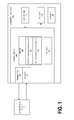
- FIG. 1 is a high-level diagram illustrating an exemplary configuration of communication device 102 (a first communication device), which is preferably a Bluetooth communication headset, although other communication headsets using other communication protocols and methods could be similarly substituted.
- Communication device 102 is often paired with a mobile communication device, such as a cellular phone (not shown), though such pairing is unnecessary and extraneous in context of the present disclosure.
- the communication device 102 includes a control circuit 106 which is operatively connected to various hardware and software components that serve to enable ad-hoc communication between mobile headsets.
- Control circuit 106 includes a paired communication module 112 that is stored in memory 122 on the control circuit 106.
- the paired communication module 112 can be stored on practically any storage medium (such as a hard disk drive, flash memory, etc.) that is operatively connected to the control circuit 106.
- the paired communication module 112 can comprise a software program or set of instructions executed in processor 114. During execution, the paired communication module 112 configures the processor 114 to provide paired communication with at least one additional device, such as communication device 104, as will be described in greater detail below. It should be noted that while pairing can be accomplished through conventional Bluetooth protocols, the method of initiating and achieving the pairing is as described herein. Additionally, while FIG.
- communication device 104 can have a substantially identical structure and function to that of communication device 102 (as depicted in FIG. 1 ). In most arrangements, it is expected that communication device 102 and communication device 104 will be substantially similar devices (that is, preferably Bluetooth communication headsets).
- Control circuit 106 also includes an ad-hoc communication module 120 that is stored in memory 122 on the control circuit 106.
- the ad-hoc communication module 120 can be stored on practically any storage medium (such as a hard disk drive, flash memory, etc.) that is operatively connected to the control circuit 106.
- the ad-hoc communication module 120 can comprise a software program or set of instructions executed in processor 114 or can comprise hardware components or a combination of hardware and software. During execution/operation, the ad-hoc communication module 120 configures the processor 114 to establish and maintain an ad-hoc communication session with a second communication device, such as communication device 104 (a second communication device), as will be described in greater detail below.
- Transmitter 108 is preferably any device capable of transmitting communication signals, such as Bluetooth communication signals. Upon receiving instructions from the control circuit 106, the transmitter 108 can transmit communication signals to practically any other device. In one arrangement, the transmitter 108 transmits communication signals to a second communication device 104 in order to initiate and/or maintain an ad-hoc communication session.
- Receiver 110 is preferably any device capable of receiving communication signals, such as Bluetooth communication signals.
- the receiver is constantly activated in order to receive any incoming communication signals.
- the receiver may be periodically deactivated in response to instructions from the control circuit 106 in order to lower the communication device's 102 power consumption.
- transmitter 108 and receiver 110 are depicted as separate elements, in alternate arrangements their functionality can be combined in a single transceiver which operates as both a transmitter and receiver, as is known to those of skill in the art.
- transmitter 108 and the receiver 110 can be of conventional construction.
- Microphone 116 receives audible tones from the area immediately surrounding the communication device 102.
- the microphone 116 is configured to receive the spoken voice of the user of the communication device 102.
- the audible tones received by the microphone are transduced into a signal and transmitted to control circuit 106 where they are, in turn, transmitted as communication signals by transmitter 108 to an external device such as communication device 104.
- Speaker 118 is any device capable of transducing communication signals received from or originated at the device 102 and projecting audio tones.
- speaker 118 is configured as one or more earbuds or earmuffs which are constructed to rest within or directly upon a user's ear.
- speaker 118 can be a loudspeaker for projecting tones in an enclosed area, for use like a speakerphone.
- the speaker 118 receives analog communication signals from control circuit 106 and conveys them as audible tones to the user.
- the referenced tones can originate at the control circuit (such as notification sounds relating to various system notifications) and/or at a second communication device 104 (such as during a conversation), as will be described in greater detail below.
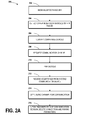
- routine 200 that illustrates a broad aspect of a method for providing an ad-hoc communication session between mobile headsets in accordance with at least one embodiment disclosed herein.
- routine 200 that illustrates a broad aspect of a method for providing an ad-hoc communication session between mobile headsets in accordance with at least one embodiment disclosed herein.
- the implementation is a matter of choice dependent on the requirements of the device (e.g., size, energy, consumption, performance, etc.). Accordingly, the logical operations described herein are referred to variously as operations, structural devices, acts, or modules.
- the process begins at step 202 where communication device 102 begins inquiring for other communication devices within the communication device's 102 range. For instance, control circuit 106 instructs transmitter 108 to transmit inquiry signals while receiver 110 receives acknowledgement/response signals transmitted by other communication devices. In one arrangement, the Bluetooth wireless protocol is utilized for this inquiry, though other communication protocols and methods can be similarly applied. In another arrangement, communication device 102 can utilize methods other than the transmission of inquiry signals in order to facilitate the various steps described below. Then, at step 204, control circuit 106 detects other communication devices (such as Bluetooth headsets) within communication range using transmitter 108 and receiver 110 as described above.
- other communication devices such as Bluetooth headsets
- control circuit 106 identifies one or more detected devices that are within communication range of the communication device 102 and which are not presently paired to communication device 102.
- control circuit 106 can utilize transmitter 108 and receiver 110 to request the BD Address (providing a unique identifier) and/or the Class of Device record (providing information regarding the type of device) of any/all detected Bluetooth devices. Using this information, the control circuit 106 can identify specific devices that are (or are not) capable of engaging in an ad-hoc communication session with communication device 102.
- control circuit 106 can be operatively connected to a database 150 which contains identifying information (such as BD Addresses and Class of Device records) relating to all devices capable of engaging in an ad-hoc communication session with communication device 102.
- identifying information such as BD Addresses and Class of Device records
- the identifying information contained in database 150 can be updated (for example, by connecting communication device 102 to another device having a network connection or having updated identifying information) to reflect the identifying information of newly released devices.
- a key generating scheme may be used to generate identifying information for compatible devices, and processor 114 can utilize a decoder to decode a received key and determine the compatibility of a given device.
- control circuit can quickly determine if a particular device is or is not capable of engaging in an ad-hoc communication session with communication device 102.
- control circuit 106 can select a single device at random for ad-hoc communication.
- control circuit 106 can select the device which has the greatest signal strength.
- the control circuit can enable the user to select which among the various compatible devices within range with which the user wishes to engage in an ad-hoc communication session. For example, the control circuit 106 may project through speaker 118 a list of compatible devices within range, and allow the user to select one.
- control circuit 106 can present the user with a list of such devices, such as through a visual display (not shown) that is in communication with the control circuit 106. The user can then select the device that he/she wishes to communicate with using any number of input methods such as button pressing, voice commands, etc.
- the control circuit 106 Upon identifying a compatible device, at step 208 the control circuit 106 requests a communication channel that can be acquired and through which the ad-hoc communication session can be conducted.
- a specific channel number can be designated for ad-hoc communication using the Bluetooth RFCOMM (radio frequency communication) transport protocol, and the control circuit 106, using transmitter 108 and receiver 110, can request this channel number from an identified compatible device (such as communication device 104) using the Bluetooth Service Discovery Protocol (SDP).
- SDP Bluetooth Service Discovery Protocol
- the first communication device 102 uses its control circuit 106 and the RFCOMM transport protocol, requests that the second communication device 104 join the ad-hoc communication session.
- the first communication device 102 receives an acceptance signal from second communication device 104, indicating that the second communication device 104 agrees to join the ad-hoc communication session.
- the control circuit 106 opens the specified communication channel, such as an audio channel, for communication between the first communication device and the second communication device.
- the audio channel can operate as a Bluetooth Synchronous Connection Oriented (SCO) link.
- SCO Bluetooth Synchronous Connection Oriented
- step 216 upon disconnection of the communication session (such as by one party hanging up or traveling out of range), the communication devices 102, 104 are disconnected from one another, and all connection and pairing parameters relating to the ad-hoc communication session are deleted from the respective communication devices 102, 104. In doing so, the respective devices can engage in ad-hoc communication sessions with other communication devices. In another arrangement, any/all of the connection and pairing parameters relating to the ad-hoc communication session are not deleted, and they are maintained by one or both of the communication devices 102, 104 in order to facilitate future ad-hoc communication sessions.
- routine 218 that illustrates a broad aspect of a method for participating an ad-hoc communication session between mobile headsets in accordance with at least one embodiment disclosed herein.
- communication device 104 has a substantially similar structure and operation to that of communication device 102 as depicted in FIG. 1 .
- the process begins at step 220, where the control circuit of communication device 104 initiates a discoverable mode such as Bluetooth discoverable mode. In doing so, communication device 104 transmits a discovery signal which enables other devices to discover it.
- communication device 104 receives a communication signal from communication device 102 requesting that communication device 104 join it in an ad-hoc communication session.
- the control circuit of communication device 104 determines the compatibility of communication device 104 with communication device 102 with respect to engaging in an ad-hoc communication session. In one arrangement, the control circuit of communication device 104 can utilize its transmitter and receiver to request the BD Address and/or the Class of Device record of communication device 102. Using this information, the control circuit can determine if communication device 104 is compatible with communication device 102 with respect to engaging in an ad-hoc communication session, as described in detail above.
- the control circuit of communication device 104 Upon determining that communication device 102 is compatible with communication device 104 with respect to ad-hoc communication, at step 226, the control circuit of communication device 104 notifies the user of the incoming request for ad-hoc communication.
- This notification can be provided in any number of ways, for example an audio tone or a visual prompt to a display screen.
- the user can then accept (or reject) the ad-hoc communication request by providing any number of inputs such as voice commands and/or button pressing.
- the user can configure the communication device 104 such that the device can accept and/or reject all incoming ad-hoc communication requests.
- the user can configure communication device 104 such that the device can accept/reject requests coming from specific users in an automated or automatic fashion.
- a user can configure his/her communication device 104 to automatically accept requests from one user, automatically reject requests from another user, and/or prompt the user when receiving a request from an unknown party.
- step 228, the pairing process between the two devices is completed, as described in detail above.
- step 230 an audio channel is opened with communication device 102, and the ad-hoc communication session commences, as described in detail above.
- step 232 upon disconnection of the communication session, the communication devices 102, 104 are disconnected from one another, and all connection and pairing parameters relating to the ad-hoc communication session are deleted from the respective communication devices 102, 104, as also described in detail above.
- any/all of the connection and pairing parameters relating to the ad-hoc communication session are not deleted, and are maintained by one or both of the communication devices 102, 104 in order to facilitate future ad-hoc communication sessions.
Landscapes
- Engineering & Computer Science (AREA)
- Computer Networks & Wireless Communication (AREA)
- Signal Processing (AREA)
- Mobile Radio Communication Systems (AREA)
- Telephone Function (AREA)
Applications Claiming Priority (1)
| Application Number | Priority Date | Filing Date | Title |
|---|---|---|---|
| US13/020,648 US8391792B2 (en) | 2011-02-03 | 2011-02-03 | System and method for initiating ad-hoc communication between mobile headsets |
Publications (2)
| Publication Number | Publication Date |
|---|---|
| EP2485465A2 true EP2485465A2 (de) | 2012-08-08 |
| EP2485465A3 EP2485465A3 (de) | 2013-09-11 |
Family
ID=45571382
Family Applications (1)
| Application Number | Title | Priority Date | Filing Date |
|---|---|---|---|
| EP12153127.1A Withdrawn EP2485465A3 (de) | 2011-02-03 | 2012-01-30 | System und Verfahren zum Initiieren einer Ad-Hoc-Kommunikation zwischen mobilen Headsets |
Country Status (3)
| Country | Link |
|---|---|
| US (1) | US8391792B2 (de) |
| EP (1) | EP2485465A3 (de) |
| JP (1) | JP2012165375A (de) |
Cited By (2)
| Publication number | Priority date | Publication date | Assignee | Title |
|---|---|---|---|---|
| EP3185520A1 (de) * | 2015-12-21 | 2017-06-28 | GN Audio A/S | Automatische aufforderung bei anrufende zum trennen des headsets |
| EP3276905A1 (de) * | 2016-07-25 | 2018-01-31 | GN Audio A/S | System zur audio-kommunikation mittels lte |
Families Citing this family (20)
| Publication number | Priority date | Publication date | Assignee | Title |
|---|---|---|---|---|
| US8666461B2 (en) * | 2010-09-28 | 2014-03-04 | Bose Corporation | Wireless audio device call device selection |
| US9177570B2 (en) * | 2011-04-15 | 2015-11-03 | St-Ericsson Sa | Time scaling of audio frames to adapt audio processing to communications network timing |
| KR20130005193A (ko) * | 2011-07-05 | 2013-01-15 | 삼성전자주식회사 | Ban 환경에서의 프록시 통신 시스템 및 그 제어 방법 |
| KR20130050788A (ko) * | 2011-11-08 | 2013-05-16 | 삼성전자주식회사 | Ban 환경에서의 프록시 통신 시스템 및 그 제어 방법 |
| WO2013119153A1 (en) * | 2012-02-09 | 2013-08-15 | Telefonaktiebolaget Lm Ericsson (Publ) | A network node and a method therein enabling a first unit to connect or to be connected ad-hoc to a second unit |
| US9071330B2 (en) * | 2012-09-07 | 2015-06-30 | Qualcomm Innovation Center, Inc. | Peer-to-peer communication initiated by shared physical experience |
| CN105027588B (zh) * | 2013-01-04 | 2019-08-06 | 寇平公司 | 自组织网络 |
| KR101514830B1 (ko) * | 2013-10-14 | 2015-04-23 | 주식회사 세나테크놀로지 | 블루투스 헤드셋의 멀티태스킹 시스템 |
| US9301087B1 (en) * | 2015-02-09 | 2016-03-29 | Motorola Solutions, Inc. | Method and apparatus for connecting a bluetooth device |
| US11212385B2 (en) | 2015-07-14 | 2021-12-28 | Kirk Lepchenske | Media control devices, systems and methods |
| US9955291B2 (en) * | 2016-01-13 | 2018-04-24 | Lg Electronics Inc. | Method and device for controlling group device using bluetooth in wireless communication system |
| US9668290B1 (en) * | 2016-05-24 | 2017-05-30 | Ronald Snagg | Wireless communication headset system |
| US10652381B2 (en) | 2016-08-16 | 2020-05-12 | Bose Corporation | Communications using aviation headsets |
| CN109644216A (zh) | 2016-08-18 | 2019-04-16 | 华为技术有限公司 | 一种蓝牙通信的方法及终端 |
| US9820323B1 (en) | 2016-11-22 | 2017-11-14 | Bose Corporation | Wireless audio tethering system |
| US11057937B2 (en) * | 2017-10-19 | 2021-07-06 | Qualcomm Incorporated | Relay node connection techniques in wireless backhaul systems |
| US10299300B1 (en) | 2018-05-16 | 2019-05-21 | Bose Corporation | Secure systems and methods for establishing wireless audio sharing connection |
| US10637651B2 (en) | 2018-05-17 | 2020-04-28 | Bose Corporation | Secure systems and methods for resolving audio device identity using remote application |
| US10944555B2 (en) | 2018-05-17 | 2021-03-09 | Bose Corporation | Secure methods and systems for identifying bluetooth connected devices with installed application |
| US11102655B1 (en) | 2020-03-31 | 2021-08-24 | Bose Corporation | Secure device action initiation using a remote device |
Family Cites Families (5)
| Publication number | Priority date | Publication date | Assignee | Title |
|---|---|---|---|---|
| JP4550636B2 (ja) * | 2005-03-18 | 2010-09-22 | 富士通株式会社 | 電子機器、その登録方法及び登録プログラム |
| US20080233877A1 (en) * | 2007-03-20 | 2008-09-25 | Gwee Lin-Kar | Method of connecting a bluetooth headphone to bluetooth communications devices |
| US9363108B2 (en) * | 2008-06-05 | 2016-06-07 | Cisco Technology, Inc. | System for utilizing identity based on pairing of wireless devices |
| US8116788B2 (en) * | 2008-06-10 | 2012-02-14 | Plantronics, Inc. | Mobile telephony presence |
| CN105717989B (zh) * | 2009-02-27 | 2020-02-21 | 艾卡姆有限公司 | 基于耳机的电信平台 |
-
2011
- 2011-02-03 US US13/020,648 patent/US8391792B2/en not_active Expired - Fee Related
-
2012
- 2012-01-24 JP JP2012011758A patent/JP2012165375A/ja active Pending
- 2012-01-30 EP EP12153127.1A patent/EP2485465A3/de not_active Withdrawn
Cited By (5)
| Publication number | Priority date | Publication date | Assignee | Title |
|---|---|---|---|---|
| EP3185520A1 (de) * | 2015-12-21 | 2017-06-28 | GN Audio A/S | Automatische aufforderung bei anrufende zum trennen des headsets |
| US9917943B2 (en) | 2015-12-21 | 2018-03-13 | Gn Audio A/S | Automatic prompt at call-end |
| EP3276905A1 (de) * | 2016-07-25 | 2018-01-31 | GN Audio A/S | System zur audio-kommunikation mittels lte |
| CN107659551A (zh) * | 2016-07-25 | 2018-02-02 | Gn 奥迪欧有限公司 | 用于利用lte进行音频通信的系统与方法 |
| US11831697B2 (en) | 2016-07-25 | 2023-11-28 | Gn Audio A/S | System for audio communication using LTE |
Also Published As
| Publication number | Publication date |
|---|---|
| US20120202425A1 (en) | 2012-08-09 |
| EP2485465A3 (de) | 2013-09-11 |
| JP2012165375A (ja) | 2012-08-30 |
| US8391792B2 (en) | 2013-03-05 |
Similar Documents
| Publication | Publication Date | Title |
|---|---|---|
| US8391792B2 (en) | System and method for initiating ad-hoc communication between mobile headsets | |
| CN120640262B (zh) | 音频控制方法及系统 | |
| EP3545695B1 (de) | Drahtloses audioanbindungssystem | |
| US9978369B2 (en) | Method and apparatus for voice control of a mobile device | |
| EP2458743B1 (de) | Verfahren und system für den ordnungsgemässen anschluss eines über ein endgerät gesteuerten bluetooth-kopfhörers | |
| CN105050034B (zh) | 基于蓝牙连接的语音服务实现方法和装置及系统 | |
| JP5472002B2 (ja) | 近距離無線通信装置 | |
| CN102857610B (zh) | 短距离无线通信装置 | |
| US20160366263A1 (en) | Method and device for transmitting or receiving data in wireless communication system | |
| CN102857275A (zh) | 短程无线通信装置 | |
| US10827455B1 (en) | Method and apparatus for sending a notification to a short-range wireless communication audio output device | |
| WO2012142794A1 (zh) | 蓝牙配件配对蓝牙设备的方法及蓝牙配件 | |
| CN113784001B (zh) | 音频数据播放方法、装置、电子设备及存储介质 | |
| JP2011018975A (ja) | 近距離無線通信装置 | |
| CN105161111A (zh) | 基于蓝牙连接的语音识别方法和装置 | |
| US10743165B1 (en) | Automatically pairing a Bluetooth low energy (BLE) device to a user device | |
| US9712662B2 (en) | Method of extending an intercom communication range and device thereof | |
| CA2818908C (en) | Managing short range wireless data transmissions | |
| US9253803B2 (en) | Managing short range wireless data transmissions | |
| CN103259902B (zh) | 终端和通话方法 | |
| JP2005303435A (ja) | ハンズフリーシステム、移動通信端末装置及びハンズフリー制御方法 | |
| US20130189967A1 (en) | Apparatus, and associated method, for reconnecting dropped call | |
| EP2458931B1 (de) | Verwaltung von drahtlosen Datennahübertragungen | |
| EP4042718A1 (de) | Gleichzeitiges anpassen von zwei hörgeräten | |
| EP2618623B1 (de) | Vorrichtung und zugehöriges verfahren zur wiederverbindung bei anrufunterbrechung |
Legal Events
| Date | Code | Title | Description |
|---|---|---|---|
| PUAI | Public reference made under article 153(3) epc to a published international application that has entered the european phase |
Free format text: ORIGINAL CODE: 0009012 |
|
| AK | Designated contracting states |
Kind code of ref document: A2 Designated state(s): AL AT BE BG CH CY CZ DE DK EE ES FI FR GB GR HR HU IE IS IT LI LT LU LV MC MK MT NL NO PL PT RO RS SE SI SK SM TR |
|
| AX | Request for extension of the european patent |
Extension state: BA ME |
|
| PUAL | Search report despatched |
Free format text: ORIGINAL CODE: 0009013 |
|
| AK | Designated contracting states |
Kind code of ref document: A3 Designated state(s): AL AT BE BG CH CY CZ DE DK EE ES FI FR GB GR HR HU IE IS IT LI LT LU LV MC MK MT NL NO PL PT RO RS SE SI SK SM TR |
|
| AX | Request for extension of the european patent |
Extension state: BA ME |
|
| RIC1 | Information provided on ipc code assigned before grant |
Ipc: H04W 84/18 20090101ALI20130802BHEP Ipc: H04M 1/60 20060101AFI20130802BHEP Ipc: H04M 1/725 20060101ALN20130802BHEP |
|
| STAA | Information on the status of an ep patent application or granted ep patent |
Free format text: STATUS: THE APPLICATION IS DEEMED TO BE WITHDRAWN |
|
| 18D | Application deemed to be withdrawn |
Effective date: 20140312 |