EP2490133A1 - Erfassung von Daten - Google Patents
Erfassung von Daten Download PDFInfo
- Publication number
- EP2490133A1 EP2490133A1 EP11170824A EP11170824A EP2490133A1 EP 2490133 A1 EP2490133 A1 EP 2490133A1 EP 11170824 A EP11170824 A EP 11170824A EP 11170824 A EP11170824 A EP 11170824A EP 2490133 A1 EP2490133 A1 EP 2490133A1
- Authority
- EP
- European Patent Office
- Prior art keywords
- data
- requests
- presentation
- cache
- server
- Prior art date
- Legal status (The legal status is an assumption and is not a legal conclusion. Google has not performed a legal analysis and makes no representation as to the accuracy of the status listed.)
- Granted
Links
Images




Classifications
-
- G—PHYSICS
- G06—COMPUTING OR CALCULATING; COUNTING
- G06F—ELECTRIC DIGITAL DATA PROCESSING
- G06F16/00—Information retrieval; Database structures therefor; File system structures therefor
- G06F16/20—Information retrieval; Database structures therefor; File system structures therefor of structured data, e.g. relational data
- G06F16/24—Querying
- G06F16/245—Query processing
- G06F16/2453—Query optimisation
-
- H—ELECTRICITY
- H04—ELECTRIC COMMUNICATION TECHNIQUE
- H04L—TRANSMISSION OF DIGITAL INFORMATION, e.g. TELEGRAPHIC COMMUNICATION
- H04L67/00—Network arrangements or protocols for supporting network services or applications
- H04L67/50—Network services
- H04L67/56—Provisioning of proxy services
- H04L67/568—Storing data temporarily at an intermediate stage, e.g. caching
- H04L67/5683—Storage of data provided by user terminals, i.e. reverse caching
-
- H—ELECTRICITY
- H04—ELECTRIC COMMUNICATION TECHNIQUE
- H04M—TELEPHONIC COMMUNICATION
- H04M1/00—Substation equipment, e.g. for use by subscribers
- H04M1/26—Devices for calling a subscriber
- H04M1/27—Devices whereby a plurality of signals may be stored simultaneously
- H04M1/274—Devices whereby a plurality of signals may be stored simultaneously with provision for storing more than one subscriber number at a time, e.g. using toothed disc
- H04M1/2745—Devices whereby a plurality of signals may be stored simultaneously with provision for storing more than one subscriber number at a time, e.g. using toothed disc using static electronic memories, e.g. chips
- H04M1/2753—Devices whereby a plurality of signals may be stored simultaneously with provision for storing more than one subscriber number at a time, e.g. using toothed disc using static electronic memories, e.g. chips providing data content
- H04M1/2757—Devices whereby a plurality of signals may be stored simultaneously with provision for storing more than one subscriber number at a time, e.g. using toothed disc using static electronic memories, e.g. chips providing data content by data transmission, e.g. downloading
-
- G—PHYSICS
- G06—COMPUTING OR CALCULATING; COUNTING
- G06F—ELECTRIC DIGITAL DATA PROCESSING
- G06F3/00—Input arrangements for transferring data to be processed into a form capable of being handled by the computer; Output arrangements for transferring data from processing unit to output unit, e.g. interface arrangements
- G06F3/01—Input arrangements or combined input and output arrangements for interaction between user and computer
- G06F3/048—Interaction techniques based on graphical user interfaces [GUI]
- G06F3/0484—Interaction techniques based on graphical user interfaces [GUI] for the control of specific functions or operations, e.g. selecting or manipulating an object, an image or a displayed text element, setting a parameter value or selecting a range
- G06F3/0485—Scrolling or panning
Definitions
- This application generally relates to retrieving data and particularly, although not exclusively, to a mobile device, and more particularly, to mobile device applications that request data in real-time, for example, scrolling presentation screens that display contacts, call history and messages.
- the present application relates to a mobile device, and more specifically, to retrieving data from a remote server on request without affecting performance of the mobile device.
- the system described herein can be typically applied to native mobile device applications in which real-time data from a remote server can be used for interface updates. These applications can include, but are not limited to, scrolling presentation screens related to such items as contacts, call history, messages, etc.
- these applications can include, but are not limited to, scrolling presentation screens related to such items as contacts, call history, messages, etc.
- one or more data requests can be made.
- the data can be retrieved through a relaxed loader from a remote server by asynchronously placing data requests to the remote server starting with the last added data request.
- the relaxed loader allows the mobile device to not bombard the remote server with requests. By removing older data requests, the mobile applications can fetch data more in line with the current display.
- the data After receiving the data from the remote server, the data can be decoded and compressed. The data can then be placed within cache.
- the data within the cache can be associated and processed for use with multiple entries. For example, in the case of a call history presentation, there can be multiple entries for the same person within the presentation. Instead of the presentation decoding the data from cache for each entry and the presentation processing that data for the entry, the data can be processed within the cache into a form useable for multiple entries within the presentation before being provided to the presentation.
- the device can provide data on the interface dynamically and in real-time. Furthermore, through procedures described below, the mobile device can relax the burden of processing data, for example, when three thousand images are requested. This approach can be extended to other types of data and subscriptions for data to the remote server based on view. For example, if the user listing is to show telephony presence, then the same components can be used to subscribe for data instead of fetching data from the remote server. Furthermore, because of the compressor, more data can be placed within cache, for example, a five kilobyte image from the server of a 120x120 pixel can be stored in cache using six hundred bytes when the image in cache is encoded with a 32x32 pixel.
- the system and methods use limited memory without affecting the user experience. It attempts to solve previously existing issues by fetching and retrieving data using different techniques as opposed to limiting a user's view.
- data can refer to images, messages or any other type of information.
- user interface can be interchanged with the term presentation.
- Figure 1 Before describing embodiments of the present application, an exemplary mobile device will be described in Figure 1 along with several screen shots showing scrolling presentations in Figures 2A, 2B , 3A and 3B . Components within the system will be described thereafter in Figure 4 .
- Figures 5 and 6 provide exemplary routines within flow charts for retrieving data for the presentation on the mobile device.
- Figures 7 and 8 show processes for handling multiple entries within a presentation.
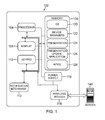
- the mobile device 102 can have a processor 104 for implementing logic, a memory 106, a display 108 and a keypad 110.
- the display 108 of the mobile device 102 can be a liquid crystal display (LCD), or any other type of display commonly used in mobile devices 102.
- the display 108 can be touch-sensitive, and can act as an input device.
- the keypad 110 can be a push button numeric dialing pad (such as on a typical telephone), a multi-key keyboard (such as a conventional keyboard), or any other device for inputting textual data.
- the memory 106 generally includes both volatile memory (e.g., RAM) and non-volatile memory (e.g., ROM, Flash Memory, or the like).
- volatile memory e.g., RAM
- non-volatile memory e.g., ROM, Flash Memory, or the like.
- the non-volatile portion of the memory 106 can be used to store persistent information which should not be lost when the mobile device 102 is powered down.
- the mobile device 102 can include an operating system (OS) 120, such as Windows CE® or Windows Mobile® available from Microsoft Corporation, AndroidTM from Google, or other OS.
- OS operating system
- the OS can reside in the memory 106 and be executed on the processor 104.
- the memory 106 can also include one or more device managers 122 for interacting with one or more I/O devices.
- the device managers 122 can be software installed on the mobile device 102.
- a device manager 122 can correspond to each I/O device.
- one or more presentations 124 can be loaded into memory 106 and run on or in association with the operating system 120.
- the presentations 124 can come in a variety of forms, but for purposes of illustration will be described herein as scrolling presentations.
- a presentation update application 126 can be run on the mobile device 102 in association with the presentations 124.
- presentations 124 running through the presentation update application 126 can retrieve data from a server 140 on request without affecting the interface. While shown as software, the presentation update application 126 can be run on hardware, software or combination of hardware and software. In some embodiments, the presentation update application 126 can operate outside memory 106. As will be shown below, the application 126 can be applied to scrolling presentation screens related to such items as contacts, call history, messages, etc.
- the memory 106 can also include a collection of one or more APIs 128 for facilitating wireless communication between the mobile device 102 and one or more remote I/O devices.
- the APIs 128 can be invoked by the presentations 124 and presentation update application 126 to recognize and control the one or more remote I/O devices. In this manner, the mobile device 102 is able to take advantage of services or functionalities of the one or more remote I/O devices.
- the mobile device 102 can also include a power supply 118, which can be implemented as one or more batteries, fuel cells, or other sources of electrical power.
- the power supply 118 might further include an external power source, such as an AC adapter or a powered docking cradle that supplements or recharges the batteries.
- the mobile device 102 can include one or more audio, visual, and/or vibratory notification mechanisms 112.
- the mobile device 102 can also include a wireless module 116, such as a WiFi module that facilitates wireless connectivity between the mobile device 102 and the server 140.
- the server 140 can be reached over a network.
- the network can include a local area network, wide area network, personal area network, campus area network, metropolitan area network, or global area network. Such networking environments are commonplace in office networks, enterprise-wide computer networks, intranets and the Internet, which are all types of networks.
- the server 140 within the present application, can handle data requests and provide data 212 back to the source of the data requests.
- the server 140 can include one or many computers and is not limited to a single entity.
- the technology described herein can be implemented as logical operations and/or modules in the mobile device 102, and more particularly, the memory 106.
- the logical operations can be implemented as a sequence of processor-implemented executed steps and as interconnected machine or circuit modules within the mobile device 102.
- the descriptions of various component modules can be provided in terms of operations executed or effected by the modules.
- the resulting implementation is a matter of choice, dependent on the performance requirements of the underlying system implementing the described technology. Accordingly, the logical operations making up the embodiment of the technology described herein are referred to variously as operations, steps, objects, or modules. It should be understood that logical operations can be performed in any order, unless explicitly claimed otherwise or a specific order is inherently necessitated by the claim language.
- the presentation 124 can take the form of a scrolling presentation. As depicted in Figure 2A , an upper portion of an exemplary presentation 124 with a scroll bar 204 having a thumb 206 at the top of a track 208 in accordance with one aspect of the present application is provided.
- the presentation 124 can provide a contact list having information about employees within a company directory.
- the company directory can include numerous entries that can expand many screens or views within the presentation 124.
- Images 212 for each of the employees can be shown within the presentation 124 along with their extension. When the thumb 206 is at the top of the track 208, contacts starting with the letter "A" 210 can be shown.
- Current systems require a period of time to retrieve and present the images 212 for each of the employees on the presentation 124, thus not all images 212 have been depicted.
- FIG. 3A shows the exemplary presentation 124 having data 212 removed in accordance with one aspect of the present application.
- Figure 3B a single item for display is provided as depicted in Figure 3B .
- the presentation 124, and more specifically the data 212 is not updated quickly enough providing an unpleasant user experience.
- Figure 4 shows illustrative components of the presentation update application 126 in accordance with one aspect of the present application. In some embodiments, some of the components can reside outside the memory 106. As shown, the presentation 124 can receive data 212 from the server 140 through the presentation update application 126.
- the components of the presentation update application 126 can include, but are not limited to, a relaxed loader 402, decoder 404, compressor 406 and last recently used (LRU) cache 408, all of which will be described below.
- the presentation 124 can be a user interface layer that can provide corporate contacts or typically anything that has listed information.
- the presentation 124 can display the scrollbar 204 shown in Figures 2A and 2B .
- the data requests can be received at the relaxed loader 402 of the presentation update application 126.
- the relaxed loader 402 can be used to remove the burden placed on the presentation 124 and server 140 for fetching data 212.
- the relaxed loader 402 can reduce the amount of requests to the server 140 by fetching data 212 only within the current display. Advantageously, this prevents lag time to load data 212 from the server 140.
- the relaxed loader 402 can be implemented using a stack.
- the stack can have a limited size for storing data requests that are generated by the presentation 124.
- the stack can be operated in memory 106 and generally has two fundamental operations: push and pop.
- the push operation can add a data request to the top of the stack.
- the pop operation can remove a data request from the top of the stack and return the data request to the relaxed loader 402.
- the stack allows for the last received data request or head to be provided to the server 140.
- the stack can hold only a limited amount of data requests.
- the stack can discard requests that were previously provided.
- the discarded requests would typically be at the bottom of the stack.
- Well known techniques can be used to discard these requests. Functionally, this would remove outdated requests that are not needed within the current screen of the presentation 124.
- the relaxed loader 402 can serialize the requests to the server 140.
- the server 140 does not get more than one request from the relaxed loader 402 at a time.
- the relaxed loader 402 can be bombarded with thousands of requests from the presentation 124.
- the requests can be dropped as the relaxed loader 402 holds a limited size of requests, for example, ten.
- the relaxed loader 402 can handle requests by selecting the most recent requests pertaining to the user view on the display 108 and then providing them to the server 140.
- the data 212 received from the server 140 can be provided to the decoder 404 from the relaxed loader 402. Typically, the data 212 received from the server 140 is not useable by the presentation 124.
- the decoder 404 can convert the data 212 for the presentation 124. Advantageously, this removes critical tasks by the presentation 124 so that the presentation 124 can be focused on other routines.
- data 212 from the server 140 is provided in extensible markup language and cannot be used by the presentation 124.
- the decoder 404 can convert the data 212 received from the server 140 to processed data.
- the server 140 can provide a JPEG image that would be translated to processed data by the decoder 404.
- the processed data 212 from the decoder 404 can be provided to the compressor 406.
- the compressor 406 can be used to reduce the size of the data 212 as needed by the presentation 124 so that the cache 408 does not build up and more entries can be held.
- the compressor 406 can compress the decoded data 212 based on presentation parameters so the data 212 can be cached efficiently and the presentation 124 has to do less processing when using the data 212. For example, when an image of dimension 120x120 is of size five kilobytes for thirty-two bits is received from the server 140, and the image is going to be shown on a presentation 126 of 40x40 pixels on twenty-four bits, it is efficient to feed the presentation 124 with data 212 that requires no image shrinking or stretching.
- the compressor 406 can resize the image from the server 140 to 40x40 on twenty-four bits which would roughly take about one tenth of the original size. As a result, the cache 408 can hold multiple images in the allocated memory 106.
- the LRU cache 408 can act as a temporary storage for data 212. Generally, the cache 408 is small and stores only a limited amount of information. The cache 408 can process data for multiple entries. For example, in the case of call history, there can be multiple entries from the same person. Instead of the presentation 124 decoding a JPEG image from cache 408 for each entry, the cache 408 can associate processed images for multiple entries. As a result, the presentation 124 typically does not have to decode multiple JPEG images for the presentation 124. The association of cached images to processed images can then be provided to the presentation 124 through the relaxed loader 402 which will be discussed below.
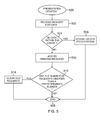
- Figure 5 is a flow chart showing exemplary routines for handling data requests in accordance with one aspect of the present application. Those skilled in the relevant art will appreciate that fewer or more processes can be used and those processes described can be combined with routines from Figure 6 .
- the processes for updating the presentation 124 can begin at block 500.
- the presentation update application 126 can receive requests for data 212. These requests can be a result of scrolling the presentation 124 using the scrollbar 204. In some embodiments, and in some interfaces, the movement of the presentation 124 can occur through a touch screen display 108 to activate data requests.
- the relaxed loader 402 of the presentation update application 126 can determine whether the requested data 212 is within the LRU cache 408 at decision block 504. Recent data 212 can be stored into the LRU cache 408. For purposes of illustration, the data 212 can be found in cache 408 when the user slightly moves the thumb 206 up and down the track 208 repeatedly.
- the data 212 is pulled directly from the cache 408 and provided to the presentation 124 at block 506.
- Processes shown within Figure 8 can be used to handle multiple entries.
- the data 212 can go through the relaxed loader 402 and then to the presentation 124 where it is updated. The processes can end at block 508.
- the relaxed loader 402 can add the request to the head of pending requests at block 510. In this way, requests that are more recent are added to the top in anticipation that the user will need that data 212 versus data 212 that is older. Continuing with the stack described above, the data requests can be pushed onto the stack of the relaxed loader 402.
- the presentation update application 126 can determine whether there are a number of requests greater than a predetermined number.
- the predetermined number can relate to how much data can be presented in the presentation 124 at anytime.
- the predetermined number can be ten for larger screen devices and be seven for smaller view devices.
- the user can set the predetermined number so that it can be customized.
- the presentation update application 126 can clear out old requests from the relaxed loader 402. The processes can end at block 508.
- FIG. 6 a flow chart showing exemplary routines for asynchronously processing pending requests in accordance with one aspect of the present application is provided.
- the processes can begin at block 600.
- decision block 602 a determination can be made whether there is a pending request. Pending requests can be received in a stack structure that keeps track of the last entered data request. When used, the data request can be taken from the stack and processed.
- the presentation update application 126 can wait for requests to arrive.
- the presentation update application 126 can process the head of the pending requests. As described above, the older the data request, the less likely the presentation 124 will be using the data 212 associated with the data request. In some embodiments, this can be done by performing a pop action in the stack of the relaxed loader 402. When there is a request pending, the LRU cache 408 can be checked at decision block 608. The cache 408 is checked as the data 212 could have been placed in the cache 408 from a different request.
- the relaxed loader 402 of the presentation update application 126 can asynchronously send the head of pending requests to the server 140. This reduces the load on the communication between the mobile device 102 and the server 140 and provides for a better user experience.
- the relaxed loader 402 can receive data 212 from the server 140 based on the request.
- the data 212 can then be decoded at block 616 by decoder 404. By decoding the data 212, it can be properly used by the presentation 124.
- the data 212 can be compressed by compressor 406. In many instances, the data 212 can be reduced in size as the presentation 124 often does not need the total complexities of the data 212.
- the presentation update application 126 can store the data 212 within the LRU cache 408.
- the data 212 can then be provided to update the presentation 124 at block 610.
- Processes shown within Figure 8 can be used to handle multiple entries. The processes can then transition back to decision block 602 where pending requests are checked.
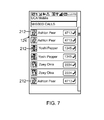
- Some presentations 124 can repeat multiple entries, for example, in a missed call presentation 124 depicted in Figure 7 .
- the presentation 124 indicates three missed calls from "Ashton Pear", two missed calls from “Yoshi Pepper” and two missed calls from “Zoey Okra.”
- data 212 can be provided next to the name such as an image.
- the presentation update application 126 can decode the data 212 from cache 408 into processed data and assign a red-green-blue (RGB) color model within the presentation 124. This process, however, is inefficient when there are multiple entries in the amount of processing and memory used.
- RGB red-green-blue
- a presentation 124 having multiple common entries can be more efficiently served using processed data rather than unprocessed data from the cache 408.
- a user's call history presentation 124 tends to have multiple entries for the same person. In such views, it is more efficient to attach a processed image such as a RGB buffer than a compressed JPG image to the image view area.
- FIG. 8 is an illustrative flowchart showing processes for updating data 212 within the presentation in accordance with one aspect of the present application.
- the processes can begin at block 800.
- the presentation update application 126 can determine whether the presentation 124 needs processed data 212 at decision block 802. As described above, the presentation 124 could use processed data 212 when multiple entries are provided that have common data 212. Using processed data 212 would be much more efficient than processing the data for each entry on the presentation 124.
- the presentation update application 126 can send the cached data to the presentation 124.
- the data 212 from the cache 408 can be decoded and provided to the presentation 124.
- the processes can end at block 814.
- the presentation update application 126 can determine whether processed data 212 is associated with the cached data 212. If there are multiple entries, it is typically more efficient to attach a processed image, such as an RGB buffer, rather than a compressed JPG image to the image view area. When the RGB buffer is used then all the common entries share the same memory and at block 812, the presentation update application 126 can send the presentation 124 the processed data 212 where it can more efficiently use the data 212. The processes can end at block 814. If the JPG image was used for the multiple entries, all of the image view area would have to decode the JPG image into its own RGB buffer internally and assign that RGB buffer to an image view area on the presentation 124, which typically increases processing and memory inefficiencies.
- a processed image such as an RGB buffer
- the presentation update application 126 can use the cached data 212 to generate processed data 212.
- the presentation update application 126 can associate the processed data 212 within the cache at block 810.
- the presentation update application 126 can send the presentation 124 the processed data where it can more efficiently use the data 212.
- a processed image such as an RGB buffer
- a method for providing data within a presentation displayed on a mobile device can include receiving data requests for the presentation.
- the method can include asynchronously retrieving data corresponding with the data requests from a server beginning with a last received data request.
- the method can also include displaying the data within the presentation.
- the method can include converting the data to a useable form for the presentation. In some embodiments, the method can include decoding the data retrieved from the server and compressing the data and storing the data into cache. In some embodiments, the method can include associating the data stored within the cache when multiple common entries are provided in the presentation, processing the data within the cache and providing the processed data to the presentation for display within the multiple common entries.
- asynchronously retrieving the data corresponding with the data requests can include removing data requests that are outdated.
- asynchronously retrieving data corresponding with the data requests from the server beginning with the last received data request can include continuously fetching data using data request at a head of pending requests.
- the presentation can include a scroll bar that when scrolled provides the data requests. In some embodiments, additional data requests can be received when the scroll bar of the presentation is scrolled anew.
- asynchronously retrieving the data corresponding with the data requests from the server can include determining whether the data is within cache before retrieving data from the server.
- an apparatus can include at least one processor and a memory operatively coupled to the processor, the memory storing program instructions that when executed by the processor, causes the processor to perform processes.
- the processes can include displaying a user interface and receiving at least one data request corresponding to data placed within the user interface.
- the processes can include retrieving the data corresponding to the at least one data request from cache when the data is found within the cache, otherwise, retrieving the data from a network by placing the at least one data request within pending requests and fetching the data from the network starting with a last added data request within the pending requests.
- the processes can also include displaying the data within the user interface.
- the memory storing program instructions when executed by the processor causes the processor to decode the data fetched from the network, compress the data, store the data within the cache, associate the data within the cache, and process the data for display on the user interface.
- the memory storing program instructions when executed by the processor causing the processor to associate the data within the cache can include linking multiple entries on the user interface with the associated data.
- the memory storing program instructions when executed by the processor can cause the processor to remove data requests from the pending requests when a predefined number of requests are met.
- fetching the data from the network can include serializing the pending requests to the network one at a time.
- a system can include a mobile phone having an interface containing images retrieved from a server.
- the mobile phone can fetch the images by serializing image requests to the server beginning with a most recent image request.
- the fetched images can be decoded, compressed and placed into cache on the mobile phone.
- the mobile phone can associate the images in the cache and processing the images from the cache for multiple entries on the interface.
- the mobile phone can remove older image requests.
- the interface can display at least one of contacts, calls history and messages.
- the mobile phone can place the image requests onto a stack.
- the images can be associated with one another when the images correspond to a single entity.
- single entity can be a user profile.
Landscapes
- Engineering & Computer Science (AREA)
- Computer Networks & Wireless Communication (AREA)
- Signal Processing (AREA)
- Theoretical Computer Science (AREA)
- Computational Linguistics (AREA)
- Data Mining & Analysis (AREA)
- Databases & Information Systems (AREA)
- Physics & Mathematics (AREA)
- General Engineering & Computer Science (AREA)
- General Physics & Mathematics (AREA)
- Information Transfer Between Computers (AREA)
- Telephonic Communication Services (AREA)
Applications Claiming Priority (1)
| Application Number | Priority Date | Filing Date | Title |
|---|---|---|---|
| US12/932,203 US8442494B2 (en) | 2011-02-18 | 2011-02-18 | System for updating presentations on mobile devices and methods thereof |
Publications (2)
| Publication Number | Publication Date |
|---|---|
| EP2490133A1 true EP2490133A1 (de) | 2012-08-22 |
| EP2490133B1 EP2490133B1 (de) | 2018-02-28 |
Family
ID=45470234
Family Applications (1)
| Application Number | Title | Priority Date | Filing Date |
|---|---|---|---|
| EP11170824.4A Active EP2490133B1 (de) | 2011-02-18 | 2011-06-21 | Erfassung von Daten |
Country Status (4)
| Country | Link |
|---|---|
| US (1) | US8442494B2 (de) |
| EP (1) | EP2490133B1 (de) |
| CN (1) | CN102707961A (de) |
| CA (1) | CA2747301A1 (de) |
Families Citing this family (8)
| Publication number | Priority date | Publication date | Assignee | Title |
|---|---|---|---|---|
| US8995626B2 (en) * | 2007-01-22 | 2015-03-31 | Microsoft Technology Licensing, Llc | Unified and consistent user experience for server and client-based services |
| JP2014178999A (ja) * | 2013-03-15 | 2014-09-25 | Ricoh Co Ltd | 情報処理システム、機器、情報処理方法、及びプログラム |
| CN103714046B (zh) * | 2013-12-27 | 2016-08-17 | 南京国电南自电网自动化有限公司 | 大量信息的界面显示方法 |
| WO2015151547A1 (ja) * | 2014-04-03 | 2015-10-08 | ソニー株式会社 | 情報処理装置および記録媒体 |
| CN104035668A (zh) * | 2014-06-24 | 2014-09-10 | 广州金山网络科技有限公司 | 一种异步加载数据滑动性能的优化方法及系统、移动终端 |
| US10491664B2 (en) * | 2014-10-13 | 2019-11-26 | Salesforce.Com, Inc. | Asynchronous web service callouts and servlet handling |
| CN104581344B (zh) * | 2014-12-29 | 2019-07-23 | 深圳创维数字技术有限公司 | 一种菜单界面显示方法及数字电视接收终端 |
| CN106817386B (zh) * | 2015-11-27 | 2020-03-10 | 华为技术有限公司 | 一种多会话下远程服务的数据处理方法和系统 |
Citations (7)
| Publication number | Priority date | Publication date | Assignee | Title |
|---|---|---|---|---|
| EP0993165A2 (de) * | 1998-09-16 | 2000-04-12 | Phone.Com Inc. | Mobile Geräte mit Wirkungsverbesserung während der Zeit als das Netz nicht erreichbar ist |
| US6973457B1 (en) * | 2002-05-10 | 2005-12-06 | Oracle International Corporation | Method and system for scrollable cursors |
| EP1718088A1 (de) * | 2005-04-25 | 2006-11-02 | Research In Motion Limited | Architektur, die für gemeinsame Benutzung von Anwendungsdaten in einem Mobilkommunikationsgerät optimiert wird |
| WO2009052033A2 (en) * | 2007-10-19 | 2009-04-23 | Microsoft Corporation | Dynamically updated virtual list view |
| US20090132956A1 (en) * | 2007-11-20 | 2009-05-21 | International Business Machines Corporation | Tree widget data population |
| EP2124413A1 (de) * | 2008-05-20 | 2009-11-25 | Vodafone Holding GmbH | System und Verfahren zur Ausführung von Kommunikation zwischen einem Server und einem Benutzergerät |
| US20100010965A1 (en) * | 2008-07-08 | 2010-01-14 | International Business Machines Corporation | Query Management Systems |
Family Cites Families (5)
| Publication number | Priority date | Publication date | Assignee | Title |
|---|---|---|---|---|
| US5835908A (en) * | 1996-11-19 | 1998-11-10 | Microsoft Corporation | Processing multiple database transactions in the same process to reduce process overhead and redundant retrieval from database servers |
| JP4366023B2 (ja) * | 2001-03-16 | 2009-11-18 | インターナショナル・ビジネス・マシーンズ・コーポレーション | ビデオ・イメージの部分イメージ領域抽出方法、部分イメージ領域抽出システム、部分イメージ領域抽出のためのプログラム、抽出されたビデオ・イメージの配信方法およびコンテンツ作成方法 |
| GB2413735A (en) * | 2004-04-30 | 2005-11-02 | Canon Europa Nv | Mobile phone image display system |
| US8041291B2 (en) * | 2006-11-03 | 2011-10-18 | Apple Inc. | Delivering content to mobile electronic communications devices |
| CN101431556A (zh) * | 2007-11-08 | 2009-05-13 | 王健柏 | 集成接收和发送传真功能的手机 |
-
2011
- 2011-02-18 US US12/932,203 patent/US8442494B2/en not_active Expired - Fee Related
- 2011-06-21 EP EP11170824.4A patent/EP2490133B1/de active Active
- 2011-07-26 CA CA2747301A patent/CA2747301A1/en not_active Abandoned
-
2012
- 2012-02-17 CN CN2012100391631A patent/CN102707961A/zh active Pending
Patent Citations (7)
| Publication number | Priority date | Publication date | Assignee | Title |
|---|---|---|---|---|
| EP0993165A2 (de) * | 1998-09-16 | 2000-04-12 | Phone.Com Inc. | Mobile Geräte mit Wirkungsverbesserung während der Zeit als das Netz nicht erreichbar ist |
| US6973457B1 (en) * | 2002-05-10 | 2005-12-06 | Oracle International Corporation | Method and system for scrollable cursors |
| EP1718088A1 (de) * | 2005-04-25 | 2006-11-02 | Research In Motion Limited | Architektur, die für gemeinsame Benutzung von Anwendungsdaten in einem Mobilkommunikationsgerät optimiert wird |
| WO2009052033A2 (en) * | 2007-10-19 | 2009-04-23 | Microsoft Corporation | Dynamically updated virtual list view |
| US20090132956A1 (en) * | 2007-11-20 | 2009-05-21 | International Business Machines Corporation | Tree widget data population |
| EP2124413A1 (de) * | 2008-05-20 | 2009-11-25 | Vodafone Holding GmbH | System und Verfahren zur Ausführung von Kommunikation zwischen einem Server und einem Benutzergerät |
| US20100010965A1 (en) * | 2008-07-08 | 2010-01-14 | International Business Machines Corporation | Query Management Systems |
Also Published As
| Publication number | Publication date |
|---|---|
| CN102707961A (zh) | 2012-10-03 |
| US20120214446A1 (en) | 2012-08-23 |
| US8442494B2 (en) | 2013-05-14 |
| EP2490133B1 (de) | 2018-02-28 |
| CA2747301A1 (en) | 2012-08-18 |
Similar Documents
| Publication | Publication Date | Title |
|---|---|---|
| US8442494B2 (en) | System for updating presentations on mobile devices and methods thereof | |
| US8630512B2 (en) | Dynamic client-server video tiling streaming | |
| US10157031B2 (en) | Systems, methods, and apparatuses for accepting late joiners with screen sharing | |
| US9438697B2 (en) | User interface content state synchronization across devices | |
| EP3860102A1 (de) | Betriebsverfahren und elektronische vorrichtung verbunden mit einer mobilen vorrichtung | |
| US8769027B2 (en) | Method and system for message thread compression | |
| US20160100037A1 (en) | Online collaborative suite | |
| CN107436712B (zh) | 为呼出菜单设置皮肤的方法、装置及终端 | |
| CN103092833A (zh) | 一种在手机浏览器中查看图片的方法、装置及移动设备 | |
| EP2605156A1 (de) | Verfahren, vorrichtung und system zur erfassung von rich-media-dateien | |
| CN107135369B (zh) | 视频传送及显示方法、系统和终端 | |
| US20110200182A1 (en) | Call log consolidation with alternate dialing options | |
| CN101674356A (zh) | 电子装置及其减少操作响应时间的方法 | |
| CN111881328B (zh) | 资讯推送方法、装置、电子设备及存储介质 | |
| CN116471250B (zh) | 会话消息处理方法、装置及电子设备 | |
| EP1870897A2 (de) | Verfahren und Vorrichtung zur Aufstellung einer Abspielliste für Inhaltsdateien auf mobilen Endgeräten | |
| CN114401300B (zh) | 云应用控制方法、装置、设备、介质及程序产品 | |
| CA2535282C (en) | A method and system for message thread compression | |
| US20060282788A1 (en) | System and method for creating and utilizing context-sensitive popularity data | |
| CN106792626A (zh) | 一种实现数据传输的方法及终端 | |
| US12568224B2 (en) | EVC decoding complexity metrics | |
| CN116719466A (zh) | 多任务界面显示的方法、电子设备及存储介质 | |
| HK1093828B (en) | Method and system for message thread compression | |
| TW201025998A (en) | Cellular phone and operating method thereof |
Legal Events
| Date | Code | Title | Description |
|---|---|---|---|
| PUAI | Public reference made under article 153(3) epc to a published international application that has entered the european phase |
Free format text: ORIGINAL CODE: 0009012 |
|
| AK | Designated contracting states |
Kind code of ref document: A1 Designated state(s): AL AT BE BG CH CY CZ DE DK EE ES FI FR GB GR HR HU IE IS IT LI LT LU LV MC MK MT NL NO PL PT RO RS SE SI SK SM TR |
|
| AX | Request for extension of the european patent |
Extension state: BA ME |
|
| 17P | Request for examination filed |
Effective date: 20121017 |
|
| 17Q | First examination report despatched |
Effective date: 20151001 |
|
| STAA | Information on the status of an ep patent application or granted ep patent |
Free format text: STATUS: EXAMINATION IS IN PROGRESS |
|
| RIC1 | Information provided on ipc code assigned before grant |
Ipc: G06F 3/0485 20130101ALN20171030BHEP Ipc: H04L 29/08 20060101ALI20171030BHEP Ipc: G06F 17/30 20060101AFI20171030BHEP Ipc: H04M 1/2745 20060101ALI20171030BHEP |
|
| GRAP | Despatch of communication of intention to grant a patent |
Free format text: ORIGINAL CODE: EPIDOSNIGR1 |
|
| STAA | Information on the status of an ep patent application or granted ep patent |
Free format text: STATUS: GRANT OF PATENT IS INTENDED |
|
| INTG | Intention to grant announced |
Effective date: 20171213 |
|
| GRAS | Grant fee paid |
Free format text: ORIGINAL CODE: EPIDOSNIGR3 |
|
| GRAA | (expected) grant |
Free format text: ORIGINAL CODE: 0009210 |
|
| STAA | Information on the status of an ep patent application or granted ep patent |
Free format text: STATUS: THE PATENT HAS BEEN GRANTED |
|
| AK | Designated contracting states |
Kind code of ref document: B1 Designated state(s): AL AT BE BG CH CY CZ DE DK EE ES FI FR GB GR HR HU IE IS IT LI LT LU LV MC MK MT NL NO PL PT RO RS SE SI SK SM TR |
|
| REG | Reference to a national code |
Ref country code: GB Ref legal event code: FG4D Ref country code: CH Ref legal event code: EP |
|
| REG | Reference to a national code |
Ref country code: AT Ref legal event code: REF Ref document number: 974889 Country of ref document: AT Kind code of ref document: T Effective date: 20180315 |
|
| REG | Reference to a national code |
Ref country code: IE Ref legal event code: FG4D |
|
| REG | Reference to a national code |
Ref country code: DE Ref legal event code: R096 Ref document number: 602011045961 Country of ref document: DE |
|
| REG | Reference to a national code |
Ref country code: FR Ref legal event code: PLFP Year of fee payment: 8 |
|
| REG | Reference to a national code |
Ref country code: NL Ref legal event code: MP Effective date: 20180228 |
|
| REG | Reference to a national code |
Ref country code: LT Ref legal event code: MG4D |
|
| REG | Reference to a national code |
Ref country code: AT Ref legal event code: MK05 Ref document number: 974889 Country of ref document: AT Kind code of ref document: T Effective date: 20180228 |
|
| PG25 | Lapsed in a contracting state [announced via postgrant information from national office to epo] |
Ref country code: ES Free format text: LAPSE BECAUSE OF FAILURE TO SUBMIT A TRANSLATION OF THE DESCRIPTION OR TO PAY THE FEE WITHIN THE PRESCRIBED TIME-LIMIT Effective date: 20180228 Ref country code: HR Free format text: LAPSE BECAUSE OF FAILURE TO SUBMIT A TRANSLATION OF THE DESCRIPTION OR TO PAY THE FEE WITHIN THE PRESCRIBED TIME-LIMIT Effective date: 20180228 Ref country code: LT Free format text: LAPSE BECAUSE OF FAILURE TO SUBMIT A TRANSLATION OF THE DESCRIPTION OR TO PAY THE FEE WITHIN THE PRESCRIBED TIME-LIMIT Effective date: 20180228 Ref country code: NL Free format text: LAPSE BECAUSE OF FAILURE TO SUBMIT A TRANSLATION OF THE DESCRIPTION OR TO PAY THE FEE WITHIN THE PRESCRIBED TIME-LIMIT Effective date: 20180228 Ref country code: FI Free format text: LAPSE BECAUSE OF FAILURE TO SUBMIT A TRANSLATION OF THE DESCRIPTION OR TO PAY THE FEE WITHIN THE PRESCRIBED TIME-LIMIT Effective date: 20180228 Ref country code: NO Free format text: LAPSE BECAUSE OF FAILURE TO SUBMIT A TRANSLATION OF THE DESCRIPTION OR TO PAY THE FEE WITHIN THE PRESCRIBED TIME-LIMIT Effective date: 20180528 Ref country code: CY Free format text: LAPSE BECAUSE OF FAILURE TO SUBMIT A TRANSLATION OF THE DESCRIPTION OR TO PAY THE FEE WITHIN THE PRESCRIBED TIME-LIMIT Effective date: 20180228 |
|
| PG25 | Lapsed in a contracting state [announced via postgrant information from national office to epo] |
Ref country code: LV Free format text: LAPSE BECAUSE OF FAILURE TO SUBMIT A TRANSLATION OF THE DESCRIPTION OR TO PAY THE FEE WITHIN THE PRESCRIBED TIME-LIMIT Effective date: 20180228 Ref country code: SE Free format text: LAPSE BECAUSE OF FAILURE TO SUBMIT A TRANSLATION OF THE DESCRIPTION OR TO PAY THE FEE WITHIN THE PRESCRIBED TIME-LIMIT Effective date: 20180228 Ref country code: GR Free format text: LAPSE BECAUSE OF FAILURE TO SUBMIT A TRANSLATION OF THE DESCRIPTION OR TO PAY THE FEE WITHIN THE PRESCRIBED TIME-LIMIT Effective date: 20180529 Ref country code: AT Free format text: LAPSE BECAUSE OF FAILURE TO SUBMIT A TRANSLATION OF THE DESCRIPTION OR TO PAY THE FEE WITHIN THE PRESCRIBED TIME-LIMIT Effective date: 20180228 Ref country code: BG Free format text: LAPSE BECAUSE OF FAILURE TO SUBMIT A TRANSLATION OF THE DESCRIPTION OR TO PAY THE FEE WITHIN THE PRESCRIBED TIME-LIMIT Effective date: 20180528 Ref country code: RS Free format text: LAPSE BECAUSE OF FAILURE TO SUBMIT A TRANSLATION OF THE DESCRIPTION OR TO PAY THE FEE WITHIN THE PRESCRIBED TIME-LIMIT Effective date: 20180228 |
|
| PG25 | Lapsed in a contracting state [announced via postgrant information from national office to epo] |
Ref country code: IT Free format text: LAPSE BECAUSE OF FAILURE TO SUBMIT A TRANSLATION OF THE DESCRIPTION OR TO PAY THE FEE WITHIN THE PRESCRIBED TIME-LIMIT Effective date: 20180228 Ref country code: AL Free format text: LAPSE BECAUSE OF FAILURE TO SUBMIT A TRANSLATION OF THE DESCRIPTION OR TO PAY THE FEE WITHIN THE PRESCRIBED TIME-LIMIT Effective date: 20180228 Ref country code: PL Free format text: LAPSE BECAUSE OF FAILURE TO SUBMIT A TRANSLATION OF THE DESCRIPTION OR TO PAY THE FEE WITHIN THE PRESCRIBED TIME-LIMIT Effective date: 20180228 Ref country code: EE Free format text: LAPSE BECAUSE OF FAILURE TO SUBMIT A TRANSLATION OF THE DESCRIPTION OR TO PAY THE FEE WITHIN THE PRESCRIBED TIME-LIMIT Effective date: 20180228 Ref country code: RO Free format text: LAPSE BECAUSE OF FAILURE TO SUBMIT A TRANSLATION OF THE DESCRIPTION OR TO PAY THE FEE WITHIN THE PRESCRIBED TIME-LIMIT Effective date: 20180228 |
|
| REG | Reference to a national code |
Ref country code: DE Ref legal event code: R079 Ref document number: 602011045961 Country of ref document: DE Free format text: PREVIOUS MAIN CLASS: G06F0017300000 Ipc: G06F0016000000 |
|
| REG | Reference to a national code |
Ref country code: DE Ref legal event code: R097 Ref document number: 602011045961 Country of ref document: DE |
|
| PG25 | Lapsed in a contracting state [announced via postgrant information from national office to epo] |
Ref country code: SM Free format text: LAPSE BECAUSE OF FAILURE TO SUBMIT A TRANSLATION OF THE DESCRIPTION OR TO PAY THE FEE WITHIN THE PRESCRIBED TIME-LIMIT Effective date: 20180228 Ref country code: DK Free format text: LAPSE BECAUSE OF FAILURE TO SUBMIT A TRANSLATION OF THE DESCRIPTION OR TO PAY THE FEE WITHIN THE PRESCRIBED TIME-LIMIT Effective date: 20180228 Ref country code: CZ Free format text: LAPSE BECAUSE OF FAILURE TO SUBMIT A TRANSLATION OF THE DESCRIPTION OR TO PAY THE FEE WITHIN THE PRESCRIBED TIME-LIMIT Effective date: 20180228 Ref country code: SK Free format text: LAPSE BECAUSE OF FAILURE TO SUBMIT A TRANSLATION OF THE DESCRIPTION OR TO PAY THE FEE WITHIN THE PRESCRIBED TIME-LIMIT Effective date: 20180228 |
|
| REG | Reference to a national code |
Ref country code: CH Ref legal event code: PK Free format text: BERICHTIGUNGEN |
|
| RIC2 | Information provided on ipc code assigned after grant |
Ipc: G06F 3/0485 20130101ALN20171030BHEP Ipc: G06F 17/30 20060101AFI20171030BHEP Ipc: H04M 1/2745 20060101ALI20171030BHEP Ipc: H04L 29/08 20060101ALI20171030BHEP |
|
| PLBE | No opposition filed within time limit |
Free format text: ORIGINAL CODE: 0009261 |
|
| STAA | Information on the status of an ep patent application or granted ep patent |
Free format text: STATUS: NO OPPOSITION FILED WITHIN TIME LIMIT |
|
| REG | Reference to a national code |
Ref country code: CH Ref legal event code: PK Free format text: BERICHTIGUNGEN Ref country code: CH Ref legal event code: PL |
|
| 26N | No opposition filed |
Effective date: 20181129 |
|
| RIC2 | Information provided on ipc code assigned after grant |
Ipc: H04M 1/2745 20060101ALI20171030BHEP Ipc: H04L 29/08 20060101ALI20171030BHEP Ipc: G06F 3/0485 20130101ALN20171030BHEP Ipc: G06F 17/30 20060101AFI20171030BHEP |
|
| PG25 | Lapsed in a contracting state [announced via postgrant information from national office to epo] |
Ref country code: SI Free format text: LAPSE BECAUSE OF FAILURE TO SUBMIT A TRANSLATION OF THE DESCRIPTION OR TO PAY THE FEE WITHIN THE PRESCRIBED TIME-LIMIT Effective date: 20180228 |
|
| REG | Reference to a national code |
Ref country code: BE Ref legal event code: MM Effective date: 20180630 |
|
| REG | Reference to a national code |
Ref country code: IE Ref legal event code: MM4A |
|
| PG25 | Lapsed in a contracting state [announced via postgrant information from national office to epo] |
Ref country code: LU Free format text: LAPSE BECAUSE OF NON-PAYMENT OF DUE FEES Effective date: 20180621 Ref country code: MC Free format text: LAPSE BECAUSE OF FAILURE TO SUBMIT A TRANSLATION OF THE DESCRIPTION OR TO PAY THE FEE WITHIN THE PRESCRIBED TIME-LIMIT Effective date: 20180228 |
|
| PG25 | Lapsed in a contracting state [announced via postgrant information from national office to epo] |
Ref country code: IE Free format text: LAPSE BECAUSE OF NON-PAYMENT OF DUE FEES Effective date: 20180621 Ref country code: LI Free format text: LAPSE BECAUSE OF NON-PAYMENT OF DUE FEES Effective date: 20180630 Ref country code: CH Free format text: LAPSE BECAUSE OF NON-PAYMENT OF DUE FEES Effective date: 20180630 |
|
| PG25 | Lapsed in a contracting state [announced via postgrant information from national office to epo] |
Ref country code: BE Free format text: LAPSE BECAUSE OF NON-PAYMENT OF DUE FEES Effective date: 20180630 |
|
| PG25 | Lapsed in a contracting state [announced via postgrant information from national office to epo] |
Ref country code: MT Free format text: LAPSE BECAUSE OF NON-PAYMENT OF DUE FEES Effective date: 20180621 |
|
| PG25 | Lapsed in a contracting state [announced via postgrant information from national office to epo] |
Ref country code: TR Free format text: LAPSE BECAUSE OF FAILURE TO SUBMIT A TRANSLATION OF THE DESCRIPTION OR TO PAY THE FEE WITHIN THE PRESCRIBED TIME-LIMIT Effective date: 20180228 |
|
| PG25 | Lapsed in a contracting state [announced via postgrant information from national office to epo] |
Ref country code: PT Free format text: LAPSE BECAUSE OF FAILURE TO SUBMIT A TRANSLATION OF THE DESCRIPTION OR TO PAY THE FEE WITHIN THE PRESCRIBED TIME-LIMIT Effective date: 20180228 Ref country code: HU Free format text: LAPSE BECAUSE OF FAILURE TO SUBMIT A TRANSLATION OF THE DESCRIPTION OR TO PAY THE FEE WITHIN THE PRESCRIBED TIME-LIMIT; INVALID AB INITIO Effective date: 20110621 |
|
| PG25 | Lapsed in a contracting state [announced via postgrant information from national office to epo] |
Ref country code: MK Free format text: LAPSE BECAUSE OF NON-PAYMENT OF DUE FEES Effective date: 20180228 |
|
| PG25 | Lapsed in a contracting state [announced via postgrant information from national office to epo] |
Ref country code: IS Free format text: LAPSE BECAUSE OF FAILURE TO SUBMIT A TRANSLATION OF THE DESCRIPTION OR TO PAY THE FEE WITHIN THE PRESCRIBED TIME-LIMIT Effective date: 20180628 |
|
| REG | Reference to a national code |
Ref country code: DE Ref legal event code: R082 Ref document number: 602011045961 Country of ref document: DE Representative=s name: MURGITROYD GERMANY PATENTANWALTSGESELLSCHAFT M, DE Ref country code: DE Ref legal event code: R082 Ref document number: 602011045961 Country of ref document: DE Representative=s name: VENNER SHIPLEY GERMANY LLP, DE Ref country code: DE Ref legal event code: R082 Ref document number: 602011045961 Country of ref document: DE Representative=s name: VENNER SHIPLEY LLP, DE |
|
| REG | Reference to a national code |
Ref country code: DE Ref legal event code: R081 Ref document number: 602011045961 Country of ref document: DE Owner name: RINGCENTRAL, INC., BELMONT, US Free format text: FORMER OWNER: MITEL NETWORKS CORPORATION, OTTAWA, ONTARIO, CA Ref country code: DE Ref legal event code: R081 Ref document number: 602011045961 Country of ref document: DE Owner name: MITEL CLOUD SERVICES INC. (N.D.G.D.STAATES DEL, US Free format text: FORMER OWNER: MITEL NETWORKS CORPORATION, OTTAWA, ONTARIO, CA |
|
| REG | Reference to a national code |
Ref country code: GB Ref legal event code: 732E Free format text: REGISTERED BETWEEN 20220505 AND 20220512 |
|
| REG | Reference to a national code |
Ref country code: GB Ref legal event code: 732E Free format text: REGISTERED BETWEEN 20220519 AND 20220525 |
|
| REG | Reference to a national code |
Ref country code: FR Ref legal event code: PLFP Year of fee payment: 12 |
|
| PGFP | Annual fee paid to national office [announced via postgrant information from national office to epo] |
Ref country code: GB Payment date: 20220628 Year of fee payment: 12 |
|
| PGFP | Annual fee paid to national office [announced via postgrant information from national office to epo] |
Ref country code: FR Payment date: 20220627 Year of fee payment: 12 |
|
| REG | Reference to a national code |
Ref country code: DE Ref legal event code: R081 Ref document number: 602011045961 Country of ref document: DE Owner name: RINGCENTRAL, INC., BELMONT, US Free format text: FORMER OWNER: MITEL CLOUD SERVICES INC. (N.D.G.D.STAATES DELAWARE), MESA, AZ, US Ref country code: DE Ref legal event code: R082 Ref document number: 602011045961 Country of ref document: DE Representative=s name: MURGITROYD GERMANY PATENTANWALTSGESELLSCHAFT M, DE |
|
| GBPC | Gb: european patent ceased through non-payment of renewal fee |
Effective date: 20230621 |
|
| PG25 | Lapsed in a contracting state [announced via postgrant information from national office to epo] |
Ref country code: GB Free format text: LAPSE BECAUSE OF NON-PAYMENT OF DUE FEES Effective date: 20230621 |
|
| PG25 | Lapsed in a contracting state [announced via postgrant information from national office to epo] |
Ref country code: FR Free format text: LAPSE BECAUSE OF NON-PAYMENT OF DUE FEES Effective date: 20230630 |
|
| PGFP | Annual fee paid to national office [announced via postgrant information from national office to epo] |
Ref country code: DE Payment date: 20250627 Year of fee payment: 15 |