EP2490465B1 - Système et procédé WiMAX autonome - Google Patents
Système et procédé WiMAX autonome Download PDFInfo
- Publication number
- EP2490465B1 EP2490465B1 EP11179102.6A EP11179102A EP2490465B1 EP 2490465 B1 EP2490465 B1 EP 2490465B1 EP 11179102 A EP11179102 A EP 11179102A EP 2490465 B1 EP2490465 B1 EP 2490465B1
- Authority
- EP
- European Patent Office
- Prior art keywords
- cpe
- base station
- multicast message
- group
- message
- Prior art date
- Legal status (The legal status is an assumption and is not a legal conclusion. Google has not performed a legal analysis and makes no representation as to the accuracy of the status listed.)
- Active
Links
Images





Classifications
-
- H—ELECTRICITY
- H04—ELECTRIC COMMUNICATION TECHNIQUE
- H04W—WIRELESS COMMUNICATION NETWORKS
- H04W4/00—Services specially adapted for wireless communication networks; Facilities therefor
- H04W4/06—Selective distribution of broadcast services, e.g. multimedia broadcast multicast service [MBMS]; Services to user groups; One-way selective calling services
-
- H—ELECTRICITY
- H04—ELECTRIC COMMUNICATION TECHNIQUE
- H04L—TRANSMISSION OF DIGITAL INFORMATION, e.g. TELEGRAPHIC COMMUNICATION
- H04L12/00—Data switching networks
- H04L12/02—Details
- H04L12/16—Arrangements for providing special services to substations
- H04L12/18—Arrangements for providing special services to substations for broadcast or conference, e.g. multicast
- H04L12/185—Arrangements for providing special services to substations for broadcast or conference, e.g. multicast with management of multicast group membership
-
- H—ELECTRICITY
- H04—ELECTRIC COMMUNICATION TECHNIQUE
- H04W—WIRELESS COMMUNICATION NETWORKS
- H04W72/00—Local resource management
- H04W72/30—Resource management for broadcast services
-
- H—ELECTRICITY
- H04—ELECTRIC COMMUNICATION TECHNIQUE
- H04W—WIRELESS COMMUNICATION NETWORKS
- H04W76/00—Connection management
- H04W76/40—Connection management for selective distribution or broadcast
-
- H—ELECTRICITY
- H04—ELECTRIC COMMUNICATION TECHNIQUE
- H04L—TRANSMISSION OF DIGITAL INFORMATION, e.g. TELEGRAPHIC COMMUNICATION
- H04L12/00—Data switching networks
- H04L12/02—Details
- H04L12/16—Arrangements for providing special services to substations
- H04L12/18—Arrangements for providing special services to substations for broadcast or conference, e.g. multicast
- H04L12/189—Arrangements for providing special services to substations for broadcast or conference, e.g. multicast in combination with wireless systems
-
- H—ELECTRICITY
- H04—ELECTRIC COMMUNICATION TECHNIQUE
- H04L—TRANSMISSION OF DIGITAL INFORMATION, e.g. TELEGRAPHIC COMMUNICATION
- H04L2101/00—Indexing scheme associated with group H04L61/00
- H04L2101/60—Types of network addresses
- H04L2101/618—Details of network addresses
- H04L2101/622—Layer-2 addresses, e.g. medium access control [MAC] addresses
-
- H—ELECTRICITY
- H04—ELECTRIC COMMUNICATION TECHNIQUE
- H04L—TRANSMISSION OF DIGITAL INFORMATION, e.g. TELEGRAPHIC COMMUNICATION
- H04L61/00—Network arrangements, protocols or services for addressing or naming
- H04L61/50—Address allocation
- H04L61/5069—Address allocation for group communication, multicast communication or broadcast communication
-
- H—ELECTRICITY
- H04—ELECTRIC COMMUNICATION TECHNIQUE
- H04W—WIRELESS COMMUNICATION NETWORKS
- H04W4/00—Services specially adapted for wireless communication networks; Facilities therefor
- H04W4/12—Messaging; Mailboxes; Announcements
Definitions
- This invention relates to a wireless communication system and a method of wirelessly communicating multicast messages according to the independent claims.
- a wireless network is a common type of computer network that incorporates two or more devices capable of communicating wirelessly.
- the prevalence of wireless devices has grown exponentially with the adoption of mobile phones and other types of personal and consumer electronics, i.e. smart phones, tablets, netbooks, laptop computers and other wireless electronic devices.
- Wi-FiTM wireless local area network
- Wi-FiTM wireless local area network
- IEEE 802.11 Institute of Electrical and Electronics Engineers 802.11 standards.
- Wi-FiTM has allowed LANs to be deployed economically without the need to run cables, reducing costs and increasing flexibility.
- high adoption has increased the appetite for wireless data and created a market for faster networks with increased speed and capacity.
- WiMAX Worldwide Interoperability for Microwave Access
- WiMAX Forum WiMAX refers to a specific type of the series of interoperable IEEE 802.16 standards [D6].
- WiMAX offers increased speeds and improved range over WLANs utilizing Wi-FiTM, and supports fixed, nomadic and mobile deployments. Furthermore, companies have employed the standard to provide mobile broadband across large geographical areas and to compete with third generation mobile technologies, such as Global System for Mobile Communications (GSM) and Code Division Multiple Access (CDMA). WiMAX is often considered as an economical alternative to last mile Internet access currently served by cable or digital subscriber lines (DSL). The flexible bandwidth allocation and multiple built-in types of Quality-of-Service (QoS) support in the WiMAX network allow for deployments that include high-speed Internet access, Voice Over Internet Protocol (VoIP) and video calls, multimedia chats and mobile entertainment.
- VoIP Voice Over Internet Protocol
- the IEEE 802.16 series of standards provide the air interface for a number of wireless communication standards, but does not necessarily define a standard WiMAX network.
- the WiMAX Forum's Network Working Group (NWG) has identified a standard set of end-to-end requirements, architecture and protocols for WiMAX, using IEEE 802.16e-2005 as the air interface.
- NWG Network Working Group
- the overall network may be logically divided into three parts: Customer-premises equipment CPE; in the following text also denoted in a popular manner by Consumer Premises Equipment (CPE), the Access Service Network (ASN) and the Network Operations Centre (NOC).
- CPE Customer-premises equipment
- ASN Access Service Network
- NOC Network Operations Centre
- Consumer Premises Equipment are devices used by the end user to access the WiMAX network.
- the CPE may be a WiMAX access point used to provide users with access to the WiMAX network through standard fixed or wireless LANs (e.g. using Wi-FiTM).
- the CPE may be a mobile phone, a computing device or the like, able to access the WiMAX network directly when in range of a base station.
- a Network Operations Centre provides connectivity to the Internet, Application Service Providers (ASP), other public networks, and corporate networks.
- the NOC also includes Authentication, Authorization and Accounting (AAA) servers that support authentication for the devices, users, and specific services.
- AAA Authentication, Authorization and Accounting
- the NOC also provides user policy management of QoS and transmissions from the BS are broadcast in addressed frames. Each CPE can then pick off those frames addressed to it. Accordingly, the dynamic allocation of traffic over a single communication link can be optimized based on load usage. In other words, capacity can be added or taken away from specific CPEs as the traffic loads fluctuate.
- the base station In conventional WiMAX networks, the base station (BS) will control access to the channel. Users wishing to transmit inbound to the BS must first send a request on a contention-based access channel. Exclusive permission to use the inbound traffic channel is then allocated by the BS using a system of transmission grants. Each CPE is allocated a transmission slot in time-frequency domain, thus there are no collisions.
- Multicast is a form of one-to-many distribution. With similarities to broadcasting, multicasting allows a source to transmit a message to many receivers simultaneously. However, a difference between broadcasting and multicasting is that multicasting may limit the pool of receivers to those that are identified as part of the receiver group. Multicasting is used in situations where a message needs to be sent to many receivers from a single transmission source. Instead of individually packaging a message for each individual receiver, the transmission source utilizing multicasting may send the message once. Common applications for multicast include the deployment of streaming media, such as Internet radio and television programs.
- a multicast/broadcast method receives an Internet Protocol (IP) packet from an upper layer, determines whether a multicast destination address or a broadcast destination address is contained in the received IP packet, and transmits a packet in which a connection identifier (CID) for the multicast or the broadcast is selectively attached to the received IP packet according to a result of the determination.
- the multicast/ broadcast method may receive an IP packet from a mobile station, determine whether a first CID for the multicast or the broadcast is contained in the received IP packet, and transmit a packet in which the first CID of the received IP packet is selectively replaced with a second CID according to a result of the determination.
- Document US 2009/0052362 A1 [D4] discloses: A power-save system for a network with an access point and an associated power-save client.
- the access point buffers wireless data that includes a unicast frame and a multicast frame.
- a periodic scheduled beacon message is transmitted with a unicast indication element and a multicast indication element.
- the unicast element instructs a client to remain awake to receive a buffered unicast frame, which includes a destination MAC address.
- Each client is registered with the access point. Relationship data associating a MAC address, an IP address, and a list of multicast addresses, for each registered client is stored in a table.
- a base station can allocate both a TDD channel and an FDD channel pair for communicating with a wireless station.
- the base station can transmit and receive unicast messages using the time slots of the TDD channel or can transmit multicast messages over all time slots of the TDD channel.
- one embodiment of the present invention relates to a wireless communication system shown generally by reference numeral 100, having a base station 10 and one or more consumer premises equipment (CPEs) 30.
- the base station 10 may be further connected to a backhaul network shown generally by reference numeral 23 through a network router or switch 20.
- CPEs consumer premises equipment
- the base station 10 communicates with each of the CPEs 30 wirelessly through a first communication standard incorporating a time division multiplexing (TDM) organizational scheme.
- the first communication standard may include a wireless communication standard based on the series of IEEE 802. 16 (WiMAX) standards. More preferably, the first communication standard may be based on the IEEE 802.16 standard defined by the 802.16-2009 amendment (D6 : IEEE 802.16E) .
- the CPEs 30 may be end-user devices shown, for example, by CPE "C” 30.
- the CPE "C” 30 may be a mobile device, a computer, 0r the like, communicating with the base station 10 directly over the WiMAX communication channel.
- the CPEs 30 may be considered wireless access points shown, for example, by CPEs "A" and "B” in Figure 1 .
- the CPEs 30 may be operable to share the communication channel to the base station 10 with one or more electronic devices 50 connected to the CPE 30 via a local router or layer 2 (L2) switch (e.g. router/L2 switch 40).
- L2 switch e.g. router/L2 switch 40
- the router/L2 switch 40 may be wired or wireless, communicating with the electronic devices 50 over one of various communication standards, such as IEEE 802.3 (Ethernet), IEEE 802.11 (Wifi), 802.1Q, BluetoothTM, other 802.15 Wireless PAN standards, and the like.
- the base station 10 may be connected to a CPE 30 acting as a wireless access point, sharing the communication channel implemented in WiMAX with one or more associated mobile devices, computing devices, printers, and the like, over a Wifi or Ethernet connection. Connectivity to the internet, or other network resources, by the electronic devices 50 is routed through the CPE 30, over the communication channel and to the internet via the base station 10.
- the base station 10 may be further connected to further network resources (not shown), through a network router or switch 20 to the backhaul network 23,.
- the base station 10 is connected to the router 20 by a wired port 13. While other standards are possible, the connection to the network router 20, and to the other network resources, may occur over the IEEE 802.3 (Ethernet) and IEEE 802.1Q (VLAN Tagging) standard.
- the base station 10 is operable to learn about the CPEs 30 and the electronic devices 50 via the messages 120 sent over the communication channel.
- the base station 10 identifies the individual CPE 30 or electronic device 50, by its unique Media Access Control (MAC) address 320s.
- the base station 10 stores this information in a look-up table 12. For example, as messages 120 are sent by the base station 10 from either the CPE 30 or the network router 20, the MAC address of the sender or source 320s is logged and placed into the look-up table 12 stored on the base station 10.
- MAC Media Access Control
- the base station 10 is then operable to send or forward the message 120 to its intended recipient identified by the destination MAC address 320d in the message 120.
- the message 120 received by the base station 10 may be sent as a unicast message 120, a multicast message 122 or a broadcast message to one or more of the plurality of CPEs 30 and electronic devices 50 of wireless communication system 100, accessible to the base station 10.
- a unicast message 121 is destined for a specific CPE 30 or electronic device 50.
- the originator of the unicast message 121 may include a unique identifier such as a destination MAC address 320d to specify the recipient of the unicast message.
- a multicast message 122 is destined for a subset of the CPEs 30 and electronic devices 50 accessible to the base station 10.
- the base station 10 acts upon a group identifier 330 included with the multicast message 122 and stored on the base station 10 to forward the multicast message 122, to the proper recipients.
- the multicast message 122 instead of a single destination MAC address 320d, the multicast message 122 has a group identifier 330 which identifies a group of devices 50 in the look-up table 12.
- a broadcast message also known as broadcast flooding, forwards the message to all the CPEs 30 and electronic devices 50 accessible to the base station 10.
- the base station 10 may forward uplink broadcast message based on information stored on the base station 10, such as on the look-up table 12.
- look-up table 12 is depicted in the embodiment. It should be understood that other look-up tables are possible and the description and construction of the look-up table 12 herein should not be construed as limiting.
- the look-up table 12 is stored within the base station 10. It may be referred to by the base station 10 in order to determine how to forward a received message 120. In the embodiment, the base station 10 acts on a received message 120 according to information from the originator of the message (i.e., either a CPE 30 or an electronic device 50), based on information stored within the look-up table 12.
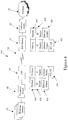
- Information stored within the look-up table 12 may include different fields necessary to allow the base station 10 to forward a message 120 effectively without requiring further information from the network router 20.
- the look-up table 12 may include an index 310 to keep track of the different devices 30, 50 utilizing the base station 10 to forward messages 120.
- the different devices 30,50 are associated with their corresponding MAC addresses 320 and a group identifier 330 which, in one preferred embodiment, may potentially be a Virtual Local Area Network (VLAN).
- VLAN Virtual Local Area Network
- the look-up table 12 may also associate the electronic device 50 with both its device MAC address 320 and the associated CPE MAC address 350.
- Each device 30, 50 may be stored as a separate device entry 302 in the look-up table 12.
- the device entry 302A associated with the index 1 has a device MAC address 320 of 00:1D:60:FE:F3:36.
- the device entry 302A is associated with a group identifier 330 (or VLAN) identified as "200" and a CPE MAC address 350 of 00:13:D5::01:5A.
- Other device entries 302B, 302C store information specific to a specific device. If a device does not have a value for a field stored within the look-up table 12 (e.g. an associated CPE MAC address 350 for device entry 302C because that entry 302C may be for a router on the network side 20), the CPE field 350 may be left blank or otherwise identified as not having a stored value.
- a device does not have a value for a field stored within the look-up table 12 (e.g. an associated CPE MAC address 350 for device entry 302C because that entry 302C may be for a router on the network side 20)
- the CPE field 350 may be left blank or otherwise identified as not having a stored value.
- the interface field 360 may store the relationship between the base station 10 and device entry 302.
- the base station 10 may store that the relationship between the base station 10 and a specific device entry 302B is over the wireless communication standard (indicated in the interface field 360 as "RF").
- RF wireless communication standard
- Other network interface indicators are possible, such as for example, "network” meaning over network 23 and "local” meaning packets that originate from the base station 10 itself, such as management packets.
- the look-up table 12 may also be stored by the look-up table 12, such as aging time field 340 and the like.
- the aging time field 340 may update how long the base station 10 has gone since a message 120 was received from a particular device stored in its look-up table 12.
- the base-station 10 may purge device entries 302 from the look-up table 12 if a new message 120 is not received from a particular device 30, 50 within a specified aging time 340.
- any number of fields may be stored in the look-up table 12 to improve the efficiency and forwarding capabilities of the base station 10.
- the base station 10 is operable in the Ethernet Convergence Sublayer (Ethernet-CS) mode according to one embodiment of the present invention.
- Ethernet Convergence Sublayer Ethernet-CS
- non-IP protocols are supported.
- messages received at the base station 10 for communication to an electronic device 50 associated with a particular CPE 30, and messages received at a CPE 30 for transmission over the network via the base station 10 are encapsulated by the first communication standard (i.e. the WiMAX group of standards such as, preferably, IEEE 802.16E) for transmission over the wireless communication channel, shown generally by reference numeral 402.
- the first communication standard i.e. the WiMAX group of standards such as, preferably, IEEE 802.16E
- Ethernet-CS mode neither the base station 10 nor the CPEs 30 reply to Address Resolution Protocol (ARP) requests, but instead pass all traffic through to its intended recipient.
- ARP Address Resolution Protocol
- the base station 10, and the CPE 30 if acting as an access point, is operable to learn the source MAC addresses of all incoming packets from the Ethernet header 420.
- the base station 10 may then store the source MAC address information in its look-up table 12 as discussed above.
- the base station 10 may be operable to behave as an L2 switch shown schematically in configuration 500. While the base station 10 sends and receives messages from the CPEs 30 over a single RF Interface (e.g., according to time division duplexing or frequency division duplexing), the base station 10 can associate each CPE 30 with a logical port 510 identified, for example, as Lport1, Lport2, Lport3, Lport4, Lport 5. Logical ports 501 may be used to provide radio connectivity to the CPEs 30. Each logical port Lport1, Lport2, Lport3, Lport4, Lport 5 may have a number of logical connections 520 identified, for example, as Lcon1, Lcon2 per CPE 30 that are used to forward traffic over the air.
- Each logical connection Lcon1, Lcon2 may have a different Quality of Service (QoS), so as to enable the base station 10 to maintain priority between different applications using the shared air medium in this case, the radio frequency (RF) interface identified generally by reference numeral 402.
- QoS Quality of Service
- different QoS may be required for specific types of applications undertaken by the wireless communication system 100, such as for real-time multimedia applications and other applications requiring fixed bit-rate or which are delay sensitive.
- the base station 10 When the base station 10 receives a message from either the RF Interface or Network Interface, the base station 10 identifies the source MAC address 320s of the incoming packet. If the MAC address is unknown to the base station 10, the base station 10 is operable to create a new entry for the device associated with the source MAC address in the look-up table 12, before forwarding the message to its intended target. Accordingly, the base station 10 populates the look-up table 12 with MAC addresses identifying CPEs receiving and sending messages in the first communication standard. If the source MAC address is already included within the look-up table 12, the base station 10 may forward the message without creating a new entry. However, in some embodiments, the base station may first verify and/or update one or more fields associated with the known MAC address, such as for example, updating the aging time field 340.
- an IP packet may be sent by an electronic device 50 to the CPE 30 for transmission to the base station 10.
- the CPE 30 encapsulates the whole Ethernet frame and sends it to the base station 10 using the IEEE 802.16E wireless interface shown by reference numeral 401.
- the base station 10 strips off the 802.16E header and then forwards the frame to the network or to another CPE (not shown) according to the destination MAC address provided in the Ethernet header 420 and IP header 430 of the encapsulated massage 401.
- each incoming packet has to be checked against the look-up table 12 before being forwarded. If the destination MAC address is in the look-up table 12, the base station 10 will forward the packet according to the destination MAC address. If the destination MAC address is not in the look-up table 12 or the packet is a broadcast packet, the base station 10 will perform broadcast flooding of the packet to all the CPEs 30 and/or network 23 through the network router 20. This behaviour is similar to the behaviour of an L2 switch. It can be implemented efficiently in the TMD scheme of the first communication standard, in order to save the short over-the-air (OTA) resources.
- OTA over-the-air
- the base station 10 has two main functions with regards to scheduling. These include deciding which logical port LPORT 510 is served before the other and how much traffic will be sent out. Traffic prioritization in the base station 10 can be done using a number of mechanisms. In a preferred embodiment, the base station 10 uses two potential mechanisms. The first mechanism involves a strict priority. In this mechanism, the highest priority traffic is served before any low priority traffic. Priorities are given based on the logical port 510 and the logical connection 520 for each of the CPEs 30. In the second mechanism, weighted-fare priority may be used. In this mechanism, the band width across the radio frequency interface 402 is shared relatively according to the weight given to different logical ports 510.
- each logical connection 520 of each logical port 510 is determined by the committed information rate (CIR) and the maximum information rate (MIR) that are defined by the logical connection 520.
- CIR committed information rate
- MIR maximum information rate
- each multicast connection has a configurable traffic priority.
- traffic can be prioritized over other VLAN traffic. It may also be prioritized over unicast downlink traffic.
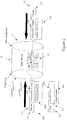
- FIG. 5B shows a further preferred embodiment of the present invention.
- a configuration 505 of the system 100 has a base station 10 sending and receiving data to the CPEs 30.
- the CPE1 sends a broadcast packet 550 through the first logical port Lport1 to the base station 10.
- the broadcast packet 550 is then replicated and broadcast back as packet 551.
- the pack is not replicated N-1 times for each of the CPEs in order to exclude the originating one. Rather, the replicated return broadcast packet 551 is sent once over the broadcast connection to all of the CPEs 30.
- the wireless communication system 100 is depicted according to at least three topologies 600A, 600B and 600C.
- the network topologies 600A, 600B and 600C in the present embodiments should not be construed as limiting.
- the system 100 has a topology 601 with the base station 10 connected to one or more CPEs 30, the individual CPEs 30 depicted as 30A, 30B, 30C and 30D.
- Each CPE 30A, 30B, 30C, 30D has at least one electronic device 50 associated therewith.
- the MAC addresses of each of the electronic devices 50 is stored in the base station 10 within the look-up table 12 as discussed above.
- the base station 10 may also store group identifier information, such as Virtual Local Area Network (VLAN) information.
- the group identifier 330 may be stored within the look-up table 12 containing MAC address information, also stored in the base station 10.
- the base station 10 When a message shown generally by reference numeral 650m is sent from any electronic device 50A, the base station 10 is operable to forward the message 650m to its intended target, without accessing the network router 20, if the base station 10 recognizes the intended recipient(s) and has the information stored in the look-up table 12. If the base station 10 recognizes the intended recipient to be on the network side, the base station 10 may forward the message 650m to the network router 20 to perform routing. If the recipient of the message is not recognized, the base stations 10 may flood the packet towards the router 20 and the rest of the CPEs based on the mechanism described in Figure 5B .
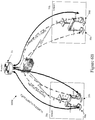
- Figure 6A , Figure 6B , and Figure 6C depict various forms of routing according to at least some aspects of the present invention. It should be understood that other embodiments are possible, with the present embodiments not construed as limiting.
- Figure 6A illustrates the network topology 600A of a wireless communication system 100 in at least one embodiment.
- the electronic device 50A associated with the CPE 30A is operable to send a unicast message to the electronic device 50B associated with the CPE 30B.
- the electronic device 50A first sends an IP-based message to the router/L2 switch 40A over a second communication standard, such as for example, an Ethernet connection.
- the router/L2 switch 40A then forwards the message to the CPE 30A.
- the originating CPE 30A then encapsulates all of the Ethernet frame of the message and uplinks a unicast message to the base station 10 including the MAC address of the target electronic device 50B.
- the base station 10 then strips the wireless header, in a preferred embodiment a 802.16E header, and forwards the message. If the base station 10 recognizes from its look-up table 12 that the intended target (electronic device 50B) is associated with CPE 30B, the base station 10 forwards the message to CPE 30B by sending a downlink unicast message, without accessing the network router 20.
- the base station 10 refers to the look-up table 12 to locate switching information and re-encapsulates the message. Referring briefly to the look-up table 12 in Figure 3 , the base station 10 is operable to locate the device entry 302B for the electronic device 50B and then to locate the associated CPE MAC address 350 for forwarding the message. Once received, the recipient CPE 30B strips the wireless header and forwards the message to the intended electronic device 50B via the router/L2 switch 40B in the second communication standard, in this embodiment Ethernet..
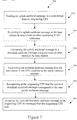
- a method 700 for wirelessly communicating multicast messages between a plurality of CPEs 30 uses the wireless communication system 100 to send an uplink multicast message to the base station 10 destined to a subset of the CPEs 30 in the wireless communication system 100, based on a group identifier.
- Each CPE 30 has a unique MAC address and the CPEs 30 and base station 10 are operable to communicate using a first communication standard that incorporates time division multiplexing over a wireless port.
- the base station 10 and the CPEs 30 are operable to send and receive wireless signals to each other utilizing a wireless interface 402 based on a TDM scheme, as defined by the first communication standard such as the WiMAX group of standards.
- an originating CPE 30 is operable to send an uplink multicast message to the base station 10 to be sent to other CPEs 30.
- the uplink multicast message shown generally by reference numeral 650m is sent to members of a virtual local area network (VLAN) or other CPE grouping as a multicast message.
- the multicast message 650m may be sent by the originating electronic device 50a, which is operable to send an uplink multicast message to the base station 10 to be sent to other electronic devices 50 (or CPEs 30) via the base station 10.
- the uplink multicast message 650m includes a group identifier identifying a group of CPEs to receive the uplink multicast message.
- the electronic devices 50a and 50b associated with two CPEs 30A, 30B share the group identifer VLAN 10 and the electronic devices 50C, 50D associated with two different CPEs 30C, 30D share the group identifier VLAN 20.
- the base station 10 is operable to receive the uplink multicast message.
- the message is received over the first communication channel utilizing a TDM scheme.
- the base station 10 in BLOCK 730, is operable to convert the uplink multicast message 650m to a downlink multicast message using the look-up table 12 stored at the base station 10.
- the base station 10 is operable to store a group identifier 330, such as a VLAN, for uniquely identifying a group of CPEs 30 and/or a group of devices 50.
- the base station 10 may use this group identifier 330 for determining where to forward the uplink multicast message. If a message from a given electronic device 50a, and its associated CPE 30a, is multicast to its associated VLAN (i.e. VLAN 10), the base station 10 is able to associate the group identifier 330 with specific CPEs 30 and electronic devices 50 associated with the group identifier 330 based on information contained within the look-up table 12.
- the base station 10 transmits the downlink multicast message to the CPEs 30, where each CPE 30 has its MAC address stored in the look-up table 12.
- the base station 10 will create a multicast service flow which will send the message to the identified CPEs 30 and/or electronic devices 50 identified in the multicast message 650m. If the multicast message identifies all of the electronic devices 50 in a VLAN, such as VLAN 10, the multicast service flow is created inherently as a part of the VLAN in the base station 10.
- the downlink multicast message is sent to all of the CPEs 30 in wireless communication system 100, including the originating CPE. In other embodiments, the downlink message is sent to a single CPE 30 or a subset of all the CPEs 30 associated or registered with the base station 10. It is understood that while the examples are given with respect to the multicast messages 650m originating from a device 50a, the invention would work equally if the multicast message 650m originated from a CPE 30 as shown in Figure 5B .
- the look-up table 12 stored on the base station contains the MAC addresses of each of the CPEs 30 associated or registered with the base station 10.
- the downlink message may be sent in a single information burst according to the time division multiplexing scheme.
- the downlink message may be sent in a single TDM timeslot that is assigned to the intended group of CPEs 30, such as a multicast service flow as described herein.
- the group of CPEs 30 may be assigned to the timeslot provided by the scheduling algorithm associated with the first communication standard (i.e. the WiMAX group of standards).
- the first communication standard i.e. the WiMAX group of standards
- the base station 10 may not automatically forward the message to its intended recipient, even if it already has switching information stored within the look-up table 12. Instead, the base station 10 may forward the message to the router 20. This feature may enhance efficiency and security, as the base station 10 is capable of efficiently forwarding messages within the same broadcast domain, while simultaneously separating disparate parts (VLANS) of the network. In this manner, the base station 10 is behaving as a L2 switch, and segregates the different VLANs into different broadcast domains.
- VLANS disparate parts
- each logical port LPORT 510 shown in Figures 5A and 5B and communicating a specific CPE 30, may be part of a specific VLAN.
- the base station may communicate on both LPORT1 and LPORT3, based on the group identifier 330 and associated CPE MAC addresses 350 stored in look-up table 12 to decrease bandwidth and processing time.
- the electronic devices 50 associated with one or more CPEs 30, may be organized by group identifier shown generally by reference numeral 330 in Figure 3 , irrespective of how they are connected to the network.
- electronic devices 50A, 50B, 50C, 50D may be part of different group identifiers 330, shown in Figure 6B as being part of different VLANs 10 and 20, even if they are connected to the base station 10 via the same CPEs 30A, 30B.
- the electronic devices 50 for a specific group identifier 330 may be segregated according to the associated CPE 30, this is not required.
- every electronic device 50, associated with every CPE 30 in range or connected to a base station 10 may be associated with the same group identifier 330.
- a CPE 30 may have one, many or no group identifiers 330 associated with the electronic devices 50, associated with the CPE 30.
- Each CPE 30 associated with a wireless communication system 100 may have different group identifiers for groups of electronic devices 50 associated with that particular CPE 30. Different combinations of group identifiers shared between CPEs 30 and electronic devices 50 are possible.
- FIG. 6B another network topology 600B is shown having an electronic device 50A, associated with VLAN 10, and an electronic device 50B, associated with VLAN 20, are both associated with the same CPE 30A.
- Other electronic devices 50 (not shown), associated with other CPEs 30 (not shown), may also be associated with either VLAN 10 or VLAN 20.
- An electronic device 50 is operable to send a multicast message to a group of electronic devices 50 (or CPEs 30), even if the electronic device 50 is not associated with the same CPE 30, by uniquely identifying the group of electronic devices 50 (or CPEs 30) by using the associated group identifier 330. Any one of the CPEs 30 in the group is operable to specify the group of CPEs 30 or electronic devices 50 to receive the multicast message 650 by placing the corresponding group identifier 330 in the uplink multicast message.
- the uplink multicast message 650 is sent by an electronic device 50A associated with a CPE 30A
- the uplink multicast message 650 is sent by the CPE 30A to the base station 10 over the first communication channel.
- the originating electronic device 50A or CPE 30A can specify the group of CPEs 30 to receive the multicast message by placing the corresponding group identifier 330 in the uplink multicast message.
- the base station 10 may transmit the downlink multicast message to the group of CPEs 30, identified by the group identifier 330.
- the base station may send the downlink multicast message in a single information burst, including to the CPE 30A or electronic device 50A that originally sent the uplink multicast message.
- the single information burst may occur over a single TDM timeslot. In other embodiments, the single information burst may occur over a number of sequential timeslots.
- the downlink multicast message 650 is sent to the CPEs simultaneously and is received by the appropriate recipient CPEs at the same time, based on the group identifier.
- the originating CPE 30a or electronic device 50a that sent the uplink multicast message may drop the received downlink multicast message.
- the originating CPE 30 is operable to send a multicast message 650 to the entire group identified by the group identifier 33 in the message 650 and the base station 10 can send the downlink multicast message in a single information burst or TDM timeslot without having to make any modifications to the downlink message.
- the message may be sent to the entire group of CPEs, with the originating CPE operable to recognize that a message that it has received from the base station 10 corresponds to the uplink multicast message 650 that it sent and take appropriate action.
- the originating CPE may drop the downlink multicast message as illustrated in Figure 5B and discussed above and also shown in BLOCK 760 of Figure 7 .
- the base station 10 will create a multicast service flow to send the downlink message to all the devices 50 and CPEs 30 in VLAN 10 in Figure 6A , including the originating device 50a, because this saves processing time and bandwidth.
- the originating device 50a will then recognize that the received downlink message corresponds to the sent uplink multicast message 650m and disregard or drop the downlink message as discussed above with respect to Figure 5B and shown in BLOCKS 750 and 760 in Figure 7 . It is understood that while examples are given with respect to multicast messages 650m originating from a device 50a, the invention would work equally well if the multicast message 650m originated from a CPE 30 as referred to in Figure 7 .
- a CPE 30 may recognize that the downlink multicast message it has received from the base station 10 does not need to be forwarded to any electronic devices 50 associated with the CPE 30, as the only electronic device 50 associated with the group identifier is the originating electronic device, which sent the uplink multicast message in the first instance. For example, in Figure 6B , if the CPE 30a recognizes that there are no additional electronic devices 50 other than the originating electronic device 50b associated with the specified group identifier VLAN 10, the CPE 30a may be operable to drop the downlink multicast message, completely.
- the CPE 30a may drop the downlink multicast message for the originating electronic device 50b, only, and forward the downlink multicast message to the non-originating electronic devices (not shown). In alternate embodiments, the CPE 30a may continue to forward the downlink multicast message to all the electronic devices 50b associated with the CPE 30a and group identifier VLAN 10, and allow the originating electronic device 50b to drop the downlink multicast message, itself.
- FIG. 6C yet another network topology 600C is depicted illustrating two base stations 10 having a plurality of electronic devices 50 associated with one or more CPEs 30.
- the base stations 10 are connected to each other through a network switch 22, such as for example, an Ethernet switch complying with the IEEE 802.3 (Ethernet) series of standards.
- a network switch 22 such as for example, an Ethernet switch complying with the IEEE 802.3 (Ethernet) series of standards.
- the network switch 22 is operable to learn the MAC addresses of devices connected to the network switch's 22 physical Ethernet ports (not shown).
- the wireless communication system 100 is operable to define the relevant VLANs and associate the relevant CPEs 30 with each VLAN. No extra configuration or provisioning is required, as the multicast service flow is created inherently as part of VLAN creation in the base station 10.
- tagged traffic is recognized as multicast traffic according to the required message frame structure incorporating the group identifier, the tagged traffic is replicated and sent to all the CPEs 30 that are subscribed to the VLAN. Accordingly, once associated with a specific VLAN, tagged traffic specific to that VLAN will be associated with the relevant multicast service flow.
- the L2 message may be forwarded to all the CPEs 30 within the wireless communication system 10 over a broadcast connection.
- the wireless communication system 100 For the wireless communication system 100 to act in multicast mode, ensuring that a multicast message reaches every possible electronic device 50 or CPE 30 associated with a group identifier, every CPE 30 in the wireless communication system 100 with members associated with the group identifier must be in the look-up table 12 stored in the base station 10.
- the group identifier will not be recognized by the base station 10 at all (i.e., no base station 10 with either an electronic device 50 or CPE 30 is indexed in the look-up table 12).
- the base station 10 when receiving an uplink multicast message, the base station 10 will correctly forward the multicast message to all the base stations 10 having members associated with the group identifier or will not recognize the group identifier at all, and will resort to broadcasting the uplink multicast message to all network devices 30, 50. Any sites not indexed with the base station 10 receiving the uplink multicast message will not receive the multicast message.
- the MAC address for various electronic devices including the consumer premises equipment. It is understood that the MAC address is being used as a unique identifier for the corresponding electronic device. However, the invention is not limited to use of the MAC addresses for this purpose. Rather, any unique identifier can be used as an address to uniquely identify the CPEs and other electronic devices and it is understood that the invention is not limited to use of MAC addresses for this purpose.
Landscapes
- Engineering & Computer Science (AREA)
- Computer Networks & Wireless Communication (AREA)
- Signal Processing (AREA)
- Multimedia (AREA)
- Mobile Radio Communication Systems (AREA)
- Small-Scale Networks (AREA)
Claims (11)
- Système de communication de type WiMAX sans fil (100) comprenant :- une pluralité d'équipements de locaux d'abonné - l'équipement de locaux d'abonné étant ci-après appelé CPE (30) - destinés à l'envoi et à la réception de signaux sans fil dans une première norme de communication au moyen d'un multiplexage par répartition dans le temps, TDM, chacun desdits CPE (30) possédant une adresse MAC unique (350),- une station de base (10) possédant un port sans fil destiné à l'envoi et à la réception de signaux sans fil à chaque CPE de la pluralité de CPE (30) dans la première norme de communication et au moyen de TDM,- au moins un CPE (30) possédant un ou plusieurs dispositifs électroniques (50) associés à celui-ci, chaque dispositif électronique (50) possédant une adresse MAC (320) identifiant celui-ci de manière unique (50) et les un ou plusieurs dispositifs électroniques (50) communiquant avec leur CPE associé (30) au moyen d'une deuxième norme de communication sélectionnée dans le groupe de normes de communication câblées se composant de IEEE 802.3 Ethernet ou de IEEE 802.1Q VLAN Tagging,- ladite station de base (10) possédant conservée en mémoire dans celle-ci une table de consultation (12) contenant- l'adresse MAC (350) de chaque CPE de la pluralité de CPE (30),- un identifiant de groupe (330) pour chaque CPE (30) identifiant de manière unique un groupe de CPE (30),
tout CPE de la pluralité de CPE (30) étant configuré de façon à agir en tant que CPE d'origine (30) et à envoyer en liaison montante un message de multidiffusion à la station de base (10) à envoyer à un groupe de CPE, qui est un sous-ensemble de la pluralité de CPE (30), et aux dispositifs électroniques (50) par l'intermédiaire de leur CPE associé (30),- le CPE d'origine (30) est configuré de façon à spécifier un groupe de CPE prédéfini (30) par le placement d'un identifiant de groupe correspondant (330) dans le message de multidiffusion en liaison montante, et- en réponse à la réception du message de multidiffusion en liaison montante, la station de base (10)- est configurée de façon à convertir le message de multidiffusion en liaison montante en un message de multidiffusion en liaison descendante au moyen de la table de consultation (12) conservée en mémoire au niveau de la station de base (10) et la station de base (10)- est configurée de façon à transmettre le message de multidiffusion en liaison descendante au groupe de CPE (30) identifié par l'identifiant de groupe (330) et audit groupe de CPE (30) possédant leurs adresses MAC (350) conservées en mémoire dans la table de consultation (12) et étant identifiés dans le message de multidiffusion en liaison montante. - Système selon la revendication 1, dans lequel la station de base (10) est configurée de façon à envoyer le message de multidiffusion en liaison descendante au groupe de CPE (30) identifié par l'identifiant de groupe (330) dans une rafale d'informations unique ou dans un intervalle de temps TDM unique.
- Système selon la revendication 1, dans lequel la station de base (10) est configurée de façon à créer un flux de service multidiffusion destiné à l'envoi du message de multidiffusion en liaison descendante dans une rafale d'informations unique.
- Système selon la revendication 2, dans lequel la station de base (10) est configurée de façon à transmettre le message de multidiffusion en liaison descendante au groupe de CPE (30) dans une rafale d'informations unique, comprenant ledit CPE de la pluralité de CPE (30) qui a produit le message de multidiffusion en liaison montante.
- Système selon la revendication 4, dans lequel, lorsque le CPE d'origine (30) est configuré de façon à reconnaître que le message de multidiffusion en liaison descendante correspond au message de multidiffusion en liaison montante qu'il a envoyé, le CPE d'origine (30) est configuré de façon à rejeter le message de multidiffusion en liaison descendante reçu.
- Système selon la revendication 1 dans lequel la table de consultation conservée en mémoire dans la station de base (10) contient en outre l'adresse MAC (320) de chaque dispositif électronique (50) et son CPE associé (30).
- Procédé destiné à une communication de type WiMAX non filaire de messages de multidiffusion entre une pluralité d'équipements de locaux d'abonné - l'équipement de locaux d'abonné étant ci-après appelé CPE (30) - dans une première norme de communication au moyen d'un multiplexage par répartition dans le temps TDM, chacun desdits CPE (30) possédant une adresse MAC unique (350), au moins un CPE (30) possédant un ou plusieurs dispositifs électroniques (50) associés à celui-ci, chaque dispositif électronique (50) possédant une adresse MAC (320) identifiant celui-ci de manière unique et les un ou plusieurs dispositifs électroniques (50) communiquant avec leur CPE associé (30) au moyen d'une deuxième norme de communication sélectionnée dans le groupe de normes de communication câblées se composant de IEEE 802.3 Ethernet ou de IEEE 802.1Q VLAN Tagging,
ledit procédé comprenant les étapes suivantes :- la spécification d'un groupe de CPE prédéfini (30) par le placement d'un identifiant de groupe correspondant (330) dans un message de multidiffusion en liaison montante,- l'envoi (710), à partir d'un CPE d'origine (30) qui est l'un quelconque de la pluralité de CPE (30), du message de multidiffusion en liaison montante à une station de base (10),ledit envoi (710) comprenant l'envoi du message de multidiffusion en liaison montante à la station de base (10) à envoyer au groupe de CPE prédéfini, qui est un sous-ensemble de la pluralité de CPE (30), et aux dispositifs électroniques (50) par l'intermédiaire de leur CPE correspondant (30),- ladite station de base (10) possédant un port sans fil destiné à l'envoi et à la réception de signaux sans fil à chaque CPE de la pluralité de CPE (30) dans la première norme de communication au moyen de TDM, ladite station de base (10) possédant également conservée en mémoire dans celle-ci une table de consultation (12) contenant- l'adresse MAC (350) de chaque CPE de la pluralité de CPE (30),- un identifiant de groupe (330) pour chaque CPE (30), ledit identifiant de groupe (330) identifiant de manière unique un groupe de CPE (30) ,- la réception (720), au niveau de la station de base (10), du message de multidiffusion en liaison montante,- la conversion (730), au niveau de la station de base (10), du message de multidiffusion en liaison montante en un message de multidiffusion en liaison descendante au moyen de la table de consultation (12) conservée en mémoire au niveau de la station de base (10), et- la transmission (740), par la station de base (10), du message de multidiffusion en liaison descendante au groupe de CPE (30) identifié par l'identifiant de groupe (330) et audit groupe du CPE (30) possédant leurs adresses MAC (350) conservées en mémoire dans la table de consultation (12) et identifiés dans le message de multidiffusion en liaison montante. - Procédé selon la revendication 7, dans lequel l'étape de transmission par la station de base (10) se déroule dans une rafale d'informations unique, le message de multidiffusion en liaison descendante au groupe de CPE (30) comprend la transmission du message de multidiffusion en liaison descendante à la totalité des CPE possédant leurs adresses MAC (350) conservées en mémoire dans la table de consultation (12) comprenant le CPE d'origine (30).
- Procédé selon la revendication 8, comprenant en outre les étapes suivantes :la reconnaissance (750), au niveau du CPE d'origine (30), que le message de multidiffusion en liaison descendante correspond au message de multidiffusion en liaison montante antérieurement envoyé par ledit CPE d'origine (30), etle rejet (760), par ledit CPE d'origine (30), du message de multidiffusion en liaison descendante reçu.
- Procédé selon la revendication 7, comprenant en outre les étapes suivantes :- la surveillance, par la station de base (10), des messages envoyés et reçus sur le port sans fil de façon à déterminer l'adresse MAC (350) du CPE (30), la réception et l'envoi de messages dans la première norme de communication, et- le remplissage de la table de consultation (12) conservée en mémoire au niveau de la station de base (10) avec les adresses MAC de ces CPE (30) qui reçoivent et envoient des messages dans la première norme de communication.
- Procédé selon l'une quelconque des revendications 7 à 10, caractérisé en ce que la table de consultation (12) contient les adresses MAC (320) de chaque dispositif électronique (50) et de son CPE associé (30).
Applications Claiming Priority (1)
| Application Number | Priority Date | Filing Date | Title |
|---|---|---|---|
| CA2732181A CA2732181C (fr) | 2011-02-18 | 2011-02-18 | Systeme et methode wimax autonome |
Publications (3)
| Publication Number | Publication Date |
|---|---|
| EP2490465A2 EP2490465A2 (fr) | 2012-08-22 |
| EP2490465A3 EP2490465A3 (fr) | 2014-11-26 |
| EP2490465B1 true EP2490465B1 (fr) | 2021-07-28 |
Family
ID=44645004
Family Applications (1)
| Application Number | Title | Priority Date | Filing Date |
|---|---|---|---|
| EP11179102.6A Active EP2490465B1 (fr) | 2011-02-18 | 2011-08-26 | Système et procédé WiMAX autonome |
Country Status (5)
| Country | Link |
|---|---|
| US (1) | US8570987B2 (fr) |
| EP (1) | EP2490465B1 (fr) |
| CN (1) | CN102647793B (fr) |
| CA (1) | CA2732181C (fr) |
| IL (1) | IL213462A (fr) |
Families Citing this family (13)
| Publication number | Priority date | Publication date | Assignee | Title |
|---|---|---|---|---|
| CN103907320A (zh) * | 2011-09-09 | 2014-07-02 | 瑞典爱立信有限公司 | 电路仿真的保护组切换 |
| US20130132745A1 (en) * | 2011-11-22 | 2013-05-23 | Cisco Technology Inc. | System and method for network enabled wake for networks |
| US10588101B2 (en) * | 2012-01-06 | 2020-03-10 | Qualcomm Incorporated | Long term evoluton (LTE) user equipment relays having a licensed wireless or wired backhaul link and an unlicensed access link |
| US9160739B2 (en) * | 2012-05-21 | 2015-10-13 | Invisible Text, LLC | Secure data transmission system |
| EP2892185B1 (fr) * | 2012-08-28 | 2018-03-07 | Mitsubishi Electric Corporation | Système de réseau et appareils de communication |
| CN103609050B (zh) * | 2012-09-07 | 2017-08-18 | 华为技术有限公司 | 一种空口传输方法及相关设备、系统 |
| US20160301617A1 (en) * | 2015-04-10 | 2016-10-13 | Lenovo (Singapore) Pte. Ltd. | Bandwidth prioritization |
| CN106982178B (zh) * | 2016-01-15 | 2020-05-01 | 中国移动通信集团公司 | 一种资源分配方法、网络管理设备及系统 |
| US10235516B2 (en) | 2016-05-10 | 2019-03-19 | Cisco Technology, Inc. | Method for authenticating a networked endpoint using a physical (power) challenge |
| CN107786946B (zh) * | 2016-08-30 | 2020-02-07 | 大唐移动通信设备有限公司 | 一种集群业务数据处理方法及集群基站 |
| US11006311B2 (en) * | 2017-05-16 | 2021-05-11 | Qualcomm Incorporated | Ethernet over cellular |
| US11856489B2 (en) * | 2019-08-08 | 2023-12-26 | Qualcomm Incorporated | Uplink broadcast/multicast packet processing |
| SE546688C2 (en) * | 2021-12-16 | 2025-01-14 | Assa Abloy Ab | Routing data in a communication network |
Family Cites Families (9)
| Publication number | Priority date | Publication date | Assignee | Title |
|---|---|---|---|---|
| JP3628250B2 (ja) * | 2000-11-17 | 2005-03-09 | 株式会社東芝 | 無線通信システムで用いられる登録・認証方法 |
| US6901058B2 (en) * | 2002-08-22 | 2005-05-31 | Nokia Corporation | System and method for enabling multicast in a CDMA network |
| US7424007B2 (en) * | 2004-05-12 | 2008-09-09 | Cisco Technology, Inc. | Power-save method for 802.11 multicast paging applications |
| US7616746B2 (en) * | 2004-08-13 | 2009-11-10 | Qualcomm Incorporated | Methods and apparatus for tracking and charging for communications resource reallocation |
| US8081600B2 (en) * | 2005-07-29 | 2011-12-20 | Nextel Communications Inc. | Systems and methods for communicating between base stations and wireless stations |
| KR101210340B1 (ko) * | 2005-10-13 | 2012-12-10 | 삼성전자주식회사 | 무선 통신 시스템에서 멀티캐스트/브로드캐스트를 지원하기위한 방법 및 장치 |
| EP2199818B1 (fr) * | 2008-12-19 | 2019-02-20 | Koninklijke KPN N.V. | Procédé pour déterminer l'emplacement d'un dispositif mobile |
| CA2656660C (fr) * | 2009-02-27 | 2016-11-08 | Ruggedcom Inc. | Borne d'acces sans fil a modes pont et pa client |
| US8654661B2 (en) * | 2009-05-04 | 2014-02-18 | Industrial Technology Research Institute | Method and apparatus for multicast and broadcast retransmission in wireless communication systems |
-
2011
- 2011-02-18 CA CA2732181A patent/CA2732181C/fr active Active
- 2011-06-09 US US13/156,527 patent/US8570987B2/en active Active
- 2011-06-09 IL IL213462A patent/IL213462A/en active IP Right Grant
- 2011-08-26 EP EP11179102.6A patent/EP2490465B1/fr active Active
- 2011-09-23 CN CN201110291084.5A patent/CN102647793B/zh active Active
Non-Patent Citations (1)
| Title |
|---|
| None * |
Also Published As
| Publication number | Publication date |
|---|---|
| US8570987B2 (en) | 2013-10-29 |
| CN102647793A (zh) | 2012-08-22 |
| US20120213085A1 (en) | 2012-08-23 |
| CN102647793B (zh) | 2016-12-28 |
| IL213462A0 (en) | 2011-08-31 |
| IL213462A (en) | 2015-07-30 |
| EP2490465A3 (fr) | 2014-11-26 |
| CA2732181C (fr) | 2017-08-29 |
| EP2490465A2 (fr) | 2012-08-22 |
| CA2732181A1 (fr) | 2012-08-18 |
Similar Documents
| Publication | Publication Date | Title |
|---|---|---|
| EP2490465B1 (fr) | Système et procédé WiMAX autonome | |
| US20200128580A1 (en) | Method for selecting of sidelink grant for a d2d ue in a d2d communication system and device therefor | |
| EP2675234B1 (fr) | Procédé, dispositif et système de planification reposant sur la qualité de service | |
| US8862170B2 (en) | Cloud communication center system and method for processing data in a cloud communication system | |
| JP2018527800A (ja) | D2d通信システムにおいてバッファ状態報告を行う方法及びその装置 | |
| CN107155187A (zh) | 通信方法、终端设备和网络侧设备 | |
| CN105122830A (zh) | 基于基站中的应用检测调度数据分组的系统和方法 | |
| US10887821B2 (en) | Transmitting small and infrequent communication data between, on the one hand, a plurality of internet-of-things communication devices, and, on the other hand, a mobile communication network | |
| Ma et al. | A QoS oriented vertical handoff scheme for WiMAX/WLAN overlay networks | |
| US9736719B2 (en) | Adaptive resource allocation in congested wireless local area network deployment | |
| US20110158155A1 (en) | Apparatus and method for managing quality of service in broadband wireless communication system with multiple hop relay communication | |
| CN103004134B (zh) | 控制上行应用层业务的方法、用户设备及基站 | |
| CN102710812A (zh) | 一种建立隧道的方法、用户设备及nni接口网关 | |
| CN103874135B (zh) | 无线通信的方法、装置和系统 | |
| US8625484B2 (en) | Methods and apparatus for providing fast and power efficient multicast scheme | |
| Chuang et al. | STASH: SDN-based trajectory-aware seamless handover scheme with multiple antennas in ultra-dense smallcell networks | |
| US20090161640A1 (en) | Mobile Wireless Access Router for Separately Controlling Traffic Signal and Control Signal | |
| US9832773B1 (en) | Method of scheduling communication in a wireless communication network | |
| Sarraf et al. | Quality of service mapping between UMTS, WiMAX and IP-based network in Heterogeneous Wireless Networks | |
| Ksentini | IPv6 over IEEE 802.16 (WiMAX) Networks: Facts and Challenges. | |
| Dheshmuk et al. | Carrier Aggregation for High-Speed Data in LTE Advanced System | |
| Khan et al. | Emerging Technologies: LTE vs. WiMAX | |
| WO2025229355A1 (fr) | Qualité de service hiérarchique programmable en temps réel pour réseaux d'accès radio | |
| Singh | Performance analysis of QoS in PMP mode WiMAX networks | |
| US9560649B1 (en) | Method of allocating communication resources to a wireless device in a wireless communication network |
Legal Events
| Date | Code | Title | Description |
|---|---|---|---|
| PUAI | Public reference made under article 153(3) epc to a published international application that has entered the european phase |
Free format text: ORIGINAL CODE: 0009012 |
|
| AK | Designated contracting states |
Kind code of ref document: A2 Designated state(s): AL AT BE BG CH CY CZ DE DK EE ES FI FR GB GR HR HU IE IS IT LI LT LU LV MC MK MT NL NO PL PT RO RS SE SI SK SM TR |
|
| AX | Request for extension of the european patent |
Extension state: BA ME |
|
| PUAL | Search report despatched |
Free format text: ORIGINAL CODE: 0009013 |
|
| AK | Designated contracting states |
Kind code of ref document: A3 Designated state(s): AL AT BE BG CH CY CZ DE DK EE ES FI FR GB GR HR HU IE IS IT LI LT LU LV MC MK MT NL NO PL PT RO RS SE SI SK SM TR |
|
| AX | Request for extension of the european patent |
Extension state: BA ME |
|
| RIC1 | Information provided on ipc code assigned before grant |
Ipc: H04W 4/06 20090101AFI20141022BHEP |
|
| 17P | Request for examination filed |
Effective date: 20150513 |
|
| RBV | Designated contracting states (corrected) |
Designated state(s): AL AT BE BG CH CY CZ DE DK EE ES FI FR GB GR HR HU IE IS IT LI LT LU LV MC MK MT NL NO PL PT RO RS SE SI SK SM TR |
|
| RAP1 | Party data changed (applicant data changed or rights of an application transferred) |
Owner name: SIEMENS ISRAEL LTD. |
|
| STAA | Information on the status of an ep patent application or granted ep patent |
Free format text: STATUS: EXAMINATION IS IN PROGRESS |
|
| 17Q | First examination report despatched |
Effective date: 20180713 |
|
| REG | Reference to a national code |
Ref country code: DE Ref legal event code: R079 Ref document number: 602011071444 Country of ref document: DE Free format text: PREVIOUS MAIN CLASS: H04W0004060000 Ipc: H04L0012180000 |
|
| GRAP | Despatch of communication of intention to grant a patent |
Free format text: ORIGINAL CODE: EPIDOSNIGR1 |
|
| STAA | Information on the status of an ep patent application or granted ep patent |
Free format text: STATUS: GRANT OF PATENT IS INTENDED |
|
| RIC1 | Information provided on ipc code assigned before grant |
Ipc: H04L 12/18 20060101AFI20210312BHEP Ipc: H04W 4/06 20090101ALI20210312BHEP Ipc: H04W 72/00 20090101ALI20210312BHEP Ipc: H04W 76/40 20180101ALI20210312BHEP Ipc: H04L 29/12 20060101ALN20210312BHEP Ipc: H04W 4/12 20090101ALN20210312BHEP |
|
| INTG | Intention to grant announced |
Effective date: 20210421 |
|
| GRAS | Grant fee paid |
Free format text: ORIGINAL CODE: EPIDOSNIGR3 |
|
| GRAA | (expected) grant |
Free format text: ORIGINAL CODE: 0009210 |
|
| STAA | Information on the status of an ep patent application or granted ep patent |
Free format text: STATUS: THE PATENT HAS BEEN GRANTED |
|
| AK | Designated contracting states |
Kind code of ref document: B1 Designated state(s): AL AT BE BG CH CY CZ DE DK EE ES FI FR GB GR HR HU IE IS IT LI LT LU LV MC MK MT NL NO PL PT RO RS SE SI SK SM TR |
|
| REG | Reference to a national code |
Ref country code: GB Ref legal event code: FG4D |
|
| REG | Reference to a national code |
Ref country code: CH Ref legal event code: EP |
|
| REG | Reference to a national code |
Ref country code: DE Ref legal event code: R096 Ref document number: 602011071444 Country of ref document: DE |
|
| REG | Reference to a national code |
Ref country code: AT Ref legal event code: REF Ref document number: 1415719 Country of ref document: AT Kind code of ref document: T Effective date: 20210815 |
|
| REG | Reference to a national code |
Ref country code: IE Ref legal event code: FG4D |
|
| REG | Reference to a national code |
Ref country code: LT Ref legal event code: MG9D |
|
| REG | Reference to a national code |
Ref country code: NL Ref legal event code: MP Effective date: 20210728 |
|
| REG | Reference to a national code |
Ref country code: AT Ref legal event code: MK05 Ref document number: 1415719 Country of ref document: AT Kind code of ref document: T Effective date: 20210728 |
|
| PG25 | Lapsed in a contracting state [announced via postgrant information from national office to epo] |
Ref country code: LT Free format text: LAPSE BECAUSE OF FAILURE TO SUBMIT A TRANSLATION OF THE DESCRIPTION OR TO PAY THE FEE WITHIN THE PRESCRIBED TIME-LIMIT Effective date: 20210728 Ref country code: BG Free format text: LAPSE BECAUSE OF FAILURE TO SUBMIT A TRANSLATION OF THE DESCRIPTION OR TO PAY THE FEE WITHIN THE PRESCRIBED TIME-LIMIT Effective date: 20211028 Ref country code: AT Free format text: LAPSE BECAUSE OF FAILURE TO SUBMIT A TRANSLATION OF THE DESCRIPTION OR TO PAY THE FEE WITHIN THE PRESCRIBED TIME-LIMIT Effective date: 20210728 Ref country code: RS Free format text: LAPSE BECAUSE OF FAILURE TO SUBMIT A TRANSLATION OF THE DESCRIPTION OR TO PAY THE FEE WITHIN THE PRESCRIBED TIME-LIMIT Effective date: 20210728 Ref country code: PT Free format text: LAPSE BECAUSE OF FAILURE TO SUBMIT A TRANSLATION OF THE DESCRIPTION OR TO PAY THE FEE WITHIN THE PRESCRIBED TIME-LIMIT Effective date: 20211129 Ref country code: NL Free format text: LAPSE BECAUSE OF FAILURE TO SUBMIT A TRANSLATION OF THE DESCRIPTION OR TO PAY THE FEE WITHIN THE PRESCRIBED TIME-LIMIT Effective date: 20210728 Ref country code: NO Free format text: LAPSE BECAUSE OF FAILURE TO SUBMIT A TRANSLATION OF THE DESCRIPTION OR TO PAY THE FEE WITHIN THE PRESCRIBED TIME-LIMIT Effective date: 20211028 Ref country code: FI Free format text: LAPSE BECAUSE OF FAILURE TO SUBMIT A TRANSLATION OF THE DESCRIPTION OR TO PAY THE FEE WITHIN THE PRESCRIBED TIME-LIMIT Effective date: 20210728 Ref country code: ES Free format text: LAPSE BECAUSE OF FAILURE TO SUBMIT A TRANSLATION OF THE DESCRIPTION OR TO PAY THE FEE WITHIN THE PRESCRIBED TIME-LIMIT Effective date: 20210728 Ref country code: SE Free format text: LAPSE BECAUSE OF FAILURE TO SUBMIT A TRANSLATION OF THE DESCRIPTION OR TO PAY THE FEE WITHIN THE PRESCRIBED TIME-LIMIT Effective date: 20210728 Ref country code: HR Free format text: LAPSE BECAUSE OF FAILURE TO SUBMIT A TRANSLATION OF THE DESCRIPTION OR TO PAY THE FEE WITHIN THE PRESCRIBED TIME-LIMIT Effective date: 20210728 |
|
| PG25 | Lapsed in a contracting state [announced via postgrant information from national office to epo] |
Ref country code: PL Free format text: LAPSE BECAUSE OF FAILURE TO SUBMIT A TRANSLATION OF THE DESCRIPTION OR TO PAY THE FEE WITHIN THE PRESCRIBED TIME-LIMIT Effective date: 20210728 Ref country code: LV Free format text: LAPSE BECAUSE OF FAILURE TO SUBMIT A TRANSLATION OF THE DESCRIPTION OR TO PAY THE FEE WITHIN THE PRESCRIBED TIME-LIMIT Effective date: 20210728 Ref country code: GR Free format text: LAPSE BECAUSE OF FAILURE TO SUBMIT A TRANSLATION OF THE DESCRIPTION OR TO PAY THE FEE WITHIN THE PRESCRIBED TIME-LIMIT Effective date: 20211029 |
|
| REG | Reference to a national code |
Ref country code: CH Ref legal event code: PL |
|
| REG | Reference to a national code |
Ref country code: BE Ref legal event code: MM Effective date: 20210831 |
|
| PG25 | Lapsed in a contracting state [announced via postgrant information from national office to epo] |
Ref country code: LI Free format text: LAPSE BECAUSE OF NON-PAYMENT OF DUE FEES Effective date: 20210831 Ref country code: DK Free format text: LAPSE BECAUSE OF FAILURE TO SUBMIT A TRANSLATION OF THE DESCRIPTION OR TO PAY THE FEE WITHIN THE PRESCRIBED TIME-LIMIT Effective date: 20210728 Ref country code: CH Free format text: LAPSE BECAUSE OF NON-PAYMENT OF DUE FEES Effective date: 20210831 |
|
| REG | Reference to a national code |
Ref country code: DE Ref legal event code: R097 Ref document number: 602011071444 Country of ref document: DE |
|
| PG25 | Lapsed in a contracting state [announced via postgrant information from national office to epo] |
Ref country code: SM Free format text: LAPSE BECAUSE OF FAILURE TO SUBMIT A TRANSLATION OF THE DESCRIPTION OR TO PAY THE FEE WITHIN THE PRESCRIBED TIME-LIMIT Effective date: 20210728 Ref country code: SK Free format text: LAPSE BECAUSE OF FAILURE TO SUBMIT A TRANSLATION OF THE DESCRIPTION OR TO PAY THE FEE WITHIN THE PRESCRIBED TIME-LIMIT Effective date: 20210728 Ref country code: RO Free format text: LAPSE BECAUSE OF FAILURE TO SUBMIT A TRANSLATION OF THE DESCRIPTION OR TO PAY THE FEE WITHIN THE PRESCRIBED TIME-LIMIT Effective date: 20210728 Ref country code: MC Free format text: LAPSE BECAUSE OF FAILURE TO SUBMIT A TRANSLATION OF THE DESCRIPTION OR TO PAY THE FEE WITHIN THE PRESCRIBED TIME-LIMIT Effective date: 20210728 Ref country code: LU Free format text: LAPSE BECAUSE OF NON-PAYMENT OF DUE FEES Effective date: 20210826 Ref country code: EE Free format text: LAPSE BECAUSE OF FAILURE TO SUBMIT A TRANSLATION OF THE DESCRIPTION OR TO PAY THE FEE WITHIN THE PRESCRIBED TIME-LIMIT Effective date: 20210728 Ref country code: CZ Free format text: LAPSE BECAUSE OF FAILURE TO SUBMIT A TRANSLATION OF THE DESCRIPTION OR TO PAY THE FEE WITHIN THE PRESCRIBED TIME-LIMIT Effective date: 20210728 Ref country code: AL Free format text: LAPSE BECAUSE OF FAILURE TO SUBMIT A TRANSLATION OF THE DESCRIPTION OR TO PAY THE FEE WITHIN THE PRESCRIBED TIME-LIMIT Effective date: 20210728 |
|
| PLBE | No opposition filed within time limit |
Free format text: ORIGINAL CODE: 0009261 |
|
| STAA | Information on the status of an ep patent application or granted ep patent |
Free format text: STATUS: NO OPPOSITION FILED WITHIN TIME LIMIT |
|
| 26N | No opposition filed |
Effective date: 20220429 |
|
| PG25 | Lapsed in a contracting state [announced via postgrant information from national office to epo] |
Ref country code: IT Free format text: LAPSE BECAUSE OF FAILURE TO SUBMIT A TRANSLATION OF THE DESCRIPTION OR TO PAY THE FEE WITHIN THE PRESCRIBED TIME-LIMIT Effective date: 20210728 Ref country code: IE Free format text: LAPSE BECAUSE OF NON-PAYMENT OF DUE FEES Effective date: 20210826 Ref country code: BE Free format text: LAPSE BECAUSE OF NON-PAYMENT OF DUE FEES Effective date: 20210831 |
|
| PG25 | Lapsed in a contracting state [announced via postgrant information from national office to epo] |
Ref country code: HU Free format text: LAPSE BECAUSE OF FAILURE TO SUBMIT A TRANSLATION OF THE DESCRIPTION OR TO PAY THE FEE WITHIN THE PRESCRIBED TIME-LIMIT; INVALID AB INITIO Effective date: 20110826 Ref country code: CY Free format text: LAPSE BECAUSE OF FAILURE TO SUBMIT A TRANSLATION OF THE DESCRIPTION OR TO PAY THE FEE WITHIN THE PRESCRIBED TIME-LIMIT Effective date: 20210728 |
|
| PG25 | Lapsed in a contracting state [announced via postgrant information from national office to epo] |
Ref country code: MK Free format text: LAPSE BECAUSE OF FAILURE TO SUBMIT A TRANSLATION OF THE DESCRIPTION OR TO PAY THE FEE WITHIN THE PRESCRIBED TIME-LIMIT Effective date: 20210728 |
|
| PG25 | Lapsed in a contracting state [announced via postgrant information from national office to epo] |
Ref country code: TR Free format text: LAPSE BECAUSE OF FAILURE TO SUBMIT A TRANSLATION OF THE DESCRIPTION OR TO PAY THE FEE WITHIN THE PRESCRIBED TIME-LIMIT Effective date: 20210728 |
|
| PG25 | Lapsed in a contracting state [announced via postgrant information from national office to epo] |
Ref country code: MT Free format text: LAPSE BECAUSE OF FAILURE TO SUBMIT A TRANSLATION OF THE DESCRIPTION OR TO PAY THE FEE WITHIN THE PRESCRIBED TIME-LIMIT Effective date: 20210728 |
|
| PGFP | Annual fee paid to national office [announced via postgrant information from national office to epo] |
Ref country code: GB Payment date: 20250902 Year of fee payment: 15 |
|
| PGFP | Annual fee paid to national office [announced via postgrant information from national office to epo] |
Ref country code: FR Payment date: 20250827 Year of fee payment: 15 |
|
| PGFP | Annual fee paid to national office [announced via postgrant information from national office to epo] |
Ref country code: DE Payment date: 20251020 Year of fee payment: 15 |