EP2493191B1 - Procédé, dispositif et système permettant de réaliser une demande hiérarchique de contenu dans un système de diffusion http - Google Patents
Procédé, dispositif et système permettant de réaliser une demande hiérarchique de contenu dans un système de diffusion http Download PDFInfo
- Publication number
- EP2493191B1 EP2493191B1 EP10827933.2A EP10827933A EP2493191B1 EP 2493191 B1 EP2493191 B1 EP 2493191B1 EP 10827933 A EP10827933 A EP 10827933A EP 2493191 B1 EP2493191 B1 EP 2493191B1
- Authority
- EP
- European Patent Office
- Prior art keywords
- segment
- url
- client
- information
- service
- Prior art date
- Legal status (The legal status is an assumption and is not a legal conclusion. Google has not performed a legal analysis and makes no representation as to the accuracy of the status listed.)
- Active
Links
Images




Classifications
-
- H—ELECTRICITY
- H04—ELECTRIC COMMUNICATION TECHNIQUE
- H04L—TRANSMISSION OF DIGITAL INFORMATION, e.g. TELEGRAPHIC COMMUNICATION
- H04L67/00—Network arrangements or protocols for supporting network services or applications
- H04L67/01—Protocols
- H04L67/06—Protocols specially adapted for file transfer, e.g. file transfer protocol [FTP]
-
- H—ELECTRICITY
- H04—ELECTRIC COMMUNICATION TECHNIQUE
- H04L—TRANSMISSION OF DIGITAL INFORMATION, e.g. TELEGRAPHIC COMMUNICATION
- H04L65/00—Network arrangements, protocols or services for supporting real-time applications in data packet communication
- H04L65/60—Network streaming of media packets
- H04L65/61—Network streaming of media packets for supporting one-way streaming services, e.g. Internet radio
- H04L65/612—Network streaming of media packets for supporting one-way streaming services, e.g. Internet radio for unicast
-
- H—ELECTRICITY
- H04—ELECTRIC COMMUNICATION TECHNIQUE
- H04L—TRANSMISSION OF DIGITAL INFORMATION, e.g. TELEGRAPHIC COMMUNICATION
- H04L67/00—Network arrangements or protocols for supporting network services or applications
- H04L67/01—Protocols
- H04L67/02—Protocols based on web technology, e.g. hypertext transfer protocol [HTTP]
-
- H—ELECTRICITY
- H04—ELECTRIC COMMUNICATION TECHNIQUE
- H04N—PICTORIAL COMMUNICATION, e.g. TELEVISION
- H04N21/00—Selective content distribution, e.g. interactive television or video on demand [VOD]
- H04N21/40—Client devices specifically adapted for the reception of or interaction with content, e.g. set-top-box [STB]; Operations thereof
- H04N21/47—End-user applications
- H04N21/472—End-user interface for requesting content, additional data or services; End-user interface for interacting with content, e.g. for content reservation or setting reminders, for requesting event notification, for manipulating displayed content
- H04N21/47202—End-user interface for requesting content, additional data or services; End-user interface for interacting with content, e.g. for content reservation or setting reminders, for requesting event notification, for manipulating displayed content for requesting content on demand, e.g. video on demand
-
- H—ELECTRICITY
- H04—ELECTRIC COMMUNICATION TECHNIQUE
- H04N—PICTORIAL COMMUNICATION, e.g. TELEVISION
- H04N21/00—Selective content distribution, e.g. interactive television or video on demand [VOD]
- H04N21/60—Network structure or processes for video distribution between server and client or between remote clients; Control signalling between clients, server and network components; Transmission of management data between server and client, e.g. sending from server to client commands for recording incoming content stream; Communication details between server and client
- H04N21/61—Network physical structure; Signal processing
- H04N21/6106—Network physical structure; Signal processing specially adapted to the downstream path of the transmission network
- H04N21/6125—Network physical structure; Signal processing specially adapted to the downstream path of the transmission network involving transmission via Internet
-
- H—ELECTRICITY
- H04—ELECTRIC COMMUNICATION TECHNIQUE
- H04N—PICTORIAL COMMUNICATION, e.g. TELEVISION
- H04N21/00—Selective content distribution, e.g. interactive television or video on demand [VOD]
- H04N21/80—Generation or processing of content or additional data by content creator independently of the distribution process; Content per se
- H04N21/83—Generation or processing of protective or descriptive data associated with content; Content structuring
- H04N21/845—Structuring of content, e.g. decomposing content into time segments
- H04N21/8456—Structuring of content, e.g. decomposing content into time segments by decomposing the content in the time domain, e.g. in time segments
Definitions
- the present invention relates to the field of network communications technologies, and in particular to a method, an apparatus and a system for hierarchically requesting contents in a Hypertext Transfer Protocol (HTTP) streaming system.
- HTTP Hypertext Transfer Protocol
- a user obtains and plays multi-media contents by using terminal devices in many manners, in which the typical manners include: a manner in which the multi-media contents are downloaded to a local disk through an HTTP file or a Point to Point (P2P) file for playing, a conventional streaming media manner (a Real-time Transfer Protocol (RTP)/a Real-time Transport Control Protocol (RTCP) of data transmission, and a Real Time Streaming Protocol (RTSP) of play control), on-line live broadcast/on demand of a P2P streaming media manner, and HTTP progressive download.
- the typical manners include: a manner in which the multi-media contents are downloaded to a local disk through an HTTP file or a Point to Point (P2P) file for playing, a conventional streaming media manner (a Real-time Transfer Protocol (RTP)/a Real-time Transport Control Protocol (RTCP) of data transmission, and a Real Time Streaming Protocol (RTSP) of play control), on-line live broadcast/on demand of a P2P streaming media manner, and HTTP progressive download.
- the HTTP progressive download is an improvement of the HTTP file download manner, and may enable the terminal device to perform download as well as play. It is not required to play the whole file only after the completion of the download, and the starting time of the play is not long.
- An implementation principle is to segment the media contents, and one (/a group of) content segment(s) can be independently decoded in the terminal device without dependence of other segments. In this way, one (/a group of) content segment(s) needs to be transmitted each time between a server and a client, and the terminal device may decode and play the content segment after receiving the content segment, and meanwhile, the terminal device may also receive the next (the next group of) content segment(s).
- processing granularity of the media file is adjusted from the whole file to one content segment thereof, and the typical content segment playing duration may be several seconds, such as 1 second-10 seconds.
- the HTTP protocol is a stateless protocol, and therefore, an HTTP streaming scheme constructed on the basis of the HTTP protocol obtains an easy implementation advantage, that is, an HTTP request and a response at each time can constitute a transaction independent from other HTTP requests/responses.
- the following requirements are also proposed for such scheme at the same time.
- the client In order to obtain one media content segment each time, the client needs to actively transmit one HTTP request to the server, and the HTTP server serves the request of the client and returns a response message including the corresponding content segment.
- each content segment is large (the duration is long), when starting playing and performing Seek operation, the client needs a long time to obtain and buffer the content segment.
- the HTTP protocol has no cancellation mechanism, once the content segment begins to be transmitted, the content segment needs to be completely transmitted (definitely, Transmission Control Protocol (TCP) connection may be closed and recreated, but an extra burden may be caused in this way), and relatively long segment duration may also affect timeliness of a code rate switch response since the code rate switch at least uses the segment as the smallest unit.
- TCP Transmission Control Protocol
- each content segment is relatively small (the duration is short)
- the client needs to frequently initiate a request to the server.
- Many HTTP request messages may increase an uplink bandwidth, and meanwhile aggravates the burden of processing the request by the server, and moreover, the effective media contents in each HTTP response are reduced, thereby causing the declination of an effective media transmission rate.
- the SA is a structure between the whole media contents and the basic composition content segment, so as to obtain greater flexibility than before.
- a process of obtaining, by the client, the media contents may be summarized in the following steps.
- the sequence of the steps 3-4, 5-10 is determined according to an actual playing process, and may be repeated for many times according to actual requirements.
- the terminal and the server need to support the partial GET operation of the HTTP protocol, but a part of the servers (particularly, a cache server at a content distribution network edge) or terminals do not support the partial GET operation at present. If the cache server at the content distribution network edge does not support the partial GET operation, the cache server needs to forward the received partial GET request to the server for processing, and cannot cache the response, and the response time of the request may be increased.
- the client needs to first request the metadata of the SA from the server, and then analyzes and processes the obtained metadata information, and can construct the corresponding partial GET request only after obtaining the position information of the segment. Therefore, the processing efficiency is low.
- the HTTP servers and the cache devices already widely deployed in the Internet may include the earlier servers merely supporting the HTTP 1.0 protocol, even in Request For Comment (RFC) 2616 of the HTTP 1.1 protocol, words in the part for specifying the partial GET are as follows: "A server MAY ignore the Range header.”, and "MUST", “SHALL” or “SHOULD” used for compulsory support in the RFC is not used, while only the suggestion "ought to support byte ranges when possible” is given. Therefore, the partial GET scheme may not be supported or may be incompatible in some network environments.
- RFC Request For Comment
- a method for hierarchically requesting contents in an HTTP streaming system includes: transmitting, by a client, a service information obtaining request; receiving a service information obtaining request response including media presentation description information, in which the media presentation description information includes URLs corresponding to multi-level service contents and URL construction rule; wherein the multi-level service content comprise segment and Segment Aggregate, SA; and the URL corresponding to the multi-level service content comprised in the media presentation description information specifically is allocated to the SA; determining, by the client, a Segment Aggregate, SA, corresponding to the segment and the URL corresponding to the SA according to a service requirement and the media presentation description information; determining, by the client, a corresponding serial number of the segment in the SA; constructing, by the client, the URL corresponding to the segment according to the URL construction rule in the media presentation description information, the serial number of the segment and the URL corresponding to the determined SA; transmitting, by the client, a service request message being a GET message transmitted from the client, in which the request message includes the constructed URL
- a system for hierarchically requesting contents in an HTTP streaming system includes: a server, configured to receive a service information obtaining request transmitted from a client, return a service information obtaining request response including media presentation description information to the client, in which the media presentation description information includes URLs corresponding to multi-level service contents and URL construction rule, receive a service request message being a GET message transmitted from the client, in which the request message includes an URL corresponding to a segment constructed by the client, and return a service request message response to the client, in which the service request message response includes the service contents corresponding to the URL comprised in the service request message; and a client, configured to transmit the service information obtaining request to the server, determine a Segment Aggregate, SA, corresponding to a segment and a URL corresponding to the SA according to a service requirement and the media presentation description information, determine a corresponding serial number of the segment in the SA, construct the URL corresponding to the segment according to the URL construction rule, the serial number of the segment and the URL corresponding to the determined SA, transmit the service
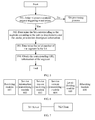
- FIG. 1 shows a basic process of a method for hierarchically requesting contents in an HTTP streaming system according to an embodiment of the present invention.
- the method mainly includes the following steps.
- the client requests media presentation description information from a server, so as to obtain necessary media metadata, in which the metadata here is resource description information.
- the server returns the media presentation description information to the client, in which the description information needs to include duration information of segments in various levels (and the number of included content segments in the next level) or unified segment time axis information, and complete URL information corresponding to segments in various levels.
- the duration information of the segments in different levels is 1 minute (30 segments are included, or 10 seconds with 10 segments included, or 30 seconds with 15 segments included), and the duration of the segment is 2 seconds (or 1 second).
- the content segmentation is performed according to the fixed length, if the last section or the SA is different from the previous section or SA of the same level in the duration, corresponding description information needs to be separately provided.
- each SA may be the same or different, and likewise, the duration of each segment in the SA may be the same or different.
- URLs of the content segments corresponding to the embodiment in which the content segmentation is performed hierarchically may be organized as shown in Table 1.
- the segments herein merely correspond to the contents in a certain period in the SA, and as long as the media contents included in all the continuous segments and corresponding to one SA are the same as the media contents included in the SA, the segments are allowed not to be totally the same as the data contents of the corresponding time period directly included in the SA.
- A3 Receive a service request message being a GET message transmitted from the client, in which the request message includes the URLs of the service contents determined by the client according to service requirements and the media presentation description information.
- the client requests the corresponding SA through an HTTP GET request manner according to the URL of the SA in the description information and the time information of the SA required to be requested, and the server returns the corresponding SA after receiving the request message.
- a processing process of an SA request of the client includes the following steps.
- the specific processing process depends on implementation of the server and content deployment, and the following different deployment implementation manners may be supported.
- a segment request triggering event for example, code rate switch is required since playing is started, Seek operation is performed, and bandwidth is changed
- the client determines which SA the segment required to be requested is located in and the serial number of the segment in the SA according to the media presentation description information and the requested time point, and further determines the URL of the segment required to be requested.
- a specific segment processing process includes the following steps.
- the server After receiving the request message, the server returns the corresponding content segment.
- the embodiment of the present invention provides a method for hierarchically requesting contents in an HTTP streaming system, which includes: receiving the service information obtaining request transmitted from the client; returning the service information obtaining request response including the media presentation description information to the client, in which the media presentation description information includes the URLs corresponding to the service contents; receiving the service request message being a GET message transmitted from the client, in which the request message includes the URLs of the service contents determined by the client according to service requirements and the media presentation description information; and returning the service request message response to the client, in which the service request message response includes the service contents corresponding to the URLs of the service contents determined by the client according to the service requirements and the media presentation description information, so that the contents are searched for directly according to the URLs, thereby improving the processing efficiency.
- FIG. 6 is a basic block diagram of a server according to an embodiment of the present invention.
- the server mainly includes: a receiving module 601, a service information transmitting module 602, a service request receiving module 603, and a service content transmitting module 604.
- the receiving module 601 is configured to receive a service information obtaining request for requesting media presentation description information from the server by the client, so as to obtain necessary media metadata, in which the metadata herein is resource description information.
- the service information transmitting module 602 is configured to return a service information obtaining request response including the media presentation description information to the client, in which the media presentation description information includes URLs corresponding to service contents.
- the service information transmitting module 602 returns the media presentation description information to the client, the description information needs to include duration information of segments in various levels (and the number of the included content segments in the next level) or unified segment time axis information, and complete URL information corresponding to the segments in various levels.
- the duration information of the segments in different levels is 1 minute (30 segments are included, or 10 seconds with 10 segments included, or 30 seconds with 15 segments included), and the duration of the segment is 2 seconds (or 1 second).
- the content segmentation is performed according to the fixed length, if the last section or the SA is different from the previous section or SA of the same level in the duration, corresponding description information needs to be separately provided.
- each SA may be the same or different, and likewise, the duration of each segment in the SA may be the same or different.
- URLs of the content segments corresponding to the embodiment in which the content segmentation is performed hierarchically may be organized as shown in Table 1.
- the service request receiving module 603 is configured to receive a service request message being a GET message transmitted from the client, in which the request message includes the URLs of the service contents determined by the client according to the service requirements and the media presentation description information.
- the client uses an HTTP GET request manner to request the corresponding SA according to the URL of the SA in the description information and the time information of the SA required to be requested, and the server returns the corresponding SA after receiving the request message.
- a processing process of the SA request of the client includes the following steps.
- the specific processing process depends on implementation of the server and content deployment, and the following different deployment implementation manners may be supported.
- a segment request triggering event for example, code rate switch is required since playing is started, Seek operation is performed, and bandwidth is changed
- the client determines which SA the segment required to be requested is located in and the serial number of the segment in the SA according to the media presentation description information and the requested time point, and further determines the URL of the segment required to be requested.
- a specific segment processing process includes the following steps.
- the service content transmitting module 604 is configured to return a service request message response to the client, in which the service request message response includes the service contents corresponding to the URLs of the service contents determined by the client according to the service requirements and the media presentation description information.
- the client constructs the HTTP GET request message by using the obtained URLs of the segments through the foregoing steps, and transmits the message to the server to request the corresponding content segment, and the server returns the corresponding content segment after receiving the request message.
- the server further includes a level-dividing module 605 and an allocating module 606.
- the level-dividing module 605 is configured to at least divide media resources into playing units, segments, SAs and sections.
- the allocating module 606 is configured to allocate the URLs to the segments, the SAs and the sections.
- the embodiment of the present invention provides a server.
- the receiving module 601 receives the service information obtaining message transmitted from the client; the service information transmitting module 602 returns the service information obtaining message response including the media presentation description information to the client, in which the media presentation description information includes the URLs corresponding to the service contents;
- the service request receiving module 603 receives the service request message being a GET message transmitted from the client, in which the request message includes the URLs of the service contents determined by the client according to service requirements and the media presentation description information; and the service content transmitting module 604 returns the service request message response to the client, in which the service request message response includes the service contents corresponding to the URLs of the service contents determined by the client according to the service requirements and the media presentation description information, so that the contents are searched for directly according to the URLs, thereby improving the processing efficiency.
- FIG. 7 is a basic block diagram of a system for hierarchically requesting contents in an HTTP streaming system according to an embodiment of the present invention.
- the system mainly includes a server 701 and a client 702.
- the server 701 is configured to receive a service information obtaining request transmitted from a client 702, return a service information obtaining request response including media presentation description information to the client 702, in which the media presentation description information includes URLs corresponding to service contents, receive a service request message being a GET message transmitted from the client 702, in which the request message includes the URLs of the segments determined by the client according to service requirements and the media presentation description information, return a service request message response to the client 702, in which the service request message response includes the service contents corresponding to the URLs of the service contents determined by the client 702 according to the service requirements and the media presentation description information, receive a service information obtaining request for requesting the media presentation description information from the server by the client, so as to obtain necessary media metadata, in which the metadata herein is resource description information, and return a service information obtaining request response including the media presentation description information, in which the media presentation description information includes duration information of segments in various levels (and the number of included content segments in the next level) or unified segment time axis information, and complete URL information
- the duration information of the segments in different levels is 1 minute (30 segments are included, or 10 seconds with 10 segments included, or 30 seconds with 15 segments included), and the duration of the segment is 2 seconds (or 1 second).
- the content segmentation is performed according to the fixed length, if the last section or the SA is different from the previous section or SA of the same level in the duration, corresponding description information needs to be separately provided.
- each SA may be the same or different, and likewise, the duration of each segment in the SA may be the same or different.
- URLs of the content segments corresponding to the embodiment in which the content segmentation is performed hierarchically may be organized as shown in Table 1.
- the service request message being a GET message transmitted from the client 702 is received, in which the request message includes the URLs of the service contents determined by the client according to the service requirements and the media presentation description information; the client 702 uses an HTTP GET request manner to request the corresponding SA according to the URL of the SA in the description information and the time information of the SA required to be requested; and the server returns the corresponding SA after receiving the request message.
- the client 702 is configured to transmit a service information obtaining request to the server 701, and transmit the service request message being a GET message including the URLs of the service contents determined according to the service requirements and the media presentation description information to the server 701 after obtaining the media presentation description information including the URLs corresponding to the service contents and returned by the server.
- a processing process of an SA request of the client includes the following steps.
- the specific processing process depends on implementation of the server and content deployment, and the following different deployment implementation manners may be supported.
- a segment request triggering event for example, code rate switch is required since playing is started, Seek operation is performed, and bandwidth is changed
- the client determines which SA the segment required to be requested is located in and the serial number of the segment in the SA according to the media presentation description information and the requested time point, and further determines the URL of the segment required to be requested.
- a specific segment processing process includes the following steps.
- the embodiment of the present invention provides a system for hierarchically requesting contents in an HTTP streaming system.
- the server 701 receives the service information obtaining request transmitted from the client 702, returns the service information obtaining request response including the media presentation description information to the client 702, in which the media presentation description information includes the URLs corresponding to the service contents, receives a service request message being a GET message transmitted from the client 702, in which the request message includes the URLs of the service contents determined by the client according to service requirements and the media presentation description information, and returns a service request message response to the client 702, in which the service request message response includes the service contents corresponding to the URLs of the service contents determined by the client according to the service requirements and the media presentation description information, so that the contents are searched for directly according to the URLs, thereby improving the processing efficiency.
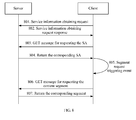
- FIG. 8 shows a specific embodiment of a method for hierarchically requesting contents in an HTTP streaming system according to an embodiment of the present invention. Referring to FIG. 8 , the method includes the following steps.
- the client requests media presentation description information from the server, so as to obtain necessary media metadata, in which the media metadata here is resource description information.
- the server returns the media presentation description information to the client, in which the description information needs to include duration information of segments in various levels (and the number of included content segments in the next level) or unified segment time axis information, and complete URL information corresponding to segments in various levels.
- the duration information of the segments in different levels is 1 minute (30 segments are included, or 10 seconds with 10 segments included, or 30 seconds with 15 segments included), and the duration of the segment is 2 seconds (or 1 second).
- the content segmentation is performed according to the fixed length, if the last section or the SA is different from the previous section or SA of the same level in the duration, corresponding description information needs to be separately provided.
- each SA may be the same or different, and likewise, the duration of each segment in the SA may be the same or different.
- URLs of the content segments corresponding to the embodiment in which the content segmentation is performed hierarchically may be organized as shown in Table 1.
- the segment herein merely corresponds to the contents in a certain period in the SA, and as long as the media contents included in all the continuous segments and corresponding to one SA are the same as the media contents included in the SA, the segment is allowed not to be totally the same as the data contents of the corresponding time period directly included in the SA.
- a processing process of an SA request of the client includes the following steps.
- the specific processing process depends on implementation of the server and content deployment, and the following different deployment implementation manners may be supported.
- the client determines which SA the segment required to be requested is located in and the serial number of the segment in the SA according to the media presentation description information and the requested time point, and further determines the URL of the segment required to be requested.
- a segment request triggering event for example, code rate switch is required since playing is started, Seek operation is performed, and bandwidth is changed
- a specific segment processing process includes the following steps.
- the server After receiving the request message, the server returns the corresponding content segment is returned.
- the embodiment of the present invention provides a method for hierarchically requesting contents in an HTTP streaming system, which includes: receiving the service information obtaining request transmitted from the client; returning the service information obtaining request response including the media presentation description information to the client, in which the media presentation description information includes the URLs corresponding to the service contents; receiving a service request message being a GET message transmitted from the client, in which the request message includes the URLs of the service contents determined by the client according to service requirements and the media presentation description information; and returning a service request message response to the client, in which the service request message response includes the service contents corresponding to the URLs of the service contents determined by the client according to the service requirements and the media presentation description information, so that the contents are searched for directly according to the URLs, thereby improving the processing efficiency.
- FIG. 9 shows a specific embodiment of a method for hierarchically requesting contents in an HTTP streaming system according to an embodiment of the present invention. Referring to FIG. 9 , the method includes the following steps.
- the client requests media presentation description information from the server, so as to obtain necessary media metadata, in which the media metadata here is resource description information.
- the server returns the media presentation description information to the client, in which the description information needs to include duration information of segments in various levels (and the number of included content segments in the next level) or unified segment time axis information, and complete URL information corresponding to segments in various levels.
- the duration information of the segments in different levels is 1 minute (30 segments are included, or 10 seconds with 10 segments included, or 30 seconds with 15 segments included), and the duration of the segment is 2 seconds (or 1 second).
- the content segmentation is performed according to the fixed length, if the last section or the SA is different from the previous section or SA of the same level in the duration, corresponding description information needs to be separately provided.
- each SA may be the same or different, and likewise, the duration of each segment in the SA may be the same or different.
- URLs of the content segments corresponding to the embodiment in which the content segmentation is performed hierarchically may be organized as shown in Table 1.
- the segment herein merely corresponds to the contents in a certain period in the SA, and as long as the media contents included in all the continuous segments and corresponding to one SA are the same as the media contents included in the SA, the segment is allowed not to be totally the same as the data contents of the corresponding time period directly included in the SA.
- the level of the segment currently processed needs to be judged and determined, and the URL information corresponding to the level is obtained.
- Factors taken into consideration for selecting the segment level are as follows: selection of a user, available bandwidth conditions, plevel cache size, requirements on an effective media contents load rate, and server policies, and it is supposed that the request here is the SA as shown in FIG. 3 .
- a processing process of an SA request of the client includes the following steps.
- the specific processing process depends on implementation of the server and content deployment, and the following different deployment implementation manners may be supported.
- corresponding event processing is performed.
- the segment triggering event is considered, but also all the events switched for the lower-level segments need to be considered overall (that is, the duration of each segment needs to become shorter, and the condition that the SA is switched to the segment is also included).
- corresponding processing or information is required to inform step 903, so that the processing in step 903 can determine the levels of the subsequent media segment contents required to be requested.
- the processing of the segment triggering event is taken as an example.
- a specific segment processing process includes the following steps.
- the server After receiving the request message, the server returns the corresponding content segment.
- FIG. 10 shows a specific embodiment of a method for hierarchically requesting contents in an HTTP streaming system according to an embodiment of the present invention. Referring to FIG. 10 , the method includes the following steps.
- the client requests media presentation description information from a server, so as to obtain necessary media metadata, in which the media metadata here is resource description information, and audio and video metadata are required to be obtained here.
- the server returns the media presentation description information to the client, in which the description information needs to include duration information of segments in various levels (and the number of included content segments in the next level) or unified segment time axis information, and complete URL information corresponding to segments in various levels.
- the media presentation description information includes video and audio URL information
- the audio URL information is taken as an example in the following, and the video URL information is similar.
- the duration information of the segments in different levels is 1 minute (30 segments are included, or 10 seconds with 10 segments included, or 30 seconds with 15 segments included), and the duration of the segment is 2 seconds (or 1 second).
- the content segmentation is performed according to the fixed length, if the last section or the SA is different from the previous section or SA of the same level in the duration, corresponding description information needs to be separately provided.
- each SA may be the same or different, and likewise, the duration of each segment in the SA may be the same or different.
- audio and video content segment URLs corresponding to the embodiment in which the content segmentation is performed hierarchically may be organized as shown in Table 2.
- Embodiment 3 of corresponding URLs of the content segments may be organized in the following.
- the audio and video contents are not separated for the contents of each section, and may be definitely separated.
- the segment herein merely corresponds to the contents in a certain period in the SA, and as long as the media contents included in all the continuous segments and corresponding to one SA are the same as the media contents included in the SA, the segment is allowed not to be totally the same as the data contents of the corresponding time period directly included in the SA.
- a request of a music SA is taken as an example in the following.
- a processing process of an SA request of the client includes the following steps.
- the specific processing process depends on implementation of the server and content deployment, and the following different deployment implementation manners may be supported.
- the client determines which SA the segment required to be requested is located in and the serial number of the segment in the SA according to the media presentation description information and the requested time point, and further determines the URL of the segment required to be requested.
- a segment request triggering event for example, code rate switch is required since playing is started, Seek operation is performed, and bandwidth is changed
- a specific segment processing process includes the following steps.
- the server After receiving the request message, the server returns the corresponding content segment.
- the embodiment of the present invention provides a method for hierarchically requesting contents in an HTTP streaming system, which includes: receiving the service information obtaining request transmitted from the client; returning the service information obtaining request response including the media presentation description information to the client, in which the media presentation description information includes the URLs corresponding to the service contents; receiving the service request message being a GET message transmitted from the client, in which the request message includes the URLs of the service contents determined by the client according to service requirements and the media presentation description information; and returning the service request message response to the client, in which the service request message response includes the service contents corresponding to the URLs of the service contents determined by the client according to the service requirements and the media presentation description information, so that the contents are searched for directly according to the URLs, thereby improving the processing efficiency.
- FIG. 11 shows a specific embodiment of a method for hierarchically requesting contents in an HTTP streaming system according to an embodiment of the present invention. Referring to FIG. 11 , the method includes the following steps.
- the client requests media presentation description information from the server, so as to obtain necessary media metadata, in which the metadata here is resource description information.
- the server returns the media presentation description information to the client, in which the description information needs to include duration information of segments in various levels (and the number of included content segments in the next level) or unified segment time axis information, and URL information in higher levels (the URL of the SA level is merely included, but the URLs of the segment in the lowest level is not included).
- the duration information of the segments in different levels is 1 minute (30 segments are included, or 10 seconds with 10 segments included, or 30 seconds with 15 segments included), and the duration of the segment is 2 seconds (or 1 second).
- the content segmentation is performed according to the fixed length, if the last section or the SA is different from the previous section or SA of the same level in the duration, corresponding description information needs to be separately provided.
- each SA may be the same or different, and likewise, the duration of each segment in the SA may be the same or different.
- URLs of the content segments corresponding to the embodiment in which the content segmentation is performed hierarchically may be organized as shown in Table 3.
- Table 3 Code rate 1 URL ⁇ Media contents corresponding to a code rate 1 version Section 1 URL ⁇ Content segment corresponding to the code rate 1 and the section 1 SA 1 URL ⁇ corresponding to the SA 1 (optionally, SA 1 index URL ⁇ URL indexes of all the segments included in the SA 1)
- Other optional code rate URLs Apart
- the following URL list may be obtained through the SA 1 index URL, which is as shown in Table 4.
- Table 4 Segment 1_1 URL ⁇ corresponding to segment 1 Segment 1_2 URL ⁇ corresponding to segment 2 Segment 1_3 URL ⁇ corresponding to segment 3 whereas Segment 1_M URL ⁇ corresponding to segment M
- the SA 1 index URL (or the SA 1 video index URL/SA 1 audio index URL) of the URL index of all the segments included in the SA 1 is optional, that is, if the SA 1 index URL is not included, the client needs to know how to obtain the URL index of all the segments included in the SA, for example, a scheme constructed by the URL of the SA plus corresponding parameters may be used.
- a feasible embodiment is as follows.
- a processing process of an SA request of the client includes the following steps.
- the specific processing process depends on implementation of the server and content deployment, and the following different deployment implementation manners may be supported.
- the client determines which SA the segment required to be requested is located in and the serial number of the segment in the SA according to the media presentation description information and the requested time point, and further determines the URL of the segment required to be requested.
- the specific processing process is as shown in FIG. 12 .
- the client constructs the corresponding HTTP GET request by using the SA index URL through FIG. 12 , and transmits the obtained HTTP GET request message obtained through construction to the server.
- the server returns the corresponding URL list index, that is, a list of the URLs of each segment arranged in sequence and included in the SA.
- the client receives the response message transmitted from the server and obtains the SA index information, that is, the URLs of the segments list, determines the URL information of the segment required to be requested according to the serial number of the segment in the SA and the URLs of the segments list, constructs the HTTP GET request message by using the URLs of the segments obtained through the foregoing steps, and transmits the message to the server to request the corresponding content segment.
- the server After receiving the request message, the server returns the corresponding content segment.
- the embodiment of the present invention provides a method for hierarchically requesting contents in an HTTP streaming system, which includes: receiving the service information obtaining request transmitted from the client; returning the service information obtaining request response including the media presentation description information to the client, in which the media presentation description information includes the URLs corresponding to the service contents; receiving the service request message being a GET message transmitted from the client, in which the request message includes the URLs of the service contents determined by the client according to service requirements and the media presentation description information; and returning the service request message response to the client, in which the service request message response includes the service contents corresponding to the URLs of the service contents determined by the client according to the service requirements and the media presentation description information, so that the contents are searched for directly according to the URLs, thereby improving the processing efficiency.
- FIG. 13 shows a specific embodiment of a method for hierarchically requesting contents in an HTTP streaming system according to an embodiment of the present invention. Referring to FIG. 13 , the method includes the following steps.
- the client requests media presentation description information from the server, so as to obtain necessary media metadata, in which the media metadata here is resource description information.
- the server returns the media presentation description information to the client, and the description information needs to include duration information of the segments in various levels (and the number of the included content segments in the next level) or unified segment time axis information, and a construction rule of the URLs in levels.
- the client may directly construct the URLs of the next level resource according to the construction rule and the URLs of the previous level resource.
- the duration information of the segments in different levels is 1 minute (30 segments are included, or 10 seconds with 10 segments included, or 30 seconds with 15 segments included), and the duration of the segment is 2 seconds (or 1 second).
- the content segmentation is performed according to the fixed length, if the last section or the SA is different from the previous section or SA of the same level in the duration, corresponding description information needs to be separately provided.
- each SA may be the same or different, and likewise, the duration of each segment in the SA may be the same or different.
- URLs of the content segments corresponding to the embodiment in which the content segmentation is performed hierarchically may be organized as shown in Table 1.
- the segment herein merely corresponds to the contents in a certain period in the SA, and as long as the media contents included in all the continuous segments and corresponding to one SA are the same as the media contents included in the SA, the segment is allowed not to be totally the same as the data contents of the corresponding time period directly included in the SA.
- a processing process of an SA request of the client includes the following steps.
- the specific processing process depends on implementation of the server and content deployment, and the following different deployment implementation manners may be supported.
- the client determines which SA the segment required to be requested is located in and the serial number of the segment in the SA according to the media presentation description information and the requested time point, and further determines the URL of the segment required to be requested.
- a segment request triggering event for example, code rate switch is required since playing is started, Seek operation is performed, and bandwidth is changed
- the client determines which SA the segment required to be requested is located in and the serial number of the segment in the SA according to the media presentation description information and the requested time point, and further determines the URL of the segment required to be requested.
- the specific processing process includes the following steps.
- the URL construction rule is that, "/Segment (serial number of the segment) is added on the basis of the URL of the SA", the following URLs of the segments may be constructed:
- X refers to the serial number of the segment in the corresponding SA determined in step 3.
- the client constructs the HTTP GET request message by using the URL of the segment obtained through step 1405, and transmits the message to the server to request the corresponding content segment.
- the server After receiving the request message, the server returns the corresponding content segment.
- the embodiment of the present invention provides a method for hierarchically requesting contents in an HTTP streaming system, which includes: receiving the service information obtaining request transmitted from the client; returning the service information obtaining request response including the media presentation description information to the client, in which the media presentation description information includes the URLs corresponding to the service contents; receiving the service request message being a GET message transmitted from the client, in which the request message includes the URLs of the service contents determined by the client according to service requirements and the media presentation description information; and returning the service request message response to the client, in which the service request message response includes the service contents corresponding to the URLs of the service contents determined by the client according to the service requirements and the media presentation description information, so that the contents are searched for directly according to the URLs, thereby improving the processing efficiency.
- the program may be stored in a computer readable storage medium, such as a ROM, a RAM, a magnetic disk, or an optical disk.
Landscapes
- Engineering & Computer Science (AREA)
- Multimedia (AREA)
- Signal Processing (AREA)
- Computer Networks & Wireless Communication (AREA)
- Databases & Information Systems (AREA)
- Human Computer Interaction (AREA)
- Information Transfer Between Computers (AREA)
Claims (3)
- Procédé destiné à demander hiérarchiquement du contenu dans un système de diffusion en flux sous protocole de transfert hypertexte, HTTP, comportant les étapes consistant à :faire émettre par un client une demande d'obtention d'informations de service ;faire recevoir par le client une réponse à la demande d'obtention d'informations de service comportant des informations de description de présentation de média, les informations de description de présentation de média comportant un localisateur uniforme de ressource, URL, correspondant à un contenu de service multi-niveaux et une règle de constitution d'URL ; le contenu de service multi-niveaux comportant un segment et un agrégat de segments, SA ; et l'URL correspondant au contenu de service multi-niveaux figurant dans les informations de description de présentation de média étant spécifiquement attribuée au SA ;faire déterminer par le client un agrégat de segments, SA, correspondant à un segment et l'URL correspondant au SA en fonction d'une exigence de service et des informations de description de présentation de média ;faire déterminer par le client un numéro de série correspondant du segment dans le SA ;faire constituer par le client l'URL correspondant au segment selon la règle de constitution d'URL figurant dans les informations de description de présentation de média, le numéro de série du segment et l'URL correspondant au SA déterminé ;faire émettre par le client un message de demande de service qui est un message GET, le message de demande de service comportant l'URL constituée ; etfaire recevoir par le client un message de réponse à la demande de service comportant le contenu de service correspondant à l'URL figurant dans le message de demande de service.
- Procédé selon la revendication 1, comportant en outre les étapes consistant à : faire émettre par le client un message de demande de service qui est un message GET et qui comporte une URL d'un contenu différent de service multi-niveaux déterminé par le client en fonction de l'exigence de service et des informations de description de présentation de média ; et
faire recevoir par le client un message de réponse à la demande de service comportant un contenu différent de service correspondant à l'URL du contenu différent de service multi-niveaux. - Système destiné à demander hiérarchiquement du contenu dans un système de diffusion en flux sous protocole de transfert hypertexte, HTTP, comportant :un serveur, configuré pour recevoir une demande d'obtention d'informations de service émise par un client, renvoyer au client une réponse à la demande d'obtention d'informations de service comportant des informations de description de présentation de média, les informations de description de présentation de média comportant un localisateur uniforme de ressource, URL, correspondant à un contenu de service multi-niveaux et une règle de constitution d'URL, recevoir un message de demande de service qui est un message GET émis par le client, le message de demande de service comportant une URL correspondant à un segment constituée par le client, et renvoyer au client un message de réponse à la demande de service comportant le contenu de service correspondant à l'URL figurant dans le message de demande de service ; etun client, configuré pour envoyer la demande d'obtention d'informations de service au serveur, déterminer un agrégat de segments, SA, correspondant au segment et une URL correspondant au SA en fonction d'une exigence de service et des informations de description de présentation de média, déterminer un numéro de série correspondant au segment dans le SA, constituer l'URL correspondant au segment selon la règle de constitution d'URL, le numéro de série du segment et l'URL correspondant au SA déterminé, envoyer au serveur le message de demande de service qui est un message GET comportant l'URL constituée et recevoir en provenance du serveur un message de réponse à la demande de service comportant le contenu de service correspondant à l'URL figurant dans le message de demande de service.
Applications Claiming Priority (2)
| Application Number | Priority Date | Filing Date | Title |
|---|---|---|---|
| CN200910110054.2A CN102055718B (zh) | 2009-11-09 | 2009-11-09 | 一种在http streaming系统中实现分层请求内容的方法,装置和系统 |
| PCT/CN2010/078518 WO2011054319A1 (fr) | 2009-11-09 | 2010-11-08 | Procédé, dispositif et système permettant de réaliser une demande hiérarchique de contenu dans un système de diffusion http |
Publications (3)
| Publication Number | Publication Date |
|---|---|
| EP2493191A1 EP2493191A1 (fr) | 2012-08-29 |
| EP2493191A4 EP2493191A4 (fr) | 2012-08-29 |
| EP2493191B1 true EP2493191B1 (fr) | 2015-10-28 |
Family
ID=43959653
Family Applications (1)
| Application Number | Title | Priority Date | Filing Date |
|---|---|---|---|
| EP10827933.2A Active EP2493191B1 (fr) | 2009-11-09 | 2010-11-08 | Procédé, dispositif et système permettant de réaliser une demande hiérarchique de contenu dans un système de diffusion http |
Country Status (4)
| Country | Link |
|---|---|
| US (1) | US20120221681A1 (fr) |
| EP (1) | EP2493191B1 (fr) |
| CN (1) | CN102055718B (fr) |
| WO (1) | WO2011054319A1 (fr) |
Families Citing this family (11)
| Publication number | Priority date | Publication date | Assignee | Title |
|---|---|---|---|---|
| CN102202094A (zh) * | 2011-05-13 | 2011-09-28 | 中兴通讯股份有限公司 | 一种基于http的业务请求处理方法及装置 |
| CN102394880B (zh) * | 2011-10-31 | 2014-07-30 | 北京蓝汛通信技术有限责任公司 | 内容分发网络中的跳转响应处理方法和设备 |
| US8850054B2 (en) * | 2012-01-17 | 2014-09-30 | International Business Machines Corporation | Hypertext transfer protocol live streaming |
| CN105379293B (zh) * | 2013-04-19 | 2019-03-26 | 华为技术有限公司 | 基于超文本协议的动态自适应流媒体中的媒体质量信息指示 |
| AU2014254808B2 (en) * | 2013-04-19 | 2018-04-12 | Sony Corporation | Server device, client device, content distribution method, and computer program |
| CN105409226B (zh) * | 2013-07-25 | 2018-05-04 | 华为技术有限公司 | 有效控制自适应流媒体中的客户端行为的系统和方法 |
| US11201908B2 (en) * | 2014-02-05 | 2021-12-14 | Seon Design (Usa) Corp. | Uploading data from mobile devices |
| CN103986976B (zh) * | 2014-06-05 | 2017-05-24 | 北京赛维安讯科技发展有限公司 | 基于cdn网络的传输系统及方法 |
| CN105704185B (zh) * | 2014-11-27 | 2019-04-12 | 华为软件技术有限公司 | 资源转移方法及装置 |
| KR102454470B1 (ko) * | 2016-10-06 | 2022-10-14 | 삼성전자주식회사 | 스트리밍 서비스를 지원하는 방법 및 장치 |
| CN109413509A (zh) * | 2018-12-06 | 2019-03-01 | 武汉微梦文化科技有限公司 | 一种高清视频处理方法 |
Family Cites Families (5)
| Publication number | Priority date | Publication date | Assignee | Title |
|---|---|---|---|---|
| US20050102371A1 (en) * | 2003-11-07 | 2005-05-12 | Emre Aksu | Streaming from a server to a client |
| US9386064B2 (en) * | 2006-06-09 | 2016-07-05 | Qualcomm Incorporated | Enhanced block-request streaming using URL templates and construction rules |
| CN101193273B (zh) * | 2006-11-20 | 2010-07-14 | 中兴通讯股份有限公司 | 一种实时多媒体图像信息存储和播放方法 |
| CN101287107B (zh) * | 2008-05-29 | 2010-10-13 | 腾讯科技(深圳)有限公司 | 媒体文件的点播方法、系统和设备 |
| US8914835B2 (en) * | 2009-10-28 | 2014-12-16 | Qualcomm Incorporated | Streaming encoded video data |
-
2009
- 2009-11-09 CN CN200910110054.2A patent/CN102055718B/zh active Active
-
2010
- 2010-11-08 WO PCT/CN2010/078518 patent/WO2011054319A1/fr not_active Ceased
- 2010-11-08 EP EP10827933.2A patent/EP2493191B1/fr active Active
-
2012
- 2012-05-09 US US13/467,738 patent/US20120221681A1/en not_active Abandoned
Also Published As
| Publication number | Publication date |
|---|---|
| EP2493191A1 (fr) | 2012-08-29 |
| US20120221681A1 (en) | 2012-08-30 |
| CN102055718A (zh) | 2011-05-11 |
| WO2011054319A1 (fr) | 2011-05-12 |
| EP2493191A4 (fr) | 2012-08-29 |
| CN102055718B (zh) | 2014-12-31 |
Similar Documents
| Publication | Publication Date | Title |
|---|---|---|
| EP2493191B1 (fr) | Procédé, dispositif et système permettant de réaliser une demande hiérarchique de contenu dans un système de diffusion http | |
| CN108063769B (zh) | 一种内容服务的实现方法、装置及内容分发网络节点 | |
| CN106060102B (zh) | 媒体提供方法和终端 | |
| US9344517B2 (en) | Downloading and adaptive streaming of multimedia content to a device with cache assist | |
| CA2988320C (fr) | Synchronisation de client de diffusion en continu en direct http (hls) de video | |
| US20130212231A1 (en) | Method, apparatus and system for dynamic media content insertion based on http streaming | |
| US20140095593A1 (en) | Method and apparatus for transmitting data file to client | |
| WO2015165395A1 (fr) | Procédé et appareil de reproduction vidéo | |
| CN103813185B (zh) | 一种分段节目快速分发的方法、服务器及客户端 | |
| US8817983B2 (en) | Streaming video to cellular phones | |
| CN113141522B (zh) | 资源传输方法、装置、计算机设备及存储介质 | |
| JP2009541877A (ja) | ウェブ・オブジェクトを制御する方法、システム、装置、及びコンピュータ・プログラム(放送情報をキャッシュする方法及び装置) | |
| CN117596232A (zh) | 流媒体快速启动方法、装置和系统 | |
| CN107040615B (zh) | 媒体分片的下载方法、终端和计算机可读存储介质 | |
| WO2015120766A1 (fr) | Système et procédé d'optimisation de vidéo | |
| WO2021174214A1 (fr) | Stockage de résolutions d'élément à distance basé sur un client | |
| US20090172752A1 (en) | Streaming multiple videos in a playlist | |
| US20120254919A1 (en) | Method for acquiring program content and set top box | |
| CN106936808B (zh) | Http流媒体传输方法及装置 | |
| EP3292698B1 (fr) | Synchronisation de client de diffusion en continu en direct http (hls) de vidéo | |
| WO2017071524A1 (fr) | Procédé et appareil de publication de ressources multimédia | |
| CN113364728A (zh) | 媒体内容接收方法、装置、存储介质和计算机设备 | |
| HK40052233A (en) | Method and apparatus for receiving media content, storage medium and computer device | |
| KR20120088072A (ko) | 멀티미디어 스트리밍 서비스 방법 | |
| KR20200018890A (ko) | 무선 스트리밍 방법 |
Legal Events
| Date | Code | Title | Description |
|---|---|---|---|
| PUAI | Public reference made under article 153(3) epc to a published international application that has entered the european phase |
Free format text: ORIGINAL CODE: 0009012 |
|
| 17P | Request for examination filed |
Effective date: 20120523 |
|
| A4 | Supplementary search report drawn up and despatched |
Effective date: 20120723 |
|
| AK | Designated contracting states |
Kind code of ref document: A1 Designated state(s): AL AT BE BG CH CY CZ DE DK EE ES FI FR GB GR HR HU IE IS IT LI LT LU LV MC MK MT NL NO PL PT RO RS SE SI SK SM TR |
|
| DAX | Request for extension of the european patent (deleted) | ||
| 17Q | First examination report despatched |
Effective date: 20131009 |
|
| GRAP | Despatch of communication of intention to grant a patent |
Free format text: ORIGINAL CODE: EPIDOSNIGR1 |
|
| INTG | Intention to grant announced |
Effective date: 20150507 |
|
| GRAS | Grant fee paid |
Free format text: ORIGINAL CODE: EPIDOSNIGR3 |
|
| GRAA | (expected) grant |
Free format text: ORIGINAL CODE: 0009210 |
|
| AK | Designated contracting states |
Kind code of ref document: B1 Designated state(s): AL AT BE BG CH CY CZ DE DK EE ES FI FR GB GR HR HU IE IS IT LI LT LU LV MC MK MT NL NO PL PT RO RS SE SI SK SM TR |
|
| REG | Reference to a national code |
Ref country code: GB Ref legal event code: FG4D |
|
| REG | Reference to a national code |
Ref country code: CH Ref legal event code: EP |
|
| REG | Reference to a national code |
Ref country code: AT Ref legal event code: REF Ref document number: 758467 Country of ref document: AT Kind code of ref document: T Effective date: 20151115 |
|
| REG | Reference to a national code |
Ref country code: IE Ref legal event code: FG4D |
|
| REG | Reference to a national code |
Ref country code: FR Ref legal event code: PLFP Year of fee payment: 6 |
|
| REG | Reference to a national code |
Ref country code: DE Ref legal event code: R096 Ref document number: 602010028665 Country of ref document: DE |
|
| REG | Reference to a national code |
Ref country code: LT Ref legal event code: MG4D |
|
| REG | Reference to a national code |
Ref country code: NL Ref legal event code: MP Effective date: 20151028 |
|
| REG | Reference to a national code |
Ref country code: AT Ref legal event code: MK05 Ref document number: 758467 Country of ref document: AT Kind code of ref document: T Effective date: 20151028 |
|
| PG25 | Lapsed in a contracting state [announced via postgrant information from national office to epo] |
Ref country code: HR Free format text: LAPSE BECAUSE OF FAILURE TO SUBMIT A TRANSLATION OF THE DESCRIPTION OR TO PAY THE FEE WITHIN THE PRESCRIBED TIME-LIMIT Effective date: 20151028 Ref country code: LT Free format text: LAPSE BECAUSE OF FAILURE TO SUBMIT A TRANSLATION OF THE DESCRIPTION OR TO PAY THE FEE WITHIN THE PRESCRIBED TIME-LIMIT Effective date: 20151028 Ref country code: NL Free format text: LAPSE BECAUSE OF FAILURE TO SUBMIT A TRANSLATION OF THE DESCRIPTION OR TO PAY THE FEE WITHIN THE PRESCRIBED TIME-LIMIT Effective date: 20151028 Ref country code: ES Free format text: LAPSE BECAUSE OF FAILURE TO SUBMIT A TRANSLATION OF THE DESCRIPTION OR TO PAY THE FEE WITHIN THE PRESCRIBED TIME-LIMIT Effective date: 20151028 Ref country code: IS Free format text: LAPSE BECAUSE OF FAILURE TO SUBMIT A TRANSLATION OF THE DESCRIPTION OR TO PAY THE FEE WITHIN THE PRESCRIBED TIME-LIMIT Effective date: 20160228 Ref country code: NO Free format text: LAPSE BECAUSE OF FAILURE TO SUBMIT A TRANSLATION OF THE DESCRIPTION OR TO PAY THE FEE WITHIN THE PRESCRIBED TIME-LIMIT Effective date: 20160128 |
|
| PG25 | Lapsed in a contracting state [announced via postgrant information from national office to epo] |
Ref country code: PL Free format text: LAPSE BECAUSE OF FAILURE TO SUBMIT A TRANSLATION OF THE DESCRIPTION OR TO PAY THE FEE WITHIN THE PRESCRIBED TIME-LIMIT Effective date: 20151028 Ref country code: SE Free format text: LAPSE BECAUSE OF FAILURE TO SUBMIT A TRANSLATION OF THE DESCRIPTION OR TO PAY THE FEE WITHIN THE PRESCRIBED TIME-LIMIT Effective date: 20151028 Ref country code: GR Free format text: LAPSE BECAUSE OF FAILURE TO SUBMIT A TRANSLATION OF THE DESCRIPTION OR TO PAY THE FEE WITHIN THE PRESCRIBED TIME-LIMIT Effective date: 20160129 Ref country code: LV Free format text: LAPSE BECAUSE OF FAILURE TO SUBMIT A TRANSLATION OF THE DESCRIPTION OR TO PAY THE FEE WITHIN THE PRESCRIBED TIME-LIMIT Effective date: 20151028 Ref country code: AT Free format text: LAPSE BECAUSE OF FAILURE TO SUBMIT A TRANSLATION OF THE DESCRIPTION OR TO PAY THE FEE WITHIN THE PRESCRIBED TIME-LIMIT Effective date: 20151028 Ref country code: FI Free format text: LAPSE BECAUSE OF FAILURE TO SUBMIT A TRANSLATION OF THE DESCRIPTION OR TO PAY THE FEE WITHIN THE PRESCRIBED TIME-LIMIT Effective date: 20151028 Ref country code: RS Free format text: LAPSE BECAUSE OF FAILURE TO SUBMIT A TRANSLATION OF THE DESCRIPTION OR TO PAY THE FEE WITHIN THE PRESCRIBED TIME-LIMIT Effective date: 20151028 Ref country code: PT Free format text: LAPSE BECAUSE OF FAILURE TO SUBMIT A TRANSLATION OF THE DESCRIPTION OR TO PAY THE FEE WITHIN THE PRESCRIBED TIME-LIMIT Effective date: 20160229 Ref country code: BE Free format text: LAPSE BECAUSE OF NON-PAYMENT OF DUE FEES Effective date: 20151130 |
|
| REG | Reference to a national code |
Ref country code: CH Ref legal event code: PL |
|
| PG25 | Lapsed in a contracting state [announced via postgrant information from national office to epo] |
Ref country code: CH Free format text: LAPSE BECAUSE OF NON-PAYMENT OF DUE FEES Effective date: 20151130 Ref country code: LI Free format text: LAPSE BECAUSE OF NON-PAYMENT OF DUE FEES Effective date: 20151130 Ref country code: MC Free format text: LAPSE BECAUSE OF FAILURE TO SUBMIT A TRANSLATION OF THE DESCRIPTION OR TO PAY THE FEE WITHIN THE PRESCRIBED TIME-LIMIT Effective date: 20151028 Ref country code: CZ Free format text: LAPSE BECAUSE OF FAILURE TO SUBMIT A TRANSLATION OF THE DESCRIPTION OR TO PAY THE FEE WITHIN THE PRESCRIBED TIME-LIMIT Effective date: 20151028 |
|
| REG | Reference to a national code |
Ref country code: DE Ref legal event code: R097 Ref document number: 602010028665 Country of ref document: DE |
|
| REG | Reference to a national code |
Ref country code: IE Ref legal event code: MM4A |
|
| PG25 | Lapsed in a contracting state [announced via postgrant information from national office to epo] |
Ref country code: RO Free format text: LAPSE BECAUSE OF FAILURE TO SUBMIT A TRANSLATION OF THE DESCRIPTION OR TO PAY THE FEE WITHIN THE PRESCRIBED TIME-LIMIT Effective date: 20151028 Ref country code: SK Free format text: LAPSE BECAUSE OF FAILURE TO SUBMIT A TRANSLATION OF THE DESCRIPTION OR TO PAY THE FEE WITHIN THE PRESCRIBED TIME-LIMIT Effective date: 20151028 Ref country code: DK Free format text: LAPSE BECAUSE OF FAILURE TO SUBMIT A TRANSLATION OF THE DESCRIPTION OR TO PAY THE FEE WITHIN THE PRESCRIBED TIME-LIMIT Effective date: 20151028 Ref country code: EE Free format text: LAPSE BECAUSE OF FAILURE TO SUBMIT A TRANSLATION OF THE DESCRIPTION OR TO PAY THE FEE WITHIN THE PRESCRIBED TIME-LIMIT Effective date: 20151028 Ref country code: SM Free format text: LAPSE BECAUSE OF FAILURE TO SUBMIT A TRANSLATION OF THE DESCRIPTION OR TO PAY THE FEE WITHIN THE PRESCRIBED TIME-LIMIT Effective date: 20151028 |
|
| PLBE | No opposition filed within time limit |
Free format text: ORIGINAL CODE: 0009261 |
|
| STAA | Information on the status of an ep patent application or granted ep patent |
Free format text: STATUS: NO OPPOSITION FILED WITHIN TIME LIMIT |
|
| GBPC | Gb: european patent ceased through non-payment of renewal fee |
Effective date: 20160128 |
|
| 26N | No opposition filed |
Effective date: 20160729 |
|
| REG | Reference to a national code |
Ref country code: FR Ref legal event code: PLFP Year of fee payment: 7 |
|
| PG25 | Lapsed in a contracting state [announced via postgrant information from national office to epo] |
Ref country code: GB Free format text: LAPSE BECAUSE OF NON-PAYMENT OF DUE FEES Effective date: 20160128 Ref country code: IE Free format text: LAPSE BECAUSE OF NON-PAYMENT OF DUE FEES Effective date: 20151108 |
|
| PG25 | Lapsed in a contracting state [announced via postgrant information from national office to epo] |
Ref country code: SI Free format text: LAPSE BECAUSE OF FAILURE TO SUBMIT A TRANSLATION OF THE DESCRIPTION OR TO PAY THE FEE WITHIN THE PRESCRIBED TIME-LIMIT Effective date: 20151028 |
|
| PG25 | Lapsed in a contracting state [announced via postgrant information from national office to epo] |
Ref country code: BE Free format text: LAPSE BECAUSE OF FAILURE TO SUBMIT A TRANSLATION OF THE DESCRIPTION OR TO PAY THE FEE WITHIN THE PRESCRIBED TIME-LIMIT Effective date: 20151028 |
|
| PG25 | Lapsed in a contracting state [announced via postgrant information from national office to epo] |
Ref country code: BG Free format text: LAPSE BECAUSE OF FAILURE TO SUBMIT A TRANSLATION OF THE DESCRIPTION OR TO PAY THE FEE WITHIN THE PRESCRIBED TIME-LIMIT Effective date: 20151028 Ref country code: HU Free format text: LAPSE BECAUSE OF FAILURE TO SUBMIT A TRANSLATION OF THE DESCRIPTION OR TO PAY THE FEE WITHIN THE PRESCRIBED TIME-LIMIT; INVALID AB INITIO Effective date: 20101108 |
|
| PG25 | Lapsed in a contracting state [announced via postgrant information from national office to epo] |
Ref country code: CY Free format text: LAPSE BECAUSE OF FAILURE TO SUBMIT A TRANSLATION OF THE DESCRIPTION OR TO PAY THE FEE WITHIN THE PRESCRIBED TIME-LIMIT Effective date: 20151028 |
|
| PG25 | Lapsed in a contracting state [announced via postgrant information from national office to epo] |
Ref country code: MT Free format text: LAPSE BECAUSE OF FAILURE TO SUBMIT A TRANSLATION OF THE DESCRIPTION OR TO PAY THE FEE WITHIN THE PRESCRIBED TIME-LIMIT Effective date: 20151028 Ref country code: TR Free format text: LAPSE BECAUSE OF FAILURE TO SUBMIT A TRANSLATION OF THE DESCRIPTION OR TO PAY THE FEE WITHIN THE PRESCRIBED TIME-LIMIT Effective date: 20151028 |
|
| REG | Reference to a national code |
Ref country code: FR Ref legal event code: PLFP Year of fee payment: 8 |
|
| PG25 | Lapsed in a contracting state [announced via postgrant information from national office to epo] |
Ref country code: LU Free format text: LAPSE BECAUSE OF NON-PAYMENT OF DUE FEES Effective date: 20151108 |
|
| PG25 | Lapsed in a contracting state [announced via postgrant information from national office to epo] |
Ref country code: MK Free format text: LAPSE BECAUSE OF FAILURE TO SUBMIT A TRANSLATION OF THE DESCRIPTION OR TO PAY THE FEE WITHIN THE PRESCRIBED TIME-LIMIT Effective date: 20151028 |
|
| REG | Reference to a national code |
Ref country code: FR Ref legal event code: PLFP Year of fee payment: 9 |
|
| PG25 | Lapsed in a contracting state [announced via postgrant information from national office to epo] |
Ref country code: AL Free format text: LAPSE BECAUSE OF FAILURE TO SUBMIT A TRANSLATION OF THE DESCRIPTION OR TO PAY THE FEE WITHIN THE PRESCRIBED TIME-LIMIT Effective date: 20151028 |
|
| P01 | Opt-out of the competence of the unified patent court (upc) registered |
Effective date: 20230514 |
|
| PGFP | Annual fee paid to national office [announced via postgrant information from national office to epo] |
Ref country code: FR Payment date: 20250930 Year of fee payment: 16 |
|
| PGFP | Annual fee paid to national office [announced via postgrant information from national office to epo] |
Ref country code: DE Payment date: 20250930 Year of fee payment: 16 |
|
| PGFP | Annual fee paid to national office [announced via postgrant information from national office to epo] |
Ref country code: IT Payment date: 20251022 Year of fee payment: 16 |