EP2495930A1 - Support de données portatif doté d'une fonctionnalité Internet - Google Patents
Support de données portatif doté d'une fonctionnalité Internet Download PDFInfo
- Publication number
- EP2495930A1 EP2495930A1 EP12001163A EP12001163A EP2495930A1 EP 2495930 A1 EP2495930 A1 EP 2495930A1 EP 12001163 A EP12001163 A EP 12001163A EP 12001163 A EP12001163 A EP 12001163A EP 2495930 A1 EP2495930 A1 EP 2495930A1
- Authority
- EP
- European Patent Office
- Prior art keywords
- data carrier
- mass storage
- internet
- terminal
- protocol
- Prior art date
- Legal status (The legal status is an assumption and is not a legal conclusion. Google has not performed a legal analysis and makes no representation as to the accuracy of the status listed.)
- Granted
Links
Images



Classifications
-
- H—ELECTRICITY
- H04—ELECTRIC COMMUNICATION TECHNIQUE
- H04L—TRANSMISSION OF DIGITAL INFORMATION, e.g. TELEGRAPHIC COMMUNICATION
- H04L63/00—Network architectures or network communication protocols for network security
- H04L63/08—Network architectures or network communication protocols for network security for authentication of entities
- H04L63/0853—Network architectures or network communication protocols for network security for authentication of entities using an additional device, e.g. smartcard, SIM or a different communication terminal
-
- G—PHYSICS
- G06—COMPUTING OR CALCULATING; COUNTING
- G06F—ELECTRIC DIGITAL DATA PROCESSING
- G06F21/00—Security arrangements for protecting computers, components thereof, programs or data against unauthorised activity
- G06F21/30—Authentication, i.e. establishing the identity or authorisation of security principals
- G06F21/31—User authentication
- G06F21/34—User authentication involving the use of external additional devices, e.g. dongles or smart cards
-
- G—PHYSICS
- G06—COMPUTING OR CALCULATING; COUNTING
- G06F—ELECTRIC DIGITAL DATA PROCESSING
- G06F21/00—Security arrangements for protecting computers, components thereof, programs or data against unauthorised activity
- G06F21/70—Protecting specific internal or peripheral components, in which the protection of a component leads to protection of the entire computer
- G06F21/71—Protecting specific internal or peripheral components, in which the protection of a component leads to protection of the entire computer to assure secure computing or processing of information
- G06F21/77—Protecting specific internal or peripheral components, in which the protection of a component leads to protection of the entire computer to assure secure computing or processing of information in smart cards
-
- G—PHYSICS
- G06—COMPUTING OR CALCULATING; COUNTING
- G06K—GRAPHICAL DATA READING; PRESENTATION OF DATA; RECORD CARRIERS; HANDLING RECORD CARRIERS
- G06K19/00—Record carriers for use with machines and with at least a part designed to carry digital markings
- G06K19/06—Record carriers for use with machines and with at least a part designed to carry digital markings characterised by the kind of the digital marking, e.g. shape, nature, code
- G06K19/067—Record carriers with conductive marks, printed circuits or semiconductor circuit elements, e.g. credit or identity cards also with resonating or responding marks without active components
- G06K19/07—Record carriers with conductive marks, printed circuits or semiconductor circuit elements, e.g. credit or identity cards also with resonating or responding marks without active components with integrated circuit chips
-
- G—PHYSICS
- G06—COMPUTING OR CALCULATING; COUNTING
- G06Q—INFORMATION AND COMMUNICATION TECHNOLOGY [ICT] SPECIALLY ADAPTED FOR ADMINISTRATIVE, COMMERCIAL, FINANCIAL, MANAGERIAL OR SUPERVISORY PURPOSES; SYSTEMS OR METHODS SPECIALLY ADAPTED FOR ADMINISTRATIVE, COMMERCIAL, FINANCIAL, MANAGERIAL OR SUPERVISORY PURPOSES, NOT OTHERWISE PROVIDED FOR
- G06Q20/00—Payment architectures, schemes or protocols
- G06Q20/30—Payment architectures, schemes or protocols characterised by the use of specific devices or networks
- G06Q20/34—Payment architectures, schemes or protocols characterised by the use of specific devices or networks using cards, e.g. integrated circuit [IC] cards or magnetic cards
- G06Q20/341—Active cards, i.e. cards including their own processing means, e.g. including an IC or chip
-
- G—PHYSICS
- G07—CHECKING-DEVICES
- G07F—COIN-FREED OR LIKE APPARATUS
- G07F7/00—Mechanisms actuated by objects other than coins to free or to actuate vending, hiring, coin or paper currency dispensing or refunding apparatus
- G07F7/08—Mechanisms actuated by objects other than coins to free or to actuate vending, hiring, coin or paper currency dispensing or refunding apparatus by coded identity card or credit card or other personal identification means
- G07F7/10—Mechanisms actuated by objects other than coins to free or to actuate vending, hiring, coin or paper currency dispensing or refunding apparatus by coded identity card or credit card or other personal identification means together with a coded signal, e.g. in the form of personal identification information, like personal identification number [PIN] or biometric data
- G07F7/1008—Active credit-cards provided with means to personalise their use, e.g. with PIN-introduction/comparison system
-
- H—ELECTRICITY
- H04—ELECTRIC COMMUNICATION TECHNIQUE
- H04L—TRANSMISSION OF DIGITAL INFORMATION, e.g. TELEGRAPHIC COMMUNICATION
- H04L63/00—Network architectures or network communication protocols for network security
- H04L63/08—Network architectures or network communication protocols for network security for authentication of entities
- H04L63/0876—Network architectures or network communication protocols for network security for authentication of entities based on the identity of the terminal or configuration, e.g. MAC address, hardware or software configuration or device fingerprint
-
- H—ELECTRICITY
- H04—ELECTRIC COMMUNICATION TECHNIQUE
- H04L—TRANSMISSION OF DIGITAL INFORMATION, e.g. TELEGRAPHIC COMMUNICATION
- H04L67/00—Network arrangements or protocols for supporting network services or applications
- H04L67/01—Protocols
- H04L67/02—Protocols based on web technology, e.g. hypertext transfer protocol [HTTP]
-
- G—PHYSICS
- G06—COMPUTING OR CALCULATING; COUNTING
- G06K—GRAPHICAL DATA READING; PRESENTATION OF DATA; RECORD CARRIERS; HANDLING RECORD CARRIERS
- G06K17/00—Methods or arrangements for effecting co-operative working between equipments covered by two or more of main groups G06K1/00 - G06K15/00, e.g. automatic card files incorporating conveying and reading operations
Definitions
- the invention generally relates to the technical field of portable data carriers, and more particularly to the field of data carriers having a functionality as an Internet server and / or Internet client.
- data carriers can be designed, for example, in the design of a chip card or a compact chip module.
- the publications EP 2 045 992 A1 and WO 2009/043840 A1 show a designed as a SIM ( Subscriber Identity Module ) chip card.
- the chip card is connected to a personal computer (PC) on which special software modules are installed.
- the PC In order to manage the SIM functions of the chip card, the PC first establishes a TCP / IP connection to the chip card.
- the chip card then sends an HTTP request to the PC via this TCP / IP connection. This request is answered either locally by the PC or by an external server, and the resulting HTTP response is transmitted from the PC to the smart card via the TCP / IP connection.
- Internet Smart Card Internet-enabled media
- Such data carriers are described, for example, in the brochure "Internet Smart Card - security2go - WebServer” by Giesecke & Devrient GmbH, 2007, Art. 288 6093.
- These data carriers are connected to a host computer via a USB interface and, for example, via the RNDIS architecture ( Remote Network Driver Interface Specification ) connected to the TCP / IP protocol stack of the host computer.
- RNDIS architecture Remote Network Driver Interface Specification
- an Internet Smart Card usually requires no special driver to be installed on the host computer, because common operating systems already contain the necessary drivers. However, a logical link must be established between these drivers and the disk, which requires administrator privileges. This in turn prevents or at least restricts the "nomadic use" of the Internet Smart Card (eg use in Internet cafes or on other public computers) as well as the usability on company computers. This is particularly problematic when the Internet smart card is used as a security module for storing secret key data or for the signature of data or for the authentication of the user, because the use of such security functions would be particularly desirable for publicly accessible computers.
- the publication WO 2008/058741 A2 shows a portable data carrier, which is designed for example as a flash memory module with USB port or as a flash memory card.
- the data carrier has a control unit and a flash memory area.
- the data carrier contains a chip card IC, which is set up, for example, to execute signature or authentication processes.
- the media communicates with a connected host computer through a mass storage protocol commonly used for flash memory or flash memory cards. This protocol may include, for example, instructions for writing and reading blocks of data.
- Commands directed to the smart card IC are encoded by the host computer into write instructions of the mass storage protocol.
- Each such write command has an attached data block.
- In the data block is a guide information that has a long and unique identifier in the manner of a magic value .
- the controller of the volume examines incoming data blocks for the presence of such identifiers. If such an identifier is detected in a data block, the control unit of the data carrier generates a command provided for the chip card IC, which is determined, for example, by further values contained in the data block. On the other hand, if the controller does not recognize a specific identifier in the data block of an incoming write command, then the controller processes this write command as "normal" write access to the flash memory area of the volume.
- the invention has the object to propose a portable data carrier with Internet functionality that can be connected without installation procedures or administrator rights to a terminal.
- the invention is based on the basic idea to connect a equipped with Internet functionality disk as a mass storage to an external device. For typical endpoint operating systems, neither installation nor administrator rights are required. Internet requests and responses are appropriately embedded in commands and responses of a mass storage access protocol and thus communicated through a mass storage interface between the data carrier and the terminal.
- the data carrier comprises a smart card module and a control unit, the latter serving for conversion between commands and responses according to the mass storage access protocol and commands and responses according to a protocol used by the smart card module.
- the controller recognizes the presence of a particular identifier in an incoming command of the mass storage access log that the command contains information for the smart card module.
- the mass storage access protocol may include write commands and read commands in some embodiments. It may be provided to transfer information in connection with the Internet functionality of the data carrier in the direction from the terminal to the data carrier primarily by write commands and to transmit in the direction from the data carrier to the terminal primarily by responses to read commands.
- the data carrier includes program code that implements in the terminal a translation module for translation between commands and responses according to an internet protocol and commands and responses according to the mass storage access protocol.
- This program code can be loaded into the terminal and executed, for example, by an auto-start mechanism known per se, if the data carrier is connected to the terminal.
- the conversion module continuously sends read commands to the data carrier during its operation in the terminal to give the data carrier with each response to such a read command opportunity for the transmission of information - especially Internet requests - to the terminal.
- Internet Protocols both application layer protocols - e.g. HTTP or HTTPS - as well as transport layer protocols - e.g. TCP or UDP - as well as Internet layer protocols - e.g. IP - to be understood. Accordingly, an Internet request is a request or a command according to one of these protocols, and an Internet answer is an answer according to one of these protocols.
- an Internet server integrated in the data carrier answers inquiries in accordance with an Internet protocol, and / or that an Internet client integrated in the data carrier issues such requests. These requests are appropriately embedded in commands and / or responses according to a mass storage access protocol.
- Fig. 1 shows a data carrier 10 and a terminal 12, which in turn is connected to a network 14.
- the network 14 may be the Internet or an intranet or other local or non-local network in which at least one internet protocol is used.
- the data carrier 10 is a compact, portable unit which is suitable for being carried along by a user at any time and which can be designed, for example, as a chip card or as a chip module.
- the data carrier 10 may, for example, the design of a USB memory module or a memory card of the SD type ( Secure Digital, including modifications such as SDHC, miniSD, microSD and so on) or a memory card of the MMC type ( MultiMedia Card, including modifications such RS-MMC, MMC plus, MMC mobile and so on) or a chip card according to Parts 1 and 2 of ISO / IEC-7816.
- SD type Secure Digital, including modifications such as SDHC, miniSD, microSD and so on
- MMC type MultiMedia Card, including modifications such RS-MMC, MMC plus, MMC mobile and so on
- a chip card according to Parts 1 and 2 of ISO / IEC-7816.
- the terminal 12 generally any stationary or portable device may be used which has an internet protocol stack and a suitable mass storage interface.
- the terminal 12 may be a conventional stationary or portable personal computer (PC) or a mobile communication device or a portable or stationary media player (eg, an MP3 player or a set-top box or media center) or a portable or stationary game console be.
- PC personal computer
- a mobile communication device or a portable or stationary media player (eg, an MP3 player or a set-top box or media center) or a portable or stationary game console be.
- a portable or stationary media player eg, an MP3 player or a set-top box or media center
- a portable or stationary game console be.
- it is provided to use a commercially available device without modification - apart from the fact that certain software is imported into the terminal 12 in the manner provided for this purpose - as the terminal 12.
- an actual connection of the terminal 12 to the network 14 is not necessarily required because the invention may also be used to facilitate communication between an application program executed locally on the terminal 12 and a smart card module of the data carrier 10 To allow internet protocol.
- the various components of the terminal 12 are in Fig.1 only those that are significant to understanding the invention are shown. These are in particular a processor 16, an interface module 18 and a memory 20 containing an operating system 22 and various application programs 24.
- the operating system 22 is one commonly used for terminals 12 of the particular type.
- the terminal 12 is a PC
- the operating system may be one of the systems known under the trademarks Microsoft Windows or Apple MacOS or Linux.
- application programs 24 are in Fig.1 a common Internet browser 26 - for example, one of the known under the brands Microsoft Internet Explorer or Mozilla Firefox or Google Chrome browser - and a tether module 28 shown, whose function will be explained later.
- the operating system 22 provides an Internet Protocol stack 30 that is included in Fig. 1 is shown schematically with a network access layer 32, an Internet layer 33 and a transport layer 34.
- IP Internet Protocol
- TCP Transmission Control Protocol
- the access of application programs 24 to the internet protocol stack 30 is via an interface 36 known as sockets ("jack" or "can").
- the operating system provides a memory driver 38 through which the tether module 28 can read and write Write commands to the disk 10 and can receive responses.
- the interface module 18 implements inter alia a network interface 40 for connecting the terminal 12 to the network 14 and a mass storage interface 42 for connecting the data carrier 10.
- the mass storage interface 42 is e.g. a USB interface or an interface for SD or MMC memory cards or any other suitable interface.
- the terminal 12 communicates with the volume 10 via a mass storage access protocol that corresponds to the type of volume 10.
- the data carrier 10 has a control unit 44, an interface module 46, a memory 48 and a smart card module 50.
- the interface module 46 provides an external interface 52 for communication with the terminal 12 and is further connected to an internal interface 54 of the smart card module 50.
- In the memory 48 there is a control program 56 for the control unit 44 as well as a file with program code 58 which, when it is transferred to the terminal 12 and executed there, implements the tether module 28.
- the memory 48 is designed as a writable mass memory - eg in flash technology - and has a freely usable mass memory area 60 of relatively high capacity - for example several gigabytes.
- the disk 12 can thus also serve as a portable mass storage in the manner of a conventional USB stick or a conventional memory card.
- This feature is not provided in execution alternatives.
- the memory 48 is then dimensioned correspondingly smaller and contains essentially only the control program 56th and the program code 58, but not a freely usable mass storage area 60.
- the smart card module 50 includes a smart card processor 62, an interface circuit 64, and a memory 66.
- the interface circuit 64 provides the internal interface 54 of the smart card module 50.
- the data exchange via this internal interface 54 via a provided for the smart card module 50 protocol.
- This is in the present embodiment, a protocol according to ISO / IEC-7816, while in alternative embodiments other protocols can be used.
- Embodiments are also provided in which the smart card module 50 communicates with the control unit 44 directly via an internet protocol - e.g. TCP / IP or HTTP - communicates.
- the memory 66 has a plurality of memory fields configured in different technologies, in which an operating system 68 and one or more application programs 70 are included.
- the various program components in the memory 66 form an Internet server 72 and an Internet client 74.
- the Internet server 72 and the Internet client 74 may be either part of the operating system 68 or the application programs 70.
- some components of Internet server 72 and Internet client 74 include portions of operating system 68 and other components portions of application programs 70.
- a first virtual communication channel 76 is established between the Internet server 72 and the tether module 28, and a second virtual communication channel 78 is configured between the Internet client 74 and the tether module 28.
- the two virtual communication channels 72, 74 also referred to as "pipes" , physically pass through the internal interface 54, the external ones Interface 52 and the data carrier interface 42.
- the virtual communication channels 72, 74 are formed by data units of an Internet protocol - for example, HTTP requests and HTTP responses - in commands and responses of a mass storage access protocol and possibly one of the smart card module 50 protocols used.
- the data units of the Internet Protocol are transmitted on the route between the terminal 12 and the data carrier 10 in the form of commands and responses of the mass storage access protocol.
- the commands of the mass storage access protocol with embedded Internet data units are distinguished from "normal" mass storage commands in that only the former contain routing information with a special identifier recognized by the control unit 44 of the data carrier 10.
- the control unit 44 extracts from these commands the data units of the Internet Protocol and generates therefrom commands according to the protocol used by the smart card module 50, for example a protocol according to the ISO / IEC-7816 standard. Accordingly, the control unit 44 accepts data units of the smart card module 50 and generates answers according to the mass storage access protocol, wherein the transmission of the latter answers to the terminal 12 may need to be initiated by the terminal 12 by further commands of the mass storage access protocol.
- Fig. 2 to Fig. 5 show an exemplary process flow in which the smart card module 50 first works as an Internet server and then as an Internet client.
- HTTP or HTTPS (a variant of HTTP encrypted by SSL / TLS) serves as the protocol of the application layer, so that the smart card module 50 performs approximately the functions of a web server and a web client.
- other Internet protocols may be used, such as application layer or transport layer protocols.
- the in Fig. 2 Process shown starts in step 100 so that the disk 10 is connected via the interfaces 42 and 52 to the terminal 12. If the data carrier 10 is a USB stick, for example, it is plugged into a USB socket of the terminal 12 in step 100.
- the operating system 22 of the terminal 12 recognizes the data carrier 10 as a mass storage and binds it in step 102 in a known per se in a file system of the terminal 12 a. For this purpose, no administrator rights or other privileges on the terminal 12 are required.
- the operating system 22 starts a per se known autostart process in which a predetermined file on the volume 10 is identified.
- a file with a specific file name or with a specific file attribute can be searched for.
- the file with the program code 58 is designated as the startup file.
- the operating system 22 reads this file from the memory in step 106 48 of the disk 10 and starts it in step 108 as an executable program, namely as tether module 28.
- This process requires no administrator rights.
- the tether module 28 does not require immediate interaction with the user of the terminal 12. Therefore, the tether module 28 may be executed by the terminal 12 as a background process and remains completely invisible to the user during normal operation.
- the tether module 28 establishes the first and second virtual communication channels 76, 78.
- the tying module 28 first instructs the operating system 22 to create a file in a file system assigned to the data carrier 10. The operating system 22 then generates a file identifier and assigns it to a valid address in the memory 48 of the data carrier 10. This allows the tying module 28 to use file-based commands provided by the storage driver 38 of the operating system 22 to communicate with the data carrier 10. These commands contain the file identifier and are converted by the memory driver 38 and optionally other components of the operating system 22 into instructions of the mass storage access protocol in which the file identifier is converted into the corresponding address in the memory 48.
- step 110 at least one identifier is defined, which is known to the tether module 28 and the control unit 44 of the data carrier 10. If this identifier is included in a write or read command of the mass storage access protocol, this signals the controller 44 that the command is directed to the smart card module 50 - not the memory area 60 -.
- the identifier may be negotiated between the volume 10 and the tether module 28 in a communication process, or it may be included in the program code 58 and thus predetermined. In different embodiments either a single identifier or an identifier is used for each of the two virtual communication channels 76, 78.
- the process steps in Fig. 3 show communication and processing operations in which the smart card module 50 performs the function of an Internet server. More specifically, the smart card module 50 in the present embodiment answers an HTTP request that arrives at the Internet Protocol stack 30 of the terminal 12 in step 112.
- the HTTP request can come either from the network 14 or from a local application program 24 - for example, the Internet browser 26.
- the smart card module 50 is addressed via the same IP number or the same host name as the terminal 12 and selected via a specific port number. For example, if the terminal 12 is reachable under the host name myhost.gi-de.com and the smart card module 50 is associated with the port number 8080, an external HTTP request may be made in step 112 to the URI http: //myhost.gi- to be directed. In contrast, a local HTTP request from the Internet browser 26 may be directed to the IP number of the terminal 12 or to the host name "localhost".
- the Internet Protocol stack 30 forwards the HTTP request to the Ties module 28 via the "Sockets" interface 36 in step 114.
- the request is sent via the first virtual communication channel 76 to the Internet server 72 of the smart card module 50.
- the tether module 28 - in cooperation with the storage driver 38 and optionally other components of the operating system 22 - embeds the HTTP request in a write command of the mass storage access protocol.
- the tether module 28 generates this write command as a file-based command according to one of the storage driver 38 and the storage driver 38 converts this file-based instruction into a write command of the mass storage access protocol.
- the tying module 28 uses the file identifier determined in step 110, which is converted by the memory driver 38 into the corresponding destination address in the memory 48.
- the tying module 28 inserts a routing information and the HTTP request in the data part of the write command.
- the routing information includes the identifier defined in step 110 that identifies the write command to the controller 44 as being directed to the smart card module 50.
- the routing information may contain further data, for example an identifier of the type of embedded request and / or an identifier of the virtual communication channel.
- the two virtual communication channels 76, 78 - and optionally further communication channels - can be distinguished by different identifiers.
- the write command generated in step 116 is transmitted to the data carrier 10 via the interfaces 42 and 52 in step 118.
- the write command is examined in step 120 by the control unit 44 for the presence of the designated identifier. If no such identifier were present, control unit 44 would treat the write command as a "normal" write command and write to mass storage area 60. In the present example procedure, however, the control unit 44 recognizes the identifier and concludes therefrom, and if appropriate from other data contained in the routing information, that a request to the smartcard module 50 is embedded in the write command. The control unit 44 then extracts this request and sends it in step 122 in the form of a command according to the protocol used by the smart card module 50 via the internal interface 54 to the smart card module 50th
- the smart card module 50 processes commands according to the ISO / IEC-7816 protocol. Accordingly, in step 120, the control unit 44 converts the write command received via the external interface 52 into at least one command according to this protocol.
- the smart card processor 62 then extracts from the incoming smart card commands the Internet requests (e.g., HTTP requests) to be processed by the Internet server 72.
- the smart card module 50 uses a different protocol. In particular, this may directly be an internet protocol such as e.g. TCP / IP or HTTP or HTTPS.
- TCP / IP internet protocol
- HTTP HyperText Transfer Protocol
- the tethering module 28 already completely or partially takes over the embedding of the data units according to the Internet protocol into the protocol used by the smartcard module 50.
- the tying module 28 may first embed an HTTP request into at least one request under the ISO / IEC 7816 protocol and then send that at least one request to the volume 10 in the form of data from at least one write command following the mass storage access protocol , The control unit 44 then needs to perform correspondingly fewer conversion tasks.
- step 124 the control unit 44 responds to the write command received in step 118 in the manner provided in accordance with the mass storage access protocol. Step 124 is required if the mass storage access protocol provides feedback to the write command, but that response can not provide enough information to embed the response of the Internet server 72 therein.
- the tying module 28 sends a read command to the data carrier 10 in step 126 - again in cooperation with the memory driver 38.
- This read command also contains a routing information with the specified identifier, whereby the read command from the Control unit 44 is detected as not directed to the mass storage area 60 command.
- the read command itself contains no information essential to the smart card module 50, but merely gives the control unit 44 the opportunity to transmit extensive data to the terminal 12 in response.
- steps 124 and 126 may be omitted.
- the Internet server 72 executed by the smart card processor 62 processes the incoming request in step 128.
- the smart card module 50 transmits the response of the Internet server 72 in step 130 via the internal interface 54 to the control unit 44. This response is thereby by the smart card processor 62 in one or more data units according to the protocol used by the internal interface 54 - In the present embodiment, the ISO / IEC-7816 protocol - embedded. It is understood that step 130 may be performed before or after or between steps 124 and 126, depending on the response time of the Internet server 72.
- step 132 the control unit 44 extracts the response data - eg, an HTTP response data - from the at least one data unit obtained from the smart card module 50. Further, the control unit 44 embeds this data in response to the read command obtained in step 126 according to the mass storage access protocol. For example, the HTTP response data are transmitted as "read data" in the response to the read command, as if that data were contained in a mass memory of the volume 10.
- the data carrier 10 transmits the response to the read command to the tether module 28 in step 134.
- the memory driver 38 is interposed, which forwards the read data unchanged to the tether module 28.
- the tether module generates an HTTP response from the obtained data.
- no or only minor processing steps are required for this, so that step 136 may be omitted if necessary.
- the HTTP response is passed in step 138 from the tether module 28 to the Internet protocol stack 30 of the operating system 22 and from there in step 140 to the internal or external client - eg the Internet browser 26 or an addressable via the network computer 14 - passed on.
- the process just described according to Fig. 3 can be repeated as often as you like.
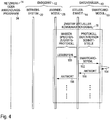
- Fig. 4 and Fig. 5 show a section of the exemplary process flow, in which the smart card module 50 of the data carrier 10 performs the function of an Internet client, so initiated by itself a request via an Internet Protocol. Since the data carrier 10 is registered with respect to the terminal 12 as mass storage, it can only respond to mass storage access commands, but not even issue such commands. It is therefore provided in the embodiments described here that the tethering module 28 asks at certain intervals in the disk 10, whether a request of the Internet client 74 is present. These requests from the tether module 28 are transmitted via the second virtual communication channel 78. You can thus concurrently for data exchange via the first virtual communication channel 76, so that the functions of the smart card module 50 as an Internet server 72 and as an Internet client 74 do not hinder each other.
- the in Fig. 4 and Fig. 5 shown procedure begins in steps 150-158 ( Fig. 4
- the tying module 28 transmits a read command according to the mass storage access protocol to the data carrier 10 in step 150.
- the control unit 44 sets this read command in the manner already described into a command in accordance with that from the internal interface 54 protocol used, eg the ISO / IEC-7816 protocol, and sends this command to the smart card module 50 in step 152.
- the internet client 74 of the smart card module 50 determines in step 154 that no internet request will be made should. This negative result is transmitted by the smart card module 50 in step 156 to the control unit 44, which outputs a corresponding feedback to the tether module 44 in step 158.
- steps 150-158 are repeated at regular or irregular intervals, in each case the Anbindemodul 28 initiates the demand process.
- the in Fig. 5 The part of the example procedure shown begins with a request triggered by the tying module 28, which is transmitted in the form of a read command to the control unit 44 and from there to the smart card module 50.
- Steps 160 and 162 in FIG Fig. 5 are thus identical to steps 150 and 152 in FIG Fig. 4 , In the in Fig. 5 However, the Internet client 74 determines in step 164 that access to an Internet server external to the data carrier 10 is to be performed.
- This Internet server can be, for example, one of the application programs 24 executed on the terminal 12 or a program which is addressed by the terminal 12 via the network 14. It goes without saying that the term "Internet server” is not here is limited to web servers or similar programs but is broadly understood as any program that answers internet queries.
- the smart card module 50 thus transmits in step 166 a response in the form of a data packet according to the ISO / IEC 7816 standard or another standard used by the internal interface 54.
- Embedded in this data packet is an Internet request, which may be, for example, an HTTP or HTTPS request.
- the Internet request contains a destination address, for example in the form of a URI with a host name or an IP number. It is a feature of many embodiments of the present invention that the Internet client 74 determines the destination address of the Internet request itself.
- the control unit 44 extracts the Internet request in step 168 and embeds it in response to the read command obtained in step 160. This response is transmitted to the tether module 28 in step 170. Tying module 28 performs any necessary handlers in step 172 and routes the Internet request, which may be, for example, a CONNECT or GET request for the HTTP protocol, to Internet protocol stack 30 (in FIG Fig. 5 indicated by hatching).
- the Internet Protocol stack 30 processes the Internet request in a manner known per se.
- the internet protocol stack 30 performs a possibly required DNS query (steps 176 and 178) and contacts the internet server defined by the destination address (steps 180 and 182).
- step 184 the internet protocol stack 30 provides the response of the internet server to the tether module 28.
- the tether module 28 communicates this response to that already discussed above in connection with steps 118-124
- step 186 a write command of the mass storage access protocol is sent to the control unit 44, which is converted into at least one smart card command in step 188 and the latter is transferred to the smart card module 50 in step 190.
- the smart card processor 62 converts the data packets arriving via the internal interface 54 into the information requested by the internet client 74.
- steps 192 and 194 the control unit 44 and the smart card module 50 confirm the received commands. This completes the processing of an Internet request from the Internet client 74. As long as tying module 28 is active, the process now returns to queries as in steps 150-158 ( Fig. 4 ). Once the Internet client 74 requests another Internet access, it will be executed according to the steps 160-194 just described.
- Fig. 5 shown procedure is completed so that the disk 10 is logged off in step 196 of the operating system 22 of the terminal 12.
- the operating system 22 then terminates the tying module 28 in step 198 and deletes it from the memory 20. Thus no traces remain in the terminal 12.
- This functionality can be described using the keyword "no admin - no footprint" .
- the user can then disconnect the data carrier 10 from the mass storage interface 42, whereby the power supply of the data carrier 10 is interrupted.
Landscapes
- Engineering & Computer Science (AREA)
- Computer Hardware Design (AREA)
- Physics & Mathematics (AREA)
- Theoretical Computer Science (AREA)
- Computer Security & Cryptography (AREA)
- General Physics & Mathematics (AREA)
- Computer Networks & Wireless Communication (AREA)
- General Engineering & Computer Science (AREA)
- Signal Processing (AREA)
- Computing Systems (AREA)
- Microelectronics & Electronic Packaging (AREA)
- Software Systems (AREA)
- Business, Economics & Management (AREA)
- Power Engineering (AREA)
- Mathematical Physics (AREA)
- Accounting & Taxation (AREA)
- Strategic Management (AREA)
- General Business, Economics & Management (AREA)
- Computer And Data Communications (AREA)
- Information Transfer Between Computers (AREA)
Applications Claiming Priority (1)
| Application Number | Priority Date | Filing Date | Title |
|---|---|---|---|
| DE102011012914.6A DE102011012914B4 (de) | 2011-03-03 | 2011-03-03 | Tragbarer Datenträger mit Internet-Funktionalität |
Publications (3)
| Publication Number | Publication Date |
|---|---|
| EP2495930A1 true EP2495930A1 (fr) | 2012-09-05 |
| EP2495930B1 EP2495930B1 (fr) | 2017-07-19 |
| EP2495930B8 EP2495930B8 (fr) | 2017-08-23 |
Family
ID=45757298
Family Applications (1)
| Application Number | Title | Priority Date | Filing Date |
|---|---|---|---|
| EP12001163.0A Not-in-force EP2495930B8 (fr) | 2011-03-03 | 2012-02-22 | Support de données portatif doté d'une fonctionnalité Internet |
Country Status (2)
| Country | Link |
|---|---|
| EP (1) | EP2495930B8 (fr) |
| DE (1) | DE102011012914B4 (fr) |
Cited By (1)
| Publication number | Priority date | Publication date | Assignee | Title |
|---|---|---|---|---|
| CN117315842A (zh) * | 2023-10-10 | 2023-12-29 | 京品高科信息科技(北京)有限公司 | 一种零售系统协议转换方法、系统、装置及存储介质 |
Citations (3)
| Publication number | Priority date | Publication date | Assignee | Title |
|---|---|---|---|---|
| US6751671B1 (en) * | 1998-08-13 | 2004-06-15 | Bull Cp8 | Method of communication between a user station and a network, in particular such as internet, and implementing architecture |
| WO2008058741A2 (fr) | 2006-11-16 | 2008-05-22 | Giesecke & Devrient Gmbh | Procédé d'accès à un support de données de mémoire portable comportant un module supplémentaire et support de données de mémoire portable |
| EP2045992A1 (fr) | 2007-10-04 | 2009-04-08 | Gemplus | Procédé pour l'accès à un dispositif portable, dispositif portable correspondant, dispositif hôte et système |
-
2011
- 2011-03-03 DE DE102011012914.6A patent/DE102011012914B4/de not_active Expired - Fee Related
-
2012
- 2012-02-22 EP EP12001163.0A patent/EP2495930B8/fr not_active Not-in-force
Patent Citations (4)
| Publication number | Priority date | Publication date | Assignee | Title |
|---|---|---|---|---|
| US6751671B1 (en) * | 1998-08-13 | 2004-06-15 | Bull Cp8 | Method of communication between a user station and a network, in particular such as internet, and implementing architecture |
| WO2008058741A2 (fr) | 2006-11-16 | 2008-05-22 | Giesecke & Devrient Gmbh | Procédé d'accès à un support de données de mémoire portable comportant un module supplémentaire et support de données de mémoire portable |
| EP2045992A1 (fr) | 2007-10-04 | 2009-04-08 | Gemplus | Procédé pour l'accès à un dispositif portable, dispositif portable correspondant, dispositif hôte et système |
| WO2009043840A1 (fr) | 2007-10-04 | 2009-04-09 | Gemalto Sa | Procédé pour avoir accès à un dispositif portable, dispositif portable correspondant, dispositif hôte et système |
Non-Patent Citations (4)
| Title |
|---|
| GUTHERY S ET AL: "IP and ARP over ISO 7816; draft-guthery-ip7816-01.txt", INTERNET ENGINEERING TASK FORCE (IETF), January 2001 (2001-01-01), XP015013872 * |
| HONGQIAN KAREN LU: "Network smart card review and analysis", COMPUTER NETWORKS, ELSEVIER SCIENCE PUBLISHERS, vol. 51, no. 9, 29 April 2007 (2007-04-29), pages 2234 - 2248, XP022122105, ISSN: 1389-1286 * |
| MARKE: "Internet Smart Card - security2go - WebServer", 2007, GIESECKE & DEVRIENT GMBH, article "Internet Smart Card vertrieben werden. Derartige Datenträger sind z.B. in der Broschüre" |
| REES J ET AL: "WEBCARD: A JAVA CARD WEB SERVER", IFIP WORKING CONFERENCE ON SMART CARD RESEARCH AND ADVANCED APPLICATIONS (IFIP CARDIS), 20 September 2000 (2000-09-20), pages 197 - 207, XP001013569 * |
Cited By (1)
| Publication number | Priority date | Publication date | Assignee | Title |
|---|---|---|---|---|
| CN117315842A (zh) * | 2023-10-10 | 2023-12-29 | 京品高科信息科技(北京)有限公司 | 一种零售系统协议转换方法、系统、装置及存储介质 |
Also Published As
| Publication number | Publication date |
|---|---|
| EP2495930B8 (fr) | 2017-08-23 |
| DE102011012914B4 (de) | 2015-04-09 |
| EP2495930B1 (fr) | 2017-07-19 |
| DE102011012914A1 (de) | 2012-09-06 |
Similar Documents
| Publication | Publication Date | Title |
|---|---|---|
| EP2981926B1 (fr) | Dispositif de stockage de données permettant un échange de données protégé entre différentes zones de sécurité | |
| DE102007050463A1 (de) | Verfahren zum Zugriff auf einen tragbaren Speicherdatenträger mit Zusatzmodul und tragbarer Speicherdatenträger | |
| EP1559038A2 (fr) | Procedes de pre-transmission de quantites de donnees structurees entre un dispositif client et un dispositif serveur | |
| EP2495930B1 (fr) | Support de données portatif doté d'une fonctionnalité Internet | |
| EP3159824A1 (fr) | Procede de traitement d'une tache d'impression encodee | |
| EP1527425B1 (fr) | Methode d'etablissement d'un systeme de fichier sur un support de donnees | |
| DE102007037064B4 (de) | Einchipsystem | |
| EP3327608B1 (fr) | Module de sécurité et procédé de commande et de contrôle d'un trafic de données d'un ordinateur personnel | |
| DE102008004384A1 (de) | Sichere Datenkommunikation | |
| EP1604505A1 (fr) | Chargement de donnees mediatiques sur un support de donnees portable | |
| DE102006021389B4 (de) | Schaltungsanordnung und Verfahren zum Betreiben einer Schaltungsanordnung | |
| EP3130165B1 (fr) | Mise en place d'une connection virtuelle pour transmettre des unités de données d'application | |
| EP2196005B1 (fr) | Procédé de communication de données et support de données correspondant | |
| EP1460510B1 (fr) | Procédé de communication sécurisée entre un calculateur électronique et un équipement de sécurité | |
| DE102022213041B4 (de) | Datenübertragung von Daten eines Endgeräts eines Nutzers mittels eines Kraftfahrzeugs des Nutzers | |
| EP3005130B1 (fr) | Dispositif, systeme et procede de soutien à la création d'un reseau local | |
| DE102010039782A1 (de) | Verfahren zur Durchführung einer Kommunikation | |
| DE102005028393A1 (de) | Tragbarer Datenträger | |
| DE112022007237T5 (de) | Zwei-faktor-authentifizierungssystem, zwei-faktor-authentifizierungsverfahren und zwei-faktor-authentifizierungsprogramm | |
| AT503263A2 (de) | Vorrichtung zur erstellung digitaler signaturen | |
| DE102006062093B4 (de) | Automatisierungsanlage und Verfahren für exklusive Verbindungen zu Clientrechnern | |
| EP2837139B1 (fr) | Composant à capacité d'interaction dans un réseau | |
| DE102020104646A1 (de) | Browserbasierter Fernzugriff auf Hardware-Sicherheitsmodul | |
| EP2984573B1 (fr) | Périphérique comprenant une interface audio pour la transmission de données | |
| DE102011122972B3 (de) | Verfahren zum Starten einer externen Applikation und bidirektionaler Kommunikation zwischen einem Browser und einer externen Applikation ohne Browsererweiterungen |
Legal Events
| Date | Code | Title | Description |
|---|---|---|---|
| PUAI | Public reference made under article 153(3) epc to a published international application that has entered the european phase |
Free format text: ORIGINAL CODE: 0009012 |
|
| AK | Designated contracting states |
Kind code of ref document: A1 Designated state(s): AL AT BE BG CH CY CZ DE DK EE ES FI FR GB GR HR HU IE IS IT LI LT LU LV MC MK MT NL NO PL PT RO RS SE SI SK SM TR |
|
| AX | Request for extension of the european patent |
Extension state: BA ME |
|
| 17P | Request for examination filed |
Effective date: 20130305 |
|
| 17Q | First examination report despatched |
Effective date: 20161107 |
|
| REG | Reference to a national code |
Ref country code: DE Ref legal event code: R079 Ref document number: 502012010778 Country of ref document: DE Free format text: PREVIOUS MAIN CLASS: H04L0029060000 Ipc: G07F0007100000 |
|
| RIC1 | Information provided on ipc code assigned before grant |
Ipc: H04L 29/06 20060101ALI20170110BHEP Ipc: G06Q 20/34 20120101ALI20170110BHEP Ipc: G06F 21/77 20130101ALI20170110BHEP Ipc: G06F 21/34 20130101ALI20170110BHEP Ipc: G06K 17/00 20060101ALN20170110BHEP Ipc: H04L 29/08 20060101ALI20170110BHEP Ipc: G07F 7/10 20060101AFI20170110BHEP |
|
| GRAP | Despatch of communication of intention to grant a patent |
Free format text: ORIGINAL CODE: EPIDOSNIGR1 |
|
| INTG | Intention to grant announced |
Effective date: 20170222 |
|
| RIC1 | Information provided on ipc code assigned before grant |
Ipc: G06Q 20/34 20120101ALI20170213BHEP Ipc: H04L 29/08 20060101ALI20170213BHEP Ipc: G07F 7/10 20060101AFI20170213BHEP Ipc: G06F 21/34 20130101ALI20170213BHEP Ipc: G06K 17/00 20060101ALN20170213BHEP Ipc: G06F 21/77 20130101ALI20170213BHEP Ipc: H04L 29/06 20060101ALI20170213BHEP |
|
| GRAS | Grant fee paid |
Free format text: ORIGINAL CODE: EPIDOSNIGR3 |
|
| GRAA | (expected) grant |
Free format text: ORIGINAL CODE: 0009210 |
|
| AK | Designated contracting states |
Kind code of ref document: B1 Designated state(s): AL AT BE BG CH CY CZ DE DK EE ES FI FR GB GR HR HU IE IS IT LI LT LU LV MC MK MT NL NO PL PT RO RS SE SI SK SM TR |
|
| REG | Reference to a national code |
Ref country code: GB Ref legal event code: FG4D Free format text: NOT ENGLISH |
|
| REG | Reference to a national code |
Ref country code: CH Ref legal event code: EP |
|
| REG | Reference to a national code |
Ref country code: IE Ref legal event code: FG4D Free format text: LANGUAGE OF EP DOCUMENT: GERMAN |
|
| REG | Reference to a national code |
Ref country code: AT Ref legal event code: REF Ref document number: 911069 Country of ref document: AT Kind code of ref document: T Effective date: 20170815 |
|
| RAP2 | Party data changed (patent owner data changed or rights of a patent transferred) |
Owner name: GIESECKE+DEVRIENT MOBILE SECURITY GMBH |
|
| REG | Reference to a national code |
Ref country code: DE Ref legal event code: R096 Ref document number: 502012010778 Country of ref document: DE |
|
| REG | Reference to a national code |
Ref country code: AT Ref legal event code: HC Ref document number: 911069 Country of ref document: AT Kind code of ref document: T Owner name: GIESECKE+DEVRIENT MOBILE SECURITY GMBH, DE Effective date: 20170918 |
|
| REG | Reference to a national code |
Ref country code: NL Ref legal event code: MP Effective date: 20170719 |
|
| REG | Reference to a national code |
Ref country code: LT Ref legal event code: MG4D |
|
| PG25 | Lapsed in a contracting state [announced via postgrant information from national office to epo] |
Ref country code: NO Free format text: LAPSE BECAUSE OF FAILURE TO SUBMIT A TRANSLATION OF THE DESCRIPTION OR TO PAY THE FEE WITHIN THE PRESCRIBED TIME-LIMIT Effective date: 20171019 Ref country code: FI Free format text: LAPSE BECAUSE OF FAILURE TO SUBMIT A TRANSLATION OF THE DESCRIPTION OR TO PAY THE FEE WITHIN THE PRESCRIBED TIME-LIMIT Effective date: 20170719 Ref country code: NL Free format text: LAPSE BECAUSE OF FAILURE TO SUBMIT A TRANSLATION OF THE DESCRIPTION OR TO PAY THE FEE WITHIN THE PRESCRIBED TIME-LIMIT Effective date: 20170719 Ref country code: HR Free format text: LAPSE BECAUSE OF FAILURE TO SUBMIT A TRANSLATION OF THE DESCRIPTION OR TO PAY THE FEE WITHIN THE PRESCRIBED TIME-LIMIT Effective date: 20170719 Ref country code: LT Free format text: LAPSE BECAUSE OF FAILURE TO SUBMIT A TRANSLATION OF THE DESCRIPTION OR TO PAY THE FEE WITHIN THE PRESCRIBED TIME-LIMIT Effective date: 20170719 Ref country code: SE Free format text: LAPSE BECAUSE OF FAILURE TO SUBMIT A TRANSLATION OF THE DESCRIPTION OR TO PAY THE FEE WITHIN THE PRESCRIBED TIME-LIMIT Effective date: 20170719 |
|
| REG | Reference to a national code |
Ref country code: FR Ref legal event code: PLFP Year of fee payment: 7 |
|
| PG25 | Lapsed in a contracting state [announced via postgrant information from national office to epo] |
Ref country code: IS Free format text: LAPSE BECAUSE OF FAILURE TO SUBMIT A TRANSLATION OF THE DESCRIPTION OR TO PAY THE FEE WITHIN THE PRESCRIBED TIME-LIMIT Effective date: 20171119 Ref country code: BG Free format text: LAPSE BECAUSE OF FAILURE TO SUBMIT A TRANSLATION OF THE DESCRIPTION OR TO PAY THE FEE WITHIN THE PRESCRIBED TIME-LIMIT Effective date: 20171019 Ref country code: PL Free format text: LAPSE BECAUSE OF FAILURE TO SUBMIT A TRANSLATION OF THE DESCRIPTION OR TO PAY THE FEE WITHIN THE PRESCRIBED TIME-LIMIT Effective date: 20170719 Ref country code: RS Free format text: LAPSE BECAUSE OF FAILURE TO SUBMIT A TRANSLATION OF THE DESCRIPTION OR TO PAY THE FEE WITHIN THE PRESCRIBED TIME-LIMIT Effective date: 20170719 Ref country code: ES Free format text: LAPSE BECAUSE OF FAILURE TO SUBMIT A TRANSLATION OF THE DESCRIPTION OR TO PAY THE FEE WITHIN THE PRESCRIBED TIME-LIMIT Effective date: 20170719 Ref country code: LV Free format text: LAPSE BECAUSE OF FAILURE TO SUBMIT A TRANSLATION OF THE DESCRIPTION OR TO PAY THE FEE WITHIN THE PRESCRIBED TIME-LIMIT Effective date: 20170719 Ref country code: GR Free format text: LAPSE BECAUSE OF FAILURE TO SUBMIT A TRANSLATION OF THE DESCRIPTION OR TO PAY THE FEE WITHIN THE PRESCRIBED TIME-LIMIT Effective date: 20171020 |
|
| REG | Reference to a national code |
Ref country code: DE Ref legal event code: R097 Ref document number: 502012010778 Country of ref document: DE |
|
| PG25 | Lapsed in a contracting state [announced via postgrant information from national office to epo] |
Ref country code: RO Free format text: LAPSE BECAUSE OF FAILURE TO SUBMIT A TRANSLATION OF THE DESCRIPTION OR TO PAY THE FEE WITHIN THE PRESCRIBED TIME-LIMIT Effective date: 20170719 Ref country code: CZ Free format text: LAPSE BECAUSE OF FAILURE TO SUBMIT A TRANSLATION OF THE DESCRIPTION OR TO PAY THE FEE WITHIN THE PRESCRIBED TIME-LIMIT Effective date: 20170719 Ref country code: DK Free format text: LAPSE BECAUSE OF FAILURE TO SUBMIT A TRANSLATION OF THE DESCRIPTION OR TO PAY THE FEE WITHIN THE PRESCRIBED TIME-LIMIT Effective date: 20170719 |
|
| PLBE | No opposition filed within time limit |
Free format text: ORIGINAL CODE: 0009261 |
|
| STAA | Information on the status of an ep patent application or granted ep patent |
Free format text: STATUS: NO OPPOSITION FILED WITHIN TIME LIMIT |
|
| PG25 | Lapsed in a contracting state [announced via postgrant information from national office to epo] |
Ref country code: IT Free format text: LAPSE BECAUSE OF FAILURE TO SUBMIT A TRANSLATION OF THE DESCRIPTION OR TO PAY THE FEE WITHIN THE PRESCRIBED TIME-LIMIT Effective date: 20170719 Ref country code: EE Free format text: LAPSE BECAUSE OF FAILURE TO SUBMIT A TRANSLATION OF THE DESCRIPTION OR TO PAY THE FEE WITHIN THE PRESCRIBED TIME-LIMIT Effective date: 20170719 Ref country code: SM Free format text: LAPSE BECAUSE OF FAILURE TO SUBMIT A TRANSLATION OF THE DESCRIPTION OR TO PAY THE FEE WITHIN THE PRESCRIBED TIME-LIMIT Effective date: 20170719 Ref country code: SK Free format text: LAPSE BECAUSE OF FAILURE TO SUBMIT A TRANSLATION OF THE DESCRIPTION OR TO PAY THE FEE WITHIN THE PRESCRIBED TIME-LIMIT Effective date: 20170719 |
|
| 26N | No opposition filed |
Effective date: 20180420 |
|
| REG | Reference to a national code |
Ref country code: FR Ref legal event code: TP Owner name: GIESECKE+DEVRIENT MOBILE SECURITY GMBH, DE Effective date: 20180619 |
|
| PG25 | Lapsed in a contracting state [announced via postgrant information from national office to epo] |
Ref country code: SI Free format text: LAPSE BECAUSE OF FAILURE TO SUBMIT A TRANSLATION OF THE DESCRIPTION OR TO PAY THE FEE WITHIN THE PRESCRIBED TIME-LIMIT Effective date: 20170719 |
|
| REG | Reference to a national code |
Ref country code: CH Ref legal event code: PL |
|
| PG25 | Lapsed in a contracting state [announced via postgrant information from national office to epo] |
Ref country code: MC Free format text: LAPSE BECAUSE OF FAILURE TO SUBMIT A TRANSLATION OF THE DESCRIPTION OR TO PAY THE FEE WITHIN THE PRESCRIBED TIME-LIMIT Effective date: 20170719 Ref country code: MT Free format text: LAPSE BECAUSE OF FAILURE TO SUBMIT A TRANSLATION OF THE DESCRIPTION OR TO PAY THE FEE WITHIN THE PRESCRIBED TIME-LIMIT Effective date: 20170719 |
|
| GBPC | Gb: european patent ceased through non-payment of renewal fee |
Effective date: 20180222 |
|
| REG | Reference to a national code |
Ref country code: IE Ref legal event code: MM4A |
|
| REG | Reference to a national code |
Ref country code: BE Ref legal event code: MM Effective date: 20180228 |
|
| PG25 | Lapsed in a contracting state [announced via postgrant information from national office to epo] |
Ref country code: LU Free format text: LAPSE BECAUSE OF NON-PAYMENT OF DUE FEES Effective date: 20180222 Ref country code: CH Free format text: LAPSE BECAUSE OF NON-PAYMENT OF DUE FEES Effective date: 20180228 Ref country code: LI Free format text: LAPSE BECAUSE OF NON-PAYMENT OF DUE FEES Effective date: 20180228 |
|
| PG25 | Lapsed in a contracting state [announced via postgrant information from national office to epo] |
Ref country code: IE Free format text: LAPSE BECAUSE OF NON-PAYMENT OF DUE FEES Effective date: 20180222 |
|
| PG25 | Lapsed in a contracting state [announced via postgrant information from national office to epo] |
Ref country code: BE Free format text: LAPSE BECAUSE OF NON-PAYMENT OF DUE FEES Effective date: 20180228 Ref country code: GB Free format text: LAPSE BECAUSE OF NON-PAYMENT OF DUE FEES Effective date: 20180222 |
|
| REG | Reference to a national code |
Ref country code: AT Ref legal event code: MM01 Ref document number: 911069 Country of ref document: AT Kind code of ref document: T Effective date: 20180222 |
|
| PG25 | Lapsed in a contracting state [announced via postgrant information from national office to epo] |
Ref country code: AT Free format text: LAPSE BECAUSE OF NON-PAYMENT OF DUE FEES Effective date: 20180222 |
|
| PG25 | Lapsed in a contracting state [announced via postgrant information from national office to epo] |
Ref country code: TR Free format text: LAPSE BECAUSE OF FAILURE TO SUBMIT A TRANSLATION OF THE DESCRIPTION OR TO PAY THE FEE WITHIN THE PRESCRIBED TIME-LIMIT Effective date: 20170719 |
|
| PG25 | Lapsed in a contracting state [announced via postgrant information from national office to epo] |
Ref country code: HU Free format text: LAPSE BECAUSE OF FAILURE TO SUBMIT A TRANSLATION OF THE DESCRIPTION OR TO PAY THE FEE WITHIN THE PRESCRIBED TIME-LIMIT; INVALID AB INITIO Effective date: 20120222 Ref country code: PT Free format text: LAPSE BECAUSE OF FAILURE TO SUBMIT A TRANSLATION OF THE DESCRIPTION OR TO PAY THE FEE WITHIN THE PRESCRIBED TIME-LIMIT Effective date: 20170719 |
|
| PG25 | Lapsed in a contracting state [announced via postgrant information from national office to epo] |
Ref country code: CY Free format text: LAPSE BECAUSE OF FAILURE TO SUBMIT A TRANSLATION OF THE DESCRIPTION OR TO PAY THE FEE WITHIN THE PRESCRIBED TIME-LIMIT Effective date: 20170719 Ref country code: MK Free format text: LAPSE BECAUSE OF NON-PAYMENT OF DUE FEES Effective date: 20170719 |
|
| PG25 | Lapsed in a contracting state [announced via postgrant information from national office to epo] |
Ref country code: AL Free format text: LAPSE BECAUSE OF FAILURE TO SUBMIT A TRANSLATION OF THE DESCRIPTION OR TO PAY THE FEE WITHIN THE PRESCRIBED TIME-LIMIT Effective date: 20170719 |
|
| P01 | Opt-out of the competence of the unified patent court (upc) registered |
Effective date: 20230520 |
|
| REG | Reference to a national code |
Ref country code: DE Ref legal event code: R081 Ref document number: 502012010778 Country of ref document: DE Owner name: GIESECKE+DEVRIENT EPAYMENTS GMBH, DE Free format text: FORMER OWNER: GIESECKE+DEVRIENT MOBILE SECURITY GMBH, 81677 MUENCHEN, DE |
|
| PGFP | Annual fee paid to national office [announced via postgrant information from national office to epo] |
Ref country code: DE Payment date: 20240229 Year of fee payment: 13 |
|
| PGFP | Annual fee paid to national office [announced via postgrant information from national office to epo] |
Ref country code: FR Payment date: 20240222 Year of fee payment: 13 |
|
| REG | Reference to a national code |
Ref country code: DE Ref legal event code: R119 Ref document number: 502012010778 Country of ref document: DE |
|
| PG25 | Lapsed in a contracting state [announced via postgrant information from national office to epo] |
Ref country code: DE Free format text: LAPSE BECAUSE OF NON-PAYMENT OF DUE FEES Effective date: 20250902 |
|
| PG25 | Lapsed in a contracting state [announced via postgrant information from national office to epo] |
Ref country code: FR Free format text: LAPSE BECAUSE OF NON-PAYMENT OF DUE FEES Effective date: 20250228 |