EP2496021A1 - Procédé et système de mise en uvre de sélection de domaine d'un appel de terminal - Google Patents
Procédé et système de mise en uvre de sélection de domaine d'un appel de terminal Download PDFInfo
- Publication number
- EP2496021A1 EP2496021A1 EP10791260A EP10791260A EP2496021A1 EP 2496021 A1 EP2496021 A1 EP 2496021A1 EP 10791260 A EP10791260 A EP 10791260A EP 10791260 A EP10791260 A EP 10791260A EP 2496021 A1 EP2496021 A1 EP 2496021A1
- Authority
- EP
- European Patent Office
- Prior art keywords
- called terminal
- domain
- network
- currently
- area
- Prior art date
- Legal status (The legal status is an assumption and is not a legal conclusion. Google has not performed a legal analysis and makes no representation as to the accuracy of the status listed.)
- Withdrawn
Links
- 238000000034 method Methods 0.000 title claims abstract description 125
- 230000011664 signaling Effects 0.000 claims abstract description 32
- 102000018059 CS domains Human genes 0.000 claims description 66
- 108050007176 CS domains Proteins 0.000 claims description 66
- 238000005516 engineering process Methods 0.000 claims description 13
- 230000004044 response Effects 0.000 claims description 11
- 230000008569 process Effects 0.000 description 60
- 230000006870 function Effects 0.000 description 12
- 238000010586 diagram Methods 0.000 description 11
- 230000008859 change Effects 0.000 description 3
- 230000000694 effects Effects 0.000 description 3
- 238000004891 communication Methods 0.000 description 2
- 230000006872 improvement Effects 0.000 description 2
- 230000007246 mechanism Effects 0.000 description 2
- 230000004075 alteration Effects 0.000 description 1
- 238000006243 chemical reaction Methods 0.000 description 1
- 239000002131 composite material Substances 0.000 description 1
- 230000003203 everyday effect Effects 0.000 description 1
- 230000002349 favourable effect Effects 0.000 description 1
- 230000000977 initiatory effect Effects 0.000 description 1
- 238000003780 insertion Methods 0.000 description 1
- 230000037431 insertion Effects 0.000 description 1
- 230000004048 modification Effects 0.000 description 1
- 238000012986 modification Methods 0.000 description 1
- 238000012545 processing Methods 0.000 description 1
- 238000006467 substitution reaction Methods 0.000 description 1
- 238000012546 transfer Methods 0.000 description 1
Images





Classifications
-
- H—ELECTRICITY
- H04—ELECTRIC COMMUNICATION TECHNIQUE
- H04L—TRANSMISSION OF DIGITAL INFORMATION, e.g. TELEGRAPHIC COMMUNICATION
- H04L65/00—Network arrangements, protocols or services for supporting real-time applications in data packet communication
- H04L65/10—Architectures or entities
- H04L65/1016—IP multimedia subsystem [IMS]
-
- H—ELECTRICITY
- H04—ELECTRIC COMMUNICATION TECHNIQUE
- H04W—WIRELESS COMMUNICATION NETWORKS
- H04W8/00—Network data management
- H04W8/02—Processing of mobility data, e.g. registration information at HLR [Home Location Register] or VLR [Visitor Location Register]; Transfer of mobility data, e.g. between HLR, VLR or external networks
- H04W8/04—Registration at HLR or HSS [Home Subscriber Server]
-
- H—ELECTRICITY
- H04—ELECTRIC COMMUNICATION TECHNIQUE
- H04L—TRANSMISSION OF DIGITAL INFORMATION, e.g. TELEGRAPHIC COMMUNICATION
- H04L45/00—Routing or path finding of packets in data switching networks
- H04L45/02—Topology update or discovery
- H04L45/04—Interdomain routing, e.g. hierarchical routing
-
- H—ELECTRICITY
- H04—ELECTRIC COMMUNICATION TECHNIQUE
- H04L—TRANSMISSION OF DIGITAL INFORMATION, e.g. TELEGRAPHIC COMMUNICATION
- H04L65/00—Network arrangements, protocols or services for supporting real-time applications in data packet communication
- H04L65/10—Architectures or entities
- H04L65/1046—Call controllers; Call servers
-
- H—ELECTRICITY
- H04—ELECTRIC COMMUNICATION TECHNIQUE
- H04L—TRANSMISSION OF DIGITAL INFORMATION, e.g. TELEGRAPHIC COMMUNICATION
- H04L65/00—Network arrangements, protocols or services for supporting real-time applications in data packet communication
- H04L65/10—Architectures or entities
- H04L65/1063—Application servers providing network services
-
- H—ELECTRICITY
- H04—ELECTRIC COMMUNICATION TECHNIQUE
- H04L—TRANSMISSION OF DIGITAL INFORMATION, e.g. TELEGRAPHIC COMMUNICATION
- H04L65/00—Network arrangements, protocols or services for supporting real-time applications in data packet communication
- H04L65/1066—Session management
- H04L65/1069—Session establishment or de-establishment
-
- H—ELECTRICITY
- H04—ELECTRIC COMMUNICATION TECHNIQUE
- H04L—TRANSMISSION OF DIGITAL INFORMATION, e.g. TELEGRAPHIC COMMUNICATION
- H04L65/00—Network arrangements, protocols or services for supporting real-time applications in data packet communication
- H04L65/1066—Session management
- H04L65/1073—Registration or de-registration
-
- H—ELECTRICITY
- H04—ELECTRIC COMMUNICATION TECHNIQUE
- H04L—TRANSMISSION OF DIGITAL INFORMATION, e.g. TELEGRAPHIC COMMUNICATION
- H04L65/00—Network arrangements, protocols or services for supporting real-time applications in data packet communication
- H04L65/1066—Session management
- H04L65/1083—In-session procedures
- H04L65/1095—Inter-network session transfer or sharing
-
- H—ELECTRICITY
- H04—ELECTRIC COMMUNICATION TECHNIQUE
- H04W—WIRELESS COMMUNICATION NETWORKS
- H04W48/00—Access restriction; Network selection; Access point selection
- H04W48/18—Selecting a network or a communication service
-
- H—ELECTRICITY
- H04—ELECTRIC COMMUNICATION TECHNIQUE
- H04W—WIRELESS COMMUNICATION NETWORKS
- H04W8/00—Network data management
- H04W8/02—Processing of mobility data, e.g. registration information at HLR [Home Location Register] or VLR [Visitor Location Register]; Transfer of mobility data, e.g. between HLR, VLR or external networks
- H04W8/08—Mobility data transfer
-
- H—ELECTRICITY
- H04—ELECTRIC COMMUNICATION TECHNIQUE
- H04W—WIRELESS COMMUNICATION NETWORKS
- H04W8/00—Network data management
- H04W8/02—Processing of mobility data, e.g. registration information at HLR [Home Location Register] or VLR [Visitor Location Register]; Transfer of mobility data, e.g. between HLR, VLR or external networks
- H04W8/08—Mobility data transfer
- H04W8/12—Mobility data transfer between location registers or mobility servers
-
- H—ELECTRICITY
- H04—ELECTRIC COMMUNICATION TECHNIQUE
- H04W—WIRELESS COMMUNICATION NETWORKS
- H04W40/00—Communication routing or communication path finding
- H04W40/02—Communication route or path selection, e.g. power-based or shortest path routing
-
- Y—GENERAL TAGGING OF NEW TECHNOLOGICAL DEVELOPMENTS; GENERAL TAGGING OF CROSS-SECTIONAL TECHNOLOGIES SPANNING OVER SEVERAL SECTIONS OF THE IPC; TECHNICAL SUBJECTS COVERED BY FORMER USPC CROSS-REFERENCE ART COLLECTIONS [XRACs] AND DIGESTS
- Y02—TECHNOLOGIES OR APPLICATIONS FOR MITIGATION OR ADAPTATION AGAINST CLIMATE CHANGE
- Y02D—CLIMATE CHANGE MITIGATION TECHNOLOGIES IN INFORMATION AND COMMUNICATION TECHNOLOGIES [ICT], I.E. INFORMATION AND COMMUNICATION TECHNOLOGIES AIMING AT THE REDUCTION OF THEIR OWN ENERGY USE
- Y02D30/00—Reducing energy consumption in communication networks
Definitions
- the present invention relates to communication field, and in particular to a method and a system for implementing domain selection during a terminated call.
- IP multimedia core network subsystem is an IP-based network architecture put forward by the 3rd generation partnership project (3GPP), and establishes an open and flexible service environment.
- 3GPP 3rd generation partnership project
- the control layer and the service layer are separated; and the control layer takes the responsibility of providing necessary functions such as triggering, routing, and charging to the service layer.
- Service triggering and controlling functions in the control layer are carried out by a call session control function (CSCF, wherein the CSCF is divided into three types: proxy, interrogating, and serving, wherein the serving CSCF (S-CSCF) takes primary responsibilities).
- the service layer comprises a series of application servers (AS), and provides specific service servings.
- the AS can be either an independent entity or an entity in the S-CSCF.
- the control layer controls the service triggering according to subscription information of users, invokes services on the AS, and implements service functions.
- UE User equipments
- PS packet switching
- EPS evolved packet system
- CS circuit switching
- MGCF media gateway control function
- the 2G/3G network takes a routing area (RA) as granularity to distinguish IMS VOIP capability, and a serving GPRS support node (SGSN) knows the IMS VOIP capability of the UE in one routing area; and the EPS network takes a tracking area (TA) list as granularity to distinguish the IMS VOIP capability, and a mobility management entity (MME) knows the IMS VOIP capability of the UE in one tracking area.
- RA routing area
- SGSN serving GPRS support node
- MME mobility management entity
- the SGSN is a mobility management network element of the PS domain of the 2G/3G network
- the MME is a mobility management network element of the PS domain of the EPS network.
- both the MME and the SGSN are independent network elements.
- both the MME and the SGSN can be a combo node (which is also called as composite node or combined node, i.e., combined MME/SGSN).
- the MME and the SGSN have similar functions, and both of the MME and the SGSN are the mobility management network elements of the PS domain, so a special node which integrates functions of both the SGSN and the MME may exist during a network evolvement process.
- the interface between the SGSN and the MME is an internal interface.
- the message communications between the MME and the SGSN comprised in the combo nodes are performed by way of internal messages or sharing internal memory.
- the combined node has simple network deployment, can reduce signaling intercommunication time delay among network elements, and may be used by some operators when the EPS system is deployed.
- the network is deployed by using the combo node, if the UE initiates registration in a wireless access system and selects the combo node, when the UE moves to another wireless access system later, in the prior art, the combined node will be selected for the UE under a situation that the serving range is available.
- an implementation method is a method for domain selection on the basis of information such as the IMS VOIP capability provided by a home subscriber server (HSS).
- HSS home subscriber server
- the concept of the method is as follows: when the UE performs attach/update process, the SGSN/MME notifies the HSS whether an area currently being accessed by the UE supports the IMS VOIP by an update location message; and afterwards when the VOIP in the area to which the UE accesses is changed, the SGSN/MME also needs to send a message to notify the HSS.
- the AS queries the HSS to obtain the related information such as the IMS VOIP, so as to determine how to perform the domain selection.
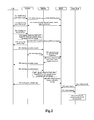
- Fig.2 is a schematic flowchart of a method for implementing domain selection during a terminated call in the related art, and the method comprises the steps as follows.
- a UE powers on or performs attaching by inserting an SIM card in it under an SGSN, or the UE moves to an area covered by the SGSN to update a routing area.
- Steps 2A1 to 2A8 are a process of a related method that the SGSN notifies the HSS of the IMS VOIP capability of the network area (i.e., the routing area) currently being accessed by the UE during the attach/update process performed by the UE in the 2G/3G network.
- Step 2A1 the UE performs the attach/routing area update in the 2G/3G network
- Step 2A2 user context does not exist in the SGSN; and the SGSN sends an update location message to the HSS, wherein the update location message carries an IMS VOIP indicator which indicates whether the network area in which the UE is currently located supports the IMS VOIP.
- Step 2A3 the HSS interacts with the SGSN, so as to respond with an update location response and insert subscriber data.
- Step 2A4 the SGSN sends an attach/routing area update accept message to the UE to complete the attach/update process.
- Step 2A5 the UE performs the routing area update, and sends a routing area update message to the SGSN.
- Step 2A6 the SGSN receives the routing area update message. At this time, the SGSN needs to judge whether the IMS VOIP capability of the area currently being accessed by the UE is changed. If the IMS VOIP capability of the routing area currently being accessed by the UE has changed, the SGSN needs to execute step 2A7 to notify the HSS that the IMS VOIP capability of the routing area currently being accessed by the UE is changed; otherwise, step 2A7 will not be executed.
- Step 2A7 the SGSN sends a message to the HSS to notify the HSS of the IMS VOIP capability of the routing area currently being accessed by the UE.
- Step 2A8 the SGSN sends a routing area update accept message to the UE.
- Steps 2B1 to 2B9 are a process of the related method that the MME notifies the IMS VOIP capability of the network area (i.e., a tracking area list) being accessed by the UE currently to the HSS during the update process performed by the UE in the EPS network.
- the MME notifies the IMS VOIP capability of the network area (i.e., a tracking area list) being accessed by the UE currently to the HSS during the update process performed by the UE in the EPS network.
- the UE moves to the EPS network access.
- Step 2B1 the UE initiates a tracking area update process, and sends a tracking area update message to the MME.
- Step 2B2 the MME finds the SGSN where the UE originally registered according to the information carried in the message sent by the UE, and obtains the UE context from the SGSN.
- the MME may activate an idle mode signaling redundancy (ISR) function; and an ISR correlation is established between the SGSN and the MME.
- ISR idle mode signaling redundancy
- Step 2B3 since user context does not exist in the MME, the MME sends an update location message to the HSS, wherein the message carries the IMS VOIP capability of the network area accessed by the UE currently.
- Step 2B4 subscriber data insertion and an update location response process are performed between the HSS and the MME.
- Step 2B5 the MME sends a tracking area update accept message to the UE.
- the UE moves into a tracking area which is not in the registered tracking area list. Since the tracking area is not updated, the UE initiates the tracking area update.
- Step 2B6 the UE sends a tracking area update message to the MME.
- Step 2B7 the MME judges whether the IMS VOIP capability of the network area currently being accessed by the UE is changed, wherein if the IMS VOIP capability is changed, the MME needs to execute step 2B8; otherwise, the step 2B8 is unnecessary to execute.
- Step 2B8 the MME sends a message to the HSS to notify the IMS VOIP capability of the network area where the UE is currently located to the HSS.
- Step 2B9 the MME sends a tracking area update accept message to the UE.
- the UE may move, power on or power off in the network to perform an attach/update process similar to the above attach/update process, which is very easily known by those skilled in the art and will not be redundantly described here. Then the process continues until the CSCF/AS receives a request that session is required for the UE and the domain selection needs to be performed.
- the following steps 2C1 to 2C4 are the process of the domain selection after a CSCF/AS receives a call session request.
- Step 2C1 the CSCF/AS receives the terminated session request to the UE.
- Step 2C2 the AS sends a query request message to the HSS, so as to query information such as the IMS VOIP capability of the network area recently accessed by the UE.
- Step 2C3 the HSS returns a query response message to the AS, wherein the message carries the IMS VOIP capability of the network area recently accessed by the UE.
- Step 2C4 the AS performs the domain selection during the terminated call according to the information provided by the HSS.
- the SGSN and the MME are also required to send signalings to the HSS, incurring the signaling loads between the SGSN/MME and the HSS.
- the moving area includes different routing areas and tracking areas which support the IMS VOIP capability.
- the users may rarely receive calls, and thus during the calls the CSCF/AS needs to send the calls to the UE and the AS needs to perform the domain selection during the terminated calls. Therefore, comparing with the improvement on the accuracy of the domain selection brought by using the technology, the newly added signalings between the SGSN/MME and the HSS result in that the advantageous effects brought by the technology are extraordinary limited.
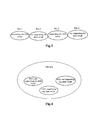
- a network is deployed as shown in Fig.3 and the network area has a traffic vehicle (e.g. subway) which can simultaneously carry a large number of users
- a traffic vehicle e.g. subway
- the method in the above related art is applied in this case, during morning and evening rush hours everyday, since a large number of users move from one place to another place, even though few users have incoming calls, a great deal of signalings still exist between the MME/SGSN and the HSS in order to carry out the domain selection during the terminated calls in the related art, which will bring certain risks to the stable operation of the network, and may also affect the users to complete some services.
- various requirements and limitations are put forward to the network deployment.
- the ISR is a function supported by the 3GPP (3rd Generation Partnership Project) for the purpose of reducing the network signaling loads brought by when the UE is in the idle state and in an area covered by both the 2G/3G network and the EPS network, the UE repeatedly selecting the 2G/3G network and the EPS network and initiating registrations.
- 3GPP 3rd Generation Partnership Project
- the main concept is that: when the UE registers in both the SGSN and the MME at the same time, both the SGSN and the MME save the context information of the user, and registration information of the two networks is also saved in the UE, in this way, the UE will not perform TAU (Tracking Area Update) or RAU(Routing Area Update) processes any more when later the UE needs to select between the two networks, unless the routing area in which the UE is currently located is not registered or the tracking area in which the UE is currently located is not in the registered tracking area list. Under the circumstance that the ISR is activated, since the UE does not initiate the update when the system accessed by the UE changes, the network can not know which access system the UE is currently in when the UE is in the idle state.
- the above area with the ISR function and being covered by both the 2G/3G network and the EPS is also called an ISR area.
- the ISR area may be the same as the area which supports the IMS VOIP, and may be different from the area which supports the IMS VOIP. If the ISR is the same as the area which supports the IMS VOIP, the method is the same as the method shown in Fig.2 ; and if the ISR is different from the area which supports the IMS VOIP, the method has some other requirements on the basis of the method shown in Fig.2 .
- an overlapped coverage area of the EPS network and the 2G/3G network supports the ISR function (i.e., the ISR area); but in the ISR area, the UE supports the IMS VOIP by access through the EPS network, and the UE does not support the IMS VOIP by access through the 2G/3G network or not all the 2G/3G areas support the IMS VOIP.
- the SGSN Assuming that the UE performs the attach/update through RA1 access which does not support the IMS VOIP, during the update process, the SGSN notifies the HSS that the IMS VOIP is not supported; then the UE moves to the EPS access and performs the TAU process.
- the UE may move back to the RA1 later and does not initiate the update process, and the terminated call is required to be performed through the CS domain when the UE accesses through the RA1 of the 2G/3G network. Therefore, the method for selecting the domain during the terminated call in the related art requires that the MME not only reports the IMS VOIP capability of the EPS network area being accessed by the UE currently, but also indicates the HSS not to select the domain depending on a current IMS VOIP indicator under the circumstance that the ISR is activated, wherein the specific indicating mode can be implemented in various methods.
- the MME/SGSN is required not only to send a message to the HSS to indicate the IMS VOIP capability when the IMS VOIP capability of the network area currently being accessed by the UE changes, but also to interact with the HSS and send related information to the HSS each time when the ISR transforms between an active state and an inactive state or each time when ISR is activated. All these requirements aggravate the signaling loads of the network and the processing complexity of the system.
- the present invention mainly aims to provide a method and a system for implementing domain selection during a terminated call to at least solve the above-mentioned problem.
- a method for implementing domain selection during a terminated call comprises: an application server (AS) sending a query request message to a home subscriber server (HSS); the HSS querying a packet switching (PS) domain mobility management network element to obtain information of a called terminal and/or a network accessed by the called terminal; the HSS feeding back the obtained information of the called terminal and/or the network accessed by the called terminal to the AS; and the AS selecting a domain to which a call message is to be routed according to the information of the called terminal and/or the network accessed by the called terminal.
- AS application server
- HSS home subscriber server
- PS packet switching
- the PS domain mobility management network element comprises: an MME and/or a SGSN, wherein the step of the HSS querying, according to the query request message, the PS domain mobility management network element to obtain the information of the called terminal and/or the network accessed by the called terminal in a call request message comprises: the HSS receiving the query request message; the HSS sending, according to information of the MME and/or information of the SGSN of the called terminal recorded in the HSS, the query request message to the MME and/or the SGSN; when the MME receives the query request message, the MME returning the information of the called terminal and/or the network accessed by the called terminal to the HSS; and when the SGSN receives the query request message, the SGSN returning the information of the called terminal and/or the network accessed by the called terminal to the HSS.
- the step of the HSS feeding back the obtained information of the called terminal and/or the network accessed by the called terminal to the AS comprises: the HSS receiving the information of the called terminal and/or the network accessed by the called terminal from the MME and the SGSN; the HSS obtaining, according to the received information of the called terminal and/or the network accessed by the called terminal sent by the MME and the SGSN, the information or a combination of the information sent by the MME or the SGSN which is accessed and/or updated by the called terminal lastly; and the HSS feeding back the information or the combination of the information to the AS.
- the information of the network accessed by the called terminal comprises: IMS VOIP capability of a network area in which the called terminal currently registers.
- the information of the called terminal comprises at least one of the following: registration time of the called terminal, last time when the called terminal interacted with the network, a radio access technology (RAT) used for access by the called terminal last time, whether idle mode signaling redundancy (ISR) being activated, state information indicating whether the called terminal is currently in a connecting state, and an RAT used by the called terminal when last time the called terminal accessed a 2G/3G common routing area.
- RAT radio access technology
- ISR idle mode signaling redundancy
- the information of the network accessed by the called terminal also comprises: an indicator of the 2G/3G common routing area of a routing area in which the called terminal registers currently.
- the MME and the SGSN may be independent network elements or a combined (combo) node, wherein the combo node is a combined MME/SGSN.
- the combo node When the combo node receives the query request message from the HSS and in the combo node, and a user equipment (UE) currently has performed tracing area (TA) and routing area (RA) registrations at the same time, the combo node returns the information of the called terminal to the HSS by a response message.
- UE user equipment
- the step of the AS selecting the domain to which the call request message is to be routed according to the information of the called terminal and/or the network accessed by the called terminal comprises: when the AS acquires that the called terminal is in the connecting state under the MME and the network area currently being accessed by the terminal supports the IMS VOIP, the AS selecting the domain currently being accessed by the terminal to perform the terminated call; or when the AS acquires that the terminal is in the connecting state under the SGSN and the network area currently being accessed by the terminal and the RAT support the IMS VOIP, the AS selecting the domain currently being accessed by the terminal to perform the terminated call.
- the step of the AS selecting the domain to which the call request message is to be routed according to the information of the called terminal and/or the network accessed by the called terminal comprises: when the AS acquires that the terminal is in an idle state currently with the ISR being activated and an evolved packet system (EPS) network area in which the terminal currently registers supports the IMS VOIP while a 2G/3G network area does not support the IMS VOIP, the AS performing the terminated call by both a PS access mode and a 2G/3G CS mode in parallel.
- EPS evolved packet system
- the step of the AS selecting the domain to which the call message is to be routed according to the information of the called terminal and/or the network accessed by the called terminal comprises at least one of the followings: when the AS acquires that the ISR is not activated, the network area in which the called terminal registered last time is a tracking area which supports the IMS VOIP, the AS performing the routing through an EPS; when the AS acquires that the ISR is not activated and the network area in which the called terminal registered last time is a tracking area which does not support the IMS VOIP, the AS performing the routing through the EPS or a CS domain of 2G/3G, or through the EPS and CS domains of the 2G/3G at the same time; when the AS acquires that the ISR is not activated and the network area in which the called terminal registered last time is a routing area which is not the 2G/3G common routing area and supports the IMS VOIP, the AS performing the routing through the PS domain of the 2G/3G; when the AS acquires that the
- the above method also comprises: when the terminal moves from one routing area to another routing area and sends a routing area update message to the SGSN to update the routing area, the SGSN updating location information of the terminal saved in the SGSN according to the received routing area update message, and sending a routing area update accept message to the terminal.
- the above method also comprises: when the terminal moves into a tracking area in the EPS network which is not in the registered tracking area list and sends a tracking area update message to the MME to update the tracking area, the MME updating location information of the terminal saved in the MME according to the received tracking area update message, and sending a tracking area update accept message to the terminal.
- a system for implementing domain selection during a terminated call comprises: an application server (AS), configured to send a query request message to a home subscriber server (HSS) and to select a domain to which a call message is to be routed according to information of a called terminal and/or a network accessed by the called terminal fed back by the HSS; the HSS, configured to query a packet switching (PS) domain mobility management network element to obtain the information of the called terminal and/or the network accessed by the called terminal in the call request message, and to feed back the obtained information of the called terminal and/or the network accessed by the called terminal to the AS; and the PS domain mobility management network element.
- AS application server
- HSS home subscriber server
- PS packet switching
- the PS domain mobility management network element is an MME and/or an SGSN
- the HSS comprises: a first receiving module, configured to receive the query request message; and a first sending module, configured to send, according to the information of the MME and/or the information of the SGSN of the called terminal recorded in the HSS, the query request message to the MME and/or the SGSN
- the MME configured to return the information of the called terminal and/or the network accessed by the called terminal to the HSS when receiving the query request message
- the SGSN configured to return the information of the called terminal and/or the network accessed by the called terminal to the HSS when receiving the query request message.
- the information of the network accessed by the called terminal comprises: IMS VOIP capability of a network area in which the called terminal registers currently; the information of the called terminal comprises at least one of the following: registration time of the called terminal, last time when the called terminal interacted with a network, a radio access technology (RAT) used for access by the called terminal last time, whether idle mode signaling redundancy (ISR)being activated, state information indicating whether the called terminal is currently in a connecting state, and a radio access technology (RAT) used when last time the called terminal accessed a 2G/3G common routing area; and the information of the network accessed by the called terminal further comprises: an indicator of a 2G/3G common routing area of a routing area in which the called terminal registers currently.
- RAT radio access technology
- the SGSN comprises: a second receiving module, configured to receive the routing area update message from the terminal; a first updating module, configured to update location information of the terminal according to the routing area update message; and a second sending module, configured to send a routing area update accept message to the terminal.
- the MME comprises: a third receiving module, configured to receive the tracking area update message from the terminal; a second updating module, configured to update the location information of the terminal according to the tracking area update message; and a third sending module, configured to send a tracking area update accept message to the terminal.
- the HSS queries the PS domain mobility management network element to obtain the IMS VOIP capability of the network area in which the called terminal currently registers after the HSS receives the query message from the AS.
- the PS domain mobility management network element intercommunicates with the HSS to complete the location update process, the UE is free from sending related information to the HSS at each time the IMS VOIP capability of the network area to which the UE currently accesses changes.
- the present invention solves the problem that the signaling loads between the SGSN/MME and the HSS is comparatively greatly generated by the requirement that the SGSN and the MME are also required to send a message to the HSS to transfer the information of the latest VOIP capability etc. to the HSS in the related art when the IMS VOIP capability of the routing area and tracking area to which the UE accesses change, can greatly reduce the number of the signalings between the PS domain mobility management network element and the HSS, avoids various limitations of the signaling loads generated by the HSS on network deployment, is convenient for the network deployment, and ensures the implementation of services.
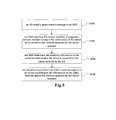
- Fig.5 is a schematic diagram of a method for implementing domain selection during a terminated call according to the embodiments of the present invention; and the method comprises the following steps.
- Step S502 an application server (AS) sends a query request message to a home subscriber server (HSS).
- AS application server
- HSS home subscriber server
- Step S504 the HSS queries a packet switching (PS) domain mobility management network element to obtain information of a called terminal and/or a network accessed by the called terminal in a call request message.
- PS packet switching
- Step S506 the HSS feeds back the obtained information of the called terminal and/or the network accessed by the called terminal to the AS.
- Step S508 the AS selects a domain to which the call request message is to be routed according to the information of the called terminal and/or the network accessed by the called terminal.
- the AS sends the query request message to the HSS according to a received call request message.
- the HSS queries, according to the received query request message, the PS domain mobility management network element to obtain the information of the called terminal and/or the network accessed by the called terminal in the call request message.
- the HSS queries the PS domain mobility management network element to obtain the IMS VOIP capability of the network area in which the called terminal currently registers after the HSS receives the query request message from the AS.
- the PS domain mobility management network element is free from sending the related information to the HSS each time when the IMS VOIP capability of the network area to which the UE currently accesses changes.
- the present invention solves the problem that the signaling loads between the SGSN/MME and the HSS is comparatively greatly generated by the requirement that the SGSN and the MME are also required to send message to the HSS to convey the information of the latest VOIP capability etc. to the HSS in the related art when the IMS VOIP capability of the routing area and tracking area to which the UE accesses changes. Since users receive comparatively fewer calls, the embodiment of the present invention can greatly reduce the number of the signalings between the PS domain mobility management network element and the HSS, avoids various limitations of the signaling loads generated by the HSS on network deployment, is convenient for the network deployment, and ensures the implementation of services.
- the PS domain mobility management network element in the step S504 comprises an MME and/or an SGSN; and the step S504 comprises: the HSS receiving the query request message; the HSS sending, according to information of the MME and/or information of the SGSN of the called terminal recorded in the HSS, the query request message to the MME and/or the SGSN; when the MME receives the query request message, the MME returning the information of the called terminal and/or the network accessed by the called terminal to the HSS; and when the SGSN receives the query request message, the SGSN returning the information of the called terminal and/or the network accessed by the called terminal to the HSS.
- the MME and the SGSN may be a combined MME/SGSN.
- the preferable embodiment provides a detailed implementation of the HSS querying the PS domain mobility management network element to obtain the information of the called terminal and/or the network accessed by the called terminal in the call request message.
- the above information of the network accessed by the called terminal comprises: IMS VOIP capability of a network area in which the called terminal currently registers; and the above information of the called terminal comprises at least one of the followings: registration time of the called terminal, last time when the called terminal interacted with the network, radio access technology (RAT) used for access by the called terminal last time, whether idle mode signaling redundancy (ISR) being activated, state information indicating whether the called terminal is currently in a connecting state, and an RAT used by the called terminal when last time the called terminal accessed a routing area.
- the information of the network accessed by the called terminal may also comprise: an indicator of the 2G/3G common routing area of a routing area in which the called terminal currently registers.
- the indicator of the 2G/3G common routing area of a routing area in which the called terminal currently registers and the information of the RAT used by the called terminal when last time the called terminal accessed the routing area can be that: the routing area in which the called terminal currently registers provided by the SGSN is/is not the 2G/3G common routing area, and last time when the UE accessed (the UE in the idle state interacts with the SGSN last time, and/or the UE in the connecting state interacts with the SGSN currently) the routing area by using the 2G or the 3G under the circumstance that the routing area is the 2G/3G common routing area; or can be that: only under the circumstance that the routing area in which the called terminal currently registers is the 2G/3G common routing area, the SGSN indicates that the area is the 2G/3G common routing area and provides the information that the UE accessed the routing area last time by using the 2G or the 3G.
- the information of the called terminal and/or the network accessed by the called terminal can be various combinations of a part or all of the above-mentioned information elements.
- the MME/SGSN (the MME and/or the SGSN) can directly send the above-mentioned information elements to the HSS, or combine the information elements and send the combinations to the HSS.
- the HSS can directly send the information elements to the AS, or combine the information elements and send the combinations to the AS, wherein the step that the HSS combines the information elements and sends the combinations to the AS comprises: after receiving the above information from both the MME and the SGSN, the HSS analyzes and compares the information, and only sends the AS the information elements or the various combinations of the information elements sent from the MME or the SGSN whichever the UE accessed and/or updated last time.
- the step S508 comprises: when the AS acquires that the terminal is in the connecting state under the MME and the network area currently being accessed by the terminal supports the IMS VOIP, the AS selecting the domain currently being accessed by the terminal to perform the terminated call; or when the AS acquires that the terminal is in the connecting state under the SGSN and the network area currently being accessed by the terminal and the RAT support the IMS VOIP, the AS selecting the domain currently being accessed by the terminal to perform the terminated call.
- the AS can select the domain currently being accessed by the UE in priority to perform the terminated call according to the above-mentioned information, thereby improving the accuracy of the domain selection, reducing the possibility of failure in the domain selection compared with the related art, and increasing the speed of the terminated call.
- the step S508 also comprises: when the AS acquires that the terminal is currently in an idle state with the ISR being activated and an evolved packet system (EPS) network area in which the terminal currently registers supports the IMS VOIP while the 2G/3G network area does not support the IMS VOIP, the AS performing the terminated call by both a PS access mode and a 2G/3G CS mode in parallel.
- EPS evolved packet system
- the step S508 also comprises:
- the above preferable embodiment provides a detailed implementation that the AS performs the domain selection during the terminated call according to the information of the called terminal and/or the network accessed by the called terminal.
- the method also comprises: when the terminal moves from one routing area to another routing area and sends a routing area update message to the SGSN to update the routing area, the SGSN updating location information of the terminal saved in the SGSN according to the received routing area update message, and sending a routing area update accept message to the terminal.
- the preferable embodiment provides a detailed implementation that when the terminal has registered in a SGSN, and later the UE updates the location information of the terminal for the SGSN in the network area administered by the SGSN because the routing area of the UE changes.
- the SGSN is free from judging whether the IMS VOIP capability of the network area currently accesses by the UE changes and from notifying the HSS when the judgment result shows a change happens.
- the method also comprises: when the terminal moves into a tracking area in the EPS network which is not in the registered tracking area list and sends a tracking area update message to the MME to update the tracking area, the MME updating location information of the terminal saved in the MME according to the received tracking area update message, and sending a tracking area update accept message to the terminal.
- the MME and the SGSN can be independent network elements or a combined (combo) node, wherein the combo node is a combined MME/SGSN.
- the combo node When the combo node receives the query request message from the HSS and in the combo node, the UE currently performs tracing area (TA) and routing area (RA) registrations at the same time, the combo node returns the information of the called terminal and/or the network accessed by the called terminal to the HSS by a response message.
- TA tracing area
- RA routing area
- the preferable embodiment provides a detailed implementation that when the terminal has registered in a MME, and later the UE updates the location information of the terminal for the MME in the network area administered by the MME because the tracking area changes. Similarly, in this case the MME is free from judging whether the IMS VOIP capability of the network area currently being accessed by the UE changes and notifying the HSS when the judgment result shows a change happens.
- the method of the present invention does not require the MME/SGSN to send related information to the HSS when the IMS VOIP capability of the network area currently being accessed by the UE changes. Therefore, the present invention can greatly reduce the number of the signalings between the PS domain mobility management network element and the HSS, avoids various limitations of the signaling loads generated by the HSS on the network deployment, and thus is convenient for the network deployment and ensures the implementation of services.
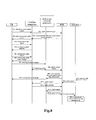
- Fig.6 is a flowchart of a method for implementing domain selection during a terminated call according to Preferable Embodiment 1 of the present invention. As shown in Fig.6 , the method comprises the following steps.
- a UE powers on or performs attach by inserting an SIM card under an SGSN, or the UE moves to an area covered by the SGSN to update the routing area.
- Steps 6A1-6A6 are a process that the UE performs attach/update in a 2G/3G network.
- Step 6A1 the UE performs the attach/routing area update in the 2G/3G network.
- Step 6A2 user context does not exist in the SGSN; and the SGSN sends an update location message to an HSS.
- Step 6A3 the HSS interacts with the SGSN, so as to return an update location response and insert subscriber data.
- Step 6A4 the SGSN sends an attach/routing area update accept message to the UE to complete the attach/update process.
- Step 6A5 the UE performs the routing area update process, and sends a routing area update message to the SGSN.
- Step 6A6 the SGSN receives the routing area update message, updates corresponding location information, and sends a routing area update accept message to the UE.
- Steps 6B1-6B7 are a process that the UE performs update in an EPS network.
- the UE moves to the EPS network access.
- Step 6B1 the UE initiates a tracking area update process, and sends a tracking area update message to an MME.
- Step 6B2 the MME finds the SGSN where the UE originally registered according to the information carried in the message sent by the UE, and obtains the UE context from the SGSN.
- the MME may activate an ISR function; and an ISR correlation is established between the SGSN and the MME.
- Step 6B3 since user context does not exist in the MME, the MME sends an update location message to the HSS.
- Step 6B4 insert subscriber data and an update location response process are performed between the HSS and the MME.
- Step 6B5 the MME sends a tracking area update accept message to the UE.
- the UE moves into a tracking area which is not in the registered tracking area list. Since the tracking area has not been updated, the UE initiates the tracking area update.
- Step 6B6 the UE sends a tracking area update message to the MME.
- Step 6B7 the MME updates current location information of the UE, and sends a tracking area update accept message to the UE.
- Steps 6C1-6C5 are a process that the CSCF/AS receives an incoming call request to perform a domain selection during the terminated call according to the method of the present invention.
- Step 6C1 the CSCF/AS receives the request for calling the UE.
- Step 6C2 the AS sends a query request message to the HSS, so as to query information such as the IMS VOIP capability of the network area in which the UE has already registered.
- Step 6C3-1 and step 6C3-2 can be executed in parallel or be executed according to precedence order.
- the HSS can send the query message to both the MME and the SGSN, and can also send the query message to either of the MME and the SGSN.
- Step 6C3-1 the HSS sends the query request message to the MME according to MME information recorded in the HSS; and when the MME receives the query request message, the MME returns the information such as the IMS VOIP capability of the network area in which the UE currently registers to the HSS.
- Step 6C3-2 the HSS sends the query request message to the SGSN according to the SGSN information recorded in the HSS; and when the SGSN receives the query request message, the SGSN returns the information such as the IMS VOIP capability of the network area in which the UE currently registers to the HSS.
- Step 6C4 the HSS feeds back the above information obtained from the MME/SGSN to the AS at the request of the AS.
- Step 6C5 the AS perform the domain selection during the terminated call according to the information provided by the HSS.
- the method of the present invention not only can be applied under the circumstance that the MME and the SGSN are independent network elements as shown in Fig.6 , but also can be applied in the case of the combo node.
- Fig.7 is a flowchart of a method for implementing domain selection during a terminated call under a combined MME/SGSN scene according to Preferable Embodiment 2 of the present invention.
- the scene is a circumstance that a UE accesses a same combined MME/SGSN in both a 2G/3G network and an EPS network.
- the method comprises the steps as follows.
- the UE powers on or performs the attach by inserting an SIM card under the 2G/3G network in the combined MME/SGSN, or the UE moves to an area covered by the combined MME/SGSN to update a routing area.
- the steps 7A1-7A6 are a process that the UE performs attach/update in the 2G/3G network.
- Step 7A1 the UE performs the attach/routing area update in the 2G/3G network.
- Step 7A2 user context does not exist in the combined MME/SGSN; and the SGSN of the combo node sends an update location message to an HSS, and indicates in the message that the node is the combo node.
- Step 7A3 the HSS interacts with the combined MME/SGSN, so as to return an update location response and insert subscriber data.
- Step 7A4 the combined MME/SGSN sends an attach/routing area update accept message to the UE, so as to complete the attach/update process.
- Step 7A5 the UE performs a routing area update process, and sends a routing area update message to the combined MME/SGSN.
- Step 7A6 the combined MME/SGSN receives the routing area update message, performs the corresponding location update process, and sends a routing area update accept message to the UE.
- Steps 7B1-7B4 are a process that the UE performs update in the EPS network.
- the UE moves to the EPS network and accesses the EPS network; and it is assumed that the tracking area in which the UE is currently located is in the management range of the combined MME/SGSN which has performed the routing area update already.
- Step 7B1 the UE initiates a tracking area update process.
- the tracking area update request message sent by the UE is routed to the combined MME/SGSN according to the related art.
- Step 7B2 the combined MME/SGSN receives the tracking area update request message sent by the UE and processes it accordingly.
- the ISR may be activated.
- the combined MME/SGSN sends a tracking area update accept message to the UE. Since the combined MME/SGSN has performed the location update and insert subscriber data processes with the HSS, the combined MME/SGSN will not interact with the HSS any more.
- the UE moves into a tracking area which is not in the registered tracking area list. Since the tracking area is not updated, the UE initiates the tracking area update. If the tracking area is still in the management range of the combined MME/SGSN, the flow is as shown in the Steps 7B3-7B4 which are the same with the process as shown in the Steps 7B1-7B2, so unnecessary details will not be repeated any more.
- Steps 7C1-7C5 are a process that the CSCF/AS receives an incoming call request and performs a domain selection during the terminated call according to the method of the present invention.
- Step 7C1 the CSCF/AS receives a request for calling the UE.
- Step 7C2 the AS sends a query request message to the HSS to query the information such as the IMS VOIP capability of the network area in which the UE has already registered.
- Step 7C3 the HSS obtains combined MME/SGSN information according to the information recorded in the HSS, and sends the query request message to the combined MME/SGSN.
- the combined MME/SGSN receives the query request, and returns the IMS VOIP capability of the network area to which the UE currently registers to the HSS.
- the combined MME/SGSN can also feed back the information of the called terminal and/or the network accessed by the called terminal, such as whether the ISR is activated and state information that whether the UE is in the connecting state currently, to the HSS.
- the process comprises two circumstances as follows.
- Step 7C4 the HSS feeds back the above information obtained from the combined MME/SGSN to the AS at the request of the AS.
- Step 7C5 the AS performs the domain selection during the terminated call according to the information provided by the HSS.
- Fig.8 is a schematic diagram of a flow of a method for implementing domain selection during a terminated call under a combined MME/SGSN scene according to Preferable Embodiment 3 of the present invention.
- the scene is a circumstance that a UE firstly accesses a same combined MME/SGSN in both a 2G/3G network and an EPS network, and then moves in the EPS network and accesses to another MME or another combined MME/SGSN.
- the method comprises the steps as follows.
- the UE powers on or performs attaching by inserting an SIM card under the combined MME/SGSN in the 2G/3G network, or the UE moves to a area covered by the combined MME/SGSN to update a routing area.
- Steps 8A1-8A6 are a process that the UE performs the attach/update in the 2G/3G network.
- Step 8A1 the UE performs the attach/routing area update in the 2G/3G network.
- Step 8A2 user context does not exist in the combined MME/SGSN; and the combined MME/SGSN sends an update location message to an HSS, and indicates in the message that the node is a combo node.
- Step 8A3 the HSS interacts with the combined MME/SGSN, so as to return an update location response and insert subscriber data.
- Step 8A4 the combined MME/SGSN sends an attach/routing area update accept message to the UE to complete the attach/update process.
- Step 8A5 the UE performs a routing area update process, and sends a routing area update message to the combined MME/SGSN.
- Step 8A6 the combined MME/SGSN receives the routing area update message, performs the corresponding location update process, and sends a routing area update accept message to the UE.
- Steps 8B1-8B7 are a process that the UE performs update in the EPS network.
- the UE moves to the EPS network and accesses the EPS network; and it is assumed that the tracking area in which the UE is currently located is in the management range of the combined MME/SGSN which has performed the routing area update already.
- Step 8B1 the UE initiates a tracking area update process.
- the tracking area update request message sent by the UE is routed to the combined MME/SGSN according to the related art.
- Step 8B2 the combined MME/SGSN receives the tracking area update request message sent by the UE and processes it accordingly.
- the ISR may be activated.
- the combined MME/SGSN sends a tracking area update accept message to the UE. Since the combined MME/SGSN has performed the location update and insert subscriber data processes with the HSS, the combined MME/SGSN will not interact with the HSS any more.
- the UE moves into a tracking area which is not in the registered tracking area list. Since the tracking area is not updated, the UE initiates the tracking area update. If the tracking area is not in the management range of the combined MME/SGSN, but in the management range of another new MME or combined MME/SGSN, the process is as shown in Steps 8B3-8B7.
- Step 8B3 the UE initiates the tracking area update process, and sends the tracking area update message to the MME or the new combined MME/SGSN.
- Step 8B4 the MME or the new combined MME/SGSN finds the combined MME/SGSN where the UE originally registered according to the information carried in the message sent by the UE, and obtains the UE context from the combined MME/SGSN.
- Step 8B5 since the user context does not exist in the MME or in the new combined MME/SGSN, the MME or the new combined MME/SGSN sends the update location message to the HSS.
- Step 8B6 the insert subscriber data and the update location response processes are performed between the HSS and the MME or between the HSS and the new combined MME/SGSN.
- Step 8B7 the MME or the new combined MME/SGSN sends the tracking area update accept message to the UE.
- Steps 8C1-8C5 are a flow that the CSCF/AS receives an incoming call request and performs the domain selection during the terminated call according to the method of the present invention.
- the flow of the steps 8C1-8C5 is similar to the flow of the steps 6C1-6C5 as shown in Fig.6 , so unnecessary details will not be repeated here any more.
- the methods and the flows of the present invention are described by taking the circumstance that the UE performs the attach/update at the SGSN in the 2G/3G network at first and then moves to the EPS network to perform update at the MME as an example.
- the methods and the flows that the UE performs the attach/update at the MME in the EPS network at first and then moves to the2G/3G network to perform update at the SGSN are similar to the above-mentioned methods and flows, so unnecessary details will not be repeated here any more.
- the AS and the HSS initiate the query process each time when the domain selection is performed during the terminated call.
- the method of the present invention can also evolve into a plurality of implementation modes as follows.
- the AS saves the queried information of the UE, and performs the domain selection during the terminated call according to the saved information without performing the query for a certain time period (e.g. for 10 minutes, and so on); or the AS can make a decision according to the results of the domain selection of the UE for the last few times.
- a certain time period e.g. for 10 minutes, and so on
- the HSS saves the related information, and can stop querying the MME and /or the SGSN for a certain time period.
- the MME/SGSN and the combined MME/SGSN send, to the HSS, the information of the terminal and/or the network accessed by the terminal by carrying the information of the terminal and/or the network accessed by the terminal in the update location request message sent from The MME/SGSN and the combined MME/SGSN to the HSS.
- the HSS saves the information, and determines not to perform the query for a certain time period.
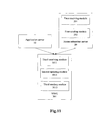
- Fig.9 is a schematic diagram of a system for implementing domain selection during a terminated call according to the embodiments of the present invention. As shown in Fig.9 , the system comprises:
- the HSS queries the PS domain mobility management network element to obtain the IMS VOIP capability of the network area in which the called terminal currently registers after the HSS receives the query message from the AS.
- the PS domain mobility management network element intercommunicates with the HSS to complete the location update process, the UE is free from sending related information to the HSS each time the IMS VOIP capability of the network area to which the UE currently accesses changes.
- the present invention solves the problem that the signaling loads between the SGSN/MME and the HSS is comparatively greatly generated by the requirement that the SGSN and the MME are also required to send a message to the HSS in the related art when the IMS VOIP capability of the routing area and tracking area to which the UE accesses changes. Since the users receive comparatively fewer calls, the embodiment of the present invention can greatly reduce the number of the signalings between the PS domain mobility management network element and the HSS, avoids various limitations of the signaling loads generated by the HSS on network deployment, is convenient for the network deployment, and ensures the implementation of services.
- the PS domain mobility management network element 30 is an MME 301 in an EPS network, and the PS domain mobility management network element 30 is an SGSN 302 in a 2G/3G network.
- the MME and the SGSN can be independent network elements, and can also be a combined MME/SGSN.
- the HSS 20 comprises:
- the above information of the network accessed by the called terminal comprises: IMS VOIP capability of a network area in which the called terminal registers currently; the above information of the called terminal comprises at least one of the following: registration time of the called terminal, last time when the called terminal interacted with a network, a radio access technology (RAT) used for access by the called terminal last time, whether idle mode signaling redundancy (ISR)being activated, state information indicating whether the called terminal is currently in a connecting state, and a radio access technology (RAT) used when last time the called terminal accessed a 2G/3G common routing area; the above information of the network accessed by the called terminal can also comprise: an indicator of a 2G/3G common routing area of a routing area in which the called terminal registers currently.
- RAT radio access technology
- the AS When the UE is in the connecting state under the MME or the SGSN and the network area currently being accessed by the UE and the RAT support the IMS VOIP, the AS obtains the above-mentioned information from the MME/SGSN through the HSS; the AS can select the domain currently being accessed by the UE in priority to perform the terminated call according to the above-mentioned information, thereby improving the accuracy of the domain selection, reducing the possibility of failure in the domain selection compared with the related art, and increasing the speed of the terminated call establishment.
- the AS When the UE is in the idle state currently with the ISR being activated, and the EPS network area in which the terminal currently registers supports the IMS VOIP while the 2G/3G network area does not support the IMS VOIP, the AS performs the terminated call through the PS access mode and the CS mode of the 2G/3G in parallel. In this way, the process of trying different domains in serial is changed into trying different domain in parallel, and the speed of the terminated call is effectively improved.
- the SGSN 302 comprises:
- the MME 301 comprises:
- the query mechanism newly added between the HSS and the MME/SGSN by the present invention not only can be used for the HSS obtaining the IMS VOIP information of the network area accessed by the UE from the MME/SGSN during the domain selection of the terminated call, but also can be used to perform the other services under the scene that the HSS needs to query information related to the UE from the MME/SGSN.
Landscapes
- Engineering & Computer Science (AREA)
- Computer Networks & Wireless Communication (AREA)
- Signal Processing (AREA)
- Multimedia (AREA)
- Business, Economics & Management (AREA)
- General Business, Economics & Management (AREA)
- Databases & Information Systems (AREA)
- Computer Security & Cryptography (AREA)
- Mobile Radio Communication Systems (AREA)
- Telephonic Communication Services (AREA)
Applications Claiming Priority (2)
| Application Number | Priority Date | Filing Date | Title |
|---|---|---|---|
| CN201010000616.0A CN102123374B (zh) | 2010-01-12 | 2010-01-12 | 终呼的域选择实现方法和系统 |
| PCT/CN2010/072121 WO2010148754A1 (fr) | 2010-01-12 | 2010-04-23 | Procédé et système de mise en uvre de sélection de domaine d'un appel de terminal |
Publications (2)
| Publication Number | Publication Date |
|---|---|
| EP2496021A1 true EP2496021A1 (fr) | 2012-09-05 |
| EP2496021A4 EP2496021A4 (fr) | 2014-04-16 |
Family
ID=43385921
Family Applications (1)
| Application Number | Title | Priority Date | Filing Date |
|---|---|---|---|
| EP10791260.2A Withdrawn EP2496021A4 (fr) | 2010-01-12 | 2010-04-23 | Procédé et système de mise en uvre de sélection de domaine d'un appel de terminal |
Country Status (7)
| Country | Link |
|---|---|
| US (1) | US8948087B2 (fr) |
| EP (1) | EP2496021A4 (fr) |
| JP (1) | JP5565981B2 (fr) |
| KR (1) | KR20120114210A (fr) |
| CN (1) | CN102123374B (fr) |
| BR (1) | BR112012013728A2 (fr) |
| WO (1) | WO2010148754A1 (fr) |
Cited By (1)
| Publication number | Priority date | Publication date | Assignee | Title |
|---|---|---|---|---|
| WO2015018448A1 (fr) * | 2013-08-08 | 2015-02-12 | Telefonaktiebolaget L M Ericsson (Publ) | Indication de prise en charge de communication vocale sur voie d'accès à commutation par paquets, dans un réseau mobile utilisant différentes technologies d'accès radio |
Families Citing this family (20)
| Publication number | Priority date | Publication date | Assignee | Title |
|---|---|---|---|---|
| GB2504635B (en) | 2010-01-18 | 2014-06-11 | Samsung Electronics Co Ltd | Voice transmission technology selection |
| WO2012113842A1 (fr) * | 2011-02-22 | 2012-08-30 | Telefonaktiebolaget L M Ericsson (Publ) | Gestion améliorée des informations relatives à la capacité d'accès dans un réseau mobile |
| JP5485217B2 (ja) * | 2011-04-01 | 2014-05-07 | 株式会社Nttドコモ | 移動通信方法、サービス制御ネットワーク装置及び移動管理用ノード |
| EP2621227A1 (fr) | 2012-01-27 | 2013-07-31 | Alcatel Lucent | Support de fourniture de services terminés par un mobile sur un réseau mobile Multi-RAT et/ou à domaines multiples |
| KR102236317B1 (ko) * | 2013-08-08 | 2021-04-06 | 삼성전자 주식회사 | 인증 정보를 얻는 방법 및 장치 |
| KR101536434B1 (ko) * | 2013-11-12 | 2015-07-13 | 주식회사 엘지유플러스 | 하이브리드 LTE 가입자에 대한 VoLTE 착신서비스 제공시스템, 홈 가입자 서버 및 그 서비스착신 처리방법, 호제어기능장치, 이동통신단말기 및 그 위치등록방법 |
| CN107113537B (zh) | 2014-09-29 | 2020-06-23 | 康维达无线有限责任公司 | 用于控制在网络上的设备的省电模式特性的装置和方法 |
| WO2016078026A1 (fr) * | 2014-11-19 | 2016-05-26 | 华为技术有限公司 | Procédé, entité de gestion de mobilité et serveur d'abonné domestique pour gérer un service d'appelé |
| CN105681158B (zh) * | 2014-11-20 | 2019-05-14 | 中国移动通信集团公司 | 一种提高ip短消息投递准确性的方法、设备和系统 |
| CN107113705B (zh) * | 2015-09-30 | 2019-12-17 | 华为技术有限公司 | 一种语音通信方法及装置 |
| CN105847256A (zh) * | 2016-03-25 | 2016-08-10 | 宇龙计算机通信科技(深圳)有限公司 | 主叫接入域选择方法、装置、ims终端和归属签约用服务器 |
| CN107548110B (zh) * | 2016-06-29 | 2021-11-19 | 中兴通讯股份有限公司 | 一种决策长期演进语音终呼域选择方法及系统 |
| CN108471600B (zh) * | 2017-02-23 | 2022-05-13 | 中兴通讯股份有限公司 | 一种实现呼叫限制的方法、智能网络系统和终端设备 |
| CN109005544B (zh) * | 2017-06-06 | 2021-08-06 | 中国移动通信有限公司研究院 | 一种虚假主叫识别方法及装置 |
| CN109246682A (zh) * | 2017-07-11 | 2019-01-18 | 中兴通讯股份有限公司 | 一种域选择方法、装置、网络设备及存储介质 |
| US10477473B2 (en) * | 2017-07-24 | 2019-11-12 | Verizon Patent And Licensing Inc. | Method and system for eDRX timer control |
| CN109996311B (zh) * | 2017-12-29 | 2021-08-27 | 中国移动通信集团河南有限公司 | 一种长期演进语音被叫域选择方法、相关网元及介质 |
| CN108933870B (zh) * | 2018-07-26 | 2021-06-11 | 平安科技(深圳)有限公司 | 销售电话的拨号控制方法、装置、计算机设备和存储介质 |
| US11277717B2 (en) * | 2019-11-25 | 2022-03-15 | T-Mobile Usa, Inc. | Mobile terminating call retry logic for multiple radio access technology types |
| CN113783877B (zh) * | 2021-09-14 | 2023-04-07 | 深圳国人无线通信有限公司 | 一种基于VoNR的语音呼叫方法和系统 |
Family Cites Families (9)
| Publication number | Priority date | Publication date | Assignee | Title |
|---|---|---|---|---|
| ES2009804B3 (es) * | 1985-11-08 | 1989-10-16 | Ciba Specialty Chemicals Holding Inc | Dispositivo de transporte para placas. |
| CN100442918C (zh) | 2005-03-30 | 2008-12-10 | 华为技术有限公司 | 一种实现路由控制的方法和系统 |
| EP1972123A4 (fr) * | 2006-01-10 | 2009-06-17 | Research In Motion Ltd | Système de sélection de domaine et procédé exploitable dans un environnement de réseaux comprenant un réseau de sous-système multimédia ip |
| CN100584097C (zh) | 2007-05-11 | 2010-01-20 | 华为技术有限公司 | 用户位置信息获取、传输方法及网络设备 |
| JP5021844B2 (ja) * | 2008-03-21 | 2012-09-12 | インターデイジタル パテント ホールディングス インコーポレイテッド | パケット交換ドメインから回線交換ドメインへのフォールバックを可能にする方法および装置 |
| CN101448245B (zh) * | 2008-04-01 | 2011-04-20 | 中兴通讯股份有限公司 | 用于归属网ims域获取ue接入信息的方法 |
| US20090270098A1 (en) * | 2008-04-29 | 2009-10-29 | Gallagher Michael D | Method and Apparatus for User Equipment Registration in a Voice over Long Term Evolution via Generic Access |
| CN101577955B (zh) * | 2008-07-11 | 2011-04-20 | 中兴通讯股份有限公司 | 一种空闲模式下节约信令功能的激活判断方法及系统 |
| EP2514251B1 (fr) * | 2009-12-17 | 2016-08-31 | Telefonaktiebolaget LM Ericsson (publ) | Procédés et appareil destinés à être utilisés dans un réseau de communications |
-
2010
- 2010-01-12 CN CN201010000616.0A patent/CN102123374B/zh active Active
- 2010-04-23 JP JP2012547432A patent/JP5565981B2/ja not_active Expired - Fee Related
- 2010-04-23 BR BR112012013728A patent/BR112012013728A2/pt not_active IP Right Cessation
- 2010-04-23 KR KR1020127000946A patent/KR20120114210A/ko not_active Ceased
- 2010-04-23 WO PCT/CN2010/072121 patent/WO2010148754A1/fr not_active Ceased
- 2010-04-23 EP EP10791260.2A patent/EP2496021A4/fr not_active Withdrawn
- 2010-04-23 US US13/259,440 patent/US8948087B2/en active Active
Cited By (2)
| Publication number | Priority date | Publication date | Assignee | Title |
|---|---|---|---|---|
| WO2015018448A1 (fr) * | 2013-08-08 | 2015-02-12 | Telefonaktiebolaget L M Ericsson (Publ) | Indication de prise en charge de communication vocale sur voie d'accès à commutation par paquets, dans un réseau mobile utilisant différentes technologies d'accès radio |
| US10506499B2 (en) | 2013-08-08 | 2019-12-10 | Telefonaktiebolaget Lm Ericsson (Publ) | Indication of packet based voice support in a mobile network with different radio access technologies |
Also Published As
| Publication number | Publication date |
|---|---|
| JP2013517643A (ja) | 2013-05-16 |
| CN102123374B (zh) | 2015-09-16 |
| US20120269117A1 (en) | 2012-10-25 |
| BR112012013728A2 (pt) | 2017-10-03 |
| WO2010148754A1 (fr) | 2010-12-29 |
| CN102123374A (zh) | 2011-07-13 |
| EP2496021A4 (fr) | 2014-04-16 |
| JP5565981B2 (ja) | 2014-08-06 |
| KR20120114210A (ko) | 2012-10-16 |
| US8948087B2 (en) | 2015-02-03 |
Similar Documents
| Publication | Publication Date | Title |
|---|---|---|
| EP2496021A1 (fr) | Procédé et système de mise en uvre de sélection de domaine d'un appel de terminal | |
| US9408064B2 (en) | Method and system for obtaining user equipment ability by user equipment, home subscriber data server and core network element | |
| US10841863B2 (en) | Access information handling in a mobile network with cellular network accesses and wireless local area network accesses | |
| US9294993B2 (en) | Handling of access capability information in a mobile network | |
| EP1892897B2 (fr) | Commande de routage interdomaine | |
| RU2493665C1 (ru) | Способ и система для реализации услуги подписки в сети ims | |
| US8279832B2 (en) | Method, system and device for converting session control signaling | |
| US9264946B2 (en) | Homogeneous circuit switched voice support indication in a mobile network | |
| CN113472726B (zh) | 呼叫业务的实现方法及装置、电子设备、可读介质 | |
| US8416723B2 (en) | Method, system, and device for establishing association-control relations | |
| CN102960003B (zh) | 一种多模单待终端在网络注册的方法和装置 | |
| US8249588B2 (en) | Method, network device, and network system for implementing voice call continuity service | |
| CN102045687B (zh) | 一种组合节点建立关联关系的方法及系统 | |
| US20130039267A1 (en) | Method and System for Implementing Single Radio Voice Call Continuity | |
| EP2139156B1 (fr) | Procédé, système et dispositif servant à réaliser un enregistrement d'un équipement utilisateur dans un réseau personnel | |
| JP2024512551A (ja) | インターネットプロトコルセッションにおいてメディアリソース機能またはメディアゲートウェイを選択するための方法および装置 | |
| KR101043163B1 (ko) | 바이패스 과금 시스템 및 방법 | |
| WO2011097966A1 (fr) | Procédé et système pour mettre en œuvre une continuité d'appel vocal radio unique | |
| WO2008077669A2 (fr) | Changement de réseau d'accès | |
| WO2013013726A1 (fr) | Fourniture de service interdomaine | |
| WO2013045176A1 (fr) | Procédé et système permettant à un équipement d'utilisateur de se déplacer de manière itinérante dans un réseau mobile terrestre public visité | |
| CN105049230A (zh) | 一种基于域名系统的分布式多媒体子系统的车辆容灾方法及其车辆容灾系统 |
Legal Events
| Date | Code | Title | Description |
|---|---|---|---|
| PUAI | Public reference made under article 153(3) epc to a published international application that has entered the european phase |
Free format text: ORIGINAL CODE: 0009012 |
|
| 17P | Request for examination filed |
Effective date: 20120330 |
|
| AK | Designated contracting states |
Kind code of ref document: A1 Designated state(s): AT BE BG CH CY CZ DE DK EE ES FI FR GB GR HR HU IE IS IT LI LT LU LV MC MK MT NL NO PL PT RO SE SI SK SM TR |
|
| DAX | Request for extension of the european patent (deleted) | ||
| A4 | Supplementary search report drawn up and despatched |
Effective date: 20140313 |
|
| RIC1 | Information provided on ipc code assigned before grant |
Ipc: H04L 29/06 20060101ALI20140307BHEP Ipc: H04W 8/12 20090101ALI20140307BHEP Ipc: H04W 40/02 20090101AFI20140307BHEP Ipc: H04W 8/04 20090101ALI20140307BHEP Ipc: H04L 12/715 20130101ALI20140307BHEP |
|
| 17Q | First examination report despatched |
Effective date: 20180518 |
|
| STAA | Information on the status of an ep patent application or granted ep patent |
Free format text: STATUS: THE APPLICATION HAS BEEN WITHDRAWN |
|
| 18W | Application withdrawn |
Effective date: 20180927 |