EP2496309B1 - Cetearylsulfosuccinate enthaltende kosmetische zubereitung mit flüssigen uv-filtern - Google Patents
Cetearylsulfosuccinate enthaltende kosmetische zubereitung mit flüssigen uv-filtern Download PDFInfo
- Publication number
- EP2496309B1 EP2496309B1 EP10744532.2A EP10744532A EP2496309B1 EP 2496309 B1 EP2496309 B1 EP 2496309B1 EP 10744532 A EP10744532 A EP 10744532A EP 2496309 B1 EP2496309 B1 EP 2496309B1
- Authority
- EP
- European Patent Office
- Prior art keywords
- filters
- ethylhexyl
- preparation
- acid
- liquid
- Prior art date
- Legal status (The legal status is an assumption and is not a legal conclusion. Google has not performed a legal analysis and makes no representation as to the accuracy of the status listed.)
- Active
Links
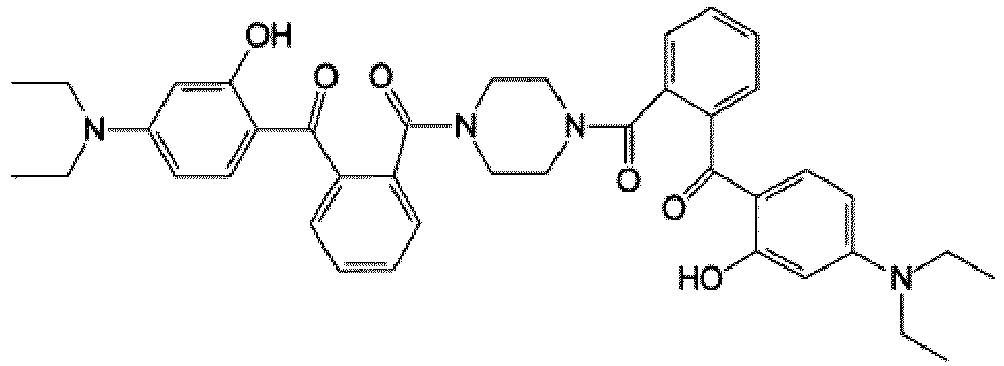
- 0 CCN(CC)C(CCC1C(c2c(C(*(CC3)CCC3(C3)C3C(C3C(C(c(ccc(N(CC)CC)c4)c4O)=O)=CCCC3)O)O)cccc2)=O)C=C1O Chemical compound CCN(CC)C(CCC1C(c2c(C(*(CC3)CCC3(C3)C3C(C3C(C(c(ccc(N(CC)CC)c4)c4O)=O)=CCCC3)O)O)cccc2)=O)C=C1O 0.000 description 1
- IVQLSQJMQLZYJE-UHFFFAOYSA-N CCN(CC)c(cc1)cc(O)c1C(c(cccc1)c1C(N(CC1)CCN1C(c(cccc1)c1C(c(c(O)c1)ccc1N(CC)CC)=O)=O)=O)=O Chemical compound CCN(CC)c(cc1)cc(O)c1C(c(cccc1)c1C(N(CC1)CCN1C(c(cccc1)c1C(c(c(O)c1)ccc1N(CC)CC)=O)=O)=O)=O IVQLSQJMQLZYJE-UHFFFAOYSA-N 0.000 description 1
Classifications
-
- A—HUMAN NECESSITIES
- A61—MEDICAL OR VETERINARY SCIENCE; HYGIENE
- A61K—PREPARATIONS FOR MEDICAL, DENTAL OR TOILETRY PURPOSES
- A61K8/00—Cosmetics or similar toiletry preparations
- A61K8/18—Cosmetics or similar toiletry preparations characterised by the composition
- A61K8/30—Cosmetics or similar toiletry preparations characterised by the composition containing organic compounds
- A61K8/46—Cosmetics or similar toiletry preparations characterised by the composition containing organic compounds containing sulfur
- A61K8/466—Cosmetics or similar toiletry preparations characterised by the composition containing organic compounds containing sulfur containing sulfonic acid derivatives; Salts
-
- A—HUMAN NECESSITIES
- A61—MEDICAL OR VETERINARY SCIENCE; HYGIENE
- A61K—PREPARATIONS FOR MEDICAL, DENTAL OR TOILETRY PURPOSES
- A61K8/00—Cosmetics or similar toiletry preparations
- A61K8/18—Cosmetics or similar toiletry preparations characterised by the composition
- A61K8/30—Cosmetics or similar toiletry preparations characterised by the composition containing organic compounds
- A61K8/33—Cosmetics or similar toiletry preparations characterised by the composition containing organic compounds containing oxygen
- A61K8/37—Esters of carboxylic acids
-
- A—HUMAN NECESSITIES
- A61—MEDICAL OR VETERINARY SCIENCE; HYGIENE
- A61K—PREPARATIONS FOR MEDICAL, DENTAL OR TOILETRY PURPOSES
- A61K8/00—Cosmetics or similar toiletry preparations
- A61K8/18—Cosmetics or similar toiletry preparations characterised by the composition
- A61K8/30—Cosmetics or similar toiletry preparations characterised by the composition containing organic compounds
- A61K8/40—Cosmetics or similar toiletry preparations characterised by the composition containing organic compounds containing nitrogen
-
- A—HUMAN NECESSITIES
- A61—MEDICAL OR VETERINARY SCIENCE; HYGIENE
- A61K—PREPARATIONS FOR MEDICAL, DENTAL OR TOILETRY PURPOSES
- A61K8/00—Cosmetics or similar toiletry preparations
- A61K8/18—Cosmetics or similar toiletry preparations characterised by the composition
- A61K8/72—Cosmetics or similar toiletry preparations characterised by the composition containing organic macromolecular compounds
- A61K8/84—Cosmetics or similar toiletry preparations characterised by the composition containing organic macromolecular compounds obtained by reactions otherwise than those involving only carbon-carbon unsaturated bonds
- A61K8/89—Polysiloxanes
- A61K8/895—Polysiloxanes containing silicon bound to unsaturated aliphatic groups, e.g. vinyl dimethicone
-
- A—HUMAN NECESSITIES
- A61—MEDICAL OR VETERINARY SCIENCE; HYGIENE
- A61Q—SPECIFIC USE OF COSMETICS OR SIMILAR TOILETRY PREPARATIONS
- A61Q17/00—Barrier preparations; Preparations brought into direct contact with the skin for affording protection against external influences, e.g. sunlight, X-rays or other harmful rays, corrosive materials, bacteria or insect stings
- A61Q17/04—Topical preparations for affording protection against sunlight or other radiation; Topical sun tanning preparations
Definitions
- the present invention relates to a cosmetic preparation containing cetearyl sulfosuccinates and certain UV filters.
- UVA and UVB filters are summarized in most industrialized countries in the form of positive lists such as Appendix 7 of the Cosmetics Regulation.
- UV-containing cosmetic preparations are, especially when it comes to oil-in-water (O / W) emulsions, their water resistance.
- O / W emulsions are particularly popular with consumers because of their pleasant sensory properties (low greasiness, fast absorption). Due to the fact that in O / W emulsions the aqueous phase forms the outer phase, these products are particularly easy to wash off with water from the skin. It is therefore necessary according to the prior art to add film formers to sunscreens based on an O / W emulsion in order to increase the water resistance.
- the preparations can be prepared simply and inexpensively using the customary production methods. They have a very pleasant skin feeling. They are color, storage and temperature stable and photostable.
- the increase in water resistance was surprising in particular because the cetearyl sulfosuccinates according to the invention, which are preferably used according to the invention in the form of disodium salts, themselves constitute a readily water-soluble substance.
- An improved water resistance even to emulsifier systems containing nonionic emulsifier components was therefore not to be expected for the person skilled in the art.
- the cetearyl sulfosuccinate according to the invention is advantageously used according to the invention as a disodium salt.
- This raw material is advantageously a mixture of disodium cetylsulfosuccinate: and Dinatriumstearylsulfosuccinat: This component is available, for example, from Cognis under the trade name Eumulgin® Prisma .
- the cosmetic preparation or use is characterized in that the preparation contains cetearylsulfosuccinates in a concentration of 0.05 to 2% by weight, based on the total weight of the preparation. It is preferred according to the invention if the cosmetic preparation or use is characterized in that the preparation contains cetearylsulfosuccinates in a concentration of 0.1 to 1% by weight, based on the total weight of the preparation.
- the preparation contains homosalates as a UV filter which is liquid at room temperature, it is advantageous according to the invention if the preparation contains homosalates in a concentration of 0.5 to 10% by weight, based on the total weight of the preparation.
- the preparation contains octocrylene as a UV filter which is liquid at room temperature, it is advantageous according to the invention if the preparation comprises 2-ethylhexyl 2-cyano-3,3-diphenylacrylate (octocrylene) in a concentration of 0.5 to 10% by weight, based on the total weight of the preparation contains.
- octocrylene 2-ethylhexyl 2-cyano-3,3-diphenylacrylate
- the preparation contains ethylhexyl methoxycinnamate as a UV filter which is liquid at room temperature, it is advantageous according to the invention if the preparation contains ethylhexyl methoxycinnamate in a concentration of 0.2 to 10% by weight, based on the total weight of the preparation.
- the preparation contains ethylhexyl salicylate as a UV filter which is liquid at room temperature, it is advantageous according to the invention if the preparation contains ethylhexyl salicylate in a concentration of 0.2 to 5% by weight, based on the total weight of the preparation.
- the preparation contains isoamyl p-methoxycinnamate as a UV filter which is liquid at room temperature, it is advantageous according to the invention if the Preparation Isoamyl p-methoxycinnamate in a concentration of 0.5 to 10% by weight, based on the total weight of the preparation containing.
- UV filters selected from the group of compounds phenylene-1,4-bis (2-benzimidazyl) -3,3'-5,5'-tetrasulfonklaresalze; 2-phenylbenzimidazole-5-sulfonic acid salts; 1,4-di (2-oxo-10-sulfo-3-bomylidenemethyl) benzene and its salts; 4- (2-oxo-3-bornylidenemethyl) benzenesulfonic acid; 2-methyl-5- (2-oxo-3-bornylidenemethyl) sulfonic acid salts; 2,2'-methylene-bis- (6- (2H-benzotriazol-2-yl) -4- (1,1,3,3-tetramethylbutyl) -phenol); 2- (2H-benzotriazol-2-yl) -4-methyl-6- [2-methyl-3- [1,3,3,3-tetramethyl-1 - [(trimethyl)
- the preparation is free of p-methylbenzylidene camphor.
- the pigments titanium dioxide, zinc oxide
- dispersants and / or solubilizers can be added to these predispersions.
- the pigments can advantageously be surface-treated ("coated"), it being intended, for example, to form or retain a hydrophilic, amphiphilic or hydrophobic character.
- This surface treatment may consist in providing the pigments with a thin hydrophilic and / or hydrophobic inorganic and / or organic layer by processes known per se.
- the various surface coatings may also contain water for the purposes of the present invention.
- Inorganic surface coatings for the purposes of the present invention may consist of aluminum oxide (Al 2 O 3 ), aluminum hydroxide Al (OH) 3 or aluminum oxide hydrate (also: alumina, CAS No .: 1333-84-2 ), Sodium hexametaphosphate (NaPO 3 ) 3 , sodium metaphosphate (NaPO 3 ) n , silicon dioxide (SiO 2 ) (also: silica, CAS No .: 7631-86-9 ), Barium sulfate (BaSO 4 ) or iron oxide (Fe 2 O 3 ).
- Al 2 O 3 aluminum oxide
- Al (OH) 3 or aluminum oxide hydrate also: alumina, CAS No .: 1333-84-2
- Sodium hexametaphosphate (NaPO 3 ) 3 sodium metaphosphate (NaPO 3 ) n
- silicon dioxide SiO 2
- Organic surface coatings for the purposes of the present invention may consist of vegetable or animal aluminum stearate, vegetable or animal stearic acid, lauric acid, dimethylpolysiloxane (also: dimethicone), methylpolysiloxane (methicone), simethicone (a mixture of dimethylpolysiloxane with an average chain length of 200 to 350 dimethylsiloxane Units and silica gel) or alginic acid. These organic surface coatings may be present alone, in combination and / or in combination with inorganic coating materials.
- the preparation contains one or more perfumes.
- the perfume substances according to the invention can be selected, for example, from the group of the compounds 2-isobutyl-4-hydroxy-4-methyltetrahydropyran, 2-tert-pentylcyclohexyl acetate, 3-methyl-5-phenyl-1-pentanol, 7-acetyl-1,1, 3,4,4,6-hexamethyltetralin, adipic diester, alpha-amylcinnamaldehyde, alpha-methylionone, amyl C butylphenylmethylpropionalcinnamal, amylsalicylate, amylcinnamylalcohol, anisalcohol, benzoin, benzylalcohol, benzylbenzoate, benzylcinnamate, benzylsalicylate, bergamot, bitter orange, butylphenylmethylpropioal, cardamomol, cedrol , Cin
- Embodiments of the present invention that are particularly advantageous according to the invention are characterized in that the preparation comprises one or more active substances selected from the group of the compounds tocopheryl acetate, tocopherol, glycyrrhetinic acid or its salts, alpha-lipoic acid, folic acid, phytoene, D-biotin, coenzyme Q10, alpha Glucosylrutin, carnitine, carnosine, natural and / or synthetic isoflavonoids, glyceryl glucose, creatine, creatinine, taurine, ⁇ -alanine, licochalcone A, hyaluronic acid, saponins, dihydroxyacetone; 8-hexadecene-1,16-dicarboxylic acid, polydocanol.
- active substances selected from the group of the compounds tocopheryl acetate, tocopherol, glycyrrhetinic acid or its salts, alpha-lipoic acid, folic
- Embodiments of the present invention which are advantageous according to the invention are characterized in that the preparation comprises one or more compounds selected from the group consisting of parabens, phenoxyethanol, ethylhexylglycerol, 2-methylpropane-1,3-diol, butylene glycol, propylene glycol, pentane-1,2-diol, Hexane-1,2-diol, contains caprylyl glycol.
- the preparation may contain the usual constituents of aqueous and lipophilic phases of a cosmetic O / W emulsion.
- the aqueous phase of the preparations may, for example, advantageously contain customary cosmetic auxiliaries, for example alcohols, in particular those of low C number, preferably ethanol and / or isopropanol, diols or polyols of low C number and their ethers, such as ethylene glycol monoethyl or monobutyl ether, propylene glycol monomethyl, monoethyl or monobutyl ether, diethylene glycol monomethyl or - monoethyl ether and analogous products, polymers, foam stabilizers, electrolytes, thickeners, which or which may for example be advantageously selected from the group of silica, aluminum silicates, polysaccharides or their derivatives, for.
- customary cosmetic auxiliaries for example alcohols, in particular those of low C number, preferably ethanol and / or isopropanol, diols or polyols of low C number and their ethers, such as ethylene glycol monoethyl or monobuty
- hyaluronic acid xanthan gum, carrageenans, hydroxypropylmethylcellulose, particularly advantageous from the group of polyacrylates, preferably a polyacrylate from the group of so-called carbopols, such as carbopols types 980, 981, 1382, 2984, 5984, each individually or in combination.
- carbopols such as carbopols types 980, 981, 1382, 2984, 5984, each individually or in combination.
- Further thickeners advantageous according to the invention are those with the INCI name Acrylates / C10-30 Alkyl Acrylate Crosspolymer (eg Pemulen TR 1, Pemulen TR 2, Carbopol 1328 from the company NOVEON),), Ultrathix P 100 from the company ISP (INCI: Acrylic Acid / VP Crosspolymer) and Aristoflex AVC (INCI: ammonium acryloyldimethyltaurate / VP Copolymer) and ARISTOFLEX HMB (ammonium acryloyldimethyltaurate / beheneth-25-methacrylate copolymer).
- ISP ISP
- Aristoflex AVC ICI: ammonium acryloyldimethyltaurate / VP Copolymer
- ARISTOFLEX HMB ammonium acryloyldimethyltaurate / beheneth-25-methacrylate copolymer.
- the oil phase of the preparation is for example advantageously selected from the group of polar oils, for example from the group of lecithins and fatty acid triglycerides, namely the triglycerol esters of saturated and / or unsaturated, branched and / or unbranched alkanecarboxylic acids having a chain length of 8 to 24, in particular 12 to 18 C atoms.
- the fatty acid triglycerides can be selected, for example, advantageously from the group of synthetic, semi-synthetic and natural oils, such as.
- Cocoglyceride olive oil, sunflower oil, jojoba oil, soybean oil, peanut oil, rapeseed oil, almond oil, palm oil, coconut oil, castor oil, wheat germ oil, grapeseed oil, thistle oil, evening primrose oil, macadamia nut oil and the like.
- natural waxes of animal and vegetable origin such as beeswax and other insect waxes and berry wax, shea butter and / or lanolin (wool wax).
- further advantageous polar oil components can furthermore be selected from the group of esters of saturated and / or unsaturated, branched and / or unbranched alkanecarboxylic acids having a chain length of 3 to 30 carbon atoms and saturated and / or unsaturated, branched and / or or unbranched alcohols having a chain length of 3 to 30 carbon atoms and from the group of esters of aromatic carboxylic acids and saturated and / or unsaturated, branched and / or unbranched alcohols having a chain length of 3 to 30 carbon atoms.
- ester oils can then be advantageously selected from the group consisting of phenethyl benzoate, 2-phenylethyl benzoate, isopropyl lauroyl sarcosinate, phenyl trimethicone, cyclomethicone, dibutyl adipate, octyl palmitate, octyl cocoate, octyl isostearate, octyldodeceyl myristate, octyldodecanol, cetearyl isononanoate, isopropyl myristate, isopropyl palmitate, isopropyl stearate, isopropyl oleate, n-butyl stearate , n-hexyl laurate, n-decyl oleate, isooctyl stearate, isononyl stearate, isononyl isononanoate
- the oil phase can be advantageously selected from the group of dialkyl ethers and dialkyl carbonates, advantageous z.
- Oil components are also z.
- B. Butyloctylsalicylat for example, that available under the trade name Hallbrite BHB at the company. CP Hall
- tridecyl salicylate which is available under the trade name Cosmacol ESI from Fa. Sasol
- C12-C15 alkyl salicylate under the trade name Dermol NS in the Fa Alzo available
- Hexadecylbenzoat and Butyloctylbenzoat and mixtures thereof Hallstar AB
- Diethylhexylnaphthalat Hallbrite TQ or Corapan TQ from Symrise
- the oil phase may also advantageously contain nonpolar oils, for example those which are selected from the group of branched and unbranched hydrocarbons and waxes, in particular mineral oil, Vaseline (petrolatum), paraffin oil, squalane, polyolefins, hydrogenated polyisobutenes, C13-16 isoparaffin and isohexadecane.
- nonpolar oils for example those which are selected from the group of branched and unbranched hydrocarbons and waxes, in particular mineral oil, Vaseline (petrolatum), paraffin oil, squalane, polyolefins, hydrogenated polyisobutenes, C13-16 isoparaffin and isohexadecane.
- polyolefins polydecenes are the preferred substances.
- the preparation may contain one or more of the usual film formers for increasing the water resistance.
- the preparation has a pH of 5 to 8. This can be adjusted by the conventional acids, bases and buffer systems.
- the cosmetic preparations are applied in the usual manner for cosmetics on the skin and / or hair in sufficient quantity.
- the preparation can be sprayable.
- the preparation is advantageously stored in plastic bottles made of PE, PP, PET or composites.
- composition A is much more waterproof and has a higher sun protection factor.
Landscapes
- Health & Medical Sciences (AREA)
- Life Sciences & Earth Sciences (AREA)
- Animal Behavior & Ethology (AREA)
- General Health & Medical Sciences (AREA)
- Public Health (AREA)
- Veterinary Medicine (AREA)
- Birds (AREA)
- Epidemiology (AREA)
- Dermatology (AREA)
- Emergency Medicine (AREA)
- Cosmetics (AREA)
Description
- Die vorliegende Erfindung betrifft eine kosmetische Zubereitung enthaltend Cetearylsulfosuccinate und bestimmte UV-Filter.
- Der Trend weg von der vornehmen Blässe hin zur "gesunden, sportlich braunen Haut" ist seit Jahren ungebrochen. Um diese zu erzielen setzen die Menschen ihre Haut der Sonnenstrahlung aus, da diese eine Pigmentbildung im Sinne einer Melaninbildung hervorruft. Die ultraviolette Strahlung des Sonnenlichtes hat jedoch auch eine schädigende Wirkung auf die Haut. Neben der akuten Schädigung (Sonnenbrand) treten Langzeitschäden wie ein erhöhtes Risiko an Hautkrebs zu erkranken bei übermäßiger Bestrahlung mit Licht aus dem UVB-Bereich (Wellenlänge: 280-320 nm) auf. Die übermäßige Einwirkung der UVB- und UVA-Strahlung (Wellenlänge: 320-400 nm) führt darüber hinaus zu einer Schwächung der elastischen und kollagenen Fasern des Bindegewebes. Dies führt zu zahlreichen phototoxischen und photoallergischen Reaktionen und hat eine vorzeitige Hautalterung zur Folge.
- Zum Schutz der Haut wurden daher eine Reihe von Lichtschutzfiltersubstanzen entwickelt, die in kosmetischen Zubereitungen eingesetzt werden können. Diese UVA- und UVB-Filter sind in den meisten Industrieländern in Form von Positivlisten wie dem Anlage 7 der Kosmetikverordnung zusammengefasst.
- Die Vielzahl an kommerziell erhältlichen Sonnenschutzmitteln darf jedoch nicht darüber hinwegtäuschen, dass diese Zubereitungen des Standes der Technik eine Reihe von Nachteilen aufweisen. Ein Hauptnachteil UV-Filter enthaltender kosmetischer Zubereitungen ist, insbesondere wenn es sich um Öl-in-Wasser-Emulsionen (O/W-Emulsionen) handelt, deren Wasserfestigkeit. O/W- Emulsionen sind aufgrund ihrer angenehmen Sensorik (wenig fettig, schnell einziehend) bei den Verbrauchern besonders beliebt. Aufgrund der Tatsache, dass bei O/W-Emulsionen die wässrige Phase die äußere Phase bildet, sind diese Produkte besonders leicht mit Wasser von der Haut abwaschbar. Nach dem Stand der Technik ist es daher erforderlich, Sonnenschutzmitteln auf der Basis einer O/W-Emulsion Filmbildner zuzusetzen, um die Wasserfestigkeit zu erhöhen. Filmbildner führen jedoch dazu, dass die Zubereitung einen klebrig-fettigen Eindruck auf der Haut hinterlassen, schwerer in die Haut einziehen und der Haut einen fettigen Glanz verleihen. Nicht zuletzt sind diese Zubereitungen schwerer verteilbar.
Es war daher die Aufgabe der vorliegenden Erfindung, eine O/W-Emulsion zu entwickeln, die eine höhere Wasserfestigkeit aufweist, als herkömmliche O/W-Emulsionen, ohne dass die sensorischen Eigenschaften darunter leiden.
Ein weiterer Nachteil herkömmlicher Sonnenschutzmittel auf der Basis von O/W-Emulsionen besteht in dem Umstand, dass man diesen Zubereitungen eine relativ große Menge an teuren und schwierig einzuarbeitenden UV-Filter enthalten muss, damit die Zubereitungen einen ausreichenden UV-Schutz (SPF) bieten. Es war daher die Aufgabe der vorliegenden Erfindung, eine O/W-Emulsion zu entwickeln, die mit relativ geringen Konzentrationen an UV-Filtern einen hohen Lichtschutzfaktor (SPF) bietet. - Überraschend gelöst werden die Aufgaben durch eine kosmetische Zubereitung gemäß Anspruch 9. Diese Zubereitung enthält
- a) Cetearylsulfosuccinate
- b) ein oder mehrere bei Raumtemperatur flüssigen UV-Filter sowie
- c) ausgewählte Mercocyanine.
- Die Zubereitungen sind einfach und kostengünstig mit den üblichen Herstellungsverfahren herstellbar. Sie weisen ein ausgesprochen angenehmes Hautgefühl auf. Sie sind farb-, lager- und temperaturstabil sowie photostabil.
- Die in dieser Beschreibung der Erfindung als mit "erfindungsgemäß", "erfindungsgemäß vorteilhaft" etc. gekennzeichneten Angaben beziehen sich sowohl auf die kosmetische Zubereitung des Anspruchs 9 als auch auf die erfindungsgemäße Verwendung.
Zwar kennt der Stand der Technik die Firmenpublikation "Eumulgin® Prisma, As diverse as the colors oft he light" (2009) der Fima Cognis, doch konnte diese Schrift nicht den Weg zur vorliegenden Erfindung weisen, da sie nicht die erfindungsgemäßen UV-Filter offenbart, keine Aussagen zur Wasserfestigkeit enthält und den Emulgator als besonders geeignet für Zubereitungen beschreibt, die einen hohen Anteil an UV-Filtern enthalten.
Die Erhöhung der Wasserfestigkeit war insbesondere deshalb überraschend, da die erfindungsgemäßen Cetearylsulfosuccinate, die erfindungsgemäß bevorzugt in Form von Dinatriumsalzen eingesetzt werden, selbst eine gut wasserlösliche Substanz darstellen. Eine verbesserte Wasserfestigkeit auch gegenüber Emulgatorsystemen, die nichtionische Emulgatorbestandteile (beispielsweise Glycerylstearat) enthalten, war daher für den Fachmann nicht zu erwarten.
Das erfindungsgemäße Cetearylsulfosuccinat wird erfindungsgemäß vorteilhaft als Dinatriumsalz eingesetzt. Es handelt sich bei diesem Rohstoff vorteilhaft um eine Mischung aus Dinatriumcetylsulfosuccinat:
Dinatriumstearylsulfosuccinat:
- Es ist erfindungsgemäß vorteilhaft, wenn die kosmetische Zubereitung oder Verwendung dadurch gekennzeichnet ist, dass die Zubereitung Cetearylsulfosuccinate in einer Konzentration von 0,05 bis 2 Gewichts-%, bezogen auf das Gesamtgewicht der Zubereitung, enthält.
Es ist erfindungsgemäß bevorzugt, wenn die kosmetische Zubereitung oder Verwendung dadurch gekennzeichnet ist, dass die Zubereitung Cetearylsulfosuccinate in einer Konzentration von 0,1 bis 1 Gewichts-%, bezogen auf das Gesamtgewicht der Zubereitung, enthält. - Enthält die Zubereitung Homosalate als bei Raumtemperatur flüssigen UV-Filter, so ist es erfindungsgemäß vorteilhaft, wenn die Zubereitung Homosalate in einer Konzentration von 0,5 bis 10 Gewichts-%, bezogen auf das Gesamtgewicht der Zubereitung, enthält.
- Enthält die Zubereitung Octocrylen als bei Raumtemperatur flüssigen UV-Filter, so ist es erfindungsgemäß vorteilhaft, wenn die Zubereitung 2-Ethylhexyl-2-cyano-3,3-diphenylacrylat (Octocrylen) in einer Konzentration von 0,5 bis 10 Gewichts-%, bezogen auf das Gesamtgewicht der Zubereitung, enthält.
- Enthält die Zubereitung Ethylhexylmethoxycinnamat als bei Raumtemperatur flüssigen UV-Filter, so ist es erfindungsgemäß vorteilhaft, wenn die Zubereitung Ethylhexylmethoxycinnamat in einer Konzentration von 0,2 bis 10 Gewichts-%, bezogen auf das Gesamtgewicht der Zubereitung, enthält.
- Enthält die Zubereitung Ethylhexylsalicylat als bei Raumtemperatur flüssigen UV-Filter, so ist es erfindungsgemäß vorteilhaft, wenn die Zubereitung Ethylhexylsalicylat in einer Konzentration von 0,2 bis 5 Gewichts-%, bezogen auf das Gesamtgewicht der Zubereitung, enthält.
- Enthält die Zubereitung Dimethicodiethylbenzalmalonat (Polysilicone-15) als bei Raumtemperatur flüssigen UV-Filter, so ist es erfindungsgemäß vorteilhaft, wenn die Zubereitung Dimethicodiethylbenzalmalonat (Polysilicone-15) in einer Konzentration von 0,5 bis 10 Gewichts-%, bezogen auf das Gesamtgewicht der Zubereitung, enthält.
- Enthält die Zubereitung Isoamyl p-Methoxycinnamat als bei Raumtemperatur flüssigen UV-Filter, so ist es erfindungsgemäß vorteilhaft, wenn die Zubereitung Isoamyl p-Methoxycinnamat in einer Konzentration von 0,5 bis 10 Gewichts-%, bezogen auf das Gesamtgewicht der Zubereitung, enthält.
- Es ist erfindungsgemäß vorteilhaft, wenn die Zubereitung einen oder mehrere weitere UV-Filter gewählt aus der Gruppe der Verbindungen Phenylen-1,4-bis-(2-benzimidazyl)-3,3'-5,5'-tetrasulfonsäuresalze; 2-Phenylbenzimidazol-5-sulfonsäuresalze; 1,4-di(2-oxo-10-Sulfo-3-bornylidenmethyl)-Benzol und dessen Salze; 4-(2-Oxo-3-bornylidenmethyl)benzolsulfonsäuresalze; 2-Methyl-5-(2-oxo-3-bornylidenmethyl)sulfonsäuresalze; 2,2'-Methylen-bis-(6-(2H-benzotriazol-2-yl)-4-(1,1,3,3-tetramethylbutyl)-phenol); 2-(2H-benzotriazol-2-yl)-4-methyl-6-[2-methyl-3-[1,3,3,3-tetramethyl-1-[(trimethylsilyl)oxy]disiloxanyl]propyl]-phenol; 3-(4-Methylbenzyliden)campher; 3-Benzylidencampher; 4-(tert.-Butyl)-4'-methoxydibenzoylmethan; 2-(4'-Diethylamino-2'-hydoxybenzoyl)-benzoesäurehexylester; Terephthalidendicamphersulfonsäure; 4-(Dimethylamino)-benzoesäure(2-ethylhexyl)ester; 4-(Dimethylamino)benzoesäure-amylester; 4-Methoxybenzalmalon-säuredi(2-ethylhexyl)ester; 2-Hydroxy-4-methoxybenzophenon, 2-Hydroxy-4-methoxy-4'-methylbenzophenon; 2,2'-Dihydroxy-4-methoxybenzophenon; 2-Ethylhexyl-2-hydroxybenzoat; 3-(4-(2,2-bis Ethoxycarbonylvinyl)-phenoxy)propenyl)-methoxysiloxan / Dimethylsiloxan - Copolymer; Dioctylbutylamidotriazon (INCI: Diethylhexyl-Butamidotriazone); 2,4-bis-[5-1(dimethylpropyl)benzoxazol-2-yl-(4-phenyl)-imino]-6-(2-ethylhexyl)-imino-1,3,5-triazin mit der (CAS Nr. 288254-16-0); 4,4',4"-(1,3,5-Triazin-2,4,6-triyltriimino)-tris-benzoesäure-tris(2-ethylhexylester) (auch: 2,4,6-Tris-[anilino-(p-carbo-2'-ethyl-1'-hexyloxy)]-1,3,5-triazin (INCI: Ethylhexyl Triazone); 2,4-Bis-{[4-(2-ethyl-hexyloxy)-2-hydroxy]-phenyl}-6-(4-methoxyphenyl)-1,3,5-triazin (INCI: Bis-Ethylhexyloxyphenol Methoxyphenyl Triazin); 2,4,6-Tris-(biphenyl)-1,3,5-triazin; 2,4-Bis-(4'-Di-neopentylaminobenzalmalonat)-6-(4"-butylaminobenzoat)-s-triazin, 4-Dicyanomethylen-2,6-dimethyl-1,4-dihydropyridin-N-(ethyloxysulfatestersalz), Titandioxid, Zinkoxid, Merocyanine, Piperazinderivate,enthält.
Die erfindungsgemäß vorteilhaften Merocyanine werden dabei gewählt aus der Gruppe der Verbindungen


- Als erfindungsgemäß vorteilhaftes Piperazinderivat kann dabei die folgende Verbindung eingesetzt werden:

- Es ist erfindungsgemäß vorteilhaft, wenn die Zubereitung frei ist von p-Methylbenzylidencampher.
Die Pigmente (Titandioxid, Zinkoxid) können vorteilhaft im Sinne der vorliegenden Erfindung auch in Form kommerziell erhältlicher öliger oder wäßriger Vordispersionen zur Anwendung kommen. Diesen Vordispersionen können vorteilhaft Dispergierhilfsmittel und/oder Solubilisationsvermittler zugesetzt sein. - Die Pigmente (Titandioxid, Zinkoxid) können erfindungsgemäß vorteilhaft oberflächlich behandelt ("gecoatet") sein, wobei beispielsweise ein hydrophiler, amphiphiler oder hydrophober Charakter gebildet werden bzw. erhalten bleiben soll. Diese Oberflächenbehandlung kann darin bestehen, dass die Pigmente nach an sich bekannten Verfahren mit einer dünnen hydrophilen und/oder hydrophoben anorganischen und/oder organischen Schicht versehen werden. Die verschiedenen Oberflächenbeschichtungen können im Sinne der vorliegenden Erfindung auch Wasser enthalten.
Anorganische Oberflächenbeschichtungen im Sinne der vorliegenden Erfindung können bestehen aus Aluminiumoxid (Al2O3), Aluminiumhydroxid Al(OH)3, bzw. Aluminiumoxidhydrat (auch: Alumina, CAS-Nr.: 1333-84-2), Natriumhexametaphosphat (NaPO3)3, Natriummetaphosphat (NaPO3)n, Siliciumdioxid (SiO2) (auch: Silica, CAS-Nr.: 7631-86-9), Bariumsulfat (BaSO4) oder Eisenoxid (Fe2O3). Diese anorganischen Oberflächenbeschichtungen können allein, in Kombination und/oder in Kombination mit organischen Beschichtungsmaterialien vorkommen.
Organische Oberflächenbeschichtungen im Sinne der vorliegenden Erfindung können bestehen aus pflanzlichem oder tierischem Aluminiumstearat, pflanzlicher oder tierischer Stearinsäure, Laurinsäure, Dimethylpolysiloxan (auch: Dimethicone), Methylpolysiloxan (Methicone), Simethicone (einem Gemisch aus Dimethylpolysiloxan mit einer durchschnittlichen Kettenlänge von 200 bis 350 Dimethylsiloxan-Einheiten und Silicagel) oder Alginsäure. Diese organischen Oberflächenbeschichtungen können allein, in Kombination und/oder in Kombination mit anorganischen Beschichtungsmaterialien vorkommen. - Es ist erfindungsgemäß vorteilhaft, wenn die Zubereitung einen oder mehrere Parfümstoffe enthält.
Die erfindungsgemäßen Parfümstoffe können beispielsweise gewählt werden aus der Gruppe der Verbindungen 2-Isobutyl-4-hydroxy-4-methyltetrahydropyran, 2-tert-Pentylcyclohexylacetat, 3-Methyl-5-phenyl-1-pentanol, 7-Acetyl-1,1,3,4,4,6-hexamethyltetralin, Adipinsäurediester, alpha-Amylcinnamaldehyd, Alpha-Methylionon, Amyl C Butylphenylmethylpropionalcinnamal, Amylsalicylat, Amylcinnamylalkohol, Anisalkohol, Benzoin, Benzylalkohol, Benzylbenzoat, Benzylcinnamat, Benzylsalicylat, Bergamotöl, bitteres Orangenöl, Butylphenylmethylpropioal, Cardamomöl, Cedrol, Cinnamal, Cinnamylalkohol, Citronellylmethylcrotonat, Citronenöl, Coumarin, Diethylsuccinat, d-Limonene, Ethyllinalool, Eugenol, Evernia Furfuracea Extract, Evernia Prunastri Extract, Farnesol, Guajakholzöl, Hexylcinnamal, Hexylsalicylat, Hydroxycitronellal, Hydroxyisohexyl 3-Cyclohexencarboxaldehyde, Lavendelöl, Lemonenöl, Linaylacetat, Mandarinenöl, Menthyl PCA, Methylheptenon, Muskatnussöl, Rosmarinöl, süßes Orangenöl, Terpineol, Tonkabohnenöl, Triethylcitrat, Vanillin, Limonen [5989-27-5], Citral, . Linalool [78-70-6], alpha-Isomethylionon [1335-46-2], Geraniol [106-24-1], Citronellol [106-22-9], [24851-98-7], [18479-58-8], [54464-57-2], [80-54-6], [1222-05,5], [32388-55-9], [105-95-3], [31906-04-4], [8008-57-9], [32210-23-4], [120-57-0], [115-95-7], [101-86-0], [140-11-4], [6259-76-3] und [127-51-5].
Erfindungsgemäß besonders vorteilhafte Ausführungsformen der vorliegenden Erfindung sind dadurch gekennzeichnet, dass die Zubereitung einen oder mehrere Wirkstoffe gewählt aus der Gruppe der Verbindungen Tocopherylacetat, Tocopherol, Gylcyrrhetinsäure bzw. dessen Salze, alpha-Liponsäure, Folsäure, Phytoen, D-Biotin, Coenzym Q10, alpha-Glucosylrutin, Carnitin, Carnosin, natürliche und/oder synthetische Isoflavonoide, Glycerylglucose, Kreatin, Kreatinin, Taurin, β-Alanin, Licochalcon A, Hyaluronsäure, Saponine, Dihydroxyaceton; 8-Hexadecen-1,16-dicarbonsäure, Polydocanol, enthält.
Erfindungsgemäß vorteilhafte Ausführungsformen der vorliegenden Erfindung sind dadurch gekennzeichnet, dass die Zubereitung ein oder mehrere Verbindungen gewählt aus der Gruppe der Parabene, Phenoxyethanol, Ethylhexylglycerin, 2-Methylpropan-1,3-diol, Butylenglycol, Propylenglycol , Pentan-1,2-diol, Hexan-1,2-diol, Caprylylglycol enthält. Neben den erfindungsgemäßen bzw. erfindungsgemäß vorteilhaften Bestandteilen, kann die Zubereitung die üblichen Bestandteile wässriger und lipophiler Phasen einer kosmetischen O/W-Emulsion enthalten. - Die Wasserphase der Zubereitungen kann beispielsweise vorteilhaft übliche kosmetische Hilfsstoffe enthalten, wie beispielsweise Alkohole, insbesondere solche niedriger C-Zahl, vorzugsweise Ethanol und/oder Isopropanol, Diole oder Polyole niedriger C-Zahl sowie deren Ether wie Ethylenglykolmonoethyl- oder -monobutylether, Propylenglykolmonomethyl, -monoethyl- oder -monobutylether, Diethylenglykolmonomethyl- oder - monoethylether und analoge Produkte, Polymere, Schaumstabilisatoren, Elektrolyte, Verdickungsmittel, welches oder welche beispielsweise vorteilhaft gewählt werden können aus der Gruppe Siliciumdioxid, Aluminiumsilikate, Polysaccharide bzw. deren Derivate, z. B. Hyaluronsäure, Xanthangummi, Carragenanen, Hydroxypropylmethylcellulose, besonders vorteilhaft aus der Gruppe der Polyacrylate, bevorzugt ein Polyacrylat aus der Gruppe der sogenannten Carbopole, beispielsweise Carbopole der Typen 980, 981, 1382, 2984, 5984, jeweils einzeln oder in Kombination. Weitere erfindungsgemäß vorteilhafte Verdicker sind solche mit der INCI-Bezeichnung Acrylates/C10-30 Alkyl Acrylate Crosspolymer (z. B. Pemulen TR 1, Pemulen TR 2, Carbopol 1328 von der Fa. NOVEON),), Ultrathix P 100 von der Firma ISP (INCI: Acrylic Acid/VP Crosspolymer) sowie Aristoflex AVC (INCI: Ammonium Acryloyldimethyltaurate/VP Copolymer) und ARISTOFLEX HMB (Ammonium Acryloyldimethyltaurate/ Beheneth-25 Methacrylate Copolymer).
- Die Ölphase der Zubereitung wird beispielsweise vorteilhaft gewählt aus der Gruppe der polaren Öle, beispielsweise aus der Gruppe der Lecithine und der Fettsäuretriglyceride, namentlich der Triglycerinester gesättigter und/oder ungesättigter, verzweigter und/oder unverzweigter Alkancarbonsäuren einer Kettenlänge von 8 bis 24, insbesondere 12 bis 18 C-Atomen. Die Fettsäuretriglyceride können beispielsweise vorteilhaft gewählt werden aus der Gruppe der synthetischen, halbsynthetischen und natürlichen Öle, wie z. B. Cocoglycerid, Olivenöl, Sonnenblumenöl, Jojobaöl, Sojaöl, Erdnußöl, Rapsöl, Mandelöl, Palmöl, Kokosöl, Rizinusöl, Weizenkeimöl, Traubenkernöl, Distelöl, Nachtkerzenöl, Macadamianußöl und dergleichen mehr.
Erfindungsgemäß vorteilhaft sind ferner z. B. natürliche Wachse tierischen und pflanzlichen Ursprungs, wie beispielsweise Bienenwachs und andere Insektenwachse sowie Beerenwachs, Sheabutter und/oder Lanolin (Wollwachs).
Weitere vorteilhafte polare Ölkomponenten können im Sinne der vorliegenden Erfindung ferner gewählt werden aus der Gruppe der Ester aus gesättigten und/oder ungesättigten, verzweigten und/oder unverzweigten Alkancarbonsäuren einer Kettenlänge von 3 bis 30 C-Atomen und gesättigten und/oder ungesättigten, verzweigten und/oder unverzweigten Alkoholen einer Kettenlänge von 3 bis 30 C-Atomen sowie aus der Gruppe der Ester aus aromatischen Carbonsäuren und gesättigten und/oder ungesättigten, verzweigten und/oder unverzweigten Alkoholen einer Kettenlänge von 3 bis 30 C-Atomen. Solche Esteröle können dann vorteilhaft gewählt werden aus der Gruppe Phenethylbenzoat, 2-Phenylethylbenzoat, Isopropyl Lauroyl Sarkosinat, Phenyl Trimethicon, Cyclomethicon, Dibutyladipat, Octylpalmitat, Octylcocoat, Octylisostearat, Octyldodeceylmyristat, Octyldodekanol, Cetearylisononanoat, Isopropylmyristat, Isopropylpalmitat, Isopropylstearat, Isopropyloleat, n-Butylstearat, n-Hexyllaurat, n-Decyloleat, Isooctylstearat, Isononylstearat, Isononylisononanoat, 2-Ethylhexylpalmitat, 2-Ethylhexyllaurat, 2-Hexyldecylstearat, 2-Octyldodecylpalmitat, Stearylheptanoat, Oleyloleat, Oleylerucat, Erucyloleat, Erucylerucat, Tridecylstearat, Tridecyltrimellitat, sowie synthetische, halbsynthetische und natürliche Gemische solcher Ester, wie z. B. Jojobaöl. - Ferner kann die Ölphase vorteilhaft gewählt werden aus der Gruppe der Dialkylether und Dialkylcarbonate, vorteilhaft sind z. B. Dicaprylylether (Cetiol OE) und/oder Dicaprylylcarbonat, beispielsweise das unter der Handelsbezeichnung Cetiol CC bei der Fa. Cognis erhältlich.
Es ist ferner bevorzugt, das oder die Ölkomponenten aus der Gruppe Isoeikosan, Neopentylglykoldiheptanoat, Propylenglykoldicaprylat/dicaprat, Caprylic/Capric/Diglycerylsuccinat, Butylenglykol Dicaprylat/Dicaprat, C12-13-Alkyllactat, Di-C12-13-Alkyltartrat, Triisostearin, Dipentaerythrityl Hexacaprylat/Hexacaprat, Propylenglykolmonoisostearat, Tricaprylin, Dimethylisosorbid. Es ist insbesondere vorteilhaft, wenn die Ölphase der Formulierungen einen Gehalt an C12-15-Alkylbenzoat aufweist oder vollständig aus diesem besteht.
Vorteilhafte Ölkomponenten sind ferner z. B. Butyloctylsalicylat (beispielsweise das unter der Handelsbezeichnung Hallbrite BHB bei der Fa. CP Hall erhältliche), Tridecylsalicylat (welches unter der Handelsbezeichnung Cosmacol ESI bei der Fa. Sasol erhältlich ist), C12-C15 Alkylsalicylat (unter der Handelsbezeichnung Dermol NS bei der Fa. Alzo erhältlich), Hexadecylbenzoat und Butyloctylbenzoat und Gemische davon (Hallstar AB) und/oder Diethylhexylnaphthalat (Hallbrite TQ oder Corapan TQ von Symrise).
Auch beliebige Abmischungen solcher Öl- und Wachskomponenten sind vorteilhaft im Sinne der vorliegenden Erfindung einzusetzen.
Ferner kann die Ölphase ebenfalls vorteilhaft auch unpolare Öle enthalten, beispielsweise solche, welche gewählt werden aus der Gruppe der verzweigten und unverzweigten Kohlenwasserstoffe und -wachse, insbesondere Mineralöl, Vaseline (Petrolatum), Paraffinöl, Squalan, Polyolefine, hydrogenierte Polyisobutene, C13-16 Isoparaffin und Isohexadecan. Unter den Polyolefinen sind Polydecene die bevorzugten Substanzen. - Die Zubereitungen können ferner vorteilhaft eine oder mehrere Substanzen aus der folgenden Gruppe der Siloxanelastomere enthalten, beispielsweise um die Wasserfestigkeit und/oder den Lichtschutzfaktor der Produkte zu steigern:
- (a) Siloxanelastomere, welche die Einheiten R2SiO und RSiO1,5 und/oder R3SiO0,5 und/oder SiO2 enthalten,
wobei die einzelnen Reste R jeweils unabhängig voneinander Wasserstoff, C1-24-Alkyl (wie beispielsweise Methyl, Ethyl, Propyl) oder Aryl (wie beispielsweise Phenyl oder Tolyl), Alkenyl (wie beispielsweise Vinyl) bedeuten und das Gewichtsverhältnis der Einheiten R2SiO zu RSiO1,5 aus dem Bereich von 1 : 1 bis 30 : 1 gewählt wird; - (b) Siloxanelastomere, welche in Silikonöl unlöslich und quellfähig sind, die durch die Additionsreaktion eines Organopolysiloxans (1), das siliciumbebundenen Wasserstoff enthält, mit einem Organopolysiloxan (2), das ungesättigte aliphatische Gruppen enthält, erhältlich sind,
wobei die verwendeten Mengenateile so gewählt werden, dass die Menge des Wasserstoffes des Organopolysiloxans (1) oder der ungesättigten aliphatischen Gruppen des Organopolysiloxans (2)- im Bereich von 1 bis 20 mol-% liegt, wenn das Organopolysiloxan nicht zyklisch ist und
- im Bereich von 1 bis 50 mol-% liegt, wenn das Organopolysiloxan zyklisch ist.
- Die Zubereitung kann ein oder mehrere der üblichen Filmbildner zur Erhöhung der Wasserfestigkeit enthalten. Es lassen sich jedoch auch erfindungsgemäß vorteilhafte Zubereitungen ohne dies Filmbildner herstellen.
- Erfindungsgemäß vorteilhaft weist die Zubereitung einen pH-Wert von 5 bis 8 auf. Dieser kann durch die herkömmlichen Säuren, Basen und Puffersysteme eingestellt werden.
- Zur Anwendung werden die kosmetischen Zubereitungen in der für Kosmetika üblichen Weise auf die Haut und/oder die Haare in ausreichender Menge aufgebracht.
- Die Zubereitung kann sprühbar sein.
- Erfindungsgemäß vorteilhaft wird die Zubereitung in Kunststoffflaschen aus PE, PP, PET oder Verbundstoffen aufbewahrt.
- Der nachfolgende Vergleichsversuch zeigt exemplarisch die erfindungsgemäßen Effekte:
- Es wurden die folgenden Rezepturen hergestellt und
- a) die Wasserfestigkeit mit Hilfe der Kontaktwinkelmessung (siehe "Contact angle measurement-a reliable supportive method for screening water-restistance of ultravioletprotecting products in vivo" Intern. Journal of Cosmetic Science, 2007, 29, 283-291) sowie
- b) der in vivo Lichtschutzfaktor (SPF) bestimmt.
- Fazit: Die Zusammensetzung A ist deutlich wasserfester und hat einen höheren Lichtschutzfaktor.
- Die nachfolgenden Beispiele sollen die vorliegende Erfindung verdeutlichen, ohne sie einzuschränken. Alle Mengenangaben, Anteile und Prozentanteile sind, soweit nicht anders angegeben, auf das Gewicht und die Gesamtmenge bzw. auf das Gesamtgewicht der Zubereitungen bezogen.
Emulsion 1 2 3 4 Disodium Cetearyl Sulfosucinnate 0,25 0,25 0,5 1 Glyceryl Stearat SE 1 Natrium Stearoylglutamat 0,8 Cetearylalkohol 1 Stearylalkohol 0,5 Myristylmyristat 1 1,5 Acrylates/C10-30 Alkyl Acrylat Crosspolymer 0,1 0,05 Copolymer aus Vinylpyrrolidon und Acrylsäure 0,5 Carbomer 0,2 Xanthan Gum 0,4 0,3 Natrium Polyacrylat 0,2 C12-15 Alkyl Benzoat 4 Dicaprylyl Caprate 2 Butylenglykol Dicaprylat/Dicaprat 4 2 Isodecyl Neopentanoate 5 2 Isopropyl Palmitate 5 2 Octyldodecanol 2 Aluminum Starch Octenylsuccinate 1 Cyclomethicon 3 5 Dimethicon 1 VP/Hexadecene Copolymer 0,5 0,2 Propylenglykol 1 5 Glycerin 9 3 2 3 Octan-1,2-diol 5 2 Octocrylen 5 Octylsalicylat 5 5 2 Ethylhexylmethoxycinnamat 10 2 Homosalate 10 3 2 Butyl Methoxydibenzoylmethan 5 Diethylamino Hydroxybenzoyl Hexyl Benzoat 5 Bis-Ethylhexyloxyphenol Methoxyphenyl Triazine 1 Phenylbenzimidazol Sulfonsäure 2 Tris-biphenyltriazain 2 Ethylhexyltriazin 2 Vitamin E Acetat 0,1 0,2 0,3 0,1 Na2H2EDTA 0,1 0,2 0,2 0,2 Alkohol 4 6 Methylparaben 0,1 0,4 0,5 Phenoxyethanol 0,7 1 0,5 Benzethoniumchlorid 0,05 Piroctone Olamine 0,05 Ethylhexylglycerin 1 Natriumhydroxid, Parfüm q.s. q.s. q.s. q.s. Wasser ad 100,0 ad 100,0 ad 100,0 ad 100,0 Emulsion 5 6 7 8 Disodium Cetearyl Sulfosucinnate 0,3 0,5 0,2 0,8 Sucrosepolystearat 1 Stearylalkohol 0,5 Cetylalkohol 2,2 Myristylmyristat 1 1,5 Acrylates/C10-30 Alkyl Acrylat Crosspolymer 0,1 0,05 0,3 Copolymer aus Vinylpyrrolidon und Acrylsäure 1,0 Xanthan Gum 0,4 0,3 Caprylic/Capric Triglyceride 3 C12-15 Alkyl Benzoat 5 5 Dicaprylyl Caprate 2 Butylenglykol Dicaprylat/Dicaprat 5 Diisopropylsebacate 4 Propylene Glycol Dicaprylate/Dicaprate 2 Parffinöl 2 Cyclomethicon 5 Dimethicon 5 1 VP/Hexadecene Copolymer 0,5 0,2 Glycerin 1 12 5 8 Octocrylen 5 9 Octylsalicylat 4 Ethylhexylmethoxycinnamat 5 Homosalate 8 Polysilicon-15 3 4 Butyl Methoxydibenzoylmethan 3 4,5 Diethylamino Hydroxybenzoyl Hexyl Benzoat 3 Bis-Ethylhexyloxyphenol Methoxyphenyl Triazine 1 Phenylbenzimidazol Sulfonsäure 2 0,5 Titandioxid 1 2 Diemthicone/Polyglycerin-3 Crosspolymer 5 Dimethicon / Vinyl Dimethicon Crosspolymer 5 3 Panthenol 0,1 0,2 Na2H2EDTA 0,1 0,2 0,2 0,2 Alkohol 4 6 Parfüm q.s. q.s. q.s. q.s. Konservierungsmittel q.s. q.s. q.s. q.s. Natriumhydroxid q.s. q.s. q.s. q.s. Wasser ad 100,0 ad 100,0 ad 100,0 ad 100,0
die Verwendung von Cetearylsulfosuccinaten zur Erhöhung des Lichtschutzfaktors (SPF) kosmetischer Zubereitungen, welche bei Raumtemperatur flüssige UV-Filter enthalten.
Als "bei Raumtemperatur flüssige UV-Filter" gelten UV-Filter, die bei einer Temperatur von 20 °C und 1013 mbar flüssig sind. Insbesondere gelten die folgenden mit ihrer INCI angegebenen UV-Filter erfindungsgemäß als "bei Raumtemperatur flüssige UV-Filter: Homosalate, Octocrylen, Ethylhexylmethoxycinnamat, Ethylhexylsalicylat, Dimethicodiethylbenzalmalonat (Polysilicone-15) und Isoamyl p-Methoxycinnamat. Diese UV-Filter gelten als bevorzugte Ausführungsform der vorliegenden Erfindung.
Erfindungsgemäß vorteilhafte in Form sphärischer Puder vorliegende Siloxanelastomere sind die mit der INCI-Bezeichnung Dimethicone / Vinyl Dimethicone Crosspolymer, beispielsweise das von DOW CORNING unter der Handelsbezeichnungen DOW CORNING 9506 Powder erhältliche.
Besonders bevorzugt ist es, wenn das Siloxanelastomer in Kombination mit ölen aus Kohlenwasserstoffen tierischer und/oder pflanzlicher Herkunft, synthetischen Ölen, synthetischen Estern, synthetischen Ethern oder deren Gemischen verwendet wird.
| Zusammensetzung | A | B | |
| Emulgatormischung | Tegin VS + Emulqade F | 2,65 | |
| Emulgator | Disodium Cetearyl Sulfosucinnate | 0,25 | |
| UVA-Filter | Butyl Methoxydibenzoylmethane | 4,5 | 4,5 |
| UVB-Filter | Octocrylene | 4,5 | 4,5 |
| Lichtfiltermischung | Ethylhexyl Methoxycinnamate | 11 | 11 |
| Phenylbenzimidazole Sulfonic Acid | |||
| Bis-Ethyl hexyloxyphenol Methoxyphenyl Triazine | |||
| Diethylhexyl Butamido Triazone | |||
| Titanium Dioxide | |||
| Aqua + Trisodium EDTA | |||
| Konservierung | Methylparaben | 9,4 | 9,4 |
| Phenoxyethanol | |||
| Alcohol Denat. | |||
| Glycerin | |||
| Lipophile Phase | Octyldodecanol | 18,7 | 18,7 |
| Myristyl Myristate | |||
| Tocopheryl Acetate | |||
| C12-15 Alkyl Benzoate | |||
| Butylene Glycol Dicaprylate/Dicaprate | |||
| Parfum | |||
| Cetyl Alcohol | |||
| Verdicker | Xanthan Gum | 0,45 | 0,45 |
| Acrylates/C10-30 Alkyl Acrylate Crosspolymer | |||
| Tapioca Starch | 1 | 1 | |
| Wasserphase | 45%- ige Natronlauqe | q.s. | q.s |
| Glycerin | 0,9 | 0,9 | |
| VE-Wasser | ad 100 | ad 100 | |
| in-vivo SPF | 96 | 67 | |
| Kontaktwinkel (je höher desto wasserfester) | 56° | 23° |
Claims (10)
- Verwendung vona. Cetearylsulfosuccinaten zur Erhöhung des Lichtschutzfaktors (SPF) kosmetischer Zubereitungen, welcheb. einen oder mehrere bei Raumtemperatur flüssigen UV-Filter enthalten.
- Verwendung nach Anspruch 1, dadurch gekennzeichnet, dass als flüssige UV-Filter einer oder mehrere der UV-Filter ausgewählt aus Homosalate, Octocrylen, Ethylhexylmethoxycinnamat, Ethylhexylsalicylat, Dimethicodiethylbenzalmalonat (Polysilicone-15) und Isoamyl p- Methoxycinnamat eingesetzt werden.
- Verwendung nach einem der vorhergehenden Ansprüche, dadurch gekennzeichnet, dass die Zubereitung einen oder mehrere weitere UV-Filter gewählt aus der Gruppe der Verbindungen Phenylen-1,4-bis-(2-benzimidazyl)-3,3'-5,5'-tetrasulfonsäuresalze; 2-Phenylbenzimidazol-5- sulfonsäuresalze; 1,4-di(2-oxo-10-Sulfo-3-bornylidenmethyl)-Benzol und dessen Salze; 4-(2-Oxo-3-bornylidenmethyl)benzolsulfonsäuresalze; 2-Methyl-5-(2-oxo-3-bornylidenmethyl)sulfonsäuresalze; 2,2'-Methylen-bis-(6-(2H-benzotriazol-2-yl)-4- (1,1,3,3-tetramethylbutyl)-phe-nol); 2-(2H-benzotriazol-2-yl)-4-methyl-6-[2-methyl-3-[1,3,3,3-tetramethyl-1-[(trimethylsilyl)oxy]disiloxanyl]propyl]-phenol; 3-(4-Methylbenzyliden)campher; 3-Benzylidencampher; 4-(tert.-Butyl)-4'-methoxydibenzoylmethan; 2-(4'-Diethylamino-2'-hydoxybenzoyl)-benzoesäurehexylester; Terephthalidendicamphersulfonsäure; 4-(Dimethylamino)-benzoesäure(2-ethylhexyl)-ester; 4-(Dimethylamino)benzoesäure-amylester; 4-Methoxybenzalmalon-säuredi(2-ethylhexyl)ester; 2-Hydroxy-4-methoxybenzophenon, 2-Hydroxy-4-methoxy-4'- methylbenzophenon; 2,2'-Dihydroxy-4-methoxybenzophenon; 2-Ethylhexyl-2-hydroxybenzoat; 3-(4-(2,2-bis Ethoxycarbonylvinyl)-phenoxy)propenyl)-methoxy-siloxan / Dimethylsiloxan - Copolymer; Dioctylbutylamidotriazon; 2,4-bis-[5-1(dimethylpropyl)-benzoxazol-2-yl-(4-phenyl)-imino]-6-(2-ethylhexyl)-imino-1,3,5-triazin; 4,4',4"-(1,3,5- Triazin-2,4,6-triyltriimino)-tris-benzoesäure-tris(2-ethylhexylester); 2,4-Bis-{[4-(2-elhyl-hexyloxy)-2-hydroxy]-phenyl}-6-(4-methoxyphenyl)-1,3,5-triazin; 2,4,6-Tris-(biphenyl)-1,3,5-triazin; 2,4-Bis-(4'-Di-neopentylaminobenzalmalonat)-6-(4"-butylaminobenzoat)-s-triazin, 4-Di-cyanomethylen-2,6-dimethyl-1,4-dihydropyridin-N-(ethyloxysulfatestersalz), Titandioxid, Zinkoxid, Merocyanine, Piperazinderivate, enthält.
- Verwendung nach einem der vorhergehenden Ansprüche, dadurch gekennzeichnet, dass die Zubereitung einen oder mehrere Parfümstoffe enthält.
- Verwendung nach einem der vorhergehenden Ansprüche, dadurch gekennzeichnet, dass die Zubereitung einen oder mehrere Wirkstoffe enthält, gewählt aus der Gruppe der Verbindungen Tocopherylacetat, Tocopherol, Gylcyrrhetinsäure bzw. dessen Salze, alpha-Liponsäure, Folsäure, Phytoen, D-Biotin, Coenzym 010, alpha-Glucosylrutin, Carnitin, Carnosin, natürliche und/oder synthetische Isoflavonoide, Glycerylglucose, Kreatin, Kreatinin, Taurin, β-Alanin, Licochalcon A, Hyaluronsäure, Saponine, Dihydroxyaceton; 8-Hexadecen-1,16-dicarbonsäure, Polydocanol.
- Verwendung nach einem der vorhergehenden Ansprüche, dadurch gekennzeichnet, dass die Zubereitung Cetearylsulfosuccinate in Form des Dinatriumsalzes enthält.
- Verwendung nach einem der vorhergehenden Ansprüche, dadurch gekennzeichnet, dass die Zubereitung Cetearylsulfosuccinate in einer Konzentration von 0,05 bis 5 Gewichts-%, bezogen auf das Gesamtgewicht der Zubereitung, enthält.
- Verwendung vona. Cetearylsulfosuccinaten zur Erhöhung der Wasserfestigkeit kosmetischer Zubereitungen, welcheb. einen oder mehrere bei Raumtemperatur flüssigen UV-Filter enthalten.
- Kosmetische Zubereitung enthaltenda. Cetearylsulfosuccinate sowieb. ein oder mehrere bei Raumtemperatur flüssigen UV-Filter,dadurch gekennzeichnet, dass die Zubereitung weitere UV-Filter ausgewählt aus der Gruppe der Verbindungen


- Kosmetische Zusammensetzung nach Anspruch 9, dadurch gekennzeichnet, dass sie als zusätzlichen UV Filter die Verbindung
Applications Claiming Priority (2)
| Application Number | Priority Date | Filing Date | Title |
|---|---|---|---|
| DE200910048556 DE102009048556A1 (de) | 2009-10-07 | 2009-10-07 | Cetearylsulfosuccinate enthaltende kosmetische Zubereitung mit flüssigen UV-Filtern |
| PCT/EP2010/004991 WO2011042088A2 (de) | 2009-10-07 | 2010-08-13 | Cetearylsulfosuccinate enthaltende kosmetische zubereitung mit flüssigen uv-filtern |
Publications (2)
| Publication Number | Publication Date |
|---|---|
| EP2496309A2 EP2496309A2 (de) | 2012-09-12 |
| EP2496309B1 true EP2496309B1 (de) | 2018-10-10 |
Family
ID=43734529
Family Applications (1)
| Application Number | Title | Priority Date | Filing Date |
|---|---|---|---|
| EP10744532.2A Active EP2496309B1 (de) | 2009-10-07 | 2010-08-13 | Cetearylsulfosuccinate enthaltende kosmetische zubereitung mit flüssigen uv-filtern |
Country Status (4)
| Country | Link |
|---|---|
| EP (1) | EP2496309B1 (de) |
| DE (1) | DE102009048556A1 (de) |
| ES (1) | ES2704650T3 (de) |
| WO (1) | WO2011042088A2 (de) |
Cited By (1)
| Publication number | Priority date | Publication date | Assignee | Title |
|---|---|---|---|---|
| CN108318614A (zh) * | 2018-01-12 | 2018-07-24 | 中国科学院昆明植物研究所 | 一种测定内/外源性血糖浓度的同位素稀释lc-ms方法 |
Families Citing this family (2)
| Publication number | Priority date | Publication date | Assignee | Title |
|---|---|---|---|---|
| EP2532232A1 (de) | 2011-06-10 | 2012-12-12 | InterMed Discovery GmbH | Langkettige Glycolipide zur Vermeidung des Verderbens oder des mikrobiellen Verschmutzens von Materialien |
| CN111542299B (zh) | 2018-08-23 | 2024-03-08 | 宝洁公司 | 护肤组合物 |
Family Cites Families (11)
| Publication number | Priority date | Publication date | Assignee | Title |
|---|---|---|---|---|
| CN1202807C (zh) * | 1995-06-08 | 2005-05-25 | 庄臣消费者有限公司 | 防晒剂组合物 |
| WO1999013824A1 (en) * | 1997-09-17 | 1999-03-25 | The Procter & Gamble Company | Hair care compositions comprising bulky optical brighteners |
| DE19826840A1 (de) * | 1998-06-16 | 1999-12-23 | Merck Patent Gmbh | Dispersion anorganischer UV-Filter |
| DE19833635A1 (de) * | 1998-07-25 | 2000-02-03 | Beiersdorf Ag | Kosmetische oder dermatologische W/O-Emulsionen, welche ionische und/oder amphotere Tenside enthalten und sich durch einen Gehalt an Siliconemulgatoren auszeichnen |
| DE19841798A1 (de) * | 1998-09-12 | 2000-03-16 | Beiersdorf Ag | Kosmetische oder dermatologische W/O-Emulsionen, welche ionische und/oder amphotere Tenside enthalten und sich durch einen Gehalt an oberflächenaktiven Substanzen auszeichnen |
| US8246937B2 (en) * | 2004-07-06 | 2012-08-21 | Avon Products, Inc. | Hair and skin care composition |
| DE102005056157A1 (de) * | 2005-11-23 | 2007-05-24 | Henkel Kgaa | Kosmetische Mittel mit Aniontensid(en) und speziellen Inhaltsstoffen II |
| US20080207774A1 (en) * | 2006-08-24 | 2008-08-28 | Venkataram Krishnan | Anionic latex as a carrier for active ingredients and methods for making and using the same |
| KR100791555B1 (ko) * | 2007-02-02 | 2008-01-03 | 주식회사 선진화학 | 초미립자 무기금속산화물 수분산체 및 이의 제조방법 |
| EP2179986A1 (de) * | 2008-10-24 | 2010-04-28 | Cognis IP Management GmbH | Mischungen von Alkylsulfosuccinaten und ihre Verwendung |
| JP5491513B2 (ja) * | 2008-10-24 | 2014-05-14 | コグニス・アイピー・マネージメント・ゲゼルシャフト・ミット・ベシュレンクテル・ハフツング | アルキルスルホスクシネート混合物およびその使用 |
-
2009
- 2009-10-07 DE DE200910048556 patent/DE102009048556A1/de not_active Withdrawn
-
2010
- 2010-08-13 WO PCT/EP2010/004991 patent/WO2011042088A2/de not_active Ceased
- 2010-08-13 ES ES10744532T patent/ES2704650T3/es active Active
- 2010-08-13 EP EP10744532.2A patent/EP2496309B1/de active Active
Non-Patent Citations (1)
| Title |
|---|
| None * |
Cited By (1)
| Publication number | Priority date | Publication date | Assignee | Title |
|---|---|---|---|---|
| CN108318614A (zh) * | 2018-01-12 | 2018-07-24 | 中国科学院昆明植物研究所 | 一种测定内/外源性血糖浓度的同位素稀释lc-ms方法 |
Also Published As
| Publication number | Publication date |
|---|---|
| WO2011042088A2 (de) | 2011-04-14 |
| DE102009048556A1 (de) | 2011-04-14 |
| WO2011042088A3 (de) | 2013-03-28 |
| EP2496309A2 (de) | 2012-09-12 |
| ES2704650T3 (es) | 2019-03-19 |
Similar Documents
| Publication | Publication Date | Title |
|---|---|---|
| EP2485805B1 (de) | Kosmetische zubereitung enthaltend cetearylsulfosuccinate und trisbiphenyl-triazin | |
| EP2630990B1 (de) | Leichte, wasserfeste kosmetische Zubereitung | |
| DE102006056320A1 (de) | Kosmetische Formulierung mit Glucosylglyceriden und ausgewählten Parfümstoffen | |
| DE102007024345A1 (de) | Kosmetische Zubereitung mit ionischem UV-A-Filter, 4-(tert.-Butyl)-4'-methoxy-di-ben-zoylmethan und 2-Ethylhexyl-2cyano-3,3-di-phenyl-acrylat | |
| EP1423149A2 (de) | Stabilisierung uv-empfindlicher wirkstoffe | |
| DE102007024342A1 (de) | Kosmetische Zubereitung mit spezieller UV-Filterkombination | |
| DE10141473A1 (de) | Kosmetische und dermatologische Lichtschutzformulierungen mit einem Gehalt an partikulären UV-Filtersubstanzen und Alkylnaphthalaten | |
| WO2005117824A1 (de) | 2-phenylethylbenzoat in kosmetischen öl-in-wasser-uv-lichtschutzemulsionen | |
| EP2485806B1 (de) | Verwendung von cetearylsulfosuccinaten in sonnenschutzmitteln | |
| EP1962786A1 (de) | Pigmenthaltige sonnenschutzmittel mit merocyaninen | |
| EP2438903A2 (de) | Konservierungsmittelfreies Sonnenschutzmittel | |
| WO2003020317A2 (de) | Kosmetische und dermatologische lichtschutzformulierungen mit einem gehalt an wasserlöslichen uv-filtersubstanzen und alkylnaphthalaten | |
| DE102009048556A1 (de) | Cetearylsulfosuccinate enthaltende kosmetische Zubereitung mit flüssigen UV-Filtern | |
| EP2185123B1 (de) | Neue kosmetische emulgatorkombination | |
| DE10140548A1 (de) | Kosmetische und dermatologische Lichtschutzformulierungen mit einem Gehalt an Dibenzoylmethanderivaten und Iminodibernsteinsäure und/oder ihren Salzen | |
| EP2451535B1 (de) | Glycyrrhetinsäure enthaltende kosmetische zubereitung | |
| DE202006011834U1 (de) | Sonnenschutzmittel mit Alpha-Benzoylzimtsäurenitril und Titandioxid | |
| EP2630947B1 (de) | Duftstabile, wasserfeste kosmetische Zubereitung | |
| DE102007024348B4 (de) | Kosmetische Zubereitung mit ionischem UV-A-Filter und 2,4,6-Tris-(biphenyl)-1,3,5-triazin | |
| DE102007024343A1 (de) | Kosmetische Zubereitung mit polymerem UV-Filter und Metalloxiden | |
| DE10140546A1 (de) | Kosmetische und dermatologische Lichtschutzformulierungen mit einem Gehalt an öllöslichen UV-Filtersubstanzen und Iminodibernsteinsäure und/oder ihren Salzen | |
| EP1958609A1 (de) | Kosmetische Zubereitung mit wasserlöslichem UV-Lichtschutzfilter und Vinylpyrrolidon/Acrylsäure-Copolymer | |
| DE102007024346A1 (de) | Kosmetische Zubereitung mit ionischem UV-A-Filter und 2-(4'-Diethylamino-2'hydoxybenzoyl)-benzoesäurehexylester | |
| DE102007024347A1 (de) | Kosmetische Zubereitung mit ionischem UV-A-Filter und Bis-Ethylhexyloxyphenol Methoxyphenyl Triazin | |
| DE10140537A1 (de) | Kosmetische und dermatologische Lichtschutzformulierungen mit einem Gehalt an Triazinen und/oder Triazinderivaten und Iminodibernsteinsäure und/oder ihren Salzen |
Legal Events
| Date | Code | Title | Description |
|---|---|---|---|
| PUAI | Public reference made under article 153(3) epc to a published international application that has entered the european phase |
Free format text: ORIGINAL CODE: 0009012 |
|
| AK | Designated contracting states |
Kind code of ref document: A2 Designated state(s): AL AT BE BG CH CY CZ DE DK EE ES FI FR GB GR HR HU IE IS IT LI LT LU LV MC MK MT NL NO PL PT RO SE SI SK SM TR |
|
| AX | Request for extension of the european patent |
Extension state: BA ME RS |
|
| DAX | Request for extension of the european patent (deleted) | ||
| RIN1 | Information on inventor provided before grant (corrected) |
Inventor name: MEYER, CHRISTIANE Inventor name: SKUBSCH, KERSTIN Inventor name: KOEHLER, MANUELA Inventor name: TESCH, MIRKO |
|
| R17D | Deferred search report published (corrected) |
Effective date: 20130328 |
|
| RIC1 | Information provided on ipc code assigned before grant |
Ipc: A61K 8/895 20060101ALI20130424BHEP Ipc: A61K 8/46 20060101AFI20130424BHEP Ipc: A61Q 17/04 20060101ALI20130424BHEP Ipc: A61K 8/40 20060101ALI20130424BHEP Ipc: A61K 8/37 20060101ALI20130424BHEP |
|
| 17P | Request for examination filed |
Effective date: 20130930 |
|
| RBV | Designated contracting states (corrected) |
Designated state(s): AL AT BE BG CH CY CZ DE DK EE ES FI FR GB GR HR HU IE IS IT LI LT LU LV MC MK MT NL NO PL PT RO SE SI SK SM TR |
|
| RAP1 | Party data changed (applicant data changed or rights of an application transferred) |
Owner name: BASF SE |
|
| 17Q | First examination report despatched |
Effective date: 20160829 |
|
| STAA | Information on the status of an ep patent application or granted ep patent |
Free format text: STATUS: EXAMINATION IS IN PROGRESS |
|
| GRAP | Despatch of communication of intention to grant a patent |
Free format text: ORIGINAL CODE: EPIDOSNIGR1 |
|
| STAA | Information on the status of an ep patent application or granted ep patent |
Free format text: STATUS: GRANT OF PATENT IS INTENDED |
|
| INTG | Intention to grant announced |
Effective date: 20180509 |
|
| GRAS | Grant fee paid |
Free format text: ORIGINAL CODE: EPIDOSNIGR3 |
|
| GRAA | (expected) grant |
Free format text: ORIGINAL CODE: 0009210 |
|
| STAA | Information on the status of an ep patent application or granted ep patent |
Free format text: STATUS: THE PATENT HAS BEEN GRANTED |
|
| AK | Designated contracting states |
Kind code of ref document: B1 Designated state(s): AL AT BE BG CH CY CZ DE DK EE ES FI FR GB GR HR HU IE IS IT LI LT LU LV MC MK MT NL NO PL PT RO SE SI SK SM TR |
|
| REG | Reference to a national code |
Ref country code: GB Ref legal event code: FG4D Free format text: NOT ENGLISH |
|
| REG | Reference to a national code |
Ref country code: CH Ref legal event code: EP Ref country code: AT Ref legal event code: REF Ref document number: 1050404 Country of ref document: AT Kind code of ref document: T Effective date: 20181015 |
|
| REG | Reference to a national code |
Ref country code: IE Ref legal event code: FG4D Free format text: LANGUAGE OF EP DOCUMENT: GERMAN |
|
| REG | Reference to a national code |
Ref country code: DE Ref legal event code: R096 Ref document number: 502010015445 Country of ref document: DE |
|
| REG | Reference to a national code |
Ref country code: NL Ref legal event code: MP Effective date: 20181010 |
|
| REG | Reference to a national code |
Ref country code: LT Ref legal event code: MG4D |
|
| REG | Reference to a national code |
Ref country code: ES Ref legal event code: FG2A Ref document number: 2704650 Country of ref document: ES Kind code of ref document: T3 Effective date: 20190319 |
|
| PG25 | Lapsed in a contracting state [announced via postgrant information from national office to epo] |
Ref country code: NL Free format text: LAPSE BECAUSE OF FAILURE TO SUBMIT A TRANSLATION OF THE DESCRIPTION OR TO PAY THE FEE WITHIN THE PRESCRIBED TIME-LIMIT Effective date: 20181010 |
|
| PG25 | Lapsed in a contracting state [announced via postgrant information from national office to epo] |
Ref country code: FI Free format text: LAPSE BECAUSE OF FAILURE TO SUBMIT A TRANSLATION OF THE DESCRIPTION OR TO PAY THE FEE WITHIN THE PRESCRIBED TIME-LIMIT Effective date: 20181010 Ref country code: IS Free format text: LAPSE BECAUSE OF FAILURE TO SUBMIT A TRANSLATION OF THE DESCRIPTION OR TO PAY THE FEE WITHIN THE PRESCRIBED TIME-LIMIT Effective date: 20190210 Ref country code: NO Free format text: LAPSE BECAUSE OF FAILURE TO SUBMIT A TRANSLATION OF THE DESCRIPTION OR TO PAY THE FEE WITHIN THE PRESCRIBED TIME-LIMIT Effective date: 20190110 Ref country code: LT Free format text: LAPSE BECAUSE OF FAILURE TO SUBMIT A TRANSLATION OF THE DESCRIPTION OR TO PAY THE FEE WITHIN THE PRESCRIBED TIME-LIMIT Effective date: 20181010 Ref country code: BG Free format text: LAPSE BECAUSE OF FAILURE TO SUBMIT A TRANSLATION OF THE DESCRIPTION OR TO PAY THE FEE WITHIN THE PRESCRIBED TIME-LIMIT Effective date: 20190110 Ref country code: PL Free format text: LAPSE BECAUSE OF FAILURE TO SUBMIT A TRANSLATION OF THE DESCRIPTION OR TO PAY THE FEE WITHIN THE PRESCRIBED TIME-LIMIT Effective date: 20181010 Ref country code: HR Free format text: LAPSE BECAUSE OF FAILURE TO SUBMIT A TRANSLATION OF THE DESCRIPTION OR TO PAY THE FEE WITHIN THE PRESCRIBED TIME-LIMIT Effective date: 20181010 Ref country code: LV Free format text: LAPSE BECAUSE OF FAILURE TO SUBMIT A TRANSLATION OF THE DESCRIPTION OR TO PAY THE FEE WITHIN THE PRESCRIBED TIME-LIMIT Effective date: 20181010 |
|
| PG25 | Lapsed in a contracting state [announced via postgrant information from national office to epo] |
Ref country code: PT Free format text: LAPSE BECAUSE OF FAILURE TO SUBMIT A TRANSLATION OF THE DESCRIPTION OR TO PAY THE FEE WITHIN THE PRESCRIBED TIME-LIMIT Effective date: 20190210 Ref country code: AL Free format text: LAPSE BECAUSE OF FAILURE TO SUBMIT A TRANSLATION OF THE DESCRIPTION OR TO PAY THE FEE WITHIN THE PRESCRIBED TIME-LIMIT Effective date: 20181010 Ref country code: GR Free format text: LAPSE BECAUSE OF FAILURE TO SUBMIT A TRANSLATION OF THE DESCRIPTION OR TO PAY THE FEE WITHIN THE PRESCRIBED TIME-LIMIT Effective date: 20190111 Ref country code: SE Free format text: LAPSE BECAUSE OF FAILURE TO SUBMIT A TRANSLATION OF THE DESCRIPTION OR TO PAY THE FEE WITHIN THE PRESCRIBED TIME-LIMIT Effective date: 20181010 |
|
| REG | Reference to a national code |
Ref country code: DE Ref legal event code: R097 Ref document number: 502010015445 Country of ref document: DE |
|
| PG25 | Lapsed in a contracting state [announced via postgrant information from national office to epo] |
Ref country code: CZ Free format text: LAPSE BECAUSE OF FAILURE TO SUBMIT A TRANSLATION OF THE DESCRIPTION OR TO PAY THE FEE WITHIN THE PRESCRIBED TIME-LIMIT Effective date: 20181010 Ref country code: DK Free format text: LAPSE BECAUSE OF FAILURE TO SUBMIT A TRANSLATION OF THE DESCRIPTION OR TO PAY THE FEE WITHIN THE PRESCRIBED TIME-LIMIT Effective date: 20181010 |
|
| PLBE | No opposition filed within time limit |
Free format text: ORIGINAL CODE: 0009261 |
|
| STAA | Information on the status of an ep patent application or granted ep patent |
Free format text: STATUS: NO OPPOSITION FILED WITHIN TIME LIMIT |
|
| PG25 | Lapsed in a contracting state [announced via postgrant information from national office to epo] |
Ref country code: RO Free format text: LAPSE BECAUSE OF FAILURE TO SUBMIT A TRANSLATION OF THE DESCRIPTION OR TO PAY THE FEE WITHIN THE PRESCRIBED TIME-LIMIT Effective date: 20181010 Ref country code: SK Free format text: LAPSE BECAUSE OF FAILURE TO SUBMIT A TRANSLATION OF THE DESCRIPTION OR TO PAY THE FEE WITHIN THE PRESCRIBED TIME-LIMIT Effective date: 20181010 Ref country code: EE Free format text: LAPSE BECAUSE OF FAILURE TO SUBMIT A TRANSLATION OF THE DESCRIPTION OR TO PAY THE FEE WITHIN THE PRESCRIBED TIME-LIMIT Effective date: 20181010 Ref country code: SM Free format text: LAPSE BECAUSE OF FAILURE TO SUBMIT A TRANSLATION OF THE DESCRIPTION OR TO PAY THE FEE WITHIN THE PRESCRIBED TIME-LIMIT Effective date: 20181010 |
|
| 26N | No opposition filed |
Effective date: 20190711 |
|
| PG25 | Lapsed in a contracting state [announced via postgrant information from national office to epo] |
Ref country code: SI Free format text: LAPSE BECAUSE OF FAILURE TO SUBMIT A TRANSLATION OF THE DESCRIPTION OR TO PAY THE FEE WITHIN THE PRESCRIBED TIME-LIMIT Effective date: 20181010 |
|
| PG25 | Lapsed in a contracting state [announced via postgrant information from national office to epo] |
Ref country code: TR Free format text: LAPSE BECAUSE OF FAILURE TO SUBMIT A TRANSLATION OF THE DESCRIPTION OR TO PAY THE FEE WITHIN THE PRESCRIBED TIME-LIMIT Effective date: 20181010 |
|
| PG25 | Lapsed in a contracting state [announced via postgrant information from national office to epo] |
Ref country code: MC Free format text: LAPSE BECAUSE OF FAILURE TO SUBMIT A TRANSLATION OF THE DESCRIPTION OR TO PAY THE FEE WITHIN THE PRESCRIBED TIME-LIMIT Effective date: 20181010 Ref country code: LU Free format text: LAPSE BECAUSE OF NON-PAYMENT OF DUE FEES Effective date: 20190813 |
|
| REG | Reference to a national code |
Ref country code: BE Ref legal event code: MM Effective date: 20190831 |
|
| PG25 | Lapsed in a contracting state [announced via postgrant information from national office to epo] |
Ref country code: IE Free format text: LAPSE BECAUSE OF NON-PAYMENT OF DUE FEES Effective date: 20190813 |
|
| PG25 | Lapsed in a contracting state [announced via postgrant information from national office to epo] |
Ref country code: BE Free format text: LAPSE BECAUSE OF NON-PAYMENT OF DUE FEES Effective date: 20190831 |
|
| REG | Reference to a national code |
Ref country code: AT Ref legal event code: MM01 Ref document number: 1050404 Country of ref document: AT Kind code of ref document: T Effective date: 20190813 |
|
| PG25 | Lapsed in a contracting state [announced via postgrant information from national office to epo] |
Ref country code: AT Free format text: LAPSE BECAUSE OF NON-PAYMENT OF DUE FEES Effective date: 20190813 |
|
| PG25 | Lapsed in a contracting state [announced via postgrant information from national office to epo] |
Ref country code: CY Free format text: LAPSE BECAUSE OF FAILURE TO SUBMIT A TRANSLATION OF THE DESCRIPTION OR TO PAY THE FEE WITHIN THE PRESCRIBED TIME-LIMIT Effective date: 20181010 |
|
| PG25 | Lapsed in a contracting state [announced via postgrant information from national office to epo] |
Ref country code: HU Free format text: LAPSE BECAUSE OF FAILURE TO SUBMIT A TRANSLATION OF THE DESCRIPTION OR TO PAY THE FEE WITHIN THE PRESCRIBED TIME-LIMIT; INVALID AB INITIO Effective date: 20100813 Ref country code: MT Free format text: LAPSE BECAUSE OF FAILURE TO SUBMIT A TRANSLATION OF THE DESCRIPTION OR TO PAY THE FEE WITHIN THE PRESCRIBED TIME-LIMIT Effective date: 20181010 |
|
| PGFP | Annual fee paid to national office [announced via postgrant information from national office to epo] |
Ref country code: IT Payment date: 20210820 Year of fee payment: 12 |
|
| PGFP | Annual fee paid to national office [announced via postgrant information from national office to epo] |
Ref country code: CH Payment date: 20210823 Year of fee payment: 12 Ref country code: ES Payment date: 20210909 Year of fee payment: 12 |
|
| PG25 | Lapsed in a contracting state [announced via postgrant information from national office to epo] |
Ref country code: MK Free format text: LAPSE BECAUSE OF FAILURE TO SUBMIT A TRANSLATION OF THE DESCRIPTION OR TO PAY THE FEE WITHIN THE PRESCRIBED TIME-LIMIT Effective date: 20181010 |
|
| REG | Reference to a national code |
Ref country code: CH Ref legal event code: PL |
|
| PG25 | Lapsed in a contracting state [announced via postgrant information from national office to epo] |
Ref country code: LI Free format text: LAPSE BECAUSE OF NON-PAYMENT OF DUE FEES Effective date: 20220831 Ref country code: CH Free format text: LAPSE BECAUSE OF NON-PAYMENT OF DUE FEES Effective date: 20220831 |
|
| PG25 | Lapsed in a contracting state [announced via postgrant information from national office to epo] |
Ref country code: IT Free format text: LAPSE BECAUSE OF NON-PAYMENT OF DUE FEES Effective date: 20220813 |
|
| REG | Reference to a national code |
Ref country code: ES Ref legal event code: FD2A Effective date: 20230928 |
|
| PG25 | Lapsed in a contracting state [announced via postgrant information from national office to epo] |
Ref country code: ES Free format text: LAPSE BECAUSE OF NON-PAYMENT OF DUE FEES Effective date: 20220814 |
|
| PGFP | Annual fee paid to national office [announced via postgrant information from national office to epo] |
Ref country code: DE Payment date: 20240828 Year of fee payment: 15 |
|
| PGFP | Annual fee paid to national office [announced via postgrant information from national office to epo] |
Ref country code: GB Payment date: 20240827 Year of fee payment: 15 |
|
| PGFP | Annual fee paid to national office [announced via postgrant information from national office to epo] |
Ref country code: FR Payment date: 20250825 Year of fee payment: 16 |
|
| REG | Reference to a national code |
Ref country code: DE Ref legal event code: R119 Ref document number: 502010015445 Country of ref document: DE |
|
| GBPC | Gb: european patent ceased through non-payment of renewal fee |
Effective date: 20250813 |