EP2497093B1 - Carte a codes eclaires a utiliser dans des transactions securisees - Google Patents
Carte a codes eclaires a utiliser dans des transactions securisees Download PDFInfo
- Publication number
- EP2497093B1 EP2497093B1 EP10829066.9A EP10829066A EP2497093B1 EP 2497093 B1 EP2497093 B1 EP 2497093B1 EP 10829066 A EP10829066 A EP 10829066A EP 2497093 B1 EP2497093 B1 EP 2497093B1
- Authority
- EP
- European Patent Office
- Prior art keywords
- card
- transaction
- leds
- symbols
- major surface
- Prior art date
- Legal status (The legal status is an assumption and is not a legal conclusion. Google has not performed a legal analysis and makes no representation as to the accuracy of the status listed.)
- Active
Links
Images



Classifications
-
- G—PHYSICS
- G06—COMPUTING OR CALCULATING; COUNTING
- G06Q—INFORMATION AND COMMUNICATION TECHNOLOGY [ICT] SPECIALLY ADAPTED FOR ADMINISTRATIVE, COMMERCIAL, FINANCIAL, MANAGERIAL OR SUPERVISORY PURPOSES; SYSTEMS OR METHODS SPECIALLY ADAPTED FOR ADMINISTRATIVE, COMMERCIAL, FINANCIAL, MANAGERIAL OR SUPERVISORY PURPOSES, NOT OTHERWISE PROVIDED FOR
- G06Q20/00—Payment architectures, schemes or protocols
- G06Q20/38—Payment protocols; Details thereof
- G06Q20/40—Authorisation, e.g. identification of payer or payee, verification of customer or shop credentials; Review and approval of payers, e.g. check credit lines or negative lists
- G06Q20/401—Transaction verification
- G06Q20/4016—Transaction verification involving fraud or risk level assessment in transaction processing
-
- G—PHYSICS
- G06—COMPUTING OR CALCULATING; COUNTING
- G06K—GRAPHICAL DATA READING; PRESENTATION OF DATA; RECORD CARRIERS; HANDLING RECORD CARRIERS
- G06K19/00—Record carriers for use with machines and with at least a part designed to carry digital markings
- G06K19/06—Record carriers for use with machines and with at least a part designed to carry digital markings characterised by the kind of the digital marking, e.g. shape, nature, code
- G06K19/067—Record carriers with conductive marks, printed circuits or semiconductor circuit elements, e.g. credit or identity cards also with resonating or responding marks without active components
- G06K19/07—Record carriers with conductive marks, printed circuits or semiconductor circuit elements, e.g. credit or identity cards also with resonating or responding marks without active components with integrated circuit chips
- G06K19/077—Constructional details, e.g. mounting of circuits in the carrier
- G06K19/07701—Constructional details, e.g. mounting of circuits in the carrier the record carrier comprising an interface suitable for human interaction
- G06K19/07703—Constructional details, e.g. mounting of circuits in the carrier the record carrier comprising an interface suitable for human interaction the interface being visual
- G06K19/07705—Constructional details, e.g. mounting of circuits in the carrier the record carrier comprising an interface suitable for human interaction the interface being visual the visual interface being a single light or small number of lights capable of being switched on or off, e.g. a series of LEDs
-
- G—PHYSICS
- G06—COMPUTING OR CALCULATING; COUNTING
- G06K—GRAPHICAL DATA READING; PRESENTATION OF DATA; RECORD CARRIERS; HANDLING RECORD CARRIERS
- G06K19/00—Record carriers for use with machines and with at least a part designed to carry digital markings
- G06K19/06—Record carriers for use with machines and with at least a part designed to carry digital markings characterised by the kind of the digital marking, e.g. shape, nature, code
- G06K19/067—Record carriers with conductive marks, printed circuits or semiconductor circuit elements, e.g. credit or identity cards also with resonating or responding marks without active components
- G06K19/07—Record carriers with conductive marks, printed circuits or semiconductor circuit elements, e.g. credit or identity cards also with resonating or responding marks without active components with integrated circuit chips
- G06K19/077—Constructional details, e.g. mounting of circuits in the carrier
- G06K19/07701—Constructional details, e.g. mounting of circuits in the carrier the record carrier comprising an interface suitable for human interaction
- G06K19/07709—Constructional details, e.g. mounting of circuits in the carrier the record carrier comprising an interface suitable for human interaction the interface being a keyboard
-
- G—PHYSICS
- G06—COMPUTING OR CALCULATING; COUNTING
- G06Q—INFORMATION AND COMMUNICATION TECHNOLOGY [ICT] SPECIALLY ADAPTED FOR ADMINISTRATIVE, COMMERCIAL, FINANCIAL, MANAGERIAL OR SUPERVISORY PURPOSES; SYSTEMS OR METHODS SPECIALLY ADAPTED FOR ADMINISTRATIVE, COMMERCIAL, FINANCIAL, MANAGERIAL OR SUPERVISORY PURPOSES, NOT OTHERWISE PROVIDED FOR
- G06Q20/00—Payment architectures, schemes or protocols
- G06Q20/30—Payment architectures, schemes or protocols characterised by the use of specific devices or networks
- G06Q20/34—Payment architectures, schemes or protocols characterised by the use of specific devices or networks using cards, e.g. integrated circuit [IC] cards or magnetic cards
- G06Q20/357—Cards having a plurality of specified features
-
- G—PHYSICS
- G06—COMPUTING OR CALCULATING; COUNTING
- G06Q—INFORMATION AND COMMUNICATION TECHNOLOGY [ICT] SPECIALLY ADAPTED FOR ADMINISTRATIVE, COMMERCIAL, FINANCIAL, MANAGERIAL OR SUPERVISORY PURPOSES; SYSTEMS OR METHODS SPECIALLY ADAPTED FOR ADMINISTRATIVE, COMMERCIAL, FINANCIAL, MANAGERIAL OR SUPERVISORY PURPOSES, NOT OTHERWISE PROVIDED FOR
- G06Q20/00—Payment architectures, schemes or protocols
- G06Q20/38—Payment protocols; Details thereof
- G06Q20/385—Payment protocols; Details thereof using an alias or single-use codes
-
- G—PHYSICS
- G07—CHECKING-DEVICES
- G07F—COIN-FREED OR LIKE APPARATUS
- G07F7/00—Mechanisms actuated by objects other than coins to free or to actuate vending, hiring, coin or paper currency dispensing or refunding apparatus
- G07F7/08—Mechanisms actuated by objects other than coins to free or to actuate vending, hiring, coin or paper currency dispensing or refunding apparatus by coded identity card or credit card or other personal identification means
- G07F7/0806—Details of the card
- G07F7/0833—Card having specific functional components
-
- G—PHYSICS
- G07—CHECKING-DEVICES
- G07F—COIN-FREED OR LIKE APPARATUS
- G07F7/00—Mechanisms actuated by objects other than coins to free or to actuate vending, hiring, coin or paper currency dispensing or refunding apparatus
- G07F7/08—Mechanisms actuated by objects other than coins to free or to actuate vending, hiring, coin or paper currency dispensing or refunding apparatus by coded identity card or credit card or other personal identification means
- G07F7/0806—Details of the card
- G07F7/0846—On-card display means
Definitions
- the present invention relates to plastic cards, and more specifically to powered plastic cards for use in secure transactions.
- Plastic card transactions come in the two general forms: "card present” and "card-not-present” transactions.
- An example of a card present transaction is providing a credit or debit card to a merchant at a point of sale device while purchasing any item.
- Examples of card-not-present transactions are e-commerce web sites, mail order, and telephone orders transactions.
- Plastic card fraud has become a significant issue not only in the United States but also worldwide. Fraud levels can be measured in the tens of billions of dollars each year or higher when the various stakeholders that are involved in the losses associated with fraudulent transactions measure their total costs.
- a merchant loses not only the revenue and profit related to a sale, but the product itself, and possibly higher transaction fees when fraud occurs frequently in its business.
- a merchant must also incur the costs associated with investigating certain types of fraudulent transactions.
- Credit card associations like the VISA® and MASTERCARD® associations cover some costs associated with fraud but the credit card issuers incur significantly more costs, including costs associated with refunding the amounts charged to a card holder account, investigating possible fraudulent transactions and issuing new plastic cards if a significant breach of security has been identified. When the total costs of fraud are measured among all the parties involved in financial transactions, the losses are staggering.
- Plastic card fraud has also opened up a market for all sorts of fraud detection and educational services. Neural network software to detect and hopefully prevent a fraudulent transaction from occurring costs card issuers and their processors millions of dollars to operate. Educational seminars to teach card issuers, merchants, and card holders on how to better safeguard the information that can be used to commit identity theft and plastic card fraud also cost card issuers millions of dollars.
- Existing security standards like the Payment Card Industry (PCI) Data Security Standard, while being excellent network and system security practices also require merchants to take extra measures to safeguard the information they possess and these measures cost merchants millions of dollars to implement.
- PCI Payment Card Industry
- An entire industry has been created to protect the static data used in today's plastic card transactions. All told, billions are spent and still fraud levels continue to increase. These increases are due not only to defective security; rather, plastic card programs continue to utilize static data that, if obtained, can be used to commit plastic card fraud.
- the Card Verification Value (CVV) code is a three digit number contained on the magnetic stripe and the Card Security Code (CSC) is a three or four digit number printed either on the front (American Express) or the back of a plastic card.
- the CSC is also referred to as the CVV2, CSC2, or CID code depending on the card association related to the issued plastic card.
- the CVV was meant to be a hidden value for authenticating that the card is valid during "card present" transactions.
- the CSC is a security code used for "card-not-present” transactions to prove the card is in the hands of the card holder.
- the plastic card industry has focused on preventing the use of the static code data rather than adopting a means of implementing some level of dynamic information into these transactions.
- OTP Time Passwords
- US 2007/0290049 A1 discloses a transaction card according to the preamble of claim 1.
- U.S. 5,180,902 discloses a further transaction card having a display.
- An improved and more cost-effective solution for preventing plastic card fraud is desired.
- An improved and more-cost effective OTP card is also desired.
- a card for use in secure transactions includes a card body having a first major surface and a second major surface, the first major surface having a combination of a plurality of symbols disposed thereon.
- the card body has a plurality of LEDs disposed in connection with the plurality of preprinted symbols, individual ones of LEDs being disposed to identify respective individual ones of the plurality of symbols when illuminated.
- An LED controller is coupled to the plurality of LEDs and operable upon actuation to selectively illuminate individual ones of the plurality of LEDs to identify a sub-combination of the plurality of symbols, thereby providing an illuminated one-time code for use in a secure transaction.
- a method of manufacturing a transaction card is also disclosed.
- FIGS. 1A and 1B illustrate an embodiment of a one-time password (OTP) card 100, such as for use in physical or logical access control applications.
- OTP one-time password
- the OTP card 100 can be used as a token for providing a piece of dynamic information for verification purposes in connection with a transaction (e.g., obtaining or accessing tickets or boarding passes, etc.), access to secure or sensitive information (e.g., account access, access to medical records, making stock trades, transferring money, etc.), access to secure resources (e.g., network access), access to buildings, or other activity that requires a form of user authentication with or without the use of other authentication/identification information (e.g., username and password).
- a transaction e.g., obtaining or accessing tickets or boarding passes, etc.
- secure or sensitive information e.g., account access, access to medical records, making stock trades, transferring money, etc.
- secure resources e.g., network access
- buildings or other activity that requires
- the OTP card 100 includes a card body 110, which in embodiments is a three-ply card body formed by conventional hot lamination techniques.
- FIG. 1A shows the outer front major surface of the card body 110.
- FIG. 1B illustrates the central insert ply having operational components. The rear outer major surface is not shown.
- the card body 110 optionally has the name 120 of an issuer of the card printed on the face of the card 100 along with some indicia 125 that the card is an OTP-type card. Other written indicia, such as the card holder's name, can also be provided on the front or rear outer major surfaces of the card body 110.
- the card body 110 includes an activation button 115 for manually activating the card and a grid, array or matrix 130 of values preprinted (e.g., printed with an ink, embossed, etched or otherwise permanently displayed) on the face of the card 100.
- the values are arranged as four rows of numeric values 0 through 9, though it should be understood that numbers, alphabetic characters, or other characters or combinations thereof (collectively referred to herein as "symbols”) may be used in certain embodiments.
- certain numbers 135 i.e., number “3” from matrix row 1; number “5" from matrix row 2; number “9” from matrix row 3; and number “1” from matrix row 4) are circled.
- the circles around these numbers 135 illustrate that these numbers are illuminated at the given moment in some fashion.
- a combination of the numbers from the matrix 130 is temporarily illuminated - for example one from each row - to provide a one-time code. So, in FIG. 1 , the code "3591" is illuminated for the user, when read from top to bottom.
- the code is dynamic, meaning the next time the activation button is pressed, a new combination of the matrix elements is illustrated, and thus a new code, is displayed. This code can be used in any application where an OTP code is required.
- FIG. 1B illustrates the operable components of the OTP card 100.
- the card 100 includes a battery 145 for providing power to the various operable components of the card 100. Suitable long life batteries for the low power requirements are available.
- the internal power source is a thin film battery, such as the FLEXIONTM ultra-thin, flexible lithium polymer battery available from Solicore, Inc. or a lithium thin-film battery available from Varta Microbattery GmbH.
- the card 100 may include a solar panel (not shown) having solar cells for extending the life of the card beyond that of a conventional battery and/or to recharge the battery.
- the card 100 includes a switch 150 that is triggered by the activation button 115 and operably connected to, or between, one or both of the battery 145 and LED controller 155.
- a matrix of LEDs 140 is connected to the LED controller 155 by connection paths/circuitry 160.
- an individual respective wire or trace connection is formed between each LED 143 in LED matrix 140 and the LED controller 155.
- Each LED 143 is positioned with respect to (e.g., underneath or adjacent to) an individual numeric element/symbol in the matrix 130 to illuminate that respective element.
- Examples of commercially available LEDs appropriate for card 100 include, by way of example only, InGaAlP LEDs available from SunLED Corporation of Walnut, CA (product no.
- LED controller 155 When the activation button 115 is depressed, switch 150 is triggered to allow power to be applied to the LED controller 155 from the battery 145. LED controller 155 then executes a process to generate a code corresponding to individual positions in the numeric matrix 130, for example one position from each row in the numeric matrix 130. By way of example, the LED controller algorithm may generate the value 3591, which indicates row 1, position 3; row 2, position 5; row 3, position 9; and row 4, position 1. The LED controller 155 then provides power to the proper combination of lines from connection circuitry 160 to turn on the four LEDs 143 from LED matrix 140 corresponding to those positions.
- the illuminated LEDs illuminate the corresponding positions of matrix 130, thereby displaying a code ("3591" in FIG. 1 ) to the user for use as an OTP token value.
- This OTP value is then used (i.e., provided to a web interface, provided over the phone, etc.) in a multi-factor authentication procedure, such as may be used in on-line banking.
- the first factor is what the user knows, typically a username, password and/or answers to specific questions.
- the OTP value provides the second factor, a "what the user has" factor. This is a good method of security because the user cannot gain access to the resource (e.g., account) without physically being in possession of the token.
- the illuminated values can be verified by a back end system used in the particular application, which operates the same process within the LED controller 155 to generate a code for comparison with the provided OTP for authentication or verification purposes.
- a back end system used in the particular application, which operates the same process within the LED controller 155 to generate a code for comparison with the provided OTP for authentication or verification purposes.
- the expected value is the same as the value passed or presented by the user, the card is assumed to be valid and the transaction can proceed.
- Table 1.0 illustrates an element list that may be prestored on the card 100, e.g., in the memory of the LED controller 155, for generating codes for illumination upon each actuation of the card 100.
- TABLE 1.0 Element Row 1 Row 2 Row 3 Row 4 Next Previous 1 3 5 9 1 2 0 2 4 2 6 4 3 1 3 5 1 7 9 4 2 4 3 1 4 9 5 3 5 6 7 1 6 6 4 6 7 0 2 8 7 5 ... ... ... ... ... ... ... n 2 9 5 n null n-1
- the table includes "n" rows of elements and is structured as a linked list.
- a linked list is a data structure that consists of a sequence of data records such that in each record there is a field that contains a reference (i.e., a link) to the next record in the sequence.
- a double linked list also includes a reference (i.e., a link) to the previous record in the sequence as well.
- the list is illustrated as a double-linked list.
- Columns labeled Row 1 to Row 4 includes data elements corresponding to the aforementioned matrix positions. So, for example, table row 1 has the values 3, 5, 9 and 1 corresponding to matrix positions 3, 5, 9 and 1 in rows one to 4, respectively, of matrix 130.
- the table includes "Next" and "Previous" links.
- the LED controller maintains a pointer value that points to a table element. If the point value is "2" for example, then the LED controller knows from the Next and Previous data the last table element (i.e., element 1) that was used and next table element that should be used (i.e., element 3).
- the back end system can have some tolerance built in. That is, though the back-end system may believe, for example, that a given card's pointer value is presently at 10, the back-end system may be programmed to validate the code if the received code value is found within +/- 5 data elements in the linked list (or some other value that is acceptable for security purposes). This allows the card pointer and the pointer that is maintained by the back-end system to be slightly out-of-sync. This tolerance helps take into account the possibility for inadvertent or unused card activations.
- a prestored list of matrix position values that can be used to derive a code works well for smaller scale applications, such as where there are 25,000 or fewer users. However, for larger scale applications, such as for use in connection with billions of cards (e.g., the credit card industry), then the back end storage requirements for maintaining billions of lists of matrix position values for deriving codes for verification against received OTP values/codes may be prohibitive.
- the LED controller 155 can utilize any number of well known algorithms for generating a code based on some seed value(s). The back-end system can run the same algorithm using the same seed value(s) in order to verify a received code.
- the LED controller 1A can programmed to sequentially illuminate the various positions to provide the code. For example, in row 1, the "3" could be illuminated, followed in time (such as a 1-2 seconds later), followed by the "5", etc.
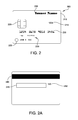
- FIGS. 2 to 2E illustrate an embodiment where the LED-lit preprinted numbers (or other symbols) are incorporated into a financial transaction card 200 such as a credit or debit card.
- a financial transaction card 200 such as a credit or debit card.
- the term "credit” as used herein covers both credit transactions such as Visa® or MasterCard® transactions and charge transactions such as American Express® transactions.
- the transaction card 200 can provided improved security for both card present and card-not-present types of transactions.
- FIG. 2 shows the outer front major surface of card body 210 of transaction card 200.
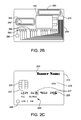
- FIG. 2A shows the outer rear major surface of the card body 210.
- FIG. 2B shows the internal operable components of the transaction card 200.
- FIG. 2C shows the outer front major surface of the transaction card with digits of a primary account number (PAN) illuminated to show a dynamic code.
- PAN primary account number
- the face of the card body 210 can include an issuer name or other graphic typically shown on today's transactions cards.
- a CSC code 215 (if the card is an American Express® card) may be printed on the front face of the card, or rear face (code 250 in FIG. 2A ), though this static value can be phased out as legacy systems go off-line.
- a primary account number 235 (ISO/IEC 7811-3 Region 1) is also printed on the cover of the card, and contains anywhere from 12 to 19 digits. American Express® cards typically have 15 digits whereas Visa® or MasterCard® cards typically have 16 digits.
- ISO/IEC 7811-3 Region 2 includes identifying indicia 230, such as the card holder's name and the expiration date of the card printed on the face of the card.
- the card 200 includes an actuation button 225.
- the transaction card preferably has the shape of a standard magnetic stripe card, as governed by applicable standards. If a magnetic stripe emulator is used as discussed below, the rear surface shown in FIG. 2A does not actually include a magnetic stripe. A static magnetic stripe encoded with standard data in standard data formats is provided on the rear surface of the card, as shown in FIG. 2A .
- Signature block 245 and CSC code 250 are also shown on the rear graphics layer of the card body.
- the transaction card can optionally include smart card technology for contact or contactless smart card transactions.
- the card body 210 includes a smart card contact pad 220 on the front face of the card for contact-based communications between an embedded smart card chip 297 ( FIG. 2B ) and a smart card reader.
- Smart card contact pad 220 is used to perform transactions on devices supporting the ISO/IEC 7816 standards. In Europe and in Canada this would include the Chip & Pin devices used to perform payment transactions.
- Contact smart cards are also common in physical access control systems.
- the card 200 includes an internal power source 260, such as a battery, for providing power to the various operable components of the smart card 200.
- an internal power source 260 such as a battery
- the card 200 includes a conventional smart card chip/processor 297 that communicates with an appropriately configured external smart card reader by way of the aforementioned smart card contact pad 220 or wirelessly by way of integrated antenna 295 (i.e., contactless communication).
- the smart card 200 also includes a one dimension LED matrix 280 including a plurality of individual LEDs 285 connected to a controller 270 via connection circuitry 275 (e.g., wires/traces).
- the controller 270 can be an ASIC processor.
- Controller 270 is connected to a second antenna 299 for use in programming the controller 270.
- the same antenna can be used for both smart card chip/processor 297 and LED controller 270 if permitted by applicable card security standards.
- the data is permanently magnetically presented to a credit card reader using a so-called F2F-format, or two frequency format, in which a "0" bit is formed by a magnet part of a predetermined length in the magnetic strip, and a "1" bit is two longitudinally, magnetically oppositely directed magnet parts, having a combined length equal to the length of the "0" bit magnet part.
- Current specifications call for the magnetic stripe to be located 0.223 inches (5.66 mm) from the edge of the card, and to be 0.375 inches (9.52 mm) wide. Each track is 0.110 inches (2.79 mm) wide.
- a switch 290 is triggered to prompt controller 270 to perform its operations. Specifically, the controller generates or retrieves a position value corresponding to a combination of LEDs 285 that are to be illuminated.
- the LEDs 285 are positioned with respect to (e.g., underneath, adjacent to, around, etc.) individual numbers from the primary account number 235 printed on the face of the card body 210.
- the controller through connection circuitry 275 triggers selected individual LEDs 285 to light up based on the positional values. For example, as shown in FIG.
- the primary account number 235 has sixteen individual digits/positions each capable of being illuminated by a respective LED 285.
- reference number 237 illustrates the numbers that are illuminated.
- the controller 270 has triggered the LEDs 285 corresponding to the second, eighth and fifteenth digits/positions of the primary account number. Whatever number happens to be printed at those locations - here, "2", "8" and "5" - are illuminated.
- the illuminated numbers form a code "285" that can be used by the user in a given card-not-present transaction rather than the static CVC code 215 or 250.
- selected positions in the PAN can be illuminated in timed, sequential order to provided the code, in the manner described above. The code could even be used in card present transactions if the charge procedures provide for the exchange of such information as part of the transaction.
- the controller 270 may use a prestored list of position values to determine which digit positions in the primary account number 235 should be illuminated.
- Table 2.0 illustrated one such example for a three digit code. Four digits would be used for AMEX applications. TABLE 2.0 Element PAN Position 1 PAN Position 2 PAN Position 3 Next Previous 1 2 5 7 2 0 2 5 6 11 3 1 3 1 4 8 4 2 4 4 5 6 5 3 5 4 6 8 6 4 6 6 7 13 7 5 ... ... ... ... ... ... n 1 15 16 null n-1
- Positions 1, 2 and 3 could be limited by fixed length regions of the primary account number or not at all. For example, assuming a 16 digit account numbers, Position 1 could be limited to primary account number region digits 1-5, Position 2 could be limited to primary account number region digits 6-10, and Position 3 could be limited to primary account number region digits 11-16. As an alternative, to increase code possibilities in this same example, Position 1 could be limited to primary account number region digits 1-5, Position 2 could be limited to primary account number region digits 1-10, and Position 3 could be limited to any primary account number region digit, i.e., digits 1-16.
- the card issuer or their processing provider would store the doubly linked list for the authentication process for use in deriving a code to validate the incoming dynamic code.
- a doubly linked list allows the process to use the next and previous elements in the list for verification since out of sequence transactions should be supported.
- FIGS. 2D and 2E show a symbol matrix 236.
- FIG. 2E shows various positions 238 in the matrix 236 illuminated during user to provide a one time code ("826") during use.
- This approach which has symbols on the rear major surface of the card for illumination, may be a utilized, for example, when the PAN on the front major surface is embossed into the card.
- the controller 270 can utilize any algorithm that will provide an appropriate level of security while being implementable in a microcontroller of reasonable memory size, in a commercially reasonably speed (i.e., in a limited number of processing steps) and at an appropriate cost.
- both the controller 270 could use one or more seed values, one or more of which may be incremented with each transaction, in calculating matrix position values for each transaction.
- the back-end system uses the same algorithm and seed value(s) in order to verify a received code.
- FIG. 3 is a flow chart illustrating an embodiment the operation of controller 155 ( FIG. 1B ) or 270 ( FIG. 2B ).
- the code displayed by the LED matrix can be used for logical or physical access to a resource.
- the code displayed by the LED matrix is used for card-not-present transactions (e.g., over the phone or e-commerce transactions) or card present transactions.
- step 305 the card holder turns the card on by depressing the actuation button 150 or 225.
- the controller 155 or 270 retrieves from memory a pointer "T" to an element of the list of prestored values in its memory corresponding to positions to be illuminated.
- step 315 the controller 155 or 270 increments the pointer T.
- the controller 155 or 270 checks to see if the end of the prestored list has already been reached. If the end of the list has been reached, then the controller illuminates (step 325) all of the digits in the matrix 130 or primary account number 235 at step 325 and turns the card off at step 330.
- the controller 155 or 270 retrieves the position values from the list element corresponding to the pointer value T.
- the position values can be any number of digits. For credit transactions the position values can be 3 or 4 digits depending on the requirements of the given card association.
- the controller 155 or 270 illuminates the LED positions/primary account number positions corresponding to the value it retrieved at step 335.
- the user can use the illuminated code as an OTP to access a resource or in a card-not-present or card present transaction, which can be verified by the back end system as described above.
- the present value of pointer T is stored at 345.
- the digits illuminated at step 340 are illuminated until a time limit expires (step 350). At that time, the card is turned off (step 355) until the next actuation by the user (step 305).
- LEDs that provides a visual presentation of the one-time code e.g., OTP or dynamic card-not-present code
- the LED controller could turn on or flash a first LED corresponding to a first symbol or digit from a PAN to show the first element of the one-time code, followed by turning on or flashing a second LED (which could even be a second turn on or flash of the first LED) corresponding to a second symbol or digit from the matrix or PAN to show the second element of the one-time code, etc.
- step 310 to 335 are replaced with step(s) for running the algorithm for deriving the sub-combination of LEDs.
- step 345 can also be eliminated.
- ISO 8583 defines the common process of authorization, clearing, settlement, and funding of credit transactions.
- the authorization phase where the cardholder initiates a purchase, the Merchant passes information to the Card Issuer through the Acquirer and Card Association.
- the Issuer is in charge of verification and would verify any dynamic code described above passed during a card present or card-not-present transaction.
- a purchase approval or denial is sent back to the Merchant by way of the Card Association and Acquirer.
- the Merchant stores approved transactions in batch form for later clearing and settlement.
- the clearing and settlement phase the Merchant sends its batch to the Issuer via the Acquirer and Card Association.
- the Issuer bills the card holder and sends funds for payment of the debt to the Merchant via the Card Association and Acquirer.
- the card can have biometric protection built in for locking and unlocking the card for use.
- the smart card controller 297 can have a match on card application stored thereon. This feature is described fully in commonly assigned PCT Application No. PCT/LTS09/54275, which is incorporated by reference herein as set forth above.
- the card 100 or 200 can have a three-ply card body comprising a top graphic layer, one or more prelam/inlay electronics layer and bottom graphics layer.
- the graphic layer can be white with graphics printed thereon.
- the areas for illumination e.g., the PAN number, numeric matrix 130, or areas around these items for indicating selection of a particular number, letter or symbol
- the underlying LEDs are bright enough to shine through these white regions.
- these areas can be finished with a laser engraving or other process to allow the internal LEDs to illuminate the individual digits. The engraving process removes or thins the layer of ink that is over the plastic base material.
- the central layer is a pre-laminated inlay layer having the necessary electronics thereon, e.g., microcontroller, gate arrays (CDM), voltage regulator, CDM coils, LEDs, activation switch, battery, and optional smart card ICC and contactless antenna.
- the bottom layer is a similar to the top layer only including an optional magnetic stripe, signature panel and/or graphics.
- FIG 4 is a summary flowchart of an embodiment of a card issuing process 400 for a transaction card, such as transaction card 200.
- a card account is created the Financial institution contacts a Core Services provider who handles, among other things, the ordering, distribution, and possibly activation of the plastic card.
- the manufacturer uses a transaction card inlay 410 as described above to produce a transaction card (illustrated by 420 in FIG. 4 ) using the above-described hot lamination manufacturing process.
- a transaction card inlay 410 as described above to produce a transaction card (illustrated by 420 in FIG. 4 ) using the above-described hot lamination manufacturing process.
- top and bottom graphics layers would be laminated around the Prelam/Inlay electronics layer 410 at approximately 150 degrees for 15 minutes.
- the result of this process is a semi-finished card stock.
- the card is then sent to the personalization supplier or process step (if done by the same provider) where the necessary account and other data (e.g., list of digit positions for generating one time codes or seed value(s) for use in any algorithm provided for calculating position values and the algorithm itself (if not preloaded on the microcontroller), etc.) are stored in the secure microcontroller memory (e.g., controller 155 or 270).
- the card can be personalized by standard contactless smart card personalization equipment and techniques.
- the account and other data download to the LED controller could be at the same frequency (13.56 Mhz) as the contactless smart card chip 297 but use custom command set or a separate wireless connection could be used, e.g., wireless RS-485.
- the personalized card is then shipped to the Card Holder who can then proceed with the documented card activation process included with the materials accompanying the card. Typical activation methods of calling a toll free number or a simple debit card transaction to activate the card would remain the same. The card requires no special processes to activate the account.
- FIG. 5 is a summary flowchart of the instant issue process for a transaction card, such as a transaction card 200 described above.
- the process is similar to the instant issue process for current flat card (un-embossed) instant issue cards. While the process is the similar, customized personalization software would be used to provide the account information and other data to the card.
- the CARDWIZARD FCP 20/20 flat card printer from Dynamic Card Solutions supports contactless personalization (at 13.56Mhz) and the custom personalization software would allow this type of flat card printer to communicate with the card to receive and store the account and other data in the secure microcontroller memory.
- the Financial institution contacts a Core Services provider who handles, among other things, the ordering, distribution, and possibly activation of the plastic card.
- the manufacturer uses a transaction card inlay (illustrated by reference 510 in FIG. 5 ) as described above to produce blank transaction cards 520 using the above-described hot lamination manufacturing process.
- the result of this process is a semi-finished card stock.
- the card stock would have the logos, holograms or other security encodings and any other standard printed materials required by the card associations but lack other information, such as a printed account number and name.
- the blank card stock/semi-finished card stock is then shipped to the financial information, e.g., Card Issuer.
- the blank card stock When a customer comes into the branch office of the financial institution and applies for a credit or debit account the blank card stock would be placed in the FCP machine and the top and bottom graphics would be printed along with the primary account number and other account or card holder information necessary to complete a finished credit or debit card.
- the custom personalization software would store the account and other data in the secure microcontroller memory and the personalized card can then be given to the card holder for use, with or without the need to activate the card.
- a plastic transaction card that can provide improved security for both card present transactions (e.g., if in the dynamic code being displayed is entered during a card present transaction (similar to entering a PIN for card present debit transactions)) and card-not-present types of transactions.
- Use of Integrating OTP functions into a plastic card and allowing this OTP value to be included in both a card present and card-not-present transactions provide the level of security necessary to have a material effect on plastic card fraud.
- Having an OTP function included on a plastic card (whether financial transaction card or stand-alone OTP card) also allows the plastic card to be used as a OTP token for access control applications, an example being a web banking login.
Landscapes
- Engineering & Computer Science (AREA)
- Business, Economics & Management (AREA)
- Physics & Mathematics (AREA)
- General Physics & Mathematics (AREA)
- Accounting & Taxation (AREA)
- Theoretical Computer Science (AREA)
- General Business, Economics & Management (AREA)
- Strategic Management (AREA)
- Microelectronics & Electronic Packaging (AREA)
- Finance (AREA)
- Computer Hardware Design (AREA)
- Computer Security & Cryptography (AREA)
- Computer Networks & Wireless Communication (AREA)
- Credit Cards Or The Like (AREA)
Claims (16)
- Carte (100, 200) pour l'utilisation dans des transactions sécurisées, comprenant :un corps de carte (110, 210) ayant une première surface majeure et une deuxième surface majeure, la première surface majeure ayant une combinaison d'une pluralité de symboles (135, 235, 236) disposés dessus, le corps de carte (110, 210) ayant une pluralité de LED (143, 285), et un contrôleur de LED (155, 270) couplé à la pluralité de LED (143, 285) fonctionnel lors de l'actionnement pour illuminer sélectivement des LED individuelles de la pluralité de LED (143, 285) en fournissant ainsi un code à utilisation unique illuminé pour l'utilisation dans une transaction sécurisée, caractérisée en ce quela pluralité de LED (143, 285) est disposée en relation avec la pluralité de symboles (135, 235, 236), des LED individuelles des LED (143, 235) étant disposées pour identifier des symboles individuels respectifs de la pluralité de symboles (135, 235, 236) quand elles sont illuminées, etle contrôleur de LED (155, 270) est fonctionnel lors de l'actionnement pour illuminer sélectivement des LED individuelles de la pluralité de LED (143, 285) pour identifier une sous-combinaison de la pluralité de symboles (135, 235, 236), en fournissant ainsi le code à utilisation unique illuminé pour l'utilisation dans la transaction sécurisée.
- Carte (200) selon la revendication 1, dans laquelle la pluralité de symboles comprend un numéro de compte (235) et dans laquelle le numéro de compte (235) est un numéro de compte principal pour une carte de transaction financière de débit ou de crédit et le code à utilisation unique illuminé est un code de transaction dynamique de carte présente ou carte non présente.
- Carte (200) selon la revendication 1,
dans laquelle la première surface majeure comprend une première région ayant un numéro de compte principal pré-imprimé (235) pour un compte de crédit sur celle-ci et une deuxième région ayant la pluralité de symboles (236),
dans laquelle le code à utilisation unique illuminé est un code de transaction dynamique de carte présente ou carte non présente. - Carte (200) selon la revendication 1, dans laquelle la carte (200) est une carte de transaction de crédit ayant un numéro de compte principal pré-imprimé (235) sur une des surfaces majeures et une bande magnétique statique (240) sur l'une opposée des surfaces majeures, utilisable dans des transaction par glissement de bande magnétique avec un terminal de transaction configuré pour lire des informations de transaction codées sur une bande magnétique d'une carte de transaction standard, et dans laquelle le code à utilisation unique illuminé est un code de transaction dynamique de carte présente ou carte non présente.
- Carte (200) selon la revendication 1, comprenant en outre une puce de carte intelligente (297) programmée avec au moins une application de transaction pour l'utilisation dans des transactions de crédit ou de débit avec contact et/ou sans contact.
- Carte (100, 200) selon la revendication 1, dans laquelle le contrôleur de LED (155, 270) est fonctionnel pour accéder à une liste stockée de combinaisons de LED pour l'illumination et une valeur de pointeur sur la liste stockée, ou est programmé pour obtenir une combinaison de LED (143, 285) pour l'illumination.
- Carte (100, 200) selon la revendication 1, dans laquelle les symboles sont agencés dans une grille (130) ayant une pluralité de rangées de symboles ou dans une unique rangée de symboles (235, 236).
- Carte (100, 200) selon la revendication 1, comprenant en outre au moins un déclencheur d'actionnement (115, 225) pour l'actionnement manuel de la carte, en réponse auquel le contrôleur de LED (155, 270) est fonctionnel pour illuminer les LED (143, 285).
- Carte (200) selon la revendication 1,
dans laquelle la carte (200) est une carte de transaction en plastique pour l'utilisation dans des transactions de crédit ou de débit,
dans laquelle la première surface majeure a un numéro de compte principal pré-imprimé (235) disposé dessus, comprenant la pluralité de symboles (235) ; et
dans laquelle la carte (200) comprend une couche incrustée électronique (410) disposée entre les première et deuxième surfaces majeures, dans laquelle la couche incrustée (410) comprend la pluralité de LED (285) et le contrôleur de LED (270). - Carte (200) selon la revendication 9, dans laquelle la carte (200) comprend une bande magnétique statique (240) utilisable dans des transactions par glissement de bande magnétique de carte présente avec un terminal de transaction configuré pour lire des informations de transaction codées sur une bande magnétique d'une carte de transaction standard
- Carte (200) selon la revendication 9, comprenant en outre une puce de carte intelligente (297) programmée avec au moins une application de transaction pour l'utilisation dans des transactions de crédit ou de débit avec contact et/ou sans contact.
- Carte (200) selon la revendication 9, dans laquelle le contrôleur de LED (270) est fonctionnel pour accéder à une liste stockée de sous-combinaisons de LED pour l'illumination pour chaque nouvelle transaction et une valeur de pointeur associée à la liste.
- Carte (200) selon la revendication 9, dans laquelle le contrôleur de LED (270) est fonctionnel pour accéder à une liste stockée de sous-combinaisons de LED pour l'illumination pour chaque nouvelle transaction ou fonctionnel pour obtenir une sous-combinaison de LED pour l'illumination pour chaque nouvelle transaction.
- Carte (200) selon la revendication 9,
dans laquelle des LED individuelles des LED (285) sont disposées pour identifier par illumination des chiffres individuels respectifs à partir du numéro de compte (235) ; et
dans laquelle le contrôleur de LED (270) est fonctionnel lors de l'actionnement pour illuminer sélectivement des LED individuelles de la pluralité de LED (285) pour illuminer pour un utilisateur une sous-combinaison des chiffres du numéro de compte (235) pour fournir un code de transaction à utilisation unique de carte présente ou de carte non présente pour l'utilisation dans des transactions de crédit ou de débit avec carte présente ou carte non présente, respectivement. - Procédé de fabrication d'une carte de transaction (100, 200), comprenant :la fourniture d'un corps de carte (110, 210) ayant une première surface majeure et une deuxième surface majeure, une pluralité de LED (143, 285) et un contrôleur de LED (155, 270) connecté électriquement à la pluralité de LED (143, 285) ;dans laquelle la première surface majeure a une pluralité de symboles (135, 235, 236) disposés dessus ; etdans laquelle le contrôleur de LED (155, 270) est fonctionnel pour illuminer sélectivement des LED individuelles de la pluralité de LED (143, 285), en illuminant ainsi un code à utilisation unique pour l'utilisation dans une transaction sécurisée, caractérisée en ce quela pluralité de LED (143, 285) est disposée par rapport à la pluralité de symboles (135, 235, 236) de manière que des LED individuelles des LED (143, 235) soient disposées pour identifier des symboles individuels respectifs de la pluralité de symboles (135, 235, 236) quand elles sont illuminées, etle contrôleur de LED (155, 270) est fonctionnel pour illuminer sélectivement des LED individuelles de la pluralité de LED (143, 285) pour identifier une sous-combinaison de la pluralité de symboles (135, 235, 236), en fournissant ainsi le code à utilisation unique illuminé pour l'utilisation dans la transaction sécurisée.
- Procédé selon la revendication 15, dans lequel ladite étape de fourniture d'un corps de carte (110, 210) ayant une première surface majeure et une deuxième surface majeure, une pluralité de LED (143, 285) et un contrôleur de LED (155, 270) connecté électriquement à la pluralité de LED (143, 285) comprend
la fourniture d'une couche incrustée électronique (410), la couche incrustée électronique (410) comprenant la pluralité de LED (143, 285) et le contrôleur de LED (155, 270) ; et
la stratification de la couche incrustée électronique (410) entre une première couche graphique de surface majeure définissant la première surface majeure de la carte de transaction (100, 200) et une deuxième couche graphique de surface majeure définissant la deuxième surface majeure de la carte (100, 200).
Applications Claiming Priority (3)
| Application Number | Priority Date | Filing Date | Title |
|---|---|---|---|
| US25825509P | 2009-11-05 | 2009-11-05 | |
| US12/762,518 US8413894B2 (en) | 2009-11-05 | 2010-04-19 | Card with illuminated codes for use in secure transactions |
| PCT/US2010/055388 WO2011056931A1 (fr) | 2009-11-05 | 2010-11-04 | Carte a codes eclaires a utiliser dans des transactions securisees |
Publications (3)
| Publication Number | Publication Date |
|---|---|
| EP2497093A1 EP2497093A1 (fr) | 2012-09-12 |
| EP2497093A4 EP2497093A4 (fr) | 2014-01-08 |
| EP2497093B1 true EP2497093B1 (fr) | 2015-09-09 |
Family
ID=43924351
Family Applications (1)
| Application Number | Title | Priority Date | Filing Date |
|---|---|---|---|
| EP10829066.9A Active EP2497093B1 (fr) | 2009-11-05 | 2010-11-04 | Carte a codes eclaires a utiliser dans des transactions securisees |
Country Status (4)
| Country | Link |
|---|---|
| US (2) | US8413894B2 (fr) |
| EP (1) | EP2497093B1 (fr) |
| CA (1) | CA2779271C (fr) |
| WO (1) | WO2011056931A1 (fr) |
Families Citing this family (52)
| Publication number | Priority date | Publication date | Assignee | Title |
|---|---|---|---|---|
| US9846866B2 (en) * | 2007-02-22 | 2017-12-19 | First Data Corporation | Processing of financial transactions using debit networks |
| US7871013B2 (en) * | 2007-10-31 | 2011-01-18 | Target Brands, Inc. | Transaction product with electrical circuit |
| US8413894B2 (en) * | 2009-11-05 | 2013-04-09 | X-Card Holdings, Llc | Card with illuminated codes for use in secure transactions |
| US8473414B2 (en) * | 2010-04-09 | 2013-06-25 | Visa International Service Association | System and method including chip-based device processing for transaction |
| FR2961329B1 (fr) * | 2010-06-11 | 2015-10-16 | Oberthur Technologies | Carte a microcircuit a indicateur et procede de mise en oeuvre dans une telle carte |
| PH12013500119A1 (en) * | 2010-07-19 | 2013-03-11 | Cpi Card Group Tennessee Inc | System and method for instant issue of personalized financial transaction cards |
| US9106632B2 (en) | 2011-05-26 | 2015-08-11 | First Data Corporation | Provisioning by delivered items |
| US20130048712A1 (en) * | 2011-08-24 | 2013-02-28 | Philippe Guillaud | Nagraid information card |
| WO2013055698A2 (fr) | 2011-10-10 | 2013-04-18 | Visa International Service Association | Instrument de paiement doté d'un identifiant de compte |
| US9122968B2 (en) | 2012-04-03 | 2015-09-01 | X-Card Holdings, Llc | Information carrying card comprising a cross-linked polymer composition, and method of making the same |
| US8857722B2 (en) | 2012-07-20 | 2014-10-14 | CPI Card Group—Colorado, Inc. | Weighted transaction card |
| US10032099B2 (en) | 2012-07-20 | 2018-07-24 | CPI Card Group—Colorado, Inc. | Weighted transaction card |
| EP2973238B1 (fr) * | 2013-03-14 | 2019-08-07 | X-Card Holdings, LLC | Carte porteuse d'informations pour afficher des mots de passe à usage unique, et son procédé de fabrication |
| EP2973236B1 (fr) | 2013-03-15 | 2019-01-09 | X-Card Holdings, LLC | Méthode de fabrication d'une couche centrale pour une carte contenant des informations, et produits résultants |
| US9246935B2 (en) * | 2013-10-14 | 2016-01-26 | Intuit Inc. | Method and system for dynamic and comprehensive vulnerability management |
| US9070053B2 (en) | 2013-10-25 | 2015-06-30 | CPI Card Group—Colorado, Inc. | Multi-metal layered card |
| GB2519825B (en) * | 2013-10-29 | 2021-06-30 | Cryptomathic Ltd | Secure mobile user interface |
| US9501345B1 (en) | 2013-12-23 | 2016-11-22 | Intuit Inc. | Method and system for creating enriched log data |
| US9325726B2 (en) | 2014-02-03 | 2016-04-26 | Intuit Inc. | Method and system for virtual asset assisted extrusion and intrusion detection in a cloud computing environment |
| US20150304343A1 (en) | 2014-04-18 | 2015-10-22 | Intuit Inc. | Method and system for providing self-monitoring, self-reporting, and self-repairing virtual assets in a cloud computing environment |
| US10757133B2 (en) | 2014-02-21 | 2020-08-25 | Intuit Inc. | Method and system for creating and deploying virtual assets |
| US9866581B2 (en) | 2014-06-30 | 2018-01-09 | Intuit Inc. | Method and system for secure delivery of information to computing environments |
| US9276945B2 (en) | 2014-04-07 | 2016-03-01 | Intuit Inc. | Method and system for providing security aware applications |
| US9245117B2 (en) | 2014-03-31 | 2016-01-26 | Intuit Inc. | Method and system for comparing different versions of a cloud based application in a production environment using segregated backend systems |
| US11294700B2 (en) | 2014-04-18 | 2022-04-05 | Intuit Inc. | Method and system for enabling self-monitoring virtual assets to correlate external events with characteristic patterns associated with the virtual assets |
| US9900322B2 (en) | 2014-04-30 | 2018-02-20 | Intuit Inc. | Method and system for providing permissions management |
| US9330263B2 (en) | 2014-05-27 | 2016-05-03 | Intuit Inc. | Method and apparatus for automating the building of threat models for the public cloud |
| US9245268B1 (en) | 2014-07-10 | 2016-01-26 | Bank Of America Corporation | Dynamic card validation |
| US9460439B2 (en) | 2014-07-10 | 2016-10-04 | Bank Of America Corporation | Dynamic card validation using user requested cell identifiers |
| US9489675B2 (en) | 2014-07-10 | 2016-11-08 | Bank Of America Corporation | Dynamic card validation using randomly determined cell identifiers |
| US9443241B2 (en) | 2014-07-10 | 2016-09-13 | Bank Of America Corporation | Dynamic card validation using periodically communicated cell identifiers |
| US9473481B2 (en) | 2014-07-31 | 2016-10-18 | Intuit Inc. | Method and system for providing a virtual asset perimeter |
| US10102082B2 (en) | 2014-07-31 | 2018-10-16 | Intuit Inc. | Method and system for providing automated self-healing virtual assets |
| US9779345B2 (en) * | 2014-08-11 | 2017-10-03 | Visa International Service Association | Mobile device with scannable image including dynamic data |
| US9230255B1 (en) * | 2014-08-15 | 2016-01-05 | Mastercard International Incorporated | Payment card having light-emitting diode indicators coordinated with stored payment applications |
| CN104539430B (zh) * | 2014-12-30 | 2018-11-30 | 飞天诚信科技股份有限公司 | 一种基于卡片的动态口令生成方法及设备 |
| US20170132652A1 (en) * | 2015-11-11 | 2017-05-11 | Mastercard International Incorporated | Systems and Methods for Processing Loyalty Rewards |
| US10089568B2 (en) | 2016-06-01 | 2018-10-02 | CPI Card Group—Colorado, Inc. | IC chip card with integrated biometric sensor pads |
| WO2017217171A1 (fr) * | 2016-06-14 | 2017-12-21 | 株式会社村田製作所 | Dispositif de circuit intégré embarqué |
| US20180089688A1 (en) * | 2016-09-27 | 2018-03-29 | Mastercard International Incorporated | System and methods for authenticating a user using biometric data |
| US10002318B1 (en) * | 2016-12-09 | 2018-06-19 | Capital One Services, Llc | Transaction card having internal lighting |
| US11048991B2 (en) | 2017-02-14 | 2021-06-29 | CPI Card Group—Colorado, Inc. | Edge-to-edge metal card and production method |
| US10482793B2 (en) * | 2017-05-10 | 2019-11-19 | Bryan Hurley | Personal article identification system |
| US11468272B2 (en) * | 2019-08-15 | 2022-10-11 | Visa International Service Association | Method, system, and computer program product for detecting fraudulent interactions |
| US11461763B2 (en) * | 2020-04-16 | 2022-10-04 | Capital One Services Llc | Systems and methods for instant bank card issuance |
| US11797818B2 (en) | 2021-06-29 | 2023-10-24 | Capital One Services, Llc | Information-shielding cards and systems and methods for fabricating the same |
| KR20230026697A (ko) * | 2021-08-18 | 2023-02-27 | 주식회사 바이오로그디바이스 | 생체인식 기반의 태양광 충전식 otp 생성기 |
| US12614185B1 (en) * | 2021-10-29 | 2026-04-28 | United Services Automobile Association (Usaa) | Tracking systems and methods for purchase devices |
| FR3130418B1 (fr) * | 2021-12-13 | 2023-10-27 | Idemia France | Procédé et carte à puce pour configuration d’une carte à puce |
| US11989603B2 (en) | 2021-12-30 | 2024-05-21 | American Express Travel Related Services Company, Inc. | Illuminating transaction card |
| US12528279B2 (en) | 2022-10-20 | 2026-01-20 | X-Card Holdings, Llc | Core layer for information carrying card, resulting information carrying card, and methods of making the same |
| US12220897B2 (en) | 2022-10-20 | 2025-02-11 | X-Card Holdings, Llc | Core layer for information carrying card, resulting information carrying card, and methods of making the same |
Family Cites Families (21)
| Publication number | Priority date | Publication date | Assignee | Title |
|---|---|---|---|---|
| US3531626A (en) * | 1967-05-29 | 1970-09-29 | Anthony Olff | Electrical device for visually checking credit cards |
| US5180902A (en) | 1988-04-21 | 1993-01-19 | David Schick | Self verifying transaction card with disabling capability |
| US5857079A (en) * | 1994-12-23 | 1999-01-05 | Lucent Technologies Inc. | Smart card for automatic financial records |
| US20020070279A1 (en) * | 1999-12-21 | 2002-06-13 | Zausner Alan J. | Methods and apparatus for illuminating a transaction card |
| US7044394B2 (en) * | 2003-12-17 | 2006-05-16 | Kerry Dennis Brown | Programmable magnetic data storage card |
| GB2387253B (en) * | 2002-04-03 | 2004-02-18 | Swivel Technologies Ltd | System and method for secure credit and debit card transactions |
| US20030216997A1 (en) * | 2002-05-16 | 2003-11-20 | Cohen Morris E. | Financial cards |
| NL1024323C2 (nl) * | 2003-09-18 | 2005-03-21 | Tno | Identificatiekaart. |
| US7584153B2 (en) * | 2004-03-15 | 2009-09-01 | Qsecure, Inc. | Financial transactions with dynamic card verification values |
| DE102005008258A1 (de) * | 2004-04-07 | 2005-10-27 | Giesecke & Devrient Gmbh | Datenträger mit TAN-Generator und Display |
| US7599192B2 (en) * | 2005-04-11 | 2009-10-06 | Aveso, Inc. | Layered structure with printed elements |
| US7793851B2 (en) * | 2005-05-09 | 2010-09-14 | Dynamics Inc. | Dynamic credit card with magnetic stripe and embedded encoder and methods for using the same to provide a copy-proof credit card |
| US20070290049A1 (en) * | 2006-06-19 | 2007-12-20 | Intelcard, Inc. | Interactive transaction cards |
| US7584895B2 (en) * | 2006-08-29 | 2009-09-08 | At&T Intellectual Property I, L.P. | Transactional cards with sensory features |
| AU2006348113A1 (en) * | 2006-09-07 | 2008-03-13 | Asia Capital Services Limited | Visual code transaction verification |
| US8504451B2 (en) | 2006-11-16 | 2013-08-06 | Visa U.S.A. Inc. | Method and system using candidate dynamic data elements |
| US7874488B2 (en) * | 2007-05-31 | 2011-01-25 | Red Hat, Inc. | Electronic ink for identity card |
| US12121328B2 (en) * | 2007-12-24 | 2024-10-22 | Dynamics Inc. | Credit, security, debit cards and the like with buttons |
| WO2009097604A1 (fr) * | 2008-01-31 | 2009-08-06 | Priva Technologies Inc. | Système et procédé pour un jeton auto-authentifiant |
| US8136736B2 (en) * | 2008-12-09 | 2012-03-20 | Vasco Data Security, Inc. | Slim electronic device with detector for unintentional activation |
| US8413894B2 (en) * | 2009-11-05 | 2013-04-09 | X-Card Holdings, Llc | Card with illuminated codes for use in secure transactions |
-
2010
- 2010-04-19 US US12/762,518 patent/US8413894B2/en active Active
- 2010-11-04 WO PCT/US2010/055388 patent/WO2011056931A1/fr not_active Ceased
- 2010-11-04 CA CA2779271A patent/CA2779271C/fr active Active
- 2010-11-04 EP EP10829066.9A patent/EP2497093B1/fr active Active
-
2013
- 2013-03-12 US US13/796,827 patent/US8628017B2/en active Active
Also Published As
| Publication number | Publication date |
|---|---|
| US20110101109A1 (en) | 2011-05-05 |
| CA2779271C (fr) | 2016-09-06 |
| EP2497093A4 (fr) | 2014-01-08 |
| EP2497093A1 (fr) | 2012-09-12 |
| US8628017B2 (en) | 2014-01-14 |
| US20130191281A1 (en) | 2013-07-25 |
| US8413894B2 (en) | 2013-04-09 |
| CA2779271A1 (fr) | 2011-05-12 |
| WO2011056931A1 (fr) | 2011-05-12 |
Similar Documents
| Publication | Publication Date | Title |
|---|---|---|
| US8628017B2 (en) | Card with illuminated codes for use in secure transactions | |
| US7954708B2 (en) | Selectable multi-purpose card | |
| KR102416954B1 (ko) | 선불, 직불 및 신용 카드 보안 코드 생성 시스템을 위한 방법 | |
| US8814052B2 (en) | Secure smart card system | |
| US7051929B2 (en) | Secure credit card having daily changed security number | |
| US8950680B2 (en) | Multifunction removable cover for portable payment device | |
| CA3017168A1 (fr) | Cartes et dispositifs avec emulateurs magnetiques pour communiquer avec des lecteurs de bandes magnetiques et applications correspondantes | |
| CN103890786A (zh) | 用于接收金融信息的电子信息卡 | |
| WO2010030775A1 (fr) | Vérification de signatures d’un dispositif de traitement de paiement | |
| JP6266198B2 (ja) | 片面に受入属性を有する決済カード | |
| RU2742347C2 (ru) | Система генерирования защитного кода предоплаченной, дебетовой и кредитной карты | |
| US20120091199A1 (en) | Multi-account card system | |
| Srichumpuang | Smart card technologies and system implementation | |
| HK1168072A (en) | Payment card having acceptance attributes on a single side | |
| HK40001747A (en) | Prepaid, debit and credit card security code generation system | |
| HK40001746A (en) | Method for a prepaid, debit and credit card security code generation system |
Legal Events
| Date | Code | Title | Description |
|---|---|---|---|
| PUAI | Public reference made under article 153(3) epc to a published international application that has entered the european phase |
Free format text: ORIGINAL CODE: 0009012 |
|
| 17P | Request for examination filed |
Effective date: 20120514 |
|
| AK | Designated contracting states |
Kind code of ref document: A1 Designated state(s): AL AT BE BG CH CY CZ DE DK EE ES FI FR GB GR HR HU IE IS IT LI LT LU LV MC MK MT NL NO PL PT RO RS SE SI SK SM TR |
|
| DAX | Request for extension of the european patent (deleted) | ||
| A4 | Supplementary search report drawn up and despatched |
Effective date: 20131209 |
|
| RIC1 | Information provided on ipc code assigned before grant |
Ipc: G06K 19/077 20060101AFI20131203BHEP Ipc: H01B 12/00 20060101ALI20131203BHEP Ipc: G07F 7/08 20060101ALI20131203BHEP |
|
| REG | Reference to a national code |
Ref country code: DE Ref legal event code: R079 Ref document number: 602010027471 Country of ref document: DE Free format text: PREVIOUS MAIN CLASS: H01B0012000000 Ipc: G06K0019077000 |
|
| GRAP | Despatch of communication of intention to grant a patent |
Free format text: ORIGINAL CODE: EPIDOSNIGR1 |
|
| RIC1 | Information provided on ipc code assigned before grant |
Ipc: G06Q 20/40 20120101ALI20150401BHEP Ipc: H01B 12/00 20060101ALI20150401BHEP Ipc: G06Q 20/38 20120101ALI20150401BHEP Ipc: G07F 7/08 20060101ALI20150401BHEP Ipc: G06Q 20/34 20120101ALI20150401BHEP Ipc: G06K 19/077 20060101AFI20150401BHEP |
|
| INTG | Intention to grant announced |
Effective date: 20150424 |
|
| GRAS | Grant fee paid |
Free format text: ORIGINAL CODE: EPIDOSNIGR3 |
|
| GRAA | (expected) grant |
Free format text: ORIGINAL CODE: 0009210 |
|
| AK | Designated contracting states |
Kind code of ref document: B1 Designated state(s): AL AT BE BG CH CY CZ DE DK EE ES FI FR GB GR HR HU IE IS IT LI LT LU LV MC MK MT NL NO PL PT RO RS SE SI SK SM TR |
|
| REG | Reference to a national code |
Ref country code: GB Ref legal event code: FG4D |
|
| REG | Reference to a national code |
Ref country code: AT Ref legal event code: REF Ref document number: 748667 Country of ref document: AT Kind code of ref document: T Effective date: 20150915 Ref country code: CH Ref legal event code: EP |
|
| REG | Reference to a national code |
Ref country code: IE Ref legal event code: FG4D |
|
| REG | Reference to a national code |
Ref country code: DE Ref legal event code: R096 Ref document number: 602010027471 Country of ref document: DE |
|
| REG | Reference to a national code |
Ref country code: FR Ref legal event code: PLFP Year of fee payment: 6 |
|
| REG | Reference to a national code |
Ref country code: NL Ref legal event code: MP Effective date: 20150909 |
|
| PG25 | Lapsed in a contracting state [announced via postgrant information from national office to epo] |
Ref country code: GR Free format text: LAPSE BECAUSE OF FAILURE TO SUBMIT A TRANSLATION OF THE DESCRIPTION OR TO PAY THE FEE WITHIN THE PRESCRIBED TIME-LIMIT Effective date: 20151210 Ref country code: NO Free format text: LAPSE BECAUSE OF FAILURE TO SUBMIT A TRANSLATION OF THE DESCRIPTION OR TO PAY THE FEE WITHIN THE PRESCRIBED TIME-LIMIT Effective date: 20151209 Ref country code: FI Free format text: LAPSE BECAUSE OF FAILURE TO SUBMIT A TRANSLATION OF THE DESCRIPTION OR TO PAY THE FEE WITHIN THE PRESCRIBED TIME-LIMIT Effective date: 20150909 Ref country code: LV Free format text: LAPSE BECAUSE OF FAILURE TO SUBMIT A TRANSLATION OF THE DESCRIPTION OR TO PAY THE FEE WITHIN THE PRESCRIBED TIME-LIMIT Effective date: 20150909 Ref country code: LT Free format text: LAPSE BECAUSE OF FAILURE TO SUBMIT A TRANSLATION OF THE DESCRIPTION OR TO PAY THE FEE WITHIN THE PRESCRIBED TIME-LIMIT Effective date: 20150909 |
|
| REG | Reference to a national code |
Ref country code: LT Ref legal event code: MG4D |
|
| REG | Reference to a national code |
Ref country code: AT Ref legal event code: MK05 Ref document number: 748667 Country of ref document: AT Kind code of ref document: T Effective date: 20150909 |
|
| PG25 | Lapsed in a contracting state [announced via postgrant information from national office to epo] |
Ref country code: ES Free format text: LAPSE BECAUSE OF FAILURE TO SUBMIT A TRANSLATION OF THE DESCRIPTION OR TO PAY THE FEE WITHIN THE PRESCRIBED TIME-LIMIT Effective date: 20150909 Ref country code: SE Free format text: LAPSE BECAUSE OF FAILURE TO SUBMIT A TRANSLATION OF THE DESCRIPTION OR TO PAY THE FEE WITHIN THE PRESCRIBED TIME-LIMIT Effective date: 20150909 Ref country code: RS Free format text: LAPSE BECAUSE OF FAILURE TO SUBMIT A TRANSLATION OF THE DESCRIPTION OR TO PAY THE FEE WITHIN THE PRESCRIBED TIME-LIMIT Effective date: 20150909 Ref country code: HR Free format text: LAPSE BECAUSE OF FAILURE TO SUBMIT A TRANSLATION OF THE DESCRIPTION OR TO PAY THE FEE WITHIN THE PRESCRIBED TIME-LIMIT Effective date: 20150909 |
|
| PG25 | Lapsed in a contracting state [announced via postgrant information from national office to epo] |
Ref country code: NL Free format text: LAPSE BECAUSE OF FAILURE TO SUBMIT A TRANSLATION OF THE DESCRIPTION OR TO PAY THE FEE WITHIN THE PRESCRIBED TIME-LIMIT Effective date: 20150909 |
|
| PG25 | Lapsed in a contracting state [announced via postgrant information from national office to epo] |
Ref country code: CZ Free format text: LAPSE BECAUSE OF FAILURE TO SUBMIT A TRANSLATION OF THE DESCRIPTION OR TO PAY THE FEE WITHIN THE PRESCRIBED TIME-LIMIT Effective date: 20150909 Ref country code: EE Free format text: LAPSE BECAUSE OF FAILURE TO SUBMIT A TRANSLATION OF THE DESCRIPTION OR TO PAY THE FEE WITHIN THE PRESCRIBED TIME-LIMIT Effective date: 20150909 Ref country code: IS Free format text: LAPSE BECAUSE OF FAILURE TO SUBMIT A TRANSLATION OF THE DESCRIPTION OR TO PAY THE FEE WITHIN THE PRESCRIBED TIME-LIMIT Effective date: 20160109 Ref country code: SK Free format text: LAPSE BECAUSE OF FAILURE TO SUBMIT A TRANSLATION OF THE DESCRIPTION OR TO PAY THE FEE WITHIN THE PRESCRIBED TIME-LIMIT Effective date: 20150909 Ref country code: IT Free format text: LAPSE BECAUSE OF FAILURE TO SUBMIT A TRANSLATION OF THE DESCRIPTION OR TO PAY THE FEE WITHIN THE PRESCRIBED TIME-LIMIT Effective date: 20150909 |
|
| PG25 | Lapsed in a contracting state [announced via postgrant information from national office to epo] |
Ref country code: PT Free format text: LAPSE BECAUSE OF FAILURE TO SUBMIT A TRANSLATION OF THE DESCRIPTION OR TO PAY THE FEE WITHIN THE PRESCRIBED TIME-LIMIT Effective date: 20160111 Ref country code: PL Free format text: LAPSE BECAUSE OF FAILURE TO SUBMIT A TRANSLATION OF THE DESCRIPTION OR TO PAY THE FEE WITHIN THE PRESCRIBED TIME-LIMIT Effective date: 20150909 Ref country code: RO Free format text: LAPSE BECAUSE OF FAILURE TO SUBMIT A TRANSLATION OF THE DESCRIPTION OR TO PAY THE FEE WITHIN THE PRESCRIBED TIME-LIMIT Effective date: 20150909 Ref country code: AT Free format text: LAPSE BECAUSE OF FAILURE TO SUBMIT A TRANSLATION OF THE DESCRIPTION OR TO PAY THE FEE WITHIN THE PRESCRIBED TIME-LIMIT Effective date: 20150909 |
|
| REG | Reference to a national code |
Ref country code: DE Ref legal event code: R097 Ref document number: 602010027471 Country of ref document: DE |
|
| PG25 | Lapsed in a contracting state [announced via postgrant information from national office to epo] |
Ref country code: LU Free format text: LAPSE BECAUSE OF FAILURE TO SUBMIT A TRANSLATION OF THE DESCRIPTION OR TO PAY THE FEE WITHIN THE PRESCRIBED TIME-LIMIT Effective date: 20151104 Ref country code: MC Free format text: LAPSE BECAUSE OF FAILURE TO SUBMIT A TRANSLATION OF THE DESCRIPTION OR TO PAY THE FEE WITHIN THE PRESCRIBED TIME-LIMIT Effective date: 20150909 |
|
| REG | Reference to a national code |
Ref country code: CH Ref legal event code: PL |
|
| PLBE | No opposition filed within time limit |
Free format text: ORIGINAL CODE: 0009261 |
|
| STAA | Information on the status of an ep patent application or granted ep patent |
Free format text: STATUS: NO OPPOSITION FILED WITHIN TIME LIMIT |
|
| PG25 | Lapsed in a contracting state [announced via postgrant information from national office to epo] |
Ref country code: CH Free format text: LAPSE BECAUSE OF NON-PAYMENT OF DUE FEES Effective date: 20151130 Ref country code: LI Free format text: LAPSE BECAUSE OF NON-PAYMENT OF DUE FEES Effective date: 20151130 |
|
| 26N | No opposition filed |
Effective date: 20160610 |
|
| REG | Reference to a national code |
Ref country code: IE Ref legal event code: MM4A |
|
| PG25 | Lapsed in a contracting state [announced via postgrant information from national office to epo] |
Ref country code: SI Free format text: LAPSE BECAUSE OF FAILURE TO SUBMIT A TRANSLATION OF THE DESCRIPTION OR TO PAY THE FEE WITHIN THE PRESCRIBED TIME-LIMIT Effective date: 20150909 Ref country code: DK Free format text: LAPSE BECAUSE OF FAILURE TO SUBMIT A TRANSLATION OF THE DESCRIPTION OR TO PAY THE FEE WITHIN THE PRESCRIBED TIME-LIMIT Effective date: 20150909 |
|
| PG25 | Lapsed in a contracting state [announced via postgrant information from national office to epo] |
Ref country code: IE Free format text: LAPSE BECAUSE OF NON-PAYMENT OF DUE FEES Effective date: 20151104 |
|
| REG | Reference to a national code |
Ref country code: FR Ref legal event code: PLFP Year of fee payment: 7 |
|
| PG25 | Lapsed in a contracting state [announced via postgrant information from national office to epo] |
Ref country code: BE Free format text: LAPSE BECAUSE OF FAILURE TO SUBMIT A TRANSLATION OF THE DESCRIPTION OR TO PAY THE FEE WITHIN THE PRESCRIBED TIME-LIMIT Effective date: 20150909 |
|
| PG25 | Lapsed in a contracting state [announced via postgrant information from national office to epo] |
Ref country code: SM Free format text: LAPSE BECAUSE OF FAILURE TO SUBMIT A TRANSLATION OF THE DESCRIPTION OR TO PAY THE FEE WITHIN THE PRESCRIBED TIME-LIMIT Effective date: 20150909 Ref country code: HU Free format text: LAPSE BECAUSE OF FAILURE TO SUBMIT A TRANSLATION OF THE DESCRIPTION OR TO PAY THE FEE WITHIN THE PRESCRIBED TIME-LIMIT; INVALID AB INITIO Effective date: 20101104 Ref country code: BG Free format text: LAPSE BECAUSE OF FAILURE TO SUBMIT A TRANSLATION OF THE DESCRIPTION OR TO PAY THE FEE WITHIN THE PRESCRIBED TIME-LIMIT Effective date: 20150909 |
|
| PG25 | Lapsed in a contracting state [announced via postgrant information from national office to epo] |
Ref country code: CY Free format text: LAPSE BECAUSE OF FAILURE TO SUBMIT A TRANSLATION OF THE DESCRIPTION OR TO PAY THE FEE WITHIN THE PRESCRIBED TIME-LIMIT Effective date: 20150909 |
|
| PG25 | Lapsed in a contracting state [announced via postgrant information from national office to epo] |
Ref country code: TR Free format text: LAPSE BECAUSE OF FAILURE TO SUBMIT A TRANSLATION OF THE DESCRIPTION OR TO PAY THE FEE WITHIN THE PRESCRIBED TIME-LIMIT Effective date: 20150909 Ref country code: MT Free format text: LAPSE BECAUSE OF FAILURE TO SUBMIT A TRANSLATION OF THE DESCRIPTION OR TO PAY THE FEE WITHIN THE PRESCRIBED TIME-LIMIT Effective date: 20150909 |
|
| REG | Reference to a national code |
Ref country code: FR Ref legal event code: PLFP Year of fee payment: 8 |
|
| PG25 | Lapsed in a contracting state [announced via postgrant information from national office to epo] |
Ref country code: MK Free format text: LAPSE BECAUSE OF FAILURE TO SUBMIT A TRANSLATION OF THE DESCRIPTION OR TO PAY THE FEE WITHIN THE PRESCRIBED TIME-LIMIT Effective date: 20150909 |
|
| PG25 | Lapsed in a contracting state [announced via postgrant information from national office to epo] |
Ref country code: AL Free format text: LAPSE BECAUSE OF FAILURE TO SUBMIT A TRANSLATION OF THE DESCRIPTION OR TO PAY THE FEE WITHIN THE PRESCRIBED TIME-LIMIT Effective date: 20150909 |
|
| P01 | Opt-out of the competence of the unified patent court (upc) registered |
Effective date: 20230508 |
|
| PGFP | Annual fee paid to national office [announced via postgrant information from national office to epo] |
Ref country code: DE Payment date: 20251128 Year of fee payment: 16 |
|
| PGFP | Annual fee paid to national office [announced via postgrant information from national office to epo] |
Ref country code: GB Payment date: 20251127 Year of fee payment: 16 |
|
| PGFP | Annual fee paid to national office [announced via postgrant information from national office to epo] |
Ref country code: FR Payment date: 20251125 Year of fee payment: 16 |