EP2497254B1 - Verfahren zur auswahl eines geräts in einem telekommunikationsnetz - Google Patents
Verfahren zur auswahl eines geräts in einem telekommunikationsnetz Download PDFInfo
- Publication number
- EP2497254B1 EP2497254B1 EP10798164.9A EP10798164A EP2497254B1 EP 2497254 B1 EP2497254 B1 EP 2497254B1 EP 10798164 A EP10798164 A EP 10798164A EP 2497254 B1 EP2497254 B1 EP 2497254B1
- Authority
- EP
- European Patent Office
- Prior art keywords
- list
- address
- load
- during step
- equipment
- Prior art date
- Legal status (The legal status is an assumption and is not a legal conclusion. Google has not performed a legal analysis and makes no representation as to the accuracy of the status listed.)
- Active
Links
Images


Classifications
-
- H—ELECTRICITY
- H04—ELECTRIC COMMUNICATION TECHNIQUE
- H04L—TRANSMISSION OF DIGITAL INFORMATION, e.g. TELEGRAPHIC COMMUNICATION
- H04L61/00—Network arrangements, protocols or services for addressing or naming
- H04L61/45—Network directories; Name-to-address mapping
- H04L61/4505—Network directories; Name-to-address mapping using standardised directories; using standardised directory access protocols
- H04L61/4511—Network directories; Name-to-address mapping using standardised directories; using standardised directory access protocols using domain name system [DNS]
-
- H—ELECTRICITY
- H04—ELECTRIC COMMUNICATION TECHNIQUE
- H04L—TRANSMISSION OF DIGITAL INFORMATION, e.g. TELEGRAPHIC COMMUNICATION
- H04L61/00—Network arrangements, protocols or services for addressing or naming
- H04L61/45—Network directories; Name-to-address mapping
- H04L61/4588—Network directories; Name-to-address mapping containing mobile subscriber information, e.g. home subscriber server [HSS]
-
- H—ELECTRICITY
- H04—ELECTRIC COMMUNICATION TECHNIQUE
- H04L—TRANSMISSION OF DIGITAL INFORMATION, e.g. TELEGRAPHIC COMMUNICATION
- H04L65/00—Network arrangements, protocols or services for supporting real-time applications in data packet communication
- H04L65/10—Architectures or entities
- H04L65/1016—IP multimedia subsystem [IMS]
-
- H—ELECTRICITY
- H04—ELECTRIC COMMUNICATION TECHNIQUE
- H04L—TRANSMISSION OF DIGITAL INFORMATION, e.g. TELEGRAPHIC COMMUNICATION
- H04L65/00—Network arrangements, protocols or services for supporting real-time applications in data packet communication
- H04L65/1066—Session management
- H04L65/1073—Registration or de-registration
-
- H—ELECTRICITY
- H04—ELECTRIC COMMUNICATION TECHNIQUE
- H04L—TRANSMISSION OF DIGITAL INFORMATION, e.g. TELEGRAPHIC COMMUNICATION
- H04L65/00—Network arrangements, protocols or services for supporting real-time applications in data packet communication
- H04L65/1066—Session management
- H04L65/1101—Session protocols
- H04L65/1104—Session initiation protocol [SIP]
-
- H—ELECTRICITY
- H04—ELECTRIC COMMUNICATION TECHNIQUE
- H04L—TRANSMISSION OF DIGITAL INFORMATION, e.g. TELEGRAPHIC COMMUNICATION
- H04L2101/00—Indexing scheme associated with group H04L61/00
- H04L2101/30—Types of network names
Definitions
- the present invention relates to the field of telecommunications.
- IMS IP Multimedia Subsystem
- This new architecture allows operators of this type of network to offer new services to different types of users (fixed or mobile), while remaining compatible with telecommunications networks of previous generations.
- new generation networks must be able to implement communications of very different natures depending on the case.
- the 3GPP standard proposes to identify the user as well as a list of characteristics linked to this user, and to select network resources accordingly to prepare the subsequent implementation of communications.
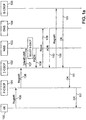
- the figure 1 is a protocol diagram illustrating the exchanges between a user device 100, an access unit 101 of the P-CSCF type (“Proxy-Call Session Control Function”), an interrogation unit 102 of the I-CSCF type (“Interrogating- Call Session Control Function ”), an authentication server 103 of HSS type (“ Home Subscriber Server ”), an address server 104 of DNS type (“ Domain Name Server ”), and a service unit 105 of type S -CSCF ("Serving-Call Session Control Function").
- the user device When the user device connects to the telecommunications network, it sends a registration request 106 to the access unit 101 in order to identify itself on the network.
- the access unit 101 serves as an entry point into the network for the user device. Then, the access unit 101 transmits the request to the interrogation unit 102 which will be responsible for identifying the service unit 105 which will process this registration request and manage the communications of the user.
- the interrogation unit 102 sends an identification request 107 to the authentication server 103.
- the authentication server 103 checks whether the user is already registered or not and whether the user is already associated with network resources or not.
- the authentication server 103 then makes a selection of a service unit 105 to assign to the user device for the communication and then delivers to the interrogation unit 102 an identifier 108 called FQDN ("Fully Qualified Domain Name").
- FQDN Full Qualified Domain Name
- This identifier represents a symbolic address on the network of the service unit 105 to be assigned to the user.
- the interrogation unit 102 then interrogates the address server 104 by sending the request 109 comprising the FQDN to find out the physical address (IP address) of the service unit 105 from the FQDN.
- the address server 104 provides in response the physical address 110 of the service unit 105.
- the interrogation unit 102 then transmits the request 106 to the service unit 105, which is responsible for authenticating the user with the authentication server 103. Then, the service unit returns an acceptance message 111 of the recording to the interrogation unit 102 which transmits it to the user device via the access unit.
- FIG. 1b takes up the different elements described with reference to FIG. 1a, and the recording begins in the same manner as above, until the authentication server 103 receives the identification request 107.
- the authentication unit reviews a list 112 of characteristics attached to the profile of the user to the interrogation unit 102 These characteristics are also called “capabilities” in the standard already mentioned.
- the interrogation unit On receipt of the list of capacities, the interrogation unit selects a service unit compatible with the capacities of the list. The interrogation unit then sends the request 109 to the address server to find out the physical address of the service unit selected from its FQDN.
- the address server then returns the physical address of the service unit and the recording continues its course as previously mentioned.
- the operator must associate a group of service units with each symbolic address. Thus, once the interrogation unit has chosen an FQDN, it receives only the physical addresses of the associated service units. This limits the final choice of the service unit to be used, and prevents making the best choice, for example if the service units associated with the chosen FQDN have a too high charge level.
- the association initially operated by the operator fixes once and for all the strategy for choosing the service unit to use.
- the selection of the service unit therefore lacks flexibility, and does not always allow the best choice.
- the interrogation unit which makes the choice of the service unit from the capacities.
- the operator must ensure that all the interrogation units of the network have an up-to-date list of all the capacities of the network, of all the service units of the network, and of all the correspondences between these service units and these abilities.
- Network management therefore remains complex for the operator.
- the present invention improves the situation.
- the characteristics are, for example, capacities as defined by the 3GPP standard.
- the characteristics represent for example a profile of a subscriber to a telecommunications network, the types of communications that the subscriber is likely to implement, a level of security to be ensured for the communication, a geographic location of the user equipment. , Or other.
- step / e / can be performed when registering a user device.
- the formation of the symbolic address includes a concatenation of symbols representing the at least part of the characteristics of the set, with the domain name.
- the symbols are positive integers coded on a number of bits
- the classification is a classification in descending order.
- the classification makes it possible in particular to obtain the same list of characteristics from different disordered sets of the same characteristics.
- the formation of the symbolic address according to the invention allows a simple and rapid interrogation of the address server which can then quickly select one or more items of equipment according to the characteristics.
- Address servers are low cost while offering great robustness and reliability.
- this type of equipment makes it possible to share the load of requests on the network.
- the choice of equipment in the list can be made according to different criteria such as for example a geographic proximity, a load of use or other.
- the method aims to select a call session control unit such as a service unit, when registering a user.
- the selected call session control unit can for example be an S-CSCF type unit.
- the equipment list can also include, for each equipment, a field representative of a current load parameter for using said equipment.
- the selection of the equipment can be based on the current load parameter of the equipment in the list.
- the iterative method according to these embodiments makes it possible to achieve a compromise between the load of the equipment likely to be selected and the possibility of implementing all the desired characteristics, including the secondary (or optional) characteristics.
- FIG. 2 represents exchanges between different implemented entities
- FIG. 3 is a flow chart of steps implemented.
- a user device 200 wishes to register in order to subsequently implement communications on a telecommunications network.
- a telecommunications network For example, it is an IMS type telecommunications network according to the 3GPP standard.
- the access unit sends a registration request 206 to an access unit 201 of the network.
- the access unit is a P-CSCF (“Proxy-Call Session Control Function”) unit, and the request is a “REGISTER” request according to the SIP (“Session Initiation Protocol”) protocol.
- the access unit then transfers the request to an interrogation unit 202 which will be responsible for determining a service unit 205 for registering the user and implementing its subsequent communications.
- the interrogation unit is an I-CSCF unit (“Interrogating -Call Session Control Function”) and the service unit is an S-CSCF unit (Serving-Call Session Control Function ”) according to the 3GPP standard.
- the interrogation unit On receipt of the registration request, the interrogation unit sends an identification request 207 to an authentication server 203.
- the authentication server is an HSS server (“Home Subscriber Server”) according to the 3GPP standard.
- the request is for example a request from the DIAMETER protocol of the “User registration status query” type as defined in the document 3GPP TS 29.228.
- the authentication server then checks whether a service unit is not already assigned to the user. If so, the authentication server returns an identification of this service unit.
- the authentication server returns in response a list of characteristics associated with the subscriber attached to the user device.
- these characteristics are “capabilities” in the sense of the 3GPP standard.
- the characteristics may for example relate to a user profile, a location of the user device, or the like.
- an IMS network is deployed on a territory that the operator has divided into five geographical zones Z1, Z2, Z3, Z4, and Z5.
- the operator has dedicated S-CSCF service units to different types of users, for example "general public” users and “professional” users.
- the characteristics are represented by whole numbers. According to the 3GPP standard for example, the characteristics are represented by positive integers coded on 32 bits.
- the interrogation unit receives a list of these characteristics during step S30, then forms a symbolic address for interrogating an address server and recovering the identification on the network of service units capable of implementing the communication according to specifications.
- Service unit Geographical allocation Service assignment cg1.example.com Zone Z1
- General public cg2.example.com Zone Z1 General public cp.example.com Zone Z1 Professional nog.example.com Zone Z2
- General public neg.example.com Zone Z3 General public np.example.com Zones Z2 and Z3 Professional seg.example.com Zone Z4
- General public sep.example.com Zone Z4 Professional sog.example.com Zone Z5 General public sop.example.com Zone Z5 Professional
- the interrogation unit has a domain name which represents the common suffix of the symbolic addresses used in the network.
- the domain name is of the form "s-cscf.example.com”. This domain name then designates the server of the domain “example.com” which stores the addresses of the S-CSCF units.
- the interrogation unit begins by classifying the characteristics received during step S31. For example, it orders the characteristics in descending order.
- This classification aims to reduce the number of combinations of characteristics to be identified on the network. We can therefore consider other types of classification.
- the interrogation unit receives a list of characteristics represented by the integers 1 and 11. It then classifies the characteristics and concatenates them to the identifier to obtain the symbolic address "11-1.S-CSCF.example .com ”during step S32.
- the symbolic address can also include an indication of the service and protocol used.
- the address server selects one or more service units compatible with the characteristics contained in the symbolic address. It then returns a list 210 of compatible service units. This list includes for each service unit, a physical address of this one on the network.
- the address server returns the elements “RR SRV” (“Resource Records” of type “SRV”) and RR A ((“Resource Records” of type “A”)
- RR SRV Resource Records
- RR A (“Resource Records” of type “A”)
- a list of this type can include the following information: NAME: _sip. _udp.11-1.s-scf.example.com TYPE: SRV CLASS: IN TTL: 5 RDLENGTH: 25 RDATA: 0 57 5060 cg1.example.com. NAME: _sip.
- the interrogation unit receives the list during step S34 and selects a server 205 from the list during step S35.
- the interrogation unit reads the associated physical address and then transmits the registration request 206 to the service unit.
- the service unit then sends an acceptance message 211 to the interrogation unit which transmits it to the user device via the access unit.
- the service unit then takes care of implementing the requested communication.
- This table has different entries 40 for all the combinations COMBIN1, COMBIN2, COMBIN3, etc. possible network characteristics.
- the combinations are lists classified by descending order as is the case in symbolic addresses. If another type of classification is used for the creation of symbolic addresses, the lists in the address table use the same order.
- the table For each entry, the table contains a set of equipment 42 compatible (or RR SRV) with the characteristics of the entry in question. Each equipment is associated with an address data field 43 representing the physical address of the equipment on the network, for example its IP address (“Internet Protocol”), and a data field 44 representing a current load parameter. equipment.
- IP address Internet Protocol
- the current load parameter can for example correspond to the “Weight” parameter specified in the document IETF RFC 2782.
- This parameter is in this example a load parameter regularly updated by a network entity called LDF (“Load Detection Function”, not shown) responsible for monitoring the charging conditions of the equipment.
- LDF Load Detection Function
- the dynamic update of the Weight parameter can for example be done according to the RFC 2136 standard.
- each node represents a characteristic.
- Each following node and coming from a current node represents a characteristic according to the characteristic of the current node according to the classification of the characteristics chosen (in the example of the 3GPP standard, decreasing classification).
- Each current node is associated with a list of equipment compatible with the current characteristic, and the characteristics associated with the nodes from which the current node originates.
- the address server receives a list of classified characteristics, it suffices to select as the input node the first characteristic contained in the symbolic address, then as the node following the second characteristic, and so on until the last characteristic contained in the symbolic address.
- the list of compatible devices returned by the address server will then be the list of devices associated with the last node accessed.
- the address server can order the devices according to their load parameter, for example to list the least loaded devices first.
- the interrogation unit upon reception of the characteristics, receives main characteristics (or compulsory) and secondary characteristics (or optional) according to two respective lists (or sublists) L1 and L2. It is assumed that the service can be implemented without the secondary characteristics, but must necessarily be implemented with the main characteristics. For example, the main characteristics concern the user's subscription, and the secondary characteristics concern quality of service parameters. Thus, the network will implement the communication according to the subscription and with, if possible, with the best possible quality of service.
- step S500 the address server is interrogated using a symbolic address formed as described above, with both the main characteristics and the secondary characteristics.
- a first list of equipment is then received in response during step S501.
- the equipment with the lowest current load is preselected in this list during step S502.
- the threshold can be determined by the person skilled in the art according to several criteria, according to the choice of the parameter for measuring the load of the service units.
- step T503 If the test of step T503 is satisfied, for example the parameter is greater than or equal to the threshold, the equipment is effectively selected during step S504, and the recording request can be transferred as already mentioned.
- step T503 If the test of step T503 is not satisfied, for example if the load parameter is less than the threshold, a second symbolic address is formed as previously mentioned, this time with the main characteristics only of the list L1. The secondary characteristics of the L2 list are this time ignored.
- the address server is interrogated during step S505.
- step S506 a second list of devices is received, and in step S507, the device from this list with the lowest charge is preselected.
- step T508 For example, it is the same test as that of step T503.
- step T508 If the test in step T508 is negative, we go to step S504 to select the equipment preselected in step S502.
- step T508 If the test in step T508 is positive, we go to the test in step T509. During this test, it is checked whether the load difference between the equipment preselected in steps S502 and S507 justifies or not to select an equipment which does not respect the secondary characteristics (i.e. the equipment preselected during step S507).
- a ratio between the load parameters of the equipment preselected during steps S602 and S507 is compared to a threshold previously stored with the interrogation unit.
- step S509 If the test of step S509 is negative, for example the ratio is less than the threshold, the difference in charge between the two preselected devices is considered to be too small for an item of equipment not compatible with the secondary characteristics to be chosen. to equipment that is compatible. We then return to step S504 to select the preselected equipment from the first list, as already mentioned.
- step S509 If the test in step S509 is positive, for example the ratio is greater than or equal to the threshold, we go to step S510 to select the equipment preselected in step S507, and we continue the implementation of communication as already mentioned.
- the interrogation unit receives main characteristics and secondary characteristics according to two respective lists (or sublists) L1 and L2.
- step S600 the address server is interrogated using a symbolic address formed as described above, with both the main characteristics of the list L1 and the secondary characteristics of the list L2.
- test step T602 We then go to the test step T602 to determine whether there is in the list of equipment received, equipment whose load is satisfactory for the implementation of the communication. For example, in the case of the 3GPP standard, it is determined whether there is an item of equipment in the list whose “Weight” parameter is greater than a threshold.
- step S603 for selecting an item of equipment from the list. This selection is made by random draw, weighted by the equipment load parameter.
- step T602 If the test of step T602 is negative, that is to say that there is no equipment in the list received during step S601 whose current load is satisfactory, we go to l step S604 of preselection of the equipment with the lowest charge.
- the address server is interrogated during step S605.
- step S606 a second list of equipment is received.
- test step T607 which happens to be similar to the test in step T602.
- step T607 If the test in step T607 is negative, we go to step S608 for selecting the equipment preselected in step S604.
- test T607 If the test in step T607 is positive, we go to test T609 to determine whether there is in the list an item of equipment whose ratio of the load parameter with the load parameter associated with the item of equipment preselected in step S604 is greater than or not above a threshold.
- test in step T609 is to check whether there is one or more items of equipment in the list received whose charge level justifies selecting it, rather than one which is compatible with all the characteristics (main and secondary) .
- step T609 If the test in step T609 is negative, we go to step T608, otherwise we go to step T610.
- step T610 an item of equipment is selected from the list in the same manner as that described for step S603.
- a computer program comprising instructions for implementing the method according to the invention can be produced according to a general algorithm deduced from the general flowcharts of the figures 3 , 5 , and 6 , from the diagram of the figure 2 and of this detailed description.
- this equipment is an I-CSCF type interrogation unit of an IMS network.
- This equipment 70 comprises a processing unit 71 for implementing a method according to the present invention.
- it has a memory unit 72.
- This memory unit can include different types of memory.
- the memory unit includes a memory for storing calculation data.
- the memory unit can also include a memory for storing a computer program according to the present invention for its execution by a processor of the processing unit.
- the equipment also has communication ports, including inputs and outputs for communicating via a communication network.
- the equipment comprises an input 73 for receiving a set of characteristics, an input 74 for receiving a list of equipment, an output 75 for connecting to an address server according to a symbolic address formed according to the invention, and an output 76 for connecting to a device selected according to the invention.
- This server 80 comprises a processing unit 81 for establishing a list of equipment compatible with characteristics received in a symbolic address.
- the server has also a memory unit 82.
- This memory unit can include different types of memory.
- the memory unit includes a memory for storing calculation data.
- the memory unit can also include a memory for storing an address table according to the invention.
- the server also has inputs and outputs for communicating via a communication network.
- the equipment comprises an input 83 for receiving a request comprising communication characteristics and an output 84 for transmitting a list of equipment according to the invention.
Landscapes
- Engineering & Computer Science (AREA)
- Computer Networks & Wireless Communication (AREA)
- Signal Processing (AREA)
- Multimedia (AREA)
- Business, Economics & Management (AREA)
- General Business, Economics & Management (AREA)
- Mobile Radio Communication Systems (AREA)
Claims (12)
- Verfahren, das durch eine I-CSCF-Vorrichtung zur Auswahl einer S-CSCF-Ausrüstung eines IMS-Telekommunikationsnetzwerks bei der Registrierung einer Benutzervorrichtung umgesetzt wird, um Kommunikationen in dem IMS-Telekommunikationsnetzwerk durchzuführen, umfassend die folgenden Schritte:a) Empfangen (S30) eines Satzes von Eigenschaften, die mit einem Teilnehmer der Benutzervorrichtung in Verbindung stehen;b) Bilden (S31, S32) einer ersten symbolischen Adresse zur Abfrage eines Adressservers anhand mindestens eines Teils der Eigenschaften des Satzes einerseits und eines Adressen-Domainnamens andererseits;c) Übertragen (S33) der ersten Adresse an den Adressserver;d) Empfangen (S34), anhand des Adressen-Domainnamens bei Abfrage des Adressservers, einer Liste mit einer oder mehreren S-CSCF-Ausrüstungen, die zu dem mindestens einen Teil der Eigenschaften des Satzes kompatibel sind, wobei die Liste für jede kompatible Ausrüstung eine physische Adresse der kompatiblen Ausrüstung aufweist; unde) Auswählen (S35) einer S-CSCF-Ausrüstung aus der Liste.
- Verfahren nach Anspruch 1, wobei der Schritt e) bei der Registrierung einer Benutzervorrichtung durchgeführt wird.
- Verfahren nach Anspruch 1, wobei der Schritt des Bildens der ersten Adresse eine Verkettung von Symbolen, die den mindestens einen Teil der Eigenschaften des Satzes darstellen, mit dem Domainnamen aufweist.
- Verfahren nach Anspruch 1, wobei die Eigenschaften von einem oder mehreren Symbolen dargestellt werden, und wobei das Bilden der ersten symbolischen Adresse die folgenden Schritte umfasst:- Sortieren des mindestens einen Teils der Eigenschaften des Satzes;- Verketten der Symbole der Eigenschaften gemäß der durchgeführten Sortierung; und- Verketten der Kette von verketteten Symbolen mit dem Domainnamen.
- Verfahren nach Anspruch 1, wobei die Liste mit Ausrüstungen für jede Ausrüstung ein Feld (44) aufweist, das einen Parameter einer aktuellen Nutzungslast der Ausrüstung darstellt.
- Verfahren nach Anspruch 5, wobei das Auswählen der Ausrüstung auf den Parametern einer aktuellen Last der Ausrüstungen der Liste beruht.
- Verfahren nach Anspruch 5, wobei der Satz von Eigenschaften Haupteigenschaften und Sekundäreigenschaften aufweist, und wobei der Schritt b) mit den Haupteigenschaften und den Sekundäreigenschaften ausgeführt wird, wobei das Verfahren ferner die folgenden Schritte umfasst:f) Vorauswählen (S502) in der Liste mit Ausrüstungen, die beim Schritt d) empfangen wurde, der Ausrüstung, deren Last die geringste ist;g) Prüfen der Last (T503) der Ausrüstung, die beim Schritt f) vorausgewählt wurde, in Abhängigkeit von dem zugehörigen Lastparameter; undh) Auswählen (S504) der Ausrüstung, die beim Schritt f) vorausgewählt wurde, wenn die Lastprüfung des Schritts g) bestanden ist, oder andernfallsi) erneutes Ausführen der Schritte b) bis d) mit den Haupteigenschaften und ohne die Sekundäreigenschaften;j) Vorauswählen (S507) in der Liste mit Ausrüstungen, die beim Schritt i) empfangen wurde, der Ausrüstung, deren Last die geringste ist;k) Prüfen der Last (T508) der Ausrüstung, die beim Schritt j) vorausgewählt wurde, in Abhängigkeit von dem zugehörigen Lastparameter und des Vergleichens (T509) einer Lastdifferenz zwischen der Ausrüstung, die beim Schritt f) vorausgewählt wurde, und der Ausrüstung, die beim Schritt j) vorausgewählt wurde, mit einer Schwelle; und1) Auswählen (S510) der Ausrüstung, die beim Schritt j) vorausgewählt wurde, wenn die Lastprüfung des Schritts k) bestanden ist und wenn die Differenz größer als die Schwelle ist, oder andernfalls der Ausrüstung, die beim Schritt f) vorausgewählt wurde.
- Verfahren nach Anspruch 5, wobei der Satz von Eigenschaften Haupteigenschaften und Sekundäreigenschaften aufweist, und wobei der Schritt b) mit den Haupteigenschaften und den Sekundäreigenschaften ausgeführt wird, wobei das Verfahren ferner die folgenden Schritte umfasst:
m) Prüfen der Last (T602) der Ausrüstungen der Liste mit Ausrüstungen, die beim Schritt d) empfangen wurde, in Abhängigkeit von Lastparametern, die mit den Ausrüstungen in Verbindung stehen;
dann, wenn die Prüfung des Schritts m) ist für keine der Ausrüstungen der Liste bestanden ist:n) Vorauswählen (S604) in der Liste mit Ausrüstungen, die beim Schritt d) empfangen wurde, der Ausrüstung, deren Last die geringste ist;o) erneutes Ausführen der Schritte b) bis d) mit den Haupteigenschaften und ohne die Sekundäreigenschaften;p) Vorauswählen (S606) in der Liste mit Ausrüstung, die beim Schritt o) empfangen wurde, der Ausrüstung, deren Last die geringste ist;q) Prüfen der Last (T607) der Ausrüstung, die beim Schritt p) vorausgewählt wurde, in Abhängigkeit von dem zugehörigen Lastparameter und des Vergleichens (T609) einer Lastdifferenz zwischen der Ausrüstung, die beim Schritt n) vorausgewählt wurde, und der Ausrüstung, die beim Schritt p) vorausgewählt wurde, mit einer Schwelle; undr) Auswählen (S610) einer Ausrüstung der Liste, die beim Schritt o) empfangen wurde, durch eine Zufallsziehung, die mit den Lastparametern gewichtet ist, wenn die Lastprüfung des Schritts q) bestanden ist und wenn die Differenz größer als die Schwelle ist, oder andernfalls der Ausrüstung, die beim Schritt n) vorausgewählt wurde; oder,wenn die Prüfung des Schritts m) bestanden ist:
s) Auswählen (S603) einer Ausrüstung der Liste, die beim Schritt d) empfangen wurde, durch eine Zufallsziehung, die mit den Lastparametern gewichtet ist. - Computerprogramm, das Anweisungen zur Durchführung eines Verfahrens nach Anspruch 1 aufweist, wenn es von einem Prozessor ausgeführt wird.
- Adressserver, aufweisend eine Speichereinheit, die eine Adresstabelle (40) speichert, wobei die Tabelle Folgendes aufweist:- Einträge (41) für Kombinationen von Kommunikationseigenschaften in einem IMS-Telekommunikationsnetzwerk, zu dem der Server gehört, wobei die Eigenschaften mit einem Teilnehmer einer Benutzervorrichtung in Verbindung stehen;- für jeden Eintrag eine Liste mit S-CSCF-Ausrüstungen (42) des Netzwerks, die zu der entsprechenden Kombination von Eigenschaften kompatibel sind;- für jede Ausrüstung der Liste ein Datenfeld (44) für einen Nutzungslastparameter der Ausrüstung und ein Datenfeld (43) zum Lokalisieren der Ausrüstung in dem Netzwerk
wobei der Server ferner Folgendes aufweist:einen Eingang (83) zum Empfang einer Anforderung, die Eigenschaften eines Teilnehmers in einer symbolischen Adresse aufweist;eine Verarbeitungseinheit (81) zum Erstellen einer Liste mit S-CSCF-Ausrüstungen, die mit den Eigenschaften des Teilnehmers kompatibel sind, die in Abhängigkeit von der Tabelle und den empfangenen Eigenschaften empfangen wurden;einen Ausgang (84) zum Übertragen der Liste mit S-CSCF-Ausrüstungen. - Server nach Anspruch 10, ferner aufweisend einen Eingang (83) zum Empfang einer symbolischen Adresse, die durch die Durchführung des Verfahrens nach Anspruch 1 erhalten wurde, und eine Verarbeitungseinheit (81) zum Wählen eines Eintrags der entsprechenden Adresstabelle.
- I-CSCF-Verwaltungsausrüstung eines IMS-Telekommunikationsnetzwerks zur Auswahl einer S-CSCF-Ausrüstung des Netzwerks bei der Registrierung einer Benutzervorrichtung, um Kommunikationen durchzuführen, aufweisend:- einen ersten Kommunikationsanschluss (73) zum Empfang eines Satzes von Eigenschaften, die mit einem Teilnehmer der Benutzervorrichtung in Verbindung stehen;;- eine Verarbeitungseinheit (71) zum Bilden einer ersten symbolischen Adresse zur Abfrage eines Adressservers anhand mindestens eines Teils der Eigenschaften des Satzes einerseits und eines Adressen-Domainnamens andererseits;- einen zweiten Kommunikationsanschluss (75) zum Übertragen der ersten Adresse an den Adressserver;- einen dritten Kommunikationsanschluss (74) zum Empfang, anhand des Adressen-Domainnamens bei Abfrage des Adressservers, einer Liste mit einer oder mehreren S-CSCF-Ausrüstungen, die zu dem mindestens einen Teil der Eigenschaften des Satzes kompatibel sind, wobei die Liste für jede kompatible Ausrüstung eine physische Adresse der kompatiblen Ausrüstung aufweist; und
wobei die Verarbeitungseinheit eine S-CSCF-Ausrüstung aus der Liste auswählt.
Applications Claiming Priority (2)
| Application Number | Priority Date | Filing Date | Title |
|---|---|---|---|
| FR0957848 | 2009-11-05 | ||
| PCT/FR2010/052367 WO2011055082A1 (fr) | 2009-11-05 | 2010-11-04 | Procede de selection d'un equipement d'un reseau de telecommunications |
Publications (2)
| Publication Number | Publication Date |
|---|---|
| EP2497254A1 EP2497254A1 (de) | 2012-09-12 |
| EP2497254B1 true EP2497254B1 (de) | 2020-04-15 |
Family
ID=42289571
Family Applications (1)
| Application Number | Title | Priority Date | Filing Date |
|---|---|---|---|
| EP10798164.9A Active EP2497254B1 (de) | 2009-11-05 | 2010-11-04 | Verfahren zur auswahl eines geräts in einem telekommunikationsnetz |
Country Status (3)
| Country | Link |
|---|---|
| US (1) | US9537708B2 (de) |
| EP (1) | EP2497254B1 (de) |
| WO (1) | WO2011055082A1 (de) |
Families Citing this family (2)
| Publication number | Priority date | Publication date | Assignee | Title |
|---|---|---|---|---|
| ES2831255T3 (es) * | 2010-11-30 | 2021-06-08 | Koninklijke Kpn Nv | Asignación dinámica de un nodo de red de servicio |
| US10289441B1 (en) * | 2017-10-27 | 2019-05-14 | EMC IP Holding Company LLC | Intelligent scale-out federated restore |
Family Cites Families (13)
| Publication number | Priority date | Publication date | Assignee | Title |
|---|---|---|---|---|
| US6587455B1 (en) * | 1999-05-27 | 2003-07-01 | Telefonaktiebolaget Lm Ericsson (Publ) | Automatic discovery of nodes associated with a virtual subnet |
| US6643658B1 (en) * | 2000-01-19 | 2003-11-04 | Lucent Technologies Inc. | Hierarchical data network address resolution |
| CN1207876C (zh) * | 2000-06-15 | 2005-06-22 | 国际商业机器公司 | 短消息网关、向移动电话提供信息服务的系统和方法 |
| JP4039195B2 (ja) * | 2001-12-27 | 2008-01-30 | 富士ゼロックス株式会社 | ネットワークシステム |
| US7113797B2 (en) * | 2003-11-06 | 2006-09-26 | International Business Machines Corporation | System, method and program product for scheduling meetings |
| EP1560368A1 (de) * | 2004-01-30 | 2005-08-03 | France Telecom | Verfahren und System für das Herstellen eines Multimedialernabschnittes zwischen einer benennenden Ausrüstung und einer benannten Ausrüstung in einem IP-Multimedia-Untersystem (IMS)-Netz |
| US20070135121A1 (en) * | 2005-12-08 | 2007-06-14 | Electronics And Telecommunications Research Institute | User and service mobility support system and method in ubiquitous environment |
| US8301195B2 (en) * | 2006-07-05 | 2012-10-30 | Agere Systems Inc. | Systems and methods for mobile data storage and acquisition |
| JP2008236183A (ja) * | 2007-03-19 | 2008-10-02 | Nec Corp | 呼セッション制御サーバ割り当て方法および呼セッション制御サーバ割り当てシステム |
| US20080281949A1 (en) * | 2007-05-09 | 2008-11-13 | Bridgeport Networks, Inc. | Client location information |
| US20090005052A1 (en) * | 2007-06-30 | 2009-01-01 | David Abusch-Magder | Method and Apparatus for Dynamically Creating and Updating Base Station Neighbor Lists |
| US8085783B2 (en) * | 2009-06-10 | 2011-12-27 | Verizon Patent And Licensing Inc. | Priority service scheme |
| US20110051174A1 (en) * | 2009-08-25 | 2011-03-03 | Tomoki Hattori | Method of querying image output devices on a network |
-
2010
- 2010-11-04 EP EP10798164.9A patent/EP2497254B1/de active Active
- 2010-11-04 US US13/508,210 patent/US9537708B2/en not_active Expired - Fee Related
- 2010-11-04 WO PCT/FR2010/052367 patent/WO2011055082A1/fr not_active Ceased
Non-Patent Citations (1)
| Title |
|---|
| None * |
Also Published As
| Publication number | Publication date |
|---|---|
| US20120225653A1 (en) | 2012-09-06 |
| WO2011055082A1 (fr) | 2011-05-12 |
| EP2497254A1 (de) | 2012-09-12 |
| US9537708B2 (en) | 2017-01-03 |
Similar Documents
| Publication | Publication Date | Title |
|---|---|---|
| US8873571B2 (en) | Distributing information | |
| US20150295938A1 (en) | Method and apparatus for preventing unauthorized service access | |
| WO2017194861A1 (fr) | Procédé d'accès à un contenu hébergé sur un serveur selectionné en fonction de la localisation du terminal utilisateur | |
| US12015661B2 (en) | Domain name services servers management to share data efficiently | |
| WO2020254766A1 (fr) | Procede et dispositif d'obtention d'une adresse ip | |
| FR3036574A1 (fr) | Chargement de profil d'abonnement dans une carte sim embarquee | |
| CN103188217B (zh) | Sbc选择方法和装置以及用户设备和sbc设备 | |
| EP3603024A1 (de) | Verfahren zur empfehlung eines kommunikationsstapels | |
| EP2497254B1 (de) | Verfahren zur auswahl eines geräts in einem telekommunikationsnetz | |
| EP2532147B1 (de) | Verfahren zur Erstellung einer öffentlichen permanenten SIP-Adresse, die einer privaten Identität in einem IMS-Netz zugeordnet ist | |
| EP2873211B1 (de) | Verfahren zum speichern mindestens einer öffentlichen adresse eines ims-netzes, und entsprechende anwendung | |
| EP1641223B1 (de) | Verbessertes Verfahren zur Zuordnung von Netzwerkidentifizierungen anhand Schnittstellenidentifizierungen | |
| US8223754B2 (en) | Auto-configured voice over internet protocol | |
| EP2446360B1 (de) | Verfahren zur bestimmung einer mit einem dienst assoziierten reihe an grundfunktionen | |
| WO2011124810A1 (fr) | Gestion de service personnalisee dans un reseau ip | |
| WO2010072953A1 (fr) | SYSTEME D'ACHEMINEMENT D'UN PAQUET DE DONNEES IPv4 | |
| CN115086332B (zh) | 一种通信方法、装置、电子设备及存储介质 | |
| FR2887721A1 (fr) | Enregistrement d'informations ims multiples relatives a un terminal multimodes d'un client d'un reseau de communication connecte a des reseaux d'acces de types differents | |
| EP3900306A1 (de) | Verfahren zur bestimmung einer delegationskette im zusammenhang mit der auflösung einer domänennamenkennung in einem kommunikationsnetzwerk | |
| CN100589558C (zh) | 一种能够根据请求节目提供最佳服务的系统 | |
| WO2025125235A1 (fr) | Procédé de détermination d'un ensemble de flux multicast auxquels un terminal récepteur est habilité à accéder | |
| FR2865331A1 (fr) | Procede de connexion d'un reseau domestique a un serveur cops distant et dispositif associe | |
| EP2080404B1 (de) | Regionsdeskriptoren-server und verfahren zur auswahl eines drahtlosen netzwerks | |
| EP2439901A1 (de) | Verarbeitungsverfahren in einem Modul einer Zugangsvorrichtung, die zur Verbindung eines Fernnetzes an mehrere lokale Netze adaptiert ist, zugehöriges Modul und Computerprogramm | |
| FR2912584A1 (fr) | Reseau ims autorisant la portabilite d'identifiants publics d'utilisateurs. |
Legal Events
| Date | Code | Title | Description |
|---|---|---|---|
| PUAI | Public reference made under article 153(3) epc to a published international application that has entered the european phase |
Free format text: ORIGINAL CODE: 0009012 |
|
| 17P | Request for examination filed |
Effective date: 20120510 |
|
| AK | Designated contracting states |
Kind code of ref document: A1 Designated state(s): AL AT BE BG CH CY CZ DE DK EE ES FI FR GB GR HR HU IE IS IT LI LT LU LV MC MK MT NL NO PL PT RO RS SE SI SK SM TR |
|
| DAX | Request for extension of the european patent (deleted) | ||
| RAP1 | Party data changed (applicant data changed or rights of an application transferred) |
Owner name: ORANGE |
|
| STAA | Information on the status of an ep patent application or granted ep patent |
Free format text: STATUS: EXAMINATION IS IN PROGRESS |
|
| 17Q | First examination report despatched |
Effective date: 20180507 |
|
| GRAP | Despatch of communication of intention to grant a patent |
Free format text: ORIGINAL CODE: EPIDOSNIGR1 |
|
| STAA | Information on the status of an ep patent application or granted ep patent |
Free format text: STATUS: GRANT OF PATENT IS INTENDED |
|
| INTG | Intention to grant announced |
Effective date: 20190521 |
|
| GRAJ | Information related to disapproval of communication of intention to grant by the applicant or resumption of examination proceedings by the epo deleted |
Free format text: ORIGINAL CODE: EPIDOSDIGR1 |
|
| STAA | Information on the status of an ep patent application or granted ep patent |
Free format text: STATUS: EXAMINATION IS IN PROGRESS |
|
| INTC | Intention to grant announced (deleted) | ||
| GRAS | Grant fee paid |
Free format text: ORIGINAL CODE: EPIDOSNIGR3 |
|
| STAA | Information on the status of an ep patent application or granted ep patent |
Free format text: STATUS: GRANT OF PATENT IS INTENDED |
|
| GRAP | Despatch of communication of intention to grant a patent |
Free format text: ORIGINAL CODE: EPIDOSNIGR1 |
|
| INTG | Intention to grant announced |
Effective date: 20191113 |
|
| GRAA | (expected) grant |
Free format text: ORIGINAL CODE: 0009210 |
|
| STAA | Information on the status of an ep patent application or granted ep patent |
Free format text: STATUS: THE PATENT HAS BEEN GRANTED |
|
| AK | Designated contracting states |
Kind code of ref document: B1 Designated state(s): AL AT BE BG CH CY CZ DE DK EE ES FI FR GB GR HR HU IE IS IT LI LT LU LV MC MK MT NL NO PL PT RO RS SE SI SK SM TR |
|
| REG | Reference to a national code |
Ref country code: CH Ref legal event code: EP Ref country code: GB Ref legal event code: FG4D Free format text: NOT ENGLISH |
|
| REG | Reference to a national code |
Ref country code: DE Ref legal event code: R096 Ref document number: 602010063936 Country of ref document: DE |
|
| REG | Reference to a national code |
Ref country code: IE Ref legal event code: FG4D Free format text: LANGUAGE OF EP DOCUMENT: FRENCH |
|
| REG | Reference to a national code |
Ref country code: AT Ref legal event code: REF Ref document number: 1258651 Country of ref document: AT Kind code of ref document: T Effective date: 20200515 |
|
| RAP2 | Party data changed (patent owner data changed or rights of a patent transferred) |
Owner name: ORANGE |
|
| REG | Reference to a national code |
Ref country code: NL Ref legal event code: MP Effective date: 20200415 |
|
| REG | Reference to a national code |
Ref country code: LT Ref legal event code: MG4D |
|
| PG25 | Lapsed in a contracting state [announced via postgrant information from national office to epo] |
Ref country code: IS Free format text: LAPSE BECAUSE OF FAILURE TO SUBMIT A TRANSLATION OF THE DESCRIPTION OR TO PAY THE FEE WITHIN THE PRESCRIBED TIME-LIMIT Effective date: 20200815 Ref country code: GR Free format text: LAPSE BECAUSE OF FAILURE TO SUBMIT A TRANSLATION OF THE DESCRIPTION OR TO PAY THE FEE WITHIN THE PRESCRIBED TIME-LIMIT Effective date: 20200716 Ref country code: PT Free format text: LAPSE BECAUSE OF FAILURE TO SUBMIT A TRANSLATION OF THE DESCRIPTION OR TO PAY THE FEE WITHIN THE PRESCRIBED TIME-LIMIT Effective date: 20200817 Ref country code: LT Free format text: LAPSE BECAUSE OF FAILURE TO SUBMIT A TRANSLATION OF THE DESCRIPTION OR TO PAY THE FEE WITHIN THE PRESCRIBED TIME-LIMIT Effective date: 20200415 Ref country code: NL Free format text: LAPSE BECAUSE OF FAILURE TO SUBMIT A TRANSLATION OF THE DESCRIPTION OR TO PAY THE FEE WITHIN THE PRESCRIBED TIME-LIMIT Effective date: 20200415 Ref country code: SE Free format text: LAPSE BECAUSE OF FAILURE TO SUBMIT A TRANSLATION OF THE DESCRIPTION OR TO PAY THE FEE WITHIN THE PRESCRIBED TIME-LIMIT Effective date: 20200415 Ref country code: NO Free format text: LAPSE BECAUSE OF FAILURE TO SUBMIT A TRANSLATION OF THE DESCRIPTION OR TO PAY THE FEE WITHIN THE PRESCRIBED TIME-LIMIT Effective date: 20200715 Ref country code: FI Free format text: LAPSE BECAUSE OF FAILURE TO SUBMIT A TRANSLATION OF THE DESCRIPTION OR TO PAY THE FEE WITHIN THE PRESCRIBED TIME-LIMIT Effective date: 20200415 |
|
| REG | Reference to a national code |
Ref country code: AT Ref legal event code: MK05 Ref document number: 1258651 Country of ref document: AT Kind code of ref document: T Effective date: 20200415 |
|
| PG25 | Lapsed in a contracting state [announced via postgrant information from national office to epo] |
Ref country code: BG Free format text: LAPSE BECAUSE OF FAILURE TO SUBMIT A TRANSLATION OF THE DESCRIPTION OR TO PAY THE FEE WITHIN THE PRESCRIBED TIME-LIMIT Effective date: 20200715 Ref country code: LV Free format text: LAPSE BECAUSE OF FAILURE TO SUBMIT A TRANSLATION OF THE DESCRIPTION OR TO PAY THE FEE WITHIN THE PRESCRIBED TIME-LIMIT Effective date: 20200415 Ref country code: HR Free format text: LAPSE BECAUSE OF FAILURE TO SUBMIT A TRANSLATION OF THE DESCRIPTION OR TO PAY THE FEE WITHIN THE PRESCRIBED TIME-LIMIT Effective date: 20200415 Ref country code: RS Free format text: LAPSE BECAUSE OF FAILURE TO SUBMIT A TRANSLATION OF THE DESCRIPTION OR TO PAY THE FEE WITHIN THE PRESCRIBED TIME-LIMIT Effective date: 20200415 |
|
| PG25 | Lapsed in a contracting state [announced via postgrant information from national office to epo] |
Ref country code: AL Free format text: LAPSE BECAUSE OF FAILURE TO SUBMIT A TRANSLATION OF THE DESCRIPTION OR TO PAY THE FEE WITHIN THE PRESCRIBED TIME-LIMIT Effective date: 20200415 |
|
| REG | Reference to a national code |
Ref country code: DE Ref legal event code: R097 Ref document number: 602010063936 Country of ref document: DE |
|
| PG25 | Lapsed in a contracting state [announced via postgrant information from national office to epo] |
Ref country code: AT Free format text: LAPSE BECAUSE OF FAILURE TO SUBMIT A TRANSLATION OF THE DESCRIPTION OR TO PAY THE FEE WITHIN THE PRESCRIBED TIME-LIMIT Effective date: 20200415 Ref country code: DK Free format text: LAPSE BECAUSE OF FAILURE TO SUBMIT A TRANSLATION OF THE DESCRIPTION OR TO PAY THE FEE WITHIN THE PRESCRIBED TIME-LIMIT Effective date: 20200415 Ref country code: EE Free format text: LAPSE BECAUSE OF FAILURE TO SUBMIT A TRANSLATION OF THE DESCRIPTION OR TO PAY THE FEE WITHIN THE PRESCRIBED TIME-LIMIT Effective date: 20200415 Ref country code: ES Free format text: LAPSE BECAUSE OF FAILURE TO SUBMIT A TRANSLATION OF THE DESCRIPTION OR TO PAY THE FEE WITHIN THE PRESCRIBED TIME-LIMIT Effective date: 20200415 Ref country code: CZ Free format text: LAPSE BECAUSE OF FAILURE TO SUBMIT A TRANSLATION OF THE DESCRIPTION OR TO PAY THE FEE WITHIN THE PRESCRIBED TIME-LIMIT Effective date: 20200415 Ref country code: IT Free format text: LAPSE BECAUSE OF FAILURE TO SUBMIT A TRANSLATION OF THE DESCRIPTION OR TO PAY THE FEE WITHIN THE PRESCRIBED TIME-LIMIT Effective date: 20200415 Ref country code: RO Free format text: LAPSE BECAUSE OF FAILURE TO SUBMIT A TRANSLATION OF THE DESCRIPTION OR TO PAY THE FEE WITHIN THE PRESCRIBED TIME-LIMIT Effective date: 20200415 Ref country code: SM Free format text: LAPSE BECAUSE OF FAILURE TO SUBMIT A TRANSLATION OF THE DESCRIPTION OR TO PAY THE FEE WITHIN THE PRESCRIBED TIME-LIMIT Effective date: 20200415 |
|
| PGFP | Annual fee paid to national office [announced via postgrant information from national office to epo] |
Ref country code: GB Payment date: 20201021 Year of fee payment: 11 Ref country code: DE Payment date: 20201020 Year of fee payment: 11 |
|
| PLBE | No opposition filed within time limit |
Free format text: ORIGINAL CODE: 0009261 |
|
| STAA | Information on the status of an ep patent application or granted ep patent |
Free format text: STATUS: NO OPPOSITION FILED WITHIN TIME LIMIT |
|
| PG25 | Lapsed in a contracting state [announced via postgrant information from national office to epo] |
Ref country code: SK Free format text: LAPSE BECAUSE OF FAILURE TO SUBMIT A TRANSLATION OF THE DESCRIPTION OR TO PAY THE FEE WITHIN THE PRESCRIBED TIME-LIMIT Effective date: 20200415 Ref country code: PL Free format text: LAPSE BECAUSE OF FAILURE TO SUBMIT A TRANSLATION OF THE DESCRIPTION OR TO PAY THE FEE WITHIN THE PRESCRIBED TIME-LIMIT Effective date: 20200415 |
|
| 26N | No opposition filed |
Effective date: 20210118 |
|
| PG25 | Lapsed in a contracting state [announced via postgrant information from national office to epo] |
Ref country code: SI Free format text: LAPSE BECAUSE OF FAILURE TO SUBMIT A TRANSLATION OF THE DESCRIPTION OR TO PAY THE FEE WITHIN THE PRESCRIBED TIME-LIMIT Effective date: 20200415 |
|
| PG25 | Lapsed in a contracting state [announced via postgrant information from national office to epo] |
Ref country code: MC Free format text: LAPSE BECAUSE OF FAILURE TO SUBMIT A TRANSLATION OF THE DESCRIPTION OR TO PAY THE FEE WITHIN THE PRESCRIBED TIME-LIMIT Effective date: 20200415 |
|
| REG | Reference to a national code |
Ref country code: CH Ref legal event code: PL |
|
| PG25 | Lapsed in a contracting state [announced via postgrant information from national office to epo] |
Ref country code: LU Free format text: LAPSE BECAUSE OF NON-PAYMENT OF DUE FEES Effective date: 20201104 |
|
| REG | Reference to a national code |
Ref country code: BE Ref legal event code: MM Effective date: 20201130 |
|
| PG25 | Lapsed in a contracting state [announced via postgrant information from national office to epo] |
Ref country code: LI Free format text: LAPSE BECAUSE OF NON-PAYMENT OF DUE FEES Effective date: 20201130 Ref country code: CH Free format text: LAPSE BECAUSE OF NON-PAYMENT OF DUE FEES Effective date: 20201130 |
|
| PG25 | Lapsed in a contracting state [announced via postgrant information from national office to epo] |
Ref country code: IE Free format text: LAPSE BECAUSE OF NON-PAYMENT OF DUE FEES Effective date: 20201104 |
|
| REG | Reference to a national code |
Ref country code: DE Ref legal event code: R079 Ref document number: 602010063936 Country of ref document: DE Free format text: PREVIOUS MAIN CLASS: H04L0029120000 Ipc: H04L0067286900 |
|
| PG25 | Lapsed in a contracting state [announced via postgrant information from national office to epo] |
Ref country code: TR Free format text: LAPSE BECAUSE OF FAILURE TO SUBMIT A TRANSLATION OF THE DESCRIPTION OR TO PAY THE FEE WITHIN THE PRESCRIBED TIME-LIMIT Effective date: 20200415 Ref country code: MT Free format text: LAPSE BECAUSE OF FAILURE TO SUBMIT A TRANSLATION OF THE DESCRIPTION OR TO PAY THE FEE WITHIN THE PRESCRIBED TIME-LIMIT Effective date: 20200415 Ref country code: CY Free format text: LAPSE BECAUSE OF FAILURE TO SUBMIT A TRANSLATION OF THE DESCRIPTION OR TO PAY THE FEE WITHIN THE PRESCRIBED TIME-LIMIT Effective date: 20200415 |
|
| REG | Reference to a national code |
Ref country code: DE Ref legal event code: R119 Ref document number: 602010063936 Country of ref document: DE |
|
| PG25 | Lapsed in a contracting state [announced via postgrant information from national office to epo] |
Ref country code: MK Free format text: LAPSE BECAUSE OF FAILURE TO SUBMIT A TRANSLATION OF THE DESCRIPTION OR TO PAY THE FEE WITHIN THE PRESCRIBED TIME-LIMIT Effective date: 20200415 |
|
| GBPC | Gb: european patent ceased through non-payment of renewal fee |
Effective date: 20211104 |
|
| PG25 | Lapsed in a contracting state [announced via postgrant information from national office to epo] |
Ref country code: BE Free format text: LAPSE BECAUSE OF NON-PAYMENT OF DUE FEES Effective date: 20201130 |
|
| PG25 | Lapsed in a contracting state [announced via postgrant information from national office to epo] |
Ref country code: GB Free format text: LAPSE BECAUSE OF NON-PAYMENT OF DUE FEES Effective date: 20211104 Ref country code: DE Free format text: LAPSE BECAUSE OF NON-PAYMENT OF DUE FEES Effective date: 20220601 |
|
| PGFP | Annual fee paid to national office [announced via postgrant information from national office to epo] |
Ref country code: FR Payment date: 20251023 Year of fee payment: 16 |