EP2500338A1 - Compose azide marque au f18, reactif de marquage au f18 et procede de marquage au f18 de compose alcyne au moyen de ce reactif - Google Patents
Compose azide marque au f18, reactif de marquage au f18 et procede de marquage au f18 de compose alcyne au moyen de ce reactif Download PDFInfo
- Publication number
- EP2500338A1 EP2500338A1 EP10775002A EP10775002A EP2500338A1 EP 2500338 A1 EP2500338 A1 EP 2500338A1 EP 10775002 A EP10775002 A EP 10775002A EP 10775002 A EP10775002 A EP 10775002A EP 2500338 A1 EP2500338 A1 EP 2500338A1
- Authority
- EP
- European Patent Office
- Prior art keywords
- labeled
- labeling
- compound
- reaction
- oligonucleotide
- Prior art date
- Legal status (The legal status is an assumption and is not a legal conclusion. Google has not performed a legal analysis and makes no representation as to the accuracy of the status listed.)
- Withdrawn
Links
- 0 *C(C=C)=CC=COCCCF Chemical compound *C(C=C)=CC=COCCCF 0.000 description 2
Images


Classifications
-
- A—HUMAN NECESSITIES
- A61—MEDICAL OR VETERINARY SCIENCE; HYGIENE
- A61K—PREPARATIONS FOR MEDICAL, DENTAL OR TOILETRY PURPOSES
- A61K51/00—Preparations containing radioactive substances for use in therapy or testing in vivo
- A61K51/02—Preparations containing radioactive substances for use in therapy or testing in vivo characterised by the carrier, i.e. characterised by the agent or material covalently linked or complexing the radioactive nucleus
- A61K51/04—Organic compounds
- A61K51/041—Heterocyclic compounds
- A61K51/044—Heterocyclic compounds having nitrogen as a ring hetero atom, e.g. guanethidine, rifamycins
- A61K51/0453—Heterocyclic compounds having nitrogen as a ring hetero atom, e.g. guanethidine, rifamycins having five-membered rings with two or more ring hetero atoms, at least one of which being nitrogen, e.g. tetrazole
-
- A—HUMAN NECESSITIES
- A61—MEDICAL OR VETERINARY SCIENCE; HYGIENE
- A61K—PREPARATIONS FOR MEDICAL, DENTAL OR TOILETRY PURPOSES
- A61K51/00—Preparations containing radioactive substances for use in therapy or testing in vivo
- A61K51/02—Preparations containing radioactive substances for use in therapy or testing in vivo characterised by the carrier, i.e. characterised by the agent or material covalently linked or complexing the radioactive nucleus
- A61K51/04—Organic compounds
- A61K51/0491—Sugars, nucleosides, nucleotides, oligonucleotides, nucleic acids, e.g. DNA, RNA, nucleic acid aptamers
-
- C—CHEMISTRY; METALLURGY
- C07—ORGANIC CHEMISTRY
- C07B—GENERAL METHODS OF ORGANIC CHEMISTRY; APPARATUS THEREFOR
- C07B59/00—Introduction of isotopes of elements into organic compounds ; Labelled organic compounds per se
- C07B59/005—Sugars; Derivatives thereof; Nucleosides; Nucleotides; Nucleic acids
-
- C—CHEMISTRY; METALLURGY
- C07—ORGANIC CHEMISTRY
- C07C—ACYCLIC OR CARBOCYCLIC COMPOUNDS
- C07C247/00—Compounds containing azido groups
- C07C247/16—Compounds containing azido groups with azido groups bound to carbon atoms of six-membered aromatic rings of a carbon skeleton
-
- C—CHEMISTRY; METALLURGY
- C07—ORGANIC CHEMISTRY
- C07D—HETEROCYCLIC COMPOUNDS
- C07D249/00—Heterocyclic compounds containing five-membered rings having three nitrogen atoms as the only ring hetero atoms
- C07D249/02—Heterocyclic compounds containing five-membered rings having three nitrogen atoms as the only ring hetero atoms not condensed with other rings
- C07D249/04—1,2,3-Triazoles; Hydrogenated 1,2,3-triazoles
- C07D249/06—1,2,3-Triazoles; Hydrogenated 1,2,3-triazoles with aryl radicals directly attached to ring atoms
-
- C—CHEMISTRY; METALLURGY
- C07—ORGANIC CHEMISTRY
- C07B—GENERAL METHODS OF ORGANIC CHEMISTRY; APPARATUS THEREFOR
- C07B2200/00—Indexing scheme relating to specific properties of organic compounds
- C07B2200/05—Isotopically modified compounds, e.g. labelled
Definitions
- the present invention relates to an 18 F-labeled azide compound, a reagent for 18 F-labeling, and a method for 18 F-labeling of an alkyne compound using the same.
- the present invention is suitably applicable to production of a radioactive tracer indispensable for positron emission tomography (hereinafter, called "PET").
- PET is a method that includes administering, into a living body, a tracer labeled with a short-term radionuclide which releases positrons such as 18 F or 11 C so that ⁇ rays generated from the tracer is measured by a PET camera (detector comprising a gamma ray scintillator and a photoelectron multiplier tube), and imaging a body distribution of the ⁇ ray by a computer.
- a PET camera detector comprising a gamma ray scintillator and a photoelectron multiplier tube
- the PET can non-invasively and quantitatively track down the movement of materials over time in vivo, therefore, is now actively employed as a very useful measurement technique in many different fields such as biology, development of pharmaceutical products, and medical services.
- Examples of the short-term radionuclide used in the PET are 18 F and 11 C, and compounds labeled with these radionuclides are used as the tracer.
- 11 C can be considered to be an ideal radionuclide.
- the 11 C has such a short half life as 20 minutes, imposing the restriction that the process from synthesis through PET measurement must be completed within a very short time frame.
- the 18 F having a half life longer than that of the 11 C, 110 minutes is easy to handle and widely used in, for example, 18 F-labeled glucose.
- positrons released by the 18 F decrease with time, making the PET measurement similarly difficult. Faced with such a difficulty, a fast and simplified 18 F labeling method is desirably accomplished.
- an 18 F-labeled compound its base material, 18 F, is supplied through nuclide transformation by a cyclotron. More specifically, ions accelerated by the cyclotron are crashed into water including 18 O to invite nuclide transformation from 18 O to 18 F.
- the 18 F-labeled compound can be theoretically obtained when a very weak water solution including 18 F ions thus obtained and a compound selected as a PET target are reacted with each other.
- 18 F prosthetic group an intermediate compound labeled with 18 F and having a functional group to be bonded to another compound (intermediate medium thus characterized is hereinafter called " 18 F prosthetic group") is prepared in advance and then bonded to the compound for the PET.
- Examples of properties required for the 18 F prosthetic group are: 1) easily and speedily synthesizable; 2) bondable to a target compound rapidly and efficiently under temperate conditions; and 3) hardly affecting in-vivo kinetics of the target compound. To meet these requirements, an 18 F prosthetic group which leverages the Huisgen reaction is currently attracting attention.
- azide compounds or alkyne compounds labeled with 18 F are used as the 18 F prosthetic group to introduce the 18 F prosthetic group in any target compounds. Below are given specific examples of such studies.
- the Non-Patent Document 4 recites an example in which an 18 F-labeled azide compound is used, wherein the Huisgen reaction is generated with oligopeptide having a terminal acetylene group by using [ 18 F] fluoroethylene azide as 18 F so that the oligopeptide is successfully labeled with 18 F (see the following chemical formula).
- a study group of Inha University, Korea reported the use of a plurality of 18 F-labeled alkyne compounds and 18 F-labeled azide compounds (see the following chemical formula) as the 18 F prosthetic group, wherein they performed 18 F-labeling of a variety of substrates (see the Non-Patent Document 5).
- their method directly performing the coupling reaction without purifying the 18 F prosthetic group similarly uses an overly large quantity of compounds to be 18 F-labeled as the 18 F prosthetic group.
- Non-Patent Document 6 A study group of Stanford University purified the 18 F prosthetic group by employing preparative HPLC more easily automatable than distillation to thereby obtain an 18 F-labeled alkyne compound having a high purity (Non-Patent Document 6). They generated the Huisgen reaction using a catalytic system including copper sulfate - sodium ascorbate but no amine base to label ligands of integrin ⁇ v ⁇ 3 with 18 F and captured PET images in mice.
- Non-Patent Document 7 A study group of Dresden-Rossendor Research Center, Germany purified 4-[ 18 F]Fluoro-N-(prop-2-ynyl)benzamide synthesized by the following method by employing SPE (solid phase extraction) and used the purified material as the 18 F prosthetic group, and then performed the 18 F-labeling of azidated Neurotensin (8-13) peptide through the Huisgen reaction (Non-Patent Document 7).
- Non-Patent Document 8 A study group of TRIUMF, Canada, based on their hypothesis that aryl fluorine is probably more metabolically stable than aliphatic fluorine, developed an aryl fluorine 18 F prosthetic group synthesizable in one stage, which was reported in 2008 (Non-Patent Document 8).
- a position 2 nitro group or trimethyl ammonio group of the pyridine derivative expressed by the following chemical formula is fluorinated and purified by the HPLC so that an 18 F prosthetic group having a high purity is obtained, and the 18 F prosthetic group was subjected to the Huisgen reaction with a compound to be 18 F-labeled (azidated peptide precursor) in the presence of a catalytic system including TBTA, Cu (CH 3 CN) 4 PF 6 and di-isopropyl ethylamine.
- the quantity of the compound to be 18 F-labeled used in their study was, however, 1, 400 nmol. This is still a large quantity which needs to be reduced.
- DNA, RNA natural nucleic acids
- DNA, RNA artificial nucleic acids having better pharmacological kinetics and physiological activities than natural nucleic acids (DNA, RNA) (for example, 2'-0-MeRNA, phosphorothioate oligo, BNAs, LNA).
- the Huisgen reaction per se is received in the field of organic chemistry as an easy-to-handle reaction that can rapidly and easily advance when an azide compound and alkyne are simply mixed with each other in the presence of a copper (I) catalyst.
- the Huisgen reaction used in combination with the 18 F-labeling which is totally different to the Huisgen reaction alone, is very difficult to perform because a cyclotron can only produce a very small quantity of 18 F, leaving no choice but to use a very low-concentrated 18 F prosthetic group.
- a reaction rate is calculated from the function of a reaction rate constant and a reaction substrate.
- the compound to be labeled is such a material that requires considerable time and cost when isolated from natural products or variously synthesized in a large quantity such as oligopeptides or oligonucleotides
- only a limited number of PET images may be captured, however, any full-scale PET studies using a number of sequences of oligopeptides or oligonucleotides are still difficult. So far, there is no known example in which oligonucleotides were 18 F-labeled through the Huisgen reaction.
- Non-Patent Documents 9 to 14 report the oligonucleotide 18 F-labeling studies without using the Huisgen reaction. Employing any of the methods reported in these documents for performing the PET, it is still necessary to prepare a large quantity of oligonucleotide precursors that requires considerable time and cost for obtaining a large quantity and a wide variety. Therefore, the reported methods were not applicable to practical use. Further, these methods can only perform the 18 F-labeling of the 5' end or 3' end of oligonucleotide, while failing to perform the 18 F-labeling of any other sites thereof. These facts resulted in a small quantity of oligonucleotide precursors that can be used, leading to a strong demand for an 18 F-labeling method that allows a large number of options for parts to be labeled.
- the present invention was accomplished to solve the conventional problems.
- the present invention provides an 18 F-labeled azide compound usable in the Huisgen reaction which enables 18 F-labeling although only a small quantity of alkyne compound is available as a counterpart substrate, more specifically the 18 F-labeled azide compound enabling the PET to be applied to peptides or oligonucleotides and enabling the 18 F-labeling of any sites of oligonucleotide other than the 5' end or 3' end thereof, a reagent for 18 F-labeling, and a method for 18 F-labeling of an alkyne compound using the same.
- an 18 F-labeled azide compound when applied to the PET.
- a compound having a small molecular weight is preferably selected to minimize any impact on in vivo kinetics of a compound subjected to the PET.
- An ideal example of the compound in this regard could be 18 FCH 2 N 3 .
- this material having a low boiling point is easily gasified, therefore, practically unusable to avoid the risk of radiation exposure. Therefore, the compound to be selected preferably has a relatively high boiling point.
- the compound to be selected is desirably capable of absorbing strong UV that can be detected by a UV detector of a high-performance liquid chromatography (hereinafter, called "HPLC") apparatus to facilitate post-synthesis purification and concentration, and designed to have such a boiling point that melted fractions will not be volatilized when concentrated. Further, the compound is desirably synthesizable in one stage from a precursor of the 18 F-labeled azide compound and chemically stable.
- HPLC high-performance liquid chromatography
- a candidate of the compound meeting the required properties adduced by the inventors of the present invention is a phenyl azide compound labeled with 18 F. Because of a difficulty in converting hydrogen of a phenyl group into fluorine, the inventors discussed introduction of a fluoroalkyl group in the phenyl group and tried to figure out a design that allows a smallest fluoromethyl group to be introduced. The inventors synthesized a compound which conforms to the design, and performed the Huisgen reaction between the compound and acetylene group-modified oligonucleotide. Then, they found out that their approach solves the conventional problems, and finally completed the present invention.
- An 18 F-labeled azide compound according to the present invention is expressed by the following structural formula 1).
- the 18 F-labeled azide compound has an azide group and thereby generates the Huisgen reaction with a compound having a carbon-carbon triple bond. Because of the structural characteristic, the 18 F-labeled azide compound can be used as a reagent for 18 F-labeling.
- the 18 F-labeled azide compound can be transformed speedily and easily into an 18 F-labeled triasole derivative by the Huisgen reaction with an alkyne compound in the presence of a copper compound catalyst.
- this reaction advances although the alkyne compound, which is a counterpart substrate, is low-concentrated. Therefore, this reaction is applicable to the 18 F-labeling of peptides and oligonucleotides characterized in difficulty of preparing a large quantity of substrates.
- the reaction is preferably performed in the presence of ascorbate and an amine-based base by using a mixed solvent including water and a water-soluble organic solvent as s reaction solvent.
- a mixed solvent including water and a water-soluble organic solvent as s reaction solvent.
- the water-soluble organic solvent are; diphenyl sulfone, dimethyl sulfoxide, benzophenone, tetrahydrothiophene-1,1-dioxide, N,N-dimethylacetamide, N-methyl-2-pyrrolidinone, N-methyl- ⁇ -caprolactam, 1,3-dimethyl-2-imidazolidinone, methanol, ethanol, n-propanol, i-propanol, n-butanol, i-butanol and t-butanol.
- dimethyl sulfoxide (hereinafter, called DMSO) is particularly a suitable example because of its remarkable resolving power, good safety, less corrosiveness, good handleability because of its moderate melting point and boiling point, and good yield.
- DMSO dimethyl sulfoxide
- the amine-based base are; diisopropyl ethylamine, triethylamine, pyridine, 2,6-lutidine, and (tris((1-benzyl-1H-1,2,3-triasole-4-yl)methyl)amine.
- TBTA tris((1-benzyl-1H-1,2,3-triasole-4-yl)methyl)amine
- the alkyne compound used in an alkyne compound 18 F-labeling method according to the present invention can be a nucleotide derivative.
- An oligonucleotide is a biological molecule applicable to pharmaceutical products because of its physiological activity based on such phenomena as antisense, antigene, decoy, and RNA interference. Further, there are ongoing studies of artificial nucleic acids having better pharmacological kinetics and physiological activities than natural nucleic acids (DNA, RNA) (for example, 2'-0-MeRNA, phosphorothioate oligo, BNAs, LNA).
- oligonucleotide of any natural or artificial nucleic acid with 18 F and administer the 18 F-labeled oligonucleotide to a human or an experimental animal as a PET probe to measure intra-body kinetics using a PET camera
- studies and researches of oligonucleotides are expected to further advance, accelerating the development of pharmaceutical products in which the technique is leveraged.
- the alkynyl group-modified oligonucleotide enables the 18 F-labeling of not only the 5' end or 3' end of oligonucleotide but also any other sites thereof.
- any sites of oligonucleotide other than the 5' end or 3' end thereof can be successfully 18 F-labeled.
- an acetylene group-modified oligonucleotide (4a) (sequence in the formula presents natural DNA) was synthesized by the method recited in the following literature ( S. Obika, et al. Bioorganic and Medicinal Chemistry Letters, 2009, 19, 3316-3319 ) as an alkyne compound used as the substrate of the Huisgen reaction.
- an acetylene group-modified oligonucleotide precursor (4b) (underscored part in the following chemical formula represents 2' ,4' -BNA, and other parts represent natural DNA, "s” in the formula represent a phosphorothioate bond) having 2',4'-BNA (also called LNA, see the following chemical formula) and a phosphorothioate bond was synthesized as an artificial nucleic acid by the method recited in the following literature ( S. Obika, et al. Bioorganic and Medicinal Chemistry Letters, 2009, 19, 3316-3319 ).
- an acetylene group-modified oligonucleotide precursor (4c) (underscored part in the following chemical formula represents 2' ,4' -BNA, and other parts represent natural DNA) in which 2' and 4' positions of deoxyribose are cross-linked was synthesized by the method recited in the following literature ( S. Obika, et al. Bioorganic and Medicinal Chemistry Letters, in press , oi:10.1016/j.bmcl. 2009.04.063).
- the 18 F-labeled azide compound was synthesized by means of the 4-methyl benzenesulfonic acid-4-azide benzyl (3a) and 4-methyl benzenesulfonic acid-3-azide benzyl (3b) synthesized earlier. Further, a coupling reaction was performed between the 18 F-labeled azide compound and the acetylene group-modified oligonucleotide through the Huisgen reaction.
- a tosylate group of the 4-methyl benzenesulfonic acid 4-azide benzyl (3a) was substituted with 18 F to synthesize an 18 F-labeled azide compound (1a). Then, the coupling reaction was performed between the compound and the acetylene group-modified oligonucleotide (4a) through the Huisgen reaction.
- the example 1 is described in detail.
- the [ 18 O] water (approximately 2 mL, supplied by TAIYO NIPPON SANSO CORPORATION) was irradiated by a 12-meV electronic beam (HM-12S supplied by Sumitomo Heavy Industries, Ltd., current value: 50 ⁇ A, for 30 minutes) so that [ 18 F] fluorine ions were generated.
- An approximately 50-GBq fluoroion [ 18 O] water solution thus obtained was guided in a labeling synthesis apparatus (GNMS- ⁇ , supplied by GNMS-ALPHA DAINIPPON SEIKI CO., LTD.) installed in a hot cell, and let through an anion-exchange resin cartridge (SAIKA-SPE SAX-30, supplied by AiSTI SCIENCE).
- the [ 18 F] fluorine ions adsorbed thereto were removed by carbonic acid hydrogenion tetra N-butyl ammonium (0.025 mol/L, 80% acetonitrile / water solution, 0.6mL), and washed with 0.6 mL of acetonitrile. Then, the [ 18 F] fluoroion solution was guided in a first reaction container and heated to 110°C to be dried and solidified under a reduced pressure in helium flow, and further azeotropically dried with acetonitrile (1 mL).
- a residual thereby obtained is mixed with an acetonitrile (1 mL) solution of 4-methyl benzenesulfonic acid 4-azide benzyl (1a) (6.0 mg) and subjected to a reaction at 85°C for five minutes.
- a radiochemical yield obtained by analysis at the time was 99%.
- the reaction mixture was isolated and purified by semi-preparative HPLC (conditions: COSMOSIL MS-11, 10 ⁇ 250 mm column supplied by NAKALAI TESQUE INC., dipped in 40% acetonitrile/water for six minutes and then dipped in 60% acetonitrile/water for 14 minutes, flow rate: 1 mL/min., target material was eluted after retained for 15 to 16 minutes).
- a buffer 100 mmol/L sodium biphosphate buffer, pH: 7.0, 60 ⁇ L
- acetylene group-modified oligonucleotide (4a) (0.50 mmol/L water solution, 40 ⁇ L)
- copper sulfate 50 mmol/L water solution, 12 ⁇ L
- TBTA tris(1-benzyl-1H-1,2,3-triasole-4-yl)methyl
- a radiochemical yield obtained by analysis at the time was 92%.
- the reaction mixture was diluted with water (0.3 mL), and then isolated and purified by semi-preparative HPLC (conditions: COSMOSIL AR-11, 10 ⁇ 250 mm column supplied by NAKALAI TESQUE INC., column temperature: 50°C, linearly gradient in a 10-20% CH3CN/0.1 mol/L TEAAbuffer for 20 minutes, flow rate: 4 mL/min., target material was eluted after retained for 14 to 15 minutes).
- a length of time required for synthesizing the 18 F-labeled oligonucleotide (5a) and a yield thereof was; synthesis time: 84 minutes, radiation of isolated (5a): 2.53 GBq, specific radioactivity: 2366 GBq/ ⁇ mol, chemical purity (UV 260 nm) : 95%, radiation chemical purity: 87%, radiochemical yield based on [ 18 F] fluorine ions: 5.2% (not decay-compensation), and 8.6% (decay-compensated).
- the synthesizing method can desalinate or concentrate TEAA if necessary.
- the TEAA buffer solution of [ 18 F] (5a) was let through Sep-Pak Plus C18 (supplied by Nihon Waters K.K., preconditioned with 40 mL of EtOH and 40 mL of water) and washed with water (5 mL) twice, and then dried for one minute in nitrogen gas flow so that [ 18 F] (5a) was eluted with ethanol (1 mL). Then, the ethanol was volatilized in nitrogen gas flow to obtain a concentrated [ 18 F] (5a) water solution. This water solution was diluted with a suitable volume of physiological salt solution so that a solution to be administered to animals was prepared. Although the process time further increased by 30 minutes, 90% was recovered (decay-compensated).
- an 18 F-labeled ortho-azide compound can be obtained through an operation performed similarly to the example 1 by using 2-azidebenzyl alcohol in place of 4-azidebenzyl alcohol (2a) used as a parent material in the example 1.
- the 18 F-labeled azide compound (1b) was synthesized.
- the acetylene group-modified oligonucleotide (4a) was labeled by using the 18 F-labeled azide compound (1b).
- the coupling reaction was performed between the 18 F-labeled azide compound (1b) and the acetylene group-modified oligonucleotide (4a) through the Huisgen reaction, so that a TEAA buffer solution (5 mL) of 18 F-labeled oligonucleotide (5b) was obtained.
- a length of time required for synthesizing the 18 F-labeled oligonucleotide (5b) and a yield thereof were; synthesis time: 83 minutes, radiation of isolated (5b): 2.12 GBq, specific radioactivity: 1809 GBq/ ⁇ mol, chemical purity (UV 260 nm) : 99%, radiation chemical purity: 93%, radiochemical yield based on [ 18 F] fluorine ions: 4.2% (not decay-compensation), and 7.2% (decay-compensated).
- the coupling reaction was performed between the 18 F-labeled azide compound (1b) thus synthesized and the acetylene group-modified oligonucleotide (4b) through the Huisgen reaction similarly to the method in the example 2, so that an 18 F-labeled oligonucleotide (5c) was obtained.
- a length of time required for synthesizing the 18 F-labeled oligonucleotide (5c) and a yield thereof were; synthesis time: 95 minutes, radiation of isolated (5c): 0.862 GBq, specific radioactivity: 762 GBq/ ⁇ mol, chemical purity (UV 260 nm) : 96%, radiation chemical purity: >99%, radiochemical yield based on [ 18 F] fluorine ions: 1.7% (not decay-compensation), and 3.1% (decay-compensated).
- the coupling reaction was performed between the 18 F-labeled azide compound (1b) thus synthesized and the acetylene group-modified oligonucleotide (4b) through the Huisgen reaction, so that an 18 F-labeled oligonucleotide (5d) was obtained.
- a length of time required for synthesizing the 18 F-labeled oligonucleotide (5d) and a yield thereof were; synthesis time: 83 minutes, radiation of isolated (5c): 1.66 GBq, specific radioactivity: 3205 GBq/ ⁇ mol, chemical purity (UV 260 nm) : 98%, radiation chemical purity: 96%, radiochemical yield based on [ 18 F] fluorine ions: 3.3% (not decay-compensation), and 5.6% (decay-compensated).
- the alkyne compound can be 18 F-labeled at a high yield when the Huisgen reaction is performed between the 18 F-labeled azide compounds (1a) and (1b) which are very dilute and the acetylene group-modified oligonucleotides which are very dilute in the presence of the copper compound catalyst.
- Table 1 shows required quantities and concentrations of compounds to be 18 F-labeled in the conventional 18 F-labeling method and the 18 F-labeling method according to the present invention.
- the 18 F-labeling using the 18 F-labeled azide compounds (1a) and (1b) according to the examples 1 to 3 can be accomplished although the required quantities and concentrations of the compounds to be 18 F-labeled are significantly small as is clearly known from the table.
- Non-Patent Documents 1 to 8 recite the 18 F-labeling methods using the Huisgen reaction, whereas the Non-Patent Documents 9 to 14 recite the conventional methods wherein oligonucleotide is 18 F-labeled.
- the synthesis is preferably performed remotely by using a mechanical device to avoid exposure to radiation.
- a labeling synthesis apparatus in a shielded draft.
- the Huisgen reaction per se should speed up and achieve a high yield. To meet all of these needs, optimal reaction conditions were thoroughly discussed.
- the inventors focused on a reaction rate and discussed optimal conditions that allow the reaction speed to be as high as possible because the present invention synthesizes only a small quantity of 18 F-labeled azide compound, making it indispensable to find such conditions that two very dilute substrates can be reacted under moderate conditions.
- the inventors discussed the reaction conditions by using a non-labeled 19 F azide compound as the substrate of the alkyne compound, a model of which is N- (prop-2-ynyl) benzamide.
- the inventors further looked into the reaction conditions in the foregoing reaction when a dilute solution is used. Similarly to concentrations conventionally used in radiation labeling tests, they changed the reaction conditions using a more dilute substrate (100 ⁇ mol/L N- (prop-2-ynyl) benzamide and 50 ⁇ mol/L non-labeled 19 F azide compound (1b)). Then, it was learnt that the yield improved when the TBTA concentration was equal to or higher than 100 ⁇ M/L, and the yield was better when (TBTA concentration) / (Cu concentration) was 1/2 than 1. Thus, it was confirmed that the ratio less than 1 could favorably improve the yield. Further, the yield is better when the reaction temperature is set to 40°C than room temperature.
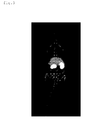
- the 18 F-labeled oligonucleotide (5a) obtained in the example 1 was administered to a rat, and a PET image was obtained. More specifically, a physiological salt solution containing 45 MBq of the 18 F-labeled oligonucleotide (5a) is administered to an SD rat (8 weeks old, weight: 252 g) under anesthesia though a caudal vein, and an image of the rat was obtained by MicroPET Focus-220, PET apparatus for animals supplied by SIEMENS.
- Fig. 1 shows a whole-body image of the rat showing 30-minute accumulation after 120 minutes passed since the probe administration (Maximum Intensity Projection image).
- the image teaches that the administered 18 F-labeled oligonucleotide (5a) was promptly metabolized in blood and excreted in urine. It is read from the image the deposition of intensive radiation in the bone texture of the whole body, which is, however, considered to result from F-ions generated as the 18 F-labeled oligonucleotide (5a) is metabolized.
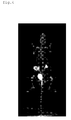
- oligonucleotides (5b), (5c), and (5d) were similarly administered to rats, and PET images of the rats were obtained.
- Figs. 2 to 4 show whole-body images of the rats showing 30-minute accumulation after 120 minutes passed since the administration (Maximum Intensity Projection image).
- the 18 F-labeled oligonucleotide according to the present invention when used, the effects of artificial nucleic acids, such as 2',4'-BNA-transformed oligonucleotide and phosphorothioate oligonucleotide, can be directly observed.
- the present invention is advantageous in that, for example, nuclease tolerance and distribution to tissues can be directly observed in vivo in the studies of the gene therapy using RNA interference. Therefore, the present invention can be leveraged as a technically advantageous tool in the research and development of oligonucleotide pharmaceutical products.
- the present invention is not necessarily limited to the exemplary embodiment and examples described so far.
- the present invention includes various modified embodiments as far as they stay within the Scope of Claims and can be easily assumed by the ordinarily skilled in the art.
- the present invention can provide an advantageous means in the field of medicine where nucleic acid oligomer is used, for example, RNA drug development expected to be launched in individualized medicine.
Landscapes
- Chemical & Material Sciences (AREA)
- Organic Chemistry (AREA)
- Health & Medical Sciences (AREA)
- Life Sciences & Earth Sciences (AREA)
- General Health & Medical Sciences (AREA)
- Medicinal Chemistry (AREA)
- Biochemistry (AREA)
- Pharmacology & Pharmacy (AREA)
- Epidemiology (AREA)
- Animal Behavior & Ethology (AREA)
- Physics & Mathematics (AREA)
- Public Health (AREA)
- Veterinary Medicine (AREA)
- Proteomics, Peptides & Aminoacids (AREA)
- Optics & Photonics (AREA)
- Molecular Biology (AREA)
- Engineering & Computer Science (AREA)
- Biotechnology (AREA)
- Medicines Containing Antibodies Or Antigens For Use As Internal Diagnostic Agents (AREA)
- Saccharide Compounds (AREA)
- Low-Molecular Organic Synthesis Reactions Using Catalysts (AREA)
- Organic Low-Molecular-Weight Compounds And Preparation Thereof (AREA)
Applications Claiming Priority (2)
| Application Number | Priority Date | Filing Date | Title |
|---|---|---|---|
| JP2009118505 | 2009-05-15 | ||
| PCT/JP2010/058217 WO2010131745A1 (fr) | 2009-05-15 | 2010-05-14 | Compose azide marque au f18, reactif de marquage au f18 et procede de marquage au f18 de compose alcyne au moyen de ce reactif |
Publications (2)
| Publication Number | Publication Date |
|---|---|
| EP2500338A1 true EP2500338A1 (fr) | 2012-09-19 |
| EP2500338A4 EP2500338A4 (fr) | 2014-03-26 |
Family
ID=43085118
Family Applications (1)
| Application Number | Title | Priority Date | Filing Date |
|---|---|---|---|
| EP10775002.8A Withdrawn EP2500338A4 (fr) | 2009-05-15 | 2010-05-14 | Compose azide marque au f18, reactif de marquage au f18 et procede de marquage au f18 de compose alcyne au moyen de ce reactif |
Country Status (4)
| Country | Link |
|---|---|
| US (1) | US8680260B2 (fr) |
| EP (1) | EP2500338A4 (fr) |
| JP (1) | JP5594742B2 (fr) |
| WO (1) | WO2010131745A1 (fr) |
Families Citing this family (5)
| Publication number | Priority date | Publication date | Assignee | Title |
|---|---|---|---|---|
| GB0921573D0 (en) | 2009-12-10 | 2010-01-27 | Ge Healthcare Ltd | Iodine radiolabelling method |
| WO2012121285A1 (fr) * | 2011-03-07 | 2012-09-13 | 国立大学法人京都大学 | Composé précurseur de marquage, composé de marquage radioactif, et procédés de production de ces composés |
| WO2019063803A1 (fr) * | 2017-09-29 | 2019-04-04 | Baseclick Gmbh | Ligature basée sur une réaction « click » |
| KR102137001B1 (ko) * | 2018-09-21 | 2020-07-24 | 주식회사 비아이케이테라퓨틱스 | 선택적 아자이드 치환반응과 전구체 제거화를 이용한 플루오린-18이 표지 된 플루오르메틸 치환 방사성의약품의 제조방법 |
| CN118725329B (zh) * | 2024-07-11 | 2025-09-09 | 河北医科大学 | 一种高活性异金属CuIn-MOF催化剂和其制备方法及其催化氨基合成有机叠氮化物的方法和应用 |
Family Cites Families (2)
| Publication number | Priority date | Publication date | Assignee | Title |
|---|---|---|---|---|
| WO2006038184A2 (fr) | 2004-10-07 | 2006-04-13 | Koninklijke Philips Electronics N.V. | Composes, trousses et methodes destinees a l'imagerie medicale |
| KR20080000620A (ko) | 2005-04-27 | 2008-01-02 | 지멘스 메디컬 솔루션즈 유에스에이, 인크. | 분자 이미징 프로브를 합성하기 위한 클릭 화학 방법 |
-
2010
- 2010-05-14 EP EP10775002.8A patent/EP2500338A4/fr not_active Withdrawn
- 2010-05-14 JP JP2011513390A patent/JP5594742B2/ja not_active Expired - Fee Related
- 2010-05-14 US US13/320,421 patent/US8680260B2/en not_active Expired - Fee Related
- 2010-05-14 WO PCT/JP2010/058217 patent/WO2010131745A1/fr not_active Ceased
Non-Patent Citations (2)
| Title |
|---|
| INKSTER, J. A. H., GUERIN, B., RUTH. T. J., ADAM, M. J.: J. LABELLEDCOMPD. RADIOPHARM., vol. 51, 2008, pages 444-452, XP2579872, * |
| See also references of WO2010131745A1 * |
Also Published As
| Publication number | Publication date |
|---|---|
| EP2500338A4 (fr) | 2014-03-26 |
| JPWO2010131745A1 (ja) | 2012-11-08 |
| US8680260B2 (en) | 2014-03-25 |
| US20120101266A1 (en) | 2012-04-26 |
| WO2010131745A1 (fr) | 2010-11-18 |
| JP5594742B2 (ja) | 2014-09-24 |
Similar Documents
| Publication | Publication Date | Title |
|---|---|---|
| Pretze et al. | Recent trends in bioorthogonal click-radiolabeling reactions using fluorine-18 | |
| Petrov et al. | Synthesis of radioiodinated compounds. Classical approaches and achievements of recent years | |
| Miller et al. | Synthesis of 11C, 18F, 15O, and 13N radiolabels for positron emission tomography | |
| CN113292538A (zh) | 靶向肿瘤相关成纤维细胞激活蛋白的化合物及其制备方法和应用与靶向fap的肿瘤显影剂 | |
| US8680260B2 (en) | 18F-labeled azide compound, reagent for 18F-labeling and method for 18F-labeling of alkyne compound using same | |
| US20060263293A1 (en) | Click chemistry method for synthesizing molecular imaging probes | |
| Mushtaq et al. | Critical analysis of radioiodination techniques for micro and macro organic molecules | |
| US11298432B2 (en) | Method for preparing a marked purine derivative, said derivative and uses thereof | |
| Bonomi et al. | Novel histone deacetylase class IIa selective substrate radiotracers for PET imaging of epigenetic regulation in the brain | |
| Banister et al. | Fluorine-18 chemistry for PET: a concise introduction | |
| Glaser et al. | Methods for 18F-labeling of RGD peptides: comparison of aminooxy [18F] fluorobenzaldehyde condensation with ‘click labeling’using 2-[18F] fluoroethylazide, and S-alkylation with [18F] fluoropropanethiol | |
| EP3354639B1 (fr) | Composé précurseur de composé organique marqué par un atome d'halogène radioactif | |
| Teodoro et al. | Development of [18F] LU14 for PET imaging of cannabinoid receptor type 2 in the brain | |
| US20100228060A1 (en) | Perfluoro-aryliodonium salts in nucleophilic aromatic 18f-fluorination | |
| CN109776587B (zh) | 一种碳链延长的谷氨酰胺三氟化硼类似物 | |
| EP3757101A1 (fr) | Procédé de production de composés fluorés utilisant un solvant alcoolique comportant un hydrocarbure insaturé | |
| WO2013012817A1 (fr) | Procédés et compositions pour le séchage dans la préparation de produits radiopharmaceutiques | |
| US20100290988A1 (en) | Fluorinated fructose derivatives for pet imaging | |
| Kuboyama et al. | Stoichiometry-focused 18F-labeling of alkyne-substituted oligodeoxynucleotides using azido ([18F] fluoromethyl) benzenes by Cu-catalyzed Huisgen reaction | |
| Ahn et al. | Synthesis and Evaluation of cis-1-[4-(Hydroxymethyl)-2-cyclopenten-1-yl]-5-[124I] iodouracil: A New Potential PET Imaging Agent for HSV1-tk Expression | |
| US20100150835A1 (en) | Synthesis of [18F] Fluoromethyl Benzene Using Benzyl Pentafluorobenzenesulfonate | |
| EP3615089B1 (fr) | Procédé de synthèse d'agents biomoléculaires radiomarqués au 18f | |
| Maujean et al. | Hetero-Diels–Alder and CuAAC Click Reactions for Fluorine-18 Labeling of Peptides: Automation and Comparative Study of the Two Methods | |
| KR20120066550A (ko) | 사멸세포의 양전자방출 단층촬영술을 위한 F?18 표지 ApoPep?1 화합물, 이의 제조방법 및 응용 | |
| WO2011160216A2 (fr) | Composés utiles en imagerie et en thérapie |
Legal Events
| Date | Code | Title | Description |
|---|---|---|---|
| PUAI | Public reference made under article 153(3) epc to a published international application that has entered the european phase |
Free format text: ORIGINAL CODE: 0009012 |
|
| 17P | Request for examination filed |
Effective date: 20111215 |
|
| AK | Designated contracting states |
Kind code of ref document: A1 Designated state(s): AL AT BE BG CH CY CZ DE DK EE ES FI FR GB GR HR HU IE IS IT LI LT LU LV MC MK MT NL NO PL PT RO SE SI SK SM TR |
|
| A4 | Supplementary search report drawn up and despatched |
Effective date: 20140226 |
|
| RIC1 | Information provided on ipc code assigned before grant |
Ipc: A61K 51/00 20060101ALI20140220BHEP Ipc: C07C 247/16 20060101AFI20140220BHEP Ipc: C07B 59/00 20060101ALI20140220BHEP Ipc: C07D 249/06 20060101ALI20140220BHEP Ipc: C07H 7/06 20060101ALI20140220BHEP |
|
| GRAP | Despatch of communication of intention to grant a patent |
Free format text: ORIGINAL CODE: EPIDOSNIGR1 |
|
| INTG | Intention to grant announced |
Effective date: 20141126 |
|
| STAA | Information on the status of an ep patent application or granted ep patent |
Free format text: STATUS: THE APPLICATION IS DEEMED TO BE WITHDRAWN |
|
| 18D | Application deemed to be withdrawn |
Effective date: 20150408 |