EP2502303B1 - Batterie au lithium COMPRÉNANT DES ÉLECTRODES DE CONVERSION CONTENANT DE L'OXYGÈNE - Google Patents
Batterie au lithium COMPRÉNANT DES ÉLECTRODES DE CONVERSION CONTENANT DE L'OXYGÈNE Download PDFInfo
- Publication number
- EP2502303B1 EP2502303B1 EP10781493.1A EP10781493A EP2502303B1 EP 2502303 B1 EP2502303 B1 EP 2502303B1 EP 10781493 A EP10781493 A EP 10781493A EP 2502303 B1 EP2502303 B1 EP 2502303B1
- Authority
- EP
- European Patent Office
- Prior art keywords
- lithium
- oxygen
- lithium battery
- lih
- lioh
- Prior art date
- Legal status (The legal status is an assumption and is not a legal conclusion. Google has not performed a legal analysis and makes no representation as to the accuracy of the status listed.)
- Active
Links
Images


Classifications
-
- H—ELECTRICITY
- H01—ELECTRIC ELEMENTS
- H01M—PROCESSES OR MEANS, e.g. BATTERIES, FOR THE DIRECT CONVERSION OF CHEMICAL ENERGY INTO ELECTRICAL ENERGY
- H01M4/00—Electrodes
- H01M4/02—Electrodes composed of, or comprising, active material
- H01M4/36—Selection of substances as active materials, active masses, active liquids
- H01M4/58—Selection of substances as active materials, active masses, active liquids of inorganic compounds other than oxides or hydroxides, e.g. sulfides, selenides, tellurides, halogenides or LiCoFy; of polyanionic structures, e.g. phosphates, silicates or borates
-
- C—CHEMISTRY; METALLURGY
- C01—INORGANIC CHEMISTRY
- C01D—COMPOUNDS OF ALKALI METALS, i.e. LITHIUM, SODIUM, POTASSIUM, RUBIDIUM, CAESIUM, OR FRANCIUM
- C01D15/00—Lithium compounds
-
- C—CHEMISTRY; METALLURGY
- C01—INORGANIC CHEMISTRY
- C01D—COMPOUNDS OF ALKALI METALS, i.e. LITHIUM, SODIUM, POTASSIUM, RUBIDIUM, CAESIUM, OR FRANCIUM
- C01D15/00—Lithium compounds
- C01D15/02—Oxides; Hydroxides
-
- C—CHEMISTRY; METALLURGY
- C01—INORGANIC CHEMISTRY
- C01G—COMPOUNDS CONTAINING METALS NOT COVERED BY SUBCLASSES C01D OR C01F
- C01G23/00—Compounds of titanium
- C01G23/003—Titanates
- C01G23/005—Alkali titanates
-
- H—ELECTRICITY
- H01—ELECTRIC ELEMENTS
- H01M—PROCESSES OR MEANS, e.g. BATTERIES, FOR THE DIRECT CONVERSION OF CHEMICAL ENERGY INTO ELECTRICAL ENERGY
- H01M10/00—Secondary cells; Manufacture thereof
- H01M10/05—Accumulators with non-aqueous electrolyte
- H01M10/052—Li-accumulators
-
- H—ELECTRICITY
- H01—ELECTRIC ELEMENTS
- H01M—PROCESSES OR MEANS, e.g. BATTERIES, FOR THE DIRECT CONVERSION OF CHEMICAL ENERGY INTO ELECTRICAL ENERGY
- H01M4/00—Electrodes
- H01M4/02—Electrodes composed of, or comprising, active material
- H01M4/36—Selection of substances as active materials, active masses, active liquids
- H01M4/48—Selection of substances as active materials, active masses, active liquids of inorganic oxides or hydroxides
- H01M4/483—Selection of substances as active materials, active masses, active liquids of inorganic oxides or hydroxides for non-aqueous cells
-
- C—CHEMISTRY; METALLURGY
- C01—INORGANIC CHEMISTRY
- C01P—INDEXING SCHEME RELATING TO STRUCTURAL AND PHYSICAL ASPECTS OF SOLID INORGANIC COMPOUNDS
- C01P2006/00—Physical properties of inorganic compounds
- C01P2006/40—Electric properties
-
- Y—GENERAL TAGGING OF NEW TECHNOLOGICAL DEVELOPMENTS; GENERAL TAGGING OF CROSS-SECTIONAL TECHNOLOGIES SPANNING OVER SEVERAL SECTIONS OF THE IPC; TECHNICAL SUBJECTS COVERED BY FORMER USPC CROSS-REFERENCE ART COLLECTIONS [XRACs] AND DIGESTS
- Y02—TECHNOLOGIES OR APPLICATIONS FOR MITIGATION OR ADAPTATION AGAINST CLIMATE CHANGE
- Y02E—REDUCTION OF GREENHOUSE GAS [GHG] EMISSIONS, RELATED TO ENERGY GENERATION, TRANSMISSION OR DISTRIBUTION
- Y02E60/00—Enabling technologies; Technologies with a potential or indirect contribution to GHG emissions mitigation
- Y02E60/10—Energy storage using batteries
-
- Y—GENERAL TAGGING OF NEW TECHNOLOGICAL DEVELOPMENTS; GENERAL TAGGING OF CROSS-SECTIONAL TECHNOLOGIES SPANNING OVER SEVERAL SECTIONS OF THE IPC; TECHNICAL SUBJECTS COVERED BY FORMER USPC CROSS-REFERENCE ART COLLECTIONS [XRACs] AND DIGESTS
- Y02—TECHNOLOGIES OR APPLICATIONS FOR MITIGATION OR ADAPTATION AGAINST CLIMATE CHANGE
- Y02P—CLIMATE CHANGE MITIGATION TECHNOLOGIES IN THE PRODUCTION OR PROCESSING OF GOODS
- Y02P70/00—Climate change mitigation technologies in the production process for final industrial or consumer products
- Y02P70/50—Manufacturing or production processes characterised by the final manufactured product
-
- Y—GENERAL TAGGING OF NEW TECHNOLOGICAL DEVELOPMENTS; GENERAL TAGGING OF CROSS-SECTIONAL TECHNOLOGIES SPANNING OVER SEVERAL SECTIONS OF THE IPC; TECHNICAL SUBJECTS COVERED BY FORMER USPC CROSS-REFERENCE ART COLLECTIONS [XRACs] AND DIGESTS
- Y10—TECHNICAL SUBJECTS COVERED BY FORMER USPC
- Y10T—TECHNICAL SUBJECTS COVERED BY FORMER US CLASSIFICATION
- Y10T29/00—Metal working
- Y10T29/49—Method of mechanical manufacture
- Y10T29/49002—Electrical device making
- Y10T29/49108—Electric battery cell making
Definitions
- the rechargeable lithium batteries currently in use contain graphite as anode material.
- Graphite acts as lithium insertion material and according to the equation Li + 6 C ⁇ LiC 6 a theoretical capacity of 372 mAh/g at a potential of approx. 0.2 V vs Li/Li + .
- the significantly higher storage capacity of lithium metal 3860 mAh/g cannot be used in practical batteries because such batteries are neither safe nor cycle-stable.
- the lithium metal is sometimes deposited not in a planar manner but in the form of outgrowths (dendrites). These outgrowths can detach from the metal anode, causing the electrochemical cell to lose capacity. The consequences are even more serious if needle-shaped dendrites penetrate the separator. This can short-circuit the battery cell, often with catastrophic consequences: thermal run-away, often accompanied by fire.
- lithium alloys As anode material instead of pure lithium metal.
- lithium alloys show extremely strong volume fluctuations when lithium is stored and released (sometimes several 100%, e.g. Li 9 Al 4 : 238%). This is why alloy anodes, with the exception of tin-graphite composites, have not been able to establish themselves on the market.
- tin is a rare and expensive element, which has prevented the widespread use of tin-containing materials.
- the present invention relates to a lithium battery as defined in the appended set of claims.
- Suitable aprotic electrolytes can be solid, liquid or gel-like.
- liquid electrolytes consisting of solutions of an oxidation-stable lithium salt (e.g. LiPF 6 , LiBF 4 , LiBF 2 C 2 O 4 , LiB(C 2 O 4 ) 2 (LiBOB), lithium triflate or lithium imides such as LiTFSI or LFSI) in organic solvents (e.g. carbonic acid esters, carboxylic acid esters and/or nitriles) or ionic liquids or mixtures thereof.
- organic solvents e.g. carbonic acid esters, carboxylic acid esters and/or nitriles
- Electrolytes which do not contain a conductive salt with labile (ie thermo- or hydrolysis-sensitive) element-fluorine bonds are particularly preferred.
- LiPF 6 forms PF 5 , HF and other decomposition products when heated or in contact with water, which can react exothermically with battery materials, for example the largely transition metal-free lithium-oxygen compounds according to the invention.
- LiBOB, LiTFSI or LiClO 4 is preferably used as the conductive salt instead.
- the lithium charging or discharging process of the negative electrode can be described by the following reaction equations: 2 LiOH + 2 Li ⁇ Li 2 O 2 + 2 LiH (2) Li 2 O 2 + 2 Li ⁇ 2 Li 2 O (3)
- the lithium-poor, fully discharged form i.e. LiOH
- the fully charged form mixture of lithium oxide and lithium hydride
- oxygen-containing conversion electrodes essentially transition metal-free lithium-oxygen compounds
- oxygen-containing conversion electrodes in the (partially) discharged state i.e. in the form of LiOH or Li 2 O 2 , optionally in a mixture with lithium hydride
- a lithiated insertion material for example a lithium metal oxide Li n M 3 O y .
- the electrode reactions taking into account the fully discharged and The fully charged form of the oxygen-containing conversion electrodes generally looks as follows when using a metal oxide cathode: n/2 LiOH + Li n M 3 y O z ⁇ n /2 Li 2 O + n /2 LiH + M 3 y O z (5)
- lithium metal oxides are particularly preferred: LiCoO 2 , LiNiO 2 , LiMn 2 O 4 , Li 2 MnO 3 , LiVO 2 and mixed metal oxides such as Li(Ni 1/3 Mn 1/3 Co 1/3 )O 2 , Li(Ni 0.85 Co 0.15 )O 2 , Li(Ni 0.85 Co 0.1 Al 0.05 )O 2 or LiFe 0.5 Mn 1.5 O 4 .
- lithium insertion materials such as lithium phosphates (e.g. LiFePO 4 , LiVPO 4 , LiMnPO 4 ), lithium silicates (e.g. Li 2 FeSiO 4 , Li 2 MnSiO 4 , Li 2 CoSiO 4 ) and mixed lithiated fluorometal oxides can also be used.
- lithium phosphates e.g. LiFePO 4 , LiVPO 4 , LiMnPO 4
- lithium silicates e.g. Li 2 FeSiO 4 , Li 2 MnSiO 4 , Li 2 CoSiO 4
- mixed lithiated fluorometal oxides can also be used.
- the oxygen-containing conversion electrode material is preferably used in the lithium-rich form (ie the charged form, i.e. as Li 2 O, optionally mixed with LiH).
- Lithium insertion materials eg metal oxides such as MnO 2 , NiO 2 or V 2 O 5
- conversion materials preferably metal fluorides such as NiF 2 , CoF 2 , FeF 2 and FeF 3 or metal oxyfluorides such as BiO x F 3 - 2x or FeOF can then be used as the positive mass (cathode).
- lithium-containing conversion electrode of the lithium battery according to the invention in (partially) discharged form to lithium- free cathode materials.
- this lithium source is either pure lithium metal, for example in powder form, or an alloy containing lithium metal. Pure lithium metal is preferably used.
- lithium oxide is formed: Li 2 O 2 + 2 Li ⁇ 2 Li 2 O (3)
- the theoretical gravimetric capacity of LiOH is 2238 Ah/kg according to equation (4), which is about 6 times as much as that of graphite. Based on the effectively present mixture of Li 2 O and LiH, the theoretical capacity of the oxygen-containing conversion electrode material according to the invention is 1417 Ah/kg.
- the lithium in equation (6) can also be used in excess. Then, in addition to lithium hydride, a mixture of lithium metal and lithium oxide or lithium peroxide is formed: 2 LiOH + (2 m + a) Li ⁇ m Li 2 O 2/ m + 2 LiH + a Li (9) a is a number between 0 and 5, preferably between 0 and 2.
- the general electrode redox reaction looks like this: 2 LiH + m Li 2 O 2/ m + M 3 y O z + a Li ⁇ 2 LiOH + Li 2 m M 3 y O z + a Li (10)
- the oxygen-containing conversion electrode in the discharged state, ie in the form of LiOH.
- the galvanic cell then has the following electrode configuration according to the general equation (5): 2 LiMn2O4 // LiOH LiOH + 2 LiMn 2 O 4 ⁇ 2 LiH + Li 2 O + 2 Mn 2 O 4 (5a)
- the discharged transition metal-free oxygen-containing conversion electrode to a mixture of lithium metal and the partially or completely lithium-free lithium insertion cathode.
- the configuration looks, for example, as follows: 2 Li + 2 Mn 2 O 4 // LiOH
- the lithiation of the cathode material can be carried out either ex-situ (i.e. outside the galvanic cell) or in the fully assembled electrochemical cell during cycling.
- the (partially) charged conversion electrode can be installed against a cathode consisting of a suitable manganese dioxide modification: 2 MnO 2 // LiH + Li 2 O LiH + Li 2 O + 2 MnO 2 ⁇ LiOH + 2 LiMnO 2 (10 a) 2 LiH + Li 2 O 2 + 2 MnO 2 ⁇ 2 LiOH + 2 LiMnO 2 (10 b)
- the charged anode form (a Li 2 O/LiH mixture) is formed according to Eq. (4).
- an electrode redox reaction using NiO 2 is shown: 2 NiO 2 // LiH + Li 2 O LiH + Li 2 O + 2 NiO 2 ⁇ LiOH + 2 LiNiO 2 (7a)
- reaction equations and electrode configurations indicate the optimal (i.e. theoretical) stoichiometric ratios. However, it may be advisable to deviate from these ratios, for example to increase the mechanical stability of the electrode.
- the theoretical molar ratio for the charged oxygen-containing conversion electrode according to the invention is 2 LiH : 2 Li 2 O. If less LiH If only a molar ratio of 1:2 is used in relation to Li 2 O, for example, not all of the lithium oxide can be converted into the discharged form, lithium hydroxide (LiOH). Rather, part of the lithium oxide remains unchanged even after charging.
- the electrode configuration and the charge-discharge equations then look as follows when using manganese dioxide as a cathode, for example: 2 MnO 2 // LiH + 2 Li 2 O LiH + 2 Li 2 O + 2 MnO 2 ⁇ LiOH + Li 2 O + 2 LiMnO 2 (7a)
- the lithium oxide which does not participate in the redox process, causes a smaller volume change of the anode during cycling, i.e. it stabilizes it, so that a further improved cycle stability is achieved.
- the oxygen-containing conversion electrode material according to the invention is used in the charged state, the molar ratio between LiH and Li 2 O can take on values between 0.1:1 to 10:1. Similarly, the molar ratio between LiOH and Li metal can take on values between 1:1 to 1:20.
- the oxygen-containing conversion electrode material can be used in a completely discharged form (i.e. as LiOH) or in a mixture with lithium oxide and/or lithium peroxide and/or LiH.
- molar ratios according to the invention between LiOH, Li 2 O, Li 2 O 2 and LiH are in the range between 1:0:0:0 and 1:0.1-2:0.1-2:0.1-12.
- the oxygen-containing conversion electrode material of the lithium battery according to the invention is preferably in powder form.
- the particles are ⁇ 100 ⁇ m, particularly preferably ⁇ 30 ⁇ m in size.
- Conductivity-improving additives for example graphite, conductive carbon black or finely distributed metals (eg Ti powder) are preferably mixed into the oxygen-containing conversion electrode material.
- the conductivity-improving additive is particularly preferably mixed with the oxygen-containing conversion electrode material is ground, for example in a ball or rod mill.
- the discharged oxygen-containing conversion electrode material is produced according to the state of the art, for example by causticizing lithium carbonate with burnt or slaked lime: Li 2 CO 3 + Ca(OH) 2 ⁇ 2 LiOH + CaCO 3 ⁇ (11)
- Lithium peroxide is prepared by reacting lithium hydroxide with hydrogen peroxide.
- Lithium oxide can be obtained by thermal decomposition of lithium peroxide at temperatures above approx. 190 °C 2 Li 2 O 2 ⁇ 2 Li 2 O + O 2 (13) or by reacting lithium hydride with lithium hydroxide at temperatures above 200°C, particularly preferably > 250°C: LiH + LiOH ⁇ Li 2 O + H 2 (14)
- lithium oxide can be produced by reacting lithium peroxide with lithium metal according to 2 Li + Li 2 O 2 ⁇ 2 Li 2 O (15) at temperatures above the lithium melting point, preferably above 300°C in the solid mixture in a closed, pressure-resistant vessel.
- lithium hydride and lithium oxide can be prepared by preparing the two lithium compounds separately and then mixing them. It can also be prepared by reaction between lithium hydroxide and lithium metal according to 2 Li + LiOH ⁇ LiH + Li 2 O (16) either in bulk, ie solvent-free, or as a dispersion in a high-boiling solvent, preferably paraffin oil, at temperatures of 180 to 300°C. This reaction can preferably be carried out under grinding conditions, ie using a mill.
- mixtures of lithium hydroxide and lithium oxide can be prepared by reacting a powder mixture consisting of equimolar amounts of lithium hydride and lithium peroxide at temperatures above 200°C, preferably above 250°C: LiH + Li 2 O 2 ⁇ LiOH + Li 2 O (17) electrode with a more negative potential (e.g. lithium metal or a lithium metal alloy).
- a powder mixture consisting of equimolar amounts of lithium hydride and lithium peroxide at temperatures above 200°C, preferably above 250°C: LiH + Li 2 O 2 ⁇ LiOH + Li 2 O (17) electrode with a more negative potential (e.g. lithium metal or a lithium metal alloy).
- argon (Ar)-filled glove box a mixture consisting of 50 mmol each of lithium hydride (0.40 g) and anhydrous lithium hydroxide (1.20 g) is mixed and pulverized in an agate mortar and then filled into a steel autoclave with a capacity of approx. 5 ml and a pressure indicator and heated to 360°C at a heating rate of 45 K/h. When the temperature exceeds about 200°C, the beginning of gas formation is observed. At the end of the experiment, a pressure of 25 bar has built up.
- the autoclave is cooled to room temperature and the resulting white powder is analyzed by X-ray diffraction. It consists essentially of lithium oxide and traces of remaining reactants.
- a mixture consisting of 60 mmol lithium metal powder (0.42 g) and 30 mmol lithium peroxide (1.38 g) is mixed and pulverized in an agate mortar and then filled into a steel autoclave with a capacity of approximately 5 ml with pressure and temperature indicator and heated to 360°C at a heating rate of 45 K/h.
- the reaction product was analyzed by XRD after cooling to room temperature. It consists of phase-pure Li 2 O.
- a mixture consisting of 80 mmol lithium metal powder (0.56 g) and 40 mmol anhydrous lithium hydroxide (0.96 g) is mixed and pulverized in an agate mortar and then filled into a steel autoclave with a capacity of approximately 5 ml with pressure and temperature indicator and heated to 360°C at a heating rate of 45 K/h.
- the reaction product was analyzed by XRD after cooling to room temperature. It consists of Li 2 O and LiH as well as small amounts of LiOH.
- a mixture consisting of 45 mmol lithium hydride (0.36 g) and 45 mmol lithium peroxide (2.06 g) is mixed and pulverized in an agate mortar and then filled into a steel autoclave with a capacity of approx. 5 ml with pressure and temperature display and heated to 360°C at a heating rate of 45 K/h.
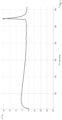
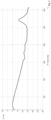
- a 10% solution of LiPF 6 and an 11% solution of lithium bis(oxalato)borate (LiBOB) in a mixture of ethylene carbonate (EC) and ethyl methyl carbonate (EMC) 1:1 (wt:wt) were used as battery electrolytes in Figure 4 .
- the LiPF 6 electrolyte is stable in the presence of lithium peroxide up to about 110°C, but then decomposes with a strong release of energy.
- the LiBOB electrolyte is stable up to about 190°C.
Landscapes
- Chemical & Material Sciences (AREA)
- Organic Chemistry (AREA)
- Inorganic Chemistry (AREA)
- Engineering & Computer Science (AREA)
- Materials Engineering (AREA)
- General Chemical & Material Sciences (AREA)
- Chemical Kinetics & Catalysis (AREA)
- Electrochemistry (AREA)
- Geology (AREA)
- Life Sciences & Earth Sciences (AREA)
- General Life Sciences & Earth Sciences (AREA)
- Manufacturing & Machinery (AREA)
- Environmental & Geological Engineering (AREA)
- Battery Electrode And Active Subsutance (AREA)
- Secondary Cells (AREA)
Claims (5)
- Batterie au lithium, comprenant :- en tant qu'anode, une masse négative se présentant sous la forme d'une électrode de conversion qui contient de l'oxygène et ne contient pas de métal de transition,- une cathode contenant un métal de transition,- et un électrolyte lithié aprotique,dans laquelle l'électrode de conversion qui contient de l'oxygène et ne contient pas de métal de transition est constituée, à l'état complètement déchargé, d'hydroxyde de lithium et, en option, d'adjuvants améliorant la conductivité.
- Batterie au lithium conforme à la revendication 1, caractérisée en en ce que la masse positive (cathode) est un matériau d'insertion de lithium ou un matériau de conversion.
- Batterie au lithium conforme à la revendication 1 ou 2, caractérisée en ce que le matériau d'insertion de lithium est choisi dans l'ensemble constitué par un oxyde de lithium et de métal, un phosphate de métal lithié, un silicate lithié et un oxyde de fluoro-métal lithié mixte, et en ce que le matériau de conversion est choisi dans l'ensemble constitué par les fluorures de métal de transition et les oxyfluorures de métal de transition.
- Batterie au lithium conforme à l'une des revendications 1 à 3, caractérisée en ce que le matériau d'électrode de conversion contenant de l'oxygène se présente sous la forme d'une poudre dont les particules ont une taille inférieure à 100 µm, et de préférence, inférieure à 30 µm.
- Batterie au lithium conforme à l'une des revendications 1 à 4, caractérisée en ce que le ou les adjuvant(s) améliorant la conductivité est ou sont moulu(s) avec le matériau d'électrode de conversion contenant de l'oxygène.
Applications Claiming Priority (2)
| Application Number | Priority Date | Filing Date | Title |
|---|---|---|---|
| DE102009046916 | 2009-11-20 | ||
| PCT/EP2010/067756 WO2011061256A1 (fr) | 2009-11-20 | 2010-11-18 | Éléments galvaniques comportant des électrodes de conversion contenant de l'oxygène |
Publications (2)
| Publication Number | Publication Date |
|---|---|
| EP2502303A1 EP2502303A1 (fr) | 2012-09-26 |
| EP2502303B1 true EP2502303B1 (fr) | 2024-08-14 |
Family
ID=43568177
Family Applications (1)
| Application Number | Title | Priority Date | Filing Date |
|---|---|---|---|
| EP10781493.1A Active EP2502303B1 (fr) | 2009-11-20 | 2010-11-18 | Batterie au lithium COMPRÉNANT DES ÉLECTRODES DE CONVERSION CONTENANT DE L'OXYGÈNE |
Country Status (7)
| Country | Link |
|---|---|
| US (1) | US9490482B2 (fr) |
| EP (1) | EP2502303B1 (fr) |
| JP (1) | JP5980118B2 (fr) |
| CN (1) | CN102782924B (fr) |
| CA (1) | CA2781633C (fr) |
| DE (1) | DE102010044109A1 (fr) |
| WO (1) | WO2011061256A1 (fr) |
Families Citing this family (11)
| Publication number | Priority date | Publication date | Assignee | Title |
|---|---|---|---|---|
| US9692039B2 (en) | 2012-07-24 | 2017-06-27 | Quantumscape Corporation | Nanostructured materials for electrochemical conversion reactions |
| JP6230149B2 (ja) * | 2012-10-22 | 2017-11-15 | 国立大学法人 東京大学 | 二次電池、正極活物質、正極材料、及び、その製造方法 |
| KR102204928B1 (ko) | 2013-05-16 | 2021-01-18 | 알베마를 저머니 게엠베하 | 리튬-이온 배터리를 위한 활성 리튬 저장소 |
| EP2816639A3 (fr) * | 2013-06-19 | 2015-05-13 | QuantumScape Corporation | Revêtements protecteurs pour cathodes de matériau de conversion |
| US9466830B1 (en) | 2013-07-25 | 2016-10-11 | Quantumscape Corporation | Method and system for processing lithiated electrode material |
| WO2015130831A1 (fr) | 2014-02-25 | 2015-09-03 | Quantumscape Corporation | Électrodes hybrides comportant à la fois une matière d'intercalation et une matière de conversion |
| WO2016025866A1 (fr) | 2014-08-15 | 2016-02-18 | Quantumscape Corporation | Matériaux de conversion dopés pour cathodes de batterie secondaire |
| WO2020049104A1 (fr) * | 2018-09-05 | 2020-03-12 | Albemarle Germany Gmbh | Procédé pour fabriquer une batterie rechargeable à haute énergie pourvue d'une cathode composite à activité redox anionique |
| JP7678273B2 (ja) * | 2020-12-18 | 2025-05-16 | 日亜化学工業株式会社 | リチウムニッケル酸化物及びその製造方法 |
| US11380893B1 (en) * | 2021-02-12 | 2022-07-05 | WATTRII, Inc. | High energy cathodes, batteries, and methods of making the same |
| CN114613997A (zh) | 2022-03-09 | 2022-06-10 | 武汉理工大学 | 一种磷酸锰钛铬钠自支撑电极材料及其制备方法与应用 |
Family Cites Families (14)
| Publication number | Priority date | Publication date | Assignee | Title |
|---|---|---|---|---|
| US4071665A (en) * | 1972-09-18 | 1978-01-31 | E. I. Du Pont De Nemours And Company | High energy density battery with dioxolane based electrolyte |
| GB2188917B (en) | 1986-04-11 | 1989-11-22 | Lithium Corp | High purity lithium oxide process |
| JPH01225063A (ja) | 1988-03-01 | 1989-09-07 | Bridgestone Corp | リチウム電池 |
| US4960657A (en) | 1988-03-01 | 1990-10-02 | Bridgestone Corporation | Lithium cells |
| US5283136A (en) | 1992-06-03 | 1994-02-01 | Ramot University Authority For Applied Research And Industrial Development Ltd. | Rechargeable batteries |
| US5436549A (en) | 1993-04-19 | 1995-07-25 | Valence Technology, Inc. | Methods for extending the cycle life of solid, secondary electrolytic cells |
| US6991876B2 (en) | 2001-10-05 | 2006-01-31 | Sri International | Metal/active oxygen batteries |
| CN1921188A (zh) * | 2005-08-23 | 2007-02-28 | 比亚迪股份有限公司 | 一种电池正极和锂离子电池及它们的制备方法 |
| JP4569534B2 (ja) * | 2006-07-19 | 2010-10-27 | トヨタ自動車株式会社 | 組電池 |
| US8518604B2 (en) * | 2007-02-02 | 2013-08-27 | Rutgers, The State University Of New Jersey | Metal fluoride and phosphate nanocomposites as electrode materials |
| US7736805B2 (en) * | 2007-05-16 | 2010-06-15 | Gm Global Technology Operations, Inc. | Lithium hydride negative electrode for rechargeable lithium batteries |
| US20090053594A1 (en) | 2007-08-23 | 2009-02-26 | Johnson Lonnie G | Rechargeable air battery and manufacturing method |
| JP4512151B2 (ja) | 2007-09-28 | 2010-07-28 | トヨタ自動車株式会社 | 水素発生方法、水素発生材料の製造方法、水素製造装置、及び、燃料電池システム |
| US20140075745A1 (en) * | 2012-08-01 | 2014-03-20 | Sharp Laboratories Of America, Inc. | High Capacity Alkali/Oxidant Battery |
-
2010
- 2010-11-18 EP EP10781493.1A patent/EP2502303B1/fr active Active
- 2010-11-18 CN CN201080061869.7A patent/CN102782924B/zh active Active
- 2010-11-18 WO PCT/EP2010/067756 patent/WO2011061256A1/fr not_active Ceased
- 2010-11-18 JP JP2012539328A patent/JP5980118B2/ja not_active Expired - Fee Related
- 2010-11-18 CA CA2781633A patent/CA2781633C/fr active Active
- 2010-11-18 US US13/510,209 patent/US9490482B2/en active Active
- 2010-11-18 DE DE102010044109A patent/DE102010044109A1/de active Pending
Also Published As
| Publication number | Publication date |
|---|---|
| JP5980118B2 (ja) | 2016-08-31 |
| CA2781633A1 (fr) | 2011-05-26 |
| US20120225356A1 (en) | 2012-09-06 |
| CN102782924A (zh) | 2012-11-14 |
| EP2502303A1 (fr) | 2012-09-26 |
| DE102010044109A1 (de) | 2011-05-26 |
| CN102782924B (zh) | 2016-11-09 |
| CA2781633C (fr) | 2020-02-25 |
| JP2013511802A (ja) | 2013-04-04 |
| US9490482B2 (en) | 2016-11-08 |
| WO2011061256A1 (fr) | 2011-05-26 |
Similar Documents
| Publication | Publication Date | Title |
|---|---|---|
| EP2502303B1 (fr) | Batterie au lithium COMPRÉNANT DES ÉLECTRODES DE CONVERSION CONTENANT DE L'OXYGÈNE | |
| EP3794663B9 (fr) | Cellule de batterie rechargeable | |
| DE60128043T2 (de) | Verfahren zur Herstellung von Kathodenaktivmaterial und Verfahren zur Herstellung einer Zelle mit nichtwässrigem Elektrolyten | |
| DE69528563T2 (de) | Kathodenmaterial, Verfahren zu dessen Herstellung und dessen Verwendung in einer Sekundärbatterie der nichtwässrigen Lösungsmittelart | |
| DE69220660T2 (de) | AUFLADBARE BATTERIE MIT EINER Li1+xMn2O4 KATHODE UND EINER KOHLENSTOFFANODE | |
| EP3105803B1 (fr) | Matériaux de graphite (partiellement) lithiés stabilisés, leur procédé de production et leur utilisation pour des batteries au lithium | |
| DE69524548T2 (de) | Lithium Sekundärbatterie und Verfahren zur Herstellung des Materials für die negative Elektrode zur Verwendung darin. | |
| DE69708833T2 (de) | Elektrode für wiederaufladbaren lithiumenthaltenden elektrochemischen stromgenerator | |
| DE60305203T2 (de) | Boron enthaltende lithiuminterkalationsverbindungen zur verwendung als aktive materialien für elektroden , speichermedien und electrochromische vorrichtungen | |
| EP3105804A1 (fr) | Éléments galvaniques et anodes pour batterie au lithium (partiellement) lithiées et à capacité accrue, et procédé de production de composés d'intercalation du graphite de synthèse | |
| EP2494636B1 (fr) | Anodes à base d'hydrure contenant de l'azote et éléments galvaniques contenant des anodes à base d'hydrure contenant de l'azote | |
| DE112017006921T5 (de) | Lithium-Ionen-Zelle und Verfahren zur Herstellung davon | |
| DE112011102161T5 (de) | Herstellungsverfahren für eine Verbindung auf Grundlage von Lithiumsilicat | |
| EP2486616A1 (fr) | Anodes en hydrure à base d'aluminium, et éléments galvaniques contenant des anodes en hydrure à base d'aluminium | |
| DE102014221782A1 (de) | Lithiumbatterie | |
| DE69907182T2 (de) | Elektrochemische zelle | |
| EP2553748B1 (fr) | Composés d'imides de métal comme matériaux d'anode pour batteries au lithium et éléments galvaniques à capacité de stockage élevée | |
| WO2022161996A1 (fr) | Cellule de batterie rechargeable | |
| WO2013160342A1 (fr) | Batteries au lithium 1,5-3v comportant une protection contre la surcharge | |
| EP4037036A1 (fr) | Élément de batterie rechargeable | |
| WO2021121773A1 (fr) | Batterie lithium-ion et procédé destiné à produire une batterie lithium-ion | |
| EP3847710A1 (fr) | Batterie au lithium rechargeable comportant une anode composite | |
| US20130062575A1 (en) | Metal imide compounds as anode materials for lithium batteries and galvanic elements with a high storage capacity | |
| EP3847711A1 (fr) | Procédé pour fabriquer une batterie rechargeable à haute énergie pourvue d'une cathode composite à activité redox anionique |
Legal Events
| Date | Code | Title | Description |
|---|---|---|---|
| PUAI | Public reference made under article 153(3) epc to a published international application that has entered the european phase |
Free format text: ORIGINAL CODE: 0009012 |
|
| 17P | Request for examination filed |
Effective date: 20120620 |
|
| AK | Designated contracting states |
Kind code of ref document: A1 Designated state(s): AL AT BE BG CH CY CZ DE DK EE ES FI FR GB GR HR HU IE IS IT LI LT LU LV MC MK MT NL NO PL PT RO RS SE SI SK SM TR |
|
| DAX | Request for extension of the european patent (deleted) | ||
| STAA | Information on the status of an ep patent application or granted ep patent |
Free format text: STATUS: EXAMINATION IS IN PROGRESS |
|
| 17Q | First examination report despatched |
Effective date: 20170120 |
|
| RAP1 | Party data changed (applicant data changed or rights of an application transferred) |
Owner name: ALBEMARLE GERMANY GMBH |
|
| RAP3 | Party data changed (applicant data changed or rights of an application transferred) |
Owner name: ALBEMARLE GERMANY GMBH |
|
| GRAP | Despatch of communication of intention to grant a patent |
Free format text: ORIGINAL CODE: EPIDOSNIGR1 |
|
| STAA | Information on the status of an ep patent application or granted ep patent |
Free format text: STATUS: GRANT OF PATENT IS INTENDED |
|
| INTG | Intention to grant announced |
Effective date: 20240322 |
|
| RIC1 | Information provided on ipc code assigned before grant |
Ipc: C01D 15/02 20060101ALI20240311BHEP Ipc: C01D 15/00 20060101ALI20240311BHEP Ipc: C01G 23/00 20060101ALI20240311BHEP Ipc: H01M 4/48 20100101ALI20240311BHEP Ipc: H01M 4/58 20100101ALI20240311BHEP Ipc: H01M 10/052 20100101AFI20240311BHEP |
|
| GRAS | Grant fee paid |
Free format text: ORIGINAL CODE: EPIDOSNIGR3 |
|
| GRAA | (expected) grant |
Free format text: ORIGINAL CODE: 0009210 |
|
| STAA | Information on the status of an ep patent application or granted ep patent |
Free format text: STATUS: THE PATENT HAS BEEN GRANTED |
|
| AK | Designated contracting states |
Kind code of ref document: B1 Designated state(s): AL AT BE BG CH CY CZ DE DK EE ES FI FR GB GR HR HU IE IS IT LI LT LU LV MC MK MT NL NO PL PT RO RS SE SI SK SM TR |
|
| REG | Reference to a national code |
Ref country code: GB Ref legal event code: FG4D Free format text: NOT ENGLISH |
|
| REG | Reference to a national code |
Ref country code: CH Ref legal event code: EP |
|
| REG | Reference to a national code |
Ref country code: DE Ref legal event code: R096 Ref document number: 502010017094 Country of ref document: DE |
|
| REG | Reference to a national code |
Ref country code: IE Ref legal event code: FG4D Free format text: LANGUAGE OF EP DOCUMENT: GERMAN |
|
| REG | Reference to a national code |
Ref country code: LT Ref legal event code: MG9D |
|
| PG25 | Lapsed in a contracting state [announced via postgrant information from national office to epo] |
Ref country code: NO Free format text: LAPSE BECAUSE OF FAILURE TO SUBMIT A TRANSLATION OF THE DESCRIPTION OR TO PAY THE FEE WITHIN THE PRESCRIBED TIME-LIMIT Effective date: 20241114 |
|
| PG25 | Lapsed in a contracting state [announced via postgrant information from national office to epo] |
Ref country code: NL Free format text: LAPSE BECAUSE OF FAILURE TO SUBMIT A TRANSLATION OF THE DESCRIPTION OR TO PAY THE FEE WITHIN THE PRESCRIBED TIME-LIMIT Effective date: 20240814 Ref country code: PL Free format text: LAPSE BECAUSE OF FAILURE TO SUBMIT A TRANSLATION OF THE DESCRIPTION OR TO PAY THE FEE WITHIN THE PRESCRIBED TIME-LIMIT Effective date: 20240814 Ref country code: PT Free format text: LAPSE BECAUSE OF FAILURE TO SUBMIT A TRANSLATION OF THE DESCRIPTION OR TO PAY THE FEE WITHIN THE PRESCRIBED TIME-LIMIT Effective date: 20241216 Ref country code: FI Free format text: LAPSE BECAUSE OF FAILURE TO SUBMIT A TRANSLATION OF THE DESCRIPTION OR TO PAY THE FEE WITHIN THE PRESCRIBED TIME-LIMIT Effective date: 20240814 Ref country code: GR Free format text: LAPSE BECAUSE OF FAILURE TO SUBMIT A TRANSLATION OF THE DESCRIPTION OR TO PAY THE FEE WITHIN THE PRESCRIBED TIME-LIMIT Effective date: 20241115 |
|
| PG25 | Lapsed in a contracting state [announced via postgrant information from national office to epo] |
Ref country code: BG Free format text: LAPSE BECAUSE OF FAILURE TO SUBMIT A TRANSLATION OF THE DESCRIPTION OR TO PAY THE FEE WITHIN THE PRESCRIBED TIME-LIMIT Effective date: 20240814 |
|
| PG25 | Lapsed in a contracting state [announced via postgrant information from national office to epo] |
Ref country code: LV Free format text: LAPSE BECAUSE OF FAILURE TO SUBMIT A TRANSLATION OF THE DESCRIPTION OR TO PAY THE FEE WITHIN THE PRESCRIBED TIME-LIMIT Effective date: 20240814 |
|
| PG25 | Lapsed in a contracting state [announced via postgrant information from national office to epo] |
Ref country code: IS Free format text: LAPSE BECAUSE OF FAILURE TO SUBMIT A TRANSLATION OF THE DESCRIPTION OR TO PAY THE FEE WITHIN THE PRESCRIBED TIME-LIMIT Effective date: 20241214 |
|
| PG25 | Lapsed in a contracting state [announced via postgrant information from national office to epo] |
Ref country code: HR Free format text: LAPSE BECAUSE OF FAILURE TO SUBMIT A TRANSLATION OF THE DESCRIPTION OR TO PAY THE FEE WITHIN THE PRESCRIBED TIME-LIMIT Effective date: 20240814 |
|
| PG25 | Lapsed in a contracting state [announced via postgrant information from national office to epo] |
Ref country code: ES Free format text: LAPSE BECAUSE OF FAILURE TO SUBMIT A TRANSLATION OF THE DESCRIPTION OR TO PAY THE FEE WITHIN THE PRESCRIBED TIME-LIMIT Effective date: 20240814 Ref country code: RS Free format text: LAPSE BECAUSE OF FAILURE TO SUBMIT A TRANSLATION OF THE DESCRIPTION OR TO PAY THE FEE WITHIN THE PRESCRIBED TIME-LIMIT Effective date: 20241114 |
|
| PG25 | Lapsed in a contracting state [announced via postgrant information from national office to epo] |
Ref country code: RS Free format text: LAPSE BECAUSE OF FAILURE TO SUBMIT A TRANSLATION OF THE DESCRIPTION OR TO PAY THE FEE WITHIN THE PRESCRIBED TIME-LIMIT Effective date: 20241114 Ref country code: PT Free format text: LAPSE BECAUSE OF FAILURE TO SUBMIT A TRANSLATION OF THE DESCRIPTION OR TO PAY THE FEE WITHIN THE PRESCRIBED TIME-LIMIT Effective date: 20241216 Ref country code: PL Free format text: LAPSE BECAUSE OF FAILURE TO SUBMIT A TRANSLATION OF THE DESCRIPTION OR TO PAY THE FEE WITHIN THE PRESCRIBED TIME-LIMIT Effective date: 20240814 Ref country code: NO Free format text: LAPSE BECAUSE OF FAILURE TO SUBMIT A TRANSLATION OF THE DESCRIPTION OR TO PAY THE FEE WITHIN THE PRESCRIBED TIME-LIMIT Effective date: 20241114 Ref country code: NL Free format text: LAPSE BECAUSE OF FAILURE TO SUBMIT A TRANSLATION OF THE DESCRIPTION OR TO PAY THE FEE WITHIN THE PRESCRIBED TIME-LIMIT Effective date: 20240814 Ref country code: LV Free format text: LAPSE BECAUSE OF FAILURE TO SUBMIT A TRANSLATION OF THE DESCRIPTION OR TO PAY THE FEE WITHIN THE PRESCRIBED TIME-LIMIT Effective date: 20240814 Ref country code: IS Free format text: LAPSE BECAUSE OF FAILURE TO SUBMIT A TRANSLATION OF THE DESCRIPTION OR TO PAY THE FEE WITHIN THE PRESCRIBED TIME-LIMIT Effective date: 20241214 Ref country code: HR Free format text: LAPSE BECAUSE OF FAILURE TO SUBMIT A TRANSLATION OF THE DESCRIPTION OR TO PAY THE FEE WITHIN THE PRESCRIBED TIME-LIMIT Effective date: 20240814 Ref country code: GR Free format text: LAPSE BECAUSE OF FAILURE TO SUBMIT A TRANSLATION OF THE DESCRIPTION OR TO PAY THE FEE WITHIN THE PRESCRIBED TIME-LIMIT Effective date: 20241115 Ref country code: FI Free format text: LAPSE BECAUSE OF FAILURE TO SUBMIT A TRANSLATION OF THE DESCRIPTION OR TO PAY THE FEE WITHIN THE PRESCRIBED TIME-LIMIT Effective date: 20240814 Ref country code: ES Free format text: LAPSE BECAUSE OF FAILURE TO SUBMIT A TRANSLATION OF THE DESCRIPTION OR TO PAY THE FEE WITHIN THE PRESCRIBED TIME-LIMIT Effective date: 20240814 Ref country code: BG Free format text: LAPSE BECAUSE OF FAILURE TO SUBMIT A TRANSLATION OF THE DESCRIPTION OR TO PAY THE FEE WITHIN THE PRESCRIBED TIME-LIMIT Effective date: 20240814 |
|
| PG25 | Lapsed in a contracting state [announced via postgrant information from national office to epo] |
Ref country code: SM Free format text: LAPSE BECAUSE OF FAILURE TO SUBMIT A TRANSLATION OF THE DESCRIPTION OR TO PAY THE FEE WITHIN THE PRESCRIBED TIME-LIMIT Effective date: 20240814 Ref country code: DK Free format text: LAPSE BECAUSE OF FAILURE TO SUBMIT A TRANSLATION OF THE DESCRIPTION OR TO PAY THE FEE WITHIN THE PRESCRIBED TIME-LIMIT Effective date: 20240814 Ref country code: RO Free format text: LAPSE BECAUSE OF FAILURE TO SUBMIT A TRANSLATION OF THE DESCRIPTION OR TO PAY THE FEE WITHIN THE PRESCRIBED TIME-LIMIT Effective date: 20240814 |
|
| PG25 | Lapsed in a contracting state [announced via postgrant information from national office to epo] |
Ref country code: EE Free format text: LAPSE BECAUSE OF FAILURE TO SUBMIT A TRANSLATION OF THE DESCRIPTION OR TO PAY THE FEE WITHIN THE PRESCRIBED TIME-LIMIT Effective date: 20240814 |
|
| PG25 | Lapsed in a contracting state [announced via postgrant information from national office to epo] |
Ref country code: CZ Free format text: LAPSE BECAUSE OF FAILURE TO SUBMIT A TRANSLATION OF THE DESCRIPTION OR TO PAY THE FEE WITHIN THE PRESCRIBED TIME-LIMIT Effective date: 20240814 |
|
| PG25 | Lapsed in a contracting state [announced via postgrant information from national office to epo] |
Ref country code: IT Free format text: LAPSE BECAUSE OF FAILURE TO SUBMIT A TRANSLATION OF THE DESCRIPTION OR TO PAY THE FEE WITHIN THE PRESCRIBED TIME-LIMIT Effective date: 20240814 Ref country code: SK Free format text: LAPSE BECAUSE OF FAILURE TO SUBMIT A TRANSLATION OF THE DESCRIPTION OR TO PAY THE FEE WITHIN THE PRESCRIBED TIME-LIMIT Effective date: 20240814 |
|
| REG | Reference to a national code |
Ref country code: DE Ref legal event code: R097 Ref document number: 502010017094 Country of ref document: DE |
|
| PLBE | No opposition filed within time limit |
Free format text: ORIGINAL CODE: 0009261 |
|
| STAA | Information on the status of an ep patent application or granted ep patent |
Free format text: STATUS: NO OPPOSITION FILED WITHIN TIME LIMIT |
|
| REG | Reference to a national code |
Ref country code: CH Ref legal event code: PL |
|
| PG25 | Lapsed in a contracting state [announced via postgrant information from national office to epo] |
Ref country code: MC Free format text: LAPSE BECAUSE OF FAILURE TO SUBMIT A TRANSLATION OF THE DESCRIPTION OR TO PAY THE FEE WITHIN THE PRESCRIBED TIME-LIMIT Effective date: 20240814 |
|
| PG25 | Lapsed in a contracting state [announced via postgrant information from national office to epo] |
Ref country code: LU Free format text: LAPSE BECAUSE OF NON-PAYMENT OF DUE FEES Effective date: 20241118 |
|
| REG | Reference to a national code |
Ref country code: CH Ref legal event code: PL |
|
| 26N | No opposition filed |
Effective date: 20250515 |
|
| PG25 | Lapsed in a contracting state [announced via postgrant information from national office to epo] |
Ref country code: CH Free format text: LAPSE BECAUSE OF NON-PAYMENT OF DUE FEES Effective date: 20241130 |
|
| REG | Reference to a national code |
Ref country code: BE Ref legal event code: MM Effective date: 20241130 |
|
| PG25 | Lapsed in a contracting state [announced via postgrant information from national office to epo] |
Ref country code: SE Free format text: LAPSE BECAUSE OF FAILURE TO SUBMIT A TRANSLATION OF THE DESCRIPTION OR TO PAY THE FEE WITHIN THE PRESCRIBED TIME-LIMIT Effective date: 20240814 |
|
| PG25 | Lapsed in a contracting state [announced via postgrant information from national office to epo] |
Ref country code: BE Free format text: LAPSE BECAUSE OF NON-PAYMENT OF DUE FEES Effective date: 20241130 |
|
| PG25 | Lapsed in a contracting state [announced via postgrant information from national office to epo] |
Ref country code: IE Free format text: LAPSE BECAUSE OF NON-PAYMENT OF DUE FEES Effective date: 20241118 |
|
| PGFP | Annual fee paid to national office [announced via postgrant information from national office to epo] |
Ref country code: DE Payment date: 20251128 Year of fee payment: 16 |
|
| PGFP | Annual fee paid to national office [announced via postgrant information from national office to epo] |
Ref country code: GB Payment date: 20251127 Year of fee payment: 16 |
|
| PG25 | Lapsed in a contracting state [announced via postgrant information from national office to epo] |
Ref country code: AT Free format text: LAPSE BECAUSE OF NON-PAYMENT OF DUE FEES Effective date: 20241118 |
|
| PGFP | Annual fee paid to national office [announced via postgrant information from national office to epo] |
Ref country code: FR Payment date: 20251125 Year of fee payment: 16 |
|
| REG | Reference to a national code |
Ref country code: AT Ref legal event code: MM01 Ref document number: 1714139 Country of ref document: AT Kind code of ref document: T Effective date: 20241118 |
|
| PG25 | Lapsed in a contracting state [announced via postgrant information from national office to epo] |
Ref country code: HU Free format text: LAPSE BECAUSE OF FAILURE TO SUBMIT A TRANSLATION OF THE DESCRIPTION OR TO PAY THE FEE WITHIN THE PRESCRIBED TIME-LIMIT; INVALID AB INITIO Effective date: 20101118 |
|
| PG25 | Lapsed in a contracting state [announced via postgrant information from national office to epo] |
Ref country code: CY Free format text: LAPSE BECAUSE OF FAILURE TO SUBMIT A TRANSLATION OF THE DESCRIPTION OR TO PAY THE FEE WITHIN THE PRESCRIBED TIME-LIMIT; INVALID AB INITIO Effective date: 20101118 |