EP2502540A2 - Robotischer reiniger und steuerungsverfahren dafür - Google Patents
Robotischer reiniger und steuerungsverfahren dafür Download PDFInfo
- Publication number
- EP2502540A2 EP2502540A2 EP10830228A EP10830228A EP2502540A2 EP 2502540 A2 EP2502540 A2 EP 2502540A2 EP 10830228 A EP10830228 A EP 10830228A EP 10830228 A EP10830228 A EP 10830228A EP 2502540 A2 EP2502540 A2 EP 2502540A2
- Authority
- EP
- European Patent Office
- Prior art keywords
- cleaning
- obstacles
- robot cleaner
- map
- travel
- Prior art date
- Legal status (The legal status is an assumption and is not a legal conclusion. Google has not performed a legal analysis and makes no representation as to the accuracy of the status listed.)
- Withdrawn
Links
Images

Classifications
-
- A—HUMAN NECESSITIES
- A47—FURNITURE; DOMESTIC ARTICLES OR APPLIANCES; COFFEE MILLS; SPICE MILLS; SUCTION CLEANERS IN GENERAL
- A47L—DOMESTIC WASHING OR CLEANING; SUCTION CLEANERS IN GENERAL
- A47L9/00—Details or accessories of suction cleaners, e.g. mechanical means for controlling the suction or for effecting pulsating action; Storing devices specially adapted to suction cleaners or parts thereof; Carrying-vehicles specially adapted for suction cleaners
- A47L9/009—Carrying-vehicles; Arrangements of trollies or wheels; Means for avoiding mechanical obstacles
-
- A—HUMAN NECESSITIES
- A47—FURNITURE; DOMESTIC ARTICLES OR APPLIANCES; COFFEE MILLS; SPICE MILLS; SUCTION CLEANERS IN GENERAL
- A47L—DOMESTIC WASHING OR CLEANING; SUCTION CLEANERS IN GENERAL
- A47L9/00—Details or accessories of suction cleaners, e.g. mechanical means for controlling the suction or for effecting pulsating action; Storing devices specially adapted to suction cleaners or parts thereof; Carrying-vehicles specially adapted for suction cleaners
- A47L9/28—Installation of the electric equipment, e.g. adaptation or attachment to the suction cleaner; Controlling suction cleaners by electric means
-
- A—HUMAN NECESSITIES
- A47—FURNITURE; DOMESTIC ARTICLES OR APPLIANCES; COFFEE MILLS; SPICE MILLS; SUCTION CLEANERS IN GENERAL
- A47L—DOMESTIC WASHING OR CLEANING; SUCTION CLEANERS IN GENERAL
- A47L9/00—Details or accessories of suction cleaners, e.g. mechanical means for controlling the suction or for effecting pulsating action; Storing devices specially adapted to suction cleaners or parts thereof; Carrying-vehicles specially adapted for suction cleaners
-
- A—HUMAN NECESSITIES
- A47—FURNITURE; DOMESTIC ARTICLES OR APPLIANCES; COFFEE MILLS; SPICE MILLS; SUCTION CLEANERS IN GENERAL
- A47L—DOMESTIC WASHING OR CLEANING; SUCTION CLEANERS IN GENERAL
- A47L9/00—Details or accessories of suction cleaners, e.g. mechanical means for controlling the suction or for effecting pulsating action; Storing devices specially adapted to suction cleaners or parts thereof; Carrying-vehicles specially adapted for suction cleaners
- A47L9/28—Installation of the electric equipment, e.g. adaptation or attachment to the suction cleaner; Controlling suction cleaners by electric means
- A47L9/2857—User input or output elements for control, e.g. buttons, switches or displays
-
- A—HUMAN NECESSITIES
- A47—FURNITURE; DOMESTIC ARTICLES OR APPLIANCES; COFFEE MILLS; SPICE MILLS; SUCTION CLEANERS IN GENERAL
- A47L—DOMESTIC WASHING OR CLEANING; SUCTION CLEANERS IN GENERAL
- A47L9/00—Details or accessories of suction cleaners, e.g. mechanical means for controlling the suction or for effecting pulsating action; Storing devices specially adapted to suction cleaners or parts thereof; Carrying-vehicles specially adapted for suction cleaners
- A47L9/28—Installation of the electric equipment, e.g. adaptation or attachment to the suction cleaner; Controlling suction cleaners by electric means
- A47L9/2868—Arrangements for power supply of vacuum cleaners or the accessories thereof
-
- A—HUMAN NECESSITIES
- A47—FURNITURE; DOMESTIC ARTICLES OR APPLIANCES; COFFEE MILLS; SPICE MILLS; SUCTION CLEANERS IN GENERAL
- A47L—DOMESTIC WASHING OR CLEANING; SUCTION CLEANERS IN GENERAL
- A47L9/00—Details or accessories of suction cleaners, e.g. mechanical means for controlling the suction or for effecting pulsating action; Storing devices specially adapted to suction cleaners or parts thereof; Carrying-vehicles specially adapted for suction cleaners
- A47L9/28—Installation of the electric equipment, e.g. adaptation or attachment to the suction cleaner; Controlling suction cleaners by electric means
- A47L9/2894—Details related to signal transmission in suction cleaners
-
- B—PERFORMING OPERATIONS; TRANSPORTING
- B25—HAND TOOLS; PORTABLE POWER-DRIVEN TOOLS; MANIPULATORS
- B25J—MANIPULATORS; CHAMBERS PROVIDED WITH MANIPULATION DEVICES
- B25J13/00—Controls for manipulators
- B25J13/08—Controls for manipulators by means of sensing devices, e.g. viewing or touching devices
-
- B—PERFORMING OPERATIONS; TRANSPORTING
- B25—HAND TOOLS; PORTABLE POWER-DRIVEN TOOLS; MANIPULATORS
- B25J—MANIPULATORS; CHAMBERS PROVIDED WITH MANIPULATION DEVICES
- B25J9/00—Program-controlled manipulators
- B25J9/0003—Home robots, i.e. small robots for domestic use
-
- B—PERFORMING OPERATIONS; TRANSPORTING
- B25—HAND TOOLS; PORTABLE POWER-DRIVEN TOOLS; MANIPULATORS
- B25J—MANIPULATORS; CHAMBERS PROVIDED WITH MANIPULATION DEVICES
- B25J9/00—Program-controlled manipulators
- B25J9/16—Program controls
- B25J9/1674—Program controls characterised by safety, monitoring, diagnostic
- B25J9/1676—Avoiding collision or forbidden zones
-
- G—PHYSICS
- G05—CONTROLLING; REGULATING
- G05D—SYSTEMS FOR CONTROLLING OR REGULATING NON-ELECTRIC VARIABLES
- G05D1/00—Control of position, course, altitude or attitude of land, water, air or space vehicles, e.g. using automatic pilots
- G05D1/02—Control of position or course in two dimensions
- G05D1/021—Control of position or course in two dimensions specially adapted to land vehicles
- G05D1/0231—Control of position or course in two dimensions specially adapted to land vehicles using optical position detecting means
- G05D1/0238—Control of position or course in two dimensions specially adapted to land vehicles using optical position detecting means using obstacle or wall sensors
-
- G—PHYSICS
- G05—CONTROLLING; REGULATING
- G05D—SYSTEMS FOR CONTROLLING OR REGULATING NON-ELECTRIC VARIABLES
- G05D1/00—Control of position, course, altitude or attitude of land, water, air or space vehicles, e.g. using automatic pilots
- G05D1/02—Control of position or course in two dimensions
- G05D1/021—Control of position or course in two dimensions specially adapted to land vehicles
- G05D1/0268—Control of position or course in two dimensions specially adapted to land vehicles using internal positioning means
- G05D1/0274—Control of position or course in two dimensions specially adapted to land vehicles using internal positioning means using mapping information stored in a memory device
-
- G—PHYSICS
- G05—CONTROLLING; REGULATING
- G05D—SYSTEMS FOR CONTROLLING OR REGULATING NON-ELECTRIC VARIABLES
- G05D1/00—Control of position, course, altitude or attitude of land, water, air or space vehicles, e.g. using automatic pilots
- G05D1/40—Control within particular dimensions
- G05D1/43—Control of position or course in two dimensions [2D]
-
- G—PHYSICS
- G05—CONTROLLING; REGULATING
- G05D—SYSTEMS FOR CONTROLLING OR REGULATING NON-ELECTRIC VARIABLES
- G05D1/00—Control of position, course, altitude or attitude of land, water, air or space vehicles, e.g. using automatic pilots
- G05D1/60—Intended control result
- G05D1/617—Safety or protection, e.g. defining protection zones around obstacles or avoiding hazards
- G05D1/622—Obstacle avoidance
-
- G—PHYSICS
- G05—CONTROLLING; REGULATING
- G05D—SYSTEMS FOR CONTROLLING OR REGULATING NON-ELECTRIC VARIABLES
- G05D1/00—Control of position, course, altitude or attitude of land, water, air or space vehicles, e.g. using automatic pilots
- G05D1/60—Intended control result
- G05D1/648—Performing a task within a working area or space, e.g. cleaning
-
- A—HUMAN NECESSITIES
- A47—FURNITURE; DOMESTIC ARTICLES OR APPLIANCES; COFFEE MILLS; SPICE MILLS; SUCTION CLEANERS IN GENERAL
- A47L—DOMESTIC WASHING OR CLEANING; SUCTION CLEANERS IN GENERAL
- A47L2201/00—Robotic cleaning machines, i.e. with automatic control of the travelling movement or the cleaning operation
- A47L2201/04—Automatic control of the travelling movement; Automatic obstacle detection
-
- G—PHYSICS
- G05—CONTROLLING; REGULATING
- G05B—CONTROL OR REGULATING SYSTEMS IN GENERAL; FUNCTIONAL ELEMENTS OF SUCH SYSTEMS; MONITORING OR TESTING ARRANGEMENTS FOR SUCH SYSTEMS OR ELEMENTS
- G05B2219/00—Program-control systems
- G05B2219/30—Nc systems
- G05B2219/31—From computer integrated manufacturing till monitoring
- G05B2219/31007—Floor plan, map stored in on-board computer of vehicle
-
- G—PHYSICS
- G05—CONTROLLING; REGULATING
- G05D—SYSTEMS FOR CONTROLLING OR REGULATING NON-ELECTRIC VARIABLES
- G05D2105/00—Specific applications of the controlled vehicles
- G05D2105/10—Specific applications of the controlled vehicles for cleaning, vacuuming or polishing
Definitions
- the present disclosure relates to a robot cleaner and a method for controlling the same.
- a robot has been developed for an industrial use, and has managed some parts of factory automation. As the robot is applied to various fields recently, medical robots, space robots, home robots used at homes, etc. are being developed.
- a representative of the home robots is a robot cleaner, a kind of home electronic appliance capable of performing a cleaning operation by sucking peripheral dust particles or foreign materials with autonomously moving on a predetermined region.
- the robot cleaner is provided with a rechargeable battery so as to travel by itself to clean a random space.
- An aspect of the detailed description is to provide a robot cleaner capable of accurately searching ambient environments of an area to be cleaned according to a travel mode command.
- Another aspect of the detailed description is to provide a robot cleaner capable of generating a map for cleaning based on position information on obstacles existing within an area to be cleaned and/or position information along a travel path according to a travel mode command, and a method for controlling the same.
- Another aspect of the detailed description is to provide a robot cleaner capable of performing a cleaning operation, according to a cleaning mode command, along an optimized travel path for avoiding obstacles based on a map for cleaning generated, and a method for controlling the same.
- a robot cleaner including a travel unit to travel in an area to be cleaned upon receipt of a travel mode command is received, a detection unit to detect objects located within the area to be cleaned while traveling according to the travel mode command, and a control unit to generate a map for cleaning with respect to the area to be cleaned based on position information related to obstacles when the detected objects are the obstacles, the control unit controlling a cleaning operation based on the generated map for cleaning upon receipt of a cleaning mode command.
- a method for controlling a robot cleaner including generating a map for cleaning with respect to an area to be cleaned upon receipt of a travel mode command, and controlling a cleaning operation based on the generated map for cleaning upon receipt of a cleaning mode command.
- a robot cleaner may include a travel unit to travel in an area to be cleaned upon receipt of a travel mode command, a detection unit to detect objects located within the area to be cleaned while traveling according to the travel mode command, and a control unit to generate a map for cleaning with respect to the area to be cleaned based on position information related to obstacles and position information along a travel path when the detected objects are the obstacles.
- a method for controlling a robot cleaner may includes generating a map for cleaning with respect to an area to be cleaned based on position information related to obstacles and position information along a travel path upon receipt of a travel mode command, and controlling a cleaning operation based on the generated map for cleaning upon receipt of a cleaning mode command.
- ambient environments of an area to be cleaned can be searched accurately according to a travel mode command, which allows a map for cleaning to be accurately and efficiently generated.
- a map for cleaning may be generated based on position information related to obstacles existing in an area to be command and position information along a travel path according to a travel mode command, which may result in accurate and efficient recognition of a spatial characteristic of an area to be cleaned.
- a cleaning operation can be carried out along an optimized travel path for avoiding obstacles based on a map for cleaning generated according to a cleaning mode command, which may result in efficient performance of the cleaning operation.
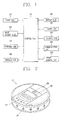
- FIG. 1 is a block diagram showing a configuration of a robot cleaner in accordance with one exemplary embodiment.
- a robot cleaner 10 may include an input unit 110, an image sensing unit 120, a detection unit 130, a storage unit 140, a control unit 150, a display unit 160, a travel unit 170, a cleaning unit 180, a communication unit 190, and a power source unit 200.
- the input unit 110 may receive a signal in response to a user's button manipulation, or a command or control signal generated by a manipulation, such as touching/scrolling a screen displayed.
- the input unit 110 may receive a signal corresponding to information input by the user.
- the input unit 110 may include various devices, such as a keyboard, a keypad, a dome switch, a touchpad (e.g., static pressure/capacitance), a touch screen, a jog shuttle, a jog wheel, a jog switch, a mouse, a stylus pen, a touch pen, a laser pointer and the like.
- the input unit 110 may receive a signal corresponding to an input by such various devices.
- the input unit 110 may include a button for receiving a travel mode command (or a travel mode button), a button for receiving a cleaning mode command (or a cleaning mode button), a button for receiving an image information capture command (or a capture button), a button for receiving a stop command (or a stop button), and the like.
- the image sensing unit 120 may capture image information under the control of the control unit 150.
- the image sensing unit 120 may include at least one camera which is disposed at a top of the robot cleaner 10 to capture an upper side, which is perpendicular to a travel direction of the robot cleaner 10. That is, the image sensing unit 120 may include an image sensor, such as a camera capable of capturing the upper side, to generate image information related to the upper side. The image sensing unit 120 may then process objects installed on a ceiling or wall surface into images based on the top image information and output the processed image.
- the image sensing unit 120 may also include at least one camera installed at a front surface (or a side surface) of the robot cleaner 10 to capture a front side (or a lateral side).
- the image sensing unit 120 may alternatively include at least one camera at both top and bottom of the robot cleaner 10.
- the detection unit 130 may be disposed at a side surface of the robot cleaner 10 to sense (or detect) an object (or obstacle) located within an area to be treated (or an area to be cleaned), which includes a specific area.
- the detection unit 130 may be implemented as a distance sensor, such as a supersonic sensor, an infrared sensor and a Radio Frequency (RF) sensor, which receives a signal in response to a signal sent thereby to detect a position of an obstacle and a distance from the obstacle, an impact sensor to sense an obstacle in response to an impact against the obstacle.
- a distance sensor such as a supersonic sensor, an infrared sensor and a Radio Frequency (RF) sensor, which receives a signal in response to a signal sent thereby to detect a position of an obstacle and a distance from the obstacle, an impact sensor to sense an obstacle in response to an impact against the obstacle.
- RF Radio Frequency
- the detection unit 130 may also detect an object (or obstacle) located within the area to be cleaned based on a control signal generated by the control unit 150 upon receipt of a travel mode command.
- the detection unit 130 may detect an object existing in the area to be cleaned when a cleaning operation is carried out in response to receipt of a cleaning mode command.
- the storage unit 140 may store various types of information, such as various menu screens, a plurality of cleaning algorithms, maps for cleaning and the like.
- the storage unit 140 may also store various User Interfaces (Uls) and/or Graphic User Interfaces (GUIs).
- User Interfaces User Interfaces
- GUIs Graphic User Interfaces
- the storage unit 140 may also store data and programs required for operation of the robot cleaner 10.
- the storage unit 140 may store information related to travel paths of the robot cleaner 10, a cleaning algorithm used for each path and the like.
- the storage unit 140 may store various types of information (including map data, cleaning algorithm, various control signals, etc.), which are received via the communication unit 190.
- the control unit 150 may perform an overall control function for the robot cleaner 10.
- the control unit 150 may generate a control signal for controlling the robot cleaner to travel within the area to be cleaned and control the travel unit 170 based on the generated control signal upon receipt of a travel mode command (or when the travel mode button is selected).
- the control unit 150 may receive a signal sent by an external beacon, and check a position of the robot cleaner 10 based on the received signal.
- the control unit 150 may determine whether or not objects, which are include in the image information output by the image sensing unit 120, are obstacles. When it is determined as the obstacles, the control unit 150 may check position information related to the obstacles.
- the control unit 150 may determine whether or not objects detected by the detection unit 130 are obstacles, and if they are determined as the obstacles, check position information related to the obstacles.
- the control unit 150 may generate a map for cleaning based on position information related to the obstacles located within the area to be cleaned, and store the generated map for cleaning in the storage unit 140.
- the map for cleaning may include position information related to obstacles (or position information related to obstacles matched onto the map for cleaning), position information along a travel path in response to movement of the robot cleaner 10, and the like.
- the control unit 150 may select at least one cleaning algorithm from a plurality of cleaning algorithms pre-stored in the storage unit 140 upon receipt of the cleaning mode command (or when the cleaning mode button is selected). Also, the control unit 1509 may control the travel unit 170 and the cleaning unit 180 to perform a cleaning operation based on the selected cleaning algorithm and the generated map for cleaning (including the obstacle-related position information).
- control unit 150 may control the travel unit 170 to avoid the corresponding object.
- the control unit 150 may control the display unit 160 to display various information related to the robot cleaner, which includes a button input state of the input unit 110 or the display unit 160, an operating state of the robot cleaner 10, and the like.
- the control unit 150 may update the position information related to the robot cleaner 10 according to the travel path into the map for cleaning. That is, when the robot cleaner 10 performs a cleaning operation based on the generated map for cleaning, the control unit 150 may divide an area into a pre-cleaned area which has been cleaned and a non-cleaned area which has not been cleaned.
- the map for cleaning may include the pre-cleaned area and the non-cleaned area.
- the control unit 150 may select a map for cleaning corresponding to a current position of the robot cleaner 10 from a plurality of maps for cleaning (including the obstacle-related position information) pre-stored in the storage unit 140 upon receipt of the cleaning mode command. Also, the control unit 150 may control the travel unit 170 and the cleaning unit 180 to perform the cleaning operation based on the selected map for cleaning and the cleaning algorithm selected from the plurality of cleaning algorithms pre-stored in the storage unit 140.
- the display unit 160 may be installed on an upper surface of a side surface of the robot cleaner 10, and display various information generated by the control unit 150.
- the display unit 160 may include at least one of Liquid Crystal Display (LCD), a Thin Film Transistor-Liquid Crystal Display (TFT LCD), Organic Light-Emitting Diode (OLED), flexible display, Field Emission Display (FED) and 3D display.
- LCD Liquid Crystal Display
- TFT LCD Thin Film Transistor-Liquid Crystal Display
- OLED Organic Light-Emitting Diode
- FED Field Emission Display
- 3D display 3D display.
- the display unit 160 may be implemented as a transparent type or a light-transmissive type such that an outside can be viewed therethrough (or, an inside of the robot cleaner 10 can be viewed). This is called a transparent display.
- a representative of the transparent display may be a Transparent OLED (TOLED) or the like.
- Two or more display units 160 may be disposed according to a configuration of the robot cleaner 10.
- a plurality of display units may be disposed on one surface (the same surface) of the robot cleaner 10 integrally with each other or by a spaced distance therebetween, or be disposed on different surfaces of the robot cleaner 10.
- the display unit 160 and a touch-sensitive sensor form a layered structure with each other (hereinafter, referred to as 'touch screen')
- the display unit 160 may be used as an input device as well as an output device.
- the touch sensor may have a form of a touch film, a touch sheet, a touch pad and the like, for example.
- the touch sensor may convert pressure applied onto a specific portion of the display unit 160 or a change in capacitance generated on a specific portion of the display unit 160 into an electrical input signal.
- the touch sensor may sense even touch pressure as well as touch position and touch area.
- a signal(s) corresponding to the touch input is sent to a touch controller (not shown).
- the touch controller processes the signal(s) and then sends corresponding data to the control unit 150. Accordingly, the control unit 150 may recognize which area of the display unit 160 has been touched.
- the display unit 160 may display various contents using UI and/or GUI stored in the storage unit 140 upon displaying the various information generated by the control unit 150.
- the contents displayed on the display unit 160 may include a menu screen, which includes various text or image data, data of icon, list menu and combo box and the like.
- the robot cleaner 10 may further include an audio output unit (not shown) for outputting audio information included in the various information generated by the control unit 150.
- the audio output unit may be a speaker.
- the travel unit 170 may include at least one wheel, and a driving unit such as a motor or the like may drive the at least one wheel.
- the travel unit 170 may perform travel operations, such as move, stop, change direction, and the like, under the control of the control unit 150.
- the travel unit 170 may be connected with sensors, for example, an encoder.
- the travel unit 170 may perform a travel operation with respect to the area to be cleaned based on a control signal generated by the control unit 150.
- the travel unit 170 may perform a travel operation with respect to the area to be cleaned based on a control signal generated by the control unit 150.
- the cleaning unit 180 may be disposed at a lower surface of the robot cleaner 10, and suck up foreign materials located under the robot cleaner by the control of the control unit 150 while the robot cleaner 10 travels or stops, thereby performing the cleaning operation.
- the cleaning unit 180 may also include an air conditioning element for purifying contaminated materials in the air.
- the communication unit 190 may perform an interconnection with an external terminal, such as a remote controller, a mobile terminal, an information providing center and the like, via wired/wireless communication.
- wireless Internet technologies may include Wireless LAN (WLAN), Wi-Fi, Wireless Broadband (Wibro), World Interoperability for Microwave Access (Wimax), High Speed Downlink Packet Access (HSDPA), IEEE 802.16, Long Term Evolution (LTE), Wireless Mobile Broadband Service (WMBS), and the like.
- Suitable short-range technologies may include BLUETOOTH, Radio Frequency IDentification (RFID), Infrared Data Association (IrDA), Ultra-WideBand (UWB), ZigBee, and the like.
- the communication unit 190 may receive various information (including a control signal, a cleaning map information, etc.) sent from the external terminal.
- the power source unit 200 may store (or be charged with) power supplied from an external power supply unit.
- the power source unit 200 may supply the power to each component configuring the robot cleaner 10.
- the power source unit 200 may include a battery as a single element, or a plurality of batteries as one pack (battery pack).
- the power source unit 200 includes the plurality of batteries
- the plurality of batteries may be connected in series, and at least one safety switch may be interposed between the batteries.
- the power source unit 200 may obtain power by a wired/wireless charging method with the external power supply unit. That is, the power source unit 200 may be directly connected to the external power supply unit via a component such as a power outlet. Alternatively, the power source unit 200 and the external power supply unit may include transmitter/receiver, respectively. Accordingly, the power source unit 200 may be recharged by using a magnetic resonance coupling method, an electromagnetic induction method and a radiowave method between the transmitter and the receiver. That is, the power source unit 200 and the external power supply unit may be configured to be wirelessly rechargeable. Upon the wireless recharging, the configurations of the transmitter and the receiver may be easily designed by a skilled person in the art, and their functions can be performed.
- a map for cleaning can be generated, according to a travel mode command, on the basis of obstacle-related position information with respect to an area to be cleaned and/or position information along a travel path.
- the cleaning operation can be performed using an optimized path for avoiding obstacles based on the generated map for cleaning.
- FIG. 3 is a flowchart showing a method for controlling a robot cleaner in accordance with a first exemplary embodiment.
- the travel unit 170 performs a travel operation of the robot cleaner 10 based on a control signal generated by the control unit 150 when a travel mode button disposed on the input unit 110 or the display unit 160 is selected (or a travel mode command is received).
- the travel unit 170 performs a travel operation, such as moving forward in a predetermined direction or rotating in an area to be cleaned.
- the travel unit 170 stores initial position information related to a travel start point in the storage unit 140 under the control of the control unit 150, travels around the area to be cleaned, and finally rotates back to the initial position (S110).
- the detection unit 130 detects objects located in the area to be cleaned while the robot cleaner 10 travels according to the travel mode command.
- the image sensing unit 120 which is disposed at one side surface (upper surface or side surface) of the robot cleaner 10, captures an upper side or a front side (or lateral side), and senses objects included in the captured upper or front image information (S120).
- the control unit 150 determines whether or not the objects, which are included in the image information (including upper/front image information) output by the image sensing unit 120, or objects detected by the detection unit 130 are obstacles (S130).
- control unit 150 If it is determined that the objects are obstacles, the control unit 150 generates a map for cleaning including position information related to the obstacles.
- control unit 150 may store the generated map for cleaning in the storage unit 140 or display the map on the display unit 160 (S140).
- the control unit 150 After generating the map for cleaning including the position information related to the obstacles within the area to be cleaned, when a travel mode button disposed on the input unit 110 or the display unit 160 is selected (or a cleaning mode command is received), the control unit 150 selects at least one cleaning algorithm from a plurality of cleaning algorithm, which are pre-stored in the storage unit 140, on the basis of the generated map for cleaning including the obstacle-related position information.
- control unit 150 selects a cleaning algorithm optimized for avoiding obstacles, or a random cleaning algorithm optimized to the generated map for cleaning (S150).
- the control unit 150 then generates a control signal for controlling travel and/or cleaning operation of the robot cleaner 10 on the basis of the selected at least one cleaning algorithm and the generated map for cleaning. Afterwards, the control unit 150 controls the travel unit 170 and/or the cleaning unit 180 to perform the cleaning operation based on the generated control signal.
- control unit 150 controls the travel unit 170 and/or the cleaning unit 180 to perform the cleaning operation based on the selected at least one cleaning algorithm and the generated map for cleaning.
- control unit 150 may check positions of obstacles based on the generated map for cleaning and perform a cleaning operation along an optimized travel path for performing the cleaning operation with avoiding the obstacles.
- control unit 150 updates information, which are related to a pre-cleaned area which has been cleaned along the travel path of the robot cleaner 10, a non-cleaned area which has not been cleaned, and the like, in the map for cleaning, and displays the updated map for cleaning on the display unit 160 (S160).
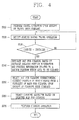
- FIG. 4 is a flowchart showing a method for controlling a robot cleaner in accordance with a second exemplary embodiment.
- the travel unit 170 performs a travel operation of the robot cleaner 10 based on a control signal generated by the control unit 150 when a travel mode button disposed on the input unit 110 or the display unit 160 is selected (or a travel mode command is received).
- the travel unit 170 performs a travel operation, such as moving forward in a predetermined direction or rotating in an area to be cleaned.
- the travel unit 170 stores initial position information related to a travel start point in the storage unit 140 under the control of the control unit 150, travels around the area to be cleaned, and finally rotates back to the initial position (S210).
- the detection unit 130 detects objects located in the area to be cleaned while the robot cleaner 10 travels according to the travel mode command.
- the image sensing unit 120 which is disposed at one side surface (upper surface or side surface) of the robot cleaner 10 captures an image of an upper side or a front side (or lateral size), and senses objects included in the captured upper or front image information (S220).
- the control unit 150 determines whether or not the objects, which are included in the image information (including upper/front image information) output by the image sensing unit 120, or the objects detected by the detection unit 130 are obstacles (S230).
- control unit 150 If it is determined that the objects are obstacles, the control unit 150 generates a map for cleaning, which includes position information related to the obstacles, position information along a travel path of the robot cleaner 10, and the like.
- control unit 150 may store the generated map for cleaning in the storage unit 140 or display the map on the display unit 160 (S240).
- the control unit 150 selects a map for cleaning corresponding to a current position of the robot cleaner 10 from a plurality of maps for cleaning pre-stored in the storage unit 140.
- each of the plurality of maps for cleaning pre-stored may include position information related to the obstacles and/or position information along a travel path.
- the control unit 150 checks a current position of the robot cleaner 10 from the plurality of maps pre-stored, the control unit 150 selects a cleaning algorithm optimized for avoiding obstacles or a random cleaning algorithm optimized to the generated map for cleaning from the plurality of cleaning algorithms pre-stored (S260).
- control unit 150 generates a control signal for controlling a travel and/or cleaning operation of the robot cleaner 10 on the basis of the selected at least one cleaning algorithm and the selected map for cleaning.
- the control unit 150 then controls the travel unit 170 and/or the cleaning unit 180 to perform a cleaning operation according to the generated control signal.
- control unit 150 controls the travel unit 170 and/or the cleaning unit 180 to perform the cleaning operation according to the selected at least one cleaning algorithm and the selected map for cleaning.
- control unit 150 may check positions of the obstacles based on the generated map for cleaning to perform the cleaning operation along an optimized travel path for performing the cleaning operation with avoiding the obstacles.
- control unit 150 may update information, which are related to a pre-cleaned area which has been cleaned along the travel path of the robot cleaner 10, a non-cleaned area which has not been cleaned, and the like, into the map for cleaning, and then display the updated map for cleaning on the display unit 160 (S270).
Landscapes
- Engineering & Computer Science (AREA)
- Mechanical Engineering (AREA)
- Physics & Mathematics (AREA)
- Radar, Positioning & Navigation (AREA)
- Automation & Control Theory (AREA)
- General Physics & Mathematics (AREA)
- Remote Sensing (AREA)
- Aviation & Aerospace Engineering (AREA)
- Robotics (AREA)
- Electromagnetism (AREA)
- Human Computer Interaction (AREA)
- Control Of Position, Course, Altitude, Or Attitude Of Moving Bodies (AREA)
- Electric Vacuum Cleaner (AREA)
Applications Claiming Priority (2)
| Application Number | Priority Date | Filing Date | Title |
|---|---|---|---|
| KR1020090110436A KR101741583B1 (ko) | 2009-11-16 | 2009-11-16 | 로봇 청소기 및 그의 제어 방법 |
| PCT/KR2010/008098 WO2011059296A2 (ko) | 2009-11-16 | 2010-11-16 | 로봇 청소기 및 그의 제어 방법 |
Publications (2)
| Publication Number | Publication Date |
|---|---|
| EP2502540A2 true EP2502540A2 (de) | 2012-09-26 |
| EP2502540A4 EP2502540A4 (de) | 2014-03-12 |
Family
ID=43992267
Family Applications (1)
| Application Number | Title | Priority Date | Filing Date |
|---|---|---|---|
| EP10830228.2A Withdrawn EP2502540A4 (de) | 2009-11-16 | 2010-11-16 | Robotischer reiniger und steuerungsverfahren dafür |
Country Status (4)
| Country | Link |
|---|---|
| US (1) | US8903590B2 (de) |
| EP (1) | EP2502540A4 (de) |
| KR (1) | KR101741583B1 (de) |
| WO (1) | WO2011059296A2 (de) |
Cited By (5)
| Publication number | Priority date | Publication date | Assignee | Title |
|---|---|---|---|---|
| CN108720731A (zh) * | 2017-04-18 | 2018-11-02 | 德国福维克控股公司 | 用于运行自主行进的车辆的方法 |
| WO2019063066A1 (en) * | 2017-09-26 | 2019-04-04 | Aktiebolaget Electrolux | CONTROL FOR MOVING A ROBOTIC CLEANING DEVICE |
| WO2019104693A1 (zh) * | 2017-11-30 | 2019-06-06 | 深圳市沃特沃德股份有限公司 | 视觉扫地机器人及建立场景地图的方法 |
| WO2020051026A1 (en) | 2018-09-04 | 2020-03-12 | Irobot Corporation | Mobile robots with intelligent capacitive touch sensing |
| US11474533B2 (en) | 2017-06-02 | 2022-10-18 | Aktiebolaget Electrolux | Method of detecting a difference in level of a surface in front of a robotic cleaning device |
Families Citing this family (36)
| Publication number | Priority date | Publication date | Assignee | Title |
|---|---|---|---|---|
| KR101923434B1 (ko) * | 2011-08-22 | 2018-11-29 | 엘지전자 주식회사 | 전기제품 정보 관리 시스템 |
| KR101366860B1 (ko) * | 2011-09-20 | 2014-02-21 | 엘지전자 주식회사 | 이동 로봇 및 이의 제어 방법 |
| US9776332B2 (en) * | 2011-12-08 | 2017-10-03 | Lg Electronics Inc. | Automatic moving apparatus and manual operation method thereof |
| TWM451103U (zh) * | 2012-10-30 | 2013-04-21 | Agait Technology Corp | 行走裝置 |
| US9233472B2 (en) | 2013-01-18 | 2016-01-12 | Irobot Corporation | Mobile robot providing environmental mapping for household environmental control |
| WO2014113091A1 (en) * | 2013-01-18 | 2014-07-24 | Irobot Corporation | Environmental management systems including mobile robots and methods using same |
| US9375847B2 (en) | 2013-01-18 | 2016-06-28 | Irobot Corporation | Environmental management systems including mobile robots and methods using same |
| KR101395892B1 (ko) * | 2013-03-05 | 2014-05-15 | 엘지전자 주식회사 | 로봇 청소기 및 그 동작방법 |
| KR102061511B1 (ko) * | 2013-04-26 | 2020-01-02 | 삼성전자주식회사 | 청소 로봇, 홈 모니터링 장치 및 그 제어 방법 |
| US9114440B1 (en) * | 2013-05-02 | 2015-08-25 | Michael A. Colucci | Outdoor home cleaning robot—system and method |
| EP3082005B1 (de) * | 2013-12-13 | 2019-06-12 | Toshiba Lifestyle Products & Services Corporation | Autonom fahrende elektrische reinigungsvorrichtung |
| CN104199390B (zh) * | 2014-04-28 | 2017-09-01 | 缔奇智能(河南)股份有限公司 | 机器人物联网系统 |
| KR102306709B1 (ko) * | 2014-08-19 | 2021-09-29 | 삼성전자주식회사 | 청소 로봇, 청소 로봇의 제어 장치, 제어 시스템, 및 제어 방법 |
| CN104615028B (zh) * | 2014-09-22 | 2017-09-01 | 缔奇智能(河南)股份有限公司 | 地面清洁机器人物联网系统 |
| US10618174B2 (en) | 2014-12-09 | 2020-04-14 | Aeolus Robotics, Inc. | Robotic Touch Perception |
| US10496262B1 (en) | 2015-09-30 | 2019-12-03 | AI Incorporated | Robotic floor-cleaning system manager |
| JP6685755B2 (ja) * | 2016-02-16 | 2020-04-22 | 東芝ライフスタイル株式会社 | 自律走行体 |
| US11726490B1 (en) * | 2016-02-19 | 2023-08-15 | AI Incorporated | System and method for guiding heading of a mobile robotic device |
| EP3439522B1 (de) | 2016-04-08 | 2023-06-07 | A&K Robotics Inc. | Zwischen manuellem und autonomem betrieb umwandelbarer autowäscher |
| WO2017192981A1 (en) | 2016-05-06 | 2017-11-09 | Mtd Products Inc | Autonomous mower navigation system and method |
| KR101884872B1 (ko) | 2017-03-31 | 2018-08-02 | (주)세원물산 | 슬리브 펀치가 적용된 마찰교반 점 접합방법 및 그 장치 |
| KR101974870B1 (ko) * | 2017-06-08 | 2019-05-03 | 엘지전자 주식회사 | 인공지능 로봇 청소기 및 이를 구비하는 로봇 청소 시스템 |
| KR102206201B1 (ko) | 2017-08-02 | 2021-01-22 | 삼성전자주식회사 | 청소 로봇 및 그 제어방법 |
| DE102017127180A1 (de) * | 2017-11-17 | 2019-05-23 | RobArt GmbH | Bodenbearbeitung mittels eines autonomen mobilen Roboters |
| EP4300249A3 (de) | 2018-01-09 | 2024-03-27 | LG Electronics Inc. | Robotischer staubsauger und steuerungsverfahren dafür |
| WO2019216578A1 (en) * | 2018-05-11 | 2019-11-14 | Samsung Electronics Co., Ltd. | Method and apparatus for executing cleaning operation |
| KR102704996B1 (ko) * | 2018-05-11 | 2024-09-10 | 삼성전자주식회사 | 청소 동작을 실행하는 청소 장치 및 청소 방법 |
| US11185207B2 (en) * | 2018-07-24 | 2021-11-30 | Qualcomm Incorporated | Managing cleaning robot behavior |
| GB2576494B (en) | 2018-08-06 | 2022-03-23 | Dyson Technology Ltd | A mobile robot and method of controlling thereof |
| CN111202470B (zh) * | 2018-11-21 | 2024-09-20 | 北京石头世纪科技股份有限公司 | 智能清洁设备、重定位方法及装置、存储介质、电子设备 |
| KR102813950B1 (ko) * | 2019-05-24 | 2025-05-27 | 엘지전자 주식회사 | 음성인식을 이용하여 장치를 제어하는 방법 및 이를 구현하는 장치 |
| US11266287B2 (en) * | 2019-05-29 | 2022-03-08 | Irobot Corporation | Control of autonomous mobile robots |
| KR102384525B1 (ko) * | 2020-07-09 | 2022-04-08 | 엘지전자 주식회사 | 이동로봇의 제어방법 |
| CN116635807A (zh) * | 2020-12-25 | 2023-08-22 | 松下知识产权经营株式会社 | 行驶用地图制作装置、自主行驶型机器人、自主行驶型机器人的行驶控制系统、自主行驶型机器人的行驶控制方法以及程序 |
| KR20230041918A (ko) * | 2021-09-17 | 2023-03-27 | 삼성전자주식회사 | Uwb 통신을 이용하는 로봇 청소기 및 그 제어 방법 |
| US12336675B2 (en) | 2022-04-11 | 2025-06-24 | Vorwerk & Co. Interholding Gmb | Obstacle avoidance using fused depth and intensity from nnt training |
Family Cites Families (12)
| Publication number | Priority date | Publication date | Assignee | Title |
|---|---|---|---|---|
| RU2220643C2 (ru) * | 2001-04-18 | 2004-01-10 | Самсунг Гванджу Электроникс Ко., Лтд. | Автоматическое чистящее устройство, автоматическая чистящая система и способ управления этой системой (варианты) |
| GB0126499D0 (en) * | 2001-11-03 | 2002-01-02 | Dyson Ltd | An autonomous machine |
| KR100466321B1 (ko) | 2002-10-31 | 2005-01-14 | 삼성광주전자 주식회사 | 로봇청소기와, 그 시스템 및 제어방법 |
| JP3781370B2 (ja) * | 2002-11-19 | 2006-05-31 | 本田技研工業株式会社 | 移動装置 |
| US7145478B2 (en) * | 2002-12-17 | 2006-12-05 | Evolution Robotics, Inc. | Systems and methods for controlling a density of visual landmarks in a visual simultaneous localization and mapping system |
| US20040211444A1 (en) | 2003-03-14 | 2004-10-28 | Taylor Charles E. | Robot vacuum with particulate detector |
| JP4163150B2 (ja) | 2004-06-10 | 2008-10-08 | 日立アプライアンス株式会社 | 自走式掃除機 |
| JP2006247229A (ja) * | 2005-03-14 | 2006-09-21 | Funai Electric Co Ltd | Av装置を備えた電気掃除機 |
| KR100735565B1 (ko) | 2006-05-17 | 2007-07-04 | 삼성전자주식회사 | 구조광을 이용한 물체 검출 방법 및 이를 이용한 로봇 |
| JP2008129614A (ja) * | 2006-11-16 | 2008-06-05 | Toyota Motor Corp | 移動体システム |
| US20090048727A1 (en) * | 2007-08-17 | 2009-02-19 | Samsung Electronics Co., Ltd. | Robot cleaner and control method and medium of the same |
| KR101362373B1 (ko) | 2007-08-17 | 2014-02-12 | 삼성전자주식회사 | 로봇청소기 및 그 제어방법 |
-
2009
- 2009-11-16 KR KR1020090110436A patent/KR101741583B1/ko not_active Expired - Fee Related
-
2010
- 2010-11-16 WO PCT/KR2010/008098 patent/WO2011059296A2/ko not_active Ceased
- 2010-11-16 US US13/509,004 patent/US8903590B2/en not_active Expired - Fee Related
- 2010-11-16 EP EP10830228.2A patent/EP2502540A4/de not_active Withdrawn
Cited By (9)
| Publication number | Priority date | Publication date | Assignee | Title |
|---|---|---|---|---|
| CN108720731A (zh) * | 2017-04-18 | 2018-11-02 | 德国福维克控股公司 | 用于运行自主行进的车辆的方法 |
| CN108720731B (zh) * | 2017-04-18 | 2022-01-25 | 德国福维克控股公司 | 用于运行自主行进的车辆的方法 |
| US11474533B2 (en) | 2017-06-02 | 2022-10-18 | Aktiebolaget Electrolux | Method of detecting a difference in level of a surface in front of a robotic cleaning device |
| WO2019063066A1 (en) * | 2017-09-26 | 2019-04-04 | Aktiebolaget Electrolux | CONTROL FOR MOVING A ROBOTIC CLEANING DEVICE |
| CN111093447A (zh) * | 2017-09-26 | 2020-05-01 | 伊莱克斯公司 | 机器人清洁设备的移动控制 |
| US11921517B2 (en) | 2017-09-26 | 2024-03-05 | Aktiebolaget Electrolux | Controlling movement of a robotic cleaning device |
| WO2019104693A1 (zh) * | 2017-11-30 | 2019-06-06 | 深圳市沃特沃德股份有限公司 | 视觉扫地机器人及建立场景地图的方法 |
| WO2020051026A1 (en) | 2018-09-04 | 2020-03-12 | Irobot Corporation | Mobile robots with intelligent capacitive touch sensing |
| EP3846668A4 (de) * | 2018-09-04 | 2022-06-01 | iRobot Corporation | Mobile roboter mit intelligenter kapazitiver berührungserfassung |
Also Published As
| Publication number | Publication date |
|---|---|
| WO2011059296A2 (ko) | 2011-05-19 |
| WO2011059296A3 (ko) | 2011-11-03 |
| US20120221187A1 (en) | 2012-08-30 |
| EP2502540A4 (de) | 2014-03-12 |
| KR101741583B1 (ko) | 2017-05-30 |
| US8903590B2 (en) | 2014-12-02 |
| KR20110053767A (ko) | 2011-05-24 |
Similar Documents
| Publication | Publication Date | Title |
|---|---|---|
| US8903590B2 (en) | Robot cleaner and method for controlling the same | |
| US9429949B2 (en) | Robot cleaner and controlling method thereof | |
| US9776332B2 (en) | Automatic moving apparatus and manual operation method thereof | |
| US10365659B2 (en) | Robot cleaner, control apparatus, control system, and control method of robot cleaner | |
| KR102825290B1 (ko) | 충전 장치 | |
| US9923389B2 (en) | Robot cleaner | |
| KR101412590B1 (ko) | 로봇 청소기의 원격 제어 시스템 및 방법 | |
| KR101297255B1 (ko) | 이동 로봇, 및 이동 로봇의 원격 제어 시스템 및 방법 | |
| KR101378883B1 (ko) | 로봇 청소기, 단말 장치, 및 로봇 청소기의 원격 제어 시스템과 방법 | |
| US9582000B2 (en) | Robot cleaner, and system and method for remotely controlling the same | |
| US11627853B2 (en) | Robotic cleaner and control method therefor | |
| US11324373B2 (en) | Cleaning robot and method for controlling same | |
| US20130060379A1 (en) | Robot cleaner, and system and method for remotely controlling the same | |
| KR101287474B1 (ko) | 이동 로봇, 및 이동 로봇의 원격 제어 시스템 및 방법 | |
| KR102412847B1 (ko) | 로봇 청소기 및 로봇 청소 시스템 | |
| KR102557736B1 (ko) | 드로잉을 통한 이동 로봇 제어 장치 및 그것의 동작 방법 | |
| KR101352518B1 (ko) | 이동 로봇, 단말 장치, 및 이동 로봇의 원격 제어 시스템과 방법 | |
| KR20110018211A (ko) | 로봇 청소기 및 이를 포함한 로봇 청소기 제어 시스템 | |
| KR20200046141A (ko) | 사용자 단말기, 이를 포함하는 청소 로봇 및 그 제어 방법 | |
| KR101667708B1 (ko) | 로봇 청소기 및 그의 제어 방법 | |
| KR102029920B1 (ko) | 이동 로봇 및 이의 위치 인식 방법 | |
| KR20110054474A (ko) | 로봇 청소기 및 그의 제어 방법 | |
| KR20250032465A (ko) | 청소기 및 청소기의 동작 방법 | |
| KR20160060016A (ko) | 로봇 청소기 및 이를 포함한 로봇 청소기 제어 시스템 |
Legal Events
| Date | Code | Title | Description |
|---|---|---|---|
| PUAI | Public reference made under article 153(3) epc to a published international application that has entered the european phase |
Free format text: ORIGINAL CODE: 0009012 |
|
| 17P | Request for examination filed |
Effective date: 20120531 |
|
| AK | Designated contracting states |
Kind code of ref document: A2 Designated state(s): AL AT BE BG CH CY CZ DE DK EE ES FI FR GB GR HR HU IE IS IT LI LT LU LV MC MK MT NL NO PL PT RO RS SE SI SK SM TR |
|
| DAX | Request for extension of the european patent (deleted) | ||
| A4 | Supplementary search report drawn up and despatched |
Effective date: 20140207 |
|
| RIC1 | Information provided on ipc code assigned before grant |
Ipc: A47L 9/28 20060101AFI20140203BHEP Ipc: G05D 1/02 20060101ALI20140203BHEP Ipc: B25J 13/08 20060101ALI20140203BHEP |
|
| STAA | Information on the status of an ep patent application or granted ep patent |
Free format text: STATUS: THE APPLICATION IS DEEMED TO BE WITHDRAWN |
|
| 18D | Application deemed to be withdrawn |
Effective date: 20140909 |