EP2504441B1 - Genes du transporteur de sucrose pour augmenter la teneur en lipides dans les graines de plantes - Google Patents
Genes du transporteur de sucrose pour augmenter la teneur en lipides dans les graines de plantes Download PDFInfo
- Publication number
- EP2504441B1 EP2504441B1 EP10773823.9A EP10773823A EP2504441B1 EP 2504441 B1 EP2504441 B1 EP 2504441B1 EP 10773823 A EP10773823 A EP 10773823A EP 2504441 B1 EP2504441 B1 EP 2504441B1
- Authority
- EP
- European Patent Office
- Prior art keywords
- seq
- polypeptide
- polynucleotide
- dna
- prt
- Prior art date
- Legal status (The legal status is an assumption and is not a legal conclusion. Google has not performed a legal analysis and makes no representation as to the accuracy of the status listed.)
- Active
Links
Images












Classifications
-
- C—CHEMISTRY; METALLURGY
- C12—BIOCHEMISTRY; BEER; SPIRITS; WINE; VINEGAR; MICROBIOLOGY; ENZYMOLOGY; MUTATION OR GENETIC ENGINEERING
- C12N—MICROORGANISMS OR ENZYMES; COMPOSITIONS THEREOF; PROPAGATING, PRESERVING, OR MAINTAINING MICROORGANISMS; MUTATION OR GENETIC ENGINEERING; CULTURE MEDIA
- C12N15/00—Mutation or genetic engineering; DNA or RNA concerning genetic engineering, vectors, e.g. plasmids, or their isolation, preparation or purification; Use of hosts therefor
- C12N15/09—Recombinant DNA-technology
- C12N15/63—Introduction of foreign genetic material using vectors; Vectors; Use of hosts therefor; Regulation of expression
- C12N15/79—Vectors or expression systems specially adapted for eukaryotic hosts
- C12N15/82—Vectors or expression systems specially adapted for eukaryotic hosts for plant cells, e.g. plant artificial chromosomes (PACs)
- C12N15/8241—Phenotypically and genetically modified plants via recombinant DNA technology
- C12N15/8242—Phenotypically and genetically modified plants via recombinant DNA technology with non-agronomic quality (output) traits, e.g. for industrial processing; Value added, non-agronomic traits
- C12N15/8243—Phenotypically and genetically modified plants via recombinant DNA technology with non-agronomic quality (output) traits, e.g. for industrial processing; Value added, non-agronomic traits involving biosynthetic or metabolic pathways, i.e. metabolic engineering, e.g. nicotine, caffeine
- C12N15/8247—Phenotypically and genetically modified plants via recombinant DNA technology with non-agronomic quality (output) traits, e.g. for industrial processing; Value added, non-agronomic traits involving biosynthetic or metabolic pathways, i.e. metabolic engineering, e.g. nicotine, caffeine involving modified lipid metabolism, e.g. seed oil composition
-
- C—CHEMISTRY; METALLURGY
- C07—ORGANIC CHEMISTRY
- C07K—PEPTIDES
- C07K14/00—Peptides having more than 20 amino acids; Gastrins; Somatostatins; Melanotropins; Derivatives thereof
- C07K14/415—Peptides having more than 20 amino acids; Gastrins; Somatostatins; Melanotropins; Derivatives thereof from plants
-
- C—CHEMISTRY; METALLURGY
- C12—BIOCHEMISTRY; BEER; SPIRITS; WINE; VINEGAR; MICROBIOLOGY; ENZYMOLOGY; MUTATION OR GENETIC ENGINEERING
- C12N—MICROORGANISMS OR ENZYMES; COMPOSITIONS THEREOF; PROPAGATING, PRESERVING, OR MAINTAINING MICROORGANISMS; MUTATION OR GENETIC ENGINEERING; CULTURE MEDIA
- C12N9/00—Enzymes; Proenzymes; Compositions thereof; Processes for preparing, activating, inhibiting, separating or purifying enzymes
- C12N9/10—Transferases (2.)
- C12N9/1025—Acyltransferases (2.3)
- C12N9/1029—Acyltransferases (2.3) transferring groups other than amino-acyl groups (2.3.1)
-
- C—CHEMISTRY; METALLURGY
- C12—BIOCHEMISTRY; BEER; SPIRITS; WINE; VINEGAR; MICROBIOLOGY; ENZYMOLOGY; MUTATION OR GENETIC ENGINEERING
- C12Y—ENZYMES
- C12Y203/00—Acyltransferases (2.3)
- C12Y203/01—Acyltransferases (2.3) transferring groups other than amino-acyl groups (2.3.1)
- C12Y203/0102—Diacylglycerol O-acyltransferase (2.3.1.20)
Definitions
- This invention is in the field of biotechnology; in particular, this pertains to polynucleotide sequences encoding SUT2 or SUT4 sucrose transporters and the use of these disaccharide transporters for increased seed lipid production in plants.
- Plant lipids have a variety of industrial and nutritional uses and are central to plant membrane function and climatic adaptation.
- the primary storage reserve of lipids in eukaryotic cells is in the form of triacylglycerols (TAGs).
- TAGs triacylglycerols
- TAG is the primary component of vegetable oil in plants and is used by the seed as a stored form of energy to be used during seed germination.
- the quality and content of plant oil can be altered by various methods by impinging on the enzymes involved directly or indirectly in TAG biosynthesis.
- acyl-CoAs Most free fatty acids become esterified to coenzyme A (CoA) to yield acyl-CoAs. These molecules are then substrates for glycerolipid synthesis in the endoplasmic reticulum of the cell where phosphatidic acid and diacylglycerol (DAG) are produced. Either of these metabolic intermediates may be directed to membrane phospholipids (e.g ., phosphatidylglycerol, phosphatidylethanolamine, phosphatidylcholine) or DAG may be directed to form triacylglycerols (TAGs), the primary storage reserve of lipids in eukaryotic cells.
- TAGs triacylglycerols
- Sucrose is the major product of photosynthesis in higher plants and is transported from source to sink tissues through the phloem. It is also the major storage form of soluble carbon in sink tissues, and therefore also serves as a long- term energy source.
- Sucrose transporters (SUTs) play a major role in the photoassimilate accumulation in the sink tissues.
- the SUTs have been categorized into three major subfamilies: Type I (SUT1), Type II (SUT2) and Type III (SUT4).
- SUT1 Type I
- SUT2 Type II
- SUT4 Type III
- Others have characterized sucrose transporters as high affinity/low capacity, low affinity/high capacity, and medium affinity/high capacity transporters.
- sucrose transporters can be expected to have effects on the accumulation of photosynthetic assimilates in the sink tissues.
- Overexpression of a heterologous sucrose transporter has been shown to increase sugar content in sink tissues such as potato tubers, but does not lead to change in starch content or tuber morphology ( Leggewie et al. Planta (2003) 217: 158- 67 ).
- Tissue specific overexpression of heterologous sucrose transporters in storage parenchyma cells of pea cotyledons also increases sucrose influx into these cells, and increases the growth rates of pea cotyledons but does not lead to an increase in dry weight of fully developed cotyledons ( Rosche et al. Plant Journal (2002), 30(2): 165-175 ).
- the invention provides: A soybean seed with increased oil content comprising in its genome:
- a method of further increasing oil content in a high oil soybean seed comprising:
- Sequence Listing contains the one letter code for nucleotide sequence characters and the three letter codes for amino acids as defined in conformity with the IUPAC-IUBMB standards described in Nucleic Acids Res. 13:3021-3030 (1985 ) and in the Biochemical J. 219 (2):345-373 (1984 ).
- AtSUC2 (At1G22710) Arabidopsis thaliana DNA 2 AtSUC2(At1G22710) Arabidopsis thaliana PRT 3 AtSUT2 (At2G02860) Arabidopsis thaliana DNA 4 AtSUT2(At2G02860) Arabidopsis thaliana PRT 5 AtSUT4 (At1G09960) Arabidopsis thaliana DNA 6 AtSUT4(At1G09960) Arabidopsis thaliana PRT 7 YOL237 (AtSUC2 primer) Artificial sequence DNA 8 YOL132 (AtSUC2 primer) Artificial sequence DNA 9 YOL174 (AtSUT2 primer) Artificial sequence DNA 10 YOL175 (AtSUT2 primer) Artificial sequence DNA 11 YOL172 AtSUT4 primer Artificial sequence DNA 12 YOL173 AtSUT4 primer Artificial sequence DNA 13 AtSUC2-pCRR
- Manihot esculenta PRT 50 HbSUT2 (NCBI GI NO. 116008244) Hevea brasiliensis PRT 51 Pn_Node_9230 Paspalum notatum DNA 52 Pn_Node_9230 Paspalum notatum PRT 53 ZmSUT1 (NCBI GI NO. 162463612) Zea mays PRT 54 Sb01g045720.1 Sorghum bicolor PRT 55 cepe7.pk0015.d10 Zea mays PRT 56 TaSUT1A (NCBI GI NO. 20152871) Triticum aestivum PRT 57 TaSUT1b (NCBI GINO.
- Triticum aestivum PRT 58 TaSUT1D (NCBI GI NO. 19548165) Triticum aestivum PRT 59 HvSUT1 (NCBI GINO. 71890897) Hordeum vulgare PRT 60 LOC _ Os03g07480 Oryza sativa PRT 61 LOC_Os10g26470_SUC1 Oryza sativa PRT 62 Sb01g022430.1 Sorghum bicolor PRT 63 cfp1n.pk007.b22_fis Zea mays PRT 64 LOC_Os02g36700_BoSUT 1 Oryza sativa PRT 65 Sb04g023860.1 Sorghum bicolor PRT 66 Sb07g028120.1 Sorghum bicolor PRT 67 BoSUT1 _NCBI GI NO.
- Vitis vinifera PRT 75 StSUT4 (NCBI GI NO. 160425326) Solanum tuberosum PRT 76 DcSUT1a (NCBI GI NO. 2969887) Daucus carota PRT 77 ZmSUT4 (NCBI GI NO. 47571319) Zea mays PRT 78 Sb08g023310.1 Sorghum bicolor PRT 79 LOC_Os12g44380_SUC4_or SUC2 Oryza sativa PRT 80 HvSUT2 (NCBI GI NO. 7024413) Hordeum vulgare PRT 81 MdSUT4 (NCBI GI NO.
- Arabidopsis thaliana PRT 89 AtSUC9 AtSUC9 (At5G06170; NCBI GI NO. 15239949) Arabidopsis thaliana PRT 90 AtSUC1 (At1G71880; NCBI GINO. 56550707) Arabidopsis thaliana PRT 91 AtSUC5 (At1 G71890; NCBI GINO. 15217602) custom5.pk301.c9 Arabidopsis thaliana PRT 92 Glyma02g08250.1 Glycine max PRT 93 Glyma16g27320.1 Glycine max PRT 94 PvSUT1 (NCBI GI NO.
- Pisum sativum PRT 101 Glyma10g36200.1 Glycine max PRT 102 PsSUT1 (NCBI GI NO. 5230818) Pisum sativum PRT 103 VfSut1 (NCBI GINO. 1935019) Viciafaba PRT 104 HbSUT1 (NCBI GI NO. 116008246) Hevea brasiliensis PRT 105 HbSUT6 (NCBI GI NO. 167859950) Hevea brasiliensis PRT 106 HbSUT3 (NCBI GI NO. 118132675) Hevea brasiliensis PRT 107 RcScr1 (NCBI GINO.
- Beta vulgaris PRT 121 SoS21 (NCBI GI NO. 549000) Spinacia oleracea PRT 122 CsSUT1 (NCBI GI NO. 21063921) Citrus sinensis PRT 123 BoSUC2 (NCBI GINO. 18091781) Brassica oleracea PRT 124 BoSUC1 (NCBI GINO. 18091779) Brassica oleracea PRT 125 PmSUC1 (NCBI GI NO. 667047) Plantago major PRT 126 NtSUT3 (NCBI GI NO.
- a monocot of the current disclosure includes the Gramineae.
- a dicot of the current disclosure includes the following families: Brassicaceae, Leguminosae, and Solanaceae.
- full complement and “full-length complement” are used interchangeably herein, and refer to a complement of a given nucleotide sequence, wherein the complement and the nucleotide sequence consist of the same number of nucleotides and are 100% complementary.
- Transgenic refers to any cell, cell line, callus, tissue, plant part or plant, the genome of which has been altered by the presence of a heterologous nucleic acid, such as a recombinant DNA construct, including those initial transgenic events as well as those created by sexual crosses or asexual propagation from the initial transgenic event.
- a heterologous nucleic acid such as a recombinant DNA construct
- the term "transgenic” as used herein does not encompass the alteration of the genome (chromosomal or extra-chromosomal) by conventional plant breeding methods or by naturally occurring events such as random cross-fertilization, non-recombinant viral infection, non-recombinant bacterial transformation, non-recombinant transposition, or spontaneous mutation.
- Gene as it applies to plant cells encompasses not only chromosomal DNA found within the nucleus, but organelle DNA found within subcellular components (e.g. , mitochondrial, plastid) of the cell.
- Plant includes reference to whole plants, plant organs, plant tissues, seeds and plant cells and progeny of same.
- Plant cells include, without limitation, cells from seeds, suspension cultures, embryos, meristematic regions, callus tissue, leaves, roots, shoots, gametophytes, sporophytes, pollen, and microspores.
- the term plant also includes plant protoplasts, plant cell tissue cultures from which plants can be regenerated, plant clumps, and plant cells that are intact in plants or parts of plants such as embryos, pollen, ovules, flowers, branches, fruit, kernels, ears, cobs, husks, stalks, roots, root tips, anthers, and the like. Grain is intended to mean the mature seed produced by commercial growers for purposes other than growing or reproducing the species. Progeny, variants, and mutants of the regenerated plants are also included within the scope of the invention, provided that these parts comprise the introduced polynucleotides.
- Any plant species may be utilized in the disclosure, including, but not limited to, monocots and dicots.
- the plants of the invention are soybean ( Glycine max ).
- Progeny comprises any subsequent generation of a plant.
- Regeneration or "regenerated” plants is intended to mean that transformed plant cells may be grown into plants in accordance with conventional ways. See, for example, McCormick et al. (1986) Plant Cell Reports 5:81-84 . These plants may then be grown, and either pollinated with the same transformed strain or different strains, and the resulting progeny having constitutive expression of the desired phenotypic characteristic identified. Two or more generations may be grown to ensure that expression of the desired phenotypic characteristic is stably maintained and inherited and then seeds harvested to ensure expression of the desired phenotypic characteristic has been achieved. In this manner, the present invention provides transformed seed (also referred to as "transgenic seed”) having a polynucleotide disclosed herein, for example, an expression cassette disclosed herein, stably incorporated into their genome.
- Transgenic plant includes reference to a plant which comprises within its genome a heterologous polynucleotide.
- the heterologous polynucleotide is stably integrated within the genome such that the polynucleotide is passed on to successive generations.
- the heterologous polynucleotide may be integrated into the genome alone or as part of a recombinant DNA construct.
- Heterologous with respect to sequence means a sequence that originates from a foreign species, or, if from the same species, is substantially modified from its native form in composition and/or genomic locus by deliberate human intervention.
- nucleic acid sequence refers to a polymer of RNA or DNA that is single- or double-stranded, optionally containing synthetic, non-natural or altered nucleotide bases.
- Nucleotides are referred to by their single letter designation as follows: “A” for adenylate or deoxyadenylate (for RNA or DNA, respectively), “C” for cytidylate or deoxycytidylate, “G” for guanylate or deoxyguanylate, “U” for uridylate, “T” for deoxythymidylate, “R” for purines (A or G), “Y” for pyrimidines (C or T), "K” for G or T, “H” for A or C or T, “I” for inosine, and “N” for any nucleotide.
- Polypeptide”, “peptide”, “amino acid sequence” and “protein” are used interchangeably herein to refer to a polymer of amino acid residues. The terms apply to amino acid polymers in which one or more amino acid residue is an artificial chemical analogue of a corresponding naturally occurring amino acid, as well as to naturally occurring amino acid polymers.
- the terms “polypeptide”, “peptide”, “amino acid sequence”, and “protein” are also inclusive of modifications including, but not limited to, glycosylation, lipid attachment, sulfation, gamma-carboxylation of glutamic acid residues, hydroxylation and ADP-ribosylation.
- mRNA essential RNA
- mRNA RNA that is without introns and that can be translated into protein by the cell.
- cDNA refers to a DNA that is complementary to and synthesized from an mRNA template using the enzyme reverse transcriptase.
- the cDNA can be single-stranded or converted into the double-stranded form using the Klenow fragment of DNA polymerase I.
- Coding region refers to a polynucleotide sequence that when transcribed, processed, and/or translated results in the production of a polypeptide sequence.
- EST is a DNA sequence derived from a cDNA library and therefore is a sequence which has been transcribed.
- An EST is typically obtained by a single sequencing pass of a cDNA insert.
- the sequence of an entire cDNA insert is termed the "Full-Insert Sequence” ("FIS").
- FIS Frull-Insert Sequence
- a "Contig” sequence is a sequence assembled from two or more sequences that can be selected from, but not limited to, the group consisting of an EST, FIS and PCR sequence.
- a sequence encoding an entire or functional protein is termed a "Complete Gene Sequence" (“CGS”) and can be derived from an FIS or a contig.
- CGS Complete Gene Sequence
- “Mature” protein refers to a post-translationally processed polypeptide; i.e ., one from which any pre- or pro-peptides present in the primary translation product have been removed.
- Precursor protein refers to the primary product of translation of mRNA; i.e ., with pre- and pro-peptides still present. Pre- and pro-peptides may be and are not limited to intracellular localization signals.
- Isolated refers to materials, such as nucleic acid molecules and/or proteins, which are substantially free or otherwise removed from components that normally accompany or interact with the materials in a naturally occurring environment. Isolated polynucleotides may be purified from a host cell in which they naturally occur. Conventional nucleic acid purification methods known to skilled artisans may be used to obtain isolated polynucleotides. The term also embraces recombinant polynucleotides and chemically synthesized polynucleotides.
- Recombinant refers to an artificial combination of two otherwise separated segments of sequence, e.g ., by chemical synthesis or by the manipulation of isolated segments of nucleic acids by genetic engineering techniques. "Recombinant” also includes reference to a cell or vector, that has been modified by the introduction of a heterologous nucleic acid or a cell derived from a cell so modified, but does not encompass the alteration of the cell or vector by naturally occurring events (e.g ., spontaneous mutation, natural transformation/transduction/transposition) such as those occurring without deliberate human intervention.
- naturally occurring events e.g ., spontaneous mutation, natural transformation/transduction/transposition
- Recombinant DNA construct refers to a combination of nucleic acid fragments that are not normally found together in nature. Accordingly, a recombinant DNA construct may comprise regulatory sequences and coding sequences that are derived from different sources, or regulatory sequences and coding sequences derived from the same source, but arranged in a manner different than that normally found in nature.
- regulatory sequences or “regulatory elements” are used interchangeably and refer to nucleotide sequences located upstream (5' non-coding sequences), within, or downstream (3' non-coding sequences) of a coding sequence, and which influence the transcription, RNA processing or stability, or translation of the associated coding sequence. Regulatory sequences may include, but are not limited to, promoters, translation leader sequences, introns, and polyadenylation recognition sequences. The terms “regulatory sequence” and “regulatory element” are used interchangeably herein.
- Promoter refers to a nucleic acid fragment capable of controlling transcription of another nucleic acid fragment.
- Promoter functional in a plant is a promoter capable of controlling transcription in plant cells whether or not its origin is from a plant cell.
- tissue-specific promoter and “tissue-preferred promoter” are used interchangeably to refer to a promoter that is expressed predominantly but not necessarily exclusively in one tissue or organ, but that may also be expressed in one specific cell.
- “Developmentally regulated promoter” refers to a promoter whose activity is determined by developmental events.
- “Operably linked” refers to the association of nucleic acid fragments in a single fragment so that the function of one is regulated by the other.
- a promoter is operably linked with a nucleic acid fragment when it is capable of regulating the transcription of that nucleic acid fragment.
- “Expression” refers to the production of a functional product.
- expression of a nucleic acid fragment may refer to transcription of the nucleic acid fragment (e.g ., transcription resulting in mRNA or functional RNA) and/or translation of mRNA into a precursor or mature protein.
- “Overexpression” refers to the production of a gene product in transgenic organisms that exceeds levels of production in a null segregating (or non-transgenic) organism from the same experiment.
- Phenotype means the detectable characteristics of a cell or organism.
- “Introduced” in the context of inserting a nucleic acid sequence or fragment (e.g ., a recombinant DNA construct) into a cell means “transfection” or “transformation” or “transduction” and includes reference to the incorporation of a nucleic acid fragment into a eukaryotic or prokaryotic cell where the nucleic acid sequence or fragment may be incorporated into the genome of the cell (e.g ., chromosome, plasmid, plastid or mitochondrial DNA), converted into an autonomous replicon, or transiently expressed (e.g ., transfected mRNA).
- a nucleic acid sequence or fragment e.g ., a recombinant DNA construct
- a “transformed cell” is any cell into which a nucleic acid sequence or fragment (e.g ., a recombinant DNA construct) has been introduced.
- Transformation refers to both stable transformation and transient transformation.
- “Stable transformation” refers to the introduction of a nucleic acid fragment into a genome of a host organism resulting in genetically stable inheritance. Once stably transformed, the nucleic acid fragment is stably integrated in the genome of the host organism and any subsequent generation.
- Transient transformation refers to the introduction of a nucleic acid fragment into the nucleus, or DNA-containing organelle, of a host organism resulting in gene expression without genetically stable inheritance.
- crossing means the fusion of gametes via pollination to produce progeny (e.g ., cells, seeds or plants).
- progeny e.g ., cells, seeds or plants.
- the term encompasses both sexual crosses (the pollination of one plant by another) and selfing (self-pollination, e.g ., when the pollen and ovule are from the same plant).
- crossing refers to the act of fusing gametes via pollination to produce progeny.
- a “favorable allele” is the allele at a particular locus that confers, or contributes to, a desirable phenotype, e.g ., increased cell wall digestibility, or alternatively, is an allele that allows the identification of plants with decreased cell wall digestibility that can be removed from a breeding program or planting ("counterselection").
- a favorable allele of a marker is a marker allele that segregates with the favorable phenotype, or alternatively, segregates with the unfavorable plant phenotype, therefore providing the benefit of identifying plants.
- introduced means providing a nucleic acid (e.g ., expression construct) or protein into a cell. Introduced includes reference to the incorporation of a nucleic acid into a eukaryotic or prokaryotic cell where the nucleic acid may be incorporated into the genome of the cell, and includes reference to the transient provision of a nucleic acid or protein to the cell. Introduced includes reference to stable or transient transformation methods, as well as sexually crossing.
- nucleic acid sequence or fragment e.g ., a recombinant DNA construct/expression construct
- introduction means “transfection” or “transformation” or “transduction” and includes reference to the incorporation of a nucleic acid fragment into a eukaryotic or prokaryotic cell where the nucleic acid fragment may be incorporated into the genome of the cell (e.g ., chromosome, plasmid, plastid or mitochondrial DNA), converted into an autonomous replicon, or transiently expressed (e.g ., transfected mRNA).
- the genome of the cell e.g ., chromosome, plasmid, plastid or mitochondrial DNA
- transiently expressed e.g ., transfected mRNA
- “Suppression DNA construct” is a recombinant DNA construct which when transformed or stably integrated into the genome of the plant, results in “silencing” of a target gene in the plant.
- the target gene may be endogenous or transgenic to the plant.
- “Silencing,” as used herein with respect to the target gene refers generally to the suppression of levels of mRNA or protein/enzyme expressed by the target gene, and/or the level of the enzyme activity or protein functionality.
- the terms “suppression”, “suppressing” and “silencing”, used interchangeably herein, include lowering, reducing, declining, decreasing, inhibiting, eliminating or preventing.
- RNAi-based approaches RNAi-based approaches
- small RNA-based approaches RNAi-based approaches
- a suppression DNA construct may comprise a region derived from a target gene of interest and may comprise all or part of the nucleic acid sequence of the sense strand (or antisense strand) of the target gene of interest.
- the region may be 100% identical or less than 100% identical (e.g ., at least 50%, 51%, 52%, 53%, 54%, 55%, 56%, 57%, 58%, 59%, 60%, 61%, 62%, 63%, 64%, 65%, 66%, 67%, 68%, 69%, 70%, 71%, 72%, 73%, 74%, 75%, 76%, 77%, 78%, 79%, 80%, 81%, 82%, 83%, 84%, 85%, 86%, 87%, 88%, 89%, 90%, 91%, 92%, 93%, 94%, 95%, 96%, 97%, 98%, or 99% identical) to all or part of the sense strand (or antisense strand) of the gene of interest.
- Suppression DNA constructs are well-known in the art, are readily constructed once the target gene of interest is selected, and include, without limitation, cosuppression constructs, antisense constructs, viral-suppression constructs, hairpin suppression constructs, stem-loop suppression constructs, double-stranded RNA-producing constructs, and more generally, RNAi (RNA interference) constructs and small RNA constructs such as siRNA (short interfering RNA) constructs and miRNA (microRNA) constructs.
- cosuppression constructs include, without limitation, cosuppression constructs, antisense constructs, viral-suppression constructs, hairpin suppression constructs, stem-loop suppression constructs, double-stranded RNA-producing constructs, and more generally, RNAi (RNA interference) constructs and small RNA constructs such as siRNA (short interfering RNA) constructs and miRNA (microRNA) constructs.
- cosuppression constructs include, without limitation, cosuppression constructs, antisense constructs, viral
- Antisense inhibition refers to the production of antisense RNA transcripts capable of suppressing the expression of the target gene or gene product.
- Antisense RNA refers to an RNA transcript that is complementary to all or part of a target primary transcript or mRNA and that blocks the expression of a target isolated nucleic acid fragment ( U.S. Patent No. 5,107,065 ).
- the complementarity of an antisense RNA may be with any part of the specific gene transcript, i.e ., at the 5' non-coding sequence, 3' non-coding sequence, introns, or the coding sequence.
- Codon refers to the production of sense RNA transcripts capable of suppressing the expression of the target gene or gene product.
- Sense RNA refers to RNA transcript that includes the mRNA and can be translated into protein within a cell or in vitro. Cosuppression constructs in plants have been previously designed by focusing on overexpression of a nucleic acid sequence having homology to a native mRNA, in the sense orientation, which results in the reduction of all RNA having homology to the overexpressed sequence (see Vaucheret et al., Plant J. 16:651-659 (1998 ); and Gura, Nature 404:804-808 (2000 )).
- RNA interference refers to the process of sequence-specific post-transcriptional gene silencing in animals mediated by short interfering RNAs (siRNAs) ( Fire et al., Nature 391:806 (1998 )).
- siRNAs short interfering RNAs
- PTGS post-transcriptional gene silencing
- quelling in fungi.
- the process of post-transcriptional gene silencing is thought to be an evolutionarily-conserved cellular defense mechanism used to prevent the expression of foreign genes and is commonly shared by diverse flora and phyla ( Fire et al., Trends Genet. 15:358 (1999 )).
- Small RNAs play an important role in controlling gene expression. Regulation of many developmental processes, including flowering, is controlled by small RNAs. It is now possible to engineer changes in gene expression of plant genes by using transgenic constructs which produce small RNAs in the plant.
- Small RNAs appear to function by base-pairing to complementary RNA or DNA target sequences. When bound to RNA, small RNAs trigger either RNA cleavage or translational inhibition of the target sequence. When bound to DNA target sequences, it is thought that small RNAs can mediate DNA methylation of the target sequence. The consequence of these events, regardless of the specific mechanism, is that gene expression is inhibited.
- MicroRNAs are noncoding RNAs of about 19 to about 24 nucleotides (nt) in length that have been identified in both animals and plants ( Lagos-Quintana et al., Science 294:853-858 (2001 ), Lagos-Quintana et al., Curr. Biol. 12:735-739 (2002 ); Lau et al., Science 294:858-862 (2001 ); Lee and Ambros, Science 294:862-864 (2001 ); Llave et al., Plant Cell 14:1605-1619 (2002 ); Mourelatos et al., Genes. Dev. 16:720-728 (2002 ); Park et al., Curr. Biol.
- MicroRNAs appear to regulate target genes by binding to complementary sequences located in the transcripts produced by these genes. It seems likely that miRNAs can enter at least two pathways of target gene regulation: (1) translational inhibition; and (2) RNA cleavage. MicroRNAs entering the RNA cleavage pathway are analogous to the 21-25 nt short interfering RNAs (siRNAs) generated during RNA interference (RNAi) in animals and posttranscriptional gene silencing (PTGS) in plants, and likely are incorporated into an RNA-induced silencing complex (RISC) that is similar or identical to that seen for RNAi.
- siRNAs short interfering RNAs
- PTGS posttranscriptional gene silencing
- the various sequences employed in the various methods and compositions disclosed herein can be aligned to the recited SEQ ID NOs based on the Clustal W method of alignment with pairwise alignment default parameters.
- sequence alignments and percent identity calculations may be determined using other mathematical algorithms which would be known to those of ordinary skill in the art.
- Non-limiting examples of such mathematical algorithms are the algorithm of Myers and Miller (1988) CABIOS 4:11-17 ; the local alignment algorithm of Smith et al. (1981) Adv. Appl. Math. 2:482 ; the global alignment algorithm of Needleman and Wunsch (1970) J. Mol. Biol. 48:443-453 ; the search-for-local alignment method of Pearson and Lipman (1988) Proc. Natl. Acad. Sci. 85:2444-2448 ; the algorithm of Karlin and Altschul (1990) Proc. Natl. Acad. Sci. USA 872264 , modified as in Karlin and Altschul (1993) Proc. Natl. Acad. Sci. USA 90:5873-5877 .
- Computer implementations of these mathematical algorithms can be utilized for comparison of sequences to determine sequence identity. Such implementations include, but are not limited to: the ALIGN program (Version 2.0) and GAP, BESTFIT, BLAST, FASTA, and TFASTA in the GCG Wisconsin Genetics Software Package, Version 10 (available from Accelrys Inc., 9685 Scranton Road, San Diego, California, USA). Alignments using these programs can be performed using the default parameters.
- the ALIGN program is based on the algorithm of Myers and Miller (1988) supra. A PAM120 weight residue table, a gap length penalty of 12, and a gap penalty of 4 can be used with the ALIGN program when comparing amino acid sequences.
- Biol. 215:403 are based on the algorithm of Karlin and Altschul (1990) supra.
- Gapped BLAST in BLAST 2.0
- Altschul et al. (1997) Nucleic Acids Res. 25:3389 .
- PSI-BLAST in BLAST 2.0
- BLAST 2.0 can be used to perform an iterated search that detects distant relationships between molecules. See Altschul et al. (1997) supra.
- the default parameters of the respective programs e.g., BLASTN for nucleotide sequences, BLASTX for proteins
- Alignment may also be performed manually by inspection.
- sequence identity/similarity values provided herein refer to the value obtained using GAP Version 10 using the following parameters: % identity and % similarity for a nucleotide sequence using GAP Weight of 50 and Length Weight of 3, and the nwsgapdna.cmp scoring matrix; % identity and % similarity for an amino acid sequence using GAP Weight of 8 and Length Weight of 2, and the BLOSUM62 scoring matrix; or any equivalent program thereof.
- equivalent program is intended any sequence comparison program that, for any two sequences in question, generates an alignment having identical nucleotide or amino acid residue matches and an identical percent sequence identity when compared to the corresponding alignment generated by GAP Version 10.
- GAP uses the algorithm of Needleman and Wunsch (1970) J. Mol. Biol. 48:443-453 , to find the alignment of two complete sequences that maximizes the number of matches and minimizes the number of gaps. GAP considers all possible alignments and gap positions and creates the alignment with the largest number of matched bases and the fewest gaps. It allows for the provision of a gap creation penalty and a gap extension penalty in units of matched bases. GAP must make a profit of gap creation penalty number of matches for each gap it inserts. If a gap extension penalty greater than zero is chosen, GAP must, in addition, make a profit for each gap inserted of the length of the gap times the gap extension penalty.
- gap creation penalty values and gap extension penalty values in Version 10 of the GCG Wisconsin Genetics Software Package for protein sequences are 8 and 2, respectively.
- the default gap creation penalty is 50 while the default gap extension penalty is 3.
- the gap creation and gap extension penalties can be expressed as an integer selected from the group of integers consisting of from 0 to 200.
- the gap creation and gap extension penalties can be 0, 1, 2, 3, 4, 5, 6, 7, 8, 9, 10, 15, 20, 25, 30, 35, 40, 45, 50, 55, 60, 65 or greater.
- GAP presents one member of the family of best alignments. There may be many members of this family, but no other member has a better quality. GAP displays four figures of merit for alignments: Quality, Ratio, Identity, and Similarity.
- the Quality is the metric maximized in order to align the sequences. Ratio is the quality divided by the number of bases in the shorter segment.
- Percent Identity is the percent of the symbols that actually match.
- Percent Similarity is the percent of the symbols that are similar. Symbols that are across from gaps are ignored.
- a similarity is scored when the scoring matrix value for a pair of symbols is greater than or equal to 0.50, the similarity threshold.
- the scoring matrix used in Version 10 of the GCG Wisconsin Genetics Software Package is BLOSUM62 (see Henikoff and Henikoff (1989) Proc. Natl. Acad. Sci. USA 89:10915 ).
- reference sequence is a defined sequence used as a basis for sequence comparison.
- a reference sequence may be a subset or the entirety of a specified sequence; for example, as a segment of a full-length cDNA or gene sequence, or the complete cDNA or gene sequence.
- comparison window makes reference to a contiguous and specified segment of a polynucleotide sequence, wherein the polynucleotide sequence in the comparison window may comprise additions or deletions (i.e., gaps) compared to the reference sequence (which does not comprise additions or deletions) for optimal alignment of the two polynucleotides.
- the comparison window is at least 20 contiguous nucleotides in length, and optionally can be 30, 40, 50, 100, or longer.
- sequence identity or “identity” in the context of two polynucleotides or polypeptide sequences makes reference to the residues in the two sequences that are the same when aligned for maximum correspondence over a specified comparison window.
- sequence identity or “identity” in the context of two polynucleotides or polypeptide sequences makes reference to the residues in the two sequences that are the same when aligned for maximum correspondence over a specified comparison window.
- percentage of sequence identity is used in reference to proteins it is recognized that residue positions which are not identical often differ by conservative amino acid substitutions, where amino acid residues are substituted for other amino acid residues with similar chemical properties (e.g., charge or hydrophobicity) and therefore do not change the functional properties of the molecule.
- sequences differ in conservative substitutions the percent sequence identity may be adjusted upwards to correct for the conservative nature of the substitution.
- Sequences that differ by such conservative substitutions are said to have "sequence similarity" or "similarity”. Means for making this adjustment are well known to those of skill in the art. Typically this involves scoring a conservative substitution as a partial rather than a full mismatch, thereby increasing the percentage sequence identity. Thus, for example, where an identical amino acid is given a score of 1 and a non-conservative substitution is given a score of zero, a conservative substitution is given a score between zero and 1. The scoring of conservative substitutions is calculated, e.g., as implemented in the program PC/GENE (Intelligenetics, Mountain View, California).
- percentage of sequence identity means the value determined by comparing two optimally aligned sequences over a comparison window, wherein the portion of the polynucleotide sequence in the comparison window may comprise additions or deletions (i.e., gaps) as compared to the reference sequence (which does not comprise additions or deletions) for optimal alignment of the two sequences. The percentage is calculated by determining the number of positions at which the identical nucleic acid base or amino acid residue occurs in both sequences to yield the number of matched positions, dividing the number of matched positions by the total number of positions in the window of comparison, and multiplying the result by 100 to yield the percentage of sequence identity.
- Standard recombinant DNA and molecular cloning techniques used herein are well known in the art and are described more fully in Sambrook, J., Fritsch, E.F. and Maniatis, T. Molecular Cloning: A Laboratory Manual; Cold Spring Harbor Laboratory Press: Cold Spring Harbor, 1989 (hereinafter "Sambrook ").
- compositions and methods disclosed herein employ a variety of sequences that encode sucrose transporters and a variety of sequences that influence fatty acid accumulation, including for example, DGAT, Lec1 and ODP1 transcription factor.
- Variant polynucleotides and polypeptides of these sequences are provided.
- Variants of such polynucleotides i.e, sequences that encode the sucrose transporters or the sequences that influence fatty acid accumulation (i.e., the SUT2, SUT4, DGAT, lec1 and ODP1 sequences), and polypeptides encoded thereby, can be employed in the methods and compositions disclosed herein.
- variants is intended to mean substantially similar sequences.
- a variant comprises a polynucleotide having deletions (i.e ., truncations) at the 5' and/or 3' end; deletion and/or addition of one or more nucleotides at one or more internal sites in the native polynucleotide; and/or substitution of one or more nucleotides at one or more sites in the native polynucleotide.
- a "native" polynucleotide or polypeptide comprises a naturally occurring nucleotide sequence or amino acid sequence, respectively.
- conservative variants include those sequences that, because of the degeneracy of the genetic code, encode the amino acid sequence of one of the sucrose transporters or the sequences that influence fatty acid accumulation (i.e., the SUT2, SUT4, DGAT, lec1 and ODP1 sequences).
- Naturally occurring allelic variants such as these can be identified with the use of well-known molecular biology techniques, as, for example, with polymerase chain reaction (PCR) and hybridization techniques as outlined below.
- Variant polynucleotides also include synthetically derived polynucleotides, such as those generated, for example, by using site-directed mutagenesis but which still encode one of the sucrose transporters or the sequences that influence fatty acid accumulation (i.e., the SUT2, SUT4, DGAT, lec1 and ODP1 sequences).
- variants of a particular polynucleotide of the disclosure will have at least about 40%, 45%, 50%, 55%, 60%, 65%, 70%, 75%, 80%, 85%, 90%, 91%, 92%, 93%, 94%, 95%, 96%, 97%, 98%, 99% or more sequence identity to that particular polynucleotide (i.e., to any one of SEQ ID NOS: 1, 3, 5, 33, 35, 37, 39, 127, 177, 179, 181, 183, 185, 187, or 189 as determined by sequence alignment programs and parameters as described elsewhere herein.
- Variants of a particular polynucleotide of the disclosure can also be evaluated by comparison of the percent sequence identity between the polypeptide encoded by a variant polynucleotide and the polypeptide encoded by the reference polynucleotide.
- an isolated polynucleotide that encodes a polypeptide with a given percent sequence identity to the polypeptide of SEQ ID NO: 4, 6, 34, 36, 38, 40-50, 52-83, 178, 180, 182, 184, 186, 188, 190, or 191 is disclosed. Percent sequence identity between any two polypeptides can be calculated using sequence alignment programs and parameters described elsewhere herein.
- the percent sequence identity between the two encoded polypeptides is at least about 40%, 45%, 50%, 55%, 60%, 65%, 70%, 75%, 80%, 85%, 90%, 91%, 92%, 93%, 94%, 95%, 96%, 97%, 98%, 99% or more sequence identity.
- a "variant" polypeptide is intended to mean a polypeptide derived from the native polypeptide or by deletion (so-called truncation) of one or more amino acids at the N-terminal and/or C-terminal end of the native polypeptide; deletion and/or addition of one or more amino acids at one or more internal sites in the native polypeptide; or substitution of one or more amino acids at one or more sites in the native polypeptide.
- Variant polypeptides disclosed herein are biologically active, that is they continue to possess the desired biological activity of the native polypeptide, that is, sucrose transport activity as described herein, influence oil accumulation, or have DGAT, ODP-1 or Lec1 activity.
- Such variants may result from, for example, genetic polymorphism or from human manipulation.
- Biologically active variants of the sucrose transporters (i.e., SUT2 or SUT4) or of the sequences that influence fatty acid accumulation (i.e., DGAT, lec1 and ODP1 sequences) employed in the various methods and compositions disclosed herein will have at least about 40%, 45%, 50%, 55%, 60%, 65%, 70%, 75%, 80%, 85%, 90%, 91%, 92%, 93%, 94%, 95%, 96%, 97%, 98%, 99% or more sequence identity to the amino acid sequence for the polypeptide (i.e., to any one of the amino acid sequences set forth in 4, 6, 34, 38, 40-50, 52-83, 178, 180, 182, 184, 186, 188, 190 or 191 as determined by sequence alignment programs and parameters described elsewhere herein.
- a biologically active variant of a polypeptide of the disclosure may differ from that polypeptide by as few as
- polypeptides employed herein may be altered in various ways including amino acid substitutions, deletions, truncations, and insertions. Methods for such manipulations are generally known in the art.
- amino acid sequence variants and fragments of the sucrose transport polypeptides can be prepared by mutations in the DNA. Methods for mutagenesis and polynucleotide alterations are well known in the art. See, for example, Kunkel (1985) Proc. Natl. Acad. Sci. USA 82:488-492 ; Kunkel et al.
- polynucleotides employed herein include both the naturally occurring sequences as well as mutant forms.
- polypeptides encompass naturally occurring polypeptides as well as variations and modified forms thereof.
- Such variants will continue to possess sucrose transport activity as described herein, influence oil accumulation, or have DGAT, ODP-1 or Lec1 activity.
- the mutations that will be made in the DNA encoding the variant must not place the sequence out of reading frame and optimally will not create complementary regions that could produce secondary mRNA structure. See, EP Patent Application Publication No. 75,444 .
- the deletions, insertions, and substitutions of the sucrose transporters or the sequences that influence fatty acid accumulation (i.e., the SUT2, SUT4, DGAT, lec1 and ODP1 sequences) encompassed herein are not expected to produce radical changes in the characteristics of the polypeptide.
- the effect will be evaluated by routine screening assays. That is, the activity can be evaluated by functional assays of sucrose transporter genes. See, for example, Example 2 of the invention as described herein below. Methods of evaluating oil content are described in Examples 7, 8, 14, 15 and 16.
- Variant polynucleotides and polypeptides also encompass sequences and polypeptides derived from mutagenic and recombinogenic procedures such as DNA shuffling. With such a procedure, one or more different sucrose transporter coding sequences can be manipulated to create new sucrose transporter polypeptides possessing the desired properties. In this manner, libraries of recombinant polynucleotides are generated from a population of related sequence polynucleotides comprising sequence regions that have substantial sequence identity and can be homologously recombined in vitro or in vivo. Strategies for such DNA shuffling are known in the art. See, for example, Stemmer (1994) Proc. Natl. Acad. Sci.
- a "high oil plant” is defined as a transgenic plant having higher oil content when compared to a non-transgenic or null segregant plant.
- the transgenic plant comprises in its genome at least one recombinant DNA construct comprised of a polynucleotide operably linked to at least one regulatory element.
- the polynucleotide can encode a protein that is involved in fatty acid accumulation. Examples of such a protein include, but are not limited to: DGAT, Lec1 and ODP1 transcription factor.
- expression of the polynucleotide can result in silencing of an expressed gene resulting in fatty acid accumulation. Examples of said gene include, but are not limited to, phosphoglucomutase (PGM).
- PGM phosphoglucomutase
- a high oil plant can be obtained by various ways, examples of which include, but are not limited to: selection of naturally occurring allelic variant plants that consistently exhibit oil content higher than the control, mutagenesis followed by selection based on increase in oil content above the control plants, and any manipulation that induces or represses activity of a gene that results in a high oil plant.
- allelic variants for high oil phenotype can be, but is not limited to, Arabidopsis ( Hobbs et al., Plant Physiology (2004) 136(2): 3341-3349 ), corn ( US Application No. 11680922 ; Zheng et al., (2008) Nature Genetics, 40(3); 367-372 ), canola ( Delourme et al., (2006) Theoretical and Applied Genetics 113(7): 1331-1345 ), and soybean ( Panthee et al., (2005) Crop Science 45(5): 2015-2022 ).
- a high oil line is any plant that when a sucrose transporter is overexpressed, a further increase of oil results as compared to a plant that does not have overexpression of a sucrose transporter gene.
- a high oil plant can include any plant with an increase in the level of oil in the plant or plant part, for example, in the seed or kernel and/or the embryo or germ, or any combination thereof.
- increased oil content can comprise an increase in overall oil level in the plant or plant part of about 0.1%, 0.5%, 1%, 5%, 10%, 20%, 30%, 40%, 50%, 60%, 70%, 80%, 90%, 100%, 120%, or greater when compared to a control plant or plant part.
- the increased level of oil can include about a 0.5-fold, 1-fold, 2-fold, 4-fold, 8-fold, 16-fold, 32-fold, or greater overall increase in oil level in the plant or the plant part when compared to a control plant or plant part. See, US Application No. 11/680,922 .
- DGAT Diacylglycerol acyltransferase
- DAG 1,2-diacylglycerol
- TAG triacylglycerol
- DGAT is associated with membrane and lipid body fractions in plants and fungi, particularly, in oilseeds where it contributes to the storage of carbon used as energy reserves.
- DGAT is known to regulate TAG structure and direct TAG synthesis.
- the DGAT reaction is specific for oil synthesis. Active variants and fragments of a DGAT polypeptide when expressed in a plant or plant seed will therefore increase the oil content of a plant seed.
- DGAT1 The first family of DGAT proteins
- ACAT acyl-coenzyme A:cholesterol acyltransferase
- DGAT2 A second family of DGAT proteins
- DGAT diacylglycerol acyltransferase
- diacylglycerol acyltransferase are used interchangeably herein and refer to any member, or combination, of the DGAT1 or DGAT2 family of proteins.
- Plant and fungal DGAT genes have been described previously ( US Patent Nos. 7198937 and 7,465,565 , US Publication No. 2008/0295204 , US Application Nos. 12/470,569 and 12/470,517 ).
- Non-limiting examples of DGAT sequences and active variant thereof from Yarrowia lipolytica are set forth in SEQ ID NO: 127 and 179-191.
- Leafy cotyledon1 or Lec1/Hap3 is a key regulator of seed development in plants.
- Lec1 is a CCAAT-binding factor (CBF) -type transcription factor.
- CBF CCAAT-binding factor
- the terms leafy cotyledon 1, Hap3, Lec1, and Hap3/Lec1 are used interchangeably herein and refer to a class of transcription factors.
- US Patent No. 6,235,975 describes leafy cotyledon1 genes and their uses.
- a pending US patent application ( US Application No. 11/899,370 ) relates to isolated nucleic acid fragments encoding Lec1 related transcription factors. Issued patent ( US Patent No. 7,294,759 ) describes the use of Lec1 genes for altering oil content in plants.
- Lec1 has been shown to regulate the expression of fatty acid biosynthetic genes ( Mu et al., Plant Physiology (2008) 148: 1042-1054 ).
- ODP Ovule Development Protein
- AP2 transcription factors (herein referred to interchangeably as "AP2 domain transcription factors", “AP2 proteins”, or “AP2 transcription factor proteins”) such as ODP, activate several genes in the oil or TAG biosynthetic pathway in the plant cell.
- AP2 domain transcription factors AP2 proteins
- AP2 transcription factor proteins activate several genes in the oil or TAG biosynthetic pathway in the plant cell.
- USPRV 61/165,548 describes the use of an ODP-1 gene for alteration of oil traits in plants.
- US patent no. 7,579,529 describes an AP2 domain transcription factor and methods of its use.
- US Patent No. 7,157,621 discloses the use of ODP transcription factor for increasing oil content in plants.
- triacylglycerol refers to neutral lipids composed of three fatty acyl residues esterified to a glycerol molecule (and such terms will be used interchangeably throughout the present disclosure herein).
- oils can contain long chain PUFAs, as well as shorter saturated and unsaturated fatty acids and longer chain saturated fatty acids.
- oil biosynthesis generically refers to the synthesis of TAGs in the cell.
- Sucrose transporters are polynucleotides that encode a class of sucrose/H+ symporters that facilitate transport of sucrose across plant membranes in various plant tissues.
- Sucrose transporters are present in many plants including, but not limited to, maize, spinach, potato, tomato, pea, Arabidopsis , celery, grape, tobacco, Lotus , broad bean, and rice (for a review see Kuhn, C. (2003) Plant biol. 5:215-232 ; Allen et al. U.S. Patent No. 7288645 ).
- the terms "sucrose transporter" and SUT are used interchangeably herein. Three subfamilies of SUTs are known in plants.
- the SUT1 subfamily is defined as high affinity, low capacity transporters; the SUT2 subfamily is defined as low affinity or very low affinity, high capacity transporters; and, the SUT4 subfamily is defined as medium or low affinity, high capacity transporters ( Rosche et al. (2002) The Plant Journal 30(2): 165-175 ; Kuhn, C. (2003) Plant biol. 5:215-232 ; Sauer, N. (2007) FEBS Letters 581:2309-2317 ; Lalonde et al. (2004) Ann. Rev. Plant Biol. 55:341-372 ).
- the SUT1 subfamily of high affinity transporters is not relevant to this invention.
- AtSUT2 is a member of the SUT2 group ( Schulze et al.
- the SUT4 group of which AtSUT4 is a member, are low affinity transporters which are expressed in sink tissues and may function in phloem loading within source tissues ( Weise et al. (2000) The Plant Cell 12:1345-1355 ). Active variants and fragments of sucrose transporters will retain the ability to transport sucrose.
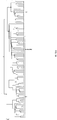
- sucrose transporters are further classified based on phylogenetic tree analysis.
- phylogenetic tree analysis can be found in Kuhn ( Kuhn, C, Plant biol (2003) 5: 215-232 ).
- sucrose transporters Overexpression of sucrose transporters in seeds affects seed development and results in increased carbon flux into developing cotyledons ( Rosche et al. (2002) The Plant Journal 30(2):165-175 ; Rosche et al. (2005) Functional Plant Biology 32: 997-1007 ). In addition, studies have shown that heterologous expression of sucrose transporters results in increased sucrose uptake ( Leggewie et al. (2003) Planta 217: 158-167 ).
- sucrose transporters such as SUT2 or SUT4 sucrose transporters
- a high oil plant comprising recombinant DNA constructs that overexpress SUT2 or SUT4 sucrose transporters which further increase plant seed oil production compared to a high oil plant comprising recombinant DNA constructs that do not overexpress SUT2 or SUT4 transporters and do not further increase plant seed oil production is provided.
- Overexpression of SUT2 or SUT4 sucrose transporters in a high oil plant resulting in further increase in oil production provides a significant advantage in the state of the art.
- promoters may direct the expression of a gene in different tissues or cell types, or at different stages of development, or in response to different environmental conditions.
- a number of promoters can be used in recombinant DNA constructs to overexpress sucrose transporters and/or the sequences that influence fatty acid accumulation (i.e., DGAT, lec1 and ODP1 sequences) in plants.
- these promoters include, but are not limited to, the Glycine max annexin promoter (Kinney and Liu, US Patent No. 7,129,089 ), the Glycine max glycinin Gy1 promoter ( WO Patent No.
- Glycine max ⁇ -conglycinin ⁇ '-subunit Beachy et al., EMBO J. 4:3047-3053 (1985 ), Glycine max kunitz trypsin inhibitor ( Jofuku et al., Plant Cell 1: 1079-1093 (1989 ), Glycine max albumin 2S ( US Patent No. 6177613 ), Pisum sativum legumin A1 ( Rerie et al., Mol. Gen. Genet. 225: 148-157 (1991 )), Glycine max ⁇ -conglycinin ⁇ -subunit ( WO 2004/071467 ), Glycine max BD30 (also called P34) ( US Patent No. 7129089 ), and Pisum sativum legumin A2 ( Rerie et al., Mol. Gen. Genet. 225:148-157 (1991 )).
- a recombinant construct can further comprise a terminator sequence operably linked to the polynucleotide of interest.
- Terminators include, but are not limited to, bean phaseolin 3' terminator ( WO 2004/071467 ), Glycine max Myb2 3' ( US Application No. 12/486793 ), Glycine max kunitz trypsin inhibitor 3' ( WO 2004/071467 ), Glycine max BD30 (also called P34) 3' ( WO 2004/071467 ), Pisum sativum legumin A2 3' ( WO 2004/071467 ), and Glycine max albumin 2S 3' ( WO 2004/071467 ).
- PCT Publication No. WO 2004/071467 and US Patent No. 7,129,089 describe the isolation of a number of promoter and transcription terminator sequences for use in embryo-specific expression in soybean.
- PCT Publication Nos. WO 2004/071467 and US Patent No. 7,129,089 describe the synthesis of multiple promoter/gene/terminator cassette combinations by ligating individual promoters, genes, and transcription terminators together in unique combinations.
- a Not I site flanked by the suitable promoter promoter include, but are not limited to, Glycine max annexin promoter ( Kinney and Liu, US Patent No. 7,129,089 ), the Glycine max glycinin Gy1 promoter ( WO Patent No.
- Glycine max ⁇ -conglycinin ⁇ ' subunit Beachy et al., EMBO J. 4:3047-3053 (1985 ), Glycine max kunitz trypsin inhibitor ( Jofuku et al., Plant Cell 1: 1079-1093 (1989 ), Glycine max albumin 2S ( US Patent No. 6177613 ), Pisum sativum legumin A1 ( Rerie et al., Mol. Gen. Genet. 225: 148-157 (1991 )), Glycine max ⁇ -conglycinin ⁇ -subunit ( WO 2004/071467 ), Glycine max BD30 (also called P34) ( US Patent No.
- transcription terminators include, but are not limited to, bean phaseolin 3' terminator ( WO 2004/071467 ), Glycine max Myb2 3' ( US Application No.
- Glycine max kunitz trypsin inhibitor 3' ( WO 2004/071467 )
- Glycine max BD30 also called P34
- WO 2004/071467 Pisum sativum legumin A2 3'
- Glycine max albumin 2S 3' ( WO 2004/071467 ).
- Not I sites can be added to a gene of interest using PCR amplification with oligonucleotides designed to introduce Not I sites at the 5' and 3' ends of the gene.
- the resulting PCR product is then digested with Not I and cloned into a suitable promoter/ Not I/terminator cassette.
- WO 2004/071467 and US Patent No. 7,129,089 describe the further linking together of individual promoter/gene/transcription terminator cassettes in unique combinations and orientations, along with suitable selectable marker cassettes, in order to obtain the desired phenotypic expression.
- This is done mainly using different restriction enzymes sites, one skilled in the art can appreciate that a number of techniques can be utilized to achieve the desired promoter/gene/transcription terminator combination or orientations. In so doing, any combination and orientation of embryo-specific promoter/gene/transcription terminator cassettes can be achieved.
- these cassettes can be located on individual DNA fragments or on multiple fragments where co-expression of genes is the outcome of co-transformation of multiple DNA fragments.
- promoters may be used in recombinant DNA constructs to over-express sucrose transporters and/or other polypeptides of the invention in plants.
- Such promoters can be the native promoter of the polynucleotides (i.e., to the sucrose transporters or to the sequence whose expression influence oil accumulation, DGAT, Lec1 or ODP-1), or they may be selected based on the desired outcome.
- nucleic acids of the disclosure can be combined with constitutive, tissue-preferred, or other promoters for expression in plants.
- Such constitutive promoters include, for example, the core promoter of the Rsyn7 promoter and other constitutive promoters disclosed in WO 99/43838 and U.S. Patent No. 6,072,050 ; the core CaMV 35S promoter ( Odell et al. (1985) Nature 313:810-812 ); rice actin ( McElroy et al. (1990) Plant Cell 2:163-171 ); ubiquitin ( Christensen et al. (1989) Plant Mol. Biol. 12:619-632 and Christensen et al. (1992) Plant Mol. Biol. 18:675-689 ); pEMU ( Last et al. (1991) Theor. Appl. Genet.
- seed-specific promoters include both “seed-specific” promoters (those promoters active during seed development such as promoters of seed storage proteins) as well as “seed-germinating” promoters (those promoters active during seed germination). See Thompson et al. (1989) BioEssays 10:108 .
- Such seed-preferred promoters include, but are not limited to, Cim1 (cytokinin-induced message); cZ19B1 (maize 19 kDa zein); milps (myo-inositol-1-phosphate synthase) (see WO 00/11177 and U.S. Patent No. 6,225,529 ).
- Gamma-zein is an endosperm-specific promoter.
- Globulin 1 (Glb-1) is a representative embryo-specific promoter.
- seed-specific promoters include, but are not limited to, bean ⁇ -phaseolin, napin, ⁇ -conglycinin, soybean lectin, cruciferin, and the like.
- seed-specific promoters include, but are not limited to, maize 15 kDa zein, 22 kDa zein, 27 kDa zein, gamma-zein, waxy, shrunken 1, shrunken 2, Globulin 1, etc. See also WO 00/12733 , where seed-preferred promoters from end1 and end2 genes are disclosed.
- compositions provided include plants, plant cells, and plant seeds having incorporated into their genomes a first recombinant or heterologous DNA construct and a second recombinant or heterologous DNA construct.
- the first DNA construct comprises a first polynucleotide operably linked to at least one regulatory element, wherein said polynucleotide when expressed results in increased oil in the plant.
- the second DNA construct comprises a second polynucleotide operably linked to at least one regulatory element, wherein the second polynucleotide encodes a polypeptide that is a SUT4 or SUT2 sucrose transporter or an active variant or fragment thereof.
- the plant seeds from such plants exhibit an increased oil content when compared to a plant seed that does not comprise the second polynucleotide encoding the SUT4 or SUT2 sucrose transporter or an active variant or fragment thereof.
- the first polynucleotide which when expressed results in increased oil content in the plant comprises a sequence encoding a DGAT polypeptide or an active variant or fragment thereof, including but not limited to a sequence encoding a DGAT1 polypeptide and/or a DGAT2 polypeptide and the second polynucleotide encodes a SUT4 and/or SUT2 sucrose transporter.
- DGAT sequences that can be used are set forth in Table 1 and Table 5 or active fragments or variants thereof.
- the DGAT sequence employed comprises a polynucleotide encoding a polypeptide having at least 80%, 85%, 90%, 91%, 92%, 93%, 94%, 95%, 96%, 97%, 98%, or 99% sequence identity to the DGAT sequences set forth in anyone of SEQ ID NOS: 180, 182, 184, 186, 188, 190 or 191.
- Such sequences will continue to have DGAT activity and thus increase the oil content of a seed when expressed the seed or the plant.
- the second polynucleotide may comprise a polynucleotide encoding a SUT2 and/or SUT4 polypeptide or an active variant or fragment thereof.
- Non-limiting examples of SUT2 or SUT4 polypeptide are set forth in Table 1.
- the SUT2 and/or SUT4 polypeptides employed can comprises a polynucleotide encoding a polypeptide having at least 80%, 85%, 90%, 91%, 92%, 93%, 94%, 95%, 96%, 97%, 98%, or 99% sequence identity to the SUT2 or SUT4 sequences set forth in any one of SEQ ID NOS: 4, 6, 34, 36, 38, 40-50, 52-83, 85, 150, and/or 178.
- Such sequences will continue to have SUT2 or SUT4 activity (i.e., transport sucrose).
- the plant seeds from such plants exhibit an increased oil content when compared to a plant seed that does not comprise the second polynucleotide encoding the SUT4 or SUT2 sucrose transporter.
- the plant, plant seed, or plant cell comprises a first polynucleotide encoding a DGAT polypeptide having at least 85%, 90%, 91%, 92%, 93%, 94%, 95%, 96%, 97%, 98%, or 99% sequence identity sequence identity to SEQ ID NO: 180, 182, 184, 186, 188, 190 or 191, and the second polynucleotide encodes a sucrose transporter polypeptide having an amino acid sequence of at least 85%, 90%, 91%, 92%, 93%, 94%, 95%, 96%, 97%, 98%, or 99% sequence identity when compared to SEQ ID NOs: 38, 40, 34, 6, and/or 4.
- Such sequences will continue to have DGAT activity and thus increase the oil content of a seed when expressed the seed or the plant and will continue to have SUT2 or SUT4 activity (i.e., transport sucrose), respectively.
- the plant seeds from such plants exhibit an increased oil content when compared to a plant seed that does not comprise the second polynucleotide encoding the SUT4 or SUT2 sucrose transporter.
- compositions include plants, plant cells, and plant seeds having incorporated into their genomes a first and a second recombinant or heterologous DNA construct, wherein the first polynucleotide encodes a Lec1 polypeptide or an active variant or fragment thereof, and the second polynucleotide encodes a SUT2 and/or a SUT4 polypeptide or an active variant or fragment thereof, including, but not limited to, the SUT4 and SUT2 polypeptides disclosed in Table 1.
- the SUT2 and/or SUT4 polypeptides employed can comprises a polynucleotide encoding a polypeptide having at least 80%, 85%, 90%, 91%, 92%, 93%, 94%, 95%, 96%, 97%, 98%, or 99% sequence identity to the SUT2 or SUT4 sequences set forth in any one of SEQ ID NOS: 4, 6, 34, 36, 38, 40-50, 52-83, 85, 150, and/or 178.
- the plant seeds from such plants exhibit an increased oil content when compared to a plant seed that does not comprise the second polynucleotide encoding the SUT4 or SUT2 sucrose transporter. Such sequences will continue to have SUT2 or SUT4 activity (i.e., transport sucrose).
- compositions include plants, plant cells, and plant seeds having incorporated into their genomes a first and a second recombinant or heterologous DNA construct, wherein the first polynucleotide comprises a polynucleotide encoding an ODP-1 polypeptide or an active variant or fragment thereof, and the second polynucleotide encodes a SUT2 and/or a SUT4 polypeptide or active variant or fragment thereof, including, but not limited to, the SUT4 and SUT2 polypeptides disclosed in Table 1.
- the SUT2 and/or SUT4 polypeptides employed can comprises a polynucleotide encoding a polypeptide having at least 80%, 85%, 90%, 91%, 92%, 93%, 94%, 95%, 96%, 97%, 98%, or 99% sequence identity to the SUT2 or SUT4 sequences set forth in any one of SEQ ID NOS: 4, 6, 34, 36, 38, 40-50, 52-83, 85, 150, and/or 178.
- SUT2 or SUT4 activity i.e., transport sucrose.
- the plant seeds from such plants exhibit an increased oil content when compared to a plant seed that does not comprise the second polynucleotide encoding the SUT4 or SUT2 sucrose transporter.
- compositions include plants, plant cells, and plant seeds having incorporated into their genomes a first and a second recombinant or heterologous DNA construct, wherein the first polynucleotide, when expressed result in silencing of an expressed gene resulting in fatty acid accumulation, including but not limited to, the silencing of phosphoglucomutase, and the second polynucleotide comprises a SUT2 and/or a SUT4 polypeptide or an active variant or fragment thereof, including but not limited to those disclosed in Table 1,
- the plant seeds from such plants exhibit an increased oil content when compared to a plant seed that does not comprise the second polynucleotide encoding the SUT4 or SUT2 sucrose transporter.
- Methods are disclosed herein for further increasing oil content in a high oil plant seed
- the Methods comprises (a) transforming a regenerable high oil plant cell with a recombinant DNA construct comprising a polynucleotide operably linked to at least one regulatory sequence, wherein the polynucleotide encodes a polypeptide that is a SUT4 and/or SUT2 sucrose transporter polypeptide or an active variant or fragment thereof; (b) regenerating a transgenic plant from the regenerable plant cell, where the transgenic plant comprises in its genome the recombinant DNA construct and exhibits increased oil content when compared to a plant not comprising the recombinant DNA construct.
- any polynucleotide encoding a SUT2 and/or SUT4 polypeptide set forth in Table 1, or active variants or fragments thereof can be employed.
- the recombinant DNA construct encodes a polypeptide having an amino acid sequence of at least 80%, 85%, 90%, 91%, 92%, 93%, 94%, 95%, 96%, 97%, 98%, or 99% sequence identity, when compared to SEQ ID NOs: 38, 40, 34, 6, 4, 36, 41, 42, 43, 44, 45, 46, 47, 48, 49, 50, 52-83, 85, 150, or 178, wherein said sequence continue to encode a polypeptide having sucrose transporter activity.
- the regenerable high oil plant cell employed in the method comprises a second recombinant DNA construct comprising a sequence that influences fatty acid accumulation, such as, a sequence encoding a diacylglycerol acyltransferase (DGAT) polypeptide or an active variant or fragment thereof, a Lec1 transcription factor polypeptide or an active variant or fragment thereof, or an ODP-1 transcription factor polypeptide or an active variant or fragment thereof.
- DGAT diacylglycerol acyltransferase
- the regenerable high oil plant cell employed in the method has stably incorporated into its genome a recombinant or heterologous construct comprising a DGAT polypeptide or an active variant or fragment thereof, including but not limited to a sequence encoding a DGAT1 polypeptide or a DGAT2 polypeptide.
- DGAT sequences that can be present in the regenerable high oil plant cell include those set forth in Table 1 and Table 5 or an active fragments or variants thereof.
- the DGAT sequence employed comprises a polynucleotide encoding a polypeptide having at least 80%, 85%, 90%, 91%, 92%, 93%, 94%, 95%, 96%, 97%, 98%, or 99% sequence identity to the DGAT sequences set forth in anyone of SEQ ID NOS: 180, 182, 184, 186, 188, 190, or 191. Such sequences will continue to have DGAT activity and thus increase the oil content of a seed when expressed the seed or the plant.
- any polynucleotide encoding a SUT2 and/or SUT4 polypeptide set forth in Table 1, or active variants or fragments thereof can be employed.
- the recombinant DNA construct encodes a polypeptide having an amino acid sequence of at least 50%, 80%, 85%, 90%, 91%, 92%, 93%, 94%, 95%, 96%, 97%, 98%, or 99% sequence identity, when compared to SEQ ID NOs: 38, 40, 34, 6, 4, 36, 41, 42, 43, 44, 45, 46, 47, 48, 49, 50, 52-83, 85, 150, or 178, wherein said sequence continue to encode a polypeptide having sucrose transporter activity.
- the transgenic plant employed in the method can further comprise a second recombinant or heterologous DNA construct encoding a diacylglycerol acyltransferase (DGAT) polypeptide or an active variant or fragment thereof, a Lec1 transcription factor polypeptide or an active variant or fragment thereof, or an ODP-1 transcription factor polypeptide or an active variant or fragment thereof.
- DGAT diacylglycerol acyltransferase
- the transgenic plant employed in the method has stably incorporated into its genome a recombinant or heterologous construct comprising a DGAT polypeptide or an active variant or fragment thereof, including but not limited to a sequence encoding a DGAT1 polypeptide or a DGAT2 polypeptide.
- DGAT sequences that can be present in the regenerable high oil plant cell include those set forth in Table 1 and Table 5 or an active fragment or variant thereof.
- the DGAT sequence employed comprises a polynucleotide encoding a polypeptide having at least 80%, 85%, 90%, 91%, 92%, 93%, 94%, 95%, 96%, 97%, 98%, or 99% sequence identity to DGAT sequences set forth in anyone of SEQ ID NOS: 180, 182, 184, 186, 188, 190, or 191.
- compositions include an an isolated or recombinant polynucleotide comprising: (a) a nucleotide sequence encoding a polypeptide having at least 80%, 85%, 90%, 91%, 92%, 93%, 94%, 95%, 96%, 97%, 98%, 99%, or 100% sequence identity to SEQ ID NOs: 52, 85, 150, or 178, sequences will continue to have sucrose transport activity; or, (b) the complement of the nucleotide sequence, wherein the complement and the nucleotide sequence contain the same number of nucleotides and are 100% complementary.
- polynucleotide which comprising at least 80%, 85%, 90%, 91%, 92%, 93%, 94%, 95%, 96%, 97%, 98%, 99%, or 100% sequence identity the nucleotide sequence of SEQ ID NOs: 51, 84, 149, or 177.
- a recombinant DNA construct comprising (a) a nucleotide sequence encoding a polypeptide having at least 80%, 85%, 90%, 91%, 92%, 93%, 94%, 95%, 96%, 97%, 98%, 99%, or 100% sequence identity to SEQ ID NOs: 52, 85, 150, or 178; (b) the complement of the nucleotide sequence, wherein the complement and the nucleotide sequence contain the same number of nucleotides and are 100% complementary; or (c) a nucleotide sequence comprising at least 80%, 85%, 90%, 91%, 92%, 93%, 94%, 95%, 96%, 97%, 98%, 99%, or 100% sequence identity the nucleotide sequence of SEQ ID NOs: 51, 84, 149, or 177; wherein the nucleotide sequence is operably linked to at least one regulatory sequence.
- compositions include cells, plants, plant cells, and seed comprising a heterologous polynucleotide comprising (a) a nucleotide sequence encoding a polypeptide, having at least 80%, 85%, 90%, 91%, 92%, 93%, 94%, 95%, 96%, 97%, 98%, 99%, or 100% sequence identity to SEQ ID NOs: 52, 85, 150, or 178, wherein the sequences will continue to have sucrose transport activity; (b) the complement of the nucleotide sequence, wherein the complement and the nucleotide sequence contain the same number of nucleotides and are 100% complementary; or (c) a nucleotide sequence comprising at least 80%, 85%, 90%, 91%, 92%, 93%, 94%, 95%, 96%, 97%, 98%, 99%, or 100% sequence identity the nucleotide sequence of SEQ ID NOs: 51, 84, 149, or 177, wherein said sequence encode a polypeptide having
- the heterologous polynucleotide can be in a recombinant DNA construct.
- the cell may be eukaryotic, e.g ., a yeast, insect or plant cell, or prokaryotic, e.g ., a bacterium.
- isolated or recombinant polypeptides which comprise an amino acid sequence having at least 80%, 85%, 90%, 91%, 92%, 93%, 94%, 95%, 96%, 97%, 98%, 99%, or 100% sequence identity to SEQ ID NOs: 52, 85, 150, or 178.
- a reverse transcription reaction was carried out as follows.
- a mixture (1 ⁇ L of 50 ⁇ M dTVN, 1 ⁇ L dNTP mix (10 ⁇ M each), 5 ⁇ g of total RNA, and 10 ⁇ L of water) was heated at 65°C for 5 min and immediately placed on ice for 1 min.
- the reaction mixture was supplemented with 4 ⁇ L of 5X reverse transcription buffer, 1 ⁇ L of 0.1 M DTT, 1 ⁇ L of anti RNase, and SuperScript III (InvitrogenTM, USA).
- the reverse transcription reaction was carried out for 1 h at 50°C.
- the reaction was stopped by incubating at 70°C for 15 min. Twenty microliters of water was added to the reaction. Synthesized first strand cDNAs were used as templates in subsequent PCR reactions.
- the PCR reactions with the first-strand Arabidopsis thaliana cDNAs as template, were individually carried out in 50 ⁇ L total volume comprising: 1 ⁇ L each of 10 ⁇ M forward and reverse primers, 2 ⁇ L cDNAs, 5 ⁇ L 10X PCR buffer, 1 ⁇ L dNTP mix (10 ⁇ M each), 39 ⁇ L water and 1 ⁇ L Expand polymerase (Roche Applied Science, Indianapolis, IN).
- Primers designed and used to introduce a NotI site flanking the gene were YOL237 (SEQ ID NO: 7) and YOL132 (SEQ ID NO: 8) for ATSUC2 , YOL174 (SEQ ID NO: 9) and YOL175 (SEQ ID NO: 10) for ATSUT2 , and YOL172 (SEQ ID NO: 11) and YOL173 (SEQ ID NO: 12) for ATSUT4.
- Amplification was carried out at 94°C for 3 min, followed by 30 cycles at 94°C for 30 sec, 58°C for 30 sec, and 72°C for 2 min, followed by a final elongation cycle at 72°C for 6 min.
- PCR products were gel-purified, cloned into pCRR2.1 (InvitrogenTM, USA) using manufacturer instructions and were sequence-verified.
- the resulting plasmids for each gene were set forth as ATSUC2-pCRR2.1 (SEQ ID NO: 13), ATSUT2-pCR2.1 (SEQ ID NO: 14), and ATSUT4-pCRR2.1 (SEQ ID NO: 15) respectively.
- ATSUC2, ATSUT2, or ATSUT4 with a hexa-histidine tag at the carboxyl terminus was created by PCR reactions as follows. Oligonucleotide primers used were YOL412 (SEQ ID NO: 19) and YOL413 (SEQ ID NO: 20) for ATSUC2, YOL416 (SEQ ID NO: 21) and YOL417 (SEQ ID NO: 22) for ATSUT2, and YOL414 (SEQ ID NO: 23) and YOL415 (SEQ ID NO: 24) for ATSUT4. Primers were designed to have a NotI restriction site flanking the gene.
- Templates were respective plasmids carrying the identical sucrose transporter genes either as in ATSUC2 (AT1G22710, SEQ ID NO: 1), ATSUT2 (AT2G02860, SEQ ID NO: 3), or ATSUT4 (AT1G09960, SEQ ID NO: 5).
- PCR reaction was carried out in a 50 ⁇ L total volume comprising: 1 ⁇ L each of 10 ⁇ M respective primers, 1 ⁇ L template DNA (100 ng), 10 ⁇ L 5X PCR buffer, 1 ⁇ L dNTP mix (10 ⁇ M each), 36 ⁇ L water and 0.5 ⁇ L Phusion polymerase (New England Biolabs, Inc., Ipswich, MA).
- PCR products were gel-purified and cloned into pCRR4BLUNT-TOPOR (Invitrogen) using manufacturer instructions. Based on sequencing analyses, the plasmids with the consensus sequences were set forth as RTW155 (ATSUC2HIS6) (SEQ ID NO: 25), RTW156 (ATSUT4HIS6) (SEQ ID NO: 26), and RTW157 (ATSUT2HIS6) (SEQ ID NO: 27).
- This example describes functional activity assays of Arabidopsis thaliana sucrose transporters in an invertase-deleted yeast strain (see on the World Wide Web at http://www-sequence.stanford.edu/group/yeast_deletion_project/deletions3.html). The method used was based on Sauer and Stolz (Plant J. (1994) 6: 67-77 ) with modification.
- yeast expression plasmids containing Arabidopsis thaliana sucrose transporters described in Example 1 were constructed and employed in assays after transformation into yeast.
- RTW247 (yeast ATSUC2HIS):
- RTW155 (ATSUC2HIS6) is described in Example 1.
- a fragment containing ATSUC2HIS6 gene was excised from RTW155 with NotI restriction enzyme digestion. This DNA was ligated to NotI linearized, dephosphorylated pY75 vector DNA to give RTW247 (yeast ATSUC2HIS) (SEQ ID NO: 28).
- RTW248 yeast ATSUT4HIS
- RTW156 (ATSUT4HIS6) is described in Example 1.
- a fragment containing ATSUT4HIS6 gene was excised from RTW156 with NotI restriction enzyme digestion. This DNA was ligated to NotI linearized, dephosphorylated pY75 vector DNA to give RTW248 (yeast ATSUT4HIS) (SEQ ID NO: 29).
- RTW249 (veast ATSUT2HIS):
- RTW157 (ATSUT2HIS6) is described in Example 1.
- a fragment containing ATSUT2HIS6 gene was excised from RTW157 with NotI restriction enzyme digestion. This DNA was ligated to NotI linearized, dephosphorylated pY75 vector DNA to give RTW249 (yeast ATSUT2HIS) (SEQ ID NO: 30).
- RTW250 (yeast ATSUC2)
- telomere truncation The construction of plasmid ATSUC2-pCRR2.1 is described in Example 1.
- a fragment containing ATSUC2 gene was excised from ATSUC2-pCRR2.1 with NotI restriction enzyme digestion. This DNA was ligated to NotI linearized, dephosphorylated pY75 vector DNA to give RTW250 (yeast ATSUC2) (SEQ ID NO: 31).
- RTW251 (veast ATSUT4)
- Plasmids RTW247 (yeast ATSUC2HIS), RTW248 (yeast ATSUT4HIS), RTW249 (yeast ATSUT2HIS), RTW250 (yeast ATSUC2), RTW251 (yeast ATSUT4), and the empty pY75 vector were transformed into the Saccharomyces cerevisiae strain that has deletion in invertase gene (see on the World Wide Web at http://www.sequence.stanford.edu/group/yeast_deletion_project/deletions3.html) using S. c. EasyComp Transformation Kit (Invitrogen) and manufacturer's instruction.
- DOB agar plates supplemented with CSM-leu (Qbiogene, Carlsbad, CA).
- DOB media are composed of 1.7 g yeast nitrogen base, 5 g ammonium sulfate, and 20 g Dextrose per liter.
- sucrose transporters in yeast For functional assays of sucrose transporters in yeast, single colony from each transformation was inoculated in 10 mL of DOB media supplemented with CSM-leu and grown at 30°C for 48 h. This seed culture was used to inoculate the second culture of 40 mL DOB media supplemented with CSM-leu. The culture was incubated at 30°C for 16 h. After checking cell density at OD575, cells were harvested by centrifugation. Cells were washed by resuspending in culture media composed with DOB supplemented with CSM-leu and 20 mM sucrose, followed by centrifugation. This step was performed twice. After washing, 100 ⁇ L of an OD575 culture of cells was added to the final volume of 100 ml of DOB supplemented with CSM-leu and 20 mM sucrose.
- the dried yeast pellets were suspended in 1 mL 80% aqueous ethanol and, with the tubes in ice, sonicated for 3 x 30 sec at a 50% power setting using a Vibra-Cell fitted with a Model ASI probe (Sonics & Materials Inc; Newtown, CT, USA).
- the cell debris was pelleted by centrifugation (16,000 x g for 10 min) and the supernatants were transferred to clean 13x100mm screw-capped glass tubes fitted with Teflon® lined closures.
- the pellets were extracted 3 more times with 1 mL volumes of 80% ethanol as follows. After addition of the ethanol the tubes were vortex mixed and placed into an ultrasonic bath (VWR Scientific Model 750D) filled with water heated to 60°C.
- the samples were sonicated at full-power ( ⁇ 360 W) for 15 min and were then centrifuged (10 min x 16,000 x g) with the supernatant from each extract pooled with those from the previous extracts.
- Internal standard (10 ⁇ L, ⁇ -phenyl glucopyranoside (Sigma-Aldrich P6876); 0.5000 +/- 0.0010g/100 mL stock in water) was added to each pooled supernatant prior to drying in a Speedvac.
- the dried samples were solubilized in anhydrous pyridine (Sigma-Aldrich P57506) containing 30 mg/mL of hydroxylamine HCl (Sigma-Aldrich 159417). Samples were placed on an orbital shaker (300 rpm) overnight and were then heated for 1 hr (75°C) with vigorous vortex mixing applied every 15 min. After cooling to room temperature, 1 mL hexamethyldisilazane (Sigma-Aldrich H-4875) and 100 ⁇ L trifluoroacetic acid (Sigma-Aldrich T6508) were added. The samples were vortex mixed and the precipitates were allowed to settle prior to transferring the supernatants to GC sample vials.
- Figures 1-3 present sucrose levels recovered from yeast cells after various times in culture for SUT2 ( Fig. 1 ), SUT4 ( Fig. 2 ), and SUC2 ( Fig. 3 ).
- sucrose transporter classes tested increases in intracellular sucrose levels were observed as the time in culture increased.
- Yeast cells carrying the empty pY75 vector were used as the control and showed no sucrose accumulation even after 6 hours in culture; growth of the control yeast, as assessed by the dry cell mass at each harvest time, was at least equivalent to the cells expressing the various transporters. All three classes of sucrose transporter retained their capacity to transport sucrose even with the HIS-Tag fused to the carboxy terminus of the protein.
- the cloned genes result in the expression of proteins with the apparent capacity to transport sucrose and the proteins retain this ability even when fused with a C-terminal HIS-tag.
- Soybean homologs of the Arabidopsis Sut2 (SEQ ID NO: 4) and Sut4 (SEQ ID NO: 6) genes were identified by conducting BLAST (Basic Local Alignment Search Tool; Altschul et al., J. Mol. Biol. 215:403-410 (1993 )) searches for similarity to sequences contained in the Soybean Genome Project, DoE Joint Genome Institute "Glyma1.01" gene set. Specifically, the TBLASTN algorithm provided by National Center for Biotechnology Information (NCBI) was used with default parameters except the Filter Option was set to OFF.
- NCBI National Center for Biotechnology Information
- Plant homologs of Arabidopsis thaliana SUT1, SUT2 and SUT4 homologs were identified by conducting BLAST ( Basic Local Alignment Search Tool; Altschul et al., J. Mol. Biol. 215:403-410 (1993 ); see also the explanation of the BLAST algorithm on the world wide web site for the National Center for Biotechnology Information at the National Library of Medicine of the National Institutes of Health) searches for similarity to amino acid sequences contained in the BLAST "nr" database (comprising all non-redundant GenBank CDS translations, sequences derived from the 3-dimensional structure Brookhaven Protein Data Bank, the last major release of the SWISS-PROT protein sequence database, EMBL, and DDBJ databases).
- BLAST Basic Local Alignment Search Tool
- the DNA sequences from clones can be translated in all reading frames and compared for similarity to all publicly available protein sequences contained in the "nr” database using the BLASTX algorithm ( Gish and States, Nat. Genet. 3:266-272 (1993 )) provided by the NCBI.
- the polypeptides encoded by the cDNA sequences can be analyzed for similarity to all publicly available amino acid sequences contained in the "nr” database using the BLASTP algorithm provided by the National Center for Biotechnology Information (NCBI).
- the P-value (probability) or the E-value (expectation) of observing a match of a cDNA-encoded sequence to a sequence contained in the searched databases merely by chance as calculated by BLAST are reported herein as "pLog" values, which represent the negative of the logarithm of the reported P-value or E-value. Accordingly, the greater the pLog value, the greater the likelihood that the cDNA-encoded sequence and the BLAST "hit" represent homologous proteins.
- EST sequences can be compared to the GenBank database as described above. ESTs that contain sequences more 5- or 3-prime can be found by using the BLASTN algorithm ( Altschul et al., Nucleic Acids Res. 25:3389-3402 (1997 )) against the DUPONT proprietary database comparing nucleotide sequences that share common or overlapping regions of sequence homology. Where common or overlapping sequences exist between two or more nucleic acid fragments, the sequences can be assembled into a single contiguous nucleotide sequence, thus extending the original fragment in either the 5 or 3 prime direction. Once the most 5-prime EST is identified, its complete sequence can be determined by Full Insert Sequencing as described above.
- Homologous genes belonging to different species can be found by comparing the amino acid sequence of a known gene (from either a proprietary source or a public database) against an EST database using the tBLASTn algorithm.
- the tBLASTn algorithm searches an amino acid query against a nucleotide database that is translated in all 6 reading frames. This search allows for differences in nucleotide codon usage between different species, and for codon degeneracy.
- Table 3 lists Arabidopsis thaliana homologs that are described herein, the corresponding identifier (SEQ ID NO) as used in the attached Sequence Listing, the SUT subfamily designation, and species. Sucrose transporters in Table 3 were classified based on the phylogenetic tree from the review article by Kuhn ( Kuhn, C, Plant biol (2003) 5: 215-232 ). TABLE 3 SUCROSE TRANSPORTER HOMOLOGS SUT Family Sequence Description (NCBI GI NO:) Species SEQ ID NO. SUT2 AtSUT2 (At2G02860; NCBI GI NO.
- Zea mays 53 Sb01g045720.1 Sorghum bicolor 54 cepe7.pk0015.d10 Zea mays 55 TaSUT1A (NCBI GI NO. 20152871) Triticum aestivum 56 TaSUT1b (NCBI GINO. 20152873) Triticum aestivum 57 TaSUT1D (NCBI GINO. 19548165) Triticum aestivum 58 HvSUT1 (NCBI GI NO.
- Zea mays 77 Sb08g023310.1 Sorghum bicolor 78 LOC_ Os12g44380_SUC4_orSUC2 Oryza sativa 79 HvSUT2 (NCBI GI NO. 7024413) Hordeum vulgare 80 MdSUT4 (NCBI GI NO. 38327323) Malus domestica 81 DgSUT4 (NCBI GI NO. 49609488) Datisca glomerata 82 LjSUT4 (NCBI GI NO.
- Arabidopsis thaliana 89 AtSUC2 (At1G22710; NCBI GI NO. 15219938) Arabidopsis thaliana 2 AtSUC1 (At1G71880; NCBI GINO. 56550707) Arabidopsis thaliana 90 ATSUC5 (At1G71890; NCBI GI NO. 15217602) 91 Glyma02g08250.1 Glycine max 92 se5.pk0033.f9 Glyma16g27320.1 Glycine max 93 PvSUT1 (NCBI GI NO.
- Phaseolus vulgaris 94 Phaseolus vulgaris 94 sf11.pk0001.g1_Glyma16g27340_&_27330 Glycine max 95 PvSUT3 (NCBI GI NO. 78192251 Phaseolus vulgaris 96 sgc7c.pk001.n22_Glyma02g08260.1 Glycine max 97 sls2c.pk003.p4_Glyma16g27350.1 Glycine max 98 PvSUF1 (NCBI GI NO.125625363) Phaseolus vulgaris 99 SUF1_ Ps (NCBI GINO.
- Figure 4A-G presents an alignment of the amino acid sequences set forth in the SUT2 family and includes SEQ ID NOs: 4, 34, 36, 41-50, 52, and 150.
- Figure 5A-F presents an alignment of the amino acid sequences set forth in the SUT2 family and includes SEQ ID NOs: 53-69.
- Figure 6A-F presents an alignment of the amino acid sequences set forth in the SUT4 family and includes SEQ ID NOs: 6, 38, 40, 70-83, and 85.
- Figure 7 is a chart of the percent sequence identity and the divergence values for each pair of amino acids sequences presented in Figure 4A-G .
- FIG. 8 is a chart of the percent sequence identity and the divergence values for each pair of amino acids sequences presented in Figure 5A-F .
- Figure 9 is a chart of the percent sequence identity and the divergence values for each pair of amino acids sequences presented in Figure 6A-F .
- Pn_Node_3980 was identified from Bahia grass (SEQ ID NO: 85) and two SUT2 homologs, Pn_Node_9230 (SEQ ID NO: 52) and Pn_Node_40538 (SEQ ID NO: 150), were also identified from Bahia grass.
- FIG. 11A-C is presented as an enlargement of FIG. 10 .
- Phylogenetic analysis and phlylogenetic tree construction were performed using Megalign ClustalW alignments exported in the MSF format. This MSF format was imported into JalView ( www.jalview.org Clamp, M., Cuff, J., Searle, S. M. and Barton, G. J. (2004), "The Jalview Java Alignment Editor", Bioinformatics, 20, 426-7 ). Trees were built using one of the four available methods in JalView, and the alignments were sorted based on the resulting tree. Trees and alignments were evaluated for quality and accuracy. The tree in Figure 10 was calculated with Average Distance Measure using the BLOSUM62 matrix.
- promoters, terminators and gene cassettes described herein can appreciate that other promoter/gene/terminator cassette combinations can be synthesized in a way similar to, but not limited to, that described herein for the co-expression of sucrose transporter and DGAT genes. Similarly, it may be desirable to co-express sucrose transporters of the present disclosure or other sucrose transporter genes with DGAT genes of the present disclosure or other DGAT genes.
- Sucrose transporters (such as those listed in, but not limited to, Table 3) can be co-expressed with DGAT genes using techniques described herein.
- DGAT genes (such as those listed in, but not limited to, Table 5) can be used. NotI restriction enzyme sites flanking Sut and DGAT genes are added, Sut and DGAT genes are cloned into soybean expression vectors behind suitable promoters and Sut and DGAT genes are co-expressed using methods described herein.
- YLDGAT1 US Patent Application No. 2008/0295204 A
- YLDGAT1 can increase oil and oleic acid compared to null transgenic soybean seeds when it is expressed either in soybean somatic embryos or in soybean seeds.
- the enhanced carbon flux into soybean embryos was tested.
- Over-expressed sucrose transporters led to further increase in oil content when co-expressed with YLDGAT 1.
- Promoters that were used in plasmid construction for soybean embryo preferred over-expression of Arabidopsis thaliana sucrose transporter genes and the YLDGAT1 gene include, but are not limited to, Glycine max annexin and Glycine max glycinin Gy1.
- Transcription terminators that were used in plasmid construction for soybean embryo preferred over-expression of Arabidopsis thaliana sucrose transporter genes and the YLDGAT1 gene include, but are not limited to, bean phaseolin 3' and Glycine max Myb2 3'.
- Plasmid RTW218 (YLDGAT1) was constructed as follows. YLDGAT1 gene (SEQ ID NO: 127) was previously described in Publication No. 2008-0295204 A1 .
- RTW220 (ATSUC2HIS6 DGAT1 35Hyg)
- RTW220 ATUC2HIS6 DGAT1 35Hyg
- a vector, RTW147 ANN-myb2 term sbf (SEQ ID NO: 132)
- RTW155 ATUC2HIS6 described in Example 1 was digested with NotI and a fragment containing ATSUC2HIS6 gene was gel-isolated.
- RTW158p1 ann suc2
- SEQ ID NO: 133 Expression cassette containing annexin promoter, ATSUC2HIS6 gene, and myb2 terminator was isolated from RTW158pl (ann suc2) by SbfI digestion.
- This DNA was ligated into SbfI linearized, dephosphorylated RTW218 (YLDGAT1) plasmid.
- the resultant plasmid was set forth as RTW220 (ATSUC2HIS6 DGAT1 35Hyg) (SEQ ID NO: 131).
- RTW221 (ATSUT4HIS6 DGAT1 35Hyg )
- RTW221 (ATSUT4HIS6 DGAT1 35Hyg) was constructed similarly as for RTW220 (ATSUC1HIS6 DGAT1 35Hyg), RTW156 (AT SUT4 HIS6) described in Example 1 was digested with NotI and a fragment containing ATSUT4H3S6 was gel-isolated. The fragment was then ligated into NotI digested, dephosphorylated RTW147 (ANN-myb2 term sbf) to give RTW162pl (ann sut4) (SEQ ID NO: 135).
- RTW162pl ann sut4
- YLDGAT1 dephosphorylated RTW218
- the resultant plasmid was set force as RTW221 (ATSUT4HIS6 DGAT1 35Hyg) (SEQ ID NO: 134).
- RTW222 (ATSUT2HIS6 DGAT1 35Hyg)
- RTW222 (ATSUT2HIS6 DGAT1 35Hyg) was constructed similarly as for RTW220 (ATSUC1HIS6 DGAT1 35Hyg).
- RTW157 (AT SUT2 HIS6) described in Example 1 was digested with NotI and a fragment containing ATSUT2HIS6 was gel-isolated. The fragment was then ligated into NotI digested, dephosphorylated RTW147 (ANN-myb2 term sbf) to give RTW166p1 (ann sut2) (SEQ ID NO: 137).
- RTW166p1 ann sut2
- YLDGAT1 dephosphorylated RTW218
- the resultant plasmid was set forth as RTW222 (ATSUT2HIS6 DGAT1 35Hyg) (SEQ ID NO: 136).
- Transgenic soybean lines are generated by the method of particle gun bombardment ( Klein et al., Nature (London) 327:70-73 (1987 ); U.S. Patent No. 4,945,050 ) using a BIORAD Biolistic PDS1000/He instrument and either plasmid or fragment DNA.
- the following stock solutions and media are used for transformation and regeneration of soybean plants:
- Gamborg's B5 salts 20 g sucrose, 5 g TC agar, pH 5.7.
- Soybean cultures are initiated twice each month with 5-7 days between each initiation. Pods with immature seeds from available soybean plants 45-55 days after planting are picked, removed from their shells and placed into a sterilized magenta box. The soybean seeds are sterilized by shaking them for 15 min in a 5% Clorox solution with 1 drop of ivory soap ( i . e ., 95 mL of autoclaved distilled water plus 5 mL Clorox and 1 drop of soap, mixed well). Seeds are rinsed using 2 1-liter bottles of sterile distilled water and those less than 3 mm are placed on individual microscope slides. The small end of the seed is cut and the cotyledons pressed out of the seed coat.
- Cotyledons are transferred to plates containing SB199 medium (25-30 cotyledons per plate) for 2 weeks, then transferred to SB1 for 2-4 weeks. Plates are wrapped with fiber tape. After this time, secondary embryos are cut and placed into SB196 liquid media for 7 days.
- Soybean embryogenic suspension cultures (cv. Jack) are maintained in 50 mL liquid medium SB196 on a rotary shaker, 150 rpm, 26°C with cool white fluorescent lights on 16:8 h day/night photoperiod at light intensity of 60-85 ⁇ E/m2/s. Cultures are subcultured every 7 days to two weeks by inoculating approximately 35 mg of tissue into 50 mL of fresh liquid SB196 (the preferred subculture interval is every 7 days).
- the mixture is vortexed for 5 sec, spun in a microfuge for 5 sec, and the supernatant removed.
- the DNA-coated particles are then washed once with 150 ⁇ L of 100% ethanol, vortexed and spun in a microfuge again, then resuspended in 85 ⁇ L of anhydrous ethanol. Five ⁇ L of the DNA-coated gold particles are then loaded on each macrocarrier disk.
- tissue from each plate is divided between two flasks, placed back into liquid media, and cultured as described above.
- tissue from each bombarded plate is divided and placed into two flasks of SB 196 liquid culture maintenance medium per plate of bombarded tissue. Seven days post bombardment, the liquid medium in each flask is replaced with fresh SB196 culture maintenance medium supplemented with 100 ng/mL selective agent (selection medium).
- selective agent used can be a sulfonylurea (SU) compound with the chemical name, 2-chloro-N-((4-methoxy-6 methy-1,3,5-triazine-2-yl)aminocarbonyl) benzenesulfonamide (common names: DPX-W4189 and chlorsulfuron).
- SU sulfonylurea
- Chlorsulfuron is the active ingredient in the DuPont sulfonylurea herbicide, GLEAN®.
- the selection medium containing SU is replaced every two weeks for 6-8 weeks. After the 6-8 week selection period, islands of green, transformed tissue are observed growing from untransformed, necrotic embryogenic clusters.
- These putative transgenic events are isolated and kept in SB 196 liquid medium with SU at 100 ng/mL for another 2-6 weeks with media changes every 1-2 weeks to generate new, clonally propagated, transformed embryogenic suspension cultures. Embryos spend a total of around 8-12 weeks in contact with SU. Suspension cultures are subcultured and maintained as clusters of immature embryos and also regenerated into whole plants by maturation and germination of individual somatic embryos.
- Somatic embryos became suitable for germination after four weeks on maturation medium (1 week on SB166 followed by 3 weeks on SB103). They are then removed from the maturation medium and dried in empty petri dishes for up to seven days. The dried embryos are then planted in SB71-4 medium where they are allowed to germinate under the same light and temperature conditions as described above. Germinated embryos are transferred to potting medium and grown to maturity for seed production.
- embryos were harvested after two-three weeks of culture in the liquid maturation medium SB228 (SHaM). Approximately 30 events were created in transformations with pKR268, RTW218, RTW220, RTW221 and RTW222. All embryos generated for a given event were harvested in bulk and processed as follows. Embryos were frozen on dry ice or by incubation in a -80°C freezer for two h followed by lyophilization for 48 h.
- the tubes were vortex mixed and after centrifugation (3 min at 1700 x g) a portion of the upper organic phase was transferred to a sample vial for GC analysis. Analysis was performed on an Agilent 6890 gas chromatograph fitted with an Omegawax 320 capillary column (30 m, 0.32 mm OD, 0.25 ⁇ m film thickness; Supelco, Bellefonte PA, USA). Detection was by Flame Ionization. Relative peak areas were used to calculate the fatty acid profiles and quantitation was performed relative to the internal standard. Results of these experiments are summarized in Fig. 12 and Table 6.
- YLDGAT 1 gene expression consistently increased total oil level as well as oleic acid content in soybean somatic embryos when compared to the control transgenic lines which carried only the native vector construct.
- Co-expression of high affinity, SUT1-type transporter, ATSUC2 and YLDGAT1 gene yielded similar levels of oil and oleic acid to events expressing the YLDGAT1 gene alone.
- co-expression of low to medium affinity SUT2 and SUT4-type transporters, ATSUT2 and ATSUT4 showed significant additive effect by further increasing oil and oleic levels compared to transgenic embryos with only YLDGAT1 gene.
- a DNA construct for co-expression of YLDGAT 1 and a hexa-histidine tagged version of Arabidopsis SUT4 was generated as follows : A plasmid, RTW212 (SEQ ID NO: 138), containing a soybean selection marker cassette which was composed of soybean SAMS promoter, soybean HRA gene, and soybean ALS terminator, was used to construct RTW227 vector.
- ATSUT4 expression cassette was derived from RTW162p1 (ann sut4) (SEQ ID NO: 135) described in Example 7.
- RTW162p1 (ann sut4) was digested with Sbfl and a fragment containing soybean annexin promoter, ATSUT4 gene, and soybean myb2 terminator, was gel-purified. The fragment was ligated to SbfI linearized, dephosphorylated RTW212 plasmid to give RTW226 (SEQ ID NO: 139).
- RTW218 was digested with BsiWI and Sail. SalI site was completely filled using Klenow polymerase reaction.
- RTW227F ATUT4 DGAT1 ALS
- PHP36710 SEQ ID NO: 140
- Soybeans were transformed as shown in Example 7.
- Somatic embryos became suitable for germination after four weeks and were then removed from the maturation medium and dried in empty petri dishes for one to five days. The dried embryos were then planted in SB71-4 medium where they were allowed to germinate under the same light and temperature conditions as described above. Germinated embryos were transferred to sterile soil and grown to maturity for seed production.
- T 0 plants derived from 42 transgenic events were generated with a 10.5 kb AscI restriction fragment of PHP36710 at concentration of 15 pg per bp of plasmid DNA per gold particle preparation (see above).
- T 0 plant 8 seed were initially screened for the absence or presence of the transgene-derived YLDGAT by assaying the seed fatty acid composition. Seed oil content was measured by NMR as described in US patent application 2008/0295204 A .
- US patent application 2008/0295204 A1 also discloses that expression of Yarrowia DGAT genes in transgenic soybean somatic embryos and soybean seed was associated with increased incorporation of oleic acid into the total esterified fatty acid fraction which on the other hand was tightly correlated with total accumulation of fatty acids is this tissue.
- T1 seed derived from 27 of the total 42 events generated with PHP36710 the R 2 value expressing correlation between oleic acid and total fatty acid content was > 0.2. In these events the R 2 related to the correlation between oleic acid content and total fatty acid content ranged from 0.21 to 0.98.
- T1 seed from four events were analyzed in more detail.
- results are shown in Table 7 where n is the number of seeds analyzed, avg % oil ⁇ 18% oleic is the average oil content (% of seed weight) of all seeds with an oleic acid content of less than 18% of the total fatty acid content, avg % oil ⁇ 18% oleic is the average oil content (% of seed weight) of all seeds with an oleic acid content that is equal to or greater than 18% of the total fatty acid content, delta % points is the difference in oil content (% points) between seeds with an oleic acid content that is equal to or greater than 18% of the total fatty acid content and seeds with an oleic acid content of less than 18% of the total fatty acid content, delta % is the difference in oil content (%) of seed with an oleic acid content that is equal to or greater than 18 % of the total fatty acid content and seeds with an oleic acid content of less than 18 % of the total fatty acid content, and R2 % ole
- the present example describes cloning of soy Sut2 and Sut4 homologs for co-expression with DGAT genes
- RNA isolation techniques involve isolating total RNA from soy tissue followed by either direct synthesis of cDNA from total RNA or purification of mRNA first followed by cDNA synthesis.
- total RNA can be isolated from soy tissue using TRIzol® Reagent (Invitrogen Corporation, Carlsbad, CA) and following the manufacturer's protocol provided.
- mRNA can be isolated from total RNA using the mRNA Purification Kit (Amersham Biosciences, Piscataway, NJ) following the manufacturer's protocol provided, A cDNA library can be generated from total RNA or mRNA using the CloneminerTM cDNA Library Construction Kit (Cat. No. 18249-029, Invitrogen Corporation, Carlsbad, CA) and following the manufacturer's protocol provided (Version B, 25-0608). cDNA libraries may also be prepared using Uni-ZAPTM XR vectors according to the manufacturer's protocol (Stratagene Cloning Systems, La Jolla, Calif.). The Uni-ZAPTM XR libraries are converted into plasmid libraries according to the protocol provided by Stratagene.
- cDNA inserts are contained in the plasmid vector pBluescript.
- the cDNAs may be introduced directly into precut Bluescript II SK(+) vectors (Stratagene) using T4 DNA ligase (New England Biolabs), followed by transfection into DH10B cells according to the manufacturer's protocol (GIBCO BRL Products). Normalized cDNA libraries can also be prepared, for example as described in U.S. Patent No. 5,482,845 .
- Glyma08g40980 (SEQ ID NO: 33) is amplified from soy cDNA or a soy cDNA library using oligonucleotides GmSut2-1For (SEQ ID NO: 141) and GmSut2-1Rev (SEQ ID NO: 142), designed to introduce NotI site flanking the gene, along with a suitable DNA polymersase such as GoTaq polymerase (Promega, USA) or Phusion polymerase (New England Biolabs, Inc., Ipswich, MA) and following the manufacturer's protocol, The resulting PCR product is cloned into a suitable cloning vector such as the pCR-Blunt® cloning vector using the Zero Blunt® PCR Cloning Kit (Invitrogen Corporation), following the manufacturer's protocol when Phusion polymerase is used or into pGEM®-T Easy Vector (Promega), following the manufacturer's protocol, when GoTaq polymerase is used.
- Glyma18g15950 (SEQ ID NO: 35) is amplified with oligonucleotides GmSut2-2For (SEQ ID NO: 143) and GmSut2-2Rev (SEQ ID NO: 144)
- Glyma02g38300 (SEQ ID NO: 37) is amplified with oligonucleotides SA150 (SEQ ID NO: 145) and SA151 (SEQ ID NO: 146)
- Glyma04g09460 (SEQ ID NO: 39) is amplified with oligonucleotides SA148 (SEQ ID NO: 147) and SA149 (SEQ ID NO: 148).
- soy Sut genes flanked by Not I restriction sites can be synthesized directly by companies such as, but not limited to, DNA 2.0 (California, USA), Codon Devices (MA, USA) or by GENEART AG (Regensburg, Germany).
- soy Sut homolog genes flanked by NotI sites can be easily cloned into suitable soy expression vectors.
- NotI fragment of a soy Sut homolog gene can be ligated into a vector, which has an expression cassette composed of annexin promoter and soybean myb2 terminator.
- a vector which has an expression cassette composed of annexin promoter and soybean myb2 terminator.
- Such vector can be RTW162p1 as described in Example 7.
- the cassette can be transferred to any plasmids that can be used either for soybean somatic embryonic transformation or soybean stable transformation.
- sucrose transporters such as those listed in, but not limited to, Table 4 or SUT2, or SUT4 homologs in Table 3 with DGAT genes can be used in the seeds of maize to increase the oil content of this tissue.
- this result can be achieved by transforming maize with expression cassettes comprising an open reading frame of DGAT genes operably linked on their 5' ends to embryo preferred promoters, such as the promoter for the maize 16 kDa oleosin gene ( Lee, K. and Huang, A.H., Plant Mol. Biol. 26:1981-1987 (1984 )) and maize embryo abundant (EAP1) promoter and terminator ( US 2006272058 A1 ), and similarly configured sucrose transporter genes.
- embryo preferred promoters such as the promoter for the maize 16 kDa oleosin gene ( Lee, K. and Huang, A.H., Plant Mol. Biol. 26:1981-1987 (1984 )
- EAP1 maize embryo abundant promoter and terminator
- an expression cassette comprising the promoter from the maize 16 kDa oleosin gene (OLE PRO), the coding sequence of the YLDGAT gene and the polyadenylation signal sequence/terminator from the nopaline synthase (NOS) gene of Agrobacterium tumefaciens is constructed using methods and technologies known in the art.
- a second expression cassette comprises a sucrose transporter gene under the transcriptional control of the maize embryo abundant protein (EAP1) promoter and terminator, with the maize ADH1 INTRON1 inserted between the promoter and coding sequence for enhanced expression.
- the two expression cassettes are linked, together with a gene encoding a selectable marker, in a binary vector suitable for Agrobacterium -mediated transformation of maize.
- An Agrobacterium -based protocol can be used for the transformation of maize (see below).
- the resulting binary vector is introduced into Agrobacterium LBA4404 (PHP 10523) cells, preferably by electroporation.
- An in vivo recombination generates a cointegrate plasmid between the introduced binary vector and the vir plasmid (PHP10523) resident in the Agrobacterium cells.
- the resulting Agrobacterium cells are used to transform maize.
- the preferred genotype for transformation is the highly transformable genotype Hi-II ( Armstrong, Maize Gen. Coop. Newsletter 65:92-93 (1991 )).
- An F1 hybrid created by crossing a Hi-II with an elite inbred may also be used.
- the embryos can be cultured on medium containing toxic levels of herbicide. Only those cells that receive the herbicide resistance gene, and the linked gene(s), grow on selective medium. Transgenic events so selected can be propagated and regenerated to whole plants, produce seed, and transmit transgenes to progeny.
- the engineered Agrobacterium tumefaciens LBA4404 can be constructed to contain plasmids for seed-preferred expression of DGAT and sucrose transporter genes, as disclosed in U.S, Patent No. 5,591,616 .
- a master plate of a single bacterial colony transformed with plasmids for seed-preferred expression of both genes can be prepared by inoculating the bacteria on minimal AB medium and allowing incubation at 28°C for approximately three days.
- minimal AB medium has been previously described in PCT Publication No. WO 02/009040 .
- a working plate can then be prepared by streaking the transformed Agrobacterium on YP medium (0.5% (w/v) yeast extract, 1% (w/v) peptone, 0.5% (w/v) sodium chloride, 1.5% (w/v) agar) that contains 50 ⁇ g/mL of spectinomycin.
- the transformed Agrobacterium for plant transfection and co-cultivation can then be prepared one day prior to maize transformation.
- the Agrobacterium can then be grown at 28°C with shaking at 200 rpm for approximately fourteen h.
- the Agrobacterium can be harvested and resuspended at a density of 3 to 5 X 10⁸ CFU/mL in 561Q medium that contains 100 ⁇ M acetosyringone using standard microbial techniques.
- the composition and preparation of 561Q medium was described in PCT Publication No. WO 02/009040 .
- immature embryos are opaque and 1-1.5 mm long. This length is the optimal size for infection with the Agrobacterium.
- the husked ears can be sterilized in 50% commercial bleach and one drop Tween-20 for thirty minutes, and then rinsed twice with sterile water.
- the immature embryos can then be aseptically removed from the caryopsis and placed into 2 mL of sterile holding solution consisting of medium 561Q that contains 100 ⁇ M of acetosyringone.
- the holding solution can be decanted from the excised immature embryos and replaced with transformed Agrobacterium. Following gentle mixing and incubation for about five minutes, the Agrobacterium can be decanted from the immature embryos. Immature embryos were then moved to a plate of 562P medium, the composition of which has been previously described in PCT Publication No. WO 02/009040 . The immature embryos can be placed on this media scutellum surface pointed upwards and then incubated at 20°C for three days in darkness. This step can be followed by incubation at 28°C for three days in darkness on medium 562P that contains 100 ⁇ g/mL carbenecillin as described in U.S. Patent No. 5,981 , 840 .
- 5630 medium which can be prepared as described in PCT Publication No. WO 02/009040 .
- This medium contains Bialaphos for selection of transgenic plant cells as conferred by the BAR gene that is linked to barley HGGT expression cassette.
- BAR gene that is linked to barley HGGT expression cassette.
- embryos were transferred to 5630 medium.
- Actively growing putative transgenic embryogenic tissue can be after six to eight weeks of incubation on the 5630 medium.
- Transgenic embryogenic tissue is transferred to 288W medium and incubated at 28 °C in darkness until somatic embryos matured, or about ten to eighteen days. Individual matured somatic embryos with well-defined scutellum and coleoptile are transferred to 272 embryo germination medium and incubated at 28°C in the light. After shoots and roots emerge, individual plants are potted in soil and hardened-off using typical horticultural methods.
- 288W medium contains the following ingredients: 950 mL of deionized water; 4.3 g of MS Salts (Gibco); 0.1 g of myo-inositol; 5 mL of MS Vitamins Stock Solution (Gibco); 1 mL of zeatin (5 mg/mL solution); 60 g sucrose; 8 g of agar (Sigma A-7049, Purified), 2 mL of indole acetic acid (0.5 mg/mL solution*); 1 mL of 0.1 mM ABA*; 3 mL of Bialaphos (1 mg/mL solution*); and 2 mL of carbenicillin (50 mg/mL solution). The pH of this solution is adjusted to pH 5.6. The solution is autoclaved and ingredients marked with an asterisk (*) are added after the media has cooled to 60°C.
- Medium 272 contains the following ingredients: 950 mL of deionized water; 4.3 g of MS salts (Gibco); 0.1 g of myo-inositol; 5 mL of MS vitamins stock solution (Gibco); 40 g of Sucrose; and 1.5 g of Gelrite. This solution is adjusted to pH 5.6 and then autoclaved.
- Seed are imbibed in distilled water for 12-24 hours at 4°C.
- the embryo is dissected away and stored in a 48 well plate.
- the samples are lyophilized over-night in a Virtis 24x48 lyophilizer.
- the NMR Process Control Technologies - PCT (Ft. Collins, CO)
- the NMR is calibrated using a series of 5 mm NMR tubes containing precisely measured amounts of corn oil (Mazola).
- the calibration standards are 3, 6, 9, 12, 15, 18, 21, 27, 33, and 40 mg of oil.
- SUT2 or SUT4 sucrose transporters can be introduced into a high oil plant by crossing a first plant with a naturally occurring high oil phenotype explained in Example 1 to a second plant with altered expression of SUT2 or SUT 4 explained in Example 1.
- the progeny resulting from the cross can be evaluated for a further increase in oil production and overexpression of SUT2 or SUT 4 sucrose transporters can be compared to said first plant.
- sucrose transporters can be introduced into a high oil plant cell by introduction of a recombinant DNA construct comprising a polynucleotide operably linked to at least one regulatory element, wherein said polynucleotide encodes a polypeptide that is a SUT2 or SUT 4 sucrose transporter.
- a transgenic plant can be regenerated from the regenerable plant cell wherein the transgenic plant comprises in its genome the recombinant DNA construct.
- a progeny plant can be derived from the transgenic plant and can be selected for expression of SUT2 or SUT 4 sucrose transporters.
- sucrose transporters and Yarrowia lipolytica DGAT Genes in oilseed plants are co-expression of sucrose transporters and Yarrowia lipolytica DGAT Genes in oilseed plants
- Overexpression of exogenous or endogenous sucrose transporter genes in combination with Yarrowia lipolytica DGAT genes can be performed in any oilseed plant.
- sucrose transporters and Yarrowia lipolytica DGAT1 in Soy
- the present example describes cloning soy Sut4 and Sut2 genes into soy expression vectors and co-expressing with the Yarrowia lipolytica DGAT1 gene (YLDGAT1) in soy somatic embryos.
- each Sut gene is under control of the soy annexin promoter and YLDGAT1 is under control of the soy glycinin Gy1 promoter as described for expression vectors in Example 7.
- Glyma02g38300 (SEQ ID NO:37), also called GmSut4-1, was PCR amplified from a soy cDNA library using oligonucleotides SA150 (SEQ ID NO: 145) and SA151 (SEQ ID NO: 146) and GoTaq polymerase as described in Example 9. The resulting DNA fragment was cloned into pGEM®-T Easy Vector (Promega), following the manufacturer's protocol, to produce Glyma02g38300 in pGEM-T Easy (SEQ ID NO: 151).
- the PstI fragment of pKR1680 (SEQ ID NO: 152), containing GmSut4-1, was cloned into the Sbfl site of RTW218 (SEQ ID NO: 128) to produce pKR1684 (SEQ ID NO: 153).
- Glyma08g40980 (SEQ ID NO: 33), also called GmSut2-1, was PCR amplified from a soy cDNA library using oligonucleotides GmSut2-1For (SEQ ID NO: 141) and GmSut2-1Rev (SEQ ID NO: 142) and Phusion polymerase as described in Example 9.
- the resulting DNA fragment was cloned into Zero Blunt® PCR Cloning Kit (Invitrogen Corporation), following the manufacturer's protocol, to produce pLF235 (SEQ ID NO: 154).
- the NotI fragment of pLF235 (SEQ ID NO: 154), containing GmSut2-1, was cloned into the NotI site of RTW147 (SEQ ID NO: 132) to produce pKR1681 (SEQ ID NO: 155).
- the PstI fragment of pKR1681 (SEQ ID NO: 155), containing GmSut2-1, was cloned into the Sbfl site of RTW218 (SEQ ID NO: 128) to produce pKR1685 (SEQ ID NO: 156).
- Glyma04g09460 (SEQ ID NO: 39), also called GmSut4-2, was PCR amplified from a soy cDNA library using oligonucleotides GmSut4-2For (SEQ ID NO: 157) and GmSut4-2Rev (SEQ ID NO: 158) and Phusion polymerase as described in Example 9.
- the resulting DNA fragment was cloned into Zero Blunt® PCR Cloning Kit (Invitrogen Corporation), following the manufacturer's protocol, to produce pLF236 (SEQ ID NO: 159).
- the NotI fragment of pLF236 (SEQ ID NO: 159), containing GmSut4-2, was cloned into the NotI site of RTW147 (SEQ ID NO: 132) to produce pKR1682 (SEQ ID NO: 160).
- the Sbfl fragment of pKR1682 (SEQ ID NO: 160), containing GmSut4-2, was cloned into the Sbfl site of RTW218 (SEQ ID NO: 128) to produce pKR1686 (SEQ ID NO: 161).
- Soybean embryonic suspension cultures (cv. Jack) were initiated and maintained as described in Example 7. Soybean embryonic suspension cultures were transformed with RTW218 (SEQ ID NO: 128, Example 7), pKR1684, pKR1685 or pKR1686, by particle gun bombardment as described in Example 7 with the following modifications.
- a 50 ⁇ L aliquot of sterile distilled water containing 1 mg of gold particles was added to 5 ⁇ L of a 1 ⁇ g/ ⁇ L DNA solution (either intact plasmid or DNA fragment prepared as described above), 50 ⁇ L 2.5M CaCl 2 and 20 ⁇ L of 0.1 M spermidine. The mixture was pulsed 5 times on level 4 of a vortex shaker and spun for 5 sec in a bench microfuge. After a wash with 150 ⁇ L of 100% ethanol, the pellet was suspended by sonication in 85 ⁇ L of 100% ethanol. Five ⁇ L of DNA suspension was dispensed to each flying disk of the Biolistic PDS1000/HE instrument disk. Each 5 ⁇ L aliquot contained approximately 0.058 mg gold particles per bombardment ( i . e ., per disk).
- Transformed embryos were selected using hygromycin as the selectable marker. Specifically, following bombardment, the tissue was placed into fresh SB 196 media and cultured as described above. Six to eight days post-bombardment, the SB196 is exchanged with fresh SB 196 containing 30 mg/L hygromycin. The selection media was refreshed weekly. Four to six weeks post-selection, green, transformed tissue was observed growing from untransformed, necrotic embryogenic clusters. Isolated, green tissue was removed and inoculated into multi-well plates to generate new, clonally propagated, transformed embryogenic suspension cultures.
- Transformed embryogenic clusters were matured in soybean histodifferentiation and maturation liquid medium (SHaM liquid media; Schmidt et al., Cell Biology and Morphogenesis 24:393 (2005 )), using a modified procedure. Briefly, after 4 weeks of selection in SB 196, as described above, embryo clusters are removed to 35 mL of SB228 (SHaM liquid media) in a 250 mL Erlenmeyer flask. Tissue is maintained in SHaM liquid media on a rotary shaker at 130 rpm and 26°C, with cool white fluorescent lights on a 16:8 hr day/night photoperiod at a light intensity of 60-85 ⁇ E/m2/s for 2 weeks as embryos matured. Embryos grown for 2 weeks in SHaM liquid media are equivalent in size and fatty acid content to embryos cultured on SB166/SB103 for 5-8 weeks.
- SHaM Soybean Histodifferentiation & Maturation
- embyros per event After maturation in SHaM liquid media, approximately 10 embyros per event are frozen at -80°C, lyophilized and analyzed for oil content and fatty acid profile as described in Example 7.
- Results showing oil content and fatty acid profile for approximately 30 transgenic soybean lines (events) from each experiment transformed with RTW218, pKR1684, pKR1685 or pKR1686 are shown in Tables 8, 9, 10 or 11, respectively. Average oil content and fatty acid profile for all events in an experiment is shown in each table as Avg. Average oil content and fatty acid profile for 5 events having highest oil content in an experiment is shown in each Table as Avg-Top5. In each table, events are sorted based on decreasing oil content. TABLE8 Oil Content and Fatty Acid Profile for Soy Somatic Embryos Transformed with RTW218 (YLDGAT1 only).
- sucrose transporters and Yarrowia lipolytica DGAT2 in Soy
- the present example describes cloning soy Sut4 and Sut2 genes, as well as the Arabidospis SUT4His gene, into soy expression vectors and co-expressing with the modified Yarrowia lipolytica DGAT2 gene (YLDGAT2mod) (SEQ ID NO: 185) in soy somatic embryos.
- YLDGAT2mod modified Yarrowia lipolytica DGAT2 gene
- each Sut gene is under control of the soy annexin promoter and YLDGAT2 is under control of the soy glycinin Gy1 promoter.
- Plasmid pKR407 (described in PCT Int. Appl. WO 2008/124048 published on October 16, 2008 ) was digested with BamHI/HindIII and the fragment containing the Gy1 promoter/NotI/LegA2 terminator cassette was effectively cloned into the BamHI/HindIII fragment of pKR278 (described in PCT Int. Appl. WO 2008/147935 published on December 4, 2008 ) to produce pKR1468 (SEQ ID NO: 162).
- the NotI fragment of pKR1254_Y326F (described in PCT Int. Appl. WO 2008/147935 published on December 4, 2008 ), containing a modified Yarrowia lipolytica DGAT2 (YLDGAT2mod), was cloned into the NotI fragment of pKR1468 (SEQ ID NO: 162), containing the vector backbone with Gy1 promoter, to produce pKR1691 (SEQ ID NO: 163).
- the PstI fragment of RTW221 (SEQ ID NO: 134), containing ATSUT4HIS6, was cloned into the Sbfl site of pKR1691 (SEQ ID NO: 163) to produce pKR1698 (SEQ ID NO: 164).
- the PstI fragment of pKR1680 (SEQ ID NO: 152), containing GmSut4-1, was cloned into the Sbfl site of pKR1691 (SEQ ID NO: 163) to produce pKR1699 (SEQ ID NO: 165).
- the PstI fragment of pKR1681 (SEQ ID NO: 155), containing GmSut2-1, was cloned into the Sbfl site of pKR1691 (SEQ ID NO: 163) to produce pKR1700 (SEQ ID NO: 166).
- the Sbfl fragment of pKR1682 (SEQ ID NO: 160), containing GmSut4-2, was cloned into the Sbfl site of pKR1691 (SEQ ID NO: 163) to produce pKR1701 (SEQ ID NO: 167).
- Transgenic soybean lines (cv. Jack) transformed with pKR1691 (SEQ ID NO: 163), pKR1698 (SEQ ID NO: 164), pKR1699 (SEQ ID NO: 165), pKR1700 (SEQ ID NO: 166) or pKR1701 (SEQ ID NO: 167), were generated by particle gun bombardment as described in Example 7. Events were selected, somatic embryos were matured in SHaM media and embryos were analyzed for oil content and fatty acid profile exactly as described in Example 14.
- Results showing oil content and fatty acid profile for approximately 30 transgenic soybean lines (events) from each experiment transformed with pKR1698 (SEQ ID NO: 164), pKR1699 (SEQ ID NO: 165), pKR1700 (SEQ ID NO: 166) or pKR1701 (SEQ ID NO: 167) are shown in Tables 13, 14, 15, 16 or 17, respectively.
- Average oil content and fatty acid profile for all events in an experiment is shown in each table as Avg.
- Average oil content and fatty acid profile for 5 events having highest oil content in an experiment is shown in each Table as Avg-Top5. In each table, events are sorted based on decreasing oil content.
- sucrose transporters and Yarrowia lipolytica DGAT2 in Soy
- the present example describes cloning a soy Sut4 gene (GmSut4-1) into a soy expression vector and co-expressing with the modified Yarrowia lipolytica DGAT2 gene (YLDGAT2mod) in soy somatic embryos.
- GmSut4-1 is under control of the soy beta-conglycinin promoter and YLDGAT2mod is under control of the soy glycinin Gy1 promoter.
- Plasmid QC477 (described in US Publication No. US 2010-0162436 published on June 24, 2010 ), which contains the soybean acetolactate synthase (als) gene coding region encoding a mutant ALS enzyme insensitive to sulfonylurea herbicides, was digested with NotI, the fragment ends were filled to blunt and the fragment was religated to produce pKR1363 (SEQ ID NO: 168). In this way, the NotI site was effectively removed.
- the NotI fragment of pKR1316 (described in PCT Int. Appl. WO 2009/143401 published on November 26, 2009 ), containing a codon optimized Yarrowia DGAT1 (YLDGAT1cod2), was cloned into the NotI fragment of pKR1104 (described in PCT Int. Appl. WO 2008/124048 published on October 16, 2008 ), containing the vector backbone with soy beta-conglycinin promoter, to produce pKR1331 (SEQ ID NO: 169).
- Plasmid pKR1331 (SEQ ID NO: 169) was digested with BamHI/HindIII, fragment ends were completely filled to blunt and the fragment containing YLDGAT1cod2 was then cloned into the PmeI site of pKR1363 (SEQ ID NO: 168) to produce pKR1365 (SEQ ID NO: 170).
- pKR1254_Y326F (described in PCT Int. Appl. WO 2008/147935 published on December 4, 2008), containing a modified Yarrowia DGAT2 (YLDGAT2mod), was cloned into the NotI fragment of pKR1365 (SEQ ID NO: 170), containing the vector backbone with soy beta-conglycinin promoter, to produce pKR1374 (SEQ ID NO: 171).
- the NotI fragment of pKR1374 (SEQ ID NO: 171), containing YLDGAT2mod, was cloned into the NotI site of pKR1598 (SEQ ID NO: 172) to produce pKR1600 (SEQ ID NO: 173).
- the SbfI/BsiWI fragment of pKR1600 (SEQ ID NO: 173), containing YLDGAT2mod, was cloned into the Sbfl/BsiWI fragment of pKR1374 (SEQ ID NO: 171), containing the vector backbone with ALS selection marker, to produce pKR1602 (SEQ ID NO: 174).
- the BsiWI fragment of pKR1658 (SEQ ID NO: 175), containing GmSut4-1, was cloned into the BsiWI site of pKR1602 (SEQ ID NO: 174) to produce pKR1661 (SEQ ID NO: 176).
- Soy embryogenic suspension cultures (cv. 93B86) were grown at a light intensity of 80-100 ⁇ E/m 2 /s and were subcultured every 7-14 days by inoculating up to 1 ⁇ 2 dime sized quantities of tissue into 50 mL of fresh liquid SB196.
- tissue bombardment only 100 mg of two-week old suspension culture is transformed (vs 150-250 mg described in Example 7). Total time in selection on SU is for 13 weeks vs 8-12 as described in Example 7.
- Table 21 A summary of the average oil content and fatty acid profile for the 5 events having highest oil content for each experiment is shown in Table 21. Also shown is the change in oil content compared to the YLDGAT1 only experiment (dOil) as well as the percent increase in oil compared to the YLDGAT1 only experiment (% dOil). TABLE 21 Average Oil Content and Fatty Acid Profiles for 5 Events having highest oil content in each experiment.
- GmSut4-1 showed significant additive effect by further increasing oil contents compared to transgenic embryos with only the YLDGAT2mod gene.
- T1 seed from event AFS 5925.1.9.2 (3 transgenic HiOil/Increased Oleic segregants; 1 null segregant) and AFS 5925.2.7.1 (9 transgenic HiOil/Increased Oleic segregants; 2 null segregants), which were described in Example 8 (Table 7), were planted and plants grown as described supra.
- T2 seed were harvested and 16 seeds from each seed were analyzed for oil content and fatty acid profile as described supra. Based on the oil content and fatty acid profiles for T2 seed from each plant, 1 plant from event AFS 5925.1.9.2 and 1 plant from event AFS 5925.2.7.1 were identified to be homozygous for the transgene as all 16 seed analyzed displayed the HiOil/Increased Oleic phenotype.
- the oil content and fatty acid profiles for seed from homozygous plants (Homoz) as well as the null segregants (Null) for each event are shown in Table 22.
- “Avg.” indicates the average oil content or fatty acid profile for all T2 seed from that plant.
- Null Avg. indicates the average oil content and fatty acid profile for T2 seed from all Null plants from AFS 5925.2.7.1. Data are presented as decreasing oleic acid content in each seed for each plant. Oil content from 2 wild-type soybean seed (cv. Jack) is also shown.
Landscapes
- Health & Medical Sciences (AREA)
- Life Sciences & Earth Sciences (AREA)
- Genetics & Genomics (AREA)
- Chemical & Material Sciences (AREA)
- Engineering & Computer Science (AREA)
- Organic Chemistry (AREA)
- Biotechnology (AREA)
- Zoology (AREA)
- Wood Science & Technology (AREA)
- Bioinformatics & Cheminformatics (AREA)
- Molecular Biology (AREA)
- General Engineering & Computer Science (AREA)
- Biomedical Technology (AREA)
- General Health & Medical Sciences (AREA)
- Biochemistry (AREA)
- Microbiology (AREA)
- Biophysics (AREA)
- Medicinal Chemistry (AREA)
- Physics & Mathematics (AREA)
- Plant Pathology (AREA)
- Oil, Petroleum & Natural Gas (AREA)
- Nutrition Science (AREA)
- Cell Biology (AREA)
- Proteomics, Peptides & Aminoacids (AREA)
- Botany (AREA)
- Gastroenterology & Hepatology (AREA)
- Breeding Of Plants And Reproduction By Means Of Culturing (AREA)
- Analytical Chemistry (AREA)
- Micro-Organisms Or Cultivation Processes Thereof (AREA)
- Mycology (AREA)
- Immunology (AREA)
- Measuring Or Testing Involving Enzymes Or Micro-Organisms (AREA)
Claims (9)
- Graine de soja avec une teneur en huile accrue, comprenant, dans son génome :(a) une construction d'ADN recombinant comprenant un premier polynucléotide fonctionnellement lié à au moins un élément régulateur, dans laquelle ledit premier polynucléotide, lorsqu'il est exprimé, a pour résultat de l'huile accrue dans ledit soja, et dans laquelle ledit premier polynucléotide comprend une région de codage de diacylglycérol acyltransférase (DGAT) ;(b) une seconde construction d'ADN recombinant comprenant un second polynucléotide fonctionnellement lié à au moins un élément régulateur, dans laquelle ledit second polynucléotide encode un polypeptide qui est un transporteur de saccharose SUT4 ou SUT2 ; et(c) dans laquelle ladite graine de soja présente une teneur en huile accrue lorsqu'elle est comparée à une graine de soja ne comprenant pas ladite seconde construction d'ADN recombinant de (b).
- Graine de soja selon la revendication 1, dans laquelle le premier polynucléotide comprenant la région de codage DGAT encode un polypeptide ayant au moins 85 % d'identité de séquence avec SEQ ID n° : 180, sur la base de la méthode Clustal W d'alignement avec des paramètres par défaut d'alignement par paire de : KTUPLE=1, GAP PENALTY=3, WINDOW=5 et DIAGONALS SAVED=5.
- Graine de soja selon la revendication 2, dans laquelle le second polynucléotide encodant le transporteur de saccharose SUT4 ou SUT2 comprend un polypeptide ayant une séquence d'acides aminés d'au moins 90 % d'identité de séquence, lorsqu'elle est comparée à SEQ ID n° : 38, sur la base de la méthode Clustal W d'alignement avec des paramètres par défaut d'alignement par paire de : KTUPLE=1, GAP PENALTY=3, WINDOW=5 et DIAGONALS SAVED=5, dans laquelle ledit polypeptide a une activité de transport de saccharose.
- Graine de soja selon la revendication 1 ou 2, dans laquelle le second polynucléotide encodant le transporteur de saccharose SUT2 ou SUT4 comprend un polypeptide ayant une séquence d'acides aminés d'au moins 90 % d'identité de séquence, lorsqu'elle est comparée à SEQ ID n° : 38, 34, 40 ou 36, sur la base de la méthode Clustal W d'alignement avec des paramètres par défaut d'alignement par paire de : KTUPLE=1, GAP PENALTY=3, WINDOW=5 et DIAGONALS SAVED=5, dans laquelle ledit polypeptide a une activité de transport de saccharose.
- Graine de soja selon la revendication 1 ou 2, dans laquelle le premier polynucléotide est sélectionné à partir de :(a) un polynucléotide comprenant une région de codage DGAT qui encode un polypeptide ayant au moins 90 % d'identité de séquence avec SEQ ID n° : 180, sur la base de la méthode Clustal W d'alignement avec des paramètres par défaut d'alignement par paire de: KTUPLE=1, GAP PENALTY=3, WINDOW=5 et DIAGONALS SAVED=5 ;(b) un polynucléotide comprenant une région de codage DGAT qui encode un polypeptide ayant au moins 95 % d'identité de séquence avec SEQ ID n° : 180, sur la base de la méthode Clustal W d'alignement avec des paramètres par défaut d'alignement par paire de: KTUPLE=1, GAP PENALTY=3, WINDOW=5 et DIAGONALS SAVED=5 ; et(c) un polynucléotide comprenant une région de codage DGAT qui encode un polypeptide ayant la séquence d'acides aminés de SEQ ID n° : 180 ;
et dans laquelle le second polynucléotide est sélectionné à partir de :(i) un polynucléotide encodant le transporteur de saccharose SUT2 ou SUT4 comprenant un polypeptide ayant une séquence d'acides aminés d'au moins 95 % d'identité de séquence, lorsqu'elle est comparée à SEQ ID n° : 38, 34, 40 ou 36, dans laquelle l'identité de séquence est sur la base de la méthode Clustal W d'alignement avec des paramètres par défaut d'alignement par paire de : KTUPLE=1, GAP PENALTY=3, WINDOW=5 et DIAGONALS SAVED=5, et
dans laquelle ledit polypeptide a une activité de transport de saccharose ; et(ii) un polynucléotide encodant le transporteur de saccharose SUT2 ou SUT4 comprenant un polypeptide ayant la séquence d'acides aminés de SEQ ID n° : 38, 34, 40 ou 36. - Plante dérivée de la graine de l'une quelconque des revendications 1 à 5.
- Procédé d'accroissement supplémentaire de teneur en huile dans une graine de soja à haute teneur en huile, comprenant :(a) l'introduction, dans une cellule de soja régénérable à haute teneur en huile, de :(i) une première construction d'ADN recombinant comprenant un premier polynucléotide fonctionnellement lié à au moins un élément régulateur, dans lequel ledit premier polynucléotide, lorsqu'il est exprimé, a pour résultat de l'huile accrue dans ledit soja, et dans lequel ledit premier polynucléotide comprend une région de codage de diacylglycérol acyltransférase (DGAT) ; et(ii) une seconde construction d'ADN recombinant comprenant un second polynucléotide fonctionnellement lié à au moins une séquence régulatrice, dans lequel le second polynucléotide encode un polypeptide qui est un transporteur de saccharose SUT4 ou SUT2 ; et(b) la régénération d'un soja transgénique à partir de la cellule végétale régénérable après l'étape (a), dans lequel le soja transgénique comprend, dans son génome, la première construction d'ADN recombinant et la seconde construction d'ADN recombinant et présente une teneur en huile accrue lorsqu'il est comparé à un soja ne comprenant pas la seconde construction d'ADN recombinant.
- Procédé selon la revendication 7, dans lequel :(i) la seconde construction d'ADN recombinant encodant le polypeptide SUT4 ou SUT2 comprend une séquence d'acides aminés ayant au moins 90 % d'identité de séquence, lorsqu'elle est comparée à SEQ ID n° : 38, sur la base de la méthode Clustal W d'alignement avec des paramètres par défaut d'alignement par paire de : KTUPLE=1, GAP PENALTY=3, WINDOW=5 et DIAGONALS SAVED=5, dans lequel ledit polypeptide a une activité de transport de saccharose ou(ii) la seconde construction d'ADN recombinant encodant le polypeptide SUT4 ou SUT2 comprend une séquence d'acides aminés ayant au moins 90 % d'identité de séquence, lorsqu'elle est comparée à SEQ ID n° : 38, 34, 40 ou 36 sur la base de la méthode Clustal W d'alignement avec des paramètres par défaut d'alignement par paire de: KTUPLE=1, GAP PENALTY=3, WINDOW=5 et DIAGONALS SAVED=5, dans lequel ledit polypeptide a une activité de transport de saccharose ;de préférence dans lequel la région de codage DGAT encode un polypeptide ayant au moins 85 % d'identité de séquence avec SEQ ID n° : 180, sur la base de la méthode Clustal W d'alignement avec des paramètres par défaut d'alignement par paire de : KTUPLE=1, GAP PENALTY=3, WINDOW=5 et DIAGONALS SAVED=5, dans lequel l'expression de la région de codage DGAT accroît l'accumulation d'huile dans ladite cellule de soja régénérative à haute teneur en huile.
- Procédé selon la revendication 7, dans lequel le premier polynucléotide est sélectionné à partir de :(a) un polynucléotide comprenant une région de codage DGAT qui encode un polypeptide ayant au moins 90 % d'identité de séquence avec SEQ ID n° : 180, sur la base de la méthode Clustal W d'alignement avec des paramètres par défaut d'alignement par paire de: KTUPLE=1, GAP PENALTY=3, WINDOW=5 et DIAGONALS SAVED=5 ;(b) un polynucléotide comprenant une région de codage DGAT qui encode un polypeptide ayant au moins 95 % d'identité de séquence avec SEQ ID n° : 180, sur la base de la méthode Clustal W d'alignement avec des paramètres par défaut d'alignement par paire de: KTUPLE=1, GAP PENALTY=3, WINDOW=5 et DIAGONALS SAVED=5 ; et(c) un polynucléotide comprenant une région de codage DGAT qui encode un polypeptide ayant la séquence d'acides aminés de SEQ ID n° : 180 ;et dans lequel le second polynucléotide est sélectionné à partir de :(d) un polynucléotide encodant le transporteur de saccharose SUT2 ou SUT4 comprenant un polypeptide ayant une séquence d'acides aminés d'au moins 95 % d'identité de séquence, lorsqu'elle est comparée à SEQ ID n° : 38, 34, 40 ou 36, dans lequel l'identité de séquence est sur la base de la méthode Clustal W d'alignement avec des paramètres par défaut d'alignement par paire de : KTUPLE=1, GAP PENALTY=3, WINDOW=5 et DIAGONALS SAVED=5, et
dans lequel ledit polypeptide a une activité de transport de saccharose ; et(e) un polynucléotide encodant le transporteur de saccharose SUT2 ou SUT4 comprenant un polypeptide ayant la séquence d'acides aminés de SEQ ID n° : 38, 34, 40 ou 36.
Applications Claiming Priority (2)
| Application Number | Priority Date | Filing Date | Title |
|---|---|---|---|
| US26366009P | 2009-11-23 | 2009-11-23 | |
| PCT/US2010/054942 WO2011062748A1 (fr) | 2009-11-23 | 2010-11-01 | Gènes des transporteurs du saccharose pour augmenter les lipides des graines végétales |
Publications (2)
| Publication Number | Publication Date |
|---|---|
| EP2504441A1 EP2504441A1 (fr) | 2012-10-03 |
| EP2504441B1 true EP2504441B1 (fr) | 2020-07-22 |
Family
ID=43432119
Family Applications (1)
| Application Number | Title | Priority Date | Filing Date |
|---|---|---|---|
| EP10773823.9A Active EP2504441B1 (fr) | 2009-11-23 | 2010-11-01 | Genes du transporteur de sucrose pour augmenter la teneur en lipides dans les graines de plantes |
Country Status (5)
| Country | Link |
|---|---|
| US (3) | US8993840B2 (fr) |
| EP (1) | EP2504441B1 (fr) |
| BR (1) | BR112012012374A2 (fr) |
| CA (1) | CA2780527C (fr) |
| WO (1) | WO2011062748A1 (fr) |
Families Citing this family (30)
| Publication number | Priority date | Publication date | Assignee | Title |
|---|---|---|---|---|
| CA2693630C (fr) | 2006-07-14 | 2021-08-31 | Commonwealth Scientific And Industrial Research Organisation | Modification de la composition des acides gras du riz |
| BRPI0908694A2 (pt) | 2008-05-23 | 2019-09-24 | Du Pont | ''sementes de grão de soja transgência e método para aumentar o teor de ácido graxo total de uma semente de grão de soja'' |
| CN105671108A (zh) | 2010-06-02 | 2016-06-15 | 沃维公司 | 甜菊糖苷的重组生产 |
| US20130291229A1 (en) * | 2010-11-18 | 2013-10-31 | University Of Georgia Research Foundation, Inc. | Modification of sucrose distribution in plants |
| CN102775480A (zh) * | 2011-05-11 | 2012-11-14 | 中国科学院植物研究所 | 一种来源于植物的蔗糖转运蛋白SbSUT5基因与应用 |
| CN108396044A (zh) | 2011-08-08 | 2018-08-14 | 埃沃尔瓦公司 | 甜菊醇糖苷类的重组生产 |
| US8629243B2 (en) * | 2011-08-16 | 2014-01-14 | E I Du Pont De Nemours And Company | Variant sucrose transporter polypeptides that enable faster sucrose utilization in bacteria |
| WO2013024121A2 (fr) * | 2011-08-18 | 2013-02-21 | Basf Plant Science Company Gmbh | Augmentation de l'activité du transporteur de sucrose dans les graines de plantes |
| CA2860220C (fr) | 2011-12-22 | 2021-07-13 | E. I. Du Pont De Nemours And Company | Utilisation de soya ou de promoteur de synthase de sucrose medicago truncatula pour augmenter la teneur en huile de la graine de plant |
| US11639507B2 (en) | 2011-12-27 | 2023-05-02 | Commonwealth Scientific And Industrial Research Organisation | Processes for producing lipids |
| US8809026B2 (en) | 2011-12-27 | 2014-08-19 | Commonwealth Scientific And Industrial Research Organisation | Processes for producing lipids |
| AR089442A1 (es) * | 2011-12-27 | 2014-08-20 | Commw Scient Ind Res Org | Procesos para producir lipidos |
| WO2013159149A1 (fr) | 2012-04-25 | 2013-10-31 | Commonwealth Scientific And Industrial Research Organisation | Huiles à haute teneur en acide oléique |
| US10253325B2 (en) | 2012-12-19 | 2019-04-09 | Boston Medical Center Corporation | Methods for elevating fat/oil content in plants |
| SG11201505597SA (en) | 2013-02-06 | 2015-08-28 | Evolva Sa | Methods for improved production of rebaudioside d and rebaudioside m |
| CA2900882A1 (fr) | 2013-02-11 | 2014-08-14 | Evolva Sa | Production efficace de glycosides steviol dans les hotes recombinants |
| WO2015164457A1 (fr) | 2014-04-22 | 2015-10-29 | E. I. Du Pont De Nemours And Company | Gènes d'anhydrase carbonique plastidiale pour l'augmentation d'huile dans des graines présentant une expression augmentée de dgat |
| AU2015303294A1 (en) | 2014-08-11 | 2017-02-02 | Evolva Sa. | Production of steviol glycosides in recombinant hosts |
| AU2015314251A1 (en) | 2014-09-09 | 2017-03-16 | Evolva Sa | Production of steviol glycosides in recombinant hosts |
| SG11201705606PA (en) | 2015-01-30 | 2017-08-30 | Evolva Sa | Production of steviol glycosides in recombinant hosts |
| CA2979931A1 (fr) | 2015-03-16 | 2016-09-22 | Dsm Ip Assets B.V. | Udp-glycosyltransferases |
| AU2016307066A1 (en) | 2015-08-07 | 2018-02-08 | Evolva Sa | Production of steviol glycosides in recombinant hosts |
| CN105671076B (zh) * | 2016-03-31 | 2019-07-12 | 西南大学 | 一种植物表达载体及其在提高棉花产量中的应用 |
| US10982249B2 (en) | 2016-04-13 | 2021-04-20 | Evolva Sa | Production of steviol glycosides in recombinant hosts |
| WO2017198682A1 (fr) | 2016-05-16 | 2017-11-23 | Evolva Sa | Production de glycosides de stéviol dans des hôtes de recombinaison |
| MX2019002483A (es) | 2016-09-02 | 2019-09-09 | Commw Scient Ind Res Org | Plantas con rasgos modificados. |
| US11396669B2 (en) | 2016-11-07 | 2022-07-26 | Evolva Sa | Production of steviol glycosides in recombinant hosts |
| WO2018160485A1 (fr) | 2017-03-03 | 2018-09-07 | Pioneer Hi-Bred International, Inc. | Dosage non destructif de graines de soja à l'aide d'une analyse dans le proche infrarouge |
| CA3158982A1 (fr) * | 2019-12-10 | 2021-06-17 | Monica TASSONE | Micro-organisme pour une fermentation de pentose amelioree |
| AR133705A1 (es) * | 2023-09-01 | 2025-10-22 | Pioneer Hi Bred Int | Contenido de aceite de semilla modificado en las plantas |
Family Cites Families (59)
| Publication number | Priority date | Publication date | Assignee | Title |
|---|---|---|---|---|
| NZ201918A (en) | 1981-09-18 | 1987-04-30 | Genentech Inc | N-terminal methionyl analogues of bovine growth hormone |
| US4945050A (en) | 1984-11-13 | 1990-07-31 | Cornell Research Foundation, Inc. | Method for transporting substances into living cells and tissues and apparatus therefor |
| US5569597A (en) | 1985-05-13 | 1996-10-29 | Ciba Geigy Corp. | Methods of inserting viral DNA into plant material |
| US5107065A (en) | 1986-03-28 | 1992-04-21 | Calgene, Inc. | Anti-sense regulation of gene expression in plant cells |
| US5268463A (en) | 1986-11-11 | 1993-12-07 | Jefferson Richard A | Plant promoter α-glucuronidase gene construct |
| US5608142A (en) | 1986-12-03 | 1997-03-04 | Agracetus, Inc. | Insecticidal cotton plants |
| US4873192A (en) | 1987-02-17 | 1989-10-10 | The United States Of America As Represented By The Department Of Health And Human Services | Process for site specific mutagenesis without phenotypic selection |
| ATE225853T1 (de) | 1990-04-12 | 2002-10-15 | Syngenta Participations Ag | Gewebe-spezifische promotoren |
| US5498830A (en) | 1990-06-18 | 1996-03-12 | Monsanto Company | Decreased oil content in plant seeds |
| US5399680A (en) | 1991-05-22 | 1995-03-21 | The Salk Institute For Biological Studies | Rice chitinase promoter |
| US5604121A (en) | 1991-08-27 | 1997-02-18 | Agricultural Genetics Company Limited | Proteins with insecticidal properties against homopteran insects and their use in plant protection |
| ATE398679T1 (de) | 1992-07-07 | 2008-07-15 | Japan Tobacco Inc | Verfahren zur transformation einer monokotyledon pflanze |
| US5482845A (en) | 1993-09-24 | 1996-01-09 | The Trustees Of Columbia University In The City Of New York | Method for construction of normalized cDNA libraries |
| US5837458A (en) | 1994-02-17 | 1998-11-17 | Maxygen, Inc. | Methods and compositions for cellular and metabolic engineering |
| US5605793A (en) | 1994-02-17 | 1997-02-25 | Affymax Technologies N.V. | Methods for in vitro recombination |
| US5608144A (en) | 1994-08-12 | 1997-03-04 | Dna Plant Technology Corp. | Plant group 2 promoters and uses thereof |
| US5659026A (en) | 1995-03-24 | 1997-08-19 | Pioneer Hi-Bred International | ALS3 promoter |
| US6072050A (en) | 1996-06-11 | 2000-06-06 | Pioneer Hi-Bred International, Inc. | Synthetic promoters |
| EP1001029A1 (fr) | 1996-07-09 | 2000-05-17 | Unilever Plc | Procede pour augmenter la teneur en sucrose des plantes |
| US5981840A (en) | 1997-01-24 | 1999-11-09 | Pioneer Hi-Bred International, Inc. | Methods for agrobacterium-mediated transformation |
| GB9703146D0 (en) | 1997-02-14 | 1997-04-02 | Innes John Centre Innov Ltd | Methods and means for gene silencing in transgenic plants |
| AU732026B2 (en) | 1997-02-21 | 2001-04-12 | Regents Of The University Of California, The | Leafy cotyledon1 genes and their uses |
| CN1266460A (zh) | 1997-06-05 | 2000-09-13 | 卡尔金有限责任公司 | 二酰甘油酰基转移酶蛋白 |
| AR014072A1 (es) | 1998-02-26 | 2001-01-31 | Pioneer Hi Bred Int | Molecula de acido nucleico aislada que tiene una secuencia nucleotidica para un promotor que es capaz de iniciar una transcripcion constitutiva en unacelula de planta, construccion adn, vector, celula huesped, metodo para expresar en forma constitutiva una secuencia nucleotidica heteroloca en una |
| EP1070130A2 (fr) | 1998-04-09 | 2001-01-24 | E.I. Du Pont De Nemours And Company | Transporteurs de sucrose d'origine vegetale |
| US6344548B1 (en) | 1998-06-24 | 2002-02-05 | The Regents Of The University Of California | Diacylglycerol o-acyltransferase |
| JP4514952B2 (ja) | 1998-07-02 | 2010-07-28 | カルジーン エルエルシー | ジアシルグリセロールアシルトランスフェラーゼタンパク質 |
| US7135617B2 (en) | 1998-07-02 | 2006-11-14 | Calgene Llc | Diacylglycerol acyl transferase proteins |
| ATE309362T1 (de) | 1998-08-20 | 2005-11-15 | Pioneer Hi Bred Int | Samen-bevorzugende promotoren |
| AU5788299A (en) | 1998-08-28 | 2000-03-21 | Pioneer Hi-Bred International, Inc. | Seed-preferred promoters from (end) genes |
| US6100077A (en) | 1998-10-01 | 2000-08-08 | The Trustees Of Columbia University In The City Of New York | Isolation of a gene encoding diacylglycerol acyltransferase |
| US6177613B1 (en) | 1999-01-08 | 2001-01-23 | Pioneer Hi-Bred International, Inc. | Seed-preferred promoter |
| US6995301B1 (en) | 1999-05-04 | 2006-02-07 | Cargill, Incorporated | Plant acyltransferases |
| US20040031072A1 (en) * | 1999-05-06 | 2004-02-12 | La Rosa Thomas J. | Soy nucleic acid molecules and other molecules associated with transcription plants and uses thereof for plant improvement |
| JP2004500827A (ja) * | 2000-03-24 | 2004-01-15 | フロマー,ウォルフ−ベルンド | 植物の遺伝的改変方法 |
| EP1149915A1 (fr) | 2000-04-28 | 2001-10-31 | Frommer, Wolf-Bernd | Modification de l'expression génique dans des plantes transgéniques |
| US7323560B2 (en) | 2000-07-17 | 2008-01-29 | E.I. Du Pont De Nemours And Company | Plastidic phosphoglucomutase genes |
| US7250557B2 (en) | 2000-07-17 | 2007-07-31 | E. I. Du Pont De Nemours And Company | Plastidic phosphoglucomutase genes |
| WO2002009040A1 (fr) | 2000-07-24 | 2002-01-31 | Eyematic Interfaces, Inc. | Procede et systeme de production d'une transformation d'animation d'avatar en utilisant l'image d'un visage neutre |
| US7294759B2 (en) | 2001-06-29 | 2007-11-13 | E. I. Du Pont De Nemours And Company | Alteration of oil traits in plants |
| JP4481819B2 (ja) | 2002-07-31 | 2010-06-16 | モンサント テクノロジー エルエルシー | ジアシルグリセロールアシルトランスフェラーゼ核酸配列および関連生成物 |
| US20090183270A1 (en) * | 2002-10-02 | 2009-07-16 | Adams Thomas R | Transgenic plants with enhanced agronomic traits |
| US7129089B2 (en) | 2003-02-12 | 2006-10-31 | E. I. Du Pont De Nemours And Company | Annexin and P34 promoters and use in expression of transgenic genes in plants |
| US20040172682A1 (en) | 2003-02-12 | 2004-09-02 | Kinney Anthony J. | Production of very long chain polyunsaturated fatty acids in oilseed plants |
| US7321031B2 (en) | 2003-04-16 | 2008-01-22 | Pioneer Hi-Bred International, Inc. | Seed preferred regulatory elements |
| EP1620541A2 (fr) | 2003-05-07 | 2006-02-01 | Monsanto Technology LLC | Procede permettant d'augmenter le rendement d'une plante et genes utiles a cet effet |
| US7267976B2 (en) | 2003-07-02 | 2007-09-11 | E.I. Du Pont De Nemours And Company | Acyltransferases for alteration of polyunsaturated fatty acids and oil content in oleaginous yeasts |
| EP1711614B1 (fr) | 2004-02-02 | 2009-01-07 | Pioneer Hi-Bred International, Inc. | Facteur de transcription odp2 (ovule development protein 2) du domaine ap2 et procedes pour l'utiliser |
| US8685679B2 (en) | 2004-11-04 | 2014-04-01 | E I Du Pont De Nemours And Company | Acyltransferase regulation to increase the percent of polyunsaturated fatty acids in total lipids and oils of oleaginous organisms |
| US7273746B2 (en) | 2004-11-04 | 2007-09-25 | E.I. Dupont De Nemours And Company | Diacylglycerol acyltransferases for alteration of polyunsaturated fatty acids and oil content in oleaginous organisms |
| US7198937B2 (en) | 2004-11-04 | 2007-04-03 | E. I. Du Pont De Nemours And Company | Mortierella alpina diacylglycerol acyltransferase for alteration of polyunsaturated fatty acids and oil content in oleaginous organisms |
| US20110016581A1 (en) | 2006-10-23 | 2011-01-20 | E.I. Du Pont De Nemours And Company | Delta-8 desaturases and their use in making polyunsaturated fatty acids |
| ES2559312T3 (es) | 2007-04-03 | 2016-02-11 | E. I. Du Pont De Nemours And Company | Multienzimas y su uso en la fabricación de ácidos grasos poliinsaturados |
| EP2147109B1 (fr) | 2007-05-24 | 2014-03-19 | E. I. Du Pont de Nemours and Company | Genes dgat issus de yarrowia lipolytica permettant d'obtenir une production de lipides de reserve de graines accrue et des profils d'acides gras modifies dans du soja |
| WO2009009142A2 (fr) | 2007-07-10 | 2009-01-15 | Monsanto Technology, Llc | Plantes transgéniques à caractéristiques agronomiques améliorées |
| BRPI0908694A2 (pt) | 2008-05-23 | 2019-09-24 | Du Pont | ''sementes de grão de soja transgência e método para aumentar o teor de ácido graxo total de uma semente de grão de soja'' |
| EP2620501A3 (fr) | 2008-05-23 | 2013-10-02 | E. I. du Pont de Nemours and Company | Gènes DGAT issus d'organismes oléagineux permettant une production accrue des lipides stockés dans les graines et une modification des profils d'acides gras dans les plantes oléagineuses |
| US8293533B2 (en) | 2008-12-19 | 2012-10-23 | E.I. Du Pont De Nemours And Company | Site-specific integration and stacking of transgenes in soybean via DNA recombinase mediated cassette exchange |
| DE102010004710A1 (de) | 2010-01-15 | 2011-07-21 | Linde Aktiengesellschaft, 80331 | Synthesegaserzeugung |
-
2010
- 2010-11-01 EP EP10773823.9A patent/EP2504441B1/fr active Active
- 2010-11-01 BR BR112012012374A patent/BR112012012374A2/pt not_active Application Discontinuation
- 2010-11-01 CA CA2780527A patent/CA2780527C/fr active Active
- 2010-11-01 US US12/917,024 patent/US8993840B2/en active Active
- 2010-11-01 WO PCT/US2010/054942 patent/WO2011062748A1/fr not_active Ceased
-
2015
- 2015-03-24 US US14/666,813 patent/US9976154B2/en active Active
-
2018
- 2018-04-24 US US15/960,854 patent/US10538778B2/en active Active
Non-Patent Citations (1)
| Title |
|---|
| C.-L. E. YEN ET AL: "Thematic Review Series: Glycerolipids. DGAT enzymes and triacylglycerol biosynthesis", THE JOURNAL OF LIPID RESEARCH, vol. 49, no. 11, 12 July 2008 (2008-07-12), pages 2283 - 2301, XP055212988, ISSN: 0022-2275, DOI: 10.1194/jlr.R800018-JLR200 * |
Also Published As
| Publication number | Publication date |
|---|---|
| US9976154B2 (en) | 2018-05-22 |
| CA2780527C (fr) | 2020-12-01 |
| US20110126318A1 (en) | 2011-05-26 |
| US10538778B2 (en) | 2020-01-21 |
| WO2011062748A1 (fr) | 2011-05-26 |
| US8993840B2 (en) | 2015-03-31 |
| CA2780527A1 (fr) | 2011-05-26 |
| BR112012012374A2 (pt) | 2015-09-15 |
| EP2504441A1 (fr) | 2012-10-03 |
| US20150218577A1 (en) | 2015-08-06 |
| US20180245092A1 (en) | 2018-08-30 |
Similar Documents
| Publication | Publication Date | Title |
|---|---|---|
| EP2504441B1 (fr) | Genes du transporteur de sucrose pour augmenter la teneur en lipides dans les graines de plantes | |
| EP2147109B1 (fr) | Genes dgat issus de yarrowia lipolytica permettant d'obtenir une production de lipides de reserve de graines accrue et des profils d'acides gras modifies dans du soja | |
| US9187736B2 (en) | DGAT genes from oleaginous organisms for increased seed storage lipid production and altered fatty acid profiles in oilseed plants | |
| US8143476B2 (en) | DGAT genes from Yarrowia lipolytica combined with plastidic phosphoglucomutase down regulation for increased seed storage lipid production and altered fatty acid profiles in oilseed plants | |
| EP1442122B1 (fr) | Manipulation de la biosynthese des flavonoides chez les plantes | |
| EP3115459A2 (fr) | Nouveaux gènes dgat permettant d'augmenter la production de lipides de stockage de semences et profils d'acides gras modifiés dans des plantes à graines oléagineuses | |
| US7230165B2 (en) | Tocopherol biosynthesis related genes and uses thereof | |
| WO2011143933A1 (fr) | Udp-glucose-4-épimérase utile pour améliorer les performances agronomiques de plantes | |
| EP2588617B1 (fr) | Graines végétales aux taux modifiés de composé de stockage, constructions associées et procédés entraînant des gènes codant pour polypeptides pae et de type pae | |
| US20080276333A1 (en) | Recombinant Constructs for Use in Reducing Gene Expression | |
| US9347066B2 (en) | Plants and seeds with altered storage compound levels, related constructs and methods involving genes encoding proteins with similarity to bacterial 2,4-dihydroxy-hept-2-ene-1,7-dioic acid class II-like aldolase proteins | |
| EP2865761A1 (fr) | Graines de plantes avec des niveaux de composé de stockage modifiés, constructions associées et procédés impliquant des gènes codant pour des polypeptides de motif d'oxydoréductase | |
| EP1705249A1 (fr) | Procédé de production de plantes à biomasse accrue |
Legal Events
| Date | Code | Title | Description |
|---|---|---|---|
| PUAI | Public reference made under article 153(3) epc to a published international application that has entered the european phase |
Free format text: ORIGINAL CODE: 0009012 |
|
| 17P | Request for examination filed |
Effective date: 20120521 |
|
| AK | Designated contracting states |
Kind code of ref document: A1 Designated state(s): AL AT BE BG CH CY CZ DE DK EE ES FI FR GB GR HR HU IE IS IT LI LT LU LV MC MK MT NL NO PL PT RO RS SE SI SK SM TR |
|
| DAX | Request for extension of the european patent (deleted) | ||
| 17Q | First examination report despatched |
Effective date: 20131022 |
|
| STAA | Information on the status of an ep patent application or granted ep patent |
Free format text: STATUS: EXAMINATION IS IN PROGRESS |
|
| GRAP | Despatch of communication of intention to grant a patent |
Free format text: ORIGINAL CODE: EPIDOSNIGR1 |
|
| STAA | Information on the status of an ep patent application or granted ep patent |
Free format text: STATUS: GRANT OF PATENT IS INTENDED |
|
| INTG | Intention to grant announced |
Effective date: 20200220 |
|
| GRAS | Grant fee paid |
Free format text: ORIGINAL CODE: EPIDOSNIGR3 |
|
| GRAA | (expected) grant |
Free format text: ORIGINAL CODE: 0009210 |
|
| STAA | Information on the status of an ep patent application or granted ep patent |
Free format text: STATUS: THE PATENT HAS BEEN GRANTED |
|
| AK | Designated contracting states |
Kind code of ref document: B1 Designated state(s): AL AT BE BG CH CY CZ DE DK EE ES FI FR GB GR HR HU IE IS IT LI LT LU LV MC MK MT NL NO PL PT RO RS SE SI SK SM TR |
|
| REG | Reference to a national code |
Ref country code: GB Ref legal event code: FG4D |
|
| REG | Reference to a national code |
Ref country code: CH Ref legal event code: EP |
|
| REG | Reference to a national code |
Ref country code: DE Ref legal event code: R096 Ref document number: 602010064979 Country of ref document: DE |
|
| REG | Reference to a national code |
Ref country code: AT Ref legal event code: REF Ref document number: 1293426 Country of ref document: AT Kind code of ref document: T Effective date: 20200815 |
|
| REG | Reference to a national code |
Ref country code: IE Ref legal event code: FG4D |
|
| REG | Reference to a national code |
Ref country code: LT Ref legal event code: MG4D |
|
| REG | Reference to a national code |
Ref country code: AT Ref legal event code: MK05 Ref document number: 1293426 Country of ref document: AT Kind code of ref document: T Effective date: 20200722 |
|
| PG25 | Lapsed in a contracting state [announced via postgrant information from national office to epo] |
Ref country code: HR Free format text: LAPSE BECAUSE OF FAILURE TO SUBMIT A TRANSLATION OF THE DESCRIPTION OR TO PAY THE FEE WITHIN THE PRESCRIBED TIME-LIMIT Effective date: 20200722 Ref country code: PT Free format text: LAPSE BECAUSE OF FAILURE TO SUBMIT A TRANSLATION OF THE DESCRIPTION OR TO PAY THE FEE WITHIN THE PRESCRIBED TIME-LIMIT Effective date: 20201123 Ref country code: AT Free format text: LAPSE BECAUSE OF FAILURE TO SUBMIT A TRANSLATION OF THE DESCRIPTION OR TO PAY THE FEE WITHIN THE PRESCRIBED TIME-LIMIT Effective date: 20200722 Ref country code: ES Free format text: LAPSE BECAUSE OF FAILURE TO SUBMIT A TRANSLATION OF THE DESCRIPTION OR TO PAY THE FEE WITHIN THE PRESCRIBED TIME-LIMIT Effective date: 20200722 Ref country code: BG Free format text: LAPSE BECAUSE OF FAILURE TO SUBMIT A TRANSLATION OF THE DESCRIPTION OR TO PAY THE FEE WITHIN THE PRESCRIBED TIME-LIMIT Effective date: 20201022 Ref country code: LT Free format text: LAPSE BECAUSE OF FAILURE TO SUBMIT A TRANSLATION OF THE DESCRIPTION OR TO PAY THE FEE WITHIN THE PRESCRIBED TIME-LIMIT Effective date: 20200722 Ref country code: GR Free format text: LAPSE BECAUSE OF FAILURE TO SUBMIT A TRANSLATION OF THE DESCRIPTION OR TO PAY THE FEE WITHIN THE PRESCRIBED TIME-LIMIT Effective date: 20201023 Ref country code: NO Free format text: LAPSE BECAUSE OF FAILURE TO SUBMIT A TRANSLATION OF THE DESCRIPTION OR TO PAY THE FEE WITHIN THE PRESCRIBED TIME-LIMIT Effective date: 20201022 Ref country code: SE Free format text: LAPSE BECAUSE OF FAILURE TO SUBMIT A TRANSLATION OF THE DESCRIPTION OR TO PAY THE FEE WITHIN THE PRESCRIBED TIME-LIMIT Effective date: 20200722 Ref country code: FI Free format text: LAPSE BECAUSE OF FAILURE TO SUBMIT A TRANSLATION OF THE DESCRIPTION OR TO PAY THE FEE WITHIN THE PRESCRIBED TIME-LIMIT Effective date: 20200722 |
|
| PG25 | Lapsed in a contracting state [announced via postgrant information from national office to epo] |
Ref country code: LV Free format text: LAPSE BECAUSE OF FAILURE TO SUBMIT A TRANSLATION OF THE DESCRIPTION OR TO PAY THE FEE WITHIN THE PRESCRIBED TIME-LIMIT Effective date: 20200722 Ref country code: RS Free format text: LAPSE BECAUSE OF FAILURE TO SUBMIT A TRANSLATION OF THE DESCRIPTION OR TO PAY THE FEE WITHIN THE PRESCRIBED TIME-LIMIT Effective date: 20200722 Ref country code: PL Free format text: LAPSE BECAUSE OF FAILURE TO SUBMIT A TRANSLATION OF THE DESCRIPTION OR TO PAY THE FEE WITHIN THE PRESCRIBED TIME-LIMIT Effective date: 20200722 Ref country code: IS Free format text: LAPSE BECAUSE OF FAILURE TO SUBMIT A TRANSLATION OF THE DESCRIPTION OR TO PAY THE FEE WITHIN THE PRESCRIBED TIME-LIMIT Effective date: 20201122 |
|
| PG25 | Lapsed in a contracting state [announced via postgrant information from national office to epo] |
Ref country code: NL Free format text: LAPSE BECAUSE OF FAILURE TO SUBMIT A TRANSLATION OF THE DESCRIPTION OR TO PAY THE FEE WITHIN THE PRESCRIBED TIME-LIMIT Effective date: 20200722 |
|
| REG | Reference to a national code |
Ref country code: DE Ref legal event code: R097 Ref document number: 602010064979 Country of ref document: DE |
|
| PG25 | Lapsed in a contracting state [announced via postgrant information from national office to epo] |
Ref country code: RO Free format text: LAPSE BECAUSE OF FAILURE TO SUBMIT A TRANSLATION OF THE DESCRIPTION OR TO PAY THE FEE WITHIN THE PRESCRIBED TIME-LIMIT Effective date: 20200722 Ref country code: SM Free format text: LAPSE BECAUSE OF FAILURE TO SUBMIT A TRANSLATION OF THE DESCRIPTION OR TO PAY THE FEE WITHIN THE PRESCRIBED TIME-LIMIT Effective date: 20200722 Ref country code: EE Free format text: LAPSE BECAUSE OF FAILURE TO SUBMIT A TRANSLATION OF THE DESCRIPTION OR TO PAY THE FEE WITHIN THE PRESCRIBED TIME-LIMIT Effective date: 20200722 Ref country code: CZ Free format text: LAPSE BECAUSE OF FAILURE TO SUBMIT A TRANSLATION OF THE DESCRIPTION OR TO PAY THE FEE WITHIN THE PRESCRIBED TIME-LIMIT Effective date: 20200722 Ref country code: DK Free format text: LAPSE BECAUSE OF FAILURE TO SUBMIT A TRANSLATION OF THE DESCRIPTION OR TO PAY THE FEE WITHIN THE PRESCRIBED TIME-LIMIT Effective date: 20200722 Ref country code: IT Free format text: LAPSE BECAUSE OF FAILURE TO SUBMIT A TRANSLATION OF THE DESCRIPTION OR TO PAY THE FEE WITHIN THE PRESCRIBED TIME-LIMIT Effective date: 20200722 |
|
| PLBE | No opposition filed within time limit |
Free format text: ORIGINAL CODE: 0009261 |
|
| STAA | Information on the status of an ep patent application or granted ep patent |
Free format text: STATUS: NO OPPOSITION FILED WITHIN TIME LIMIT |
|
| PG25 | Lapsed in a contracting state [announced via postgrant information from national office to epo] |
Ref country code: AL Free format text: LAPSE BECAUSE OF FAILURE TO SUBMIT A TRANSLATION OF THE DESCRIPTION OR TO PAY THE FEE WITHIN THE PRESCRIBED TIME-LIMIT Effective date: 20200722 |
|
| 26N | No opposition filed |
Effective date: 20210423 |
|
| PG25 | Lapsed in a contracting state [announced via postgrant information from national office to epo] |
Ref country code: MC Free format text: LAPSE BECAUSE OF FAILURE TO SUBMIT A TRANSLATION OF THE DESCRIPTION OR TO PAY THE FEE WITHIN THE PRESCRIBED TIME-LIMIT Effective date: 20200722 Ref country code: SK Free format text: LAPSE BECAUSE OF FAILURE TO SUBMIT A TRANSLATION OF THE DESCRIPTION OR TO PAY THE FEE WITHIN THE PRESCRIBED TIME-LIMIT Effective date: 20200722 |
|
| REG | Reference to a national code |
Ref country code: CH Ref legal event code: PL |
|
| GBPC | Gb: european patent ceased through non-payment of renewal fee |
Effective date: 20201101 |
|
| PG25 | Lapsed in a contracting state [announced via postgrant information from national office to epo] |
Ref country code: LU Free format text: LAPSE BECAUSE OF NON-PAYMENT OF DUE FEES Effective date: 20201101 |
|
| REG | Reference to a national code |
Ref country code: BE Ref legal event code: MM Effective date: 20201130 |
|
| PG25 | Lapsed in a contracting state [announced via postgrant information from national office to epo] |
Ref country code: SI Free format text: LAPSE BECAUSE OF FAILURE TO SUBMIT A TRANSLATION OF THE DESCRIPTION OR TO PAY THE FEE WITHIN THE PRESCRIBED TIME-LIMIT Effective date: 20200722 Ref country code: LI Free format text: LAPSE BECAUSE OF NON-PAYMENT OF DUE FEES Effective date: 20201130 Ref country code: CH Free format text: LAPSE BECAUSE OF NON-PAYMENT OF DUE FEES Effective date: 20201130 |
|
| REG | Reference to a national code |
Ref country code: NL Ref legal event code: MP Effective date: 20200722 |
|
| PG25 | Lapsed in a contracting state [announced via postgrant information from national office to epo] |
Ref country code: FR Free format text: LAPSE BECAUSE OF NON-PAYMENT OF DUE FEES Effective date: 20201130 Ref country code: IE Free format text: LAPSE BECAUSE OF NON-PAYMENT OF DUE FEES Effective date: 20201101 |
|
| PG25 | Lapsed in a contracting state [announced via postgrant information from national office to epo] |
Ref country code: GB Free format text: LAPSE BECAUSE OF NON-PAYMENT OF DUE FEES Effective date: 20201101 |
|
| PG25 | Lapsed in a contracting state [announced via postgrant information from national office to epo] |
Ref country code: IS Free format text: LAPSE BECAUSE OF FAILURE TO SUBMIT A TRANSLATION OF THE DESCRIPTION OR TO PAY THE FEE WITHIN THE PRESCRIBED TIME-LIMIT Effective date: 20201122 Ref country code: TR Free format text: LAPSE BECAUSE OF FAILURE TO SUBMIT A TRANSLATION OF THE DESCRIPTION OR TO PAY THE FEE WITHIN THE PRESCRIBED TIME-LIMIT Effective date: 20200722 Ref country code: MT Free format text: LAPSE BECAUSE OF FAILURE TO SUBMIT A TRANSLATION OF THE DESCRIPTION OR TO PAY THE FEE WITHIN THE PRESCRIBED TIME-LIMIT Effective date: 20200722 Ref country code: CY Free format text: LAPSE BECAUSE OF FAILURE TO SUBMIT A TRANSLATION OF THE DESCRIPTION OR TO PAY THE FEE WITHIN THE PRESCRIBED TIME-LIMIT Effective date: 20200722 |
|
| PG25 | Lapsed in a contracting state [announced via postgrant information from national office to epo] |
Ref country code: MK Free format text: LAPSE BECAUSE OF FAILURE TO SUBMIT A TRANSLATION OF THE DESCRIPTION OR TO PAY THE FEE WITHIN THE PRESCRIBED TIME-LIMIT Effective date: 20200722 |
|
| PG25 | Lapsed in a contracting state [announced via postgrant information from national office to epo] |
Ref country code: BE Free format text: LAPSE BECAUSE OF NON-PAYMENT OF DUE FEES Effective date: 20201130 |
|
| REG | Reference to a national code |
Ref country code: DE Ref legal event code: R081 Ref document number: 602010064979 Country of ref document: DE Owner name: CORTEVA AGRISCIENCE LLC, INDIANAPOLIS, US Free format text: FORMER OWNER: E.I. DU PONT DE NEMOURS AND COMPANY, WILMINGTON, DEL., US |
|
| P01 | Opt-out of the competence of the unified patent court (upc) registered |
Effective date: 20230512 |
|
| PGFP | Annual fee paid to national office [announced via postgrant information from national office to epo] |
Ref country code: DE Payment date: 20251010 Year of fee payment: 16 |