EP2509983B1 - Composés tricycliques condensés possédant une activité antagoniste des récepteurs a2a de l'adénosine - Google Patents
Composés tricycliques condensés possédant une activité antagoniste des récepteurs a2a de l'adénosine Download PDFInfo
- Publication number
- EP2509983B1 EP2509983B1 EP10830753.9A EP10830753A EP2509983B1 EP 2509983 B1 EP2509983 B1 EP 2509983B1 EP 10830753 A EP10830753 A EP 10830753A EP 2509983 B1 EP2509983 B1 EP 2509983B1
- Authority
- EP
- European Patent Office
- Prior art keywords
- compound
- compounds
- alkyl
- pharmaceutically acceptable
- acceptable salt
- Prior art date
- Legal status (The legal status is an assumption and is not a legal conclusion. Google has not performed a legal analysis and makes no representation as to the accuracy of the status listed.)
- Active
Links
- 0 CN1C(*)CCC1 Chemical compound CN1C(*)CCC1 0.000 description 5
- ZCBXZMVLFQHGIH-UHFFFAOYSA-N N=C(NCc1ccccc1)N(c1ccccc1N=C1Cl)C1=N Chemical compound N=C(NCc1ccccc1)N(c1ccccc1N=C1Cl)C1=N ZCBXZMVLFQHGIH-UHFFFAOYSA-N 0.000 description 2
- ZKEQTWRNJYCYRF-UHFFFAOYSA-N NC(C(N1c2c3)=NN(Cc(c(F)ccc4)c4F)C1=O)=Nc2cc(F)c3F Chemical compound NC(C(N1c2c3)=NN(Cc(c(F)ccc4)c4F)C1=O)=Nc2cc(F)c3F ZKEQTWRNJYCYRF-UHFFFAOYSA-N 0.000 description 2
- ZYGUKZQPJKYHHH-UHFFFAOYSA-N NC(C1=NN2Cc3ccccc3)=Nc(cccc3)c3N1C2=O Chemical compound NC(C1=NN2Cc3ccccc3)=Nc(cccc3)c3N1C2=O ZYGUKZQPJKYHHH-UHFFFAOYSA-N 0.000 description 2
- RQGSBJMYOUQANK-UHFFFAOYSA-N NC1=Nc2ccccc2N(C(NCc2ccccc2)=N)C1=N Chemical compound NC1=Nc2ccccc2N(C(NCc2ccccc2)=N)C1=N RQGSBJMYOUQANK-UHFFFAOYSA-N 0.000 description 2
- RLBQOZPDBUYESR-UHFFFAOYSA-N CC(C1=NN2Cc3ccccc3)(N)Nc(cccc3C)c3N1C2=O Chemical compound CC(C1=NN2Cc3ccccc3)(N)Nc(cccc3C)c3N1C2=O RLBQOZPDBUYESR-UHFFFAOYSA-N 0.000 description 1
- CEWWOCZDQNZQBR-UHFFFAOYSA-N CC(CC=C=C)C(C)N Chemical compound CC(CC=C=C)C(C)N CEWWOCZDQNZQBR-UHFFFAOYSA-N 0.000 description 1
- CKFJSNIEAAZCLG-UHFFFAOYSA-N CC(c1ccccc1)N(C1=O)N=C2N1c1ccccc1N=C2N Chemical compound CC(c1ccccc1)N(C1=O)N=C2N1c1ccccc1N=C2N CKFJSNIEAAZCLG-UHFFFAOYSA-N 0.000 description 1
- YQPDBVAYNDPWPW-UHFFFAOYSA-N CN(C)C(c1c(CN(C2=O)N=C3N2c2ccccc2N=C3N)cccc1)=O Chemical compound CN(C)C(c1c(CN(C2=O)N=C3N2c2ccccc2N=C3N)cccc1)=O YQPDBVAYNDPWPW-UHFFFAOYSA-N 0.000 description 1
- HDAXKRVMMFDDLY-UHFFFAOYSA-N CN(C1N2c3ccc(C(F)(F)F)cc3N=C1N)N(Cc(c(F)ccc1)c1F)C2=O Chemical compound CN(C1N2c3ccc(C(F)(F)F)cc3N=C1N)N(Cc(c(F)ccc1)c1F)C2=O HDAXKRVMMFDDLY-UHFFFAOYSA-N 0.000 description 1
- HVOXWUZKHUJWJL-ZZPRUWFWSA-N N/C1=C/C/C=C\C=C/C=C1 Chemical compound N/C1=C/C/C=C\C=C/C=C1 HVOXWUZKHUJWJL-ZZPRUWFWSA-N 0.000 description 1
- UQUQAQDVRJLXQC-UHFFFAOYSA-N NC(C1=NN2Cc(c(Cl)ccc3)c3Cl)=Nc(cccc3)c3N1C2=O Chemical compound NC(C1=NN2Cc(c(Cl)ccc3)c3Cl)=Nc(cccc3)c3N1C2=O UQUQAQDVRJLXQC-UHFFFAOYSA-N 0.000 description 1
- KYYVUYOVKPBLNI-UHFFFAOYSA-N NC(C1=NN2Cc(cc3)ccc3F)=Nc3ccccc3N1C2=O Chemical compound NC(C1=NN2Cc(cc3)ccc3F)=Nc3ccccc3N1C2=O KYYVUYOVKPBLNI-UHFFFAOYSA-N 0.000 description 1
- ZOIGJDZUKDVILQ-UHFFFAOYSA-N NC(C1=NN2Cc3c(C(F)(F)F)cccc3)=Nc3ccccc3N1C2=O Chemical compound NC(C1=NN2Cc3c(C(F)(F)F)cccc3)=Nc3ccccc3N1C2=O ZOIGJDZUKDVILQ-UHFFFAOYSA-N 0.000 description 1
- HGESVZKRIBSQJR-UHFFFAOYSA-N NC(C1=NN2Cc3c(CO)cccc3)=Nc3ccccc3N1C2=O Chemical compound NC(C1=NN2Cc3c(CO)cccc3)=Nc3ccccc3N1C2=O HGESVZKRIBSQJR-UHFFFAOYSA-N 0.000 description 1
- VXJCWANFOJWNTI-UHFFFAOYSA-N NC(C1=NN2Cc3ccccc3)=Nc(cccc3)c3N1C2=N Chemical compound NC(C1=NN2Cc3ccccc3)=Nc(cccc3)c3N1C2=N VXJCWANFOJWNTI-UHFFFAOYSA-N 0.000 description 1
- CHZGOXJDQHQCCJ-UHFFFAOYSA-N NC(C1=NN2Cc3ccccc3)=Nc3cc(CO)ccc3N1C2=O Chemical compound NC(C1=NN2Cc3ccccc3)=Nc3cc(CO)ccc3N1C2=O CHZGOXJDQHQCCJ-UHFFFAOYSA-N 0.000 description 1
- WGQKYBSKWIADBV-UHFFFAOYSA-N NCc1ccccc1 Chemical compound NCc1ccccc1 WGQKYBSKWIADBV-UHFFFAOYSA-N 0.000 description 1
- NOFJFBHOKPHILH-UHFFFAOYSA-N Nc1nc2ccccc2nc1Cl Chemical compound Nc1nc2ccccc2nc1Cl NOFJFBHOKPHILH-UHFFFAOYSA-N 0.000 description 1
- SFJCUOAQTGDBPO-UHFFFAOYSA-N [O-][N+](c(ccc1n2)cc1nc(Cl)c2Cl)=O Chemical compound [O-][N+](c(ccc1n2)cc1nc(Cl)c2Cl)=O SFJCUOAQTGDBPO-UHFFFAOYSA-N 0.000 description 1
Classifications
-
- C—CHEMISTRY; METALLURGY
- C07—ORGANIC CHEMISTRY
- C07D—HETEROCYCLIC COMPOUNDS
- C07D487/00—Heterocyclic compounds containing nitrogen atoms as the only ring hetero atoms in the condensed system, not provided for by groups C07D451/00 - C07D477/00
- C07D487/02—Heterocyclic compounds containing nitrogen atoms as the only ring hetero atoms in the condensed system, not provided for by groups C07D451/00 - C07D477/00 in which the condensed system contains two hetero rings
- C07D487/04—Ortho-condensed systems
-
- A—HUMAN NECESSITIES
- A61—MEDICAL OR VETERINARY SCIENCE; HYGIENE
- A61P—SPECIFIC THERAPEUTIC ACTIVITY OF CHEMICAL COMPOUNDS OR MEDICINAL PREPARATIONS
- A61P25/00—Drugs for disorders of the nervous system
-
- A—HUMAN NECESSITIES
- A61—MEDICAL OR VETERINARY SCIENCE; HYGIENE
- A61P—SPECIFIC THERAPEUTIC ACTIVITY OF CHEMICAL COMPOUNDS OR MEDICINAL PREPARATIONS
- A61P25/00—Drugs for disorders of the nervous system
- A61P25/14—Drugs for disorders of the nervous system for treating abnormal movements, e.g. chorea, dyskinesia
- A61P25/16—Anti-Parkinson drugs
-
- A—HUMAN NECESSITIES
- A61—MEDICAL OR VETERINARY SCIENCE; HYGIENE
- A61P—SPECIFIC THERAPEUTIC ACTIVITY OF CHEMICAL COMPOUNDS OR MEDICINAL PREPARATIONS
- A61P25/00—Drugs for disorders of the nervous system
- A61P25/24—Antidepressants
-
- C—CHEMISTRY; METALLURGY
- C07—ORGANIC CHEMISTRY
- C07D—HETEROCYCLIC COMPOUNDS
- C07D471/00—Heterocyclic compounds containing nitrogen atoms as the only ring hetero atoms in the condensed system, at least one ring being a six-membered ring with one nitrogen atom, not provided for by groups C07D451/00 - C07D463/00
- C07D471/12—Heterocyclic compounds containing nitrogen atoms as the only ring hetero atoms in the condensed system, at least one ring being a six-membered ring with one nitrogen atom, not provided for by groups C07D451/00 - C07D463/00 in which the condensed system contains three hetero rings
- C07D471/14—Ortho-condensed systems
Definitions
- the present invention relates to certain fused tricyclic heteroaryl rings compounds of the Formula (I) (also referred to herein as the "Fused Tricyclic Compounds”), compositions comprising at least one Fused Tricyclic Compound, and such compounds for use in the treatment of central nervous system diseases or disorders such as Parkinson's disease.
- Adenosine is known to be an endogenous modulator of a number of physiological functions. At the cardiovascular system level, adenosine is a strong vasodilator and a cardiac depressor. On the central nervous system, adenosine induces sedative, anxiolytic and antiepileptic effects. On the respiratory system, adenosine induces bronchoconstriction. At the kidney level, it exerts a biphasic action, inducing vasoconstriction at low concentrations and vasodilation at high doses. Adenosine acts as a lipolysis inhibitor on fat cells and as an antiaggregant on platelets.
- Adenosine action is mediated by its interaction with different membrane specific receptors which belong to the family of receptors coupled with G proteins.
- Biochemical and pharmacological studies, together with advances in molecular biology, have allowed the identification of at least four subtypes of adenosine receptors: A 1 , A 2a , A 2b and A 3 .
- a 1 and A 3 are high-affinity, inhibiting the activity of the enzyme adenylate cyclase, and A 2a and A 2b are low-affinity, stimulating the activity of the same enzyme.
- Analogs of adenosine able to interact as antagonists with the A 1 , A 2a , A 2b and A 3 receptors have also been identified.
- a 2a antagonists for the A 2a receptor are of pharmacological interest because of their reduced level of side effects.
- a 2a antagonists can have antidepressant properties and stimulate cognitive functions.
- data has shown that A 2a receptors are present in high density in the basal ganglia, known to be important in the control of movement.
- a 2a antagonists can improve motor impairment due to neurodegenerative diseases such as Parkinson's disease, senile dementia as in Alzheimer's disease, and psychoses of organic origin.
- Adenosine A 2a receptor antagonists have been disclosed as being useful in the treatment or prevention of Extra Pyramidal Syndrome (EPS), dystonia, restless leg syndrome (RLS) or periodic limb movement in sleep (PLMS) in International Publication No. WO 2005/044245 , and have been disclosed as being useful in the treatment of attention deficit hyperactivity disorder (ADHD) in International Publication No. WO 2002/055083 .
- EPS Extra Pyramidal Syndrome
- RLS restless leg syndrome
- PLMS periodic limb movement in sleep
- ADHD attention deficit hyperactivity disorder
- a 2 a receptor antagoinsts are disclosed in IL FARMACO 59(2004), 71-81 ; J. Med. Chem, 43 (2000), 1158-1164 ; and US 2008/0255156 .
- the present invention provides compounds of Formula (I) (herein referred to as the "Fused Tricyclic Compounds”) as defined in claim 1.
- the invention also provides a pharmaceutical composition
- a pharmaceutical composition comprising a therapeutically effective amount of a Fused Tricyclic Compound or a pharmaceutically acceptable salt thereof, and a pharmaceutically acceptable carrier.
- Also disclosed is a method for treating Parkinson's disease, depression, extra-pyramidal syndrome, an attention deficit disorder, or restless leg syndrome comprising administering a therapeutically effective amount of a Fused Tricyclic Compound, or a pharmaceutically acceptable salt thereof to a patient in need of such treatment.
- the method further comprises administering dopaminergic agent to the patient.
- the present invention provides Fused Tricyclic Compounds, pharmaceutical compositions comprising at least one Fused Tricyclic Compound, useful for treating various central nervous system diseases or disorders such as Parkinson's disease in a patient, e.g., a human patient.
- hetero-atom containing ring systems of this invention there are no hydroxyl groups on carbon atoms adjacent to a N, O or S, as well as there are no N or S groups on carbon adjacent to another heteroatom.
- N, O or S there are no N or S groups on carbon adjacent to another heteroatom.
- Hydroxyalkyl means a HO-alkyl- group in which alkyl is as previously defined. Preferred hydroxyalkyls contain lower alkyl. Non-limiting examples of suitable hydroxyalkyl groups include hydroxymethyl and 2-hydroxyethyl.
- acyl means an H-C(O)-, alkyl-C(O)- or cycloalkyl-C(O)-, group in which the various groups are as previously described.
- the bond to the parent moiety is through the carbonyl.
- Preferred acyls contain a lower alkyl.
- suitable acyl groups include formyl, acetyl and propanoyl.
- Alkoxy means an alkyl-O- group in which the alkyl group is as previously described.
- suitable alkoxy groups include methoxy, ethoxy, n-propoxy, isopropoxy and n-butoxy.
- the bond to the parent moiety is through the ether oxygen.
- Alkoxycarbonyl means an alkyl-O-CO- group.
- suitable alkoxycarbonyl groups include methoxycarbonyl and ethoxycarbonyl.
- the bond to the parent moiety is through the carbonyl.
- Alkylsulfonyl means an alkyl-S(O 2 )- group. Preferred groups are those in which the alkyl group is lower alkyl. The bond to the parent moiety is through the sulfonyl.
- substituted means that one or more hydrogens on the designated atom is replaced with a selection from the indicated group, provided that the designated atom's normal valency under the existing circumstances is not exceeded, and that the substitution results in a stable compound. Combinations of substituents and/or variables are permissible only if such combinations result in stable compounds.
- a reference to a “stable compound' or “stable structure” means that the compound is sufficiently robust to survive isolation to a useful degree of purity from a reaction mixture, and to survive formulation into an efficacious therapeutic agent.
- Lines drawn into the ring systems such as, for example: indicate that the indicated line (bond) may be attached to any of the substitutable ring carbon atoms.
- purified refers to the physical state of said compound after being isolated from a synthetic process (e.g ., from a reaction mixture), or natural source or combination thereof.
- purified refers to the physical state of said compound after being obtained from a purification process or processes described herein or well known to the skilled artisan (e.g ., chromatography, recrystallization and the like), in sufficient purity to be characterizable by standard analytical techniques described herein or well known to the skilled artisan.
- any carbon as well as heteroatom with unsatisfied valences in the text, schemes, examples and Tables herein is assumed to have the sufficient number of hydrogen atom(s) to satisfy the valences.
- any one or more of these hydrogen atoms can be deuterium.
- protecting groups When a functional group in a compound is termed "protected", this means that the group is in modified form to preclude undesired side reactions at the protected site when the compound is subjected to a reaction. Suitable protecting groups will be recognized by those with ordinary skill in the art as well as by reference to standard textbooks such as, for example, T. W. Greene et al, Protective Groups in organic Synthesis (1991), Wiley, New York.
- variable e.g ., aryl, heterocycle, R 2 , etc.
- its definition on each occurrence is independent of its definition at every other occurrence.
- composition is intended to encompass a product comprising the specified ingredients in the specified amounts, as well as any product which results, directly or indirectly, from combination of the specified ingredients in the specified amounts.
- One or more compounds of the invention may exist in unsolvated as well as solvated forms with pharmaceutically acceptable solvents such as water, ethanol, and the like, and it is intended that the invention embrace both solvated and unsolvated forms.
- “Solvate” means a physical association of a compound of this invention with one or more solvent molecules. This physical association involves varying degrees of ionic and covalent bonding, including hydrogen bonding. In certain instances the solvate will be capable of isolation, for example when one or more solvent molecules are incorporated in the crystal lattice of the crystalline solid. "Solvate” encompasses both solution-phase and isolatable solvates. Non-limiting examples of suitable solvates include ethanolates, methanolates, and the like.
- “Hydrate” is a solvate wherein the solvent molecule is H 2 O.
- One or more compounds of the invention may optionally be converted to a solvate.
- Preparation of solvates is generally known.
- M. Caira et al, J. Pharmaceutical Sci., 93(3), 601-611 (2004 ) describes the preparation of the solvates of the antifungal fluconazole in ethyl acetate as well as from water.
- Similar preparations of solvates, hemisolvate, hydrates and the like are described by E. C. van Tonder et al, AAPS PharmSciTech., 5(1), article 12 (2004 ); and A. L. Bingham et al, Chem. Commun., 603-604 (2001 ).
- a typical, non-limiting, process involves dissolving the inventive compound in desired amounts of the desired solvent (organic or water or mixtures thereof) at a higher than ambient temperature, and cooling the solution at a rate sufficient to form crystals which are then isolated by standard methods.
- Analytical techniques such as, for example I.R. spectroscopy, show the presence of the solvent (or water) in the crystals as a solvate (or hydrate).
- Effective amount or “therapeutically effective amount” is meant to describe an amount of compound or a composition of the present invention effective in inhibiting the above-noted diseases and thus producing the desired therapeutic, ameliorative, inhibitory or preventative effect.
- the compounds of Formula (I) can form salts which are also within the scope of this invention.
- Reference to a compound of Formula (I) or a Fused Tricyclic Compound herein is understood to include reference to salts thereof, unless otherwise indicated.
- the term "salt(s)", as employed herein, denotes acidic salts formed with inorganic and/or organic acids, as well as basic salts formed with inorganic and/or organic bases.
- a compound of Formula (I) contains both a basic moiety, such as, but not limited to a pyridine or imidazole, and an acidic moiety, such as, but not limited to a carboxylic acid
- zwitterions inner salts
- Pharmaceutically acceptable (i.e ., non-toxic, physiologically acceptable) salts are preferred, although other salts are also useful.
- Salts of the compounds of the Formula (I) may be formed, for example, by reacting a compound of Formula (I) with an amount of acid or base, such as an equivalent amount, in a medium such as one in which the salt precipitates or in an aqueous medium followed by lyophilization.
- Exemplary acid addition salts include acetates, ascorbates, benzoates, benzenesulfonates, bisulfates, borates, butyrates, citrates, camphorates, camphorsulfonates, fumarates, hydrochlorides, hydrobromides, hydroiodides, lactates, maleates, methanesulfonates, naphthalenesulfonates, nitrates, oxalates, phosphates, propionates, salicylates, succinates, sulfates, tartarates, thiocyanates, toluenesulfonates (also known as tosylates,) and the like.
- Exemplary basic salts include ammonium salts, alkali metal salts such as sodium, lithium, and potassium salts, alkaline earth metal salts such as calcium and magnesium salts, salts with organic bases (for example, organic amines) such as dicyclohexylamines, t-butyl amines, and salts with amino acids such as arginine, lysine and the like.
- alkali metal salts such as sodium, lithium, and potassium salts
- alkaline earth metal salts such as calcium and magnesium salts
- salts with organic bases for example, organic amines
- organic amines such as dicyclohexylamines, t-butyl amines
- salts with amino acids such as arginine, lysine and the like.
- Basic nitrogen-containing groups may be quarternized with agents such as lower alkyl halides (e.g ., methyl, ethyl, and butyl chlorides, bromides and iodides), dialkyl sulfates (e.g ., dimethyl, diethyl, and dibutyl sulfates), long chain halides (e.g., decyl, lauryl, and stearyl chlorides, bromides and iodides), aralkyl halides (e.g ., benzyl and phenethyl bromides), and others.
- agents such as lower alkyl halides (e.g ., methyl, ethyl, and butyl chlorides, bromides and iodides), dialkyl sulfates (e.g ., dimethyl, diethyl, and dibutyl sulfates), long chain halides (e.g., decyl,
- the compounds of Formula (I), and salts thereof, may exist in their tautomeric form (for example, as an amide or imino ether). All such tautomeric forms are contemplated herein as part of the present invention.
- the compounds of Formula (I) may contain asymmetric or chiral centers, and, therefore, exist in different stereoisomeric forms. It is intended that all stereoisomeric forms of the compounds of Formula (I) as well as mixtures thereof, including racemic mixtures, form part of the present invention.
- the present invention embraces all geometric isomers. For example, if a compound of Formula (I) incorporates a double bond or a fused ring, both the cis-and trans-forms, as well as mixtures, are embraced within the scope of the invention.
- Diastereomeric mixtures can be separated into their individual diastereomers on the basis of their physical chemical differences by methods well known to those skilled in the art, such as, for example, by chromatography and/or fractional crystallization.
- Enantiomers can be separated by converting the enantiomeric mixture into a diastereomeric mixture by reaction with an appropriate optically active compound (e.g ., chiral auxiliary such as a chiral alcohol or Mosher's acid chloride), separating the diastereomers and converting ( e.g ., hydrolyzing) the individual diastereomers to the corresponding pure enantiomers.
- an appropriate optically active compound e.g ., chiral auxiliary such as a chiral alcohol or Mosher's acid chloride
- some of the compounds of Formula (I) may be atropisomers (e.g ., substituted biaryls) and are considered as part of this invention.
- Enantiomers can also be separated by use of
- All stereoisomers (for example, geometric isomers, optical isomers and the like) of the present compounds including those of the salts of the compounds, such as those which may exist due to asymmetric carbons on various substituents, including enantiomeric forms (which may exist even in the absence of asymmetric carbons), rotameric forms, atropisomers, and diastereomeric forms, are contemplated within the scope of this invention.
- Individual stereoisomers of the compounds of the invention may, for example, be substantially free of other isomers, or may be admixed, for example, as racemates or with all other, or other selected, stereoisomers.
- the chiral centers of the present invention can have the S or R configuration as defined by the IUPAC 1974 Recommendations.
- the present invention also embraces isotopically-labelled compounds of the present invention which are identical to those recited herein, but for the fact that one or more atoms are replaced by an atom having an atomic mass or mass number different from the atomic mass or mass number usually found in nature.
- isotopes that can be incorporated into compounds of the invention include isotopes of hydrogen, carbon, nitrogen, oxygen, phosphorus, sulfur, fluorine and chlorine and iodine, such as 2 H, 3 H, 11 C, 13 C, 14 C, 15 N, 18 O, 17 O, 31 P, 32 P, 35 S, 18 F, 36 Cl and 123 I, respectively.
- Certain isotopically-labelled compounds of Formula (I) are useful in compound and/or substrate tissue distribution assays. Tritiated (i.e., 3 H) and carbon-14 (i.e., 14 C) isotopes are particularly preferred for their ease of preparation and detectability. Certain isotopically-labelled compounds of Formula (I) can be useful for medical imaging purposes.
- those compounds labeled with positron-emitting isotopes like 11 C or 18 F can be useful for application in Positron Emission Tomography (PET) and those labeled with gamma ray emitting isotopes like 123 I can be useful for application in Single Photon Emission Computed Tomography (SPECT).
- PET Positron Emission Tomography
- SPECT Single Photon Emission Computed Tomography
- substitution of compounds with heavier isotopes such as deuterium (i.e., 2 H) may afford certain therapeutic advantages resulting from greater metabolic stability (e.g ., increased in vivo half-life or reduced dosage requirements) and hence may be preferred in some circumstances.
- Isotopically labeled compounds of Formula (I) in particular those containing isotopes with longer half lives (T1/2 >1 day), can generally be prepared by following procedures analogous to those disclosed in the Schemes and/or in the Examples herein below, by substituting an appropriate isotopically labeled reagent for a non-isotopically labeled reagent.
- the compounds according to the invention have pharmacological properties; in particular, the compounds of Formula (I) can be antagonists of the adenosine A 2a receptor.
- the present invention provides compounds of Formula (I): wherein
- W is C(H).
- Z' is O.
- M is (C 1 -C 4 )alkylene.
- M is methylene
- D is unsubstituted cyclopropyl.
- D is unsubstituted cyclopropyl, unsubstituted phenyl, or phenyl substituted by one to three moieties independently selected from the group consisting of (C 1 -C 6 )alkyl, hydroxy (C 1 -C 6 )alkyl; (C 1 -C 6 )alkoxy, halo, trifluoromethyl, cyano, nitro, amino, (C 1 -C 6 )alkylamino, di-(C 1 -C 6 )alkylamino, di-(C 1 -C 6 )alkylaminomethinylamino, (C 1 -C 6 )alkanoylamino, (C 1 -C 6 )alkoxycarbonyl, di-(C 1 -C 6 )alkylcarbamoyl, morpholinocarbonyl, and (C 1 -C 6 )alkylsulfon
- D is unsubstituted phenyl, or phenyl substituted by one to three moieties independently selected from the group consisting of (C 1 -C 6 )alkyl, hydroxy (C 1 -C 6 )alkyl; (C 1 -C 6 )alkoxy, halo, trifluoromethyl, cyano, nitro, amino, (C 1 -C 6 )alkylamino, di-(C 1 -C 6 )alkylamino, di-(C 1 -C 6 )alkylaminomethinylamino, (C 1 -C 6 )alkanoylamino, (C 1 -C 6 )alkoxycarbonyl, di-(C 1 -C 6 )alkylcarbamoyl, morpholinocarbonyl, and (C 1 -C 6 )alkylsulfonyl.
- W is C(H); Z' is O; M is (C 1 -C 4 )alkylene; and D is unsubstituted cyclopropyl, unsubstituted phenyl, or phenyl substituted by one to three moieties independently selected from the group consisting of (C 1 -C 6 )alkyl, hydroxy (C 1 -C 6 )alkyl; (C 1 -C 6 )alkoxy, halo, trifluoromethyl, cyano, nitro, amino, (C 1 -C 6 )alkylamino, di-(C 1 -C 6 )alkylamino, di-(C 1 -C 6 )alkylaminomethinylamino, (C 1 -C 6 )alkanoylamino, (C 1 -C 6 )alkoxycarbonyl, di-(C 1 -C 6 )alkylcarbamoy
- the compounds of the Formula (I) are selected from the compounds presented in Table I, below.
- each entry in Table I identifies the activity of that compound by reporting a Ki value (in nM) in the column adjacent to the structural representation of the compound. Ki values reported in Table I for each compound were determined by the assay described in Example 25, herein below. Selected entries in Table I relate also the mass data for the compound, as determined by mass spectroscopy described in the Examples, below. Table I Example No.
- the compounds of Formula (I) may be prepared from known or readily prepared starting materials, following methods known to one skilled in the art of organic synthesis. Methods useful for making the compounds of Formula (I) are set forth in the Schemes and Examples below. Alternative synthetic pathways and analogous structures will be apparent to those skilled in the art of organic synthesis. All stereoisomers and tautomeric forms of the compounds are contemplated.
- Fused Tricyclic compounds of Formula (I) may require protection of certain functional groups (i.e., derivatization for the purpose of chemical compatibility with a particular reaction condition). Suitable protecting groups for the various functional groups of these compounds and methods for their installation and removal can be found in Greene et al., Protective Groups in Organic Synthesis, Wiley-Interscience, New York, (1999 ).
- the starting materials used and the intermediates prepared using the methods set forth in the schemes above may be isolated and purified if desired using conventional techniques, including but not limited to filtration, distillation, crystallization, chromatography and the like. Such materials can be characterized using conventional means, including physical constants and spectral data.
- Int-1A (2.00 g, 13.9 mmol) and diethyl oxalate (30 mL) were combined, heated at reflux for 18 h, allowed to cool, diluted with hexane (30 mL), and filtered. Chromatography on silica gel gave Int-1B as a red-black solid.
- Int-1B (1.50 g, 7.6 mmol) and POCl 3 (10 mL) were combined, heated at reflux for 18 h, allowed to cool, and concentrated. The residue was treated with ice-water, stirred for 0.5 h, and filtered. Chromatography on silica gel (3% MeOH/CH 2 Cl 2 ) gave Int-1C as a yellow solid.
- SOCl 2 with catalytic DMF was employed to effect this conversion.
- Int-2B (0.600 g, 2.3 mmol) in CH 2 Cl 2 (40 mL) were added AcOH (0.10 mL) and then benzaldehyde (0.23 mL, 2.3 mmol). The mixture was stirred for 2 h, and NaCNBH 3 (0.36 g, 5.7 mmol) was added. After 3 h stirring, the mixture was partitioned with CH 2 Cl 2 and water. Drying (MgSO 4 ), concentration, and purification by PLC provided Int-2C as a yellow solid.
- Int-2C (0.22 g, 0.63 mmol), 20% phosgene in toluene (0.43 mL, 0.81 mmol) and DIPEA (0.14 mL, 0.81 mmol) were combined in THF (4.0 mL) at 0°C. The mixture was stirred 1 h, concentrated, and treated with MeOH. Filtration gave Int-2D as a yellow solid.
- Int-17A was prepared in a similar fashion as was used to synthesize Int-2D using Steps A-C of Example 2.
- Int-17A 100 mg, 0.30 mmol
- Et 3 N 0.064 mL, 0.046 mmol
- butylamine 0.045 mL, 0.46 mmol
- EtOH 2 mL
- the mixture was concentrated in vacuo and purified by PLC to provide compound 46: LC-MS: 366.2 (M+H).
- Int-18A was prepared analogously to Int-2C. This material (0.25g, 0.88 mmol) was combined with DIPEA (0.31 mL, 1.76 mmol) in CH 2 Cl 2 (4.0 mL). The solution was cooled to 0 °C, and BrCN (5.0 M in MeCN, 0.35 mL, 1.76 mmol) was added. The mixture was stirred for 1 h, allowed to warm, and stirred 18 h. The mixture was concentrated, taken up in isopropanol (20 mL), and heated at 60 °C for 1 h. Concentration and PLC provided Int-18B and Int-18B1, each as a yellow solid.
- the pharmacological activity of the compounds of the invention was determined by the following in vitro and in vivo assays to measure A 2a receptor activity.
- a 2a Human A 2a Adenosine Receptor membranes, Catalog #RB-HA2a, Receptor Biology, Inc., Beltsville, MD. Dilute to 17 ⁇ g/100 ⁇ l in membrane dilution buffer (see below).
- Membrane dilution buffer Dulbecco's Phosphate Buffered Saline (Gibco/BRL) + 10 mM MgCl 2 .
- Compound Dilution Buffer Dulbecco's Phosphate Buffered Saline (Gibco/BRL) + 10 mM MgCl 2 supplemented with 1.6 mg/ml methyl cellulose and 16% DMSO. Prepared fresh daily.
- a 2a [3H]-SCH 58261 [7-(2-phenylethyl)-5-amino-2-(2-furyl)-pyrazolo-[4,3-e]-1,2,4-triazolo[1,5-c]pyrimidine], custom synthesis, AmershamPharmacia Biotech, Piscataway, NJ. Stock is prepared at 1 nM in membrane dilution buffer. Final assay concentration is 0.5 nM. SCH-58261 is discussed in Zocchi et al., J Pharmacol Exp Ther. 276(2):398-404 (1996 ).
- a 2a To determine non-specific binding, add 100 nM CGS 15923 (RBI, Natick, MA). Working stock is prepared at 400 nM in compound dilution buffer.
- Total assay volume is 200 ⁇ l
- Determine IC 50 values by fitting the displacement curves using an iterative curve fitting program (Excel). Determine Ki values using the Cheng-Prusoff equation.
- Ki values were determined for representative compounds of the presentinvention, i.e., compounds 1-62, using the above-described method.
- the compounds of the present invention had Ki values for the adenosine A 2a receptor of 0.4 to 95 nM.
- mice Male Sprague-Dawley rats (Charles River, Calco, Italy) weighing 175-200 g are used.
- the cataleptic state is induced by the subcutaneous administration of the dopamine receptor antagonist haloperidol (1 mg/kg, sc), 90 min before testing the animals on the vertical grid test.
- the rats are placed on the wire mesh cover of a 25x43 plexiglass cage placed at an angle of about 70 degrees with the bench table.
- the rat is placed on the grid with all four legs abducted and extended ("frog posture").
- the use of such an unnatural posture is essential for the specificity of this test for catalepsy.
- the time span from placement of the paws until the first complete removal of one paw is measured maximally for 120 sec.
- the selective A 2A adenosine antagonists under evaluation are administered orally at a dose of 10 mg/kg, 1 and 4 h before scoring the animals relative to animals not treated with any adenosine antagonists.
- Compounds 2, 9, 17 30, and 40 were evaluated in this animal model. At the 1 h time point these compounds showed 26% to 50% inhibition, and at the 4 h time point, these compounds showed 43% to 56% inhibition relative to untreated animals.
- the Fused Tricyclic Compounds are useful in human and veterinary medicine.
- the Fused Tricyclic groups are useful in therapeutic applications in human and veterinary medicine.
- the Fused Tricyclic Compounds are useful in a method of antagonizing the adenosine A 2a receptor in a patient such as a mammal in need of such antagonism comprising the administration of an effective amount of the compound.
- the Fused Tricyclic Compounds are useful in the treatment of depression, cognitive function diseases and neurodegenerative diseases such as Parkinson's disease, senile dementia as in Alzheimer's disease, psychoses of organic origin, attention deficit disorders, EPS, dystonia, RLS and PLMS because of their adenosine A 2a receptor antagonist activity.
- the compounds of the present invention can improve motor-impairment due to neurodegenerative diseases such as Parkinson's disease.
- the general value of the compounds of the invention in antagonizing the adenosine A 2a receptor can be determined, for example, using the assays described above in Example 25.
- the general value of the compounds in treating disorders and diseases for human and animal use may be established in industry standard animal models for demonstrating the efficacy of compounds in treating CNS disorders, such as the haloperidol-induced catalepsy model described above in Example 26.
- a therapeutically effective amount of a pharmaceutically acceptable salt of the Fused Tricyclic Compound is administered.
- a therapeutically effective amount of a pharmaceutically acceptable salt of the Fused Tricyclic Compound is administered to the patient.
- the Fused Tricyclic Compound itself is administered to the patient, and not a salt thereof.
- the Fused Tricyclic Compounds may be used in combination with one or more additional therapeutic agents in the treatment, prevention, suppression or amelioration of diseases or conditions for which the Fused Tricyclic Compounds or the other agents may have utility, where the combination of the drugs together are safer or more effective than either agent alone.
- additional therapeutic agent(s) may be administered, by a route and in an amount commonly used therefore, contemporaneously or sequentially with a Fused Tricyclic Compound.
- the other therapeutic agents known to be useful in the treatment of Parkinson's disease that can be administered in combination with the Fused Tricyclic Compounds include: L-DOPA; dopaminergic agonists such as quinpirole, ropinirole, pramipexole, pergolide and bromocriptine; MAO-B inhibitors such as deprenyl and selegiline; DOPA decarboxylase inhibitors such as carbidopa and benserazide; and COMT inhibitors such as tolcapone and entacapone.
- L-DOPA dopaminergic agonists
- dopaminergic agonists such as quinpirole, ropinirole, pramipexole, pergolide and bromocriptine
- MAO-B inhibitors such as deprenyl and selegiline
- DOPA decarboxylase inhibitors such as carbidopa and benserazide
- COMT inhibitors such as tolcapone and entacapone.
- a pharmaceutical composition in unit dosage form containing such additional therapeutic agents and the Fused Tricyclic Compound can be used.
- the combination therapy may also include therapies in which the Fused Tricyclic Compound and one or more additional therapeutic agents are administered on different overlapping schedules.
- the Fused Tricyclic Compounds and the additional therapeutic agents may be used in lower doses than when each is used alone.
- compositions of the present invention include those that contain one or more additional therapeutic agents, in addition to a Fused Tricyclic Compound.
- the weight ratio of the Fused Tricyclic Compound to the additional therapeutic agent may be varied and will depend upon the effective dose of each agent. Generally, a therapeutically effective dose of each will be used. Thus, for example, when a Fused Tricyclic Compound is combined with an additional therapeutic agent, the weight ratio of the Fused Tricyclic Compound to the additional agent will generally range from about 1000:1 to about 1:1000, preferably about 200:1 to about 1:200. Combinations of a Fused Tricyclic Compound and additional therapeutic agents will generally also be within the aforementioned range, but in each case, an effective dose of each active ingredient should be used.
- compositions which comprise at least one Fused Tricyclic Compound, or a pharmaceutically acceptable salt of said compound and at least one pharmaceutically acceptable carrier.
- the Fused Tricyclic Compounds When administered to a patient, the Fused Tricyclic Compounds can be administered as a component of a composition that comprises a pharmaceutically acceptable carrier or vehicle.
- the present invention provides pharmaceutical compositions comprising an effective amount of at least one Fused Tricyclic Compound and a pharmaceutically acceptable carrier.
- the active ingredients will typically be administered in admixture with suitable carrier materials suitably selected with respect to the intended form of administration, i.e., oral tablets, capsules (either solid-filled, semi-solid filled or liquid filled), powders for constitution, oral gels, elixirs, dispersible granules, syrups, suspensions, and the like, and consistent with conventional pharmaceutical practices.
- the active drug component may be combined with any oral non-toxic pharmaceutically acceptable inert carrier, such as lactose, starch, sucrose, cellulose, magnesium stearate, dicalcium phosphate, calcium sulfate, talc, mannitol, ethyl alcohol (liquid forms) and the like.
- Solid form preparations include powders, tablets, dispersible granules, capsules, cachets and suppositories. Powders and tablets may be comprised of from about 0.5 to about 95 percent inventive composition. Tablets, powders, cachets and capsules can be used as solid dosage forms suitable for oral administration.
- suitable binders include starch, gelatin, natural sugars, corn sweeteners, natural and synthetic gums such as acacia, sodium alginate, carboxymethylcellulose, polyethylene glycol and waxes.
- lubricants there may be mentioned for use in these dosage forms, boric acid, sodium benzoate, sodium acetate, sodium chloride, and the like.
- Disintegrants include starch, methylcellulose, guar gum, and the like. Sweetening and flavoring agents and preservatives may also be included where appropriate.
- Liquid form preparations include solutions, suspensions and emulsions and may include water or water-propylene glycol solutions for parenteral injection.
- Liquid form preparations may also include solutions for intranasal administration.
- Liquid form preparations may include compositions suitable for topical applications, such as are used for dermatological applications.
- Aerosol preparations suitable for inhalation may include solutions and solids in powder form, which may be in combination with a pharmaceutically acceptable carrier, such as an inert compressed gas.
- a pharmaceutically acceptable carrier such as an inert compressed gas.
- solid form preparations which are intended to be converted, shortly before use, to liquid form preparations for either oral or parenteral administration.
- liquid forms include solutions, suspensions and emulsions.
- a low melting wax such as a mixture of fatty acid glycerides or cocoa butter is first melted, and the active ingredient is dispersed homogeneously therein as by stirring. The molten homogeneous mixture is then poured into convenient sized molds, allowed to cool and thereby solidify.
- the Fused Tricyclic Compounds of the present invention may also be delivered transdermally.
- the transdermal compositions can take the form of creams, lotions, aerosols, foams and/or emulsions and can be included in a transdermal patch of the matrix or reservoir type as are conventional in the art for this purpose.
- compositions of the present invention may be formulated in sustained release form to provide the rate controlled release of any one or more of the components or active ingredients to optimize therapeutic effects, i.e., anti-Parkinson's activity and the like.
- Suitable dosage forms for sustained release include layered tablets containing layers of varying disintegration rates or controlled release polymeric matrices impregnated with the active components and shaped in tablet form or capsules containing such impregnated or encapsulated porous polymeric matrices.
- the Fused Tricyclic Compound is administered orally.
- the Fused Tricyclic Compound is administered intravenously.
- the Fused Tricyclic Compound is administered sublingually.
- a pharmaceutical preparation comprising at least one Fused Tricyclic Compound is in unit dosage form.
- the preparation is subdivided into unit doses containing effective amounts of the active components.
- compositions can be prepared according to conventional mixing, granulating or coating methods, respectively, and the present compositions can contain, in one embodiment, from about 0.1% to about 99% of the Fused Tricyclic Compound (s) by weight or volume. In various embodiments, the present compositions can contain, in one embodiment, from about 1% to about 70% or from about 5% to about 60% of the Fused Tricyclic Compound(s) by weight or volume.
- the quantity of the Fused Tricyclic Compound in a unit dose of preparation may be varied or adjusted from about 1 mg to about 2500 mg. In various embodiments, the quantity is from about 10 mg to about 1000 mg, 1 mg to about 500 mg, 1 mg to about 100 mg, and 1 mg to about 50 mg.
- the total daily dosage may be divided and administered in portions during the day if desired. In one embodiment, the daily dosage is administered in one portion. In another embodiment, the total daily dosage is administered in two divided doses over a 24 hour period. In another embodiment, the total daily dosage is administered in three divided doses over a 24 hour period. In still another embodiment, the total daily dosage is administered in four divided doses over a 24 hour period.
- a total daily dosage of the Fused Tricyclic Compound is in the range of from about 0.1 to about 2000 mg per day, although variations will necessarily occur depending on the target of therapy, the patient and the route of administration.
- the dosage is from about 1 to about 300 mg/day, administered in a single dose or in 2-4 divided doses.
- the dosage is from about 10 to about 1000 mg/day, administered in a single dose or in 2-4 divided doses.
- the dosage is from about 100 to about 1000 mg/day, administered in a single dose or in 2-4 divided doses.
- the dosage is from about 100 to about 500 mg/day, administered in a single dose or in 2-4 divided doses.
- a typical recommended dosage regimen for the Fused Tricyclic Compound is oral administration of from 10 mg to 2000 mg/day preferably 10 to 1000 mg/day, in two to four divided doses to provide relief from central nervous system diseases such as Parkinson's disease or the other disease or conditions listed above.
- compositions of the invention can further comprise one or more additional therapeutic agents, selected from those listed above herein.
- the present invention provides compositions comprising: (i) at least one Fused Tricyclic Compound or a pharmaceutically acceptable salt, solvate, ester or prodrug thereof; (ii) one or more additional therapeutic agents that are not a Fused Tricyclic Compound; and (iii) a pharmaceutically acceptable carrier, wherein the amounts in the composition are together effective to treat a central nervous disease or disorder.
- the doses and dosage regimen of the dopaminergic agents will be determined by the attending clinician in view of the approved doses and dosage regimen in the package insert, taking into consideration the age, sex and condition of the patient and the severity of the disease. It is expected that when the combination of a Fused Tricyclic Compound and a dopaminergic agent is administered, lower doses of the components will be effective compared to the doses of the components administered as monotherapy.
- kits comprising a therapeutically effective amount of at least one Fused Tricyclic Compound, or a pharmaceutically acceptable salt, solvate, ester or prodrug of said compound and a pharmaceutically acceptable carrier, vehicle or diluent.
- kits comprising an amount of at least one Fused Tricyclic Compound, or a pharmaceutically acceptable salt, solvate, ester or prodrug of said compound and an amount of at least one additional therapeutic agent listed above, wherein the amounts of the two or more active ingredients result in a desired therapeutic effect.
- the at least one Fused Tricyclic Compound and the at least one additional therapeutic agent are provided in the same container.
- the at least one Fused Tricyclic Compound and the at least one additional therapeutic agent are provided in separate containers.
- kits containing the at least one Fused Tricyclic Compound (and any additional therapeutic agents) packaged for retail distribution (i.e., an article of manufacture or a kit).
- Such articles will be labeled and packaged in a manner to instruct the patient how to use the product.
- Such instructions will include the condition to be treated, duration of treatment, dosing schedule, etc.
Landscapes
- Chemical & Material Sciences (AREA)
- Organic Chemistry (AREA)
- Health & Medical Sciences (AREA)
- Engineering & Computer Science (AREA)
- Bioinformatics & Cheminformatics (AREA)
- Biomedical Technology (AREA)
- Neurology (AREA)
- Neurosurgery (AREA)
- Nuclear Medicine, Radiotherapy & Molecular Imaging (AREA)
- General Health & Medical Sciences (AREA)
- General Chemical & Material Sciences (AREA)
- Chemical Kinetics & Catalysis (AREA)
- Pharmacology & Pharmacy (AREA)
- Life Sciences & Earth Sciences (AREA)
- Animal Behavior & Ethology (AREA)
- Medicinal Chemistry (AREA)
- Public Health (AREA)
- Veterinary Medicine (AREA)
- Psychology (AREA)
- Pain & Pain Management (AREA)
- Psychiatry (AREA)
- Pharmaceuticals Containing Other Organic And Inorganic Compounds (AREA)
Claims (11)
- Composé de la Formule (I):
 W est C(R4) ou N;Z' est O, NH ou N-CN;M est un alkylène(C1-C4) ou un alkylène(C1-C4) substitué par un alkyle(C1-C3);D est un phényle ou un cycloalkyle cyclique de 3 à 7 chaînons, où ledit phényle ou cycloalkyle de D est non substitué ou substitué par un à trois fragments sélectionnés indépendamment parmi le groupe consistant en alkyle(C1-C6), hydroxyalkyle(C1-C6); alcoxy(C1-C6), halo, trifluorométhyle, cyano, nitro, amino, alkyl(C1-C6)amino, dialkyl(C1-C6)amino, dialkyl(C1-C6)aminométhinylamino, alcanoyl(C1-C6)amino, alcoxy(C1-C6)carbonyle, dialkyl(C1-C6)carbamoyle, morpholinocarbonyle et alkyl(C1-C6)sulfonyle;R1 et R3 sont sélectionnés indépendamment parmi le groupe consistant en H, alkyle(C1-C6), hydroxyalkyle(C1-C6); alcoxy(C1-C6), halo, trifluorométhyle, cyano, nitro, amino, alkyl(C1-C6)amino, dialkyl(C1-C6)amino, alcanoyle(C1-C6), alcanoyl(C1-C6)amino et alcoxy(C1-C6)carbonyle;R2 est sélectionné parmi le groupe consistant en H et alkyle(C1-C6); etR4 est sélectionné parmi le groupe consistant en H et alkyle(C1-C6);ou un sel pharmaceutiquement acceptable de celui-ci.
 - Composé selon la revendication 1 ou un sel pharmaceutiquement acceptable de celui-ci, dans lequel W est C(H).
- Composé selon la revendication 1 ou un sel pharmaceutiquement acceptable de celui-ci, dans lequel Z' est O.
- Composé selon la revendication 1 ou un sel pharmaceutiquement acceptable de celui-ci, dans lequel M est un alkylène(C1-C4).
- Composé selon la revendication 4 ou un sel pharmaceutiquement acceptable de celui-ci, dans lequel M est un méthylène.
- Composé selon la revendication 1 ou un sel pharmaceutiquement acceptable de celui-ci, dans lequel D est un cyclopropyle non substitué.
- Composé selon la revendication 1 ou un sel pharmaceutiquement acceptable de celui-ci, dans lequel D est un phényle non substitué ou un phényle substitué par un à trois fragments sélectionnés indépendamment parmi le groupe consistant en alkyle(C1-C6), hydroxyalkyle(C1-C6); alcoxy(C1-C6), halo, trifluorométhyle, cyano, nitro, amino, alkyl(C1-C6)amino, dialkyl(C1-C6)amino, dialkyl(C1-C6)aminométhinylamino, alcanoyl(C1-C6)amino, alcoxy(C1-C6)carbonyle, dialkyle(C1-C6)carbamoyle, morpholinocarbamoyle et alkyl(C1-C6)sulfonyle.
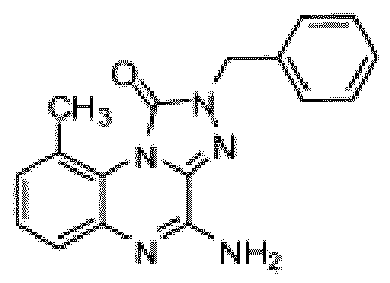
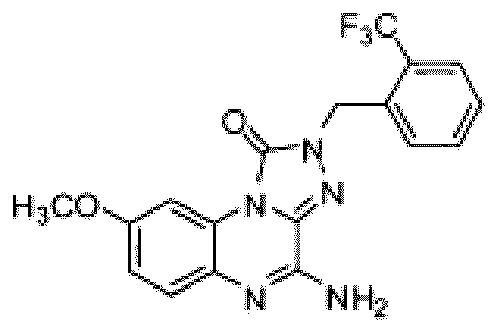
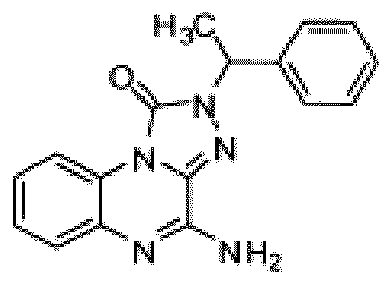
- Composé selon la revendication 1 ou un sel pharmaceutiquement acceptable de celui-ci, où le composé est sélectionné parmi l'un des composés suivants:


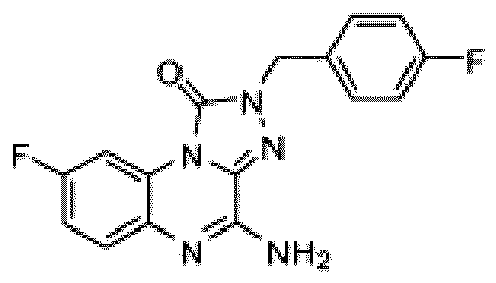


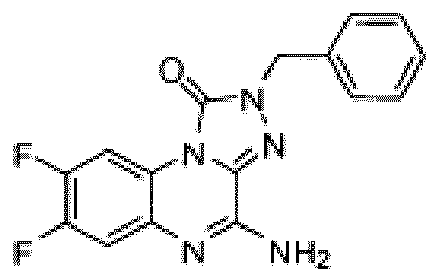


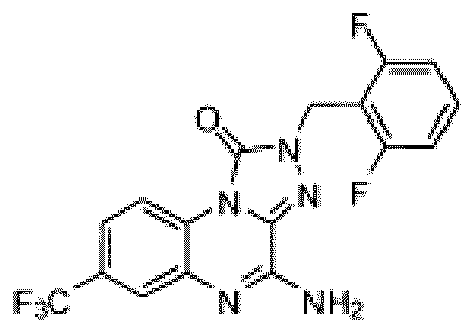


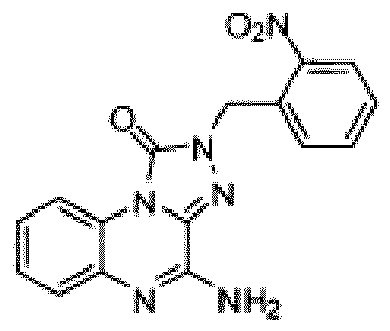






- Composition pharmaceutique comprenant une quantité thérapeutiquement efficace du composé selon l'une quelconque des revendications précédentes ou d'un sel pharmaceutiquement acceptable de celui-ci et un véhicule pharmaceutiquement acceptable.
- Composé selon l'une quelconque des revendications 1-8, à utiliser dans le traitement de la maladie de Parkinson, d'une dépression, d'un syndrome extrapyramidal, d'un trouble du déficit de l'attention ou du syndrome des jambes sans repos.
- Composé selon la revendication 10, à utiliser en combinaison avec un agent dopaminergique.
Applications Claiming Priority (2)
| Application Number | Priority Date | Filing Date | Title |
|---|---|---|---|
| US26153809P | 2009-11-16 | 2009-11-16 | |
| PCT/US2010/056432 WO2011060207A1 (fr) | 2009-11-16 | 2010-11-12 | Composés tricycliques condensés possédant une activité antagoniste des récepteurs a2a de l'adénosine |
Publications (3)
| Publication Number | Publication Date |
|---|---|
| EP2509983A1 EP2509983A1 (fr) | 2012-10-17 |
| EP2509983A4 EP2509983A4 (fr) | 2013-04-10 |
| EP2509983B1 true EP2509983B1 (fr) | 2014-09-17 |
Family
ID=43992047
Family Applications (1)
| Application Number | Title | Priority Date | Filing Date |
|---|---|---|---|
| EP10830753.9A Active EP2509983B1 (fr) | 2009-11-16 | 2010-11-12 | Composés tricycliques condensés possédant une activité antagoniste des récepteurs a2a de l'adénosine |
Country Status (3)
| Country | Link |
|---|---|
| US (1) | US8435994B2 (fr) |
| EP (1) | EP2509983B1 (fr) |
| WO (1) | WO2011060207A1 (fr) |
Families Citing this family (31)
| Publication number | Priority date | Publication date | Assignee | Title |
|---|---|---|---|---|
| EP2612854B1 (fr) | 2005-10-25 | 2015-04-29 | Shionogi&Co., Ltd. | Dérivés d'aminothiazolidine et d'aminotétrahydrothiazepine comme inhibiteurs de BACE 1 |
| TW200902526A (en) | 2007-04-24 | 2009-01-16 | Shionogi & Amp Co Ltd | Aminodihydrothiazin derivative substituted with a cyclic group |
| WO2008133273A1 (fr) | 2007-04-24 | 2008-11-06 | Shionogi & Co., Ltd. | Composition pharmaceutique pour le traitement de la maladie d'alzheimer |
| WO2009151098A1 (fr) | 2008-06-13 | 2009-12-17 | 塩野義製薬株式会社 | DÉRIVÉ HÉTÉROCYCLIQUE CONTENANT DU SOUFRE AYANT UNE ACTIVITÉ INHIBANT LA β-SÉCRÉTASE |
| JPWO2010047372A1 (ja) | 2008-10-22 | 2012-03-22 | 塩野義製薬株式会社 | Bace1阻害活性を有する2−アミノピリミジン−4−オンおよび2−アミノピリジン誘導体 |
| UA110467C2 (uk) | 2009-12-11 | 2016-01-12 | Шионогі Енд Ко., Лтд. | Похідні оксазину |
| EP2634188A4 (fr) | 2010-10-29 | 2014-05-07 | Shionogi & Co | Dérivé d'aminodihydropyrimidine fusionnée |
| CN103261199A (zh) | 2010-10-29 | 2013-08-21 | 盐野义制药株式会社 | 萘啶衍生物 |
| WO2012147763A1 (fr) | 2011-04-26 | 2012-11-01 | 塩野義製薬株式会社 | Dérivé d'oxazine et inhibiteur de bace 1 le contenant |
| CA2848154C (fr) | 2011-09-30 | 2020-04-28 | C&C Research Laboratories | Nouveaux derives heterocycliques et leurs utilisations |
| EP2912035A4 (fr) | 2012-10-24 | 2016-06-15 | Shionogi & Co | Dérivés de dihydrooxazine ou d'oxazépine ayant une activité inhibitrice de bace1 |
| WO2014101113A1 (fr) * | 2012-12-28 | 2014-07-03 | Merck Sharp & Dohme Corp. | Composés de 7-méthoxy-[1,2,4]triazolo[1,5-c]quinazoline-5-amine à substitution pipérazine présentant des propriétés d'antagoniste d'a2a |
| CN105025899B (zh) * | 2012-12-28 | 2017-08-18 | 默沙东公司 | 具有A2A拮抗剂性质的杂二环取代的‑[1,2,4]三唑并[1,5‑c]喹唑啉‑5‑胺化合物 |
| WO2014101120A1 (fr) * | 2012-12-28 | 2014-07-03 | Merck Sharp & Dohme Corp. | Composés de 7-méthoxy-[1,2,4]triazolo[1,5-c]quinazoline-5-amine à substitution hétérobicyclo présentant des propriétés d'antagoniste d'a2a |
| WO2017008205A1 (fr) | 2015-07-10 | 2017-01-19 | Merck Sharp & Dohme Corp. | Composés d'aminoquinazoline substitués a titre d'antagonistes du récepteur a2a |
| AR112457A1 (es) * | 2017-08-02 | 2019-10-30 | Lilly Co Eli | Derivados de [1,2,4]triazolo[4,3-a]pirazin-6(5h)-ona |
| US11498923B2 (en) * | 2017-12-13 | 2022-11-15 | Merck Sharp & Dohme Llc | Substituted imidazo[1,2-c]quinazolines as A2A antagonists |
| BR122023024273A2 (pt) | 2018-02-27 | 2024-02-20 | Incyte Corporation | Compostos imidazopirimidinas e triazolopirimidinas, seus usos, método para inibir uma atividade de um receptor de adenosina e composição farmacêutica dos mesmos |
| CN108276350B (zh) * | 2018-04-03 | 2019-11-22 | 苏州大学张家港工业技术研究院 | 1,2,4-三氮唑及其制备方法 |
| WO2019200500A1 (fr) | 2018-04-15 | 2019-10-24 | 苏州大学张家港工业技术研究院 | 1,2,4-triazole et procédé de préparation associé |
| EP3810610A1 (fr) | 2018-05-18 | 2021-04-28 | Incyte Corporation | Dérivés de pyrimidine fusionnés utilisés en tant qu'inhibiteurs de a2a/a2b |
| AU2019297361B2 (en) | 2018-07-05 | 2024-06-27 | Incyte Corporation | Fused pyrazine derivatives as A2A / A2B inhibitors |
| WO2020106558A1 (fr) | 2018-11-20 | 2020-05-28 | Merck Sharp & Dohme Corp. | Amino-triazolopyrimidine et amino-triazolopyrazine substitués antagoniste du récepteur de l'adénosine, compositions pharmaceutiques et leur utilisation |
| WO2020106560A1 (fr) | 2018-11-20 | 2020-05-28 | Merck Sharp & Dohme Corp. | Composés amino-triazolopyrimidine et amino-triazolopyrazine substitués utilisés en tant qu'antagonistes de récepteur de l'adénosine, compositions pharmaceutiques et leur utilisation |
| JP2022511778A (ja) | 2018-11-30 | 2022-02-01 | メルク・シャープ・アンド・ドーム・コーポレーション | アデノシン受容体拮抗薬としての7-、8-及び10-置換されたアミノトリアゾロキナゾリン誘導体、医薬組成物及びそれらの使用 |
| CR20210271A (es) | 2018-11-30 | 2021-07-14 | Merck Sharp & Dohme | Derivados de amino triazolo quinazolina 9-sustituidos como antagonistas del receptor de adenosina, composiciones farmacéuticas y su uso |
| CN113727999A (zh) | 2019-01-11 | 2021-11-30 | 奥默罗斯公司 | 用于治疗癌症的方法和组合物 |
| TWI829857B (zh) | 2019-01-29 | 2024-01-21 | 美商英塞特公司 | 作為a2a / a2b抑制劑之吡唑并吡啶及三唑并吡啶 |
| CN116528875A (zh) * | 2020-12-09 | 2023-08-01 | 维尔斯达医疗公司 | 具有抗炎、抗真菌、抗寄生虫和抗癌活性的咪唑并喹啉化合物 |
| TW202428578A (zh) * | 2022-09-29 | 2024-07-16 | 韓商Jw製藥公司 | 1-(8-溴化吡啶并[2,3-e][1,2,4]三唑并[4,3-a]吡嗪-4-基)-n-甲基吖丁啶-3-胺之新穎結晶型 |
| TW202425977A (zh) * | 2022-09-30 | 2024-07-01 | 韓商Jw製藥公司 | 1-(8-溴化吡啶并[2,3-e][1,2,4]三唑并[4,3-a]吡嗪-4-基)-n-甲基吖丁啶-3-胺單琥珀酸鹽之新穎結晶型 |
Family Cites Families (4)
| Publication number | Priority date | Publication date | Assignee | Title |
|---|---|---|---|---|
| GB0100624D0 (en) | 2001-01-10 | 2001-02-21 | Vernalis Res Ltd | Chemical compounds VII |
| AU2003304527B2 (en) | 2002-12-19 | 2010-09-09 | Merck Sharp & Dohme Corp. | Uses of adenosine A2a receptor antagonists |
| ATE457988T1 (de) | 2006-06-26 | 2010-03-15 | Schering Corp | A2a-adenosin-rezeptor-antagonisten |
| FR2921927B1 (fr) * | 2007-10-03 | 2012-10-12 | Univ De Montpellier 1 | Imidazo°1,2-a!quinoxalines et derives pour le traitement des cancers |
-
2010
- 2010-11-12 EP EP10830753.9A patent/EP2509983B1/fr active Active
- 2010-11-12 WO PCT/US2010/056432 patent/WO2011060207A1/fr not_active Ceased
- 2010-11-12 US US13/510,094 patent/US8435994B2/en not_active Expired - Fee Related
Also Published As
| Publication number | Publication date |
|---|---|
| EP2509983A4 (fr) | 2013-04-10 |
| WO2011060207A1 (fr) | 2011-05-19 |
| US8435994B2 (en) | 2013-05-07 |
| EP2509983A1 (fr) | 2012-10-17 |
| US20120232086A1 (en) | 2012-09-13 |
Similar Documents
| Publication | Publication Date | Title |
|---|---|---|
| US8435994B2 (en) | Substituted [1,2,4]triazolo[4,3-alpha]quinoxalines as adenosine A2a receptor antagonists | |
| EP2038285B1 (fr) | Antagonistes du récepteur a2a de l'adénosine | |
| EP2262811B1 (fr) | Composés 1,2,4-triazolo[4,3-c]pyrimidin-3-one et pyrazolo [4,3-e]-1,2,4-triazolo [4,3-c]pyrimidin-3-one servant d'antagonistes aux récepteurs a2a de l'adénosine | |
| US6653315B2 (en) | Adenosine A2a receptor antagonists | |
| EP1448565B1 (fr) | Antagonistes du recepteur adenosine a 2a | |
| EP1453835B1 (fr) | Antagonistes du recepteur a 2a de l'adenosine | |
| EP1836205B1 (fr) | ANTAGONISTES DE RECEPTEUR A2a DE PYRAZOLO [1,5-A]PYRIMIDINE ADENOSINE | |
| EP1453836B1 (fr) | [1,2,4|-TRIAZOLES BICYCLIQUES EN TANT QU'ANTAGONISTES DU RECEPTEUR A2a D'ADENOSINE | |
| JP2010526138A (ja) | ピロロピリミジン−7−オン誘導体とその薬剤としての使用 | |
| US20110105513A1 (en) | AMINO-QUINOXALINE AND AMINO-QUINOLINE COMPOUNDS FOR USE AS ADENOSINE A2a RECEPTOR ANTAGONISTS | |
| WO2012040230A1 (fr) | Composés imidazotriazinones | |
| JP2022548381A (ja) | 置換ベンゾイミダゾールカルボキサミドおよび医学的障害の治療におけるこれらの使用 | |
| EP2512238B1 (fr) | Composés tricycliques fusionnés pour le traitement de troubles inflammatoires | |
| HK1108882B (en) | Pyrazolo[1,5-a]pyrimidine adenosine a2a receptor antagonists | |
| HK1063780B (en) | Adenosine a2a receptor antagonists | |
| HK1064100B (en) | Adenosine a 2a receptor antagonists |
Legal Events
| Date | Code | Title | Description |
|---|---|---|---|
| PUAI | Public reference made under article 153(3) epc to a published international application that has entered the european phase |
Free format text: ORIGINAL CODE: 0009012 |
|
| 17P | Request for examination filed |
Effective date: 20120618 |
|
| AK | Designated contracting states |
Kind code of ref document: A1 Designated state(s): AL AT BE BG CH CY CZ DE DK EE ES FI FR GB GR HR HU IE IS IT LI LT LU LV MC MK MT NL NO PL PT RO RS SE SI SK SM TR |
|
| DAX | Request for extension of the european patent (deleted) | ||
| A4 | Supplementary search report drawn up and despatched |
Effective date: 20130307 |
|
| RIC1 | Information provided on ipc code assigned before grant |
Ipc: A61P 25/16 20060101ALI20130301BHEP Ipc: A61K 31/4985 20060101ALI20130301BHEP Ipc: C07D 471/14 20060101ALI20130301BHEP Ipc: C07D 491/00 20060101AFI20130301BHEP Ipc: C07D 487/04 20060101ALI20130301BHEP |
|
| 17Q | First examination report despatched |
Effective date: 20131031 |
|
| GRAP | Despatch of communication of intention to grant a patent |
Free format text: ORIGINAL CODE: EPIDOSNIGR1 |
|
| INTG | Intention to grant announced |
Effective date: 20140409 |
|
| GRAS | Grant fee paid |
Free format text: ORIGINAL CODE: EPIDOSNIGR3 |
|
| GRAA | (expected) grant |
Free format text: ORIGINAL CODE: 0009210 |
|
| AK | Designated contracting states |
Kind code of ref document: B1 Designated state(s): AL AT BE BG CH CY CZ DE DK EE ES FI FR GB GR HR HU IE IS IT LI LT LU LV MC MK MT NL NO PL PT RO RS SE SI SK SM TR |
|
| REG | Reference to a national code |
Ref country code: GB Ref legal event code: FG4D |
|
| REG | Reference to a national code |
Ref country code: CH Ref legal event code: EP |
|
| REG | Reference to a national code |
Ref country code: IE Ref legal event code: FG4D |
|
| REG | Reference to a national code |
Ref country code: AT Ref legal event code: REF Ref document number: 687661 Country of ref document: AT Kind code of ref document: T Effective date: 20141015 |
|
| REG | Reference to a national code |
Ref country code: DE Ref legal event code: R096 Ref document number: 602010019072 Country of ref document: DE Effective date: 20141030 |
|
| PG25 | Lapsed in a contracting state [announced via postgrant information from national office to epo] |
Ref country code: NO Free format text: LAPSE BECAUSE OF FAILURE TO SUBMIT A TRANSLATION OF THE DESCRIPTION OR TO PAY THE FEE WITHIN THE PRESCRIBED TIME-LIMIT Effective date: 20141217 Ref country code: LT Free format text: LAPSE BECAUSE OF FAILURE TO SUBMIT A TRANSLATION OF THE DESCRIPTION OR TO PAY THE FEE WITHIN THE PRESCRIBED TIME-LIMIT Effective date: 20140917 Ref country code: SE Free format text: LAPSE BECAUSE OF FAILURE TO SUBMIT A TRANSLATION OF THE DESCRIPTION OR TO PAY THE FEE WITHIN THE PRESCRIBED TIME-LIMIT Effective date: 20140917 Ref country code: GR Free format text: LAPSE BECAUSE OF FAILURE TO SUBMIT A TRANSLATION OF THE DESCRIPTION OR TO PAY THE FEE WITHIN THE PRESCRIBED TIME-LIMIT Effective date: 20141218 Ref country code: FI Free format text: LAPSE BECAUSE OF FAILURE TO SUBMIT A TRANSLATION OF THE DESCRIPTION OR TO PAY THE FEE WITHIN THE PRESCRIBED TIME-LIMIT Effective date: 20140917 |
|
| REG | Reference to a national code |
Ref country code: NL Ref legal event code: VDEP Effective date: 20140917 |
|
| REG | Reference to a national code |
Ref country code: LT Ref legal event code: MG4D |
|
| PG25 | Lapsed in a contracting state [announced via postgrant information from national office to epo] |
Ref country code: HR Free format text: LAPSE BECAUSE OF FAILURE TO SUBMIT A TRANSLATION OF THE DESCRIPTION OR TO PAY THE FEE WITHIN THE PRESCRIBED TIME-LIMIT Effective date: 20140917 Ref country code: CY Free format text: LAPSE BECAUSE OF FAILURE TO SUBMIT A TRANSLATION OF THE DESCRIPTION OR TO PAY THE FEE WITHIN THE PRESCRIBED TIME-LIMIT Effective date: 20140917 Ref country code: RS Free format text: LAPSE BECAUSE OF FAILURE TO SUBMIT A TRANSLATION OF THE DESCRIPTION OR TO PAY THE FEE WITHIN THE PRESCRIBED TIME-LIMIT Effective date: 20140917 Ref country code: LV Free format text: LAPSE BECAUSE OF FAILURE TO SUBMIT A TRANSLATION OF THE DESCRIPTION OR TO PAY THE FEE WITHIN THE PRESCRIBED TIME-LIMIT Effective date: 20140917 |
|
| REG | Reference to a national code |
Ref country code: AT Ref legal event code: MK05 Ref document number: 687661 Country of ref document: AT Kind code of ref document: T Effective date: 20140917 |
|
| PG25 | Lapsed in a contracting state [announced via postgrant information from national office to epo] |
Ref country code: NL Free format text: LAPSE BECAUSE OF FAILURE TO SUBMIT A TRANSLATION OF THE DESCRIPTION OR TO PAY THE FEE WITHIN THE PRESCRIBED TIME-LIMIT Effective date: 20140917 |
|
| PG25 | Lapsed in a contracting state [announced via postgrant information from national office to epo] |
Ref country code: EE Free format text: LAPSE BECAUSE OF FAILURE TO SUBMIT A TRANSLATION OF THE DESCRIPTION OR TO PAY THE FEE WITHIN THE PRESCRIBED TIME-LIMIT Effective date: 20140917 Ref country code: PT Free format text: LAPSE BECAUSE OF FAILURE TO SUBMIT A TRANSLATION OF THE DESCRIPTION OR TO PAY THE FEE WITHIN THE PRESCRIBED TIME-LIMIT Effective date: 20150119 Ref country code: ES Free format text: LAPSE BECAUSE OF FAILURE TO SUBMIT A TRANSLATION OF THE DESCRIPTION OR TO PAY THE FEE WITHIN THE PRESCRIBED TIME-LIMIT Effective date: 20140917 Ref country code: IS Free format text: LAPSE BECAUSE OF FAILURE TO SUBMIT A TRANSLATION OF THE DESCRIPTION OR TO PAY THE FEE WITHIN THE PRESCRIBED TIME-LIMIT Effective date: 20150117 Ref country code: CZ Free format text: LAPSE BECAUSE OF FAILURE TO SUBMIT A TRANSLATION OF THE DESCRIPTION OR TO PAY THE FEE WITHIN THE PRESCRIBED TIME-LIMIT Effective date: 20140917 Ref country code: SK Free format text: LAPSE BECAUSE OF FAILURE TO SUBMIT A TRANSLATION OF THE DESCRIPTION OR TO PAY THE FEE WITHIN THE PRESCRIBED TIME-LIMIT Effective date: 20140917 Ref country code: RO Free format text: LAPSE BECAUSE OF FAILURE TO SUBMIT A TRANSLATION OF THE DESCRIPTION OR TO PAY THE FEE WITHIN THE PRESCRIBED TIME-LIMIT Effective date: 20140917 |
|
| PG25 | Lapsed in a contracting state [announced via postgrant information from national office to epo] |
Ref country code: AT Free format text: LAPSE BECAUSE OF FAILURE TO SUBMIT A TRANSLATION OF THE DESCRIPTION OR TO PAY THE FEE WITHIN THE PRESCRIBED TIME-LIMIT Effective date: 20140917 Ref country code: PL Free format text: LAPSE BECAUSE OF FAILURE TO SUBMIT A TRANSLATION OF THE DESCRIPTION OR TO PAY THE FEE WITHIN THE PRESCRIBED TIME-LIMIT Effective date: 20140917 |
|
| REG | Reference to a national code |
Ref country code: DE Ref legal event code: R097 Ref document number: 602010019072 Country of ref document: DE |
|
| PG25 | Lapsed in a contracting state [announced via postgrant information from national office to epo] |
Ref country code: LU Free format text: LAPSE BECAUSE OF FAILURE TO SUBMIT A TRANSLATION OF THE DESCRIPTION OR TO PAY THE FEE WITHIN THE PRESCRIBED TIME-LIMIT Effective date: 20141112 Ref country code: MC Free format text: LAPSE BECAUSE OF FAILURE TO SUBMIT A TRANSLATION OF THE DESCRIPTION OR TO PAY THE FEE WITHIN THE PRESCRIBED TIME-LIMIT Effective date: 20140917 Ref country code: BE Free format text: LAPSE BECAUSE OF NON-PAYMENT OF DUE FEES Effective date: 20141130 |
|
| REG | Reference to a national code |
Ref country code: CH Ref legal event code: PL |
|
| PLBE | No opposition filed within time limit |
Free format text: ORIGINAL CODE: 0009261 |
|
| STAA | Information on the status of an ep patent application or granted ep patent |
Free format text: STATUS: NO OPPOSITION FILED WITHIN TIME LIMIT |
|
| PG25 | Lapsed in a contracting state [announced via postgrant information from national office to epo] |
Ref country code: LI Free format text: LAPSE BECAUSE OF NON-PAYMENT OF DUE FEES Effective date: 20141130 Ref country code: CH Free format text: LAPSE BECAUSE OF NON-PAYMENT OF DUE FEES Effective date: 20141130 Ref country code: DK Free format text: LAPSE BECAUSE OF FAILURE TO SUBMIT A TRANSLATION OF THE DESCRIPTION OR TO PAY THE FEE WITHIN THE PRESCRIBED TIME-LIMIT Effective date: 20140917 |
|
| 26N | No opposition filed |
Effective date: 20150618 |
|
| REG | Reference to a national code |
Ref country code: IE Ref legal event code: MM4A |
|
| PG25 | Lapsed in a contracting state [announced via postgrant information from national office to epo] |
Ref country code: IT Free format text: LAPSE BECAUSE OF FAILURE TO SUBMIT A TRANSLATION OF THE DESCRIPTION OR TO PAY THE FEE WITHIN THE PRESCRIBED TIME-LIMIT Effective date: 20140917 |
|
| REG | Reference to a national code |
Ref country code: FR Ref legal event code: PLFP Year of fee payment: 6 |
|
| PG25 | Lapsed in a contracting state [announced via postgrant information from national office to epo] |
Ref country code: IE Free format text: LAPSE BECAUSE OF NON-PAYMENT OF DUE FEES Effective date: 20141112 |
|
| PG25 | Lapsed in a contracting state [announced via postgrant information from national office to epo] |
Ref country code: SI Free format text: LAPSE BECAUSE OF FAILURE TO SUBMIT A TRANSLATION OF THE DESCRIPTION OR TO PAY THE FEE WITHIN THE PRESCRIBED TIME-LIMIT Effective date: 20140917 |
|
| PG25 | Lapsed in a contracting state [announced via postgrant information from national office to epo] |
Ref country code: SM Free format text: LAPSE BECAUSE OF FAILURE TO SUBMIT A TRANSLATION OF THE DESCRIPTION OR TO PAY THE FEE WITHIN THE PRESCRIBED TIME-LIMIT Effective date: 20140917 |
|
| PG25 | Lapsed in a contracting state [announced via postgrant information from national office to epo] |
Ref country code: BG Free format text: LAPSE BECAUSE OF FAILURE TO SUBMIT A TRANSLATION OF THE DESCRIPTION OR TO PAY THE FEE WITHIN THE PRESCRIBED TIME-LIMIT Effective date: 20140917 |
|
| PG25 | Lapsed in a contracting state [announced via postgrant information from national office to epo] |
Ref country code: MT Free format text: LAPSE BECAUSE OF FAILURE TO SUBMIT A TRANSLATION OF THE DESCRIPTION OR TO PAY THE FEE WITHIN THE PRESCRIBED TIME-LIMIT Effective date: 20140917 Ref country code: HU Free format text: LAPSE BECAUSE OF FAILURE TO SUBMIT A TRANSLATION OF THE DESCRIPTION OR TO PAY THE FEE WITHIN THE PRESCRIBED TIME-LIMIT; INVALID AB INITIO Effective date: 20101112 Ref country code: TR Free format text: LAPSE BECAUSE OF FAILURE TO SUBMIT A TRANSLATION OF THE DESCRIPTION OR TO PAY THE FEE WITHIN THE PRESCRIBED TIME-LIMIT Effective date: 20140917 |
|
| REG | Reference to a national code |
Ref country code: FR Ref legal event code: PLFP Year of fee payment: 7 |
|
| REG | Reference to a national code |
Ref country code: FR Ref legal event code: PLFP Year of fee payment: 8 |
|
| PG25 | Lapsed in a contracting state [announced via postgrant information from national office to epo] |
Ref country code: MK Free format text: LAPSE BECAUSE OF FAILURE TO SUBMIT A TRANSLATION OF THE DESCRIPTION OR TO PAY THE FEE WITHIN THE PRESCRIBED TIME-LIMIT Effective date: 20140917 |
|
| REG | Reference to a national code |
Ref country code: FR Ref legal event code: PLFP Year of fee payment: 9 |
|
| PG25 | Lapsed in a contracting state [announced via postgrant information from national office to epo] |
Ref country code: AL Free format text: LAPSE BECAUSE OF FAILURE TO SUBMIT A TRANSLATION OF THE DESCRIPTION OR TO PAY THE FEE WITHIN THE PRESCRIBED TIME-LIMIT Effective date: 20140917 |
|
| REG | Reference to a national code |
Ref country code: DE Ref legal event code: R081 Ref document number: 602010019072 Country of ref document: DE Owner name: MERCK SHARP & DOHME LLC, RAHWAY, US Free format text: FORMER OWNER: MERCK SHARP & DOHME CORP., RAHWAY, N.J., US |
|
| REG | Reference to a national code |
Ref country code: GB Ref legal event code: 732E Free format text: REGISTERED BETWEEN 20220908 AND 20220914 |
|
| PGFP | Annual fee paid to national office [announced via postgrant information from national office to epo] |
Ref country code: DE Payment date: 20241010 Year of fee payment: 15 |
|
| PGFP | Annual fee paid to national office [announced via postgrant information from national office to epo] |
Ref country code: GB Payment date: 20241010 Year of fee payment: 15 |
|
| PGFP | Annual fee paid to national office [announced via postgrant information from national office to epo] |
Ref country code: FR Payment date: 20241010 Year of fee payment: 15 |