EP2513648B1 - Détection de la décomposition d'enzymes dans un élément de test par libération contrôlée d'analyte protégé - Google Patents
Détection de la décomposition d'enzymes dans un élément de test par libération contrôlée d'analyte protégé Download PDFInfo
- Publication number
- EP2513648B1 EP2513648B1 EP10796365.4A EP10796365A EP2513648B1 EP 2513648 B1 EP2513648 B1 EP 2513648B1 EP 10796365 A EP10796365 A EP 10796365A EP 2513648 B1 EP2513648 B1 EP 2513648B1
- Authority
- EP
- European Patent Office
- Prior art keywords
- analyte
- diagnostic element
- indicator
- detection
- layer
- Prior art date
- Legal status (The legal status is an assumption and is not a legal conclusion. Google has not performed a legal analysis and makes no representation as to the accuracy of the status listed.)
- Active
Links
Images




Classifications
-
- C—CHEMISTRY; METALLURGY
- C12—BIOCHEMISTRY; BEER; SPIRITS; WINE; VINEGAR; MICROBIOLOGY; ENZYMOLOGY; MUTATION OR GENETIC ENGINEERING
- C12Q—MEASURING OR TESTING PROCESSES INVOLVING ENZYMES, NUCLEIC ACIDS OR MICROORGANISMS; COMPOSITIONS OR TEST PAPERS THEREFOR; PROCESSES OF PREPARING SUCH COMPOSITIONS; CONDITION-RESPONSIVE CONTROL IN MICROBIOLOGICAL OR ENZYMOLOGICAL PROCESSES
- C12Q1/00—Measuring or testing processes involving enzymes, nucleic acids or microorganisms; Compositions therefor; Processes of preparing such compositions
- C12Q1/26—Measuring or testing processes involving enzymes, nucleic acids or microorganisms; Compositions therefor; Processes of preparing such compositions involving oxidoreductase
-
- C—CHEMISTRY; METALLURGY
- C12—BIOCHEMISTRY; BEER; SPIRITS; WINE; VINEGAR; MICROBIOLOGY; ENZYMOLOGY; MUTATION OR GENETIC ENGINEERING
- C12Q—MEASURING OR TESTING PROCESSES INVOLVING ENZYMES, NUCLEIC ACIDS OR MICROORGANISMS; COMPOSITIONS OR TEST PAPERS THEREFOR; PROCESSES OF PREPARING SUCH COMPOSITIONS; CONDITION-RESPONSIVE CONTROL IN MICROBIOLOGICAL OR ENZYMOLOGICAL PROCESSES
- C12Q1/00—Measuring or testing processes involving enzymes, nucleic acids or microorganisms; Compositions therefor; Processes of preparing such compositions
- C12Q1/54—Measuring or testing processes involving enzymes, nucleic acids or microorganisms; Compositions therefor; Processes of preparing such compositions involving glucose or galactose
-
- C—CHEMISTRY; METALLURGY
- C07—ORGANIC CHEMISTRY
- C07D—HETEROCYCLIC COMPOUNDS
- C07D213/00—Heterocyclic compounds containing six-membered rings, not condensed with other rings, with one nitrogen atom as the only ring hetero atom and three or more double bonds between ring members or between ring members and non-ring members
- C07D213/02—Heterocyclic compounds containing six-membered rings, not condensed with other rings, with one nitrogen atom as the only ring hetero atom and three or more double bonds between ring members or between ring members and non-ring members having three double bonds between ring members or between ring members and non-ring members
- C07D213/04—Heterocyclic compounds containing six-membered rings, not condensed with other rings, with one nitrogen atom as the only ring hetero atom and three or more double bonds between ring members or between ring members and non-ring members having three double bonds between ring members or between ring members and non-ring members having no bond between the ring nitrogen atom and a non-ring member or having only hydrogen or carbon atoms directly attached to the ring nitrogen atom
- C07D213/60—Heterocyclic compounds containing six-membered rings, not condensed with other rings, with one nitrogen atom as the only ring hetero atom and three or more double bonds between ring members or between ring members and non-ring members having three double bonds between ring members or between ring members and non-ring members having no bond between the ring nitrogen atom and a non-ring member or having only hydrogen or carbon atoms directly attached to the ring nitrogen atom with hetero atoms or with carbon atoms having three bonds to hetero atoms with at the most one bond to halogen, e.g. ester or nitrile radicals, directly attached to ring carbon atoms
- C07D213/78—Carbon atoms having three bonds to hetero atoms, with at the most one bond to halogen, e.g. ester or nitrile radicals
- C07D213/81—Amides; Imides
-
- G—PHYSICS
- G01—MEASURING; TESTING
- G01N—INVESTIGATING OR ANALYSING MATERIALS BY DETERMINING THEIR CHEMICAL OR PHYSICAL PROPERTIES
- G01N21/00—Investigating or analysing materials by the use of optical means, i.e. using sub-millimetre waves, infrared, visible or ultraviolet light
- G01N21/17—Systems in which incident light is modified in accordance with the properties of the material investigated
-
- G—PHYSICS
- G01—MEASURING; TESTING
- G01N—INVESTIGATING OR ANALYSING MATERIALS BY DETERMINING THEIR CHEMICAL OR PHYSICAL PROPERTIES
- G01N33/00—Investigating or analysing materials by specific methods not covered by groups G01N1/00 - G01N31/00
- G01N33/48—Biological material, e.g. blood, urine; Haemocytometers
- G01N33/50—Chemical analysis of biological material, e.g. blood, urine; Testing involving biospecific ligand binding methods; Immunological testing
Definitions
- the present invention relates to a diagnostic element for determining at least one analyte and to an analytical measuring device which comprises such a diagnostic element. Furthermore, the invention relates to a method for determining an analyte, a method for correcting a signal generated by an analyte and a method for checking the detection optics of an analytical measuring device using the diagnostic element. Finally, the invention relates to a system for the controlled release of a reagent, and the use of such a system as a switching element.
- Diagnostic elements are important components of clinically relevant analysis methods.
- the measurement of analytes, z. As metabolites or substrates in the foreground, which are determined directly or indirectly, for example, using an enzyme specific for the analyte.
- the analytes are hereby reacted with the aid of an enzyme-coenzyme complex and then quantified.
- the analyte to be determined is brought into contact with a suitable enzyme, a coenzyme and, if appropriate, a mediator, wherein the coenzyme is changed by the enzymatic reaction physicochemically, for. B. oxidized or reduced, is.
- a mediator when used, this usually transfers the electrons released from the reduced coenzyme upon reaction of the analyte to an optical indicator or the conductive constituents of an electrode, so that the process can be detected, for example, photometrically or electrochemically.
- a calibration provides a direct correlation of the measured value with the concentration of the analyte to be determined.
- the error results are based primarily on the fact that the enzymes, coenzymes and mediators used in such diagnostic elements are generally sensitive to moisture and heat and thereby inactivated.
- the enzymes, coenzymes and mediators used in such diagnostic elements are generally sensitive to moisture and heat and thereby inactivated.
- glucose-dehydrogenase / NAD glucose detection under conditions of moist heat both the activity of the enzyme glucose dehydrogenase and the level of the coenzyme NAD decrease over time, with the decrease in coenzyme generally progressing much faster than the loss of activity of the enzyme.
- a known measure used to increase the stability of diagnostic elements is the use of stable enzymes, e.g. B. the use of enzymes from thermophilic organisms. Furthermore, it is possible enzymes by chemical modification, eg. Cross-linking, or by mutagenesis. In addition, enzyme stabilizers, such as. As trehalose, polyvinylpyrrolidone and serum albumin, are added or the enzymes z. B. be included by photopolymerization in polymer networks.
- Another way to improve the shelf life of diagnostic elements is to use stabilized coenzymes. While native coenzymes, such as NAD and NADP or their reduced forms NADH and NADPH, are comparatively unstable under basic and acidic conditions, respectively, due to the lability of the glycosyl linkage between the ribose and the pyridine moiety have been various in the literature in recent years Derivatives of NAD / NADH and NADP / NADPH described which significantly increase the stability of the coenzyme by modifying the nicotinamide group or the ribose unit.
- mediators with the lowest possible redox potential increases the specificity of tests and eliminates disturbances during the reaction.
- a lower limit for the redox potential of mediators are the redox potentials of the enzyme / coenzyme complexes. If these are undercut, the reaction with the mediators is slowed or even stopped.
- the components of chemical detection reagents used in diagnostic elements do not all have the same stability in practice, but instead undergo different fast-acting decomposition processes.
- carba-NAD as a coenzyme
- the coenzyme remains very stable in humidity and elevated temperatures for a long time due to the carbocyclic sugar moiety, while the activity of a native enzyme used in the diagnostic element continuously decreases.
- the activity of the enzyme may be maintained for a prolonged period of time while the amount of coenzyme is reduced more or less rapidly due to thermal and / or hydrolytic degradation.
- diagnostic elements would thus have to make it possible to determine whether the individual components of a detection reagent used in the diagnostic element are still present in functional form at the time of measurement and the detection reagent for qualitative or / and quantitative detection of the analyte suitable is.
- the determination of the enzyme activity is particularly problematic in this context, since the inactivation of an enzyme is first caused by a conformational change of the protein and thus no optical or electrochemically active particles are formed due to a lack of change in the constitution.
- the object underlying the present invention was therefore to provide a stable diagnostic element, in particular for the determination of glucose, in which the disadvantages of the prior art are at least partially eliminated.
- the diagnostic element should ensure that in the case of a greatly reduced or completely absent functioning of individual components of a detection reagent, the indication of supposedly correct measurement results with respect to an analyte to be determined is avoided.
- a diagnostic element for determining at least one analyte comprising a detection reagent which is specific for the analyte and a defined amount of the analyte to be determined (indicator analyte), the indicator analyte being present in a releasable form inaccessible to reaction with the detection reagent ,
- the detection reagent used in the diagnostic element of the invention is preferably a chemical detection reagent and may comprise any components which are suitable for the determination of an analyte, for example using optical or electrochemical means.
- Examples of such Components are known to those skilled in the art and in particular include, but are not limited to, enzymes, coenzymes, mediators, optical indicators, and auxiliaries and / or additives.
- the detection reagent comprises at least one enzyme and / or coenzyme, which independently of one another may be of natural, semi-synthetic or synthetic origin and are freely selectable by the skilled person as required by the diagnostic element.
- Particularly preferred according to the invention is a combination of at least one enzyme and at least one coenzyme, wherein the enzyme preferably has a high specificity for the analyte to be determined and thus minimizes error results in the context of the determination of the analyte.
- the enzyme is preferably a coenzyme-dependent enzyme.
- enzymes include dehydrogenases, oxidases, such as. As glucose oxidase (EC 1.1.3.4) or cholesterol oxidase (EC 1.1.3.6), aminotransferases such. As aspartate or alanine aminotransferase, 5'-nucleotidase, creatine kinase and diaphorase (EC 1.6.99.2).
- the enzyme used is a nicotinamide adenine dinucleotide (NAD / NADH) or nicotinamide adenine dinucleotide phosphate (NADP / NADPH) -dependent dehydrogenase, wherein the enzyme is selected, in particular, from the group consisting of an alcohol dehydrogenase (EC 1.1.1.1, EC 1.1.1.2), an L-amino acid dehydrogenase (EC 1.4.1.5), a glucose dehydrogenase (EC 1.1.1.47), a glucose-6-phosphate dehydrogenase (EC 1.1.1.49) , a glycerol dehydrogenase (EC1.1.1.6), a 3-hydroxybutyrate dehydrogenase (EC 1.1.1.30), a lactate dehydrogenase (EC 1.1.1.27, 1.1.1.28), a malate dehydrogenase (EC 1.1.1.37 ) and a
- a glucose dehydrogenase (EC 1.1.1.47) is used as the enzyme, for example a mutated glucose dehydrogenase can be used in the context of the process according to the invention.
- mutant denotes a genetically modified variant of a native enzyme which has an amino acid sequence which is altered with respect to the wild-type enzyme, ie which is present in at least one wild-type amino acid. Enzyme is different.
- the introduction of the mutation (s) may be site-specific or non-site specific, preferably site-specific using recombinant methods known in the art, resulting in at least one amino acid substitution within the amino acid sequence of the native enzyme according to the particular requirements and conditions.
- the mutant particularly preferably has an increased thermal or hydrolytic stability compared to the wild-type enzyme.
- Examples of such mutants are from Baik (Appl. Environ. Microbiol. (2005), 71, 3285 ) Väsquez-Figueroa (ChemBioChem (2007), 8, 2295 ) as in WO 2005/045016 A2 described, the disclosure of which is incorporated herein by reference.
- the mutated glucose dehydrogenase may in principle contain the amino acid (s) modified from the corresponding wild-type glucose dehydrogenase at any position of its amino acid sequence.
- the mutated glucose dehydrogenase comprises a mutation at at least one of positions 96, 170 and 252 of the amino acid sequence of wild-type glucose dehydrogenase, with mutants having mutations at position 96 and position 170 or mutations at position 170 and position 252 being particularly preferred , It has proved to be advantageous if the mutated glucose dehydrogenase contains no further mutations in addition to these mutations.
- the mutation at positions 96, 170 and 252 can basically be one include any amino acid substitution which results in stabilization, e.g. As an increase in the thermal or hydrolytic stability of the wild-type enzyme leads.
- the mutation at position 96 comprises an amino acid substitution of glutamic acid for glycine, while with respect to position 170, an amino acid substitution of glutamic acid for arginine or lysine, in particular an amino acid substitution of glutamic acid for lysine, is preferred.
- the mutation at position 252 it preferably comprises an amino acid substitution of lysine for leucine.
- the mutant glucose dehydrogenase can be obtained by mutation of a wild-type glucose dehydrogenase derived from any biological source, the term "biological source” for the purposes of this invention including prokaryotes, such as bacteria, and eukaryotes, such as mammals and others Animals, includes.
- the wild type glucose dehydrogenase is derived from a bacterium, more preferably a glucose dehydrogenase from Bacillus megaterium, Bacillus subtilis or Bacillus thuringiensis, especially from Bacillus subtilis.
- the mutated glucose dehydrogenase is a glucose dehydrogenase obtained by mutation of wild-type glucose dehydrogenase from Bacillus subtilis and having the sequence shown in SEQ ID NO: 1 (GlucDH_E96G_E170K) or SEQ ID NO: 2 (GlucDH_E170K_K252L) has shown amino acid sequence.
- the diagnostic elements described herein further comprise a coenzyme, which is preferably a stabilized coenzyme.
- a stabilized coenzyme in the context of the present invention is a coenzyme chemically modified with respect to the native coenzyme, which at atmospheric pressure has a higher stability to moisture than the native coenzyme,
- the stabilized coenzyme has a higher hydrolytic stability compared to the native coenzyme, with full hydrolytic stability being particularly preferred under test conditions.
- the stabilized coenzyme may have a reduced binding constant for the enzyme, for example a binding constant reduced by a factor of 2 or more.
- Preferred examples of stabilized coenzymes for the purposes of the present invention are stabilized NAD (P) / NAD (P) H compounds, ie chemical derivatives of native nicotinamide adenine dinucleotide (NAD / NADH) or nicotinamide adenine dinucleotide phosphate (NADP / NADPH), or the compound of formula (I)
- the stabilized coenzyme is a stabilized NAD (P) / NAD (P) H compound
- the stabilized NAD (P) / NAD (P) H compound preferably comprises a 3-pyridinecarbonyl or a 3-pyridinethiocarbonyl -Rest, which without glycosidic bond via a linear or cyclic organic radical, in particular a cyclic organic radical, is linked to a phosphorus-containing radical, such as a phosphate radical.
- the compounds of general formula (II) contain adenine or adenine analogs such as C 8 and N 6 -substituted adenine, deaza variants such as 7-deaza, azavarieties such as 8-aza or combinations such as 7-deaza or 8-aza or carbocyclic analogs, such as formycin, wherein the 7-deaza variants in the 7-position may be substituted with halogen, C 1-6 -alkynyl, -alkenyl or -alkyl.
- the compounds of general formula (II) contain adenosine analogs which, instead of ribose, e.g. 2-methoxydesoxyribose, 2'-fluorodeoxyribose, hexitol, altritol or polycyclic analogs such as bicyclo, LNA and tricyclo sugars.
- ribose e.g. 2-methoxydesoxyribose, 2'-fluorodeoxyribose, hexitol, altritol or polycyclic analogs such as bicyclo, LNA and tricyclo sugars.
- W is preferably CONH 2 or COCH 3 .
- the stabilized coenzyme is carbaNAD ( JT Slama, Biochemistry (1988), 27, 183 and Biochemistry (1989), 28, 7688 ) or carbaNADP.
- carbaNAD JT Slama, Biochemistry (1988), 27, 183 and Biochemistry (1989), 28, 7688
- Other stable coenzymes which can be used according to the invention are disclosed in US Pat WO 98/33936 . WO 01/49247 . WO 2007/012494 . US 5,801,006 . US 11 / 460,366 and the publication Blackburn et al. (Chem. Comm. (1996), 2765 ), the disclosure of which is incorporated herein by reference.
- the detection reagent comprises at least one further component which serves for the qualitative detection or / and the quantitative determination of the analyte, such as a mediator and / or an optical indicator.
- a mediator refers to a chemical compound which increases the reactivity of the reduced coenzyme obtained by reaction with the analyte and allows for the transfer of electrons to a suitable optical indicator or optical indicator system.
- Suitable mediators according to the invention include nitrosoanilines, such as, for example, [(4-nitrosophenyl) imino] dimethanol hydrochloride, quinones, for example phenanthrenequinones, phenanthrolinequinones or benzo [h] quinolinequinones, phenazines, for example 1- (3-carboxypropoxy) -5- ethylphenazinium trifluoromethanesulfonate, or / and diaphorase (EC 1.6.99.2) in question.
- nitrosoanilines such as, for example, [(4-nitrosophenyl) imino] dimethanol hydrochloride
- quinones for example phenanthrenequinones, phenanthrolinequinones or benzo [h] quinolinequinones
- phenazines for example 1- (3-carboxypropoxy) -5- ethylphenazinium trifluoromethanesulfonate, or / and diaphorase
- phenanthrolinequinones for the purposes of the present invention include 1,10-phenanthroline-5,6-quinones, 1,7-phenanthroline-5,6-quinones, 4,7-phenanthroline-5,6-quinones and their N-alkylated or N, N'-dialkylated salts, wherein in the case of N-alkylated or N, N'-dialkylated salts halides, trifluoromethanesulfonate or other solubility enhancing anions are preferred as the counterion.
- Diaphorases which are particularly suitable for the purposes of the present invention include, for example, porcine heart diaphorase, Clostridium kluyverii and Bacillus stearothermophilus, as well as those described in U.S. Pat US 2007/0196899 A1 described diaphorase mutant, which has an improved catalytic function and thermal stability compared to native diaphorases.
- porcine heart diaphorase Clostridium kluyverii and Bacillus stearothermophilus
- U.S. Pat US 2007/0196899 A1 described diaphorase mutant which has an improved catalytic function and thermal stability compared to native diaphorases.
- the disclosure of the above US application is hereby incorporated by reference.
- any substance can be used which is reducible and upon reduction undergoes a detectable change in its optical properties, such as color, fluorescence, remission, transmission, polarization and / or refractive index.
- the determination of the presence or / and the amount of the analyte in the sample can be carried out with the naked eye and / or by means of a detection device using an optical, in particular photometric or fluorimetric, or electrochemical method which appears suitable to the person skilled in the art.
- heteropolyacids and especially 2,18-phosphomolybdic acid
- quinones such as resazurin, dichlorophenolindophenol and / or tetrazolium salts can be used as optical indicators.
- Tetrazolium salts which are particularly suitable for the purposes of the present invention include, but are not limited to, for example, the commercially available products WST-3, WST-4 and WST-5 (all Dojindo).
- the diagnostic elements described herein further contain a defined amount of the analyte to be determined (indicator analyte), which serves to generate a defined, optically or electrochemically detectable signal.
- indicator analyte a defined amount of the analyte to be determined
- the diagnostic element releases the result of the actual measurement of the sample analyte.
- the term "in functional form” means that the particular component of the detection reagent is in chemically active form and can perform its intended function in the diagnostic element.
- the term “in non-functional form” means that the component is in a chemically inactive form or does not perform its intended function despite having a chemically active form other than that required to perform the desired function.
- the diagnostic element described in the context of the present application may be any test element which has a Comprises reagent reagent containing dry reagent layer and can be wetted by the sample containing the analyte.
- the test elements according to the invention preferably comprise a carrier layer and a detection layer containing the detection reagent.
- the carrier layer may in this case be formed from any material to which the detection layer can be applied using suitable techniques and which subsequently acts as a carrier for the detection agent used to determine the analyte.
- the detection reagent may optionally comprise further reagents which are suitable for the purposes of the respective application and / or are usually required for the preparation of diagnostic elements, such as auxiliaries and / or additives ,
- the test elements according to the invention contain the indicator analyte in the detection layer, so that the detection reagent and the indicator analyte are present in a common layer.
- the indicator analyte is arranged in a depot layer separate from the detection layer, in particular in a depot layer located between the carrier layer and the detection layer, the depot layer being in direct contact with the detection layer or one or more thereof further layers can be separated.
- a dissolvable, in particular photochemically or electrochemically dissolvable barrier layer is arranged between such a depot layer and the detection layer, which in turn preferably is in direct contact with the detection layer.
- the test elements according to the invention contain the indicator analytes in a releasable for a reaction with the detection reagent, releasable form.
- the term "in a releasable form inaccessible to reaction with the detection reagent” as used in the present application is to be considered synonymous with the term "in protected form” and includes any possibility of an (early) reaction between the indicator analyte and the detection reagent to prevent targeted.
- Measures to protect the indicator analyte from undesired chemical reaction include, but are not limited to, chemically derivatizing the indicator analyte using appropriate protecting groups, encapsulating the indicator analyte in a resolvable and analyte-inert matrix, and spatially separating the indicator analyte from the detection layer containing the detection reagent. and depot layer.
- the indicator analyte in the case of chemical derivatization may be in direct contact with the detection reagent of the diagnostic element due to the inactivation caused thereby, direct contact with the detection reagent must be avoided in the case of using an indicator analyte not provided with chemical protective groups.
- the indicator analyte can be encapsulated, for example, in an organic or inorganic matrix which is inert to the detection reagent and which is dissolvable under defined conditions and releases the indicator analyte.
- the indicator analyte can be separated from the detection layer by at least one barrier layer which can be dissolved under defined conditions, thereby enabling a release of the indicator analyte, for example, from the depot layer into the detection layer.
- the indicator analyte in the diagnostic element must be released from its inaccessible form for reaction with the detection reagent.
- the release can be carried out using suitable means, in particular photochemically by irradiation with light of suitable wavelength or electrochemically by applying a voltage, and at any time, in particular before or after reaction of the detection reagent with the sample analyte, wherein an optionally present protective group of the indicator analyte cleaved off, a matrix containing the indicator analyte is at least partially dissolved, or / and a dissolvable barrier layer arranged between the depot layer and the detection layer is at least partially destroyed.
- the partial or total destruction of the dissolvable matrix or barrier layer can be accomplished, for example, using the hole-burning technique which can be applied to crystalline and amorphous solids, and more particularly to optical information processing, molecular electronics, integrated optics, and optoelectronics is being used ( C. Bhoffchle, Angewandte Chemie (1992), 104 (4), 431-435 ).
- polymeric matrices with energy absorbers contained therein are of particular interest.
- the energy absorbers absorb energy according to their absorption spectrum and, provided there are no other ways available, such as fluorescent radiation for energy reduction, to their local environment.
- the surrounding polymer matrix expands, melts, bursts or / and undergoes chemical change reactions as a result of heating.
- a polymer matrix comprising at least one energy absorber can be used, for example, for encapsulating the indicator analyte or / and as a barrier layer which protects the indicator analyte from an undesired reaction with the detection reagent of the diagnostic element.
- the indicator analyte can be brought into contact with the detection reagent under defined conditions and at any time, wherein preferably an optically or electrochemically measurable signal is generated.
- the measurement of the analyte takes place, for example, in the ultraviolet range (ie at a wavelength in the range below 400 nm), in particular at a wavelength in the range from approximately 150 nm to approximately 400 nm, light with a wavelength of, for example, can be used to excite the energy absorber > 400 nm, in particular light having a wavelength in the range of about 450 nm to about 800 nm, are irradiated.
- a system comprising a support comprising a protected form releasable reagent under defined conditions and a separate reaction system, and means for releasing the reagent on the support can be used, for example as a switching element, in particular in the context of reaction cascades.
- the protection of the reagent before reaction with the reaction system can in this case be effected in particular by encapsulating the reagent in a dissolvable matrix, by spatially separating the reagent from the reaction system by means of a dissolvable barrier layer, and / or by using chemical protective groups, as in the context of the present application described in detail.
- the detection layer, the barrier layer and / or the depot layer of the inventive Test elements in that a polymer matrix containing at least one energy absorber, whereby the indicator analyte can be protected from direct contact with the detection reagent before irradiating the diagnostic elements with light of suitable wavelength, as defined above.
- the polymer matrix containing the energy absorber can be embedded in particular in the detection layer of the diagnostic elements described herein or in the form of a separate layer, for example as a barrier layer.
- the thickness of such a barrier layer is in the range from 0.05 ⁇ m to 5 ⁇ m, preferably in the range from 1 ⁇ m to 3 ⁇ m.
- the polymer matrix does not function as a barrier layer for the purpose of spatially separating, for example, an indicator analyte which has no chemical protective groups from the detection layer
- the polymer matrix preferably also contains the indicator analyte in addition to the energy absorber, the indicator analyte in a particularly preferred variant of the invention being disclosed in US Pat Polymer matrix is encapsulated.
- the polymer matrix is preferably formed from at least one hydrophobic polymer which prevents the indicator analyte from displaying a release phenomenon in the event of contact of the diagnostic element with moisture.
- the polymer is a hydrophobic organic polymer, which promotes thermal hole formation and is stable at temperatures of 5 ° C to 50 ° C, ie shows no signs of decomposition.
- a polymer which is suitable for forming a polymer matrix in the context of the present invention is in principle any hydrophobic polymer into consideration, which can not be dissolved in or by water.
- the polymer matrix described above is formed from a hydrophobic polymer selected from the group consisting of a polymethylmethacrylate (PMMA), a polyethylmethacrylate (PEMA), a polycarbonate, and chemical derivatives thereof, although other hydrophobic polymers known to those skilled in the art may be used.
- a hydrophobic polymer selected from the group consisting of a polymethylmethacrylate (PMMA), a polyethylmethacrylate (PEMA), a polycarbonate, and chemical derivatives thereof, although other hydrophobic polymers known to those skilled in the art may be used.
- the polymer matrix may contain the at least one energy absorber in different forms, for example covalently bonded and / or in free form, covalent bonding of the energy absorber within the polymer matrix being considered preferred.
- the energy absorber is preferably an immediate constituent of the hydrophobic polymer and particularly preferably integrated into the polymer chain of the hydrophobic polymer, which can be effected, for example, by polymerizing suitable monomers of the energy absorber.
- a polymer matrix doped with the energy absorber may be produced, for example, by simply mixing suitable polymer precursor and energy absorber and then polymerizing the mixture.
- an arbitrary energy absorber can be used according to the respective requirements, which emits the energy absorbed by irradiation at least partially to its local environment and thus causes a change in the polymer matrix.
- the polymer matrix or / and the hydrophobic polymer may furthermore comprise thermally unstable compounds or thermally unstable functional groups which release volatile compounds such as nitrogen, carbon dioxide or other gaseous compounds at room temperature with appropriate heat input , Examples of such compounds or functional groups include in particular azo derivatives, carbonic acid derivatives and cyclic alkenes, but are not limited to these.
- Particularly suitable in this context are cyanine dyes, e.g.
- Cryptocyanine indotricarbocyanine (C7), oxacarbocyanine (C3), pinacyanol iodide, thiacarbocyanine (C3), thiadicarbocyanine (C5), or squarylium dyes, e.g. Squarylium dye III, proved.
- the indicator analyte present in a releasable form which is inaccessible to a reaction with the detection reagent comprises a photochemically and / or electrochemically cleavable protecting group which can be eliminated as required and in the course of which enables the release of the indicator analyte under defined conditions.
- photocleavable protecting groups which can be used, for example, for the derivatization of glucose include, but are not limited to, anthraquinone derivatives, benzoic acid derivatives, coumarin derivatives, nitrobenzophenone derivatives, thioxanthene derivatives, thioxanthenone derivatives, xanthene derivatives and veratryl derivatives.
- electrochemically cleavable protecting groups which can be used in the context of the present invention include, inter alia, anthrone derivatives.
- anthrone derivatives A Comprehensive Overview of Protecting Groups in the organic synthesis is found in TW Greene, "Protecting Groups in Organic Synthesis," 2nd Ed., John Wiley and Sons, New York, 1991 ,
- the release of the indicator analyte preferably takes place before or after reaction of the detection reagent with the sample analyte. While immediately (eg within the first second), after the diagnostic element has been wetted with the sample of the analyte, no reaction of the detection reagent with the analyte to be determined takes place and thus a reaction can be monitored without interference with the indicator analyte present in a defined amount About one second after wetting the diagnostic element, the onset reaction of the sample analyte dissolved in the sample.
- the diagnostic element is a test tape, a test disc, a test pad, a test strip, a test strip drum, or the in WO 2005/084530 A2 said diagnostic elements, which are hereby incorporated by reference.
- the diagnostic elements described in the present application in each case comprise at least one test area which can be brought into contact with a sample containing the analyte and, using suitable means qualitative or / and quantitative determination of the analyte allows.
- test tape refers to a tape-shaped diagnostic element which typically comprises more than a single test area, preferably at least 10 individual test areas, more preferably at least 25 individual test areas, and most preferably at least 50 individual test areas.
- the individual test areas are each arranged at a distance of a few millimeters to a few centimeters, for example at a distance of ⁇ 2.5 cm from each other, wherein the test band between consecutive test areas may optionally include marking areas for path detection during tape transport and / or for calibration.
- test bands are for example in EP 1 739 432 A1 described, the disclosure of which is expressly incorporated by reference.
- test disc refers to a disc-shaped diagnostic element which may comprise one or more individual test areas, for example at least 10 individual test areas.
- the test disc is coated with a thin layer of the test chemistry, for example a layer about 20 ⁇ m thick, to which a sample of the analyte can be applied, depending on the volume of the sample, a more or less large area the test disc is wetted by the sample and can be used to determine the analyte.
- the non-wetted area of the test disc which may be partially or fully wetted by the passage of moisture through the test chemical layer, will subsequently be available for further determinations of the analyte.
- test elements according to the invention can be used for the determination of any biological or chemical substance which can be detected photochemically or electrochemically.
- the analyte is selected from the group consisting of malic acid, alcohol, Ammonium, ascorbic acid, cholesterol, cysteine, glucose, glutathione, glycerol, urea, 3-hydroxybutyrate, lactic acid, 5'-nucleotidase, peptides, pyruvate, salicylate and triglycerides, with glucose being particularly preferred.
- the analyte can be derived from any source, but is preferably contained in a body fluid, including, but not limited to, whole blood, plasma, serum, lymph, bile, cerebral spinal fluid, extracellular tissue fluid, urine, and glandular secretions such as saliva or sweat ,
- a body fluid including, but not limited to, whole blood, plasma, serum, lymph, bile, cerebral spinal fluid, extracellular tissue fluid, urine, and glandular secretions such as saliva or sweat .
- a body fluid including, but not limited to, whole blood, plasma, serum, lymph, bile, cerebral spinal fluid, extracellular tissue fluid, urine, and glandular secretions such as saliva or sweat .
- the invention provides that the diagnostic elements described herein are designed to detect multiple analytes, wherein the term "multiple” as used herein includes any number> 1, preferably 2 to 10, more preferably 2 to 5 , most preferably 2 or 3, means. If a plurality of analytes, which may be contained in a single or a plurality of different samples, are to be determined by means of the test elements according to the invention, the determination of the different analytes can basically take place in one and the same test area or in different test areas of a diagnostic element, wherein a determination of multiple analytes in a single test area is considered advantageous.
- test elements according to the invention may comprise for example for each analyte to be determined a specific detection reagent and a defined amount of the respective analyte and in particular for sequential determination of the individual analytes, for example by releasing the respective indicator analytes in the diagnostic element of different layers or / and at different times.
- the qualitative or / and quantitative determination of the analyte can Any way done. For this purpose it is possible in principle to use all methods known from the prior art for detecting enzymatic reactions which generate a measurable signal which can be evaluated or read out manually or using suitable means.
- Optical detection methods which include, for example, the measurement of absorption, fluorescence, circular dichroism (CD), optical rotation dispersion (ORD), refractometry, etc., and electrochemical techniques are preferably used in the context of the present invention.
- the detection of the analyte is carried out photometrically or fluorometrically, for example indirectly via a fluorometrically detectable change in the coenzyme.
- the invention relates to an analytical measuring device which comprises a diagnostic element according to the invention and serves for the qualitative and / or quantitative determination of an analyte.
- analytical instruments commercially available products Accu-Chek ® Active, Accu-Chek ® Compact and Accu-Chek ® Mobile include (all Messrs. Roche) include, but are not limited to these.
- a diagnostic element according to the invention is introduced into an analytical measuring device, as described above, for example. Subsequently, the analyte to be determined is brought into contact with the diagnostic element, wherein the analyte and the analyte-specific detection reagent react with one another and a first, preferably optically or electrochemically detectable signal is generated in the analytical measuring device.
- the indicator analyte in the diagnostic element is released from its form inaccessible to reaction with the detection reagent, the release preferably being by means of methods such as they are mentioned in connection with the description of the diagnostic elements according to the invention.
- the indicator analyte released in this way can then come into contact with the analyte-specific detection reagent, wherein a second, preferably optically or electrochemically detectable signal is generated in the analytical measuring device, which is usually more pronounced due to the simultaneous detection of analyte and released indicator analyte as the first measurement signal.
- the first and the second measurement signal which preferably by means of two different measurement channels of a suitable can be detected, each correlated with a particular concentration of the analyte. If the concentration of the analyte calculated from the first measurement signal does not agree with the concentration of the analyte calculated from the second measurement signal, then the concentration of the analyte calculated from the first measurement signal is corrected using the result of the second measurement, which is accomplished, for example, by means of a suitable algorithm can be.
- suitable means such as a calibration curve
- the method is used in particular for checking contamination of the detection optics of an analytical measuring device.
- a diagnostic element according to the invention into the analytical measuring device and releasing the indicator analyte in the diagnostic element, for example by methods as mentioned in connection with the description of the diagnostic elements according to the invention, is released in the analytical instrument by reaction of Indicator analytes with the specific detection reagent for the analyte generates a defined, preferably optically or electrochemically detectable signal that can be correlated with a reference signal.
- the detection optics of the analytical measuring device is dirty, when the indicator analyte is reacted with the detection reagent, a weaker signal than the reference signal is detected, as a result of which the user is made aware, for example by an optical or acoustic message, of an impairment of the analytical measuring device and the measured value can then be discarded.
- the invention relates to the use of a release system according to the invention as a switching element.
- Example 1 Preparation and use of a diagnostic element with indicator analyte in derivatized form
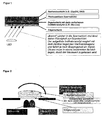
- Glucose in derivatized form (Tris-veratryl derivative) and polyacrylamide (Aldrich) were applied together to a carrier layer of Pokalon film (Lonza). Subsequently, the thus-obtained two-layered test element was placed on a luminescence meter (self-made by Roche) and irradiated for two minutes with light of a wavelength of 375 nm.
- GlucDH glucose dehydrogenase
- NAD nicotinamide adenine dinucleotide
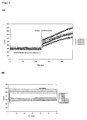
- the empty Pokalon film or the Pokalon film in combination with the solution of GlucDH and NAD described above were each measured fluorometrically (see FIG. 6B ).
- Example 2 Preparation and Use of a Diagnostic Element with Free Indicator Analyte and Dye-doped Polymer Matrix
- Partial solution 1 Weighing (g) Solids content (%) Solid (g) % on GFS Partial solution 1 100.00
- Partial solution 2 Weighing (g) Solids content (%) Solid (g) % on GFS Partial solution 2 4.41 10% solution of PEMA in chloroform 4.00 10 0.4 49.57
- a glucose-containing layer was produced from partial solution 1 by knife-coating (30 ⁇ m wet layer thickness) and subsequent drying. Subsequently, partial solution 2 was applied to the dried layer containing the indicator analyte (60 ⁇ m wet layer thickness) and dried.
- the dye-doped polymer layer obtained in this way was irradiated with a hand-held laser (wavelength 650 nm, ⁇ 5 watts), whereby it was possible to observe holes in the irradiated layer after about 20 minutes (see FIG. 7A ).
- a solution of 10 mg glucose dehydrogenase (GlucDH, Roche) and 10 mg nicotinamide adenine dinucleotide (NAD, Roche) in 10 ml phosphate buffer, pH 7 (Merck) was applied to the holes produced by irradiation, wherein the glucose released from the lower layer was oxidized by reaction with the enzyme system and greenish-blue fluorescent NADH was formed (see FIG. 7B ).
Landscapes
- Chemical & Material Sciences (AREA)
- Life Sciences & Earth Sciences (AREA)
- Health & Medical Sciences (AREA)
- Organic Chemistry (AREA)
- Engineering & Computer Science (AREA)
- Zoology (AREA)
- Wood Science & Technology (AREA)
- Proteomics, Peptides & Aminoacids (AREA)
- Immunology (AREA)
- Biochemistry (AREA)
- General Health & Medical Sciences (AREA)
- Molecular Biology (AREA)
- Analytical Chemistry (AREA)
- Physics & Mathematics (AREA)
- Microbiology (AREA)
- Biotechnology (AREA)
- Genetics & Genomics (AREA)
- General Engineering & Computer Science (AREA)
- Biophysics (AREA)
- Bioinformatics & Cheminformatics (AREA)
- Emergency Medicine (AREA)
- General Physics & Mathematics (AREA)
- Biomedical Technology (AREA)
- Pathology (AREA)
- Hematology (AREA)
- Urology & Nephrology (AREA)
- Food Science & Technology (AREA)
- Medicinal Chemistry (AREA)
- Cell Biology (AREA)
- Measuring Or Testing Involving Enzymes Or Micro-Organisms (AREA)
- Investigating Or Analysing Biological Materials (AREA)
- Apparatus Associated With Microorganisms And Enzymes (AREA)
- Investigating Or Analysing Materials By The Use Of Chemical Reactions (AREA)
Claims (16)
- Elément de diagnostic pour la détermination d'au moins un analyte, comprenant(a) un réactif de détection spécifique à l'analyte, et(b) une quantité définie de l'analyte à déterminer (analyte indicateur), dans laquelle l'analyte indicateur est présent sous une forme libérable inaccessible pour une réaction avec le réactif de détection.
- Elément de diagnostic selon la revendication 1,
caractérisé en ce que
le réactif de détection comprend une enzyme et/ou une co-enzyme, dans lequel l'enzyme est de préférence une déshydrogénase dépendante de nicotinamide-adénine-dinucléotide (NAD / NADH) ou de nicotinamide-adénine-dinucléotide phosphate (NADP / NADPH), en particulier une glucose déshydrogénase (EC 1.1.1.47), ou une glucose-6 phosphate déshydrogénase (EC 1.1.1.49),
ou/et dans lequel la co-enzyme est de préférence un composé stabilisé de nicotinamide-adénine-dinucléotide (NAD / NADH) ou de nicotinamide-adénine-dinucléotide phosphate (NADP / NADPH), en particulier carbaNAD ou carbaNADP, ou un composé de formule (I)
- Elément de diagnostic selon la revendication 1 ou 2,
caractérisé en ce que
le réactif de détection comprend de plus un médiateur ou/et un indicateur optique, ou/et en ce que l'analyte indicateur comprend un groupement protecteur photochimiquement et / ou électro-chimiquement clivable. - Elément de diagnostic selon l'une quelconque des revendications 1 à 3,
caractérisé en ce
qu'il comprend une couche support ainsi qu'une couche de détection contenant le réactif de détection, ou/et en ce qu'il est prévu pour la détermination de plusieurs analytes. - Elément de diagnostic selon la revendication 4,
caractérisé en ce
qu'il contient l'analyte indicateur dans la couche de détection ou dans un couche de dépôt séparée de celle-ci, dans lequel de préférence une couche barrière soluble entre la couche de dépôt et la couche de détection est prévue. - Elément de diagnostic selon la revendication 4 ou 5,
caractérisé en ce
que la couche de détection, la couche barrière ou/et la couche de dépôt comprend une matrice de polymères, contenant au moins un absorbeur d'énergie, dans lequel l'absorbeur d'énergie de préférence est un colorant hydrophobe choisi parmi un colorant cyanine, en particulier la cryptocyanine, l'indotricarbocyanine (C7), l'oxacarbocyanine (C3), l'iodure de pinacyanol, la thiacarbocyanine (C3), la thiadicarbocyanin (C5), et un colorant de squarylium, en particulier le colorant de squarylium III. - Elément de diagnostic selon la revendication 6,
caractérisé en ce
que la matrice de polymères est formée à partir d'un polymère hydrophobe, en particulier un polymère hydrophobe choisi parmi le groupe constitué par un polyméthacrylate de méthyle, un polyméthacrylate d'éthyle, un polycarbonate et des dérivés chimiques de ceux-ci, ou/et elle contient au moins un absorbeur d'énergie lié de façon covalente ou/et sous forme libre. - Elément de diagnostic selon la revendication 6 ou 7,
caractérisé en ce
que l'analyte indicateur est encapsulé dans la matrice de polymères. - Elément de diagnostic selon l'une quelconque des revendications 1 à 8,
caractérisé en ce
qu'il est conçu comme une bande de test, un disque de test, un tampon de test, une bandelette de test ou une cartouche de bandelettes de test. - Instrument d'analyse, comprenant un élément de diagnostic selon l'une quelconque des revendications 1 à 9.
- Procédé pour la détermination d'un analyte, comprenant les étapes consistant à:(a) mettre en contact l'analyte avec un élément de diagnostic selon l'une des revendications 1 à 9, et(b) déterminer la présence ou/et la quantité de l'analyte.
- Procédé de correction d'un signal généré par un analyte, comprenant les étapes consistant en:(a) l'introduction d'un élément de diagnostic selon l'une des revendications 1 à 9 dans un instrument de mesure analytique,(b) la génération d'un premier signal détectable dans l'instrument de mesure analytique en mettant en contact l'analyte avec l'élément de diagnostic,(c) la génération d'un second signal détectable dans l'instrument d'analyse par libération de l'analyte indicateur dans l'élément de diagnostic, et(d) la présentation du signal généré dans l'étape (b) en utilisant le signal généré dans l'étape (c).
- Procédé de contrôle de l'optique de détection d'un instrument de mesure analytique, comprenant les étapes consistant en:(a) l'introduction d'un élément de diagnostic selon l'une des revendications 1 à 9 dans l'instrument de mesure analytique,(b) la génération d'un signal détectable dans l'instrument de mesure analytique par libération de l'analyte indicateur dans l'élément de diagnostic, et(c) la mise en corrélation du signal produit à l'étape (b) avec un signal de référence.
- Système pour la libération contrôlée d'un réactif pour la détermination spécifique d'un analyte comprenant(a) un support comprenant le réactif et un système de réaction indépendant de celui-ci, dans lequel le réactif est présent sous une forme libérable inaccessible pour une réaction avec le système de réaction, et peut être libéré dans des conditions définies,(b) des moyens pour libérer le réactif sur le support.
- Système selon la revendication 14,
caractérisé en ce
que le réactif est encapsulé dans une matrice soluble, est séparé du système de réaction par une couche barrière soluble, ou/et comprend un groupement protecteur chimique. - Utilisation d'un système selon la revendication 14 ou 15 comme élément de commutation.
Priority Applications (2)
| Application Number | Priority Date | Filing Date | Title |
|---|---|---|---|
| PL10796365T PL2513648T3 (pl) | 2009-12-16 | 2010-12-15 | Wykrywanie rozkładu enzymów w elemencie testującym przy pomocy kontrolowanego uwalniania chronionego analitu |
| EP10796365.4A EP2513648B1 (fr) | 2009-12-16 | 2010-12-15 | Détection de la décomposition d'enzymes dans un élément de test par libération contrôlée d'analyte protégé |
Applications Claiming Priority (3)
| Application Number | Priority Date | Filing Date | Title |
|---|---|---|---|
| EP09179500 | 2009-12-16 | ||
| PCT/EP2010/069760 WO2011073258A1 (fr) | 2009-12-16 | 2010-12-15 | Détection de la décomposition d'enzymes dans un élément test par libération contrôlée d'analyte protégé |
| EP10796365.4A EP2513648B1 (fr) | 2009-12-16 | 2010-12-15 | Détection de la décomposition d'enzymes dans un élément de test par libération contrôlée d'analyte protégé |
Publications (2)
| Publication Number | Publication Date |
|---|---|
| EP2513648A1 EP2513648A1 (fr) | 2012-10-24 |
| EP2513648B1 true EP2513648B1 (fr) | 2015-05-27 |
Family
ID=42015323
Family Applications (1)
| Application Number | Title | Priority Date | Filing Date |
|---|---|---|---|
| EP10796365.4A Active EP2513648B1 (fr) | 2009-12-16 | 2010-12-15 | Détection de la décomposition d'enzymes dans un élément de test par libération contrôlée d'analyte protégé |
Country Status (10)
| Country | Link |
|---|---|
| US (1) | US10260085B2 (fr) |
| EP (1) | EP2513648B1 (fr) |
| JP (1) | JP5777633B2 (fr) |
| KR (1) | KR101506928B1 (fr) |
| CN (1) | CN102741694B (fr) |
| CA (1) | CA2782943C (fr) |
| ES (1) | ES2544984T3 (fr) |
| MX (1) | MX2012006706A (fr) |
| PL (1) | PL2513648T3 (fr) |
| WO (1) | WO2011073258A1 (fr) |
Families Citing this family (6)
| Publication number | Priority date | Publication date | Assignee | Title |
|---|---|---|---|---|
| EP2292751A1 (fr) * | 2009-08-20 | 2011-03-09 | Roche Diagnostics GmbH | Stabilisation d'enzymes à l'aide de coenzymes stables |
| EP2513648B1 (fr) | 2009-12-16 | 2015-05-27 | F.Hoffmann-La Roche Ag | Détection de la décomposition d'enzymes dans un élément de test par libération contrôlée d'analyte protégé |
| CN103974655B (zh) * | 2011-11-14 | 2016-03-30 | 霍夫曼-拉罗奇有限公司 | 用于检测样品中至少一种分析物的分析仪器 |
| US8921061B2 (en) * | 2012-11-02 | 2014-12-30 | Roche Diagnostics Operations, Inc. | Reagent materials and associated test elements |
| FR3086951B1 (fr) * | 2018-10-05 | 2021-02-26 | Redberry | Methode et dispositif pour la detection d'au moins un microorganisme selon sa cinetique de marquage, et support de detection |
| US20220338768A1 (en) * | 2021-04-09 | 2022-10-27 | Medtronic Minimed, Inc. | Hexamethyldisiloxane membranes for analyte sensors |
Family Cites Families (25)
| Publication number | Priority date | Publication date | Assignee | Title |
|---|---|---|---|---|
| CA1054034A (fr) * | 1975-06-20 | 1979-05-08 | Barbara J. Bruschi | Element multicouches pour l'analyse |
| US4649121A (en) * | 1985-02-26 | 1987-03-10 | Miles Laboratories, Inc. | Viability test device |
| US4689309A (en) * | 1985-09-30 | 1987-08-25 | Miles Laboratories, Inc. | Test device, method of manufacturing same and method of determining a component in a sample |
| DE29614429U1 (de) * | 1996-08-09 | 1996-10-24 | Merete GmbH, 10719 Berlin | Teststreifen zur Untersuchung einer körpereigenen Flüssigkeit |
| US5801006A (en) | 1997-02-04 | 1998-09-01 | Specialty Assays, Inc. | Use of NADPH and NADH analogs in the measurement of enzyme activities and metabolites |
| US6380380B1 (en) | 1999-01-04 | 2002-04-30 | Specialty Assays, Inc. | Use of nicotinamide adenine dinucleotide (NAD) and nicotinamide adenine dinucliotide phosphate (NADP) analogs to measure enzyme activities metabolites and substrates |
| US20030211006A1 (en) * | 2002-05-10 | 2003-11-13 | Suyue Qian | Multilayer reagent test strips that include at least one fluid flow control layer and methods for using the same |
| US20040126831A1 (en) * | 2002-12-31 | 2004-07-01 | Medtronic Minimed, Inc. | Functionalization of immobilized proteins |
| JP2007502114A (ja) | 2003-08-11 | 2007-02-08 | コデクシス, インコーポレイテッド | 改良されたグルコースデヒドロゲナーゼポリペプチドおよび関連ポリヌクレオチド |
| GB0403369D0 (en) | 2004-02-16 | 2004-03-17 | Pa Consulting Services | Devices and methods for testing analytes |
| EP1722670B1 (fr) | 2004-03-06 | 2013-09-25 | F.Hoffmann-La Roche Ag | Dispositif d'echantillonnage de liquide corporel |
| CN101076601B (zh) | 2004-12-13 | 2013-11-13 | 拜尔保健有限公司 | 用于测量生物液体中的分析物的自我限定大小的组合物和检验设备 |
| ATE528652T1 (de) | 2005-06-29 | 2011-10-15 | Hoffmann La Roche | Analysesystem mit testband |
| US7553615B2 (en) * | 2005-07-28 | 2009-06-30 | Roche Diagnostics Operations, Inc. | Compounds, methods, complexes, apparatuses and uses relating to stabile forms of NAD/NADH |
| DE102005035461A1 (de) | 2005-07-28 | 2007-02-15 | Roche Diagnostics Gmbh | Stabile NAD/NADH-Derivate |
| US20070196899A1 (en) | 2005-11-29 | 2007-08-23 | Sony Corporation | Mutant protein having diaphorase activity |
| CN101058824A (zh) * | 2006-04-21 | 2007-10-24 | 北京化工大学 | 固定化酶生物催化剂及其制备方法和应用 |
| US8569074B2 (en) * | 2006-04-28 | 2013-10-29 | University Of Rochester | Analyte-releasing beads and use thereof in quantitative elispot or fluorispot assay |
| KR100690930B1 (ko) * | 2006-05-03 | 2007-03-09 | 한국기계연구원 | 깊은 제거를 이용하여 원하는 패턴 두께 혹은 높은종횡비를 가지는 고해상도 패턴 형성 방법 |
| EP1965198A1 (fr) * | 2007-02-27 | 2008-09-03 | F. Hoffmann-La Roche AG | Capteur de dioxyde de carbone optique-chimique sec |
| CN101329268A (zh) * | 2007-06-21 | 2008-12-24 | 苏州艾杰生物科技有限公司 | 蔗糖测定试剂盒及蔗糖的浓度测定方法 |
| CN101329264A (zh) * | 2007-06-21 | 2008-12-24 | 苏州艾杰生物科技有限公司 | 蔗糖酶诊断/测定试剂盒及蔗糖酶活性浓度测定方法 |
| EP2093284A1 (fr) * | 2008-02-19 | 2009-08-26 | F.Hoffmann-La Roche Ag | Stabilisation de déhydrogénases à l'aide de coenzymes stables |
| EP2333544A1 (fr) * | 2009-12-11 | 2011-06-15 | F. Hoffmann-La Roche AG | Chimie stérilisable pour éléments de test |
| EP2513648B1 (fr) | 2009-12-16 | 2015-05-27 | F.Hoffmann-La Roche Ag | Détection de la décomposition d'enzymes dans un élément de test par libération contrôlée d'analyte protégé |
-
2010
- 2010-12-15 EP EP10796365.4A patent/EP2513648B1/fr active Active
- 2010-12-15 JP JP2012543721A patent/JP5777633B2/ja active Active
- 2010-12-15 WO PCT/EP2010/069760 patent/WO2011073258A1/fr not_active Ceased
- 2010-12-15 ES ES10796365.4T patent/ES2544984T3/es active Active
- 2010-12-15 PL PL10796365T patent/PL2513648T3/pl unknown
- 2010-12-15 CN CN201080063966.XA patent/CN102741694B/zh active Active
- 2010-12-15 MX MX2012006706A patent/MX2012006706A/es active IP Right Grant
- 2010-12-15 KR KR1020127015674A patent/KR101506928B1/ko active Active
- 2010-12-15 CA CA2782943A patent/CA2782943C/fr active Active
-
2012
- 2012-06-15 US US13/524,199 patent/US10260085B2/en active Active
Also Published As
| Publication number | Publication date |
|---|---|
| CN102741694A (zh) | 2012-10-17 |
| JP2013524770A (ja) | 2013-06-20 |
| JP5777633B2 (ja) | 2015-09-09 |
| KR101506928B1 (ko) | 2015-03-30 |
| HK1177501A1 (en) | 2013-08-23 |
| ES2544984T3 (es) | 2015-09-07 |
| CN102741694B (zh) | 2014-12-24 |
| US20130052674A1 (en) | 2013-02-28 |
| CA2782943C (fr) | 2014-09-09 |
| PL2513648T3 (pl) | 2015-11-30 |
| MX2012006706A (es) | 2012-07-03 |
| CA2782943A1 (fr) | 2011-06-23 |
| WO2011073258A1 (fr) | 2011-06-23 |
| EP2513648A1 (fr) | 2012-10-24 |
| US10260085B2 (en) | 2019-04-16 |
| KR20120102084A (ko) | 2012-09-17 |
Similar Documents
| Publication | Publication Date | Title |
|---|---|---|
| EP2245152B1 (fr) | Stabilisation de déhydrogénases à l'aide de coenzymes stables | |
| DE60223635T2 (de) | Reagenzien, Verfahren und Vorrichtungen zum Nachweis von Analyten | |
| EP2779900B1 (fr) | Instrument d'analyse pour le dépistage d'au moins un analyte dans un échantillon | |
| EP2467478B1 (fr) | Stabilisation d'enzymes à l'aide de coenzymes stables | |
| EP2513648B1 (fr) | Détection de la décomposition d'enzymes dans un élément de test par libération contrôlée d'analyte protégé | |
| WO2003097864A1 (fr) | Procede et systeme de reactifs contenant un complexe enzyme-coenzyme non regenerable | |
| EP1964927A1 (fr) | Quinone en tant que médiateurs pour tests photométriques | |
| EP2510354B1 (fr) | Chimie stérilisable pour éléments de test | |
| EP2843406B1 (fr) | Produit diagnostique comprenant des bandelettes avec une enzyme et une coenzyme stabilisante | |
| AT390803B (de) | Verfahren zur bestimmung der konzentration eines enzymsubstrates und sensor zur durchfuehrung des verfahrens | |
| WO2010094632A1 (fr) | Cinétique réactionnelle rapide d'enzymes présentant une activité inférieure dans des couches chimiques sèches | |
| EP2398909B1 (fr) | Cinétique réactionnelle rapide d'enzymes présentant une activité inférieure dans des couches chimiques sèches | |
| WO2014128271A1 (fr) | Fabrication à haut rendement de bandelettes de test du glucose sanguin | |
| DE10221845A1 (de) | Verfahren und Reagenzsystem mit nicht-regenerierbarem Enzym-Coenzym-Komplex | |
| DE202018006944U1 (de) | Glukosesensor |
Legal Events
| Date | Code | Title | Description |
|---|---|---|---|
| PUAI | Public reference made under article 153(3) epc to a published international application that has entered the european phase |
Free format text: ORIGINAL CODE: 0009012 |
|
| 17P | Request for examination filed |
Effective date: 20120712 |
|
| AK | Designated contracting states |
Kind code of ref document: A1 Designated state(s): AL AT BE BG CH CY CZ DE DK EE ES FI FR GB GR HR HU IE IS IT LI LT LU LV MC MK MT NL NO PL PT RO RS SE SI SK SM TR |
|
| DAX | Request for extension of the european patent (deleted) | ||
| 17Q | First examination report despatched |
Effective date: 20130701 |
|
| RIN1 | Information on inventor provided before grant (corrected) |
Inventor name: STEINKE, NELLI Inventor name: HAAR, HANS-PETER Inventor name: HORN, CARINA Inventor name: HEINDL, DIETER |
|
| GRAJ | Information related to disapproval of communication of intention to grant by the applicant or resumption of examination proceedings by the epo deleted |
Free format text: ORIGINAL CODE: EPIDOSDIGR1 |
|
| GRAP | Despatch of communication of intention to grant a patent |
Free format text: ORIGINAL CODE: EPIDOSNIGR1 |
|
| INTG | Intention to grant announced |
Effective date: 20141216 |
|
| GRAS | Grant fee paid |
Free format text: ORIGINAL CODE: EPIDOSNIGR3 |
|
| GRAA | (expected) grant |
Free format text: ORIGINAL CODE: 0009210 |
|
| AK | Designated contracting states |
Kind code of ref document: B1 Designated state(s): AL AT BE BG CH CY CZ DE DK EE ES FI FR GB GR HR HU IE IS IT LI LT LU LV MC MK MT NL NO PL PT RO RS SE SI SK SM TR |
|
| REG | Reference to a national code |
Ref country code: GB Ref legal event code: FG4D Free format text: NOT ENGLISH |
|
| REG | Reference to a national code |
Ref country code: CH Ref legal event code: EP |
|
| REG | Reference to a national code |
Ref country code: AT Ref legal event code: REF Ref document number: 729128 Country of ref document: AT Kind code of ref document: T Effective date: 20150615 |
|
| REG | Reference to a national code |
Ref country code: IE Ref legal event code: FG4D Free format text: LANGUAGE OF EP DOCUMENT: GERMAN |
|
| REG | Reference to a national code |
Ref country code: DE Ref legal event code: R096 Ref document number: 502010009614 Country of ref document: DE |
|
| REG | Reference to a national code |
Ref country code: NL Ref legal event code: T3 |
|
| REG | Reference to a national code |
Ref country code: ES Ref legal event code: FG2A Ref document number: 2544984 Country of ref document: ES Kind code of ref document: T3 Effective date: 20150907 |
|
| REG | Reference to a national code |
Ref country code: LT Ref legal event code: MG4D |
|
| PG25 | Lapsed in a contracting state [announced via postgrant information from national office to epo] |
Ref country code: PT Free format text: LAPSE BECAUSE OF FAILURE TO SUBMIT A TRANSLATION OF THE DESCRIPTION OR TO PAY THE FEE WITHIN THE PRESCRIBED TIME-LIMIT Effective date: 20150928 Ref country code: FI Free format text: LAPSE BECAUSE OF FAILURE TO SUBMIT A TRANSLATION OF THE DESCRIPTION OR TO PAY THE FEE WITHIN THE PRESCRIBED TIME-LIMIT Effective date: 20150527 Ref country code: NO Free format text: LAPSE BECAUSE OF FAILURE TO SUBMIT A TRANSLATION OF THE DESCRIPTION OR TO PAY THE FEE WITHIN THE PRESCRIBED TIME-LIMIT Effective date: 20150827 Ref country code: HR Free format text: LAPSE BECAUSE OF FAILURE TO SUBMIT A TRANSLATION OF THE DESCRIPTION OR TO PAY THE FEE WITHIN THE PRESCRIBED TIME-LIMIT Effective date: 20150527 Ref country code: LT Free format text: LAPSE BECAUSE OF FAILURE TO SUBMIT A TRANSLATION OF THE DESCRIPTION OR TO PAY THE FEE WITHIN THE PRESCRIBED TIME-LIMIT Effective date: 20150527 |
|
| REG | Reference to a national code |
Ref country code: FR Ref legal event code: PLFP Year of fee payment: 6 |
|
| PG25 | Lapsed in a contracting state [announced via postgrant information from national office to epo] |
Ref country code: RS Free format text: LAPSE BECAUSE OF FAILURE TO SUBMIT A TRANSLATION OF THE DESCRIPTION OR TO PAY THE FEE WITHIN THE PRESCRIBED TIME-LIMIT Effective date: 20150527 Ref country code: LV Free format text: LAPSE BECAUSE OF FAILURE TO SUBMIT A TRANSLATION OF THE DESCRIPTION OR TO PAY THE FEE WITHIN THE PRESCRIBED TIME-LIMIT Effective date: 20150527 Ref country code: BG Free format text: LAPSE BECAUSE OF FAILURE TO SUBMIT A TRANSLATION OF THE DESCRIPTION OR TO PAY THE FEE WITHIN THE PRESCRIBED TIME-LIMIT Effective date: 20150827 Ref country code: IS Free format text: LAPSE BECAUSE OF FAILURE TO SUBMIT A TRANSLATION OF THE DESCRIPTION OR TO PAY THE FEE WITHIN THE PRESCRIBED TIME-LIMIT Effective date: 20150927 Ref country code: GR Free format text: LAPSE BECAUSE OF FAILURE TO SUBMIT A TRANSLATION OF THE DESCRIPTION OR TO PAY THE FEE WITHIN THE PRESCRIBED TIME-LIMIT Effective date: 20150828 |
|
| REG | Reference to a national code |
Ref country code: PL Ref legal event code: T3 |
|
| PG25 | Lapsed in a contracting state [announced via postgrant information from national office to epo] |
Ref country code: EE Free format text: LAPSE BECAUSE OF FAILURE TO SUBMIT A TRANSLATION OF THE DESCRIPTION OR TO PAY THE FEE WITHIN THE PRESCRIBED TIME-LIMIT Effective date: 20150527 Ref country code: DK Free format text: LAPSE BECAUSE OF FAILURE TO SUBMIT A TRANSLATION OF THE DESCRIPTION OR TO PAY THE FEE WITHIN THE PRESCRIBED TIME-LIMIT Effective date: 20150527 |
|
| PG25 | Lapsed in a contracting state [announced via postgrant information from national office to epo] |
Ref country code: RO Free format text: LAPSE BECAUSE OF NON-PAYMENT OF DUE FEES Effective date: 20150527 Ref country code: CZ Free format text: LAPSE BECAUSE OF FAILURE TO SUBMIT A TRANSLATION OF THE DESCRIPTION OR TO PAY THE FEE WITHIN THE PRESCRIBED TIME-LIMIT Effective date: 20150527 Ref country code: SK Free format text: LAPSE BECAUSE OF FAILURE TO SUBMIT A TRANSLATION OF THE DESCRIPTION OR TO PAY THE FEE WITHIN THE PRESCRIBED TIME-LIMIT Effective date: 20150527 |
|
| REG | Reference to a national code |
Ref country code: DE Ref legal event code: R097 Ref document number: 502010009614 Country of ref document: DE |
|
| PLBE | No opposition filed within time limit |
Free format text: ORIGINAL CODE: 0009261 |
|
| STAA | Information on the status of an ep patent application or granted ep patent |
Free format text: STATUS: NO OPPOSITION FILED WITHIN TIME LIMIT |
|
| REG | Reference to a national code |
Ref country code: DE Ref legal event code: R081 Ref document number: 502010009614 Country of ref document: DE Owner name: ROCHE DIABETES CARE GMBH, DE Free format text: FORMER OWNER: ROCHE DIAGNOSTICS GMBH, 68305 MANNHEIM, DE |
|
| 26N | No opposition filed |
Effective date: 20160301 |
|
| PG25 | Lapsed in a contracting state [announced via postgrant information from national office to epo] |
Ref country code: SI Free format text: LAPSE BECAUSE OF FAILURE TO SUBMIT A TRANSLATION OF THE DESCRIPTION OR TO PAY THE FEE WITHIN THE PRESCRIBED TIME-LIMIT Effective date: 20150527 Ref country code: BE Free format text: LAPSE BECAUSE OF NON-PAYMENT OF DUE FEES Effective date: 20151231 |
|
| PG25 | Lapsed in a contracting state [announced via postgrant information from national office to epo] |
Ref country code: LU Free format text: LAPSE BECAUSE OF FAILURE TO SUBMIT A TRANSLATION OF THE DESCRIPTION OR TO PAY THE FEE WITHIN THE PRESCRIBED TIME-LIMIT Effective date: 20151215 Ref country code: MC Free format text: LAPSE BECAUSE OF FAILURE TO SUBMIT A TRANSLATION OF THE DESCRIPTION OR TO PAY THE FEE WITHIN THE PRESCRIBED TIME-LIMIT Effective date: 20150527 |
|
| REG | Reference to a national code |
Ref country code: CH Ref legal event code: PL |
|
| REG | Reference to a national code |
Ref country code: IE Ref legal event code: MM4A |
|
| PG25 | Lapsed in a contracting state [announced via postgrant information from national office to epo] |
Ref country code: CH Free format text: LAPSE BECAUSE OF NON-PAYMENT OF DUE FEES Effective date: 20151231 Ref country code: LI Free format text: LAPSE BECAUSE OF NON-PAYMENT OF DUE FEES Effective date: 20151231 Ref country code: IE Free format text: LAPSE BECAUSE OF NON-PAYMENT OF DUE FEES Effective date: 20151215 |
|
| REG | Reference to a national code |
Ref country code: FR Ref legal event code: PLFP Year of fee payment: 7 |
|
| REG | Reference to a national code |
Ref country code: AT Ref legal event code: MM01 Ref document number: 729128 Country of ref document: AT Kind code of ref document: T Effective date: 20151215 |
|
| PG25 | Lapsed in a contracting state [announced via postgrant information from national office to epo] |
Ref country code: HU Free format text: LAPSE BECAUSE OF FAILURE TO SUBMIT A TRANSLATION OF THE DESCRIPTION OR TO PAY THE FEE WITHIN THE PRESCRIBED TIME-LIMIT; INVALID AB INITIO Effective date: 20101215 Ref country code: AT Free format text: LAPSE BECAUSE OF NON-PAYMENT OF DUE FEES Effective date: 20151215 Ref country code: SM Free format text: LAPSE BECAUSE OF FAILURE TO SUBMIT A TRANSLATION OF THE DESCRIPTION OR TO PAY THE FEE WITHIN THE PRESCRIBED TIME-LIMIT Effective date: 20150527 |
|
| PG25 | Lapsed in a contracting state [announced via postgrant information from national office to epo] |
Ref country code: SE Free format text: LAPSE BECAUSE OF FAILURE TO SUBMIT A TRANSLATION OF THE DESCRIPTION OR TO PAY THE FEE WITHIN THE PRESCRIBED TIME-LIMIT Effective date: 20150527 Ref country code: CY Free format text: LAPSE BECAUSE OF FAILURE TO SUBMIT A TRANSLATION OF THE DESCRIPTION OR TO PAY THE FEE WITHIN THE PRESCRIBED TIME-LIMIT Effective date: 20150527 |
|
| PG25 | Lapsed in a contracting state [announced via postgrant information from national office to epo] |
Ref country code: MT Free format text: LAPSE BECAUSE OF FAILURE TO SUBMIT A TRANSLATION OF THE DESCRIPTION OR TO PAY THE FEE WITHIN THE PRESCRIBED TIME-LIMIT Effective date: 20150527 |
|
| REG | Reference to a national code |
Ref country code: FR Ref legal event code: PLFP Year of fee payment: 8 |
|
| PG25 | Lapsed in a contracting state [announced via postgrant information from national office to epo] |
Ref country code: TR Free format text: LAPSE BECAUSE OF FAILURE TO SUBMIT A TRANSLATION OF THE DESCRIPTION OR TO PAY THE FEE WITHIN THE PRESCRIBED TIME-LIMIT Effective date: 20150527 Ref country code: MK Free format text: LAPSE BECAUSE OF FAILURE TO SUBMIT A TRANSLATION OF THE DESCRIPTION OR TO PAY THE FEE WITHIN THE PRESCRIBED TIME-LIMIT Effective date: 20150527 |
|
| PG25 | Lapsed in a contracting state [announced via postgrant information from national office to epo] |
Ref country code: AL Free format text: LAPSE BECAUSE OF FAILURE TO SUBMIT A TRANSLATION OF THE DESCRIPTION OR TO PAY THE FEE WITHIN THE PRESCRIBED TIME-LIMIT Effective date: 20150527 |
|
| PGFP | Annual fee paid to national office [announced via postgrant information from national office to epo] |
Ref country code: PL Payment date: 20241127 Year of fee payment: 15 |
|
| PGFP | Annual fee paid to national office [announced via postgrant information from national office to epo] |
Ref country code: ES Payment date: 20250102 Year of fee payment: 15 |
|
| PGFP | Annual fee paid to national office [announced via postgrant information from national office to epo] |
Ref country code: NL Payment date: 20251119 Year of fee payment: 16 |
|
| PGFP | Annual fee paid to national office [announced via postgrant information from national office to epo] |
Ref country code: DE Payment date: 20251126 Year of fee payment: 16 |
|
| PGFP | Annual fee paid to national office [announced via postgrant information from national office to epo] |
Ref country code: GB Payment date: 20251119 Year of fee payment: 16 |
|
| PGFP | Annual fee paid to national office [announced via postgrant information from national office to epo] |
Ref country code: IT Payment date: 20251119 Year of fee payment: 16 |
|
| PGFP | Annual fee paid to national office [announced via postgrant information from national office to epo] |
Ref country code: FR Payment date: 20251120 Year of fee payment: 16 |