EP2514830B1 - Analysegerät und Verfahren zur Bestimmung der mikrobiellen Kontamination - Google Patents
Analysegerät und Verfahren zur Bestimmung der mikrobiellen Kontamination Download PDFInfo
- Publication number
- EP2514830B1 EP2514830B1 EP12164983.4A EP12164983A EP2514830B1 EP 2514830 B1 EP2514830 B1 EP 2514830B1 EP 12164983 A EP12164983 A EP 12164983A EP 2514830 B1 EP2514830 B1 EP 2514830B1
- Authority
- EP
- European Patent Office
- Prior art keywords
- sample
- threshold
- concentration
- instrument
- intercept
- Prior art date
- Legal status (The legal status is an assumption and is not a legal conclusion. Google has not performed a legal analysis and makes no representation as to the accuracy of the status listed.)
- Active
Links
Images
Classifications
-
- C—CHEMISTRY; METALLURGY
- C12—BIOCHEMISTRY; BEER; SPIRITS; WINE; VINEGAR; MICROBIOLOGY; ENZYMOLOGY; MUTATION OR GENETIC ENGINEERING
- C12Q—MEASURING OR TESTING PROCESSES INVOLVING ENZYMES, NUCLEIC ACIDS OR MICROORGANISMS; COMPOSITIONS OR TEST PAPERS THEREFOR; PROCESSES OF PREPARING SUCH COMPOSITIONS; CONDITION-RESPONSIVE CONTROL IN MICROBIOLOGICAL OR ENZYMOLOGICAL PROCESSES
- C12Q1/00—Measuring or testing processes involving enzymes, nucleic acids or microorganisms; Compositions therefor; Processes of preparing such compositions
- C12Q1/02—Measuring or testing processes involving enzymes, nucleic acids or microorganisms; Compositions therefor; Processes of preparing such compositions involving viable microorganisms
- C12Q1/04—Determining presence or kind of microorganism; Use of selective media for testing antibiotics or bacteriocides; Compositions containing a chemical indicator therefor
- C12Q1/06—Quantitative determination
-
- G—PHYSICS
- G01—MEASURING; TESTING
- G01N—INVESTIGATING OR ANALYSING MATERIALS BY DETERMINING THEIR CHEMICAL OR PHYSICAL PROPERTIES
- G01N21/00—Investigating or analysing materials by the use of optical means, i.e. using sub-millimetre waves, infrared, visible or ultraviolet light
- G01N21/62—Systems in which the material investigated is excited whereby it emits light or causes a change in wavelength of the incident light
- G01N21/63—Systems in which the material investigated is excited whereby it emits light or causes a change in wavelength of the incident light optically excited
- G01N21/64—Fluorescence; Phosphorescence
- G01N21/6408—Fluorescence; Phosphorescence with measurement of decay time, time resolved fluorescence
-
- G—PHYSICS
- G01—MEASURING; TESTING
- G01N—INVESTIGATING OR ANALYSING MATERIALS BY DETERMINING THEIR CHEMICAL OR PHYSICAL PROPERTIES
- G01N21/00—Investigating or analysing materials by the use of optical means, i.e. using sub-millimetre waves, infrared, visible or ultraviolet light
- G01N21/62—Systems in which the material investigated is excited whereby it emits light or causes a change in wavelength of the incident light
- G01N21/63—Systems in which the material investigated is excited whereby it emits light or causes a change in wavelength of the incident light optically excited
- G01N21/64—Fluorescence; Phosphorescence
- G01N21/6428—Measuring fluorescence of fluorescent products of reactions or of fluorochrome labelled reactive substances, e.g. measuring quenching effects, using measuring "optrodes"
- G01N21/643—Measuring fluorescence of fluorescent products of reactions or of fluorochrome labelled reactive substances, e.g. measuring quenching effects, using measuring "optrodes" non-biological material
-
- G—PHYSICS
- G01—MEASURING; TESTING
- G01N—INVESTIGATING OR ANALYSING MATERIALS BY DETERMINING THEIR CHEMICAL OR PHYSICAL PROPERTIES
- G01N33/00—Investigating or analysing materials by specific methods not covered by groups G01N1/00 - G01N31/00
- G01N33/48—Biological material, e.g. blood, urine; Haemocytometers
- G01N33/483—Physical analysis of biological material
- G01N33/487—Physical analysis of biological material of liquid biological material
- G01N33/48707—Physical analysis of biological material of liquid biological material by electrical means
- G01N33/48735—Investigating suspensions of cells, e.g. measuring microbe concentration
-
- G—PHYSICS
- G01—MEASURING; TESTING
- G01N—INVESTIGATING OR ANALYSING MATERIALS BY DETERMINING THEIR CHEMICAL OR PHYSICAL PROPERTIES
- G01N21/00—Investigating or analysing materials by the use of optical means, i.e. using sub-millimetre waves, infrared, visible or ultraviolet light
- G01N21/62—Systems in which the material investigated is excited whereby it emits light or causes a change in wavelength of the incident light
- G01N21/63—Systems in which the material investigated is excited whereby it emits light or causes a change in wavelength of the incident light optically excited
- G01N21/64—Fluorescence; Phosphorescence
- G01N21/6428—Measuring fluorescence of fluorescent products of reactions or of fluorochrome labelled reactive substances, e.g. measuring quenching effects, using measuring "optrodes"
- G01N2021/6432—Quenching
Definitions
- the Total Viable Count (TVC) of aerobic bacteria in a sample can be determined by monitoring depletion of oxygen in the sample over time until a threshold value is reached based upon a previously established calibration curve of tthreshold to TVC. See, for example, F.C. O'Mahony and D. B. Papkovsky, Rapid High-Throughput Assessment of Aerobic Bacteria in Complex Samples by Fluorescence-Based Oxygen Respirometry, Applied and Environmental Microbiology, vol. 72, No. 2, Feb. 2006 , pp. 1279-1287 .
- the calibration curves of t threshold to TVC are established by experimentally determining threshold for several samples containing known different starting TVCs, plotting the results in semilogarithmic scale and establishing a linear equation for the regression line.
- an accurate calibration curve of t hreshold to TVC for each type of sample can be established from just two-points, wherein one point is the x-intercept value (i.e., an estimated or experimental value for the logarithm of the minimum viable aerobic microbe count at commencement of testing (t o ) in a sample effective for causing the sample to reach t Threshold substantially instantaneously upon commencement of incubation), and the other point is ascertained experimentally from a sample having a smaller known viable aerobic microbe count at t o , a viable aerobic microbe count at t o which is several orders of magnitude smaller than t o at the x-intercept.
- the x-intercept value i.e., an estimated or experimental value for the logarithm of the minimum viable aerobic microbe count at commencement of testing (t o ) in a sample effective for causing the sample to reach t Threshold substantially instantaneously upon commencement of incubation
- a first aspect of the invention is a method for evaluating microbial contamination of an object according to claim 1.
- the sample is preferably incubated in a hermetically sealed chamber in the presence of an oxygen sensitive photoluminescent dye with O 2 concentration of the incubating sample ascertained by measuring fluouresence of the oxygen sensitive dye.
- a second aspect of the invention is an analytical instrument according to claim 11.
- the O 2 sensor preferably comprises an oxygen sensitive photoluminescent dye having a luminescent lifetime and a reader effective for determining O 2 concentration in an environment in fluid communication with the dye by measuring fluouresence of the oxygen sensitive dye.
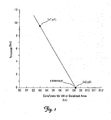
- Figure 1 is an exemplary calibration curve prepared in accordance with the present invention.
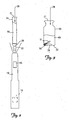
- Figure 2 is an exemplary O 2 sensor and microprocessor taking a reading from an incubating sample in accordance with the present invention wherein the sample is a liquefied specimen detached from the object being evaluated.
- Figure 3 is an exemplary incubating sample in accordance with the present invention wherein the sample is a swab-sampling taken from the surface of an object being evaluated.
- the invention is directed to an instrument and method for evaluating microbial contamination of an object (not shown) by monitoring changes in oxygen concentration in an incubating sample 50 taken from the object (not shown) and correlating observed changes to a viable aerobic microbe count in the sample 50 prior to incubation employing a readily calibratable linear equation.
- the object (not shown) to be evaluated for microbial contamination is essentially unlimited, ranging from solids such as equipment used in meat processing and packaging facilities, food preparation countertops, medical instruments, fruits, vegetables and meats, and liquids such as dairy products, water retained within a water tower, biological samples, sewage treated by a sewage treatment system, water flowing in rivers and streams, etc.
- Persons of routine skill in the art are capable of obtaining and preparing suitable samples 50 from the various objects (not shown) of interest, including specifically but not exclusively detaching a specimen from a solid object (not shown) such as a chicken breast, a swab- sampling taken from a hard surface such as a sanitized stainless steel countertop used in a food preparation area, an aliquot taken from sewage treatment facility, etc.
- a specimen from a solid object such as a chicken breast
- a swab- sampling taken from a hard surface such as a sanitized stainless steel countertop used in a food preparation area
- an aliquot taken from sewage treatment facility etc.
- Each sample 50 is placed within the retention chamber 29 of a vessel 20 having an open top end 21 , a closed bottom end 22 , and a probe 30 within the retention chamber 29 .
- the vessel 20 is preferably a vial or cuvette having a high aspect ratio of depth to circumference, such as disclosed in United States Patent Application Publication 2009/0029402 . Since a preferred vessel 20 is a vial or cuvette 20 , the balance of the disclosure shall reference the vessel 20 as a vial 20 without intending to be limited thereby.
- Luminescence encompasses both fluorescence and phosphorescence. Electromagnetic radiation in the ultraviolet or visible region is used to excite molecules to higher electronic energy levels. The excited molecules lose their excess energy by one of several methods. One of those methods is fluorescence. Fluorescence refers to the radiative transition of electrons from the first excited singlet state to the singlet ground state (S 1 .to S 0 ). The lifetime of fluorescence is relatively short, approximately 10 -9 to 10 -7 seconds.
- the triplet state so produced may return to the ground state by a radiative process known as phosphorescence.
- Phosphorescence is the radiative relaxation of an electron from the lowest excited triplet state to the singlet ground state (T 1 to S 0 ). Because the transition that leads to phosphorescence involves a change in spin multiplicity, it has a low probability and hence a relatively long lifetime of 10 -4 to 10 seconds. Fluorescent and phosphorescent lifetime is known to change in a defined fashion relative to changes in the partial pressure of an analyte (P A ) capable of quenching the photoluminescent molecules. Hence, the P A in fluid communication with a photoluminescent material can be determined by measuring photoluminescence lifetime.
- P A an analyte
- the probes 30 are optically-active, oxygen partial pressure sensitive materials configured and arranged to experience changes in oxygen partial pressure P O2 in a sample 50 placed within the retention chamber 29 of a vial 20 .
- the oxygen-sensitive material is preferably a photoluminescent dye embedded within an oxygen permeable polymer matrix.
- the oxygen-sensitive photoluminescent dye can be dissolved in the sample 50 and/or any added growth media 40 .
- the oxygen-sensitive photoluminescent dye may be selected from any of the well-known oxygen sensitive photoluminescent dyes.
- One of routine skill in the art is capable of selecting a suitable dye based upon the intended use of the probe.
- a nonexhaustive list of suitable oxygen sensitive photoluminescent dyes includes specifically, but not exclusively, ruthenium(II)-bipyridyl and ruthenium(II)-diphenylphenanothroline complexes, porphyrin-ketones such as platinum(II)-octaethylporphine-ketone, platinum(II)-porphyrin such as platinum(II)-tetrakis(pentafluorophenyl)porphine, palladium(II)-porphyrin such as palladium(II)-tetrakis(pentafluorophenyl)porphine, phosphorescent metallocomplexes of tetrabenzop
- the hydrophobic oxygen-sensitive photoluminescent dye is compounded with a suitable oxygen-permeable and hydrophobic carrier matrix.
- a suitable oxygen-permeable hydrophobic carrier matrix based upon the intended use of the probe 30 and the selected dye.
- suitable polymers for use as the oxygen-permeable hydrophobic carrier matrix includes specifically, but not exclusively, polystryrene, polycarbonate, polysulfone, polyvinyl chloride and some copolymers.
- the vial 20 When the probe 30 is based on the quenching of photoluminescence by an analyte, the vial 20 , or at least that portion of the vial 20 coated with the probe 30 , must allow radiation at the excitation and emission wavelengths to be transmitted to and received from the probe 30 with minimal interference.
- Instruments 10 for interrogating probes 30 based on the quenching of photoluminescence by an analyte are well known and commercially available from various sources, including Becton Dickinson of Franklin Lakes, New Jersey and Mocon, Inc. of Minneapolis, Minnesota.
- Such instruments 10 typically include or are equipped to communicate with a microprocessor 16 , computer memory (not shown), an input device such as a mouse (not shown) and/or a keyboard (not shown), a display 15 and a printer (not shown).
- the probe 30 containing vials 20 can be conveniently manufactured by (A) preparing a coating cocktail (not shown) which contains the photoluminescent oxygen-sensitive dye and the oxygen-permeable polymer in an organic solvent (not shown) such as ethylacetate, (B) depositing the cocktail into the bottom 22 of the retention chamber 29 , such as by using a syringe (not shown), and (C) allowing the cocktail (not shown) to dry, whereby a solid-state coating is formed within the retention chamber 29 at the bottom 22 of the vial 20 , thereby forming a probe 30 within the vial 20 .
- a coating cocktail (not shown) which contains the photoluminescent oxygen-sensitive dye and the oxygen-permeable polymer in an organic solvent (not shown) such as ethylacetate
- the concentration of the polymer in the organic solvent should be in the range of 0.1 to 20% w/w, with the ratio of dye to polymer in the range of 1:20 to 1:10,000 w/w, preferably 1:50 to 1:5,000 w/w.
- the sample is preferably incubated in a hermetically sealed chamber in the presence of an oxygen sensitive photoluminescent dye with O 2 concentration of the incubating sample ascertained by measuring fluouresence of the oxygen sensitive dye with an analytical instrument 10 comprising an O 2 sensor and a microprocessor in electrical communication with the sensor.
- the O 2 concentration threshold value may be established as (i) a % decrease in the atmospheric concentration of O 2 , (ii) a % decrease in the concentration of O 2 in fluid communication with the probe 30 in the vessel 20 relative to the O 2 concentration in fluid communication with the probe 30 in the vessel 20 at to, or (iii) an absolute value of the concentration of O 2 within the retention chamber 29 of the vessel 20 .
- a preferred % decrease is a decrease of between 25% and 75%.
- option (iii) is employed an absolute value of between 5% and 16% is preferred.
- This defined period of time is preferably set to occur within the lag phase growth period of bacteria within the sample 50 , with a time period of less than 60 minutes typically acceptable, and a time period of less than 5 minutes often desired.
- the oxygen concentration within the retention chamber 29 can be checked on substantially any desired scheduled with readings spaced more than two hours apart tending to produce results subject to excessive inaccuracy in the final ascertained value for TVC at to while readings spaced less than 1 ⁇ 2 hour apart require substantial additional time and effort with only modest improvement in accuracy of the final ascertained value for TVC at to.
- the radiation emitted by the excited probe 30 can be measured in terms of intensity and/or lifetime (rate of decay, phase shift or anisotropy), with measurement of lifetime generally preferred as a more accurate and reliable measurement technique when seeking to establish oxygen concentration via measurement of the extent to which the dye has been quenched by oxygen.
- TVC Total Viable Count
- t threshold to TVC are established by experimentally determining t threshold for several samples 50 of the same sample type (e.g. , ground water, milk, chicken breast, ground hamburger, ground egg shells, swab sample taken from the exterior of an unbroken egg, swab sample taken from a sanitized stainless steel food processing work surface, etc.) containing known different starting TVCs, plotting the results in semilogarithmic scale and establishing a linear equation for the regression line.
- sample type e.g. , ground water, milk, chicken breast, ground hamburger, ground egg shells, swab sample taken from the exterior of an unbroken egg, swab sample taken from a sanitized stainless steel food processing work surface, etc.
- an accurate calibration curve of t hreshold to TVC for each type of sample can be established from just two-points, wherein one point is the x-intercept value (i.e., an estimated or experimental value for the logarithm of the minimum viable aerobic microbe count at commencement of testing (t o ) in a sample 50 effective for causing the sample 50 to reach t Threshold substantially instantaneously upon commencement of incubation), and the other point is ascertained experimentally from a sample 50 having a smaller known viable aerobic microbe count at t o , a viable aerobic microbe count at t o which is several orders of magnitude smaller than to at the x-intercept.
- the logarithms employed are preferably natural logarithms.
- the x-intercept value is preferably established experimentally, but can be estimated. When estimated, an estimated value of between 6 and 10, most often between 7 and 9, has been found to produce acceptable results in most situations.
- An interrogation device 10 capable of determining O 2 concentration in a sample 50 in fluid communication with a probe 30 by measuring fluouresence of the oxygen sensitive dye in the probe 30 is provided with values for m (slope) and b (y-intercept) for various specified types of samples, whereby Equation 1 can be solved for x (logarithm of the viable aerobic microbe count per unit weight of, volume of or area swabbed to obtain a sample at t 0 ) once y (t Threshold ) is experimentally obtained from a sample 50 of one of the specified types of samples 50 .
- Samples 50 of a processed food product containing a preservative, matching a type of sample 50 for which the interrogation device 10 has a value for m and b, are taken from a processing line every hour on the half hour to ascertain viable bacterial count (TVC, APC or CFU) just prior to packaging.
- Each sample 50 is transported from the processing line to a testing room, digested for a predefined period of time, and a known volume or weight of the sample 50 deposited into a barcoded vial 20 containing a photoluminescent oxygen-sensitive probe 30 .
- An initial reading is taken from the probe 30 in each vial 20 containing a sample 50 by interrogating the probe 30 with an interrogation device 10 .
- the type of sample 50 , results of the initial reading, and the time of day at which the initial reading is taken are recorded and correlated to the barcode of the tested vial 20 .
- a schedule is established for subsequent interrogations of each vial 20 and the vials 20 are placed into an incubation chamber (not shown).
- Each vial 20 is subsequently interrogated on the established interrogation schedule. The results of each interrogation and elapsed time since the initial interrogation for each vial 20 are recorded.
- Each vial 20 is interrogated until a threshold value is reached in the readings from the probe 30 , at which time the interrogation device 10 indicates that testing is complete, determines viable bacterial count (x) employing the previously provided values for m and b for the type of sample 50 tested and the experimentally ascertained value for y, and provides the operator with an indication of whether the sample 50 contained an ACCEPTABLE or UNACEPTABLE viable bacterial count based upon a preestablished threshold value for x. Upon request, the operator can obtain the actual value of the viable bacterial count from the interrogation device 10 .
- An interrogation device 10 capable of determining O 2 concentration in a sample 50 in fluid communication with a probe 30 by measuring fluouresence of the oxygen sensitive dye in the probe 30 is provided with values for m (slope) and b (y-intercept) for various specified types of samples, whereby Equation 1 can be solved for x (logarithm of the viable aerobic microbe count per unit weight of, volume of or area swabbed to obtain a sample at t o ) once y (t Threshold ) is experimentally obtained from a sample 50 of one of the specified types of samples 50 .
- Samples 50 obtained by swabbing known areas of a work surface in a food processing plant, matching a type of sample 50 for which the interrogation device 10 has a value for m and b, are taken each time the work surface is cleaned and sanitized to ascertain viable bacterial count (TVC, APC or CFU) and thereby verify the effectiveness of the cleaning and sanitization process.
- the sample-containing portion of the swabs 51 are immediately deposited into a barcoded vial 20 containing a photoluminescent oxygen-sensitive probe 30 and a suitable growth medium 40 added.
- An initial reading is taken from the probe 30 in each vial 20 containing a sample 50 by interrogating the probe 30 with an interrogation device 10 .
- the type of sample 50 , results of the initial reading, and the time of day at which the initial reading is taken are recorded and correlated to the barcode of the tested vial 20 .
- a schedule is established for subsequent interrogations of each vial 20 and the vials 20 are placed into an incubation chamber (not shown).
- Each vial 20 is subsequently interrogated on the established interrogation schedule. The results of each interrogation and elapsed time since the initial interrogation for each vial 20 are recorded.
- Each vial 20 is interrogated until a threshold value is reached in the readings from the probe 30 , at which time the interrogation device 10 indicates that testing is complete, determines viable bacterial count (x) employing the previously provided values for m and b for the type of sample 50 tested and the experimentally ascertained value for y, and provides the operator with an indication of whether the sample 50 contained an ACCEPTABLE or UNACCEPTABLE viable bacterial count based upon a preestablished threshold value for x. Upon request, the operator can obtain the actual value of the viable bacterial count from the interrogation device 10 .
Landscapes
- Health & Medical Sciences (AREA)
- Life Sciences & Earth Sciences (AREA)
- Chemical & Material Sciences (AREA)
- Engineering & Computer Science (AREA)
- Physics & Mathematics (AREA)
- Immunology (AREA)
- General Health & Medical Sciences (AREA)
- Analytical Chemistry (AREA)
- Biochemistry (AREA)
- Organic Chemistry (AREA)
- Molecular Biology (AREA)
- Pathology (AREA)
- Biomedical Technology (AREA)
- General Physics & Mathematics (AREA)
- Zoology (AREA)
- Wood Science & Technology (AREA)
- Proteomics, Peptides & Aminoacids (AREA)
- Biophysics (AREA)
- Nuclear Medicine, Radiotherapy & Molecular Imaging (AREA)
- Bioinformatics & Cheminformatics (AREA)
- General Engineering & Computer Science (AREA)
- Microbiology (AREA)
- Toxicology (AREA)
- Biotechnology (AREA)
- Genetics & Genomics (AREA)
- Medicinal Chemistry (AREA)
- Urology & Nephrology (AREA)
- Food Science & Technology (AREA)
- Chemical Kinetics & Catalysis (AREA)
- Optics & Photonics (AREA)
- Hematology (AREA)
- Measuring Or Testing Involving Enzymes Or Micro-Organisms (AREA)
- Investigating Or Analysing Materials By The Use Of Chemical Reactions (AREA)
- Investigating, Analyzing Materials By Fluorescence Or Luminescence (AREA)
Claims (18)
- Verfahren zur Bestimmung einer mikrobiellen Kontamination eines Objekts mit den folgenden Schritten:(1) Inkubieren einer von dem Objekt genommenen Probe beginnend mit dem Zeitpunkt t0,(b) periodisches Ermitteln einer O2-Konzentration der inkubierten Probe, bis die detektierte O2-Konzentration einen Schwellenwert unterschreitet,(c) Bestimmen der Zeitdauer tThreshold, gemessen von t0 bis zu dem Zeitpunkt, an dem die O2-Konzentration den Schwellenwert unterschreitet, und(d) Korrelieren von tThreshold mit einer Anzahl lebensfähiger aerober Mikroben in der Probe vor Inkubation unter Verwendung der linearen Gleichung:

wobei:x = der Logarithmus der Anzahl lebensfähiger aerober Mikroben pro Gewichtseinheit einer Probe oder pro Volumeneinheit einer Probe oder pro Flächeneinheit eines Abstrichs zum Gewinnen einer Probe bei t0y = tThresholdx-Schnittpunkt = (-b/m) = ein geschätzter oder experimenteller Wert für den Logarithmus der minimalen Anzahl lebensfähiger aerober Mikroben bei t0 in einer Probe, die wirksam ist, um die Probe im Wesentlichen unmittelbar nach Beginn der Inkubation tThreshold erreichen zu lassen, undm (Steigung) = (y2-y1)/(x2-x1), wobei x1, y1, x2 und y2 Werte von zwei und nur zwei Datenpunkten (x1,y1 und x2,y2) sind, wobeix2 und y2 Werte von x und y an dem x-Schnittpunkt (-b/m,0) sind; undx1 und y1 experimentell ermittelt sind durch Bestimmen von tThreshold für eine von einem Objekt genommene Probe mit bekanntem x, wobei x1 eine Anzahl lebensfähiger aerober Mikroben bei t0 ist, die mehrere Größenordnungen kleiner ist als bei t0 an dem x-Schnittpunkt. - Verfahren nach Anspruch 1, wobei die Probe ein von dem Objekt abgetrennter Teil ist und x der Logarithmus der Anzahl lebensfähiger aerober Mikroben pro Gewichtseinheit oder Volumeneinheit der Probe bei t0 ist.
- Verfahren nach Anspruch 1, wobei die Probe ein von der Oberfläche des Objekts gemachter Abstrich ist und x der Logarithmus der Anzahl lebensfähiger aerober Mikroben pro Flächeneinheit des Objekts, von welchem zum Gewinnen einer Probe der Abstrich gemacht ist, bei t0 ist.
- Verfahren nach Anspruch 3, wobei zum Zwecke der Beurteilung einer Sterilität der Oberfläche der Abstrich gemacht wird, nachdem die Oberfläche sterilisiert worden ist.
- Verfahren nach Anspruch 2, wobei das Objekt ein Nahrungsmittel ist und t0 stattfindet, nachdem die Probe für eine vorgegebene Zeitdauer tStomach verdaut worden ist.
- Verfahren nach Anspruch 5, wobei tStomach innerhalb einer Anlaufphase des Bakterienwachstums endet.
- Verfahren nach einem der Ansprüche 1 bis 6, wobei eine O2-Konzentration der inkubierten Probe zumindest ein Mal pro Stunde ermittelt wird und/oder wobei der O2-Konzentration-Schwellenwert eine Abnahme von zwischen 25% und 75% der O2-Konzentration bei t0 ist.
- Verfahren nach einem der Ansprüche 1 bis 7, wobei eine Korrelation von tThreshold mit einer Anzahl lebensfähiger aerober Mikroben in der Probe vor Inkubation durchgeführt wird durch Lösen der linearen Gleichung für x oder wobei eine Korrelation von tThreshold mit einer Anzahl lebensfähiger aerober Mikroben in der Probe vor Inkubation durchgeführt wird durch Verwenden einer Tabelle.
- Verfahren nach einem der Ansprüche 1 bis 8, wobei der x-Schnittpunkt ein experimenteller Wert ist oder wobei der x-Schnittpunkt ein geschätzter Wert zwischen 6 und 10 ist.
- Verfahren nach einem der Ansprüche 1 bis 9, wobei die Probe in einer hermetisch abgedichteten Kammer in Anwesenheit eines sauerstoffempfindlichen Photolumineszenz-Farbstoffs inkubiert wird und durch Messen der Fluoreszenz des sauerstoffempfindlichen Farbstoffs die O2-Konzentration der inkubierten Probe ermittelt wird.
- Analysegerät mit einem O2-Sensor und einem Mikroprozessor in elektrischer Verbindung mit dem Sensor, wobei das Gerät konfiguriert ist zum(i) periodischen Ermitteln einer O2-Konzentration einer von einem Objekt genommenen inkubierten Probe mit Hilfe des O2-Sensors,(ii) Bestimmen einer Zeitdauer tThreshold von einem Zeitpunkt to, an welchem eine Inkubation der Probe beginnt, bis zu einem Zeitpunkt, an welchem eine für die Probe ermittelte O2-Konzentration zum ersten Mal einen Schwellenwert unterschreitet, mit Hilfe des Mikroprozessors,(iii) Korrelieren von tThreshold mit einer Anzahl lebensfähiger aerober Mikroben in der Probe vor Inkubation mit Hilfe des Mikroprozessors unter Verwendung der linearen Gleichung:

wobei:x = der Logarithmus der Anzahl lebensfähiger aerober Mikroben pro Gewichtseinheit einer Probe oder pro Volumeneinheit einer Probe oder pro Flächeneinheit eines Abstrichs zum Gewinnen einer Probe bei t0y = tThresholdx-Schnittpunkt = (-b/m) = ein geschätzter oder experimenteller Wert für den Logarithmus der minimalen Anzahl lebensfähiger aerober Mikroben bei t0 in einer Probe, die wirksam ist, um die Probe im Wesentlichen unmittelbar nach Beginn der Inkubation tThreshold erreichen zu lassen, undm (Steigung) = (y2-y1)/(x2-x1), wobei x1, y1, x2 und y2 Werte von zwei und nur zwei Datenpunkten (x1,y1 und x2,y2) sind, wobeix2 und y2 Werte von x und y an dem x-Schnittpunkt (-b/m,0) sind; undx1 und y1 experimentell ermittelt sind durch Bestimmen von tThreshold für eine von einem Objekt genommene Probe mit bekanntem x, wobei x1 eine Anzahl lebensfähiger aerober Mikroben bei t0 ist, die mehrere Größenordnungen kleiner ist als bei t0 an dem x-Schnittpunkt, und(iv) Übertragen eines korrelierten x-Werts zu einem Peripheriegerät. - Gerät nach Anspruch 11, wobei das Gerät programmiert ist, eine O2-Konzentration der inkubierten Probe zumindest ein Mal pro zwei Stunden zu ermitteln und/oder wobei das Gerät mit einem O2-Konzentration-Schwellenwert von zwischen einer 25%igen und 75%igen Abnahme bezogen auf die O2-Konzentration bei t0 programmiert ist.
- Gerät nach Anspruch 11 oder 12, wobei das Gerät tThreshold mit einer Anzahl lebensfähiger aerober Mikroben in einer Probe vor Inkubation korreliert durch Lösen der linearen Gleichung für x oder wobei das Gerät tThreshold mit einer Anzahl lebensfähiger aerober Mikroben in einer Probe vor Inkubation korreliert durch Verwenden einer Tabelle.
- Gerät nach einem der Ansprüche 11 bis 13, wobei das Gerät außerdem mindestens eine Benutzerschnittstelle aufweist und der x-Schnittpunkt ein von einem Menschen eingegebener experimenteller Wert ist oder der x-Schnittpunkt ein von einem Menschen eingegebener geschätzter Wert zwischen 6 und 10 ist.
- Gerät nach einem der Ansprüche 11 bis 14, wobei der Sensor einen sauerstoffempfindlichen Photolumineszenz-Farbstoff, der eine Lumineszenz-Lebensdauer hat, und einen Leser aufweist, um durch Messen der Fluoreszenz des sauerstoffempfindlichen Farbstoffs wirkungsvoll eine O2-Konzentration in einer in Fluidverbindung mit dem Farbstoff stehenden Umgebung zu ermitteln.
- Verfahren nach Anspruch 1 oder Gerät nach Anspruch 11, wobei sich die Lumineszenz-Lebensdauer des sauerstoffempfindlichen Farbstoffs als Antwort auf Änderungen in der O2-Konzentration der inkubierten Probe ändert.
- Verfahren nach Anspruch 16 oder Gerät nach Anspruch 16, wobei der sauerstoffempfindliche Photolumineszenz-Farbstoff in einer sauerstoffdurchlässigen hydrophoben Kunststoffmatrix eingebettet ist, die in physikalischen Kontakt mit einer von einem Objekt genommenen Probe gebracht werden kann, oder wobei der sauerstoffempfindliche Photolumineszenz-Farbstoff in der Probe gelöst wird.
- Verfahren nach Anspruch 1 oder Gerät nach Anspruch 11, wobei die Logarithmen natürliche Logarithmen sind.
Applications Claiming Priority (2)
| Application Number | Priority Date | Filing Date | Title |
|---|---|---|---|
| US201161477695P | 2011-04-21 | 2011-04-21 | |
| US13/450,025 US8563265B2 (en) | 2011-04-21 | 2012-04-18 | Analytical instrument and method for evaluating microbial contamination of an object |
Publications (2)
| Publication Number | Publication Date |
|---|---|
| EP2514830A1 EP2514830A1 (de) | 2012-10-24 |
| EP2514830B1 true EP2514830B1 (de) | 2015-06-03 |
Family
ID=45976842
Family Applications (1)
| Application Number | Title | Priority Date | Filing Date |
|---|---|---|---|
| EP12164983.4A Active EP2514830B1 (de) | 2011-04-21 | 2012-04-20 | Analysegerät und Verfahren zur Bestimmung der mikrobiellen Kontamination |
Country Status (4)
| Country | Link |
|---|---|
| US (2) | US8563265B2 (de) |
| EP (1) | EP2514830B1 (de) |
| JP (1) | JP5904870B2 (de) |
| CN (1) | CN102759517B (de) |
Families Citing this family (4)
| Publication number | Priority date | Publication date | Assignee | Title |
|---|---|---|---|---|
| WO2016004313A1 (en) | 2014-07-03 | 2016-01-07 | Zohar Laufer | Personnel proximity detection and tracking system |
| US10323265B2 (en) | 2015-06-26 | 2019-06-18 | Konica Minolta Laboratory U.S.A., Inc. | Rapid and high-sensitive bacteria detection |
| US11779167B2 (en) | 2019-01-02 | 2023-10-10 | Charles Agnew Osborne, Jr. | Dispensing and monitoring systems and methods |
| EP4103680A1 (de) * | 2020-02-14 | 2022-12-21 | 3M Innovative Properties Company | Kulturvorrichtung, das sauerstoffempfindliche luminophore enthält, und verfahren zum verwenden |
Family Cites Families (14)
| Publication number | Priority date | Publication date | Assignee | Title |
|---|---|---|---|---|
| GB2127962B (en) | 1982-10-06 | 1986-06-18 | Venturecare Ltd | Hygiene-testing food-contacting surface |
| EP0470172B1 (de) * | 1989-04-27 | 1995-06-28 | BioControl Systems, Incorporated | Fällungstest für mikroorganismen |
| DE69737718T2 (de) | 1996-09-13 | 2008-01-31 | SBM Ltd., Remuera | Nachweis von mikroorganismen |
| JPH11284511A (ja) * | 1998-03-27 | 1999-10-15 | Nikon Corp | Daコンバータの較正方法及びこれを用いた装置 |
| JP4375836B2 (ja) * | 1999-04-07 | 2009-12-02 | ダイキン工業株式会社 | 細菌数測定方法およびその装置 |
| US7115385B2 (en) | 2001-08-02 | 2006-10-03 | North Carolina State University | Media and methods for cultivation of microorganisms |
| US7100461B2 (en) | 2002-02-27 | 2006-09-05 | Microbial-Vac Systems, Inc. | Portable contaminant sampling system |
| US7238496B2 (en) * | 2002-08-06 | 2007-07-03 | The Board Of Trustees Of The University Of Arkansas | Rapid and automated electrochemical method for detection of viable microbial pathogens |
| KR100857808B1 (ko) * | 2004-11-24 | 2008-09-09 | 다이킨 고교 가부시키가이샤 | 미생물 수 측정 방법 및 미생물 수 측정 장치 |
| US8642285B2 (en) | 2005-04-15 | 2014-02-04 | Luxcel Biosciences Limited | Assessment of consumption or release of a gaseous analyte from biological or chemical samples |
| CA3162577C (en) | 2008-05-20 | 2023-09-26 | University Health Network | Device and method for fluorescence-based imaging and monitoring |
| CN101333557B (zh) * | 2008-07-16 | 2011-06-15 | 西安建筑科技大学 | 一种环境水体样品中多种肠道病原菌的同时定量检测方法 |
| CA2790006C (en) | 2010-02-15 | 2019-09-24 | Cascade Biosystems, Inc. | Enzymatic amplification methods and materials for detecting contaminatedfood products |
| CZ303565B6 (cs) | 2010-04-16 | 2012-12-12 | Kultivacní puda pro kultivaci a identifikaci bakterií rodu Pectinatus a zpusob odberu steru odberovými tycinkami |
-
2012
- 2012-04-18 US US13/450,025 patent/US8563265B2/en not_active Expired - Fee Related
- 2012-04-20 JP JP2012110005A patent/JP5904870B2/ja not_active Expired - Fee Related
- 2012-04-20 EP EP12164983.4A patent/EP2514830B1/de active Active
- 2012-04-20 CN CN201210182564.2A patent/CN102759517B/zh not_active Expired - Fee Related
-
2013
- 2013-09-17 US US14/029,083 patent/US8759082B2/en active Active
Non-Patent Citations (1)
| Title |
|---|
| ROB PUSCH ET AL: "Introduction to Graphs", 21 September 2001 (2001-09-21), XP055100264, Retrieved from the Internet <URL:http://cstl.syr.edu/fipse/graph/book.html> [retrieved on 20140204] * |
Also Published As
| Publication number | Publication date |
|---|---|
| US8563265B2 (en) | 2013-10-22 |
| US20140017775A1 (en) | 2014-01-16 |
| US8759082B2 (en) | 2014-06-24 |
| CN102759517B (zh) | 2015-03-25 |
| CN102759517A (zh) | 2012-10-31 |
| JP2012225932A (ja) | 2012-11-15 |
| JP5904870B2 (ja) | 2016-04-20 |
| US20120270261A1 (en) | 2012-10-25 |
| EP2514830A1 (de) | 2012-10-24 |
Similar Documents
| Publication | Publication Date | Title |
|---|---|---|
| EP2455455B1 (de) | Optisches Verfahren und optische Vorrichtung zur Detektion und Zählung von Mikroorganismen | |
| EP2541234B1 (de) | Verfahren zur gleichzeitigen Überwachung von Veränderungen der Analytkonzentration in einer Mehrzahl von Proben nach individuellen Zeitplänen | |
| EP2514830B1 (de) | Analysegerät und Verfahren zur Bestimmung der mikrobiellen Kontamination | |
| WO1999040176A1 (en) | Inspection method for microorganisms and the like, and unit therefor | |
| EP2737076B1 (de) | Verfahren und vorrichtung zur detektion und quantifizierung eines temperaturstabilen mikroorgansimus in einem erzeugnis | |
| Melrose et al. | Comparisons of fast repetition rate fluorescence estimated primary production and 14C uptake by phytoplankton | |
| EP1529213A1 (de) | Verfahren und vorrichtung zur bestimmung der anzahl von lebenden zellen in einer testflüssigkeit | |
| McLamore et al. | Development and validation of an open source O2-sensitive gel for physiological profiling of soil microbial communities | |
| US11906497B2 (en) | Rapid bacteria test | |
| US8535937B2 (en) | Detection of microorganisms with a fluorescence-based device | |
| US20140315239A1 (en) | Tool and Method for Validating Operational Performance of a Photoluminescence Based Analytical Instrument | |
| WO2005022159A1 (en) | Method for density measurement of mycelium and uses thereof | |
| NZ539210A (en) | Optical micro-organism analysis using change of light to detect organisms | |
| JP2018064518A (ja) | カタラーゼを産生する微生物の検出方法 |
Legal Events
| Date | Code | Title | Description |
|---|---|---|---|
| PUAI | Public reference made under article 153(3) epc to a published international application that has entered the european phase |
Free format text: ORIGINAL CODE: 0009012 |
|
| AK | Designated contracting states |
Kind code of ref document: A1 Designated state(s): AL AT BE BG CH CY CZ DE DK EE ES FI FR GB GR HR HU IE IS IT LI LT LU LV MC MK MT NL NO PL PT RO RS SE SI SK SM TR |
|
| AX | Request for extension of the european patent |
Extension state: BA ME |
|
| 17P | Request for examination filed |
Effective date: 20121122 |
|
| 17Q | First examination report despatched |
Effective date: 20130304 |
|
| GRAP | Despatch of communication of intention to grant a patent |
Free format text: ORIGINAL CODE: EPIDOSNIGR1 |
|
| RIC1 | Information provided on ipc code assigned before grant |
Ipc: C12Q 1/06 20060101AFI20141107BHEP Ipc: G01N 33/487 20060101ALI20141107BHEP |
|
| INTG | Intention to grant announced |
Effective date: 20141212 |
|
| GRAS | Grant fee paid |
Free format text: ORIGINAL CODE: EPIDOSNIGR3 |
|
| RAP1 | Party data changed (applicant data changed or rights of an application transferred) |
Owner name: MOCON, INC. |
|
| GRAA | (expected) grant |
Free format text: ORIGINAL CODE: 0009210 |
|
| AK | Designated contracting states |
Kind code of ref document: B1 Designated state(s): AL AT BE BG CH CY CZ DE DK EE ES FI FR GB GR HR HU IE IS IT LI LT LU LV MC MK MT NL NO PL PT RO RS SE SI SK SM TR |
|
| REG | Reference to a national code |
Ref country code: GB Ref legal event code: FG4D |
|
| REG | Reference to a national code |
Ref country code: CH Ref legal event code: EP |
|
| REG | Reference to a national code |
Ref country code: AT Ref legal event code: REF Ref document number: 729963 Country of ref document: AT Kind code of ref document: T Effective date: 20150715 Ref country code: IE Ref legal event code: FG4D |
|
| REG | Reference to a national code |
Ref country code: DE Ref legal event code: R096 Ref document number: 602012007692 Country of ref document: DE |
|
| REG | Reference to a national code |
Ref country code: AT Ref legal event code: MK05 Ref document number: 729963 Country of ref document: AT Kind code of ref document: T Effective date: 20150603 |
|
| PG25 | Lapsed in a contracting state [announced via postgrant information from national office to epo] |
Ref country code: ES Free format text: LAPSE BECAUSE OF FAILURE TO SUBMIT A TRANSLATION OF THE DESCRIPTION OR TO PAY THE FEE WITHIN THE PRESCRIBED TIME-LIMIT Effective date: 20150603 Ref country code: FI Free format text: LAPSE BECAUSE OF FAILURE TO SUBMIT A TRANSLATION OF THE DESCRIPTION OR TO PAY THE FEE WITHIN THE PRESCRIBED TIME-LIMIT Effective date: 20150603 Ref country code: LT Free format text: LAPSE BECAUSE OF FAILURE TO SUBMIT A TRANSLATION OF THE DESCRIPTION OR TO PAY THE FEE WITHIN THE PRESCRIBED TIME-LIMIT Effective date: 20150603 Ref country code: HR Free format text: LAPSE BECAUSE OF FAILURE TO SUBMIT A TRANSLATION OF THE DESCRIPTION OR TO PAY THE FEE WITHIN THE PRESCRIBED TIME-LIMIT Effective date: 20150603 Ref country code: NO Free format text: LAPSE BECAUSE OF FAILURE TO SUBMIT A TRANSLATION OF THE DESCRIPTION OR TO PAY THE FEE WITHIN THE PRESCRIBED TIME-LIMIT Effective date: 20150903 |
|
| REG | Reference to a national code |
Ref country code: NL Ref legal event code: MP Effective date: 20150603 |
|
| REG | Reference to a national code |
Ref country code: LT Ref legal event code: MG4D |
|
| PG25 | Lapsed in a contracting state [announced via postgrant information from national office to epo] |
Ref country code: GR Free format text: LAPSE BECAUSE OF FAILURE TO SUBMIT A TRANSLATION OF THE DESCRIPTION OR TO PAY THE FEE WITHIN THE PRESCRIBED TIME-LIMIT Effective date: 20150904 Ref country code: AT Free format text: LAPSE BECAUSE OF FAILURE TO SUBMIT A TRANSLATION OF THE DESCRIPTION OR TO PAY THE FEE WITHIN THE PRESCRIBED TIME-LIMIT Effective date: 20150603 Ref country code: RS Free format text: LAPSE BECAUSE OF FAILURE TO SUBMIT A TRANSLATION OF THE DESCRIPTION OR TO PAY THE FEE WITHIN THE PRESCRIBED TIME-LIMIT Effective date: 20150603 Ref country code: BG Free format text: LAPSE BECAUSE OF FAILURE TO SUBMIT A TRANSLATION OF THE DESCRIPTION OR TO PAY THE FEE WITHIN THE PRESCRIBED TIME-LIMIT Effective date: 20150903 Ref country code: LV Free format text: LAPSE BECAUSE OF FAILURE TO SUBMIT A TRANSLATION OF THE DESCRIPTION OR TO PAY THE FEE WITHIN THE PRESCRIBED TIME-LIMIT Effective date: 20150603 |
|
| PG25 | Lapsed in a contracting state [announced via postgrant information from national office to epo] |
Ref country code: EE Free format text: LAPSE BECAUSE OF FAILURE TO SUBMIT A TRANSLATION OF THE DESCRIPTION OR TO PAY THE FEE WITHIN THE PRESCRIBED TIME-LIMIT Effective date: 20150603 |
|
| PG25 | Lapsed in a contracting state [announced via postgrant information from national office to epo] |
Ref country code: PL Free format text: LAPSE BECAUSE OF FAILURE TO SUBMIT A TRANSLATION OF THE DESCRIPTION OR TO PAY THE FEE WITHIN THE PRESCRIBED TIME-LIMIT Effective date: 20150603 Ref country code: PT Free format text: LAPSE BECAUSE OF FAILURE TO SUBMIT A TRANSLATION OF THE DESCRIPTION OR TO PAY THE FEE WITHIN THE PRESCRIBED TIME-LIMIT Effective date: 20151006 Ref country code: SK Free format text: LAPSE BECAUSE OF FAILURE TO SUBMIT A TRANSLATION OF THE DESCRIPTION OR TO PAY THE FEE WITHIN THE PRESCRIBED TIME-LIMIT Effective date: 20150603 Ref country code: IS Free format text: LAPSE BECAUSE OF FAILURE TO SUBMIT A TRANSLATION OF THE DESCRIPTION OR TO PAY THE FEE WITHIN THE PRESCRIBED TIME-LIMIT Effective date: 20151003 Ref country code: CZ Free format text: LAPSE BECAUSE OF FAILURE TO SUBMIT A TRANSLATION OF THE DESCRIPTION OR TO PAY THE FEE WITHIN THE PRESCRIBED TIME-LIMIT Effective date: 20150603 Ref country code: RO Free format text: LAPSE BECAUSE OF NON-PAYMENT OF DUE FEES Effective date: 20150603 |
|
| REG | Reference to a national code |
Ref country code: DE Ref legal event code: R097 Ref document number: 602012007692 Country of ref document: DE |
|
| PLBE | No opposition filed within time limit |
Free format text: ORIGINAL CODE: 0009261 |
|
| STAA | Information on the status of an ep patent application or granted ep patent |
Free format text: STATUS: NO OPPOSITION FILED WITHIN TIME LIMIT |
|
| REG | Reference to a national code |
Ref country code: FR Ref legal event code: PLFP Year of fee payment: 5 |
|
| PG25 | Lapsed in a contracting state [announced via postgrant information from national office to epo] |
Ref country code: DK Free format text: LAPSE BECAUSE OF FAILURE TO SUBMIT A TRANSLATION OF THE DESCRIPTION OR TO PAY THE FEE WITHIN THE PRESCRIBED TIME-LIMIT Effective date: 20150603 Ref country code: IT Free format text: LAPSE BECAUSE OF FAILURE TO SUBMIT A TRANSLATION OF THE DESCRIPTION OR TO PAY THE FEE WITHIN THE PRESCRIBED TIME-LIMIT Effective date: 20150603 |
|
| 26N | No opposition filed |
Effective date: 20160304 |
|
| PG25 | Lapsed in a contracting state [announced via postgrant information from national office to epo] |
Ref country code: SI Free format text: LAPSE BECAUSE OF FAILURE TO SUBMIT A TRANSLATION OF THE DESCRIPTION OR TO PAY THE FEE WITHIN THE PRESCRIBED TIME-LIMIT Effective date: 20150603 |
|
| PG25 | Lapsed in a contracting state [announced via postgrant information from national office to epo] |
Ref country code: BE Free format text: LAPSE BECAUSE OF NON-PAYMENT OF DUE FEES Effective date: 20160430 |
|
| REG | Reference to a national code |
Ref country code: CH Ref legal event code: PL |
|
| PG25 | Lapsed in a contracting state [announced via postgrant information from national office to epo] |
Ref country code: LU Free format text: LAPSE BECAUSE OF FAILURE TO SUBMIT A TRANSLATION OF THE DESCRIPTION OR TO PAY THE FEE WITHIN THE PRESCRIBED TIME-LIMIT Effective date: 20160420 Ref country code: BE Free format text: LAPSE BECAUSE OF FAILURE TO SUBMIT A TRANSLATION OF THE DESCRIPTION OR TO PAY THE FEE WITHIN THE PRESCRIBED TIME-LIMIT Effective date: 20150603 |
|
| REG | Reference to a national code |
Ref country code: IE Ref legal event code: MM4A |
|
| PG25 | Lapsed in a contracting state [announced via postgrant information from national office to epo] |
Ref country code: LI Free format text: LAPSE BECAUSE OF NON-PAYMENT OF DUE FEES Effective date: 20160430 Ref country code: CH Free format text: LAPSE BECAUSE OF NON-PAYMENT OF DUE FEES Effective date: 20160430 |
|
| REG | Reference to a national code |
Ref country code: FR Ref legal event code: PLFP Year of fee payment: 6 |
|
| PG25 | Lapsed in a contracting state [announced via postgrant information from national office to epo] |
Ref country code: IE Free format text: LAPSE BECAUSE OF NON-PAYMENT OF DUE FEES Effective date: 20160420 |
|
| PG25 | Lapsed in a contracting state [announced via postgrant information from national office to epo] |
Ref country code: NL Free format text: LAPSE BECAUSE OF FAILURE TO SUBMIT A TRANSLATION OF THE DESCRIPTION OR TO PAY THE FEE WITHIN THE PRESCRIBED TIME-LIMIT Effective date: 20150603 Ref country code: SE Free format text: LAPSE BECAUSE OF FAILURE TO SUBMIT A TRANSLATION OF THE DESCRIPTION OR TO PAY THE FEE WITHIN THE PRESCRIBED TIME-LIMIT Effective date: 20150603 |
|
| REG | Reference to a national code |
Ref country code: FR Ref legal event code: PLFP Year of fee payment: 7 |
|
| PG25 | Lapsed in a contracting state [announced via postgrant information from national office to epo] |
Ref country code: HU Free format text: LAPSE BECAUSE OF FAILURE TO SUBMIT A TRANSLATION OF THE DESCRIPTION OR TO PAY THE FEE WITHIN THE PRESCRIBED TIME-LIMIT; INVALID AB INITIO Effective date: 20120420 Ref country code: CY Free format text: LAPSE BECAUSE OF FAILURE TO SUBMIT A TRANSLATION OF THE DESCRIPTION OR TO PAY THE FEE WITHIN THE PRESCRIBED TIME-LIMIT Effective date: 20150603 Ref country code: SM Free format text: LAPSE BECAUSE OF FAILURE TO SUBMIT A TRANSLATION OF THE DESCRIPTION OR TO PAY THE FEE WITHIN THE PRESCRIBED TIME-LIMIT Effective date: 20150603 |
|
| PG25 | Lapsed in a contracting state [announced via postgrant information from national office to epo] |
Ref country code: MC Free format text: LAPSE BECAUSE OF FAILURE TO SUBMIT A TRANSLATION OF THE DESCRIPTION OR TO PAY THE FEE WITHIN THE PRESCRIBED TIME-LIMIT Effective date: 20150603 Ref country code: TR Free format text: LAPSE BECAUSE OF FAILURE TO SUBMIT A TRANSLATION OF THE DESCRIPTION OR TO PAY THE FEE WITHIN THE PRESCRIBED TIME-LIMIT Effective date: 20150603 Ref country code: MK Free format text: LAPSE BECAUSE OF FAILURE TO SUBMIT A TRANSLATION OF THE DESCRIPTION OR TO PAY THE FEE WITHIN THE PRESCRIBED TIME-LIMIT Effective date: 20150603 Ref country code: MT Free format text: LAPSE BECAUSE OF NON-PAYMENT OF DUE FEES Effective date: 20160430 |
|
| PG25 | Lapsed in a contracting state [announced via postgrant information from national office to epo] |
Ref country code: AL Free format text: LAPSE BECAUSE OF FAILURE TO SUBMIT A TRANSLATION OF THE DESCRIPTION OR TO PAY THE FEE WITHIN THE PRESCRIBED TIME-LIMIT Effective date: 20150603 |
|
| REG | Reference to a national code |
Ref country code: DE Ref legal event code: R082 Ref document number: 602012007692 Country of ref document: DE Representative=s name: VOSSIUS & PARTNER PATENTANWAELTE RECHTSANWAELT, DE Ref country code: DE Ref legal event code: R081 Ref document number: 602012007692 Country of ref document: DE Owner name: OCULER LTD., BALLINA, IE Free format text: FORMER OWNER: MOCON, INC., MINNEAPOLIS, MINN., US |
|
| REG | Reference to a national code |
Ref country code: GB Ref legal event code: 732E Free format text: REGISTERED BETWEEN 20190404 AND 20190410 |
|
| PGFP | Annual fee paid to national office [announced via postgrant information from national office to epo] |
Ref country code: DE Payment date: 20250430 Year of fee payment: 14 |
|
| PGFP | Annual fee paid to national office [announced via postgrant information from national office to epo] |
Ref country code: GB Payment date: 20250429 Year of fee payment: 14 |
|
| PGFP | Annual fee paid to national office [announced via postgrant information from national office to epo] |
Ref country code: FR Payment date: 20250430 Year of fee payment: 14 |