EP2515009A2 - Getriebevorrichtung und Grätschsitzfahrzeug - Google Patents
Getriebevorrichtung und Grätschsitzfahrzeug Download PDFInfo
- Publication number
- EP2515009A2 EP2515009A2 EP11195464A EP11195464A EP2515009A2 EP 2515009 A2 EP2515009 A2 EP 2515009A2 EP 11195464 A EP11195464 A EP 11195464A EP 11195464 A EP11195464 A EP 11195464A EP 2515009 A2 EP2515009 A2 EP 2515009A2
- Authority
- EP
- European Patent Office
- Prior art keywords
- gear
- dog
- movable gear
- stationary
- movable
- Prior art date
- Legal status (The legal status is an assumption and is not a legal conclusion. Google has not performed a legal analysis and makes no representation as to the accuracy of the status listed.)
- Granted
Links
Images





Classifications
-
- F—MECHANICAL ENGINEERING; LIGHTING; HEATING; WEAPONS; BLASTING
- F16—ENGINEERING ELEMENTS AND UNITS; GENERAL MEASURES FOR PRODUCING AND MAINTAINING EFFECTIVE FUNCTIONING OF MACHINES OR INSTALLATIONS; THERMAL INSULATION IN GENERAL
- F16H—GEARING
- F16H63/00—Control outputs from the control unit to change-speed- or reversing-gearings for conveying rotary motion or to other devices than the final output mechanism
- F16H63/02—Final output mechanisms therefor; Actuating means for the final output mechanisms
- F16H63/08—Multiple final output mechanisms being moved by a single common final actuating mechanism
- F16H63/16—Multiple final output mechanisms being moved by a single common final actuating mechanism the final output mechanisms being successively actuated by progressive movement of the final actuating mechanism
- F16H63/18—Multiple final output mechanisms being moved by a single common final actuating mechanism the final output mechanisms being successively actuated by progressive movement of the final actuating mechanism the final actuating mechanism comprising cams
-
- F—MECHANICAL ENGINEERING; LIGHTING; HEATING; WEAPONS; BLASTING
- F16—ENGINEERING ELEMENTS AND UNITS; GENERAL MEASURES FOR PRODUCING AND MAINTAINING EFFECTIVE FUNCTIONING OF MACHINES OR INSTALLATIONS; THERMAL INSULATION IN GENERAL
- F16H—GEARING
- F16H61/00—Control functions within control units of change-speed- or reversing-gearings for conveying rotary motion ; Control of exclusively fluid gearing, friction gearing, gearings with endless flexible members or other particular types of gearing
- F16H61/26—Generation or transmission of movements for final actuating mechanisms
- F16H61/28—Generation or transmission of movements for final actuating mechanisms with at least one movement of the final actuating mechanism being caused by a non-mechanical force, e.g. power-assisted
-
- F—MECHANICAL ENGINEERING; LIGHTING; HEATING; WEAPONS; BLASTING
- F16—ENGINEERING ELEMENTS AND UNITS; GENERAL MEASURES FOR PRODUCING AND MAINTAINING EFFECTIVE FUNCTIONING OF MACHINES OR INSTALLATIONS; THERMAL INSULATION IN GENERAL
- F16H—GEARING
- F16H61/00—Control functions within control units of change-speed- or reversing-gearings for conveying rotary motion ; Control of exclusively fluid gearing, friction gearing, gearings with endless flexible members or other particular types of gearing
- F16H61/04—Smoothing ratio shift
- F16H2061/0474—Smoothing ratio shift by smoothing engagement or release of positive clutches; Methods or means for shock free engagement of dog clutches
-
- F—MECHANICAL ENGINEERING; LIGHTING; HEATING; WEAPONS; BLASTING
- F16—ENGINEERING ELEMENTS AND UNITS; GENERAL MEASURES FOR PRODUCING AND MAINTAINING EFFECTIVE FUNCTIONING OF MACHINES OR INSTALLATIONS; THERMAL INSULATION IN GENERAL
- F16H—GEARING
- F16H61/00—Control functions within control units of change-speed- or reversing-gearings for conveying rotary motion ; Control of exclusively fluid gearing, friction gearing, gearings with endless flexible members or other particular types of gearing
- F16H61/26—Generation or transmission of movements for final actuating mechanisms
- F16H61/28—Generation or transmission of movements for final actuating mechanisms with at least one movement of the final actuating mechanism being caused by a non-mechanical force, e.g. power-assisted
- F16H2061/2823—Controlling actuator force way characteristic, i.e. controlling force or movement depending on the actuator position, e.g. for adapting force to synchronisation and engagement of gear clutch
Definitions
- the present invention relates to a transmission apparatus and a saddle-riding type vehicle, and in particular to movement control of a movable gear included in a dog clutch transmission mechanism.
- a dog clutch transmission mechanism has a stationary gear capable of relative rotation relative to a shaft but incapable of movement in the shaft direction, and a movable gear incapable of relative rotation relative to a shaft but capable of movement in the shaft direction, and mutually engageable dogs are formed on the respective lateral surfaces of the movable gear and the stationary gear.
- a pre-shifting stationary gear engagement between the dog of a stationary gear for a speed before shifting (hereinafter referred to as a pre-shifting stationary gear) and the dog of a movable gear is released (a dog disengaged stage) .
- the dog of the above mentioned or different movable gear is engaged with the dog of a stationary gear for a speed after shifting (hereinafter referred to as a post-shifting stationary gear) (a dog engaged stage).
- a post-shifting stationary gear a stationary gear for a speed after shifting
- the dog of the movable gear may bump into the dog of the post-shifting stationary gear (a dog bumping stage) before the dog engaged stage.
- Patent Document 1 describes that a sleeve is moved at a high speed to realize prompt shifting, and that braking is applied to a drive motor when the sleeve reaches a dowel-in position to thereby modify the impact in bumping between a shift spindle and a stopper.
- "dowel-in” is defined as that a dowel of the sleeve is fit into a slot formed on the gear, and the dog bumping stage mentioned above corresponds to a stage in which the dowel of the sleeve bumps into a part other than the slot on the gear.
- braking when the sleeve reaches a dowel-in position means braking after the dog bumping stage.
- the dowel of the sleeve has already bumped into the part other than the slot on the gear at a high speed.
- bumping a friction force is caused between the dowel of the sleeve and the part other than the slot on the gear, and the friction force hinders relative movement of the two.
- This results in delay in engagement between the dowel and the slot, as a result of which prompt shifting may not be realized.
- This problem becomes more remarkable as the moving speed of the sleeve is increased for the purpose of realizing prompt shifting.
- Patent Document 1 describes that re-pushing control is performed when shift change is not duly performed.
- a sleeve pushing torque is temporarily weakened, and then increased so that the sleeve is pushed again with a stronger torque.
- shift change not being duly performed refers to the sleeve not reaching the dowel-in position, with the dowel of the sleeve left bumping on the part other than the slot on the gear.
- the dowel of the sleeve has already bumped into the part other than the slot on the gear at a high speed. Change in strength of the pushing torque after such high speed bumping will not contribute to prompt shifting as the change is applied after the relative speed of the two have already dropped.
- Patent Document 1 does not include a description on the dog disengaged stage. In this view, it is considered that the speed at which the dowel of the sleeve bumps into the part other than the slot is originally not so high that delays engagement.
- the present invention has been conceived in view of the above described problem, and aims to provide a transmission apparatus and a saddle-riding type vehicle capable of prompt shifting and modification of the impact in bumping between dogs.
- a transmission apparatus comprising a dog clutch transmission mechanism, an actuator, and a control device for driving the actuator.
- the transmission mechanism includes a first stationary gear capable of relative rotation relative to a shaft and incapable of movement in a shaft direction, a second stationary gear capable of relative rotation relative to the shaft and incapable of movement in the shaft direction, and a movable gear provided on the shaft between the first stationary gear and the second stationary gear and incapable of relative rotation relative to the shaft and capable of movement in the shaft direction.
- a dog for being engaged with a dog formed on a lateral surface of the first stationary gear to transmit rotation of the shaft to the first stationary gear is formed on one lateral surface of the movable gear.
- a dog for being engaged with a dog formed on a lateral surface of the second stationary gear to transmit the rotation of the shaft to the second stationary gear is formed on another lateral surface of the movable gear.
- the actuator moves the movable gear in the shaft direction.
- the control device applies a force directed opposite from a direction toward the second stationary gear to the movable gear after the engagement between the dog of the first stationary gear and the dog of the movable gear is released, until the movable gear reaches a position where the dog of the movable gear contacts the dog of the second stationary gear.
- a transmission apparatus comprising a dog clutch transmission mechanism, an actuator, and a control device for driving the actuator.
- the transmission mechanism includes a first stationary gear, a first movable gear, a second stationary gear, a second movable gear, and a shift cam.
- the first stationary gear is capable of relative rotation relative to a shaft and incapable of movement in the shaft direction.
- the first movable gear is provided to the shaft where the first stationary gear is provided, and incapable of relative rotation relative to the shaft and capable of movement in the shaft direction.
- the second stationary gear is capable of relative rotation relative to the shaft where the first stationary gear is provided or a different shaft and incapable of movement in the shaft direction.
- the second movable gear is provided to the shaft where the second stationary gear is provided, and incapable of relative rotation relative to the shaft and capable of movement in the shaft direction.
- the shift cam moves the first movable gear and the second movable gear in the shaft direction.
- a dog for being engaged with a dog formed on a lateral surface of the first stationary gear to transmit rotation of the shaft where the first stationary gear is provided to the first stationary gear is formed on a lateral surface of the first movable gear that is opposed to the first stationary gear.
- a dog for being engaged with a dog formed on a lateral surface of the second stationary gear to transmit rotation of the shaft where the second stationary gear is provided to the second stationary gear is formed on a lateral surface of the second movable gear that is opposed to the second stationary gear.
- the actuator drives the shift cam.
- the control device applies a force directed opposite from the direction toward the second stationary gear to the second movable gear after the engagement between the dog of the first stationary gear and the dog of the first movable gear is released, until the second movable gear reaches a position where the dog of the second movable gear contacts the dog of the second stationary gear.
- a saddle-riding type vehicle having the above described transmission apparatus.
- a saddle-riding type vehicle is a vehicle in which a user straddles a seat to sit thereon, being, e.g., a two-wheeled motor vehicle (including a scooter), an all-terrain vehicle, a snowmobile, and so forth.
- Fig. 1 is a side view of a two-wheeled motor vehicle 1.
- the two-wheeled motor vehicle 1 is one example of a saddle-riding type vehicle according to the present invention, and has an engine unit 11.
- a front wheel 2 provided in the forward direction of the engine unit 11 is supported by the lower end of a front fork 4.
- a steering shaft 81 rotatably supported at the forwardmost part of a vehicle frame (not shown) is connected to an upper part of the front fort 4.
- a steering 83 is mounted on an upper part of the steering shaft 81.
- the steering 83, the front fork 4, and the front wheel 2 are provided so as to integrally rotate in the left-right direction with the steering shaft 81 as the center.
- a seat 9 on which a passenger can straddle to sit thereon is mounted behind the steering 83.
- a rear wheel 3 is provided to the rear of the engine unit 11.
- a torque output from the engine unit 11 is transmitted to the rear wheel 3 through a torque transmitting member (not shown), such as a chain, a belt, and a shaft.
- a control device 10 is provided to the two-wheeled motor vehicle 1.
- the engine unit 11 and the control device 10 constitute a transmission apparatus 15 according to one example of the present invention.
- Fig. 2 is a diagram schematically showing a torque transmission path.
- the engine unit 11 comprises a clutch 40, a dog clutch transmission mechanism 30, and a shift actuator 38.
- the clutch 40 has a driving member 41 capable of relative rotation relative to the input shaft 31 of the transmission mechanism 30.
- the driving member 41 of the clutch 40 has a primary gear 41a, which is engaged with a primary gear 21a mounted on a crank shaft (not shown) .
- the clutch 40 has a following member 42 incapable of relative rotation relative to the input shaft 31 of the transmission mechanism 30.
- the clutch 40 is, e. g. , a single-plate or multi-plate friction clutch.
- the driving member 41 and the following member 42 are pressed to each other in the shaft direction so that torque is transmitted between the two members 41, 42.
- the driving member 41 may be, e.g., a friction disk, while the following member 42 may be, e.g., a clutch disk.
- the clutch 40 has a clutch actuator 49 for changing the state of engagement between the driving member 41 and the following member 42 according to an instruction from the control device 10.
- the clutch actuator 49 comprises, e.g., an electric motor. A driving force of the electric motor is transmitted to either one of the driving member 41 and the following member 42 by means of hydraulic pressure or a rod to press or separate the driving member 41 and the following member 42 with respect to each other.
- the transmission mechanism 30 comprises the input shaft 31 having a plurality of gears 1i to 6i mounted thereon, an output shaft 32 having a plurality of gears 1h to 6h mounted thereon to be engaged with these gears 1i to 6i, and a shift cam 33 having a shift fork 36.
- the input shaft 31 is connected to the following member 42 of the clutch 40, while the output shaft 32 is connected to the wheel shaft of the rear wheel 3 via a torque transmitting member, such as a chain, a belt, and a shaft.
- the gear 1i is engaged with the gear 1h with a shift reduction rate corresponding to the first speed.
- the gear 2i is engaged with the gear 2h with a shift reduction rate corresponding to the second speed.
- the gear 3i is engaged with the gear 3h with a shift reduction rate corresponding to the third speed.
- the gear 4i is engaged with the gear 4h with a shift reduction rate corresponding to the fourth speed.
- the gear 5i is engaged with the gear 5h with a shift reduction rate corresponding to the fifth speed.
- the gear 6i is engaged with the gear 6h, with the shift reduction rate thereof gears corresponding to the sixth speed.
- one gear is capable of relative rotation relative to the shaft where the gear is provided, while the other gear is engaged spline with the shaft where the gear is provided and thus incapable of relative rotation relative to that shaft.
- the gears 1i to 4i are incapable of relative rotation relative to the input shaft 31, while the gears 1h to 4h are capable of relative rotation relative to the output shaft 32.
- the gears 5i, 6i are capable of relative rotation relative to the input shaft 31, while the gears 5h, 6h are incapable of relative rotation relative to the output shaft 32.
- gears 1i-1h to 4i-4h follow the input shaft 31, while the gear pairs 5i-5h, 6i-6h follow the output shaft 32.
- gears 3i and 4i are integrally formed (hereinafter referred to as a gear 34i) .
- the gear capable of relative rotation relative to the shaft is incapable of movement in the shaft direction of the shaft where the gear is provided, and is thus referred to as a stationary gear.
- some of the gears incapable of relative rotation relative to the shaft are capable of movement in the shaft direction of the shaft where the gear is provided, and is thus referred to as a movable gear.
- a movable gear can move between two stationary gears.
- the gears 5i, 6i, 1h to 4h are stationary gears
- the gears 34i, 5h, 6h are movable gears.
- the gear 34i can move between the gears 5i and 6i in the shaft direction of the input shaft 31.
- the gear 5h can move between the gears 1h and 4h in the shaft direction of the output shaft 32.
- the gear 6h can move between the gears 2h and 3h in the shaft direction of the output shaft 32.
- Each gear 34i, 5h, 6h, being movable gears, has an engagement slot 35 formed thereon, in which a shift fork 36 provided to the shift cam 33 is fit.
- the movable gear is engageable with the stationary gear by means of a dog clutch.
- a dog 39 is formed on each of the both lateral sides of each gear 34i, 5h, 6h, being a movable gear, while a dog 39 is formed on a lateral side of each gear 51, 6i, 1h to 4h, or a stationary gear, that faces a movable gear.
- a plurality of cam slots 33d are formed on the shift cam 33, of which positions in the shaft direction vary depending on the rotation angle.
- the shift fork 36 is fit in the respective cam slot 33d.
- the shift cam 33 is connected to the shift actuator 38 via the shift rod 37, and the shift actuator 38 generates a drive force for rotating the shift cam 33.
- the shift actuator 38 comprises, e.g., an electric motor. With the shift actuator 38 rotating, the rotation is transmitted via the shift rod 37 to the shift cam 33, which in turn rotates. The rotation of the shift cam 33 is converted into movement in the shaft direction of the shift fork 36 fit in the cam slot 33d.
- the gears 34i, 5h, 6h being movable gears, move in the shaft direction, whereby the shift steps are switched.
- the gears 34i, 5h, 6h, being movable gears move in the shaft direction by a drive force generated by the shift actuator 38.
- a state in which a movable gear is engaged with a stationary gear for a speed before the shifting (pre-shifting stationary gear) is switched to a state in which a movable gear is engaged with a stationary gear for a speed after the shifting (post-shifting stationary gear).
- a movable gear engaged with a pre-shifting stationary gear is the same as a movable gear engaged with a post-shifting stationary gear.
- the gear 6h moves from a state in which the gear 6h is engaged with the gear 2h toward the gear 3h and then is engaged with the gear 3h.
- the gear 34i moves from a state in which the gear 34i is engaged with the gear 5i toward the gear 6i and then is engaged with the gear 6i.
- a movable gear engaged with a pre-shifting stationary gear is different from a movable gear engaged with a post-shifting stationary gear.
- the gear 5h moves from a state in which the gear 6h is engaged with the gear 1h so as to depart from the gear 1h, and the gear 6h then moves toward the gear 2h and is engaged with the gear 2h.
- the gear 6h moves from a state in which the gear 6h is engaged with the gear 3h so as to depart from the gear 3h, and the gear 5h then moves toward the gear 4h and is engaged with the gear 4h.
- the gear 5h moves from a state in which the gear 5h is engaged with the gear 4h so as to depart from the gear 4h, and the gear 34i then moves toward the gear 5i and is engaged with the gear 5i.
- Fig. 3A is a diagram showing a dog disengaged stage
- Fig. 3B is a diagram showing a dog bumping stage
- Fig. 3C is a diagram showing a dog engaged stage.
- These diagrams are schematic diagrams with a gear rotation direction in the up-down direction thereof. An arrow in these diagrams indicates the moving direction of the movable gear 7 moving toward the second stationary gear 6.
- the movable gear 7 corresponds to the respective gears 34i, 5h, 6h in Fig.
- first stationary gear 5 and the second stationary gear 6 correspond to the respective gears 5i, 6i, 1h to 4h in Fig. 2 .
- the first stationary gear 5 corresponds to a pre-shifting stationary gear
- the second stationary gear 6 corresponds to a post-shifting stationary gear.
- a dog 72 is formed on a lateral surface of the movable gear 7 that faces the first stationary gear 5, projecting toward the first stationary gear 5, and a concave insertion part 77 is formed adjacent to the dog 72 in the gear rotation direction.
- a convex and a concave formed by the convex dog 72 and the concave insertion part 77, respectively, have relative relationship, and specifically, a part without the convex dog 72 is referred to as the concave insertion part 77, and a part without the concave insertion part 77 is referred to as the convex dog 72.
- a dog 52 is formed on a lateral surface of the first stationary gear 5 that faces the movable gear 7, projecting toward the movable gear 7, and a concave insertion part 57 is formed adjacent to the dog 52 in the gear rotation direction.
- a dog 74 is formed on a lateral surface of the movable gear 7 that faces the second stationary gear 6, projecting toward the second stationary gear 6, and a concave insertion part 79 is formed adjacent to the dog 74 in the gear rotation direction.
- a convex and a concave formed by the convex dog 74 and the concave insertion part 79, respectively, have relative relationship, and specifically, a part without the convex dog 74 is referred to as the concave insertion part 79, and a part without the concave insertion part 79 is referred to as the convex dog 74.
- a dog 64 is formed on a lateral surface of the second stationary gear 6 that faces the movable gear 7, projecting toward the movable gear 7, and a concave insertion part 69 is formed adjacent to the dog 64 in the gear rotation direction.
- the dog 74 of the movable gear 7 bumps into the dog 64 of the second stationary gear 6. That is, at the dog bumping stage, the dog 74 of the movable gear 7 bumps into a part other than the insertion part 69 on the second stationary gear 6.
- the moving speed of the movable gear 7 is high, the relative rotation speed of the movable gear 7 and the second stationary gear 6 drops due to the bump between the dog 74 of the movable gear 7 and the dog 64 of the second stationary gear 6. This may cause delay in shifting to the dog engaged stage. Therefore, preferably, the moving speed of the movable gear 7 is decreased to modify the impact in bumping into the second stationary gear 6.
- the dog 74 of the movable gear 7 is engaged with the dog 64 of the second stationary gear 6. That is, the dog 74 of the movable gear 7 is inserted into the insertion part 69 of the second stationary gear 6, and the dog 64 of the second stationary gear 6 is inserted into the insertion part 79 of the movable gear 7, so that the dog 74 of the movable gear 7 and the dog 64 of the second stationary gear 6 are brought to contact each other in the gear rotation direction.
- a pushing force is applied to the movable gear 7 to assist insertion of the dogs 74, 64 in order to accelerate completion of engagement.
- the dog disengaged stage may directly shift to the dog engaged stage without intervention of the dog bumping stage. This occurs when the dog 74 of the movable gear 7 is inserted directly into the insertion part 69 without bumping into the dog 64 of the second stationary gear 6.
- a movable gear engaged with a pre-shifting stationary gear differs from a movable gear engaged with a post-shifting stationary gear. That is, when a strong torque is applied to the shift cam 33 (see Fig. 2 ) in order to release engagement between the pre-shifting stationary gear and the first movable gear at the dog disengaged stage, the shift cam 33 abruptly starts rotating at the moment when the engagement is released.
- the moving speeds of not only the first movable gear but also all movable gears connected to the shift cam 33 increase, and consequently, the second movable gear fiercely bumps into the post-shifting stationary gear. Therefore, the following description on control will be similarly applied to the second shifting aspect.
- Fig. 4 is a block diagram explaining an example structure of the transmission apparatus 15.
- the transmission apparatus 15 comprises a shift switch 19a, a clutch sensor 19b, a shift actuator position sensor 19c, and a shift cam position sensor 19d. These sensors are connected to the control device 10.
- the shift switch 19a is a switch operated by a passenger, and outputs a shift instruction (a shift up instruction to advance the shift step or a shift down instruction to reverse the shift step) to the control device 10.
- the shift switch 19a includes a shift up switch and a shift down switch.
- the clutch sensor 19b comprises, e.g., a potentiometer for outputting a signal according to the position of a pressure plate (not shown) included in the clutch 40.
- the control device 10 can determine a state (fully engaged state, half-engaged state, release state) of the clutch 40, based on the signal output from the clutch sensor 19b.
- the shift actuator position sensor 19c comprises, e.g., a potentiometer for outputting a voltage signal according to the rotation angle of the shift actuator 38.
- the control device 10 can determine the current position and moving speed of the movable gear 7 and the current shift step, based on the signal output from the shift actuator position sensor 19c.
- the shift cam position sensor 19d comprises, e.g., a potentiometer for outputting a voltage signal according to the rotation angle of the shift cam 33.
- the control device 10 can determine the current position and moving speed of the movable gear 7 and the current shift step, based on the signal output from the shift cam position sensor 19d.
- the control device 10 comprises a CPU (Central Processing Unit) and a memory such as a ROM (Read Only Memory) and a RAM (Random Access Memory).
- a CPU Central Processing Unit
- a memory such as a ROM (Read Only Memory) and a RAM (Random Access Memory).
- Fig. 5 is a block diagram showing an example functional structure of the control device 10.
- the control device 10 comprises a shift instruction receiving unit 101, a movable gear control unit 102, a clutch control unit 103, a gear position information obtaining unit 104, an engaged stage determining unit 105, a gear speed information obtaining unit 106, and a clutch position information obtaining unit 107.
- the respective units included in the control device 10 are realized by executing a program stored in the memory by the CPU of the control device 10.
- the shift instruction receiving unit 101 receives a shift instruction output from the shift switch 19a, and outputs the received shift instruction to the movable gear control unit 102 and the clutch control unit 103.
- the movable gear control unit 102 drives the shift actuator 38 to switch the shift step set by the transmission mechanism 30 to a step according to the shift instruction.
- the movable gear control unit 102 includes a pulse width modulator for converting an input signal into a pulse width modulation (PWM) signal, and applies PWM control to the shift actuator 38.
- the pulse width modulator generates a PWM signal having a duty ratio corresponding to an output target value of the shift actuator 38.
- the movable gear control unit 102 may supply a voltage corresponding to the output target value to the shift actuator 38.
- the clutch control unit 103 Upon receipt of the shift instruction from the shift instruction receiving unit 101, the clutch control unit 103 drives the clutch actuator 49 to leave the clutch 40 in a release state so that the transmission mechanism 30 can set a clutch step.
- the clutch control unit 103 as well applies PWM control to the clutch actuator 49.
- the gear position information obtaining unit 104 obtains position information on the movable gear 7, based on an output signal from the shift cam position sensor 19d, and outputs the obtained position information to the movable gear control unit 102 and the engaged stage determining unit 105.
- the gear position information obtaining unit 104 may obtain position information on the movable gear 7, based on the output signal from the shift actuator position sensor 19c.
- the engaged stage determining unit 105 determines, based on the position information on the movable gear 7, at which of the dog disengaged stage, the dog bumping stage, and the dog engaged stage the movable gear 7 currently is. At which step the movable gear 7 currently is is determined based on, e.g., a relationship between the respective thresholds corresponding to the dog disengaged stage, the dog bumping stage, and the dog engaged stage, and a signal value of the shift actuator position sensor 19c or the shift cam position sensor 19d.
- the gear speed information obtaining unit 106 obtains speed information on the movable gear 7, based on the output signal from the shift cam position sensor 19d, and outputs the obtained speed information to the movable gear control unit 102.
- the gear speed information obtaining unit 106 may obtain speed information on the movable gear 7, based on the output signal from the shift actuator position sensor 19c.
- the clutch position information obtaining unit 107 obtains information indicating the state (a fully engaged state, a half-engaged state, a release state) of the clutch 40, based on the output signal from the clutch sensor 19b, and outputs the obtained information to the clutch control unit 103.
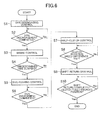
- Fig. 6 is a flowchart of an example operation of the control device 10.
- Fig. 7 is a timing chart of an example operation of the control device 10. Specifically, Fig. 7 shows a part corresponding to the process at S1 to S6 shown in Fig. 6 .
- the upper line (a) relates to a rotation angle of the shift actuator 38.
- the middle line (b) relates to a rotation angle of the shift cam 33.
- the abscissa indicates time, while the ordinate indicates a rotation angle.
- the respective rotation angles of the shift actuator 38 and the shift cam 33 change from the position L1 at the dog disengaged stage (see Fig. 3A ) via the position L2 at the dog bumping stage (see Fig. 3B ) to the position L3 at the dog engaged stage (see Fig. 3B ) .
- the lower line (c) indicates a duty ratio of a PWM signal to be given to the shift actuator 38.
- the abscissa indicates time, while the ordinate indicates a duty ratio. The duty ratio varies between -100% and +100%.
- the movable gear control unit 102 begins dog disengaging control (S1).
- the movable gear control unit 102 outputs a positive voltage to the shift actuator 38.
- a positive voltage here refers to a voltage for applying a force toward the second stationary gear 6 to the movable gear 7.
- the movable gear control unit 102 outputs a PWM signal having a duty ratio according to the difference between a target position and the current position of the movable gear 7, the target position being the position L2 at the dog bumping stage. Therefore, a positive PWM signal having the maximum duty ratio (e.g., 100%) is output at the initial stage in the dog disengaging control.
- a PWM signal may always have the maximum duty ratio during a period with the dog disengaging control, or alternatively, the maximum duty ratio may gradually decrease after elapse of a predetermined period of time.
- the engaged stage determining unit 105 monitors completion of the dog disengaged stage (S2), and upon determination of completion of the dog disengaged stage (S2: YES), notifies the movable gear control unit 102 of the completion. For example, the engaged stage determining unit 105 may determine completion of the dog disengaged stage when the shift cam 33 reaches a predetermined dog disengagement determination position Ld.
- the engaged stage determining unit 105 may measure a period of time elapsed after the start of a shift operation, and determine completion of the dog disengaged stage when a predetermined dog disengagement determination period of time elapses after the start of the shift operation.
- a period of time having elapsed after the start of a shift operation corresponds to a period of time with a force toward the second stationary gear 6 kept applied to the movable gear 7.
- the movable gear control unit 102 Upon receipt of the notice of completion of the dog disengaged stage from the engaged stage determining unit 105, the movable gear control unit 102 carries out brake control (S3) . In the brake control, the movable gear control unit 102 outputs a negative voltage to the shift actuator 38.
- a negative voltage here refers to a voltage for applying a force directed opposite from a direction toward the second stationary gear 6 (hereinafter referred to as a brake force) to the movable gear 7.
- applying a brake force to the movable gear 7 after completion of the dog disengaged stage as described above can decrease the moving speed of the movable gear 7 before the movable gear 7 reaches the position L2 at the dog bumping stage, to thereby modify the impact in bumping between the dog 74 of the movable gear 7 and the dog 64 of the second stationary gear 6.
- At least one of the duty radio (a brake duty ratio) of a negative PWM signal in the brake control and the effective period of time t (brake period) of the brake control may be determined based on, e.g., speed information on the movable gear 7 supplied from the gear speed information obtaining unit 106. That is, by increasing the brake duty d with respect to a higher moving speed of the movable gear 7 moving toward the second stationary gear 6 (that is, a larger brake force is to be applied to the movable gear 7), it is possible to sufficiently reduce the moving speed of the movable gear 7. Further, it is also possible to make uniform the impact in bumping between the dog 74 of the movable gear 7 and the dog 64 of the second stationary gear 6. Note that the identical effect can be obtained with a longer braking period of time t.
- the movable gear control unit 102 After elapse of a predetermined period of time after the start of the brake control (S4: YES), the movable gear control unit 102 ends the brake control, and then begins dog pushing control (S5) .
- the movable gear control unit 102 outputs a positive voltage to the shift actuator 38 to accelerate shifting to the dog engaged stage.
- the movable gear control unit 102 outputs a positive PWM signal having a duty ratio smaller than the maximum value.
- the engaged stage determining unit 105 monitors completion of the dog engaged stage (S6), and upon determination of completion of the dog engaged stage (S6: YES), notifies the clutch control unit 103 of the completion. For example, the engaged stage determining unit 105 may determine completion of the dog engaged stage when the shift cam 33 reaches the predetermined position L3 at the dog engaged stage.
- the clutch control unit 103 Upon receipt of the notice of completion of the dog engaged stage from the engaged stage determining unit 105, the clutch control unit 103 carries out a half-clutch control to reduce shock in shifting (S7). That is, the clutch control unit 103 keeps outputting a signal for leaving the clutch 40 in a half-clutch state to the clutch actuator 49.
- the movable gear control unit 102 After the half-clutch control begins and the rotation speed difference of the clutch 40 becomes closer to 0 (S8: YES), the movable gear control unit 102 begins shift return control to return the rotation angle of the shift actuator 38 to the original position. In addition, the clutch control unit 103 leaves the clutch 40 in a fully engaged state. After the shift return control ends and the clutch 40 comes to be in the fully engaged state (S10: YES), the shifting ends.
- the position information obtaining unit 104 obtains position information indicating the position of the movable gear 7, and the engaged stage determining unit 105 determines, based on the position information, whether or not the engagement between the dogs 52, 72 of the first stationary gear 5 and of the movable gear 7 is released. Then, upon determination that the engagement between the dogs 52, 72 of the first stationary gear 5 and of the movable gear 7 is released, the movable gear control unit 102 applies a brake force to the movable gear 7.
- This arrangement makes it easier to set a time for applying a brake force to the movable gear 7 to a time before the dogs 74, 64 of the movable gear 7 and of the second stationary gear 6 contact each other.
- the position information obtaining unit 104 obtains information on the rotation angle of the shift actuator 38 as the position information. This makes it possible to obtain position information on the movable gear 7 without providing a structure for directly determining the position of the movable gear 7.
- the position information obtaining unit 104 obtains information on the rotation angle of the shift cam 33 as the position information. This makes it possible to obtain position information on the movable gear 7 without providing a structure for directly determining the position of the movable gear 7.
- the movable gear control unit 102 begins applying a force in an opposite direction to the movable gear 7 after elapse of a predetermined period of time after the movable gear 7 starts moving toward the second speed. This makes it possible, without using the position information on the movable gear 7, to apply a brake force to the movable gear 7 before the dogs 74, 64 of the movable gear 7 and of the second stationary gear 6 contact each other.
- the gear speed information obtaining unit 106 obtains speed information indicating the moving speed of the movable gear 7, and the movable gear control unit 102 determines the magnitude of a brake force according to the moving speed of the movable gear 7. This makes it possible to sufficiently reduce the moving speed of the movable gear 7 before the dogs 74, 64 of the movable gear 7 and of the second stationary gear 6 contact each other even though the moving speed of the movable gear 7 is high.
- the gear speed information obtaining unit 106 obtains speed information indicating the moving speed of the movable gear 7, and the movable gear control unit 102 determines according to the moving speed of the movable gear 7, the duration of a brake force kept applied to the movable gear 7.
- Fig. 8 is a timing chart for an example operation according to a first modified example. In the following, a point identical to that in the above described example operation will not be described in detail.
- the movable gear control unit 102 upon determination of completion of the dog disengaged stage and thereafter elapse of a predetermined waiting period of time t2, the movable gear control unit 102 begins brake control.
- the waiting period of time t2 is set within a range with the movable gear 7 not reaching a position at the dog bumping stage.
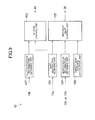
- Fig. 9 is a block diagram showing an example functional structure of a second modified example.
- Fig. 10 is a timing chart for an example operation according to the second modified example. In the following, a point identical to that in the above described operation example will not be described in detail.
- the control device 10 has a gear target position calculation unit 108 for calculating a target position of the movable gear 7.
- the movable gear control unit 102 carries out feedback control for changing an output from the shift actuator 38 according to the difference between a target position of the movable gear 7 output from the gear target position calculation unit 108 and the current position of the movable gear 7 output from the gear position information obtaining unit 104.
- the feedback control is e.g., PID control, and that the target position of the movable gear 7 is set such that a brake force is applied to the movable gear 7 before the movable gear 7 reaches the position L2 at the dog bumping stage.
- a brake force is applied to the movable gear 7 when the movable gear 7 approaches the position L2 at the dog bumping stage.
- the moving speed of the movable gear 7 can be decreased before the dogs 74, 64 of the movable gear 7 and of the second stationary gear 6 contact each other.
- the gear target position calculation unit 108 may update the target position of the movable gear 7 to the position L3 or a nearby position at the dog engaged stage after the movable gear 7 reaches the position L2 at the dog bumping stage. This makes it possible to generate a pushing force after the movable gear 7 reaches the position L2 at the dog engaged stage to thereby accelerate completion of the dog engaged stage.
Landscapes
- Engineering & Computer Science (AREA)
- General Engineering & Computer Science (AREA)
- Mechanical Engineering (AREA)
- Gear-Shifting Mechanisms (AREA)
- Control Of Transmission Device (AREA)
Applications Claiming Priority (1)
| Application Number | Priority Date | Filing Date | Title |
|---|---|---|---|
| JP2011094413A JP5197791B2 (ja) | 2011-04-20 | 2011-04-20 | 変速装置及び鞍乗型車両 |
Publications (3)
| Publication Number | Publication Date |
|---|---|
| EP2515009A2 true EP2515009A2 (de) | 2012-10-24 |
| EP2515009A3 EP2515009A3 (de) | 2014-08-13 |
| EP2515009B1 EP2515009B1 (de) | 2015-08-05 |
Family
ID=45406530
Family Applications (1)
| Application Number | Title | Priority Date | Filing Date |
|---|---|---|---|
| EP11195464.0A Active EP2515009B1 (de) | 2011-04-20 | 2011-12-23 | Getriebevorrichtung und Grätschsitzfahrzeug |
Country Status (2)
| Country | Link |
|---|---|
| EP (1) | EP2515009B1 (de) |
| JP (1) | JP5197791B2 (de) |
Cited By (6)
| Publication number | Priority date | Publication date | Assignee | Title |
|---|---|---|---|---|
| CN103968064A (zh) * | 2013-01-31 | 2014-08-06 | 爱信精机株式会社 | 自动换挡装置 |
| US8914209B2 (en) | 2013-01-31 | 2014-12-16 | Aisin Seiki Kabushiki Kaisha | Automatic shift apparatus |
| US8965648B1 (en) | 2013-10-25 | 2015-02-24 | Yamaha Hatsudoki Kabushiki Kaisha | Transmission and straddle-type vehicle |
| CN105438385A (zh) * | 2015-12-11 | 2016-03-30 | 东莞市台铃车业有限公司 | 一种电驱动动力装置及电动摩托车 |
| EP3336392A4 (de) * | 2015-08-10 | 2018-07-25 | Yamaha Hatsudoki Kabushiki Kaisha | Getriebe und fahrzeug |
| CN115539521A (zh) * | 2021-06-29 | 2022-12-30 | 株式会社电装 | 驱动装置 |
Families Citing this family (3)
| Publication number | Priority date | Publication date | Assignee | Title |
|---|---|---|---|---|
| JP6756145B2 (ja) * | 2016-04-25 | 2020-09-16 | スズキ株式会社 | 自動変速機 |
| JP7130713B2 (ja) * | 2020-09-30 | 2022-09-05 | 本田技研工業株式会社 | 車両の変速装置 |
| WO2024238844A1 (en) * | 2023-05-17 | 2024-11-21 | SkyRyse, Inc. | Engine management module |
Family Cites Families (6)
| Publication number | Priority date | Publication date | Assignee | Title |
|---|---|---|---|---|
| JPS59217038A (ja) * | 1983-05-25 | 1984-12-07 | Mitsubishi Electric Corp | 変速制御装置 |
| JPS60146953A (ja) * | 1983-12-30 | 1985-08-02 | Isuzu Motors Ltd | 自動車用自動変速装置のギヤシフト制御方法 |
| JP4280330B2 (ja) * | 1997-09-13 | 2009-06-17 | 本田技研工業株式会社 | 電動式変速装置の変速制御方法 |
| DE50100965D1 (de) * | 2001-06-19 | 2003-12-18 | Getrag Ford Transmissions Gmbh | Automatisierter Antriebsstrang für ein Kraftfahrzeug und Verfahren zum Einlegen eines Ganges |
| DE102008000642B4 (de) * | 2008-03-13 | 2023-05-17 | Zf Friedrichshafen Ag | Verfahren zum Ansteuern zumindest einer Schalteinrichtung |
| JP5253068B2 (ja) * | 2008-09-29 | 2013-07-31 | 本田技研工業株式会社 | 変速制御装置 |
-
2011
- 2011-04-20 JP JP2011094413A patent/JP5197791B2/ja active Active
- 2011-12-23 EP EP11195464.0A patent/EP2515009B1/de active Active
Cited By (14)
| Publication number | Priority date | Publication date | Assignee | Title |
|---|---|---|---|---|
| EP2762755A3 (de) * | 2013-01-31 | 2016-05-04 | Aisin Seiki Kabushiki Kaisha | Automatikschaltvorrichtung |
| US8914209B2 (en) | 2013-01-31 | 2014-12-16 | Aisin Seiki Kabushiki Kaisha | Automatic shift apparatus |
| CN103968064A (zh) * | 2013-01-31 | 2014-08-06 | 爱信精机株式会社 | 自动换挡装置 |
| US8983744B2 (en) | 2013-01-31 | 2015-03-17 | Aisin Seiki Kabushiki Kaisha | Automatic shift apparatus |
| EP2865915A3 (de) * | 2013-10-25 | 2016-08-10 | Yamaha Hatsudoki Kabushiki Kaisha | Antrieb und Grätschsitz-Fahrzeug |
| US8965648B1 (en) | 2013-10-25 | 2015-02-24 | Yamaha Hatsudoki Kabushiki Kaisha | Transmission and straddle-type vehicle |
| EP3336392A4 (de) * | 2015-08-10 | 2018-07-25 | Yamaha Hatsudoki Kabushiki Kaisha | Getriebe und fahrzeug |
| EP3336391A4 (de) * | 2015-08-10 | 2018-09-26 | Yamaha Hatsudoki Kabushiki Kaisha | Getriebe |
| US11111986B2 (en) | 2015-08-10 | 2021-09-07 | Yamaha Hatsudoki Kabushiki Kaisha | Transmission and vehicle |
| US11137049B2 (en) | 2015-08-10 | 2021-10-05 | Yamaha Hatsudoki Kabushiki Kaisha | Transmission |
| US11187305B2 (en) | 2015-08-10 | 2021-11-30 | Yamaha Hatsudoki Kabushiki Kaisha | Transmission and vehicle |
| EP4296539A3 (de) * | 2015-08-10 | 2024-03-20 | Yamaha Hatsudoki Kabushiki Kaisha | Getriebe und fahrzeug |
| CN105438385A (zh) * | 2015-12-11 | 2016-03-30 | 东莞市台铃车业有限公司 | 一种电驱动动力装置及电动摩托车 |
| CN115539521A (zh) * | 2021-06-29 | 2022-12-30 | 株式会社电装 | 驱动装置 |
Also Published As
| Publication number | Publication date |
|---|---|
| EP2515009A3 (de) | 2014-08-13 |
| JP2012225436A (ja) | 2012-11-15 |
| JP5197791B2 (ja) | 2013-05-15 |
| EP2515009B1 (de) | 2015-08-05 |
Similar Documents
| Publication | Publication Date | Title |
|---|---|---|
| EP2515009B1 (de) | Getriebevorrichtung und Grätschsitzfahrzeug | |
| US8583336B2 (en) | Power transmission control apparatus for vehicle | |
| EP1669270B1 (de) | Vorrichtung und Verfahren für eine Getriebesteuerung eines Fahrzeuges mit Sattel | |
| US8205516B2 (en) | Speed control method of automatic transmission | |
| US20150329011A1 (en) | Electric vehicle | |
| US9695933B2 (en) | Automatic transmission control device | |
| KR20120013315A (ko) | 하나 이상의 형태 결합식 시프팅 요소를 구비한 변속기 작동 방법 | |
| EP2515008B1 (de) | Getriebevorrichtung und Grätschsitzfahrzeug | |
| US8989974B2 (en) | Method for the operation of a transmission device in a vehicle drive train, comprising at least one form-fitting shifting element and multiple frictionally engaged shifting elements | |
| EP2783969B1 (de) | Steuerung für Elektrofahrrad, Antriebseinheit für Elektrofahrrad und Elektrofahrrad | |
| JP5863333B2 (ja) | 自動クラッチ制御装置 | |
| US9145970B2 (en) | Control device for automatic transmission | |
| JP5011573B2 (ja) | クラッチ制御装置 | |
| EP2708779B1 (de) | Getriebevorrichtung und Fahrzeug | |
| KR101714244B1 (ko) | Avh 기능 구현을 위한 차량 제어방법 | |
| JP2006153173A (ja) | 自動変速制御装置 | |
| JP6439324B2 (ja) | 車両の制御装置 | |
| JP6866578B2 (ja) | デュアルクラッチ式変速機の制御装置 | |
| JP2020082891A (ja) | 車両の制御装置及び、制御方法 | |
| JP2018066413A (ja) | 変速機の制御装置 | |
| JP5879067B2 (ja) | 動力伝達装置 | |
| JP5065947B2 (ja) | 駆動系制御装置 | |
| JP2017155825A (ja) | 車両用自動変速装置 | |
| KR20140060183A (ko) | 수동 변속 차량용 배력 클러치 장치 | |
| JP6881216B2 (ja) | 変速機の制御装置 |
Legal Events
| Date | Code | Title | Description |
|---|---|---|---|
| PUAI | Public reference made under article 153(3) epc to a published international application that has entered the european phase |
Free format text: ORIGINAL CODE: 0009012 |
|
| AK | Designated contracting states |
Kind code of ref document: A2 Designated state(s): AL AT BE BG CH CY CZ DE DK EE ES FI FR GB GR HR HU IE IS IT LI LT LU LV MC MK MT NL NO PL PT RO RS SE SI SK SM TR |
|
| AX | Request for extension of the european patent |
Extension state: BA ME |
|
| PUAL | Search report despatched |
Free format text: ORIGINAL CODE: 0009013 |
|
| AK | Designated contracting states |
Kind code of ref document: A3 Designated state(s): AL AT BE BG CH CY CZ DE DK EE ES FI FR GB GR HR HU IE IS IT LI LT LU LV MC MK MT NL NO PL PT RO RS SE SI SK SM TR |
|
| AX | Request for extension of the european patent |
Extension state: BA ME |
|
| RIC1 | Information provided on ipc code assigned before grant |
Ipc: F16H 61/28 20060101AFI20140704BHEP |
|
| 17P | Request for examination filed |
Effective date: 20141202 |
|
| RBV | Designated contracting states (corrected) |
Designated state(s): AL AT BE BG CH CY CZ DE DK EE ES FI FR GB GR HR HU IE IS IT LI LT LU LV MC MK MT NL NO PL PT RO RS SE SI SK SM TR |
|
| GRAP | Despatch of communication of intention to grant a patent |
Free format text: ORIGINAL CODE: EPIDOSNIGR1 |
|
| RIC1 | Information provided on ipc code assigned before grant |
Ipc: F16H 61/28 20060101AFI20150319BHEP |
|
| INTG | Intention to grant announced |
Effective date: 20150408 |
|
| GRAS | Grant fee paid |
Free format text: ORIGINAL CODE: EPIDOSNIGR3 |
|
| GRAA | (expected) grant |
Free format text: ORIGINAL CODE: 0009210 |
|
| AK | Designated contracting states |
Kind code of ref document: B1 Designated state(s): AL AT BE BG CH CY CZ DE DK EE ES FI FR GB GR HR HU IE IS IT LI LT LU LV MC MK MT NL NO PL PT RO RS SE SI SK SM TR |
|
| REG | Reference to a national code |
Ref country code: GB Ref legal event code: FG4D |
|
| REG | Reference to a national code |
Ref country code: CH Ref legal event code: EP |
|
| REG | Reference to a national code |
Ref country code: AT Ref legal event code: REF Ref document number: 740909 Country of ref document: AT Kind code of ref document: T Effective date: 20150815 |
|
| REG | Reference to a national code |
Ref country code: IE Ref legal event code: FG4D |
|
| REG | Reference to a national code |
Ref country code: DE Ref legal event code: R096 Ref document number: 602011018418 Country of ref document: DE |
|
| REG | Reference to a national code |
Ref country code: AT Ref legal event code: MK05 Ref document number: 740909 Country of ref document: AT Kind code of ref document: T Effective date: 20150805 |
|
| REG | Reference to a national code |
Ref country code: FR Ref legal event code: PLFP Year of fee payment: 5 |
|
| REG | Reference to a national code |
Ref country code: LT Ref legal event code: MG4D |
|
| REG | Reference to a national code |
Ref country code: NL Ref legal event code: MP Effective date: 20150805 |
|
| PG25 | Lapsed in a contracting state [announced via postgrant information from national office to epo] |
Ref country code: LT Free format text: LAPSE BECAUSE OF FAILURE TO SUBMIT A TRANSLATION OF THE DESCRIPTION OR TO PAY THE FEE WITHIN THE PRESCRIBED TIME-LIMIT Effective date: 20150805 Ref country code: NO Free format text: LAPSE BECAUSE OF FAILURE TO SUBMIT A TRANSLATION OF THE DESCRIPTION OR TO PAY THE FEE WITHIN THE PRESCRIBED TIME-LIMIT Effective date: 20151105 Ref country code: LV Free format text: LAPSE BECAUSE OF FAILURE TO SUBMIT A TRANSLATION OF THE DESCRIPTION OR TO PAY THE FEE WITHIN THE PRESCRIBED TIME-LIMIT Effective date: 20150805 Ref country code: FI Free format text: LAPSE BECAUSE OF FAILURE TO SUBMIT A TRANSLATION OF THE DESCRIPTION OR TO PAY THE FEE WITHIN THE PRESCRIBED TIME-LIMIT Effective date: 20150805 Ref country code: GR Free format text: LAPSE BECAUSE OF FAILURE TO SUBMIT A TRANSLATION OF THE DESCRIPTION OR TO PAY THE FEE WITHIN THE PRESCRIBED TIME-LIMIT Effective date: 20151106 |
|
| PG25 | Lapsed in a contracting state [announced via postgrant information from national office to epo] |
Ref country code: AT Free format text: LAPSE BECAUSE OF FAILURE TO SUBMIT A TRANSLATION OF THE DESCRIPTION OR TO PAY THE FEE WITHIN THE PRESCRIBED TIME-LIMIT Effective date: 20150805 Ref country code: RS Free format text: LAPSE BECAUSE OF FAILURE TO SUBMIT A TRANSLATION OF THE DESCRIPTION OR TO PAY THE FEE WITHIN THE PRESCRIBED TIME-LIMIT Effective date: 20150805 Ref country code: SE Free format text: LAPSE BECAUSE OF FAILURE TO SUBMIT A TRANSLATION OF THE DESCRIPTION OR TO PAY THE FEE WITHIN THE PRESCRIBED TIME-LIMIT Effective date: 20150805 Ref country code: PL Free format text: LAPSE BECAUSE OF FAILURE TO SUBMIT A TRANSLATION OF THE DESCRIPTION OR TO PAY THE FEE WITHIN THE PRESCRIBED TIME-LIMIT Effective date: 20150805 Ref country code: IS Free format text: LAPSE BECAUSE OF FAILURE TO SUBMIT A TRANSLATION OF THE DESCRIPTION OR TO PAY THE FEE WITHIN THE PRESCRIBED TIME-LIMIT Effective date: 20151205 Ref country code: PT Free format text: LAPSE BECAUSE OF FAILURE TO SUBMIT A TRANSLATION OF THE DESCRIPTION OR TO PAY THE FEE WITHIN THE PRESCRIBED TIME-LIMIT Effective date: 20151207 Ref country code: ES Free format text: LAPSE BECAUSE OF FAILURE TO SUBMIT A TRANSLATION OF THE DESCRIPTION OR TO PAY THE FEE WITHIN THE PRESCRIBED TIME-LIMIT Effective date: 20150805 Ref country code: HR Free format text: LAPSE BECAUSE OF FAILURE TO SUBMIT A TRANSLATION OF THE DESCRIPTION OR TO PAY THE FEE WITHIN THE PRESCRIBED TIME-LIMIT Effective date: 20150805 |
|
| PG25 | Lapsed in a contracting state [announced via postgrant information from national office to epo] |
Ref country code: NL Free format text: LAPSE BECAUSE OF FAILURE TO SUBMIT A TRANSLATION OF THE DESCRIPTION OR TO PAY THE FEE WITHIN THE PRESCRIBED TIME-LIMIT Effective date: 20150805 |
|
| PG25 | Lapsed in a contracting state [announced via postgrant information from national office to epo] |
Ref country code: DK Free format text: LAPSE BECAUSE OF FAILURE TO SUBMIT A TRANSLATION OF THE DESCRIPTION OR TO PAY THE FEE WITHIN THE PRESCRIBED TIME-LIMIT Effective date: 20150805 Ref country code: SK Free format text: LAPSE BECAUSE OF FAILURE TO SUBMIT A TRANSLATION OF THE DESCRIPTION OR TO PAY THE FEE WITHIN THE PRESCRIBED TIME-LIMIT Effective date: 20150805 Ref country code: EE Free format text: LAPSE BECAUSE OF FAILURE TO SUBMIT A TRANSLATION OF THE DESCRIPTION OR TO PAY THE FEE WITHIN THE PRESCRIBED TIME-LIMIT Effective date: 20150805 Ref country code: CZ Free format text: LAPSE BECAUSE OF FAILURE TO SUBMIT A TRANSLATION OF THE DESCRIPTION OR TO PAY THE FEE WITHIN THE PRESCRIBED TIME-LIMIT Effective date: 20150805 |
|
| REG | Reference to a national code |
Ref country code: DE Ref legal event code: R097 Ref document number: 602011018418 Country of ref document: DE |
|
| PG25 | Lapsed in a contracting state [announced via postgrant information from national office to epo] |
Ref country code: RO Free format text: LAPSE BECAUSE OF FAILURE TO SUBMIT A TRANSLATION OF THE DESCRIPTION OR TO PAY THE FEE WITHIN THE PRESCRIBED TIME-LIMIT Effective date: 20150805 Ref country code: BE Free format text: LAPSE BECAUSE OF NON-PAYMENT OF DUE FEES Effective date: 20151231 |
|
| PLBE | No opposition filed within time limit |
Free format text: ORIGINAL CODE: 0009261 |
|
| STAA | Information on the status of an ep patent application or granted ep patent |
Free format text: STATUS: NO OPPOSITION FILED WITHIN TIME LIMIT |
|
| 26N | No opposition filed |
Effective date: 20160509 |
|
| PG25 | Lapsed in a contracting state [announced via postgrant information from national office to epo] |
Ref country code: LU Free format text: LAPSE BECAUSE OF FAILURE TO SUBMIT A TRANSLATION OF THE DESCRIPTION OR TO PAY THE FEE WITHIN THE PRESCRIBED TIME-LIMIT Effective date: 20151223 Ref country code: MC Free format text: LAPSE BECAUSE OF FAILURE TO SUBMIT A TRANSLATION OF THE DESCRIPTION OR TO PAY THE FEE WITHIN THE PRESCRIBED TIME-LIMIT Effective date: 20150805 |
|
| REG | Reference to a national code |
Ref country code: CH Ref legal event code: PL |
|
| PG25 | Lapsed in a contracting state [announced via postgrant information from national office to epo] |
Ref country code: SI Free format text: LAPSE BECAUSE OF FAILURE TO SUBMIT A TRANSLATION OF THE DESCRIPTION OR TO PAY THE FEE WITHIN THE PRESCRIBED TIME-LIMIT Effective date: 20150805 |
|
| REG | Reference to a national code |
Ref country code: IE Ref legal event code: MM4A |
|
| PG25 | Lapsed in a contracting state [announced via postgrant information from national office to epo] |
Ref country code: LI Free format text: LAPSE BECAUSE OF NON-PAYMENT OF DUE FEES Effective date: 20151231 Ref country code: IE Free format text: LAPSE BECAUSE OF NON-PAYMENT OF DUE FEES Effective date: 20151223 Ref country code: CH Free format text: LAPSE BECAUSE OF NON-PAYMENT OF DUE FEES Effective date: 20151231 |
|
| REG | Reference to a national code |
Ref country code: FR Ref legal event code: PLFP Year of fee payment: 6 |
|
| PG25 | Lapsed in a contracting state [announced via postgrant information from national office to epo] |
Ref country code: BE Free format text: LAPSE BECAUSE OF FAILURE TO SUBMIT A TRANSLATION OF THE DESCRIPTION OR TO PAY THE FEE WITHIN THE PRESCRIBED TIME-LIMIT Effective date: 20150805 |
|
| PG25 | Lapsed in a contracting state [announced via postgrant information from national office to epo] |
Ref country code: HU Free format text: LAPSE BECAUSE OF FAILURE TO SUBMIT A TRANSLATION OF THE DESCRIPTION OR TO PAY THE FEE WITHIN THE PRESCRIBED TIME-LIMIT; INVALID AB INITIO Effective date: 20111223 Ref country code: SM Free format text: LAPSE BECAUSE OF FAILURE TO SUBMIT A TRANSLATION OF THE DESCRIPTION OR TO PAY THE FEE WITHIN THE PRESCRIBED TIME-LIMIT Effective date: 20150805 Ref country code: BG Free format text: LAPSE BECAUSE OF FAILURE TO SUBMIT A TRANSLATION OF THE DESCRIPTION OR TO PAY THE FEE WITHIN THE PRESCRIBED TIME-LIMIT Effective date: 20150805 |
|
| PG25 | Lapsed in a contracting state [announced via postgrant information from national office to epo] |
Ref country code: CY Free format text: LAPSE BECAUSE OF FAILURE TO SUBMIT A TRANSLATION OF THE DESCRIPTION OR TO PAY THE FEE WITHIN THE PRESCRIBED TIME-LIMIT Effective date: 20150805 |
|
| PG25 | Lapsed in a contracting state [announced via postgrant information from national office to epo] |
Ref country code: MT Free format text: LAPSE BECAUSE OF FAILURE TO SUBMIT A TRANSLATION OF THE DESCRIPTION OR TO PAY THE FEE WITHIN THE PRESCRIBED TIME-LIMIT Effective date: 20150805 |
|
| REG | Reference to a national code |
Ref country code: FR Ref legal event code: PLFP Year of fee payment: 7 |
|
| PG25 | Lapsed in a contracting state [announced via postgrant information from national office to epo] |
Ref country code: MK Free format text: LAPSE BECAUSE OF FAILURE TO SUBMIT A TRANSLATION OF THE DESCRIPTION OR TO PAY THE FEE WITHIN THE PRESCRIBED TIME-LIMIT Effective date: 20150805 Ref country code: TR Free format text: LAPSE BECAUSE OF FAILURE TO SUBMIT A TRANSLATION OF THE DESCRIPTION OR TO PAY THE FEE WITHIN THE PRESCRIBED TIME-LIMIT Effective date: 20150805 |
|
| PG25 | Lapsed in a contracting state [announced via postgrant information from national office to epo] |
Ref country code: AL Free format text: LAPSE BECAUSE OF FAILURE TO SUBMIT A TRANSLATION OF THE DESCRIPTION OR TO PAY THE FEE WITHIN THE PRESCRIBED TIME-LIMIT Effective date: 20150805 |
|
| P01 | Opt-out of the competence of the unified patent court (upc) registered |
Effective date: 20230527 |
|
| PGFP | Annual fee paid to national office [announced via postgrant information from national office to epo] |
Ref country code: DE Payment date: 20251211 Year of fee payment: 15 |
|
| PGFP | Annual fee paid to national office [announced via postgrant information from national office to epo] |
Ref country code: GB Payment date: 20251219 Year of fee payment: 15 |
|
| PGFP | Annual fee paid to national office [announced via postgrant information from national office to epo] |
Ref country code: IT Payment date: 20251223 Year of fee payment: 15 |
|
| PGFP | Annual fee paid to national office [announced via postgrant information from national office to epo] |
Ref country code: FR Payment date: 20251222 Year of fee payment: 15 |