EP2519068A1 - Verfahren zur Durchführung von semipersistenten Ressourcen entsprechenden Datenübertragungen in drahtlosen Kommunikationssystemen und dazugehörige Vorrichtung - Google Patents
Verfahren zur Durchführung von semipersistenten Ressourcen entsprechenden Datenübertragungen in drahtlosen Kommunikationssystemen und dazugehörige Vorrichtung Download PDFInfo
- Publication number
- EP2519068A1 EP2519068A1 EP12005427A EP12005427A EP2519068A1 EP 2519068 A1 EP2519068 A1 EP 2519068A1 EP 12005427 A EP12005427 A EP 12005427A EP 12005427 A EP12005427 A EP 12005427A EP 2519068 A1 EP2519068 A1 EP 2519068A1
- Authority
- EP
- European Patent Office
- Prior art keywords
- semi
- persistent
- grant
- user equipment
- data
- Prior art date
- Legal status (The legal status is an assumption and is not a legal conclusion. Google has not performed a legal analysis and makes no representation as to the accuracy of the status listed.)
- Withdrawn
Links
- 230000005540 biological transmission Effects 0.000 title claims abstract description 87
- 238000000034 method Methods 0.000 title claims abstract description 51
- 238000004891 communication Methods 0.000 title claims abstract description 50
- 230000008569 process Effects 0.000 claims description 41
- 238000012545 processing Methods 0.000 claims description 2
- 238000010586 diagram Methods 0.000 description 4
- 101000741965 Homo sapiens Inactive tyrosine-protein kinase PRAG1 Proteins 0.000 description 3
- 102100038659 Inactive tyrosine-protein kinase PRAG1 Human genes 0.000 description 3
- 230000006870 function Effects 0.000 description 3
- 238000013500 data storage Methods 0.000 description 2
- 230000007774 longterm Effects 0.000 description 2
- 102100036409 Activated CDC42 kinase 1 Human genes 0.000 description 1
- 230000004913 activation Effects 0.000 description 1
- 230000000593 degrading effect Effects 0.000 description 1
- 230000001419 dependent effect Effects 0.000 description 1
- 238000011161 development Methods 0.000 description 1
- 230000018109 developmental process Effects 0.000 description 1
- VJYFKVYYMZPMAB-UHFFFAOYSA-N ethoprophos Chemical compound CCCSP(=O)(OCC)SCCC VJYFKVYYMZPMAB-UHFFFAOYSA-N 0.000 description 1
- 238000010295 mobile communication Methods 0.000 description 1
- 238000012986 modification Methods 0.000 description 1
- 230000004048 modification Effects 0.000 description 1
- 238000012544 monitoring process Methods 0.000 description 1
- 230000003287 optical effect Effects 0.000 description 1
- 238000005457 optimization Methods 0.000 description 1
- 230000002085 persistent effect Effects 0.000 description 1
- 230000002265 prevention Effects 0.000 description 1
- 238000013468 resource allocation Methods 0.000 description 1
Images



Classifications
-
- H—ELECTRICITY
- H04—ELECTRIC COMMUNICATION TECHNIQUE
- H04W—WIRELESS COMMUNICATION NETWORKS
- H04W72/00—Local resource management
- H04W72/20—Control channels or signalling for resource management
- H04W72/23—Control channels or signalling for resource management in the downlink direction of a wireless link, i.e. towards a terminal
Definitions
- the present invention relates to a method and apparatus for performing data transmission corresponding to semi-persistent resources in a wireless communications system.
- an evolved universal terrestrial radio access network includes a plurality of evolved Node-Bs (eNBs) and communicates with a plurality of mobile stations, also referred as user equipments (UEs).
- eNBs evolved Node-Bs
- UEs user equipments
- the E-UTRAN and the eNBs are seen as part of the network side.
- SPS Semi-persistent scheduling
- PDCCH physical downlink control channel
- DSCH downlink shared channel
- the control information involved with SPS includes a C-RNTI (cell radio network temporary identifier) and an SPS C-RNTI.
- the C-RNTI provides the UE with a unique UE identification at the cell level identifying RRC (radio resource control) Connection and used for scheduling.
- the SPS C-RNTI is a UE specific identity assigned by RRC for activation or modification of semi-persistent resources.
- the related semi-persistent downlink scheduling operation of the UE is described below. (1) In the sub-frames where the UE has semi-persistent downlink resources, if the UE cannot find its C-RNTI on the PDCCH(s), a downlink transmission according to the semi-persistent allocation that the UE has been assigned in a TTI (Transmission Time Interval) is assumed. (2) Otherwise, in the sub-frames where the UE has the semi-persistent downlink resources, if the UE finds its C-RNTI on the PDCCH(s), the PDCCH allocation overrides the semi-persistent allocation for that TTI, and the UE does not decode the semi-persistent resources.
- TTI Transmission Time Interval
- the related semi-persistent uplink scheduling operation of the UE is described below.
- (3) In the sub-frames where the UE has semi-persistent uplink resources, if the UE cannot find its C-RNTI on the PDCCH(s), an uplink transmission according to the semi-persistent allocation that the UE has been assigned in the TTI can be made.
- the PDCCH allocation overrides the persistent allocation for that TTI, and the transmission of the UE follows the PDCCH allocation instead of the semi-persistent allocation.
- Retransmissions are either implicitly allocated in which case the UE uses the semi-persistent uplink allocation, or explicitly allocated via PDCCH(s) in which case the UE does not follow the semi-persistent allocation.
- the UE determines whether to use PDCCH allocation or semi-persistent allocation only according to the C-RNTI sent on PDCCH.
- the C-RNTI is unable to indicate the UE that an uplink or a downlink grant is accompanied.
- C-RNTI allocation without the related grant allocation can cause radio resource misusing in related subframes, thereby degrading system performance.
- SI-RNTI System Information RNTI
- a broadcast system information may be allocated and overlapped the C-RNTI. Therefore, the following issues are found according to the abovementioned downlink and uplink scheduling operations.
- Issue 1 is described in this paragraph.
- a sub-frame where a UE 1 has semi-persistent downlink resources if an eNB allocates this sub-frame to another UE (UE 2) for dynamic scheduling, the UE 1 cannot find its C-RNTI but still decodes this sub-frame with semi-persistent allocation. However, the UE 1 cannot decode it successfully according to (1) and thereby reports a NACK (negative acknowledgement) to the eNB. This makes interference to UE 2 transmission for ACKs (positive acknowledgements) or NACKs.
- Issue 3 is described in this paragraph.
- the UE finds its C-RNTI on PDCCH(s) for uplink resource assignment for dynamic scheduling, the UE does not decode the semi-persistent resources and try to decode the PDSCH with the PDCCH allocation according to (2).
- the PDCCH allocation is used for uplink dynamic scheduling resources.
- the present invention aims at providing a method and apparatus for performing data transmission corresponding to semi-persistent resources for a UE of a wireless communications system, so as to solve the abovementioned problems.
- Fig. 1 illustrates a schematic diagram of a wireless communication system 10.
- the wireless communication system 10 is an LTE (long-term evolution) system or other mobile communication systems, and is briefly composed of a network and a plurality of UEs.
- the network and the UEs are simply utilized for illustrating the structure of the wireless communication system 10.
- a EUTRAN evolved-UTAN
- eNBs evolved base stations
- the UEs can be devices such as mobile phones, computer systems, etc.
- two different communications links are defined between the network and the UE.
- One communications link is a downlink where the network and the UE act as a transmitter or a receiver respectively.
- the other communications link is an uplink where the UE and the network act as a transmitter or a receiver respectively.
- the communication device 20 includes a processor 200, a computer readable recording medium 210, a communication interfacing unit 220 and a control unit 230.
- the computer readable recording medium 210 is any data storage device that stores storage data 212 thereafter read and processed by the processor 200.
- the stores storage data 212 includes program code 214 corresponding to a process for performing data transmission corresponding to semi-persistent resources.
- Examples of the computer readable recording medium 210 include a subscriber identity module (SIM), read-only memory (ROM), random-access memory (RAM), CD-ROMs, magnetic tapes, hard disks, optical data storage devices, and carrier waves (such as data transmission through the Internet).
- the control unit 230 controls the communication interfacing unit 220 and related operations and states of the communication device 20 according to processing results of the processor 200.
- the communication interfacing unit 220 is preferably a radio transceiver for wirelessly communicating with other communication devices.
- the communication device 20 can be the UEs in Fig. 1 and supports a semi-persistent scheduling (SPS) function including use of a semi-persistent uplink grant or a semi-persistent downlink grant.
- the communication device 20 is capable of receiving a downlink grant, an uplink grant, a semi-persistent downlink grant, a semi-persistent uplink grant, a cell identifier, an SPS cell identifier, or a system information identifier from the network by monitoring a physical channel.
- the downlink and uplink grants are regarded as non-semi-persistent downlink and uplink grants respectively.
- the cell identifier provides the communication device 20 with a unique identification at a cell level.
- the system information identifier indicates the communication device 20 of existence of broadcast system information.
- the cell identifier may be a C-RNTI (cell radio network temporary identifier)
- the SPS cell identifier may be an SPS C-RNTI
- the system information identifier may be an SI-RNTI (system information radio network temporary identifier)
- the physical channel may be a physical downlink control channel (PDCCH).
- downlink/uplink grant is used to play a role as non-semi-persistent grants.
- the non-semi-persistent grants of the present invention embodiments are not limited to the above and can be resource allocation configured on the PDCCH or by an upper layer, such as a RRC (Radio Resource Control) layer.
- RRC Radio Resource Control
- Fig. 3 illustrates a flowchart of a process 30.
- the process 30 is utilized for performing data transmission corresponding to semi-persistent resources for a UE of a wireless communication system.
- the process 30 can be compiled into the program code 214 of the storage data 212 and includes the following steps:
- the UE performs the data transmission process corresponding to the communications link (e.g. uplink or downlink) according to the semi-persistent grant in the transmission opportunity of the semi-persistent grant when the UE does not find any non-semi-persistent grant on the physical channel for the transmission opportunity. Therefore, the misuse of the semi-persistent function can be avoided.
- the communications link e.g. uplink or downlink
- the data transmission process, the semi-persistent grant, and the non-semi-persistent grant correspond to the same communications link, such as uplink or downlink.
- the physical channel may be the PDCCH; the non-semi-persistent grant is an uplink or downlink grant; the transmission opportunity may be a subframe or a TTI (Transmission Time Interval); the data transmission process related to downlink is receiving a data block; the data transmission process related to uplink is an uplink new transmission or a retransmission.
- TTI Transmission Time Interval
- the UE performs the data transmission process according to the semi-persistent grant in the transmission opportunity when none of a non-semi-persistent grant, a cell identifier (e.g. C-RNTI) of the UE, and a semi-persistent scheduling (SPS) cell identifier (e.g. SPS C-RNTI) of the UE is found on the physical channel for the transmission opportunity.
- the UE can further stop the data transmission process in the transmission opportunity when the non-semi-persistent grant whose frequency allocation collides with frequency allocation of the semi-persistent grant is found on the physical channel.
- the UE can detect the cell identifier of the UE and the SPS cell identifier of the UE on the physical channel for the transmission opportunity. In this situation, the UE stops the data transmission process in the transmission opportunity when the non-semi-persistent grant whose frequency allocation collides with frequency allocation of the semi-persistent grant is found on the physical channel and neither cell identifier nor SPS cell identifier is found on the physical channel for the transmission opportunity.
- the process 30 can resolve the problems of the issue 1 (downlink case) of the prior art.
- the UE 1 In the sub-frame where the UE 1 has a semi-persistent downlink grant, if the eNB allocates this sub-frame to the UE 2 for dynamic scheduling, the UE 1 checks and finds a downlink grant and a C-RNTI that is not allocated to the UE 1 on the PDCCH. When the found downlink grant collides with the semi-persistent downlink grant in frequency allocation, the UE 1 stops receiving a data block in the sub-frame. Thus, the unsuccessful decoding and the following NACK transmission are avoided.
- a similar way to the above can also solve the issue 4 (uplink case) of the prior art.
- the process 30 can resolve the problems of the issue 6 of the prior art.
- the UE 1 In the sub-frame where the UE 1 has a semi-persistent uplink grant for retransmission, when the eNB allocates this sub-frame to the UE 2 for dynamic scheduling, the UE 1 checks and finds an uplink grant and a C-RNTI that is not allocated to the UE 1. When the found uplink grant collides with the semi-persistent uplink grant in frequency allocation, the UE 1 stops any uplink retransmission in the sub-frame. Thus, the UE 2 data transmission is not interfered.
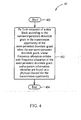
- FIG. 4 illustrates a flowchart of a process 40 according to an embodiment of the present invention.
- the process 40 utilized for performing data transmission corresponding to semi-persistent downlink resources for a UE of a wireless communication system.
- the process 40 can be compiled into the program code 214 of the storage data 212 and includes the following steps:
- the UE receives the data block according to the non-semi-persistent downlink grant (e.g. the downlink grant) in the transmission opportunity (e.g. a TTI or a subframe) of the semi-persistent downlink grant when the non-semi-persistent downlink grant, whose frequency allocation collides with the frequency allocation of the semi-persistent downlink grant, and a system information identifier (e.g. SI-RNTI) are found on the physical channel (e.g. PDCCH) for the transmission opportunity.
- the non-semi-persistent downlink grant e.g. the downlink grant
- the transmission opportunity e.g. a TTI or a subframe
- a system information identifier e.g. SI-RNTI
- the process 40 can resolve the problems of the issue 2 of the prior art.
- the UE finds a downlink grant and an SI-RNTI.
- the UE decodes this sub-frame according to the downlink grant.
- the system information can be decoded successfully.
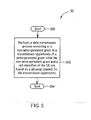
- Fig. 5 illustrates a flowchart of a process 50 according to an embodiment of the present invention.
- the process 50 is utilized for performing data transmission corresponding to semi-persistent resources for a UE of a wireless communication system.
- the process 50 can be compiled into the program code 214 of the storage data 212 and includes the following steps:
- the data transmission process, the semi-persistent grant, and the non-semi-persistent grant correspond to the same communications link, such as uplink or downlink.
- the UE performs the data transmission process (e.g. reception of a data block for downlink or a new transmission for uplink) according to the non-semi-persistent grant (e.g. a downlink or uplink grant) in the transmission opportunity (e.g. a TTI or a subframe) of the semi-persistent grant (e.g. a semi-persistent downlink or uplink grant) when the non-semi-persistent grant and a cell identifier (e.g. C-RNTI) of the UE are found on the physical channel (e.g. PDCCH) for the transmission opportunity.
- the non-semi-persistent grant e.g. a downlink or uplink grant
- the transmission opportunity e.g. a TTI or a subframe
- the UE finds the C-RNTI of the UE and a downlink grant on the PDCCH for a TTI where the UE has a semi-persistent downlink grant
- the PDCCH allocation overrides the semi-persistent-allocation for that TTI, and the UE receives a data block in the TTI according to the downlink grant.
- the downlink grant found on the PDCCH is addressed to an SPS hybrid automatic repeat request (HARQ) process
- the UE determines that the data block is a new data block by clearing a soft buffer of the SPS HARQ process in advance of receiving the data block.
- HARQ SPS hybrid automatic repeat request
- the downlink grant can include a new data indicator (NDI) that is set to 0 or 1.
- NDI new data indicator
- An alternative to clear the soft buffer of the SPS HARQ process is that the UE performs soft combination of the received data block and data in the soft buffer of the SPS HARQ process to decode the data block when the received NDI is set to 1. In this situation, the UE considers the received data block as a retransmission.
- the transmission/retransmission of the UE in the TTI follows the uplink grant instead of the semi-persistent grant.
- the uplink grant can also include a NDI that is set to 0 or 1. In this situation, the UE can always transmit a new data block without considering the NDI value. An alternative is that the UE retransmits a data block according to the uplink grant when the received NDI is set to 1.
- Fig. 6 illustrates a flowchart of a process 60.
- the process 60 is utilized for performing data transmission corresponding to semi-persistent resources for a UE of a wireless communication system.
- the process 60 can be compiled into the program code 214 of the storage data 212 and includes the following steps:
- the UE performs the data transmission process according to the semi-persistent grant in a transmission opportunity of the semi-persistent grant when the non-semi-persistent grant and the cell identifier of the UE are found on the physical channel for the transmission opportunity.
- the data transmission process and the semi-persistent grant correspond to the first communications link, whereas the non-semi-persistent grant corresponding to the second communications link.
- the process 60 controls the UE to perform the data transmission process according to the semi-persistent grant when the communications link of the found non-semi-persistent grant is different from that of the semi-persistent grant.
- the UE receives a data block in a TTI, where the UE has a semi-persistent downlink grant, according to the semi-persistent downlink grant when the UE finds the C-RNTI of the UE and an uplink grant on the PDCCH for the TTI.
- the first and second communications links are an uplink and a downlink respectively.
- the process 60 can resolve the problems of the issues 3 and 5 of the prior art.
- the UE when the UE finds its C-RNTI on the PDCCH for uplink resource assignment for dynamic scheduling, the UE decodes the semi-persistent resources instead of decoding the PDSCH with the PDCCH allocation in a sub-frame where the UE has semi-persistent downlink resources.
- PDCCH allocation for uplink is not misused for downlink.
- the UE makes use of a semi-persistent grant or a non-semi-persistent grant to perform related data transmission according to the cell identifier, the system information identifier, the non-semi-persistent grant, or the communication link of the non-semi-persistent grant.
- the present application describes the prevention of the semi-persistent function from being misused in a wrong transmission opportunity or a wrong communications link.
Landscapes
- Engineering & Computer Science (AREA)
- Computer Networks & Wireless Communication (AREA)
- Signal Processing (AREA)
- Mobile Radio Communication Systems (AREA)
Applications Claiming Priority (2)
| Application Number | Priority Date | Filing Date | Title |
|---|---|---|---|
| US9880008P | 2008-09-22 | 2008-09-22 | |
| EP09012041.1A EP2166811B1 (de) | 2008-09-22 | 2009-09-22 | Verfahren zur Durchführung von semipersistenten Ressourcen entsprechenden Datenübertragungen in drahtlosen Kommunikationssystemen und dazugehörige Vorrichtung |
Related Parent Applications (1)
| Application Number | Title | Priority Date | Filing Date |
|---|---|---|---|
| EP09012041.1 Division | 2009-09-22 |
Publications (1)
| Publication Number | Publication Date |
|---|---|
| EP2519068A1 true EP2519068A1 (de) | 2012-10-31 |
Family
ID=41508995
Family Applications (4)
| Application Number | Title | Priority Date | Filing Date |
|---|---|---|---|
| EP11007841.7A Active EP2403308B1 (de) | 2008-09-22 | 2009-09-22 | Verfahren zur Durchführung von semipersistenten Ressourcen entsprechenden Datenübertragungen in drahtlosen Kommunikationssystemen |
| EP09012041.1A Active EP2166811B1 (de) | 2008-09-22 | 2009-09-22 | Verfahren zur Durchführung von semipersistenten Ressourcen entsprechenden Datenübertragungen in drahtlosen Kommunikationssystemen und dazugehörige Vorrichtung |
| EP12005427A Withdrawn EP2519068A1 (de) | 2008-09-22 | 2009-09-22 | Verfahren zur Durchführung von semipersistenten Ressourcen entsprechenden Datenübertragungen in drahtlosen Kommunikationssystemen und dazugehörige Vorrichtung |
| EP10005596A Active EP2224778B1 (de) | 2008-09-22 | 2009-09-22 | Verfahren zur Durchführung von semipersistenten Ressourcen entsprechenden Datenübertragungen in drahtlosen Kommunikationssystemen und dazugehörige Vorrichtung |
Family Applications Before (2)
| Application Number | Title | Priority Date | Filing Date |
|---|---|---|---|
| EP11007841.7A Active EP2403308B1 (de) | 2008-09-22 | 2009-09-22 | Verfahren zur Durchführung von semipersistenten Ressourcen entsprechenden Datenübertragungen in drahtlosen Kommunikationssystemen |
| EP09012041.1A Active EP2166811B1 (de) | 2008-09-22 | 2009-09-22 | Verfahren zur Durchführung von semipersistenten Ressourcen entsprechenden Datenübertragungen in drahtlosen Kommunikationssystemen und dazugehörige Vorrichtung |
Family Applications After (1)
| Application Number | Title | Priority Date | Filing Date |
|---|---|---|---|
| EP10005596A Active EP2224778B1 (de) | 2008-09-22 | 2009-09-22 | Verfahren zur Durchführung von semipersistenten Ressourcen entsprechenden Datenübertragungen in drahtlosen Kommunikationssystemen und dazugehörige Vorrichtung |
Country Status (4)
| Country | Link |
|---|---|
| US (1) | US8509795B2 (de) |
| EP (4) | EP2403308B1 (de) |
| CN (1) | CN101686548B (de) |
| TW (1) | TWI389588B (de) |
Cited By (1)
| Publication number | Priority date | Publication date | Assignee | Title |
|---|---|---|---|---|
| TWI795455B (zh) * | 2017-11-27 | 2023-03-11 | 美商高通公司 | 針對共享頻譜下行鏈路的半持久排程 |
Families Citing this family (6)
| Publication number | Priority date | Publication date | Assignee | Title |
|---|---|---|---|---|
| KR101758272B1 (ko) | 2010-02-09 | 2017-07-17 | 엘지전자 주식회사 | 무선 통신 시스템에서 시스템 정보 송수신 방법 및 장치 |
| US8634364B2 (en) | 2010-04-20 | 2014-01-21 | Qualcomm Incorporated | Semi-persistent scheduling grants in heterogeneous networks |
| JP5551103B2 (ja) | 2011-03-31 | 2014-07-16 | Kddi株式会社 | 基地局装置および通信端末 |
| EP2955870B1 (de) * | 2013-02-06 | 2020-04-01 | LG Electronics Inc. | Verfahren zum senden und empfangen von signalen und vorrichtung dafür |
| EP3582420B1 (de) * | 2015-09-24 | 2025-03-19 | InterDigital Patent Holdings, Inc. | Verfahren zum verbesserten multiplexen in drahtlosen systemen |
| US11277844B2 (en) * | 2019-08-16 | 2022-03-15 | Qualcomm Incorporated | Coordination of semi-persistent scheduling downlink transmissions and dynamic downlink transmissions |
Family Cites Families (7)
| Publication number | Priority date | Publication date | Assignee | Title |
|---|---|---|---|---|
| US8848618B2 (en) | 2006-08-22 | 2014-09-30 | Qualcomm Incorporated | Semi-persistent scheduling for traffic spurts in wireless communication |
| UA93732C2 (ru) | 2006-08-22 | 2011-03-10 | Квелкомм Инкорпорейтед | Полупостоянное планирование для всплесков трафика при беспроводной связи |
| CN101154987A (zh) * | 2006-09-26 | 2008-04-02 | 大唐移动通信设备有限公司 | 传输冲突控制方法及系统 |
| CN101193444B (zh) * | 2006-11-30 | 2010-08-11 | 华为技术有限公司 | 资源指配方法及其系统和设备 |
| US8031656B2 (en) * | 2007-06-14 | 2011-10-04 | Telefonaktiebolaget Lm Ericsson (Publ) | Semi-persistent resource allocation method for uplink transmission in wireless packet data systems |
| ES2558744T3 (es) * | 2007-09-14 | 2016-02-08 | Blackberry Limited | Sistema y método para el tiempo de inicio de control de recepción discontinua |
| US9281922B2 (en) * | 2008-03-20 | 2016-03-08 | Nokia Corporation | Data indicator for persistently allocated packets in a communications system |
-
2009
- 2009-09-15 US US12/559,511 patent/US8509795B2/en active Active
- 2009-09-22 EP EP11007841.7A patent/EP2403308B1/de active Active
- 2009-09-22 EP EP09012041.1A patent/EP2166811B1/de active Active
- 2009-09-22 TW TW098131899A patent/TWI389588B/zh active
- 2009-09-22 EP EP12005427A patent/EP2519068A1/de not_active Withdrawn
- 2009-09-22 CN CN200910178660.8A patent/CN101686548B/zh active Active
- 2009-09-22 EP EP10005596A patent/EP2224778B1/de active Active
Non-Patent Citations (4)
| Title |
|---|
| EMAIL RAPPORTEUR: "Summary of the email discussion on remaining issues on Semi Persistent Scheduling", 3GPP DRAFT; R2-083900 REMAINING ISSUES IN SEMI PERSISTENT SCHEDULING REV1, 3RD GENERATION PARTNERSHIP PROJECT (3GPP), MOBILE COMPETENCE CENTRE ; 650, ROUTE DES LUCIOLES ; F-06921 SOPHIA-ANTIPOLIS CEDEX ; FRANCE, no. Jeju; 20080811, 11 August 2008 (2008-08-11), XP050319091 * |
| ERICSSON: "Handling of Semi-Persistent Assignments and Grants", 3GPP DRAFT; R2-083896 HANDLING OF SEMI-PERSISTENT ASSIGNMENTS AND GRANTS, 3RD GENERATION PARTNERSHIP PROJECT (3GPP), MOBILE COMPETENCE CENTRE ; 650, ROUTE DES LUCIOLES ; F-06921 SOPHIA-ANTIPOLIS CEDEX ; FRANCE, no. Jeju; 20080811, 11 August 2008 (2008-08-11), XP050319088 * |
| NOKIA CORPORATION ET AL.: "3GPP DRAFT; R2-084737 SPS 36300 CR, 3RD GENERATION PARTNERSHIP PROJECT (3GPP", 20 August 2008, MOBILE COMPETENCE CENTRE, article "Semi-Persistent Scheduling" |
| NOKIA CORPORATION ET AL: "Semi-Persistent Scheduling", 3GPP DRAFT; R2-084737 SPS 36300 CR, 3RD GENERATION PARTNERSHIP PROJECT (3GPP), MOBILE COMPETENCE CENTRE ; 650, ROUTE DES LUCIOLES ; F-06921 SOPHIA-ANTIPOLIS CEDEX ; FRANCE, no. Jeju; 20080820, 20 August 2008 (2008-08-20), XP050319706 * |
Cited By (1)
| Publication number | Priority date | Publication date | Assignee | Title |
|---|---|---|---|---|
| TWI795455B (zh) * | 2017-11-27 | 2023-03-11 | 美商高通公司 | 針對共享頻譜下行鏈路的半持久排程 |
Also Published As
| Publication number | Publication date |
|---|---|
| EP2403308A1 (de) | 2012-01-04 |
| EP2224778A2 (de) | 2010-09-01 |
| TWI389588B (zh) | 2013-03-11 |
| US20100075690A1 (en) | 2010-03-25 |
| EP2166811A3 (de) | 2010-07-07 |
| EP2403308B1 (de) | 2014-01-15 |
| EP2224778A3 (de) | 2010-09-29 |
| EP2166811A2 (de) | 2010-03-24 |
| EP2224778B1 (de) | 2012-11-28 |
| US8509795B2 (en) | 2013-08-13 |
| TW201014427A (en) | 2010-04-01 |
| CN101686548B (zh) | 2013-09-11 |
| CN101686548A (zh) | 2010-03-31 |
| EP2166811B1 (de) | 2013-06-19 |
Similar Documents
| Publication | Publication Date | Title |
|---|---|---|
| EP3078146B1 (de) | Verfahren für verbesserten harq-mechanismus | |
| KR101721015B1 (ko) | 이동 통신 시스템에서 블라인드 스케쥴링 장치 및 방법 | |
| EP3193554B1 (de) | Verfahren und vorrichtung zur signalisierung der freigabe einer persistenten ressource | |
| EP2880943B1 (de) | Signalisierung und kanalentwürfe für d2d-kommunikation | |
| EP2073419B1 (de) | Steuerkanalsignalisierung über ein herkömmliches Signalisierungsfeld für Transportformat und Redundanzversion | |
| US10057885B2 (en) | Device and method of handling transmission in unlicensed band | |
| US8743816B2 (en) | Scheduling method and system | |
| WO2016165653A1 (en) | Methods and apparatus for enhancement for harq with channel repetitions | |
| CN102349346A (zh) | 无线通信系统中的资源分配 | |
| CN102752862B (zh) | 上下行数据业务传输的方法、基站及用户设备 | |
| EP3335354A1 (de) | Entwurf für wiederholte abwärtsstreckenzuweisung zur unterstützung von mehreren übertragungszeitintervallzuweisungen in ecc | |
| EP2166811B1 (de) | Verfahren zur Durchführung von semipersistenten Ressourcen entsprechenden Datenübertragungen in drahtlosen Kommunikationssystemen und dazugehörige Vorrichtung | |
| US20120188963A1 (en) | Mobile communication method, mobile station, and radio base station | |
| CN103096494A (zh) | 基于跨载波调度的数据传输方法、用户设备和基站 | |
| US8675692B2 (en) | Method for acquiring processing time of wireless signal | |
| US11026214B2 (en) | Method of error recovery in transmitting and receiving voice service in packet based mobile communication systems | |
| JP5647119B2 (ja) | 通信方法、1次局、2次局及び通信システム |
Legal Events
| Date | Code | Title | Description |
|---|---|---|---|
| PUAI | Public reference made under article 153(3) epc to a published international application that has entered the european phase |
Free format text: ORIGINAL CODE: 0009012 |
|
| 17P | Request for examination filed |
Effective date: 20120725 |
|
| AC | Divisional application: reference to earlier application |
Ref document number: 2166811 Country of ref document: EP Kind code of ref document: P |
|
| AK | Designated contracting states |
Kind code of ref document: A1 Designated state(s): AT BE BG CH CY CZ DE DK EE ES FI FR GB GR HR HU IE IS IT LI LT LU LV MC MK MT NL NO PL PT RO SE SI SK SM TR |
|
| STAA | Information on the status of an ep patent application or granted ep patent |
Free format text: STATUS: THE APPLICATION IS DEEMED TO BE WITHDRAWN |
|
| 18D | Application deemed to be withdrawn |
Effective date: 20130209 |