EP2521402A1 - System mit einem WLAN/GSM-Endgerät bei dem Anrufe über WLAN oder GSM hergestellt werden - Google Patents
System mit einem WLAN/GSM-Endgerät bei dem Anrufe über WLAN oder GSM hergestellt werden Download PDFInfo
- Publication number
- EP2521402A1 EP2521402A1 EP12172893A EP12172893A EP2521402A1 EP 2521402 A1 EP2521402 A1 EP 2521402A1 EP 12172893 A EP12172893 A EP 12172893A EP 12172893 A EP12172893 A EP 12172893A EP 2521402 A1 EP2521402 A1 EP 2521402A1
- Authority
- EP
- European Patent Office
- Prior art keywords
- server
- terminal
- access technology
- call
- account
- Prior art date
- Legal status (The legal status is an assumption and is not a legal conclusion. Google has not performed a legal analysis and makes no representation as to the accuracy of the status listed.)
- Withdrawn
Links
- 230000009977 dual effect Effects 0.000 title description 16
- 238000005516 engineering process Methods 0.000 claims abstract description 133
- 238000000034 method Methods 0.000 claims description 42
- 238000012790 confirmation Methods 0.000 claims description 13
- 230000000977 initiatory effect Effects 0.000 claims description 6
- 230000001419 dependent effect Effects 0.000 claims description 2
- 238000012545 processing Methods 0.000 description 31
- 238000010586 diagram Methods 0.000 description 12
- 239000003999 initiator Substances 0.000 description 10
- 230000011664 signaling Effects 0.000 description 8
- 238000004891 communication Methods 0.000 description 7
- 230000008569 process Effects 0.000 description 7
- 230000027455 binding Effects 0.000 description 4
- 238000009739 binding Methods 0.000 description 4
- 230000008901 benefit Effects 0.000 description 3
- 238000009434 installation Methods 0.000 description 3
- 238000012423 maintenance Methods 0.000 description 3
- 229920001690 polydopamine Polymers 0.000 description 3
- 235000019800 disodium phosphate Nutrition 0.000 description 2
- 238000012986 modification Methods 0.000 description 2
- 230000004048 modification Effects 0.000 description 2
- 238000013459 approach Methods 0.000 description 1
- 230000000295 complement effect Effects 0.000 description 1
- 230000006870 function Effects 0.000 description 1
- 238000013507 mapping Methods 0.000 description 1
- 230000007246 mechanism Effects 0.000 description 1
- 229910044991 metal oxide Inorganic materials 0.000 description 1
- 150000004706 metal oxides Chemical class 0.000 description 1
- 238000010295 mobile communication Methods 0.000 description 1
- 239000004065 semiconductor Substances 0.000 description 1
- 239000000126 substance Substances 0.000 description 1
Images




Classifications
-
- H—ELECTRICITY
- H04—ELECTRIC COMMUNICATION TECHNIQUE
- H04M—TELEPHONIC COMMUNICATION
- H04M3/00—Automatic or semi-automatic exchanges
- H04M3/42—Systems providing special services or facilities to subscribers
- H04M3/42229—Personal communication services, i.e. services related to one subscriber independent of his terminal and/or location
- H04M3/42246—Personal communication services, i.e. services related to one subscriber independent of his terminal and/or location where the subscriber uses a multi-mode terminal which moves and accesses different networks with at least one network having a wireline access including cordless PBX
-
- H—ELECTRICITY
- H04—ELECTRIC COMMUNICATION TECHNIQUE
- H04L—TRANSMISSION OF DIGITAL INFORMATION, e.g. TELEGRAPHIC COMMUNICATION
- H04L67/00—Network arrangements or protocols for supporting network services or applications
- H04L67/2866—Architectures; Arrangements
- H04L67/30—Profiles
- H04L67/303—Terminal profiles
-
- H—ELECTRICITY
- H04—ELECTRIC COMMUNICATION TECHNIQUE
- H04L—TRANSMISSION OF DIGITAL INFORMATION, e.g. TELEGRAPHIC COMMUNICATION
- H04L67/00—Network arrangements or protocols for supporting network services or applications
- H04L67/50—Network services
- H04L67/60—Scheduling or organising the servicing of application requests, e.g. requests for application data transmissions using the analysis and optimisation of the required network resources
- H04L67/63—Routing a service request depending on the request content or context
-
- H—ELECTRICITY
- H04—ELECTRIC COMMUNICATION TECHNIQUE
- H04M—TELEPHONIC COMMUNICATION
- H04M15/00—Arrangements for metering, time-control or time indication ; Metering, charging or billing arrangements for voice wireline or wireless communications, e.g. VoIP
-
- H—ELECTRICITY
- H04—ELECTRIC COMMUNICATION TECHNIQUE
- H04M—TELEPHONIC COMMUNICATION
- H04M15/00—Arrangements for metering, time-control or time indication ; Metering, charging or billing arrangements for voice wireline or wireless communications, e.g. VoIP
- H04M15/56—Arrangements for metering, time-control or time indication ; Metering, charging or billing arrangements for voice wireline or wireless communications, e.g. VoIP for VoIP communications
-
- H—ELECTRICITY
- H04—ELECTRIC COMMUNICATION TECHNIQUE
- H04M—TELEPHONIC COMMUNICATION
- H04M15/00—Arrangements for metering, time-control or time indication ; Metering, charging or billing arrangements for voice wireline or wireless communications, e.g. VoIP
- H04M15/70—Administration or customization aspects; Counter-checking correct charges
- H04M15/705—Account settings, e.g. limits or numbers or payment
-
- H—ELECTRICITY
- H04—ELECTRIC COMMUNICATION TECHNIQUE
- H04M—TELEPHONIC COMMUNICATION
- H04M15/00—Arrangements for metering, time-control or time indication ; Metering, charging or billing arrangements for voice wireline or wireless communications, e.g. VoIP
- H04M15/70—Administration or customization aspects; Counter-checking correct charges
- H04M15/715—Activating new subscriber or card
-
- H—ELECTRICITY
- H04—ELECTRIC COMMUNICATION TECHNIQUE
- H04M—TELEPHONIC COMMUNICATION
- H04M15/00—Arrangements for metering, time-control or time indication ; Metering, charging or billing arrangements for voice wireline or wireless communications, e.g. VoIP
- H04M15/70—Administration or customization aspects; Counter-checking correct charges
- H04M15/75—Account location specifications
-
- H—ELECTRICITY
- H04—ELECTRIC COMMUNICATION TECHNIQUE
- H04M—TELEPHONIC COMMUNICATION
- H04M15/00—Arrangements for metering, time-control or time indication ; Metering, charging or billing arrangements for voice wireline or wireless communications, e.g. VoIP
- H04M15/80—Rating or billing plans; Tariff determination aspects
- H04M15/8044—Least cost routing
-
- H—ELECTRICITY
- H04—ELECTRIC COMMUNICATION TECHNIQUE
- H04M—TELEPHONIC COMMUNICATION
- H04M15/00—Arrangements for metering, time-control or time indication ; Metering, charging or billing arrangements for voice wireline or wireless communications, e.g. VoIP
- H04M15/80—Rating or billing plans; Tariff determination aspects
- H04M15/8044—Least cost routing
- H04M15/8055—Selecting cheaper transport technology for a given service
-
- H—ELECTRICITY
- H04—ELECTRIC COMMUNICATION TECHNIQUE
- H04M—TELEPHONIC COMMUNICATION
- H04M15/00—Arrangements for metering, time-control or time indication ; Metering, charging or billing arrangements for voice wireline or wireless communications, e.g. VoIP
- H04M15/82—Criteria or parameters used for performing billing operations
- H04M15/8214—Data or packet based
-
- H—ELECTRICITY
- H04—ELECTRIC COMMUNICATION TECHNIQUE
- H04M—TELEPHONIC COMMUNICATION
- H04M3/00—Automatic or semi-automatic exchanges
- H04M3/42—Systems providing special services or facilities to subscribers
- H04M3/42314—Systems providing special services or facilities to subscribers in private branch exchanges
-
- H—ELECTRICITY
- H04—ELECTRIC COMMUNICATION TECHNIQUE
- H04M—TELEPHONIC COMMUNICATION
- H04M7/00—Arrangements for interconnection between switching centres
- H04M7/006—Networks other than PSTN/ISDN providing telephone service, e.g. Voice over Internet Protocol (VoIP), including next generation networks with a packet-switched transport layer
-
- H—ELECTRICITY
- H04—ELECTRIC COMMUNICATION TECHNIQUE
- H04W—WIRELESS COMMUNICATION NETWORKS
- H04W4/00—Services specially adapted for wireless communication networks; Facilities therefor
- H04W4/24—Accounting or billing
-
- H—ELECTRICITY
- H04—ELECTRIC COMMUNICATION TECHNIQUE
- H04W—WIRELESS COMMUNICATION NETWORKS
- H04W48/00—Access restriction; Network selection; Access point selection
- H04W48/18—Selecting a network or a communication service
-
- H—ELECTRICITY
- H04—ELECTRIC COMMUNICATION TECHNIQUE
- H04L—TRANSMISSION OF DIGITAL INFORMATION, e.g. TELEGRAPHIC COMMUNICATION
- H04L65/00—Network arrangements, protocols or services for supporting real-time applications in data packet communication
- H04L65/10—Architectures or entities
- H04L65/102—Gateways
- H04L65/1033—Signalling gateways
- H04L65/104—Signalling gateways in the network
-
- H—ELECTRICITY
- H04—ELECTRIC COMMUNICATION TECHNIQUE
- H04L—TRANSMISSION OF DIGITAL INFORMATION, e.g. TELEGRAPHIC COMMUNICATION
- H04L65/00—Network arrangements, protocols or services for supporting real-time applications in data packet communication
- H04L65/1066—Session management
- H04L65/1101—Session protocols
- H04L65/1104—Session initiation protocol [SIP]
-
- H—ELECTRICITY
- H04—ELECTRIC COMMUNICATION TECHNIQUE
- H04M—TELEPHONIC COMMUNICATION
- H04M2207/00—Type of exchange or network, i.e. telephonic medium, in which the telephonic communication takes place
- H04M2207/18—Type of exchange or network, i.e. telephonic medium, in which the telephonic communication takes place wireless networks
-
- H—ELECTRICITY
- H04—ELECTRIC COMMUNICATION TECHNIQUE
- H04M—TELEPHONIC COMMUNICATION
- H04M2215/00—Metering arrangements; Time controlling arrangements; Time indicating arrangements
- H04M2215/20—Technology dependant metering
- H04M2215/202—VoIP; Packet switched telephony
-
- H—ELECTRICITY
- H04—ELECTRIC COMMUNICATION TECHNIQUE
- H04M—TELEPHONIC COMMUNICATION
- H04M2215/00—Metering arrangements; Time controlling arrangements; Time indicating arrangements
- H04M2215/20—Technology dependant metering
- H04M2215/2026—Wireless network, e.g. GSM, PCS, TACS
-
- H—ELECTRICITY
- H04—ELECTRIC COMMUNICATION TECHNIQUE
- H04M—TELEPHONIC COMMUNICATION
- H04M2215/00—Metering arrangements; Time controlling arrangements; Time indicating arrangements
- H04M2215/20—Technology dependant metering
- H04M2215/2033—WLAN
-
- H—ELECTRICITY
- H04—ELECTRIC COMMUNICATION TECHNIQUE
- H04M—TELEPHONIC COMMUNICATION
- H04M2215/00—Metering arrangements; Time controlling arrangements; Time indicating arrangements
- H04M2215/42—Least cost routing, i.e. provision for selecting the lowest cost tariff
-
- H—ELECTRICITY
- H04—ELECTRIC COMMUNICATION TECHNIQUE
- H04M—TELEPHONIC COMMUNICATION
- H04M2215/00—Metering arrangements; Time controlling arrangements; Time indicating arrangements
- H04M2215/70—Administration aspects, modify settings or limits or counter-check correct charges
- H04M2215/7009—Account settings, e.g. users, terminals, limits, numbers or payment
-
- H—ELECTRICITY
- H04—ELECTRIC COMMUNICATION TECHNIQUE
- H04M—TELEPHONIC COMMUNICATION
- H04M2215/00—Metering arrangements; Time controlling arrangements; Time indicating arrangements
- H04M2215/70—Administration aspects, modify settings or limits or counter-check correct charges
- H04M2215/7027—Activate new subscriber or card
-
- H—ELECTRICITY
- H04—ELECTRIC COMMUNICATION TECHNIQUE
- H04M—TELEPHONIC COMMUNICATION
- H04M2215/00—Metering arrangements; Time controlling arrangements; Time indicating arrangements
- H04M2215/72—Account specifications
-
- H—ELECTRICITY
- H04—ELECTRIC COMMUNICATION TECHNIQUE
- H04M—TELEPHONIC COMMUNICATION
- H04M2215/00—Metering arrangements; Time controlling arrangements; Time indicating arrangements
- H04M2215/74—Rating aspects, e.g. rating parameters or tariff determination apects
- H04M2215/745—Least cost routing, e.g. Automatic or manual, call by call or by preselection
-
- H—ELECTRICITY
- H04—ELECTRIC COMMUNICATION TECHNIQUE
- H04M—TELEPHONIC COMMUNICATION
- H04M2215/00—Metering arrangements; Time controlling arrangements; Time indicating arrangements
- H04M2215/74—Rating aspects, e.g. rating parameters or tariff determination apects
- H04M2215/745—Least cost routing, e.g. Automatic or manual, call by call or by preselection
- H04M2215/7464—Select transport technology for a given service, e.g. use for data connection WLAN rather than GSM/UMTS/GPRS or use company's communication network rather than a public network
-
- H—ELECTRICITY
- H04—ELECTRIC COMMUNICATION TECHNIQUE
- H04M—TELEPHONIC COMMUNICATION
- H04M2215/00—Metering arrangements; Time controlling arrangements; Time indicating arrangements
- H04M2215/78—Metric aspects
- H04M2215/782—Data or packet based
-
- H—ELECTRICITY
- H04—ELECTRIC COMMUNICATION TECHNIQUE
- H04W—WIRELESS COMMUNICATION NETWORKS
- H04W76/00—Connection management
- H04W76/10—Connection setup
-
- H—ELECTRICITY
- H04—ELECTRIC COMMUNICATION TECHNIQUE
- H04W—WIRELESS COMMUNICATION NETWORKS
- H04W8/00—Network data management
- H04W8/26—Network addressing or numbering for mobility support
-
- H—ELECTRICITY
- H04—ELECTRIC COMMUNICATION TECHNIQUE
- H04W—WIRELESS COMMUNICATION NETWORKS
- H04W88/00—Devices specially adapted for wireless communication networks, e.g. terminals, base stations or access point devices
- H04W88/02—Terminal devices
- H04W88/06—Terminal devices adapted for operation in multiple networks or having at least two operational modes, e.g. multi-mode terminals
Definitions
- the present invention relates to an account creation system, including provisioning and identity handling, for creating an account for a terminal at a server and a call processing system for processing a call request originated from the terminal via the server and to a terminal and a server of such systems as well as to methods for creating an account for the terminal and processing the call request.
- the present invention is not only applicable to company networks but also e.g. to networks in private households or the like, for example to provide cost-effective "in-house” calls.
- Document GB2410857 discloses a voice and data switching system integrating a router/data switching module into a voice PBX (private branch exchange).
- Document US6363065 shows an apparatus for a voice over IP telephony gateway and accompanying methods for use therein and document US2005008006 relates to a method and a communication arrangement for operating a VoIP voice terminal.
- VoIP public switched telephone network
- SIP new contact information
- WLAN and SIP configuration in the terminal and that the user needs to be aware of VoIP and has to use different terminals and/or different numbers for VoIP and GSM/PSTN calls, i.e. the user has to manually select between VoIP and GSM.
- SMS short message service
- SIP URIs uniform resource identifier
- GSM Global System for Mobile communications
- ENUM Telephone Number Mapping
- an object of the present invention to provide an account creation system, including provisioning and identity handling, for creating an account for a terminal at a server and a call processing system for processing a call request originated from the terminal via the server and a terminal and a server of such systems as well as methods for creating an account for the terminal and processing the call request, that solve the above described problems.
- this object is, for example, achieved by a method of creating an account for a terminal capable to establish a call via at least a first and second access technology at a server entity, the server being enabled to handle calls via said at least first and second access technologies, the method comprising:
- this object is, for example, additionally achieved by a method of routing a call originating from a calling terminal registered to a server via second access technology, the calling terminal being capable of establishing a call via at least a first and second access technology, to a called terminal capable of being called via at least the first and second access technologies, the method comprising: receiving, at a server, a call request from said calling terminal registered to a server according to the second access technology to the called terminal including an identification of the called terminal; determining, whether the requested identification is associated with an account maintained in a server and the respective called terminal is registered to a server via second access technology; and if the requested identification is associated with an account maintained in a server and the respective called terminal is registered to a server via second access technology; routing the call request based on the second access technology to the called terminal associated with the respective account.
- this object is, for example, further achieved by a server, comprising: a multi access transceiver configured to receive an account creation request message comprising an identification of a terminal composed by the terminal; a creator configured to create an account for the terminal composing the account creation request message; an associator configured to associate the identification of the terminal received at a server with the account of the terminal created by the creator; a multi access transceiver further configured to receive a call request from a calling terminal registered to a server according to the second access technology to an identification of a called terminal; a determinator configured to determine whether the requested identification is associated with an account maintained in a server and the respective called terminal is registered to a server via second access technology; a multi access transceiver further configured to route the call request based on the second access technology to the called terminal associated with the respective account.
- this object is, for example, further achieved by a terminal, comprising: a composer configured to compose an account creation request message containing an identification of the terminal to create an account for the terminal at a server; a multi access transceiver configured to transmit the account creation request message to a server; a generator configured to generate a call request to an identification of a called terminal; a multi access transceiver further configured to receive a reply from a server, if the requested identification is not associated with an account maintained in a server or not currently registered to a server based on the second access technology; an initiator configured to initiate a call based on the first access technology upon receipt of the reply from a server.
- this object is, for example, further achieved by a system comprising a server and a terminal, basically as defined above under the respective aspects and refinements thereof.
- the two dual mode terminals when two dual mode terminals are within the coverage area of a second access technology, the two dual mode terminals are capable of communicating with each other via the second access technology and when at least one of the two dual mode terminals is not within the coverage area of the second access technology, the dual mode terminals are capable of communicating with each other via a first access technology.
- the present invention provides a way to save money for calls within enterprises or private households or the like using dual mode terminals, e.g. GSM/WLAN terminals.
- a server according to the present invention can be installed by just plugging it to the existing network and can create accounts for terminals and enables terminal setup by use of a message from the terminal, e.g. SMS, without the need for a web interface or IT support and the IT support for maintenance of the server can be kept at a low level.
- an identification, e.g. GSM number, of a terminal can be re-used so that a user does not have to know, e.g.
- a SIP address of a terminal he wants to call and does not have to be aware about using, e.g. GSM or WLAN to establish a call, since e.g. WLAN is automatically selected as the bearer if WLAN is available.
- the system according to the present invention is secure since it is based on, e.g. GSM strong identities.
- a SMS for example, is used in the account creation process because it is a trusted messaging/channel system whereas IP is inherently untrusted.
- the system according to the present invention is compatible with SIP URI calls using domain name SIP when SIP URIs are used.
- the system according to the present invention works with several terminal, e.g. mobile phones, PC, PDA or the like and does not interrupt parallel SIP deployments.
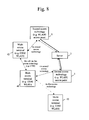
- Fig. 8 shows an example of a system according to the present invention.
- Terminals 41 to 43 are multi access terminals, e.g. dual mode terminals, capable to communicate based on at least a first and second access technology.
- the first access technology conforms to one of the group of GSM, UMTS, IS-95 telephony and messaging or the like and the second access technology conforms to telephony and messaging over TCP/IP networks or the like.
- the system comprises at least one access point for the second access technology.
- the system comprises two access points 5 and 6 that are connected to a server 3.
- An access point and a server of the system can be implemented as a respective single device or can be located separately from each other as shown in the example according to Fig.
- terminal 41 is a calling terminal and terminals 42 and 43 are called terminals, respectively.
- a communication between terminals 41 and 42 is based on the second access technology and a communication between the terminals 41 and 43 is based on the first access technology.
- generally terminal 41 does not communicate simultaneously with terminals 42 and 43. According to the present invention, there is no need to establish a call via the first access technology between the terminals 41 and 42, thereby providing the possibility to save money for the call.
- a detailed description of the account creation processing and the call processing in connection with the present invention will be given below.
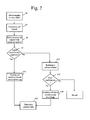
- Fig. 1 is a flowchart of the account creation process.
- the account creation process is started at step S0, whereafter at step S1 a terminal composes the account creation request message containing at least its identification and optionally a user name.
- the server After receiving the account creation request message containing at least the identification of the terminal based on the first access technology, the server creates an account for the terminal based on and/or for use with the second access technology at step S2. Then, at step S3, the identification of the terminal is associated with the account of the terminal created by the server.
- the server provides a secure binding between the identification of the terminal based on the first access technology and the account of the terminal based on the second access technology as account settings.
- the server in an advantageous embodiment of the invention informs the terminal of the account settings by sending an information message based on the first access technology, as shown at step S4.
- the account creation request message as well as the information message may be a message conforming to the first access technology.
- the account settings may then be stored by the terminal in a setting memory and by the server in a storage medium at step S5.
- a terminal may thus create an account with the server even if it is not within the coverage area defined by the second access technology available at the server.
- the system is thus prepared for call processing according to aspects of the present invention.
- Fig. 2 is a flowchart of the call processing procedure according to a first aspect of the present invention.
- a terminal When a terminal enters the coverage area of a second access technology, the terminal tries to connect to the server using the second access technology.
- the server verifies if the terminal trying to connect to the network has an active account at the server and if the terminal does, at step S6, the server registers the terminal to the network based on the second access technology. Then, the server may inform the terminal that it is registered to the server.
- a terminal requesting a call hereinafter referred to as calling terminal
- called terminal sends a call request preferably via the second access technology to the server at step S7.
- the call request includes the identification of the called terminal according to the first access technology.
- the server receives the call request from the calling terminal generated at step S7 preferably based on the second access technology.
- the server determines if the identification requested by the calling terminal is associated with an account maintained in the server, i.e. the server determines if the called terminal is has an active account at the server and if the called terminal is registered to the server. If it is determined at step S9 that the called terminal has an active account at the server and is registered to the server based on the second access technology, at step S10, the call is routed via the second access technology to the called terminal according to the respective account maintained in the server. Additionally, for convenience of users, the selected route can be displayed on a display of at least one of the calling terminal and the called terminal, as shown at step S11.
- the server replies to the calling terminal preferably via the second access technology at step S12 and informs the calling terminal that the call cannot be established via the second access technology.
- the terminal could display to a user that the call cannot be established via the second access technology and then wait for a confirmation by the user to initiate the call via the first access technology.
- the calling terminal initiates the call via the first access technology at step S14 and, as described above, the selected route could be displayed on the display of at least one of the calling terminal or the called terminal at step S11. If the terminal detects no confirmation by the user in step S13, no call is initiated.
- the terminal can initiate the call based on the first access technology immediately upon receipt of the reply from the server without the need of detecting a confirmation by the user.
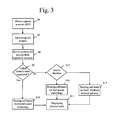
- Fig. 3 is a flowchart of the call processing procedure according to a second aspect of the invention.
- steps S6 to S11 are the same as in the flowchart according to Fig. 2 and therefore a description of these steps will be omitted.
- the server decides at step S15, whether the call is to be routed via the first access technology or via a fixed telephone network gateway. This decision can be made, for example, by comparing the costs that are expected to occur when routing the call, based e.g. on daytime or generally on the applicable tariff. This decision can also be made, for example, by comparing a quality of service (QoS) offered by the respective routes. Any QoS parameters can be evaluated in this relation.
- QoS quality of service
- the server will then select, for example, the route which is expected to have the lower costs or offers the better QoS. If at step S15 the route based on the first access technology is selected by the server, the call is routed via the first access technology at step S16. If at step S15 the route based on the fixed telephone network gateway is selected, the call is routed via the fixed telephone network gateway at step S17. Additionally, the respective selected route can be display on the display in an analogous manner as described above with reference to Fig. 2 .
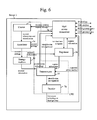
- Fig. 6 is a block diagram of a server according to the present invention.
- the server 3 comprises a multi access transceiver 3a capable of sending and receiving based on at least a first and second access technology.
- the transceiver 3a comprises interfaces, for example, an IP interface, a SMS interface and optionally interfaces to connect to a PSTN gateway and/or a GSM gateway or the like.
- a multi-access transceiver may also be construed to refer to a plurality of single-access transceivers.
- the server Via the multi access transceiver 3a (hereinafter referred to as the transceiver), the server is capable to communicate with a terminal, e.g.
- the transceiver 3a is capable of receiving a registering request from a terminal entering the coverage area of the second access technology and trying to register to the server based on the second access technology.
- the transceiver 3a can be integrated into the server or the transceiver can be located separately from the server.
- the transceiver 3a is connected to a creator 3b and forwards the account creation request message received from a terminal to the creator 3b, which creates an account for the terminal based on and/or for use with the second access technology.
- the creator 3b is connected to an associator 3c, which obtains the account information from the creator 3b and associates the identification, conforming to the first access technology, of the terminal 4 with the created account.
- the associator 3c is connected to the transceiver 3a.
- the transceiver 3a obtains the account settings from the associator 3c and sends the account settings to the terminal in an information message.
- a storage medium 3d Also connected to the associator 3c is a storage medium 3d, which stores the account settings.
- the server 3 comprises an registerer 3e that is connected to the transceiver 3a.
- the registerer 3e is informed by the transceiver 3a that a terminal is within the coverage area of the second access technology and tries to register to the server based on the second access technology.
- the registerer is connected to the storage medium 3d and retrieves account information therefrom to decide if the terminal trying to register to the server has an active account. If the respective terminal has an active account, the registerer 3e registers the terminal to the server based on the second access technology and may inform the registered terminal by sending registration information to the registered terminal via the transceiver 3a.
- a determinator 3f is connected to the transceiver 3a and the registerer 3e.
- the transceiver 3a After receiving a call request from a calling terminal to a called terminal at the transceiver 3a, the transceiver 3a forwards the requested identification of the called terminal to the determinator 3f and the determinator 3f determines, if the identification of the called terminal is associated with an account stored in the storage medium at the server 3 and, if so, further determines if the called terminal according to the respective account is registered to the server based on information acquired from the registerer 3e.
- the determinator 3f informs the transceiver 3a, connected to the determinator 3f, about the respective called terminal and the transceiver 3a routes the call based on the second access technology to the called terminal.
- the determinator 3f replies via the transceiver 3a to the calling terminal, that the requested call cannot be routed via the server based on the second access technology. Then, the further call processing is performed at the calling terminal, according to one option of the present invention (see Fig. 2 and the description thereof).
- the determinator 3f forwards the requested identification to a decider 3g connected to the determinator 3f.
- the decider 3g decides, as described above with reference to Fig. 3 , which route should be selected for establishing the requested call, i.e. the route via the first access technology or the route via a fixed telephone network gateway, and forwards the selected route to the transceiver 3a.
- the transceiver 3a then routes the call based on the respective route decided by the decider 3g via the respective gateway to the called terminal.
- the processing of all components comprised in the server is either controlled by a central processing unit (CPU) or by separate processing units, respectively, e.g. DSPs or the like, that are not shown in Fig. 6 .
- CPU central processing unit
- DSPs digital signal processors
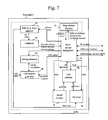
- Fig. 7 is a block diagram of a terminal 4 according to the present invention.
- the terminal 4 comprises a multi access transceiver 4f (hereinafter referred to as transceiver 4f) capable of sending and receiving based on at least a first and second access technology.
- the transceiver 4f comprises interfaces, like for example, a GSM voice interface, a GSM message interface (SMS) and an IP interface.
- the terminal is capable of communicating with other terminals or a server, e.g. to send an account creation request message, registration request or call request and to receive an information message, send and receive signals according to at least the first and second access technologies or registration information.
- the transceiver 4f can be integrated into the terminal or the transceiver can be separated from the terminal. However, with respect to a hand portable device as an example for a terminal, the transceiver is preferably integrated into the terminal.
- a man-machine-interface (MMI) 4d is connected to a composer 4a to receive instructions from a user.
- the composer 4a is in turn connected to the transceiver 4f and upon a user entering account creation instructions via the MMI 4d, the composer 4a composes an account creation request message and forwards the account creation request message to the transceiver 4f.
- the transceiver 4f sends the account creation request message to the server and then preferably receives the setting message from the server and forwards it to a setting memory 4b, connected to the transceiver 4f.
- the setting memory 4b stores any account settings.
- the terminal 4 further comprises an registration initiator 4c that detects if the terminal 4 is within the coverage area of the second access technology. Upon receipt of a signal according to the second access technology forwarded from the transceiver 4f, the registration initiator 4c sends a registration request via the transceiver 4f to the server, to be registered to the server according to the second access technology.
- a call request generator 4e connected to the transceiver 4f is informed by the transceiver 4f, which forwards registartion information received from the server.
- the call request generator 4e which is further connected to the MMI 4d generates a call upon instruction from a user, it preferably retrieves the settings information from the setting memory 4b and the call request generator 4e forwards the call request to the transceiver 4f, which then sends the call request preferably via the second access technology to the server based on the setting information obtained by the call request generator 4e from the setting memory 4b.
- the call is established based on the second access technology.
- the MMI 4d, connected to the transceiver 4f is informed about the selected route and displays the selected route.
- the transceiver 4f receives a reply from the server. With this reply, the terminal is informed that the call cannot be routed via the second access technology and the transceiver forwards the reply to a call initiator 4g connected to the transceiver 4f, that is capable of initiating a call over the first access technology via the transceiver 4f.
- a user confirmation detector 4h is connected to the transceiver 4f, the call initiator 4g and the MMI 4d. The reply from the server is forwarded to the user confirmation detector 4h. If the user confirmation detector 4h receives a user confirmation from the MMI 4d, it informs the call initiator 4g, and then the call initiator 4g initiates a call based on the first access technology via the transceiver 4f.
- a tariff checker 4j is connected to the transceiver 4f and the call initiator 4g and the reply from the server is forwarded to the tariff checker 4j. Then the tariff checker 4j performs a tariff check based, for example, on the day time of the call request or the like, as described above. If the tariff is appropriate, the tariff checker 4j informs the call initiator, and then the call initiator 4g initiates a call based on the first access technology via the transceiver 4f.
- the MMI 4d connected to the transceiver 4f can be informed about the selected route and displays the selected route.
- the processing of all components comprised in the terminal is either controlled by a central processing unit (CPU) or by separate processing units, respectively, e.g. DSPs or the like, that are not shown in Fig. 7 .
- CPU central processing unit
- DSPs digital signal processors
- the present invention only, reference is made to a VoIP system with dual mode GSM/WLAN terminals, wherein GSM is an example for the first access technology and WLAN is an example for the second access technology.
- GSM is an example for the first access technology
- WLAN is an example for the second access technology.
- the invention is not limited to a VoIP system and also various other access technologies than GSM e.g. UMTS, IS-95 or the like can be used as the first access technology and also various other access technologies than WLAN e.g. Bluetooth®, WiMAX can be used as the second access technology.
- the first access technology can be a circuit-switched access technology and the second access technology a packet-switched access technology.
- Fig. 4 is a signalling diagram of the account creation process according to the example of the present invention.
- Fig. 4 there are shown the messages that are sent between a terminal and a server and also the processing performed by the terminal and the server while performing account creation processing according to the specific example of the present invention.
- the terminal composes the account creation request message containing at least its phone number or other identification according to the first access technology (hereinafter referred to as phone number)and optionally a user name.
- the account creation request message is a SMS that is transmitted via GSM.
- other user messages e.g. UDP or the like can be used as the account creation request message.
- the server After receiving the account creation request message containing at least the phone number and optionally the user name of the terminal, the server creates an account for the terminal based on and/or for use with the second access technology at step S2. Then, at step S3, the phone number of the terminal is associated with the account of the terminal created by the server.
- the server provides a secure binding between the phone number of the terminal based on the first access technology and the account of the terminal based on the second access technology as account settings.
- the server preferably informs the terminal of the account settings by sending an information message as e.g. a SMS via GSM, as shown at step S4.
- the account settings are then stored by the terminal in a setting memory and by the server in a storage medium at step S5.
- Fig. 5 is a signalling diagram of the call processing procedure according to the example of the first aspect of the present invention.
- Fig. 5 there are shown the messages that are sent between a calling terminal and a server and also the processing performed by the terminal and the server while performing the call processing according to the specific example of the present invention.
- the terminals When terminals with an active account enter the coverage area of the WLAN, the terminals get IP connectivity using WLAN.
- the server verifies if a calling terminal has an account at the server and if the terminal has an active account, at step S6, the server registers the terminal to the WLAN. Then, if the calling terminal registered at the server 3 is calling a GSM number at step S7, a call request is sent to the server via WLAN at step S8. At step S9, the server determines if a called terminal according to the requested GSM number is registered to the WLAN.
- step S10 the call is routed via IP to the respective called terminal and in this specific example, the selected route is displayed on the display of the calling terminal and the called terminal at step S11.
- step S9 If otherwise it is determined at step S9 that the called terminal according to the requested GSM number is not registered to the WLAN (this case is shown in dotted lines in Fig. 5 ), according to this specific example, the server replies to the calling terminal at step S12 via WLAN that the requested call to the called terminal cannot be routed via WLAN. Upon receipt of the reply from the server, the terminal initiates a GSM call. In this way, the connection between the calling terminal and the called terminal is established via GSM without the participation of the server. At step S11, it is displayed at the calling terminal the called terminal that the connection is established using GSM.
- the system consists of an improved SIP server / PBX for use in an enterprise, and dual mode WLAN/GSM VoIP devices.
- the detailed example according to the present invention presents a mechanism for re-use of GSM identifications (phone number) for SIP VoIP calls in enterprise networks, so users do not need to know any SIP address or internal number, and so there is no need to manually choose between GSM and VoIP calls.
- GSM identifications phone number
- the task of deploying VoIP in a medium-size enterprise with little IT support can be enormously facilitated.
- the improved SIP Server includes a GSM radio and SIM card, so that mobile devices can create SIP/VoIP accounts by sending an SMS to it, and receive the SIP configuration settings.
- the SIP server stores a secure binding between the SIP account and the GSM number of every user.
- devices do not need to know any SIP URI to make SIP-VoIP calls, because GSM phone numbers are used instead.
- the improved SIP server is able to route SIP messages where the destination ("TO:" field) is a GSM number, to the right SIP/IP address.
- TO: the destination
- a 3xx Redirect is sent to the terminal so that a GSM call is started.
- the dual mode terminals comprise some modification so that this functionality is used.
- the dual mode terminal has an active account and is registered to the SIP server, every time the user calls to a GSM/PSTN number, the device will attempt first a VoIP call using the GSM/PSTN number as destination information, and if the other end is not found (account existing and currently registered)in the SIP server, then a GSM call will be made.
- the user can receive information in the display about the bearer used for the call (GSM or WLAN/VoIP), or can be asked a question such as: "Terminal not available in VoIP network. Try GSM?".
- GSM bearer used for the call
- WLAN/VoIP WLAN/VoIP
- Another option is, when the SIP server has access to a PSTN or GSM gateway. This would allow the server to route calls to the PSTN gateway when the other user is not reachable through VoIP, and GSM is not the cheapest available choice.
- Installing the improved SIP server involves plugging the box to the corporate intranet or WLAN network, and inserting a SIM card in it.
- This system does not use DNS or domain names so DNS configuration is not needed.
- a web interface can be provided for management functions, for example to setup a password to create accounts, specify a list of allowed GSM numbers, but the web-interface is not necessary to create SIP accounts since this is done with SMS. Users just need to be informed of the GSM number of the SIP server (and optionally a password) to create their accounts and receive the device settings.
- a terminal In order to get an account and start using VoIP with dual mode terminals, users need to send an SMS (optionally with a password) to the improved SIP server.
- the server will reply to the SMS with the SIP and WLAN settings, (and possibly a link to the necessary terminal software update). After saving all these, each time the user is in WLAN coverage and calls a GSM number, VoIP will be attempted by the device.
- the SIP server stores the secure bindings between the SIP accounts and the GSM numbers of the enterprise users, so it can correctly route calls.
- This system can also be used by non-GSM VoIP devices like PCs or PDAs, by copying the SIP account details from the SMS to the PC VoIP client. But the SMS is necessary to create the account, to prevent identity theft. So users can have many clients with the same account.
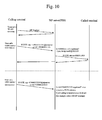
- Fig. 10 it will now be described how to make a call according to the detailed example of the present invention. From the user point of view, making a call from the dual mode phone is the same as a GSM call, but the processing performed by such a system will be described in the following.
- an INVITE SIP message will be sent to the SIP server, with the GSM/PSTN number as destination ("TO:" field).
- the address can be in the form "sip:+358041111111@server-address" or even "tel:+358041111111".
- the SIP server will then lookup the GSM number to find if there is a SIP account bound to it, and if so it will proxy the message to it, so the call can start over IP. If there is no account for that number or the terminal is not registered to the server, then the server will reply to the caller with a SIP Redirect 3xx message to tell the device to do a GSM call.
- the SIP 380 "Another Service" message can be used for this purpose.
- the improved SIP server can be connected to a SIP - PSTN /GSM gateway, instead of telling the terminal to start a GSM call when a user is not registered to the SIP server, the calls can be routed to the gateway which can be cheaper than a GSM call.
- the server can have intelligence to route the calls to the gateway, for example use the gateway only for long distance or international calls, but keep GSM usage for GSM-GSM national calls.
- the SIP server can have some least-cost routing intelligence, so some calls are routed using the PSTN gateway, and some are made using only GSM, since this is sometimes cheaper.
Landscapes
- Engineering & Computer Science (AREA)
- Signal Processing (AREA)
- Computer Networks & Wireless Communication (AREA)
- Computer Security & Cryptography (AREA)
- Business, Economics & Management (AREA)
- Accounting & Taxation (AREA)
- Mobile Radio Communication Systems (AREA)
- Telephonic Communication Services (AREA)
Priority Applications (1)
| Application Number | Priority Date | Filing Date | Title |
|---|---|---|---|
| EP12172893A EP2521402A1 (de) | 2006-06-29 | 2007-04-03 | System mit einem WLAN/GSM-Endgerät bei dem Anrufe über WLAN oder GSM hergestellt werden |
Applications Claiming Priority (4)
| Application Number | Priority Date | Filing Date | Title |
|---|---|---|---|
| EP06116323 | 2006-06-29 | ||
| US11/653,408 US20080046580A1 (en) | 2006-06-29 | 2007-01-16 | Account creation system and call processing system |
| EP12172893A EP2521402A1 (de) | 2006-06-29 | 2007-04-03 | System mit einem WLAN/GSM-Endgerät bei dem Anrufe über WLAN oder GSM hergestellt werden |
| EP07735368A EP2033427A2 (de) | 2006-06-29 | 2007-04-03 | Kontenerstellungssystem und anrufverarbeitungssystem |
Related Parent Applications (1)
| Application Number | Title | Priority Date | Filing Date |
|---|---|---|---|
| EP07735368.8 Division | 2007-04-03 |
Publications (1)
| Publication Number | Publication Date |
|---|---|
| EP2521402A1 true EP2521402A1 (de) | 2012-11-07 |
Family
ID=39102666
Family Applications (2)
| Application Number | Title | Priority Date | Filing Date |
|---|---|---|---|
| EP12172893A Withdrawn EP2521402A1 (de) | 2006-06-29 | 2007-04-03 | System mit einem WLAN/GSM-Endgerät bei dem Anrufe über WLAN oder GSM hergestellt werden |
| EP07735368A Withdrawn EP2033427A2 (de) | 2006-06-29 | 2007-04-03 | Kontenerstellungssystem und anrufverarbeitungssystem |
Family Applications After (1)
| Application Number | Title | Priority Date | Filing Date |
|---|---|---|---|
| EP07735368A Withdrawn EP2033427A2 (de) | 2006-06-29 | 2007-04-03 | Kontenerstellungssystem und anrufverarbeitungssystem |
Country Status (4)
| Country | Link |
|---|---|
| US (1) | US20080046580A1 (de) |
| EP (2) | EP2521402A1 (de) |
| CN (1) | CN101480073B (de) |
| WO (1) | WO2008001231A2 (de) |
Families Citing this family (39)
| Publication number | Priority date | Publication date | Assignee | Title |
|---|---|---|---|---|
| US9985817B2 (en) * | 2006-11-14 | 2018-05-29 | Tp Lab, Inc. | System and method for a universal phone number service |
| US8798035B1 (en) * | 2007-07-31 | 2014-08-05 | Securus Technologies, Inc. | Controlled environment facility calling services using voice over internet protocol infrastructure |
| FI20085112L (fi) | 2008-02-08 | 2009-08-09 | Teliasonera Ab | Käyttäjän päätelaitteen asetuksien konfigurointi viestinjärjestelmässä |
| US8369265B2 (en) * | 2008-08-07 | 2013-02-05 | Ringcentral, Inc. | Remote call control for mobile telecommunication devices and services |
| US20110026468A1 (en) * | 2009-07-28 | 2011-02-03 | Conrad Daniel R | Multi-network telephone connections |
| US9122861B2 (en) * | 2010-07-30 | 2015-09-01 | Sony Corporation | Managing device connectivity and network based services |
| US9002350B1 (en) | 2010-09-02 | 2015-04-07 | Ringcentral, Inc. | Unified caller identification across multiple communication modes |
| US8369847B1 (en) | 2010-09-13 | 2013-02-05 | Ringcentral, Inc. | Mobile devices having a common communication mode |
| RU2013114993A (ru) | 2010-09-20 | 2014-10-27 | Кселлия Фармасьютикалз Апс | Композиция каспофунгина |
| US9210557B2 (en) | 2011-04-12 | 2015-12-08 | Yahoo! Inc. | SMS-initiated mobile registration |
| US8869235B2 (en) | 2011-10-11 | 2014-10-21 | Citrix Systems, Inc. | Secure mobile browser for protecting enterprise data |
| US9215225B2 (en) | 2013-03-29 | 2015-12-15 | Citrix Systems, Inc. | Mobile device locking with context |
| US20140053234A1 (en) | 2011-10-11 | 2014-02-20 | Citrix Systems, Inc. | Policy-Based Application Management |
| US20140032733A1 (en) | 2011-10-11 | 2014-01-30 | Citrix Systems, Inc. | Policy-Based Application Management |
| US9280377B2 (en) | 2013-03-29 | 2016-03-08 | Citrix Systems, Inc. | Application with multiple operation modes |
| US8467514B1 (en) | 2012-04-09 | 2013-06-18 | Ringcentral, Inc. | Cross-platform presence |
| CN103686937B (zh) * | 2012-09-11 | 2017-05-24 | 北京三星通信技术研究有限公司 | 一种用户终端及其业务连接方法 |
| US9774658B2 (en) | 2012-10-12 | 2017-09-26 | Citrix Systems, Inc. | Orchestration framework for connected devices |
| US8726343B1 (en) | 2012-10-12 | 2014-05-13 | Citrix Systems, Inc. | Managing dynamic policies and settings in an orchestration framework for connected devices |
| US9516022B2 (en) | 2012-10-14 | 2016-12-06 | Getgo, Inc. | Automated meeting room |
| US8910239B2 (en) | 2012-10-15 | 2014-12-09 | Citrix Systems, Inc. | Providing virtualized private network tunnels |
| US20140109176A1 (en) | 2012-10-15 | 2014-04-17 | Citrix Systems, Inc. | Configuring and providing profiles that manage execution of mobile applications |
| US20140108793A1 (en) | 2012-10-16 | 2014-04-17 | Citrix Systems, Inc. | Controlling mobile device access to secure data |
| US9606774B2 (en) | 2012-10-16 | 2017-03-28 | Citrix Systems, Inc. | Wrapping an application with field-programmable business logic |
| US20140109072A1 (en) | 2012-10-16 | 2014-04-17 | Citrix Systems, Inc. | Application wrapping for application management framework |
| US9971585B2 (en) | 2012-10-16 | 2018-05-15 | Citrix Systems, Inc. | Wrapping unmanaged applications on a mobile device |
| US9369449B2 (en) | 2013-03-29 | 2016-06-14 | Citrix Systems, Inc. | Providing an enterprise application store |
| US10284627B2 (en) | 2013-03-29 | 2019-05-07 | Citrix Systems, Inc. | Data management for an application with multiple operation modes |
| US9985850B2 (en) | 2013-03-29 | 2018-05-29 | Citrix Systems, Inc. | Providing mobile device management functionalities |
| US9355223B2 (en) | 2013-03-29 | 2016-05-31 | Citrix Systems, Inc. | Providing a managed browser |
| US9455886B2 (en) | 2013-03-29 | 2016-09-27 | Citrix Systems, Inc. | Providing mobile device management functionalities |
| US9432838B2 (en) * | 2013-08-09 | 2016-08-30 | Paypal, Inc. | System and methods for account creation using a feature phone |
| US9621735B2 (en) * | 2014-06-25 | 2017-04-11 | Textnow, Inc. | Mobile electronic communications combining voice-over-IP and mobile network services |
| US10536917B2 (en) * | 2015-02-03 | 2020-01-14 | Nokia Solutions And Networks Oy | Dual connectivity for different access networks |
| CN108574671B (zh) * | 2017-03-10 | 2021-01-26 | 中兴通讯股份有限公司 | 一种通信方法、路由设备和计算机存储介质 |
| CN115460582B (zh) | 2018-06-04 | 2025-07-08 | 柏思科技有限公司 | 在设备处使用远程订户标识模块的方法和系统 |
| CN111093160B (zh) * | 2018-10-23 | 2021-05-11 | 华为技术有限公司 | 一种呼叫方法、设备及系统 |
| CN109544126A (zh) * | 2018-11-28 | 2019-03-29 | 杭州复杂美科技有限公司 | 一种钱包创建方法、设备和存储介质 |
| CN111314745A (zh) * | 2020-01-17 | 2020-06-19 | 视联动力信息技术股份有限公司 | 一种视联网用户管理方法装置 |
Citations (7)
| Publication number | Priority date | Publication date | Assignee | Title |
|---|---|---|---|---|
| US6363065B1 (en) | 1999-11-10 | 2002-03-26 | Quintum Technologies, Inc. | okApparatus for a voice over IP (voIP) telephony gateway and methods for use therein |
| US20020085540A1 (en) * | 2000-12-29 | 2002-07-04 | Jani Hyvarinen | Telecommunication service provision in multi-network wireless telecommunication system |
| WO2003032618A1 (en) * | 2001-10-08 | 2003-04-17 | Service Factory Sf Ab | Integration of billing between cellular and wlan networks |
| WO2004100452A1 (en) | 2003-05-09 | 2004-11-18 | Koninklijke Philips Electronics N.V. | Systems and methods for seamlessly proaming between a wireless wide area network and a wireless local area network |
| US20050008006A1 (en) | 2003-07-02 | 2005-01-13 | Thomas Schimper | Method for operating a voice terminal connected to a remote private automatic branch exchange, communication arrangement and voice terminal |
| FR2863812A1 (fr) * | 2003-12-11 | 2005-06-17 | Wavecom | Terminal bi-mode d'acces a un premier reseau de radiocommunication et un deuxieme reseau de communication local |
| GB2410857A (en) | 2004-02-03 | 2005-08-10 | Samsung Electronics Co Ltd | Voice and data integrated switching system |
Family Cites Families (8)
| Publication number | Priority date | Publication date | Assignee | Title |
|---|---|---|---|---|
| US7218921B2 (en) * | 2000-05-12 | 2007-05-15 | Chikka Pte Ltd | Method and system for inviting and creating accounts for prospective users of an instant messaging system |
| US7181218B2 (en) * | 2001-04-10 | 2007-02-20 | Telefonaktiebolaget Lm Ericsson (Publ) | Commanding handover between differing radio access technologies |
| US20030114158A1 (en) * | 2001-12-18 | 2003-06-19 | Lauri Soderbacka | Intersystem handover of a mobile terminal |
| FR2841072A1 (fr) * | 2002-06-14 | 2003-12-19 | France Telecom | Systeme de consultation et/ou mise a jour de serveurs dns et/ou d'annuaires ldap |
| US7835751B2 (en) * | 2002-10-18 | 2010-11-16 | Ibe Oliver C | Method of seamless roaming between wireless local area networks and cellular carrier networks |
| US7242923B2 (en) * | 2004-03-23 | 2007-07-10 | Motorola, Inc. | System and method for authenticating wireless device with fixed station |
| WO2006050413A2 (en) * | 2004-11-02 | 2006-05-11 | Global Direct Management Corp. | System and method for authenticating users for secure mobile electronic transactions |
| US7831532B2 (en) * | 2004-11-16 | 2010-11-09 | Microsoft Corporation | Precomputation and transmission of time-dependent information for varying or uncertain receipt times |
-
2007
- 2007-01-16 US US11/653,408 patent/US20080046580A1/en not_active Abandoned
- 2007-04-03 EP EP12172893A patent/EP2521402A1/de not_active Withdrawn
- 2007-04-03 WO PCT/IB2007/051188 patent/WO2008001231A2/en not_active Ceased
- 2007-04-03 CN CN200780024145.3A patent/CN101480073B/zh not_active Expired - Fee Related
- 2007-04-03 EP EP07735368A patent/EP2033427A2/de not_active Withdrawn
Patent Citations (7)
| Publication number | Priority date | Publication date | Assignee | Title |
|---|---|---|---|---|
| US6363065B1 (en) | 1999-11-10 | 2002-03-26 | Quintum Technologies, Inc. | okApparatus for a voice over IP (voIP) telephony gateway and methods for use therein |
| US20020085540A1 (en) * | 2000-12-29 | 2002-07-04 | Jani Hyvarinen | Telecommunication service provision in multi-network wireless telecommunication system |
| WO2003032618A1 (en) * | 2001-10-08 | 2003-04-17 | Service Factory Sf Ab | Integration of billing between cellular and wlan networks |
| WO2004100452A1 (en) | 2003-05-09 | 2004-11-18 | Koninklijke Philips Electronics N.V. | Systems and methods for seamlessly proaming between a wireless wide area network and a wireless local area network |
| US20050008006A1 (en) | 2003-07-02 | 2005-01-13 | Thomas Schimper | Method for operating a voice terminal connected to a remote private automatic branch exchange, communication arrangement and voice terminal |
| FR2863812A1 (fr) * | 2003-12-11 | 2005-06-17 | Wavecom | Terminal bi-mode d'acces a un premier reseau de radiocommunication et un deuxieme reseau de communication local |
| GB2410857A (en) | 2004-02-03 | 2005-08-10 | Samsung Electronics Co Ltd | Voice and data integrated switching system |
Non-Patent Citations (1)
| Title |
|---|
| TROTTER, PAULINE: "Alcatel's enterprise mobility strategy", 24 May 2006 (2006-05-24), www.ovum.com, pages 1 - 10, XP007902973, Retrieved from the Internet <URL:http://www.achievemore.com.sg/Whitepapers/Whitepapers/Employees/Alcatel%20mobility%20solutions_OVUM%20report%2006.pdf> [retrieved on 20070917] * |
Also Published As
| Publication number | Publication date |
|---|---|
| EP2033427A2 (de) | 2009-03-11 |
| CN101480073A (zh) | 2009-07-08 |
| US20080046580A1 (en) | 2008-02-21 |
| WO2008001231A3 (en) | 2008-05-08 |
| CN101480073B (zh) | 2016-08-03 |
| WO2008001231A2 (en) | 2008-01-03 |
Similar Documents
| Publication | Publication Date | Title |
|---|---|---|
| EP2521402A1 (de) | System mit einem WLAN/GSM-Endgerät bei dem Anrufe über WLAN oder GSM hergestellt werden | |
| EP1668947B1 (de) | Verfahren und Endgeräte zur Weiterreichung zwischen einem drahtlosen großflächigen Netzwerk und einem drahtlosen lokalen Netzwerk | |
| EP1839421B1 (de) | Vorrichtung und verfahren zur behandlung von notrufen in einem paketvermittlungs-funkzugriffnetzwerk | |
| FI110975B (fi) | Huijaamisen estäminen tietoliikennejärjestelmissä | |
| CN101960818B (zh) | 用于ims紧急呼叫的扩展的呼叫建立和位置支持的方法和装置 | |
| EP2082545B1 (de) | Verfahren, systeme und einrichtungen zum herstellen einer registrationslosen datenkommunikationsverbindung zwischen elektronischen geräten | |
| US8335212B2 (en) | System and method for providing least-cost routing of voice connections between home and foreign networks using voice-over-IP infrastructure | |
| US20050136898A1 (en) | Method and apparatus for independent and efficient delivery of services to wireless devices capable of supporting multiple radio interfaces and network infrastructure | |
| US9246954B2 (en) | Location tagging method for packet based signalling | |
| CN102124713A (zh) | 通信网络中用于紧急会话处理的技术 | |
| US8467795B2 (en) | Location-based routing of IMS calls through femtocells | |
| US8335485B2 (en) | Call routing | |
| US8634544B2 (en) | Route select service | |
| EP2797285B1 (de) | Verfahren und vorrichtung für netzkommunikation | |
| US7742578B1 (en) | Location determination capabilities for emergency call services | |
| US20080235185A1 (en) | Communication system and method of accessing therefor | |
| US8711841B2 (en) | Communication system | |
| JP4740782B2 (ja) | 通信システム及び携帯無線通信機 | |
| US20230046490A1 (en) | Nodes and methods for handling provision of an ims service in a communications network | |
| US20110182242A1 (en) | Network-Initiated Method and System for Establishing Data Communication Using IP with a Wireless Terminal | |
| US12574321B2 (en) | System and method for facilitating routing of level 1 numbers | |
| KR101129838B1 (ko) | 영상 통화 장치 및 방법 |
Legal Events
| Date | Code | Title | Description |
|---|---|---|---|
| PUAI | Public reference made under article 153(3) epc to a published international application that has entered the european phase |
Free format text: ORIGINAL CODE: 0009012 |
|
| AC | Divisional application: reference to earlier application |
Ref document number: 2033427 Country of ref document: EP Kind code of ref document: P |
|
| AK | Designated contracting states |
Kind code of ref document: A1 Designated state(s): AT BE BG CH CY CZ DE DK EE ES FI FR GB GR HU IE IS IT LI LT LU LV MC MT NL PL PT RO SE SI SK TR |
|
| 17P | Request for examination filed |
Effective date: 20121126 |
|
| RAP1 | Party data changed (applicant data changed or rights of an application transferred) |
Owner name: NOKIA CORPORATION |
|
| RAP1 | Party data changed (applicant data changed or rights of an application transferred) |
Owner name: NOKIA TECHNOLOGIES OY |
|
| STAA | Information on the status of an ep patent application or granted ep patent |
Free format text: STATUS: THE APPLICATION IS DEEMED TO BE WITHDRAWN |
|
| 18D | Application deemed to be withdrawn |
Effective date: 20171103 |