EP2522357B1 - Behandlung und/oder Vorbeugung von Entzündung und Hautlichtschaden und Lichtschutz der Haut mit einem wasserlöslichen Extrakt aus Pflanzen der Gattung Solanum - Google Patents
Behandlung und/oder Vorbeugung von Entzündung und Hautlichtschaden und Lichtschutz der Haut mit einem wasserlöslichen Extrakt aus Pflanzen der Gattung Solanum Download PDFInfo
- Publication number
- EP2522357B1 EP2522357B1 EP12154282.3A EP12154282A EP2522357B1 EP 2522357 B1 EP2522357 B1 EP 2522357B1 EP 12154282 A EP12154282 A EP 12154282A EP 2522357 B1 EP2522357 B1 EP 2522357B1
- Authority
- EP
- European Patent Office
- Prior art keywords
- water
- soluble extract
- solanum
- skin
- chloroform
- Prior art date
- Legal status (The legal status is an assumption and is not a legal conclusion. Google has not performed a legal analysis and makes no representation as to the accuracy of the status listed.)
- Active
Links
Images






Classifications
-
- A—HUMAN NECESSITIES
- A61—MEDICAL OR VETERINARY SCIENCE; HYGIENE
- A61K—PREPARATIONS FOR MEDICAL, DENTAL OR TOILETRY PURPOSES
- A61K31/00—Medicinal preparations containing organic active ingredients
- A61K31/70—Carbohydrates; Sugars; Derivatives thereof
- A61K31/7042—Compounds having saccharide radicals and heterocyclic rings
- A61K31/7052—Compounds having saccharide radicals and heterocyclic rings having nitrogen as a ring hetero atom, e.g. nucleosides, nucleotides
- A61K31/706—Compounds having saccharide radicals and heterocyclic rings having nitrogen as a ring hetero atom, e.g. nucleosides, nucleotides containing six-membered rings with nitrogen as a ring hetero atom
-
- A—HUMAN NECESSITIES
- A61—MEDICAL OR VETERINARY SCIENCE; HYGIENE
- A61K—PREPARATIONS FOR MEDICAL, DENTAL OR TOILETRY PURPOSES
- A61K36/00—Medicinal preparations of undetermined constitution containing material from algae, lichens, fungi or plants, or derivatives thereof, e.g. traditional herbal medicines
- A61K36/18—Magnoliophyta (angiosperms)
- A61K36/185—Magnoliopsida (dicotyledons)
- A61K36/81—Solanaceae (Potato family), e.g. tobacco, nightshade, tomato, belladonna, capsicum or jimsonweed
-
- A—HUMAN NECESSITIES
- A61—MEDICAL OR VETERINARY SCIENCE; HYGIENE
- A61K—PREPARATIONS FOR MEDICAL, DENTAL OR TOILETRY PURPOSES
- A61K31/00—Medicinal preparations containing organic active ingredients
- A61K31/70—Carbohydrates; Sugars; Derivatives thereof
- A61K31/7042—Compounds having saccharide radicals and heterocyclic rings
- A61K31/7048—Compounds having saccharide radicals and heterocyclic rings having oxygen as a ring hetero atom, e.g. leucoglucosan, hesperidin, erythromycin, nystatin, digitoxin or digoxin
-
- A—HUMAN NECESSITIES
- A61—MEDICAL OR VETERINARY SCIENCE; HYGIENE
- A61K—PREPARATIONS FOR MEDICAL, DENTAL OR TOILETRY PURPOSES
- A61K8/00—Cosmetics or similar toiletry preparations
- A61K8/18—Cosmetics or similar toiletry preparations characterised by the composition
- A61K8/30—Cosmetics or similar toiletry preparations characterised by the composition containing organic compounds
- A61K8/63—Steroids; Derivatives thereof
-
- A—HUMAN NECESSITIES
- A61—MEDICAL OR VETERINARY SCIENCE; HYGIENE
- A61K—PREPARATIONS FOR MEDICAL, DENTAL OR TOILETRY PURPOSES
- A61K8/00—Cosmetics or similar toiletry preparations
- A61K8/18—Cosmetics or similar toiletry preparations characterised by the composition
- A61K8/96—Cosmetics or similar toiletry preparations characterised by the composition containing materials, or derivatives thereof of undetermined constitution
- A61K8/97—Cosmetics or similar toiletry preparations characterised by the composition containing materials, or derivatives thereof of undetermined constitution from algae, fungi, lichens or plants; from derivatives thereof
- A61K8/9783—Angiosperms [Magnoliophyta]
- A61K8/9789—Magnoliopsida [dicotyledons]
-
- A—HUMAN NECESSITIES
- A61—MEDICAL OR VETERINARY SCIENCE; HYGIENE
- A61K—PREPARATIONS FOR MEDICAL, DENTAL OR TOILETRY PURPOSES
- A61K9/00—Medicinal preparations characterised by special physical form
- A61K9/0012—Galenical forms characterised by the site of application
- A61K9/0014—Skin, i.e. galenical aspects of topical compositions
-
- A—HUMAN NECESSITIES
- A61—MEDICAL OR VETERINARY SCIENCE; HYGIENE
- A61K—PREPARATIONS FOR MEDICAL, DENTAL OR TOILETRY PURPOSES
- A61K9/00—Medicinal preparations characterised by special physical form
- A61K9/06—Ointments; Bases therefor; Other semi-solid forms, e.g. creams, sticks, gels
-
- A—HUMAN NECESSITIES
- A61—MEDICAL OR VETERINARY SCIENCE; HYGIENE
- A61P—SPECIFIC THERAPEUTIC ACTIVITY OF CHEMICAL COMPOUNDS OR MEDICINAL PREPARATIONS
- A61P17/00—Drugs for dermatological disorders
-
- A—HUMAN NECESSITIES
- A61—MEDICAL OR VETERINARY SCIENCE; HYGIENE
- A61P—SPECIFIC THERAPEUTIC ACTIVITY OF CHEMICAL COMPOUNDS OR MEDICINAL PREPARATIONS
- A61P17/00—Drugs for dermatological disorders
- A61P17/12—Keratolytics, e.g. wart or anti-corn preparations
-
- A—HUMAN NECESSITIES
- A61—MEDICAL OR VETERINARY SCIENCE; HYGIENE
- A61P—SPECIFIC THERAPEUTIC ACTIVITY OF CHEMICAL COMPOUNDS OR MEDICINAL PREPARATIONS
- A61P29/00—Non-central analgesic, antipyretic or antiinflammatory agents, e.g. antirheumatic agents; Non-steroidal antiinflammatory drugs [NSAID]
-
- A—HUMAN NECESSITIES
- A61—MEDICAL OR VETERINARY SCIENCE; HYGIENE
- A61Q—SPECIFIC USE OF COSMETICS OR SIMILAR TOILETRY PREPARATIONS
- A61Q17/00—Barrier preparations; Preparations brought into direct contact with the skin for affording protection against external influences, e.g. sunlight, X-rays or other harmful rays, corrosive materials, bacteria or insect stings
- A61Q17/04—Topical preparations for affording protection against sunlight or other radiation; Topical sun tanning preparations
-
- A—HUMAN NECESSITIES
- A61—MEDICAL OR VETERINARY SCIENCE; HYGIENE
- A61Q—SPECIFIC USE OF COSMETICS OR SIMILAR TOILETRY PREPARATIONS
- A61Q19/00—Preparations for care of the skin
-
- A—HUMAN NECESSITIES
- A61—MEDICAL OR VETERINARY SCIENCE; HYGIENE
- A61Q—SPECIFIC USE OF COSMETICS OR SIMILAR TOILETRY PREPARATIONS
- A61Q19/00—Preparations for care of the skin
- A61Q19/004—Aftersun preparations
-
- A—HUMAN NECESSITIES
- A61—MEDICAL OR VETERINARY SCIENCE; HYGIENE
- A61Q—SPECIFIC USE OF COSMETICS OR SIMILAR TOILETRY PREPARATIONS
- A61Q19/00—Preparations for care of the skin
- A61Q19/08—Anti-ageing preparations
-
- A—HUMAN NECESSITIES
- A61—MEDICAL OR VETERINARY SCIENCE; HYGIENE
- A61K—PREPARATIONS FOR MEDICAL, DENTAL OR TOILETRY PURPOSES
- A61K2800/00—Properties of cosmetic compositions or active ingredients thereof or formulation aids used therein and process related aspects
- A61K2800/80—Process related aspects concerning the preparation of the cosmetic composition or the storage or application thereof
- A61K2800/92—Oral administration
Definitions
- the present invention relates to a pharmaceutical composition for preventing and/or treating inflammation and/or cutaneous photodamage, which contains a water-soluble extract from a plant of Solanum genus.
- the composition also has a photoprotective effect, and can be used as a cosmetic composition.
- ROS reactive oxygen species
- free radicals In aerobic organisms, oxygen is utilized in aerobic respiration, thereby producing reactive oxygen species (ROS) and free radicals.
- ROS reactive oxygen species
- UV Ultraviolet
- ionizing radiation and certain medications or xenobiotics will also stimulate production of ROS and free radicals.
- ROS and free radicals are likely to react with components within the cell (e.g., DNA, protein and lipids etc.) due to instability thereof, thereby resulting in oxidative damage to cells and tissues.
- Oxidative stress forms when ROS and free radicals exceed the antioxidant capacity provided by the interacting network of the cells or tissues. It has been reported that oxidative stress plays an important role in the pathological process of inflammation and photodamage ( Simon R. et al (2010), Free radical biology & Medicine, 49:1603-1616 ; Afaq F. et al. (2006), Experimentla Dematology, 15:678-684 ).
- Inflammation is a protective response of cells or tissues to pathogen and external stressful stimuli.
- the cells or tissues at a site of injury will stimulate the expression of specific genes through NF-kB, followed by an increased expression of chemokines, thereby leading to the accumulation of polynuclear leukocytes, monocytes, macrophages and mast cells at the site of injury (i.e., infiltration).
- the recruited macrophages will be activated by lipopolysaccharides (LPS) that are expressed on a surface of a pathogen.
- LPS lipopolysaccharides
- the activated macrophages will induce the expression of proinflammatory genes (including cylooxygenase-2 gene, COX-2, and inducible nitric oxide synthase gene, iNOS ) to reinforce inflammatory response.
- proinflammatory genes including cylooxygenase-2 gene, COX-2, and inducible nitric oxide synthase gene, iNOS
- the activated macrophages release ROS and free radicals to kill pathogens.
- prolonged inflammatory response leads to oxidative stress and damage due to excess accumulation of ROS and free radicals, thereby resulting in chronic inflammation and ultimately potentiating the possibility of chronic illnesses or cancer.
- Photodamage occurs when skin of an organism is exposed to ultraviolet (especially ultraviolet-B, UV-B), leading to skin damage. Exposure to UV radiation will accelerate the accumulation of ROS and free radicals in skin cells, increase oxidative stress to the skin cells and induce expression of matrix metalloproteinases (MMP), thereby resulting in oxidative photodamage. Symptoms of oxidative photodamage include: telangiectasia, thinning of epidermis, reduction in collagen fiber and elastic fiber, dryness, wrinkle formation, inflammatory cell infiltration, premature skin aging and skin pathologic change.
- phytochemicals or phytochemopreventive agents derived from plants have been proven to have antioxidant, anti-inflammatory properties and improve photodamage.
- examples of the phytochemical include: green tea polyphenols (GTPs), epigallocatechin gallate (EGCG), genistein, resveratrol, curcumin, apigenin, lycopene, etc. ( Adhami V.M. et al (2008), Photochem. Photobiol., 84:489-500 ).
- GTPs green tea polyphenols
- EGCG epigallocatechin gallate
- genistein genistein
- resveratrol curcumin
- curcumin apigenin
- lycopene etc.
- the phytochemicals have been proven to be safer for clinical application without undesired side effects, and have caught attention in the field of medical research.
- Plants of Solanum genus include Solanum incanum L., synonymous with Solanum undatum, Solanum incanum Ruiz. & Pav., Solanum coagulans Forsskal ; bitter apple in English), Solanum indicum, Solanum nigrum (Long kui in Chinese ; black nightshade in English), Solanum capsicastrum (false jerusalem cherry in English), Solanum xanthocarpum, Solanum melongena, Solanum coagulans, Solanum tuberosum, Solanum sodomeum (apple of Sodom in Australia), Solanum turburosum, Solanum aculeastrum, Solanum lycocarpum, Solanum khasianum, Solanum suaveolens, Solanum uporo, Solanum abutiloides, Solanum coccineum, Solanum unguiculatum, Solanum robustum, Solanum anguivi, Solanum platanifoli
- US 7,078,063 B2 and EP 1 508 334 issued to the inventors of the present invention discloses a water-soluble extract from a plant of Solanum genus, especially Solanum incanum L., which includes at least 60 wt% of solasonine and solamargine., and a method for preparing the water-soluble extract.
- the water-soluble extract can inhibit the growth of tumor/cancer cells (specifically liver tumor cells, lung cancer cells, and breast cancer cells).
- tumor/cancer cells specifically liver tumor cells, lung cancer cells, and breast cancer cells.
- the inventors unexpectedly found that the water-soluble extract effectively cure and/or prevent inflammation and cutaneous photodamage.
- this invention provides a pharmaceutical composition for use in preventing and/or treating cutaneous photodamage and/or skin inflammation, said pharmaceutical composition being characterized by a water-soluble extract from a plant of Solanum genus, said water-soluble extract comprising solamargine and solasonine, and being obtainable by the steps (a) to (g) described below.
- This invention relates to the use of the water-soluble extract for preventing and treating cutaneous photodamage.
- This invention also relates to the use of the water-soluble extract for preventing and treating skin inflammation.
- this invention provides the cosmetic use of a composition characterized by a water-soluble extract from a plant of Solanum genus, said water-soluble extract comprising solamargine and solasonine, and being obtainable by the steps (a) to (g) described below.
- the present invention provides a pharmaceutical composition for preventing and/or treating inflammation, which includes a water-soluble extract from a plant of Solanum genus.
- the water-soluble extract comprises solamargine and solasonine.
- the water-soluble extract comprises at least 60 wt% solamargine and solasonine, more preferably, 60 wt%-90 wt% of solamargine and solasonine.
- the water-soluble extract of a plant of Solanum genus has been obtained at least from the fruit, root, stem and leaf of the plant of Solanum genus.
- the plant of Solanum genus has been chopped in a preliminary treatment.
- the plant material used in step (a) is the fruit of the plant of Solanum genus.
- the water-soluble extract is obtained from a plant of Solanum genus selected from the group consisting of Solanum incanum L., Solanum indicum, Solanum nigrum, Solanum capsicastrum , Solanum xanthocarpum, Solanum melongena, Solanum coagulans, Solanum tunigrum, Solanum sodomeum, Solanum turburosum, Solanum aculeastrum, Solanum lycocarpum, Solanum khasianum, Solanum suaveolens, Solanum uporo, Solanum abutiloides, Solanum coccineum, Solanum unguiculatum, Solanum robustum, Solanum anguivi, Solanum platanifolium and Solanum mammosum.
- the water-soluble extract is obtained from Solanum incanum L..
- the administration route of the aforesaid pharmaceutical composition provided by this invention comprises, but is not limited to oral, topical and parenteral routes.
- the pharmaceutical composition provided by this invention can be formulated into an oral dosage form using technology well known to a skilled artisan.
- oral dosage form include, but are not limited to: aseptic power, tablet, troche, lozenge, pellet, capsule, dispersible powder or granule, solution, suspension, emulsion, syrup, elixir, slurry, etc.
- the pharmaceutical composition of this invention can further include a pharmaceutically acceptable carrier that is widely employed in drug-manufacturing technology.
- the pharmaceutically acceptable carrier comprises one or more reagents, including: solvent, buffer, emulsifier, suspending agent, decomposer, disintegrating agent, dispersing agent, binding agent, excipient, stabilizing agent, chelating agent, preservative, wetting agent, lubricant, diluent, absorption delaying agent, liposome, sweetening agent, flavoring agent, coloring agent, etc.
- reagents including: solvent, buffer, emulsifier, suspending agent, decomposer, disintegrating agent, dispersing agent, binding agent, excipient, stabilizing agent, chelating agent, preservative, wetting agent, lubricant, diluent, absorption delaying agent, liposome, sweetening agent, flavoring agent, coloring agent, etc.
- the pharmaceutically acceptable carrier comprises one or more reagents including, for example, water, normal saline, phosphate buffered saline (PBS), glucose containing solution, aqueous solution containing alcohol (for example, ethanol, propanediol, glycol, mannitol, etc.), oil (for example, peanut oil, olive oil, sesame oil, castor oil, cottonseed oil, soybean oil, etc.), glycerol, organic solvent and liposome.
- the solvent is water.
- composition according to this invention can be formulated into a suitable dosage form for topical administration using technology well known to those skilled in the art, which includes, but is not limited to, external preparations, effervescent tablets, suppositories, and the like.
- the pharmaceutical composition of this invention is formulated into an external preparation in a gel form by admixing the water-soluble extract with a base that is well known and commonly used in the art.
- the suitable base may include one or more of the following additives: water, alcohols, glycol, hydrocarbons (such as petroleum jelly and white petrolatum), waxes (such as paraffin and yellow wax), preserving agents, antioxidants, surfactants, absorption enhancers, stabilizing agents, gelling agents (such as carbopol®974P, microcrystalline cellulose and carboxymethylcellulose), active agents, humectants, odor absorbers, fragrances, pH adjusting agents, chelating agents, emulsifiers, occlusive agents, emollients, thickeners, solubilizing agents, penetration enhancers, anti-irritants, colorants and propellants etc.
- additives water, alcohols, glycol, hydrocarbons (such as petroleum jelly and white petrolatum), waxes (such as paraffin and yellow wax), preserving agents, antioxidants, surfactants, absorption enhancers, stabilizing agents, gelling agents (such as carbopol®974P, microcrystalline cellulose and carboxymethylcellulose), active
- the dosage and frequency of administration of this pharmaceutical composition may vary depending on the following factors: the severity of the disease to be treated, the route of administration, and the weight, age, physical condition and response of the subject to be treated.
- the daily dosage of the pharmaceutical composition for topical administration according to this invention may be 10-20 mg/cm 2 of the lesion area and one to six times per day.
- the dosage of this pharmaceutical composition for oral administration may be 1-30 mg/Kg, 1-4 times a day.
- the water-soluble extract from the plant of Solanum genus has been proven to alleviate skin pathological change induced by UV-B-induced cutaneous photodamage on hairless mice. In addition, it can effectively improve skin elasticity and solar elastosis, while maintaining moisture-retaining capacity at the same time.
- the present invention provides a pharmaceutical composition for treating and/or preventing cutaneous photodamage, which comprises the water-soluble extract from a plant of Solanum genus as described above.
- the term "cutaneous photodamage” indicates skin damage caused by exposure of skin to sunlight or UV light (especially, UV-B).
- the cutaneous photodamage comprises, but is not limited to : thinning of the skin, skin atrophy, decrease in collagen fiber and elastic fiber, elastosis, loss of skin elasticity, dryness, wrinkle formation, inflammatory cell infiltration, premature skin aging, vascular change (such as diffuse erythema, ecchymosis, or telangiectasia), pigmentary change (such as lentigines, freckles, hypopigmentation or hyperpigmentation), comedone, cyst and skin pathological change.
- the administration route, dosage and pharmaceutically acceptable carrier are similar to those used in the pharmaceutical composition for preventing and treating inflammation.
- the pharmaceutical composition is formulated into topical form for administration onto the skin.
- the water-soluble extract can be used as a cosmetic component to prepare a cosmetic composition.
- this invention provides the cosmetic use of a composition characterized by the water-soluble extract from a plant of Solanum genus as described above,
- the cosmetic compositions may have photoprotective effect.
- the term "photoprotective” indicates to block or alleviate adverse clinical, histological and immunological effects caused by the sun or ultraviolet. These effects include acute reactions (such as erythema and inflammation) and chronic effects (such as elastosis and wrikinle formation).
- the cosmetic compositions may further comprise cosmetically acceptable adjuvant that is widely employed in cosmetic-manufacturing technology.
- the acceptable adjuvant comprises one or more reagents including solvent, gelling agent, activating agents, preservatives, antioxidants, screening agent, chelating agent, surfactants, coloring agent, thickening agent, filler, fragrance and odor absorbent.
- solvent gelling agent
- activating agents preservatives
- antioxidants screening agent
- chelating agent chelating agent
- surfactants coloring agent
- thickening agent filler
- fragrance and odor absorbent odor absorbent
- the cosmetic composition for use according to the invention can be prepared using technology well known to a skilled artisan into the form of skincare, haircare or makeup products.
- the form includes, but is not limited to, aqueous solution, emulsion, gel, ointment, cream, mask, patch, powder, aerosol, spray, lotion, sunblock and other body cleansing products.
- the cosmetic composition for use according to the invention can be used with the following agents: whitening agents, humectants, bactericides, ultraviolet absorbers, anti-acne agent, antipruritic, antihyperkeratolytic agents, antipsoriatic agents, antiager, antiwrinkle agents, antiseborrheic agents, self-tanning agents and wound-healing agents.
- agents whitening agents, humectants, bactericides, ultraviolet absorbers, anti-acne agent, antipruritic, antihyperkeratolytic agents, antipsoriatic agents, antiager, antiwrinkle agents, antiseborrheic agents, self-tanning agents and wound-healing agents.
- the choice and amount of these agents are within the expertise of those skilled in the art.
- the water-soluble extract from Solanum incanum L. was prepared based on the procedure disclosed in Example 1 of US 7,078,063 B2 . Specifically, 500 g of ripe fruit of Solanum incanum L. was ground subsequent to addition of 1000 ml pure water. To the resultant aqueous mixture, 99.5% of acetic acid was added dropwise to adjust the pH value to 4.0, followed by shaking at room temperature for 12 hrs. A supernatant was obtained by centrifuging the aqueous mixture, and 33% NH 4 OH basic solution was added thereto dropwise to adjust the pH value of the supernatant to 9.0, and a precipitate was formed.
- the precipitate was obtained by conducting centrifugation at 4,500 rpm (Beckman Coulter, Avanti J-25, JA-14 Rotor), and the residual basic solution present therein was removed by washing the precipitate with water, followed by centrifugation at 4,500 rpm.
- the precipitate thus obtained was suspended in distilled water and subjected to lyophilization (Virtis, Freezemobile 12ES) to get 5 g of dried powder.
- the water-soluble extract was dissolved in sterilized water to obtain a Solanum incanum L. solution for further use in experiments described below.
- HRS/J hairless mice (6-8 weeks old, body weight 20-22g) were purchased from Jackson Laboratory (Bar Harbor, USA). The mice were kept in a room with 12 hr/12 hr light/dark cycle, temperatures of 21-22°C, and 30-70% humidity. Diet and water were sufficient and accessible to the mice at all times. All animal experiments were conducted according to Guide for the Care and Use of Laboratory Animals of National Institute of Health (NIH).
- NASH National Institute of Health
- SDS-PAGE Sodium dodecyl sulfate-polyacrylamide gel electrophoresis
- Apparatus and reagents for SDS-PAGE and western blot are as follows:
- Tissues (harvested at room temperature) were fixed in 4% paraforaldehyde in PBS for at least 12 hrs, followed by ethanol dehydration. The dehydrated tissues were embedded in paraffin and sliced to obtain longitudinal sections.
- Results are shown as mean ⁇ standard error mean (SEM). All statistical data analyses were performed by Student's t-test (2-tailed). P ⁇ 0.05 is considered statistically significant.
- Murine macrophage cell line RAW264.7 that was subjected to lipopolysaccharides (LPS)-induced inflammation was used to determine the anti-inflammatory effect of the water-soluble extract from Solanum incanum L.
- LPS lipopolysaccharides
- RAW264.7 cells purchased from American Type Culture Collection, ATCC, TIB-71 were seeded at a density of 1x10 6 cells/well (6-well plate) in Dulbecco's Modified Eagle's Medium (DMEM) (HyClone SH 30022.01, Logan, Utah, USA) with 10% fetal bovine serum (FBS), 4mM L-glutamine and 4.5 g/L glucose (without sodium pyruvate), and incubated in a 37°C, 5% CO 2 incubator. The cells were divided into three groups: normal control group, pathological control group and experimental groups (experimental groups 1, 2, 3, 4, 5 and 6).
- DMEM Dulbecco's Modified Eagle's Medium
- the pathological control group was changed to be incubated in fresh DMEM medium containing 100ng/mL of LPS ( Escherichia coli serotype 0111 :B4, Sigma), and the experimental groups were incubated in fresh DMEM media containing 100ng/mL of LPS and different concentrations of the water-soluble extracts obtained from the section of "1.
- the concentrations of the water-soluble extracts for experimental groups 1, 2, 3, 4, 5 and 6 were respectively 0.01, 0.05, 0.1, 0.5, 1 and 5 ⁇ g/mL.
- the normal control group was still incubated in DMEM with 10% FBS, 4mM L-glutamine and 4.5 g/L glucose (without sodium pyruvate). After 24hrs of incubation (in a 37°C, 5% CO 2 incubator), the medium in each well was removed followed by addition of 100 ⁇ L T-PER reagent (purchased from PIERCE) and mixing to obtain a cell mixture. The cell mixture was placed in a centrifugation tube and shaken for 5 min followed by cooling on ice for 30 min. Subsequently, the cell mixture was centrifuged at 14,000 rpm for 10 min at 4°C and a supernatant was collected as a protein sample for further analyses.
- the resultant protein sample was subjected to COX-2 western blot analysis using the method described in the section of "1. Analysis of protein products" under “General Methods”. ⁇ - actin was used as an internal control.
- Figure 1 is a western blot showing COX-2 expression in RAW264.7 cells.
- COX-2 expression was markedly increased in the pathological control group when compared to the normal control group, which indicates a successful induction of inflammation by LPS in RAW264.7 cells.
- a decreased expression of COX-2 was observed in experimental group 1-6 when compared to the pathological control group, and the decreased expression is more obvious when a higher concentration of water-soluble extract was added.
- the mice in pathological control group and two experimental groups were induced inflammation using the procedure as described in the section of "2. Induction of inflammation and photodamage" under "General Methods".
- HRS-J hairless mice were analyzed for items A and B listed below.
- dorsal skin tissues were collected using surgical scissors from the mice in normal control group, pathological control group and experimental group 2 after the 60 wk experimental period. These tissues were analyzed for Items C to E listed below.
- HRS/J hairless mice were observed for any signs of inflammation, e.g., itching, redness, etc. after 6 wks of UV-B radiation.
- TEWL was evaluated on dorsal skin of each HRS/J hairless mouse from each group using an evaporimeter (Tewameter TM 201R, Courage & Khazaka, Cologne, Germany).
- T-PER tissue protein extraction reagent (Thermo Scientific, Cat. No. 78510), followed by tissue disruption by a homogenizer (purchased from Biospec Products). The well homogenized product was centrifuged at 15,000rpm and 4°C for 10hrs. Supernatant was collected for protein analysis.
- the isolated protein was further used to detect NF-KB, COX-2 and iNOS by western blot analysis according to the procedure set forth in the section of "1. Analysis of protein products" under “General Methods”. GAPDH was used as an internal control.
- the skin tissues were sectioned into 6 ⁇ m thickness using the procedure set forth in the section of "3. Tissue slice" under "General Methods”.
- the tissue sections were subjected to immunohistochemistry stain using primary antibody rabbit anti NF- ⁇ B monoclonal antibody and donkey anti rabbit IgG antibody conjugated with biotin (DarkoCytomation).
- the stained tissues were examined under an optical microscope (Olympus BX51, Japan) under 100 to 400X magnification, and was photographed using a digital camera (Olympus DP50, Japan).
- the skin tissues were sectioned into 6 ⁇ m thickness using the procedure set forth in the section of "3. Tissue slice" under "General Methods”.
- the tissue sections were subjected to histochemistry stain with toluidine blue (Sigma, Cat No. T3260).
- the stained tissue sections were examined under an optical microscope with 100 to 400X magnification, and were photographed with a digital camera (Olympus DP50, Japan). Quantification of mast cell number was conducted by randomly selecting 5 tissue sections, and counting randomly 10 observing fields in each of the tissue sections. Data are shown as mean ⁇ SEM (p ⁇ 0.05 is statistically significant).
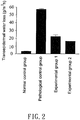
- Figure 2 is a graph showing the results of TEWL of the dorsal skins of the HRS/J hairless mice in normal control group, pathological group and experimental groups 1 and 2.
- the HRS/J hairless mice from pathological group showed an increased level of TEWL as compared to the normal control group. This indicates that UV-B radiation induced TEWL in HRS/J hairless mice and damaged the barrier function of stratum corneum.
- HRS/J hairless mice from experimental groups 1 and 2 showed a marked decrease in TEWL when compared to pathological control group.
- Solanum incanum L . solution and Solanum incanum L. gel can improve stratum corneum damage and inflammation caused by UV-B radiation.
- Figure 3 is a western blot analysis of NF-kB, COX-2 and iNOS of dorsal skin tissue from HRS/J hairless mice in normal control group, pathological group and experimental group 2.
- the skin tissues from the pathological control group showed an increased expression of NF- ⁇ B, COX-2 and iNOS as compared to normal control group, suggesting that UV-B radiation induces inflammatory response in HRS/J hairless mice.
- a significant reduction of NF- ⁇ B, COX-2 and iNOS levels were observed in experimental group 2 when compared to pathological control group. In all, these data suggest that Solanum incanum L. gel have anti-inflammatory effects.
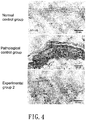
- Figure 4 shows an immunohistochemistry stain of NF- ⁇ B expression on dorsal skin tissue obtained from HRS/J hairless mice.
- pathological control group showed an increased expression level in NF- ⁇ B as compared to the normal control group, suggesting UV-B radiation induces inflammatory response in the HRS/J hairless mice.
- Solanum incanum L . gel was applied to HRS/J hairless mice, as in experimental group 2, the expression of NF-KB showed a significant decrease when compared to the pathological control group. In all, these data suggest that Solanum incanum L . gel of the present invention has anti-inflammatory effect.
- FIG. 5 shows a histochemistry stain of mast cells obtained from the dorsal skin tissue of HRS/J hairless mice.
- toluidine blue staining revealed an extensive mast cell infiltration in dorsal skin tissue from the pathological control group. This phenomenon was not visibly clear in the normal control group.
- mast cell infiltration was significantly reduced in experimental group 2 as compared to the pathological control group.
- the dorsal skin from HRS/J hairless mice in pathological control and experimental groups 1 and 2 were subjected to analyses in Item A (see below).
- the dorsal skin obtained from HRS/J hairless mice in normal control, pathological control and experimental group 2 were subjected to analyses in Item B as described below.
- the dorsal skin tissues of the mice from pathological control and experimental group 2 were obtained using surgical scissors and were subjected to analyses in Item C as described below.
- Tumor number on the dorsal skin of HRS/J hairless mice from pathological control and experimental groups 1 and 2 were observed by naked eyes. Tumor size was recorded using digital caliper (Mitutoyo, NTD15P-6"CX). Data for tumor number and volume are shown as mean ⁇ SEM (p ⁇ 0.05 is statistically significant).
- the skin tissues obtained from HRS/J hairless mice in pathological control and experimental group 2 were sectioned into 6 ⁇ m thickness using the procedure set forth in the section of "3. Tissue slice" under "General Methods”. Tissue sections were stained with resorcin-fuchsin solution, Weigert's iron hematoxylin and van Gieson's solution (all purchased from Muto Pure Chemicals Co., Ltd). Stained tissues were observed under an optical microscope with a 100-400X magnification and recorded with a digital camera (Olympus DP50, Japan).
- Tumor number over the course of the 60 wk experimental period is shown in Figure 7 .
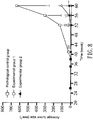
- Tumor size measurement over the course of the 60 wk experimental period is shown in Figure 8 .
- HRS/J mice in tretinoin group was applied with AIROL vanishing cream (contains 0.05% tretinoin, a conventional active component for treating photodamage, topical dosage: 10 to 20 mg of AIROL vanishing cream per cm 2 ).
- the cream was applied once a day, 5 times a week, for 14 weeks, and was continuously observed for 35 weeks (i.e., 35 week experimental period).
- the dorsal skin of HRS/J hairless mice in Solanum incanum L. gel group was applied with the Solanum incanum L. gel obtained from the section of "2. Preparation of Solanum incanum L. gel containing the water-soluble extract" under "Experimental Materials”.
- the gel was applied once a day (dosage: 10-20 mg of gel /cm 2 ), 5 times a week, during a 14-week period and was observed for 35 weeks.
- HRS/J hairless mice in pathological control group were not treated with the water-soluble extract.
- Tumor number on the dorsal skin of the mice from tretinoin group and Solanum incanum L . gel group was quantified at 0 week (i.e., before exposure to UV-B radiation), and at the end of 2, 7, 12, 17, 22, 27, and 32 weeks during the 35 week experimental period based on the method mentioned in Item A (Analysis of skin tumor formation) of Example 3.
- Item A Analysis of skin tumor formation
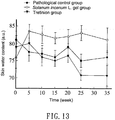
- HRS/J hairless mice from pathological control, tretinoin group, and Solanum incanum L . gel group were subjected to analyses as mentioned in Item B (Analysis of transepidermal water loss) of Example 2 and the following Item A at 0 week and the end of 5, 10, 15, 20, 25, and 30 weeks during the 35 week experimental period.
- the water-soluble extract of this invention has been proven to exhibit prevention of photodamage, improvement of pathological changes caused by photodamage, and maintenance of moisture-retaining capacity more effectively than what is often clinically used to treat and prevent photodamage (such as tretinion).
Landscapes
- Health & Medical Sciences (AREA)
- Life Sciences & Earth Sciences (AREA)
- Veterinary Medicine (AREA)
- Public Health (AREA)
- General Health & Medical Sciences (AREA)
- Animal Behavior & Ethology (AREA)
- Pharmacology & Pharmacy (AREA)
- Epidemiology (AREA)
- Chemical & Material Sciences (AREA)
- Medicinal Chemistry (AREA)
- Dermatology (AREA)
- Natural Medicines & Medicinal Plants (AREA)
- Engineering & Computer Science (AREA)
- Mycology (AREA)
- Microbiology (AREA)
- Botany (AREA)
- Biotechnology (AREA)
- Chemical Kinetics & Catalysis (AREA)
- Molecular Biology (AREA)
- Birds (AREA)
- General Chemical & Material Sciences (AREA)
- Nuclear Medicine, Radiotherapy & Molecular Imaging (AREA)
- Organic Chemistry (AREA)
- Bioinformatics & Cheminformatics (AREA)
- Alternative & Traditional Medicine (AREA)
- Medical Informatics (AREA)
- Gerontology & Geriatric Medicine (AREA)
- Pain & Pain Management (AREA)
- Rheumatology (AREA)
- Medicines Containing Plant Substances (AREA)
- Pharmaceuticals Containing Other Organic And Inorganic Compounds (AREA)
- Cosmetics (AREA)
- Steroid Compounds (AREA)
Claims (12)
- Pharmazeutische Zusammensetzung zur Verwendung beim Verhindern und/oder Behandeln von Hautlichtschädigung und/oder Hautentzündung,
wobei die pharmazeutische Zusammensetzung durch einen wasserlöslichen Extrakt von einer Pflanze der Gattung Solanum gekennzeichnet ist, wobei der wasserlösliche Extrakt Solamargin und Solasonin umfasst und der wasserlösliche Extrakt durch die folgenden Schritte erhältlich ist:(a) Aussetzen eines Pflanzenmaterials einer Pflanze der Gattung Solanum einer Extraktionsbehandlung unter Verwendung einer sauren wässrigen Lösung mit einem pH-Wert von 3~5, sodass eine wässrige Lösung erhalten wird;(b) Anpassen des pH-Werts der wässrigen Lösung, die in Schritt (a) erhalten wird, auf pH 8~10 mit einer Base, sodass ein Präzipitat gebildet wird;(c) Waschen des Präzipitats, das in Schritt (b) gebildet wird, mit Wasser, gefolgt von Trocknen, sodass ein getrocknetes Produkt erhalten wird;(d) Beimengen des getrockneten Produkts, das in Schritt (c) erhalten wird, mit Chloroform, gefolgt von der Zugabe einer geeigneten Menge eines 100 %-igen Alkohols, sodass ein Chloroform-Alkohol-Gemisch gebildet wird;(e) Mischen des Chloroform-Alkohols, der in Schritt (d) gebildet wird, mit einer Wasser/Alkohol-Lösung, die ein vorbestimmtes Wasser/Alkohol-Verhältnis hat, sodass ein Gemisch, das eine Chloroform-basierte Schicht und eine nicht-Chloroform-basierte Schicht enthält, erhalten wird;(f) Entfernen der Chloroform-basierten Schicht aus dem Gemisch, das in Schritt (e) erhalten wird, gefolgt von der Zugabe einer geeigneten Menge von Wasser; und(g) Erhalten eines Überstands von dem sich ergebenden Gemisch aus Schritt (f), gefolgt von Trocknen des Überstands, wobei das sich ergebende getrocknete Produkt in der Lage ist, unmittelbar in Wasser gelöst zu werden, um eine gelblich-klare und transparente wässrige Lösung zu bilden. - Pharmazeutische Zusammensetzung nach Anspruch 1 zur Verwendung nach Anspruch 1, ferner dadurch gekennzeichnet, dass der wasserlösliche Extrakt mindestens 60 Gew.-% Solamargin und Solasonin umfasst.
- Pharmazeutische Zusammensetzung nach Anspruch 1 zur Verwendung nach Anspruch 1, ferner dadurch gekennzeichnet, dass der wasserlösliche Extrakt 60 Gew.-% - 90 Gew.-% Solamargin und Solasonin umfasst.
- Pharmazeutische Zusammensetzung nach Anspruch 1, 2 oder 3 zur Verwendung nach Anspruch 1, die in einer oralen Darreichungsform angewandt wird.
- Pharmazeutische Zusammensetzung nach Anspruch 1, 2 oder 3 zur Verwendung nach Anspruch 1, die in einer topischen Darreichungsform angewandt wird.
- Pharmazeutische Zusammensetzung nach einem der Ansprüche 1 bis 5 zur Verwendung beim Verhindern und/oder Behandeln von Hautlichtschädigung.
- Pharmazeutische Zusammensetzung nach Anspruch 6 zur Verwendung nach Anspruch 6, ferner dadurch gekennzeichnet, dass die Hautlichtschädigung eines der folgenden Symptome umfasst: Ausdünnung der Haut, Hautatrophie, Abnahme von Kollagenfaser und elastischer Faser, Elastose, Verlust von Hautelastizität, Trockenheit, Faltenbildung, Infiltration von Entzündungszellen, vorzeitige Hautalterung, vaskuläre Veränderung, Pigmentveränderung, Komedone, pathologische Veränderung von Zysten und Haut.
- Pharmazeutische Zusammensetzung nach einem der Ansprüche 1 bis 5 zur Verwendung beim Verhindern und/oder Behandeln von Hautentzündung bei einem menschlichen oder tierischen Subjekt.
- Kosmetische Verwendung einer Zusammensetzung, die durch einen wasserlöslichen Extrakt von einer Pflanze der Gattung Solanum gekennzeichnet ist, wobei der wasserlösliche Extrakt Solamargin und Solasonin umfasst und der wasserlösliche Extrakt durch die folgenden Schritte erhältlich ist:(a) Aussetzen eines Pflanzenmaterials einer Pflanze der Gattung Solanum einer Extraktionsbehandlung unter Verwendung einer sauren wässrigen Lösung mit einem pH-Wert von 3∼5, sodass eine wässrige Lösung erhalten wird;(b) Anpassen des pH-Werts der wässrigen Lösung, die in Schritt (a) erhalten wird, auf pH 8~10 mit einer Base, sodass ein Präzipitat gebildet wird;(c) Waschen des Präzipitats, das in Schritt (b) gebildet wird, mit Wasser, gefolgt von Trocknen, sodass ein getrocknetes Produkt erhalten wird;(d) Beimengen des getrockneten Produkts, das in Schritt (c) erhalten wird, mit Chloroform, gefolgt von der Zugabe einer geeigneten Menge eines 100 %-igen Alkohols, sodass ein Chloroform-Alkohol-Gemisch gebildet wird;(e) Mischen des Chloroform-Alkohols, der in Schritt (d) gebildet wird, mit einer Wasser/Alkohol-Lösung, die ein vorbestimmtes Wasser/Alkohol-Verhältnis hat, sodass ein Gemisch, das eine Chloroform-basierte Schicht und eine nicht-Chloroform-basierte Schicht enthält, erhalten wird;(f) Entfernen der Chloroform-basierten Schicht aus dem Gemisch, das in Schritt (e) erhalten wird, gefolgt von der Zugabe einer geeigneten Menge von Wasser; und(g) Erhalten eines Überstands von dem sich ergebenden Gemisch aus Schritt (f), gefolgt von Trocknen des Überstands, wobei das sich ergebende getrocknete Produkt in der Lage ist, unmittelbar in Wasser gelöst zu werden, um eine gelblich-klare und transparente wässrige Lösung zu bilden.
- Kosmetische Verwendung nach Anspruch 9, ferner dadurch gekennzeichnet, dass der wasserlösliche Extrakt mindestens 60 Gew.-% Solamargin und Solasonin umfasst.
- Kosmetische Verwendung nach Anspruch 9, ferner dadurch gekennzeichnet, dass der wasserlösliche Extrakt 60 Gew.-% - 90 Gew.-% Solamargin und Solasonin umfasst.
- Kosmetische Verwendung nach Anspruch 9, 10 oder 11, wobei die Zusammensetzung ferner durch ein kosmetisch annehmbares Adjuvans gekennzeichnet ist, ausgewählt aus der Gruppe bestehend aus Lösungsmittel, Geliermitteln, Aktivierungsmitteln, Konservierungsmitteln, Antioxidantien, Sonnenschutzmitteln, Chelatbildnern, Tensiden, Färbemitteln, Verdickungsmitteln, Füllstoffen, Duftstoff und Geruchsabsorptionsmittel.
Applications Claiming Priority (1)
| Application Number | Priority Date | Filing Date | Title |
|---|---|---|---|
| TW100116659A TWI476012B (zh) | 2011-05-12 | 2011-05-12 | 使用茄屬植物的水溶性萃取物來治療和/或預防發炎與皮膚光損害以及光防護皮膚 |
Publications (2)
| Publication Number | Publication Date |
|---|---|
| EP2522357A1 EP2522357A1 (de) | 2012-11-14 |
| EP2522357B1 true EP2522357B1 (de) | 2019-06-05 |
Family
ID=45655412
Family Applications (1)
| Application Number | Title | Priority Date | Filing Date |
|---|---|---|---|
| EP12154282.3A Active EP2522357B1 (de) | 2011-05-12 | 2012-02-07 | Behandlung und/oder Vorbeugung von Entzündung und Hautlichtschaden und Lichtschutz der Haut mit einem wasserlöslichen Extrakt aus Pflanzen der Gattung Solanum |
Country Status (10)
| Country | Link |
|---|---|
| US (1) | US8614196B2 (de) |
| EP (1) | EP2522357B1 (de) |
| JP (1) | JP5744770B2 (de) |
| KR (1) | KR101397107B1 (de) |
| AU (1) | AU2012200390B2 (de) |
| CA (1) | CA2766631C (de) |
| ES (1) | ES2734056T3 (de) |
| RU (1) | RU2541804C2 (de) |
| SG (1) | SG185867A1 (de) |
| TW (1) | TWI476012B (de) |
Families Citing this family (6)
| Publication number | Priority date | Publication date | Assignee | Title |
|---|---|---|---|---|
| TWI476012B (zh) | 2011-05-12 | 2015-03-11 | G & E Herbal Biotechnology Co Ltd | 使用茄屬植物的水溶性萃取物來治療和/或預防發炎與皮膚光損害以及光防護皮膚 |
| CN105873564B (zh) * | 2013-10-30 | 2021-01-19 | 尤尼根公司 | 皮肤护理组合物及其使用方法 |
| US20160150789A1 (en) * | 2014-12-02 | 2016-06-02 | Bioprocol, Bioprocesos De Colombia Sas | Process to obtain an extract from solanum genus plants |
| KR102112382B1 (ko) * | 2016-06-27 | 2020-06-04 | 권기복 | 화장품 조성물 |
| KR102270929B1 (ko) | 2019-03-28 | 2021-06-30 | (주)엘에프라이팅 | Led 발광 조립체 |
| JP2023014044A (ja) * | 2021-07-14 | 2023-01-26 | 住友化学株式会社 | 塩、酸発生剤、レジスト組成物及びレジストパターンの製造方法 |
Family Cites Families (18)
| Publication number | Priority date | Publication date | Assignee | Title |
|---|---|---|---|---|
| AU540812B (en) | 1912-06-21 | 1912-09-10 | Reid Alexander Walker | An improved releaser for use in connection with milking machinery |
| AU540812B2 (en) * | 1979-05-02 | 1984-12-06 | Aruba Qld Pty. Ltd. | Steroid alkaloids |
| NZ193564A (en) * | 1979-05-02 | 1985-01-31 | Aruba Pty Ltd | Steroid alkaloids from solanum sodomeum and pharmaceutical compositions |
| AUPP968699A0 (en) * | 1999-04-09 | 1999-05-06 | Cura Nominees Pty Ltd | Therapeutic compositions and method for their preparation |
| US6699486B1 (en) | 1999-11-18 | 2004-03-02 | Bolla Corporation | Treatment or prevention of photoaging and skin cancer |
| ATE312118T1 (de) | 2001-09-28 | 2005-12-15 | Glycomed Sciences Ltd | Lösungsmittelextraktionsverfahren |
| WO2003030884A2 (en) | 2001-10-09 | 2003-04-17 | Glycomed Sciences Limited | Use of solasonine for the treatment of skin tumors |
| WO2003030915A1 (en) | 2001-10-09 | 2003-04-17 | Glycomed Sciences Limited | Use of solamargine for treating skin tumors |
| AUPS329002A0 (en) * | 2002-07-01 | 2002-07-18 | Solbec Pharmaceuticals Limited | Glycoalkaloid compositions and various uses thereof |
| TWI300352B (en) * | 2003-06-05 | 2008-09-01 | G & E Herbal Biotechnology Co Ltd | Water soluble extract from plant of solanum genus and the preparation process thereof, and pharmaceutical composition containing the water soluble extract |
| CN1329038C (zh) | 2003-06-20 | 2007-08-01 | 德英生物科技股份有限公司 | 茄属植物的水溶性萃取物、其制备方法及其药学组合物 |
| DE60331732D1 (de) * | 2003-08-22 | 2010-04-29 | G & E Herbal Biotechnology Co | n Herstellung und pharmazeutische Zusammensetzung enthaltend den wasserlöslichen Extrakt |
| CN101377475A (zh) | 2007-08-27 | 2009-03-04 | 江苏中康药物科技有限公司 | 适用于澳洲茄碱、澳洲茄边碱及其制剂的质量控制方法 |
| CN101337001B (zh) | 2008-02-15 | 2012-07-25 | 上海海天医药科技开发有限公司 | 黄果茄提取物、其制备方法及其药物用途 |
| CN101337000B (zh) | 2008-02-15 | 2012-04-25 | 上海海天医药科技开发有限公司 | 龙葵提取物、其制备方法及其药物用途 |
| JP2010273593A (ja) | 2009-05-28 | 2010-12-09 | N D R Kk | トマト粉体、その製造方法及び利用 |
| TWI414304B (zh) * | 2011-05-04 | 2013-11-11 | G & E Herbal Biotechnology Co Ltd | 使用茄屬植物的水溶性萃取物來治療疣 |
| TWI476012B (zh) | 2011-05-12 | 2015-03-11 | G & E Herbal Biotechnology Co Ltd | 使用茄屬植物的水溶性萃取物來治療和/或預防發炎與皮膚光損害以及光防護皮膚 |
-
2011
- 2011-05-12 TW TW100116659A patent/TWI476012B/zh active
-
2012
- 2012-01-17 AU AU2012200390A patent/AU2012200390B2/en active Active
- 2012-01-18 SG SG2012004602A patent/SG185867A1/en unknown
- 2012-02-02 CA CA2766631A patent/CA2766631C/en active Active
- 2012-02-07 ES ES12154282T patent/ES2734056T3/es active Active
- 2012-02-07 EP EP12154282.3A patent/EP2522357B1/de active Active
- 2012-02-08 US US13/368,894 patent/US8614196B2/en active Active
- 2012-02-15 JP JP2012030071A patent/JP5744770B2/ja active Active
- 2012-02-27 KR KR1020120019701A patent/KR101397107B1/ko active Active
- 2012-02-29 RU RU2012107715/15A patent/RU2541804C2/ru active
Non-Patent Citations (1)
| Title |
|---|
| None * |
Also Published As
| Publication number | Publication date |
|---|---|
| US8614196B2 (en) | 2013-12-24 |
| US20120289473A1 (en) | 2012-11-15 |
| RU2541804C2 (ru) | 2015-02-20 |
| KR101397107B1 (ko) | 2014-05-19 |
| CA2766631A1 (en) | 2012-11-12 |
| TWI476012B (zh) | 2015-03-11 |
| SG185867A1 (en) | 2012-12-28 |
| NZ598234A (en) | 2013-10-25 |
| TW201244731A (en) | 2012-11-16 |
| ES2734056T3 (es) | 2019-12-04 |
| AU2012200390B2 (en) | 2014-02-20 |
| RU2012107715A (ru) | 2013-09-10 |
| JP2012236815A (ja) | 2012-12-06 |
| AU2012200390A1 (en) | 2012-11-29 |
| JP5744770B2 (ja) | 2015-07-08 |
| EP2522357A1 (de) | 2012-11-14 |
| CA2766631C (en) | 2016-01-19 |
| KR20130004543A (ko) | 2013-01-11 |
Similar Documents
| Publication | Publication Date | Title |
|---|---|---|
| CN104207991B (zh) | 用于刺激magp‑1以改善皮肤外观的组合物和方法 | |
| US8197865B2 (en) | Methods and compositions for modulating hair growth or regrowth | |
| US20100062086A1 (en) | Compositions and Methods of Their Use for Improving the Condition and Appearance of Skin | |
| EP2522357B1 (de) | Behandlung und/oder Vorbeugung von Entzündung und Hautlichtschaden und Lichtschutz der Haut mit einem wasserlöslichen Extrakt aus Pflanzen der Gattung Solanum | |
| TW200412992A (en) | Compositions containing peptide copper complexes and phytochemical compounds, and methods related thereto | |
| US8557795B2 (en) | Composition containing Chamaecyparis obtusa polysaccharides to be externally applied to the skin | |
| JP5645344B2 (ja) | 外用剤組成物 | |
| KR101798632B1 (ko) | 피뿌리풀 추출물 또는 그의 분획물을 포함하는 화장 조성물 및 그의 용도 | |
| KR20130092258A (ko) | 피지생성 억제용 화장료 조성물 | |
| JP6545856B2 (ja) | 狼毒抽出物またはその分画物を含む、傷を治療するための組成物、及び個体の傷を治療する方法 | |
| JP2002284648A (ja) | 育毛剤組成物 | |
| NZ598234B (en) | Treatment and/or prevention of inflammation and cutaneous photodamage and photoprotection of the skin with a water-soluble extract from plant of solanum genus | |
| CN102872260A (zh) | 使用茄属植物的水溶性萃取物来治疗和/或预防发炎与皮肤光损害以及光防护皮肤 | |
| US20210177732A1 (en) | Combination of extracts of quinquina and of leontopodium alpinum and of the manganese salt of l-pyrrolidone carboxylic acid in the treatment of alopecia |
Legal Events
| Date | Code | Title | Description |
|---|---|---|---|
| PUAI | Public reference made under article 153(3) epc to a published international application that has entered the european phase |
Free format text: ORIGINAL CODE: 0009012 |
|
| AK | Designated contracting states |
Kind code of ref document: A1 Designated state(s): AL AT BE BG CH CY CZ DE DK EE ES FI FR GB GR HR HU IE IS IT LI LT LU LV MC MK MT NL NO PL PT RO RS SE SI SK SM TR |
|
| AX | Request for extension of the european patent |
Extension state: BA ME |
|
| 17P | Request for examination filed |
Effective date: 20130502 |
|
| 17Q | First examination report despatched |
Effective date: 20130829 |
|
| TPAC | Observations filed by third parties |
Free format text: ORIGINAL CODE: EPIDOSNTIPA |
|
| STAA | Information on the status of an ep patent application or granted ep patent |
Free format text: STATUS: EXAMINATION IS IN PROGRESS |
|
| REG | Reference to a national code |
Ref country code: DE Ref legal event code: R079 Ref document number: 602012060659 Country of ref document: DE Free format text: PREVIOUS MAIN CLASS: A61K0036810000 Ipc: A61K0031706000 |
|
| GRAP | Despatch of communication of intention to grant a patent |
Free format text: ORIGINAL CODE: EPIDOSNIGR1 |
|
| STAA | Information on the status of an ep patent application or granted ep patent |
Free format text: STATUS: GRANT OF PATENT IS INTENDED |
|
| RIC1 | Information provided on ipc code assigned before grant |
Ipc: A61K 9/00 20060101ALI20181205BHEP Ipc: A61K 36/81 20060101ALI20181205BHEP Ipc: A61K 9/06 20060101ALI20181205BHEP Ipc: A61Q 19/08 20060101ALI20181205BHEP Ipc: A61K 31/706 20060101AFI20181205BHEP Ipc: A61Q 17/04 20060101ALI20181205BHEP Ipc: A61P 17/12 20060101ALI20181205BHEP Ipc: A61Q 19/00 20060101ALI20181205BHEP Ipc: A61K 8/97 20170101ALI20181205BHEP |
|
| RAP1 | Party data changed (applicant data changed or rights of an application transferred) |
Owner name: G & E HERBAL BIOTECHNOLOGY CO., LTD. |
|
| INTG | Intention to grant announced |
Effective date: 20190109 |
|
| GRAS | Grant fee paid |
Free format text: ORIGINAL CODE: EPIDOSNIGR3 |
|
| GRAA | (expected) grant |
Free format text: ORIGINAL CODE: 0009210 |
|
| STAA | Information on the status of an ep patent application or granted ep patent |
Free format text: STATUS: THE PATENT HAS BEEN GRANTED |
|
| AK | Designated contracting states |
Kind code of ref document: B1 Designated state(s): AL AT BE BG CH CY CZ DE DK EE ES FI FR GB GR HR HU IE IS IT LI LT LU LV MC MK MT NL NO PL PT RO RS SE SI SK SM TR |
|
| REG | Reference to a national code |
Ref country code: GB Ref legal event code: FG4D |
|
| REG | Reference to a national code |
Ref country code: CH Ref legal event code: EP |
|
| REG | Reference to a national code |
Ref country code: AT Ref legal event code: REF Ref document number: 1139298 Country of ref document: AT Kind code of ref document: T Effective date: 20190615 |
|
| REG | Reference to a national code |
Ref country code: DE Ref legal event code: R096 Ref document number: 602012060659 Country of ref document: DE |
|
| REG | Reference to a national code |
Ref country code: IE Ref legal event code: FG4D |
|
| REG | Reference to a national code |
Ref country code: SE Ref legal event code: TRGR |
|
| REG | Reference to a national code |
Ref country code: CH Ref legal event code: NV Representative=s name: VENI GMBH, CH |
|
| REG | Reference to a national code |
Ref country code: NL Ref legal event code: MP Effective date: 20190605 |
|
| REG | Reference to a national code |
Ref country code: LT Ref legal event code: MG4D |
|
| PG25 | Lapsed in a contracting state [announced via postgrant information from national office to epo] |
Ref country code: LT Free format text: LAPSE BECAUSE OF FAILURE TO SUBMIT A TRANSLATION OF THE DESCRIPTION OR TO PAY THE FEE WITHIN THE PRESCRIBED TIME-LIMIT Effective date: 20190605 Ref country code: FI Free format text: LAPSE BECAUSE OF FAILURE TO SUBMIT A TRANSLATION OF THE DESCRIPTION OR TO PAY THE FEE WITHIN THE PRESCRIBED TIME-LIMIT Effective date: 20190605 Ref country code: NO Free format text: LAPSE BECAUSE OF FAILURE TO SUBMIT A TRANSLATION OF THE DESCRIPTION OR TO PAY THE FEE WITHIN THE PRESCRIBED TIME-LIMIT Effective date: 20190905 Ref country code: HR Free format text: LAPSE BECAUSE OF FAILURE TO SUBMIT A TRANSLATION OF THE DESCRIPTION OR TO PAY THE FEE WITHIN THE PRESCRIBED TIME-LIMIT Effective date: 20190605 Ref country code: AL Free format text: LAPSE BECAUSE OF FAILURE TO SUBMIT A TRANSLATION OF THE DESCRIPTION OR TO PAY THE FEE WITHIN THE PRESCRIBED TIME-LIMIT Effective date: 20190605 |
|
| PG25 | Lapsed in a contracting state [announced via postgrant information from national office to epo] |
Ref country code: GR Free format text: LAPSE BECAUSE OF FAILURE TO SUBMIT A TRANSLATION OF THE DESCRIPTION OR TO PAY THE FEE WITHIN THE PRESCRIBED TIME-LIMIT Effective date: 20190906 Ref country code: RS Free format text: LAPSE BECAUSE OF FAILURE TO SUBMIT A TRANSLATION OF THE DESCRIPTION OR TO PAY THE FEE WITHIN THE PRESCRIBED TIME-LIMIT Effective date: 20190605 Ref country code: BG Free format text: LAPSE BECAUSE OF FAILURE TO SUBMIT A TRANSLATION OF THE DESCRIPTION OR TO PAY THE FEE WITHIN THE PRESCRIBED TIME-LIMIT Effective date: 20190905 Ref country code: LV Free format text: LAPSE BECAUSE OF FAILURE TO SUBMIT A TRANSLATION OF THE DESCRIPTION OR TO PAY THE FEE WITHIN THE PRESCRIBED TIME-LIMIT Effective date: 20190605 |
|
| REG | Reference to a national code |
Ref country code: ES Ref legal event code: FG2A Ref document number: 2734056 Country of ref document: ES Kind code of ref document: T3 Effective date: 20191204 |
|
| REG | Reference to a national code |
Ref country code: AT Ref legal event code: MK05 Ref document number: 1139298 Country of ref document: AT Kind code of ref document: T Effective date: 20190605 |
|
| PG25 | Lapsed in a contracting state [announced via postgrant information from national office to epo] |
Ref country code: RO Free format text: LAPSE BECAUSE OF FAILURE TO SUBMIT A TRANSLATION OF THE DESCRIPTION OR TO PAY THE FEE WITHIN THE PRESCRIBED TIME-LIMIT Effective date: 20190605 Ref country code: NL Free format text: LAPSE BECAUSE OF FAILURE TO SUBMIT A TRANSLATION OF THE DESCRIPTION OR TO PAY THE FEE WITHIN THE PRESCRIBED TIME-LIMIT Effective date: 20190605 Ref country code: AT Free format text: LAPSE BECAUSE OF FAILURE TO SUBMIT A TRANSLATION OF THE DESCRIPTION OR TO PAY THE FEE WITHIN THE PRESCRIBED TIME-LIMIT Effective date: 20190605 Ref country code: CZ Free format text: LAPSE BECAUSE OF FAILURE TO SUBMIT A TRANSLATION OF THE DESCRIPTION OR TO PAY THE FEE WITHIN THE PRESCRIBED TIME-LIMIT Effective date: 20190605 Ref country code: EE Free format text: LAPSE BECAUSE OF FAILURE TO SUBMIT A TRANSLATION OF THE DESCRIPTION OR TO PAY THE FEE WITHIN THE PRESCRIBED TIME-LIMIT Effective date: 20190605 Ref country code: SK Free format text: LAPSE BECAUSE OF FAILURE TO SUBMIT A TRANSLATION OF THE DESCRIPTION OR TO PAY THE FEE WITHIN THE PRESCRIBED TIME-LIMIT Effective date: 20190605 Ref country code: PT Free format text: LAPSE BECAUSE OF FAILURE TO SUBMIT A TRANSLATION OF THE DESCRIPTION OR TO PAY THE FEE WITHIN THE PRESCRIBED TIME-LIMIT Effective date: 20191007 |
|
| PG25 | Lapsed in a contracting state [announced via postgrant information from national office to epo] |
Ref country code: IS Free format text: LAPSE BECAUSE OF FAILURE TO SUBMIT A TRANSLATION OF THE DESCRIPTION OR TO PAY THE FEE WITHIN THE PRESCRIBED TIME-LIMIT Effective date: 20191005 Ref country code: SM Free format text: LAPSE BECAUSE OF FAILURE TO SUBMIT A TRANSLATION OF THE DESCRIPTION OR TO PAY THE FEE WITHIN THE PRESCRIBED TIME-LIMIT Effective date: 20190605 |
|
| REG | Reference to a national code |
Ref country code: DE Ref legal event code: R097 Ref document number: 602012060659 Country of ref document: DE |
|
| PG25 | Lapsed in a contracting state [announced via postgrant information from national office to epo] |
Ref country code: TR Free format text: LAPSE BECAUSE OF FAILURE TO SUBMIT A TRANSLATION OF THE DESCRIPTION OR TO PAY THE FEE WITHIN THE PRESCRIBED TIME-LIMIT Effective date: 20190605 |
|
| PLBE | No opposition filed within time limit |
Free format text: ORIGINAL CODE: 0009261 |
|
| STAA | Information on the status of an ep patent application or granted ep patent |
Free format text: STATUS: NO OPPOSITION FILED WITHIN TIME LIMIT |
|
| PG25 | Lapsed in a contracting state [announced via postgrant information from national office to epo] |
Ref country code: DK Free format text: LAPSE BECAUSE OF FAILURE TO SUBMIT A TRANSLATION OF THE DESCRIPTION OR TO PAY THE FEE WITHIN THE PRESCRIBED TIME-LIMIT Effective date: 20190605 Ref country code: PL Free format text: LAPSE BECAUSE OF FAILURE TO SUBMIT A TRANSLATION OF THE DESCRIPTION OR TO PAY THE FEE WITHIN THE PRESCRIBED TIME-LIMIT Effective date: 20190605 |
|
| 26N | No opposition filed |
Effective date: 20200306 |
|
| PG25 | Lapsed in a contracting state [announced via postgrant information from national office to epo] |
Ref country code: SI Free format text: LAPSE BECAUSE OF FAILURE TO SUBMIT A TRANSLATION OF THE DESCRIPTION OR TO PAY THE FEE WITHIN THE PRESCRIBED TIME-LIMIT Effective date: 20190605 |
|
| REG | Reference to a national code |
Ref country code: BE Ref legal event code: MM Effective date: 20200229 |
|
| PG25 | Lapsed in a contracting state [announced via postgrant information from national office to epo] |
Ref country code: LU Free format text: LAPSE BECAUSE OF NON-PAYMENT OF DUE FEES Effective date: 20200207 Ref country code: MC Free format text: LAPSE BECAUSE OF FAILURE TO SUBMIT A TRANSLATION OF THE DESCRIPTION OR TO PAY THE FEE WITHIN THE PRESCRIBED TIME-LIMIT Effective date: 20190605 |
|
| PG25 | Lapsed in a contracting state [announced via postgrant information from national office to epo] |
Ref country code: IE Free format text: LAPSE BECAUSE OF NON-PAYMENT OF DUE FEES Effective date: 20200207 |
|
| PG25 | Lapsed in a contracting state [announced via postgrant information from national office to epo] |
Ref country code: BE Free format text: LAPSE BECAUSE OF NON-PAYMENT OF DUE FEES Effective date: 20200229 |
|
| PG25 | Lapsed in a contracting state [announced via postgrant information from national office to epo] |
Ref country code: MT Free format text: LAPSE BECAUSE OF FAILURE TO SUBMIT A TRANSLATION OF THE DESCRIPTION OR TO PAY THE FEE WITHIN THE PRESCRIBED TIME-LIMIT Effective date: 20190605 Ref country code: CY Free format text: LAPSE BECAUSE OF FAILURE TO SUBMIT A TRANSLATION OF THE DESCRIPTION OR TO PAY THE FEE WITHIN THE PRESCRIBED TIME-LIMIT Effective date: 20190605 |
|
| PG25 | Lapsed in a contracting state [announced via postgrant information from national office to epo] |
Ref country code: MK Free format text: LAPSE BECAUSE OF FAILURE TO SUBMIT A TRANSLATION OF THE DESCRIPTION OR TO PAY THE FEE WITHIN THE PRESCRIBED TIME-LIMIT Effective date: 20190605 |
|
| REG | Reference to a national code |
Ref country code: CH Ref legal event code: U11 Free format text: ST27 STATUS EVENT CODE: U-0-0-U10-U11 (AS PROVIDED BY THE NATIONAL OFFICE) Effective date: 20260301 |
|
| PGFP | Annual fee paid to national office [announced via postgrant information from national office to epo] |
Ref country code: SE Payment date: 20260205 Year of fee payment: 15 |
|
| PGFP | Annual fee paid to national office [announced via postgrant information from national office to epo] |
Ref country code: GB Payment date: 20260202 Year of fee payment: 15 |
|
| PGFP | Annual fee paid to national office [announced via postgrant information from national office to epo] |
Ref country code: ES Payment date: 20260317 Year of fee payment: 15 |
|
| PGFP | Annual fee paid to national office [announced via postgrant information from national office to epo] |
Ref country code: DE Payment date: 20260205 Year of fee payment: 15 |
|
| PGFP | Annual fee paid to national office [announced via postgrant information from national office to epo] |
Ref country code: IT Payment date: 20260223 Year of fee payment: 15 |
|
| PGFP | Annual fee paid to national office [announced via postgrant information from national office to epo] |
Ref country code: FR Payment date: 20260202 Year of fee payment: 15 |
|
| PGFP | Annual fee paid to national office [announced via postgrant information from national office to epo] |
Ref country code: CH Payment date: 20260301 Year of fee payment: 15 |