EP2523954B1 - Dérivés de 1h-[1,2,3]triazolo[4,5-c]pyridine-4- carbonitrile comme inhibiteurs de cathepsine s - Google Patents
Dérivés de 1h-[1,2,3]triazolo[4,5-c]pyridine-4- carbonitrile comme inhibiteurs de cathepsine s Download PDFInfo
- Publication number
- EP2523954B1 EP2523954B1 EP11700142.0A EP11700142A EP2523954B1 EP 2523954 B1 EP2523954 B1 EP 2523954B1 EP 11700142 A EP11700142 A EP 11700142A EP 2523954 B1 EP2523954 B1 EP 2523954B1
- Authority
- EP
- European Patent Office
- Prior art keywords
- trifluoromethyl
- methyl
- triazolo
- pyridine
- carbonitrile
- Prior art date
- Legal status (The legal status is an assumption and is not a legal conclusion. Google has not performed a legal analysis and makes no representation as to the accuracy of the status listed.)
- Active
Links
- WKFUAALWFOZJRS-UHFFFAOYSA-O CC1(CCN(CCCOc(cc2)c(C(F)(F)F)cc2-c(cc2[NH2+]C)nc(C#N)c2N(C)N)CC1)O Chemical compound CC1(CCN(CCCOc(cc2)c(C(F)(F)F)cc2-c(cc2[NH2+]C)nc(C#N)c2N(C)N)CC1)O WKFUAALWFOZJRS-UHFFFAOYSA-O 0.000 description 1
- PCTGCOPGVKSKCK-UHFFFAOYSA-O CN(C)C(CN(C)CCCOc(cc1)c(C(F)(F)F)cc1-c(cc1N(C)[NH3+])nc(C#N)c1N)=O Chemical compound CN(C)C(CN(C)CCCOc(cc1)c(C(F)(F)F)cc1-c(cc1N(C)[NH3+])nc(C#N)c1N)=O PCTGCOPGVKSKCK-UHFFFAOYSA-O 0.000 description 1
- IOXCQUYCBWSVMQ-UHFFFAOYSA-N CN(C)CC(N(C)CCCc(cc1)c(C(F)(F)F)cc1-c1nc(C#N)c2nn[n](C)c2c1)=O Chemical compound CN(C)CC(N(C)CCCc(cc1)c(C(F)(F)F)cc1-c1nc(C#N)c2nn[n](C)c2c1)=O IOXCQUYCBWSVMQ-UHFFFAOYSA-N 0.000 description 1
- 0 CN(c1c2)NNc1c(C#N)nc2-c(cc1)cc(C(F)(F)F)c1OCCC(CC1)C*N1c1ncccc1F Chemical compound CN(c1c2)NNc1c(C#N)nc2-c(cc1)cc(C(F)(F)F)c1OCCC(CC1)C*N1c1ncccc1F 0.000 description 1
- RUALRGHIPFRJQW-UHFFFAOYSA-N CN(c1c2)NNc1c(C#N)nc2-c1cc(C(F)(F)F)c(CCC=O)cc1 Chemical compound CN(c1c2)NNc1c(C#N)nc2-c1cc(C(F)(F)F)c(CCC=O)cc1 RUALRGHIPFRJQW-UHFFFAOYSA-N 0.000 description 1
- LNXBOQUSCBESJZ-UHFFFAOYSA-O CN(c1cc(-c(cc2)cc(C(F)(F)F)c2OCCCOS(C)=O)nc(C#N)c1N)[NH3+] Chemical compound CN(c1cc(-c(cc2)cc(C(F)(F)F)c2OCCCOS(C)=O)nc(C#N)c1N)[NH3+] LNXBOQUSCBESJZ-UHFFFAOYSA-O 0.000 description 1
- FBBDHRCBRRTDKL-UHFFFAOYSA-N CNC(CN(C)CCCOc(cc1)c(C(F)(F)F)cc1-c1nc(C#N)c2nn[n](C)c2c1)=O Chemical compound CNC(CN(C)CCCOc(cc1)c(C(F)(F)F)cc1-c1nc(C#N)c2nn[n](C)c2c1)=O FBBDHRCBRRTDKL-UHFFFAOYSA-N 0.000 description 1
- PKXRPDNRBYTWFA-UHFFFAOYSA-O CNCCCc(cc1)c(C(F)(F)F)cc1-c(cc1[NH2+]C)nc(C#N)c1N Chemical compound CNCCCc(cc1)c(C(F)(F)F)cc1-c(cc1[NH2+]C)nc(C#N)c1N PKXRPDNRBYTWFA-UHFFFAOYSA-O 0.000 description 1
- QTTHVOWKRRRSEW-SFHVURJKSA-N CNc(cc(-c(cc1)cc(C(F)(F)F)c1OCCC1CCN(C[C@@H](COC)O)CC1)nc1C#N)c1N Chemical compound CNc(cc(-c(cc1)cc(C(F)(F)F)c1OCCC1CCN(C[C@@H](COC)O)CC1)nc1C#N)c1N QTTHVOWKRRRSEW-SFHVURJKSA-N 0.000 description 1
- XHTJJKGOZUGQJW-UHFFFAOYSA-N CNc(cc(-c(cc1)cc(C(F)(F)F)c1OCCC1CCNCC1)nc1C#N)c1NN Chemical compound CNc(cc(-c(cc1)cc(C(F)(F)F)c1OCCC1CCNCC1)nc1C#N)c1NN XHTJJKGOZUGQJW-UHFFFAOYSA-N 0.000 description 1
- DTWDIIBXUDWAGD-UHFFFAOYSA-O C[NH2+]N(C)c1cc(-c(cc2)cc(C(F)(F)F)c2OCCCO[SH+2](C)O)nc(C#N)c1N Chemical compound C[NH2+]N(C)c1cc(-c(cc2)cc(C(F)(F)F)c2OCCCO[SH+2](C)O)nc(C#N)c1N DTWDIIBXUDWAGD-UHFFFAOYSA-O 0.000 description 1
- JCLQDTOPNQECNC-UHFFFAOYSA-P C[NH2+]c1cc(-c(cc2)cc(C(F)(F)F)c2OCCCN(C)C)nc(C#N)c1N[NH3+] Chemical compound C[NH2+]c1cc(-c(cc2)cc(C(F)(F)F)c2OCCCN(C)C)nc(C#N)c1N[NH3+] JCLQDTOPNQECNC-UHFFFAOYSA-P 0.000 description 1
- BNACCVUFYIGRGD-UHFFFAOYSA-P C[NH2+]c1cc(-c2cc(C(F)(F)F)c(CCCO)cc2)nc(C#N)c1N[NH3+] Chemical compound C[NH2+]c1cc(-c2cc(C(F)(F)F)c(CCCO)cc2)nc(C#N)c1N[NH3+] BNACCVUFYIGRGD-UHFFFAOYSA-P 0.000 description 1
- SDUPJAOQFXPMPS-UHFFFAOYSA-N C[n](c1c2)nnc1c(C#N)nc2-c(cc1)cc(C(F)(F)F)c1OCCN(CC1)CCN1c1ncccc1Cl Chemical compound C[n](c1c2)nnc1c(C#N)nc2-c(cc1)cc(C(F)(F)F)c1OCCN(CC1)CCN1c1ncccc1Cl SDUPJAOQFXPMPS-UHFFFAOYSA-N 0.000 description 1
- BAXXZUVRGLRUFN-INIZCTEOSA-N C[n](c1c2)nnc1c(C#N)nc2-c(cc1)cc(C(F)(F)F)c1OCC[C@H](CC1)CN1c1ncccc1 Chemical compound C[n](c1c2)nnc1c(C#N)nc2-c(cc1)cc(C(F)(F)F)c1OCC[C@H](CC1)CN1c1ncccc1 BAXXZUVRGLRUFN-INIZCTEOSA-N 0.000 description 1
- UUEGOIKSIASJSE-UHFFFAOYSA-N C[n](c1c2)nnc1c(C#N)nc2-c1cc(C(F)(F)F)c(CCCO)cc1 Chemical compound C[n](c1c2)nnc1c(C#N)nc2-c1cc(C(F)(F)F)c(CCCO)cc1 UUEGOIKSIASJSE-UHFFFAOYSA-N 0.000 description 1
- DTQVDTLACAAQTR-UHFFFAOYSA-N OC(C(F)(F)F)=O Chemical compound OC(C(F)(F)F)=O DTQVDTLACAAQTR-UHFFFAOYSA-N 0.000 description 1
Classifications
-
- C—CHEMISTRY; METALLURGY
- C07—ORGANIC CHEMISTRY
- C07D—HETEROCYCLIC COMPOUNDS
- C07D471/00—Heterocyclic compounds containing nitrogen atoms as the only ring hetero atoms in the condensed system, at least one ring being a six-membered ring with one nitrogen atom, not provided for by groups C07D451/00 - C07D463/00
- C07D471/02—Heterocyclic compounds containing nitrogen atoms as the only ring hetero atoms in the condensed system, at least one ring being a six-membered ring with one nitrogen atom, not provided for by groups C07D451/00 - C07D463/00 in which the condensed system contains two hetero rings
- C07D471/04—Ortho-condensed systems
-
- A—HUMAN NECESSITIES
- A61—MEDICAL OR VETERINARY SCIENCE; HYGIENE
- A61P—SPECIFIC THERAPEUTIC ACTIVITY OF CHEMICAL COMPOUNDS OR MEDICINAL PREPARATIONS
- A61P17/00—Drugs for dermatological disorders
- A61P17/06—Antipsoriatics
-
- A—HUMAN NECESSITIES
- A61—MEDICAL OR VETERINARY SCIENCE; HYGIENE
- A61P—SPECIFIC THERAPEUTIC ACTIVITY OF CHEMICAL COMPOUNDS OR MEDICINAL PREPARATIONS
- A61P19/00—Drugs for skeletal disorders
- A61P19/08—Drugs for skeletal disorders for bone diseases, e.g. rachitism, Paget's disease
- A61P19/10—Drugs for skeletal disorders for bone diseases, e.g. rachitism, Paget's disease for osteoporosis
-
- A—HUMAN NECESSITIES
- A61—MEDICAL OR VETERINARY SCIENCE; HYGIENE
- A61P—SPECIFIC THERAPEUTIC ACTIVITY OF CHEMICAL COMPOUNDS OR MEDICINAL PREPARATIONS
- A61P25/00—Drugs for disorders of the nervous system
-
- A—HUMAN NECESSITIES
- A61—MEDICAL OR VETERINARY SCIENCE; HYGIENE
- A61P—SPECIFIC THERAPEUTIC ACTIVITY OF CHEMICAL COMPOUNDS OR MEDICINAL PREPARATIONS
- A61P29/00—Non-central analgesic, antipyretic or antiinflammatory agents, e.g. antirheumatic agents; Non-steroidal antiinflammatory drugs [NSAID]
-
- A—HUMAN NECESSITIES
- A61—MEDICAL OR VETERINARY SCIENCE; HYGIENE
- A61P—SPECIFIC THERAPEUTIC ACTIVITY OF CHEMICAL COMPOUNDS OR MEDICINAL PREPARATIONS
- A61P37/00—Drugs for immunological or allergic disorders
-
- A—HUMAN NECESSITIES
- A61—MEDICAL OR VETERINARY SCIENCE; HYGIENE
- A61P—SPECIFIC THERAPEUTIC ACTIVITY OF CHEMICAL COMPOUNDS OR MEDICINAL PREPARATIONS
- A61P9/00—Drugs for disorders of the cardiovascular system
- A61P9/10—Drugs for disorders of the cardiovascular system for treating ischaemic or atherosclerotic diseases, e.g. antianginal drugs, coronary vasodilators, drugs for myocardial infarction, retinopathy, cerebrovascula insufficiency, renal arteriosclerosis
Definitions
- the invention relates to 1 H-[1,2,3]triazolo[4,5-c]pyridine-4-carbonitrile derivatives, to pharmaceutical compositions comprising the same, as well as to the use of these derivatives for the preparation of a medicament for the treatment of cathepsin S related diseases such as atherosclerosis, obesity, inflammation and immune disorders, such as rheumatoid arthritis, psoriasis, lupus, asthma and chronic pain, such as neuropathic pain.
- cathepsin S related diseases such as atherosclerosis, obesity, inflammation and immune disorders, such as rheumatoid arthritis, psoriasis, lupus, asthma and chronic pain, such as neuropathic pain.
- Cysteine proteases represent a class of peptidases characterised by the presence of a cysteine residue in the catalytic site of the enzyme, and these proteases are associated with the normal degradation and processing of proteins. Many pathological disorders or diseases are the results of abnormal activity of cysteine proteases such as over expression or enhanced activation.
- the cysteine cathepsins e.g. cathepsin B, K, L, S, V, F, are a class of lysosomal enzymes which are implicated in various disorders including inflammation, autoimmune diseases, e.g. rheumatoid arthritis, psoriasis, asthma, osteoarthritis, osteoporosis, tumors, coronary disease, atherosclerosis, and infectious diseases.
- Cathepsin S is highly expressed in antigen presenting cells of lymphatic tissues, primarily in lysosomes ( Bromme et al., Science, 5, 789, 1996 ; Riese, et al., Immunity, 4, 357, 1996 ). In the antigen presenting cells cathepsin S plays a major role in antigen presentation by degradation of invariant chain that is associated with the major histocompatibility class II complex. Cathepsin S is also believed to be involved in the antigen processing as well.
- Cathepsin S deficient mice are healthy and normal in most respects but exhibit defects in immune functions and showed marked resistance to the development of collagen-induced arthritis ( Nakagawa et al., Immunity, 10, 207, 1999 ; Shi et al, Immunity, 10, 197, 1999 ; Yang et al., 174, 1729, 2005). Cathepsin S inhibitors are effective in an asthma model ( Riese et al., J. Clin. Invest. 101, 2351, 1998 ). Blocking invariant chain degradation should decrease antigen presentation to CD4 cells specifically and as such reduces unwanted side effects of other immunosuppressive drugs such as steroids.
- cathepsin S has been shown to degrade all of the major components of the extracellular matrix and has been implicated in the pathogenic response that leads to atherosclerosis, obesity, emphysema and chronic obstructive pulmonary disease and cancer ( Shi, et al., Atherosclerosis, 186, 411, 2006 ; Clement et al., Clin Chem Lab Med., 45(3), 328, 2007 ; Chang et al., J Cancer Mol., 3(1), 5, 2007 ; Shi et al., Immunity, 10, 197, 1999 ; Zheng et al., J Clin.
- Cathepsin S has been indicated for pain ( WO 2003020278 ; Clark et al., PNAS, 104, 10655, 2007 ), cancer process, e.g. angiogenesis, metastasis, growth and cell proliferation ( Johnston et al., Am J Path., 163, 175, 2003 ; Kos et al., Brit J Cancer, 85, 1193, 2001 ).
- cathepsin S inhibitor alone or in combination with proteasome inhibition can have therapeutic usage against inflammation-induced neurodegenerative disease, such as multiple sclerosis ( Weissert, et al., Eur. J. Immunol., 38, 2401, 2008 ).
- cysteine cathepsins e.g cathepsin K has strong collagenolytic, elastase and gelatinase activities ( Bromme et al., J. Biol, Chem, 271, 2126-2132, 1996 ) and is predominantly expressed in osteoclasts ( Bromme and Okamoto, Biol. Chem. Hopp-Seyler, 376, 379-384, 1995 ). It cleaves key bone matrix proteins, including type I and II collagen ( Kaffienah et al., Biochem. J.
- Cathepsin K inhibitors may therefore represent new therapeutic agents for the treatment of disease states in man such as osteoporosis, cancer, osteoarthritis.
- cathepsin K plays a critical role in the immune system and may serve as a valid therapeutic target in autoimmune diseases ( Takayanagi, et al., Science, 319, 624, 2008 ).
- Sukhova et al J. Clin. Invest. 102, 576-583, 1998 ) have demonstrated that cells (macrophages) that migrate into and accumulate within developing human atherosclerotic plaques also synthesize the potent elastases Cathepsin K and S. Matrix degradation, particularly in the fibrous cap of such plaques, is a crucial process in atherosclerotic lesion destabilization.
- the metabolism of the extracellular matrix components collagen and elastin, which confer structural integrity upon the lesion's fibrous cap, can critically influence the clinical manifestations of atherosclerosis, such as coronary artery thrombosis as a result of rupture of an atherosclerotic plaque.
- Inhibition of cathepsins K and S at sites of plaques prone to rupture may thus represent an effective way of preventing such events.
- the cysteine cathepsins are a class of proteolytic enzymes that catalyze the hydrolysis of specific peptide bonds in proteinaceous substrates.
- Enzyme : .Sn....S5 - S4 - S3 - S2 - S1 - S1' - S2' - S3' ....Sn'..
- amino acid residues of the subsites of the substrate at the N-terminus of the scissile P1 - P1' bond are designated P1, P2 etc and as P1', P2' etc at the C-terminus.
- These subsites of the substrate correspond to the possible subsites (S1, S2, etc) on the enzyme with which the binding interactions take place.
- Cysteine proteases are characterized by having a cysteine residue at the active site which serves as a nucleophile.
- the active site also contains a histidine residue.
- the imidazole ring on the histidine serves as a base to generate a thiolate anion on the active site cysteine, increasing its nucleophilicity.
- the P1 ⁇ P1' amide bond to be cleaved is directed to the active site, where the thiolate attacks the carbonyl carbon forming a an acyl-enzym intermediate and cleaving the amide bond, liberating an amine.
- Cathepsin S is a monomeric protein consisting of 217 amino acids, whose crystallographic structure is well known ( Rebecca Roberts, Drug News Perspect 2005, 18 (10) 605-614 ).
- the catalytic triad of human Cathepsin S is represented by Cys-25, His 164 and Asn-184. These residues are positioned near the S1 and S1' subsites on the surface of the enzyme (T et al. J. Chem. Inf. Model. 2008, 48, 1693-1705 ).
- 4-Amino-pyrimidine-2-carbonitrile derivatives have been disclosed as inhibitors of cathepsins K and/or S in the International Patent Application WO 03/020278 (Novartis Pharma GMBH), while structurally related 4-amino-pyrimidine-2 carbonitrile derivatives were recently disclosed in WO04/000819 (ASTRAZENECA AB) as cathepsin S inhibitors.
- Pyrrolo-pyrimidines have likewise been disclosed as cathepsin K and/or S inhibitors in WO 03/020721 (Novartis Pharma GMBH) and WO 04/000843 (ASTRAZENECA AB).
- Organon as inhibitors of cathepsin S and cathepsin K, useful in the treatment of osteoporosis, atherosclerosis, inflammation and immune disorders, such as rheumatoid arthritis, psoriasis, asthma, and chronic pain, such as neuropathic pain.
- Figure 1 is a surface representation of the Cathepsin S active site cleft showing the position of the imidazopyridine derived inhibitor in relation to the specific subsites S1, S2 and S3 (unoccupied) on the enzyme, whereby the "electrophilic warhead' containing imidazo[4,5-c]pyridine-4-carbonitrile part of the molecule is covalently linked in the S1 site on the enzyme, the trifluorophenyl moiety being bound in the hydrophopbic S2 site on the enzyme, while the piperazine containing side chain protrudes into a tunnel region flanked by Phe-70 and Phe-211 on the enzyme, the phenyl groups of which are approximately at a distance of 8-9 A. After the tunnel there is a a deep hydrophobic pocket that is flanked at the end by the polar side chains of Glu-115 and Thr-72.
- the 1 H-[1,2,3]triazolo[4,5-c]pyridine-4-carbonitrile derived cathepsin inhibitors also exhibit, in comparison with the corresponding imidazo[4,5-c]pyridine-4-carbonitrile derived cathepsin inhibitors, a 5-10 fold increase in cell based cathepsin S inhibitory activity on cleavage of invariant chain, as measured by lip10 accumulation.
- the invention provides 1H-[1,2,3]triazolo[4,5-c]pyridine-4-carbonitrile derived cathepsin inhibitors having the general Formula I wherein
- the 1H-[1,2,3]triazolo[4,5-c]pyridine-4-carbonitrile derivatives of the invention are inhibitors of cathepsin S and cathepsin K and can therefor be used for the preparation of a medicament for the treatment of osteoporosis, atherosclerosis, inflammation and immune disorders, such as rheumatoid arthritis, psoriasis, asthma, and chronic pain, such as neuropathic pain.
- (C 1-6 )alkyl as used in the definition of Formula I, means a branched or unbranched alkyl group having 1-6 carbon atoms, like hexyl, pentyl, 3-methyl-butyl, butyl, isobutyl, tertiary butyl, propyl, isopropyl, ethyl and methyl.
- (C 1-4 )alkyl means a branched or unbranched alkyl group having 1-4 carbon atoms, like butyl, isobutyl, tertiary butyl, propyl, isopropyl, ethyl and methyl.
- (C 1-3 )alkyl means a branched or unbranched alkyl group having 1-3 carbon atoms, like propyl, isopropyl, ethyl and methyl.
- (C 1-4 )alkyloxy, (C 1-4 )alkylsulfonyl and (C 1-4 )alkyloxy(C 1-4 )alkyoxyl each occurrence of (C 1-4 )alkyl has the meaning as previously given.
- (C 1-6 )alkylcarbonyl and (C 1-6 )alkylsulfonyl each occurrence of (C 1-6 )alkyl has the meaning as previously given.
- (C 3-5 )cycloalkyl means a cycloalkyl group having 3-5 carbon atoms, such as cyclopentyl, cyclobutyl and cyclopropyl.
- Het means a 5-membered heteroaryl ring comprising 1-3 heteroatoms selected from O, S and N. Examples of such heteroaryl rings, which are attached through a carbon atom, and which may be substituted by 1 or 2 (C 1-3 )alkyl groups, are imidazolyl, pyrazolyl, thiazolyl, isothiazolyl, oxazolyl, isoxazolyl, thienyl, oxadiazolyl, and the like.
- Preferred rings are 1,3-thiazol-2-yl, 1,3-oxazol-2-yl, 1,2-oxazol-3-yl, 1,2-oxazol-4-yl, 1,2,4-oxadiazol-3-yl, 5-methyl-1,2,4-oxadiazol-3-yl, 1,2,4-oxadiazol-5-yl , 5-methyl-isoxazol-3-yl, 3-methyl-isoxazol-5-yl, and 1,3,4-oxadiazol-2-yl.
- halogen means F, Cl, Br, or I.
- F is preferred.
- a preferred halogen substituted alkyl group is trifluoromethyl.
- Preferred in the invention are those compounds according to Formula I wherein X is O and U, V and W are CH.
- compositions comprising a 1 H-[1,2,3]triazolo[4,5-c]pyridine-4-carbonitrile derivative having general Formula I, or a pharmaceutically acceptable salt thereof, in admixture with pharmaceutically acceptable auxilliaries.
- the 1 H-[1,2,3]triazolo[4,5-c]pyridine-4-carbonitrile derivatives of general Formula I may be prepared by the methods as depicted in Schemes 1 and 2. N-alkylation of 4-amino-6-chloro-2-cyano-3-nitropyridine (II) produces 4-N-alkylamino-6-chloro-2-cyano-3-nitropyridine (III), from which 4-alkylamino-3-amino-6-chloro-pyridine-2-carbonitrile (IV) is generated following reduction of the nitro group by either hydrogenation (using Pd/C-H 2 ) or by the use of SnCl 2 or Fe based reducing agents.
- Suitable other protecting groups for functional groups which are to be temporarily protected during syntheses are known in the art, for example from Wuts, P.G.M. and Greene, T.W.: Protective Groups in Organic Synthesis, Third Edition, Wiley, New York, 1999 .
- the resulting primary or secondary amine, alcohol or carboxylic acid can be then used for further derivatisation as shown by Scheme 5, such as alkylation or reductive alkylation, acylation or sulphonation.
- 1 H-[1,2,3]triazolo[4,5-c]pyridine-4-carbonitrile derivatives of general Formula I of the invention can also be prepared via the intermediate phenol derivative of formula (XXII) as shown in Scheme 6.
- This intermediate is prepared starting from 4-bromo-2-trifluoromethylphenol (XVII): following protection of the phenolic hydroxy group as a methoxyethoxymethoxy (MEMO) ether (XVIII), the compound is converted to the boronic acid derivative (formula (XIX)) by standard methodology.
- Suzuki coupling with the compound of formula (IV) gives the compound of formula (XX)
- Diazotisationcyclisation provides triazolopyridine (XXI) from which the MEMO group is then removed using dilute aqueous hydrochloric acid.
- the resulting intermediate compound of formula (XXII) can be derivatised by either alkylation, a Mitsunobu reaction or using further methods known in the art, to prepare additional compounds of formula (I).
- the 1 H-[1,2,3]triazolo[4,5-c]pyridine-4-carbonitrile derivatives of the invention may be isolated from the reaction mixture in the form of a pharmaceutically acceptable salt.
- the pharmaceutically acceptable salts such as acid addition salts, may further be obtained by treating the free base of Formula I with an organic or inorganic acid such as, but not limited to, hydrogen chloride, hydrogen bromide, hydrogen iodide, sulfuric acid, phosphoric acid, acetic acid, trifluoroacetic acid, propionic acid, glycolic acid, maleic acid, malonic acid, methanesulphonic acid, fumaric acid, succinic acid, tartaric acid, citric acid, benzoic acid and ascorbic acid.
- an organic or inorganic acid such as, but not limited to, hydrogen chloride, hydrogen bromide, hydrogen iodide, sulfuric acid, phosphoric acid, acetic acid, trifluoroacetic acid, propionic acid, glycolic acid, maleic acid, malonic acid
- Suitable salts of 1 H-[1,2,3]triazolo[4,5-c]pyridine-4-carbonitrile derivatives of Formula I in which a carboxylate group is present can be an alkali metal salts, such as sodium, potassium or lithium salt, or may be a salt obtained from the combination with an organic base, such as trimethylamine, triethylamine and the like.
- Compounds of the invention may exist in solvated as well as in unsolvated forms, including hydrated forms.
- the solvated forms are equivalent to unsolvated forms and are intended to be encompassed within the scope of the present invention.
- Compounds of the present invention may exist as amorphous forms, but also multiple crystalline forms may be possible. In general, all physical forms are equivalent for the uses contemplated by the present invention and are intended to be within the scope of this invention.
- the 1 H-[1,2,3]triazolo[4,5-c]pyridine-4-carbonitrile derivatives of the invention and their salts may contain a centre of chirality in one or more of the side chains and may therefore be obtained as a pure enantiomer, or as a mixture of enantiomers, or as a mixture containing diastereomers.
- Methods for asymmetric synthesis whereby the pure stereoisomers are obtained are well known in the art, e.g. synthesis with chiral induction or starting from chiral intermediates, enantioselective enzymatic conversions, separation of stereoisomers or enantiomers using chromatography on chiral media.
- the present invention also embraces isotopically-labelled compounds of the present invention which are identical to those recited herein, but for the fact that one or more atoms are replaced by an atom having an atomic mass or mass number different from the atomic mass or mass number usually found in nature.
- isotopes that can be incorporated into compounds of the invention include isotopes of hydrogen, carbon, nitrogen, oxygen, phosphorus, fluorine and chlorine, such as 2 H, 3 H, 13 C, 14 C, 15 N, 18 O, 17 O, 35 S, 18 F, and 36 Cl, respectively.
- Certain isotopically-labelled compounds of Formula (I) are useful in compound and/or substrate tissue distribution assays. Tritiated (i.e., 3 H) and carbon-14 (i.e., 14 C) isotopes are particularly preferred for their ease of preparation and detectability. Further, substitution with heavier isotopes such as deuterium (i.e., 2 H) may afford certain therapeutic advantages resulting from greater metabolic stability (e.g., increased in vivo half-life or reduced dosage requirements) and hence may be preferred in some circumstances.
- Isotopically labelled compounds of Formula (I) can generally be prepared by following procedures analogous to those disclosed in the Schemes and/or in the Examples hereinbelow, by substituting an appropriate isotopically labelled reagent for a non-isotopically labelled reagent.
- the compounds of the invention were found to be inhibitors of human Cathepsin S and can therefore in a further aspect of the invention be used in therapy, and especially for the preparation of a medicament for the treatment of autoimmune disease, chronic obstructive pulmonary disease, pain, cancer, obesity, osteoporosis, atherosclerosis and related Cathepsin S dependent disorders, such as rheumatoid arthritis, psoriasis, asthma and IBD.
- the compounds of the invention may be administered enterally or parenterally, and for humans preferably in a daily dosage of 0.001-100 mg per kg body weight, preferably 0.01-10 mg per kg body weight.
- a daily dosage of 0.001-100 mg per kg body weight preferably 0.01-10 mg per kg body weight.
- the compounds may be compressed into solid dosage units, such as pills, tablets, or be processed into capsules or suppositories.
- pharmaceutically suitable liquids the compounds can also be applied in the form of a solution, suspension, emulsion, e.g. for use as an injection preparation, or as a spray, e.g. for use as a nasal spray.
- dosage units e.g. tablets
- conventional additives such as fillers, colorants, polymeric binders and the like
- any pharmaceutically acceptable additive which does not interfere with the function of the active compounds can be used.
- Suitable carriers with which the compositions can be administered include lactose, starch, cellulose derivatives and the like, or mixtures thereof, used in suitable amounts.
- Dimethylformamide (DMF), N-methylpyrolidinone (NMP), dichloromethane (DCM), dimethylsulfoxide (DMSO), tetrahydrofuran (THF), 1,2-dimethoxyethane (DME), high pressure liquid chromatography (HPLC), diisopropylethylamine (DIPEA), triethylamine (TEA), broad (br), singlet (s), doublet (d), triplet (t), trifluoroacetic acid (TFA), tert-butyloxycarbonyl (Boc), methanesulphonate (MsO), trifluoromethane-sulphonate (TfO), methoxyethoxymethoxy (MEMO), tetrahydopyran (THP), N-chlorosuccinimide (NCS), strong cation exchange resin (SCX), strong anion exchange resin (SAX), deuteriated DMSO (DMSO), deuteriated methanol (CD
- Tin(II) chloride dihydrate (21g) was added to a suspension of 6-chloro-4-methylamino-3-nitro-pyridine-2-carbonitrile (6.6g) in ethanol (150ml). The mixture was stirred at room temperature for 3 hours. To above red-brown coloured solution was then added ethyl actetate (1000ml) and followed by 10% aqueous ammonium hydroxide (200ml). The organic layer were seperated, the sticky solid pad was washed with ethyl acetate (5 x 200ml). Combined organic layer was then washed with saturated sodium chloride aqueous solution (2 x 200ml), dried over sodium sulphate, solvent removed to give a brown solid as expected product (5.7g). 1 H NMR (CD3OD) ⁇ : 6.45 (s, 1 H), 2.89 (s, 3H).
- DIAD (13.5g) was added dropwise to the solution of triphenylphosphine (43.5g), 4-bromo-2-trifluoromethylphenol (40g) and tert-butyl 4-(2-hydroxyethyl)-piperidine-1-carboxylate (31.7g) in DCM (200ml) at 0°C during 15 minutes. The mixture was then stirred at room temperature for 20 hours. After removal of DCM under reduced pressure, to the residue was added ether (100ml) and heptane (300ml), solid was then filtered off. Filtrate was then washed with 1 M sodium hydroxide (100ml x 3).
- HCl salt formed by adding 0.98ml 0.5M HCl (aq) to sample and lyophilising sample in genevac to give 1-methyl-6-(4-(2-(1-(oxazol-2-ylmethyl)piperidin-4-yl)ethoxy)-3-(trifluoromethyl)phenyl)-1H-[1,2,3]triazolo[4,5-c]pyridine-4-carbonitrile hydrochloride (25.6mg).
- Example 3a The procedure described in Example 3a was further applied, using the appropriate alkylation reagent, to prepare the following compounds as free bases or hydrochloric acid salt:
- Example 4a The procedure described in Example 4a was further applied, using the appropriate aryl or heteroaryl halide, to prepare the following compounds:
- reaction mixture was concentrated under reduced pressure and purified by flash chromatography (100g silica column, heptane to 1:1 heptane / EtOAc gradient). Solvent was evaporated from the appropriate fractions and the residue was suspended in a small volume of THF, sonicated and heated to 50C for 10 minutes. The suspension was filtered and the resulting white solid lyophilised in a genevac with 0.5M HCl followed by water.
- reaction mixture was passed down an SCX column to afford 1-methyl-6-(4-(1-(pyridin-2-yl)piperidin-4-yloxy)-3-(trifluoro-methyl)phenyl)-1H-[1,2,3]triazolo[4,5-c]pyridine-4-carbonitrile.
- Example 27a The procedure described in Example 27a was further applied, using the appropriate akylation agent, to prepare the following compounds:
- reaction mixture was concentrated then diluted with dichloromethane and water, extracted with dichloromethane and separated by hydrophobic frits, concentrated.
- 1,1'-bis(diphenylphosphino)ferrocenedichloropalladium(II) was added to a mixture of 2-[3-(4-Bromo-2-(trifluoromethyl)-phenoxy)-propoxy]-tetrahydro-2H-pyran (53g), bis(pinacolato)diboron (44.6g) and potassium acetate (27.1 g) in dry dioxane (400ml) under N 2 . The mixture was heated to 100°C for 3 hours then diluted with ethyl acetate and water and filtered through celite. The organic layer was separated , dried over magnesium sulphate and solvent removed under reduced pressure.
- Acetyl chloride 14.26ml was added to MeOH (150ml) at 0°C and stirred for 10 minutes. The above mixture was added to 4,4,5,5-tetramethyl-2-(4-(3-(tetrahydro-2H-pyran-2-yloxy)propoxy)-3-(trifluoromethyl)phenyl)-1,3,2-dioxaborolane (43g) in MeOH (300ml) and stirred at 50°C for 1.5 hours. The solvent was removed under reduced pressure, DCM was added to the residue and it was basified with sodium bicarbonate, washed with water, and the DCM was removed under reduced pressure to give expected compound (35g).
- Methanesulphonyl chloride (6.29g) was added dropwise to a solution of 6-(4-(3-hydroxypropoxy)-3-(trifluoromethyl)phenyl)-1-methyl-1H-[1,2,3]triazolo[4,5-c]-pyridine-4-carbonitrile (10.34g) and diisopropylethylamine (22.7ml) in DCM (300ml) at 0°C. The mixture was stirred at room temperature for 2 hours. The DCM was removed under reduced pressure, MeOH and water were added to the residue and the solid was collected by filtration to give the expected product (11.56g).
- Acetyl chloride (18.3mg) was added to a mixture of 6-(4-(3-aminopropoxy)-3-(trifluoromethyl)phenyl)-1-methyl-1H-[1,2,3]triazolo[4,5-c]pyridine-4-carbonitrile (100mg) and triethylamine (294 ⁇ l) in DCM (2ml). The mixture was stirred at room temperature for 2 hours then diluted with water, the organic layer was separated, dried over magnesium sulphate, and solvent was removed under reduced pressure. The residue was purified by HPLC to give the expected product (4.4mg).
- Example 36a The procedure described in Example 36a was further applied, using the appropriate amines, to prepare the following compounds:
- Methanesulfonyl chloride (3.95 ml, 4.53 g) was added dropwise at 0 °C to a solution of 6-(4-(2-hydroxyethoxy)-3-(trifluoromethyl)phenyl)-1-methyl-1H-[1,2,3]triazolo[4,5-c]pyridine-4-carbonitrile (5.7 g) and diisopropylethylamine (17.28 ml, 12.79 g). The mixture was stirred at room temperature for 1 hour. 10ml methanol added and stirred for 5 minutes, followed by cold water (20ml). Product precipitated, collected by filtration and washed with diethyl ether.
- Example 37a The procedure described in Example 37a was further applied, using the appropriate reagent, to prepare the following compounds:
- Reaction mixture was filtered and purified by basic prep HPLC to give 1-methyl-6-(4-(2-(4-(3,3,3-trifluoro-2-hydroxy-2-methyl-propyl)piperazin-1-yl)ethoxy)-3-(trifluoromethyl)phenyl)-1H-[1,2,3]triazolo[4,5-c]pyridine-4-carbonitrile.
- HCl salt formed by adding 0.23ml 0.5M HCl with another 1ml of water and lyophilising sample in genevac to afford 1-methyl-6-(4-(2-(4-(3,3,3-trifluoro-2-hydroxy-2-methylpropyl)piperazin-1-yl)ethoxy)-3-(trifluoromethyl)phenyl)-1H-[1,2,3]triazolo[4,5-c]pyridine-4-carbonitrile dihydrochloride (34.7mg).
- Example 38a The procedure described in Example 38a was further applied, using the appropriate reagents, to prepare the following compound.
- reaction mixture was cooled and partitioned between water and ethyl acetate, washed with water, brine, dried over sodium sulfate, filtered and concentrated.
- reaction mixture was diluted with DCM (15ml) and washed with 1 M HCl (10ml) 1 M NaOH (10ml) and brine. Organics were dried over sodium sulphate and solvent evaporated under reduced pressure to yield an orange coloured solid.
- the solid was suspended in MeOH (4ml) sonicated and heated to 50C for 10 minutes. Filtration of the suspension and washing of the resulting white solid with ether afforded 6-(4-((3-isopropyl-1,2,4-oxadiazol-5-yl)methoxy)-3-(trifluoromethyl)phenyl)-1-methyl-1H-[1,2,3]triazolo[4,5-c]pyridine-4-carbonitrile (60.2 % yield) after drying.
- NaB(OAc)3H (640mg) was added in portions to the solution of methyl-6-(4-(3-oxopropyl)-3-(trifluoromethyl)phenyl)-1H-[1,2,3]triazolo[4,5-c]pyridine-4-carbonitrile, methylamine (1.5ml, 2M in methanol) in THF (5ml). The mixture was stirred at rt for 3 hours, then diluted with ethyl acetate (100ml), washed with sodium carbonate (100ml), brine (100ml), dried over sodium sulphate, solvent removed. The crude product was used for next step without further purification (260mg). MS m/z 375(M+H).
- EDCI (290mg) was added to the mixture of 2-(dimethylamino)acetic acid (155mg), methyl-6-(4-(3-(methylamino)propyl)-3-(trifluoromethyl)phenyl)-1H-[1,2,3]-triazolo[4,5-c]pyridine-4-carbonitrile, triethylamine (0.5ml) in THF (5ml).
- the inhibitory activity of the compounds of the invention was demonstrated in vitro by measuring the inhibition of recombinant human Cathepsin S as follows: To a 384 well microtitre plate is added 10 ⁇ l of a 100 ⁇ M solution of test compound in assay buffer (100mM sodium acetate pH5.5, 5mM EDTA, 5mM dithiothreitol) with 10% dimethylsulfoxide (DMSO), plus 20 ⁇ l of 250 ⁇ M solution of the substrate Z-Val-Val -Arg-AMC (7-amido-coumarine derivative of the tripeptide N-benzyloxy-carbonyl-Val-Val-Arg-OH) in assay buffer and 45 ⁇ l of assay buffer.
- assay buffer 100mM sodium acetate pH5.5, 5mM EDTA, 5mM dithiothreitol
- DMSO dimethylsulfoxide
- Enzyme activity is determined by measuring the fluorescence of the liberated aminomethylcoumarin at 440nM using 390nM excitation, at 20 minutes. Percentage enzyme activity is calculated by comparison of this activity to that of a solution containing no inhibitor.
- Compounds are subsequently subjected to a dose response curve analysis in order to determine IC 50 values for active compounds (where IC 50 is the concentration of test compound causing 50 % inhibition of the enzymatic activity).
- Compounds of the invention typically have a pIC 50 (negative logarithm of the IC 50 concentration) for inhibition of human cathepsin S of more than 6.
- Most compounds of the invention have a pIC 50 of more than 8, such as exemplified by the compounds of examples 1, 2a , 2b , 2c , 2d , 3a , 3c , 3k , 4a , 4b, 8 , 9a , 9b , 19 , 20 , 21 , 22 , 23 , 24, 25, 26, 27a, 29, 30, 31, 32, 35, 36q , 36v, 36u, 36t, 36w, 36x, 37e, 37m, 37p, 37q, 37r, 39, 43.
- Table I shows comparative Cathepsin S activity data for a number of 1 H-[1,2,3]triazolo[4,5-c]pyridine-4-carbonitrile derivatives of the invention and their corresponding 1 H-imidazo[4,5-c]pyridine-4-carbonitrile derivatives.
- the mere substitution of a carbon atom in the imidazo-moiety of the reference compounds with a nitrogen atom in the compounds of the invention results in a 3-17 fold higher activity as cathepsin S inhibitor.
- the inhibitory activity of the compounds of the invention was demonstrated in vitro by measuring the inhibition of recombinant human Cathepsin K as follows: To a 384 well microtitre plate is added 5 ⁇ l of a 100 ⁇ M solution of test compound in assay buffer (100mM sodium acetate pH5.5, 5mM EDTA, 5mM dithiothreitol) with 10% dimethylsulfoxide (DMSO), plus 10 ⁇ l of 100 ⁇ M solution of the substratre Z-Phe-Arg-AMC (7-amido-coumarine derivative of the dipeptide N-benzyloxycarbonyl-Phe-Arg-OH) in assay buffer and 25 ⁇ l of assay buffer.
- assay buffer 100mM sodium acetate pH5.5, 5mM EDTA, 5mM dithiothreitol
- DMSO dimethylsulfoxide
- Human B lymphoblastoid cells (Jiyoye) were cultured in RPMI 1640 medium at a density of 500 000 cells/ml in 24-well plates. Cells were treated with a concentration range of compounds (0.001-10 ⁇ M) and vehicle alone (DMSO, 0.1% v/v). In order to generate positive control treatments separate wells were treated with 10 ⁇ M E64d & 0.1 ⁇ M LHVS. The cells were incubated at 37°C in a humidified incubator containing 5% CO 2 . After 24 hours the plates were centrifuged at 150 x g for five minutes and the media removed.
Landscapes
- Health & Medical Sciences (AREA)
- Chemical & Material Sciences (AREA)
- Organic Chemistry (AREA)
- Public Health (AREA)
- Pharmacology & Pharmacy (AREA)
- Chemical Kinetics & Catalysis (AREA)
- General Chemical & Material Sciences (AREA)
- Medicinal Chemistry (AREA)
- Nuclear Medicine, Radiotherapy & Molecular Imaging (AREA)
- Bioinformatics & Cheminformatics (AREA)
- Veterinary Medicine (AREA)
- Life Sciences & Earth Sciences (AREA)
- Animal Behavior & Ethology (AREA)
- General Health & Medical Sciences (AREA)
- Engineering & Computer Science (AREA)
- Rheumatology (AREA)
- Physical Education & Sports Medicine (AREA)
- Orthopedic Medicine & Surgery (AREA)
- Urology & Nephrology (AREA)
- Heart & Thoracic Surgery (AREA)
- Pain & Pain Management (AREA)
- Cardiology (AREA)
- Biomedical Technology (AREA)
- Neurology (AREA)
- Neurosurgery (AREA)
- Vascular Medicine (AREA)
- Immunology (AREA)
- Dermatology (AREA)
- Pharmaceuticals Containing Other Organic And Inorganic Compounds (AREA)
- Nitrogen Condensed Heterocyclic Rings (AREA)
Claims (9)
- Inhibiteur de cathepsine S dérivé de 1H-[1,2,3]triazolo[4,5-c]pyridine-4-carbonitrile de la Formule 1
 R1 est H ou un alkyle(C1-3);R2 est un halogène ou un alkyle(C1-4), optionnellement substitué par un ou plusieurs halogènes;n est 1-3;X est O ou CH2;U, V et W sont CH; ou bien l'un de U, V et W est N;etY est sélectionné parmi- OH- alkyloxy(C1-4)- alkyloxy(C1-4)alkyloxy(C1-4)- NR3R4- NR4SO2R5- pyridyle ou N-oxy-pyridyle;- Het;-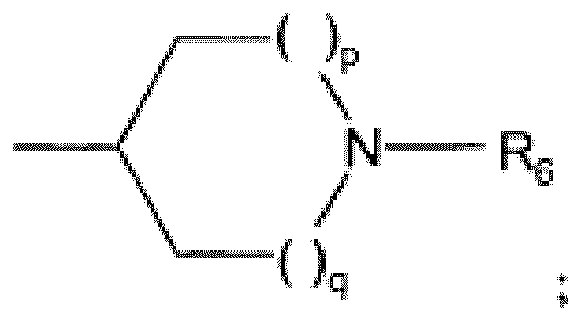

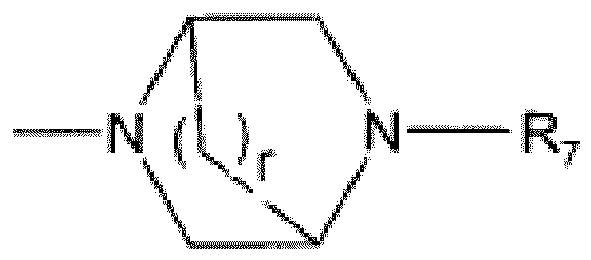
 R3 est H, alkyle(C1-3), alkyle(C1-6)CO, NR10R11CR12R13CO ou NR10R11CO(CH2)m;R4 est H, alkyle(C1-3) ou cycloalkyle(C3-5); ou bienR3 et R4 avec l'azote auquel ils sont liés forment un cycle hétérocyclique saturé à 6 chaînons contenant un hétéroatome supplémentaire sélectionné parmi O, S et SO2;R5 est un alkyle(C1-6);R6 est sélectionné parmiH,alkyle(C1-4), optionnellement substitué par 1 ou 2 substituants sélectionnés parmi OH, halogène, CF3 ou alkyl(C1-4)sulfonyle;alkyl(C1-4)sulfonyle,alkyl(C1-6)carbonyle,Het,Het-CH2,pyridyle, optionnellement fusionné à un cycle benzo et optionnellement substitué par un alkyle(C1-4), halogène ou cyano;NR10R11CO(CH2)m; etNR10R11CR12R13CO;R7 est sélectionné parmiH,alkyle(C1-4), optionnellement substitué par 1 ou 2 substituants sélectionnés parmi OH, halogène, CF3 ou alkyl(C1-4)sulfonyle;alkyl(C1-6)carbonyle;alkyl(C1-4)sulfonyle;pyridyle, optionnellement substitué par un alkyle(C1-3), halogène ou CF3; et NR10R11CO(CH2)m;R8 est H, alkyle(C1-4) ou OH;R9 est H, alkyle(C1-4) ou NR10R11CO(CH2)m;R10 et R11 sont indépendamment H ou alkyle(C1-6); ou bienR10 et R11 forment ensemble avec le N auquel ils sont liés un cycle hétérocyclique saturé à 5-7 chaînons, comprenant optionnellement un hétéroatome supplémentaire sélectionné par O et S;R12 et R13 sont indépendamment H ou alkyle(C1-4); ou bienR12 et R13 forment avec l'atome de carbone auquel ils sont liés un cycle cycloalkyle(C3-5),R14 est H, CF3 ou oxo;Het est un cycle hétéroaryle à 5 chaînons comprenant 1-3 hétéroatomes sélectionnés parmi O, S et N, optionnellement substitué par un alkyle(C1-4), halogène ou cyano;p et q sont indépendamment 0, 1 ou 2;r est 1 ou 2;m est 0, 1 ou 2;ou un sel pharmaceutiquement acceptable de celui-ci.
 - Dérivé de 1H-[1,2,3]triazolo[4,5-c]pyridine-4-carbonitrile selon la revendication 1, dans lequel U, V et W sont CH; ou bien V est N.
- Dérivé de 1H-[1,2,3]triazolo[4,5-c]pyridine-4-carbonitrile selon la revendication 2, dans lequel X est O et U, V et W sont CH.
- Dérivé de 1H-[1,2,3]triazolo[4,5-c]pyridine-4-carbonitrile selon la revendication 3, dans lequel R1 est un méthyle et R2 est CF3.
- Dérivé de 1H-[1,2,3]triazolo[4,5-c]pyridine-4-carbonitrile selon la revendication 1, qui est sélectionné parmi- 1-méthyl-6-(4-(2-(pipéridin-4-yl)éthoxy)-3-(trifluorométhyl)phényl)-1H-[1,2,3]triazolo[4,5-c]pyridine-4-carbonitrile;- 6-(4-(2-(1-(2-diméthylamino-2-oxoéthyl)pipéridin-4-yl)éthoxy)-3-(trifluorométhyl)phényl)-1-méthyl-1H-[1,2,3]triazolo[4,5-c]pyridine-4-carbonitrile;- 1-méthyl-6-(4-(2-(1-(2-méthylamino-2-oxoéthyl)pipéridin-4-yl)éthoxy)-3-(trifluorométhyl)phényl)-1H-[1,2,3]triazolo[4,5-c]pyridine-4-carbonitrile;- 6-(4-(2-(1-(2-amino-2-oxoéthyl)pipéridin-4-yl)éthoxy)-3-(trifluorométhyl)phényl)-1-méthyl-1H-[1,2,3]triazolo[4,5-c]pyridine-4-carbonitrile;- 6-(4-(2-(1-(2-hydroxy-2-méthylpropyl)pipéridin-4-yl)éthoxy)-3-(trifluorométhyl)phényl)-1-méthyl-1H-[1,2,3]triazolo[4,5-c]pyridine-4-carbonitrile;- 1-méthyl-6-(4-(2-(1-(pyridin-2-yl)pipéridin-4-yl)éthoxy)-3-(trifluorométhyl)phényl)-1H-[1,2,3]triazolo[4,5-c]pyridine-4-carbonitrile;- 1-méthyl-6-(4-(2-(1-(6-méthylpyridin-2-yl)pipéridin-4-yl)éthoxy)-3-(trifluorométhyl)phényl)-1H-[1,2,3]triazolo[4,5-c]pyridine-4-carbonitrile;- 6-(4-(2-(1-(3-cyanopyridin-2-yl)pipéridin-4-yl)éthoxy)-3-(trifluorométhyl)phényl)-1-méthyl-1H-[1,2,3]triazolo[4,5-c]pyridine-4-carbonitrile;- 1-méthyl-6-(4-(2-(1-(méthylsulfonyl)pipéridin-4-yl)éthoxy)-3-(trifluorométhyl)phényl)-1H-[1,2,3]triazolo[4,5-c]pyridine-4-carbonitrile;- 6-(4-(2-(1-acétylpipéridin-4-yl)éthoxy)-3-(trifluorométhyl)phényl)-1-méthyl-1H-[1,2,3]triazolo[4,5-c]pyridine-4-carbonitrile;- 4-(2-(4-(4-cyano-1-méthyl-1H-[1,2,3]triazolo[4,5-c]pyridin-6-yl)-2-(trifluorométhyl)phénoxy)éthyl)-N-méthylpipéridine-1-carboxamide;- 1-méthyl-6-(4-(2-(1-(2-(méthylsulfonyl)éthyl)pipéridin-4-yl)éthoxy)-3-(trifluorométhyl)phényl)-1H-[1,2,3]triazolo[[4,5-c]pyridine-4-carbonitrile;- 1-méthyl-6-(4-(pyridin-2-ylméthoxy)-3-(trifluorométhyl)phényl)-1H-[1,2,3]triazolo[4,5-c]pyridine-4-carbonitrile;- 1-méthyl-6-(4-(1-N-oxy-pyridin-2-ylméthoxy)-3-(trifluorométhyl)phényl)-1H-[1,2,3]triazolo[4,5-c]pyridine-4-carbonitrile;- 1-méthyl-6-(6-(2-(pipéridin-4-yl)éthoxy)-5-(trifluorométhyl)pyridin-3-yl)-1H-[1,2,3]triazolo[4,5-c]pyridine-4-carbonitrile;- 6-(6-(2-(1-(2-diméthylamino-2-oxo-éthyl)pipéridin-4-yl)éthoxy)-5-(trifluorométhyl)pyridin-3-yl)-1-méthyl-1H-[1,2,3]triazolo[4,5-c]pyridine-4-carbonitrile;- 1-méthyl-6-(6-(2-(1-(2-méthylamino-2-oxo-éthyl)pipéridin-4-yl)éthoxy)-5-(trifluorométhyl)pyridin-3-yl)-1H-[1,2,3]triazolo[[4,5-c]pyridine-4-carbonitrile;- 6-(6-(2-(1-(2-amino-2-oxo-éthyl)pipéridin-4-yl)éthoxy)-5-(trifluorométhyl)pyridin-3-yl)-1-méthyl-1H-[1,2,3]triazolo[4,5-c]pyridine-4-carbonitrile;- 1-méthyl-6-(6-(2-(1-(2-oxo-2)(pyrrolidin-1-yl)éthyl)pipéridin-4-yl)éthoxy)-5-(trifluorométhyl)pyridin-3-yl)-1H-[1,2,3]triazolo[4,5-c]pyridine-4-carbonitrile;- 1-méthyl-6-(6-(2-(1-(2-morpholino-2-oxoéthyl)pipéridin-4-yl)éthoxy)-5-(trifluorométhyl)pyridin-3-yl)-1H-[1,2,3]triazolo[4,5-c]pyridine-4-carbonitrile;- 6-(4-(2-(1-(1-aminocyclopropanecarbonyl)pipéridin-4-yl)éthoxy)-3-(trifluorométhyl)phényl)-1-méthyl-1H-[1,2,3]triazolo[4,5-c]pyridine-4-carbonitrile;- 6-(4-(2-(azétidin-3-yl))éthoxy)-3-(trifluorométhyl)phényl)-1-méthyl-1H-[1,2,3]triazolo[4,5-c]pyridine-4-carbonitrile;- 6-(4-(2-(1-(2-diméthylamino-2-oxoéthyl)azétidin-3-yl)éthoxy)-3-(trifluorométhyl)phényl)-1-méthyl-1H-[1,2,3]triazolo[4,5-c]pyridine-4-carbonitrile;- 6-(4-((2-méthoxyéthoxy)méthoxy)-3-(trifluorométhyl)phényl)-1-méthyl-1H-[1,2,3]triazolo[4,5-c]pyridine-4-carbonitrile;- 6-(4-(3-hydroxypropoxy)-3-(trifluorométhyl)phényl)-1-méthyl-1H-[1,2,3]triazolo[4,5-c]pyridine-4-carbonitrile;- N-(3-(4-(4-cyano-1-méthyl-1H-[1,2,3]triazolo[4,5-c]pyridin-6-yl)-2-(trifluorométhyl)phénoxy)propyl)acétamide;- 6-(4-(3-(diméthylamino)propoxy)-3-(trifluorométhyl)phényl)-1-méthyl-1H-[1,2,3]triazolo[4,5-c]pyridine-4-carbonitrile;- 6-(4-(3-(4-hydroxy-4-méthylpipéridin-1-yl)propoxy)-3-(trifluorométhyl)phényl)-1-méthyl-1H-[1,2,3]triazolo[4,5-c]pyridine-4-carbonitrile;- 1-(3-(4-(4-cyano-1-méthyl-1H-[1,2,3]triazolo[4,5-c]pyridin-6-yl)-2-(trifluorométhyl)phénoxy)propyl)pipéridine-4-carboxamide;- 1-méthyl-6-(3-(trifluorométhyl)-4-(3-(4-(4-(trifluorométhyl)pyridin-2-yl)pipérazin-1-yl)propoxy)phényl)-1H-[1,2,3]triazolo[4,5-c]pyridine-4-carbonitrile;- 1-méthyl-6-(4-(3-(4-((3-méthylpyridin-2-yl)pipérazin-1-yl)propoxy)3-(trifluorométhyl)phényl)-1H-[1,2,3]triazolo[4,5-c]pyridine-4-carbonitrile;- 6-(4-(3-(4-(5-chloropyridin-2-yl)pipérazin-1-yl)propoxy)-3-(trifluorométhyl)phényl)-1-méthyl-1H-[1,2,3]triazolo[4,5-c]pyridine-4-carbonitrile;- 6-(4-(3-(4-(3-chloropyridin-2-yl)pipérazin-1-yl)propoxy)-3-(trifluorométhyl)phényl)-1-méthyl-1H-[1,2,3]triazolo[4,5-c]pyridine-4-carbonitrile;- 6-(4-(2-(1-((1,2,4-oxadiazol-5-yl)méthyl)pipéridin-4-yl)éthoxy)-3-(trifluorométhyl)phényl)-1-méthyl-1H-[1,2,3]triazolo[4,5-c]pyridine-4-carbonitrile;- 6-(4-(2-(1-((1,2,4-oxadiazol-3-yl)méthyl)pipéridin-4-yl)éthoxy)-3-(trifluorométhyl)phényl)-1-méthyl-1H-[1,2,3]triazolo[4,5-c]pyridine-4-carbonitrile;- 1-méthyl-6-(4-(2-(1-(oxazol-2-ylméthyl)pipéridin-4-yl)éthoxy)-3-(trifluorométhyl)phényl)-1H-[1,2,3]triazolo[4,5-c]pyridine-4-carbonitrile;- 1-méthyl-6-(4-(pyridin-3-ylméthoxy)-3-(trifluorométhyl)phényl)-1H-[1,2,3]triazolo[4,5-c]pyridine-4-carbonitrile;- 1-méthyl-6-(4-(2-(1-(6-méthylpyridin-2-yl)azétidin-3-yl)éthoxy)-3-(trifluorométhyl)phényl)-1H-[1,2,3]triazolo[4,5-c]pyridine-4-carbonitrile;- 1-méthyl-6-(4-(2-(1-(pyridin-2-yl)azétidin-3-yl)éthoxy)-3-(trifluorométhyl)phényl)-1H-[1,2,3]triazolo[4,5-c]pyridine-4-carbonitrile;- méthyl-6-(4-(2-(1-N-oxy-pyridin-3-ylméthoxy)-3-(trifluorométhyl)phényl)-1H-[1,2,3]triazolo[4,5-c]pyridine-4-carbonitrile;- 1-méthyl-6-(4-(pyridin-4-ylméthoxy)-3-(trifluorométhyl)phényl)-1H-[1,2,3]triazolo[4,5-c]pyridine-4-carbonitrile;- méthyl-6-(4-(1-N-oxy-pyridin-4-ylméthoxy)-3-(trifluorométhyl)phényl)-1H-[1,2,3]triazolo[4,5-c]pyridine-4-carbonitrile;- 6-(6-(2-(1-(2-hydroxy-2-méthylpropyl)pipéridin-4-yl)éthoxy)-5-(trifluorométhyl)pyridin-3-yl)-1-méthyl-1H-[1,2,3]triazolo[4,5-c]pyridine-4-carbonitrile;- 6-(6-(2-(1-(2-hydroxyéthyl)pipéridin-4-yl)éthoxy)-5-(trifluorométhyl)pyridin-3-yl)-1-méthyl-1H-[1,2,3]triazolo[4,5-c]pyridine-4-carbonitrile;- chlorhydrate de 6-(4-(2-(1-(2-diméthylamino-2-oxoéthyl)azétidin-3-yl)éthoxy)-3-(trifluorométhyl)phényl)-1-méthyl-1H-[1,2,3]triazolo[4,5-c]pyridine-4-carbonitrile;- 6-(4-(3-diméthylamino)propoxy)-3-(trifluorométhyl)phényl)-1-méthyl-1H-[1,2,3]triazolo[4,5-c]pyridine-4-carbonitrile;- 2-(4-(3-(4-(4-cyano-1-méthyl-1H-[1,2,3]triazolo[4,5-c]pyridin-6-yl)-2-(trifluorométhyl)phénoxy)propyl)pipérazin-1-yl)-N,N-diméthylacétamide;- dichlorhydrate de 6-(4-(3-(4-(2-hydroxyéthyl)pipérazin-1-yl)propoxy)-3-(trifluorométhyl)phényl)-1-méthyl-1H-[1,2,3]triazolo[4,5-c]pyridine-4-carbonitrile;- dichlorhydrate de 2-(4-(2-(4-(4-cyano-1-méthyl-1H-[1,2,3]triazolo[4,5-c]pyridin-6-yl)-2-(trifluorométhyl)phénoxy)éthyl)pipérazin-1-yl)-N,N-diméthylacétamide;- dichlorhydrate de 6-(4-(2-(4-(2-hydroxy-2-méthylpropyl)pipérazin-1-yl)éthoxy)-3-(trifluorométhyl)phényl)-1-méthyl-1H-[1,2,3]triazolo[4,5-c]pyridine-4-carbonitrile;- 2-((1S,4S)-5-(2-(4-(4-cyano-1-méthyl-1H-[1,2,3]triazolo[4,5-c]pyridin-6-yl)-2-(trifluorométhyl)phénoxy)éthyl)-2,5-diazabicyclo[2.2.1]heptan-2-yl)-N,N-diméthylacétamide;- N-(3-(4-(4-cyano-1-méthyl-1H-[1,2,3]triazolo[4,5-c]pyridin-6-yl)-2-(trifluorométhyl)phényl)propyl)-2-(diméthylamino)-N-méthylacétamide;- chlorhydrate de méthyl-6-(4-(3-((1S,4S)-5-méthyl-2,5-diazabicyclo[2.2.1]heptan-2-yl)propyl)-3-(trifluorométhyl)phényl)-1H-[1,2,3]triazolo[4,5-c]pyridine-4-carbonitrileou un sel pharmaceutiquement acceptable de ceux-ci.
- Dérivé de 1H-[1,2,3]triazolo[4,5-c]pyridine-4-carbonitrile selon l'une quelconque des revendications 1-5, à utiliser en thérapie.
- Dérivé de 1H-[1,2,3]triazolo[4,5-c]pyridine-4-carbonitrile selon l'une quelconque des revendications 1-5, à utiliser dans le traitement de l'ostéoporose, de l'athérosclérose, de l'inflammation et de troubles immuns tels que polyarthrite rhumatoïde, psoriasis et douleur chronique, telle que douleur neuropathique.
- Utilisation d'un dérivé de 1H-[1,2,3]triazolo[4,5-c]pyridine-4-carbonitrile selon l'une quelconque des revendications 1-5, dans la fabrication d'un médicament pour le traitement de l'ostéoporose, de l'athérosclérose, de l'inflammation et de troubles immuns tels que polyarthrite rhumatoïde, psoriasis et douleur chronique, telle que douleur neuropathique.
- Composition pharmaceutique comprenant un dérivé de 1H-[1,2,3]triazolo[4,5-c]pyridine-4-carbonitrile selon l'une quelconque des revendications 1-5, ou un sel pharmaceutiquement acceptable de ceux-ci, en addition/mélange avec des auxiliaires pharmaceutiquement acceptables.
Priority Applications (1)
| Application Number | Priority Date | Filing Date | Title |
|---|---|---|---|
| EP11700142.0A EP2523954B1 (fr) | 2010-01-15 | 2011-01-13 | Dérivés de 1h-[1,2,3]triazolo[4,5-c]pyridine-4- carbonitrile comme inhibiteurs de cathepsine s |
Applications Claiming Priority (4)
| Application Number | Priority Date | Filing Date | Title |
|---|---|---|---|
| US29537710P | 2010-01-15 | 2010-01-15 | |
| EP10150828 | 2010-01-15 | ||
| PCT/EP2011/050393 WO2011086125A1 (fr) | 2010-01-15 | 2011-01-13 | Derives de 1h-[1,2,3]triazolo[4,5-c]pyridine-4-carbonitrile |
| EP11700142.0A EP2523954B1 (fr) | 2010-01-15 | 2011-01-13 | Dérivés de 1h-[1,2,3]triazolo[4,5-c]pyridine-4- carbonitrile comme inhibiteurs de cathepsine s |
Publications (2)
| Publication Number | Publication Date |
|---|---|
| EP2523954A1 EP2523954A1 (fr) | 2012-11-21 |
| EP2523954B1 true EP2523954B1 (fr) | 2014-04-16 |
Family
ID=42135954
Family Applications (1)
| Application Number | Title | Priority Date | Filing Date |
|---|---|---|---|
| EP11700142.0A Active EP2523954B1 (fr) | 2010-01-15 | 2011-01-13 | Dérivés de 1h-[1,2,3]triazolo[4,5-c]pyridine-4- carbonitrile comme inhibiteurs de cathepsine s |
Country Status (3)
| Country | Link |
|---|---|
| US (1) | US9115126B2 (fr) |
| EP (1) | EP2523954B1 (fr) |
| WO (1) | WO2011086125A1 (fr) |
Families Citing this family (2)
| Publication number | Priority date | Publication date | Assignee | Title |
|---|---|---|---|---|
| ES2644965T3 (es) * | 2012-04-17 | 2017-12-01 | Astellas Pharma Inc. | Compuesto heterocíclico aromático bicíclico nitrogenado |
| WO2017112576A1 (fr) * | 2015-12-21 | 2017-06-29 | Dow Global Technologies Llc | Procédés de couplage de suzuki sans base externe |
Family Cites Families (8)
| Publication number | Priority date | Publication date | Assignee | Title |
|---|---|---|---|---|
| US20070117785A1 (en) | 2000-08-14 | 2007-05-24 | Butler Christopher R | Substituted pyrazoles and methods of treatment with substituted pyrazoles |
| GB0121033D0 (en) | 2001-08-30 | 2001-10-24 | Novartis Ag | Organic compounds |
| AR036375A1 (es) | 2001-08-30 | 2004-09-01 | Novartis Ag | Compuestos pirrolo [2,3-d] pirimidina -2- carbonitrilo, un proceso para su preparacion, una composicion farmaceutica y el uso de dichos compuestos para la preparacion de medicamentos |
| SE0201980D0 (sv) | 2002-06-24 | 2002-06-24 | Astrazeneca Ab | Novel compounds |
| SE0201976D0 (sv) | 2002-06-24 | 2002-06-24 | Astrazeneca Ab | Novel compounds |
| WO2005085210A1 (fr) | 2004-03-10 | 2005-09-15 | Ono Pharmaceutical Co., Ltd. | Nitriles et compositions médicinales contenant ceux-ci en tant qu'ingrédient actif |
| TW200911803A (en) | 2007-07-16 | 2009-03-16 | Organon Nv | 6-phenyl-1H-imidazo [4,5-c] pyridine-4-carbonitrile derivatives |
| TW201035094A (en) | 2009-01-16 | 2010-10-01 | Organon Nv | 6-phenyl-1H-imidazo[4,5-c]pyridine-4-carbonitrile derivatives |
-
2011
- 2011-01-13 WO PCT/EP2011/050393 patent/WO2011086125A1/fr not_active Ceased
- 2011-01-13 US US13/519,924 patent/US9115126B2/en active Active
- 2011-01-13 EP EP11700142.0A patent/EP2523954B1/fr active Active
Also Published As
| Publication number | Publication date |
|---|---|
| EP2523954A1 (fr) | 2012-11-21 |
| WO2011086125A1 (fr) | 2011-07-21 |
| US9115126B2 (en) | 2015-08-25 |
| US20120283239A1 (en) | 2012-11-08 |
Similar Documents
| Publication | Publication Date | Title |
|---|---|---|
| US10829501B2 (en) | Spiroheptane salicylamides and related compounds as inhibitors of ROCK | |
| EP2038272B1 (fr) | Inhibiteurs de pyridinonyle pdk1 | |
| US7687515B2 (en) | 6-phenyl-1H-imidazo[4,5-c]pyridine-4-carbonitrile derivatives | |
| RU2400482C2 (ru) | ПРОИЗВОДНЫЕ 6-ФЕНИЛ-1Н-ИМИДАЗО[4,5,-с] ПИРИДИН-4-КАРБОНИТРИЛА В КАЧЕСТВЕ ИНГИБИТОРОВ КАТЕПСИНА К И S | |
| KR20150128842A (ko) | 브로모도메인 억제제로서의 퓨로피리딘 | |
| WO2019014300A1 (fr) | Phénylacétamides utilisés en tant qu'inhibiteurs de rock | |
| AU2011283684A1 (en) | AMPK-activating heterocyclic compounds and methods for using the same | |
| KR20170038877A (ko) | 브로모도메인에 대하여 활성을 갖는 화합물 | |
| ES2356279T3 (es) | Derivados de 6-fenil-1h-imidazo[4,5-c]piridin-4-carbonitrilo como inhibidores de catepsina. | |
| CA3184990A1 (fr) | Derives d'amino pyridazinyle utilises en tant qu'inhibiteurs d'alk5 | |
| US20090099172A1 (en) | 6-PHENYL-1H-IMIDAZO[4,5-c]PYRIDINE-4-CARBONITRILE DERIVATIVES | |
| KR20180059551A (ko) | 브로모도메인 억제제로서 2-옥소-1,2-디하이드로피리딘-3,5-디카복스아미드 화합물 | |
| EP2523954B1 (fr) | Dérivés de 1h-[1,2,3]triazolo[4,5-c]pyridine-4- carbonitrile comme inhibiteurs de cathepsine s | |
| EP1689718A1 (fr) | Derives de 1-amino-isoquinoline pour traiter des maladies associees a une alk5 inappropriee | |
| WO2023040998A1 (fr) | Inhibiteur de kinase dépendante des cyclines | |
| EP2387573B1 (fr) | DÉRIVÉS DE 6 PHÉNYL-1H-IMIDAZO[4,5-C]PYRIDINE-4-CARBONITRILE COMME INHIBITEURS DE & xA;CATHEPSINE S ET/OU CATHEPSINE K | |
| CN113121524B (zh) | 杂环亚砜亚胺化合物及其中间体、制备方法和应用 | |
| US8026236B2 (en) | 6-phenyl-1H-imidazo[4,5-c]pyridine-4-carbonitrile derivatives | |
| HK40049426B (en) | Heterocyclic sulfoximine compound and intermediate thereof, preparation method therefor, and application thereof | |
| HK40049426A (en) | Heterocyclic sulfoximine compound and intermediate thereof, preparation method therefor, and application thereof | |
| KR20230041003A (ko) | Alk5 억제제로서 피리도 옥사진 아미노 유도체 | |
| MX2008009014A (en) | 6-phenyl-1h-imidazo[4, 5-c]pyridine-4-carbonitrile derivatives as cathepsin k and s inhibitors | |
| HK1142323B (en) | 6-phenyl-1h-imidazo[4,5-c]pyridine-4-carbonitrile derivatives as cathepsin inhibitors | |
| HK1192227B (en) | Thiazolopyrimidine compounds |
Legal Events
| Date | Code | Title | Description |
|---|---|---|---|
| PUAI | Public reference made under article 153(3) epc to a published international application that has entered the european phase |
Free format text: ORIGINAL CODE: 0009012 |
|
| 17P | Request for examination filed |
Effective date: 20120816 |
|
| AK | Designated contracting states |
Kind code of ref document: A1 Designated state(s): AL AT BE BG CH CY CZ DE DK EE ES FI FR GB GR HR HU IE IS IT LI LT LU LV MC MK MT NL NO PL PT RO RS SE SI SK SM TR |
|
| DAX | Request for extension of the european patent (deleted) | ||
| RAP1 | Party data changed (applicant data changed or rights of an application transferred) |
Owner name: ORGANON BIOSCIENCES NEDERLAND B.V. |
|
| RAP1 | Party data changed (applicant data changed or rights of an application transferred) |
Owner name: MERCK SHARP & DOHME CORP. |
|
| RAP1 | Party data changed (applicant data changed or rights of an application transferred) |
Owner name: MERCK SHARP & DOHME B.V. |
|
| GRAP | Despatch of communication of intention to grant a patent |
Free format text: ORIGINAL CODE: EPIDOSNIGR1 |
|
| INTG | Intention to grant announced |
Effective date: 20131119 |
|
| GRAS | Grant fee paid |
Free format text: ORIGINAL CODE: EPIDOSNIGR3 |
|
| GRAA | (expected) grant |
Free format text: ORIGINAL CODE: 0009210 |
|
| AK | Designated contracting states |
Kind code of ref document: B1 Designated state(s): AL AT BE BG CH CY CZ DE DK EE ES FI FR GB GR HR HU IE IS IT LI LT LU LV MC MK MT NL NO PL PT RO RS SE SI SK SM TR |
|
| REG | Reference to a national code |
Ref country code: GB Ref legal event code: FG4D |
|
| REG | Reference to a national code |
Ref country code: CH Ref legal event code: EP |
|
| REG | Reference to a national code |
Ref country code: AT Ref legal event code: REF Ref document number: 662487 Country of ref document: AT Kind code of ref document: T Effective date: 20140515 |
|
| REG | Reference to a national code |
Ref country code: IE Ref legal event code: FG4D |
|
| REG | Reference to a national code |
Ref country code: DE Ref legal event code: R096 Ref document number: 602011006197 Country of ref document: DE Effective date: 20140522 |
|
| REG | Reference to a national code |
Ref country code: AT Ref legal event code: MK05 Ref document number: 662487 Country of ref document: AT Kind code of ref document: T Effective date: 20140416 |
|
| REG | Reference to a national code |
Ref country code: NL Ref legal event code: VDEP Effective date: 20140416 |
|
| REG | Reference to a national code |
Ref country code: LT Ref legal event code: MG4D |
|
| PG25 | Lapsed in a contracting state [announced via postgrant information from national office to epo] |
Ref country code: IS Free format text: LAPSE BECAUSE OF FAILURE TO SUBMIT A TRANSLATION OF THE DESCRIPTION OR TO PAY THE FEE WITHIN THE PRESCRIBED TIME-LIMIT Effective date: 20140816 Ref country code: LT Free format text: LAPSE BECAUSE OF FAILURE TO SUBMIT A TRANSLATION OF THE DESCRIPTION OR TO PAY THE FEE WITHIN THE PRESCRIBED TIME-LIMIT Effective date: 20140416 Ref country code: GR Free format text: LAPSE BECAUSE OF FAILURE TO SUBMIT A TRANSLATION OF THE DESCRIPTION OR TO PAY THE FEE WITHIN THE PRESCRIBED TIME-LIMIT Effective date: 20140717 Ref country code: NL Free format text: LAPSE BECAUSE OF FAILURE TO SUBMIT A TRANSLATION OF THE DESCRIPTION OR TO PAY THE FEE WITHIN THE PRESCRIBED TIME-LIMIT Effective date: 20140416 Ref country code: CY Free format text: LAPSE BECAUSE OF FAILURE TO SUBMIT A TRANSLATION OF THE DESCRIPTION OR TO PAY THE FEE WITHIN THE PRESCRIBED TIME-LIMIT Effective date: 20140416 Ref country code: FI Free format text: LAPSE BECAUSE OF FAILURE TO SUBMIT A TRANSLATION OF THE DESCRIPTION OR TO PAY THE FEE WITHIN THE PRESCRIBED TIME-LIMIT Effective date: 20140416 Ref country code: NO Free format text: LAPSE BECAUSE OF FAILURE TO SUBMIT A TRANSLATION OF THE DESCRIPTION OR TO PAY THE FEE WITHIN THE PRESCRIBED TIME-LIMIT Effective date: 20140716 Ref country code: BG Free format text: LAPSE BECAUSE OF FAILURE TO SUBMIT A TRANSLATION OF THE DESCRIPTION OR TO PAY THE FEE WITHIN THE PRESCRIBED TIME-LIMIT Effective date: 20140716 |
|
| PG25 | Lapsed in a contracting state [announced via postgrant information from national office to epo] |
Ref country code: RS Free format text: LAPSE BECAUSE OF FAILURE TO SUBMIT A TRANSLATION OF THE DESCRIPTION OR TO PAY THE FEE WITHIN THE PRESCRIBED TIME-LIMIT Effective date: 20140416 Ref country code: HR Free format text: LAPSE BECAUSE OF FAILURE TO SUBMIT A TRANSLATION OF THE DESCRIPTION OR TO PAY THE FEE WITHIN THE PRESCRIBED TIME-LIMIT Effective date: 20140416 Ref country code: SE Free format text: LAPSE BECAUSE OF FAILURE TO SUBMIT A TRANSLATION OF THE DESCRIPTION OR TO PAY THE FEE WITHIN THE PRESCRIBED TIME-LIMIT Effective date: 20140416 Ref country code: LV Free format text: LAPSE BECAUSE OF FAILURE TO SUBMIT A TRANSLATION OF THE DESCRIPTION OR TO PAY THE FEE WITHIN THE PRESCRIBED TIME-LIMIT Effective date: 20140416 Ref country code: PL Free format text: LAPSE BECAUSE OF FAILURE TO SUBMIT A TRANSLATION OF THE DESCRIPTION OR TO PAY THE FEE WITHIN THE PRESCRIBED TIME-LIMIT Effective date: 20140416 Ref country code: AT Free format text: LAPSE BECAUSE OF FAILURE TO SUBMIT A TRANSLATION OF THE DESCRIPTION OR TO PAY THE FEE WITHIN THE PRESCRIBED TIME-LIMIT Effective date: 20140416 Ref country code: ES Free format text: LAPSE BECAUSE OF FAILURE TO SUBMIT A TRANSLATION OF THE DESCRIPTION OR TO PAY THE FEE WITHIN THE PRESCRIBED TIME-LIMIT Effective date: 20140416 |
|
| PG25 | Lapsed in a contracting state [announced via postgrant information from national office to epo] |
Ref country code: PT Free format text: LAPSE BECAUSE OF FAILURE TO SUBMIT A TRANSLATION OF THE DESCRIPTION OR TO PAY THE FEE WITHIN THE PRESCRIBED TIME-LIMIT Effective date: 20140818 |
|
| REG | Reference to a national code |
Ref country code: DE Ref legal event code: R097 Ref document number: 602011006197 Country of ref document: DE |
|
| PG25 | Lapsed in a contracting state [announced via postgrant information from national office to epo] |
Ref country code: DK Free format text: LAPSE BECAUSE OF FAILURE TO SUBMIT A TRANSLATION OF THE DESCRIPTION OR TO PAY THE FEE WITHIN THE PRESCRIBED TIME-LIMIT Effective date: 20140416 Ref country code: CZ Free format text: LAPSE BECAUSE OF FAILURE TO SUBMIT A TRANSLATION OF THE DESCRIPTION OR TO PAY THE FEE WITHIN THE PRESCRIBED TIME-LIMIT Effective date: 20140416 Ref country code: RO Free format text: LAPSE BECAUSE OF FAILURE TO SUBMIT A TRANSLATION OF THE DESCRIPTION OR TO PAY THE FEE WITHIN THE PRESCRIBED TIME-LIMIT Effective date: 20140416 Ref country code: EE Free format text: LAPSE BECAUSE OF FAILURE TO SUBMIT A TRANSLATION OF THE DESCRIPTION OR TO PAY THE FEE WITHIN THE PRESCRIBED TIME-LIMIT Effective date: 20140416 Ref country code: SK Free format text: LAPSE BECAUSE OF FAILURE TO SUBMIT A TRANSLATION OF THE DESCRIPTION OR TO PAY THE FEE WITHIN THE PRESCRIBED TIME-LIMIT Effective date: 20140416 Ref country code: BE Free format text: LAPSE BECAUSE OF FAILURE TO SUBMIT A TRANSLATION OF THE DESCRIPTION OR TO PAY THE FEE WITHIN THE PRESCRIBED TIME-LIMIT Effective date: 20140416 |
|
| PLBE | No opposition filed within time limit |
Free format text: ORIGINAL CODE: 0009261 |
|
| STAA | Information on the status of an ep patent application or granted ep patent |
Free format text: STATUS: NO OPPOSITION FILED WITHIN TIME LIMIT |
|
| 26N | No opposition filed |
Effective date: 20150119 |
|
| PG25 | Lapsed in a contracting state [announced via postgrant information from national office to epo] |
Ref country code: IT Free format text: LAPSE BECAUSE OF FAILURE TO SUBMIT A TRANSLATION OF THE DESCRIPTION OR TO PAY THE FEE WITHIN THE PRESCRIBED TIME-LIMIT Effective date: 20140416 |
|
| REG | Reference to a national code |
Ref country code: DE Ref legal event code: R097 Ref document number: 602011006197 Country of ref document: DE Effective date: 20150119 |
|
| PG25 | Lapsed in a contracting state [announced via postgrant information from national office to epo] |
Ref country code: SI Free format text: LAPSE BECAUSE OF FAILURE TO SUBMIT A TRANSLATION OF THE DESCRIPTION OR TO PAY THE FEE WITHIN THE PRESCRIBED TIME-LIMIT Effective date: 20140416 |
|
| REG | Reference to a national code |
Ref country code: CH Ref legal event code: PL |
|
| PG25 | Lapsed in a contracting state [announced via postgrant information from national office to epo] |
Ref country code: LU Free format text: LAPSE BECAUSE OF FAILURE TO SUBMIT A TRANSLATION OF THE DESCRIPTION OR TO PAY THE FEE WITHIN THE PRESCRIBED TIME-LIMIT Effective date: 20150113 |
|
| PG25 | Lapsed in a contracting state [announced via postgrant information from national office to epo] |
Ref country code: MC Free format text: LAPSE BECAUSE OF FAILURE TO SUBMIT A TRANSLATION OF THE DESCRIPTION OR TO PAY THE FEE WITHIN THE PRESCRIBED TIME-LIMIT Effective date: 20140416 |
|
| PG25 | Lapsed in a contracting state [announced via postgrant information from national office to epo] |
Ref country code: CH Free format text: LAPSE BECAUSE OF NON-PAYMENT OF DUE FEES Effective date: 20150131 Ref country code: LI Free format text: LAPSE BECAUSE OF NON-PAYMENT OF DUE FEES Effective date: 20150131 |
|
| REG | Reference to a national code |
Ref country code: FR Ref legal event code: PLFP Year of fee payment: 6 |
|
| PG25 | Lapsed in a contracting state [announced via postgrant information from national office to epo] |
Ref country code: IE Free format text: LAPSE BECAUSE OF NON-PAYMENT OF DUE FEES Effective date: 20150113 |
|
| PG25 | Lapsed in a contracting state [announced via postgrant information from national office to epo] |
Ref country code: MT Free format text: LAPSE BECAUSE OF FAILURE TO SUBMIT A TRANSLATION OF THE DESCRIPTION OR TO PAY THE FEE WITHIN THE PRESCRIBED TIME-LIMIT Effective date: 20140416 |
|
| REG | Reference to a national code |
Ref country code: FR Ref legal event code: PLFP Year of fee payment: 7 |
|
| PG25 | Lapsed in a contracting state [announced via postgrant information from national office to epo] |
Ref country code: HU Free format text: LAPSE BECAUSE OF FAILURE TO SUBMIT A TRANSLATION OF THE DESCRIPTION OR TO PAY THE FEE WITHIN THE PRESCRIBED TIME-LIMIT; INVALID AB INITIO Effective date: 20110113 Ref country code: SM Free format text: LAPSE BECAUSE OF FAILURE TO SUBMIT A TRANSLATION OF THE DESCRIPTION OR TO PAY THE FEE WITHIN THE PRESCRIBED TIME-LIMIT Effective date: 20140416 |
|
| PG25 | Lapsed in a contracting state [announced via postgrant information from national office to epo] |
Ref country code: TR Free format text: LAPSE BECAUSE OF FAILURE TO SUBMIT A TRANSLATION OF THE DESCRIPTION OR TO PAY THE FEE WITHIN THE PRESCRIBED TIME-LIMIT Effective date: 20140416 |
|
| REG | Reference to a national code |
Ref country code: FR Ref legal event code: PLFP Year of fee payment: 8 |
|
| PG25 | Lapsed in a contracting state [announced via postgrant information from national office to epo] |
Ref country code: MK Free format text: LAPSE BECAUSE OF FAILURE TO SUBMIT A TRANSLATION OF THE DESCRIPTION OR TO PAY THE FEE WITHIN THE PRESCRIBED TIME-LIMIT Effective date: 20140416 |
|
| PG25 | Lapsed in a contracting state [announced via postgrant information from national office to epo] |
Ref country code: AL Free format text: LAPSE BECAUSE OF FAILURE TO SUBMIT A TRANSLATION OF THE DESCRIPTION OR TO PAY THE FEE WITHIN THE PRESCRIBED TIME-LIMIT Effective date: 20140416 |
|
| PGFP | Annual fee paid to national office [announced via postgrant information from national office to epo] |
Ref country code: GB Payment date: 20251211 Year of fee payment: 16 |
|
| PGFP | Annual fee paid to national office [announced via postgrant information from national office to epo] |
Ref country code: FR Payment date: 20251216 Year of fee payment: 16 |
|
| PGFP | Annual fee paid to national office [announced via postgrant information from national office to epo] |
Ref country code: DE Payment date: 20251222 Year of fee payment: 16 |