EP2524563B1 - Verfahren und vorrichtung zur konfliktbasierten bereitstellung in einem drahtlosen kommunikationsnetzwerk - Google Patents
Verfahren und vorrichtung zur konfliktbasierten bereitstellung in einem drahtlosen kommunikationsnetzwerk Download PDFInfo
- Publication number
- EP2524563B1 EP2524563B1 EP11703042.9A EP11703042A EP2524563B1 EP 2524563 B1 EP2524563 B1 EP 2524563B1 EP 11703042 A EP11703042 A EP 11703042A EP 2524563 B1 EP2524563 B1 EP 2524563B1
- Authority
- EP
- European Patent Office
- Prior art keywords
- contention
- resource blocks
- uplink
- uplink resource
- based uplink
- Prior art date
- Legal status (The legal status is an assumption and is not a legal conclusion. Google has not performed a legal analysis and makes no representation as to the accuracy of the status listed.)
- Not-in-force
Links
Images



Classifications
-
- H—ELECTRICITY
- H04—ELECTRIC COMMUNICATION TECHNIQUE
- H04W—WIRELESS COMMUNICATION NETWORKS
- H04W74/00—Wireless channel access
- H04W74/002—Transmission of channel access control information
- H04W74/004—Transmission of channel access control information in the uplink, i.e. towards network
-
- H—ELECTRICITY
- H04—ELECTRIC COMMUNICATION TECHNIQUE
- H04W—WIRELESS COMMUNICATION NETWORKS
- H04W28/00—Network traffic management; Network resource management
- H04W28/02—Traffic management, e.g. flow control or congestion control
- H04W28/04—Error control
-
- H—ELECTRICITY
- H04—ELECTRIC COMMUNICATION TECHNIQUE
- H04W—WIRELESS COMMUNICATION NETWORKS
- H04W72/00—Local resource management
- H04W72/04—Wireless resource allocation
-
- H—ELECTRICITY
- H04—ELECTRIC COMMUNICATION TECHNIQUE
- H04W—WIRELESS COMMUNICATION NETWORKS
- H04W72/00—Local resource management
- H04W72/20—Control channels or signalling for resource management
- H04W72/23—Control channels or signalling for resource management in the downlink direction of a wireless link, i.e. towards a terminal
-
- H—ELECTRICITY
- H04—ELECTRIC COMMUNICATION TECHNIQUE
- H04W—WIRELESS COMMUNICATION NETWORKS
- H04W74/00—Wireless channel access
- H04W74/002—Transmission of channel access control information
- H04W74/006—Transmission of channel access control information in the downlink, i.e. towards the terminal
Definitions
- 3GPP Long Term Evolution
- LTE Long Term Evolution
- RRC Radio Resource Connection
- DRX discontinuous reception/transmission
- Contention-based uplink transmissions allow network-synchronized user terminals to transmit uplink data without sending Scheduling Requests, SRs, in advance. Eliminating the need for SRs reduces both the latency and signaling overhead. Such an approach can be particularly advantageous for small transmissions where the overhead associated with securing dedicated resources is not warranted.
- PDCCH Downlink Physical Control Channel
- contention-based uplink grants can be assigned to unused uplink resources on a per sub-frame basis, so that scheduling of uplink contention-free transmissions is not affected. In this way, a static assignment of contention-based uplink resources can be avoided, and instead be dynamically assigned, depending on the uplink load.
- CB-RNTI Contention Based Radio Network Temporary Identifiers
- the contention-based uplink grants can have the same format as used for Release-8 user equipments, UEs, where the grant information specifies the granted resource blocks, the Modulation and Coding Scheme, "MCS”, and Transport Format, "TF", to be used for a given contention-based uplink transmission.
- MCS Modulation and Coding Scheme
- TF Transport Format
- a new format known to Release-10 user terminals may be used for making contention-based uplink grants.
- collision probability becomes an issue for contention-based transmissions on the uplink. If several user terminals attempt a contention-based uplink transmission responsive to the same contention-based uplink grant-i.e., on the same set of uplink resources allocated by a contention-based uplink grant-a transmission collision results and it is likely that none of the transmissions will be successful.
- One approach to reducing the likelihood of collision involves signaling more than one contention-based uplink grant within a given sub-frame but such approaches correspondingly entail significant and undesirable increases in the signaling overhead.
- the present invention relates to a method in a network node as defined in claim 1, to a network node as defined in claim 2 to a method in a user equipment as defined in claim 11 and to a user equipment as defined in claim 12.
- associating a plurality of contention-based uplink grants with a range or set of uplink resource blocks allows one contention-based uplink grant message to signal the entire plurality of grants.
- the signaling load on the PDCCH is reduced by using a single contention-based uplink grant message to signal a plurality of contention-based uplink grants.
- the message indicates an allocated range of uplink resource blocks and the number of separate uplink resource grants represented by the range is known or signaled, such that user terminals recognize that different subsets of uplink resource blocks within the range or set each correspond to a separate contention-based uplink grant.
- Information included in the contention-based uplink grant message or otherwise signaled can be used to control the probability at which the user terminals attempt contention-based uplink transmissions and/or to control the MCS used for such transmissions.
- a wireless communication network node is configured to implement a method wherein it signals contention-based uplink grants to user equipments, e.g., terminals or other wireless communication devices.
- the node comprises a transceiver that is configured to transmit downlink signals to said equipments and receive uplink signals from them.
- the node further comprises a scheduling processor that is operatively associated with the transceiver and configured to allocate a range of uplink resource blocks for use in making a plurality of contention-based uplink grants within a given scheduling interval.
- the range of uplink resource blocks comprises different subsets of uplink resource blocks, where each contention-based uplink grant in the plurality of contention-based uplink grants maps to a subset of uplink resource blocks out of the different subsets within the allocated range of uplink resource blocks.
- the scheduling processor is configured to transmit, via said transceiver, a single contention-based uplink grant message that indicates the allocated range of uplink resource blocks.
- the node may carry out the preceding method of operations repeatedly for recurring transmission intervals, such as for recurring transmission sub-frames in the LTE context.
- the node is an evolved NodeB, or eNodeB, also denoted as "eNB.” More broadly, the node can be understood as some type of network base station.
- a user terminal is configured to implement a method for making contention-based uplink transmissions in a wireless communication network.
- the method comprises receiving a single contention-based uplink grant message that indicates a range of uplink resource blocks allocated to a plurality of contention-based uplink grants within a given scheduling interval.
- the range of uplink resource blocks comprises different subsets of uplink resource blocks, where each contention-based uplink grant in the plurality of contention-based uplink grants maps to a subset of uplink resource blocks out of the different subsets within the allocated range of uplink resource blocks.
- the method further includes selectively sending a contention-based uplink transmission on a particular subset of uplink resource blocks corresponding to one of the plurality of contention-based uplink grants.
- the transmission is selective in the sense that the user terminal determines whether to make a contention-based uplink transmission and/or further determines which one of the subsets of uplink resource blocks to use for making the transmission.
- the user terminal determines whether to make the transmission based on the state of its uplink transmit buffer, e.g., in dependence on whether it has data to send.
- the user terminal further determines which particular subset of uplink resource blocks to use within the allocated range via random selection, for example. Randomizing subset selection decreases the likelihood of actual contention between two or more user terminals making contention-based uplink transmissions responsive to the contention-based uplink grant message.
- individual ones in a plurality of user terminals may be configured to make a probabilistic decision about whether to attempt a contention-based uplink transmission, such that the probability at which individual terminals in a group attempt a contention based uplink transmission in response to the contention-based uplink grant message varies across terminals in the group, and lowers the chance that they all will make such a transmission, even in cases where they all have uplink data to send.
- Fig. 1 partially illustrates a wireless communication network 10, including a Radio Access Network, "RAN”, 12 and an associated Core Network, "CN", 14.
- the wireless communication network 10 comprises a 3GPP LTE network, wherein the RAN 12 is an LTE-based radio access network and the CN 14 is Evolved Packet Core, "EPC", network that includes a number of entities such as a Mobility Management Entity, "MME”, 16 and a Serving Gateway, "SGW", 18 or other packet routing function.
- EPC Evolved Packet Core
- the illustrated base station 20 includes radiofrequency transceiver circuits 22, herein referred to as the "transceiver", which are operatively associated with one or more antennas 24.
- the transceiver 22 comprises transmit/receive circuitry configured for Orthogonal Frequency Division Multiplexing, "OFDM", and/or Single Carrier, "SC”, OFDM operation and the antennas 24 include two or more antennas for Multiple-Input-Multiple-Output, "MIMO", operation.
- OFDM Orthogonal Frequency Division Multiplexing
- SC Single Carrier
- MIMO Multiple-Input-Multiple-Output
- processing and control circuits 26 which may be fixed or programmable circuitry, including one or more computer processing circuits, such as Digital Signal Processors, DSPs, or the like.
- Such circuitry includes a receive processor 28 and transmit processor 30 that includes a scheduling processor 32.
- the receive processor 28 may comprise multiple processing circuits, including channel/signal quality estimators.
- a similar multi-circuit or complex circuit arrangement also may be used for implementation of the transmit processor 30.
- the receive processor 28 is functionally configured to process contention-based uplink transmissions 34 received from one or more user terminals 36, which the network 10 communicatively couples to each other and/or to one or more additional networks 38, such as the Internet.
- those contention-based uplink transmissions are advantageously scheduled and granted by the scheduling processor 32 in a manner that provides efficient signaling of a plurality of contention-based uplink grants 40 in a single contention-based uplink grant message 42.
- Such downlink signaling and corresponding uplink transmission behavior are based on the respective configurations of the base station 20 and the user terminals 36.
- the base station configuration in this regard may be defined at least in part according to the configuration of the included scheduling processor 32.
- the illustrated embodiment of the user terminal 36 includes a transceiver 43 and associated receive/transmit, "RX/TX", processing circuits 44, including a “receive circuit” 46 and a “transmit circuit” 47 that are configured for certain processing and control in response to receiving and evaluating contention-based uplink grant messages 42 from the base station 20.
- the receive circuit 46 is also referred to as a grant processor 46, to indicate its functional operation in processing contention-based uplink grant messages 42 that are received through the transceiver 43.
- the base station 20 can be understood as one example of a wireless communication network node that is configured to signal contention-based uplink grants 40 to user terminals 36.
- the base station's transceiver 22 is configured to transmit downlink signals 50 to the user terminals 36 and receive uplink signals 52 from the user terminals 36.
- the aforementioned scheduling processor 32 is operatively associated with the transceiver 22.
- the scheduling processor 32 is configured to allocate a range 60 of uplink resource blocks, RBs, 62, for use by the user terminals 36 in making contention-based uplink transmissions 34.
- the scheduling processor 32 can be understood as scheduling uplink transmissions in recurring time intervals, such as slots, sub-frames, or frames of the transmit signal structure used on the uplink, where certain uplink transmission resources are allocated in a given scheduling interval for making contention-based uplink transmissions 34.
- a "given scheduling interval" is a scheduling interval of interest, such as an upcoming interval for which scheduling decisions are to be made. The time represented by the scheduling interval will be defined according to the protocols and standards at issue.
- the specific uplink resources allocated for a contention-based uplink transmission 34 in a particular scheduling interval can be selected by one or more user terminals 36 for use in attempting a contention-based uplink transmission 34.
- the specific uplink resources allocated for a contention-based uplink transmission 34 in a particular scheduling interval can be selected by one or more user terminals 36 for use in attempting a contention-based uplink transmission 34.
- the range 60 of uplink resource blocks 62 allocated for a given plurality of contention-based uplink grants 40 to be signaled together in a contention-based uplink grant message 42 comprises at least two subsets 64 of uplink resource blocks 62.
- the subsets 64 are non-overlapping. In other embodiments, the subsets 64 may overlap. In either case, each subset 64 represents a separate contention-based uplink grant 40, such that the overall set of uplink resource blocks 62 comprising the allocated range 60 represents a plurality of contention-based uplink grants 40.
- the base station 20 treats each subset 64 as containing uplink resources for a separate contention-based uplink transmission 34, and this understanding is carried over to the user terminals 36.
- the scheduling processor 32 at the base station 20 transmits, via the transceiver 22, a contention-based uplink grant message 42 to the user terminals 36 that identifies the range 60 of uplink resource blocks 62.
- the user terminals 36 already know the size M in number of uplink resource blocks of the subsets 64 defined within the range 60. Default information for the value of M can be pre-stored at the base station 20 and at the user terminals 36, or otherwise signaled as needed.
- N LM. This is to be understood as a non-limiting example.
- each user terminal 36 can calculate the number of separate contention-based uplink grants 40 represented by the overall number N of uplink resource blocks 62 in the range 60 by dividing N by M . That calculation yields the number of subsets 64 included in the range 60, and the user terminals 36 are configured such that they recognize each subset 64 as representing a separate contention-based uplink grant 40.
- the base station 20 effectively signals a plurality of contention-based uplink grants 40 with one grant message 42.
- the base station 20 is configured to include information in the contention-based uplink grant message 42 that indicates the number of contention-based uplink grants 40 represented by the range 60.
- the base station 20 includes a bit pattern or other information element that identifies the size M of each subset 64, allowing the user terminals 36 to directly calculate the overall number of subsets 64 included in the range 60, based on dividing the overall number N of resource blocks 62 in the range 60 by M .
- the number of separate contention-based uplink grants 40 represented by a given range 60 of uplink resource blocks 62 equals N / M .
- the base station 20 includes a bit pattern or other value that directly identifies the number of subsets 64 included within the range 60. This may be understood as implicitly indicating the size M of each subset 64, because the user terminals 36 can then divide the overall number N of resource blocks 62 in the range 60 by the indicated number of subsets 64, to determine the size M of each subset 64.
- the user terminals 36 can easily identify the subset boundaries within the range 60, such that the particular uplink resource blocks 62 belonging to each subset 64 are known.
- the user terminals 36 store or otherwise receive or determine both the number of grants 40 represented by the allocated range 60 and the size of each such grant 40, in terms of uplink resource blocks 62. Such information allows, for example, each user terminal 36 to identify the uplink resource blocks 62 belonging to respective ones of the grants 40, even in the case where the subsets 64 of uplink resource blocks 62 are overlapping.
- each user terminal 36 to make a discrete contention-based uplink transmission 34 on the resource blocks 62 belonging to a selected one of the subsets 64. While that transmission will contend with another transmission sent by one or more other user terminals 36 on the same subset 64 within the applicable scheduling interval, it will not contend with other transmissions on the other subsets 64. Again, it will be seen in this regard that each subset 64 represents a separate contention-based uplink grant 40 by the base station 20.
- the base station 20 is configured to transmit information indicating the number of contention-based uplink grants 40 represented by the range 60 prior to transmitting the contention-based uplink grant message 42. For example, the base station 20 transmits information identifying the subset size M . Note that such information may apply to multiple contention-based uplink grant messages 42, e.g., sent over a number of scheduling intervals.
- the base station 20 transmits information indicating the number of contention-based uplink grants 40 represented by the range 60 via signaling included in system broadcast information.
- signaling is sent in connection setup information that is signaled to each user terminal 36 during Radio Resource Control, "RRC", set up.
- RRC Radio Resource Control
- the information may originate in the base station 20-i.e., the base station 20 decides the information-or may originate at a higher-layer in the wireless communication network 10, such as at a central controller.
- the size M of the subsets 64 is fixed for at least a given scheduling interval of interest, and may be fixed over a number of such intervals.
- the number of separate contention-based uplink grants 40 that can be "contained" within a range 60 of uplink resource blocks 62 is limited by the overall number N of uplink resource blocks 62 that are contiguously available for use in the scheduling interval-e.g., for a given sub-frame.
- the scheduling processor 32 in this embodiment is therefore configured to determine the overall number N of uplink resource blocks 62 to be allocated to the range 60 based on being configured to: identify a contiguous range of uplink resource blocks 62 available for a given scheduling interval; and allocate an overall number N of uplink resource blocks 62 from within the identified contiguous range that is equal to an integer multiple of a defined number of uplink resource blocks 62 to be used for each subset 64.
- the scheduling processor 32 determines an integer multiple of M uplink resource blocks 62 that will fit within the identified contiguous range of uplink resource blocks 62. Such processing ensures that there will be an integer number of whole M -sized subsets 64 of resource blocks 62 within the range 60 that is identified in the contention-based uplink grant message 42.
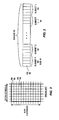
- an uplink resource block 62 comprises a plurality of OFDM resource elements, "REs," 66. Each RE 66 represents the intersection of one OFDM subcarrier and one OFDM symbol time.
- one uplink resource block 62 includes REs 66 taken over seven OFDM symbol times and twelve OFDM subcarriers.
- a contiguous range of uplink resource blocks 62 in this example comprises a plurality of resource blocks 62 that are adjacent in the frequency and/or time sense within the OFDM time/frequency grid.
- uplink resource blocks should be broadly understood and may have a different definition in another type of wireless communication network that "channelizes" transmission resources differently, e g either in time, frequency, or mathematical code.
- E-UTRA Evolved Universal Terrestrial Radio Access
- Receive processing at the base station 20 complements the above-described signaling in the sense that the base station 20 understands that each subset 64 of uplink resource blocks 62 within the granted range 60 represents a possible respective contention-based uplink transmission from any one or more of the user terminals 36.
- the base station 20 includes receiver processing circuits, e.g., the "receive processor" 28 shown in Fig. 1 , that are configured to process contention-based uplink transmissions separately for each subset 64, for the given scheduling interval.
- the receive processor 28 is configured to demodulate/detect received signals received on resource blocks 62 within the range 60, based on its understanding that each subset 64 of resource blocks 62 represents a possible contention-based uplink transmission 34 from any one or more of the user terminals 36.
- the base station 20 increases the number of contention-based uplink grants 40 that it makes with respect to any given scheduling interval by allocating more than one range or set of uplink resource blocks 62.
- This approach represents one mechanism contemplated herein for adapting the number of contention-based uplink grants that can be made based on the number of user terminals 36 being supported within one or more network cells associated with the base station 20. For example, the base station 20 determines that no one contiguous range is available of a size large enough to make the desired overall number of contention-based uplink grants 40 for a given scheduling interval and it therefore decides to allocate two ranges, which together provide the desired overall number of contention-based uplink grants 40.
- the base station 20 effectively generates the desired overall number of contention-based uplink grants 40 for that scheduling interval by allocating two sets or ranges 60 of resource blocks 62.
- Each range 60 of uplink resource blocks is contiguous and comprises subsets 64 of uplink resource blocks 62 but the resource blocks 62 need not be contiguous across the sets or ranges 60.
- scheduling processor 32 is configured to allocate two or more sets or ranges 60 of uplink resource blocks 62, each range 60 representing a respective plurality of separate contention-based uplink grants 40, and to transmit, via said transceiver 22, two or more contention-based uplink grant messages 42, each corresponding to one of the two or more sets 60.
- the sets 60 need not be identical.
- two or more of the sets or ranges 60 may differ in at least one of: the size M of the subsets 64 in the range 60, or the overall number of the subsets 64 in the range 60.
- the base station 20 is an eNodeB that is configured to transmit the contention-based uplink grant message 42 on an LTE Physical Downlink Control Channel, "PDCCH", using Downlink Control Information, "DCI", format 0.
- base station 20 is configured to manipulate the Modulation and Coding Scheme, "MCS", field that is defined for DCI Format 0 messages, to indicate different uplink transmission coding and multiplexing parameters for two or more of the contention-based uplink grants 40.
- MCS Modulation and Coding Scheme
- the base station 20 may indicate a different MCS selection to use for, e.g., half of the contention-based uplink grants 40 as compared to the other half.
- the user terminal is configured to "follow" the parameter information included in the contention-based uplink grant message 42. That is, in the case that the user terminal 36 sends a contention-based uplink transmission 34 on any of the one or more of the subsets 64, the user terminal 36 is configured to set the uplink transmission coding and multiplexing parameters used for such transmission in accordance with the parameter information, which may be information telling the user terminal 36 which MCS settings to select from an indexed table or other data structure.
- the base station 20 includes, in the contention-based uplink grant message 42, signaling that indicates one or more access probabilities to be used by each user terminal 36 in probabilistically determining whether or not to perform a contention-based uplink transmission 34 using any one of the subsets 64 in the range 60.
- the user terminal 36 is configured to "selectively" send a contention-based uplink transmission based on making a probabilistic decision on whether or not to transmit, whereby the user equipment 36 does or does not transmit according to a defined probability.
- the probability at which the user terminal 36 decides to send a contention-based transmission 34 can be set or otherwise controlled by the one or more access probabilities indicated in the contention-based uplink grant message 42.
- the message 42 includes at least one access probability control value, e.g., a numeric value x given as 0 ⁇ x ⁇ 1.
- the user terminal 36 includes a random number generator or other processing circuitry that generates a random or pseudorandom value within the same numeric range.
- the grant message 42 indicates which access probability control value to select from a table or other data structure stored at the user terminal 36. The table itself may be signaled to the user terminal 36, such as at set up, or via broadcast information.
- the user terminal 36 makes a contention-based uplink transmission 34 on a selected one of the subsets 64; otherwise, it does not make the attempt. With this arrangement, one sees that the likelihood of actual contention on any one of the subsets 64 is reduced according to the probability at which individual user terminals 36 decided whether to attempt access.
- the user terminals 36 are configured to make a probabilistic decision on whether or not to transmit by generating a random value and comparing it to the access probability control value included in or identified by the contention-based uplink grant message 42, and deciding whether or not to transmit in dependence on said comparison.
- Each user terminal 36 also may be configured to randomly select the particular subset 64 that it uses for making a contention-based uplink transmission 34.
- the user terminal 36 e.g., via its grant processor 46, is configured to receive a contention-based uplink grant message 42 that indicates a range 60 of uplink resource blocks 62 that are allocated for use in making contention-based uplink transmissions 34.
- the range 60 comprises a number of subsets 64 of uplink resource blocks 62, with each subset 64 representing a contention-based uplink grant 40.
- the number of subsets 64 represents the number of separate contention-based uplink grants 40.
- the user terminal 36 further includes the previously identified transmit circuit 47, which is operatively associated with the transceiver 43 and configured to selectively send a contention-based uplink transmission 34 on one of the subsets 64 of uplink resource blocks 62.
- the "selective" sending of a contention-based uplink transmission 34 by the user terminal 36 is selective in the sense that the user terminal 36 only makes a transmission in the case that it has uplink data to send from its uplink transmit buffer-not shown.
- the selective sending is based on one or more further considerations, such as the probabilistic sending decision described earlier, where the user terminal 36 does or does not send a contention-based transmission 34 in dependence on a probability-weighted decision.
- the probabilistic decision may be not to make a contention-based uplink transmission 34, even if there is buffered data to send. That type of constraint lessens the likelihood of contention on any given one of the subsets 64, particularly in cases where a large number of user terminals 36 all receive the same contention-based uplink grant message 42.
- Figs. 4 and 5 illustrate example methods implemented on the network side and the user-terminal side, respectively.
- the base station 20 implements a method 400 whereby it signals contention-based uplink grants to user terminals 36.
- the processing and control circuits 26 of the base station 20 are configured to implement the illustrated method according to dedicated electronic circuits, or by way of programmable digital processing circuitry, or a mix of both.
- the method 400 is at least partly implemented by the receive processor 28 and the transmit processor 30, including the scheduling processor 32, based on the execution of computer program instructions stored in a memory circuit/device within the base station 20.
- the method 400 includes, for a given transmission interval, allocating at Step 402 a range 60 of uplink resource blocks 62 for use by the user terminals 36 in making contention-based uplink transmissions 34.
- the range 60 of uplink resource blocks 62 comprises subsets 64 of uplink resource blocks 62 with each subset 64 representing a separate contention-based uplink grant 40.
- the allocated range 60 of uplink resource blocks 62 equals an overall number N of resource blocks
- the overall number of contention-based uplink grants 40 represented by the range 60 equals N/M, assuming that each of the subsets 64 includes M uplink resource blocks 62.
- the method 400 continues with the base station 20 transmitting at Step 404 a contention-based uplink grant message 42 to the user terminals 36 that identifies the range 60 of uplink resource blocks 62.
- the identification of the allocated range 60 is sufficient to identify the plurality of contention-based uplink grants 40 represented in the contention-based uplink grant message 42 transmitted by the base station 20.
- the above method 400 can be understood in one or more embodiments as a network node method, in which the node signals contention-based uplink grants 40 to user terminals 36 or other such user equipments.
- the node allocates a range 60 of uplink resource blocks 62 for use in making a plurality of contention-based uplink grants 40 within a given scheduling interval, wherein the range 60 of uplink resource blocks 62 comprises different subsets 64 of uplink resource blocks 62.
- each contention-based uplink grant 40 in the plurality of contention-based uplink grants 40 maps to a subset 64 of uplink resource blocks 62 out of the different subsets 64 within the allocated range 60 of uplink resource blocks 62. That is, each subset 64 represents a different one in the plurality of contention-based uplink grants 40 represented by the allocated range 60.
- the method further includes transmitting a single contention-based uplink grant message 42 that indicates the allocated range 60 of uplink resource blocks 62.
- Fig. 5 illustrates a corresponding user equipment method 500, which is implemented at individual ones of the user terminals 36 or other such user equipments.
- the method may be repeatedly carried out over successive transmission intervals, e.g., on a sub-frame basis.
- the method 500 includes an appropriately configured user terminal 36 receiving a contention-based uplink grant message 42 at Step 502.
- the message 42 indicates a range 60 of uplink resource blocks 62 allocated for use in making contention-based uplink transmissions 34, where the range 60 comprises subsets 64 of uplink resource blocks 62. Again, each subset 64 represents a separate contention-based uplink grant 40.
- the method 500 further includes the user terminal 36 selectively sending a contention-based uplink transmission 34 on one of the subsets 64 of uplink resource blocks 62 at Step 504.
- “selectively" as applied to the step of sending denotes the fact that the user terminal 36 may or may not actually make a contention-based transmission 34. If the user terminal 36 does decide to make the transmission, it will do so in accordance with the information indicated in the contention-based uplink grant message 42. In particular, any contention-based uplink transmission 34 attempted by the user terminal 36 will be made using the uplink resource blocks 62 included in one of the defined, subsets 64 included in the allocated range 60, as indicated in the contention-based uplink grant message 42.
- the user terminal 36 may, for example, select a particular one of the subsets 64 using a random or pseudorandom selection method.
- the method 500 can be understood as a method implemented in a user terminal 36, or other such user equipment, for making contention-based uplink transmissions in a wireless communication network.
- the method 500 comprises receiving a single contention-based uplink grant message 42 that indicates a range 60 of uplink resource blocks 62 allocated to a plurality of contention-based uplink grants 40 within a given scheduling interval.
- the range 60 of uplink resource blocks 62 comprises different subsets 64 of uplink resource blocks 62, where each contention-based uplink grant 40 in the plurality of contention-based uplink grants 40 maps to a subset 64 of uplink resource blocks 62 out of the different subsets 64 within the allocated range 60 of uplink resource blocks 62.
- the method includes selectively sending a contention-based uplink transmission 34 on a particular subset 64 of uplink resource blocks 62 corresponding to one of the plurality of contention-based uplink grants 40.
- the user equipment "selectively" sends the contention-based uplink transmission 34 by deciding whether or not to make the contention-based uplink transmission 34, where that decision is conditioned on any one or more of the following evaluations: determining whether or not to transmit in dependence on the status of the uplink transmit buffer at the user terminal 36; and determining whether or not to transmit in dependence on a probabilistic decision, where the user terminal 36 decides whether or not to transmit according to some defined probability weighting.
- Such probabilistic decision making helps reduce the likelihood of transmission collisions in the case where a potentially large number of user terminals 36 are in a position to attempt a contention-based uplink transmission 34 on any one of the subsets 64 of uplink resource blocks included in the range 60 of resource blocks 62 allocated for any given contention-based uplink grant message 42.
- each user terminal 36 within a plurality of user terminals 36 is configured to make a contention-based uplink transmission 34 for a given scheduling interval if a value randomly generated by the user terminal 36 is equal to or greater than an access probability control value included in or otherwise identified by the contention-based uplink grant message 42.
- This example assumes that the user terminal 36 has data to send and it will be understood that the lack of any uplink data to send serves as a threshold condition for undertaking the probability-weighted decision as to whether or not an actual contention-based transmission 34 is made.
- the access probability control value(s) may be known at the user terminals 36 in a variety of ways.
- One mechanism contemplated herein is to send or otherwise indicate the access probability control value using RRC signaling, etc.
- RRC signaling etc.
- other ranges and conditions may be defined for making the probability-weighted decision.
- the information fields of the DCI format 0 include the following items:
- DCI 0 format to signal a contention-based uplink grant message 42
- certain information fields within the DCI format 0 may be open for use with the grant message 42.
- the following information fields may be open:
- the only field that will differ for the different contention-based uplink grants 40 will be the resource block, "RB", allocation, which indicates the uplink resource blocks that are reserved.
- One embodiment of using one or more of the above information fields within a contention-based uplink grant message 42 that is sent using DCI format 0 takes some number of unused bits to indicate the overall number of separate contention-based uplink grants 40 represented by the range 60 of uplink resource blocks 62 indicated within a given contention-based uplink grant message 42.
- fix the size of the subsets 64 i.e., to fix the size of each contention-based uplink grant 40.
- the fixed size can be signaled, and thus updated by sending new signaling, or can be fixed to some predefined known value such that no signaling is needed to indicate it. It will also be understood that, in one or more embodiments, if the size of the subsets 64 is known, then the user terminals 36 can calculate the number of contention-based uplink grants 40 represented by a given allocated range 60 of uplink resource blocks 62.
- the interpretation of the MCS field within the DCI format 0 message is changed to support different coding and multiplexing for the plurality of contention-based uplink grants 40 represented by a given contention-based uplink grant message 42.
- the plurality of contention-based uplink grant messages 40 can contain individual grants dimensioned for transmitting small amounts of data with robust coding for cell-edge users, i.e., user terminals 36 operating at the edges of the coverage area provided by the supporting eNodeB, as well as grants dimensioned for transmitting larger amounts of data with less coding for users with good channel conditions.
- Individual user terminals 36 within a plurality of user terminals 36 select among the offered contention-based uplink grants 40 based on, for example, their measurements of downlink signal quality.
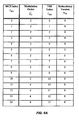
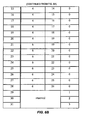
- Figs. 6A and 6B together illustrate an example table of modulation, Transport Block Size, "TBS", index and redundancy version for the Physical Uplink Shared Channel, "PUSCH".
- TBS Transport Block Size
- PUSCH Physical Uplink Shared Channel
- the offset can be indexed so that the bit positions correspond to different offsets, e.g. 0, +2, +4, +8 in the illustrated MCS table. If there are no bits within the contention-based uplink grant message 42 to signal the relation, the MCS offset can be sent via system broadcast information or sent via dedicated RRC signalling.
- signalling and an associated protocol are defined for MCS parameters that control the MCS used by any given user terminal 36 for sending a contention-based uplink transmission 34 in response to receiving a given contention-based uplink grant message 42.
- an MCS based on the signaled MCS is used in a predefined manner, i.e., no additional bits are used for that, where the relationship or basis for determining the MCS may be configured via system broadcast information or dedicated RRC signaling.
- the MCS used by a particular user terminal 36 is based on the signaled MCS and on the signaled or otherwise known "MCS increment index," which can comprise otherwise unused bits in the DCI format 0 message, as described above.
- the specific MCS to use can be signaled explicitly to the user terminal 36, such as by signaling a related parameter setting, or the MCS to use can be signaled by specifying information that indicates which MCS to select from the table, according to the contention-based uplink grant 40 the user terminal 36 is responding to. Further, the MCS to use can be indicated by signaling the indexing/incrementing rule that should be used with an MCS table, such as that shown in Figs. 6A and 6B .
- an MCS increment index can be applied to all contention-based uplink grants 40, and then the eNodeB can blindly detect the used format.
- the support for blind decoding can be signaled via system broadcast information or dedicated RRC signaling.
- otherwise unused bits in a DCI format 0 grant are used to signal an access probability, e.g., in the form of an access probability control value.
- the access probability control value is used to reduce collision probability when many user terminals 36 are contending for the same contention-based uplink resources.
- User terminals 36 wanting to transmit on one of the subsets 64 of uplink resource blocks 62 draw a random value [0..1 and compare it to the access probability control value signaled in the contention-based uplink grant to decide whether to transmit or not.
- the actual fractional value of the access probability control value need not be signaled; rather, two or more otherwise unused bits can be used to signal which one of four predefined access control probability values are to be used at the user terminal 36. Of course, more than four or fewer than four choices can be defined.
- Such values can be included in a table, such as shown in Fig. 7 .
- the table can be signaled to the user terminals 36 via system broadcast information, or via RRC signaling such as at connection setup. Regardless, one sees a number of table positions that are indexed or otherwise identified by binary values, 00, 01, etc. This allows the network to identify a particular one of the predefined access probability control values for a user terminal 36 to use simply by signaling the table index value.
Landscapes
- Engineering & Computer Science (AREA)
- Computer Networks & Wireless Communication (AREA)
- Signal Processing (AREA)
- Mobile Radio Communication Systems (AREA)
Claims (16)
- Verfahren in einem drahtlosen Kommunikationsnetzknoten zur Signalisierung von konkurrenzbasierten Aufwärtsverbindungsfreigaben an Benutzereinrichtungen (36), wobei das Verfahren umfasst:Zuteilen eines Bereichs (60) von Aufwärtsverbindungs-Betriebsmittelblöcken (62) zur Verwendung beim Durchführen einer Mehrzahl von konkurrenzbasierten Aufwärtsverbindungsfreigaben (40) innerhalb eines gegebenen Dispositionsintervalls, wobei der Bereich von Aufwärtsverbindungs-Betriebsmittelblöcken verschiedene Teilsätze (64) von Aufwärtsverbindungs-Betriebsmittelblöcken umfasst, und wobei jede konkurrenzbasierte Aufwärtsverbindungsfreigabe in der Mehrzahl von konkurrenzbasierten Aufwärtsverbindungsfreigaben (40) einem Teilsatz von Aufwärtsverbindungs-Betriebsmittelblöcken aus den verschiedenen Teilsätzen (64) innerhalb des zugeteilten Bereichs von Aufwärtsverbindungs-Betriebsmittelblöcken zugeordnet wird; undSenden einer Einzelnachricht (42) über konkurrenzbasierte Aufwärtsverbindungsfreigabe, die den zugeteilten Bereich (60) von Aufwärtsverbindungs-Betriebsmittelblöcken (62) anzeigt, undAufnehmen in die Einzelnachricht (42) über konkurrenzbasierte Aufwärtsverbindungsfreigabe von Informationen, welche die Anzahl von konkurrenzbasierten Aufwärtsverbindungsfreigaben (40) anzeigen, die durch den zugeteilten Bereich (60) von Aufwärtsverbindungs-Betriebsmittelblöcken (62) dargestellt werden, oderSenden vor dem Schritt des Sendens der Einzelnachricht (42) über konkurrenzbasierte Aufwärtsverbindungsfreigabe von Informationen, welche die Anzahl von konkurrenzbasierten Aufwärtsverbindungsfreigaben (40) anzeigen, die durch den zugeteilten Bereich (60) von Aufwärtsverbindungs-Betriebsmittelblöcken (62) dargestellt werden, oderSpeichern von Standardgrößeninformationen für die konkurrenzbasierten Aufwärtsverbindungsfreigaben (40), wobei die Standardgrößeninformationen im Allgemeinen die Größe der verschiedenen Teilsätze in Bezug auf die Anzahl von Aufwärtsverbindungs-Betriebsmittelblöcken (62) definieren, die in jeden Teilsatz aufgenommen werden sollen.
- Drahtloser Kommunikationsnetzknoten (20), der so konfiguriert ist, dass er konkurrenzbasierte Aufwärtsverbindungsfreigaben (40) an Benutzereinrichtungen (36) signalisiert, wobei der drahtlose Kommunikationsnetzknoten umfasst:einen Sendeempfänger (22), der so konfiguriert ist, dass er Abwärtsverbindungssignale an die Benutzereinrichtungen sendet und Aufwärtsverbindungssignale von den Benutzereinrichtungen empfängt; undeinen Dispositionsprozessor (32), der funktionell mit dem Sendeempfänger verbunden und konfiguriert ist zum:Zuteilen eines Bereichs (60) von Aufwärtsverbindungs-Betriebsmittelblöcken (62) zur Verwendung beim Durchführen einer Mehrzahl von konkurrenzbasierten Aufwärtsverbindungsfreigaben (40) innerhalb eines gegebenen Dispositionsintervalls, wobei der Bereich von Aufwärtsverbindungs-Betriebsmittelblöcken verschiedene Teilsätze von Aufwärtsverbindungs-Betriebsmittelblöcken umfasst, und wobei jede konkurrenzbasierte Aufwärtsverbindungsfreigabe in der Mehrzahl von konkurrenzbasierten Aufwärtsverbindungsfreigaben (40) einem Teilsatz von Aufwärtsverbindungs-Betriebsmittelblöcken aus den verschiedenen Teilsätzen innerhalb des zugeteilten Bereichs (60) von Aufwärtsverbindungs-Betriebsmittelblöcken (62) zugeordnet wird; undSenden über den Sendeempfänger (22) einer Einzelnachricht (42) über konkurrenzbasierte Aufwärtsverbindungsfreigabe, die den zugeteilten Bereich von Aufwärtsverbindungs-Betriebsmittelblöcken anzeigt,wobei der drahtlose Kommunikationsnetzknoten (20) so konfiguriert ist, dass er in die Einzelnachricht (42) über konkurrenzbasierte Aufwärtsverbindungsfreigabe Informationen aufnimmt, welche die Anzahl von konkurrenzbasierten Aufwärtsverbindungsfreigaben (40) anzeigen, die durch den zugeteilten Bereich (60) von Aufwärtsverbindungs-Betriebsmittelblöcken (62) dargestellt werden, oderwobei der drahtlose Kommunikationsnetzknoten (20) so konfiguriert ist, dass er vor dem Senden der Einzelnachricht (42) über konkurrenzbasierte Aufwärtsverbindungsfreigabe Informationen sendet, welche die Anzahl von konkurrenzbasierten Aufwärtsverbindungsfreigaben (40) anzeigen, die durch den zugeteilten Bereich (60) von Aufwärtsverbindungs-Betriebsmittelblöcken (62) dargestellt werden, oderwobei der drahtlose Kommunikationsnetzknoten so konfiguriert ist, dass er Standardgrößeninformationen zum Definieren der Größe der verschiedenen Teilsätze in Bezug auf die Anzahl von Aufwärtsverbindungs-Betriebsmittelblöcken, die in jeden Teilsatz aufgenommen werden sollen, verwendet.
- Drahtloser Kommunikationsnetzknoten (20) nach Anspruch 2, wobei der drahtlose Kommunikationsnetzknoten ferner eine oder mehrere Empfängerverarbeitungsschaltungen (28) umfasst, die so konfiguriert sind, dass sie Aufwärtsverbindungsübertragungen, die auf den verschiedenen Teilsätzen des zugeteilten Bereichs (60) von Aufwärtsverbindungs-Betriebsmittelblöcken (62) empfangen werden, als separate Übertragungen von Benutzereinrichtungen (36) verarbeiten, wobei jede der Aufwärtsverbindungsübertragungen auf eine verschiedene der Mehrzahl von konkurrenzbasierten Aufwärtsverbindungsfreigaben (40), die dem zugeteilten Bereich (60) von Aufwärtsverbindungs-Betriebsmittelblöcken (62) zugeordnet sind, anspricht und dieser entspricht.
- Drahtloser Kommunikationsnetzknoten nach Anspruch 2, wobei der Dispositionsprozessor (32) so konfiguriert ist, dass er zwei oder mehrere verschiedene Bereiche (60) von Aufwärtsverbindungs-Betriebsmittelblöcken (62) zur Verwendung beim Durchführen von zwei oder mehreren verschiedenen Mehrzahlen von konkurrenzbasierten Aufwärtsverbindungsfreigaben (40) innerhalb des gegebenen Dispositionsintervalls zuteilt, wobei jeder der zwei oder der mehreren verschiedenen Bereiche von Aufwärtsverbindungs-Betriebsmittelblöcken verschiedene Teilsätze von Aufwärtsverbindungs-Betriebsmittelblöcken umfasst, und über den Sendeempfänger (28) eine jeweilige Einzelnachricht (42) über konkurrenzbasierte Aufwärtsverbindungsfreigabe für jede Mehrzahl von konkurrenzbasierten Aufwärtsverbindungsfreigaben (40) aus den zwei oder den mehreren verschiedenen Mehrzahlen von konkurrenzbasierten Aufwärtsverbindungsfreigaben sendet.
- Drahtloser Kommunikationsnetzknoten nach Anspruch 4, wobei sich eine Größe der zwei oder der mehreren verschiedenen zugeteilten Bereiche (60) von Aufwärtsverbindungs-Betriebsmittelblöcken (62) oder eine Größe der verschiedenen Teilsätze von Aufwärtsverbindungs-Betriebsmittelblöcken innerhalb jedes der zugeteilten zwei oder mehreren verschiedenen Bereiche von Aufwärtsverbindungs-Betriebsmittelblöcken oder beide zwischen mindestens zweien der zwei oder der mehreren verschiedenen Mehrzahlen von konkurrenzbasierten Aufwärtsverbindungsfreigaben (40) unterscheiden.
- Drahtloser Kommunikationsnetzknoten nach Anspruch 2 oder 3, wobei der drahtlose Kommunikationsnetzknoten ein eNodeB (20) ist, der zum Betrieb in einem Long Term Evolution, "LTE",-Netz konfiguriert ist, und wobei der drahtlose Kommunikationsnetzknoten so konfiguriert ist, dass er die Einzelnachricht (42) über konkurrenzbasierte Aufwärtsverbindungsfreigabe auf einem physikalischen Abwärtsverbindungssteuerkanal, "PDCCH", des LTEs unter Verwendung des Abwärtsverbindungssteuerinformations, "DCI",-Format 0 sendet.
- Drahtloser Kommunikationsnetzknoten nach Anspruch 6, wobei der drahtlose Kommunikationsnetzknoten (20) so konfiguriert ist, dass er das Modulations- und Codierungsschema, "MCS",-Feld, das für Nachrichten im DCI-Format 0 definiert ist, so bearbeitet, dass es verschiedene Codierungs- und Multiplexparameter für Aufwärtsverbindungsübertragungen für zwei oder mehrere der konkurrenzbasierten Aufwärtsverbindungsfreigaben (40) anzeigt.
- Drahtloser Kommunikationsnetzknoten nach Anspruch 6, wobei der drahtlose Kommunikationsnetzknoten (20) so konfiguriert ist, dass er Signalisierung in die Nachricht (42) über konkurrenzbasierte Aufwärtsverbindungsfreigabe aufnimmt, die eine oder mehrere Zugangswahrscheinlichkeiten anzeigt, die durch die Benutzereinrichtungen (36) beim Bestimmen dessen verwendet werden sollen, ob eine konkurrenzbasierte Aufwärtsverbindungsübertragung, die einer der Mehrzahl von konkurrenzbasierten Aufwärtsverbindungsfreigaben (40) entspricht, durchgeführt werden soll oder nicht.
- Drahtloser Kommunikationsnetzknoten nach Anspruch 2, wobei der drahtlose Kommunikationsnetzknoten (20) so konfiguriert ist, dass er die Informationen, welche die Anzahl von konkurrenzbasierten Aufwärtsverbindungsfreigaben (40) anzeigen, über Signalisierung, die in System-Broadcast-Informationen enthalten ist, oder über Signalisierung sendet, die in Verbindungsherstellungsinformationen enthalten ist, die während der Konfiguration der Funkbetriebsmittelsteuerung, "RRC", jedem Benutzerendgerät signalisiert werden.
- Drahtloser Kommunikationsnetzknoten nach einem der Ansprüche 2 bis 3 oder 6 bis 9, wobei der Dispositionsprozessor (32) so konfiguriert ist, dass er eine Gesamtanzahl von Aufwärtsverbindungs-Betriebsmittelblöcken (62), die in den zugeteilten Bereich (60) von Aufwärtsverbindungs-Betriebsmittelblöcken (62) aufgenommen werden sollen, auf der Basis dessen bestimmt, dass er konfiguriert ist zum: Identifizieren eines benachbarten Bereichs von Aufwärtsverbindungs-Betriebsmittelblöcken, die für das gegebene Dispositionsintervall verfügbar sind; und Bestimmen einer Anzahl von ganzen, nicht überlappenden Teilsätzen von Aufwärtsverbindungs-Betriebsmittelblöcken, die innerhalb des identifizierten benachbarten Bereichs von verfügbaren Aufwärtsverbindungs-Betriebsmittelblöcken gebildet werden können, und derartiges Festlegen der Gesamtanzahl von zugeteilten Aufwärtsverbindungs-Betriebsmittelblöcken, die in den Bereich von Aufwärtsverbindungs-Betriebsmittelblöcken aufgenommen werden sollen, dass sie die Anzahl von ganzen, nicht überlappenden Teilsätzen von Aufwärtsverbindungs-Betriebsmittelblöcken enthält.
- Verfahren in einer Benutzereinrichtung (36) zum Durchführen von konkurrenzbasierten Aufwärtsverbindungsübertragungen in einem drahtlosen Kommunikationsnetz, wobei das Verfahren umfasst:Empfangen einer Einzelnachricht (42) über konkurrenzbasierte Aufwärtsverbindungsfreigabe, die einen Bereich (60) von Aufwärtsverbindungs-Betriebsmittelblöcken (62) anzeigt, die einer Mehrzahl von konkurrenzbasierten Aufwärtsverbindungsfreigaben (40) innerhalb eines gegebenen Dispositionsintervalls zugeteilt sind, wobei der Bereich von Aufwärtsverbindungs-Betriebsmittelblöcken (62) verschiedene Teilsätze von Aufwärtsverbindungs-Betriebsmittelblöcken umfasst, und wobei jede konkurrenzbasierte Aufwärtsverbindungsfreigabe in der Mehrzahl von konkurrenzbasierten Aufwärtsverbindungsfreigaben (40) einem Teilsatz von Aufwärtsverbindungs-Betriebsmittelblöcken aus den verschiedenen Teilsätzen innerhalb des zugeteilten Bereichs von Aufwärtsverbindungs-Betriebsmittelblöcken zugeordnet wird; undselektives Senden einer konkurrenzbasierten Aufwärtsverbindungsübertragung auf einem bestimmten Teilsatz von Aufwärtsverbindungs-Betriebsmittelblöcken, der einer der Mehrzahl von konkurrenzbasierten Aufwärtsverbindungsfreigaben entspricht,Bestimmen der Anzahl von konkurrenzbasierten Aufwärtsverbindungsfreigaben (40), die durch den angezeigten Bereich (60) von Aufwärtsverbindungs-Betriebsmittelblöcken (62) dargestellt werden, basierend auf mindestens einem von Folgendem:Empfangen oder anderweitigem Speichern von Informationen, welche die Anzahl von verschiedenen Teilsätzen identifizieren, die im angezeigten Bereich (60) von Aufwärtsverbindungs-Betriebsmittelblöcken (62) enthalten sind;Empfangen oder anderweitigem Speichern von Informationen, welche die Anzahl von Aufwärtsverbindungs-Betriebsmittelblöcken (62) identifizieren, die jeden Teilsatz von Aufwärtsverbindungs-Betriebsmittelblöcken definiert, und Berechnen der Anzahl von verschiedenen Teilsätzen, die innerhalb des angezeigten Bereichs (60) von Aufwärtsverbindungs-Betriebsmittelblöcken enthalten sind; oderEmpfangen oder anderweitigem Speichern von Informationen, welche sowohl die Größe jeder Freigabe (40) innerhalb des zugeteilten Bereichs (60) als auch die Anzahl von Freigaben innerhalb des zugeteilten Bereichs identifizieren.
- Benutzereinrichtung (36), die zum Durchführen von konkurrenzbasierten Aufwärtsverbindungsübertragungen in einem drahtlosen Kommunikationsnetz konfiguriert ist, wobei die Benutzereinrichtung umfasst:einen Sendeempfänger (28), der so konfiguriert ist, dass er Aufwärtsverbindungssignale an den drahtlosen Kommunikationsnetzknoten sendet und Abwärtsverbindungssignale vom drahtlosen Kommunikationsnetzknoten empfängt;eine Empfangsschaltung, die funktionell mit dem Sendeempfänger (28) verbunden und so konfiguriert ist, dass sie eine Einzelnachricht (42) über konkurrenzbasierte Aufwärtsverbindungsfreigabe empfängt, die einen Bereich (60) von Aufwärtsverbindungs-Betriebsmittelblöcken (62) anzeigt, die einer Mehrzahl von konkurrenzbasierten Aufwärtsverbindungsfreigaben (40) innerhalb eines gegebenen Dispositionsintervalls zugeteilt sind, wobei der Bereich von Aufwärtsverbindungs-Betriebsmittelblöcken verschiedene Teilsätze von Aufwärtsverbindungs-Betriebsmittelblöcken umfasst, und wobei jede konkurrenzbasierte Aufwärtsverbindungsfreigabe in der Mehrzahl von konkurrenzbasierten Aufwärtsverbindungsfreigaben (40) einem Teilsatz von Aufwärtsverbindungs-Betriebsmittelblöcken aus den verschiedenen Teilsätzen innerhalb des zugeteilten Bereichs von Aufwärtsverbindungs-Betriebsmittelblöcken zugeordnet wird; undeine Sendeschaltung, die funktionell mit dem Sendeempfänger (28) verbunden und so konfiguriert ist, dass sie eine konkurrenzbasierte Aufwärtsverbindungsübertragung selektiv auf einem bestimmten Teilsatz von Aufwärtsverbindungs-Betriebsmittelblöcken (62) sendet, der einer der Mehrzahl von konkurrenzbasierten Aufwärtsverbindungsfreigaben (40) entspricht,wobei die Benutzereinrichtung (36) so konfiguriert ist, dass sie die Anzahl von konkurrenzbasierten Aufwärtsverbindungsfreigaben (40), die durch den angezeigten Bereich (60) von Aufwärtsverbindungs-Betriebsmittelblöcken (62) dargestellt werden, basierend auf dem Kennen oder Empfangen von Informationen, welche die Anzahl von verschiedenen Teilsätzen identifizieren, die im angezeigten Bereich (60) von Aufwärtsverbindungs-Betriebsmittel-Blöcken (62) enthalten sind, oder basierend auf dem Kennen oder Empfangen von Informationen bestimmt, welche die Anzahl von Aufwärtsverbindungs-Betriebsmittelblöcken (62) identifizieren, die jeden Teilsatz von Aufwärtsverbindungs-Betriebsmittelblöcken definiert, und die Anzahl von verschiedenen Teilsätzen berechnet, die innerhalb des angezeigten Bereichs (60) von Aufwärtsverbindungs-Betriebsmittelblöcken enthalten sind.
- Benutzereinrichtung nach Anspruch 12, wobei die Benutzereinrichtung (36) zum Betrieb in einem Long Term Evolution, "LTE",-Netz konfiguriert ist.
- Benutzereinrichtung nach Anspruch 12 oder 13, wobei die Benutzereinrichtung (36) so konfiguriert ist, dass sie die konkurrenzbasierte Aufwärtsverbindungsübertragung selektiv auf der Basis dessen sendet, dass sie so konfiguriert ist, dass sie eine wahrscheinlichkeitstheoretische Entscheidung darüber trifft, ob sie senden soll oder nicht, wobei die Benutzereinrichtung gemäß einer definierten Wahrscheinlichkeit sendet oder nicht.
- Benutzereinrichtung nach Anspruch 14, wobei die Nachricht (42) über konkurrenzbasierte Aufwärtsverbindungsfreigabe einen Zugangswahrscheinlichkeitssteuerwert umfasst, und wobei die Benutzereinrichtung (36) so konfiguriert ist, dass sie die wahrscheinlichkeitstheoretische Entscheidung darüber, ob sie senden soll oder nicht, basierend auf dem Erzeugen eines Zufallswerts und Vergleichen desselben mit dem Zugangswahrscheinlichkeitssteuerwert trifft und in Anhängigkeit von dem Vergleich entscheidet, ob sie senden soll oder nicht.
- Benutzereinrichtung nach einem der vorhergehenden Ansprüche 12 bis 15, wobei die Einzelnachricht (42) über Aufwärtsverbindungsfreigabe Parameterinformationen umfasst, die verschiedene Codierungs- und Multiplexparameter anzeigen, die für verschiedene konkurrenzbasierte Aufwärtsverbindungsfreigaben (40) in der Mehrzahl von konkurrenzbasierten Aufwärtsverbindungsfreigaben verwendet werden sollen, und wobei die Benutzereinrichtung (36) so konfiguriert ist, dass sie die Codierungs- und Multiplexparameter für Aufwärtsverbindungsübertragungen festlegt, die zum selektiven Senden der konkurrenzbasierten Aufwärtsverbindungsübertragung gemäß den Parameterinformationen verwendet werden.
Applications Claiming Priority (2)
| Application Number | Priority Date | Filing Date | Title |
|---|---|---|---|
| US29538310P | 2010-01-15 | 2010-01-15 | |
| PCT/IB2011/050177 WO2011086525A1 (en) | 2010-01-15 | 2011-01-14 | Methods and apparatus for contention-based granting in a wireless communication network |
Publications (2)
| Publication Number | Publication Date |
|---|---|
| EP2524563A1 EP2524563A1 (de) | 2012-11-21 |
| EP2524563B1 true EP2524563B1 (de) | 2014-03-19 |
Family
ID=43707939
Family Applications (1)
| Application Number | Title | Priority Date | Filing Date |
|---|---|---|---|
| EP11703042.9A Not-in-force EP2524563B1 (de) | 2010-01-15 | 2011-01-14 | Verfahren und vorrichtung zur konfliktbasierten bereitstellung in einem drahtlosen kommunikationsnetzwerk |
Country Status (5)
| Country | Link |
|---|---|
| US (2) | US8767644B2 (de) |
| EP (1) | EP2524563B1 (de) |
| PH (1) | PH12012501374A1 (de) |
| RU (1) | RU2556387C2 (de) |
| WO (1) | WO2011086525A1 (de) |
Cited By (1)
| Publication number | Priority date | Publication date | Assignee | Title |
|---|---|---|---|---|
| TWI762614B (zh) * | 2017-04-06 | 2022-05-01 | 大陸商Oppo廣東移動通信有限公司 | 資源判斷方法、裝置以及電腦設備 |
Families Citing this family (55)
| Publication number | Priority date | Publication date | Assignee | Title |
|---|---|---|---|---|
| WO2010057540A1 (en) | 2008-11-21 | 2010-05-27 | Telefonaktiebolaget L M Ericsson (Publ) | Transmission method and devices in a communication system with contention-based data transmission |
| US9094942B2 (en) * | 2010-02-22 | 2015-07-28 | Telefonaktiebolaget L M Ericsson (Publ) | Methods and arrangements for contention-based uplink transmission in a wireless communications system |
| CN102291826B (zh) * | 2010-06-18 | 2014-01-08 | 华为技术有限公司 | 基于竞争的上行传输方法、配置方法和相关设备 |
| KR101721015B1 (ko) | 2010-06-21 | 2017-03-29 | 삼성전자주식회사 | 이동 통신 시스템에서 블라인드 스케쥴링 장치 및 방법 |
| WO2012087199A1 (en) | 2010-12-21 | 2012-06-28 | Telefonaktiebolaget L M Ericsson (Publ) | Method and arrangement for acknowledgement of contention- based uplink transmissions in a telecommunication system |
| US9264208B2 (en) | 2011-07-12 | 2016-02-16 | Qualcomm Incorporated | Downlink control with control-less subframes |
| EP2772093B1 (de) | 2011-10-28 | 2020-02-26 | BlackBerry Limited | Verfahren und vorrichtung zur handhabung von trägern während eines circuit switched fallback, csfb, betriebs |
| CN103108405B (zh) * | 2011-11-15 | 2017-09-08 | 中兴通讯股份有限公司 | 无线通信方法和系统 |
| EP2842380B1 (de) * | 2012-04-27 | 2016-04-27 | Telefonaktiebolaget LM Ericsson (publ) | Datenübertragung mit gemeinsamen uplink-steuerkanalressourcen |
| WO2014074832A1 (en) * | 2012-11-09 | 2014-05-15 | Interdigital Patent Holdings, Inc. | Method and apparatus for coordinated orthogonal channel access (coca) |
| WO2014084781A1 (en) | 2012-11-29 | 2014-06-05 | Telefonaktiebolaget L M Ericsson (Publ) | Mtc rach procedure |
| US10028302B2 (en) | 2013-03-08 | 2018-07-17 | Huawei Technologies Co., Ltd. | System and method for uplink grant-free transmission scheme |
| CN104244449B (zh) * | 2013-06-20 | 2018-05-11 | 华为技术有限公司 | 设备到设备的通信方法及用户设备 |
| US9949292B2 (en) | 2013-09-11 | 2018-04-17 | Qualcomm Incorporated | Coupling uplink and downlink CCA in LTE-U |
| WO2016010227A1 (en) | 2014-07-17 | 2016-01-21 | Lg Electronics Inc. | Method and apparatus for requesting scheduling in wireless communication system |
| WO2016029352A1 (en) * | 2014-08-26 | 2016-03-03 | Qualcomm Incorporated | Semi-persistent scheduling capacity enhancement by enabling higer mcs allocation |
| EP4096339B1 (de) * | 2014-08-27 | 2024-03-27 | Telefonaktiebolaget LM Ericsson (publ) | Verfahren und drahtloses gerät zur decodierung von konfliktbasierten uplink-übertragungen |
| CN105406952B (zh) * | 2014-09-10 | 2019-06-21 | 北京信威通信技术股份有限公司 | 一种上行授权方法、装置和系统 |
| US9872313B2 (en) * | 2014-10-02 | 2018-01-16 | Qualcomm Incorporated | Contention based uplink transmissions for latency reduction |
| US10531433B2 (en) * | 2014-10-29 | 2020-01-07 | Qualcomm Incorporated | Methods and apparatus for multiple user uplink access |
| US10129858B2 (en) * | 2014-11-25 | 2018-11-13 | Qualcomm Incorporated | Low latency physical layer design for contention-based uplink channels |
| CA2978473C (en) * | 2015-03-03 | 2021-02-23 | Huawei Technologies Co., Ltd. | Uplink data transmission method and apparatus |
| US10285180B2 (en) | 2015-03-14 | 2019-05-07 | Qualcomm Incorporated | Reserved resource pool assisted access resource selection for small data transmission |
| US10051636B2 (en) | 2015-03-14 | 2018-08-14 | Qualcomm Incorporated | Device based two-stage random resource selection for small data transmission |
| CN107431588B (zh) * | 2015-03-20 | 2020-08-07 | Lg 电子株式会社 | 用于短tti的时间频率资源的分配方法及其设备 |
| CN106301662A (zh) * | 2015-05-14 | 2017-01-04 | 株式会社Ntt都科摩 | 数据发送和接收方法以及数据发送和接收设备 |
| US9775141B2 (en) * | 2015-07-14 | 2017-09-26 | Motorola Mobility Llc | Method and apparatus for reducing latency of LTE uplink transmissions |
| US9717079B2 (en) | 2015-07-14 | 2017-07-25 | Motorola Mobility Llc | Method and apparatus for selecting a resource assignment |
| CN107852703B (zh) * | 2015-07-17 | 2020-10-09 | 华为技术有限公司 | 配置信息获取的方法和装置 |
| CN107615813B (zh) * | 2015-08-21 | 2023-02-03 | 华为技术有限公司 | 一种上行数据传输方法和装置 |
| WO2017077179A1 (en) * | 2015-11-02 | 2017-05-11 | Nokia Technologies Oy | Scheduling ues with mixed tti length |
| CN106817772B (zh) * | 2015-11-27 | 2020-04-14 | 华为技术有限公司 | 一种传输数据的方法及装置 |
| US20170171855A1 (en) * | 2015-12-11 | 2017-06-15 | Qualcomm Incorporated | Network assistance for distributed unscheduled transmissions |
| US10009923B2 (en) * | 2016-01-28 | 2018-06-26 | Qualcomm Incorporated | Contention-based data transmissions on return link |
| EP3361804B1 (de) * | 2016-02-04 | 2021-05-19 | Guangdong Oppo Mobile Telecommunications Corp., Ltd. | Verfahren und vorrichtung zur übertragung von uplink-informationen auf einem unlizenzierten träger |
| CN108702744B (zh) | 2016-03-18 | 2021-03-23 | 华为技术有限公司 | 网络节点、用户设备及其方法 |
| WO2017181343A1 (en) * | 2016-04-19 | 2017-10-26 | Nokia Solutions And Networks Oy | Method, system and apparatus for contention based channel formats |
| JP2019106564A (ja) * | 2016-04-19 | 2019-06-27 | シャープ株式会社 | 送信装置および受信装置 |
| CN109477881A (zh) * | 2016-05-25 | 2019-03-15 | 弗劳恩霍夫应用研究促进协会 | 用于定位系统的波形设计 |
| US9781744B1 (en) * | 2016-08-11 | 2017-10-03 | Futurewei Technologies, Inc. | System and method for uplink data scheduling for grant free transmission |
| CN116600392A (zh) | 2016-09-10 | 2023-08-15 | Lg电子株式会社 | 执行副链路操作的方法和用户设备以及控制该设备的设备 |
| US10448368B2 (en) * | 2016-11-11 | 2019-10-15 | Huawei Technologies Co., Ltd. | Systems and methods for grant-free uplink transmission |
| CN109997312A (zh) | 2016-11-29 | 2019-07-09 | 瑞典爱立信有限公司 | 用于基于争用的可靠通信的上行链路跳频图案 |
| WO2018128578A1 (en) * | 2017-01-06 | 2018-07-12 | Telefonaktiebolaget Lm Ericsson (Publ) | Preconfigured grants with a distribution pattern |
| EP3619991B1 (de) | 2017-05-04 | 2021-06-16 | Telefonaktiebolaget LM Ericsson (publ) | Kommunikationsvorrichtung, verfahren und computerprogramm zur übertragung einer nachricht als antwort auf eine direktzugriffsantwort mit mehreren berechtigungen |
| CN109392103B (zh) * | 2017-08-04 | 2020-08-28 | 大唐移动通信设备有限公司 | 一种资源分配方法及装置 |
| KR102382007B1 (ko) * | 2017-08-25 | 2022-04-04 | 삼성전자주식회사 | 무선 통신 시스템에서 대역을 공유하기 위한 장치 및 방법 |
| US11039477B2 (en) * | 2017-11-17 | 2021-06-15 | Mediatek Inc. | NB-IoT PRACH resource partitioning and multiple grants in RAR for EDT |
| WO2019145129A1 (en) | 2018-01-24 | 2019-08-01 | Telefonaktiebolaget Lm Ericsson (Publ) | Multiple tbs for msg3 in data transmission during random access |
| RU2757414C1 (ru) | 2018-02-13 | 2021-10-15 | Гуандун Оппо Мобайл Телекоммьюникейшнс Корп., Лтд. | Способ и устройство беспроводной связи |
| US11071091B2 (en) | 2019-01-10 | 2021-07-20 | At&T Intellectual Property I, L.P. | Contention level signaling for resource pools |
| WO2021214921A1 (ja) * | 2020-04-22 | 2021-10-28 | 株式会社Nttドコモ | 端末 |
| US11811571B2 (en) * | 2020-07-10 | 2023-11-07 | Qualcomm Incorporated | Resource allocation for peak reduction tones |
| ES3061259T3 (en) | 2020-10-21 | 2026-04-01 | Nokia Technologies Oy | Indication for small data transmission |
| US12058694B2 (en) | 2022-03-15 | 2024-08-06 | Qualcomm Incorporated | Uplink logical channel specific modulation and coding scheme signaling |
Family Cites Families (30)
| Publication number | Priority date | Publication date | Assignee | Title |
|---|---|---|---|---|
| EP1623594B1 (de) * | 2003-05-14 | 2015-07-15 | Nokia Technologies Oy | Verfahren und system zur datenübertragung, basisstation, teilnehmerstation, datenverarbeitungseinheit, mittel zum verteilen eines computerprogrammes und basisband-baustein |
| EP1659745B1 (de) | 2004-11-17 | 2010-09-22 | Alcatel Lucent | Verfahren zur Planung von Paketen in einem Kommunikationsnetz |
| WO2007022787A1 (en) | 2005-08-22 | 2007-03-01 | Telefonaktiebolaget Lm Ericsson (Publ) | Communications system and method for transmitting data between a terminal and network resources |
| CN1996806A (zh) * | 2006-01-06 | 2007-07-11 | 北京三星通信技术研究有限公司 | 无线通信系统中在竞争资源中传输数据的设备和方法 |
| KR100938102B1 (ko) | 2006-08-18 | 2010-01-21 | 삼성전자주식회사 | Rach 신호 송수신 방법 및 장치 |
| US20100150405A1 (en) | 2006-11-22 | 2010-06-17 | Nader Butto | System and method for diagnosis of human behavior based on external body markers |
| CN102573085A (zh) | 2007-03-01 | 2012-07-11 | 株式会社Ntt都科摩 | 基站装置 |
| EP2127442B1 (de) | 2007-03-19 | 2012-10-31 | LG Electronics Inc. | Verfahren und Vorgehensweisen für die Zuweisung von UE-dedizierten Signaturen |
| US8380196B2 (en) | 2007-04-27 | 2013-02-19 | Telefonaktiebolaget Lm Ericsson (Publ) | Handover using dedicated resources reserved for a limited time interval |
| FR2916591A1 (fr) | 2007-05-24 | 2008-11-28 | Thomson Licensing Sas | Procede de reception de paquets de donnees et procede de transmission correspondant |
| US8045574B2 (en) * | 2008-02-27 | 2011-10-25 | Bae Systems Information And Electronic Systems Integration Inc. | Contention protocols for wireless medium access in communication networks |
| JP2009206855A (ja) | 2008-02-28 | 2009-09-10 | Fujitsu Ltd | 無線通信システム |
| WO2009113815A2 (en) | 2008-03-13 | 2009-09-17 | Lg Electronics Inc. | Random access method for improving scrambling efficiency |
| US8369241B2 (en) | 2008-05-05 | 2013-02-05 | Mediatek Inc. | Fast feedback contention-based ranging procedure in wireless communications systems |
| US20100111029A1 (en) * | 2008-05-05 | 2010-05-06 | Mediatek Inc. | Fast feedback contention-based data transmission in wireless communications systems |
| KR20090122862A (ko) | 2008-05-26 | 2009-12-01 | 엘지전자 주식회사 | 프로파일 인덱스 전송을 이용한 상향링크 데이터 송수신방법 |
| US8503283B2 (en) * | 2008-06-12 | 2013-08-06 | Nokia Corporation | Channel access protocol for wireless communication |
| US8670395B2 (en) * | 2008-06-26 | 2014-03-11 | Samsung Electronics Co., Ltd. | System and method for priority driven contention scheme for supporting enhanced QoS in a wireless communication network |
| US8996018B2 (en) | 2008-10-30 | 2015-03-31 | Google Technology Holdings LLC | Method and apparatus to facilitate avoiding control signaling conflicts when using shared wireless carrier resources |
| US9014104B2 (en) | 2008-11-04 | 2015-04-21 | Qualcomm Incorporated | Transmit power control based on receiver gain setting in a wireless communication network |
| WO2010057540A1 (en) | 2008-11-21 | 2010-05-27 | Telefonaktiebolaget L M Ericsson (Publ) | Transmission method and devices in a communication system with contention-based data transmission |
| US20120099453A1 (en) * | 2009-04-03 | 2012-04-26 | Telefonaktiebolaget Lm Ericsson (Publ) | Uplink Link Adaption at the User Equipment |
| WO2010142343A1 (en) * | 2009-06-12 | 2010-12-16 | Fundacio Privada Centre Tecnologic De Telecomunicacions De Catalunya | Method and apparatus for medium access control in a wireless broadband system with multiple-input multiple-output or multiple-input single-output technology with multiuser capabilities |
| US20110007568A1 (en) * | 2009-07-09 | 2011-01-13 | National Tsing Hua University | Nand type rom |
| KR101370726B1 (ko) * | 2009-08-12 | 2014-03-06 | 인터디지탈 패튼 홀딩스, 인크 | 경쟁 기반 업링크 데이터 전송을 위한 방법 및 장치 |
| US9059848B2 (en) | 2009-09-25 | 2015-06-16 | Optis Cellular Technology, Llc | Method and arrangement in a wireless communication system |
| US8724648B2 (en) * | 2009-09-30 | 2014-05-13 | Nokia Corporation | Enhanced control signaling for backhaul link |
| EP2484167B1 (de) * | 2009-10-02 | 2014-03-05 | Nokia Solutions and Networks Oy | Ressourceneinstellungsverfahren für übertragungen mit konfliktbasierten ressourcen |
| EP2486687B1 (de) | 2009-10-05 | 2013-08-14 | Telefonaktiebolaget L M Ericsson (PUBL) | Verfahren und anordnung in einem drahtlosen kommunikationssystem |
| US20110128928A1 (en) * | 2009-11-30 | 2011-06-02 | Ko-Chiang Lin | Method and apparatus to improve contention based transmission in a wireless communication network |
-
2011
- 2011-01-14 EP EP11703042.9A patent/EP2524563B1/de not_active Not-in-force
- 2011-01-14 US US13/006,559 patent/US8767644B2/en active Active
- 2011-01-14 RU RU2012134826/08A patent/RU2556387C2/ru not_active IP Right Cessation
- 2011-01-14 PH PH1/2012/501374A patent/PH12012501374A1/en unknown
- 2011-01-14 WO PCT/IB2011/050177 patent/WO2011086525A1/en not_active Ceased
-
2014
- 2014-06-11 US US14/301,831 patent/US10462813B2/en not_active Expired - Fee Related
Cited By (1)
| Publication number | Priority date | Publication date | Assignee | Title |
|---|---|---|---|---|
| TWI762614B (zh) * | 2017-04-06 | 2022-05-01 | 大陸商Oppo廣東移動通信有限公司 | 資源判斷方法、裝置以及電腦設備 |
Also Published As
| Publication number | Publication date |
|---|---|
| US20160302227A9 (en) | 2016-10-13 |
| US10462813B2 (en) | 2019-10-29 |
| US8767644B2 (en) | 2014-07-01 |
| US20140307667A1 (en) | 2014-10-16 |
| PH12012501374A1 (en) | 2019-11-29 |
| WO2011086525A1 (en) | 2011-07-21 |
| RU2012134826A (ru) | 2014-02-20 |
| EP2524563A1 (de) | 2012-11-21 |
| US20110176500A1 (en) | 2011-07-21 |
| RU2556387C2 (ru) | 2015-07-10 |
Similar Documents
| Publication | Publication Date | Title |
|---|---|---|
| US10462813B2 (en) | Method and apparatus for contention-based granting in a wireless communication network | |
| EP3886520B1 (de) | Verfahren zum empfangen eines downlink-signals in einem drahtlosen kommunikationssystem und endgerät damit | |
| EP3858069B1 (de) | Verfahren, vorrichtung und systeme zur durchführung einer zufallszugriffsprozedur in einer drahtlosen kommunikation | |
| CN101715237B (zh) | 基于竞争的上行传输方法及装置 | |
| WO2020169024A1 (en) | Two-stage physical sidelink control channel (pscch) for sidelink communications | |
| EP2582195B1 (de) | Drahtloses kommunikationssystem, basisstationsvorrichtung, mobilstationsvorrichtung, drahtloses kommunikationsverfahren und integrierter schaltkreis | |
| JP6546607B2 (ja) | 無線通信システムにおいて競合ベースリソースを用いたスケジューリング要求伝送方法及びそのための装置 | |
| EP3720225B1 (de) | Verfahren und geräte zur verzögerungsplanung | |
| CN107769898B (zh) | 在无线通信系统中操作的用户设备装置及其操作方法 | |
| EP2584850B1 (de) | Uplink-übertragungen konkurrenzbasiert | |
| US20170078830A1 (en) | Methods and Apparatus for Resource Allocation | |
| EP3975462A1 (de) | Kommunikationsvorrichtung, infrastrukturausrüstung, drahtloskommunikationsnetzwerk und verfahren | |
| CN118201108A (zh) | 无线通信系统中发送和接收物理层信道的方法和装置 | |
| US12531692B2 (en) | Short physical downlink control channel (SPDCCH) mapping design | |
| US20170251466A1 (en) | Defining sub-subchannels for data communication using separately provided frequency and time resources and related wireless terminals and network nodes | |
| US20120051319A1 (en) | Method and apparatus for transmitting control information | |
| US20150327245A1 (en) | Contention based transmission and collision avoidance | |
| KR20150093156A (ko) | Lte에 대한 그룹 기반의 pdcch 능력 | |
| JP2022501856A (ja) | アップリンク制御データの送信に関与するユーザ機器および基地局 | |
| WO2016131477A1 (en) | Methods, computer programs, network nodes and communication device | |
| KR20190107118A (ko) | 사용되지 않은 장기간 ul 할당의 사용 | |
| EP3373688B1 (de) | Verfahren und vorrichtung zur übertragung von daten | |
| US12041618B2 (en) | Dynamic short physical downlink control channel (sPDCCH) resources determination | |
| KR102962431B1 (ko) | 사이드링크 채널을 전송하는 방법, 통신 기기 및 저장매체, 그리고 사이드링크 채널을 수신하는 방법, 통신 기기 및 저장매체 | |
| CN113453361B (zh) | 一种上行时域资源指示方法及系统 |
Legal Events
| Date | Code | Title | Description |
|---|---|---|---|
| PUAI | Public reference made under article 153(3) epc to a published international application that has entered the european phase |
Free format text: ORIGINAL CODE: 0009012 |
|
| 17P | Request for examination filed |
Effective date: 20120711 |
|
| AK | Designated contracting states |
Kind code of ref document: A1 Designated state(s): AL AT BE BG CH CY CZ DE DK EE ES FI FR GB GR HR HU IE IS IT LI LT LU LV MC MK MT NL NO PL PT RO RS SE SI SK SM TR |
|
| DAX | Request for extension of the european patent (deleted) | ||
| GRAP | Despatch of communication of intention to grant a patent |
Free format text: ORIGINAL CODE: EPIDOSNIGR1 |
|
| INTG | Intention to grant announced |
Effective date: 20130529 |
|
| GRAP | Despatch of communication of intention to grant a patent |
Free format text: ORIGINAL CODE: EPIDOSNIGR1 |
|
| INTG | Intention to grant announced |
Effective date: 20130911 |
|
| GRAS | Grant fee paid |
Free format text: ORIGINAL CODE: EPIDOSNIGR3 |
|
| GRAA | (expected) grant |
Free format text: ORIGINAL CODE: 0009210 |
|
| AK | Designated contracting states |
Kind code of ref document: B1 Designated state(s): AL AT BE BG CH CY CZ DE DK EE ES FI FR GB GR HR HU IE IS IT LI LT LU LV MC MK MT NL NO PL PT RO RS SE SI SK SM TR |
|
| REG | Reference to a national code |
Ref country code: GB Ref legal event code: FG4D |
|
| REG | Reference to a national code |
Ref country code: CH Ref legal event code: EP |
|
| REG | Reference to a national code |
Ref country code: AT Ref legal event code: REF Ref document number: 658391 Country of ref document: AT Kind code of ref document: T Effective date: 20140415 |
|
| REG | Reference to a national code |
Ref country code: IE Ref legal event code: FG4D |
|
| REG | Reference to a national code |
Ref country code: DE Ref legal event code: R096 Ref document number: 602011005524 Country of ref document: DE Effective date: 20140508 |
|
| PG25 | Lapsed in a contracting state [announced via postgrant information from national office to epo] |
Ref country code: NO Free format text: LAPSE BECAUSE OF FAILURE TO SUBMIT A TRANSLATION OF THE DESCRIPTION OR TO PAY THE FEE WITHIN THE PRESCRIBED TIME-LIMIT Effective date: 20140619 Ref country code: LT Free format text: LAPSE BECAUSE OF FAILURE TO SUBMIT A TRANSLATION OF THE DESCRIPTION OR TO PAY THE FEE WITHIN THE PRESCRIBED TIME-LIMIT Effective date: 20140319 |
|
| REG | Reference to a national code |
Ref country code: NL Ref legal event code: VDEP Effective date: 20140319 |
|
| REG | Reference to a national code |
Ref country code: AT Ref legal event code: MK05 Ref document number: 658391 Country of ref document: AT Kind code of ref document: T Effective date: 20140319 |
|
| REG | Reference to a national code |
Ref country code: LT Ref legal event code: MG4D |
|
| PG25 | Lapsed in a contracting state [announced via postgrant information from national office to epo] |
Ref country code: CY Free format text: LAPSE BECAUSE OF FAILURE TO SUBMIT A TRANSLATION OF THE DESCRIPTION OR TO PAY THE FEE WITHIN THE PRESCRIBED TIME-LIMIT Effective date: 20140319 Ref country code: FI Free format text: LAPSE BECAUSE OF FAILURE TO SUBMIT A TRANSLATION OF THE DESCRIPTION OR TO PAY THE FEE WITHIN THE PRESCRIBED TIME-LIMIT Effective date: 20140319 Ref country code: SE Free format text: LAPSE BECAUSE OF FAILURE TO SUBMIT A TRANSLATION OF THE DESCRIPTION OR TO PAY THE FEE WITHIN THE PRESCRIBED TIME-LIMIT Effective date: 20140319 |
|
| PG25 | Lapsed in a contracting state [announced via postgrant information from national office to epo] |
Ref country code: RS Free format text: LAPSE BECAUSE OF FAILURE TO SUBMIT A TRANSLATION OF THE DESCRIPTION OR TO PAY THE FEE WITHIN THE PRESCRIBED TIME-LIMIT Effective date: 20140319 Ref country code: LV Free format text: LAPSE BECAUSE OF FAILURE TO SUBMIT A TRANSLATION OF THE DESCRIPTION OR TO PAY THE FEE WITHIN THE PRESCRIBED TIME-LIMIT Effective date: 20140319 Ref country code: HR Free format text: LAPSE BECAUSE OF FAILURE TO SUBMIT A TRANSLATION OF THE DESCRIPTION OR TO PAY THE FEE WITHIN THE PRESCRIBED TIME-LIMIT Effective date: 20140319 |
|
| PG25 | Lapsed in a contracting state [announced via postgrant information from national office to epo] |
Ref country code: NL Free format text: LAPSE BECAUSE OF FAILURE TO SUBMIT A TRANSLATION OF THE DESCRIPTION OR TO PAY THE FEE WITHIN THE PRESCRIBED TIME-LIMIT Effective date: 20140319 Ref country code: IS Free format text: LAPSE BECAUSE OF FAILURE TO SUBMIT A TRANSLATION OF THE DESCRIPTION OR TO PAY THE FEE WITHIN THE PRESCRIBED TIME-LIMIT Effective date: 20140719 Ref country code: RO Free format text: LAPSE BECAUSE OF FAILURE TO SUBMIT A TRANSLATION OF THE DESCRIPTION OR TO PAY THE FEE WITHIN THE PRESCRIBED TIME-LIMIT Effective date: 20140319 Ref country code: CZ Free format text: LAPSE BECAUSE OF FAILURE TO SUBMIT A TRANSLATION OF THE DESCRIPTION OR TO PAY THE FEE WITHIN THE PRESCRIBED TIME-LIMIT Effective date: 20140319 Ref country code: EE Free format text: LAPSE BECAUSE OF FAILURE TO SUBMIT A TRANSLATION OF THE DESCRIPTION OR TO PAY THE FEE WITHIN THE PRESCRIBED TIME-LIMIT Effective date: 20140319 Ref country code: BG Free format text: LAPSE BECAUSE OF FAILURE TO SUBMIT A TRANSLATION OF THE DESCRIPTION OR TO PAY THE FEE WITHIN THE PRESCRIBED TIME-LIMIT Effective date: 20140619 Ref country code: BE Free format text: LAPSE BECAUSE OF FAILURE TO SUBMIT A TRANSLATION OF THE DESCRIPTION OR TO PAY THE FEE WITHIN THE PRESCRIBED TIME-LIMIT Effective date: 20140319 |
|
| PG25 | Lapsed in a contracting state [announced via postgrant information from national office to epo] |
Ref country code: SK Free format text: LAPSE BECAUSE OF FAILURE TO SUBMIT A TRANSLATION OF THE DESCRIPTION OR TO PAY THE FEE WITHIN THE PRESCRIBED TIME-LIMIT Effective date: 20140319 Ref country code: ES Free format text: LAPSE BECAUSE OF FAILURE TO SUBMIT A TRANSLATION OF THE DESCRIPTION OR TO PAY THE FEE WITHIN THE PRESCRIBED TIME-LIMIT Effective date: 20140319 Ref country code: PL Free format text: LAPSE BECAUSE OF FAILURE TO SUBMIT A TRANSLATION OF THE DESCRIPTION OR TO PAY THE FEE WITHIN THE PRESCRIBED TIME-LIMIT Effective date: 20140319 Ref country code: AT Free format text: LAPSE BECAUSE OF FAILURE TO SUBMIT A TRANSLATION OF THE DESCRIPTION OR TO PAY THE FEE WITHIN THE PRESCRIBED TIME-LIMIT Effective date: 20140319 |
|
| REG | Reference to a national code |
Ref country code: DE Ref legal event code: R097 Ref document number: 602011005524 Country of ref document: DE |
|
| PG25 | Lapsed in a contracting state [announced via postgrant information from national office to epo] |
Ref country code: PT Free format text: LAPSE BECAUSE OF FAILURE TO SUBMIT A TRANSLATION OF THE DESCRIPTION OR TO PAY THE FEE WITHIN THE PRESCRIBED TIME-LIMIT Effective date: 20140721 |
|
| PLBE | No opposition filed within time limit |
Free format text: ORIGINAL CODE: 0009261 |
|
| STAA | Information on the status of an ep patent application or granted ep patent |
Free format text: STATUS: NO OPPOSITION FILED WITHIN TIME LIMIT |
|
| PG25 | Lapsed in a contracting state [announced via postgrant information from national office to epo] |
Ref country code: DK Free format text: LAPSE BECAUSE OF FAILURE TO SUBMIT A TRANSLATION OF THE DESCRIPTION OR TO PAY THE FEE WITHIN THE PRESCRIBED TIME-LIMIT Effective date: 20140319 |
|
| 26N | No opposition filed |
Effective date: 20141222 |
|
| REG | Reference to a national code |
Ref country code: DE Ref legal event code: R097 Ref document number: 602011005524 Country of ref document: DE Effective date: 20141222 |
|
| PG25 | Lapsed in a contracting state [announced via postgrant information from national office to epo] |
Ref country code: SI Free format text: LAPSE BECAUSE OF FAILURE TO SUBMIT A TRANSLATION OF THE DESCRIPTION OR TO PAY THE FEE WITHIN THE PRESCRIBED TIME-LIMIT Effective date: 20140319 |
|
| REG | Reference to a national code |
Ref country code: CH Ref legal event code: PL |
|
| PG25 | Lapsed in a contracting state [announced via postgrant information from national office to epo] |
Ref country code: LU Free format text: LAPSE BECAUSE OF FAILURE TO SUBMIT A TRANSLATION OF THE DESCRIPTION OR TO PAY THE FEE WITHIN THE PRESCRIBED TIME-LIMIT Effective date: 20150114 |
|
| PG25 | Lapsed in a contracting state [announced via postgrant information from national office to epo] |
Ref country code: MC Free format text: LAPSE BECAUSE OF FAILURE TO SUBMIT A TRANSLATION OF THE DESCRIPTION OR TO PAY THE FEE WITHIN THE PRESCRIBED TIME-LIMIT Effective date: 20140319 |
|
| PG25 | Lapsed in a contracting state [announced via postgrant information from national office to epo] |
Ref country code: LI Free format text: LAPSE BECAUSE OF NON-PAYMENT OF DUE FEES Effective date: 20150131 Ref country code: CH Free format text: LAPSE BECAUSE OF NON-PAYMENT OF DUE FEES Effective date: 20150131 |
|
| REG | Reference to a national code |
Ref country code: FR Ref legal event code: ST Effective date: 20150930 |
|
| REG | Reference to a national code |
Ref country code: IE Ref legal event code: MM4A |
|
| PG25 | Lapsed in a contracting state [announced via postgrant information from national office to epo] |
Ref country code: FR Free format text: LAPSE BECAUSE OF NON-PAYMENT OF DUE FEES Effective date: 20150202 |
|
| PG25 | Lapsed in a contracting state [announced via postgrant information from national office to epo] |
Ref country code: IE Free format text: LAPSE BECAUSE OF NON-PAYMENT OF DUE FEES Effective date: 20150114 |
|
| PG25 | Lapsed in a contracting state [announced via postgrant information from national office to epo] |
Ref country code: GR Free format text: LAPSE BECAUSE OF FAILURE TO SUBMIT A TRANSLATION OF THE DESCRIPTION OR TO PAY THE FEE WITHIN THE PRESCRIBED TIME-LIMIT Effective date: 20140620 |
|
| PG25 | Lapsed in a contracting state [announced via postgrant information from national office to epo] |
Ref country code: MT Free format text: LAPSE BECAUSE OF FAILURE TO SUBMIT A TRANSLATION OF THE DESCRIPTION OR TO PAY THE FEE WITHIN THE PRESCRIBED TIME-LIMIT Effective date: 20140319 |
|
| PG25 | Lapsed in a contracting state [announced via postgrant information from national office to epo] |
Ref country code: SM Free format text: LAPSE BECAUSE OF FAILURE TO SUBMIT A TRANSLATION OF THE DESCRIPTION OR TO PAY THE FEE WITHIN THE PRESCRIBED TIME-LIMIT Effective date: 20140319 Ref country code: HU Free format text: LAPSE BECAUSE OF FAILURE TO SUBMIT A TRANSLATION OF THE DESCRIPTION OR TO PAY THE FEE WITHIN THE PRESCRIBED TIME-LIMIT; INVALID AB INITIO Effective date: 20110114 |
|
| PG25 | Lapsed in a contracting state [announced via postgrant information from national office to epo] |
Ref country code: TR Free format text: LAPSE BECAUSE OF FAILURE TO SUBMIT A TRANSLATION OF THE DESCRIPTION OR TO PAY THE FEE WITHIN THE PRESCRIBED TIME-LIMIT Effective date: 20140319 |
|
| PGFP | Annual fee paid to national office [announced via postgrant information from national office to epo] |
Ref country code: IT Payment date: 20180122 Year of fee payment: 8 |
|
| PG25 | Lapsed in a contracting state [announced via postgrant information from national office to epo] |
Ref country code: MK Free format text: LAPSE BECAUSE OF FAILURE TO SUBMIT A TRANSLATION OF THE DESCRIPTION OR TO PAY THE FEE WITHIN THE PRESCRIBED TIME-LIMIT Effective date: 20140319 |
|
| PG25 | Lapsed in a contracting state [announced via postgrant information from national office to epo] |
Ref country code: AL Free format text: LAPSE BECAUSE OF FAILURE TO SUBMIT A TRANSLATION OF THE DESCRIPTION OR TO PAY THE FEE WITHIN THE PRESCRIBED TIME-LIMIT Effective date: 20140319 |
|
| PG25 | Lapsed in a contracting state [announced via postgrant information from national office to epo] |
Ref country code: IT Free format text: LAPSE BECAUSE OF NON-PAYMENT OF DUE FEES Effective date: 20190114 |
|
| PGFP | Annual fee paid to national office [announced via postgrant information from national office to epo] |
Ref country code: GB Payment date: 20230127 Year of fee payment: 13 Ref country code: DE Payment date: 20230127 Year of fee payment: 13 |
|
| REG | Reference to a national code |
Ref country code: DE Ref legal event code: R119 Ref document number: 602011005524 Country of ref document: DE |
|
| GBPC | Gb: european patent ceased through non-payment of renewal fee |
Effective date: 20240114 |
|
| PG25 | Lapsed in a contracting state [announced via postgrant information from national office to epo] |
Ref country code: DE Free format text: LAPSE BECAUSE OF NON-PAYMENT OF DUE FEES Effective date: 20240801 |
|
| PG25 | Lapsed in a contracting state [announced via postgrant information from national office to epo] |
Ref country code: GB Free format text: LAPSE BECAUSE OF NON-PAYMENT OF DUE FEES Effective date: 20240114 |
|
| PG25 | Lapsed in a contracting state [announced via postgrant information from national office to epo] |
Ref country code: GB Free format text: LAPSE BECAUSE OF NON-PAYMENT OF DUE FEES Effective date: 20240114 Ref country code: DE Free format text: LAPSE BECAUSE OF NON-PAYMENT OF DUE FEES Effective date: 20240801 |