EP2525320A1 - Appareil et procédé d'apprentissage , appareil et procédé de traitement d'image, programme et support d'enregistrement - Google Patents
Appareil et procédé d'apprentissage , appareil et procédé de traitement d'image, programme et support d'enregistrement Download PDFInfo
- Publication number
- EP2525320A1 EP2525320A1 EP12167492A EP12167492A EP2525320A1 EP 2525320 A1 EP2525320 A1 EP 2525320A1 EP 12167492 A EP12167492 A EP 12167492A EP 12167492 A EP12167492 A EP 12167492A EP 2525320 A1 EP2525320 A1 EP 2525320A1
- Authority
- EP
- European Patent Office
- Prior art keywords
- image
- resolution
- resolution image
- model
- unit
- Prior art date
- Legal status (The legal status is an assumption and is not a legal conclusion. Google has not performed a legal analysis and makes no representation as to the accuracy of the status listed.)
- Withdrawn
Links
Images



Classifications
-
- G—PHYSICS
- G06—COMPUTING OR CALCULATING; COUNTING
- G06T—IMAGE DATA PROCESSING OR GENERATION, IN GENERAL
- G06T3/00—Geometric image transformations in the plane of the image
- G06T3/40—Scaling of whole images or parts thereof, e.g. expanding or contracting
- G06T3/4053—Scaling of whole images or parts thereof, e.g. expanding or contracting based on super-resolution, i.e. the output image resolution being higher than the sensor resolution
-
- G—PHYSICS
- G06—COMPUTING OR CALCULATING; COUNTING
- G06T—IMAGE DATA PROCESSING OR GENERATION, IN GENERAL
- G06T2207/00—Indexing scheme for image analysis or image enhancement
- G06T2207/10—Image acquisition modality
- G06T2207/10016—Video; Image sequence
-
- G—PHYSICS
- G06—COMPUTING OR CALCULATING; COUNTING
- G06T—IMAGE DATA PROCESSING OR GENERATION, IN GENERAL
- G06T2207/00—Indexing scheme for image analysis or image enhancement
- G06T2207/20—Special algorithmic details
- G06T2207/20081—Training; Learning
Definitions
- the present disclosure relates to a learning apparatus and method, an image processing apparatus and method, a program, and a recording medium, and particularly, to a learning apparatus and method, an image processing apparatus and method, a program, and a recording medium that enable a high-accuracy resolution interpolation to be performed at a high speed.
- the super-resolution technology of related art estimates pixels of a high-resolution image from a low-resolution image by a repeated operation and generally executes the following processing.
- a camera model (deterioration model) and camera movement (aligning) are estimated in advance.
- a high-resolution image is corrected gradually by a repeated operation such that an error (difference) of an estimated low-resolution image obtained from the high-resolution image through an estimation model and an actually observed low-resolution image decreases, to become similar to an ideal image.
- the aligning an estimation of camera movement or object movement with sub-pixel accuracy is used.
- the camera model and the aligning are accurately known, a high-resolution image that has no aliasing can be restored.
- the camera model or the aligning is not completely specified and the inside of a screen is not described with a uniform model. If an estimation error occurs in the camera model or the aligning and appropriate high-resolution image correction is not performed, bad effects such as overemphasis of an edge or detailed portion, overshoot, and emphasis of noise occur and this leads to deteriorating image quality.
- a reconstruction-type super-resolution MAP method Technology for preventing the deterioration of the image quality or the emphasis of the noise from advance information of the image is considered to prevent the bad effects (called a reconstruction-type super-resolution MAP method).
- this technology is not sufficient to prevent the bad effects, because performance greatly depends on the advance information of the image and it is difficult to satisfy all of aliasing performance, a sense of resolution, suppression of overshoot, and suppression of noise.
- the present disclosure has been made in view of the above circumstances and enables high-accuracy resolution interpolation to be performed at a high speed.
- an image processing apparatus which includes a model-based processing unit that executes model-based processing for converting resolution and converting an image on the basis of a camera model and a predetermined model having aligning, with respect to a high-resolution image output one frame before, and a prediction operation unit that performs a prediction operation on a pixel value of a high-resolution image to be output, on the basis of parameters stored in advance, an observed low-resolution image that is an input low-resolution image, and an image obtained by executing the model-based processing.
- the prediction operation unit can read the parameter stored in a learning database generated in advance by learning and perform the prediction operation.
- the model-based processing unit can include a motion compensating unit that compensates for a motion of the high-resolution image output one frame before, a down sampler that restricts a band of the motion compensated high-resolution image output one frame before according to the camera model, thins out pixels, and generates an estimated low-resolution image, a difference computation unit that computes a difference of the observed low-resolution image that is the input low-resolution image and the estimated low-resolution image and generates difference image data, and an up sampler that interpolates pixels of the difference image data and thereby generates a high-resolution image.
- a motion compensating unit that compensates for a motion of the high-resolution image output one frame before
- a down sampler that restricts a band of the motion compensated high-resolution image output one frame before according to the camera model, thins out pixels, and generates an estimated low-resolution image
- a difference computation unit that computes a difference of the observed low-resolution image that is the input low-resolution
- the model-based processing unit can include a blur adding unit that adds blur to the high-resolution image output one frame before, and a blur removing unit that removes the blur added by the blur adding unit.
- a class sorting unit that sorts attention pixels for each class on the basis of a feature amount calculated in the course of the model-based processing can be further included.
- the prediction operation unit can perform a predetermined operation using coefficients stored in advance as parameters corresponding to the sorted classes and performs the prediction operation on the pixel value of the high-resolution image to be output.
- a tap extracting unit that extracts predetermined pixels of the observed low-resolution image that is the input low-resolution image and predetermined pixels of the image obtained by executing the model-based processing with respect to the high-resolution image output one frame before as taps can be further included.
- the prediction operation unit can perform a predetermined operation regarding the taps on the basis of the parameters stored in advance, and performs the prediction operation on the pixel value of the high-resolution image to be output.
- an image processing method which includes executing, by a model-based processing unit, model-based processing for converting resolution and converting an image on the basis of a camera model and a predetermined model having aligning, with respect to a high-resolution image output one frame before, and performing, by a prediction operation unit, a prediction operation on a pixel value of a high-resolution image to be output, on the basis of parameters stored in advance, an observed low-resolution image that is an input low-resolution image, and an image obtained by executing the model-based processing.
- the image processing apparatus includes a model-based processing unit that executes model-based processing for converting resolution and converting an image on the basis of a camera model and a predetermined model having aligning, with respect to a high-resolution image output one frame before, and a prediction operation unit that performs a prediction operation on a pixel value of a high-resolution image to be output, on the basis of parameters stored in advance, an observed low-resolution image that is an input low-resolution image, and an image obtained by executing the model-based processing.
- a learning apparatus which includes a model-based processing unit that executes model-based processing for converting resolution and converting an image on the basis of a camera model and a predetermined model having aligning, with respect to a high-resolution image output one frame before, a tap extracting unit that extracts predetermined pixels of a student image with low resolution obtained by converting resolution of a teacher image with high resolution and predetermined pixels of an image obtained by executing the model-based processing with respect to the high-resolution image output one frame before as taps, a sample accumulating unit that accumulates equations including the taps, predetermined parameters, and a pixel value of the teacher image as samples, and a parameter calculating unit that calculates the predetermined parameters used in a prediction operation of a pixel value of a high-resolution image to be output, on the basis of the accumulated samples.
- a database that stores the calculated parameters can be further included.
- the database can be used in image processing of an image processing apparatus for converting an input low-resolution image into a high-resolution image.
- the model-based processing unit can include a motion compensating unit that compensates for a motion of the high-resolution image output one frame before, a down sampler that restricts a band of the motion compensated high-resolution image output one frame before according to the camera model, thins out pixels, and generates an estimated low-resolution image, a difference computation unit that computes a difference of the student image and the estimated low-resolution image and generates difference image data, and an up sampler that interpolates pixels of the difference image data and generates a high-resolution image.
- a motion compensating unit that compensates for a motion of the high-resolution image output one frame before
- a down sampler that restricts a band of the motion compensated high-resolution image output one frame before according to the camera model, thins out pixels, and generates an estimated low-resolution image
- a difference computation unit that computes a difference of the student image and the estimated low-resolution image and generates difference image data
- an up sampler that interpolates pixels of the
- the model-based processing unit can include a blur adding unit that adds blur to the high-resolution image output one frame before, and a blur removing unit that removes the blur added by the blur adding unit.
- a class sorting unit that sorts attention pixels for each class on the basis of a feature amount calculated in the course of the model-based processing can be further included.
- the parameter calculating unit can calculate coefficients by which the taps are multiplied when the prediction operation is performed on the pixel value of the high-resolution image to be output as parameters corresponding to the sorted classes.
- a learning method which includes executing, by a model-based processing unit, model-based processing for converting resolution and converting an image on the basis of a camera model and a predetermined model having aligning, with respect to a high-resolution image output one frame before, extracting, by a tap extracting unit, predetermined pixels of a student image with low resolution obtained by converting resolution of a teacher image with high resolution and predetermined pixels of an image obtained by executing the model-based processing with respect to the high-resolution image output one frame before as taps, accumulating, by a sample accumulating unit, equations including the taps, predetermined parameters, and a pixel value of the teacher image as samples, and calculating, by a parameter calculating unit, the predetermined parameters used in a prediction operation of a pixel value of a high-resolution image to be output, on the basis of the accumulated samples.
- the learning apparatus includes a model-based processing unit that executes model-based processing for converting resolution and converting an image on the basis of a camera model and a predetermined model having aligning, with respect to a high-resolution image output one frame before, a tap extracting unit that extracts predetermined pixels of a student image with low resolution obtained by converting resolution of a teacher image with high resolution and predetermined pixels of an image obtained by executing the model-based processing with respect to the high-resolution image output one frame before as taps, a sample accumulating unit that accumulates equations including the taps, predetermined parameters, and a pixel value of the teacher image as samples, and a parameter calculating unit that calculates the predetermined parameters used in a prediction operation of a pixel value of a high-resolution image to be output, on the basis of the accumulated samples.
- model-based processing is executed for converting resolution and converting an image on the basis of a camera model and a predetermined model having aligning, with respect to a high-resolution image output one frame before, predetermined pixels of a student image with low resolution obtained by converting resolution of a teacher image with high resolution and predetermined pixels of an image obtained by executing the model-based processing with respect to the high-resolution image output one frame before are extracted as taps, equations are accumulated, which include the taps, predetermined parameters, and a pixel value of the teacher image as samples, and the predetermined parameters are calculated, which are used in a prediction operation of a pixel value of a high-resolution image to be output, on the basis of the accumulated samples.
- high-accuracy resolution interpolation can be performed at a high speed.
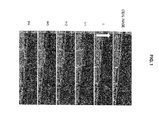
- FIG. 1 illustrates an example of an image on which high-quality image processing is executed using up conversion technology of related art.
- an image of a standard definition (SD) interlace (i) signal is converted into an image of a high definition (HD) progressive (p) signal.
- Images illustrated in FIG. 1 are motion pictures.
- images of individual frames at times t to t+4 are displayed.
- the high-quality image processing is executed on the basis of pixels in a screen of one frame.
- a pixel of one HDp signal is generated on the basis of pixels of a plurality of SDi signals. That is, an example of the case in which an image is up-converted is illustrated.
- FIG. 1 an image of an HDp signal to be generated originally as an ideal image is illustrated at an uppermost stage.
- the images of the individual frames of the times t to t+4 that are images obtained by executing the high-quality image processing on the SDi signals are arranged and displayed sequentially from an upper stage to a lower stage.
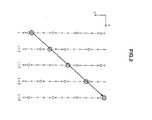
- a longitudinal axis shows a pixel position of a vertical direction
- a transverse axis shows a time
- the pixels of the SDi signals and the pixels of the HDp signals that are generated (interpolated) by executing the high-quality image processing using the super-resolution technology are illustrated by circular figures.
- the pixels of the SDi signals are illustrated by relatively large hatched circles and the pixels of the HDp signals are illustrated by relatively small black circles.
- an image on which the high-quality image processing is executed is an image having motion
- the pixels that are shown by x marks in FIG. 1 move in a vertical direction. That is, the black circles that are surrounded with circles illustrated in FIG. 2 correspond to the pixels shown by the x marks in FIG. 1 .
- the pixel of the HDp signal surrounded with the circle in the frame of the time t+2 is apart from the positions of the pixels of the SDi signals. For this reason, in the image of the frame of the time t+2 of FIG. 1 , interpolation accuracy of the pixels of the image near the position shown by the x mark is low.
- the interpolation accuracy of the pixels of the image that is configured by the pixels of the HDp signals at the positions apart from the positions of the pixels of the SDi signals can be improved.
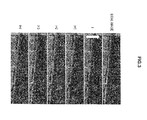
- FIG. 3 illustrates an example of an image on which the high-quality image processing is executed using the super-resolution technology of related art.
- images illustrated in FIG. 3 are motion pictures.
- images of individual frames of times t to t+4 are displayed.
- the high-quality image processing is executed on the basis of pixels of a plurality of images generated in the past. For example, a pixel of one HDp signal is generated on the basis of pixels of a plurality of SDi signals.
- FIG. 3 an image of an HDp signal to be generated originally as an ideal image is illustrated at an uppermost stage.
- images of individual frames of the times t to t+4 that are images obtained by executing the high-quality image processing using the super-solution technology of related art on the SDi signals are arranged and displayed sequentially from an upper stage to a lower stage.
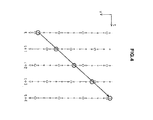
- a longitudinal axis shows a pixel position of a vertical direction
- a transverse axis shows a time
- pixels of the SDi signals and pixels of the HDp signals that are generated (interpolated) by executing the high-quality image processing using the super-resolution technology are illustrated by circular figures.
- the pixels of the SDi signals are illustrated by relatively large hatched circles and the pixels of the HDp signals are illustrated by relatively small black circles.
- the images are displayed clearly as time passes.
- the pixels of the positions that are apart from the positions of the pixels of the SDi signals are displayed clearly and a detailed portion such as an edge of the image is also displayed clearly.
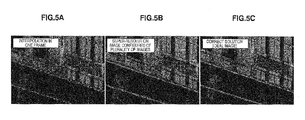
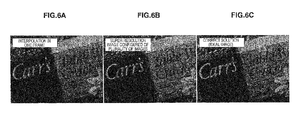
- FIGS. 5A to 6C illustrate another example of an image obtained by super-resolution technology using pixels in a screen of one frame and an image obtained by super-resolution technology using pixels of a plurality of images generated in the past.
- FIGS. 5C and 6C illustrate ideal images that are similar to images of actual objects, respectively.
- an image that includes a number of edges is displayed and in the case of FIG. 6C , an image that includes a number of characters is displayed.
- FIG. 5A illustrates an example of an image that is obtained by the high-quality image processing executed on the basis of pixels in a screen of one frame
- FIG. 5B illustrates an example of an image that is obtained by the high-quality image processing executed using pixels of a plurality of images generated in the past.
- aliasing distortion occurs in the vicinity of an image that becomes an edge in a screen.
- FIG. 5B an image that is more similar to the ideal image (refer to FIG. 5C ) is obtained.
- image quality can approach quality of the ideal image using the pixels of the plurality of images.
- FIG. 6A illustrates an example of an image that is obtained by the high-quality image processing executed on the basis of pixels in a screen of one frame
- FIG. 6B illustrates an example of an image that is obtained by the high-quality image processing executed using pixels of a plurality of images generated in the past.
- images of characters in a screen are displayed unclearly.
- an image that is more similar to the ideal image is obtained.
- image quality can approach quality of the ideal image using a repeated operation to be described below.
- the image that is similar to the ideal image can be obtained by executing the high-quality image processing using the pixels of the plurality of images generated in the past.
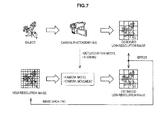
- FIGS. 7 and 8 are diagrams illustrating super-resolution technology of related art.
- the high-quality image processing converts a low-resolution image into a high-resolution image and is executed using the pixels of the plurality of images generated in the past.
- an object is photographed by a camera and an observed low-resolution image (for example, image of an SDi signal) is obtained.
- an observed low-resolution image for example, image of an SDi signal
- a camera model (deterioration model) and camera movement (aligning) when the object is photographed by the camera are added to a high-resolution image (for example, an image of an HDp signal) one frame before.
- a high-resolution image for example, an image of an HDp signal
- blur is intentionally added to the high-resolution image one frame before and motion is compensated.
- an image is down-sampled and the image is converted into a low-resolution image.
- an estimated low-resolution image for example, an image of an SDi signal
- a difference value (error) of each pixel of the estimated low-resolution image and each pixel of the observed low-resolution image is computed and a high-resolution image is updated to decrease the error.
- the high-resolution image is updated by repeating the above processing with respect to one frame several times.
- the quality of the high-resolution image gradually approaches the quality of the ideal image.
- processing for repeating updating of the pixel value of the high-resolution image may be called a repeated operation.
- the quality of the image can further approach the quality of the ideal image as compared with when the repeated operation is performed two times. As such, if the pixel of the high-resolution image updated by most recent operation processing is updated by the repeated operation, the quality of the high-resolution image gradually approaches the quality of the ideal image.
- FIG. 8 is a block diagram illustrating a configuration example of an image processing apparatus in which the super-resolution technology of related art is adopted.
- An image processing apparatus 10 illustrated in FIG. 8 includes a motion compensating unit (MC) 21, a blur adding unit (Blur) 22, a down sampler 23, an adder 24, an up sampler 25, a blur removing unit (InvBlur) 26, a multiplier 27, and an adder 28.
- MC motion compensating unit
- Blur blur adding unit
- Adder 24 an up sampler
- InvBlur blur removing unit
- the motion compensating unit 21 receives an immediately previously updated high-resolution image, calculates a motion vector, and compensates for motion.
- An image that is output from the motion compensating unit 21 is called the immediately previously updated high-resolution image after the motion compensation.
- the immediately previously updated high-resolution image after the motion compensation is supplied to the blur adding unit 22.
- the blur adding unit 22 adds blur occurring when the object is photographed by the camera to the immediately previously updated high-resolution image after the motion compensation. That is, the PSF or the optical blur of the camera is estimated (simulated) and an image is generated. In this case, estimating (simulating) the PSF or the optical blur of the camera on the basis of the predetermined image and generating the image is called adding the blur.
- the immediately previously updated high-resolution image after the motion compensation in which the blur is added is supplied to the down sampler 23.
- the down sampler 23 thins out the pixels of the immediately previously updated high-resolution image after the motion compensation in which the blur is added and generates a low-resolution image. Thereby, the estimated low-resolution image is generated.
- the adder 24 computes a difference value (error) of each pixel of the estimated low-resolution image and each pixel of the observed low-resolution image.
- the computation result is supplied to the up sampler 25.
- the up sampler 25 interpolates pixels with respect to data of the computation result by the adder 24 to generate a high-resolution image and supplies the high-resolution image to the blur removing unit (InvBlur) 26.
- the blur removing unit 26 removes the blur of the supplied high-resolution image. That is, processing for removing the blur added by the blur adding unit 22 is executed.
- the blur adding unit 22 and the blur removing unit 26 may not be provided.
- the multiplier 27 multiplies a pixel value of each pixel of the high-resolution image output from the blur removing unit 26 with predetermined gain and outputs the multiplication result to the adder 28.
- the adder 28 adds each pixel of the immediately previously updated high-resolution image after the motion compensation and the computation result of the multiplier 27 and outputs the addition result as a high-resolution image.
- the image processing apparatus 10 of related art converts the low-resolution image and the fed back high-resolution image by a model base and generates a high-resolution image. That is, the motion compensation or the blur adding or removing can be considered processing based on an image conversion model provided as the camera model and an image conversion model provided as the aligning and this image conversion is called model-based processing.
- the immediately previously high-resolution image is fed back.
- the immediately previously updated high-resolution image is fed back and updated.
- the high-resolution image is updated by repeating the feedback several times with respect to one frame.
- the model base in FIG. 9 shows the concept of the processing and corresponds to processing of the motion compensating unit 21, the blur adding unit 22, and the down sampler 23 of FIG. 8 and reverse conversion processing thereof.
- the camera model or the aligning is not perfectly specified and the inside of a screen is not described with a uniform model. That is, it is difficult to appropriately construct the model base illustrated in FIG. 9 . If an estimation error occurs in the camera model or the aligning and appropriate high-resolution image correction is not performed, bad effects such as overemphasis of an edge or detailed portion, overshoot, and emphasis of noise occur and this leads to deteriorating image quality.
- a reconstruction-type super-resolution MAP method Technology for preventing the deterioration of the image quality or the emphasis of the noise from advance information of the image is considered to prevent the bad effects (called a reconstruction-type super-resolution MAP method).
- this technology is not sufficient to prevent the bad effects, because performance greatly depends on the advance information of the image and it is difficult to satisfy all of aliasing performance, a sense of resolution, suppression of overshoot, and suppression of noise.
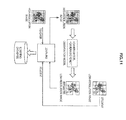
- processing using a learning database is added to the model-based processing . That is, a high-resolution image is set as a teacher image and a low-resolution image generated by deteriorating the teacher image is set as a student image, the high-resolution image and the low-resolution image are input to the image processing apparatus, and the high-resolution image is generated from the student image.
- the generated high-resolution image and the teacher image are compared with each other and parameters to estimate a pixel value of the high-resolution image are calculated (learned) and stored in the learning database.
- the low-resolution image (for example, the image of the SDi signal) that is input as the student image is handled as the observed low-resolution image.
- the camera model (deterioration model) and the camera movement (aligning) when the object is photographed by the camera are added to the high-resolution image (for example, the image of the HDp signal) one frame before.
- the blur is added intentionally to the high-resolution image one frame before and the motion is compensated.
- the estimated low-resolution image for example, image of the SDi signal
- estimating (simulating) the PSF or the optical blur of the camera on the basis of the predetermined image and generating the image is called adding the blur.
- a difference value (error) of each pixel of the estimated low-resolution image and each pixel of the observed low-resolution image is computed and the high-resolution image is updated through learning of information necessary for generating the high-resolution image.
- predetermined coefficients to estimate the pixel of the high-resolution image are learned on the basis of the pixel of the observed low-resolution image and the pixel of the motion-compensated, high-resolution image one frame before.
- a pixel value of the teacher image is set to yt
- a pixel value of the student image is set to xi
- a pixel value of the motion-compensated, high-resolution image one frame before is set to xj
- a linear expression represented by expression 1 is assumed.
- a coefficient wi in expression 1 shows a coefficient that is multiplied with the pixel value of the observed low-resolution image and a coefficient wj shows a coefficient that is multiplied with the pixel value of the motion-compensated, high-resolution image one frame before.
- N shows a pixel number of the student image that is used to calculate the pixel value of the teacher image and M shows a pixel number of the motion-compensated, high-resolution image one frame before used to calculate the pixel number of the teacher image.
- attention pixels are sorted for each class using the difference value of the pixel value of the student image and the estimated low-resolution image as a feature amount.
- the attention pixels become pixels to be obtained in the high-resolution image. Therefore, the feature amount that corresponds to the actual attention pixel is obtained from a pixel value of data in which the blur is removed by the blur removing unit, after the pixel interpolation by the up sampler is performed with respect to data of the difference of the pixel value of the student image and the estimated low-resolution image.
- the attention pixels may be sorted for each class, using other methods.
- the attention pixels may be sorted for each class, using adaptive dynamic range coding (ADRC).
- ADRC adaptive dynamic range coding
- the coefficients wi and wj that are calculated as described above are stored in the learning database.
- the coefficients wi and wj that are stored in the learning database are used.
- the following processing is executed to convert the observed low-resolution image into the high-resolution image.
- the object is photographed by the camera and the observed low-resolution image (for example, the image of the SDi signal) is obtained.
- the observed low-resolution image for example, the image of the SDi signal
- the camera model (deterioration model) and the camera movement (aligning) when the object is photographed by the camera are added to a high-resolution image (for example, an image of an HDp signal) one frame before.
- a high-resolution image for example, an image of an HDp signal
- blur is intentionally added to a high-resolution image one frame before and motion is compensated.
- an image is down-sampled and the image is converted into a low-resolution image.
- an estimated low-resolution image for example, an image of an SDi signal
- estimating (simulating) the PSF or the optical blur of the camera on the basis of the predetermined image and generating the image is called adding the blur.
- the attention pixels are sorted for each class and a pixel value of a high-resolution image is predicted (operated) using a coefficient corresponding to the sorted class.
- the attention pixels are sorted for each class using a difference value of the pixel value of the student image and the estimated low-resolution image as a feature amount.
- the coefficients wi and wj that are associated with the sorted classes and stored in the learning database are read.
- a pixel value of the high-resolution image to be predicted is set to y
- a pixel value of the observed low-resolution image is set to xi
- a pixel value of the motion-compensated, high-resolution image one frame before is set to xj
- the pixel value of the high-resolution image is predicted (operated) by an operation of expression 2.
- a coefficient wi in expression 2 shows a coefficient that is multiplied with the pixel value of the observed low-resolution image and a coefficient wj shows a coefficient that is multiplied with the pixel value of the motion-compensated, high-resolution image one frame before, and the coefficients are read from the learning database according to the classes of the attention pixels.
- N shows a pixel number of the observed low-resolution image that is used to calculate the pixel value of the high-resolution image
- M shows a pixel number of the motion-compensated, high-resolution image one frame before used to calculate the pixel value of the high-resolution image
- each pixel number is equal to the pixel number when the learning is performed.
- the high-resolution image is updated by replacing each pixel value of the high-resolution image with a pixel value operated by the expression 2.
- the operation of expression 2 is performed once with respect to one frame and a pixel of a high-resolution image that is similar to the ideal image is generated. Therefore, a processing load by the repeated operation is removed and high-speed processing is easily realized.
- the coefficients that are used in the operation of expression 2 are learned in advance and stored. Therefore, even if an estimation error occurs in the camera model or the aligning, bad effects such as overemphasis of an edge or detailed portion, overshoot, and emphasis of noise can be suppressed from occurring. This is because the coefficient to generate the image similar to the ideal image can be learned from a state in which the estimation error is included, even if the estimation error occurs in the camera model or the aligning.
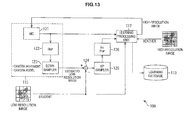
- FIG. 13 is a block diagram illustrating a configuration example of a learning apparatus according to an embodiment of the present disclosure.
- a high-resolution image is input as a teacher image and a low-resolution image generated by deteriorating the teacher image is input as a student image and the high-resolution image is generated from the student image.
- the generated high-resolution image and the teacher image are compared with each other and parameters to estimate a pixel value of the high-resolution image are calculated (learned) and stored in the learning database.
- the learning apparatus 100 illustrated in FIG. 13 includes a model-based processing unit 111, a learning processing unit 112, a learning database 113, an adder 124, an up sampler 125, and a blur removing unit (InvBlur) 126.
- the model-based processing unit 111 includes a motion compensating unit (MC) 121, a blur adding unit (Blur) 122, and a down sampler 123.
- the learning apparatus 100 learns predetermined coefficients that are used to execute the model-based processing in the super-resolution technology of related art and generate the high-resolution image.
- the motion compensating unit 121 receives a high-resolution image one frame before, calculates a motion vector, and compensates for motion.
- the motion-compensated, high-resolution image one frame before is supplied to the blur adding unit 122.
- the blur adding unit 122 adds blur occurring when the object is photographed by the camera to the motion-compensated, high-resolution image one frame before.
- the motion-compensated, high-resolution image one frame before in which the blur is added is supplied to the down sampler 123.
- the down sampler 123 thins out the pixels of the motion-compensated, high-resolution image one frame before in which the blur is added and generates a low-resolution image. Thereby, the estimated low-resolution image is generated.
- the adder 124 computes a difference value (error) of each pixel of the estimated low-resolution image and each pixel of the observed low-resolution image. Data of the computation result is supplied to the up sampler 125.
- the up sampler 125 interpolates pixels with respect to the computation result by the adder 124 to generate a high-resolution image and supplies the high-resolution image to the blur removing unit (InvBlur) 126.
- the blur removing unit 126 removes the blur of the supplied high-resolution image. That is, processing for removing the blur added by the blur adding unit 122 is executed.
- the blur adding unit 122 and the blur removing unit 126 may not be provided.
- the student image, the teacher image, and the data output from the blur removing unit 126 are supplied to the learning processing unit 112.
- the learning processing unit 112 learns coefficients to estimate pixels of the high-resolution image on the basis of the pixels of the student image and the pixels of the motion-compensated, high-resolution image one frame before, as follows.
- the learning processing unit 112 sorts the attention pixels for each class and accumulates a plurality of samples of the expression 1 for each class, as described above.
- the coefficients wi and wj are calculated for each class, using a least-square method.
- the coefficients wi and wj that are calculated as described above are stored in the learning database 113 as the processing result by the learning processing unit 112, for each class.
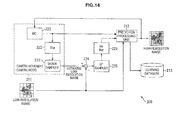
- FIG. 14 is a block diagram illustrating a configuration example of an image processing apparatus according to an embodiment of the present disclosure.
- An image processing apparatus 200 corresponds to the learning apparatus 100 of FIG. 13 .
- the image processing apparatus 200 converts a low-resolution input image into a high-resolution output image using the learning result by the learning apparatus 100.
- the image processing apparatus 200 illustrated in FIG. 14 includes a model-based processing unit 211, a prediction processing unit 212, a learning database 213, an adder 224, an up sampler 225, and a blur removing unit (InvBlur) 226.
- the model-based processing unit 211 includes a motion compensating unit (MC) 221, a blur adding unit (Blur) 222, and a down sampler 223.
- the image processing apparatus 200 executes prediction processing using the learning database in addition to the model-based processing in the super-resolution technology of related art.
- the learning database 213 in the image processing apparatus 200 is generated by copying information stored in the learning database 113.
- the motion compensating unit 221 receives a high-resolution image one frame before, calculates a motion vector, and compensates for a motion.
- the motion-compensated, high-resolution image one frame before is supplied to the blur adding unit 222.
- the blur adding unit 222 adds blur occurring when the object is photographed by the camera to the motion-compensated, high-resolution image one frame before.
- the motion-compensated, high-resolution image one frame before in which the blur is added is supplied to the down sampler 223.
- the down sampler 223 thins out the pixels of the motion-compensated, high-resolution image one frame before in which the blur is added and generates a low-resolution image. Thereby, the estimated low-resolution image is generated.
- the adder 224 computes a difference value (error) of each pixel of the estimated low-resolution image and each pixel of the observed low-resolution image.
- the computation result is supplied to the up sampler 225.
- the up sampler 225 interpolates pixels with respect to the computation result by the adder 224 to generate a high-resolution image and supplies the high-resolution image to the blur removing unit (InvBlur) 226.
- the blur removing unit 226 removes the blur of the supplied high-resolution image. That is, processing for removing the blur added by the blur adding unit 222 is executed.
- a low-resolution image to be an input image, the motion-compensated, high-resolution image one frame before, and data output from the blur removing unit 226 are supplied to the prediction processing unit 212.
- the prediction processing unit 212 sorts the attention pixels for each class and reads the coefficient wi and the coefficient wj corresponding to the classes, from the learning database 213.
- the prediction processing unit 212 performs the operation of expression 2 using the read coefficients wi and wj and predicts a pixel value of the high-resolution image.
- the high-resolution image is updated by replacing each pixel value of the high-resolution image with the pixel value operated by expression 2.
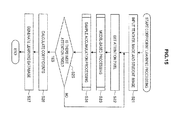
- step S21 the teacher image and the student image are input by a user.
- step S22 the attention pixel is set.
- the attention pixel becomes the pixel of the high-resolution image that becomes an object of the operation of the pixel value.
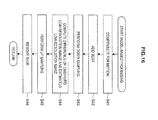
- step S23 the model-based processing unit 111 executes model-based processing to be described below with reference to FIG. 16 .
- step S23 of FIG. 15 A detailed example of the model-based processing of step S23 of FIG. 15 will be described with reference to a flowchart of FIG. 16 .
- step S41 the motion compensating unit 121 receives a high-resolution image one frame before, calculates a motion vector, and compensates for a motion.
- step S42 the blur adding unit 122 adds blur occurring when the object is photographed by the camera to the motion-compensated, high-resolution image one frame before.
- estimating (simulating) the PSF or the optical blur of the camera on the basis of the predetermined image and generating the image is called adding the blur.
- step S43 the down sampler 123 thins out (down-samples) the pixels of the motion-compensated, high-resolution image one frame before in which the blur is added and generates a low-resolution image. Thereby, the estimated low-resolution image is generated.
- step S44 the adder 124 computes a difference value (error) of each pixel of the estimated low-resolution image and each pixel of the observed low-resolution image (in this case, the student image).
- step S45 the up sampler 125 interpolates (up-samples) pixels with respect to the computation result by the adder 124 in step S44 to generate a high-resolution image.
- step S46 the blur removing unit 126 removes the blur of the supplied high-resolution image. That is, processing for removing the blur added by the blur adding unit 122 in the process of step S42 is executed.
- step S23 the learning processing unit 112 executes sample accumulation processing to be described below with reference to FIG. 17 , in step S24.
- step S24 of FIG. 15 A detailed example of the sample accumulation processing of step S24 of FIG. 15 will be described with reference to a flowchart of FIG. 17 .
- step S61 the learning processing unit 112 acquires a difference value of the pixel value of the student image and the estimated low-resolution image as the feature amount with respect to the attention pixel.
- the feature amount that corresponds to the actual attention pixel is obtained from a pixel value of data in which the blur is removed by the blur removing unit, after the pixel interpolation by the up sampler is performed with respect to data of the difference of the pixel value of the student image and the estimated low-resolution image.
- the other feature amounts may be acquired.
- step S62 the learning processing unit 112 sorts the attention pixel for each class on the basis of the feature amount acquired in step 561.
- step 563 the learning processing unit 112 extracts taps. At this time, the N pixels of the student image and M pixels of the motion-compensated, high-resolution image one frame before are extracted as the taps.
- step S64 the learning processing unit 112 generates the samples of the expression 1 to be associated with the classes sorted by the process of step S62. That is, the samples are generated by substituting the pixel value of the teacher image for yt of expression 1 and values of the taps extracted in the process of step S63 for xi and xj, respectively.
- step S65 the learning processing unit 112 accumulates the samples for each class.
- step S24 the process proceeds to step S25 and it is determined whether there is a next attention pixel.
- step S25 when it is determined that there is a next attention pixel, the process returns to step S22 and the following process is repetitively executed.
- step S25 when it is determined that there is no next attention pixel, the process proceeds to step S26.
- step S26 the learning processing unit 112 calculates the coefficient wi and the coefficient wj using the least-square method for each class on the basis of the samples accumulated in the process of step S65.
- step S27 the learning processing unit 112 generates the learning database 113 in which the coefficients wi and wj calculated by the process of step S26 are associated with the classes and stored.
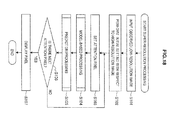
- step S101 the observed low-resolution image is input by the user.
- a first high-resolution image is generated (initial setting is given). For example, an image that is obtained by up-sampling an image of a first frame of the observed low-resolution image is generated as the first high-resolution image.
- step S103 the attention pixel is set.
- the attention pixel becomes a pixel of the high-resolution image that becomes an object of the operation of the pixel value.
- step S104 the model-based processing unit 211 executes the model-based processing. Because the model-based processing executed in step S104 is the same as the processing described above with reference to FIG. 16 , the detailed description thereof is omitted.
- step S105 the prediction processing unit 212 executes prediction processing to be described below with reference to FIG. 19 .
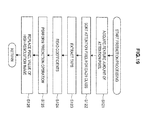
- step S105 of FIG. 18 A detailed example of the prediction processing of step S105 of FIG. 18 will be described with reference to a flowchart of FIG. 19 .
- step S121 the learning processing unit 212 acquires a difference value of the pixel value of the observed low-resolution image and the estimated low-resolution image as a feature amount with respect to the attention pixel.
- the feature amount that corresponds to the actual attention pixel is obtained from a pixel value of data in which the blur is removed by the blur removing unit, after the pixel interpolation by the up sampler is performed with respect to data of the difference of the pixel value of the observed low-resolution image and the estimated low-resolution image.
- the other feature amounts may be acquired.
- step S122 the learning processing unit 212 classifies the attention pixel for each class on the basis of the feature amount acquired in step S121.
- step S123 the prediction processing unit 212 extracts taps. At this time, N pixels of the observed low-resolution image and M pixels of the motion-compensated, high-resolution image one frame before are extracted as the taps.
- step S124 the prediction processing unit 212 reads the coefficients wi and wj corresponding to the classes sorted in the process of step S122, from the learning database 213.
- step S125 the prediction processing unit 212 performs a prediction operation. That is, the prediction processing unit 212 performs the operation of expression 2 using the taps extracted in the process of step S123 and the coefficients wi and wj read in the process of step S124 and predicts the pixel value of the high-resolution image.
- step S126 the prediction processing unit 212 replaces each pixel value of the high-resolution image with the pixel value obtained as the result of the process of step S 124.
- step S105 the process proceeds to step S106 and it is determined whether there is a next attention pixel.
- step S106 when it is determined that there is a next attention pixel, the process returns to step S103 and the following process is repetitively executed.
- step S106 when it is determined that there is no next attention pixel, the process proceeds to step S107.
- step S107 the high-resolution image is displayed as an output image.
- the learning apparatus 100 adopts the learning algorithm in which the attention pixels are sorted for each class and the coefficients necessary for generating the pixels of the high-resolution image are calculated by the least-square method for each class.
- the learning apparatus 100 may adopt a learning algorithm that is different from the learning algorithm described above.
- a neural network or a support vector machine (SVM) may be adopted as the learning algorithm.
- SVM support vector machine
- the series of processes described above may be performed by hardware or software.
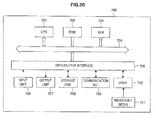
- programs constituting the software are installed, from a network or a recording medium, on a computer that is incorporated in dedicated hardware, a general-purpose personal computer as shown in FIG. 20 , for example, that is capable of performing various functions by installing various programs, or the like.
- the CPU (Central Processing Unit) 701 performs various processes according to programs stored in a ROM (Read Only Memory) 702 or programs loaded from a storage unit 708 on a RAM (Random Access Memory) 703. Data necessary for the CPU 701 to perform various processes is also stored in the RAM 703 as necessary.
- ROM Read Only Memory
- RAM Random Access Memory
- the CPU 701, the ROM 702 and the RAM 703 are connected to each other via a bus 704.
- An input/output interface 705 is also connected to this bus 704.
- an input unit 706 configured from a keyboard, a mouse and the like
- an output unit 707 configured from a display such as an LCD (Liquid Crystal display) or the like
- a storage unit 708 configured from a hard disk or the like
- a communication unit 709 configured from a network interface such as a modem or a LAN card, or the like.
- the communication unit 709 performs a communication process via a network including the Internet.
- a drive 710 is also connected to the input/output interface 705 as necessary and a removable media 711, such as a magnetic disk, an optical disk, a magneto-optical disk or a semiconductor memory, is mounted thereon as necessary, and computer programs read therefrom are installed on the storage unit 708 as necessary.
- a removable media 711 such as a magnetic disk, an optical disk, a magneto-optical disk or a semiconductor memory
- programs constituting the software are installed from a network such as the Internet or a recording medium configured from the removable media 711 or the like.
- this recording medium may be the removable media 711 as shown in FIG. 20 configured from a magnetic disk (including a floppy disk (registered trademark), an optical disk (including a CD-ROM (Compact Disk-Read Only Memory), and a DVD(Digital Versatile Disk)), a magneto-optical disk (including an MD (Mini-Disk) (registered trademark)), a semiconductor memory or the like on which programs are recorded and that is provided to a user, separately from the device itself, to distribute the programs, but may also be the ROM 702 on which programs are recorded or a hard disk included in the storage unit 708 that are provided, being embedded in advance in the device itself, to a user.
- a magnetic disk including a floppy disk (registered trademark), an optical disk (including a CD-ROM (Compact Disk-Read Only Memory), and a DVD(Digital Versatile Disk)
- a magneto-optical disk including an MD (Mini-Disk) (registered trademark)
- present technology may also be configured as below.
Landscapes
- Physics & Mathematics (AREA)
- General Physics & Mathematics (AREA)
- Engineering & Computer Science (AREA)
- Theoretical Computer Science (AREA)
- Television Systems (AREA)
- Image Processing (AREA)
- Studio Devices (AREA)
Applications Claiming Priority (1)
| Application Number | Priority Date | Filing Date | Title |
|---|---|---|---|
| JP2011112311A JP2012244395A (ja) | 2011-05-19 | 2011-05-19 | 学習装置および方法、画像処理装置および方法、プログラム、並びに記録媒体 |
Publications (1)
| Publication Number | Publication Date |
|---|---|
| EP2525320A1 true EP2525320A1 (fr) | 2012-11-21 |
Family
ID=46456310
Family Applications (1)
| Application Number | Title | Priority Date | Filing Date |
|---|---|---|---|
| EP12167492A Withdrawn EP2525320A1 (fr) | 2011-05-19 | 2012-05-10 | Appareil et procédé d'apprentissage , appareil et procédé de traitement d'image, programme et support d'enregistrement |
Country Status (4)
| Country | Link |
|---|---|
| US (1) | US8913822B2 (fr) |
| EP (1) | EP2525320A1 (fr) |
| JP (1) | JP2012244395A (fr) |
| CN (1) | CN102789632B (fr) |
Cited By (3)
| Publication number | Priority date | Publication date | Assignee | Title |
|---|---|---|---|---|
| WO2019136077A1 (fr) * | 2018-01-02 | 2019-07-11 | Google Llc | Super résolution vidéo à trames récurrentes |
| US10750084B2 (en) | 2016-07-13 | 2020-08-18 | Sony Corporation | Image processing apparatus and image processing method |
| CN111681166A (zh) * | 2020-06-02 | 2020-09-18 | 重庆理工大学 | 一种堆叠注意力机制编解码单元的图像超分辨率重建方法 |
Families Citing this family (28)
| Publication number | Priority date | Publication date | Assignee | Title |
|---|---|---|---|---|
| US10063757B2 (en) * | 2012-11-21 | 2018-08-28 | Infineon Technologies Ag | Dynamic conservation of imaging power |
| US20140307950A1 (en) * | 2013-04-13 | 2014-10-16 | Microsoft Corporation | Image deblurring |
| US9972070B2 (en) * | 2013-06-24 | 2018-05-15 | Nintendo Co., Ltd. | Brightness-compensating safe pixel art upscaler |
| CN105453132B (zh) * | 2013-08-15 | 2019-04-05 | 日本电气株式会社 | 实施图像处理的信息处理设备和图像处理方法 |
| CN104135637A (zh) * | 2014-07-01 | 2014-11-05 | 宁波摩米创新工场电子科技有限公司 | 低分辨率转换成高分辨率的图像处理方法及装置 |
| US10410398B2 (en) * | 2015-02-20 | 2019-09-10 | Qualcomm Incorporated | Systems and methods for reducing memory bandwidth using low quality tiles |
| IN2015CH02866A (fr) * | 2015-06-09 | 2015-07-17 | Wipro Ltd | |
| US9799102B2 (en) * | 2015-12-02 | 2017-10-24 | Adobe Systems Incorporated | Smoothing images using machine learning |
| US10282822B2 (en) * | 2016-12-01 | 2019-05-07 | Almalence Inc. | Digital correction of optical system aberrations |
| WO2018163843A1 (fr) * | 2017-03-08 | 2018-09-13 | ソニー株式会社 | Dispositif d'imagerie et procédé d'imagerie, et dispositif de traitement d'image et procédé de traitement d'image |
| US11861811B2 (en) | 2017-07-27 | 2024-01-02 | Nvidia Corporation | Neural network system with temporal feedback for denoising of rendered sequences |
| US11475542B2 (en) | 2017-07-27 | 2022-10-18 | Nvidia Corporation | Neural network system with temporal feedback for adaptive sampling and denoising of rendered sequences |
| US11557022B2 (en) | 2017-07-27 | 2023-01-17 | Nvidia Corporation | Neural network system with temporal feedback for denoising of rendered sequences |
| JP6923159B2 (ja) * | 2017-09-26 | 2021-08-18 | 株式会社エクォス・リサーチ | 情報処理装置 |
| KR102160698B1 (ko) * | 2018-05-02 | 2020-09-28 | 한국항공대학교산학협력단 | 프레임율 변환 장치 및 방법 |
| CN111670454B (zh) * | 2018-11-07 | 2024-03-01 | 深圳配天机器人技术有限公司 | 超分辨率图像的获取方法及超分辨率图像的获取装置 |
| CN111641831B (zh) * | 2019-03-01 | 2023-09-01 | 杭州海康威视数字技术股份有限公司 | 帧内预测方法、装置、设备及存储介质 |
| JP6737997B1 (ja) * | 2019-03-14 | 2020-08-12 | Navier株式会社 | 画像処理学習プログラム、画像処理プログラム、情報処理装置及び画像処理システム |
| JP7312026B2 (ja) * | 2019-06-12 | 2023-07-20 | キヤノン株式会社 | 画像処理装置、画像処理方法およびプログラム |
| JP7424383B2 (ja) * | 2019-09-02 | 2024-01-30 | ソニーグループ株式会社 | 撮像装置、画像処理装置及び画像処理方法 |
| US12033301B2 (en) | 2019-09-09 | 2024-07-09 | Nvidia Corporation | Video upsampling using one or more neural networks |
| JP7303896B2 (ja) * | 2019-11-08 | 2023-07-05 | オリンパス株式会社 | 情報処理システム、内視鏡システム、学習済みモデル、情報記憶媒体及び情報処理方法 |
| KR102849361B1 (ko) * | 2019-12-18 | 2025-08-25 | 삼성전자주식회사 | 전자장치 및 그 제어방법 |
| US20230137031A1 (en) * | 2020-05-20 | 2023-05-04 | Sony Group Corporation | Image processing device, image processing method, learning device, generation method, and program |
| US12573000B2 (en) | 2020-10-08 | 2026-03-10 | Nvidia Corporation | Upsampling an image using one or more neural networks |
| CN113411425B (zh) * | 2021-06-21 | 2023-11-07 | 深圳思谋信息科技有限公司 | 视频超分模型构建处理方法、装置、计算机设备和介质 |
| CN117940952A (zh) * | 2021-08-04 | 2024-04-26 | 三星电子株式会社 | 电子设备及其操作方法 |
| JP2024102668A (ja) * | 2023-01-19 | 2024-07-31 | キヤノン株式会社 | 画像処理装置及びその制御方法、プログラム、記憶媒体 |
Citations (3)
| Publication number | Priority date | Publication date | Assignee | Title |
|---|---|---|---|---|
| EP0859513A2 (fr) * | 1997-02-14 | 1998-08-19 | Sony Corporation | Dispositif et méthode pour la conversion d'un signal d'image |
| JP2008140012A (ja) | 2006-11-30 | 2008-06-19 | Sony Corp | 画像処理装置、画像処理方法、およびプログラム |
| JP2011112311A (ja) | 2009-11-30 | 2011-06-09 | Daikin Industries Ltd | 空調室外機 |
Family Cites Families (15)
| Publication number | Priority date | Publication date | Assignee | Title |
|---|---|---|---|---|
| US5946044A (en) * | 1995-06-30 | 1999-08-31 | Sony Corporation | Image signal converting method and image signal converting apparatus |
| DE60127631T2 (de) * | 2000-02-10 | 2007-12-13 | Sony Corp. | Anordnung und verfahren zur bildverarbeitung und aufzeichnungsträger |
| US7337065B2 (en) * | 2001-01-23 | 2008-02-26 | Spectral Sciences, Inc. | Methods for atmospheric correction of solar-wavelength hyperspectral imagery over land |
| JP4265237B2 (ja) * | 2003-02-27 | 2009-05-20 | ソニー株式会社 | 画像処理装置および方法、学習装置および方法、記録媒体、並びにプログラム |
| JP5152559B2 (ja) * | 2007-07-19 | 2013-02-27 | ソニー株式会社 | 画像処理装置、画像処理方法、およびプログラム |
| JP2009037460A (ja) * | 2007-08-02 | 2009-02-19 | Sanyo Electric Co Ltd | 画像処理方法、画像処理装置、及びこの画像処理装置を備えた電子機器 |
| CN102037489B (zh) * | 2008-05-21 | 2013-08-21 | Tp视觉控股有限公司 | 图像分辨率增强 |
| JP4548520B2 (ja) * | 2008-07-02 | 2010-09-22 | ソニー株式会社 | 係数生成装置および方法、画像生成装置および方法、並びにプログラム |
| CN101674478B (zh) * | 2009-10-19 | 2012-09-19 | 浙江大学 | 基于压缩域的视频超分辨率方法 |
| JP2011180798A (ja) * | 2010-03-01 | 2011-09-15 | Sony Corp | 画像処理装置、および画像処理方法、並びにプログラム |
| JP2011237997A (ja) * | 2010-05-10 | 2011-11-24 | Sony Corp | 画像処理装置、および画像処理方法、並びにプログラム |
| WO2012026597A1 (fr) * | 2010-08-27 | 2012-03-01 | ソニー株式会社 | Appareil et procédé de traitement d'image |
| JP2013003892A (ja) * | 2011-06-17 | 2013-01-07 | Sony Corp | 画像処理装置および方法、プログラム、並びに記録媒体 |
| US20130028538A1 (en) * | 2011-07-29 | 2013-01-31 | Simske Steven J | Method and system for image upscaling |
| US8687923B2 (en) * | 2011-08-05 | 2014-04-01 | Adobe Systems Incorporated | Robust patch regression based on in-place self-similarity for image upscaling |
-
2011
- 2011-05-19 JP JP2011112311A patent/JP2012244395A/ja not_active Withdrawn
-
2012
- 2012-03-29 US US13/433,606 patent/US8913822B2/en active Active
- 2012-05-10 EP EP12167492A patent/EP2525320A1/fr not_active Withdrawn
- 2012-05-11 CN CN201210145446.4A patent/CN102789632B/zh not_active Expired - Fee Related
Patent Citations (3)
| Publication number | Priority date | Publication date | Assignee | Title |
|---|---|---|---|---|
| EP0859513A2 (fr) * | 1997-02-14 | 1998-08-19 | Sony Corporation | Dispositif et méthode pour la conversion d'un signal d'image |
| JP2008140012A (ja) | 2006-11-30 | 2008-06-19 | Sony Corp | 画像処理装置、画像処理方法、およびプログラム |
| JP2011112311A (ja) | 2009-11-30 | 2011-06-09 | Daikin Industries Ltd | 空調室外機 |
Non-Patent Citations (5)
| Title |
|---|
| AVRIN V ET AL: "Restoration and resolution enhancement of video sequences", IEEE INTERNATIONAL CONFERENCE ON ACOUSTICS, SPEECH, AND SIGNAL PROCESSING, 1997. ICASSP-97, MUNICH, GERMANY 21-24 APRIL 1997, LOS ALAMITOS, CA, USA,IEEE COMPUT. SOC; US, US, vol. 4, 21 April 1997 (1997-04-21), pages 2549 - 2552, XP010225675, ISBN: 978-0-8186-7919-3, DOI: 10.1109/ICASSP.1997.595308 * |
| FRANK M CANDOCIA ET AL: "Super-Resolution of Images Based on Local Correlations", IEEE TRANSACTIONS ON NEURAL NETWORKS, IEEE SERVICE CENTER, PISCATAWAY, NJ, US, vol. 10, no. 2, 1 March 1999 (1999-03-01), XP011039280, ISSN: 1045-9227, DOI: 10.1109/72.761709 * |
| HAO HU ET AL: "Adaptive Image Restoration Based on Local Robust Blur Estimation", 28 August 2007, ADVANCED CONCEPTS FOR INTELLIGENT VISION SYSTEMS; [LECTURE NOTES IN COMPUTER SCIENCE], SPRINGER BERLIN HEIDELBERG, BERLIN, HEIDELBERG, PAGE(S) 461 - 472, ISBN: 978-3-540-74606-5, XP019069055 * |
| JING TIAN ET AL: "A survey on super-resolution imaging", SIGNAL, IMAGE AND VIDEO PROCESSING, SPRINGER-VERLAG, LONDON, vol. 5, no. 3, 3 February 2011 (2011-02-03), pages 329 - 342, XP019941925, ISSN: 1863-1711, DOI: 10.1007/S11760-010-0204-6 * |
| M. ZHAO, M, BOSMA, G. DE HAAN: "Making the best of legacy video on modern displays", SID_JOURNALS, 1475 S. BASCOM AVE., STE. 114, CAMPBELL, CA 95008-4006 USA, vol. 15, no. 1, 6 June 2006 (2006-06-06), pages 49 - 60, XP040426572 * |
Cited By (6)
| Publication number | Priority date | Publication date | Assignee | Title |
|---|---|---|---|---|
| US10750084B2 (en) | 2016-07-13 | 2020-08-18 | Sony Corporation | Image processing apparatus and image processing method |
| WO2019136077A1 (fr) * | 2018-01-02 | 2019-07-11 | Google Llc | Super résolution vidéo à trames récurrentes |
| CN111587447A (zh) * | 2018-01-02 | 2020-08-25 | 谷歌有限责任公司 | 帧循环视频超分辨率 |
| US10783611B2 (en) | 2018-01-02 | 2020-09-22 | Google Llc | Frame-recurrent video super-resolution |
| CN111587447B (zh) * | 2018-01-02 | 2021-09-21 | 谷歌有限责任公司 | 帧循环视频超分辨率 |
| CN111681166A (zh) * | 2020-06-02 | 2020-09-18 | 重庆理工大学 | 一种堆叠注意力机制编解码单元的图像超分辨率重建方法 |
Also Published As
| Publication number | Publication date |
|---|---|
| US8913822B2 (en) | 2014-12-16 |
| JP2012244395A (ja) | 2012-12-10 |
| CN102789632A (zh) | 2012-11-21 |
| US20120294512A1 (en) | 2012-11-22 |
| CN102789632B (zh) | 2017-05-10 |
Similar Documents
| Publication | Publication Date | Title |
|---|---|---|
| US8913822B2 (en) | Learning apparatus and method, image processing apparatus and method, program, and recording medium | |
| US20130016920A1 (en) | Image processing device, image processing method, program and recording medium | |
| CN102194216B (zh) | 图像处理设备和图像处理方法 | |
| CN103403758B (zh) | 图像处理装置、图像处理方法、用于图像处理的计算机程序及记录介质 | |
| EP2164040B1 (fr) | Système et procédé pour une grande qualité d'image et l'interpolation vidéo | |
| US20100183232A1 (en) | Image processor, image processing method and program | |
| US8331710B2 (en) | Image processing apparatus and method, learning apparatus and method, and program | |
| US8712175B2 (en) | Image processing system, image processing method and program for image processing | |
| US8300040B2 (en) | Coefficient generating device and method, image generating device and method, and program therefor | |
| US8682110B2 (en) | Method and apparatus for converting resolution of block based image | |
| JP2000244851A (ja) | 画像処理装置、方法及びコンピュータ読み取り可能な記憶媒体 | |
| JP2011237998A (ja) | 画像処理装置、および画像処理方法、並びにプログラム | |
| JP4915341B2 (ja) | 学習装置および方法、画像処理装置および方法、並びにプログラム | |
| US20100092101A1 (en) | Methods and apparatus for enhancing image quality of motion compensated interpolation | |
| KR20070094521A (ko) | 화상 처리 장치 및 화상처리 방법과 프로그램 | |
| JP2010118940A (ja) | 画像処理装置、画像処理方法、及びプログラム | |
| JP4310697B2 (ja) | 信号処理装置および方法、記録媒体、並びにプログラム | |
| JP4650683B2 (ja) | 画像処理装置および方法、プログラム並びに記録媒体 | |
| JP5131534B2 (ja) | 情報処理装置および方法、並びにプログラム | |
| JP4655214B2 (ja) | 画像処理装置および方法、プログラム並びに記録媒体 | |
| JP4650684B2 (ja) | 画像処理装置および方法、プログラム並びに記録媒体 | |
| JP2007251690A (ja) | 画像処理装置および方法、学習装置および方法、並びにプログラム | |
| KR101108635B1 (ko) | 계수 데이터의 생성 장치 및 생성 방법, 정보 신호의 처리 장치 및 처리 방법, 및 그것을 기록한 매체 | |
| JP2006165800A (ja) | 画像処理装置および画像処理方法 | |
| JP2000138904A (ja) | 画像情報変換装置および変換方法 |
Legal Events
| Date | Code | Title | Description |
|---|---|---|---|
| PUAI | Public reference made under article 153(3) epc to a published international application that has entered the european phase |
Free format text: ORIGINAL CODE: 0009012 |
|
| 17P | Request for examination filed |
Effective date: 20120510 |
|
| AK | Designated contracting states |
Kind code of ref document: A1 Designated state(s): AL AT BE BG CH CY CZ DE DK EE ES FI FR GB GR HR HU IE IS IT LI LT LU LV MC MK MT NL NO PL PT RO RS SE SI SK SM TR |
|
| AX | Request for extension of the european patent |
Extension state: BA ME |
|
| 17Q | First examination report despatched |
Effective date: 20131106 |
|
| STAA | Information on the status of an ep patent application or granted ep patent |
Free format text: STATUS: THE APPLICATION IS DEEMED TO BE WITHDRAWN |
|
| 18D | Application deemed to be withdrawn |
Effective date: 20140318 |