EP2528620B1 - Salmonellenimpfstoff - Google Patents
Salmonellenimpfstoff Download PDFInfo
- Publication number
- EP2528620B1 EP2528620B1 EP11704739.9A EP11704739A EP2528620B1 EP 2528620 B1 EP2528620 B1 EP 2528620B1 EP 11704739 A EP11704739 A EP 11704739A EP 2528620 B1 EP2528620 B1 EP 2528620B1
- Authority
- EP
- European Patent Office
- Prior art keywords
- salmonella
- strain
- vaccine
- ser
- typhimurium
- Prior art date
- Legal status (The legal status is an assumption and is not a legal conclusion. Google has not performed a legal analysis and makes no representation as to the accuracy of the status listed.)
- Active
Links
- 229940124842 Salmonella vaccine Drugs 0.000 title claims description 5
- 241000607142 Salmonella Species 0.000 claims description 139
- 241000293869 Salmonella enterica subsp. enterica serovar Typhimurium Species 0.000 claims description 89
- 229960005486 vaccine Drugs 0.000 claims description 75
- 241001138501 Salmonella enterica Species 0.000 claims description 42
- 238000012217 deletion Methods 0.000 claims description 32
- 230000037430 deletion Effects 0.000 claims description 32
- 101150052269 rfaJ gene Proteins 0.000 claims description 31
- 230000000405 serological effect Effects 0.000 claims description 28
- 239000003550 marker Substances 0.000 claims description 27
- 206010039438 Salmonella Infections Diseases 0.000 claims description 21
- 206010039447 salmonellosis Diseases 0.000 claims description 21
- 238000000034 method Methods 0.000 claims description 19
- 101150057996 rfaL gene Proteins 0.000 claims description 19
- 239000000203 mixture Substances 0.000 claims description 17
- 230000002238 attenuated effect Effects 0.000 claims description 16
- 230000035772 mutation Effects 0.000 claims description 16
- 208000015181 infectious disease Diseases 0.000 claims description 9
- 241000596091 Salmonella enterica subsp. enterica serovar Anatum Species 0.000 claims description 8
- 241000940095 Salmonella enterica subsp. enterica serovar Bredeney Species 0.000 claims description 8
- 241000607128 Salmonella enterica subsp. enterica serovar Infantis Species 0.000 claims description 8
- 241000947639 Salmonella enterica subsp. enterica serovar Rissen Species 0.000 claims description 8
- 238000004519 manufacturing process Methods 0.000 claims description 8
- 239000003085 diluting agent Substances 0.000 claims description 7
- 239000003937 drug carrier Substances 0.000 claims description 6
- 230000002163 immunogen Effects 0.000 claims description 6
- 230000002265 prevention Effects 0.000 claims description 5
- 239000012634 fragment Substances 0.000 claims description 4
- 238000011282 treatment Methods 0.000 claims description 4
- 239000003814 drug Substances 0.000 claims description 3
- 229940031551 inactivated vaccine Drugs 0.000 claims description 3
- 239000002158 endotoxin Substances 0.000 description 59
- 229920006008 lipopolysaccharide Polymers 0.000 description 57
- 241001465754 Metazoa Species 0.000 description 46
- 108090000623 proteins and genes Proteins 0.000 description 40
- 238000002965 ELISA Methods 0.000 description 36
- 241000282887 Suidae Species 0.000 description 36
- 241000699670 Mus sp. Species 0.000 description 34
- LOKCTEFSRHRXRJ-UHFFFAOYSA-I dipotassium trisodium dihydrogen phosphate hydrogen phosphate dichloride Chemical compound P(=O)(O)(O)[O-].[K+].P(=O)(O)([O-])[O-].[Na+].[Na+].[Cl-].[K+].[Cl-].[Na+] LOKCTEFSRHRXRJ-UHFFFAOYSA-I 0.000 description 26
- 239000002953 phosphate buffered saline Substances 0.000 description 26
- 239000000427 antigen Substances 0.000 description 24
- WSFSSNUMVMOOMR-UHFFFAOYSA-N Formaldehyde Chemical compound O=C WSFSSNUMVMOOMR-UHFFFAOYSA-N 0.000 description 22
- 239000013612 plasmid Substances 0.000 description 19
- 108020004414 DNA Proteins 0.000 description 16
- 230000003053 immunization Effects 0.000 description 15
- 101150112345 rfbA gene Proteins 0.000 description 15
- 101150099889 rmlA gene Proteins 0.000 description 14
- 230000001018 virulence Effects 0.000 description 14
- 239000002671 adjuvant Substances 0.000 description 13
- 238000007747 plating Methods 0.000 description 13
- 238000002255 vaccination Methods 0.000 description 13
- 241000282898 Sus scrofa Species 0.000 description 12
- 230000028993 immune response Effects 0.000 description 12
- 241000894006 Bacteria Species 0.000 description 11
- 210000004027 cell Anatomy 0.000 description 11
- 238000002474 experimental method Methods 0.000 description 11
- 244000005700 microbiome Species 0.000 description 11
- 230000001681 protective effect Effects 0.000 description 11
- 210000004369 blood Anatomy 0.000 description 10
- 239000008280 blood Substances 0.000 description 10
- 230000008348 humoral response Effects 0.000 description 10
- 238000002649 immunization Methods 0.000 description 10
- 238000001727 in vivo Methods 0.000 description 10
- 241001354013 Salmonella enterica subsp. enterica serovar Enteritidis Species 0.000 description 9
- 230000003115 biocidal effect Effects 0.000 description 9
- XLYOFNOQVPJJNP-UHFFFAOYSA-N water Substances O XLYOFNOQVPJJNP-UHFFFAOYSA-N 0.000 description 9
- 241000607726 Salmonella enterica subsp. enterica serovar Heidelberg Species 0.000 description 8
- 108091007433 antigens Proteins 0.000 description 8
- 102000036639 antigens Human genes 0.000 description 8
- 238000011081 inoculation Methods 0.000 description 8
- 239000013642 negative control Substances 0.000 description 8
- 210000001519 tissue Anatomy 0.000 description 8
- 238000011725 BALB/c mouse Methods 0.000 description 7
- 241000252983 Caecum Species 0.000 description 7
- 101100194532 Escherichia coli (strain K12) rfaG gene Proteins 0.000 description 7
- 210000004534 cecum Anatomy 0.000 description 7
- 230000002779 inactivation Effects 0.000 description 7
- 238000012544 monitoring process Methods 0.000 description 7
- 238000012360 testing method Methods 0.000 description 7
- 239000006137 Luria-Bertani broth Substances 0.000 description 6
- 238000010790 dilution Methods 0.000 description 6
- 239000012895 dilution Substances 0.000 description 6
- 210000004185 liver Anatomy 0.000 description 6
- 230000004048 modification Effects 0.000 description 6
- 238000012986 modification Methods 0.000 description 6
- 150000002482 oligosaccharides Polymers 0.000 description 6
- 230000002441 reversible effect Effects 0.000 description 6
- 101150041296 rfaF gene Proteins 0.000 description 6
- 101150109244 rfaI gene Proteins 0.000 description 6
- 210000002966 serum Anatomy 0.000 description 6
- 210000000952 spleen Anatomy 0.000 description 6
- 241000283690 Bos taurus Species 0.000 description 5
- AAXCQFOXUJMCCW-PETQGJDISA-N LPS core Chemical compound O([C@H]1[C@H](NC(=O)C[C@@H](CCCCCCCCCCC)OC(=O)CCCCCCCCCCC)[C@H]([C@@H]([C@@H](CO[C@]2(O[C@@H]([C@@H](OC3[C@H]([C@@H](OC4[C@H]([C@@H](OC5[C@@H]([C@@H](O[C@@H]6[C@@H]([C@@H](O)[C@@H](O)[C@@H](CO)O6)OC6[C@@H]([C@@H](O)[C@H](O)[C@@H](CO)O6)O[C@H]6[C@@H]([C@@H](O)[C@H](O)[C@@H](CO)O6)NC(C)=O)[C@H](O)[C@@H](CO[C@@H]6[C@@H]([C@@H](O)[C@@H](O)[C@@H](CO)O6)O)O5)O)[C@H](O)[C@@H]([C@@H](O)COC5[C@H]([C@@H](O)[C@H](OP(O)(O)=O)[C@@H]([C@@H](O)CO)O5)O)O4)O)[C@H](OP(O)(=O)OP(O)(=O)OCCN)[C@@H]([C@@H](O)CO)O3)O)[C@H](O[C@]3(O[C@@H]([C@@H](O)[C@H](O[C@]4(O[C@@H]([C@@H](O)[C@H](OP(O)(=O)OCCN)C4)[C@@H](O)CO)C(O)=O)C3)[C@@H](O)CO)C(O)=O)C2)[C@@H](O)CO)C(O)=O)O1)OP(O)(O)=O)OC(=O)C[C@@H](CCCCCCCCCCC)OC(=O)CCCCCCCCCCCCC)C[C@H]1O[C@H](OP(O)(O)=O)[C@H](NC(=O)C[C@H](O)CCCCCCCCCCC)[C@@H](OC(=O)C[C@H](O)CCCCCCCCCCC)[C@@H]1O AAXCQFOXUJMCCW-PETQGJDISA-N 0.000 description 5
- 230000001580 bacterial effect Effects 0.000 description 5
- 239000011248 coating agent Substances 0.000 description 5
- 238000000576 coating method Methods 0.000 description 5
- 238000012239 gene modification Methods 0.000 description 5
- 230000005017 genetic modification Effects 0.000 description 5
- 235000013617 genetically modified food Nutrition 0.000 description 5
- MHWLWQUZZRMNGJ-UHFFFAOYSA-N nalidixic acid Chemical compound C1=C(C)N=C2N(CC)C=C(C(O)=O)C(=O)C2=C1 MHWLWQUZZRMNGJ-UHFFFAOYSA-N 0.000 description 5
- 229960000210 nalidixic acid Drugs 0.000 description 5
- 210000000056 organ Anatomy 0.000 description 5
- 230000033764 rhythmic process Effects 0.000 description 5
- 239000000725 suspension Substances 0.000 description 5
- 208000024891 symptom Diseases 0.000 description 5
- 239000012981 Hank's balanced salt solution Substances 0.000 description 4
- 230000004520 agglutination Effects 0.000 description 4
- 230000001332 colony forming effect Effects 0.000 description 4
- 238000001514 detection method Methods 0.000 description 4
- 235000013305 food Nutrition 0.000 description 4
- 238000010255 intramuscular injection Methods 0.000 description 4
- 239000007927 intramuscular injection Substances 0.000 description 4
- 230000009545 invasion Effects 0.000 description 4
- 229930027917 kanamycin Natural products 0.000 description 4
- 229960000318 kanamycin Drugs 0.000 description 4
- SBUJHOSQTJFQJX-NOAMYHISSA-N kanamycin Chemical compound O[C@@H]1[C@@H](O)[C@H](O)[C@@H](CN)O[C@@H]1O[C@H]1[C@H](O)[C@@H](O[C@@H]2[C@@H]([C@@H](N)[C@H](O)[C@@H](CO)O2)O)[C@H](N)C[C@@H]1N SBUJHOSQTJFQJX-NOAMYHISSA-N 0.000 description 4
- 229930182823 kanamycin A Natural products 0.000 description 4
- 239000000463 material Substances 0.000 description 4
- 239000008188 pellet Substances 0.000 description 4
- 239000008194 pharmaceutical composition Substances 0.000 description 4
- 238000002360 preparation method Methods 0.000 description 4
- 238000011084 recovery Methods 0.000 description 4
- 230000004044 response Effects 0.000 description 4
- 101150092659 rfaC gene Proteins 0.000 description 4
- 239000000523 sample Substances 0.000 description 4
- 238000012163 sequencing technique Methods 0.000 description 4
- 230000009885 systemic effect Effects 0.000 description 4
- NHBKXEKEPDILRR-UHFFFAOYSA-N 2,3-bis(butanoylsulfanyl)propyl butanoate Chemical compound CCCC(=O)OCC(SC(=O)CCC)CSC(=O)CCC NHBKXEKEPDILRR-UHFFFAOYSA-N 0.000 description 3
- 241000271566 Aves Species 0.000 description 3
- 206010064571 Gene mutation Diseases 0.000 description 3
- 241000124008 Mammalia Species 0.000 description 3
- 241001494479 Pecora Species 0.000 description 3
- FAPWRFPIFSIZLT-UHFFFAOYSA-M Sodium chloride Chemical compound [Na+].[Cl-] FAPWRFPIFSIZLT-UHFFFAOYSA-M 0.000 description 3
- 238000003556 assay Methods 0.000 description 3
- 230000000721 bacterilogical effect Effects 0.000 description 3
- 230000015572 biosynthetic process Effects 0.000 description 3
- 239000000872 buffer Substances 0.000 description 3
- 238000009472 formulation Methods 0.000 description 3
- 150000004676 glycans Chemical class 0.000 description 3
- -1 heptose (Hep) Chemical class 0.000 description 3
- 244000144980 herd Species 0.000 description 3
- 238000000338 in vitro Methods 0.000 description 3
- 230000001939 inductive effect Effects 0.000 description 3
- 108020004707 nucleic acids Proteins 0.000 description 3
- 102000039446 nucleic acids Human genes 0.000 description 3
- 150000007523 nucleic acids Chemical group 0.000 description 3
- 229920001282 polysaccharide Polymers 0.000 description 3
- 239000005017 polysaccharide Substances 0.000 description 3
- 239000013641 positive control Substances 0.000 description 3
- 230000009467 reduction Effects 0.000 description 3
- 238000002415 sodium dodecyl sulfate polyacrylamide gel electrophoresis Methods 0.000 description 3
- 238000007619 statistical method Methods 0.000 description 3
- 238000006467 substitution reaction Methods 0.000 description 3
- 210000001835 viscera Anatomy 0.000 description 3
- 229920001817 Agar Polymers 0.000 description 2
- 241001167018 Aroa Species 0.000 description 2
- CIWBSHSKHKDKBQ-JLAZNSOCSA-N Ascorbic acid Chemical compound OC[C@H](O)[C@H]1OC(=O)C(O)=C1O CIWBSHSKHKDKBQ-JLAZNSOCSA-N 0.000 description 2
- 101100427060 Bacillus spizizenii (strain ATCC 23059 / NRRL B-14472 / W23) thyA1 gene Proteins 0.000 description 2
- 101100242035 Bacillus subtilis (strain 168) pdhA gene Proteins 0.000 description 2
- 108020004705 Codon Proteins 0.000 description 2
- 206010012735 Diarrhoea Diseases 0.000 description 2
- 101100495315 Dictyostelium discoideum cdk5 gene Proteins 0.000 description 2
- 101100399297 Dictyostelium discoideum limE gene Proteins 0.000 description 2
- 101100491986 Emericella nidulans (strain FGSC A4 / ATCC 38163 / CBS 112.46 / NRRL 194 / M139) aromA gene Proteins 0.000 description 2
- 241000588921 Enterobacteriaceae Species 0.000 description 2
- 241000283086 Equidae Species 0.000 description 2
- 101100540702 Escherichia coli (strain K12) waaU gene Proteins 0.000 description 2
- 101100153154 Escherichia phage T5 thy gene Proteins 0.000 description 2
- 241000701959 Escherichia virus Lambda Species 0.000 description 2
- 230000005526 G1 to G0 transition Effects 0.000 description 2
- WQZGKKKJIJFFOK-GASJEMHNSA-N Glucose Natural products OC[C@H]1OC(O)[C@H](O)[C@@H](O)[C@@H]1O WQZGKKKJIJFFOK-GASJEMHNSA-N 0.000 description 2
- 244000048298 Inga vera Species 0.000 description 2
- 101100123255 Komagataeibacter xylinus aceC gene Proteins 0.000 description 2
- GUBGYTABKSRVRQ-QKKXKWKRSA-N Lactose Natural products OC[C@H]1O[C@@H](O[C@H]2[C@H](O)[C@@H](O)C(O)O[C@@H]2CO)[C@H](O)[C@@H](O)[C@H]1O GUBGYTABKSRVRQ-QKKXKWKRSA-N 0.000 description 2
- 101150043276 Lon gene Proteins 0.000 description 2
- 239000006142 Luria-Bertani Agar Substances 0.000 description 2
- 241000699666 Mus <mouse, genus> Species 0.000 description 2
- 239000001888 Peptone Substances 0.000 description 2
- 108010080698 Peptones Proteins 0.000 description 2
- 101100134871 Pseudomonas aeruginosa (strain ATCC 15692 / DSM 22644 / CIP 104116 / JCM 14847 / LMG 12228 / 1C / PRS 101 / PAO1) aceE gene Proteins 0.000 description 2
- 101150033071 RPO7 gene Proteins 0.000 description 2
- 101100235786 Rattus norvegicus Lonp1 gene Proteins 0.000 description 2
- 101100313751 Rickettsia conorii (strain ATCC VR-613 / Malish 7) thyX gene Proteins 0.000 description 2
- 241000405383 Salmonella enterica subsp. enterica serovar Typhimurium str. LT2 Species 0.000 description 2
- 101100540701 Salmonella typhimurium (strain LT2 / SGSC1412 / ATCC 700720) waaK gene Proteins 0.000 description 2
- 241000701835 Salmonella virus P22 Species 0.000 description 2
- UIIMBOGNXHQVGW-UHFFFAOYSA-M Sodium bicarbonate Chemical compound [Na+].OC([O-])=O UIIMBOGNXHQVGW-UHFFFAOYSA-M 0.000 description 2
- 108091081024 Start codon Proteins 0.000 description 2
- CZMRCDWAGMRECN-UGDNZRGBSA-N Sucrose Chemical compound O[C@H]1[C@H](O)[C@@H](CO)O[C@@]1(CO)O[C@@H]1[C@H](O)[C@@H](O)[C@H](O)[C@@H](CO)O1 CZMRCDWAGMRECN-UGDNZRGBSA-N 0.000 description 2
- 229930006000 Sucrose Natural products 0.000 description 2
- LUXUAZKGQZPOBZ-SAXJAHGMSA-N [(3S,4S,5S,6R)-3,4,5-trihydroxy-6-(hydroxymethyl)oxan-2-yl] (Z)-octadec-9-enoate Chemical compound CCCCCCCC\C=C/CCCCCCCC(=O)OC1O[C@H](CO)[C@@H](O)[C@H](O)[C@@H]1O LUXUAZKGQZPOBZ-SAXJAHGMSA-N 0.000 description 2
- 101150094017 aceA gene Proteins 0.000 description 2
- 239000008272 agar Substances 0.000 description 2
- 230000005875 antibody response Effects 0.000 description 2
- SCJNCDSAIRBRIA-DOFZRALJSA-N arachidonyl-2'-chloroethylamide Chemical compound CCCCC\C=C/C\C=C/C\C=C/C\C=C/CCCC(=O)NCCCl SCJNCDSAIRBRIA-DOFZRALJSA-N 0.000 description 2
- 101150037081 aroA gene Proteins 0.000 description 2
- 101150070136 axeA gene Proteins 0.000 description 2
- 229960001506 brilliant green Drugs 0.000 description 2
- HXCILVUBKWANLN-UHFFFAOYSA-N brilliant green cation Chemical compound C1=CC(N(CC)CC)=CC=C1C(C=1C=CC=CC=1)=C1C=CC(=[N+](CC)CC)C=C1 HXCILVUBKWANLN-UHFFFAOYSA-N 0.000 description 2
- 239000007853 buffer solution Substances 0.000 description 2
- 238000012512 characterization method Methods 0.000 description 2
- 210000000349 chromosome Anatomy 0.000 description 2
- 239000007382 columbia agar Substances 0.000 description 2
- 239000000306 component Substances 0.000 description 2
- 230000001276 controlling effect Effects 0.000 description 2
- 239000008358 core component Substances 0.000 description 2
- 238000012937 correction Methods 0.000 description 2
- 101150006779 crp gene Proteins 0.000 description 2
- 101150052580 dam gene Proteins 0.000 description 2
- 101150018266 degP gene Proteins 0.000 description 2
- 230000004069 differentiation Effects 0.000 description 2
- 238000005516 engineering process Methods 0.000 description 2
- 210000002919 epithelial cell Anatomy 0.000 description 2
- 235000011389 fruit/vegetable juice Nutrition 0.000 description 2
- 238000009650 gentamicin protection assay Methods 0.000 description 2
- 101150007310 htrA gene Proteins 0.000 description 2
- 230000028996 humoral immune response Effects 0.000 description 2
- 230000001900 immune effect Effects 0.000 description 2
- 230000005847 immunogenicity Effects 0.000 description 2
- 239000008101 lactose Substances 0.000 description 2
- GZQKNULLWNGMCW-PWQABINMSA-N lipid A (E. coli) Chemical compound O1[C@H](CO)[C@@H](OP(O)(O)=O)[C@H](OC(=O)C[C@@H](CCCCCCCCCCC)OC(=O)CCCCCCCCCCCCC)[C@@H](NC(=O)C[C@@H](CCCCCCCCCCC)OC(=O)CCCCCCCCCCC)[C@@H]1OC[C@@H]1[C@@H](O)[C@H](OC(=O)C[C@H](O)CCCCCCCCCCC)[C@@H](NC(=O)C[C@H](O)CCCCCCCCCCC)[C@@H](OP(O)(O)=O)O1 GZQKNULLWNGMCW-PWQABINMSA-N 0.000 description 2
- 230000005923 long-lasting effect Effects 0.000 description 2
- 235000013372 meat Nutrition 0.000 description 2
- 230000001404 mediated effect Effects 0.000 description 2
- 235000013336 milk Nutrition 0.000 description 2
- 239000008267 milk Substances 0.000 description 2
- 210000004080 milk Anatomy 0.000 description 2
- 150000002772 monosaccharides Chemical class 0.000 description 2
- 238000010172 mouse model Methods 0.000 description 2
- 230000009871 nonspecific binding Effects 0.000 description 2
- 101150016228 nuoG gene Proteins 0.000 description 2
- 238000001543 one-way ANOVA Methods 0.000 description 2
- 230000003287 optical effect Effects 0.000 description 2
- 235000019319 peptone Nutrition 0.000 description 2
- 101150028857 phoP gene Proteins 0.000 description 2
- 101150086617 phoQ gene Proteins 0.000 description 2
- 235000010482 polyoxyethylene sorbitan monooleate Nutrition 0.000 description 2
- 229920000053 polysorbate 80 Polymers 0.000 description 2
- 235000015277 pork Nutrition 0.000 description 2
- 244000144977 poultry Species 0.000 description 2
- 239000000843 powder Substances 0.000 description 2
- 102000004169 proteins and genes Human genes 0.000 description 2
- 101150002764 purA gene Proteins 0.000 description 2
- 230000006798 recombination Effects 0.000 description 2
- 238000005215 recombination Methods 0.000 description 2
- 101150030372 rfaB gene Proteins 0.000 description 2
- 101150040886 rpoE gene Proteins 0.000 description 2
- 101150076849 rpoS gene Proteins 0.000 description 2
- 239000012266 salt solution Substances 0.000 description 2
- 101150077142 sigH gene Proteins 0.000 description 2
- AJPJDKMHJJGVTQ-UHFFFAOYSA-M sodium dihydrogen phosphate Chemical compound [Na+].OP(O)([O-])=O AJPJDKMHJJGVTQ-UHFFFAOYSA-M 0.000 description 2
- 229910000162 sodium phosphate Inorganic materials 0.000 description 2
- 241000894007 species Species 0.000 description 2
- 230000002269 spontaneous effect Effects 0.000 description 2
- 239000005720 sucrose Substances 0.000 description 2
- 235000000346 sugar Nutrition 0.000 description 2
- 101150101623 surA gene Proteins 0.000 description 2
- HPQYKCJIWQFJMS-UHFFFAOYSA-L tetrathionate(2-) Chemical compound [O-]S(=O)(=O)SSS([O-])(=O)=O HPQYKCJIWQFJMS-UHFFFAOYSA-L 0.000 description 2
- 101150072314 thyA gene Proteins 0.000 description 2
- 230000007923 virulence factor Effects 0.000 description 2
- 239000000304 virulence factor Substances 0.000 description 2
- 108010042708 Acetylmuramyl-Alanyl-Isoglutamine Proteins 0.000 description 1
- GUBGYTABKSRVRQ-XLOQQCSPSA-N Alpha-Lactose Chemical compound O[C@@H]1[C@@H](O)[C@@H](O)[C@@H](CO)O[C@H]1O[C@@H]1[C@@H](CO)O[C@H](O)[C@H](O)[C@H]1O GUBGYTABKSRVRQ-XLOQQCSPSA-N 0.000 description 1
- 108010011485 Aspartame Proteins 0.000 description 1
- NOWKCMXCCJGMRR-UHFFFAOYSA-N Aziridine Chemical compound C1CN1 NOWKCMXCCJGMRR-UHFFFAOYSA-N 0.000 description 1
- 241000282472 Canis lupus familiaris Species 0.000 description 1
- 241000938605 Crocodylia Species 0.000 description 1
- 102000004127 Cytokines Human genes 0.000 description 1
- 108090000695 Cytokines Proteins 0.000 description 1
- 238000008157 ELISA kit Methods 0.000 description 1
- 241000196324 Embryophyta Species 0.000 description 1
- 241000283074 Equus asinus Species 0.000 description 1
- 241000282326 Felis catus Species 0.000 description 1
- 229930182566 Gentamicin Natural products 0.000 description 1
- CEAZRRDELHUEMR-URQXQFDESA-N Gentamicin Chemical compound O1[C@H](C(C)NC)CC[C@@H](N)[C@H]1O[C@H]1[C@H](O)[C@@H](O[C@@H]2[C@@H]([C@@H](NC)[C@@](C)(O)CO2)O)[C@H](N)C[C@@H]1N CEAZRRDELHUEMR-URQXQFDESA-N 0.000 description 1
- 108020004469 Glucose-1-phosphate thymidylyltransferase Proteins 0.000 description 1
- 102000004144 Green Fluorescent Proteins Human genes 0.000 description 1
- 108010043121 Green Fluorescent Proteins Proteins 0.000 description 1
- 101000651211 Homo sapiens Transcription factor PU.1 Proteins 0.000 description 1
- 102000014150 Interferons Human genes 0.000 description 1
- 108010050904 Interferons Proteins 0.000 description 1
- 102000015696 Interleukins Human genes 0.000 description 1
- 108010063738 Interleukins Proteins 0.000 description 1
- 229920001202 Inulin Polymers 0.000 description 1
- 229930194542 Keto Natural products 0.000 description 1
- 201000009906 Meningitis Diseases 0.000 description 1
- 101710116435 Outer membrane protein Proteins 0.000 description 1
- 208000037581 Persistent Infection Diseases 0.000 description 1
- 241000283216 Phocidae Species 0.000 description 1
- 206010035664 Pneumonia Diseases 0.000 description 1
- 229920001213 Polysorbate 20 Polymers 0.000 description 1
- 102000004879 Racemases and epimerases Human genes 0.000 description 1
- 108090001066 Racemases and epimerases Proteins 0.000 description 1
- 101000836070 Rattus norvegicus Serine protease inhibitor A3L Proteins 0.000 description 1
- 101000701853 Rattus norvegicus Serine protease inhibitor A3N Proteins 0.000 description 1
- 101100194543 Salmonella typhimurium (strain LT2 / SGSC1412 / ATCC 700720) rfaL gene Proteins 0.000 description 1
- 101900255954 Salmonella typhimurium O-antigen ligase Proteins 0.000 description 1
- 101710142113 Serine protease inhibitor A3K Proteins 0.000 description 1
- 206010042434 Sudden death Diseases 0.000 description 1
- 230000024932 T cell mediated immunity Effects 0.000 description 1
- 102000002689 Toll-like receptor Human genes 0.000 description 1
- 108020000411 Toll-like receptor Proteins 0.000 description 1
- 102100027654 Transcription factor PU.1 Human genes 0.000 description 1
- 108090000992 Transferases Proteins 0.000 description 1
- 102000004357 Transferases Human genes 0.000 description 1
- 208000037386 Typhoid Diseases 0.000 description 1
- UZQJVUCHXGYFLQ-AYDHOLPZSA-N [(2s,3r,4s,5r,6r)-4-[(2s,3r,4s,5r,6r)-4-[(2r,3r,4s,5r,6r)-4-[(2s,3r,4s,5r,6r)-3,5-dihydroxy-6-(hydroxymethyl)-4-[(2s,3r,4s,5s,6r)-3,4,5-trihydroxy-6-(hydroxymethyl)oxan-2-yl]oxyoxan-2-yl]oxy-3,5-dihydroxy-6-(hydroxymethyl)oxan-2-yl]oxy-3,5-dihydroxy-6-(hy Chemical compound O([C@H]1[C@H](O)[C@@H](CO)O[C@H]([C@@H]1O)O[C@H]1[C@H](O)[C@@H](CO)O[C@H]([C@@H]1O)O[C@H]1CC[C@]2(C)[C@H]3CC=C4[C@@]([C@@]3(CC[C@H]2[C@@]1(C=O)C)C)(C)CC(O)[C@]1(CCC(CC14)(C)C)C(=O)O[C@H]1[C@@H]([C@@H](O[C@H]2[C@@H]([C@@H](O[C@H]3[C@@H]([C@@H](O[C@H]4[C@@H]([C@@H](O[C@H]5[C@@H]([C@@H](O)[C@H](O)[C@@H](CO)O5)O)[C@H](O)[C@@H](CO)O4)O)[C@H](O)[C@@H](CO)O3)O)[C@H](O)[C@@H](CO)O2)O)[C@H](O)[C@@H](CO)O1)O)[C@@H]1O[C@H](CO)[C@@H](O)[C@H](O)[C@H]1O UZQJVUCHXGYFLQ-AYDHOLPZSA-N 0.000 description 1
- 239000012190 activator Substances 0.000 description 1
- WNROFYMDJYEPJX-UHFFFAOYSA-K aluminium hydroxide Chemical compound [OH-].[OH-].[OH-].[Al+3] WNROFYMDJYEPJX-UHFFFAOYSA-K 0.000 description 1
- 229910021502 aluminium hydroxide Inorganic materials 0.000 description 1
- 238000010171 animal model Methods 0.000 description 1
- 210000000612 antigen-presenting cell Anatomy 0.000 description 1
- 229960005070 ascorbic acid Drugs 0.000 description 1
- 235000010323 ascorbic acid Nutrition 0.000 description 1
- 239000011668 ascorbic acid Substances 0.000 description 1
- 239000000605 aspartame Substances 0.000 description 1
- IAOZJIPTCAWIRG-QWRGUYRKSA-N aspartame Chemical compound OC(=O)C[C@H](N)C(=O)N[C@H](C(=O)OC)CC1=CC=CC=C1 IAOZJIPTCAWIRG-QWRGUYRKSA-N 0.000 description 1
- 229960003438 aspartame Drugs 0.000 description 1
- 235000010357 aspartame Nutrition 0.000 description 1
- 238000003149 assay kit Methods 0.000 description 1
- 229940031567 attenuated vaccine Drugs 0.000 description 1
- 230000033228 biological regulation Effects 0.000 description 1
- 230000005540 biological transmission Effects 0.000 description 1
- 230000003139 buffering effect Effects 0.000 description 1
- 244000309466 calf Species 0.000 description 1
- 229910052799 carbon Inorganic materials 0.000 description 1
- 239000000969 carrier Substances 0.000 description 1
- 210000000170 cell membrane Anatomy 0.000 description 1
- 230000001413 cellular effect Effects 0.000 description 1
- 239000007979 citrate buffer Substances 0.000 description 1
- 150000001875 compounds Chemical class 0.000 description 1
- 238000010276 construction Methods 0.000 description 1
- 230000007547 defect Effects 0.000 description 1
- 201000010099 disease Diseases 0.000 description 1
- 208000037265 diseases, disorders, signs and symptoms Diseases 0.000 description 1
- 239000003651 drinking water Substances 0.000 description 1
- 235000020188 drinking water Nutrition 0.000 description 1
- 229940079593 drug Drugs 0.000 description 1
- 239000012636 effector Substances 0.000 description 1
- 230000000694 effects Effects 0.000 description 1
- 239000000839 emulsion Substances 0.000 description 1
- 238000011156 evaluation Methods 0.000 description 1
- 238000000605 extraction Methods 0.000 description 1
- 238000009313 farming Methods 0.000 description 1
- 210000003495 flagella Anatomy 0.000 description 1
- 239000007850 fluorescent dye Substances 0.000 description 1
- 229930182830 galactose Natural products 0.000 description 1
- 210000004211 gastric acid Anatomy 0.000 description 1
- 210000001035 gastrointestinal tract Anatomy 0.000 description 1
- 239000000499 gel Substances 0.000 description 1
- 229960002518 gentamicin Drugs 0.000 description 1
- 239000008103 glucose Substances 0.000 description 1
- 125000003147 glycosyl group Chemical group 0.000 description 1
- 230000012010 growth Effects 0.000 description 1
- XLYOFNOQVPJJNP-ZSJDYOACSA-N heavy water Substances [2H]O[2H] XLYOFNOQVPJJNP-ZSJDYOACSA-N 0.000 description 1
- 150000002386 heptoses Chemical class 0.000 description 1
- 108010022179 heptosyltransferase Proteins 0.000 description 1
- 210000003405 ileum Anatomy 0.000 description 1
- 230000016784 immunoglobulin production Effects 0.000 description 1
- 230000001771 impaired effect Effects 0.000 description 1
- 230000036512 infertility Effects 0.000 description 1
- 229910052500 inorganic mineral Inorganic materials 0.000 description 1
- 229940047124 interferons Drugs 0.000 description 1
- 229940047122 interleukins Drugs 0.000 description 1
- JYJIGFIDKWBXDU-MNNPPOADSA-N inulin Chemical compound O[C@H]1[C@H](O)[C@@H](CO)O[C@@]1(CO)OC[C@]1(OC[C@]2(OC[C@]3(OC[C@]4(OC[C@]5(OC[C@]6(OC[C@]7(OC[C@]8(OC[C@]9(OC[C@]%10(OC[C@]%11(OC[C@]%12(OC[C@]%13(OC[C@]%14(OC[C@]%15(OC[C@]%16(OC[C@]%17(OC[C@]%18(OC[C@]%19(OC[C@]%20(OC[C@]%21(OC[C@]%22(OC[C@]%23(OC[C@]%24(OC[C@]%25(OC[C@]%26(OC[C@]%27(OC[C@]%28(OC[C@]%29(OC[C@]%30(OC[C@]%31(OC[C@]%32(OC[C@]%33(OC[C@]%34(OC[C@]%35(OC[C@]%36(O[C@@H]%37[C@@H]([C@@H](O)[C@H](O)[C@@H](CO)O%37)O)[C@H]([C@H](O)[C@@H](CO)O%36)O)[C@H]([C@H](O)[C@@H](CO)O%35)O)[C@H]([C@H](O)[C@@H](CO)O%34)O)[C@H]([C@H](O)[C@@H](CO)O%33)O)[C@H]([C@H](O)[C@@H](CO)O%32)O)[C@H]([C@H](O)[C@@H](CO)O%31)O)[C@H]([C@H](O)[C@@H](CO)O%30)O)[C@H]([C@H](O)[C@@H](CO)O%29)O)[C@H]([C@H](O)[C@@H](CO)O%28)O)[C@H]([C@H](O)[C@@H](CO)O%27)O)[C@H]([C@H](O)[C@@H](CO)O%26)O)[C@H]([C@H](O)[C@@H](CO)O%25)O)[C@H]([C@H](O)[C@@H](CO)O%24)O)[C@H]([C@H](O)[C@@H](CO)O%23)O)[C@H]([C@H](O)[C@@H](CO)O%22)O)[C@H]([C@H](O)[C@@H](CO)O%21)O)[C@H]([C@H](O)[C@@H](CO)O%20)O)[C@H]([C@H](O)[C@@H](CO)O%19)O)[C@H]([C@H](O)[C@@H](CO)O%18)O)[C@H]([C@H](O)[C@@H](CO)O%17)O)[C@H]([C@H](O)[C@@H](CO)O%16)O)[C@H]([C@H](O)[C@@H](CO)O%15)O)[C@H]([C@H](O)[C@@H](CO)O%14)O)[C@H]([C@H](O)[C@@H](CO)O%13)O)[C@H]([C@H](O)[C@@H](CO)O%12)O)[C@H]([C@H](O)[C@@H](CO)O%11)O)[C@H]([C@H](O)[C@@H](CO)O%10)O)[C@H]([C@H](O)[C@@H](CO)O9)O)[C@H]([C@H](O)[C@@H](CO)O8)O)[C@H]([C@H](O)[C@@H](CO)O7)O)[C@H]([C@H](O)[C@@H](CO)O6)O)[C@H]([C@H](O)[C@@H](CO)O5)O)[C@H]([C@H](O)[C@@H](CO)O4)O)[C@H]([C@H](O)[C@@H](CO)O3)O)[C@H]([C@H](O)[C@@H](CO)O2)O)[C@@H](O)[C@H](O)[C@@H](CO)O1 JYJIGFIDKWBXDU-MNNPPOADSA-N 0.000 description 1
- 229940029339 inulin Drugs 0.000 description 1
- 238000002955 isolation Methods 0.000 description 1
- 231100000518 lethal Toxicity 0.000 description 1
- 230000001665 lethal effect Effects 0.000 description 1
- 150000002632 lipids Chemical class 0.000 description 1
- 239000002502 liposome Substances 0.000 description 1
- 229960001443 live attenuated oral typhoid Drugs 0.000 description 1
- 229940124590 live attenuated vaccine Drugs 0.000 description 1
- 229940023012 live-attenuated vaccine Drugs 0.000 description 1
- 210000001165 lymph node Anatomy 0.000 description 1
- 210000002540 macrophage Anatomy 0.000 description 1
- 238000012423 maintenance Methods 0.000 description 1
- 238000005259 measurement Methods 0.000 description 1
- 239000002609 medium Substances 0.000 description 1
- 239000012528 membrane Substances 0.000 description 1
- 230000003278 mimic effect Effects 0.000 description 1
- 239000011707 mineral Chemical class 0.000 description 1
- 239000003068 molecular probe Substances 0.000 description 1
- 230000016379 mucosal immune response Effects 0.000 description 1
- BSOQXXWZTUDTEL-ZUYCGGNHSA-N muramyl dipeptide Chemical compound OC(=O)CC[C@H](C(N)=O)NC(=O)[C@H](C)NC(=O)[C@@H](C)O[C@H]1[C@H](O)[C@@H](CO)O[C@@H](O)[C@@H]1NC(C)=O BSOQXXWZTUDTEL-ZUYCGGNHSA-N 0.000 description 1
- 239000002102 nanobead Substances 0.000 description 1
- 238000007474 nonparametric Mann- Whitney U test Methods 0.000 description 1
- 229940126578 oral vaccine Drugs 0.000 description 1
- 210000002741 palatine tonsil Anatomy 0.000 description 1
- 244000052769 pathogen Species 0.000 description 1
- 230000001717 pathogenic effect Effects 0.000 description 1
- 239000000546 pharmaceutical excipient Substances 0.000 description 1
- LFGREXWGYUGZLY-UHFFFAOYSA-N phosphoryl Chemical group [P]=O LFGREXWGYUGZLY-UHFFFAOYSA-N 0.000 description 1
- 239000000256 polyoxyethylene sorbitan monolaurate Substances 0.000 description 1
- 235000010486 polyoxyethylene sorbitan monolaurate Nutrition 0.000 description 1
- 229920001184 polypeptide Chemical group 0.000 description 1
- 229920000036 polyvinylpyrrolidone Polymers 0.000 description 1
- 239000001267 polyvinylpyrrolidone Substances 0.000 description 1
- 235000013855 polyvinylpyrrolidone Nutrition 0.000 description 1
- 230000003389 potentiating effect Effects 0.000 description 1
- 230000008569 process Effects 0.000 description 1
- 108090000765 processed proteins & peptides Chemical group 0.000 description 1
- 102000004196 processed proteins & peptides Human genes 0.000 description 1
- 230000035755 proliferation Effects 0.000 description 1
- 230000000644 propagated effect Effects 0.000 description 1
- 230000000069 prophylactic effect Effects 0.000 description 1
- 230000018612 quorum sensing Effects 0.000 description 1
- 230000003362 replicative effect Effects 0.000 description 1
- 230000003938 response to stress Effects 0.000 description 1
- 150000003839 salts Chemical class 0.000 description 1
- 230000035945 sensitivity Effects 0.000 description 1
- 238000002741 site-directed mutagenesis Methods 0.000 description 1
- 235000020183 skimmed milk Nutrition 0.000 description 1
- 238000003307 slaughter Methods 0.000 description 1
- 229910000030 sodium bicarbonate Inorganic materials 0.000 description 1
- 239000011780 sodium chloride Substances 0.000 description 1
- 230000000392 somatic effect Effects 0.000 description 1
- 230000007480 spreading Effects 0.000 description 1
- 238000003892 spreading Methods 0.000 description 1
- 210000002784 stomach Anatomy 0.000 description 1
- 150000008163 sugars Chemical class 0.000 description 1
- 230000004083 survival effect Effects 0.000 description 1
- 208000011580 syndromic disease Diseases 0.000 description 1
- 238000003786 synthesis reaction Methods 0.000 description 1
- 230000009897 systematic effect Effects 0.000 description 1
- 230000001225 therapeutic effect Effects 0.000 description 1
- 201000008297 typhoid fever Diseases 0.000 description 1
- 238000010200 validation analysis Methods 0.000 description 1
- 229940104152 vivotif Drugs 0.000 description 1
- 239000011534 wash buffer Substances 0.000 description 1
- 230000003442 weekly effect Effects 0.000 description 1
Images


Classifications
-
- A—HUMAN NECESSITIES
- A61—MEDICAL OR VETERINARY SCIENCE; HYGIENE
- A61K—PREPARATIONS FOR MEDICAL, DENTAL OR TOILETRY PURPOSES
- A61K39/00—Medicinal preparations containing antigens or antibodies
- A61K39/02—Bacterial antigens
- A61K39/025—Enterobacteriales, e.g. Enterobacter
- A61K39/0275—Salmonella
-
- A—HUMAN NECESSITIES
- A61—MEDICAL OR VETERINARY SCIENCE; HYGIENE
- A61P—SPECIFIC THERAPEUTIC ACTIVITY OF CHEMICAL COMPOUNDS OR MEDICINAL PREPARATIONS
- A61P31/00—Antiinfectives, i.e. antibiotics, antiseptics, chemotherapeutics
- A61P31/04—Antibacterial agents
-
- A—HUMAN NECESSITIES
- A61—MEDICAL OR VETERINARY SCIENCE; HYGIENE
- A61P—SPECIFIC THERAPEUTIC ACTIVITY OF CHEMICAL COMPOUNDS OR MEDICINAL PREPARATIONS
- A61P37/00—Drugs for immunological or allergic disorders
- A61P37/02—Immunomodulators
- A61P37/04—Immunostimulants
-
- A—HUMAN NECESSITIES
- A61—MEDICAL OR VETERINARY SCIENCE; HYGIENE
- A61K—PREPARATIONS FOR MEDICAL, DENTAL OR TOILETRY PURPOSES
- A61K39/00—Medicinal preparations containing antigens or antibodies
- A61K2039/51—Medicinal preparations containing antigens or antibodies comprising whole cells, viruses or DNA/RNA
- A61K2039/52—Bacterial cells; Fungal cells; Protozoal cells
-
- A—HUMAN NECESSITIES
- A61—MEDICAL OR VETERINARY SCIENCE; HYGIENE
- A61K—PREPARATIONS FOR MEDICAL, DENTAL OR TOILETRY PURPOSES
- A61K39/00—Medicinal preparations containing antigens or antibodies
- A61K2039/51—Medicinal preparations containing antigens or antibodies comprising whole cells, viruses or DNA/RNA
- A61K2039/52—Bacterial cells; Fungal cells; Protozoal cells
- A61K2039/521—Bacterial cells; Fungal cells; Protozoal cells inactivated (killed)
-
- A—HUMAN NECESSITIES
- A61—MEDICAL OR VETERINARY SCIENCE; HYGIENE
- A61K—PREPARATIONS FOR MEDICAL, DENTAL OR TOILETRY PURPOSES
- A61K39/00—Medicinal preparations containing antigens or antibodies
- A61K2039/51—Medicinal preparations containing antigens or antibodies comprising whole cells, viruses or DNA/RNA
- A61K2039/52—Bacterial cells; Fungal cells; Protozoal cells
- A61K2039/522—Bacterial cells; Fungal cells; Protozoal cells avirulent or attenuated
-
- A—HUMAN NECESSITIES
- A61—MEDICAL OR VETERINARY SCIENCE; HYGIENE
- A61K—PREPARATIONS FOR MEDICAL, DENTAL OR TOILETRY PURPOSES
- A61K39/00—Medicinal preparations containing antigens or antibodies
- A61K2039/55—Medicinal preparations containing antigens or antibodies characterised by the host/recipient, e.g. newborn with maternal antibodies
- A61K2039/552—Veterinary vaccine
-
- Y—GENERAL TAGGING OF NEW TECHNOLOGICAL DEVELOPMENTS; GENERAL TAGGING OF CROSS-SECTIONAL TECHNOLOGIES SPANNING OVER SEVERAL SECTIONS OF THE IPC; TECHNICAL SUBJECTS COVERED BY FORMER USPC CROSS-REFERENCE ART COLLECTIONS [XRACs] AND DIGESTS
- Y02—TECHNOLOGIES OR APPLICATIONS FOR MITIGATION OR ADAPTATION AGAINST CLIMATE CHANGE
- Y02A—TECHNOLOGIES FOR ADAPTATION TO CLIMATE CHANGE
- Y02A50/00—TECHNOLOGIES FOR ADAPTATION TO CLIMATE CHANGE in human health protection, e.g. against extreme weather
- Y02A50/30—Against vector-borne diseases, e.g. mosquito-borne, fly-borne, tick-borne or waterborne diseases whose impact is exacerbated by climate change
Definitions
- the present invention relates to novel Salmonella mutants, to a process for producing same and to vaccines containing same, wherein said Salmonella mutants are characterized in that they elicit a humoral response that can be distinguished from the humoral response elicited by the wild type strains. It is accordingly an object of the present invention to provide the use of said Salmonella mutants as serological marker strains in the vaccination of animals, in particular mammals and birds, more in particular poultry, pigs and cattle.
- the serological marker vaccine is of special value in animal farming and provides a (long-lasting) immunization against a wide range of Salmonella strains.
- the novel mutants are non-reverting, and can be used for the efficient immunization of mammals and birds.
- Salmonellae are Gram-negative, facultative anaerobic, motile, non-lactose fermenting rods belonging to the family Enterobacteriaceae. Salmonellae are usually transmitted to humans by the consumption of contaminated foods and cause salmonellosis.
- Salmonellae have been isolated from many animal species including, birds, cattle, sheep, pigs, dogs, cats, horses, donkeys, seals and reptiles.
- Salmonella enterica subspecies enterica S. enterica
- Salmonella ser. Typhimurium S. Typhimurium
- Salmonella ser. Choleraesuis S. Choleraesuis
- Salmonella ser. Derby S. Derby
- Salmonella ser. Infantis S. Infantis
- Salmonella ser. Bredeney S. Bredeney
- Salmonella ser. Rissen Salmonella ser. Anatum
- Salmonella ser. Anatum Salmonella ser. Anatum
- Salmonella infections are a serious medical and veterinary problem world-wide and cause concern in the food industry. Control of salmonellosis is important to avoid potentially lethal human infections and considerable economic losses for the social security and animal husbandry industry.
- Salmonella monitoring programs aiming to reduce pork-related salmonellosis in humans are imposed all over the world.
- the amount of Salmonella-directed antibodies in the blood or meat juice of pigs is used as the sole tool to categorize pig farms as low-risk or high-risk farms regarding their Salmonella status.
- the status of high-risk farm with respect to Salmonella can have serious implications for the national and international economical position of the company.
- Salmonella deletion mutants have been described by Martin et al. (2007) and Gabor et al. (2008 and 2006).
- This invention is based on the finding that the humoral response elicited by Salmonella strains having mutations in the rf genes encoding for the Salmonella LPS O-antigens, is serologically different from the humoral response elicited by the wild type strains.
- the humoral response elicited by the mutant strains is significantly less detectable or even completely undetectable using the commercially available LPS-based ELISA's.
- These strains can therefore be regarded as serological marker strains, which are particularly useful in the manufacture of a vaccine to reduce Salmonella colonization in animals.
- the rf genes are rfaL and rfaJ; and in a further embodiment the rf gene is rfaJ.
- the rf gene mutations as defined in herein can be applied in wild type Salmonella enterica serovars, including naturally occurring attenuated Salmonella enterica vaccine strains, as well as in artificially attenuated Salmonella enterica vaccine strains.
- the latter typically comprise one, two, three or more (auxotrophic) mutations.
- the present invention provides the Salmonella enterica mutant strain, having at least one deletion of the rfaL or rfaJ gene, and further comprising one, two, three or more (auxotrophic) mutations.
- the mutations are (auxotrophic) mutations in genes selected from aroA, purA, dam, his, cya/crp, htrA, Lon, phoP/phoQ, guaBA, nuoG, rpoS, rpoE, surA, thyA, aceA and the like.
- the Salmonella enterica mutant strain as defined and used herein includes any serotype of the enterica subspecies, and is typically selected from the group consisting of Salmonella ser. Typhimurium (S. Typhimurium), Salmonella ser. Choleraesuis (S. Choleraesuis), Salmonella ser. Derby (S. Derby), Salmonella ser. Infantis (S. Infantis), Salmonella ser. Bredeney (S. Bredeney), Salmonella ser. Rissen (S. Rissen), Salmonella ser. Anatum (S. Anatum), Salmonella ser. Hadar (S. Hadar), Salmonella ser. Virchow (S. Virchow), and Salmonella ser. Enteritidis (S. Enteritidis).
- said strain is selected from the group consisting of Salmonella ser. Typhimurium (S. Typhimurium), Salmonella ser. Choleraesuis (S. Choleraesuis), Salmonella ser. Derby (S. Derby), Salmonella ser. Infantis (S. Infantis), Salmonella ser. Bredeney (S. Bredeney), Salmonella ser. Rissen (S. Rissen), and Salmonella ser. Anatum (S. Anatum).
- said strain is Salmonella ser. Typhimurium.
- the present invention provides a composition or a vaccine, i.e. a serological marker vaccine, comprising a Salmonella strain of the present invention, optionally comprising a pharmaceutically acceptable carrier or diluent.
- a composition or a vaccine i.e. a serological marker vaccine, comprising a Salmonella strain of the present invention, optionally comprising a pharmaceutically acceptable carrier or diluent.
- composition or the vaccine of the present invention typically comprises from about 10 7 to about 10 10 CFUs of said Salmonella strain in a single dosage unit.
- a further embodiment provides the composition or vaccine of the present invention for use in the treatment or prevention of a Salmonella infection in a subject, including veterinary infections.
- the present invention provides mutant strains of Salmonella enterica that are useful as live, oral, attenuated or inactivated vaccines for inducing immunological protection against Salmonella, and characterized in that they elicit a humoral response that can be distinguished from the humoral response elicited by the wild type strains.
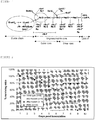
- Lipopolysaccharide is the major component of the outer membrane of Gram-negative bacteria, contributing to the structural integrity of the bacteria and as an endotoxin an important factor in the immune response elicited in vivo. LPS from members of the family of Enterobacteriaceae has been structurally analysed and as used herein consists of three well-defined regions.
- the first region represented as the O-side chain in Figure 1 , also known as the O-specific antigen, the O-antigen or the somatic antigen; is a long-chain polysaccharide consisting of repeating units each containing one to seven monosaccharides.
- the second region represented as the Oligosaccharide core in Figure 1 , also known as the LPS core, is composed of about seven monosaccharides (including heptose (Hep), glucose (Glc), galactose (Gal), and N'-acetylglucoseamine (GlcNAc)) and divided in the outer and the inner core region at the second side chain of the oligosaccharide core.
- the third region corresponds to the lipid anchor for the two outer regions, i.e. the O side chain and the oligosaccharide core, of the LPS molecule and consists of the eight-carbon keto sugar (KDO) that links the polysaccharide portions of the molecule to lipid A.
- KDO eight-carbon keto sugar
- the strains lacking the LPS O-antigens and/or parts of the oligosaccharide core are phenotypically referred to as the R (rough) chemotypes ( infra ), and include the Ra, Rb1, Rb2, Rb3, Rc, Rd1, Rd2 and Re LPS chemotypes.
- the genes encoding for said "rough" (genetically rf. ) chemotypes are referred to as the rf genes, and include the aforementioned rfbA, rfbT, rfaL, rfaJ, rfaK, rfaI, rfaB, rfaG, rfaF and rfaC genes.
- Deletion mutants which completely lack the LPS O-antigen and oligosaccharide core, such as for example described in European Patent EP 0 158 282 , result in the loss of the deeper inner core components (Rc, Rd and Re chemotypes). Since the loss of these deeper inner core components results in the instability of the Salmonella cell membrane and a substantial in vitro and in vivo attenuation, these deeper core deletion mutants are unsuitable for use as a vaccine strain (Nikaido, 1996). Compared to said deeper core deletion mutants, the mutant strains of the present invention have an incomplete LPS molecule lacking the O-antigens but still retaining the complete LPS core or parts thereof.
- Salmonella enterica strains comprising genetic modifications in at least one of the rfaJ and / or rfaL gene, yield LPS mutants that not only retain a virulence and immunogenicity comparable to the wild type strain but also provide a (long-lasting) immunization across a wide range of Salmonella serotypes.
- Salmonella mutant strains of the present invention are particularly useful as serological marker vaccines to reduce Salmonella colonization in animals.
- the "serological marker vaccine” of the present invention is characterized in that it contains a Salmonella mutant strain whereby the deletion of one or more of said rf genes does not impair the production of Salmonella-specific antibodies and accordingly induce a good immune response that is serologically distinguishable from animals infected with wild-type Salmonella strains.
- Said vaccine is also referred to as a "DIVA vaccine” (differentiation between infected and vaccinated animals).
- the Salmonella mutant strains of the present invention are used as attenuated live vaccines. It is well established that live attenuated micro-organisms are highly effective vaccines; immune responses elicited by such vaccines are often of greater magnitude and of longer duration than those produced by non-replicating immunogens. One explanation for this may be that live attenuated strains establish limited infections in the host and mimic the early stages of natural infection. In addition, unlike killed preparations, live vaccines are often more potent in inducing mucosal immune responses and cell-mediated responses, which may be connected with their ability to replicate in epithelial cells and antigen-presenting cells, such as macrophages, respectively.
- the genetic modifications of the invention advantageously lead to a null -function, in other words impair or affect the gene function, and include both naturally occurring modifications, as well as artificially introduced modifications. Deletion mutants are preferred.
- the mutations are inserted into S. enterica serovars, such as for example Salmonella ser. Typhimurium (S. Typhimurium), Salmonella ser. Choleraesuis (S. Choleraesuis), Salmonella ser. Derby (S. Derby), Salmonella ser. Infantis (S. Infantis), Salmonella ser. Bredeney (S. Bredeney), Salmonella ser. Rissen (S. Rissen), and Salmonella ser. Anatum (S. Anatum).
- said mutation(s) are inserted a Salmonella ser. Typhimurium background.
- the mutants contain at least one genetic modification within one or more rf genes selected from rfaL and rfaJ; in particular rfaJ.
- the rf genes are meant to include any homolog or artificial sequence that is substantially identical, i.e. at least 70%, 75%, 80%, 85%, 87%, 89%, 90%, 92%, 93%, 94%, 95%, 96%, 97%, 98%, 99% or 100% identical to the corresponding rf genes as found in Salmonella enterica subsp. enterica serovar Typhimurium str. LT2 chromosome with NCBI reference sequence NC_003197.1.
- - rfbA corresponds to CDS 2172670..2176548 having GeneID 1253616
- - rfaL corresponds to CDS 3908290..3909504 having GeneID 1255237
- - rfaJ corresponds to CDS 3912487..3913497 having GeneID 1255241
- - rfaK corresponds to CDS 3909561..3910706 having GeneID 1255238
- rfaI corresponds to CDS 3913515..3914528 having GeneID 1255242
- rfaB corresponds to CDS 3914534..3915613 having GeneID 1255243
- rfaG corresponds to CDS 3916738..3917862 having GeneID 1255246
- rfaF corresponds to CDS 3906251..3907297 having GeneID 1255235
- rfaC corresponds to CDS 3907297..3908250 having GeneID 1255236
- the rf genes are meant to include include any homolog or artificial sequence that is substantially identical, i.e. at least 70%, 75%, 80%, 85%, 87%, 89%, 90%, 92%, 93%, 94%, 95%, 96%, 97%, 98% or 99% identical to, more in particular consist of one or both of the rfaL and rfaJ genes as found in Salmonella enterica subsp. enterica serovar Typhimurium str. LT2 chromosome with NCBI reference sequence NC_003197.1, i.e.
- rfaL corresponds to CDS 3908290..3909504 having GeneID 1255237 of NCBI reference sequence NC_003197.1
- rfaJ corresponds to CDS 3912487..3913497 having GeneID 1255241 of NCBI reference sequence NC_003197.1.
- the percentage identity of nucleic acid and polypeptide sequences can be calculated using commercially available algorithms which compare a reference sequence with a query sequence.
- the following programs may be used to determine homologies/identities: BLAST, gapped BLAST, BLASTN and PSI BLAST, which may be used with default parameters.
- a particular embodiment of the present invention relates to a method to convert an existing Salmonella vaccine strain into a serological marker strain, said method comprising the following steps:
- the method optionally further comprises one or more of the following steps:
- deletion mutants in virulence genes according to the one-step inactivation method is e.g. described by Datsenko and Wanner (2000) optionally with some modifications (Donné et al., 2005).
- the mutant strains according to the invention optionally include additional mutations (also referred to as auxotrophic mutations) introduced to improve for example the safety of the vaccine.
- additional mutations include, modifications in genes needed for the survival or the proliferation of the pathogen.
- suitable genes for the auxotrophic mutation include but are not limited to genes such as aroA, purA, dam, his, cya/crp, htrA, Lon, phoP/phoQ, guaBA, nuoG, rpoS, rpoE, surA, thyA, aceA and the like.
- genes that may be affected to improve the safety of the vaccine include virulence factors, such as for example SPI-1, SPI-2, SPI-3, Spi-4, Spi-5 and/or related effectors of flagellum, fimbriae, and adhesines; quorum sensing and/or biofilm associated genes; genes involved in stress response; genes involved with outer membrane proteins; and regulators of anyone of the aforementioned genes.
- virulence factors such as for example SPI-1, SPI-2, SPI-3, Spi-4, Spi-5 and/or related effectors of flagellum, fimbriae, and adhesines
- quorum sensing and/or biofilm associated genes genes involved in stress response; genes involved with outer membrane proteins; and regulators of anyone of the aforementioned genes.
- the mutant Salmonella strains of the present invention may be used to manufacture a (pharmaceutical) composition or a vaccine composition, which may be administered to the subject via the parenteral, mucosal or oral route.
- Killed (inactivated) or live vaccines can be produced using art known procedures typically including a pharmaceutically acceptable carrier or diluent, and optionally an adjuvant.
- mutant strain is propagated to high colony forming units, it is inactivated by treatment with formalin, betapropriolactone (BPL), binary ethyleneimine (BEI), or other methods known to those skilled in the art.
- BPL betapropriolactone
- BEI binary ethyleneimine
- the inactivated strain is then mixed with a pharmaceutically acceptable carrier such as a saline solution, and optionally an adjuvant.
- 'immunogenic' refers to the capability of said strain fragments or molecules to elicit an immune response in an animal, in particular in a mammal, more in particular in a pig.
- the immune response may be humoral, cellular, or a combination of both.
- diluents include: buffer for buffering against gastric acid in the stomach, such as citrate buffer (pH 7.0) containing sucrose, bicarbonate buffer (pH 7.0) alone, or bicarbonate buffer (pH 7.0) containing ascorbic acid, lactose, and optionally aspartame.
- buffer for buffering against gastric acid in the stomach such as citrate buffer (pH 7.0) containing sucrose, bicarbonate buffer (pH 7.0) alone, or bicarbonate buffer (pH 7.0) containing ascorbic acid, lactose, and optionally aspartame.
- carriers include: proteins, e.g., as found in skimmed milk; sugars, e.g. sucrose; or polyvinylpyrrolidone.
- adjuvants employed are not critical to the present invention, and are conventional in the art.
- adjuvants include tensoactive compounds (such as Quil A), mineral salts (such as aluminium hydroxide), micro-organism derived adjuvants (such as muramyl dipeptide), oil-in-water and water-in-oil emulsions (such as Freund's incomplete adjuvant), particulate antigen delivery systems (such as liposomes, polymeric atmospheres, nanobeads, ISCOMs and ISCOMATRIX), polysaccharides (such as micro-particulate inulin), nucleic acid based adjuvants (such as CpG motivs), cytokines (such as interleukins and interferons), activators of Toll-like receptors and eurocine L3 en N3 adjuvantia.
- tensoactive compounds such as Quil A
- mineral salts such as aluminium hydroxide
- micro-organism derived adjuvants such
- an “immunizing amount” as used herein means an amount that is able to induce a (protective) immune response in the animal that receives the pharmaceutical composition/vaccine.
- the immune response invoked may be a humoral, mucosal, local and/or a cellular immune response.
- the immunizing amount or dose varies according to the route of administration. Those skilled in the art may find that the effective dose for a vaccine administered parenterally may be smaller than a similar vaccine which is administered via drinking water, and the like.
- the number of microorganisms that are required to be present in the formulations can be determined and optimised by the skilled person. However, in general, a patient may be administered approximately 10 7 -10 10 colony-forming units (CFUs), preferably approximately 10 4 -10 9 CFUs in a single dosage unit.
- the mutant strains of the invention and pharmaceutical compositions or vaccines comprising same are highly suitable for immunizing animals against salmonellosis (i.e. an infection with Salmonella bacteria).
- Clinical signs of Salmonella infections in farm animals include, sudden death syndrome in feedlot cattle, Salmonella diarrhea, e.g. in baby calves and pigs, Pneumonia, stiffness, joint-ill and meningitis are also seen in Salmonella infections in farm animals.
- the mutant Salmonella strains of the invention, and pharmaceutical compositions or vaccines comprising same are highly suitable for immunizing veterinary species, in particular cattle, poultry and swine, and even more in particular swine and piglets, against salmonellosis and possibly other diseases.
- the present invention provides the use of the mutant strains of Salmonella enterica of the present invention, in the manufacture of a serological marker vaccine.
- the present invention thus also encompasses the mutant strains of Salmonella enterica as described herein for treating or preventing salmonellosis.
- mutant microorganisms and vaccine compositions of the present invention may be prepared by known techniques.
- Salmonella enterica microorganism The choice of particular Salmonella enterica microorganism, can be made by the skilled person without undue experimentation.
- a preferred microorganism is selected from the group consisting of Salmonella ser. Typhimurium (S. Typhimurium), Salmonella ser. Choleraesuis (S. Choleraesuis), Salmonella ser. Derby (S. Derby), Salmonella ser. Infantis (S. Infantis), Salmonella ser. Bredeney (S. Bredeney), Salmonella ser. Rissen (S. Rissen), Salmonella ser. Anatum (S. Anatum), Salmonella ser. Hadar (S. Hadar), Salmonella ser. Virchow (S. Virchow), and Salmonella ser. Enteritidis (S. Enteritidis).
- said microorganism is selected from the group consisting of Salmonella ser. Typhimurium (S. Typhimurium), Salmonella ser. Choleraesuis (S. Choleraesuis), Salmonella ser. Derby (S. Derby), Salmonella ser. Infantis (S. Infantis), Salmonella ser. Bredeney (S. Bredeney), Salmonella ser. Rissen (S. Rissen), and Salmonella ser. Anatum (S. Anatum).
- the microorganism is Salmonella Typhimurium; more in particular the Salmonella Typhimurium strain MB2486, also known as the Salmonella Typhimurium strain 112910a (Boyen F. et al., 2005; Boyen F. et al., 2006).
- the latter strain has been deposited on March 05, 2010 with BCCM/LMG Bacteria Collection, Laboratorium voor Microbiologie - Universiteit Gent, K.L. Ledeganckstraat 35, B-9000 Gent, Belgium and has accession number LMG P-25625.
- the genetic modifications or mutations may be introduced into the microorganism using any known technique.
- the mutation is a deletion mutation, where disruption of the gene is caused by the excision of nucleic acids.
- Methods for introducing the mutations into the specific regions will be apparent to the skilled person and are preferably created using the one step inactivation method described by Wanner and Datsenko (2000). Other methods can be applied to achieve a site directed mutagenesis (eg. using suicide plasmids), however the one-step inactivation method is generally accepted as the best and fastest way to achieve a knock-out deletion mutant.
- strains lacking the O-side chain and parts of the LPS core can be regarded as serological marker strains, in that the deletion of the rf genes does not impair the production of Salmonella-specific antibodies and accordingly induce a good immune response that is serologically distinguishable from animals infected with wild-type Salmonella strains.
- the targeted LPS components (surrounded by a circle), their respective encoding genes and the general structure of LPS are depicted in Figure 1 .
- the mutant strains are rfaJ and/or rfaL deletion mutants in Salmonella Typhimurium strain MB2486.
- This strain is a well-characterized porcine field strain that is able to cause persistent infections in pigs, both in field and experimental conditions. This strain does not harbour the virulence plasmid.
- virulence plasmids The contribution of virulence plasmids to the systemic phase of Salmonella infections is well described (Barth and Bauerfeind, 2005; Rychlik et al., 2006). At least six serotypes of Salmonella (serotypes Abortusovis, Choleraesuis, Dublin, Enteritidis, Gallinarum/Pullorum, and Typhimurium) are known to harbour a virulence plasmid. This does not mean that all isolates of these serotypes carry the virulence plasmid. Pigs generally carry more Salmonella Typhimurium strains lacking the virulence plasmid, compared to for example cattle or horses (Bauerfeind et al., 2001).
- the virulence plasmid has also been reported to be often absent from strains isolated from clinically healthy pigs or pigs showing only diarrhoea (Namimatsu et al., 2006). In contrast, the virulence plasmid was frequently observed in the isolates from systemically infected pigs (Namimatsu et al., 2006). It can therefore be assumed that strains lacking the virulence plasmid are still capable of colonizing the gut of pigs, but will less frequently lead to systemic infections, both in pigs, other animals and humans.
- Vaccines using the described LPS serological marker strain deletions would thus not interfere with the existing Salmonella control programs that are based on serological testing, and applying the described LPS deletions in existing or newly developed Salmonella enterica vaccine strains would thus significantly increase the opportunities of using vaccination in the existing Salmonella control programs as a control measure.
- vaccines comprising the mutant strains of the present invention have application to the prevention of Salmonella infections, in particular in swine and piglets.
- the mutant microorganisms may be present in a composition together with any suitable pharmaceutically acceptable adjuvant, diluent or excipient.
- suitable formulations will be apparent to the skilled person.
- the formulations may be developed for any suitable means of administration. Preferred administration is via the oral, mucosal or parenteral routes and the vaccines are live attenuated Salmonella microorganisms.
- Salmonella ser. Typhimurium Salmonella ser. Choleraesuis (S. Choleraesuis), Salmonella ser. Derby (S. Derby), Salmonella ser. Infantis (S. Infantis), Salmonella ser. Bredeney (S. Bredeney), Salmonella ser. Rissen (S. Rissen), and Salmonella ser. Anatum (S. Anatum).
- Salmonella Typhimurium strain 112910a phage type 120/ad, isolated from a pig stool sample and characterized previously (Boyen et al., 2009), and several isogenic LPS knock-out mutants ( ⁇ rfbA, ⁇ rfaL, ⁇ rfaJ, ⁇ rfaI, ⁇ rfaG, ⁇ rfaF ), constructed in genes identified as maintenance and virulence genes, were used in this study.
- the knock-out mutants where constructed as described before (Boyen et al, 2006a) and are shown in table 2, primers used in this study are shown in table 3.
- Table 2 Strains used in this study Strain Genotype Product of the deleted gene WT Boyen et al.
- Salmonella Typhimurium 112910a (O: 1, 4, 12) No deletions NCTC12023 Hensel et al. 1995 Salmonella Typhimurium NCTC 12023 Nal r (O:1,4,12) No deletions ⁇ rfaL Salmonella Typhimurium 112910a ⁇ rfaL Salmonella Typhimurium O-antigen ligase ⁇ rfaj Salmonella Typhimurium 112910a ⁇ Rfaj LPS 1,2-glucosyltransferase ⁇ rfba Salmonella Typhimurium 112910a ⁇ Rfba glucose-1 -phosphate thymidylyltransferase ⁇ rfaI Salmonella Typhimurium 112910a ⁇ rfaI LPS 1,3 -galactosyltransferase ⁇ rfaG Salmonella Typhimurium 112910a ⁇ rfaG LPS core biosynthesis protein ⁇ rfaF Salmonella Typhimurium 1129
- the genes of interest were first substituted by a PCR adjusted antibiotic resistance cassette (kanamycin) using the helper plasmid pKD46.
- This plasmid encodes the phage ⁇ Red system, which promotes recombination between the native gene and the PCR adjusted antibiotic resistance cassette.
- Recombinant clones were selected by plating on Luria-Bertani agar (LB; Sigma Aldrich Chemie Gmbh, Steinheim, Germany) containing 100 ⁇ g/ml kanamycin. The substitution was confirmed by PCR.
- the antibiotic resistance cassettes were eliminated using the helper plasmid pCP20.
- the targeted genes were completely deleted from the start codon through the stop codon, as confirmed by sequencing.
- Salmonella challenge strains comprised, spontaneous mutants resistant to 20 ⁇ g/ml nalidixic acid (Nal 20 ) in a NCTC12023 Salmonella Typhimurium strain highly virulent in BALB/c mice, in a Salmonella Enteritidis strain SE147, in a Salmonella Heidelberg strain 704Sa06 and in a Salmonella Typhimurium strain 112910a. All bacteria were routinely grown in LB broth or on brilliant green agar (BGA) at 37 °C, unless stated otherwise.
- BGA brilliant green agar
- a nalidixic acid-resistant Salmonella Typhimurium strain (NCTC 12023) was used in the second in vivo experiment for challenge of mice and this to minimize irrelevant bacterial growth when plating spleen, liver and caecum samples.
- This strain has the same serotype as the Salmonella Typhimurium strain 112910a used to make the knock-out mutants, but differ from the latter in its virulence in mice.
- the Salmonella Typhimurium strain 112910a lacks the virulence plasmid that is known to have an important contribution to the systemic phase of Salmonella infections in animals (Barth and Bauerfeind, 2005; Rychlik et al. 2006).
- LPS was isolated from Salmonella Typhimurium strain 112910a and its isogenic knock-out mutants using a commercially available LPS extraction kit (Intron biotechnology, Gyeonggi-do, Korea). The obtained LPS was quantified using a ToxinSensorTM Chromogenic LAL Endotoxin Assay Kit (GenScript, Piscataway, USA) and was separated by standard SDS-polyacrylamide gel electrophoresis.
- LPS mutant strains ⁇ rfbA, ⁇ rfaL, ⁇ rfaJ, ⁇ rfaI, ⁇ rfaG, ⁇ rfaF
- an in vitro agglutination test PRO-LAB O 4 and O 12 antisera, diagnostics, Austin, Texas was performed, according to the manufacturer's instructions.
- the smooth phenotype was also tested by checking sensitivity of Salmonella Typhimurium and its isogenic knock-out mutants to bacteriophage P22 as described elsewhere (Boyen et al., 2006a). As a measure of in vitro virulence of the wild type strain and its isogenic mutants, invasiveness of all strains was assessed in porcine epithelial cells (IPEC-J2) using a gentamicin protection assay as described previously (Boyen et al., 2006b).
- ELISA enzyme-linked immunosorbent assay
- IDEXX Laboratories HerdChek Salmonella; IDEXX Laboratories, Schiphol-Rijk, Noord-Holland, The Netherlands
- Coating antigens in this ELISA include LPS of serogroups B, C1 and D (O-antigens 1, 4, 5, 6, 7 and 12) (Farzan et al., 2007) .
- an in-house Salmonella Typhimurium strain 112910a whole cell ELISA, to detect porcine anti Salmonella Typhimurium antibodies was prepared as follows.
- Salmonella Typhimurium strain 112910a was cultured overnight at 37 °C in 500 ml LB broth. Inactivation was achieved by adding 0.18% (v/v) formalin overnight at 37 °C. The bacteria were centrifuged three times (5000 X g for 30 min at room temperature) and the resulting pellet was resuspended in a volume of 250 ml Phosphate Buffered Saline (PBS) with 0.18% formalin and incubated overnight at 37 °C.
- PBS Phosphate Buffered Saline
- the inactivated culture was centrifuged again (5000 X g for 10 min at 5 °C) and the pellet was resuspended in a final volume of 250 ml coating buffer (1.08 g Na 2 CO 3 .10H 2 O, 0.968 g NaHCO 3 , 0.25 1 aqua ad iniectabilia 100 % w/v).
- F96 maxisorp Nunc-immuno plates (Nunc; Denmark) were coated with 140 ⁇ l formalin-inactivated Salmonella strains diluted in coating buffer to an optical density of 660 nm, measured using a spectrophotometer (Ultraspec III ®), incubated for 24 h at 4 °C and washed three times with 100 ⁇ l wash buffer (0.6 g NaH 2 PO 4 . 2H 2 O, 5.6 g NaH 2 PO 4 . 12H 2 O, 0.5 ml Tween 20 (Merck, Germany), 12.5 g NaCl). Plates were stored at 4 °C until used.
- the plates were washed with 100 ⁇ l destillated water (AD) + 1% milk powder to prevent non-specific binding.
- a 1/2000 dilution of sera (100 ⁇ l) was added to the wells.
- the cut-off optical density was calculated as the mean obtained from the sera from a bacteriologically and serologically Salmonella free pig (the negative control, determined using the HerdChek ELISA) plus two times the standard deviation. All measurements were performed in triplicate.
- strains were cultured for 9h at 37°C in 400 ml LB broth and were concentrated to 10 9 colony forming units per ml (cfu/ml) ( in vivo trail 1) or 4.10 8 cfu/ml ( in vivo trail 2). Inactivation was achieved by adding 2ml 36% formalin (VWR international; Fontenay sous bois, France) overnight at 37°C.
- the formalin-inactivated Salmonella strains were centrifuged twice (5000 X g for 30 min at room temperature) and the resulting pellet was resuspended in 11 ml phosphate-buffered saline (PBS) with 55yl 36% formalin and incubated overnight. Finally, 187 ⁇ l sterilized Tween 80 (Sigma Aldrich Chemie Gmbh, Steinheim, Germany) and 352 ⁇ l mannide monooleate (Sigma Aldrich Chemie Gmbh, Steinheim, Germany) was added and marcol oil (Esso Belgium nv, Antwerp, Belgium) was added to a final volume of 22 ml. To check inactivation, all vaccines were cultured on Columbia agar plates containing 5% sheep blood (COL; Oxoid, Wesel, Germany) and incubated aerobically and anaerobically overnight at 37°C.
- COL Oxoid, Wesel, Germany
- Live attenuated vaccines were prepared as follows. Strains were grown overnight on a shaker at 37°C in 100 ml LB broth. The bacteria were washed twice in PBS and centrifuged at 3500 X g for 15 min at room temperature and diluted in PBS to the appropriate concentration of 10 8 cfu/ml. The number of viable bacteria was determined by plating tenfold dilutions on Brilliant green Agar (BGA; Oxoid, Basingstoke, UK).
- strains were cultured for 9 hours at 37 °C in 400 ml LB broth and were adjusted to 5 x 10 8 CFU/ml. Inactivation was achieved by adding 0.18% (v/v) formalin (VWR international, Fontenay sous bois, France) overnight at 37 °C. The formalin-inactivated Salmonella strains were washed twice (5000 X g for 30 min at room temperature) and the resulting pellet was resuspended in 11 ml PBS with 0.18% formalin and incubated overnight.
- pigs were intramuscularly immunized with one of the formalin-inactivated Salmonella strains (either: Salmonella Typhimurium strain 112910a, ⁇ rfaJ or ⁇ rfaL ) with Freund's incomplete adjuvant to elicit an optimal humoral (antibody-mediated/Th2) response (Nichols et al., 2010).
- the control group was injected with 1 ml of sterile PBS.
- the pigs were humanely euthanized and blood samples were taken from the vena jugularis externa, using a Venoject system (Terumo; Roma, Italia). All sera samples were examined for the presence of anti Salmonella Typhimurium antibodies using the Herdchek ELISA and the in-house Salmonella Typhimurium strain 112910a whole cell ELISA, prepared as described previously.
- the protective capacity of the LPS deletion mutants was compared to that of the wild type strain using a mouse model.
- a slide agglutination test was used to verify expression of O-antigens on the surface of Salmonella Typhimurium 112910a and its isogenic knock-out mutants. While Salmonella Typhimurium strain 112910a showed a distinct agglutination within 60 seconds, little granular clumping was seen with the rfbA mutant strain. No agglutination was observed with ⁇ rfaL, ⁇ rfaJ, ⁇ rfaI, ⁇ rfaG and ⁇ rfaF strains, which confirmed a total loss of O 4 and O 12 antigens.
- Table 1 Percentage OD that was obtained using different commercial ELISA's used in official European monitoring programs and an in house whole-cell ELISA for serum obtained from piglets vaccinated with the wild type strain (+ control), the rfaJ mutant strain, the rfbA mutant strain and phosphate buffered saline (PBS; - control).
- Example 2 Transmission study with RfaJ marker strain of a commercial Salmonella Typhimurium vaccine for use in pigs
- the Salmoporc® Salmonella Typhimurium vaccine strain is used as the wild type background to construct an isogenic LPS knock-out mutant: in the rfaJ gene as described before. Briefly, the gene of interest is first substituted by a PCR adjusted antibiotic resistance cassette (kanamycin) using the helper plasmid pKD46. This plasmid encodes the phage ⁇ Red system, which promotes recombination between the native gene and the PCR adjusted antibiotic resistance cassette. Recombinant clones are selected by plating on Luria-Bertani agar (LB; Sigma Aldrich Chemie Gmbh, Steinheim, Germany) containing 100 ⁇ g/ml kanamycin. The substitution is confirmed by PCR.
- LB Luria-Bertani agar
- the antibiotic resistance cassettes are eliminated using the helper plasmid pcp20.
- the targeted genes are completely deleted from the start codon through the stop codon, as confirmed by sequencing.
- Salmonella challenge strain is the spontaneous nalidixic acid resistant Salmonella Typhimurium strain 112910a nal20 .
- ELISA enzyme-linked immunosorbent assay
- IDEXX Laboratories HerdChek Salmonella; IDEXX Laboratories, Schiphol-Rijk, Noord-Holland, The Netherlands
- Coating antigens in this ELISA include LPS of serogroups B, C1 and D (O-antigens 1, 4, 5, 6, 7 and 12).
- an in-house Salmonella Typhimurium strain 112910a whole cell ELISA to detect porcine anti Salmonella Typhimurium antibodies, is prepared as described before.
- the protective and marker capacities of the new marker vaccine strain is tested in a porcine seeder model.
- One day and 22 days after their arrival at the facility, the experimental group is orally vaccinated with the new marker vaccine strain according to the guidelines of the manufacturer for the original Salmoporc® vaccine.
- the negative and positive control group is sham-vaccinated with PBS.
- HBSS Hank's buffered salt solution
- pigs are humanely euthanized and blood and tissue samples from various organs (tonsils, ileum, caecum, and ileocaecal lymph nodes) is collected. Blood is also collected from all piglets on a weekly basis throughout the entire experiment and fresh faecal samples is collected two times per week. All sera samples are examined for the presence of anti Salmonella Typhimurium antibodies using the Herdchek ELISA and the in-house Salmonella Typhimurium strain 112910a whole cell ELISA, prepared as described previously. Tissue and faecal samples are examined quantitatively for the presence of Salmonella.
- Samples are weighed and 10% (w/v) suspensions are made in buffered peptone water (BPW; Oxoid, Basingstoke, UK) after which the material is homogenized with a stomacher.
- the homogenized samples are examined for the presence of Salmonella by plating 10-fold dilutions on BGA supplemented with nalidixic acid (BGA NAL ). If negative at direct plating, the samples are pre-enriched overnight in BPW at 37 °C, enriched overnight at 37 °C in tetrathionate broth and then plated on BGA NAL . Samples that are negative after direct plating but positive after enrichment are presumed to contain 60 CFU per gram tissue (detection limit for direct plating). Samples that remain negative after enrichment are presumed to contain 0 CFU per gram tissue.
- the current experimental setup allows to quantify the protective capacity of the vaccination in the inoculated pigs (colonization and shedding) and to determine whether vaccination can influence the spreading of Salmonella between piglets.
- the humoral response after vaccination and after challenge is followed up using both the LPS ELISA and the in-house whole-cell ELISA. This results in the evaluation of the newly developed vaccine strain as a marker vaccine in pigs.
Landscapes
- Health & Medical Sciences (AREA)
- Life Sciences & Earth Sciences (AREA)
- Immunology (AREA)
- Veterinary Medicine (AREA)
- Pharmacology & Pharmacy (AREA)
- Chemical & Material Sciences (AREA)
- Public Health (AREA)
- Medicinal Chemistry (AREA)
- General Health & Medical Sciences (AREA)
- Animal Behavior & Ethology (AREA)
- Microbiology (AREA)
- Mycology (AREA)
- Epidemiology (AREA)
- Organic Chemistry (AREA)
- Nuclear Medicine, Radiotherapy & Molecular Imaging (AREA)
- General Chemical & Material Sciences (AREA)
- Chemical Kinetics & Catalysis (AREA)
- Bioinformatics & Cheminformatics (AREA)
- Engineering & Computer Science (AREA)
- Communicable Diseases (AREA)
- Oncology (AREA)
- Medicines Containing Antibodies Or Antigens For Use As Internal Diagnostic Agents (AREA)
- Micro-Organisms Or Cultivation Processes Thereof (AREA)
Claims (13)
- Verwendung eines mutierten Salmonella-enterica-Stamms mit einer Deletion des rfaL- oder rfaJ-Gens in der Herstellung eines serologischen Markerimpfstoffs.
- Die Verwendung von Anspruch 1, wobei der Salmonella-enterica-Stamm eine, zwei, drei oder mehr weitere Mutationen enthält.
- Die Verwendung eines der Ansprüche 1 oder 2, wobei der Salmonella-enterica-Stamm aus der Gruppe ausgewählt wird, die besteht aus Salmonella ser. Typhimurium (S. Typhimurium), Salmonella ser. Choleraesuis (S. Choleraesuis), Salmonella ser. Derby (S. Derby), Salmonella ser. Infantis (S. Infantis), Salmonella ser. Bredeney (S. Bredeney), Salmonella ser. Rissen (S. Rissen) und Salmonella ser. Anatum (S. Anatum).
- Die Verwendung eines der Ansprüche 1 bis 3, wobei der Salmonella-enterica-Stamm Salmonella Typhimurium ist.
- Eine Methode zur Konversion eines bestehenden Salmonella-Impfstamms, einschließlich natürlich vorkommender abgeschwächter Salmonella-enterica-Impfstämme sowie künstlich abgeschwächter Salmonella-enterica-Impfstämme, in einen serologischen Markerstamm durch Einbringen einer Deletion gemäß der Definition in Anspruch 1 in den bestehenden Impfstamm.
- Der mutierte Salmonella-Stamm, der mit der Methode von Anspruch 5 gewonnen werden kann und eine Deletion des rfaL- oder rfaJ-Gens aufweist.
- Eine Zusammensetzung bestehend aus einem mutierten Salmonella-enterica-Stamm gemäß der Definition in einem der Ansprüche 1 bis 6 oder einem immunogenen Fragment davon und einem pharmazeutisch akzeptablen Träger oder Diluenten.
- Die Zusammensetzung von Anspruch 7 zur Verwendung als Arzneimittel.
- Die Zusammensetzung von Anspruch 8 zur Verwendung bei der Behandlung oder Prävention einer Salmonella-Infektion bei einem Subjekt, einschließlich Infektionen bei Tieren.
- Die Zusammensetzung nach Anspruch 7, wobei die Zusammensetzung ein Impfstoff ist.
- Die Zusammensetzung nach Anspruch 10, wobei der Impfstoff ein serologischer Markerimpfstoff ist.
- Ein mutierter Salmonella-enterica-Stamm gemäß der Definition in einem der Ansprüche 1 bis 6 zur Verwendung bei der Behandlung oder Prävention einer Salmonella-Infektion.
- Die Verwendung eines der Ansprüche 1 bis 4, wobei der serologische Markerimpfstoff ein attenuierter Lebendimpfstoff oder ein inaktivierter Impfstoff ist.
Priority Applications (1)
| Application Number | Priority Date | Filing Date | Title |
|---|---|---|---|
| EP11704739.9A EP2528620B1 (de) | 2010-01-28 | 2011-01-26 | Salmonellenimpfstoff |
Applications Claiming Priority (3)
| Application Number | Priority Date | Filing Date | Title |
|---|---|---|---|
| EP10151956 | 2010-01-28 | ||
| EP11704739.9A EP2528620B1 (de) | 2010-01-28 | 2011-01-26 | Salmonellenimpfstoff |
| PCT/EP2011/051034 WO2011092185A1 (en) | 2010-01-28 | 2011-01-26 | Salmonella vaccine |
Publications (2)
| Publication Number | Publication Date |
|---|---|
| EP2528620A1 EP2528620A1 (de) | 2012-12-05 |
| EP2528620B1 true EP2528620B1 (de) | 2019-06-05 |
Family
ID=42625030
Family Applications (1)
| Application Number | Title | Priority Date | Filing Date |
|---|---|---|---|
| EP11704739.9A Active EP2528620B1 (de) | 2010-01-28 | 2011-01-26 | Salmonellenimpfstoff |
Country Status (3)
| Country | Link |
|---|---|
| US (1) | US9399057B2 (de) |
| EP (1) | EP2528620B1 (de) |
| WO (1) | WO2011092185A1 (de) |
Families Citing this family (10)
| Publication number | Priority date | Publication date | Assignee | Title |
|---|---|---|---|---|
| CZ307672B6 (cs) * | 2012-05-30 | 2019-02-13 | VÝZKUMNÝ ÚSTAV VETERINÁRNÍHO LÉKAŘSTVÍ, v.v.i. | Vakcína pro orální podání hospodářským zvířatům |
| RU2683027C2 (ru) | 2012-12-20 | 2019-03-26 | Заклад Бадавчо-Вдроженёвы Осьродка Сальмонельля "Иммуноляб" Сп. З О.О. | Поливалентная иммунизирующая и/или терапевтическая композиция для применения при бактериальных инфекциях или пищевом отравлении, в частности сальмонеллёзе, способ получения этой композиции, её применение и вакцина, содержащая эту композицию |
| WO2015103104A1 (en) | 2014-01-06 | 2015-07-09 | The United States Of America, As Represented By The Secretary Of Agriculture | Attenuated salmonella enterica |
| WO2017117539A1 (en) * | 2015-12-30 | 2017-07-06 | Northwestern University | Cell-free glycoprotein synthesis (cfgps) in prokaryotic cell lysates enriched with components for glycosylation |
| CN105483048A (zh) * | 2015-12-31 | 2016-04-13 | 扬州大学 | 鸡白痢沙门菌spiC-rfaI双基因敲除减毒株及其DIVA疫苗应用 |
| CN105483051A (zh) * | 2015-12-31 | 2016-04-13 | 扬州大学 | 鸡白痢沙门菌spiC-rfaL双基因敲除减毒株及其DIVA疫苗应用 |
| CN105483052A (zh) * | 2015-12-31 | 2016-04-13 | 扬州大学 | 鸡白痢沙门菌spiC-rfc双基因敲除减毒株及其DIVA疫苗应用 |
| CN105483049A (zh) * | 2015-12-31 | 2016-04-13 | 扬州大学 | 鸡白痢沙门菌spiC-rfaH双基因敲除减毒株及其DIVA疫苗应用 |
| KR101840360B1 (ko) * | 2016-12-26 | 2018-03-20 | 전북대학교산학협력단 | 브루셀라 균 주요 공통 항원을 발현하는 lps의 o-항원 결실 비병원성 살모넬라 균주를 포함하는 브루셀라증 예방 또는 치료용 백신 조성물 |
| CN115135771A (zh) | 2019-10-25 | 2022-09-30 | 西北大学 | 用于富集膜泡和增加糖蛋白产量的无细胞提取物制备方案 |
Family Cites Families (6)
| Publication number | Priority date | Publication date | Assignee | Title |
|---|---|---|---|---|
| IE940698L (en) | 1984-04-05 | 1985-10-05 | Univ Missouri | Vaccine and serum for endotoxin associated disease and method of preparing same as well as to methods of immunization and treatment of such disease and to a detoxified endotoxin and bacterial mutant |
| DE4221840A1 (de) * | 1992-07-03 | 1994-01-05 | Biotechnolog Forschung Gmbh | Bivalente Lebendvakazine gegen bakterielle Darmpathogene, Herstellungsverfahren sowie Plasmide und Stämme als Ausgangsmaterial |
| AU2002342261A1 (en) * | 2001-11-01 | 2003-05-12 | The General Hospital Corporation | Salmonella virulence factors and uses thereof |
| MXPA06005639A (es) * | 2003-11-21 | 2006-08-17 | Pfizer Prod Inc | Adyuvante antimicrobiano. |
| UA100370C2 (uk) * | 2006-12-11 | 2012-12-25 | Мериал Лимитед | Спосіб вакцинації птахів проти salmonella |
| EP2189164A1 (de) * | 2008-11-20 | 2010-05-26 | CREATOGEN Laboratories GmbH | Salmonellenmarkerimpfung |
-
2011
- 2011-01-26 WO PCT/EP2011/051034 patent/WO2011092185A1/en not_active Ceased
- 2011-01-26 US US13/575,119 patent/US9399057B2/en not_active Expired - Fee Related
- 2011-01-26 EP EP11704739.9A patent/EP2528620B1/de active Active
Non-Patent Citations (1)
| Title |
|---|
| None * |
Also Published As
| Publication number | Publication date |
|---|---|
| EP2528620A1 (de) | 2012-12-05 |
| US20130052230A1 (en) | 2013-02-28 |
| WO2011092185A1 (en) | 2011-08-04 |
| US9399057B2 (en) | 2016-07-26 |
Similar Documents
| Publication | Publication Date | Title |
|---|---|---|
| EP2528620B1 (de) | Salmonellenimpfstoff | |
| US8889121B2 (en) | Bacterium comprising a regulated rfaH nucleic acid | |
| Li et al. | rOmpF and OMVs as efficient subunit vaccines against Salmonella enterica serovar Enteritidis infections in poultry farms | |
| JP2002521345A (ja) | 鳥類病原体を制御するため生きた弱毒化サルモネラワクチン | |
| Dehghani et al. | Efficacy of formalin-killed, heat-killed and lipopolysaccharide vaccines against motile aeromonads infection in rainbow trout (Oncorhynchus mykiss) | |
| EP2480240B1 (de) | Modifizierte gramnegative Bakterien zur Verwendung als Impfstoffe | |
| Eeckhaut et al. | Oral vaccination with a live Salmonella Enteritidis/Typhimurium bivalent vaccine in layers induces cross-protection against caecal and internal organ colonization by a Salmonella Infantis strain | |
| Jung et al. | Salmonella Typhimurium lacking phoBR as a live vaccine candidate against poultry infection | |
| Leyman et al. | Salmonella Typhimurium LPS mutations for use in vaccines allowing differentiation of infected and vaccinated pigs | |
| Han et al. | A bivalent vaccine derived from attenuated Salmonella expressing O-antigen polysaccharide provides protection against avian pathogenic Escherichia coli O1 and O2 infection | |
| Jiang et al. | Preclinical evaluation of OMVs as potential vaccine candidates against Salmonella enterica serovar Enteritidis infection | |
| US9125855B2 (en) | Prevention of Salmonella recrudescense | |
| Zhao et al. | Two novel Salmonella bivalent vaccines confer dual protection against two Salmonella serovars in mice | |
| PL206377B1 (pl) | Zastosowanie bakterii z rodzaju Salmonella oraz szczepionka do ochrony zwierząt przeciwko salmonellozie | |
| Kong et al. | Regulated delayed expression of rfc enhances the immunogenicity and protective efficacy of a heterologous antigen delivered by live attenuated Salmonella enterica vaccines | |
| Mohler et al. | Cross-protective immunity in calves conferred by a DNA adenine methylase deficient Salmonella enterica serovar Typhimurium vaccine | |
| JP2009531029A (ja) | 弱毒化サルモネラ生ワクチン | |
| Allam et al. | Salmonella enterica serovar Typhimurium lacking hfq gene confers protective immunity against murine typhoid | |
| Yin et al. | Salmonella Pullorum lacking srfA is attenuated, immunogenic and protective in chickens | |
| Choe et al. | Edwardsiella piscicida lacking the cyclic AMP receptor protein (Crp) is avirulent and immunogenic in fish | |
| Zhao et al. | Identification of a gene in Riemerella anatipestifer CH-1 (B739-2187) that contributes to resistance to polymyxin B and evaluation of its mutant as a live attenuated vaccine | |
| EP3166632B1 (de) | Modifizierte bakterien für verbesserte impfstoffe gegen brucellose | |
| US10329552B2 (en) | Vaccine for livestock production systems | |
| EP4686480A1 (de) | Lebender attenuierter e. coli impfstoff | |
| Kong et al. | Immunogenicity and cross-protective efficacy induced by delayed attenuated Salmonella with the regulated length of lipopolysaccharide in mice |
Legal Events
| Date | Code | Title | Description |
|---|---|---|---|
| PUAI | Public reference made under article 153(3) epc to a published international application that has entered the european phase |
Free format text: ORIGINAL CODE: 0009012 |
|
| 17P | Request for examination filed |
Effective date: 20120816 |
|
| AK | Designated contracting states |
Kind code of ref document: A1 Designated state(s): AL AT BE BG CH CY CZ DE DK EE ES FI FR GB GR HR HU IE IS IT LI LT LU LV MC MK MT NL NO PL PT RO RS SE SI SK SM TR |
|
| DAX | Request for extension of the european patent (deleted) | ||
| STAA | Information on the status of an ep patent application or granted ep patent |
Free format text: STATUS: EXAMINATION IS IN PROGRESS |
|
| 17Q | First examination report despatched |
Effective date: 20170213 |
|
| REG | Reference to a national code |
Ref country code: DE Ref legal event code: R079 Ref document number: 602011059438 Country of ref document: DE Free format text: PREVIOUS MAIN CLASS: A61K0039020000 Ipc: A61K0039000000 |
|
| RIC1 | Information provided on ipc code assigned before grant |
Ipc: A61K 39/112 20060101ALI20181105BHEP Ipc: A61K 39/00 20060101AFI20181105BHEP |
|
| GRAP | Despatch of communication of intention to grant a patent |
Free format text: ORIGINAL CODE: EPIDOSNIGR1 |
|
| STAA | Information on the status of an ep patent application or granted ep patent |
Free format text: STATUS: GRANT OF PATENT IS INTENDED |
|
| RIN1 | Information on inventor provided before grant (corrected) |
Inventor name: BOYEN, FILIP Inventor name: HAESEBROUCK, FREDDY Inventor name: PASMANS, FRANK |
|
| INTG | Intention to grant announced |
Effective date: 20181221 |
|
| GRAS | Grant fee paid |
Free format text: ORIGINAL CODE: EPIDOSNIGR3 |
|
| GRAA | (expected) grant |
Free format text: ORIGINAL CODE: 0009210 |
|
| STAA | Information on the status of an ep patent application or granted ep patent |
Free format text: STATUS: THE PATENT HAS BEEN GRANTED |
|
| AK | Designated contracting states |
Kind code of ref document: B1 Designated state(s): AL AT BE BG CH CY CZ DE DK EE ES FI FR GB GR HR HU IE IS IT LI LT LU LV MC MK MT NL NO PL PT RO RS SE SI SK SM TR |
|
| REG | Reference to a national code |
Ref country code: GB Ref legal event code: FG4D |
|
| REG | Reference to a national code |
Ref country code: CH Ref legal event code: EP |
|
| REG | Reference to a national code |
Ref country code: AT Ref legal event code: REF Ref document number: 1139313 Country of ref document: AT Kind code of ref document: T Effective date: 20190615 |
|
| REG | Reference to a national code |
Ref country code: IE Ref legal event code: FG4D |
|
| REG | Reference to a national code |
Ref country code: DE Ref legal event code: R096 Ref document number: 602011059438 Country of ref document: DE |
|
| REG | Reference to a national code |
Ref country code: NL Ref legal event code: MP Effective date: 20190605 |
|
| REG | Reference to a national code |
Ref country code: LT Ref legal event code: MG4D |
|
| PG25 | Lapsed in a contracting state [announced via postgrant information from national office to epo] |
Ref country code: FI Free format text: LAPSE BECAUSE OF FAILURE TO SUBMIT A TRANSLATION OF THE DESCRIPTION OR TO PAY THE FEE WITHIN THE PRESCRIBED TIME-LIMIT Effective date: 20190605 Ref country code: LT Free format text: LAPSE BECAUSE OF FAILURE TO SUBMIT A TRANSLATION OF THE DESCRIPTION OR TO PAY THE FEE WITHIN THE PRESCRIBED TIME-LIMIT Effective date: 20190605 Ref country code: AL Free format text: LAPSE BECAUSE OF FAILURE TO SUBMIT A TRANSLATION OF THE DESCRIPTION OR TO PAY THE FEE WITHIN THE PRESCRIBED TIME-LIMIT Effective date: 20190605 Ref country code: ES Free format text: LAPSE BECAUSE OF FAILURE TO SUBMIT A TRANSLATION OF THE DESCRIPTION OR TO PAY THE FEE WITHIN THE PRESCRIBED TIME-LIMIT Effective date: 20190605 Ref country code: SE Free format text: LAPSE BECAUSE OF FAILURE TO SUBMIT A TRANSLATION OF THE DESCRIPTION OR TO PAY THE FEE WITHIN THE PRESCRIBED TIME-LIMIT Effective date: 20190605 Ref country code: NO Free format text: LAPSE BECAUSE OF FAILURE TO SUBMIT A TRANSLATION OF THE DESCRIPTION OR TO PAY THE FEE WITHIN THE PRESCRIBED TIME-LIMIT Effective date: 20190905 Ref country code: HR Free format text: LAPSE BECAUSE OF FAILURE TO SUBMIT A TRANSLATION OF THE DESCRIPTION OR TO PAY THE FEE WITHIN THE PRESCRIBED TIME-LIMIT Effective date: 20190605 |
|
| PG25 | Lapsed in a contracting state [announced via postgrant information from national office to epo] |
Ref country code: GR Free format text: LAPSE BECAUSE OF FAILURE TO SUBMIT A TRANSLATION OF THE DESCRIPTION OR TO PAY THE FEE WITHIN THE PRESCRIBED TIME-LIMIT Effective date: 20190906 Ref country code: LV Free format text: LAPSE BECAUSE OF FAILURE TO SUBMIT A TRANSLATION OF THE DESCRIPTION OR TO PAY THE FEE WITHIN THE PRESCRIBED TIME-LIMIT Effective date: 20190605 Ref country code: BG Free format text: LAPSE BECAUSE OF FAILURE TO SUBMIT A TRANSLATION OF THE DESCRIPTION OR TO PAY THE FEE WITHIN THE PRESCRIBED TIME-LIMIT Effective date: 20190905 Ref country code: RS Free format text: LAPSE BECAUSE OF FAILURE TO SUBMIT A TRANSLATION OF THE DESCRIPTION OR TO PAY THE FEE WITHIN THE PRESCRIBED TIME-LIMIT Effective date: 20190605 |
|
| REG | Reference to a national code |
Ref country code: AT Ref legal event code: MK05 Ref document number: 1139313 Country of ref document: AT Kind code of ref document: T Effective date: 20190605 |
|
| PG25 | Lapsed in a contracting state [announced via postgrant information from national office to epo] |
Ref country code: EE Free format text: LAPSE BECAUSE OF FAILURE TO SUBMIT A TRANSLATION OF THE DESCRIPTION OR TO PAY THE FEE WITHIN THE PRESCRIBED TIME-LIMIT Effective date: 20190605 Ref country code: NL Free format text: LAPSE BECAUSE OF FAILURE TO SUBMIT A TRANSLATION OF THE DESCRIPTION OR TO PAY THE FEE WITHIN THE PRESCRIBED TIME-LIMIT Effective date: 20190605 Ref country code: RO Free format text: LAPSE BECAUSE OF FAILURE TO SUBMIT A TRANSLATION OF THE DESCRIPTION OR TO PAY THE FEE WITHIN THE PRESCRIBED TIME-LIMIT Effective date: 20190605 Ref country code: CZ Free format text: LAPSE BECAUSE OF FAILURE TO SUBMIT A TRANSLATION OF THE DESCRIPTION OR TO PAY THE FEE WITHIN THE PRESCRIBED TIME-LIMIT Effective date: 20190605 Ref country code: PT Free format text: LAPSE BECAUSE OF FAILURE TO SUBMIT A TRANSLATION OF THE DESCRIPTION OR TO PAY THE FEE WITHIN THE PRESCRIBED TIME-LIMIT Effective date: 20191007 Ref country code: AT Free format text: LAPSE BECAUSE OF FAILURE TO SUBMIT A TRANSLATION OF THE DESCRIPTION OR TO PAY THE FEE WITHIN THE PRESCRIBED TIME-LIMIT Effective date: 20190605 Ref country code: SK Free format text: LAPSE BECAUSE OF FAILURE TO SUBMIT A TRANSLATION OF THE DESCRIPTION OR TO PAY THE FEE WITHIN THE PRESCRIBED TIME-LIMIT Effective date: 20190605 |
|
| PG25 | Lapsed in a contracting state [announced via postgrant information from national office to epo] |
Ref country code: SM Free format text: LAPSE BECAUSE OF FAILURE TO SUBMIT A TRANSLATION OF THE DESCRIPTION OR TO PAY THE FEE WITHIN THE PRESCRIBED TIME-LIMIT Effective date: 20190605 Ref country code: IS Free format text: LAPSE BECAUSE OF FAILURE TO SUBMIT A TRANSLATION OF THE DESCRIPTION OR TO PAY THE FEE WITHIN THE PRESCRIBED TIME-LIMIT Effective date: 20191005 Ref country code: IT Free format text: LAPSE BECAUSE OF FAILURE TO SUBMIT A TRANSLATION OF THE DESCRIPTION OR TO PAY THE FEE WITHIN THE PRESCRIBED TIME-LIMIT Effective date: 20190605 |
|
| REG | Reference to a national code |
Ref country code: DE Ref legal event code: R097 Ref document number: 602011059438 Country of ref document: DE |
|
| PG25 | Lapsed in a contracting state [announced via postgrant information from national office to epo] |
Ref country code: TR Free format text: LAPSE BECAUSE OF FAILURE TO SUBMIT A TRANSLATION OF THE DESCRIPTION OR TO PAY THE FEE WITHIN THE PRESCRIBED TIME-LIMIT Effective date: 20190605 |
|
| PLBE | No opposition filed within time limit |
Free format text: ORIGINAL CODE: 0009261 |
|
| STAA | Information on the status of an ep patent application or granted ep patent |
Free format text: STATUS: NO OPPOSITION FILED WITHIN TIME LIMIT |
|
| PG25 | Lapsed in a contracting state [announced via postgrant information from national office to epo] |
Ref country code: PL Free format text: LAPSE BECAUSE OF FAILURE TO SUBMIT A TRANSLATION OF THE DESCRIPTION OR TO PAY THE FEE WITHIN THE PRESCRIBED TIME-LIMIT Effective date: 20190605 Ref country code: DK Free format text: LAPSE BECAUSE OF FAILURE TO SUBMIT A TRANSLATION OF THE DESCRIPTION OR TO PAY THE FEE WITHIN THE PRESCRIBED TIME-LIMIT Effective date: 20190605 |
|
| 26N | No opposition filed |
Effective date: 20200306 |
|
| PG25 | Lapsed in a contracting state [announced via postgrant information from national office to epo] |
Ref country code: SI Free format text: LAPSE BECAUSE OF FAILURE TO SUBMIT A TRANSLATION OF THE DESCRIPTION OR TO PAY THE FEE WITHIN THE PRESCRIBED TIME-LIMIT Effective date: 20190605 |
|
| REG | Reference to a national code |
Ref country code: DE Ref legal event code: R119 Ref document number: 602011059438 Country of ref document: DE |
|
| PG25 | Lapsed in a contracting state [announced via postgrant information from national office to epo] |
Ref country code: MC Free format text: LAPSE BECAUSE OF FAILURE TO SUBMIT A TRANSLATION OF THE DESCRIPTION OR TO PAY THE FEE WITHIN THE PRESCRIBED TIME-LIMIT Effective date: 20190605 |
|
| REG | Reference to a national code |
Ref country code: CH Ref legal event code: PL |
|
| GBPC | Gb: european patent ceased through non-payment of renewal fee |
Effective date: 20200126 |
|
| REG | Reference to a national code |
Ref country code: BE Ref legal event code: MM Effective date: 20200131 |
|
| PG25 | Lapsed in a contracting state [announced via postgrant information from national office to epo] |
Ref country code: FR Free format text: LAPSE BECAUSE OF NON-PAYMENT OF DUE FEES Effective date: 20200131 Ref country code: LU Free format text: LAPSE BECAUSE OF NON-PAYMENT OF DUE FEES Effective date: 20200126 Ref country code: DE Free format text: LAPSE BECAUSE OF NON-PAYMENT OF DUE FEES Effective date: 20200801 Ref country code: GB Free format text: LAPSE BECAUSE OF NON-PAYMENT OF DUE FEES Effective date: 20200126 |
|
| PG25 | Lapsed in a contracting state [announced via postgrant information from national office to epo] |
Ref country code: LI Free format text: LAPSE BECAUSE OF NON-PAYMENT OF DUE FEES Effective date: 20200131 Ref country code: CH Free format text: LAPSE BECAUSE OF NON-PAYMENT OF DUE FEES Effective date: 20200131 Ref country code: BE Free format text: LAPSE BECAUSE OF NON-PAYMENT OF DUE FEES Effective date: 20200131 |
|
| PG25 | Lapsed in a contracting state [announced via postgrant information from national office to epo] |
Ref country code: IE Free format text: LAPSE BECAUSE OF NON-PAYMENT OF DUE FEES Effective date: 20200126 |
|
| PG25 | Lapsed in a contracting state [announced via postgrant information from national office to epo] |
Ref country code: MT Free format text: LAPSE BECAUSE OF FAILURE TO SUBMIT A TRANSLATION OF THE DESCRIPTION OR TO PAY THE FEE WITHIN THE PRESCRIBED TIME-LIMIT Effective date: 20190605 Ref country code: CY Free format text: LAPSE BECAUSE OF FAILURE TO SUBMIT A TRANSLATION OF THE DESCRIPTION OR TO PAY THE FEE WITHIN THE PRESCRIBED TIME-LIMIT Effective date: 20190605 |
|
| PG25 | Lapsed in a contracting state [announced via postgrant information from national office to epo] |
Ref country code: MK Free format text: LAPSE BECAUSE OF FAILURE TO SUBMIT A TRANSLATION OF THE DESCRIPTION OR TO PAY THE FEE WITHIN THE PRESCRIBED TIME-LIMIT Effective date: 20190605 |