EP2529580B1 - Hybrider home node b - Google Patents
Hybrider home node b Download PDFInfo
- Publication number
- EP2529580B1 EP2529580B1 EP10701664.4A EP10701664A EP2529580B1 EP 2529580 B1 EP2529580 B1 EP 2529580B1 EP 10701664 A EP10701664 A EP 10701664A EP 2529580 B1 EP2529580 B1 EP 2529580B1
- Authority
- EP
- European Patent Office
- Prior art keywords
- subscriber
- connection route
- connection
- hnb
- route
- Prior art date
- Legal status (The legal status is an assumption and is not a legal conclusion. Google has not performed a legal analysis and makes no representation as to the accuracy of the status listed.)
- Active
Links
Images



Classifications
-
- H—ELECTRICITY
- H04—ELECTRIC COMMUNICATION TECHNIQUE
- H04W—WIRELESS COMMUNICATION NETWORKS
- H04W48/00—Access restriction; Network selection; Access point selection
- H04W48/20—Selecting an access point
-
- H—ELECTRICITY
- H04—ELECTRIC COMMUNICATION TECHNIQUE
- H04L—TRANSMISSION OF DIGITAL INFORMATION, e.g. TELEGRAPHIC COMMUNICATION
- H04L12/00—Data switching networks
- H04L12/54—Store-and-forward switching systems
- H04L12/56—Packet switching systems
- H04L12/5691—Access to open networks; Ingress point selection, e.g. ISP selection
- H04L12/5692—Selection among different networks
-
- H—ELECTRICITY
- H04—ELECTRIC COMMUNICATION TECHNIQUE
- H04L—TRANSMISSION OF DIGITAL INFORMATION, e.g. TELEGRAPHIC COMMUNICATION
- H04L12/00—Data switching networks
- H04L12/66—Arrangements for connecting between networks having differing types of switching systems, e.g. gateways
-
- H—ELECTRICITY
- H04—ELECTRIC COMMUNICATION TECHNIQUE
- H04W—WIRELESS COMMUNICATION NETWORKS
- H04W84/00—Network topologies
- H04W84/02—Hierarchically pre-organised networks, e.g. paging networks, cellular networks, WLAN [Wireless Local Area Network] or WLL [Wireless Local Loop]
- H04W84/04—Large scale networks; Deep hierarchical networks
- H04W84/042—Public Land Mobile systems, e.g. cellular systems
- H04W84/045—Public Land Mobile systems, e.g. cellular systems using private Base Stations, e.g. femto Base Stations, home Node B
-
- H—ELECTRICITY
- H04—ELECTRIC COMMUNICATION TECHNIQUE
- H04W—WIRELESS COMMUNICATION NETWORKS
- H04W88/00—Devices specially adapted for wireless communication networks, e.g. terminals, base stations or access point devices
- H04W88/08—Access point devices
- H04W88/10—Access point devices adapted for operation in multiple networks, e.g. multi-mode access points
Definitions
- the present invention relates to a method, apparatus and computer program product providing a mechanism for controlling a connection of different types of subscribers to a communication network via different links to a core network.
- the present invention is related to a mechanism providing functions of a so-called hybrid home node B (HHNB) where subscribers, depending on their belonging to a specific subscriber group, such as a closed subscriber group or an open subscriber group, are admitted for a connection to the communication network via different connection routes and systems.
- HHNB hybrid home node B
- communication networks e.g. of wire based communication networks, such as the Integrated Services Digital Network (ISDN), DSL, or wireless communication networks, such as the cdma2000 (code division multiple access) system, cellular 3rd generation (3G) communication networks like the Universal Mobile Telecommunications System (UMTS), cellular 2nd generation (2G) communication networks like the Global System for Mobile communications (GSM), the General Packet Radio System (GPRS), the Enhanced Data Rates for Global Evolutions (EDGE), or other wireless communication system, such as the Wireless Local Area Network (WLAN) or Worldwide Interoperability for Microwave Access (WiMAX), took place all over the world.
- wire based communication networks such as the Integrated Services Digital Network (ISDN), DSL, or wireless communication networks, such as the cdma2000 (code division multiple access) system, cellular 3rd generation (3G) communication networks like the Universal Mobile Telecommunications System (UMTS), cellular 2nd generation (2G) communication networks like the Global System for Mobile communications (GSM), the General Packet Radio
- 3GPP 3 rd Generation Partnership Project
- Telecoms & Internet converged Services & Protocols for Advanced Networks TISPAN
- ITU International Telecommunication Union
- 3GPP2 3 rd Generation Partnership Project 2
- IETF Internet Engineering Task Force
- IEEE Institute of Electrical and Electronics Engineers
- one or more intermediate network elements such as network control elements, support nodes, service nodes and interworking elements are involved which may belong to different communication networks.
- low-power base stations which are also commonly referred to as “femto-cells” or home node B (HNB).
- HNB home node B
- Such low-power base stations are advantageous in that they are low-cost and possibly user-deployed cellular base stations using, for example, an IP based wired backhaul, such as cable or DSL, designed to provide service in local environments similar to existing WiFi access points.
- Femto-cells can be used to provide deep in-building broadband wireless services far more economically than a macro cellular network. Additionally, there can also be considerable savings associated with offloading traffic onto the femto-cell, in particular for heavy data users.
- corresponding low-power base stations may appear like a normal (macro cell) base stations (for example like an eNB) for UEs so that there are no changes necessary in the UEs.
- the HNBs may provide access to a core network of a network operator, for example, via the Internet.
- a GAN also known as UMA
- UMA 3GPP
- femto-cells In general, roll-out of femto-cells can be seen as an introduction of an entirely new and unplanned network infrastructure using low-power base stations on top of a carefully planned and coordinated cellular network. For example, in the existing cellular networks, the used base stations are placed in specific locations that minimize the interference among the base stations. Therefore, for ensuring a minimal interference, femto-cells should use a dedicated part of the frequency spectrum so as to completely avoid interference problems, especially at the edges of macro-cells.
- such a solution may not be suitable in practice for several reasons, for example due to the unavailability of extra spectrum or the impossibility to clear-off channels for this purpose. Hence it is likely that femto- and macro-cells will share the same frequency band. In this case, possible capacity and coverage gains can dwindle away, for example due to macro/femto-cell cochannel interference.
- low-power base stations may be user-deployed cellular base stations
- OSG open subscriber groups
- CSG closed subscriber groups
- a free-for-all OSG access mode of operation would be more appropriate from a spectrum efficiency point of view
- the CSG access mode may be preferable with regard to security, privacy and fair resource distribution of the wired (x-DSL/cable) Internet connection aspects.
- CSG access mode ensures that only a relatively low number of "known" subscribers (or UEs) belonging for example to company members, friends or family members, can be served by the HNB.
- a user running a low-power base station might not wish to share his/her Internet connection with other people, such as neighbors or persons being in the vicinity (and thus the coverage area of the HNB) simply to offload the macro-cell network. Therefore, an access restriction is to be expected.
- the HNB is linked to the core network by means of wired connections, such as DSL
- a further problem may arise due to the capacity of the DSL line which may be lower than that of the link between the UE and the HNB, for example in case of a LTE air interface.
- the link between the HNB and the core network may become the bottleneck of such a system.
- congestion might occur on the DSL line affecting all users of the HNB, but also users connected directly to the DSL modem e.g. via Ethernet.
- the invention it is an object if the invention to provide a mechanism where, depending on the belonging of a subscriber to a specific subscriber group, such as a closed subscriber group or an open subscriber group, different connection routes or access to the communication network can be controlled.
- a method comprising receiving a request for connecting a subscriber, identifying whether the subscriber belongs to a first subscriber group or to a second subscriber group based on whether or not the subscriber is a member of a closed subscriber group, deciding, on the basis of the identified subscriber group of the subscriber, to assign the subscriber to a core network via a first connection route or via a second connection route, checking available resources on the assigned first or second connection route, and processing the request in accordance with a result of the resource check.
- an apparatus comprising a receiver configured to receive a request for connecting a subscriber, a processor configured to process the request, wherein the processor further comprises an identifier configured to identify whether the subscriber belongs to a first subscriber group or to a second subscriber group based on whether or not the subscriber is a member of a closed subscriber group, a decider configured to decide, on the basis of the subscriber group of the subscriber identified by the identifier, to assign the subscriber to a core network via a first connection route or via a second connection route, a detector configured to check available resources on the assigned first or second connection route, and a processing portion configured to process the request in accordance with a result of the resource check of the detector.
- a computer program product for a computer comprising software code portions for performing the steps of the above defined method, when said product is run on the computer.
- the computer program product may comprise a computer-readable medium on which said software code portions are stored.
- the computer program product may be directly loadable into the internal memory of the computer and/or transmittable via a network by means of at least one of upload, download and push procedures.
- a corresponding low-power base station which is also referred to hereinafter as hybrid HNB, admits OSG users to be served via one connection route, which is for example a relay node based link, by means of which a capacity of a link for other users, e.g. CSG subscribers, via another connection route, for example a HNB based link via a wired connection to the network, such as DSL, is not affected (for example, DSL capacity for the CSG users is not impacted). Therefore, CSG users do not feel any restrictions or a deteriorated experience even if OSG users are connected. This can be further improved by giving registered users (CSG users) an absolute QoS priority in detriment of other (OSG) users.
- CSG users registered users
- OSG absolute QoS priority in detriment of other (OSG) users.
- spare capacity on e.g. the DSL line can be used for the traffic of the OSG users, thus reducing the impact on the air interface capacity between the relay node part and the core network.
- subscribers of e.g. the CSG may also benefit from the proposed solution because the OSG users are not required to connect only to a distant base station, such as a macro eNB, which would cause interference to the HNB cell, especially in the UL direction.
- a distant base station such as a macro eNB
- the hybrid HNB since both the CSG and OSG users served by the hybrid HNB share the same cell (i.e., the air interface resources are shared between the two types of users), the capacity of the respective backhaul can be easily shared, and since the hybrid HNB will appear as a normal base station (such as a eNB) to both types of users, a further adaptation of user equipments is not necessary. In other words, the function of the hybrid HNB is completely transparent to the UEs, so that also UEs of earlier releases can share the benefits of this configuration.
- the deployment of hybrid HNBs that can also simultaneously act as a relay node will not only make the system more robust to failures due to excessive interference, but it also creates alternatives for load sharing and load switching.
- the proposed solution increases also the flexibility of the system with regard to load issues, for example by deciding which connection route is to be used for a subscriber connecting to the hybrid HNB under consideration of load conditions at the respective connection routes (HNB based link or relay node link, i.e. wired or wireless link towards the core network). If one of the connection routes is heavily loaded or even congested, then the other route may be selected.
- QoS requirements of the traffic may be considered, in particular for CSG users which may have a higher priority for service.
- the hybrid HNB with the relay node functionality can perform interference coordination between the hybrid HNB and macro base station (the eNB) via the wireless backhaul link.
- the wireless backhaul link is active for OSG relay node users, it can also be used to employ interference coordination between CSG HNB users and macro UEs.
- the same measurements and messages used for interference coordination between relay node served UEs and macro eNB served UEs can be also used for interference coordination between HNB served UEs and macro eNB served UEs.
- a basic system architecture of a communication network may comprise a commonly known architecture comprising a wired or wireless access network subsystem and a core network.
- Such an architecture comprises one or more access network control units, radio access network elements, access service network gateways or base transceiver stations, with which a UE is capable to communicate via one or more channels for transmitting several types of data.
- core network elements such as gateway network elements, AAA network elements, HSS network elements, policy and charging control network elements and the like are usually comprised.
- the general functions and interconnections of these elements are known to those skilled in the art and described in corresponding specifications so that a detailed description thereof is omitted herein.
- the described network elements such as gateway elements like a HNB GW, base stations such as a HNB, HHNB, eNB, DeNB etc., network control elements located in the core network, a UE and the like, and their functions described herein may be implemented by software, e.g. by a computer program product for a computer, or by hardware.
- correspondingly used devices and network element may comprise several means and components (not shown) which are required for control, processing and communication/signaling functionality.
- Such means may comprise, for example, a processor unit for executing instructions, programs and for processing data, memory means for storing instructions, programs and data, for serving as a work area of the processor and the like (e.g.
- ROM read-only memory
- RAM random access memory
- EEPROM electrically erasable programmable read-only memory
- input means for inputting data and instructions by software (e.g. floppy diskette, CD-ROM, EEPROM, and the like)
- user interface means for providing monitor and manipulation possibilities to a user (e.g. a screen, a keyboard and the like)
- interface means for establishing links and/or connections under the control of the processor unit (e.g. wired and wireless interface means, an antenna, etc.) and the like.
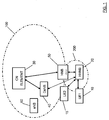
- a simplified architecture of an exemplary communication network is shown in which a low-power base station according to examples of embodiments of the invention (referred to hereinafter as hybrid HNB or HHNB) is implemented for controlling the admission of different subscribers which may belong to different subscriber groups, such as OSG or CSG.
- the communication network shown in Fig. 1 is based on a 3GPP LTE network architecture.
- Fig. 1 depicts only those network elements which are useful for understanding the principles of the examples of embodiments of the invention. As known by those skilled in the art there are several other network elements involved in the establishment, control and management of a communication connection which are omitted here for the sake of simplicity.
- reference sign 10 denotes a UE1 of a first subscriber and reference sign 15 denotes a UE2 of a second subscriber.
- first subscriber i.e. UE1
- second subscriber i.e. UE2 15
- OSG member the second subscriber
- Reference sign 20 denotes a hybrid HNB or HHNB according to examples of embodiments of the invention and representing an example of a low-power base station covering a femto-cell area 200 indicated by a dashed circle.
- the HHNB 20 provides both functions of a home node B and of a relay node.
- relay nodes for example those planned to be used in an LTE-Advanced network
- in-band i.e. using the same frequency band as for the HHNB-UE link
- out-band i.e. using another frequency band as for the HHNB-UE link
- the other band may also be a band where LTE technology is used
- wireless backhaul link based on the LTE advanced air interface instead of using wired links or dedicated out-of-band (microwave, HSPA, proprietary systems etc.) wireless links.
- HNBs may use wired backhaul links to core network.
- duplex function of HHNBs that can act as HNBs and relay nodes simultaneously is however completely transparent to UEs, so that there is no necessity for modifications of UEs which are to connect to a HHNB so as to enable them to benefit from the duplex functionality (it is to be noted that duplex functionality here should not be confused with duplexing technology like FDD (frequency division duplexing) or TDD (time division duplexing) but refers to the dual connectivity option).
- FDD frequency division duplexing
- TDD time division duplexing
- Reference sign 30 denotes a core network or core network (CN) element providing services to users.
- CN core network
- Reference signs 40 and 60 denote base transceiver stations, such as eNBs, representing examples of access points for a set of macro cells 100 indicated by a dashed circle (one cell thereof is typically served by one eNB).
- reference sign 40 denotes a DeNB which controls a communication via a relay node (which is part of the HHNB 20) towards the core network, for example via a gateway node (not shown).
- Reference sign 60 represent a "normal" eNB, for example, which is an alternative entry point for a UE. According to the scenario indicated in Fig. 1 , it is assumed that both eNBs 40 and 60 are located at a significant distance to the UEs 10 and 15, i.e. the HHNB is located much nearer to the UEs 10 and 15, resulting in the interference problems indicated above.
- Reference sign 50 denotes a HNB GW which is used as a router from the HNB function of the HHNB 20 to and from the core network.
- the HNB GW 50 appears as a radio network control element to the core network and provides concentrations functions for control plane and user plane with regard to the HHNB 20 (or another HNB (not shown)).
- Fig. 2 shows further details of the configuration of the HHNB 20 as well as the links/connections between the respective network elements.
- reference sign 210 indicates a CSG to which the UE1 10 (i.e. its user) belongs
- reference sign 220 indicates a OSG to which the UE2 15 is to be counted (from the viewpoint of the HHNB 20).
- a UE is connected to either a HNB part or a relay node part, but not both.
- the connected to and from the communication network is done either via the relay node part or via the HNB part.
- the UEs 10 and 15 are connected to the HHNB 20 by means of a common interface, for example air interface based on LTE specifications.
- the HHNB 20 has one or more input/output (I/O) units 21 (air interfaces).
- the data received from the CSG and OSG UEs 10 and 15 are received at the hybrid HNB via the I/O unit 21 and then routed to a HNB specific part 22 or to a relay node (RN) specific part 23.
- RN relay node
- this routing scheme is only an example and not restrictive.
- the routing of CSG and OSG user is the other way around (i.e. OSG users to HNB part or CSG users to RN part), and even a mixed scenario where a mix of OSG and CSG UEs are routed via the RN and HNB parts is possible.
- the decision where to route a corresponding user (or UE) may depend, for example, on the load conditions in the respective connection routes between the UEs and the HHNB or between the HHNB and the core network, such as a DSL link and the air interfaces.
- a corresponding connection route towards the core network comprises a link to the HNB GW 50, which is, for example, a wired DSL link or the like (wired backhaul).
- a corresponding connection route towards the core network comprises a link to the DeNB 40 (controlling the relay node function of the HHNB 20), which is, for example, a wireless in-band link (wireless backhaul).
- This wireless link may also include one or more I/O units similar to the I/O unit 21. Alternatively or additionally, it may reuse the I/O unit 21 (e.g. for cost saving), but this is not shown here in order not to obscure the presentation of the routing paths.
- the data are forwarded to the core network by means of a standard connection link, for example.
- a UE In the downlink (DL) direction, also assuming that a UE is connected either to the RN or the HNB part but not to both, the operation is straightforward, as the operation from the core network (CN) point of view will be the same as if the UE is connected to a standalone relay node or a standalone HNB.
- CN core network
- a path switch command may sent towards the core network, either from the RN part 23 or from the controlling DeNB 40 (depending on the relay architecture, i.e., whether relay nodes are visible to the core network or not) to notify it that from there onwards DL data for the concerned UE has to be forwarded towards the relay node part 23 (i.e. via the DeNB 40).
- procedures known from handover control may be used, for example messages used during the handover completion phase (i.e., the HHNB 20 may start a stripped down handover procedure where only handover completion stages may be performed).
- the HHNB 20 comprises both functionalities of a "normal” HNB and a "normal” relay node. By means of this, it is in particular useful for controlling admission of different user who may be members of a CSG or are part of an OSG.
- the HHNB 20 operates as a CSG femto-cell, i.e. mainly using wired backhaul, when serving registered (CSG) users.
- CSG registered
- OSG OSG relay
- the HHNB 20 may act like a normal HNB with regard to connection setup and management and act like a normal relay node with regard to the set up of the wireless backhaul link.
- the HHNB 20 according to examples of embodiments of the invention does not only serve CSG users, but may admit also OSG users (if the load conditions allow it, for example).
- the HHNB 20 admits OSG users to be served via the relay link, thus not impacting for example a DSL capacity for the CSG users, and thus not compromising their experience.
- spare capacity on the wired link (the DSL line, for example) may also be used for traffic of OSG users, if available and allowed, so that an impact on the air interface capacity may be reduced.
- the CSG users i.e. the "normal" HNB users
- the OSG users would not have to connect to a distant eNB (such as eNB 60 of Fig. 1 ), which may cause interference to the femto-cell, especially in the uplink (UL) direction.
- both the CSG and OSG users (UE1 10 or UE2 15) served by the HHNB 20 share the same cell (i.e., the air interface resources are shared between the two types of users), and the HHNB 20 appears like a normal eNB to both types of users, so that no modification in the UEs is necessary.
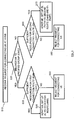
- Fig. 3 shows a procedure for controlling the admission of a UE for which a connection request is sent towards the HHNB 20, wherein different connection routes are usable for establishing a connection to the core network (i.e. the HNB based connection route and the relay node based connection route using different backhauls).
- the procedure shown in Fig. 3 may be executed, for example, by the HHNB 20.
- a request for connecting a UE is received by the HHNB 20.
- the request may be, for example, a handover request to handover the UE from another base transceiver station (for example a macro-cell eNB) to the HHNB 20, or an initial call setup request at the HHNB 20, or even a request related to cell selection of a UE in idle mode.
- another base transceiver station for example a macro-cell eNB
- a UE that is being served by a macro-cell eNB and comes within the vicinity of the HHNB 20 has sent measurement reports to the macro-cell eNB (e.g. eNB 60 of Fig. 1 ).
- the macro-cell eNB 60 has then decided to send a handover request, if the signal towards the HHNB 20 satisfies the handover initiation requirements.
- sending a request for connecting a UE may be encouraged or discouraged by tuning cell selection parameters, for example depending on the capacity headroom available at the HNB (or its backhaul).
- step S20 upon receiving the request for connecting the UE, it is checked whether the UE to which the request is related (e.g. UE1 10 or UE2 15), i.e. the subscriber thereof belongs to a specified subscriber group, such as a CSG or not (i.e. OSG). In other words, it is checked whether the UE belongs to a first or a second subscriber group.
- a specified subscriber group such as a CSG or not (i.e. OSG).
- step S20 is positive and step S30 follows. This means that it is decided to assign the UE to a first connection route (also referred to as assigned connection route). Accordingly, in step S30, an admission control starts which is related to, for example, a HNB admission. In other words, it is checked if sufficient radio resources on the air interface between the HHNB 20 and the UE1 10 are available to accommodate the UE1 10.
- step S40 is executed where the UE1 10 is admitted and a DL path setup is executed towards the serving gateway (and the core network) so as to set up a transmission of data via the first connection route which then includes the HNB part (wired backhaul, for example).
- the HNB GW sends DL packets directly towards the HNB, e.g. via the Internet.
- step S30 the check in step S30 is negative, i.e. there are not sufficient resources especially on the air interface, the request for connecting UE1 10 is rejected in step S50.
- step 20 if it is determined in step 20 that the user does not belong to a CSG (e.g. UE2 15), then a different admission control takes place, for example a RN admission. This means that it is decided to assign the UE to a second connection route.
- a RN admission This means that it is decided to assign the UE to a second connection route.
- DeNB 40 controlling eNB
- step S70 follows where, similar to step S40, the UE2 15 is admitted for a connection via the second connection route (RN part) and the DL path is switched in respective gateways towards the core network, so that data destined to the UE from there onwards will be routed via the DeNB 40, which will then forward it to the relay node part via its wireless backhaul link towards the HHNB 20.
- step S60 the check in step S60 is negative, i.e. there are not sufficient resources, the request for connecting UE2 15 is rejected in step S80.
- Fig. 4 shows a procedure for controlling the admission of a UE for which a connection request is sent towards the HHNB 20, wherein different connection routes are usable for establishing a connection to the core network (i.e. the HNB based connection route and the relay node based connection route using different backhauls).
- the procedure shown in Fig. 4 is similar to that described in connection with Fig. 3 , so that steps being equivalent to the procedure of Fig. 3 are denoted by the same reference signs and not described in detail again.
- the procedure of Fig. 4 shows a procedure for controlling the admission of a UE for which a connection request is sent towards the HHNB 20, wherein different connection routes are usable for establishing a connection to the core network (i.e. the HNB based connection route and the relay node based connection route using different backhauls).
- the procedure shown in Fig. 4 is similar to that described in connection with Fig. 3 , so that steps being equivalent to the procedure of Fig. 3 are denoted by
- the procedure of Fig. 4 considers the possibility to change the assignment of a user to the other connection route (i.e. to change the original connection route which is decided to be assigned to the UE), for example in case the load conditions are such that a connection via the primarily assigned connection route is not suitable.
- the procedure according to Fig. 4 may be executed, for example, by the HHNB 20.
- the procedure according to Fig. 4 comprises also steps S10 to S80 whose functions are basically equivalent to steps S10 to S80, i.e. a corresponding subscriber group check admission control procedure are executed.
- the check in step S30 may also comprise a check whether the assigned connection route which comprises also the wired backhaul provides sufficient resources. If the result in step S30 indicates, for example, a critical load situation or congestion on the wired backhaul, (NO in step S30) instead of directly rejecting the request for connecting the UE, step S35 is executed where it is checked whether resources on the other connection route (i.e. RN based connection route with wireless backhaul) would suffice the needs for a connection of the UE in question (UE1 10, for example).
- the other connection route i.e. RN based connection route with wireless backhaul
- step S35 If the result of step S35 is positive, then the UE1 10 is admitted for the RN part, i.e. the assignment of the UE1 10 is changed to the second connection route, wherein a corresponding set up of the DL path is also initiated.
- step S35 the result of step S35 is negative, i.e. there are also not sufficient resources on the second connection route, the request is rejected in step S50.
- step S65 is executed where it is checked whether resources on the other connection route (i.e. HNB based connection route with wired backhaul) would suffice the needs for a connection of the UE in question. In this connection, it may also be checked whether there is an allowance present indicating that it is allowed to switch OSG users to the HNB part at all.
- resources on the other connection route i.e. HNB based connection route with wired backhaul
- step S65 If the result of step S65 is positive, then the UE2 15 is admitted for the HNB part, i.e. the assignment of the UE2 15 is changed to the first connection route, wherein a corresponding set up of the DL path is also initiated.
- step S65 i.e. to switch the OSG user to the HNB part
- the decision on step S65 may also depend on priority values given to the CSG users. This means, for example, that even if there are basically sufficient resources on the HNB part available, if these resources are below, for example, a predetermined threshold, they are only available for CSG users, resulting in an inhibition of a switch of the OSG user to the HNB part, for example.
- step S65 is also negative, i.e. there are also not sufficient resources on the first connection route (or in case there is no allowance indication for a switch to the HNB part, or priority issues (thresholds) inhibits the change to the HNB part), the request is rejected in step S80.
- a block circuit diagram of a low-power base station network element with shared HNB and relay node functions, such as the HHNB 60, is shown which is configured to implement the admission control described in connection with Fig. 3 or Fig. 4 .
- the HHNB 20 shown in Fig. 5 may comprise several further elements or functions besides those described in connection therewith but which are omitted herein for the sake of simplicity as they are not essential for understanding the invention.
- the HHNB 20 may comprise a processing function or processor 201, such as a CPU or the like, which executes instructions given by programs or the like related to the power control.
- the processor 201 may comprise further portions dedicated to specific processings described below. Portions for executing such specific processings may be also provided as discrete elements or within one or more further processors, for example.
- Reference signs 202 and 203 denote transceiver or input/output (I/O) units connected to the processor 201 (or corresponding other elements comprising the functions of the further portions).
- the I/O unit 202 may be used for communicating with UEs via an air interface.
- the I/O unit 203 may be used for communicating with other network elements via corresponding interfaces, such as wired interfaces (for the HNB part) and wireless interfaces (for the RN part).
- the I/O units 202 and 203 may be a combined unit comprising the communication equipment towards all network elements in question, or may comprise a distributed structure with a plurality of different interfaces.
- Reference sign 204 denotes a memory usable, for example, for storing data and programs to be executed by the processor 201 and/or as a working storage of the processor 201.
- the processor 201 is configured to execute processings related to the admission control described in examples of embodiments of the invention.
- the processor 201 comprises a UE identification portion 211 which identifies to which subscriber group (e.g. CSG, OSG) a UE for which admission is requested belongs.
- Reference sign 212 denotes a HNB part which functions similar to the HNB specific part 22 shown in Fig. 2 , for example.
- Reference sign 213 denotes a RN part which functions similar to the RN specific part 23 shown in Fig. 2 , for example.
- Reference sign 214 denotes a resource check portion which is capable to determine whether the resources on the respective connection routes (air interfaces, wired/wireless links) are sufficient or not.
- Reference sign 215 denotes a decision portion which, on the basis of the result of the resource check portion 214, admits or rejects the connecting request.
- the portion 215 may also determine whether there are further restrictions regarding a connection or a switch of connection of an OSG user to the HNB part, as described above.
- admission control for UEs is mainly executed on the basis of information whether the UE in question belongs to a first (CSG) subscriber group or a second (OSG) subscriber group.
- CSG first
- OSG second
- a bearer can be considered as a virtual connection between the Core Network (CN) and the UE that is characterized by a set of Quality of Service (QoS) parameters.
- QoS Quality of Service
- traffic may be routed to the HNB part or RN part not only depending on the type of the user (CSG or OSG), but also on the QoS requirements of the traffic. For example, assuming a situation where only plural CSG users are connected and there is congestion in the wired backhaul (DSL link). Then, according to examples of embodiments of the invention, bearers with strict delay requirements (i.e. bearers of a first category) may be offload to the RN part, while keeping the best effort bearers (i.e. bearers of second category) on the HNB part. The reverse decision may be made also, i.e. best effort bearer are placed on the RN part and strict QoS bearers are kept on the HNB part, if there is no congestion in the wired backhaul but the delay in the RN part is higher.
- bearers with strict delay requirements i.e. bearers of a first category
- the best effort bearers i.e. bearers of second category
- the reverse decision may be made also, i.e
- the following scenario may be considered.
- the user admission is decided there (i.e. the admission of that bearer of that user)
- bearer properties may be considered.
- bearers having a very high priority may be tolerated by the HNB part despite they require and shorten thus DSL-capacity.
- other bearers (with a lower priority) are not allowed to share resources on the HNB part.
- this is accomplished by modifying processing of the HNB GW 50 so that there is no change from a core network point of view (there is still only one path towards the HNB GW for the transmission in the DL direction).
- the HNB GW receives data to be routed to the UE, the HNB GW either passes it to the HHNB directly via the HNB part if the concerned bearer is associated with the HNB part, or routes it to the DeNB via the core network if the concerned bearer is associated with the RN part.
- the core network itself determines to which connection route (HNB part or RN part) a respective bearer is associated. According to this, the transmission path for data is switched at the CN side.
- the core network supports multiple DL paths towards a given UE, each associated with a given (set of) bearer(s) which requires corresponding bearer setup and modification procedures to include DL path setup.
- the proposed HHNB and admission control will ameliorate interference problems caused by the uncoordinated deployment of femto-cells so that network operators will benefit from the proposed hybrid approach.
- there is no penalty to users' x-DSL/cable Internet access so that the existing subscribers do not experience any negative effect.
- HNBs that can also simultaneously act as relay node will not only make the system more robust to failures due to excessive interference, but it also creates alternatives for load sharing and load switching. That is, when the radio resources from the macro-cell are exhausted or insufficient, there is still a possibility to handover regular (unregistered) users to the HHNB whenever excessive capacity is available (including the DSL backhaul) that will act as relay node for such UEs.
- the proposed HHNB also enables the possibility to perform interference coordination between HNB and macro eNB via the wireless backhaul link. If the wireless backhaul link is active for OSG RN users, it can be used also to employ interference coordination between CSG HNB users and macro UEs. The same measurements and messages used for interference coordination between RN served UEs and macro eNB served UEs can be also used for interference coordination between HNB served UEs and macro eNB served UEs.
- OSG users are admitted only if they do not compromise the QoS of the already active CSG users in the hybrid HNB cell.
- a corresponding determination may be effected, for example, in step S60 of Fig. 3 or 4 .
- a corresponding priority setting may change depending on billing profiles of the HNB owners agreed with the operators.
- CSG users are assigned to use the HNB functionality while OSG users are associated with RN functionality.
- this may not be the case.
- an internal "handover" procedure may be performed. In this internal "handover", which is done transparently to the UE, the DL path is switched from the HNB part to the RN part.
- a handover of OSG users may be executed to the HNB part, thus avoiding the overhead on the wireless backhaul link.
- the HHNB owner is willing to make his Internet connection available for other's traffic, which may limit such a change.
- operators can come up with incentive plans such as a reduction in total costs of a monthly bill of the HNB owners (and hence the rightful users of the Internet connection) depending on how much traffic they have routed for the sake of the OSG users.
- the operator offers a package that includes all the above, i.e. the user does not have to decide but gets a single option only.
- registered (CSG) users may be provided with an absolute QoS priority in detriment of other users.
- a forced handover to the macro-cell of the OSG users may be performed in order to free capacity for CSG users.
- handovers of registered UEs from a femto-cell to another femto-cell, where such UEs would be treated as unregistered users may be restricted. This may be useful in particular in dense urban deployments.
- a neighboring eNB may send a signal to encourage/discourage OSG admission in the HHNB.
- eNBs may broadcast a "load sharing request" message, and the HHNBs, upon receiving this message, may activate the RN mode (i.e. allows admission of other users).
- the HHNB may also execute the following procedure. While a conventional relay node is supposed to be under the control of the DeNB for radio resource configuration and allocation, the HHNB, depending on ownership and priority whether HNB mode or RN mode comes first, may reclaim a part of committed resources shared between Uu and Un interfaces due to the RN mode. This means that the HHNB may initiate and send a request to the DeNB if the committed resources to the RN part need to be reclaimed to serve CSG users. This is particularly relevant if the HHNB needs these resources to be able to serve CSG users and then routes their traffic towards the wired interface. Then the Un interface to the DeNB may be loaded only extremely lightly or not at all.
- connection via the Un interface may be completely suspended at lest temporarily, or switched into a mode where it is only activated intermittently e.g. to maintain a signaling link.
- a method comprising receiving a request for connecting a subscriber, identifying whether the subscriber belongs to a closed subscriber group or to an open subscriber group, and deciding, on the basis of the identified subscriber group of the subscriber, to assign the subscriber to a first connection route or a second connection route.
- an apparatus comprising receiving means configured to receive a request for connecting a subscriber, processing means configured to process the request, wherein the processing means further comprises identifying means configured to identify whether the subscriber belongs to a first subscriber group or to a second subscriber group, deciding means configured to decide, on the basis of the subscriber group of the subscriber identified by the identifier, to assign the subscriber to a first connection route or a second connection route, detecting means configured to check available resources on the assigned first or second connection route, and processing means configured to process the request in accordance with a result of the resource check of the detector.
- HHNB hybrid home node B
- subscribers depending on their belonging to a specific subscriber group, such as a closed subscriber group or an open subscriber group, are admitted for a connection to the communication network via different connection routes and systems.
- an identification process is performed whether the subscriber belongs to a first subscriber group (CSG) or to a second subscriber group (OSG).
- the subscriber is assigned to a first connection route or a second connection route. It is then checked whether available resources on the assigned connection route are sufficient, wherein on the basis of this check the request for connecting is allowed or rejected.
Landscapes
- Engineering & Computer Science (AREA)
- Computer Networks & Wireless Communication (AREA)
- Signal Processing (AREA)
- Computer Security & Cryptography (AREA)
- Mobile Radio Communication Systems (AREA)
Claims (15)
- Verfahren, das Folgendes umfasst:Empfangen (S10) einer Anforderung zum Verbinden eines Teilnehmers (10, 15),Identifizieren (S20), ob der Teilnehmer ((10, 15) zu einer ersten Teilnehmergruppe (210) oder einer zweiten Teilnehmergruppe (220) gehört, basierend darauf, ob der Teilnehmer (10, 15) ein Mitglied einer geschlossenen Teilnehmergruppe ist oder nicht,dadurch gekennzeichnet, dass das Verfahren ferner Folgendes umfasst:Entscheiden (S20) auf der Basis der identifizierten Teilnehmergruppe des Teilnehmers (10, 15), den Teilnehmer (10, 15) einem Kernnetz (30) über einen ersten Verbindungsweg (22) oder über einen zweiten Verbindungsweg (23) zuzuweisen,Überprüfen (S30, S40) verfügbarer Betriebsmittel auf dem zugewiesenen ersten oder zweiten Verbindungsweg (22, 23), undVerarbeiten (S40, S50, S70, S80) der Anforderung in Übereinstimmung mit einem Ergebnis der Betriebsmittelüberprüfung (S30, S40).
- Verfahren nach Anspruch 1, wobei das Verarbeiten (S40, S50, S70, S80) der Anforderung ferner eines aus dem Folgenden umfasst:Zulassen (S40, S70) des Teilnehmers (10, 15) zum Aufbauen einer Verbindung über den zugewiesenen Verbindungsweg (22, 23), wenn das Ergebnis der Betriebsmittelüberprüfung (S30, S40) ausreichende Betriebsmittel angibt, um den Teilnehmer (10, 15) auf dem zugewiesenen Verbindungsweg (22, 23) aufzunehmen, oderZurückweisen (S50, S80) der Anforderung des Teilnehmers (10, 15), wenn das Ergebnis der Betriebsmittelüberprüfung (S30, S40) nicht ausreichende Betriebsmittel angibt, um den Teilnehmer (10, 15) auf dem zugewiesenen Verbindungsweg (22, 23) aufzunehmen, oderÜberprüfen (S35, S65), wenn das Ergebnis der Betriebsmittelüberprüfung (S30, S60) nicht ausreichende Betriebsmittel angibt, um den Teilnehmer (10, 15) auf dem zugewiesenen Verbindungsweg (22, 23) aufzunehmen, von Betriebsmitteln auf dem anderen aus dem ersten und dem zweiten Verbindungsweg, der von dem zugewiesenen Verbindungsweg verschieden ist,wobei das Verfahren dann, wenn das Ergebnis der Betriebsmittelüberprüfung (S35, S65) ausreichende Betriebsmittel angibt, um den Teilnehmer (10, 15) auf dem anderen Verbindungsweg, der von dem zugewiesenen Verbindungsweg verschieden ist, aufzunehmen, ferner Folgendes umfasst:Ändern (S45, S75) der Zuweisung des Teilnehmers (10, 15) zu dem anderen Verbindungsweg undZulassen (S45, S75) des Teilnehmers (10, 15) zum Aufbauen einer Verbindung über den anderen Verbindungsweg.
- Verfahren nach Anspruch 2, das ferner Folgendes umfasst:Initialisieren eines Aufbaus eines Abwärtsstreckenpfads über den zugewiesenen Verbindungsweg, wenn der Teilnehmer (10, 15) zugelassen ist.
- Verfahren nach einem der Ansprüche 1 bis 3, wobei die erste Teilnehmergruppe (210) eine geschlossene Teilnehmergruppe ist und die zweite Teilnehmergruppe (220) eine offene Teilnehmergruppe ist.
- Verfahren nach einem der Ansprüche 1 bis 4, wobei der erste Verbindungsweg (22) und der zweite Verbindungsweg (23) eine Verbindungsstrecke zu dem Teilnehmer (10, 15) umfassen, wobei das Überprüfen (S30, S60) der verfügbaren Betriebsmittel auf dem zugewiesenen ersten oder zweiten Verbindungsweg (22, 23) in Bezug auf die Verbindungsstrecke zu dem Teilnehmer (10, 15) durchgeführt wird.
- Verfahren nach Anspruch 5, wobei der erste Verbindungsweg (22) ferner eine Verbindungsstrecke (50) zu einem Kernnetz (30), die auf einer Femtozellenarchitektur basiert, die einen drahtgebundenen Backhaul enthält, oder eine Verbindungsstrecke zu dem Kernnetz, die auf einer Relaisknotenarchitektur basiert, die eine drahtlose Verbindung als ihren Backhaul enthält, umfasst, und der zweite Verbindungsweg (30) die andere Verbindungsstrecke (40) zu dem Kernnetz (30) umfasst, basierend auf der Femtozellenarchitektur oder der Relaisknotenarchitektur, die nicht durch den ersten Verbindungsweg verwendet wird.
- Verfahren nach einem der Ansprüche 1 bis 6, wobei das Zuweisen (S20) des ersten Verbindungswegs (22) oder des zweiten Verbindungswegs (23) zu dem Teilnehmer (10, 15) ferner Folgendes umfasst:Bestimmen von Verkehrslasten auf dem ersten Verbindungsweg (22) und dem zweiten Verbindungsweg (23), wobei die Zuweisung des Teilnehmers (10, 15) zu dem ersten oder dem zweiten Verbindungsweg auf der Basis der bestimmten Verkehrslasten ausgeführt wird.
- Verfahren nach einem der Ansprüche 1 bis 7, wobei das Zuweisen (S20) des ersten Verbindungswegs (22) oder des zweiten Verbindungswegs (23) zu dem Teilnehmer (10, 15) ferner Folgendes umfasst:Bestimmen eines Grads der Dienstgüte, die für Verkehr bereitgestellt werden soll in einer Verbindung, die für den Teilnehmer (10, 15) aufgebaut werden soll, wobei die Zuweisung des Teilnehmers (10, 15) zu dem ersten oder dem zweiten Verbindungsweg auf der Basis des bestimmten Grads der Dienstgüte ausgeführt wird.
- Verfahren nach einem der Ansprüche 1 bis 7, wobei das Zuweisen (S20) des ersten Verbindungswegs (22) oder des zweiten Verbindungswegs (23) zu dem Teilnehmer (10, 15) ferner Folgendes umfasst:Bestimmen einer Trägerkategorie eines Trägers, der für eine Verbindung des Teilnehmers (10, 15) verwendet wird, wobei die Zuweisung des Teilnehmers zu dem ersten oder dem zweiten Verbindungsweg auf der Basis der bestimmten Trägerkategorie ausgeführt wird.
- Verfahren nach einem der Ansprüche 1 bis 9, das ferner Folgendes umfasst:Bestimmen von Verkehrslasten auf dem ersten Verbindungsweg (22) und dem zweiten Verbindungsweg (23), wenn der Teilnehmer (10, 15) dem ersten oder dem zweiten Verbindungsweg zugewiesen ist,Ändern auf der Basis der bestimmten Verkehrslasten der Zuweisung des Teilnehmers zu dem anderen aus dem ersten und dem zweiten Verbindungsweg undInitialisieren eines Aufbaus eines Abwärtsstreckenpfads über den geänderten Verbindungsweg.
- Verfahren nach einem der Ansprüche 1 bis 10, das ferner Folgendes umfasst:Festlegen für die erste Teilnehmergruppe (22) einer höheren Priorität als für die zweiten Teilnehmergruppe (23), wobei dann, wenn der Teilnehmer (10, 15) zu der zweiten Teilnehmergruppe (23) gehört, die Anforderung zum Verbinden des Teilnehmers zurückgewiesen wird (S80), wenn die verfügbaren Betriebsmittel unterhalb eines vorbestimmten Schwellenwerts sind.
- Vorrichtung, die Folgendes umfasst:einen Empfänger (202), der konfiguriert ist, eine Anforderung zum Verbinden eines Teilnehmers (10, 15) zu empfangen,einen Prozessor (201), der konfiguriert ist, die Anforderung zu verarbeiten, wobei der Prozessor ferner Folgendes umfasst:eine Identifizierungseinheit (211), die konfiguriert ist zu identifizieren, ob der Teilnehmer (10, 15) zu einer ersten Teilnehmergruppe (210) oder einer zweiten Teilnehmergruppe (220) gehört, basierend darauf, ob der Teilnehmer (10, 15) ein Mitglied einer geschlossenen Teilnehmergruppe ist oder nicht,dadurch gekennzeichnet, dass die Vorrichtung ferner Folgendes umfasst:eine Entscheidungseinheit (211), die konfiguriert ist, auf der Basis der Teilnehmergruppe des Teilnehmers (10, 15), die durch die Identifizierungseinheit (211) identifiziert ist, zu entscheiden, den Teilnehmer (10, 15) einem Kernnetz (30) über einen ersten Verbindungsweg (22; 212) oder über einen zweiten Verbindungsweg (23; 213) zuzuweisen,einen Detektor (214), der konfiguriert ist, verfügbare Betriebsmittel auf dem zugewiesenen ersten oder zweiten Verbindungsweg zu überprüfen, undeinen Verarbeitungsabschnitt (215), der konfiguriert ist, die Anforderung in Übereinstimmung mit einem Ergebnis der Betriebsmittelüberprüfung des Detektors (214) zu verarbeiten.
- Computerprogrammprodukt für einen Computer, das Softwarecodeabschnitte zum Ausführen aller Schritte des Verfahrens nach einem der Ansprüche 1 bis 11, wenn das Produkt auf dem Computer abläuft, umfasst.
- Computerprogrammprodukt nach Anspruch 13, wobei das Computerprogrammprodukt ein computerlesbares Medium umfasst, auf dem die Softwarecodeabschnitte gespeichert sind.
- Computerprogrammprodukt nach Anspruch 13, wobei das Computerprogrammprodukt direkt in den internen Speicher des Computers geladen werden kann.
Applications Claiming Priority (1)
| Application Number | Priority Date | Filing Date | Title |
|---|---|---|---|
| PCT/EP2010/050802 WO2011088901A1 (en) | 2010-01-25 | 2010-01-25 | Hybrid home node b |
Publications (2)
| Publication Number | Publication Date |
|---|---|
| EP2529580A1 EP2529580A1 (de) | 2012-12-05 |
| EP2529580B1 true EP2529580B1 (de) | 2016-01-20 |
Family
ID=42145911
Family Applications (1)
| Application Number | Title | Priority Date | Filing Date |
|---|---|---|---|
| EP10701664.4A Active EP2529580B1 (de) | 2010-01-25 | 2010-01-25 | Hybrider home node b |
Country Status (3)
| Country | Link |
|---|---|
| US (1) | US9113405B2 (de) |
| EP (1) | EP2529580B1 (de) |
| WO (1) | WO2011088901A1 (de) |
Families Citing this family (42)
| Publication number | Priority date | Publication date | Assignee | Title |
|---|---|---|---|---|
| IL206455A (en) | 2010-01-28 | 2016-11-30 | Elta Systems Ltd | Cellular communication system with moving base stations and methods and useful devices in collaboration with the above |
| JP5472658B2 (ja) * | 2010-02-08 | 2014-04-16 | 日本電気株式会社 | 無線基地局、制御プロセッサ、プログラム及び無線リソース割当制御方法 |
| RU2547149C2 (ru) * | 2010-02-26 | 2015-04-10 | Телефонактиеболагет Л М Эрикссон (Пабл) | Способ назначения управляющей информации |
| US8976690B2 (en) * | 2010-09-27 | 2015-03-10 | Georgia Tech Research Corporation | Femto-relay systems and methods of managing same |
| EP2638713B1 (de) | 2010-11-11 | 2019-02-20 | Nokia Solutions and Networks Oy | Verfahren und vorrichtung zur handhabung von geschlossenen teilnehmergruppen in einem relaisverstärkten system |
| SG10201509651TA (en) * | 2010-11-24 | 2015-12-30 | Elta Systems Ltd | Various routing architectures for dynamic multi-hop backhauling cellular network and various methods useful in conjunction therewith |
| SG190389A1 (en) | 2010-11-24 | 2013-06-28 | Elta Systems Ltd | Architecture and methods for traffic management by tunneling in moving hierarchical cellular networks |
| WO2012089242A1 (en) * | 2010-12-28 | 2012-07-05 | Nokia Siemens Networks Oy | Access control of relay node with closed subscriber group |
| JP5583035B2 (ja) * | 2011-01-06 | 2014-09-03 | 株式会社日立製作所 | 無線システム及び無線通信方法 |
| US20130137423A1 (en) * | 2011-05-27 | 2013-05-30 | Qualcomm Incorporated | Allocating access to multiple radio access technologies via a multi-mode access point |
| US20140128090A1 (en) * | 2011-06-26 | 2014-05-08 | Lg Electronics Inc. | Method and device for sharing mobile femtocell network |
| US20130142136A1 (en) * | 2011-10-21 | 2013-06-06 | Samsung Electronics Co., Ltd. | Methods and apparatus for adaptive wireless backhaul and networks |
| TWI501603B (zh) | 2011-12-19 | 2015-09-21 | Ind Tech Res Inst | 在機器類型通信網路中對機器類型通信裝置分組之方法以及通信方法 |
| US8660015B2 (en) * | 2011-12-27 | 2014-02-25 | Trueposition, Inc. | Location of mobile devices served by a relay node |
| US20130225181A1 (en) * | 2012-02-24 | 2013-08-29 | Qualcomm Incorporated | Managing communication operations based on resource usage and access terminal category |
| US20130225167A1 (en) * | 2012-02-24 | 2013-08-29 | Qualcomm Incorporated | Method and apparatus for expanding femtocell coverage for high capacity offload |
| EP2829110B1 (de) * | 2012-03-22 | 2016-10-12 | Interdigital Patent Holdings, Inc. | Verfahren und vorrichtung zur entlastung eines backhaul-verkehrs |
| EP2850907B1 (de) * | 2012-05-16 | 2017-09-27 | Telefonaktiebolaget LM Ericsson (publ) | Verfahren und anordnung zur zulassungssteuerung in einer geteilten kanalumgebung |
| CN104838693B (zh) * | 2012-10-10 | 2019-03-01 | 安华高科技股份有限公司 | 用于管理切换的方法和设备 |
| EP2728802B1 (de) * | 2012-11-02 | 2020-08-12 | Deutsche Telekom AG | Verfahren und system zur netzwerk-und service-gesteuerte hybrid |
| US9420501B2 (en) * | 2012-11-30 | 2016-08-16 | Nokia Technologies Oy | Method and apparatus for handover in heterogeneous system |
| WO2014109685A1 (en) * | 2013-01-10 | 2014-07-17 | Telefonaktiebolaget L M Ericsson (Publ) | Simultaneous uplink transmissions in dual connectivity mode |
| US9641237B2 (en) * | 2013-01-11 | 2017-05-02 | Centre Of Excellence In Wireless Technology | Indoor personal relay |
| ES2827299T3 (es) * | 2013-01-30 | 2021-05-20 | Ericsson Telefon Ab L M | Generación de clave de seguridad para conectividad dual |
| US9386619B2 (en) | 2013-02-22 | 2016-07-05 | Htc Corporation | Method of handling a cell addition for dual connectivity and related communication device |
| EP3512298B1 (de) | 2013-02-22 | 2021-03-24 | HTC Corporation | Verfahren und vorrichtung zur freigabe einer zelle |
| US9042218B2 (en) * | 2013-03-07 | 2015-05-26 | Qualcomm Incorporated | Apparatus, method, and system for incentivizing open access to closed subscriber group low-power base stations |
| CN104349300A (zh) * | 2013-08-08 | 2015-02-11 | 中兴通讯股份有限公司 | 双连接处理方法、装置及核心网网元 |
| EP2836050B1 (de) | 2013-08-09 | 2017-07-19 | HTC Corporation | Verfahren, Vorrichtung und Netzwerk zur temporären Identifikatorzuordnung in einem Funknetzwerk in dualer Konnektivität |
| US20150078162A1 (en) * | 2013-09-16 | 2015-03-19 | Qualcomm Incorporated | Backhaul selection for wireless communication |
| US20150117197A1 (en) | 2013-10-29 | 2015-04-30 | Qualcomm Incorporated | Method and apparatus for calibrating a small cell for backhaul management |
| US10219305B2 (en) * | 2013-11-21 | 2019-02-26 | Bao Tran | Communication apparatus |
| US20160380884A1 (en) * | 2015-06-26 | 2016-12-29 | Futurewei Technologies, Inc. | Flow-Based Distribution in Hybrid Access Networks |
| US20170048747A1 (en) * | 2015-08-10 | 2017-02-16 | Htc Corporation | Device and Method of Handling Application Specific Congestion Control |
| US20170048790A1 (en) * | 2015-08-13 | 2017-02-16 | Qualcomm Incorporated | Methods and apparatuses for providing quality of service dependent services to mobile clients in multiple backhaul environments |
| KR102500284B1 (ko) * | 2016-11-30 | 2023-02-16 | 삼성전자주식회사 | 무선 연결을 이용한 오디오 스트리밍 방법 및 장치 |
| US20180262978A1 (en) * | 2017-03-09 | 2018-09-13 | Colin Leon Kahn | Sharing private network small cells with public networks |
| CN108964933B (zh) * | 2017-05-23 | 2020-09-29 | 华为技术有限公司 | 用于传输报文的方法、装置和系统 |
| CN109451841A (zh) * | 2017-11-03 | 2019-03-08 | 北京小米移动软件有限公司 | 接入网络的方法、装置、用户设备及基站 |
| EP4236568B1 (de) | 2018-02-22 | 2026-05-06 | KDDI Corporation | Optimierung einer weitergeleiteten kommunikation bei verbindungsabbruch |
| EP3952410B1 (de) * | 2020-08-05 | 2025-01-15 | Sandvine Corporation | Verfahren und system zur verwaltung von netzüberlastung |
| US12237999B1 (en) * | 2023-09-25 | 2025-02-25 | Juniper Networks, Inc. | Logical port administrative states |
Family Cites Families (4)
| Publication number | Priority date | Publication date | Assignee | Title |
|---|---|---|---|---|
| WO2009021246A1 (en) | 2008-09-03 | 2009-02-12 | Phybit Pte. Ltd. | Methods and system for an all-ip in-building hybrid access point and relay station |
| US8599701B2 (en) * | 2009-04-16 | 2013-12-03 | Qualcomm Incorporated | Systems, methods and devices to enable management of wireless network resources |
| WO2011021754A1 (en) * | 2009-08-20 | 2011-02-24 | Lg Electronics Inc. | Method for transmitting a packet at a base station in a network using multiple communication schemes |
| EP2299767B1 (de) * | 2009-09-18 | 2013-11-13 | Institute for Imformation Industry | Femtozelle und Ressourcenzuweisungsverfahren dafür |
-
2010
- 2010-01-25 EP EP10701664.4A patent/EP2529580B1/de active Active
- 2010-01-25 US US13/574,882 patent/US9113405B2/en active Active
- 2010-01-25 WO PCT/EP2010/050802 patent/WO2011088901A1/en not_active Ceased
Also Published As
| Publication number | Publication date |
|---|---|
| WO2011088901A1 (en) | 2011-07-28 |
| US20130053048A1 (en) | 2013-02-28 |
| EP2529580A1 (de) | 2012-12-05 |
| US9113405B2 (en) | 2015-08-18 |
Similar Documents
| Publication | Publication Date | Title |
|---|---|---|
| US9113405B2 (en) | Methods and apparatus for supporting multiple types of connections to a core network | |
| US11039366B2 (en) | Method and apparatus for reselecting path for IAB relaying in wireless communication system | |
| US9775073B2 (en) | Gateway configured to provide a handover, converting and routing function | |
| US9155012B2 (en) | Method, apparatus, and related computer program product for load balancing in a relay network | |
| US10231284B2 (en) | Telecommunication system | |
| EP2804422B1 (de) | Verkehrsentlastung an einem kleinen Zellzugriffspunkt | |
| CN102415159B (zh) | 用于混合接入模式家用基站的优选接入 | |
| US8532661B2 (en) | Network gateway configured to provide a handover, converting and routing function | |
| JP5492507B2 (ja) | 基地局ゲートウェイ、基地局ゲートウェイによる基地局切り替え方法及びデータ処理方法 | |
| CN103229545B (zh) | 通信系统、移动终端以及通信方法 | |
| EP2525602B1 (de) | Verarbeitungsverfahren und vorrichtung zur übergabe an eine geschlossene teilnehmergruppenzelle | |
| EP2742735A2 (de) | Kommunikationssystem | |
| EP2571310B1 (de) | Kommunikation in einem zellularen Netzwerk unter Berücksichtigung der Backhaul-Belastung | |
| US11570705B2 (en) | Method of securing wireless backhaul, a child base station, a parent base station and methods in the child and parent base stations | |
| WO2013037233A1 (zh) | 回程链路资源的预配置方法和设备、预配置信息提供方法 | |
| US8989172B2 (en) | Data routing through local network connected to a base station | |
| US20120142353A1 (en) | Communication system | |
| KR20140097560A (ko) | 통신 시스템 | |
| WO2012061955A1 (en) | Method and apparatus for handling closed subscriber groups in relay-enhanced system | |
| CN106797614B (zh) | 无线基站、移动站、无线通信系统、无线基站的控制方法以及记录介质 | |
| CN102869066B (zh) | 一种多载波系统中的接入控制方法及基站 | |
| US11202238B2 (en) | Methods and apparatus for supporting UE handover using a narrow band-internet of things (NB-IOT) | |
| US9642046B2 (en) | Communication system | |
| EP2884797B1 (de) | Vorrichtungen und verfahren für einen backhaul-knoten in einem drahtlosen kommunikationssystem | |
| Bhargavi et al. | A novel handover algorithm for LTE based macro-femto heterogeneous networks |
Legal Events
| Date | Code | Title | Description |
|---|---|---|---|
| PUAI | Public reference made under article 153(3) epc to a published international application that has entered the european phase |
Free format text: ORIGINAL CODE: 0009012 |
|
| 17P | Request for examination filed |
Effective date: 20120827 |
|
| AK | Designated contracting states |
Kind code of ref document: A1 Designated state(s): AT BE BG CH CY CZ DE DK EE ES FI FR GB GR HR HU IE IS IT LI LT LU LV MC MK MT NL NO PL PT RO SE SI SK SM TR |
|
| DAX | Request for extension of the european patent (deleted) | ||
| RAP1 | Party data changed (applicant data changed or rights of an application transferred) |
Owner name: NOKIA SOLUTIONS AND NETWORKS OY |
|
| 17Q | First examination report despatched |
Effective date: 20150423 |
|
| REG | Reference to a national code |
Ref country code: DE Ref legal event code: R079 Ref document number: 602010030269 Country of ref document: DE Free format text: PREVIOUS MAIN CLASS: H04W0048180000 Ipc: H04L0012660000 |
|
| GRAP | Despatch of communication of intention to grant a patent |
Free format text: ORIGINAL CODE: EPIDOSNIGR1 |
|
| RIC1 | Information provided on ipc code assigned before grant |
Ipc: H04L 12/66 20060101AFI20150901BHEP Ipc: H04W 88/10 20090101ALN20150901BHEP Ipc: H04L 12/54 20130101ALI20150901BHEP Ipc: H04W 48/20 20090101ALI20150901BHEP Ipc: H04W 84/04 20090101ALN20150901BHEP |
|
| INTG | Intention to grant announced |
Effective date: 20150916 |
|
| GRAS | Grant fee paid |
Free format text: ORIGINAL CODE: EPIDOSNIGR3 |
|
| GRAA | (expected) grant |
Free format text: ORIGINAL CODE: 0009210 |
|
| AK | Designated contracting states |
Kind code of ref document: B1 Designated state(s): AT BE BG CH CY CZ DE DK EE ES FI FR GB GR HR HU IE IS IT LI LT LU LV MC MK MT NL NO PL PT RO SE SI SK SM TR |
|
| REG | Reference to a national code |
Ref country code: GB Ref legal event code: FG4D |
|
| REG | Reference to a national code |
Ref country code: CH Ref legal event code: EP |
|
| REG | Reference to a national code |
Ref country code: IE Ref legal event code: FG4D |
|
| REG | Reference to a national code |
Ref country code: AT Ref legal event code: REF Ref document number: 772176 Country of ref document: AT Kind code of ref document: T Effective date: 20160215 |
|
| REG | Reference to a national code |
Ref country code: DE Ref legal event code: R096 Ref document number: 602010030269 Country of ref document: DE |
|
| REG | Reference to a national code |
Ref country code: LT Ref legal event code: MG4D Ref country code: NL Ref legal event code: MP Effective date: 20160120 |
|
| PG25 | Lapsed in a contracting state [announced via postgrant information from national office to epo] |
Ref country code: BE Free format text: LAPSE BECAUSE OF NON-PAYMENT OF DUE FEES Effective date: 20160131 |
|
| REG | Reference to a national code |
Ref country code: AT Ref legal event code: MK05 Ref document number: 772176 Country of ref document: AT Kind code of ref document: T Effective date: 20160120 |
|
| PG25 | Lapsed in a contracting state [announced via postgrant information from national office to epo] |
Ref country code: NL Free format text: LAPSE BECAUSE OF FAILURE TO SUBMIT A TRANSLATION OF THE DESCRIPTION OR TO PAY THE FEE WITHIN THE PRESCRIBED TIME-LIMIT Effective date: 20160120 |
|
| PG25 | Lapsed in a contracting state [announced via postgrant information from national office to epo] |
Ref country code: HR Free format text: LAPSE BECAUSE OF FAILURE TO SUBMIT A TRANSLATION OF THE DESCRIPTION OR TO PAY THE FEE WITHIN THE PRESCRIBED TIME-LIMIT Effective date: 20160120 Ref country code: NO Free format text: LAPSE BECAUSE OF FAILURE TO SUBMIT A TRANSLATION OF THE DESCRIPTION OR TO PAY THE FEE WITHIN THE PRESCRIBED TIME-LIMIT Effective date: 20160420 Ref country code: IT Free format text: LAPSE BECAUSE OF FAILURE TO SUBMIT A TRANSLATION OF THE DESCRIPTION OR TO PAY THE FEE WITHIN THE PRESCRIBED TIME-LIMIT Effective date: 20160120 Ref country code: FI Free format text: LAPSE BECAUSE OF FAILURE TO SUBMIT A TRANSLATION OF THE DESCRIPTION OR TO PAY THE FEE WITHIN THE PRESCRIBED TIME-LIMIT Effective date: 20160120 Ref country code: ES Free format text: LAPSE BECAUSE OF FAILURE TO SUBMIT A TRANSLATION OF THE DESCRIPTION OR TO PAY THE FEE WITHIN THE PRESCRIBED TIME-LIMIT Effective date: 20160120 Ref country code: GR Free format text: LAPSE BECAUSE OF FAILURE TO SUBMIT A TRANSLATION OF THE DESCRIPTION OR TO PAY THE FEE WITHIN THE PRESCRIBED TIME-LIMIT Effective date: 20160421 |
|
| PG25 | Lapsed in a contracting state [announced via postgrant information from national office to epo] |
Ref country code: AT Free format text: LAPSE BECAUSE OF FAILURE TO SUBMIT A TRANSLATION OF THE DESCRIPTION OR TO PAY THE FEE WITHIN THE PRESCRIBED TIME-LIMIT Effective date: 20160120 Ref country code: LT Free format text: LAPSE BECAUSE OF FAILURE TO SUBMIT A TRANSLATION OF THE DESCRIPTION OR TO PAY THE FEE WITHIN THE PRESCRIBED TIME-LIMIT Effective date: 20160120 Ref country code: SE Free format text: LAPSE BECAUSE OF FAILURE TO SUBMIT A TRANSLATION OF THE DESCRIPTION OR TO PAY THE FEE WITHIN THE PRESCRIBED TIME-LIMIT Effective date: 20160120 Ref country code: IS Free format text: LAPSE BECAUSE OF FAILURE TO SUBMIT A TRANSLATION OF THE DESCRIPTION OR TO PAY THE FEE WITHIN THE PRESCRIBED TIME-LIMIT Effective date: 20160520 Ref country code: LV Free format text: LAPSE BECAUSE OF FAILURE TO SUBMIT A TRANSLATION OF THE DESCRIPTION OR TO PAY THE FEE WITHIN THE PRESCRIBED TIME-LIMIT Effective date: 20160120 Ref country code: PT Free format text: LAPSE BECAUSE OF FAILURE TO SUBMIT A TRANSLATION OF THE DESCRIPTION OR TO PAY THE FEE WITHIN THE PRESCRIBED TIME-LIMIT Effective date: 20160520 Ref country code: PL Free format text: LAPSE BECAUSE OF FAILURE TO SUBMIT A TRANSLATION OF THE DESCRIPTION OR TO PAY THE FEE WITHIN THE PRESCRIBED TIME-LIMIT Effective date: 20160120 |
|
| REG | Reference to a national code |
Ref country code: CH Ref legal event code: PL |
|
| REG | Reference to a national code |
Ref country code: DE Ref legal event code: R097 Ref document number: 602010030269 Country of ref document: DE |
|
| PG25 | Lapsed in a contracting state [announced via postgrant information from national office to epo] |
Ref country code: EE Free format text: LAPSE BECAUSE OF FAILURE TO SUBMIT A TRANSLATION OF THE DESCRIPTION OR TO PAY THE FEE WITHIN THE PRESCRIBED TIME-LIMIT Effective date: 20160120 Ref country code: LI Free format text: LAPSE BECAUSE OF NON-PAYMENT OF DUE FEES Effective date: 20160131 Ref country code: DK Free format text: LAPSE BECAUSE OF FAILURE TO SUBMIT A TRANSLATION OF THE DESCRIPTION OR TO PAY THE FEE WITHIN THE PRESCRIBED TIME-LIMIT Effective date: 20160120 Ref country code: CH Free format text: LAPSE BECAUSE OF NON-PAYMENT OF DUE FEES Effective date: 20160131 Ref country code: MC Free format text: LAPSE BECAUSE OF FAILURE TO SUBMIT A TRANSLATION OF THE DESCRIPTION OR TO PAY THE FEE WITHIN THE PRESCRIBED TIME-LIMIT Effective date: 20160120 |
|
| REG | Reference to a national code |
Ref country code: IE Ref legal event code: MM4A |
|
| PLBE | No opposition filed within time limit |
Free format text: ORIGINAL CODE: 0009261 |
|
| STAA | Information on the status of an ep patent application or granted ep patent |
Free format text: STATUS: NO OPPOSITION FILED WITHIN TIME LIMIT |
|
| PG25 | Lapsed in a contracting state [announced via postgrant information from national office to epo] |
Ref country code: SK Free format text: LAPSE BECAUSE OF FAILURE TO SUBMIT A TRANSLATION OF THE DESCRIPTION OR TO PAY THE FEE WITHIN THE PRESCRIBED TIME-LIMIT Effective date: 20160120 Ref country code: CZ Free format text: LAPSE BECAUSE OF FAILURE TO SUBMIT A TRANSLATION OF THE DESCRIPTION OR TO PAY THE FEE WITHIN THE PRESCRIBED TIME-LIMIT Effective date: 20160120 Ref country code: SM Free format text: LAPSE BECAUSE OF FAILURE TO SUBMIT A TRANSLATION OF THE DESCRIPTION OR TO PAY THE FEE WITHIN THE PRESCRIBED TIME-LIMIT Effective date: 20160120 Ref country code: RO Free format text: LAPSE BECAUSE OF FAILURE TO SUBMIT A TRANSLATION OF THE DESCRIPTION OR TO PAY THE FEE WITHIN THE PRESCRIBED TIME-LIMIT Effective date: 20160120 |
|
| 26N | No opposition filed |
Effective date: 20161021 |
|
| PG25 | Lapsed in a contracting state [announced via postgrant information from national office to epo] |
Ref country code: BE Free format text: LAPSE BECAUSE OF FAILURE TO SUBMIT A TRANSLATION OF THE DESCRIPTION OR TO PAY THE FEE WITHIN THE PRESCRIBED TIME-LIMIT Effective date: 20160120 |
|
| REG | Reference to a national code |
Ref country code: FR Ref legal event code: ST Effective date: 20161130 |
|
| PG25 | Lapsed in a contracting state [announced via postgrant information from national office to epo] |
Ref country code: IE Free format text: LAPSE BECAUSE OF NON-PAYMENT OF DUE FEES Effective date: 20160125 Ref country code: FR Free format text: LAPSE BECAUSE OF NON-PAYMENT OF DUE FEES Effective date: 20160321 |
|
| PG25 | Lapsed in a contracting state [announced via postgrant information from national office to epo] |
Ref country code: SI Free format text: LAPSE BECAUSE OF FAILURE TO SUBMIT A TRANSLATION OF THE DESCRIPTION OR TO PAY THE FEE WITHIN THE PRESCRIBED TIME-LIMIT Effective date: 20160120 Ref country code: BG Free format text: LAPSE BECAUSE OF FAILURE TO SUBMIT A TRANSLATION OF THE DESCRIPTION OR TO PAY THE FEE WITHIN THE PRESCRIBED TIME-LIMIT Effective date: 20160420 |
|
| PG25 | Lapsed in a contracting state [announced via postgrant information from national office to epo] |
Ref country code: MT Free format text: LAPSE BECAUSE OF FAILURE TO SUBMIT A TRANSLATION OF THE DESCRIPTION OR TO PAY THE FEE WITHIN THE PRESCRIBED TIME-LIMIT Effective date: 20160120 |
|
| PG25 | Lapsed in a contracting state [announced via postgrant information from national office to epo] |
Ref country code: CY Free format text: LAPSE BECAUSE OF FAILURE TO SUBMIT A TRANSLATION OF THE DESCRIPTION OR TO PAY THE FEE WITHIN THE PRESCRIBED TIME-LIMIT Effective date: 20160120 Ref country code: HU Free format text: LAPSE BECAUSE OF FAILURE TO SUBMIT A TRANSLATION OF THE DESCRIPTION OR TO PAY THE FEE WITHIN THE PRESCRIBED TIME-LIMIT; INVALID AB INITIO Effective date: 20100125 |
|
| PG25 | Lapsed in a contracting state [announced via postgrant information from national office to epo] |
Ref country code: LU Free format text: LAPSE BECAUSE OF NON-PAYMENT OF DUE FEES Effective date: 20160125 Ref country code: MT Free format text: LAPSE BECAUSE OF FAILURE TO SUBMIT A TRANSLATION OF THE DESCRIPTION OR TO PAY THE FEE WITHIN THE PRESCRIBED TIME-LIMIT Effective date: 20160131 Ref country code: TR Free format text: LAPSE BECAUSE OF FAILURE TO SUBMIT A TRANSLATION OF THE DESCRIPTION OR TO PAY THE FEE WITHIN THE PRESCRIBED TIME-LIMIT Effective date: 20160120 Ref country code: MK Free format text: LAPSE BECAUSE OF FAILURE TO SUBMIT A TRANSLATION OF THE DESCRIPTION OR TO PAY THE FEE WITHIN THE PRESCRIBED TIME-LIMIT Effective date: 20160120 |
|
| REG | Reference to a national code |
Ref country code: DE Ref legal event code: R081 Ref document number: 602010030269 Country of ref document: DE Owner name: WSOU INVESTMENTS, LLC, LOS ANGELES, US Free format text: FORMER OWNER: NOKIA SOLUTIONS AND NETWORKS OY, ESPOO, FI |
|
| REG | Reference to a national code |
Ref country code: DE Ref legal event code: R082 Ref document number: 602010030269 Country of ref document: DE Representative=s name: METACOM LEGAL RECHTSANWAELTE, DE Ref country code: DE Ref legal event code: R082 Ref document number: 602010030269 Country of ref document: DE Representative=s name: METACOM LEGAL, DE Ref country code: DE Ref legal event code: R082 Ref document number: 602010030269 Country of ref document: DE Representative=s name: METACOM LEGAL NAGEL MARKOWSKY VOSSIUS RECHTSAN, DE |
|
| P01 | Opt-out of the competence of the unified patent court (upc) registered |
Effective date: 20230606 |
|
| PGFP | Annual fee paid to national office [announced via postgrant information from national office to epo] |
Ref country code: DE Payment date: 20250627 Year of fee payment: 16 |
|
| PGFP | Annual fee paid to national office [announced via postgrant information from national office to epo] |
Ref country code: GB Payment date: 20250627 Year of fee payment: 16 |