EP2530185A2 - Article composite présentant une couche dotée de régions de matériau co-continues - Google Patents
Article composite présentant une couche dotée de régions de matériau co-continues Download PDFInfo
- Publication number
- EP2530185A2 EP2530185A2 EP12170075A EP12170075A EP2530185A2 EP 2530185 A2 EP2530185 A2 EP 2530185A2 EP 12170075 A EP12170075 A EP 12170075A EP 12170075 A EP12170075 A EP 12170075A EP 2530185 A2 EP2530185 A2 EP 2530185A2
- Authority
- EP
- European Patent Office
- Prior art keywords
- continuous region
- composite article
- substrate
- recited
- protective layer
- Prior art date
- Legal status (The legal status is an assumption and is not a legal conclusion. Google has not performed a legal analysis and makes no representation as to the accuracy of the status listed.)
- Pending
Links
Images
Classifications
-
- C—CHEMISTRY; METALLURGY
- C23—COATING METALLIC MATERIAL; COATING MATERIAL WITH METALLIC MATERIAL; CHEMICAL SURFACE TREATMENT; DIFFUSION TREATMENT OF METALLIC MATERIAL; COATING BY VACUUM EVAPORATION, BY SPUTTERING, BY ION IMPLANTATION OR BY CHEMICAL VAPOUR DEPOSITION, IN GENERAL; INHIBITING CORROSION OF METALLIC MATERIAL OR INCRUSTATION IN GENERAL
- C23C—COATING METALLIC MATERIAL; COATING MATERIAL WITH METALLIC MATERIAL; SURFACE TREATMENT OF METALLIC MATERIAL BY DIFFUSION INTO THE SURFACE, BY CHEMICAL CONVERSION OR SUBSTITUTION; COATING BY VACUUM EVAPORATION, BY SPUTTERING, BY ION IMPLANTATION OR BY CHEMICAL VAPOUR DEPOSITION, IN GENERAL
- C23C28/00—Coating for obtaining at least two superposed coatings either by methods not provided for in a single one of groups C23C2/00 - C23C26/00 or by combinations of methods provided for in subclasses C23C and C25C or C25D
- C23C28/30—Coatings combining at least one metallic layer and at least one inorganic non-metallic layer
- C23C28/32—Coatings combining at least one metallic layer and at least one inorganic non-metallic layer including at least one pure metallic layer
- C23C28/321—Coatings combining at least one metallic layer and at least one inorganic non-metallic layer including at least one pure metallic layer with at least one metal alloy layer
- C23C28/3215—Coatings combining at least one metallic layer and at least one inorganic non-metallic layer including at least one pure metallic layer with at least one metal alloy layer at least one MCrAlX layer
-
- C—CHEMISTRY; METALLURGY
- C04—CEMENTS; CONCRETE; ARTIFICIAL STONE; CERAMICS; REFRACTORIES
- C04B—LIME, MAGNESIA; SLAG; CEMENTS; COMPOSITIONS THEREOF, e.g. MORTARS, CONCRETE OR LIKE BUILDING MATERIALS; ARTIFICIAL STONE; CERAMICS; REFRACTORIES; TREATMENT OF NATURAL STONE
- C04B41/00—After-treatment of mortars, concrete, artificial stone or ceramics; Treatment of natural stone
- C04B41/009—After-treatment of mortars, concrete, artificial stone or ceramics; Treatment of natural stone characterised by the material treated
-
- C—CHEMISTRY; METALLURGY
- C04—CEMENTS; CONCRETE; ARTIFICIAL STONE; CERAMICS; REFRACTORIES
- C04B—LIME, MAGNESIA; SLAG; CEMENTS; COMPOSITIONS THEREOF, e.g. MORTARS, CONCRETE OR LIKE BUILDING MATERIALS; ARTIFICIAL STONE; CERAMICS; REFRACTORIES; TREATMENT OF NATURAL STONE
- C04B41/00—After-treatment of mortars, concrete, artificial stone or ceramics; Treatment of natural stone
- C04B41/45—Coating or impregnating, e.g. injection in masonry, partial coating of green or fired ceramics, organic coating compositions for adhering together two concrete elements
- C04B41/52—Multiple coating or impregnating multiple coating or impregnating with the same composition or with compositions only differing in the concentration of the constituents, is classified as single coating or impregnation
-
- C—CHEMISTRY; METALLURGY
- C04—CEMENTS; CONCRETE; ARTIFICIAL STONE; CERAMICS; REFRACTORIES
- C04B—LIME, MAGNESIA; SLAG; CEMENTS; COMPOSITIONS THEREOF, e.g. MORTARS, CONCRETE OR LIKE BUILDING MATERIALS; ARTIFICIAL STONE; CERAMICS; REFRACTORIES; TREATMENT OF NATURAL STONE
- C04B41/00—After-treatment of mortars, concrete, artificial stone or ceramics; Treatment of natural stone
- C04B41/80—After-treatment of mortars, concrete, artificial stone or ceramics; Treatment of natural stone of only ceramics
- C04B41/81—Coating or impregnation
- C04B41/89—Coating or impregnation for obtaining at least two superposed coatings having different compositions
-
- C—CHEMISTRY; METALLURGY
- C23—COATING METALLIC MATERIAL; COATING MATERIAL WITH METALLIC MATERIAL; CHEMICAL SURFACE TREATMENT; DIFFUSION TREATMENT OF METALLIC MATERIAL; COATING BY VACUUM EVAPORATION, BY SPUTTERING, BY ION IMPLANTATION OR BY CHEMICAL VAPOUR DEPOSITION, IN GENERAL; INHIBITING CORROSION OF METALLIC MATERIAL OR INCRUSTATION IN GENERAL
- C23C—COATING METALLIC MATERIAL; COATING MATERIAL WITH METALLIC MATERIAL; SURFACE TREATMENT OF METALLIC MATERIAL BY DIFFUSION INTO THE SURFACE, BY CHEMICAL CONVERSION OR SUBSTITUTION; COATING BY VACUUM EVAPORATION, BY SPUTTERING, BY ION IMPLANTATION OR BY CHEMICAL VAPOUR DEPOSITION, IN GENERAL
- C23C28/00—Coating for obtaining at least two superposed coatings either by methods not provided for in a single one of groups C23C2/00 - C23C26/00 or by combinations of methods provided for in subclasses C23C and C25C or C25D
-
- C—CHEMISTRY; METALLURGY
- C23—COATING METALLIC MATERIAL; COATING MATERIAL WITH METALLIC MATERIAL; CHEMICAL SURFACE TREATMENT; DIFFUSION TREATMENT OF METALLIC MATERIAL; COATING BY VACUUM EVAPORATION, BY SPUTTERING, BY ION IMPLANTATION OR BY CHEMICAL VAPOUR DEPOSITION, IN GENERAL; INHIBITING CORROSION OF METALLIC MATERIAL OR INCRUSTATION IN GENERAL
- C23C—COATING METALLIC MATERIAL; COATING MATERIAL WITH METALLIC MATERIAL; SURFACE TREATMENT OF METALLIC MATERIAL BY DIFFUSION INTO THE SURFACE, BY CHEMICAL CONVERSION OR SUBSTITUTION; COATING BY VACUUM EVAPORATION, BY SPUTTERING, BY ION IMPLANTATION OR BY CHEMICAL VAPOUR DEPOSITION, IN GENERAL
- C23C28/00—Coating for obtaining at least two superposed coatings either by methods not provided for in a single one of groups C23C2/00 - C23C26/00 or by combinations of methods provided for in subclasses C23C and C25C or C25D
- C23C28/30—Coatings combining at least one metallic layer and at least one inorganic non-metallic layer
- C23C28/34—Coatings combining at least one metallic layer and at least one inorganic non-metallic layer including at least one inorganic non-metallic material layer, e.g. metal carbide, nitride, boride, silicide layer and their mixtures, enamels, phosphates and sulphates
-
- C—CHEMISTRY; METALLURGY
- C23—COATING METALLIC MATERIAL; COATING MATERIAL WITH METALLIC MATERIAL; CHEMICAL SURFACE TREATMENT; DIFFUSION TREATMENT OF METALLIC MATERIAL; COATING BY VACUUM EVAPORATION, BY SPUTTERING, BY ION IMPLANTATION OR BY CHEMICAL VAPOUR DEPOSITION, IN GENERAL; INHIBITING CORROSION OF METALLIC MATERIAL OR INCRUSTATION IN GENERAL
- C23C—COATING METALLIC MATERIAL; COATING MATERIAL WITH METALLIC MATERIAL; SURFACE TREATMENT OF METALLIC MATERIAL BY DIFFUSION INTO THE SURFACE, BY CHEMICAL CONVERSION OR SUBSTITUTION; COATING BY VACUUM EVAPORATION, BY SPUTTERING, BY ION IMPLANTATION OR BY CHEMICAL VAPOUR DEPOSITION, IN GENERAL
- C23C28/00—Coating for obtaining at least two superposed coatings either by methods not provided for in a single one of groups C23C2/00 - C23C26/00 or by combinations of methods provided for in subclasses C23C and C25C or C25D
- C23C28/30—Coatings combining at least one metallic layer and at least one inorganic non-metallic layer
- C23C28/34—Coatings combining at least one metallic layer and at least one inorganic non-metallic layer including at least one inorganic non-metallic material layer, e.g. metal carbide, nitride, boride, silicide layer and their mixtures, enamels, phosphates and sulphates
- C23C28/341—Coatings combining at least one metallic layer and at least one inorganic non-metallic layer including at least one inorganic non-metallic material layer, e.g. metal carbide, nitride, boride, silicide layer and their mixtures, enamels, phosphates and sulphates with at least one carbide layer
-
- C—CHEMISTRY; METALLURGY
- C23—COATING METALLIC MATERIAL; COATING MATERIAL WITH METALLIC MATERIAL; CHEMICAL SURFACE TREATMENT; DIFFUSION TREATMENT OF METALLIC MATERIAL; COATING BY VACUUM EVAPORATION, BY SPUTTERING, BY ION IMPLANTATION OR BY CHEMICAL VAPOUR DEPOSITION, IN GENERAL; INHIBITING CORROSION OF METALLIC MATERIAL OR INCRUSTATION IN GENERAL
- C23C—COATING METALLIC MATERIAL; COATING MATERIAL WITH METALLIC MATERIAL; SURFACE TREATMENT OF METALLIC MATERIAL BY DIFFUSION INTO THE SURFACE, BY CHEMICAL CONVERSION OR SUBSTITUTION; COATING BY VACUUM EVAPORATION, BY SPUTTERING, BY ION IMPLANTATION OR BY CHEMICAL VAPOUR DEPOSITION, IN GENERAL
- C23C28/00—Coating for obtaining at least two superposed coatings either by methods not provided for in a single one of groups C23C2/00 - C23C26/00 or by combinations of methods provided for in subclasses C23C and C25C or C25D
- C23C28/30—Coatings combining at least one metallic layer and at least one inorganic non-metallic layer
- C23C28/34—Coatings combining at least one metallic layer and at least one inorganic non-metallic layer including at least one inorganic non-metallic material layer, e.g. metal carbide, nitride, boride, silicide layer and their mixtures, enamels, phosphates and sulphates
- C23C28/345—Coatings combining at least one metallic layer and at least one inorganic non-metallic layer including at least one inorganic non-metallic material layer, e.g. metal carbide, nitride, boride, silicide layer and their mixtures, enamels, phosphates and sulphates with at least one oxide layer
-
- C—CHEMISTRY; METALLURGY
- C23—COATING METALLIC MATERIAL; COATING MATERIAL WITH METALLIC MATERIAL; CHEMICAL SURFACE TREATMENT; DIFFUSION TREATMENT OF METALLIC MATERIAL; COATING BY VACUUM EVAPORATION, BY SPUTTERING, BY ION IMPLANTATION OR BY CHEMICAL VAPOUR DEPOSITION, IN GENERAL; INHIBITING CORROSION OF METALLIC MATERIAL OR INCRUSTATION IN GENERAL
- C23C—COATING METALLIC MATERIAL; COATING MATERIAL WITH METALLIC MATERIAL; SURFACE TREATMENT OF METALLIC MATERIAL BY DIFFUSION INTO THE SURFACE, BY CHEMICAL CONVERSION OR SUBSTITUTION; COATING BY VACUUM EVAPORATION, BY SPUTTERING, BY ION IMPLANTATION OR BY CHEMICAL VAPOUR DEPOSITION, IN GENERAL
- C23C28/00—Coating for obtaining at least two superposed coatings either by methods not provided for in a single one of groups C23C2/00 - C23C26/00 or by combinations of methods provided for in subclasses C23C and C25C or C25D
- C23C28/30—Coatings combining at least one metallic layer and at least one inorganic non-metallic layer
- C23C28/34—Coatings combining at least one metallic layer and at least one inorganic non-metallic layer including at least one inorganic non-metallic material layer, e.g. metal carbide, nitride, boride, silicide layer and their mixtures, enamels, phosphates and sulphates
- C23C28/345—Coatings combining at least one metallic layer and at least one inorganic non-metallic layer including at least one inorganic non-metallic material layer, e.g. metal carbide, nitride, boride, silicide layer and their mixtures, enamels, phosphates and sulphates with at least one oxide layer
- C23C28/3455—Coatings combining at least one metallic layer and at least one inorganic non-metallic layer including at least one inorganic non-metallic material layer, e.g. metal carbide, nitride, boride, silicide layer and their mixtures, enamels, phosphates and sulphates with at least one oxide layer with a refractory ceramic layer, e.g. refractory metal oxide, ZrO2, rare earth oxides or a thermal barrier system comprising at least one refractory oxide layer
-
- C—CHEMISTRY; METALLURGY
- C23—COATING METALLIC MATERIAL; COATING MATERIAL WITH METALLIC MATERIAL; CHEMICAL SURFACE TREATMENT; DIFFUSION TREATMENT OF METALLIC MATERIAL; COATING BY VACUUM EVAPORATION, BY SPUTTERING, BY ION IMPLANTATION OR BY CHEMICAL VAPOUR DEPOSITION, IN GENERAL; INHIBITING CORROSION OF METALLIC MATERIAL OR INCRUSTATION IN GENERAL
- C23C—COATING METALLIC MATERIAL; COATING MATERIAL WITH METALLIC MATERIAL; SURFACE TREATMENT OF METALLIC MATERIAL BY DIFFUSION INTO THE SURFACE, BY CHEMICAL CONVERSION OR SUBSTITUTION; COATING BY VACUUM EVAPORATION, BY SPUTTERING, BY ION IMPLANTATION OR BY CHEMICAL VAPOUR DEPOSITION, IN GENERAL
- C23C28/00—Coating for obtaining at least two superposed coatings either by methods not provided for in a single one of groups C23C2/00 - C23C26/00 or by combinations of methods provided for in subclasses C23C and C25C or C25D
- C23C28/40—Coatings including alternating layers following a pattern, a periodic or defined repetition
-
- C—CHEMISTRY; METALLURGY
- C23—COATING METALLIC MATERIAL; COATING MATERIAL WITH METALLIC MATERIAL; CHEMICAL SURFACE TREATMENT; DIFFUSION TREATMENT OF METALLIC MATERIAL; COATING BY VACUUM EVAPORATION, BY SPUTTERING, BY ION IMPLANTATION OR BY CHEMICAL VAPOUR DEPOSITION, IN GENERAL; INHIBITING CORROSION OF METALLIC MATERIAL OR INCRUSTATION IN GENERAL
- C23C—COATING METALLIC MATERIAL; COATING MATERIAL WITH METALLIC MATERIAL; SURFACE TREATMENT OF METALLIC MATERIAL BY DIFFUSION INTO THE SURFACE, BY CHEMICAL CONVERSION OR SUBSTITUTION; COATING BY VACUUM EVAPORATION, BY SPUTTERING, BY ION IMPLANTATION OR BY CHEMICAL VAPOUR DEPOSITION, IN GENERAL
- C23C28/00—Coating for obtaining at least two superposed coatings either by methods not provided for in a single one of groups C23C2/00 - C23C26/00 or by combinations of methods provided for in subclasses C23C and C25C or C25D
- C23C28/40—Coatings including alternating layers following a pattern, a periodic or defined repetition
- C23C28/42—Coatings including alternating layers following a pattern, a periodic or defined repetition characterized by the composition of the alternating layers
-
- C—CHEMISTRY; METALLURGY
- C23—COATING METALLIC MATERIAL; COATING MATERIAL WITH METALLIC MATERIAL; CHEMICAL SURFACE TREATMENT; DIFFUSION TREATMENT OF METALLIC MATERIAL; COATING BY VACUUM EVAPORATION, BY SPUTTERING, BY ION IMPLANTATION OR BY CHEMICAL VAPOUR DEPOSITION, IN GENERAL; INHIBITING CORROSION OF METALLIC MATERIAL OR INCRUSTATION IN GENERAL
- C23C—COATING METALLIC MATERIAL; COATING MATERIAL WITH METALLIC MATERIAL; SURFACE TREATMENT OF METALLIC MATERIAL BY DIFFUSION INTO THE SURFACE, BY CHEMICAL CONVERSION OR SUBSTITUTION; COATING BY VACUUM EVAPORATION, BY SPUTTERING, BY ION IMPLANTATION OR BY CHEMICAL VAPOUR DEPOSITION, IN GENERAL
- C23C28/00—Coating for obtaining at least two superposed coatings either by methods not provided for in a single one of groups C23C2/00 - C23C26/00 or by combinations of methods provided for in subclasses C23C and C25C or C25D
- C23C28/40—Coatings including alternating layers following a pattern, a periodic or defined repetition
- C23C28/44—Coatings including alternating layers following a pattern, a periodic or defined repetition characterized by a measurable physical property of the alternating layer or system, e.g. thickness, density, hardness
-
- F—MECHANICAL ENGINEERING; LIGHTING; HEATING; WEAPONS; BLASTING
- F01—MACHINES OR ENGINES IN GENERAL; ENGINE PLANTS IN GENERAL; STEAM ENGINES
- F01D—NON-POSITIVE DISPLACEMENT MACHINES OR ENGINES, e.g. STEAM TURBINES
- F01D11/00—Preventing or minimising internal leakage of working-fluid, e.g. between stages
- F01D11/08—Preventing or minimising internal leakage of working-fluid, e.g. between stages for sealing space between rotor blade tips and stator
- F01D11/12—Preventing or minimising internal leakage of working-fluid, e.g. between stages for sealing space between rotor blade tips and stator using a rubstrip, e.g. erodible. deformable or resiliently-biased part
- F01D11/122—Preventing or minimising internal leakage of working-fluid, e.g. between stages for sealing space between rotor blade tips and stator using a rubstrip, e.g. erodible. deformable or resiliently-biased part with erodable or abradable material
-
- F—MECHANICAL ENGINEERING; LIGHTING; HEATING; WEAPONS; BLASTING
- F01—MACHINES OR ENGINES IN GENERAL; ENGINE PLANTS IN GENERAL; STEAM ENGINES
- F01D—NON-POSITIVE DISPLACEMENT MACHINES OR ENGINES, e.g. STEAM TURBINES
- F01D5/00—Blades; Blade-carrying members; Heating, heat-insulating, cooling or antivibration means on the blades or the members
- F01D5/12—Blades
- F01D5/28—Selecting particular materials; Particular measures relating thereto; Measures against erosion or corrosion
- F01D5/282—Selecting composite materials, e.g. blades with reinforcing filaments
-
- F—MECHANICAL ENGINEERING; LIGHTING; HEATING; WEAPONS; BLASTING
- F01—MACHINES OR ENGINES IN GENERAL; ENGINE PLANTS IN GENERAL; STEAM ENGINES
- F01D—NON-POSITIVE DISPLACEMENT MACHINES OR ENGINES, e.g. STEAM TURBINES
- F01D5/00—Blades; Blade-carrying members; Heating, heat-insulating, cooling or antivibration means on the blades or the members
- F01D5/12—Blades
- F01D5/28—Selecting particular materials; Particular measures relating thereto; Measures against erosion or corrosion
- F01D5/284—Selection of ceramic materials
-
- F—MECHANICAL ENGINEERING; LIGHTING; HEATING; WEAPONS; BLASTING
- F01—MACHINES OR ENGINES IN GENERAL; ENGINE PLANTS IN GENERAL; STEAM ENGINES
- F01D—NON-POSITIVE DISPLACEMENT MACHINES OR ENGINES, e.g. STEAM TURBINES
- F01D5/00—Blades; Blade-carrying members; Heating, heat-insulating, cooling or antivibration means on the blades or the members
- F01D5/12—Blades
- F01D5/28—Selecting particular materials; Particular measures relating thereto; Measures against erosion or corrosion
- F01D5/288—Protective coatings for blades
-
- F—MECHANICAL ENGINEERING; LIGHTING; HEATING; WEAPONS; BLASTING
- F05—INDEXING SCHEMES RELATING TO ENGINES OR PUMPS IN VARIOUS SUBCLASSES OF CLASSES F01-F04
- F05D—INDEXING SCHEME FOR ASPECTS RELATING TO NON-POSITIVE-DISPLACEMENT MACHINES OR ENGINES, GAS-TURBINES OR JET-PROPULSION PLANTS
- F05D2300/00—Materials; Properties thereof
- F05D2300/10—Metals, alloys or intermetallic compounds
- F05D2300/12—Light metals
-
- F—MECHANICAL ENGINEERING; LIGHTING; HEATING; WEAPONS; BLASTING
- F05—INDEXING SCHEMES RELATING TO ENGINES OR PUMPS IN VARIOUS SUBCLASSES OF CLASSES F01-F04
- F05D—INDEXING SCHEME FOR ASPECTS RELATING TO NON-POSITIVE-DISPLACEMENT MACHINES OR ENGINES, GAS-TURBINES OR JET-PROPULSION PLANTS
- F05D2300/00—Materials; Properties thereof
- F05D2300/10—Metals, alloys or intermetallic compounds
- F05D2300/17—Alloys
- F05D2300/175—Superalloys
-
- F—MECHANICAL ENGINEERING; LIGHTING; HEATING; WEAPONS; BLASTING
- F05—INDEXING SCHEMES RELATING TO ENGINES OR PUMPS IN VARIOUS SUBCLASSES OF CLASSES F01-F04
- F05D—INDEXING SCHEME FOR ASPECTS RELATING TO NON-POSITIVE-DISPLACEMENT MACHINES OR ENGINES, GAS-TURBINES OR JET-PROPULSION PLANTS
- F05D2300/00—Materials; Properties thereof
- F05D2300/20—Oxide or non-oxide ceramics
- F05D2300/21—Oxide ceramics
-
- F—MECHANICAL ENGINEERING; LIGHTING; HEATING; WEAPONS; BLASTING
- F05—INDEXING SCHEMES RELATING TO ENGINES OR PUMPS IN VARIOUS SUBCLASSES OF CLASSES F01-F04
- F05D—INDEXING SCHEME FOR ASPECTS RELATING TO NON-POSITIVE-DISPLACEMENT MACHINES OR ENGINES, GAS-TURBINES OR JET-PROPULSION PLANTS
- F05D2300/00—Materials; Properties thereof
- F05D2300/20—Oxide or non-oxide ceramics
- F05D2300/22—Non-oxide ceramics
-
- Y—GENERAL TAGGING OF NEW TECHNOLOGICAL DEVELOPMENTS; GENERAL TAGGING OF CROSS-SECTIONAL TECHNOLOGIES SPANNING OVER SEVERAL SECTIONS OF THE IPC; TECHNICAL SUBJECTS COVERED BY FORMER USPC CROSS-REFERENCE ART COLLECTIONS [XRACs] AND DIGESTS
- Y10—TECHNICAL SUBJECTS COVERED BY FORMER USPC
- Y10T—TECHNICAL SUBJECTS COVERED BY FORMER US CLASSIFICATION
- Y10T428/00—Stock material or miscellaneous articles
- Y10T428/12—All metal or with adjacent metals
- Y10T428/12486—Laterally noncoextensive components [e.g., embedded, etc.]
-
- Y—GENERAL TAGGING OF NEW TECHNOLOGICAL DEVELOPMENTS; GENERAL TAGGING OF CROSS-SECTIONAL TECHNOLOGIES SPANNING OVER SEVERAL SECTIONS OF THE IPC; TECHNICAL SUBJECTS COVERED BY FORMER USPC CROSS-REFERENCE ART COLLECTIONS [XRACs] AND DIGESTS
- Y10—TECHNICAL SUBJECTS COVERED BY FORMER USPC
- Y10T—TECHNICAL SUBJECTS COVERED BY FORMER US CLASSIFICATION
- Y10T428/00—Stock material or miscellaneous articles
- Y10T428/24—Structurally defined web or sheet [e.g., overall dimension, etc.]
- Y10T428/24752—Laterally noncoextensive components
Definitions
- This disclosure relates to composite articles, such as those used in gas turbine engines.
- Components such as gas turbine engine components, may be subjected to high temperatures, corrosive and oxidative conditions, and elevated stress levels.
- the component may include one or more of a protective environmental barrier, thermal barrier, velocity barrier, erosion resistant, or abradable coating.
- the protective coating may be a multi-layer coating that includes a top coat and a bond coat beneath the top coat to adhere the top coat to the underlying substrate.
- a composite article that includes a substrate, at least one protective layer on the substrate, and an intermediate layer between the protective layer and the substrate.
- the substrate may include at least one of a metallic alloy material, a ceramic material or carbon
- the at least one protective layer includes a ceramic material, metallic alloy, carbon or combinations thereof.
- the intermediate layer includes a first material that occupies a first continuous region and a second material that occupies a second continuous region next to the first continuous region. The first continuous region and the second continuous region are each in contact with the substrate, which is a bond coat if present, and the protective layer.
- Also disclosed is a method of processing the composite article that includes forming the intermediate layer on the substrate, which is a bond coat if present, and forming the at least one protective layer on the intermediate layer.
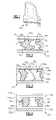
- Figure 1 shows a composite article 20.
- the composite article 20 is a turbine blade for a gas turbine engine, although this disclosure is not limited to such components.
- the composite article 20 may alternatively be a turbine vane, compressor blade or vane, combustor liner, blade outer air seal or other component that would benefit from this disclosure. It is also to be understood that the composite article 20 is not limited to components that are used for gas turbine engines and that components in other fields will also benefit from this disclosure.
- Figure 2 shows a cross-section of a portion of the composite article 20.
- the portion may be from the airfoil-shaped blade section of the turbine blade.
- the composite article 20 includes a substrate 22, at least one protective layer 24 on the substrate 22, and an intermediate layer 26 between the at least one protective layer 24 and the substrate 22.
- the at least one protective layer 24 and the intermediate layer 26 together may be considered to be an environmental barrier, a thermal barrier, a velocity barrier, an erosion resistant coating, or an abradable coating, depending upon the materials selected.
- the intermediate layer 26 is designed with a multi-functional microstructure.
- the intermediate layer 26 includes a first material 28a that occupies a first continuous region 28b and a second, different material 30a that occupies a second continuous region 30b next to the first continuous region 28b. That is, the second material 30a is different from the first material 28a in at least one of composition, microstructure (e.g., crystallographic phase and/or orientation), or other physical property such that the regions 28b and 30b are perceptibly distinct (e.g., such as by metallographic techniques).
- composition e.g., crystallographic phase and/or orientation
- other physical property e.g., such as by metallographic techniques
- first continuous region 28b and the second continuous region 30b are each in contact with the substrate 22 and the protective layer 24.
- first continuous region 28b and the second continuous region 30b are co-continuous regions that each extend without interruption from the upper surface of the intermediate layer 26 to the lower surface of the intermediate layer 26.
- first continuous region 28b and the second continuous region 30b are shown in a two-dimensional rendering in Figure 2 for purposes of description, but that the first continuous region 28b and the second continuous region 30b may be continuous, intertwined three-dimensional regions that each have at least one area of contact with the substrate 22 (on the bottom surface of the intermediate layer 26) and one area of contact with the protective layer 24 (on the top surface of the intermediate layer 26).
- the first continuous region 28b and the second continuous region 30b interpenetrate each other. That is, the first continuous region 28b has relatively narrow protrusions 28c or "fingers” that extend into relatively broad portions of the second continuous region 30b. Likewise, the second continuous region 30b has relatively narrow protrusions 30c or "fingers” that extend into relatively broad portions of the first continuous region 28b. Additionally, in the illustrated example, the first continuous region 28b and the second continuous region 30b are amorphous in shape and thereby lack any definite form or pattern.
- the first material 28a and the second material 30a are selected to serve different functions within the composite article 20.
- the first material 28a and the second material 30a may individually provide adhesion between the substrate 22 and the protective layer 24, oxygen gettering, thermal expansion matching between the substrate 22 and the protective layer 24, thermo-mechanical compliance or other desired function in the composite article 20.
- the first material 28a to be different from the second material 30a in at least one of composition or microstructure (e.g., crystallographic phase and/or orientation) or other physical property, the intermediate layer 26 serves different functions in the composite article 20.
- the materials selected for the substrate 22, first material 28a, second material 30a, and protective layer 24 depend upon the desired functions in the intermediate layer 26 and end use of the composite article 20. It is to be understood that the below-described example materials for the substrate 22, first material 28a, second material 30a, and protective layer 24 may be constituents in the respective compositions of the substrate 22, first material 28a, second material 30a, and protective layer 24 or may compose the respective compositions of the substrate 22, first material 28a, second material 30a, and protective layer 24 to the exclusion of other materials in the compositions, with the exception of trace impurities.
- first material 28a and the second material 30a include different metallic materials, ceramic materials, glasses or glass ceramics or carbon, or one may include a metallic material (and exclude ceramic materials, glasses or glass ceramics or carbon) and the other may include a ceramic material, glass, or glass ceramic or carbon (and exclude metallic materials).
- first material 28a and second material 30a are selected, in any and all combinations thereof.
- the metallic material is MCrAlY and the various compositions thereof, where the M includes at least one of nickel, cobalt, iron or a combination thereof, Cr is chromium, Al is aluminum and Y is yttrium.
- the first material 28a and the second material 30a may include different compositions of MCrAlY.
- the metallic material is aluminum or aluminum-based alloy, titanium or titanium-based alloy, steel or stainless steel.
- the metallic material is based on zirconium, molybdenum, niobium, or tantalum, or is a non-superalloy based on iron, nickel, cobalt or chromium.
- the ceramic material is an oxide, carbide, nitride, boride, silicide, oxycarbide, oxynitride, carbonitride, aluminide, silicate, titanate, phosphate, phosphide or combination thereof.
- the oxide ceramic is zirconia (e.g., stabilized or unstabilized), hafnia, gadolinia, a silicate or a combination thereof.
- the silicate may be a rare earth element silicate, which includes at least one rare earth element from the group of fifteen lanthanides, scandium and yttrium.
- the silicate may include boron.
- the rare earth silicate is yttrium silicate.
- the first material 28a is a silicate material, such as yttrium silicate, and the second material 30a is zirconia.
- the first material 28a is stabilized or unstabilized zirconia and the second material 30a is the other of stabilized or unstabilized zirconia.
- the first material 28a is cubic boron nitride and the second material 30a is hexagonal boron nitride.
- Examples of a glass material include silica, borosilicates, barium aluminosilicates, lanthanum aluminosilicates, strontium magnesium silicates, barium magnesium aluminosilicates and lithium-containing glasses.
- the substrate 22 in the illustrated example includes at least one of a metallic material, a superalloy material, a ceramic material or carbon.
- the metallic material is aluminum or aluminum-based alloy, titanium or titanium-based alloy, steel or stainless steel.
- the superalloy material may be a nickel-based or cobalt-based alloy.
- the substrate 22 is based on zirconium, molybdenum, niobium, or tantalum, or is a non-superalloy based on iron, nickel, cobalt or chromium.
- the ceramic material may be selected from carbides, oxides, nitrides, borides, silicides, oxycarbides, oxynitrides, carbonitrides, aluminides, silicates, titanates, phosphates, phosphides and combinations thereof.
- the ceramic material is a silicon-based ceramic material, such as silicon carbide, silicon oxycarbide, silicon oxynitride, or glass, glass/ceramic material, or other oxide, carbide, nitride, boride or combination thereof that includes silicon.
- the substrate 22 may be monolithic form (i.e., formed of a single, continuous mass of material) or a composite of several different ceramic materials or ceramic and metallic materials and glasses or glass ceramics or carbon.
- the substrate 22 is a ceramic matrix composite, where the ceramic matrix material forms a continuous phase in which a phase of another material, such as a reinforcement material, is dispersed.
- the ceramic matrix may be selected from carbides, oxides, nitrides, borides, silicides, oxycarbides, oxynitrides, carbonitrides, aluminides, silicates, titanates, phosphates, phosphides and combinations thereof.
- the at least one protective layer 24 in the illustrated example includes one or more layers of selected materials. At least one of the layers may include a ceramic material, such as an oxide ceramic.
- the oxide ceramic may be zirconia, hafnia, gadolinia, silicate, or combinations thereof.
- the silicate may include a rare earth element silicate material, as described above.
- the at least one protective layer 24 is a composite of at least two different materials.
- the at least one protective layer 24 includes distinct regions of tungsten carbide and cobalt, or distinct regions of MCrAlY and a lubricious material such as graphite, hexagonal boron nitride or molybdenum disulfide.
- the first material 28a and the material of the substrate 22 may have equivalent compositions
- the second material 30a and the material of the protective layer 24 may have equivalent compositions, to enhance bonding between the substrate 22 and the protective layer 24.
- the amounts of the first material 28a and the second material 30a are selected to influence the functionality and are present in sufficient amount to form the respective first continuous region 28b and second continuous region 30b. Given this description, one of ordinary skill in the art will be able to determine suitable amounts of the materials for their intended end use.
- the first material 28a, the second material 30a and any additional materials that are to form continuous regions in the intermediate layer 26 may individually be present in amounts in a range of 1-99 % such that the volumes add up to 100%, and provided that the selected amount of a material exceeds the percolation threshold of that material for forming a continuous region that connects the substrate 22 and the at least one protective layer 24. Therefore, the selected amounts will depend on the nature of the materials used and material morphology (e.g., platelets, spheres, etc.).
- Figure 3 shows a cross-section of a portion of another example composite article 120, where like reference numerals designate like elements.
- the composite article 120 includes the substrate 22 and the protective layer 24 as described with regard to Figure 2 , with an intermediate layer 126 between the protective layer 24 and the substrate 22.
- the intermediate layer 126 is similar to the intermediate layer 26 shown in Figure 1 with regard to the first material 28a and first continuous region 28b and the second material 30a and the second continuous region 30b.
- the intermediate layer 126 additionally includes a third material 132a that occupies a third continuous region 132b that is next to the first continuous region 28b, the second continuous region 30b or both.
- the third continuous region 132b is contiguous with the first continuous region 28b and the second continuous region 30b. Similar to the first continuous region 28b and the second continuous region 30b, the third continuous region 132b is also in contact with the substrate 22 and the protective layer 24.
- the third material 132a provides the intermediate layer 126 with additional functionality in that the third material 132a is different than the first material 28a and the second material 30a in at least one of composition, microstructure (e.g., crystallographic phase and/or orientation) or other physical property. That is, the materials may be selected to serve various individual purposes, such as adhesion, oxygen gettering, thermal expansion matching, thermo-mechanical compliance or other desirable purpose within the composite article 120.
- composition e.g., crystallographic phase and/or orientation
- the materials may be selected to serve various individual purposes, such as adhesion, oxygen gettering, thermal expansion matching, thermo-mechanical compliance or other desirable purpose within the composite article 120.
- the third material 132a is selected from the given example materials disclosed for the first material 28a and the second material 30a. That is, the third material 132a includes the disclosed metallic materials, ceramic materials, glass or glass ceramics, or carbon.
- Figure 4 illustrates another composite article 220, where like reference numerals designate like elements.
- the intermediate layer 26 is located between a substrate 222 and a protective layer 224.
- the substrate 222 and the protective layer 224 are each multi-layered structures.
- one of the substrate 222 or protective layer 224 is multi-layered and the other is a single layer.
- the substrate 222 includes a first layer 222a and a second layer 222b.
- the first layer 222a is the base of the composite article 220 that generally defines the contoured shape of the article.
- the second layer 222b is a bond coat between the first layer 222a and the intermediate layer 26.
- the protective layer 224 includes a first layer 224a and a second layer 224b.
- the second layer 224b is a top coat on the composite article 220 and the first layer 224a is a sublayer between the second layer 224b and the intermediate layer 226.
- the second layer 222b includes silicon metal and the first layer 224a includes zirconia.
- the first layer 222a of the substrate 222 includes a ceramic material, such as one of the silicon-containing ceramic materials described above.
- the second layer 224b of the protective layer 224 includes gadolinium and zirconium.
- the first material 28a includes a silicate material
- the second material 30a includes zirconia.
- the combination of the first continuous region 28b and the second continuous region 30b of the given materials provides strong adhesion between the first layer 224a of the protective layer 224 and the second layer 222b of the substrate 222.
- the selected materials of the intermediate layer 26 also provide thermal expansion matching between the substrate 222 and the protective layer 224.
Landscapes
- Chemical & Material Sciences (AREA)
- Engineering & Computer Science (AREA)
- Materials Engineering (AREA)
- Organic Chemistry (AREA)
- Mechanical Engineering (AREA)
- Ceramic Engineering (AREA)
- Inorganic Chemistry (AREA)
- Chemical Kinetics & Catalysis (AREA)
- Metallurgy (AREA)
- Structural Engineering (AREA)
- General Engineering & Computer Science (AREA)
- Composite Materials (AREA)
- Manufacturing & Machinery (AREA)
- Laminated Bodies (AREA)
- Turbine Rotor Nozzle Sealing (AREA)
- Medicinal Preparation (AREA)
Applications Claiming Priority (1)
| Application Number | Priority Date | Filing Date | Title |
|---|---|---|---|
| US13/149,027 US10309018B2 (en) | 2011-05-31 | 2011-05-31 | Composite article having layer with co-continuous material regions |
Publications (2)
| Publication Number | Publication Date |
|---|---|
| EP2530185A2 true EP2530185A2 (fr) | 2012-12-05 |
| EP2530185A3 EP2530185A3 (fr) | 2014-07-02 |
Family
ID=46229224
Family Applications (1)
| Application Number | Title | Priority Date | Filing Date |
|---|---|---|---|
| EP12170075.1A Pending EP2530185A3 (fr) | 2011-05-31 | 2012-05-30 | Article composite présentant une couche dotée de régions de matériau co-continues |
Country Status (2)
| Country | Link |
|---|---|
| US (1) | US10309018B2 (fr) |
| EP (1) | EP2530185A3 (fr) |
Cited By (4)
| Publication number | Priority date | Publication date | Assignee | Title |
|---|---|---|---|---|
| WO2015073938A1 (fr) | 2013-11-18 | 2015-05-21 | United Technologies Corporation | Article comprenant un revêtement variable |
| CN107002706A (zh) * | 2015-04-02 | 2017-08-01 | 株式会社Ihi | 发动机用压缩机叶片 |
| EP3252278A1 (fr) * | 2016-05-31 | 2017-12-06 | United Technologies Corporation | Composites haute température ayant une matrice améliorée |
| EP3539939A1 (fr) * | 2018-03-14 | 2019-09-18 | Siemens Aktiengesellschaft | Matériau de verre en tant que couche de liaison intermédiaire pour un tbc sur une cmc, procédé et produit |
Families Citing this family (4)
| Publication number | Priority date | Publication date | Assignee | Title |
|---|---|---|---|---|
| US10060019B2 (en) * | 2012-11-16 | 2018-08-28 | The Boeing Company | Thermal spray coated reinforced polymer composites |
| EP3800043B1 (fr) * | 2014-01-14 | 2023-04-05 | Raytheon Technologies Corporation | Revêtement de barrière environnementale à base d'oxycarbure de silicium |
| US20150291473A1 (en) * | 2014-04-09 | 2015-10-15 | United Technologies Corporation | Energy preparation of ceramic fiber for coating |
| US9869013B2 (en) | 2014-04-25 | 2018-01-16 | Applied Materials, Inc. | Ion assisted deposition top coat of rare-earth oxide |
Citations (2)
| Publication number | Priority date | Publication date | Assignee | Title |
|---|---|---|---|---|
| EP2062999A2 (fr) * | 2007-10-29 | 2009-05-27 | General Electric Company | Procédé de traitement de revêtement de barrière thermique et articles associés |
| US20100074726A1 (en) * | 2008-09-19 | 2010-03-25 | Merrill Gary B | Gas turbine airfoil |
Family Cites Families (34)
| Publication number | Priority date | Publication date | Assignee | Title |
|---|---|---|---|---|
| US3956014A (en) | 1974-12-18 | 1976-05-11 | United Technologies Corporation | Precisely-structured electrochemical cell electrode and method of making same |
| US4111723A (en) * | 1976-01-19 | 1978-09-05 | United Technologies Corporation | Directionally solidified eutectic superalloy articles |
| CA1217433A (fr) * | 1983-08-29 | 1987-02-03 | Westinghouse Electric Corporation | Aube a revetement gradue pour turbine a combustion |
| US4639388A (en) * | 1985-02-12 | 1987-01-27 | Chromalloy American Corporation | Ceramic-metal composites |
| JPH0791660B2 (ja) * | 1989-08-30 | 1995-10-04 | 株式会社日立製作所 | 環境遮断用耐熱壁を備えた地上機器 |
| US5030517A (en) * | 1990-01-18 | 1991-07-09 | Allied-Signal, Inc. | Plasma spraying of rapidly solidified aluminum base alloys |
| FR2685693B1 (fr) | 1991-12-30 | 1994-06-03 | Europ Propulsion | Procede de realisation d'une protection contre l'oxydation de produits en materiau composite, et produits ainsi proteges. |
| JPH07508703A (ja) * | 1992-06-12 | 1995-09-28 | ミネソタ・マイニング・アンド・マニュファクチュアリング・カンパニー | モノリシックセラミック/繊維強化セラミック複合材料 |
| US5304031A (en) * | 1993-02-25 | 1994-04-19 | The United States Of America As Represented By The Secretary Of The Air Force | Outer air seal for a gas turbine engine |
| TW228507B (en) * | 1993-12-01 | 1994-08-21 | Stained Glass Systems Ltd | A method for producing a decorated glass panel |
| US5628938A (en) | 1994-11-18 | 1997-05-13 | General Electric Company | Method of making a ceramic composite by infiltration of a ceramic preform |
| US5902429A (en) | 1995-07-25 | 1999-05-11 | Westaim Technologies, Inc. | Method of manufacturing intermetallic/ceramic/metal composites |
| US5997517A (en) | 1997-01-27 | 1999-12-07 | Sts Biopolymers, Inc. | Bonding layers for medical device surface coatings |
| US5876860A (en) * | 1997-12-09 | 1999-03-02 | N.V. Interturbine | Thermal barrier coating ceramic structure |
| US6042880A (en) * | 1998-12-22 | 2000-03-28 | General Electric Company | Renewing a thermal barrier coating system |
| US6203927B1 (en) | 1999-02-05 | 2001-03-20 | Siemens Westinghouse Power Corporation | Thermal barrier coating resistant to sintering |
| US6210812B1 (en) * | 1999-05-03 | 2001-04-03 | General Electric Company | Thermal barrier coating system |
| US6780458B2 (en) * | 2001-08-01 | 2004-08-24 | Siemens Westinghouse Power Corporation | Wear and erosion resistant alloys applied by cold spray technique |
| US6706319B2 (en) * | 2001-12-05 | 2004-03-16 | Siemens Westinghouse Power Corporation | Mixed powder deposition of components for wear, erosion and abrasion resistant applications |
| EP1327702A1 (fr) * | 2002-01-10 | 2003-07-16 | ALSTOM (Switzerland) Ltd | Revêtement de liaison de type MCrAlY et procédé de depôt de ce revêtement de liason de type MCrAlY |
| US6759151B1 (en) * | 2002-05-22 | 2004-07-06 | The United States Of America As Represented By The Administrator Of The National Aeronautics And Space Administration | Multilayer article characterized by low coefficient of thermal expansion outer layer |
| US6905559B2 (en) * | 2002-12-06 | 2005-06-14 | General Electric Company | Nickel-base superalloy composition and its use in single-crystal articles |
| US20040151935A1 (en) | 2003-02-03 | 2004-08-05 | Robert Dzugan | Co-continuous metal-ceramic article and method for manufacture thereof |
| US6802878B1 (en) * | 2003-04-17 | 2004-10-12 | 3M Innovative Properties Company | Abrasive particles, abrasive articles, and methods of making and using the same |
| EP1645660A1 (fr) | 2004-10-07 | 2006-04-12 | Siemens Aktiengesellschaft | Système de revêtement |
| EP1645652A1 (fr) | 2004-10-07 | 2006-04-12 | Siemens Aktiengesellschaft | Procédé de fabrication d'un système de couches |
| US7871578B2 (en) | 2005-05-02 | 2011-01-18 | United Technologies Corporation | Micro heat exchanger with thermally conductive porous network |
| US7422771B2 (en) * | 2005-09-01 | 2008-09-09 | United Technologies Corporation | Methods for applying a hybrid thermal barrier coating |
| US8017230B2 (en) | 2005-10-31 | 2011-09-13 | Praxair S.T. Technology, Inc. | Ceramic powders and thermal barrier coatings made therefrom |
| US9103633B2 (en) * | 2006-04-20 | 2015-08-11 | Sikorsky Aircraft Corporation | Lightweight projectile resistant armor system |
| US7875370B2 (en) * | 2006-08-18 | 2011-01-25 | United Technologies Corporation | Thermal barrier coating with a plasma spray top layer |
| US20080145694A1 (en) * | 2006-12-19 | 2008-06-19 | David Vincent Bucci | Thermal barrier coating system and method for coating a component |
| US7635290B2 (en) | 2007-08-15 | 2009-12-22 | Rohm And Haas Electronic Materials Cmp Holdings, Inc. | Interpenetrating network for chemical mechanical polishing |
| US20090252985A1 (en) * | 2008-04-08 | 2009-10-08 | Bangalore Nagaraj | Thermal barrier coating system and coating methods for gas turbine engine shroud |
-
2011
- 2011-05-31 US US13/149,027 patent/US10309018B2/en active Active
-
2012
- 2012-05-30 EP EP12170075.1A patent/EP2530185A3/fr active Pending
Patent Citations (2)
| Publication number | Priority date | Publication date | Assignee | Title |
|---|---|---|---|---|
| EP2062999A2 (fr) * | 2007-10-29 | 2009-05-27 | General Electric Company | Procédé de traitement de revêtement de barrière thermique et articles associés |
| US20100074726A1 (en) * | 2008-09-19 | 2010-03-25 | Merrill Gary B | Gas turbine airfoil |
Cited By (8)
| Publication number | Priority date | Publication date | Assignee | Title |
|---|---|---|---|---|
| WO2015073938A1 (fr) | 2013-11-18 | 2015-05-21 | United Technologies Corporation | Article comprenant un revêtement variable |
| EP3071727A4 (fr) * | 2013-11-18 | 2017-06-21 | United Technologies Corporation | Article comprenant un revêtement variable |
| CN107002706A (zh) * | 2015-04-02 | 2017-08-01 | 株式会社Ihi | 发动机用压缩机叶片 |
| EP3217017A4 (fr) * | 2015-04-02 | 2018-07-04 | IHI Corporation | Pale de compresseur pour moteur |
| EP3489525A1 (fr) | 2015-04-02 | 2019-05-29 | IHI Corporation | Aube de compresseur (statorique ou rotorique) pour moteur |
| US10533566B2 (en) | 2015-04-02 | 2020-01-14 | Ihi Corporation | Compressor vane or blade for engine with exfoliating coating |
| EP3252278A1 (fr) * | 2016-05-31 | 2017-12-06 | United Technologies Corporation | Composites haute température ayant une matrice améliorée |
| EP3539939A1 (fr) * | 2018-03-14 | 2019-09-18 | Siemens Aktiengesellschaft | Matériau de verre en tant que couche de liaison intermédiaire pour un tbc sur une cmc, procédé et produit |
Also Published As
| Publication number | Publication date |
|---|---|
| EP2530185A3 (fr) | 2014-07-02 |
| US10309018B2 (en) | 2019-06-04 |
| US20120308842A1 (en) | 2012-12-06 |
Similar Documents
| Publication | Publication Date | Title |
|---|---|---|
| EP2530185A2 (fr) | Article composite présentant une couche dotée de régions de matériau co-continues | |
| EP2537822A2 (fr) | Article composite incluant une couche d'oxycarbure de silicium | |
| US11149338B2 (en) | Gas turbine engine component coating with self-healing barrier layer | |
| US7374825B2 (en) | Protection of thermal barrier coating by an impermeable barrier coating | |
| CN1994732A (zh) | 热障涂覆制品及其制造方法 | |
| EP1683775B1 (fr) | Couche barrière thermique/environnementale pour un substrat contenant du silicium | |
| CN103160711B (zh) | 镍钴基合金和结合涂层及并入该结合涂层的结合涂覆制品 | |
| US20100047614A1 (en) | Combustion turbine component having bond coating and associated methods | |
| US20140017477A1 (en) | Thermal Barrier Coating with Lower Thermal Conductivity | |
| US20150159507A1 (en) | Article for high temperature service | |
| JP2006199574A (ja) | ケイ素含有材料用の、物理バリヤー層を有する環境バリヤーコーティング | |
| EP2014784B1 (fr) | Revetement de barrier thermique ayant de la resistance à l endurance | |
| EP1837485B1 (fr) | Une pièce avec un revêtement de protection | |
| JP2019507828A (ja) | 基材上に高温保護層を接合するための付着促進層、並びにそれの製造方法 | |
| EP1683772B1 (fr) | Barrière environnementale/thermique avec une couche de transition pour un substrat à base de silicium | |
| EP1683774B1 (fr) | Couche barrière thermique/environnementale pour un substrat contenant du silicium | |
| US20060166019A1 (en) | Thermal/environmental barrier coating for silicon-comprising materials | |
| Peters et al. | Design and properties of thermal barrier coatings for advanced turbine engines | |
| EP1686199A2 (fr) | Système de barrière thermique et méthode pour sa fabrication | |
| US6663983B1 (en) | Thermal barrier coating with improved strength and fracture toughness | |
| JP7086649B2 (ja) | 高温用の物品 | |
| KR102711268B1 (ko) | 열 사이클 피로 내성 및 황화부식 저항성이 향상된 tbc용 고도의 접합 코트 재료 | |
| EP2339051A1 (fr) | Article disposant d'un revêtement de barrière thermique | |
| EP3705597A1 (fr) | Revêtement de barrière thermique présentant une adhérence améliorée | |
| EP0987345A1 (fr) | Système de revêtement de barrière thermique |
Legal Events
| Date | Code | Title | Description |
|---|---|---|---|
| PUAI | Public reference made under article 153(3) epc to a published international application that has entered the european phase |
Free format text: ORIGINAL CODE: 0009012 |
|
| AK | Designated contracting states |
Kind code of ref document: A2 Designated state(s): AL AT BE BG CH CY CZ DE DK EE ES FI FR GB GR HR HU IE IS IT LI LT LU LV MC MK MT NL NO PL PT RO RS SE SI SK SM TR |
|
| AX | Request for extension of the european patent |
Extension state: BA ME |
|
| PUAL | Search report despatched |
Free format text: ORIGINAL CODE: 0009013 |
|
| AK | Designated contracting states |
Kind code of ref document: A3 Designated state(s): AL AT BE BG CH CY CZ DE DK EE ES FI FR GB GR HR HU IE IS IT LI LT LU LV MC MK MT NL NO PL PT RO RS SE SI SK SM TR |
|
| AX | Request for extension of the european patent |
Extension state: BA ME |
|
| RIC1 | Information provided on ipc code assigned before grant |
Ipc: C23C 28/00 20060101AFI20140527BHEP |
|
| 17P | Request for examination filed |
Effective date: 20141104 |
|
| RBV | Designated contracting states (corrected) |
Designated state(s): AL AT BE BG CH CY CZ DE DK EE ES FI FR GB GR HR HU IE IS IT LI LT LU LV MC MK MT NL NO PL PT RO RS SE SI SK SM TR |
|
| RAP1 | Party data changed (applicant data changed or rights of an application transferred) |
Owner name: UNITED TECHNOLOGIES CORPORATION |
|
| STAA | Information on the status of an ep patent application or granted ep patent |
Free format text: STATUS: EXAMINATION IS IN PROGRESS |
|
| 17Q | First examination report despatched |
Effective date: 20170914 |