EP2530737A1 - Solarzellenmodul - Google Patents
Solarzellenmodul Download PDFInfo
- Publication number
- EP2530737A1 EP2530737A1 EP11737094A EP11737094A EP2530737A1 EP 2530737 A1 EP2530737 A1 EP 2530737A1 EP 11737094 A EP11737094 A EP 11737094A EP 11737094 A EP11737094 A EP 11737094A EP 2530737 A1 EP2530737 A1 EP 2530737A1
- Authority
- EP
- European Patent Office
- Prior art keywords
- filler layer
- solar cell
- vinyl acetate
- cell module
- sheet
- Prior art date
- Legal status (The legal status is an assumption and is not a legal conclusion. Google has not performed a legal analysis and makes no representation as to the accuracy of the status listed.)
- Granted
Links
Images



Classifications
-
- B—PERFORMING OPERATIONS; TRANSPORTING
- B32—LAYERED PRODUCTS
- B32B—LAYERED PRODUCTS, i.e. PRODUCTS BUILT-UP OF STRATA OF FLAT OR NON-FLAT, e.g. CELLULAR OR HONEYCOMB, FORM
- B32B17/00—Layered products essentially comprising sheet glass, or glass, slag, or like fibres
- B32B17/06—Layered products essentially comprising sheet glass, or glass, slag, or like fibres comprising glass as the main or only constituent of a layer, next to another layer of a specific material
- B32B17/10—Layered products essentially comprising sheet glass, or glass, slag, or like fibres comprising glass as the main or only constituent of a layer, next to another layer of a specific material of synthetic resin
- B32B17/10005—Layered products essentially comprising sheet glass, or glass, slag, or like fibres comprising glass as the main or only constituent of a layer, next to another layer of a specific material of synthetic resin laminated safety glass or glazing
- B32B17/1055—Layered products essentially comprising sheet glass, or glass, slag, or like fibres comprising glass as the main or only constituent of a layer, next to another layer of a specific material of synthetic resin laminated safety glass or glazing characterized by the resin layer, i.e. interlayer
- B32B17/10788—Layered products essentially comprising sheet glass, or glass, slag, or like fibres comprising glass as the main or only constituent of a layer, next to another layer of a specific material of synthetic resin laminated safety glass or glazing characterized by the resin layer, i.e. interlayer containing ethylene vinylacetate
-
- B—PERFORMING OPERATIONS; TRANSPORTING
- B32—LAYERED PRODUCTS
- B32B—LAYERED PRODUCTS, i.e. PRODUCTS BUILT-UP OF STRATA OF FLAT OR NON-FLAT, e.g. CELLULAR OR HONEYCOMB, FORM
- B32B17/00—Layered products essentially comprising sheet glass, or glass, slag, or like fibres
- B32B17/06—Layered products essentially comprising sheet glass, or glass, slag, or like fibres comprising glass as the main or only constituent of a layer, next to another layer of a specific material
- B32B17/10—Layered products essentially comprising sheet glass, or glass, slag, or like fibres comprising glass as the main or only constituent of a layer, next to another layer of a specific material of synthetic resin
- B32B17/10005—Layered products essentially comprising sheet glass, or glass, slag, or like fibres comprising glass as the main or only constituent of a layer, next to another layer of a specific material of synthetic resin laminated safety glass or glazing
- B32B17/10009—Layered products essentially comprising sheet glass, or glass, slag, or like fibres comprising glass as the main or only constituent of a layer, next to another layer of a specific material of synthetic resin laminated safety glass or glazing characterized by the number, the constitution or treatment of glass sheets
- B32B17/10018—Layered products essentially comprising sheet glass, or glass, slag, or like fibres comprising glass as the main or only constituent of a layer, next to another layer of a specific material of synthetic resin laminated safety glass or glazing characterized by the number, the constitution or treatment of glass sheets comprising only one glass sheet
-
- H—ELECTRICITY
- H10—SEMICONDUCTOR DEVICES; ELECTRIC SOLID-STATE DEVICES NOT OTHERWISE PROVIDED FOR
- H10F—INORGANIC SEMICONDUCTOR DEVICES SENSITIVE TO INFRARED RADIATION, LIGHT, ELECTROMAGNETIC RADIATION OF SHORTER WAVELENGTH OR CORPUSCULAR RADIATION
- H10F19/00—Integrated devices, or assemblies of multiple devices, comprising at least one photovoltaic cell covered by group H10F10/00, e.g. photovoltaic modules
- H10F19/80—Encapsulations or containers for integrated devices, or assemblies of multiple devices, having photovoltaic cells
- H10F19/804—Materials of encapsulations
-
- Y—GENERAL TAGGING OF NEW TECHNOLOGICAL DEVELOPMENTS; GENERAL TAGGING OF CROSS-SECTIONAL TECHNOLOGIES SPANNING OVER SEVERAL SECTIONS OF THE IPC; TECHNICAL SUBJECTS COVERED BY FORMER USPC CROSS-REFERENCE ART COLLECTIONS [XRACs] AND DIGESTS
- Y02—TECHNOLOGIES OR APPLICATIONS FOR MITIGATION OR ADAPTATION AGAINST CLIMATE CHANGE
- Y02E—REDUCTION OF GREENHOUSE GAS [GHG] EMISSIONS, RELATED TO ENERGY GENERATION, TRANSMISSION OR DISTRIBUTION
- Y02E10/00—Energy generation through renewable energy sources
- Y02E10/50—Photovoltaic [PV] energy
Definitions
- This invention relates to a solar cell module.
- this invention relates to a solar cell module including a solar cell disposed inside a filler layer provided between a plate and a sheet.
- a solar cell module includes a solar cell that receives light to generate electric power.
- the solar cell is apt to be degraded by contact with moisture or the like. Consequently, there is a necessity to isolate the solar cell from outside air. Accordingly, the solar cell is typically disposed inside a filler layer provided between a plate and a sheet. That is, the solar cell is sealed with the filler layer.
- Examples of a maternal for the filler layer may include an ethylene-vinyl acetate copolymer (EVA) as disclosed in Patent Literature 1 and the like.
- EVA ethylene-vinyl acetate copolymer
- EVA having a large vinyl acetate content is apt to absorb moisture while EVA having a small vinyl acetate content is hard to absorb moisture. Consequently, in order to obtain a solar cell module which includes a filler layer having low moisture permeability and has excellent weatherability, there is a necessity to form the filler layer from EVA having a small vinyl acetate content.
- EVA having a small vinyl acetate content has fluidity which is high at high temperature. Consequently, in the case of forming a filler layer from the EVA having a small vinyl acetate content, there is a possibility that the heat resistance of a solar cell module is degraded because the filler layer is flown when the solar cell module is heated to high temperature.
- the present invention has been devised in view of the circumstances described above, and an object thereof is to provide a solar cell module which is excellent in both of weatherability and heat resistance.
- the inventors of the present invention have found that in a filler layer provided between a plate and a sheet, in the case where at least a part of a portion being in contact with the sheet contains, as a main component, EVA having a large vinyl acetate content or polyethylene containing no vinyl acetate unit, favorable heat resistance is achieved even when the remaining portion of the filler layer contains, as a main component, EVA having a small vinyl acetate content.
- EVA having a large vinyl acetate content or polyethylene containing no vinyl acetate unit favorable heat resistance is achieved even when the remaining portion of the filler layer contains, as a main component, EVA having a small vinyl acetate content.
- a solar cell module includes a plate, a sheet, a filler layer and a solar cell.
- the sheet is opposed to the plate.
- the filler layer is provided between the plate and the sheet.
- the solar cell is disposed inside the filler layer.
- the filler layer includes a first filler layer and a second filler layer.
- the first filler layer is provided to come into contact with the sheet.
- the first filler layer contains, as a main component, an ethylene-vinyl acetate copolymer.
- the second filler layer contains, as a main component, an ethylene-vinyl acetate copolymer which is smaller in vinyl acetate content than the ethylene-vinyl acetate copolymer contained in the first filler layer, or polyethylene.
- the "vinyl acetate content" in the present invention refers to a vinyl acetate content based on JIS K7192:1999 (complying with ISO 8985).
- the vinyl acetate content can be measured in accordance with a saponifying method based on JIS K7192:1999 (complying with ISO 8985).
- the vinyl acetate content can be measured in accordance with the following method. First, a sample is weighed by a predetermined amount.
- the amount of the sample to be weighed is set to 1 g in the case where the vinyl acetate content is less than 10% by mass, 0.5 g in the case of 10% by mass to 20% by mass, 0.3 g in the case of 20% by mass to 40% by mass, and 0.2 g in the case of not less than 40% by mass.
- about 50 ml of xylene and 20 ml of a 0.1 N potassium hydroxide solution in ethanol are added to the weighed sample, and the resultant sample is refluxed at 200°C for 2 hours. After the reflux, 30 ml of a 0.1 N sulfuric acid aqueous solution is added to the cooled sample, and then the resultant sample is stirred.
- the phrase "containing, as a main component, an ethylene-vinyl acetate copolymer” indicates that only an ethylene-vinyl acetate copolymer is contained or an additive such as a light stabilizer or an ultraviolet absorber or a resin other than the ethylene-vinyl acetate copolymer, such as a silane modified resin, is contained in a ratio within about 5% by mass in the ethylene-vinyl acetate copolymer.
- the phrase "containing, as a main component, polyethylene” indicates that only polyethylene is contained or an additive such as a light stabilizer or an ultraviolet absorber or a resin other than the polyethylene, such as a silane modified resin, is contained in a ratio within about 5% by mass in the polyethylene.
- the vinyl acetate content in the ethylene-vinyl acetate copolymer contained in the first filler layer is not less than 20% by mass.
- the vinyl acetate content in the ethylene-vinyl acetate copolymer contained in the first filler layer is not less than 1.5 times as large as the vinyl acetate content in the ethylene-vinyl acetate copolymer contained in the second filler layer.
- the first filler layer may be in contact with the solar cell.
- the solar cell may be disposed between the first filler layer and the second filler layer.
- the solar cell may be disposed inside the second filler layer.
- the solar cell may be disposed inside the first filler layer.
- the first filler layer may be provided to come into contact with both the plate and the sheet.
- the second filler layer may be provided to come into contact with both the plate and the sheet.
- the first filler layer may be disposed such that the second filler layer is surrounded therewith.
- the plate may be a glass plate and the sheet may be a resin sheet.
- the solar cell receives light from the plate side.
- solar cell modules 1a to 11 in Figs. 1 to 12 each taken as an example.
- the solar cell modules 1a to 11 are merely illustrative.
- the present invention is not intended to be limited to the solar cell modules 1a to 11.
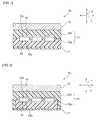
- Fig. 1 is a schematic sectional view of a solar cell module according to the present embodiment.
- the solar cell module 1a includes a plate 10, a sheet 11, a filler layer 13 and a solar cell 12.
- the plate 10 and the sheet 11 each have a function as a protection member for the solar cell 12.
- the plane 10 is a member that ensures the mechanical strength of the solar cell module 1a.
- the plate 10 is not particularly limited as long as it is a rigid member.
- the plate 10 can be configured with a glass plate, a resin plate or the like. Particularly, it is preferred that the plate 10 is configured with a glass plate because of the following reason. That is, the glass plate has high rigidity and high light transmittance, and is excellent in weatherability.
- a thickness of the plate 10 is not particularly limited.
- the thickness of the plate 10 can be set to about 3 mm to 6 mm.
- the sheet 11 is opposed to the plate 10.
- the sheet 11 is not particularly limited as long as it is a flexible member.
- the sheet 11 can be configured with a resin sheet made of polyethylene terephthalate (PET) or the like.
- PET polyethylene terephthalate
- a light shielding foil such as an aluminum foil, an inorganic barrier layer having low moisture permeability, or the like may be provided inside the resin sheet to be used as the sheet 11.
- the inorganic barrier layer can be made of an inorganic oxide such as silicon oxide, aluminum oxide or magnesium oxide, or the like.
- a thickness of the sheet 11 is not particularly limited.
- the thickness of the sheet 11 can be set to about 150 ⁇ m to 300 ⁇ m.
- the filler layer 13 is filled between the plate 10 and the sheet 11.
- the filler layer 13 is a member for sealing the solar cell 12. Therefore, the filler layer 13 is also called a sealing layer. A configuration of the filler layer 13 will be specifically described later.
- the plurality of solar cells 12 is disposed inside the filler layer 13.
- the solar cells 12 are arranged along an arrangement direction x perpendicular to a lamination direction z of the plate 10, filler layer 13 and sheet 11.
- the solar cells 12 may be arranged in a matrix form on a plane in which the lamination direction z is defined as a normal direction.
- the solar cells 12 are electrically connected to one another in series or in parallel using wiring members 14.
- the solar cell 12 and the wiring member 14 can be bonded together using a conductive resin adhesive containing a resin and conductive particles dispersed in the resin, solder or the like.
- each of the solar cells 12 is disposed to have at light receiving surface 12a directed to the plate 10 and a rear surface 12b directed to the sheet 11. That is, in the present embodiment, each of the solar cells 12 receives light entering from the plate 10.
- the present invention is not limited to this configuration.
- the solar cell may be disposed to have the light receiving surface directed to the sheet and the rear surface directed to the plate.
- each of both the main surfaces of the solar cell may be a light receiving surface.
- a structure of the solar cell 12 is not particularly limited.
- the solar cell 12 may be a HIT (registered trademark) solar cell having a HIT structure or may be a solar cell having a different structure.
- the solar cell 12 includes a photoelectric conversion body that receives light, thereby generating carriers (electrons and positive holes).
- the photoelectric conversion body is made of a semiconductor material having a semiconductor junction such as a pn junction or a pin junction.
- the semiconductor material may include a crystalline silicon semiconductor such as single-crystalline silicon or polycrystalline silicon, an amorphous silicon semiconductor, a compound semiconductor such as GaAs, and the like.
- the photoelectric conversion body has first and second main surfaces on which collector electrodes for collecting carriers are formed, respectively.
- the collector electrodes on the adjoining solar cells 12 are connected to each other using the wiring member 14, so that the respective solar cells 12 are electrically connected to one another.
- the collector electrode includes a plurality of fingers mutually extending in parallel, and one or a plurality of bus bars extending in a direction perpendicular to the direction of extension of the finger and connected to each of the fingers, but is not limited thereto.
- the filler layer 13 includes a first filler layer 13a and a second filler layer 13b.
- the first filler layer 13a is provided to come into contact with the sheet 11.
- the first filler layer 13a and the second filler layer 13b are laminated in this order from the sheet 11 side in between the sheet 11 and the plate 10.
- the sheet 11 and the first filler layer 13a are bonded together.
- the first filler layer 13a and the second filler layer 13b are also bonded together.
- the second filler layer 13b and the plate 10 are also bonded together.
- Fig. 1 illustrates the boundary between the first filler layer 13a and the second filler layer 13b such that the boundary is placed inside a region where the solar cell 12 is provided in the lamination direction 2.
- the boundary may be almost flush with the light receiving surface 12a or the rear surface 12b of the solar cell 12 in the lamination direction z, for example.
- a thickness of each of the first filler layer 13a and the second filler layer 13b in the lamination direction z is not particularly limited.
- the thickness of the first filler layer 13a in the lamination direction z is about 0.3 mm to 0.8 mm.
- the thickness of the second filler layer 13b in the lamination direction z is about 0.3 mm to 0.8 mm.
- the thickness of the entire filler layer 13 in the lamination direction z is about 0.6 mm to 2.0 mm. It is preferred that a ratio of the thickness of the first filler layer 13a in the lamination direction z and the thickness of the second filler layer 13b in the lamination direction z falls within a range of 1 : 2 to 2 : 1.
- the first filler layer 13a contains, as a main component, an ethylene-vinyl acetate copolymer (EVA).
- EVA ethylene-vinyl acetate copolymer
- the first filler layer 13a may be made of EVA, or may be made of a mixture or a copolymer of EVA and a different resin, or EVA to which an additive is added.
- the different resin may include a silane modified resin and the like.
- examples of the additive may include a light stabilizer, an ultraviolet absorber and the like.
- the second filler layer 13b contains, as a main component, EVA or polyethylene containing no vinyl acetate unit.
- the second filler layer 13b may be made of EVA or polyethylene, or may be made of a mixture or a copolymer of EVA or polyethylene and a different resin, or EVA or polyethylene to which an additive is added.
- examples of the different resin may include a silane modified resin and the like.
- examples of the additive may include a light stabilizer, an ultraviolet absorber and the like.
- a vinyl acetate content in the EVA contained in the second filler layer 13b is smaller than a vinyl acetate content in the EVA contained in the first filler layer 13a.
- the vinyl acetate content in the EVA contained in the first filler layer 13a is preferably not less than 1.5 times, more preferably not less than 2 times, further preferably not less than 5 times as large as the vinyl acetate content in the EVA contained in the second filler layer 13b.
- the vinyl acetate content in the EVA contained in the first filler layer 13a is preferably not less than 20% by mass, more preferably not less than 25% by mass.
- the vinyl acetate content in the EVA contained in the first filler layer 13a is preferably not more than 30% by mass.
- the vinyl acetate content in the EVA contained in the second filler layer 13b is preferably not more than 20% by mass, more preferably not more than 15% by mass, further preferably not more than 5% by mass.
- the second filler layer 13b which contains, as a main component, EVA having a small vinyl acetate content or polyethylene having a vinyl acetate content of zero and has low moisture permeability. Therefore, in the solar cell module 1a according to the present embodiment, for example, an amount of moisture reaching the solar cell 12 is small as compared with the case where the filler layer includes only the first filler layer having a large vinyl acetate content. Therefore, it is possible to prevent the degradation of the solar cell 12 due to moisture. Accordingly, the solar cell module 1a achieves favorable weatherability.
- the first filler layer 13a which contains, as a main component, EVA having a large vinyl acetate content and has fluidity which is low even at high temperature is provided to come into contact with the sheet 11 which is lower in rigidity than the plate 10. Therefore, it is possible to realize favorable heat resistance.
- the first filler layer 13a which contains, as a main component, the EVA having a large vinyl acetate content and has fluidity which is low at high temperature is provided to come into contact with the sheet 11 and, further, the second filler layer 13b which contains, as a main component, the EVA having a small vinyl acetate content or polyethylene and has low moisture permeability is provided as described in the present embodiment.
- the vinyl acetate content in the EVA contained in the first filler layer 13a is not less than 1.5 times as large as the vinyl acetate content in the EVA contained in the second filler layer 13b, it is possible to achieve both of favorable weatherability and favorable heat resistance at higher level.
- the vinyl acetate content in the EVA contained in the first filler layer 13a is more preferably not less than 2 times, further preferably not less than 5 times as large as the vinyl acetate content in the EVA contained in the second filler layer 13b.
- the vinyl acetate content in the EVA contained in the first filler layer 13a is not more than 30% by mass.
- the vinyl acetate content in the EVA contained in the second filler layer 13b is not more than 20% by mass.
- the vinyl acetate content in the EVA contained in the second filler layer 13b is more preferably not more than 15% by mass, further preferably not more than 5% by mass.
- the vinyl acetate content in the EVA contained in the second filler layer 13b may be zero. That is, the second filler layer 13b may be made of polyethylene.
- the first filler layer 13a having fluidity which is low at high temperature is provided to come into contact with the solar cell 12. Therefore, it is possible to realize more excellent heat resistance.
- the plate 10 disposed on the light receiving surface 12a side of the solar cell 12 is configured with a glass plate having low moisture permeability. Therefore, moisture is hard to enter into the solar cell module 1a from the plate 10 side.
- the light receiving surface 12a of the solar cell 12 and the portion located on the light receiving surface 12a side in the filler layer 13, each of which exerts a large influence on the output from the solar cell module 1a are hard to be degraded. Accordingly, it is possible to further improve the weatherability of the solar cell module 1a.
- the first filler layer 13a having high moisture permeability is not disposed, but the second filler layer 13b having low moisture permeability is disposed on the light receiving surface 12a side of the solar cell 12. Therefore, it is possible to further reduce moisture reaching the light receiving surface 12a of the solar cell 12. Thus, it is possible to more effectively prevent the degradation of the light receiving surface 12a of the solar cell 12. Accordingly, it is possible to further improve the weatherability of the solar cell module 1a.
- the solar cell module 1a according to the present embodiment can be manufactured in accordance with a manufacturing method to be described below, for example.
- one or a plurality of sheets containing, as a main component, EVA or polyethylene is disposed on the sheet 11 so as to form the second filler layer 13b.
- the plurality of solar cells 12 electrically connected to one another using the wiring members 14 is disposed thereon and, further, one or a plurality of sheets containing, as a main component, EVA is disposed thereon so as to form the first filler layer 13a.
- the plate 10 is laminated. The formed laminate is subjected to thermocompression bonding under an atmosphere of reduced pressure.
- the solar cell module 1a can be manufactured.
- Fig. 2 is a schematic sectional view of a solar cell module 1b according to a second embodiment.
- a second filler layer 13b having low moisture permeability is provided to come into contact with both of a plate 10 and a sheet 11.
- the second filler layer 13b is provided from the plate 10 to the sheet 11 in a lamination direction z at a peripheral edge of the solar cell module 1b. That is, the second filler layer 13b is provided outside the first filler layer 13a when being seen from the lamination direction z.
- the solar cell module 1b according to the second embodiment can be manufactured in accordance with a substantially similar method to the manufacturing method described in the first embodiment in such a manner that an area of a sheet for forming the first filler layer 13a is set to be smaller than an area of a sheet for forming the second filler layer 13b, for example.
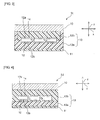
- Fig. 3 is a schematic sectional view of a solar cell module 1c according to a third embodiment.
- a first filler layer 13a having fluidity which is low even at high temperature is provided to come into contact with both of a plate 10 and a sheet 11.
- the first filler layer 13a is provided from the plate 10 to the sheet 11 in a lamination direction z at a peripheral edge of the solar cell module 1c. That is, the first filler layer 13a is placed outside the second filler layer 13b when being seen from the lamination direction z.
- the solar cell module 1c according to the third embodiment can be manufactured in accordance with a substantially similar method to the manufacturing method described in the first embodiment in such a manner that an area of a sheet for forming the second filler layer 13b is set to be smaller than an area of a sheet for forming the first filler layer 13a, for example.
- Fig. 4 is a schematic sectional view of a solar cell module 1d according to a fourth embodiment.
- a second filler layer 13b is formed to come closer to a sheet 11 than a plurality of solar cells 12, and the solar cells 12 are disposed inside the second filler layer 13b. That is, the solar cell 12 is surrounded with the second filler layer 13b having low moisture permeability.
- the solar cell module 1d according to the fourth embodiment can be manufactured in accordance with a substantially similar method to the manufacturing method described in the first embodiment in such a manner that a sheet for forming the second filler layer 13b is interposed between a sheet for forming the first filler layer 13a and the solar cell 12, for example.
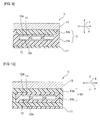
- Fig. 5 is a schematic sectional view of a solar cell module 1e according to a fifth embodiment.
- the solar cell module 1e according to the present embodiment is different from the solar cell module 1d according to the fourth embodiment in a point that a first filler layer 13a is provided from a plate 10 to a sheet 11 in a lamination direction z at a peripheral edge of the solar cell module 1e as in the third embodiment.
- the first filler layer 13a is placed outside the second filler layer 13b when being seen from the lamination direction z.
- Fig. 6 is a schematic sectional view of a solar cell module 1f according to a sixth embodiment.
- the solar cell module 1f according to the present embodiment is different from the solar cell module 1d according to the fourth embodiment in a point that a second filler layer 13b is provided from a plate 10 to a sheet 11 in a lamination direction z at a peripheral edge of the solar cell module 1f as in the second embodiment.
- the second filler layer 13b is placed outside the first filler layer 13a when being seen from the lamination direction z.
- Fig. 7 is a schematic sectional view of a solar cell module 1g according to a seventh embodiment.
- the solar cell module 1g according to the present embodiment is different from the solar cell module 1a according to the first embodiment in a point that a first filler layer 13a is formed to come closer to a plate 10 than a plurality of solar cells 12 and the plurality of solar cells 12 is disposed inside the first filler layer 13a.
- the solar cell module 1g according to the present embodiment can be manufactured in accordance with a substantially similar manufacturing method to the manufacturing method described in the first embodiment in such a manner that a sheet for forming the first filler layer 13a is disposed before the solar cell 12 is disposed on a sheet for forming a second filler layer 13b.
- Fig. 8 is a schematic sectional view of a solar cell module 1h according to an eighth embodiment.
- the solar cell module 1h according to the eighth embodiment is different from the solar cell module 1g according to the seventh embodiment in a point that a second filler layer 13b is provided from a plate 10 to a sheet 11 in a lamination direction z at a peripheral edge of the solar cell module 1h as in the second and sixth embodiments.
- the second filler layer 13b is placed outside a first filler layer 13a when being seen from the lamination direction z.
- Fig. 9 is a schematic sectional view of a solar cell module 1i according to a ninth embodiment.
- the solar cell module 1i according to the ninth embodiment is different from the solar cell module 1g according to the seventh embodiment in a point that a first filler layer 13a is provided from a plate 10 to a sheet 11 in a lamination direction z at a peripheral edge of the solar cell module 1i as in the third and fifth embodiments.
- the first filler layer 13a is placed outside a second filler layer 13b when being seen from the lamination direction z.
- Fig. 10 is a schematic sectional view of a solar cell module 1j according to a tenth embodiment.
- Fig. 11 is a schematic sectional view of a solar cell module 1k according to an eleventh embodiment.
- Fig. 12 is a schematic sectional view of a solar cell module 11 according to a twelfth embodiment.
- a first filler layer 13a is in contact with both of a plate 10 and a sheet 11.
- the first filler layer 13a is provided such that a second filler layer 13b is surrounded therewith.
- a plurality of solar cells 12 is disposed inside the second filler layer 13b.
- a plurality of solar cells 12 is disposed on a boundary between the first filler layer 13a and the second filler layer 13b.
- a plurality of solar cells 12 is disposed inside the first filler layer 13a.
- the first filler layer 13a having fluidity which is low at high temperature is provided to come into contact with the sheet 11 and the second filler layer 13b having low moisture permeability is provided. Therefore, it is possible to achieve both of excellent weatherability and excellent heat resistance.
- the first filler layer 13a having fluidity which is low at high temperature is provided to come into contact with the plurality of solar cells 12. Accordingly, it is possible to realize more excellent heat resistance.
- the first filler layer 13a having high moisture permeability is not disposed, but the second filler layer 13b having low moisture permeability is disposed on the light receiving surface 12a side of the solar cell 12. Accordingly, it is possible to realize more excellent heat resistance.
- the plurality of solar cells 12 is disposed inside the second filler layer 13b. That is, the plurality of solar cells 12 is surrounded with the second filler layer 13b having low moisture permeability. Therefore, it is possible to more effectively prevent moisture from reaching the plurality of solar cells 12. Thus, it is possible to more effectively prevent the degradation of the plurality of solar cells 12 due to the moisture. Accordingly, it is possible to realize more excellent weatherability.
- the plurality of solar cells 12 is disposed inside the first filler layer 13a. That is, the plurality of solar cells 12 is surrounded with the first filler layer 13a having fluidity which is low at high temperature. Therefore, the plurality of solar cells 12 is suitably protected by the first filler layer 13a even under an atmosphere of high temperature. Accordingly, it is possible to realize more excellent heat resistance.
- the first filler layer 13a having fluidity which is low at high temperature is provided to come into contact with both the plate 10 and the sheet 11. Therefore, it is possible to more effectively prevent the filler layer 13 from becoming deformed at high temperature.
- the first filler layer 13a is placed outside the second filler layer 13b. Thus, it is possible to effectively prevent the second filler layer 13b having fluidity which is high at high temperature from being flown at high temperature. Accordingly, it is possible to realize more excellent heat resistance.
- the second filler layer 13b is surrounded with the first filler layer 13a. Therefore, it is possible to more effectively prevent the second filler layer 13b from being flown at high temperature. Accordingly, it is possible to realize more excellent heat resistance.
- the second filler layer 13b having low moisture permeability is provided to come into contact with both the plate 10 and the sheet 11.
- the second filler layer 13b is provided from the plate 10 to the sheet 11 in the lamination direction z at the peripheral edge of each of the solar cell modules 1b, If and 1h. Therefore, it is possible to effectively prevent moisture from entering into the solar cell modules 1b, 1f and 1h through the peripheral edges of the solar cell modules 1b, 1f and 1h. Accordingly, it is possible to realize more excellent weatherability.
- the boundary between the first filler layer 13a and the second filler layer 13b is not exposed at a side surface of the solar cell module.
- a solar cell module A1 having a similar configuration to that of the solar cell module 1a according to the first embodiment was prepared in accordance with the following procedure.
- the resultant laminate was integrated by lamination and then was housed in a frame made of aluminum.
- the solar cell module was prepared.
- a first filler layer 13a has a vinyl acetate content of 25% by mass.
- a second filler layer 13b has a vinyl acetate content of 15% by mass.
- polyethylene terephthalate having a thickness of about 190 ⁇ m was used as the sheet 11.
- a plurality of fingers mutually extending in parallel and two bus bars provided to be orthogonal to the finger and disposed to be mutually separated from each other in the direction of extension of the finger were provided as collector electrodes on both surfaces of the solar cell 12 used herein.
- the prepared solar cell module was subjected to a high temperature and high humidity test and a temperature cycle test based on JIS C8991:2004.
- the high temperature and high humidity test was conducted as follows. That is, the solar cell module was left for 1000 hours in a high temperature and high humidity bath having a temperature within a range of 85 ⁇ 2°C and a relative humidity within a range of 85 ⁇ 5%. Then, an output decrease ratio of the solar cell module before and after conducting the high temperature and high humidity test ((output after conducting high temperature and high humidity test)/(output before conducting high temperature and high humidity test)) was measured.
- a resistance increase ratio between the two bus bars on the light receiving surface 12a before and after conducting the high temperature and high humidity test (((resistance after conducting high temperature and high humidity test)-(resistance before conducting high temperature and high humidity test))/(resistance before conducting high temperature and high humidity test)) was measured.
- the temperature cycle test was conducted as follows. That is, in a state that a conduction monitoring device is connected to both terminals of the prepared solar cell module and an insulating property monitoring device is connected between one of the terminals of the solar cell module and the frame, a cycle of raising the temperature of the solar cell module from a temperature within a range of -40 ⁇ 2°C to a temperature within a range of 90 ⁇ 2°C at 100°C/hour, holding the temperature for 10 minutes, lowering the temperature to the temperature within the range of -40 ⁇ 2°C at 100°C/hour, holding the temperature for 10 minutes, and raising the temperature again to the temperature within the range of 90 ⁇ 2°C at 100°C/hour was performed 200 times.
- a solar cell module A2 having a similar configuration to that in Example 1 was prepared except that the vinyl acetate content in the second filler layer 13b was set to 5% by mass, and was subjected to the high temperature and high humidity test and the temperature cycle test as in Example 1. The results are shown in Table 1 below.
- a solar cell module A3 having a similar configuration to that in Example 1 was prepared except that the vinyl acetate content in the second filler layer 13b was set to 0% by mass, and was subjected to the high temperature and high humidity test and the temperature cycle test as in Example 1. That is, in the present example, the second filler layer 13b was made of polyethylene. The results are shown in Table 1 below.
- a solar cell module B1 having a similar configuration to that in Example 1 was prepared except that the vinyl acetate content in the second filler layer 13b was set to 25% by mass, and was subjected to the high temperature and high humidity test and the temperature cycle test as in Example 1. The results are shown in Table 1 below.
- a solar cell module B2 having a similar configuration to that in Example 1 was prepared except that the vinyl acetate content in each of the first filler layer 13a and the second filler layer 13b was set to 0% by mass, and was subjected to the high temperature and high humidity test and the temperature cycle test as in Example 1. The results are shown in Table 1 below.
- the first filler layer 13a provided to come into contact with the sheet 11 contains, as a main component, EVA having a small vinyl acetate content or polyethylene containing no vinyl acetate unit and the second filler layer 13b contains, as a main component, EVA having a large vinyl acetate content.
- the vinyl acetate content in the EVA contained in the second filler layer 13b is set to be smaller. It is apparent from this result that the vinyl acetate content in the EVA contained in the second filler layer 13b is preferably not more than 15% by mass, more preferably not more than 5% by mass. Moreover, it is apparent that the vinyl acetate content in the EVA contained in the first filler layer 13a is preferably not less than 1.5 times, more preferably not less than 5 times as large as the vinyl acetate content in the EVA contained in the second filler layer 13b.
- the solar cell modules A1 to A3 and B1 wherein the vinyl acetate content in the EVA contained in the first filler layer 13a is 25% by mass, were equal in heat resistance to one another although they were different from one another with regard to the vinyl acetate content in the EVA contained in the second filler layer 13b.
- the heat resistance was degraded only in the solar cell module B2 wherein the vinyl acetate content in the EVA contained in the first filler layer 13a is 0% by mass. It is apparent from this result that the heat resistance is mainly correlated with the vinyl acetate content in the EVA contained in the first filler layer 13a and therefore the weatherability does not change so much even when the vinyl acetate content in the EVA contained in the second filler layer 13b is changed.
Landscapes
- Photovoltaic Devices (AREA)
Applications Claiming Priority (2)
| Application Number | Priority Date | Filing Date | Title |
|---|---|---|---|
| JP2010018658A JP2011159711A (ja) | 2010-01-29 | 2010-01-29 | 太陽電池モジュール |
| PCT/JP2011/051606 WO2011093383A1 (ja) | 2010-01-29 | 2011-01-27 | 太陽電池モジュール |
Publications (3)
| Publication Number | Publication Date |
|---|---|
| EP2530737A1 true EP2530737A1 (de) | 2012-12-05 |
| EP2530737A4 EP2530737A4 (de) | 2016-08-03 |
| EP2530737B1 EP2530737B1 (de) | 2019-04-17 |
Family
ID=44319366
Family Applications (1)
| Application Number | Title | Priority Date | Filing Date |
|---|---|---|---|
| EP11737094.0A Active EP2530737B1 (de) | 2010-01-29 | 2011-01-27 | Solarzellenmodul |
Country Status (4)
| Country | Link |
|---|---|
| US (1) | US20120285536A1 (de) |
| EP (1) | EP2530737B1 (de) |
| JP (1) | JP2011159711A (de) |
| WO (1) | WO2011093383A1 (de) |
Cited By (2)
| Publication number | Priority date | Publication date | Assignee | Title |
|---|---|---|---|---|
| CN105190908A (zh) * | 2013-03-01 | 2015-12-23 | 株式会社普利司通 | 太阳能电池组件的制造方法和太阳能电池组件 |
| EP3057136A4 (de) * | 2013-10-10 | 2017-06-07 | Mitsui Chemicals Tohcello, Inc. | Foliensatz zur einkapselung von solarzellen und solarzellenmodul |
Families Citing this family (24)
| Publication number | Priority date | Publication date | Assignee | Title |
|---|---|---|---|---|
| TWI566700B (zh) | 2011-07-21 | 2017-01-21 | 住友化學股份有限公司 | 防制病蟲害之組成物 |
| WO2013121549A1 (ja) * | 2012-02-16 | 2013-08-22 | 三洋電機株式会社 | 太陽電池モジュール及びその製造方法 |
| WO2013132654A1 (ja) * | 2012-03-09 | 2013-09-12 | 三洋電機株式会社 | 太陽電池モジュール及びその製造方法 |
| EP2827378A4 (de) * | 2012-03-16 | 2015-11-04 | Sanyo Electric Co | Solarzellenmodul |
| FR2990060B1 (fr) * | 2012-04-25 | 2015-02-27 | Commissariat Energie Atomique | Module solaire photovoltaique a architecture specifique |
| US20160013342A1 (en) * | 2013-02-27 | 2016-01-14 | Zeon Corporation | Solar cell module and method for manufacturing same |
| JP6334871B2 (ja) * | 2013-09-11 | 2018-05-30 | 株式会社カネカ | 太陽電池モジュール |
| JP2015119008A (ja) * | 2013-12-17 | 2015-06-25 | 株式会社カネカ | 太陽電池モジュールおよびその製造方法 |
| JP6364811B2 (ja) * | 2014-02-26 | 2018-08-01 | 大日本印刷株式会社 | 太陽電池モジュール |
| WO2015145925A1 (ja) * | 2014-03-25 | 2015-10-01 | パナソニックIpマネジメント株式会社 | 太陽電池モジュール |
| JP6590261B2 (ja) * | 2014-06-18 | 2019-10-16 | パナソニックIpマネジメント株式会社 | 太陽電池モジュール |
| WO2015194147A1 (ja) * | 2014-06-18 | 2015-12-23 | パナソニックIpマネジメント株式会社 | 太陽電池モジュール |
| JPWO2016047054A1 (ja) * | 2014-09-26 | 2017-07-06 | パナソニックIpマネジメント株式会社 | 太陽電池モジュール |
| KR101604283B1 (ko) * | 2014-12-08 | 2016-03-17 | 엘에스산전 주식회사 | 태양전지 모듈 |
| CN107454983B (zh) * | 2015-03-30 | 2019-08-09 | 松下知识产权经营株式会社 | 太阳能电池组件 |
| US20180358492A1 (en) * | 2015-12-10 | 2018-12-13 | Panasonic Intellectual Property Management Co. Ltd. | Solar cell module |
| JP6226307B2 (ja) * | 2016-02-19 | 2017-11-08 | パナソニックIpマネジメント株式会社 | 太陽電池モジュール |
| JPWO2017163554A1 (ja) * | 2016-03-22 | 2018-12-06 | パナソニックIpマネジメント株式会社 | 太陽電池モジュール |
| JP6057113B1 (ja) * | 2016-06-13 | 2017-01-11 | パナソニックIpマネジメント株式会社 | 太陽電池モジュール及びその製造方法 |
| JP6323820B2 (ja) * | 2017-03-02 | 2018-05-16 | パナソニックIpマネジメント株式会社 | 太陽電池モジュール及びその製造方法 |
| TW201919885A (zh) * | 2017-09-27 | 2019-06-01 | 日商積水化學工業股份有限公司 | 層合玻璃 |
| WO2019100277A1 (zh) * | 2017-11-23 | 2019-05-31 | 沈佩军 | 光伏组件粘结密封装置 |
| US20190378943A1 (en) * | 2018-06-11 | 2019-12-12 | Alta Devices, Inc. | Planarization of photovoltaics |
| JP6747474B2 (ja) * | 2018-07-04 | 2020-08-26 | 大日本印刷株式会社 | 太陽電池モジュール |
Family Cites Families (12)
| Publication number | Priority date | Publication date | Assignee | Title |
|---|---|---|---|---|
| JP2002039631A (ja) * | 2000-07-28 | 2002-02-06 | Kyocera Corp | 光熱ハイブリッドパネル及びそれを用いたハイブリッドパネル本体及び光熱ハイブリッドパネルの製造方法 |
| JP4467222B2 (ja) * | 2002-02-27 | 2010-05-26 | 株式会社ブリヂストン | 太陽電池 |
| US7449629B2 (en) * | 2002-08-21 | 2008-11-11 | Truseal Technologies, Inc. | Solar panel including a low moisture vapor transmission rate adhesive composition |
| JP2005050928A (ja) * | 2003-07-30 | 2005-02-24 | Kyocera Corp | 太陽電池モジュールおよび太陽電池モジュールの製造方法ならびに太陽電池モジュールの設置構造 |
| JP4644854B2 (ja) | 2003-10-03 | 2011-03-09 | 三井・デュポンポリケミカル株式会社 | 太陽電池封止材用シート |
| JP2005252117A (ja) * | 2004-03-08 | 2005-09-15 | Sanyo Electric Co Ltd | リサイクル対応型太陽電池モジュール |
| JP2006295087A (ja) * | 2005-04-15 | 2006-10-26 | Sanyo Electric Co Ltd | 光起電力モジュール |
| EP1898470B1 (de) * | 2006-08-30 | 2011-07-27 | Keiwa Inc. | Benutzung einer Rückplatte für Photovoltaikmodule und Photovoltaikmodule damit |
| JP2008205137A (ja) * | 2007-02-19 | 2008-09-04 | Sanyo Electric Co Ltd | 太陽電池及び太陽電池モジュール |
| JP5367230B2 (ja) * | 2007-03-20 | 2013-12-11 | 三洋電機株式会社 | 太陽電池モジュール |
| DE102007041055A1 (de) * | 2007-08-29 | 2009-03-05 | Lanxess Deutschland Gmbh | EVM in Solarmodulen |
| JP2009094320A (ja) * | 2007-10-10 | 2009-04-30 | Dainippon Printing Co Ltd | 太陽電池モジュール用裏面充填材シート |
-
2010
- 2010-01-29 JP JP2010018658A patent/JP2011159711A/ja active Pending
-
2011
- 2011-01-27 WO PCT/JP2011/051606 patent/WO2011093383A1/ja not_active Ceased
- 2011-01-27 EP EP11737094.0A patent/EP2530737B1/de active Active
-
2012
- 2012-07-26 US US13/558,381 patent/US20120285536A1/en not_active Abandoned
Non-Patent Citations (1)
| Title |
|---|
| See references of WO2011093383A1 * |
Cited By (2)
| Publication number | Priority date | Publication date | Assignee | Title |
|---|---|---|---|---|
| CN105190908A (zh) * | 2013-03-01 | 2015-12-23 | 株式会社普利司通 | 太阳能电池组件的制造方法和太阳能电池组件 |
| EP3057136A4 (de) * | 2013-10-10 | 2017-06-07 | Mitsui Chemicals Tohcello, Inc. | Foliensatz zur einkapselung von solarzellen und solarzellenmodul |
Also Published As
| Publication number | Publication date |
|---|---|
| US20120285536A1 (en) | 2012-11-15 |
| EP2530737B1 (de) | 2019-04-17 |
| EP2530737A4 (de) | 2016-08-03 |
| JP2011159711A (ja) | 2011-08-18 |
| WO2011093383A1 (ja) | 2011-08-04 |
Similar Documents
| Publication | Publication Date | Title |
|---|---|---|
| EP2530737A1 (de) | Solarzellenmodul | |
| EP2549549B1 (de) | Solarzellenmodul | |
| US8921684B2 (en) | Solar cell module and manufacturing method thereof | |
| JP5484663B2 (ja) | 太陽電池モジュールの製造方法 | |
| US8461450B2 (en) | Solar cell module and manufacturing method of solar cell module | |
| JP5031698B2 (ja) | 太陽電池モジュール | |
| US9985581B2 (en) | Solar cell module | |
| JP2005011869A (ja) | 太陽電池モジュールおよびその製造方法 | |
| JPWO2015152020A1 (ja) | 太陽電池モジュールおよびその製造方法 | |
| JP2009021288A (ja) | 太陽電池モジュール | |
| US20130104961A1 (en) | Solar cell module and solar cell | |
| EP2752890A1 (de) | Solarzellenmodul | |
| WO2012165002A1 (ja) | 太陽電池モジュール | |
| EP2544244A1 (de) | Solarzellenmodul | |
| CN202373593U (zh) | 晶硅太阳能电池模块 | |
| EP3203532A1 (de) | Solarzellenmodul und verfahren zur herstellung des solarzellenmoduls | |
| US20150075591A1 (en) | Solar cell module | |
| US20100229937A1 (en) | Solar cell module | |
| US20100236623A1 (en) | Solar cell module | |
| CN214043690U (zh) | 光伏组件 | |
| JP5995104B2 (ja) | 太陽電池モジュール | |
| JP2016106442A (ja) | 太陽電池モジュール | |
| CN222941154U (zh) | 光伏组件 | |
| CN103430318A (zh) | 太阳能电池和太阳能电池组件 | |
| WO2013031078A1 (ja) | 太陽電池モジュール |
Legal Events
| Date | Code | Title | Description |
|---|---|---|---|
| PUAI | Public reference made under article 153(3) epc to a published international application that has entered the european phase |
Free format text: ORIGINAL CODE: 0009012 |
|
| 17P | Request for examination filed |
Effective date: 20120808 |
|
| AK | Designated contracting states |
Kind code of ref document: A1 Designated state(s): AL AT BE BG CH CY CZ DE DK EE ES FI FR GB GR HR HU IE IS IT LI LT LU LV MC MK MT NL NO PL PT RO RS SE SI SK SM TR |
|
| DAX | Request for extension of the european patent (deleted) | ||
| RAP1 | Party data changed (applicant data changed or rights of an application transferred) |
Owner name: PANASONIC INTELLECTUAL PROPERTY MANAGEMENT CO., LT |
|
| RIC1 | Information provided on ipc code assigned before grant |
Ipc: H01L 31/042 20060101AFI20160309BHEP |
|
| RIC1 | Information provided on ipc code assigned before grant |
Ipc: H01L 31/042 20060101AFI20160331BHEP |
|
| RA4 | Supplementary search report drawn up and despatched (corrected) |
Effective date: 20160706 |
|
| RIC1 | Information provided on ipc code assigned before grant |
Ipc: H01L 31/042 20060101AFI20160630BHEP |
|
| STAA | Information on the status of an ep patent application or granted ep patent |
Free format text: STATUS: EXAMINATION IS IN PROGRESS |
|
| 17Q | First examination report despatched |
Effective date: 20170705 |
|
| GRAP | Despatch of communication of intention to grant a patent |
Free format text: ORIGINAL CODE: EPIDOSNIGR1 |
|
| STAA | Information on the status of an ep patent application or granted ep patent |
Free format text: STATUS: GRANT OF PATENT IS INTENDED |
|
| RIN1 | Information on inventor provided before grant (corrected) |
Inventor name: ISHIGURO, TASUKU Inventor name: SAITA, ATSUSHI |
|
| INTG | Intention to grant announced |
Effective date: 20180228 |
|
| GRAJ | Information related to disapproval of communication of intention to grant by the applicant or resumption of examination proceedings by the epo deleted |
Free format text: ORIGINAL CODE: EPIDOSDIGR1 |
|
| STAA | Information on the status of an ep patent application or granted ep patent |
Free format text: STATUS: EXAMINATION IS IN PROGRESS |
|
| INTC | Intention to grant announced (deleted) | ||
| GRAP | Despatch of communication of intention to grant a patent |
Free format text: ORIGINAL CODE: EPIDOSNIGR1 |
|
| STAA | Information on the status of an ep patent application or granted ep patent |
Free format text: STATUS: GRANT OF PATENT IS INTENDED |
|
| INTG | Intention to grant announced |
Effective date: 20181102 |
|
| GRAS | Grant fee paid |
Free format text: ORIGINAL CODE: EPIDOSNIGR3 |
|
| GRAA | (expected) grant |
Free format text: ORIGINAL CODE: 0009210 |
|
| STAA | Information on the status of an ep patent application or granted ep patent |
Free format text: STATUS: THE PATENT HAS BEEN GRANTED |
|
| AK | Designated contracting states |
Kind code of ref document: B1 Designated state(s): AL AT BE BG CH CY CZ DE DK EE ES FI FR GB GR HR HU IE IS IT LI LT LU LV MC MK MT NL NO PL PT RO RS SE SI SK SM TR |
|
| REG | Reference to a national code |
Ref country code: GB Ref legal event code: FG4D |
|
| REG | Reference to a national code |
Ref country code: CH Ref legal event code: EP |
|
| REG | Reference to a national code |
Ref country code: DE Ref legal event code: R096 Ref document number: 602011058130 Country of ref document: DE |
|
| REG | Reference to a national code |
Ref country code: AT Ref legal event code: REF Ref document number: 1122513 Country of ref document: AT Kind code of ref document: T Effective date: 20190515 Ref country code: IE Ref legal event code: FG4D |
|
| REG | Reference to a national code |
Ref country code: NL Ref legal event code: MP Effective date: 20190417 |
|
| REG | Reference to a national code |
Ref country code: LT Ref legal event code: MG4D |
|
| PG25 | Lapsed in a contracting state [announced via postgrant information from national office to epo] |
Ref country code: NL Free format text: LAPSE BECAUSE OF FAILURE TO SUBMIT A TRANSLATION OF THE DESCRIPTION OR TO PAY THE FEE WITHIN THE PRESCRIBED TIME-LIMIT Effective date: 20190417 |
|
| PG25 | Lapsed in a contracting state [announced via postgrant information from national office to epo] |
Ref country code: LT Free format text: LAPSE BECAUSE OF FAILURE TO SUBMIT A TRANSLATION OF THE DESCRIPTION OR TO PAY THE FEE WITHIN THE PRESCRIBED TIME-LIMIT Effective date: 20190417 Ref country code: HR Free format text: LAPSE BECAUSE OF FAILURE TO SUBMIT A TRANSLATION OF THE DESCRIPTION OR TO PAY THE FEE WITHIN THE PRESCRIBED TIME-LIMIT Effective date: 20190417 Ref country code: ES Free format text: LAPSE BECAUSE OF FAILURE TO SUBMIT A TRANSLATION OF THE DESCRIPTION OR TO PAY THE FEE WITHIN THE PRESCRIBED TIME-LIMIT Effective date: 20190417 Ref country code: FI Free format text: LAPSE BECAUSE OF FAILURE TO SUBMIT A TRANSLATION OF THE DESCRIPTION OR TO PAY THE FEE WITHIN THE PRESCRIBED TIME-LIMIT Effective date: 20190417 Ref country code: AL Free format text: LAPSE BECAUSE OF FAILURE TO SUBMIT A TRANSLATION OF THE DESCRIPTION OR TO PAY THE FEE WITHIN THE PRESCRIBED TIME-LIMIT Effective date: 20190417 Ref country code: SE Free format text: LAPSE BECAUSE OF FAILURE TO SUBMIT A TRANSLATION OF THE DESCRIPTION OR TO PAY THE FEE WITHIN THE PRESCRIBED TIME-LIMIT Effective date: 20190417 Ref country code: NO Free format text: LAPSE BECAUSE OF FAILURE TO SUBMIT A TRANSLATION OF THE DESCRIPTION OR TO PAY THE FEE WITHIN THE PRESCRIBED TIME-LIMIT Effective date: 20190717 Ref country code: PT Free format text: LAPSE BECAUSE OF FAILURE TO SUBMIT A TRANSLATION OF THE DESCRIPTION OR TO PAY THE FEE WITHIN THE PRESCRIBED TIME-LIMIT Effective date: 20190817 |
|
| PG25 | Lapsed in a contracting state [announced via postgrant information from national office to epo] |
Ref country code: GR Free format text: LAPSE BECAUSE OF FAILURE TO SUBMIT A TRANSLATION OF THE DESCRIPTION OR TO PAY THE FEE WITHIN THE PRESCRIBED TIME-LIMIT Effective date: 20190718 Ref country code: PL Free format text: LAPSE BECAUSE OF FAILURE TO SUBMIT A TRANSLATION OF THE DESCRIPTION OR TO PAY THE FEE WITHIN THE PRESCRIBED TIME-LIMIT Effective date: 20190417 Ref country code: LV Free format text: LAPSE BECAUSE OF FAILURE TO SUBMIT A TRANSLATION OF THE DESCRIPTION OR TO PAY THE FEE WITHIN THE PRESCRIBED TIME-LIMIT Effective date: 20190417 Ref country code: RS Free format text: LAPSE BECAUSE OF FAILURE TO SUBMIT A TRANSLATION OF THE DESCRIPTION OR TO PAY THE FEE WITHIN THE PRESCRIBED TIME-LIMIT Effective date: 20190417 Ref country code: BG Free format text: LAPSE BECAUSE OF FAILURE TO SUBMIT A TRANSLATION OF THE DESCRIPTION OR TO PAY THE FEE WITHIN THE PRESCRIBED TIME-LIMIT Effective date: 20190717 |
|
| REG | Reference to a national code |
Ref country code: AT Ref legal event code: MK05 Ref document number: 1122513 Country of ref document: AT Kind code of ref document: T Effective date: 20190417 |
|
| PG25 | Lapsed in a contracting state [announced via postgrant information from national office to epo] |
Ref country code: IS Free format text: LAPSE BECAUSE OF FAILURE TO SUBMIT A TRANSLATION OF THE DESCRIPTION OR TO PAY THE FEE WITHIN THE PRESCRIBED TIME-LIMIT Effective date: 20190817 |
|
| REG | Reference to a national code |
Ref country code: DE Ref legal event code: R097 Ref document number: 602011058130 Country of ref document: DE |
|
| PG25 | Lapsed in a contracting state [announced via postgrant information from national office to epo] |
Ref country code: SK Free format text: LAPSE BECAUSE OF FAILURE TO SUBMIT A TRANSLATION OF THE DESCRIPTION OR TO PAY THE FEE WITHIN THE PRESCRIBED TIME-LIMIT Effective date: 20190417 Ref country code: EE Free format text: LAPSE BECAUSE OF FAILURE TO SUBMIT A TRANSLATION OF THE DESCRIPTION OR TO PAY THE FEE WITHIN THE PRESCRIBED TIME-LIMIT Effective date: 20190417 Ref country code: CZ Free format text: LAPSE BECAUSE OF FAILURE TO SUBMIT A TRANSLATION OF THE DESCRIPTION OR TO PAY THE FEE WITHIN THE PRESCRIBED TIME-LIMIT Effective date: 20190417 Ref country code: RO Free format text: LAPSE BECAUSE OF FAILURE TO SUBMIT A TRANSLATION OF THE DESCRIPTION OR TO PAY THE FEE WITHIN THE PRESCRIBED TIME-LIMIT Effective date: 20190417 Ref country code: DK Free format text: LAPSE BECAUSE OF FAILURE TO SUBMIT A TRANSLATION OF THE DESCRIPTION OR TO PAY THE FEE WITHIN THE PRESCRIBED TIME-LIMIT Effective date: 20190417 Ref country code: AT Free format text: LAPSE BECAUSE OF FAILURE TO SUBMIT A TRANSLATION OF THE DESCRIPTION OR TO PAY THE FEE WITHIN THE PRESCRIBED TIME-LIMIT Effective date: 20190417 |
|
| PLBE | No opposition filed within time limit |
Free format text: ORIGINAL CODE: 0009261 |
|
| STAA | Information on the status of an ep patent application or granted ep patent |
Free format text: STATUS: NO OPPOSITION FILED WITHIN TIME LIMIT |
|
| PG25 | Lapsed in a contracting state [announced via postgrant information from national office to epo] |
Ref country code: SM Free format text: LAPSE BECAUSE OF FAILURE TO SUBMIT A TRANSLATION OF THE DESCRIPTION OR TO PAY THE FEE WITHIN THE PRESCRIBED TIME-LIMIT Effective date: 20190417 |
|
| 26N | No opposition filed |
Effective date: 20200120 |
|
| PG25 | Lapsed in a contracting state [announced via postgrant information from national office to epo] |
Ref country code: TR Free format text: LAPSE BECAUSE OF FAILURE TO SUBMIT A TRANSLATION OF THE DESCRIPTION OR TO PAY THE FEE WITHIN THE PRESCRIBED TIME-LIMIT Effective date: 20190417 |
|
| PG25 | Lapsed in a contracting state [announced via postgrant information from national office to epo] |
Ref country code: SI Free format text: LAPSE BECAUSE OF FAILURE TO SUBMIT A TRANSLATION OF THE DESCRIPTION OR TO PAY THE FEE WITHIN THE PRESCRIBED TIME-LIMIT Effective date: 20190417 |
|
| PG25 | Lapsed in a contracting state [announced via postgrant information from national office to epo] |
Ref country code: MC Free format text: LAPSE BECAUSE OF FAILURE TO SUBMIT A TRANSLATION OF THE DESCRIPTION OR TO PAY THE FEE WITHIN THE PRESCRIBED TIME-LIMIT Effective date: 20190417 |
|
| REG | Reference to a national code |
Ref country code: CH Ref legal event code: PL |
|
| REG | Reference to a national code |
Ref country code: BE Ref legal event code: MM Effective date: 20200131 |
|
| PG25 | Lapsed in a contracting state [announced via postgrant information from national office to epo] |
Ref country code: FR Free format text: LAPSE BECAUSE OF NON-PAYMENT OF DUE FEES Effective date: 20200131 Ref country code: LU Free format text: LAPSE BECAUSE OF NON-PAYMENT OF DUE FEES Effective date: 20200127 |
|
| PG25 | Lapsed in a contracting state [announced via postgrant information from national office to epo] |
Ref country code: CH Free format text: LAPSE BECAUSE OF NON-PAYMENT OF DUE FEES Effective date: 20200131 Ref country code: LI Free format text: LAPSE BECAUSE OF NON-PAYMENT OF DUE FEES Effective date: 20200131 Ref country code: BE Free format text: LAPSE BECAUSE OF NON-PAYMENT OF DUE FEES Effective date: 20200131 |
|
| PG25 | Lapsed in a contracting state [announced via postgrant information from national office to epo] |
Ref country code: IE Free format text: LAPSE BECAUSE OF NON-PAYMENT OF DUE FEES Effective date: 20200127 |
|
| PG25 | Lapsed in a contracting state [announced via postgrant information from national office to epo] |
Ref country code: MT Free format text: LAPSE BECAUSE OF FAILURE TO SUBMIT A TRANSLATION OF THE DESCRIPTION OR TO PAY THE FEE WITHIN THE PRESCRIBED TIME-LIMIT Effective date: 20190417 Ref country code: CY Free format text: LAPSE BECAUSE OF FAILURE TO SUBMIT A TRANSLATION OF THE DESCRIPTION OR TO PAY THE FEE WITHIN THE PRESCRIBED TIME-LIMIT Effective date: 20190417 |
|
| PG25 | Lapsed in a contracting state [announced via postgrant information from national office to epo] |
Ref country code: MK Free format text: LAPSE BECAUSE OF FAILURE TO SUBMIT A TRANSLATION OF THE DESCRIPTION OR TO PAY THE FEE WITHIN THE PRESCRIBED TIME-LIMIT Effective date: 20190417 |
|
| REG | Reference to a national code |
Ref country code: DE Ref legal event code: R079 Ref document number: 602011058130 Country of ref document: DE Free format text: PREVIOUS MAIN CLASS: H01L0031042000 Ipc: H10F0019000000 |
|
| PGFP | Annual fee paid to national office [announced via postgrant information from national office to epo] |
Ref country code: GB Payment date: 20260123 Year of fee payment: 16 |
|
| PGFP | Annual fee paid to national office [announced via postgrant information from national office to epo] |
Ref country code: DE Payment date: 20260319 Year of fee payment: 16 |
|
| PGFP | Annual fee paid to national office [announced via postgrant information from national office to epo] |
Ref country code: IT Payment date: 20260324 Year of fee payment: 16 |