EP2530769A1 - Sammelvorrichtung für eine lithiumionen-sekundärbatterie - Google Patents
Sammelvorrichtung für eine lithiumionen-sekundärbatterie Download PDFInfo
- Publication number
- EP2530769A1 EP2530769A1 EP10844692A EP10844692A EP2530769A1 EP 2530769 A1 EP2530769 A1 EP 2530769A1 EP 10844692 A EP10844692 A EP 10844692A EP 10844692 A EP10844692 A EP 10844692A EP 2530769 A1 EP2530769 A1 EP 2530769A1
- Authority
- EP
- European Patent Office
- Prior art keywords
- collector
- conductive layer
- active material
- secondary battery
- conductive
- Prior art date
- Legal status (The legal status is an assumption and is not a legal conclusion. Google has not performed a legal analysis and makes no representation as to the accuracy of the status listed.)
- Granted
Links
Images

Classifications
-
- H—ELECTRICITY
- H01—ELECTRIC ELEMENTS
- H01M—PROCESSES OR MEANS, e.g. BATTERIES, FOR THE DIRECT CONVERSION OF CHEMICAL ENERGY INTO ELECTRICAL ENERGY
- H01M4/00—Electrodes
- H01M4/02—Electrodes composed of, or comprising, active material
- H01M4/64—Carriers or collectors
- H01M4/66—Selection of materials
- H01M4/665—Composites
- H01M4/667—Composites in the form of layers, e.g. coatings
-
- H—ELECTRICITY
- H01—ELECTRIC ELEMENTS
- H01M—PROCESSES OR MEANS, e.g. BATTERIES, FOR THE DIRECT CONVERSION OF CHEMICAL ENERGY INTO ELECTRICAL ENERGY
- H01M4/00—Electrodes
- H01M4/02—Electrodes composed of, or comprising, active material
- H01M4/64—Carriers or collectors
- H01M4/66—Selection of materials
-
- H—ELECTRICITY
- H01—ELECTRIC ELEMENTS
- H01M—PROCESSES OR MEANS, e.g. BATTERIES, FOR THE DIRECT CONVERSION OF CHEMICAL ENERGY INTO ELECTRICAL ENERGY
- H01M10/00—Secondary cells; Manufacture thereof
- H01M10/04—Construction or manufacture in general
- H01M10/0413—Large-sized flat cells or batteries for motive or stationary systems with plate-like electrodes
- H01M10/0418—Large-sized flat cells or batteries for motive or stationary systems with plate-like electrodes with bipolar electrodes
-
- H—ELECTRICITY
- H01—ELECTRIC ELEMENTS
- H01M—PROCESSES OR MEANS, e.g. BATTERIES, FOR THE DIRECT CONVERSION OF CHEMICAL ENERGY INTO ELECTRICAL ENERGY
- H01M10/00—Secondary cells; Manufacture thereof
- H01M10/05—Accumulators with non-aqueous electrolyte
- H01M10/052—Li-accumulators
-
- H—ELECTRICITY
- H01—ELECTRIC ELEMENTS
- H01M—PROCESSES OR MEANS, e.g. BATTERIES, FOR THE DIRECT CONVERSION OF CHEMICAL ENERGY INTO ELECTRICAL ENERGY
- H01M10/00—Secondary cells; Manufacture thereof
- H01M10/05—Accumulators with non-aqueous electrolyte
- H01M10/052—Li-accumulators
- H01M10/0525—Rocking-chair batteries, i.e. batteries with lithium insertion or intercalation in both electrodes; Lithium-ion batteries
-
- H—ELECTRICITY
- H01—ELECTRIC ELEMENTS
- H01M—PROCESSES OR MEANS, e.g. BATTERIES, FOR THE DIRECT CONVERSION OF CHEMICAL ENERGY INTO ELECTRICAL ENERGY
- H01M10/00—Secondary cells; Manufacture thereof
- H01M10/05—Accumulators with non-aqueous electrolyte
- H01M10/058—Construction or manufacture
- H01M10/0585—Construction or manufacture of accumulators having only flat construction elements, i.e. flat positive electrodes, flat negative electrodes and flat separators
-
- H—ELECTRICITY
- H01—ELECTRIC ELEMENTS
- H01M—PROCESSES OR MEANS, e.g. BATTERIES, FOR THE DIRECT CONVERSION OF CHEMICAL ENERGY INTO ELECTRICAL ENERGY
- H01M4/00—Electrodes
- H01M4/02—Electrodes composed of, or comprising, active material
- H01M4/64—Carriers or collectors
- H01M4/66—Selection of materials
- H01M4/665—Composites
- H01M4/666—Composites in the form of mixed materials
-
- H—ELECTRICITY
- H01—ELECTRIC ELEMENTS
- H01M—PROCESSES OR MEANS, e.g. BATTERIES, FOR THE DIRECT CONVERSION OF CHEMICAL ENERGY INTO ELECTRICAL ENERGY
- H01M4/00—Electrodes
- H01M4/02—Electrodes composed of, or comprising, active material
- H01M4/64—Carriers or collectors
- H01M4/66—Selection of materials
- H01M4/668—Composites of electroconductive material and synthetic resins
-
- Y—GENERAL TAGGING OF NEW TECHNOLOGICAL DEVELOPMENTS; GENERAL TAGGING OF CROSS-SECTIONAL TECHNOLOGIES SPANNING OVER SEVERAL SECTIONS OF THE IPC; TECHNICAL SUBJECTS COVERED BY FORMER USPC CROSS-REFERENCE ART COLLECTIONS [XRACs] AND DIGESTS
- Y02—TECHNOLOGIES OR APPLICATIONS FOR MITIGATION OR ADAPTATION AGAINST CLIMATE CHANGE
- Y02E—REDUCTION OF GREENHOUSE GAS [GHG] EMISSIONS, RELATED TO ENERGY GENERATION, TRANSMISSION OR DISTRIBUTION
- Y02E60/00—Enabling technologies; Technologies with a potential or indirect contribution to GHG emissions mitigation
- Y02E60/10—Energy storage using batteries
-
- Y—GENERAL TAGGING OF NEW TECHNOLOGICAL DEVELOPMENTS; GENERAL TAGGING OF CROSS-SECTIONAL TECHNOLOGIES SPANNING OVER SEVERAL SECTIONS OF THE IPC; TECHNICAL SUBJECTS COVERED BY FORMER USPC CROSS-REFERENCE ART COLLECTIONS [XRACs] AND DIGESTS
- Y02—TECHNOLOGIES OR APPLICATIONS FOR MITIGATION OR ADAPTATION AGAINST CLIMATE CHANGE
- Y02P—CLIMATE CHANGE MITIGATION TECHNOLOGIES IN THE PRODUCTION OR PROCESSING OF GOODS
- Y02P70/00—Climate change mitigation technologies in the production process for final industrial or consumer products
- Y02P70/50—Manufacturing or production processes characterised by the final manufactured product
-
- Y—GENERAL TAGGING OF NEW TECHNOLOGICAL DEVELOPMENTS; GENERAL TAGGING OF CROSS-SECTIONAL TECHNOLOGIES SPANNING OVER SEVERAL SECTIONS OF THE IPC; TECHNICAL SUBJECTS COVERED BY FORMER USPC CROSS-REFERENCE ART COLLECTIONS [XRACs] AND DIGESTS
- Y02—TECHNOLOGIES OR APPLICATIONS FOR MITIGATION OR ADAPTATION AGAINST CLIMATE CHANGE
- Y02T—CLIMATE CHANGE MITIGATION TECHNOLOGIES RELATED TO TRANSPORTATION
- Y02T10/00—Road transport of goods or passengers
- Y02T10/60—Other road transportation technologies with climate change mitigation effect
- Y02T10/70—Energy storage systems for electromobility, e.g. batteries
Definitions
- the present invention relates to a collector for a bipolar lithium ion secondary battery, and a bipolar electrode for a lithium ion secondary battery and a bipolar lithium ion secondary battery using the collector.
- the collector used for the bipolar secondary battery is preferably made of a lightweight material having excellent conductivity.
- a collector composed of a polymer material added with conductive materials i.e., a resin collector
- Patent Literature 1 a resin collector composed of a polymer material in which metal particles or carbon particles are added as a conductive material is disclosed.
- the addition amount of the imide group-containing resin in a corresponding base materiel can be decided from the viewpoint of obtaining better working effect of the embodiment.
- the addition amount of the imide group-containing resin is preferably 50% by mass or more, more preferably 70% by mass or more, still more preferably 90% by mass or more, even still more preferably 95% by mass or more, and most preferably 100% by mass in the 100% by mass of the resin which constitutes a base materiel.
- any collector is within the technical scope of the invention.
- the embodiment of the collector is not limited to the one illustrated in the drawings and it may have various embodiments.
- the collector may be a laminate in which an additional layer is contained in addition to the layers described above, if necessary.
- the additional layer include a metal layer and an adhesive layer, but not limited thereto.
- the positive electrode active material layer 5 contains a positive electrode active material.
- the positive electrode active material has a composition capable of absorbing ions during discharging and releasing ions during charging.
- Preferred examples thereof include lithium-transition metal composite oxides, which are composite oxides of a transition metal and lithium.
- Specific examples thereof include Li•Co based composite oxide such as LiCoO 2 , Li•Ni based composite oxide such as LiNiO 2 , Li•Mn based composite oxide such as spinel LiMnO 2 O 4 , Li•Fe based composite oxide such as LifeO 2 , and those obtained by replacing parts of transition metal elements of the lithium-transition metal composite oxides with other elements.
- the negative electrode active material examples include a metal such as Si and Sn, metal oxide such as TiO, Ti 2 O 3 , TiO 2 , SiO 2 , SiO, and SnO 2 , lithium-transition metal composite oxides such as Li 4/3 Ti 5/3 O 4 and Li 7 MnN, Li-Pb based alloy, Li-Al based alloy, Li, and carbon materials such as natural graphite, artificial graphite, carbon black, active carbon, carbon fiber, cockes, soft carbon, and hard carbon.
- the negative electrode active material preferably contains an element which can form an alloy with lithium. By using an element which can form an alloy with lithium, the battery having high capacity and excellent output characteristics which also has higher energy density compared to existing carbon materials can be obtained.
- the negative electrode active material may be used either singly or in combination of two or more kinds thereof.
- the conductive auxiliary agent is an additive which is added to improve the conductivity of the active material layer.
- the conductive auxiliary agent include acetylene black, carbon black, Ketjen Black, carbon powder such as graphite, various carbon fibers such as vapor grown carbon fiber (VGCF; registered trademark), and expanded graphite.
- VGCF vapor grown carbon fiber
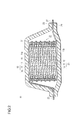
- electric power generating element 21 of bipolar secondary battery 10 includes plural bipolar electrodes 23 each having collector 11, positive electrode active material layer 13 electrically connected to one side of collector 11 and negative electrode active material layer 15 electrically connected to the other side of collector 11. These bipolar electrodes 23 are laminated together with intervened by electrolyte layers 17, thereby constituting electric power generating element 21. Electrolyte layers 17 have a configuration in which the electrolyte is retained in the planar center of the separator as a base, respectively.
- Bipolar secondary battery 10 illustrated in FIG. 2 also has a positive electrode collector plate 25 located adjacent to positive-electrode-side outermost collector 11a and led out from laminate film 29.
- a negative electrode collector plate 27 located adjacent to negative-electrode-side outermost collector 11b and led out from laminate film 29.
- the number of laminated unit cell layers 19 is adjusted depending on the desired battery voltage.
- the number of laminated unit cell layer 19 can be decreased as long as bipolar secondary battery 10 can secure a sufficient output even with an extremely thin bipolar secondary battery 10.
- electric power generating element 21 is preferably vacuum-sealed in the battery package of laminate film 29, with positive and negative electrode collector plates 25 and 27 led out of laminate film 29, in order to protect electric power generating element 21 from external impact and environmental deterioration during use.
- the main structural parts of the bipolar secondary battery according to this embodiment will be described in greater detail below.
- An electrolyte to form the electrolyte layer is not limited to a specific electrolyte.
- a liquid electrolyte or a polymer electrolyte such as a polymer gel electrolyte and a polymer solid electrolyte can be suitably used.
- a mixture, a modified product, a derivative, a random copolymer, an alternating copolymer, a graft copolymer, and a block copolymer of the above polymers can be also used.
- PEO, PPO, their copolymer, PVdF, or PVdF-HFP it is preferable to use PEO, PPO, their copolymer, PVdF, or PVdF-HFP.
- an electrolyte salt such as lithium salt can be dissolved well.
- the polymer solid electrolyte has a constitution that the support salt (lithium salt) is dissolved in the above matrix polymer, without containing an organic solvent as a plasticizer.
- the electrolyte layer consists of such polymer solid electrolyte, an improvement in the battery reliability can be obtained with no fear of having liquid leakage from the battery.
- the matrix polymer of the gel polymer electrolyte or polymer solid electrolyte can exhibit good mechanical strength by formation of a cross-linking structure.
- a polymerizable material such as PEO or PPO
- PEO or PPO polymerizable material
- the electrolyte may be contained in an active material layer of an electrode.
- Seal member i.e., insulating layer
- the seal member can be of any material having insulation property, sealing ability against loss of the solid electrolyte material, and sealing ability (hermeticity) against moisture permeation from the outside as well as heat resistance under battery operation temperature conditions.
- examples of such a material include a urethane resin, an epoxy resin, a polyethylene resin, a polypropylene resin, a polyimide resin, and a rubber material. Of these, the polyethylene resin and the polypropylene resin are preferred as the material of seal member, in terms of corrosion resistance, chemical resistance, easiness of formation (capability of film formation), cost efficiency, and the like.
- bipolar secondary battery 10 of the present embodiment even when energy level of the highest occupied molecular orbital (HOMO) of second conductive layer 3b that is arranged on a negative electrode side of a bipolar electrode increases by negative electrode potential, the increased level is suppressed to be lower than the oxidation reduction potential of lithium ions in an electrolyte liquid. As a result, penetration and absorption of the lithium ions into the inner portion of a resin collector are prevented (i.e., the lithium ion blocking is exhibited). Because the penetration and absorption of lithium ions into the inner portion of the resin collector are prevented, the liquid junction between active material layers or accompanying reduction in battery capacity can be also suppressed.
- HOMO highest occupied molecular orbital
- the first conductive layer and the second conductive layer that were prepared and produced above were overlaid to each other and subjected to heat sealing at 160°C for 10 min to produce a collector for a bipolar lithium ion secondary battery having a two-layer structure.
- a positive electrode active material slurry was prepared by mixing 85% by mass of LiMn 2 O 4 as a positive electrode active material, 5% by mass of acetylene black as a conductive auxiliary agent, 10% by mass of polyfluorovinylidene (PVDF) as a binder, and an appropriate amount of N-methyl-2-pyrrolidone (NMP) as a solvent for controlling viscosity of the slurry.
- PVDF polyfluorovinylidene
- NMP N-methyl-2-pyrrolidone
- a negative electrode active material slurry was prepared by mixing 90% by mass of hard carbon as a negative electrode active material, 5% by mass of acetylene black as a conductive auxiliary agent, 10% by mass of PVDF as a binder, and an appropriate amount of NMP as a solvent for controlling viscosity of the slurry.
- the positive electrode material slurry obtained above was coated on the first conductive layer side surface of the collector manufactured above and dried to form a coated film. To arrange a seal member (described below), the peripheries of the collector were remained exposed. Then, the coated film obtained was pressed to form a positive electrode active material layer (thickness: 36 ⁇ m).
- the negative electrode material slurry obtained above was coated on the second conductive layer side surface of the collector manufactured above and dried to form a coated film. To arrange a seal member (described below), the peripheries of the collector were remained exposed. Then, the coated film obtained was pressed to form a negative electrode active material layer (thickness: 30 ⁇ m).
- An electrolyte liquid was prepared by mixing 1 mol/L LiPF 6 as lithium salt in propylene carbonate•ethylene carbonate (1 : 1 volume ratio) mixture solution with equal volume of each, as an electrolyte liquid. Thereafter, to 90% by mass of the resulting electrolyte liquid, 10% by mass of a polyvinylidene fluoride-hexafluoropropylene (PVDF-HFP) copolymer containing 10 mol% of hexafluoropropylene comonomer as a host polymer, and an appropriate amount of dimethyl carbonate (DMC) as a viscosity adjusting solvent were added and mixed therein to produce an electrolyte material.
- PVDF-HFP polyvinylidene fluoride-hexafluoropropylene copolymer containing 10 mol% of hexafluoropropylene comonomer as a host polymer
- DMC dimethyl carbonate
- the electrolyte material prepared from above was applied to both surfaces of the positive electrode active material layer and the negative electrode active material layer of the bipolar electrode, followed by drying at 100°C.
- the bipolar electrode was thus completed with the gel electrolyte material impregnated in the active material layers.
- the electrolyte material prepared from above was applied to the surface of the positive electrode active material layer of the bipolar electrode, followed by drying at 100°C. As a result, a gel electrolyte layer was formed. Meanwhile, sealing members having width of 12 mm were arranged on exposed portions (peripheries) on the surface of the first conductive layer side of the collector. This process was repeated to obtain a laminate in which six bipolar electrodes were laminated with intervened by a gel electrolyte layer. Subsequently, the resulting laminate was subjected to a hot press treatment (0.2 MPa, 80°C, 5 sec) in the lamination direction for heat sealing of seal members to seal adjacent bipolar electrodes. As a result, an electric power generating element was completed.
- a power supply terminal which had an aluminum plate (thickness: 100 ⁇ m) having a size of 130 mm x 80 mm, with a portion thereof extending to the outside of the horizontal surface of the electric power generating element, was prepared to cover the whole of a reflected surface of the electric power generating element.
- the electric power generating element was sandwiched between the power supply terminals, and then, enclosed and vacuum-sealed in a battery package of aluminum laminate film. Consequently, the entire electric power generating element was pressurized from both sides by atmospheric pressure so as to increase contact between the electric power generating element and the power supply terminal. As a result, a laminate structure was obtained.
- the above-obtained laminate structure was subjected to hot pressing (surface pressure: 1 kg/cm 2 , 150°C, and for 1 hour), so as to cure the uncured seal member. As a result, the bipolar secondary battery was completed.
- a bipolar secondary battery was manufactured in the same manner as the Example 1, except that the addition amount of Ketjen Black was changed to 5% by mass with respect to 100% by mass of EVOH for producing the second conductive layer.
- a bipolar secondary battery was manufactured in the same manner as the Example 1, except that the first conductive layer having film thickness of 12.5 ⁇ m was used and the second conductive layer was produced to have film thickness of 37.5 ⁇ m.
- a bipolar secondary battery was manufactured in the same manner as the Example 1, except that the first conductive layer having film thickness of 37.5 ⁇ m was used and the second conductive layer was produced to have film thickness of 12.5 ⁇ m.
- a bipolar secondary battery was manufactured in the same manner as the Example 1, except that Nylon 12 (PA12) was used instead of EVOH and the temperature for heat sealing was change to 170°C for producing the second conductive layer.
- Nylon 12 PA12
- a bipolar secondary battery was manufactured in the same manner as the Example 5, except that the addition amount of Ketjen Black was changed to 7% by mass compared to 100% by mass of PA12 for producing the second conductive layer.
- a bipolar secondary battery was manufactured in the same manner as the Example 1, except that polyphenylene sulfide (PPS) was used instead of EVOH and the temperature for heat sealing was change to 250°C for producing the second conductive layer.
- PPS polyphenylene sulfide
- a bipolar secondary battery was manufactured in the same manner as the Example 1, except that tetrafluoroethylene-perfluoroalkylvinyl ether copolymer (PFA) was used instead of EVOH for producing the second conductive layer.
- PFA tetrafluoroethylene-perfluoroalkylvinyl ether copolymer
- a bipolar secondary battery was manufactured in the same manner as the Example 1, except that polytetrafluoroethylene (PTFE) was used instead of EVOH for producing the second conductive layer.
- PTFE polytetrafluoroethylene
- PTFE is a polymer having no imide group and also no polar group.
- a bipolar secondary battery was manufactured in the same manner as the Example 9, except that the negative electrode active material layer was formed on the first conductive layer side surface of the collector and the positive electrode active material layer was formed on the second conductive layer side surface of the collector.
- a bipolar secondary battery was manufactured in the same manner as the Example 1, except that a conductive resin film (film thickness: 50 ⁇ m) in which 10% by mass of Ketjen Black was mixed with 100% by mass of polyimide (PI) was used as a collector. Since the collector used in this comparative example was a monolayer, there was no distinction between the positive electrode side and the negative electrode side.
- a conductive resin film film thickness: 50 ⁇ m
- PI polyimide
- Each of the bipolar secondary batteries produced above was charged to 21.0 V by a constant current (CC) of 0.5 mA under 25°C atmosphere and then further charged with a constant voltage (CV). The total charge time was 10 hours.
- the durability of the battery was tested by capacity measurements after 50 test cycles of charging and discharging at a discharge capacity of 1 C.
- the capacity retention ratio (%) refers to the ratio of the discharge capacity after completing the durability test with respect to the initial discharge capacity. The results are given in the following Table 1.
- Each of the collectors used in each example and comparative example described above was tested for volume resistivity according to the following method.
- Surface resistance was measured for nine spots in the surface by using 4-point probe (trade name: LORESTA-EP, product number: MCP-T360, manufactured by Mitsubishi Chemical Corporation).
- the measurement value was normalized in terms of film thickness and volume resistivity ( ⁇ •cm) was calculated.
- the volume resistivity was measured in the same manner as above for each of the positive electrode side and the negative electrode side, and the ratio of volume resistivity was calculated. The results are given in the following Example 1.
- Example 1 Positive electrode side Negative electrode side Volume resistivity [ ⁇ cm] Volume resistivity ratio Positive electrode side/Negative electrode side Film thickness [ ⁇ m] Film thickness ratio Positive electrode side/Negative electrode side capacity retention ratio [%]
- Example 1 PI EVOH 1 1/1 50 1/1 88
- Example 2 PI EVOH 80 1/80 50 1/1 76
- Example 3 PI EVOH 1 1/1 50 1/3 89
- Example 4 PI EVOH 1 1/1 50 3/1 78
- Example 5 PI PA12 1 1/1 50 1/1 85
- Example 6 PI PA12 20 1/20 50 1/1 76
- Example 7 PI PPS 1 1/1 50 1/1 85
- Example 8 PI FEP 1 1/1 50 1/1 83
- Example 9 PI PFA 1 1/1 50 1/1 74 Comparative example 1 PI PTFE 1 1/1 50 1/1 34 Comparative example 2 PFA PI 1 1/1 50 1/1 25 Comparative example 3 PI 1 - 50 - 5
- the capacity retention ratio is significantly improved in every Examples (the conductive layer (resin layer) in which a polar resin containing no imide group was used was arranged on the negative electrode side) compared to the Comparative examples.
- the mechanism for exhibition of the effects by having the constitution above is considered to be as follows. Specifically, even when energy level of the highest occupied molecular orbital (HOMO) of the conductive layer increases by negative electrode potential, the increased level is suppressed to be lower than the oxidation reduction potential of lithium ions in an electrolyte liquid. As a result, penetration and absorption of the lithium ions into the inner portion of a resin collector are prevented then reduction in capacity is suppressed.
- HOMO highest occupied molecular orbital
- the film thickness ratio of the positive electrode side and the negative electrode side it was found from the results of the Example 1, 3, and 4 that smaller film thickness ratio (i.e., the thicker second conductive layer compared to the first conductive layer) can more significantly suppress the reduction in capacity retention ratio. This is believed that, by increasing the thickness of the second conductive layer, the capability of lithium ion blocking is further improved. In addition, it was also shown from the results of the Examples 1 and 2 or the Examples 5 and 6 that, when the volume resistivity of the first conductive layer was maintained at constant level, the smaller volume resistivity of the second conductive layer could suppress more efficiently the reduction in capacity retention ratio.
Landscapes
- Chemical & Material Sciences (AREA)
- Engineering & Computer Science (AREA)
- Chemical Kinetics & Catalysis (AREA)
- Electrochemistry (AREA)
- General Chemical & Material Sciences (AREA)
- Materials Engineering (AREA)
- Manufacturing & Machinery (AREA)
- Composite Materials (AREA)
- Cell Electrode Carriers And Collectors (AREA)
- Secondary Cells (AREA)
- Battery Electrode And Active Subsutance (AREA)
Applications Claiming Priority (2)
| Application Number | Priority Date | Filing Date | Title |
|---|---|---|---|
| JP2010018722 | 2010-01-29 | ||
| PCT/JP2010/071825 WO2011092938A1 (ja) | 2010-01-29 | 2010-12-06 | 双極型リチウムイオン二次電池用集電体 |
Publications (3)
| Publication Number | Publication Date |
|---|---|
| EP2530769A1 true EP2530769A1 (de) | 2012-12-05 |
| EP2530769A4 EP2530769A4 (de) | 2013-08-28 |
| EP2530769B1 EP2530769B1 (de) | 2016-10-19 |
Family
ID=44318939
Family Applications (1)
| Application Number | Title | Priority Date | Filing Date |
|---|---|---|---|
| EP10844692.3A Active EP2530769B1 (de) | 2010-01-29 | 2010-12-06 | Sammelvorrichtung für eine lithiumionen-sekundärbatterie |
Country Status (6)
| Country | Link |
|---|---|
| US (1) | US9077040B2 (de) |
| EP (1) | EP2530769B1 (de) |
| JP (1) | JP5375978B2 (de) |
| KR (1) | KR101322584B1 (de) |
| CN (1) | CN102511098B (de) |
| WO (1) | WO2011092938A1 (de) |
Cited By (2)
| Publication number | Priority date | Publication date | Assignee | Title |
|---|---|---|---|---|
| EP2738852A4 (de) * | 2011-07-26 | 2014-12-31 | Nissan Motor | Sammelvorrichtung für bipolare lithiumionensekundärbatterien |
| EP2717367A4 (de) * | 2011-05-23 | 2015-02-18 | Kaneka Corp | Leitfähiger film, stromabnehmer damit, batterie und bipolare batterie |
Families Citing this family (25)
| Publication number | Priority date | Publication date | Assignee | Title |
|---|---|---|---|---|
| JP5957947B2 (ja) * | 2012-02-23 | 2016-07-27 | 日産自動車株式会社 | 双極型電極およびこれを用いた双極型リチウムイオン二次電池 |
| WO2014034758A1 (ja) * | 2012-08-30 | 2014-03-06 | 株式会社カネカ | 電池用集電体およびこれを用いた電池 |
| FR2996360B1 (fr) | 2012-10-01 | 2014-10-17 | Commissariat Energie Atomique | Collecteur de courant avec moyens d'etancheite integres, batterie bipolaire comprenant un tel collecteur, procede de realisation d'une telle batterie. |
| WO2014080853A1 (ja) * | 2012-11-22 | 2014-05-30 | 株式会社カネカ | 双極型リチウムイオン二次電池用集電体および双極型リチウムイオン二次電池 |
| US9660239B2 (en) * | 2012-11-22 | 2017-05-23 | Samsung Sdi Co., Ltd. | Positive active material layer for rechargeable lithium battery, separator for rechargeable lithium battery, and rechargeable lithium battery including at least one of same |
| JP6620102B2 (ja) * | 2014-08-25 | 2019-12-18 | 日産自動車株式会社 | 電極 |
| KR102349957B1 (ko) * | 2014-09-05 | 2022-01-11 | 삼성전자주식회사 | 유무기 실리콘 구조체 함유 블록 공중합체, 이를 포함하는 전해질, 및 상기 전해질을 포함하는 리튬전지 |
| JP2016096297A (ja) * | 2014-11-17 | 2016-05-26 | イビデン株式会社 | 金属塊内蔵配線板及びその製造方法 |
| JP6430875B2 (ja) | 2015-03-27 | 2018-11-28 | 日産自動車株式会社 | リチウム電池用正極 |
| TWI618287B (zh) * | 2015-07-23 | 2018-03-11 | Copolymer of lithium battery and its positive electrode coating | |
| WO2017145874A1 (ja) | 2016-02-24 | 2017-08-31 | 日産自動車株式会社 | リチウムイオン二次電池用電極及びその製造方法 |
| JP6705358B2 (ja) * | 2016-10-17 | 2020-06-03 | 株式会社豊田自動織機 | 蓄電装置の製造方法 |
| CN106898825B (zh) * | 2017-05-03 | 2019-02-05 | 江苏强劲新能源科技有限公司 | 一种双极性锌离子电池的制备方法 |
| CN107452929A (zh) * | 2017-07-26 | 2017-12-08 | 王昌国 | 一种电动汽车锂离子电池 |
| CN107394278A (zh) * | 2017-07-26 | 2017-11-24 | 王昌国 | 一种电动汽车锂离子电池的制造方法 |
| US10770731B2 (en) * | 2018-08-01 | 2020-09-08 | Chongqing Jinmei New Material Technology Co., Ltd. | Positive electrode current collector and preparation method and use thereof |
| CN112567562B (zh) * | 2018-08-10 | 2023-12-05 | 株式会社村田制作所 | 固态电池 |
| CN109768334A (zh) * | 2018-12-25 | 2019-05-17 | 中国电子科技集团公司第十八研究所 | 一种双极性固态锂二次电池的制备方法 |
| CN112186196B (zh) * | 2019-07-01 | 2023-10-27 | 宁德时代新能源科技股份有限公司 | 正极集流体、正极极片及电化学装置 |
| WO2021171999A1 (ja) | 2020-02-26 | 2021-09-02 | 株式会社村田製作所 | 導電性基体および二次電池 |
| CN111403749B (zh) | 2020-06-03 | 2020-09-01 | 江苏时代新能源科技有限公司 | 锂离子电池及其装置 |
| CN113871626B (zh) * | 2021-09-06 | 2023-03-14 | 湖南领湃达志科技股份有限公司 | 一种二次电池双极集流体及其制造工艺 |
| JP2024542731A (ja) * | 2021-12-02 | 2024-11-15 | ジーアールエスティー・インターナショナル・リミテッド | 二次電池用改良型集電体 |
| JP7718360B2 (ja) * | 2022-09-06 | 2025-08-05 | トヨタ自動車株式会社 | 樹脂集電体、及び積層電池 |
| EP4675713A1 (de) | 2023-02-28 | 2026-01-07 | Toray Industries, Inc. | Stromabnehmer, polyesterfolie, negativelektrodenstromabnehmer, stromspeicherelement, elektrofahrzeug und elektrischer flugkörper |
Family Cites Families (9)
| Publication number | Priority date | Publication date | Assignee | Title |
|---|---|---|---|---|
| US6280873B1 (en) * | 1999-04-08 | 2001-08-28 | Quallion, Llc | Wound battery and method for making it |
| JP4674434B2 (ja) | 2002-11-11 | 2011-04-20 | 日産自動車株式会社 | バイポーラ電池 |
| JP5098150B2 (ja) | 2004-12-07 | 2012-12-12 | 日産自動車株式会社 | バイポーラ電池およびその製造方法 |
| JP5092196B2 (ja) * | 2004-12-28 | 2012-12-05 | 日産自動車株式会社 | バイポーラ電池 |
| JP5151011B2 (ja) * | 2005-04-19 | 2013-02-27 | 日産自動車株式会社 | バイポーラ電池 |
| JP5292676B2 (ja) | 2006-06-07 | 2013-09-18 | 日産自動車株式会社 | 双極型電池用電極 |
| CN101192669A (zh) * | 2006-12-01 | 2008-06-04 | 中国人民解放军63971部队 | 一种耐腐蚀复合集流体及其制作方法 |
| JP5381078B2 (ja) * | 2008-12-19 | 2014-01-08 | 日産自動車株式会社 | 電極およびその製造方法 |
| JP5410822B2 (ja) | 2009-04-22 | 2014-02-05 | 日産自動車株式会社 | 双極型電池用集電体 |
-
2010
- 2010-12-06 WO PCT/JP2010/071825 patent/WO2011092938A1/ja not_active Ceased
- 2010-12-06 CN CN201080040928.2A patent/CN102511098B/zh active Active
- 2010-12-06 US US13/395,565 patent/US9077040B2/en active Active
- 2010-12-06 KR KR1020127006505A patent/KR101322584B1/ko not_active Expired - Fee Related
- 2010-12-06 JP JP2011551693A patent/JP5375978B2/ja active Active
- 2010-12-06 EP EP10844692.3A patent/EP2530769B1/de active Active
Cited By (3)
| Publication number | Priority date | Publication date | Assignee | Title |
|---|---|---|---|---|
| EP2717367A4 (de) * | 2011-05-23 | 2015-02-18 | Kaneka Corp | Leitfähiger film, stromabnehmer damit, batterie und bipolare batterie |
| EP2738852A4 (de) * | 2011-07-26 | 2014-12-31 | Nissan Motor | Sammelvorrichtung für bipolare lithiumionensekundärbatterien |
| US9537152B2 (en) | 2011-07-26 | 2017-01-03 | Nissan Motor Co., Ltd. | Collector for bipolar lithium ion secondary batteries |
Also Published As
| Publication number | Publication date |
|---|---|
| WO2011092938A1 (ja) | 2011-08-04 |
| JP5375978B2 (ja) | 2013-12-25 |
| JPWO2011092938A1 (ja) | 2013-05-30 |
| CN102511098B (zh) | 2015-02-18 |
| US9077040B2 (en) | 2015-07-07 |
| KR101322584B1 (ko) | 2013-10-28 |
| EP2530769A4 (de) | 2013-08-28 |
| US20120189912A1 (en) | 2012-07-26 |
| KR20120043104A (ko) | 2012-05-03 |
| EP2530769B1 (de) | 2016-10-19 |
| CN102511098A (zh) | 2012-06-20 |
Similar Documents
| Publication | Publication Date | Title |
|---|---|---|
| EP2530769B1 (de) | Sammelvorrichtung für eine lithiumionen-sekundärbatterie | |
| RU2566741C2 (ru) | Токоотвод для биполярной литий-ионной аккумуляторной батареи | |
| EP2405524B1 (de) | Bipolare sekundärzelle und herstellungsverfahren dafür | |
| EP2503628B1 (de) | Stromsammelvorrichtung für eine bipolare sekundärbatterie | |
| KR101340133B1 (ko) | 쌍극형 2차 전지 | |
| JP5458605B2 (ja) | 双極型二次電池 | |
| KR101647910B1 (ko) | 쌍극형 전극 및 이를 사용한 쌍극형 리튬 이온 이차 전지 | |
| EP2408045B1 (de) | Bipolarer batteriestromsammler und bipolare batterie | |
| JP5593984B2 (ja) | 二次電池用集電体 | |
| JP5569229B2 (ja) | リチウムイオン二次電池のニッケル含有正極用集電体 |
Legal Events
| Date | Code | Title | Description |
|---|---|---|---|
| PUAI | Public reference made under article 153(3) epc to a published international application that has entered the european phase |
Free format text: ORIGINAL CODE: 0009012 |
|
| 17P | Request for examination filed |
Effective date: 20120313 |
|
| AK | Designated contracting states |
Kind code of ref document: A1 Designated state(s): AL AT BE BG CH CY CZ DE DK EE ES FI FR GB GR HR HU IE IS IT LI LT LU LV MC MK MT NL NO PL PT RO RS SE SI SK SM TR |
|
| DAX | Request for extension of the european patent (deleted) | ||
| A4 | Supplementary search report drawn up and despatched |
Effective date: 20130731 |
|
| RIC1 | Information provided on ipc code assigned before grant |
Ipc: H01M 10/0525 20100101ALN20130725BHEP Ipc: H01M 4/66 20060101AFI20130725BHEP Ipc: H01M 10/04 20060101ALI20130725BHEP Ipc: H01M 10/0585 20100101ALI20130725BHEP |
|
| 17Q | First examination report despatched |
Effective date: 20150106 |
|
| GRAP | Despatch of communication of intention to grant a patent |
Free format text: ORIGINAL CODE: EPIDOSNIGR1 |
|
| RIC1 | Information provided on ipc code assigned before grant |
Ipc: H01M 10/0525 20100101ALI20160531BHEP Ipc: H01M 4/66 20060101AFI20160531BHEP Ipc: H01M 10/0585 20100101ALI20160531BHEP Ipc: H01M 10/04 20060101ALI20160531BHEP |
|
| INTG | Intention to grant announced |
Effective date: 20160622 |
|
| GRAS | Grant fee paid |
Free format text: ORIGINAL CODE: EPIDOSNIGR3 |
|
| GRAA | (expected) grant |
Free format text: ORIGINAL CODE: 0009210 |
|
| AK | Designated contracting states |
Kind code of ref document: B1 Designated state(s): AL AT BE BG CH CY CZ DE DK EE ES FI FR GB GR HR HU IE IS IT LI LT LU LV MC MK MT NL NO PL PT RO RS SE SI SK SM TR |
|
| REG | Reference to a national code |
Ref country code: GB Ref legal event code: FG4D |
|
| REG | Reference to a national code |
Ref country code: CH Ref legal event code: EP |
|
| REG | Reference to a national code |
Ref country code: AT Ref legal event code: REF Ref document number: 839027 Country of ref document: AT Kind code of ref document: T Effective date: 20161115 |
|
| REG | Reference to a national code |
Ref country code: IE Ref legal event code: FG4D |
|
| REG | Reference to a national code |
Ref country code: DE Ref legal event code: R096 Ref document number: 602010037389 Country of ref document: DE |
|
| REG | Reference to a national code |
Ref country code: FR Ref legal event code: PLFP Year of fee payment: 7 |
|
| REG | Reference to a national code |
Ref country code: NL Ref legal event code: MP Effective date: 20161019 |
|
| REG | Reference to a national code |
Ref country code: LT Ref legal event code: MG4D |
|
| PG25 | Lapsed in a contracting state [announced via postgrant information from national office to epo] |
Ref country code: LV Free format text: LAPSE BECAUSE OF FAILURE TO SUBMIT A TRANSLATION OF THE DESCRIPTION OR TO PAY THE FEE WITHIN THE PRESCRIBED TIME-LIMIT Effective date: 20161019 |
|
| REG | Reference to a national code |
Ref country code: AT Ref legal event code: MK05 Ref document number: 839027 Country of ref document: AT Kind code of ref document: T Effective date: 20161019 |
|
| PG25 | Lapsed in a contracting state [announced via postgrant information from national office to epo] |
Ref country code: GR Free format text: LAPSE BECAUSE OF FAILURE TO SUBMIT A TRANSLATION OF THE DESCRIPTION OR TO PAY THE FEE WITHIN THE PRESCRIBED TIME-LIMIT Effective date: 20170120 Ref country code: SE Free format text: LAPSE BECAUSE OF FAILURE TO SUBMIT A TRANSLATION OF THE DESCRIPTION OR TO PAY THE FEE WITHIN THE PRESCRIBED TIME-LIMIT Effective date: 20161019 Ref country code: LT Free format text: LAPSE BECAUSE OF FAILURE TO SUBMIT A TRANSLATION OF THE DESCRIPTION OR TO PAY THE FEE WITHIN THE PRESCRIBED TIME-LIMIT Effective date: 20161019 Ref country code: NO Free format text: LAPSE BECAUSE OF FAILURE TO SUBMIT A TRANSLATION OF THE DESCRIPTION OR TO PAY THE FEE WITHIN THE PRESCRIBED TIME-LIMIT Effective date: 20170119 |
|
| PG25 | Lapsed in a contracting state [announced via postgrant information from national office to epo] |
Ref country code: NL Free format text: LAPSE BECAUSE OF FAILURE TO SUBMIT A TRANSLATION OF THE DESCRIPTION OR TO PAY THE FEE WITHIN THE PRESCRIBED TIME-LIMIT Effective date: 20161019 Ref country code: IS Free format text: LAPSE BECAUSE OF FAILURE TO SUBMIT A TRANSLATION OF THE DESCRIPTION OR TO PAY THE FEE WITHIN THE PRESCRIBED TIME-LIMIT Effective date: 20170219 Ref country code: RS Free format text: LAPSE BECAUSE OF FAILURE TO SUBMIT A TRANSLATION OF THE DESCRIPTION OR TO PAY THE FEE WITHIN THE PRESCRIBED TIME-LIMIT Effective date: 20161019 Ref country code: ES Free format text: LAPSE BECAUSE OF FAILURE TO SUBMIT A TRANSLATION OF THE DESCRIPTION OR TO PAY THE FEE WITHIN THE PRESCRIBED TIME-LIMIT Effective date: 20161019 Ref country code: HR Free format text: LAPSE BECAUSE OF FAILURE TO SUBMIT A TRANSLATION OF THE DESCRIPTION OR TO PAY THE FEE WITHIN THE PRESCRIBED TIME-LIMIT Effective date: 20161019 Ref country code: PL Free format text: LAPSE BECAUSE OF FAILURE TO SUBMIT A TRANSLATION OF THE DESCRIPTION OR TO PAY THE FEE WITHIN THE PRESCRIBED TIME-LIMIT Effective date: 20161019 Ref country code: BE Free format text: LAPSE BECAUSE OF FAILURE TO SUBMIT A TRANSLATION OF THE DESCRIPTION OR TO PAY THE FEE WITHIN THE PRESCRIBED TIME-LIMIT Effective date: 20161019 Ref country code: FI Free format text: LAPSE BECAUSE OF FAILURE TO SUBMIT A TRANSLATION OF THE DESCRIPTION OR TO PAY THE FEE WITHIN THE PRESCRIBED TIME-LIMIT Effective date: 20161019 Ref country code: PT Free format text: LAPSE BECAUSE OF FAILURE TO SUBMIT A TRANSLATION OF THE DESCRIPTION OR TO PAY THE FEE WITHIN THE PRESCRIBED TIME-LIMIT Effective date: 20170220 Ref country code: AT Free format text: LAPSE BECAUSE OF FAILURE TO SUBMIT A TRANSLATION OF THE DESCRIPTION OR TO PAY THE FEE WITHIN THE PRESCRIBED TIME-LIMIT Effective date: 20161019 |
|
| REG | Reference to a national code |
Ref country code: DE Ref legal event code: R097 Ref document number: 602010037389 Country of ref document: DE |
|
| PG25 | Lapsed in a contracting state [announced via postgrant information from national office to epo] |
Ref country code: EE Free format text: LAPSE BECAUSE OF FAILURE TO SUBMIT A TRANSLATION OF THE DESCRIPTION OR TO PAY THE FEE WITHIN THE PRESCRIBED TIME-LIMIT Effective date: 20161019 Ref country code: RO Free format text: LAPSE BECAUSE OF FAILURE TO SUBMIT A TRANSLATION OF THE DESCRIPTION OR TO PAY THE FEE WITHIN THE PRESCRIBED TIME-LIMIT Effective date: 20161019 Ref country code: CZ Free format text: LAPSE BECAUSE OF FAILURE TO SUBMIT A TRANSLATION OF THE DESCRIPTION OR TO PAY THE FEE WITHIN THE PRESCRIBED TIME-LIMIT Effective date: 20161019 Ref country code: DK Free format text: LAPSE BECAUSE OF FAILURE TO SUBMIT A TRANSLATION OF THE DESCRIPTION OR TO PAY THE FEE WITHIN THE PRESCRIBED TIME-LIMIT Effective date: 20161019 Ref country code: SK Free format text: LAPSE BECAUSE OF FAILURE TO SUBMIT A TRANSLATION OF THE DESCRIPTION OR TO PAY THE FEE WITHIN THE PRESCRIBED TIME-LIMIT Effective date: 20161019 |
|
| REG | Reference to a national code |
Ref country code: CH Ref legal event code: PL |
|
| PLBE | No opposition filed within time limit |
Free format text: ORIGINAL CODE: 0009261 |
|
| STAA | Information on the status of an ep patent application or granted ep patent |
Free format text: STATUS: NO OPPOSITION FILED WITHIN TIME LIMIT |
|
| PG25 | Lapsed in a contracting state [announced via postgrant information from national office to epo] |
Ref country code: IT Free format text: LAPSE BECAUSE OF FAILURE TO SUBMIT A TRANSLATION OF THE DESCRIPTION OR TO PAY THE FEE WITHIN THE PRESCRIBED TIME-LIMIT Effective date: 20161019 Ref country code: BG Free format text: LAPSE BECAUSE OF FAILURE TO SUBMIT A TRANSLATION OF THE DESCRIPTION OR TO PAY THE FEE WITHIN THE PRESCRIBED TIME-LIMIT Effective date: 20170119 Ref country code: SM Free format text: LAPSE BECAUSE OF FAILURE TO SUBMIT A TRANSLATION OF THE DESCRIPTION OR TO PAY THE FEE WITHIN THE PRESCRIBED TIME-LIMIT Effective date: 20161019 |
|
| 26N | No opposition filed |
Effective date: 20170720 |
|
| PG25 | Lapsed in a contracting state [announced via postgrant information from national office to epo] |
Ref country code: MC Free format text: LAPSE BECAUSE OF FAILURE TO SUBMIT A TRANSLATION OF THE DESCRIPTION OR TO PAY THE FEE WITHIN THE PRESCRIBED TIME-LIMIT Effective date: 20161019 |
|
| REG | Reference to a national code |
Ref country code: IE Ref legal event code: MM4A |
|
| PG25 | Lapsed in a contracting state [announced via postgrant information from national office to epo] |
Ref country code: LU Free format text: LAPSE BECAUSE OF NON-PAYMENT OF DUE FEES Effective date: 20161206 Ref country code: CH Free format text: LAPSE BECAUSE OF NON-PAYMENT OF DUE FEES Effective date: 20161231 Ref country code: LI Free format text: LAPSE BECAUSE OF NON-PAYMENT OF DUE FEES Effective date: 20161231 |
|
| REG | Reference to a national code |
Ref country code: FR Ref legal event code: PLFP Year of fee payment: 8 |
|
| PG25 | Lapsed in a contracting state [announced via postgrant information from national office to epo] |
Ref country code: SI Free format text: LAPSE BECAUSE OF FAILURE TO SUBMIT A TRANSLATION OF THE DESCRIPTION OR TO PAY THE FEE WITHIN THE PRESCRIBED TIME-LIMIT Effective date: 20161019 Ref country code: IE Free format text: LAPSE BECAUSE OF NON-PAYMENT OF DUE FEES Effective date: 20161206 |
|
| PG25 | Lapsed in a contracting state [announced via postgrant information from national office to epo] |
Ref country code: CY Free format text: LAPSE BECAUSE OF FAILURE TO SUBMIT A TRANSLATION OF THE DESCRIPTION OR TO PAY THE FEE WITHIN THE PRESCRIBED TIME-LIMIT Effective date: 20161019 Ref country code: HU Free format text: LAPSE BECAUSE OF FAILURE TO SUBMIT A TRANSLATION OF THE DESCRIPTION OR TO PAY THE FEE WITHIN THE PRESCRIBED TIME-LIMIT; INVALID AB INITIO Effective date: 20101206 |
|
| PG25 | Lapsed in a contracting state [announced via postgrant information from national office to epo] |
Ref country code: MK Free format text: LAPSE BECAUSE OF FAILURE TO SUBMIT A TRANSLATION OF THE DESCRIPTION OR TO PAY THE FEE WITHIN THE PRESCRIBED TIME-LIMIT Effective date: 20161019 Ref country code: TR Free format text: LAPSE BECAUSE OF FAILURE TO SUBMIT A TRANSLATION OF THE DESCRIPTION OR TO PAY THE FEE WITHIN THE PRESCRIBED TIME-LIMIT Effective date: 20161019 |
|
| PG25 | Lapsed in a contracting state [announced via postgrant information from national office to epo] |
Ref country code: MT Free format text: LAPSE BECAUSE OF NON-PAYMENT OF DUE FEES Effective date: 20161206 |
|
| PG25 | Lapsed in a contracting state [announced via postgrant information from national office to epo] |
Ref country code: AL Free format text: LAPSE BECAUSE OF FAILURE TO SUBMIT A TRANSLATION OF THE DESCRIPTION OR TO PAY THE FEE WITHIN THE PRESCRIBED TIME-LIMIT Effective date: 20161019 |
|
| PGFP | Annual fee paid to national office [announced via postgrant information from national office to epo] |
Ref country code: DE Payment date: 20251126 Year of fee payment: 16 |
|
| PGFP | Annual fee paid to national office [announced via postgrant information from national office to epo] |
Ref country code: GB Payment date: 20251120 Year of fee payment: 16 |
|
| PGFP | Annual fee paid to national office [announced via postgrant information from national office to epo] |
Ref country code: FR Payment date: 20251119 Year of fee payment: 16 |