EP2532369A2 - Conjugué facteur VIIa-acide (poly)sialique présentant une demi-vie in vivo prolongée - Google Patents
Conjugué facteur VIIa-acide (poly)sialique présentant une demi-vie in vivo prolongée Download PDFInfo
- Publication number
- EP2532369A2 EP2532369A2 EP12004951A EP12004951A EP2532369A2 EP 2532369 A2 EP2532369 A2 EP 2532369A2 EP 12004951 A EP12004951 A EP 12004951A EP 12004951 A EP12004951 A EP 12004951A EP 2532369 A2 EP2532369 A2 EP 2532369A2
- Authority
- EP
- European Patent Office
- Prior art keywords
- fviia
- rfviia
- chemically
- life
- molecule
- Prior art date
- Legal status (The legal status is an assumption and is not a legal conclusion. Google has not performed a legal analysis and makes no representation as to the accuracy of the status listed.)
- Granted
Links
Images




Classifications
-
- A—HUMAN NECESSITIES
- A61—MEDICAL OR VETERINARY SCIENCE; HYGIENE
- A61K—PREPARATIONS FOR MEDICAL, DENTAL OR TOILETRY PURPOSES
- A61K38/00—Medicinal preparations containing peptides
- A61K38/16—Peptides having more than 20 amino acids; Gastrins; Somatostatins; Melanotropins; Derivatives thereof
- A61K38/43—Enzymes; Proenzymes; Derivatives thereof
- A61K38/46—Hydrolases (3)
- A61K38/48—Hydrolases (3) acting on peptide bonds (3.4)
- A61K38/482—Serine endopeptidases (3.4.21)
- A61K38/4846—Factor VII (3.4.21.21); Factor IX (3.4.21.22); Factor Xa (3.4.21.6); Factor XI (3.4.21.27); Factor XII (3.4.21.38)
-
- A—HUMAN NECESSITIES
- A61—MEDICAL OR VETERINARY SCIENCE; HYGIENE
- A61K—PREPARATIONS FOR MEDICAL, DENTAL OR TOILETRY PURPOSES
- A61K47/00—Medicinal preparations characterised by the non-active ingredients used, e.g. carriers or inert additives; Targeting or modifying agents chemically bound to the active ingredient
- A61K47/50—Medicinal preparations characterised by the non-active ingredients used, e.g. carriers or inert additives; Targeting or modifying agents chemically bound to the active ingredient the non-active ingredient being chemically bound to the active ingredient, e.g. polymer-drug conjugates
- A61K47/51—Medicinal preparations characterised by the non-active ingredients used, e.g. carriers or inert additives; Targeting or modifying agents chemically bound to the active ingredient the non-active ingredient being chemically bound to the active ingredient, e.g. polymer-drug conjugates the non-active ingredient being a modifying agent
- A61K47/54—Medicinal preparations characterised by the non-active ingredients used, e.g. carriers or inert additives; Targeting or modifying agents chemically bound to the active ingredient the non-active ingredient being chemically bound to the active ingredient, e.g. polymer-drug conjugates the non-active ingredient being a modifying agent the modifying agent being an organic compound
- A61K47/549—Sugars, nucleosides, nucleotides or nucleic acids
-
- A—HUMAN NECESSITIES
- A61—MEDICAL OR VETERINARY SCIENCE; HYGIENE
- A61K—PREPARATIONS FOR MEDICAL, DENTAL OR TOILETRY PURPOSES
- A61K47/00—Medicinal preparations characterised by the non-active ingredients used, e.g. carriers or inert additives; Targeting or modifying agents chemically bound to the active ingredient
- A61K47/50—Medicinal preparations characterised by the non-active ingredients used, e.g. carriers or inert additives; Targeting or modifying agents chemically bound to the active ingredient the non-active ingredient being chemically bound to the active ingredient, e.g. polymer-drug conjugates
- A61K47/51—Medicinal preparations characterised by the non-active ingredients used, e.g. carriers or inert additives; Targeting or modifying agents chemically bound to the active ingredient the non-active ingredient being chemically bound to the active ingredient, e.g. polymer-drug conjugates the non-active ingredient being a modifying agent
- A61K47/56—Medicinal preparations characterised by the non-active ingredients used, e.g. carriers or inert additives; Targeting or modifying agents chemically bound to the active ingredient the non-active ingredient being chemically bound to the active ingredient, e.g. polymer-drug conjugates the non-active ingredient being a modifying agent the modifying agent being an organic macromolecular compound, e.g. an oligomeric, polymeric or dendrimeric molecule
- A61K47/61—Medicinal preparations characterised by the non-active ingredients used, e.g. carriers or inert additives; Targeting or modifying agents chemically bound to the active ingredient the non-active ingredient being chemically bound to the active ingredient, e.g. polymer-drug conjugates the non-active ingredient being a modifying agent the modifying agent being an organic macromolecular compound, e.g. an oligomeric, polymeric or dendrimeric molecule the organic macromolecular compound being a polysaccharide or a derivative thereof
-
- A—HUMAN NECESSITIES
- A61—MEDICAL OR VETERINARY SCIENCE; HYGIENE
- A61P—SPECIFIC THERAPEUTIC ACTIVITY OF CHEMICAL COMPOUNDS OR MEDICINAL PREPARATIONS
- A61P43/00—Drugs for specific purposes, not provided for in groups A61P1/00-A61P41/00
-
- A—HUMAN NECESSITIES
- A61—MEDICAL OR VETERINARY SCIENCE; HYGIENE
- A61P—SPECIFIC THERAPEUTIC ACTIVITY OF CHEMICAL COMPOUNDS OR MEDICINAL PREPARATIONS
- A61P7/00—Drugs for disorders of the blood or the extracellular fluid
-
- A—HUMAN NECESSITIES
- A61—MEDICAL OR VETERINARY SCIENCE; HYGIENE
- A61P—SPECIFIC THERAPEUTIC ACTIVITY OF CHEMICAL COMPOUNDS OR MEDICINAL PREPARATIONS
- A61P7/00—Drugs for disorders of the blood or the extracellular fluid
- A61P7/02—Antithrombotic agents; Anticoagulants; Platelet aggregation inhibitors
-
- A—HUMAN NECESSITIES
- A61—MEDICAL OR VETERINARY SCIENCE; HYGIENE
- A61P—SPECIFIC THERAPEUTIC ACTIVITY OF CHEMICAL COMPOUNDS OR MEDICINAL PREPARATIONS
- A61P7/00—Drugs for disorders of the blood or the extracellular fluid
- A61P7/04—Antihaemorrhagics; Procoagulants; Haemostatic agents; Antifibrinolytic agents
-
- C—CHEMISTRY; METALLURGY
- C12—BIOCHEMISTRY; BEER; SPIRITS; WINE; VINEGAR; MICROBIOLOGY; ENZYMOLOGY; MUTATION OR GENETIC ENGINEERING
- C12N—MICROORGANISMS OR ENZYMES; COMPOSITIONS THEREOF; PROPAGATING, PRESERVING, OR MAINTAINING MICROORGANISMS; MUTATION OR GENETIC ENGINEERING; CULTURE MEDIA
- C12N9/00—Enzymes; Proenzymes; Compositions thereof; Processes for preparing, activating, inhibiting, separating or purifying enzymes
- C12N9/14—Hydrolases (3)
- C12N9/48—Hydrolases (3) acting on peptide bonds (3.4)
- C12N9/50—Proteinases, e.g. Endopeptidases (3.4.21-3.4.25)
- C12N9/64—Proteinases, e.g. Endopeptidases (3.4.21-3.4.25) derived from animal tissue
- C12N9/6421—Proteinases, e.g. Endopeptidases (3.4.21-3.4.25) derived from animal tissue from mammals
- C12N9/6424—Serine endopeptidases (3.4.21)
- C12N9/6437—Coagulation factor VIIa (3.4.21.21)
-
- C—CHEMISTRY; METALLURGY
- C12—BIOCHEMISTRY; BEER; SPIRITS; WINE; VINEGAR; MICROBIOLOGY; ENZYMOLOGY; MUTATION OR GENETIC ENGINEERING
- C12N—MICROORGANISMS OR ENZYMES; COMPOSITIONS THEREOF; PROPAGATING, PRESERVING, OR MAINTAINING MICROORGANISMS; MUTATION OR GENETIC ENGINEERING; CULTURE MEDIA
- C12N9/00—Enzymes; Proenzymes; Compositions thereof; Processes for preparing, activating, inhibiting, separating or purifying enzymes
- C12N9/96—Stabilising an enzyme by forming an adduct or a composition; Forming enzyme conjugates
-
- A—HUMAN NECESSITIES
- A61—MEDICAL OR VETERINARY SCIENCE; HYGIENE
- A61K—PREPARATIONS FOR MEDICAL, DENTAL OR TOILETRY PURPOSES
- A61K38/00—Medicinal preparations containing peptides
-
- C—CHEMISTRY; METALLURGY
- C12—BIOCHEMISTRY; BEER; SPIRITS; WINE; VINEGAR; MICROBIOLOGY; ENZYMOLOGY; MUTATION OR GENETIC ENGINEERING
- C12Y—ENZYMES
- C12Y304/00—Hydrolases acting on peptide bonds, i.e. peptidases (3.4)
- C12Y304/21—Serine endopeptidases (3.4.21)
- C12Y304/21021—Coagulation factor VIIa (3.4.21.21)
-
- Y—GENERAL TAGGING OF NEW TECHNOLOGICAL DEVELOPMENTS; GENERAL TAGGING OF CROSS-SECTIONAL TECHNOLOGIES SPANNING OVER SEVERAL SECTIONS OF THE IPC; TECHNICAL SUBJECTS COVERED BY FORMER USPC CROSS-REFERENCE ART COLLECTIONS [XRACs] AND DIGESTS
- Y02—TECHNOLOGIES OR APPLICATIONS FOR MITIGATION OR ADAPTATION AGAINST CLIMATE CHANGE
- Y02A—TECHNOLOGIES FOR ADAPTATION TO CLIMATE CHANGE
- Y02A50/00—TECHNOLOGIES FOR ADAPTATION TO CLIMATE CHANGE in human health protection, e.g. against extreme weather
- Y02A50/30—Against vector-borne diseases, e.g. mosquito-borne, fly-borne, tick-borne or waterborne diseases whose impact is exacerbated by climate change
Definitions
- the present invention relates to a proteinaceous construct comprising coagulation factor VIIa (FVIIa) being bound to a carbohydrate moiety comprising a chain of 1-4 sialic acid units. Further the present invention relates to methods for prolonging the in vivo -half-life of blood coagulation proteins, especially FVIIa in the blood of a mammal having a bleeding disorder associated with functional defects or deficiencies of at least FVIIa, factor VIII (FVIII), and factor IX (FIX).
- FVIIa coagulation factor VIIa
- FIX factor IX
- the blood coagulation cascade is divided into three distinct segments: the intrinsic, extrinsic, and common pathways ( Schenone et al., Curr Opin Hematol. 2004;11:272-7 ).
- the cascade involves a series of serine protease enzymes (zymogens) and protein cofactors. When required, an inactive zymogen precursor is converted into the active form, which consequently converts the next enzyme in the cascade.
- zymogens serine protease enzymes
- protein cofactors protein cofactors
- the intrinsic pathway requires the clotting factors VIII, IX, X, XI, and XII. Initiation of the intrinsic pathway occurs when prekallikrein, high-molecular-weight kininogen, factor XI (FXI) and factor XII (FXII) are exposed to a negatively charged surface. Also required are calcium ions and phospholipids secreted from platelets.
- the extrinsic pathway is initiated when the vascular lumen of blood vessels is damaged.
- the membrane glycoprotein tissue factor is exposed and then binds to circulating factor VII (FVII) and to small preexisting amounts of its activated form FVIIa. This binding facilitates full conversion of FVII to FVIIa and subsequently, in the presence of calcium and phospholipids, the conversion of factor IX (FIX) to factor IXa (FIXa) and factor X (FX) to factor Xa (FXa).
- FVIIa The association of FVIIa with tissue factor enhances the proteolytic activity by bringing the binding sites of FVII for the substrate (FX and FIX) into closer proximity and by inducing a conformational change, which enhances the enzymatic activity of FVIIa.
- the rate of FX activation by the extrinsic pathway is approximately 50 times slower than the rate achieved by the (intrinsic) pathway of FIXa, FVIIIa, phospholipid, and calcium ions.
- FX Factor XIIIa
- FVIIa Conversion of FVII to FVIIa is also catalyzed by a number of proteases, including thrombin, FIXa, FXa, factor XIa (FXIa), and factor XIIa (FXIIa).
- tissue factor pathway inhibitor targets FVIIa/tissue factor/FXa product complex.
- FVII also known as stable factor or proconvertin
- FVII is a vitamin K-dependent serine protease glycoprotein with a pivotal role in hemostasis and coagulation ( Eigenbrot, Curr Protein Pept Sci. 2002;3:287-99 ).
- FVII is synthesized in the liver and secreted as a single-chain glycoprotein of 48 kD.
- FVIIa shares with all vitamin K-dependent serine protease glycoproteins a similar protein domain structure consisting of an amino-terminal gamma-carboxyglutamic acid (Gla) domain with 9-12 residues responsible for the interaction of the protein with lipid membranes, a carboxy-terminal serine protease domain (catalytic domain), and two epidermal growth factor-like domains containing a calcium ion binding site that mediates interaction with tissue factor.
- Ga amino-terminal gamma-carboxyglutamic acid
- Gamma-glutamyl carboxylase catalyzes carboxylation of Gla residues in the amino-terminal portion of the molecule.
- the carboxylase is dependent on a reduced form of vitamin K for its action, which is oxidized to the epoxide form.
- Vitamin K epoxide reductase is required to convert the epoxide form of vitamin K back to the reduced form.
- the major proportion of FVII circulates in plasma in zymogen form, and activation of this form results in cleavage of the peptide bond between arginine 152 and isoleucine 153.
- the resulting activated FVIIa consists of a NH 2 -derived light chain (20 kD) and a COOH terminal-derived heavy chain (30 kD) linked via a single disulfide bond (Cys 135 to Cys 262).
- the light chain contains the membrane-binding Gla domain, while the heavy chain contains the catalytic domain.
- the plasma concentration of FVII determined by genetic and environmental factors is about 0.5 mg/mL ( Pinotti et al., Blood. 2000;95:3423-8 ).
- Different FVII genotypes can result in several-fold differences in mean FVII levels.
- Plasma FVII levels are elevated during pregnancy in healthy females and also increase with age and are higher in females and in persons with hypertriglyceridemia.
- FVII has the shortest half-life of all procoagulant factors (3-6 h).
- the mean plasma concentration of FVIIa is 3.6 ng/mL in healthy individuals and the circulating half-life of FVIIa is relatively long (2.5 h) compared with other coagulation factors.
- Hereditary FVII deficiency is a rare autosomal recessive bleeding disorder with a prevalence estimated to be 1 case per 500,000 persons in the general population ( Acharya et al.., J Thromb Haemost. 2004;2248-56 ). Acquired FVII deficiency from inhibitors is also very rare. Cases have also been reported with the deficiency occurring in association with drugs such as cephalosporins, penicillins, and oral anticoagulants. Furthermore, acquired FVII deficiency has been reported to occur spontaneously or with other conditions, such as myeloma, sepsis, aplastic anemia, with interleukin-2 and antithymocyte globulin therapy.
- FVII deficiency is the mainstay of treatment for patients with FVII deficiency ( Mariani et al., Semin Hematol. 2006;43(Suppl 1):S42-7 ). This has traditionally been achieved using fresh frozen plasma (FFP), prothrombin complex concentrates (PCCs), or plasma-derived FVII concentrates.
- FFP fresh frozen plasma
- PCCs prothrombin complex concentrates
- rFVIIa recombinant FVIIa
- RFVIIa has also been developed for treatment of bleedings in hemophilia A and B patients with inhibitors, and has been found to induce hemostasis even during major surgery such as major orthopedic surgery ( Hedner, J Biotechnol. 2006;124:747-57 ).
- RFVIIa is being produced in BHK cell cultures and has been shown to be very similar to plasma-derived FVIIa.
- the use of rFVIIa in hemophilia treatment is based on the low affinity binding of FVIIa to the surface of thrombin activated platelets.
- the thrombin generation on the platelet surface at the site of injury is enhanced independently of the presence of FVIII/FIX.
- a tight fibrin hemostatic plug is being formed.
- novel indications for rFVIIa include use in patients with liver disease, thrombocytopenia, or qualitative platelet dysfunction and in patients with no coagulation disorders who are bleeding as a result of extensive surgery or major trauma.
- Therapeutic polypeptide drugs such as blood coagulation protein including FVIIa are rapidly degraded by proteolytic enzymes and neutralized by antibodies. This reduces their half-life and circulation time, thereby limiting their therapeutic effectiveness. Relatively high doses and frequent administration are necessary to reach and sustain the desired therapeutic or prophylactic effect of FVIIa. As a consequence adequate dose regulation is difficult to obtain and the need of frequent intravenous administrations imposes restrictions on the patient's way of living. Thus an improved FVIIa molecule with a longer circulation half-life would decrease the number of necessary administrations.
- the present invention teaches an improvement of blood coagulation proteins, especially the FVIIa molecule by chemical modification.
- FVIIa blood coagulation proteins
- PEGylation of polypeptide drugs protects them and improves their pharmacodynamic and pharmacokinetic profiles ( Harris and Chess, Nat Rev Drug Discov. 2003;2:214-21 ).
- the PEGylation process attaches repeating units of polyethylene glycol (PEG) to a polypeptide drug.
- PEG molecules have a large hydrodynamic volume (5-10 times the size of globular proteins), are highly water soluble and hydrated, very mobile, non-toxic, non-immunogenic and rapidly cleared from the body.
- PEGylation of molecules can lead to increased resistance of drugs to enzymatic degradation, increased half life in vivo, reduced dosing frequency, decreased immunogenicity, increased physical and thermal stability, increased solubility, increased liquid stability, and reduced aggregation.
- the first PEGylated drugs were approved by the FDA in the early 1990s. In the meantime the FDA approved several PEGylated drugs for oral, injectable, and topical administration.
- GlycoPEGylationTM technology includes methods that provide a peptide conjugate between a PEG polymer and a peptide, with the PEG covalently attached to the peptide via an intact glycosyl-linking group.
- Liposomes have been used to encapsulate a variety of molecules such as DNA, antisense RNA, antibiotics, anti-cancer, and anti-fungal drugs, inhibitors/ activators, antibodies (immunoliposomes), and antigens (for vaccines).
- Phospholipids can be also conjugated to PEGs (PEG-liposome) for example via an amide linkage, carboxy-PEG and purified soy phosphatidylethanolamine (PE), esters and carbamate derivatives, the carbamate derivative being the most widely used today ( US Patent No. 6,593,294 ).
- PEGs PEG-liposome
- PEG-liposome PEG-liposome
- PEGs PEG-liposome
- PEGs PEG-liposome
- PEG-liposome for example via an amide linkage, carboxy-PEG and purified soy phosphatidylethanolamine (PE), esters and carbamate derivatives, the carbamate derivative being the most widely used today ( US Patent No. 6,593,294 ).
- the molecular weights of the most commonly used PEG's are 2,000 and 5,000, but PEG's ranging from 600 to 12,000 are also used.
- Acidic monosaccharide-substituted proteins were first disclosed in US Patent No. 3,847,890 .
- acidic monosaccharides i.e. n-acetylneuraminic acid and gluconate were substituted onto ⁇ -amino or ⁇ -amino groups of insulin, human growth hormone or albumin to reduce the antigenicity of the polypeptides.
- Polysialic acid also referred as colominic acid (CA)
- PSA Polysialic acid
- CA colominic acid
- PSA is a naturally occurring polysaccharide. It is a homopolymer of N-acetylneuraminic acid with ⁇ (2 ⁇ 8) ketosidic linkage and contains vicinal diol groups at its non-reducing end. It is negatively charged and a natural constituent of the human body. It can easily be produced from bacteria in large quantities and with pre-determined physical characteristics ( US Patent No. 5,846,951 ). Being chemically and immunologically identical to polysialic acid in the human body, bacterial polysialic acid is non-immunogenic, even when coupled to proteins. Unlike other polymers (eg.
- polysialic acid is biodegradable. Covalent coupling of colominic acid to catalase and asparaginase led to an increase of enzyme stability in the presence of proteolytic enzymes or blood plasma. Comparative studies in vivo with polysialylated and unmodified asparaginase revealed that polysialylation increased the half-life of the enzyme ( Fernandes and Gregoriadis, Int J Pharm. 2001;217:215-24 )
- WO 98/32466A1 suggests that FVII, among many other proteins, may be PEGylated but does not contain any working examples supporting the disclosure.
- WO 01/58935A3 teaches conjugates comprising at least one non-polypeptide moiety covalently attached to a polypeptide, wherein the amino acid sequence of the polypeptide differs from that of wild-type FVII or FVIIa in that at least one amino acid residue comprising an attachment group for said non-polypeptide moiety has been introduced or removed.
- the non-polypeptide moieties especially PEG was suggested.
- US20050113565A1 discloses a FVII polypeptide or FVII-related polypeptide, wherein the polypeptide comprises one or more asparagine-linked and/or serine-linked oligosaccharide chains, and wherein at least one of said oligosaccharide groups is covalently attached to at least one polymeric group (PEG, "glycoPEGylation").
- PEG polymeric group
- compositions and methods that provide clotting protein preparations comprising improved plasma derived or rFVII, modified FVII, or FVII-related polypeptide.
- the present invention provides a proteinaceous construct comprising plasmatic or recombinant factor VIIa (FVIIa) or biologically active derivatives thereof, said FVIIa or said biologically active derivatives thereof being bound to a chain of 1-4 sialic acid units, wherein the in vivo -half-life of the proteinaceous construct is substantially prolonged in the blood of a mammal, particularly a human, compared to FVIIa or derivatives thereof lacking a chain of 1-4 sialic acid units.
- FVIIa plasmatic or recombinant factor VIIa
- biologically active derivatives thereof being bound to a chain of 1-4 sialic acid units
- compositions containing said proteinaceous construct as well as methods for prolonging the in vivo -half-life of FVIIa in the blood of a mammal having a bleeding disorder associated with functional defects or deficiencies of at least one of FVIIa, FVIII and FIX using said proteinaceous construct are provided according to the present invention.
- the proteinaceous construct of the invention can also be administered to control bleeding in case of trauma or surgery in a mammal with normal levels of coagulation factors.
- a proteinaceous construct comprising (a) an activated factor VII (FVIIa) molecule selected from the group consisting of plasmatic FVIIa, recombinant FVIIa (rFVIIa), and a biologically active derivative of FVIIa; and (b) at least one physiologically acceptable carbohydrate moiety comprising 1-4 sialic acid units bound to said FVIIa molecule; wherein the in vivo half-life of said construct is prolonged in the blood of a mammal as compared to the in vivo half-life of a FVIIa molecule that is not bound to said carbohydrate moiety.
- FVIIa activated factor VII
- rFVIIa recombinant FVIIa
- carbohydrate moiety comprising 1-4 sialic acid units bound to said FVIIa molecule
- the aforementioned proteinaceous construct wherein the in vivo half-life of said construct is increased by at least a factor of about two as compared to the in vivo half-life of a FVIIa molecule that is not bound to said carbohydrate moiety. In another embodiment, the aforementioned proteinaceous construct is provided wherein the in vivo half-life of said construct is increased by at least a factor of about three as compared to the in vivo half-life of a FVIIa molecule that is not bound to said carbohydrate moiety. In still another embodiment, the aforementioned proteinaceous construct is provided wherein the physiologically acceptable carbohydrate moiety is directly covalently linked to at least one amino acid residue of said FVIIa molecule.
- the aforementioned proteinaceous construct wherein the physiologically acceptable carbohydrate moiety is non-covalently linked to at least one amino acid residue of said FVIIa molecule.
- the aforementioned proteinaceous construct is provided wherein said physiologically acceptable carbohydrate moiety is a polysialic acid or a derivative thereof.
- a pharmaceutical composition comprising an effective amount of the aforementioned proteinaceous construct and one or more compounds selected from the group consisting of a pharmaceutically acceptable carrier, diluent, salt, buffer, and excipient.
- a method of controlling bleeding in a mammal having a bleeding disorder associated with functional defects or deficiencies of at least one of FVIIa, FVIII and FIX comprising administering the aforementioned proteinaceous construct.
- a method of controlling bleeding in a mammal during surgery or trauma comprising administering the aforementioned proteinaceous construct.
- a kit comprising an effective amount of the aforementioned proteinaceous construct, packaged in a container, wherein the kit optionally contains a second therapeutic agent, and further comprising a label attached to or packaged with the container, the label describing the contents of the container and providing indications and/or instructions regarding use of the contents of the container for controlling bleeding in a mammal.
- the aforementioned kit is provided wherein the container is a vial or bottle or prefilled syringe.
- this invention is not limited to the FVII moieties described herein. It is one aspect of the present invention that relates to a proteinaceous construct comprising one member of the blood coagulation cascade, plasmatic (i.e., plasma-derived) and/or recombinant FVIIa or biologically active derivatives thereof (in the following also designated as "PSA-FVIIa-conjugate"), said FVII or said biologically active derivatives thereof being bound to one to four sialic acid moieties, wherein the in vivo -half-life of said FVIIa or said biologically active derivatives thereof is prolonged in the blood of a mammal.
- plasmatic i.e., plasma-derived
- PSA-FVIIa-conjugate recombinant FVIIa or biologically active derivatives thereof
- proteinaceous construct refers to an activated factor VII (FVIIa) molecule selected from the group consisting of plasmatic FVIIa, recombinant FVIIa (rFVIIa), and a biologically active derivative of FVIIa; and (b) at least one physiologically acceptable carbohydrate moiety comprising 1-4 sialic acid units bound to said FVIIa molecule.
- FVIIa activated factor VII
- rFVIIa recombinant FVIIa
- plasmatic refers to "plasma derived.”
- the FVIIa molecules useful for the present invention include the full-length protein, precursors of the protein, biologically active or functional subunits or fragments of the protein, and functional derivatives thereof. Reference to FVIIa is meant to include all potential forms of such proteins.
- recombinant Factor VIIa does not underlie a specific restriction and may include any rFVIIa, heterologous or naturally occurring, obtained via recombinant DNA technology, or a biologically active derivative thereof.
- the term encompasses proteins and nucleic acids, e.g., gene, pre-mRNA, mRNA, and polypeptides, polymorphic variants, alleles, mutants, and interspecies homologs that: (1) have an amino acid sequence that has greater than about 60% amino acid sequence identity, 65%, 70%, 75%, 80%, 85%, 90%, 91%, 92%, 93%, 94%, 95%, 96%, 97%, 98% or 99% or greater amino acid sequence identity, over a region of at least about 25, 50, 100, 200, 300, 400, or more amino acids (up to the full length sequence of 406 amino acids for the mature protein), to a polypeptide encoded by a referenced nucleic acid or an amino acid sequence described herein; (2) specifically bind to antibodies, e.g., polyclonal antibodies, raised against an immunogen comprising a referenced amino acid sequence as described herein immunogenic fragments thereof, and conservatively modified variants thereof; (3) specifically hybridize under stringent hybridization conditions
- endogenous FVIIa includes FVIIa which originates from said mammal. It also includes FVIIa transcribed from a transgene or any other foreign DNA present in said mammal. As used herein, “exogenous FVIIa” includes FVIIa which does not originate from said mammal.
- Variant (or analog) polypeptides include insertion variants, wherein one or more amino acid residues supplement an FVIIa amino acid sequence. Insertions may be located at either or both termini of the protein, or may be positioned within internal regions of the FVIIa amino acid sequence. Insertion variants, with additional residues at either or both termini, can include for example, fusion proteins and proteins including amino acid tags or labels.
- the FVIIa molecule may optionally contain an N-terminal Met, especially when the molecule is expressed recombinantly in a bacterial cell such as E. coli.
- one or more amino acid residues in a FVIIa polypeptide are removed.
- Deletions can be effected at one or both termini of the FVIIa polypeptide, or with removal of one or more residues within the FVIIa amino acid sequence.
- Deletion variants therefore, include all fragments of a FVIIa polypeptide sequence.
- substitution variants one or more amino acid residues of a FVIIa polypeptide are removed and replaced with alternative residues.
- the substitutions are conservative in nature and conservative substitutions of this type are well known in the art.
- the invention embraces substitutions that are also non-conservative. Exemplary conservative substitutions are described in Lehninger, [Biochemistry, 2nd Edition; Worth Publishers, Inc., New York (1975), pp.71-77 ] and set out immediately below.
- a polynucleotide or polypeptide sequence is typically from a mammal including, but not limited to, primate, e.g., human; rodent, e.g., rat, mouse, hamster; cow, pig, horse, sheep, or any mammal.
- the nucleic acids and proteins of the invention can be recombinant molecules (e.g., heterologous and encoding the wild type sequence or a variant thereof, or non-naturally occurring).
- Reference polynucleotide and polypeptide sequences include, e.g., GenBank Accession Nos. J02933 for the genomic sequence, M13232 for the cDNA ( Hagen et al.
- biologically active derivative or “biologically active variant” includes any derivative or variant of a molecule having substantially the same functional and/or biological properties of said molecule, such as binding properties, and/or the same structural basis, such as a peptidic backbone or a basic polymeric unit.
- Plasmid-derived FVIIa or "plasmatic” includes all forms of the protein found in blood obtained from a mammal having the property of activating the coagulation pathway.
- recombinant FVIIa includes rFVIIa obtained via recombinant DNA technology. It may be produced by any method known in the art. One specific example is disclosed in US Patent No. 4,784,950 . An example of such rFVIIa is NovoSeven manufactured and sold by Novo Nordisk.
- the production of rFVIIa may include any method known in the art for (i) the production of recombinant DNA by genetic engineering, e.g. via reverse transcription of RNA and/or amplification of DNA, (ii) introducing recombinant DNA into procaryotic or eucaryotic cells by transfection, e.g. via electroporation or microinjection, (iii) cultivating said transformed cells, e.g. in a continuous or batchwise manner, (iv) expressing rFVIIa, e.g. constitutively or upon induction, and (v) isolating said FVIIa, e.g. from the culture medium or by harvesting the transformed cells, in order to (vi) obtain purified rFVIIa, e.g. via anion exchange chromatography or affinity chromatography.
- the rFVIIa can be produced by expression in a suitable prokaryotic or eukaryotic host system characterized by producing a pharmacologically acceptable rFVIIa molecule.
- suitable prokaryotic or eukaryotic host system characterized by producing a pharmacologically acceptable rFVIIa molecule.
- eukaryotic cells are mammalian cells, such as CHO, COS, HEK 293, BHK, SK-Hep, and HepG2.
- reagents or conditions used for producing or isolating rFVIIa according to the present invention and any system known in the art or commercially available can be employed.
- vectors can be used for the preparation of the rFVIIa and can be selected from eukaryotic and prokaryotic expression vectors.
- vectors for prokaryotic expression include plasmids such as pRSET, pET, pBAD, etc., wherein the promoters used in prokaryotic expression vectors include lac, trc, trp, recA, araBAD, etc.
- vectors for eukaryotic expression include: (i) for expression in yeast, vectors such as pAO, pPIC, pYES, pMET, using promoters such as AOX1, GAP, GAL1, AUG1, etc; (ii) for expression in insect cells, vectors such as pMT, pAc5, pIB, pMIB, pBAC, etc., using promoters such as PH, p10, MT, Ac5, OpIE2, gp64, polh, etc., and (iii) for expression in mammalian cells, vectors such as pSVL, pCMV, pRc/RSV, pcDNA3, pBPV, etc., and vectors derived from viral systems such as vaccinia virus, adeno-associated viruses, herpes viruses, retroviruses, etc., using promoters such as CMV, SV40, EF-1, UbC, RSV, ADV, BPV,
- sialic acid moieties includes sialic acid monomers or polymers which are soluble in an aqueous solution or suspension and have no negative impact, such as side effects, to mammals upon administration of the PSA-FVIIa-conjugate in a pharmaceutically effective amount.
- sialic acid unit used according to the present invention.
- the polymers are characterized, in one aspect, as having from 1 to 4 units. Different sialic acids units can be also combined in a chain.
- Sialic acid moieties can be bound to FVIIa for example by the method described in US Patent No. 4,356,170 , which is herein incorporated by reference.
- the polysaccharide compound may be a naturally occurring polysaccharide, a derivative of a naturally occurring polysaccharide, or a naturally occurring polysaccharide derivative. Generally, all of the saccharide residues in the compound are sialic acid residues.
- the polysialic acid portion of the polysaccharide compound is highly hydrophilic, and in another embodiment the entire compound is highly hydrophilic. Hydrophilicity is conferred primarily by the pendant carboxyl groups of the sialic acid units, as well as the hydroxyl groups.
- the saccharide unit may contain other functional groups, such as, amine, hydroxyl or sulphate groups, or combinations thereof. These groups may be present on naturally occurring saccharide compounds, or introduced into derivative polysaccharide compounds.
- Polysaccharide compounds of particular use for the invention are those produced by bacteria. Some of these naturally occurring polysaccharides are known as glycolipids. It is particularly advantageous if the polysaccharide compounds are substantially free of terminal galactose units, which tend to be recognized by galactose receptors of hepatocytes and Kupffer cells.
- FVIIA may be covalently linked to the polysaccharide compounds by any of various techniques known to those of skill in the art. Various examples are identified at column 7, line 15, through column 8, line 5 of U.S. Patent No. 5,846,951 .
- Examples include linkage through the peptide bond between a carboxyl group on one of either the FVIIa or polysaccharide and an amine group of the other, or an ester linkage between a carboxyl group of one and a hydroxyl group of the other.
- Another linkage by which the active ingredient, e.g., FVIIa, could be covalently bonded to the polysaccharide compound is via a Schiff base, between a free amino group on the active ingredient being reacted with an aldehyde group formed at the non-reducing end of the polymer by periodate oxidation ( Jennings and Lugowski, J Immunol. 1981;127:1011-8 ; Fernandes and Gregoriadis, Biochim Biophys Acta.
- the generated Schiff Base can be stabilized by specific reduction with NaCNBH 3 to form a secondary amine.
- An alternative approach is the generation of terminal free amino groups in the polysialic acid (PSA) by reductive amination with NH 4 Cl after prior oxidation.
- Bifunctional reagents can be used for linking two amino or two hydroxyl groups.
- PSA containing an amino group can be coupled to amino groups of the protein with reagents like BS 3 (Bis(sulfosuccinimidyl)suberate / Pierce, Rockford, IL).
- heterobifunctional cross linking reagents like Sulfo-EMCS (N- ⁇ -Maleimidocaproyloxy) sulfosuccinimide ester / Pierce) can be used for instance to link amine and thiol groups.
- a PSA hydrazide can be prepared and coupled to the carbohydrate moiety of the protein after prior oxidation and generation of aldehyde functions.
- a free amine group of the therapeutic protein may be reacted with the 1-carboxyl group of the sialic acid residue to form a peptidyl bond or an ester linkage can be formed between the I-carboxylic acid group and a hydroxyl or other suitable active group on an active ingredient.
- a carboxyl group may form a peptide linkage with deacetylated 5-amino group.
- An aldehyde group of a molecule of a pharmaceutically active compound may form a Schiff base with the N-deacetylated 5-amino group of a sialic acid residue.
- the polysaccharide compound may be associated in a non-covalent manner with the pharmaceutically active compound, e.g., FVIIa.
- the polysaccharide compound and the pharmaceutically active compound may be linked via hydrophobic interactions, for example via lipid components of the polysaccharide compound with a hydrophobic pharmaceutically active compound.
- Other non-covalent associations may be via electrostatic interactions, with oppositely charged ions attracting each other.
- the pharmaceutically active compound may be directly covalently linked to the polysaccharide compound in stoichiometric amounts (e.g., 1:1). Alternatively, two or more molecules of polysaccharide compound may be linked to one molecule of active ingredient.
- the present invention is directed to increasing in vivo half-life of blood coagulation proteins, especially FVIIa or biologically active derivatives thereof having a bleeding disorder associated with functional defects or deficiencies of FVIIa as compared to the in vivo half-life of FVIIa not linked to at least one physiologically acceptable sialic acid moiety.
- the PSA-FVIIa-conjugate of the present invention can further be used for the treatment of bleeding disorders associated with functional defects or congenital or acquired deficiencies of at least one of FVIII and FIX.
- the in vivo half-life of the proteinaceous construct is prolonged.
- the in vivo half-life of the proteinaceous construct is prolonged by at least a factor of two, while in another embodiment the in vivo half-life is prolonged by at least a factor of three, as compared to FVIIa which is not bound to sialic acid.
- the prolonging of FVIIa half-life can be assessed by measuring the pharmacokinetics in rats, as described in the examples below.
- the route of administration does not exhibit particular limitations, and in one embodiment the proteinaceous construct of the present invention may be administered by injection, such as intravenous, intramuscular, or intraperitoneal injection.
- compositions comprising a proteinaceouos construct of the present invention to human or test animals
- the compositions comprise one or more pharmaceutically acceptable carriers.
- pharmaceutically acceptable carriers include any and all clinically useful solvents, dispersion media, coatings, antibacterial and antifungal agents, isotonic and absorption delaying agents and the like, including those agents disclosed above.
- an effective amount includes a dose suitable for treating a mammal having a bleeding disorder as outlined above.
- compositions may be administered orally, topically, transdermally, parenterally, by inhalation spray, vaginally, rectally, or by intracranial injection.
- parenteral as used herein includes subcutaneous injections, intravenous, intramuscular, intracisternal injection, or infusion techniques. Administration by intravenous, intradermal, intramusclar, intramammary, intraperitoneal, intrathecal, retrobulbar, intrapulinonary injection and or surgical implantation at a particular site is contemplated as well.
- compositions are essentially free of pyrogens, as well as other impurities that could be harmful to the recipient.
- Single or multiple administrations of the compositions can be carried out with the dose levels and pattern being selected by the treating physician.
- the appropriate dosage will depend on the type of disease to be treated, as described above, the severity and course of the disease, whether drug is administered for preventive or therapeutic purposes, previous therapy, the patient's clinical history and response to the drug, and the discretion of the attending physician.
- the present invention also relates to a pharmaceutical composition
- a pharmaceutical composition comprising an effective amount of a proteinaceous construct as defined above.
- the pharmaceutical composition may further comprise a pharmaceutically acceptable carrier, diluent, salt, buffer, or excipient.
- the pharmaceutical composition can be used for treating the above-defined bleeding disorders.
- the pharmaceutical composition of the invention may be a solution or a lyophilized product. There are many known methods of forming stable solutions of proteins, and specifically FVIIa. One example is disclosed in U.S. Patent No. 5,874,408 . Solutions of the pharmaceutical composition may be subjected to any suitable lyophylization process.
- kits which comprise a composition of the invention packaged in a manner which facilitates its use for administration to subjects.
- a kit includes a compound or composition described herein (e.g., a composition comprising a proteinaceous construct), packaged in a container such as a sealed bottle or vessel, with a label affixed to the container or included in the package that describes use of the compound or composition in practicing the method.
- the kit contains a first container having a composition comprising a proteinaceous construct and a second container having a physiologically acceptable reconstitution solution for the composition in the first container.
- the compound or composition is packaged in a unit dosage form.
- the kit may further include a device suitable for administering the composition according to a specific route of administration.
- the kit contains a label that describes use of the therapeutic protein or peptide composition.
- Figure 1 shows a SDS-PAGE of rFVIIa after conjugation with PSA
- Figure 2 shows the pharmacokinetics of rFVIIa-PSA-conjugate and unmodified rFVIIa in rats
- Figure 3 shows the pharmacokinetics of rFVIIa-PSA-conjugate and unmodified rFVIIa in rats (antigen level)
- Figure 4 shows a SDS-PAGE of rFVIIa after N-terminal conjugation with PSA
- Figure 5 shows a capillary electrophoresis of mono-SA rFVIIa and Tri-SA-rFVIIa
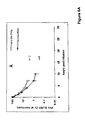
- Figure 6 A and B show the pharmacokinetics of rFVITa-PSA-conjugates and unmodified rFVIIa in rats, A: mono-SA-rFVIIa, B: tri-SA-rFVIIa
- Figure 7 shows a capillary electrophoresis of N-acetylneuraminic acid trimer
- the CA conjugated protein was eluted with elution buffer (20mM HEPES / 1M NaCl, pH 8.0).
- eluate was concentrated by ultrafiltration/diafiltration (UF/DF) using a 30 kD membrane (regenerated cellulose/ Millipore) against 20 mM HEPES buffer, pH 7.4 containing 150 mM NaCl and 0.5% sucrose.
- the enzymatic activity of rFVIIa-PSA was determined by a clotting assay, where FVIIa was added to a human FVII-deficient plasma and the clotting was triggered by a truncated tissue factor reacting with FVIIa but not with FVII (Staclot, Diagnostica Stago, Asimbas, France).
- the FVIII-bypassing activity of rFVII- PSA was measured by a thrombin generation assay (TGA), where FVIIa was added to a severe haemophilia A plasma, containing a high titer of anti-FVIII inhibitor in the presence of a thrombin-specific fluorescence peptide-substrate. Coagulation was triggered with a tissue factor-phospholipid complex and thrombin generation was continuously measured by the cleavage rate of the fluorophore of the substrate. The thrombin generation activity was calculated from the peak thrombin, i.e. the maximum thrombin concentration observed during the assay.
- TGA thrombin generation assay
- Modification was visualized by SDS-PAGE performed under non-reducing conditions. Immunostaining was done with a polyclonal anti-FVII antibody (Affinity Biologicals; Ancaster, Canada) and with a monoclonal anti-PSA antibody (Chemicon International, Temecula, CA, USA). Modification resulted in an increase of the MW of FVIIa demonstrated by a smeared area correlating with the PSA-containing protein ( Figure 1 ).
- FVIIa antigen levels were measured in an additional experiment.
- Six rats were anaesthetized and rFVIIa-PSA-conjugate (450 ⁇ g/kg) in buffer (1.3 g/L glycylglycine, 3 g/L sodium chloride, 30 g/L mannitol, 1.5 g/L CaCl 2 .2H 2 O, 0.1 g/L Tween 80, pH 5.5) was applied by intravenous injection into the tail vein in a volume dose of 10 mL per kg. Unmodified rFVIIa in a dose of 390 ⁇ g/kg was used as control in 6 rats.
- the conjugation of CA at the N-terminus of FVIIa was performed at pH 6.0.
- CA from Sigma (Sigma-Aldrich) was used, which was further purified by anion-exchange chromatography on Q-Sepharose FF (GE Healthcare, Kunststoff, Germany).
- N -terminal conjugated PSA-rFVIIa decreased to approximately 50 % as measured by the STF assay, and to 25 % by TGA.
- Modification was visualized by SDS-PAGE performed under non-reducing conditions developed by immunostaining with a polyclonal anti-FVII antibody and with a polyclonal anti-PSA antibody as described in Example 2. Modification resulted in a slight increase of the MW of FVIIa correlating with the bands shown in the anti-PSA-stained immunoblot ( Figure 4 ).
- RFVIIa was conjugated with N-acetylneuraminic acid as described in US 3,487,890 .
- 350 mg synthetic N-acetylneuraminic acid (Sigma-Aldrich) were dissolved in 10 mL 0.1 M HEPES buffer, pH 9.0.
- 430 mg CNBr (Fluka, Steinhamm, Germany) were added to this solution and the pH was adjusted to 9.5 with 0.5 M NaOH during the activation procedure. After 30 min the pH value was 9.5. Then the pH value was adjusted to 8.4 by addition of 0.1 M HCl.
- the temperature was controlled by use of an ice bath and kept at 20 - 25°C.
- rFVIIa For conjugation of the activated N-acetylneuraminic acid with rFVIIa a solution of rFVIIa (50 mL / 0.44 mg rFVIIa/mL) in 50 mM phosphate buffer, pH 7.2 was added and incubated under gentle stirring at room temperature for 30 min. Then 20 mL 0.2 M Tris-buffer were added for termination of the reaction and blocking of free cyanate esters and the mixture was incubated under gentle stirring for 15 min. Finally the solution was concentrated by UF/DF using a 10 kD membrane (regenerated cellulose/ Millipore) against 50 mM phosphate buffer, pH 7.2.
- RFVIIa was conjugated to a synthetic N-acetylneuraminic acid trimer obtained from TimTec, LLC (Newark, USA) as described in US 3,487,890 for N-acetylneuraminic acid.
- 350 mg of the N-acetylneuraminic acid trimer were dissolved in 10 mL 0.1 M HEPES buffer, pH 9.0.
- 430 mg CNBr (Fluka) were added to this solution and the pH was adjusted to 9.5 with 0.5 M NaOH during the activation procedure. After 30 min the pH value was at 9.5. The pH value was adjusted to 8.4 by addition of 0.1 M HCl.
- the temperature was controlled by use of an ice bath and kept at 20 - 25°C. Then the conjugation of the activated trimer with FVIIa was performed as described in Example 5.
- rFVIIa-mono SA-conjugate 400 ⁇ g protein/kg in buffer (1.3 g/L glycylglycine, 3 g/L sodium chloride, 30 g/L mannitol, 1.5 g/L CaCl 2 .2H 2 O, 0.1 g/L Tween 80, pH 5.5) was applied by intravenous injection into the tail vein in a volume dose of 10 mL per kg.
- rFVIIa-tri SA-conjugate 400 ⁇ g protein/kg.
- Unmodified rFVIIa in a dose of 400 ⁇ g protein/kg was used as control in 8 normal rats.
- the mixture was incubated at 37°C under gentle stirring for 48h.
- the solution was concentrated by UF/DF using a 10 kD membrane (regenerated cellulose/ Millipore) against 20 mM Hepes buffer, 150 mM NaCl, pH 7.4.
- CA was purified by of anion-exchange chromatography on Q-Sepharose FF as described in WO0601616A1 .
- CV column volumes
- the fraction eluted with 350 mM NaCl showed a molecular weight of 20 kDa as indicated by SDS gel electrophoresis.
- This fraction was concentrated by ultrafiltration using a 5 kD membrane made of regenerated cellulose (Millipore) and subsequently diafiltrated against 50 mM phosphate buffer, pH 7.2. Then the CA was oxidized with NaIO 4 as described in Example 1 and a terminal primary amino group was introduced by reductive amination as described in WO05016973A1 .
- PSA (Sigma-Aldrich) was purified by anion-exchange chromatography on Q-Sepharose FF (GE-Healthcare) and a terminal sulfhydryl - group was introduced by chemical modification to form PSA-SH as described in Example 10.
- Sulfo-EMCS (N- ⁇ -Maleimidocaproyloxy) sulfosuccinimide ester / Pierce) was used, containing two reactive groups: a maleimide group for conjugation to SH-groups and a sulfo-NHS-ester group for conjugation to free amino groups.
Landscapes
- Health & Medical Sciences (AREA)
- Life Sciences & Earth Sciences (AREA)
- Chemical & Material Sciences (AREA)
- Engineering & Computer Science (AREA)
- Bioinformatics & Cheminformatics (AREA)
- General Health & Medical Sciences (AREA)
- Medicinal Chemistry (AREA)
- Organic Chemistry (AREA)
- Zoology (AREA)
- Wood Science & Technology (AREA)
- Genetics & Genomics (AREA)
- Veterinary Medicine (AREA)
- Animal Behavior & Ethology (AREA)
- Pharmacology & Pharmacy (AREA)
- Public Health (AREA)
- Biochemistry (AREA)
- Biomedical Technology (AREA)
- Molecular Biology (AREA)
- Epidemiology (AREA)
- General Engineering & Computer Science (AREA)
- Biotechnology (AREA)
- Microbiology (AREA)
- Gastroenterology & Hepatology (AREA)
- Immunology (AREA)
- Proteomics, Peptides & Aminoacids (AREA)
- Chemical Kinetics & Catalysis (AREA)
- General Chemical & Material Sciences (AREA)
- Nuclear Medicine, Radiotherapy & Molecular Imaging (AREA)
- Diabetes (AREA)
- Hematology (AREA)
- Medicines That Contain Protein Lipid Enzymes And Other Medicines (AREA)
- Peptides Or Proteins (AREA)
- Medicinal Preparation (AREA)
- Enzymes And Modification Thereof (AREA)
Priority Applications (1)
| Application Number | Priority Date | Filing Date | Title |
|---|---|---|---|
| EP17196565.0A EP3323430A1 (fr) | 2006-12-15 | 2007-12-14 | Conjugué d'acide de facteur viia-(poly) sialique présentant une demi-vie in vivo prolongée |
Applications Claiming Priority (2)
| Application Number | Priority Date | Filing Date | Title |
|---|---|---|---|
| US87521706P | 2006-12-15 | 2006-12-15 | |
| EP07865679.0A EP2101821B1 (fr) | 2006-12-15 | 2007-12-14 | Conjugué du facteur viia et de l'acide (poly)sialique présentant une demi-vie in vivo prolongée |
Related Parent Applications (3)
| Application Number | Title | Priority Date | Filing Date |
|---|---|---|---|
| EP07865679.0A Division EP2101821B1 (fr) | 2006-12-15 | 2007-12-14 | Conjugué du facteur viia et de l'acide (poly)sialique présentant une demi-vie in vivo prolongée |
| EP07865679.0A Division-Into EP2101821B1 (fr) | 2006-12-15 | 2007-12-14 | Conjugué du facteur viia et de l'acide (poly)sialique présentant une demi-vie in vivo prolongée |
| EP07865679.0 Division | 2007-12-14 |
Related Child Applications (1)
| Application Number | Title | Priority Date | Filing Date |
|---|---|---|---|
| EP17196565.0A Division EP3323430A1 (fr) | 2006-12-15 | 2007-12-14 | Conjugué d'acide de facteur viia-(poly) sialique présentant une demi-vie in vivo prolongée |
Publications (3)
| Publication Number | Publication Date |
|---|---|
| EP2532369A2 true EP2532369A2 (fr) | 2012-12-12 |
| EP2532369A3 EP2532369A3 (fr) | 2013-01-02 |
| EP2532369B1 EP2532369B1 (fr) | 2017-11-01 |
Family
ID=39119264
Family Applications (3)
| Application Number | Title | Priority Date | Filing Date |
|---|---|---|---|
| EP17196565.0A Withdrawn EP3323430A1 (fr) | 2006-12-15 | 2007-12-14 | Conjugué d'acide de facteur viia-(poly) sialique présentant une demi-vie in vivo prolongée |
| EP12004951.5A Active EP2532369B1 (fr) | 2006-12-15 | 2007-12-14 | Conjugué facteur VIIa-acide (poly)sialique présentant une demi-vie in vivo prolongée |
| EP07865679.0A Active EP2101821B1 (fr) | 2006-12-15 | 2007-12-14 | Conjugué du facteur viia et de l'acide (poly)sialique présentant une demi-vie in vivo prolongée |
Family Applications Before (1)
| Application Number | Title | Priority Date | Filing Date |
|---|---|---|---|
| EP17196565.0A Withdrawn EP3323430A1 (fr) | 2006-12-15 | 2007-12-14 | Conjugué d'acide de facteur viia-(poly) sialique présentant une demi-vie in vivo prolongée |
Family Applications After (1)
| Application Number | Title | Priority Date | Filing Date |
|---|---|---|---|
| EP07865679.0A Active EP2101821B1 (fr) | 2006-12-15 | 2007-12-14 | Conjugué du facteur viia et de l'acide (poly)sialique présentant une demi-vie in vivo prolongée |
Country Status (13)
| Country | Link |
|---|---|
| US (4) | US8637007B2 (fr) |
| EP (3) | EP3323430A1 (fr) |
| JP (4) | JP5876208B2 (fr) |
| CN (3) | CN105838699A (fr) |
| AU (1) | AU2007333049B2 (fr) |
| BR (1) | BRPI0720282B8 (fr) |
| CA (1) | CA2670618C (fr) |
| DK (1) | DK2101821T3 (fr) |
| ES (2) | ES2521490T3 (fr) |
| HK (1) | HK1198172A1 (fr) |
| PL (1) | PL2101821T3 (fr) |
| PT (1) | PT2101821E (fr) |
| WO (1) | WO2008074032A1 (fr) |
Families Citing this family (36)
| Publication number | Priority date | Publication date | Assignee | Title |
|---|---|---|---|---|
| AU2007245190B2 (en) | 2006-03-31 | 2011-07-21 | Takeda Pharmaceutical Company Limited | Pegylated factor VIII |
| US7985839B2 (en) | 2006-03-31 | 2011-07-26 | Baxter International Inc. | Factor VIII polymer conjugates |
| US7982010B2 (en) | 2006-03-31 | 2011-07-19 | Baxter International Inc. | Factor VIII polymer conjugates |
| US7645860B2 (en) * | 2006-03-31 | 2010-01-12 | Baxter Healthcare S.A. | Factor VIII polymer conjugates |
| PT2101821E (pt) * | 2006-12-15 | 2014-10-03 | Baxter Int | Fator conjugado viia-ácido (poli)siálico com prolongamento do tempo de meia vida in vivo |
| JP6050927B2 (ja) * | 2007-04-26 | 2016-12-21 | シーエヌジェイ ホールディングス,インコーポレイテッド | 高シアル酸含量を有する組換えビタミンk依存性タンパク質およびその調製方法 |
| KR101654375B1 (ko) * | 2007-06-26 | 2016-09-05 | 박스알타 인코퍼레이티드 | 가수분해성 중합체 fmoc-링커 |
| US20100099616A1 (en) * | 2008-10-17 | 2010-04-22 | Baxter International Inc. | Modified blood factors comprising a low degree of water soluble polymer |
| ES2401965T3 (es) | 2009-02-19 | 2013-04-25 | Novo Nordisk A/S | Modificación de Factor VIII |
| US12203113B2 (en) | 2009-07-09 | 2025-01-21 | Opko Biologics Ltd. | Long-acting coagulation factors and methods of producing same |
| ES2597954T3 (es) * | 2009-07-27 | 2017-01-24 | Baxalta GmbH | Conjugados de proteína de la coagulación sanguínea |
| EP3093029A1 (fr) * | 2009-07-27 | 2016-11-16 | Baxalta GmbH | Conjugués de protéines de coagulation sanguine |
| JP5909755B2 (ja) | 2009-07-27 | 2016-04-27 | リポクセン テクノロジーズ リミテッド | 非血液凝固タンパク質の糖ポリシアル酸化 |
| US8809501B2 (en) | 2009-07-27 | 2014-08-19 | Baxter International Inc. | Nucleophilic catalysts for oxime linkage |
| US8642737B2 (en) | 2010-07-26 | 2014-02-04 | Baxter International Inc. | Nucleophilic catalysts for oxime linkage |
| WO2011060242A2 (fr) | 2009-11-13 | 2011-05-19 | Talecris Biotherapeutics, Inc. | Préparations contenant le facteur de von willebrand (vwf) et procédés, coffrets et utilisations s'y rapportant |
| EP2536753B1 (fr) | 2010-02-16 | 2017-12-20 | Novo Nordisk A/S | Molécules de facteur VIII avec liaison VWF réduite |
| GB201007356D0 (en) | 2010-04-30 | 2010-06-16 | Leverton Licence Holdings Ltd | Conjugated factor VIIa |
| TR201908836T4 (tr) | 2010-07-30 | 2019-07-22 | Baxalta GmbH | Oksim bağına yönelik nükleofilik katalizörler. |
| BR112013015898A2 (pt) | 2010-12-22 | 2018-06-26 | Baxter International Inc. | derivado de ácido graxo solúvel em água, e, métodos para preparar um derivado de ácido graxo e uma proteína terapêutica conjugada. |
| AU2012311484B2 (en) | 2011-09-23 | 2017-04-13 | Novo Nordisk A/S | Novel glucagon analogues |
| MY190257A (en) | 2012-04-16 | 2022-04-11 | Cantab Biopharmaceuticals Patents Ltd | Optimised subcutaneous therapeutic agents |
| AU2013204754C1 (en) | 2012-05-16 | 2018-10-11 | Takeda Pharmaceutical Company Limited | Nucleophilic Catalysts for Oxime Linkage |
| CN104661685A (zh) | 2012-10-15 | 2015-05-27 | 诺和诺德保健Ag(股份有限公司) | 因子vii缀合物 |
| BR112015015182B1 (pt) * | 2012-12-24 | 2023-12-26 | Coagulant Therapeutics Corporation | Variante polipeptídica isolada do fator vii, seu método de preparação e seu uso, e composições farmacêuticas e seus usos |
| EP2986313B1 (fr) | 2013-04-18 | 2019-06-12 | Novo Nordisk A/S | Co-agonistes stables de récepteur de glucagon/glp1 à effet prolongé |
| CA2927756A1 (fr) | 2013-10-15 | 2015-04-23 | Novo Nordisk Health Care Ag | Polypeptides du facteur vii de la coagulation |
| US20150158926A1 (en) | 2013-10-21 | 2015-06-11 | Opko Biologics, Ltd. | Long-acting polypeptides and methods of producing and administering same |
| AR099340A1 (es) * | 2014-02-12 | 2016-07-13 | Novo Nordisk As | Conjugados del factor de coagulación ix |
| BR112016023158A2 (pt) * | 2014-04-11 | 2017-10-17 | Csl Ltd | proteína de fator fviia de meia-vida estendida para prevenção e tratamento de sangramento e regimes de dosagem para os mesmos |
| US10570184B2 (en) | 2014-06-04 | 2020-02-25 | Novo Nordisk A/S | GLP-1/glucagon receptor co-agonists for medical use |
| EP3230309B1 (fr) | 2014-12-10 | 2023-03-29 | OPKO Biologics Ltd. | Procédés de production de polypeptides d'hormone de croissance modifiés par ctp à action prolongée |
| JP2015155469A (ja) * | 2015-06-01 | 2015-08-27 | バクスター・インターナショナル・インコーポレイテッドBaxter International Incorp0Rated | 第fviii因子ポリマー結合体 |
| MY206271A (en) * | 2016-07-11 | 2024-12-06 | Opko Biologics Ltd | Long-acting coagulation factor vii and methods of producing same |
| JP2018115170A (ja) * | 2018-03-02 | 2018-07-26 | バクスアルタ ゲーエムベーハー | 第fviii因子ポリマー結合体 |
| AU2020219736A1 (en) * | 2019-02-04 | 2021-09-30 | Xenetic Biosciences, Inc. | Methods of using glycopolysialylated therapeutic proteins |
Citations (15)
| Publication number | Priority date | Publication date | Assignee | Title |
|---|---|---|---|---|
| US3487890A (en) | 1967-04-14 | 1970-01-06 | Boyles Bros Drilling Co | Core drilling system |
| US3847890A (en) | 1971-11-01 | 1974-11-12 | A Green | Acidic monosaccharide-substituted proteins |
| US4356170A (en) | 1981-05-27 | 1982-10-26 | Canadian Patents & Development Ltd. | Immunogenic polysaccharide-protein conjugates |
| US4784950A (en) | 1985-04-17 | 1988-11-15 | Zymogenetics, Inc. | Expression of factor VII activity in mammalian cells |
| WO1998032466A1 (fr) | 1997-01-29 | 1998-07-30 | Polymasc Pharmaceuticals Plc | Procede de p.e.g.ylation |
| US5846951A (en) | 1991-06-06 | 1998-12-08 | The School Of Pharmacy, University Of London | Pharmaceutical compositions |
| US5874408A (en) | 1996-07-12 | 1999-02-23 | Bayer Corporation | Stabilized albumin-free recombinant factor VII preparation having a low sugar content |
| WO2001058935A2 (fr) | 2000-02-11 | 2001-08-16 | Maxygen Aps | MOLECULES DE TYPE FACTEUR VII OU VIIa |
| US6593294B1 (en) | 1998-04-27 | 2003-07-15 | Opperbas Holding B.V. | Pharmaceutical composition comprising Factor VIII and neutral liposomes |
| WO2005016973A1 (fr) | 2003-08-12 | 2005-02-24 | Lipoxen Technologies Limited | Derives d'acide polysialique |
| US20050113565A1 (en) | 2002-06-21 | 2005-05-26 | Klausen Niels K. | Pegylated factor VII glycoforms |
| WO2006001616A1 (fr) | 2004-06-29 | 2006-01-05 | Cj Corporation | Micro-organisme produisant la l-methionine et procede de production de l-methionine au moyen de ce micro-organisme |
| WO2006006168A2 (fr) | 2004-07-14 | 2006-01-19 | Mali Arel | Biberons |
| US20070191597A1 (en) | 2003-08-12 | 2007-08-16 | Sanjay Jain | Sialic acid derivatives for protein derivatisation and conjugation |
| US20070282096A1 (en) | 2004-08-12 | 2007-12-06 | Sanjay Jain | Sialic Acid Derivatives |
Family Cites Families (120)
| Publication number | Priority date | Publication date | Assignee | Title |
|---|---|---|---|---|
| US4179337A (en) | 1973-07-20 | 1979-12-18 | Davis Frank F | Non-immunogenic polypeptides |
| US4757006A (en) | 1983-10-28 | 1988-07-12 | Genetics Institute, Inc. | Human factor VIII:C gene and recombinant methods for production |
| US4970300A (en) | 1985-02-01 | 1990-11-13 | New York University | Modified factor VIII |
| US5250421A (en) | 1986-01-03 | 1993-10-05 | Genetics Institute, Inc. | Method for producing factor VIII:C-type proteins |
| US5198349A (en) | 1986-01-03 | 1993-03-30 | Genetics Institute, Inc. | Method for producing factor VIII:C and analogs |
| JPH0387173A (ja) | 1987-09-10 | 1991-04-11 | Teijin Ltd | ヒト活性化天然型ファクター8cの製造方法及びそれに用いる形質転換体 |
| US5153265A (en) | 1988-01-20 | 1992-10-06 | Cetus Corporation | Conjugation of polymer to colony stimulating factor-1 |
| US4966999A (en) * | 1988-06-07 | 1990-10-30 | Cytogen Corporation | Radiohalogenated compounds for site specific labeling |
| US5122614A (en) | 1989-04-19 | 1992-06-16 | Enzon, Inc. | Active carbonates of polyalkylene oxides for modification of polypeptides |
| SE465222C5 (sv) | 1989-12-15 | 1998-02-10 | Pharmacia & Upjohn Ab | Ett rekombinant, humant faktor VIII-derivat och förfarande för dess framställning |
| SE466754B (sv) | 1990-09-13 | 1992-03-30 | Berol Nobel Ab | Saett att kovalent binda biopolymerer till hydrofila ytor |
| EP0513332A4 (en) | 1990-11-14 | 1993-03-17 | Cargill, Incorporated | Conjugates of poly(vinylsaccharide) with proteins for the stabilization of proteins |
| JPH06506217A (ja) | 1991-03-18 | 1994-07-14 | エンゾン,インコーポレーテッド | ポリペプチドまたはグリコポリペプチドとポリマーとのヒドラジン含有結合体 |
| GB9112212D0 (en) * | 1991-06-06 | 1991-07-24 | Gregoriadis Gregory | Pharmaceutical compositions |
| US6037452A (en) | 1992-04-10 | 2000-03-14 | Alpha Therapeutic Corporation | Poly(alkylene oxide)-Factor VIII or Factor IX conjugate |
| WO1994005332A2 (fr) | 1992-09-01 | 1994-03-17 | Berlex Laboratories, Inc. | Glycolation de macromolecules glycosylees |
| CA2124690C (fr) | 1992-10-02 | 2007-09-11 | Thomas Osterberg | Composition contenant une preparation du facteur de coagulation viii, methode de preparation et utilisation d'un surfactant comme stabilisateur |
| NZ250375A (en) | 1992-12-09 | 1995-07-26 | Ortho Pharma Corp | Peg hydrazone and peg oxime linkage forming reagents and protein derivatives |
| US5298643A (en) | 1992-12-22 | 1994-03-29 | Enzon, Inc. | Aryl imidate activated polyalkylene oxides |
| FR2700268B1 (fr) | 1993-01-13 | 1995-03-31 | Lvmh Rech | Composition cosmétique ou pharmaceutique, notamment dermatologique, contenant un extrait de Vismia. |
| WO1994015625A1 (fr) | 1993-01-15 | 1994-07-21 | Enzon, Inc. | Conjugues de polymere et de facteur viii |
| WO1994028024A1 (fr) | 1993-06-01 | 1994-12-08 | Enzon, Inc. | Polymere modifie aux glucides presentant une activite erythropoïetique |
| US5621039A (en) | 1993-06-08 | 1997-04-15 | Hallahan; Terrence W. | Factor IX- polymeric conjugates |
| SE504074C2 (sv) | 1993-07-05 | 1996-11-04 | Pharmacia Ab | Proteinberedning för subkutan, intramuskulär eller intradermal administrering |
| CA2204726A1 (fr) | 1994-11-09 | 1996-12-27 | Robin E. Offord | Polymeres fonctionnalises destines a une ligation dirigee |
| WO1996040731A1 (fr) | 1995-06-07 | 1996-12-19 | Mount Sinai School Of Medicine Of The City University Of New York | Proteines modifiees conjuguees a du polyethylene-glycol (peg) |
| SE9503380D0 (sv) | 1995-09-29 | 1995-09-29 | Pharmacia Ab | Protein derivatives |
| EP0979102A4 (fr) | 1997-04-30 | 2005-11-23 | Enzon Inc | Polypeptides a chaine unique modifies par oxyde de polyalkylene |
| US6183738B1 (en) | 1997-05-12 | 2001-02-06 | Phoenix Pharamacologics, Inc. | Modified arginine deiminase |
| DK1036179T4 (da) | 1997-12-03 | 2014-03-31 | Roche Diagnostics Gmbh | Fremgangsmåde til fremstilling af polypeptider med egnet glycosilering |
| US5985263A (en) | 1997-12-19 | 1999-11-16 | Enzon, Inc. | Substantially pure histidine-linked protein polymer conjugates |
| EP1107998B1 (fr) | 1998-08-28 | 2004-02-04 | Gryphon Sciences | Procede de fabrication de chaines polyamides de longueur definie et leur conjugues avec des proteines |
| HU229888B1 (en) | 1998-10-16 | 2014-11-28 | Biogen Idec Ma Inc Cambridge | Polymer conjugates of interferon betha-1a and uses |
| DE19852729A1 (de) | 1998-11-16 | 2000-05-18 | Werner Reutter | Rekombinante Glycoproteine, Verfahren zu ihrer Herstellung, sie enthaltende Arzneimittel und ihre Verwendung |
| DK1820516T3 (da) | 1999-02-22 | 2013-10-28 | Univ Connecticut | Nye albuminfrie faktor VIII-præparater |
| US6531122B1 (en) | 1999-08-27 | 2003-03-11 | Maxygen Aps | Interferon-β variants and conjugates |
| CN1309423C (zh) | 1999-11-12 | 2007-04-11 | 马克西根控股公司 | 干扰素γ偶联物 |
| US6586398B1 (en) | 2000-04-07 | 2003-07-01 | Amgen, Inc. | Chemically modified novel erythropoietin stimulating protein compositions and methods |
| JP4455802B2 (ja) | 2000-05-03 | 2010-04-21 | ノボ ノルディスク ヘルス ケア アクチェンゲゼルシャフト | ヒト第vii凝固因子変異型 |
| EP1280548B1 (fr) | 2000-05-03 | 2013-12-11 | Novo Nordisk Health Care AG | Administration sous-cutanee de facteur coagulant VII |
| WO2001093914A2 (fr) * | 2000-06-08 | 2001-12-13 | La Jolla Pharmaceutical Company | Molecules a plate-forme polyvalentes comprenant un poly(ethylene oxyde) de poids moleculaire eleve |
| US6423826B1 (en) | 2000-06-30 | 2002-07-23 | Regents Of The University Of Minnesota | High molecular weight derivatives of vitamin K-dependent polypeptides |
| US7118737B2 (en) | 2000-09-08 | 2006-10-10 | Amylin Pharmaceuticals, Inc. | Polymer-modified synthetic proteins |
| WO2002022776A2 (fr) | 2000-09-13 | 2002-03-21 | Novo Nordisk A/S | Variants du facteur vii de coagulation humaine |
| BR0114373A (pt) * | 2000-10-02 | 2004-02-17 | Novo Nordisk As | Célula hospedeira eucariótica, métodos para a produção de fvii e de fviia ou de suas variantes, de uma proteìna dependente de vitamina k e de uma célula hospedeira eucariótica produtora de fvii ou de seu análogo, vetor recombinante, fvii e fviia recombinante ou suas variantes, e, proteìna dependente de vitamina k recombinante |
| WO2002032957A1 (fr) | 2000-10-16 | 2002-04-25 | Chugai Seiyaku Kabushiki Kaisha | Erythropoietine modifiee par peg |
| CZ20032454A3 (en) | 2001-03-22 | 2004-03-17 | Novo Nordisk Health Care Ag | Coagulation factor vii derivative |
| US6913915B2 (en) | 2001-08-02 | 2005-07-05 | Phoenix Pharmacologics, Inc. | PEG-modified uricase |
| US7795210B2 (en) * | 2001-10-10 | 2010-09-14 | Novo Nordisk A/S | Protein remodeling methods and proteins/peptides produced by the methods |
| US8008252B2 (en) * | 2001-10-10 | 2011-08-30 | Novo Nordisk A/S | Factor VII: remodeling and glycoconjugation of Factor VII |
| US7214660B2 (en) * | 2001-10-10 | 2007-05-08 | Neose Technologies, Inc. | Erythropoietin: remodeling and glycoconjugation of erythropoietin |
| ES2411007T3 (es) * | 2001-10-10 | 2013-07-04 | Novo Nordisk A/S | Remodelación y glicoconjugación de péptidos |
| EP1446438A2 (fr) | 2001-11-07 | 2004-08-18 | Nektar Therapeutics Al, Corporation | Polymeres ramifies et conjugues associes |
| AU2002351199A1 (en) | 2001-11-28 | 2003-06-10 | Neose Technologies, Inc. | Glycoprotein remodeling using endoglycanases |
| US7368108B2 (en) | 2001-11-28 | 2008-05-06 | Neose Technologies, Inc. | Glycopeptide remodeling using amidases |
| UA86744C2 (en) * | 2002-06-21 | 2009-05-25 | Ново Нордиск Хэлс Кеа Аг | Pegylated factor vii glycoforms |
| US7122189B2 (en) | 2002-08-13 | 2006-10-17 | Enzon, Inc. | Releasable polymeric conjugates based on aliphatic biodegradable linkers |
| US7087229B2 (en) | 2003-05-30 | 2006-08-08 | Enzon Pharmaceuticals, Inc. | Releasable polymeric conjugates based on aliphatic biodegradable linkers |
| BR0314227A (pt) * | 2002-09-11 | 2005-10-25 | Fresenius Kabi De Gmbh | Derivados de amido de hidroxialquila |
| US20040062748A1 (en) | 2002-09-30 | 2004-04-01 | Mountain View Pharmaceuticals, Inc. | Polymer conjugates with decreased antigenicity, methods of preparation and uses thereof |
| JP4490369B2 (ja) * | 2002-12-31 | 2010-06-23 | ネクター セラピューティクス アラバマ,コーポレイション | マレアミド酸ポリマー誘導体及びこれらの生物学的複合体 |
| MXPA05007151A (es) | 2002-12-31 | 2005-09-21 | Nektar Therapeutics Al Corp | Polimeros terminados en maleimida hidroliticamente estables. |
| BRPI0407882B1 (pt) * | 2003-02-26 | 2021-07-27 | Nektar Therapeutics | Composição compreendendo conjugados de polímero-porção de fator viii e seu método de fabricação |
| EP1613261A4 (fr) * | 2003-04-09 | 2011-01-26 | Novo Nordisk As | Formation intracellulaire de conjugues de peptides |
| BRPI0412671A (pt) | 2003-08-08 | 2006-10-03 | Fresenius Kabi De Gmbh | conjugados de um polìmero e uma proteìna ligados por um grupo de ligação de oxima |
| WO2005014049A2 (fr) | 2003-08-08 | 2005-02-17 | Novo Nordisk A/S | Synthese et utilisation de nouveaux polymeres ramifies structuraux bien definis comme agents de conjugaison de peptides |
| EP1673453A2 (fr) * | 2003-10-07 | 2006-06-28 | Novo Nordisk Health Care AG | Molecules hybrides presentant une activite de facteur vii/viia |
| MXPA06006023A (es) | 2003-12-03 | 2006-08-23 | Neose Technologies Inc | Factor ix glicopegilado. |
| NZ548123A (en) | 2004-01-08 | 2010-05-28 | Novo Nordisk As | O-linked glycosylation of peptides |
| US20090292110A1 (en) | 2004-07-23 | 2009-11-26 | Defrees Shawn | Enzymatic modification of glycopeptides |
| US20090176967A1 (en) | 2004-08-02 | 2009-07-09 | Novo Nordisk Healthcare A/G | Conjugation of FVII |
| PT2363414T (pt) | 2004-11-12 | 2022-08-04 | Bayer Healthcare Llc | Modificação de fviii direcionada a sítio |
| CN101163506B (zh) * | 2004-12-27 | 2012-09-26 | 巴克斯特国际公司 | 聚合物-von Willebrand因子偶联物 |
| JP2008526864A (ja) | 2005-01-06 | 2008-07-24 | ネオス テクノロジーズ インコーポレイテッド | 糖断片を用いる糖結合 |
| US8217154B2 (en) * | 2005-02-23 | 2012-07-10 | Lipoxen Technologies Limited | Activated sialic acid derivatives for protein derivatisation and conjugation |
| CN101137396A (zh) * | 2005-03-11 | 2008-03-05 | 弗雷泽纽斯卡比德国有限公司 | 由无活性初始材料制备生物活性糖蛋白 |
| EP2975135A1 (fr) | 2005-05-25 | 2016-01-20 | Novo Nordisk A/S | Facteur IX glycopégylé |
| ES2553160T3 (es) | 2005-06-17 | 2015-12-04 | Novo Nordisk Health Care Ag | Reducción y derivatización selectivas de proteínas Factor VII transformadas por ingeniería que comprenden al menos una cisteína no nativa |
| US20090017007A1 (en) | 2005-08-26 | 2009-01-15 | Maxygen Holdings Ltd. | Liquid factor vii composition |
| BRPI0620316A2 (pt) | 2005-12-21 | 2011-11-08 | Wyeth Corp | formulações de proteìnas com viscosidades reduzida e seus usos |
| AU2007245190B2 (en) | 2006-03-31 | 2011-07-21 | Takeda Pharmaceutical Company Limited | Pegylated factor VIII |
| US7645860B2 (en) * | 2006-03-31 | 2010-01-12 | Baxter Healthcare S.A. | Factor VIII polymer conjugates |
| US7985839B2 (en) * | 2006-03-31 | 2011-07-26 | Baxter International Inc. | Factor VIII polymer conjugates |
| US7982010B2 (en) * | 2006-03-31 | 2011-07-19 | Baxter International Inc. | Factor VIII polymer conjugates |
| EP2089052A4 (fr) | 2006-05-24 | 2011-02-16 | Peg Biosciences | Composes de lieurs a base de polyethylene glycol et conjugues biologiquement actifs a base desdits composes |
| JP2007319283A (ja) * | 2006-05-31 | 2007-12-13 | Nippon Sherwood Medical Industries Ltd | 医療用バッグ |
| US7939632B2 (en) * | 2006-06-14 | 2011-05-10 | Csl Behring Gmbh | Proteolytically cleavable fusion proteins with high molar specific activity |
| DK2049692T3 (en) | 2006-07-13 | 2016-04-04 | Serum Inst India Ltd | Process for producing very high purity polysialic acid |
| US8299015B2 (en) | 2006-07-25 | 2012-10-30 | Lipoxen Technologies Limited | Derivatisation of granulocyte colony-stimulating factor |
| EP2054521A4 (fr) | 2006-10-03 | 2012-12-19 | Novo Nordisk As | Méthodes de purification de conjugués de polypeptides |
| PT2101821E (pt) * | 2006-12-15 | 2014-10-03 | Baxter Int | Fator conjugado viia-ácido (poli)siálico com prolongamento do tempo de meia vida in vivo |
| US20100143326A1 (en) | 2007-01-03 | 2010-06-10 | Novo Nordisk Healthcare A/G | SUBCUTANEOUS ADMINISTRATION OF COAGULATION FACTOR VIIa-RELATED POLYPEPTIDES |
| WO2008119815A1 (fr) | 2007-04-02 | 2008-10-09 | Novo Nordisk A/S | Administration sous-cutanée du facteur ix de la coagulation |
| KR101654375B1 (ko) | 2007-06-26 | 2016-09-05 | 박스알타 인코퍼레이티드 | 가수분해성 중합체 fmoc-링커 |
| WO2009006620A1 (fr) | 2007-07-03 | 2009-01-08 | Children's Hospital & Research Center At Oakland | Dérivés d'acide oligosialique, procédés de fabrication et utilisations immunologiques |
| CN101820920B (zh) | 2007-10-09 | 2014-08-06 | 宝力泰锐克斯有限公司 | 新的缀合蛋白质和肽 |
| CA2711503A1 (fr) | 2008-01-08 | 2009-07-16 | Biogenerix Ag | Glycoconjugaison de polypeptides employant des oligosaccharyltransferases |
| PL2257311T3 (pl) | 2008-02-27 | 2014-09-30 | Novo Nordisk As | Koniugaty cząsteczek czynnika VIII |
| DK2280734T3 (da) | 2008-04-24 | 2014-05-26 | Cantab Biopharmaceuticals Patents Ltd | Faktor-ix-konjugater med forlængede halveringstider |
| WO2009141418A1 (fr) | 2008-05-23 | 2009-11-26 | Novo Nordisk A/S | Formulations de sérines protéases fonctionnalisées par peg avec des concentrations élevées d'un conservateur aromatique |
| EP2285401A1 (fr) | 2008-05-23 | 2011-02-23 | Novo Nordisk Health Care AG | Compositions de faible viscosité comprenant une protéine contenant un domaine gla pégylé |
| EP2297330A4 (fr) | 2008-06-04 | 2012-03-14 | Bayer Healthcare Llc | Mutéines du facteur viii pour le traitement de la maladie de von willebrand |
| AU2009275358C1 (en) | 2008-07-21 | 2015-09-24 | Polytherics Limited | Novel reagents and method for conjugating biological molecules |
| KR20110093775A (ko) | 2008-11-03 | 2011-08-18 | 바이엘 헬스케어 엘엘씨 | 혈우병 치료 방법 |
| US20120121613A1 (en) | 2009-01-19 | 2012-05-17 | Bayer Healthcare Llc | Protein conjugate having an endopeptidase- cleavable bioprotective moiety |
| ES2401965T3 (es) | 2009-02-19 | 2013-04-25 | Novo Nordisk A/S | Modificación de Factor VIII |
| EP2403538B1 (fr) | 2009-03-04 | 2017-10-04 | Polytherics Limited | Protéines et peptides conjugués |
| WO2010120365A2 (fr) | 2009-04-16 | 2010-10-21 | Wu Nian | Conjugués protéine-support |
| GB0908393D0 (en) | 2009-05-15 | 2009-06-24 | Almac Sciences Scotland Ltd | Labelling method |
| ES2597954T3 (es) | 2009-07-27 | 2017-01-24 | Baxalta GmbH | Conjugados de proteína de la coagulación sanguínea |
| JP5909755B2 (ja) | 2009-07-27 | 2016-04-27 | リポクセン テクノロジーズ リミテッド | 非血液凝固タンパク質の糖ポリシアル酸化 |
| JP2013500726A (ja) | 2009-07-31 | 2013-01-10 | バイエル・ヘルスケア・エルエルシー | 改変第ix因子ポリペプチドおよびその使用 |
| DE102009028526A1 (de) | 2009-08-13 | 2011-02-24 | Leibniz-Institut Für Polymerforschung Dresden E.V. | Verfahren zur Modifikation und Funktionalisierung von Sacchariden |
| EP2480578A4 (fr) | 2009-09-25 | 2013-04-17 | Vybion Inc | Modification de polypeptide |
| US8697844B2 (en) | 2009-11-24 | 2014-04-15 | Novo Nordisk A/S | Method of purifying pegylated proteins |
| EP2536753B1 (fr) | 2010-02-16 | 2017-12-20 | Novo Nordisk A/S | Molécules de facteur VIII avec liaison VWF réduite |
| GB201007356D0 (en) | 2010-04-30 | 2010-06-16 | Leverton Licence Holdings Ltd | Conjugated factor VIIa |
| GB201007357D0 (en) | 2010-04-30 | 2010-06-16 | Leverton Licence Holdings Ltd | Conjugated factor VIII |
| WO2012068134A1 (fr) | 2010-11-15 | 2012-05-24 | Biogen Idec Inc. | Enrichissement et concentration d'isoformes de produit choisis par liaison surchargée et chromatographie d'élution |
| PT3513804T (pt) | 2011-07-08 | 2022-06-02 | Bioverativ Therapeutics Inc | Polipéptidos fator viii híbridos e quiméricos, e métodos de utilização dos mesmos |
-
2007
- 2007-12-14 PT PT78656790T patent/PT2101821E/pt unknown
- 2007-12-14 CN CN201610304880.0A patent/CN105838699A/zh active Pending
- 2007-12-14 CN CN201310698649.0A patent/CN103804489A/zh active Pending
- 2007-12-14 US US11/956,634 patent/US8637007B2/en active Active
- 2007-12-14 WO PCT/US2007/087553 patent/WO2008074032A1/fr not_active Ceased
- 2007-12-14 EP EP17196565.0A patent/EP3323430A1/fr not_active Withdrawn
- 2007-12-14 JP JP2009541613A patent/JP5876208B2/ja active Active
- 2007-12-14 BR BRPI0720282A patent/BRPI0720282B8/pt active IP Right Grant
- 2007-12-14 EP EP12004951.5A patent/EP2532369B1/fr active Active
- 2007-12-14 EP EP07865679.0A patent/EP2101821B1/fr active Active
- 2007-12-14 CN CN200780046301.6A patent/CN101557830B/zh active Active
- 2007-12-14 DK DK07865679.0T patent/DK2101821T3/da active
- 2007-12-14 ES ES07865679.0T patent/ES2521490T3/es active Active
- 2007-12-14 CA CA2670618A patent/CA2670618C/fr active Active
- 2007-12-14 PL PL07865679T patent/PL2101821T3/pl unknown
- 2007-12-14 ES ES12004951.5T patent/ES2655639T3/es active Active
- 2007-12-14 AU AU2007333049A patent/AU2007333049B2/en active Active
-
2010
- 2010-09-08 US US12/877,425 patent/US20110064714A1/en not_active Abandoned
-
2012
- 2012-12-25 JP JP2012281272A patent/JP2013060462A/ja active Pending
-
2013
- 2013-12-20 US US14/136,328 patent/US20140186323A1/en not_active Abandoned
-
2014
- 2014-11-19 HK HK14111668.2A patent/HK1198172A1/xx unknown
-
2015
- 2015-06-16 JP JP2015121340A patent/JP2015163650A/ja not_active Withdrawn
- 2015-11-19 US US14/946,286 patent/US10251941B2/en active Active
-
2017
- 2017-05-29 JP JP2017105504A patent/JP2017141305A/ja active Pending
Patent Citations (15)
| Publication number | Priority date | Publication date | Assignee | Title |
|---|---|---|---|---|
| US3487890A (en) | 1967-04-14 | 1970-01-06 | Boyles Bros Drilling Co | Core drilling system |
| US3847890A (en) | 1971-11-01 | 1974-11-12 | A Green | Acidic monosaccharide-substituted proteins |
| US4356170A (en) | 1981-05-27 | 1982-10-26 | Canadian Patents & Development Ltd. | Immunogenic polysaccharide-protein conjugates |
| US4784950A (en) | 1985-04-17 | 1988-11-15 | Zymogenetics, Inc. | Expression of factor VII activity in mammalian cells |
| US5846951A (en) | 1991-06-06 | 1998-12-08 | The School Of Pharmacy, University Of London | Pharmaceutical compositions |
| US5874408A (en) | 1996-07-12 | 1999-02-23 | Bayer Corporation | Stabilized albumin-free recombinant factor VII preparation having a low sugar content |
| WO1998032466A1 (fr) | 1997-01-29 | 1998-07-30 | Polymasc Pharmaceuticals Plc | Procede de p.e.g.ylation |
| US6593294B1 (en) | 1998-04-27 | 2003-07-15 | Opperbas Holding B.V. | Pharmaceutical composition comprising Factor VIII and neutral liposomes |
| WO2001058935A2 (fr) | 2000-02-11 | 2001-08-16 | Maxygen Aps | MOLECULES DE TYPE FACTEUR VII OU VIIa |
| US20050113565A1 (en) | 2002-06-21 | 2005-05-26 | Klausen Niels K. | Pegylated factor VII glycoforms |
| WO2005016973A1 (fr) | 2003-08-12 | 2005-02-24 | Lipoxen Technologies Limited | Derives d'acide polysialique |
| US20070191597A1 (en) | 2003-08-12 | 2007-08-16 | Sanjay Jain | Sialic acid derivatives for protein derivatisation and conjugation |
| WO2006001616A1 (fr) | 2004-06-29 | 2006-01-05 | Cj Corporation | Micro-organisme produisant la l-methionine et procede de production de l-methionine au moyen de ce micro-organisme |
| WO2006006168A2 (fr) | 2004-07-14 | 2006-01-19 | Mali Arel | Biberons |
| US20070282096A1 (en) | 2004-08-12 | 2007-12-06 | Sanjay Jain | Sialic Acid Derivatives |
Non-Patent Citations (19)
| Title |
|---|
| ACHARYA ET AL., J THROMB HAEMOST., 2004, pages 2248 - 56 |
| BIESSEN ET AL., BIOCHEM J, vol. 299, 1994, pages 291 - 6 |
| BJÖRKMAN; BERNTROP, CLIN PHARMACOKINET., vol. 40, 2001, pages 815 - 32 |
| EIGENBROT, CURR PROTEIN PEPT SCI., vol. 3, 2002, pages 287 - 99 |
| FERNANDES; GREGORIADIS, BIOCHIM BIOPHYS ACTA, vol. 341, 1997, pages 26 - 34 |
| FERNANDES; GREGORIADIS, INT J PHARM., vol. 217, 2001, pages 215 - 24 |
| HAGEN ET AL., PNAS, vol. 83, 1986, pages 2412 - 6 |
| HARRIS; CHESS, NAT REV DRUG DISCOV., vol. 2, 2003, pages 214 - 21 |
| HEDNER, J BIOTECHNOL., vol. 124, 2006, pages 747 - 57 |
| JENNINGS; LUGOWSKI, J IMMUNOL., vol. 127, 1981, pages 1011 - 8 |
| KANG ET AL., CHEM COMMUN., 2000, pages 227 - 8 |
| KLAUSEN; KOMFELT, J CHROMATOGR A., vol. 718, 1995, pages 195 - 202 |
| KLAUSEN; KORNFELT, J CHROMATOGR A., vol. 718, 1995, pages 195 - 202 |
| LEHNINGER: "Biochemistry", 1975, WORTH PUBLISHERS, INC., pages: 71 - 77 |
| MARIANI ET AL., SEMIN HEMATOL., vol. 43, no. 1, 2006, pages S42 - 7 |
| PINOTTI ET AL., BLOOD, vol. 95, 2000, pages 3423 - 8 |
| RESS; LINHARDT, CURRENT ORGANIC SYNTHESIS., vol. 1, 2004, pages 31 - 46 |
| SABATER-LLEAL ET AL., HUM GENET., vol. 118, 2006, pages 741 - 51 |
| SCHENONE ET AL., CURR OPIN HEMATOL., vol. 11, 2004, pages 272 - 7 |
Also Published As
Similar Documents
| Publication | Publication Date | Title |
|---|---|---|
| US10251941B2 (en) | Factor VIIa-polysialic acid conjugates having prolonged in vivo half-life | |
| AU2010281453B2 (en) | Blood coagulation protein conjugates | |
| US11040109B2 (en) | Blood coagulation protein conjugates | |
| HK1230975A (en) | Blood coagulation protein conjugates | |
| HK1230975A1 (en) | Blood coagulation protein conjugates | |
| HK1229229A (zh) | 凝血蛋白綴合物 | |
| HK1229229A1 (en) | Blood coagulation protein conjugates | |
| HK1171691B (en) | Blood coagulation protein conjugates |
Legal Events
| Date | Code | Title | Description |
|---|---|---|---|
| PUAL | Search report despatched |
Free format text: ORIGINAL CODE: 0009013 |
|
| PUAI | Public reference made under article 153(3) epc to a published international application that has entered the european phase |
Free format text: ORIGINAL CODE: 0009012 |
|
| AC | Divisional application: reference to earlier application |
Ref document number: 2101821 Country of ref document: EP Kind code of ref document: P |
|
| AK | Designated contracting states |
Kind code of ref document: A2 Designated state(s): AT BE BG CH CY CZ DE DK EE ES FI FR GB GR HU IE IS IT LI LT LU LV MC MT NL PL PT RO SE SI SK TR |
|
| RIN1 | Information on inventor provided before grant (corrected) |
Inventor name: SIEKMANN, JUERGEN Inventor name: TURECEK, PETER Inventor name: SCHEIFLINGER, FRIEDRICH Inventor name: CANAVAGGIO, MICHEL |
|
| AK | Designated contracting states |
Kind code of ref document: A3 Designated state(s): AT BE BG CH CY CZ DE DK EE ES FI FR GB GR HU IE IS IT LI LT LU LV MC MT NL PL PT RO SE SI SK TR |
|
| RIC1 | Information provided on ipc code assigned before grant |
Ipc: A61P 7/00 20060101ALI20121128BHEP Ipc: A61K 47/48 20060101AFI20121128BHEP |
|
| 17P | Request for examination filed |
Effective date: 20130628 |
|
| RBV | Designated contracting states (corrected) |
Designated state(s): AT BE BG CH CY CZ DE DK EE ES FI FR GB GR HU IE IS IT LI LT LU LV MC MT NL PL PT RO SE SI SK TR |
|
| RAP1 | Party data changed (applicant data changed or rights of an application transferred) |
Owner name: BAXALTA INCORPORATED Owner name: BAXALTA GMBH |
|
| 17Q | First examination report despatched |
Effective date: 20151217 |
|
| GRAP | Despatch of communication of intention to grant a patent |
Free format text: ORIGINAL CODE: EPIDOSNIGR1 |
|
| INTG | Intention to grant announced |
Effective date: 20161207 |
|
| GRAJ | Information related to disapproval of communication of intention to grant by the applicant or resumption of examination proceedings by the epo deleted |
Free format text: ORIGINAL CODE: EPIDOSDIGR1 |
|
| REG | Reference to a national code |
Ref country code: DE Ref legal event code: R079 Ref document number: 602007052933 Country of ref document: DE Free format text: PREVIOUS MAIN CLASS: A61K0047480000 Ipc: A61K0047540000 |
|
| GRAS | Grant fee paid |
Free format text: ORIGINAL CODE: EPIDOSNIGR3 |
|
| GRAP | Despatch of communication of intention to grant a patent |
Free format text: ORIGINAL CODE: EPIDOSNIGR1 |
|
| INTC | Intention to grant announced (deleted) | ||
| INTG | Intention to grant announced |
Effective date: 20170517 |
|
| RIC1 | Information provided on ipc code assigned before grant |
Ipc: A61K 47/54 20170101AFI20170508BHEP Ipc: A61K 47/61 20170101ALI20170508BHEP Ipc: A61P 7/00 20060101ALI20170508BHEP |
|
| GRAA | (expected) grant |
Free format text: ORIGINAL CODE: 0009210 |
|
| AC | Divisional application: reference to earlier application |
Ref document number: 2101821 Country of ref document: EP Kind code of ref document: P |
|
| AK | Designated contracting states |
Kind code of ref document: B1 Designated state(s): AT BE BG CH CY CZ DE DK EE ES FI FR GB GR HU IE IS IT LI LT LU LV MC MT NL PL PT RO SE SI SK TR |
|
| REG | Reference to a national code |
Ref country code: GB Ref legal event code: FG4D |
|
| REG | Reference to a national code |
Ref country code: CH Ref legal event code: EP Ref country code: AT Ref legal event code: REF Ref document number: 941383 Country of ref document: AT Kind code of ref document: T Effective date: 20171115 |
|
| REG | Reference to a national code |
Ref country code: DE Ref legal event code: R081 Ref document number: 602007052933 Country of ref document: DE Owner name: TAKEDA PHARMACEUTICAL CO. LTD., JP Free format text: FORMER OWNERS: BAXALTA GMBH, GLATTPARK, OPFIKON, CH; BAXALTA INCORPORATED, BANNOCKBURN, ILL., US |
|
| RAP2 | Party data changed (patent owner data changed or rights of a patent transferred) |
Owner name: BAXALTA GMBH Owner name: BAXALTA INCORPORATED |
|
| REG | Reference to a national code |
Ref country code: IE Ref legal event code: FG4D |
|
| REG | Reference to a national code |
Ref country code: DE Ref legal event code: R096 Ref document number: 602007052933 Country of ref document: DE |
|
| REG | Reference to a national code |
Ref country code: NL Ref legal event code: FP |
|
| REG | Reference to a national code |
Ref country code: FR Ref legal event code: PLFP Year of fee payment: 11 |
|
| REG | Reference to a national code |
Ref country code: SE Ref legal event code: TRGR |
|
| REG | Reference to a national code |
Ref country code: ES Ref legal event code: FG2A Ref document number: 2655639 Country of ref document: ES Kind code of ref document: T3 Effective date: 20180221 |
|
| REG | Reference to a national code |
Ref country code: LT Ref legal event code: MG4D |
|
| PG25 | Lapsed in a contracting state [announced via postgrant information from national office to epo] |
Ref country code: LT Free format text: LAPSE BECAUSE OF FAILURE TO SUBMIT A TRANSLATION OF THE DESCRIPTION OR TO PAY THE FEE WITHIN THE PRESCRIBED TIME-LIMIT Effective date: 20171101 Ref country code: FI Free format text: LAPSE BECAUSE OF FAILURE TO SUBMIT A TRANSLATION OF THE DESCRIPTION OR TO PAY THE FEE WITHIN THE PRESCRIBED TIME-LIMIT Effective date: 20171101 |
|
| PG25 | Lapsed in a contracting state [announced via postgrant information from national office to epo] |
Ref country code: GR Free format text: LAPSE BECAUSE OF FAILURE TO SUBMIT A TRANSLATION OF THE DESCRIPTION OR TO PAY THE FEE WITHIN THE PRESCRIBED TIME-LIMIT Effective date: 20180202 Ref country code: BG Free format text: LAPSE BECAUSE OF FAILURE TO SUBMIT A TRANSLATION OF THE DESCRIPTION OR TO PAY THE FEE WITHIN THE PRESCRIBED TIME-LIMIT Effective date: 20180201 Ref country code: IS Free format text: LAPSE BECAUSE OF FAILURE TO SUBMIT A TRANSLATION OF THE DESCRIPTION OR TO PAY THE FEE WITHIN THE PRESCRIBED TIME-LIMIT Effective date: 20180301 Ref country code: LV Free format text: LAPSE BECAUSE OF FAILURE TO SUBMIT A TRANSLATION OF THE DESCRIPTION OR TO PAY THE FEE WITHIN THE PRESCRIBED TIME-LIMIT Effective date: 20171101 |
|
| PG25 | Lapsed in a contracting state [announced via postgrant information from national office to epo] |
Ref country code: SK Free format text: LAPSE BECAUSE OF FAILURE TO SUBMIT A TRANSLATION OF THE DESCRIPTION OR TO PAY THE FEE WITHIN THE PRESCRIBED TIME-LIMIT Effective date: 20171101 Ref country code: EE Free format text: LAPSE BECAUSE OF FAILURE TO SUBMIT A TRANSLATION OF THE DESCRIPTION OR TO PAY THE FEE WITHIN THE PRESCRIBED TIME-LIMIT Effective date: 20171101 Ref country code: DK Free format text: LAPSE BECAUSE OF FAILURE TO SUBMIT A TRANSLATION OF THE DESCRIPTION OR TO PAY THE FEE WITHIN THE PRESCRIBED TIME-LIMIT Effective date: 20171101 Ref country code: CY Free format text: LAPSE BECAUSE OF FAILURE TO SUBMIT A TRANSLATION OF THE DESCRIPTION OR TO PAY THE FEE WITHIN THE PRESCRIBED TIME-LIMIT Effective date: 20171101 Ref country code: CZ Free format text: LAPSE BECAUSE OF FAILURE TO SUBMIT A TRANSLATION OF THE DESCRIPTION OR TO PAY THE FEE WITHIN THE PRESCRIBED TIME-LIMIT Effective date: 20171101 |
|
| REG | Reference to a national code |
Ref country code: DE Ref legal event code: R097 Ref document number: 602007052933 Country of ref document: DE |
|
| PG25 | Lapsed in a contracting state [announced via postgrant information from national office to epo] |
Ref country code: PL Free format text: LAPSE BECAUSE OF FAILURE TO SUBMIT A TRANSLATION OF THE DESCRIPTION OR TO PAY THE FEE WITHIN THE PRESCRIBED TIME-LIMIT Effective date: 20171101 Ref country code: RO Free format text: LAPSE BECAUSE OF FAILURE TO SUBMIT A TRANSLATION OF THE DESCRIPTION OR TO PAY THE FEE WITHIN THE PRESCRIBED TIME-LIMIT Effective date: 20171101 |
|
| PLBE | No opposition filed within time limit |
Free format text: ORIGINAL CODE: 0009261 |
|
| STAA | Information on the status of an ep patent application or granted ep patent |
Free format text: STATUS: NO OPPOSITION FILED WITHIN TIME LIMIT |
|
| PG25 | Lapsed in a contracting state [announced via postgrant information from national office to epo] |
Ref country code: MT Free format text: LAPSE BECAUSE OF NON-PAYMENT OF DUE FEES Effective date: 20171214 Ref country code: LU Free format text: LAPSE BECAUSE OF NON-PAYMENT OF DUE FEES Effective date: 20171214 |
|
| 26N | No opposition filed |
Effective date: 20180802 |
|
| PG25 | Lapsed in a contracting state [announced via postgrant information from national office to epo] |
Ref country code: SI Free format text: LAPSE BECAUSE OF FAILURE TO SUBMIT A TRANSLATION OF THE DESCRIPTION OR TO PAY THE FEE WITHIN THE PRESCRIBED TIME-LIMIT Effective date: 20171101 |
|
| PG25 | Lapsed in a contracting state [announced via postgrant information from national office to epo] |
Ref country code: HU Free format text: LAPSE BECAUSE OF FAILURE TO SUBMIT A TRANSLATION OF THE DESCRIPTION OR TO PAY THE FEE WITHIN THE PRESCRIBED TIME-LIMIT; INVALID AB INITIO Effective date: 20071214 Ref country code: MC Free format text: LAPSE BECAUSE OF FAILURE TO SUBMIT A TRANSLATION OF THE DESCRIPTION OR TO PAY THE FEE WITHIN THE PRESCRIBED TIME-LIMIT Effective date: 20171101 |
|
| PG25 | Lapsed in a contracting state [announced via postgrant information from national office to epo] |
Ref country code: TR Free format text: LAPSE BECAUSE OF FAILURE TO SUBMIT A TRANSLATION OF THE DESCRIPTION OR TO PAY THE FEE WITHIN THE PRESCRIBED TIME-LIMIT Effective date: 20171101 |
|
| PG25 | Lapsed in a contracting state [announced via postgrant information from national office to epo] |
Ref country code: PT Free format text: LAPSE BECAUSE OF FAILURE TO SUBMIT A TRANSLATION OF THE DESCRIPTION OR TO PAY THE FEE WITHIN THE PRESCRIBED TIME-LIMIT Effective date: 20171101 |
|
| REG | Reference to a national code |
Ref country code: CH Ref legal event code: PUE Owner name: TAKEDA PHARMACEUTICAL COMPANY LIMITED, JP Free format text: FORMER OWNER: BAXALTA INCORPORATED, CH |
|
| REG | Reference to a national code |
Ref country code: AT Ref legal event code: UEP Ref document number: 941383 Country of ref document: AT Kind code of ref document: T Effective date: 20171101 |
|
| REG | Reference to a national code |
Ref country code: DE Ref legal event code: R081 Ref document number: 602007052933 Country of ref document: DE Owner name: TAKEDA PHARMACEUTICAL COMPANY LIMITED, OSAKA-S, JP Free format text: FORMER OWNERS: BAXALTA GMBH, ZUG, CH; BAXALTA INCORPORATED, BANNOCKBURN, ILL., US Ref country code: DE Ref legal event code: R082 Ref document number: 602007052933 Country of ref document: DE Representative=s name: HOFFMANN - EITLE PATENT- UND RECHTSANWAELTE PA, DE Ref country code: DE Ref legal event code: R081 Ref document number: 602007052933 Country of ref document: DE Owner name: TAKEDA PHARMACEUTICAL CO. LTD., JP Free format text: FORMER OWNERS: BAXALTA GMBH, ZUG, CH; BAXALTA INCORPORATED, BANNOCKBURN, ILL., US |
|
| REG | Reference to a national code |
Ref country code: AT Ref legal event code: PC Ref document number: 941383 Country of ref document: AT Kind code of ref document: T Owner name: TAKEDA PHARMACEUTICAL COMPANY LIMITED, JP Effective date: 20210719 |
|
| REG | Reference to a national code |
Ref country code: BE Ref legal event code: PD Owner name: TAKEDA PHARMACEUTICAL COMPANY LIMITED; JP Free format text: DETAILS ASSIGNMENT: CHANGE OF OWNER(S), ASSIGNMENT; FORMER OWNER NAME: BAXALTA INCORPORATED Effective date: 20210401 |
|
| REG | Reference to a national code |
Ref country code: NL Ref legal event code: PD Owner name: TAKEDA PHARMACEUTICAL COMPANY LIMITED; JP Free format text: DETAILS ASSIGNMENT: CHANGE OF OWNER(S), ASSIGNMENT; FORMER OWNER NAME: BAXALTA INCORPORATED Effective date: 20211222 |
|
| REG | Reference to a national code |
Ref country code: GB Ref legal event code: 732E Free format text: REGISTERED BETWEEN 20220210 AND 20220216 |
|
| REG | Reference to a national code |
Ref country code: ES Ref legal event code: PC2A Owner name: TAKEDA PHARMACEUTICAL COMPANY LIMITED Effective date: 20220418 |
|
| P01 | Opt-out of the competence of the unified patent court (upc) registered |
Effective date: 20230530 |
|
| REG | Reference to a national code |
Ref country code: DE Ref legal event code: R081 Ref document number: 602007052933 Country of ref document: DE Owner name: TAKEDA PHARMACEUTICAL COMPANY LIMITED, OSAKA-S, JP Free format text: FORMER OWNER: TAKEDA PHARMACEUTICAL CO. LTD., OSAKA, JP |
|
| PGFP | Annual fee paid to national office [announced via postgrant information from national office to epo] |
Ref country code: NL Payment date: 20251119 Year of fee payment: 19 |
|
| REG | Reference to a national code |
Ref country code: CH Ref legal event code: U11 Free format text: ST27 STATUS EVENT CODE: U-0-0-U10-U11 (AS PROVIDED BY THE NATIONAL OFFICE) Effective date: 20260101 |
|
| PGFP | Annual fee paid to national office [announced via postgrant information from national office to epo] |
Ref country code: DE Payment date: 20251126 Year of fee payment: 19 |
|
| PGFP | Annual fee paid to national office [announced via postgrant information from national office to epo] |
Ref country code: GB Payment date: 20251119 Year of fee payment: 19 |
|
| PGFP | Annual fee paid to national office [announced via postgrant information from national office to epo] |
Ref country code: AT Payment date: 20251121 Year of fee payment: 19 |
|
| PGFP | Annual fee paid to national office [announced via postgrant information from national office to epo] |
Ref country code: IT Payment date: 20251126 Year of fee payment: 19 |
|
| PGFP | Annual fee paid to national office [announced via postgrant information from national office to epo] |
Ref country code: FR Payment date: 20251120 Year of fee payment: 19 |
|
| PGFP | Annual fee paid to national office [announced via postgrant information from national office to epo] |
Ref country code: BE Payment date: 20251119 Year of fee payment: 19 |
|
| PGFP | Annual fee paid to national office [announced via postgrant information from national office to epo] |
Ref country code: SE Payment date: 20251119 Year of fee payment: 19 |
|
| PGFP | Annual fee paid to national office [announced via postgrant information from national office to epo] |
Ref country code: IE Payment date: 20251121 Year of fee payment: 19 |
|
| PGFP | Annual fee paid to national office [announced via postgrant information from national office to epo] |
Ref country code: ES Payment date: 20260102 Year of fee payment: 19 |
|
| PGFP | Annual fee paid to national office [announced via postgrant information from national office to epo] |
Ref country code: CH Payment date: 20260101 Year of fee payment: 19 |