EP2532648B1 - Locally active "soft" antiandrogens - Google Patents
Locally active "soft" antiandrogens Download PDFInfo
- Publication number
- EP2532648B1 EP2532648B1 EP12179423.4A EP12179423A EP2532648B1 EP 2532648 B1 EP2532648 B1 EP 2532648B1 EP 12179423 A EP12179423 A EP 12179423A EP 2532648 B1 EP2532648 B1 EP 2532648B1
- Authority
- EP
- European Patent Office
- Prior art keywords
- activity
- compounds
- androgen
- receptor
- skin
- Prior art date
- Legal status (The legal status is an assumption and is not a legal conclusion. Google has not performed a legal analysis and makes no representation as to the accuracy of the status listed.)
- Active
Links
- 0 *C[C@](C(Nc1cc(C(F)(F)F)c(*)cc1)=O)(O)I Chemical compound *C[C@](C(Nc1cc(C(F)(F)F)c(*)cc1)=O)(O)I 0.000 description 1
Images

Classifications
-
- C—CHEMISTRY; METALLURGY
- C07—ORGANIC CHEMISTRY
- C07J—STEROIDS
- C07J41/00—Normal steroids containing one or more nitrogen atoms not belonging to a hetero ring
- C07J41/0033—Normal steroids containing one or more nitrogen atoms not belonging to a hetero ring not covered by C07J41/0005
- C07J41/0038—Normal steroids containing one or more nitrogen atoms not belonging to a hetero ring not covered by C07J41/0005 with an androstane skeleton, including 18- or 19-substituted derivatives, 18-nor derivatives and also derivatives where position 17-beta is substituted by a carbon atom not directly bonded to a further carbon atom and not being part of an amide group
-
- A—HUMAN NECESSITIES
- A61—MEDICAL OR VETERINARY SCIENCE; HYGIENE
- A61P—SPECIFIC THERAPEUTIC ACTIVITY OF CHEMICAL COMPOUNDS OR MEDICINAL PREPARATIONS
- A61P17/00—Drugs for dermatological disorders
-
- A—HUMAN NECESSITIES
- A61—MEDICAL OR VETERINARY SCIENCE; HYGIENE
- A61P—SPECIFIC THERAPEUTIC ACTIVITY OF CHEMICAL COMPOUNDS OR MEDICINAL PREPARATIONS
- A61P17/00—Drugs for dermatological disorders
- A61P17/02—Drugs for dermatological disorders for treating wounds, ulcers, burns, scars, keloids, or the like
-
- A—HUMAN NECESSITIES
- A61—MEDICAL OR VETERINARY SCIENCE; HYGIENE
- A61P—SPECIFIC THERAPEUTIC ACTIVITY OF CHEMICAL COMPOUNDS OR MEDICINAL PREPARATIONS
- A61P17/00—Drugs for dermatological disorders
- A61P17/08—Antiseborrheics
-
- A—HUMAN NECESSITIES
- A61—MEDICAL OR VETERINARY SCIENCE; HYGIENE
- A61P—SPECIFIC THERAPEUTIC ACTIVITY OF CHEMICAL COMPOUNDS OR MEDICINAL PREPARATIONS
- A61P17/00—Drugs for dermatological disorders
- A61P17/10—Anti-acne agents
-
- A—HUMAN NECESSITIES
- A61—MEDICAL OR VETERINARY SCIENCE; HYGIENE
- A61P—SPECIFIC THERAPEUTIC ACTIVITY OF CHEMICAL COMPOUNDS OR MEDICINAL PREPARATIONS
- A61P17/00—Drugs for dermatological disorders
- A61P17/14—Drugs for dermatological disorders for baldness or alopecia
-
- A—HUMAN NECESSITIES
- A61—MEDICAL OR VETERINARY SCIENCE; HYGIENE
- A61P—SPECIFIC THERAPEUTIC ACTIVITY OF CHEMICAL COMPOUNDS OR MEDICINAL PREPARATIONS
- A61P5/00—Drugs for disorders of the endocrine system
-
- A—HUMAN NECESSITIES
- A61—MEDICAL OR VETERINARY SCIENCE; HYGIENE
- A61P—SPECIFIC THERAPEUTIC ACTIVITY OF CHEMICAL COMPOUNDS OR MEDICINAL PREPARATIONS
- A61P5/00—Drugs for disorders of the endocrine system
- A61P5/24—Drugs for disorders of the endocrine system of the sex hormones
- A61P5/28—Antiandrogens
-
- C—CHEMISTRY; METALLURGY
- C07—ORGANIC CHEMISTRY
- C07C—ACYCLIC OR CARBOCYCLIC COMPOUNDS
- C07C235/00—Carboxylic acid amides, the carbon skeleton of the acid part being further substituted by oxygen atoms
- C07C235/70—Carboxylic acid amides, the carbon skeleton of the acid part being further substituted by oxygen atoms having carbon atoms of carboxamide groups and doubly-bound oxygen atoms bound to the same carbon skeleton
- C07C235/72—Carboxylic acid amides, the carbon skeleton of the acid part being further substituted by oxygen atoms having carbon atoms of carboxamide groups and doubly-bound oxygen atoms bound to the same carbon skeleton with the carbon atoms of the carboxamide groups bound to acyclic carbon atoms
- C07C235/74—Carboxylic acid amides, the carbon skeleton of the acid part being further substituted by oxygen atoms having carbon atoms of carboxamide groups and doubly-bound oxygen atoms bound to the same carbon skeleton with the carbon atoms of the carboxamide groups bound to acyclic carbon atoms of a saturated carbon skeleton
-
- C—CHEMISTRY; METALLURGY
- C07—ORGANIC CHEMISTRY
- C07J—STEROIDS
- C07J1/00—Normal steroids containing carbon, hydrogen, halogen or oxygen, not substituted in position 17 beta by a carbon atom, e.g. estrane, androstane
- C07J1/0051—Estrane derivatives
-
- C—CHEMISTRY; METALLURGY
- C07—ORGANIC CHEMISTRY
- C07J—STEROIDS
- C07J1/00—Normal steroids containing carbon, hydrogen, halogen or oxygen, not substituted in position 17 beta by a carbon atom, e.g. estrane, androstane
- C07J1/0051—Estrane derivatives
- C07J1/0066—Estrane derivatives substituted in position 17 beta not substituted in position 17 alfa
- C07J1/007—Estrane derivatives substituted in position 17 beta not substituted in position 17 alfa the substituent being an OH group free esterified or etherified
-
- C—CHEMISTRY; METALLURGY
- C07—ORGANIC CHEMISTRY
- C07J—STEROIDS
- C07J21/00—Normal steroids containing carbon, hydrogen, halogen or oxygen having an oxygen-containing hetero ring spiro-condensed with the cyclopenta(a)hydrophenanthrene skeleton
- C07J21/001—Lactones
- C07J21/003—Lactones at position 17
Definitions
- the present invention relates to antiandrogenic compounds which may be administered for the treatment of androgen excess in the skin and by way of consequence, the treatment of acne, baldness or hirsuitism in subject or patient.
- Androgen action is the result of a physiologically complex sequence that is ultimately controlled by opposing pathways of steroid biosynthesis and catabolism.
- testosterone the predominant androgen
- this C 19 -steroid is an androgenic precursor, the product of incomplete steroidogenic pathways that lead to the ultimate hormonal signals.
- An array of physiological and pathological studies have shown that testosterone, secreted by the testes and ovary (or peripherally synthesized from androstenedione secreted by the ovary) and in primates, the adrenal, is converted by target tissues into the active androgen, 5a-dihydrotestosterone (DHT)(1,2).
- DHT 5a-dihydrotestosterone
- the 5 ⁇ -reductase type 2 enzyme produces the active androgen by converting testosterone, a ⁇ 4 -3-ketone, into the corresponding 5a-reduced steroid. Circulating testosterone and androstenedione also serve as precursors of the estrogens through their conversion to estradiol (E 2 ) and estrone by the aromatase enzyme present in many tissues, especially fat (3). Thus, regardless of gender, these secreted C 19 - ⁇ 4 -3-ketosteroids are converted peripherally into divergent signals for 2 different members of the steroid hormone nuclear receptor family. Because of ovarian secretion, estrogens are generally associated with females, and because of testicular secretion, androgens are associated with males.
- the adrenogenital syndrome is treated with dexamethasone which reduces ACTH secretion thereby controlling adrenal androgen synthesis (8).
- dexamethasone which reduces ACTH secretion thereby controlling adrenal androgen synthesis (8).
- hyperandrogenism often responds to oral contraceptives which reduce LH and thereby reduces the stimulation of ovarian androgen secretion, and the estrogenic component of the contraceptive increases sex hormone binding globulin levels which decreases bio-available testosterone.
- cyproterone acetate is a progestin and an antiandrogen that lowers gonadotrophins thus circulating androgens and it inhibits androgen action at the level of the receptor (9);
- spironolactone is a mineralocorticoid antagonist that is also an androgen receptor antagonist;
- ftutamide is a pure androgen antagonist (10).
- finasteride the specific inhibitor of the "metabolic activation" of testosterone, is available (11). This compound acts on the 5areductase enzyme type 2, blocking the peripheral conversion of testosterone to DHT in most androgen target organs.
- Propecia delivers a lower dose of Finasteride than Proscar, it has the same effect on the levels of DHT and testosterone in plasma and prostate (13). This has raised the possibility that this large number of young men who would take Propecia for most of their lives for the treatment of alopecia, might be at increased risk of high-grade prostate cancer (14).
- interfering with androgen action has clinical ramifications for women as well as men since women also have androgen dependent processes. This is illustrated by androgen replacement therapy becoming a recommended treatment for women with low androgen levels (15).
- producing an androgen deficiency syndrome by pharmacological inhibition of androgen action carries significant health risks for both men and women.
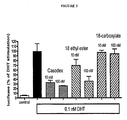
- the cells were treated for with DHT 0.1 nM or vehicle (DMSO 0.1%) alone control, or DHT with one of the following: 18-ethyl ester, 18-carboxylate or casodex (bicalutamide).
- DHT 0.1 nM or vehicle (DMSO 0.1%) alone control, or DHT with one of the following: 18-ethyl ester, 18-carboxylate or casodex (bicalutamide).
- the non-steroidal analogs were added simultaneously with DHT. Twentyfour hours later the cells were tested for luciferase activity.
- the present invention relates to compounds according to the chemical structure: Where * signifies a chiral center and R b is a C 1 -C 6 optionally substituted (with C 1 -C 3 alkyl or fluoroalkyl) alkyl group, preferably an ethyl group.
- the compound is: Where R b is a C 1 -C 6 optionally substituted (with C 1 -C 3 alkyl or fluoroalkyl) alkyl group, preferably an ethyl group.
- the present invention also relates to pharmaceutical compositions according to the present invention comprising an effective amount of at least one compound as described above in combination with a pharmaceutically acceptable carrier, additive or excipient.
- pharmaceutical compositions according to the present invention are formulated in topical dosage form for administration to the patient.
- a therapeutic treatment comprises administering one or more of the active compounds according to the present invention to a patient in need of therapy for the treatment of acne, alopecia (baldness), seborrhea or hirsutism.
- Prophylactic aspects of the present invention are also contemplated by the present invention and incorporated under use for treatment.
- a particularly preferred prophylactic aspect of the present invention relates to the use of the present compounds to reduce the likelihood of acne, baldness, seborrhea or hirsutism.
- patient is used throughout the specification to describe an animal, preferably a human, to whom treatment, including prophylactic treatment, with the compounds according to the present invention is provided.
- treatment including prophylactic treatment
- the term patient refers to that specific animal.
- the patient is a human with acne, some degree of baldness (including complete baldness) or hirsutism.
- an effective amount is used throughout the specification to describe concentrations or amounts of compounds according to the present invention which may be used to produce a favorable change in the symptomology, disease or condition treated, whether that change is a decrease in or reversal of the effects of symptomology or disease state depending upon the disease state or condition treated.
- an effective amount is that amount which is used to treat the condition to be treated, namely acne, baldness, seborrhea or hirsutism.
- An effective amount for purposes of treating one or more of the above conditions includes the timing and manner in which an active compound is administered to a patient.
- compound refers to any specific chemical compound disclosed herein. Within its use in context, the term generally refers to a single compound, but in certain instances may also refer to stereoisomers and/or optical isomers (including racemic mixtures), as well as specific enantiomers or enantiomerically enriched mixtures of disclosed compounds.
- the use of the symbol * signifies that the nearest carbon atom to that symbom is a chiral center. Where a chiral center is indicated, the present invention is directed to all configurational isomers about the chiral center, including specific enantiomers and/or racemic (of varying proportion) mixtures of the compounds.
- alkyl is used throughout the specification to describe a hydrocarbon radical containing between one and thirteen carbon units, one and ten carbon units, five and ten carbon units, four and nine carbon units, one and five carbon units, one and four carbon units, one, two, three, four, five, six, seven, eight, nine, ten, eleven, twelve and thirteen.
- Alkyl groups for use in the present invention include linear, branched-chain groups and cycloalkyl groups such as methyl, ethyl, propyl, 1-propyl, butyl, sec-butyl, tert-butyl, pentyl, neo-pentyl, cyclopropyl, cyclobutyl, cyclopentyl, etc.
- the alkyl groups may be unsubstituted or substituted with C 1 -C 3 alkyl groups.
- heterocycle is used to describe a five- or six-membered ring containing at least one nitrogen group and optionally, up to two more heteroatoms (O, S, N) within the ring.
- Heterocycles for use in the present invention may include, in certain embodiments and within context, heteroaryls (heterocycles which contain unsaturation).
- Preferred heterocycles for use in the present invention include piperidine, pyrazine and morpholine, among others.
- substituted is used to describe a substituent on a carbon atom in compounds according to the present invention.
- a substituent is a halogen group (F, Cl, Br, I) or a C 1 -C 3 alkyl group which itself may be optionally substituted with one or more fluorine groups (.e.g, CF 3 , CF 2 CF 3 ).
- the term "acne” is used to describe a condition of the skin which results in localized skin inflammation as a result of overactivity of the oil glands at the base of hair follicles.
- Acne happens when oil (sebaceous) glands come to life around puberty, when these glands are stimulated by male hormones that are produced in the adrenal glands of both boys and girls.
- the oil glands which are located just beneath the skin, continuously produce and secrete oil through openings in the skin. The oil lubricates and protects the skin. Under certain circumstances, cells that are close to the openings of the oil glands block the openings. This causes a buildup of oil underneath the skin.
- Bacteria omnipresent on the skin, feast on the oil, multiply, and cause the surrounding tissues to become inflamed. If the inflammation is right near the surface, you get a pustule; if it's deeper, a papule (pimple); deeper still and it's a cyst. If the oil breaks though to the surface, the result is a "whitehead”. If the oil becomes oxidized (that is, acted on by oxygen in the air), the oil changes from white to black, and the result is a "blackhead.”
- Compounds according to the present invention may be used to resolve, reduce or control acne.
- the compounds of the present invention work by reducing sebum (complex mixture of oil, fats and cholesterol which is produced by sebaceous glants) production and/or reducing comedone formation.
- a comedone is described dermatologically as a plugged pore of sebaceous (oil) and dead skin particles which are stuck in the opening of a hair follicle- these may be whiteheads, blackheads or solar comedones.
- baldness or "alopecia” is used to describe a condition in which hair on the scalp of a man or woman is deficient or non-existent. While the present compounds may be used to treat all forms of loss of hair or baldness, including relatively small areas of hair loss, the present compounds are particularly effective in treating both male and female "pattern baldness".
- seborrhea is used to describe a condition which results in excessively oily skin. It is due to overactive production of sebum (oily material which contains, oils, fats, and cholesterol) from sebaceous glands and can affect both males and females. Although most people with seborrhoea have no other health problems, it is sometimes a sign of underlying Parkinson's disease or acromegaly. In seborrhea, the skin feels unpleasant, and seems to get dirty quickly. The face appears shiny. Make-up may run off or cake. Seborrhoea can also result in acne or seborrhoeic dermatitis.
- the term "hirsutism” is used to describe the presence of excessive growth of terminal hair in androgen-dependent areas of a woman's body (including lip, chin, chest, abdomen, or back). It has to be differentiated from hypertrichosis, which is usually familial in nature and associated with an endocrine dysfunction - such as thyroid dysfunction - or with medications such as phenytoin or minoxidil.
- Hirsutism may be a sign of a significant medical disorder. Hirsutism is caused by increased androgen action on hair follicles. This may be a result of increased levels of circulating androgens or increased sensitivity of hair follicles to normal serum levels of androgens. Follicles start to develop thick, pigmented hair (terminal hair) as opposed to nonpigmented and thin hair (vellus hair) which is normally seen in these areas.
- hirsutism causes excessive production of androgens by the adrenals or ovaries; increased sensitivity of the hair follicles to androgens (which may be caused by exaggerated peripheral 5- ⁇ -reductase activity and functional abnormalities in the androgen receptors.
- Hirsutism is often a source of psychological discomfort as well, and most women who seek treatment for hirsutism do so for cosmetic reasons. It is noted that the present invention is not limited to the treatment of hirsutism only in women- but to men desiring such a cosmetic approach to excessive hair as well.
- a preferred therapeutic aspect according to the present invention relates to compounds for treating or resolving acne (reducing acne and allowing significant skin clearing), baldness (alopecia- including stimulating hair growth in areas where hair growth has declined or even stopped), seborrhea (reducing sebum production and making skin cosmetically more pleasing) and hirsutism (primarily, but not exclusively in women).
- Therapeutic methods include the administration of effective amounts of one or more compounds according to the present invention to treat or reduce the likelihood of the occurrence or recurrence of acne, baldness, seborrhea and/or hisutism.
- compositions based upon these novel chemical compounds comprise the above-described compounds in an effective amount-for the treatment or prophylaxis of the symptomology of menopause or a related condition or disease state including estrogen-sensitive breast cancer, optionally in combination with a pharmaceutically acceptable additive, carrier or excipient.
- Pharmaceutical compositions in oral dosage form are particularly preferred and topical dosage form for local delivery of the active compounds, in creams, gels and lotions, are also preferred.
- Effective amounts of compounds according to the present invention for use in pharmaceutical dosage form, in particular topical dosage form, in combination with a pharmaceutically acceptable carrier, additive or excipient are contemplated for use in this aspect of the present invention.
- Modifications of the active compound can affect the solubility and rate of metabolism of the active species, thus providing control over the delivery of the active species. Further, the modifications may affect the activity of the compound, in some cases increasing the activity over the parent compound. This can easily be assessed by preparing the derivative and testing its activity according to known methods well within the routineer's skill in the art.
- the compounds of this invention may be incorporated into formulations for all routes of administration including for example, oral and parenteral including intravenous, intramuscular, intraperitoneal, intrabuccal, transdermal and in suppository form.
- Topical dosage forms are clearly preferred and include creams, lotions, gels and suppositories which can be delivered to specific sites on the skin to release compounds into the skin to effect the pharmaceutical effect.
- Compounds of the present invention are preferably used topically as local anti-androgens.
- compositions based upon these novel chemical compounds comprise the above-described compounds in an effective amount for treating, alleviating and/or resolving the symptomology of the conditions or disease states which have been described hereinabove, especially including acne, baldness, seborrhea and/or hirsutism, optionally in combination with a pharmaceutically acceptable additive, carrier and/or excipient.
- an effective amount of one of more compounds according to the present invention will vary with the condition or symptomology to be treated or prevented, its severity, the treatment regimen to be employed, the pharmacokinetics of the agent used, as well as the patient to be treated.
- the compound according to the present invention is formulated preferably in admixture with a pharmaceutically acceptable carrier.
- a pharmaceutically acceptable carrier In general, it is preferable to administer the pharmaceutical composition in topically administrable form, especially as a cream, lotion, gel, liquid or suppository but other routes of administration may be contemplated in certain instances for example, by parenteral, intravenous, intramuscular, transdermal, buccal, subcutaneous or other route.
- parenteral, intravenous, intramuscular, transdermal, buccal, subcutaneous or other route may be modified in the formulations within the teachings of the specification to provide numerous formulations for a particular route of administration, if desired, without rendering the compositions of the present invention unstable or compromising their therapeutic activity, noting that the ester groups may be somewhat labile.
- the modification of the present compounds to render them more soluble in water or other vehicle may be accomplished by minor modifications which are well within the ordinary skill in the art. It is also well within the routineer's skill to modify the route of administration and dosage regimen of a particular compound in order to manage the activity and duration of activity of the present compounds for maximum beneficial effect to the patient.
- the amount of compound included within therapeutically active formulations according to the present invention is an effective amount for treating the symptom or condition.
- the present compounds are administered topicaly for treating, alleviating or resolving acne, baldness, seborrhea and/or hirsutism or to reduce the likelihood of an occurrence or recurrence of these conditions.
- a therapeutically effective amount of the presently preferred compound in dosage form usually ranges from slightly less than about 0.0005 mg./kg.
- topical dosage falls within the above ranges and are typical dosages (which may be administered once or more times per day) ranging from about 0.01 to about 500 mg. or more of the active, about 0.1 to about 500 mg., about 0.5 to about 250 mg.
- 0.5 to about 100mg about 1 to about 500 mg, about 0.5 to about 50 mg, about 1 to about 225 mg,, about 0.25 to about 200 mg, about 0.0125 to about 250 mg, depending upon the activity of the compound, and the size of the area of the skin to which the compounds are to be applied.
- an effective amount of one or more of the compounds according to the present invention is preferably intimately admixed with a pharmaceutically acceptable carrier according to conventional pharmaceutical compounding techniques to produce a dose.
- a carrier may take a wide variety of forms depending on the form of preparation desired for administration, e.g., topical, oral or parenteral, preferably topical.
- any of the usual pharmaceutical media may be used including thickeners, emollients, emulsifiers, etc. may be used to produce creams, gels, salves, ointments and the like for topical delivery to the patient.
- a patch for transdermal delivery may be used.
- liquid oral preparations such as suspensions, elixirs and solutions
- suitable carriers and additives including water, glycols, oils, alcohols, flavouring agents, preservatives, colouring agents and the like
- suitable carriers and additives including starches, sugar carriers, such as dextrose, mannitol, lactose and related carriers, diluents, granulating agents, lubricants, binders, disintegrating agents and the like may be used.
- the tablets or capsules may be enteric-coated or sustained release by standard techniques.
- the carrier will usually comprise sterile water or aqueous sodium chloride solution, though other ingredients including those which aid dispersion may be included.
- sterile water is to be used and maintained as sterile, the compositions and carriers must also be sterilized.
- injectable suspensions may also be prepared, in which case appropriate liquid carriers, suspending agents and the like may be employed.
- the present compounds may be used to treat animals, and in particular, mammals, especially including humans, as patients.
- Patients may be treated by administering to the patient an effective amount of one or more of the compounds according to the present invention optionally in a pharmaceutically acceptable carrier or diluent, either alone, or in combination with other known pharmaceutical agents, depending upon the condition or symptomology to be treated.
- This treatment can also be administered in conjunction with other conventional therapies, including the administration of other anti-acne agents and other agents for treatment and/or prophylaxis of alopecia, hirsutism and/or seborrhea.
- the active compound is included in the pharmaceutically acceptable carrier or diluent in an amount sufficient to deliver to a patient a therapeutically effective amount for the desired indication, without causing toxic effects in the patient treated.
- the compound is conveniently administered in any suitable unit dosage form in an effective amount, including but not limited to one containing less than 1mg (preferably, at least 1 mg) to 500 mg or more (usually well below the upper range), preferably 5 to 300 mg of active ingredient per unit dosage form.
- a topical dosage form including through a transdermal patch ranging from about 1 to about 500 mg, about 5 mg to about 250 mg, about 7.5 mg to about 100 mg, about 1 mg to about 50 mg, or any amount in between any of the above ranges, is usually convenient.
- the concentration of active compound in the drug composition will depend on absorption, distribution, inactivation, and excretion rates of the drug as well as other factors known to those of skill in the art. It is to be noted that dosage values will also vary with the severity of the condition or symptomology to be treated. It is to be further understood that for any particular subject, specific dosage regimens should be adjusted over time according to the individual need and the professional judgment of the person administering or supervising the administration of the compositions, and that the concentration ranges set forth herein are exemplary only and are not intended to limit the scope or practice of the claimed composition.
- the active ingredient may be administered at once, or may be divided into a number of smaller doses to be administered at varying intervals of time.
- the active may be administered as infrequently as once every several days to several times a day, depending upon the activity of the compounds and other factors well known in the art.
- Oral compositions if used, will generally include an inert diluent or an edible carrier. They may be enclosed in gelatin capsules (soft or hard) or compressed into tablets.
- the active compound can be incorporated with excipients and used in the form of tablets, troches, or capsules.
- Pharmaceutically compatible binding agents, and/or adjuvant materials can be included as part of the composition.
- the active compound may also be administered as a component of an elixir, suspension, syrup, wafer, chewing gum or the like.
- a syrup may contain, in addition to the active compounds, sucrose and/or corn syrup as a sweetening agent and certain preservatives, dyes and colorings and flavors.
- the active compound can also be mixed with other active materials which do not impair the desired action, or with materials which supplement the desired action, such as other hormonal agents, and in other instances depending upon the desired therapy or target, other pharmaceutically active compounds.
- Solutions or suspensions primarily used for topical and in some cases, parenteral, intradermal or subcutaneous application can include the following components: a sterile diluent such as water for injection, saline solution, fixed oils, polyethylene glycols, glycerine, propylene glycol or other synthetic solvents; antibacterial agents such as benzyl alcohol or methyl parabens; antioxidants such as ascorbic acid or sodium bisulfite; chelating agents such as ethylenediaminetetraacetic acid; buffers such as acetates, citrates or phosphates and agents for the adjustment of tonicity such as sodium chloride or dextrose.
- a sterile diluent such as water for injection, saline solution, fixed oils, polyethylene glycols, glycerine, propylene glycol or other synthetic solvents
- antibacterial agents such as benzyl alcohol or methyl parabens
- antioxidants such as ascorbic acid or sodium bisulfite
- parenteral preparation can be enclosed in ampoules, disposable syringes or multiple dose vials made of glass or plastic.
- preferred carriers include, for example, physiological saline or phosphate buffered saline (PBS).
- PBS physiological saline or phosphate buffered saline
- creams, gels and/or viscous lotions may be used as vaginal delivery forms.
- Creams, gels, lotions and suppositories may be formulated using standing pharmaceutical procedures.
- the active compounds may be prepared with carriers that will protect the compound against rapid elimination from the body, such as a controlled release formulation, including implants and microencapsulated delivery systems.
- a controlled release formulation including implants and microencapsulated delivery systems.
- Biodegradable, biocompatible polymers can be used, such as ethylene vinyl acetate, polyanhydrides, polyglycolic acid, collagen, polyorthoesters, and polylactic acid, among others. Methods for preparation of such formulations are well known and are readily apparent to those skilled in the art.
- Liposomal suspensions may also be pharmaceutically acceptable carriers. These may be prepared according to methods known to those skilled in the art. For example, liposome formulations may be prepared by dissolving appropriate lipid(s) in an inorganic solvent that is then evaporated, leaving behind a thin film of dried lipid on the surface of the container. An aqueous solution of the active compound are then introduced into the container. The container is then swirled by hand to free lipid material from the sides of the container and to disperse lipid aggregates, thereby forming the liposomal suspension. Other methods of preparation well known by those of ordinary skill may also be used in this aspect of the present invention.
- esters preferably, the ethyl ester
- the parent carboxylic acid are tested for binding to the androgen receptor (AR) and for in vitro antiandrogenic activity in the androgen receptor/androgen receptor esterase (AR/ARE) transfected cells (described below).
- AR androgen receptor
- AR/ARE androgen receptor/androgen receptor esterase
- the ester must show high affinity for the AR and high antiandrogenic activity, whereas the carboxylic acid parent should be very weak or devoid of these characteristics.
- One of the strengths of this study is that the rate of hydrolysis can be modified by changing the alcohol portion of the ester, thus if an analog seems have greater systemic actions than we expect, the rate of hydrolysis can be increased, or vice versa.
- esters which exhibit good receptor binding and antiandrogenic activity while the carboxylic acid is devoid of activity
- esterase hydrolysis for example, the propyl, fluoroethyl ester for increased hydrolysis, and sterically hindered esters, such as the isopropyl and neopentyl esters, or decreased lipophilicity, methyl, for decreased hydrolysis.
- esterase hydrolysis is not a significant factor.
- enzymatic hydrolysis occurs, and the rate of hydrolysis of the ester group influences biological activity.
- there is a correlation between biological activity and enzymatic hydrolysis e.g., compounds with similar receptor binding exhibit different biological activity that correlate with the rate of hydrolysis (ester structure).
- This correlation will allow us to choose candidates for in vivo testing, for it allows optimization of hydrolysis rate (ester structure) for "local" action.
- the ester structure can be modified to either decrease the hydrolysis rate in order to maximize local action, or increase hydrolysis rate to minimize systemic action.
- the object is to find compounds that show good local antiandrogenic activity, and minimal if any systemic action.
- the results of these studies identify the initial candidate in each family for in vivo studies. The outcome of this initial study indicates the direction (greater or lesser hydrolysis) that is required, and leads to the appropriate ester for the final clinical entity.
- ester analogs are first screened for antiandrogenic (as well as androgenic) activity by determining their affinity for the AR and for their potency in antagonizing the androgenic stimulation of an androgen responsive reporter gene in cells in culture. In addition, the rate at which these analogs are hydrolyzed by esterase(s) are determined.
- glucocorticoid and mineralocorticoid are determined because of the spectrum of activity of some of the progenitors (spironolactone and mifepristone): by measuring their binding to mineralocorticoid and glucocorticoid receptors and their inhibition of the action of these receptors in cells transfected with reporter gene constructs.
- Androgen Receptor Analysis As an initial screening of the test compounds, analysis of binding affinity to AR is determined in cytosol prepared from rat prostates. The androgen binding assay is performed as we have previously described (37,66,67). Each non-radioactive test compound are tested over 6 log orders, 10 -12 - 10- 6 M, and compared with 5a-dihydrotestosterone (DHT), RI881 and known antiandrogens, such as hydroxyflutamide, for competition of the binding of [ 3 H]R1881 (- 2 nM) to AR. Prostate glands are obtained from Sprague-Dawley rats that have been castrated 48 hours before sacrifice.
- DHT 5a-dihydrotestosterone
- RI881 known antiandrogens, such as hydroxyflutamide
- the glands are suspended and homogenized in ice-cold TEGDMo buffer (10 mM Tris, 1.5 mM Na 2 -EDTA, 10% (v/v) glycerol, 1.0 mM dithiothreitol, 25 mM sodium molybdate, pH 7.4 at 4°C) at 1.5 ml / prostate and centrifuged at 105,000 g for 45 min at 4°C.
- the supernatant (cytosol) is frozen on dry ice and stored at -80 °C until assay. For analysis, the cytosol is defrosted on ice, diluted with TEGDMo buffer and incubated with the test analogs overnight on ice.
- the synthesized analogs are assayed for androgenic and antiandrogenic activities in a bioassay using cells transfected with the androgen receptor and an androgen responsive reporter gene as previously reported (37,67).
- the technique is similar to studies previously performed for antiestrogenic activity in cells transfected with plasmids separately containing ER and an estrogen response element fused to a luciferase reporter gene (34).
- the rat AR (68) and ARE were obtained from Drs.
- the cells are treated for 24 h with the analogs alone (agonist) or the analogs + 10 -9 M DHT (antagonist).
- analogs alone (agonist) or the analogs + 10 -9 M DHT (antagonist).
- hydroxyflutamide and spironolactone are run as controls in the agonist and antagonist assays.
- the analogs are added over a range of 10 -12 to 10 -6 M in duplicate and each experiment is replicated in 3 separate experiments. After incubation, the medium is rinsed, lysed and analyzed for reporter gene (luciferase) activity.
- the differential between AR binding and the relative antiandrogenic activity as determined in this assay provides initial information and establish trends as to how the ester group should be modified as described above, in the effect of ester modification section, in order to increase or decrease the rate of enzymatic hydrolysis and therefore maximize local antiandrogenic action in vitro.
- the washed pellet is suspended in 0.1 M Tris-HCI pH 8.0 at a concentration of - 13 mg protein/ml and frozen at -80 °C.
- the pellets are thawed and diluted with the same buffer.
- the incubation mixture consists of the microsomal enzyme preparation, 0.28 mg protein/ml, the steroid esters, 50 ⁇ M, added in 10 ⁇ L of ethanol, all in a final volume of 1 mL of Tris buffer pH 8.0. Since we expect the rates of reaction may be widely different for the various esters, the incubation times are varied accordingly to obtain linear kinetics.
- Esterase activity is determined directly kinetically to obtain liner velocity, in transfected cells that are incubated at several intervals up to and including that used for biological (androgenic) activity (usually 6 hours or overnight).
- the esterase products the carboxylic acids
- the incubation are modified by increasing the volume to 10 ml and the concentration of ester analog to at least 1 pM to 10 pM.
- 1 pM a yield ranging from 10% to 30%, produces 10 to 30 nmoles of product.
- ⁇ 4 -3-ketones we can accurately detect > 0.1 nmole, and the aromatic products about 10 times less. Thus, with this method we can readily measure the products expected in these experiments.
- Mineralocorticoid Receptor Binding to the mineralocorticoid are determined as we described (73) by measuring the binding of [ 3 H]aldosterone to MR in kidney cytosol obtained from adrenalectomized rats in the presence of 200 nM RU 28362 (74). Alternatively, 10 4 M arsenite can be used to eliminate GR binding since it selectively and completely blocks binding to rat GR but not MR (75).
- Cytosol prepared from adrenalectomized rat kidneys are incubated with 2 nM [ 3 H]aldosterone ⁇ 200 nM non-radioactive aldosterone + varying concentrations of the analogs over range of concentrations from 10 - " to 10 -6 M in DMFTEDM buffer for 2 hours at 22 °C.
- the free steroid is absorbed with charcoal in an ice bath and centrifuged. The supernatant is decanted and the bound steroid is determined by counting (76).
- the relative binding affinity (RBA) compared to aldosterone is calculated using the computerized curve-fitting program Prism.
- Glucocorticoid Receptor Binding to GR are determined as we described (76,77) in hepatic cytosol prepared from adrenalectomized rats. [ 3 H]Dexamethasone 2 nM, and varying concentrations 10 - " to 10 -6 M of the non-radioactive competing analogs (and dexamethasone, etc) are incubated with cytosol in DMF-TEDM buffer (above) at room temperature for 2 hours (or overnight in an ice bath). Bound steroid is determined in the supernatant fraction after adsorption with charcoal, and the RBA calculated as described above.
- plasmid expression vectors have been supplied by Dr. Ron Evans (80).
- agonistic action the transfected cells are grown in the presence of a large range of the test analogs alone. Controls are run with aldosterone for comparison.
- antagonistic action the cells are treated with 1 nM aldosterone plus the test compounds. Positive controls are run with other antagonists such as spironolactone. After incubation, the medium is rinsed, lysed and analyzed for reporter gene (luciferase) activity
- Glucocorticoid Gene Activation Any of the analogs that bind to the glucocorticoid receptor are tested for glucocorticoid and antiglucocorticoid action. Their effect on the stimulation of alkaline phosphatase activity in HeLa cells is also determined. Endogenous alkaline phosphatase activity in the HeLa cell is an excellent marker of glucocorticoid stimulation (81) Furthermore, HeLa cells are devoid of mineralocorticoid receptors (they require transfection with this receptor in order to respond to mineralocorticoids (82)) and thus a response through the mineralocorticoid receptor is avoided.
- alkaline phosphatase in HeLa cells has been utilized (79).
- cells are grown for 3 days in the presence of a large dose range of the test analogs alone to determine agonist activity. Controls are run with dexamethasone and cortisol for comparison. To test for antagonist action, the cells are treated with 1 nM dexamethasone plus the test compounds. Positive controls are run with other antagonists such as mifepristone (RU486). Afterwards, the cells are washed, frozen and alkaline phosphatase activity are determined as previously described (83).
- This assay is performed using the procedure previously described (85) on testosterone treated female hamsters which has the advantage of a consistent androgen background.
- Ten week old female Syrian hamsters are injected s.c. with 4 pg of testosterone propionate in peanut oil daily.
- the test antiandrogens (including flutamide and spironolactone) are applied twice daily to the ventral surface of the right ear pinna in 25 pl of acetone for 3 to 4 weeks. Androgenic activity is assayed similarly in animals that are not treated with testosterone propionate.
- the animals are sacrificed and each ear is cut at the proximal base and the ventral ear skin is manually separated from cartilage. The skin is stained with Sudan Black, washed, and fixed.
- the specimens are cut sagitally and the size of each sebaceous gland is quantified microscopically using a computerized imaging analysis system.
- the animals are injected subcutaneously with graded doses of the compounds (a large range whose highest amount exceeds the highest concentration used in the hamster assay above). Those doses that are active are also applied topically (to the shaven backs) in order to determine whether passage through the skin increases the rate of inactivation. Agonist action is determined in animals that do not receive aldosterone. Three hours later the rats are sacrificed and the urine is aspirated from their bladders. The concentration of Na + and K + is determined with a flame photometer. Depending upon the assay, Na + retention are compared to adrenalectomized controls receiving vehicle alone and/or aldosterone. Spironolactone is tested for comparison as a systemic antimineralocorticoid.
- the animals are injected subcutaneously with 2.2 mg of corticosterone (chosen as a weak glucocorticoid), and graded doses of the analogs over a large range (above) administered subcutaneously twice a day. Any doses that are active are also applied topically on the shaven backs in order to determine the effect of transit through the skin. Agonist action is determined in animals that do not receive corticosterone. The animals are sacrificed 12 hours later and the livers are removed, washed, homogenized, centrifuged at 31,000 x g.
- Tyrosine aminotransferase activity are determined in the soluble fraction by monitoring the conversion of p-hydroxyphenylpyruvic acid to p-hyroxybenzaldehyde at 331 nM as described previously. Rosner and Hochberg, Endocrinology, 91, 626-632, 1972 . Depending upon the assay, enzymatic activity is compared to adrenalectomized controls receiving vehicle alone and/or corticosterone. Mifepristone is tested for comparison as a systemic antiglucocorticoid.
- This rat is a genetic mutant between hairless and hairy albino rats and it is commercially available (Harlan Sprague Dawley).
- the fuzzy rat is used to study percutaneous absorption of drugs, and it is especially useful as a model of androgen induced acne. Its sebaceous glands are sexually dimorphic; with a normal clear skin in the females; while the males exhibit hyperplastic glandular lobules and their backs contain a thick brown seborrheic coating. This is androgen dependent, reversible by castration and reestablished in the castrate male with testosterone (89). It has been shown in this model that topically applied finasteride, at doses that are locally efficacious, also have a significant systemic effect (prostate) (89).
- fuzzy rat including adrenal, appears to be similar to the normal rat (90). This animal has been useful for studying topically applied antiandrogens (89), and it will allow the simultaneous measurement of local (skin), and systemic (prostate) antiandrogen effects along with any anticorticoid (urinary Na+/K+ and hepatic tyrosine aminotransferase) action.
- Twenty-five day old fuzzy rats either intact or castrated are treated by the topical administration of various doses (the range are determined in the above experiments) of compounds according to the present invention dissolved in a vehicle of propylene glycol, ethanol and H 2 O As described, the analog in 0.5 ml of solution is applied once a day to a 4 x 4 cm area of the lower, 5 days a week (89).
- the castrate animals are injected once a day with 200 pg of testosterone in sesame oil. A castrate control group will not be treated with testosterone.
- dose adjusted concentrations of spironolactone will also be administered topically. Animals are housed separately to avoid licking the treated area.
- corticoid agonist activity is determined in animals that are administered the test compounds but not injected with either of the corticoids.
- the prostate and seminal vesicles are removed and weighed. All of the animals are evaluated for "local" antiandrogenic activity by inhibition the androgen induced sebaceous gland growth as measured by the area of the glandular lobes. Random small skin punch skin samples in the area in which the test compounds were applied, are frozen and 40 pm thick slices are cut horizontal to the epidermal surface (cryostat Leica CM 3050S) and placed in water filled wells. Free floating sections containing the sebaceous glandular lobules are selected and stained with 1% osmium and 2.5% potassium dichromate solution for 2 minutes.
- Plasma Testosterone spironolactone may be a steroidogenic inhibitor, specifically acting at 17 ⁇ -hydroxylase (91), however, this is controversial and many studies have found no effect on levels of plasma testosterone (9,92). While the evidence seems to indicate that there is no effect on androgen synthesis, regardless, given this uncertainty, plasma testosterone is measured in all rats that are not castrated, comparing all rats treated with the test compounds to controls that do not receive the analogs. Serum testosterone are measured by RIA as previously described (93) for male rats by extraction of the serum with ether containing a trace amount of [ 3 H]testosterone as an internal standard. After analysis of the serum, the results are corrected for recovery of the [ 3 H]-internal standard, determined in an aliquot of the extract.
Landscapes
- Health & Medical Sciences (AREA)
- Organic Chemistry (AREA)
- Chemical & Material Sciences (AREA)
- General Health & Medical Sciences (AREA)
- Life Sciences & Earth Sciences (AREA)
- Engineering & Computer Science (AREA)
- Chemical Kinetics & Catalysis (AREA)
- General Chemical & Material Sciences (AREA)
- Medicinal Chemistry (AREA)
- Nuclear Medicine, Radiotherapy & Molecular Imaging (AREA)
- Animal Behavior & Ethology (AREA)
- Bioinformatics & Cheminformatics (AREA)
- Pharmacology & Pharmacy (AREA)
- Veterinary Medicine (AREA)
- Public Health (AREA)
- Dermatology (AREA)
- Diabetes (AREA)
- Endocrinology (AREA)
- Pharmaceuticals Containing Other Organic And Inorganic Compounds (AREA)
- Acyclic And Carbocyclic Compounds In Medicinal Compositions (AREA)
- Steroid Compounds (AREA)
- Organic Low-Molecular-Weight Compounds And Preparation Thereof (AREA)
- Cosmetics (AREA)
Priority Applications (2)
| Application Number | Priority Date | Filing Date | Title |
|---|---|---|---|
| PL12179423T PL2532648T3 (pl) | 2007-05-03 | 2008-05-02 | Działające miejscowo „miękkie” antyandrogeny |
| SI200831185T SI2532648T1 (sl) | 2007-05-03 | 2008-05-02 | Lokalno aktivni "mehki" antiandrogeni |
Applications Claiming Priority (2)
| Application Number | Priority Date | Filing Date | Title |
|---|---|---|---|
| US92742707P | 2007-05-03 | 2007-05-03 | |
| EP08767482A EP2150256A4 (en) | 2007-05-03 | 2008-05-02 | LOCAL ACTIVE, SOFT ANTIANDROGENE |
Related Parent Applications (2)
| Application Number | Title | Priority Date | Filing Date |
|---|---|---|---|
| EP08767482.6 Division | 2008-05-02 | ||
| EP08767482A Division EP2150256A4 (en) | 2007-05-03 | 2008-05-02 | LOCAL ACTIVE, SOFT ANTIANDROGENE |
Publications (2)
| Publication Number | Publication Date |
|---|---|
| EP2532648A1 EP2532648A1 (en) | 2012-12-12 |
| EP2532648B1 true EP2532648B1 (en) | 2014-03-19 |
Family
ID=39943833
Family Applications (2)
| Application Number | Title | Priority Date | Filing Date |
|---|---|---|---|
| EP12179423.4A Active EP2532648B1 (en) | 2007-05-03 | 2008-05-02 | Locally active "soft" antiandrogens |
| EP08767482A Ceased EP2150256A4 (en) | 2007-05-03 | 2008-05-02 | LOCAL ACTIVE, SOFT ANTIANDROGENE |
Family Applications After (1)
| Application Number | Title | Priority Date | Filing Date |
|---|---|---|---|
| EP08767482A Ceased EP2150256A4 (en) | 2007-05-03 | 2008-05-02 | LOCAL ACTIVE, SOFT ANTIANDROGENE |
Country Status (9)
| Country | Link |
|---|---|
| US (2) | US8552061B2 (da) |
| EP (2) | EP2532648B1 (da) |
| JP (2) | JP5456669B2 (da) |
| DK (1) | DK2532648T3 (da) |
| ES (1) | ES2461192T3 (da) |
| PL (1) | PL2532648T3 (da) |
| PT (1) | PT2532648E (da) |
| SI (1) | SI2532648T1 (da) |
| WO (1) | WO2008137038A1 (da) |
Families Citing this family (9)
| Publication number | Priority date | Publication date | Assignee | Title |
|---|---|---|---|---|
| US10865184B2 (en) | 2015-04-21 | 2020-12-15 | University Of Tennessee Research Foundation | Selective androgen receptor degrader (SARD) ligands and methods of use thereof |
| US10441570B2 (en) | 2015-04-21 | 2019-10-15 | University Of Tennessee Research Foundation | Selective androgen receptor degrader (SARD) Ligands and methods of use thereof |
| US10654809B2 (en) | 2016-06-10 | 2020-05-19 | University Of Tennessee Research Foundation | Selective androgen receptor degrader (SARD) ligands and methods of use thereof |
| US10093613B2 (en) | 2015-04-21 | 2018-10-09 | Gtx, Inc. | Selective androgen receptor degrader (SARD) ligands and methods of use thereof |
| US10806720B2 (en) | 2015-04-21 | 2020-10-20 | University Of Tennessee Research Foundation | Selective androgen receptor degrader (SARD) ligands and methods of use thereof |
| US11230523B2 (en) | 2016-06-10 | 2022-01-25 | University Of Tennessee Research Foundation | Selective androgen receptor degrader (SARD) ligands and methods of use thereof |
| CN109310664A (zh) * | 2016-06-10 | 2019-02-05 | 田纳西大学研究基金会 | 选择性雄激素受体降解剂(sard)配体和其使用方法 |
| WO2020051344A1 (en) | 2018-09-05 | 2020-03-12 | University Of Tennessee Research Foundation | Selective androgen receptor degrader (sard) ligands and methods of use thereof |
| CN113304157B (zh) * | 2021-06-15 | 2022-02-11 | 黑龙江中医药大学 | 一种用于治疗多囊卵巢综合征(pcos)的活性组合物 |
Family Cites Families (11)
| Publication number | Priority date | Publication date | Assignee | Title |
|---|---|---|---|---|
| FR401994A (fr) | 1909-01-04 | 1909-09-23 | Lanston Monotype Corp Ltd | Perfectionnements apportés au mécanisme de transmission de force motrice particulièrement applicable au mécanisme moteur ou de transmission pour machines à fondre les caractères et autres |
| US3875229A (en) | 1972-11-24 | 1975-04-01 | Schering Corp | Substituted carboxanilides |
| FR2496669A1 (fr) | 1980-12-23 | 1982-06-25 | Roussel Uclaf | Nouveaux derives steroides 3-ceto4 ou1-4 substitues en position 7, leur procede de preparation et leur application comme medicaments |
| US5364847A (en) * | 1989-03-10 | 1994-11-15 | Endorecherche | Inhibitors of sex steroid biosynthesis and methods for their production and use |
| ATE230994T1 (de) | 1989-07-07 | 2003-02-15 | Endorech Inc | Methode zur behandlung androgenbedingter krankheiten |
| JPH06273417A (ja) | 1993-01-20 | 1994-09-30 | Ono Pharmaceut Co Ltd | メバロン酸に対する抗体、および該抗体を用いるメバロン酸の定量法 |
| IT1271325B (it) | 1994-12-23 | 1997-05-27 | Poli Ind Chimica Spa | Composti diastereomericamente puri derivati da 3-oxo e 3-tioxo-4-azaandrostani e loro uso come antiandrogeni |
| WO2000031112A1 (en) | 1998-11-20 | 2000-06-02 | Akzo Nobel N.V. | Estrogenic estra-1,3,5(10)-trienes with differential effects on the alpha and beta estrogen receptors, having a linear hydrocarbon chain of from 5-9 carbon atoms in position 11 |
| WO2001014406A1 (en) | 1999-08-23 | 2001-03-01 | Chugai Seiyaku Kabushiki Kaisha | Antiandrogen agents |
| ITMI20011762A1 (it) | 2001-08-10 | 2003-02-10 | Cosmo Spa | Esteri di 17alfa,21-diidrossipregnene, loro uso come agenti anti-androgenetici e procedimenti per la loro preparazione |
| US7017295B2 (en) * | 2004-08-09 | 2006-03-28 | Clarence Hacker | Device for handling fish |
-
2008
- 2008-05-02 PT PT121794234T patent/PT2532648E/pt unknown
- 2008-05-02 US US12/450,862 patent/US8552061B2/en active Active
- 2008-05-02 WO PCT/US2008/005632 patent/WO2008137038A1/en not_active Ceased
- 2008-05-02 DK DK12179423.4T patent/DK2532648T3/da active
- 2008-05-02 SI SI200831185T patent/SI2532648T1/sl unknown
- 2008-05-02 PL PL12179423T patent/PL2532648T3/pl unknown
- 2008-05-02 ES ES12179423.4T patent/ES2461192T3/es active Active
- 2008-05-02 EP EP12179423.4A patent/EP2532648B1/en active Active
- 2008-05-02 JP JP2010514751A patent/JP5456669B2/ja active Active
- 2008-05-02 EP EP08767482A patent/EP2150256A4/en not_active Ceased
-
2013
- 2013-09-06 US US14/020,068 patent/US20140011785A1/en not_active Abandoned
-
2014
- 2014-01-08 JP JP2014001367A patent/JP2014094952A/ja not_active Withdrawn
Also Published As
| Publication number | Publication date |
|---|---|
| WO2008137038A1 (en) | 2008-11-13 |
| ES2461192T3 (es) | 2014-05-19 |
| EP2150256A4 (en) | 2010-04-28 |
| EP2532648A1 (en) | 2012-12-12 |
| PL2532648T3 (pl) | 2014-07-31 |
| JP2010527380A (ja) | 2010-08-12 |
| DK2532648T3 (da) | 2014-04-22 |
| EP2150256A1 (en) | 2010-02-10 |
| US20100184735A1 (en) | 2010-07-22 |
| SI2532648T1 (sl) | 2014-05-30 |
| JP2014094952A (ja) | 2014-05-22 |
| JP5456669B2 (ja) | 2014-04-02 |
| US20140011785A1 (en) | 2014-01-09 |
| US8552061B2 (en) | 2013-10-08 |
| PT2532648E (pt) | 2014-04-24 |
Similar Documents
| Publication | Publication Date | Title |
|---|---|---|
| EP2532648B1 (en) | Locally active "soft" antiandrogens | |
| US6110906A (en) | Androgen derivatives for use in the inhibition of sex steroid activity | |
| EP2147014B1 (en) | 17alpha-substituted steroids as systemic antiandrogens and selective androgen receptor modulators | |
| US20040082556A1 (en) | Inhibitors of type 5 and type 3 17beta-hydroxysteroid dehydrogenase and methods for their use | |
| KR100577129B1 (ko) | 안드로겐 스테로이드 화합물 및 그의 제조 및 이용 방법 | |
| CA2339368A1 (en) | Inhibitors of type 3 3.alpha.-hydroxysteroid dehydrogenase | |
| HK1006461B (en) | Aromatic steroid 5-alpha-reductase inhibitors | |
| HK1006461A1 (en) | Aromatic steroid 5-alpha-reductase inhibitors | |
| JP2011503129A (ja) | 化粧用及び更なる使用のためのc−19ステロイド | |
| Slominski et al. | Gas chromatography/mass spectrometry characterization of corticosteroid metabolism in human immortalized keratinocytes | |
| Bratoeff et al. | In vivo and in vitro effect of novel 4, 16-pregnadiene-6, 20-dione derivatives, as 5α-reductase inhibitors | |
| JP2750621B2 (ja) | 3β,17β―ヒドロキシ―置換ステロイド及び関連するステロイド化合物類 | |
| Li et al. | Synthesis and in Vitro Evaluation of 4-Substituted N-(1, 1-Dimethylethyl)-3-oxo-4-androstene-17. beta.-carboxamides as 5. alpha.-Reductase Inhibitors and Antiandrogens | |
| EP0711164B1 (en) | 4-aza-pregnane 5-alpha-reductase isozyme 1 inhibitors | |
| CA2564963A1 (en) | Steroid prodrugs with androgenic effect | |
| JPH0564640B2 (da) | ||
| PL185196B1 (pl) | Fenylopodstawione fluoropochodne 4-azasteroidów, sposób ich wytwarzania, kompozycja farmaceutyczna oraz ich zastosowanie | |
| Brueggemeier | Sex hormones (Male): analogs and antagonists | |
| US20050282793A1 (en) | Steroid prodrugs with androgenic action | |
| US20040224935A1 (en) | Topical antiandrogenic steroids | |
| Chen | Discovery and therapeutic promise of selective androgen receptor modulators for hormonal male contraception | |
| NZ230957A (en) | Aromatic steroid 5-alpha-reductase inhibitors and pharmaceutical compositions | |
| MXPA01001405A (en) | INHIBITION OF TYPE 3 3&agr;-HYDROXYSTEROID DEHYDROGENASE |
Legal Events
| Date | Code | Title | Description |
|---|---|---|---|
| PUAI | Public reference made under article 153(3) epc to a published international application that has entered the european phase |
Free format text: ORIGINAL CODE: 0009012 |
|
| AC | Divisional application: reference to earlier application |
Ref document number: 2150256 Country of ref document: EP Kind code of ref document: P |
|
| AK | Designated contracting states |
Kind code of ref document: A1 Designated state(s): AT BE BG CH CY CZ DE DK EE ES FI FR GB GR HR HU IE IS IT LI LT LU LV MC MT NL NO PL PT RO SE SI SK TR |
|
| AX | Request for extension of the european patent |
Extension state: AL BA MK RS |
|
| 17P | Request for examination filed |
Effective date: 20130611 |
|
| RAX | Requested extension states of the european patent have changed |
Extension state: MK Payment date: 20130611 Extension state: BA Payment date: 20130611 Extension state: AL Payment date: 20130611 Extension state: RS Payment date: 20130611 |
|
| RBV | Designated contracting states (corrected) |
Designated state(s): AT BE BG CH CY CZ DE DK EE ES FI FR GB GR HR HU IE IS IT LI LT LU LV MC MT NL NO PL PT RO SE SI SK TR |
|
| GRAP | Despatch of communication of intention to grant a patent |
Free format text: ORIGINAL CODE: EPIDOSNIGR1 |
|
| INTG | Intention to grant announced |
Effective date: 20130923 |
|
| GRAS | Grant fee paid |
Free format text: ORIGINAL CODE: EPIDOSNIGR3 |
|
| GRAA | (expected) grant |
Free format text: ORIGINAL CODE: 0009210 |
|
| AC | Divisional application: reference to earlier application |
Ref document number: 2150256 Country of ref document: EP Kind code of ref document: P |
|
| AK | Designated contracting states |
Kind code of ref document: B1 Designated state(s): AT BE BG CH CY CZ DE DK EE ES FI FR GB GR HR HU IE IS IT LI LT LU LV MC MT NL NO PL PT RO SE SI SK TR |
|
| AX | Request for extension of the european patent |
Extension state: AL BA MK RS |
|
| REG | Reference to a national code |
Ref country code: GB Ref legal event code: FG4D |
|
| REG | Reference to a national code |
Ref country code: CH Ref legal event code: EP |
|
| REG | Reference to a national code |
Ref country code: AT Ref legal event code: REF Ref document number: 657573 Country of ref document: AT Kind code of ref document: T Effective date: 20140415 Ref country code: CH Ref legal event code: NV Representative=s name: RIEDERER HASLER AND PARTNER PATENTANWAELTE AG, LI |
|
| REG | Reference to a national code |
Ref country code: DK Ref legal event code: T3 Effective date: 20140416 |
|
| REG | Reference to a national code |
Ref country code: IE Ref legal event code: FG4D Ref country code: NL Ref legal event code: T3 |
|
| REG | Reference to a national code |
Ref country code: PT Ref legal event code: SC4A Free format text: AVAILABILITY OF NATIONAL TRANSLATION Effective date: 20140415 |
|
| REG | Reference to a national code |
Ref country code: DE Ref legal event code: R096 Ref document number: 602008031063 Country of ref document: DE Effective date: 20140430 |
|
| REG | Reference to a national code |
Ref country code: ES Ref legal event code: FG2A Ref document number: 2461192 Country of ref document: ES Kind code of ref document: T3 Effective date: 20140519 |
|
| REG | Reference to a national code |
Ref country code: SE Ref legal event code: TRGR |
|
| REG | Reference to a national code |
Ref country code: NO Ref legal event code: T2 Effective date: 20140319 |
|
| REG | Reference to a national code |
Ref country code: PL Ref legal event code: T3 |
|
| PG25 | Lapsed in a contracting state [announced via postgrant information from national office to epo] |
Ref country code: CY Free format text: LAPSE BECAUSE OF FAILURE TO SUBMIT A TRANSLATION OF THE DESCRIPTION OR TO PAY THE FEE WITHIN THE PRESCRIBED TIME-LIMIT Effective date: 20140319 Ref country code: FI Free format text: LAPSE BECAUSE OF FAILURE TO SUBMIT A TRANSLATION OF THE DESCRIPTION OR TO PAY THE FEE WITHIN THE PRESCRIBED TIME-LIMIT Effective date: 20140319 |
|
| PG25 | Lapsed in a contracting state [announced via postgrant information from national office to epo] |
Ref country code: HR Free format text: LAPSE BECAUSE OF FAILURE TO SUBMIT A TRANSLATION OF THE DESCRIPTION OR TO PAY THE FEE WITHIN THE PRESCRIBED TIME-LIMIT Effective date: 20140319 Ref country code: LV Free format text: LAPSE BECAUSE OF FAILURE TO SUBMIT A TRANSLATION OF THE DESCRIPTION OR TO PAY THE FEE WITHIN THE PRESCRIBED TIME-LIMIT Effective date: 20140319 |
|
| PG25 | Lapsed in a contracting state [announced via postgrant information from national office to epo] |
Ref country code: BG Free format text: LAPSE BECAUSE OF FAILURE TO SUBMIT A TRANSLATION OF THE DESCRIPTION OR TO PAY THE FEE WITHIN THE PRESCRIBED TIME-LIMIT Effective date: 20140619 Ref country code: RO Free format text: LAPSE BECAUSE OF FAILURE TO SUBMIT A TRANSLATION OF THE DESCRIPTION OR TO PAY THE FEE WITHIN THE PRESCRIBED TIME-LIMIT Effective date: 20140319 Ref country code: IS Free format text: LAPSE BECAUSE OF FAILURE TO SUBMIT A TRANSLATION OF THE DESCRIPTION OR TO PAY THE FEE WITHIN THE PRESCRIBED TIME-LIMIT Effective date: 20140719 Ref country code: EE Free format text: LAPSE BECAUSE OF FAILURE TO SUBMIT A TRANSLATION OF THE DESCRIPTION OR TO PAY THE FEE WITHIN THE PRESCRIBED TIME-LIMIT Effective date: 20140319 |
|
| PG25 | Lapsed in a contracting state [announced via postgrant information from national office to epo] |
Ref country code: SK Free format text: LAPSE BECAUSE OF FAILURE TO SUBMIT A TRANSLATION OF THE DESCRIPTION OR TO PAY THE FEE WITHIN THE PRESCRIBED TIME-LIMIT Effective date: 20140319 |
|
| REG | Reference to a national code |
Ref country code: DE Ref legal event code: R097 Ref document number: 602008031063 Country of ref document: DE |
|
| PLBE | No opposition filed within time limit |
Free format text: ORIGINAL CODE: 0009261 |
|
| STAA | Information on the status of an ep patent application or granted ep patent |
Free format text: STATUS: NO OPPOSITION FILED WITHIN TIME LIMIT |
|
| 26N | No opposition filed |
Effective date: 20141222 |
|
| REG | Reference to a national code |
Ref country code: HU Ref legal event code: AG4A Ref document number: E021974 Country of ref document: HU |
|
| REG | Reference to a national code |
Ref country code: DE Ref legal event code: R097 Ref document number: 602008031063 Country of ref document: DE Effective date: 20141222 |
|
| PG25 | Lapsed in a contracting state [announced via postgrant information from national office to epo] |
Ref country code: MT Free format text: LAPSE BECAUSE OF FAILURE TO SUBMIT A TRANSLATION OF THE DESCRIPTION OR TO PAY THE FEE WITHIN THE PRESCRIBED TIME-LIMIT Effective date: 20140319 |
|
| REG | Reference to a national code |
Ref country code: FR Ref legal event code: PLFP Year of fee payment: 9 |
|
| PG25 | Lapsed in a contracting state [announced via postgrant information from national office to epo] |
Ref country code: GR Free format text: LAPSE BECAUSE OF FAILURE TO SUBMIT A TRANSLATION OF THE DESCRIPTION OR TO PAY THE FEE WITHIN THE PRESCRIBED TIME-LIMIT Effective date: 20140620 |
|
| REG | Reference to a national code |
Ref country code: FR Ref legal event code: PLFP Year of fee payment: 10 |
|
| REG | Reference to a national code |
Ref country code: FR Ref legal event code: PLFP Year of fee payment: 11 |
|
| P01 | Opt-out of the competence of the unified patent court (upc) registered |
Free format text: CASE NUMBER: APP_50289/2024 Effective date: 20240904 |
|
| PGFP | Annual fee paid to national office [announced via postgrant information from national office to epo] |
Ref country code: NL Payment date: 20250526 Year of fee payment: 18 |
|
| PGFP | Annual fee paid to national office [announced via postgrant information from national office to epo] |
Ref country code: MC Payment date: 20250505 Year of fee payment: 18 |
|
| PGFP | Annual fee paid to national office [announced via postgrant information from national office to epo] |
Ref country code: PL Payment date: 20250424 Year of fee payment: 18 Ref country code: DE Payment date: 20250529 Year of fee payment: 18 |
|
| PGFP | Annual fee paid to national office [announced via postgrant information from national office to epo] |
Ref country code: GB Payment date: 20250527 Year of fee payment: 18 Ref country code: DK Payment date: 20250526 Year of fee payment: 18 Ref country code: ES Payment date: 20250602 Year of fee payment: 18 |
|
| PGFP | Annual fee paid to national office [announced via postgrant information from national office to epo] |
Ref country code: LT Payment date: 20250422 Year of fee payment: 18 |
|
| PGFP | Annual fee paid to national office [announced via postgrant information from national office to epo] |
Ref country code: HU Payment date: 20250425 Year of fee payment: 18 Ref country code: NO Payment date: 20250530 Year of fee payment: 18 |
|
| PGFP | Annual fee paid to national office [announced via postgrant information from national office to epo] |
Ref country code: LU Payment date: 20250527 Year of fee payment: 18 Ref country code: BE Payment date: 20250527 Year of fee payment: 18 Ref country code: IT Payment date: 20250521 Year of fee payment: 18 |
|
| PGFP | Annual fee paid to national office [announced via postgrant information from national office to epo] |
Ref country code: PT Payment date: 20250421 Year of fee payment: 18 |
|
| PGFP | Annual fee paid to national office [announced via postgrant information from national office to epo] |
Ref country code: FR Payment date: 20250526 Year of fee payment: 18 |
|
| PGFP | Annual fee paid to national office [announced via postgrant information from national office to epo] |
Ref country code: CH Payment date: 20250601 Year of fee payment: 18 |
|
| PGFP | Annual fee paid to national office [announced via postgrant information from national office to epo] |
Ref country code: AT Payment date: 20250423 Year of fee payment: 18 |
|
| PGFP | Annual fee paid to national office [announced via postgrant information from national office to epo] |
Ref country code: TR Payment date: 20250428 Year of fee payment: 18 |
|
| PGFP | Annual fee paid to national office [announced via postgrant information from national office to epo] |
Ref country code: CZ Payment date: 20250425 Year of fee payment: 18 |
|
| PGFP | Annual fee paid to national office [announced via postgrant information from national office to epo] |
Ref country code: IE Payment date: 20250527 Year of fee payment: 18 |
|
| PGFP | Annual fee paid to national office [announced via postgrant information from national office to epo] |
Ref country code: SE Payment date: 20250527 Year of fee payment: 18 Ref country code: SI Payment date: 20250421 Year of fee payment: 18 |