EP2533479A2 - Techniken zur Gewährleistung von Bandbreite mit aggregiertem Verkehr - Google Patents
Techniken zur Gewährleistung von Bandbreite mit aggregiertem Verkehr Download PDFInfo
- Publication number
- EP2533479A2 EP2533479A2 EP12006244A EP12006244A EP2533479A2 EP 2533479 A2 EP2533479 A2 EP 2533479A2 EP 12006244 A EP12006244 A EP 12006244A EP 12006244 A EP12006244 A EP 12006244A EP 2533479 A2 EP2533479 A2 EP 2533479A2
- Authority
- EP
- European Patent Office
- Prior art keywords
- node
- bandwidth
- network
- nodes
- adjacent
- Prior art date
- Legal status (The legal status is an assumption and is not a legal conclusion. Google has not performed a legal analysis and makes no representation as to the accuracy of the status listed.)
- Granted
Links
- 238000000034 method Methods 0.000 title claims abstract description 79
- 238000012545 processing Methods 0.000 claims description 58
- 239000003607 modifier Substances 0.000 claims description 13
- 230000008569 process Effects 0.000 claims description 13
- 230000011664 signaling Effects 0.000 claims description 11
- 238000004891 communication Methods 0.000 claims description 6
- 238000012544 monitoring process Methods 0.000 claims description 4
- 238000004590 computer program Methods 0.000 claims 1
- 230000009467 reduction Effects 0.000 abstract description 3
- 238000004364 calculation method Methods 0.000 description 13
- 238000010586 diagram Methods 0.000 description 8
- 230000005540 biological transmission Effects 0.000 description 3
- 230000006855 networking Effects 0.000 description 3
- 238000012546 transfer Methods 0.000 description 3
- 238000013459 approach Methods 0.000 description 2
- 230000003190 augmentative effect Effects 0.000 description 2
- 230000001419 dependent effect Effects 0.000 description 2
- 230000002250 progressing effect Effects 0.000 description 2
- 230000003111 delayed effect Effects 0.000 description 1
- 230000000694 effects Effects 0.000 description 1
- 238000005516 engineering process Methods 0.000 description 1
- 230000003993 interaction Effects 0.000 description 1
- 238000012423 maintenance Methods 0.000 description 1
- 238000012986 modification Methods 0.000 description 1
- 230000004048 modification Effects 0.000 description 1
- 230000004044 response Effects 0.000 description 1
- 230000003068 static effect Effects 0.000 description 1
Images



Classifications
-
- H—ELECTRICITY
- H04—ELECTRIC COMMUNICATION TECHNIQUE
- H04L—TRANSMISSION OF DIGITAL INFORMATION, e.g. TELEGRAPHIC COMMUNICATION
- H04L47/00—Traffic control in data switching networks
- H04L47/70—Admission control; Resource allocation
- H04L47/72—Admission control; Resource allocation using reservation actions during connection setup
- H04L47/724—Admission control; Resource allocation using reservation actions during connection setup at intermediate nodes, e.g. resource reservation protocol [RSVP]
-
- H—ELECTRICITY
- H04—ELECTRIC COMMUNICATION TECHNIQUE
- H04L—TRANSMISSION OF DIGITAL INFORMATION, e.g. TELEGRAPHIC COMMUNICATION
- H04L41/00—Arrangements for maintenance, administration or management of data switching networks, e.g. of packet switching networks
- H04L41/50—Network service management, e.g. ensuring proper service fulfilment according to agreements
- H04L41/5003—Managing SLA; Interaction between SLA and QoS
- H04L41/5019—Ensuring fulfilment of SLA
-
- H—ELECTRICITY
- H04—ELECTRIC COMMUNICATION TECHNIQUE
- H04L—TRANSMISSION OF DIGITAL INFORMATION, e.g. TELEGRAPHIC COMMUNICATION
- H04L47/00—Traffic control in data switching networks
- H04L47/10—Flow control; Congestion control
- H04L47/24—Traffic characterised by specific attributes, e.g. priority or QoS
-
- H—ELECTRICITY
- H04—ELECTRIC COMMUNICATION TECHNIQUE
- H04L—TRANSMISSION OF DIGITAL INFORMATION, e.g. TELEGRAPHIC COMMUNICATION
- H04L47/00—Traffic control in data switching networks
- H04L47/70—Admission control; Resource allocation
-
- H—ELECTRICITY
- H04—ELECTRIC COMMUNICATION TECHNIQUE
- H04L—TRANSMISSION OF DIGITAL INFORMATION, e.g. TELEGRAPHIC COMMUNICATION
- H04L47/00—Traffic control in data switching networks
- H04L47/70—Admission control; Resource allocation
- H04L47/72—Admission control; Resource allocation using reservation actions during connection setup
- H04L47/722—Admission control; Resource allocation using reservation actions during connection setup at the destination endpoint, e.g. reservation of terminal resources or buffer space
-
- H—ELECTRICITY
- H04—ELECTRIC COMMUNICATION TECHNIQUE
- H04L—TRANSMISSION OF DIGITAL INFORMATION, e.g. TELEGRAPHIC COMMUNICATION
- H04L47/00—Traffic control in data switching networks
- H04L47/70—Admission control; Resource allocation
- H04L47/74—Admission control; Resource allocation measures in reaction to resource unavailability
- H04L47/745—Reaction in network
-
- H—ELECTRICITY
- H04—ELECTRIC COMMUNICATION TECHNIQUE
- H04L—TRANSMISSION OF DIGITAL INFORMATION, e.g. TELEGRAPHIC COMMUNICATION
- H04L41/00—Arrangements for maintenance, administration or management of data switching networks, e.g. of packet switching networks
- H04L41/50—Network service management, e.g. ensuring proper service fulfilment according to agreements
- H04L41/5077—Network service management, e.g. ensuring proper service fulfilment according to agreements wherein the managed service relates to simple transport services, i.e. providing only network infrastructure
Definitions
- Embodiments of the present invention relate generally to computer networks, and more particularly to bandwidth management for network traffic.
- QoS Quality of Service
- ISPs Internet Service Providers
- FIG. 1 is diagram of a network to guarantee service in accordance with one embodiment of the invention.
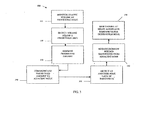
- FIG. 2 is a flow diagram of a method to guarantee network service in accordance with one embodiment of the invention.
- FIG. 3 is a flow diagram of a method to manage bandwidth of a guaranteed network service request in accordance with one embodiment of the invention.
- FIG. 4 is a diagram of a bandwidth management system in accordance with one embodiment of the invention.
- FIG. 1 is a diagram of a network 100 that guarantees service for network transactions before the transactions are processed within the network 100.
- the technique is implemented in a computer-accessible medium within processing devices of a network. These devices can be routers, hubs, bridges, switches, gateways, firewalls, proxies, servers, client workstations, and the like.
- the network 100 is logically represented in the computer-accessible medium as a tree where each branch of the tree is a node.
- a node is a processing device that participates in a network transaction by routing data packets associated with the network transaction between originating nodes and destination nodes.
- the embodiments of this invention provide improved techniques for guaranteeing service betweens node of a network 100. Guaranteeing means that bandwidth availability is assured before a network transaction commences, assuming that the nodes and links of the network 100 remain operational and do not otherwise fail.
- Guaranteeing means that bandwidth availability is assured before a network transaction commences, assuming that the nodes and links of the network 100 remain operational and do not otherwise fail.
- the network 100 depicted in FIG. 1 includes a variety of Autonomous Systems (AS) that can operate independently of one another. These ASs can be viewed as independent sub-networks, such as ISPs, private networks and the like. The sub-networks can geographically span the entire world. Within each AS, a number of processing nodes are used to directly communicate with other external ASs; these nodes are referred to as edge nodes.
- AS Autonomous Systems
- the entire network 100 is logically organized as a tree.
- that tree is inverted, such that the root of the tree is identified by AS Y and the farthest leaf is identified by AS X.
- the root node of the tree is edge node D.
- AS N is a father of children 0, 1, and 2. Moreover, the children are considered brothers to each other.
- Each AS can itself be considered a sub-tree, having its own internal root node, father node, and brother nodes. Moreover, the children of a father are considered its sons. Thus, father AS N has sons identified as Child 0, Child 1, and Child 2. Moreover, AS N is considered a grandfather of AS.X.
- a network transaction is a communication between any two or more nodes of the network 100.
- a node that originates the network transaction is called an originating node.
- a network transaction transfers data packets from an originating node to a destination node.
- the node that the originating node desires to communicate with via a network transaction is referred to as a destination node.
- a network transaction will include the transfer of one or more network data packets from the originating node through one or more intermediate nodes to the destination node.
- the network transaction is associated with a path through the network from the originating node to the destination node.
- a variety of path generating and dynamic modifying algorithms are well known in the networking arts and readily achievable using existing network architectures and protocols. All such algorithms and architectures are capable of being used with the embodiments of this invention.
- the volume of and rate at which network packets are present and sent between any two nodes of the network 100 is referred to as the bandwidth.
- These data transfers occur over the links of the network 100, the links connect the nodes.
- Each link can be capable of handling different types of media, different volumes, different rates, and a different number of concurrent sessions of network transactions.
- the hard and soft limitations of each link are known in advance by each node based on its hardware and software configurations. These limitations can be communicated between nodes using well known and existing networking protocols and technologies.
- the originating node When an originating node requests a particular network transaction directed to a destination node, the originating node would like to know in advance of commencing the transaction that a sufficient amount of bandwidth will exist within the network 100 in order to process the transaction to the destination node. In embodiments of the present invention, this is achieved with a Bandwidth Conservation Criterion (BCC) calculation.
- BCC Bandwidth Conservation Criterion
- the originating node makes a request for a network transaction to the first processing node defined in the network path.
- the first processing node identifies the total available bandwidth of the destination node and sums the bandwidth of all outstanding traffic that is destined for the destination node. This calculation is the BCC calculation that guarantees the originating node that bandwidth will exist to satisfy the transaction. IN response to the guarantee, the originating node commences the network transaction through the network 100.
- N can have a maximum bandwidth of 128 KB.
- a makes the request to B the current aggregate traffic directed to N is 110 KB.
- B applies BCC to determine that if the network transaction is guaranteed there will be 120 KB of current traffic directed towards N, which is less than the maximum bandwidth of 128 KB that N can handle at any point in time.
- B makes the BCC calculation when it receives the request from A and determines that the network transaction can be guaranteed.
- the guarantee is then communicated from B to A, and the network transaction commences.
- the bandwidth request associated with a network transaction when combined with the total aggregate bandwidth destined for edge node D is less than the total bandwidth that edge node D can handle, the BCC equation holds true and a network transaction can be guaranteed service.
- This calculation is a scalable approach, because all that is needed is a calculation that sums existing aggregate traffic that is being directed to a destination node along with the known bandwidth limit associated with the destination node.
- aggregate traffic it is meant that all current network traffic that is active in the network and is currently being directed to the destination node.
- BCC can be augmented to make necessary dynamic adjustments as needed at each processing node associated with a network path of a network transaction, which is guaranteed by the BCC equation.
- a network transaction may progress after a guarantee of service from AS m to edge node j' of AS Y.
- the current bandwidth for the link between node j' and k may be at capacity and not capable of handling the network transaction. Without the ability for link j'-k to increase its bandwidth the transaction may fail or become unreasonably delayed.
- the static approach of BCC can be augmented with a Closest relation AllocatioN (CLAN) technique, that permits nodes to borrow bandwidth from adjacent (brother, son, father) nodes.
- CLAN Closest relation AllocatioN
- each node of the network 100 monitors the traffic volume occurring with its link to its adjacent nodes, more specifically with its father node.
- a particular node notices a reduction in bandwidth occurring with its link to its father node, that reduction is known to the father node (adjacent node). This reserved bandwidth is held by the father node and delivered to other more needing sons of the father when needed.
- node k can borrow 64 KB from one or both of its two remaining sons.
- Node k knows the 64 KB is obtainable from one or its two remaining sons, because if finds the two remaining sons having chunks of available bandwidth to their father node K during processing and request bandwidth from their father node when needed.
- each son node is configured to manage only 64 KB of capacity at any one time and configured to release and to notify the father node k whenever bandwidth is needed above 64 KB and the father node will be aware when capacity above 64 KB is no longer needed for any given transaction.
- the father node k then manages this excess bandwidth and when a network transaction moving from link j'-k, in our present example, needs additional bandwidth; the father node k has it in reserve to deliver to the son node j', because the bandwidth has been previously borrowed from one or both brothers of node j'.
- edge node j' connects two different ASs (L and M) to AS N.
- edge node j of AS M can borrow from the appropriate edge node of AS L in order to complete a transaction over link j-j'. This occurs through j', which acts as an adjacent node or father node to both node j and the edge node of AS L that directly connects to node j'.
- adjacent nodes establish policies with one another such that chunks of bandwidth are managed by father nodes on behalf of their sons. These chunks of bandwidth are considered reserves, which must be requested before the reserves can be used from the appropriate father node.
- son nodes borrow, via their father, bandwidth that exceeds a pre-negotiated amount; the bandwidth borrowed comes from the brother nodes of a borrowing son node, but is managed by their father node.
- father node can borrow from its father within the network 100, such that at any one time a borrowing node may be getting bandwidth from its brothers and from brothers of its father.
- Hierarchical relationships between nodes of a network are managed in order to borrow bandwidth with the CLAN technique; the borrowing is needed for a network transaction that is progressing through nodes of a network. That is, a node in need of more bandwidth uses its closest relationship to adjacent nodes to acquire the necessary bandwidth allocation and this borrowing can progress upward through that node's relatives after first borrowing from its closest relation.
- the BCC calculation permits a transaction guarantee to be given to an originating node of a network transaction, where that network transaction requires a certain amount of bandwidth through a network 100 in order to reach a destination node.
- the bandwidth can be temporarily borrowed from adjacent nodes using the CLAN technique.
- the BCC and CLAN techniques provide a scalable solution to QoS for ASs or independent networks. These techniques are not overly complex and can be implemented within existing network protocols and software designed to calculate the BCC and implement the CLAN technique.
- FIG. 2 is a flow diagram of one method 200 to guarantee network service by implementing the BCC and CLAN techniques discussed above with FIG. 1 .
- the method 200 is implemented in a computer accessible medium and processes on each node of a network.
- the nodes are processing devices in the network which originate, route, and process network transactions through a network.
- the method 200 can be implemented within each node of the network as software, firmware, and/or via network protocols.
- a request for a network transaction is received by a first processing node.
- the request originates from an originating node.
- the network transaction is associated with a network path which defines one or more routes for network packets associated with the network transaction to traverse through one or more intermediate nodes of the network to a destination node.
- the first processing node is the first node of that network path.
- the first processing node When the first processing node receives the network request from the originating node, it determines whether the request is acceptable based on the BCC calculation by checking if the aggregate traffic existing in the network which is destined for the destination node plus the bandwidth needed by the network transaction exceeds the destination node's maximum bandwidth. The BCC calculation and the appropriate check are made at 220. If the aggregate traffic plus the bandwidth needed does exceed the destination node's bandwidth limit, then, at 222, the network transaction cannot be guaranteed and the originating node is notified of the same.
- the first processing node guarantees to the originating node that the requested network transaction will have sufficient bandwidth to reach the destination node within the network. In one embodiment, as soon as this guarantee occurs, the total available bandwidth at the destination node is decremented at 240 by the bandwidth which is needed to satisfy the current network transaction.
- BCC catenation there are a variety of ways to implement the BCC catenation.
- One technique would be to have the destination node keep track of traffic headed its way and maintain a current available bandwidth counter, which is constantly and dynamically changing.
- Another way is to have each node dynamically make queries to other nodes in the network to dynamically calculate the BCC.
- All such techniques, which resolve the BCC calculation, are intended to be included in the embodiments of this invention.
- the network transaction commences to process through the network to the destination node at 250.
- a particular processing node may determine that it actually lacks the necessary bandwidth needed to process the network transaction through a link to a next node of the network path associated with the network transaction, as depicted at 260.
- Each node of the network dynamically implements the CLAN technique discussed above with FIG. 1 in order to dynamically resolve this problem.
- the particular processing node that lacks sufficient bandwidth borrows the needed bandwidth from an adjacent node in order to process the network transaction.
- the father node of the particular processing node manages reserve bandwidth on behalf of the particular processing node and the particular processing node's brother nodes. These nodes pre-establish with one another the amount of excess bandwidth that the father node will be responsible for managing and delivering, if and when excess bandwidth is needed by any of the sons of the father.
- the father node of a needy son may not have sufficient bandwidth to satisfy a needing son's bandwidth request.
- the father contacts his father (adjacent node to the father and grandfather of the needing son) in order to borrow bandwidth from brothers of the father (grandfather to the needing son). This borrowing continues as needed according to the rules associated with the CLAN technique, as described above in FIG. 1 .
- the embodiments of method 200 demonstrate how the BCC and CLAN technique can be implemented and processed within nodes of a network in order to provide a scalable QoS from heterogeneous ASs logically organized as a single network. These embodiments are not complex and can be deployed with software processing on each network node that uses conventional network protocols to communicate between nodes.
- FIG. 3 is a flow diagram of one method 300 to manage bandwidth of a guaranteed network service request.
- the method 300 is implemented within each node of a network and is implemented in a computer accessible medium.
- the method 300 represents processing performed by each node and some interactions occurring between nodes during a network transaction.
- the method 300 represents embodiments of the CLAN technique, where nodes borrow and manage bandwidth within a network during a network transaction.
- a processing node associated with processing a network transaction through a network to a destination node monitors its own traffic volume.
- the processing node has previously used policies known to its adjacent nodes (brothers, father, and sons) in order to configure it to monitor traffic at specific predefined levels. When traffic falls below the predefined limit, then this is detected at 320, and predefined amounts of bandwidth that are available are reserved as being unavailable to the processing node at 330.
- Those predefined amounts of reserved bandwidth are known to the processing node's father node (adjacent node) at 340.
- the father node manages a pool of reserved bandwidth on behalf of the processing node and on behalf of brothers of the processing node.
- the brother node makes a request at 360 to borrow the needed bandwidth from the father node (adjacent node).
- the brother has directly borrowed the bandwidth from the father, but indirectly borrowed it from the excess capacity that the brother's siblings had previously deposited with the father for purposes of management.
- This bandwidth management and borrowing technique reflects an example implementation of the CLAN technique discussed above with FIGS. 1 and 2 .
- Policies about management associated with bandwidth deposits (e.g., reservations) and withdrawals are communicated between adjacent nodes of the network.
- each node of the network is capable of resolving the BCC calculation when needed by maintaining techniques for resolving (e.g., calculating) the aggregate bandwidth associated with any particular destination node of a particular network transaction.
- Method 300 provides an example implementation of the CLAN technique and maintains the capabilities when needed to perform the BCC calculation. This demonstrates how a heterogeneous network consisting of a plurality of nodes can interact in a scalable fashion with one another to provide QoS for a network transaction.
- FIG. 4 is a diagram of one bandwidth management system 400.
- the bandwidth management system 400 represent an embodiment of the BCC and CLAN technique within a heterogeneous network, where the network includes a plurality of sub-networks identified as ASs.
- the bandwidth management system 400 is implemented in a computer accessible medium.
- the bandwidth management system 400 includes logically representing the heterogeneous network as a network tree 401, wherein branches of the tree 401 can include other sub-trees.
- the tree 401 can be entirely managed and manipulated by pointers and metadata associated with the attributes and characteristics of the tree 401.
- the tree 401 includes a plurality of nodes 402 and 403. Each node 402 or 403 assumes a designation as a son, father, and/or brother depending upon its context within the tree to another adjacent node 402 or 403. Thus, a single node 402 or 403 can have multiple designations with respect to adjacent nodes 402 and 403.
- a node can also have a designation with respect to non-adjacent nodes, such as grandfather, grandson, uncle, and the like.
- Each node 402 or 403 also includes its own traffic monitor 402A-403A, bandwidth modifier 402B-403B, and signaling processor 402C-403C. These entities combine both software logic and existing networking protocols to perform the BCC and CLAN techniques.
- the traffic monitor 402A-403A monitors traffic on its respective node 402 or 403 and communicates traffic information to the traffic monitors 402A-403A of its adjacent nodes 402 or 403.
- This communication and monitoring is useful in resolving the processing associated with the BCC and CLAN techniques.
- traffic volumes can be aggregated to resolve the BCC calculation for a particular destination node of a particular network transaction.
- the traffic volumes can be used to determine whether to deposit bandwidth with or to withdraw on loan bandwidth from an adjacent node 402 or 403.
- the bandwidth modifier 402B-403B communicates with the traffic monitor 402A-403A in order to adjust bandwidth associated with its particular processing node 402 or 403. That is, when the traffic monitor 402A-403A reports bandwidth below a predefined and pre-negotiated amount, the bandwidth modifier 402B-403B can be used to implement the CLAN technique and claim additional bandwidth not being used as reserved bandwidth, which is then deposited with an adjacent node 402 or 403. Conversely, when a node 402 or 403 needs additional bandwidth, the bandwidth modifier 4028-403B can be used to detect this need based on a current transaction and based on reports of bandwidth usage from the traffic monitor 402A-403A in order to request more bandwidth on loan from an adjacent node 402 or 403.
- the signaling processor 402C-403C can be used to actually allocate and reallocate need bandwidth or excess bandwidth from an adjacent node 402 or 403. That is, the actual device that permits bandwidth to be redirected to a specified link can be controlled with the signaling processor 402C-403C. In essence, bandwidth is reallocated and throttled up or throttled down over physical links when bandwidth is deposited or withdrawn from an adjacent node 402 or 403. This throttling is the responsibility of the signaling processor 402C-403C.
- the traffic monitor 402A-403A reports traffic on its node 402 or 403 to the adjacent nodes 402 or 403.
- the bandwidth modifier 402B-403B uses this in combination with existing network requests to modify bandwidth.
- the signaling processor 402C-403C detects modified bandwidth and drives the underlying bandwidth device to throttle up and down affected links of the nodes 402 and 403.
- the use of the traffic monitor 402A-403A, the bandwidth modifier 402B-403B, and the signaling processor 402C-403C provides a modular event-driven implementation of the BCC and CLAN technique that is scalable across a large heterogeneous network.
- the functions of the modules are further isolated into more modules or combined into less modules. All such modifications to this architecture that are designed to perform the BCC or CLAN techniques fall within the scope of the embodiments for this invention.
Landscapes
- Engineering & Computer Science (AREA)
- Computer Networks & Wireless Communication (AREA)
- Signal Processing (AREA)
- Data Exchanges In Wide-Area Networks (AREA)
- Small-Scale Networks (AREA)
- Road Paving Structures (AREA)
- Preparation Of Compounds By Using Micro-Organisms (AREA)
Priority Applications (1)
| Application Number | Priority Date | Filing Date | Title |
|---|---|---|---|
| EP12006244.3A EP2533479B1 (de) | 2003-12-30 | 2003-12-30 | Techniken zur Gewährleistung von Bandbreite mit aggregiertem Verkehr |
Applications Claiming Priority (4)
| Application Number | Priority Date | Filing Date | Title |
|---|---|---|---|
| EP11002407A EP2341673B1 (de) | 2003-12-30 | 2003-12-30 | Techniken zum garantieren von bandbreite mit aggregat-verkehr |
| EP03788750A EP1700420B1 (de) | 2003-12-30 | 2003-12-30 | Techniken zum garantieren von bandbreite mit aggregat-verkehr |
| EP12006244.3A EP2533479B1 (de) | 2003-12-30 | 2003-12-30 | Techniken zur Gewährleistung von Bandbreite mit aggregiertem Verkehr |
| PCT/CN2003/001141 WO2005067203A1 (en) | 2003-12-30 | 2003-12-30 | Techniques for guaranteeing bandwidth with aggregate traffic |
Related Parent Applications (2)
| Application Number | Title | Priority Date | Filing Date |
|---|---|---|---|
| EP03788750.2 Division | 2003-12-30 | ||
| EP11002407.2 Division | 2011-03-23 |
Publications (3)
| Publication Number | Publication Date |
|---|---|
| EP2533479A2 true EP2533479A2 (de) | 2012-12-12 |
| EP2533479A3 EP2533479A3 (de) | 2012-12-26 |
| EP2533479B1 EP2533479B1 (de) | 2013-10-23 |
Family
ID=34744492
Family Applications (3)
| Application Number | Title | Priority Date | Filing Date |
|---|---|---|---|
| EP11002407A Expired - Lifetime EP2341673B1 (de) | 2003-12-30 | 2003-12-30 | Techniken zum garantieren von bandbreite mit aggregat-verkehr |
| EP12006244.3A Expired - Lifetime EP2533479B1 (de) | 2003-12-30 | 2003-12-30 | Techniken zur Gewährleistung von Bandbreite mit aggregiertem Verkehr |
| EP03788750A Expired - Lifetime EP1700420B1 (de) | 2003-12-30 | 2003-12-30 | Techniken zum garantieren von bandbreite mit aggregat-verkehr |
Family Applications Before (1)
| Application Number | Title | Priority Date | Filing Date |
|---|---|---|---|
| EP11002407A Expired - Lifetime EP2341673B1 (de) | 2003-12-30 | 2003-12-30 | Techniken zum garantieren von bandbreite mit aggregat-verkehr |
Family Applications After (1)
| Application Number | Title | Priority Date | Filing Date |
|---|---|---|---|
| EP03788750A Expired - Lifetime EP1700420B1 (de) | 2003-12-30 | 2003-12-30 | Techniken zum garantieren von bandbreite mit aggregat-verkehr |
Country Status (7)
| Country | Link |
|---|---|
| EP (3) | EP2341673B1 (de) |
| JP (1) | JP2007517415A (de) |
| CN (1) | CN1886933B (de) |
| AT (1) | ATE529985T1 (de) |
| AU (1) | AU2003292945A1 (de) |
| ES (1) | ES2377157T3 (de) |
| WO (1) | WO2005067203A1 (de) |
Cited By (1)
| Publication number | Priority date | Publication date | Assignee | Title |
|---|---|---|---|---|
| US9264311B2 (en) | 2003-12-30 | 2016-02-16 | Intel Corporation | Techniques for guaranteeing bandwidth with aggregate traffic |
Families Citing this family (6)
| Publication number | Priority date | Publication date | Assignee | Title |
|---|---|---|---|---|
| CN102104874B (zh) * | 2009-12-21 | 2013-12-04 | 中兴通讯股份有限公司 | 网络传输资源的分配方法及相关装置 |
| JP5758192B2 (ja) * | 2011-05-19 | 2015-08-05 | Kddi株式会社 | 通信権利貸借サーバ装置及びコンピュータプログラム |
| TWI474188B (zh) * | 2011-11-08 | 2015-02-21 | Inst Information Industry | 資料傳輸系統、應用資料傳輸系統之資料傳輸方法及其電腦可讀取記錄媒體 |
| US9780911B2 (en) * | 2014-08-27 | 2017-10-03 | Qualcomm, Incorporated | Signaling different MCS sets for different bandwidths |
| CN104618157B (zh) * | 2015-01-27 | 2018-05-18 | 华为技术有限公司 | 网络管理方法、设备及系统 |
| CN116233853B (zh) * | 2022-12-30 | 2026-04-07 | 北京通广龙电子科技有限公司 | 一种基于预分配资源的借用与赠与方法 |
Family Cites Families (13)
| Publication number | Priority date | Publication date | Assignee | Title |
|---|---|---|---|---|
| US5347511A (en) * | 1993-06-07 | 1994-09-13 | International Business Machines Corp. | Traffic management in packet communications networks |
| US5359593A (en) * | 1993-08-26 | 1994-10-25 | International Business Machines Corporation | Dynamic bandwidth estimation and adaptation for packet communications networks |
| US5982748A (en) * | 1996-10-03 | 1999-11-09 | Nortel Networks Corporation | Method and apparatus for controlling admission of connection requests |
| US5953338A (en) * | 1996-12-13 | 1999-09-14 | Northern Telecom Limited | Dynamic control processes and systems for asynchronous transfer mode networks |
| CA2315160A1 (en) * | 1997-12-15 | 1999-06-24 | David P. Phillips | Method and apparatus for power line exchange protocol |
| US6477582B1 (en) * | 1998-12-16 | 2002-11-05 | Nortel Networks Limited | Method and apparatus for conservative link selection |
| CA2441579A1 (en) * | 2000-06-07 | 2002-12-13 | Serge Plotkin | Multi-path dynamic routing algorithm |
| US6795445B1 (en) * | 2000-10-27 | 2004-09-21 | Nortel Networks Limited | Hierarchical bandwidth management in multiservice networks |
| CN1170444C (zh) * | 2001-08-10 | 2004-10-06 | 华为技术有限公司 | 一种对每个分组数据协议上下文进行流量监管的装置和方法 |
| US7092356B2 (en) * | 2001-10-05 | 2006-08-15 | Nortel Networks Limited | Resource management in heterogenous QoS-based packet Networks |
| JP2003158543A (ja) * | 2001-11-22 | 2003-05-30 | Anritsu Corp | 中継装置及び中継方法 |
| US20030099199A1 (en) * | 2001-11-27 | 2003-05-29 | Amplify.Net, Inc., | Bandwidth allocation credit updating on a variable time basis |
| CN1199496C (zh) * | 2002-03-15 | 2005-04-27 | 华为技术有限公司 | 业务支持节点与基站控制器间接口的自适应流控方法 |
-
2003
- 2003-12-30 EP EP11002407A patent/EP2341673B1/de not_active Expired - Lifetime
- 2003-12-30 CN CN200380110929XA patent/CN1886933B/zh not_active Expired - Fee Related
- 2003-12-30 EP EP12006244.3A patent/EP2533479B1/de not_active Expired - Lifetime
- 2003-12-30 ES ES03788750T patent/ES2377157T3/es not_active Expired - Lifetime
- 2003-12-30 AT AT03788750T patent/ATE529985T1/de not_active IP Right Cessation
- 2003-12-30 JP JP2005513052A patent/JP2007517415A/ja active Pending
- 2003-12-30 WO PCT/CN2003/001141 patent/WO2005067203A1/en not_active Ceased
- 2003-12-30 AU AU2003292945A patent/AU2003292945A1/en not_active Abandoned
- 2003-12-30 EP EP03788750A patent/EP1700420B1/de not_active Expired - Lifetime
Non-Patent Citations (1)
| Title |
|---|
| None |
Cited By (3)
| Publication number | Priority date | Publication date | Assignee | Title |
|---|---|---|---|---|
| US9264311B2 (en) | 2003-12-30 | 2016-02-16 | Intel Corporation | Techniques for guaranteeing bandwidth with aggregate traffic |
| US10038599B2 (en) | 2003-12-30 | 2018-07-31 | Intel Corporation | Techniques for guaranteeing bandwidth with aggregate traffic |
| US10721131B2 (en) | 2003-12-30 | 2020-07-21 | Intel Corporation | Techniques for guaranteeing bandwidth with aggregate traffic |
Also Published As
| Publication number | Publication date |
|---|---|
| ATE529985T1 (de) | 2011-11-15 |
| JP2007517415A (ja) | 2007-06-28 |
| EP2341673A3 (de) | 2011-10-05 |
| AU2003292945A1 (en) | 2005-08-12 |
| CN1886933A (zh) | 2006-12-27 |
| EP1700420B1 (de) | 2011-10-19 |
| EP2341673A2 (de) | 2011-07-06 |
| WO2005067203A1 (en) | 2005-07-21 |
| EP2533479B1 (de) | 2013-10-23 |
| EP1700420A1 (de) | 2006-09-13 |
| EP2341673B1 (de) | 2012-09-05 |
| ES2377157T3 (es) | 2012-03-23 |
| CN1886933B (zh) | 2010-10-27 |
| EP2533479A3 (de) | 2012-12-26 |
| EP1700420A4 (de) | 2009-02-18 |
Similar Documents
| Publication | Publication Date | Title |
|---|---|---|
| US10721131B2 (en) | Techniques for guaranteeing bandwidth with aggregate traffic | |
| CN101491025B (zh) | 用于遍布机群进行通信量整形的方法 | |
| US7764615B2 (en) | Distributing rate limits and tracking rate consumption across members of a cluster | |
| US7403476B2 (en) | Adaptive bandwidth throttling for network services | |
| US7813276B2 (en) | Method for distributed hierarchical admission control across a cluster | |
| US7792098B2 (en) | Method for actively managing central queue buffer allocation | |
| US20030236887A1 (en) | Cluster bandwidth management algorithms | |
| US20040205761A1 (en) | Controlling processing networks | |
| US20050076173A1 (en) | Method and apparatus for preconditioning data to be transferred on a switched underlay network | |
| EP2533479A2 (de) | Techniken zur Gewährleistung von Bandbreite mit aggregiertem Verkehr | |
| US7836201B2 (en) | Methods and systems for providing efficient provisioning of data flows | |
| CN104303457A (zh) | 在网络中分配带宽 | |
| CN110445725A (zh) | 新加入负载节点分流的方法、存储介质 | |
| HK1143873B (en) | Methods and systems for providing efficient provisioning of data flows | |
| JPH09181762A (ja) | ネットワーク間接続装置 |
Legal Events
| Date | Code | Title | Description |
|---|---|---|---|
| PUAL | Search report despatched |
Free format text: ORIGINAL CODE: 0009013 |
|
| PUAI | Public reference made under article 153(3) epc to a published international application that has entered the european phase |
Free format text: ORIGINAL CODE: 0009012 |
|
| 17P | Request for examination filed |
Effective date: 20120924 |
|
| AC | Divisional application: reference to earlier application |
Ref document number: 1700420 Country of ref document: EP Kind code of ref document: P Ref document number: 2341673 Country of ref document: EP Kind code of ref document: P |
|
| AK | Designated contracting states |
Kind code of ref document: A2 Designated state(s): AT BE BG CH CY CZ DE DK EE ES FI FR GB GR HU IE IT LI LU MC NL PT RO SE SI SK TR |
|
| AK | Designated contracting states |
Kind code of ref document: A3 Designated state(s): AT BE BG CH CY CZ DE DK EE ES FI FR GB GR HU IE IT LI LU MC NL PT RO SE SI SK TR |
|
| RIC1 | Information provided on ipc code assigned before grant |
Ipc: H04L 12/56 20060101AFI20121119BHEP |
|
| 17Q | First examination report despatched |
Effective date: 20121130 |
|
| REG | Reference to a national code |
Ref country code: DE Ref legal event code: R079 Ref document number: 60345175 Country of ref document: DE Free format text: PREVIOUS MAIN CLASS: H04L0012560000 Ipc: H04L0012700000 |
|
| GRAP | Despatch of communication of intention to grant a patent |
Free format text: ORIGINAL CODE: EPIDOSNIGR1 |
|
| RIC1 | Information provided on ipc code assigned before grant |
Ipc: H04L 12/70 20130101AFI20130418BHEP |
|
| INTG | Intention to grant announced |
Effective date: 20130516 |
|
| GRAS | Grant fee paid |
Free format text: ORIGINAL CODE: EPIDOSNIGR3 |
|
| GRAA | (expected) grant |
Free format text: ORIGINAL CODE: 0009210 |
|
| AC | Divisional application: reference to earlier application |
Ref document number: 2341673 Country of ref document: EP Kind code of ref document: P Ref document number: 1700420 Country of ref document: EP Kind code of ref document: P |
|
| AK | Designated contracting states |
Kind code of ref document: B1 Designated state(s): AT BE BG CH CY CZ DE DK EE ES FI FR GB GR HU IE IT LI LU MC NL PT RO SE SI SK TR |
|
| REG | Reference to a national code |
Ref country code: GB Ref legal event code: FG4D |
|
| REG | Reference to a national code |
Ref country code: CH Ref legal event code: EP |
|
| REG | Reference to a national code |
Ref country code: AT Ref legal event code: REF Ref document number: 638087 Country of ref document: AT Kind code of ref document: T Effective date: 20131115 |
|
| REG | Reference to a national code |
Ref country code: IE Ref legal event code: FG4D |
|
| REG | Reference to a national code |
Ref country code: DE Ref legal event code: R096 Ref document number: 60345175 Country of ref document: DE Effective date: 20131212 |
|
| REG | Reference to a national code |
Ref country code: NL Ref legal event code: T3 |
|
| REG | Reference to a national code |
Ref country code: AT Ref legal event code: MK05 Ref document number: 638087 Country of ref document: AT Kind code of ref document: T Effective date: 20131023 |
|
| PG25 | Lapsed in a contracting state [announced via postgrant information from national office to epo] |
Ref country code: SE Free format text: LAPSE BECAUSE OF FAILURE TO SUBMIT A TRANSLATION OF THE DESCRIPTION OR TO PAY THE FEE WITHIN THE PRESCRIBED TIME-LIMIT Effective date: 20131023 Ref country code: BE Free format text: LAPSE BECAUSE OF FAILURE TO SUBMIT A TRANSLATION OF THE DESCRIPTION OR TO PAY THE FEE WITHIN THE PRESCRIBED TIME-LIMIT Effective date: 20131023 Ref country code: FI Free format text: LAPSE BECAUSE OF FAILURE TO SUBMIT A TRANSLATION OF THE DESCRIPTION OR TO PAY THE FEE WITHIN THE PRESCRIBED TIME-LIMIT Effective date: 20131023 |
|
| PG25 | Lapsed in a contracting state [announced via postgrant information from national office to epo] |
Ref country code: ES Free format text: LAPSE BECAUSE OF FAILURE TO SUBMIT A TRANSLATION OF THE DESCRIPTION OR TO PAY THE FEE WITHIN THE PRESCRIBED TIME-LIMIT Effective date: 20131023 Ref country code: AT Free format text: LAPSE BECAUSE OF FAILURE TO SUBMIT A TRANSLATION OF THE DESCRIPTION OR TO PAY THE FEE WITHIN THE PRESCRIBED TIME-LIMIT Effective date: 20131023 Ref country code: CY Free format text: LAPSE BECAUSE OF FAILURE TO SUBMIT A TRANSLATION OF THE DESCRIPTION OR TO PAY THE FEE WITHIN THE PRESCRIBED TIME-LIMIT Effective date: 20131023 |
|
| PG25 | Lapsed in a contracting state [announced via postgrant information from national office to epo] |
Ref country code: PT Free format text: LAPSE BECAUSE OF FAILURE TO SUBMIT A TRANSLATION OF THE DESCRIPTION OR TO PAY THE FEE WITHIN THE PRESCRIBED TIME-LIMIT Effective date: 20140224 |
|
| REG | Reference to a national code |
Ref country code: DE Ref legal event code: R097 Ref document number: 60345175 Country of ref document: DE |
|
| PG25 | Lapsed in a contracting state [announced via postgrant information from national office to epo] |
Ref country code: EE Free format text: LAPSE BECAUSE OF FAILURE TO SUBMIT A TRANSLATION OF THE DESCRIPTION OR TO PAY THE FEE WITHIN THE PRESCRIBED TIME-LIMIT Effective date: 20131023 |
|
| REG | Reference to a national code |
Ref country code: CH Ref legal event code: PL |
|
| PG25 | Lapsed in a contracting state [announced via postgrant information from national office to epo] |
Ref country code: RO Free format text: LAPSE BECAUSE OF FAILURE TO SUBMIT A TRANSLATION OF THE DESCRIPTION OR TO PAY THE FEE WITHIN THE PRESCRIBED TIME-LIMIT Effective date: 20131023 Ref country code: IT Free format text: LAPSE BECAUSE OF FAILURE TO SUBMIT A TRANSLATION OF THE DESCRIPTION OR TO PAY THE FEE WITHIN THE PRESCRIBED TIME-LIMIT Effective date: 20131023 Ref country code: LU Free format text: LAPSE BECAUSE OF FAILURE TO SUBMIT A TRANSLATION OF THE DESCRIPTION OR TO PAY THE FEE WITHIN THE PRESCRIBED TIME-LIMIT Effective date: 20131230 Ref country code: CZ Free format text: LAPSE BECAUSE OF FAILURE TO SUBMIT A TRANSLATION OF THE DESCRIPTION OR TO PAY THE FEE WITHIN THE PRESCRIBED TIME-LIMIT Effective date: 20131023 Ref country code: SK Free format text: LAPSE BECAUSE OF FAILURE TO SUBMIT A TRANSLATION OF THE DESCRIPTION OR TO PAY THE FEE WITHIN THE PRESCRIBED TIME-LIMIT Effective date: 20131023 |
|
| PLBE | No opposition filed within time limit |
Free format text: ORIGINAL CODE: 0009261 |
|
| STAA | Information on the status of an ep patent application or granted ep patent |
Free format text: STATUS: NO OPPOSITION FILED WITHIN TIME LIMIT |
|
| REG | Reference to a national code |
Ref country code: IE Ref legal event code: MM4A |
|
| REG | Reference to a national code |
Ref country code: FR Ref legal event code: ST Effective date: 20140829 |
|
| PG25 | Lapsed in a contracting state [announced via postgrant information from national office to epo] |
Ref country code: DK Free format text: LAPSE BECAUSE OF FAILURE TO SUBMIT A TRANSLATION OF THE DESCRIPTION OR TO PAY THE FEE WITHIN THE PRESCRIBED TIME-LIMIT Effective date: 20131023 |
|
| 26N | No opposition filed |
Effective date: 20140724 |
|
| PG25 | Lapsed in a contracting state [announced via postgrant information from national office to epo] |
Ref country code: CH Free format text: LAPSE BECAUSE OF NON-PAYMENT OF DUE FEES Effective date: 20131231 Ref country code: LI Free format text: LAPSE BECAUSE OF NON-PAYMENT OF DUE FEES Effective date: 20131231 Ref country code: IE Free format text: LAPSE BECAUSE OF NON-PAYMENT OF DUE FEES Effective date: 20131230 |
|
| REG | Reference to a national code |
Ref country code: DE Ref legal event code: R097 Ref document number: 60345175 Country of ref document: DE Effective date: 20140724 |
|
| PG25 | Lapsed in a contracting state [announced via postgrant information from national office to epo] |
Ref country code: FR Free format text: LAPSE BECAUSE OF NON-PAYMENT OF DUE FEES Effective date: 20131231 |
|
| PG25 | Lapsed in a contracting state [announced via postgrant information from national office to epo] |
Ref country code: SI Free format text: LAPSE BECAUSE OF FAILURE TO SUBMIT A TRANSLATION OF THE DESCRIPTION OR TO PAY THE FEE WITHIN THE PRESCRIBED TIME-LIMIT Effective date: 20131023 |
|
| PGFP | Annual fee paid to national office [announced via postgrant information from national office to epo] |
Ref country code: NL Payment date: 20141210 Year of fee payment: 12 |
|
| PG25 | Lapsed in a contracting state [announced via postgrant information from national office to epo] |
Ref country code: MC Free format text: LAPSE BECAUSE OF FAILURE TO SUBMIT A TRANSLATION OF THE DESCRIPTION OR TO PAY THE FEE WITHIN THE PRESCRIBED TIME-LIMIT Effective date: 20131023 |
|
| PG25 | Lapsed in a contracting state [announced via postgrant information from national office to epo] |
Ref country code: BG Free format text: LAPSE BECAUSE OF FAILURE TO SUBMIT A TRANSLATION OF THE DESCRIPTION OR TO PAY THE FEE WITHIN THE PRESCRIBED TIME-LIMIT Effective date: 20131023 Ref country code: HU Free format text: LAPSE BECAUSE OF FAILURE TO SUBMIT A TRANSLATION OF THE DESCRIPTION OR TO PAY THE FEE WITHIN THE PRESCRIBED TIME-LIMIT; INVALID AB INITIO Effective date: 20031230 |
|
| PG25 | Lapsed in a contracting state [announced via postgrant information from national office to epo] |
Ref country code: GR Free format text: LAPSE BECAUSE OF NON-PAYMENT OF DUE FEES Effective date: 20131023 |
|
| PG25 | Lapsed in a contracting state [announced via postgrant information from national office to epo] |
Ref country code: GR Free format text: LAPSE BECAUSE OF FAILURE TO SUBMIT A TRANSLATION OF THE DESCRIPTION OR TO PAY THE FEE WITHIN THE PRESCRIBED TIME-LIMIT Effective date: 20140124 |
|
| PG25 | Lapsed in a contracting state [announced via postgrant information from national office to epo] |
Ref country code: TR Free format text: LAPSE BECAUSE OF FAILURE TO SUBMIT A TRANSLATION OF THE DESCRIPTION OR TO PAY THE FEE WITHIN THE PRESCRIBED TIME-LIMIT Effective date: 20131023 |
|
| REG | Reference to a national code |
Ref country code: NL Ref legal event code: MM Effective date: 20160101 |
|
| PG25 | Lapsed in a contracting state [announced via postgrant information from national office to epo] |
Ref country code: NL Free format text: LAPSE BECAUSE OF NON-PAYMENT OF DUE FEES Effective date: 20160101 |
|
| PGFP | Annual fee paid to national office [announced via postgrant information from national office to epo] |
Ref country code: GB Payment date: 20161228 Year of fee payment: 14 |
|
| GBPC | Gb: european patent ceased through non-payment of renewal fee |
Effective date: 20171230 |
|
| PG25 | Lapsed in a contracting state [announced via postgrant information from national office to epo] |
Ref country code: GB Free format text: LAPSE BECAUSE OF NON-PAYMENT OF DUE FEES Effective date: 20171230 |
|
| PGFP | Annual fee paid to national office [announced via postgrant information from national office to epo] |
Ref country code: DE Payment date: 20181218 Year of fee payment: 16 |
|
| REG | Reference to a national code |
Ref country code: DE Ref legal event code: R119 Ref document number: 60345175 Country of ref document: DE |
|
| PG25 | Lapsed in a contracting state [announced via postgrant information from national office to epo] |
Ref country code: DE Free format text: LAPSE BECAUSE OF NON-PAYMENT OF DUE FEES Effective date: 20200701 |