EP2533594A2 - Système d'attribution de canal de fréquence, station de base, station de commande, appareil de contrôle commun inter-systèmes, procédé d'attribution de canal de fréquence et procédé de commande - Google Patents
Système d'attribution de canal de fréquence, station de base, station de commande, appareil de contrôle commun inter-systèmes, procédé d'attribution de canal de fréquence et procédé de commande Download PDFInfo
- Publication number
- EP2533594A2 EP2533594A2 EP12183480A EP12183480A EP2533594A2 EP 2533594 A2 EP2533594 A2 EP 2533594A2 EP 12183480 A EP12183480 A EP 12183480A EP 12183480 A EP12183480 A EP 12183480A EP 2533594 A2 EP2533594 A2 EP 2533594A2
- Authority
- EP
- European Patent Office
- Prior art keywords
- frequency
- radio communications
- channel
- frequency channels
- base stations
- Prior art date
- Legal status (The legal status is an assumption and is not a legal conclusion. Google has not performed a legal analysis and makes no representation as to the accuracy of the status listed.)
- Withdrawn
Links
Images









Classifications
-
- H—ELECTRICITY
- H04—ELECTRIC COMMUNICATION TECHNIQUE
- H04W—WIRELESS COMMUNICATION NETWORKS
- H04W16/00—Network planning, e.g. coverage or traffic planning tools; Network deployment, e.g. resource partitioning or cells structures
- H04W16/02—Resource partitioning among network components, e.g. reuse partitioning
- H04W16/04—Traffic adaptive resource partitioning
-
- H—ELECTRICITY
- H04—ELECTRIC COMMUNICATION TECHNIQUE
- H04L—TRANSMISSION OF DIGITAL INFORMATION, e.g. TELEGRAPHIC COMMUNICATION
- H04L5/00—Arrangements affording multiple use of the transmission path
- H04L5/02—Channels characterised by the type of signal
- H04L5/06—Channels characterised by the type of signal the signals being represented by different frequencies
-
- H—ELECTRICITY
- H04—ELECTRIC COMMUNICATION TECHNIQUE
- H04B—TRANSMISSION
- H04B1/00—Details of transmission systems, not covered by a single one of groups H04B3/00 - H04B13/00; Details of transmission systems not characterised by the medium used for transmission
- H04B1/69—Spread spectrum techniques
-
- H—ELECTRICITY
- H04—ELECTRIC COMMUNICATION TECHNIQUE
- H04W—WIRELESS COMMUNICATION NETWORKS
- H04W16/00—Network planning, e.g. coverage or traffic planning tools; Network deployment, e.g. resource partitioning or cells structures
- H04W16/02—Resource partitioning among network components, e.g. reuse partitioning
- H04W16/10—Dynamic resource partitioning
-
- H—ELECTRICITY
- H04—ELECTRIC COMMUNICATION TECHNIQUE
- H04W—WIRELESS COMMUNICATION NETWORKS
- H04W72/00—Local resource management
- H04W72/04—Wireless resource allocation
- H04W72/044—Wireless resource allocation based on the type of the allocated resource
- H04W72/0453—Resources in frequency domain, e.g. a carrier in FDMA
-
- H—ELECTRICITY
- H04—ELECTRIC COMMUNICATION TECHNIQUE
- H04W—WIRELESS COMMUNICATION NETWORKS
- H04W72/00—Local resource management
- H04W72/50—Allocation or scheduling criteria for wireless resources
- H04W72/54—Allocation or scheduling criteria for wireless resources based on quality criteria
- H04W72/541—Allocation or scheduling criteria for wireless resources based on quality criteria using the level of interference
Definitions
- the present invention relates to a frequency channel assignment system, a base station, a control station, an inter-system common control apparatus, a frequency channel assignment method, and a control method, configured to assign frequency channels to be used for radio communication between mobile stations and base stations in a plurality of radio communications systems which use a common frequency band.
- cellular radio communications systems have been switching from second-generation mobile communication systems (such as Personal Digital Cellular (PDC)) to third-generation mobile communication systems (such as Wideband direct sequence Code Division Multiple Access (W-CDMA)).
- second-generation mobile communication systems such as Personal Digital Cellular (PDC)
- third-generation mobile communication systems such as Wideband direct sequence Code Division Multiple Access (W-CDMA)
- radio communications systems other than cellular radio communications systems will be more diversified.
- Such a technology for sharing will allow flexible and efficient radio communications systems to be developed according to demand of the market and users. For a plurality of radio communications systems to share a frequency band, however, an interference avoiding technology for reducing degradation in communication quality and system capacity will be required.
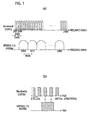
- a mixed communication environment of a wireless LAN radio communications system standardized in IEEE 802.11b and a Bluetooth radio communications system which use an Industrial, Scientific, and Medical (ISM) band of 2400 to 2483.5 MHz as shown in FIGS. 1(a) and 1(b) is known.
- frequency channels used in the wireless LAN system are within a range of 2412 to 2484 MHz, and are assigned, overlapping at 5 MHz intervals.
- frequency channels used in the Bluetooth system are within a range of 2402 to 2480 MHz, and are set without overlapping at 1 MHz intervals.
- wireless LAN high-speed wireless LAN data with a 1210 ⁇ sec length modulated by Direct Sequence Spread Spectrum (DSSS) system is transmitted.
- DSSS Direct Sequence Spread Spectrum
- Bluetooth data modulated by Frequency Hopping Spread Spectrum (FHSS) system which randomly changes a transmission frequency within a 79 MHz band every 625 ⁇ sec is transmitted.
- FHSS Frequency Hopping Spread Spectrum
- CSMA/CA Carrier Sense Multiple Access with Collision Avoidance
- AFW Adaptive Frequency Hopping
- a preamble is transmitted before transmitting data from a transmitting terminal to a receiving terminal. Only when there is a response from the receiving terminal, the data is transmitted, so that a data collision with another transmitting terminal can be avoided.
- frequency hopping is performed, adaptively avoiding a frequency band in which a data collision will occur, so that mutual interference can be avoided.
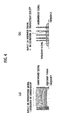
- the patent document 1 discloses a technology in which, as shown in FIG. 2(a) , subcarriers in the OFDM/TDMA system are assigned to frequency bands which do not overlap frequency channels in the GSM system, and, as shown in FIG. 2(b) , an integer multiple of an OFDM/TDMA slot is made to be equal to one or an integral number of GSM slots, and a pilot symbol is assigned to every (n-1) subcarrier ("n" is an integer more than one), so that occupied bandwidths for carriers in the radio communications systems can be used without overlapping between the radio communications systems.
- control of frequency band assignment at base stations is performed with the impact of interference by channels in the same frequency band in the single radio communications system taken into account.
- channels in the same frequency band can be repeatedly used geographically densely, so that the number of frequency channels available at each base station is increased and the system capacity is increased, while interference by channels in the same frequency band used at another base station increases the deterioration rate of communication quality.
- a threshold of the repeated use distance or the amount of interference for guaranteeing communication quality is predetermined, and frequency channel design is performed without exceeding the threshold.
- DCA Dynamic Channel Assignment
- a hierarchical cell structure in which microcells are located in a macrocell may be adopted.
- a technology for effectively using a frequency band in the hierarchical cell structure is disclosed in a patent document 2 and a non-patent document 1.
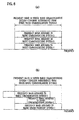
- the patent document 2 proposes a method in which, in the case where a macrocell radio communications system and a microcell radio communications system, which are different in transmission speed, share the same frequency band, when one radio communications system is short of assignable frequency channels, permission to use is given sequentially from an unused frequency channel of low priority in the other radio communications system, and a partition as the boundary between a frequency band in the macrocell and a frequency band in the microcells is shifted. (See FIGS. 3(a) and 3(b) ).
- high-priority frequency channels are rearranged during dynamic frequency channel assignment to a macrocell in the macrocell and a plurality of microcells in the macrocell.
- the conventional radio communications systems have the problem that, when a plurality of radio communications systems use the same frequency band, such as when a wireless LAN system and a Bluetooth system are mixed as shown in FIGS. 1(a) and 1(b) , mutual interference between the radio communications systems reduces the communication capacity of the other radio communications systems.
- the conventional radio communications systems have the problem that, as shown in the Japanese published unexamined application No. 2002-111631 , for example, a frequency band usable in one radio communications system is limited by a securable number of frequency channels in a frequency band used by the other radio communications system.
- the amount of interference and the allowable amount of interference (an interference amount threshold set in each radio communications system) on a particular frequency channel are compared to determine whether the frequency channel can be used or not.
- the above-described allowable amount of interference is determined to meet a required communication quality, according to various parameters (such as modulation systems and error correction technologies), the number of repeated use of channels in the same frequency band, the type of traffic, and the like in the radio communications systems.
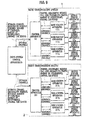
- FIGS. 4(a) and 4(b) The impact of two radio communications systems having different characteristics to interference when sharing the same frequency band without applying interference avoidance control is shown in FIGS. 4(a) and 4(b) .
- the FDMA radio communications system has had a problem that when the amount of interference increases over the allowable amount of interference, frequency channel assignment becomes difficult.
- the FDMA radio communications system suffers strong interference, not only in the same cell but also from an adjacent cell, from the CDMA radio communications system which performs repeated use of channels in the same frequency band in a single cell.
- the CDMA radio communications system has had a problem that when the amount of interference from the FDMA radio communications system increases, the system capacity is reduced.
- the present invention has been made in view of the above problems, and has an object of implementing a frequency channel assignment system, a base station, a control station, an inter-system common control apparatus, a frequency channel assignment method, and a control method which allow adaptive overlapping use of the same frequency band.
- a first aspect of the present invention is summarized as a frequency channel assignment system including a plurality of radio communications systems which use a common frequency band, and a controller; wherein the controller includes: a system characteristics information management function configured to manage system characteristics information showing characteristics of frequency channels in the radio communications systems; and a frequency channel assignment function configured to assign the frequency channels to each of the radio communications systems, based on the system characteristics information and channel status information showing status of the frequency channels, so as to avoid inter-system interference.
- the controller can further include a required frequency channel calculation function configured to calculate the number of frequency channels required at a base station, based on at least one of call loss probability and traffic at the base station; and the frequency channel assignment function can be configured to assign the frequency channels to each of the radio communications systems, based on the system characteristics information, the channel status information, and the required number of frequency channels, so as to avoid inter-system interference.
- a required frequency channel calculation function configured to calculate the number of frequency channels required at a base station, based on at least one of call loss probability and traffic at the base station
- the frequency channel assignment function can be configured to assign the frequency channels to each of the radio communications systems, based on the system characteristics information, the channel status information, and the required number of frequency channels, so as to avoid inter-system interference.
- the controller can include a control apparatus provided in each of the plurality of radio communications systems, and an inter-system common control apparatus connected to the plurality of radio communications systems;
- the control apparatus can include: a function of collecting the channel status information; a function of calculating the required number of frequency channels; and a notification function configured to notify the required number of frequency channels and the channel status information to the inter-system common control apparatus;
- the inter-system common control apparatus can include: a function of managing the system characteristics information; a function of assigning the frequency channels; and a frequency channel notification function configured to notify the assigned frequency channels to each of the control apparatuses.
- the inter-system common control apparatus can be provided in a control station in a given radio communications system of the plurality of radio communications systems.
- the system characteristics information at least one of overlapping use possibility on the frequency channels, priority of assigning the frequency channels, the allowable amount of interference on the frequency channels, and frequency bandwidth used on the frequency channels can be used.
- the channel status information at least one of use status of the frequency channels, the amount of interference on the frequency channels, and radio path change on the frequency channels can be used.
- a second aspect of the present invention is summarized as a base station for performing radio communication with mobile stations, using frequency channels in radio communications systems, including: a channel status information collection function configured to collect channel status information showing status of frequency channels at the base station; a system characteristics information management function configured to manage system characteristics information showing characteristics of frequency channels in the radio communications systems; and a frequency channel selection function configured to select frequency channels for use between the base station and the mobile stations, based on the system characteristics information and the channel status information.
- the base station can further include: a measurement function configured to measure at least one of call loss probability and traffic at the base station; and a required frequency channel number calculation function configured to calculate the number of frequency channels required at the base station, based on at least one of the call loss probability and the traffic at the base station; wherein the frequency channel selection function can be configured to select frequency channels for use between the base station and the mobile stations, based on the system characteristics information, the channel status information, and the required number of frequency channels.
- a third aspect of the present invention is summarized as a control station for controlling a plurality of base stations in radio communications systems, including: a channel status information collection function configured to collect channel status information showing status of frequency channels at each of the base stations; and a required frequency channel number calculation function configured to calculate the numbers of frequency channels required at the base stations, based on at least one of call loss probability and traffic at the base stations, wherein the control station is configured to select frequency channels for use between the base stations and mobile stations, based on the system characteristics information, the channel status information, and the required numbers of frequency channels.
- a fourth aspect of the present invention is summarized as an inter-system common control apparatus connected to a plurality of radio communications systems, including: a system characteristics information management function configured to manage system characteristics information showing characteristics of frequency channels in the radio communications systems; a collection function configured to collect channel status information showing status of frequency channels at base stations in the radio communications systems, and the numbers of frequency channels required at the base stations, from control stations in the radio communications systems; a frequency channel assignment function configured to assign frequency channels to each of the radio communications systems, based on the managed system characteristics information, and the channel status information and the required numbers of frequency channels notified from the control stations; and a frequency channel communication function configured to notify the assigned frequency channels to the control stations in the radio communications systems.
- a system characteristics information management function configured to manage system characteristics information showing characteristics of frequency channels in the radio communications systems
- a collection function configured to collect channel status information showing status of frequency channels at base stations in the radio communications systems, and the numbers of frequency channels required at the base stations, from control stations in the radio communications systems
- a frequency channel assignment function configured to assign frequency
- At least one of overlapping use possibility on the frequency channel, priority of assigning the frequency channel, the allowable amount of interference on the frequency channel, and frequency bandwidth used on the frequency channel can be managed as the system characteristics information.
- a fifth aspect of the present invention is summarized as a frequency channel assignment method for assigning frequency channels to be used for radio communication between mobile stations and base stations in a plurality of radio communications systems which use a common frequency band, the method including: collecting, at a controller, channel status information showing status of frequency channels at each of the base stations; calculating, at the controller, the number of frequency channels required at each of the base stations, based on the collected channel status information; assigning, at the controller, frequency channels to each of the radio communications systems, based on system characteristics information showing characteristics of frequency channels in the radio communications systems, the channel status information, and the required number of frequency channels; notifying, at the controller, the assigned frequency channels to the base stations; and performing, at the base stations, radio communication with the mobile stations, using the frequency channels notified from the controller.
- a sixth aspect of the present invention is summarized as a control method at base stations for performing radio communication with mobile stations, using frequency channels, in radio communications systems, the method including: collecting, at the base stations, channel status information showing status of frequency channels at the base stations; managing, at the base stations, system characteristics information showing characteristics of frequency channels in the radio communications systems; calculating, at the base stations, the numbers of frequency channels required at the base stations, based on at least one of call loss probability and traffic at the base stations; and selecting, at the base stations, frequency channels for use between the base stations or the other base stations and the mobile stations, based on the system characteristics information, the channel status information and the required numbers of frequency channels.
- a seventh aspect of the present invention is summarized as a control method at a control station for controlling a plurality of base stations in radio communications systems, the method including: collecting, at the control station, channel status information showing status of frequency channels at the base stations; calculating, at the control station, the numbers of frequency channels required at the base stations, based on at least one of call loss probability and traffic at the base stations; and selecting, at the control station, frequency channels for use between the base stations and mobile stations, based on the system characteristics information, the channel status information, and the required numbers of frequency channels.
- FIGS. 6(a) and 6(b) show examples of assigning the same frequency band to a plurality of radio communications systems.
- Radio communications systems 1 to 3 are radio communications systems which are different in both the usage pattern and the communication mode, or radio communications systems which are different in one of the usage pattern and the communication mode.
- FIG. 6(a) is an example where the radio communications systems 1 to 3 use the same frequency bandwidth.
- FIG. 6(b) is an example where frequency bands used by the radio communications systems 1 to 3 overlap.
- FIGS. 7 and 8 show examples of radio communications systems 1 and 2 which spread out, overlapping geographically.
- cells 12 1 to 12 3 which are areas covered by base stations 11 1 to 11 3 in the radio communications system 1
- overlap cells 22 1 to 22 3 which are areas covered by base stations 21 1 to 21 3 in the radio communications system 2.
- FIG. 8 is a hierarchical structure in which a cell 12 1 in the radio communications system 1 includes cells 22 1 to 22 6 in the radio communications system 2.
- the radio communications systems 1 and 2 are used for different purposes, overlapping geographically. That is, the radio communications systems 1 and 2 using the same frequency band interfere with each other by being operated in the same region.
- the frequency assignment system is applied to the radio communications systems 1 and 2 as shown in FIGS. 7 and 8 , and assigns frequency channels, taking account of interference from the other radio communications system, and thereby implementing efficient frequency use while maintaining a high-quality communication quality.
- the frequency assignment system includes radio communications systems 1 and 2 which use a common frequency band, and a controller.
- the radio communications system 1 includes mobile station apparatuses 131 1 to 131 5 , base station apparatuses 111 1 to 111 3 , and a control station apparatus 141.
- the radio communications system 2 includes mobile station apparatuses 231 1 to 231 5 , base station apparatuses 211 1 to 211 3 , a control station apparatus 241, and an inter-system common control apparatus 31.
- the controller is configured by the control station apparatus 241 and the inter-system common control apparatus 31.
- the control apparatuses 141 and 241 are provided in the radio communications systems 1 and 2, respectively, and the inter-system common control apparatus 31 is connected to the radio communications systems 1 and 2.
- the mobile station apparatuses 131 1 to 131 5 and 231 1 to 231 5 have the same configuration
- the base station apparatuses 111 1 to 111 3 and 211 1 to 211 3 have the same configuration
- the control apparatuses 141 and 241 have the same configuration.
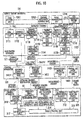
- the base station apparatus 111 includes a call accepting unit 1111, a channel searching unit 1112, a channel assignment possibility determining unit 1113, a call loss probability measuring unit 1114, a call loss processing unit 1115, a channel assignment control unit 1116, a radio transmitting unit 1117, an interference amount measuring unit 1118, a channel use status determining unit 1119, a traffic measuring unit 1120, and a call termination control unit 1121.
- the call accepting unit 1111 is configured to perform reception processing on a call from a call control unit 1311 of the mobile station apparatus 131, and instruct the channel searching unit 1112 to search for a frequency channel to assign.
- the channel searching unit 1112 is configured to transmit a channel assignment request for requesting assignment of a frequency channel to an assigned channel determining unit 1411 of the control apparatus 141, according to an instruction from the call accepting unit 1111.
- the channel assignment possibility determining unit 1113 is configured to determine whether a frequency channel can be assigned or not, based on information about frequency channels assigned by the assigned channel determining unit 1411 (including information as to whether there is an assignable frequency channel or not).
- the call loss probability measuring unit 1114 is configured to calculate the call loss probability in a cell under the base station apparatus 111 (which is used for calculating the number of channels required in the radio communications system), based on the result of determination at the channel assignment possibility determining unit 1113, and notify it to a required channel determining unit 1412 of the control apparatus 141.
- the call loss processing unit 1115 is configured to perform call loss processing for the mobile station apparatus 131 when the channel assignment possibility determining unit 1113 determines that there is not an assignable frequency channel.
- the channel assignment control unit 1116 is configured to transmit a control signal for assigning a frequency channel to be used for radio communication between the base station apparatus 111 and the mobile station apparatus 131 (including information specifying an assigned frequency channel) to a channel assignment control unit 1312 of the mobile station apparatus 131.
- the radio transmitting unit 1117 is configured to perform radio communication with a radio transmitting unit 1313 of the mobile station apparatus 131, according to an instruction from the channel assignment control unit 1116.
- the interference amount measuring unit 1118 is configured to measure, at certain time intervals, the amounts of interference such as interference power (communication quality used for determining whether overlapping use of a frequency band with another radio communications system is possible or not; such as interference power per carrier) on frequency channels available in the radio communications system including frequency channels used at the base station apparatus 111, and notify them to an interference amount collecting unit 1413 of the control apparatus 141.
- interference power communication quality used for determining whether overlapping use of a frequency band with another radio communications system is possible or not; such as interference power per carrier
- the channel use status determining unit 1119 is configured to determine the status of use of frequency channels at the base station apparatus 111, based on frequency channel assignment processing by the channel assignment control unit 1116 and frequency channel release processing by the call termination processing unit 1121, and notify the channel use status showing the determination result to the traffic measuring unit 1120 and a channel use status collecting unit 1414 of the control apparatus 141.
- the traffic measuring unit 1120 is configured to measure traffic which has been carried by released frequency channels (which is used for calculating the number of channels required in the radio communications system), and notify it to the required channel determining unit 1412 of the control apparatus 141.
- the call termination processing unit 1121 is configured to transmit a control signal for terminating a call to a call termination control unit 1314 of the mobile station apparatus 131 to perform frequency channel release processing and terminate radio communication between the mobile station apparatus 131 and the base station apparatus 111.
- the control apparatus 141 includes the assigned channel determining unit 1411, the required channel number determining unit 1412, the interference amount collecting unit 1413, and the channel use status collecting unit 1414, as shown in FIG. 10 .
- the assigned channel determining unit 1411 is configured to transmit an optimum channel designation request for requesting an optimum channel determining unit 318 of the inter-system common control apparatus 31 to determine available frequency channels (optimum channels), referring to a data management table 317, according to a channel assignment request from the channel searching unit 1112 of the base station apparatus 111.
- the assigned channel determining unit 1411 is configured to receive information on optimum channels from the optimum channel determining unit 318 of the inter-system common control apparatus 31 (including information as to whether there are available channels or not), and notify it as assigned channels to the channel assignment possibility determining unit 1113 of the base station apparatus 111.
- the required channel number determining unit 1412 is configured to calculate the required number of channels necessary for the radio communications system to meet a required call loss probability, based on the call loss probability at each base station apparatus 111 (or cell) and traffic on each frequency channel in the radio communications system, and notify it to a frequency band assignment determining unit 311 of the inter-system common control apparatus 31.
- the required channel number determining unit 1412 constitutes a required frequency channel calculation function configured to calculate the number of frequency channels required at a base station, based on call loss probability at the base station.
- the interference amount collecting unit 1413 is configured to collect the amounts of interference notified from a plurality of base station apparatuses, and notify them to an allowable interference amount calculating unit 312 of the inter-system common control apparatus 31.
- the interference amount collecting unit 1413 is configured to collect the amounts of interference at certain times such as times when the frequency channel use status changes, or periodic times at regular time intervals, or times when a predetermined reference value such as call loss probability or traffic significantly changes.
- the channel use status collecting unit 1414 is configured to collect the channel use status at each base station apparatus notified from a plurality of base station apparatuses, and notify it to a frequency use status collecting unit 315 of the inter-system common control apparatus 31.
- the channel use status collecting unit 1414 is configured to collect the channel use status at certain times such as times when the frequency channel use status changes, or periodic times at regular time intervals, or times when a predetermined reference value such as call loss probability or traffic significantly changes.
- the interference amount collecting unit 1413 and the channel use status collecting unit 1414 constitute a channel status information collection function configured to collect channel status information.
- the inter-system common control apparatus 31 includes, as shown in FIG. 10 , the frequency band assignment determining unit 311, the allowable interference amount calculating unit 312, an overlapping use candidate frequency band determining unit 313, an occupying and overlapping use frequency band determining unit 314, the frequency band use status collecting unit 315, a table updating unit 316, the data management table 317, and the optimum channel determining unit 318.
- the frequency band assignment determining unit 311 is configured to calculate required frequency bands for radio communications systems (or cells or base station apparatuses), according to the numbers of channels required at base station apparatuses in their respective radio communications systems notified from a plurality of control apparatuses.
- the allowable interference amount calculating unit 312 is configured to calculate the allowable amount of interference (a threshold of the amount of interference) which allows communication quality to be maintained for each frequency band at each base station apparatus (or each cell) in each radio communications system, and input it to the overlapping use candidate frequency band determining unit 313 and the table updating unit 316.
- the overlapping use candidate frequency band determining uni t 313 is configured to determine a candidate for a frequency band which can be used in an overlapping manner between a plurality of radio communications systems, based on the allowable amounts of interference inputted from the allowable interference amount calculating unit 312.
- the occupying and overlapping use frequency band determining unit 314 is configured to determine a frequency band to be occupied by each radio communications system and a frequency band to be used in an overlapping manner between a plurality of radio communications systems, from the output results of the frequency band assignment determining unit 311 and the overlapping use candidate frequency band determining unit 313, and output information on a frequency band for overlapping use to the table updating unit 316.
- the frequency band use status collecting unit 315 is configured to collect the frequency band use status in each radio communications system, and input it to the table updating unit 316.
- the table updating unit 316 is configured to update each information item in the data management table 317, according to input from the allowable interference amount calculating unit 312, the occupying and overlapping use frequency band determining unit 314 and the frequency band use status collecting unit 315 (such as a change in the allowable interference amount, a change in the frequency band use status, and a change in the occupying use frequency band (or overlapping use frequency band)).
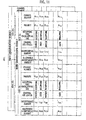
- FIG. 11 shows an example of the data management table 317 used in the frequency assignment system according to this embodiment.
- the data management table 317 is managed by the inter-system common control apparatus 31.
- the data management table 317 manages, for each cell in each radio communications system, "Channel Number (N11n, N21n)” for identifying frequency channels, “Priority (P11n, P21n)” showing priorities for assigning the frequency channels, “Occupying Use or Overlapping Use” showing possibilities of overlapping use on the frequency channels, “Channel Use Status (unused or used)” shewing the status of use of the frequency channels, “Interference Amount (I11n, I21n)” on the frequency channels, and “Allowable Interference Amount (A11n, A21n) on the frequency channels, which are associated with one another.
- the "Priority”, “Occupying Use or Overlapping Use” and “Allowable Interference Amount” constitute system characteristics information showing the characteristics of frequency channels in each radio communications system (cell) .
- system characteristics information other information such as frequency bandwidths used for frequency channels may be used.
- the "Channel Use Status" and "Interference Amount” constitute channel status information showing the status of frequency channels.
- channel status information radio path changes in frequency channels may be used.
- the "Interference Amount" on a frequency channel shows the total amount of interference including not only an amount of interference from the same frequency channel but also an amount of interference from an adjacent channel.
- the "Allowable Interference Amount" on a frequency channel includes, for example, an “interference immunity characteristic”, a “maximum amount of interference up to which interference can increase with good communication maintained", an "expected value of the allowable amount of interference estimated from channel status information” and a “limit value of the allowable amount of interference actually measured with interference increased by a small amount.”
- the data management table 317 constitutes a system characteristics information management function configured to manage system characteristics information showing the characteristics of frequency channels in radio communications systems.
- the optimum channel determining unit 318 is configured to determine optimum channels, referring to the data management table 317, in response to an optimum channel designation request from the assigned channel determining unit 1411 of the control apparatus 141, and return the determined optimum channels to the assigned channel determining unit 1411.
- Frequency channels assigned preferentially as optimum channels are different for each radio communications system (base station apparatus or cell).
- the optimum channel determining unit 318 assigns frequency channels according to priorities P11n and P21n in the radio communications systems 1 and 2, thereby being able to assign frequency bands in such a manner that, as shown in FIG. 16(a) to be described below, occupied frequency bands and an overlapping use frequency band of the radio communications systems are mixed. For example, in the radio system 1, frequency channels in a low frequency band have high priorities, and in the radio system 2, frequency channels in a high frequency band have high priorities.
- the optimum channel determining unit 318 can assign a frequency band in such a manner that the entire frequency band is made to be an overlapping use frequency band as shown in FIG. 16(b) .
- the optimum channel determining unit 318 constitutes a frequency channel assignment function configured to assign frequency channels to each radio communications system, based on the system characteristics information and the channel status information, so as to avoid inter-system interference.
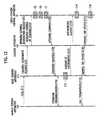
- FIG. 12 shows the operation of establishing communication between the mobile station apparatus 131 and the base station apparatus 111 in the frequency assignment system according to this embodiment in the case where a frequency band is used in an overlapping manner.
- step (C1) the mobile station apparatus 131 in the radio communications system 1 performs call processing toward the base station apparatus 111.
- step (C2) according to the call processing in step (C1), the base station apparatus 111 transmits a channel assignment request for requesting the control apparatus 141 to assign a necessary frequency channel.
- step (C3) in compliance with the channel assignment request in step (C2), the control apparatus 141 transmits an optimum channel designation request for requesting the inter-system common control apparatus 31 to designate an optimum frequency channel (frequency band) to be assigned to the call processing.
- step (C4) in compliance with the channel assignment request in step (C2), the control apparatus 141 calculates the number of frequency channels required (required channel number) at each base station apparatus 111 or 211, based on call loss probability (at each base station apparatus or each cell) and traffic (on each frequency channel) at the base station apparatus 111 or 211, and reports the required number of channels to the inter-system common control apparatus 31.
- step (C5) the inter-system common control apparatus 31 determines whether frequency channels (frequency bands) satisfying the required number of channels can be secured or not, based on the required number of channels at each base station apparatus 111 or 211 notified from the control apparatus 141.
- the inter-system common control apparatus 31 determines assignment of a frequency band required to the base station apparatus 111. Thereafter, the inter-system common control apparatus 31 determines a frequency band to be occupied by the base station apparatus 111 and a frequency band to be used in an overlapping manner between a plurality of base station apparatuses.
- step (C6) the inter-system common control apparatus 31 updates the data management table 317, based on information about the determined frequency band to be occupied and the frequency band to be used in an overlapping manner.
- step (C7) the inter-system common control apparatus 31 designates optimum channels, referring to the data management table 317, in compliance with the optimum channel designation request in step (C3).
- step (C8) the inter-system common control apparatus 31 notifies the optimum channels to the control apparatus 141, and instructs it to assign the optimum channels as frequency channels.
- step (C9) the control apparatus 141 instructs the base station apparatus 111 to assign the optimum channels as frequency channels.
- step (C10) the base station apparatus 111 establishes communication with the mobile station apparatus 131, using a notified optimum channel.
- step (C11) the base station apparatus 111 measures, during communication, the amount of interference (e.g., communication quality such as interference power) on every frequency channel used.
- the amount of interference e.g., communication quality such as interference power
- step (C12) the base station apparatus 111 notifies the measured amounts of interference to the control apparatus 141. That is, the amounts of interference measured at the base station apparatus 111 are once collected by the control apparatus 141.
- step (C13) the control apparatus 141 notifies the amounts of interference collected from the base station apparatus 111 to the inter-system common control apparatus 31.
- the inter-system common control apparatus 31 updates the data management table 317, based on the notified amounts of interference.
- the inter-system common control apparatus 31 also calculates the allowable amount of interference in which communication quality can be maintained on each frequency channel at the base station apparatus 111, and updates the data management table 317, based on the calculated allowable amounts of interference.
- the inter-system common control apparatus 31 determines a candidate frequency band which can be used in an overlapping manner between a plurality of cells, based on the calculated allowable amounts of interference, and, based on the result, determines a frequency band to be occupied by a particular cell and a frequency band to be used in an overlapping manner between a plurality of cells, and updates the table updating unit 316.
- step (C15) after the mobile station apparatus 131 requests the base station apparatus 111 to release the frequency channel due to call termination or handover, communication between the mobile station apparatus 131 and the base station apparatus 111 is terminated, and the frequency channel is released.
- step (C16) the base station apparatus 111 reports the release of the frequency channel to the control apparatus 141.
- step (C17) the control apparatus 141 reports the release of the frequency channel to the inter-system common control apparatus 31.
- step (C18) the inter-system common control apparatus 31 updates the data management table 317, based on information about the frequency channel release processing.
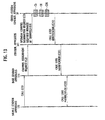
- FIG. 13 shows an operation when call loss processing is performed without establishing communication between the mobile station apparatus 131 and the base station apparatus 111 in the frequency assignment system according to this embodiment in the case where a frequency band is used in an overlapping manner.
- step (C1) the mobile station apparatus 131 in the radio communications system 1 performs call processing toward the base station apparatus 111.
- step (C2) in compliance with the call processing in step (C1), the base station apparatus 111 transmits a channel assignment request for requesting the control apparatus 141 to assign a necessary frequency channel.
- step (C3) in compliance with the channel assignment request in step (C2), the control apparatus 141 transmits an optimum channel designation request for requesting the inter-system common control apparatus 31 to designate an optimum frequency channel (frequency band) to be assigned to the call processing.
- step (C4) in compliance with the channel assignment request in step (C2), the control apparatus 141 calculates the number of frequency channels required (required channel number) at each base station apparatus 111 or 211, based on call loss probability (at each base station apparatus or each cell) and traffic (on each frequency channel) at the base station apparatus 111 or 211, and reports the required number of channels to the inter-system common control apparatus 31.
- step (C5) based on the required number of channels notified from the control apparatus 141, the inter-system common control apparatus 31 determines whether frequency channels (frequency bands) satisfying the required number of channels can be secured or not.
- the inter-system common control apparatus 31 determines assignment of a frequency band required to the base station apparatus 111. Then, the inter-system common control apparatus 31 determines a frequency band to be occupied by the base station apparatus 111 and a frequency band to be used in an overlapping manner between a plurality of base station apparatuses.
- step (C6) the inter-system common control apparatus 31 updates the data management table 317, based on information about a determined frequency band to be occupied and frequency band to be used in an overlapping manner.
- step (C20) when optimum channels cannot be found, the inter-system common control apparatus 31 decides that call loss processing be performed.
- step (C21) the inter-system common control apparatus 31 instructs the control apparatus 141 to perform call loss processing.
- step (C22) the control apparatus 141 instructs the base station apparatus 111 to perform call loss processing.
- step (C23) the base station apparatus 111 performs call loss processing toward the call request from the mobile station 13.
- step S(A1) when the mobile station apparatus 131 performs call processing, the inter-system common control apparatus 31 receives an optimum channel designation request.
- step (A2) the inter-system common control apparatus 31 refers to the "Channel Use Status" and the "Occupying Use/Overlapping Use” in the data management table 317.
- step (A3) the inter-system common control apparatus 31 searches as to whether there is an unused channel in an occupying use frequency band of the radio communications system 1.
- step (A4) when there is an unused channel in the occupying use frequency band of the radio communications system 1, the inter-system common control apparatus 31 assigns the unused channel to the base station apparatus 111 for communication related to the above call processing.
- step (A5) when there is not an unused channel in the occupying use frequency band of the radio communications system 1, the inter-system common control apparatus 31 searches as to whether there is an unused channel in an overlapping use frequency band of the radio communications system 1.
- step (A6) when there is not an unused channel in the overlapping use frequency band of the radio communications system 1, the inter-system common control apparatus 31 decides that call loss processing be performed.
- step (A7) when there is an unused channel in the overlapping use frequency band of the radio communications system 1, the inter-system common control apparatus 31 determines the characteristic of the allowable amount of interference (whether it is of a fixed type in which the allowable amount of interference is fixed or a variable type in which the allowable amount of interference is variable due to a variable spreading ratio or the like) in the radio communications system 2 which is the other party with which the frequency band is used in an overlapping manner.
- step (A8) when the allowable interference amount characteristic in the radio communications system 2 is of the fixed type, the inter-system common control apparatus 31 refers to the "Allowable Interference Amount” and the “Interference Amount” associated with the frequency channel in the data management table 317, and compares the "Allowable Interference Amount” and the “Interference Amount” it refers to.
- step (A9) when the "Interference Amount” is larger than or equal to the "Allowable Interference Amount", the inter-system common control apparatus 31 decides that call loss processing be performed.
- step (A10) the inter-system common control apparatus 31 permits overlapping use of the frequency channel, and assigns the unused channel to the base station apparatus 111 for communication related to the above call processing.
- step (A11) when the allowable interference amount characteristic in the radio communications system 2 is of the variable type, the inter-system common control apparatus 31 refers to the "Allowable Interference Amount” and the “Interference Amount” of the frequency channel in the data management table 317, and compares the "Allowable Interference Amount” and the “Interference Amount” it refers to.
- step (A12) when the "Interference Amount" is larger than or equal to the "Allowable Interference Amount," the inter-system common control apparatus 31 decides that call loss processing be performed.
- the inter-system common control apparatus 31 compares an "Allowable Interference Amount” calculated from required system capacity and the "Interference Amount".
- step (A14) when the "Allowable Interference Amount" calculated from the required system capacity is smaller than or equal to the "Interference Amount", the inter-system common control apparatus 31 decides that call loss processing be performed.
- step (A15) when the "Allowable Interference Amount" calculated from the required system capacity is larger than the "Interference Amount”, the inter-system common control apparatus 31 permits overlapping use of the frequency channel, and assigns the unused channel to the base station apparatus 111 for communication related to the above call processing.
- the "Allowable Interference Amount" calculated from the required system capacity in step (A15) is the upper limit of the allowable amount of interference calculated based on a frequency channel use requirement (such as system capacity, communication speed, throughput, or total line capacity) of the radio communications system 2 which is the other party with which the frequency band is used in an overlapping manner.
- a frequency channel use requirement such as system capacity, communication speed, throughput, or total line capacity
- step (A11) is defined by the "Allowable Interference Amount" of the frequency channel in the data management table 317.
- comparison may be performed, using the upper limit of the allowable amount of interference calculated based on a frequency channel use requirement (such as system capacity, communication speed, throughput, or total line capacity) of the radio communications system 1.
- a frequency channel use requirement such as system capacity, communication speed, throughput, or total line capacity
- the result of the frequency channel assignment or the result of the call loss processing above is used to update the data management table 317.
- a mobile station apparatus having radio devices communicable with a plurality of radio communications systems can measure a propagation loss from a base station apparatus in each radio communications system to the mobile station apparatus, so as to calculate the amount of interference in a downlink from the base station apparatus.
- the amount of interference with each radio communications system and each cell can be estimated.
- the amount of interference in the uplink can also be estimated.
- a mobile station apparatus can measure propagation losses in downlinks from a plurality of surrounding base station apparatuses, so as to follow the amount of interference varied according to the movement of the mobile station apparatus.
- propagation losses in uplinks from the mobile station apparatus to radio communications systems and surrounding base station apparatuses can be measured to calculate the amounts of interference in the uplinks, thereby to estimate the amounts of interference in downlink from the propagation losses in the uplinks.
- a base station apparatus transmits to the mobile station apparatus a command to transmit a control signal (such as a pilot signal or a training signal) for measuring propagation loss, and each radio communications system and surrounding base station apparatuses receive a control signal transmitted from the mobile station apparatus for measuring.
- the timing to observe is notified from the base station apparatus via a network through the inter-system common control station apparatus 31 to the surrounding base station apparatuses.
- each radio communications system and surrounding base station apparatuses can observe control signals from mobile station apparatuses in a plurality of radio communications systems, and use training signals or preamples, or codes in a CDMA system, for identifying the mobile station apparatuses. With information from the base station apparatuses, the mobile station apparatuses can be identified.
- the amount of interference can be measured from a difference in the total amount of interference with the control signal. Also, a method can be applied in which the amounts of interference with surrounding base station apparatuses when a mobile station apparatuses sends out a signal in a location of the mobile station apparatus are previously registered with the data management table 317, and the location of the mobile station apparatus is determined to communicate the amounts of interference to the surrounding base station apparatuses.
- step (B1) the base station apparatus 111 transmits a channel assignment request for requesting assignment of a frequency channel due to call processing or handover.
- step (B2) the inter-system common control apparatus 31 determines whether there is an unused channel in an occupying use frequency band of the radio communications system or not.
- step (B3) when there is not an unused channel in the occupying use frequency band, the inter-system common control apparatus 31 determines whether there is an unused channel in an overlapping use frequency band of the radio communications system.
- step (B4) when there is an unused channel in the occupying use frequency band or the overlapping use frequency band of the radio communications system, the inter-system common control apparatus 31 makes the unused channel a frequency channel to be assigned to the channel assignment request.
- step (B5) when there is not an unused channel in the overlapping use frequency band, the inter-system common control apparatus 31 decides that call loss processing be performed.
- step (B6) from the result of assignment processing of a frequency channel in the occupying use frequency band or the overlapping use frequency band of the radio communications system, the control apparatus 141 periodically measures call loss probability in the radio communications system (at each base station apparatus or each cell).
- step (B7) the base station apparatus 111 releases a frequency channel established with the mobile station apparatus 131 due to call termination processing or handover.
- step (B8) the control apparatus 141 calculates the channel use status, based on the result of the frequency channel assignment in step (B4) and the result of the frequency channel release in step (B7), and notifies it to the inter-system common control apparatus 31.
- step (B9) the base station apparatus 111 measures traffic (on each frequency channel) carried during communication with the mobile station apparatus 131.
- step (B10) the control apparatus 141 determines the number of channels required (the number of frequency channels necessary for meeting a required call loss probability) and a required frequency band in the radio communications system, based on the call loss probability in the radio communications system measured in step (B6) and the traffic measured in step (B9).
- step (B11) the inter-system common control apparatus 31 determines frequency bands to be assigned to the radio communications system 1 and the radio communications system 2, based on the numbers of channels required in the radio communications system 1 and the radio communications system 2.
- the base station apparatuses 111 and 211 measure the amount of interference on every frequency channel used during communication with the mobile station apparatuses 131 and 231.
- the amount of interference on a frequency channel includes the amount of interference from an adjacent frequency channel, in addition to the amount of interference from the same frequency channel.
- step (B13) the inter-system common control apparatus 31 calculates the allowable amount of interference on every frequency channel used by the base station apparatuses 111 and 211, based on the amounts of interference measured in step (B12).
- step (B14) the inter-system common control apparatus 31 determines a candidate frequency band for overlapping use, based on the allowable amounts of interference calculated in step (B13).
- step (B15) the inter-system common control apparatus 31 determines occupying and overlapping use frequency bands for each frequency band, based on the assigned frequency bands determined in step (B11) and the candidate frequency band for overlapping use determined in step (B14).
- step (B16) the inter-system common control apparatus 31 updates the data management table 317, based on the channel use status updated in step (B8), and the occupying and overlapping use frequency bands determined in step (B15), respectively.
- frequency band assignment control in which an occupying use frequency band of each radio communications system and an overlapping use frequency band are mixed as shown in FIG. 16(a) , or frequency band assignment control in which the entire frequency band is made to be an overlapping use frequency band as shown in FIG. 16(b) can be performed.
- frequency assignment system of this embodiment significantly flexible frequency band assignment control is possible, increasing frequency band use efficiency. Also, according to the frequency assignment system of this embodiment, flexible frequency band assignment control can be easily implemented, according to the required number of channels based on traffic, and the amount of interference between a plurality of radio communications systems, and effective frequency band assignment control can be implemented for uneven traffic distribution.
- a frequency channel assignment system in a plurality of radio communications systems using a common frequency band, a frequency channel assignment system, base stations, control stations, an inter-system common control apparatus and a frequency channel assignment method which allow adaptive overlapping use of the same frequency band by different radio communications systems can be implemented, based on the allowable amount of interference in each radio communications system or on each frequency channel, taking account of the frequency channel status in each radio communications system or at each base station apparatus and the required number of frequency channels determined according to traffic in each radio communications system.
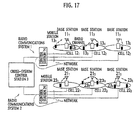
- the frequency channel assignment system according to the modification 1 includes a plurality of mobile stations 13 1 to 13 5 and 23 1 to 23 5 , a plurality of base stations 11 1 , to 11 3 and 21 1 to 21 3 , control stations 14 and 24 for controlling the base stations 11 1 to 11 3 and 21 1 to 21 3 , and a inter-system common control station 3.
- the inter-system common control station 3 is connected to the control stations 14 and 24 via networks, and the control stations 14 and 24 are connected to the base stations 11 1 to 11 3 and 21 1 to 21 3 via networks, and the base stations 11 1 to 11 3 and 21 1 to 21 3 are connected to the mobile stations 13 1 to 13 5 and 23 1 to 23 5 located in cells 12 1 to 12 3 and 22 1 to 22 3 via radio channels.
- the inter-system common control station 3 has the function of determining frequency bands for communication between the base stations 13 1 to 13 5 and 23 1 to 23 5 and the mobile stations 13 1 to 13 5 and 23 1 to 23 5 belonging to their respective radio communications systems, avoiding mutual interference between different radio communications systems, based on channel status information notified from the control stations 14 and 24 (such as the numbers of channels required, the amounts of interference and the channel use status at the base stations 11 notified from the control station 14), and making the control stations 14 and 24 perform frequency channel assignment control.
- channel status information notified from the control stations 14 and 24 such as the numbers of channels required, the amounts of interference and the channel use status at the base stations 11 notified from the control station 14
- FIG. 18 shows the network connection structure of apparatuses of radio stations (mobile stations, base stations, control stations, a inter-system common control station) in radio communications systems shown in FIG. 17 .
- the mobile stations 13 1 to 13 5 and 23 1 to 23 5 are provided with mobile station apparatuses 131 and 231 configured to transmit channel assignment requests for requesting frequency channel assignment to perform communication with the base stations 13 2 to 13 5 and 23 1 to 23 5 .
- the mobile station apparatuses 131 1 to 131 5 and 231 1 to 231 5 perform communication using frequency channels designated by the base stations 13 1 to 13 5 and 23 1 to 23 5 .
- the base stations 11 1 to 11 3 and 21 1 to 21 3 include base station apparatuses 111 1 to 111 3 and 211 1 to 211 3 .
- the base station apparatuses 111 1 to 111 3 and 211 1 to 211 3 accept channel assignment requests by the mobile station apparatuses 131 1 to 131 5 and 231 1 to 231 5 , request the control stations 14 and 24 to which the base stations 11 1 to 11 3 and 21 1 to 21 3 belong to assign frequency channels for performing radio communication with the mobile stations 13 1 to 13 5 and 23 1 to 23 5 belonging to the base stations 11 1 to 11 3 and 21 1 to 21 3 , receive information on frequency channels assigned by the control stations 14 and 24, and perform communication with the mobile station apparatuses 131 1 to 131 5 and 231 1 to 231 5 using frequency channels designated based on the frequency channel information.
- the base station apparatuses 111 1 to 111 3 and 211 1 to 211 3 measure the amount of interference, call loss probability, traffic, and channel use status on each frequency channel during communication, and notify them to the control stations 14 and 24.
- the control stations 14 and 24 include control apparatuses 141 and 241.
- the control apparatuses 141 and 241 accept channel assignment requests by the base station apparatuses 111 1 to 111 3 and 211 1 to 211 3 , transmit optimum channel designation requests for requesting the inter-system common control station 3 to assign optimum channels to be assigned to the base station apparatuses 111 1 to 111 3 and 211 1 to 211 3 of the base stations 11 1 to 11 3 and 21 1 to 21 3 belonging to the control stations 14 and 24, accept information on optimum channels assigned by the inter-system common control station 3, and control frequency channel assignment to the mobile station apparatuses 131 1 to 131 5 and 231 1 to 231 5 by the base station apparatuses 111 1 to 111 3 and 211 1 to 211 3 based on the optimum channel information.
- control apparatuses 141 and 241 accept the amounts of interference, call loss probabilities, traffic and the channel use status notified from the base station apparatuses 111 1 to 111 3 and 211 1 to 211 3 , calculate the numbers of channels required at the base stations 11 1 to 11 3 and 21 2 to 21 3 and the mobile stations 13 1 to 13 5 and 23 1 to 23 5 belonging to the control stations 14 and 24, based on those pieces of information, and notify them with the amounts of interference and the channel use status to the inter-system common control station 3.
- the inter-system common control station 3 include an inter-system common control apparatus 31.
- the inter-system common control apparatus 31 accepts channel assignment requests by the control apparatuses 141 and 241, and manages channel status information (such as the channel use status and the amounts of interference) and the required numbers of channels notified from the control apparatuses 141 and 241 and system characteristics information (such as frequency bandwidths per carrier, the allowable amounts of interference and priorities), for each frequency band, each radio communications system and each cell, for example.
- the inter-system common control apparatus 31 determines frequency bands or frequency channels for the base stations 11 1 to 11 3 and 21 1 to 21 3 and the mobile stations 13 1 to 13 5 and 23 1 to 23 5 belonging to the radio communications systems 1 and 2, respectively, to notify, avoiding interference from different radio communications systems, using a common frequency band assigned to the radio communications systems 1 and 2, and notifies the determined frequency channels to the control apparatuses 141 and 241.
- control apparatuses 14 and 24 have the function of notifying frequency channels assigned by the inter-system common control apparatus 31 to the base stations 11 1 to 11 3 and 21 1 to 21 3 , the function of collecting channel status information showing the status of frequency channels at the base stations 11 1 to 11 3 and 21 1 to 21 3 , the function of calculating the numbers of channels required at the base stations 11 1 to 11 3 and 21 1 to 21 3 , based on the collected channel status information, and the function of notifying the channel status information and the required numbers of channels to the inter-system common control apparatus 31.
- the inter-system common control apparatus 31 also has the function of managing system characteristics information showing the characteristics of frequency channels in the radio communications systems 1 and 2, the function of assigning frequency channels to the radio communications systems 1 and 2, based on the system characteristics information it manages and the channel status information and the required channel numbers notified from the control stations 14 and 24, and the function of notifying the assigned frequency channels to the control stations 14 and 24 in the radio communications systems 1 and 2.
- the plurality of control stations 14 and 24 assign frequency channels for radio communication between the base stations 11 2 to 11 3 and 21 1 to 21 3 and the mobile stations 13 1 to 13 5 and 23 1 to 23 5 , collect channel status information at the base stations 11 1 to 11 3 and 21 1 to 21 3 , and calculate the required numbers of channels based on the channel status information.
- the collected channel status information and the required numbers of channels are notified to the control stations 14 and 24 to which the base stations 11 1 to 11 3 and 21 1 to 21 3 belong.
- the inter-system common control station 3 is connected to the control stations 14 and 24 in the different radio communications systems 1 and 2. Specifically, the inter-system common control station 3 can determine frequency bands or frequency channels available for the radio communications systems 1 and 2, based on the channel status information and the numbers of channels required at the base stations 11 1 to 11 3 and 21 1 to 21 3 notified from the control stations 14 and 24, so as to avoid mutual interference between the different radio communications systems 1 and 2.
- the plurality of control stations 14 and 24 have the function of assigning frequency channels for the base stations 11 1 to 11 3 and 21 1 to 21 3 and the mobile stations 13 1 to 13 5 and 23 1 to 23 5 to perform radio communication, the function of collecting call loss probabilities and traffic at the base stations 11 1 ro 11 3 and 21 1 to 21 3 , the function of calculating the required numbers of channels, based on the call loss probabilities and the traffic, and the function of notifying the required numbers of channels to the control stations 14 and 24 to which the base stations 11 1 to 11 3 and 21 1 to 21 3 belong.
- the inter-system common control station 3 has the function of collecting channel status information and the numbers of channels required at the base stations 11 1 to 11 3 and 21 1 to 21 3 notified from the control stations 14 and 24, the function of managing the channel status information and the required numbers of channels it collects and system characteristics information (such as frequency bandwidths per carrier, allowable amounts of interference and priorities), and sharing them between the different radio communications systems 1 and 2, and the function of determining frequency bands or frequency channels for the base stations 11 1 to 11 3 and 21 1 to 21 3 and the mobile stations 13 1 to 13 5 and 23 1 to 23 5 belonging to the radio communications systems 1 and 2, respectively, to perform radio communication, referring to the information shared between the different radio communications systems 1 and 2, thereby avoiding deterioration in communication quality due to mutual interference between the different radio communications systems 1 and 2, and performing control of frequency channel assignment at the control stations 14 and 24.
- system characteristics information such as frequency bandwidths per carrier, allowable amounts of interference and priorities
- the frequency channel assignment system according to the modification 2 is configured such that radio communications systems 1 and 2 are controlled under management of control stations 14 and 24 which manage a plurality of base stations 11 1 to 11 3 and 21 1 to 21 3 without a inter-system common control station 3.
- At least one of the control stations 14 and 24 managing the base stations 11 1 to 11 3 and 21 1 to 21 3 includes an inter-system common control apparatus 31.
- the inter-system common control apparatus 31 is connected to other control apparatuses 141 and 241 to share information, so that the radio communications system 1 and the radio communications system 2 are unified.
- the inter-system common control apparatus 31 is configured to determine frequency bands or frequency channels, based on information (such as the required numbers of channels, the amounts of interference and the channel use status) obtained from the control apparatuses 141 and 241 in the control stations 14 and 24 via networks, using a common frequency band assigned to the radio communications systems 1 and 2, and avoiding mutual interference between the different radio communications systems 1 and 2, for the base stations 11 1 to 11 3 and 21 1 to 21 3 and mobile stations 13 1 to 13 5 and 23 1 to 23 5 belonging to the radio communications systems 1 and 2 to perform communication.
- information such as the required numbers of channels, the amounts of interference and the channel use status
- FIG. 20 shows the network connection structure of apparatuses provided in radio stations in the radio communications systems shown in FIG. 19 .
- the mobile stations 13 1 to 13 5 and 23 1 to 23 5 include mobile station apparatuses 131 1 to 131 5 and 231 1 to 231 5 for transmitting channel assignment requests for requesting assignment of frequency channels for radio communication with the base stations 11 1 to 11 3 and 21 1 to 21 3 .
- the mobile station apparatuses 131 1 to 131 5 and 231 1 to 231 5 perform communication using frequency channels designated by the base stations 11 1 to 11 3 and 21 1 to 21 3 .
- the base stations 11 1 to 11 3 and 21 1 to 21 3 include base station apparatuses 111 1 to 111 3 and 211 1 to 211 3 .
- the base station apparatuses 111 1 to 111 3 and 211 1 to 211 3 accept channel assignment requests from the mobile station apparatuses 131 1 to 131 5 and 231 1 to 231 5 , and request the control stations 14 and 24 to which the base stations 11 1 to 11 3 and 21 1 to 21 3 belong to assign frequency channels for communication with the mobile stations 13 1 to 13 5 and 23 1 to 23 5 belonging to the base stations 11 1 to 11 3 and 21 1 to 21 3 , and accept information on frequency channels assigned from the control stations 14 and 24, and perform frequency channel assignment for communication with the mobile station apparatuses 131 1 to 131 5 and 231 1 to 231 5 , using frequency channels designated based on the frequency channel information.
- the base station apparatuses 111 1 to 111 3 and 211 1 to 211 3 measure the amount of interference, call loss probability, traffic, channel use status, and the like on each frequency channel during communication, and notify them to the control stations 14 and 24.
- the control stations 14 and 24 include the control apparatuses 141 and 241.
- the control stations 14 or 24 in at least one radio communications system of a plurality of radio communications systems located in the same region and using the same frequency band includes the inter-system common control apparatus 31.
- the control apparatuses 141 and 241 accept channel assignment requests by the base station apparatuses 111 1 to 111 3 and 211 1 to 211 3 , request the inter-system common control apparatus 31 to assign optimum frequency channels to be assigned to the base station apparatuses 111 1 to 111 3 and 211 1 to 211 3 of the base stations 11 1 to 11 3 and 21 1 to 21 3 belonging to the control stations 14 and 24, accept information on optimum channels assigned by the inter-system common control apparatus 31, and control frequency channel assignment to the mobile station apparatuses 131 1 to 131 5 and 231 1 to 231 5 by the base station apparatuses 111 1 to 111 3 and 211 1 to 211 3 , based on the optimum channel information.
- control apparatuses 141 and 241 accept call loss probabilities and traffic notified from the base station apparatuses 111 1 to 111 3 and 211 1 to 211 3 , calculate the numbers of channels required between the base stations 11 1 to 11 3 and 21 1 to 21 3 and the mobile stations 13 1 to 13 5 and 23 1 to 23 5 belonging to the control stations 14 and 24, based on the information, and notify them with channel status information to the inter-system common control apparatus 31.
- the inter-system common control apparatus 31 accepts optimum channel designation requests from the control apparatuses 141 and 241, and manages channel status information and the required numbers of channels notified from the control apparatuses 141 and 241 and system characteristics information for each frequency band, each radio communications system, and each cell, for example.
- the inter-system common control apparatus 31 determines frequency bands or frequency channels, using a common frequency band assigned to the radio communications systems 1 and 2, and avoiding mutual interference between different radio communications systems, for the base stations 11 1 to 11 3 and 21 1 to 21 3 and the mobile stations 13 1 to 13 5 and 23 1 to 23 5 belonging to the radio communications systems 1 and 2, respectively, to communicate, and informs the determined optimum channels to the control apparatuses 141 and 241.
- the inter-system common control apparatus 31 shares information with the other control apparatuses 141 and 241 in the radio communications systems, and an inter-system common control apparatus 31 provided in the other control station 141 via networks.
- the frequency assignment system is configured such that radio communications systems 1 and 2 manage and control frequency bands and frequency channels for use by negotiations between base stations, without a inter-system common control station 3 and control stations 14 and 24.
- base stations 11 1 to 11 3 in at least one radio communications system of a plurality of radio communications systems located in the same region, using the same frequency band include inter-system common control apparatuses 31 1 to 31 3 and control apparatuses 141 1 to 141 3 , respectively.
- the inter-system common control apparatuses 31 are connected to the inter-system common control apparatuses 31 in other base stations 11 and base station apparatuses 211 of base stations 21 in another radio communications system to share information, so that the radio communications system 1 and the radio communications system 2 are unified.
- the inter-system common control apparatuses 31 1 to 31 3 determine frequency bands or frequency channels, based on information held by the base stations 11 and obtained via networks, using a common frequency band assigned to the radio communications systems 1 and 2, and avoiding mutual interference between different radio communications systems, for the base stations 11 1 to 11 3 and 21 1 to 21 3 and the mobile stations 13 1 to 13 5 and 23 1 to 23 5 belonging to their respective radio communications systems to communicate.
- FIG. 22 shows the network connection structure of apparatuses provided in radio stations in radio communications systems shown in FIG. 21 .
- the mobile stations 13 1 to 13 5 and 23 1 to 23 5 include mobile station apparatuses 131 1 to 131 5 and 231 1 to 231 5 which transmit channel assignment requests for requesting assignment of frequency channels for communication with the base stations 11 1 to 11 3 and 21 1 to 21 3 .
- the mobile station apparatuses 131 1 to 131 5 and 231 1 to 231 5 perform communication, using frequency channels designated by the base stations 11 1 to 11 3 and 21 1 to 21 3 .
- the base stations 11 1 to 11 3 and 21 1 to 21 3 include base station apparatuses 111 1 to 111 3 and 211 1 to 211 3 .
- At least one radio communications system of a plurality of radio communications systems located in the same region, using the same frequency band includes the control apparatuses 141 1 to 141 3 and the inter-system common control apparatuses 31 1 to 31 3 in the base stations 11 1 to 11 3 or 21 1 to 21 3 .
- only the base stations 111 1 to 111 3 in the radio communications system 1 includes the control apparatuses 141 1 to 141 3 and the inter-system common control apparatuses 31 1 to 31 3 .
- the base station apparatuses 111 1 to 111 3 and 211 1 to 211 3 accept channel assignment requests from the mobile station apparatuses 131 1 to 131 5 and 231 1 to 231 5 , request assignment of frequency channels for communication with the mobile stations 131 1 to 131 5 and 231 1 to 231 5 belonging to the base stations 111 1 to 111 3 and 211 1 to 211 3 , accept information on frequency channels assigned from the control apparatuses 141, and perform frequency channel assignment for communication with the mobile station apparatuses 131 1 to 131 5 and 231 1 to 231 5 , using designated frequency channels, based on the frequency channel information.
- the base station apparatuses 111 1 to 111 3 and 211 1 to 211 3 measure the amount of interference on each frequency channel, channel use status, and the like during communication, and notify them to the control apparatuses 141.
- the control apparatuses 141 accept channel assignment requests from the base station apparatuses 111 1 to 111 3 and 211 1 to 211 3 , transmit to the inter-system common control apparatuses 31 requests for optimum channel designation to the base station apparatuses 111 1 to 111 3 and 211 1 to 211 3 of the base stations 11 1 to 11 3 and 21 1 to 21 3 , accept information on optimum channels assigned from the inter-system common control apparatuses 31, and control frequency channel assignment to the mobile station apparatuses 131 1 to 131 5 and 231 1 to 231 5 by the base station apparatuses 111 1 to 111 3 and 211 1 to 211 3 , based on the optimum channel information.
- the control apparatuses 141 accept call loss probabilities and traffic notified from the base station apparatuses 111 1 to 111 3 and 211 1 to 211 3 , calculate the numbers of channels required at the base stations 11 1 to 11 3 and 21 1 to 21 3 and the mobile stations 13 1 to 13 5 and 23 1 to 23 5 belonging to the control stations 14 and 24, based on the information, and notify them with channel status information to the inter-system common control apparatuses 31.
- the inter-system common control apparatuses 31 accept optimum channel designation requests by the control apparatuses 141 and 241, and manage channel status information and the required numbers of channels notified from the control apparatuses 141 and 241 and system characteristics information for each frequency band, each radio communications system, and each cell, for example.
- the inter-system common control apparatuses 31 determine frequency bands or frequency channels, using a common frequency band assigned to the radio communications systems 1 and 2, and avoiding mutual interference between different radio communications systems, for the base stations 111 to 113 and 211 to 213 and the mobile stations 131 to 135 and 231 to 235 belonging to the radio communications systems 1 and 2, respectively, to communicate, and informs the determined frequency bands or frequency channels to the control apparatuses 141 and 241.
- the inter-system common control apparatuses 31 share information with the other control apparatuses 141 and 241 in the radio communications system and the inter-system common control apparatuses 31 provided in other base stations 11 via networks.
- frequency channel assignment systems base stations, control stations, inter-system common control apparatuses, frequency channel assignment methods and control methods which enable adaptive overlapping use of the same frequency band in a plurality of radio communications systems can be implemented.
Landscapes
- Engineering & Computer Science (AREA)
- Signal Processing (AREA)
- Computer Networks & Wireless Communication (AREA)
- Mobile Radio Communication Systems (AREA)
Applications Claiming Priority (2)
| Application Number | Priority Date | Filing Date | Title |
|---|---|---|---|
| JP2004063212 | 2004-03-05 | ||
| EP05719895A EP1732338A4 (fr) | 2004-03-05 | 2005-03-03 | Systeme d affectation de canal de frequence, station de base , station de controle, appareil de controle commun inter-systemes, methode d affectation de canal de frequence et methode de controle |
Related Parent Applications (1)
| Application Number | Title | Priority Date | Filing Date |
|---|---|---|---|
| EP05719895.4 Division | 2005-03-03 |
Publications (2)
| Publication Number | Publication Date |
|---|---|
| EP2533594A2 true EP2533594A2 (fr) | 2012-12-12 |
| EP2533594A3 EP2533594A3 (fr) | 2013-02-27 |
Family
ID=34918147
Family Applications (2)
| Application Number | Title | Priority Date | Filing Date |
|---|---|---|---|
| EP12183480A Withdrawn EP2533594A3 (fr) | 2004-03-05 | 2005-03-03 | Système d'attribution de canal de fréquence, station de base, station de commande, appareil de contrôle commun inter-systèmes, procédé d'attribution de canal de fréquence et procédé de commande |
| EP05719895A Withdrawn EP1732338A4 (fr) | 2004-03-05 | 2005-03-03 | Systeme d affectation de canal de frequence, station de base , station de controle, appareil de controle commun inter-systemes, methode d affectation de canal de frequence et methode de controle |
Family Applications After (1)
| Application Number | Title | Priority Date | Filing Date |
|---|---|---|---|
| EP05719895A Withdrawn EP1732338A4 (fr) | 2004-03-05 | 2005-03-03 | Systeme d affectation de canal de frequence, station de base , station de controle, appareil de controle commun inter-systemes, methode d affectation de canal de frequence et methode de controle |
Country Status (5)
| Country | Link |
|---|---|
| US (1) | US8204004B2 (fr) |
| EP (2) | EP2533594A3 (fr) |
| JP (1) | JP4701163B2 (fr) |
| CN (1) | CN1930899B (fr) |
| WO (1) | WO2005086516A1 (fr) |
Families Citing this family (53)
| Publication number | Priority date | Publication date | Assignee | Title |
|---|---|---|---|---|
| JP4857787B2 (ja) * | 2006-01-31 | 2012-01-18 | サクサ株式会社 | 電話制御装置 |
| JP4717668B2 (ja) * | 2006-03-10 | 2011-07-06 | 株式会社エヌ・ティ・ティ・ドコモ | 送信装置及び送信方法 |
| JP4247754B2 (ja) * | 2006-06-09 | 2009-04-02 | オムロン株式会社 | 通信処理装置、情報処理装置、通信システム、通信処理方法、情報処理方法、およびプログラム |
| US7940833B2 (en) * | 2006-06-21 | 2011-05-10 | Telefonaktiebolaget Lm Ericsson (Publ) | Transmitter with intelligent preconditioning of amplifier signal |
| WO2008002843A2 (fr) * | 2006-06-23 | 2008-01-03 | Wisconsin Alumni Research Foundation | Système et procédé pour réaliser des communications sans fil avec usage accru de spectre par utilisation efficace de canaux se chevauchant |
| JP2008211583A (ja) * | 2007-02-27 | 2008-09-11 | Nippon Telegr & Teleph Corp <Ntt> | 統合型無線通信システム、情報管理装置、及び、基地局装置 |
| US8509788B2 (en) * | 2007-03-08 | 2013-08-13 | Motorola Mobility Llc | Dynamic sharing of wireless resources among different communication networks |
| JP4435204B2 (ja) * | 2007-05-17 | 2010-03-17 | 株式会社東芝 | 無線通信装置および方法 |
| WO2009033500A1 (fr) * | 2007-09-14 | 2009-03-19 | Nec Europe Ltd. | Procédé et système permettant d'optimiser le fonctionnement d'un réseau |
| JP5002416B2 (ja) * | 2007-11-01 | 2012-08-15 | Kddi株式会社 | 無線フレーム制御装置、無線フレーム制御方法及び無線通信装置 |
| FI20075859A0 (fi) * | 2007-11-30 | 2007-11-30 | Nokia Corp | Järjestelmien välinen häiriökontrolli |
| JP4980206B2 (ja) * | 2007-12-12 | 2012-07-18 | 日本電信電話株式会社 | Ofdm通信システムのサブキャリア割り当て方法、送信装置および受信装置 |
| GB0725052D0 (en) * | 2007-12-21 | 2008-01-30 | Fujitsu Lab Of Europ Ltd | Communications system |
| GB2457432A (en) | 2008-01-28 | 2009-08-19 | Fujitsu Lab Of Europ Ltd | Mitigating interference in wireless communication systems |
| KR20100126339A (ko) * | 2008-02-19 | 2010-12-01 | 가부시키가이샤 엔티티 도코모 | 이동통신시스템, 기지국장치, 유저장치 및 방법 |
| JP2009267815A (ja) * | 2008-04-25 | 2009-11-12 | Nippon Telegr & Teleph Corp <Ntt> | 干渉量推定方法、無線通信方法および無線通信システムと無線通信装置 |
| WO2009154250A1 (fr) * | 2008-06-20 | 2009-12-23 | シャープ株式会社 | Système de communication, dispositif de communication, programme et procédé de communication |
| KR101565417B1 (ko) * | 2008-08-08 | 2015-11-03 | 엘지전자 주식회사 | 다중 주파수 대역 시스템에서의 자원 할당하는 방법 및 장치 |
| US8983388B2 (en) * | 2008-09-30 | 2015-03-17 | Google Technology Holdings LLC | Method and apparatus to facilitate preventing interference as between base stations sharing carrier resources |
| US8996018B2 (en) * | 2008-10-30 | 2015-03-31 | Google Technology Holdings LLC | Method and apparatus to facilitate avoiding control signaling conflicts when using shared wireless carrier resources |
| JP5063573B2 (ja) * | 2008-12-04 | 2012-10-31 | 日本電信電話株式会社 | スペクトル配置方法、制御局装置、送信局装置、受信局装置及び通信システム |
| ES2356002B1 (es) * | 2008-12-29 | 2012-02-27 | Vodafone España, S.A.U. | Método y sistema para optimizar el ancho banda en una red de comunicación lte/gsm. |
| JP5496514B2 (ja) * | 2009-01-19 | 2014-05-21 | 株式会社Nttドコモ | 無線通信システム |
| JP5287305B2 (ja) * | 2009-02-04 | 2013-09-11 | 日本電気株式会社 | 無線通信システム、無線基地局、送受信方法およびプログラム |
| JP2010213243A (ja) * | 2009-03-12 | 2010-09-24 | Ntt Docomo Inc | 無線通信システムの無線局で使用される制御装置及び制御方法 |
| US8165597B2 (en) * | 2009-03-25 | 2012-04-24 | Motorola Mobility, Inc. | Method and apparatus to facilitate partitioning use of wireless communication resources amongst base stations |
| JP4937320B2 (ja) * | 2009-09-11 | 2012-05-23 | 株式会社エヌ・ティ・ティ・ドコモ | アクセス種別設定装置、移動通信システム及びアクセス種別設定方法 |
| KR101643937B1 (ko) * | 2009-10-20 | 2016-08-10 | 삼성전자주식회사 | 다중 입출력 무선통신 시스템에서 셀 간 간섭을 제거하기 위한 장치 및 방법 |
| CN102065544B (zh) | 2009-11-17 | 2015-02-25 | 索尼株式会社 | 资源管理方法和系统 |
| JP5329389B2 (ja) * | 2009-12-28 | 2013-10-30 | 株式会社ウィルコム | 無線通信システムの周波数資源割り当て方法およびそのシステム |
| GB2477915B (en) | 2010-02-12 | 2014-06-04 | Ubiquisys Ltd | Basestation carrier frequency selection |
| US8442541B2 (en) * | 2010-03-29 | 2013-05-14 | Ntt Docomo, Inc. | System and method for inter-cell interference avoidance in co-channel networks |
| JP5540824B2 (ja) * | 2010-03-29 | 2014-07-02 | ソニー株式会社 | 通信制御方法、通信システム、および管理サーバ |
| RU2576475C2 (ru) * | 2010-04-06 | 2016-03-10 | Конинклейке Филипс Электроникс Н.В. | Централизованное динамическое выделение каналов для внутренних сетей медицинского учреждения |
| WO2012063317A1 (fr) | 2010-11-09 | 2012-05-18 | 富士通株式会社 | Système de communication sans fil, dispositif de contrôle de communication, station de base et procédé de communication sans fil |
| JP5432883B2 (ja) * | 2010-11-26 | 2014-03-05 | 株式会社Nttドコモ | 基地局及び方法 |
| WO2012112112A1 (fr) * | 2011-02-15 | 2012-08-23 | Telefonaktiebolaget Lm Ericsson (Publ) | Premier noeud de réseau et deuxième noeud de réseau et procédés correspondants |
| JP5641969B2 (ja) * | 2011-02-18 | 2014-12-17 | 三菱電機株式会社 | 無線通信システム、運用周波数決定方法およびアクセスポイント |
| JPWO2012160683A1 (ja) | 2011-05-25 | 2014-07-31 | 富士通株式会社 | 基地局装置、通信システム及び無線リソース割当方法 |
| CN102196542B (zh) * | 2011-05-27 | 2014-06-25 | 上海华为技术有限公司 | 功率控制方法、设备和系统 |
| MX338253B (es) * | 2011-09-09 | 2016-04-11 | Koninkl Philips Nv | Mejora en el control de acceso al medio (mac) para respaldar la asignacion gts multi-periodica para sistemas de red de area personal (pan). |
| GB2504985A (en) * | 2012-08-16 | 2014-02-19 | Univ Manchester | Managing interference between a plurality of sub-carriers on the basis of interference indications contained in measurement reports |
| CN108495319B (zh) * | 2012-09-07 | 2022-07-01 | 索尼公司 | 无线传输资源管理设备和方法 |
| US9706549B2 (en) | 2012-09-21 | 2017-07-11 | Mitsubishi Electric Corporation | Radio communication apparatus and radio communication system |
| US9179409B2 (en) | 2012-12-03 | 2015-11-03 | Qualcomm Incorporated | Multiple access scheme for narrowband channels |
| JP6091227B2 (ja) * | 2013-01-29 | 2017-03-08 | 京セラ株式会社 | 通信システム、通信方法、及び通信装置 |
| US9686794B2 (en) | 2013-01-29 | 2017-06-20 | Kyocera Corporation | Communication system, communication method, and communication apparatus |
| CN105338631A (zh) * | 2014-05-29 | 2016-02-17 | 国际商业机器公司 | 用于处理无线通信中的干扰的方法和系统 |
| JP6432085B2 (ja) * | 2015-03-30 | 2018-12-05 | 株式会社国際電気通信基礎技術研究所 | 利用リソース取得装置、利用リソース取得方法、及びプログラム |
| US10764933B2 (en) * | 2015-05-08 | 2020-09-01 | Federated Wireless, Inc. | Predictive connectivity service layers |
| US10271283B2 (en) * | 2015-05-13 | 2019-04-23 | Apple Inc. | Apparatus, systems and methods for power management in mobile devices |
| GB2558587B (en) * | 2017-01-08 | 2020-12-09 | Ocado Innovation Ltd | Wireless communication system with detectors for extraneous received signals |
| US10831690B2 (en) | 2019-01-14 | 2020-11-10 | Sigmasense, Llc. | Channel allocation among low voltage drive circuits |
Citations (6)
| Publication number | Priority date | Publication date | Assignee | Title |
|---|---|---|---|---|
| EP0898437A2 (fr) * | 1997-08-15 | 1999-02-24 | Lucent Technologies Inc. | Allocation dynamique de canaux dans des macro-cellules avec une exclusion déterministe permettant l'allocation pour les micro-cellules sous-jacentes |
| US5920819A (en) * | 1996-03-01 | 1999-07-06 | Kabushiki Kaisha Toshiba | Overlay cell type mobile communication system |
| JPH11205848A (ja) | 1998-01-20 | 1999-07-30 | Yrp Idou Tsushin Kiban Gijutsu Kenkyusho:Kk | チャネル割当て方法および移動通信網 |
| JP2000068975A (ja) | 1998-02-22 | 2000-03-03 | Sony Internatl Europ Gmbh | 送信方法及び送信装置、並びに受信方法及び受信装置 |
| EP1006745A1 (fr) * | 1998-05-08 | 2000-06-07 | Ntt Mobile Communications Network Inc. | Systeme de radiocommunication, procede et dispositif d'affectation de frequence |
| JP2002111631A (ja) | 2000-10-04 | 2002-04-12 | Yrp Mobile Telecommunications Key Tech Res Lab Co Ltd | 無線通信システム及び無線通信装置 |
Family Cites Families (16)
| Publication number | Priority date | Publication date | Assignee | Title |
|---|---|---|---|---|
| DE69233003T2 (de) * | 1991-05-29 | 2004-01-22 | Nec Corp. | Kanalzuweisungsverfahren in Mobil-Kommunikationssystem |
| JP2606164B2 (ja) | 1994-11-10 | 1997-04-30 | 日本電気株式会社 | 移動通信システムおよび移動通信方法 |
| US5805633A (en) * | 1995-09-06 | 1998-09-08 | Telefonaktiebolaget L M Ericsson | Method and apparatus for frequency planning in a multi-system cellular communication network |
| US5974324A (en) * | 1997-02-10 | 1999-10-26 | Ericsson Inc. | Adaptive frequency reuse plan |
| US6223041B1 (en) * | 1997-08-06 | 2001-04-24 | Nortel Networks Ltd | Dynamic radio resource allocation in a wireless communication system |
| FI973837A7 (fi) * | 1997-09-29 | 1999-03-30 | Nokia Telecommunications Oy | Tiedonsiirtoresurssien allokointi |
| JP2937995B1 (ja) | 1998-03-06 | 1999-08-23 | 株式会社ワイ・アール・ピー移動通信基盤技術研究所 | チャネル割当て方法および移動通信網 |
| JP2000022712A (ja) * | 1998-07-06 | 2000-01-21 | Nec Corp | チャネル選択方法 |
| US6539237B1 (en) * | 1998-11-09 | 2003-03-25 | Cisco Technology, Inc. | Method and apparatus for integrated wireless communications in private and public network environments |
| GB9913697D0 (en) * | 1999-06-11 | 1999-08-11 | Adaptive Broadband Ltd | Dynamic channel allocation in a wireless network |
| US6535742B1 (en) * | 1999-06-29 | 2003-03-18 | Nortel Networks Limited | Method and apparatus for the self engineering of adaptive channel allocation |
| US6567665B1 (en) * | 1999-07-28 | 2003-05-20 | Nortel Networks Limited | Method and apparatus for redirecting calls in a wireless communications system |
| EP1316233B1 (fr) * | 2000-08-02 | 2011-10-05 | ATC Technologies, LLC | Réutilisation coordonnée de fréquences d'un système terrestre et d'un système satellitaire. |
| US7433683B2 (en) * | 2000-12-28 | 2008-10-07 | Northstar Acquisitions, Llc | System for fast macrodiversity switching in mobile wireless networks |
| JP4014823B2 (ja) | 2001-05-25 | 2007-11-28 | 株式会社エヌ・ティ・ティ・ドコモ | 通信チャネル設定方法及び通信制御装置 |
| JP3915021B2 (ja) | 2001-10-12 | 2007-05-16 | 日本電気株式会社 | チャネル選択方法 |
-
2005
- 2005-03-03 WO PCT/JP2005/003591 patent/WO2005086516A1/fr not_active Ceased
- 2005-03-03 US US10/591,244 patent/US8204004B2/en not_active Expired - Fee Related
- 2005-03-03 JP JP2006510714A patent/JP4701163B2/ja not_active Expired - Fee Related
- 2005-03-03 CN CN2005800071523A patent/CN1930899B/zh not_active Expired - Fee Related
- 2005-03-03 EP EP12183480A patent/EP2533594A3/fr not_active Withdrawn
- 2005-03-03 EP EP05719895A patent/EP1732338A4/fr not_active Withdrawn
Patent Citations (6)
| Publication number | Priority date | Publication date | Assignee | Title |
|---|---|---|---|---|
| US5920819A (en) * | 1996-03-01 | 1999-07-06 | Kabushiki Kaisha Toshiba | Overlay cell type mobile communication system |
| EP0898437A2 (fr) * | 1997-08-15 | 1999-02-24 | Lucent Technologies Inc. | Allocation dynamique de canaux dans des macro-cellules avec une exclusion déterministe permettant l'allocation pour les micro-cellules sous-jacentes |
| JPH11205848A (ja) | 1998-01-20 | 1999-07-30 | Yrp Idou Tsushin Kiban Gijutsu Kenkyusho:Kk | チャネル割当て方法および移動通信網 |
| JP2000068975A (ja) | 1998-02-22 | 2000-03-03 | Sony Internatl Europ Gmbh | 送信方法及び送信装置、並びに受信方法及び受信装置 |
| EP1006745A1 (fr) * | 1998-05-08 | 2000-06-07 | Ntt Mobile Communications Network Inc. | Systeme de radiocommunication, procede et dispositif d'affectation de frequence |
| JP2002111631A (ja) | 2000-10-04 | 2002-04-12 | Yrp Mobile Telecommunications Key Tech Res Lab Co Ltd | 無線通信システム及び無線通信装置 |
Also Published As
| Publication number | Publication date |
|---|---|
| CN1930899B (zh) | 2012-05-16 |
| CN1930899A (zh) | 2007-03-14 |
| US20070287464A1 (en) | 2007-12-13 |
| JP4701163B2 (ja) | 2011-06-15 |
| JPWO2005086516A1 (ja) | 2007-08-09 |
| US8204004B2 (en) | 2012-06-19 |
| WO2005086516A1 (fr) | 2005-09-15 |
| EP2533594A3 (fr) | 2013-02-27 |
| EP1732338A1 (fr) | 2006-12-13 |
| EP1732338A4 (fr) | 2011-06-29 |
Similar Documents
| Publication | Publication Date | Title |
|---|---|---|
| EP2533594A2 (fr) | Système d'attribution de canal de fréquence, station de base, station de commande, appareil de contrôle commun inter-systèmes, procédé d'attribution de canal de fréquence et procédé de commande | |
| US5884174A (en) | Call admission control for wireless networks | |
| US8488633B2 (en) | Dynamic time-spectrum block allocation for cognitive radio networks | |
| US7257406B2 (en) | Restrictive reuse set management | |
| US8179835B2 (en) | System and method for efficiently allocating wireless resources | |
| JP2007528134A (ja) | ライセンスのない周波数帯域における無線リソースの使い方の調整 | |
| JP2010045793A (ja) | 無線通信システムのための限定的再利用 | |
| US9794940B2 (en) | Overlay of bearers in a radio communication system | |
| Shankar et al. | Spectrum agile radio: Capacity and QoS implications of dynamic spectrum assignment | |
| EP1424865A1 (fr) | Procédé et dispositif pour l'allocation de ressources dans un système de communication numérique cellulaire | |
| US7453860B2 (en) | Scheduling method for supplemental channel resource | |
| JP2006229778A (ja) | 無線周波数割当装置および無線通信システム並びに無線周波数割当方法 | |
| EP1504626A2 (fr) | Systeme et dispositif de communication sans fil, et procede de surveillance associe | |
| Salami et al. | Nonpool based spectrum sharing for two UMTS operators in the UMTS extension band | |
| JP3207135B2 (ja) | ダイナミックチャネル割当方法 | |
| Kaur et al. | Fuzzy based adaptive bandwidth allocation scheme in cognitive radio networks | |
| Fujii et al. | Spectrum sharing by adaptive transmit power control for low priority systems and achievable capacity | |
| Yanmaz et al. | Handover performance of dynamic load balancing schemes in cellular networks | |
| US20240259859A1 (en) | Methods and apparatus for supporting operator device sharing of time and frequency resources in a band | |
| KR101415410B1 (ko) | Tv 화이트 스페이스에서 스펙트럼 에티켓 및 유전자 알고리즘을 사용한 wran과 wlan의 효율적 주파수 공유 시스템 및 방법 | |
| Dhivya et al. | A proactive spectrum approach for cognitive radio ad-hoc networks | |
| Salami et al. | On the performance evaluation of spectrum sharing algorithms between two UMTS operators | |
| KR100347732B1 (ko) | 무선 이동 통신에서의 트래픽 제어 방법 | |
| Bhoite et al. | Call Admission Control Policy for handoff call congestion control | |
| Al-Mazrouei | Spectrum Sensing in Radio Cognitive Networks |
Legal Events
| Date | Code | Title | Description |
|---|---|---|---|
| PUAI | Public reference made under article 153(3) epc to a published international application that has entered the european phase |
Free format text: ORIGINAL CODE: 0009012 |
|
| AC | Divisional application: reference to earlier application |
Ref document number: 1732338 Country of ref document: EP Kind code of ref document: P |
|
| AK | Designated contracting states |
Kind code of ref document: A2 Designated state(s): DE FI FR GB SE |
|
| PUAL | Search report despatched |
Free format text: ORIGINAL CODE: 0009013 |
|
| AK | Designated contracting states |
Kind code of ref document: A3 Designated state(s): DE FI FR GB SE |
|
| RIC1 | Information provided on ipc code assigned before grant |
Ipc: H04W 72/04 20090101AFI20130121BHEP |
|
| 17P | Request for examination filed |
Effective date: 20130412 |
|
| 17Q | First examination report despatched |
Effective date: 20160519 |
|
| STAA | Information on the status of an ep patent application or granted ep patent |
Free format text: STATUS: THE APPLICATION IS DEEMED TO BE WITHDRAWN |
|
| 18D | Application deemed to be withdrawn |
Effective date: 20160930 |