EP2533607A2 - Lichtemittierende Vorrichtung - Google Patents
Lichtemittierende Vorrichtung Download PDFInfo
- Publication number
- EP2533607A2 EP2533607A2 EP12170859A EP12170859A EP2533607A2 EP 2533607 A2 EP2533607 A2 EP 2533607A2 EP 12170859 A EP12170859 A EP 12170859A EP 12170859 A EP12170859 A EP 12170859A EP 2533607 A2 EP2533607 A2 EP 2533607A2
- Authority
- EP
- European Patent Office
- Prior art keywords
- light
- electrical connection
- connection element
- light emitting
- emitting apparatus
- Prior art date
- Legal status (The legal status is an assumption and is not a legal conclusion. Google has not performed a legal analysis and makes no representation as to the accuracy of the status listed.)
- Withdrawn
Links
Images






Classifications
-
- F—MECHANICAL ENGINEERING; LIGHTING; HEATING; WEAPONS; BLASTING
- F21—LIGHTING
- F21K—NON-ELECTRIC LIGHT SOURCES USING LUMINESCENCE; LIGHT SOURCES USING ELECTROCHEMILUMINESCENCE; LIGHT SOURCES USING CHARGES OF COMBUSTIBLE MATERIAL; LIGHT SOURCES USING SEMICONDUCTOR DEVICES AS LIGHT-GENERATING ELEMENTS; LIGHT SOURCES NOT OTHERWISE PROVIDED FOR
- F21K9/00—Light sources using semiconductor devices as light-generating elements, e.g. using light-emitting diodes [LED] or lasers
- F21K9/20—Light sources comprising attachment means
- F21K9/27—Retrofit light sources for lighting devices with two fittings for each light source, e.g. for substitution of fluorescent tubes
- F21K9/278—Arrangement or mounting of circuit elements integrated in the light source
-
- F—MECHANICAL ENGINEERING; LIGHTING; HEATING; WEAPONS; BLASTING
- F21—LIGHTING
- F21K—NON-ELECTRIC LIGHT SOURCES USING LUMINESCENCE; LIGHT SOURCES USING ELECTROCHEMILUMINESCENCE; LIGHT SOURCES USING CHARGES OF COMBUSTIBLE MATERIAL; LIGHT SOURCES USING SEMICONDUCTOR DEVICES AS LIGHT-GENERATING ELEMENTS; LIGHT SOURCES NOT OTHERWISE PROVIDED FOR
- F21K9/00—Light sources using semiconductor devices as light-generating elements, e.g. using light-emitting diodes [LED] or lasers
- F21K9/20—Light sources comprising attachment means
- F21K9/27—Retrofit light sources for lighting devices with two fittings for each light source, e.g. for substitution of fluorescent tubes
-
- H—ELECTRICITY
- H05—ELECTRIC TECHNIQUES NOT OTHERWISE PROVIDED FOR
- H05B—ELECTRIC HEATING; ELECTRIC LIGHT SOURCES NOT OTHERWISE PROVIDED FOR; CIRCUIT ARRANGEMENTS FOR ELECTRIC LIGHT SOURCES, IN GENERAL
- H05B45/00—Circuit arrangements for operating light-emitting diodes [LED]
- H05B45/30—Driver circuits
- H05B45/357—Driver circuits specially adapted for retrofit LED light sources
- H05B45/3578—Emulating the electrical or functional characteristics of discharge lamps
-
- H—ELECTRICITY
- H05—ELECTRIC TECHNIQUES NOT OTHERWISE PROVIDED FOR
- H05B—ELECTRIC HEATING; ELECTRIC LIGHT SOURCES NOT OTHERWISE PROVIDED FOR; CIRCUIT ARRANGEMENTS FOR ELECTRIC LIGHT SOURCES, IN GENERAL
- H05B45/00—Circuit arrangements for operating light-emitting diodes [LED]
- H05B45/40—Details of LED load circuits
-
- H—ELECTRICITY
- H05—ELECTRIC TECHNIQUES NOT OTHERWISE PROVIDED FOR
- H05B—ELECTRIC HEATING; ELECTRIC LIGHT SOURCES NOT OTHERWISE PROVIDED FOR; CIRCUIT ARRANGEMENTS FOR ELECTRIC LIGHT SOURCES, IN GENERAL
- H05B47/00—Circuit arrangements for operating light sources in general, i.e. where the type of light source is not relevant
- H05B47/20—Responsive to malfunctions or to light source life; for protection
- H05B47/26—Circuit arrangements for protecting against earth faults
-
- Y—GENERAL TAGGING OF NEW TECHNOLOGICAL DEVELOPMENTS; GENERAL TAGGING OF CROSS-SECTIONAL TECHNOLOGIES SPANNING OVER SEVERAL SECTIONS OF THE IPC; TECHNICAL SUBJECTS COVERED BY FORMER USPC CROSS-REFERENCE ART COLLECTIONS [XRACs] AND DIGESTS
- Y02—TECHNOLOGIES OR APPLICATIONS FOR MITIGATION OR ADAPTATION AGAINST CLIMATE CHANGE
- Y02B—CLIMATE CHANGE MITIGATION TECHNOLOGIES RELATED TO BUILDINGS, e.g. HOUSING, HOUSE APPLIANCES OR RELATED END-USER APPLICATIONS
- Y02B20/00—Energy efficient lighting technologies, e.g. halogen lamps or gas discharge lamps
- Y02B20/30—Semiconductor lamps, e.g. solid state lamps [SSL] light emitting diodes [LED] or organic LED [OLED]
Definitions
- the present disclosure relates to a light emitting apparatus and, in particular, to a light emitting apparatus with LEDs.
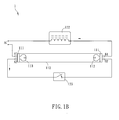
- FIGS. 1A and 1B are respectively a schematic diagram and a circuit diagram of a conventional fluorescent lamp 1.
- the fluorescent lamp 1 is a tool for converting electricity into light.
- the fluorescent lamp 1 includes a fluorescent tube 11 and a lamp base 12.
- the fluorescent tube 11 includes two electrical connection elements 111 and a tube 112
- the lamp base 12 includes two lamp sockets 121, a ballast 122, a starter 123, and a base body 124.
- FIG. 1A does not show the ballast 122 and the starter 123
- FIG. 2B does not show the lamp sockets 121 and the base body 124.
- the lamp sockets 121 are disposed at two ends of the base body 124, and the ballast 122 and the starter 123 are disposed in the base body 124.
- the two electrical connection elements 111 of the fluorescent tube 11 are respectively installed in two lamp sockets 121, so that the proper AC power can be applied to the fluorescent lamp 1 so as to light the fluorescent tube 11.
- the initial voltage is not sufficient to enable the fluorescent tube 11 to generate gas discharge, so a loop of current is designed to heat the filament 113.
- the current from the AC power flows through the first electrode A1, the filament 113 and the second electrode A2 of the left electrical connection element 111, passes the starter 123 (the starter 123 may sense a temporary short circuit of the voltage), and the second electrode B2, the filament 113 and the first electrode B1 of the right electrical connection element 111, and returns the external power AC through the ballast 122.
- the sudden open circuit allows the inductance of the ballast 122 to cause a high voltage at two ends of the fluorescent tube 11, so that the heated filament 113 can release a great amount of electrons.
- the electrons collide with gas atoms in the tube 112, so that the gas atoms are ionized to release more electrons, which can continuously collide with other gas atoms.
- These electrons can excite the mercury vapor inside the tube 112 to emit ultraviolet light, and the lamp's interior fluorescent coating absorbs the ultraviolet light and emits the visible light with longer wavelength.
- the current in the lamp is established so as to light the fluorescent lamp 1, in which a loop including the first electrode A1, the filament 113, the tube 112, the filament 113, the first electrode B1 and the ballast 122, is formed.
- the ballast 112 can control the current of the fluorescent tube 11 below a safe current, thereby preventing the fluorescent lamp 1 from being burnt due to the excess current.
- the ballast 122 can be a traditional ballast or an electronic ballast for controlling the current of the fluorescent lamp below the safe current, herein the electronic ballast refers to an electronic-circuit type driver with active components which generates high voltages to drive the fluorescent lamp 1.
- the LED has the properties of lower power consumption, environment friendly, longer life, higher safety, shorter lighting response time, and smaller size, so it has been widely applied to various kinds of electronic products.
- One of the applications is to fabricate a light emitting apparatus with LEDs that has the same appearance as the conventional fluorescent lamp, so that it can directly replace the conventional fluorescent lamp.
- the electronic ballast when using the LED lamp of the same appearance to replace the fluorescent tube 11 cooperating with the conventional electronic ballast, the electronic ballast will still detect whether the filament exists or not. Since the LED lamp does not have any filament, it is necessary to remove the electronic ballast and change the circuit design. If not, the light emitting apparatus or the electronic ballast may be burned or may not function normally.
- an objective of the present invention is to provide a light emitting apparatus that can directly replace the conventional fluorescent tube without changing the circuit of the lighting.
- the present invention discloses a light emitting apparatus, which receives an external power and includes a light-emitting unit, two rectifiers, a first electrical connection element and a second electrical connection element.
- Each of the rectifiers has a first input terminal, a second input terminal, an output terminal and a ground terminal.
- the output terminals are electrically connected together and are electrically connected with the light-emitting unit.
- the first electrical connection element is electrically connected with the external power and the first input terminals.
- the second electrical connection element is electrically connected with the external power and the second input terminals.
- the first electrical connection element has two electrical input terminals
- the second electrical connection element has two electrical input terminals
- the external power is applied to the electrical input terminals of the first and second electrical connection elements.
- the light-emitting unit has a light-emitting module and a control module.
- the light-emitting module comprises a plurality of LEDs, and the control module controls the number of the LEDs of the light-emitting module to be turned on.
- each of the rectifiers is a bridge rectifier.
- the light emitting apparatus further comprises at least a filtering element electrically connected with the output terminals.
- the light emitting apparatus further comprises at least one impedance element electrically connected with two electrical input terminals of the first or second electrical connection element.
- one of the impedance elements when the number of the impedance elements is two, one of the impedance elements is electrically connected with two electrical input terminals of the first electrical connection element, and the other one is electrically connected with two electrical input terminals of the second electrical connection element.
- the light emitting apparatus further comprises at least one impedance element.
- One end of the impedance element is electrically connected with the output terminals, and another end thereof is electrically connected with the ground terminal.
- the impedance element is a variable impedance element or a partial circuit of the light-emitting unit.
- the present invention also discloses a light emitting apparatus, which receives an external power and includes a light-emitting unit, at least a rectifier, a first electrical connection element, a second electrical connection element and at least an impedance element.
- the rectifier has a first input terminal, a second input terminal, an output terminal and a ground terminal.
- the output terminal is electrically connected with the light-emitting unit.
- the first electrical connection element has two electrical input terminals and is electrically connected with the external power and the first input terminal.
- the second electrical connection element has two electrical input terminals and is electrically connected with the external power and the second input terminal.
- the impedance element electrically connected with the two electrical input terminals of the first electrical connection element or the second electrical connection element, or electrically connected with the output terminal and the ground terminal.
- the external power is applied to the electrical input terminals of the first and second electrical connection elements.
- the light-emitting unit has a light-emitting module and a control module.
- the light-emitting module comprises a plurality of LEDs, and the control module controls the number of the LEDs of the light-emitting module to be turned on.
- the rectifier is a bridge rectifier.
- the light emitting apparatus further comprises at least a filtering element electrically connected with the output terminal.
- one of the impedance elements when the number of the impedance elements is two, one of the impedance elements is electrically connected with the two electrical input terminals of the first electrical connection element, and the other one is electrically connected with the two electrical input terminals of the second electrical connection element.
- the impedance element is a variable impedance element, a partial or entire circuit of the light-emitting unit, a partial or entire circuit of the rectifier, or an AC LED module.
- the light emitting apparatus further comprises a switch unit connected with the light-emitting unit in series.
- the switch unit is turned on.
- the switch unit when the light-emitting unit is lighted on, the switch unit is continuously turned on.
- the light emitting apparatus further comprises a control unit electrically connected with the light-emitting unit for controlling the switch unit according to the lighting status of the light-emitting unit.
- the light-emitting unit or the rectifier comprises an AC LED module.
- the AC LED module has a plurality of LEDs connected in series or in parallel.
- the light emitting apparatus of the invention is a LED lamp, which does not have the filament of the conventional fluorescent lamp.
- the light emitting apparatus uses internal elements for simulating the filament, so that the starter and ballast of the conventional fluorescent lamp can still operate with the light emitting apparatus normally.
- the conventional fluorescent lamp is replaced by the light emitting apparatus of the invention, it is possible to prevent the traditional ballast from being burned, or to avoid the procedure of removing the electronic ballast and changing the original circuit. Therefore, as the light emitting apparatus of the invention is installed on the conventional fluorescent lamp base, it can directly replace the conventional fluorescent lamp tube without changing the circuit of the lamp base.
- FIGS. 1A and 1B are respectively a schematic diagram and a circuit diagram of a conventional fluorescent lamp
- FIG. 2A is a circuit diagram of a light emitting apparatus according to a preferred embodiment of the invention.
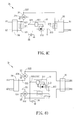
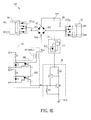
- FIGS. 2B to 2H and 3A to 3B are circuit diagrams showing different aspects of the light emitting apparatus of the invention.
- FIG. 4A is a circuit diagram of a light emitting apparatus according to another preferred embodiment of the invention.
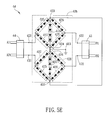
- FIGS. 4B to 4E and 5A to 5E are circuit diagrams showing different aspects of the light emitting apparatus of the invention.
- FIG. 2A is a circuit diagram of a light emitting apparatus 2 according to a preferred embodiment of the invention.
- the light emitting apparatus 2 of the invention is compatible with the conventional fluorescent lamp base with the traditional ballast or electronic ballast, and can be applied to replace the conventional fluorescent tube.
- the appearance of the light emitting apparatus 2 is fabricated the same as that of the conventional fluorescent tube, so that it can fit the lamp sockets of the conventional lamp base.
- the circuit diagram of FIG. 2A shows the traditional ballast T and starter S of the conventional fluorescent lamp.
- the light emitting apparatus 2 receives an external power AC, such as the mains.
- the voltage of the external power AC is 110V AC or 220V AC, and the frequency thereof is 50 Hz, 60 Hz or their multiples.
- the external power AC can be a high-frequency alternating current power.
- the light emitting apparatus 2 includes a light-emitting unit 21, two rectifiers 22 and 23, a first electrical connection element 24, and a second electrical connection element 25.
- the light-emitting unit 21 includes a control module 211 and a light-emitting module 212.
- the light-emitting module 212 includes a plurality of LEDs, which can be connected in series, in parallel or in both series and parallel.
- the drawings only show a single LED, the actual light-emitting module 212 may include a plurality of LEDs in application.
- the light emitting apparatus with the LEDs is generally named as LED tube.
- control module 211 is electrically connected with the light-emitting module 212 for controlling the number of the LEDs of the light-emitting module 212 to be turned on.
- the control module 211 and the light-emitting module 212 can be connected in series or in parallel. Alternatively, parts of the control module 211 and the light-emitting module 212 are connected in series, and the other parts of them are connected in parallel.
- the control module 211 may detect the voltage of the node between the LEDs of the light-emitting module 212, the parameter representing the illumination status of the light-emitting module 212, or the operation status of the light-emitting module 212 and the illumination status of the light-emitting unit 21, so as to turn on different numbers of the LEDs. Accordingly, it is possible to operate based on different input voltages to increase the efficiency of the input power.
- each of the rectifiers 22 and 23 is a bridge rectifier.
- the rectifiers 22, 23 respectively include first input terminals 221, 231, second input terminals 222, 232, a common output terminal 223 (233), and ground terminals 224, 234.
- the output terminal(s) 223 (233) are electrically connected with the light-emitting unit 21.
- the first electrical connection element 24 is electrically connected with the external power AC and the first output terminals 221, 231.
- the first electrical connection element 24 has two electrical input terminals, which are a first electrode A1 and a second electrode A2.
- the external power AC respectively supplies power to the two electrical input terminals of the first electrical connection element 24 and the second electrical connection element 25.
- Two ends of the first electrode A1 are respectively connected to the external power AC and the first input terminal 221 of the rectifier 22.
- Two ends of the second electrode A2 are respectively connected to the starter S and the first input terminal 231 of the rectifier 23.
- the second electrical connection element 25 is electrically connected with the external power AC and the second output terminals 222, 232.
- the second electrical connection element 25 has two electrical input terminals, which are a first electrode B1 and a second electrode B2. Two ends of the second electrode B1 are respectively connected to the ballast T (and the external power AC) and the second input terminal 222 of the rectifier 22. Two ends of the second electrode B2 are respectively connected to the starter S and the second input terminal 232 of the rectifier 23.
- the light emitting apparatus 2 When using the light emitting apparatus 2 to replace the conventional fluorescent tube connected with the traditional ballast, it is unnecessary to preheat the filament and perform the high voltage discharge because the light emitting apparatus 2 is configured without any filament. Thus, the light emitting apparatus 2 can be turned on as the voltage applied to the LED tube reaches a lower operation voltage. At this moment, the current flows from the external power AC, passes through the first electrode A1 of the first electrical connection element 24, the first input terminal 221 and the output terminal 223 of the bridge rectifier 22, the light-emitting unit 21, the ground terminal 213 of the light-emitting unit 21, the ground terminal 224 and the second input terminal 222 of the bridge rectifier 22, and the first electrode B1, and then returns to the external power AC through the ballast T. Accordingly, two ends of the starter S connected to the second electrodes A2 and B2 are isolated by the bridge rectifier 23, so the starter S can not sense the voltage. Thus, the starter S is keeping in the open circuit state.
- the electronic ballast may still detect whether the filament current exists or not.
- the invention provides four current paths for simulating the filament current loop, which flows between the first electrode A1 and the second electrode A2 of the first electrical connection element 24, between the first electrode A1 of the first electrical connection element 24 and the first electrode B1 of the second electrical connection element 25, between the first electrode A1 and the second electrode B2 of the second electrical connection element 25, and/or between the second electrode A2 of the first electrical connection element 24 and the second electrode B2 of the second electrical connection element 25.
- the current path includes the first electrode A1 of the first electrical connection element 24, the first input terminal 221, the output terminal 223, the light-emitting unit 21, the ground terminal 213, the ground terminal 234, the first input terminal 231, and the second electrode A2 of the first electrical connection element 24.
- the current path includes the first electrode A1 of the first electrical connection element 24, the first input terminal 221, the output terminal 223, the light-emitting unit 21, the ground terminal 213, the ground terminal 224, the second input terminal 222, and the first electrode B1 of the second electrical connection element 25.
- the current path includes the first electrode B1 of the second electrical connection element 25, the second input terminal 222, the output terminal 223, the light-emitting unit 21, the ground terminal 213, the ground terminal 234, the second input terminal 232, and the second electrode B2 of the second electrical connection element 25.
- the current path includes the second electrode A2 of the first electrical connection element 24, the first input terminal 231, the output terminal 233, the light-emitting unit 21, the ground terminal 213, the ground terminal 234, the second input terminal 232, and the second electrode B2 of the second electrical connection element 25.
- Each of the above-mentioned current paths can form a simulated filament current loop.
- the entire light-emitting unit 21 can function as a variable impedance element (LED inherently has impedance), just like the filament of the conventional fluorescent tube.
- the lamp current also includes four types of current paths, for example, between the first electrode A1 of the first electrical connection element 24 and the first electrode B1 of the second electrical connection element 25, between the first electrode A1 and the second electrode B2 of the second electrical connection element 25, between the second electrode A2 of the first electrical connection element 24 and the first electrode B1 of the second electrical connection element 25, or between the second electrode A2 of the first electrical connection element 24 and the second electrode B2 of the second electrical connection element 25.
- the current path includes the first electrode A1 of the first electrical connection element 24, the first input terminal 221, the output terminal 223, the light-emitting unit 21, the ground terminal 213, the ground terminal 224 (or the ground terminal 234), the second input terminal 222 (or the second input terminal 232), and the first electrode B1 (or the second electrode B2) of the second electrical connection element 25.
- the current After the current passes through the light-emitting unit 21, the current automatically flows toward one of the first electrode B1 and the second electrode B2 of the second electrical connection element 25, depends on which one has lower impedance path.
- the current path includes the second electrode A2 of the first electrical connection element 24, the first input terminal 231, the output terminal 233, the light-emitting unit 21, the ground terminal 213, the ground terminal 234 (or the ground terminal 224), the second input terminal 232 (or the second input terminal 222), and the second electrode B2 (or the first electrode B1) of the second electrical connection element 25.
- the current After the current passes through the light-emitting unit 21, the current automatically flows toward one of the first electrode B1 and the second electrode B2 of the second electrical connection element 25, depends on which one has lower impedance path. Accordingly, the light emitting apparatus 2 can be lighted on normally.
- the light emitting apparatus 2 of the invention is a LED tube without the filament of the conventional fluorescent tube, and uses the light-emitting unit 21 to simulate the filament, so that the starter and ballast of the original lamp base can still function normally.
- the conventional fluorescent lamp when replaced by the light emitting apparatus 2 of the invention, it prevents the traditional ballast from being burned, or avoids the procedure of removing the electronic ballast and changing the original circuit.
- the light emitting apparatus 2 of the invention is installed on the conventional fluorescent lamp base, it can be lighted on normally.
- FIGS. 2B to 2G are circuit diagrams showing different aspects of the light emitting apparatuses 2a to 2f. To be noted, in the following drawings except for FIG. 2B , the ballast T, starter S and external power of the conventional fluorescent lamp are not shown.
- the light emitting apparatus 2a of FIG. 2B further includes at least one filtering element 26.
- One end of the filtering element 26 is electrically connected with the output terminal 223 (233), and the other end thereof is grounded.
- the filtering element 26 is configured for filtering the power source of the light-emitting unit 21.
- the light emitting apparatus 2a may further include at least one impedance element, which is electrically connected with two electrical input terminals (the first electrode A1 and the second electrode A2) of the first electrical connection element 24, or two electrical input terminals (the first electrode B1 and the second electrode B2) of the second electrical connection element 25.
- the impedance element can be a resistor, an inductor, a capacitor, an active element, or the circuit composed of any of the previous or other components.
- the light emitting apparatus 2a includes an impedance element 271, and two ends of the impedance element 271 are electrically connected with the first electrode A1 and the second electrode A2 of the first electrical connection element 24, respectively.
- the impedance element 271 is configured to simulate the filament.
- no filament current flows through the impedance element 271.
- the filament current of the first electrical connection element 24 flows through the impedance element 271 located between the first electrode A1 and the second electrode A2, and the filament current of the second electrical connection element 25 flows between the first electrode B1 and the second electrode B2.
- the current loop includes the first electrode B1 of the second electrical connection element 25, the second input terminal 222, the output terminal 223, the light-emitting unit 21, the ground terminal 213, the ground terminal 234, the second input terminal 232, and the second electrode B2 of the second electrical connection element 25.
- the current direction of the LED tube is the same as that of the light emitting apparatus 2a, so the detailed description thereof will be omitted.
- the light emitting apparatus 2a uses the impedance element 271 to simulate the filament.
- the conventional fluorescent lamp is replaced by the light emitting apparatus 2a of the invention, it is possible to prevent the traditional ballast from being burned, or avoid the procedure of removing the electronic ballast and changing the original circuit.
- the light emitting apparatus 2a of the invention is installed on the conventional fluorescent lamp base, it can be lighted on normally.
- two ends of the impedance element 272 of the light emitting apparatus 2b are electrically connected with the first electrode B1 and the second electrode B2 of the second electrical connection element 25.
- the impedance element 272 of the light emitting apparatus 2b can also be configured to simulate the filament.
- the current loops of the filament and the lamp can be referred to the above light emitting apparatus 2a, so the detailed description thereof will be omitted.
- the light emitting apparatus 2c of FIG. 2D includes two impedance elements 271 and 272. Two ends of the impedance element 271 are electrically connected with the first electrode A1 and the second electrode A2 of the first electrical connection element 24, and two ends of the impedance element 272 are electrically connected with the first electrode B1 and the second electrode B2 of the second electrical connection element 25. Both of the impedance elements 271 and 272 of the light emitting apparatus 2c can be configured to simulate the filament.
- the current loops of the filament and the lamp can be referred to the above light emitting apparatus 2a, so the detailed description thereof will be omitted.
- the light emitting apparatus 2d of FIG. 2E includes an impedance element 273.
- One end of the element 273 is electrically connected with the output terminals 223 (233), and the other end thereof is grounded.
- the impedance element 273 of the light emitting apparatus 2d can be configured to simulate the filament.
- the current loops of the filament and the lamp can be referred to the above light emitting apparatus 2a, so the detailed description thereof will be omitted.
- the impedance element 274 of the light emitting apparatus 2e is a variable impedance element. One end of the element 274 is electrically connected with the output terminals 223 (233), and the other end thereof is grounded.
- the impedance element 274 of the light emitting apparatus 2e can be configured to simulate the filament. Under low voltage, the impedance element 274 has low impedance for providing the filament current to trigger the lighting procedure. Otherwise, under high voltage, the impedance element 274 has high impedance or forms an open circuit, so that the current flows through the light-emitting unit 21. This configuration can remain the high performance of the power source.
- the light emitting apparatus 2f uses a part of the circuit P of the light-emitting unit 21 to simulate the filament. Furthermore, the filament current can drive the light-emitting unit 21 to emit light, thereby increasing the performance of the power source.
- FIG. 2H is a circuit diagram showing a light emitting apparatus 2g of another aspect of the invention.
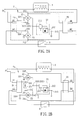
- the light emitting apparatus 2g further includes a switch unit 28 connected with the light-emitting unit 21 in series.
- the switch unit 28 When the first electrical connection element 24 and the second electrical connection element 25 simultaneously receive the external power AC (not shown), the switch unit 28 is turned on. In other words, when the external power AC is connected to both of the first electrical connection element 24 and the second electrical connection element 25, the switch unit 28 is turned on to light on the light-emitting unit 21.
- the switch unit 28 can be, for example but not limited to, an electronic switch (e.g. a transistor or a photo coupler) or a mechanical switch (e.g. a relay).
- the purpose of configuring the switch unit 28 is to turn on the light emitting apparatus 2g only when the first electrical connection element 24 and the second electrical connection element 25 are both inserted into the sockets of the lamp base. If only one electrical connection element is inserted into the socket of the lamp base, the electricity leakage of the other electrical connection element of the light emitting apparatus 2g will be prevented, thereby protecting the installation personnel from electric shock. After the light-emitting unit 21 is lighted on, the switch unit 28 is continuously turned on so as to form a self-latched loop.
- the light emitting apparatus 2g may further include a control unit 29 electrically connected with the light-emitting unit 21.
- the control unit 29 controls the switch unit 28 according to the lighting status of the light-emitting unit 21. In other words, when the control unit 29 detects out that the external power AC is connected to the first electrical connection element 24 and the second electrical connection element 25, it controls to turn on the switch unit 28. Otherwise, when the control unit 29 detects out that the light-emitting unit 21 is lighted on, for example, by detecting the cross voltage, current, or luminance of the light-emitting unit 21, it controls to latch the switch unit 28 in the turn-on state so that the light-emitting unit 21 is remained in the light-on state. When the input power is removed from the light emitting apparatus 2g, the light-emitting unit 21 is lighted off and the switch unit 28 is turned off (open circuit) at the same time.
- the other technical features of the light emitting apparatus 2g can be referred to those of the light emitting apparatus 2c, so the detailed descriptions thereof will be omitted.
- the switch unit 28 can have different circuit structures based on the requirement of product or consideration of design. The various aspects of the switch unit 28 will be described hereinafter with reference to FIGS. 3A and 3B .
- the switch unit 28 of this embodiment includes switches 281, 282, SW1 and SW2.
- the switches 281 and 282 are relays, and each of the switches SW1 and SW2 includes a photo coupler.
- the switches 281 and 282 may include other type switches such as transistors or photo couplers, and the switches SW1 and SW2 may also include other type switches such as transistors or relays.
- the invention is not limited to the above aspect.
- the relay and photo coupler both have the advantages of good electrical isolation and noise interference prevention.
- the switch SW1 (e.g. a photo coupler) is turned on, and when the first electrode B1 and the second electrode B2 of the second electrical connection element are connected to the external power, so that the switch 281 of the switch unit 28 is in a conductive state, thereby allowing the current to flow through the light-emitting unit 21 via the first electrodes A1 and B1 so as to light on the light-emitting unit 21.
- the control unit 29 can detect the cross voltage of the light-emitting unit 21, so that the control unit 29 controls to turn on the switch SW2 (e.g. another photo coupler). Accordingly, another switch 282 of the switch unit 28 will be turned on to form a self-latched loop.
- FIG. 3B shows another circuit structure of the switch unit 28.
- the switch unit 28 of the light emitting apparatus 2h is not configured with the switch SW2.
- the other technical features of the light emitting apparatus 2h are the same as those of the light emitting apparatus 2g, so the detailed descriptions are omitted.
- FIG. 4A is a circuit diagram of a light emitting apparatus 3 according to another preferred embodiment of the invention.
- the light emitting apparatus 3 receives an external power and includes a light-emitting unit 31, at least one rectifier 32, a first electrical connection element 34, a second electrical connection element 35, and at least one impedance element.
- the light-emitting unit 31 includes a light-emitting module 312 and a control module 311.
- the light-emitting module 312 comprises a plurality of LEDs, which can be connected in series, in parallel or in both series and parallel.
- the control module 311 and the light-emitting module 312 can be connected in series or in parallel. Alternatively, parts of the control module 311 and the light-emitting module 312 are connected in series, and the other parts of them are connected in parallel.
- the control module 311 may detect the voltage of the node between the LEDs of the light-emitting module 312, the parameter representing the illumination status of the light-emitting module 312, or the operation status of the light-emitting module 312 and the illumination status of the light-emitting unit 31, so as to turn on different numbers of the LEDs. Accordingly, it is possible to increase the efficiency of the input power.
- the rectifier 32 includes a first input terminal 321, a second input terminal 322, an output terminal 323, and a ground terminal 324.
- the output terminal 323 is electrically connected with the light-emitting unit 31.
- only one rectifier 32 is configured, and the rectifier 32 is a bridge rectifier.
- the first electrical connection element 34 is electrically connected with the external power and the first output terminal 321, and the second electrical connection element 35 is electrically connected with the external power and the second output terminal 322.
- the first electrode A1 of the first electrical connection element 34 is electrically connected with the first input terminal 321, and the first electrode B1 and the second electrode B2 of the second electrical connection element 35 are both electrically connected with the second output terminal 322.
- the first electrode B1 and the second electrode B2 are electrically connected with each other.
- At least one impedance element is electrically connected with two electrical input terminals of the first electrical connection element 34 or two electrical input terminals of the second electrical connection element 35.
- the impedance element may be electrically connected with the output terminal 323 and a ground terminal of the rectifier 32.
- only one impedance element is configured.
- the impedance element 371 is electrically connected with two electrical input terminals (the first electrode A1 and the second electrode A2) of the first electrical connection element 34.
- two impedance elements which are respectively electrically connected with two electrical input terminals of the first electrical connection element 34 and two electrical input terminals of the second electrical connection element 35.
- the impedance element may be a variable impedance element, a partial or entire circuit of the light-emitting unit 31, a partial or entire circuit of the rectifier 32, or an AC LED module.
- the light emitting apparatus 3 further includes at least one filtering element (not shown). On end of the filtering element is electrically connected with the output terminal 323, and the other end thereof is grounded.
- the light emitting apparatus 3 of the embodiment uses the impedance element 371 to simulate the filament.
- the impedance element 371 can simulate the starting operation of the conventional filament.
- the current loops of the filament (the impedance element 371) and the lamp can be referred to the above-mentioned light emitting apparatus, so the detailed descriptions thereof are omitted.
- this embodiment configures only one rectifier 32 and one impedance element 371, so that if the light emitting apparatus 3 is installed on the conventional lamp base and can not be normally lighted on, it is possible to change the installation positions of the first electrode A1 and the second electrode A2 for normally lighting on the light emitting apparatus 3.
- the tube of the light emitting apparatus 3 is rotated for 180 degrees along the longitudinal direction.
- This operation can switch the first electrode A1 to the other position that is originally installed with the second electrode B2, and switch the second electrode A2 to the other position that is originally installed with the first electrode B1.
- the first electrode B1 is switched to the other position that is originally installed with the second electrode A2, and the second electrode B2 is switched to the other position that is originally installed with the first electrode A1.
- FIG. 4B is a circuit diagram showing a light emitting apparatus 3a of another aspect.
- the impedance element 372 of the light emitting apparatus 3a is electrically connected with two electrical input terminals (the first electrode B1 and the second electrode B2) of the second electrical connection element 35.
- the light emitting apparatus 3a of the embodiment uses the impedance element 372 to simulate the filament.
- the impedance element 372 can simulate the starting operation of the conventional filament. Similar to the light emitting apparatus 3, when the light emitting apparatus 3a can not be normally lighted on, it is possible to fix this problem by changing the positions of the first and second electrodes of the electrical connection element 34 or 35.
- the current loops of the filament (the impedance element 372) and the lamp can be referred to the above-mentioned light emitting apparatus, so the detailed descriptions thereof are omitted.
- FIG. 4C is a circuit diagram showing a light emitting apparatus 3b of another aspect.
- the light emitting apparatus 3b further includes an impedance element 372 electrically connected with two electrical input terminals (the first electrode B1 and the second electrode B2) of the second electrical connection element 35.
- the light emitting apparatus 3b may further include at least one filtering element 36.
- One end of the filtering element 36 is electrically connected with the output terminal 323, and the other end thereof is grounded.
- the filtering element 36 is configured to filter the power supplied to the light-emitting unit 31.
- FIG. 4D is a circuit diagram showing a light emitting apparatus 3c of another aspect.
- the light emitting apparatus 3c includes two rectifiers 32 and 33, which respectively include the first input terminals 321 and 331, the second input terminals 322 and 332, a common output terminal 323 (333), and the ground terminals 324 and 334.
- the output terminal(s) 323 (333) are electrically connected with the light-emitting unit 31.
- the light emitting apparatus 3c includes an impedance element 373, which is a resistor. One end of the impedance element 373 is electrically connected with the output terminal 323 (333) and the other end thereof is grounded.
- the light emitting apparatus 3c of the embodiment uses the impedance element 373 to simulate the filament.
- the current loops of the filament and the lamp can be referred to the above-mentioned light emitting apparatus 2d of FIG. 2E , so the detailed descriptions thereof are omitted.
- FIG. 4E is a circuit diagram showing a light emitting apparatus 3d of another aspect.
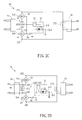
- the light emitting apparatus 3d includes only one rectifier 32 (e.g. a bridge rectifier), which includes the first input terminal 321 electrically connected with an AC LED module 371 a and a second input terminal 322 electrically connected with an AC LED module 372a.
- the first electrical connection element 34 is electrically connected with the external power and the AC LED module 371a
- the second electrical connection element 35 is electrically connected with the external power and the AC LED module 372a.
- the configurations of the AC LED modules 371a and 372a allow the bridge rectifier to receive the AC power source from the first electrode A1 and the second electrode A2 of the electrical connection element 34 and from the first electrode B1 and the second electrode B2 of the electrical connection element 35. This can prevent the situation of unable to receive the external power as the light emitting apparatus 3d is installed at different direction.
- the AC LED modules 371a and 372a can serve as two impedance elements of the light emitting apparatus 3d.
- the AC LED module 371a is electrically connected between the first electrode A1 and the second electrode A2 of the first electrical connection element 34
- the AC LED module 372a is electrically connected between the first electrode B1 and the second electrode B2 of the second electrical connection element 35.
- Each of the AC LED modules 371a and 372a has four LEDs. As shown in FIG. 4E , in each of the AC LED modules 371 a and 372a, two reversely connected LEDs are serially connected with the other two reversely connected LEDs.
- the number of the LEDs configured in the AC LED modules 371a and 372a are not limited and may be greater or less than 4.
- the AC LED module 371a is electrically connected with the electrodes A1 and A2 of the first electrical connection element 34 directly, and the AC LED module 372a is electrically connected with the electrodes B1 and B2 of the second electrical connection element 35 directly, so that the LEDs of the AC LED modules 371a and 372a are directly driven by AC power. Accordingly, when the inputted external power is at a positive half-cycle, two forward-biased LEDs of the AC LED modules 371a and 372a (e.g. the first and fourth LEDs of the AC LED modules 371a (counted from top to bottom)) are conducted, and two reverse-biased LEDs of the AC LED modules 371a and 372a (e.g.
- the second and third LEDs AC LED modules 371a are not conducted. Otherwise, when the inputted external power is at a negative half-cycle, two forward-biased LEDs of the AC LED modules 371a and 372a (e.g. the second and third LEDs of the AC LED modules 371a (counted from top to bottom)) are conducted, and two reverse-biased LEDs of the AC LED modules 371a and 372a (e.g. the first and fourth LEDs AC LED modules 371a (counted from top to bottom)) are not conducted.
- the light emitting apparatus 3d uses the AC LED modules 371a and 372a to simulate the filament.
- the light emitting apparatus 3d configured with the AC LED modules 371a and 372a can directly replace the fluorescent lamp with the conventional ballast without removing the starter and ballast or changing the circuit of the lamp.
- the switch unit 38 of the light emitting apparatus 3d is a circuit containing transistors Q1 and Q2.
- the switch unit 38 of the light emitting apparatus 3d is a circuit configured with two transistors Q1, Q2 and two resistors R2, R3.
- the switch 391 photo coupler
- the switch 392 photo coupler
- the current generated by the voltage Vcc can flow through the resistor R1, the switch 391 and the switch 392, and then into the base of the transistor Q2 of the switch unit 38, so that the switch unit 38 is conducted to light on the light-emitting unit 31.
- the transistor Q2 can provide the base current for the transistor Q 1
- the transistor Q1 can provide the base current for the transistor Q2.
- the switch unit 38 is in a self-latched conducting status until the external power is removed.
- the switch unit 38 can be continuously conducted according to the inherent circuit property. Even if the control unit 39 never outputs the signal to the switch unit 38 again, the switch unit 38 can be still in the conductive status due to the circuit property of the transistors Q1 and Q2 so as to form a self-latched loop. In other words, only when the first electrical connection element 34 and the second electrical connection element 35 are both inserted into the sockets of the lamp base, the light-emitting unit 31 can then be lighted on. If only one of the electrical connection elements is inserted into the sockets, the light-emitting unit 31 can not be lighted on. This configuration can protect the installation personnel from electric shock when installing the light emitting apparatus 3d. To be noted, the switch unit 38 can be replaced by an SCR (silicon-controlled rectifier).
- SCR silicon-controlled rectifier
- the other technical features of the light emitting apparatuses 3d can be referred to those of the light emitting apparatus 2g, so the detailed descriptions thereof will be omitted.
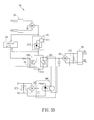
- FIG. 5A is a circuit diagram showing a light emitting apparatus 4 of another aspect.
- the light-emitting unit 41 of the light emitting apparatus 4 has a plurality of LEDs connected in series.
- the light-emitting unit 41 has 4 LEDs connected in series.
- the number and connection type of the LEDs are not limited to this example.
- the rectifier 42 includes four sets of LED modules 425-428 connected in series or in parallel. In this case, the LED modules 425-428 are connected in series and in bridge, so that the rectifier 42 is configured as an AC LED module.
- the current loop of the lamp When the inputted external power is at a positive half-cycle, the current loop of the lamp includes the first electrode A1 of the first electrical connection element 44, the LED module 425, the light-emitting unit 41, the LED module 428 and the first electrode B1 of the second electrical connection element 45.
- the current loop of the lamp When the inputted external power is at a negative half-cycle, the current loop of the lamp includes the first electrode A1 of the first electrical connection element 44, the LED module 427, the light-emitting unit 41, the LED module 426 and the first electrode B1 of the second electrical connection element 45. Accordingly, the light-emitting unit 41 can be lighted on.
- the light-emitting unit 41 is shown in the rectifier 42, but the rectifier 42 is not substantially containing the light-emitting unit 41.
- the simulated filament current loop of the light emitting apparatus 4 can be referred to the light emitting apparatus 3, so the detailed descriptions are omitted.
- FIGS. 5B to 5E are circuit diagrams showing light emitting apparatuses of different aspects.
- the impedance element 473 of the light emitting apparatus 4a of FIG. 5B is electrically connected between the second electrode A2 of the first electrical connection element 44 and the ground terminal 424 (413).
- the simulated filament current loop of the light emitting apparatus 4a can be referred to the light emitting apparatus 2d, so the detailed descriptions are omitted.
- the rectifier 42b of the light emitting apparatus 4b of FIG. 5C includes two sets of LED modules 425-428 connected in bridge, which are electrically connected via the ground terminals 424 and 434. Two of the LED modules 425-428 are respectively electrically connected to the light-emitting units 41a and 41b.
- the connection method of the rectifier 42b and the light-emitting units 41a and 41b is shown as FIG. 5C .
- the simulated filament current loop of the light emitting apparatus 4b can be referred to the light emitting apparatus 3, so the detailed descriptions are omitted.
- the impedance element 473 of the light emitting apparatus 4c of FIG. 5D is electrically connected to the output terminals 423, 433 and ground terminal 413 of the light-emitting units 41a, 41b.
- the simulated filament current loop of the light emitting apparatus 4c includes the first electrode A1 of the first electrical connection element 44, the LED module 425 of the top bridge, the impedance element 473, the LED module 427 of the bottom bridge, and the second electrode A2 of the first electrical connection element 44.
- the simulated filament current loop of the light emitting apparatus 4c may include the second electrode A2 of the first electrical connection element 44, the LED module 425 of the bottom bridge, the impedance element 473, the LED module 427 of the top bridge, and the first electrode A1 of the first electrical connection element 44.
- the light emitting apparatus 4d of FIG. 5E uses the entire circuit of the light-emitting unit 41a or 41b to simulate the filament.
- the simulated filament current loop of the light emitting apparatus 4d includes the first electrode A1 of the first electrical connection element 44, the LED module 425 of the top bridge, the light-emitting unit 41a, the LED module 427 of the bottom bridge, and the second electrode A2 of the first electrical connection element 44.
- the simulated filament current loop of the light emitting apparatus 4d may include the second electrode A2 of the first electrical connection element 44, the LED module 425 of the bottom bridge, the light-emitting unit 41b, the LED module 427 of the top bridge, and the first electrode A1 of the first electrical connection element 44.
- each of the light emitting apparatuses 4a, 4b, 4b and 4d may further include another impedance element (not shown), which has two ends electrically connected with the first electrode B1 and the second electrode B2 of the second electrical connection element.
- the simulated filament current loop of each of the light emitting apparatus 4a, 4b, 4b and 4d can be referred to the light emitting apparatus 4, so the detailed descriptions are omitted.
- the light emitting apparatus of the invention is a LED lamp, which is not configured with the filament of the conventional fluorescent lamp.
- the light emitting apparatus has the internal elements for simulating the filament, so that the starter and ballast of the conventional fluorescent lamp can still operate normally, and the light emitting apparatus is turned on normally.
- the conventional fluorescent lamp when the conventional fluorescent lamp is replaced by the light emitting apparatus of the invention, it is possible to prevent the traditional ballast from being burned, or to avoid the procedure of removing the electronic ballast and changing the original circuit. Therefore, as the light emitting apparatus of the invention is installed on the conventional fluorescent lamp base, it can directly replace the conventional fluorescent lamp tube without changing the circuit of the lamp base.
Landscapes
- Engineering & Computer Science (AREA)
- Physics & Mathematics (AREA)
- Microelectronics & Electronic Packaging (AREA)
- Optics & Photonics (AREA)
- General Engineering & Computer Science (AREA)
- Circuit Arrangement For Electric Light Sources In General (AREA)
- Non-Portable Lighting Devices Or Systems Thereof (AREA)
- Led Devices (AREA)
Applications Claiming Priority (1)
| Application Number | Priority Date | Filing Date | Title |
|---|---|---|---|
| TW100120012 | 2011-06-08 |
Publications (2)
| Publication Number | Publication Date |
|---|---|
| EP2533607A2 true EP2533607A2 (de) | 2012-12-12 |
| EP2533607A3 EP2533607A3 (de) | 2013-10-23 |
Family
ID=46298256
Family Applications (1)
| Application Number | Title | Priority Date | Filing Date |
|---|---|---|---|
| EP12170859.8A Withdrawn EP2533607A3 (de) | 2011-06-08 | 2012-06-05 | Lichtemittierende Vorrichtung |
Country Status (5)
| Country | Link |
|---|---|
| US (1) | US20120313540A1 (de) |
| EP (1) | EP2533607A3 (de) |
| JP (1) | JP5526190B2 (de) |
| CN (1) | CN102818141A (de) |
| TW (1) | TW201251502A (de) |
Cited By (2)
| Publication number | Priority date | Publication date | Assignee | Title |
|---|---|---|---|---|
| WO2014115010A1 (en) * | 2013-01-23 | 2014-07-31 | Koninklijke Philips N.V. | Led tube for retrofitting in a fluorescent tube lighting fixture |
| EP2824993A1 (de) * | 2013-07-10 | 2015-01-14 | Lextar Electronics Corp. | Lichtemittierende Diodenlichtröhrenantriebsschaltung |
Families Citing this family (47)
| Publication number | Priority date | Publication date | Assignee | Title |
|---|---|---|---|---|
| US9939140B2 (en) | 2014-09-28 | 2018-04-10 | Jiaxing Super Lighting Electric Appliance Co., Ltd. | LED tube lamp |
| US11131431B2 (en) | 2014-09-28 | 2021-09-28 | Jiaxing Super Lighting Electric Appliance Co., Ltd | LED tube lamp |
| US10021742B2 (en) | 2014-09-28 | 2018-07-10 | Jiaxing Super Lighting Electric Appliance Co., Ltd | LED tube lamp |
| US9794990B2 (en) | 2014-09-28 | 2017-10-17 | Jiaxing Super Lighting Electric Appliance Co., Ltd. | LED tube lamp with improved compatibility with an electrical ballast |
| US9587817B2 (en) | 2014-09-28 | 2017-03-07 | Jiaxing Super Lighting Electric Appliance Co., Ltd | LED tube lamp |
| US9480109B2 (en) | 2014-10-14 | 2016-10-25 | Jiaxing Super Lighting Electric Appliance Co., Lti | Power source module for LED lamp |
| US9781805B2 (en) | 2015-03-10 | 2017-10-03 | Jiaxing Super Lighting Electric Appliance Co., Ltd. | LED tube lamp |
| US9629211B2 (en) | 2014-09-28 | 2017-04-18 | Jiaxing Super Lighting Electric Appliance Co., Ltd. | LED tube lamp with improved compatibility with an electrical ballast |
| US8198819B2 (en) | 2008-09-17 | 2012-06-12 | Switch Bulb Company, Inc. | 3-way LED bulb |
| JP6075749B2 (ja) * | 2012-08-01 | 2017-02-08 | フューチャーイヴテクノロジー株式会社 | Ledランプ |
| TWI597997B (zh) * | 2012-12-11 | 2017-09-01 | Compatible with electronic ballast LED lamp | |
| CN103945592A (zh) * | 2013-01-21 | 2014-07-23 | 朗捷科技股份有限公司 | 可相容于具预热电流的电子安定器的led灯管 |
| TWM455820U (zh) * | 2013-02-08 | 2013-06-21 | Chung-Hung Yu | 發光二極體燈管 |
| KR20140118625A (ko) * | 2013-03-29 | 2014-10-08 | 엘지이노텍 주식회사 | 엘이디 발광 모듈 |
| US8901852B2 (en) | 2013-05-02 | 2014-12-02 | Switch Bulb Company, Inc. | Three-level LED bulb microprocessor-based driver |
| EP2907365B1 (de) | 2013-06-27 | 2016-09-21 | Philips Lighting Holding B.V. | Nachgerüstetes lichtemittierendes diodenrohr |
| US11480305B2 (en) | 2014-09-25 | 2022-10-25 | Jiaxing Super Lighting Electric Appliance Co., Ltd. | LED tube lamp |
| US9775215B2 (en) | 2014-09-28 | 2017-09-26 | Jiaxing Super Lighting Electric Appliance Co., Ltd. | LED tube lamp with operating modes compatible with electrical ballasts |
| US10845008B2 (en) | 2014-09-28 | 2020-11-24 | Zhejiang Super Lighting Electric Appliance Co., Ltd. | LED filament and LED light bulb |
| US10054271B2 (en) | 2015-03-10 | 2018-08-21 | Jiaxing Super Lighting Electric Appliance Co., Ltd. | LED tube lamp |
| US9689536B2 (en) | 2015-03-10 | 2017-06-27 | Jiaxing Super Lighting Electric Appliance Co., Ltd. | LED tube lamp |
| US10208898B2 (en) | 2015-04-29 | 2019-02-19 | Jiaxing Super Lighting Electric Appliance Co., Ltd. | LED tube lamp with operating modes compatible with electrical ballasts |
| US9756698B2 (en) | 2014-09-28 | 2017-09-05 | Jiaxing Super Lighting Electric Appliance Co., Ltd. | LED tube lamp with two operating modes compatible with electrical ballasts |
| US9625137B2 (en) | 2014-09-28 | 2017-04-18 | Jiaxing Super Lighting Electric Appliance Co., Ltd | LED tube light with bendable circuit board |
| US10560989B2 (en) | 2014-09-28 | 2020-02-11 | Jiaxing Super Lighting Electric Appliance Co., Ltd | LED tube lamp |
| CN115095808A (zh) | 2014-09-28 | 2022-09-23 | 嘉兴山蒲照明电器有限公司 | 一种led直管灯 |
| US9795001B2 (en) | 2014-09-28 | 2017-10-17 | Jiaxing Super Lighting Electric Appliance Co., Ltd. | LED tube lamp with overcurrent and/or overvoltage protection capabilities |
| US9894732B2 (en) | 2014-10-17 | 2018-02-13 | Jiaxing Super Lighting Electric Appliance Co., Ltd. | LED tube lamp compatible with different sources of external driving signal |
| US11519565B2 (en) | 2015-03-10 | 2022-12-06 | Jiaxing Super Lighting Electric Appliance Co., Ltd | LED lamp and its power source module |
| US9801240B2 (en) | 2015-03-10 | 2017-10-24 | Jiaxing Super Lighting Electric Appliance Co., Ltd. | Light emitting diode (LED) tube lamp |
| US9820341B2 (en) | 2015-03-10 | 2017-11-14 | Jiaxing Super Lighting Electric Appliance Co., Ltd. | LED tube lamp having mode switching circuit and auxiliary power module |
| US9903577B2 (en) | 2015-03-10 | 2018-02-27 | Jiaxing Super Lighting Electric Appliance Co., Ltd. | LED tube lamp including light strip including a pad and an opening formed on the pad |
| US9867239B2 (en) | 2015-03-10 | 2018-01-09 | Jiaxing Super Lighting Electric Appliance Co., Ltd. | Light emiting diode (LED) tube lamp capable of adapting to different driving environments |
| US10197225B2 (en) | 2015-03-10 | 2019-02-05 | Jiaxing Super Lighting Electric Appliance Co., Ltd. | LED tube lamp |
| US9897265B2 (en) | 2015-03-10 | 2018-02-20 | Jiaxing Super Lighting Electric Appliance Co., Ltd. | LED tube lamp having LED light strip |
| US11028973B2 (en) | 2015-03-10 | 2021-06-08 | Jiaxing Super Lighting Electric Appliance Co., Ltd. | Led tube lamp |
| US9826585B2 (en) | 2015-03-10 | 2017-11-21 | Jiaxing Super Lighting Electric Appliance Co., Ltd. | LED tube lamp |
| US9750096B2 (en) | 2015-03-25 | 2017-08-29 | Jiaxing Super Lighting Electric Appliance Co., Ltd. | Dual-Mode LED tube lamp |
| US9913336B2 (en) | 2015-04-03 | 2018-03-06 | Jiaxing Super Lighting Electric Appliance Co., Ltd. | Light emiting diode (LED) tube lamp compatible with different ballasts providing external driving signal |
| US10070498B2 (en) | 2015-04-14 | 2018-09-04 | Jiaxing Super Lighting Electric Appliance Co., Ltd. | LED tube lamp with improved compatibility with electrical ballasts |
| US9841174B2 (en) | 2015-04-29 | 2017-12-12 | Jiaxing Super Lighting Electric Appliance Co., Ltd. | LED tube lamp |
| KR101652241B1 (ko) * | 2015-05-27 | 2016-08-31 | (주)아비스 | 엘이디 램프 |
| US11035526B2 (en) | 2015-12-09 | 2021-06-15 | Jiaxing Super Lighting Electric Appliance Co., Ltd. | LED tube lamp |
| EP3240367A1 (de) * | 2016-04-29 | 2017-11-01 | Silicon Hill B.V. | Vorschaltgerätunabhängige nachrüst-led-lampe mit flimmerreduzierungsschaltung |
| CN207283866U (zh) * | 2017-07-18 | 2018-04-27 | 晨辉光宝科技有限公司 | Led直管灯 |
| CN109819543A (zh) * | 2017-11-21 | 2019-05-28 | 通用电气照明解决方案有限公司 | Led照明组件及其驱动电路 |
| CN111148309B (zh) * | 2018-10-16 | 2023-08-25 | 卡任特照明解决方案有限公司 | 灯的驱动电路及对该灯的驱动电路进行操作的方法 |
Family Cites Families (17)
| Publication number | Priority date | Publication date | Assignee | Title |
|---|---|---|---|---|
| JP3098840U (ja) * | 2003-06-26 | 2004-03-18 | 藤崎電機株式会社 | 発光ダイオードの照明装置 |
| US20060193131A1 (en) * | 2005-02-28 | 2006-08-31 | Mcgrath William R | Circuit devices which include light emitting diodes, assemblies which include such circuit devices, and methods for directly replacing fluorescent tubes |
| JP4829574B2 (ja) * | 2005-09-15 | 2011-12-07 | 俊次 川端 | 照明システム |
| JP3965419B1 (ja) * | 2006-08-23 | 2007-08-29 | 株式会社モモ・アライアンス | 照明装置 |
| CN101310567A (zh) * | 2006-10-24 | 2008-11-19 | 照宏光电科技股份有限公司 | 照明装置 |
| JP4994101B2 (ja) * | 2007-05-01 | 2012-08-08 | シャープ株式会社 | Led照明灯及び該led照明灯を用いた灯器具 |
| US8303145B2 (en) * | 2008-10-30 | 2012-11-06 | Wilcox Scott A | Marine lighting apparatus and method |
| CN201331030Y (zh) * | 2009-02-11 | 2009-10-21 | 东莞市龙立祥照明科技有限公司 | 一种led电路 |
| TW201039692A (en) * | 2009-04-17 | 2010-11-01 | Chen-Yung John Chen | 4 endpoint power rectifier (dual full-bridge / dual half-bridge) device |
| US20100289428A1 (en) * | 2009-05-12 | 2010-11-18 | Advanced Control Technologies, Inc. | Controllable Retroffited LED Panel Lighting |
| JP2011044316A (ja) * | 2009-08-20 | 2011-03-03 | Panasonic Electric Works Co Ltd | 照明装置 |
| US8729809B2 (en) * | 2009-09-08 | 2014-05-20 | Denovo Lighting, Llc | Voltage regulating devices in LED lamps with multiple power sources |
| US8896207B2 (en) * | 2009-11-19 | 2014-11-25 | ElectraLED Inc. | Fluorescent light fixture assembly with LED lighting element and converter modules |
| FI122933B (fi) * | 2010-03-19 | 2012-09-14 | Teknoware Oy | LED-putkilamppu ja valaisinjärjestely |
| CN101925238A (zh) * | 2010-09-21 | 2010-12-22 | 深圳北森科技有限公司 | 一种led日光灯驱动电源前置电路 |
| EP2477456B1 (de) * | 2011-01-14 | 2016-04-06 | Ontopx LED GmbH | Steuerkreis für eine lichtemittierende Diodenanordnung |
| TWI458390B (zh) * | 2011-12-09 | 2014-10-21 | Gio Optoelectronics Corp | 發光裝置 |
-
2012
- 2012-05-09 TW TW101116576A patent/TW201251502A/zh unknown
- 2012-06-05 CN CN2012101821552A patent/CN102818141A/zh active Pending
- 2012-06-05 EP EP12170859.8A patent/EP2533607A3/de not_active Withdrawn
- 2012-06-07 US US13/491,535 patent/US20120313540A1/en not_active Abandoned
- 2012-06-07 JP JP2012130279A patent/JP5526190B2/ja not_active Expired - Fee Related
Non-Patent Citations (1)
| Title |
|---|
| None |
Cited By (3)
| Publication number | Priority date | Publication date | Assignee | Title |
|---|---|---|---|---|
| WO2014115010A1 (en) * | 2013-01-23 | 2014-07-31 | Koninklijke Philips N.V. | Led tube for retrofitting in a fluorescent tube lighting fixture |
| EP2824993A1 (de) * | 2013-07-10 | 2015-01-14 | Lextar Electronics Corp. | Lichtemittierende Diodenlichtröhrenantriebsschaltung |
| US9107255B2 (en) | 2013-07-10 | 2015-08-11 | Lextar Electronics Corporation | Light-emitting diode light tube driving circuit |
Also Published As
| Publication number | Publication date |
|---|---|
| US20120313540A1 (en) | 2012-12-13 |
| EP2533607A3 (de) | 2013-10-23 |
| JP2012256598A (ja) | 2012-12-27 |
| CN102818141A (zh) | 2012-12-12 |
| JP5526190B2 (ja) | 2014-06-18 |
| TW201251502A (en) | 2012-12-16 |
Similar Documents
| Publication | Publication Date | Title |
|---|---|---|
| EP2533607A2 (de) | Lichtemittierende Vorrichtung | |
| US12352420B2 (en) | Retrofit LED tube with safety switch | |
| US9426849B2 (en) | Connection circuit for connecting a driver to an external power supply for driving an LED unit | |
| JP6493924B2 (ja) | レトロフィット発光ダイオード管の保護 | |
| US8917020B2 (en) | Tubelamp retrofit pin safety implementation using existing ballast and fixture | |
| EP2477456B1 (de) | Steuerkreis für eine lichtemittierende Diodenanordnung | |
| US9942955B2 (en) | LED lamp using switching circuit | |
| CA2788390C (en) | Low current solution for illuminated switches using dc operated leds | |
| JP6584698B2 (ja) | 管状照明取り付け具に取り付けるための管状デバイス | |
| KR20140142134A (ko) | 형광등 안정기에 연결되어 구동하는 led형광등 구동장치 및 그 구동장치를 탑재한 led 형광등. | |
| KR102353640B1 (ko) | 형광램프용 안정기를 이용한 호환형 led 구동 장치 및 방법 | |
| US20160234909A1 (en) | Led lamp | |
| CN108668402A (zh) | 用于led灯的灯驱动器和用于布置在荧光灯灯具中的led灯 | |
| GB2495976A (en) | Direct replacement of an electronically ballasted fluorescent tube with light emitting diodes | |
| US9713236B1 (en) | Solid-state lighting arrangement with startup delay circuit | |
| KR20160071545A (ko) | 피엔접합 발광소자 조명장치 | |
| KR20160071546A (ko) | 피엔접합 발광소자 조명장치 | |
| KR20150073151A (ko) | 임피던스를 이용한 엘이디 램프 | |
| CN105873315A (zh) | 安全开关电路 |
Legal Events
| Date | Code | Title | Description |
|---|---|---|---|
| PUAI | Public reference made under article 153(3) epc to a published international application that has entered the european phase |
Free format text: ORIGINAL CODE: 0009012 |
|
| AK | Designated contracting states |
Kind code of ref document: A2 Designated state(s): AL AT BE BG CH CY CZ DE DK EE ES FI FR GB GR HR HU IE IS IT LI LT LU LV MC MK MT NL NO PL PT RO RS SE SI SK SM TR |
|
| AX | Request for extension of the european patent |
Extension state: BA ME |
|
| PUAL | Search report despatched |
Free format text: ORIGINAL CODE: 0009013 |
|
| AK | Designated contracting states |
Kind code of ref document: A3 Designated state(s): AL AT BE BG CH CY CZ DE DK EE ES FI FR GB GR HR HU IE IS IT LI LT LU LV MC MK MT NL NO PL PT RO RS SE SI SK SM TR |
|
| AX | Request for extension of the european patent |
Extension state: BA ME |
|
| RIC1 | Information provided on ipc code assigned before grant |
Ipc: H05B 33/08 20060101AFI20130913BHEP Ipc: F21K 99/00 20100101ALI20130913BHEP |
|
| 17P | Request for examination filed |
Effective date: 20140416 |
|
| RBV | Designated contracting states (corrected) |
Designated state(s): AL AT BE BG CH CY CZ DE DK EE ES FI FR GB GR HR HU IE IS IT LI LT LU LV MC MK MT NL NO PL PT RO RS SE SI SK SM TR |
|
| STAA | Information on the status of an ep patent application or granted ep patent |
Free format text: STATUS: THE APPLICATION IS DEEMED TO BE WITHDRAWN |
|
| 18D | Application deemed to be withdrawn |
Effective date: 20160105 |