EP2534863B1 - Handhabung von benutzeridentitäten eines ip-multimediasubsystems (ims) - Google Patents
Handhabung von benutzeridentitäten eines ip-multimediasubsystems (ims) Download PDFInfo
- Publication number
- EP2534863B1 EP2534863B1 EP10705842.2A EP10705842A EP2534863B1 EP 2534863 B1 EP2534863 B1 EP 2534863B1 EP 10705842 A EP10705842 A EP 10705842A EP 2534863 B1 EP2534863 B1 EP 2534863B1
- Authority
- EP
- European Patent Office
- Prior art keywords
- ims
- user
- internet service
- network
- identity
- Prior art date
- Legal status (The legal status is an assumption and is not a legal conclusion. Google has not performed a legal analysis and makes no representation as to the accuracy of the status listed.)
- Active
Links
Images




Classifications
-
- H—ELECTRICITY
- H04—ELECTRIC COMMUNICATION TECHNIQUE
- H04L—TRANSMISSION OF DIGITAL INFORMATION, e.g. TELEGRAPHIC COMMUNICATION
- H04L65/00—Network arrangements, protocols or services for supporting real-time applications in data packet communication
- H04L65/10—Architectures or entities
- H04L65/1016—IP multimedia subsystem [IMS]
-
- H—ELECTRICITY
- H04—ELECTRIC COMMUNICATION TECHNIQUE
- H04L—TRANSMISSION OF DIGITAL INFORMATION, e.g. TELEGRAPHIC COMMUNICATION
- H04L63/00—Network architectures or network communication protocols for network security
- H04L63/06—Network architectures or network communication protocols for network security for supporting key management in a packet data network
- H04L63/062—Network architectures or network communication protocols for network security for supporting key management in a packet data network for key distribution, e.g. centrally by trusted party
-
- H—ELECTRICITY
- H04—ELECTRIC COMMUNICATION TECHNIQUE
- H04L—TRANSMISSION OF DIGITAL INFORMATION, e.g. TELEGRAPHIC COMMUNICATION
- H04L63/00—Network architectures or network communication protocols for network security
- H04L63/06—Network architectures or network communication protocols for network security for supporting key management in a packet data network
- H04L63/067—Network architectures or network communication protocols for network security for supporting key management in a packet data network using one-time keys
-
- H—ELECTRICITY
- H04—ELECTRIC COMMUNICATION TECHNIQUE
- H04L—TRANSMISSION OF DIGITAL INFORMATION, e.g. TELEGRAPHIC COMMUNICATION
- H04L63/00—Network architectures or network communication protocols for network security
- H04L63/10—Network architectures or network communication protocols for network security for controlling access to devices or network resources
-
- H—ELECTRICITY
- H04—ELECTRIC COMMUNICATION TECHNIQUE
- H04L—TRANSMISSION OF DIGITAL INFORMATION, e.g. TELEGRAPHIC COMMUNICATION
- H04L65/00—Network arrangements, protocols or services for supporting real-time applications in data packet communication
- H04L65/10—Architectures or entities
- H04L65/102—Gateways
- H04L65/1033—Signalling gateways
- H04L65/104—Signalling gateways in the network
-
- H—ELECTRICITY
- H04—ELECTRIC COMMUNICATION TECHNIQUE
- H04L—TRANSMISSION OF DIGITAL INFORMATION, e.g. TELEGRAPHIC COMMUNICATION
- H04L65/00—Network arrangements, protocols or services for supporting real-time applications in data packet communication
- H04L65/1066—Session management
- H04L65/1069—Session establishment or de-establishment
-
- H—ELECTRICITY
- H04—ELECTRIC COMMUNICATION TECHNIQUE
- H04W—WIRELESS COMMUNICATION NETWORKS
- H04W80/00—Wireless network protocols or protocol adaptations to wireless operation
- H04W80/08—Upper layer protocols
- H04W80/10—Upper layer protocols adapted for application session management, e.g. SIP [Session Initiation Protocol]
Definitions
- the present invention relates to a method and apparatus for handling IP Multimedia Subsystem identities, and in particular, though not necessarily, to such a method and apparatus for handling the allocation of IP Multimedia Subsystem identities to users of a third party service.
- the IP Multimedia Subsystem is the technology defined by the Third Generation Partnership Project (3GPP) to provide IP multimedia services over mobile communication networks. IP multimedia services can provide a dynamic combination of voice, video, messaging, data, etc. within the same session.
- the IMS makes use of the Session Initiation Protocol (SIP) to set up and control calls or sessions between user terminals.
- SIP Session Initiation Protocol
- SDP Session Description Protocol
- SIP Session Description Protocol
- SIP Session Description Protocol
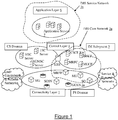
- FIG 1 illustrates schematically how the IMS fits into the mobile network architecture in the case of a General Packet Radio Service (GPRS) access network.
- GPRS General Packet Radio Service
- control of communications occurs at three layers (or planes).
- the lowest layer is the Connectivity Layer 1, also referred to as the bearer or user plane, and through which signals are directed to/from user equipment (UE) accessing the network.
- the entities within the connectivity layer 1 that connect an IMS subscriber to IMS services form a network that is referred to as the IP-Connectivity Access Network, IP-CAN.
- the GPRS network includes various GPRS Support Nodes (GSNs).
- GSN GPRS Support Nodes
- GGSN Gateway GPRS Support Node
- the middle layer is the Control Layer 4, and at the top is the Application Layer 6.
- the IMS 3 includes a core network 3a which operates over the Control Layer 4 and the Connectivity Layer 1, and a service network 3b.
- the IMS core network 3a includes nodes that send/receive signals to/from the GPRS network via the GGSN 2a at the Connectivity Layer 1, as well as network nodes (including Call/Session Control Functions (CSCFs) 5) which operate as SIP proxies within the IMS in the Control Layer 4.
- CSCFs Call/Session Control Functions
- the 3GPP architecture defines three types of CSCFs: the Proxy CSCF (P-CSCF) which is the first point of contact within the IMS for a SIP terminal; the Serving CSCF (S-CSCF) which provides services to the user that the user is subscribed to; and the Interrogating CSCF (I-CSCF) whose role is to identify the correct S-CSCF and to forward to that S-CSCF a request received from a SIP terminal via a P-CSCF.
- P-CSCF Proxy CSCF
- S-CSCF Serving CSCF
- I-CSCF Interrogating CSCF
- the top, Application Layer 6 includes the IMS service network 3b.
- Application Servers (ASs) 7 are provided for implementing IMS service functionality.
- IMS Private User Identities An IMPI is assigned by the subscriber's home network operator, and is used for IMS registration (i.e. for authorization and authentication purposes). This identity shall take the form of a Network Access Identifier (NAI) as defined in RFC 2486.
- NAI Network Access Identifier
- a user may have one or more IMS Public User Identities (IMPUs).
- the Public User Identity/Identities is/are used by any user for requesting communications to other users (in the form of SIP URI -IETF RFC 3261 [26]- or a TEL URL -IETF RFC 3966).
- the relationship between IMPUs and IMPIs is defined by 3GPP Rel-6 onwards.
- a user registers a contact address for an IMPU with the IMS core network, using the SIP Register method. This contact address might, for example, be an IP address currently allocated to the user.
- WO 2006/115479 A1 describes a method for accessing a secure wireless local area network in which a security key is provided to a user only to enable secure wireless communications between the user device and the access point of the WLAN.
- WSPs such as EBAYTM and GOOGLETM
- EBAYTM and GOOGLETM have their own user subscription databases in order, for example, to allows users to access a premium service (paid or unpaid) once they have signed-up and entered some user-id and password into the WSP user database.
- Subscribers to a given WSP represent a community of users having some common interest in the service/information supplied by the WSP.
- the IMS provides a managed multimedia network with security and QoS capabilities. Whilst the IMS is primarily intended for establishing multimedia sessions between users, it may also be used to establish sessions between network servers and users. This makes IMS networks potentially valuable to WSPs, where the IMS network is exposed to the WSPs via some HTTP interface such as REST or SOAP.
- the IMS network can add value to the third party Internet service by allowing web content to be delivered to users via the IMS network, or by allowing users of a third party Internet service community to communicate/interact with each other using the real-time capabilities of the IMS network. For example, a department store web site or an e-commerce web-site may wish to push product information to users, and users may wish to discuss products using real-time multimedia communications. According to this approach, the WSP does not have to invest in (an IMS or other) communications infrastructure, and does not have to manage allocation of IMS IDs.
- Figure 2 illustrates schematically a set of WSPs interacting with an IMS network in order to provide IMS services to their respective user groups.
- the present application concerns a method according to claim 1 and a system according to claim 11.
- a method of enabling users of a third party Internet service who are not necessarily subscribers of an IP Multimedia Subsystem, IMS, network, to access services provided by the IMS network.
- the method comprises registering a user with said third party Internet service via the Internet using an Internet service identity of the user, and sending to the user, from said third party Internet service and via the Internet, IMS network access information, where the access information comprises a temporary IMS user identity selected by the third party Internet service from a pool of IMS user identities reserved by the IMS network for said third party Internet Service, the IMS user identities being pre-provisioned in a Home Subscriber Server of the IMS network, or an authentication token asserted by the third party Internet service for use by the IMS network in registering the user.
- the access information is then used to register the user with the IMS network. If the IMS network access information is an authentication token, the user sends the authentication token to the IMS network at IMS registration, and the IMS network allocates a temporary IMS user identity from the pool of IMS user identities for said third party Internet Service and sends the allocated temporary IMS user identity to the user. Following IMS registration, the user is able to access IMS network services.
- Embodiments of the present invention provide for substantially seamless integration of website-based services and IMS networks.
- the involvement of the IMS network in the provision of services may be hidden to users in some embodiments.
- the identity information may comprise either a temporary IMS user identity or other identifying credential asserted by the third party Internet Service, wherein the user registration with the IMS network requires that the user send to the IMS network said Internet service identity.
- a mapping may be maintained within the IMS network between said temporary IMS user identity, or a temporary IMS user identity allocated to the user by the IMS network, and said Internet service identity.
- the method may comprise sending with said temporary IMS user identity or other identifying credential, an address of an IMS proxy within said IMS network, the user sending an initial IMS Register request to the IMS network using said IMS proxy address.
- the method may comprise sending to the user with said temporary IMS user identity, an associated IMS credential ("password”), the method further comprising using said associated IMS credential during said step of registering with the IMS network, the IMS network using the associated IMS credential to authenticate the user.
- password an associated IMS credential
- the method may comprise pre-provisioning a pool of IMS user identities in a Home Subscriber Server, HSS, of the IMS network and allocating this pool of user identities to said third party Internet service, said temporary IMS user identity being selected from said pool.
- HSS Home Subscriber Server
- the method may comprise a step of generating said temporary IMS user identity on the basis of said Internet service identity.
- said IMS user identity comprises an IMS Private User Identity and an IMS Public User Identity.
- a method of establishing a communication session involving a user comprises using the method of any one of the preceding claims to register the user with a third party Internet service provider and with an IMS network, and subsequently initiating a communication session via the IMS network.
- Said step of initiating a communication session via the IMS network may comprise sending an IMS session initiation request to a proxy server of the IMS network.
- said step of initiating a communication session via the IMS network comprises sending an IMS session initiation request to said third party Internet service, and forwarding the request to the IMS network.
- the method may comprise sending from said user to said third party Internet service, a request for a temporary IMS user identity of a peer user, the request containing an Internet service identity of the peer user.
- said Internet service identity is used to determine the temporary IMS user identity allocated to the peer user, with that IMS user identity being returned to the requesting user, wherein the user initiates said communication using the received temporary IMS user identity.
- the method may comprise using said Internet service identity of the first mentioned user to identify the user to a peer party or parties in the session, the first mentioned user initiating said session using said Internet service identity of the peer user.
- the method may further comprise using said Internet service identity as a part of a P-Preferred-id or FROM header in an INVITE initiating the communication.
- a user terminal for enabling users of a third party Internet service, who are not subscribers of an IP Multimedia Subsystem, IMS, network, to access services provided by the IMS network.
- the terminal comprises an Internet service registration unit for registering the user with said third party Internet service via the Internet using an Internet service identity of the user, and a receiver for receiving, from said third party Internet service and via the Internet, IMS network access information, where the access information comprises a temporary IMS user identity selected by the third party Internet service from a pool of IMS user identities reserved by the IMS network for said third party Internet Service, the IMS user identities being pre-provisioned in a Home Subscriber Server of the IMS network, or an authentication token asserted by the third party Internet service.
- the user terminal further comprises an IMS registration unit for registering the user with the IMS network using said IMS network access information received from said third party Internet service, wherein if the IMS network access information is an authentication token, the IMS registration unit is configured to send the authentication token to the IMS network at IMS registration, and the receiver is configured to receive a temporary IMS user identity allocated by the IMS network from the pool of IMS user identities for said third party Internet Service.
- IMS registration unit for registering the user with the IMS network using said IMS network access information received from said third party Internet service, wherein if the IMS network access information is an authentication token, the IMS registration unit is configured to send the authentication token to the IMS network at IMS registration, and the receiver is configured to receive a temporary IMS user identity allocated by the IMS network from the pool of IMS user identities for said third party Internet Service.
- the receiver may be configured to receive, with said IMS network access information, an address of an IMS proxy within said IMS network, the IMS registration unit being configured to send an initial IMS Register request to the IMS network using said IMS proxy address.
- the receiver may also be configured to receive, with said IMS network access information, an identifying credential, the IMS registration unit being configured to send the identifying credential to the IMS network during said step of registering with the IMS network.
- the user terminal may comprise an IMS communication establishment unit, the unit being configured either to send a communication initiation request to a proxy server of the IMS network, or to send a communication initiation request to said third party Internet service.
- the communication establishment unit may be further configured to send, to said third party Internet service, a request for a temporary IMS user identity of a peer user, the request containing an Internet service identity of the peer user, and to receive in response a temporary IMS user identity of the peer user, and to initiate said communication using the received temporary IMS user identity.
- the communication establishment unit may be configured to initiate said session using an Internet service identity of a peer user.
- a web server for enabling users of a third party Internet service who are not subscribers of an IP Multimedia Subsystem, IMS, network, to access services provided by the IMS network.
- the web server comprises a registration unit for registering a user with said third party Internet service via the Internet using an Internet service identity of the user, and a sending unit for sending to the user IMS network access information, where the access information comprises either a temporary IMS user identity selected by the third party Internet service from a pool of IMS user identities reserved by the IMS network for said third party Internet Service, the IMS user identities being pre-provisioned in a Home Subscriber Server of the IMS network or an authentication token asserted by the third party Internet service for use by the IMS network in registering the user, the authentication token for sending by the user to the IMS network at IMS registration such that the IMS network allocates a temporary IMS user identity from the pool of IMS user identities for said third party Internet Service and sends the allocated temporary IMS user identity to the user.
- a proxy server for use in an IP Multimedia Subsystem, IMS, network.
- the proxy server comprises a registration unit for registering a user in respect of IMS services, including associating the user with a temporary IMS user identity selected from a pool of IMS user identities reserved by the IMS network for a third party Internet Service, and a memory for maintaining a mapping between said temporary user IMS user identity and an Internet service identity.
- the server further comprises an IMS session handling unit for handling IMS sessions involving said user, including using the Internet service identity in place of said temporary IMS user identity in at least certain IMS signalling messages.
- the proxy server may comprise an interface unit for communicating with a Home Subscriber Server of the IMS network in order to provision said mapping in the Home Subscriber Server.
- WSP Web Service Provider
- IMS-based communication sessions in a substantially seamless manner.
- the existing 3GPP specifications assume that the end user has a business (i.e. billing) relationship with the IMS operator and so obtains IMS user identifiers, typically an IMS Private User Identity (IMPI) and one or more IMS Public User Identities (IMPU), directly from the IMS operator.
- IMPI IMS Private User Identity
- IMPU IMS Public User Identities
- WSP is used to refer both to a Wireless Service Provider per se, as well as to a web site/service operated by such a provider.
- a solution to the above problem is for an IMS network operator to allocate a block of IMS user identities to a given WSP, with these identities being allocated dynamically, and upon demand, to WSP users.
- the required functionality may be implemented in one or more of the Home Subscriber Server (HSS), Proxy-CSCF (P-CSCF), and Serving-CSCF (S-CSCF).
- HSS Home Subscriber Server
- P-CSCF Proxy-CSCF
- S-CSCF Serving-CSCF
- the WSP users may make use of the IMS services whilst utilising their WSP identities, e.g. so that the IMS identities remain essentially hidden form the WSP users.
- the current IMS architectural model does not provide a mechanism for managing different sets of user identities in this way. As such, issues that must be addressed to introduce IMS services include:
- An approach that is presented here aims to provide an efficient mechanism for allocating a set of IMS user IDs to a third party (e.g. WSP).
- WSP third party
- the approach allows the IMS Operator to dynamically allocate these IMS user IDs to users of the WSP web-site.
- the WSP can then provide communication services to its users using sessions established over the IMS network, and, due to the dynamic allocation, keep the total number of IMS identities required to a minimum.
- the IMS Operator reserve a set of IMS IDs (from an unused pool of IMS IDs - the IMS Operator ensures that these IDs are not to be allocated either for their own use or for use by other WSPs) for use by the WSP.
- the IMS Operator provisions new "virtual" WSP users in the HSS for the allocated IMS IDs. Typically, one virtual WSP user is provisioned for each IMPI/IMPU pair. At this stage the WSP is not informed of the allocated IMS user IDs.
- the user client software now registers with the IMS network.
- the authentication token and the WSP User ID are included in the REGISTER request, together with a contact address for the user.
- the IMS network uses the WSP user ID and token to determine that the user is allowed to use the IMS network, and also implements any policy agreed with the WSP such as the maximum number of concurrent users, and then allocates a temporary IMS ID to the user. This is returned as part of the response (200 OK) to the REGISTER request.
- the IMS network stores the mapping between WSP User ID and the temporary IMS ID (for example in the S-CSCF or HSS).
- FIG. 3 illustrates certain provisioning and user logon steps.
- the block of IMS IDs are allocated by the IMS Operator to the WSP as part of establishing the business agreement. This requires that the IMS operator ("telco") allocated the address block to the WSP and provisions the HSS with the allocated IDs (step 1). These IDs are now available when the WSP user wants to invoke communications services with other users of the web site community.
- telco the IMS operator
- a user To use an IMS-based service, a user must first logon to the WSP website and retrieve a token from the WSP (step 2), and then register with the IMS using the WSP ID and the token (step 3) in order to receive a temporary IMS user ID from the IMS network.
- User A client software initiates an IMS communication (e.g. a voice call) with User B, providing the (temporary) IMS ID of A , and also the WSP user IDs of A and B.
- the IMS network looks up the temporary IMS ID of B based upon the input WSP user ID of B. The IMS network then completes the IMS communication towards user B.
- User A requests the WSP website to connect him/her to another User B who is active on the website and available for IMS communications.
- the website initiates a web-services/REST request to the IMS network asking that Users A and B be connected.
- the IMS Network looks up the temporary IMS IDs of User A and User B and connects the users based upon these IMS IDs.
- the WSP user IDs of A and B are also supplied in the IMS communication.
- IMS UNREGISTER occurs and the IMS ID temporarily allocated to that user is returned to IMS ID pool for re-allocation to another WSP web-site user. This reduces the number of IMS IDs that the WSP needs to acquire from the IMS operator.
- the WSP may wish to remove a temporary IMS ID from a WSP user prior to the user logging-of the website, or indeed may wish to allow the user to retain the IMS ID for some time after logging-off, e.g. depending on demand.
- the approach described above is targeted to communication between users of a closed group, e.g. WSP registered users.
- a closed group e.g. WSP registered users.
- a user allocated a temporary IMS ID cannot also communicate with another IMS user outside of the group.
- the IMS operator knows the mapping between WSP user IDs and IMS user IDs, so can track the usage of real-time communications by the WSP users. This can provide added value to the communications offered by the WSP website. It is possible to identify malicious calls, intercept calls and provide itemized call detail records.
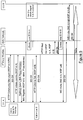
- Figure 4 illustrates the IMS service provision procedure in more detail, in the case of a User A seeking to establish an IMS-based session with a User B.
- This example relates to a client-based realisation, where the client initiates the IMS communication by sending the IMS INVITE directly to the IMS network.
- Figure 5 illustrates an alternative scenario, again for the case of a User B initiating a communication with User B, but where the WSP signals to the IMS network to initiate the session set-up.
- IMS network An alternative to allowing the IMS network to dynamically allocate the temporary IMS user IDs is to implement this dynamic allocation function within the WSP.
- the IMS Operator reserves a set of IMS IDs from the unused pool of IMS IDs for use by the WSP.
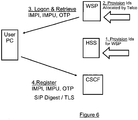
- the IMS operator provisions a set of new, virtual users in the HSS. This process is illustrated in Figure 6 which illustrates the (additional) step of the IMS network ("telco") initially identifying the allocated block of IMS user IDs to the WSP.
- the WSP provisions these IMS IDs into its website or back-office systems.
- the user client software After successful log-on by the WSP user, the user client software requests the WSP website to enable real-time communications.
- the website (and back-office systems if necessary) executes an allocation policy for IMS IDs, and allocates a temporary IMS ID to the user from those available in the pool, and stores the mapping between WSP website user ID and temporary IMS ID.
- the website responds to the user request and supplies the temporary IMS ID, the associated password ("pw"), and the address of the IMS P-CSCF to be used. This redirects the user client software to the IMS network.
- the user client software now registers with the IMS network, including the temporary IMS ID and the password in the REGISTER message.
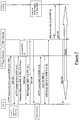
- FIG. 7 illustrates a procedure according to the option 1 approach, where User A obtains User B's temporary IMS ID from the WSP, before sending an INVITE, containing the IMS IDs of both user A and User B, to the IMS network.
- the INVITE also contains the WSP IDs of both parties.
- Figure 8 illustrates a procedure according to the option 2 approach, where it is the WSP that is responsible for instructing the IMS network to initiate the IMS connection by sending the HTTP REST to the IMS network, this message including the IMS IDs of user A and user B.
- An alternative approach to the temporary allocation of IMS user IDs involves algorithmically deriving these IDs from the WSP user IDs. These algorithmic IMS user IDs are not initially provisioned in the HSS, so do not consume HSS resources.
- the user client software requests the WSP website to enable real-time IMS-based communications.
- the website now requests the IMS network to provision the algorithmic IMS user ID into the HSS.
- the IMS network provides the allocated IMS ID to the website.
- the website responds to the user with the algorithmic IMS ID, and the user client software now registers with the IMS network.
- the algorithmic approach to IMS user ID allocation may also be employed in the case where the WSP is responsible for IMS user ID allocation.
- the algorithm is known both to the IMS operator and to the WSP.
- the user client application software required to implement any one of the above approaches may be based around a web browser. Using such a browser, the user is able to access and logon to the WSP website.
- new functionality may be required in the browser.
- a browser plugin may be provided which implements IMS client functionality, and which is responsible for receiving the Redirect response from the WSP, for handling IMS registration, and for initiating the IMS connection.
- this new functionality may be implemented by other means, such as a standalone application having an interface with the web browser.
- FIG. 9 is a flow diagram providing a high level illustration of the process for allowing WSP users to access IMS network services.
- the user terminal
- the user identity At this stage, the user is typically able to access the normal WSP services.
- the user if the user wishes to access IMS (enhanced) services, then at step S2 the user makes a request for such access.
- the WSP selects a temporary IMS user ID and forwards this to the user. If the IMS allocation approach is employed, then the WSP provides a token to the user.
- the user performs IMS registration using the IMS network access information provided by the WSP.
- the IMS network selects or generates a temporary IMS ID for the user.
- the IMS network registers the user. This may involve the P-CSCF/S-CSCF interacting with the HSS.
- the IMS network maintains a mapping between the WSP and IMS user ID.
- the user may initiate an IMS communication (either by signalling directly to the IMS network or via the WSP website).
- the terminal may be, for example, a computer such as a desktop or laptop pc, or may be a PDA, smartphone etc.
- the terminal comprises software and hardware implementing: a WSP website registration unit 11; a receiver 12 for receiving, from said third party Internet service and via the Internet, IMS network access information; and an IMS registration unit 13 for registering the user with the IMS network using said IMS network access information.
- the WSP registration unit and the receiver may be implemented within a web browser 14, whilst the IMS registration unit may be implemented as a web browser plugin.
- FIG 11 illustrates a WSP server 15, which may comprise software and hardware.
- the server implements a WSP user registration unit 16 for registering WSP users on the basis of their WSP user identities.
- the server also comprises a sending unit 17 for handling IMS service requests and for sending to (requesting) users IMS access information (for example a token or IMS user ID).
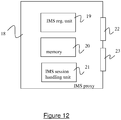
- Figure 12 illustrates schematically an IMS proxy server, e.g. S-CSCF, 18 which again comprises hardware and software components.
- the proxy server implements an IMS registration unit 19, as well as a memory 20 for storing mappings between WSP user identities and temporary IMS user identities.
- a (standard) IMS session handling unit 21 is provided for establishing and controlling IMS sessions.
- the server has a first interface 22 for enabling communication with an HSS (of the IMS network) whilst a second interface 23 allows the server to communicate with the WSP server (if required).
Landscapes
- Engineering & Computer Science (AREA)
- Computer Networks & Wireless Communication (AREA)
- Signal Processing (AREA)
- Multimedia (AREA)
- Computer Security & Cryptography (AREA)
- Computer Hardware Design (AREA)
- Computing Systems (AREA)
- General Engineering & Computer Science (AREA)
- Business, Economics & Management (AREA)
- General Business, Economics & Management (AREA)
- Mobile Radio Communication Systems (AREA)
Claims (11)
- Verfahren zum Ermöglichen, dass Benutzer eines drittseitigen Internetdienstes, die nicht unbedingt Teilnehmer eines Netzwerks des IP-Multimediasubsystems, IMS, sind, auf durch das IMS-Netzwerk bereitgestellte Dienste zugreifen können, wobei das Verfahren umfasst:Registrieren (S1) eines Benutzers bei dem drittseitigen Internetdienst über das Internet unter Verwendung einer Internetdienstkennung des Benutzers;Senden (S3) von IMS-Netzwerkzugangsinformation vom drittseitigen Internetdienst über das Internet an den Benutzer, worin die IMS-Netzwerkzugangsinformation umfasst:entweder eine zeitweilige IMS-Benutzerkennung, die durch den drittseitigen Internetdienst aus einem Vorrat von IMS-Benutzerkennungen ausgewählt wurde, die durch das IMS-Netzwerk für den drittseitigen Internetdienst reserviert wurden, wobei die IMS-Benutzerkennungen in einem Heimatteilnehmerserver des IMS-Netzwerks vorgehalten werden, oderein Authentifizierungstoken, das durch den drittseitigen Internetdienst zur Verwendung durch das IMS-Netzwerk beim Registrieren des Benutzers ausgegeben wird; undVerwenden (S4, S5) der vom drittseitigen Internetdienst gesendeten IMS-Netzwerkzugangsinformation, um den Benutzer beim IMS-Netzwerk zu registrieren, worin, wenn die IMS-Netzwerkzugangsinformation ein Authentifizierungstoken ist, der Benutzer bei der IMS-Registrierung das Authentifizierungstoken an das IMS-Netzwerk sendet und das IMS-Netzwerk eine zeitweilige IMS-Benutzerkennung aus dem Vorrat von IMS-Benutzerkennungen für den drittseitigen Internetdienst zuteilt und die zugeteilte zeitweilige IMS-Benutzerkennung an den Benutzer sendet,worin der Benutzer im Anschluss an die IMS-Registrierung imstande ist, auf IMS-Netzwerkdienste zuzugreifen (S6).
- Verfahren nach Anspruch 1, worin die Benutzerregistrierung beim IMS-Netzwerk erfordert, dass der Benutzer die Internetdienstkennung an das IMS-Netzwerk sendet; und das Verfahren ferner umfasst:innerhalb des IMS-Netzwerks erfolgendes Führen einer Zuordnung zwischen der zeitweiligen IMS-Benutzerkennung oder einer dem Benutzer durch das IMS-Netzwerk zugeteilten zeitweiligen IMS-Benutzerkennung und der Internetdienstkennung.
- Verfahren nach Anspruch 1 oder 2 und umfassend: Senden einer Adresse eines IMS-Proxy innerhalb des IMS-Netzwerks mit der zeitweiligen IMS-Benutzerkennung oder dem Authentifizierungstoken, wobei der Benutzer unter Verwendung der IMS-Proxyadresse eine anfängliche IMS-Registrierungsanfrage an das IMS-Netzwerk sendet.
- Verfahren nach einem der vorhergehenden Ansprüche und umfassend: Senden eines zugeordneten IMS-Berechtigungsnachweises an den Benutzer mit der zeitweiligen IMS-Benutzerkennung, wobei das Verfahren ferner umfasst: Verwenden des zugeordneten IMS-Berechtigungsnachweises während des Schrittes des Registrierens beim IMS-Netzwerk, wobei das IMS-Netzwerk den zugeordneten IMS-Berechtigungsnachweis verwendet, um den Benutzer zu authentifizieren.
- Verfahren nach Anspruch 1 und umfassend: Vorhalten des Vorrats von IMS-Benutzerkennungen in einem Heimatteilnehmerserver, HSS, des IMS-Netzwerks und Zuteilen dieses Vorrats von Benutzerkennungen zu dem drittseitigen Internetdienst, wobei die zeitweilige IMS-Benutzerkennung aus dem Vorrat ausgewählt wird.
- Verfahren nach Anspruch 1 und einen Schritt des Erzeugens der zeitweiligen IMS-Benutzerkennung auf der Grundlage der Internetdienstkennung umfassend.
- Verfahren zum Einrichten einer Kommunikationssitzung, die einen Benutzer betrifft, wobei das Verfahren umfasst: Verwenden des Verfahrens nach einem der vorhergehenden Ansprüche, um den Benutzer bei einem drittseitigen Internetdienstanbieter und bei einem IMS-Netzwerk zu registrieren, und anschließend Einleiten einer Kommunikationssitzung über das IMS-Netzwerk.
- Verfahren nach Anspruch 7, worin der Schritt des Einleitens einer Kommunikationssitzung über das IMS-Netzwerk umfasst: Senden einer IMS-Sitzungseinleitungsanfrage an:einen Proxy-Server des IMS-Netzwerks; oderden drittseitigen Internetdienst, und Weiterleiten der Anfrage an das IMS-Netzwerk.
- Verfahren nach Anspruch 7 oder 8 und umfassend: Senden einer Anfrage für eine zeitweilige IMS-Benutzerkennung eines Peer-Benutzers von dem Benutzer an den drittseitigen Internetdienst, wobei die Anfrage eine Internetdienstkennung des Peer-Benutzers enthält; beim drittseitigen Internetdienst erfolgendes Verwenden der Internetdienstkennung, um die dem Peer-Benutzer zugeteilte zeitweilige IMS-Benutzerkennung zu bestimmen; und Zurücksenden dieser IMS-Benutzerkennung an den anfragenden Benutzer, worin der Benutzer die Kommunikation unter Verwendung der empfangenen IMS-Benutzerkennung einleitet.
- Verfahren nach Anspruch 7 oder 8 und umfassend: Verwenden der Internetdienstkennung des zuerst erwähnten Benutzers, um den Benutzer gegenüber einer Peer-Seite oder -Seiten in der Sitzung zu identifizieren, wobei der zuerst erwähnte Benutzer die Sitzung unter Verwendung der Internetdienstkennung des Peer-Benutzers einleitet; und
ferner umfassend: Verwenden der Internetdienstkennung als Teil eines P-Preferred-ID- oder FROM-Headers in einem INVITE, das die Kommunikation einleitet. - System zum Ermöglichen, dass Benutzer eines drittseitigen Internetdienstes, die nicht unbedingt Teilnehmer eines Netzwerks des IP-Multimediasubsystems, IMS, sind, auf durch das IMS-Netzwerk bereitgestellte Dienste zugreifen können, wobei das System ein Benutzerendgerät (10), einen drittseitigen Internetdienst, ein IMS-Netzwerk und einen Heimatteilnehmerserver des IMS-Netzwerks umfasst, worin das System dafür konfiguriert ist, die Verfahrensschritte nach einem der Ansprüche 1 bis 10 durchzuführen.
Applications Claiming Priority (1)
| Application Number | Priority Date | Filing Date | Title |
|---|---|---|---|
| PCT/EP2010/051802 WO2011098138A1 (en) | 2010-02-12 | 2010-02-12 | Ip multimedia subsystem user identity handling method and apparatus |
Publications (2)
| Publication Number | Publication Date |
|---|---|
| EP2534863A1 EP2534863A1 (de) | 2012-12-19 |
| EP2534863B1 true EP2534863B1 (de) | 2017-12-27 |
Family
ID=42732617
Family Applications (1)
| Application Number | Title | Priority Date | Filing Date |
|---|---|---|---|
| EP10705842.2A Active EP2534863B1 (de) | 2010-02-12 | 2010-02-12 | Handhabung von benutzeridentitäten eines ip-multimediasubsystems (ims) |
Country Status (3)
| Country | Link |
|---|---|
| US (1) | US8844011B2 (de) |
| EP (1) | EP2534863B1 (de) |
| WO (1) | WO2011098138A1 (de) |
Families Citing this family (15)
| Publication number | Priority date | Publication date | Assignee | Title |
|---|---|---|---|---|
| CN103516675A (zh) * | 2012-06-21 | 2014-01-15 | 华为软件技术有限公司 | 资源标识共享方法、终端和管理平台 |
| US9130919B2 (en) * | 2012-10-15 | 2015-09-08 | Verizon Patent And Licensing Inc. | Hosted IMS instance with authentication framework for network-based applications |
| US9686284B2 (en) | 2013-03-07 | 2017-06-20 | T-Mobile Usa, Inc. | Extending and re-using an IP multimedia subsystem (IMS) |
| US9992183B2 (en) * | 2013-03-15 | 2018-06-05 | T-Mobile Usa, Inc. | Using an IP multimedia subsystem for HTTP session authentication |
| CN104168176B (zh) * | 2013-05-16 | 2018-08-24 | 深圳中兴网信科技有限公司 | 一种即时通讯方法、客户端、服务器及系统 |
| CN103546459A (zh) * | 2013-09-22 | 2014-01-29 | 中兴通讯股份有限公司 | 一种基于会话初始协议进行会话的方法、终端及服务器 |
| WO2015093058A1 (en) * | 2013-12-19 | 2015-06-25 | Nec Corporation | APPARATUS, SYSTEM AND METHOD FOR webRTC |
| CN104767721B (zh) * | 2014-01-08 | 2019-03-15 | 阿尔卡特朗讯公司 | 向第三方用户提供核心网络服务的方法和网络单元 |
| US10942992B2 (en) | 2014-10-23 | 2021-03-09 | Level 3 Communications, Llc | Identification token in a collaboration conferencing system |
| US10320722B2 (en) | 2014-10-23 | 2019-06-11 | Level 3 Communications, Llc | Subscription/notification of a conference in a collaboration conferencing system |
| US20160315804A1 (en) * | 2015-04-27 | 2016-10-27 | iQuate Inc. | Method and system for unique enduring identification of a hardware or software entity within an it landscape |
| US11297111B2 (en) * | 2015-06-30 | 2022-04-05 | Blackberry Limited | Establishing a session initiation protocol session |
| CA3011969A1 (en) * | 2016-01-22 | 2017-07-27 | Blackberry Limited | Access point name determination for mission critical services |
| US10708312B2 (en) * | 2017-04-05 | 2020-07-07 | T-Mobile Usa, Inc. | Third party IMS services |
| US10715996B1 (en) | 2019-06-06 | 2020-07-14 | T-Mobile Usa, Inc. | Transparent provisioning of a third-party service for a user device on a telecommunications network |
Citations (1)
| Publication number | Priority date | Publication date | Assignee | Title |
|---|---|---|---|---|
| US20080084857A1 (en) * | 2006-10-09 | 2008-04-10 | At&T Knowledge Ventures, L.P. | Method and apparatus for delivering ip multimedia subsystem services |
Family Cites Families (7)
| Publication number | Priority date | Publication date | Assignee | Title |
|---|---|---|---|---|
| US7908484B2 (en) * | 2003-08-22 | 2011-03-15 | Nokia Corporation | Method of protecting digest authentication and key agreement (AKA) against man-in-the-middle (MITM) attack |
| US7454623B2 (en) * | 2004-06-16 | 2008-11-18 | Blame Canada Holdings Inc | Distributed hierarchical identity management system authentication mechanisms |
| EP3021553A1 (de) | 2005-04-22 | 2016-05-18 | Thomson Licensing | Verfahren und vorrichtungen für einen sicheren, anonymen wlan-zugang |
| FR2902268A1 (fr) * | 2006-06-08 | 2007-12-14 | France Telecom | Systeme d'acces a un service de television sur ip dans un reseau a architecture ims |
| EP2007098A1 (de) * | 2007-06-18 | 2008-12-24 | Nokia Siemens Networks Oy | Verfahren, Vorrichtungen und Computerprogrammprodukt zur Autorisierung eines Benutzergerätes basierend auf übereinstimmenden netzwerkzugangstechnologie-spezifischen Identifizierungsinformation |
| CN101946536B (zh) * | 2008-02-15 | 2015-07-15 | 艾利森电话股份有限公司 | 演进网络中的应用特定的主密钥选择 |
| US8503361B2 (en) * | 2010-01-29 | 2013-08-06 | Infineon Technologies Ag | Enabling IMS services for non-IMS UEs via a home base station subsystem |
-
2010
- 2010-02-12 EP EP10705842.2A patent/EP2534863B1/de active Active
- 2010-02-12 WO PCT/EP2010/051802 patent/WO2011098138A1/en not_active Ceased
- 2010-02-12 US US13/576,204 patent/US8844011B2/en active Active
Patent Citations (1)
| Publication number | Priority date | Publication date | Assignee | Title |
|---|---|---|---|---|
| US20080084857A1 (en) * | 2006-10-09 | 2008-04-10 | At&T Knowledge Ventures, L.P. | Method and apparatus for delivering ip multimedia subsystem services |
Also Published As
| Publication number | Publication date |
|---|---|
| US8844011B2 (en) | 2014-09-23 |
| WO2011098138A1 (en) | 2011-08-18 |
| US20130081123A1 (en) | 2013-03-28 |
| EP2534863A1 (de) | 2012-12-19 |
Similar Documents
| Publication | Publication Date | Title |
|---|---|---|
| EP2534863B1 (de) | Handhabung von benutzeridentitäten eines ip-multimediasubsystems (ims) | |
| RU2413391C2 (ru) | Управление профилями услуг в ims | |
| EP2371154B1 (de) | Erstellung eines global eindeutigen identifikators für eine teilnehmervorrichtung | |
| US9077591B2 (en) | Dias-dynamic IMPU assignment service | |
| US20090089435A1 (en) | Method for initiating IMS based communications | |
| EP2347562B1 (de) | Ip-multimedia-subsystem-benutzeridentitätsabwicklung | |
| US9077721B2 (en) | Methods and apparatus for registering or deregistering a user to or from an IP multimedia subsystem | |
| CN1988722A (zh) | 在漫游状态下进行策略控制的方法 | |
| WO2006099815A1 (en) | A method for implementing the user registering in the ip multimedia subsystem and the system thereof | |
| EP2250791A1 (de) | Sicherung von kontaktinformationen | |
| EP2790426A1 (de) | Verfahren und Vorrichtung zur Befähigung eines Aggregation/Authentication Proxies, XCAP messages zu einem IMS Application Server zu routen | |
| CN101563903B (zh) | 用于向用户提供ip多媒体子系统通信服务的方法和设备 | |
| CN103053149B (zh) | 用于分组数据连接中的紧急服务的注册的方法和设备 | |
| EP2119178B1 (de) | Verfahren und vorrichtungen zur bereitstellung von netzwerkdiensten, die durch einen satz von servern in einem ims-netz angeboten werden | |
| CN106790055A (zh) | 一种ims系统的注册方法与装置 | |
| WO2008117165A2 (en) | Methods, apparatuses and computer program product for forwarding emergency registration request to a home network | |
| US20150032791A1 (en) | Method and application for controlling application server invocation in an ims | |
| EP3016364B1 (de) | Dauerbasiertes routing | |
| SB et al. | ’Diameter-based Protocol in the IP Multimedia Subsystem | |
| HK1140327B (en) | Group access to ip multimedia subsystem service |
Legal Events
| Date | Code | Title | Description |
|---|---|---|---|
| PUAI | Public reference made under article 153(3) epc to a published international application that has entered the european phase |
Free format text: ORIGINAL CODE: 0009012 |
|
| 17P | Request for examination filed |
Effective date: 20120810 |
|
| AK | Designated contracting states |
Kind code of ref document: A1 Designated state(s): AT BE BG CH CY CZ DE DK EE ES FI FR GB GR HR HU IE IS IT LI LT LU LV MC MK MT NL NO PL PT RO SE SI SK SM TR |
|
| DAX | Request for extension of the european patent (deleted) | ||
| 17Q | First examination report despatched |
Effective date: 20130517 |
|
| RAP1 | Party data changed (applicant data changed or rights of an application transferred) |
Owner name: TELEFONAKTIEBOLAGET L M ERICSSON (PUBL) |
|
| GRAP | Despatch of communication of intention to grant a patent |
Free format text: ORIGINAL CODE: EPIDOSNIGR1 |
|
| STAA | Information on the status of an ep patent application or granted ep patent |
Free format text: STATUS: GRANT OF PATENT IS INTENDED |
|
| RIC1 | Information provided on ipc code assigned before grant |
Ipc: H04W 12/04 20090101AFI20170814BHEP Ipc: H04W 80/10 20090101ALN20170814BHEP Ipc: H04L 29/06 20060101ALI20170814BHEP |
|
| INTG | Intention to grant announced |
Effective date: 20170830 |
|
| GRAS | Grant fee paid |
Free format text: ORIGINAL CODE: EPIDOSNIGR3 |
|
| GRAA | (expected) grant |
Free format text: ORIGINAL CODE: 0009210 |
|
| STAA | Information on the status of an ep patent application or granted ep patent |
Free format text: STATUS: THE PATENT HAS BEEN GRANTED |
|
| AK | Designated contracting states |
Kind code of ref document: B1 Designated state(s): AT BE BG CH CY CZ DE DK EE ES FI FR GB GR HR HU IE IS IT LI LT LU LV MC MK MT NL NO PL PT RO SE SI SK SM TR |
|
| REG | Reference to a national code |
Ref country code: GB Ref legal event code: FG4D |
|
| REG | Reference to a national code |
Ref country code: CH Ref legal event code: EP |
|
| REG | Reference to a national code |
Ref country code: AT Ref legal event code: REF Ref document number: 959288 Country of ref document: AT Kind code of ref document: T Effective date: 20180115 |
|
| REG | Reference to a national code |
Ref country code: IE Ref legal event code: FG4D |
|
| REG | Reference to a national code |
Ref country code: DE Ref legal event code: R096 Ref document number: 602010047627 Country of ref document: DE |
|
| REG | Reference to a national code |
Ref country code: FR Ref legal event code: PLFP Year of fee payment: 9 |
|
| PG25 | Lapsed in a contracting state [announced via postgrant information from national office to epo] |
Ref country code: LT Free format text: LAPSE BECAUSE OF FAILURE TO SUBMIT A TRANSLATION OF THE DESCRIPTION OR TO PAY THE FEE WITHIN THE PRESCRIBED TIME-LIMIT Effective date: 20171227 Ref country code: FI Free format text: LAPSE BECAUSE OF FAILURE TO SUBMIT A TRANSLATION OF THE DESCRIPTION OR TO PAY THE FEE WITHIN THE PRESCRIBED TIME-LIMIT Effective date: 20171227 Ref country code: NO Free format text: LAPSE BECAUSE OF FAILURE TO SUBMIT A TRANSLATION OF THE DESCRIPTION OR TO PAY THE FEE WITHIN THE PRESCRIBED TIME-LIMIT Effective date: 20180327 |
|
| REG | Reference to a national code |
Ref country code: NL Ref legal event code: MP Effective date: 20171227 |
|
| REG | Reference to a national code |
Ref country code: LT Ref legal event code: MG4D |
|
| REG | Reference to a national code |
Ref country code: AT Ref legal event code: MK05 Ref document number: 959288 Country of ref document: AT Kind code of ref document: T Effective date: 20171227 |
|
| PG25 | Lapsed in a contracting state [announced via postgrant information from national office to epo] |
Ref country code: LV Free format text: LAPSE BECAUSE OF FAILURE TO SUBMIT A TRANSLATION OF THE DESCRIPTION OR TO PAY THE FEE WITHIN THE PRESCRIBED TIME-LIMIT Effective date: 20171227 Ref country code: GR Free format text: LAPSE BECAUSE OF FAILURE TO SUBMIT A TRANSLATION OF THE DESCRIPTION OR TO PAY THE FEE WITHIN THE PRESCRIBED TIME-LIMIT Effective date: 20180328 Ref country code: HR Free format text: LAPSE BECAUSE OF FAILURE TO SUBMIT A TRANSLATION OF THE DESCRIPTION OR TO PAY THE FEE WITHIN THE PRESCRIBED TIME-LIMIT Effective date: 20171227 Ref country code: BG Free format text: LAPSE BECAUSE OF FAILURE TO SUBMIT A TRANSLATION OF THE DESCRIPTION OR TO PAY THE FEE WITHIN THE PRESCRIBED TIME-LIMIT Effective date: 20180327 |
|
| PG25 | Lapsed in a contracting state [announced via postgrant information from national office to epo] |
Ref country code: NL Free format text: LAPSE BECAUSE OF FAILURE TO SUBMIT A TRANSLATION OF THE DESCRIPTION OR TO PAY THE FEE WITHIN THE PRESCRIBED TIME-LIMIT Effective date: 20171227 |
|
| PG25 | Lapsed in a contracting state [announced via postgrant information from national office to epo] |
Ref country code: EE Free format text: LAPSE BECAUSE OF FAILURE TO SUBMIT A TRANSLATION OF THE DESCRIPTION OR TO PAY THE FEE WITHIN THE PRESCRIBED TIME-LIMIT Effective date: 20171227 Ref country code: CY Free format text: LAPSE BECAUSE OF FAILURE TO SUBMIT A TRANSLATION OF THE DESCRIPTION OR TO PAY THE FEE WITHIN THE PRESCRIBED TIME-LIMIT Effective date: 20171227 Ref country code: SK Free format text: LAPSE BECAUSE OF FAILURE TO SUBMIT A TRANSLATION OF THE DESCRIPTION OR TO PAY THE FEE WITHIN THE PRESCRIBED TIME-LIMIT Effective date: 20171227 Ref country code: ES Free format text: LAPSE BECAUSE OF FAILURE TO SUBMIT A TRANSLATION OF THE DESCRIPTION OR TO PAY THE FEE WITHIN THE PRESCRIBED TIME-LIMIT Effective date: 20171227 Ref country code: CZ Free format text: LAPSE BECAUSE OF FAILURE TO SUBMIT A TRANSLATION OF THE DESCRIPTION OR TO PAY THE FEE WITHIN THE PRESCRIBED TIME-LIMIT Effective date: 20171227 |
|
| PG25 | Lapsed in a contracting state [announced via postgrant information from national office to epo] |
Ref country code: AT Free format text: LAPSE BECAUSE OF FAILURE TO SUBMIT A TRANSLATION OF THE DESCRIPTION OR TO PAY THE FEE WITHIN THE PRESCRIBED TIME-LIMIT Effective date: 20171227 Ref country code: PL Free format text: LAPSE BECAUSE OF FAILURE TO SUBMIT A TRANSLATION OF THE DESCRIPTION OR TO PAY THE FEE WITHIN THE PRESCRIBED TIME-LIMIT Effective date: 20171227 Ref country code: SM Free format text: LAPSE BECAUSE OF FAILURE TO SUBMIT A TRANSLATION OF THE DESCRIPTION OR TO PAY THE FEE WITHIN THE PRESCRIBED TIME-LIMIT Effective date: 20171227 Ref country code: IT Free format text: LAPSE BECAUSE OF FAILURE TO SUBMIT A TRANSLATION OF THE DESCRIPTION OR TO PAY THE FEE WITHIN THE PRESCRIBED TIME-LIMIT Effective date: 20171227 Ref country code: RO Free format text: LAPSE BECAUSE OF FAILURE TO SUBMIT A TRANSLATION OF THE DESCRIPTION OR TO PAY THE FEE WITHIN THE PRESCRIBED TIME-LIMIT Effective date: 20171227 Ref country code: IS Free format text: LAPSE BECAUSE OF FAILURE TO SUBMIT A TRANSLATION OF THE DESCRIPTION OR TO PAY THE FEE WITHIN THE PRESCRIBED TIME-LIMIT Effective date: 20180427 |
|
| REG | Reference to a national code |
Ref country code: CH Ref legal event code: PL |
|
| PG25 | Lapsed in a contracting state [announced via postgrant information from national office to epo] |
Ref country code: MC Free format text: LAPSE BECAUSE OF FAILURE TO SUBMIT A TRANSLATION OF THE DESCRIPTION OR TO PAY THE FEE WITHIN THE PRESCRIBED TIME-LIMIT Effective date: 20171227 |
|
| REG | Reference to a national code |
Ref country code: DE Ref legal event code: R097 Ref document number: 602010047627 Country of ref document: DE |
|
| PLBE | No opposition filed within time limit |
Free format text: ORIGINAL CODE: 0009261 |
|
| STAA | Information on the status of an ep patent application or granted ep patent |
Free format text: STATUS: NO OPPOSITION FILED WITHIN TIME LIMIT |
|
| REG | Reference to a national code |
Ref country code: IE Ref legal event code: MM4A |
|
| REG | Reference to a national code |
Ref country code: BE Ref legal event code: MM Effective date: 20180228 |
|
| PG25 | Lapsed in a contracting state [announced via postgrant information from national office to epo] |
Ref country code: LU Free format text: LAPSE BECAUSE OF NON-PAYMENT OF DUE FEES Effective date: 20180212 Ref country code: LI Free format text: LAPSE BECAUSE OF NON-PAYMENT OF DUE FEES Effective date: 20180228 Ref country code: CH Free format text: LAPSE BECAUSE OF NON-PAYMENT OF DUE FEES Effective date: 20180228 Ref country code: DK Free format text: LAPSE BECAUSE OF FAILURE TO SUBMIT A TRANSLATION OF THE DESCRIPTION OR TO PAY THE FEE WITHIN THE PRESCRIBED TIME-LIMIT Effective date: 20171227 |
|
| 26N | No opposition filed |
Effective date: 20180928 |
|
| PG25 | Lapsed in a contracting state [announced via postgrant information from national office to epo] |
Ref country code: IE Free format text: LAPSE BECAUSE OF NON-PAYMENT OF DUE FEES Effective date: 20180212 |
|
| PG25 | Lapsed in a contracting state [announced via postgrant information from national office to epo] |
Ref country code: SI Free format text: LAPSE BECAUSE OF FAILURE TO SUBMIT A TRANSLATION OF THE DESCRIPTION OR TO PAY THE FEE WITHIN THE PRESCRIBED TIME-LIMIT Effective date: 20171227 Ref country code: BE Free format text: LAPSE BECAUSE OF NON-PAYMENT OF DUE FEES Effective date: 20180228 |
|
| PG25 | Lapsed in a contracting state [announced via postgrant information from national office to epo] |
Ref country code: MT Free format text: LAPSE BECAUSE OF NON-PAYMENT OF DUE FEES Effective date: 20180212 |
|
| PG25 | Lapsed in a contracting state [announced via postgrant information from national office to epo] |
Ref country code: TR Free format text: LAPSE BECAUSE OF FAILURE TO SUBMIT A TRANSLATION OF THE DESCRIPTION OR TO PAY THE FEE WITHIN THE PRESCRIBED TIME-LIMIT Effective date: 20171227 |
|
| PG25 | Lapsed in a contracting state [announced via postgrant information from national office to epo] |
Ref country code: HU Free format text: LAPSE BECAUSE OF FAILURE TO SUBMIT A TRANSLATION OF THE DESCRIPTION OR TO PAY THE FEE WITHIN THE PRESCRIBED TIME-LIMIT; INVALID AB INITIO Effective date: 20100212 Ref country code: PT Free format text: LAPSE BECAUSE OF FAILURE TO SUBMIT A TRANSLATION OF THE DESCRIPTION OR TO PAY THE FEE WITHIN THE PRESCRIBED TIME-LIMIT Effective date: 20171227 |
|
| PG25 | Lapsed in a contracting state [announced via postgrant information from national office to epo] |
Ref country code: SE Free format text: LAPSE BECAUSE OF FAILURE TO SUBMIT A TRANSLATION OF THE DESCRIPTION OR TO PAY THE FEE WITHIN THE PRESCRIBED TIME-LIMIT Effective date: 20171227 Ref country code: MK Free format text: LAPSE BECAUSE OF NON-PAYMENT OF DUE FEES Effective date: 20171227 |
|
| PGFP | Annual fee paid to national office [announced via postgrant information from national office to epo] |
Ref country code: GB Payment date: 20210225 Year of fee payment: 12 |
|
| GBPC | Gb: european patent ceased through non-payment of renewal fee |
Effective date: 20220212 |
|
| PG25 | Lapsed in a contracting state [announced via postgrant information from national office to epo] |
Ref country code: GB Free format text: LAPSE BECAUSE OF NON-PAYMENT OF DUE FEES Effective date: 20220212 |
|
| PGFP | Annual fee paid to national office [announced via postgrant information from national office to epo] |
Ref country code: FR Payment date: 20230223 Year of fee payment: 14 |
|
| PG25 | Lapsed in a contracting state [announced via postgrant information from national office to epo] |
Ref country code: FR Free format text: LAPSE BECAUSE OF NON-PAYMENT OF DUE FEES Effective date: 20240229 |
|
| PG25 | Lapsed in a contracting state [announced via postgrant information from national office to epo] |
Ref country code: FR Free format text: LAPSE BECAUSE OF NON-PAYMENT OF DUE FEES Effective date: 20240229 |
|
| PGFP | Annual fee paid to national office [announced via postgrant information from national office to epo] |
Ref country code: DE Payment date: 20260227 Year of fee payment: 17 |