EP2535700A2 - Einrichtung und System zur Quantifizierung von Atemgasen - Google Patents
Einrichtung und System zur Quantifizierung von Atemgasen Download PDFInfo
- Publication number
- EP2535700A2 EP2535700A2 EP12169691A EP12169691A EP2535700A2 EP 2535700 A2 EP2535700 A2 EP 2535700A2 EP 12169691 A EP12169691 A EP 12169691A EP 12169691 A EP12169691 A EP 12169691A EP 2535700 A2 EP2535700 A2 EP 2535700A2
- Authority
- EP
- European Patent Office
- Prior art keywords
- sensing element
- detector
- channel
- sample chamber
- sample
- Prior art date
- Legal status (The legal status is an assumption and is not a legal conclusion. Google has not performed a legal analysis and makes no representation as to the accuracy of the status listed.)
- Withdrawn
Links
- 239000007789 gas Substances 0.000 title description 7
- 238000011002 quantification Methods 0.000 title description 2
- 230000000975 bioactive effect Effects 0.000 claims abstract description 12
- 238000005259 measurement Methods 0.000 claims abstract description 10
- 239000011159 matrix material Substances 0.000 claims abstract description 5
- 230000008859 change Effects 0.000 claims description 15
- 239000012491 analyte Substances 0.000 claims description 14
- 102100030497 Cytochrome c Human genes 0.000 claims description 8
- 108010075031 Cytochromes c Proteins 0.000 claims description 8
- 102000004169 proteins and genes Human genes 0.000 claims description 8
- 108090000623 proteins and genes Proteins 0.000 claims description 8
- 230000009977 dual effect Effects 0.000 claims description 5
- 238000004020 luminiscence type Methods 0.000 claims description 5
- 239000002274 desiccant Substances 0.000 claims description 4
- 150000003278 haem Chemical group 0.000 claims description 4
- 150000004032 porphyrins Chemical group 0.000 claims description 4
- 230000004044 response Effects 0.000 claims description 4
- 230000003595 spectral effect Effects 0.000 claims description 4
- 102000008015 Hemeproteins Human genes 0.000 claims description 3
- 108010089792 Hemeproteins Proteins 0.000 claims description 3
- 102000001554 Hemoglobins Human genes 0.000 claims description 3
- 108010054147 Hemoglobins Proteins 0.000 claims description 3
- 102100030856 Myoglobin Human genes 0.000 claims description 2
- 108010062374 Myoglobin Proteins 0.000 claims description 2
- 206010036618 Premenstrual syndrome Diseases 0.000 claims description 2
- 238000003491 array Methods 0.000 claims description 2
- 239000005081 chemiluminescent agent Substances 0.000 claims description 2
- 102000028546 heme binding Human genes 0.000 claims description 2
- 108091022907 heme binding Proteins 0.000 claims description 2
- 230000002285 radioactive effect Effects 0.000 claims description 2
- 239000005080 phosphorescent agent Substances 0.000 claims 1
- 239000010409 thin film Substances 0.000 claims 1
- 150000001875 compounds Chemical class 0.000 abstract description 14
- 239000000126 substance Substances 0.000 abstract description 5
- MWUXSHHQAYIFBG-UHFFFAOYSA-N Nitric oxide Chemical compound O=[N] MWUXSHHQAYIFBG-UHFFFAOYSA-N 0.000 description 24
- 239000003570 air Substances 0.000 description 16
- 239000000499 gel Substances 0.000 description 7
- 238000011088 calibration curve Methods 0.000 description 5
- 230000003287 optical effect Effects 0.000 description 4
- 238000004458 analytical method Methods 0.000 description 3
- 238000006243 chemical reaction Methods 0.000 description 3
- 239000003795 chemical substances by application Substances 0.000 description 3
- 229920000642 polymer Polymers 0.000 description 3
- UGFAIRIUMAVXCW-UHFFFAOYSA-N Carbon monoxide Chemical compound [O+]#[C-] UGFAIRIUMAVXCW-UHFFFAOYSA-N 0.000 description 2
- 230000005540 biological transmission Effects 0.000 description 2
- 229910002091 carbon monoxide Inorganic materials 0.000 description 2
- 230000000694 effects Effects 0.000 description 2
- 239000012634 fragment Substances 0.000 description 2
- 239000011521 glass Substances 0.000 description 2
- 230000003760 hair shine Effects 0.000 description 2
- 239000002808 molecular sieve Substances 0.000 description 2
- 239000012286 potassium permanganate Substances 0.000 description 2
- 238000012545 processing Methods 0.000 description 2
- URGAHOPLAPQHLN-UHFFFAOYSA-N sodium aluminosilicate Chemical compound [Na+].[Al+3].[O-][Si]([O-])=O.[O-][Si]([O-])=O URGAHOPLAPQHLN-UHFFFAOYSA-N 0.000 description 2
- 239000012855 volatile organic compound Substances 0.000 description 2
- 238000012935 Averaging Methods 0.000 description 1
- 108010021446 Cytochromes c' Proteins 0.000 description 1
- 102000004190 Enzymes Human genes 0.000 description 1
- 108090000790 Enzymes Proteins 0.000 description 1
- LFQSCWFLJHTTHZ-UHFFFAOYSA-N Ethanol Chemical compound CCO LFQSCWFLJHTTHZ-UHFFFAOYSA-N 0.000 description 1
- UFHFLCQGNIYNRP-UHFFFAOYSA-N Hydrogen Chemical compound [H][H] UFHFLCQGNIYNRP-UHFFFAOYSA-N 0.000 description 1
- 206010023126 Jaundice Diseases 0.000 description 1
- 206010025476 Malabsorption Diseases 0.000 description 1
- 208000004155 Malabsorption Syndromes Diseases 0.000 description 1
- 239000004372 Polyvinyl alcohol Substances 0.000 description 1
- 238000010521 absorption reaction Methods 0.000 description 1
- 230000009471 action Effects 0.000 description 1
- 239000012080 ambient air Substances 0.000 description 1
- 230000003321 amplification Effects 0.000 description 1
- 208000006673 asthma Diseases 0.000 description 1
- QVGXLLKOCUKJST-UHFFFAOYSA-N atomic oxygen Chemical compound [O] QVGXLLKOCUKJST-UHFFFAOYSA-N 0.000 description 1
- 150000001720 carbohydrates Chemical class 0.000 description 1
- 239000003610 charcoal Substances 0.000 description 1
- 230000001010 compromised effect Effects 0.000 description 1
- 230000002596 correlated effect Effects 0.000 description 1
- 238000003745 diagnosis Methods 0.000 description 1
- 238000010586 diagram Methods 0.000 description 1
- 238000009792 diffusion process Methods 0.000 description 1
- 229920006240 drawn fiber Polymers 0.000 description 1
- 239000000835 fiber Substances 0.000 description 1
- 238000001914 filtration Methods 0.000 description 1
- 239000001257 hydrogen Substances 0.000 description 1
- 229910052739 hydrogen Inorganic materials 0.000 description 1
- 230000010354 integration Effects 0.000 description 1
- 239000007788 liquid Substances 0.000 description 1
- 238000000034 method Methods 0.000 description 1
- 238000003199 nucleic acid amplification method Methods 0.000 description 1
- 125000002524 organometallic group Chemical group 0.000 description 1
- 239000001301 oxygen Substances 0.000 description 1
- 229910052760 oxygen Inorganic materials 0.000 description 1
- 239000008188 pellet Substances 0.000 description 1
- 229920003229 poly(methyl methacrylate) Polymers 0.000 description 1
- 239000004926 polymethyl methacrylate Substances 0.000 description 1
- 230000008569 process Effects 0.000 description 1
- 239000000725 suspension Substances 0.000 description 1
- 238000012360 testing method Methods 0.000 description 1
Images

Classifications
-
- G—PHYSICS
- G01—MEASURING; TESTING
- G01N—INVESTIGATING OR ANALYSING MATERIALS BY DETERMINING THEIR CHEMICAL OR PHYSICAL PROPERTIES
- G01N21/00—Investigating or analysing materials by the use of optical means, i.e. using sub-millimetre waves, infrared, visible or ultraviolet light
- G01N21/62—Systems in which the material investigated is excited whereby it emits light or causes a change in wavelength of the incident light
- G01N21/63—Systems in which the material investigated is excited whereby it emits light or causes a change in wavelength of the incident light optically excited
- G01N21/64—Fluorescence; Phosphorescence
- G01N21/6428—Measuring fluorescence of fluorescent products of reactions or of fluorochrome labelled reactive substances, e.g. measuring quenching effects, using measuring "optrodes"
-
- A—HUMAN NECESSITIES
- A61—MEDICAL OR VETERINARY SCIENCE; HYGIENE
- A61B—DIAGNOSIS; SURGERY; IDENTIFICATION
- A61B5/00—Measuring for diagnostic purposes; Identification of persons
- A61B5/08—Measuring devices for evaluating the respiratory organs
- A61B5/097—Devices for facilitating collection of breath or for directing breath into or through measuring devices
-
- G—PHYSICS
- G01—MEASURING; TESTING
- G01N—INVESTIGATING OR ANALYSING MATERIALS BY DETERMINING THEIR CHEMICAL OR PHYSICAL PROPERTIES
- G01N21/00—Investigating or analysing materials by the use of optical means, i.e. using sub-millimetre waves, infrared, visible or ultraviolet light
- G01N21/75—Systems in which material is subjected to a chemical reaction, the progress or the result of the reaction being investigated
- G01N21/76—Chemiluminescence; Bioluminescence
- G01N21/766—Chemiluminescence; Bioluminescence of gases
-
- G—PHYSICS
- G01—MEASURING; TESTING
- G01N—INVESTIGATING OR ANALYSING MATERIALS BY DETERMINING THEIR CHEMICAL OR PHYSICAL PROPERTIES
- G01N21/00—Investigating or analysing materials by the use of optical means, i.e. using sub-millimetre waves, infrared, visible or ultraviolet light
- G01N21/84—Systems specially adapted for particular applications
- G01N21/8483—Investigating reagent band
-
- G—PHYSICS
- G01—MEASURING; TESTING
- G01N—INVESTIGATING OR ANALYSING MATERIALS BY DETERMINING THEIR CHEMICAL OR PHYSICAL PROPERTIES
- G01N33/00—Investigating or analysing materials by specific methods not covered by groups G01N1/00 - G01N31/00
- G01N33/48—Biological material, e.g. blood, urine; Haemocytometers
- G01N33/483—Physical analysis of biological material
- G01N33/497—Physical analysis of biological material of gaseous biological material, e.g. breath
-
- G—PHYSICS
- G01—MEASURING; TESTING
- G01N—INVESTIGATING OR ANALYSING MATERIALS BY DETERMINING THEIR CHEMICAL OR PHYSICAL PROPERTIES
- G01N31/00—Investigating or analysing non-biological materials by the use of the chemical methods specified in the subgroup; Apparatus specially adapted for such methods
- G01N31/22—Investigating or analysing non-biological materials by the use of the chemical methods specified in the subgroup; Apparatus specially adapted for such methods using chemical indicators
Definitions
- This invention relates to devices and systems for measuring the concentration of substances in exhaled breath.
- nitric oxide (NO) in exhaled breath can indicate an asthmatic attack
- CO carbon monoxide
- high levels of hydrogen can indicate carbohydrate malabsorption.
- breath analysis can be used by law enforcement officials and others to test for the concentration of alcohol in a subject's breath.
- the present invention is a device and system for the measurement of substances in exhaled breath. Its basic components include (i) an optional inlet unit to provide controlled air to the subject, (ii) an outlet unit for capturing exhaled breath from the subject, (iii) a sample chamber, (iv) a sensing element, (v) a light source, (vi) a detector, (vii) control circuitry, (viii) signal processor, (ix) a display, and (x) optional storage means.
- a subject breathes in controlled air through the inlet unit, or in another embodiment, simply breathes in ambient air.
- the subject then exhales into the outlet unit.
- the exhaled breath passes into the sample chamber and through the sensing element, causing an optically-based change in the sensing element depending on the concentration of the substance of interest.
- This optically-based change could be a change in color, luminescence, etc., as described in more detail below.
- the light source shines on the sensing element, and the detector generates a signal indicative of the optically-based change.
- the signal processor interprets that signal, and correlates the optically-based change to concentration of the substance of interest.
- the concentration can then be provided to the operator, using the display.
- the data can also stored using the storage means.
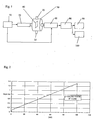
- the present invention is a system and device for the quantification of breath gases, comprising (i) an optional inlet unit 10 (ii) an outlet unit 20 (iii) a sample chamber 30 (iv) a sensing element 40, (v) a light source 50, (vi) a detector 60, (vii) control circuitry 70, (viii) a signal processor 80, (ix) a display 90, and (x) an optional storage unit 100.
- the inlet unit 10 provides controlled air to the subject whose breath is being analyzed.
- the inlet unit can take the form of a tube, mask, or other conventional device.
- the inlet unit is one half of a dual purpose tube 110.
- the dual purpose tube 110 has two channels, an inlet channel 112 for inhalation, and an outlet channel 114 for exhalation.
- the inlet channel 112 may have a first one-way valve 116, to allow air to be inhaled but not leak out.
- the inlet unit may be connected to an air source that provides controlled air to the subject. For instance, if the device or system is used to measure NO, then the air source would be filled with NO-free air, or with air having a known NO concentration.
- the inlet unit 10 may have inlet filters 120 to control the inhaled air.
- an analyte filter such as an NO filter, 122 could be used to reduce or eliminate the concentration of the gas that is being measured. See Fig. 3 .
- One such filter unit would comprise potassium permanganate (KMnO4) pellets and charcoal.
- the inlet filters 120 can be integrated within the inlet unit 10, or can be separate, so long as they are in the stream of air that is inhaled by the subject.
- the outlet unit 20 may be integrated with the inlet unit through a dual purpose tube 110, it which case the outlet unit would take the form of the outlet channel 114 , as described above. See Fig. 3 .
- the outlet unit could be a separate tube or mask.
- the outlet unit may also have or be connected to an outlet filter or filters 130.
- the outlet unit may have or be connected to a filter for removing humidity and volatile organic compounds (VOCs).
- VOCs volatile organic compounds
- the outlet unit may also include a pressure or flow regulator 134.
- the outlet unit 20 also may include a second one-way valve 118, to prevent re-circulation of exhaled breath.
- the outlet unit 20 is connected through tubing or other conventional means to the sample chamber 30.
- the sample chamber 30 is a substantially transparent chamber that holds the sensing element 40 in the presence of exhaled breath. It can be virtually any shape, and generally should be transparent, so that the detector can sense optically-based changes to the sensing element within.
- the sample chamber 30 has a sample outlet 32 for release of the exhaled breath into the environment.
- the sample outlet 32 may be a tube, an aperture or apertures, or any other conventional conduit that will allow air to pass from the sample chamber to the outside.
- the sensing element 40 undergoes change in an optically-quantifiable characteristic in response to the concentration of the analyte in the exhaled breath.
- change in an optically-quantifiable characteristic includes any change that can be quantified by means of an optical detector.
- Optically-quantifiable characteristic includes but is not limited to color, spectral properties, luminescence, fluorescence, or phosphorescence.
- the sensing element 40 has two components: a bioactive sensing compound, which could be organic (including DNA fragments, whole cells, proteins, enzymes, and any other appropriate biomolecule), inorganic, or organometallic, and (ii) means for holding the bioactive sensing compound.
- a bioactive sensing compound which could be organic (including DNA fragments, whole cells, proteins, enzymes, and any other appropriate biomolecule), inorganic, or organometallic, and (ii) means for holding the bioactive sensing compound.
- the bioactive sensing compound can be selected from any compound that provides a quantifiable optically-based change in proportion to the concentration of a particular analyte. For instance, if the device is used to measure NO concentration, the following sensing compounds could be used: Cytochrome-c(3+), hemoglobin(3+ or 2+ or O 2 ), myoglobin(3+, 2+ or O 2 ), cytochrome-c'(3+), other heme-binding proteins, porphyrin group-containing proteins, heme group-containing proteins, dye-labeled porphyrin group-containing proteins, dye-labeled heme group-containing proteins, and fragments thereof.
- hemoglobin could be used, so long as other breath-based interferents are eliminated.
- the means for holding the bioactive sensing compound could be a: (i) a sol-gel matrix, (ii) a liquid that can hold the bioactive sensing compound in suspension, or (iii) a polymer or glass that immobilizes the sensing compound.
- Suitable immobilization agents include PVA, PMMA, glass, ormosils, etc. Any polymer or immobilization agent that allows reaction of the sensing compound with the gas can be used. If the reaction of interest is diffusion limited, then there should be a sufficient amount of the bioactive sensing compound on the surface of the polymer to allow for reaction.
- sol-gels When used, they can take the form of films, including thin and thick films, or stacks of films, or drawn fibers, singly, or in bundles, fibers coated with the sol-gel encapsulated protein, or waveguides, or other suitable forms.
- the sensing element includes cytochrome-c immobilized within a stack of 10 thin sol-gel films. In another embodiment, a single sol-gel film with a high concentration of cytochrome-c is used.
- the sensing element 40 will typically be disposable, and will be inserted into the sample chamber before each use.
- the light source 50 shines through the sample chamber 30 onto the sensing element 40.
- the light source can take many different forms, including but not limited to LEDs, lasers, broad band light sources, laser diodes, radioactive scintillators, chemiluminescent agents, or a phosphorescence agent that produces a spectral emission in the desired wavelength region.
- a UV, preferably superbright, LED is used in conjunction with cytochrome-c encapsulated in a sol gel matrix, as described above.
- the light source 50 is held approximately 2.5 cm from the sensing element 40.
- the light from the light source 50 is collected by the detector 60.
- the detector senses changes in the sensing element that result from exposure to the exhaled breath. These changes can be correlated to the concentration of the analyte of interest in the exhaled breath by means of a calibration curve
- detectors could be used, including photodetectors, PMTs, photodiodes, microchannel plates, phototubes, diode arrays, or two dimensional array detectors.
- the detector is a blue-enhanced photodetector.
- the detector may measure the transmission, reflectance, scattering, or bouncing action of the light through a waveguide.
- the light can interact with the sensing element in a single pass, or through a multi-pass system, such as a system under which the light passes through the sensing element once, and then bounces off a mirror back through the sensing element 40 to the detector 60.
- the phrase "measurement of the response of the sensing element” includes measurement of light reflected, transmitted, or otherwise bounced through or interacted with the sensing element, and also includes measurement of luminescent activity by the sensing element 40 in response to light from the light source 50.
- luminescence When luminescence is used, it can be initiated with light at one wavelength, causing the bioactive compound in the sensing element 40 to luminesce at a second wavelength. Luminescence at this second wavelength would then be measured.
- the light source could be a LED centered at 400 nm, and this light source would cause the bioactive compound within the sensing element to luminesce, at 500 nm.
- a photodetector capable of measuring light at 500 nm would then be used to measure the optical change within the sensing element.
- the detector 60 After measuring the change in the sensing element, the detector 60 produces a signal, and that signal is processed and interpreted to reveal the analyte concentration, as described below.
- cytochrome-c is used to measure NO, and a blue LED is used as the light source.
- a lens is used to filter the output of the LED to a 10 nm bandwidth centered about 415 nm. This range is chosen because there is an absorption peak for heme proteins in a range around 405 nm, known as the Soret Band.
- the Soret Band an absorption peak for heme proteins in a range around 405 nm, known as the Soret Band.
- the detector can be a standard blue-enhanced commercial photodetector, with a 10 nm wide interference filter centered on 415 nm. The detector can used to measure to changes in transmission around the wavelength of interest (415 nm.) The resultant signal can then be transmitted from the detector for signal processing and interpretation.
- the signal generated by the photodetector can be related to gas concentration using a calibration curve.
- a sample calibration curve for NO concentration as measured by a cytochrome-c sol-gel is provided in Fig. 2 .
- the calibration curve can be generated by measuring the detector output at two reference points using known analyte concentrations, such as a low NO concentration and a high NO concentration.
- the present invention may also include a means for generating a baseline reference value of the optically-based characteristic that is being measured.
- Suitable referencing systems include a split sensing element, one portion of which is exposed to the exhaled breath, and a control portion, which is isolated from the exhaled breath, or which is only exposed to breath that has been filtered to remove the analyte.
- Optical analysis of the control portion can be used as a baseline when analyzing the results from the region of the sensing element that is exposed to the exhaled breath.
- Another referencing scheme would involve measurement of the sensing element both and before after exposure to the exhaled breath, with the pre-exposure measurement used as a baseline. Still another possibility is measuring optical changes at two different wavelengths, with one measurement being used as a reference point.
- the control circuitry 70 controls the activity of the light source 50 and the detector 60. It (i) controls the timing of the light source and detector, (ii) filters out noise, and (iii) provides the integration time, averaging and the gain stages functions for signal amplification.
- the signal processor 80 is also controlled by the control circuitry.
- the signal processor 80 modifies and processes the signal from the detector 60 to discern the analyte concentration. It may include an IV converter, and may also include noise filtering, referencing and compensation schemes, and gain stage means.
- the signal processor will also typically included a processing unit, to calculate the analyte concentration using a calibration curve, as described above.
- the output from the signal processor is then transmitted to the display 90.
- the display may show the analyte concentration, and may also show the date, time, patient ID, sample number, and any error messages.
- the exact type of display is irrelevant to the present invention, and many different kinds of commercially available displays can be used.
- data from the signal processor 80 may be transmitted to a storage unit 100 for later use.
- the type of storage unit is irrelevant, and conventional magnetic and electromagnetic storage units can be used.
- the data can be stored and graphed, or can be numerically displayed for the user, such as in sets of five, to help discern trends.
Landscapes
- Health & Medical Sciences (AREA)
- Life Sciences & Earth Sciences (AREA)
- Physics & Mathematics (AREA)
- Chemical & Material Sciences (AREA)
- General Health & Medical Sciences (AREA)
- Immunology (AREA)
- Pathology (AREA)
- Engineering & Computer Science (AREA)
- General Physics & Mathematics (AREA)
- Biochemistry (AREA)
- Analytical Chemistry (AREA)
- Molecular Biology (AREA)
- Biomedical Technology (AREA)
- Biophysics (AREA)
- Chemical Kinetics & Catalysis (AREA)
- Medicinal Chemistry (AREA)
- Pulmonology (AREA)
- Hematology (AREA)
- Urology & Nephrology (AREA)
- Medical Informatics (AREA)
- Food Science & Technology (AREA)
- Animal Behavior & Ethology (AREA)
- Heart & Thoracic Surgery (AREA)
- Public Health (AREA)
- Veterinary Medicine (AREA)
- Physiology (AREA)
- Surgery (AREA)
- Plasma & Fusion (AREA)
- Optics & Photonics (AREA)
- Nuclear Medicine, Radiotherapy & Molecular Imaging (AREA)
- Investigating Or Analysing Biological Materials (AREA)
- Investigating Or Analysing Materials By The Use Of Chemical Reactions (AREA)
Applications Claiming Priority (3)
| Application Number | Priority Date | Filing Date | Title |
|---|---|---|---|
| US39821602P | 2002-07-23 | 2002-07-23 | |
| US10/334,625 US20040017570A1 (en) | 2002-07-23 | 2002-12-30 | Device and system for the quantification of breath gases |
| EP03734377A EP1540314A4 (de) | 2002-07-23 | 2003-06-03 | Einrichtung und system zur quantifizierung von atemgasen |
Related Parent Applications (4)
| Application Number | Title | Priority Date | Filing Date |
|---|---|---|---|
| EP03734377.9 Division | 2003-06-03 | ||
| WOPCT/US03/17533 Previously-Filed-Application | 2003-06-03 | ||
| EP03734377A Division EP1540314A4 (de) | 2002-07-23 | 2003-06-03 | Einrichtung und system zur quantifizierung von atemgasen |
| PCT/US2003/017533 Previously-Filed-Application WO2004010120A1 (en) | 2002-07-23 | 2003-06-03 | Device and system for the quantification of breath gases |
Publications (2)
| Publication Number | Publication Date |
|---|---|
| EP2535700A2 true EP2535700A2 (de) | 2012-12-19 |
| EP2535700A3 EP2535700A3 (de) | 2018-01-31 |
Family
ID=30772681
Family Applications (2)
| Application Number | Title | Priority Date | Filing Date |
|---|---|---|---|
| EP12169691.8A Withdrawn EP2535700A3 (de) | 2002-07-23 | 2003-06-03 | Einrichtung und System zur Quantifizierung von Atemgasen |
| EP03734377A Withdrawn EP1540314A4 (de) | 2002-07-23 | 2003-06-03 | Einrichtung und system zur quantifizierung von atemgasen |
Family Applications After (1)
| Application Number | Title | Priority Date | Filing Date |
|---|---|---|---|
| EP03734377A Withdrawn EP1540314A4 (de) | 2002-07-23 | 2003-06-03 | Einrichtung und system zur quantifizierung von atemgasen |
Country Status (4)
| Country | Link |
|---|---|
| US (1) | US20040017570A1 (de) |
| EP (2) | EP2535700A3 (de) |
| AU (1) | AU2003239964A1 (de) |
| WO (1) | WO2004010120A1 (de) |
Families Citing this family (27)
| Publication number | Priority date | Publication date | Assignee | Title |
|---|---|---|---|---|
| US9943847B2 (en) | 2002-04-17 | 2018-04-17 | Cytonome/St, Llc | Microfluidic system including a bubble valve for regulating fluid flow through a microchannel |
| US7298478B2 (en) * | 2003-08-14 | 2007-11-20 | Cytonome, Inc. | Optical detector for a particle sorting system |
| US8989833B2 (en) | 2004-07-13 | 2015-03-24 | Dexcom, Inc. | Transcutaneous analyte sensor |
| CN101099082B (zh) | 2004-12-03 | 2013-03-27 | 塞通诺米/St有限责任公司 | 用于粒子处理的整体式盒 |
| US9260693B2 (en) | 2004-12-03 | 2016-02-16 | Cytonome/St, Llc | Actuation of parallel microfluidic arrays |
| US20060177889A1 (en) * | 2005-02-05 | 2006-08-10 | Aperon Biosystems Corp. | Rapid responding gas sensing element |
| US20060174691A1 (en) * | 2005-02-07 | 2006-08-10 | David Chazan | Method of controlling degradation of trace gas sensors |
| US20060178592A1 (en) * | 2005-02-07 | 2006-08-10 | Aperson Biosystems Corp. | System and method for controlling the flow of exhaled breath during analysis |
| US20060200037A1 (en) * | 2005-03-02 | 2006-09-07 | Falasco Marianne R | System and method for selectively collecting exhaled air |
| US7611671B2 (en) | 2005-10-14 | 2009-11-03 | Aperon Biosystems Corp. | Reduction of carbon monoxide interference in gaseous analyte detectors |
| WO2008094118A1 (en) * | 2007-01-30 | 2008-08-07 | Aerocrine Ab | Method and device for testing the measuring function of a measuring device |
| GB0717433D0 (en) * | 2007-09-07 | 2007-10-17 | Bedfont Scient Ltd | Apparatus and method |
| WO2009082318A1 (en) * | 2007-12-20 | 2009-07-02 | Aerocrine Ab | Method for testing the function of a device |
| US11730407B2 (en) | 2008-03-28 | 2023-08-22 | Dexcom, Inc. | Polymer membranes for continuous analyte sensors |
| US8206311B2 (en) | 2009-04-01 | 2012-06-26 | Aerocrine Ab | Analyzer for nitric oxide in exhaled breath with multiple-use sensor |
| US9689864B2 (en) | 2012-02-01 | 2017-06-27 | Invoy Technologies, Llc | Method and apparatus for rapid quantification of an analyte in breath |
| US20140276100A1 (en) * | 2012-02-01 | 2014-09-18 | Invoy Technologies | System for measuring breath analytes |
| US9636044B2 (en) | 2012-02-01 | 2017-05-02 | Invoy Technologies, Llc | Breath analyzer with expandable range of measurement |
| FR2989170B1 (fr) * | 2012-04-05 | 2015-01-16 | Pelimex | Dispositif d'aide a la lecture d'ethylotests chimiques |
| DE102013217822A1 (de) | 2013-09-06 | 2015-03-12 | Robert Bosch Gmbh | Handmessgerät und Verfahren zum Nachweis von Schimmelpilzbefall in Innenräumen |
| ES2734380T3 (es) | 2014-06-27 | 2019-12-05 | Pulse Health Llc | Cartucho de análisis y método de uso del mismo |
| DE102014212564A1 (de) | 2014-07-29 | 2016-02-04 | Robert Bosch Gmbh | Messgerät zur Bestimmung von gasförmigen Bestandteilen der Luft |
| US9568465B2 (en) * | 2014-08-21 | 2017-02-14 | Sharp Kabushiki Kaisha | Breath analyser and detection methods |
| US11116422B2 (en) * | 2015-12-21 | 2021-09-14 | Koninklijke Philips N.V. | Sample cells for respired gas sampling and methods of manufacturing same |
| US10782284B1 (en) | 2018-11-29 | 2020-09-22 | Invoy Holdings Inc. | Breath analysis system |
| TWI798623B (zh) * | 2020-01-20 | 2023-04-11 | 台灣百應生物科技股份有限公司 | 光學檢測器 |
| CN111157480A (zh) * | 2020-01-23 | 2020-05-15 | 上海健康医学院 | 一种人体呼出气体二氧化碳实时动态定量检测装置 |
Citations (1)
| Publication number | Priority date | Publication date | Assignee | Title |
|---|---|---|---|---|
| US6033368A (en) * | 1996-03-28 | 2000-03-07 | Nitromed, Inc. | Condensate colorimetric nitrogen oxide analyzer |
Family Cites Families (22)
| Publication number | Priority date | Publication date | Assignee | Title |
|---|---|---|---|---|
| US3893827A (en) * | 1973-08-15 | 1975-07-08 | Cjb Dev Limited | Selective removal of constituents from fluids |
| BR8103970A (pt) * | 1980-10-20 | 1982-08-24 | Ad Ind Inc | Processo para remocao de vapor de agua de etanol gasoso |
| US4558708A (en) * | 1984-10-24 | 1985-12-17 | Tri-Med, Inc. | Patient's airway adapter to withdraw a patient's gas samples for testing free of sputum mucus and/or condensed water, by utilizing a hollow cylindrical hydrophobic liquid baffle |
| US4907166A (en) * | 1986-10-17 | 1990-03-06 | Nellcor, Inc. | Multichannel gas analyzer and method of use |
| US5317156A (en) * | 1992-01-29 | 1994-05-31 | Sri International | Diagnostic tests using near-infrared laser absorption spectroscopy |
| US5582170A (en) * | 1994-12-01 | 1996-12-10 | University Of Massachusetts Medical Center | Fiber optic sensor for in vivo measurement of nitric oxide |
| US6325978B1 (en) * | 1998-08-04 | 2001-12-04 | Ntc Technology Inc. | Oxygen monitoring and apparatus |
| US6076392A (en) * | 1997-08-18 | 2000-06-20 | Metasensors, Inc. | Method and apparatus for real time gas analysis |
| DE19741335C1 (de) * | 1997-09-19 | 1999-06-10 | Bosch Gmbh Robert | Sensormembran einer Optode sowie Verfahren, Vorrichtung und deren Verwendung zur Bestimmung von Gasen in Gasgemischen |
| US6067983A (en) * | 1997-09-19 | 2000-05-30 | Sensormedics Corporation | Method and apparatus for controlled flow sampling from the airway |
| US6002817A (en) * | 1997-09-29 | 1999-12-14 | The Regents Of The University Of Michigan | Optical sensors for the detection of nitric oxide |
| WO1999045369A1 (de) * | 1998-03-07 | 1999-09-10 | Robert Bosch Gmbh | Optischer sensor |
| US6635415B1 (en) * | 1998-03-09 | 2003-10-21 | 2B Technologies, Inc. | Nitric oxide gas detector |
| US6110931A (en) * | 1998-04-02 | 2000-08-29 | Merck & Co., Inc. | Antagonists of gonadotropin releasing hormone |
| US6241948B1 (en) * | 1998-05-20 | 2001-06-05 | The Research Foundation Of State University Of New York | Sensing device with sol-gel derived film on the light source |
| US6095986A (en) * | 1998-07-28 | 2000-08-01 | Square One Technology, Inc. | Disposable anti-fog airway adapter |
| US6479019B1 (en) * | 1999-04-15 | 2002-11-12 | Quantum Group, Inc. | Sensor and sensor assembly for detecting a target gas in a breath sample |
| US6486474B1 (en) * | 1999-08-13 | 2002-11-26 | Regents Of The University Of Minnesota | Infrared spectrometer for the measurement of isotopic ratios |
| US6612306B1 (en) * | 1999-10-13 | 2003-09-02 | Healthetech, Inc. | Respiratory nitric oxide meter |
| US6629934B2 (en) * | 2000-02-02 | 2003-10-07 | Healthetech, Inc. | Indirect calorimeter for medical applications |
| US6632402B2 (en) * | 2001-01-24 | 2003-10-14 | Ntc Technology Inc. | Oxygen monitoring apparatus |
| US20030105407A1 (en) * | 2001-11-30 | 2003-06-05 | Pearce, Edwin M. | Disposable flow tube for respiratory gas analysis |
-
2002
- 2002-12-30 US US10/334,625 patent/US20040017570A1/en not_active Abandoned
-
2003
- 2003-06-03 EP EP12169691.8A patent/EP2535700A3/de not_active Withdrawn
- 2003-06-03 WO PCT/US2003/017533 patent/WO2004010120A1/en not_active Ceased
- 2003-06-03 AU AU2003239964A patent/AU2003239964A1/en not_active Abandoned
- 2003-06-03 EP EP03734377A patent/EP1540314A4/de not_active Withdrawn
Patent Citations (1)
| Publication number | Priority date | Publication date | Assignee | Title |
|---|---|---|---|---|
| US6033368A (en) * | 1996-03-28 | 2000-03-07 | Nitromed, Inc. | Condensate colorimetric nitrogen oxide analyzer |
Also Published As
| Publication number | Publication date |
|---|---|
| EP1540314A1 (de) | 2005-06-15 |
| EP2535700A3 (de) | 2018-01-31 |
| US20040017570A1 (en) | 2004-01-29 |
| WO2004010120A1 (en) | 2004-01-29 |
| EP1540314A4 (de) | 2010-06-16 |
| AU2003239964A1 (en) | 2004-02-09 |
Similar Documents
| Publication | Publication Date | Title |
|---|---|---|
| EP2535700A2 (de) | Einrichtung und System zur Quantifizierung von Atemgasen | |
| US7499154B2 (en) | Readhead for optical inspection apparatus | |
| US6479019B1 (en) | Sensor and sensor assembly for detecting a target gas in a breath sample | |
| JP3655588B2 (ja) | テストエレメント分析システム | |
| JP3808393B2 (ja) | 血液検査ユニットおよび血液検査装置 | |
| EP0772416B1 (de) | Vorrichtung zum perkutanen messen des sauerstoffgehaltes mittels beobachtung der phosphoreszenz | |
| US20100151488A1 (en) | Rapid Test for Glycated Albumin | |
| Miyazaki et al. | Performance of a newly designed continuous soot monitoring system (COSMOS) | |
| WO2012032171A1 (en) | An optical testing system | |
| JP2008523413A (ja) | 体液中の検体の測定に使用する透過分光システム | |
| AU2607888A (en) | Multi-channel molecular gas analysis by raman light scattering | |
| US20030068827A1 (en) | Enhanced scattering membranes for improved sensitivity and signal-to-noise of optical chemical sensors, fiber optic oxygen sensor for real time respiration monitoring utilizing same, and method of using sensor | |
| KR101705602B1 (ko) | 스마트폰 카메라 기반 형광검출용 광학센서 | |
| KR20130115686A (ko) | 헤모글로빈 측정 장치 및 방법 | |
| JP2009536339A (ja) | 光学プローブ | |
| WO2013158505A1 (en) | Device for performing an enzyme-based diagnostic test and methods for use thereof | |
| US20030023181A1 (en) | Gas analyzer of the fluorescent-film type particularly useful for respiratory analysis | |
| US20220287588A1 (en) | Universal portable breath content alayzer | |
| JP2016191567A (ja) | 蛍光検出システム、イムノクロマトグラフィーデバイス、イムノクロマトグラフィー方法、および蛍光検出方法 | |
| JP2010107414A (ja) | 経皮ガスの採取方法、採取装置および測定方法 | |
| US11344223B2 (en) | Method and an apparatus for measuring acetone concentrations in breath | |
| EP1086367A1 (de) | Vorrichtung und verfahren zum optischen chemischen nachweis | |
| JP7351462B2 (ja) | 一酸化窒素ガス検知方法及び一酸化窒素ガス検知装置 | |
| JP2012515337A (ja) | 血液サンプルの少なくとも1つのパラメータを測定するための測定装置 | |
| US8523785B2 (en) | Method and apparatus for measuring analytes |
Legal Events
| Date | Code | Title | Description |
|---|---|---|---|
| PUAI | Public reference made under article 153(3) epc to a published international application that has entered the european phase |
Free format text: ORIGINAL CODE: 0009012 |
|
| AC | Divisional application: reference to earlier application |
Ref document number: 1540314 Country of ref document: EP Kind code of ref document: P |
|
| AK | Designated contracting states |
Kind code of ref document: A2 Designated state(s): AT BE BG CH CY CZ DE DK EE ES FI FR GB GR HU IE IT LI LU MC NL PT RO SE SI SK TR |
|
| RAP1 | Party data changed (applicant data changed or rights of an application transferred) |
Owner name: AEROCRINE AB |
|
| PUAL | Search report despatched |
Free format text: ORIGINAL CODE: 0009013 |
|
| RAP1 | Party data changed (applicant data changed or rights of an application transferred) |
Owner name: CIRCASSIA AB |
|
| AK | Designated contracting states |
Kind code of ref document: A3 Designated state(s): AT BE BG CH CY CZ DE DK EE ES FI FR GB GR HU IE IT LI LU MC NL PT RO SE SI SK TR |
|
| RIC1 | Information provided on ipc code assigned before grant |
Ipc: G01N 21/76 20060101ALI20171222BHEP Ipc: G01N 31/22 20060101ALI20171222BHEP Ipc: G01N 33/497 20060101ALI20171222BHEP Ipc: G01N 21/84 20060101ALI20171222BHEP Ipc: A61B 5/097 20060101ALI20171222BHEP Ipc: G01N 21/64 20060101AFI20171222BHEP |
|
| STAA | Information on the status of an ep patent application or granted ep patent |
Free format text: STATUS: REQUEST FOR EXAMINATION WAS MADE |
|
| 17P | Request for examination filed |
Effective date: 20180730 |
|
| RBV | Designated contracting states (corrected) |
Designated state(s): AT BE BG CH CY CZ DE DK EE ES FI FR GB GR HU IE IT LI LU MC NL PT RO SE SI SK TR |
|
| STAA | Information on the status of an ep patent application or granted ep patent |
Free format text: STATUS: EXAMINATION IS IN PROGRESS |
|
| 17Q | First examination report despatched |
Effective date: 20210401 |
|
| STAA | Information on the status of an ep patent application or granted ep patent |
Free format text: STATUS: THE APPLICATION IS DEEMED TO BE WITHDRAWN |
|
| 18D | Application deemed to be withdrawn |
Effective date: 20210812 |