EP2540072B1 - Diffusion et commande vidéo en écrasant des données vidéo - Google Patents
Diffusion et commande vidéo en écrasant des données vidéo Download PDFInfo
- Publication number
- EP2540072B1 EP2540072B1 EP11704902.3A EP11704902A EP2540072B1 EP 2540072 B1 EP2540072 B1 EP 2540072B1 EP 11704902 A EP11704902 A EP 11704902A EP 2540072 B1 EP2540072 B1 EP 2540072B1
- Authority
- EP
- European Patent Office
- Prior art keywords
- metadata
- video
- video data
- display
- subsystem
- Prior art date
- Legal status (The legal status is an assumption and is not a legal conclusion. Google has not performed a legal analysis and makes no representation as to the accuracy of the status listed.)
- Active
Links
Images





Classifications
-
- H—ELECTRICITY
- H04—ELECTRIC COMMUNICATION TECHNIQUE
- H04N—PICTORIAL COMMUNICATION, e.g. TELEVISION
- H04N21/00—Selective content distribution, e.g. interactive television or video on demand [VOD]
- H04N21/80—Generation or processing of content or additional data by content creator independently of the distribution process; Content per se
- H04N21/83—Generation or processing of protective or descriptive data associated with content; Content structuring
- H04N21/84—Generation or processing of descriptive data, e.g. content descriptors
-
- G—PHYSICS
- G06—COMPUTING OR CALCULATING; COUNTING
- G06T—IMAGE DATA PROCESSING OR GENERATION, IN GENERAL
- G06T1/00—General purpose image data processing
- G06T1/0021—Image watermarking
- G06T1/0028—Adaptive watermarking, e.g. Human Visual System [HVS]-based watermarking
-
- H—ELECTRICITY
- H04—ELECTRIC COMMUNICATION TECHNIQUE
- H04N—PICTORIAL COMMUNICATION, e.g. TELEVISION
- H04N21/00—Selective content distribution, e.g. interactive television or video on demand [VOD]
- H04N21/20—Servers specifically adapted for the distribution of content, e.g. VOD servers; Operations thereof
- H04N21/23—Processing of content or additional data; Elementary server operations; Server middleware
- H04N21/235—Processing of additional data, e.g. scrambling of additional data or processing content descriptors
-
- H—ELECTRICITY
- H04—ELECTRIC COMMUNICATION TECHNIQUE
- H04N—PICTORIAL COMMUNICATION, e.g. TELEVISION
- H04N21/00—Selective content distribution, e.g. interactive television or video on demand [VOD]
- H04N21/80—Generation or processing of content or additional data by content creator independently of the distribution process; Content per se
- H04N21/83—Generation or processing of protective or descriptive data associated with content; Content structuring
- H04N21/835—Generation of protective data, e.g. certificates
- H04N21/8358—Generation of protective data, e.g. certificates involving watermark
-
- H—ELECTRICITY
- H04—ELECTRIC COMMUNICATION TECHNIQUE
- H04N—PICTORIAL COMMUNICATION, e.g. TELEVISION
- H04N7/00—Television systems
- H04N7/08—Systems for the simultaneous or sequential transmission of more than one television signal, e.g. additional information signals, the signals occupying wholly or partially the same frequency band, e.g. by time division
-
- G—PHYSICS
- G06—COMPUTING OR CALCULATING; COUNTING
- G06T—IMAGE DATA PROCESSING OR GENERATION, IN GENERAL
- G06T2200/00—Indexing scheme for image data processing or generation, in general
- G06T2200/16—Indexing scheme for image data processing or generation, in general involving adaptation to the client's capabilities
-
- G—PHYSICS
- G06—COMPUTING OR CALCULATING; COUNTING
- G06T—IMAGE DATA PROCESSING OR GENERATION, IN GENERAL
- G06T2201/00—General purpose image data processing
- G06T2201/005—Image watermarking
- G06T2201/0051—Embedding of the watermark in the spatial domain
-
- H—ELECTRICITY
- H04—ELECTRIC COMMUNICATION TECHNIQUE
- H04N—PICTORIAL COMMUNICATION, e.g. TELEVISION
- H04N7/00—Television systems
- H04N7/025—Systems for the transmission of digital non-picture data, e.g. of text during the active part of a television frame
Definitions
- This invention relates to systems, apparatus and methods for delivering, video data and/or controlling display of video data. Some embodiments provide systems, apparatus and methods for delivering other data in a stream of video data. Some embodiments provide systems, apparatus and methods for generating, delivering, processing and displaying video data to preserve the video creator's creative intent.
- FIG. 1 is a flowchart of a conventional video delivery pipeline 100 showing various stages from video capture to video content display.
- a sequence of video frames 101 is captured at block 102.
- Video frames 101 may be digitally captured (e.g. by a digital camera) or generated by a computer (e.g. using computer animation) to provide a stream of video data 103.
- video frames 101 may be captured on film by a film camera. The film is converted to a digital format to provide a stream of video data 103.
- Video data 103 is provided to a processor at block 104 for post-production editing.
- Block 104 post-production editing may include adjusting or modifying colors or brightness in particular areas of an image to enhance the image quality or achieve a particular appearance for the image in accordance with the video creator's creative intent.
- Other editing e.g. scene selection and sequencing, image cropping, addition of computer-generated visual special effects, etc.
- video images are viewed on a reference display.
- video data 103 is delivered at block 106 to a display subsystem.
- block 106 delivery includes an encoder stage 107A for driving broadcast or transmission of video data 103 over a video distribution medium 105 (e.g. satellite, cable, DVD, etc).
- a decoder stage 107B is located at the display end of block 106 to decode video data 103 transmitted over medium 105.
- the display subsystem may include a video processor and a display.
- video data 103 is provided to the video processor for processing and/or decoding.
- Video data 103 is output to the display at block 110 to display a sequence of images to a viewer.
- video data 103 may be driven through video delivery pipeline 100 at a relatively high bit rate so as to facilitate an increased bit depth for defining RGB or chroma values for each chrominance (color) channel.
- a stream of video data 103 may comprise 8, 10 or 12 bits of data for each chrominance channel of a pixel.
- a stream of video data 102 may comprise more than 12 bits of data for each chrominance channel of a pixel.
- variations in display characteristics may affect the appearance of an image rendered on a display so that the image rendered does not match the creative intent of the video's creator.
- the perceived color or brightness of an image rendered on a particular display subsystem may differ from the color or brightness of the image as viewed on the reference display during block 104 post-production editing.
- methods applied at processing or display stages of a conventional video delivery pipeline are typically performed in a pre-configured manner without taking into account processing which may have occurred at other stages of video delivery pipeline 100.
- the block 110 methods for displaying video data 103 may be performed without knowledge of how prior processing steps in video delivery pipeline 100 were carried out, such as block 104 post-production editing.
- the block 110 display methods may not be suitable for rendering an image on the display in a manner which preserves the video creator's creative intent, as determined by block 104 post-production editing.
- Systems, apparatus and methods are provided for providing video data including metadata to a display subsystem.
- the video data may be transmitted or provided to the display subsystem using systems, apparatus and methods suitable for the type of content delivery (e.g. television broadcast over satellite, cable, or high-definition networks; streaming multimedia over IP or wireless networks; playback from DVD or other storage media, etc.).
- metadata is generated and written in video data at one or more stages of a video delivery pipeline.
- the metadata may provide information relating to: characteristics of a reference display used to edit the video data, characteristics of the environment in which the reference display is situated, characteristics of the edited image (e.g. luminance and gamut), characteristics of the viewing environment in which the display of the display subsystem is situated, etc.
- the metadata is delivered with the video data to downstream apparatus such as a display subsystem.
- the metadata may be delivered and received by the downstream apparatus in advance of a video frame for which the embedded metadata is to be applied.
- the metadata may be extracted and decoded at the display subsystem and applied to configure a display of the display subsystem and/or to process the video data to adjust the video data for the display (e.g. to match the creator's artistic intent).
- the metadata may be inserted in the video data by overwriting chrominance data with metadata.
- Metadata may be written in chrominance portions of video data for: black video frames, black mattes or bars framing an image, or other low luminance image areas or pixels for which luminance values are zero or below a threshold value.
- Other types of data may be written in chrominance portions of video data using the methods described herein.
- Methods of encoding the metadata are provided so as to avoid unintentional communication of reserved video words (e.g. reserved pixel values) and/or reserved metadata words (e.g. start or end of frame headers).
- reserved video words e.g. reserved pixel values
- reserved metadata words e.g. start or end of frame headers
- Example embodiments provide for systems, apparatus and methods useful in a video delivery pipeline.
- Metadata is written in video data and transmitted with the video data through the video delivery pipeline.
- the metadata may, for example, be useful for guiding downstream devices in processing video data and/or guiding video playback on a display.
- the display may be a flat panel display (e.g. LCD, LED, OLED, high-dynamic range, or plasma display) such as may be provided in a television, computer monitor, laptop, cellular phone or handheld mobile device, and the like, or any other display capable of displaying video data.
- Metadata may be dynamically generated and written in the video data stream at various stages throughout the video delivery pipeline including video capture, post-production editing, and pre-display processing.
- the metadata may define parameters, including, for example: gamut and other characteristics of a reference display used in post-production editing, location of light sources in an image, protected colors of an image which should not be altered, etc.
- Such metadata may be decoded and processed by a decoder and/or a display and used for processing of video data and/or display management and configuration to control and enhance video playback on the display. Metadata may be used to control a display (and/or process video data for the display) to display video in a manner which preserves the video creator's creative intent.
- video data includes chrominance data which is represented separately from luminance data.
- chrominance data for particular video frames or areas of video frames may be overwritten with metadata.
- chrominance data may be overwritten with bits of metadata 225 without substantially affecting the appearance of the displayed image.
- Metadata may be written in chrominance portions or chrominance channels of video data which may include fields, values, bits, etc.
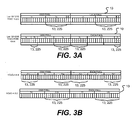
- Figure 3A shows chrominance portions 13 of data frames 10 in VDR format, which may be overwritten with metadata 225.
- Figure 3B shows chrominance portions (Cr, Cb) 13 of data frames 10 in YCbCr formats, which may be overwritten with metadata 225.
- VDR format is a video format described in co-owned PCT Application No. PCT/US2010/022700 for "EXTENDED DYNAMIC RANGE AND EXTENDED DIMENSIONALITY IMAGE SIGNAL CONVERSION AND/OR DELIVERY VIA LEGACY VIDEO INTERFACES" which is herein incorporated by reference.
- Metadata may be carried in video data using one or more of the following methods, for example:
- Metadata may be written in chrominance portions for any area with constant hue or chrominance, such as, for example, a blue screen or area.
- metadata may be written in all of the video data (e.g. both luminance and chrominance data) for a particular video frame or image area.
- a metadata header may be written in a video frame in a predefined manner (e.g. such as in chrominance portions of the video data). The metadata header defines the number of subsequent pixels that contain metadata and the portions of data in which metadata is encoded (e.g. in chrominance portions only, or in both luminance and chrominance portions).
- a downstream apparatus decodes the metadata header and uses the header information to decode or extract metadata from the video data.
- a downstream apparatus upon decoding the metadata header, may skip playback of the video frame containing metadata.
- the display may repeat playback of a preceding video frame, while extracting and/or processing the metadata from the video frame.
- the metadata header may define the pixel value of the pixels at which metadata is extracted, which is to be used to drive display playback.
- FIG. 4 is a flowchart showing the flow of data through a video delivery pipeline 200 according to a particular embodiment.
- Video delivery pipeline 200 incorporates similar stages as those depicted in video delivery pipeline 100 of Figure 1 , and accordingly, similar reference numerals are used to identify the similar stages, except that in video delivery pipeline 200 of Figure 4 , the reference numerals begin with a "2" instead of a "1".
- metadata 225 may be generated and embedded in a stream of video data 203 for use at a downstream stage. Metadata 225 is transmitted along with video data 203 through video delivery pipeline 200 to guide downstream devices in processing the video data and/or to guide video playback at a display subsystem at block 210.
- Video data 203 may be delivered to the display subsystem at block 206 using systems, apparatus and methods suitable for the type of video content delivery (e.g. television broadcast over satellite, cable, or high-definition networks; streaming multimedia over IP or wireless networks; playback from DVD or other storage media, etc.).
- types of video content delivery e.g. television broadcast over satellite, cable, or high-definition networks; streaming multimedia over IP or wireless networks; playback from DVD or other storage media, etc.
- camera metadata 225A is generated and embedded in video data 203 at block 202.
- Camera metadata 225A may be generated based on the camera settings and video frame capture environment.
- Camera metadata 225A may comprise, for example, camera parameters which provide a snapshot of the camera settings during video frame capture. Such camera parameters may include aperture (f-stops), lens, shutter speed, sensitivity (ISO ratings) and the like. These camera parameters may be used to guide subsequent steps in video delivery pipeline 200, such as color adjustments (e.g. color timing) during post-production editing at block 204, or display configuration at block 210.
- post-production metadata 225B is generated and embedded in video data 203.
- Post-production metadata 225B may include: reference display and environment metadata 225B 1 and source video content characterization metadata 225B 2 .
- Post-production metadata 225B may be used to guide subsequent steps in video delivery pipeline 200, such as display configuration at block 210.
- Reference display and environment metadata 225B 1 may describe the reference display configuration and studio or viewing environment used in the block 204 post-production editing.
- reference display and environment metadata 225B 1 may include parameters such as:
- Reference display and environment metadata 225B1 may also include parameters describing the studio environment in which video content was color-timed or edited on a reference display during the block 204 post-production editing. Such parameters may include ambient luminance and ambient color temperature.
- Source video content characterization metadata 225B 2 may describe post-production edited video content including information which may identify or provide:
- Video data 203 is delivered to a display subsystem at block 206.
- block 206 delivery may include an encoder stage 207A for driving distribution, broadcast or transmission of video data 203 over a video distribution medium 205 such as satellite, cable, or high-definition networks; IP or wireless networks; or DVD or other storage media, etc.
- a decoder stage 207B may be provided at the display end of block 206 to decode video data 203 distributed over medium 205. Decoder stage 207B may be implemented by a set-top box, for example, or by a decoder within the display subsystem.
- viewing environment metadata 225C and/or other metadata 225 may be embedded in video data 203.
- Viewing environment metadata 225C may comprise, for example:
- the display subsystem comprises a video processor for processing incoming video data 203 at block 208.
- the video processor of the display subsystem may perform signal processing on video data 203 based on metadata 225 extracted from video data 203 (e.g. metadata 225A ) and/or known display characteristics associated with the display of the display subsystem.
- Video data 203 may be processed and adjusted for the display in accordance with display characterization parameters 226 and/or metadata 225.
- Other metadata 225 that may be embedded in video data 203 at blocks 206 and/or 208, or at other stages of video delivery pipeline 200, includes housekeeping metadata 225D (for managing distribution rights and the like) such as, for example:
- Viewing environment metadata 225C may be generated based at least in part on display characterization parameters 206 associated with the display of the display subsystem.
- viewing environment metadata 225C, source video content characterization metadata 225B 2 and/or housekeeping metadata 225D may be created or provided by analysis of video data 103 at the encoder stage 207A, the decoder stage 207B and/or by the video processor at block 208.
- display configuration may be performed on a display of the display subsystem.
- Appropriate parameters for display configuration may be determined based on display characterization parameters 226 and/or metadata 225, such as camera metadata 225A, post-production metadata 225B (including reference display and environment metadata 225B 1 and source video content characterization metadata 225B 2 ) and viewing environment metadata 225C.
- the display is configured in accordance with such parameters.
- Video data 203 is output to the display.
- Metadata 225 that is used for processing of video data 203 at block 208 and display configuration at block 210 is delivered in the video data stream so that metadata 225 is received at the display subsystem (including the video processor and display) prior to its application.
- metadata 225 is delivered so that it is received by the display subsystem at least one video frame ahead of the frame at which the metadata 225 is to be applied.
- metadata 225 is delivered one video frame ahead and application of metadata 225 at blocks 208 and/or 210 may be triggered upon detection of a new video frame in the incoming video stream.
- FIG. 7 illustrates a metadata structure or packet 250 of metadata 225 according to a particular embodiment that may be generated, for example, at any one of blocks 202, 204, 206 or 208 of the video delivery pipeline 200 of Figure 4 and delivered downstream in the pipeline.
- Packet 250 is framed with a header.
- packet 250 includes the following fields:
- Figure 7A illustrates a header 270 that may be used to define the start (i.e. SOF header 252 ) or end (i.e. EOF header 260 ) of a metadata packet 250 as shown in Figure 7 .
- header 270 begins with a plurality of bits in a predetermined pattern 272.
- Header 270 ends with an end of payload (EOP) flag or bit 266, and an SOF/EOF flag or bit 268 (e.g. 0/1).
- EOP end of payload
- the SOF/EOF flag 268 determines whether header 270 is an SOF header 252 or an EOF header 260.
- the EOP flag 266 may be valid only if the EOF flag 268 is set. Setting the EOP flag 266 indicates that the metadata packet 250 contains the last portion of a metadata payload.
- the EOP flag 266 enables a metadata payload to be split among several metadata packets 250, which may be split across video frames.
- the EOP flag 266 enables packets carrying different types of metadata to be delivered over multiple video frames, as seen in Figure 11 .
- the type of metadata carried in a packet may be indicated by packet type 254 in the header (see Figure 7 ).
- a first packet 380 carrying type A metadata is embedded in video data of video frame 1.
- type B metadata having a higher priority than metadata type A, is received.
- an EOF flag is set to conclude first packet 380 (however, the EOP flag is not set as there is remaining type A metadata to be transmitted).
- a second packet 382 carrying the type B metadata may then be embedded in video data of video frame 1.
- video frame 1 does not have sufficient chrominance portions for delivery of all of the type B metadata.
- an EOF flag is set to indicate the end of second packet 382 (however, the EOP flag is not set as there is remaining type B metadata to be transmitted).
- a third packet 384 carrying the remaining type B metadata may be embedded in video data of video frame 2.
- the third packet 384 may be terminate with an EOF flag and an EOP flag to indicate the end of the packet and end of the metadata payload for the type B metadata. Delivery of type A metadata may then resume.
- all remaining type A metadata (which has been saved during embedding of metadata type B) is retrieved and carried in a fourth packet 386 of metadata embedded in the video data of video frame 2.
- the fourth packet 386 may be terminated with an EOF flag and an EOP flag to indicate the end of the packet and end of the metadata payload for the type A metadata.
- Metadata 225 may be generated and written in the video data.
- the metadata is delivered through the pipeline with the video data.
- the metadata may be applied by a downstream apparatus (such as a display subsystem) to process the video data and/or configure a display for video playback of a video frame sequence.
- Metadata is delivered to a downstream apparatus in the video delivery pipeline in advance of the particular video frame or frame sequence at which the metadata is to be applied by such downstream apparatus.
- metadata for an upcoming scene or program is delivered with one or more video frames preceding such scene or program.
- the metadata may be delivered with a timestamp indicating when the metadata is to be applied by a downstream apparatus (e.g. video decoder, processor, or display) to process the video data or manage or configure the display.
- the timestamp may be defined in terms of a frame delay indicating that the metadata is to be applied at a certain number of video frames after the metadata has been received. In other embodiments, the timestamp may be defined in terms of a time delay, a frame sequence number, a time relative to the start of the video, or the like.
- Figure 8 shows metadata 225 that is carried through a video delivery pipeline and received by a downstream device (e.g. video processor, decoder and/or display) in advance of the time at which the metadata is processed and applied.
- a new scene in the video commences at video frame #5 and video frames #3 and #4 carry metadata which may be applied to such scene.
- the downstream device receives and begins to process the video data for the new scene commencing at video frame #5
- the downstream device has already received the metadata (carried within video frames #3 and #4) for application to such scene.
- Application of the metadata may be triggered upon detecting the start of a new scene at video frame #5.
- Video frames #3 and #4 may be black, transitional frames having pixels for which luminance values are driven to zero. Chrominance data in video frames #3 and #4 may be overwritten with metadata without substantially affecting the appearance of the black video frames during video playback.
- One or more of the methods illustrated in Figures 5A, 5B and 5C may be used to encode metadata in video data.
- the methods of Figures 5A, 5B and 5C may be applied to write metadata in chrominance portions of video data which is encoded in a video format for which chrominance data is represented separately from luminance data.
- Video data encoded according to the following color spaces have a separate chrominance component, for example: LUV, YCbCr, YUV, YCC, HLS, HSV, CIELAB, etc.
- the methods of Figures 5A, 5B and 5C may be used to deliver metadata which is subsequently applied, by a downstream device in the video delivery pipeline, to process video data and/or configure a display for a particular scene or sequence of frames.
- the method illustrated in Figure 5D may be used to extract, from the video data, metadata which has been encoded using one of the methods of Figures 5A, 5B or 5C .
- Figure 5A shows a method 300 of encoding metadata in black video frames.
- Method 300 begins by receiving at block 302 metadata for the next scene to be displayed (or other sequence of frames).
- Method 300 proceeds to block 304 by locating black video frames preceding the next scene. If it is determined at block 306 that black video frames are available to carry the block 302 metadata, the metadata is written in the black video frames at block 308.
- the metadata may be written in the chrominance portions of the video data representing such video frames (see Figures 3A and 3B , for example, showing data frames 10 having chrominance portions 13 overwritten with metadata 225 ). Otherwise, if no black video frames are available, method 300 proceeds by applying another method of encoding metadata at block 310.
- Block 310 of method 300 may apply one of the methods shown in Figures 5B or 5C , or another method (e.g. such as the method of encoding metadata in chrominance portions of video data representing the mattes or black bars 80 appearing in certain video formats).
- another method e.g. such as the method of encoding metadata in chrominance portions of video data representing the mattes or black bars 80 appearing in certain video formats.
- commercials may be displayed in a pillar box or letter box format; accordingly, metadata for scenes following a commercial broadcast may be inserted in the chrominance portions of the pillar box/letter box black image areas of the commercial portion of the broadcast.
- the metadata may include a timestamp identifying when the metadata is to be applied.
- Figure 5B shows a method 320 of encoding metadata according to another embodiment.
- Method 320 may be applied at block 310 of method 300 if it is determined at block 306 of method 300 that no black video frames preceding the next scene are available to carry metadata.
- Method 320 begins by receiving metadata for the next scene or other sequence of frames at block 302.
- Method 320 proceeds to block 322 by locating the boundary between the present scene and the next scene.
- one or more black video frames are inserted in the video data at the scene boundary (i.e. the black video frames are inserted between the last frame of the present scene and the first frame of the next scene).
- the black video frames may be inserted for the purpose of carrying metadata for the next scene.
- metadata may be written in the inserted black video frames.
- Metadata may be written in the chrominance portions of video data representing such video frames (see Figures 3A and 3B , for example, showing data frames 10 having chrominance portions 13 overwritten with metadata 225 ).
- Figure 5C shows a method 340 of encoding metadata according to yet another embodiment.
- Method 340 may be applied at block 310 of method 300 if it is determined at block 306 of method 300 that no black video frames preceding the next scene are available in the video data for carrying metadata.
- Method 340 begins by receiving metadata for the next scene or other sequence of frames at block 302.
- low luminance image areas are identified in the frames preceding the next scene.
- An image area may be considered a low luminance image area if luminance levels for the image area's pixels are driven to zero or below a certain threshold value.
- method 340 proceeds by applying another method of encoding metadata at block 348.
- method 320 shown in Figure 5B may be applied at block 348 of method 340 to encode metadata in black frames which are inserted at the scene boundary for the purpose of carrying metadata.
- Figure 5D shows a method 360 of extracting metadata from video data and subsequently applying the metadata, where the metadata has been encoded using one of the methods in Figures 5A, 5B or 5C .
- Method 360 begins by receiving a stream of video data at block 362.
- method 360 monitors chrominance portions for pixels for which luminance levels are driven to zero or below a threshold value (a low luminance pixel), to detect an SOF header 252 or other reserved metadata word defining the start of a metadata packet.
- a threshold value a low luminance pixel
- method 360 repeats the steps at blocks 366, 368 and 370 (i.e. locating the next low luminance pixel in the video data stream and extracting metadata from the chrominance portions of the pixel data), until the end of the metadata payload is reached.
- the metadata may be applied to process the video data and/or configure the display for video playback.
- the encoded metadata may be preceded by a first metadata packet.
- the first metadata packet may be encoded in the video data according to a preselected method known to each downstream apparatus which encodes or decodes metadata.
- This first metadata packet contains information about how the subsequent metadata is encoded (e.g. which method of encoding is used).
- the information may indicate that the remainder of the video frame is carrying metadata in the chrominance portions of the video data, such as may be the case for black video frames.
- the information may indicate that only a portion of the video frame is carrying metadata in the chrominance portions of the video data, such as may be the case for video frames having black mattes or low luminance image areas.
- the information may indicate where such metadata is located in the video frame.
- a downstream apparatus may use the information in the first metadata packet to guide the decoding or extraction of metadata from the video data.
- a downstream apparatus may use the information in the first metadata packet to guide insertion or encoding of additional metadata in the video data stream.
- a black video frame may be inserted within a scene for the purpose of carrying metadata. Metadata may be written in the chrominance portions of video data for the black video frame.
- video playback may include repeating playback of the video frame preceding the black video frame. The repetition of the preceding video frame ensures that luminance of the scene remains constant, which may reduce flicker.
- Metadata is encoded in video data in such a way so as to avoid inadvertently communicating a reserved or protected word or sequence of bits (which may be any number of bits long).
- reserved metadata words as may be communicated by the metadata
- reserved video words as may be communicated by the video data stream.
- the metadata may be encoded so that the metadata avoids matching a reserved metadata word, such as a packet start of frame (SOF) header 252 or end of frame (EOF) header 260 ( Figure 7 ).
- the metadata may be encoded so that the metadata avoids matching a reserved video word (e.g. reserved pixel values). Reserved pixel values may include, for example, one or more of 0, 255 and other reserved values.
- Encoding methods which may be used to avoid unintended communication of reserved metadata words and/or reserved video words may include, for example:
- Other kinds of data may be written in the video data, such as by overwriting the chrominance component of such video data.
- the methods described herein may be used in combination with methods of embedding metadata in other data channels such as encoding metadata in guard bits or least significant bits. Encoding of metadata in guard bits or least significant bits is described in a co-owned, co-pending application entitled SYSTEMS, APPARATUS AND METHODS FOR VIDEO DELIVERY AND CONTROLLING VIDEO DISPLAY USING EMBEDDED METADATA, which is incorporated herein by reference.
- Video processing may include spatial and/or temporal filtering of video data. Downstream apparatus which perform such filtering may be configured to ignore the data in the chrominance portions (or other metadata-carrying portions of video data), or to extract the metadata from the chrominance portions and to replace the data in the chrominance portions with surrounding chroma values.
- the metadata may be inserted in a defined border around the edge of the video image, in which overwriting of chrominance data with metadata is less likely to cause a perceivable effect on the display of the image.
- values for the corresponding luminance portions may be set to a predefined value to flag the presence of metadata in the chrominance portions and prevent loss of video data.
- a downstream apparatus may be configured to extract the metadata from the chrominance portions, and replace the set luminance values with a black luminance value for video playback.
- metadata is not written in the least significant bits of the chroma channel (e.g. the two or three least significant bits are not used for carrying metadata) so that if such least significant bits are lost through compression, the metadata is not also lost.
- FIG. 9 shows a system 600 according to one embodiment that may be configured to perform one or more of the methods described herein.
- System 600 includes a video capture subsystem 602, a post-production subsystem 603 and a display subsystem 604.
- a stream of video data 203 is generated by video capture subsystem 602 and is delivered to post-production subsystem 603 for processing and editing.
- Video images may be displayed and viewed on a reference display 111 of post-production subsystem 603 in the course of editing the video data 203.
- the edited video data 203 is delivered to display subsystem 604 (over a distribution medium 205 by way of encoder 207A and decoder 207B ) for further processing and display.
- Each of subsystems 602, 603 and 604 may be configured to encode metadata 225 in video data 203.
- Downstream subsystems may be configured to receive video data 203 from an upstream device and decode the metadata 225 which has been embedded therein.
- Metadata 225 may be used by downstream subsystems (e.g. subsystems 603 and 604 ) to guide processing and/or display of video data 203.
- Metadata 225 may be used by display subsystem 604 along with display characterization parameters 620 to control and/or guide video playback on a display 618 of display subsystem 604.
- subsystems 602, 603 and 604 may comprise a processor 606, 608 and 616 respectively, and a program memory 607, 609 and 617 accessible to the respective processors.
- Each processor may comprise a central processing unit (CPUs), one or more microprocessors, one or more field programmable gate arrays (FPGAs), or any combination thereof, or any other suitable processing unit(s) comprising hardware and/or software capable of functioning as described herein.
- the processor executes instructions provided by software stored in the program memory.
- the software may include routines to perform the metadata generation, encoding, decoding and processing steps described herein, such as, for example, routines which:
- System 600 may include a repository 610 accessible to subsystems 602, 603 and 604.
- Repository 610 may include a library of metadata definitions 612 (e.g. which informs the metadata encoders and decoders as to how to generate and/or read the metadata) and a list of reserved words 614 (e.g. protected pixel values or reserved metadata words).
- the library of metadata definitions 612 may be accessed by subsystems 602, 603 and 604 in generating, encoding and/or processing metadata.
- reserved words 614 may be compared to encoded/decoded metadata bits to identify sequences of guard bits to insert (or that were inserted) in the metadata stream to prevent communication of a reserved word.
- each of subsystems 602, 603 and 604 may incorporate a local repository 610 stored in a storage medium accessible to that subsystem.
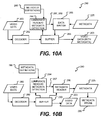
- Figure 10A shows a subsystem 280 that may be used to encode metadata in a stream of video data according to an example embodiment.
- Subsystem 280 may be used to encode metadata 225 relating to an upcoming scene or other sequence of frames, using one of the methods shown in Figures 5A, 5B or 5C , for example, or another method described herein.
- Subsystem 280 may receive input video data 203 from a source of video data.
- subsystem 280 may retrieve input video data 203 from a buffer or other storage media.
- subsystem 280 may receive streaming video data 203 from a video signal input.
- Video data 203 may be provided in a format suitable for the type of video content delivery, such as television broadcast over satellite, cable, or high-definition networks; streaming multimedia over IP or wireless networks; or reading a DVD or other storage media, or the like.
- Input video data 203 may include embedded metadata which was added to the video data by an upstream apparatus.
- input video data 203 may include luminance and chrominance information.
- video data 203 is decoded by a decoder 282. Decoder 282 may separate the luminance and chrominance components in the video signal.
- Video data 203 for the upcoming scene or sequence of frames may be pushed into one or more data buffers 283 implemented by software and/or hardware.
- One or more frames of video data 203 (or other portion of video data 203 ) may be pushed into buffer 283, in succession, as video data 203 is received.
- a luminance reader 284 may access the video data 203 stored in buffer 283 and read the luminance data to evaluate the luminance levels for video frames, image areas or pixels in the video data.
- Luminance reader 284 may compare luminance levels to a threshold value.
- Luminance reader 284 may identify video frames, image areas or pixels for which the luminance levels are zero or below a threshold value (e.g.
- Luminance reader 284 may map out the luminance levels for a video frame, or determine whether video data represents a black video frame or black image area, in one of a number of ways, for example: evaluating the luminance level for each pixel in a video frame, evaluating luminance levels for pixels in selected regions of a video frame; evaluating luminance levels for sample pixels or regions; and/or the like. For the identified video frames, image areas or pixels, luminance reader 284 may compare the data in the chrominance portions with reserved metadata words (e.g. start of frame header) to identify whether metadata has already been written in such chrominance portions. Luminance reader 284 may access metadata words from a metadata definitions store 285 and compare such metadata words to data in the chrominance portions, to detect the presence of metadata.
- reserved metadata words e.g. start of frame header
- luminance reader 284 may send a signal 287 to data writer 286 communicating that metadata 225 (or other data) may be written in the chrominance portions for the identified video frames, image areas or pixels (as discussed in respect of block 308 of Figure 5A or block 346 of Figure 5C , for example).
- Luminance reader 284 may continue to access and read video data 203 in buffer 283 until it locates black (or low luminance) video frames, image areas or pixels having chrominance portions that do not contain metadata.
- data writer 286 When data writer 286 receives signal 287, data writer 286 retrieves metadata 225 relating to an upcoming scene and writes metadata 225 in the chrominance portions of video frames, image areas or pixels determined by luminance reader 284 to be suitable for carrying metadata. Data writer 286 may retrieve metadata 225 from a store or buffer containing metadata. After data writer 286 has overwritten the chrominance data of video data 203 with metadata 225, subsystem 280 outputs video data 203 including the inserted metadata 225 (e.g. video data 203 may be pushed out from buffer 283 and new incoming frames of video data 203 are pushed into buffer 283 ). Output video data 203 may be delivered to a downstream apparatus such as a display subsystem for processing and/or video playback.
- a downstream apparatus such as a display subsystem for processing and/or video playback.
- luminance reader 284 may communicated a signal 288 to data writer 286 causing data writer 286 to insert black video frames in video data 203 for the purpose of carrying metadata 225 (as discussed with reference to blocks 322 and 324 of Figure 5B , for example).
- Luminance reader 284 may signal to data writer 286 when or where to insert the black video frames. For example, black video frames containing metadata in the chrominance portions may be inserted at a scene boundary, as discussed with respect to block 326 of Figure 5B .
- Figure 10B shows a subsystem 290 that may be used to decode metadata from a stream of video data according to an example embodiment.
- Subsystem 290 may be used to extract metadata 225 for an upcoming scene, using one of the methods described herein, such as, for example, method 360 of Figure 5D .
- Subsystem 290 is similar in some respects to subsystem 280.
- subsystem 290 receives input video data 203, and may decode input video data 203 at a decoder 292 (similarly to how subsystem 280 receives and decodes input video data 203 ).
- Input video data 203 may be buffered in a buffer 293.
- a luminance reader 294 accesses the video data 203 stored in buffer 293 and reads the luminance data.to evaluate the luminance levels for video frames, image areas or pixels in the video data.
- Luminance reader 294 may compare luminance levels to a threshold value.
- Luminance reader 294 may identify video frames, image areas or pixels for which the luminance levels are zero or below a threshold value.
- luminance reader 294 may compare the data in the chrominance portions with reserved metadata words (e.g. start of frame header) to identify whether metadata has been written in such chrominance portions.
- Luminance reader 294 may access metadata words from a metadata definitions store 295 and compare such metadata words to data in the chrominance portions, to detect the presence of metadata.
- luminance reader 294 may send a signal 297 to a metadata reader 296 causing metadata reader 296 to access video data 203 in buffer 293 and read the metadata 225 (or other data) from the chrominance portions (as performed at block 368 of Figure 5D , for example). Metadata 225 may be stored in a metadata store 296 for subsequent retrieval and application.
- luminance readers 284, 294 may not read the luminance data to determine whether and where to write or extract metadata.
- a metadata packet may be generated by the metadata writer and inserted in the video data stream, indicating to downstream apparatus where to locate existing metadata in the video data (e.g. in certain video frames, or commencing at a particular pixel in a video frame, or in particular image areas, etc.)
- This metadata packet may be used by subsystem 280 to guide writing of additional metadata in the video data and may be used by subsystem 290 to guide extraction of metadata from the video data.
- Luminance readers 284, 294 may be implemented by a data processor, CPU, microprocessor, FPGA, or any combination thereof, or any other suitable processing unit capable of reading video data to determine luminance levels and comparing such luminance levels to a threshold value.
- Data writer 286 and metadata reader 296 may be implemented by a data processor, CPU, microprocessor, FPGA, or any combination thereof, or any other suitable processing unit capable of accessing video data 203 from a video data source and writing or reading bits of video data 203.
- a component e.g. processor, decoder, encoder, device, display, buffer, circuit, etc.
- reference to that component should be interpreted as including as equivalents of that component any component which performs the function of the described component (i.e., that is functionally equivalent), including components which are not structurally equivalent to the disclosed structure which perform the function in the illustrated exemplary embodiments of the invention.
- the program product may comprise any medium which carries a set of computer-readable signals comprising instructions which, when executed by a data processor, cause the data processor to execute a method of the invention.
- Program products according to the invention may be in any of a wide variety of forms.
- the program product may comprise, for example, physical media such as magnetic data storage media including floppy diskettes, hard disk drives, optical data storage media including CD ROMs, DVDs, electronic data storage media including ROMs, flash RAM, or the like.
- the computer-readable signals on the program product may optionally be compressed or encrypted.
Landscapes
- Engineering & Computer Science (AREA)
- Multimedia (AREA)
- Signal Processing (AREA)
- Computer Security & Cryptography (AREA)
- Physics & Mathematics (AREA)
- General Physics & Mathematics (AREA)
- Theoretical Computer Science (AREA)
- Two-Way Televisions, Distribution Of Moving Picture Or The Like (AREA)
Claims (15)
- Procédé pour délivrer des données vidéo à un sous-système d'affichage (604), comprenant les étapes suivantes :(a) capturer une séquence de trames vidéo pour délivrer des données vidéo ;(b) éditer sur un écran de référence (611) une image délivrée par les données vidéo ;(c) générer des métadonnées (225) identifiant des paramètres de configuration de l'écran de référence et des caractéristiques de l'image éditée ;(d) intégrer les métadonnées (225) dans une ou plusieurs parties de chrominance des données vidéo ;(e) délivrer des données vidéo comprenant les métadonnées intégrées au sous-système d'affichage (604) ;
où délivrer des données vidéo comprend de délivrer les données vidéo avec les métadonnées intégrées en avance d'une trame vidéo pour laquelle les métadonnées intégrées doivent être appliquées ;(f) extraire les métadonnées au niveau du sous-système (604) ; et(g) configurer le sous-système d'affichage (604) ou traiter les données vidéo pour le sous-système d'affichage (604) sur la base, au moins en partie, des métadonnées. - Procédé selon la revendication 1, dans lequel intégrer les métadonnées dans les parties de chrominance comprend d'intégrer les métadonnées dans les parties de chrominance de pixels pour lesquels les valeurs de luminance sont en-dessous d'une valeur seuil.
- Procédé selon la revendication 2, dans lequel incorporer les métadonnées dans les parties de chrominance comprend les étapes suivantes .(a) situer des trames vidéo noires dans les données vidéo ; et(b) intégrer les métadonnées dans les parties de chrominance de pixels dans les trames vidéo noires.
- Procédé selon la revendication 3, dans lequel les métadonnées correspondent à une nouvelle scène, et situer des trames vidéo noires dans les données vidéo comprend de situer des trames vidéo noires précédant la nouvelle scène.
- Procédé selon la revendication 2, dans lequel intégrer les métadonnées dans les parties de chrominance comprend les étapes suivantes :(a) situer des caches noirs encadrant une image dans les données vidéo ; et(b) intégrer les métadonnées dans les parties de chrominance de pixels dans les caches noirs.
- Procédé selon la revendication 2, dans lequel intégrer les métadonnées dans les parties de chrominance comprend les étapes suivantes :(a) situer les trames vidéo dans les données vidéo ayant des zones d' image pour lesquelles les valeurs de luminance sont en-dessous de la valeur seuil ; et(b) intégrer les métadonnées dans les parties de chrominance de pixels dans les zones d'image.
- Procédé selon la revendication 1, dans lequel les métadonnées correspondent à une nouvelle scène, le procédé comprenant les étapes suivantes :(a) situer dans les données vidéo une limite entre la nouvelle scène et une scène précédente ;(b) insérer une ou plusieurs trames vidéo noires au niveau de la limite ; et(c) intégrer les métadonnées dans les parties de chrominance de pixels dans les trames vidéo noires.
- Procédé selon l'une quelconque des revendications 1 à 7, dans lequel délivrer les données vidéo comprend de les délivrer par un des supports de transmission suivants : DVD, Blu-ray, satellite, câble ou Internet.
- Procédé selon l'une quelconque des revendications 1 à 8, dans lequel les métadonnées sont codées dans l'un des formats suivants :(a) codage 6b/8b ; et(b) codage 8b/10b.
- Système comprenant :(a) un sous-système de capture vidéo (602) pour générer des données vidéo ;(b) un sous-système de postproduction (603) ayant un écran de référence (611) et un processeur (608) configurés pour recevoir et éditer les données vidéo générées par le sous-système de capture vidéo (602) et afficher les données vidéo sur l'écran de référence (611) ; et(c) un sous-système d'affichage (604) ayant un écran (618) et un processeur vidéo (616) configurés pour recevoir les données vidéo éditées par le sous-système de postproduction (603) et afficher les données vidéo sur l'écran (618) ;où au moins un parmi un sous-système de capture vidéo (602), un sous-système de postproduction (603) et un sous-système d'affichage (604) est configuré pour coder des métadonnées (225) dans les données vidéo en intégrant des métadonnées dans l'une ou plusieurs des parties de chrominance des données vidéo et pour délivrer les données vidéo avec les métadonnées intégrées en avance d'une trame vidéo pour laquelle les métadonnées intégrées doivent être appliquées, et le sous-système d'affichage (604) est configuré pour appliquer les métadonnées pour guider le traitement ou l'affichage des données vidéo.
- Système selon la revendication 10, dans lequel au moins un parmi le sous-système de capture vidéo, un sous-système de postproduction et un sous-système d'affichage est configuré pour coder des métadonnées dans les données vidéo en intégrant les métadonnées dans les parties de chrominance de pixels pour lesquels les valeurs de luminance sont en-dessous d'une valeur seuil.
- Système selon la revendication 11, dans lequel l'au moins un parmi le sous-système de capture vidéo, un sous-système de postproduction et un sous-système d'affichage est configuré pour :(a) situer des trames vidéo noires dans les données vidéo ; et(b) intégrer les métadonnées dans les parties de chrominance de pixels dans les trames vidéo noires.
- Système selon la revendication 11, dans lequel l'au moins un parmi le sous-système de capture vidéo, un sous-système de postproduction et un sous-système d'affichage est configuré pour :(a) situer des caches noirs encadrant une image dans les données vidéo ; et(b) intégrer les métadonnées dans les parties de chrominance de pixels dans les caches noirs.
- Système selon la revendication 11, dans lequel l'au moins un parmi le sous-système de capture vidéo, un sous-système de postproduction et un sous-système d'affichage est configuré pour :(a) situer des trames vidéo dans les données vidéo ayant des zones d'image pour lesquelles des valeurs de luminance sont en-dessous de la valeur seuil ; et(b) intégrer les métadonnées dans les parties de chrominance de pixels dans les zones d'image.
- Système selon la revendication 11, dans lequel les métadonnées correspondent à une nouvelle scène et le sous-système de postproduction est configuré pour :(a) situer dans les données vidéo une limite entre la nouvelle scène et une scène précédente ;(b) insérer une ou plusieurs trames vidéo noires au niveau de la limite ; et(c) intégrer les métadonnées dans les portions de chrominance de pixels dans les trames vidéo noires.
Applications Claiming Priority (2)
| Application Number | Priority Date | Filing Date | Title |
|---|---|---|---|
| US30690310P | 2010-02-22 | 2010-02-22 | |
| PCT/US2011/024854 WO2011103075A1 (fr) | 2010-02-22 | 2011-02-15 | Diffusion et commande vidéo en écrasant des données vidéo |
Publications (2)
| Publication Number | Publication Date |
|---|---|
| EP2540072A1 EP2540072A1 (fr) | 2013-01-02 |
| EP2540072B1 true EP2540072B1 (fr) | 2014-04-09 |
Family
ID=43901362
Family Applications (1)
| Application Number | Title | Priority Date | Filing Date |
|---|---|---|---|
| EP11704902.3A Active EP2540072B1 (fr) | 2010-02-22 | 2011-02-15 | Diffusion et commande vidéo en écrasant des données vidéo |
Country Status (5)
| Country | Link |
|---|---|
| US (1) | US9226048B2 (fr) |
| EP (1) | EP2540072B1 (fr) |
| JP (1) | JP5588022B2 (fr) |
| CN (1) | CN102771109B (fr) |
| WO (1) | WO2011103075A1 (fr) |
Cited By (2)
| Publication number | Priority date | Publication date | Assignee | Title |
|---|---|---|---|---|
| US12256119B2 (en) | 2021-04-06 | 2025-03-18 | Infrared5, Inc. | Server-side digital content insertion in audiovisual streams broadcasted through an interactive live streaming network |
| US12273601B2 (en) | 2020-12-23 | 2025-04-08 | Infrared5, Inc. | Live video streaming architecture with real-time frame and subframe level live watermarking |
Families Citing this family (52)
| Publication number | Priority date | Publication date | Assignee | Title |
|---|---|---|---|---|
| US8891934B2 (en) | 2010-02-22 | 2014-11-18 | Dolby Laboratories Licensing Corporation | Video display control using embedded metadata |
| WO2012012446A2 (fr) | 2010-07-22 | 2012-01-26 | Dolby Laboratories Licensing Corporation | Système, appareil et procédés de mise en correspondance entre gammes vidéo de données d'image et de dispositif d'affichage |
| JP5791244B2 (ja) * | 2010-07-29 | 2015-10-07 | キヤノン株式会社 | 画像処理装置、表示装置及びそれらの制御方法 |
| EP2617184B1 (fr) * | 2010-09-13 | 2019-01-16 | Dolby Laboratories Licensing Corporation | Transmission de données utilisant des coordonnées couleur hors gamme de couleur |
| KR20120031369A (ko) * | 2010-09-24 | 2012-04-03 | 삼성전자주식회사 | 그래픽 데이터 생성 및 처리 방법 및 장치 |
| US8755438B2 (en) * | 2010-11-29 | 2014-06-17 | Ecole De Technologie Superieure | Method and system for selectively performing multiple video transcoding operations |
| US20120320282A1 (en) * | 2011-06-14 | 2012-12-20 | Fumihiko Murakami | Television receiver and method of controlling the same |
| US9210208B2 (en) | 2011-06-21 | 2015-12-08 | The Nielsen Company (Us), Llc | Monitoring streaming media content |
| US9565476B2 (en) * | 2011-12-02 | 2017-02-07 | Netzyn, Inc. | Video providing textual content system and method |
| AR091515A1 (es) * | 2012-06-29 | 2015-02-11 | Sony Corp | Dispositivo y metodo para el procesamiento de imagenes |
| US20140192207A1 (en) * | 2013-01-07 | 2014-07-10 | Jinsong Ji | Method and apparatus to measure video characteristics locally or remotely |
| US10055866B2 (en) | 2013-02-21 | 2018-08-21 | Dolby Laboratories Licensing Corporation | Systems and methods for appearance mapping for compositing overlay graphics |
| CN105009567B (zh) | 2013-02-21 | 2018-06-08 | 杜比实验室特许公司 | 用于合成叠加图形的外观映射的系统和方法 |
| KR20160031466A (ko) * | 2013-07-14 | 2016-03-22 | 엘지전자 주식회사 | 디지털 방송 시스템에서 고품질의 색감 표현을 위한 초고화질 방송 신호 송수신 방법 및 장치 |
| JP6227778B2 (ja) * | 2013-07-30 | 2017-11-08 | ドルビー ラボラトリーズ ライセンシング コーポレイション | シーン不変化されたメタデータを生成するためのシステムおよび方法 |
| US9300880B2 (en) * | 2013-12-31 | 2016-03-29 | Google Technology Holdings LLC | Methods and systems for providing sensor data and image data to an application processor in a digital image format |
| EP3117603B1 (fr) * | 2014-03-12 | 2020-05-13 | Robert Bosch GmbH | Système et procédé pour transmettre des paramètres basés sur une caméra sans canal d'appui dédié |
| WO2016004240A1 (fr) * | 2014-07-03 | 2016-01-07 | Mobiledirect, Inc. | Système multimédia interactif distribué |
| US10291597B2 (en) | 2014-08-14 | 2019-05-14 | Cisco Technology, Inc. | Sharing resources across multiple devices in online meetings |
| US20160094802A1 (en) * | 2014-09-25 | 2016-03-31 | Nagravision S.A. | Receiver-side marking of content for unique identification |
| US10542126B2 (en) | 2014-12-22 | 2020-01-21 | Cisco Technology, Inc. | Offline virtual participation in an online conference meeting |
| US9912986B2 (en) | 2015-03-19 | 2018-03-06 | Sony Corporation | System for distributing metadata embedded in video |
| US9756401B2 (en) | 2015-04-07 | 2017-09-05 | Sony Corporation | Processing and providing an image in which a plurality of symbols are encoded |
| US9948786B2 (en) | 2015-04-17 | 2018-04-17 | Cisco Technology, Inc. | Handling conferences using highly-distributed agents |
| TW201642655A (zh) | 2015-04-21 | 2016-12-01 | Vid衡器股份有限公司 | 基於藝術意向之視訊編碼 |
| US9497412B1 (en) * | 2015-07-27 | 2016-11-15 | Cisco Technology, Inc. | Video conference audio/video verification |
| WO2018003643A1 (fr) * | 2016-07-01 | 2018-01-04 | シャープ株式会社 | Dispositif d'affichage vidéo, récepteur de télévision, dispositif de transmission, programme de commande et support d'enregistrement |
| JP6602977B2 (ja) * | 2016-07-01 | 2019-11-06 | シャープ株式会社 | 送信装置、送信方法、制御プログラム及び記録媒体 |
| MX388842B (es) | 2016-10-05 | 2025-03-20 | Dolby Laboratories Licensing Corp | Mensajeria de informacion de volumen de color de origen |
| US10592867B2 (en) | 2016-11-11 | 2020-03-17 | Cisco Technology, Inc. | In-meeting graphical user interface display using calendar information and system |
| US10516707B2 (en) | 2016-12-15 | 2019-12-24 | Cisco Technology, Inc. | Initiating a conferencing meeting using a conference room device |
| US10979663B2 (en) * | 2017-03-30 | 2021-04-13 | Yerba Buena Vr, Inc. | Methods and apparatuses for image processing to optimize image resolution and for optimizing video streaming bandwidth for VR videos |
| US10440073B2 (en) | 2017-04-11 | 2019-10-08 | Cisco Technology, Inc. | User interface for proximity based teleconference transfer |
| US10375125B2 (en) | 2017-04-27 | 2019-08-06 | Cisco Technology, Inc. | Automatically joining devices to a video conference |
| US11599263B2 (en) * | 2017-05-18 | 2023-03-07 | Sony Group Corporation | Information processing device, method, and program for generating a proxy image from a proxy file representing a moving image |
| US10375474B2 (en) | 2017-06-12 | 2019-08-06 | Cisco Technology, Inc. | Hybrid horn microphone |
| US10477148B2 (en) | 2017-06-23 | 2019-11-12 | Cisco Technology, Inc. | Speaker anticipation |
| US10516709B2 (en) | 2017-06-29 | 2019-12-24 | Cisco Technology, Inc. | Files automatically shared at conference initiation |
| US10706391B2 (en) | 2017-07-13 | 2020-07-07 | Cisco Technology, Inc. | Protecting scheduled meeting in physical room |
| US10091348B1 (en) | 2017-07-25 | 2018-10-02 | Cisco Technology, Inc. | Predictive model for voice/video over IP calls |
| US10713745B2 (en) * | 2017-11-20 | 2020-07-14 | Citrix Systems, Inc. | Systems and methods for providing a visible watermark in a remote session |
| US10678929B2 (en) * | 2018-03-09 | 2020-06-09 | Citrix Systems, Inc. | Systems and methods for embedding data in remote session displays |
| CN110365929B (zh) * | 2018-04-10 | 2021-01-05 | 北京仁光科技有限公司 | 信息传输方法、装置、设备、系统及存储介质 |
| CN109525901B (zh) * | 2018-11-27 | 2020-08-25 | Oppo广东移动通信有限公司 | 视频处理方法、装置、电子设备及计算机可读介质 |
| US10891489B2 (en) * | 2019-04-08 | 2021-01-12 | Nedelco, Incorporated | Identifying and tracking words in a video recording of captioning session |
| JP6811931B2 (ja) * | 2019-06-20 | 2021-01-13 | Kddi株式会社 | 画像復号装置、画像復号方法及びプログラム |
| US11743550B2 (en) | 2019-06-28 | 2023-08-29 | Dolby Laboratories Licensing Corporation | Video content type metadata for high dynamic range |
| US11317137B2 (en) * | 2020-06-18 | 2022-04-26 | Disney Enterprises, Inc. | Supplementing entertainment content with ambient lighting |
| US11722741B2 (en) * | 2021-02-08 | 2023-08-08 | Verance Corporation | System and method for tracking content timeline in the presence of playback rate changes |
| JP2023098173A (ja) * | 2021-12-28 | 2023-07-10 | キヤノン株式会社 | 撮像装置、制御方法、及びプログラム |
| CN118450165A (zh) * | 2023-02-03 | 2024-08-06 | 华为技术有限公司 | 转码方法、装置及电子设备 |
| US12513373B1 (en) * | 2023-09-15 | 2025-12-30 | Amazon Technologies, Inc. | Transition file for use with content file and related metadata |
Family Cites Families (37)
| Publication number | Priority date | Publication date | Assignee | Title |
|---|---|---|---|---|
| GB8911493D0 (en) | 1989-05-18 | 1989-07-05 | Indep Broadcasting Authority | Data transmission in the active picture period |
| ATE140577T1 (de) | 1990-04-18 | 1996-08-15 | Thomson Brandt Gmbh | Verfahren und vorrichtung zur bildsignal- aufzeichnung und/oder -wiedergabe |
| DE4111979A1 (de) | 1991-04-12 | 1992-10-15 | Thomson Brandt Gmbh | Vorrichtung zur bildsignal-aufzeichnung und/oder -wiedergabe |
| EP0543038A1 (fr) | 1991-11-19 | 1993-05-26 | Samsung Electronics Co., Ltd. | Canal de chrominance transposée en fréquences basses codé avec des signaux auxiliaires |
| JP3599795B2 (ja) * | 1993-09-03 | 2004-12-08 | 株式会社東芝 | 画像処理装置 |
| EP0808541B1 (fr) * | 1995-12-11 | 2000-07-05 | Koninklijke Philips Electronics N.V. | Marquage d'un signal video et/ou audio |
| JP3516585B2 (ja) * | 1997-03-17 | 2004-04-05 | 松下電器産業株式会社 | データ処理装置及びデータ処理方法 |
| US6785814B1 (en) * | 1998-07-28 | 2004-08-31 | Fuji Photo Film Co., Ltd | Information embedding method and apparatus |
| US6640005B1 (en) * | 1999-10-21 | 2003-10-28 | Sharp Laboratories Of America, Inc. | Method for inconspicuously adding tracking data in coded images |
| US7013145B1 (en) * | 2000-08-22 | 2006-03-14 | Cellco Partnership | Methods and apparatus for utilizing radio frequency spectrum simultaneously and concurrently in the presence of co-channel and/or adjacent channel television signals by adjusting transmitter power or receiver sensitivity |
| GB0119569D0 (en) | 2001-08-13 | 2001-10-03 | Radioscape Ltd | Data hiding in digital audio broadcasting (DAB) |
| WO2003058946A2 (fr) | 2001-12-24 | 2003-07-17 | Silicon Image, Inc. | Procede et systeme de transmission de donnees video et auxiliaires via une liaison serie |
| US20050248561A1 (en) | 2002-04-25 | 2005-11-10 | Norio Ito | Multimedia information generation method and multimedia information reproduction device |
| JP4332365B2 (ja) | 2003-04-04 | 2009-09-16 | ソニー株式会社 | メタデータ表示システム,映像信号記録再生装置,撮像装置,メタデータ表示方法 |
| US7298962B2 (en) * | 2003-05-12 | 2007-11-20 | Macrovision Corporation | Method and apparatus for reducing and restoring the effectiveness of a commercial skip system |
| US20050193205A1 (en) * | 2004-01-09 | 2005-09-01 | Widevine Technologies, Inc. | Method and system for session based watermarking of encrypted content |
| US20050220322A1 (en) | 2004-01-13 | 2005-10-06 | Interdigital Technology Corporation | Watermarks/signatures for wireless communications |
| US20060072780A1 (en) | 2004-09-30 | 2006-04-06 | Zarrabizadeh Mohammad H | Watermarking scheme for analog video |
| JP2007150782A (ja) * | 2005-11-29 | 2007-06-14 | Sony Corp | 情報処理装置および情報処理方法、並びにプログラム |
| JP2007150781A (ja) * | 2005-11-29 | 2007-06-14 | Sony Corp | 情報処理装置および情報処理方法、並びにプログラム |
| JP4580345B2 (ja) * | 2006-01-06 | 2010-11-10 | 日本放送協会 | コンテンツ送信装置およびコンテンツ出力装置 |
| JP2007267259A (ja) * | 2006-03-29 | 2007-10-11 | Toshiba Corp | 画像処理装置およびファイル再生方法 |
| KR101287481B1 (ko) * | 2006-06-02 | 2013-07-19 | 톰슨 라이센싱 | 입력 색 공간으로부터 측색 변환을 출력 색 공간으로 변환하는 방법 |
| US20100135384A1 (en) * | 2006-09-26 | 2010-06-03 | Ambx Uk Limited | Creation and handling of a bitstream comprising video frames and auxiliary data |
| IL179351A0 (en) | 2006-11-16 | 2008-01-20 | Nds Ltd | System for embedding data |
| US8150097B2 (en) * | 2007-01-24 | 2012-04-03 | Sony Corporation | Concealed metadata transmission system |
| US20080195977A1 (en) * | 2007-02-12 | 2008-08-14 | Carroll Robert C | Color management system |
| US8428258B2 (en) * | 2007-05-02 | 2013-04-23 | Rovi Technologies Corporation | Method and apparatus for providing content control via detection of modifications to a signal |
| CN101772961B (zh) * | 2007-08-02 | 2012-07-11 | 索尼公司 | 图像处理装置 |
| US8024632B1 (en) | 2008-01-11 | 2011-09-20 | Victor Konrad | Method and mechanism for implementation-independent, on-line, end-to-end detection of faults in self-checking queues in digital hardware systems |
| BRPI0822105A2 (pt) * | 2008-01-31 | 2015-06-30 | Thomson Licensing | "método e sistema para definição e transmissão de dados de exame através de uma interface de multimídia de alta definição." |
| JP5611054B2 (ja) * | 2008-01-31 | 2014-10-22 | トムソン ライセンシングThomson Licensing | ルックデータの定義及び送信方法及びシステム |
| JP4746644B2 (ja) * | 2008-04-09 | 2011-08-10 | 日本電信電話株式会社 | 電子透かし埋め込み方法及び装置及びプログラム及びコンピュータ読取可能な記録媒体 |
| JP2010049224A (ja) | 2008-07-25 | 2010-03-04 | Seiko Epson Corp | カラーフィルター用インク、カラーフィルター用インクセット、カラーフィルター、画像表示装置、および、電子機器 |
| KR101662696B1 (ko) * | 2008-08-22 | 2016-10-05 | 톰슨 라이센싱 | 콘텐츠 전달 방법 및 시스템 |
| CN102349290B (zh) | 2009-03-10 | 2014-12-17 | 杜比实验室特许公司 | 扩展动态范围和扩展维数图像信号转换 |
| US8891934B2 (en) | 2010-02-22 | 2014-11-18 | Dolby Laboratories Licensing Corporation | Video display control using embedded metadata |
-
2011
- 2011-02-15 CN CN201180010444.8A patent/CN102771109B/zh active Active
- 2011-02-15 JP JP2012553963A patent/JP5588022B2/ja active Active
- 2011-02-15 WO PCT/US2011/024854 patent/WO2011103075A1/fr not_active Ceased
- 2011-02-15 EP EP11704902.3A patent/EP2540072B1/fr active Active
- 2011-02-15 US US13/580,106 patent/US9226048B2/en active Active
Cited By (2)
| Publication number | Priority date | Publication date | Assignee | Title |
|---|---|---|---|---|
| US12273601B2 (en) | 2020-12-23 | 2025-04-08 | Infrared5, Inc. | Live video streaming architecture with real-time frame and subframe level live watermarking |
| US12256119B2 (en) | 2021-04-06 | 2025-03-18 | Infrared5, Inc. | Server-side digital content insertion in audiovisual streams broadcasted through an interactive live streaming network |
Also Published As
| Publication number | Publication date |
|---|---|
| JP2013520874A (ja) | 2013-06-06 |
| WO2011103075A1 (fr) | 2011-08-25 |
| CN102771109B (zh) | 2016-10-26 |
| JP5588022B2 (ja) | 2014-09-10 |
| EP2540072A1 (fr) | 2013-01-02 |
| US9226048B2 (en) | 2015-12-29 |
| US20120315011A1 (en) | 2012-12-13 |
| CN102771109A (zh) | 2012-11-07 |
Similar Documents
| Publication | Publication Date | Title |
|---|---|---|
| EP2540072B1 (fr) | Diffusion et commande vidéo en écrasant des données vidéo | |
| EP2539895B1 (fr) | Dispositif d' affichage avec control de rendu utilisant des meta données intégrées au flux video. | |
| US10553255B2 (en) | System and methods for generating scene stabilized metadata | |
| US9967599B2 (en) | Transmitting display management metadata over HDMI | |
| US10102878B2 (en) | Method, apparatus and system for displaying images | |
| EP3375194A1 (fr) | Procédé et dispositif d'adaptation du contenu vidéo décodé à partir de flux élémentaires aux caractéristiques d'un affichage | |
| CN102067611B (zh) | 用于给立体影片加标记的系统和方法 | |
| WO2019192416A1 (fr) | Procédé de traitement vidéo et dispositif associé, et support d'informations et produit électronique | |
| HK1175911A (en) | Method, apparatus and system for video delivery and control by overwriting video data | |
| HK1175911B (en) | Method, apparatus and system for video delivery and control by overwriting video data | |
| KR20040035127A (ko) | 디지털 비디오의 썸네일 영상 생성 장치 |
Legal Events
| Date | Code | Title | Description |
|---|---|---|---|
| PUAI | Public reference made under article 153(3) epc to a published international application that has entered the european phase |
Free format text: ORIGINAL CODE: 0009012 |
|
| 17P | Request for examination filed |
Effective date: 20120924 |
|
| AK | Designated contracting states |
Kind code of ref document: A1 Designated state(s): AL AT BE BG CH CY CZ DE DK EE ES FI FR GB GR HR HU IE IS IT LI LT LU LV MC MK MT NL NO PL PT RO RS SE SI SK SM TR |
|
| DAX | Request for extension of the european patent (deleted) | ||
| REG | Reference to a national code |
Ref country code: DE Ref legal event code: R079 Ref document number: 602011006043 Country of ref document: DE Free format text: PREVIOUS MAIN CLASS: H04N0001600000 Ipc: H04N0021835800 |
|
| GRAP | Despatch of communication of intention to grant a patent |
Free format text: ORIGINAL CODE: EPIDOSNIGR1 |
|
| RIC1 | Information provided on ipc code assigned before grant |
Ipc: H04N 21/84 20110101ALI20130828BHEP Ipc: H04N 21/8358 20110101AFI20130828BHEP |
|
| INTG | Intention to grant announced |
Effective date: 20131001 |
|
| GRAS | Grant fee paid |
Free format text: ORIGINAL CODE: EPIDOSNIGR3 |
|
| GRAA | (expected) grant |
Free format text: ORIGINAL CODE: 0009210 |
|
| AK | Designated contracting states |
Kind code of ref document: B1 Designated state(s): AL AT BE BG CH CY CZ DE DK EE ES FI FR GB GR HR HU IE IS IT LI LT LU LV MC MK MT NL NO PL PT RO RS SE SI SK SM TR |
|
| REG | Reference to a national code |
Ref country code: GB Ref legal event code: FG4D |
|
| REG | Reference to a national code |
Ref country code: CH Ref legal event code: EP Ref country code: AT Ref legal event code: REF Ref document number: 661885 Country of ref document: AT Kind code of ref document: T Effective date: 20140415 |
|
| REG | Reference to a national code |
Ref country code: IE Ref legal event code: FG4D |
|
| REG | Reference to a national code |
Ref country code: DE Ref legal event code: R096 Ref document number: 602011006043 Country of ref document: DE Effective date: 20140522 |
|
| REG | Reference to a national code |
Ref country code: AT Ref legal event code: MK05 Ref document number: 661885 Country of ref document: AT Kind code of ref document: T Effective date: 20140409 |
|
| REG | Reference to a national code |
Ref country code: NL Ref legal event code: VDEP Effective date: 20140409 |
|
| REG | Reference to a national code |
Ref country code: LT Ref legal event code: MG4D |
|
| PG25 | Lapsed in a contracting state [announced via postgrant information from national office to epo] |
Ref country code: NL Free format text: LAPSE BECAUSE OF FAILURE TO SUBMIT A TRANSLATION OF THE DESCRIPTION OR TO PAY THE FEE WITHIN THE PRESCRIBED TIME-LIMIT Effective date: 20140409 Ref country code: LT Free format text: LAPSE BECAUSE OF FAILURE TO SUBMIT A TRANSLATION OF THE DESCRIPTION OR TO PAY THE FEE WITHIN THE PRESCRIBED TIME-LIMIT Effective date: 20140409 Ref country code: NO Free format text: LAPSE BECAUSE OF FAILURE TO SUBMIT A TRANSLATION OF THE DESCRIPTION OR TO PAY THE FEE WITHIN THE PRESCRIBED TIME-LIMIT Effective date: 20140709 Ref country code: BG Free format text: LAPSE BECAUSE OF FAILURE TO SUBMIT A TRANSLATION OF THE DESCRIPTION OR TO PAY THE FEE WITHIN THE PRESCRIBED TIME-LIMIT Effective date: 20140709 Ref country code: FI Free format text: LAPSE BECAUSE OF FAILURE TO SUBMIT A TRANSLATION OF THE DESCRIPTION OR TO PAY THE FEE WITHIN THE PRESCRIBED TIME-LIMIT Effective date: 20140409 Ref country code: GR Free format text: LAPSE BECAUSE OF FAILURE TO SUBMIT A TRANSLATION OF THE DESCRIPTION OR TO PAY THE FEE WITHIN THE PRESCRIBED TIME-LIMIT Effective date: 20140710 Ref country code: IS Free format text: LAPSE BECAUSE OF FAILURE TO SUBMIT A TRANSLATION OF THE DESCRIPTION OR TO PAY THE FEE WITHIN THE PRESCRIBED TIME-LIMIT Effective date: 20140809 |
|
| PG25 | Lapsed in a contracting state [announced via postgrant information from national office to epo] |
Ref country code: LV Free format text: LAPSE BECAUSE OF FAILURE TO SUBMIT A TRANSLATION OF THE DESCRIPTION OR TO PAY THE FEE WITHIN THE PRESCRIBED TIME-LIMIT Effective date: 20140409 Ref country code: HR Free format text: LAPSE BECAUSE OF FAILURE TO SUBMIT A TRANSLATION OF THE DESCRIPTION OR TO PAY THE FEE WITHIN THE PRESCRIBED TIME-LIMIT Effective date: 20140409 Ref country code: ES Free format text: LAPSE BECAUSE OF FAILURE TO SUBMIT A TRANSLATION OF THE DESCRIPTION OR TO PAY THE FEE WITHIN THE PRESCRIBED TIME-LIMIT Effective date: 20140409 Ref country code: RS Free format text: LAPSE BECAUSE OF FAILURE TO SUBMIT A TRANSLATION OF THE DESCRIPTION OR TO PAY THE FEE WITHIN THE PRESCRIBED TIME-LIMIT Effective date: 20140409 Ref country code: SE Free format text: LAPSE BECAUSE OF FAILURE TO SUBMIT A TRANSLATION OF THE DESCRIPTION OR TO PAY THE FEE WITHIN THE PRESCRIBED TIME-LIMIT Effective date: 20140409 Ref country code: AT Free format text: LAPSE BECAUSE OF FAILURE TO SUBMIT A TRANSLATION OF THE DESCRIPTION OR TO PAY THE FEE WITHIN THE PRESCRIBED TIME-LIMIT Effective date: 20140409 Ref country code: PL Free format text: LAPSE BECAUSE OF FAILURE TO SUBMIT A TRANSLATION OF THE DESCRIPTION OR TO PAY THE FEE WITHIN THE PRESCRIBED TIME-LIMIT Effective date: 20140409 |
|
| PG25 | Lapsed in a contracting state [announced via postgrant information from national office to epo] |
Ref country code: PT Free format text: LAPSE BECAUSE OF FAILURE TO SUBMIT A TRANSLATION OF THE DESCRIPTION OR TO PAY THE FEE WITHIN THE PRESCRIBED TIME-LIMIT Effective date: 20140811 |
|
| REG | Reference to a national code |
Ref country code: DE Ref legal event code: R097 Ref document number: 602011006043 Country of ref document: DE |
|
| PG25 | Lapsed in a contracting state [announced via postgrant information from national office to epo] |
Ref country code: SK Free format text: LAPSE BECAUSE OF FAILURE TO SUBMIT A TRANSLATION OF THE DESCRIPTION OR TO PAY THE FEE WITHIN THE PRESCRIBED TIME-LIMIT Effective date: 20140409 Ref country code: CZ Free format text: LAPSE BECAUSE OF FAILURE TO SUBMIT A TRANSLATION OF THE DESCRIPTION OR TO PAY THE FEE WITHIN THE PRESCRIBED TIME-LIMIT Effective date: 20140409 Ref country code: DK Free format text: LAPSE BECAUSE OF FAILURE TO SUBMIT A TRANSLATION OF THE DESCRIPTION OR TO PAY THE FEE WITHIN THE PRESCRIBED TIME-LIMIT Effective date: 20140409 Ref country code: BE Free format text: LAPSE BECAUSE OF FAILURE TO SUBMIT A TRANSLATION OF THE DESCRIPTION OR TO PAY THE FEE WITHIN THE PRESCRIBED TIME-LIMIT Effective date: 20140409 Ref country code: EE Free format text: LAPSE BECAUSE OF FAILURE TO SUBMIT A TRANSLATION OF THE DESCRIPTION OR TO PAY THE FEE WITHIN THE PRESCRIBED TIME-LIMIT Effective date: 20140409 Ref country code: RO Free format text: LAPSE BECAUSE OF FAILURE TO SUBMIT A TRANSLATION OF THE DESCRIPTION OR TO PAY THE FEE WITHIN THE PRESCRIBED TIME-LIMIT Effective date: 20140409 |
|
| PLBE | No opposition filed within time limit |
Free format text: ORIGINAL CODE: 0009261 |
|
| STAA | Information on the status of an ep patent application or granted ep patent |
Free format text: STATUS: NO OPPOSITION FILED WITHIN TIME LIMIT |
|
| 26N | No opposition filed |
Effective date: 20150112 |
|
| PG25 | Lapsed in a contracting state [announced via postgrant information from national office to epo] |
Ref country code: IT Free format text: LAPSE BECAUSE OF FAILURE TO SUBMIT A TRANSLATION OF THE DESCRIPTION OR TO PAY THE FEE WITHIN THE PRESCRIBED TIME-LIMIT Effective date: 20140409 |
|
| REG | Reference to a national code |
Ref country code: DE Ref legal event code: R097 Ref document number: 602011006043 Country of ref document: DE Effective date: 20150112 |
|
| PG25 | Lapsed in a contracting state [announced via postgrant information from national office to epo] |
Ref country code: SI Free format text: LAPSE BECAUSE OF FAILURE TO SUBMIT A TRANSLATION OF THE DESCRIPTION OR TO PAY THE FEE WITHIN THE PRESCRIBED TIME-LIMIT Effective date: 20140409 |
|
| PG25 | Lapsed in a contracting state [announced via postgrant information from national office to epo] |
Ref country code: LU Free format text: LAPSE BECAUSE OF FAILURE TO SUBMIT A TRANSLATION OF THE DESCRIPTION OR TO PAY THE FEE WITHIN THE PRESCRIBED TIME-LIMIT Effective date: 20150215 |
|
| REG | Reference to a national code |
Ref country code: CH Ref legal event code: PL |
|
| PG25 | Lapsed in a contracting state [announced via postgrant information from national office to epo] |
Ref country code: MC Free format text: LAPSE BECAUSE OF FAILURE TO SUBMIT A TRANSLATION OF THE DESCRIPTION OR TO PAY THE FEE WITHIN THE PRESCRIBED TIME-LIMIT Effective date: 20140409 Ref country code: LI Free format text: LAPSE BECAUSE OF NON-PAYMENT OF DUE FEES Effective date: 20150228 Ref country code: CH Free format text: LAPSE BECAUSE OF NON-PAYMENT OF DUE FEES Effective date: 20150228 |
|
| REG | Reference to a national code |
Ref country code: IE Ref legal event code: MM4A |
|
| PG25 | Lapsed in a contracting state [announced via postgrant information from national office to epo] |
Ref country code: IE Free format text: LAPSE BECAUSE OF NON-PAYMENT OF DUE FEES Effective date: 20150215 |
|
| REG | Reference to a national code |
Ref country code: FR Ref legal event code: PLFP Year of fee payment: 6 |
|
| PG25 | Lapsed in a contracting state [announced via postgrant information from national office to epo] |
Ref country code: MT Free format text: LAPSE BECAUSE OF FAILURE TO SUBMIT A TRANSLATION OF THE DESCRIPTION OR TO PAY THE FEE WITHIN THE PRESCRIBED TIME-LIMIT Effective date: 20140409 |
|
| REG | Reference to a national code |
Ref country code: FR Ref legal event code: PLFP Year of fee payment: 7 |
|
| PG25 | Lapsed in a contracting state [announced via postgrant information from national office to epo] |
Ref country code: HU Free format text: LAPSE BECAUSE OF FAILURE TO SUBMIT A TRANSLATION OF THE DESCRIPTION OR TO PAY THE FEE WITHIN THE PRESCRIBED TIME-LIMIT; INVALID AB INITIO Effective date: 20110215 Ref country code: SM Free format text: LAPSE BECAUSE OF FAILURE TO SUBMIT A TRANSLATION OF THE DESCRIPTION OR TO PAY THE FEE WITHIN THE PRESCRIBED TIME-LIMIT Effective date: 20140409 |
|
| PG25 | Lapsed in a contracting state [announced via postgrant information from national office to epo] |
Ref country code: CY Free format text: LAPSE BECAUSE OF FAILURE TO SUBMIT A TRANSLATION OF THE DESCRIPTION OR TO PAY THE FEE WITHIN THE PRESCRIBED TIME-LIMIT Effective date: 20140409 |
|
| PG25 | Lapsed in a contracting state [announced via postgrant information from national office to epo] |
Ref country code: TR Free format text: LAPSE BECAUSE OF FAILURE TO SUBMIT A TRANSLATION OF THE DESCRIPTION OR TO PAY THE FEE WITHIN THE PRESCRIBED TIME-LIMIT Effective date: 20140409 |
|
| REG | Reference to a national code |
Ref country code: FR Ref legal event code: PLFP Year of fee payment: 8 |
|
| PG25 | Lapsed in a contracting state [announced via postgrant information from national office to epo] |
Ref country code: MK Free format text: LAPSE BECAUSE OF FAILURE TO SUBMIT A TRANSLATION OF THE DESCRIPTION OR TO PAY THE FEE WITHIN THE PRESCRIBED TIME-LIMIT Effective date: 20140409 |
|
| PG25 | Lapsed in a contracting state [announced via postgrant information from national office to epo] |
Ref country code: AL Free format text: LAPSE BECAUSE OF FAILURE TO SUBMIT A TRANSLATION OF THE DESCRIPTION OR TO PAY THE FEE WITHIN THE PRESCRIBED TIME-LIMIT Effective date: 20140409 |
|
| P01 | Opt-out of the competence of the unified patent court (upc) registered |
Effective date: 20230512 |
|
| PGFP | Annual fee paid to national office [announced via postgrant information from national office to epo] |
Ref country code: GB Payment date: 20260121 Year of fee payment: 16 |
|
| PGFP | Annual fee paid to national office [announced via postgrant information from national office to epo] |
Ref country code: DE Payment date: 20260121 Year of fee payment: 16 |
|
| PGFP | Annual fee paid to national office [announced via postgrant information from national office to epo] |
Ref country code: FR Payment date: 20260121 Year of fee payment: 16 |