EP2540831A2 - Plantes transgéniques dotées de traits agronomiques améliorés - Google Patents
Plantes transgéniques dotées de traits agronomiques améliorés Download PDFInfo
- Publication number
- EP2540831A2 EP2540831A2 EP20120178951 EP12178951A EP2540831A2 EP 2540831 A2 EP2540831 A2 EP 2540831A2 EP 20120178951 EP20120178951 EP 20120178951 EP 12178951 A EP12178951 A EP 12178951A EP 2540831 A2 EP2540831 A2 EP 2540831A2
- Authority
- EP
- European Patent Office
- Prior art keywords
- pep
- protein
- enhanced
- plants
- seed
- Prior art date
- Legal status (The legal status is an assumption and is not a legal conclusion. Google has not performed a legal analysis and makes no representation as to the accuracy of the status listed.)
- Withdrawn
Links
Images



Classifications
-
- C—CHEMISTRY; METALLURGY
- C12—BIOCHEMISTRY; BEER; SPIRITS; WINE; VINEGAR; MICROBIOLOGY; ENZYMOLOGY; MUTATION OR GENETIC ENGINEERING
- C12N—MICROORGANISMS OR ENZYMES; COMPOSITIONS THEREOF; PROPAGATING, PRESERVING, OR MAINTAINING MICROORGANISMS; MUTATION OR GENETIC ENGINEERING; CULTURE MEDIA
- C12N15/00—Mutation or genetic engineering; DNA or RNA concerning genetic engineering, vectors, e.g. plasmids, or their isolation, preparation or purification; Use of hosts therefor
- C12N15/09—Recombinant DNA-technology
- C12N15/63—Introduction of foreign genetic material using vectors; Vectors; Use of hosts therefor; Regulation of expression
- C12N15/79—Vectors or expression systems specially adapted for eukaryotic hosts
- C12N15/82—Vectors or expression systems specially adapted for eukaryotic hosts for plant cells, e.g. plant artificial chromosomes (PACs)
- C12N15/8241—Phenotypically and genetically modified plants via recombinant DNA technology
- C12N15/8261—Phenotypically and genetically modified plants via recombinant DNA technology with agronomic (input) traits, e.g. crop yield
- C12N15/8271—Phenotypically and genetically modified plants via recombinant DNA technology with agronomic (input) traits, e.g. crop yield for stress resistance, e.g. heavy metal resistance
- C12N15/8274—Phenotypically and genetically modified plants via recombinant DNA technology with agronomic (input) traits, e.g. crop yield for stress resistance, e.g. heavy metal resistance for herbicide resistance
- C12N15/8275—Glyphosate
-
- C—CHEMISTRY; METALLURGY
- C12—BIOCHEMISTRY; BEER; SPIRITS; WINE; VINEGAR; MICROBIOLOGY; ENZYMOLOGY; MUTATION OR GENETIC ENGINEERING
- C12N—MICROORGANISMS OR ENZYMES; COMPOSITIONS THEREOF; PROPAGATING, PRESERVING, OR MAINTAINING MICROORGANISMS; MUTATION OR GENETIC ENGINEERING; CULTURE MEDIA
- C12N15/00—Mutation or genetic engineering; DNA or RNA concerning genetic engineering, vectors, e.g. plasmids, or their isolation, preparation or purification; Use of hosts therefor
- C12N15/09—Recombinant DNA-technology
- C12N15/63—Introduction of foreign genetic material using vectors; Vectors; Use of hosts therefor; Regulation of expression
- C12N15/79—Vectors or expression systems specially adapted for eukaryotic hosts
- C12N15/82—Vectors or expression systems specially adapted for eukaryotic hosts for plant cells, e.g. plant artificial chromosomes (PACs)
- C12N15/8241—Phenotypically and genetically modified plants via recombinant DNA technology
- C12N15/8261—Phenotypically and genetically modified plants via recombinant DNA technology with agronomic (input) traits, e.g. crop yield
-
- C—CHEMISTRY; METALLURGY
- C12—BIOCHEMISTRY; BEER; SPIRITS; WINE; VINEGAR; MICROBIOLOGY; ENZYMOLOGY; MUTATION OR GENETIC ENGINEERING
- C12N—MICROORGANISMS OR ENZYMES; COMPOSITIONS THEREOF; PROPAGATING, PRESERVING, OR MAINTAINING MICROORGANISMS; MUTATION OR GENETIC ENGINEERING; CULTURE MEDIA
- C12N15/00—Mutation or genetic engineering; DNA or RNA concerning genetic engineering, vectors, e.g. plasmids, or their isolation, preparation or purification; Use of hosts therefor
- C12N15/09—Recombinant DNA-technology
- C12N15/63—Introduction of foreign genetic material using vectors; Vectors; Use of hosts therefor; Regulation of expression
- C12N15/79—Vectors or expression systems specially adapted for eukaryotic hosts
- C12N15/82—Vectors or expression systems specially adapted for eukaryotic hosts for plant cells, e.g. plant artificial chromosomes (PACs)
- C12N15/8241—Phenotypically and genetically modified plants via recombinant DNA technology
- C12N15/8242—Phenotypically and genetically modified plants via recombinant DNA technology with non-agronomic quality (output) traits, e.g. for industrial processing; Value added, non-agronomic traits
- C12N15/8243—Phenotypically and genetically modified plants via recombinant DNA technology with non-agronomic quality (output) traits, e.g. for industrial processing; Value added, non-agronomic traits involving biosynthetic or metabolic pathways, i.e. metabolic engineering, e.g. nicotine, caffeine
- C12N15/8247—Phenotypically and genetically modified plants via recombinant DNA technology with non-agronomic quality (output) traits, e.g. for industrial processing; Value added, non-agronomic traits involving biosynthetic or metabolic pathways, i.e. metabolic engineering, e.g. nicotine, caffeine involving modified lipid metabolism, e.g. seed oil composition
-
- C—CHEMISTRY; METALLURGY
- C12—BIOCHEMISTRY; BEER; SPIRITS; WINE; VINEGAR; MICROBIOLOGY; ENZYMOLOGY; MUTATION OR GENETIC ENGINEERING
- C12N—MICROORGANISMS OR ENZYMES; COMPOSITIONS THEREOF; PROPAGATING, PRESERVING, OR MAINTAINING MICROORGANISMS; MUTATION OR GENETIC ENGINEERING; CULTURE MEDIA
- C12N15/00—Mutation or genetic engineering; DNA or RNA concerning genetic engineering, vectors, e.g. plasmids, or their isolation, preparation or purification; Use of hosts therefor
- C12N15/09—Recombinant DNA-technology
- C12N15/63—Introduction of foreign genetic material using vectors; Vectors; Use of hosts therefor; Regulation of expression
- C12N15/79—Vectors or expression systems specially adapted for eukaryotic hosts
- C12N15/82—Vectors or expression systems specially adapted for eukaryotic hosts for plant cells, e.g. plant artificial chromosomes (PACs)
- C12N15/8241—Phenotypically and genetically modified plants via recombinant DNA technology
- C12N15/8242—Phenotypically and genetically modified plants via recombinant DNA technology with non-agronomic quality (output) traits, e.g. for industrial processing; Value added, non-agronomic traits
- C12N15/8243—Phenotypically and genetically modified plants via recombinant DNA technology with non-agronomic quality (output) traits, e.g. for industrial processing; Value added, non-agronomic traits involving biosynthetic or metabolic pathways, i.e. metabolic engineering, e.g. nicotine, caffeine
- C12N15/8251—Amino acid content, e.g. synthetic storage proteins, altering amino acid biosynthesis
-
- C—CHEMISTRY; METALLURGY
- C12—BIOCHEMISTRY; BEER; SPIRITS; WINE; VINEGAR; MICROBIOLOGY; ENZYMOLOGY; MUTATION OR GENETIC ENGINEERING
- C12N—MICROORGANISMS OR ENZYMES; COMPOSITIONS THEREOF; PROPAGATING, PRESERVING, OR MAINTAINING MICROORGANISMS; MUTATION OR GENETIC ENGINEERING; CULTURE MEDIA
- C12N15/00—Mutation or genetic engineering; DNA or RNA concerning genetic engineering, vectors, e.g. plasmids, or their isolation, preparation or purification; Use of hosts therefor
- C12N15/09—Recombinant DNA-technology
- C12N15/63—Introduction of foreign genetic material using vectors; Vectors; Use of hosts therefor; Regulation of expression
- C12N15/79—Vectors or expression systems specially adapted for eukaryotic hosts
- C12N15/82—Vectors or expression systems specially adapted for eukaryotic hosts for plant cells, e.g. plant artificial chromosomes (PACs)
- C12N15/8241—Phenotypically and genetically modified plants via recombinant DNA technology
- C12N15/8261—Phenotypically and genetically modified plants via recombinant DNA technology with agronomic (input) traits, e.g. crop yield
- C12N15/8271—Phenotypically and genetically modified plants via recombinant DNA technology with agronomic (input) traits, e.g. crop yield for stress resistance, e.g. heavy metal resistance
-
- C—CHEMISTRY; METALLURGY
- C12—BIOCHEMISTRY; BEER; SPIRITS; WINE; VINEGAR; MICROBIOLOGY; ENZYMOLOGY; MUTATION OR GENETIC ENGINEERING
- C12N—MICROORGANISMS OR ENZYMES; COMPOSITIONS THEREOF; PROPAGATING, PRESERVING, OR MAINTAINING MICROORGANISMS; MUTATION OR GENETIC ENGINEERING; CULTURE MEDIA
- C12N15/00—Mutation or genetic engineering; DNA or RNA concerning genetic engineering, vectors, e.g. plasmids, or their isolation, preparation or purification; Use of hosts therefor
- C12N15/09—Recombinant DNA-technology
- C12N15/63—Introduction of foreign genetic material using vectors; Vectors; Use of hosts therefor; Regulation of expression
- C12N15/79—Vectors or expression systems specially adapted for eukaryotic hosts
- C12N15/82—Vectors or expression systems specially adapted for eukaryotic hosts for plant cells, e.g. plant artificial chromosomes (PACs)
- C12N15/8241—Phenotypically and genetically modified plants via recombinant DNA technology
- C12N15/8261—Phenotypically and genetically modified plants via recombinant DNA technology with agronomic (input) traits, e.g. crop yield
- C12N15/8271—Phenotypically and genetically modified plants via recombinant DNA technology with agronomic (input) traits, e.g. crop yield for stress resistance, e.g. heavy metal resistance
- C12N15/8273—Phenotypically and genetically modified plants via recombinant DNA technology with agronomic (input) traits, e.g. crop yield for stress resistance, e.g. heavy metal resistance for drought, cold, salt resistance
-
- C—CHEMISTRY; METALLURGY
- C12—BIOCHEMISTRY; BEER; SPIRITS; WINE; VINEGAR; MICROBIOLOGY; ENZYMOLOGY; MUTATION OR GENETIC ENGINEERING
- C12N—MICROORGANISMS OR ENZYMES; COMPOSITIONS THEREOF; PROPAGATING, PRESERVING, OR MAINTAINING MICROORGANISMS; MUTATION OR GENETIC ENGINEERING; CULTURE MEDIA
- C12N15/00—Mutation or genetic engineering; DNA or RNA concerning genetic engineering, vectors, e.g. plasmids, or their isolation, preparation or purification; Use of hosts therefor
- C12N15/09—Recombinant DNA-technology
- C12N15/63—Introduction of foreign genetic material using vectors; Vectors; Use of hosts therefor; Regulation of expression
- C12N15/79—Vectors or expression systems specially adapted for eukaryotic hosts
- C12N15/82—Vectors or expression systems specially adapted for eukaryotic hosts for plant cells, e.g. plant artificial chromosomes (PACs)
- C12N15/8241—Phenotypically and genetically modified plants via recombinant DNA technology
- C12N15/8261—Phenotypically and genetically modified plants via recombinant DNA technology with agronomic (input) traits, e.g. crop yield
- C12N15/8271—Phenotypically and genetically modified plants via recombinant DNA technology with agronomic (input) traits, e.g. crop yield for stress resistance, e.g. heavy metal resistance
- C12N15/8274—Phenotypically and genetically modified plants via recombinant DNA technology with agronomic (input) traits, e.g. crop yield for stress resistance, e.g. heavy metal resistance for herbicide resistance
-
- C—CHEMISTRY; METALLURGY
- C12—BIOCHEMISTRY; BEER; SPIRITS; WINE; VINEGAR; MICROBIOLOGY; ENZYMOLOGY; MUTATION OR GENETIC ENGINEERING
- C12Q—MEASURING OR TESTING PROCESSES INVOLVING ENZYMES, NUCLEIC ACIDS OR MICROORGANISMS; COMPOSITIONS OR TEST PAPERS THEREFOR; PROCESSES OF PREPARING SUCH COMPOSITIONS; CONDITION-RESPONSIVE CONTROL IN MICROBIOLOGICAL OR ENZYMOLOGICAL PROCESSES
- C12Q1/00—Measuring or testing processes involving enzymes, nucleic acids or microorganisms; Compositions therefor; Processes of preparing such compositions
- C12Q1/68—Measuring or testing processes involving enzymes, nucleic acids or microorganisms; Compositions therefor; Processes of preparing such compositions involving nucleic acids
- C12Q1/6876—Nucleic acid products used in the analysis of nucleic acids, e.g. primers or probes
- C12Q1/6888—Nucleic acid products used in the analysis of nucleic acids, e.g. primers or probes for detection or identification of organisms
- C12Q1/6895—Nucleic acid products used in the analysis of nucleic acids, e.g. primers or probes for detection or identification of organisms for plants, fungi or algae
-
- C—CHEMISTRY; METALLURGY
- C12—BIOCHEMISTRY; BEER; SPIRITS; WINE; VINEGAR; MICROBIOLOGY; ENZYMOLOGY; MUTATION OR GENETIC ENGINEERING
- C12Q—MEASURING OR TESTING PROCESSES INVOLVING ENZYMES, NUCLEIC ACIDS OR MICROORGANISMS; COMPOSITIONS OR TEST PAPERS THEREFOR; PROCESSES OF PREPARING SUCH COMPOSITIONS; CONDITION-RESPONSIVE CONTROL IN MICROBIOLOGICAL OR ENZYMOLOGICAL PROCESSES
- C12Q2600/00—Oligonucleotides characterized by their use
- C12Q2600/13—Plant traits
-
- C—CHEMISTRY; METALLURGY
- C12—BIOCHEMISTRY; BEER; SPIRITS; WINE; VINEGAR; MICROBIOLOGY; ENZYMOLOGY; MUTATION OR GENETIC ENGINEERING
- C12Q—MEASURING OR TESTING PROCESSES INVOLVING ENZYMES, NUCLEIC ACIDS OR MICROORGANISMS; COMPOSITIONS OR TEST PAPERS THEREFOR; PROCESSES OF PREPARING SUCH COMPOSITIONS; CONDITION-RESPONSIVE CONTROL IN MICROBIOLOGICAL OR ENZYMOLOGICAL PROCESSES
- C12Q2600/00—Oligonucleotides characterized by their use
- C12Q2600/158—Expression markers
-
- Y—GENERAL TAGGING OF NEW TECHNOLOGICAL DEVELOPMENTS; GENERAL TAGGING OF CROSS-SECTIONAL TECHNOLOGIES SPANNING OVER SEVERAL SECTIONS OF THE IPC; TECHNICAL SUBJECTS COVERED BY FORMER USPC CROSS-REFERENCE ART COLLECTIONS [XRACs] AND DIGESTS
- Y02—TECHNOLOGIES OR APPLICATIONS FOR MITIGATION OR ADAPTATION AGAINST CLIMATE CHANGE
- Y02A—TECHNOLOGIES FOR ADAPTATION TO CLIMATE CHANGE
- Y02A40/00—Adaptation technologies in agriculture, forestry, livestock or agroalimentary production
- Y02A40/10—Adaptation technologies in agriculture, forestry, livestock or agroalimentary production in agriculture
- Y02A40/146—Genetically Modified [GMO] plants, e.g. transgenic plants
Definitions
- inventions in the field of plant genetics and developmental biology More specifically, the present inventions provide plant cells with recombinant DNA for providing an enhanced trait in a transgenic plant, plants comprising such cells, seed and pollen derived from such plants, methods of making and using such cells, plants, seeds and pollen.
- Transgenic plants with improved agronomic traits such as yield, environmental stress tolerance, pest resistance, herbicide tolerance, improved seed compositions, and the like are desired by both farmers and consumers.
- agronomic traits such as yield, environmental stress tolerance, pest resistance, herbicide tolerance, improved seed compositions, and the like are desired by both farmers and consumers.
- the ability to introduce specific DNA into plant genomes provides further opportunities for generation of plants with improved and/or unique traits.
- Merely introducing recombinant DNA into a plant genome doesn't always produce a transgenic plant with an enhanced agronomic trait. Methods to select individual transgenic events from a population are required to identify those transgenic events that are characterized by the enhanced agronomic trait.
- This invention provides plant cell nuclei with recombinant DNA that imparts enhanced agronomic traits in transgenic plants having the nuclei in their cells, e.g. enhanced water use efficiency, enhanced cold tolerance, increased yield, enhanced nitrogen use efficiency, enhanced seed protein or enhanced seed oil.
- recombinant DNA in a plant cell nuclus of this invention is provided in as a construct comprising a promoter that is functional in plant cells and that is operably linked to DNA that encodes a protein.
- Such DNA in the construct is sometimes defined by protein domains of an encoded protein targeted for production or suppression., e.g. a "Pfam domain module" (as defined herein below) from the group of Pfam domain modules identified in Table 9.
- a "Pfam domain module” as defined herein below
- DNA in the construct is defined a consensus amino acid sequence of an encoded protein that is targeted for production e.g. a protein having amino acid sequence with at least 90% identity to a consensus amino acid sequence in the group of SEQ ID NO: 30328, and SEQ ID NO: 30377 through SEQ ID NO: 30418.
- DNA in the construct is defined by the sequence of a specific encoded and/or its homologous proteins.
- transgenic plant cells comprising the recombinant DNA ofthe invention, transgenic plants comprising a plurality of such plant cells, progeny transgenic seed, embryo and transgenic pollen from such plants.
- Such plant cells are selected from a population of transgenic plants regenerated from plant cells transformed with recombinant DNA and that express the protein by screening transgenic plants in the population for an enhanced trait as compared to control plants that do not have said recombinant DNA, where the enhanced trait is selected from group of enhanced traits consisting of enhanced water use efficiency, enhanced cold tolerance, increased yield, enhanced nitrogen use efficiency, enhanced seed protein and enhanced seed oil.
- the plant cells, plants, seeds, embryo and pollen further comprise DNA expressing a protein that provides tolerance from exposure to an herbicide applied at levels that are lethal to a wild type of said plant cell.
- a protein that provides tolerance from exposure to an herbicide applied at levels that are lethal to a wild type of said plant cell.
- Such tolerance is especially useful not only as an advantageous trait in such plants but is also useful in a selection step in the methods of the invention.
- the agent of such herbicide is a glyphosate, dicamba, or glufosinate compound.
- transgenic plants which are homozygous for the recombinant DNA and transgenic seed of the invention from corn, soybean, cotton, canola, alfalfa, wheat or rice plants.
- This invention also provides methods for manufacturing non-natural, transgenic seed that can be used to produce a crop of transgenic plants with an enhanced trait resulting from expression of stably-integrated, recombinant DNA in the nucleus of the plant cells. More specifically the method comprises (a) screening a population of plants for an enhanced trait and recombinant DNA, where individual plants in the population can exhibit the trait at a level less than, essentially the same as or greater than the level that the trait is exhibited in control plants which do not express the recombinant DNA; (b) selecting from the population one or more plants that exhibit the trait at a level greater than the level that said trait is exhibited in control plants and (c) collecting seed from a selected plant.
- Such method further comprises steps (d) verifying that the recombinant DNA is stably integrated in said selected plants; and (e) analyzing tissue of a selected plant to determine the production of a protein having the function of a protein encoded by a recombinant DNA with a sequence of one of SEQ ID NO: 1-358;
- the plants in the population further comprise DNA expressing a protein that provides tolerance to exposure to an herbicide applied at levels that are lethal to wild type plant cells and where the selecting is effected by treating the population with the herbicide, e.g. a glyphosate, dicamba, or glufosinate compound.
- the transgenic plants are selected by identifying plants with the enhanced trait. The methods are especially useful for manufacturing corn, soybean, cotton, alfalfa, wheat or rice seed selected as having one of the enhanced traits described above.
- Another aspect of the invention provides a method of producing hybrid corn seed comprising acquiring hybrid corn seed from a herbicide tolerant corn plant which also has stably-integrated, recombinant DNA comprising a promoter that is (a) functional in plant cells and (b) is operably linked to DNA that encodes a protein.
- a protein is defined by protein domains of an encoded protein targeted for production or suppression., e.g. a "Pfam domain module” (as defined herein below) from the group of Pfam domain modules identified in Table 9.
- a Pfam domain module is not available, such protein is defined by a consensus amino acid sequence of an encoded protein that is targeted for production e.g.
- DNA in the construct is defined by the sequence of a specific encoded and/or its homologous proteins.
- the methods further comprise producing corn plants from said hybrid corn seed, wherein a fraction of the plants produced from said hybrid corn seed is homozygous for said recombinant DNA, a fraction ofthe plants produced from said hybrid corn seed is hemizygous for said recombinant DNA, and a fraction ofthe plants produced from said hybrid corn seed has none of said recombinant DNA; selecting corn plants which are homozygous and hemizygous for said recombinant DNA by treating with an herbicide; collecting seed from herbicide-treated-surviving corn plants and planting said seed to produce further progeny corn plants; repeating the selecting and collecting steps at least once to produce an inbred corn line; and crossing the inbred corn line with a second corn line to produce hybrid seed.
- Table 1 lists the protein SEQ ID Nos and their corresponding consensus SEQ ID Nos. Table 1 PEP SEQ ID NO Gene ID Consensus SEQ ID NO 371 PHE0002860 7494 30377 372 PHE0002860 8694 30378 378 PHE0004013 9281 30379 401 PHE0004780 5752 30380 402 PHE0004782 5754 30381 420 PHE0004859 5896 30382 421 PHE0004859 5917 30383 427 PHE0004889 7961 30384 436 PHE0004903 5960 30385 446 PHE0004948 6003 30386 470 PHE0006047 7234 30387 471 PHE0006047 8766 30388 474 PHE0006049 7107 30389 480 PHE0006062 7058 30390 485 PHE0006072 7071 30391 486 PHE0006074 7060 30392 487 PHE0006076 7052 30393 488 P
- a "plant cell” means a plant cell that is transformed with stably-integrated, non-natural, recombinant DNA, e.g. by Agrobacterium -mediated transformation or by baombardment using microparticles coated with recombinant DNA or other means.
- a plant cell of this invention can be an originally-transformed plant cell that exists as a microorganism or as a progeny plant cell that is regenerated into differentiated tissue, e.g. into a transgenic plant with stably-integrated, non-natural recombinant DNA, or seed or pollen derived from a progeny transgenic plant.
- transgenic plant means a plant whose genome has been altered by the stable integration of recombinant DNA.
- a transgenic plant includes a plant regenerated from an originally-transformed plant cell and progeny transgenic plants from later generations or crosses of a transformed plant.
- recombinant DNA means DNA which has been a genetically engineered and constructed outside of a cell including DNA containing naturally occurring DNA or cDNA or synthetic DNA.
- Consensus sequence means an artificial sequence of amino acids in a conserved region of an alignment of amino acid sequences of homologous proteins, e.g. as determined by a CLUSTALW alignment of amino acid sequence of homolog proteins.
- homolog means a protein in a group of proteins that perform the same biological function, e.g. proteins that belong to the same Pfam protein family and that provide a common enhanced trait in transgenic plants of this invention.
- homologs are expressed by homologous genes.
- homologous genes include naturally occurring alleles and artificially-created variants. Degeneracy of the genetic code provides the possibility to substitute at least one base of the protein encoding sequence of a gene with a different base without causing the amino acid sequence ofthe polypeptide produced from the gene to be changed.
- a polynucleotide useful in the present invention may have any base sequence that has been changed from SEQ ID NO:1 through SEQ ID NO: 358 substitution in accordance with degeneracy of the genetic code.
- Homologs are proteins that, when optimally aligned, have at least 60% identity, more preferably about 70% or higher, more preferably at least 80% and even more preferably at least 90% identity over the full length of a protein identified as being associated with imparting an enhanced trait when expressed in plant cells.
- Homologs include proteins with an amino acid sequence that has at least 90% identity to a consensus amino acid sequence of proteins and homologs disclosed herein.
- Homologs are be identified by comparison of amino acid sequence, e.g. manually or by use of a computer-based tool using known homology-based search algorithms such as those commonly known and referred to as BLAST, FASTA, and Smith-Waterman.
- a local sequence alignment program e.g. BLAST
- BLAST can be used to search a database of sequences to find similar sequences, and the summary Expectation value (E-value) used to measure the sequence base similarity.
- E-value Expectation value
- a reciprocal query is used in the present invention to filter hit sequences with significant E-values for ortholog identification.
- the reciprocal query entails search of the significant hits against a database of amino acid sequences from the base organism that are similar to the sequence of the query protein.
- a hit is a likely ortholog, when the reciprocal query's best hit is the query protein itself or a protein encoded by a duplicated gene after speciation.
- a further aspect of the invention comprises functional homolog proteins that differ in one or more amino acids from those of disclosed protein as the result of conservative amino acid substitutions, for example substitutions are among: acidic (negatively charged) amino acids such as aspartic acid and glutamic acid; basic (positively charged) amino acids such as arginine, histidine, and lysine; neutral polar amino acids such as glycine, serine, threonine, cysteine, tyrosine, asparagine, and glutamine; neutral nonpolar (hydrophobic) amino acids such as alanine, leucine, isoleucine, valine, proline, phenylalanine, tryptophan, and methionine; amino acids having aliphatic side chains such as glycine, alanine, valine, leucine, and isoleucine; amino acids having aliphatic-hydroxyl side chains such as serine and threonine; amino acids having amide-containing side chains such as asparagine and glut
- percent identity means the extent to which two optimally aligned DNA or protein segments are invariant throughout a window of alignment of components, for example nucleotide sequence or amino acid sequence.
- An “identity fraction” for aligned segments of a test sequence and a reference sequence is the number of identical components that are shared by sequences of the two aligned segments divided by the total number of sequence components in the reference segment over a window of alignment which is the smaller of the full test sequence or the full reference sequence.
- Percent identity (“% identity) is the identity fraction times 100.
- the "Pfam” database is a large collection of multiple sequence alignments and hidden Markov models covering many common protein families, e.g. Pfam version 19.0 (December 2005) contains alignments and models for 8183 protein families and is based on the Swissprot 47.0 and SP-TrEMBL 30.0 protein sequence databases. See S.R. Eddy, "Profile Hidden Markov Models", Bioinformatics 14:755-763, 1998 .
- the Pfam database is currently maintained and updated by the Pfam Consortium.
- the alignments represent some evolutionary conserved structure that has implications for the protein's function.
- Profile hidden Markov models (profile HMMs) built from the protein family alignments are useful for automatically recognizing that a new protein belongs to an existing protein family even if the homology by alignment appears to be low.
- a "Pfam domain module” is a representation of Pfam domains in a protein, in order from N terminus to C terminus. In a Pfam domain module individual Pfam domains are separated by double colons "::”. The order and copy number of the Pfam domains from N to C terminus are attributes of a Pfam domain module. Although the copy number of repetitive domains is important, varying copy number often enables a similar function. Thus, a Pfam domain module with multiple copies of a domain should define an equivalent Pfam domain module with variance in the number of multiple copies.
- a Pfam domain module is not specific for distance between adjacent domains, but contemplates natural distances and variations in distance that provide equivalent funtion.
- the Pfam database contains both narrowly- and broadly-defined domains, leading to identification of overlapping domains on some proteins.
- a Pfam domain module is characterized by non-overlapping domains. Where there is overlap, the domain having a function that is more closely associated with the function of the protein (based on the E value of the Pfam match) is selected.
- the relevant Pfams modules for use in this invention are Gp_dh_N::Gp_dh_C, Mg_chelatase::VWA, zf-CCCH::zf-CCCH::zf-CCCH::zf-CCCH::zf-CCCH, WD40, tRNA-synt_2b::HGTP_anticodon, RNase_PH::RNase_PH_C, F-box::Kelch_1::Kelch_1, Peptidase_C54, Iso_dh, Metallophos, OTU, Rotamase, Sugar_tr, Glyoxalase::Glyoxalase, Ras, Brix, S6PP::S6PP_C, PsbR, Pkinase, p450, PP2C, CH::EB1, DUF537, Histone, PPR::PPR::PPR::PPR::P
- promoter means regulatory DNA for initializing transcription.
- a "plant promoter” is a promoter capable of initiating transcription in plant cells whether or not its origin is a plant cell, e.g. is it well known that Agrobacterium promoters are functional in plant cells.
- plant promoters include promoter DNA obtained from plants, plant viruses and bacteria such as Agrobacterium and Bradyrhizobium bacteria.
- Examples of promoters under developmental control include promoters that preferentially initiate transcription in certain tissues, such as leaves, roots, or seeds. Such promoters are referred to as “tissue preferred”. Promoters that initiate transcription only in certain tissues are referred to as "tissue specific”.
- a “cell type” specific promoter primarily drives expression in certain cell types in one or more organs, for example, vascular cells in roots or leaves.
- An “inducible” or “repressible” promoter is a promoter which is under environmental control. Examples of environmental conditions that may effect transcription by inducible promoters include anaerobic conditions, or certain chemicals, or the presence of light. Tissue specific, tissue preferred, cell type specific, and inducible promoters constitute the class of "non-constitutive" promoters.
- a “constitutive” promoter is a promoter which is active under most conditions.
- operably linked means the association of two or more DNA fragments in a DNA construct so that the function of one, e.g. protein-encoding DNA, is controlled by the other, e.g. a promoter.
- expressed means produced, e.g. a protein is expressed in a plant cell when its cognate DNA is transcribed to mRNA that is translated to the protein.
- control plant means a plant that does not contain the recombinant DNA that expressed a protein that impart an enhanced trait.
- a control plant is to identify and select a transgenic plant that has an enhance trait.
- a suitable control plant can be a nontransgenic plant of the parental line used to generate a transgenic plant, i.e. devoid of recombinant DNA.
- a suitable control plant may in some cases be a progeny of a hemizygous transgenic plant line that is does not contain the recombinant DNA, known as a negative segregant.
- an "enhanced trait” means a characteristic of a transgenic plant that includes, but is not limited to, an enhance agronomic trait characterized by enhanced plant morphology, physiology, growth and development, yield, nutritional enhancement, disease or pest resistance, or environmental or chemical tolerance.
- enhanced trait is selected from group of enhanced traits consisting of enhanced water use efficiency, enhanced cold tolerance, increased yield, enhanced nitrogen use efficiency, enhanced seed protein and enhanced seed oil.
- the enhanced trait is enhanced yield including increased yield under non-stress conditions and increased yield under environmental stress conditions.
- Stress conditions may include, for example, drought, shade, fungal disease, viral disease, bacterial disease, insect infestation, nematode infestation, cold temperature exposure, heat exposure, osmotic stress, reduced nitrogen nutrient availability, reduced phosphorus nutrient availability and high plant density.
- Yield can be affected by many properties including without limitation, plant height, pod number, pod position on the plant, number of internodes, incidence of pod shatter, grain size, efficiency of nodulation and nitrogen fixation, efficiency of nutrient assimilation, resistance to biotic and abiotic stress, carbon assimilation, plant architecture, resistance to lodging, percent seed germination, seedling vigor, and juvenile traits. Yield can also affected by efficiency of germination (including germination in stressed conditions), growth rate (including growth rate in stressed conditions), ear number, seed number per ear, seed size, composition of seed (starch, oil, protein) and characteristics of seed fill.
- Increased yield of a transgenic plant of the present invention can be measured in a number of ways, including test weight, seed number per plant, seed weight, seed number per unit area (i.e. seeds, or weight of seeds, per acre), bushels per acre, tonnes per acre, tons per acre, kilo per hectare.
- maize yield may be measured as production of shelled corn kernels per unit of production area, for example in bushels per acre or metric tons per hectare, often reported on a moisture adjusted basis, for example at 15.5 percent moisture.
- Increased yield may result from improved utilization of key biochemical compounds, such as nitrogen, phosphorous and carbohydrate, or from improved responses to environmental stresses, such as cold, heat, drought, salt, and attack by pests or pathogens.
- Recombinant DNA used in this invention can also be used to provide plants having improved growth and development, and ultimately increased yield, as the result of modified expression of plant growth regulators or modification of cell cycle or photosynthesis pathways. Also of interest is the generation of transgenic plants that demonstrate enhanced yield with respect to a seed component that may or may not correspond to an increase in overall plant yield. Such properties include enhancements in seed oil, seed molecules such as tocopherol, protein and starch, or oil particular oil components as may be manifest by an alterations in the ratios of seed components.
- a subset of the nucleic molecules of this invention includes fragments of the disclosed recombinant DNA consisting of oligonucleotides of at least 15, preferably at least 16 or 17, more preferably at least 18 or 19, and even more preferably at least 20 or more, consecutive nucleotides.
- oligonucleotides are fragments of the larger molecules having a sequence selected from the group consisting of SEQ ID NO:1 through SEQ ID NO: 358, and find use, for example as probes and primers for detection of the polynucleotides of the present invention.
- DNA constructs are assembled using methods well known to persons of ordinary skill in the art and typically comprise a promoter operably linked to DNA, the expression of which provides the enhanced agronomic trait.
- Other construct components may include additional regulatory elements, such as 5' leasders and introns for enhancing transcription, 3' untranslated regions (such as polyadenylation signals and sites), DNA for transit or signal peptides.
- promoters that are active in plant cells have been described in the literature. These include promoters present in plant genomes as well as promoters from other sources, including nopaline synthase (NOS) promoter and octopine synthase (OCS) promoters carried on tumor-inducing plasmids of Agrobacterium tumefaciens, caulimovirus promoters such as the cauliflower mosaic virus.
- NOS nopaline synthase
- OCS octopine synthase
- caulimovirus promoters such as the cauliflower mosaic virus.
- U.S. Patents No. 5,858,742 and 5,322,938 which disclose versions ofthe constitutive promoter derived from cauliflower mosaic virus (CaMV35S)
- U.S. Patent 5,641,876 which discloses a rice actin promoter, U.S.
- Patent Application Publication 2002/0192813A1 which discloses 5', 3' and intron elements useful in the design of effective plant expression vectors
- U.S. patent application Serial No. 09/757,089 which discloses a maize chloroplast aldolase promoter
- U.S. patent application Serial No. 08/706,946 which discloses a rice glutelin promoter
- U.S. patent application Serial No.09/757,089 which discloses a maize aldolase (FDA) promoter
- U.S. patent application Serial No.60/310 , 370 which discloses a maize nicotianamine synthase promoter, all of which are incorporated herein by reference.
- These and numerous other promoters that function in plant cells are known to those skilled in the art and available for use in recombinant polynucleotides of the present invention to provide for expression of desired genes in transgenic plant cells.
- Promoters of interest for such uses include those from genes such as Arabidopsis thaliana ribulose-1,5-bisphosphate carboxylase (Rubisco) small subunit ( Fischhoff et al. (1992) Plant Mol Biol. 20:81-93 ), aldolase and pyruvate orthophosphate dikinase (PPDK) ( Taniguchi et al. (2000) Plant Cell Physiol. 41(1):42-48 ).
- Rubisco Arabidopsis thaliana ribulose-1,5-bisphosphate carboxylase
- PPDK pyruvate orthophosphate dikinase
- the promoters may be altered to contain multiple "enhancer sequences" to assist in elevating gene expression.
- enhancers are known in the art.
- the expression of the selected protein may be enhanced.
- These enhancers often are found 5' to the start of transcription in a promoter that functions in eukaryotic cells, but can often be inserted upstream (5') or downstream (3') to the coding sequence.
- these 5' enhancing elements are introns.
- Particularly useful as enhancers are the 5' introns of the rice actin 1 (see US Patent 5,641,876 )and rice actin 2 genes, the maize alcohol dehydrogenase gene intron, the maize heat shock protein 70 gene intron ( U.S. Patent 5,593,874 ) and the maize shrunken 1 gene.
- promoters for use for seed composition modification include promoters from seed genes such as napin ( U.S. 5,420,034 ), maize L3 oleosin ( U.S. 6,433,252 ), zein Z27 ( Russell et al. (1997) Transgenic Res. 6(2):157-166 ), globulin 1 ( Belanger et al (1991) Genetics 129:863-872 ), glutelin 1 (Russell (1997) supra ), and peroxiredoxin antioxidant (Per1) ( Stacy et al. (1996) Plant Mol Biol. 31(6):1205-1216 ).
- Recombinant DNA constructs prepared in accordance with the invention will also generally include a 3' element that typically contains a polyadenylation signal and site.
- Well-known 3' elements include those from Agrobacterium tumefaciens genes such as nos 3', tml 3', tmr 3' , tms 3', ocs 3', tr7 3' , for example disclosed in U.S.
- Constructs and vectors may also include a transit peptide for targeting of a gene target to a plant organelle, particularly to a chloroplast, leucoplast or other plastid organelle.
- a transit peptide for targeting of a gene target to a plant organelle, particularly to a chloroplast, leucoplast or other plastid organelle.
- chloroplast transit peptides see U.S. Patent 5, 188,642 and U.S. Patent No. 5,728,925 , incorporated herein by reference.
- the transit peptide region of an Arabidopsis EPSPS gene useful in the present invention see Klee, H.J. et al (MGG (1987) 210:437-442 ).
- Transgenic plants comprising or derived from plant cells of this invention transformed with recombinant DNA can be further enhanced with stacked traits, e.g. a crop plant having an enhanced trait resulting from expression of DNA disclosed herein in combination with herbicide and/or pest resistance traits.
- genes of the current invention can be stacked with other traits of agronomic interest, such as a trait providing herbicide resistance, or insect resistance, such as using a gene from Bacillus thuringensis to provide resistance against lepidopteran, coliopteran, homopteran, hemiopteran, and other insects.
- Herbicides for which transgenic plant tolerance has been demonstrated and the method of the present invention can be applied include, but are not limited to, glyphosate, dicamba, glufosinate, sulfonylurea, bromoxynil and norflurazon herbicides.
- Polynucleotide molecules encoding proteins involved in herbicide tolerance are well-known in the art and include, but are not limited to, a polynucleotide molecule encoding 5-enolpyruvylshikimate-3-phosphate synthase (EPSPS) disclosed in U.S.
- EPSPS 5-enolpyruvylshikimate-3-phosphate synthase
- Patent 5,094,945 5,627,061 ; 5,633,435 and 6,040,497 for imparting glyphosate tolerance
- dicamba monooxygenase disclosed in U.S.
- Patent Application publication 2003/0135879 A1 for imparting dicamba tolerance a polynucleotide molecule encoding bromoxynil nitrilase ( Bxn ) disclosed in U.S. Patent 4,810,648 for imparting bromoxynil tolerance; a polynucleotide molecule encoding phytoene desaturase ( crtI ) described in Misawa et al, (1993) Plant J. 4:833-840 and Misawa et al, (1994) Plant J. 6:481-489 for norflurazon tolerance; a polynucleotide molecule encoding acetohydroxyacid synthase (AHAS, aka ALS) described in Sathasiivan et al.
- Bxn bromoxynil nitrilase
- crtI phytoene desaturase
- crtI phytoene desaturase
- AHAS acetohydroxyacid synthase
- Patent 6,107,549 for impartinig pyridine herbicide resistance molecules and methods for imparting tolerance to multiple herbicides such as glyphosate, atrazine, ALS inhibitors, isoxoflutole and glufosinate herbicides are disclosed in U.S. Patent 6,376,754 and U.S. Patent Application Publication 2002/0112260 , all of said U.S. Patents and Patent Application Publications are incorporated herein by reference.
- Molecules and methods for imparting insect/nematode/virus resistance is disclosed in U.S. Patents 5,250,515 ; 5,880,275 ; 6,506,599 ; 5,986,175 and U.S. Patent Application Publication 2003/0150017 A1 , all of which are incorporated herein by reference.
- Patents 5,159,135 cotton; 5,824,877 (soybean); 5,463,174 (canola); 5,591,616 (corn); 6,384,301 (soybean), 7,026,528 (wheat) and 6329571 (rice), all of which are incorporated herein by reference.
- additional elements present on transformation constructs will include T-DNA left and right border sequences to facilitate incorporation of the recombinant polynucleotide into the plant genome.
- Transformation methods of this invention are preferably practiced in tissue culture on media and in a controlled environment.
- Media refers to the numerous nutrient mixtures that are used to grow cells in vitro, that is, outside of the intact living organism.
- Recipient cell targets include, but are not limited to, meristem cells, hypocotyls, calli, immature embryos and gametic cells such as microspores, pollen, sperm and egg cells. It is contemplated that any cell from which a fertile plant may be regenerated is useful as a recipient cell. Callus may be initiated from tissue sources including, but not limited to, immature embryos, hypocotyls, seedling apical meristems, microspores and the like.
- Cells capable of proliferating as callus are also recipient cells for genetic transformation.
- Practical transformation methods and materials for making transgenic plants of this invention, for example various media and recipient target cells, transformation of immature embryo cells and subsequent regeneration of fertile transgenic plants are disclosed in U.S. Patents 6,194,636 and 6,232,526 , which are incorporated herein by reference.
- transgenic plants can be harvested from fertile transgenic plants and be used to grow progeny generations of transformed plants of this invention including hybrid plants line for selection of plants having an enhanced trait.
- transgenic plants can be prepared by crossing a first plant having a recombinant DNA with a second plant lacking the DNA.
- recombinant DNA can be introduced into a first plant line that is amenable to transformation to produce a transgenic plant which can be crossed with a second plant line to introgress the recombinant DNA into the second plant line.
- a transgenic plant with recombinant DNA providing an enhanced trait e.g.
- transgenic plant line having other recombinant DNA that confers another trait for example herbicide resistance or pest resistance
- progeny plants having recombinant DNA that confers both traits Typically, in such breeding for combining traits the transgenic plant donating the additional trait is a male line and the transgenic plant carrying the base traits is the female line.
- the progeny of this cross will segregate such that some of the plants will carry the DNA for both parental traits and some will carry DNA for one parental trait; such plants can be identified by markers associated with parental recombinant DNA, e.g.
- Progeny plants carrying DNA for both parental traits can be crossed back into the female parent line multiple times, for example usually 6 to 8 generations, to produce a progeny plant with substantially the same genotype as one original transgenic parental line but for the recombinant DNA of the other transgenic parental line
- Marker genes are used to provide an efficient system for identification of those cells that are stably transformed by receiving and integrating a recombinant DNA molecule into their genomes.
- Preferred marker genes provide selective markers which confer resistance to a selective agent, such as an antibiotic or a herbicide. Any of the herbicides to which plants of this invention may be resistant are useful agents for selective markers.
- Potentially transformed cells are exposed to the selective agent. In the population of surviving cells will be those cells where, generally, the resistance-conferring gene is integrated and expressed at sufficient levels to permit cell survival. Cells may be tested further to confirm stable integration of the exogenous DNA.
- Selective marker genes include those conferring resistance to antibiotics such as kanamycin and paromomycin ( nptII ) , hygromycin B ( aph IV ) , spectinomycin (aad A ) and gentamycin (aac3 and aac C4) or resistance to herbicides such as glufosinate ( bar or pat ), dicamba (DMO) and glyphosate ( aroA or EPSPS). Examples of such selectable markers are illustrated in U.S. Patents 5,550,318 ; 5,633,435 ; 5,780,708 and 6,118,047 , all of which are incorporated herein by reference.
- Selectable markers which provide an ability to visually identify transformants can also be employed, for example, a gene expressing a colored or fluorescent protein such as a luciferase or green fluorescent protein (GFP) or a gene expressing a beta -glucuronidase or uid A gene (GUS) for which various chromogenic substrates are known.
- a gene expressing a colored or fluorescent protein such as a luciferase or green fluorescent protein (GFP) or a gene expressing a beta -glucuronidase or uid A gene (GUS) for which various chromogenic substrates are known.
- Plant cells that survive exposure to the selective agent, or plant cells that have been scored positive in a screening assay may be cultured in regeneration media and allowed to mature into plants.
- Developing plantlets regenerated from transformed plant cells can be transferred to plant growth mix, and hardened off, for example, in an environmentally controlled chamber at about 85% relative humidity, 600 ppm CO 2 , and 25-250 microcinsteins m -2 s -1 of light, prior to transfer to a greenhouse or growth chamber for maturation.
- Plants are regenerated from about 6 weeks to 10 months after a transformant is identified, depending on the initial tissue, and plant species. Plants may be pollinated using conventional plant breeding methods known to those of skill in the art and seed produced, for example self-pollination is commonly used with transgenic corn.
- the regenerated transformed plant or its progeny seed or plants can be tested for expression of the recombinant DNA and selected for the presence of enhanced agronomic trait.
- Transgenic plants derived from the plant cells of this invention are grown to generate transgenic plants having an enhanced trait as compared to a control plant and produce transgenic seed and haploid pollen of this invention. Such plants with enhanced traits are identified by selection of transformed plants or progeny seed for the enhanced trait. For efficiency a selection method is designed to evaluate multiple transgenic plants (events) comprising the recombinant DNA , for example multiple plants from 2 to 20 or more transgenic events. Transgenic plants grown from transgenic seed provided herein demonstrate improved agronomic traits that contribute to increased yield or other trait that provides increased plant value, including, for example, improved seed quality. Of particular interest are plants having enhanced water use efficiency, enhanced cold tolerance, increased yield, enhanced nitrogen use efficiency, enhanced seed protein and enhanced seed oil.
- Table 2 provides a list of protein encoding DNA (“genes”) that are useful as recombinant DNA for production of transgenic plants with enhanced agronomic trait, the elements of Table 2 are described by reference to: "PEP SEQ ID NO” identifies an amino acid sequence from SEQ ID NO: 359 to 716. "NUC SEQ ID NO” identifies a DNA sequence from SEQ ID NO: 1 to 358. "BV id” is a reference to the identifying number in Table 4 of base vectors used for construction of the transformation vectors of the recombinant DNA. Construction of plant transformation constructs is illustrated in Example 1. "Gene Name” which is a common name for protein encoded by the recombinant DNA.
- “Annotation” refers to a description of the top hit protein obtained from an amino acid sequence query of each PEP SEQ ID NO to Gen Bank database of the National Center for Biotechnology Information (ncbi). More particularly, “gi” is the GenBank ID number for the top BLAST hit; “description” refers to the description of the top BLAST hit ; “% id” refers to the percentage of identically matched amino acid residues along the length of the portion of the sequences which is aligned by BLAST (-F T) between the sequence of interest provided herein and the hit sequence in GenBank; Table 2.
- PCC 7120 3 361 PHE0002132_ 4965 4 maize phosphoenolpyruvate carboxylase kinase 2 80 gi
- coli ATP-dependent phosphofructokinase B 100 gi
- coli Glyoxalase 1 100 gi
- coli Glyoxalase 1 100 gi
- Transgenic plants having enhanced traits are selected from populations of plants regenerated or derived from plant cells transformed as described herein by evaluating the plants in a variety of assays to detect an enhanced trait, e.g. enhanced water use efficiency, enhanced cold tolerance, increased yield, enhanced nitrogen use efficiency, enhanced seed protein and enhanced seed oil. These assays also may take many forms including, but not limited to, direct screening for the trait in a greenhouse or field trial or by screening for a surrogate trait.
- Such analyses can be directed to detecting changes in the chemical composition, biomass, physiological properties, morphology of the plant.
- Changes in chemical compositions such as nutritional composition of grain can be detected by analysis of the seed composition and content of protein, free amino acids, oil, free fatty acids, starch or tocopherols.
- Changes in biomass characteristics can be made on greenhouse or field grown plants and can include plant height, stem diameter, root and shoot dry weights; and, for corn plants, ear length and diameter.
- Changes in physiological properties can be identified by evaluating responses to stress conditions, for example assays using imposed stress conditions such as water deficit, nitrogen deficiency, cold growing conditions, pathogen or insect attack or light deficiency, or increased plant density.
- Changes in morphology can be measured by visual observation of tendency ofa transformed plant with an enhanced agronomic trait to also appear to be a normal plant as compared to changes toward bushy, taller, thicker, narrower leaves, striped leaves, knotted trait, chlorosis, albino, anthocyanin production, or altered tassels, ears or roots.
- Other selection properties include days to pollen shed, days to silking, leaf extension rate, chlorophyll content, leaf temperature, stand, seedling vigor, internode length, plant height, leaf number, leaf area, tillering, brace roots, stay green, stalk lodging, root lodging, plant health, barreness/prolificacy, green snap, and pest resistance.
- phenotypic characteristics of harvested grain may be evaluated, including number of kernels per row on the ear, number of rows of kernels on the ear, kernel abortion, kernel weight, kernel size, kernel density and physical grain quality.
- plant cells and methods of this invention can be applied to any plant cell, plant, seed or pollen, e.g. any fruit, vegetable, grass, tree or ornamental plant
- the various aspects of the invention are preferably applied to corn, soybean, cotton, canola, alfalfa, wheat and rice plants.
- the invention is applied to corn plants that are inherently resistant to disease from the Mal de Rio Cuarto virus or the Puccina sorghi fungus or both.
- This example illustrates the construction of plasmids for transferring recombinant DNA into plant cells which can be regenerated into transgenic plants of this invention
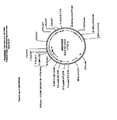
- a base corn plant transformation vector pMON93039 as set forth in SEQ ID NO: 30329, illustrated in Table 3 and Figure 2 , was fabricated for use in preparing recombinant DNA for Agrobacterium -mediated transformation into corn tissue.
- Table 3 function name annotation Coordinates of SEQ ID NO: 30329 Agro transforamtion B-AGRtu.right border Agro right border sequence, essential for transfer of T-DNA.
- T-AGRtu.nos A 3' non-translated region of the nopaline synthase gene of Agrobacterium tumefaciens Ti plasmid which functions to direct polyadenylation of the mRNA. 5849-6101 Agro transformation B-AGRtu.left border Agro left border sequence, essential for transfer of T-DNA. 6168-6609 Maintenance in E. coli OR-Ec.oriV-RK2 The vegetative origin of replication from plasmid RK2. 6696-7092 CR-Ec.rop Coding region for repressor of primer from the ColE1 plasmid. Expression of this gene product interferes with primer binding at the origin of replication, keeping plasmid copy number low.
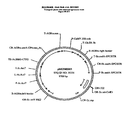
- Another embobiment of corn plant transformation base vector is pMON92705, as set forth in SEQ ID NO: 30330, illustrated in Table 4 and Figure 3 , which was fabricated for use in preparing recombinant DNA for Agrobacterium -mediated transformation into corn tissue.
- Table 4 Another embobiment of corn plant transformation base vector is pMON92705, as set forth in SEQ ID NO: 30330, illustrated in Table 4 and Figure 3 , which was fabricated for use in preparing recombinant DNA for Agrobacterium -mediated transformation into corn tissue.
- Table 4 Table 4.
- function name annotation Coordinates of SEQ ID NO: 30330 Agro transforamtion B-AGRtu.right border Agro right border sequence, essential for transfer of T-DNA.
- T-AGRtu.nos A 3' non-translated region of the nopaline synthase gene of Agrobacterium tumefaciens Ti plasmid which functions to direct polyadenylation of the mRNA. 11066-11318 Agro transformation B-AGRtu.left border Agro left border sequence, essential for transfer of T-DNA. 10-451 Maintenance in E. coli OR-Ec.oriV-RK2 The vegetative origin of replication from plasmid RK2. 538-934 CR-Ec.rop Coding region for repressor of primer from the ColE1 plasmid. Expression of this gene product interferes with primer binding at the origin of replication, keeping plasmid copy number low.
- Primers for PCR amplification of protein coding nucleotides of recombinant DNA are designed at or near the start and stop codons of the coding sequence, in order to eliminate most of the 5' and 3' untranslated regions.
- Each recombinant DNA coding for a protein identified in Table 2 is amplified by PCR prior to insertion into the insertion site within the gene of interest expression cassette of one of the base vectors as referenced in Table 2.
- Plasmids for use in transformation of soybean were also prepared. Elements of an exemplary common expression vector plasmid pMON82053 are shown in Table 7 below and Figure 4.
- T-AGRtu.nos A 3' non-translated region of the nopaline synthase gene of Agrobacterium tumefaciens Ti plasmid which functions to direct polyadenylation of the mRNA.
- 9466-9718 Gene of interest expression cassette P-CaMV.35S-enh Promoter for 35S RNA from CaMV containing a duplication of the -90 to -350 region. 1-613 T-Gb.E6-3b 3' untranslated region from the fiber protein E6 gene of sea-island cotton; 688-1002 Agro transformation B-AGRtu.right border Agro right border sequence, essential for transfer of T-DNA. 1033-1389 Maintenance in E.
- OR-Ec.oriV-RK2 The vegetative origin of replication from plasmid RK2. 5661-6057 CR-Ec.rop Coding region for repressor of primer from the ColE1 plasmid. Expression of this gene product interferes with primer binding at the origin of replication, keeping plasmid copy number low. 3961-4152 OR-Ec.ori-ColE1 The minimal origin of replication from the E. coli plasmid ColE1.
- Primers for PCR amplification of protein coding nucleotides of recombinant DNA are designed at or near the start and stop codons of the coding sequence, in order to eliminate most of the 5' and 3' untranslated regions.
- Each recombinant DNA coding for a protein identified in Table 2 is amplified by PCR prior to insertion into the insertion site within the gene of interest expression cassette of one of the base vectors as referenced in Table 2.
- Plasmids for use in transformation of cotton are also prepared. Elements of an exemplary common expression vector plasmid pMON99053 are shown in Table 8 below and
- FIG. 5 Primers for PCR amplification of protein coding nucleotides of recombinant DNA are designed at or near the start and stop codons of the coding sequence, in order to eliminate most of the 5' and 3' untranslated regions.
- Each recombinant DNA coding for a protein identified in Table 2 is amplified by PCR prior to insertion into the insertion site within the gene of interest expression cassette of one of the base vectors as referenced in Table 2.
- Table 8. function name annotation Coordinates of SEQ ID NO: 30376 Agro transforamtion B-AGRtu.right border Agro right border sequence, essential for transfer of T-DNA.
- This example illustrates plant cell transformation methods useful in producing transgenic corn plant cells, plants, seeds and pollen of this invention and the production and identification of transgenic corn plants and seed with an enhanced trait, i.e. enhanced water use efficiency, enhanced cold tolerance, increased yield, enhanced nitrogen use efficiency, enhanced seed protein and enhanced seed oil.
- Plasmid vectors were prepared by cloning DNA identified in Table 2 in the identified base vectors for use in corn transformation of corn plant cells to produce transgenic corn plants and progeny plants, seed and pollen.
- corn plants of a readily transformable line (designated LH59) is grown in the greenhouse and ears harvested when the embryos are 1.5 to 2.0 mm in length. Ears are surface sterilized by spraying or soaking the ears in 80% ethanol, followed by air drying. Immature embryos are isolated from individual kernels on surface sterilized ears. Prior to inoculation of maize cells, Agrobacterium cells are grown overnight at room temperature. Immature maize embryo cells are inoculated with Agrobacterium shortly after excision, and incubated at room temperature with Agrobacterium for 5-20 minutes. Immature embryo plant cells are then co-cultured with Agrobacterium for 1 to 3 days at 23°C in the dark.
- LH59 readily transformable line
- Co-cultured embryos are transferred to selection media and cultured for approximately two weeks to allow embryogenic callus to develop.
- Embryogenic callus is transferred to culture medium containing 100 mg/L paromomycin and subcultured at about two week intervals.
- Transformed plant cells are recovered 6 to 8 weeks after initiation of selection.
- immature embryos are cultured for approximately 8-21 days after excision to allow callus to develop. Callus is then incubated for about 30 minutes at room temperature with the Agrobacterium suspension, followed by removal of the liquid by aspiration. The callus and Agrobacterium are co-cultured without selection for 3-6 days followed by selection on paromomycin for approximately 6 weeks, with biweekly transfers to fresh media, and paromomycin resistant callus identified as containing the recombinant DNA in an expression cassette.
- transgenic corn plants To regenerate transgenic corn plants a callus of transgenic plant cells resulting from transformation is placed on media to initiate shoot development in plantlets which are transferred to potting soil for initial growth in a growth chamber at 26 degrees C followed by a mist bench before transplanting to 5 inch pots where plants are grown to maturity.
- the regenerated plants are self fertilized and seed is harvested for use in one or more methods to select seed, seedlings or progeny second generation transgenic plants (R2 plants) or hybrids, e.g. by selecting transgenic plants exhibiting an enhanced trait as compared to a control plant.
- Transgenic corn plant cells are transformed with recombinant DNA from each of the genes identified in Table 2. Progeny transgenic plants and seed of the transformed plant cells are screened for enhanced water use efficiency, enhanced cold tolerance, increased yield, enhanced nitrogen use efficiency, enhanced seed protein and enhanced seed oil as reported in Example 7.
- This example illustrates plant transformation useful in producing the transgenic soybean plants of this invention and the production and identification of transgenic seed for transgenic soybean having enhanced water use efficiency, enhanced cold tolerance, increased yield, enhanced nitrogen use efficiency, enhanced seed protein and enhanced seed oil.
- soybean seeds are germinated overnight and the meristem explants excised.
- the meristems and the explants are placed in a wounding vessel.
- Soybean explants and induced Agrobacterium cells from a strain containing plasmid DNA with the gene of interest cassette and a plant selectable marker cassette are mixed no later than 14 hours from the time of initiation of seed germination and wounded using sonication.
- explants are placed in co-culture for 2-5 days at which point they are transferred to selection media for 6-8 weeks to allow selection and growth of transgenic shoots.
- Trait positive shoots are harvested approximately 6-8 weeks and placed into selective rooting media for 2-3 weeks. Shoots producing roots are transferred to the greenhouse and potted in soil.
- a DNA construct can be transferred into the genome of a soybean cell by particle bombardment and the cell regenerated into a fertile soybean plant as described in U.S. Patent 5,015,580 , herein incorporated by reference.
- Transgenic soybean plant cells are transformed with recombinant DNA from each of the genes identified in Table 2. Progeny transgenic plants and seed of the transformed plant cells are screened for enhanced water use efficiency, enhanced cold tolerance, increased yield, enhanced nitrogen use efficiency, enhanced seed protein and enhanced seed oil as reported in Example 7.
- Cotton transformation is performed as generally described in WO0036911 and in U.S. Pat. No. 5,846,797 .
- Transgenic cotton plants containing each of the recombinant DNA having a sequence of SEQ ID NO: 1 through SEQ ID NO: 358 are obtained by transforming with recombinant DNA from each of the genes identified in Table 2.
- Progeny transgenic plants are selected from a population of transgenic cotton events under specified growing conditions and are compared with control cotton plants.
- Control cotton plants are substantially the same cotton genotype but without the recombinant DNA, for example, either a parental cotton plant of the same genotype that was not transformed with the identical recombinant DNA or a negative isoline of the transformed plant.
- a commercial cotton cultivar adapted to the geographical region and cultivation conditions i.e. cotton variety ST474, cotton variety FM 958, and cotton variety Siokra L-23, are used to compare the relative performance of the transgenic cotton plants containing the recombinant DNA.
- the specified culture conditions are growing a first set of transgenic and control plants under "wet” conditions, i.e. irrigated in the range of 85 to 100 percent of evapotranspiration to provide leaf water potential of -14 to - 18 bars, and growing a second set of transgenic and control plants under "dry” conditions, i.e. irrigated in the range of 40 to 60 percent of evapotranspiration to provide a leaf water potential of -21 to -25 bars.
- Pest control such as weed and insect control is applied equally to both wet and dry treatments as needed.
- Data gathered during the trial includes weather records throughout the growing season including detailed records of rainfall; soil characterization information; any herbicide or insecticide applications; any gross agronomic differences observed such as leaf morphology, branching habit, leaf color, time to flowering, and fruiting pattern; plant height at various points during the trial; stand density; node and fruit number including node above white flower and node above crack boll measurements; and visual wilt scoring.
- Cotton boll samples are taken and analyzed for lint fraction and fiber quality. The cotton is harvested at the normal harvest timeframe for the trial area. Enhanced water use efficiency is indicated by increased yield, improved relative water content, enhanced leaf water potential, increased biomass, enhanced leaf extension rates, and improved fiber parameters.
- transgenic cotton plants of this invention are identified from among the transgenic cotton plants by agronomic trait screening as having increased yield and enhanced water use efficiency.
- This example illustrates plant transformation useful in producing the transgenic canola plants of this invention and the production and identification of transgenic seed for transgenic canola having enhanced water use efficiency, enhanced cold tolerance, increased yield, enhanced nitrogen use efficiency, enhanced seed protein and enhanced seed oil.
- Tissues from in vitro grown canola seedlings are prepared and inoculated with overnight-grown Agrobacterium cells containing plasmid DNA with the gene of interest cassette and a plant selectable marker cassette. Following co-cultivation with Agrobacterium, the infected tissues are allowed to grow on selection to promote growth of transgenic shoots, followed by growth of roots from the transgenic shoots. The selected plantlets are then transferred to the greenhouse and potted in soil. Molecular characterization are performed to confirm the presence of the gene of interest, and its expression in transgenic plants and progenies. Progeny transgenic plants are selected from a population of transgenic canola events under specified growing conditions and are compared with control canola plants.
- Control canola plants are substantially the same canola genotype but without the recombinant DNA, for example, either a parental canola plant of the same genotype that is not transformed with the identical recombinant DNA or a negative isoline of the transformed plant
- Transgenic canola plant cells are transformed with recombinant DNA from each of the genes identified in Table 2.
- Transgenic progeny plants and seed of the transformed plant cells are screened for enhanced water use efficiency, enhanced cold tolerance, increased yield, enhanced nitrogen use efficiency, enhanced seed protein and enhanced seed oil as reported in Example 7.
- This example illustrates the identification of homologs of proteins encoded by the DNA identified in Table 2 which is used to provide transgenic seed and plants having enhanced agronomic traits. From the sequence of the homologs, homologous DNA sequence can be identified for preparing additional transgenic seeds and plants of this invention with enhanced agronomic traits.
- An “All Protein Database” was constructed of known protein sequences using a proprietary sequence database and the National Center for Biotechnology Information (NCB1) non-redundant amino acid database (nr.aa). For each organism from which a polynucleotide sequence provided herein was obtained, an “Organism Protein Database” was constructed of known protein sequences of the organism; it is a subset of the All Protein Database based on the NCBI taxonomy ID for the organism.
- NCB1 National Center for Biotechnology Information
- the All Protein Database was queried using amino acid sequences provided herein as SEQ ID NO: 359 through SEQ ID NO: 716 using NCBI "blastp" program with E-value cutoff of 1e-8. Up to 1000 top hits were kept, and separated by organism names. For each organism other than that of the query sequence, a list was kept for hits from the query organism itself with a more significant E-value than the best hit of the organism. The list contains likely duplicated genes of the polynucleotides provided herein, and is referred to as the Core List. Another list was kept for all the hits from each organism, sorted by E-value, and referred to as the Hit List.
- the Organism Protein Database was queried using polypeptide sequences provided herein as SEQ ID NO: 359 through SEQ ID NO: 716 using NCBI "blastp" program with E-value cutoff of 1e-4. Up to 1000 top hits were kept. A BLAST searchable database was constructed based on these hits, and is referred to as "SubDB". SubDB was queried with each sequence in the Hit List using NCBI "blastp" program with E-value cutoff of 1e-8. The hit with the best E-value was compared with the Core List from the corresponding organism. The hit is deemed a likely ortholog if it belongs to the Core List, otherwise it is deemed not a likely ortholog and there is no further search of sequences in the Hit List for the same organism.
- Transgenic corn seed and plants with recombinant DNA identified in Table 2 are prepared by plant cells transformed with DNA that is stably integrated into the genome of the corn cell.
- Transgenic corn plant cells are transformed with recombinant DNA from each of the genes identified in Table 1.
- Progeny transgenic plants and seed of the transformed plant cells are screened for enhanced water use efficiency, enhanced cold tolerance, increased yield, enhanced nitrogen use efficiency, enhanced seed protein and enhanced seed oil as compared to control plants.
- the physiological efficacy of transgenic corn plants can be tested for nitrogen use efficiency (NUE) traits in a high-throughput nitrogen (N) selection method.
- NUE nitrogen use efficiency
- the collected data are compared to the measurements from wildtype controls using a statistical model to determine if the changes are due to the transgene.
- Raw data were analyzed by SAS software. Results shown herein are the comparison of transgenic plants relative to the wildtype controls.
- Planting materials used Metro Mix 200 (vendor: Hummert) Cat. # 10-0325, Scotts Micro Max Nutrients (vendor: Hummert) Cat. # 07-6330, OS 4 1/3" x 3 7/8" pots (vendor: Hummert) Cat. # 16-1415, OS trays (vendor: Hummert) Cat. # 16-1515, Hoagland's macronutrients solution, Plastic 5" stakes (vendor: Hummert) yellow Cat. # 49-1569, white Cat. # 49-1505, Labels with numbers indicating material contained in pots. Fill 500 pots to rim with Metro Mix 200 to a weight of ⁇ 140g/pot. Pots are filled uniformly by using a balancer. Add 0.4g of Micro Max nutrients to each pot. Stir ingredients with spatula to a depth of 3 inches while preventing material loss.
- Plants are allowed to grow for 28 days under the low N run or for 23 days under the high N run.
- the macronutrients are dispensed in the form of a macronutrient solution (see composition below) containing precise amounts of N added (2mM NH 4 NO 3 for limiting N selection and 20mM NH 4 NO 3 for high N selection runs).
- Each pot is manually dispensed 100ml of nutrient solution three times a week on alternate days starting at eight and ten days after planting for high N and low N runs, respectively.
- two 20 min waterings at 05:00 and 13:00 are skipped.
- the vattex matting should be changed every third run to avoid N accumulation and buildup of root matter.
- Table 10 shows the amount of nutrients in the nutrient solution for either the low or high nitrogen selection.
- Table 10 Nutrient Stock 2mM NH 4 NO 3 (Low Nitrogen Growth Condition, Low N) 20mM NH 4 NO 3 (high Nitrogen Growth Condition, High N) mL/L mL/L 1 M NH 4 N0 3 2 20 1 M KH 2 PO 4 0.5 0.5 1 M MgSO 4 .7H 2 O 2 2 1 M CaCl 2 2.5 2.5 1 M K 2 SO 4 1 1 Note: Adjust pH to 5.6 with HCl or KOH
- Leaf fresh mass is recorded for an excised V6 leaf, the leaf is placed into a paper bag.
- the paper bags containing the leaves are then placed into a forced air oven at 80° C for 3 days. After 3 days, the paper bags are removed from the oven and the leaf dry mass measurements are taken.
- Leaf chlorophyll area (LCA), which is a product of V6 relative chlorophyll content and its leaf area (relative units).
- Leaf chlorophyll area leaf chlorophyll X leaf area. This parameter gives an indication of the spread of chlorophyll over the entire leaf area;
- specific leaf area (LSA) is calculated as the ratio of V6 leaf area to its dry mass (cm 2 /g dry mass), a parameter also recognized as a measure of NUE.
- Transgenic plants provided by the present invention are planted in field without any nitrogen source being applied.
- Transgenic plants and control plants are grouped by genotype and construct with controls arranged randomly within genotype blocks. Each type of transgenic plants are tested by 3 replications and across 5 locations.
- Nitrogen levels in the fields are analyzed in early April pre-planting by collecting 30 sample soil cores from 0-24" and 24 to 48" soil layer. Soil samples are analyzed for nitrate-nitrogen, phosphorus(P), Potassium(K), organic matter and pH to provide baseline values. P, K and micronutrients are applied based upon soil test recommendations.
- Transgenic plants provided by the present invention are planted in field with three levels of nitrogen (N) fertilizer being applied, i.e. low level (0 N), medium level (80 lb/ac) and high level (180 lb/ac). Liquid 28% or 32% UAN (Urea, Ammonium Nitrogen) are used as the N source and apply by broadcast boom and incorporate with a field cultivator with rear rolling basket in the same direction as intended crop rows. Although there is no N applied to the 0 N treatment the soil should still be disturbed in the same fashion as the treated area. Transgenic plants and control plants are grouped by genotype and construct with controls arranged randomly within genotype blocks. Each type of transgenic plants is tested by 3 replications and across 4 locations.
- N nitrogen
- UAN Ultra, Ammonium Nitrogen
- Nitrogen levels in the fields are analyzed in early April pre-planting by collecting 30 sample soil cores from 0-24" and 24 to 48" soil layer. Soil samples are analyzed for nitrate-nitrogen, phosphorus(P), Potassium(K), organic matter and pH to provide baseline values. P, K and micronutrients are applied based upon soil test recommendations.
- transgenic plants of this invention exhibit improved yield as compared to a control plant. Improved yield can result from enhanced seed sink potential, i.e. the number and size of endosperm cells or kernels and/or enhanced sink strength, i.e. the rate of starch biosynthesis. Sink potential can be established very early during kernel development, as endosperm cell number and size are determined within the first few days after pollination.
- Effective yield selection of enhanced yielding transgenic corn events uses hybrid progeny of the transgenic event over multiple locations with plants grown under optimal production management practices, and maximum pest control.
- a useful target for improved yield is a 5% to 10% increase in yield as compared to yield produced by plants grown from seed for a control plant.
- Selection methods may be applied in multiple and diverse geographic locations, for example up to 16 or more locations, over one or more plating seasons, for example at least two planting seasons to statistically distinguish yield improvement from natural environmental effects. It is to plant multiple transgenic plants, positive and negative control plants, and pollinator plants in standard plots, for example 2 row plots, 20 feet long by 5 feet wide with 30 inches distance between rows and a 3 foot alley between ranges.
- Transgenic events can be grouped by recombinant DNA constructs with groups randomly placed in the field.
- a pollinator plot ofa high quality corn line is planted for every two plots to allow open pollination when using male sterile transgenic events.
- a useful planting density is about 30,000 plants/acre.
- High planting density is greater than 30,000 plants/acre, preferably about 40,000 plants/acre, more preferably about 42,000 plants/acre, most preferably about 45,000 plants/acre.
- Surrogate indicators for yield improvement include source capacity (biomass), source output (sucrose and photosynthesis), sink components (kernel size, ear size, starch in the seed), development (light response, height, density tolerance), maturity, early flowering trait and physiological responses to high density planting, for example at 45,000 plants per acre, for example as illustrated in Table 11 and 12.
- Table 11 Timing Evaluation Description comments V2-3 Early stand Can be taken any time after germination and prior to removal of any plants. Pollen shed GDU to 50% shed GDU to 50% plants shedding 50% tassel. Silking GDU to 50% silk GDU to 50% plants showing silks. Maturity Plant height Height from soil surface to flag leaf attachment (inches).
- ETR and CER are measured with Li6400LCF (Licor, Lincoln, NE) around V9-R1 stages.
- Leaf chlorophyll fluorescence is a quick way to monitor the source activity and is reported to be highly correlated with CO 2 assimilation under varies conditions ( Photosyn Research, 37: 89-102 ).
- actinic light 1500 with 10% blue light
- micromol m -2 s -1 micromol m -2 s -1 , 28oC, CO2 levels 450ppm.
- Ten plants are measured in each event. There are 2 readings for each plant.
- a hand-held chlorophyll meter SPAD-502 (Minolta - Japan) is used to measure the total chlorophyll level on live transgenic plants and the wild type counterparts a. Three trifoliates from each plant are analyzed, and each trifoliate were analyzed three times. Then 9 data points are averaged to obtain the chlorophyll level. The number of analyzed plants of each genotype ranges from 5 to 8.
- a useful statistical measurement approach comprises three components, i.e. modeling spatial autocorrelation of the test field separately for each location, adjusting traits of recombinant DNA events for spatial dependence for each location, and conducting an across location analysis.
- the first step in modeling spatial autocorrelation is estimating the covariance parameters of the semivariogram.
- a spherical covariance model is assumed to model the spatial autocorrelation. Because of the size and nature of the trial, it is likely that the spatial autocorrelation may change. Therefore, anisotropy is also assumed along with spherical covariance structure. The following set of equations describes the statistical form of the anisotropic spherical covariance model.
- ⁇ ( v, ⁇ 2 , ⁇ , ⁇ n , ⁇ j )
- v the nugget effect
- ⁇ 2 is the partial sill
- ⁇ a rotation in degrees clockwise from north
- ⁇ n a scaling parameter for the minor axis
- ⁇ j is a scaling parameter for the major axis of an anisotropical ellipse of equal covariance.
- the five covariance parameters that defines the spatial trend will then be estimated by using data from heavily replicated pollinator plots via restricted maximum likelihood approach. In a multi-location field trial, spatial trend are modeled separately for each location.
- a variance-covariance structure is generated for the data set to be analyzed.
- This variance-covariance structure contains spatial information required to adjust yield data for spatial dependence.
- a nested model that best represents the treatment and experimental design of the study is used along with the variance-covariance structure to adjust the yield data.
- the nursery or the seed batch effects can also be modeled and estimated to adjust the yields for any yield parity caused by seed batch differences.
- all adjusted data is combined and analyzed assuming locations as replications. In this analysis, intra and inter-location variances are combined to estimate the standard error of yield from transgenic plants and control plants. Relative mean comparisons are used to indicate statistically significant yield improvements.
- Described in this example is a high-throughput method for greenhouse selection of transgenic corn plants to wild type corn plants (tested as inbreds or hybrids) for water use efficiency.
- This selection process imposes 3 drought/re-water cycles on plants over a total period of 15 days after an initial stress free growth period of 11 days. Each cycle consists of 5 days, with no water being applied for the first four days and a water quenching on the 5th day of the cycle.
- the primary phenotypes analyzed by the selection method are the changes in plant growth rate as determined by height and biomass during a vegetative drought treatment. The hydration status of the shoot tissues following the drought is also measured. The plant height are measured at three time points.
- the shoot initial height (S1H) is the shoot initial height (S1H).
- the plant height is also measured halfway throughout the drought/re-water regimen, on day 18 after planting, to give rise to the shoot mid-drought height (SMH).
- SWH shoot wilt height
- SWM shoot wilted biomass
- the shoot is placed in water at 40 degree Celsius in the dark.
- STM shoot turgid weight
- SDM shoot dry biomass
- the shoot average height (SAH) is the mean plant height across the 3 height measurements. The procedure described above may be adjusted for +/- ⁇ one day for each step given the situation.
- Relative Growth Rate (SWH-SIH)/((SWH+SIH)/2)*100].
- This example illustrates the identification of consensus amino acid sequence for the proteins and homologs encoded by DNA that is used to prepare the transgenic seed and plants of this invention having enhanced agronomic traits.
- ClustalW program was selected for multiple sequence alignments of the amino acid sequence of SEQ ID NO: 561 and its 10 homologs.
- Protein weight matrices available for ClustalW program include Blosum, Pam and Gonnet series. Those parameters with gap open penalty and gap extension penalty were extensively tested. On the basis of the test results, Blosum weight matrix, gap open penalty of 10 and gap extension penalty of 1 were chosen for multiple sequence alignment.
- Figure 1 shows the sequences of SEQ ID NO: 561, its homologs and the consensus sequence (SEQ ID NO: 30328) at the end.
- the consensus amino acid sequence can be used to identify DNA corresponding to the full scope of this invention that is useful in providing transgenic plants, for example corn and soybean plants with enhanced agronomic traits, for example improved nitrogen use efficiency, improved yield, improved water use efficiency and/or improved growth under cold stress, due to the expression in the plants of DNA encoding a protein with amino acid sequence identical to the consensus amino acid sequence.
- This example illustrates the identification of domain and domain module by Pfam analysis.
- the amino acid sequence of the expressed proteins that were shown to be associated with an enhanced trait were analyzed for Pfam protein family against the current Pfam collection of multiple sequence alignments and hidden Markov models using the HMMER software.
- the Pfam domain modules and individual protein domain for the proteins of SEQ ID NO: 359 through 716 are shown in Table 14 and Table 15 respectively.
- the Hidden Markov model databases for the identified protein families are also allowing identification of other homologous proteins and their cognate encoding DNA to enable the full breadth of the invention for a person of ordinary skill in the art.
- Certain proteins are identified by a single Pfam domain and others by multiple Pfam domains. For instance, t
- the protein with amino acids of SEQ ID NO: 417 is characterized by two Pfam domains, i.e. HD and RelA_Spot.
- PEP SEQ ID NO GENE ID Pfam domain name begin stop score E-value 359 PHE0001295_7469 pep DNA_photolyase 18 190 254.3 2.30E-73 359 PHE0001295_7469.pep FAD_binding_7 223 501 503 3.20E-148 360 PHE0002129_8308pep PEPcase 3 982 425.8 5.30E-125 361 PHE0002132_4965.pep Pkinase 9 285 234.9 1.60E-67 362 PHE0002132_8653.pep Pkinase 9 285 234.9 1.60E-67 363 PHE0002133_7497.pep Pkinase 13 273 288.2 1.40E-83 364 PHE0002693_8516.pep FAD binding_3 55 374 -131.4 0.0029 365 PHE0002777_7490 pep Ferrochelatase 108 432 598.9 4.30E-177 366 P
- This example illustrates the preparation and identification by selection of transgenic seeds and plants derived from transgenic plant cells of this invention where the plants and seed are identified by screening a having an enhanced agronomic trait imparted by expression of a protein selected from the group including the homologous proteins identified in Example 6.
- Transgenic plant cells of corn, soybean, cotton, canola, wheat and rice are transformed with recombinant DNA for expressing each of the homologs identified in Example 6.
- Plants are regenerated from the transformed plant cells and used to produce progeny plants and seed that are screened for enhanced water use efficiency, enhanced cold tolerance, increased yield, enhanced nitrogen use efficiency, enhanced seed protein and enhanced seed oil. Plants are identified exhibiting enhanced traits imparted by expression of the homologous proteins.
- a plant cell nucleus with stably integrated, recombinant DNA wherein a. said recombinant DNA comprises a promoter that is functional in said plant cell and that is operably linked to a protein coding DNA encoding a protein having an amino acid sequence comprising a Pfam domain module selected from the group consisting of Gp_dh_N::Gp_ dh_C, Mg_chelatase::VWA, zf-CCCH::zf-CCCH::zf-CCCH::zf-CCCH::zf-CCCH, WD40, tRNA-synt_2b::HGTP_anticodon, RNase_PH::RNase_PH_C, F-box::Kelch_1::Kelch_1, Peptidase_C54, Iso_dh, Metallophos, OTU, Rotamase, Sugar_tr, Glyoxalase::Glyoxalase, Ras,
- said recombinant DNA comprises a promoter that is functional in said plant cell and that is operably linked to a protein coding DNA encoding a protein comprising an amino acid sequence with at least 90% identity to a consensus amino acid sequence selected from the group consisting of SEQ ID NO: 30377 through SEQ ID NO: 30418;
- the plant cell nucleus as defined above further comprising DNA expressing a protein that provides tolerance from exposure to an herbicide applied at levels that are lethal to a wild type of said plant cell.
- a transgenic plant cell or plant comprising a plurality of plant cells with the plant cell nucleus as defined above.
- transgenic plant cell or plant as defined above which is homozygous for said recombinant DNA.
- a transgenic seed comprising a plurality of plant cells with the plant cell nucleus as defined above.
- transgenic seed as defined above, which is selected from a corn, soybean, cotton, canola, alfalfa, wheat or rice plant.
- a transgenic pollen grain comprising a haploid derivative of the plant cell nucleus as defined above.
- a method for manufacturing non-natural, transgenic seed as defined above that can be used to produce a crop of transgenic plants with an enhanced trait resulting from expression of stably-integrated recombinant DNA wherein said method for manufacturing said transgenic seed comprising:
- a method of producing hybrid corn seed comprising:
Landscapes
- Health & Medical Sciences (AREA)
- Genetics & Genomics (AREA)
- Life Sciences & Earth Sciences (AREA)
- Engineering & Computer Science (AREA)
- Chemical & Material Sciences (AREA)
- Biotechnology (AREA)
- Organic Chemistry (AREA)
- Zoology (AREA)
- Wood Science & Technology (AREA)
- Bioinformatics & Cheminformatics (AREA)
- Molecular Biology (AREA)
- General Engineering & Computer Science (AREA)
- Biomedical Technology (AREA)
- General Health & Medical Sciences (AREA)
- Biophysics (AREA)
- Physics & Mathematics (AREA)
- Biochemistry (AREA)
- Microbiology (AREA)
- Plant Pathology (AREA)
- Cell Biology (AREA)
- Proteomics, Peptides & Aminoacids (AREA)
- Analytical Chemistry (AREA)
- Nutrition Science (AREA)
- Botany (AREA)
- Mycology (AREA)
- Immunology (AREA)
- Oil, Petroleum & Natural Gas (AREA)
- Breeding Of Plants And Reproduction By Means Of Culturing (AREA)
- Micro-Organisms Or Cultivation Processes Thereof (AREA)
- Developmental Biology & Embryology (AREA)
- Environmental Sciences (AREA)
Applications Claiming Priority (2)
| Application Number | Priority Date | Filing Date | Title |
|---|---|---|---|
| US83841506P | 2006-08-17 | 2006-08-17 | |
| EP07837048A EP2048939A4 (fr) | 2006-08-17 | 2007-08-17 | Plantes transgéniques à caractères agronomiques renforcés |
Related Parent Applications (1)
| Application Number | Title | Priority Date | Filing Date |
|---|---|---|---|
| EP07837048.3 Division | 2007-08-17 |
Publications (2)
| Publication Number | Publication Date |
|---|---|
| EP2540831A2 true EP2540831A2 (fr) | 2013-01-02 |
| EP2540831A3 EP2540831A3 (fr) | 2013-04-10 |
Family
ID=39082800
Family Applications (2)
| Application Number | Title | Priority Date | Filing Date |
|---|---|---|---|
| EP07837048A Withdrawn EP2048939A4 (fr) | 2006-08-17 | 2007-08-17 | Plantes transgéniques à caractères agronomiques renforcés |
| EP20120178951 Withdrawn EP2540831A3 (fr) | 2006-08-17 | 2007-08-17 | Plantes transgéniques dotées de traits agronomiques améliorés |
Family Applications Before (1)
| Application Number | Title | Priority Date | Filing Date |
|---|---|---|---|
| EP07837048A Withdrawn EP2048939A4 (fr) | 2006-08-17 | 2007-08-17 | Plantes transgéniques à caractères agronomiques renforcés |
Country Status (3)
| Country | Link |
|---|---|
| US (3) | US20110252501A1 (fr) |
| EP (2) | EP2048939A4 (fr) |
| WO (1) | WO2008021543A2 (fr) |
Cited By (3)
| Publication number | Priority date | Publication date | Assignee | Title |
|---|---|---|---|---|
| CN109827957A (zh) * | 2018-12-17 | 2019-05-31 | 南京邮电大学 | 一种基于计算机视觉的水稻叶片spad值估测方法及系统 |
| CN111154783A (zh) * | 2020-01-16 | 2020-05-15 | 四川农业大学 | 玉米ZmAKINβγ1基因在培育耐铅胁迫的玉米中的应用 |
| CN111218454A (zh) * | 2018-11-27 | 2020-06-02 | 中国科学院微生物研究所 | GhRFP1基因、及其重组载体 |
Families Citing this family (61)
| Publication number | Priority date | Publication date | Assignee | Title |
|---|---|---|---|---|
| US8691243B2 (en) * | 2002-04-02 | 2014-04-08 | Ben-Gurion University Of The Negev Research And Development Authority | Protein-based Streptococcus pneumoniae vaccine |
| IL165334A0 (en) | 2004-11-22 | 2006-01-15 | Mediwound Ltd | Debriding composition from bromelain and methods of producing same |
| ES2459369T3 (es) | 2004-12-21 | 2014-05-09 | Monsanto Technology Llc | Plantas transgénicas con rasgos agronómicos potenciados |
| WO2009001304A1 (fr) * | 2007-06-28 | 2008-12-31 | Firmenich Sa | 13-hydroperoxyde lyases modifiées et utilisations de celles-ci |
| EP2036978A1 (fr) * | 2007-09-14 | 2009-03-18 | URSAPHARM Arzneimittel GmbH & Co. KG | Préparation recombinante de fractions de broméline sélectionnées |
| EP2255003B1 (fr) | 2008-02-15 | 2015-01-28 | Ceres Inc. | Tolérance à la sécheresse et à la chaleur chez les plantes |
| CA2730659A1 (fr) * | 2008-07-31 | 2010-02-04 | Ursapharm Arzneimittel Gmbh | Preparation recombinee d'inhibiteurs de la bromelaine et precurseur d'inhibiteur de la bromelaine |
| EP2334795B1 (fr) * | 2008-09-08 | 2014-04-30 | Athenix Corporation | Compositions et procédés pour l expression d une séquence de nucléotides hétérologues chez les plantes |
| WO2010042575A1 (fr) * | 2008-10-08 | 2010-04-15 | Monsanto Technology Llc | Plantes transgeniques presentant des caracteristiques agronomiques ameliorees |
| GB2468136A (en) * | 2009-02-26 | 2010-09-01 | Uws Ventures Ltd | A recombinant protein with fructanase activity |
| AU2010221529A1 (en) * | 2009-03-02 | 2011-10-13 | The Regents Of The University Of California | Hydroperoxide lyase genes and tolerance to abiotic stress in plants |
| US8530213B2 (en) * | 2009-12-02 | 2013-09-10 | Georgia Tech Research Corporation | Compositions and methods for using NADH oxidases |
| EA201290936A1 (ru) * | 2010-03-19 | 2013-05-30 | Басф Плант Сайенс Компани Гмбх | Растения с улучшенными характеристиками урожайности и способ их получения |
| WO2012009580A1 (fr) | 2010-07-14 | 2012-01-19 | The Trustees Of Columbia University In The City Of New York | Spectromètre à pince de force et ses procédés d'utilisation |
| US20130252307A1 (en) * | 2010-07-15 | 2013-09-26 | Georgia Tech Research Corporation | Ancestral proteins |
| AU2011292795A1 (en) * | 2010-08-19 | 2013-01-31 | Basf Plant Science Company Gmbh | Method of increasing resistance against soybean rust in transgenic plants by ADR-1-gene |
| US20130259851A1 (en) * | 2010-12-01 | 2013-10-03 | Universitat Zurich | Use of prokaryotic sphingosine-1-phosphate lyases and of sphingosine-1-phosphate lyases lacking a transmembrane domain for treating hyperproliferative and other diseases |
| US8129170B1 (en) | 2010-12-06 | 2012-03-06 | E.I. Du Pont De Nemours And Company | Recombinant bacteria having the ability to metabolize sucrose |
| WO2013067128A1 (fr) | 2011-11-02 | 2013-05-10 | Ceres, Inc. | Plantes transgéniques ayant une tolérance accrue à l'aluminium |
| CA3156374A1 (en) | 2012-02-29 | 2013-09-06 | Evogene Ltd. | Isolated polynucleotides and polypeptides and methods of using same for increasing plant yield, biomass, growth rate, vigor, and oil content of plants |
| US9181568B2 (en) * | 2012-04-23 | 2015-11-10 | Exxonmobil Research And Engineering Company | Cell systems and methods for improving fatty acid synthesis by expression of dehydrogenases |
| CA2874985A1 (fr) | 2012-08-09 | 2014-02-13 | Basf Plant Science Company Gmbh | Plantes exprimant hcp5 resistant aux pathogenes fongiques |
| AR094276A1 (es) * | 2012-12-21 | 2015-07-22 | Alkem Laboratories Ltd | Marcadores de fusion y sistema de vector de expresion para la expresion de hormona paratiroides humana (rhpth) |
| MX2015008663A (es) * | 2013-01-02 | 2016-04-07 | Basf Plant Science Co Gmbh | Plantas que tienen rasgos mejorados relacionados con el rendimiento y un metodo para producirlas. |
| AU2014269927B9 (en) * | 2013-05-22 | 2020-04-16 | Evogene Ltd. | Isolated polynucleotides and polypeptides, and methods of using same for increasing plant yield and/or agricultural characteristics |
| KR101812426B1 (ko) | 2013-08-01 | 2017-12-26 | 미쯔비시 케미컬 주식회사 | 메타크릴릴-CoA의 제조법 |
| CN105611827A (zh) | 2013-10-09 | 2016-05-25 | 孟山都技术公司 | 转基因玉米事件mon87403和其检测方法 |
| US10392626B1 (en) | 2013-10-09 | 2019-08-27 | Monsanto Technology Llc | Plant regulatory elements and uses thereof |
| CA2925504A1 (fr) | 2013-10-09 | 2015-04-16 | Monsanto Technology Llc | Perturbation de la repression du facteur de transcription hd-zip de l'expression genique en vue de la production de plantes presentant des caracteristiques ameliorees |
| JP2017515512A (ja) | 2014-05-16 | 2017-06-15 | アカデミア シニカAcademia Sinica | アスタキサンチンを生産するための組換えポリヌクレオチド配列及びその使用 |
| CN106957355B (zh) * | 2016-01-08 | 2020-12-08 | 中国科学院植物研究所 | 一种与植物耐低光和耐低温相关的ppr蛋白及其编码基因和应用 |
| RU2732224C9 (ru) | 2016-01-31 | 2021-06-18 | Медивунд Лтд. | Раноочищающая композиция для лечения ран |
| EP3414332B1 (fr) | 2016-02-08 | 2022-06-29 | Centre National De La Recherche Scientifique -Cnrs- | Amélioration d'organismes photosynthétiques par modulation de l'homéostasie du guanosine tétraphosphate |
| BR112018068868A2 (pt) | 2016-03-18 | 2019-01-22 | Monsanto Technology Llc | plantas transgênicas com traços aprimorados |
| US11371053B2 (en) * | 2016-06-29 | 2022-06-28 | Benson Hill, Inc. | Increasing plant growth and yield by expression of an m-type thioredoxin |
| CN106432421B (zh) * | 2016-11-15 | 2019-03-15 | 郑州大学第一附属医院 | 一条可与淀粉酶结合的多肽序列及其应用 |
| WO2018136572A1 (fr) * | 2017-01-18 | 2018-07-26 | Savior Lifetec Corporation | Construction d'expression et procédé de production de protéines d'intérêt |
| CN110545659A (zh) | 2017-01-31 | 2019-12-06 | 赖斯泰克有限公司 | 多个突变对提高水稻中的除草剂抗性/耐受性的作用 |
| MX2019011579A (es) * | 2017-03-28 | 2020-01-20 | Plantarc Bio Ltd | Metodos para mejorar rasgos en plantas. |
| US10813312B2 (en) | 2017-12-05 | 2020-10-27 | Nature's Best Defense, Llc | Methods and products for controlling silk fly and phorid fly in maize |
| EP3794017A4 (fr) | 2018-05-17 | 2022-03-09 | Lumen Bioscience, Inc. | Plate-forme d'administration de vaccin oral d'arthrospira platensis |
| CN108624597B (zh) * | 2018-05-23 | 2021-07-09 | 中山大学 | 花生AhGOS1-1基因及其在提高植物抗旱性中的应用 |
| BR112020021983A2 (pt) | 2018-05-29 | 2021-01-26 | Monsanto Technology Llc | plantas transgênicas com traços potencializados |
| US12252513B2 (en) | 2018-07-16 | 2025-03-18 | Lumen Bioscience, Inc. | Thermostable phycobiliproteins produced from recombinant arthrospira |
| JP2022515078A (ja) | 2018-12-18 | 2022-02-17 | ブラスケム エス.エー. | マロン酸セミアルデヒドからの3-HPおよびアセチル-CoA誘導体の共産生経路 |
| CN109593875B (zh) * | 2019-01-11 | 2021-09-28 | 华中农业大学 | 棉花恢复系恢复基因的分子标记及其应用 |
| EP3969035A4 (fr) | 2019-05-14 | 2023-06-21 | Werewolf Therapeutics, Inc. | Groupes caractéristiques de séparation, procédés et utilisation associés |
| CA3143735A1 (fr) | 2019-07-03 | 2021-01-07 | Lumen Bioscience, Inc. | Plate-forme d'administration non parenterale d'agent therapeutique d'arthrospira platensis |
| KR20220035460A (ko) * | 2019-07-17 | 2022-03-22 | 보너모스, 인코포레이티드 | 육탄당의 생산을 위한 고정화된 효소 조성물 |
| GB201913060D0 (en) * | 2019-09-10 | 2019-10-23 | Innes John Centre | Methods of increasing biotic stress resistance in plants |
| US20230136941A1 (en) * | 2020-04-07 | 2023-05-04 | Board Of Trustees Of Michigan State University | Improving plant nutritional value and growth through enhancement of essential amino acid levels |
| CN114316002B (zh) * | 2020-09-30 | 2024-03-22 | 中国科学院遗传与发育生物学研究所 | 一种大豆无茸毛相关蛋白及其编码基因和应用 |
| CN112322632B (zh) * | 2020-11-09 | 2022-02-11 | 华中农业大学 | 基因lam及应用、获得草莓雄性不育系的方法及试剂盒 |
| WO2023023092A2 (fr) * | 2021-08-16 | 2023-02-23 | Lygos, Inc. | Cellules hôtes recombinées et méthodes de production d'acide glycolique |
| EP4525615A2 (fr) | 2022-05-14 | 2025-03-26 | Novozymes A/S | Compositions et procédés de prévention, de traitement, de suppression et/ou d'élimination d'infestations et d'infections phytopathogènes |
| US20240158457A1 (en) * | 2022-05-20 | 2024-05-16 | Medikine, Inc. | Interleukin-18 receptor binding polypeptides and uses thereof |
| CN116042645B (zh) * | 2022-10-14 | 2024-05-28 | 湖北文理学院 | 玉米ZmHPL1基因在改良作物持绿性和光合性能上的应用 |
| EP4634665A1 (fr) * | 2022-12-12 | 2025-10-22 | ID-Fish Technology, Inc. | Diagnostic de bartonella à l'aide de protéines recombinées |
| CN116425847B (zh) * | 2023-04-17 | 2024-02-20 | 西南大学 | 抑制核盘菌的水稻OsGLP8-10及其应用 |
| CN116355067B (zh) * | 2023-04-17 | 2024-02-20 | 西南大学 | 抑制核盘菌的水稻OsGLP8-12及其应用 |
| EP4455293A1 (fr) * | 2023-04-25 | 2024-10-30 | Limagrain Europe | Procédés pour fournir une plante présentant une résistance accrue à un virus de la famille des lutéoviridae |
Citations (47)
| Publication number | Priority date | Publication date | Assignee | Title |
|---|---|---|---|---|
| US4810648A (en) | 1986-01-08 | 1989-03-07 | Rhone Poulenc Agrochimie | Haloarylnitrile degrading gene, its use, and cells containing the gene |
| US4959317A (en) | 1985-10-07 | 1990-09-25 | E. I. Du Pont De Nemours And Company | Site-specific recombination of DNA in eukaryotic cells |
| US5015580A (en) | 1987-07-29 | 1991-05-14 | Agracetus | Particle-mediated transformation of soybean plants and lines |
| US5094945A (en) | 1983-01-05 | 1992-03-10 | Calgene, Inc. | Inhibition resistant 5-enolpyruvyl-3-phosphoshikimate synthase, production and use |
| US5159135A (en) | 1986-12-03 | 1992-10-27 | Agracetus | Genetic engineering of cotton plants and lines |
| US5188642A (en) | 1985-08-07 | 1993-02-23 | Monsanto Company | Glyphosate-resistant plants |
| US5250515A (en) | 1988-04-11 | 1993-10-05 | Monsanto Company | Method for improving the efficacy of insect toxins |
| US5322938A (en) | 1987-01-13 | 1994-06-21 | Monsanto Company | DNA sequence for enhancing the efficiency of transcription |
| US5420034A (en) | 1986-07-31 | 1995-05-30 | Calgene, Inc. | Seed-specific transcriptional regulation |
| US5463175A (en) | 1990-06-25 | 1995-10-31 | Monsanto Company | Glyphosate tolerant plants |
| US5463174A (en) | 1986-05-29 | 1995-10-31 | Calgene Inc. | Transformation and foreign gene expression in Brassica species |
| US5527695A (en) | 1993-01-29 | 1996-06-18 | Purdue Research Foundation | Controlled modification of eukaryotic genomes |
| US5538880A (en) | 1990-01-22 | 1996-07-23 | Dekalb Genetics Corporation | Method for preparing fertile transgenic corn plants |
| US5550318A (en) | 1990-04-17 | 1996-08-27 | Dekalb Genetics Corporation | Methods and compositions for the production of stably transformed, fertile monocot plants and cells thereof |
| US5591616A (en) | 1992-07-07 | 1997-01-07 | Japan Tobacco, Inc. | Method for transforming monocotyledons |
| US5593874A (en) | 1992-03-19 | 1997-01-14 | Monsanto Company | Enhanced expression in plants |
| US5627061A (en) | 1990-08-31 | 1997-05-06 | Monsanto Company | Glyphosate-tolerant 5-enolpyruvylshikimate-3-phosphate synthases |
| US5641876A (en) | 1990-01-05 | 1997-06-24 | Cornell Research Foundation, Inc. | Rice actin gene and promoter |
| US5728925A (en) | 1984-12-28 | 1998-03-17 | Plant Genetic Systems, N.V. | Chimaeric gene coding for a transit peptide and a heterologous polypeptide |
| US5780708A (en) | 1990-01-22 | 1998-07-14 | Dekalb Genetics Corporation | Fertile transgenic corn plants |
| US5824877A (en) | 1988-07-22 | 1998-10-20 | Monsanto Company | Method for soybean transformation and regeneration |
| US5846797A (en) | 1995-10-04 | 1998-12-08 | Calgene, Inc. | Cotton transformation |
| US5858742A (en) | 1983-01-17 | 1999-01-12 | Monsanto Company | Chimeric genes for transforming plant cells using viral promoters |
| US5880275A (en) | 1989-02-24 | 1999-03-09 | Monsanto Company | Synthetic plant genes from BT kurstaki and method for preparation |
| US5914451A (en) | 1998-04-06 | 1999-06-22 | Monsanto Company | Efficiency soybean transformation protocol |
| US5986175A (en) | 1992-07-09 | 1999-11-16 | Monsanto Company | Virus resistant plants |
| US6040497A (en) | 1997-04-03 | 2000-03-21 | Dekalb Genetics Corporation | Glyphosate resistant maize lines |
| WO2000036911A2 (fr) | 1998-12-18 | 2000-06-29 | Monsanto Technology Llc | Procede de regeneration du coton |
| US6090627A (en) | 1983-04-15 | 2000-07-18 | Mycogen Plant Science, Inc. | Octopine T-DNA structural genes |
| US6107549A (en) | 1998-03-10 | 2000-08-22 | Monsanto Company | Genetically engineered plant resistance to thiazopyr and other pyridine herbicides |
| US6118047A (en) | 1993-08-25 | 2000-09-12 | Dekalb Genetic Corporation | Anthranilate synthase gene and method of use thereof for conferring tryptophan overproduction |
| US6153812A (en) | 1994-10-26 | 2000-11-28 | Monsanto Company | Rapid and efficient regeneration of transgenic wheat plants |
| US6194636B1 (en) | 1999-05-14 | 2001-02-27 | Dekalb Genetics Corp. | Maize RS324 promoter and methods for use thereof |
| US6232526B1 (en) | 1999-05-14 | 2001-05-15 | Dekalb Genetics Corp. | Maize A3 promoter and methods for use thereof |
| US6329571B1 (en) | 1996-10-22 | 2001-12-11 | Japan Tobacco, Inc. | Method for transforming indica rice |
| US6365807B1 (en) | 1991-05-15 | 2002-04-02 | Monsanto Technology Llc | Method of creating a transformed rice plant |
| US6376754B1 (en) | 1997-03-07 | 2002-04-23 | Asgrow Seed Company | Plants having resistance to multiple herbicides and its use |
| US6384301B1 (en) | 1999-01-14 | 2002-05-07 | Monsanto Technology Llc | Soybean agrobacterium transformation method |
| US6399861B1 (en) | 1990-04-17 | 2002-06-04 | Dekalb Genetics Corp. | Methods and compositions for the production of stably transformed, fertile monocot plants and cells thereof |
| US6433252B1 (en) | 1998-05-18 | 2002-08-13 | Dekalb Genetics Corporation | Maize L3 oleosin promoter |
| US20020192813A1 (en) | 1999-08-18 | 2002-12-19 | Timothy W. Conner | Plant expression vectors |
| US6506599B1 (en) | 1999-10-15 | 2003-01-14 | Tai-Wook Yoon | Method for culturing langerhans islets and islet autotransplantation islet regeneration |
| US20030010609A1 (en) | 2001-07-16 | 2003-01-16 | Takehiro Kaneko | Multi stage and multi direction key and multi stage and multi direction key switch using the same |
| US20030083480A1 (en) | 2000-10-30 | 2003-05-01 | Maxygen, Inc. | Novel glyphosate N-acetyl transferase (GAT) genes |
| US20030135879A1 (en) | 1997-04-04 | 2003-07-17 | Board Of Regents Of University Of Nebraska. | Methods and materials for making and using transgenic dicamba-degrading organisms |
| US20030150017A1 (en) | 2001-11-07 | 2003-08-07 | Mesa Jose Ramon Botella | Method for facilitating pathogen resistance |
| US7026528B2 (en) | 1996-06-21 | 2006-04-11 | Monsanto Technology Llc | Methods for the production of stably-transformed, fertile wheat employing agrobacterium-mediated transformation and compositions derived therefrom |
Family Cites Families (7)
| Publication number | Priority date | Publication date | Assignee | Title |
|---|---|---|---|---|
| US20040031072A1 (en) * | 1999-05-06 | 2004-02-12 | La Rosa Thomas J. | Soy nucleic acid molecules and other molecules associated with transcription plants and uses thereof for plant improvement |
| EP1451326B1 (fr) * | 2001-11-09 | 2009-11-11 | BASF Plant Science GmbH | Polypeptides de proteine kinase associes au stress et procedes d'utilisation dans les plantes |
| AU2006204997B2 (en) * | 2005-01-12 | 2011-09-01 | Monsanto Technology, Llc | Genes and uses for plant improvement |
| AR053269A1 (es) * | 2005-05-16 | 2007-04-25 | Monsanto Technology Llc | Plantas y semillas de maiz con mejoramiento de asparagina y proteina |
| EP2985353A1 (fr) * | 2006-10-12 | 2016-02-17 | Monsanto Technology LLC | Micro-arn de plantes et leurs procédés d'utilisation |
| WO2009009142A2 (fr) * | 2007-07-10 | 2009-01-15 | Monsanto Technology, Llc | Plantes transgéniques à caractéristiques agronomiques améliorées |
| AR067748A1 (es) * | 2007-07-31 | 2009-10-21 | Basf Plant Science Gmbh | Plantas que tienen rasgos mejorados relacionados con el rendimiento y un metodo para obtenerlas |
-
2007
- 2007-08-17 EP EP07837048A patent/EP2048939A4/fr not_active Withdrawn
- 2007-08-17 WO PCT/US2007/018368 patent/WO2008021543A2/fr not_active Ceased
- 2007-08-17 EP EP20120178951 patent/EP2540831A3/fr not_active Withdrawn
- 2007-08-17 US US11/893,915 patent/US20110252501A1/en not_active Abandoned
-
2014
- 2014-09-24 US US14/121,611 patent/US20150113676A1/en not_active Abandoned
-
2018
- 2018-02-20 US US15/932,378 patent/US20180258442A1/en not_active Abandoned
Patent Citations (51)
| Publication number | Priority date | Publication date | Assignee | Title |
|---|---|---|---|---|
| US5094945A (en) | 1983-01-05 | 1992-03-10 | Calgene, Inc. | Inhibition resistant 5-enolpyruvyl-3-phosphoshikimate synthase, production and use |
| US5858742A (en) | 1983-01-17 | 1999-01-12 | Monsanto Company | Chimeric genes for transforming plant cells using viral promoters |
| US6090627A (en) | 1983-04-15 | 2000-07-18 | Mycogen Plant Science, Inc. | Octopine T-DNA structural genes |
| US5728925A (en) | 1984-12-28 | 1998-03-17 | Plant Genetic Systems, N.V. | Chimaeric gene coding for a transit peptide and a heterologous polypeptide |
| US5188642A (en) | 1985-08-07 | 1993-02-23 | Monsanto Company | Glyphosate-resistant plants |
| US4959317A (en) | 1985-10-07 | 1990-09-25 | E. I. Du Pont De Nemours And Company | Site-specific recombination of DNA in eukaryotic cells |
| US4810648A (en) | 1986-01-08 | 1989-03-07 | Rhone Poulenc Agrochimie | Haloarylnitrile degrading gene, its use, and cells containing the gene |
| US5463174A (en) | 1986-05-29 | 1995-10-31 | Calgene Inc. | Transformation and foreign gene expression in Brassica species |
| US5420034A (en) | 1986-07-31 | 1995-05-30 | Calgene, Inc. | Seed-specific transcriptional regulation |
| US5159135B1 (en) | 1986-12-03 | 2000-10-24 | Agracetus | Genetic engineering of cotton plants and lines |
| US5159135A (en) | 1986-12-03 | 1992-10-27 | Agracetus | Genetic engineering of cotton plants and lines |
| US5322938A (en) | 1987-01-13 | 1994-06-21 | Monsanto Company | DNA sequence for enhancing the efficiency of transcription |
| US5015580A (en) | 1987-07-29 | 1991-05-14 | Agracetus | Particle-mediated transformation of soybean plants and lines |
| US5250515A (en) | 1988-04-11 | 1993-10-05 | Monsanto Company | Method for improving the efficacy of insect toxins |
| US5824877A (en) | 1988-07-22 | 1998-10-20 | Monsanto Company | Method for soybean transformation and regeneration |
| US5880275A (en) | 1989-02-24 | 1999-03-09 | Monsanto Company | Synthetic plant genes from BT kurstaki and method for preparation |
| US5641876A (en) | 1990-01-05 | 1997-06-24 | Cornell Research Foundation, Inc. | Rice actin gene and promoter |
| US6160208A (en) | 1990-01-22 | 2000-12-12 | Dekalb Genetics Corp. | Fertile transgenic corn plants |
| US5780708A (en) | 1990-01-22 | 1998-07-14 | Dekalb Genetics Corporation | Fertile transgenic corn plants |
| US5538880A (en) | 1990-01-22 | 1996-07-23 | Dekalb Genetics Corporation | Method for preparing fertile transgenic corn plants |
| US5550318A (en) | 1990-04-17 | 1996-08-27 | Dekalb Genetics Corporation | Methods and compositions for the production of stably transformed, fertile monocot plants and cells thereof |
| US6399861B1 (en) | 1990-04-17 | 2002-06-04 | Dekalb Genetics Corp. | Methods and compositions for the production of stably transformed, fertile monocot plants and cells thereof |
| US5463175A (en) | 1990-06-25 | 1995-10-31 | Monsanto Company | Glyphosate tolerant plants |
| US5627061A (en) | 1990-08-31 | 1997-05-06 | Monsanto Company | Glyphosate-tolerant 5-enolpyruvylshikimate-3-phosphate synthases |
| US5633435A (en) | 1990-08-31 | 1997-05-27 | Monsanto Company | Glyphosate-tolerant 5-enolpyruvylshikimate-3-phosphate synthases |
| US6365807B1 (en) | 1991-05-15 | 2002-04-02 | Monsanto Technology Llc | Method of creating a transformed rice plant |
| US5593874A (en) | 1992-03-19 | 1997-01-14 | Monsanto Company | Enhanced expression in plants |
| US5591616A (en) | 1992-07-07 | 1997-01-07 | Japan Tobacco, Inc. | Method for transforming monocotyledons |
| US5986175A (en) | 1992-07-09 | 1999-11-16 | Monsanto Company | Virus resistant plants |
| US5527695A (en) | 1993-01-29 | 1996-06-18 | Purdue Research Foundation | Controlled modification of eukaryotic genomes |
| US6118047A (en) | 1993-08-25 | 2000-09-12 | Dekalb Genetic Corporation | Anthranilate synthase gene and method of use thereof for conferring tryptophan overproduction |
| US6153812A (en) | 1994-10-26 | 2000-11-28 | Monsanto Company | Rapid and efficient regeneration of transgenic wheat plants |
| US5846797A (en) | 1995-10-04 | 1998-12-08 | Calgene, Inc. | Cotton transformation |
| US7026528B2 (en) | 1996-06-21 | 2006-04-11 | Monsanto Technology Llc | Methods for the production of stably-transformed, fertile wheat employing agrobacterium-mediated transformation and compositions derived therefrom |
| US6329571B1 (en) | 1996-10-22 | 2001-12-11 | Japan Tobacco, Inc. | Method for transforming indica rice |
| US6376754B1 (en) | 1997-03-07 | 2002-04-23 | Asgrow Seed Company | Plants having resistance to multiple herbicides and its use |
| US20020112260A1 (en) | 1997-03-07 | 2002-08-15 | Asgrow Seed Company Llc | Plants having resistance to multiple herbicides and its use |
| US6040497A (en) | 1997-04-03 | 2000-03-21 | Dekalb Genetics Corporation | Glyphosate resistant maize lines |
| US20030135879A1 (en) | 1997-04-04 | 2003-07-17 | Board Of Regents Of University Of Nebraska. | Methods and materials for making and using transgenic dicamba-degrading organisms |
| US6107549A (en) | 1998-03-10 | 2000-08-22 | Monsanto Company | Genetically engineered plant resistance to thiazopyr and other pyridine herbicides |
| US5914451A (en) | 1998-04-06 | 1999-06-22 | Monsanto Company | Efficiency soybean transformation protocol |
| US6433252B1 (en) | 1998-05-18 | 2002-08-13 | Dekalb Genetics Corporation | Maize L3 oleosin promoter |
| WO2000036911A2 (fr) | 1998-12-18 | 2000-06-29 | Monsanto Technology Llc | Procede de regeneration du coton |
| US6384301B1 (en) | 1999-01-14 | 2002-05-07 | Monsanto Technology Llc | Soybean agrobacterium transformation method |
| US6232526B1 (en) | 1999-05-14 | 2001-05-15 | Dekalb Genetics Corp. | Maize A3 promoter and methods for use thereof |
| US6194636B1 (en) | 1999-05-14 | 2001-02-27 | Dekalb Genetics Corp. | Maize RS324 promoter and methods for use thereof |
| US20020192813A1 (en) | 1999-08-18 | 2002-12-19 | Timothy W. Conner | Plant expression vectors |
| US6506599B1 (en) | 1999-10-15 | 2003-01-14 | Tai-Wook Yoon | Method for culturing langerhans islets and islet autotransplantation islet regeneration |
| US20030083480A1 (en) | 2000-10-30 | 2003-05-01 | Maxygen, Inc. | Novel glyphosate N-acetyl transferase (GAT) genes |
| US20030010609A1 (en) | 2001-07-16 | 2003-01-16 | Takehiro Kaneko | Multi stage and multi direction key and multi stage and multi direction key switch using the same |
| US20030150017A1 (en) | 2001-11-07 | 2003-08-07 | Mesa Jose Ramon Botella | Method for facilitating pathogen resistance |
Non-Patent Citations (11)
| Title |
|---|
| BELANGER ET AL., GENETICS, vol. 129, 1991, pages 863 - 872 |
| DEBLOCK ET AL., EMBO J., vol. 6, 1987, pages 2513 - 2519 |
| FISCHHOFF ET AL., PLANT MOL BIOL., vol. 20, 1992, pages 81 - 93 |
| KLEE, H.J. ET AL., MGG, vol. 210, 1987, pages 437 - 442 |
| MISAWA ET AL., PLANT J., vol. 4, 1993, pages 833 - 840 |
| MISAWA ET AL., PLANT J., vol. 6, 1994, pages 481 - 489 |
| RUSSELL ET AL., TRANSGENIC RES., vol. 6, no. 2, 1997, pages 157 - 166 |
| S.R. EDDY: "Profile Hidden Markov Models", BIOINFORMATICS, vol. 14, 1998, pages 755 - 763 |
| SATHASIIVAN ET AL., NUCL. ACIDS RES., vol. 18, 1990, pages 2188 - 2193 |
| STACY ET AL., PLANT MOL BIOL., vol. 31, no. 6, 1996, pages 1205 - 1216 |
| TANIGUCHI ET AL., PLANT CELL PHYSIOL., vol. 41, no. 1, 2000, pages 42 - 48 |
Cited By (3)
| Publication number | Priority date | Publication date | Assignee | Title |
|---|---|---|---|---|
| CN111218454A (zh) * | 2018-11-27 | 2020-06-02 | 中国科学院微生物研究所 | GhRFP1基因、及其重组载体 |
| CN109827957A (zh) * | 2018-12-17 | 2019-05-31 | 南京邮电大学 | 一种基于计算机视觉的水稻叶片spad值估测方法及系统 |
| CN111154783A (zh) * | 2020-01-16 | 2020-05-15 | 四川农业大学 | 玉米ZmAKINβγ1基因在培育耐铅胁迫的玉米中的应用 |
Also Published As
| Publication number | Publication date |
|---|---|
| EP2540831A3 (fr) | 2013-04-10 |
| WO2008021543A3 (fr) | 2008-12-11 |
| EP2048939A2 (fr) | 2009-04-22 |
| US20110252501A1 (en) | 2011-10-13 |
| US20180258442A1 (en) | 2018-09-13 |
| WO2008021543A2 (fr) | 2008-02-21 |
| US20150113676A1 (en) | 2015-04-23 |
| EP2048939A4 (fr) | 2010-04-28 |
Similar Documents
| Publication | Publication Date | Title |
|---|---|---|
| US20180258442A1 (en) | Transgenic plants with enhanced agronomic traits | |
| US11479783B2 (en) | Transgenic plants with enhanced agronomic traits | |
| US10538781B2 (en) | Mate family genes and uses for plant improvement | |
| US9290773B2 (en) | Transgenic plants with enhanced agronomic traits | |
| EP3078749B1 (fr) | Plantes transgeniques dotees de traits agronomiques ameliores | |
| US20190032073A1 (en) | Genes and uses for plant improvement | |
| US20140115737A1 (en) | Transgenic plants with enhanced agronomic traits | |
| US20150337329A1 (en) | Gene sequences and uses thereof in plants | |
| US20090158452A1 (en) | Transgenic plants with enhanced agronomic traits | |
| EP3059306A1 (fr) | Genes et utilisations pour l'amelioration de plantes | |
| US20160272994A1 (en) | Transgenic Plants With Enhanced Agronomic Traits | |
| US20120005773A1 (en) | Transgenic plants with enhanced agronomic traits | |
| EP2484769A2 (fr) | Plantes transgéniques dotées de traits agronomiques améliorés | |
| US20140196161A1 (en) | Transgenic Plants With Enhanced Agronomic Traits |
Legal Events
| Date | Code | Title | Description |
|---|---|---|---|
| PUAI | Public reference made under article 153(3) epc to a published international application that has entered the european phase |
Free format text: ORIGINAL CODE: 0009012 |
|
| AC | Divisional application: reference to earlier application |
Ref document number: 2048939 Country of ref document: EP Kind code of ref document: P |
|
| AK | Designated contracting states |
Kind code of ref document: A2 Designated state(s): AT BE BG CH CY CZ DE DK EE ES FI FR GB GR HU IE IS IT LI LT LU LV MC MT NL PL PT RO SE SI SK TR |
|
| PUAL | Search report despatched |
Free format text: ORIGINAL CODE: 0009013 |
|
| AK | Designated contracting states |
Kind code of ref document: A3 Designated state(s): AT BE BG CH CY CZ DE DK EE ES FI FR GB GR HU IE IS IT LI LT LU LV MC MT NL PL PT RO SE SI SK TR |
|
| RIC1 | Information provided on ipc code assigned before grant |
Ipc: A01H 5/00 20060101ALI20130305BHEP Ipc: C12N 15/82 20060101AFI20130305BHEP |
|
| 17P | Request for examination filed |
Effective date: 20131010 |
|
| RBV | Designated contracting states (corrected) |
Designated state(s): AT BE BG CH CY CZ DE DK EE ES FI FR GB GR HU IE IS IT LI LT LU LV MC MT NL PL PT RO SE SI SK TR |
|
| STAA | Information on the status of an ep patent application or granted ep patent |
Free format text: STATUS: THE APPLICATION IS DEEMED TO BE WITHDRAWN |
|
| 18D | Application deemed to be withdrawn |
Effective date: 20131011 |