EP2543249A1 - Zusammensetzungen und verfahren zur Gewebekonservierung - Google Patents
Zusammensetzungen und verfahren zur Gewebekonservierung Download PDFInfo
- Publication number
- EP2543249A1 EP2543249A1 EP12187402A EP12187402A EP2543249A1 EP 2543249 A1 EP2543249 A1 EP 2543249A1 EP 12187402 A EP12187402 A EP 12187402A EP 12187402 A EP12187402 A EP 12187402A EP 2543249 A1 EP2543249 A1 EP 2543249A1
- Authority
- EP
- European Patent Office
- Prior art keywords
- heart
- organ
- solution
- composition
- tissue
- Prior art date
- Legal status (The legal status is an assumption and is not a legal conclusion. Google has not performed a legal analysis and makes no representation as to the accuracy of the status listed.)
- Granted
Links
Images






Classifications
-
- A—HUMAN NECESSITIES
- A01—AGRICULTURE; FORESTRY; ANIMAL HUSBANDRY; HUNTING; TRAPPING; FISHING
- A01N—PRESERVATION OF BODIES OF HUMANS OR ANIMALS OR PLANTS OR PARTS THEREOF; BIOCIDES, e.g. AS DISINFECTANTS, AS PESTICIDES OR AS HERBICIDES; PEST REPELLANTS OR ATTRACTANTS; PLANT GROWTH REGULATORS
- A01N1/00—Preservation of bodies of humans or animals, or parts thereof
- A01N1/10—Preservation of living parts
- A01N1/12—Chemical aspects of preservation
- A01N1/122—Preservation or perfusion media
-
- A—HUMAN NECESSITIES
- A01—AGRICULTURE; FORESTRY; ANIMAL HUSBANDRY; HUNTING; TRAPPING; FISHING
- A01N—PRESERVATION OF BODIES OF HUMANS OR ANIMALS OR PLANTS OR PARTS THEREOF; BIOCIDES, e.g. AS DISINFECTANTS, AS PESTICIDES OR AS HERBICIDES; PEST REPELLANTS OR ATTRACTANTS; PLANT GROWTH REGULATORS
- A01N1/00—Preservation of bodies of humans or animals, or parts thereof
- A01N1/10—Preservation of living parts
-
- A—HUMAN NECESSITIES
- A01—AGRICULTURE; FORESTRY; ANIMAL HUSBANDRY; HUNTING; TRAPPING; FISHING
- A01N—PRESERVATION OF BODIES OF HUMANS OR ANIMALS OR PLANTS OR PARTS THEREOF; BIOCIDES, e.g. AS DISINFECTANTS, AS PESTICIDES OR AS HERBICIDES; PEST REPELLANTS OR ATTRACTANTS; PLANT GROWTH REGULATORS
- A01N1/00—Preservation of bodies of humans or animals, or parts thereof
- A01N1/10—Preservation of living parts
- A01N1/12—Chemical aspects of preservation
- A01N1/122—Preservation or perfusion media
- A01N1/126—Physiologically active agents, e.g. antioxidants or nutrients
Definitions
- the present invention relates to tissue preservation.
- the invention provides a solution for preserving a human or human-compatible harvested organ in need of preservation or resuscitation during a preservation or evaluation period prior to implantation, including transplantation or reimplantation.
- the solution of the invention also allows the organ to be transported to alternate geographic locations during the preservation period.
- the invention provides improved compositions, methods, and devices for organ storage, which preserve the functional integrity of the organ as well as restore the function to a non-functioning or deteriorated organ.
- NSH non-beating heart
- Transplantation of hearts with intact, functioning coronary endothelium as a result of storage in the improved solution minimizes vasculopathy that occurs after cardiac transplantation using current technology.
- the invention provides for compositions for preserving or resuscitating a biological tissue.
- the composition contains a physiological salt solution and at least one, at least two, at least three, at least four, or at least five of the following compositions: a substrate for the production of adenosine tri phosphate (ATP), a substrate for the consumption of ammonia, a reagent that buffers intracellular acidity, a reagent that quenches reactive oxygen species, and/or a reagent that balances tissue edema/dehydration.
- ATP adenosine tri phosphate
- the composition contains a physiological salt solution and a substrate for the production of ATP.
- the substrate for the production of ATP is phosphocreatine, creatine ethyl ester, dicreatine malate, creatine gluconate, fructose, sucrose, ribose, hexose or pentose.
- the substrate for the production of ATP is creatine orotate, creatine monohydrate, adenosine, or dextrose/glucose.
- the composition for preserving or resuscitating a biological tissue contains a physiological salt solution and a reagent that buffers intracellular acidity.
- the reagent that buffers intracellular acidity is Histidine, Glutamine, Tryptophan, Lysine, or Taurine.
- the reagent that buffers intracellular acidity is sodium bicarbonate, THAM, or L-camosine.
- the composition for preserving or resuscitating a biological tissue contains a physiological salt and a reagent that quenches reactive oxygen species.
- the reagent that quenches reactive oxygen species is dithiothreitol (DTT), beta-Mercaptoethanol, Acetylcysteine, Alpha lipoic acid, Taurine, Reserveratrol, Lutein, Selenium, Methionine, or Tocopherols/Vitamin E.
- the composition for preserving or resuscitating a biological tissue contains a physiological salt and a reagent that balances tissue water content (edema/dehydration).
- Reagents that balance tissue water content include Mannitol, urea, glycerine, isosorbide, or raffinose pentahydrate.
- the reagent that balances tissue water content is the penta fraction of raffinose pentahydrate.
- Metabolic function is maintained by sustaining ATP levels, mitochondrial function, cardiomyocyte contractility, prevention of acidosis, inhibition of induction of apoptosis. Ionontrophy and lusiotrophy are maintained by regulating calcium, sodium, potassium and chloride ions. Buffering capacity of the solution prevent acidosis.
- the solution preserves calcium mobilization, nitric oxide generation in the organ as well as maintains both endothelium-dependent and independent vasomotor function in the coronary vasculature. Dehydration and subsequent over-hydration (edema) is prevented upon reperfusion by manipulating ionic concentrations and aquaporin channels, and ischemia-reperfusion injury is prevented.
- the solution and storage system is a self-sustaining regenerative system for production of substrates for ATP and nitric oxide.
- compositions prevent ischemia-reperfusion injury. This function is mediated by ascorbic acid and glutathione, carnitine (by preventing accumulation of long chain acyl-CoA that leads to generation of free radicals-ischemi-reperfusion injury), carnosine and alpha lipoic acid which are free radical, (hydroxyl radical, singlet oxygen, peroxyl radical and superoxide) scavenger.
- the composition contains calcium chloride, potassium chloride, potassium phosphate, magnesium sulfate, sodium bicarbonate, D-glucose, adenosine, glutathione, insulin, and a reagent to prevent dehydration and/or edema of an organ and/or tissue.
- the solution also contains other salts such as magnesium chloride, sodium chloride, and/or sodium phosphate dibasic.
- the solution contains 125 mM sodium and 7 mM potassium.
- the composition contains calcium chloride, potassium chloride, potassium phosphate, magnesium sulfate, sodium bicarbonate, D-glucose, adenosine, glutathione, insulin, and a substrate for the production of ATP.
- the substrate for the production of ATP is creatine orotate, creatine monohydrate, adenosine, or dextrose/glucose.
- Dichloroacetate increases ATP production by inhibiting the kinase enzyme that phosphorylates PDH enzyme making it inactive. Dichloroacetate induces ATP synthesis by facilitating the TCA cycle.
- citrulline malate-arginine cycle malate (cleaved from citrulline) enters the TCA cycle to generate more ATP. Also, citrulline malate is converted to arginine and fumarate; fumarate enters the TCA cycle to facilitate more ATP production. Both malate and fumarate in TCA cycle leads to more ATP production.
- the composition contains calcium chloride, potassium chloride, potassium phosphate, magnesium sulfate, sodium bicarbonate, D-glucose, adenosine, glutathione, insulin, and a reagent that buffers acidity.
- a reagent that buffers intracellular acidity is creatine orotate via facilitated synthesis of carnosine. Creatine monohydrate buffers acidity by increasing energy production and decreased lactate accumulaton. Acidity is also buffered by sodium bicarbonate, Tris- hydroxymethyl aminomethane (THAM), and L-camosine (intracellular acidity). Dichloroacetate controls acidity by lowering lactate levels in the preserved organ, and thus the solution. L-carnitine facilitates a decrease in myocardial lactate production, hence reducing acidity.
- the composition contains calcium chloride, potassium chloride, potassium phosphate, magnesium sulfate, sodium bicarbonate, D-glucose, adenosine, glutathione, insulin, and a substrate for the consumption of ammonia.
- the substrate for the consumption of ammonia is L-citrulline malate.
- Ammonia combines with carbamoyl phosphate to form citrulline malate, which forms a substrate for nitric oxide and ATP.
- the composition contains calcium chloride, potassium chloride, potassium phosphate, magnesium sulfate, sodium bicarbonate, D-glucose, adenosine, glutathione, insulin, a reagent to prevent dehydration and/or edema of an organ and/or tissue, a substrate for the production of ATP, a reagent that buffers acidity, and a substrate for the consumption of ammonia.
- the composition includes the following compounds and concentrations:
- the ingredients are mixed together to form a solution.
- Insulin is optionally added after the other ingredients are mixed.
- insulin is added minutes, e.g., 0.5, 1, 2, 5, minutes to hours, e.g., 0.5, 1, 2, 3, 4, or 5 hours prior to immersing an organ in the solution.
- a preferred composition includes amounts of the compounds in the following ranges to achieve a desired ratio of compositions:
- the solution contains:
- the solutions described above are used to maintain the physiological integrity of an organ.
- the organ or tissue which is preferably isolated from a human body or the body of an animal, is contacted for a duration of at least 1 hour.
- the organ or tissue is perfused in situ, i.e., prior to being removed from the body.
- the organ or tissue is contacted in situ in a cadaver or in a living patient.
- the organ or tissue is contacted with the solution from a period of about 1-5 hours, e.g., 4 hours up to several days, e.g., 1, 2, 5, 8, 10 days or more.
- the solution preserves intact cardiac myocyte contractile proteins (myosin heavy chain (HC), myosin light chain (LC), acitinin, actin, troponinc C); eNOS, caveolin, and vWF, e.g., as assessed with Western and Immunoblots, whereas storage of tissues/organs such as heart in previous solutions led to degradation of such proteins such as myosin heavy chain thereby compromising the integrity and function of the transplanted organ. Absence or fragmentation of these compostions indicate deterioration of the organ. Clinical parameters include Left Ventricular End Diastolic Pressure (LVEDP) 0-30 mm Hg, BP 100-140/60-100, pH > 6.8. The solution also inhibits stenosis, plaques, clot formation due to damaged endothelium, as well formation of an atheroma (arterial sclerosis), which is a significant problem in transplant cases.
- HC myosin heavy chain
- LC myosin light chain
- kits are packaged together with instructions for use and are mixed in 0.01-2.0 L of distilled water.
- insulin is optionally added shortly before use, i.e ., shortly before an organ is added to the solution.
- the kit is packaged or sold without the sterile water component
- the kit contains
- the invention provides for nano-sizing for the solution of the invention prior to use in the methods described herein.
- the invention provides for nano-sizing the water prior to adding the other compounds/reagents of the solution.
- the invention provides for nano-sizing the water and nano-sizing each compound/reagent of the solution separately prior to mixing in solution.
- the invention also provides methods of measuring the pH of an excised heart comprising contacting the excised heart with the solution of the invention, and determining the pH of the excised heart, wherein a pH between 6.8 and 7.0 indicates the heart is suitable for transplantation.
- the invention also provides methods of measuring the pH of the solution of the invention comprising contacting an excised heart with the solution of the invention, and determining the pH of the solution of the invention, wherein a pH between 6.8 and 7.0 indicates said heart is suitable for transplantation.
- the invention includes a perfusion device.
- Elements of the device include a chamber assembly, a perfusion circuit including a first conduit for providing the solution to the organ, and a temperature control unit.
- the device includes an immobilized phosphoenolpyruvate (PEP) carboxykinase and lactate dehydrogenase (LDH) columns to make it a self sustaining system.
- PEP immobilized phosphoenolpyruvate
- LDH lactate dehydrogenase
- the solution coming out of the heart chamber may contain some lactic acid, which is then continuously converted to pyruvate by the LDH as the solution is pumped back into the chamber. Pyruvate then enters the TCA cycle for continuous generation of ATP.
- a system for maintenance or resuscitation of a mammalian organ includes a container for keeping the organ in contact with the composition or solution described above, a delivery means for delivering the composition to at least one vascular vessel of the organ, a removal means for transport of the composition away from the organ, a temperature control means, an oxygenation means, a filtering means, and a flow control means.
- the delivery means, removal means, temperature means, oxygenation means, filtering means, and flow control means provide or restore a physiological acceptable mammalian environment.
- a self-sustaining system includes the following elements: continuous production of nitric oxide, continuous generation of ATP, buffering of acidosis and hydrogen ions, and quenching of ammonia. The elements are preferably interconnected.
- the present invention provides a novel storage solution for donor hearts taking into account various biochemical processes that occur during storage of an organ for transplantation.
- the solution permits a substantially longer preservation period, the use of non-beating heart (NBH) donors, and improved clinical outcomes for those receiving cardiac transplants.
- the solution includes compositions the address various damaging processes (listed below) that occur during storage of an organ.
- the invention provides storage solutions, methods and devices that maintain the structural and functional integrity of explanted donor hearts and thus prolongs ex-vivo storage prior to surgical re-implantation.
- Application of this newly developed technology should enable the resuscitation of an arrested heart within 30 minutes of the arrest. As such, patients dying in the emergency room due to non-cardiac trauma can become potential heart donors for transplantation.
- the invention also provides a method to gently prime the heart with nutrients and intermediate metabolites prior to transplantation. Such priming of the heart physiologically converts the static heart into a restored sinus rhythm without detrimental contractures and ischemia-reperfusion injury.
- Figures 23 -25 illustrate some metabolic pathways in the heart during storage and how these processes are addressed by the solutions of the invention.
- Figure 23 illustrates energy metabolism pathways in the heart during storage
- Figure 24 depicts pathways pertaining to ammonia production in the heart
- Figure 25 depicts energy metabolism in the heart relating to ATP stores and production of hydrogen ions.
- a significant problem in organ storage is dehydration.
- myocardial dehydration occurs via the following metabolic processes.
- a decrease in ATP leads to an increase in Na + in the cell, secondary to Na + leak and decrease in Na-K ATPase activity.
- the Na-Ca exchanger reverses causing Ca + to build up in the cell.
- Ca + results in Ca + -induced Ca + release from the sarcoplasmic reticulum (SR).
- SR sarcoplasmic reticulum
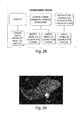
- Ca + also induces the GARDOS Channel, which leads to the loss of K + and water ( Figure 29 ).
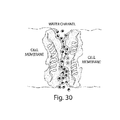
- Aquaporins are a route for water out of the cell, and upon reperfusion, back into the cell ( Figure 30 .)
- Optimizing the solution of the invention would prevent activation of hemichannels, thus avoiding edema, ionic imbalance and energy depletion during organ storage. These constituents provide a favorable environment and cellular support during ex-vivo storage. As shown in the Examples below, the protection of structure and function of cardiomyocytes and the endothelium in BHD and NBHD hearts, stored over a prolonged period in the solution of the invention, supports this hypothesis.
- the Lazarus solution contained the following: Calcium chloride 0.14 gm/L Potassium chloride (7 mM) 0.52 gm/L Potassium phosphate (monobasic) 0.06 gm/L Magnesium chloride (hexahydrate) 0.10 gm/L Magnesium sulfate (heptahydrate) 0.10 gm/L Sodium chloride (125 mM) 7.31 gm/L Sodium bicarbonate 0.35 gm/L Sodium phosphate (dibasic; hepatahydrate) 0.05 gm/L D-Glucose (11 mM) 1.98 gm/L Adenosine (1 mM) 0.27 gm/L Glutathione (reduced; 1.5 mM) 0.46 gm/L Ascorbic acid (1.0 mM) 0.18 gm/L L-Arginine (1 mM) 0.21 gm/L Creatine orotate (0.5 mM) 0.27
- IM intramuscular injection
- Telazol 4-6mg/kg and Xylazine 2mg/kg IM then intubated and connected to a respirator on 100% oxygen.
- Intravenous access was obtained through an ear vein with an 18 gauge needle.
- Anesthesia was maintained with 1-2% Isolfurane during the course of the experiment and EKG leads were placed for continuous monitoring.
- the right femoral artery was exposed and cannulated using an 18 gauge catheter for continuous blood pressure monitoring on the Power Lab.
- a stemotomy was performed and the pericardium was opened and elevated using 2-0 silk sutures to the skin.
- Kuri myocardial pH probes were inserted using a probe inside the right atrium as a reference probe.
- the posterior left ventricular (LV) wall electrode was placed first and secured with a 3-0 chromic suture.
- the anterior LV wall electrode was then secured in the same manner. Five minutes was allowed for the probes to equilibrate and myocardial pH and temperature were monitored using the pH monitor throughout of the rest of the experiment In experimental groups 1 and 2, 300mg/kg of heparin was given through the arterial line.
- a 12-gauge cannula was placed in the ascending aorta for infusion of cardioplegia.
- An aortic cross clamp was applied and one liter of cardioplegia at 4 degrees Celsius (3 pigs received Celsior and 3 pigs received 500cc 15mmol KCl Lazarus/500cc 7mmol KCl Lazarus) was given through the aortic cardioplegia cannula.
- the cardioplegia solutions were vented through the IVC and left superior pulmonary vein. After a liter of solution was given at 150mmHg, the heart was quickly harvested and biopsies of anterior and posterior wall of the LV were taken and sent to the microscopy lab for evaluation.
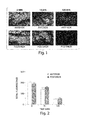
- JC-1 Cardiac myocytes were labeled with JC-1 membrane potential dye. Fluorescence was excited at 488 nm and emission was measured at 520 and 585 nm using narrow band pass filters. JC-1 formed j-aggregates (red) when mitochondria maintain their membrane polarization, but dissociated into monomers (green) upon membrane deoplarization leading to leakage of cytochrome C and proapoptotic factors.
- the structural integrity of the contractile apparatus in the heart was evaluated by labeling structural components of the myocardium. Structural components of the myocardium were preserved ( Figures 13, 14 , 15, and 16 ) after storage in Lazarus for four hours.
- Figure 13 shows the results of immunofluorescence labeling of Myosin and Actin after 4 hours of storage in Celsior or Lazarus.
- Figure 14 shows the results of immunofluorescence labeling of Troponin C and Actinin after 4 hours in Celsior or Lazarus.
- Troponin C and Actinin structural components of the contractile mechanism
- the results show a striated appearance to the fluorescence in the Lazarus group (not the Celsior group), suggesting organization of these structural proteins into an intact contractile apparatus.
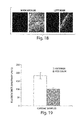
- FIG 19 is a graphical representation of the preservation of esterase activity in the myocardium stored in Lazarus for 10 days.
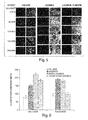
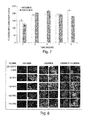
- the ability of Lazarus to preserve esterase activity after 10 days in solution was greater than the ability of Celsior to preserve esterase activity after 4 hours in storage. (See Figure 6 for a direct comparison.)
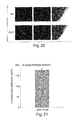
- Endothelial function (calcium mobilization and NO production) was evaluated in LAD stimulated with bradykinin after 10 days storage in Lazarus. As shown in Figure 20 , Lazarus solution preserved calcium mobilization (red; left column) and NO production (green; middle column) in LAD, suggesting that endothelial function was preserved after 10 days storage in Lazarus.
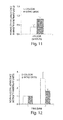
- Figure 21 is a graphical representation showing that esterase activity was preserved in the liver stored in Lazarus for 10 days at 4°C.
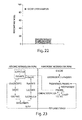
- Figure 22 shows that the average percent necrosis in liver samples stored in Lazarus solution for 10 days at 4°C was less than 15%, suggesting that 10 days of storage in Lazarus solution preserves the liver.
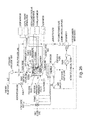
- Figures 26 and 27 depict perfusion devices and systems.
- Figure 26 shows a system for ex vivo resuscitation and preservation of a human heart.
- the afterload balloon pump controls afterload blood pressure in the aorta.
- the afterload balloon pump is optionally replaced with a pressure regulator or valve.
- Cardiac parameters are maintained within the following ranges: afterload and/or balloon pump pressure is 60-80 mm Hg; aortic root pressure is 40-80 mm Hg (for perfusion during storage); flow rate is 100-300 cc/min.; cardiac output (CO) is > 2 L/min.; and blood pressure (BP) 120-140/60-80 mm Hg.
- the chamber and reservoir contain the solution, e.g., Lazarus solution.
- Two elements of the system render it self-sustaining: phosphoenolpyruvate (PEP) caryboxykinase plate and a cardiac specific lactate dehydrogenase (LDH) plate.
- PEP
- a method for resuscitating (waking up) a heart is carried out as follows:
- beta-Lazarus solution A solution of the invention, referred to below as beta-Lazarus solution, was used to restart the heart after storage in alpha-Lazarus.
- Table 2 displays the concentrations of each reagent in beta-Lazarus. The pH is adjusted to 7.4 using sodium bicarbonate (8.4%) or THAM, and maintained at 21-37°C.
- the system of the invention maintains the tissue at a cool temperature, e.g., in the range of 4-15 °C.
- the pH of the solution is determined at regular intervals, e.g., every 1 hour, every 2 hours, every 4 hours, every 8 hours, or every 10 hours.
- Fresh solution of the invention is added to the system when the pH drops below 6.8 in order to increase the pH of the solution bathing the tissue. This process is repeated until the pH stabilizes around 6.8 to 7.0, indicating that the ATP stores in the tissue have been replenished.
- the tissue is a heart. In one aspect, the heart is restarted when the pH of the system stabilizes between 6.8 and 7.0.
- the pH of the tissue is determined at regular intervals, e.g., every 1 hour, every 2 hours, every 4 hours, every 8 hours, or every 10 hours.
- the tissue is a heart.
- the pH of the heart is determined using pH electrodes.
- the pH of the heart is determined using a fiber optic probes system.
- the pH of the myocardium, the anterior wall, and/or the posterior wall of the heart is determined.
- the pH of the tissue or solution is determined to assess whether the tissue is suitable for transplantation.
- the tissue is a heart.
- a pH of the heart between 6.8 and 7.0 indicates that the heart was adequately protected during storage.
- the pH of the heart suitable for transplantation is between 6.8 and 7.0.
- the invention also provides that the pH of the tissue or solution is determined during the excision, storage, or resuscitation of the tissue/organ.
- the tissue/organ is a heart.
- the pressure in the chambers of the heart is determined.
- the ventricular pressure of the heart is determined.
- the pressure is determined using a Mylar catheter.
- the heart is stored in the solution of the invention (static).
- the coronary artery of the heart is perfused.
- the device contains inputs and outputs to the heart.
- the left and right pulmonary vessels are cannulated.
- the aortic and left atrial cannula drain into the device.
Landscapes
- Life Sciences & Earth Sciences (AREA)
- Health & Medical Sciences (AREA)
- Engineering & Computer Science (AREA)
- Dentistry (AREA)
- General Health & Medical Sciences (AREA)
- Wood Science & Technology (AREA)
- Zoology (AREA)
- Environmental Sciences (AREA)
- Agricultural Chemicals And Associated Chemicals (AREA)
- Biophysics (AREA)
- Physiology (AREA)
- Medicinal Preparation (AREA)
Applications Claiming Priority (4)
| Application Number | Priority Date | Filing Date | Title |
|---|---|---|---|
| US90184407P | 2007-02-17 | 2007-02-17 | |
| US90258707P | 2007-02-20 | 2007-02-20 | |
| US96651107P | 2007-08-27 | 2007-08-27 | |
| EP08725769A EP2124539A2 (de) | 2007-02-17 | 2008-02-19 | Zusammensetzungen und verfahren zur gewebekonservierung |
Related Parent Applications (2)
| Application Number | Title | Priority Date | Filing Date |
|---|---|---|---|
| EP08725769.7 Division | 2008-02-19 | ||
| EP08725769A Division EP2124539A2 (de) | 2007-02-17 | 2008-02-19 | Zusammensetzungen und verfahren zur gewebekonservierung |
Publications (3)
| Publication Number | Publication Date |
|---|---|
| EP2543249A1 true EP2543249A1 (de) | 2013-01-09 |
| EP2543249A8 EP2543249A8 (de) | 2013-08-14 |
| EP2543249B1 EP2543249B1 (de) | 2018-05-23 |
Family
ID=39401771
Family Applications (4)
| Application Number | Title | Priority Date | Filing Date |
|---|---|---|---|
| EP12187402.8A Not-in-force EP2543249B1 (de) | 2007-02-17 | 2008-02-19 | Zusammensetzungen und verfahren zur Gewebekonservierung |
| EP08725769A Withdrawn EP2124539A2 (de) | 2007-02-17 | 2008-02-19 | Zusammensetzungen und verfahren zur gewebekonservierung |
| EP17001105.0A Withdrawn EP3254560A1 (de) | 2007-02-17 | 2008-02-19 | Zusammensetzungen und verfahren zur gewebekonservierung |
| EP12187508A Withdrawn EP2543250A1 (de) | 2007-02-17 | 2008-02-19 | Zusammensetzungen und verfahren zur Gewebekonservierung |
Family Applications After (3)
| Application Number | Title | Priority Date | Filing Date |
|---|---|---|---|
| EP08725769A Withdrawn EP2124539A2 (de) | 2007-02-17 | 2008-02-19 | Zusammensetzungen und verfahren zur gewebekonservierung |
| EP17001105.0A Withdrawn EP3254560A1 (de) | 2007-02-17 | 2008-02-19 | Zusammensetzungen und verfahren zur gewebekonservierung |
| EP12187508A Withdrawn EP2543250A1 (de) | 2007-02-17 | 2008-02-19 | Zusammensetzungen und verfahren zur Gewebekonservierung |
Country Status (7)
| Country | Link |
|---|---|
| US (4) | US8211628B2 (de) |
| EP (4) | EP2543249B1 (de) |
| CN (3) | CN101790306A (de) |
| AU (1) | AU2008216612B2 (de) |
| BR (1) | BRPI0807918A2 (de) |
| CA (1) | CA2678486C (de) |
| WO (1) | WO2008100636A2 (de) |
Families Citing this family (67)
| Publication number | Priority date | Publication date | Assignee | Title |
|---|---|---|---|---|
| CN103931605B (zh) | 2004-10-07 | 2015-11-18 | 特兰斯迈迪茨公司 | 用于活体外器官护理的系统和方法 |
| US12010987B2 (en) | 2004-10-07 | 2024-06-18 | Transmedics, Inc. | Systems and methods for ex-vivo organ care and for using lactate as an indication of donor organ status |
| US9078428B2 (en) | 2005-06-28 | 2015-07-14 | Transmedics, Inc. | Systems, methods, compositions and solutions for perfusing an organ |
| EP2543249B1 (de) | 2007-02-17 | 2018-05-23 | President and Fellows of Harvard College | Zusammensetzungen und verfahren zur Gewebekonservierung |
| US9457179B2 (en) | 2007-03-20 | 2016-10-04 | Transmedics, Inc. | Systems for monitoring and applying electrical currents in an organ perfusion system |
| US8420380B2 (en) | 2008-01-31 | 2013-04-16 | Transmedics, Inc. | Systems and methods for ex vivo lung care |
| CA2715634A1 (en) | 2008-02-15 | 2009-08-27 | President And Fellows Of Harvard College | Blood substitute solution |
| WO2011019807A2 (en) * | 2009-08-11 | 2011-02-17 | The Johns Hopkins University | Measurement of mitochondrial membrane potential to assess organ dysfunction |
| US8883210B1 (en) | 2010-05-14 | 2014-11-11 | Musculoskeletal Transplant Foundation | Tissue-derived tissuegenic implants, and methods of fabricating and using same |
| US10130736B1 (en) | 2010-05-14 | 2018-11-20 | Musculoskeletal Transplant Foundation | Tissue-derived tissuegenic implants, and methods of fabricating and using same |
| US9352003B1 (en) | 2010-05-14 | 2016-05-31 | Musculoskeletal Transplant Foundation | Tissue-derived tissuegenic implants, and methods of fabricating and using same |
| CN103491976B (zh) * | 2011-01-14 | 2015-04-01 | 卡思伯特·O·辛普金斯 | 用于处理与缺乏血液供给、休克和神经损伤相关的疾病的方法和组合物 |
| CN103442675B (zh) * | 2011-03-23 | 2016-04-06 | 维沃琳医药有限公司 | 用于将获取的器官维持能存活且可运输的装置 |
| US20130011823A1 (en) | 2011-04-14 | 2013-01-10 | Hassanein Waleed H | Organ care solution for ex-vivo machine perfusion of donor lungs |
| EP2750499B1 (de) | 2011-09-02 | 2016-07-20 | Organ Assist B.V. | Vorrichtung, system und verfahren zur kühlung und erhaltung eines organs von einem spender |
| EP4091446A1 (de) | 2012-01-17 | 2022-11-23 | Tevosol, Inc. | Vorrichtung zum testen, beurteilen und erhaltung von entnommenen herzen zur transplantation |
| US9381247B2 (en) * | 2012-04-16 | 2016-07-05 | Biodel Inc. | Magnesium compositions for modulating the pharmacokinetics and pharmacodynamics of insulin and insulin analogs, and injection site pain |
| US9399065B2 (en) | 2012-04-16 | 2016-07-26 | Biodel Inc. | Magnesium compositions for modulating the pharmacokinetics and injection site pain of insulin |
| CN103380769B (zh) * | 2012-05-04 | 2016-04-13 | 西比曼生物科技(上海)有限公司 | 用于分离培养干细胞的脂肪组织的长时间保存液 |
| WO2013169939A2 (en) | 2012-05-08 | 2013-11-14 | Aeromics, Llc | New methods |
| WO2014059316A1 (en) | 2012-10-12 | 2014-04-17 | University Of Pittsburgh - Of The Commonwealth System Of Higher Education | Compositions and methods for organ preservation |
| WO2014070769A1 (en) | 2012-10-29 | 2014-05-08 | The University Of North Carolina At Chapel Hill | Methods and compositions for treating mucosal tissue disorders |
| CN102986649B (zh) * | 2012-12-18 | 2014-07-16 | 武汉大学 | 一种用于自体肝移植术的离体连续灌注装置 |
| BR112015015090A2 (pt) * | 2012-12-31 | 2017-07-11 | Somahlution Llc | processos para preservar a função de tecido ou de órgão e para preparar formulação para a mesma e kit respectivo |
| WO2014183134A1 (en) * | 2013-05-10 | 2014-11-13 | President And Fellows Of Harvard College | Solutions for red blood cells |
| US20150037436A1 (en) | 2013-07-30 | 2015-02-05 | Musculoskeletal Transplant Foundation | Acellular soft tissue-derived matrices and methods for preparing same |
| US20160279155A1 (en) | 2013-11-06 | 2016-09-29 | Aeromics, Inc. | Novel formulations |
| CN105916374B (zh) | 2013-11-22 | 2021-11-05 | 索玛解有限公司 | 用于增加器官和组织保存溶液的稳定性和储存寿命的溶液 |
| ES3036002T3 (en) | 2014-03-26 | 2025-09-11 | Transmedics Inc | Apparatus for maintenance of harvested hearts for transplanting |
| WO2015177821A1 (en) * | 2014-05-23 | 2015-11-26 | 4I S.R.L. | Closed circuit sterile device and method of collection, transport and processing in total sterile chain |
| EP3150067A4 (de) * | 2014-05-30 | 2017-11-08 | SBI Pharmaceuticals Co., Ltd. | Organkonservierungslösung |
| JP2017518301A (ja) | 2014-06-02 | 2017-07-06 | トランスメディクス, インク.Transmedics, Inc. | ex−vivoでの臓器管理システム |
| AU2015346076A1 (en) * | 2014-11-13 | 2017-06-15 | Aeromics, Inc. | Novel methods |
| CA3155169A1 (en) | 2014-12-12 | 2016-06-16 | Tevosol, Inc. | Apparatus and method for organ perfusion |
| CA2986702C (en) | 2015-05-21 | 2023-04-04 | David Wang | Modified demineralized cortical bone fibers |
| EP3310161A4 (de) * | 2015-06-09 | 2019-02-20 | President and Fellows of Harvard College | Zusammensetzungen und verfahren zur gewebekonservierung bei umgebungs- oder subnormothermen temperaturen |
| US20190045776A1 (en) * | 2015-06-09 | 2019-02-14 | President And Fellows Of Harvard College | Long term storage and preservation of platelets |
| US10912864B2 (en) | 2015-07-24 | 2021-02-09 | Musculoskeletal Transplant Foundation | Acellular soft tissue-derived matrices and methods for preparing same |
| US11052175B2 (en) | 2015-08-19 | 2021-07-06 | Musculoskeletal Transplant Foundation | Cartilage-derived implants and methods of making and using same |
| CA2997267A1 (en) | 2015-09-09 | 2017-03-16 | Transmedics, Inc. | Aortic cannula for ex vivo organ care system |
| BR112018007434A2 (pt) | 2015-10-27 | 2018-10-23 | Cytozyme Animal Nutrition Inc | composições para nutrição animal, usos e métodos relacionados |
| US10674746B2 (en) | 2015-10-27 | 2020-06-09 | Cytozyme Animal Nutrition, Inc. | Animal nutrition compositions and related methods |
| CN105746495A (zh) * | 2016-04-29 | 2016-07-13 | 宋励修 | 果糖和二硫苏糖醇联合预处理在骨髓间充质干细胞冻存中的应用 |
| ES2968062T3 (es) | 2016-05-30 | 2024-05-07 | Transmedics Inc | Aparato y método de ventilación pulmonar ex vivo con presión exterior variable |
| ES2651717B1 (es) | 2016-07-26 | 2018-11-16 | Lara OLLER DUQUE | Solución acuosa cristaloide isotónica |
| CN109497038A (zh) * | 2017-09-14 | 2019-03-22 | 青岛瑞思德生物科技有限公司 | 一种脂肪保存液及其制备方法 |
| CN108094410B (zh) * | 2018-01-26 | 2021-08-31 | 山东大学齐鲁医院 | 一种皮肤深低温保护剂及皮肤保存方法 |
| US11998001B2 (en) * | 2018-02-09 | 2024-06-04 | Yale University | Perfusion device for normothermic, ex vivo preservation of a mammalian brain |
| CN110604127A (zh) * | 2018-06-14 | 2019-12-24 | 宁波化奇工程技术有限公司 | 一种非甲醛环保生物标本保存液 |
| CN109221081B (zh) * | 2018-09-07 | 2021-02-12 | 银丰低温医学科技有限公司 | 一种多组织玻璃化原位保存装置 |
| CN109511649B (zh) * | 2018-11-21 | 2021-06-25 | 嘉兴莱普晟医疗科技有限公司 | 一种可以扩大供肝来源的常温机械灌注系统 |
| WO2020122928A1 (en) * | 2018-12-14 | 2020-06-18 | National Taiwan University | A stable cardioplegic solution for cardiac surgery |
| CA3129732A1 (en) * | 2019-02-14 | 2020-08-20 | North Grove Investments, Inc. | Compositions for maintaining the viability of living and static biological material, methods of making and the uses thereof |
| EP3940061A4 (de) * | 2019-03-15 | 2023-01-04 | Megakaryon Corporation | Konservierungsflüssigkeit für säugetierzellen |
| US20230081507A1 (en) | 2020-02-26 | 2023-03-16 | Finless Foods Inc. | Systems and methods for live fish tissue preservation |
| CN112088875B (zh) * | 2020-09-28 | 2023-07-25 | 四川大学华西医院 | 一种溶液氧化还原电位可调的器官保存装置及其实现方法 |
| CN113025564B (zh) * | 2021-03-17 | 2023-05-02 | 金华市人民医院 | 一种卵母细胞体外成熟培养液的制备方法 |
| WO2023023309A1 (en) | 2021-08-20 | 2023-02-23 | Finless Foods Inc. | Systems and methods for fish tissue preservation |
| CN114927044A (zh) * | 2022-05-17 | 2022-08-19 | 付佩尧 | 一种离体动物胃保存液及使用其制备的胃部病变模拟装置 |
| US12083204B2 (en) * | 2022-06-02 | 2024-09-10 | L'oreal | Topical composition for homeostatic delivery of nitric oxide and uses thereof |
| US20240299440A1 (en) * | 2023-03-07 | 2024-09-12 | Amber Ophthalmics, Inc. | Novel treatments for ocular disorders |
| CN116491500A (zh) * | 2023-05-09 | 2023-07-28 | 博生吉安科细胞技术有限公司 | 一种nk细胞冻存液及其制备方法与应用 |
| WO2024249415A1 (en) * | 2023-05-26 | 2024-12-05 | Abrexa Pharmaceuticals, Inc. | Compounds for use in organ preservation and organ transplantation |
| AU2024347043A1 (en) * | 2023-09-20 | 2026-04-09 | Traferox Technologies, Inc. | Systems, devices, and methods for preserving an organ for transplantation |
| GB2700353A (en) * | 2024-05-09 | 2026-01-21 | Softcell Medical Ltd | Organ monitoring apparatus and method |
| WO2025257595A1 (en) * | 2024-06-12 | 2025-12-18 | Biocompatibility Innovation S.r.l. | Preserving solution |
| CN118633593B (zh) * | 2024-08-09 | 2024-11-05 | 北京百奥益康医药科技有限公司 | 一种用于单细胞测序的组织冻存液及其制备方法和应用 |
Citations (5)
| Publication number | Priority date | Publication date | Assignee | Title |
|---|---|---|---|---|
| EP0199117A2 (de) * | 1985-04-17 | 1986-10-29 | SCHIAPPARELLI FARMACEUTICI S.p.A. | Therapeutische Verwendung von Phosphokreatin |
| EP1000541A1 (de) * | 1998-11-05 | 2000-05-17 | Bausch & Lomb Surgical, Inc. | Definierte medizinische Lösung ohne Serum für die Augenheilkunde |
| WO2002102149A1 (en) * | 2001-06-14 | 2002-12-27 | Sigma-Tau Industrie Farmaceutiche Riunite S.P.A. | Solution for the storage and perfusion of organs awaiting transplantation |
| US6521248B1 (en) | 1999-10-26 | 2003-02-18 | Bio-Hydration Research Lab, Inc. | Micro-cluster liquids and methods of making and using them |
| US20060154359A1 (en) * | 2004-10-07 | 2006-07-13 | Transmedics, Inc. | Systems and methods for ex-vivo organ care |
Family Cites Families (44)
| Publication number | Priority date | Publication date | Assignee | Title |
|---|---|---|---|---|
| US4256834A (en) | 1979-04-09 | 1981-03-17 | Syva Company | Fluorescent scavenger particle immunoassay |
| DE3168925D1 (en) | 1980-12-23 | 1985-03-28 | Koehler Chemie Dr Franz | Protective solution for heart and kidney, and manufacturing process |
| US4879283A (en) | 1985-10-03 | 1989-11-07 | Wisconsin Alumni Research Foundation | Solution for the preservation of organs |
| US4798824A (en) | 1985-10-03 | 1989-01-17 | Wisconsin Alumni Research Foundation | Perfusate for the preservation of organs |
| US5243044A (en) | 1986-08-25 | 1993-09-07 | International Therapeutics, Inc. | Compounds of perfluoro[3,3,3]propellene and perfluoro hexamethylenetetramine |
| US5130230A (en) | 1988-05-02 | 1992-07-14 | Cryomedical Sciences, Inc. | Blood substitute |
| US5075210A (en) | 1989-12-21 | 1991-12-24 | The Regents Of The University Of California | Preservation of the heart for transplantation |
| AU9159891A (en) | 1990-12-31 | 1992-08-17 | University Of Florida | Compositions and methods for achieving improved physiological response to exercice |
| US5200398A (en) | 1991-09-12 | 1993-04-06 | Mount Sinai Hospital Corporation | Composition for the preservation of organs comprising glucuronic acid or a physiologically tolerated salt or ester thereof |
| US5279937A (en) | 1992-04-30 | 1994-01-18 | Detechnology Canada | Use of macroglobulins to improve the signal-to-background ratio in affinity binding assays |
| US6680305B1 (en) | 1993-06-04 | 2004-01-20 | Biotime, Inc. | Physiologically acceptable aqueous solutions and methods for their use |
| US5945272A (en) | 1993-06-04 | 1999-08-31 | Biotime, Incorporated | Plasma expanders and blood substitutes |
| US5536751A (en) | 1994-05-09 | 1996-07-16 | The United States Of America As Represented By The Secretary Of The Army | Pharmaceutical alpha-keto carboxylic acid compositions method of making and use thereof |
| US5554497A (en) | 1994-12-12 | 1996-09-10 | Charlotte-Mecklenburg Hospital Authority | Cardioplegic solution for arresting an organ |
| US5876916A (en) * | 1996-03-18 | 1999-03-02 | Case Western Reserve University | Pyruvate compounds and methods for use thereof |
| US6028107A (en) * | 1997-02-27 | 2000-02-22 | Waugh; William Howard | Orthomolecular medical use of L-citrulline for vasoprotection, relaxative smooth muscle tone and cell protection |
| US6100082A (en) | 1997-09-23 | 2000-08-08 | Hassanein; Waleed H. | Perfusion apparatus and method including chemical compositions for maintaining an organ |
| US8409846B2 (en) | 1997-09-23 | 2013-04-02 | The United States Of America As Represented By The Department Of Veteran Affairs | Compositions, methods and devices for maintaining an organ |
| FR2785501B1 (fr) | 1998-11-10 | 2001-01-05 | Centre Nat Rech Scient | Solution de perfusion et/ou de conservation et/ou de reperfusion lors de la transplantation d'organes |
| US20040038192A1 (en) * | 1999-04-14 | 2004-02-26 | Breonics, Inc. | System for exsanguinous metabolic support of an organ or tissue |
| AU5750600A (en) | 1999-06-17 | 2001-01-22 | Regents Of The University Of California, The | Continuous cardiac perfusion preservation with peg-hb for improved hypothermic storage |
| US6492103B1 (en) | 2000-01-31 | 2002-12-10 | Organ Recovery Systems, Inc. | System for organ and tissue preservation and hypothermic blood substitution |
| US6569615B1 (en) | 2000-04-10 | 2003-05-27 | The United States Of America As Represented By The Department Of Veteran's Affairs | Composition and methods for tissue preservation |
| AU2001276963A1 (en) | 2000-07-19 | 2002-01-30 | Neuron Therapeutics, Inc. | Kits and compositions supporting intracranial perfusions |
| SE0002832D0 (sv) | 2000-08-07 | 2000-08-07 | Jostra Ab | Cardioplegic solution |
| US20020132220A1 (en) * | 2000-12-27 | 2002-09-19 | Berens Kurt L. | Use of selectin antagonists in organ preservation solutions |
| US6310094B1 (en) | 2001-01-12 | 2001-10-30 | Baxter International Inc. | Ready-to-use esmolol solution |
| US20030124503A1 (en) | 2001-12-28 | 2003-07-03 | Olivencia-Yurvati Albert H. | Pyruvate cardioplegia solutions for administration to the heart during cardiopulmonary surgery and methods of use thereof |
| AUPS312602A0 (en) * | 2002-06-21 | 2002-07-18 | James Cook University | Organ arrest, protection, preservation and recovery |
| US7109169B2 (en) | 2002-06-28 | 2006-09-19 | Hobai Ion A | Method for treating heart failure by inhibiting the sarcolemmal sodium/calcium exchange |
| BRPI0409023A (pt) | 2003-03-20 | 2006-03-28 | Aquaphotonics Inc | meio da cultura, método para preparar o citado meio, coleta e clonagem de células tronco, água micro-agregada, composição e método para prepará-la |
| CN1791431A (zh) * | 2003-03-20 | 2006-06-21 | 水光子学公司 | 微团粒组合物 |
| EP1475434A1 (de) * | 2003-05-09 | 2004-11-10 | Oncoscience AG | Verfahren zur Lagerung von Tumorzellen |
| GB0311256D0 (en) | 2003-05-16 | 2003-06-18 | Bishop Gordon W | Case with seat |
| US7087369B2 (en) * | 2003-12-17 | 2006-08-08 | The Regents Of The University Of California | Cornea preservation medium |
| WO2005103080A2 (en) | 2004-04-21 | 2005-11-03 | Albert Einstein College Of Medicine Of Yeshiva University | Stable oxidation resistant powdered hemoglobin, methods of preparing same, and uses thereof |
| US9301519B2 (en) | 2004-10-07 | 2016-04-05 | Transmedics, Inc. | Systems and methods for ex-vivo organ care |
| JP2008523106A (ja) | 2004-12-13 | 2008-07-03 | アクアフォトニクス, インコーポレイテッド | 抗老化方法および組成物 |
| WO2006133273A2 (en) | 2005-06-06 | 2006-12-14 | Aquaphotonics, Inc. | Device and method for mixing liquids and oils or particulate solids and mixtures generated therefrom |
| US7645742B2 (en) * | 2005-06-22 | 2010-01-12 | Advocare International, L.P. | Composition for enhancing cellular energy |
| US7575856B2 (en) | 2005-10-28 | 2009-08-18 | The United States Of America As Represented By The Department Of Veterans Affairs | Compositions and methods for the evaluation and resuscitation of cadaveric hearts for transplant |
| US7763607B2 (en) | 2006-04-27 | 2010-07-27 | Solvay Pharmaceuticals Gmbh | Pharmaceutical compositions comprising CBx cannabinoid receptor modulators and potassium channel modulators |
| WO2008016937A2 (en) | 2006-07-31 | 2008-02-07 | Aquaphotonics, Inc. | Device and method for combining oils with other fluids and mixtures generated therefrom |
| EP2543249B1 (de) | 2007-02-17 | 2018-05-23 | President and Fellows of Harvard College | Zusammensetzungen und verfahren zur Gewebekonservierung |
-
2008
- 2008-02-19 EP EP12187402.8A patent/EP2543249B1/de not_active Not-in-force
- 2008-02-19 EP EP08725769A patent/EP2124539A2/de not_active Withdrawn
- 2008-02-19 EP EP17001105.0A patent/EP3254560A1/de not_active Withdrawn
- 2008-02-19 WO PCT/US2008/002170 patent/WO2008100636A2/en not_active Ceased
- 2008-02-19 EP EP12187508A patent/EP2543250A1/de not_active Withdrawn
- 2008-02-19 CN CN200880011995.4A patent/CN101790306A/zh active Pending
- 2008-02-19 US US12/527,119 patent/US8211628B2/en active Active
- 2008-02-19 CN CN201510337174.1A patent/CN105123670B/zh not_active Expired - Fee Related
- 2008-02-19 CN CN201610078329.9A patent/CN105746492A/zh active Pending
- 2008-02-19 AU AU2008216612A patent/AU2008216612B2/en active Active
- 2008-02-19 CA CA2678486A patent/CA2678486C/en active Active
- 2008-02-19 BR BRPI0807918A patent/BRPI0807918A2/pt not_active Application Discontinuation
-
2012
- 2012-06-05 US US13/488,749 patent/US20120264103A1/en not_active Abandoned
- 2012-07-18 US US13/552,255 patent/US8945823B2/en active Active
-
2018
- 2018-07-24 US US16/043,938 patent/US20190208768A1/en not_active Abandoned
Patent Citations (6)
| Publication number | Priority date | Publication date | Assignee | Title |
|---|---|---|---|---|
| EP0199117A2 (de) * | 1985-04-17 | 1986-10-29 | SCHIAPPARELLI FARMACEUTICI S.p.A. | Therapeutische Verwendung von Phosphokreatin |
| EP1000541A1 (de) * | 1998-11-05 | 2000-05-17 | Bausch & Lomb Surgical, Inc. | Definierte medizinische Lösung ohne Serum für die Augenheilkunde |
| US6521248B1 (en) | 1999-10-26 | 2003-02-18 | Bio-Hydration Research Lab, Inc. | Micro-cluster liquids and methods of making and using them |
| US7198254B2 (en) | 1999-10-26 | 2007-04-03 | Aquaphotonics, Inc. | System for producing micro-cluster liquids |
| WO2002102149A1 (en) * | 2001-06-14 | 2002-12-27 | Sigma-Tau Industrie Farmaceutiche Riunite S.P.A. | Solution for the storage and perfusion of organs awaiting transplantation |
| US20060154359A1 (en) * | 2004-10-07 | 2006-07-13 | Transmedics, Inc. | Systems and methods for ex-vivo organ care |
Non-Patent Citations (11)
| Title |
|---|
| BOEHM D H ET AL: "Adenosine cardioplegia: Reducing reperfusion injury of the ischaemic myocardium?", JOURNAL OF MOLECULAR AND CELLULAR CARDIOLOGY, ACADEMIC PRESS, GB, vol. 22, 1 July 1990 (1990-07-01), pages 5, XP022998384, ISSN: 0022-2828, [retrieved on 19900701], DOI: 10.1016/0022-2828(90)90138-R * |
| FERRERA R ET AL., ANN THORAC SURG, vol. 57, 1994, pages 1233 - 1239 |
| HEARSE D J ET AL: "Creatine Phosphate and Protection Against Reperfusion-Induced Arrhymias in the Rat Heart", EUROPEAN JOURNAL OF PHARMACOLOGY, ELSEVIER SCIENCE, NL, vol. 131, no. 1, 1 January 1986 (1986-01-01), pages 21 - 30, XP002482799, ISSN: 0014-2999, DOI: 10.1016/0014-2999(86)90511-X * |
| IKEDA Y ET AL: "Cardioprotective effects of citrulline in ischemia/reperfusion injury via a non-nitric oxide-mediated mechanism", METHODS AND FINDINGS IN EXPERIMENTAL AND CLINICAL PHARMACOLOGY, PROUS, BARCELONA, ES, vol. 22, no. 7, 1 September 2000 (2000-09-01), pages 563 - 571, XP009116055, ISSN: 0379-0355 * |
| J H SOUTHARD ET AL: "Important Components of the UW Solution", TRANSPLANTATION, vol. 49, no. 2, 1 February 1990 (1990-02-01), pages 251 - 257, XP055045513 * |
| NAKATSUBO N ET AL., FEBS LETT, vol. 427, no. 2, 1998, pages 263 |
| OSHIMA K ET AL., J OF HEART AND LUNG TRANS, vol. 18, no. 9, 1999, pages 852 - 861 |
| P MICHEL: "Evaluation of a new preservative solution for cardiac graft during hypothermia", THE JOURNAL OF HEART AND LUNG TRANSPLANTATION, vol. 19, no. 11, 1 November 2000 (2000-11-01), pages 1089 - 1097, XP055045509, ISSN: 1053-2498, DOI: 10.1016/S1053-2498(00)00194-7 * |
| PUETZ U ET AL: "Effects of L-Carnitine-Hydrochloride in the Cold Ischemic Preservation of Fatty Liver Grafts", TRANSPLANTATION PROCEEDINGS, ELSEVIER INC, ORLANDO, FL; US, vol. 33, 1 January 2001 (2001-01-01), pages 2523 - 2524, XP002215924, ISSN: 0041-1345, DOI: 10.1016/S0041-1345(01)02085-1 * |
| R LANGO: "Influence of ?-carnitine and its derivatives on myocardial metabolism and function in ischemic heart disease and during cardiopulmonary bypass", CARDIOVASCULAR RESEARCH, vol. 51, no. 1, 1 July 2001 (2001-07-01), pages 21 - 29, XP055045511, ISSN: 0008-6363, DOI: 10.1016/S0008-6363(01)00313-3 * |
| THATTE H ET AL., PROC. NATL. ACAD. SCI., vol. 96, no. 22, 1999, pages 12583 |
Also Published As
| Publication number | Publication date |
|---|---|
| US20190208768A1 (en) | 2019-07-11 |
| US20100151435A1 (en) | 2010-06-17 |
| CN105123670B (zh) | 2018-12-14 |
| CA2678486A1 (en) | 2008-08-21 |
| CN101790306A (zh) | 2010-07-28 |
| CN105746492A (zh) | 2016-07-13 |
| CN105123670A (zh) | 2015-12-09 |
| EP2124539A2 (de) | 2009-12-02 |
| US8945823B2 (en) | 2015-02-03 |
| EP2543249A8 (de) | 2013-08-14 |
| EP3254560A1 (de) | 2017-12-13 |
| US20120264103A1 (en) | 2012-10-18 |
| BRPI0807918A2 (pt) | 2017-05-16 |
| AU2008216612B2 (en) | 2014-12-04 |
| EP2543250A1 (de) | 2013-01-09 |
| US20120282591A1 (en) | 2012-11-08 |
| EP2543249B1 (de) | 2018-05-23 |
| WO2008100636A2 (en) | 2008-08-21 |
| AU2008216612A1 (en) | 2008-08-21 |
| WO2008100636A3 (en) | 2008-12-04 |
| US8211628B2 (en) | 2012-07-03 |
| AU2008216612A2 (en) | 2013-01-10 |
| CA2678486C (en) | 2019-03-12 |
Similar Documents
| Publication | Publication Date | Title |
|---|---|---|
| EP2543249B1 (de) | Zusammensetzungen und verfahren zur Gewebekonservierung | |
| US7575856B2 (en) | Compositions and methods for the evaluation and resuscitation of cadaveric hearts for transplant | |
| Minasian et al. | Preservation of the donor heart: from basic science to clinical studies | |
| US7087369B2 (en) | Cornea preservation medium | |
| Kevelaitis et al. | Coronary endothelial dysfunction of isolated hearts subjected to prolonged cold storage: patterns and contributing factors | |
| ES2371542T3 (es) | Solución preservación de órganos. | |
| CA2285346A1 (en) | Compositions for the preservation of living biological materials and methods of their use | |
| AU2015201137A1 (en) | Compositions and method for tissue preservation | |
| US6361933B1 (en) | Solutions for the preservation of tissues | |
| HK1248068A1 (en) | Compositions and method for tissue preservation | |
| AU2018226474A1 (en) | Compositions and method for tissue preservation | |
| DE102007026392A1 (de) | Lösungen für die Perfusion und Konservierung von Organen und Geweben | |
| HK1180537A (en) | Compositions and method for tissue preservation | |
| HK1180538A (en) | Compositions and method for tissue preservation | |
| Stowe et al. | Low-flow perfusion of guinea pig isolated hearts with 26 C air-saturated Lifor solution for 20 hours preserves function and metabolism | |
| HK1146879A (en) | Compositions and method for tissue preservation | |
| RU2777097C1 (ru) | Способ рекондиционирования донорского сердца | |
| WO2025051814A1 (en) | Organ perfusion solution | |
| WO2025199064A1 (en) | Compositions and methods for preservation and storage of biological materials | |
| Hosgood et al. | Ex-vivo Normothermic Perfusion in Renal Transplantation | |
| Cobert | Enhancing Metabolism of Donor Hearts for Cardiac Transplantation | |
| Chen et al. | The controlled delivery of hydrogen sulfide for the preservation of heart tissue |
Legal Events
| Date | Code | Title | Description |
|---|---|---|---|
| PUAI | Public reference made under article 153(3) epc to a published international application that has entered the european phase |
Free format text: ORIGINAL CODE: 0009012 |
|
| AC | Divisional application: reference to earlier application |
Ref document number: 2124539 Country of ref document: EP Kind code of ref document: P |
|
| AK | Designated contracting states |
Kind code of ref document: A1 Designated state(s): AT BE BG CH CY CZ DE DK EE ES FI FR GB GR HR HU IE IS IT LI LT LU LV MC MT NL NO PL PT RO SE SI SK TR |
|
| RIN1 | Information on inventor provided before grant (corrected) |
Inventor name: ROUSOU, LAKI Inventor name: TREANOR, PATRICK Inventor name: KHURI, SHUKRI Inventor name: THATTE, HEMANT |
|
| 17P | Request for examination filed |
Effective date: 20130702 |
|
| RAP1 | Party data changed (applicant data changed or rights of an application transferred) |
Owner name: PRESIDENT AND FELLOWS OF HARVARD COLLEGE Owner name: THE UNITED STATES GOVERNMENT AS REPRESENTED BY THE |
|
| RBV | Designated contracting states (corrected) |
Designated state(s): AT BE BG CH CY CZ DE DK EE ES FI FR GB GR HR HU IE IS IT LI LT LU LV MC MT NL NO PL PT RO SE SI SK TR |
|
| 17Q | First examination report despatched |
Effective date: 20130919 |
|
| REG | Reference to a national code |
Ref country code: HK Ref legal event code: DE Ref document number: 1180537 Country of ref document: HK |
|
| GRAP | Despatch of communication of intention to grant a patent |
Free format text: ORIGINAL CODE: EPIDOSNIGR1 |
|
| STAA | Information on the status of an ep patent application or granted ep patent |
Free format text: STATUS: GRANT OF PATENT IS INTENDED |
|
| INTG | Intention to grant announced |
Effective date: 20171115 |
|
| GRAJ | Information related to disapproval of communication of intention to grant by the applicant or resumption of examination proceedings by the epo deleted |
Free format text: ORIGINAL CODE: EPIDOSDIGR1 |
|
| STAA | Information on the status of an ep patent application or granted ep patent |
Free format text: STATUS: EXAMINATION IS IN PROGRESS |
|
| GRAS | Grant fee paid |
Free format text: ORIGINAL CODE: EPIDOSNIGR3 |
|
| STAA | Information on the status of an ep patent application or granted ep patent |
Free format text: STATUS: GRANT OF PATENT IS INTENDED |
|
| GRAP | Despatch of communication of intention to grant a patent |
Free format text: ORIGINAL CODE: EPIDOSNIGR1 |
|
| GRAA | (expected) grant |
Free format text: ORIGINAL CODE: 0009210 |
|
| STAA | Information on the status of an ep patent application or granted ep patent |
Free format text: STATUS: THE PATENT HAS BEEN GRANTED |
|
| INTC | Intention to grant announced (deleted) | ||
| INTG | Intention to grant announced |
Effective date: 20180410 |
|
| AC | Divisional application: reference to earlier application |
Ref document number: 2124539 Country of ref document: EP Kind code of ref document: P |
|
| AK | Designated contracting states |
Kind code of ref document: B1 Designated state(s): AT BE BG CH CY CZ DE DK EE ES FI FR GB GR HR HU IE IS IT LI LT LU LV MC MT NL NO PL PT RO SE SI SK TR |
|
| REG | Reference to a national code |
Ref country code: GB Ref legal event code: FG4D |
|
| REG | Reference to a national code |
Ref country code: CH Ref legal event code: EP |
|
| REG | Reference to a national code |
Ref country code: IE Ref legal event code: FG4D |
|
| REG | Reference to a national code |
Ref country code: AT Ref legal event code: REF Ref document number: 1000745 Country of ref document: AT Kind code of ref document: T Effective date: 20180615 |
|
| REG | Reference to a national code |
Ref country code: DE Ref legal event code: R096 Ref document number: 602008055389 Country of ref document: DE |
|
| REG | Reference to a national code |
Ref country code: NL Ref legal event code: MP Effective date: 20180523 |
|
| REG | Reference to a national code |
Ref country code: LT Ref legal event code: MG4D |
|
| PG25 | Lapsed in a contracting state [announced via postgrant information from national office to epo] |
Ref country code: BG Free format text: LAPSE BECAUSE OF FAILURE TO SUBMIT A TRANSLATION OF THE DESCRIPTION OR TO PAY THE FEE WITHIN THE PRESCRIBED TIME-LIMIT Effective date: 20180823 Ref country code: FI Free format text: LAPSE BECAUSE OF FAILURE TO SUBMIT A TRANSLATION OF THE DESCRIPTION OR TO PAY THE FEE WITHIN THE PRESCRIBED TIME-LIMIT Effective date: 20180523 Ref country code: LT Free format text: LAPSE BECAUSE OF FAILURE TO SUBMIT A TRANSLATION OF THE DESCRIPTION OR TO PAY THE FEE WITHIN THE PRESCRIBED TIME-LIMIT Effective date: 20180523 Ref country code: SE Free format text: LAPSE BECAUSE OF FAILURE TO SUBMIT A TRANSLATION OF THE DESCRIPTION OR TO PAY THE FEE WITHIN THE PRESCRIBED TIME-LIMIT Effective date: 20180523 Ref country code: NO Free format text: LAPSE BECAUSE OF FAILURE TO SUBMIT A TRANSLATION OF THE DESCRIPTION OR TO PAY THE FEE WITHIN THE PRESCRIBED TIME-LIMIT Effective date: 20180823 Ref country code: ES Free format text: LAPSE BECAUSE OF FAILURE TO SUBMIT A TRANSLATION OF THE DESCRIPTION OR TO PAY THE FEE WITHIN THE PRESCRIBED TIME-LIMIT Effective date: 20180523 |
|
| PG25 | Lapsed in a contracting state [announced via postgrant information from national office to epo] |
Ref country code: NL Free format text: LAPSE BECAUSE OF FAILURE TO SUBMIT A TRANSLATION OF THE DESCRIPTION OR TO PAY THE FEE WITHIN THE PRESCRIBED TIME-LIMIT Effective date: 20180523 Ref country code: LV Free format text: LAPSE BECAUSE OF FAILURE TO SUBMIT A TRANSLATION OF THE DESCRIPTION OR TO PAY THE FEE WITHIN THE PRESCRIBED TIME-LIMIT Effective date: 20180523 Ref country code: GR Free format text: LAPSE BECAUSE OF FAILURE TO SUBMIT A TRANSLATION OF THE DESCRIPTION OR TO PAY THE FEE WITHIN THE PRESCRIBED TIME-LIMIT Effective date: 20180824 Ref country code: HR Free format text: LAPSE BECAUSE OF FAILURE TO SUBMIT A TRANSLATION OF THE DESCRIPTION OR TO PAY THE FEE WITHIN THE PRESCRIBED TIME-LIMIT Effective date: 20180523 |
|
| REG | Reference to a national code |
Ref country code: AT Ref legal event code: MK05 Ref document number: 1000745 Country of ref document: AT Kind code of ref document: T Effective date: 20180523 |
|
| PG25 | Lapsed in a contracting state [announced via postgrant information from national office to epo] |
Ref country code: SK Free format text: LAPSE BECAUSE OF FAILURE TO SUBMIT A TRANSLATION OF THE DESCRIPTION OR TO PAY THE FEE WITHIN THE PRESCRIBED TIME-LIMIT Effective date: 20180523 Ref country code: RO Free format text: LAPSE BECAUSE OF FAILURE TO SUBMIT A TRANSLATION OF THE DESCRIPTION OR TO PAY THE FEE WITHIN THE PRESCRIBED TIME-LIMIT Effective date: 20180523 Ref country code: PL Free format text: LAPSE BECAUSE OF FAILURE TO SUBMIT A TRANSLATION OF THE DESCRIPTION OR TO PAY THE FEE WITHIN THE PRESCRIBED TIME-LIMIT Effective date: 20180523 Ref country code: CZ Free format text: LAPSE BECAUSE OF FAILURE TO SUBMIT A TRANSLATION OF THE DESCRIPTION OR TO PAY THE FEE WITHIN THE PRESCRIBED TIME-LIMIT Effective date: 20180523 Ref country code: AT Free format text: LAPSE BECAUSE OF FAILURE TO SUBMIT A TRANSLATION OF THE DESCRIPTION OR TO PAY THE FEE WITHIN THE PRESCRIBED TIME-LIMIT Effective date: 20180523 Ref country code: EE Free format text: LAPSE BECAUSE OF FAILURE TO SUBMIT A TRANSLATION OF THE DESCRIPTION OR TO PAY THE FEE WITHIN THE PRESCRIBED TIME-LIMIT Effective date: 20180523 Ref country code: DK Free format text: LAPSE BECAUSE OF FAILURE TO SUBMIT A TRANSLATION OF THE DESCRIPTION OR TO PAY THE FEE WITHIN THE PRESCRIBED TIME-LIMIT Effective date: 20180523 |
|
| REG | Reference to a national code |
Ref country code: DE Ref legal event code: R097 Ref document number: 602008055389 Country of ref document: DE |
|
| PG25 | Lapsed in a contracting state [announced via postgrant information from national office to epo] |
Ref country code: IT Free format text: LAPSE BECAUSE OF FAILURE TO SUBMIT A TRANSLATION OF THE DESCRIPTION OR TO PAY THE FEE WITHIN THE PRESCRIBED TIME-LIMIT Effective date: 20180523 |
|
| PLBE | No opposition filed within time limit |
Free format text: ORIGINAL CODE: 0009261 |
|
| STAA | Information on the status of an ep patent application or granted ep patent |
Free format text: STATUS: NO OPPOSITION FILED WITHIN TIME LIMIT |
|
| 26N | No opposition filed |
Effective date: 20190226 |
|
| PG25 | Lapsed in a contracting state [announced via postgrant information from national office to epo] |
Ref country code: SI Free format text: LAPSE BECAUSE OF FAILURE TO SUBMIT A TRANSLATION OF THE DESCRIPTION OR TO PAY THE FEE WITHIN THE PRESCRIBED TIME-LIMIT Effective date: 20180523 |
|
| REG | Reference to a national code |
Ref country code: DE Ref legal event code: R119 Ref document number: 602008055389 Country of ref document: DE |
|
| REG | Reference to a national code |
Ref country code: CH Ref legal event code: PL |
|
| GBPC | Gb: european patent ceased through non-payment of renewal fee |
Effective date: 20190219 |
|
| PG25 | Lapsed in a contracting state [announced via postgrant information from national office to epo] |
Ref country code: LU Free format text: LAPSE BECAUSE OF NON-PAYMENT OF DUE FEES Effective date: 20190219 Ref country code: MC Free format text: LAPSE BECAUSE OF FAILURE TO SUBMIT A TRANSLATION OF THE DESCRIPTION OR TO PAY THE FEE WITHIN THE PRESCRIBED TIME-LIMIT Effective date: 20180523 |
|
| REG | Reference to a national code |
Ref country code: BE Ref legal event code: MM Effective date: 20190228 |
|
| REG | Reference to a national code |
Ref country code: IE Ref legal event code: MM4A |
|
| PG25 | Lapsed in a contracting state [announced via postgrant information from national office to epo] |
Ref country code: CH Free format text: LAPSE BECAUSE OF NON-PAYMENT OF DUE FEES Effective date: 20190228 Ref country code: LI Free format text: LAPSE BECAUSE OF NON-PAYMENT OF DUE FEES Effective date: 20190228 |
|
| PG25 | Lapsed in a contracting state [announced via postgrant information from national office to epo] |
Ref country code: DE Free format text: LAPSE BECAUSE OF NON-PAYMENT OF DUE FEES Effective date: 20190903 Ref country code: GB Free format text: LAPSE BECAUSE OF NON-PAYMENT OF DUE FEES Effective date: 20190219 Ref country code: IE Free format text: LAPSE BECAUSE OF NON-PAYMENT OF DUE FEES Effective date: 20190219 |
|
| PG25 | Lapsed in a contracting state [announced via postgrant information from national office to epo] |
Ref country code: FR Free format text: LAPSE BECAUSE OF NON-PAYMENT OF DUE FEES Effective date: 20190228 Ref country code: BE Free format text: LAPSE BECAUSE OF NON-PAYMENT OF DUE FEES Effective date: 20190228 |
|
| PG25 | Lapsed in a contracting state [announced via postgrant information from national office to epo] |
Ref country code: TR Free format text: LAPSE BECAUSE OF FAILURE TO SUBMIT A TRANSLATION OF THE DESCRIPTION OR TO PAY THE FEE WITHIN THE PRESCRIBED TIME-LIMIT Effective date: 20180523 |
|
| PG25 | Lapsed in a contracting state [announced via postgrant information from national office to epo] |
Ref country code: MT Free format text: LAPSE BECAUSE OF NON-PAYMENT OF DUE FEES Effective date: 20190219 Ref country code: PT Free format text: LAPSE BECAUSE OF FAILURE TO SUBMIT A TRANSLATION OF THE DESCRIPTION OR TO PAY THE FEE WITHIN THE PRESCRIBED TIME-LIMIT Effective date: 20180924 |
|
| REG | Reference to a national code |
Ref country code: HK Ref legal event code: WD Ref document number: 1180537 Country of ref document: HK |
|
| PG25 | Lapsed in a contracting state [announced via postgrant information from national office to epo] |
Ref country code: CY Free format text: LAPSE BECAUSE OF FAILURE TO SUBMIT A TRANSLATION OF THE DESCRIPTION OR TO PAY THE FEE WITHIN THE PRESCRIBED TIME-LIMIT Effective date: 20180523 |
|
| PG25 | Lapsed in a contracting state [announced via postgrant information from national office to epo] |
Ref country code: IS Free format text: LAPSE BECAUSE OF FAILURE TO SUBMIT A TRANSLATION OF THE DESCRIPTION OR TO PAY THE FEE WITHIN THE PRESCRIBED TIME-LIMIT Effective date: 20180923 |
|
| PG25 | Lapsed in a contracting state [announced via postgrant information from national office to epo] |
Ref country code: HU Free format text: LAPSE BECAUSE OF FAILURE TO SUBMIT A TRANSLATION OF THE DESCRIPTION OR TO PAY THE FEE WITHIN THE PRESCRIBED TIME-LIMIT; INVALID AB INITIO Effective date: 20080219 |